Superman Stuff #20: Blake’s Superman Shelves, LEGO Edition

As you may have heard, I’m a bit of a nerd. And also a bit of a collector. I like toys and figures and knicknacks. I like cool stuff. And of course, I also like Superman. These are a pair of passions that, as you can imagine, collide frequently. 

At some point I decided to build a little spot in my classroom where I’d showcase my love of the Man of Steel. The Superman Shelves have grown over the years, and every year at about this time when I’m packing up the classroom for the summer I start to ponder things like whether I should cut back on what I have on display or just buy more shelves for the fall. This year, though, as I started to put things away, I decided to do a little visual documentation of the various and sundry Superman-related items I had on the shelves. Then, because I am in fact that kind of nerd, I decided to do the same with the various and sundry Superman-related items I have at home. 

And then, because it’s 2026 and nothing is real unless it’s preserved on the internet, I decided to share some of the collection with you. 

There are frankly ENTIRELY too many of these things for me to share them all in one blog entry, so I’m going to break them up into many different ones. Or maybe it’ll just be this first post and it’ll turn out to be a dud so I never try something like this again. That’s the fun of the thing – not to know.

I’m going to start our journey through Blake’s Superman Shelves with the LEGO section. Among the many things I’m nerdy about is LEGO. I love LEGO. I love building, because it’s a kind of nice mental break – the fun of creation without the stress of doing it from whole cloth. I love collecting the figures, because I love the idea of mixing and matching characters from different worlds all in the same style. I’m even enough of a dork that I insist on capitalizing all of the letters in LEGO just like you’re officially supposed to do, and I know that LEGO is the name of the system, whereas the individual pieces are NOT called “Legos” but, more appropriately, LEGO bricks. If anybody is still reading after all that, you’re my kinda people.

Some of the figures I’m about to show you are from actual, official LEGO sets. Others are figures that I bought from customizers, people who print on blank figures to create characters or versions of characters that don’t have an official release. You can find these guys at most conventions, and I always check out their selection when I see them. It’s an awesome way to build out your world. 

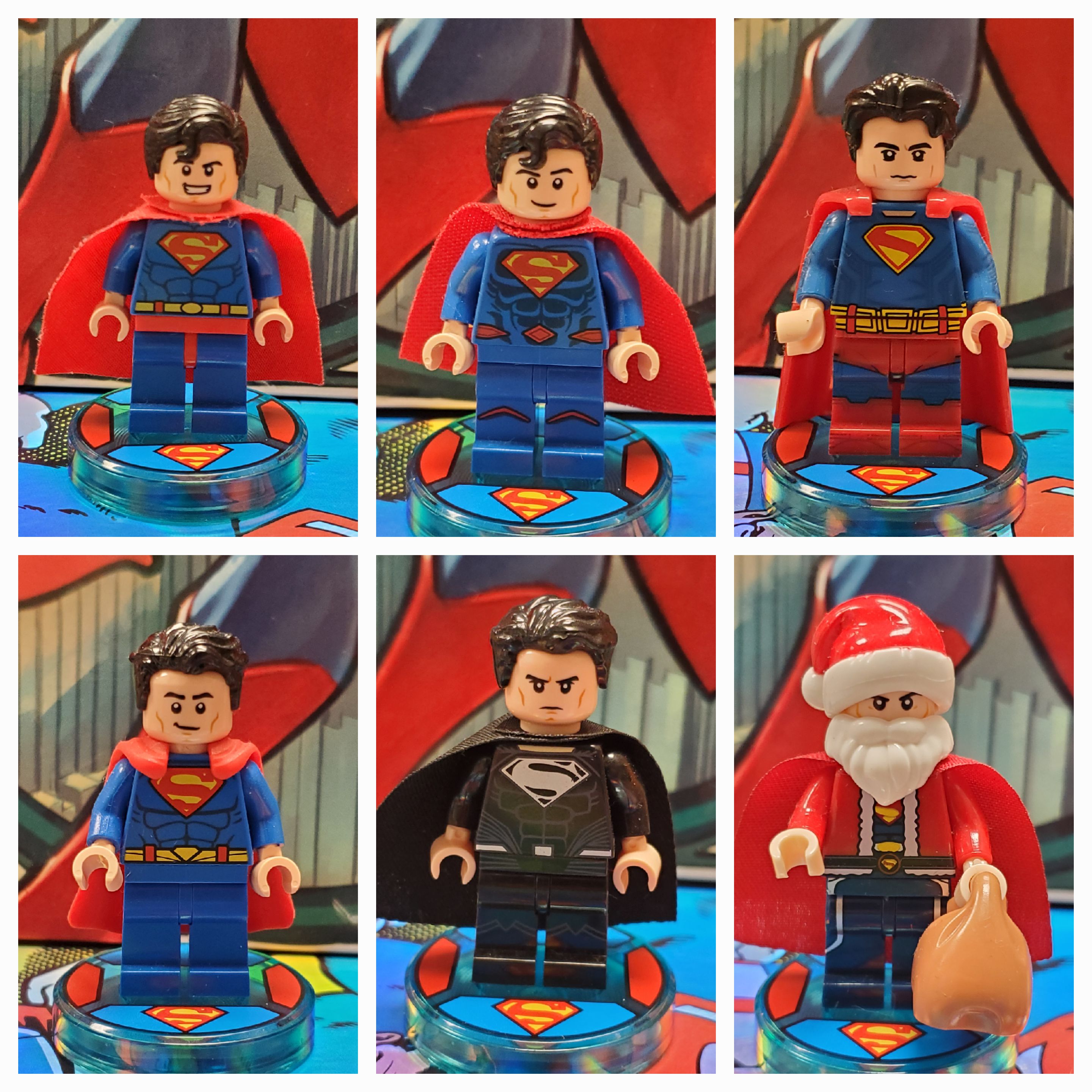
In this first collage, we see the figures of Superman himself that I’ve got on display. At the top left is a Superman from the sadly-defunct LEGO Dimensions video game. I’m not a gamer, but when I heard about this game that allowed you to mix and match characters from dozens of different universes in LEGO form, I was sorely tempted. I never took the plunge, though. This figure was actually given to me by a student, and it came with the base that I used to take the pictures with the rest of these figures. Next to him you’ve got a DC Rebirth-era Superman and a Superman from the 2025 movie, which inexplicably had no LEGO sets.

In the next row you’ve got another fairly standard Superman, although this one has a rubber cape, a black suit Superman from Zack Snyder’s Justice League, and Superman in his Santa Claus outfit along with a sack of toys, unless he’s going to Lex Luthor’s house, in which case it is undoubtedly coal. 

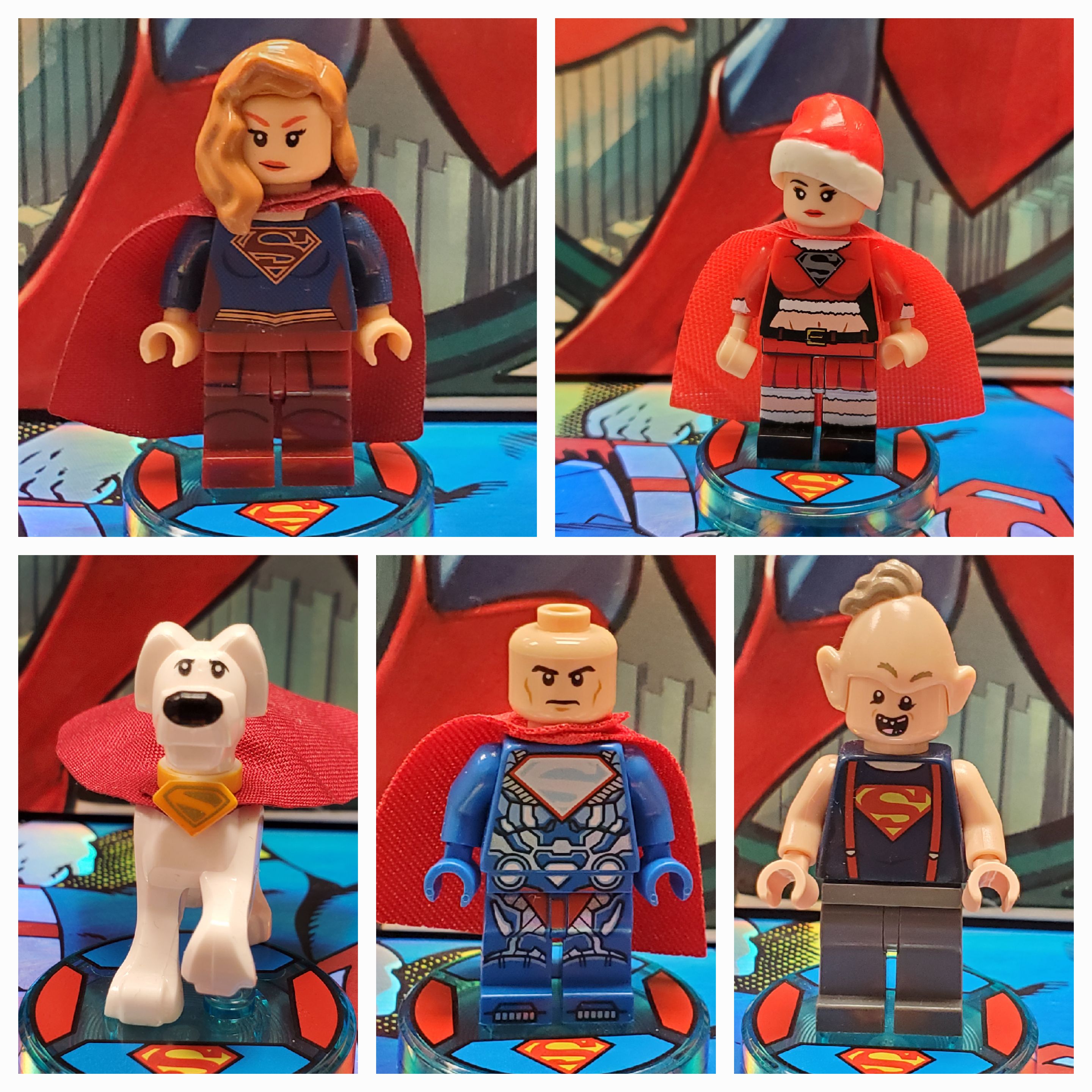
The next collage are members of the Superman family or Superman-adjacent characters. At the top we’ve got two versions of Supergirl, one from the Melissa Benoist TV show and one of Supergirl going to the same Christmas party as her cousin. On the bottom row is a 2025 Krypto, who I got at the same convention where I got the 2025 Superman. Next to him is Lex Luthor in his Superman armor, which was an official LEGO release that came in a minibag by itself. And on the end is Sloth from Goonies, another LEGO Dimensions figure, who I include among the Superman shelves because…I mean, come on.

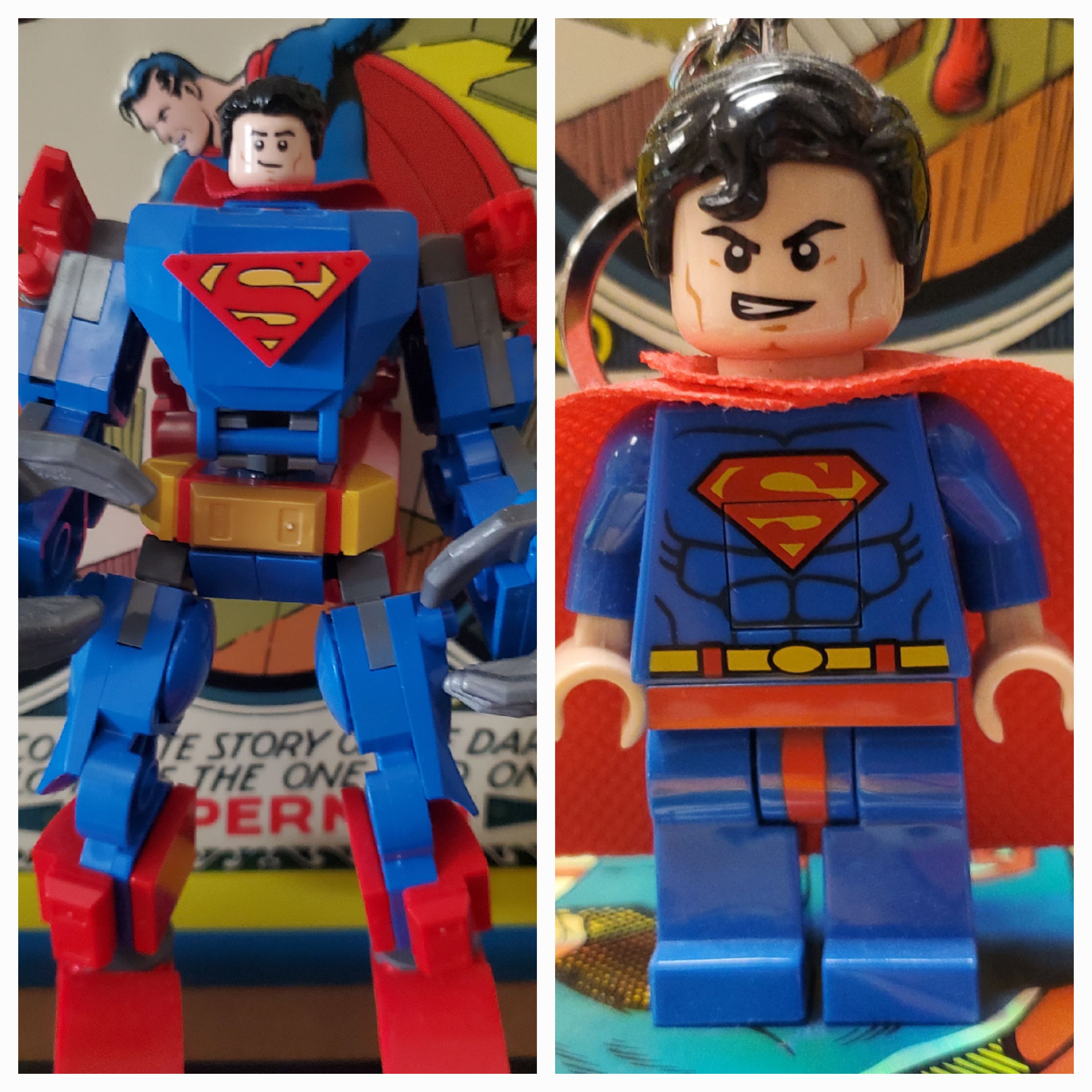
The last image is a couple of extras that don’t go with the other figures on their usual board. Superman in his mech suit came from a release that came out many years ago, which also had a Lex Luthor and Wonder Woman figure. Next to him is a Superman keychain with a flashlight in his foot – this guy was a gift from my wife’s best friend (and maid of honor at our wedding) Natalie, who also gave Erin a similar Harley Quinn figure at the same time.

There we are, guys, the first glimpse at Blake’s Superman Shelves. I’ve got a LOT more where this came from, so if you enjoyed this peek and want to see more, let me know!

Blake M. Petit is a writer, teacher, and dad from Ama, Louisiana. His most recent writing project is the superhero adventure series Other People’s Heroes: Little Stars, volume one of which is now available on Amazon. Don’t forget, you can check out earlier blogs in the Year of Superman/Superman Stuff Archive! Got a request for a future “Superman Stuff”? Drop it in the comments!
Geek Punditry #175: Something For the Kids

It’s the end of the school year, and as a teacher, that means that I’m hip-deep in data and swimming in a pool of number crunching, which wouldn’t be so bad if it wasn’t for the fact that I teach English specifically to avoid math. But as such, I’ve got my hands full, so let’s have just a quick chat in this week’s Geek Punditry, shall we?

Earlier this week, I was sent an invitation to participate in a survey regarding DC Comics’ Absolute Universe. It seems a little silly to make that the focus of any serious scrutiny, as they’re currently selling comics faster than Taylor Swift could sell out a 75-seat Black Box theater, but I’m always happy to share my two cents. It’s actually the last question in the survey that got me thinking today: they asked the ever-classic, open-ended, “Is there anything else about DC Comics or the Absolute Universe you would like us to know?”

Seriously, does this seem like a program that requires notes of any kind?

Now, I have no illusions that my words will actually make it to the ears of the people who have the power to do anything. I honestly would be surprised if they make it to human ears at all – I’ve got a horrible suspicion that these surveys are crunched by some AI algorithm that summarizes the responses and hallucinates an added suggestion that Superman’s mermaid ex-girlfriend Lori Lemaris should start dating Detective Chimp, which I’m pretty sure would be illegal in at least 17 states. But I thought about it anyway, and I told ‘em what I think is the biggest problem I have at the moment with DC – a company that is currently on a wild upswing that I’ve been enjoying very much.

Where’s the DC Universe stuff for the kids?

People who don’t read comic books regularly may find this question surprising. After all, aren’t superheroes inherently for kids? And the answer is, no, they’re not, especially since 1985. Sure, since in the early days of the genre, children have been attracted to superhero comics, but although there have been certain specific titles geared towards them, the genre as a whole has largely targeted a broader audience. Then, as that audience aged, so did the genre’s target. The result is that the DC Universe doesn’t currently have any regular comics that are appropriate for a younger audience. 

Okay, I guess there’s ONE.

This problem isn’t exclusive to DC by any means – Marvel, Image, none of the major players really have a ton of stuff in their main line that’s child-friendly. And that’s not to say that there are no DC Comics for younger readers. There’s a robust line of Young Adult graphic novels, and other books geared towards children. If my 8-year-old son came up and asked me to read a Superman comic book, I could get Rob Justus’s charming Superman’s Good Guy Gang and give it to him. And my oldest niece, who was just at the right age to get into the DC Super Hero Girls when they first hit about a decade ago, is also at the right age for the upcoming DC Super Hero Girls Class Reunion graphic novel they’re about to drop, as well as dozens of other solid books. There’s stuff out there.

But the vast majority of them are not part of the DC Universe proper. Books like these aren’t part of the tapestry of the story that’s been unravelling across the pages of the monthly Superman, Justice League, Green Lantern, Flash, Batman, and Wonder Woman titles for the past couple of years now. These graphic novels are good introductions to the characters, but it’s not quite as easy for these young readers to find a way into the world, because by and large the main DC books aren’t being written for them. That may seem insignificant, but I think it matters. Readers may pick up an original graphic novel, but that attachment to the larger narrative makes it feel like books have consequence. Even the Absolute Universe probably wouldn’t be as popular if the titles were all self-contained, but they are specifically earmarked as their own universe, which is interacting (slowly but surely) with the main DCU through their multiverse. That matters.

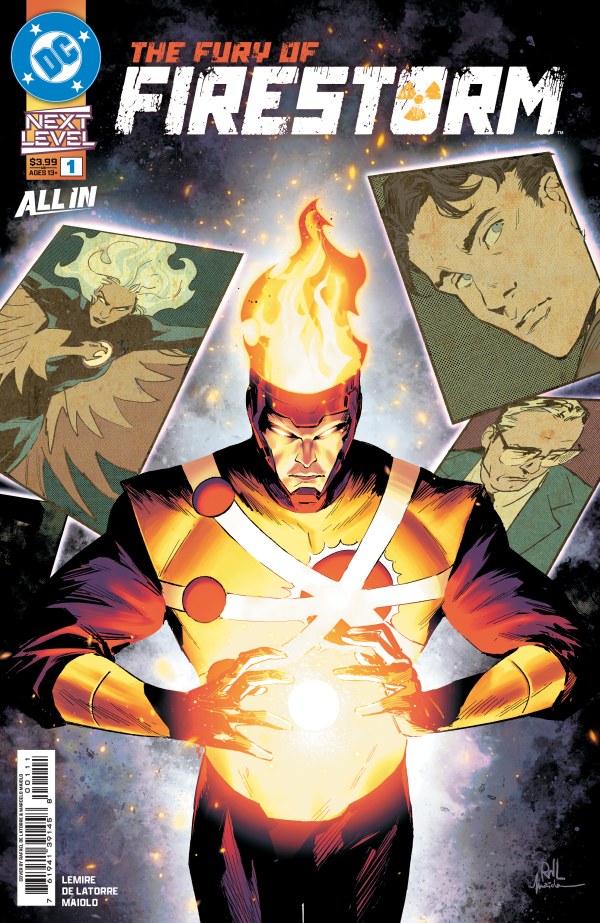
Even the comics about younger characters don’t feel like they’re being aimed at younger readers. The current New Titans run is only two issues deep, but it’s full of time travel and mind manipulation and other things that would confuse the heck out of a younger kid trying to read it. Firestorm is one of DC’s younger heroes (in terms of the characters’ age in-universe, although he’s been around since the late 70s), and while his new series started off with a bang, it’s the kind of bang that makes it clear this is a series that’s going to delve into deep psychological issues regarding power and trauma, and that’s not what I’m looking for here.

Nuclear holocausts make for great playground reading.

Marvel has the same trouble, but the way. If you pick up recent issues of Miles Morales: Spider-Man (probably the youngest character with his own title) you’d get a lot of dense stories and characters that would push away a newcomer. Even Gail Simone’s excellent Uncanny X-Men, which features Rogue leading a team of veteran X-Men as they try to shepherd a group of new teenage mutants just coming into their powers, is a great book for an audience of teens and above. But there’s nothing “below” that comes from the main Marvel Universe any more than DC.

And look, none of this is to complain about any of the books that I’ve mentioned. I certainly don’t think Gail Simone should shift her focus to make a book that’s appropriate for 8-year-olds, and doing such a thing with the Absolute Universe would be like finding a machine that dispenses unlimited chicken nuggets and then kicking it to pieces because it doesn’t also give you french fries. I need to stop writing these columns before lunch. I’m just saying that I wish there were more comics in addition to those that I could share with the likes of my son, my nieces and nephews, or students. 

FOR EXAMPLE…

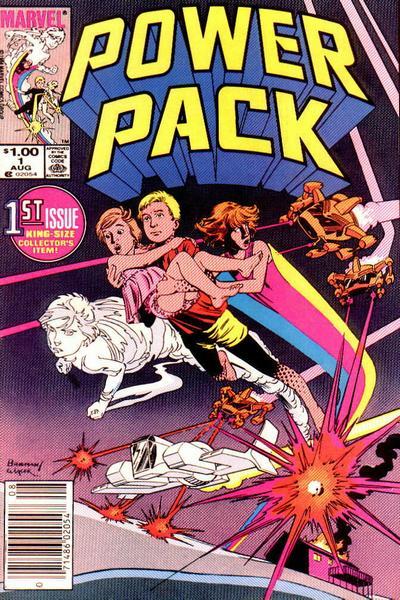
In the 80s, one of Marvel’s most acclaimed (if not best-selling) comics was Power Pack by Louise Simonson and June Brigman, then later Jon Bogdanove. It was a book about a group of four brothers and sisters – actual children, I think the oldest was around 12 when the series started – who were given powers by a dying alien to help save Earth from an invader. Once the job was done, they kept the powers and became superheroes. This book hit almost EXACTLY at the same time that I started reading comic books, and it quickly became a favorite of mine. It still is, honestly, because Simonson had an astonishing talent for writing characters who felt, behaved, and talked like actual children, while at the same time, demonstrating true courage and heroism. And it was firmly entrenched in the Marvel Universe, with the kids frequently running into the likes of Spider-Man and the X-Men, even inviting Wolverine and Kitty Pryde to their house for Thanksgiving. Later in the run, the kids added Franklin Richards – son of Reed and Sue of the Fantastic Four – as an official member of the team. They even participated in crossover events like Secret Wars II and occasionally guest star in other titles, just like real superheroes do.

And I think it’s important to note that Power Pack was about children, but it wasn’t exclusively FOR children. Even at the time, adult readers enjoyed it quite a bit, with it being nominated for awards and placed on lots of “best of the year” lists for the first few years of the run. But that acclaim didn’t come at the expense of telling a story that kids COULD enjoy.

It’s been a very long time since there was a comic book series that fit that description that was set in one of the mainstream shared comic book universes. 

And with comics on an upswing – a wonderful, glorious upswing – wouldn’t this be a great time to put out some stuff that opens doors at the beginning of the reading spectrum instead of just having stuff for those of us who have been reading for a while?

Blake M. Petit is a writer, teacher, and dad from Ama, Louisiana. His most recent writing project is the superhero adventure series Other People’s Heroes: Little Stars, volume one of which is now available on Amazon. He’s also started putting his LitReel videos on TikTok. Something something Captain Carrot. 

Superman Stuff #19: Review Roundup-April 18 Through May 6

Another roundup of reviews, starting with some of the comics that were dropped on Superman Day back on April 18. I didn’t bother reviewing the reprint books (many of which I’ve covered before during the Year of Superman), but there are a couple with new material that I wanted to showcase, both featuring Supergirl. Let’s dig in!

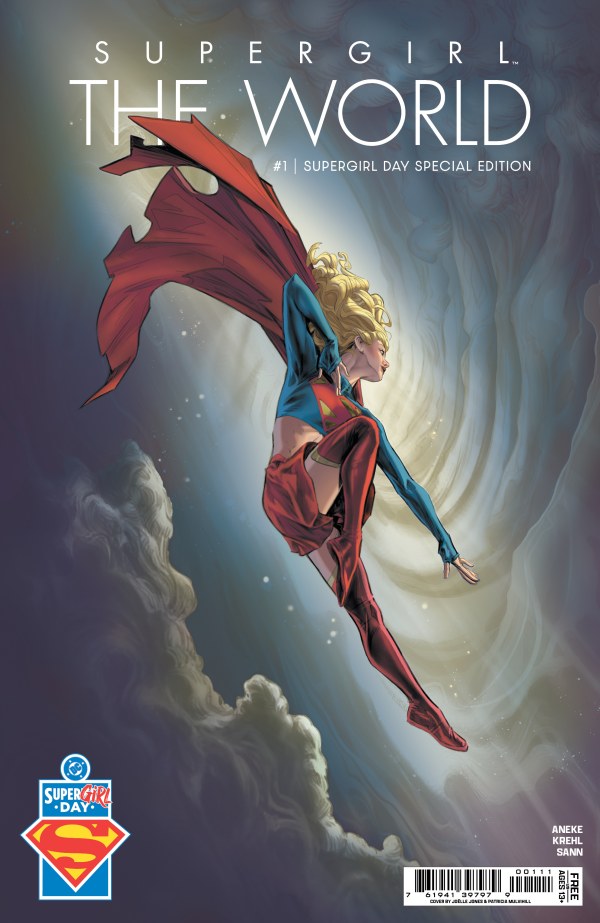
Supergirl: The World (Superman Day Special Edition)
Title: (Story 1) Supergirl Y La Maliciosa, (Story 2) The Extraction
Writer/Artist: (Story 1) Aneke
Writer: (Story 2) Yann Krehl
Artist: (Story 2) Marie Sann
Main Cover: Joelle Jones

DC’s line of The World anthologies is an interesting concept. Round up comic book creators from different parts of…well…it’s the title. And then have them do a story about that book’s star set in their home country. The first three featured Batman, the Joker, and Superman (which I reviewed last year), and this summer it’s going to be Kara’s turn. This Superman Day special previews two of the stories from that book.

In the first story, by Aneke, Supergirl visits an art museum in Spain and overhears a conversation about a mountain featured in one of the paintings, one that is supposedly the home of a witch. Curious, she sets out to visit the mountain, “La Maliciosa,” and finds a climber with a bit of a secret. It’s a simple story that kind of has a Bronze Age feel to it, echoing the kind of things that we’d get from the Supergirl comics of the era. The art is really quite lovely. Whether it was intentional or not, Aneke invokes the same feel as Bilquis Evely’s work on Woman of Tomorrow, which is nicely appropriate. The second story is “The Extraction,” by Yann Krehl and Marie Sann. In this one, after the Justice League liberates a group of aliens that were being held captive and subject to experiments in Germany, Supergirl is sent undercover to try to locate one lost extraterrestrial that managed to escape before its comrades were freed. It’s a fun story, with gorgeous art by Sann preventing it from feeling as dark as the premise would suggest. The pages look like art from a modern Disney movie more than your average superhero comic, and that works exceptionally well.

No doubt when the full anthology drops on June 2, there will be a mixture of hits and misses. These two are a nice appetizer, and I’m looking forward to reading the book.

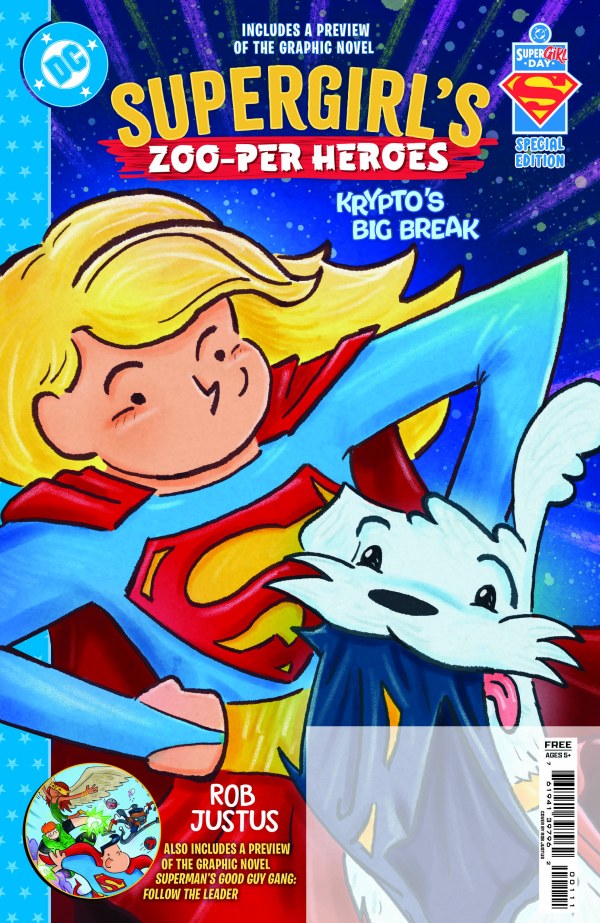
Supergirl’s Zoo-Per Heroes: Krypto’s Big Break (Superman Day Special Edition)
Writer, Artist, AND Cover: Rob Justus

Last year cartoonist Rob Justus brought us the early reader’s graphic novel Superman’s Good Guy Gang, featuring Hawkgirl and Guy Gardner, who you may have heard were in a movie with Big Blue last summer. This year he comes back with a new book that also seems poised to whet the appetite of the kiddies anticipating this year’s cinematic adventure. An accident somehow transfers the powers of the Justice League to a group of zoo animals, and it’s up to Supergirl and Krypto to fix things. The book also includes a preview of the sequel to Good Guy Gang, Follow the Leader, in which the one character who was bafflingly missing from last year’s book joins the fun. I like Justus’s sensibility a lot. It reminds me of Art Baltazar and Franco’s Tiny Titans, albeit lighter on the inside jokes for longtime readers. But these two previews promise a pair of silly, fun books that seem like they’ll be perfect for the superhero fan who’s just learning to read. 

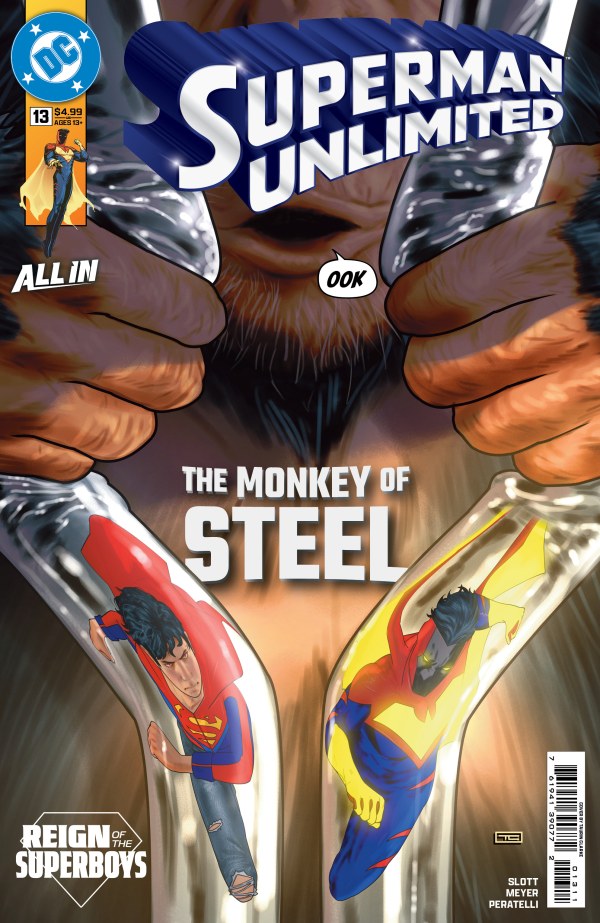
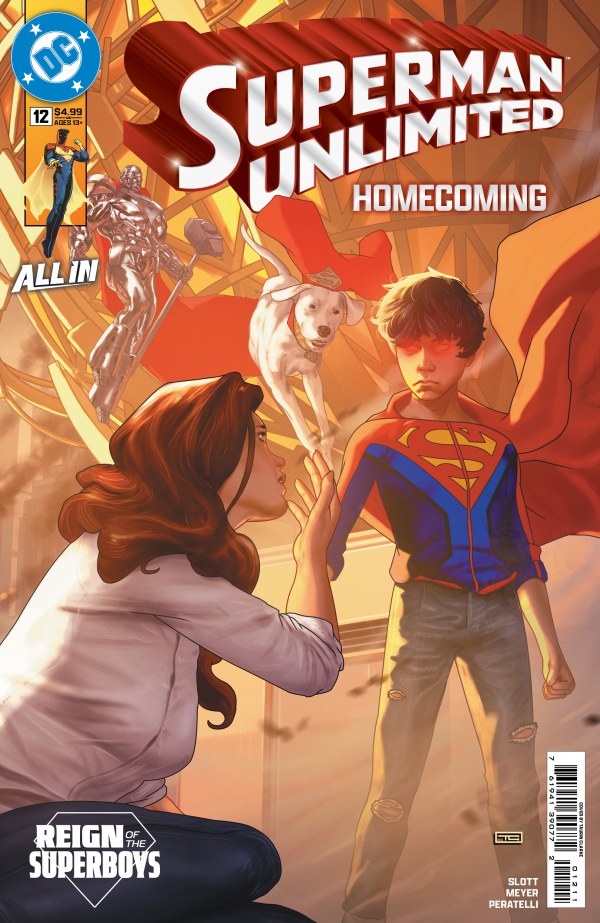
Superman Unlimited #12
Title: Besides Myself (a Reign of the Superboys tie-in)
Writer: Dan Slott
Artist: Lucas Meyer
Main Cover: Taurin Clarke

Last issue Jon Kent met Master Txyn, a more malevolent imp than our usual pal Mxyzptlk, whose taunting of the young Kryptonian prompted him to take on a new identity, Tomorrow Man. But before the sewing needle on his costume had time to cool Jon found a whole new complication dropping in his lap: a time-displaced version of himself from one of the most traumatic parts of his past. 

This issue, he decides to take young Jon to Lois, who just happens to be getting a visit from Batman and Robin (checking in on her in Superman’s continued absence). Adult-Jon decide to keep his own identity a secret, although Slott at least lampshades the fact that he’s got an uphill battle trying to keep a secret in a room that includes the world’s greatest detective, the world’s greatest investigative journalist, and his own best friend. Meanwhile, the El Cadero storyline moves along a little big as well, with the Kryptonite-rich nation announcing plans to use it as an energy source. However, more nefarious purposes seem to be in the works as well, and an escapee of an experiment makes a new friend.

Part of me almost wishes that this book was setting up a new status quo for the Superman titles. I’ve never liked the fact that we lost the child Jonathan in lieu of a teenage version (you may have heard me mention this once or twice), and the idea of having Young Jon living with Lois and Clark again while still having Grown-Up Jon doing his thing wouldn’t be the worst compromise. However, the Jon we have in this issue isn’t the one that I miss. This is a kid who has already undergone some horrific stuff, and grappling to deal with it looks like it’s going to be part of the character arc here. 

Slott has a little fun with the other characters here as well. Damian Wayne’s highly paranoid nature comes right into play, as it probably should, and one of my favorite supporting characters in the whole Superman family shows up in the B-plot, making for a delightfully absurd exchange right out of a Looney Tunes short.

I’m really not sure where Slott is going with this story, but I’m interested in it, which hopefully comes across as the compliment that it’s intended as. 

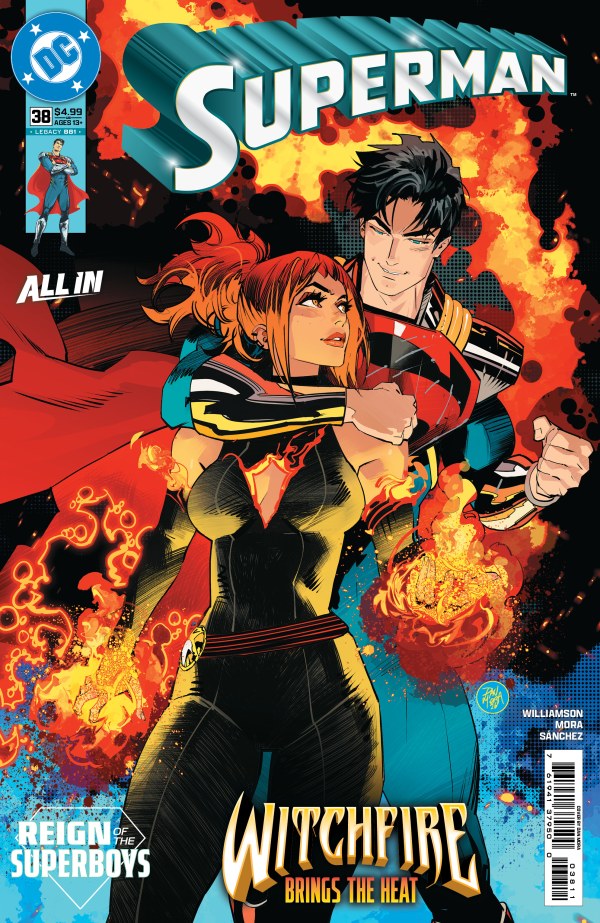
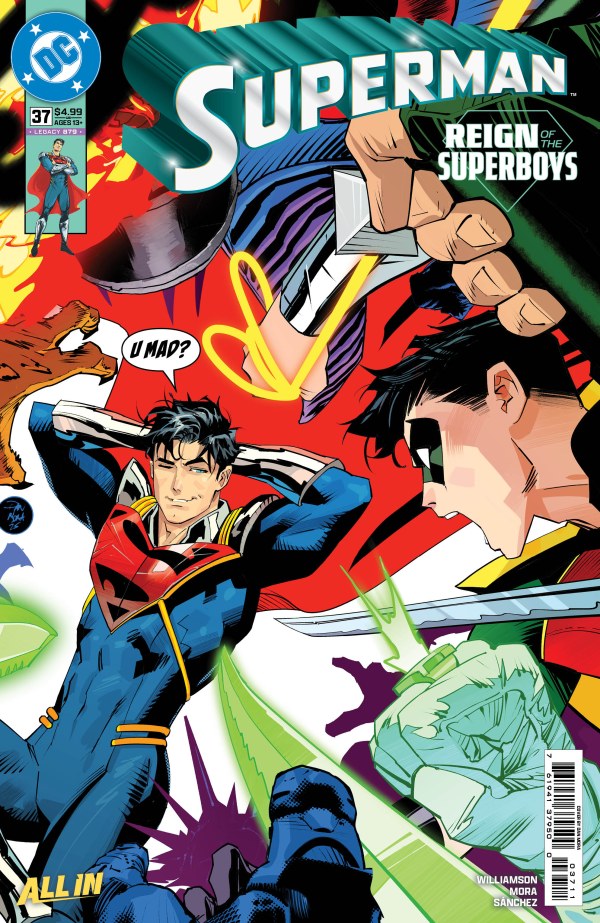
Superman #37
Title: Prime Time Part Two (a Reign of the Superboys tie-in)
Writer: Joshua Williamson
Artist: Dan Mora
Main Cover: Dan Mora

The Superboy-Prime saga continues this issue. Having settled in to his new life in Metropolis, Prime seems to be doing okay. He’s helping people, beating villains, and despite his tardiness he’s even making ground at his new job at the comic book store. But his past hangs over his head, with the Justice League tracking him down when he goes for a simple dinner with the Kents in Smallville. An encounter in Gotham City doesn’t go much better. What’s a reformed mass murderer with fourth wall awareness to do?

I’m really quite surprised to see this issue pull back from the “main” storyline for what is mostly 20 pages of character building…surprised, but not at all disappointed. Williamson’s re-casting of Prime into someone trying to atone for his past is working surprisingly well. What’s more, he’s even carving out a fairly unique place for the character but putting together bits and pieces of various other characters. Sure, he’s got Superman’s powers, but he’s got an awareness of his comic book origins that’s playing with in a different way than characters like Deadpool or She-Hulk. And now it seems like Williamson is adding on a healthy dollop of what can only be termed “the ol’ Parker luck.” Somehow, all of this is coming together to make for a really entertaining character. 

Dan Mora’s work is as phenomenal as ever, and he’s got a LOT going on in this issue. Despite the fact that the action is relatively low, he still manages to deliver a great (if brief) fight scene in the sewers of Gotham and some really excellent “acting” on the faces of the characters, particularly Jonathan and Martha Kent. All of the Superman books are solid right now, but I would never have believed a year ago that a title starring Superboy-Prime would be the gem of the line.

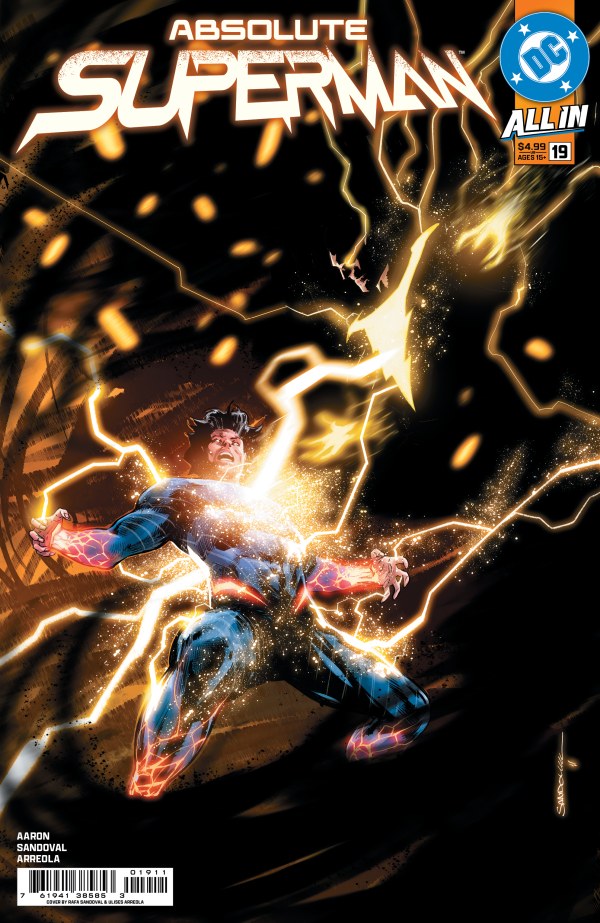
Absolute Superman #19
Title: Red Steel in the Hour of Chaos (Reign of the Superman Part Two)
Writer: Jason Aaron
Artist: Rafa Sandoval
Main Cover: Rafa Sandoval

Last issue Superman, Lois, and a newcomer with a hammer named John Henry Irons broke into Lazarus only to find a captive who’s been off the board for millennia: Teth-Adam, alias King Shazam. This issue is a lot of fight and a little backstory, filling in some of the history of this Absolute Universe. It’s a good reminder that this isn’t just a “What If?” scenario, where there’s a single point of divergence that separates this universe from the DCU that we know, but rather a universe that was shaped in the image of Darkseid from its very inception.

To me, to a guy whose favorite Superman side-character is Steel, I’m really happy to see their version of him show up. Like the mainstream version, we’re presented with a man blessed with a great mind and great compassion, cursed to live in a world where it seems like neither of those things are valued. Like Superman himself, he seems to be the kind of person that’s clinging to hope in this world where such a thing is more of a liability than an asset.

Sandoval’s artwork is sharp as heck. Any time you pit a Kryptonian against somebody with the power of Shazam, you’re going to have to be ready to bring the scale that such a face-off demands, and Sandoval does a great job really selling this as a conflict that reaches a global scale.

Every time I think I can’t find enough good things to say about this series, I find more.

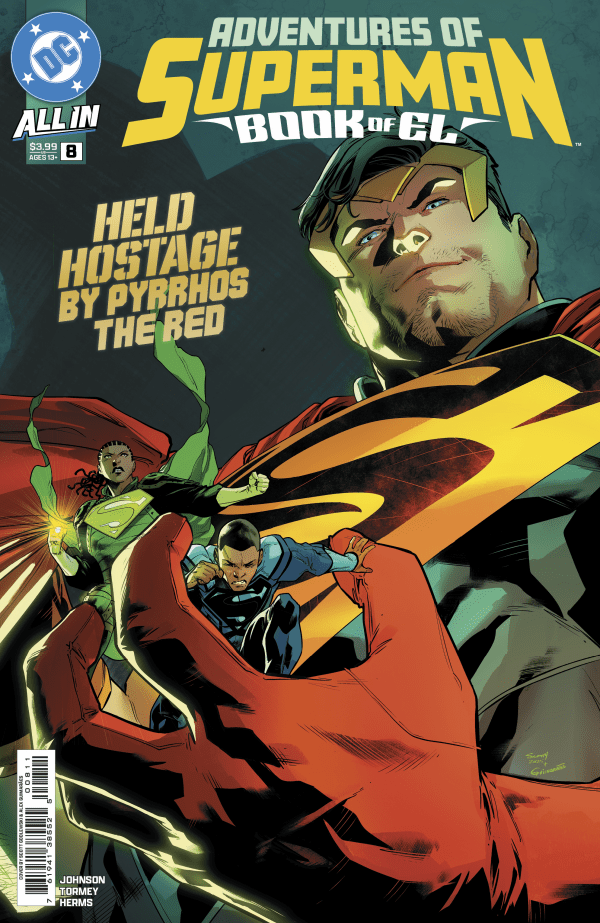
Adventures of Superman: House of El #8
Title: The Wizard and the Queen
Writer: Phillip Kennedy Johnson
Artist: Cian Tormey
Main Cover: Scott Godlewski

As Superman heads to Tamaran, he finds yet another descendant (because apparently in this future the sentient population of the universe is roughly 57 percent House of El) coming under fire. Meanwhile, Ronan and Rowan Kent face off against Pyrrhos the Red and learn the shocking (yawn) truth about his origins.

I’d hoped that the return of Rowan Kent would help this series pick up, as she’s been the element that I’ve been most interested in so far, but alas. We don’t explore her corner of the universe, but rather delve back into all of the Els that are running around, apparently reproducing like Kardashians on a bad day. Johnson just keeps throwing more and more things at the reader, and it’s not sticking. The story is trying to be Dune and it’s trying to be Game of Thrones and there’s a healthy chunk taken from Arthurian Legend, and when you put it all together you’ve got something that’s just not working for me.

There are a thousand characters running around here and, despite the fact that it seems like they’re all related to Superman, I don’t care enough about any of them to keep track of who they are. When this series is over, I’m going to have to go back and try reading the whole thing in one go. I’m just not getting into it, and I don’t know if that’s because there’s not enough to keep my interest alive from one month to the next or if it’s really just as big a mess as it feels like.

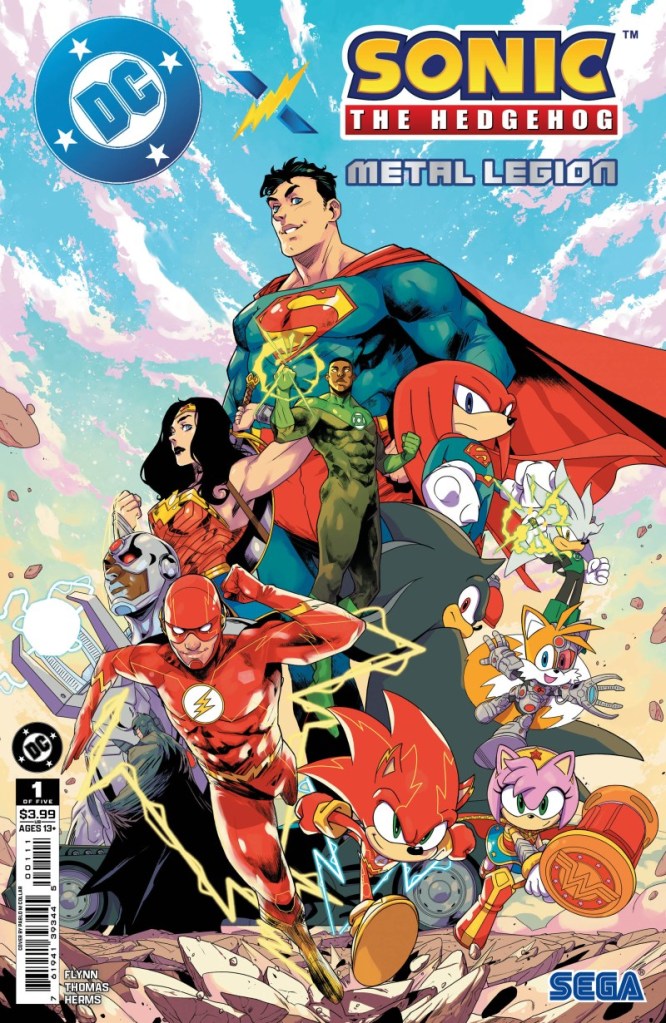
DC X Sonic the Hedgehog: Metal Legion #1
Title: Metal Legion Part One
Writer: Ian Flynn
Artist: Adam Bryce Thomas
Main Cover: Pablo M. Collar

The first DC/Sonic crossover last year was a lot of silly fun, so I wasn’t surprised when this sequel was announced. I was a little surprised, though, when the book jumps right into a massive status quo change: portals have appeared all over the globe, seemingly stable portals that connect the Justice League’s Earth to Sonic’s world. With travel between the two worlds now simple and safe, the heroes of both universes reconnect with their old friends. Of course, the more paranoid amongst them (Batman and Shadow, obviously) are in the business of investigating the portals, finding clues that point to some old foes.

Most of this issue is just showing the heroes bouncing back and forth between worlds and partnering up with the friends they made last time: Flash and Sonic having a race, Amy joining Wonder Woman and the rest of the Amazons in battle against Hades, and Knuckles and Superman introducing Supergirl and Krypto to someone they know will get along with them famously. I like the fact that the story seems to be expanding in scope this time as well. Besides Supergirl and Krypto, it seems like this time the Titans are joining in on the fun, and the last page promises to bring in more of the DC’s less savory elements as well. This is one of those first issues that feels more prologue than actual beginning, with only the scene in Gotham and the last few pages where we meet our villains actually seeming to progress the plot. That doesn’t bother me much, but it does suggest that this is a story that’s been paced for the inevitable collected edition.

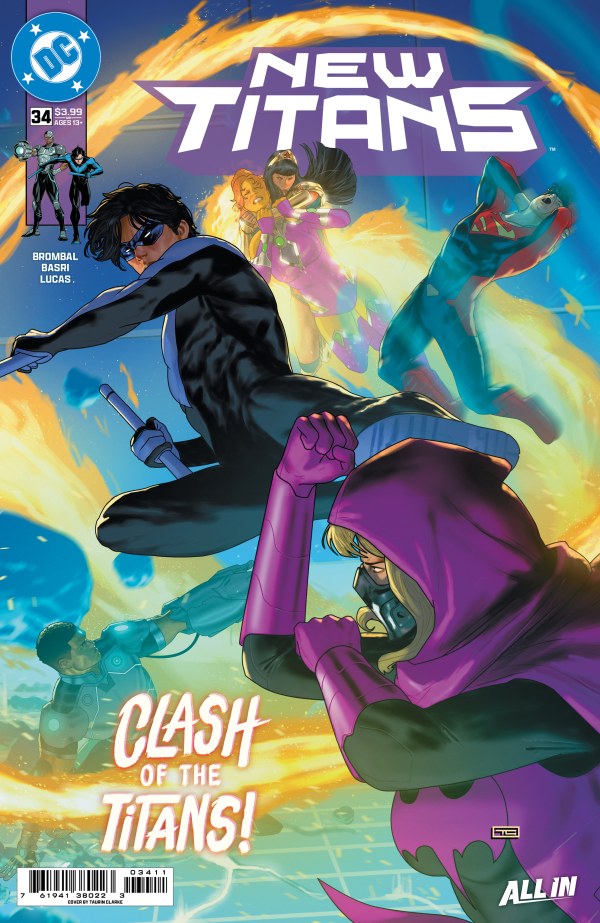
New Titans #34
Title: The Future is Tomorrow Part Two
Writer: Tate Brombal
Artist: Sami Basri
Main Cover: Taurin Clarke

I gave the first issue for this new direction of Titans a lot of grace, because it was a new writer that was just beginning to set up a new path for the team. This issue we’re starting to see the shape a little bit, and while there are things that I like, others have me skeptical.

Part One of this story showed up the classic Titans line-up trapped in some sort of time bubble, bouncing around to different parts of their history and seemingly unaware of what was going on. It wasn’t until the last-page incursion of a new group of younger heroes (including Jonathan Kent, which is why I’m including it in “Superman Stuff”) that the spell started to crack. This issue we learn more: the pocket reality the Titans have been existing in was created by an aftermath of what happened in the whole DC KO extravaganza, and the newbies are apparently young heroes the Titans have had their eyes on as potential recruits.

All of that is perfectly fine. What’s bothering me here is more the way these new Titans are introduced. We get a few pages of narration explaining that these folks were selected because they’re the FUTURE and they’re gonna be SO AWESOME and dear GOD, do I hate that. The old writing adage of “show, don’t tell” isn’t always true – sometimes, you’ve GOTTA tell to get the point across. But when it comes to convincing the reader how great a character is, telling is perhaps the worst thing you can do. If a writer starts expounding upon how wonderful a character is without actually doing the work of crafting a story that allows them to demonstrate their awesomeness, that’s an immediate turn-off to me. And often, it’s a black mark against the character that takes some writing rehab to escape.

That said, it’s a relatively short sequence in this issue that bothers me. If it was just a one-off thing and the rest of the story works, I can be forgiving of it. It’ll all come down to what else Brombal does in this arc, I think, as to whether this newest iteration of the Titans is going to be able to stand on its own.

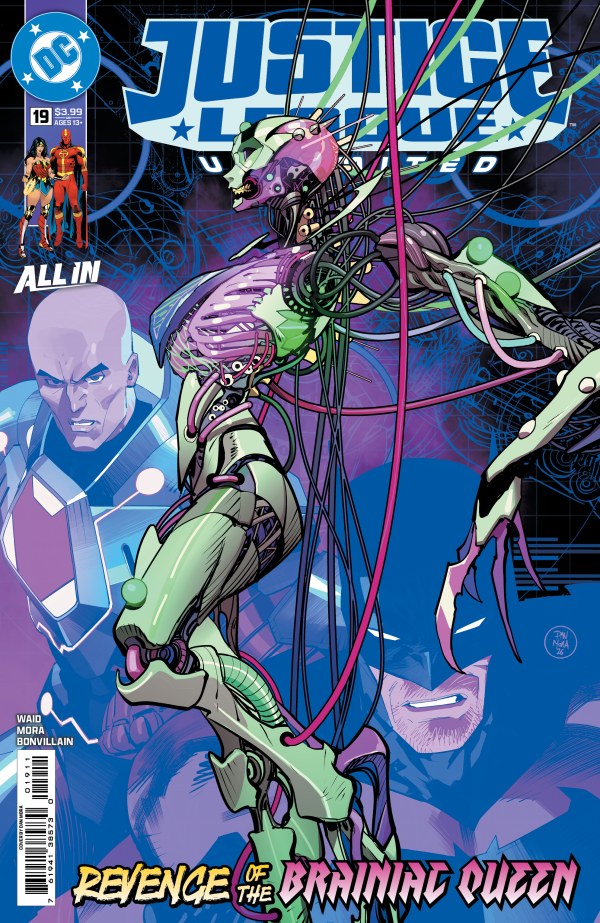
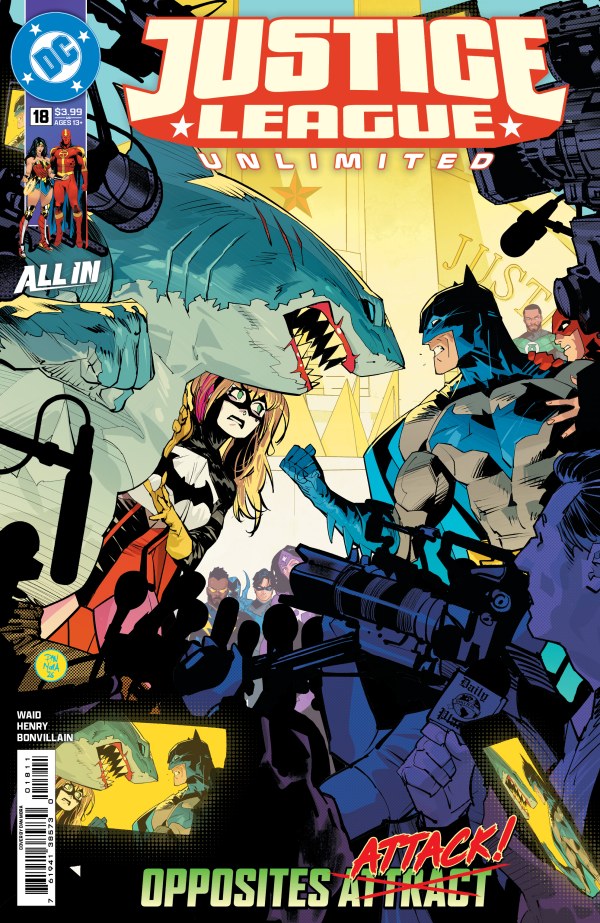
Justice League Unlimited #18
Title: Aftermath Part Two
Writer: Mark Waid
Artist: Clayton Henry
Main Cover: Dan Mora

Superman is still missing, and does not appear in this issue. In fact, as far as actual members of the family go, only Supergirl makes a (one-panel) appearance. But the thumbprint of our boy blue is all over this issue, so I really want to talk about it, and it’s my blog, so nyeah.

In the aftermath (hence the title) of DC KO, the participants were each given a glimpse of the future, including a dire warning about an upcoming battle that will make their struggle against Darkseid pale in comparison. In recognition of the threat, something that goes beyond normal concepts of “good” and “evil,” the Justice League is implementing an amnesty program, inviting supervillains who promise to be on their best behavior to join them – including Lex Luthor. Lex being Lex, of course, he’s got his own agenda, but at the very least it doesn’t seem to run COUNTER to the whole “saving the entirety of creation” thing the Justice League has going on, so we’re gonna cross our fingers for the moment.

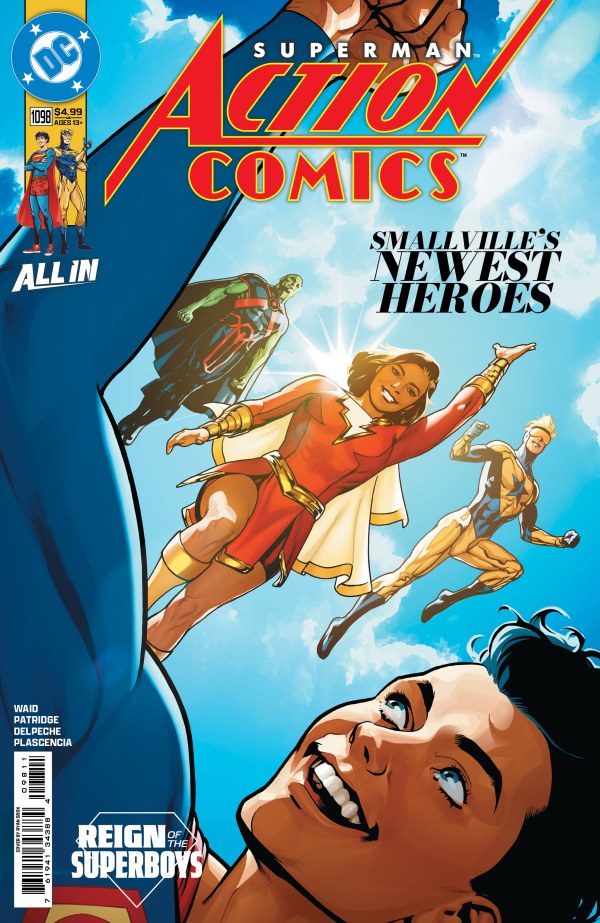
It’s not the first time, by any means, that we’ve seen the toy with Lex playing hero, but they’ve always found different ways to go about it, which I rather enjoy. Waid also has done good work selecting which characters to feature here (Giganta is another one who joins the amnesty program, and one for whom rehabilitation seems far more possible than, say, the Joker). And they even get to show us what failsafes they’ve put in place to make sure the bad guys trying to break good remain on their best behavior. In fact, Waid is really embracing the “unlimited” part of the title here, expanding the cast even beyond its already-impressive roster and running multiple storylines that all weave in and out of each other. In addition to the Lex Luthor story, we also get to see a mission to Oa comprised of Guy Gardner, Mr. Terrific, Hawkgirl, and Metamorpho (wait…where have I seen THAT group together before?), as well as the beginning of the time-travel mission starring J’onn J’onzz, Mary Marvel, and Booster Gold that Waid is exploring over in the pages of Action Comics.

While the larger “All In” storyline is playing out across the DC Universe, this title really feels like the core of the whole thing, and I certainly hope anybody who’s following this is paying attention.

Blake M. Petit is a writer, teacher, and dad from Ama, Louisiana. His most recent writing project is the superhero adventure series Other People’s Heroes: Little Stars, volume one of which is now available on Amazon. Don’t forget, you can check out earlier blogs in the Year of Superman/Superman Stuff Archive! Got a request for a future “Superman Stuff”? Drop it in the comments!
Geek Punditry #174: The Trouble With the Twist

There’s something about a good twist. A surprise moment in a story, an unforeseen circumstance that propels you into areas of fantasy you may never have expected. A good twist, of course. A bad twist usually just leaves things feeling trite and warmed-over, something that is boring and predictable at best, illogical and completely nonsensical at worst. But a good twist recontextualizes the story, fills in gaps and makes them feel suddenly whole, and makes you look at everything that has come before in a brand new light.

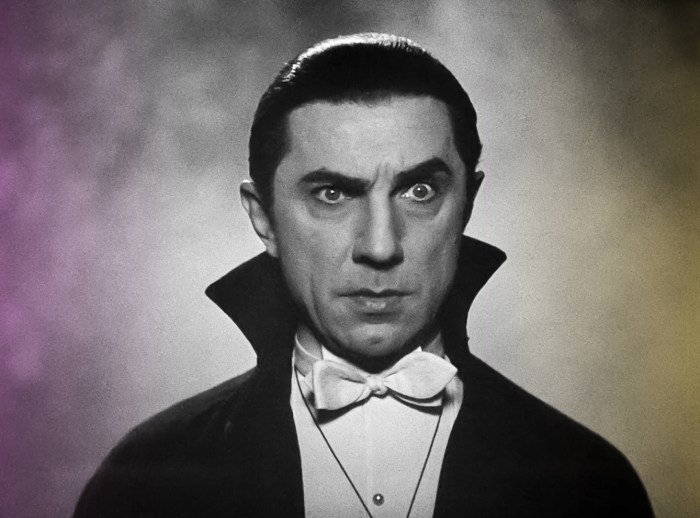
The problem with a twist – especially a good one – is that after the story is over that’s all the audience wants to talk about. It’s a good problem to have, an audience that enjoyed your story enough to spread the word, but it’s still a problem in that it makes it more difficult for future audiences to enjoy the twist unspoiled. Dracula is a classic example. Brahm Stoker didn’t invent the concept of a vampire, but when he wrote his novel in 1897, it was written with the titular count as a mystery. The heroes in the story did not know at first what they were facing. The clues as to his true nature seem obvious today, in a world in which vampire tropes are ubiquitous, but to a 19th century audience that didn’t know what to look for, it worked as a surprise.

“Sure, this guy seems legit.” –Audiences in 1987

Dr. Jekyll and Mr. Hyde faces a similar problem. The story became so popular that “Jekyll and Hyde” is now an all-purpose term for a character (or a person in real life, for that matter) with two contrasting sides. But when Robert Louis Stevenson wrote the book, that simply wasn’t a thing yet. The idea that Henry Jekyll transformed into Edward Hyde was the shocking twist. It’s so commonly known now, though, that most adaptations of the story don’t even bother to disguise it anymore. What was intended as a clever fantastic mystery has become a standard monster trope.

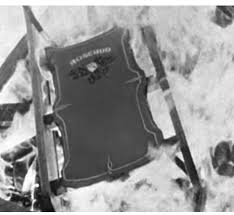
Lots of other stories have entered the common discourse. You would be hard-pressed to find someone that doesn’t know Bruce Willis’ character in The Sixth Sense is a ghost in every scene after the first one, even though the character himself is unaware of it. Everybody knows that Norman Bates is the killer in Psycho, but the movie does its damndest to make you think it’s his deceased mother right up until the climactic scene. And even if you’ve never seen Citizen Kane, at some point I bet you’ve heard somebody say the phrase “Rosebud was his sled.”

Oh quit whining. If you haven’t seen the movie by now you were never going to anyway.

The twist problem is kind of a subset of the spoiler problem. Stories are constructed in a certain way to create a certain impact, and if an audience knows too much too soon it will rob the storyteller of the opportunity to tell the story the way they intend. There are some who argue that if knowing the twist ruins the story, then it wasn’t a good story in the first place. This attitude is, to use a term popularized by Beatrix Potter, horseshit. It’s like saying that if you don’t like your pizza after someone steals your cheese, it was never a good pizza. Anything will become bad if you take away the elements that make it what it is. That doesn’t mean it’s not really good when all the elements are there.

Some story tellers do their best to preserve a twist. When Avengers: Endgame came out, the Russo brothers took to social media and pleaded with people not to reveal the ending. It didn’t really work, but they tried. That’s really the most you can do these days, but when Alfred Hitchcock was making Psycho he actually bought up as many copies of the novel it was based on as he could in an effort to prevent people from knowing the ending. I’m pretty sure that if Hitch were alive today the very existence of social media would send him flying into a murderous rage, which appropriately enough feels like a twist out of a Hitchcock movie.

Imagine being a bookstore clerk and then this guy walks in demanding every copy of Psycho you’ve got.

Solid twists are, in a way, a victim of their own success. Because they’re good, word spreads and the impact is lost for future audiences. The newest member of this club is Project Hail Mary. Now normally, this would be where I warn you that I’m about to spoil something from the novel, but the whole point of this column is that – if you have even the most marginal awareness of this movie – the trailers, marketing, discourse, and merchandise have spoiled it for you already.

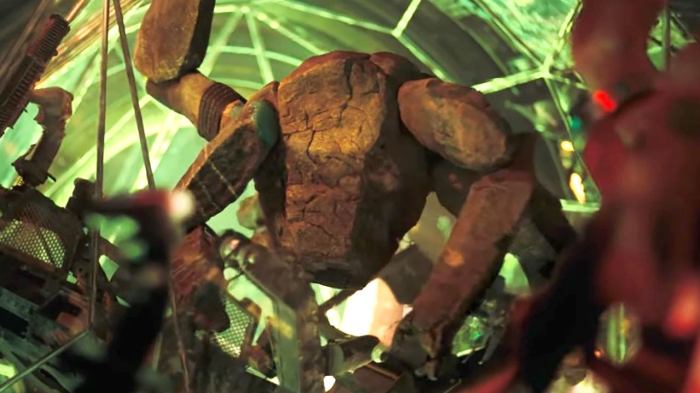
Last year, when the trailer for the movie dropped, I saw comments online from fans of Andy Weir’s original novel warning that the trailer straight-up gave away one of the biggest surprises of the book. Not having read the book yet at the time I — in an act of self-preservation not unlike the hellish ordeal endured by Tom Hanks in Cast Away — avoided watching the trailer and moved the novel to the top of my to-read pile. And I’m very glad I did, because I was allowed to enjoy the story as originally intended: I read as Ryland Grace woke up on a spaceship, slowly regained his memories of how he got there, learned about his mission to save the world, and OH MY GOD, HOLY CRAP, IT’S AN ALIEN!

Amaze! Amaze!

And of course; if all you’re familiar with is the movie, that may seem like an absurd reaction. Of COURSE there’s an alien. He’s in every trailer. They’re submitting his puppeteer for Oscar consideration. He’s ADORABLE.

But you have to remember that Andy Weir is known for “hard” science fiction, stories that take great pains to make the science part as real as possible. There was never even a hint that he would be introducing an alien until the ship appeared, and the reader was as stunned as the character in the book.

There was no way this shock would be preserved for the movie, of course. The studio — fairly – wanted to show off their newest star. They’ve made promos of Rocky “borrowing” Ryan Gosling’s phone to buy tickets to see his own movie. You can get a popcorn bucket that looks like Rocky in his “hamster ball.” Fortunately – like with Dracula and Dr. Jekyll – it was possible to reframe the story just slightly so that losing the surprise didn’t stop it from being the best movie of the year. (Yeah, I know it’s only May. I’m calling it now.)

I don’t think there is a real solution to this particular problem. For as long as there are stories to tell, people will want to pick apart and talk about them and, eventually, the best twists will just become part of the common discourse. So instead of trying to stop it, let’s all just remember to be charitable to these kinds of stories, especially the older ones. Sure, we may all know that Mrs. Voorhees is the one who started chopping up those camp counselors now, but it wasn’t always that way.

Blake M. Petit is a writer, teacher, and dad from Ama, Louisiana. His most recent writing project is the superhero adventure series Other People’s Heroes: Little Stars, volume one of which is now available on Amazon. He’s also started putting his LitReel videos on TikTok. He’s still irritated that the big twist in Reservoir Dogs turned out to be the unforgivable lack of dogs.

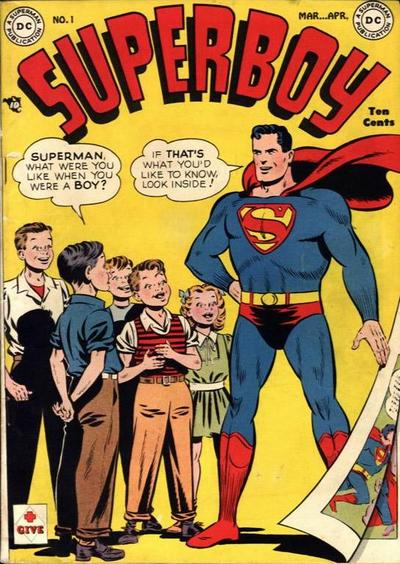
Superman Stuff #18: Superboy #1

The end of the school year is approaching. Tomorrow is the last day for my 12th grade students, and my 10th graders will be wrapping it all up in about two weeks. So I’ve been busy tying up all the loose ends that come with being a teacher in May. That in mind, looking for something to read, I kind of drifted to stories of the younger heroes, and I decided this week to check in on the first issue of Superboy from 1949. 

In the first story, “The Man Who Could See Tomorrow” (written by Don C. Cameron with art by John Sikela), Superboy encounters Brandar the Great, a mystic whose jewel stolen from an idol gives him the power to peer into the future. The story actually begins, though, in Metropolis, with an adult Clark Kent ducking out on Lois Lane after a movie date to check in on nearby gunfire. Superman finds an injured police officer and rushes him to a hospital where he encounters a nurse, Margo Griffiths, whom he knew when they were kids in Smallville. His mind drifts back to the day they each gave a report on what they wanted to be when they grew up (Margo and Clark each got their wishes, by the way), a day that ended with a party at Margo’s house. There they saw the mystic Brandar, who predicted that some day Clark Kent would be world famous (and you can’t tell him that he was wrong), but that Margo would “cease to exist” on her 21st birthday. 

Of course, these distant predictions wouldn’t prove much, so Brandar uses his magic jewel to make three predictions for the next day: “1. Dr. Jekyll will turn into Mr. Hyde! 2. The first lady of the town will lose her crown! 3. East will meet west at sundown!” Clark brushes it off until the next day, when the newspaper reports that the mayor, whom everyone had thought was an honest man, had stolen funds from the town and fled. Worried about the rest of the predictions, Superboy checks in on a ship called the Queen Felice, also known as the “first lady” of the town. The crooked mayor nearly crushes the ship with a drawbridge in an effort to escape, but Superboy saves the Queen Felice and brings the mayor to justice. 

With one prediction fulfilled and the second thwarted only by Superboy’s intervention, he seeks out Brandar to find the secret of his jewel. Brandar confesses that he stole the jewel and was given a prediction that he would meet an untimely death because of it. In fear, he leaves the jewel and runs into the street, where he’s promptly hit by a car and killed. That’s the thing about predictions, friends, if you try to prevent them from coming true you usually cause their fulfillment. Dude should have read MacBeth.

Superboy, meanwhile, finds his third prediction about to come true – an eastbound and westbound train on a collision course! He knocks down enough of a forest to build a second track and diverts one of them just in time. Then, returning Brandar’s jewel to its point of origin, the flashback ends. In the “present,” Superman reflects on the final prediction that hasn’t been fulfilled – that Margo would “cease to exist” when she turns 21, and she must be almost that age. He, of course, helps her figure that one out as well, giving her a happy ending. It begs the question, though – if Clark and Margo were in the same class, does that mean that the Superman of 1949 was only 20 or 21 years old? That seems awfully young for him to be an established reporter at the Daily Planet, much less have such an established career as Superman.

Of course, continuity wasn’t that big a deal back in the day, and people got out in the world younger than they do now. Still, it feels so odd that the writer would lock him in to such a tender age when all it would have taken to make it more plausible is to set the prediction for the day Margo turned THIRTY-one. Even a later year in her mid-twenties would have made more sense.

The second story, “The Boy Vandals” (written by Edmond Hamilton with art by Ed Dobrotka), abandons the flashback framing sequence and just takes us to times past to view a quick and unremarkable story about Superboy teaching a young gang the consequences of vandalism. The interesting thing here is that this is the story where I realized, at this point, they hadn’t actually established Superboy’s home town as Smallville yet. In fact, this story seems to imply that young Clark Kent was a student in a school in Metropolis. It always interests me when we see these older stories playing fast and loose with details that seem concrete to us, but that wouldn’t be codified until much later. 

This issue also gives us “Superboy Meets Mighty Boy,” a William Woolfolk/George Roussos joint, in which our favorite boy of tomorrow seems to meet his match. A farmboy named Reuben is recruited for a scientific experiment to try to transform him into the strongest boy in the world. Reluctant at first, he goes along with it at the urging of his parents, whose farm is suffering and who could use the windfall if it works. The experiment is a success, granting Reuben remarkable power, and the recruiters challenge Superboy to a contest. At the circus, the two of them compete in various feats of strength, and as impressive as Superboy’s powers are, Mighty Boy outclasses him time and again. Returning to his tent, Mighty Boy overhears the promoters saying that the experiment was a fake and that they rigged all of the feats of strength to make it seem as though he had powers, fooling even Mighty Boy himself, as part of a criminal scheme. Superboy saves him just in time and together, they put the crooks under glass. Superboy brings Reuben back home and helps his family get their farm back on its feet, because that’s just what Superboy does. This was my favorite of the three stories in this one.

I haven’t read a lot of Super-stories from this particular era, that Post World War II time before the silliness of the Silver Age really kicked into gear. I enjoyed these stories, though, showing an interesting kind of prototype of the original Superboy that I’m far more familiar with. I’ll need to look out more stories from this period in the future. 

Blake M. Petit is a writer, teacher, and dad from Ama, Louisiana. His most recent writing project is the superhero adventure series Other People’s Heroes: Little Stars, volume one of which is now available on Amazon. Don’t forget, you can check out earlier blogs in the Year of Superman/Superman Stuff Archive! Got a request for a future “Superman Stuff”? Drop it in the comments!
Geek Punditry #173: In Defense of the Old

Recently, in one of those moments that divides the internet like nothing else in the past 27 seconds, a video in which a young woman confessed that she didn’t know who Madonna is went viral. There seemed to be two typical responses to this: Older people bemoaning the fact that today’s youth is so uncultured, and other young people doubling down on the fact that they, too, do not know who Madonna is. One responder said he’d always thought Madonna was a “concept.” Another thought she was dead. And my favorite reply came from the young person who thought Madonna was – and I quote – “Lady Gaga’s Alter Ego.”

The primary difference is that Gaga has more pixels.

Now as one of those aforementioned older people, it would be easy for me to point and laugh at this uncultured lass and her foolish ways… but the truth is, that would be pretty disingenuous. After all, why should we expect any member of the younger generations to be aware of Madonna? When’s the last time she had a hit song? The last time she was in a movie? And let’s be honest here, although she did write that one bestselling book, the rest of her literary output hasn’t made the same sort of waves, which of course is just one of the many things she has in common with J.D. Salinger.

The whole thing does, however, point to a larger issue that I, as a teacher, run into on a very regular basis. By and large, I find that the young people of today have very little awareness of any culture – not just pop culture, but culture in general – that precedes their own.

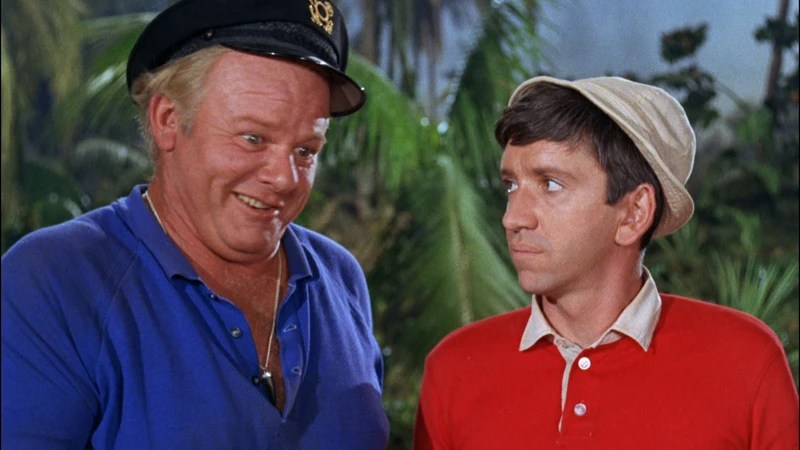
I – a child of the late 70’s who did most of his growing up in the 80’s – always remember having an awareness of older culture. Sure, a lot of the cartoons I grew up with were the 30-minute toy commercials of the era like Transformers and Masters of the Universe, but those were mixed with stuff like Looney Tunes and The Flintstones, cartoons that our parents and even grandparents watched, but were repackaged for our generation. Live action TV worked much the same way. Of course we had new shows, but not enough of them to fill an entire broadcast day, so we were fed those alongside a diet of shows that went off the air years or even decades before we were born like The Beverly Hillbillies, Gilligan’s Island, or The Honeymooners. And of course, we grew up on genre shows like the original Star Trek, the Adam West Batman and George Reeves’ Adventures of Superman.

This and Emily Bronte, basically the same thing.

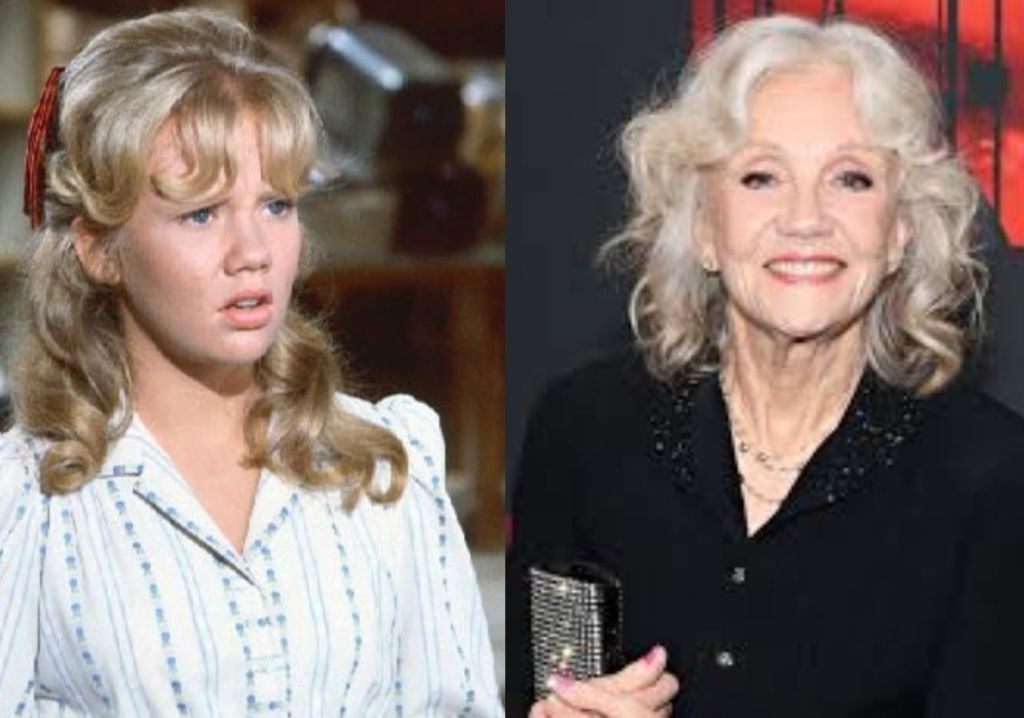
A lot of this, of course, is because we were most likely exposed to what our parents liked. Once kids my age were old enough to choose our own music we drifted towards hair metal and those 80s pop stars that gave birth to the modern diva, but we still sure as hell knew who Elvis and the Beatles were because our parents played them in the car before the invention of the Sony Walkman allowed children to erect musical barriers on road trips. And although it may surprise some people to learn that I did not grow up as a fan of horror movies, that’s because my parents didn’t watch them. Thanks to my mom, though, I have a not-insubstantial knowledge of live-action Disney movies of the 1960s, and I suppose I may as well admit that one of my earliest crushes was Hayley Mills circa the original Parent Trap movie from 1961.

Hayley is 80 now, but if you saw her in M. Night Shyamalan’s 2024 thriller Trap, you will admit she’s still got it.

You can’t change my mind.

Now you may be wondering what difference any of this makes. After all, trends have always come and gone, some culture fades and is replaced. And yes, that has always been the case…for some culture. But not all. There’s an old axiom that 90% of all art — and that includes music, writing, and any other art form you can name – is crap. And that’s true. We remember Shakespeare, Da Vinci, Beethoven. We remember them because they were masters of their craft. But there are thousands of others who lived and worked and created and died at the same time as them whose work has been utterly forgotten, and much of it because it just wasn’t as good. 

Not to say nothing good has ever been lost. There have been – and always will be — creators kept down due to class or politics or a million other reasons that have doomed them to obscurity. But while it’s true that many a deserving work has been lost, it’s also true that the things that stand the test of time largely do so because they’re worth preserving, and new generations have always recognized that. 

Until now.

Technology has reached a point where everyone has the ability to create their own little bubble, their own personalized feed, where they never have to be exposed to anything except what they teach the algorithm they like already. That’s horrifying to me. And I don’t mean that in a gatekeeping way. Like whatever you like, I don’t care. But if all you ever see is stuff you already like, how will you ever grow?

As an English teacher, it bothers me when someone wants to replace a classic with whatever the Flavor of the Week YA series is in the name of “Engagement,” and not because I don’t think the new stuff can be good. I’ve got no problem teaching, for instance, Rick Riordan’s Percy Jackson novels, because they’re well-written and even help with teaching the classics via their many links to Greek Mythology. But reading The Lightning Thief should be a supplement to things like The Odyssey, not an effort to take its place.

Although Zendaya as Athena would work in either of them.

I want culture to be additive. I want people to be able to enjoy anything and everything and not dismiss it because it’s old. My favorite part of the school year is when I can tell an 18-year-old is furious at Hamlet for how he mistreats poor Ophelia, because that means I got them to care about a 400-year-old play. How easy is it to get a modern kid to even care about a cartoon from 1987? And sure, it thrills me when a student says, “I scored a 28 on the ACT,” but it thrills me just a liiiiiittle more when that same kid says, “Man, Hamlet did Rosencrantz and Guildenstern dirty.”

I try my best. I encourage the kids in my class to seek out classics. I share my own favorites with my family. I am proudly the only parent among my son’s third-grade class with a child who can sing multiple variants of the Mystery Science Theater 3000 theme song. And I could not wait until my niece was of an age where I could give her a copy of Stephen King’s Eyes of the Dragon for Christmas. 

It is possible, you just need to help someone find the value. One of my favorite TikTok feeds is by a young film student who wants to go back and watch all the classics she’s never seen before. Once a week, she randomly chooses a movie from a box full of suggestions and makes a video of herself reacting to it. It’s fun to watch this kid unravel the mystery of Hitchcock’s Vertigo, raid that lost ark with Indiana Jones, or follow the Hobbits as they leave the Shire for the first time. My favorite video of hers is the one where she sobs at the end of The Shawshank Redemption and asks, “Why do the movies my dad tells me to watch always make me cry?”

Because your dad isn’t made of STONE, that’s why.

If I ever meet her dad, I owe him a high-five.

I don’t oppose kids having their own stuff.

They should. They’re entitled to it.

I just want them to remember that Shakespeare wrote some damn good stuff. too.

And Mark Twain. Mary Shelley. Edgar Allan Poe. Charles Dickens. I’d like it for them to know when they’re humming a little Brahms, or that the Scream Ghostface mask is based on a painting by Edvard Munch.

I don’t even want them to forget Madonna.

So don’t shame people for not knowing the stuff from our youth. Share it. Give them a reason to engage. And above all, show them what it means to endure.

Blake M. Petit is a writer, teacher, and dad from Ama, Louisiana. His most recent writing project is the superhero adventure series Other People’s Heroes: Little Stars, volume one of which is now available on Amazon. He’s also started putting his LitReel videos on TikTok. Could you imagine a world that forgot Jan Brady? Okay, so maybe it wouldn’t be all bad.