There’s something about a good twist. A surprise moment in a story, an unforeseen circumstance that propels you into areas of fantasy you may never have expected. A good twist, of course. A bad twist usually just leaves things feeling trite and warmed-over, something that is boring and predictable at best, illogical and completely nonsensical at worst. But a good twist recontextualizes the story, fills in gaps and makes them feel suddenly whole, and makes you look at everything that has come before in a brand new light.
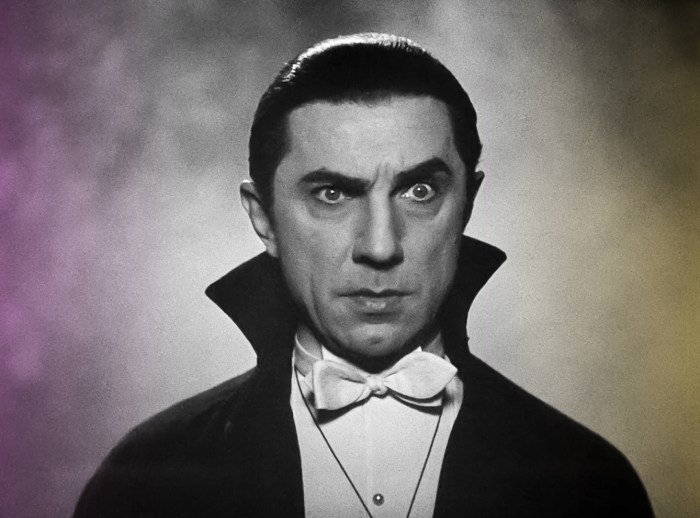
The problem with a twist – especially a good one – is that after the story is over that’s all the audience wants to talk about. It’s a good problem to have, an audience that enjoyed your story enough to spread the word, but it’s still a problem in that it makes it more difficult for future audiences to enjoy the twist unspoiled. Dracula is a classic example. Brahm Stoker didn’t invent the concept of a vampire, but when he wrote his novel in 1897, it was written with the titular count as a mystery. The heroes in the story did not know at first what they were facing. The clues as to his true nature seem obvious today, in a world in which vampire tropes are ubiquitous, but to a 19th century audience that didn’t know what to look for, it worked as a surprise.
“Sure, this guy seems legit.” –Audiences in 1987
Dr. Jekyll and Mr. Hyde faces a similar problem. The story became so popular that “Jekyll and Hyde” is now an all-purpose term for a character (or a person in real life, for that matter) with two contrasting sides. But when Robert Louis Stevenson wrote the book, that simply wasn’t a thing yet. The idea that Henry Jekyll transformed into Edward Hyde was the shocking twist. It’s so commonly known now, though, that most adaptations of the story don’t even bother to disguise it anymore. What was intended as a clever fantastic mystery has become a standard monster trope.
Lots of other stories have entered the common discourse. You would be hard-pressed to find someone that doesn’t know Bruce Willis’ character in The Sixth Sense is a ghost in every scene after the first one, even though the character himself is unaware of it. Everybody knows that Norman Bates is the killer in Psycho, but the movie does its damndest to make you think it’s his deceased mother right up until the climactic scene. And even if you’ve never seen Citizen Kane, at some point I bet you’ve heard somebody say the phrase “Rosebud was his sled.”
Oh quit whining. If you haven’t seen the movie by now you were never going to anyway.
The twist problem is kind of a subset of the spoiler problem. Stories are constructed in a certain way to create a certain impact, and if an audience knows too much too soon it will rob the storyteller of the opportunity to tell the story the way they intend. There are some who argue that if knowing the twist ruins the story, then it wasn’t a good story in the first place. This attitude is, to use a term popularized by Beatrix Potter, horseshit. It’s like saying that if you don’t like your pizza after someone steals your cheese, it was never a good pizza. Anything will become bad if you take away the elements that make it what it is. That doesn’t mean it’s not really good when all the elements are there.
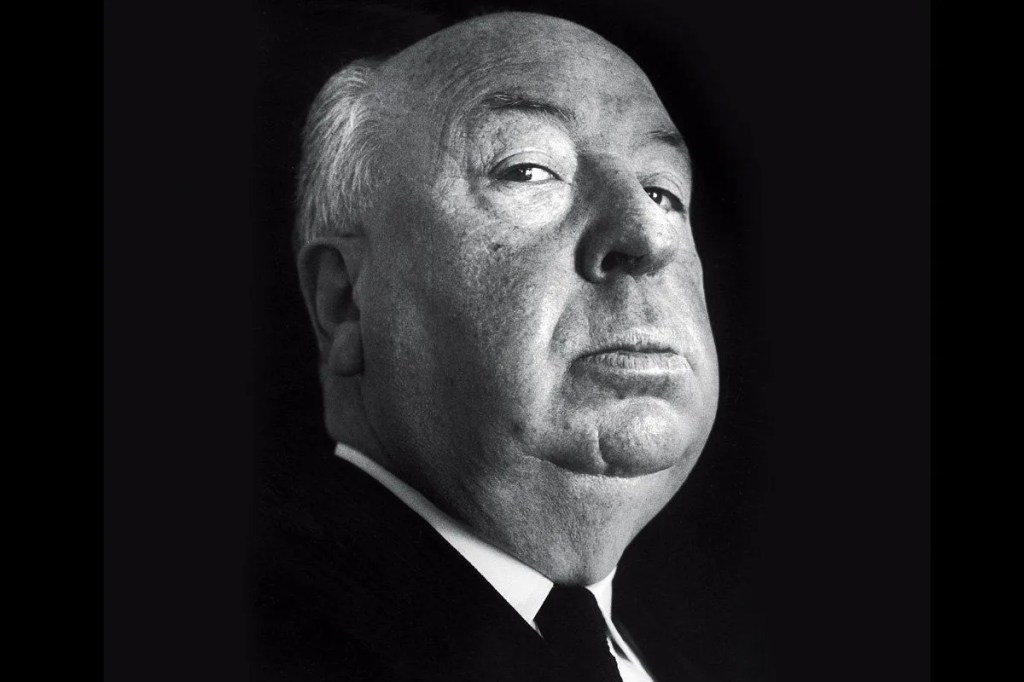
Some story tellers do their best to preserve a twist. When Avengers: Endgame came out, the Russo brothers took to social media and pleaded with people not to reveal the ending. It didn’t really work, but they tried. That’s really the most you can do these days, but when Alfred Hitchcock was making Psycho he actually bought up as many copies of the novel it was based on as he could in an effort to prevent people from knowing the ending. I’m pretty sure that if Hitch were alive today the very existence of social media would send him flying into a murderous rage, which appropriately enough feels like a twist out of a Hitchcock movie.
Imagine being a bookstore clerk and then this guy walks in demanding every copy of Psycho you’ve got.
Solid twists are, in a way, a victim of their own success. Because they’re good, word spreads and the impact is lost for future audiences. The newest member of this club is Project Hail Mary. Now normally, this would be where I warn you that I’m about to spoil something from the novel, but the whole point of this column is that – if you have even the most marginal awareness of this movie – the trailers, marketing, discourse, and merchandise have spoiled it for you already.
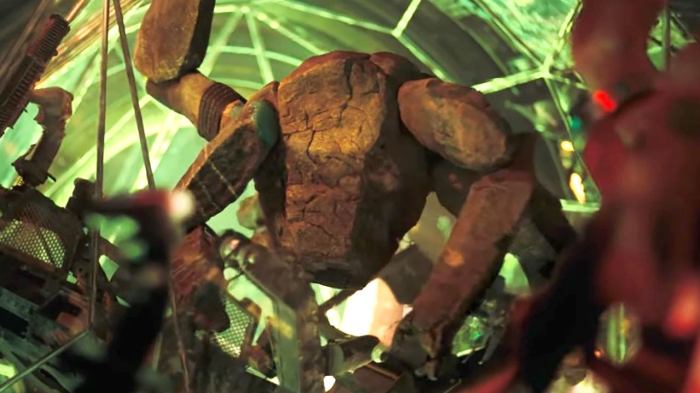
Last year, when the trailer for the movie dropped, I saw comments online from fans of Andy Weir’s original novel warning that the trailer straight-up gave away one of the biggest surprises of the book. Not having read the book yet at the time I — in an act of self-preservation not unlike the hellish ordeal endured by Tom Hanks in Cast Away — avoided watching the trailer and moved the novel to the top of my to-read pile. And I’m very glad I did, because I was allowed to enjoy the story as originally intended: I read as Ryland Grace woke up on a spaceship, slowly regained his memories of how he got there, learned about his mission to save the world, and OH MY GOD, HOLY CRAP, IT’S AN ALIEN!
Amaze! Amaze!
And of course; if all you’re familiar with is the movie, that may seem like an absurd reaction. Of COURSE there’s an alien. He’s in every trailer. They’re submitting his puppeteer for Oscar consideration. He’s ADORABLE.
But you have to remember that Andy Weir is known for “hard” science fiction, stories that take great pains to make the science part as real as possible. There was never even a hint that he would be introducing an alien until the ship appeared, and the reader was as stunned as the character in the book.
There was no way this shock would be preserved for the movie, of course. The studio — fairly – wanted to show off their newest star. They’ve made promos of Rocky “borrowing” Ryan Gosling’s phone to buy tickets to see his own movie. You can get a popcorn bucket that looks like Rocky in his “hamster ball.” Fortunately – like with Dracula and Dr. Jekyll – it was possible to reframe the story just slightly so that losing the surprise didn’t stop it from being the best movie of the year. (Yeah, I know it’s only May. I’m calling it now.)
I don’t think there is a real solution to this particular problem. For as long as there are stories to tell, people will want to pick apart and talk about them and, eventually, the best twists will just become part of the common discourse. So instead of trying to stop it, let’s all just remember to be charitable to these kinds of stories, especially the older ones. Sure, we may all know that Mrs. Voorhees is the one who started chopping up those camp counselors now, but it wasn’t always that way.
Blake M. Petit is a writer, teacher, and dad from Ama, Louisiana. His most recent writing project is the superhero adventure series Other People’s Heroes: Little Stars, volume one of which is now available on Amazon. He’s also started putting his LitReel videos on TikTok. He’s still irritated that the big twist in Reservoir Dogs turned out to be the unforgivable lack of dogs.
Last week, in a column that has been-fast tracked for the 2023 Pulitzer Prize for Blog Posts about Horror Movies (probably not a real thing) I asked my friends on social media to give me suggestions for categories of horror. I would then report back on your suggestions here and talk about some of my favorites in each category. I got a lot of great suggestions – so many, in fact, that I couldn’t fit them all into a single column. So buckle in, my friends, it’s time for Week Two of Playing Favorites With Horror Movies!
Horror Without a Death
Duane Hower came at me with one of the toughest suggestions of the whole batch: what’s my favorite horror movie in which NOBODY DIES? (And a note here – just the fact that a movie can be mentioned in this category qualifies as a spoiler, so if you’re squeamish about that sort of thing, you may want to hop down to the next category.)
It was tough, guys. There aren’t that many films that meet the criteria – after all, the point of horror is to instill fear, and that inherently brings with it the fear of the void. There are plenty of horror/comedies that fall into this category, sure, but straight horror? It’s not easy to find good examples.
A few eventually came to mind. Poltergeist is about a family that moves to a new home only to discover malevolent spirits already inhabit their dwelling. The Others is about a family that moves to a new home…only to discover that malevolent spirits already inhabit…okay, there’s a pattern. But 1408! That mixes it up! That’s about a travel writer who gets a hotel room! And finds that malevolent spirits inhabit the dwelling.
“I see dead people. Not fresh ones, though.”
Still, these are solid films where nobody dies (well…depending on which cut of 1408 you watch). The thing is, they’re also all ghost stories. And ghost stories rock, don’t get me wrong, but they’re stories about somebody who has already died. Can I count them in this category, just because the deaths in question happened before the movie began?
If I rule out ghost stories, the pool gets even shallower, but there are still a few tasty fish in it. Tod Browning’s Freaks from 1932, for instance. The director of Bela Lugosi’s Dracula followed it with this movie about performers in a circus sideshow and an unscrupulous woman who plans to take advantage of them to seize an inheritance one of them is due to collect. The movie is pretty wild, and was so controversial at the time that Browning’s career was essentially destroyed. But nobody dies in the film…although by the ending, there’s someone who may wish they were dead.
I also need to give credit to One Hour Photo, a thriller starring the late, great Robin Williams. Williams plays a man who works for one of those one hour photo development labs (kids, ask your parents) and becomes dangerously obsessed with one of the families whose film he processes. Williams, of course, was a legend for his comedic roles, and often showed his dramatic chops as well in movies like Dead Poets Society and Good Morning, Vietnam, but this is the only movie I can think of that showed how outright SCARY he could be when he set his mind to it. The man was a unique and priceless talent, and I feel like this is a movie that doesn’t get talked about enough, possibly because the entire premise is centered around a piece of late 20th century culture that doesn’t really exist anymore.
Hammer Horror
My old buddy Eric LeBlanc wanted to know what my favorite movie was from the Hammer Films catalog. In the 1950s, after Universal Studios quietly put an end to their monumental run of monster movies, Britain’s Hammer Films saw an opportunity to fill the void. Not only did they start pumping out horror movies at a pace that would have made Carl Lammle Jr. pick his jaw up off the floor, but they did so by borrowing a heck of a lot of the goodwill that Universal had built up, using the same public domain creeps like Frankenstein’s monster, vampires, mummies, and werewolves.
I never got quite as deep into Hammer as I have into the Universal library, but I’ve seen a lot of their films and I definitely have my favorites, the top being 1958’s Horror of Dracula (or sometimes just Dracula). Incredibly stylish and colorful, the movie is also a bit more faithful to the original novel than the Universal version. Plus it has two of the giants of horror in some of their best parts: Christopher Lee as Count Dracula and Peter Cushing as Van Helsing. Lee is creepy and charming, and the only reason he’s not considered the definitive version of Dracula is that Bela Lugosi beat him to it. And Van Helsing? Sorry, Hugh Jackman, but Peter Cushing owns that role.
The HORROR…of a world without photoshop.
Stephen King Adaptation
Rachel Ricks played right into my hands by asking for my favorite Stephen King adaptation.
Project ALF.
Iiiiiiiit’s baaaaaaaaack!
As anyone who has read this blog for more than a day knows, I’m a huge fan of Stephen King’s books…but what about his movies? There have been over 200 adaptations of King’s novels and short stories (I checked IMDB), so which one is the best? Truth is the really great ones aren’t actually horror movies: The Shawshank Redemption, The Green Mile, and Stand By Me are some of the best films ever made based on King’s work, but none of them qualify as horror. When you get into the scary content, the sad truth is that a lot of the adaptations are sub-par. (I mean…have you SEEN Maximum Overdrive? Whoever directed that movie doesn’t seem to have the slightest idea what Stephen King is all about. It’s like he was on cocaine or something.)
That said, there are SOME good horror movies based on King’s work. Many people would point immediately to The Shining, but I’m not among them. Look, it’s a good movie, but as an adaptation of King’s book it is terrible. I’d rather focus on movies that DO adapt the books more or less faithfully.
I already mentioned 1408 earlier, and I’d place it close to the top of this list. At the VERY top, though, would be Misery, the James Caan/Kathy Bates adaptation about a writer (it’s a Stephen King movie, of COURSE it’s about a writer) who gets in a terrible car accident only to be saved by his biggest fan. As he begins to heal, though, he discovers that he may have been better off in the wreck.
Some people, however, would classify Misery more as a thriller than a horror movie, so for those who like to split hairs, let’s talk about The Mist. A mysterious fog full of murderous monsters rolls over a small town, trapping dozens of people in a supermarket. The adaptation is solid, but what really elevates it is the ending. Frank Darabont, who wrote and directed this film (and Shawshank and The Green Mile, so you see his pedigree) changed the ending of the story, something that I usually find outrageous. But the ending he put on was so shocking and dark that even Stephen King himself says he prefers it to the original.
And I’ve got to give credit to It. I consider this one of King’s best novels – perhaps THE best Stephen King novel – and we’ve gotten TWO pretty good adaptations. The original miniseries from the 90s did the best it could on network television, and Tim Curry is iconic as Pennywise. But in 2017 we got a fantastic adaptation of half of the novel, with Bill Skarsgard taking Pennywise and making him his own. Admittedly, It Chapter Two from 2019 didn’t quite live up to the first part, but you can watch the first part on its own and get a solid, satisfying story. It’s darn near perfect.
It’s good to be the King.
The Wonderful World of Disney
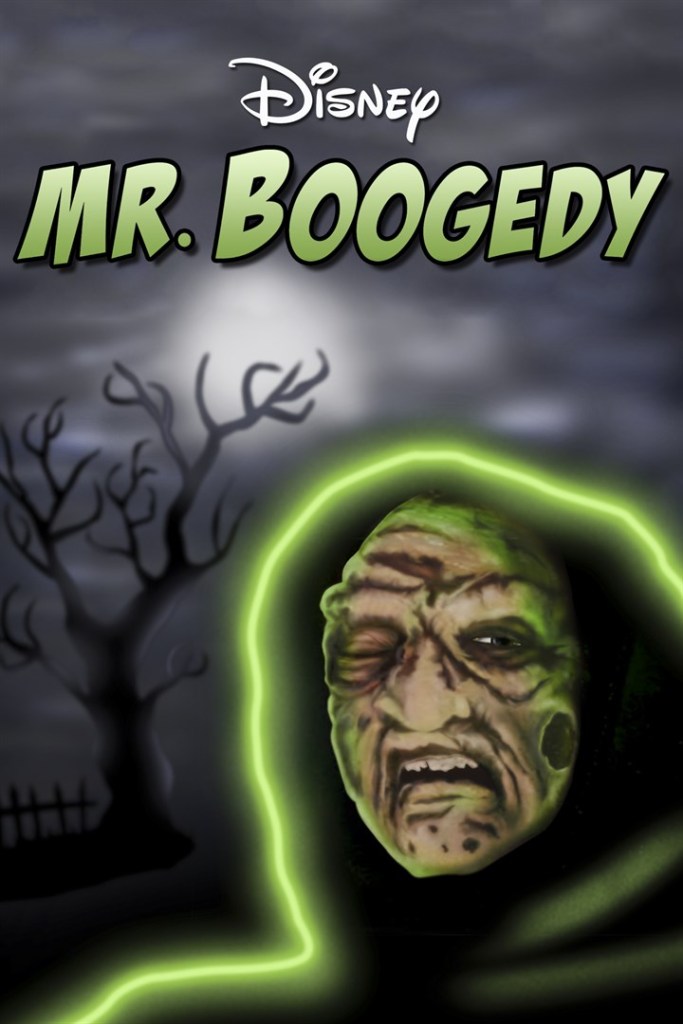
Ryan Tait gave me a category I NEVER would have thought of, but absolutely love: my favorite Wonderful World of Disney Halloween movie. Back in the day, before even the Disney channel, Wonderful World was a delightful showcase for Disney content of all stripes, and some of those made-for-TV movies still hold a warm place in my heart today. My favorite for this category is going to both show my age and make a lot of people wonder what the hell I’m talking about, but I have a deep abiding fondness for the 1986 film Mr. Boogedy.
From the studio that brought you Old Yeller.
A novelty salesman and his family move into a new house that turns out to be haunted (SO MANY of these movies are about people who move into haunted houses, and there are some downright unscrupulous realtors out there) by both some kind ghosts who have been trapped there and by the malevolent spirit who has kept them prisoner. It’s a silly, cheesy movie, but it’s so much fun. And the cast has a great pedigree. Richard Masur of the 90s It, a pre-Buffy the Vampire Slayer Kristy Swanson, a pre-Married With Children David Faustino, and young Benji Gregory, on the cusp of superstardom for his role on the sitcom…not making it up this time…ALF.
Benji wasn’t in the movie, though.
Both Mr. Boogedy and its (perhaps even better) sequel, Bride of Boogedy, are available on Disney+…but I’m hesitant to tell you to go and watch them if you’ve never seen them before. It’s one of those things where I know my fondness for the movie comes from having watched it over and over again as a child, and I suspect that somebody watching it now, for the first time, as an adult, wouldn’t love it the way that I do. But if you HAVE seen it before and remember it warmly, go check it out. I watched it last year and I still love it.
Installments Past a Sequel
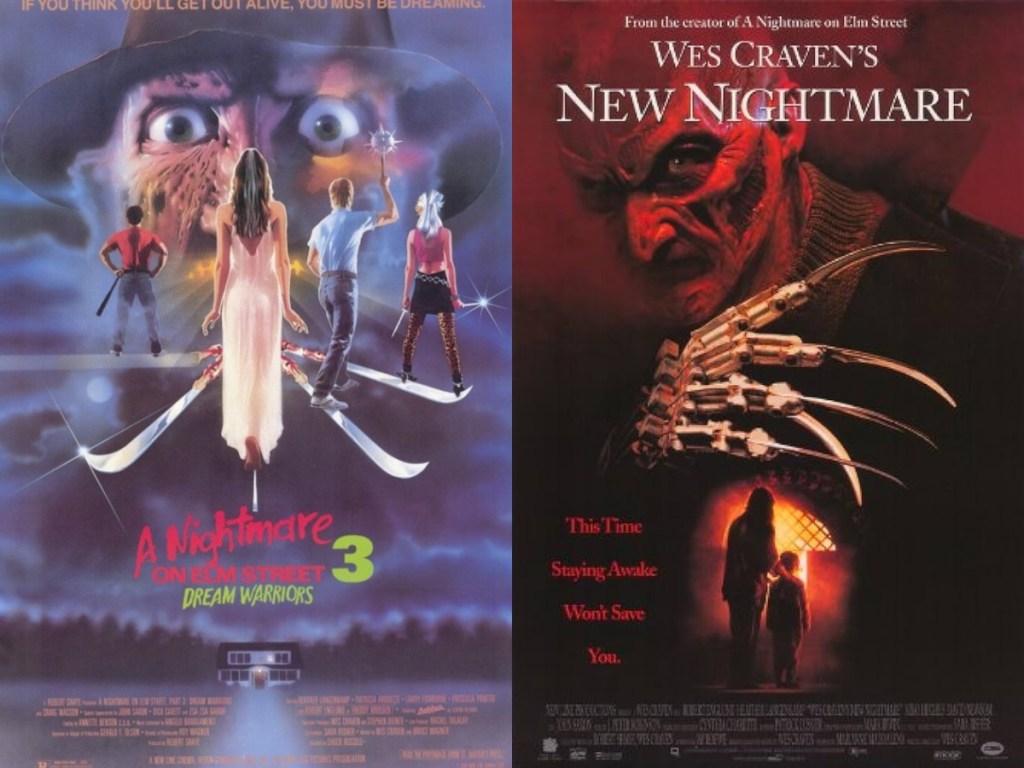
Jasper Fahrig asked what I thought were good installments of a franchise past the first sequel. It’s a truth of filmmaking that long-running series often suffer from diminishing returns. The deeper you get, the worse the franchise often becomes, so finding a good movie that’s part 3 or higher isn’t always easy. Fortunately, Wes Craven is there to hook us up with not one, but two films in the Nightmare on Elm Street franchise. Craven wrote and directed the original Nightmare, but sat out the sequel. When Part Three (Dream Warriors) was made, he came back to help with the story. After a part two that many people admittedly enjoy, but doesn’t really fit with the rest of the franchise, part three is GREAT. Robert Englund is in top form, Heather Langenkamp returns as Nancy (the BEST final girl outside of Laurie Strode), and the crazy horror dream imagery is used to the best effect in the entire series. What’s more, the movie was directed by Chuck Russell (whose remake of The Blob I mentioned last week) and co-written by Frank Darabont. Maybe I’m NOT a horror fan, guys, maybe I’m just a fan of several very specific filmmakers.
But Craven wasn’t quite done. He stepped away from Freddy after that and three more sequels incredibly diluted the character before Wes came back to save the day one more time with Wes Craven’s New Nightmare. Langenkamp is back again, but this time she plays HERSELF, an actress who finds herself haunted by the spirit of Freddy Kruger, the killer from that old movie she made years ago. Craven also appears as himself in the movie, as does Robert Englund, playing both himself and Freddy Krueger. The movie uses the language of the Nightmare series to make a statement about the power of storytelling and belief. It was ” meta” two years before Craven would redefine “meta” with the Scream franchise, and it’s hands-down my favorite Nightmare.
A double feature to keep you up all night.
Award-Worthy Horror
Seth Pontiff wanted to know some horror movie performances that I thought were worthy of Oscar consideration. Oooh, that’s a good one. I’ve often complained about the way the Academy ignores genre movies, but there HAVE been a scarce few performances that got nods. Kathy Bates actually won best actress for Misery, and the next year both Jodie Foster and Anthony Hopkins would take home statues for Silence of the Lambs, but those are movies that the Academy can classify as “Thrillers” without getting their hands dirty in a straight-up horror movie.
So who should have been recognized, but wasn’t? I have to say, I think it’s an outright crime that Boris Karloff was never recognized for his work as the Frankenstein monster. He played the creature three times, twice in movies that are indisputable classics, and infused the monster with such depth and humanity that the viewer comes out the other end on his side. There was so much sadness and power in the character, interspersed with other moments like unbridled joy at those few times he thinks he’s found a kindred spirit, and Karloff sells every second of it. There’s a reason that every kid who draws a picture of the creature gives him a flattop and bolts on his neck, and it’s not because Mary Shelley described him that way.
Another performance that I think was awardworthy? Jamie Lee Curtis as Laurie Strode in Halloween. Not the 1978 film…the one from 2018. This is going to be controversial, I know, because that film has become EXTREMELY divisive among horror fans. And in truth, I was highly disappointed in the final film in that trilogy. But when I look at the 2018 movie by itself I am in awe of her performance. Curtis plays Laurie Strode as a trauma survivor who has spent her entire life preparing for the other shoe to drop. It’s a performance full of anguish and pain, and she sells it every second she’s on screen. I’m glad that she got her Oscar last year for Everything Everywhere All at Once, but I really believe she should have had it sooner.
I’m actually not great at Photoshop either, so pretend I made it look like these two are holding little statues.
Psychological Horror
And finally, AJ Peden asked me about my favorite psychological horror movies. What makes this difficult is that it’s really hard to define what “psychological horror” actually is. The Wikipedia definition (yeah, I looked it up) says it’s horror “with a particular focus on mental, emotional, and psychological states to frighten, disturb, or unsettle its audience.” Well gee, that narrows it down, right? Another problem here is that so many of these movies overlap into other subgenres: ghost stories, slasher movies, found footage films, etc., have all had prime examples of what we could call “psychological horror.”
I suppose my favorites in this incredibly broad subcategory would have to go back to the great Alfred Hitchcock. Psycho is the obvious example – it’s a great movie with a brilliant twist halfway through the film and a second brilliant twist at the end of the film. It’s also one of the prototypes for the slasher. So is Peeping Tom, which is also a dandy example of psychological horror. In that film, directed by Michael Powell, Karlheinz Bohm plays a photographer making a documentary about fear by filming the deaths of his victims. I suppose a 1960 audience may have been enticed by the title or the high sexual content (by 1960s standards) of the film, but the way Bohm’s character messes with your head is really powerful.
In the 60s, this was scarier than asbestos.
For more modern examples, I think Jordan Peele has kind of taken the forefront of the wave. Get Out, the movie that made people realize that guy from the goofy sketch comedy show was actually a master of terror, was not only a meditation on race relations, but a terrifying film about the potential of having your body literally stolen from you and the mental state that would result from – or compel somebody to do – such a thing. There have been a lot of films since Get Out that have tried to capture that same flavor (The Barbarian comes to mind, as does X and its prequel, Pearl), but I think as far as today’s filmmakers go, Peele wears the crown.
And I think that’s going to wrap it up, guys. There are a few other suggestions I didn’t get to, but those are either in categories where I haven’t seen enough movies to really form an opinion (Patrick Slagle – sorry, I don’t have a lot of folk horror movies in my catalog) or categories where my answer is so basic that I don’t know that I have anything interesting to say about it. (Rene Gautreaux: the best religious-based horror movie is still the original The Exorcist. Tony Cirillo, my favorite puppet from the Puppet Master franchise is Blade, because blades are cool.)
I hope you enjoyed this little experiment as much as I did. I had a lot of fun letting you guys tell me what to write about, and I think we uncovered a few gems in the process. May this two-parter help you find some new stuff to watch in the remainder of this spooky season, and keep your eyes right here! I don’t think it’s going to be too long before I ask you all to help me Play Favorites again.
Blake M. Petit is a writer, teacher, and dad from Ama, Louisiana. His current writing project is the superhero adventure series Other People’s Heroes: Little Stars, a new episode of which is available every Wednesday on Amazon’s Kindle Vella platform. All this and nobody asked about the best zombie movie? Ah well, maybe next time.




 Blake M. Petit