Geek Punditry #172: Creating a Character

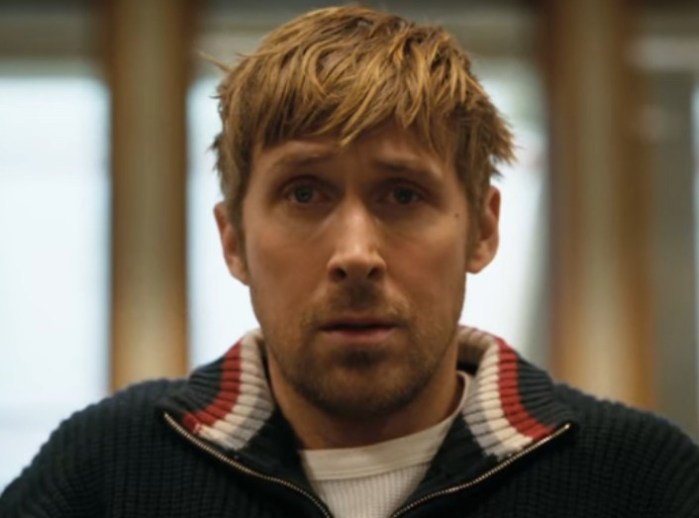
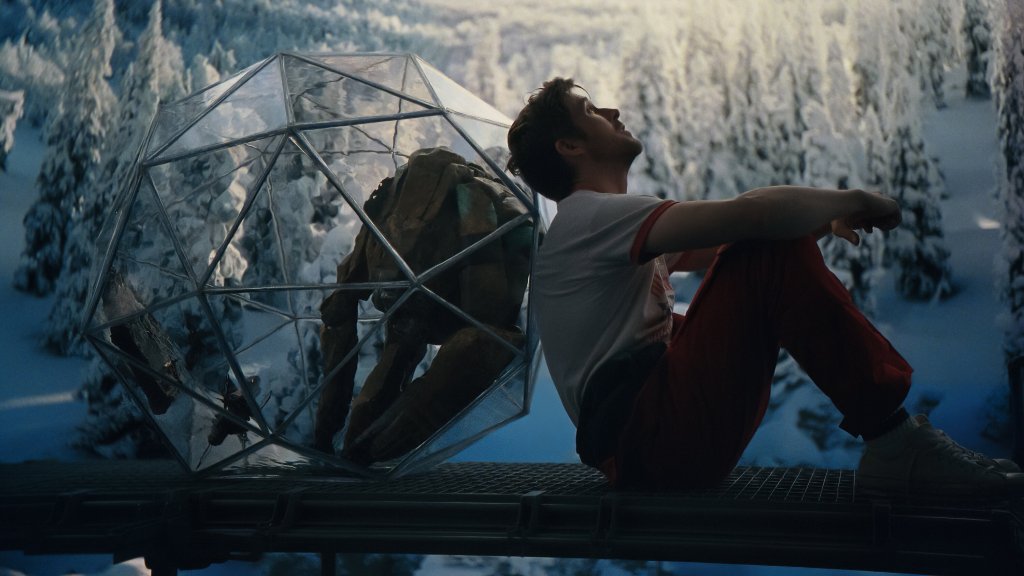
April is a little early to start talking about next year’s Oscar race, especially for somebody like me who – famously – does not care about the Oscar race. However, something interesting cropped up in the news cycle over the last few days that may potentially get me interested in the winner of a specific category for the first time in quite a while. This fella here is James Ortiz.

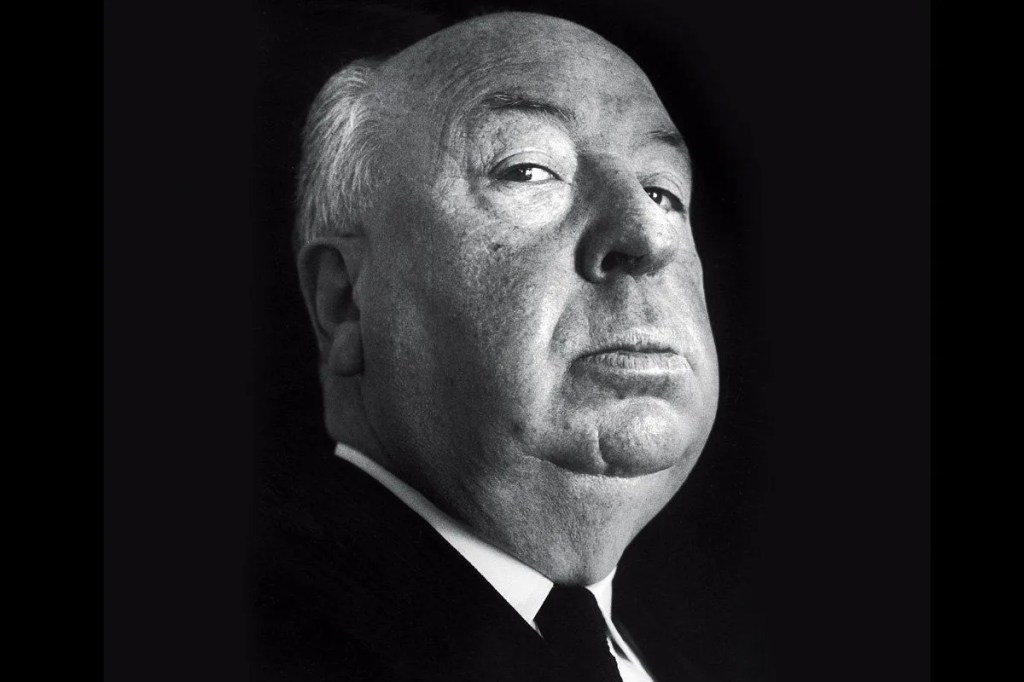
Some Jameses go by “Jimbo.” I just get the feeling he’s not one of them.

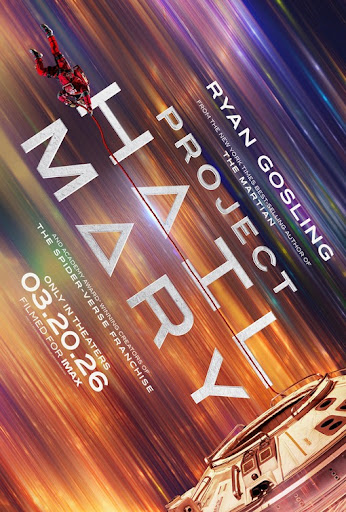
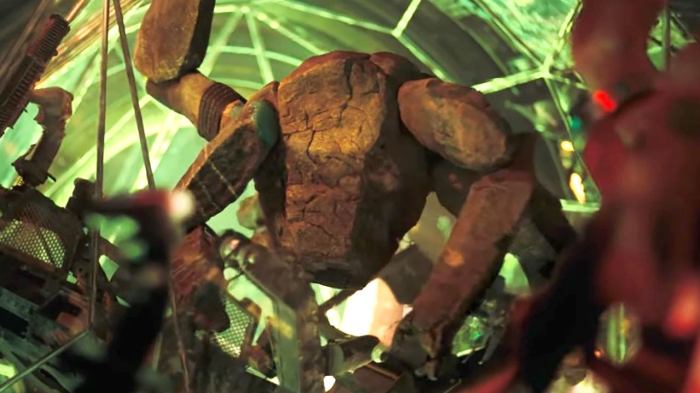
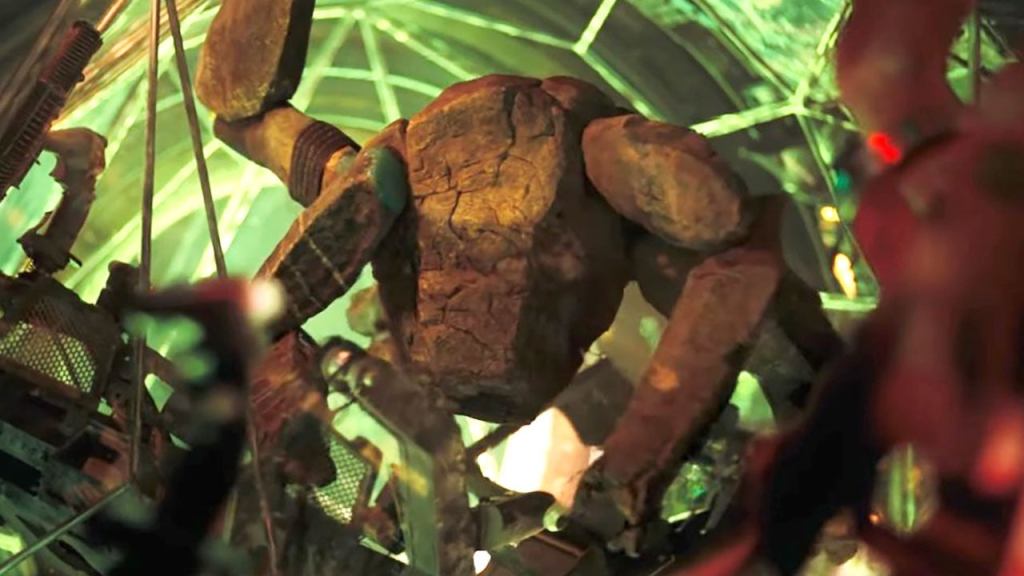
You probably don’t recognize his face, but he’s in one of this year’s biggest hits, Project Hail Mary. Ortiz is the puppeteer behind Ryan Gosling’s co-star, Rocky.

Rocky might, though.

Yeah, puppeteer. That little dude wasn’t CGI. It was an actual, physical puppet on-set, albeit with a few computer “enhancements.” But it was really there, interacting with Gosling, and crawling into the movie theater to reach into your chest and steal your still-beating heart.

Evidently, according to Oscar rules, Ortiz’s work is eligible for a nomination in the best supporting actor category in next year’s Academy Awards, and Amazon-MGM has made it clear that they intend to submit him for consideration. Finally, something about these awards is interesting again. You see, one of the (many) reasons I stopped caring about the Oscars is this feeling that they ignore large swaths of movies that don’t fit into their hoity-toity aesthetic, in particular deserving genre films. No puppet character – or any voice performance, for that matter – has ever been nominated for an acting award in the history of the Academy, despite several performances that have been sincerely deserving.

I’m not saying this to denigrate anybody who HAS been nominated. I’m not pointing to anybody specifically and saying “this person didn’t deserve the nomination, it should have been that voice actor instead.” I’m saying that in the 98 year history of the Academy of Motion Picture Arts and Sciences, you CANNOT convince me that there has NEVER been a voice acting performance that is worthy of at least a NOMINATION. 

A worse snub than Dicaprio in The Aviator.

If Ortiz gets the nod, that would be seismic. It would be the kind of thing that gets people’s attention, and the Academy wants that. But the thing is, he shouldn’t get a nomination just because the Academy is trying to get viewers, he should get it because he completely deserves it. Ortiz was the on-set puppeteer for Rocky and did the performance with the expectation that his voice would later be dubbed over by a big-name actor who hadn’t been cast yet. His on-set performance was so perfect, however, the directors decided to keep him for the vocal performance as well. And if you’ve seen Project Hail Mary, you know that the movie just flat-out would not work if the audience didn’t believe in and fall in love with little Rocky. It wasn’t just the vocals, but the motions, the mannerisms of the character. Ortiz created an entire living, sentient being that held his own with one of the movie industry’s top talents and the two of them made each other better. That’s what acting IS, whether you’re doing it with your own body or with a body made of rods and felt. 

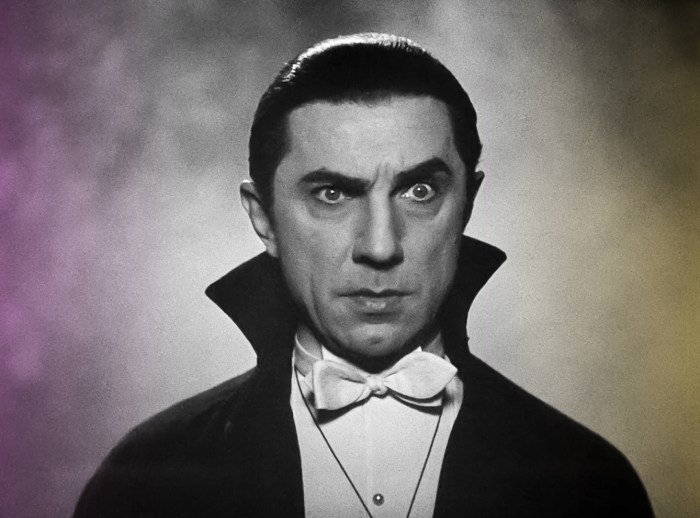
It’s going to be an uphill battle, of course, because as I said, the Academy has traditionally shunned movies like this in all but the technical categories (things like special effects, makeup, costume design, etc.) There have, of course, been some few instances of genre films getting mainstream recognition. Sinners – a vampire movie – racked up a lot of nominations last year, including Best Picture, and it took home the awards for Best Actor, Original Screenplay, Cinematography, and Original Score. But the acting award for a vampire movie still went to Michael B. Jordan for his (admittedly, deserving) performance of a pair of human twins. In 2017 The Shape of Water took home Best Picture, as did Lord of the Rings: The Return of the King back in 2003, although both of those were shut out of the acting categories. 

It’s that last part that bristles. Sure, these movies did well, but even though Return of the King took home awards for best picture, director, screenplay, and several others, not a single acting performance was even nominated. That’s absolutely absurd. 

The other thing that’s going to hurt Ortiz’s chance, besides the general Academy Attitude (Acadetude?) towards genre films, is the fact that Project Hail Mary came out very early in the year. By the time awards nominations are getting seriously discussed nine or ten months from now, dozens of other movies will have been released and have heavy Oscar pushes behind them, and it will be much easier for the Academy to ignore a film that doesn’t have that kind of recency bias. So as magnificent as it would be to see Ortiz get the nomination, I am not holding my breath.

Others have suggested that if he doesn’t get a competitive Oscar, the film could receive a “Special Achievement Award,” which is a rarely-given trophy the Academy hands out for groundbreaking work that doesn’t necessarily fit into any other category. It was first handed out in 1972, in an era where modern sound and visual effects were in their infancy and new innovations and technologies were beginning to be developed at a rapid pace. However, the last time a Special Achievement Award was given was back in 1995, for the first Toy Story film, ushering in the era of computer animation. That also feels unlikely. Besides, Ortiz’s performance isn’t a technical game-changer – puppeteering is an ancient art. He was just REALLY FREAKING GOOD AT IT.

This brings me to my larger point – there is a whole section of acting that the Academy has ignored for its entire existence, and it’s time to change that. After all this time, there needs to be a category for – and this is the best term I can come up with for it right now – Best “Created Character.” Vocal performances. Motion capture. Puppeteering. Instances in which a character is crafted in a non-traditional acting performance. These aren’t new concepts – even motion capture has been around for decades at this point – so why aren’t they recognized?

In the alternate universe in which I am in charge of the Academy, instituting this award will be the second thing I do, after installing a trap door under the microphone for anyone who starts yammering about politics in their acceptance speech. This award would be given to an individual or to a group of people who contribute to the creation of said character, with the exact names included decided at the discretion of the film’s producers when submitting for the award. In general, though, this would be used to recognize the vocal performer, on-camera performer, and technical creators of the character, whether that’s one person or an entire team. (It will pointedly NOT be given out for any AI “creations,” as all of the disciplines I mentioned consist of actual human skill and talent, whereas an AI character would require typing in prompts until the computer remembers how many fingers a human being is supposed to have.)

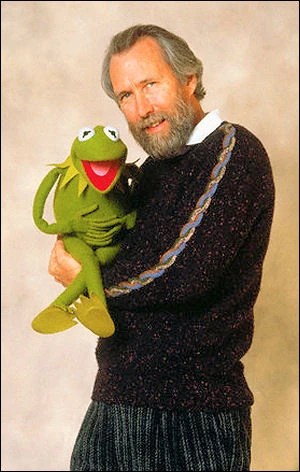
Let me explain. Had this award existed in 1979, when The Muppet Movie came out, Jim Henson could have been nominated for Kermit the Frog. He likely would have been the only person named in the nomination, as he was Kermit’s vocal performer, puppeteer, and designer. For the 1986 version of Little Shop of Horrors, on the other hand, the nomination for Audrey II would have gone to Levi Stubbs, who voiced the plant, and be shared with the principal puppeteers for her. (Wikipedia lists 21 separate individuals as being “principal puppeteers” in this case. That’s a little extreme, but the point is valid.) The nomination would also have been shared with Lyle Conway, who designed the puppet, and the fabrication team who actually built it. 

Of course, if there’s only one trophy, they would have to work out some sort of custody arrangement.

In traditional animation it’s a little simpler. Let’s use 1991’s Beauty and the Beast – the first animated movie ever to get an Academy Award nomination for Best Picture. In most major animated films, each main character has a lead animator or animation team assigned to them, so that person or people would share the nomination with the character’s voice actor. The nomination for the Beast would have gone to voice actor Robbie Benson and lead animator Glen Keane, whereas Belle would have been shared between voice actor Paige O’Hara and animators James Baxter and Mark Henn. 

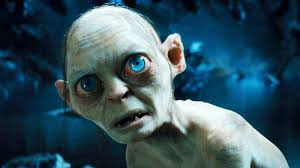
Then there’s motion capture, the (relatively) new kid on the block, which is an interesting kind of marriage between puppeteering and animation. In mo-cap, a performer’s motions and mannerisms are captured by computer and used as the model for the animated character. The performer may or may not also provide the character’s voice. The most legendary example of this is Andy Serkis, who performed Gollum in the Lord of the Rings films, and is often cited as the most egregious oversight in the trilogy’s many, many acting snubs. Serkis was both the on-set performance actor and the voice actor for Gollum, and in my category would share the award with digital “puppeteers” Jason Schleifer and Bay Raitt, who used Serkis’s performance to create the animated character. It would be similar for a character like Rocket Raccoon from the Guardians of the Galaxy movies, where the award would be shared between the digital creators (I wasn’t able to find the names of the individuals, but the effects company who worked on him in the first film was called Framestore), voice actor Bradley Cooper, and motion capture performer Sean Gunn. 

The worst Oscar snub since — no, really, I mean it this time.

Amusingly, my own rules don’t specify that the performer be human, which would make a character like Krypto from Superman and this summer’s Supergirl also eligible. The puppeteering team would have to share the award with James Gunn’s dog Ozu, who was the model for Krypto. I mention this mainly because I find the idea of Gunn walking onto the Academy Award stage carrying his little hyperactive dog to be absolutely adorable.

Is the creation of this new award likely? To be honest, probably not. But it’s not impossible, either. After all, the Academy announced last year that it will introduce a new competitive category, “Achievement in Stunt Design,” beginning with the 2028 awards ceremony. That’s right! Stuntwork, one of the most fundamental elements of filmmaking since its inception, will begin getting recognized at the 100th Academy Awards! And if it took a mere  century for stuntwork to get the recognition it deserves, how far behind could my little idea possibly be?

I don’t really expect the Academy to make these changes, of course. And I don’t really hold out a lot of hope for Ortiz to get the nomination he deserves. But there’s always a chance, right? I suppose I agree with Ron Swanson: “I still think awards are stupid, but they’d be less stupid if they went to the right people.” 

Blake M. Petit is a writer, teacher, and dad from Ama, Louisiana. His most recent writing project is the superhero adventure series Other People’s Heroes: Little Stars, volume one of which is now available on Amazon. He’s also started putting his LitReel videos on TikTok. The fact that Carroll Spinney went recognized for his tearjerker performance in the 1985 masterpiece Sesame Street Presents: Follow That Bird will never cease to pain him.
Geek Punditry #170: This Is How We Do It-Project Hail Mary

Admittedly, I’m a few weeks late on this. In my defense, I needed to wait for a day when my son was in school but my wife and I both had off, a convergence of scheduling that happens with approximately the same frequency as the appearance of the 17-year cicada. But yesterday, while Eddie was at school, Erin and I took in Project Hail Mary, and it’s exactly the story we all need right this very minute. 

That’s right. Extreme sports.

In “This is How We Do It,” I break down a piece of storytelling that I find to be exemplary with the intent of describing what it does so well and, more importantly, HOW it does it that well. As such, it’s almost impossible to do so without spoilers. So if you haven’t seen the movie Project Hail Mary or read the novel by Andy Weir and you want to remain spoiler-free, you should probably skip over this column. If you’re up to date, great. Let’s talk about just what makes this movie in particular exactly the sort of storytelling we need right now, and why the timing couldn’t have been more perfect.

Project Hail Mary – both the novel and the movie adaptation starring Ryan Gosling – tells the story of a desperate mission to save Earth’s sun from a microorganism called Astrophage that is causing it to dim. Gosling’s character, Ryland Grace, is the only member of the mission to survive the trip to a neighboring star that seems resistant to the Astrophage. Once he arrives, he encounters an alien whose own world is also being impacted by the menace, and together with the alien he dubs “Rocky,” Grace begins the search for something that can save both planets.

To begin with, the film (with a screenplay by Drew Goddard and directed by Phil Lord and Christopher Miller) follows the novel very closely. Both the book and film utilize a dual timeline, with Grace and Rocky’s mission intercut with flashbacks to the events on Earth that led up to the mission. The in-story excuse for this is that the hibernation has diluted Grace’s memories and they’re slowly coming back to him. Functionally, however, this is a good excuse to avoid telling the story in strict chronological order, which would have the audience going through about a third of the book or movie on Earth TALKING about the mission before it actually begins. While the backstory is necessary and compelling, it wouldn’t really be the most exciting way to get the movie started, and ricocheting between the past and present is an excellent way to tell the audience what they need to know while still getting to the most exciting stuff right up front. 

This, for instance, would not have been the best place to start.

The changes to the story are minimal, and most of them are done to soften Sandra Hüller’s character Eva Stratt, who is in charge of the project and in the novel comes across as slightly more willing to do underhanded stuff in pursuit of the survival of the human species. Most of those edges are sanded off for the movie, with one major exception that I’ll get to later. A few other sequences are left out, but nothing that damages the story. The other big change is a scene that’s added towards the end that returns to Earth to show the mission is successful – success that is more implied in the novel rather than shown outright.

Structure explains how the story is well-told, of course, but that doesn’t explain what makes the story itself good. The movie shares a lot of DNA with Andy Weir’s previous novel-to-film adaptation, The Martian, which is another favorite of mine. Both of these are outer space dramas with a healthy dose of comedy about a single human astronaut trying to survive in unprecedented conditions. Neither of the stories have what one would consider to be a traditional antagonist – there is no “bad guy” in either. Both of them presume a world in which a spirit of cooperation spreads amongst the human race in defiance of a problem caused by nature. The thing that differentiates the two stories most is the sheer SCALE of it all. The Martian is the survival story of a man who is accidentally left behind on the planet Mars when his space mission is forced to abandon the planet. The only person whose life is in jeopardy is Mark Watney, and the fact that virtually the entire world is willing to come together to get him home is wonderfully inspiring. In Project Hail Mary, though, the stakes are raised dramatically: rather than a single person, all life on TWO planets will be lost if Grace and Rocky can’t find the solution to the Astrophage catastrophe. 

Elmo may hate this guy, but you’ll love him.

Speaking of the solution, that’s another thing that Weir is exceptionally good at: he talks about several high concepts – both real science and science fiction – in a way that is accessible and understandable even to a bozo like me who still stares at the refrigerator wondering how it knows to turn the light off when I close the door. Sure, the movie doesn’t make me feel like a scientician, but it tells me what I need to know in a way that is mostly comprehensible. Some of the math, I admit, goes a little over my head, but in those cases I’m willing to just nod and accept that Weir’s calculator is accurate and whatever he says those numbers mean is, in fact, what those numbers mean. The point is, these are stories where the science is not an obstacle, and in a world where it seems like people want to abandon these kinds of concepts, that’s more important than ever.

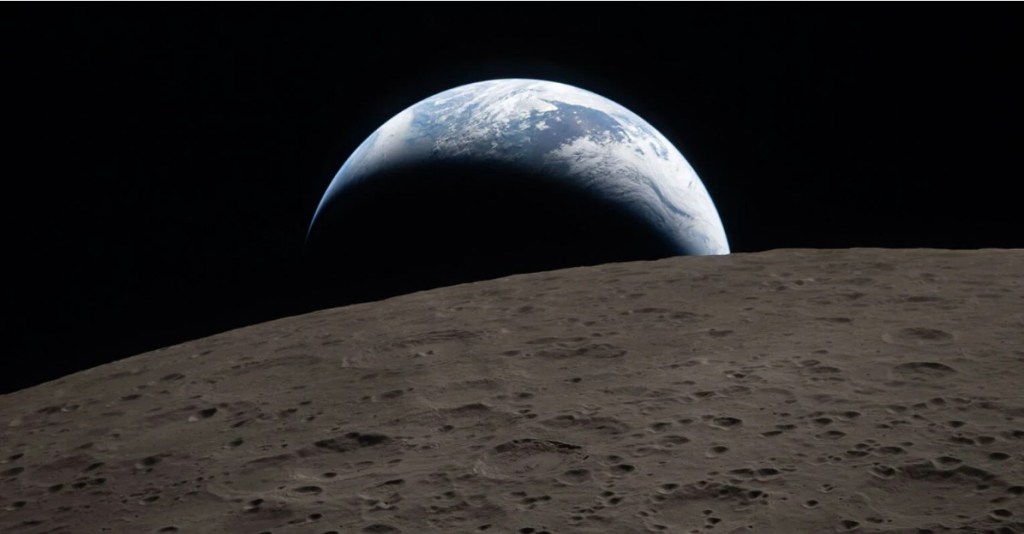
I mentioned before how great the timing of the movie turned out to be. By that I’m referring to the fact that it was released just days before the Artemis II rocket was launched, sending human astronauts back to the moon for the first time in over 50 years. This is – I’m going to underplay it a little here – a big whoop. The fact that we’re finally going back to the moon, with plans to actually begin building a base there in less than three years – is magical. For folks my age (I identify as a Xennial, if you insist on putting a label on it), it’s as though at least ONE of the futures that we were promised during our youth is FINALLY starting to make a little bit of headway. But I’ve been completely dumbfounded by the sheer number of people coming out of the woodwork on social media decrying it as fake. 

“It’s all AI!” –That guy you went to high school with who breaks into abandoned houses to steal the copper wiring.

I pride myself on being accepting of different ideas, and I do my best to respect other people’s points of view and differences of opinion. I like to think I’m mature enough to understand that the fact that someone can interpret the world and arrive at a different conclusion about certain things than me, and that does not make them stupid or brainwashed or a bad person. But this is one situation in which I simply…can’t. I cannot fathom how anybody can sincerely believe this kind of flat-Earth, moon-landing-denying nonsense. (I know it’s not all sincere – there are plenty of trolls out there – but there are ENOUGH people who really believe it to make my eyes burn.) I feel like so many of these people carry around a highly undeserved sense of superiority, as though their beliefs somehow make them better than other people. And y’know what – even if they WERE right about the moon, thinking that this is a sign of some sort of higher evolution on their part goes against everything that a real quest for knowledge is about. It shouldn’t be about division, but about finding that universal truth.

That’s one of the other truly magical things about Project Hail Mary. The core of the movie is the friendship between Grace and Rocky, each the only survivor of their respective missions, who come together for a common goal. And when you unravel the threads of the story and look at how it’s all woven together, it should be abundantly clear that neither of them would have had a chance at success without the other. It’s Rocky’s technology that allows them to gather and breed the samples of alien bacteria that prove to be the predator of the Astrophage, but it’s Grace who discovers that’s what they are and breeds them in such a way that they can be useful – and that’s just ONE example of their cooperation. Throughout the movie, from the first moment that Rocky attempts to communicate by literally throwing a message in a bottle across the gulf of space to Grace’s ship, the story becomes a celebration of the wonder of discovery and cooperation. It grows from there, first with the two explorers coming into contact with one another, then learning how to communicate, then actually getting down to the mission. The story is a sequence of small victories, each one something to be joyful about, that eventually lead to the final triumph that we’ve all been waiting for.

Top three on-screen bromances: Bert and Ernie, Norm and Cliff, and now Grace and Rocky.

It is a testament to the joy of knowledge and the embrace of collaboration, even on a personal level. The one truly underhanded deed of Eva’s that remains in the movie is when she forces Grace, against his will, to join the space mission after an accident takes the lives of the original science team. It’s a bit worse in the novel, where it is revealed that Eva also deliberately causes his temporary amnesia, worried that if he has all his memories upon waking he may refuse to complete the mission. It should be stressed, by the way, that this is NOT done in such a way as to paint Eva as a villain – she clearly regrets the necessity of her actions, but truly believes that sending him on that ship is the only possible hope for the survival of the entire human race. 

The only reason she has to force him, though, is that when he is asked to do it willingly he is too consumed with self-doubt to accept the task. He sees himself as a coward. But the last thing he hears before being forced into his induced coma is Carl – an agent on the project that he has come to regard as a friend – telling him, “You know who you are.” It’s in space, in orbit around a distant planet, that Ryland Grace truly discovers who he is, and the depths of the courage he is capable of. 

That doesn’t happen for him on Earth. It doesn’t happen – sadly – if the other human astronauts had survived the journey. And it certainly doesn’t happen if there was no Rocky there for him to learn from. The film’s true climax comes after the solution to the Astrophage has been found, when Rocky and Grace have gone their separate ways, but Grace discovers that the bacteria they’ve found will destroy Rocky’s ship if he isn’t warned. The conclusion of his character arc comes when he decides to send his findings ahead to Earth, then gives up his only chance at going home in order to go back and save the alien. Grace proves, in the end, who he is, and we’re all the better for it. 

Project Hail Mary is a beautiful, uplifting, inspiring anthem to human courage and curiosity. It’s a story that puts the best of us on display, not by showing a clean-cut paragon who never makes a mistake, but by showing a relatable and flawed character overcoming those flaws for the greater good, for the sake of his planet, for the sake of an entire planet of other sentient aliens that he’s never even met…but most of all, for the sake of his friend. 

It’s beautiful. It’s art. It’s the kind of story we need so badly. 

So when you’re looking for a movie that makes you feel that there is good in this world, Project Hail Mary is where you should look. Because this is how you do it.

Blake M. Petit is a writer, teacher, and dad from Ama, Louisiana. His most recent writing project is the superhero adventure series Other People’s Heroes: Little Stars, volume one of which is now available on Amazon. He’s also started putting his LitReel videos on TikTok. He wants a life-size Rocky to sit in his classroom. Somebody make that happen.