Superman Stuff #5: Superman, Inc. (1999)

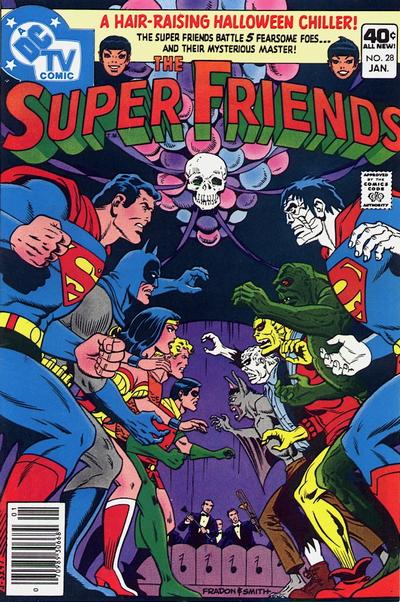
With the “Big Game” coming up this weekend, I thought a sports-themed story would be fun, so this week’s Superman Stuff is going to take us back to 1999 and the Elseworlds one-shot Superman, Inc. by Steve Vance and Jose Luis Garcia-Lopez. I was pretty happy a couple of years ago when DC announced the return of their Elseworlds imprint, and for the most part, I’ve enjoyed how they’ve used it. Rather than a home for one-off stories and prestige format miniseries as we’ve had in the past, DC has been using it to actually build “worlds:” longer stories – six issues, twelve issues – and stories that serve as sequels to or spinoffs of other stories that fall under the Elseworlds aegis. When Elseworlds started, DC was still under the edict that the Multiverse didn’t exist anymore. Now that the Multiverse is back in full force, they’re using the Elseworlds imprint to populate it. 

All that said, there was a charm to these one-off stories that modern Elseworlds – for all their positives – sometimes lack. Also, as is always the case, DC needs to scale back on the Batman stuff and give some other characters a chance. 

So let’s see what Vance and Garcia-Lopez gave us 27 years ago. 

Like many Elseworlds, there’s a single divergence point that the story starts from. Kal-El’s rocket lands in Kansas, but the baby crawls out on his own before he can be found by a kindly farming couple. He is found (run over, actually) by a drunk driver who takes him to a police station, and he’s eventually adopted by a young couple who gives him the name Dale Suderman. (It may be a trifle cutesy, but that’s how they did things in these stories.) The cutesy ends there, though – little Dale’s father dies when he’s only five years old, and a few years later when the boy discovers his ability to fly, his mother is so shocked that she falls down the stairs and is killed as well. The trauma gives Dale amnesia, blocking not only the memory of his mother’s death but also full access to his powers, and he begins bouncing from one foster home to another, finally ending up in a juvenile facility. His isolation continues until he discovers his natural talents make him a superstar on the basketball court, and he runs away from the juvenile home to find his own path.

Dale grows up and becomes an all-star not only in basketball, but every sport. Super Bowl MVP, a record-breaking home-run hitter, an Olympic Gold medalist in multiple disciplines – Dale Suderman is the world-famous Superman, sitting atop a global empire built on marketing, smiling for his fans in public and disdaining them in private. Lex Luthor, owner of the Metropolis Monarchs, tries to lure Dale to sign with his basketball team, seeing an opportunity to position the world’s most famous athlete as the crowning jewel in the new extravagant sports complex he’s building. Dale sweeps the rug out from under Lex, though, by announcing his own sports complex and a new expansion team, the Metropolis Spartans. 

Dale’s empire grows with a new Saturday morning cartoon starring Superman as an all-powerful “super hero,” and the merchandise bonanza that comes with it makes him even richer. Lex, meanwhile, tries to lure Lois Lane to begin digging into Suderman to find anything less than heroic he can use against him. Reluctantly, she agrees to investigate. She is unable to dig up any dirt except for the fact that the team doctors have, for some reason, never been able to take a blood sample. Following the trail of data, Luthor uncovers a spacecraft in a Kansas field and releases the news – via the Daily Planet – that Dale Suderman is an alien. Dale goes after Luthor and the ensuing battle with Luthor’s guards winds up unlocking the true extent of his power and revealing it to the world. 

Dale goes on TV to explain his side of the story, but a gunman shoots him with a bullet made of a glowing green substance. As he recovers in the hospital, Lois and detective John Jones visit him, and together decide that Luthor was behind the shooting. As Lois leaves, refusing to return to Luthor, Jones reveals himself to be an alien as well, and uses his powers to unlock the mental blocks in Dale’s mind. Dale leaves in solitude, but a lightning bolt in Kansas takes him down. He finds himself in the care of a farming couple, Jonathan and Martha Kent, who don’t follow sports and have no idea who he is. After weeks of learning from them, he leaves and releases a video to the press, vowing to leave Earth to search for his birth planet. In his absence, his “Superman Foundation” will use his fortune to benefit mankind. On the last panel, though, newly-minted journalism professor Lois Lane meets her newest student, a bespectacled behemoth calling himself Clark Kent.

There’s good and bad in this book. The bad – and really, “bad” is too strong a word, it’s more of an adherence to the tropes of the time – is the way that things all dovetail in the end to bring this world more in line with the main DC Universe. That’s how so many of these Elseworlds (and, in fact, Marvel’s What If comics) often went: if the world wasn’t all but destroyed, then circumstances were contrived to make things turn out the way they did originally. It doesn’t usually bother me that much, but this is a story where Dale Suderman was literally the most famous person ON THE PLANET. The notion that the Kents had never heard of him is ridiculous – even if they don’t own a TV, they’re seen reading the newspaper with a story about Luthor being indicted for the Superman shooting. And while I’m the first one to tell people not to worry about the glasses as a disguise, that disguise is kind of incumbent upon the idea that nobody is looking for Superman’s secret identity in the first place. Again, Dale is globally famous, and has a prior relationship with Lois Lane. It would be like Tom Brady putting on a pair of glasses and trying not to be recognized by Anderson Cooper.

What I like about this, though, are the parts of the story that diverge SIGNIFICANTLY from the standard Elseworlds of the time. The villain is still Lex Luthor, but we never get a hint of supervillainy. There’s no alien invasion, no hints about Brainiac or Mr. Mxyzptlk. Heck, there aren’t even any fight scenes in the book. It’s a story of somebody who has great potential working his way up towards unlocking that potential. It’s as though the entire issue is the first act of a standard origin story. As such, it’s very much unlike most other Elseworlds, and I enjoy that about it. 

I also love the artwork. Jose Luis Garcia-Lopez is one of those truly iconic creators, having spent decades as the lead designer for DC’s merchandising department. For a large portion of the public, his depiction of the DC heroes is THE standard, and for a reason. He’s bold, he’s an excellent storyteller, and he’s CONSISTENT. You could pull out a Superman Valentine’s Day card from 1987 and put it next to this book and see the same Superman. The face, the smile, everything but the haircut is a perfect fit. There are far too few artists who can actually do that.

It’s been a long time since I’ve read this one, but I’m glad I revisited it this week. I’d forgotten what a joy it is, and I wouldn’t mind a return to this world to see what became of the former Mr. Dale Suderman. 

Blake M. Petit is a writer, teacher, and dad from Ama, Louisiana. His most recent writing project is the superhero adventure series Other People’s Heroes: Little Stars, volume one of which is now available on Amazon. Don’t forget, you can check out earlier blogs in the Year of Superman/Superman Stuff Archive! Got a request for a future “Superman Stuff”? Drop it in the comments!

Geek Punditry #161: To Reread or Not to Reread?

One of my favorite contemporary authors, Scott Sigler, dropped a new book this week. Voidstrike is the second novel in his series The Crypt, about the crew of a starship in deep space embroiled in the grip of a war. The series follows the P.U.V. James Keeling, a ship that has been nicknamed “The Crypt” because of the absurdly high mortality rate among its crew. In fact, posting to the Keeling is typically given as an alternative to prison time or even execution for people convicted of crimes. The book is military sci-fi with a dash of horror with plenty of violence and gore. You should not allow yourself to get overly attached to any of the characters, because any of them can – and will – be brutally slaughtered at any moment. It’s fun for the whole family, and naturally, I preordered it immediately.

“You see it’s SCARY, see, because…because VOID. But it’s even SCARIER because STRIKE. See? Get it?”

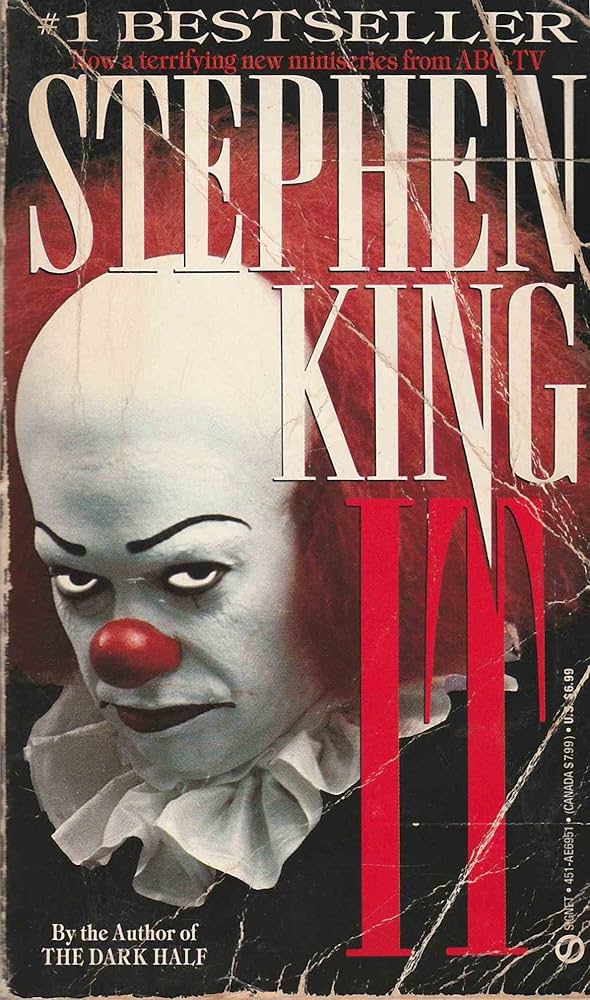
I haven’t started reading it yet, though, because I’ve got to finish the book I’m currently reading first (that being a re-read of Stephen King’s It for those of you who somehow missed last week’s post). Here’s the question I’m currently grappling with though: although I know that after my sojourn in Derry, Maine is over, my next stop is going to be aboard the Keeling, I can’t decide if I should jump right into Voidstrike or go back and re-read the first book in the series again. Book one, Shakedown, came out about two and a half years ago, and as anyone with kids can tell you, one of the side effects of parenthood is a memory that erodes like a urinal cake during halftime at the Super Bowl. I remember the broad strokes of the book, but I’m fuzzy on the details. So should I go back and read Shakedown again?

Let me make one thing clear at the jump: I am NOT asking whether or not re-reading books in GENERAL is okay, because of COURSE it is. In any given year, I would guess at least half of the books I read are books that I’ve read before because they make me happy, or comfort me, or because I’m doing research for something that requires me to make a return visit. And all of those things are perfectly legitimate. In fact, there is only one reason for re-reading a book that matters at all: do you WANT to re-read it? If the answer is “yes,” then you’re good.

What I’m asking, instead, is whether a re-read in this particular case is justified. Yes, I re-read a lot of books, but it’s rare that I return to one that I read as relatively recently as Shakedown. Most of the books I return to have at minimum a five year gap before I pick them up again. It’s not a rule or anything, but I’m actually quite anxious to get to Voidstrike, so should I just check out a Wiki recap of Shakedown and get to it, or should I take the long way around?

If it was a movie, there would be no question. I frequently re-watch a movie if I intend to watch an upcoming sequel, and most of the time, I feel like it’s time well spent. When Ghostbusters: Afterlife hit theaters, I made it a point to carve out time to watch the first two movies in the series again, and as such a lot of the little beats and references landed in a way that they wouldn’t have had the older movies not been fresh in my mind. When my son told me he wanted to see Zootopia 2 back in November, I sat down with him and I watched the first one again, and that made the jokes funnier and the story more enjoyable. And in truth, the only reason I haven’t watched Tron: Ares now that it’s on Disney+ is because I haven’t had a chance to revisit the first two movies in the franchise yet. 

I would never have understood the Twinkie reference in Afterlife if I hadn’t just watched this.

For the most part, I think this practice is rewarding. Having the earlier installments fresh in your mind can make the new ones more fun – callbacks are easier to notice, the characterization and worldbuilding gels better…it’s like polishing the rust off a bumper before you take a car out for a drive.

With books, though, although all of the same things are true, it’s much more of a time commitment than it is with a movie (unless we’re talking about something like Lord of the Rings, of course — the books are about a half-million words total, but legend has it that the last movie is still finding new endings to append out there somewhere). In the case of The Crypt it would be relatively easy, I’d only have to read one book over again. But what about those longer-lasting series? Think about something like Jim Butcher’s The Dresden Files. The 18th book in that series dropped earlier this month, and that’s to say nothing of the assorted short stories and novellas also set in the same universe. If there are any Dresdenheads out there, tell me, did you go back to Storm Front (the first book, published way back in 2000) and march your way through the next 16 in order to have everything right there are the forefront of your mind before you dove into Book 18, Twelve Months?

It’s called Twelve Months because that’s how long it would take to catch up for this one.

That wouldn’t matter if the books are episodic. Series like the Hardy Boys or Nancy Drew have continuing characters but rarely have continuing plots, so you can pick up any volume at any time and feel like it’s more or less complete. But one Harry Dresden adventure carries over to the next, and if it’s been a while since you visited him, would you feel like a return visit was necessary? Would you just read a Wiki recap? Would you return to the high points of your favorite books and do a cursory refresher on the others? 

And what about books that have a substantial gap between installments? Not long ago I was poking around TV Tropes (like you do) and I came across a reference to Jasper Fforde’s Thursday Next series. I remember reading – and enjoying – the first book in that line several years ago. The Eyre Affair was originally published back in 2003, and focused on a special “literary detective” who investigates crimes in the worlds that exist inside of books. It’s a neatly metafictional concept, one that allows for a lot of humor and a lot of satire about the way that stories are written, which is the kind of thing that holds a lot of appeal to me. So it’s kind of baffling that I only ever read the first book in the series, because I enjoyed the first one quite a bit. I decided to see if the series was still going, and discovered that the eighth book, Dark Reading Matter, is scheduled for publication in June of 2027. 

The bright colors say “kidnapping mystery.”

Fforde also claims that this will be the last book in the series, which means if I want I can spend the next year and a half catching up on the six books that I never read (after probably re-reading the first one, of course). Out of curiosity, I looked at the most recent book, The Woman Who Died a Lot, to see when it was published, only to learn that it was way back in 2012. That means that there will be a 15-year gap between the final two books of this series. I have to wonder why that is. Did Fforde think he was done with the series back then, only to decide relatively recently that he had one more Thursday Next book in him? Or is this something that was planned that just kept getting pushed back for one reason or another, a process known in literary circles as “Pulling a Martin”?

Oh yeah. We gonna go there.

Ah yeah, you know I have to mention George R.R. Martin and A Song of Ice and Fire. The series that inspired Game of Thrones released its most recent volume back in 2011, and there are reportedly two more to come to finish the series. In that time, the books spun off into a TV series that became a global phenomenon, the TV series passed up the books and had to cobble together an ending presumably based on Martin’s notes for the unwritten books, a spinoff of the TV series premiered and finished its run, and a SECOND spinoff has now begun airing. And there’s STILL no telling when book six of the series is going to come out. 

I’m not going to speculate as to the reason for this decade-and-a-half span of radio silence. I’m not going to try to guess as to what has prevented Martin from finishing the books in this time, nor am I going to try to imply that he “owes” his readers anything, because as disappointing as it may be for his most fervent fans, the truth is that he doesn’t. What I WILL say, however, is that if he were to announce tomorrow that Winds of Winter is finally going to be published this August, the sales of the first five books would skyrocket overnight as readers realize that in the past 15 years they have lost, loaned out, donated, or hurled their books through a window in frustration and they need new copies if they’re going to refresh their memories before book six hits the bestseller lists. 

Sometimes in these Geek Punditry posts, I’m addressing some problem that needs to be solved. Sometimes I’m just throwing out wish lists for things that I would like to happen. And sometimes, like today, I’m just taking some element of storytelling that I find interesting and rolling it around in my brain, here on the internet, where anybody can read it. My question, friends, is this: do you re-read books, especially before the next book in the series drops? How often do you do it? And which books do you think you’ve re-read the most often? I’d love to hear your answers in the comments.

Blake M. Petit is a writer, teacher, and dad from Ama, Louisiana. His most recent writing project is the superhero adventure series Other People’s Heroes: Little Stars, volume one of which is now available on Amazon. You can subscribe to his newsletter by clicking right here. He’s also started putting his LitReel videos on TikTok. He is aware of the irony of posting about this when volume two of Little Stars is somewhat overdue, but compared to George R.R. Martin, it still ain’t a drop in the bucket. 

Superman Stuff #4: January 2026 Update

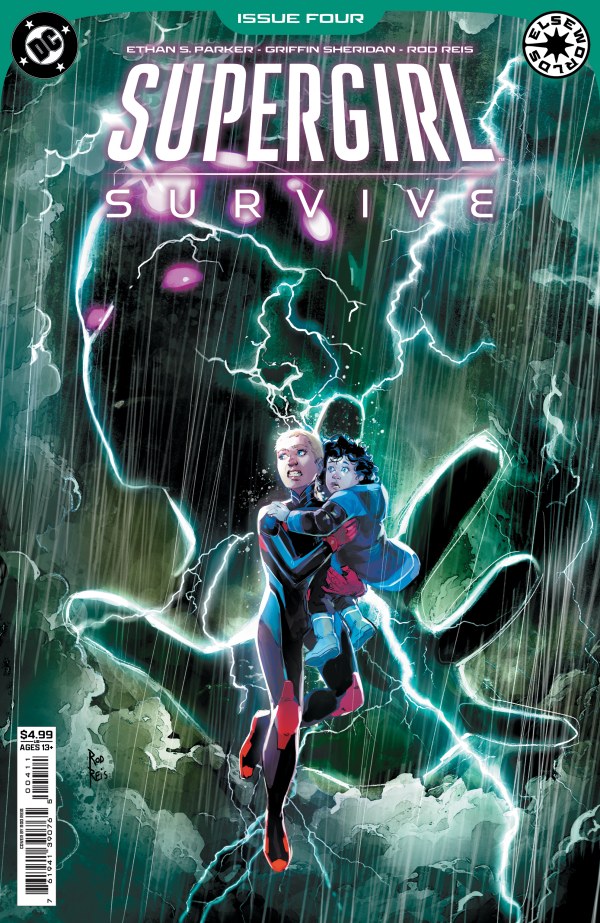
I don’t want every “Superman Stuff” post to be comic book recaps, hence last week’s post where I talked about the upcoming Spider-Man/Superman and Bizarro: Year None announcements. That said, one of the reasons I wanted to keep this going was so that I could keep talking about the NEW Superman comics as they come out. With that in mind, this week I’m going to give my feelings on some of the Superman-related comics that have been published so far in 2026.

Superman Unlimited#9
Title: Die Laughing Part One
Writer: Dan Slott
Artist: Mike Norton
Main Cover: Dave Johnson

A series of strange deaths strikes Metropolis, and although they could be accidental, there’s something that makes it feel like they’re linked to an old foe of Superman’s. (I realize I’m playing coy with who the villain is, and they name drop him on the cover, so I guess that’s a little pointless.) Meanwhile, Metropolis’s new Mayor Perry White finds himself a target, and at Steelworks, Jon Kent gets an important warning from a very unexpected source.

There is a LOT of stuff going on in this issue. The main plot regarding Perry White is the through-line, but the story of Jon at Steelworks feels like there’s more going on than is readily apparent, and the ongoing story of the massive Kryptonite meteor that’s fallen to Earth is woven in through what happens in the other plots. What’s more, we also get to see a classic foe and a new collaborator show up here in ways that feel like there’s a lot of story to tell. The way this book is packed is honestly reminiscent of the way stories were structured during the much-missed Triangle Era, and as I read this I felt those pangs of regret that I’m going to have to wait a month for this storyline to continue rather than just one week.

Slott does some of the little character bits he’s so good at here. For instance, we see Clark Kent at a press conference by Mayor Perry White where he acts just like he’s asking questions to any random elected official, and Perry humorously reminds him that he doesn’t exactly have to introduce himself. It’s funny, but it also brings up the idea that it’s kind of unethical to send a reporter to cover a press conference when the guy at the podium happens to be godfather of the reporter’s son. Then again, Clark has been reporting on himself for almost 90 years now, so…

Mike Norton steps up for the artwork this issue, and it makes me wish we saw him drawing Superman more often. His lines are clean and bold, very reminiscent of the style we saw from the likes of Dan Jurgens or Jerry Orway back in the day. Having him on this book feels very, very right. I hope we get to see more of his work on Superman in the future.

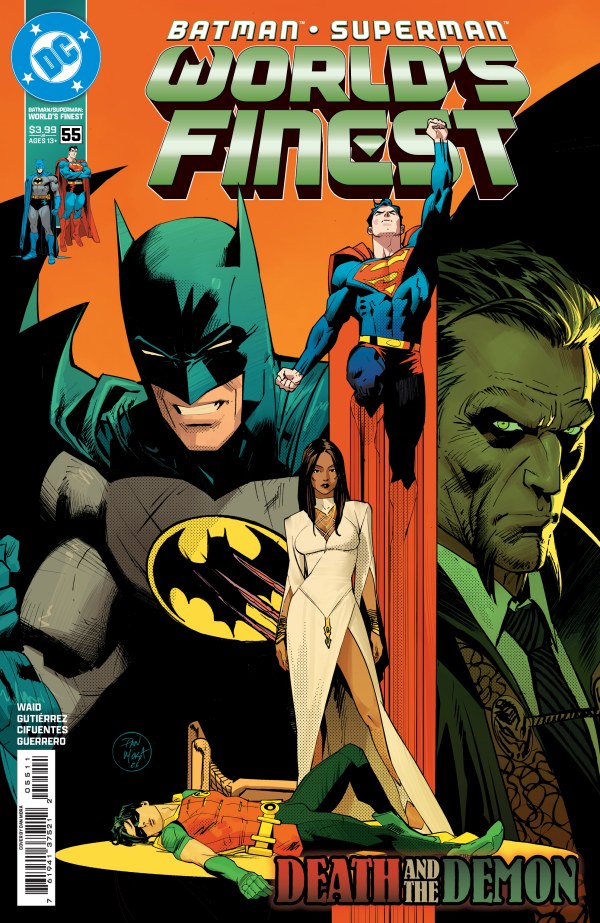
Batman/Superman: World’s Finest #47
Title: The Merger Part Three: Truth and Consequences
Writer: Mark Waid
Pencils: Adrian Gutierrez
Inks: Vicente Cifuentes
Main Cover: Dan Mora

Fusion – the merged form of Superman and Batman – is in battle with Merger, the Lex Luthor/Joker mashup. And if that wasn’t bad enough, Merger has used Hawkman’s Absorbascon to learn the identities of our heroes and transmit that information all over the planet. Fortunately, Fusion has a whole Justice League to back them up. 

I’ve loved this book since day one, because Mark Waid is clearly having a lot of fun playing around with all these classic pieces of the DC Universe. World’s Finest is set several years in the past, so when the secret is revealed we get to see some things that wouldn’t happen if this story were set today: a more villainous Poison Ivy going after Alfred, or a Lois Lane who is heartbroken to realize that Superman has been hiding under her nose all this time. Waid writes these moments very well, with compelling character work, especially in the Lois Lane scene.

That said, he’s walking a tightrope here, playing with what they sometimes call “Schmuck Bait.” It’s when a story (particularly in an ongoing franchise) teases a development that you know will not or cannot stick. In this case, we know with 100 percent certainty before the issue even begins that the secrets of Superman and Batman’s respective identities will go back in the box, so that lowers the stakes dramatically. The trick is to use this to milk good character beats that will retain their significance even once the actual plot is reversed. He manages to do that here, and even ends the issue with a new little wrinkle that could be brought back later, either in the pages of this book, or in other DC titles set in the current continuity. Either way, there’s potential there.

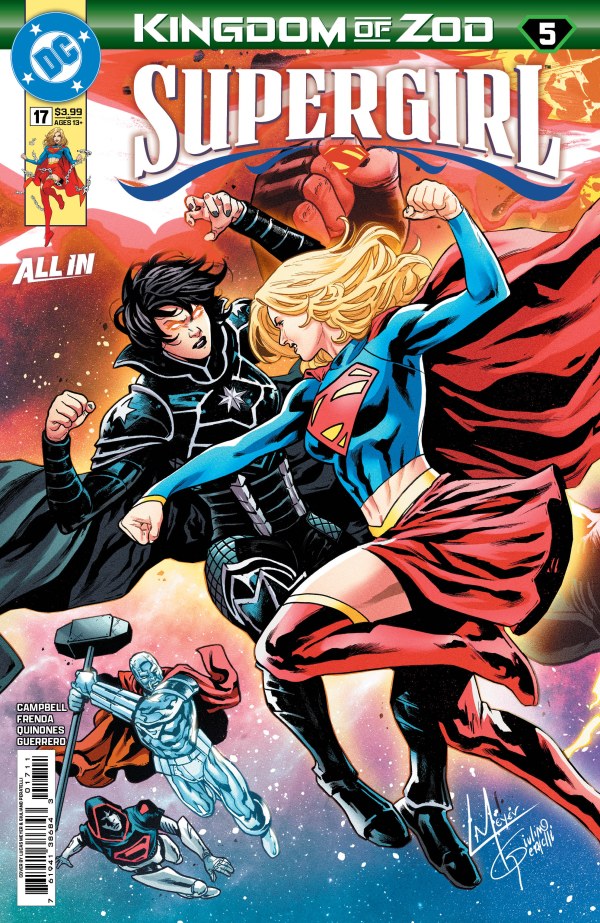
Supergirl Vol. 8 #9
Title: Resolutions
Writer: Sophie Campbell
Art: Joe Quinones
Main Cover: Sophie Campbell

Continuing the holiday kick this book has been on (the last three issues have been Halloween, Thanksgiving, and Christmas stories, respectively), it’s New Year’s Eve in Midvale, and Supergirl’s squad has been invited to a booze-free party to ring the year in. Lesla, unfamiliar with the effects of alcohol in the first place, is a bit disappointed to learn that it wouldn’t have any effect on her Kryptonian physiology. Lena has an idea for how to fix that little problem. Chaos ensues.

I have to admit, I didn’t see this issue coming. The first half comes across as Campbell trying to do an 80s style “very special episode” about the consequences of drinking, which would actually fit very well in what we’ve gotten from this series so far. The second half, however, takes a rather wild left turn when those consequences actually begin to stack. Stuff happens in this issue that drives a severe wedge in the family of friends Supergirl has built up around her, and I frankly didn’t see it coming. What’s more, Kara herself comes across as kind of cold in this issue – outwardly, at least. The reader gets to see her agonizing over the choices she makes and the way that she’s forced to push away her friends, but to those friends themselves she puts on a face of stoicism that’s really unexpected. Particularly in the case of Lesla, who is arguably a victim here, Kara doesn’t show the usual compassion that we get from her. I’ve been a big supporter of this book, but this is the first issue that feels like a misstep. 
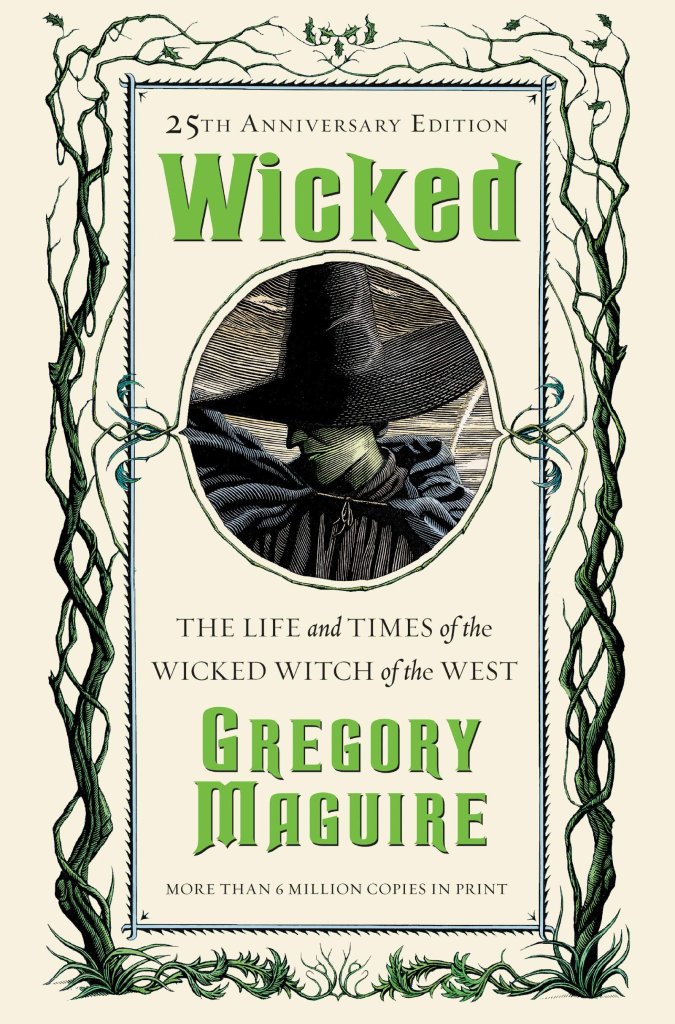
I’ve got no such complaints about the artwork, however. Campbell’s work on this title is great, but whenever she steps aside, they can bring in Joe Quinones to pinch-hit. I love his take on Kara and the rest of the cast, and I especially would like to see more of his version of Kandor. 

Action Comics#1094
Title: Our Superboy at War
Writer: Mark Waid
Art: Patricio Delpeche
Main Cover: Ryan Sook

This is an interesting one. The main story here is Superboy – in conjunction with his arrangement with General Sam Lane – being summoned to help with a military operation. Although that’s the A-plot, it’s also the least interesting part of the issue to me. That’s not to say that it’s not handled well – Mark Waid taps into the psyche of Clark Kent and has him go through this storyline in a way that feels very accurate for the character. The issue is that it’s very by-the-book. The beats are predictable, as are Clark’s reactions. I suppose that’s the thing about understanding a character really well – sometimes it can make certain stories feel very rote.

The b-plots in this issue are much more interesting to me. In the early part of the book, Clark has a study date (of sorts) with Lana Lang, and we’re teased with a strange animosity her father has for Clark. In the latter part, he goes on a camping trip with Pete Ross and laments the fact that there’s nobody he can share his secrets with. Both of these segments, to me, were far more satisfying than the A-plot. In each case, Waid is using established elements of the two characters to build them out a bit. For instance, Lana’s father being an archaeologist is a long-standing and well-known piece of the lore, but Waid seems to be using it here in a way that feels somewhat menacing, as though that status has a dark secret that’s going to cause trouble down the line. Pete, on the other hand, is famous for being the character who (in the Silver Age) knows that Clark is Superboy, but doesn’t tell anybody – not even Superboy himself. It definitely seems like we’re trending in that direction, but I trust Waid to do more with the concept than previous writers did. In the meantime, it’s really sad to see Clark upset about his big secret and the fact that there’s nobody else that could possibly understand what it’s like to have his kind of power.

Dang, if only he had some friends. If only he had a Legion of them or something.

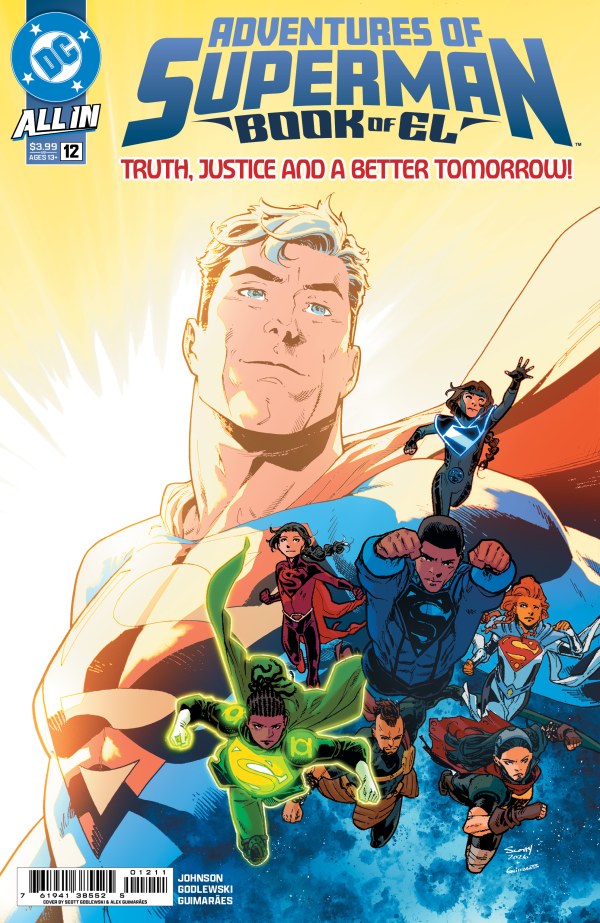
Adventures of Superman: House of El#5
Title: I Am the Lantern in the Dark
Writer: Phillip Kennedy Johnson
Art: Scott Godlewski
Main Cover: Scott Godlewski

A Sun-Eater has been unleashed on Lanternholm, the world that serves as the haven for the Lightborn. Superman and Ronan Kent join the fight alongside Ronan’s sister, Rowan. The Lanternholm stuff has actually been the most interesting part of this series yet to me, and I’m glad to see it take center stage in this issue. The DC Universe, let’s face it, has a LOT of potential futures. Some of them are easily compatible with one another, others require a bit more shoehorning to fit in, and this future in particular is at best going to be relegated to an alternate timeline in which Superman never comes home because – come on, let’s be honest here – we know that Superman is going to come home. It’s another example of that Schmuck Bait I mentioned earlier.

But that’s something that could theoretically be used to the story’s advantage. It is impossible for this future to be the “real” future of the DC Universe, so why not take some wilder, braver swings with it? I’d like to know more about what happened to the Lanterns in this future. I’d like to know more about what happens afterwards, with Rowan’s new status at the end of this issue. I’d read a miniseries about that, I’d read a miniseries about her. I’d be excited for it.

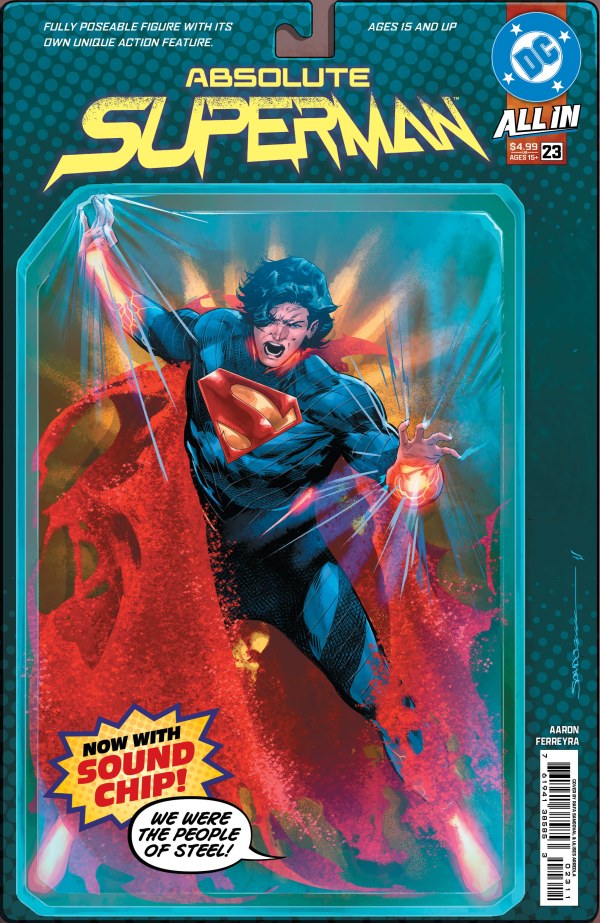
Absolute Superman #15
Title: The Never-Ending Begins Part One: In Blue
Writer: Jason Aaron
Art: Juan Ferreyra
Main Cover: Rafa Sandoval

A new storyline kicks off this issue, although it kicks off in a very low-key way. After the huge win at the end of last issue, Kal-El is trying to settle in, taking over the Kents’ farm and running it the way they would have wanted while, at the same time, operating as Superman around the world. Of course, as the beginning of a new story, new threats are coming in as well, and we see the seeds for a few things planted here. 

It’s nice to have something of a breather this issue, as we see Kal-El spending time with a lot of people, exploring his relationships with both Lois Lane AND Lana Lang, and interestingly enough, even Ra’s Al Ghul. There’s shoe leather to be expended here, building on who each of these people is to our new Superman. What I really like, though, is the direction this series is trending. Clark has traded in his Kryptonian suit for a uniform made for him by Martha, a uniform that speaks to a brighter future for the character. The Absolute Universe is one where Darkseid’s ethos reigns supreme and hope is the underdog…but despite that, Superman still acts as a symbol of that hope, and this issue continues to demonstrate that. 

We also get the first appearance of the Absolute version of one of Superman’s oldest foes, and he’s taken in a very different direction. The Toyman has gone through several incarnations over the years. This one is different from any of them, but it suits the universe we’re living in and still fits the concept of the character fairly well. We also get a cameo by next issue’s big guest star, Hawkman, and recent comments by Scott Snyder that we’ll see a gathering of heroes in this universe sooner or later feel like they’re inching closer to fruition.

DC KO #3
Title: No Mercy
Writers: Scott Snyder & Joshua Williamson
Art: Javi Fernandez & Xermancio
Main Cover: Javi Fernandez

Following December’s “All Fight Month” event, the combatants in the KO tournament have been narrowed down to an “Elite Eight.” The remaining fighters are each given an opportunity to choose a partner to fight alongside in the next battle. However, the one fighter who generated the MOST Omega Energy gets a special prize – their partner may come from ANY level of reality…and that winner is the Joker.

Much as the “All Fight” issues were at their best when used as an examination of character, even the selection of the heroes’ partners serves that same purpose. Some of them are obvious, some of them are understandable, and some of them are baffling. All of them demonstrate something about the character who makes the choice, and it’s writing like that which has elevated DC KO from being just a mindless slugfest into one of the most compelling events the DC Universe has had in ages. 

There’s a running commentary from the Heart of Apokalips throughout the story that focuses heavily on Superman as well – what’s going on in his head, how he’s dealing with the battle, how he handles the fact that he’s got to fight, kill, perhaps even use his friends. What’s more, from the beginning the idea has been that it was okay for the heroes to die or to kill in pursuit of winning the tournament, because whoever wins and gets the Omega Energy at the end will have the ability to reset the universe and fix everything. This issue Snyder really starts to explore what that would actually MEAN. Would anyone – even Superman – have the wherewithal to only turn the clock back to before the tournament, or would that temptation to make the world unto what he thinks would be paradise be too tantalizing?

Also, there are a couple of moments in this issue that are gonna make for great action figures.  

Blake M. Petit is a writer, teacher, and dad from Ama, Louisiana. His most recent writing project is the superhero adventure series Other People’s Heroes: Little Stars, volume one of which is now available on Amazon. Don’t forget, you can check out earlier blogs in the Year of Superman/Superman Stuff Archive! Got a request for a future “Superman Stuff”? Drop it in the comments!

Geek Punditry #160: The Difficulty of a Kingamatic Universe

“Hey,” one of my students whispers to the kid sitting next to him. “He’s reading It.”

And I smile.

On the wall in my classroom is a small whiteboard. At the top of the board is written “What is Mr. Petit reading?” Underneath, I regularly update the board with the title and author of whatever book has most recently been removed from my To-Be-Read pile and is actually in the process of being read. Currently, that book is Stephen King’s It. I’ve had that board up for a few years now, and I update it whenever I begin a new book, and having it visible has led to lots of really great questions such as “Are you still reading that one?” and “How many books do you read, anyway?”

“Not to put too fine a point on it, but I read more books yesterday than some people in here will read in their entire lives. Please don’t take that as a challenge.”

Occasionally, though, the board can lead to an actual conversation if a student happens to have read the book, is curious about it, or didn’t know that a book even existed (for properties they’re only familiar with as movies, such as Ready Player One). It is the book currently on the board, and it’ll probably stay there for a little while, because even for Stephen King, it’s kinda long. Some students are horrified when I tell them that I’m reading a book that’s in the ballpark of 1100 pages. They are even more baffled when I tell them that this is not the first time I’ve read it. I don’t recall, honestly, if this is the third or fourth time I’ve taken this particular trip to Derry, Maine, but I know exactly when the LAST time I read it was – it was late August and early September of 2017, and I remember it because it happened to be the book I was reading the week my son was born. I recall sitting there, scrolling through the pages on my tablet as Erin and Eddie slept, each of them rather exhausted after recently undergoing the most dramatic moving day in the history of a human being. 

Don’t worry, I didn’t whip out my book and start reading as soon as the kid popped out – this was some time later, as we had to stay in the hospital a little while as they treated him for some blessedly minor things that prevented us from going home for about five days. If you’ve ever spent time in the hospital, no matter how serious the condition may be, you’ll know that after a few days you start crawling up the walls if you don’t have something to do. My something was to visit with my friends in the Losers Club.

In retrospect, this may not have been the best choice for a new father’s reading material.

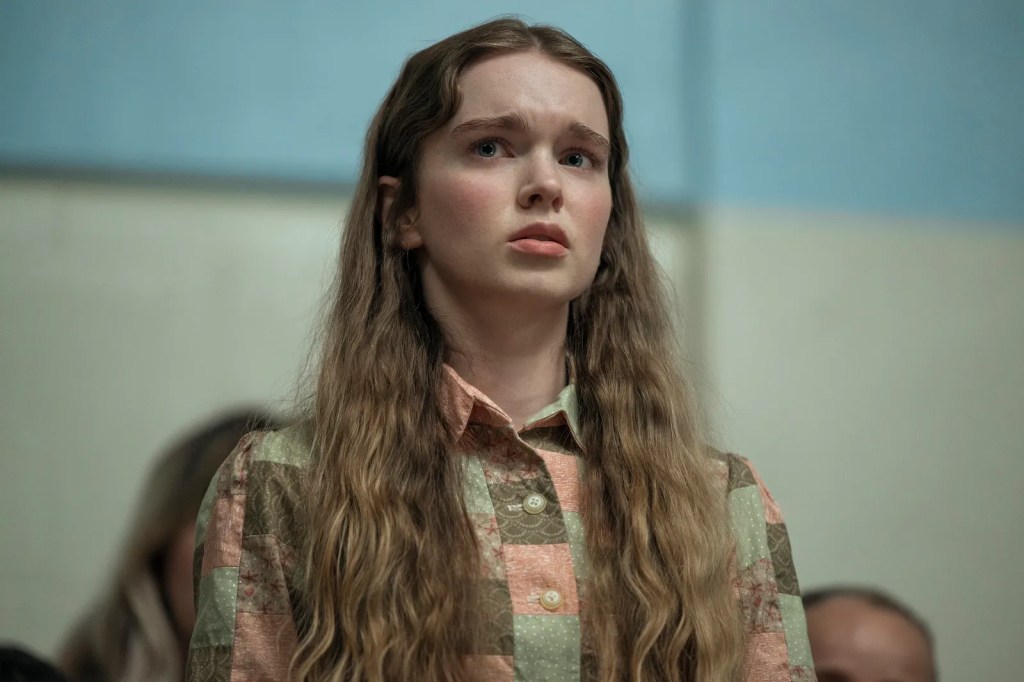
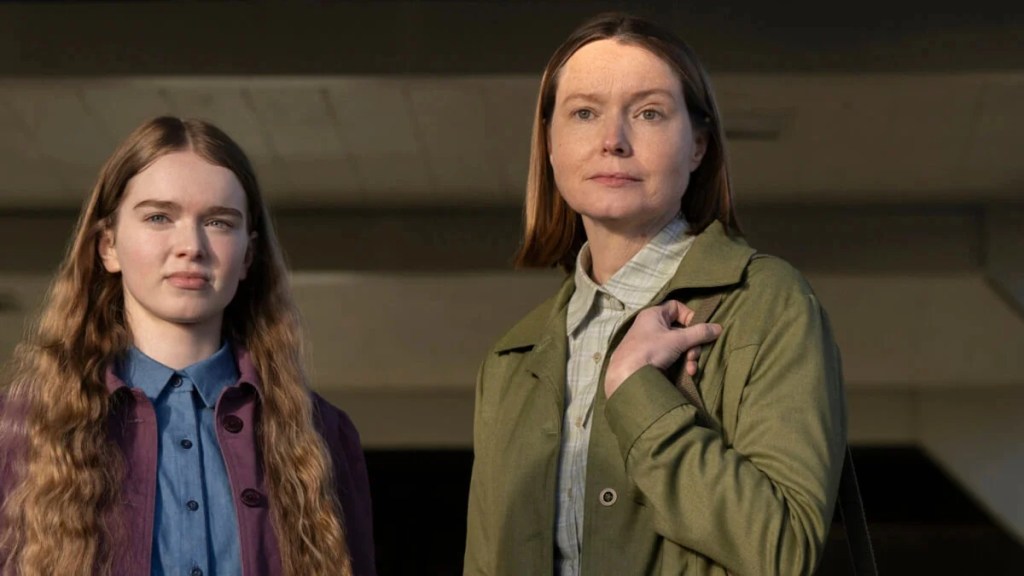
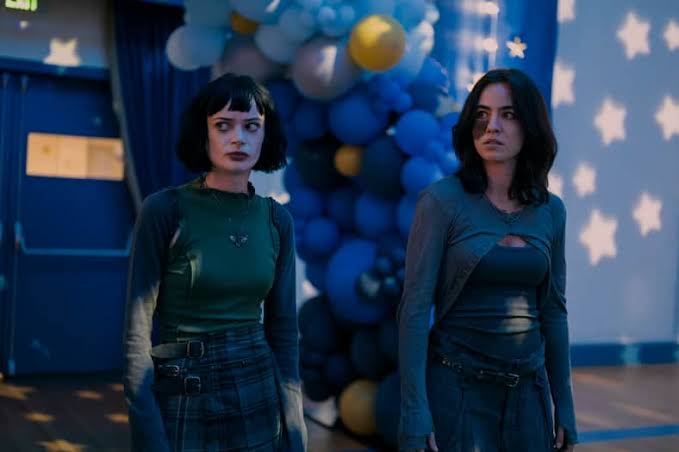
The specific reason I started reading It again this week, though, is because I finished the first season of HBO’s TV series Welcome to Derry, a prequel to the film adaptations of the novel from 2017 and 2019. The series is produced by Andy Muschietti, who directed the films and half the episodes of the show as well.  I thoroughly enjoyed the series, and it made me thirst to go back and revisit the source material again. As I’m reading it, I’m noticing the little bits and pieces, the tidbits the writers and showrunners planted in the show that help build out the world with water from the original font. 

To be clear, this TV series is a prequel to the MOVIES, not the book. There are some important differences that prevent it from working as an adaptation of the novel, chiefly the time period. The original novel is set in two eras: 1958 (when the protagonists are children) and 1985 (when they return to Derry as adults to finish what they started). The creature they do battle with has a cycle of about 27 years in hibernation, after which it returns to wreak havoc on Derry once again. 1985 was contemporary when the book was written, but Muschietti decided to keep the story set in the “present” when the films were released, meaning the events were shifted to 1989 (for the kid portions) and 2016 (for the adult portions). Welcome to Derry details the previous cycle of It in 1962. The point is that the movie universe cannot fit the timeline of the book universe, and that’s honestly not a bad thing.

People who saw the show know just what a dirty trick this poster is.

Since the show, from the outset, cannot be a direct prequel to the novel, Muschietti and the writers are playing a little more fast and loose with the story, while still paying respect to it. For example, in the original novel Veronica Grogan is the name of one of the countless victims of Pennywise during the monster’s 1958 cycle. The TV show elevates her to one of the main characters fighting against the clown in the generation BEFORE the Losers’ first encounter with the monster. The names of many other characters from the book are peppered throughout the show, some of them characters mentioned in the novel, others with names that imply (and in a few cases, make abundantly clear) that they are relatives or ancestors of characters from the original in this version of the story. 

But the connections to the works of Stephen King don’t end with elements strictly from It. At one point, a character is sent to Shawshank Prison, the setting of King’s classic novella (and its classic movie adaptation) The Shawshank Redemption. Shawshank is frequently referenced in King’s Maine-centric stories, which is to say a little more than half of them, so it’s not a surprise when it turns up here. An even bigger link, though, is the character Dick Halloran. Halloran is one of the principal characters in his novel The Shining, which was written before It, and the original novel reveals that he was somehow involved in the tragically violent events that concluded a previous cycle of It. Welcome to Derry expands upon that, showing those events in full and giving Halloran a much more significant role. What’s more, they don’t even stop there, referencing elements of Halloran’s character that come neither from It OR The Shining, but rather from the latter’s sequel, Doctor Sleep. 

“Honestly, we’re just glad somebody remembered we were here.”

What I’m getting at here is that Welcome to Derry feels like it’s inching closer and closer to something that Stephen King fans have wanted to see for a very long time: a true cinematic universe.

Yeah, we’re going to that well again. Marvel has its cinematic universe. DC is on take two. We’ve got one for Star Wars and John Wick and even horror franchises like The Conjuring. But the thing you need to remember is that none of these franchises INVENTED the idea of a shared universe. It’s been around for a very long time. William Faulkner linked several of his novels and short stories together via the inhabitants of the fictional Yoknapatawpha County, Mississippi. James Joyce’s Dublin serves as the backdrop for several of his stories and, inasmuch as it’s possible to understand anything Joyce wrote, several of them link together. And King, much like many other contemporary writers, delights in dropping in Easter Eggs, hints, clues, and references that tie his various stories to one another. 

Now not ALL of his stories can be said to definitively take place in the same universe. The Stand, for example, is a novel about a virus that kills most of the population of the world, which clearly precludes most of his later works from being set in the same universe. Cell isn’t exactly a zombie story, but it’s close enough that this world is incompatible with most of King’s other work. And it’s hard to reconcile the bleak, horrific vision of the afterlife from Revival with several of his other stories which feature good, even friendly ghosts on occasion, such as Bag of Bones. Then there are the Stephen King books that explicitly reference other King books – or their movie adaptations – as fiction. That’s a bit of a roadblock.

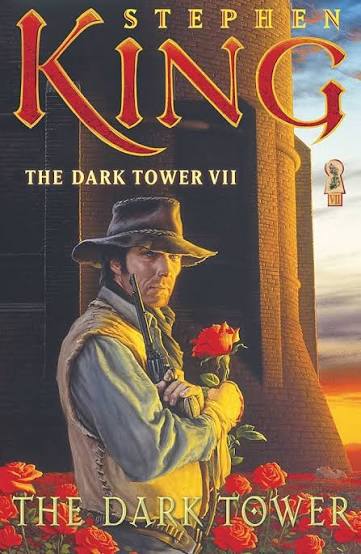
On the other hand, King himself has provided us with a handy device that can explain away any discrepancy via his Dark Tower series: a multiverse. The Tower itself is a sort of central hub around which all reality converges, and that includes many different worlds and dimensions that are similar to, but distinct from, one another. The Dark Tower provides links not only to It and The Stand, but to multiple other books and short stories. And lots of the other stories he’s written drop in casual references that remind us that yes, their universe is one of the countless that are connected to the Tower. 

If ever there was a scene that MUST be committed to film, it’s this.

So all that said, why HAVEN’T we gotten a proper Stephen King cinematic universe before? The biggest obstacle, frankly, is licensing. King’s first novel, Carrie, was published in 1974, and he’s been turning out book after book and story after story since then. The most recent count I can find credits him with 67 novels and novellas and over 200 short stories over his 52-year career, and he’s been selling off the rights to them to different players all along. I don’t begrudge the man this – Lord knows I wish I could get that kind of payday – but the result is that the film and television rights to his works are all over the place. Dozens of studios and even individual filmmakers own bits and pieces of him, and getting all of them together to play nice and collaborate seems like a pretty impossible prospect. It’s the same reason that Marvel characters didn’t start meeting each other on screen until Marvel Comics stopped selling the rights to anybody who offered them twelve dollars and half a Fruit Roll-Up and started making the movies themselves. 

It’s not like King isn’t still a significant player in the entertainment game. People who don’t follow him may think of his work primarily as the grist for a huge slate of horror movies from the 1980s, but they’ve been coming out regularly since then – and they’re not all horror. 2025 brought us no less than four big-screen adaptations of his work: The Monkey (which turned a straight horror short story into kind of a bizarre black comedy), The Life of Chuck (a beautiful and faithful adaptation of a semi-fantasy by director Mike Flanagan), and two adaptations of books he wrote under his Richard Bachman alias, The Long Walk and The Running Man. These last two are both dystopian science fiction rather than horror, but they’re radically different from one another, despite the fact that they both have the same hook of characters competing in a lethal game in the hopes of a life-changing prize. But while The Long Walk is a dark, nihilistic societal commentary, The Running Man is a slam-bang action film. 

There have been attempts in the past to create a sort of King universe. Most notably, in 2018 Hulu produced Castle Rock, a series “inspired” by elements from a great number of King’s various works and set in that OTHER town in Maine that seems like it must be a nightmare to actually live in. The show was okay and it lasted two seasons, but I don’t think it actually gave fans what they wanted: a world in which the stories they love (or at least versions of those stories) could coexist. In Castle Rock, it was more like they took chunks of King’s books – characters, names, places – and pieced them together into something different. That’s a legitimate storytelling technique, of course. Mike Flanagan did it with Edgar Allan Poe for his exquisite miniseries version of Fall of the House of Usher. But it wasn’t quite what we were looking for.

In Welcome to Derry, the events of the two It movies are canonical, and the things we’ve seen so far make it quite easy to link that world with The Shawshank Redemption and the Shining/Doctor Sleep duet – if not exactly the movies we’re familiar with, then at least some version of those events. All of those movies, it should be pointed out, were released by Warner Bros., which is no doubt why they could play with those toys so easily. The show has not officially been renewed for a second season, but it has achieved real critical acclaim (although, typical for a streaming service, we have no idea what its numbers are), and Muschietti has been quite vocal about his plans for the next two seasons of the show. Future seasons would tell stories of two earlier iterations of the It cycle, in 1935 and 1908. This, I think, would be the perfect opportunity to build out the universe and add more parts of the Stephen King world. In fact, I think in some ways it would be almost REQUIRED to do that.

I loved season one of Welcome to Derry. The story was tense and compelling, the performances were great, and even though King wasn’t directly involved, the new characters all felt like the sort of characters that we get attached to in his books – ordinary people who get swept up in something far beyond their comprehension. If there is one legitimate complaint about the show, though, it’s probably that about half of the plot (the half that focuses on the child protagonists rather than the adults) is a bit TOO similar to the original It: a bunch of outcast children band together to stand against the evil of Pennywise the Clown. If we’re going to do another two seasons, they can’t just be two still-earlier stories about kids teaming up and fighting the monster. They need to bring something else to the table.

Andy Muschietti, I think, has proven himself an able enough storyteller that he is no doubt aware of this fact. The way he’s talking, it seems like he already knows what the story will be in 1935 and 1908. What I’m hoping is that he finds ways to tie in to other King stories. Could there potentially be references to John Coffey or the other characters from The Green Mile (set in 1932 in the novel, but it wouldn’t be outlandish of them to drag it forward in the timeline a few years)? Could we see the immortal vampires of ‘Salem’s Lot or the origins of the mysterious government project called “The Shop” from books like Firestarter? All of these, of course, would depend on rights issues in various ways, but I don’t think any of them are impossible either. 

Then there’s The Dark Tower itself, the rights to which currently reside with the previously mentioned Mike Flanagan. There was an earlier attempt to put the story of Roland of Gilead to film, a 2017 movie that foolishly tried to condense seven novels (all but one of which fall into doorstopper territory) into a 90-minute feature, and fans were not pleased. Flanagan, who already has several well-received King adaptations under his belt, has expressed the desire to use The Dark Tower for a television series of about five seasons, with a pair of movies to conclude the story. This is a much smarter approach to the material, and Flanagan has proven himself time and again to be someone perfectly suited to bringing Stephen King’s stories to life. 

This…was NOT perfectly suited.

The optimal version of this, for me at least, would be for Flanagan’s Dark Tower to share fabric with Muschietti’s series. Characters common to both projects could be played by the same actors, the stories could be woven in concert with one another – separate, but linked. Could it happen? Well, Warner Bros. owns the rights to It and Welcome to Derry, so for this to happen, Flanagan would have to produce his series in cooperation with Warner Bros. It’s not out of the question. His previous development deal with Netflix is over, and his current deal with Amazon does not include The Dark Tower. He could take the story anywhere he wants. And he’s got a relationship with Warner Bros. as well – he directed their adaptation of Doctor Sleep and wrote the upcoming Clayface movie from DC Studios, which coincidentally, is ALSO in the Andy Muschietti business, as he’s been signed to direct their upcoming Batman movie, Brave and the Bold.

I’m not saying that this will happen. I’m not saying that Flanagan and Muschietti and Stephen King and Warner Bros. will join forces and finally begin to create the Kingamatic Universe that Constant Readers have been craving for the better part of five decades.

I’m not saying it’s going to happen.

I’m just saying it would be pretty damn cool.

Blake M. Petit is a writer, teacher, and dad from Ama, Louisiana. His most recent writing project is the superhero adventure series Other People’s Heroes: Little Stars, volume one of which is now available on Amazon. You can subscribe to his newsletter by clicking right here. He’s also started putting his LitReel videos on TikTok. He also hopes that somewhere in there they find a way to tell us what happened to the Girl Who Loved Tom Gordon…specifically, does she still love Tom Gordon, or has she moved on to – say – Shohei Ohtani?

Superman Stuff #3: Spider-Man and Bizarro

Last week brought us a pair of announcements about upcoming Superman books, both of which I’m happy about, although I’m slightly reserved about one of them.

First of all, Marvel Comics announced the creative teams for their half of the upcoming Spider-Man/Superman crossover. DC announced at the end of last year that Mark Waid and Jorge Jimenez will be doing the main story for their half, which comes out in March. Marvel’s side of the crossover will come out in April, and last week we learned that the main story will be by Brad Meltzer and Pepe Larraz, pitting the wallcrawler and the Man of Steel against Lex Luthor and Norman Osborn. I’ve been a fan of Meltzer for quite some time – I love his novels, I’ve shared his childrens’ books with my son, and I’ve always liked his comics. I was surprised, though, to discover that he’s done almost no work for Marvel in the past – save for a single page in 2019’s Marvel Comics #1000 special, I believe this will be his first Marvel work.

They also revealed the creators and characters that will appear in the back-up features. Dan Slott and Marcos Martin will team up the Golden Age Superman with Spider-Man Noir, Jason Aaron and Russell Dauterman will pit Wonder Woman and the Jane Foster Thor against an army of symbiotes, Louise Simonson and Todd Nauck will turn John Henry Irons against the Hobgoblin, Joe Kelly and Humberto Ramos will chronicle a “campus crossover” between Gwen Stacy and Lana Lang, and Brian Michael Bendis will re-team with Sara Pichelli, with whom he co-created the Miles Morales Spider-Man, in a story where Miles meets Superman. The thing about that last one, though, is that I’m not actually sure WHICH Superman Miles is going to meet, Clark or Jon. The solicitation doesn’t make it clear, and there are variant covers featuring Miles with each of them. This is one of the many, many things that drives me crazy about aging Jon up, but I’m not going to belabor that point here. I’m excited about most of these stories, particularly to have Louise Simonson writing Steel again.

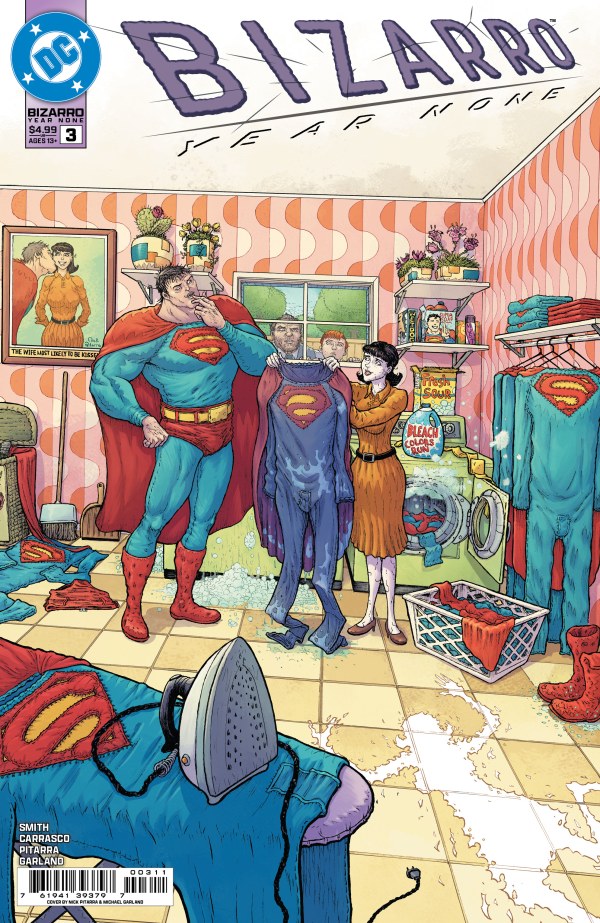
The second announcement that hit this week is for another project launching in April, a four-issue Bizarro: Year None miniseries, purporting to tell the “definitive, indefinitive” origin of Superman’s imperfect doppelganger. This one is going to be co-written by Kevin Smith and Eric Carrasco, with art by Nick Pitarra. I couldn’t think of a better team to do a Bizarro comic, and at the same time, I cannot help but be a bit trepidatious about this one. And anyone who’s familiar with Kevin Smith’s history in comics will know exactly why.

Look – I am a fan of Kevin Smith. I have been since 1999, when my buddy Jason introduced me to what was then still the “Jersey Trilogy” just in time for us to catch Dogma. And I’ve been into most of his comic book work too…when it actually gets finished. Once his film career was established, Smith broke into comics first with stories featuring his own characters, then on acclaimed relaunches of Daredevil and Green Arrow. In 2002, he came back to Marvel for a miniseries, Spider-Man/Black Cat: The Evil That Men Do, which released three of six issues before it vanished. Smith got sidetracked on other projects, and it took three years before he came back and did the back half of that miniseries. But that’s nothing compared to Daredevil/Bullseye: The Target, a miniseries that also launched that year and never made it beyond a first issue. We’re sitting here 24 years later, and that story was never finished.

This became a bit of a theme for Smith. In 2009 he and artist Walter Flanagan (yes, that Walt Flanagan, if you’re a fan of Smith’s movies) produced the first six issues of what was supposed to be a 12-issue saga: Batman: The Widening Gyre. At the time, Smith promised that the second half of the story would be told after a brief hiatus. The hiatus is at 16 years and counting. 

To Smith’s credit, he’s totally aware of the problems he had, and in more recent years he’s gotten a lot better about it. Whether it’s because of working with co-writers or just making certain that he has the scripts for an entire project finished before it’s even announced, his work in the past decade has not suffered from the George R.R. Martin-esque disappearances that plagued his comics back in the day. But as someone who’s still curious as to how, exactly, that gyre was supposed to finish widening, it’s hard to hear his name attached to a project without at least THINKING “here’s hoping he’s got all the scripts finished already.”

I think he has. All the same, the Bizarro miniseries is scheduled to run for four issues, starting in April. So here’s hoping we’ll have all four of them by the end of July. 

Blake M. Petit is a writer, teacher, and dad from Ama, Louisiana. His most recent writing project is the superhero adventure series Other People’s Heroes: Little Stars, volume one of which is now available on Amazon. Don’t forget, you can check out earlier blogs in the Year of Superman/Superman Stuff Archive! Got a request for a future “Superman Stuff”? Drop it in the comments!

Geek Punditry #159: Blake’s Five Favorite Biodocs

Arthur Hardy is retiring. For the majority of you reading this, that probably doesn’t mean anything, but if you’re from the New Orleans area that name has resonance and the knowledge that his era is coming to an end probably makes you a little bit sad. Hardy is a local historian who, for nearly 50 years, has also been the publisher of an annual Mardi Gras guide that has become a significant part of local culture. This annual magazine contains not only the routes and schedules for virtually every Mardi Gras parade in Southern Louisiana (and for those of you who’ve never done Mardi Gras, I’m telling you now, there’s probably a lot more of them than you think), but also detailed, entertaining, and informative writing about the history and traditions of carnival and the various Krewes, significant figures, and all the collected effluvia that comes with the season. Much like every kid in America used to sit around waiting for the annual Sears Christmas Catalog every year, here in New Orleans it just wasn’t carnival season until Hardy’s Mardi Gras guide showed up on the magazine racks in local gas stations and drugstores.

Farmers have their almanac. We have this.

I bring up Arthur Hardy because in his final season as the unofficial king of carnival, the local PBS station has produced a documentary about his life and career, Arthur Hardy: Our Mardi Gras Guide. If you’re in New Orleans and want to watch it, it’s going to air on Jan. 22 at 7:30 pm on WYES, with additional airings to follow, and it will also stream on the app. I’m excited to learn about this, not only because Hardy is a figure of great cultural importance to the most quintessentially New Orleans tradition there is, but also because I’m a sucker for a good documentary.

 I love movies in general, of course, it would be impossible to read more than a couple of pages on this blog without that becoming abundantly clear, but there’s something about a great documentary that can be really compelling. To tell a true story and tell it accurately is an art form that even the greatest narrative filmmaker can struggle to pull off. Finding those bits and pieces of a person’s life and assembling them into a story isn’t easy, especially if the subject of said documentary is someone that the audience will likely already be familiar with. What can you say about this person that hasn’t already been said? What can you show that the fans don’t already know? And can you take the stuff they do know and present it in a way that’s both compelling and entertaining?

In the case of these biographical documentaries, I particularly find myself drawn to those that focus on somebody I’m already a fan of. Films like Jim Henson: Idea Man , Music By John Williams, or To Hell and Back: The Kane Hodder Story all scratch that itch for me, giving me a deeper dive into the life of someone whose work I adore. That said, it’s not a requirement that I’m already intimately familiar with the subject of a documentary for me to enjoy it. For example, I’ve never been a wrestling fan and I knew virtually nothing about the life of Andre the Giant outside of his participation in The Princess Bride, but the Jason Hehir-directed Andre the Giant documentary moved me to tears. I’m just more LIKELY to watch a documentary if it’s a subject I’m already familiar with.

So in anticipation of the Arthur Hardy documentary, today in Geek Punditry I’m going to talk about five of my favorite “biodocs” from the last decade or so, five films that delve into the life of an artist or actor whose work is meaningful to me and why the documentaries land so well. 

Super/Man: The Christopher Reeve Story (2024)

This is one of those moments where nobody who is even remotely familiar with my taste will find anything surprising. I am, of course, the biggest Superman fan that most people who meet me will ever meet, and I even made one of my (sadly) all-too-rare movie theater visits these days to catch this documentary during its limited Fathom Events screening when it premiered. I was born near the end of the 70s, reared in the 80s, and in my heart of hearts, Christopher Reeve is and always will be MY Superman.

The movie tells two stories in parallel: the story of Christopher Reeve from the beginning of his life through the growth of his career and his life as Superman, intercut with the story of the horseback riding accident that put him in a wheelchair and the unexpected direction his life took after that. The directors (Ian Bonhote and Peter Ettedgui) go back and forth between these two periods, telling their individual stories more or less chronologically but bouncing between the two every few minutes. The result is the surreal experience of watching this young man – strong, talented, and determined – juxtaposed by the person he would become at his lowest point and how he managed to crawl back from that point to become something more. The story of him portraying Superman is presented side-by-side with the story of him actually proving what a real-world Superman can be. 

The movie is, as is to be expected, heartbreaking and uplifting at the same time. It’s a beautiful tale that everybody knows from the beginning will have a tragic ending. The filmmakers don’t try to portray Reeve as perfect either – they spend time (especially in his early years) putting on display his faults and some of the questionable choices of a young man who is propelled to stardom. The movie also spends a surprising amount of its runtime focusing on Reeve’s relationship with Robin Williams. It’s common knowledge that the two of them were good friends, but until watching this documentary I don’t think I ever realized just how deep that friendship was. If you aren’t crying at that point already, get ready for the moment where Glenn Close (one of many actors interviewed for the film) speculates that if Reeve hadn’t died, Robin Williams would still be with us today as well. 

Hell, you might be crying right now and you haven’t even watched the movie yet. 

The film is currently streaming on HBO Max, which means if you want to watch it you should probably hit “play” in the next 15 minutes before they do something else stupid and remove more content from the service that absolutely should still be there.

The Scrooge Mystery (2018)

Don Rosa is one of the most globally popular comic book creators of all time, but far too many American fans have never heard his name. That’s because the bulk of his career was spent chronicling the adventures of Scrooge McDuck, his nephews, and the assorted characters that have sprung up around him in the world of Duckberg. Rosa spent decades writing and drawing stories of Scrooge and Donald Duck, and while they have been published and enjoyed here in America, they have achieved rock star status in Europe, where Disney comics are among the biggest pop culture outlets there are.

Rosa’s life and career is the focus of this documentary by filmmaker Morgann Gicquel, and through its two hours you’ll see the story of a young comic book fan who fell out of the artform and found his way back by carrying on the mantle of the great Carl Barks, Scrooge’s creator. Rosa talks candidly about his career, including his interactions with various publishers around the world, which ones treated him better than others, and his relationship with the company that actually owns the characters that he has made even more famous through works like his masterpiece The Life and Times of Scrooge McDuck

The movie is entertaining, filling in blanks in Rosa’s life that even comic book fans (like myself) probably wouldn’t know, since the lives of cartoonists are not nearly as heavily covered by the media as those of actors and directors. As Rosa gives the filmmaker a tour of his home – including a gargantuan comic book collection that will make anyone who loves reading deeply envious – he comes across as a little awkward and eccentric, but endearing in the process. You’ll also get to see Rosa at work and feel your heart crumble a bit as he describes his deteriorating vision and how it is one of the things that caused him to retire. To look at some of the amazing, meticulously detailed artwork he’s created over the decades and know that the man whose pencils made those lines now has to practically press his face against the page in order to keep drawing is truly saddening.

I was one of the original Kickstarter backers for this movie back when it was in production, so I got a Blu-Ray copy of the film upon its release, which I was lucky enough to have Rosa to autograph last year when he came to Fan Expo New Orleans. Those of you who don’t already own the film may expect to see it on Disney+, but the odds of that happening are pretty slim. (Spoiler warning: although Rosa had good relationships with many of the publishers he worked with over the years, he makes it abundantly clear in this film that his feelings about the modern House of Mouse itself are far from kind.) Fortunately, it is currently available on several free streaming platforms, including Pluto TV, Hoopla, and Tubi. If you’re interested in Disney, comic books in general, or the marriage of the two, this is a great film. 

For the Love of Spock (2016)

So far this list has turned out to be a chronicle of my own personal fandoms, hasn’t it? First Superman, then Scrooge McDuck, and now Star Trek. There have been a great many documentaries made about Trek over the years (one of the best movie theater experiences I ever had was watching Trekkies in a room full of like-minded nerds), but as far as films focusing on the life of a single person, I think this one is the best. 

For the Love of Spock looks at the life of Leonard Nimoy and his sometimes tumultuous relationship with the character he brought to life. The film discusses those years when he tried to distance himself from the role and how he ultimately came around to embrace it. These are things that Trek fans, of course, are already intimately aware of. What makes this movie special is its director: Leonard Nimoy’s son, Adam. This is a very specific subcategory of documentary – films made by the family of the subject – that I always find intriguing. Adam Nimoy, as one would expect, has a very personal and unique perspective on the life of his father and what exactly Star Trek means – not only to Leonard Nimoy himself, but to the world at large. There are a lot of people who could tell the story of Leonard Nimoy, but it is doubtful that anybody else would tell it the same way as Adam Nimoy.

Nimoy passed away in 2015, while this movie was in production, so in a way it also serves as kind of a “last word” on him and the character. At least, as much as there will ever be a “last word.” Star Trek isn’t going anywhere anytime soon, and Spock is one of the signature characters of the franchise, so this movie is never going to not be relevant. But it will always be, to quote Nimoy’s signature character, “fascinating.”

Like The Scrooge Mystery, this one is currently streaming on Pluto TV, Hoopla, and Tubi, as well as the Roku Channel. 

Won’t You Be My Neighbor (2018)

Morgan Neville directed this film about the life and career of Fred “Mister” Rogers, a man who probably helped raise most of the people who are reading this column right now. For over three decades, Mr. Rogers’ Neighborhood came into the homes of the children of America  and showed us things about creativity, imagination, kindness, and life. The question someone on the outside would likely ask, then, is how much of that was an actor playing a character and how much of that was the man himself.

This film puts forth the thesis that, when it came to Mr. Rogers, ol’ brother Fred was doing very little acting. The sweet, tender, and understanding soul that entertained us in the mornings of our formative years was the same soul Fred Rogers carried with him in his day-to-day life. The movie uses interviews with actors and crew from the TV show, Rogers’ wife Joanne, and others that were touched by him over the years to paint a portrait of an intrinsically good and humble man who never wanted anything other than to show children kindness.

That said, the movie isn’t totally saccharine either. It delves into the struggles of the creating the show, those periods where the real world was too harsh and how Rogers struggled how to deal with it, and the sort of existential crises that truly good people sometimes go through. Rogers was human, and not without his doubts. Towards the end, after his retirement, there’s a segment about how he struggled when asked to come back and make a short video speaking to children after 9/11, and the pain as he tries to figure out what to say is palpable. On the other hand, whereas many movies of this nature spend time looking at the failures or vices of its subject, this movie struggles to FIND any vices to put on the screen. It is particularly telling when Joanne reports that, as Rogers’ life was coming to an end, he was worried that he hadn’t done enough good for the world he was leaving behind. 

Good grief. If Mr. Rogers wasn’t good enough, what chance do ANY of us have?

But the takeaway here should be that the doubt was only in his mind, that it is only the truly good among us that would ever worry about such a thing. And I am using the adjective “good” here rather than “great” very deliberately – if you don’t understand the distinction, you need to watch more Mr. Rogers.

This one is streaming right now on Amazon Prime Video

John Candy: I Like Me (2025)

The newest film in my top five came out just a few months ago. Directed by Colin Hanks, John Candy: I Like Me is a sweet dissection of the life and career of one of the funniest men of the 1980s, and to a degree, about how the world failed him. Hanks interviews Candy’s friends, co-stars, and family to give us an image of someone who was deeply kind and generous, but at the same time, wasn’t without his own demons. Hanks does his due diligence by showing those things, but it’s all through the perspective of interviews with people who obviously adore Candy and are in the business of preserving his memory.

This is a case where I don’t think there’s anything in the movie that’s particularly revelatory, but in which we dig more deeply into things we already knew. For example, Macaulay Culkin (who co-starred with him at the advanced age of eight) mentions how Candy was one of the first people who seemed to notice the toxic and abusive nature of Culkin’s father, and how he went out of his way to check in on and shield the boy on the set of their film Uncle Buck. Conan O’Brien’s remembrances of Candy came not as the host of a popular talk show, but from when he met the already-famous Candy when he was a college student, and how his interactions with the man shaped his career. 

The movie is awash with interviews with the likes of Bill Murray, Catherine O’Hara, Mel Brooks, Eugene Levy, Martin Short, Steve Martin, Dan Aykroyd, and many other people who seem to be lining up to tell the world that John Candy was a beautiful, kind, and talented man. If you’ve ever been a fan of his, I don’t think there’s anything in this movie that you’ll find shocking. But by the end of it, as you wipe the tears from your eyes, you’re definitely going to find yourself wishing that we had been lucky enough to have more of him before the ride was over.

This one is a Prime Video original, so go stream it there.

As always with these “Five Favorites” columns, my choices are inherently subjective and may change at any moment. There are a dozen other documentaries I can think of that would have fit into this list, and on any given day, may have bumped one of the ones that made the cut. But I’m always interested in more. If you know of a great biodoc, particularly one about a creative type like the five I’ve listed here, drop your own suggestions in the comments. I’d love to watch another one.

Blake M. Petit is a writer, teacher, and dad from Ama, Louisiana. His most recent writing project is the superhero adventure series Other People’s Heroes: Little Stars, volume one of which is now available on Amazon. You can subscribe to his newsletter by clicking right here. He’s also started putting his LitReel videos on TikTok. He cannot fathom why his Kickstarter for a documentary about American Idol alumni William Hung keeps getting flagged and taken down. 

Superman Stuff #2: Minifigures and Action Comics #342

Last weekend was Fan Expo New Orleans. If you recall, during the full Year of Superman last year, I wrote about the Superman-related stuff I found at Fan Expo 2025. And right now, let’s all be grateful that was last year and not this year, because this year’s Fan Expo – I’m sorry to report – was kind of a bust. The big cons have been shedding comic and science fiction participation for years, that’s nothing new. The shows are becoming more and more focused on anime and photo ops. And look – it’s not like I think that everything has to cater to me personally. I know, I’m an old man and people need to chase the money young people are bringing to the table. But there are full-on anime cons out there. The convention culture was built around comic book and sci-fi geeks, such as myself, and it feels very much like we’re the ones getting left out in the cold. All of this is to say, after a Saturday afternoon of prowling the vendor floor, I probably spent less money at this year’s Expo than I ever have before.

Seeing as how this is “Superman Stuff,” I’m only going to run through the few related finds I got. I knew even before I got there that I was going to hit up one of the booths that sells custom LEGO-style minifigures, because I’ve got a display of Superman-related figures in my classroom and I wanted to add to it. There was a movie version of Superman and Krypto that I added to my display, but sadly, those were the only two Superman characters they had that I didn’t have already. (I did, however, pick up the movie Fantastic Four, the Teenage Mutant Ninja Turtles, and the core Heeler family from Bluey, so I came away satisfied.) 

The comics were an even bigger bust. I like to hit the bargain bins – the dollar comics, the weird stuff. But I found only two such bins in the whole show. and I’m pretty sure there were only four or five comic book vendors TOTAL. I walked away with a handful of old Archie comics and some 80s Marvel goodness, but the only Superman comic that fell into my hands was a battered reading copy of Action Comics #342 from 1966, which I’m digging into today. 

In “The Super-Human Bomb,” Brainiac is prowling space, trying to think of some way to defeat Superman, when he finds himself under attack by another alien named Grax, whose 20th level intelligence is obviously way above Brainiac’s mere 12th level. Grax has a beef with Superman as well, and has come up with a scheme to destroy him, but he needs a force field and somehow Mr. 20th Level can’t figure out how to make one, so he steals Brainiac’s. Grax tricks Superman with a missile that attaches a bomb to the man of steel, a bomb he claims is powerful enough to annihilate Earth, and it’s rigged to go off if Superman tries to remove it. Oh yeah, and just in case he gets any smart ideas about flying into space, Grax put Brainiac’s force field around Earth, trapping him here, with a 24-hour timer on the bomb.

I have to admit, inability to invent a force field notwithstanding, so far Grax is making a solid case for being eight levels smarter than Brainiac. He never got this far.

Superman spends the next 24 hours trying desperately to stop the bomb, but everything fails. He even offers to let Grax kill him if he will spare Earth, but Grax refuses. Minutes before the explosion, Brainiac messages Superman and tells him how to defeat Grax: build an enormous magnet (shaped like a horseshoe, because theming) and use it to draw Grax’s ship against the force field, trapping him in the blast radius of the bomb. Superman gets into Grax’s ship and hits the switch for the bomb, just as – in the most dramatic moment in comic book history – I realize that this $1 reading copy I purchased is missing pages out of the middle, so I can’t see how the story ends. 

Incredible!

The back-up story, fortunately, is complete: Supergirl stars in “The Day Supergirl Became an Amazon.” College student Linda Danvers is on a trip to the South Pacific to gather specimens for the school aquarium, when their ship is struck by a heavy storm. Supergirl secretly guides the ship to an island, where the students casually decide to begin collecting their specimens rather than wondering about, y’know, getting rescued. But the island turns out to be occupied by an Amazon tribe that would later be sued by Themiscyra for trademark infringement.

The Amazons put Linda and her classmates in slave girl costumes because fun, and that night Linda puts her Supergirl costume on a bird so people will see it flying around and assume Supergirl is on a mission, and that may be one of the most confusing sentences I’ve ever written. The Amazons feed the girls a “nectar of strength” which doesn’t appear to impact Linda’s classmates, but she pretends that the nectar has given her super powers and starts wiping the floor with the Amazons in trial after trial. Eventually, Linda does such a good job of building a pyramid with the stones from the Amazon’s homes that the queen gets fed up with her and lets the girls go. The story is an absolute masterpiece, assuming that you don’t stop to wonder why Supergirl dropped their ship on the island instead of taking them to a safe place in the first place, why she felt it necessary to put her costume on a bird, or what Linda’s major was and what kind of college sends three random students to the South Pacific in a hovercraft. 

Blake M. Petit is a writer, teacher, and dad from Ama, Louisiana. His most recent writing project is the superhero adventure series Other People’s Heroes: Little Stars, volume one of which is now available on Amazon. Don’t forget, you can check out earlier blogs in the Year of Superman/Superman Stuff Archive! Got a request for a future “Superman Stuff”? Drop it in the comments!

Geek Punditry #158: No More Hidden Tracks

Before we start, I want to assure you that this column will NOT spoil the final season of Stranger Things. I do my best to avoid spoilers in general, but it will be particularly easy in this case because I have not yet watched the final season of Stranger Things. A lot of people around me have, though, and a lot of people have opinions about it. This week, as my students filtered back into my class after their Christmas break, I heard them discussing the series finale and I had to kindly request that they refrain from speaking about specifics in my presence. (I believe my exact words were “If you spoil anything for me I’m going to make it my mission to see to it that you never graduate.” It’s good to teach seniors sometimes.) 

“These kids were in high school for ten years, don’t think I won’t do that to you, too.”

One of the non-spoiler things I heard them discussing, though, was something people were calling “Conformity Gate.” I don’t know exactly what this is a reference to or where the term comes from, other than the generic tendency ever since Nixon to append the -gate suffix to any sort of scandal or conspiracy because people are too lazy to come up with something original. From what I gathered, the “Conformity Gate” discussion centered around an internet theory that there was a SECRET NINTH EPISODE of the final season, that the episode that dropped on New Year’s Eve was NOT the actual series finale, and that on the evening of January 7th, Netflix would surprise us all by dropping the TRUE series finale of the epic and long-awaited sci-fi/horror series Stranger Things.

And I gotta tell ya, when I heard this theory, I lauuuuuuuuuuuuuuuuughed…

This isn’t the first time I’ve heard such a thing. Last fall, there was supposedly a secret episode of Peacemaker season two. At one point I recall hearing such a theory about Game of Thrones. I’m pretty sure I’ve heard it for certain series of Doctor Who. And just like with those other series, Jan. 7 came and went and there was nothing except an announcement for the (previously-announced) Stranger Things animated spin-off series. 

These theories are simply never true. And honestly, the way that TV and movie production is handled in this day and age, such a thing would be virtually inconceivable.

Not impossible. In fact, it would be relatively easy to do. It’s just that the studios would never let ’em do it.

Now I’m going to preface this by saying that these theories are almost always spread by people who are upset about the final episode and unable to accept that what they just saw was the “real” ending. It’s a stubborn, childish insistence, and even in those cases where I happen to agree that the final episode was disappointing, it’s kind of an insult to the people who actually made the show. (I can only imagine what would have happened had this sort of speculation been common when How I Met Your Mother wrapped.) I’m not saying that it’s unfair to be disappointed in how a show ends – that is of course a matter of personal taste and nobody has the right to tell you that you’re right or wrong for your tastes. But it IS pretty darn childish to have the attitude that what you watched was somehow SO bad that it MUST have been an intentional misdirect. 

Think about it just for a second: is anyone who works on TV – writers, directors, actors, showrunners – ever going to DELIBERATELY make a bad episode? Would they take such a risk? That’s not anyone’s goal. They want to build interest and anticipation with each installment, and having people trash your work doesn’t do that. There’s an old adage that the only “bad press” is “no press,” and I’m here to tell you, that’s a straight-up lie. Just ask the people who made the Spider-Man quasi-spinoff Morbius.

If you didn’t share 19 “It’s Morbin’ Time!” memes were you even ON the internet in 2022?

That movie was the talk of the town. Everybody was discussing it, making memes about it, and pushing it to the forefront of the conversation…but the buzz, deserved or not, was all BAD. And then the movie came out and completely bombed. Then when people kept talking about it, Sony took a shot at re-releasing it, and it bombed AGAIN. I’m not saying that without the bad buzz the movie would have been a hit, but it’s undeniable that heavy internet chatter surrounding the film did NOTHING to help its numbers.

Then there’s the other reason that such a thing would be virtually inconceivable today: the studios who make movies and television shows are utterly adverse to surprise. Everything – and I mean EVERYTHING – has to be dumped out onto the public far ahead of time. Casting news, romantic subplots, climatic battles, full songs are all spilled out onto the internet weeks, months, even years before the movie or TV show actually makes it to your screen. Movie trailers have become particularly bad about this. I love a good trailer. Making a good trailer – essentially a short film intended to get an audience interested in watching the FULL movie – is an art form in and of itself. But the studios seem to have forgotten that, and rather than doing something artful to engage the audience and make people want to head to the movie theater, their strategy seems to be to just give away every surprise and plot point in the hopes that it will accomplish the same thing. 

I get why they do this, of course. Whether you’re talking about a theatrical release or a streaming show, in the 21st century it seems like the only numbers that matter are those that we get in the first few days of a release. Let’s use the recent slate of Avengers: Doomsday trailers as an example. In the last few weeks, we’ve started to get teaser trailers that show a glimpse of a character or two, followed by the announcement that “Steve Rogers will return in Avengers: Doomsday.” Or Thor. Or the X-Men. And by the time you read this, there will probably be teasers with everyone from the Fantastic Four to Spider-Ham to Millie the Model.

This is the one that broke the Internet.

None of these (except Millie) would be much of a shock. Last year Marvel had a huge streaming event which amounted to showing us – one at a time – director’s chairs with the names of assorted cast members, their way of telling us who was going to be in the movie. Some of them were a surprise at the time, and that was (I admit) kind of cool. But wouldn’t it have been cooler if we had NO IDEA that Patrick Stewart and Kelsey Grammar were going to be back as Professor X and the Beast until we were in the theater, watching it, and then they showed up out of the blue?

I think so, anyway.

Would in-theater surprises get people excited? Would it make them engaged? Absolutely. If an audience is excited and energized about a movie, they’ll walk out talking about it, they’ll tell their friends they have to see it, and the movie can grow legs. But the problem is that the studios no longer CARE about legs. This strategy – keep it a surprise and build word of mouth – is the way to get people excited about a movie in the long-term. That’s not how movies are evaluated anymore, unfortunately. All that matters is that opening weekend in a theater or the first 48 hours of streaming. If you don’t get massive numbers up front, a movie is declared a failure. There was a time when a movie might not have had an enormous opening weekend, but positive word of mouth would allow it to stay in a theater for weeks or even months until it became what they called a “sleeper” hit. 

The studios don’t care about that anymore. An ad that says “the number one movie in America!” is way sexier than one that says “we made back our budget in the fifth week of release!” So they do everything they possibly can do to frontload the audience and get everyone to see the movie right away. This, by the way, is one of the approximately 3,972 reasons that I’m very nervous about the prospect of Netflix buying Warner Bros. Netflix is a streaming platform, and the head of the company has frequently expressed outright disdain for the theatrical release model that I personally hold so dear. I’m very much afraid that if this deal is eventually allowed to happen, it will be the final chokehold on the already-dying movie theater experience.

But that’s a whole different topic. What does this have to do with “Conformity Gate” and the potential for another episode of Stranger Things? It’s simply this: Netflix (any studio, really, but we’re talking about Netflix specifically at the moment) would simply never take the risk of hiding such a thing. They are ADDICTED to telling you EVERYTHING. Remember, this is the studio that tells its writers that the characters have to ANNOUNCE WHAT THEY ARE DOING OUT LOUD because they assume that most of the audience will be scrolling on their phones instead of really paying attention when they’re watching a show. Do you honestly think they’ve got a high enough opinion of you to drop a surprise like that?

The tragedy of it is that I actually think it WOULD be a great thing to attempt, kind of like a hidden track on a CD. (Those don’t really exist anymore either, so kids, ask your parents.) It would be amazing if Netflix, or anybody for that matter, was capable of keeping a secret of this magnitude and then executing it. Now they obviously couldn’t do it all the time. It would need to be used sparingly, and only for exactly the right project, a story for which that kind of surprise ending would be both structurally and tonally appropriate. And let’s be honest here: they would not hide the existence of the episode right up until the moment it drops. It’s far more likely that the episode we EXPECT to be the finale to end with a “To be continued” card or something to that effect. But if executed properly, it could be a really thrilling moment.

The funny part is that Netflix actually did do something like this once. Anybody remember the Super Bowl in 2018? Like most Super Bowls, the biggest draw was the commercials. I was there to see what Doritos was up to, or Pepsi, or something dot com that probably doesn’t exist anymore. And most of all, I’m there for the movie trailers. As far as I’m concerned, every Super Bowl commercial should either be really funny, or a kick-ass movie trailer. In 2018, one of those trailers hit us with the Netflix logo, then scrolled into scenes from some sort of outer space thriller that we hadn’t heard of before. It wasn’t like getting a Marvel or Star Wars trailer, where we knew that the movie was in production and we were just hoping for our first glimpse. This was something totally new.

And at the end of the trailer, we got the title: The Cloverfield Paradox. Holy crap. It was the new Cloverfield movie, the one that had been rumored ever since 10 Cloverfield Lane. And it wasn’t going to theaters, it was gonna be a Netflix movie.

Then came the biggest shock: the announcement that the movie was NOW STREAMING. It wasn’t telling us that the movie was dropping in a year or a month. It was ON NETFLIX AND WE COULD WATCH IT RIGHT NOW.

“If it’s HALF as good as the first two Cloverfield movies, this is gonna change everything!”

I thought then – and still think now – that it was one of the most brilliant marketing moves Netflix could ever have done. It was an incredible surprise and it got me more enthusiastic about watching that movie that I think would even have been possible otherwise. And it’s a shame, really, that as a movie The Cloverfield Paradox turned out to be…well…not great. Because if it had been, that would have been checkmate. This could have been an annual thing. We could sit down for the Super Bowl every year, wondering what movie Netflix was going to announce during the game that we would have the option to watch as soon as the game was over (as opposed to the random episode of Matlock that they usually show for some reason). 

But it didn’t pan out that way, and now Netflix is more risk-averse than anybody. Remember, this is the studio that cancels entire series if they aren’t a smash hit in the week after the first episode drops. Do you really think they’d take a chance at a whole surprise episode?

It would be cool, don’t get me wrong.

I just don’t see it happening.

So the next time you’re unhappy with the finale of a Netflix show and someone floats the idea that there’s a special “hidden” episode waiting for you, ask yourself if the streamer that killed The Santa Clarita Diet would actually do such a thing before you pass that rumor along.

Blake M. Petit is a writer, teacher, and dad from Ama, Louisiana. His most recent writing project is the superhero adventure series Other People’s Heroes: Little Stars, volume one of which is now available on Amazon. You can subscribe to his newsletter by clicking right here. He’s also started putting his LitReel videos on TikTok. He’s planning to start his own Stranger Things conspiracy theory. Now that Netflix has Sesame Street, they’re doing a miniseries that will reveal the hidden connection between Eleven and all her siblings to the terrifying and legendary Count Von Count. You heard it here first.

Superman Stuff #1: Superman (2016) #1-2

At the end of 2025, I made the decision to keep up my blogging about Superman. Unlike 2025, though, I’m not going to require myself to read or watch something literally every single day. That was a fun challenge, but the truth is, I know it’s not sustainable. I’ve got other writing to do, after all. But I’m going to aim to have some “Superman Stuff” for you roughly once a week. This might be a review of a comic book, a TV episode, or a movie. It might be a discussion of recent news or announcements. It might be talking about a new piece of merch or discussion of merch that I just WISH existed. I’m leaving the doors for this very open for me, because I want that freedom to take this in any direction that strikes me.

I call it…

To start this new, open-ended journey, I’m going to read a couple of the many books that were left over in my massive “Year of Superman” reading list, the first two issues of the 2016 DC Rebirth reboot, which celebrates its 10th anniversary this year somehow. Following the divisive New 52 era, this version of Superman (by Peter J. Tomasi and Patrick Gleason) felt very much like a return to form – it was the post-Crisis Superman again, married to Lois Lane, raising their son Jonathan together. And oddly enough, it began with Superman – the classic Superman – mourning the death of his “brother,” the New 52 Superman, which had happened just months before. 

The Kents are still living on a farm here, under the assumed identities that they were using to avoid the revamped universe’s Clark and Lois. The relative seclusion is also helpful for Jonathan, still learning his powers. At the beginning of this issue he gets a horrific reminder of just what he can do – when a bird snatches his cat, Goldie, Jonathan’s heat vision fires instinctively, annihilating both the bird AND the cat. To make matters worse, a neighbor girl witnesses his trauma. Jonathan snaps at his parents later, upset about having to hide who he really is and what he can do, and is sent to his room. As he sits in his room, his father gets a visit by Wonder Woman and Batman, both concerned about this “new” Superman and his family – particularly the ten-year-old boy with Kryptonian power.

In issue #2, Superman takes Jonathan out with him to watch as he helps a ship trapped in ice, only to find an enormous tentacled creature beneath the waves. As Superman battles the creature, he instructs Jon into how to use his heat vision to neutralize the monster and send it below the waves. To his surprise, Jon realizes it’s…kind of fun. That fun is shattered later when Jon is hanging out with Kathy – the neighbor girl who saw him use his heat vision – and takes a tumble from a tree. He’s unconscious, hurt far more than he should be, and Clark decides a trip to the Fortress of Solitude is in order, not knowing that a visitor is waiting there.

This was such a great era for Superman. The classic version is back, the family is back, and best of all, we get stories like this. Clark is teaching his son to use his powers, helping him slowly discover them and having sincere discussions about what it means to be a hero. The episode with the monster in the ice, for example, is entirely orchestrated by Clark. He knew that Jon used his heat vision on the cat (he could smell the traces of ozone left behind by a heat vision blast) and decided to pull the ol’ “get back on the bicycle before you’re scared of it” routine to put him in a position where he has to use his powers to HELP people. 

Jonathan killing the cat, as awful as it is for him, is a great story beat. Superman’s “no killing” code is a fundamental part of the character, but it’s also a lesson that he had to learn. Jonathan gets to learn that lesson early, through an accident that is no less traumatic. It’s kind of emblematic of what being a parent is – you want your child to be better than you and learn from your mistakes, knowing full well that they’re going to wind up making mistakes of their own. Goldie’s death was a total accident, and Clark knew that Jonathan would take it to heart, so rather than punishing him or lecturing him, he turned it into a unique teachable moment. It was peak parenting. 

This was the first time we were going to see Superman as a dad for an extended period, and Tomasi’s approach is great. In the first issue, shown mostly through Jonathan’s perspective, Clark is a little intimidating, the way kids can see their fathers. In issue two, that barrier is broken and we realize that the kind, caring nature of Superman extends to his nature as a parent. The scenes with Clark and Jon in this issue are note-perfect, and would be a hallmark of Tomasi’s run.

To be blunt, this is yet another reason I’ll never quite forgive DC for aging Jonathan up a few years later. There are hundreds of stories about teenage superheroes out there, and for the most part, they haven’t known what the hell to do with Jonathan since then. But stories of the greatest hero in the world fathering, tutoring, mentoring, TEACHING a super-powered child? Those are in very short supply, and they had only scratched the surface of the potential here before it was swept away. 

At some point, I may try to find a reading order of all the Superman comics between Rebirth and Action Comics #1000, because that whole too-short two-year era calls to me as something well worth revisiting again and again. It was a great time for Superman. I just wish DC had realized it. 

Blake M. Petitis a writer, teacher, and dad from Ama, Louisiana. His most recent writing project is the superhero adventure series Other People’s Heroes: Little Stars, volume one of which is now available on Amazon. Don’t forget, you can check out earlier blogs in the Year of Superman/Superman Stuff Archive! Got a request for a future “Superman Stuff”? Drop it in the comments!

Geek Punditry #157: One Year Later-What Is Superman?

Yesterday, January 1st, was the first day since 2024 that I didn’t read, watch, or listen to anything related to Superman.

And I missed doing it.

Unless you’ve been living under a Kryptonite rock, you know that at the end of 2024, enthused for the then-upcoming James Gunn movie, I declared that 2025 would be my Year of Superman, and for the next 365 days I adhered to that. Every day for a solid year I read comics, watched movies and TV shows, listened to podcasts, and otherwise spent time with stories featuring my favorite superhero and his extended family. 52 blog posts later (all of which are archived right here, by the way) it’s time for me to look back and think about what it all means to me.

Nailed it.

To begin with, I don’t do this very often, but I’ve got to congratulate myself for actually accomplishing the goal. In that original column when I announced the project, I said that I would give myself grace, fully expecting that at some point in the year I would slip up and miss a day. And let me tell you, there were days in 2025 in which I didn’t want to read or watch anything. Bad days came and I didn’t want to do much more than retreat to my own Fortress of Solitude. But I didn’t. I made it without missing a single day. Let’s talk about what that means by the numbers. Over the course of 2025, the media I consumed included:

That’s – and keep in mind that I’m referring to myself here – batshit insane. I don’t know if David Corenswet spent as much time in 2025 thinking about Superman as I did. So after all that…what does it mean? What have I learned about him? 

The truth is, I find that the things I already believed were mostly affirmed. Superman has been around for nearly 90 years now, and in that time there have been many stories told about him and many different interpretations of the character. And that’s all fine. But let me tell you about MY Superman, what I get from the character, why he matters so damned much to ME.

In Man of Steel, Henry Cavill popularized to the mainstream something that had been part of the comics for a few years at that point, that the S-shield Superman wears, the emblem of the House of El (at least going back to the 1978 Christopher Reeve movie) was a Kryptonian symbol for hope. But what exactly does that mean? Is it just because Superman is so powerful? Is it because when you see that symbol, you know that the danger you’re in is only temporary, that somebody will be there to save you? Is that “S” just for “Superman,” or does it also mean “Savior?”

Yeah. That guy. Any of him.

Superman’s story has a lot of allusions to Christianity, with Marlon Brando’s Jor-El even referring to Kal-El as “my only son,” but Jerry Siegel and Joe Shuster were Jewish and the story perhaps fits the concept of Moses even better. If you’ll forgive a brief moment of spirituality, Jesus was sent as the Savior of the human race in a direct way, and we get that whenever Superman saves someone falling from a burning building, leaps in front of a speeding bullet, or stops a locomotive to save the kid stuck on the tracks. Moses, on the other hand, was a less direct kind of savior, a leader, someone who GUIDES his people to a better world. And it is in this capacity that the parallels to Superman are stronger. Sure, Superman will save you from a flood, but more importantly, he’s there to show you that there’s a better way.

Let’s say it one more time: It’s not subtle.

It’s almost a cliche to say it at this point, but Superman’s greatest power is not his strength, his speed, his ability to fly or see through walls. His greatest power is his compassion, his unflinching belief in the goodness of people, and his ability to help others see things that way as well. Superman is the man who will never give up on you: no matter who you are or what you’ve done, he will always have faith in your ability to be better. 

If you’re going to wear that shield, Kenan, you need to remember this.

In the climax of the new movie, David Corenswet tells Nicholas Hoult’s Lex Luthor that his greatest strength is his humanity, and that he hopes for the good of the world that some day Luthor will realize the same thing about himself. From anybody else, that line would sound trite, pat, and cloying. From Superman, you believe it. The tragedy of Lex Luthor is not that he’s a criminal or a killer or anything else. That makes him a villain. What makes him a tragic figure, what Superman laments every time he faces him, is that he has a mind that could make the world a better place, but chooses to use it selfishly. And every time he faces Luthor, Superman hopes that this will be the time that Luthor sees the light. It’s even happened in the comics a few times, where Lex has turned good. It’s always been temporary, of course, except for in self-contained continuities like All-Star Superman, but we’ve seen time and again that even Lex Luthor has within him a seed of redemption. We’ve seen time and again that Superman is right. And if he’s right – if even LEX LUTHOR has the potential to be a better person tomorrow than he is today – then what does that mean for the rest of us?

Superman believes the best of you. And he inspires you to believe the best in others. In the final episode of Superman and Lois we see him in flight with his extended family of heroes, and we learn that he and Lois manage to change their world for the better. In Final Night, we are reminded that half the superheroes in the world look to him as inspiration (the other half, naturally, look to Batman). The whole point of The Iron Giant is that the Giant himself – an alien weapon – looks to the example of Superman and sees that he can make himself better.

The Giant gets it better than anybody on BlueSky.

We cannot bend steel in our bare hands. We cannot leap tall buildings in a single bound. We cannot change the course of mighty rivers, or freeze those rivers with our breath. We cannot fly through space unaided, travel through time, or crush a lump of coal into a diamond. Those things are beyond us.

But we can believe in the best of each other. And maybe, if we do enough of that, those others will actually begin to earn that trust. And maybe, if we do enough of that, we can learn to believe in the best of ourselves.

We should believe the best of ourselves.

Because Superman would.

Remind yourself, in those times where you’re dangling off the edge of that cliff and you think you’ll never make it, that Superman would believe in you

And who are you to tell Superman that he’s wrong?

And don’t you forget it.

So now what?

Some people, after spending an entire year dwelling on a single character, would get tired of it. I…I’m not. I want more Superman. And there’s so much more to come. There’s the Supergirl movie coming out later this year, of course. And a new season of My Adventures of Superman is also scheduled to drop some time in 2026. Next year we’ll get Man of Tomorrow. DC Comics has announced some really interesting things for the ongoing Superman comics after the current DC KO event wraps up that I’m certainly going to want to talk about. They’ve also teased the return of the Legion of Super-Heroes, and come on, if Superman’s not involved with that in some way, what are we even doing? And let’s not forget that in March, after decades apart, Superman is finally going to meet Marvel’s friendly neighborhood webslinger again in a new Superman/Spider-Man crossover.

We’re back, baby!

Then there’s all the stuff on my list that I just didn’t get around to this year: John Ostrander’s amazing miniseries The Kents, Grant Morrison’s DC One Million event (which – let’s be honest – is a Superman story at its core), or the “world without Superman” Elseworlds series Justice League: The Nail. There are still several animated films I didn’t get to watch. I had hoped to do an entire week on fanfilms, but ran out of time. And I had stories picked out for weeks focusing on Jimmy Olsen, Lex Luthor, Kong Kenan, and other characters that didn’t get scratched off the list. 

The truth is, I don’t want to stop reading, watching, or writing about Superman. I just don’t want to HAVE to do it EVERY DAY. 

So consider this my official announcement. Starting in 2026 and going on…well, as long as I wanna do it, I’ll be bringing you SUPERMAN STUFF right here on the blog. Sometimes it’ll be new comics, new movies, new TV shows. Sometimes it’ll be classic stuff that I haven’t talked about before. I’ll still endeavor to have at least one blog post a week, but they won’t be as long as they were in 2025 (you’re welcome) and they may not necessarily always be on a Wednesday. 

The world of Superman is vast, and despite the mountain of stuff that I mentioned in the list above, there’s plenty more to dig into. The regular Geek Punditry blog here on Fridays won’t change. But I’m going to continue to devote real estate here to talking about the characters and stories that I love. 

Because there’s something to be learned here. And it’s a lesson we can all use.

Blake M. Petit is a writer, teacher, and dad from Ama, Louisiana. His most recent writing project is the superhero adventure series Other People’s Heroes: Little Stars, volume one of which is now available on Amazon. You can subscribe to his newsletter by clicking right here. He’s also started putting his LitReel videos on TikTok. To all the people who sent him messages urging him to make 2026 “The Year of Captain Underpants,” he considered it. A little.