There’s something about a good twist. A surprise moment in a story, an unforeseen circumstance that propels you into areas of fantasy you may never have expected. A good twist, of course. A bad twist usually just leaves things feeling trite and warmed-over, something that is boring and predictable at best, illogical and completely nonsensical at worst. But a good twist recontextualizes the story, fills in gaps and makes them feel suddenly whole, and makes you look at everything that has come before in a brand new light.
The problem with a twist – especially a good one – is that after the story is over that’s all the audience wants to talk about. It’s a good problem to have, an audience that enjoyed your story enough to spread the word, but it’s still a problem in that it makes it more difficult for future audiences to enjoy the twist unspoiled. Dracula is a classic example. Brahm Stoker didn’t invent the concept of a vampire, but when he wrote his novel in 1897, it was written with the titular count as a mystery. The heroes in the story did not know at first what they were facing. The clues as to his true nature seem obvious today, in a world in which vampire tropes are ubiquitous, but to a 19th century audience that didn’t know what to look for, it worked as a surprise.
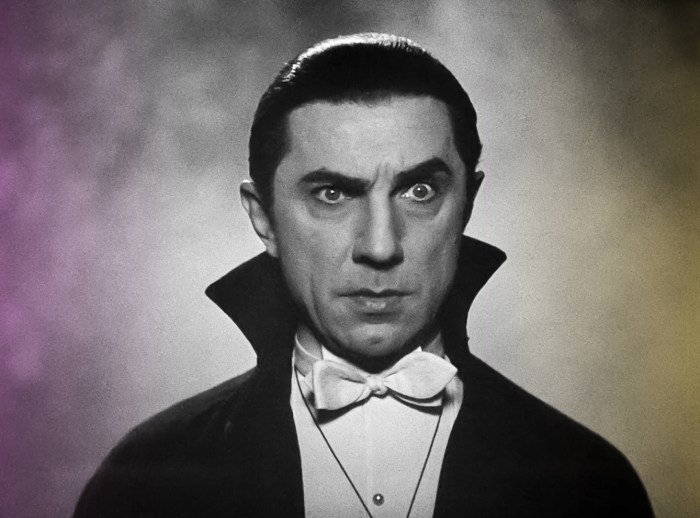
Dr. Jekyll and Mr. Hyde faces a similar problem. The story became so popular that “Jekyll and Hyde” is now an all-purpose term for a character (or a person in real life, for that matter) with two contrasting sides. But when Robert Louis Stevenson wrote the book, that simply wasn’t a thing yet. The idea that Henry Jekyll transformed into Edward Hyde was the shocking twist. It’s so commonly known now, though, that most adaptations of the story don’t even bother to disguise it anymore. What was intended as a clever fantastic mystery has become a standard monster trope.
Lots of other stories have entered the common discourse. You would be hard-pressed to find someone that doesn’t know Bruce Willis’ character in The Sixth Sense is a ghost in every scene after the first one, even though the character himself is unaware of it. Everybody knows that Norman Bates is the killer in Psycho, but the movie does its damndest to make you think it’s his deceased mother right up until the climactic scene. And even if you’ve never seen Citizen Kane, at some point I bet you’ve heard somebody say the phrase “Rosebud was his sled.”
The twist problem is kind of a subset of the spoiler problem. Stories are constructed in a certain way to create a certain impact, and if an audience knows too much too soon it will rob the storyteller of the opportunity to tell the story the way they intend. There are some who argue that if knowing the twist ruins the story, then it wasn’t a good story in the first place. This attitude is, to use a term popularized by Beatrix Potter, horseshit. It’s like saying that if you don’t like your pizza after someone steals your cheese, it was never a good pizza. Anything will become bad if you take away the elements that make it what it is. That doesn’t mean it’s not really good when all the elements are there.
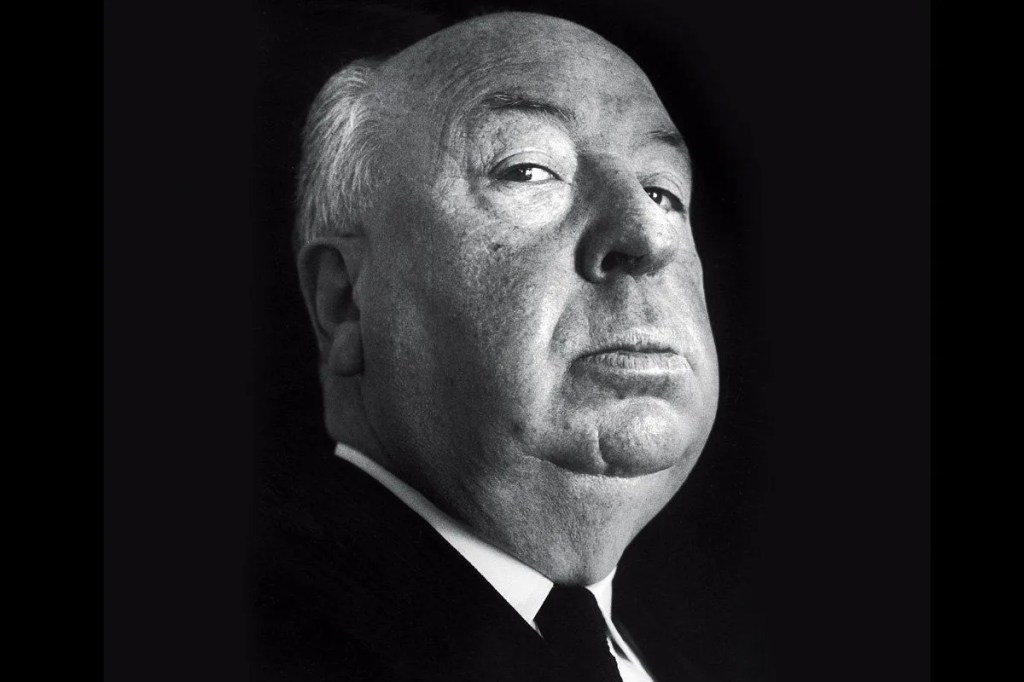
Some story tellers do their best to preserve a twist. When Avengers: Endgame came out, the Russo brothers took to social media and pleaded with people not to reveal the ending. It didn’t really work, but they tried. That’s really the most you can do these days, but when Alfred Hitchcock was making Psycho he actually bought up as many copies of the novel it was based on as he could in an effort to prevent people from knowing the ending. I’m pretty sure that if Hitch were alive today the very existence of social media would send him flying into a murderous rage, which appropriately enough feels like a twist out of a Hitchcock movie.
Solid twists are, in a way, a victim of their own success. Because they’re good, word spreads and the impact is lost for future audiences. The newest member of this club is Project Hail Mary. Now normally, this would be where I warn you that I’m about to spoil something from the novel, but the whole point of this column is that – if you have even the most marginal awareness of this movie – the trailers, marketing, discourse, and merchandise have spoiled it for you already.
Last year, when the trailer for the movie dropped, I saw comments online from fans of Andy Weir’s original novel warning that the trailer straight-up gave away one of the biggest surprises of the book. Not having read the book yet at the time I — in an act of self-preservation not unlike the hellish ordeal endured by Tom Hanks in Cast Away — avoided watching the trailer and moved the novel to the top of my to-read pile. And I’m very glad I did, because I was allowed to enjoy the story as originally intended: I read as Ryland Grace woke up on a spaceship, slowly regained his memories of how he got there, learned about his mission to save the world, and OH MY GOD, HOLY CRAP, IT’S AN ALIEN!
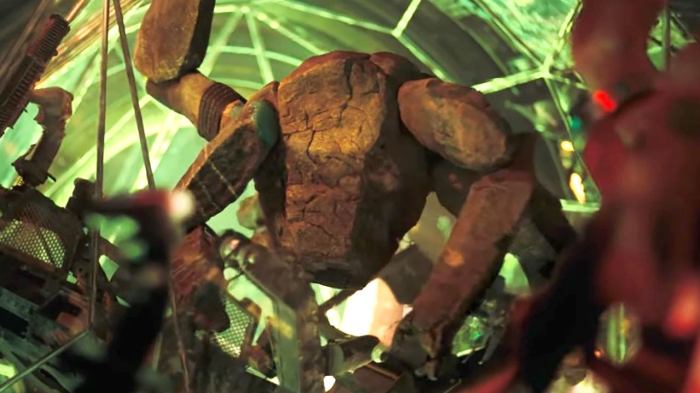
And of course; if all you’re familiar with is the movie, that may seem like an absurd reaction. Of COURSE there’s an alien. He’s in every trailer. They’re submitting his puppeteer for Oscar consideration. He’s ADORABLE.
But you have to remember that Andy Weir is known for “hard” science fiction, stories that take great pains to make the science part as real as possible. There was never even a hint that he would be introducing an alien until the ship appeared, and the reader was as stunned as the character in the book.
There was no way this shock would be preserved for the movie, of course. The studio — fairly – wanted to show off their newest star. They’ve made promos of Rocky “borrowing” Ryan Gosling’s phone to buy tickets to see his own movie. You can get a popcorn bucket that looks like Rocky in his “hamster ball.” Fortunately – like with Dracula and Dr. Jekyll – it was possible to reframe the story just slightly so that losing the surprise didn’t stop it from being the best movie of the year. (Yeah, I know it’s only May. I’m calling it now.)
I don’t think there is a real solution to this particular problem. For as long as there are stories to tell, people will want to pick apart and talk about them and, eventually, the best twists will just become part of the common discourse. So instead of trying to stop it, let’s all just remember to be charitable to these kinds of stories, especially the older ones. Sure, we may all know that Mrs. Voorhees is the one who started chopping up those camp counselors now, but it wasn’t always that way.
Blake M. Petit is a writer, teacher, and dad from Ama, Louisiana. His most recent writing project is the superhero adventure series Other People’s Heroes: Little Stars, volume one of which is now available on Amazon. He’s also started putting his LitReel videos on TikTok. He’s still irritated that the big twist in Reservoir Dogs turned out to be the unforgivable lack of dogs.

