Geek Punditry #173: In Defense of the Old

Recently, in one of those moments that divides the internet like nothing else in the past 27 seconds, a video in which a young woman confessed that she didn’t know who Madonna is went viral. There seemed to be two typical responses to this: Older people bemoaning the fact that today’s youth is so uncultured, and other young people doubling down on the fact that they, too, do not know who Madonna is. One responder said he’d always thought Madonna was a “concept.” Another thought she was dead. And my favorite reply came from the young person who thought Madonna was – and I quote – “Lady Gaga’s Alter Ego.”

The primary difference is that Gaga has more pixels.

Now as one of those aforementioned older people, it would be easy for me to point and laugh at this uncultured lass and her foolish ways… but the truth is, that would be pretty disingenuous. After all, why should we expect any member of the younger generations to be aware of Madonna? When’s the last time she had a hit song? The last time she was in a movie? And let’s be honest here, although she did write that one bestselling book, the rest of her literary output hasn’t made the same sort of waves, which of course is just one of the many things she has in common with J.D. Salinger.

The whole thing does, however, point to a larger issue that I, as a teacher, run into on a very regular basis. By and large, I find that the young people of today have very little awareness of any culture – not just pop culture, but culture in general – that precedes their own.

I – a child of the late 70’s who did most of his growing up in the 80’s – always remember having an awareness of older culture. Sure, a lot of the cartoons I grew up with were the 30-minute toy commercials of the era like Transformers and Masters of the Universe, but those were mixed with stuff like Looney Tunes and The Flintstones, cartoons that our parents and even grandparents watched, but were repackaged for our generation. Live action TV worked much the same way. Of course we had new shows, but not enough of them to fill an entire broadcast day, so we were fed those alongside a diet of shows that went off the air years or even decades before we were born like The Beverly Hillbillies, Gilligan’s Island, or The Honeymooners. And of course, we grew up on genre shows like the original Star Trek, the Adam West Batman and George Reeves’ Adventures of Superman.
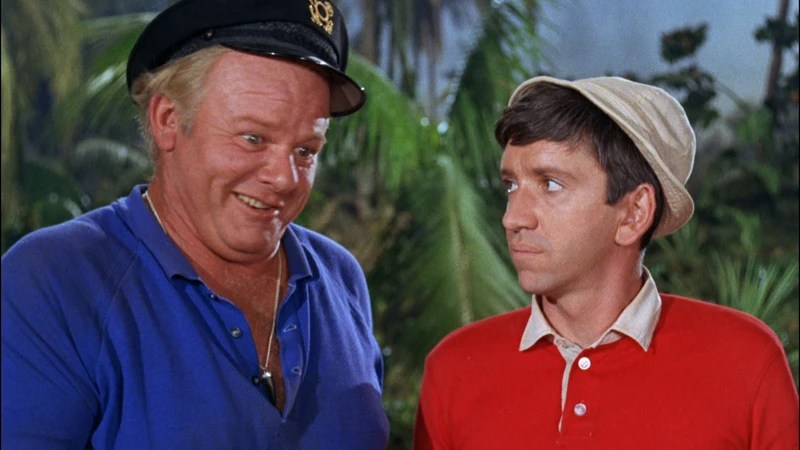
This and Emily Bronte, basically the same thing.

A lot of this, of course, is because we were most likely exposed to what our parents liked. Once kids my age were old enough to choose our own music we drifted towards hair metal and those 80s pop stars that gave birth to the modern diva, but we still sure as hell knew who Elvis and the Beatles were because our parents played them in the car before the invention of the Sony Walkman allowed children to erect musical barriers on road trips. And although it may surprise some people to learn that I did not grow up as a fan of horror movies, that’s because my parents didn’t watch them. Thanks to my mom, though, I have a not-insubstantial knowledge of live-action Disney movies of the 1960s, and I suppose I may as well admit that one of my earliest crushes was Hayley Mills circa the original Parent Trap movie from 1961.

Hayley is 80 now, but if you saw her in M. Night Shyamalan’s 2024 thriller Trap, you will admit she’s still got it.
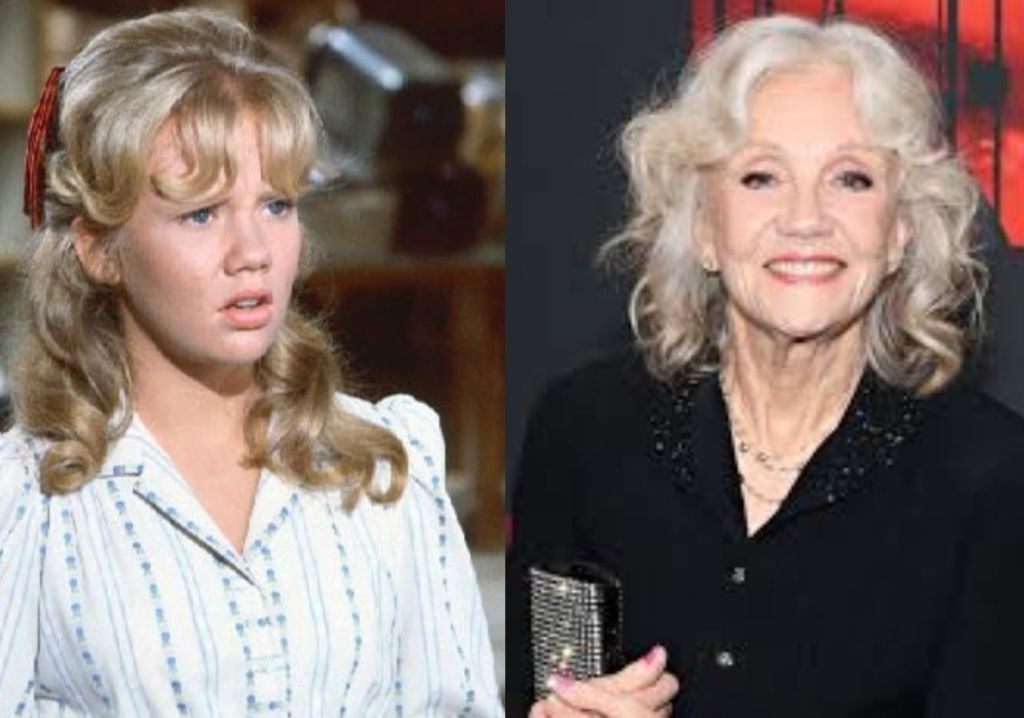
You can’t change my mind.

Now you may be wondering what difference any of this makes. After all, trends have always come and gone, some culture fades and is replaced. And yes, that has always been the case…for some culture. But not all. There’s an old axiom that 90% of all art — and that includes music, writing, and any other art form you can name – is crap. And that’s true. We remember Shakespeare, Da Vinci, Beethoven. We remember them because they were masters of their craft. But there are thousands of others who lived and worked and created and died at the same time as them whose work has been utterly forgotten, and much of it because it just wasn’t as good. 

Not to say nothing good has ever been lost. There have been – and always will be — creators kept down due to class or politics or a million other reasons that have doomed them to obscurity. But while it’s true that many a deserving work has been lost, it’s also true that the things that stand the test of time largely do so because they’re worth preserving, and new generations have always recognized that. 

Until now.

Technology has reached a point where everyone has the ability to create their own little bubble, their own personalized feed, where they never have to be exposed to anything except what they teach the algorithm they like already. That’s horrifying to me. And I don’t mean that in a gatekeeping way. Like whatever you like, I don’t care. But if all you ever see is stuff you already like, how will you ever grow?

As an English teacher, it bothers me when someone wants to replace a classic with whatever the Flavor of the Week YA series is in the name of “Engagement,” and not because I don’t think the new stuff can be good. I’ve got no problem teaching, for instance, Rick Riordan’s Percy Jackson novels, because they’re well-written and even help with teaching the classics via their many links to Greek Mythology. But reading The Lightning Thief should be a supplement to things like The Odyssey, not an effort to take its place.
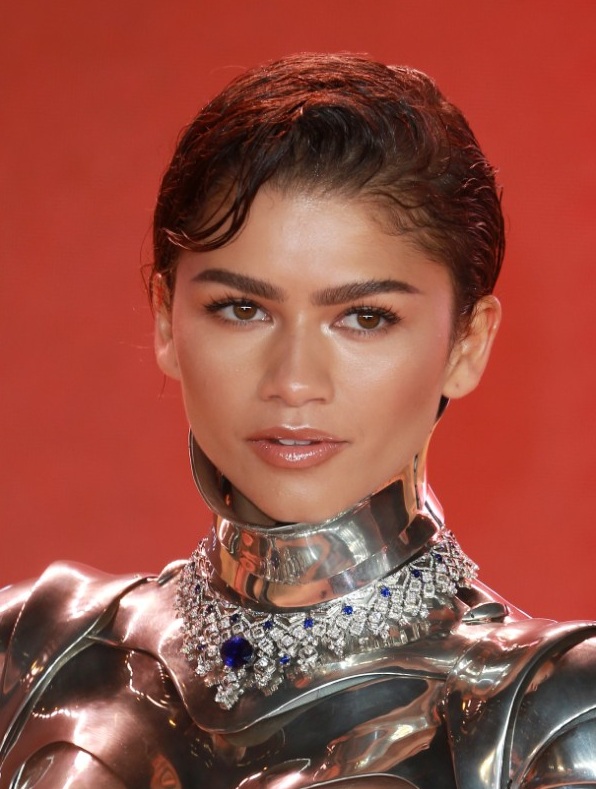
Although Zendaya as Athena would work in either of them.

I want culture to be additive. I want people to be able to enjoy anything and everything and not dismiss it because it’s old. My favorite part of the school year is when I can tell an 18-year-old is furious at Hamlet for how he mistreats poor Ophelia, because that means I got them to care about a 400-year-old play. How easy is it to get a modern kid to even care about a cartoon from 1987? And sure, it thrills me when a student says, “I scored a 28 on the ACT,” but it thrills me just a liiiiiittle more when that same kid says, “Man, Hamlet did Rosencrantz and Guildenstern dirty.”

I try my best. I encourage the kids in my class to seek out classics. I share my own favorites with my family. I am proudly the only parent among my son’s third-grade class with a child who can sing multiple variants of the Mystery Science Theater 3000 theme song. And I could not wait until my niece was of an age where I could give her a copy of Stephen King’s Eyes of the Dragon for Christmas. 

It is possible, you just need to help someone find the value. One of my favorite TikTok feeds is by a young film student who wants to go back and watch all the classics she’s never seen before. Once a week, she randomly chooses a movie from a box full of suggestions and makes a video of herself reacting to it. It’s fun to watch this kid unravel the mystery of Hitchcock’s Vertigo, raid that lost ark with Indiana Jones, or follow the Hobbits as they leave the Shire for the first time. My favorite video of hers is the one where she sobs at the end of The Shawshank Redemption and asks, “Why do the movies my dad tells me to watch always make me cry?”
Because your dad isn’t made of STONE, that’s why.

If I ever meet her dad, I owe him a high-five.

I don’t oppose kids having their own stuff.

They should. They’re entitled to it.

I just want them to remember that Shakespeare wrote some damn good stuff. too.

And Mark Twain. Mary Shelley. Edgar Allan Poe. Charles Dickens. I’d like it for them to know when they’re humming a little Brahms, or that the Scream Ghostface mask is based on a painting by Edvard Munch.

I don’t even want them to forget Madonna.

So don’t shame people for not knowing the stuff from our youth. Share it. Give them a reason to engage. And above all, show them what it means to endure.

Blake M. Petit is a writer, teacher, and dad from Ama, Louisiana. His most recent writing project is the superhero adventure series Other People’s Heroes: Little Stars, volume one of which is now available on Amazon. He’s also started putting his LitReel videos on TikTok. Could you imagine a world that forgot Jan Brady? Okay, so maybe it wouldn’t be all bad. 

Geek Punditry #12: Nothing New Under the Sun

One of the most common criticisms of modern movies is that there aren’t any new ideas. People point to the nearly endless stream of sequels, prequels, remakes, and franchises as evidence that Hollywood has run out of creative juice, as if there’s somehow nothing original in seventeen movies about a robot that can turn into a jet ski. There are two problems with this, though. First, it’s not really true. There are thousands of scripts circulating in the movie industry at any given time – each year a “Blacklist” is released of the best unproduced scripts currently making the rounds, and some of them eventually find a studio or a director to take them on. The problem isn’t that original stories aren’t out there, it’s that the people holding the strings of the purses are afraid to spend money on them. You can take a chance on that period drama about a coal miner who discovers a secret that will topple a kingdom, or you can make the ninth installment of an action franchise that you know is going to make at least $200 million even if it’s terrible. I’m not saying I agree with this decision, mind you, but I certainly understand it.

Nothing original my shiny hiney.

The other problem with this complaint is the assumption that this is a recent phenomenon, that it’s only in the last few years that this mythical well of creativity has run dry. What happened to those great epic films of the past based on totally original ideas? Things like Jaws or The Wizard of Oz or The Ten Commandments? You know, things that were made from whole cloth. It’s nonsense, of course. People have been borrowing stories since the first story was told. And you know what? That’s okay.

I took a quick glance at IMDB’s top 100 narrative films and counted at least 40 movies that I know are based on books, plays, real life, or are sequels – and those are just the ones I’m aware of. I’m sure that there are more, but I don’t have time to read the trivia on all of them. This also doesn’t count those films that aren’t “official” adaptations, but borrow liberally from earlier stories (such as Star Wars taking elements from Buck Rogers and Hidden Fortress). A large chunk of our most acclaimed cinema is taken from other sources. And there’s nothing wrong with that. William Shakespeare himself “borrowed” from everybody. The histories, obviously, aren’t original ideas, but beyond that we have Romeo and Juliet based on an Italian poem, Othello was lifted from a collection of short stories, and Hamlet was a straight-up ripoff of The Lion King

Rosencrantz and Guildenstern are fed.

No, seriously, it’s based on an old Danish myth about a young man who has to seek revenge after his father is murdered by his uncle. There were, in fact, several versions of this story going back hundreds of years before Shakespeare cherry-picked his favorite parts of each of them, added a ghost, wrote the song “Hakuna Matata,” and BAM! made it the most famous play in the English language. 

Something else to consider is that as vast as the well of human creativity is, we’ve been exploring it for a really long time, and there aren’t a whole lot of corners left to excavate. Back in 1895, Georges Polti published his list of “The Thirty-Six Dramatic Situations,” in which he outlined what he believed was every possible plot that any writer can use. Granted, these 36 plots are incredibly simplistic (abduction, revolt, enmity of kin, Godzilla Vs. Mechagodzilla, etc.), but I first read about these plots in a writing book nearly 20 years ago and since then I’ve never come across a story that didn’t fit at least one of them, not even Space Jam. The point, then, is not to come up with an entirely original idea, because that seems to be virtually impossible. The point is to find the story you want to tell, and then tell your version in an entertaining and satisfying way. 

Too many writers get hung up on being original and freeze. A long time ago I had a friend read a story I wrote only to panic when she asked me when was the last time I read The Chronicles of Narnia. It had been years, but upon reflection I realized I used a device remarkably similar to an element from the Narnia novel The Magician’s Nephew. I hadn’t done it intentionally – I hadn’t read the book since elementary school and I had very little memory of it – but the device was so similar I have to concede that I was drawing on it subconsciously. Another time a friend of mine asked me if I’d heard of Rick Riordan’s Percy Jackson series, and because I trusted his recommendation, I picked up the first book. I loved it and I also got sick to my stomach, because the conceit of the Greek Gods in modern times was something I had been working on in a novel of my own that pretty much died on the vine. I obviously wasn’t stealing that idea, because at the time I had never read Percy before, but the knowledge that there was such a popular book out there that used some of the same ideas slaughtered my enthusiasm for the project. In retrospect, that was a mistake. The take I was planning really wasn’t at all similar to Camp Half-Blood, the only real similarity was that it was contemporary mythological characters, but I was so shaken that I lost the thread of that story and was never able to find it again. 

“Hello, literature police? I’d like to report a murder…of my hopes and dreams.”

Rather than abandoning a story with old roots, a writer should cultivate those roots and find a new way to grow. Stan Lee famously combined Frankenstein and Dr. Jekyll and Mr. Hyde to create the Incredible Hulk, after all. Kevin Williamson and Wes Craven bought stock in decades of slasher movies to give birth to the Scream franchise. George Lucas drew on Uncle Scrooge comics by Carl Barks when he conceived of Raiders of the Lost Ark. (I know that sounds like the kind of thing I would make a joke about, but it’s not. That one’s a straight-up fact.)

Let’s go back to Shakespeare. Everyone knows Disney borrowed from Hamlet when they made The Lion King, but that’s only the tip of the iceberg. Romeo and Juliet inspired West Side Story, MacBeth became Kurasowa’s Throne of Blood, The Taming of the Shrew became Ten Things I Hate About You. As of this writing, William Shakespeare is credited as a writer for 1746 projects on IMDB. That’s nearly 2000 movies and TV shows, stories told in mediums that were not invented until he had been dead for almost three centuries. (He’s also credited once under “music department” and a baffling SIX times as “additional crew.” I could click on those links for clarification, but I kind of prefer my headcanon, in which he was involved in craft services on the set of The Human Centipede.) 

What’s more, those 1746 credits are only the films that specifically list him as a writer, not those that borrow from him without applying the credit, nor does it account for the thousands of stories that use his work outside of the realms of film and television. I did college and community theater for many years and one the best shows I was ever in was The Complete Works of William Shakespeare [Abridged], a gut-busting comedy featuring three actors trying to perform parts of all 36 of Shakespeare’s plays in one evening. Then just yesterday I got Ryan North’s book To Be Nor Not to Be, in which he retells Hamlet as a Choose-Your-Own-Adventure story. I’ve read it through once so far, choosing the “original” path of the play before I branch out and test the wackier versions, but even the “original” is really funny. (North also seems to have a much greater fondness for Rosencrantz and Guildenstern than most people, treating them in a way that’s very much at odds with Tom Stoppard, who himself used Shakespeare for the basis of his play Rosencrantz and Guildenstern Are Dead, which in turn inspired the epic drama Bubble Guppies.)

“To suffer the slings of outrageous fortune, turn to page 32. To suffer the arrows, turn to page 19.”

A lot of writers wear their influences on their sleeves. Stephen King – who you should realize by now is a perennial favorite of mine – used Robert Browning’s poem “Childe Roland to the Dark Tower Came” as the launching pad for his own The Dark Tower, the series he calls his “magnum opus.” The series has feelers and roots in dozens of his own novels and short stories, but also in the works of other creators. Along the way he sprinkled in a visit to Oz, a riddle game that feels like Twisted Tolkien Theatre, robots stolen from Marvel Comics, and nuggets of Harry Potter to fill in the gaps. King, in turn, has inspired many other writers, among them his own sons Joe Hill and Owen King and the entire writing staff of the TV show Lost.

Mythology is another popular source to “borrow” stories from, which is why I tried to do it myself before Rick Riordan inadvertently kicked my teeth in. The Odyssey, for example, has been retold multiple times: the Coen brothers transplanted it into turn-of-the 20th Century Mississippi for their film O Brother, Where Art Thou?, DC Comics used it as the basis of the Adam Strange/Starfire/Animal Man section of their year-long experimental series 52, and a few years ago some schmuck from Louisiana replaced Odysseus with Santa Claus and tried telling his own version of the story

“My name? Nobody-El.”

DC is actually returning to the Homeric well beginning this week with a series called Superman: Lost. In the first issue of this 10-issue series by writer Christopher Priest and artist Carlo Pagulayan, Clark Kent and Lois Lane are hanging out at home one evening when he’s summoned away by the Justice League to deal with an emergency. He comes back only minutes later, but now he seems to be in a state of shock. After a few panels of Lois trying to figure out what’s happened, Clark drops the bomb that – from his perspective – he’s actually been gone for 20 years. The first issue is excellent, and I’m very much looking forward to the rest of the story to see why he’s been gone so long, what timey-wimey ball of phlebotinum is going to be applied to bring him back to the present, and how much is borrowed directly from The Odyssey. Priest is a writer whose work I’ve enjoyed for a long time, so I’ve got plenty of faith going in.

The point is, originality is not the be-all and end-all of storytelling. True, it’s always great to be genuinely surprised, but that doesn’t mean that there’s not room for good movies, TV shows, or books that have a familiar flavor. If you don’t like something, fine, that’s your prerogative, but if the only thing wrong with it is that you feel like you’ve seen it before, try to decide if it has other merits before you dismiss it entirely. You may find something worth experiencing after all. 

And if not, just go watch something original and brand-new. Like The Last of Us. Or Wednesday. Or that new show Night Court. Or…

Blake M. Petit is a writer, teacher, and dad from Ama, Louisiana. His current writing project is the superhero adventure series Other People’s Heroes: Little Stars, a new episode of which is available every Wednesday on Amazon’s Kindle Vella platform. Please do not mistake this “originality isn’t everything” position as an endorsement of plagiarism or, even worse, using AI to write a story. Both of these are crimes for which you should receive, at minimum, a toilet that won’t stop running all night long even after you take off the top of the tank and stick your hand in the water to try to adjust it. That’s what you’ve got coming to you. Jerk.