Geek Punditry #202: When the 80s Were Stopped Cold

Growing up in the 80s was – and I say this without a hint of bias and an air of total objectivity – the greatest thing that ever could have happened to a human being. It was the pinnacle of culture, giving us such timeless and cherished pieces of entertainment as Pac-Man, Michael Jackson’s “Thriller,” Captain Carrot and His Amazing Zoo Crew, and Wendy’s heartwarming and tender “Where’s the Beef?” ad campaign. But despite the fact that everything that was made in the 1980s was a work of staggering genius, there were certain movies that – despite having everything going for them – just never got a sequel for one reason or another. It’s a bizarre thing, too. We’re talking about the EIGHTIES here, an era in which even Police Academy got five sequels. It was a time in which any franchise of less than four installments would have been considered a dismal failure. So what happened?

Today I’m going to run down movies from my formative decade that I loved then, that I love now, and that for some reason never got an official cinematic sequel (although some of them were continued in comic books or other media). And I’m going to focus mainly on movies that SHOULD have a continuation – The Princess Bride, by contrast, is one of the greatest movies ever made, but there is absolutely no reason it should ever have a sequel. Sometimes, we should leave well enough alone. These are movies that shouldn’t be. Here, in no particular order, are movies that never had a part two, but deserved one.
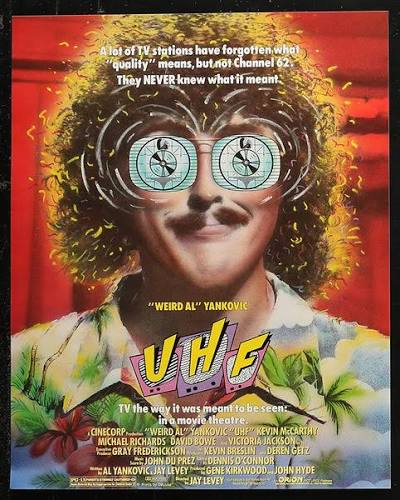
UHF (1989)

1989 was a touchstone in movie history. This was the year of Tim Burton’s Batman, the year Bill and Ted got in their phone booth, the year of Indiana Jones’ Last Crusade, the year the Ghostbusters made the Statue of Liberty walk, the year Marty McFly went to 2015, the year the Griswolds taught us how to celebrate Christmas, the year Captain Kirk asked what God needed with a starship, the year Jason took Manhattan, and the year we all spent a Weekend at Bernie’s. But not the least among the cinematic accomplishments of that year was Weird Al Yankovic starring in his first feature film, the classic UHF. In this movie, George Newman (Al) is hired by his uncle to take over a struggling UHF TV station, not knowing that the plan is to run it into the ground. To the surprise of everyone involved, though, George and his friends begin a slate of crazy, off-the-wall programming that turns out to be a hit, much to the chagrin of the rival broadcast executive who was hoping to put the station out of business.

The plot of UHF is a really typical 80s trope, the whole “slobs vs. snobs” mentality of the likes of Animal House, Revenge of the Nerds, or any of 20,000 movies set in a ski resort, only applied to a TV station instead. What made the movie work was the manic sketch comedy and always-delightful music of Weird Al. Had there ever been a sequel, what I would have liked to have seen is Al tackle other styles and cliches of movies of the 80s (or 90s, as the series progressed) while still bringing his own brand of comedy along for the ride. Let’s face it, there’s no shortage of cliches for them to send up. We could be on UHF XIX by now if the world were a kinder place.

Alas, the film was not beloved by the critics (all of whom, it should be argued, were poopyheads) and suffered greatly to find a place amongst a year cluttered with blockbusters like those I mentioned before, so there was never any effort to continue. Weird Al himself went into a slump after the film, taking another three years before he released his next album, and he wouldn’t make another movie until 2022. But I like to believe that somewhere out there is a little spot in the multiverse where we’re all going to the theaters this Christmas to watch George, Pamela Finklestein, Stanley Spadowski and the rest of the crew get the band together one last time to save their station in the midst of the Netflix era.

There’s still magic to be had.
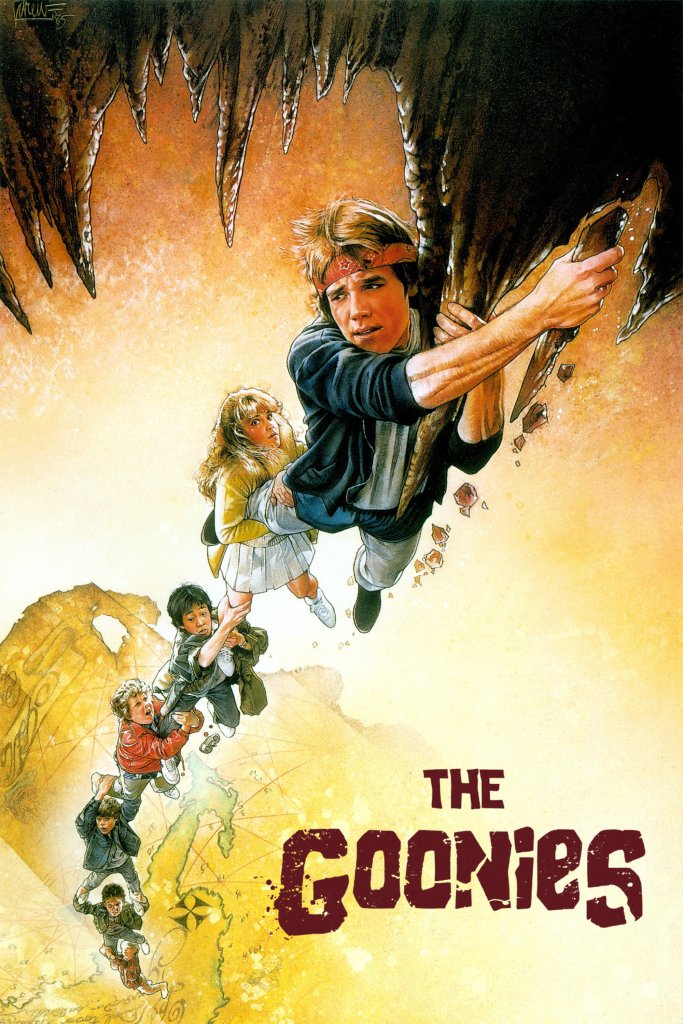
Goonies (1985)

At first I wasn’t certain if I was going to include this movie, because it feels like everybody has already talked about the potential of a Goonies sequel to death, but when I asked my wife what movies she thought I should include on this list this was one of the first things she said. I knew it deserved a place. For people of my era, Goonies is one of those fundamental films. It was a movie about kids our age banding together and having a wild, crazy adventure full of pirate treasure, a vast subterranean labyrinth of caves, and the most bitching water slide in movie history (sorry, Bill and Ted). I can’t imagine any American human being anywhere near my age who, at some point, didn’t dream about being Mikey leading his friends into danger, want to play around with all of Data’s wacky inventions, wish we had a big brother like Sloth, or develop a little bit of a crush on Andi.

It was also one of those movies from the 80s that encapsulated what it was actually like to be a kid at that time. Okay, granted, most of us never had to fight a crime family on the deck of a pirate ship, but these kids talked the way we talked, had attitudes like ours, and were the sort of free range humans who could actually get away with hopping on their bikes and disappearing for hours without their parents keeping them on a permanent leash. As later movies started to sanitize the childhood experience, kids themselves seemed to lose these aspects of childhood, and that’s why we’ve got generations of people now who think it’s okay to ask ChatGPT how to make yams for Thanksgiving and don’t even question it when Elmer’s Glue is on the shopping list.

The potential for a sequel was obvious of course: having survived one amazing treasure hunt adventure, send the kids on another one. But despite being a beloved movie and one of the top ten films of 1985, the only sequel it ever got was an early Nintendo game of highly dubious quality. There have been many, many times when there was talk of a sequel, but it always seemed to fall apart. It would rise again – hey, maybe this time it will be a movie about the Goonies’ kids having a new adventure – but then that would fall apart as well. If they don’t do something soon, they’re going to have to make the sequel about Mikey’s grandson trying to round up the descendants of his Pop-Pop’s old friends. Maybe the time for a Goonies sequel has, indeed, passed, but we can always dream.
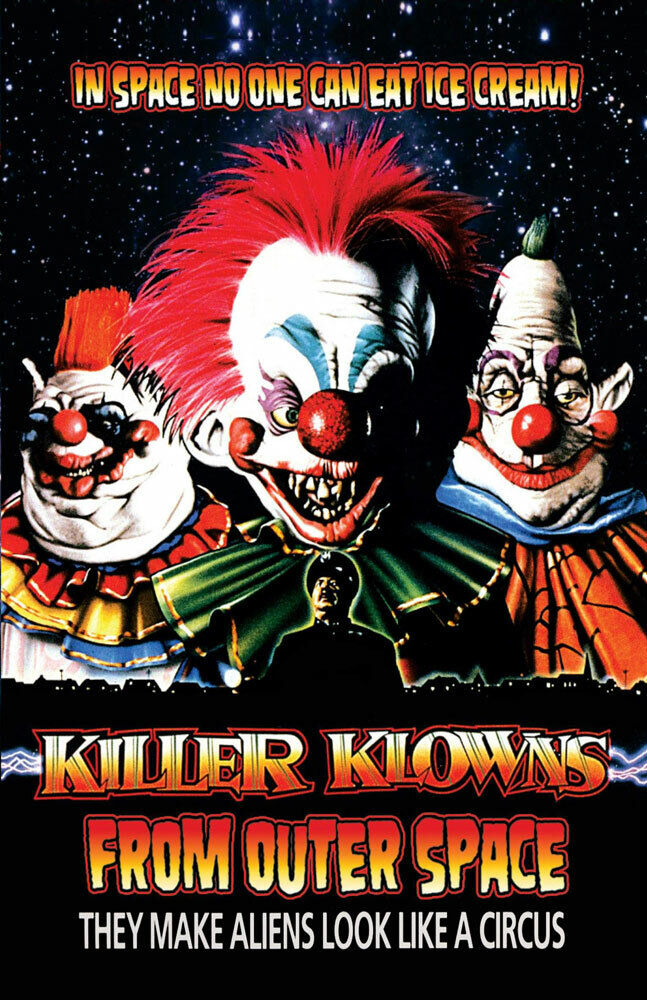
Killer Klowns From Outer Space (1988)

Speaking of my wife (as I often do), it’s kind of baffling that one of her favorite horror-comedies of the 80s never saw a sequel, although like Goonies, there have been numerous attempts over the years. Killer Klowns From Outer Space is a product of the phenomenal special effects shop run by the Chiodo Brothers, who crafted this tale of an invasion of alien…well, the title is right there in front of you. The movie is kind of a take-off of 50s alien invasion films, using the trope of the Creepy Clown long before it became a thing like it is today. The movie is silly and over-the-top and ridiculous. It’s also got wildly impressive puppetry and special effects, and the preposterous nature of the story is what makes it so damned much fun.

What would a Killer Klowns sequel look like? Honestly, does it even matter? There’s another invasion, another attempt to fend them off. Maybe this time one of our human heroes gets onto their spaceship and goes to their home planet to see where this bizarre culture came from. I don’t know. I don’t even think I care. The story is pretty secondary here – I just want to see more of the amazing practical effects that made this movie a classic, especially in this era where more and more people seem to want to do anything they can to avoid putting anything that’s actually real on a movie screen.
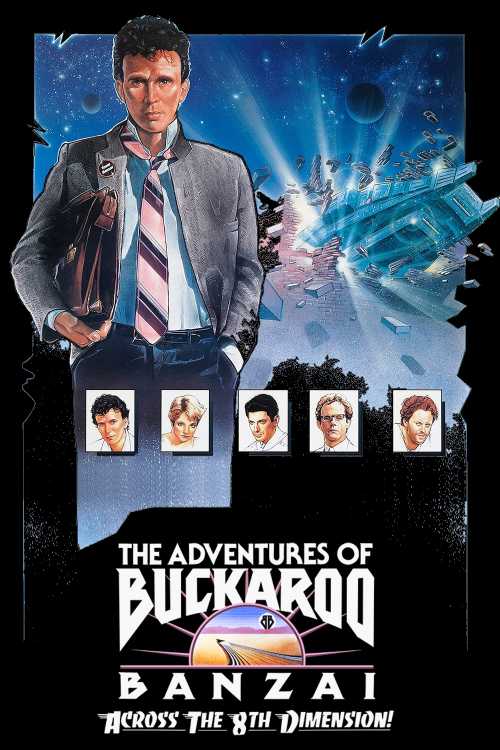
The Adventures of Buckaroo Banzai Across the 8th Dimension (1984)

Another cult classic, Peter Weller stars in this one as Buckaroo Banzai, the world-famous neurosurgeon, physicist, pilot, and rock star (yeah,another one of THOSE guys) who saves the world from an invasion of interdimensional aliens with his team of specialists and experts. This is one of those movies that’s full of everybody: the cast includes Ellen Barkin, Jeff Goldblum, John Lithgow, Clancy Brown, Christopher Lloyd, and a dozen other names and faces that you would recognize. And the sense of 80s excess couldn’t be more obvious here, everything in this movie is wild and over-the-top.

Writer Earl Mac Rauch said he wanted to do it as a parody of boundary-pushing 70s kung-fu movies, but he went much, much farther than that. I’ve often suspected that Banzai and his band (the Hong Kong Cavaliers) were inspired by pulp heroes like Doc Savage – a genius who was good at literally everything and had a group of friends who joined him on his adventures. Banzai felt like the closest thing we got to a good Doc Savage movie (yes, I’m aware that there WAS a Doc Savage movie, and I said what I said) while still being very much its own thing.

The movie itself was full of potential for future exploration of this world, with a cast of characters that could be set against any challenge or danger, and maybe they could finally explain what the deal was with the watermelon. But the movie didn’t do well – it was considered too complicated and perplexing for audiences. I feel like this one was ahead of its time, and were it made today as a streaming miniseries, it would be a smash hit.

Rauch has continued the story in a novel, Buckaroo Banzai Against the World Crime League (which was teased at the end of the film), and there have been comic book and video game follow ups, but Buckaroo and the Cavaliers have never made it to the screen again.
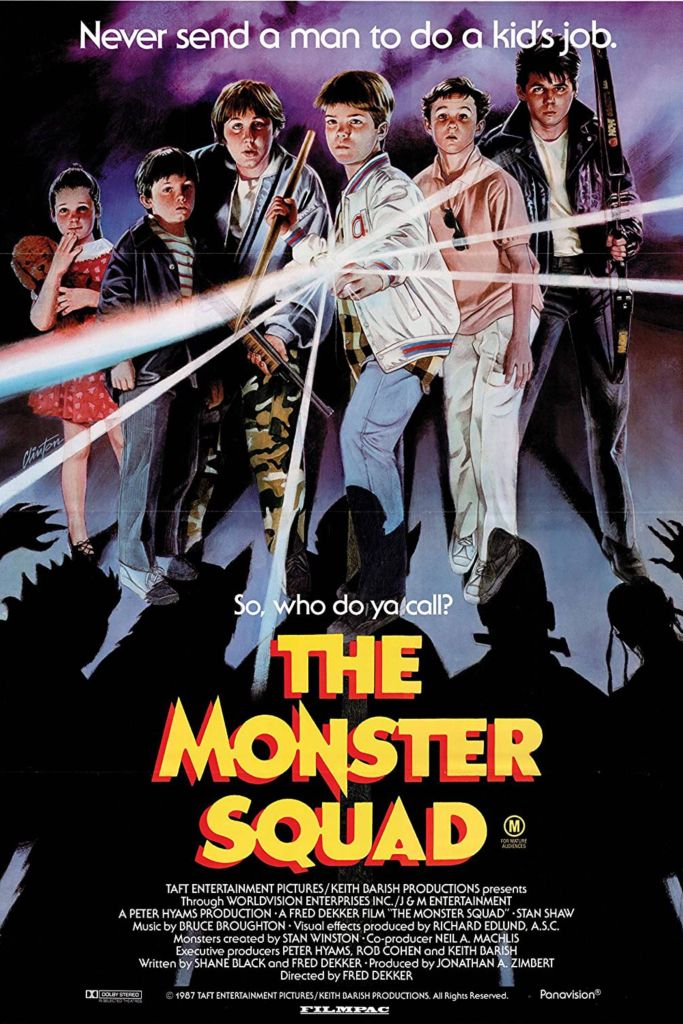
The Monster Squad (1987)

If ever there was a movie tailor-made for my sensibilities, it was Fred Dekker and Shane Black’s Monster Squad. A group of kids (a very Goonies-esque group of kids, at that) who happen to love classic monster movies discover that Count Dracula is trying to get his hands on an amulet that can be used to banish him to Limbo. The amulet can only be used once every century, and the day is coming up, so the kids find themselves in a battle against Dracula and his monster cronies, the Mummy, the Gill-Man, the Wolf Man, and Frankenstein’s Monster.

The fact that this movie was pitched to Universal Studios, home of the greatest movie monsters of all time, and some boneheaded executive PASSED on it is astonishing to me. It’s as stupid as – I don’t know – passing on a Creature From the Black Lagoon remake by Guillermo Del Toro and then watching it go to win Best Picture. But that’s what happened, and Dekker and Black took their idea to Warner Bros, where they had to shave off some of the elements that made the monsters explicitly the Universal versions of the characters, not that it really mattered. We all knew.

Not only is this movie fun and infinitely rewatchable, it’s got a few fantastically quotable lines and awesome creature effects. Although it got a good response from audiences, the audiences just weren’t big enough and it bombed at the box office, killing any sequel potential. One can only imagine what kind of beasties the Monster Squad would have faced off against in future installments. Hammer Horror monsters? 80s slashers? Could they have gone toe-to-enormous toe with King Kong or Godzilla, or at least a legally-distinct representation of either of them? The mind boggles.
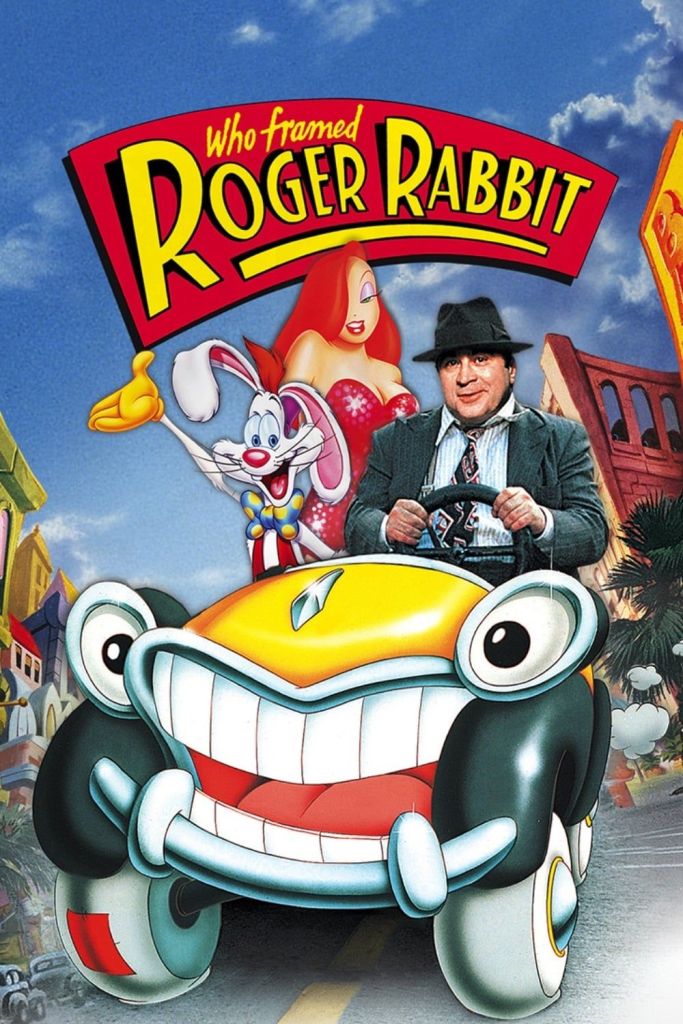
Who Framed Roger Rabbit? (1988)

In some ways, Who Framed Roger Rabbit? is one of the most ambitious movies ever made. It was a 1940s period piece (which is expensive), that combined human actors with hand-drawn animation (which is expensive and difficult), AND it required the studio to obtain the rights to cartoon characters belonging to rival companies in order to make the world feel fully expansive and complete (which would require a miracle that would have made Moses himself sit back and think, “That might be too much”). But somehow, director Robert Zemeckis pulled it off, adapting Gary K. Wolf’s novel into a classic.

The story is a comedy murder mystery in which a detective, Eddie Valiant (Bob Hoskins), is hired to dig up dirt on a cartoon character, Jessica Rabbit (Kathleen Turner), who may be playing patty cake behind her husband’s back. When her affair partner is murdered, Jessica’s husband – the beloved cartoon star Roger Rabbit (Charles Fleischer) is the chief suspect, and it’s up to Eddie to get to the bottom of it.

The movie works not only as an old fashioned mystery, but also creates a wholly believable world where cartoon characters are more than just ink and paint. They’re living creatures who have the same agency as any human actor. But it wouldn’t have been nearly as effective if they had created a bunch of generic cartoon characters to fill out the world. Except for Roger and his closest friends, most of the cartoon cast was fleshed out by getting the rights to the greatest cartoon characters of the 30s and 40s. Touchstone Pictures was a branch of Disney, so getting the rights to the likes of Mickey Mouse and company was no problem, but they had to work hard to obtain the rights to the likes of Betty Boop, Droopy Dog, Woody Woodpecker, and most impressively, the stars of Warner Bros. Looney Tunes franchise. The last one was the sticking point – Warner Bros. wanted to make sure their characters got equal time with the Disney characters, and the world just wouldn’t have felt real without them. So because of that we’ve got the immortal piano duel between Donald Duck and Daffy Duck, and the greatest moment in cinematic history, namely Bugs Bunny and Mickey Mouse sharing the screen together for EXACTLY THE SAME AMOUNT OF TIME.

The movie was a hit and, of course, plans for a sequel began immediately, but fell apart time and again. It got worse in 2001 when Gary Wolf, who wrote the novel, sued Disney over unpaid royalties, a suit he eventually won, but got far less than the $7 million he estimated he was owed. The oddest part of the whole battle is that the movie was SO far removed from the original novel Who Censored Roger Rabbit? (in which the characters were comic strip characters, not cartoons, existed in a two-dimensional shape, spoke through word balloons, and in which Roger was actually murdered at the beginning of the book) that when he decided to write sequels, he ignored his original book entirely and wrote sequels to the movie.

Last year, Wolf said that Disney no longer had the rights to the Roger Rabbit characters, which is mind-boggling to me, and that he’s currently attempting to adapt one of his novels about Jessica Rabbit into a new movie. But honestly, without Disney behind it or the chance to see these characters in a form we love interacting with other characters we love, is anybody even going to care?
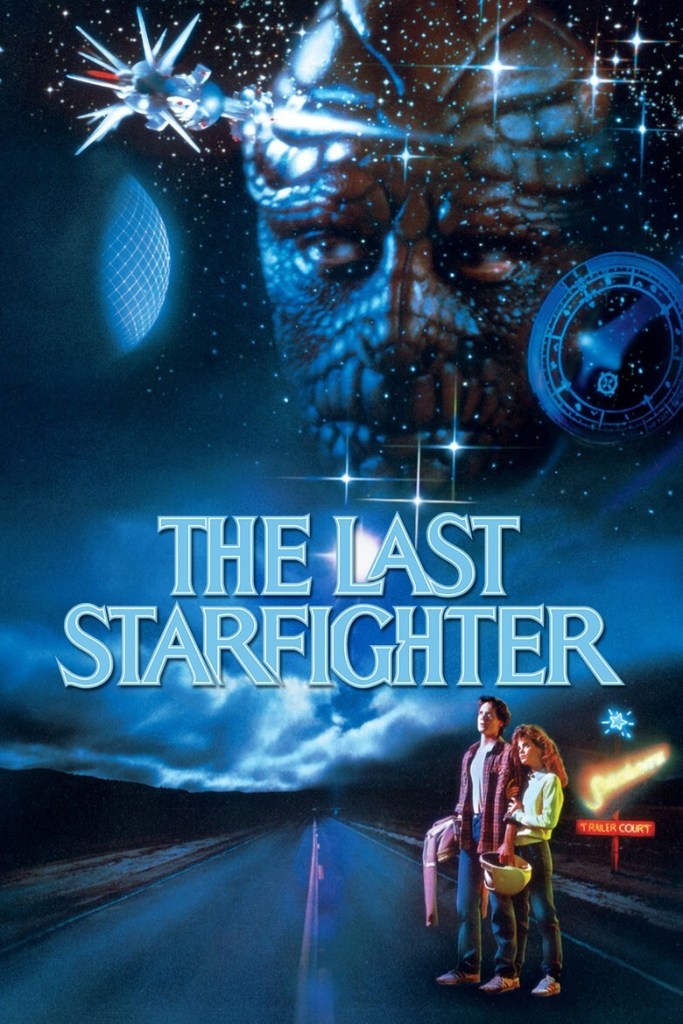
The Last Starfighter (1984)

Saving the best for last – this is the movie that inspired me to write this in the first place. After Star Wars broke approximately all of the records, every studio in town tried its best to launch a space opera franchise. Of those various efforts, the greatest was Universal Pictures’ entry, The Last Starfighter. Directed by Nick Castle, the film stars Lance Guest as Alex Rogan, a teenager who lives in a desert-locked trailer park and fears he’s never going to escape. After he smashes the record on a video game, Alex is approached by a charming man named Centauri (Robert Preston, essentially reprising his role from The Music Man) who takes him into outer space, explaining that the game was a secret test to find people with the potential to be fighter pilots in an interstellar war. A dastardly attack from the evil Ko-Dan Armada destroys the entire Starfighter Legion, leaving Alex as the “last Starfighter” (see? This is how titles happen) and putting him and his alien navigator on a quest to save the galaxy alone.

The movie was a modest success, making almost $29 million on a $15 million budget, and was one of the first movies to make extensive use of CGI for the outer space scenes. Like many of the films on this list, there were discussions and attempts at sequels over the years, but none of them ever came to fruition.

More so than any other film on this list, this is the one that should have continued. The world of the film is RIPE for exploration – alien races, alien planets, and memorable characters that demand further development. The film has a devoted fan base, though, and earlier this year Mad Cave Studios began a comic book series continuing the story. The comic, written by Benjamin Raab and Deric A. Hughes, picks up right where the movie left off, with Alex and his girlfriend Maggie going off into space to begin the challenge of rebuilding the Starfighter Legion. In the four issues (and one spin-off starring Alex’s synthetic decoy Beta) that have come out so far, the universe has already been expanded greatly. We’ve gotten a look at different planets and cultures, a deeper look at the backstory, and the promise of so much more to come.

And unlike most of the other movies I’ve talked about here, where time or rights issues have made any further sequels almost impossible, I still believe that a new movie in this universe could work. It’s been 40 years since Alex and Maggie went into space – where are they now? Are the Ko-Dan still a threat? Is the Legion back? It could still happen, and I would be the first one to buy a ticket.

In fact, I’ll even give you the title, Universal: how ‘bout The Next Starfighter?

You can have that one for free.

Blake M. Petit is a writer, teacher, and dad from Ama, Louisiana. His most recent writing project is the superhero adventure series Other People’s Heroes: Little Stars, volume one of which is now available on Amazon. You can view his LitReel videos on TikTok and read his writerly yammerings on his free Substack.
Superman Stuff #46: The Gunn-Shaped Elephant in the Room

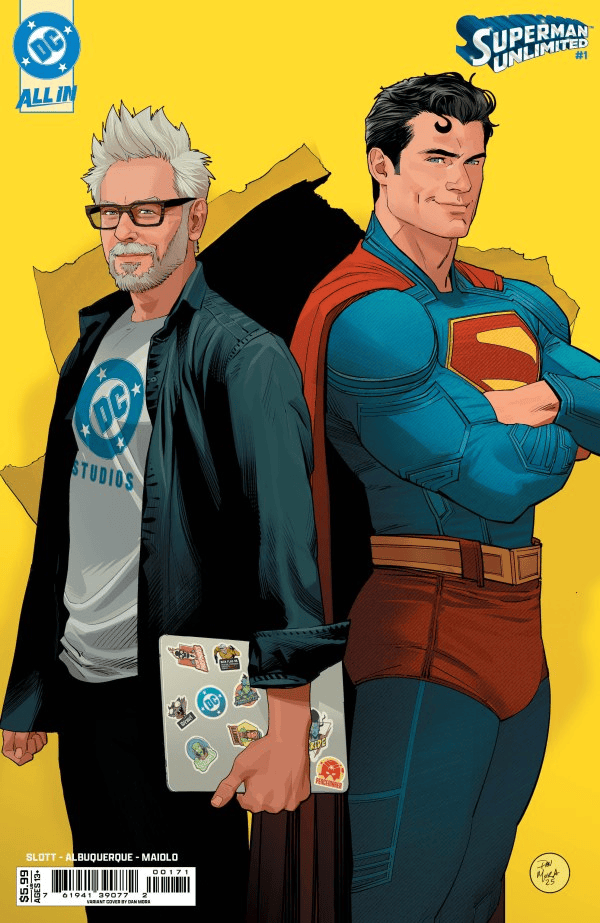
A little good news before I get talking about the bad: I’ve been busy lately. I’ve been working hard on a new novel, and it’s actually coming along really well. It’s eating up my time for the best of reasons. I haven’t read or watched anything big this week worthy of a “Superman Stuff” column, other than new comics which will be saved for the monthly round-up. So instead, I’m going to take a few hundred words to talk about the elephant in the room, the removal of James Gunn and Peter Safran from DC Studios.

It’s been over a week since the news broke, and I still feel dumbfounded. But I suppose I shouldn’t be TOO surprised. The merger of two companies that have, over the past several decades, made pants-shittingly stupid decisions regarding some of the biggest IPs in the world has resulted in a new company that has immediately made a pants-shittingly stupid decision regarding one of the biggest IPs in the world. There have been a lot of theories thrown around, most of them pure speculation or rumors fueled by disreputable websites, and I don’t really feel like commenting on most of them. The one theory I’ve heard that makes the most sense to me is that the combined salaries of the two of them was too high for Skydance’s liking, and they had too much creative control for their sensibilities, so they wanted to replace them with someone cheaper and with less agency. I’m not saying this as a slight against their replacement, Jeremy Latcham, but the fact that most of us didn’t even know who he was until he got this job is at least indicative of the fact that he isn’t going to come with a Gunn-sized price tag.

To say that I’m disappointed in this would be an understatement. I’ve been extremely happy with the direction DC Studios has been going under Gunn and Safran, and having the rug pulled out from under them feels like a personal betrayal, even though I know that’s a childish take on it. (In my defense, I promise not to start harassing anyone involved with the studio’s new direction on Twitter, which is more than you can say about many fans of the previous iteration of this franchise.) And while I would never hope for the Studios to flounder, I think that changing the direction this way is going to be damaging in the long term.

I hope I’m wrong. I sincerely do.

At any rate, I’m trying to remain positive, because that’s what this feature is supposed to be about. We still have Man of Tomorrow to look forward to next year, and despite what some of those aforementioned disreputable sites have reported, Gunn denies that anyone from Skydance has started demanding changes to the movie. In fact, he says, none of them have even seen it yet. I’ve got faith in him being the same straight shooter online that he’s always been – certainly more faith in him than I could ever have in sites like Cosmic Book News, which I almost said was the Weekly World News of the comic book world, but that would honestly be insulting to Weekly World News. If nothing else, they provided the source material for the highly entertaining Bat-Boy: The Musical.

At first I wasn’t sure if I was going to write about this at all. After all, this is a place where I try to talk about the things I love, not the things that make me sad. But I when started this whole Superman journey almost two years ago, it was because the first trailer for Gunn’s Superman movie uplifted me on a day when I sorely needed it, and I thought it would be disingenuous of me to let it go unremarked upon.

Yeah. I’m sad right now.

But I’m not going to give in to despair. Because that’s never what Superman would do.

Blake M. Petit is a writer, teacher, and dad from Ama, Louisiana. His most recent writing project is the superhero adventure series Other People’s Heroes: Little Stars, volume one of which is now available on Amazon. Don’t forget, you can check out earlier blogs in the Year of Superman/Superman Stuff Archive! Got a request for a future “Superman Stuff”? Drop it in the comments!

Geek Punditry #201: When Prequels Go Right

I’ve written before about the “Prequel Pitfalls,” but if you’re not the sort of person who wants to go back and read an entire column just for context on the current one, here it is in a nutshell: if you’re doing a prequel, it’s difficult to create real dramatic tension, because the audience already knows what’s going to happen. In the Star Wars prequels, for example, everybody watching them knew that Anakin Skywalker was fated to become Darth Vader and the Jedi Order would be destroyed. The storytelling challenge was HOW it would happen. If you watch the TV show Smallville, you know from the first episode that Clark Kent is eventually going to become Superman, although it took an absurdly long time to get to that point. And as much as I enjoyed the original trilogy, I haven’t felt the urge to try any of the various Hunger Games prequels, because it’s hard for me to build interest in the world prior to that of the original book – I feel like I already know everything I need to know. I’m willing to accept that I may be wrong about this and those books may be great, but I’ve got other things to read that interest me more.

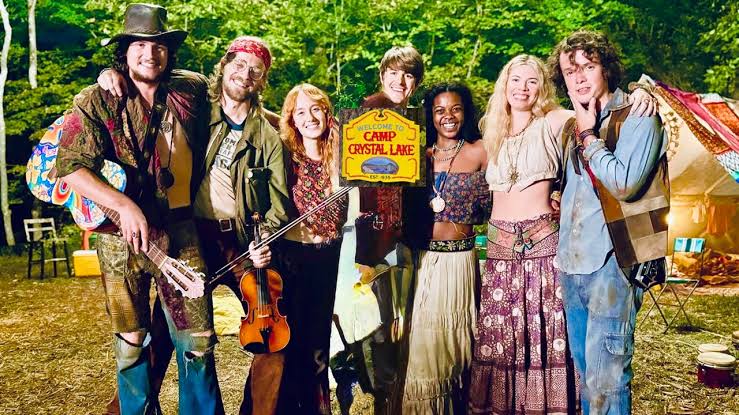
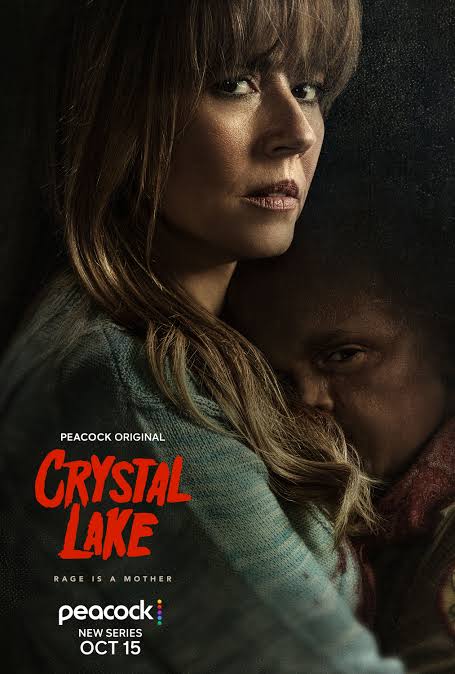
Because of this, I think it’s worth pointing out when a prequel accomplishes its job, and to my utter astonishment, I’m saying this about the Peacock series Crystal Lake.

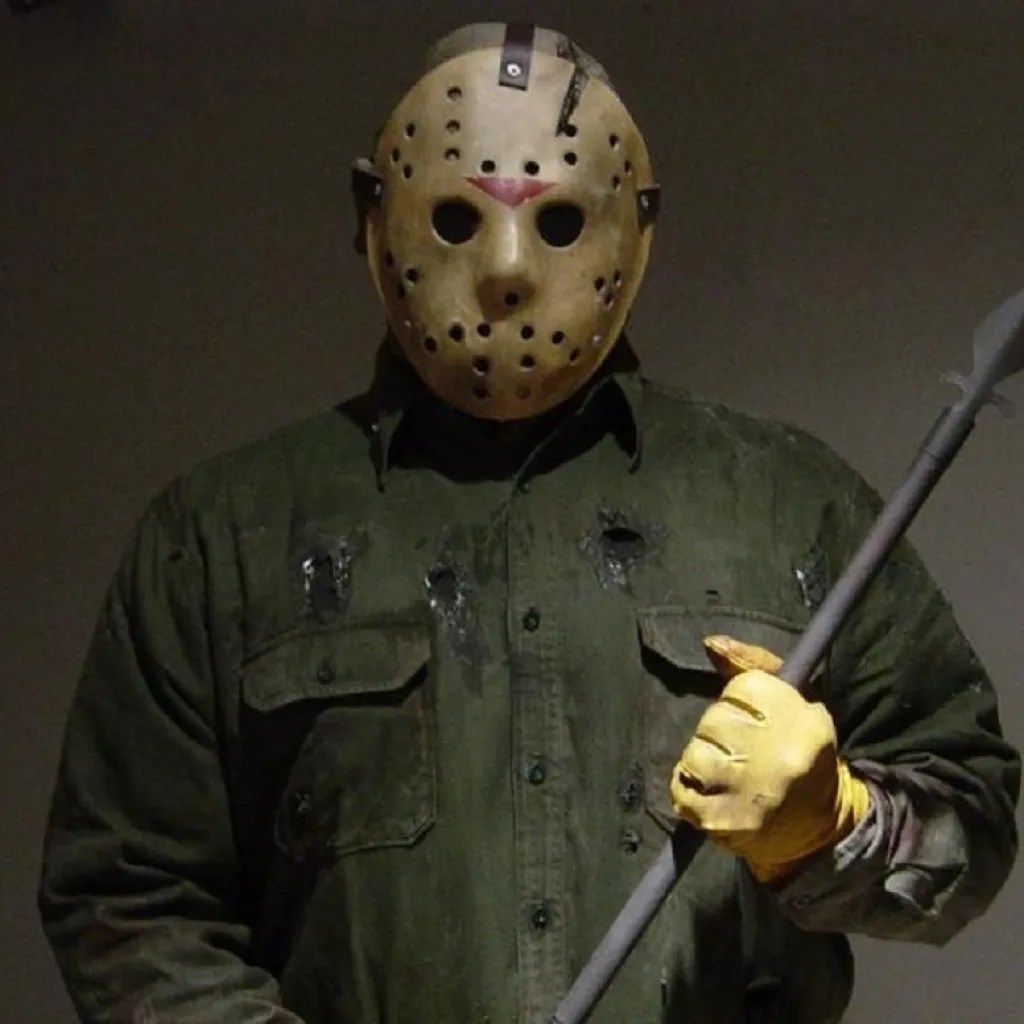
The ad on Craigslist read “Unrepentant Mass Murderer seeks tragic backstory. Serious inquiries only.”

When it was announced that they were going to make a series about the world of Friday the 13th before the original movie, I blanched at the idea. The movie kind of laid out everything we needed to know, didn’t it? Jason Voorhees, a child with some sort of developmental deformation, drowns in a lake because some camp counselors are too busy engaging in “extracurricular activities” to properly keep an eye on him. Years later, when there are plans to re-open the lake, the new counselors are brutally slaughtered by an enigmatic figure that turns out to be Jason’s grieving mother. In the sequel, Jason himself returns, seemingly from the dead, and begins picking up where mommy left off.

As slasher movies go, it’s a pretty straightforward premise. In fact, if you put aside Jason’s seeming resurrection from his original drowning, there’s not even anything to indicate he’s a supernatural entity until six movies into the franchise. I didn’t need to know anything else.

Then they announced that Linda Cardellini was going to be playing Pamela Voorhees, Jason’s mother. To say the least, my interest was piqued. Cardellini is one of those actresses that I’ve always thought was particularly good, even if she’s never broken through the wall of superstardom. She’s been superstar-adjacent, taking lead roles in smaller projects and small roles in bigger ones, and even if the movie she’s been in has been a turkey (it happens to everyone once in a while), I’ve never seen a bad performance from her.

This is the face of a woman who knows what she’s doing.

Even then, I was kind of skeptical about what possible backstory they could create that would be satisfying. What I didn’t realize, though, is that Cardellini was not just doing her usual “small role in a big production” this time. Although Crystal Lake is best described as an origin story for Jason, in truth it’s really a story about Pamela, and in it she shines.

I’m going to get into spoilers for the series, both good and bad, so if you haven’t watched it and want to bail that’s okay. Here’s the short, spoiler-free version: although I have a few qualms with the story, overall I found the series to be entertaining and Cardellini’s performance in particular to be fantastic. I think fans of the Friday franchise (Jason, not Ice Cube (I mean, maybe the Ice Cube fans too, I don’t know)) will be happy with this.

All right, spoilers start now: the first episode shows us how it all begins, with Jason’s drowning at Camp Crystal Lake. But as we progress through the series’ eight episodes, we learn that this wasn’t actually the beginning at all. Jason and Pamela had a whole history prior to this, and a series of flashbacks are paired off with the story of Pamela in the year after his apparent death to give context to the blood-soaked franchise we all know and love.

I’ll get to the stuff that I was less enthusiastic about first, and I want to preface it by saying I don’t think any of this is BAD, just a little bit of a cliche. As it turns out, Pamela was subject to a top-secret project called Argonaut, enrolled by her husband after a near-miscarriage. Although she was told she was being given treatments to allow her to carry her child to birth safely, the truth was she was being subjected to experiments to transform her baby into a sort of super-soldier, one impervious to radiation and damage like a cockroach and capable of regenerating from virtually any injury. Suddenly, Jason’s stubborn refusal to die in the movies makes a lot more sense. Once Pamela learned the truth about what was being done to her, she murdered the head of the project, took her child, and fled, eventually settling down in Crystal Lake and changing her last name to “Voorhees.”

“Because his name is JASON. And he comes from ARGONAUT. Get it? Ahhh? Aaaaaah?” –Guy who should have been thrown out of the pitch meeting

Again, while all of this is well-told and well-performed (and I especially like how the directors changed the color palette of the episode where this is all revealed to contrast to the more muted tones of the rest of the series), it’s also a little bit of a trope. We’ve seen the “super soldier experiment creates a monster” story time and time again, and I don’t think anybody was clamoring for a scientific explanation behind the guy who took Manhattan that one time. If that were all Crystal Lake had going for it, I wouldn’t be recommending it. No, what makes this episode – and the series as a whole, really – worth watching is Cardellini’s Pamela, and how she and the writers make you sympathize with her before you’re horrified by her. That first kill she has in the Argonaut facility feels justified. She’s trying to save her son from a horrific fate inflicted upon him by his own father. Nobody is going to villainize a mother trying to save her child.

Of course, we don’t learn all this until episode seven, after which Pamela has done several other pretty bad things. I’m not going to do a beat-by-beat breakdown of the whole series, but here are some of the highlights of the writers showing her slowly descending from a mama bear protecting her cub to an unhinged murderer. In episode one, months after Jason’s apparent death, two men who turn out to be part of the Argonaut project come looking for her. When she kills the two of them, as brutal as it is, it can be written off as self-defense. But as the series progresses chronologically, Pamela commits several more murders, and with each one, it becomes less defensible. After killing the agents trying to track her down, the next kill is the mother of Grace, a young girl who was one of Jason’s only friends. Pamela kills Grace’s mother out of an assumption that she’s abusing her child, and although she WAS cruel and abusive, the cigarette burns on Grace’s arms that triggered Pamela’s rage turn out to have been self-inflicted.

Next up, Grace – fueled by a bad LSD trip – kills the very pair of counselors who allowed Jason to drown in the first place. When Pamela discovers the crime, she hides it by brutally murdering a group of innocent hippies (relatively innocent, anyway, they WERE the ones who gave 13-year-old Grace the LSD in the first place) to make it look like they were all victims of a drug trip gone bad.

Fortunately the series is set in New Jersey, where murdering hippies is still only a misdemeanor.

By the final episode, where Jason makes his triumphant return and crushes his own father’s skull, Pamela has gone totally off the deep end. She’s got a wild, mad look in her eyes and is reveling in how strong and powerful her little boy has become, never mind the fact that he’s moved on to slaughtering lots of people who really don’t deserve it.

It’s Cardellini’s performance that sells all of this. In stages she deteriorates, beginning as a protective mother, becoming someone who is protecting a surrogate child in Grace, and finally transforming into somebody willing to facilitate a monster out of her diseased mother’s love. It’s like those parents who e-mail teachers complaining about their child being disciplined because their little angel couldn’t possibly do anything wrong, only on a slightly larger scale.

It’s the character work that makes this series impressive. At first it feels as though the show is planning to “rehabilitate” Pamela’s character, showing that she wasn’t really that bad after all, but instead it gives us more of a Breaking Bad style deconstruction of someone who starts out basically good and becomes a monster along the way. It may have been the circumstances that caused her collapse, but ultimately, the choices she made were her own. I don’t like it when a show or movie tries to tell us that a bad guy isn’t actually a bad guy, but an exploration of someone who BECOMES bad? That can be pretty darn fascinating.

It’s not as good as the recent Carrie series I wrote about, but Cardellini’s performance is right up there with anything from that show. It’s amazing to me, here in 2026, that if there were any justice in the Academy Awards system, next year’s Emmy race would come down to the women who played, of all people, Pamela Voorhees and Carrie White.

Blake M. Petit is a writer, teacher, and dad from Ama, Louisiana. His most recent writing project is the superhero adventure series Other People’s Heroes: Little Stars, volume one of which is now available on Amazon. You can view his LitReel videos on TikTok and read his writerly yammerings on his free Substack.
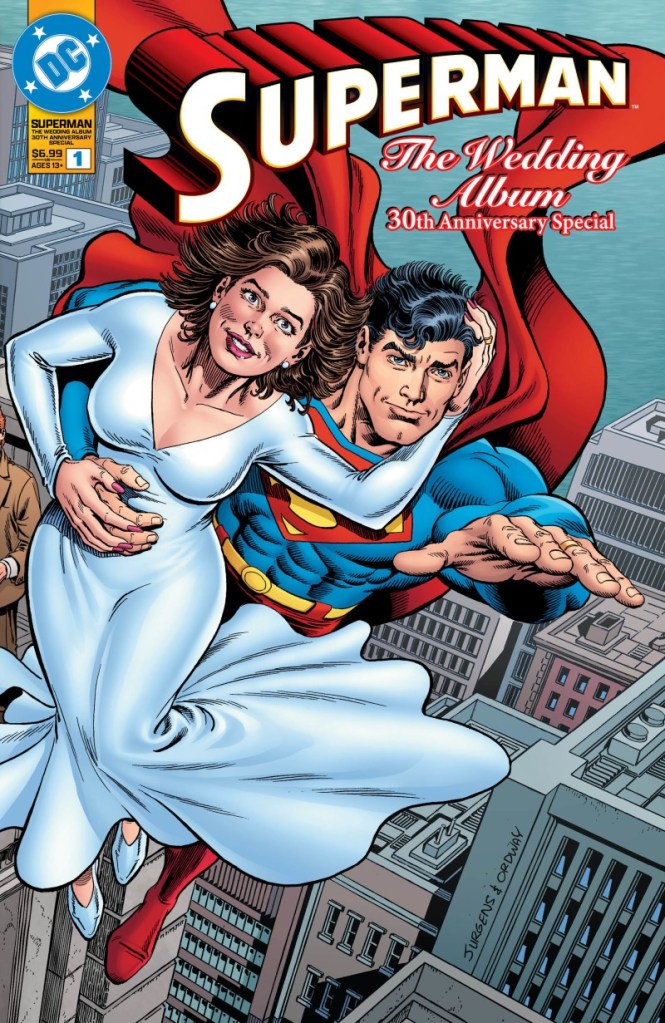
Superman Stuff #45: Superman: The Wedding Album 30th Anniversary Special

This review should have gone in last week’s October roundup, I suppose, but there was a mixup at my comic shop (by which I mean I think I forgot to order it) and I didn’t get my copy until a few days ago. So it gets a feature all its own. Lucky little comic book.

When DC did their Death of Superman 30th Anniversary Special a few years ago, followed by one for Return of Superman, I rather thought this would be more of a regular thing: an oversized anniversary one-shot reuniting the original creative teams (as best as possible) to tell new stories either set in the timeframe of the original story or focusing on its legacy. It’s a pretty good idea. But the anniversaries of books like Knightfall came and went without fanfare. To the best of my knowledge, the only other such book they’ve done is a Zero Hour anniversary special. I wonder if they only want to do it when Dan Jurgens is involved.

Anyhoo, let’s take a look.

Superman: The Wedding Album 30th Anniversary Special
Chapter 1: Rainbow Rowell (Script), Cian Tormey (Art), Romulo Fajardo Jr. (Colors)
Chapter 2: Louise Simonson (Script), Jon Bogdanove (Art)
Chapter 3: Karl Kesel (Script), Tom Grummett (Pencils), Denis Rodier (Inks)
Chapter 4: Dan Jurgens (Script and Breakdowns), Jerry Ordway (Finishes)
Main Cover: Dan Jurgens & Jerry Ordway

Like the previous anniversary specials, this one kicks off in the modern day with Jon Kent. This time around, Jon realizes that his parents, being perhaps the two busiest people in the entire DC Universe, have never had a proper wedding anniversary celebration, and he sets out to arrange one as a surprise. But there’s someone who is still salty about not being invited to their wedding in the first place, so he’s planning a little celebration of his own. That’s right, Mr. Mxyzptlk is back in town.

Mxy is used really well here. As a character who’s always kind of straddled the line between menace and nuisance, here we see an incarnation that I prefer – someone who torments Superman because he genuinely likes him and wants to have a little fun with somebody he considers a friend. (I have no evidence, but I’ve always suspected that the relationship between Captain Picard and Q on Star Trek was based on this dynamic, at least later in the run.) While Jon is running all over Metropolis, trying to recruit his parents’ friends in his plans to give them the celebration they deserve, Mxy is tagging along trying to “help” as only he can.

Although the book is obviously set in the modern-day DCU (Lois is Editor-In-Chief of the Planet, Jon is Tomorrow Man, we’ve got the current Justice League lineup, and so forth), the creators did a fantastic job imbuing it with the flavor of the Triangle Era books of the 1990s. We spent a lot of time with characters who were more prominent in that era, like my old pal Bibbo Bibbowski, as well as a surprisingly heavy focus on Lois’s sister Lucy. At the time of the wedding, Lucy was either dating or married to Ron Troupe (I honestly don’t remember). And while I knew that they weren’t together in current continuity, with reboot after reboot I’d quite lost track of whether they were ever married in the first place. This issue confirms that they were, and that their son does in fact exist. If this were a book in the actual Triangle Era, it would feel as if they were moving Lucy into place for a larger story arc. The fact that none of the people working on this special are currently working on the regular titles makes me doubt that’s the case, but I wouldn’t mind being wrong about that.

This issue isn’t going to win any awards, but it’s a charming look back at one of my favorite eras of the Superman comics, celebrating the stories that were told at the time and righting a minor – albeit understandable – injustice that goes back to the guest list from 30 years ago. It’s always a treat to see Bogdanove, Grummett, and Ordway drawing these characters again, and the writing feels like I’m visiting with an old friend. I’m so happy that I managed to get a copy of this one, even if it was a little late.

Fingers crossed – will next year bring us a Superman Red/Superman Blue 30th Anniversary Special? We can only hope.

Blake M. Petit is a writer, teacher, and dad from Ama, Louisiana. His most recent writing project is the superhero adventure series Other People’s Heroes: Little Stars, volume one of which is now available on Amazon. Don’t forget, you can check out earlier blogs in the Year of Superman/Superman Stuff Archive! Got a request for a future “Superman Stuff”? Drop it in the comments!

Geek Punditry #200: 30 Books, One Purpose

A few months ago, my friend Adam Santino suggested that I try building a presence on Substack, a suggestion for which I have largely forgiven him. Although it didn’t exactly begin that way, Substack has grown nicely into a social media platform that is tailor made for authors, journalists, essayists, writers, and readers of all kinds. People post articles on the most niche topics you can imagine. Others serialize their fiction. There’s one guy on there whose entire presence seems to be dissecting every possible nuance and detail of Alan Moore and Dave Gibbons’ Watchmen, and that ain’t even CLOSE to the nerdiest person I follow. There’s an awful lot going on there, is what I’m saying.

It’s like Facebook, except it has smart people.

But even the most wholesome social media platforms (which, at present, this seems to be) will occasionally erupt into controversy. The current one is surrounding – and I apologize to anybody whose political sensibilities may be offended by this at this difficult, divisive time in our country – how many books it’s possible to read in a year. There is a strict divide forming among people who claim to have read large quantities of books over the first 10 months of 2026, and other people who claim that the first people, to put it colloquially, are liar liars with their pants on fire.

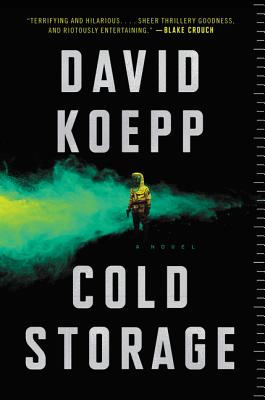
For some reason, the number that seems to have stuck as the tipping point is 30. Some claim that reading 30 books in 10 months is absolutely impossible. Others claim that it’s a breezy Sunday afternoon. So just out of curiosity, I decided to take a look at the list of books I’ve read so far this year (of COURSE I have a list of the books I’ve read) to see what number I, personally, am up to. And to my surprise I realized that the book I finished most recently, Cold Storage by David Koepp, turned out to be – drumroll please – number 30.

Liam Neeson was in the movie, but I think Koepp considers his mention in this article a higher accomplishment.

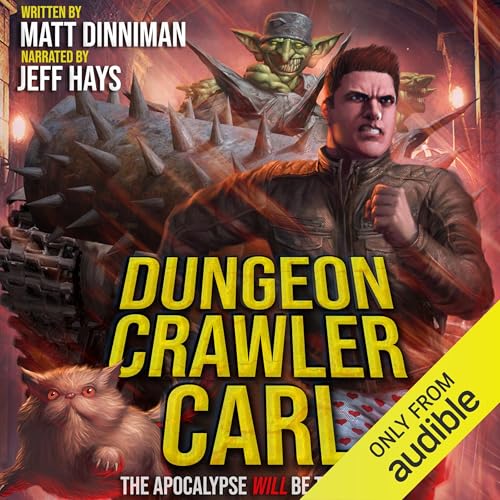
This number, I should mention, does not include comic books or graphic novels, nor does it include audiobooks (I have no objection to including audiobooks towards your count, but the only ones I’ve listened to this year are the audiobooks of some of the Dungeon Crawler Carl novels, which I didn’t start listening to until after I read the books and I didn’t want to count the same book twice). That number, for what it’s worth, includes 24 novels, three anthologies, two nonfiction books, and one memoir.

Now, why does any of this matter, you may ask? If you’re a sane person, it doesn’t. But according to the internet (an organization that has been semifunctional for at least six weeks, according to various credible sources), reading so many books in such a period is virtually impossible. Three books in a month? A book roughly every ten days? What kind of psychopath is capable of such a feat?

And the answer to that question is: pretty much anybody who actually wants to do it.

I make it a point to read every day. That doesn’t mean I read the same amount every day. Sometimes I get in a good 20 to 30 minutes before bed. Sometimes I’m utterly exhausted and I give in after two or three pages. Sometimes – most often when I’m approaching the end of a really ripping story – I’ll try to stay up late and finish the book on my kindle app, and sometimes that effort is derailed when my wife tells me to go to sleep because I’m losing consciousness and the sound of my phone hitting the floor has woken her up three times now.

“That’s fine for YOU, Blake,” you say, “but I just don’t have the TIME to read.”

Yes you do.

“I’ve got kids!”

I have a nine-year-old.

“I’ve got a job!”

I’m a high school teacher.

“I have other responsibilities!”

I’m currently writing a novel. (More information about that on my aforementioned Substack, by the way.)

If you don’t want to read, go ahead and own it. Lots of people – particularly celebrities, for some reason – are pretty vocal about the fact that the last book they read cover to cover featured both a cat and a hat, and therefore it should count for two. But if you’re claiming that there simply isn’t any TIME to read, I’m calling shenanigans.

I know exactly two things about Alix Earle: she says she’s never read a book, and something something makeup.

Besides reading before I go to bed, which of course is the natural habitat of any great reader, I steal time at assorted other points during the day. While I’m waiting in the parent pick-up line to get my son from school. While I’m sitting in the stands during my son’s basketball practice. While I’m in the waiting room while my son does his speech therapy. Have you noticed a theme here? Waiting. I don’t care who you are or how important you think your schedule is, to all of us there come moments in our lives where there is nothing to do except…wait. And it is in those moments that cracking open the latest LitRPG, an old familiar friend by Stephen King, or a classic by Mary Shelley is the absolute best way to pass the time.

In fact, for those of you who poo-poo audiobooks (you should really reconsider your diet if that’s happening by the way), those are PERFECT for people who are busy all the time. Listen to them while you’re driving, while you’re washing dishes, while you’re mowing the laundry, while you’re folding the grass. There are few positions I find stupider than people who say “audiobooks aren’t reading.” It’s true, listening engages the brain in different ways than reading words on a page, but you’re still taking in and processing information. And some people simply are better auditory learners than visual learners. If it works for you, it works.

Just maybe have a different book to switch to once you pick up the kids from school.

I know it sounds like I’m telling you that you should be reading all the time, but that’s only because I am. Reading is a skill and your brain is a muscle, and exercising both of those things is the only way to keep them sharp. Now if you’re even reading this column in the first place, odds are you’re not in the category of people who have to be convinced that reading has value, but you may have fallen off. It’s okay. It happens to all of us. I had some fallow years a while back where I was lucky to make it through one or two books in a year, because I simply didn’t have the motivation. Eventually I found it again.

I say this to my students a lot, especially when ACT season rolls around and they want to know how to get better at the reading portion of the test. They hate when I say it, but the test measures reading skill and comprehension, and the only way to get better at that is to practice. To read. Preferably every day. And I don’t care WHAT you read – a book, a magazine, a newspaper, a comic book – as long as you read it with focus and without distraction. Even 15 minutes a day will help, and you’ll start to see improvement.

True, most of you reading this are probably past the stage in your lives where college admission essays are a significant concern. But that doesn’t mean that reading has ceased being worthwhile. In fact, without the impetus of school pushing it on you, it’s probably more important than ever. You’ve reached the point where you can read what you want instead of what your teachers told you to read, after all. That means you can choose your own material. It also means that there’s no one making you do it now, so just like any other form of exercise, you’ve got to convince yourself to do it on your own.

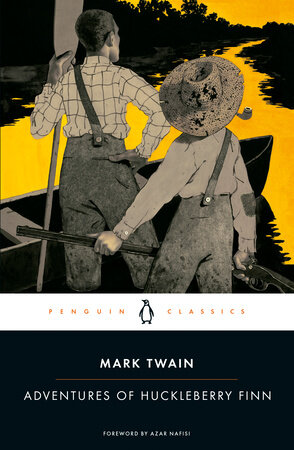
By the way, I know that a lot of those books you read in school seemed boring at the time, but may I suggest that you go back and give some of them another chance now that you’re a little older and wiser? Most of those books were required reading for a reason, after all.

The Penguin worked really hard to write this, the least you can do is read it.

Anyway, the points that I’m trying to get here are, as in descending order of importance:

  • Reading is important, and everybody should do it.
  • You may not think that you have time to read, but trust me, you’re wrong.
  • All reading is valid – fiction, nonfiction, graphic novels, and yeah, even audiobooks. Everything except AI “summaries.” That’s bullshit.
  • You should totally subscribe to my free Substack, and I promise, that’s the last time I’ll mention it until you get to that italicized portion down there at the end.

Reading is education. It’s entertainment. It’s exercise. It matters. And if it’s been a while, consider this your invitation to start again. Okay, maybe you’ll never hit 30 books a year. But if you’re not reading already, ANYTHING is better than the nothing you’re reading right now.

Blake M. Petit is a writer, teacher, and dad from Ama, Louisiana. His most recent writing project is the superhero adventure series Other People’s Heroes: Little Stars, volume one of which is now available on Amazon. You can view his LitReel videos on TikTok and read his writerly yammerings on his free Substack.

Superman Stuff #44: October Reviews

October was a fun one, with the four ongoing Super-titles each starting a new storyline and a new direction. Also this month, I’m bringing in a new feature, the Superman Stuff Book o’ the Month! Each month, I’ll start my roundup with the review of what I consider to be the best Superman-related comic of the past 30 days. This will soon become the most coveted award in all of modern comics, and everyone will be salivating for the day that Action Comics #1 enters the public domain because otherwise, how will any publisher other than DC have even a prayer of capturing this title? Anyhoo, let’s start with…

OCTOBER 2026 SUPERMAN STUFF BOOK O’ THE MONTH
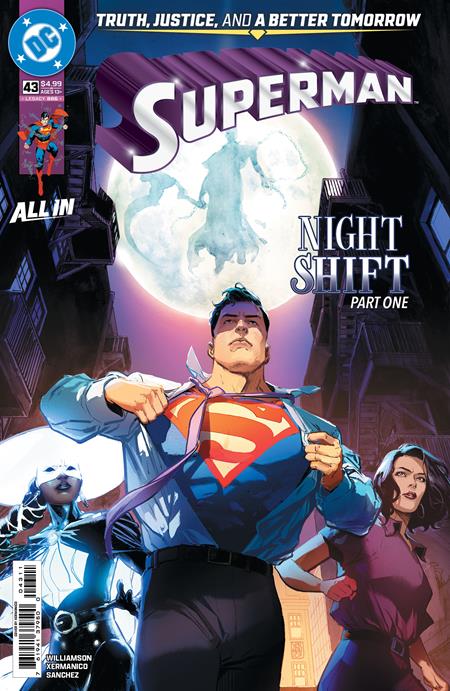
Superman #43
Title: Night Shift Part One
Writer: Joshua Williamson
Art & Main Cover: Xermanico

Have you ever heard someone refer to a single issue of an ongoing comic as a “perfect jumping-on point”? Most of the time, that’s hyperbole, but Superman #43 is ALMOST 100 percent what they mean by that. Superman has been gone from Metropolis for far too long, first with the whole DC KO contest, then his time-travel adventure, and finally the Kingdom of Zod crossover that took up the last two months. This issue, Joshua Williamson kicks things off with a simple – and organic – recap of what’s been going on and what the current status quo of the title is. We start off with Clark and Lois in her office, telling us that he’s coming back after an absence and reminding (or informing) readers that she’s now the Editor-in-Chief of the Daily Planet since Perry White is the mayor of Metropolis. Deck-clearing out of the way, we start the story the way thousands of excellent Superman stories have begun in the past: with Clark Kent being given an assignment.

A good chunk of this issue’s middle split the difference between Clark and Jimmy doing their job and investigating a rash of missing persons in Southside Heights, the area of Metropolis that’s trying to shake its previous branding of “Suicide Slum.” As they go about their job we get reacquainted with old friends like Bibbo Bibbowski and Cat Grant, both of whom are a bit different from who they were if you remember their early appearances in the late 80s and early 90s, but whose evolution is logical and doesn’t sacrifice the heart of who these characters are. Cat in particular has undergone a very interesting transition, with Williamson using the character’s most famous trauma to explain a shift away from the somewhat vapid gossip columnist she used to be to a journalist with a bit more agency. I don’t want to say that she’s shaping herself into another Lois Lane, but if Lois’s move to the EIC’s office is a permanent one (as permanent as anything is in ongoing comics, anyway) having another hard-hitting investigator on the Planet payroll is a good strategic move for storytelling purposes.

The one instance where this issue doesn’t QUITE fit the “perfect jumping-on” point is with this arc’s returning guest star: Marilyn Moonlight. We see her working with Cat to help uncover the secret of the missing people (which leads to a pretty nifty surprise villain), but we don’t really get anything about who she is or why Cat should trust her. Sure, longtime readers already get that, but if I’m a newbie picking up this issue, she’s going to leave me curious.

Then again, “curious” isn’t a bad thing. “Curious” is the kind of thing that will have people coming back to read the next issue, and ultimately, isn’t that the goal of any ongoing comic book? This issue is, if not a grand slam, at least an in-the-park home run, and that still counts on the scoreboard.

And now, the rest of the roundup…

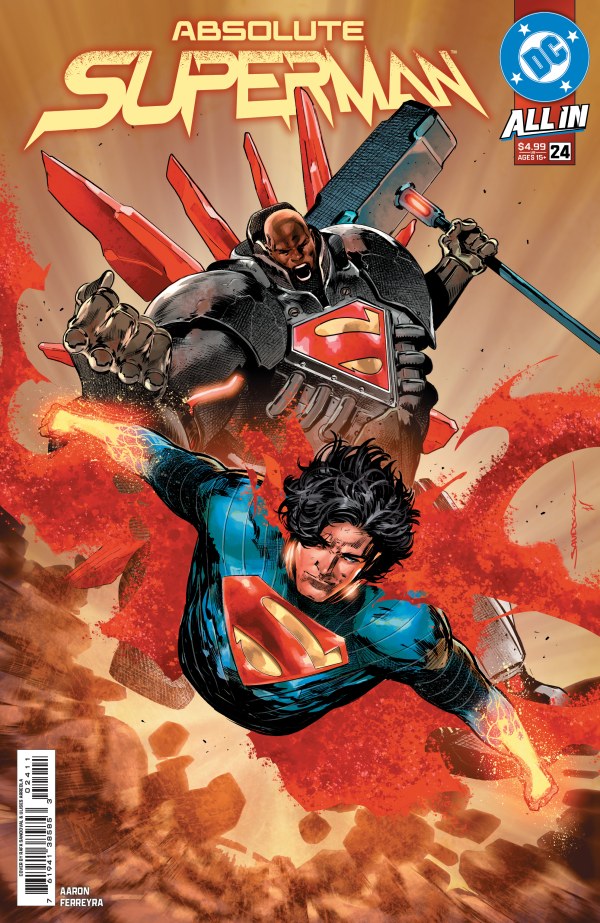
Absolute Superman #24
Title: Steel (Get Brainiac Part Three)
Writer: Jason Aaron
Art: Juan Ferreyra
Main Cover: Rafa Sandoval

Reading through this issue, I was actually quite surprised to get to the title page at the end and see a reminder that we’re actually in the middle of a storyline, because “Steel” is a perfect self-contained downbeat of an issue. As Clark continues to help set the world right from his base in Smallville, John Henry Irons joins him in his mission. The issue is mostly a narration from John Henry, telling his mother about his new position as Superman’s partner. But the great thing about it is the way we get a glimpse of how the people of Smallville view their savior from the stars.

We’re all so used to Superman’s reputation in the mainstream DC Universe that it can be easy to forget how different the Absolute Universe is. Taking a moment out with John Henry to see how people see Superman in this world is valuable. It helps to ground a book that has the biggest of threats and the most massive of stakes, giving us a nice reminder that Smallville is a town of real people and the world Clark is trying to defend, while darker than the one we’re used to, is still mostly made of ordinary human beings defenseless against the likes of Brainiac. The narration also gives us some wonderful insight into John Henry himself, a new version of one of my favorite Superman Family characters. What I’m loving here is that both of our heroes, Clark and John Henry alike, are fundamentally still the same good men that we know. No matter how dark the universe, it seems like there’s just something about Kal-El of Krypton that cannot be dimmed, and shining that light on others ignites them as well.

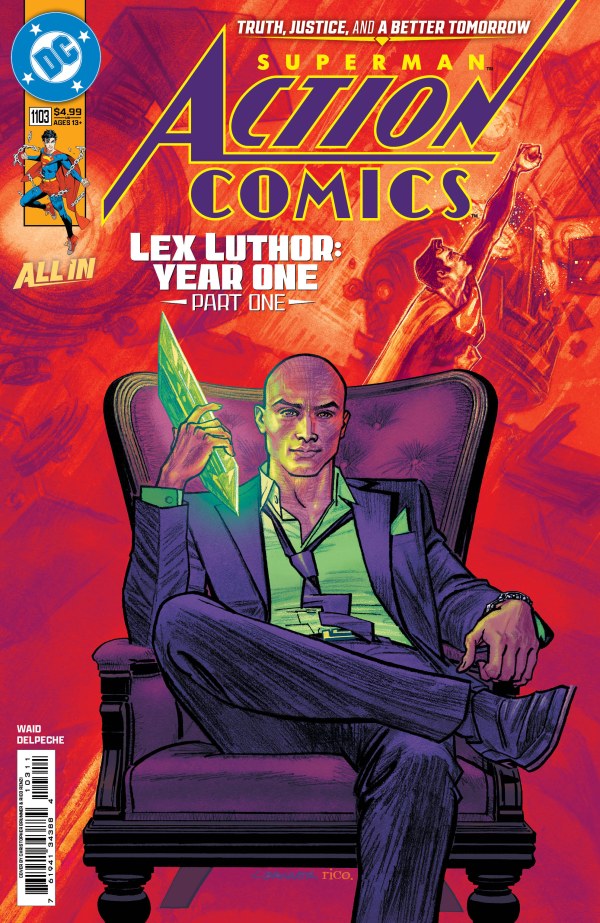
Action Comics #1103
Title: Lex Luthor Year One (Chapters One through Three)
Writer: Mark Waid
Art: Patricio DelPeche
Main Cover: Christopher Brunner

Having spent the last year or so of this title exploring the first year of Clark Kent’s career as Superboy, this issue Mark Waid shifts focus dramatically with the beginning of Lex Luthor Year One. Lex narrates the story of his own childhood, how an association with one of the DCU’s big bads left his father mentally damaged, how his own intelligence isolated him, and how only the only person who ever made him feel safe was his mother. It’s…probably not gonna end well for Leticia Luthor.

The issue alternates narrators, with two Lex Luthor chapters sandwiching a chapter narrated by Clark, reflecting on the day in his own childhood where he first really understood how different he was from everybody else. It’s the contrast between the two of them that makes the issue work. We get a portrait of two exceptional young men with all the potential in the world, and an exploration of how drastically their fates diverge because of their upbringing. I don’t want to speak for Mark Waid, but this really feels like a story of nurture over nature in the making.

Patricio DelPeche is handling the art for this issue, with a style that kind of straddles the line between modern storytelling techniques, but with linework and coloring that has kind of an old-fashioned flair to it. It’s highly appropriate for this story, feeling like a lost chapter of a comic book from the past. The whole thing, in fact, gives the impression of a lost chapter, which is honestly the best way to handle a story like this one.

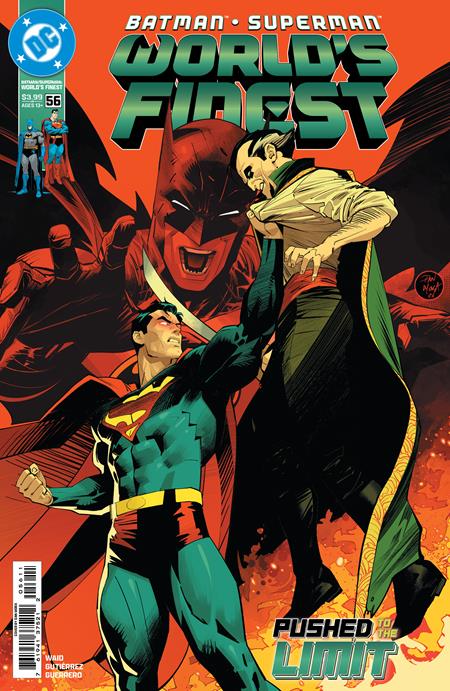
Batman/Superman: World’s Finest #56
Title: Extinction Event Part Two
Writer: Mark Waid
Art: Adrian Gutierrez
Main Cover: Dan Mora

With Ra’s Al Ghul’s insidious disease spreading across the globe and most of the Justice League off-world on Rann, Superman and Batman have only hours to assemble whoever they can to help save the world. While Superman sets out to find Ra’s, Batman and Kid Flash turn to some very unexpected help to thwart the virus, and an even MORE unexpected force to help hold back the invading armies of the Ocean Master.

Considering Mark Waid’s pedigree as a DC writer, the characters who get brought in this issue to help save the day shouldn’t be that unexpected. That said, I love seeing them used this way. It’s worth remembering that, particularly in the world of comic books, there are DEGREES of villainy, and not everybody is as genocidal (despite his personal protestations against that word) as Ra’s Al Ghul, and Waid plays both Batman and his unlikely allies to the top of their intelligence. Superman, to be honest, feels slightly off his game, as though the stress of what’s happening is beginning to get to him. Although he’s certainly stopped his share of world-ending menaces, here he’s being forced to do so while saddled with the newfound knowledge of Batman’s complicated relationship with Talia and the fact that Dick Grayson is clinging to life. Unlike Batman, who at least outwardly is holding up better than the Man of Steel, Superman is the type to wear his emotions on his sleeve, and that’s going to be hell on the bad guys when the final confrontation comes to pass.

Excellent issue. But I repeat myself. This might be my favorite ongoing DC Comic.

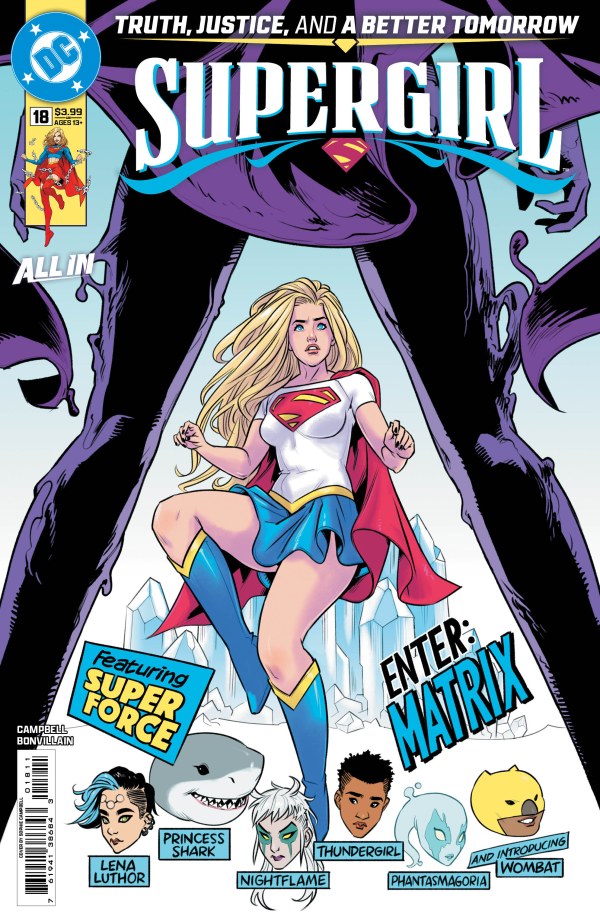
Supergirl #18
Title: The Ego Death of Supergirl Part One
Writer, Art, and Main Cover: Sophie Campbell

At the end of Kingdom of Zod, Supergirl was left with a Kryptonian sunstone which she used to build her own citadel, similar to her cousin’s. This issue she invites the friends she’s drawn into her “Super Force” to join her at this new Fortress of Solidarity, but as they’re setting up shop they find some big secrets and a bigger danger.

First of all, you gotta give it up to Campbell for giving us one of those classic double-page “Headquarters Schematic” spreads, showing off the new Fortress with a diagram that shows off the whole thing and gives us some fun, dandy tidbits to sink our teeth into. But once we get past that, into the meat of the story, we get hit with one thing after another. It’s classic Kara to build a team populated almost entirely by super-powered women who tried to beat her up until she made friends with them. It’s a dynamic that only feels right with this character and in this series, and I really enjoy it.

But the big turn is the one that Campbell announced a few months ago: Supergirl finds the Matrix, the protoplasmic being that operated as Supergirl during that time that Kara was “dead.” Mark Waid’s New History of the DC Universe laid out how the timeline has changed: Kara did, in fact, die during Crisis on Infinite Earths, and her return in Jeph Loeb’s Superman/Batman series has been retconned into her resurrection rather than a reboot. In-between those stories was the Matrix Era.

This issue seems to indicate that the Peter David “Earth-Bound Angel” Supergirl has been rendered non-canonical, and although that’s a little disappointing, it’s somewhat understandable. At least you can still read those stories and enjoy them, even if they aren’t part of canon anymore. At any rate, having Matrix back is something that fans have awaited for some time.

Just one request: there’s a bit in here where Kara tells Matrix “We can both be Supergirl.” Please. Please, no. I hate, hate, HATE the modern trend to have multiple characters running around using the same name. If Matrix is back to stay (and I hope she is) let her find her own identity. Let’s not turn this into a Conner Kent/Tim Drake/What the Hell Do We Do With This Person? situation.

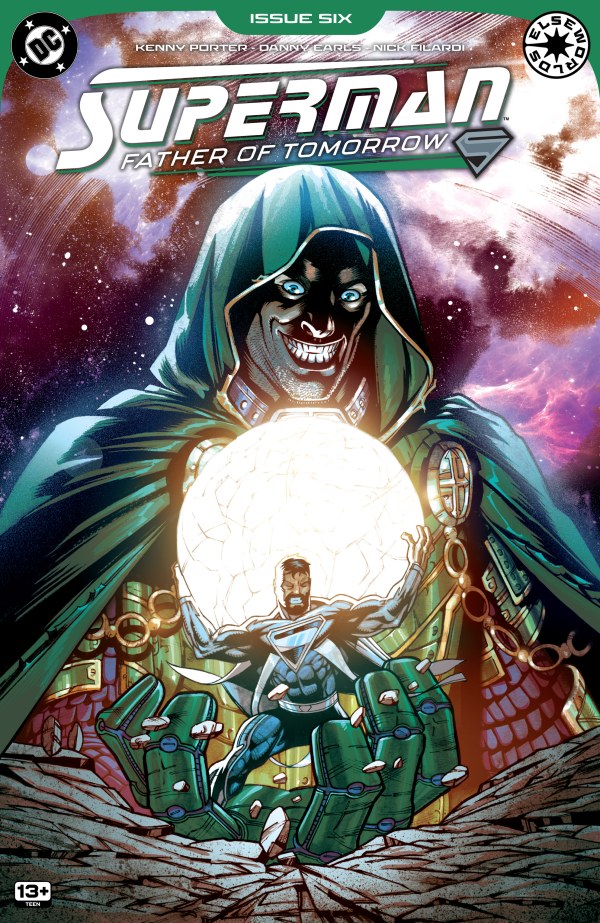
Superman: Father of Tomorrow #6
Title: Fallout
Writer: Kenny Porter
Art & Main Cover: Danny Earls

At the end of last issue, “Hex” Luthor’s spell (poisoned by a curse laid on him by John Constantine) went awry, and Captain Atom (Sam Lane, in this continuity) was transformed into a Kaiju-sized atomic bomb, about to go off in the sky over Metropolis. With only seconds before an explosion that could repeat the destruction of Krypton on Earth, Jor-El has to team up with Lane and Luthor to save the world one last time.

I’m on the fence with this issue. There’s a lot of good stuff here. I very much enjoy seeing Jor-El taking on a role more like the one his son enjoys in the mainstream universe, reaching out even to his enemies in times of need. Seeing him working with Luthor to try to save the world, seeing Luthor forced to accept the fact that he (GASP!) made a mistake, is all very satisfying, very cathartic. And while the ending is a little bit of a cliche for this kind of Elseworlds story, it lands well and allows us to walk away from this world with a taste of contentment, as if all is as it should be.

The thing that doesn’t work goes back to the larger problem I’ve had with this series: the finale treats Jor-El’s sacrifice as some sort of penance for his crime of “altering” the Earth by delivering Kryptonian technology to the world, but six issues in, we NEVER really saw any negative consequences to this gift. Oh, we’ve seen Luthor and a few others walking around talking about how bad it was that Superman advanced human technology overnight, with a few quips about how people should learn for themselves, but the story never really succeeds at convincing us that they naysayers had a point beyond general paranoia. It’s like if you read 1984 and Winston Smith wanted to rebel against Big Brother, but instead of doing so from a dingy, miserable little apartment where he has to hide in the corner and scribble in a diary, he was doing so from a penthouse apartment where his robot butler delivered succulent meals, oh yeah, and pretty much everybody else was living the same way. What exactly is the downside here? We never get that, and that keeps the thesis of this series from hitting the way the writer intends it to.

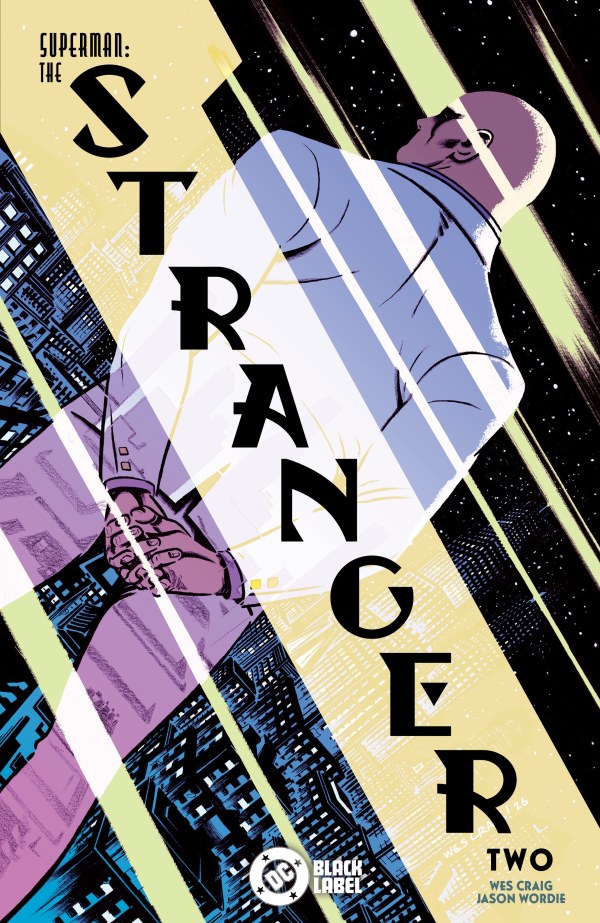
Superman: The Stranger #2
Title: The Stranger Book Two
Writer, Art, Main Cover: Wes Craig

It’s Christmas in Metropolis, and her newest resident – Daily Planet custodian Clark Kent – is struggling to find a little human connection in the big city. But a report from Lois Lane gives Clark and his other identity a new sense of purpose.

Last issue, I felt as though Wes Craig was running a bit too much on a lot of really familiar tropes: a Superman in the Golden Age, the ol’ “man of the people” bit, and so on. This issue still leans on those, but not as heavily, and I feel as though the story is starting to build a bit of an identity of its own. Seeing Clark slinging a mop, oddly, brings to mind the old Mad “Superduperman” parody, but with a Clark Kent coming across as a bit more pathetic in a play for drama rather than comedy. And although she only appears in one scene, Craig’s Lois Lane shows me everything I’m looking for in a Lois – she’s smart, she’s got integrity, and she doesn’t suffer the nonsense of those around her.

I also questioned why this series is a Black Label book rather than an Elseworlds. We get a little closer to it in this issue. In an early scene, Clark has an encounter with a woman of…let’s say “ambiguous” legitimacy, and overall the entire book has a sense of being a bit dirtier, grungier than we’re used to. It suits the story, but perhaps it would be a poor fit for a traditional Elseworlds (although it’s not any darker than, say, The Dark Knight Returns).

If issue one left me feeling a little flat, this one is a step in the right direction. There’s more of an identity here, and that’s very much what issue one was lacking.

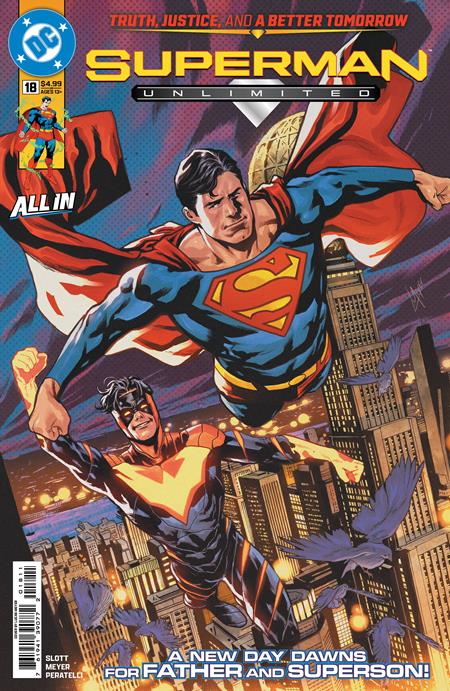
Superman Unlimited #18
Title: The Family Business
Writer: Dan Slott
Art & Main Cover: Lucas Meyer

As Clark settles back into his life, having returned from his journey as King Omega, he finds that Jonathan is in a sort of “discover himself” phase. The bulk of this issue is about the two Kents trying to reconcile that with each other.

There’s a lot of stuff about this issue I like. I’m a fan of the “big sister” attitude Natasha Irons has taken with Jon. I’m always happy to see Bibbo and I’m ecstatic that Slott is lining him and Beppo up to be regulars in the cast. And I absolutely adore the way he writes Lois – she’s the smartest person in the room even when the room is full of Kryptonians, and she knows it, and it’s perfect. I even like Jon as Tomorrow Man, because as I said before, I hate it when you’ve got multiple heroes using the same name. (Natasha seems to recognize this as a problem this issue as well.)

I don’t like the fact that DC seems to hate the idea of Jon Kent wearing a cape. Come on, what’s up with that? I’m okay with the open face mask, but you can’t look at that costume with and without the cape and tell me that it’s not 972 percent better with the cape. Not possible.

But the heart of the issue, like I said, is the interaction between Jon and Clark, and I’m of two minds about it. The whole “finding yourself” thing is kind of a cliche, and the idea that Jon seems to equate being his own person with pretending he’s not even a part of the family seems highly out of character. But cliche or not, I can’t deny that Jon’s identity confusion is an appropriate development for him. He’s been completely rudderless for years now, and this issue feels like a highly meta attempt to acknowledge that and promise to try to do better. Jon deserves better, and if Slott can wring a good story out of him figuring it all out, that’s going to be highly welcome.

Blake M. Petit is a writer, teacher, and dad from Ama, Louisiana. His most recent writing project is the superhero adventure series Other People’s Heroes: Little Stars, volume one of which is now available on Amazon. Don’t forget, you can check out earlier blogs in the Year of Superman/Superman Stuff Archive! Got a request for a future “Superman Stuff”? Drop it in the comments!