Growing up in the 80s was – and I say this without a hint of bias and an air of total objectivity – the greatest thing that ever could have happened to a human being. It was the pinnacle of culture, giving us such timeless and cherished pieces of entertainment as Pac-Man, Michael Jackson’s “Thriller,” Captain Carrot and His Amazing Zoo Crew, and Wendy’s heartwarming and tender “Where’s the Beef?” ad campaign. But despite the fact that everything that was made in the 1980s was a work of staggering genius, there were certain movies that – despite having everything going for them – just never got a sequel for one reason or another. It’s a bizarre thing, too. We’re talking about the EIGHTIES here, an era in which even Police Academy got five sequels. It was a time in which any franchise of less than four installments would have been considered a dismal failure. So what happened?
Today I’m going to run down movies from my formative decade that I loved then, that I love now, and that for some reason never got an official cinematic sequel (although some of them were continued in comic books or other media). And I’m going to focus mainly on movies that SHOULD have a continuation – The Princess Bride, by contrast, is one of the greatest movies ever made, but there is absolutely no reason it should ever have a sequel. Sometimes, we should leave well enough alone. These are movies that shouldn’t be. Here, in no particular order, are movies that never had a part two, but deserved one.
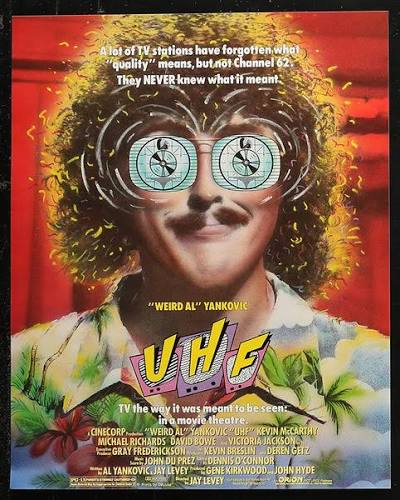
UHF (1989)
1989 was a touchstone in movie history. This was the year of Tim Burton’s Batman, the year Bill and Ted got in their phone booth, the year of Indiana Jones’ Last Crusade, the year the Ghostbusters made the Statue of Liberty walk, the year Marty McFly went to 2015, the year the Griswolds taught us how to celebrate Christmas, the year Captain Kirk asked what God needed with a starship, the year Jason took Manhattan, and the year we all spent a Weekend at Bernie’s. But not the least among the cinematic accomplishments of that year was Weird Al Yankovic starring in his first feature film, the classic UHF. In this movie, George Newman (Al) is hired by his uncle to take over a struggling UHF TV station, not knowing that the plan is to run it into the ground. To the surprise of everyone involved, though, George and his friends begin a slate of crazy, off-the-wall programming that turns out to be a hit, much to the chagrin of the rival broadcast executive who was hoping to put the station out of business.
The plot of UHF is a really typical 80s trope, the whole “slobs vs. snobs” mentality of the likes of Animal House, Revenge of the Nerds, or any of 20,000 movies set in a ski resort, only applied to a TV station instead. What made the movie work was the manic sketch comedy and always-delightful music of Weird Al. Had there ever been a sequel, what I would have liked to have seen is Al tackle other styles and cliches of movies of the 80s (or 90s, as the series progressed) while still bringing his own brand of comedy along for the ride. Let’s face it, there’s no shortage of cliches for them to send up. We could be on UHF XIX by now if the world were a kinder place.
Alas, the film was not beloved by the critics (all of whom, it should be argued, were poopyheads) and suffered greatly to find a place amongst a year cluttered with blockbusters like those I mentioned before, so there was never any effort to continue. Weird Al himself went into a slump after the film, taking another three years before he released his next album, and he wouldn’t make another movie until 2022. But I like to believe that somewhere out there is a little spot in the multiverse where we’re all going to the theaters this Christmas to watch George, Pamela Finklestein, Stanley Spadowski and the rest of the crew get the band together one last time to save their station in the midst of the Netflix era.
There’s still magic to be had.
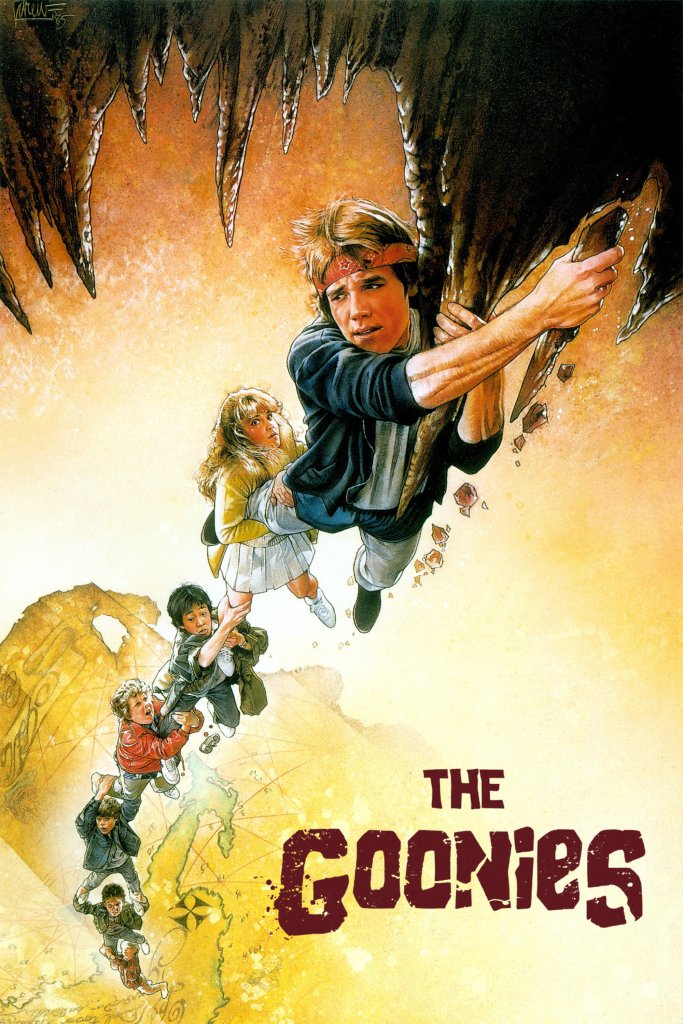
Goonies (1985)
At first I wasn’t certain if I was going to include this movie, because it feels like everybody has already talked about the potential of a Goonies sequel to death, but when I asked my wife what movies she thought I should include on this list this was one of the first things she said. I knew it deserved a place. For people of my era, Goonies is one of those fundamental films. It was a movie about kids our age banding together and having a wild, crazy adventure full of pirate treasure, a vast subterranean labyrinth of caves, and the most bitching water slide in movie history (sorry, Bill and Ted). I can’t imagine any American human being anywhere near my age who, at some point, didn’t dream about being Mikey leading his friends into danger, want to play around with all of Data’s wacky inventions, wish we had a big brother like Sloth, or develop a little bit of a crush on Andi.
It was also one of those movies from the 80s that encapsulated what it was actually like to be a kid at that time. Okay, granted, most of us never had to fight a crime family on the deck of a pirate ship, but these kids talked the way we talked, had attitudes like ours, and were the sort of free range humans who could actually get away with hopping on their bikes and disappearing for hours without their parents keeping them on a permanent leash. As later movies started to sanitize the childhood experience, kids themselves seemed to lose these aspects of childhood, and that’s why we’ve got generations of people now who think it’s okay to ask ChatGPT how to make yams for Thanksgiving and don’t even question it when Elmer’s Glue is on the shopping list.
The potential for a sequel was obvious of course: having survived one amazing treasure hunt adventure, send the kids on another one. But despite being a beloved movie and one of the top ten films of 1985, the only sequel it ever got was an early Nintendo game of highly dubious quality. There have been many, many times when there was talk of a sequel, but it always seemed to fall apart. It would rise again – hey, maybe this time it will be a movie about the Goonies’ kids having a new adventure – but then that would fall apart as well. If they don’t do something soon, they’re going to have to make the sequel about Mikey’s grandson trying to round up the descendants of his Pop-Pop’s old friends. Maybe the time for a Goonies sequel has, indeed, passed, but we can always dream.
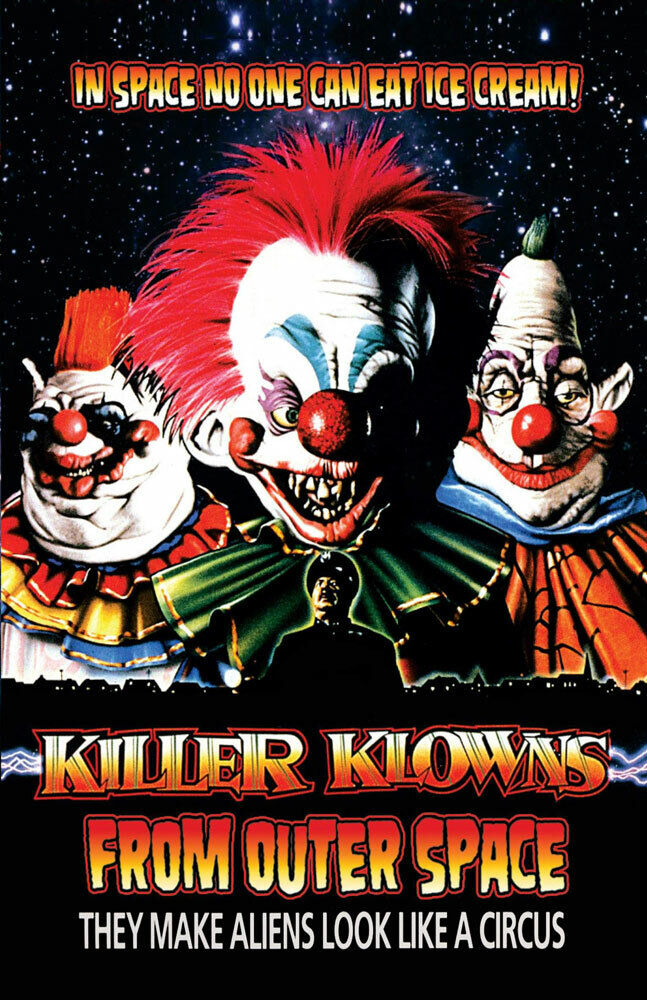
Killer Klowns From Outer Space (1988)
Speaking of my wife (as I often do), it’s kind of baffling that one of her favorite horror-comedies of the 80s never saw a sequel, although like Goonies, there have been numerous attempts over the years. Killer Klowns From Outer Space is a product of the phenomenal special effects shop run by the Chiodo Brothers, who crafted this tale of an invasion of alien…well, the title is right there in front of you. The movie is kind of a take-off of 50s alien invasion films, using the trope of the Creepy Clown long before it became a thing like it is today. The movie is silly and over-the-top and ridiculous. It’s also got wildly impressive puppetry and special effects, and the preposterous nature of the story is what makes it so damned much fun.
What would a Killer Klowns sequel look like? Honestly, does it even matter? There’s another invasion, another attempt to fend them off. Maybe this time one of our human heroes gets onto their spaceship and goes to their home planet to see where this bizarre culture came from. I don’t know. I don’t even think I care. The story is pretty secondary here – I just want to see more of the amazing practical effects that made this movie a classic, especially in this era where more and more people seem to want to do anything they can to avoid putting anything that’s actually real on a movie screen.
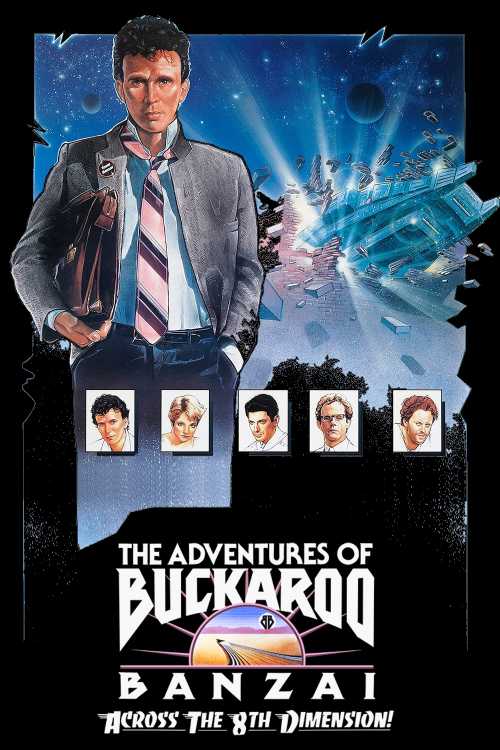
The Adventures of Buckaroo Banzai Across the 8th Dimension (1984)
Another cult classic, Peter Weller stars in this one as Buckaroo Banzai, the world-famous neurosurgeon, physicist, pilot, and rock star (yeah,another one of THOSE guys) who saves the world from an invasion of interdimensional aliens with his team of specialists and experts. This is one of those movies that’s full of everybody: the cast includes Ellen Barkin, Jeff Goldblum, John Lithgow, Clancy Brown, Christopher Lloyd, and a dozen other names and faces that you would recognize. And the sense of 80s excess couldn’t be more obvious here, everything in this movie is wild and over-the-top.
Writer Earl Mac Rauch said he wanted to do it as a parody of boundary-pushing 70s kung-fu movies, but he went much, much farther than that. I’ve often suspected that Banzai and his band (the Hong Kong Cavaliers) were inspired by pulp heroes like Doc Savage – a genius who was good at literally everything and had a group of friends who joined him on his adventures. Banzai felt like the closest thing we got to a good Doc Savage movie (yes, I’m aware that there WAS a Doc Savage movie, and I said what I said) while still being very much its own thing.
The movie itself was full of potential for future exploration of this world, with a cast of characters that could be set against any challenge or danger, and maybe they could finally explain what the deal was with the watermelon. But the movie didn’t do well – it was considered too complicated and perplexing for audiences. I feel like this one was ahead of its time, and were it made today as a streaming miniseries, it would be a smash hit.
Rauch has continued the story in a novel, Buckaroo Banzai Against the World Crime League (which was teased at the end of the film), and there have been comic book and video game follow ups, but Buckaroo and the Cavaliers have never made it to the screen again.
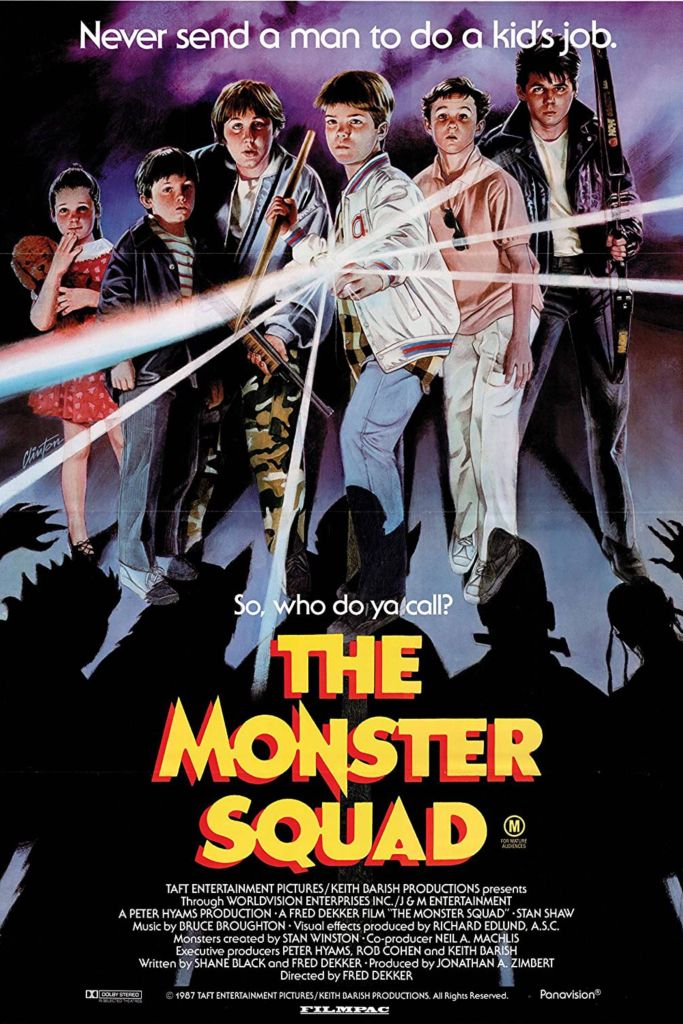
The Monster Squad (1987)
If ever there was a movie tailor-made for my sensibilities, it was Fred Dekker and Shane Black’s Monster Squad. A group of kids (a very Goonies-esque group of kids, at that) who happen to love classic monster movies discover that Count Dracula is trying to get his hands on an amulet that can be used to banish him to Limbo. The amulet can only be used once every century, and the day is coming up, so the kids find themselves in a battle against Dracula and his monster cronies, the Mummy, the Gill-Man, the Wolf Man, and Frankenstein’s Monster.
The fact that this movie was pitched to Universal Studios, home of the greatest movie monsters of all time, and some boneheaded executive PASSED on it is astonishing to me. It’s as stupid as – I don’t know – passing on a Creature From the Black Lagoon remake by Guillermo Del Toro and then watching it go to win Best Picture. But that’s what happened, and Dekker and Black took their idea to Warner Bros, where they had to shave off some of the elements that made the monsters explicitly the Universal versions of the characters, not that it really mattered. We all knew.
Not only is this movie fun and infinitely rewatchable, it’s got a few fantastically quotable lines and awesome creature effects. Although it got a good response from audiences, the audiences just weren’t big enough and it bombed at the box office, killing any sequel potential. One can only imagine what kind of beasties the Monster Squad would have faced off against in future installments. Hammer Horror monsters? 80s slashers? Could they have gone toe-to-enormous toe with King Kong or Godzilla, or at least a legally-distinct representation of either of them? The mind boggles.
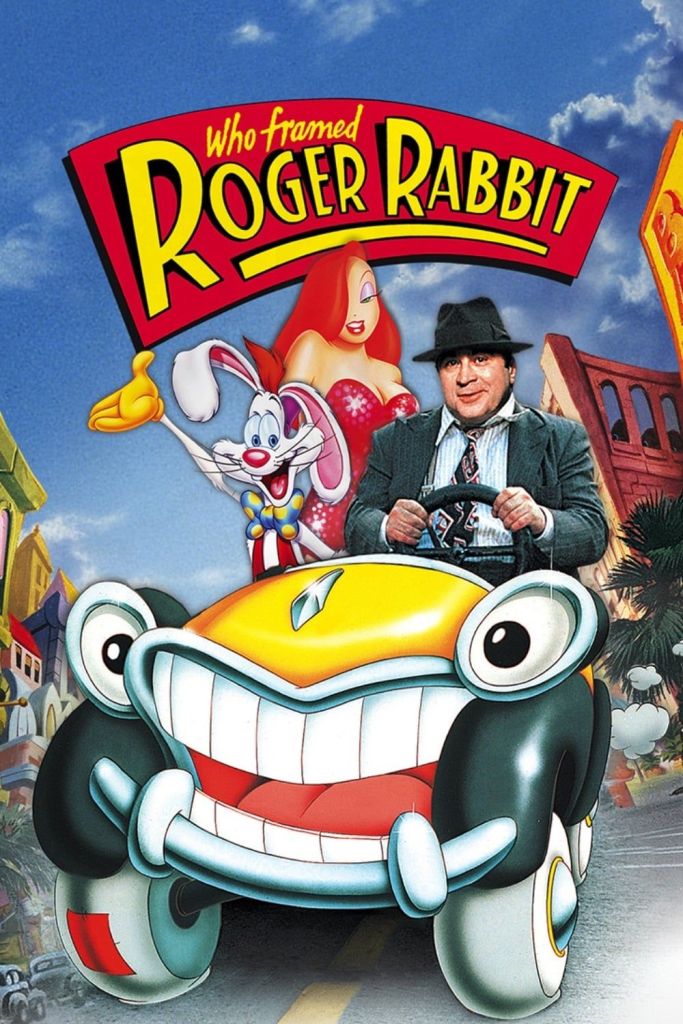
Who Framed Roger Rabbit? (1988)
In some ways, Who Framed Roger Rabbit? is one of the most ambitious movies ever made. It was a 1940s period piece (which is expensive), that combined human actors with hand-drawn animation (which is expensive and difficult), AND it required the studio to obtain the rights to cartoon characters belonging to rival companies in order to make the world feel fully expansive and complete (which would require a miracle that would have made Moses himself sit back and think, “That might be too much”). But somehow, director Robert Zemeckis pulled it off, adapting Gary K. Wolf’s novel into a classic.
The story is a comedy murder mystery in which a detective, Eddie Valiant (Bob Hoskins), is hired to dig up dirt on a cartoon character, Jessica Rabbit (Kathleen Turner), who may be playing patty cake behind her husband’s back. When her affair partner is murdered, Jessica’s husband – the beloved cartoon star Roger Rabbit (Charles Fleischer) is the chief suspect, and it’s up to Eddie to get to the bottom of it.
The movie works not only as an old fashioned mystery, but also creates a wholly believable world where cartoon characters are more than just ink and paint. They’re living creatures who have the same agency as any human actor. But it wouldn’t have been nearly as effective if they had created a bunch of generic cartoon characters to fill out the world. Except for Roger and his closest friends, most of the cartoon cast was fleshed out by getting the rights to the greatest cartoon characters of the 30s and 40s. Touchstone Pictures was a branch of Disney, so getting the rights to the likes of Mickey Mouse and company was no problem, but they had to work hard to obtain the rights to the likes of Betty Boop, Droopy Dog, Woody Woodpecker, and most impressively, the stars of Warner Bros. Looney Tunes franchise. The last one was the sticking point – Warner Bros. wanted to make sure their characters got equal time with the Disney characters, and the world just wouldn’t have felt real without them. So because of that we’ve got the immortal piano duel between Donald Duck and Daffy Duck, and the greatest moment in cinematic history, namely Bugs Bunny and Mickey Mouse sharing the screen together for EXACTLY THE SAME AMOUNT OF TIME.
The movie was a hit and, of course, plans for a sequel began immediately, but fell apart time and again. It got worse in 2001 when Gary Wolf, who wrote the novel, sued Disney over unpaid royalties, a suit he eventually won, but got far less than the $7 million he estimated he was owed. The oddest part of the whole battle is that the movie was SO far removed from the original novel Who Censored Roger Rabbit? (in which the characters were comic strip characters, not cartoons, existed in a two-dimensional shape, spoke through word balloons, and in which Roger was actually murdered at the beginning of the book) that when he decided to write sequels, he ignored his original book entirely and wrote sequels to the movie.
Last year, Wolf said that Disney no longer had the rights to the Roger Rabbit characters, which is mind-boggling to me, and that he’s currently attempting to adapt one of his novels about Jessica Rabbit into a new movie. But honestly, without Disney behind it or the chance to see these characters in a form we love interacting with other characters we love, is anybody even going to care?
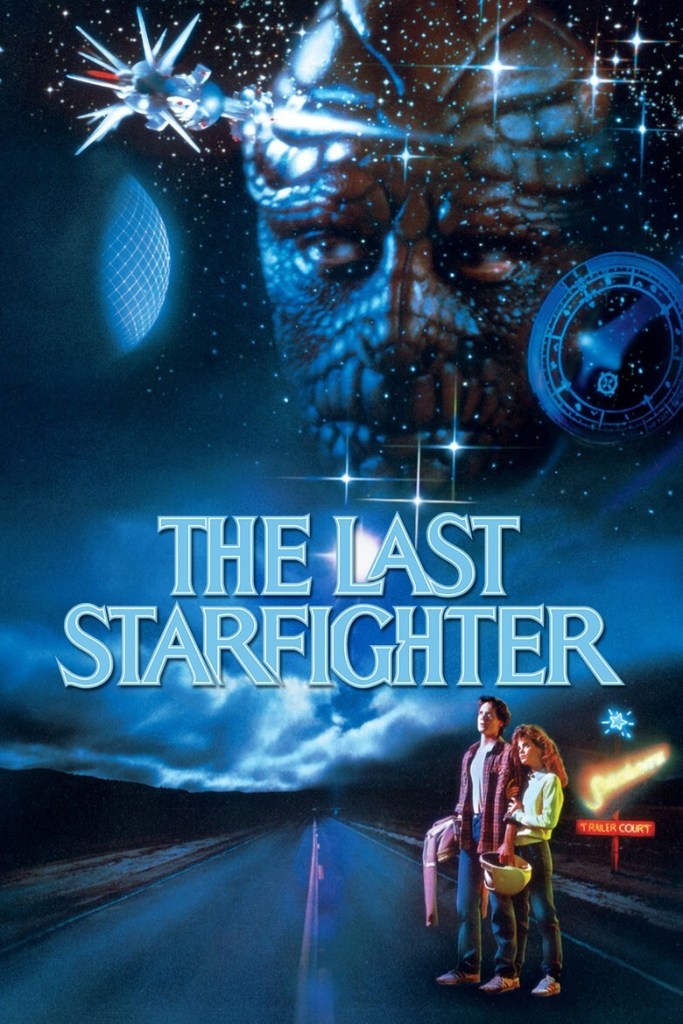
The Last Starfighter (1984)
Saving the best for last – this is the movie that inspired me to write this in the first place. After Star Wars broke approximately all of the records, every studio in town tried its best to launch a space opera franchise. Of those various efforts, the greatest was Universal Pictures’ entry, The Last Starfighter. Directed by Nick Castle, the film stars Lance Guest as Alex Rogan, a teenager who lives in a desert-locked trailer park and fears he’s never going to escape. After he smashes the record on a video game, Alex is approached by a charming man named Centauri (Robert Preston, essentially reprising his role from The Music Man) who takes him into outer space, explaining that the game was a secret test to find people with the potential to be fighter pilots in an interstellar war. A dastardly attack from the evil Ko-Dan Armada destroys the entire Starfighter Legion, leaving Alex as the “last Starfighter” (see? This is how titles happen) and putting him and his alien navigator on a quest to save the galaxy alone.
The movie was a modest success, making almost $29 million on a $15 million budget, and was one of the first movies to make extensive use of CGI for the outer space scenes. Like many of the films on this list, there were discussions and attempts at sequels over the years, but none of them ever came to fruition.
More so than any other film on this list, this is the one that should have continued. The world of the film is RIPE for exploration – alien races, alien planets, and memorable characters that demand further development. The film has a devoted fan base, though, and earlier this year Mad Cave Studios began a comic book series continuing the story. The comic, written by Benjamin Raab and Deric A. Hughes, picks up right where the movie left off, with Alex and his girlfriend Maggie going off into space to begin the challenge of rebuilding the Starfighter Legion. In the four issues (and one spin-off starring Alex’s synthetic decoy Beta) that have come out so far, the universe has already been expanded greatly. We’ve gotten a look at different planets and cultures, a deeper look at the backstory, and the promise of so much more to come.
And unlike most of the other movies I’ve talked about here, where time or rights issues have made any further sequels almost impossible, I still believe that a new movie in this universe could work. It’s been 40 years since Alex and Maggie went into space – where are they now? Are the Ko-Dan still a threat? Is the Legion back? It could still happen, and I would be the first one to buy a ticket.
In fact, I’ll even give you the title, Universal: how ‘bout The Next Starfighter?
You can have that one for free.
Blake M. Petit is a writer, teacher, and dad from Ama, Louisiana. His most recent writing project is the superhero adventure series Other People’s Heroes: Little Stars, volume one of which is now available on Amazon. You can view his LitReel videos on TikTok and read his writerly yammerings on his free Substack.

