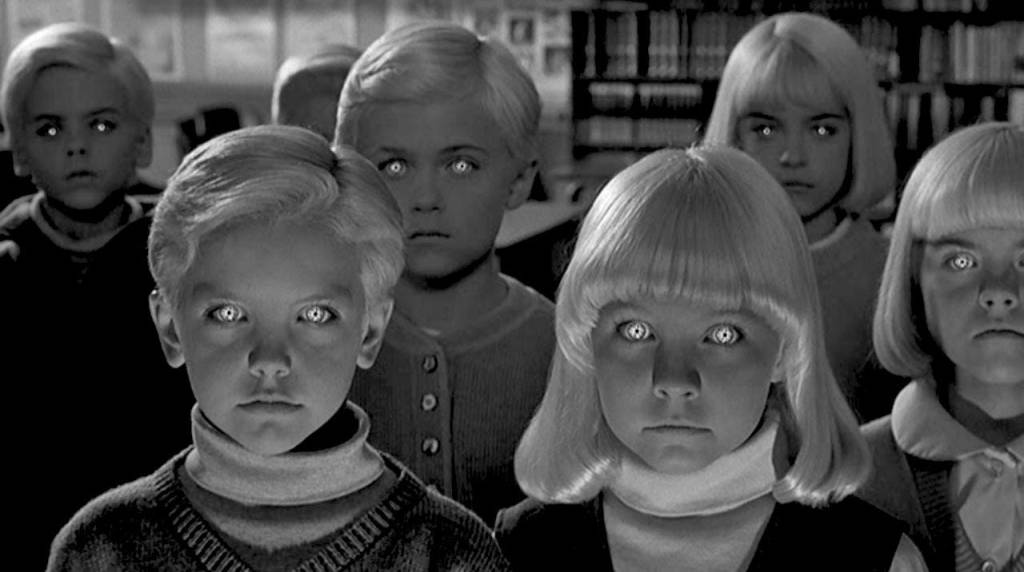
Halloween is coming up, so today I’m going to talk about the scariest thing I can think of: kids.
No, creepier.
Okay, not exactly. In my class we’re currently in a unit where students are reading up on and writing arguments about artificial intelligence, including its depiction in fiction. And as part of that unit, I demonstrate that we have had stories, fables, folklore, and myths that include things fitting our definition of AI far longer than we’ve actually had AI. We see it in Pinocchio, we see it in the Greek myth of Pygmalion, we see it going back to the ancient Hebrew legend of the Golem. And as we discuss these old stories, I ask my students for other examples of non-living creatures that are given life in order to fulfill some sort of need of its human creator. One kid brought up Astro Boy. Another mentioned Marvel’s The Vision™ (I include “Marvel’s” here for purposes of trademark). One kid asked if Toy Story counts, which gives me a chance to point out that A) we have never learned, in-universe, WHY the toys are alive, and B) despite the fact that Toy Story 5 was an excellent rebound from the mediocre Toy Story 4, I still think they should have stopped with 3.
But one of the things that came up over and over again in this conversation is just how often the stories are about creations that turn against their creators. It’s not really October until I’ve mentioned Frankenstein at least 11 times, so let’s start there:
Okay, that’s ONE…
Victor Frankenstein is obsessed with conquering death, and thus creates a new lifeform by assembling parts of dead bodies. When his creation is too hideous for him to deal with, he abandons it and leaves the poor thing to exist on its own, which turns out to be a huge mistake, as the creature grows to resent his creator and turns against him. It’s the classic archetype, and we’ve seen it turn up over and over again. There are obvious, deliberate takes on the idea in things like The Rocky Horror Picture Show; there are more subtle but still clear allusions in movies like Edward Scissorhands, but they’re all portaging Mary Shelley’s idea when they tell their own story. Sometimes the creation is actively evil, sometimes it’s misguided, but the common thread is that pretty much all of them are dangerous.
Except maybe Frankenweenie. He was a good boy.
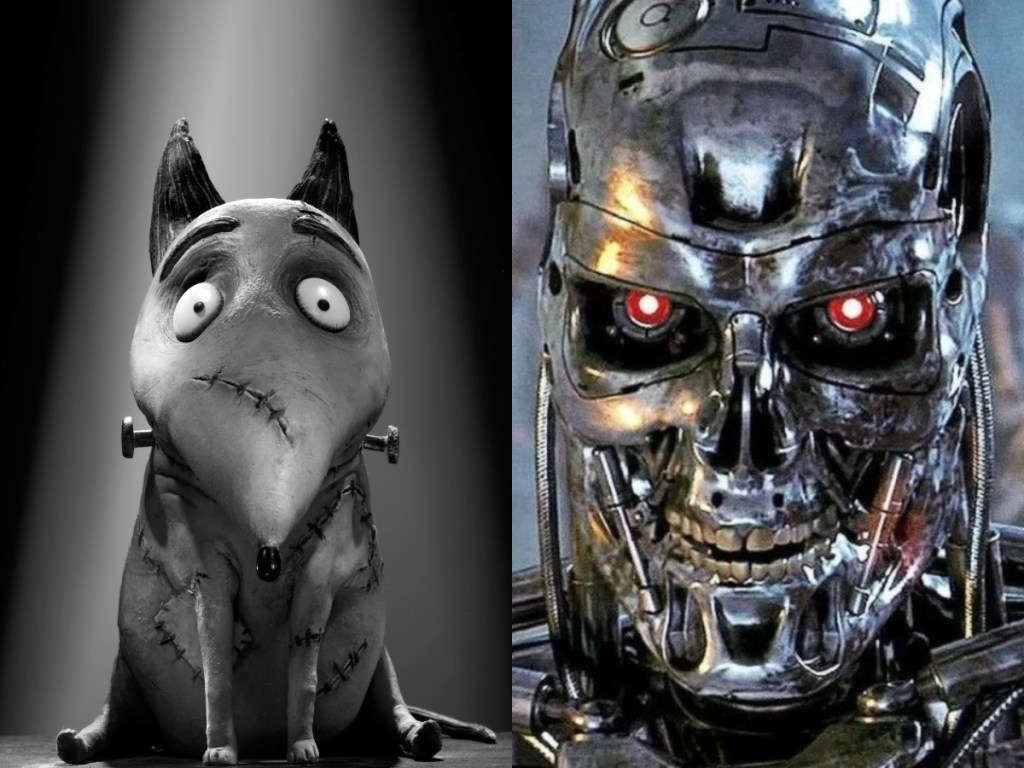
But this idea is prevalent in modern sci-fi horror as well. Look at M3GAN, a franchise built around the idea of a robotic plaything that turns murderous. Chopping Mall is about a robotic security system that turns murderous. The entire Terminator franchise is predicated on the idea that the computer systems we humans have built will become murderous. WHY ARE WE SO OBSESSED WITH THESE MURDER BOTS?
You should definitely find one of these scarier than the other.
There is, of course, a reason. Fiction – good fiction, at least – reveals something about its creator, and in the case of horror, what it usually reveals are the things that people are afraid of. Why, then, have we been afraid of those things we create going bad for hundreds – perhaps thousands – of years? This question was always puzzling to me.
That is, until I became a dad.
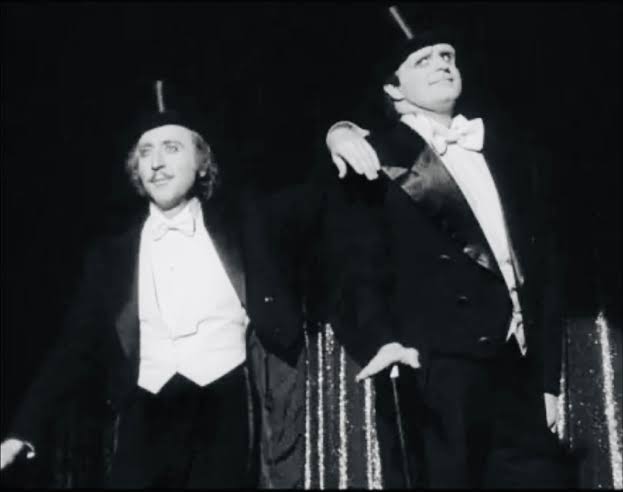
I’m no psychologist, I’m just a guy who reads a lot of books and watches a lot of movies, but I’m going to explain what I take away from what I think of as the Frankenstein complex that is revealed in fiction. I think that the Frankenstein monster and M3GAN and all the others come from a place of people being afraid of who their children will grow up to be, and THAT fear is rooted in a fear that we, as parents, won’t measure up. That’s literally the message that modern audiences get from Frankenstein, that the whole tragedy is caused by Victor’s egregiously lacking parenting skills. The supposition – and I think it’s a fair one – is that if he had not abandoned the monster and left him without guidance, structure, or even a name, then he may have been nurtured into a creature of value rather than the murderer he became. In fact, of all the various derivative versions of the Frankenstein story, the only ones that I can think of that have happy endings are the ones where the scientist character embraces the creature as he would a child, such as in Mel Brooks’s Young Frankenstein.
This was the tenderest depiction of fatherhood ever on film until the creation of Bluey.
I don’t know if this was what Mary Shelley was thinking when she wrote the book, and I’m not trying to argue that it is. I’m saying that this is what I take away from it (and the whole “Death of the Author” argument says that my interpretation is as valid as anybody else’s so nyeah). I’m also saying that I think this interpretation explains why this archetype has been so popular for two hundred years – no matter what other changes happen in culture, politics, art, science, or society, parents are always going to worry that they’re screwing up their kids.
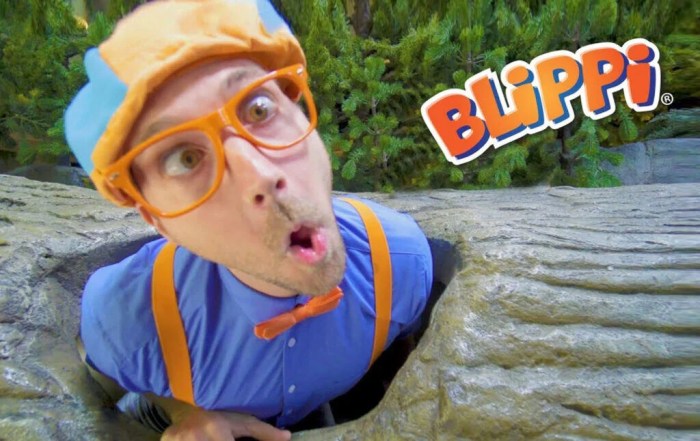
This doesn’t mean, when I look at my darling, innocent son as he is watching YouTube videos of sports stadiums being imploded, that I’m worried he will grow up and frame innocent people for murder or throw small children into a river. But it doesn’t HAVE to mean that. Horror is a metaphor, it exaggerates our fears. I’m not afraid of having a dream so scary that I literally die from it either, but that doesn’t mean I don’t get what A Nightmare on Elm Street is about. No, I worry – like I think every well-intentioned parent does – that my kid will someday make a bad choice that could have been prevented if I had been a better parent. I feel that fear every time we get a message from his teacher that says he’s being too loud in class or every time I have to tell him not to shake a tree because we don’t know if there are wasps hiding in there or every time he wants to watch Blippi instead of literally anything else. Is there something I could have done, is there some way I could have prevented this? And with the exception of Blippi, none of these are really serious offenses…but what if some day it IS?
Sorry, but I’m writing about horror this week. There had to be at least one legitimately frightening image.
That primordial fear of parenting is what draws us to stories like Frankenstein and all the others. We are afraid of making something that goes out of our control and does something terrible. And obviously most parents are never going to have to deal with something like this, thank goodness, but wherever I see a true crime documentary, I find myself waiting for some sort of a conversation with the villain’s mother to see if he broke her heart or if she’s a classic example of what makes a kid go bad.
If you’ve never had kids, maybe this doesn’t make sense to you. But if you have, I guarantee you’re going to think about this the next time you watch Boris Karloff and Colin Clive working out their own issues in your gear-up for Halloween.
Today’s reflection begins – as so do many things in my life – with me being utterly horrified by something my 12th-grade students consider a common practice. As the teacher who puts all of my geeky tendencies on display, students often ask me if I’ve played a new video game (I have not), watched a new TV show (sometimes), or seen the newest movie (not as often as I would like). And I enjoy discussing movies with them, but I am sometimes baffled when I realize they’ve seen new movies, first-run movies that are still in theaters, not IN a theater, but on their PHONE.
This is not the same thing. IT IS NOT THE SAME THING.
The legality of how this is accomplished aside, I get an absolute quiver down my spine when I think about watching a movie like Spider-Man: Brand New Day on a screen that can fit in the palm of my hand. Movies, especially movies heavy on action and special effects, are intended to be an immersive experience, something that draws you into that world, and I just can’t see how that’s possible when you’re looking at a telephone screen. It gets even worse, though, when the student tells me that they watch these movies not on an app designed for such a thing like Netflix or Disney+, but broken down into 90-second segments on TikTok.
They even watch it vertically.
Excuse me, I just threw up a little in my mouth.
Studios are aware of this practice, of course, and many of them are trying to make content specifically to appeal to this audience: short-form videos have become more popular, “vertical dramas” are now a thing. Even major studio releases seem to be feeling the impact. For instance, there’s a theory floating around concerning Disney’s upcoming animated feature Hexed. When the trailer dropped, the kind of people who spend way too much time thinking about movie trailers noted that a greater-than-normal percentage of the action seems to be focused on the center of the screen, suggesting that Disney made the film with the intent of having the sides chopped off and shown vertically. Disney has not confirmed these suspicions, and honestly, I don’t know that I believe them either, but the fact that the question is even being asked says a lot about how people consume media these days.
I know I am marking myself as an old person when I say things like this. I know that younger generations do things in different ways and they have the right to do so. And most of the time I try to employ a “live and let live” attitude when it comes to things the kids do that don’t affect me. But I’m sorry, boys and girls, this is a time when you’re just flat-out wrong. Our field of vision was designed to be experienced in widescreen, not tallscreen, as demonstrated by this highly-detailed and especially scientific diagram:
They wanted to pay me big bucks to put this in a science textbook but I told them, “No, my readers get it first.”
It’s incredible to me that we are now making content that defies the millions of years of evolution that placed our eyes side-by-side on our face instead of stacked one on top of the other because people are too lazy to turn their phones 90 degrees.
But that’s not even the point. The kids obviously still want to watch movies, as evidenced by the fact that they are watching them. But they’re not particularly interested in going to a theater, and that wounds me deeply, because they’re not getting the experience that was intended.
This weekend I’m going to the movie theater for the ninth time this year. For some people that seems like an exorbitant amount, but I need to remind you that in my younger days, the days before I had a child to consider, I would go to the movies two or three times a week. I love movies. I love the movie theater experience. And while that experience was curtailed greatly first by parenthood and then by the pandemic shutting theaters down for most of a year, I spent all that time pining away for seat D11 in Auditorium 2 like a person in a long distance relationship. Some people had a girlfriend who lives in Canada, I had the Palace Theater calling out to me from Elmwood.
My son Eddie is older now, and (thanks in no small part to my influence) he’s grown to enjoy going to the movies. He sees it as a special treat, and it’s been grand to have him reach a point where he specifically asks to see certain movies in a theater. This year we’ve taken him to see The SpongeBob Movie: Search For SquarePants, The Super Mario Galaxy Movie, Toy Story 5 and Paw Patrol: The Dino Movie, and every one of them was his pick. I would not necessarily have chosen all of these, but I love taking HIM, so I went regardless. We also brought him with us to see movies WE wanted to see that we thought he might enjoy: Supergirl, Spider-Man: Brand New Day, and Coyote Vs. Acme. His mom and I even got a rare childless movie experience to see Project Hail Mary when his spring break ended a day before mine, and I think he was a little offended when he learned we went to a movie without him, because he still brings it up.
This weekend it’s going to be a little different. We’re going to see the first episode of Mystery Science Theater 3000: The Rifftrax Experiments. This reboot of the classic franchise by some of the people who’ve been doing it for decades was announced earlier this year and, when they revealed that the first episode would be given a Fathom Events theatrical screening, I asked Eddie if he wanted to go. He’s grown up watching MST3K and Rifftrax with us, so I’m not surprised he was into it. Some of the jokes will go over his head, I know, but the jokes are so rapid-fire and diverse that EVERYBODY feels at least ONE of them whiz above their head. He will enjoy the robots and the guy in the monkey costume, and all will be right with the world.
Not since Dr. Frankenstein has such a chilling experiment come to the movie screen!
I think this is the way forward for movie theaters. The world has become so fragmented and content has become so diluted and spread out across so many platforms that there HAS to be something unique to convince a younger audience to go to a theater. Sure, lower ticket prices and lower concession prices would be great as well, but it’s also important to give people something they can’t get watching a movie even on a fancy home theater, let alone on a device that will interrupt the film every time Stacy sends a text asking if you saw the newest TikTok. In the case of The Rifftrax Experiments, the draw is getting to see the movie in a room full of like-minded fans, people who love the same thing that you do and who have come out to support it with you.
That’s a great feeling, but more can be done to get people into theaters. Selling theater-exclusive merchandise like popcorn buckets and doing giveaways of exclusive comic books has been a bit of a draw. So have screenings with exclusive content like interviews with the creators or making-of features, the kind of thing that we used to get as DVD content before the companies gave up on it. Next week there will be a 40th anniversary screening of the original Transformers: The Movie that will be accompanied by a new short featuring what sadly shall be the final performance of the late Peter Cullen as Optimus Prime. If you’ve ever wanted to see a theater full of nerds weeping over a robot, here’s your chance.
These kinds of retrospective screenings can be a lot of fun. A couple of years ago, Fathom Events did a special presentation of my favorite Alfred Hitchcock movie Rear Window, which my wife took me to as a birthday present. It’s a movie I’ve seen a half-dozen times, but never before on the big screen, and that made it worth getting a babysitter and heading out on a Sunday night. Family movies can do this too, of course. When I was growing up, Disney would routinely rerelease their classic movies like Peter Pan or Alice in Wonderland to theaters, and as a result kids got to see movies that were decades older than them on the big screen. Rereleases still happen, but on a much smaller scale and for a more limited time. Perhaps it’s time to widen those releases again.
Making the screening itself an event is also something that’s shown success. There are special events where a live orchestra will play the score alongside movies like Star Wars, Raiders of the Lost Ark, or Home Alone – honestly, any movie scored by John Williams will work here. Theaters that serve full food menus beyond just popcorn and candy have had success by pairing up special dinners with movies, serving the same food as (or food inspired by) films like Willy Wonka and the Chocolate Factory or Ratatouille.
These are all fun, crowd-pleasing events, but I think we can go even farther. Holiday events, for example, could be really appealing. Every year TBS scores big with its “24 Hours of A Christmas Story.” Can you imagine doing that in a theater? Show the movie on a loop for 24 hours, let people wear pajamas and bring blankets, have a 20-minute intermission between each screening so people can get more food or go to the bathroom. You would sell out a theater in MINUTES. Or how about a screening of Planes, Trains, and Automobiles with a full Thanksgiving dinner? What if there was an October screening of John Carpenter’s Halloween where each on-screen death was accompanied by someone in costume lumbering into the theater and “killing” an audience member? Granted, that last one might not be fun for a Paw Patrol audience, but the RIGHT audience would eat it up like the popcorn they’d spill when getting fake stabbed.
The point I’m getting at is that if we want audiences to come back to the theaters, the theaters are going to have to get creative. Earlier this year, Ryan Gosling got a lot of attention when he said to moviegoers “It’s not your job to keep [theaters] open, it’s our job to make things that make it worth you coming out.” He is absolutely right about that, and I think the phenomenal performance of certain movies this year prove that giving the audience what they want will pay off. But that’s only part of the equation. The other part is the theaters themselves giving the audience a reason to watch the movie in their auditoriums instead of on their phone. Because apparently the fact that watching it on the phone is a poor way to do it isn’t reason enough.
For almost eight decades now, Warner Bros animation has brought us the misadventures of Wile E. Coyote, super genius, in his thankless quest to capture and consume his natural prey, a Road Runner. This is, of course, a normal part of the life cycle of a predator such as a coyote: to kill and eat smaller animals such as birds. However, in all this time, Mr. Coyote has not only failed at every attempt to capture his quarry, but has typically done so in such a spectacularly inept fashion that we have taken his misfortune as entertainment. We laugh at each ill-timed explosion, chortle every time he plunges off a cliff, and guffaw whenever a piece of a bluff snaps off and crushes him into an accordion. A good time has been had by all. Well, all except for Wile E. Coyote himself, of course.
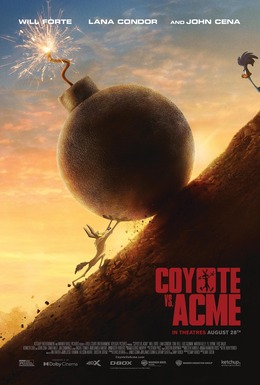
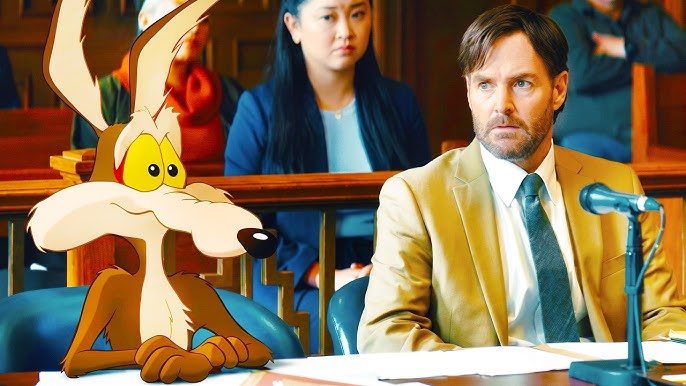
But this week, all that changes. This week, for the first time since the Coyote and Road Runner were created by Chuck Jones and Michael Maltese in the 1949 short Fast and Furry-Ous, we’re rooting for the Coyote, as the feature film Coyote Vs. Acme is unleashed upon the world.
Will Wile E. finally taste…justice?
This newest Looney Tunes movie is, surprisingly, based on a humor piece first published in The New Yorker in 1990. Ian Frazier wrote his comedic essay “Coyote V. Acme” in the form of a legal brief outlining a lawsuit put forth by Wile E. Coyote against the Acme Corporation, whose products he always used in his pursuit of the Road Runner and which always seemed to malfunction in the most hilarious ways possible. The essay was very funny – in fact, when I first started teaching it was included in our ninth grade textbook as an example of satire, and I enjoyed teaching it. But the idea that it would one day blow up and inspire a feature film never would have occurred to me.
Coyote Vs. Acme, based on Frazier’s essay and developed for the screen by writers Samy Burch, Jeremy Slater, and James Gunn, is opening in theaters today. This film, directed by Dave Green, was filmed back in 2022 and was planned for a release the next year, but parent company Warner Bros. Discovery decided to cancel its release. This was part of a slate of films and TV projects that were unceremoniously dumped at the time so that the company could write their costs off on their taxes as a loss. (The most infamous of these, besides Coyote Vs. Acme, was an almost fully completed Batgirl movie starring Leslie Grace as Batgirl, America’s sweetheart Brendan Fraser as Firefly, and Michael Keaton reprising his role as Batman.) Despite the fact that everybody who had actually seen Coyote Vs. Acme was really supportive of the film, with people calling it the funniest movie in years, it seemed as though it would never see the light of day.
This was the look on both their faces when they got the news.
But this is a case, much like how we all collectively made Paramount change the design of Sonic the Hedgehog after the first trailer for his movie placed the character into some horrific uncanny valley situation that would have given children nightmares, where the internet actually did some good. As time passed, the groundswell of support for Coyote Vs. Acme only grew. Word leaked that it was one of the best unreleased movies ever, that it was a return to form for the Looney Tunes greats after disasters like the second Space Jam movie, and that the Coyote’s co-stars John Cena and Will Forte were at the absolute top of their game. People pushed. People put pressure on Warner Bros. And eventually, the media monolith relented and sold the rights to distribute the film to Ketchup Entertainment, which similarly saved the previous Looney Tunes film The Day the Earth Blew Up from being a cinematic footnote last year.
Today, after all this confusion, the movie is finally hitting movie theaters, and I think it’s probably more important that you see this movie IN those theaters than any other film this year. Yeah, I know that Spider-Man: Brand New Day is the movie that’s made all the money. The Odyssey is probably gonna win all the awards. But those movies have a media push and corporate backing helping them out. Frankly – and I do not mean this as a slight against either film – they don’t NEED our help.
Coyote Vs. Acme does.
I’m not asking you to see this movie just because I love the Looney Tunes, although I do. I’m not asking because virtually every critic in the world is raving about how funny, heartfelt, and entertaining the film is, although they are. I’m asking you to see it because what Warner Bros. tried to do to this movie, what they did to Batgirl and other films is a load of horsecrap, and we need to show them that we know it’s not right.
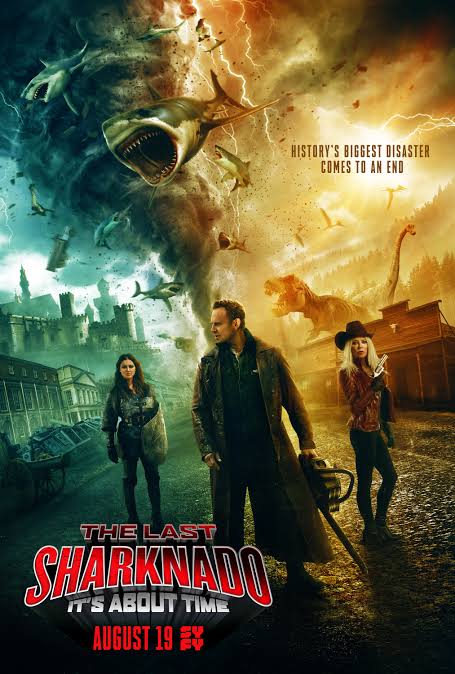
Movies are art. Even corporate movies, even movies that are built on massive IPs are still art, and art is important. Art is how we explore our understanding of the world, and whether we’re doing it through some historical epic that enlightens us about our own past or whether we’re delving into things that terrify us or things that make us laugh makes no difference. The big studios greenlight movies based on an expectation of profitability, and I don’t object to that. It’s called show business, after all, and I’m not asking them to start making movies they EXPECT to lose money on. But any movie is a labor of love for the people involved: the writers, the directors, the actors, the musicians, the animators…almost any movie you see (and ESPECIALLY any studio movie you see) is the result of the efforts of hundreds of people. And with the exception of perhaps the Sharknado franchise, nobody is TRYING to make a bad film.
The exception that proves the rule.
The long and short of it is, I don’t care about Warner Bros and their pocketbooks, but I DO care very much about the people who MADE the movie, and THEY are the ones I want to support.
The value of art should go beyond just what the numbers on a page add up to. Art should be evaluated by what it does to an audience, the emotions it evokes, the joy that it brings, the tears that it wrings from your heart, the laughs that erupt from your throat. These are the things that give a movie true value, and that’s not the sort of thing that can be quantified. It can’t be decided by an accountant. It can only be decided by an audience. And I believe that any movie deserves, at bare minimum, the CHANCE to find that audience. I prefer theatrical releases, of course, but at least direct-to-streaming or DVD or TV movies have a SHOT at being seen. If you chalk up a movie as a loss and stuff it in a drawer somewhere before anyone gets to see it, nobody ever has that chance, and that’s simply not right.
A movie that is never released never has a chance to find an audience, and it deserves that chance. And even if it turns out to be terrible, WE should be the ones who get to decide that, not some jackass trying to balance a ledger.
Again, the exception that proves the rule.
In one of those little quirks of fate, my son Eddie and I happen to have birthdays within a few days of each other, and we both have movies we wanted to see this weekend, so we made a deal. I’m going to go with him to see Paw Patrol: The Dino Movie, and he’s going with me to see Coyote Vs. Acme. (His mom is going to be there with us too, of course, so if you’re reading this Erin, you get to pick the next movie, okay?)
But when we get there, I want to see that theater full. I want you all out there with me, watching the Coyote get smashed by an anvil, swallow some dynamite, and finally take the fight back to the Acme Corporation. Because more so than any previous Looney Tunes movie, this one has a meaning beyond what’s on the screen. If you love movies, you should see this in theaters. If you love animation, you should see this in theaters. And if you want to send a message to Warner Bros and the rest of them that these things mean more to us than numbers in a column, then you need to come out to the theater with Eddie and me and see this movie.
And in the immortal words of the Coyote’s ancient nemesis, “Beep-beep.”
It’s about two weeks into the new school year, and that’s enough time for relationships to begin forming. Routines are being established. If you’re lucky, a highly effective teacher may have learned as many as 47 percent of their students’ names by now. And in my class, this is the time in which the kids get comfortable enough about my blatant nerdity to begin interrogating me about it.
“Mr. Petit!” one of them asks. “Who’s your favorite superhero?”
I look at the four shelves worth of assorted Superman paraphernalia behind my desk while I try to decide if he’s asking the question ironically.
You’re kidding me with that question right?
“Mr. Petit!” another shouts. “What’s your favorite movie out of those?”
I’ve got a 1980s decorating theme going on in my room this year, which includes posters of some of the classics. I look to where Ghostbusters and Back to the Future are hanging next to each other and I say, “It’s between these two. Ghostbusters always gets bonus points the closer we are to Halloween.”
“Mr. Petit!” a third cries, hoping that if they ask enough questions I’ll forget that they’re supposed to be working on the rough draft of their “Story of an Hour” essay, “Marvel or DC?”
There it is.
This question never fails to turn up these days. It’s funny – when I was a kid I was one of maybe three kids in school who even knew that those two entities were a thing, and now it’s as heated a debate as something like the Yankees or the Dodgers. It goes to show you two things. First of all, the geeks really are taking over the world. Second, that’s not always a positive.
“I hate that question,” I say. “I like them both. I like the characters. I like the stories. They share a lot of the same writers and artists, so–”
“Marvel or DC?” he asks again, and I know that he won’t drop this until I give some sort of an answer.
“More of my favorite characters are DC,” I finally concede.
“So you hate Marvel?”
THIS is why I hate that question.
This kind of tribalism, this insistence that liking one thing means that you have to dislike something else, is the kind of debate that you find on the internet, and is remarkably stupid. (But as I always tell my students, you shouldn’t be redundant.) There isn’t the slightest reason that expressing your fondness for one character, one publisher, or one studio should automatically be construed as a distaste for another. I don’t want to draw lines and choose sides – I want to like DC AND I want to like Marvel AND I want to like Star Trek AND I want to like Star Wars AND I want to like Bluey AND I want to like Peppa – I WANT TO LIKE BLUEY.
Five out of six ain’t bad.
“Batman or the Flash?” one kid asks me, and I sigh. “Are you asking me who I think would win in a fight, or which one I PREFER?” I ask. Because to me, those are different questions, but I find that my kids often conflate the two. Another kid asks me who my favorite Spider-Man actor is, and after confirming that we’re both fans of Tom Holland, he goes on to explain that he’s pretty sure that Holland’s Spider-Man could beat Tobey Maguire and Andrew Garfield in a fight, which is a criteria that couldn’t possibly have less relevance to me.
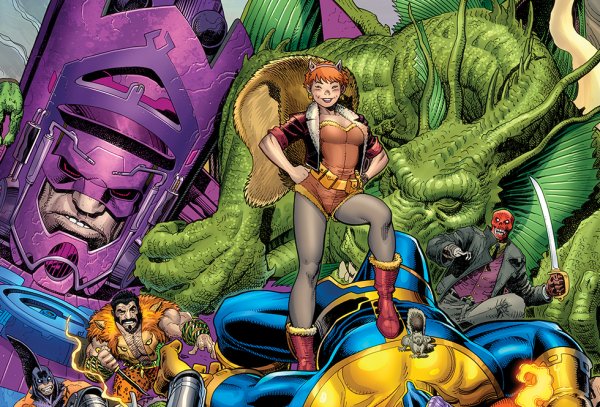
That’s another method of analysis that I don’t really care about. The answer to who would win in a fight between any two fictional characters is always the same: whoever the writer WANTS to win. It doesn’t matter how lopsided the match-up is, if the writer wants Aunt May to punch out Galactus, the writer will find some way for Aunt May to punch out Galactus. Squirrel Girl’s whole appeal was built on this fact, that the writers thought it was funny for such a patently ridiculous (if adorable) character to keep beating Marvel’s biggest villains over and over again.
Never forget, this is canon.
I like good characters and I like good stories. I don’t care who publishes them or who made the movie. I don’t care which of them has an atomic punch or which one gets “15 hours of prep time.” I just want to enjoy the lore. By way of demonstration: only slightly less known than my love of Superman is my love of Benjamin J. Grimm, the Fantastic Four’s ever-lovin’ blue-eyed Thing. And when I say that to somebody who evaluates things by “feats,” they roll their eyes and tell me that the Hulk is stronger. As if that fact has somehow escaped me in my four decades of reading comic books.
I don’t care if the Hulk is stronger. I’m not judging an arm-wrestling contest. I am a fan of Ben Grimm’s character. Think about what he’s gone through in his life: his best friend persuades him to commit a crime and steal a rocket ship. (In the earliest versions of the story, that persuasion is helped along by Susan implying a lack of manliness on his part, but I don’t think that’s canon anymore.) He rides into space with three other people and each one of them wins the super-power lottery, gaining incredible abilities that transform them entirely. But the other three can turn their powers OFF and continue having relatively normal human lives, while Ben is trapped in a form made of orange rock, permanently cut off from sensation and true human contact. And for years he carries around an anger that defines the character – even in those moments when he is at the forefront of battle, he holds on to a resentment for what his best friend did to him.
But here’s what makes Ben Grimm a great character: eventually (many years and many writers later) he learns to let go of his resentment. He finds peace with who he is and he becomes not only a hero, but an icon. He takes a place in his community, helping the neighborhood where he grew up to become a better place. He finally stops hating himself long enough to accept the love of a woman who has never once judged him by his appearance. They have a family together now. Whereas in the early days Ben called himself the “idol of millions” ironically, in this day and age, in the Marvel universe, it’s the truth. In ongoing, mainstream comics there’s something called the “illusion of change” – the idea is that any sweeping changes that a writer makes will ultimately be swept back off the table by future writers who reset the character to who they were previously. But that hasn’t happened to Ben. He has grown and evolved and embraced the world, and I think that if you look at his life from Fantastic Four #1 in 1961 all the way to the current Ryan North run on the title, you will see a portrait of a man that any one of us would be a better person to emulate.
But more than anything, it’s the dimple.
And if you read all that and started to say, “Well yeah, but the HULK–” let me stop you right there, because you’ve missed the whole damned point. I never said that the Hulk isn’t a good character. I never said that the Hulk isn’t compelling. I said that my favorite Marvel character is the Thing, and one statement does not in any way dispute the other.
“Mr. Petit! Top five books!”
I don’t like ranking things either. For one thing, it’s just a subset of the tribal mindset that I mentioned before, and many people tend to take offense if your ranking deviates too far from their own. I’m also not good at it, because I find that any rankings I can come up with will shift from day to day, from mood to mood. I mentioned before that whether I prefer Back to the Future to Ghostbusters depends largely on when you ask me. I often watch Back to the Future in the summer, whereas Ghostbusters is more likely to run in the fall or winter (because, lest we forget, Ghostbusters II is a New Year’s movie). The same goes for any other category or ranking you can ask for. Am I CAPABLE of coming up with a top five list? Sure. But if you ask me to come up with the same top five tomorrow, it will almost certainly be different.
“Who’s your favorite writer, Mr. Petit?”
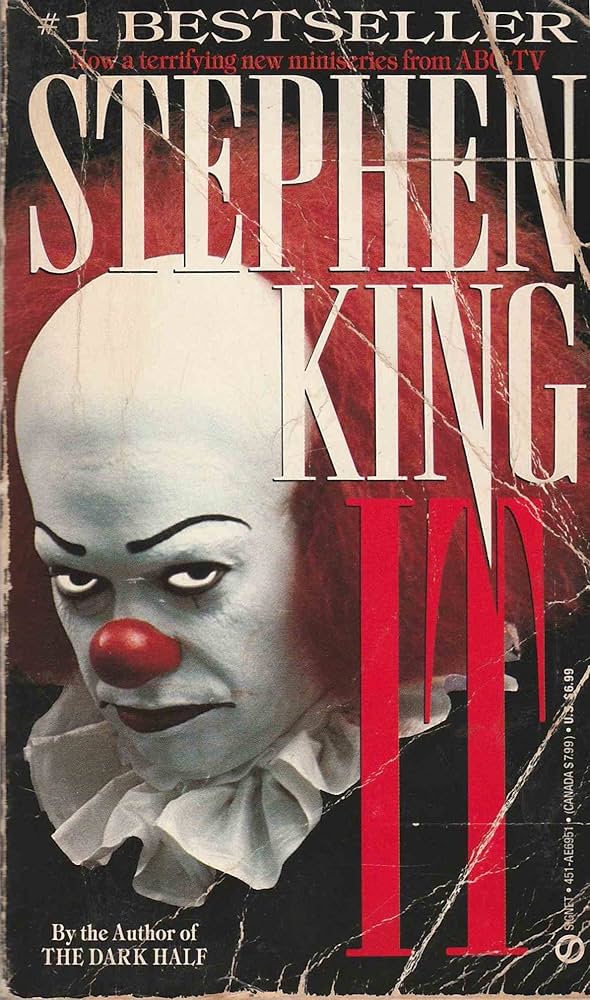
Ugh, stop. I’ve probably read more books by Stephen King than anybody else, but does that make him my FAVORITE? I think Mark Twain is probably the greatest author in American history, but does that preclude me from ENJOYING Isaac Asimov just a little bit more? “Favorite” is a term that, in my experience, inevitably becomes tainted by recency bias. I’ve read It more recently than Foundation, and at the moment I have more thoughts and feelings about It because of that. Does that mean that I PREFER it? I’m not even sure. If it were possible to read two books at the same time (I know a lot of people who have like six books with bookmarks on their nightstand right now, and I don’t know how the hell they do THAT, either) would that give me any sort of definitive, official ranking that I could tell people to satisfy their bizarre thirst for quantifying how much you enjoy things?
Even when it comes to ranking installments within a series, I struggle sometimes. It’s not as hard if the installments have hard separations. For instance, I can say with confidence that Star Trek VI is my favorite of the movies featuring the original crew, whereas Star Trek V is the worst Trek movie of them all, or at least it was until Section 31. But if you ask me to rank where I would place the books in the Dungeon Crawler Carl series, I might stare blankly, because in my head it’s all one big story, and harder to differentiate. (After much contemplation, it’s still a tie between The Butcher’s Masquerade and This Inevitable Ruin.)
And the thing that confuses me the most when people come around asking these questions is, why do you care? What difference does it make to you if I like the Flash more than Batman, or if I think Revenge of the Sith is a better movie than Attack of the Clones? Most of the time, the person asking the question is doing so to spark debate. And to be fair, sometimes their intention is a good-natured debate, a debate in good faith, and I don’t begrudge them that. But I’m not looking for a debate. I don’t want to argue over what’s better than something else. I just want to talk about the things that I love.
So if a student asks me what I think about a specific movie, book, character, or performance, I have no problem telling them. I will cheerfully tell them that I thought Spider-Man: Brand New Day was fantastic. I will let them know that Jaws is one of the few movies that I think is better than the book it was based on. And when they ask me why I haven’t seen any of the Avatar sequels, I will even inform them politely that I saw the first one, and that was enough for me.
But playing “can Robert Pattinson’s Batman beat Michael Keaton’s Batman in a fight?” It’s a fool’s game, and I don’t have time enough in my life to waste it playing fool’s games.
Especially not when I have all these Kate Chopin essays to grade.
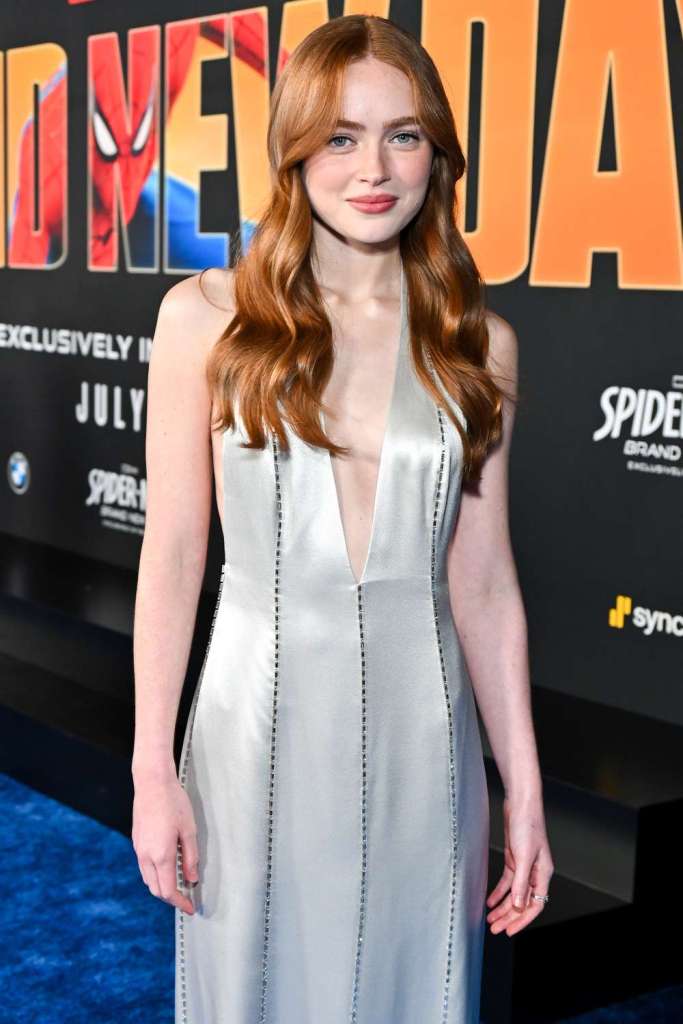
The newest Spider-Man film, Spider-Man: Brand New Day, hits theaters today, and with its release we’re finally going to get the answer to the question that has plagued fans for a year now: who the heck is Sadie Sink playing?
My guess? The Hulk.
The cast includes the usual trio from the previous Spider-Man films: Tom Holland as Peter Parker, Zendaya as Michelle “MJ” Jones-Watson, and Jacob Batalon as Peter’s best friend Ned. We also know that another pair of MCU stars – Mark Ruffalo as Bruce Banner and Jon Berenthal as Frank Castle – are along for the ride. But when it was announced that Sadie Sink was joining the cast, Marvel was uncharacteristically catty about what role she’s playing in the film. The move was intended, of course, to get people talking and speculating, and it worked.
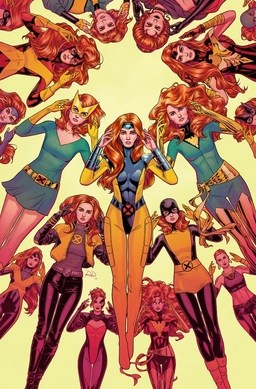
Sink is best known as Max from the Netflix hit Stranger Things, but she’s branched out into other TV and film work as well, most notably playing Brendan Fraser’s daughter in the movie that finally got him his Oscar, The Whale, so she’s definitely got the acting chops to join the MCU. But without knowing exactly which role she’s taking, speculation has run rampant. One of the most popular theories has been that she’s going to be Jean Grey, officially ushering the X-Men into the MCU. The Fox X-Men are going to appear in Avengers: Doomsday and probably its sequel Secret Wars, but the MCU is going to bring in their own version of the mighty mutants in a couple of years, and Sink would be a great choice for Jean Grey.
And she would have a LOT of costumes to choose from.
Theory Number Two is that Sink is actually going to be Mary Jane Watson, the original character that everybody has assumed Zendaya is representing in the MCU. It would be a sneaky trick, to be sure, to pull that kind of switcheroo, but I think it would also be kind of disrespectful to fans of Zendaya’s character, not to mention Zendaya herself. And let’s be honest, she’s kind of a big deal these days – I don’t know if Kevin Feige would want to get on her bad side.
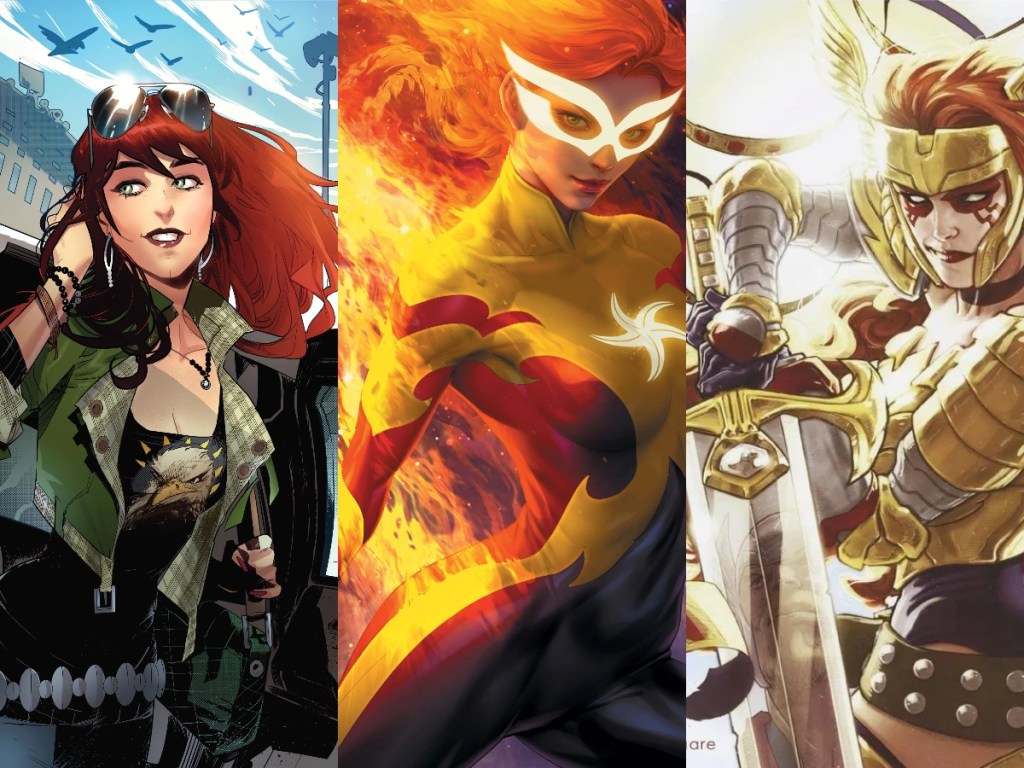
Both of these theories, it should be pointed out, seem to be predicated on the fact that the two characters mentioned, like Sink, happen to be redheads. It’s not the best reason to cast somebody, but it’s not the worst either. That said, we can float other possibilities based on the same criteria. For example: Angelica Jones, aka Firestar, would be an out-of-the-box choice. Firestar is the rare Marvel character that didn’t originate in comic books, but rather in a cartoon show, Spider-Man and His Amazing Friends. Since migrating to comics, though, her interactions with Spider-Man have been minimal, associating more with the New Warriors, Avengers, and X-Men, in that order.
From there the list of significant redheads starts to run thin – Pepper Potts and the Black Widow are both spoken for in the MCU, and Thor’s half-sister Angela is available, but no matter how good an actress she is it would be difficult to picture the petite Sadie Sink as a Viking warrior goddess. Medusa appeared in the short-lived Inhumans TV show, and as much as I’m sure Marvel would prefer we forget that existed, I don’t see Sink taking that role either. After that I would have to start flipping through the Official Handbook of the Marvel Universe to find further candidates, and I don’t think Marvel would put that much effort into characters that obscure.
Gotta be ONE of these, right?
Having this conversation with my wife, she tossed out my favorite theory: maybe they’re just screwing with us and Sink is going to be a redheaded version of Gwen Stacy. I would actually applaud that level of trolling, were they to go in that direction.
All that said, I know that several of you reading this already know the answer to this particular mystery. I’m publishing this column on Brand New Day’s official release date, and there were two successful days of preview screenings. I personally know several people who’ve already seen the film, most of them in the Comic Book Collecting group I help moderate on Facebook, and the comments have been highly positive. Nobody, as of this writing, has spoiled the mystery for me, and I appreciate that, since I’m not going to be seeing it until tomorrow morning.
The thing is no matter who Sink is playing, I have to admire the way Marvel Studios has played this particular bit of casting. I complain a lot about how nobody in the entertainment industry is capable of keeping a secret anymore. Trailers give away the whole movie, comic book solicitations give away the endings of storylines before they’re published, and casting surprises are virtually nonexistent. Somebody in that same comic book group I mentioned said not long ago that they hope the upcoming Man of Tomorrow movie will have cameos by Batman and Wonder Woman, and I had to say that I seriously doubt that they’d introduce two such important characters that way – certainly not without making a big deal of who they cast in the respective roles.
No way they could keep news this great under wraps.
But Marvel has turned Sink’s casting into a way to generate buzz. She’s even gotten into it herself. Earlier this week a video was released on the official social media channels where Sink teases the fans by confirming two roles she’s definitely NOT playing: Spider-Man and Aunt May. Now this COULD go wrong – if it turns out she’s playing, for instance, J. Jonah Jameson’s secretary Betty Brant, that would be quite a letdown. But assuming she’s a significant character, somebody who has the potential to be a major player in upcoming Marvel franchises, then they’ve played their game very well.
The game will be over soon, of course. With the movie in theaters I have no doubt her role will soon be common knowledge. I’m just hoping I can continue to dodge spoilers for another 24 hours. I wouldn’t be surprised in the slightest if, in the next week or two, they release a new trailer that prominently features Sadie Sink in her new role as Squirrel Girl. (Or whatever.) But they’ve kept the surprise this long, and I both appreciate and respect that.
“They’re NEVER gonna figure out that I’m Willie Lumpkin.”
Credit where credit is due.
Oh, and if you HAVE seen the movie and know the answer to the original mystery, do us all a favor and keep it to yourself a little while longer. We haven’t all seen it yet.
It’s a bold choice for any company to take away something that its customers have been enjoying for decades. It’s even BOLDER to do so only days after reminding those same customers why having that very thing is so damned important. So the nicest thing I’m going to say about the Sony Playstation people in this column is that…they are BOLD.
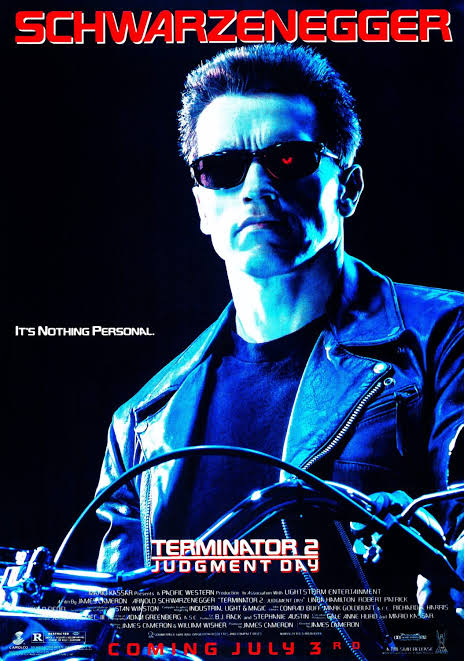
Just last week, the Playstation Network informed its customers that a whopping 551 movies – basically the entire catalogue distributed by Studio Canal – will be deleted from their libraries on Sept. 1. These aren’t teeny independent movies either (not that it would make it okay if it was), but blockbusters and classics like Terminator 2, First Blood, Total Recall, Cliffhanger, and even several films that don’t have anything to do with Schwarzenegger or Stallone. These are not movies that are being dropped from a streaming service, like HBO Max did seven times since you started reading this sentence. Nor are these movies that people had previously rented, with the rental agreement expiring. No, these are films that the customers allegedly “purchased.”
“Hasta la vista, Sony.”
The trouble here, as with all digital media, is that if you pull out a magnifying glass and examine the terms of service that nobody in history has read since Eve clicked “agree to all” and then started chatting up that serpent in the tree, you will find a notification that what you are actually purchasing is a LICENSE to access the movie, and that license can be revoked AT ANY TIME. Which is what is happening to Playstation customers. Presumably the licensing agreement between Sony and Studio Canal is coming to an end, and as always, it’s the customers getting the shaft on this one. There has been no word from Sony as to whether the people who’ve spent money on these movies will be refunded or given any other compensation, but I’m begging everyone not to hold their breath because it’s summer and it’s hot out there and we don’t need to make it even easier for you to pass out.
This is one of those situations where – due to the nature of the contracts between the companies and the exact wording of the terms of service – what’s happening is entirely legal. It’s also one of those situations where just because something is legal doesn’t mean it’s not a crappy thing to do.
“We have consulted with our legal department and determined that you can all go screw yourselves.”
Then there’s the real kicker – just a few days after reminding all of its users that anything they don’t own a physical copy of can be yoinked away from them like a dog stealing your hot dog on the Fourth of July, the same Sony Playstation company that had already pissed off its customer base released ANOTHER statement that, beginning in 2028, they will no longer produce physical media AT ALL, and that any games purchased in the future will be exclusively available via the Playstation network.
The same network that just scammed you out of over 500 movies that you paid for.
Yeah, I’m feeling great about this.
Now none of the Playstation Shenanigans affect me directly. I don’t own a Playstation, I’ve never bought a movie from their store, and I’m not a video game player. But this is a really disturbing reminder of just how messed up it is that we live in a world that is requiring “licenses” for everything instead of allowing anyone to actually OWN something. When I got my first laptop computer to go to college, there were things called “programs.” Things like Microsoft Word and Photo Gallery were computer programs that either came pre-installed with the device when you purchased it or, alternatively, that you could purchase on a disc and then install on your computer. Then you could just…USE them. And it wasn’t only productive programs like Word either – GAMES were distributed the same way. And if you had a Nintendo or a Sega or any of those consoles, you purchased cartridges right up until the time that they evolved to using discs. And that cartridge or disc would sit there on your shelf as long as you wanted it, or you could sell it or trade it or do whatever you wanted.
Then came smartphones, and I think this is really where it all went downhill. Because of the nature of a smartphone and, later, a tablet you couldn’t really install programs from a physical copy, so they were mostly made downloadable. (They also changed the word from “program” to “application,” then just “app” around this time. Why, I don’t know. Maybe because Apple tested “There’s a prog for that” as a tagline and it didn’t work.) At some point, someone realized that rather than making people pay for an app ONCE, they could charge them on a REGULAR BASIS – annually, monthly, if they thought they could get away with it they would 100 percent be metering you and charging you by the minute – and just keep cranking money out of the same people over and over again. And once this became the norm on phones, it spread to computers and game consoles and now we’ve reached a point in our society where you need a subscription to turn on the seat warmers in your car and a password to access your refrigerator.
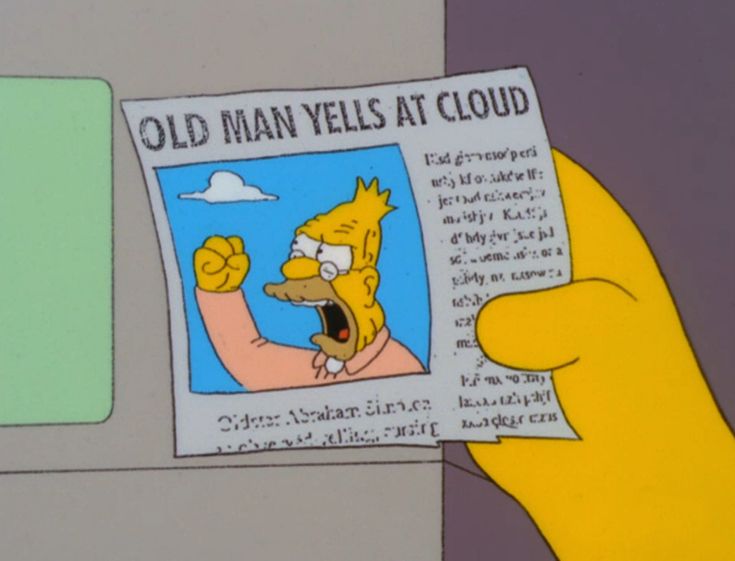
Usually a rant like this would make me feel like an old person shaking his hand at a cloud, but I feel like most younger people are on my side on this one too.
We’re all Abe on this one.
Anyway, this rant started with Sony and their infuriating choices regarding movies and video games, but we have to remind ourselves at this point that this could happen to literally ANY content that is only available through a download or a license: TV series, books, comic books, music…if you don’t have a physical copy, then there’s always the chance of some jerkwad like Ignatius Q. Playstation there deciding one day that this thing you thought belonged to you does, in fact, not.
I don’t think this is the MAIN reason that vinyl record albums have made a comeback, but I guarantee you it’s a reason collectors cite every time their wives ask them why they’re bringing home the LP of the Xanadu soundtrack.
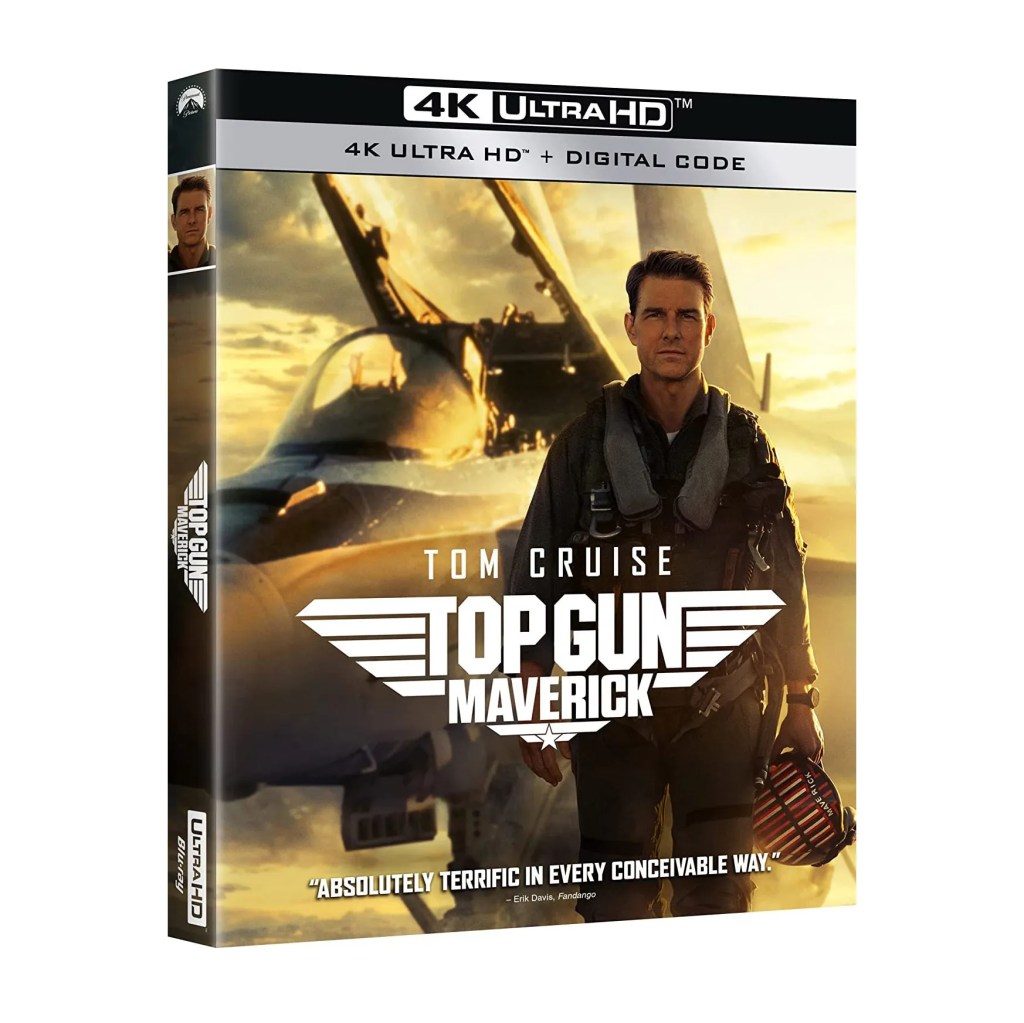
And I get it. I have a lot of books and comic books and DVDs, and while so many people decided to abandon those things as the digital age crested around us, I can’t see myself doing it. Digital media is convenient as hell, I agree. Walking up to the TV and putting in an actual Blu-Ray disc of Top Gun: Maverick when I could just hit a button and stream it on Paramount+ feels like something our ancestors would do while they were churning butter. And digital backups are a good thing too. I have a hard drive where I rip most of my DVDs so that I can access the movies and TV shows on my Plex server, which is an app that allows you to view your own, personal library. It’s like making your own Netflix, only better, because I’m not gonna come back in a few weeks and tell me that I have to pay more if I actually want to be able to hear the sound clearly. But you gotta have the discs in your hands first to make that work.
Symbolizing freedom in more ways than one.
This latest wave of crap from Playstation has resurrected a battle cry that I hear whenever a story like this breaks: “If purchasing isn’t ownership, then piracy isn’t stealing!” Like most internet slogans, reality is a lot more complicated than that. I do not condone piracy, and I think most of the justifications that people come up with for doing it are flimsy at best. But even I have to admit that if I bought something and then the person I bought it from snuck into my house and stole it in the middle of the night, I would be inclined to look for a way to steal it back.
All of this is to say that physical media is still important, and anyone who’s trying to tell you that it isn’t is probably trying to think of ways to milk you out of as much money as possible. I’m not telling you to start cancelling subscriptions or anything. I’m just telling you that if you actually want to be sure that you have permanent access to something – ANYthing – there’s really only one way to do that, and the people who are trying to stop that from happening are the ones we should all be giving the side-eye.
Blake M. Petit is a writer, teacher, and dad from Ama, Louisiana. His most recent writing project is the superhero adventure series Other People’s Heroes: Little Stars, volume one of which is now available on Amazon. He’s also started putting his LitReel videos on TikTok. This is why he scours the DVDs any time he goes to a thrift store too, by the way.
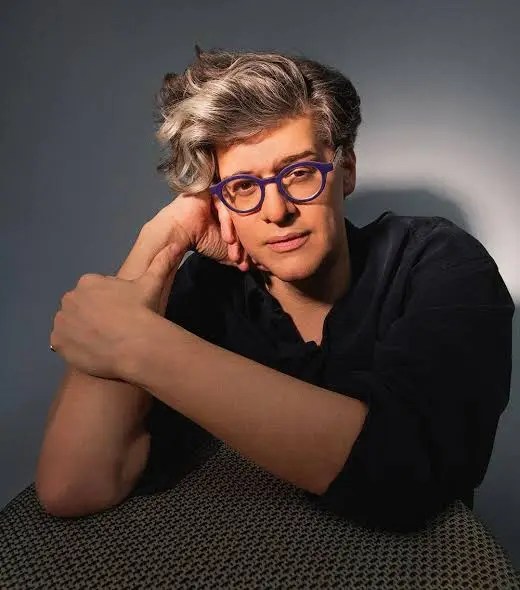
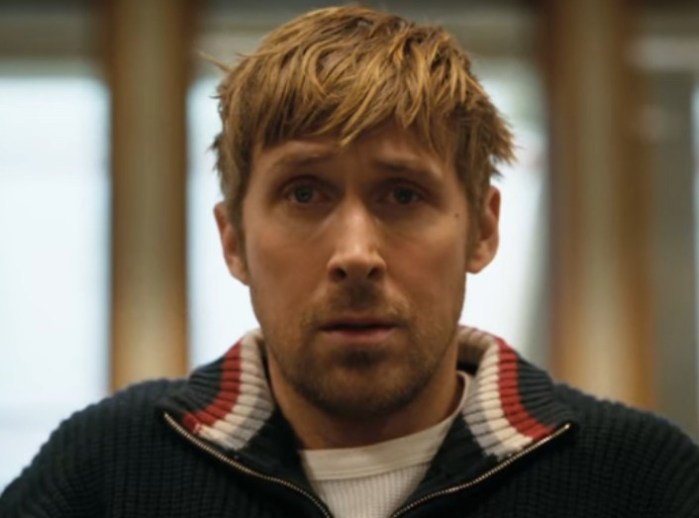
April is a little early to start talking about next year’s Oscar race, especially for somebody like me who – famously – does not care about the Oscar race. However, something interesting cropped up in the news cycle over the last few days that may potentially get me interested in the winner of a specific category for the first time in quite a while. This fella here is James Ortiz.
Some Jameses go by “Jimbo.” I just get the feeling he’s not one of them.
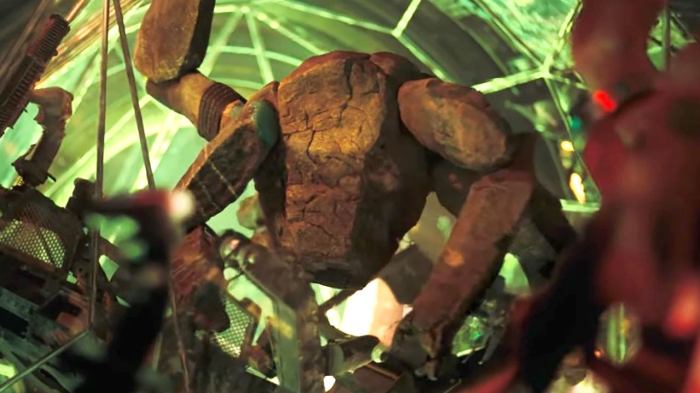
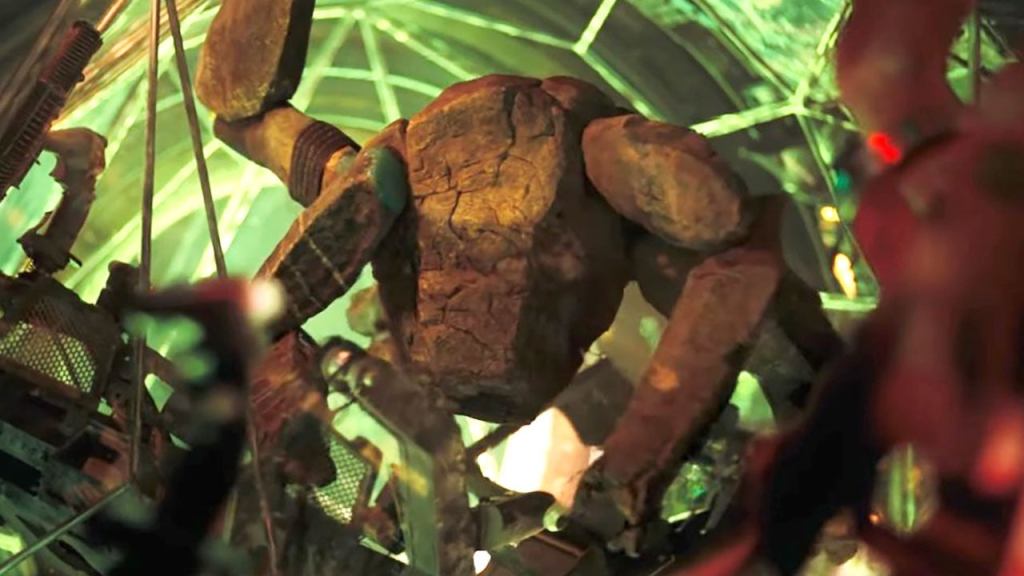
You probably don’t recognize his face, but he’s in one of this year’s biggest hits, Project Hail Mary. Ortiz is the puppeteer behind Ryan Gosling’s co-star, Rocky.
Rocky might, though.
Yeah, puppeteer. That little dude wasn’t CGI. It was an actual, physical puppet on-set, albeit with a few computer “enhancements.” But it was really there, interacting with Gosling, and crawling into the movie theater to reach into your chest and steal your still-beating heart.
Evidently, according to Oscar rules, Ortiz’s work is eligible for a nomination in the best supporting actor category in next year’s Academy Awards, and Amazon-MGM has made it clear that they intend to submit him for consideration. Finally, something about these awards is interesting again. You see, one of the (many) reasons I stopped caring about the Oscars is this feeling that they ignore large swaths of movies that don’t fit into their hoity-toity aesthetic, in particular deserving genre films. No puppet character – or any voice performance, for that matter – has ever been nominated for an acting award in the history of the Academy, despite several performances that have been sincerely deserving.
I’m not saying this to denigrate anybody who HAS been nominated. I’m not pointing to anybody specifically and saying “this person didn’t deserve the nomination, it should have been that voice actor instead.” I’m saying that in the 98 year history of the Academy of Motion Picture Arts and Sciences, you CANNOT convince me that there has NEVER been a voice acting performance that is worthy of at least a NOMINATION.
A worse snub than Dicaprio in The Aviator.
If Ortiz gets the nod, that would be seismic. It would be the kind of thing that gets people’s attention, and the Academy wants that. But the thing is, he shouldn’t get a nomination just because the Academy is trying to get viewers, he should get it because he completely deserves it. Ortiz was the on-set puppeteer for Rocky and did the performance with the expectation that his voice would later be dubbed over by a big-name actor who hadn’t been cast yet. His on-set performance was so perfect, however, the directors decided to keep him for the vocal performance as well. And if you’ve seen Project Hail Mary, you know that the movie just flat-out would not work if the audience didn’t believe in and fall in love with little Rocky. It wasn’t just the vocals, but the motions, the mannerisms of the character. Ortiz created an entire living, sentient being that held his own with one of the movie industry’s top talents and the two of them made each other better. That’s what acting IS, whether you’re doing it with your own body or with a body made of rods and felt.
It’s going to be an uphill battle, of course, because as I said, the Academy has traditionally shunned movies like this in all but the technical categories (things like special effects, makeup, costume design, etc.) There have, of course, been some few instances of genre films getting mainstream recognition. Sinners – a vampire movie –racked up a lot of nominations last year, including Best Picture, and it took home the awards for Best Actor, Original Screenplay, Cinematography, and Original Score. But the acting award for a vampire movie still went to Michael B. Jordan for his (admittedly, deserving) performance of a pair of human twins. In 2017 The Shape of Water took home Best Picture, as did Lord of the Rings: The Return of the King back in 2003, although both of those were shut out of the acting categories.
It’s that last part that bristles. Sure, these movies did well, but even though Return of the King took home awards for best picture, director, screenplay, and several others, not a single acting performance was even nominated. That’s absolutely absurd.
The other thing that’s going to hurt Ortiz’s chance, besides the general Academy Attitude (Acadetude?) towards genre films, is the fact that Project Hail Mary came out very early in the year. By the time awards nominations are getting seriously discussed nine or ten months from now, dozens of other movies will have been released and have heavy Oscar pushes behind them, and it will be much easier for the Academy to ignore a film that doesn’t have that kind of recency bias. So as magnificent as it would be to see Ortiz get the nomination, I am not holding my breath.
Others have suggested that if he doesn’t get a competitive Oscar, the film could receive a “Special Achievement Award,” which is a rarely-given trophy the Academy hands out for groundbreaking work that doesn’t necessarily fit into any other category. It was first handed out in 1972, in an era where modern sound and visual effects were in their infancy and new innovations and technologies were beginning to be developed at a rapid pace. However, the last time a Special Achievement Award was given was back in 1995, for the first Toy Story film, ushering in the era of computer animation. That also feels unlikely. Besides, Ortiz’s performance isn’t a technical game-changer – puppeteering is an ancient art. He was just REALLY FREAKING GOOD AT IT.
This brings me to my larger point – there is a whole section of acting that the Academy has ignored for its entire existence, and it’s time to change that. After all this time, there needs to be a category for – and this is the best term I can come up with for it right now – Best “Created Character.” Vocal performances. Motion capture. Puppeteering. Instances in which a character is crafted in a non-traditional acting performance. These aren’t new concepts – even motion capture has been around for decades at this point – so why aren’t they recognized?
In the alternate universe in which I am in charge of the Academy, instituting this award will be the second thing I do, after installing a trap door under the microphone for anyone who starts yammering about politics in their acceptance speech. This award would be given to an individual or to a group of people who contribute to the creation of said character, with the exact names included decided at the discretion of the film’s producers when submitting for the award. In general, though, this would be used to recognize the vocal performer, on-camera performer, and technical creators of the character, whether that’s one person or an entire team. (It will pointedly NOT be given out for any AI “creations,” as all of the disciplines I mentioned consist of actual human skill and talent, whereas an AI character would require typing in prompts until the computer remembers how many fingers a human being is supposed to have.)
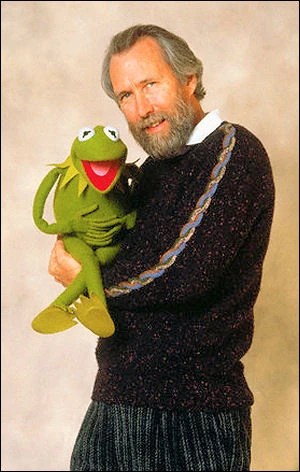
Let me explain. Had this award existed in 1979, when The Muppet Movie came out, Jim Henson could have been nominated for Kermit the Frog. He likely would have been the only person named in the nomination, as he was Kermit’s vocal performer, puppeteer, and designer. For the 1986 version of Little Shop of Horrors, on the other hand, the nomination for Audrey II would have gone to Levi Stubbs, who voiced the plant, and be shared with the principal puppeteers for her. (Wikipedia lists 21 separate individuals as being “principal puppeteers” in this case. That’s a little extreme, but the point is valid.) The nomination would also have been shared with Lyle Conway, who designed the puppet, and the fabrication team who actually built it.
Of course, if there’s only one trophy, they would have to work out some sort of custody arrangement.
In traditional animation it’s a little simpler. Let’s use 1991’s Beauty and the Beast – the first animated movie ever to get an Academy Award nomination for Best Picture. In most major animated films, each main character has a lead animator or animation team assigned to them, so that person or people would share the nomination with the character’s voice actor. The nomination for the Beast would have gone to voice actor Robbie Benson and lead animator Glen Keane, whereas Belle would have been shared between voice actor Paige O’Hara and animators James Baxter and Mark Henn.
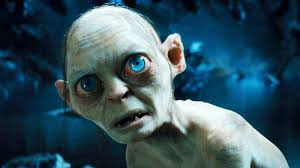
Then there’s motion capture, the (relatively) new kid on the block, which is an interesting kind of marriage between puppeteering and animation. In mo-cap, a performer’s motions and mannerisms are captured by computer and used as the model for the animated character. The performer may or may not also provide the character’s voice. The most legendary example of this is Andy Serkis, who performed Gollum in the Lord of the Rings films, and is often cited as the most egregious oversight in the trilogy’s many, many acting snubs. Serkis was both the on-set performance actor and the voice actor for Gollum, and in my category would share the award with digital “puppeteers” Jason Schleifer and Bay Raitt, who used Serkis’s performance to create the animated character. It would be similar for a character like Rocket Raccoon from the Guardians of the Galaxy movies, where the award would be shared between the digital creators (I wasn’t able to find the names of the individuals, but the effects company who worked on him in the first film was called Framestore), voice actor Bradley Cooper, and motion capture performer Sean Gunn.
The worst Oscar snub since — no, really, I mean it this time.
Amusingly, my own rules don’t specify that the performer be human, which would make a character like Krypto from Superman and this summer’s Supergirl also eligible. The puppeteering team would have to share the award with James Gunn’s dog Ozu, who was the model for Krypto. I mention this mainly because I find the idea of Gunn walking onto the Academy Award stage carrying his little hyperactive dog to be absolutely adorable.
Is the creation of this new award likely? To be honest, probably not. But it’s not impossible, either. After all, the Academy announced last year that it will introduce a new competitive category, “Achievement in Stunt Design,” beginning with the 2028 awards ceremony. That’s right! Stuntwork, one of the most fundamental elements of filmmaking since its inception, will begin getting recognized at the 100th Academy Awards! And if it took a mere century for stuntwork to get the recognition it deserves, how far behind could my little idea possibly be?
I don’t really expect the Academy to make these changes, of course. And I don’t really hold out a lot of hope for Ortiz to get the nomination he deserves. But there’s always a chance, right? I suppose I agree with Ron Swanson: “I still think awards are stupid, but they’d be less stupid if they went to the right people.”
Blake M. Petit is a writer, teacher, and dad from Ama, Louisiana. His most recent writing project is the superhero adventure series Other People’s Heroes: Little Stars, volume one of which is now available on Amazon. He’s also started putting his LitReel videos on TikTok. The fact that Carroll Spinney went recognized for his tearjerker performance in the 1985 masterpiece Sesame Street Presents: Follow That Bird will never cease to pain him.
Recently, on the advice of – and this is a rough estimate so please forgive me if I leave somebody off this list – everybody, I picked up Matt Dinniman’s LitRPG novel Dungeon Crawler Carl. I’ve never read a LitRPG before, but a lot of people whose options I highly value told me over and over again what a great book this was and that I needed to check it out or watch my Geek Cred stats rapidly plummet. And I must concede, that first book really grabbed me.
My friends just know how wild I go over “crawling” fiction.
From what I can tell, LitRPG is a subgenre of sci-fi and fantasy in which the story emulates traits of a typical roleplaying game, including having the characters’ stats and levels prominently featured and even included in the plot. In the case of Dungeon Crawler Carl, these stats and levels come as Carl and his ex-girlfriend’s cat, Princess Donut, are forced to risk their lives over and over again in a massive global dungeon with the entirety of the human race – at least those who are still alive – hanging in the balance. If that doesn’t sound like a riot, I should remind you all that Douglas Adams chose to begin his Hitchhiker’s Guide to the Galaxy series by blowing up Earth, so an apocalyptic comedy is by no means unexplored territory. And Dinniman handles it extremely well. I admit, when I started reading the book I expected the conclusion of the Dungeon Crawler story to come by the end of the first volume, and I wondered what the follow-up would be that would extend the series to seven installments (so far, at least – the latest word is that the series will wrap up in volume ten). I was quite surprised, then, as I progressed through the novel and realized, at the pace we were going, there was no way in hell the story would be finished in one book, and Carl’s singular quest through the dungeons would, so it appears, be the entire series.
After reading some massive doorstoppers early this year, I was pleasantly surprised not only by how entertaining the adventures of Carl and Donut turned out to be, but also by just how quickly I whipped through the first novel. After spending the better part of a month on Stephen King’s It, I finished the first Carl book in less than a week. I informed some of my friends who recommended it to me in a group chat the day after I finished reading book one, and one of them told me that book eight is scheduled for release next month, May.
“I doubt I’ll make it through seven books by May,” I said.
“Yeah, you will,” he replied.
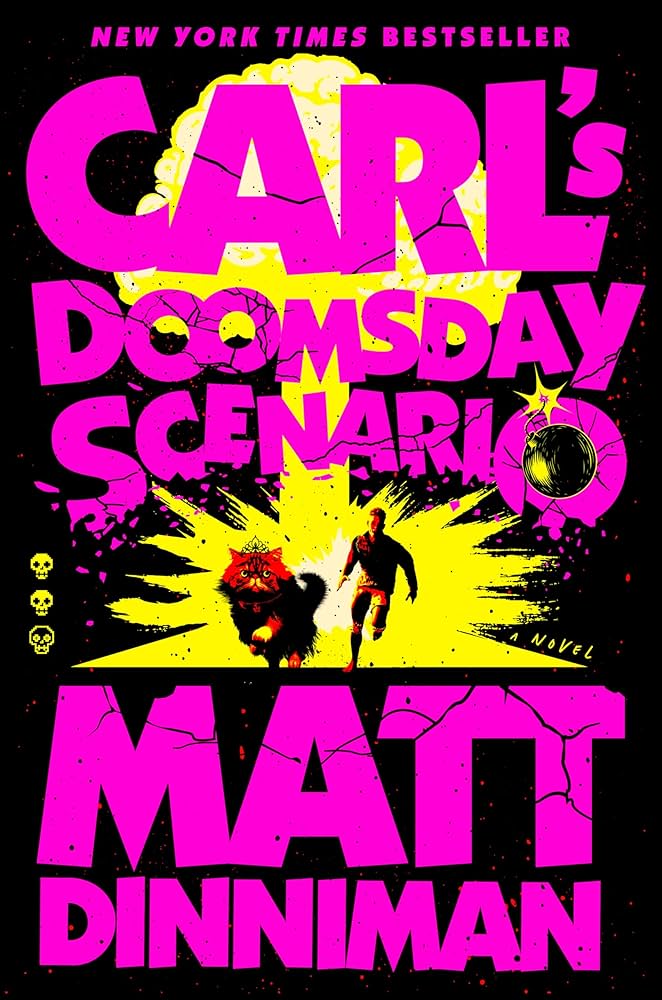
And damned if it’s not possible. When I picked up the second volume this week, I got through roughly a quarter of it in the first day, an almost unheard of chunk of novel in a modern era in which my valuable reading time is often stolen by such frivolous things as going to work, driving a car, and parenting. But I quickly noticed something unusual about the second book, Carl’s Doomsday Scenario. Most of the time, when you get to the second installment of a series, there’s a bit of an effort to restack the world for the audience – reminding them of things that happened in part one, re-explaining the rules of the world, and otherwise attempting to bring them up to speed in case there’s anybody just joining in for the first time. This is pretty common in fiction of all types. TV shows with serialized storylines will frequently begin with a “Previously on…” segment. Movie sequels will usually have some brief lip service where the characters recap the events of the first film, even if doing so makes little sense in context. Comic books make frequent use of flashbacks.
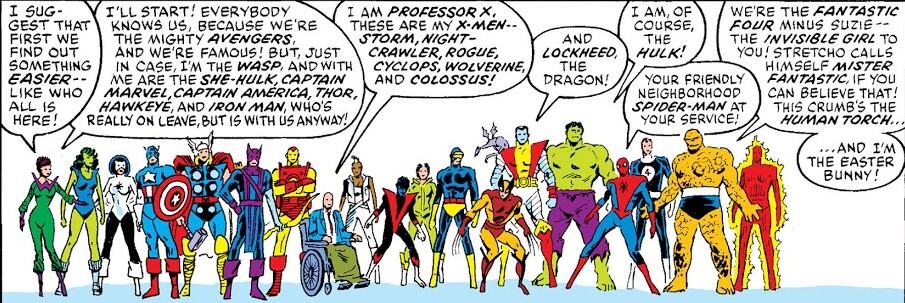
The idea here is that there’s always the chance that there’s someone joining the audience NOW – somebody who has not seen the earlier episodes or read the earlier books, and therefore needs a little help so they don’t get lost. There was a point in the 80s when Jim Shooter, then Editor-In-Chief of Marvel Comics, issued a company-wide rule that every character be referred to by name when they first appeared in each issue, just to make sure a theoretical new reader could tell who’s who. The spirit of the policy made sense, but in terms of writing, this would often result in clunky panels with inorganic dialogue. This was never demonstrated better than the infamous “Mouseketeer Roll Call” Shooter himself wrote in the pages of Marvel’s first major crossover event, Secret Wars, when dozens of heroes and villains who had just been kidnapped and brought to the other end of the universe by a cosmic deity stopped the action, stood in a line, and identified themselves.
The Wasp and the Thing are at opposite ends, both of the panel, and in terms of the spectrum of humility.
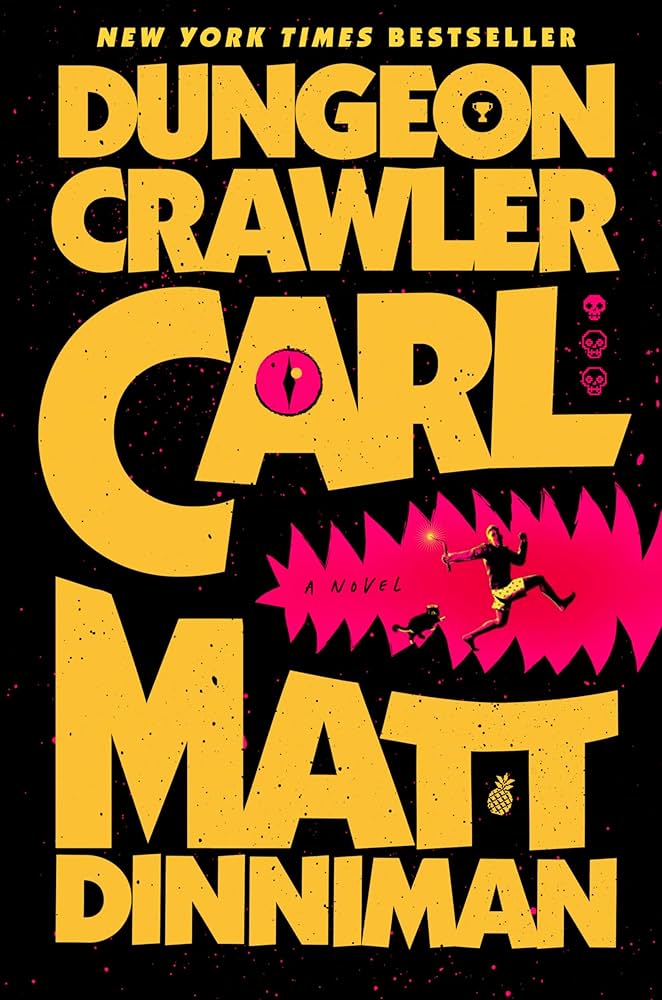
Dinniman, however, makes absolutely zero attempt to recap the story for new readers. Although Carl’s Doomsday Scenario begins with a new Chapter One, it may as well have just continued the numbering from the previous book, because it picks up just seconds later and makes every presumption that the reader is up-to-date. It doesn’t recap part one, doesn’t explain the logic of this universe, and pretty much just goes on as if Dinniman is quite confident that anybody who is reading Doomsday Scenario will also have read Dungeon Crawler Carl, so why bother? It was temporarily jarring even for me, somebody who had just finished book one a week earlier, when Carl started getting messages from somebody named “Brandon” that had not been mentioned before in this book and I had to go back and remind myself who he was.
I defy anybody to find evidence in this image that this book is a sequel. You can’t, can you? Because you’re too busy looking at the cat in the tiara, that’s why.
The style of storytelling in which a recap is expected…in some ways, it’s kind of a relic of a bygone era. It made a lot of sense in the days when a TV series aired one episode a week and if you missed it, you just missed it and hoped you could catch a rerun over the summer. In these days of binge-watching, when you can start a series from episode one no matter how many episodes have been made, and when the streaming service will roll right into the next episode after you finish it, it’s not nearly as important as it used to be. It’s still a little more necessary in other forms of storytelling, but not always. In movies like those in the Marvel Cinematic Universe – particularly the upcoming Avengers: Doomsday – we should expect a certain amount of recap because it’s unreasonable to presume every audience member will be intimately familiar with the details of the past three decades of Marvel movies and television, especially since the former Fox X-Men universe is being folded into the multiverse of the MCU. But James Gunn’s Superman launched a whole universe in the middle of a story and figured – correctly – that there was no need to go over Superman’s origin yet again because everybody should be familiar with it at this point. A few title cards at the very beginning told us everything we could possibly need to know.
But what about episodic storytelling like comic books? Shooter’s rule – even when it was executed poorly – made a lot of sense in an era where it was presumed that every issue was potentially somebody’s FIRST issue. Comic books aren’t really written that way anymore. Most series – even so-called “ongoing” series – are given a certain number of issues to tell a story (although this exact number is often undisclosed to the reader it is typically low – maybe five or six issues at a time). If the series sells well enough, it will be renewed for another number of issues, then another, until either it becomes unprofitable or the creative team finishes all of the stories they had planned. With this structure, even as comic book sales are on the rise, it’s reasonable to assume that the number of people jumping into a series on issue #8 is relatively slim. But we WANT new readers, so there has to be a way to make it accessible without alienating the existing audience.
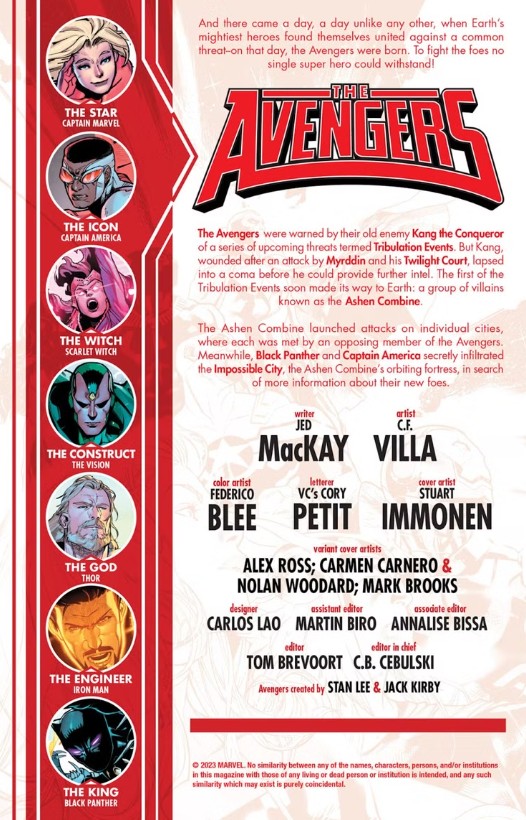
And there is, and it’s a simple way. Marvel Comics have long had a policy of including a “previously” page at the beginning of each issue, recapping the story to date and showing headshots of the major characters. It serves the same purpose as Shooter’s old rule, but it’s not intrusive into the story itself. Somebody who hasn’t been reading along can use the page to get into the saddle, but faithful readers can easily skip it if they wish. It’s a sensible policy, and other publishers (DC included) have slowly gotten into the habit of incorporating similar pages in their own comic books, although I wish it would become more standard.
I mean, without this page how would you ever know the Scarlet Witch is a witch?
With prose books, we’ve got an interesting sort of mix of possible readers. On the one hand, if somebody is an ebook reader, it would make little sense to begin in the middle of a series. If you’re browsing the Kindle store and a book sounds interesting, it’s usually labelled as something like “Book 2 in the Dungeon Crawler Carl series,” with a handy link to look at all the books in the series at once so you can get them all and start from the beginning. But for a print reader who gets these books browsing a brick-and-mortar store, it’s not always as clear. Not every series is clearly labeled as such on the cover, and even if it is, there can’t always be a 100 percent guarantee that the store will have the earlier volumes in stock on the day you pick up volume three while you’re casually browsing.
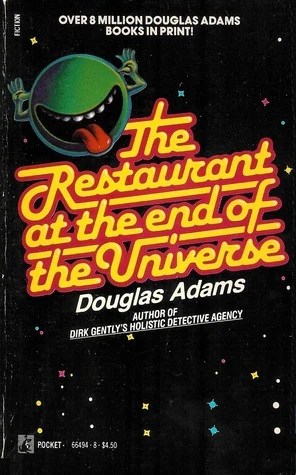
Many of us have fallen victim to this at some point or another. Back in middle school I was poking through the shelves at our Scholastic Book Fair (if you’re someone that just got a little thrill of excitement at those words, you are my kinda people) when I saw a book with the fascinating title The Restaurant at the End of the Universe. I picked it up and I read the back cover, and it sounded interesting. So I bought the book, brought it home, devoured it, loved it…and THEN I discovered that it was actually the sequel to a novel called Hitchhiker’s Guide to the Galaxy. Had I noticed that parts of it were a little confusing the first time I read it? Sure. But my seventh-grade self already was aware that there were jokes and references I didn’t quite understand (I did not have an encyclopedic knowledge of British politics and popular culture circa 1980, believe it or not), so when there seemed to be something missing I assumed that gaps in my knowledge could be attributed to that, rather than the fact that I’d skipped an entire book.
And even if I DID notice, based on this cover, I would have thought the book I missed was Dirk Gently’s Holistic Detective Agency.
In Dinniman’s case, the lack of recap makes more sense when you learn that the series originated on the online platform Royal Road, which allows writers to serialize their fiction. The Carl series was not originally written in book form, but in this more episodic format, and when the decision was made to publish it as a book series Dinniman basically chose where to end each volume based on a point where a logical pause happened rather than necessarily having it planned out as a ten-volume series. That kind of planning seems to have crept in later, as the book went from a popular online fic to a publishing juggernaut, but it wasn’t baked in from the beginning, and the book version reflects this.
(Personal side-note: I’d never heard of Royal Road before I began digging into the backstory of Dungeon Crawler Carl and I feel the need to look deeper into this system. I’ve been thinking about looking for a new way to serialize my own work ever since the demise of Kindle Vella, and this seems like a far more stable outlet.)
The recap thing is a trope in storytelling, and although I can understand why it may be frustrating for people who are devoted followers of a particular series, I don’t think it’s a bad thing. It serves a purpose, and if it allows a story to be opened up to a larger potential audience, that’s a net positive. It just needs to be done in an unobtrusive way. “Previously” pages in comics or even in novels are a good way to do it, and although lacking one doesn’t hurt anyone’s enjoyment of the series at all, I’m surprised that Dinniman didn’t include one in Doomsday Scenario.
At the very least, publishers, make it damn clear on the cover or spine of a book if it’s part of a series. Numbers are your friends.
Blake M. Petit is a writer, teacher, and dad from Ama, Louisiana. His most recent writing project is the superhero adventure series Other People’s Heroes: Little Stars, volume one of which is now available on Amazon. He’s also started putting his LitReel videos on TikTok. Seriously, go read the first part of Little Stars, because he’s working on polishing part two. He needs people to stare at him and ask him when it will be finished.
Admittedly, I’m a few weeks late on this. In my defense, I needed to wait for a day when my son was in school but my wife and I both had off, a convergence of scheduling that happens with approximately the same frequency as the appearance of the 17-year cicada. But yesterday, while Eddie was at school, Erin and I took in Project Hail Mary, and it’s exactly the story we all need right this very minute.
That’s right. Extreme sports.
In “This is How We Do It,” I break down a piece of storytelling that I find to be exemplary with the intent of describing what it does so well and, more importantly, HOW it does it that well. As such, it’s almost impossible to do so without spoilers. So if you haven’t seen the movie Project Hail Mary or read the novel by Andy Weir and you want to remain spoiler-free, you should probably skip over this column. If you’re up to date, great. Let’s talk about just what makes this movie in particular exactly the sort of storytelling we need right now, and why the timing couldn’t have been more perfect.
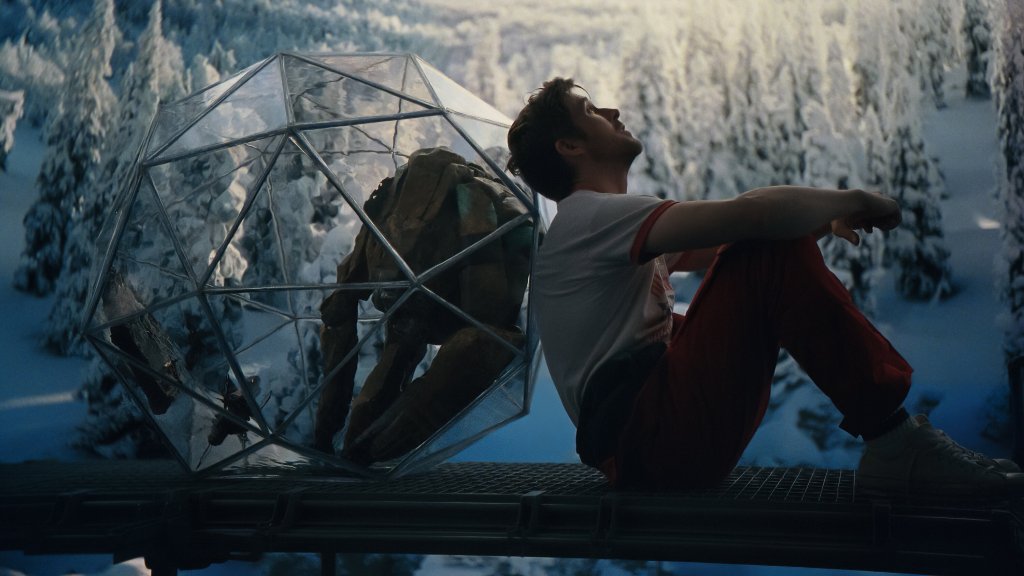
Project Hail Mary – both the novel and the movie adaptation starring Ryan Gosling – tells the story of a desperate mission to save Earth’s sun from a microorganism called Astrophage that is causing it to dim. Gosling’s character, Ryland Grace, is the only member of the mission to survive the trip to a neighboring star that seems resistant to the Astrophage. Once he arrives, he encounters an alien whose own world is also being impacted by the menace, and together with the alien he dubs “Rocky,” Grace begins the search for something that can save both planets.
To begin with, the film (with a screenplay by Drew Goddard and directed by Phil Lord and Christopher Miller) follows the novel very closely. Both the book and film utilize a dual timeline, with Grace and Rocky’s mission intercut with flashbacks to the events on Earth that led up to the mission. The in-story excuse for this is that the hibernation has diluted Grace’s memories and they’re slowly coming back to him. Functionally, however, this is a good excuse to avoid telling the story in strict chronological order, which would have the audience going through about a third of the book or movie on Earth TALKING about the mission before it actually begins. While the backstory is necessary and compelling, it wouldn’t really be the most exciting way to get the movie started, and ricocheting between the past and present is an excellent way to tell the audience what they need to know while still getting to the most exciting stuff right up front.
This, for instance, would not have been the best place to start.
The changes to the story are minimal, and most of them are done to soften Sandra Hüller’s character Eva Stratt, who is in charge of the project and in the novel comes across as slightly more willing to do underhanded stuff in pursuit of the survival of the human species. Most of those edges are sanded off for the movie, with one major exception that I’ll get to later. A few other sequences are left out, but nothing that damages the story. The other big change is a scene that’s added towards the end that returns to Earth to show the mission is successful – success that is more implied in the novel rather than shown outright.
Structure explains how the story is well-told, of course, but that doesn’t explain what makes the story itself good. The movie shares a lot of DNA with Andy Weir’s previous novel-to-film adaptation, The Martian, which is another favorite of mine. Both of these are outer space dramas with a healthy dose of comedy about a single human astronaut trying to survive in unprecedented conditions. Neither of the stories have what one would consider to be a traditional antagonist – there is no “bad guy” in either. Both of them presume a world in which a spirit of cooperation spreads amongst the human race in defiance of a problem caused by nature. The thing that differentiates the two stories most is the sheer SCALE of it all. The Martian is the survival story of a man who is accidentally left behind on the planet Mars when his space mission is forced to abandon the planet. The only person whose life is in jeopardy is Mark Watney, and the fact that virtually the entire world is willing to come together to get him home is wonderfully inspiring. In Project Hail Mary, though, the stakes are raised dramatically: rather than a single person, all life on TWO planets will be lost if Grace and Rocky can’t find the solution to the Astrophage catastrophe.
Elmo may hate this guy, but you’ll love him.
Speaking of the solution, that’s another thing that Weir is exceptionally good at: he talks about several high concepts – both real science and science fiction – in a way that is accessible and understandable even to a bozo like me who still stares at the refrigerator wondering how it knows to turn the light off when I close the door. Sure, the movie doesn’t make me feel like a scientician, but it tells me what I need to know in a way that is mostly comprehensible. Some of the math, I admit, goes a little over my head, but in those cases I’m willing to just nod and accept that Weir’s calculator is accurate and whatever he says those numbers mean is, in fact, what those numbers mean. The point is, these are stories where the science is not an obstacle, and in a world where it seems like people want to abandon these kinds of concepts, that’s more important than ever.
I mentioned before how great the timing of the movie turned out to be. By that I’m referring to the fact that it was released just days before the Artemis II rocket was launched, sending human astronauts back to the moon for the first time in over 50 years. This is – I’m going to underplay it a little here – a big whoop. The fact that we’re finally going back to the moon, with plans to actually begin building a base there in less than three years – is magical. For folks my age (I identify as a Xennial, if you insist on putting a label on it), it’s as though at least ONE of the futures that we were promised during our youth is FINALLY starting to make a little bit of headway. But I’ve been completely dumbfounded by the sheer number of people coming out of the woodwork on social media decrying it as fake.
“It’s all AI!” –That guy you went to high school with who breaks into abandoned houses to steal the copper wiring.
I pride myself on being accepting of different ideas, and I do my best to respect other people’s points of view and differences of opinion. I like to think I’m mature enough to understand that the fact that someone can interpret the world and arrive at a different conclusion about certain things than me, and that does not make them stupid or brainwashed or a bad person. But this is one situation in which I simply…can’t. I cannot fathom how anybody can sincerely believe this kind of flat-Earth, moon-landing-denying nonsense. (I know it’s not all sincere – there are plenty of trolls out there – but there are ENOUGH people who really believe it to make my eyes burn.) I feel like so many of these people carry around a highly undeserved sense of superiority, as though their beliefs somehow make them better than other people. And y’know what – even if they WERE right about the moon, thinking that this is a sign of some sort of higher evolution on their part goes against everything that a real quest for knowledge is about. It shouldn’t be about division, but about finding that universal truth.
That’s one of the other truly magical things about Project Hail Mary. The core of the movie is the friendship between Grace and Rocky, each the only survivor of their respective missions, who come together for a common goal. And when you unravel the threads of the story and look at how it’s all woven together, it should be abundantly clear that neither of them would have had a chance at success without the other. It’s Rocky’s technology that allows them to gather and breed the samples of alien bacteria that prove to be the predator of the Astrophage, but it’s Grace who discovers that’s what they are and breeds them in such a way that they can be useful – and that’s just ONE example of their cooperation. Throughout the movie, from the first moment that Rocky attempts to communicate by literally throwing a message in a bottle across the gulf of space to Grace’s ship, the story becomes a celebration of the wonder of discovery and cooperation. It grows from there, first with the two explorers coming into contact with one another, then learning how to communicate, then actually getting down to the mission. The story is a sequence of small victories, each one something to be joyful about, that eventually lead to the final triumph that we’ve all been waiting for.
Top three on-screen bromances: Bert and Ernie, Norm and Cliff, and now Grace and Rocky.
It is a testament to the joy of knowledge and the embrace of collaboration, even on a personal level. The one truly underhanded deed of Eva’s that remains in the movie is when she forces Grace, against his will, to join the space mission after an accident takes the lives of the original science team. It’s a bit worse in the novel, where it is revealed that Eva also deliberately causes his temporary amnesia, worried that if he has all his memories upon waking he may refuse to complete the mission. It should be stressed, by the way, that this is NOT done in such a way as to paint Eva as a villain – she clearly regrets the necessity of her actions, but truly believes that sending him on that ship is the only possible hope for the survival of the entire human race.
The only reason she has to force him, though, is that when he is asked to do it willingly he is too consumed with self-doubt to accept the task. He sees himself as a coward. But the last thing he hears before being forced into his induced coma is Carl – an agent on the project that he has come to regard as a friend – telling him, “You know who you are.” It’s in space, in orbit around a distant planet, that Ryland Grace truly discovers who he is, and the depths of the courage he is capable of.
That doesn’t happen for him on Earth. It doesn’t happen – sadly – if the other human astronauts had survived the journey. And it certainly doesn’t happen if there was no Rocky there for him to learn from. The film’s true climax comes after the solution to the Astrophage has been found, when Rocky and Grace have gone their separate ways, but Grace discovers that the bacteria they’ve found will destroy Rocky’s ship if he isn’t warned. The conclusion of his character arc comes when he decides to send his findings ahead to Earth, then gives up his only chance at going home in order to go back and save the alien. Grace proves, in the end, who he is, and we’re all the better for it.
Project Hail Mary is a beautiful, uplifting, inspiring anthem to human courage and curiosity. It’s a story that puts the best of us on display, not by showing a clean-cut paragon who never makes a mistake, but by showing a relatable and flawed character overcoming those flaws for the greater good, for the sake of his planet, for the sake of an entire planet of other sentient aliens that he’s never even met…but most of all, for the sake of his friend.
It’s beautiful. It’s art. It’s the kind of story we need so badly.
So when you’re looking for a movie that makes you feel that there is good in this world, Project Hail Mary is where you should look. Because this is how you do it.
Blake M. Petit is a writer, teacher, and dad from Ama, Louisiana. His most recent writing project is the superhero adventure series Other People’s Heroes: Little Stars, volume one of which is now available on Amazon. He’s also started putting his LitReel videos on TikTok. He wants a life-size Rocky to sit in his classroom. Somebody make that happen.
“Hey,” one of my students whispers to the kid sitting next to him. “He’s reading It.”
And I smile.
On the wall in my classroom is a small whiteboard. At the top of the board is written “What is Mr. Petit reading?” Underneath, I regularly update the board with the title and author of whatever book has most recently been removed from my To-Be-Read pile and is actually in the process of being read. Currently, that book is Stephen King’s It. I’ve had that board up for a few years now, and I update it whenever I begin a new book, and having it visible has led to lots of really great questions such as “Are you still reading that one?” and “How many books do you read, anyway?”
“Not to put too fine a point on it, but I read more books yesterday than some people in here will read in their entire lives. Please don’t take that as a challenge.”
Occasionally, though, the board can lead to an actual conversation if a student happens to have read the book, is curious about it, or didn’t know that a book even existed (for properties they’re only familiar with as movies, such as Ready Player One). It is the book currently on the board, and it’ll probably stay there for a little while, because even for Stephen King, it’s kinda long. Some students are horrified when I tell them that I’m reading a book that’s in the ballpark of 1100 pages. They are even more baffled when I tell them that this is not the first time I’ve read it. I don’t recall, honestly, if this is the third or fourth time I’ve taken this particular trip to Derry, Maine, but I know exactly when the LAST time I read it was – it was late August and early September of 2017, and I remember it because it happened to be the book I was reading the week my son was born. I recall sitting there, scrolling through the pages on my tablet as Erin and Eddie slept, each of them rather exhausted after recently undergoing the most dramatic moving day in the history of a human being.
Don’t worry, I didn’t whip out my book and start reading as soon as the kid popped out – this was some time later, as we had to stay in the hospital a little while as they treated him for some blessedly minor things that prevented us from going home for about five days. If you’ve ever spent time in the hospital, no matter how serious the condition may be, you’ll know that after a few days you start crawling up the walls if you don’t have something to do. My something was to visit with my friends in the Losers Club.
In retrospect, this may not have been the best choice for a new father’s reading material.
The specific reason I started reading It again this week, though, is because I finished the first season of HBO’s TV series Welcome to Derry, a prequel to the film adaptations of the novel from 2017 and 2019. The series is produced by Andy Muschietti, who directed the films and half the episodes of the show as well. I thoroughly enjoyed the series, and it made me thirst to go back and revisit the source material again. As I’m reading it, I’m noticing the little bits and pieces, the tidbits the writers and showrunners planted in the show that help build out the world with water from the original font.
To be clear, this TV series is a prequel to the MOVIES, not the book. There are some important differences that prevent it from working as an adaptation of the novel, chiefly the time period. The original novel is set in two eras: 1958 (when the protagonists are children) and 1985 (when they return to Derry as adults to finish what they started). The creature they do battle with has a cycle of about 27 years in hibernation, after which it returns to wreak havoc on Derry once again. 1985 was contemporary when the book was written, but Muschietti decided to keep the story set in the “present” when the films were released, meaning the events were shifted to 1989 (for the kid portions) and 2016 (for the adult portions). Welcome to Derry details the previous cycle of It in 1962. The point is that the movie universe cannot fit the timeline of the book universe, and that’s honestly not a bad thing.
People who saw the show know just what a dirty trick this poster is.
Since the show, from the outset, cannot be a direct prequel to the novel, Muschietti and the writers are playing a little more fast and loose with the story, while still paying respect to it. For example, in the original novel Veronica Grogan is the name of one of the countless victims of Pennywise during the monster’s 1958 cycle. The TV show elevates her to one of the main characters fighting against the clown in the generation BEFORE the Losers’ first encounter with the monster. The names of many other characters from the book are peppered throughout the show, some of them characters mentioned in the novel, others with names that imply (and in a few cases, make abundantly clear) that they are relatives or ancestors of characters from the original in this version of the story.
But the connections to the works of Stephen King don’t end with elements strictly from It. At one point, a character is sent to Shawshank Prison, the setting of King’s classic novella (and its classic movie adaptation) The Shawshank Redemption. Shawshank is frequently referenced in King’s Maine-centric stories, which is to say a little more than half of them, so it’s not a surprise when it turns up here. An even bigger link, though, is the character Dick Halloran. Halloran is one of the principal characters in his novel The Shining, which was written before It, and the original novel reveals that he was somehow involved in the tragically violent events that concluded a previous cycle of It. Welcome to Derry expands upon that, showing those events in full and giving Halloran a much more significant role. What’s more, they don’t even stop there, referencing elements of Halloran’s character that come neither from It OR The Shining, but rather from the latter’s sequel, Doctor Sleep.
“Honestly, we’re just glad somebody remembered we were here.”
What I’m getting at here is that Welcome to Derry feels like it’s inching closer and closer to something that Stephen King fans have wanted to see for a very long time: a true cinematic universe.
Yeah, we’re going to that well again. Marvel has its cinematic universe. DC is on take two. We’ve got one for Star Wars and John Wick and even horror franchises like The Conjuring. But the thing you need to remember is that none of these franchises INVENTED the idea of a shared universe. It’s been around for a very long time. William Faulkner linked several of his novels and short stories together via the inhabitants of the fictional Yoknapatawpha County, Mississippi. James Joyce’s Dublin serves as the backdrop for several of his stories and, inasmuch as it’s possible to understand anything Joyce wrote, several of them link together. And King, much like many other contemporary writers, delights in dropping in Easter Eggs, hints, clues, and references that tie his various stories to one another.
Now not ALL of his stories can be said to definitively take place in the same universe. The Stand, for example, is a novel about a virus that kills most of the population of the world, which clearly precludes most of his later works from being set in the same universe. Cell isn’t exactly a zombie story, but it’s close enough that this world is incompatible with most of King’s other work. And it’s hard to reconcile the bleak, horrific vision of the afterlife from Revival with several of his other stories which feature good, even friendly ghosts on occasion, such as Bag of Bones. Then there are the Stephen King books that explicitly reference other King books – or their movie adaptations – as fiction. That’s a bit of a roadblock.
On the other hand, King himself has provided us with a handy device that can explain away any discrepancy via his Dark Tower series: a multiverse. The Tower itself is a sort of central hub around which all reality converges, and that includes many different worlds and dimensions that are similar to, but distinct from, one another. The Dark Tower provides links not only to It and The Stand, but to multiple other books and short stories. And lots of the other stories he’s written drop in casual references that remind us that yes, their universe is one of the countless that are connected to the Tower.
If ever there was a scene that MUST be committed to film, it’s this.
So all that said, why HAVEN’T we gotten a proper Stephen King cinematic universe before? The biggest obstacle, frankly, is licensing. King’s first novel, Carrie, was published in 1974, and he’s been turning out book after book and story after story since then. The most recent count I can find credits him with 67 novels and novellas and over 200 short stories over his 52-year career, and he’s been selling off the rights to them to different players all along. I don’t begrudge the man this – Lord knows I wish I could get that kind of payday – but the result is that the film and television rights to his works are all over the place. Dozens of studios and even individual filmmakers own bits and pieces of him, and getting all of them together to play nice and collaborate seems like a pretty impossible prospect. It’s the same reason that Marvel characters didn’t start meeting each other on screen until Marvel Comics stopped selling the rights to anybody who offered them twelve dollars and half a Fruit Roll-Up and started making the movies themselves.
It’s not like King isn’t still a significant player in the entertainment game. People who don’t follow him may think of his work primarily as the grist for a huge slate of horror movies from the 1980s, but they’ve been coming out regularly since then – and they’re not all horror. 2025 brought us no less than four big-screen adaptations of his work: The Monkey (which turned a straight horror short story into kind of a bizarre black comedy), The Life of Chuck (a beautiful and faithful adaptation of a semi-fantasy by director Mike Flanagan), and two adaptations of books he wrote under his Richard Bachman alias, The Long Walk and The Running Man. These last two are both dystopian science fiction rather than horror, but they’re radically different from one another, despite the fact that they both have the same hook of characters competing in a lethal game in the hopes of a life-changing prize. But while The Long Walk is a dark, nihilistic societal commentary, The Running Man is a slam-bang action film.
There have been attempts in the past to create a sort of King universe. Most notably, in 2018 Hulu produced Castle Rock, a series “inspired” by elements from a great number of King’s various works and set in that OTHER town in Maine that seems like it must be a nightmare to actually live in. The show was okay and it lasted two seasons, but I don’t think it actually gave fans what they wanted: a world in which the stories they love (or at least versions of those stories) could coexist. In Castle Rock, it was more like they took chunks of King’s books – characters, names, places – and pieced them together into something different. That’s a legitimate storytelling technique, of course. Mike Flanagan did it with Edgar Allan Poe for his exquisite miniseries version of Fall of the House of Usher. But it wasn’t quite what we were looking for.
In Welcome to Derry, the events of the two It movies are canonical, and the things we’ve seen so far make it quite easy to link that world with The Shawshank Redemption and the Shining/Doctor Sleep duet – if not exactly the movies we’re familiar with, then at least some version of those events. All of those movies, it should be pointed out, were released by Warner Bros., which is no doubt why they could play with those toys so easily. The show has not officially been renewed for a second season, but it has achieved real critical acclaim (although, typical for a streaming service, we have no idea what its numbers are), and Muschietti has been quite vocal about his plans for the next two seasons of the show. Future seasons would tell stories of two earlier iterations of the It cycle, in 1935 and 1908. This, I think, would be the perfect opportunity to build out the universe and add more parts of the Stephen King world. In fact, I think in some ways it would be almost REQUIRED to do that.
I loved season one of Welcome to Derry. The story was tense and compelling, the performances were great, and even though King wasn’t directly involved, the new characters all felt like the sort of characters that we get attached to in his books – ordinary people who get swept up in something far beyond their comprehension. If there is one legitimate complaint about the show, though, it’s probably that about half of the plot (the half that focuses on the child protagonists rather than the adults) is a bit TOO similar to the original It: a bunch of outcast children band together to stand against the evil of Pennywise the Clown. If we’re going to do another two seasons, they can’t just be two still-earlier stories about kids teaming up and fighting the monster. They need to bring something else to the table.
Andy Muschietti, I think, has proven himself an able enough storyteller that he is no doubt aware of this fact. The way he’s talking, it seems like he already knows what the story will be in 1935 and 1908. What I’m hoping is that he finds ways to tie in to other King stories. Could there potentially be references to John Coffey or the other characters from The Green Mile (set in 1932 in the novel, but it wouldn’t be outlandish of them to drag it forward in the timeline a few years)? Could we see the immortal vampires of ‘Salem’s Lot or the origins of the mysterious government project called “The Shop” from books like Firestarter? All of these, of course, would depend on rights issues in various ways, but I don’t think any of them are impossible either.
Then there’s The Dark Tower itself, the rights to which currently reside with the previously mentioned Mike Flanagan. There was an earlier attempt to put the story of Roland of Gilead to film, a 2017 movie that foolishly tried to condense seven novels (all but one of which fall into doorstopper territory) into a 90-minute feature, and fans were not pleased. Flanagan, who already has several well-received King adaptations under his belt, has expressed the desire to use The Dark Tower for a television series of about five seasons, with a pair of movies to conclude the story. This is a much smarter approach to the material, and Flanagan has proven himself time and again to be someone perfectly suited to bringing Stephen King’s stories to life.
This…was NOT perfectly suited.
The optimal version of this, for me at least, would be for Flanagan’s Dark Tower to share fabric with Muschietti’s series. Characters common to both projects could be played by the same actors, the stories could be woven in concert with one another – separate, but linked. Could it happen? Well, Warner Bros. owns the rights to It and Welcome to Derry, so for this to happen, Flanagan would have to produce his series in cooperation with Warner Bros. It’s not out of the question. His previous development deal with Netflix is over, and his current deal with Amazon does not include The Dark Tower. He could take the story anywhere he wants. And he’s got a relationship with Warner Bros. as well – he directed their adaptation of Doctor Sleep and wrote the upcoming Clayface movie from DC Studios, which coincidentally, is ALSO in the Andy Muschietti business, as he’s been signed to direct their upcoming Batman movie, Brave and the Bold.
I’m not saying that this will happen. I’m not saying that Flanagan and Muschietti and Stephen King and Warner Bros. will join forces and finally begin to create the Kingamatic Universe that Constant Readers have been craving for the better part of five decades.
I’m not saying it’s going to happen.
I’m just saying it would be pretty damn cool.
Blake M. Petit is a writer, teacher, and dad from Ama, Louisiana. His most recent writing project is the superhero adventure series Other People’s Heroes: Little Stars, volume one of which is now available on Amazon. You can subscribe to his newsletter by clicking right here. He’s also started putting his LitReel videos on TikTok. He also hopes that somewhere in there they find a way to tell us what happened to the Girl Who Loved Tom Gordon…specifically, does she still love Tom Gordon, or has she moved on to – say – Shohei Ohtani?