Geek Punditry #172: Creating a Character

April is a little early to start talking about next year’s Oscar race, especially for somebody like me who – famously – does not care about the Oscar race. However, something interesting cropped up in the news cycle over the last few days that may potentially get me interested in the winner of a specific category for the first time in quite a while. This fella here is James Ortiz.
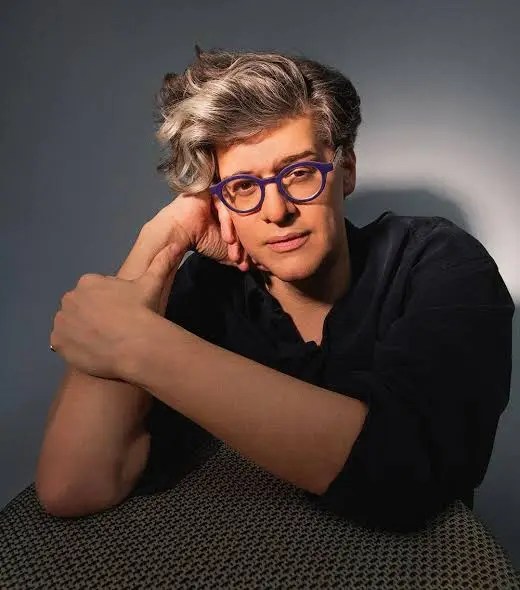
Some Jameses go by “Jimbo.” I just get the feeling he’s not one of them.

You probably don’t recognize his face, but he’s in one of this year’s biggest hits, Project Hail Mary. Ortiz is the puppeteer behind Ryan Gosling’s co-star, Rocky.
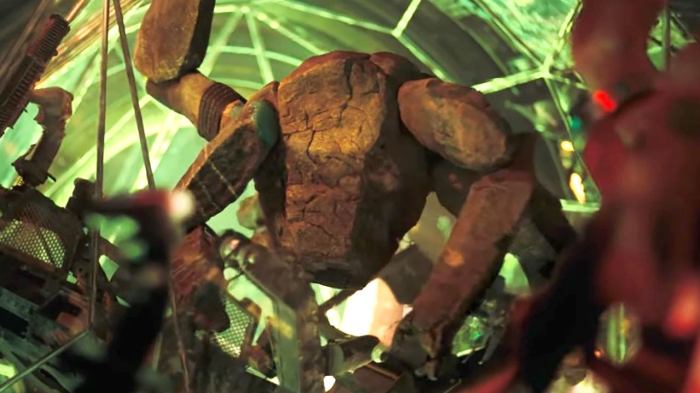
Rocky might, though.

Yeah, puppeteer. That little dude wasn’t CGI. It was an actual, physical puppet on-set, albeit with a few computer “enhancements.” But it was really there, interacting with Gosling, and crawling into the movie theater to reach into your chest and steal your still-beating heart.

Evidently, according to Oscar rules, Ortiz’s work is eligible for a nomination in the best supporting actor category in next year’s Academy Awards, and Amazon-MGM has made it clear that they intend to submit him for consideration. Finally, something about these awards is interesting again. You see, one of the (many) reasons I stopped caring about the Oscars is this feeling that they ignore large swaths of movies that don’t fit into their hoity-toity aesthetic, in particular deserving genre films. No puppet character – or any voice performance, for that matter – has ever been nominated for an acting award in the history of the Academy, despite several performances that have been sincerely deserving.

I’m not saying this to denigrate anybody who HAS been nominated. I’m not pointing to anybody specifically and saying “this person didn’t deserve the nomination, it should have been that voice actor instead.” I’m saying that in the 98 year history of the Academy of Motion Picture Arts and Sciences, you CANNOT convince me that there has NEVER been a voice acting performance that is worthy of at least a NOMINATION. 
A worse snub than Dicaprio in The Aviator.

If Ortiz gets the nod, that would be seismic. It would be the kind of thing that gets people’s attention, and the Academy wants that. But the thing is, he shouldn’t get a nomination just because the Academy is trying to get viewers, he should get it because he completely deserves it. Ortiz was the on-set puppeteer for Rocky and did the performance with the expectation that his voice would later be dubbed over by a big-name actor who hadn’t been cast yet. His on-set performance was so perfect, however, the directors decided to keep him for the vocal performance as well. And if you’ve seen Project Hail Mary, you know that the movie just flat-out would not work if the audience didn’t believe in and fall in love with little Rocky. It wasn’t just the vocals, but the motions, the mannerisms of the character. Ortiz created an entire living, sentient being that held his own with one of the movie industry’s top talents and the two of them made each other better. That’s what acting IS, whether you’re doing it with your own body or with a body made of rods and felt. 

It’s going to be an uphill battle, of course, because as I said, the Academy has traditionally shunned movies like this in all but the technical categories (things like special effects, makeup, costume design, etc.) There have, of course, been some few instances of genre films getting mainstream recognition. Sinners – a vampire movie – racked up a lot of nominations last year, including Best Picture, and it took home the awards for Best Actor, Original Screenplay, Cinematography, and Original Score. But the acting award for a vampire movie still went to Michael B. Jordan for his (admittedly, deserving) performance of a pair of human twins. In 2017 The Shape of Water took home Best Picture, as did Lord of the Rings: The Return of the King back in 2003, although both of those were shut out of the acting categories. 

It’s that last part that bristles. Sure, these movies did well, but even though Return of the King took home awards for best picture, director, screenplay, and several others, not a single acting performance was even nominated. That’s absolutely absurd. 

The other thing that’s going to hurt Ortiz’s chance, besides the general Academy Attitude (Acadetude?) towards genre films, is the fact that Project Hail Mary came out very early in the year. By the time awards nominations are getting seriously discussed nine or ten months from now, dozens of other movies will have been released and have heavy Oscar pushes behind them, and it will be much easier for the Academy to ignore a film that doesn’t have that kind of recency bias. So as magnificent as it would be to see Ortiz get the nomination, I am not holding my breath.

Others have suggested that if he doesn’t get a competitive Oscar, the film could receive a “Special Achievement Award,” which is a rarely-given trophy the Academy hands out for groundbreaking work that doesn’t necessarily fit into any other category. It was first handed out in 1972, in an era where modern sound and visual effects were in their infancy and new innovations and technologies were beginning to be developed at a rapid pace. However, the last time a Special Achievement Award was given was back in 1995, for the first Toy Story film, ushering in the era of computer animation. That also feels unlikely. Besides, Ortiz’s performance isn’t a technical game-changer – puppeteering is an ancient art. He was just REALLY FREAKING GOOD AT IT.

This brings me to my larger point – there is a whole section of acting that the Academy has ignored for its entire existence, and it’s time to change that. After all this time, there needs to be a category for – and this is the best term I can come up with for it right now – Best “Created Character.” Vocal performances. Motion capture. Puppeteering. Instances in which a character is crafted in a non-traditional acting performance. These aren’t new concepts – even motion capture has been around for decades at this point – so why aren’t they recognized?

In the alternate universe in which I am in charge of the Academy, instituting this award will be the second thing I do, after installing a trap door under the microphone for anyone who starts yammering about politics in their acceptance speech. This award would be given to an individual or to a group of people who contribute to the creation of said character, with the exact names included decided at the discretion of the film’s producers when submitting for the award. In general, though, this would be used to recognize the vocal performer, on-camera performer, and technical creators of the character, whether that’s one person or an entire team. (It will pointedly NOT be given out for any AI “creations,” as all of the disciplines I mentioned consist of actual human skill and talent, whereas an AI character would require typing in prompts until the computer remembers how many fingers a human being is supposed to have.)

Let me explain. Had this award existed in 1979, when The Muppet Movie came out, Jim Henson could have been nominated for Kermit the Frog. He likely would have been the only person named in the nomination, as he was Kermit’s vocal performer, puppeteer, and designer. For the 1986 version of Little Shop of Horrors, on the other hand, the nomination for Audrey II would have gone to Levi Stubbs, who voiced the plant, and be shared with the principal puppeteers for her. (Wikipedia lists 21 separate individuals as being “principal puppeteers” in this case. That’s a little extreme, but the point is valid.) The nomination would also have been shared with Lyle Conway, who designed the puppet, and the fabrication team who actually built it. 
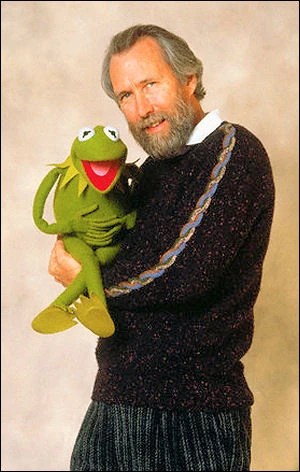
Of course, if there’s only one trophy, they would have to work out some sort of custody arrangement.

In traditional animation it’s a little simpler. Let’s use 1991’s Beauty and the Beast – the first animated movie ever to get an Academy Award nomination for Best Picture. In most major animated films, each main character has a lead animator or animation team assigned to them, so that person or people would share the nomination with the character’s voice actor. The nomination for the Beast would have gone to voice actor Robbie Benson and lead animator Glen Keane, whereas Belle would have been shared between voice actor Paige O’Hara and animators James Baxter and Mark Henn. 

Then there’s motion capture, the (relatively) new kid on the block, which is an interesting kind of marriage between puppeteering and animation. In mo-cap, a performer’s motions and mannerisms are captured by computer and used as the model for the animated character. The performer may or may not also provide the character’s voice. The most legendary example of this is Andy Serkis, who performed Gollum in the Lord of the Rings films, and is often cited as the most egregious oversight in the trilogy’s many, many acting snubs. Serkis was both the on-set performance actor and the voice actor for Gollum, and in my category would share the award with digital “puppeteers” Jason Schleifer and Bay Raitt, who used Serkis’s performance to create the animated character. It would be similar for a character like Rocket Raccoon from the Guardians of the Galaxy movies, where the award would be shared between the digital creators (I wasn’t able to find the names of the individuals, but the effects company who worked on him in the first film was called Framestore), voice actor Bradley Cooper, and motion capture performer Sean Gunn. 
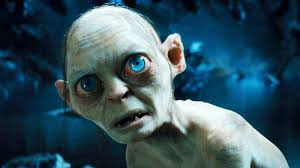
The worst Oscar snub since — no, really, I mean it this time.

Amusingly, my own rules don’t specify that the performer be human, which would make a character like Krypto from Superman and this summer’s Supergirl also eligible. The puppeteering team would have to share the award with James Gunn’s dog Ozu, who was the model for Krypto. I mention this mainly because I find the idea of Gunn walking onto the Academy Award stage carrying his little hyperactive dog to be absolutely adorable.

Is the creation of this new award likely? To be honest, probably not. But it’s not impossible, either. After all, the Academy announced last year that it will introduce a new competitive category, “Achievement in Stunt Design,” beginning with the 2028 awards ceremony. That’s right! Stuntwork, one of the most fundamental elements of filmmaking since its inception, will begin getting recognized at the 100th Academy Awards! And if it took a mere  century for stuntwork to get the recognition it deserves, how far behind could my little idea possibly be?

I don’t really expect the Academy to make these changes, of course. And I don’t really hold out a lot of hope for Ortiz to get the nomination he deserves. But there’s always a chance, right? I suppose I agree with Ron Swanson: “I still think awards are stupid, but they’d be less stupid if they went to the right people.” 

Blake M. Petit is a writer, teacher, and dad from Ama, Louisiana. His most recent writing project is the superhero adventure series Other People’s Heroes: Little Stars, volume one of which is now available on Amazon. He’s also started putting his LitReel videos on TikTok. The fact that Carroll Spinney went recognized for his tearjerker performance in the 1985 masterpiece Sesame Street Presents: Follow That Bird will never cease to pain him.

Geek Punditry #4: Reigniting the Oscars

“Can you remember who I went home with last year?”

Earlier this week the nominees were announced for the 95th Annual Academy Awards, and the world greeted them with…well, with a collective yawn. Oh sure, people are talking a little. Everybody is happy about Brendan Fraser’s nomination for The Whale, and a lot of people are glad about the hearty showing for Everything Everywhere All At Once, but for the most part, the chatter has died down pretty quickly. This isn’t really that surprising, as Oscar viewership has plummeted in recent years. At its peak in 1998 (55.3 million viewers), the Oscars were the second-highest rated telecast in America, following only the Super Bowl. But that was a long time ago, and since 2010  viewership has taken a nose-dive, with last year’s ceremony gathering a relatively meager 16.6 million viewers. That number was touted as a win by some after 2021’s disastrous 9.85 million, although that number was no doubt influenced by the pandemic crippling viewership for movies in general the year before.

In a way, I suppose I could call myself part of the problem. I used to be a devoted viewer of the Oscars, eagerly awaiting the nominees, making every attempt I could to watch as many of the nominated films as possible before the ceremony, and vociferously arguing with the winners when I felt the Academy made the wrong call. (Lookin’ at you, Shakespeare in Love over Saving Private Ryan.) But not only do I not really care about the Oscars anymore, I don’t even really care that I don’t care. It would be easy to go on a tirade about how the Oscars have changed and left me behind, but that’s not really true. The Oscars haven’t changed that much. I’ve changed. The way we view movies has changed. The world has changed. The Oscars haven’t kept up. 

Pictured: Every “Best Picture” nominee for this year I have seen, in alphabetical order.

Out of this year’s 54 nominated movies, I have seen five. I’ve only seen one of the Best Picture nominees, and I haven’t even heard of some of the others. This is nothing new, by the way. Right now, without looking it up, how many of you remember that King Richard took home the Best Picture award at last year’s ceremony? Go ahead, raise your hand, let everyone see you. Now everybody who just raised their hand can put it down in shame: I know you’re lying because I made that part up. The winner was Coda. But you didn’t remember that either, did you?

It’s okay, neither did I. I had to Google it.

I don’t object to the concept of an awards program. I’m fine with peers (in this case, people involved in the movie industry) declaring what they consider the superior examples of their craft. And I’m not even saying they should change what movies they give the awards to in order to make them more commercial – that would be intellectually dishonest, not to mention pandering. However, if the films that get the accolades are movies the mass audience has never heard of, they don’t get to complain when the mass audience isn’t interested anymore.

But it’s not just the movies that get nominated that are causing a problem. The way people watch movies has changed dramatically in the last few years. In-theater attendance has collapsed, while streaming numbers have picked up the slack. Personally, I’m not crazy about this. I always prefer to see a movie in theaters if the option is there, but I also have a five-year-old child and I know that seeing movies in theaters is frequently difficult, if not impossible, for many people. Once upon a time I would go to the movies nearly every weekend, sometimes seeing two or three films in a single day. In 2022, I made it to the movies a grand total of once. Similarly, watching long movies isn’t easy for me either. I’m not someone who whines if a film goes beyond 87 minutes, mind you. I like long movies. I can spend an entire weekend watching the extended cuts of the Lord of the Rings trilogy and still hunger for more. But when my kid is demanding things like YouTube videos or, y’know, food, it can be difficult to set aside the three hours necessary to watch All Quiet on the Western Front. Some people are happy to break up a movie in chunks and watch it over a few days. To me, the very thought of doing such a thing makes me want to cry.

So I’ve got a few suggestions to help the Oscars win back a little of the relevance – or at least the interest – that has eroded from what was once the biggest night in Hollywood.

If you read this title and don’t want to see this movie, you and I can’t be friends anymore.

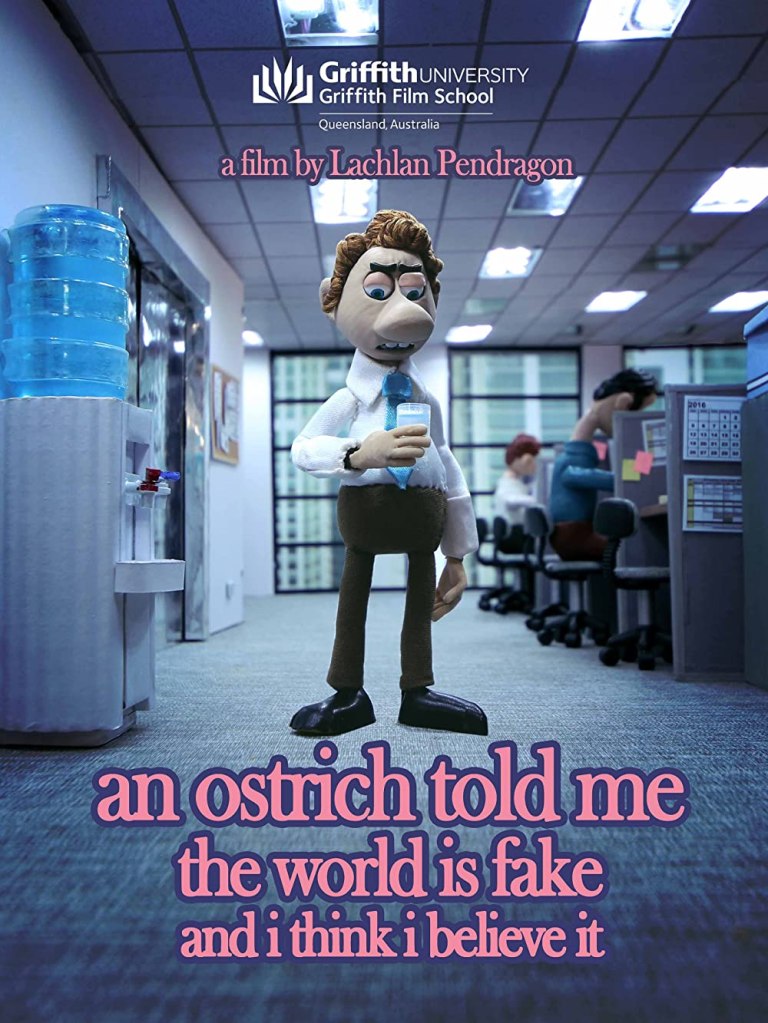
First of all, let’s address the availability issue. This is a bigger issue for categories like shorts, documentaries, and foreign films, but a lot of the lesser-known films in other categories suffer from it as well. It’s hard to make a potential awards viewer excited about nominees that they haven’t seen, but in this streaming world, why is it still a problem? Sure, if a movie is owned by Disney or Warner Bros., you know it’s going to be on a streaming service soon enough, but what about the deserving films that aren’t? One of the nominees for Best Animated Short this year is an Australian film called An Ostrich Told Me the World is Fake and I Think I Believe It. Now I’m ready to hand filmmaker Lachlan Pendragon the trophy based on the title alone, and I would love to watch this movie…but alas, it’s not available anywhere that I’ve checked.

Here’s a chance for the Academy to use some of that muscle they have for good. Cut some sort of a deal with a popular streaming service – Netflix, Hulu, HBO Max, take your dang pick – that would give nominees the option for a limited streaming window in the frame stretching from the nominations through the awards ceremony, or perhaps a few weeks or so after. Give people a chance to watch the movies, and they may start to care again. Hell, why not start their own service that exclusively carries Oscar-nominated films from the past 95 years? I know a lot of them already have their rights tied up with different companies and streaming services, but there must be plenty of orphans deserving of a chance to find an audience.

Next, let’s talk about the categories of the awards. I don’t have an issue with any of the current categories, but the films that are most popular aren’t usually the kind of things that will line up for Best Picture or the acting categories, unless they’re directed by James Cameron or have Black Panther in the title. Genre films have always been largely ignored by the Academy unless they become so immensely popular that they simply cannot pretend they don’t exist. We all remember the 2003 Oscar bloodbath when they gave Lord of the Rings: The Return of the King every award they could out of fear of the fans angry over the snubs for the first two installments marching on Hollywood and lighting New Line Cinema on fire. 

A few years ago the Oscars announced the addition of a “Best Popular Film” category in an attempt to address this problem. They quickly dropped the idea, however, when millions of angry fans on the internet pointed out that, for an organization worried about being perceived as snobbish and elitist, inventing an award specifically to placate “the little people” was probably not the best way to change that attitude. 

But there are two categories that could be added that would not only be gratefully accepted by genre fans, but also fill in two gaping voids in the production of motion pictures that are not currently addressed by the Oscars: stunt performance and performance in animation.

Stuntwork has existed since the earliest days of motion pictures, and despite the utter brilliance of people from Buster Keaton to Chad Stahelski, the Oscars have never seen fit to recognize that aspect of filmmaking. A stunt category would create more interest from fans of genre films (which would likely dominate the category for obvious reasons), as well as finally giving credit to people who literally risk their lives in the creation of our favorite motion pictures. And it should remain distinct from the “best visual effects” category. There should be a limit on how much of the film is CGI in order to qualify, so a movie where the action is 95 percent generated by a computer wouldn’t muscle out a film where there was an actual living human being strapped to a crane and they only used a computer to erase the wires. 

Look in those big, blue eyes and tell me he didn’t deserve some Oscar love.

Animated performance has also been ignored historically. I don’t know if voice performers are technically eligible in the standard acting categories, but I know that no one has ever been nominated for such a performance. And voice acting is performance. Whether it’s someone standing at a microphone, as in most animated films, or someone doing full motion capture and acting out the part, there is a unique performance element that is as impressive an art as any other. It still burns me that Andy Serkis was completely snubbed for his role as Gollum in Lord of the Rings, a performance that almost certainly would have gotten recognition if he had been wearing makeup, but was totally ignored because he was rendered digitally.

I don’t know if I would further subdivide this and make motion capture performances their own separate category from “traditional” voice acting, but having at least one category dedicated to this type of performance would be a big step. What’s more, this is not a solo award. It should be shared by the person who performs the voice and/or motion capture, as well the animator or animation team that completes the process of bringing the character to life. Guillermo Del Toro credited the people who made his Pinocchio film this way, and the Academy should do the same.

The only downside to this, of course, is that adding categories to the awards would make the show even longer, and this brings us to the final reason that people have lost interest in watching the Oscars: bloat. The show is long, tedious, and full of fluff that the average viewer couldn’t care less about, and that’s before we even get to the acceptance speeches. What’s even worse, they make room for this bloat by taking certain categories (usually the technical awards) and giving them out at an untelevised separate ceremony, essentially declaring which awards are less significant than some actor’s impassioned speech on behalf of the life cycle of the Bolivian Dung Beetle.

So the first thing that needs to be done is blow out the fluff. Get rid of the stupid sketches and weepy speeches that don’t relate directly to the awards being given out. There should be three components to the ceremony: musical performances of the nominated songs, the “In Memoriam” reel, and the awards themselves. In and of itself, this change would reduce the length of the ceremony by approximately 17 years. 

Then come the acceptance speeches, and this is the tough part. I believe 100 percent in freedom of speech, and I will never advocate curtailing a person’s right to exercise it. That said, if given a choice between seeing the award for best achievement in sound design given live or hearing an actor lecture me on politics – even when they happen to be politics I personally agree with – I will choose the award every single time, and I do not think I’m alone in this. The best solution I can think of is to impose a strict limit on the on-stage speech – 30 seconds, a minute, whatever, but enforce it, even if it means turning off the microphone. Then, allow the winner extended time backstage to make their full speeches, say whatever they want, and upload the unabridged and unedited video to the Oscar website, where people who want to will have the freedom to watch them in full. Some people would object to this policy, of course. “But people won’t get to see my speech!” they will cry. I would answer, “The ones who want to hear it can easily find it.” And they’ll say, “But what if they don’t WANT to?” And I will simply smile and shrug.

I advocate similar changes when it comes to political campaigning. 

It’s not a perfect system, I admit, but unlike several of the people who have accepted Academy Awards over the years, I’ve never tried to convince anyone I am perfect. But I do think these changes will make general audiences more receptive and more interested in watching the Oscars again.

Or at the very least, it’ll be better than the Golden Globes. 

Blake M. Petit is a writer, teacher, and dad from Ama, Louisiana. His current writing project is the superhero adventure series Other People’s Heroes: Little Stars, a new episode of which is available every Wednesday on Amazon’s Kindle Vella platform. He’s heard an awful lot of nice things about that Brendan Fraser fella, and he hopes he’s having a good time right now.