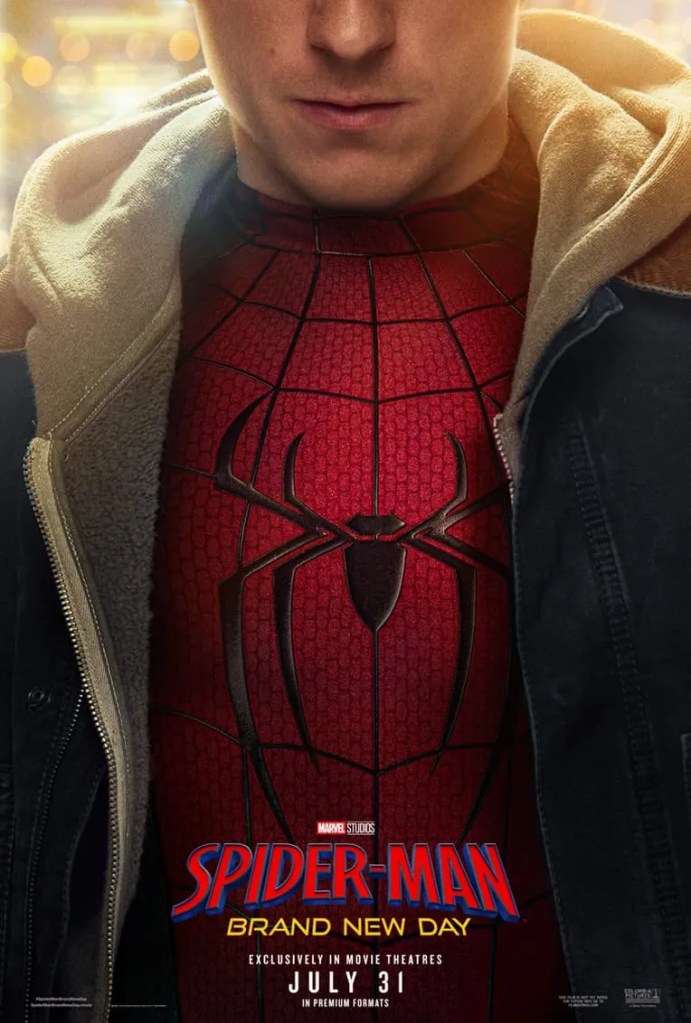
Four movies in, I think I may be ready to declare the Tom Holland Spider-Man movies the most well-written superhero series of all time. You can make arguments for other, individual movies being better than any of the movies in this series, but in terms not only of consistent quality, but character growth, there’s nothing that compares to what’s been done with Holland’s Peter Parker over the course of four films.
Homecoming was about what it means to be a hero. Far From Home was about being your own kind of hero. No Way Home was about the COST of being a hero. And now, in Brand New Day, we see a story of a young man trying to find a new life after having paid that cost.
The thing about Spider-Man is that, more so than any other superhero (yeah, even Batman), he exists in a self-imposed state of constant sacrifice. It is simultaneously his greatest moral strength and his great tragic flaw. He made a mistake once that cost somebody he loved their life, and because of that he will give of himself – physically, mentally, emotionally – until there’s nothing left to give and then some if that is what it will take to save somebody else, ANYBODY else. No matter what level of the multiverse you find yourself on, that’s who Peter Parker is.
After the events of No Way Home, he is convinced that the only way to protect those he cares about is to live a life of isolation and loneliness. If nobody is allowed to get close to him, after all, then nobody can be hurt BECAUSE they are close to him. And the film does not flinch from showing the toll that this takes, portraying him as a sad, broken character who seems to have no desire in life other than to use Spider-Man to save as many people as possible. (This is actually one of the few qualms I have about the movie – there’s nothing to indicate that Peter Parker has any sort of job or source of income to justify the impressive tech he uses in this movie, let alone something as simple as the rent on a Manhattan apartment.) But we see all of this in the first ten minutes. The story really begins when a new adversary arises, someone who takes Spider-Man’s interference in their plans personally, and he finds his old friends getting caught in his web again.
Yes, of course the pun was intended. Give me some credit here.
Anyway, director Destin Daniel Cretton (who also directed Shang-Chi and some episodes of Marvel’s Wonder Man) paints Holland’s character as someone who is desperate for companionship but afraid to reach out for it, and it’s that sadness that fuels the film and – ultimately – leads to an ending that is more sweet than bitter. After all of the lessons that he’s learned in the previous films, it seems there is at least one lesson left to learn: that he doesn’t have to do it all alone. Hell, even Jon Bernthal’s Punisher takes a turn to be more of an ally than he’s ever been in the comics. (Interesting note: I have to watch the movie again to be sure, but I’m 99 percent certain they never actually call Frank Castle “Punisher” in the course of this movie.)
Let’s talk about Sadie Sink for a minute. As I mentioned in this week’s Geek Punditry, Sink’s character was the big question mark going into this movie – everybody knew she was going to be in it, but nobody knew WHO she was playing. This didn’t stop theories from flying, of course. Without spoiling anything, the reveal as to what character she plays wasn’t as huge a shock as it could have been. The role she was playing in the story, however, was VERY surprising. If you had told me ahead of time that she was playing THAT character in THAT particular way, I would have had a lot of apprehension about what was being done to a classic Marvel character. I think that may be part of the reason for the secrecy. Shrouding her role in mystery helped prevent a knee-jerk reaction from people and allowed them to see the actions of the character in context, which make things far more sympathetic and understandable, and leaves you excited to see where she turns up next.
As for the movie’s place in the larger Marvel Cinematic Universe, I would say it has minimal reliance on earlier films but maximum potential for future ones. Despite the appearance of other Marvel characters – the Punisher, the Hulk, and so on – the story does not heavily rely on knowledge of any previous Marvel project other than the first three Tom Holland Spider-Man movies. Assuming you’ve seen those and have a general awareness of who the Hulk is, you’ve got everything you need to watch and enjoy this film. On the other hand, there are several seeds planted in this movie that I fully expect to see bear fruit in the future, not only in future Spider-Man movies, but in other Marvel projects as well.
It’s going to be really hard to displace No Way Home as my favorite Spider-Man movie. The sheer thrill of that one, the emotional punch of seeing all three Spider-Men together, the beautiful way they brought closure to the other two while still telling Tom Holland’s story…it was a magic trick that’s going to be difficult to replicate. But Brand New Day doesn’t try to top it, it’s telling its own story in the new world that NWH left Peter Parker with. And it does a fantastic job of it. It’s respectful to the characters, the actors all bring their A-game, and you’re left feeling that Spider-Man’s story is far from finished.
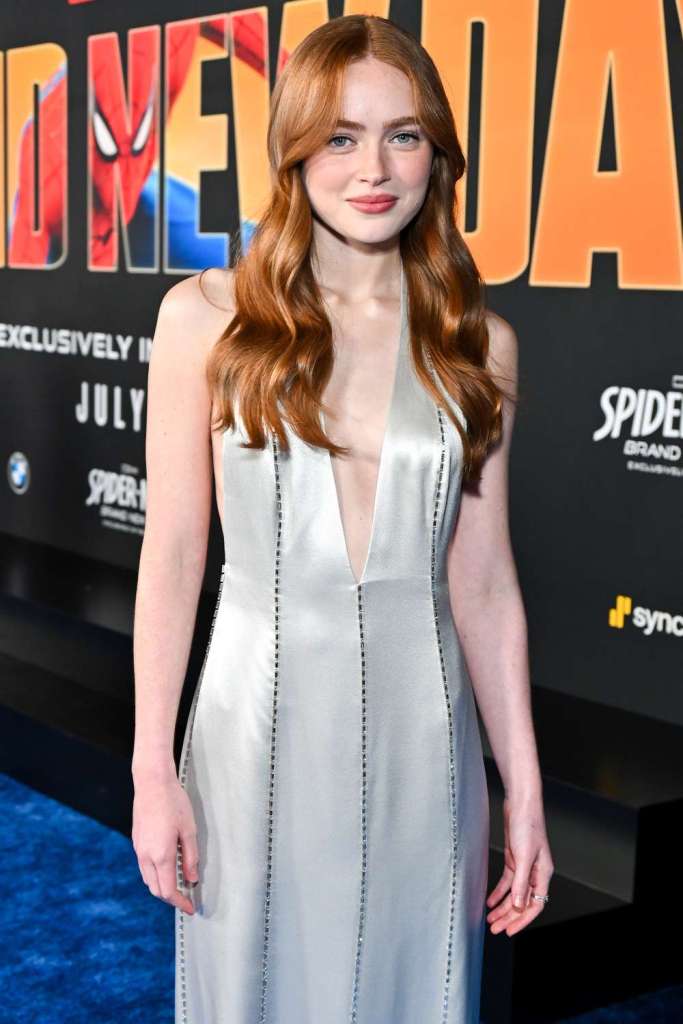
The newest Spider-Man film, Spider-Man: Brand New Day, hits theaters today, and with its release we’re finally going to get the answer to the question that has plagued fans for a year now: who the heck is Sadie Sink playing?
My guess? The Hulk.
The cast includes the usual trio from the previous Spider-Man films: Tom Holland as Peter Parker, Zendaya as Michelle “MJ” Jones-Watson, and Jacob Batalon as Peter’s best friend Ned. We also know that another pair of MCU stars – Mark Ruffalo as Bruce Banner and Jon Berenthal as Frank Castle – are along for the ride. But when it was announced that Sadie Sink was joining the cast, Marvel was uncharacteristically catty about what role she’s playing in the film. The move was intended, of course, to get people talking and speculating, and it worked.
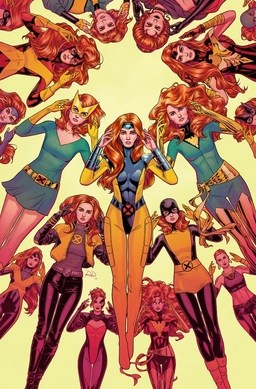
Sink is best known as Max from the Netflix hit Stranger Things, but she’s branched out into other TV and film work as well, most notably playing Brendan Fraser’s daughter in the movie that finally got him his Oscar, The Whale, so she’s definitely got the acting chops to join the MCU. But without knowing exactly which role she’s taking, speculation has run rampant. One of the most popular theories has been that she’s going to be Jean Grey, officially ushering the X-Men into the MCU. The Fox X-Men are going to appear in Avengers: Doomsday and probably its sequel Secret Wars, but the MCU is going to bring in their own version of the mighty mutants in a couple of years, and Sink would be a great choice for Jean Grey.
And she would have a LOT of costumes to choose from.
Theory Number Two is that Sink is actually going to be Mary Jane Watson, the original character that everybody has assumed Zendaya is representing in the MCU. It would be a sneaky trick, to be sure, to pull that kind of switcheroo, but I think it would also be kind of disrespectful to fans of Zendaya’s character, not to mention Zendaya herself. And let’s be honest, she’s kind of a big deal these days – I don’t know if Kevin Feige would want to get on her bad side.
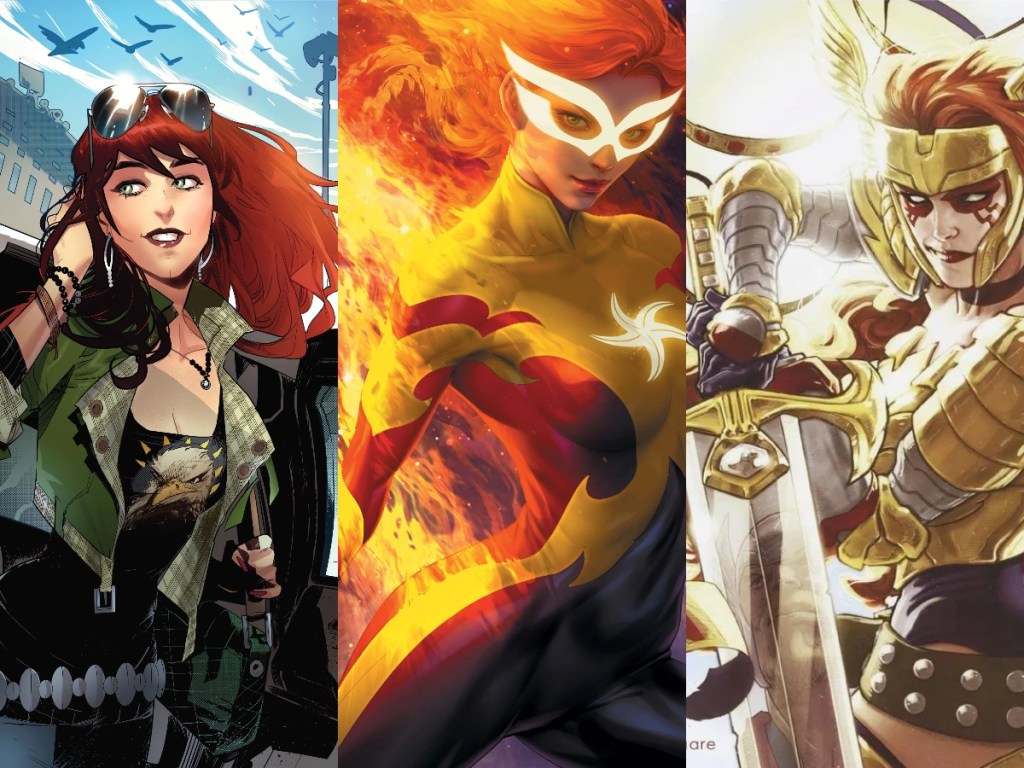
Both of these theories, it should be pointed out, seem to be predicated on the fact that the two characters mentioned, like Sink, happen to be redheads. It’s not the best reason to cast somebody, but it’s not the worst either. That said, we can float other possibilities based on the same criteria. For example: Angelica Jones, aka Firestar, would be an out-of-the-box choice. Firestar is the rare Marvel character that didn’t originate in comic books, but rather in a cartoon show, Spider-Man and His Amazing Friends. Since migrating to comics, though, her interactions with Spider-Man have been minimal, associating more with the New Warriors, Avengers, and X-Men, in that order.
From there the list of significant redheads starts to run thin – Pepper Potts and the Black Widow are both spoken for in the MCU, and Thor’s half-sister Angela is available, but no matter how good an actress she is it would be difficult to picture the petite Sadie Sink as a Viking warrior goddess. Medusa appeared in the short-lived Inhumans TV show, and as much as I’m sure Marvel would prefer we forget that existed, I don’t see Sink taking that role either. After that I would have to start flipping through the Official Handbook of the Marvel Universe to find further candidates, and I don’t think Marvel would put that much effort into characters that obscure.
Gotta be ONE of these, right?
Having this conversation with my wife, she tossed out my favorite theory: maybe they’re just screwing with us and Sink is going to be a redheaded version of Gwen Stacy. I would actually applaud that level of trolling, were they to go in that direction.
All that said, I know that several of you reading this already know the answer to this particular mystery. I’m publishing this column on Brand New Day’s official release date, and there were two successful days of preview screenings. I personally know several people who’ve already seen the film, most of them in the Comic Book Collecting group I help moderate on Facebook, and the comments have been highly positive. Nobody, as of this writing, has spoiled the mystery for me, and I appreciate that, since I’m not going to be seeing it until tomorrow morning.
The thing is no matter who Sink is playing, I have to admire the way Marvel Studios has played this particular bit of casting. I complain a lot about how nobody in the entertainment industry is capable of keeping a secret anymore. Trailers give away the whole movie, comic book solicitations give away the endings of storylines before they’re published, and casting surprises are virtually nonexistent. Somebody in that same comic book group I mentioned said not long ago that they hope the upcoming Man of Tomorrow movie will have cameos by Batman and Wonder Woman, and I had to say that I seriously doubt that they’d introduce two such important characters that way – certainly not without making a big deal of who they cast in the respective roles.
No way they could keep news this great under wraps.
But Marvel has turned Sink’s casting into a way to generate buzz. She’s even gotten into it herself. Earlier this week a video was released on the official social media channels where Sink teases the fans by confirming two roles she’s definitely NOT playing: Spider-Man and Aunt May. Now this COULD go wrong – if it turns out she’s playing, for instance, J. Jonah Jameson’s secretary Betty Brant, that would be quite a letdown. But assuming she’s a significant character, somebody who has the potential to be a major player in upcoming Marvel franchises, then they’ve played their game very well.
The game will be over soon, of course. With the movie in theaters I have no doubt her role will soon be common knowledge. I’m just hoping I can continue to dodge spoilers for another 24 hours. I wouldn’t be surprised in the slightest if, in the next week or two, they release a new trailer that prominently features Sadie Sink in her new role as Squirrel Girl. (Or whatever.) But they’ve kept the surprise this long, and I both appreciate and respect that.
“They’re NEVER gonna figure out that I’m Willie Lumpkin.”
Credit where credit is due.
Oh, and if you HAVE seen the movie and know the answer to the original mystery, do us all a favor and keep it to yourself a little while longer. We haven’t all seen it yet.
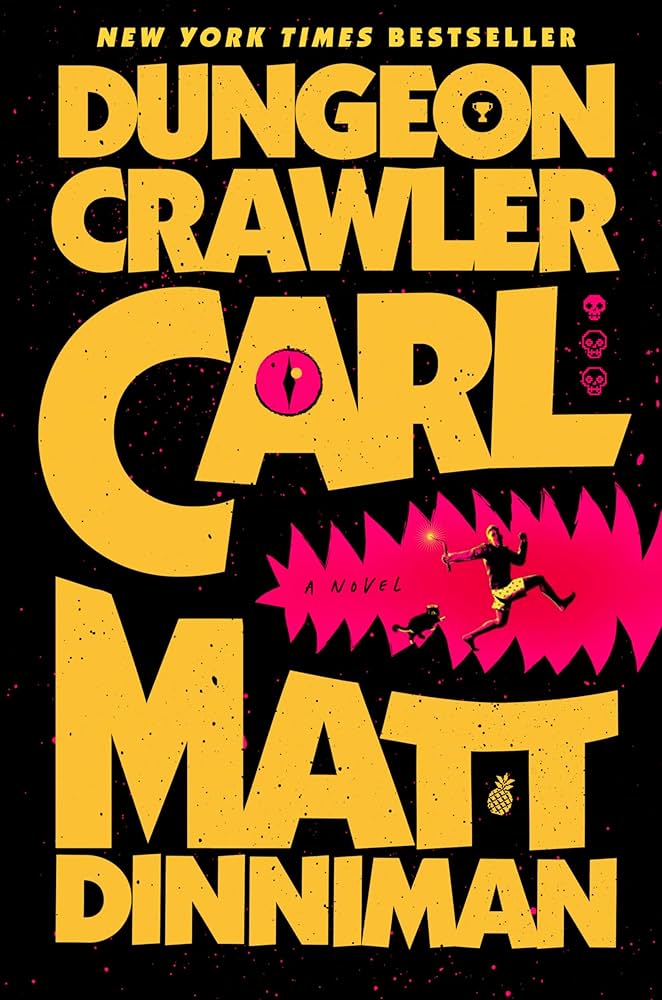
Recently, on the advice of – and this is a rough estimate so please forgive me if I leave somebody off this list – everybody, I picked up Matt Dinniman’s LitRPG novel Dungeon Crawler Carl. I’ve never read a LitRPG before, but a lot of people whose options I highly value told me over and over again what a great book this was and that I needed to check it out or watch my Geek Cred stats rapidly plummet. And I must concede, that first book really grabbed me.
My friends just know how wild I go over “crawling” fiction.
From what I can tell, LitRPG is a subgenre of sci-fi and fantasy in which the story emulates traits of a typical roleplaying game, including having the characters’ stats and levels prominently featured and even included in the plot. In the case of Dungeon Crawler Carl, these stats and levels come as Carl and his ex-girlfriend’s cat, Princess Donut, are forced to risk their lives over and over again in a massive global dungeon with the entirety of the human race – at least those who are still alive – hanging in the balance. If that doesn’t sound like a riot, I should remind you all that Douglas Adams chose to begin his Hitchhiker’s Guide to the Galaxy series by blowing up Earth, so an apocalyptic comedy is by no means unexplored territory. And Dinniman handles it extremely well. I admit, when I started reading the book I expected the conclusion of the Dungeon Crawler story to come by the end of the first volume, and I wondered what the follow-up would be that would extend the series to seven installments (so far, at least – the latest word is that the series will wrap up in volume ten). I was quite surprised, then, as I progressed through the novel and realized, at the pace we were going, there was no way in hell the story would be finished in one book, and Carl’s singular quest through the dungeons would, so it appears, be the entire series.
After reading some massive doorstoppers early this year, I was pleasantly surprised not only by how entertaining the adventures of Carl and Donut turned out to be, but also by just how quickly I whipped through the first novel. After spending the better part of a month on Stephen King’s It, I finished the first Carl book in less than a week. I informed some of my friends who recommended it to me in a group chat the day after I finished reading book one, and one of them told me that book eight is scheduled for release next month, May.
“I doubt I’ll make it through seven books by May,” I said.
“Yeah, you will,” he replied.
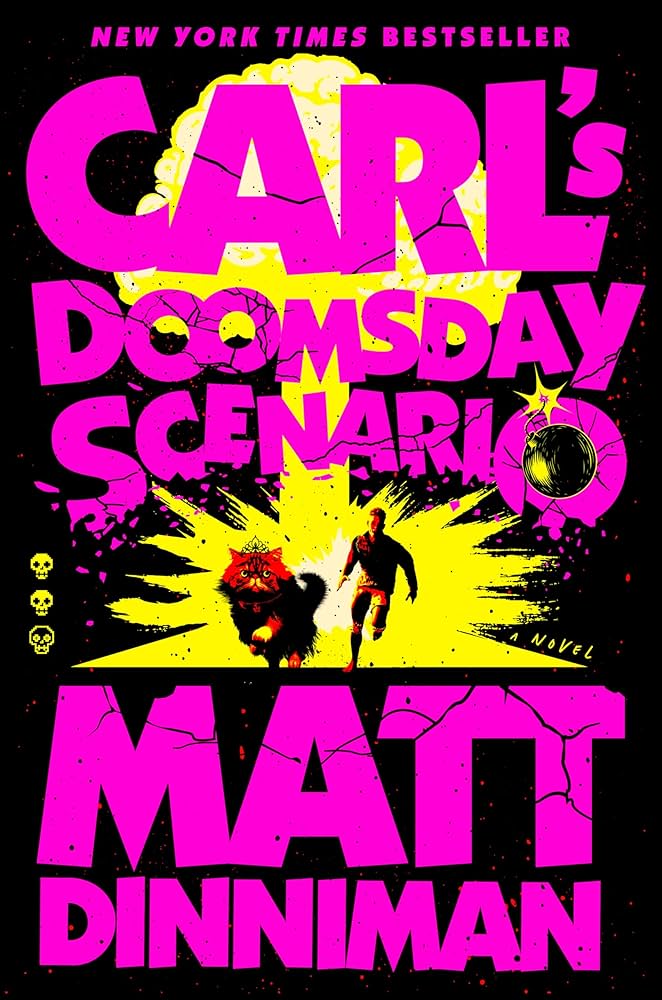
And damned if it’s not possible. When I picked up the second volume this week, I got through roughly a quarter of it in the first day, an almost unheard of chunk of novel in a modern era in which my valuable reading time is often stolen by such frivolous things as going to work, driving a car, and parenting. But I quickly noticed something unusual about the second book, Carl’s Doomsday Scenario. Most of the time, when you get to the second installment of a series, there’s a bit of an effort to restack the world for the audience – reminding them of things that happened in part one, re-explaining the rules of the world, and otherwise attempting to bring them up to speed in case there’s anybody just joining in for the first time. This is pretty common in fiction of all types. TV shows with serialized storylines will frequently begin with a “Previously on…” segment. Movie sequels will usually have some brief lip service where the characters recap the events of the first film, even if doing so makes little sense in context. Comic books make frequent use of flashbacks.
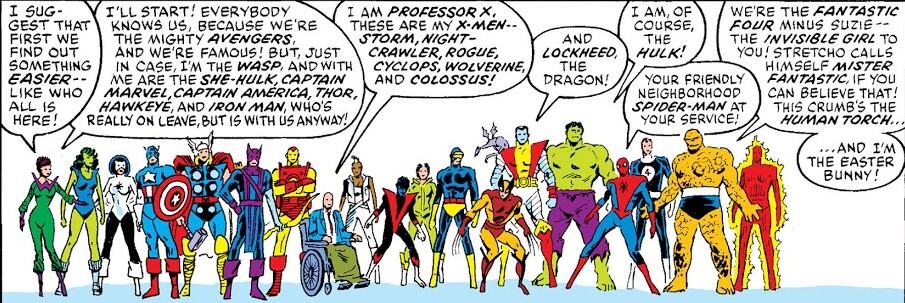
The idea here is that there’s always the chance that there’s someone joining the audience NOW – somebody who has not seen the earlier episodes or read the earlier books, and therefore needs a little help so they don’t get lost. There was a point in the 80s when Jim Shooter, then Editor-In-Chief of Marvel Comics, issued a company-wide rule that every character be referred to by name when they first appeared in each issue, just to make sure a theoretical new reader could tell who’s who. The spirit of the policy made sense, but in terms of writing, this would often result in clunky panels with inorganic dialogue. This was never demonstrated better than the infamous “Mouseketeer Roll Call” Shooter himself wrote in the pages of Marvel’s first major crossover event, Secret Wars, when dozens of heroes and villains who had just been kidnapped and brought to the other end of the universe by a cosmic deity stopped the action, stood in a line, and identified themselves.
The Wasp and the Thing are at opposite ends, both of the panel, and in terms of the spectrum of humility.
Dinniman, however, makes absolutely zero attempt to recap the story for new readers. Although Carl’s Doomsday Scenario begins with a new Chapter One, it may as well have just continued the numbering from the previous book, because it picks up just seconds later and makes every presumption that the reader is up-to-date. It doesn’t recap part one, doesn’t explain the logic of this universe, and pretty much just goes on as if Dinniman is quite confident that anybody who is reading Doomsday Scenario will also have read Dungeon Crawler Carl, so why bother? It was temporarily jarring even for me, somebody who had just finished book one a week earlier, when Carl started getting messages from somebody named “Brandon” that had not been mentioned before in this book and I had to go back and remind myself who he was.
I defy anybody to find evidence in this image that this book is a sequel. You can’t, can you? Because you’re too busy looking at the cat in the tiara, that’s why.
The style of storytelling in which a recap is expected…in some ways, it’s kind of a relic of a bygone era. It made a lot of sense in the days when a TV series aired one episode a week and if you missed it, you just missed it and hoped you could catch a rerun over the summer. In these days of binge-watching, when you can start a series from episode one no matter how many episodes have been made, and when the streaming service will roll right into the next episode after you finish it, it’s not nearly as important as it used to be. It’s still a little more necessary in other forms of storytelling, but not always. In movies like those in the Marvel Cinematic Universe – particularly the upcoming Avengers: Doomsday – we should expect a certain amount of recap because it’s unreasonable to presume every audience member will be intimately familiar with the details of the past three decades of Marvel movies and television, especially since the former Fox X-Men universe is being folded into the multiverse of the MCU. But James Gunn’s Superman launched a whole universe in the middle of a story and figured – correctly – that there was no need to go over Superman’s origin yet again because everybody should be familiar with it at this point. A few title cards at the very beginning told us everything we could possibly need to know.
But what about episodic storytelling like comic books? Shooter’s rule – even when it was executed poorly – made a lot of sense in an era where it was presumed that every issue was potentially somebody’s FIRST issue. Comic books aren’t really written that way anymore. Most series – even so-called “ongoing” series – are given a certain number of issues to tell a story (although this exact number is often undisclosed to the reader it is typically low – maybe five or six issues at a time). If the series sells well enough, it will be renewed for another number of issues, then another, until either it becomes unprofitable or the creative team finishes all of the stories they had planned. With this structure, even as comic book sales are on the rise, it’s reasonable to assume that the number of people jumping into a series on issue #8 is relatively slim. But we WANT new readers, so there has to be a way to make it accessible without alienating the existing audience.
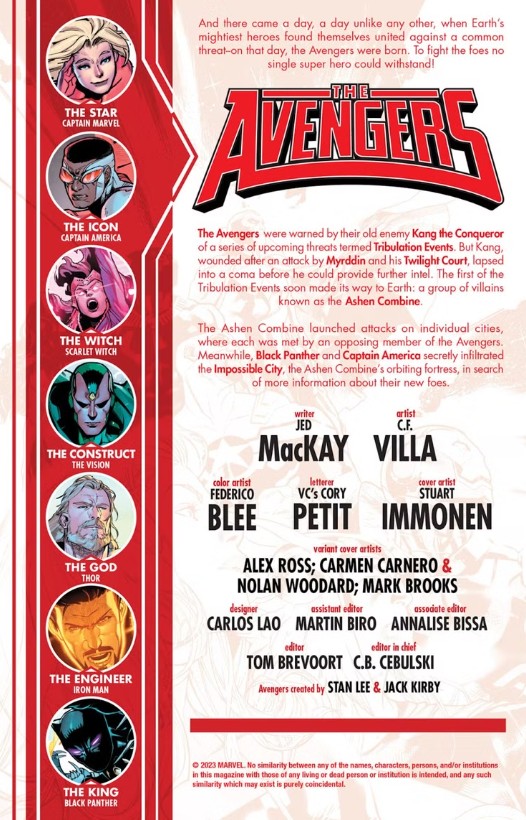
And there is, and it’s a simple way. Marvel Comics have long had a policy of including a “previously” page at the beginning of each issue, recapping the story to date and showing headshots of the major characters. It serves the same purpose as Shooter’s old rule, but it’s not intrusive into the story itself. Somebody who hasn’t been reading along can use the page to get into the saddle, but faithful readers can easily skip it if they wish. It’s a sensible policy, and other publishers (DC included) have slowly gotten into the habit of incorporating similar pages in their own comic books, although I wish it would become more standard.
I mean, without this page how would you ever know the Scarlet Witch is a witch?
With prose books, we’ve got an interesting sort of mix of possible readers. On the one hand, if somebody is an ebook reader, it would make little sense to begin in the middle of a series. If you’re browsing the Kindle store and a book sounds interesting, it’s usually labelled as something like “Book 2 in the Dungeon Crawler Carl series,” with a handy link to look at all the books in the series at once so you can get them all and start from the beginning. But for a print reader who gets these books browsing a brick-and-mortar store, it’s not always as clear. Not every series is clearly labeled as such on the cover, and even if it is, there can’t always be a 100 percent guarantee that the store will have the earlier volumes in stock on the day you pick up volume three while you’re casually browsing.
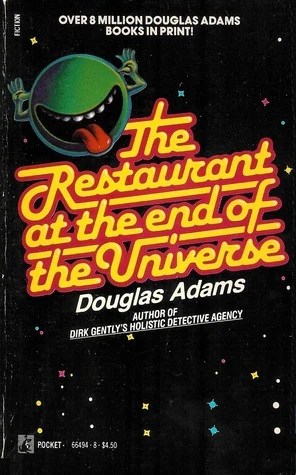
Many of us have fallen victim to this at some point or another. Back in middle school I was poking through the shelves at our Scholastic Book Fair (if you’re someone that just got a little thrill of excitement at those words, you are my kinda people) when I saw a book with the fascinating title The Restaurant at the End of the Universe. I picked it up and I read the back cover, and it sounded interesting. So I bought the book, brought it home, devoured it, loved it…and THEN I discovered that it was actually the sequel to a novel called Hitchhiker’s Guide to the Galaxy. Had I noticed that parts of it were a little confusing the first time I read it? Sure. But my seventh-grade self already was aware that there were jokes and references I didn’t quite understand (I did not have an encyclopedic knowledge of British politics and popular culture circa 1980, believe it or not), so when there seemed to be something missing I assumed that gaps in my knowledge could be attributed to that, rather than the fact that I’d skipped an entire book.
And even if I DID notice, based on this cover, I would have thought the book I missed was Dirk Gently’s Holistic Detective Agency.
In Dinniman’s case, the lack of recap makes more sense when you learn that the series originated on the online platform Royal Road, which allows writers to serialize their fiction. The Carl series was not originally written in book form, but in this more episodic format, and when the decision was made to publish it as a book series Dinniman basically chose where to end each volume based on a point where a logical pause happened rather than necessarily having it planned out as a ten-volume series. That kind of planning seems to have crept in later, as the book went from a popular online fic to a publishing juggernaut, but it wasn’t baked in from the beginning, and the book version reflects this.
(Personal side-note: I’d never heard of Royal Road before I began digging into the backstory of Dungeon Crawler Carl and I feel the need to look deeper into this system. I’ve been thinking about looking for a new way to serialize my own work ever since the demise of Kindle Vella, and this seems like a far more stable outlet.)
The recap thing is a trope in storytelling, and although I can understand why it may be frustrating for people who are devoted followers of a particular series, I don’t think it’s a bad thing. It serves a purpose, and if it allows a story to be opened up to a larger potential audience, that’s a net positive. It just needs to be done in an unobtrusive way. “Previously” pages in comics or even in novels are a good way to do it, and although lacking one doesn’t hurt anyone’s enjoyment of the series at all, I’m surprised that Dinniman didn’t include one in Doomsday Scenario.
At the very least, publishers, make it damn clear on the cover or spine of a book if it’s part of a series. Numbers are your friends.
Blake M. Petit is a writer, teacher, and dad from Ama, Louisiana. His most recent writing project is the superhero adventure series Other People’s Heroes: Little Stars, volume one of which is now available on Amazon. He’s also started putting his LitReel videos on TikTok. Seriously, go read the first part of Little Stars, because he’s working on polishing part two. He needs people to stare at him and ask him when it will be finished.
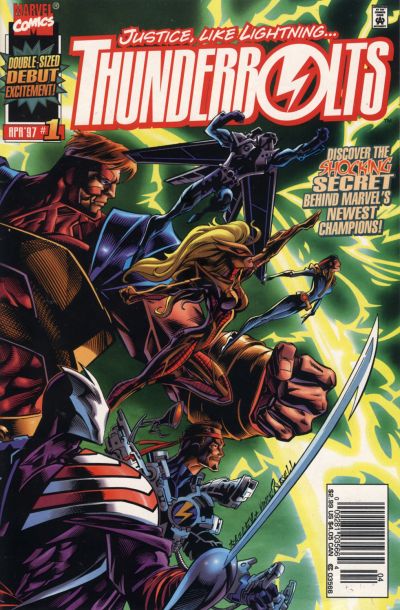
With Captain America: Brave New World currently in movie theaters, eyes of Marvel fans are turning to the next film from the studio, coming out in May, Thunderbolts*. Yes, that asterisk is part of the title. No, as it turns out, it isn’t actually important. But we’ll get to that later. Although they’re not exactly the Avengers (more on that later, too) the Thunderbolts have been bouncing around the Marvel Universe in one form or another for nearly 30 years, having first appeared in 1997. Despite the pedigree of having been around for such a long time, a lot of people don’t seem to quite understand who the Thunderbolts are, and honestly, you can’t blame them. If you look at their publishing history, it seems as though Marvel doesn’t really know who they are either.
Pictured: Even we don’t the hell know.
Let’s go into the history, shall we? It started in 1996, when the Marvel Universe came under attack by a villain named Onslaught. Powerful and ravenous, he started off fighting the X-Men before taking on virtually every superhero in the world and, when he was finally defeated, both the Avengers and Fantastic Four were killed in the battle. Or so it appeared, anyway – as it turned out, Franklin Richards saved them at the last second by shoving them onto an Alternate Earth, because things like that just happen in comic book universes sometimes. But the world at large BELIEVED that they were dead, and that was enough to cause serious chaos. With the Avengers and Fantastic Four gone, it was open season for villains, who saw an opportunity with the biggest, boldest heroes in the universe unavailable to thwart them.
Then the Thunderbolts appeared.
I’m confused, which one of these guys is played by David Harbour?
A brand new team of brand new heroes, paragons of courage who had never been seen before, burst on the scene and began cleaning up the town. The gigantic Atlas! Armored hero MACH-1! The cosmic-powered Meteorite! High-flying Songbird! The scientific wizard Techno! And their sword-wielding leader, holder of a mantle of a forgotten World War II hero, Citizen V! After an appearance in Incredible Hulk, the Thunderbolts slid into their own series, written by Kurt Busiek and drawn by Mark Bagley. I was – and still am – a huge fan of both Busiek and Bagley, and so I naturally was eager to read the book, but it was a little confusing before we got there. Who were these new characters? Why should we care about them? Did they REALLY think they were worthy of replacing the Avengers?
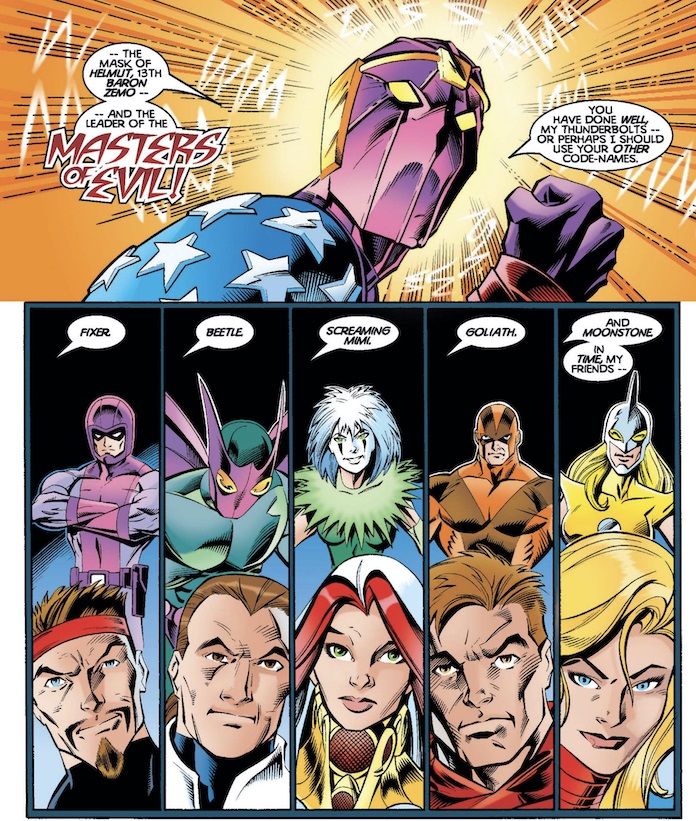
And then, at the end of the first issue, Busiek hit us with a curveball that comic books have not been able to duplicate since. Citizen V traded his heroic mask for another one, a purple one…he was really Baron Helmut Zemo, arch-enemy of Captain America, and each of the Thunderbolts was a member of his Masters of Evil in disguise. When the Avengers and FF vanished, they decided to masquerade as heroes and win over the public trust as part of Zemo’s plan for world domination.
There will never be a reveal this awesome again, and I blame Mark Zuckerberg for that.
And we, the readers, were FLOORED.
It’s so hard to imagine, in today’s landscape, how such a reveal could have been pulled off. All of the press leading up to this issue just talked about these great new heroes and how awesome they were and how cool it was going to be to have new stars in the Marvel Universe. Honestly, it felt like standard comic book hype, and were it not for the fact that I enjoyed the creative team so much, I probably wouldn’t have read the comic at all, which would have been a huge mistake because it turned out to be phenomenal. But such a magic trick simply couldn’t happen in the current landscape. If Marvel tried to tell this story today, three days before the issue was published you would have a headline on the site formerly known as Comic Book Resources, shared on Facebook, announcing something like “Ending of Thunderbolts #1 will shock Avengers fans!” with a thumbnail image of Citizen V wearing Zemo’s mask just to make sure that everything was good and thoroughly ruined before it could be read.
The modern media is so, so stupid.
Anyway, the Avengers and Fantastic Four eventually returned to the main Marvel Earth, forcing Zemo to accelerate his plans for conquest, but in the time when they pretended to be heroes something funny happened to many of the members of the Thunderbolts. They began to realize that it wasn’t such a bad thing that they got to WIN a fight once in a while instead of getting beaten up. They started to enjoy the cheers and applause of the hero-starved citizens of New York. They actually found satisfaction in helping people instead of committing crimes. And when Zemo took action, the rest of the team rebelled against him, deciding that they’d rather remain heroes than go back to their old lives of villainy.
From there, the book underwent the first of what would be countless shifts in status quo. Instead of the adventures of villains pretending to be heroes, it was now a book about former villains seeking redemption, and this is the golden age of the franchise. They tried to make good. They even were joined by Hawkeye, who left the Avengers to help them out. Hawkeye himself had begun his career as an adversary for Iron Man, and he credited Captain America giving him a chance to join the Avengers for turning his life around. He saw leading the Thunderbolts as an opportunity to pay it forward. And so the book went on for some time – some of the members backsliding at times, new members joining, the roster shifting around, but for the entirety of Busiek’s run, then that of his successor Fabian Nicieza, it was one of my favorite books Marvel was publishing.
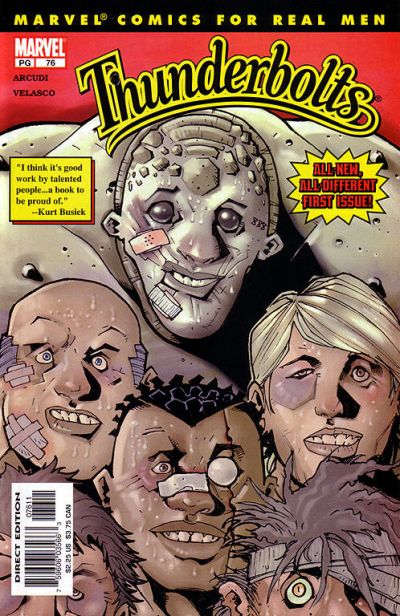
Then in issue #76, they inexplicably dumped the entire concept. Issue #75 ended the story of the Thunderbolts we knew and loved and the next month we got a whole new story with new characters in what could best be described as “Supervillain Fight Club.” It was baffling, it was awful, and it was Thunderbolts in name only. It also only lasted six issues before the book was cancelled. Not too long after that, they brought back the original team for a second run that lasted a few more years, and it was good, but once again they took a sharp turn. This time around the team was replaced by a new group of villains – not reformed ones this time – rounded up to do tasks for the government. It felt like a carbon copy of DC’s Suicide Squad at this point. And it didn’t get better.
Pictured: Your guess is as good as mine.
Since then, the team has been reinvented seemingly dozens of times. The Suicide Squad knock-off has been done more than once. At one point the team was re-christened “Dark Avengers” and made of villains pretending to be heroes (ESTABLISHED heroes this time, like the Scorpion pretending to be Spider-Man, Daken pretending to be Wolverine, and so forth) . One time it was made up of antiheroes like the Punisher, Deadpool, and Elektra. Another time it was villains trying to HUNT the Punisher. Once it was villains deputized by the Kingpin of Crime while he was mayor of New York, and another time it was a group of HEROES deputized by Luke Cage when HE was mayor of New York. And on occasion we’ve even got a group of super-spies like the Winter Soldier and the White Widow, which seems to be the version that the upcoming movie is based on.
Pictu–oh, whatever.
The problem, then, comes when somebody asks the question “Who are the Thunderbolts?” because you just read about 1300 words on that very subject, and we STILL don’t have a definitive answer. Ever since the original version of the Thunderbolts ended, Marvel has recycled the name over and over again but has never found any concept that STICKS. Even the super-spy incarnation of the team seems to have been willed into existence so that they have something to synergize with the movie.
And let’s talk about the movie, while we’re at it. Some time back, the title was slightly changed from Thunderbolts to Thunderbolts* with an asterisk. People asked Marvel if the asterisk was, in fact, part of the title, and they confirmed that it was. This led to mass speculation on the internet as to the significance of that asterisk. Why was it there? WHAT DID IT MEAN? It’s the kind of rabid online speculation that movie studios love because they don’t have to do very much to get the audience talking about the film. It did wonders back in the day for movies like The Blair Witch Project and The Matrix, which managed to get an enormous amount of word of mouth with relatively simple ad campaigns back in the early days of the internet. It’s a great strategy when you have a good payoff.
Spoiler alert: this time there was NOT a good payoff.
Like, not even the Great Lakes Avengers?
When the most recent round of posters for Thunderbolts* was released, we saw what the asterisk stood for, and the revelation was met with a resounding “Meh.” At the bottom of the poster, with the asterisk attached to indicate the footnote, was the tagline “The Avengers are not available.” It’s actually not a bad tagline. It seems to indicate the tone of the movie – slightly tongue-in-cheek, indicating that this is NOT a story about paladins like Captain America or knights in armor like Iron Man. If they had never made a big deal out of the asterisk and simply released that poster without comment, I would have thought it was a cute detail. But after the buildup it got, it may have been the biggest letdown in the MCU since everybody forgot there’s a giant hand sticking out of the Earth after the events of Eternals.
I obviously haven’t seen the movie yet, and I am not here to talk trash about it. I never want there to be a bad superhero movie. I want every one of them to knock my socks off, and I really hope that this one does too. But the trailers seem to have that same feeling of a wannabe Suicide Squad with a group of characters that seem assembled not because it makes sense but because these are the pieces Marvel has on hand and they don’t know what to do with them.
Which, frankly, is a pretty good description of what it’s been like to try reading Thunderbolts comics for the last two decades or so.
The Thunderbolts were at their best when it was a story about villains trying to make good. It was a compelling book then and it could still be one now. There are even seeds, I think, in recent comics, such as the recent Venom War tie-in miniseries Zombiotes. The old Spider-Man villain Shocker was on a quest to bring back his friend Boomerang from the dead, and wound up fighting alongside the heroes She-Hulk and Hellcat during an invasion of…let’s just say “monsters,” because I don’t want to spend another 1300 words explaining THAT one. But that story could easily be a germ for a new Thunderbolts team. And it’s a book that would allow for reinvention WITHOUT changing the concept, with characters rotating in and out – some of them succeeding in their heroic goal, others falling from grace. There’s drama to be mined there and SO MANY villains that could be used, if Marvel did it right.
No offense, Bucky, but I’d rather read this group.
Or, you know, we could spend another 20 years throwing Thunder spaghetti at the wall in the hopes that something, ANYTHING sticks.
I suppose the real test will be to see if anything sticks to the movie screen.
Blake M. Petit is a writer, teacher, and dad from Ama, Louisiana. His most recent writing project is the superhero adventure series Other People’s Heroes: Little Stars, volume one of which is now available on Amazon. You can subscribe to his newsletter by clicking right here. He’s also started putting his LitReel videos on TikTok. If Marvel is looking for a writer to try this obviously brilliant concept, they should know that Blake can be hired relatively cheap.
It’s time for a new Geek Punditry feature: Blake’s Five Favorites! In Five Favorites, I’m just going to talk about something that’s been on my mind and discuss my…well…my five favorite examples of that thing. Now keep in mind that this list is inherently subjective and not at all comprehensive. You may disagree with my choices, and that’s fine. And there may be other examples out there that I’d like even better, but I haven’t seen them yet. And if we’re being totally honest, if you asked me again tomorrow, my list may be totally different. I’m funny that way. But for now, as of the time I’m writing this, I want to tell you about my five favorite scenes from superhero movies. This is NOT a list of my five favorite superhero movies (although there would definitely be overlap), but a list of the five individual scenes in the history of superhero cinema that make me feel the happiest, proudest, most excited, or most touched. And obviously, these are going to be FULL of spoilers, so if you haven’t seen these movies by now, you may want to skip. Let’s see if any of your favorites make the list.
#5: James Gordon Lives (The Dark Knight, 2008)
Very few superheroes can really do their job alone, and those that try usually wind up learning early on that attempting to do so is a mistake. And for all his talk about being a lone wolf, decades of storytelling have built up a sizable contingent of heroes surrounding Batman. He’s got sons (biological, adopted, AND surrogate), daughter-figures, father-figures, friends, allies, lovers, and even frenemies. And of all the characters that have taken up arms with the Batman during the years of his crusade, my favorite is police commissioner James Gordon. There’s something inspiring about the one good cop trying to clean up a filthy, corrupt department and forging an alliance with an agent outside of the law to do it. I don’t really care for any version of Batman that casts Gordon as an incompetent, which is perhaps the most unforgivable of the many sins in the Joel Schumaker movies.
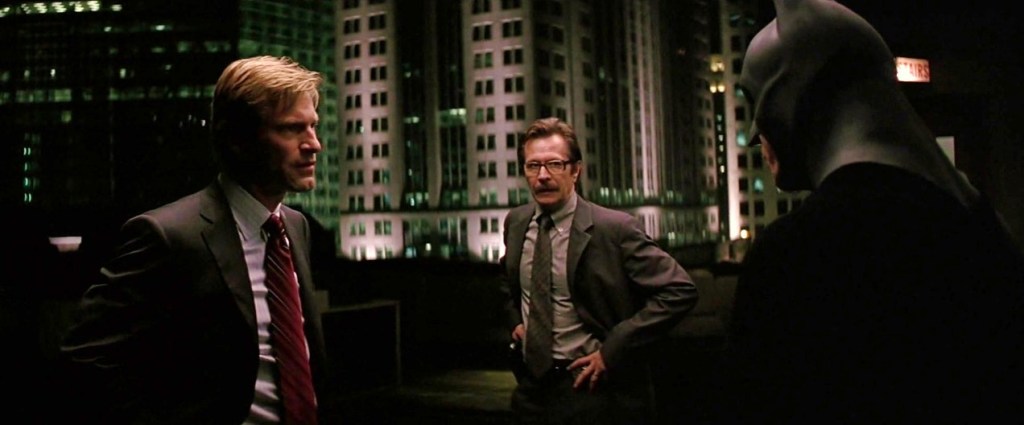
Of all the actors who have played Gordon, Gary Oldman in the Dark Knight trilogy is hands-down my favorite. He really sells Gordon as a good man who recognizes that things are out of control and takes the necessary steps to set things right, and I absolutely LOVED how this film showed the pact between Gordon, Batman, and Harvey Dent that worked so well for all characters in The Long Halloween.
“I believe in Crystal Lig–I mean, Harvey Dent.”
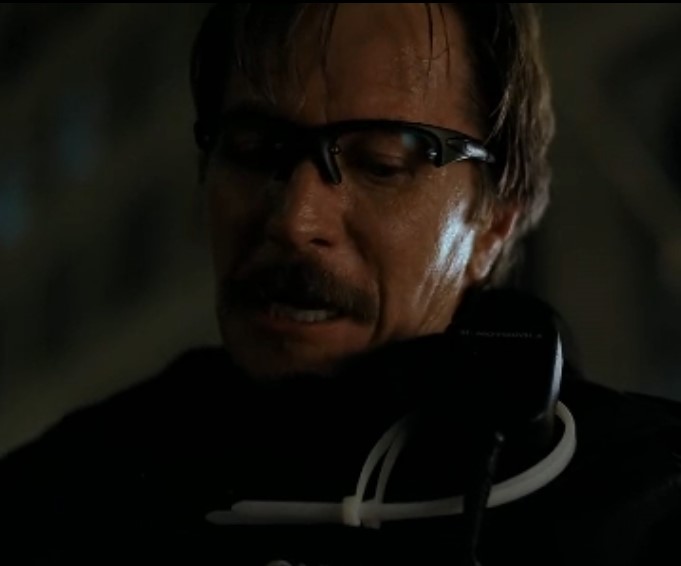
So I was pretty darn startled when, partway through the film, Gordon is killed. I was shocked. I was stunned. And although the large part of me didn’t believe it could be true, I also recognized that director Chris Nolan had already taken some liberties with canon and I couldn’t be TOTALLY sure that he wouldn’t make that big of a turn. A while later, Batman and Dent hatch a plan to trick the Joker into attacking a convoy. The plan works, the Joker winds up on the ground with a gun to his head, and the cop holding that gun whips off his mask to reveal Gordon, alive, his faked death revealed to be all part of the plan.
Gordon: I’ve got you, you son of a bitch. Me, in the back of the theater, screaming: YEEEAAH, YOU DO!!!
It is a testament to the love of my girlfriend at the time that, after I jumped and CHEERED in that movie theater, she still agreed to marry me. Someday I hope our son gets as thrilled at this scene as I am every time I watch it.
#4: You Are Who You Choose to Be (The Iron Giant, 1999)
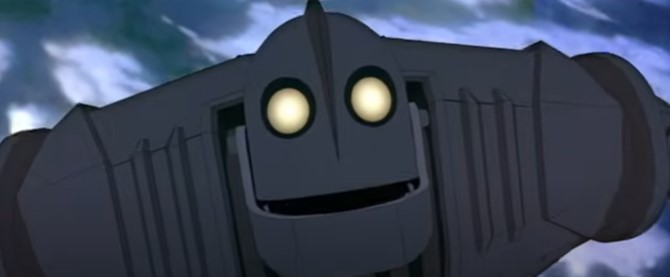
Let’s get this out of the way before we go any further: Hell YES, The Iron Giant is a superhero movie. A childlike creature of immense power comes to Earth from outer space and chooses to use his powers to help people. There is no adequate definition of the term “superhero” that can justifiably exclude Brad Bird’s gargantuan guardian. As if that weren’t enough, the Giant befriends a young boy, Hogarth, who teaches him about being human using what is arguably the greatest possible source material: Superman comic books. (The argument, by the way, is whether or not these are a better source than Charles Schulz’s Peanuts, but the movie is set in 1957 and Schulz’s greatest philosophical work was still ahead of him.)
Plus, this looks a lot better than painting a zigzag stripe around his midsection.
Lost on Earth and with no memories, the giant goes through the usual sort of mishaps that ETs usually get into, only with fewer Reese’s Pieces, while the military picks up on his trail and tries to chase him down. Late in the film, the Giant’s true nature is revealed: he was created by some distant alien civilization as a weapon. As he struggles against his own programming, a panicked government agent orders a nuclear attack on the robot, one that will destroy not only the Giant, but an entire town of innocent people. The Giant, however, overcomes his programming and remembers something Hogarth told him earlier in the film: “You are who you choose to be.”
The Giant makes his choice. He is not a weapon. He is not a gun.
He blasts into the sky to intercept the missile, choosing to sacrifice himself to save the town full of innocents, and in the last second before impact, he whispers the name that he has chosen.
“Superman…”
If you can watch this scene without tears, I don’t know if I want to talk to you.
You can’t tell me that Clark wouldn’t be proud to see this guy wearing his shield.
In this scene the Giant proves he understands sacrifice, he understands selflessness, he understands choosing to believe in the fundamental goodness of humanity. He understands what being a hero actually is.
He understands Superman.
A hell of a lot better than most other people, I would argue.
#3: Peter One, Peter Two, Peter Three (Spider-Man: No Way Home, 2021)
Tom Holland, as I’ve often said, is my favorite of the actors who have played Spider-Man on the big screen. But that doesn’t mean I don’t have a fondness for the other two, Toby Maguire and Andrew Garfield. And it was immensely satisfying to me to see the three of them share the stage together in the final act of Spider-Man: No Way Home. In this film, the MCU version of Spider-Man has screwed up badly, breaking a spell Dr. Strange was trying to cast to wipe memory of his secret identity from the public, and drawing in people from alternate realities, destabilizing the very fabric of the multiverse back before people were doing that every other week. The whole thing builds to a battle against the nastiest rogue any live-action Spider-Man has ever faced, Willem DaFoe’s Green Goblin, who ups the ante in this film by (last time I’m warning you against spoilers) murdering Peter’s Aunt May.
While the MCU never showed us Holland getting bitten by a radioactive spider or the death of Ben Parker, they found a different way to demonstrate Peter’s character development by spreading it across three films. Homecoming was about him learning how to be a hero. Far From Home was about him learning to be his OWN kind of hero, separate from Tony Stark. This film is about learning the COST of being a hero. It’s May’s death, not Ben’s, that really hammers that home for us all.
But Holland doesn’t have to learn this lesson alone, because the multiversal rift hasn’t only brought in villains. Holland’s Peter finds himself allied with his previous incarnations, Maguire and Garfield, each of whom has some baggage to bring to the table, and each of whom is essential to the full development of Holland’s character.
“Wait, you’re the youngest, why are YOU Peter One? This is worse than when Barry Allen called Jay Garrick’s universe ‘Earth-2’.”
While Holland wrestles with his own failures, he sees Maguire, who is implied to have found a sort of stability and love with his version of Mary Jane Watson. In Maguire, Holland sees that there is hope for the future, even in the wake of seemingly unsurmountable tragedy. Garfield, meanwhile, has tortured himself over the death of Gwen Stacy ever since the end of Amazing Spider-Man 2 and become a darker, more broken Spider-Man because of it. But in perhaps the greatest moment of this movie, Garfield saves the MCU version of MJ from suffering the same fate. The look of simultaneous anguish and relief on Garfield’s face is tectonic: he has atoned for his failure. He hasn’t failed again. In him, Holland sees the hope for redemption.
We should all have a moment where we can find that kind of peace.
When the girl who just FELL OFF THE STATUE OF LIBERTY has to ask if YOU’RE okay, it’s an emotional moment.
Seeing what the other two have gone through and how they came out the other side is perhaps the most important part of Tom Holland’s journey in this movie, guiding him to the new life he has to lead at the end with no family and no friends who remember his existence. He’s striking out on his own – lonely, yes, but with the knowledge that hope and redemption are real and possible. And no matter what movie he shows up in next or who directs it, if Tom Holland swings again, that’s the Spider-Man I want to see…the one shaped by the lessons of his multiversal brothers.
#2: Avengers…Assemble (Avengers: Endgame, 2019)
You want to know what makes Avengers: Endgame so great? You know what it does that so many other attempts at a “cinematic universe” (and even much of the MCU in the years since then) have failed at? Payoff. What’s the point in a cinematic universe if not to introduce long-term story threads that eventually are brought together in a satisfying way? Endgame pulled together the threads of eleven years of storytelling and almost two dozen movies to put together a finale that served as a powerful conclusion for every part of the Marvel Cinematic Universe, provided you pretended that there weren’t any TV shows that were related to it.
And the best part of that film, for me, was the final battle scene, probably the most thrilling such scene in the history of superhero movies. The Hulk has undone the “snap” from the end of the previous film, bringing back all of the people Thanos killed five years ago, and as he launches his attack on the broken Avengers, their friends start to filter in.
It starts with “On your left.”
We remember this signal from the Falcon – one of the lost – and the rest of the heroes begin to arrive. The Avengers who were dusted in Wakanda. The Guardians of the Galaxy, along with Spider-Man and Dr. Strange, brought back from the far reaches of space. The armies of Wakanda, the acolytes from Wong’s temple. The battlefield is populated with more heroes than we’ve ever seen in a superhero movie before, and Captain America kicks it off with the words that fans have been waiting a DECADE to hear:
Me, squeezing my wife’s arm: He’s gonna say it, HE’S GONNA SAY IT…
“Avengers…assemble.”
But even that wasn’t the greatest part of the scene, wasn’t? Oh, no, as fantastic as that was, there’s still one more bit of payoff to come, when Thor and Thanos grapple on the battlefield and suddenly the mad Titan is struck by Thor’s hammer Mjolnir, scavenged from the past along with the Infinity Stones. The hammer smashes into Thanos’s face, flying through the air, hurtling back to the hand that threw it…but if not Thor, whose hand is guiding it?
It returns to the hand of Captain America, and the movie theater EXPLODED. At least, the theater where I was sitting did. In all my life, I have NEVER heard such an outpouring of cheers and excitement from a movie audience as I did in that moment, and I seriously doubt I ever will again. This, my friends, this was payoff for the entirety of the franchise. As we all know, Mjolnir is enchanted, and can only be lifted by someone who is “worthy.”
“I KNEW IT!!!” Thor shouts.
We all did, Thor. We all did.
I mean, this scene was amazing, but you know the Iron Giant could lift the hammer too, right?
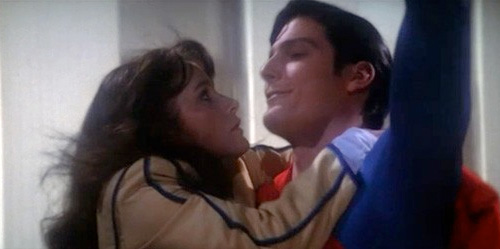
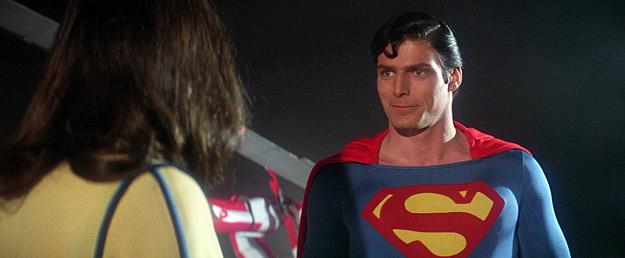
But my favorite scene, guys…my single favorite scene in superhero movie history, the scene I would ask to have playing on the screen if they were strapping me down on one of those tables from Soylent Green, comes from the first Richard Donner Superman movie. We’ve spent half the film watching baby Kal-El become Clark Kent, watching him grow up into Christopher Reeve, watching him shape the persona he’s going to wear as a mild-mannered reporter, but we have not yet seen HIM. We have not yet seen more than a glimpse of the title character. Until Lois Lane – of course – is involved in a helicopter accident. The whirlybird falls and Lois falls OUT of it, and it’s curtains for the Daily Planet’s star reporter.
Until she falls harmlessly into a pair of waiting arms.
This strange visitor, this proud figure in red and blue, lifts Lois in one hand and catches the helicopter in the other, and he reassures her that everything will be fine by simply saying, “I’ve got you.”
And Lois, flabbergasted, shouts, “You’ve got me? Who’s got YOU?”
How anybody can call Romeo and Juliet a love story while this scene exists in the universe is beyond me.
I think we take for granted, in superhero stories, the miraculous things that these characters are supposed to be capable of. We’ve seen so many movies, read so many comic books with people who can fly and shoot lasers from their eyes and walk through walls that we forget how astonishing these things would be in the real world. But Superman was the first movie to attempt such a thing on this scale, and in-universe, it’s something that has never existed before. Up until this point, the world of this film is ostensibly our own. The astonishment that Margot Kidder brings to that moment is absolutely perfect, as is Christopher Reeve’s reaction. He gently places her (and the helicopter) back on the roof, but before he can leave, Lois asks him who he is.
And he gives the only answer that matters:
“A friend.”
There are two things, I think, essential to the character of Superman. One is the protector, the defender, the man who will stop at nothing to save the lives of everyone around him. The Iron Giant showed us that side of Superman. The other side, though, is the man of infinite compassion and kindness, a belief in the better angels of human nature if only there is someone to guide them. Superman is the hero who never gives up on anyone, even his bitterest enemy, because somewhere inside of them he KNOWS there is a flicker of good waiting to be fanned into a flame. Batman tries to strike fear into the hearts of criminals. Superman is there to show us all that there is a better way.
And when he looks at you like this, can’t you actually BELIEVE it?
I’ve got high hopes for James Gunn and David Corenswet, but it’s hard to believe that anything they can do could ever capture that essence as simply and perfectly as the two words, “a friend.”
Blake M. Petit is a writer, teacher, and dad from Ama, Louisiana. His most recent writing project is the superhero adventure series Other People’s Heroes: Little Stars, volume one of which is now available on Amazon. You can subscribe to his newsletter by clicking right here. Next time: his five favorite McDonald’s breakfast sandwiches! (Spoiler alert: steak, egg, and cheese bagel.)
If there’s one thing you can say about fandom, it’s that all fans of every stripe want the same thing: more. If we love a TV series, we want movie spin-offs. If we love a comic book, we want that hero to appear in multiple titles. If we love football, we feign interest in the XFL or USFL until August, because at least it’s something. Whatever it is fans want, the unifying element is that everybody wants more of it.
The problem is that stuff takes time. The average TV season lasts for 13 episodes these days (sometimes 22, if you’re lucky), leaving well over two thirds of a year with no new content. Movie sequels can take from years to decades, and sometimes never happen at all no matter how badly you want them. Waiting for new books is a crapshoot – if you’re a Stephen King fan you’ll have three new novels to read by the time you get home from Burger King, whereas George R.R. Martin readers will have to inherit the fandom from their grandparents before they get any new content. Even comic books, which usually have a pretty standard schedule of once or twice a month, take you ten minutes to read and then you’re stuck sitting around waiting for the next installment.
Efficiency is the only reason the man on the left has a higher body count.
So in order to satiate the thirst of fans for “more,” something marvelous has happened. “Extended” Universes. Novels based on movies, comic books based on novels, TV shows based on comics, movies based on TV shows. There’s a weird, incestuous spiderweb of media that springs up around any sufficiently popular franchise, and it’s been happening for ages. Back in 1942 George F. Lowther wrote The Adventures of Superman, a novel based on the world’s most popular comic book character who, at the time, was only four years old. In 1910, Thomas Edison produced a short film based (very loosely) on Mary Shelley’s Frankenstein. Hell, way back in 1615, Miguel de Cervantes published the second volume of Don Quixote largely to spite an anonymous writer who, using the pseudonym “Alonso Fernandez de Avellaneda,” released his own unauthorized sequel to the first book, something that would have brought down a legion of Disney-owned lawyers were anyone to try that today. The point is, fans have been greedy for a long, long time.
Pictured: More.
The great thing is, if you love Star Trek and can’t wait for June 15 and the season premiere of Strange New Worlds, there are literally hundreds of novels, comic books, and video games you can consume to get your fix. And some of them are really good. And some of them have very devoted fans, and some of them have wonderfully complex and entertaining lore and mythologies all their own.
And this is where the problem comes in. When extended universes are really popular, a sort of strange conflict begins to arise when the time comes to figure out what is and what is not canon. What’s “official” to the main universe that you’re enjoying? What “counts” and what doesn’t?
It used to be relatively simple: the medium that birthed the franchise was king, and everything else could be a fun diversion, but was not considered relevant to the creation of a new “official” installment. It didn’t count, it wasn’t real, it was “Fiction’s fiction.” Because of this, at the time, these expanded works didn’t usually do anything that would have permanent repercussions to the main story. Sure, there were Star Wars comics while the original trilogy was being produced, but there was never any real danger of Han Solo dying because Lucasfilm needed him for the next movie. This did produce some “funny in hindsight” moments when early writers teased a Luke/Leia relationship because they didn’t know yet that the two of them were brother and sister. Of course, neither did George Lucas, so who can blame them?
It was Star Wars, I think, that started to change things for these extended worlds. In the early 90s, it had been years since Return of the Jedi and there did not seem to be any intent to make more movies, so a plan was hatched to continue the universe via novels and comic books. The first Timothy Zahn trilogy of novels introduced the new big bad, the fandom-beloved Grand Admiral Thrawn, while Dark Horse Comics’ Dark Empire series brought Emperor Palpatine back from the dead by revealing he had the ability to transmit his mind into cloned bodies he had ready for just such an occasion. With the success of these stories, the Star Wars universe grew exponentially, with hundreds of interwoven stories introducing new characters, heroes, villains, planets, and alien species that were as thoroughly entertaining as anything the fans had come to love in the original trilogy. Even once movies were being made again, films that sometimes contradicted elements of the extended universe, the creators did their best to pivot, explain away inconsistencies, and incorporate “official” elements into their own world. And for the most part, it worked.
Geeks in the 90s were required by law to read these books 74 times.
Then Disney bought Lucasfilm and designated everything except the six existing movies and Clone Wars TV series to be non-canon. Actually, they used the term “Star Wars Legends,” because that way they could keep reprinting and profiting off the work while usually failing to pay the creators any royalties, which is a different rant I’m not going to get into right now. There would still be an extended universe, of course, but now they were going to produce it themselves, with books, comics, and video games tied to the new “official” canon, and ostensibly, those works would be considered canon as well. So far it seems to have worked out, but that doesn’t mean I doubt for a second that Kathleen Kennedy would make a movie that contradicted Marvel Comics’s War of the Bounty Hunters series if she so felt the urge.
My favorite “Star,” Trek, has had its own issues with extended universes, particularly in the 80s when DC Comics held the license. Following Star Trek II: The Wrath of Khan, DC began publishing new stories assuming a status quo as it was at the end of that movie: Admiral Kirk commanding the Enterprise after the death of Spock. Then came Star Trek III: The Search For Spock, in which Spock…y’know…un-dies. Despite the fact that the movies clearly take place right after each other, chronologically, the comic writers wrote a story that dovetailed their few years of adventures into that movie best they could, then began a new status quo. The Enterprise was destroyed, so Kirk took over command of the Excelsior for reasons, while Spock became captain of a science vessel and had his own adventures. Then Star Trek IV: The Voyage Home further complicated things with a story that clearly happened immediately after the events of the previous film and did not fit the comic book canon in any conceivable way. The comic book writers flailed for a while until DC got the rights to do an ongoing series of the then-new Star Trek: The Next Generation series, at which point they rebooted the comic starring the original crew so it could start with a new first issue the same month that TNG #1 came out, and then they just pretended those other stories they told never happened.
Trek got better in the late 90s and aughts, taking a cue from Star Wars and moving into stories based on franchise installments that seemed truly “over” and therefore safe to expand upon. There was a series of novels following the Deep Space Nine characters after the conclusion of their show, another with the adventures of Captain William Riker on the Titan following the final TNG movie, and even some series featuring mostly-new casts like Peter David’s New Frontier or the Starfleet Engineering Corps books. When the J.J. Abrams films brought Trek back to the screen, it was no problem for the extended universe, since they explicitly took place in an alternate timeline. In fact, it just gave writers a whole new universe to play around in. Modern Trek does have a few clashes, though: IDW Comics (who currently holds the license) recently began an initiative to create a more tightly woven universe through a relaunched Trek series and its Defiant spin-off, both of which are good comics, but which feature versions of Data and Beverly Crusher that seem to flat-out contradict the canon of Star Trek: Picard, which seems like a bizarre choice.
One of these things is not like the others…
The “official” continuation game has been played with more and more franchises in recent years. Buffy the Vampire Slayer and Firefly continued their respective universes in comic books, while Smallville – a TV show based on a comic – had a fairly lengthy “Season 11” series that followed that show: a comic book based on a TV show based on a comic book. Then there was the film adaptation of Stephen King’s The Dark Tower, a desperate effort to squash the material of seven books into 95 minutes (that’s seven Stephen King novels, most of which are large enough to qualify for their own zip code). While most fans were disappointed in the result, the sting is mitigated slightly if people try to view the film not as an adaptation of the books, but as a sequel to them. That probably doesn’t make any sense if you haven’t read the books, but just take my word for it.
That brings us to the issue when printed media are translated to the screen. Books were first, gloriously first, but if we’re being honest here, the general public often accepts film or TV adaptations as more official. Just talk to any devotee of L. Frank Baum’s The WonderfulWizard of Oz and its subsequent sequels about how much you love the Ruby Slippers and watch them die a little inside. James Bond was created as a hero for novels and short stories, but the films are obviously what most people are familiar with, and those are highly contradictory. Some of the movies are based on Ian Fleming’s stories, some of them use the titles of stories but very little else, and others are cut from whole cloth, but there’s just no way to pretend they share a canon. Most Bond fans don’t care, of course, and modern fans tend to see the movies as the “real” James Bond more than the novels that gave him birth. (He’s a more likable character in the movies, to be fair, so this is not necessarily a bad thing.)
As for comic books, there have been comic book movies for a very long time, but those have historically been ignored by the comics themselves. The first Batman serial from the 40s, for example, portrayed him as a government agent beating up spies, something that doesn’t sync with any canon comic book I can think of. Even really popular films, like the Christopher Reeve Superman or Tobey Maguire Spider-Man, had a negligible effect on the comic books. Then came the Marvel Cinematic Universe, and boy, things changed. With the gargantuan success of the MCU, there are now effectively two “official” Marvel Universes, and the cinematic one is by far the one that’s more recognizable to the general public. The MCU was the first time anyone had ever tried to create so intricate a universe of interwoven films and TV shows, something that made it feel more “real” than that scene in Batman Forever where Bruce Wayne casually mentions Dick Grayson’s circus is “halfway to Metropolis” but otherwise gave no indication of anything beyond the boundaries of the film. The Marvel Studios movies and shows all linked to each other and all mattered to each other, just like the comics, and the “cinematic universe” model is something everyone has been trying to replicate ever since.
And of course, occasionally elements in these extended universes become popular enough that they can cross over into the “real” worlds. Harley Quinn was created in Batman: The Animated Series and was such a hit that she joined the official comic book universe, then spread out into live action. Superman’s pal Jimmy Olsen, almost as integral a character to the mythos as Lois Lane or the Kents, made his first appearance on Superman’s radio show. The aforementioned Batman serial, which is goofy and doesn’t feel like the same character at all, is responsible for the creation of the Batcave. And even though the Star Wars Legends stuff is no longer canon, Disney is starting to allow elements of that world to leak into the “official” world, such as bringing in Timothy Zahn’s Thrawn character and allowing the resurrection of Emperor Palpatine – although to avoid being accused of copying the Dark Empire comic book, they cleverly neglected to give any comprehensible reason for his return whatsoever.
“I’m canon now, bitches!” –Thrawn, probably
The original question was that of what is “real” in these different universes. The newfound ubiquity of the multiverse concept in storytelling makes that easier. (It’s an old concept, I know, but in recent years it’s really experienced a boom in popular culture.) Marvel officially recognizes just about every version of its characters as “real” in one corner of the multiverse or another, with stories like Spider-Verse (the comic book) and Into the Spider-Verse (the movie) bringing them all into play together. DC has a similar policy and has officially declared that the Christopher Reeve Superman movies and Michael Keaton Batman movies are set in the same universe, although whether that will be contradicted by the upcoming Flash movie remains to be seen. The truth is that the people writing any version of these IPs in any medium will pick and choose those elements that they need to make their story work, and as that can be confusing if a fan is trying to reconcile everything, this is probably a good reason not to try that. What’s “real”? What “matters”? Whatever you need for the story you’re trying to enjoy right now.
The rest of it?
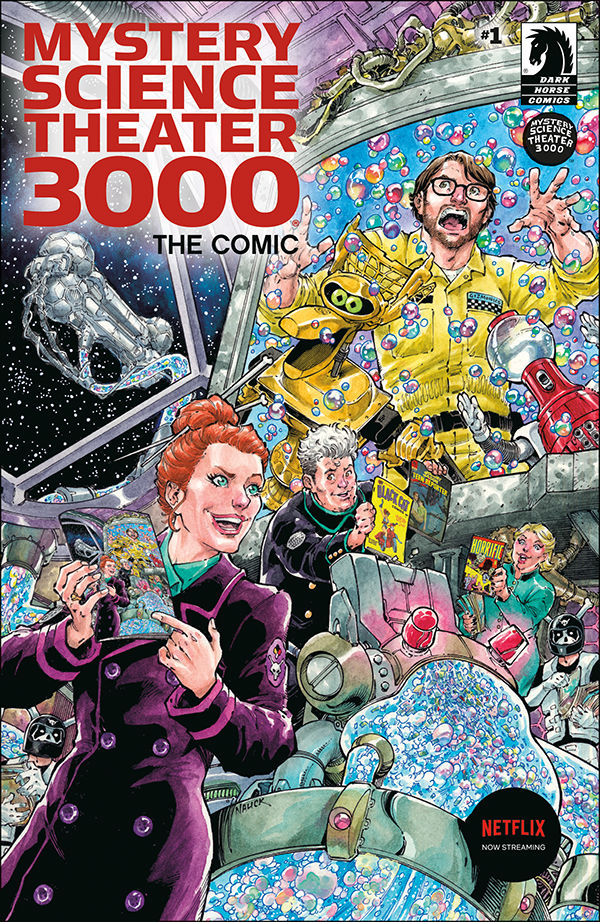
Just find that corner of the multiverse where a guy named Joel told us to repeat to ourselves “It’s just a show, I should really just relax.”
Yep. Those guys got a comic book, too.
Blake M. Petit is a writer, teacher, and dad from Ama, Louisiana. His current writing project is the superhero adventure series Other People’s Heroes: Little Stars, a new episode of which is available every Wednesday on Amazon’s Kindle Vella platform. One of his favorite Star Trek novels is Federation, by Judith and Garfield Reeves-Stevens. Don’t try to read it and then watch First Contact. It doesn’t work.