Geek Punditry #172: Creating a Character

April is a little early to start talking about next year’s Oscar race, especially for somebody like me who – famously – does not care about the Oscar race. However, something interesting cropped up in the news cycle over the last few days that may potentially get me interested in the winner of a specific category for the first time in quite a while. This fella here is James Ortiz.
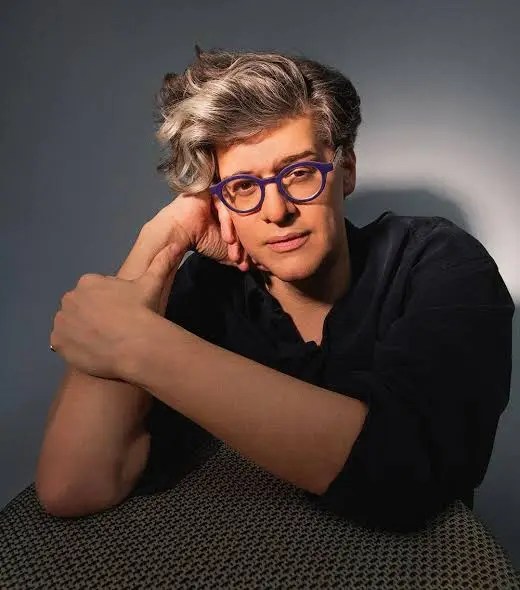
Some Jameses go by “Jimbo.” I just get the feeling he’s not one of them.

You probably don’t recognize his face, but he’s in one of this year’s biggest hits, Project Hail Mary. Ortiz is the puppeteer behind Ryan Gosling’s co-star, Rocky.
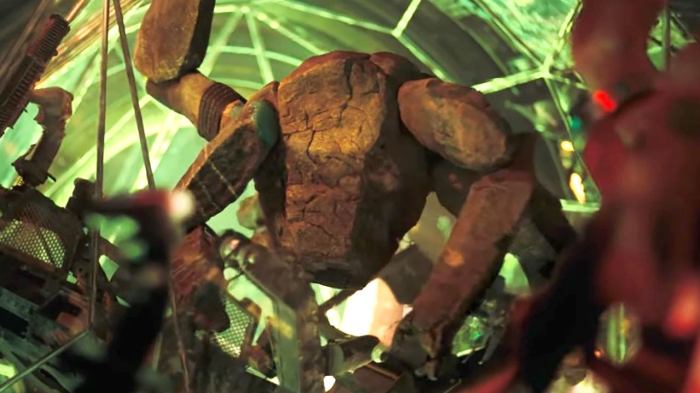
Rocky might, though.

Yeah, puppeteer. That little dude wasn’t CGI. It was an actual, physical puppet on-set, albeit with a few computer “enhancements.” But it was really there, interacting with Gosling, and crawling into the movie theater to reach into your chest and steal your still-beating heart.

Evidently, according to Oscar rules, Ortiz’s work is eligible for a nomination in the best supporting actor category in next year’s Academy Awards, and Amazon-MGM has made it clear that they intend to submit him for consideration. Finally, something about these awards is interesting again. You see, one of the (many) reasons I stopped caring about the Oscars is this feeling that they ignore large swaths of movies that don’t fit into their hoity-toity aesthetic, in particular deserving genre films. No puppet character – or any voice performance, for that matter – has ever been nominated for an acting award in the history of the Academy, despite several performances that have been sincerely deserving.

I’m not saying this to denigrate anybody who HAS been nominated. I’m not pointing to anybody specifically and saying “this person didn’t deserve the nomination, it should have been that voice actor instead.” I’m saying that in the 98 year history of the Academy of Motion Picture Arts and Sciences, you CANNOT convince me that there has NEVER been a voice acting performance that is worthy of at least a NOMINATION. 
A worse snub than Dicaprio in The Aviator.

If Ortiz gets the nod, that would be seismic. It would be the kind of thing that gets people’s attention, and the Academy wants that. But the thing is, he shouldn’t get a nomination just because the Academy is trying to get viewers, he should get it because he completely deserves it. Ortiz was the on-set puppeteer for Rocky and did the performance with the expectation that his voice would later be dubbed over by a big-name actor who hadn’t been cast yet. His on-set performance was so perfect, however, the directors decided to keep him for the vocal performance as well. And if you’ve seen Project Hail Mary, you know that the movie just flat-out would not work if the audience didn’t believe in and fall in love with little Rocky. It wasn’t just the vocals, but the motions, the mannerisms of the character. Ortiz created an entire living, sentient being that held his own with one of the movie industry’s top talents and the two of them made each other better. That’s what acting IS, whether you’re doing it with your own body or with a body made of rods and felt. 

It’s going to be an uphill battle, of course, because as I said, the Academy has traditionally shunned movies like this in all but the technical categories (things like special effects, makeup, costume design, etc.) There have, of course, been some few instances of genre films getting mainstream recognition. Sinners – a vampire movie – racked up a lot of nominations last year, including Best Picture, and it took home the awards for Best Actor, Original Screenplay, Cinematography, and Original Score. But the acting award for a vampire movie still went to Michael B. Jordan for his (admittedly, deserving) performance of a pair of human twins. In 2017 The Shape of Water took home Best Picture, as did Lord of the Rings: The Return of the King back in 2003, although both of those were shut out of the acting categories. 

It’s that last part that bristles. Sure, these movies did well, but even though Return of the King took home awards for best picture, director, screenplay, and several others, not a single acting performance was even nominated. That’s absolutely absurd. 

The other thing that’s going to hurt Ortiz’s chance, besides the general Academy Attitude (Acadetude?) towards genre films, is the fact that Project Hail Mary came out very early in the year. By the time awards nominations are getting seriously discussed nine or ten months from now, dozens of other movies will have been released and have heavy Oscar pushes behind them, and it will be much easier for the Academy to ignore a film that doesn’t have that kind of recency bias. So as magnificent as it would be to see Ortiz get the nomination, I am not holding my breath.

Others have suggested that if he doesn’t get a competitive Oscar, the film could receive a “Special Achievement Award,” which is a rarely-given trophy the Academy hands out for groundbreaking work that doesn’t necessarily fit into any other category. It was first handed out in 1972, in an era where modern sound and visual effects were in their infancy and new innovations and technologies were beginning to be developed at a rapid pace. However, the last time a Special Achievement Award was given was back in 1995, for the first Toy Story film, ushering in the era of computer animation. That also feels unlikely. Besides, Ortiz’s performance isn’t a technical game-changer – puppeteering is an ancient art. He was just REALLY FREAKING GOOD AT IT.

This brings me to my larger point – there is a whole section of acting that the Academy has ignored for its entire existence, and it’s time to change that. After all this time, there needs to be a category for – and this is the best term I can come up with for it right now – Best “Created Character.” Vocal performances. Motion capture. Puppeteering. Instances in which a character is crafted in a non-traditional acting performance. These aren’t new concepts – even motion capture has been around for decades at this point – so why aren’t they recognized?

In the alternate universe in which I am in charge of the Academy, instituting this award will be the second thing I do, after installing a trap door under the microphone for anyone who starts yammering about politics in their acceptance speech. This award would be given to an individual or to a group of people who contribute to the creation of said character, with the exact names included decided at the discretion of the film’s producers when submitting for the award. In general, though, this would be used to recognize the vocal performer, on-camera performer, and technical creators of the character, whether that’s one person or an entire team. (It will pointedly NOT be given out for any AI “creations,” as all of the disciplines I mentioned consist of actual human skill and talent, whereas an AI character would require typing in prompts until the computer remembers how many fingers a human being is supposed to have.)

Let me explain. Had this award existed in 1979, when The Muppet Movie came out, Jim Henson could have been nominated for Kermit the Frog. He likely would have been the only person named in the nomination, as he was Kermit’s vocal performer, puppeteer, and designer. For the 1986 version of Little Shop of Horrors, on the other hand, the nomination for Audrey II would have gone to Levi Stubbs, who voiced the plant, and be shared with the principal puppeteers for her. (Wikipedia lists 21 separate individuals as being “principal puppeteers” in this case. That’s a little extreme, but the point is valid.) The nomination would also have been shared with Lyle Conway, who designed the puppet, and the fabrication team who actually built it. 
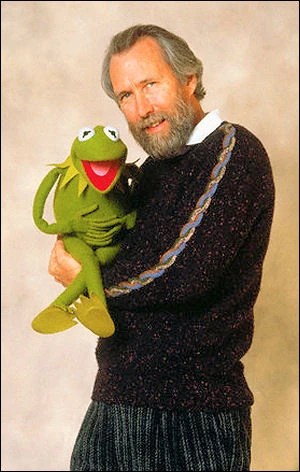
Of course, if there’s only one trophy, they would have to work out some sort of custody arrangement.

In traditional animation it’s a little simpler. Let’s use 1991’s Beauty and the Beast – the first animated movie ever to get an Academy Award nomination for Best Picture. In most major animated films, each main character has a lead animator or animation team assigned to them, so that person or people would share the nomination with the character’s voice actor. The nomination for the Beast would have gone to voice actor Robbie Benson and lead animator Glen Keane, whereas Belle would have been shared between voice actor Paige O’Hara and animators James Baxter and Mark Henn. 

Then there’s motion capture, the (relatively) new kid on the block, which is an interesting kind of marriage between puppeteering and animation. In mo-cap, a performer’s motions and mannerisms are captured by computer and used as the model for the animated character. The performer may or may not also provide the character’s voice. The most legendary example of this is Andy Serkis, who performed Gollum in the Lord of the Rings films, and is often cited as the most egregious oversight in the trilogy’s many, many acting snubs. Serkis was both the on-set performance actor and the voice actor for Gollum, and in my category would share the award with digital “puppeteers” Jason Schleifer and Bay Raitt, who used Serkis’s performance to create the animated character. It would be similar for a character like Rocket Raccoon from the Guardians of the Galaxy movies, where the award would be shared between the digital creators (I wasn’t able to find the names of the individuals, but the effects company who worked on him in the first film was called Framestore), voice actor Bradley Cooper, and motion capture performer Sean Gunn. 
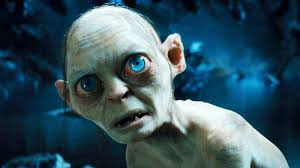
The worst Oscar snub since — no, really, I mean it this time.

Amusingly, my own rules don’t specify that the performer be human, which would make a character like Krypto from Superman and this summer’s Supergirl also eligible. The puppeteering team would have to share the award with James Gunn’s dog Ozu, who was the model for Krypto. I mention this mainly because I find the idea of Gunn walking onto the Academy Award stage carrying his little hyperactive dog to be absolutely adorable.

Is the creation of this new award likely? To be honest, probably not. But it’s not impossible, either. After all, the Academy announced last year that it will introduce a new competitive category, “Achievement in Stunt Design,” beginning with the 2028 awards ceremony. That’s right! Stuntwork, one of the most fundamental elements of filmmaking since its inception, will begin getting recognized at the 100th Academy Awards! And if it took a mere  century for stuntwork to get the recognition it deserves, how far behind could my little idea possibly be?

I don’t really expect the Academy to make these changes, of course. And I don’t really hold out a lot of hope for Ortiz to get the nomination he deserves. But there’s always a chance, right? I suppose I agree with Ron Swanson: “I still think awards are stupid, but they’d be less stupid if they went to the right people.” 

Blake M. Petit is a writer, teacher, and dad from Ama, Louisiana. His most recent writing project is the superhero adventure series Other People’s Heroes: Little Stars, volume one of which is now available on Amazon. He’s also started putting his LitReel videos on TikTok. The fact that Carroll Spinney went recognized for his tearjerker performance in the 1985 masterpiece Sesame Street Presents: Follow That Bird will never cease to pain him.

Geek Punditry #126: Whomsoever Holds This Hammer…

A few days ago, a meme I’ve seen several times floated across my Facebook page again. You’ve probably seen it; it asks one of the classic geek questions: “Who is a non-Marvel character that you know is worthy of lifting Thor’s hammer?” I like this a lot more than the usual “Could so-and-so beat Thor in a fight?” type of question. The question of which fictional character could win a fight with any other is pointless, because the real answer is always the same: whoever the writer wants to win.

But a question of worthiness is different. If a writer wants us to believe that a character is worthy of Thor’s power, we have to be persuaded first. And the person who created this particular iteration of the meme already gave us the perfect answer:

More like Ernest P. WORTHY, amirite?

I don’t know the person who made this meme so I can’t say if they meant this as a joke or not. I’m going to assume they didn’t, because Ernest P. Worrell is actually the perfect example of a character who demonstrates worthiness. Let’s establish, for a second, what “worthy” actually means. Neither the comics nor the movies ever give any SPECIFIC criteria, but there are a few things I think we can agree upon. The stipulations – whatever they are – were created by Thor’s father Odin, and we can assume that courage is one of them, as is a certain warrior’s instinct. The other one can be extrapolated from the first Thor movie: Thor is cast to Earth and deprived of his power because of his arrogance. He doesn’t regain his power until he learns to put it aside and think of others before himself. Therefore, we can reasonably assume that selflessness is the last criteria. 

Now let’s look at Ernest. Whether it’s when he goes to camp or jail, when he was scared stupid or when he had to save Christmas, the predicaments he winds up in are often tied up in his desire to help other people. Wayward youths, his fellow bank employees, non-wayward youths being pursued by monsters, Santa Claus – Ernest fights for other people again and again. A warrior’s instinct? Go back and watch Ernest Goes to Camp again – he lines up to fight the evil land developers (it was the 80s, 97 percent of movie villains were evil land developers) even after they beat the stuffing out of him the first time. As for courage…well, again, we turn to Ernest Goes to Camp, where he passes the Native American “Path of the Brave.”

If he had faith in The Great One, the knife would not cut him.
If he had courage; true courage, the rock would not break him.
If the brave was pure of heart, the arrow could not catch him.

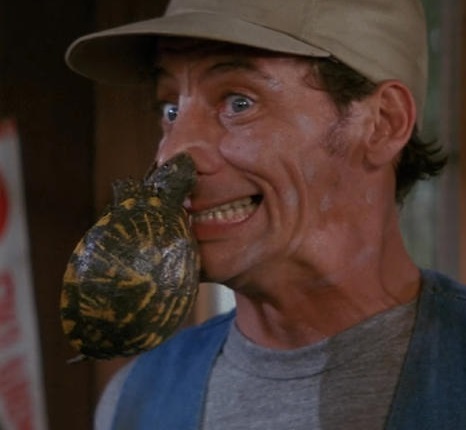
“Wait a second though, Blake,” you’re saying, “You think he’s BRAVE? Ernest freaks out all the time. Remember how he panicked when that turtle bit his nose?”

“This never happens to Beta Ray Bill, does it, Vern?”

My friends, courage is not the LACK of fear. It is the ability to OVERCOME fear. Does Ernest get scared? Sure. But he still STEPS UP, EVERY SINGLE TIME. So when Ernest tries to pick up Mjolnir, he’d do it on the first try. Then he would drop it, stumble, fumble around, accidentally summon up a cyclone, and probably set his hat on fire with an errant lightning bolt, because he’s still Ernest. But despite all of that, whatever danger he was facing, he would somehow still triumph in the end, because his heart is simply too pure to give up.

But as always, this meme gets me thinking about who else might qualify. Other than Ernest, what other fictional characters are worthy of lifting Mjolnir? I’m going to skip over anyone who has been shown, canonically, to be worthy: that would include Captain America, Vision, Storm of the X-Men, Beta Ray Bill, Superman, and Wonder Woman. (I’ve written about crossovers before, right?) I’m sure there are others who’ve lifted the hammer in some continuity or other, but I don’t have a comprehensive list. And since the meme specifies “non-Marvel,” I’m not going to go into the pages of dissertation I could write arguing that Ben Grimm or Peter Parker should be worthy. But let’s look into other fandoms, shall we?

“I’m comin’ with you, Mr. Thor!”

I’ll start with probably the least-controversial choice I’ll have on this list: Samwise Gamgee from Lord of the Rings. If you’ve never read or at least WATCHED Lord of the Rings (in which Sam was played by Sean Astin), well…what century are you from? Come on, get with the program. But lemme tell you about Sam. Sam is a gardener – simple, humble, and with no great ambitions towards adventure or danger. But when his friend Frodo is tasked with the job of carrying the Ring of Power to Mount Doom, the only hope to destroy the ring and prevent the rise of the evil Sauron, Sam joins the Fellowship accompanying him without hesitation. When the rest of the party is separated and Frodo attempts to continue the quest without them, Sam refuses to allow him to go alone. Sam has no desire for glory or power, and it is arguable whether he would even make the journey for the good of all Middle-Earth, which is at stake. But for the sake of his friend? Samwise will do anything. Cross a continent on foot. Battle an enormous spider. Climb a raging volcano with the exhausted Frodo on his back. There is no character in all of Tolkien more unflinchingly loyal and brave than Samwise Gamgee, and you can’t tell me for a second that Odin would disagree. 

Something about those eyes. Those are WORTHY eyes.

Next, I would like to nominate Marcus Cole of the epic science fiction series Babylon 5. Marcus, played by Jason Carter, was a member of the Rangers, a secret society of human and Minbari warriors tasked with maintaining peace across the galaxy. As a Ranger, Marcus is a skilled fighter and never hesitates to go into battle against any manner of otherworldly threats. He also never displays any particularly selfish qualities, but it’s the way his story ends that I believe truly marks him as worthy of Mjolnir. I’m about to spoil the end of Babylon 5 season four, so you should watch the series. It’s currently available on Tubi for free; you go watch the first four seasons – I’ll wait here until you get back. 

Done? Great. So as you just saw, Marcus quickly fell in love with Susan Ivanova, second-in-command of station Babylon 5. Ivanova, however, wasn’t interested in romance. To be fair, there were wars and stuff happening, she had a LOT on her plate, so she would rebuff Marcus’s advances. At the end of the season, though, Ivanova is mortally wounded. Marcus, however, sees a chance to save her: in an earlier episode, the characters had come into possession of an alien device that could heal virtually any wound, cure any disease, basically bring someone back from the brink of death – but to do so required the transfer of life-force from another being. In other words, you had to kill one person in order to save someone else. Marcus hooks Ivanova up to the machine and hooks himself up to the other end, sacrificing his life to save her. If his other feats throughout the series hadn’t already proven him worthy of carrying Mjolnir, his final act of courage and selflessness more than does the trick.

Let’s see him science the shit out of Mjolnir.

Staying in outer space, let’s turn our attention back to our own solar system, particularly the surface of Mars, where Mark Watney of The Martian has proven his worth. In the novel by Andy Weir and the film adaptation, where he is played by Matt Damon, Watney is an astronaut stranded on Mars when the rest of his crew escapes and heads back to Earth. The others don’t leave Watney deliberately – they think he was killed by the same storm they are attempting to flee – and by the time they realize he’s still alive, there’s no way for them to go back and get him. On Mars, alone, Watney has to figure out how to survive on limited supplies long enough for NASA to arrange a rescue. 

Both the book and the movie are a joy to me. For one thing, it’s a rare story in which there is no traditional antagonist. Literally the entire planet Earth bands together to save the main character; there’s no evil in this story. That’s so damned refreshing. The battles Watney has to fight are against Mars itself, trying to find ways to create food, provide power, and ultimately make his way to the site of another rocket that can blast him into orbit for his rescue. And although Watney (not unlike Ernest) often displays momentary panic following his many, many setbacks, he also overcomes that panic every single time, putting his brain to work and figuring out one unbelievable way to survive after another. He never backs down and keeps fighting until he finds a way to safety. 

As the entire plot of the story is Watney trying to stay alive, it’s a little harder to prove his selflessness. However, from the very instant he is stranded on Mars, Watney makes it a point to say that he doesn’t blame the rest of his crew for leaving him behind. He never shows any anger or resentment against them for his predicament, and when the rescue attempt boils down to his crew basically giving up another year and a half of their lives to turn back to Mars and save him at great risk to themselves, Watney shows willingness more than once to die on Mars if that’s what it takes to protect the rest of the crew. Could he lift Mjolnir? I posit that he could. Tragically, if he HAD the hammer, he could have prevented the storm that stranded him on Mars in the first place. 

With four characters down, I turned to my wife. “Erin, who else could lift Mjolnir?” I asked.

“D’vana Tendi,” she said without hesitation.

Go ahead, speak it into the Horn of Truth.

“Duh,” I said, berating myself for forgetting my favorite character from Star Trek: Lower Decks.

Tendi is an Orion, a member of a species who, prior to Lower Decks, were known for their pirate captains and slave girls in other Star Trek series. Not exactly an obvious choice for lifting Mjolnir, of course. But from the first time we see her, Tendi defies what we think of Orions as being. She’s not a pirate or a slave – she’s a scientist. She gleefully loves science, she dives into it with the sort of joy and excitement that Thor himself carries into battle. Tendi sees a problem as something to defeat with her brain rather than her fists, but it’s a battle nonetheless.

That should not, however, give you the impression that she COULDN’T fight. Tendi has forsaken the warrior aspect of her culture, but she was still brought up in it. She holds the title “Mistress of the Winter Constellations,” and it is a title that strikes fear in her enemies. Tendi is fierce in battle when the situation calls for it, then turns on a dime to being the sweet, good-natured Starfleet Officer she truly WANTS to be. 

As for selflessness, at the end of season four of Lower Decks (it is apparently my day for spoiling the fourth seasons of science fiction TV shows), with her ship and her crew on the line, Tendi makes a deal with her family. In exchange for their help, she will leave Starfleet and rejoin the family syndicate, taking her place as Mistress of the Winter Constellations once again. She’s willing to leave everything and everyone she loves in order to save everything and everyone she loves. Thor had to learn to let go of his arrogance – I don’t know if Tendi would even recognize it to begin with.

“Ferb, I know what we’re gonna lift today!”

“Phineas and Ferb,” Erin continued, and good grief, how did I forget THEM? I talked just last week about how much I love Disney’s Phineas and Ferb cartoon and how excited I am that it’s coming back, but somehow it passed right by me. Phineas and Ferb are stepbrothers who refuse to waste a single moment of their summer vacation, spending their time creating incredible inventions and having amazing adventures with their friends. Giant rollercoasters, life-size board games, soccer pitches that defy the laws of physics, portals to Mars (if only Watney had known they were on their way) – nothing is beyond the two of them. And despite the fact that many of their creations would be objectively terrifying to anybody else, they never show a moment of fear. Is it truly courage if you’re so pure of heart that it honestly never occurs to you what what you’re doing COULD be dangerous? I’m not sure. But at the very least they’re aware of the CONCEPT of danger – they always wear helmets and safety gear when appropriate. 

As for selflessness – the very few times Phineas displays any sort of concern over the course of the series usually come when he’s worried about other people. And more than once, the brothers put aside their plans to help someone else in need, whether it’s protecting Baljeet from a bully (this is before Buford joined the gang), getting their parents’ favorite band back together to create a romantic evening for them, or constructing an entire haunted house to scare away Isabella’s hiccups (it doesn’t work – Isabella is so thrilled that Phineas is paying attention to her that she never feels a moment of fear), even their grandiose plans will take a backseat to the needs of the people they care about. 

Unlike any of the other characters on this list, it should be noted, Phineas and Ferb actually met Thor once, in their Mission Marvel special. In that episode, though, the Marvel heroes were powerless and Mjolnir spent most of the episode stuck in the middle of Manhattan collecting parking tickets, so the question of whether the brothers could lift it never comes up. But if it had, I maintain that they could. 

“They’d probably build something to help them hold the hammer at the same time,” I tell Erin.

“Like a cupholder,” she says.

People, get you a partner who understands you the way mine understands me. 

There you go, friends – seven characters who have demonstrated the courage, fearlessness, and purity necessary to lift the mighty Mjolnir. This should not be considered a comprehensive list, mind you. It’s just the first few characters that came to mind when I thought about it (and asked my wife for her opinion), so there are certainly others. I heartily invite your own suggestions, along with a brief explanation of why you think they’re Mjolnir-worthy. There’s nothing nerdier than talking about this kind of stuff with other fans, and that’s the kind of nerdity I like. 

Blake M. Petit is a writer, teacher, and dad from Ama, Louisiana. His most recent writing project is the superhero adventure series Other People’s Heroes: Little Stars, volume one of which is now available on Amazon. You can subscribe to his newsletter by clicking right here. He’s also started putting his LitReel videos on TikTok. He would like to believe that he could lift Mjolnir himself, if given the chance, but he was nervous to take his son on the Ladybug ride at City Park, so…

Geek Punditry #110: Playing Favorites With Love Stories

It’s been a while, but it’s time once again for Playing Favorites! Yes, Playing Favorites, that Geek Punditry mini feature in which I throw out a category and my pals on social media suggest related topics wherein we pick some of the best of the best. With Valentine’s Day looming, this week I asked people to share ideas for love story topics. So grab that special someone and let’s get to it! 

Bad Choices 

Jeff Edwards asked for love stories where it’s clear that the people involved made the wrong choice. It’s a funny idea, because I’m sure we can all think of at least one movie where we’ve walked away saying something like, “What the hell did he SEE in her?” And as far as I’m concerned the absolute apex of this trope is from the Lord of the Rings film trilogy. 

No, I didn’t expect to be writing about Lord of the Rings this week either, but here we are. 

Now I love these movies. I think they are masterpieces, and I respect that Peter Jackson didn’t play all fast and loose with canon like SOME fantasy filmmakers I could mention. But if there’s one thing I simply will never understand, it’s why Aragorn would choose Arwen over Eowyn.

Seriously, why is this even a contest?

Sure, Liv Tyler is a classical beauty, but even 20 years ago I would have climbed over her and an entire briar patch to get to Miranda Otto. Nor is it just a matter of looks. Arwyn has that elvish grace and delicacy that makes you feel like you’re embracing a porcelain doll, and I don’t care for that. Eowyn is strong and brave, she killed the Witch King with the power of semantics, and I hear she’s doing her best to get better at making stew. She’s got it all.

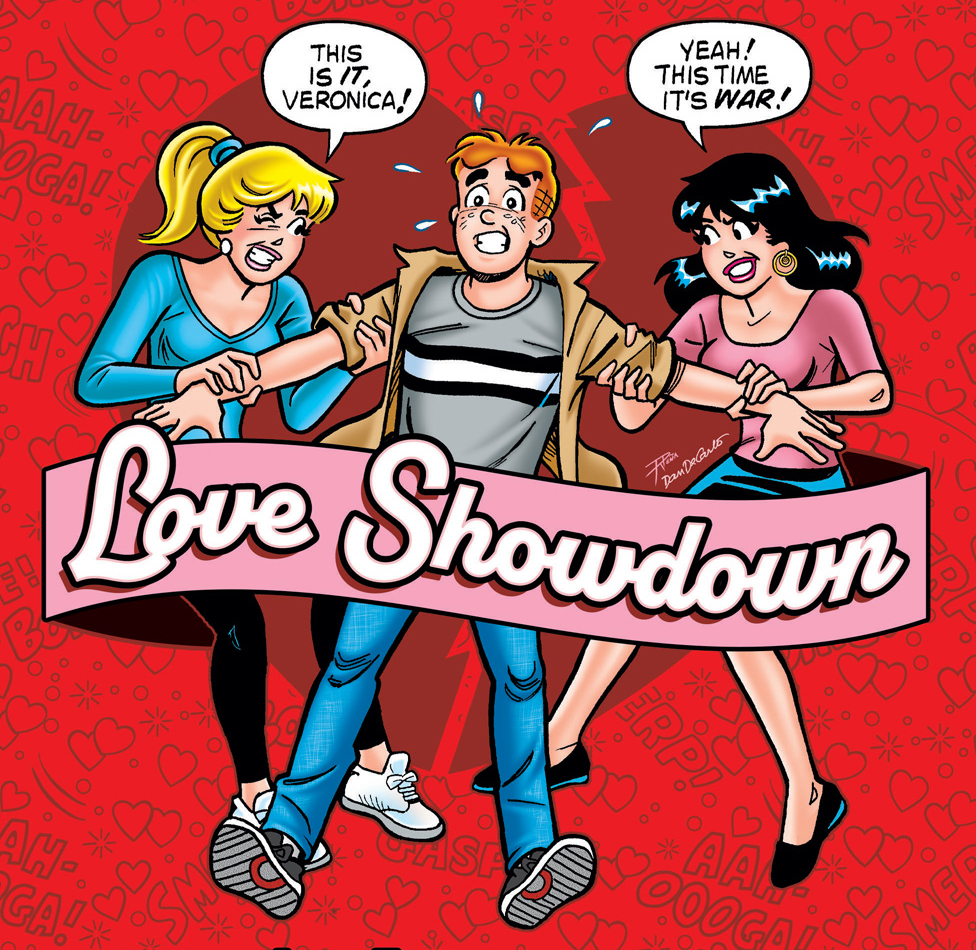
In second place is a tie between every story ever written in which Archie Andrews chooses Veronica Lodge over Betty Cooper. I get it. Archie, Betty, and Veronica are the eternal love triangle, and we all know that there’s never going to be a TRUE resolution. They’ve had attempts over the years, but it never sticks. But there is a word that the French have for people who prefer Veronica over Betty: wrongo.

Frankly, they can both do better.

I don’t want this to sound like I hate Veronica, mind you. I think she gets a bit of a bad rap. There have been numerable stories that have shown that, underneath her rich girl veneer, she has a good heart. But that doesn’t change the fact that she’s spoiled and selfish, and that Archie is dazzled by her beauty. Betty, on the other hand, is entirely loyal and devoted to him, and loves him without reservation, whereas Veronica on many occasions has been known to toss him aside at a moment’s notice. In fact, that’s probably WHY Archie goes for Veronica – because she’s less attainable. 

What an incredibly stupid reason. What an incredibly realistic reason.

As if that weren’t enough, Archie ignores the very sensible advice of his friends. I’m not saying that if my friends hadn’t liked Erin when I starting dating her that I would have ended the relationship, but at the very least it would have made me question what was up. True friends, people who honestly have your back, should be listened to, and Jughead has made it ABUNDANTLY clear over the years that he’s Team Betty. Archie. Archibald. Listen to your bro.

It’s a little easier to justify when you remember that Archie and the gang are all, in fact, teenagers, and as such he is even more inclined to make incredibly stupid choices than we males of the biologically adult variety. The characters aren’t ever going to grow up, but if they DID, I would like to think that Archie’s better judgment would finally kick in and he would see that the girl next door is the way to go, hopefully before Betty finally comes to HER senses and dumps his ass for Adam Chisolm.

Yes, as a matter of fact, I DO feel ways about things. 

Finally, although this is not a hill that I personally am prepared to die on, my wife wishes me to share her sincere belief that, in West Side Story, Tony was an absolute idiot for going after Maria when Anita was, like, RIGHT THERE. This is true of both the original and the remake. This is even true of the older Rita Moreno IN the remake. I, on the other hand, just want to point out that West Side Story is a multiversal variant of Romeo and Juliet, and as such, pretty much everybody in that story makes nothing but bad choices all day and all night. 

Electric Love

My uncle Todd Petit asked for the best love story involving a robot or cyborg, which is extremely specific, but that’s cool with me! I was a little hesitant to pick this one, though, mostly because in the Facebook comments several people already went straight to what I think is probably the best robot love story of all time.

Project ALF. 

Ah, I’ve missed this stupid, stupid joke.

No, wait, I’m thinking of the best alien/feline love stories. Obviously, the best love story involving robots comes from the Pixar masterpiece WALL-E. I love this movie, and I assume pretty much everybody who has a soul also loves it, and perhaps the main reason is the deep, perfect, sincere love that is expressed in this film. WALL-E is a garbage robot; his job for centuries has been just to collect trash and compact it. There’s no emotional component to this. But after all these hundreds of years of solitude, he finds himself growing a personality – likes, dislikes, hobbies. He begins saving select items from the trash that he finds interesting and grows a little collection. He makes friends with a cockroach. He is mesmerized by the movie Hello, Dolly! 

He even gave her flowers.

And then he meets EVE, a robot that is searching the dead Earth for signs that life can return, and it’s instant sparks. It’s like watching a busted down Ford Pinto fall in love with a sleek new electric hybrid vehicle (coming this fall in Cars 4!) but it WORKS. At first, EVE isn’t particularly impressed by WALL-E, but his sweetness, kindness, and courage melt her electronic heart. And perhaps the most amazing thing about it is that their entire relationship is almost completely wordless. Neither of them have any dialogue other than occasionally saying their names, but that doesn’t matter. By the end of this movie you are crying and cheering and imagining a new Earth populated by a slendering human population and all of WALL-E and EVE’s little robot babies.

That said, good on Pixar for resisting the urge to name him ADD-M. 

As for other great robot love stories…well, the one that comes most clearly to mind is actually one of the most tragic, and it’s from Star Trek: The Next Generation. Like most Star Trek shows in the pre-modern era, this show changed and evolved considerably over its first few seasons. Perhaps the most visible change (other than Riker’s beard) was the departure of Denise Crosby, who played security chief Tasha Yar in season one. Crosby asked to be written out of the show, frustrated over the lack of attention and development her character was getting, and honestly, you can’t blame her. Go back and watch that first season again and you’ll see most of the writing did her no favors at all. But there is ONE element of her abbreviated story that stuck with the characters for all time, and that was her relationship with the android Data. The idea of Data is that he is a Pinocchio, a robot that looks almost human and that wants to be a real boy, if only he knew what emotions were.

She had an AI boyfriend BEFORE it was cool.

Data is my favorite Next Generation character, and in my top three of all Star Trek characters, and the reason is because of his emotional journey. The conceit was that, as an android, he desired the emotions he did not have, but even in that description you can see the contradiction. DESIRE is an emotion. If you HAVE no emotions, how can you DESIRE them? My read on Data, the way I feel about the character, is that he truly DID have emotions from the very beginning – he simply didn’t understand them, know how to process them, know how to define them, and therefore he BELIEVED he had none. After Tasha Yar is killed off, Data returns to her in his thoughts many times. For six seasons, then again 30 years later in the final season of Star Trek: Picard, it is Data that recalls Tasha more than anybody else, Data who brings her up, Data who reveals in that Picard episode that his memories of her are a core component of his personality matrix. The great legacy of Tasha Yar is the fact that, for the rest of his existence, poor Data has been mourning a woman he didn’t really understand he was in love with. 

Sitcom Love

Rachel Ricks asks what I think is the best romance from a sitcom. That’s such a tricky one. There are a lot of great sitcom COUPLES – Bob and Linda Belcher, Herman and Lily Munster, and so forth – but if it’s a pairing that was already together when the show begins, I don’t think I can count them. To count it as a romance, I think we need to see the relationship blossom INTO love.

I also don’t really count those stories that end poorly or where the characters don’t really belong together. Sam and Diane on Cheers may be one of the all-time legendary sitcom couples, but they were utterly toxic to one another and never belonged together. Not to say that a love story HAS to have a happy ending (see what I said about Data), but if it’s a sitcom, I want something a bit more lighthearted.

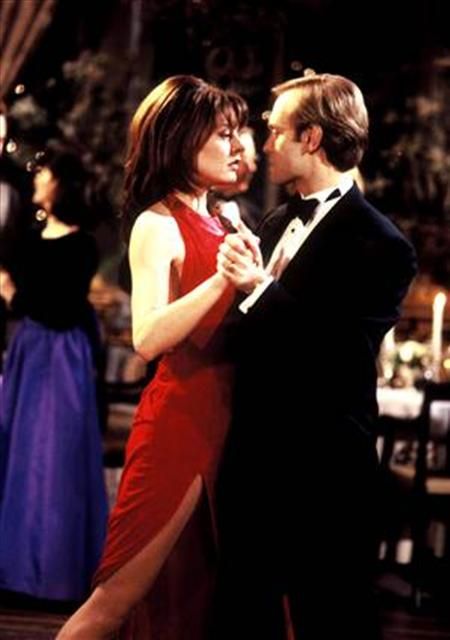
So I’m gonna stick to the Cheersiverse and say one of my favorite sitcom romances is Niles and Daphne from Frasier. And it’s odd, because it started off as a pretty poor depiction of a relationship – when they meet, Niles is already married (to an utterly reprehensible woman who browbeats and emasculates him at every turn) and pines for Daphne in secret for years. She, meanwhile, is completely oblivious to his affection and treats him with the same love and care that she does Eddie the dog. Eventually, though, his marriage to Maris ends and the two of them find one another. The arc where they’re both with other people but wind up boomeranging into each other’s arms is one of my favorites, and from that point onward the love and affection between them elevates both characters.

Pictured: Steam Heat

There’s a relatively early episode where they have to pretend to be a couple as one of the screwball schemes that happened in every other episode of Frasier, and they play the part so convincingly that Niles almost believes she shares his affection until she compliments him on how good an actor he is. The heartbreak David Hyde Pierce conveys is palpable, and you die a little for him. But it’s bought back years later, when they get together and revisit that scene again, bringing it all full circle. I just love watching those two. 

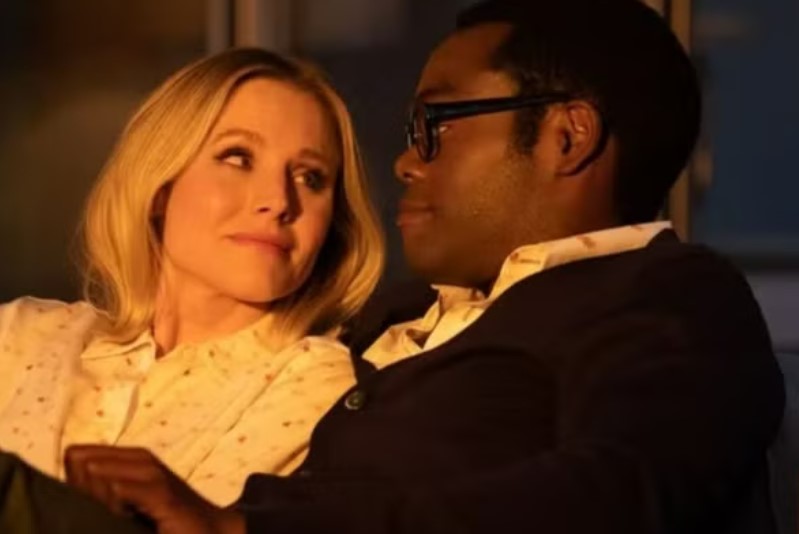
I also simply adore the relationship between Eleanor and Chidi on The Good Place. This show, about a self-proclaimed “Arizona dirtbag” (played in an adorable way that only Kristen Bell could have pulled off) who goes to Heaven due to what amounts to a clerical error, is one of the smartest and most emotionally profound sitcoms of the past decade, if not of all time. The relationship that develops between Eleanor and Chidi (William Jackson Harper) is one of the core elements of what makes it such a magnificent show. Eleanor has spent her life being self-centered and scuzzy, whereas Chidi’s life has been one of anxiety and apprehension. Eleanor acts without thinking, Chidi overthinks EVERYTHING to the point of catastrophe. The way each of them makes the other a better person is beautiful and heartwarming. 

If this screenshot doesn’t make you want to cry, you did NOT watch the last episode.

There’s a lot more to The Good Place than I revealed in that little recap, because if you’ve never seen the show I don’t want to spoil any of the incredible twists and surprises that it includes, but go and watch it and tell me you’re not rooting for Eleanor and Chidi every step of the way.

Okay, folks, I think that’s going to bring us to the end of part one of “Playing Favorites With Love Stories.” There are still several great suggestions for topics, though, so I’m not done yet. Come back next Friday, Valentine’s Day, for part two. And until then, hey, share this with someone you love. 

Blake M. Petit is a writer, teacher, and dad from Ama, Louisiana. His most recent writing project is the superhero adventure series Other People’s Heroes: Little Stars, volume one of which is now available on Amazon. You can subscribe to his newsletter by clicking right here. He’s also started putting his LitReel videos on TikTok. He maintains that the purest love story on TV is Gomez and Morticia Addams, but nobody asked about that, so he’s gonna drop it here. 

Geek Punditry #23: The Next Star Wars?

Like most sane people, here’s a phrase I don’t say very often: Quentin Tarantino has a point. 

I know, but bear with me.

In a recent conversation with Deadline, Tarantino said that streaming movies – as opposed to movies that have a theatrical release – aren’t really a part of the cultural zeitgeist. “It’s almost like they don’t even exist,” Tarantino said, and I think he’s on to something there. Think about it – of all the movies that have gone straight to a streaming service over the last few years, bypassing a theatrical release, how many of them that weren’t already based on an existing Intellectual Property have had any sort of major cultural footprint? When’s the last time you heard someone talking about Netflix’s The Adam Project, Prime’s The Map of Tiny Perfect Things, or Shudder’s Blood Relatives? These are all good movies. They’re movies I would recommend to people. But they simply aren’t part of the cultural conversation. I’m not saying that Free Guy is a better movie for Ryan Reynolds than The Adam Project was, but based on the fact that one has 661,000 views on Letterboxd as opposed to 302,000 for the other, I AM saying that more people are aware of the former. 

This isn’t to say Tarantino is right about everything, of course. For one thing, I don’t care for feet. But more germane to the topic, later in the same interview he says that all television is “soap operas,” that he doesn’t think about a few weeks after he watched the last episode. That’s silly on the face of it – shows like The X-Files or Breaking Bad have been gone for some time, but still have huge fan bases. And some new streaming shows have cracked into the mainstream, like Stranger Things or Bridgerton. Somehow it’s easier for TV shows to build fan bases than movies, possibly for some of the reasons I discussed back when I was talking about the problem with binge-watching

“Why can’t I remember what happened on the last episode of The Goldbergs?”

Back to the movies, though. I thought about this, trying to come up with the most culturally significant streaming-first movie I could think of – even asked the question on a writer’s thread I’m a part of, and was given exactly one suggestion: the Netflix sci-fi thriller Bird Box. That’s a good example. It was a big hit, people really got into it when it came out, and it’s got a hefty 894,000 views on Letterboxd. But that was five years ago. Before you read this column, when’s the last time you thought about Bird Box? There was a discussion of a sequel when the film first came out, but it hasn’t happened yet, although Netflix DID announce a spin-off film, Bird Box Barcelona, which is going to drop in July and be forgotten by August. 

Early contender for “Best Picture you definitely watched this year but don’t remember anything about.”

There’s a permanence to theatrical movies that streaming films don’t enjoy, possibly because streaming is just easier. Going to the movies is a commitment. You have to drive down there, plan your snacks, buy a ticket or commit petty larceny to enter, and then devote your time. That guy you went to school with who saw Star Wars in the theater 27 times made it a LIFESTYLE CHOICE. Whereas watching something 27 times on streaming just requires you to click a button and be too lazy to look for something else.

But the more I thought about the problem, the more I realized that Tarantino wasn’t quite right. (What are the odds?) It’s true that streaming movies haven’t hit the way that blockbuster movies of the past have, but then again…have any theatrical movies hit that hard either? Sure, there are successful movies, but they’re all sequels, remakes, or based on existing IPs. When was the last truly original blockbuster movie?

As of this writing, Box Office Mojo lists the top ten movies of 2023 so far as:

1. The Super Mario Bros. Movie

2. Guardians of the Galaxy Vol. 3

3. Avatar: The Way of Water

4. Ant-Man and the Wasp: Quantumania

5. The Little Mermaid

6. John Wick Chapter 4

7. Spider-Man: Across the Spider-Verse

8. Creed III

9. Fast X

10. Puss in Boots: The Last Wish

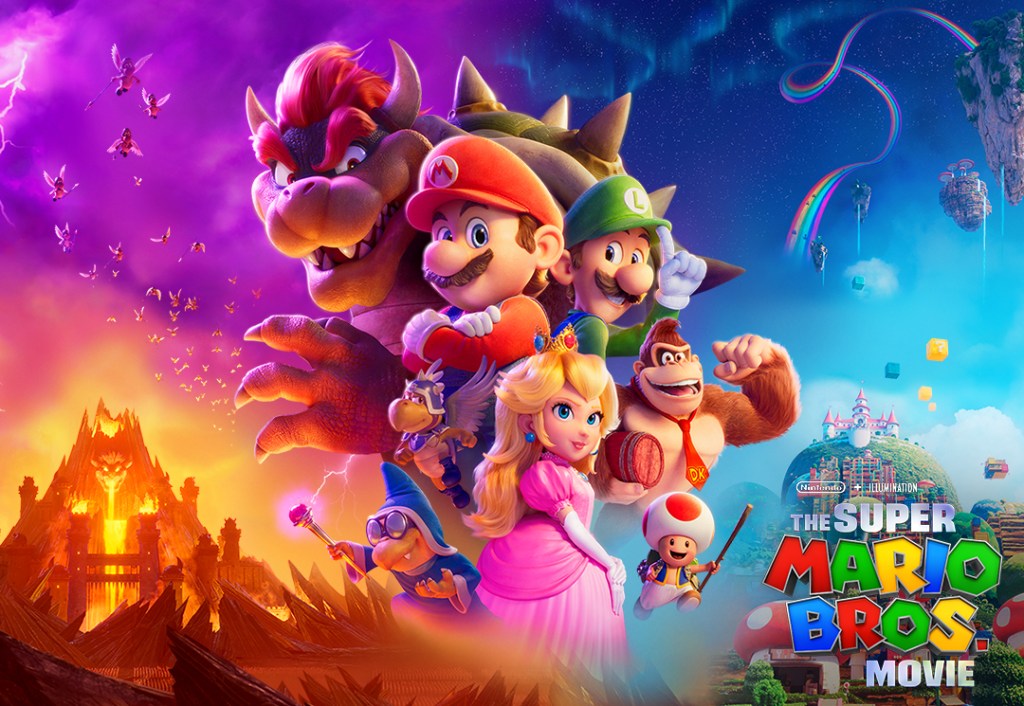
“It’s a-me, a license to print money!”

In other words, eight sequels, one remake, and one movie based on what is arguably the most famous video game franchise in human history. The top movie on the list that’s an actual original idea is M3GAN at #12, which is actually a holdover from 2022 that took in $95 million after the calendar flipped. The highest-grossing film released in 2023 with no previous IP to drawn on is Cocaine Bear at #16. 

I’m not saying anything negative about any of these movies, I want to stress that. I’m just saying that if you’re looking for something new to add to the cultural zeitgeist, this is not the place to look.

Several years ago, a friend of mine tried to argue that the then-upcoming Pirates of the Caribbean sequel Dead Man’s Chest would launch the film into a legitimate franchise, that it would turn it into that generation’s Star Wars. And while there were five Pirates films (with a sixth one occasionally teased by Disney), I don’t think there’s anyone that would argue it has had the level of cultural penetration that Star Wars has. You can see Star Wars shirts, toys, books, comics, and other assorted paraphernalia everywhere you look. If you say the phrase “May the Force be with you,” everybody immediately knows what you’re talking about. Hell, in certain company saying “I love you” without following it immediately with “I know” will feel strange. What’s the last new franchise you can say that about?

Star Wars, by the way, is an arbitrary metric. One could easily point to any number of franchises with deep cultural penetration – Star Trek, James Bond, A Nightmare on Elm Street… all things that are easily recognizable even if somebody isn’t a fan of that particular franchise. However, Star Wars is arguably the new franchise that has had the greatest impact worldwide in the last 50 years or so, so that’s what I’m going to use. People have been trying to make the next Star Wars for years, but it’s just not working.

People often argue that there are no new ideas in Hollywood, but that’s not true. The ideas are there, it’s just that – as I’ve pointed out before – the people who are in charge of the budgets are afraid to spend money on something that isn’t proven. That’s why they want sequels, remakes, or movies based on preexisting IPs. Comic books, in the past 20 years, have become very lucrative IP farms, which is why Disney bought Marvel in the first place. If a novel is really popular, it can break in. (Bird Box and Bridgerton, I should point out, were both novels before Netflix got them.) In VERY rare examples, a filmmaker may become a big enough name in his own right to get the budget to do something both new AND big, which is where the first Avatar movie came from, built not on any existing franchise but on the name of writer/director James Cameron.

This movie only exists because you saw Titanic 27 times.

Avatar is a really bizarre example. It looked, when the first movie was released in 2009, like it had that kind of Star Wars potential for cultural impact. The Way of Water is the sequel to the highest-grossing movie of all time, and like M3GAN it actually came out last year, but made so much money after Jan. 1 that it currently occupies the #3 spot for the 2023…but so what? For the 13 years in-between movies, nobody was talking about it. Nobody was wearing t-shirts or buying merch outside of Disney’s Animal Kingdom, and I defy anybody to give me one memorable quote from the first movie that isn’t just being used to mock the word “unobtanium.” The amount of money that a movie makes proves a lot of people see it, but it doesn’t necessarily demonstrate anything about the franchise’s longevity.

Many other sci-fi franchises have been attempted over the years, most of them falling flat for one reason or another. In 2012 Disney released John Carter, an adaptation of the Edgar Rice Burroughs novel that virtually invented the kind of planetary science fiction that has been a staple of the genre ever since. None of the major Star franchises could exist without it: not Wars, not Trek, not Search. But while I will defend that film to my dying breath (I think it was a great movie with loads of potential) it fell victim to terrible marketing and a Disney studio that simply didn’t know what to do with it. They even saddled it with a horribly bland title because they were afraid that boys wouldn’t want to watch a movie with the title of the original novel (A Princess of Mars) and that girls wouldn’t want to watch the proposed alternate title (John Carter of Mars). The movie bombed, the franchise died.

The next year Lionsgate tried to do the same thing with another of my favorite novels, Ender’s Game. Despite featuring Harrison Ford and a pre-stardom Hailee Steinfeld, though, the movie fell flat. It’s just as well – the sequels to the novel don’t at all lend themselves to a Star Wars-style franchise. The direct sequels dive into deeply philosophical and spiritual science fiction, meditations on the soul and the nature of sentience itself, with relatively few sci-fi “Pew Pews.” The spinoff Ender’s Shadow series DOES feature “Pew Pews,” but not in space, focusing on the geopolitical chaos left behind after humanity was temporarily united in the face of an alien invasion. 

The first rule of Dead Franchise Club is you do not talk about Dead Franchise Club.

So maybe sci-fi isn’t what’s going to bring us the next Star Wars. What about fantasy? There have been three pretty successful fantasy franchises since the turn of the millennium: Lord of the Rings, Harry Potter, and Game of Thrones. But all three of those are based on books that came out in the 20th century and spent years – decades in the case of Lord of the Rings – building up an audience that would carry over. And while there is certainly no shortage of references to those franchises in toys, clothing lines and other assorted paraphernalia, while nobody would look at you like an alien anymore for dropping a reference to any of them, are they Star Wars? They’re CLOSE, but follow-ups to the original series of Lord of the Rings and Harry Potter have been divisive (actually, that IS pretty Star Wars), while the follow up to Game of Thrones was pretty well received so far, but a lot of people are still angry over the ending of the original TV series or the lack of ending of the novels. They might make it there, but they aren’t there yet.

From left: the new Luke Skywalker, Han Solo, and Princess Leia.

I’m about to say something controversial, something that will infuriate certain people such as my sister…but I think the most original franchise in the last 23 years to truly make its way into the cultural consciousness is Universal’s The Fast and the Furious. Or Fast and Furious. Or The Fast Saga. Look, they can’t even really agree on a NAME for the franchise, but everyone knows what it is, and the fanbase is gargantuan.

“I don’t need the Force. I got FAMILY.”

The Fast and the Furious came out in 2001, and although it borrows its name from a mostly-forgotten 1954 film starring John Ireland, I’m not going to count it as a remake. First of all, the stories have absolutely nothing in common except that both include cars, and second, 99 percent of you had no idea the 1954 film even existed until you read this paragraph, so it’s clearly not cashing in on nostalgia the way most remakes do. 

Anyway, it’s been 22 years since the first Fast movie came out, and if the tenth movie that was released earlier this month is any indication, it’s not slowing down (bah-dump-bump!). It’s already cracked the top 10 films of the year, and although Vin Diesel says that Fast X is the first film in a story-ending trilogy, Universal Studios is very, very quick to remind people that this is the end of the story of Dominic Toretto and NOT the franchise as a whole. There’s already one spinoff and a Netflix cartoon, with at least two more spinoffs planned, including a second film about Dwayne Johnson’s Luke Hobbs character and another “female-centric” spinoff that is currently wandering Hollywood in search of a better title. 

Although the movies started out as mid-grade, clunky action films, somewhere around the fourth or fifth movie they hit some sort of power up and became high-grade clunky action films. Where we started with a story about a cop who was trying to bring down a group suspected of hijacking and robbing big rig trucks, we now have a franchise about ridiculously skilled street drivers being used as Mission: Impossible-level super spies, saving the world and looking good while doing it. At the point where the movies stopped making any attempt at having any logic or coherence behind them, they also became ridiculously fun to watch. And if nothing else, that’s what has made this preposterously unlikely franchise so endearing. It remembers something that most other attempts at world-building have forgotten: namely that blockbuster movies are supposed to be fun, dammit!

When I say “the next Star Wars” I hope there’s no confusion. I’m not trying to REPLACE Star Wars, or anything else for that matter. I love what I love, and I don’t want any of it to go away. But there’s always room for something new, and that’s what I’m hoping for. And when it comes to “new,” we need to do better.

Blake M. Petit is a writer, teacher, and dad from Ama, Louisiana. His current writing project is the superhero adventure series Other People’s Heroes: Little Stars, a new episode of which is available every Wednesday on Amazon’s Kindle Vella platform. He could not remember the title of Bridgerton while writing this, and wound up having to text some friends asking “What’s the name of that show you all watch that’s like a horny Downton Abbey?”