Geek Punditry #181: Striking the Right Tone

There are some writers – writers I follow, writers I respect – who have the opinion that writer’s block is a myth. These writers – writers I follow, writers I respect – can take a flying leap. There are simply times when no matter how hard you try or how much you struggle, the capacity to create simply eludes you; the juice don’t flow. Now that’s not to say that there aren’t ways AROUND it. It’s absolutely possible to write while blocked, to turn out words and pages. Sometimes simply the act of doing so will be enough to break down the block. Other times you wind up with absolutely useless pages of garbage and fluff, which some people choose to base their entire careers on. And there are other tricks that you can use to lubricate the creative engine in your brain and get it moving again. The problem is that these tricks are highly individualized and what works for one person will not necessarily work for another – hell, they might not even work for the SAME person on a different day. All of this is to say that sometimes you may want really badly to write, but somehow not just be able to mentally kick down the door and get anything useful done.

I’ve had an idea percolating for some time now that I’ve struggled to get off the ground. I’ve got a few chapters written, but at some point I became arrested, realizing I didn’t know how to get the story from the beginning I’ve written to the ending I have in mind. So I put it on the increasingly-crowded back burner as I worked on other things, such as the editing on the last two books in the Little Stars trilogy (I swear, it’s coming, people). But not long ago, something happened that triggered my backburner idea, and it kind of started – as so many things do in this Year of Our Lord 2026 – with Dungeon Crawler Carl. I’ve mentioned before how much I enjoy writer Matt Dinniman’s post-apocalyptic LitRPG comedy/sci-fi/horror/adventure series, and the fact that I took down all eight extant books in about six weeks should be an indicator of just how MUCH I enjoy them.
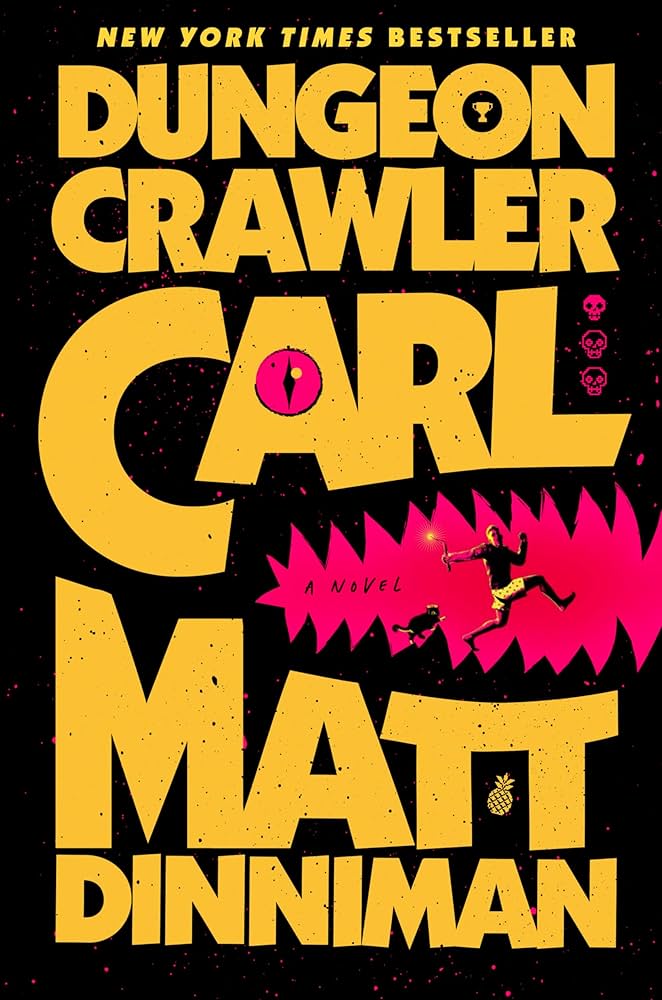
Don’t worry, the column isn’t entirely about Carl this time.

What I didn’t anticipate, though, is that reading the adventures of Carl and Donut would send me on a different literary path, one that is paying surprising dividends with my own writing project. Without giving any spoilers about the series, one of the things that I like about Dinniman’s writing is the way he balances serious situations like life-or-death battles and intense interplanetary political maneuvering with extraordinarily funny characters and commentary. The things that are happening to Carl and company would be pretty horrific if it weren’t for the fact that the ways he and his friends respond to it are so funny. 

This is a balance I’ve always enjoyed. It reminds me, in a lot of ways, of movies like Ghostbusters. Think about that for a moment. If you strip it down to the bare bones of the plot, it has the skeleton of a horror movie: an ancient Sumerian deity begins raising the dead to terrorize the populace, feeding off of their terror, in a scheme to breach a portal into our reality and destroy the world. It wouldn’t be a comedy at all except that Peter Venkman is a deadpan snarker, Ray Stantz is a bit of a cloud cuckoolander, Egon Spengler is a mad scientist, and Louis Tully is a dork. I’ve written at length about the thin barrier between horror and comedy in the past. It’s one of my favorite balances in all of fiction, and it’s a balance that I often try to employ in my own writing.
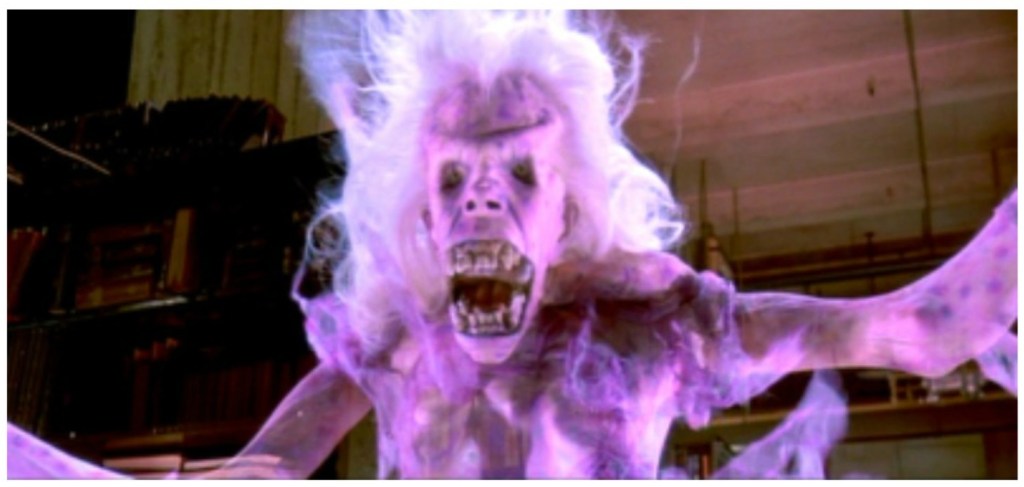
Pictured: One of the funniest movies of the 80s.

When I finished the Carl books I experienced something that regular readers are very familiar with: that dreaded feeling of having completed a really good book (or series) and not knowing what to read next. I flailed about a bit, trying to find something that could scratch the itch I’d developed after nearly two months of plunging the dungeons with Carl, and I ultimately decided to go back to an old favorite: Terry Pratchett. Pratchett’s Discworld novels are a deeply humorous, satirical take on the fantasy genre – not exactly the same as Dinniman, but with a very similar tone to the kind of thing I’d been reading. This time out, I picked up the first of the novels to feature the witch Granny Weatherwax, Equal Rites, in which Granny takes under her wing a young girl with magical powers that suit her for a life of wizardry. The problem is that, by tradition, women can only become witches, and being a wizard is a job reserved for men.
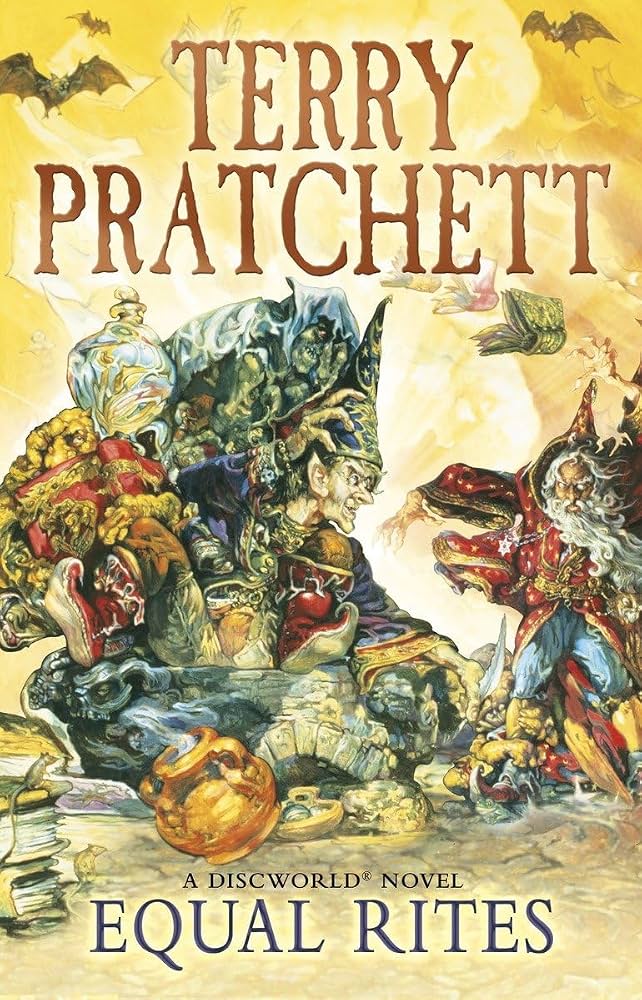
The real magic trick was making this concept FUNNY.

When you talk about balancing humor with speculative fiction, Pratchett was one of the greatest to ever sit down in front of a keyboard. He was to fantasy what Douglas Adams was to science fiction, with the notable exception of Pratchett being far, far more prolific. I’ve still not read all of the Discworld books, but they’re on my preposterously long list. That said, as I was reading Equal Rites this time, it flipped some sort of switch in my brain. Things that had been dwelling in my mind as I read Dinniman’s books collided with observations from Pratchett, and I began to conceive of a new concept, a new character really. Somebody I found interesting, somebody I thought would be worth exploring, should I have the proper story for her.

Then I realized she was exactly what was missing from Project Backburner.

This story that I’ve been putting aside, looking for some sort of guide to move it along, suddenly has a guide. I think I know what to do now. I think I know how to play in this world and make something of it.

The upshot of all this is that this is one of the few things I’ve found that helps combat a severe block is immersion in something similar. I don’t mean that you should read stories with the same plot or the same elements – the story I have in mind doesn’t have any dungeons or alien invaders, nor are there any witches or wizards or girls trying to crack through a magical glass ceiling. There aren’t even any ghosts. (At least…I don’t think there are.) But the tone of these stories is a good match for what I’m trying to create, and spending time in these spaces has been a great deal of help in finding the pieces I need to turn my idea into an actual story. I’ve said this many times but it’s worth repeating: ideas are easy. The average person can have dozens of ideas a day, more if they uninstall TikTok. But having an idea is worthless unless you can figure out a creative and original way to USE that idea, which is a concept that people using generative AI will simply never understand.

“Well what’s the difference between a computer generating stuff based on existing stories and a writer drawing inspiration?” these dinks will say. It’s easy, friends. An algorithm is incapable of creating something new, it only spits out an amorphous blob created from the information fed into it. A human brain, on the other hand, will absolutely be inspired by what comes before it, but has the capacity to use that inspiration to create something original. Being inspired by Adams or Pratchett doesn’t mean you’re just repeating what they did, as gen AI does. It means that you want your own ideas and your own work to hit some of the same buttons as they did – that doesn’t require you to do it the same way.

I want my immersion to continue for a little while, I want to keep my brain marinating in this sort of tone while I continue to develop this new idea. After I finished Equal Rites I turned to Mostly Void, Partially Stars, the first of several volumes collecting the scripts from the Welcome to Night Vale podcast. This show, mostly written by Joseph Fink and Jeffrey Cranor, is also a horror/comedy blend, although this one trends a bit more towards existential dread. The little town of Night Vale is a world where – in the words of the creators – “all conspiracy theories are true.” The comedy and the horror in the show come from the same basic source, namely making the mundane bizarre and making the bizarre mundane. Next up I think I’ll return to the work of Christopher Moore, author of books like Practical Demonkeeping and Bloodsucking Fiends, who takes horror tropes and treats them in much the way that Pratchett treats fantasy and Adams treats science fiction.
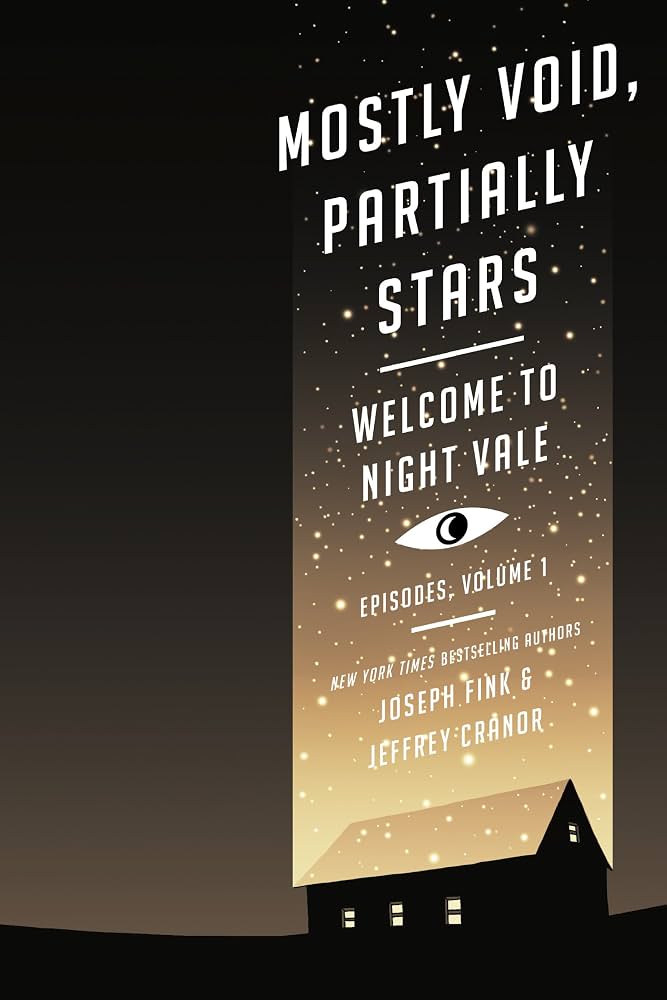
The title is also an accurate description of my brain at any given moment.

All of these different writers and works I’ve mentioned are good at striking that balance – taking something that is not inherently played for humor and turning into a work that is as much comedy as it is the other thing it’s trying to be, whether that’s a gothic vampire saga, a fantasy epic, a chilling ghost story, or an apocalyptic adventure. And that’s what I’m looking for now, friends.

Recommendations.

Besides those writers I’ve already mentioned, besides the Dinnimans, Pratchetts, Adamses, and Moores, I’m looking for other writers who are good at striking this balance. The doors are open – who do you think is good at balancing comedy with something else? I need names. I need works. I need more fuel for the furnace. 

Hit me. 

Blake M. Petit is a writer, teacher, and dad from Ama, Louisiana. His most recent writing project is the superhero adventure series Other People’s Heroes: Little Stars, volume one of which is now available on Amazon. He’s also started putting his LitReel videos on TikTok. He might feel like watching Army of Darkness again too. Or Teen Wolf

Geek Punditry #171: You’ll Figure it Out On the Way

Recently, on the advice of – and this is a rough estimate so please forgive me if I leave somebody off this list – everybody, I picked up Matt Dinniman’s LitRPG novel Dungeon Crawler Carl. I’ve never read a LitRPG before, but a lot of people whose options I highly value told me over and over again what a great book this was and that I needed to check it out or watch my Geek Cred stats rapidly plummet. And I must concede, that first book really grabbed me.

My friends just know how wild I go over “crawling” fiction.

From what I can tell, LitRPG is a subgenre of sci-fi and fantasy in which the story emulates traits of a typical roleplaying game, including having the characters’ stats and levels prominently featured and even included in the plot. In the case of Dungeon Crawler Carl, these stats and levels come as Carl and his ex-girlfriend’s cat, Princess Donut, are forced to risk their lives over and over again in a massive global dungeon with the entirety of the human race – at least those who are still alive – hanging in the balance. If that doesn’t sound like a riot, I should remind you all that Douglas Adams chose to begin his Hitchhiker’s Guide to the Galaxy series by blowing up Earth, so an apocalyptic comedy is by no means unexplored territory. And Dinniman handles it extremely well. I admit, when I started reading the book I expected the conclusion of the Dungeon Crawler story to come by the end of the first volume, and I wondered what the follow-up would be that would extend the series to seven installments (so far, at least – the latest word is that the series will wrap up in volume ten). I was quite surprised, then, as I progressed through the novel and realized, at the pace we were going, there was no way in hell the story would be finished in one book, and Carl’s singular quest through the dungeons would, so it appears, be the entire series.

After reading some massive doorstoppers early this year, I was pleasantly surprised not only by how entertaining the adventures of Carl and Donut turned out to be, but also by just how quickly I whipped through the first novel. After spending the better part of a month on Stephen King’s It, I finished the first Carl book in less than a week. I informed some of my friends who recommended it to me in a group chat the day after I finished reading book one, and one of them told me that book eight is scheduled for release next month, May.

“I doubt I’ll make it through seven books by May,” I said.

“Yeah, you will,” he replied.

And damned if it’s not possible. When I picked up the second volume this week, I got through roughly a quarter of it in the first day, an almost unheard of chunk of novel in a modern era in which my valuable reading time is often stolen by such frivolous things as going to work, driving a car, and parenting. But I quickly noticed something unusual about the second book, Carl’s Doomsday Scenario. Most of the time, when you get to the second installment of a series, there’s a bit of an effort to restack the world for the audience – reminding them of things that happened in part one, re-explaining the rules of the world, and otherwise attempting to bring them up to speed in case there’s anybody just joining in for the first time. This is pretty common in fiction of all types. TV shows with serialized storylines will frequently begin with a “Previously on…” segment. Movie sequels will usually have some brief lip service where the characters recap the events of the first film, even if doing so makes little sense in context. Comic books make frequent use of flashbacks. 

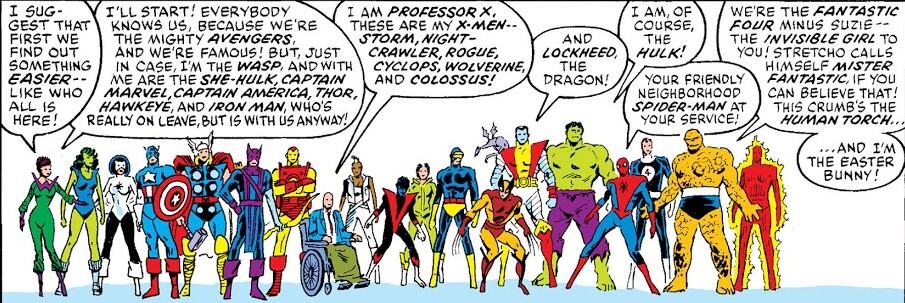
The idea here is that there’s always the chance that there’s someone joining the audience NOW – somebody who has not seen the earlier episodes or read the earlier books, and therefore needs a little help so they don’t get lost. There was a point in the 80s when Jim Shooter, then Editor-In-Chief of Marvel Comics, issued a company-wide rule that every character be referred to by name when they first appeared in each issue, just to make sure a theoretical new reader could tell who’s who. The spirit of the policy made sense, but in terms of writing, this would often result in clunky panels with inorganic dialogue. This was never demonstrated better than the infamous “Mouseketeer Roll Call” Shooter himself wrote in the pages of Marvel’s first major crossover event, Secret Wars, when dozens of heroes and villains who had just been kidnapped and brought to the other end of the universe by a cosmic deity stopped the action, stood in a line, and identified themselves.

The Wasp and the Thing are at opposite ends, both of the panel, and in terms of the spectrum of humility.

Dinniman, however, makes absolutely zero attempt to recap the story for new readers. Although Carl’s Doomsday Scenario begins with a new Chapter One, it may as well have just continued the numbering from the previous book, because it picks up just seconds later and makes every presumption that the reader is up-to-date. It doesn’t recap part one, doesn’t explain the logic of this universe, and pretty much just goes on as if Dinniman is quite confident that anybody who is reading Doomsday Scenario will also have read Dungeon Crawler Carl, so why bother? It was temporarily jarring even for me, somebody who had just finished book one a week earlier, when Carl started getting messages from somebody named “Brandon” that had not been mentioned before in this book and I had to go back and remind myself who he was. 

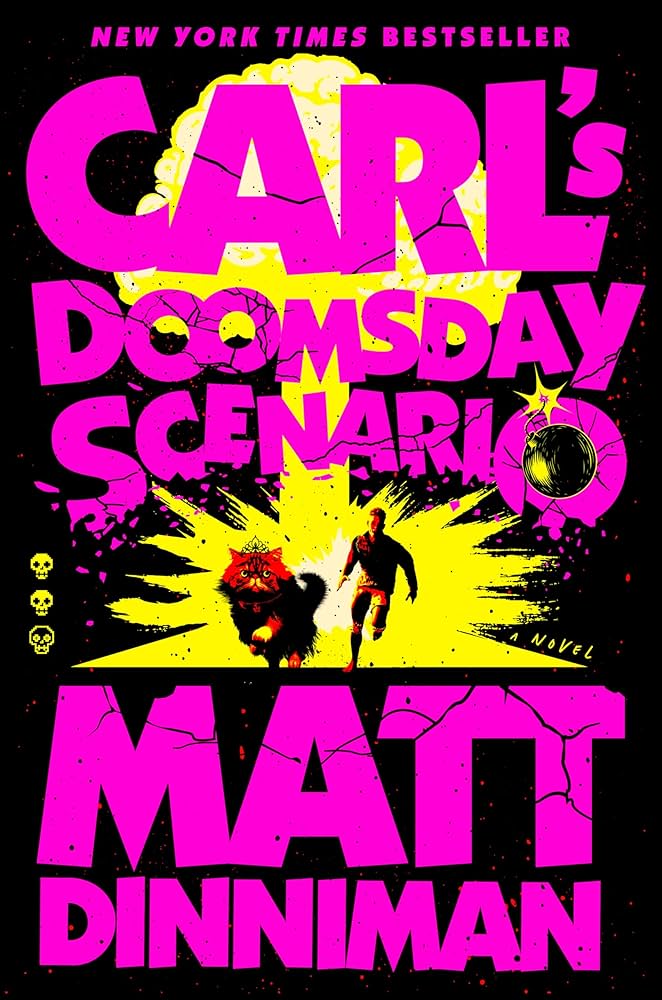
I defy anybody to find evidence in this image that this book is a sequel. You can’t, can you? Because you’re too busy looking at the cat in the tiara, that’s why.

The style of storytelling in which a recap is expected…in some ways, it’s kind of a relic of a bygone era. It made a lot of sense in the days when a TV series aired one episode a week and if you missed it, you just missed it and hoped you could catch a rerun over the summer. In these days of binge-watching, when you can start a series from episode one no matter how many episodes have been made, and when the streaming service will roll right into the next episode after you finish it, it’s not nearly as important as it used to be. It’s still a little more necessary in other forms of storytelling, but not always. In movies like those in the Marvel Cinematic Universe – particularly the upcoming Avengers: Doomsday – we should expect a certain amount of recap because it’s unreasonable to presume every audience member will be intimately familiar with the details of the past three decades of Marvel movies and television, especially since the former Fox X-Men universe is being folded into the multiverse of the MCU. But James Gunn’s Superman launched a whole universe in the middle of a story and figured – correctly – that there was no need to go over Superman’s origin yet again because everybody should be familiar with it at this point. A few title cards at the very beginning told us everything we could possibly need to know.

But what about episodic storytelling like comic books? Shooter’s rule – even when it was executed poorly – made a lot of sense in an era where it was presumed that every issue was potentially somebody’s FIRST issue. Comic books aren’t really written that way anymore. Most series – even so-called “ongoing” series – are given a certain number of issues to tell a story (although this exact number is often undisclosed to the reader it is typically low – maybe five or six issues at a time). If the series sells well enough, it will be renewed for another number of issues, then another, until either it becomes unprofitable or the creative team finishes all of the stories they had planned. With this structure, even as comic book sales are on the rise, it’s reasonable to assume that the number of people jumping into a series on issue #8 is relatively slim. But we WANT new readers, so there has to be a way to make it accessible without alienating the existing audience.

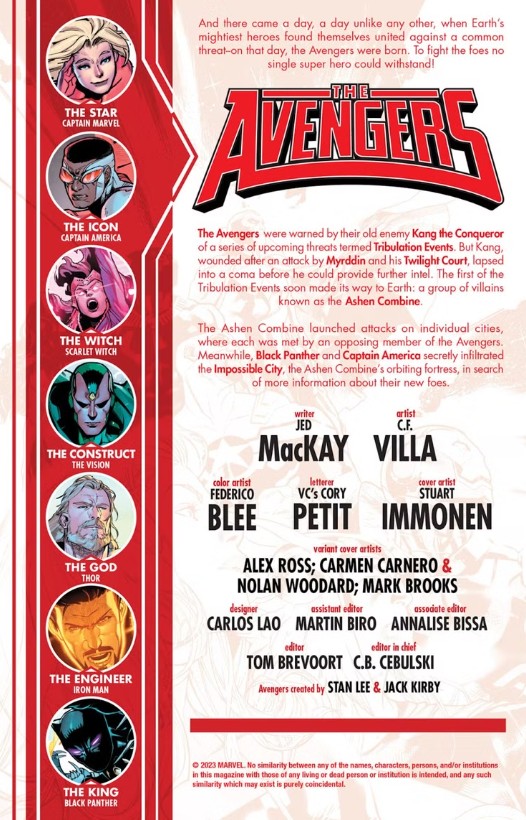
And there is, and it’s a simple way. Marvel Comics have long had a policy of including a “previously” page at the beginning of each issue, recapping the story to date and showing headshots of the major characters. It serves the same purpose as Shooter’s old rule, but it’s not intrusive into the story itself. Somebody who hasn’t been reading along can use the page to get into the saddle, but faithful readers can easily skip it if they wish. It’s a sensible policy, and other publishers (DC included) have slowly gotten into the habit of incorporating similar pages in their own comic books, although I wish it would become more standard. 

I mean, without this page how would you ever know the Scarlet Witch is a witch?

With prose books, we’ve got an interesting sort of mix of possible readers. On the one hand, if somebody is an ebook reader, it would make little sense to begin in the middle of a series. If you’re browsing the Kindle store and a book sounds interesting, it’s usually labelled as something like “Book 2 in the Dungeon Crawler Carl series,” with a handy link to look at all the books in the series at once so you can get them all and start from the beginning. But for a print reader who gets these books browsing a brick-and-mortar store, it’s not always as clear. Not every series is clearly labeled as such on the cover, and even if it is, there can’t always be a 100 percent guarantee that the store will have the earlier volumes in stock on the day you pick up volume three while you’re casually browsing. 

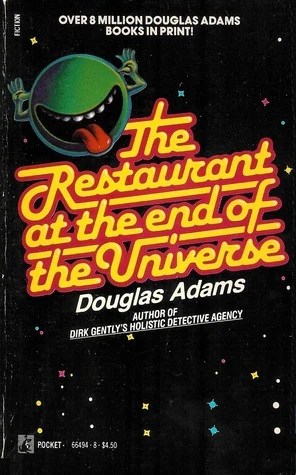
Many of us have fallen victim to this at some point or another. Back in middle school I was poking through the shelves at our Scholastic Book Fair (if you’re someone that just got a little thrill of excitement at those words, you are my kinda people) when I saw a book with the fascinating title The Restaurant at the End of the Universe. I picked it up and I read the back cover, and it sounded interesting. So I bought the book, brought it home, devoured it, loved it…and THEN I discovered that it was actually the sequel to a novel called Hitchhiker’s Guide to the Galaxy. Had I noticed that parts of it were a little confusing the first time I read it? Sure. But my seventh-grade self already was aware that there were jokes and references I didn’t quite understand (I did not have an encyclopedic knowledge of British politics and popular culture circa 1980, believe it or not), so when there seemed to be something missing I assumed that gaps in my knowledge could be attributed to that, rather than the fact that I’d skipped an entire book.

And even if I DID notice, based on this cover, I would have thought the book I missed was Dirk Gently’s Holistic Detective Agency.

In Dinniman’s case, the lack of recap makes more sense when you learn that the series originated on the online platform Royal Road, which allows writers to serialize their fiction. The Carl series was not originally written in book form, but in this more episodic format, and when the decision was made to publish it as a book series Dinniman basically chose where to end each volume based on a point where a logical pause happened rather than necessarily having it planned out as a ten-volume series. That kind of planning seems to have crept in later, as the book went from a popular online fic to a publishing juggernaut, but it wasn’t baked in from the beginning, and the book version reflects this. 

(Personal side-note: I’d never heard of Royal Road before I began digging into the backstory of Dungeon Crawler Carl and I feel the need to look deeper into this system. I’ve been thinking about looking for a new way to serialize my own work ever since the demise of Kindle Vella, and this seems like a far more stable outlet.)

The recap thing is a trope in storytelling, and although I can understand why it may be frustrating for people who are devoted followers of a particular series, I don’t think it’s a bad thing. It serves a purpose, and if it allows a story to be opened up to a larger potential audience, that’s a net positive. It just needs to be done in an unobtrusive way. “Previously” pages in comics or even in novels are a good way to do it, and although lacking one doesn’t hurt anyone’s enjoyment of the series at all, I’m surprised that Dinniman didn’t include one in Doomsday Scenario.

At the very least, publishers, make it damn clear on the cover or spine of a book if it’s part of a series. Numbers are your friends.

Blake M. Petit is a writer, teacher, and dad from Ama, Louisiana. His most recent writing project is the superhero adventure series Other People’s Heroes: Little Stars, volume one of which is now available on Amazon. He’s also started putting his LitReel videos on TikTok. Seriously, go read the first part of Little Stars, because he’s working on polishing part two. He needs people to stare at him and ask him when it will be finished.