Geek Punditry #69: Judging a Book By Its Cover

A few months ago, a friend of mine shared with me a website called Freebooksy.com, which alerts you to freebies in the Amazon Kindle store. It’s fairly simple – you click on the genres that you’re interested in when you sign up and each morning you get an email with a selection of free books available. Inclusion in the email is paid for by the authors and publishers, I should point out, as a promotional tool, so you see the same names over and over again, but it’s hard to complain about free. I check the email most days, but I don’t sweat it if I miss a day because I know that the same stuff will be comin’ around again before too long.

Also before too long I noticed a distinct trend, especially among those books that are designated as “thrillers”: utter homogony when it comes to cover design. On any given day when I open this newsletter and scroll to the thriller section, I will see a minimum of three covers with virtually the same style:

  • A single color palette – often blue, but reds and oranges are also popular – which creates a gradient across the book cover.
  • The title of the book in large unimpressive block letters.
  • The author’s name in smaller unimpressive block letters.
  • A line of text informing you what series this particular volume belongs to.
  • A background image that usually cuts across the middle of the book. This is often, but not always, a landscape of some sort. Popular choices are mountain ranges, swamps, beaches, and cabins in the snow.

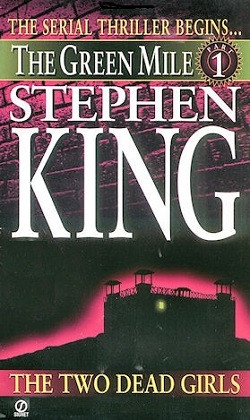
Usually I would try to provide some pictures here to demonstrate my frustration, but considering how I’m talking about how dull and bland these covers are, I kinda feel bad calling anybody out specifically. So instead, I have used my legendary skill at Not-Quite-Photoshop-But-a-Free-Online-Alternative to create my own example of the sort of cover I see over and over and over again.

Now you know why I don’t design my own book covers.

Riveting, right? If you go to Amazon right now and click on the “thriller” genre once you figure out where they’ve hidden the books, you will see dozens and dozens of titles that duplicate that template to the letter. After a while they all blend together and there’s nothing to make me remember any of them. They always say you can’t judge a book by its cover, and that may be true, but I’m sure as hell more likely to pick up a book in the first place if the cover doesn’t look like it was made with Generic Thriller Template #1138. 

The same holds true for movie posters, by the way. Movie posters were once an art form all to themselves, with gorgeous illustrations by the likes of the great Drew Struzan that made me even more anxious to see Goonies, Indiana Jones and the Temple of Doom, or Back to the Future than the trailers did. Now book covers and movie posters seem to be churned out by committee, choosing the elements that hit the greatest number of quadrants to appeal to the largest number of people and, in the process, becoming something that is appealing to no one.

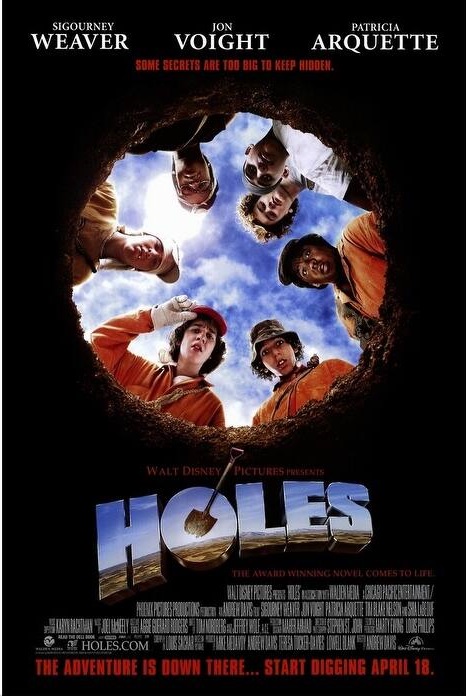
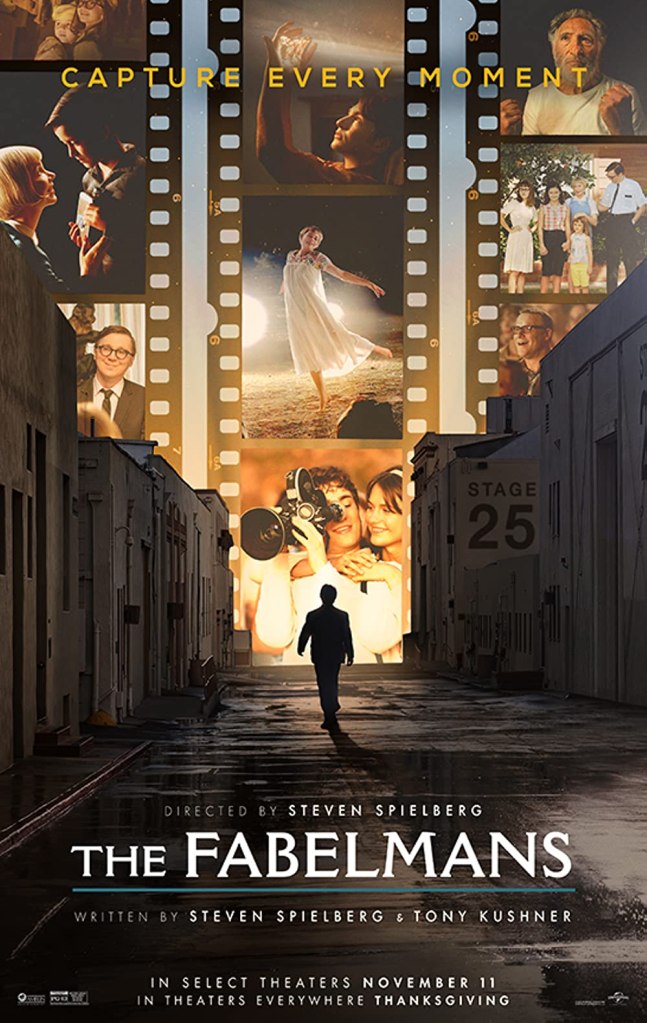
Name a movie poster from the past ten years that’s better than this one. Trick question. You can’t.

Look, I’m spoiled. Most of my book covers have been done by Jacob Bascle, who absolutely knocks it out of the park every time the way he did with the cover for Little Stars Book One: Twinkle Twinkle, which by the way is now available to preorder on Amazon. (That’s as subtle as I get, folks.) But I also know that’s because I self-publish, and if I ever get tied up with an actual publisher I may not have much of a say into who does the book cover or how. But none of that changes the fact that the people turning out book covers right now have totally lost the plot.

As with so many things that aren’t as cool now as they used to be, let’s look back at the 70s and 80s to see how it should be done. This was, I believe, a golden age for book covers and movie posters, especially when it came to genre fiction like horror or sci-fi. Sure, the artwork was lurid, over-the-top, and often terribly deceptive as far as the actual contents of the work, but sweet cinnamon sugar, was it memorable! For example, let’s look at Stephen King (the real one) and his 1978 epic The Stand. This is a gargantuan novel about a virus that escapes from a science lab and spreads out into the world with a fatality rate of over 99 percent. Those who survive wind up collecting in two groups – a mostly peace loving community in Boulder, Colorado, and a vicious, hedonistic sect in Las Vegas under the rule of King’s frequent boogeyman character Randall Flagg. It’s an amazing book and it’s the one that first made me a fan of Stephen King’s work when I read it in high school.

Now look at the first edition cover.

You think an AI “artist” could have come up with something this incredible?

Isn’t that AMAZING? There are SO MANY QUESTIONS to be asked here. Why does that dude look like Luke Skywalker? Who’s the rat guy with the sword? Why are Luke Skywalker and the rat guy dueling? Is Randall Flagg Emperor Palpatine? How does this tie into the epic saga of the insidious disease called Captain Trips? And the answer is: it doesn’t! There is absolutely nothing about this book illustration that has the barest relation to the 10,942 pages of text in-between these covers. It’s like some writer failed to deliver his fantasy novel about an uprising of lycanthropic rodents in a medieval setting and the publisher just said, “Hell, we gotta use this art somewhere” just before King’s manuscript arrived, delivered by three separate UPS trucks. And history was made. But the thing is, as little as this cover has to do with the actual book, it’s memorable as hell.

Then there’s another of my favorite books, William Goldman’s The Princess Bride. Everyone knows the movie – the epic comedy love story of true love and grand adventure. It’s a family favorite and a tale that transcends generations, finding new fans every day both young and old. It is the perfect movie for lovers, for adventure seekers, for parents, for children. And a lot of people have read the book as well. But how many of you have ever seen the cover to the 1974 edition of the book?

“Uhh…Larry…what exactly do you think a Bride is?”

I don’t even have a theory to explain this cover, the way I do the Stephen King book. It’s patently obvious that whoever painted this artwork hadn’t read the book – possibly had never read any book. In fact, I wouldn’t be too surprised if whoever painted this isn’t legally allowed within 300 yards of a library. And yet, I never forget that this cover exists.

I love going to used bookstores, and one of the best reasons is to look at this sort of wild cover art that just doesn’t exist anymore. The next time you’re in one, take a turn into the horror or sci-fi section – even if you don’t normally read horror or sci-fi – and just scan the book covers. Aliens with googly eyes, knives dripping with blood, monsters that may or may not bear any resemblance to the creatures inside the book. Walking through these stores is the closest I can get today to the experience of walking through a video store as a youth, going down that horror section and seeing the ghastly and yet somehow enticing cover art that adorned such classics as Evil Dead 2, Re-Animator, or The Stuff. Oh no, my parents never allowed me to rent these movies when I was a kid, but even then I was drawn to the artwork, and I’ve gone back and revisited a lot of those films as an adult…and you know, even the worst of them seem to trigger a hint of pleasant nostalgia for those trips down the video store aisle.

Pictured:Nostalgia.

In 2017, horror writer Grady Hendrix released Paperbacks From Hell, a book that examined the absolute avalanche of horror fiction that was produced in the 70s and 80s. Hendrix does a great job in this book of dividing up the work into different categories and discussing some of the more prominent writers, most popular novels, and intriguing trends that existed at the time. But if we’re being honest, the biggest reason to get Hendrix’s book is to get over 250 pages of full color illustrations of some of the wildest horror novel cover art that ever existed.

If this makes you want to read this book, you’re my kind of people.

The book is a love letter to the genre, and was popular enough that Valancourt books actually did a limited re-release of several of the books mentioned, original cover art intact, with a new forward by Hendrix himself. Unfortunately, that rerelease did not include John Christopher’s The Little People, a novel about a British couple that tries to turn an Irish castle into a B&B only to learn that it is infested with Nazi Leprechauns. No, there’s not a typo anywhere in that sentence.

All this goodness…no Nazi Leprechauns.

If you think I’m coming across as a stodgy old man lamenting the days of his youth – well, you’re very perceptive. But you can’t wander through a Barnes and Noble and look at the wall of $18 trade paperbacks that waits for you there with so many of the same cover tropes over and over again and objectively tell me that cover art has improved over the last 40 years. Nah, give me the days when an eyeball rolling around in a skull looked at me from the cover of a book, the time of creepy dolls and skeleton horses and eyes glaring at me from behind a set of venetian blinds. These were covers with personality. These were covers that meant something.

Not necessarily something that related to the inside of the book, of course. But something.

SPECIAL ANNOUNCEMENT:

Hey, have you ever missed a Geek Punditry column? Sad, isn’t it? How you don’t know what everyone at work is talking about around the water cooler, ostracizing you and pushing you to the fringes of society the same way they used to do because you didn’t watch Game of Thrones? Well, you’ll never have that problem again if you subscribe to my newsletter. I’m kicking off a (probably) weekly roundup of everything I’ve been doing, which will include links to the newest Geek Punditry, information about whatever new releases I have coming up, some chatter about what I’m working on, and the occasional bonus goodie as well. And as a thank you for signing up, your welcome email includes a top secret, never before seen short story from the world of Siegel City called “Sally Starcher is Cosmagirl!” So if you’re into that kind of stuff, if you want to know what I’m up to, if you just don’t want to miss out when Derek from accounting starts talking about Sally Starcher the way he used to talk about someone called “Khaleesi,” there’s an easy solution. Just click this link, drop me your email address, and you’re all set!

Blake M. Petit is a writer, teacher, and dad from Ama, Louisiana. His most recent writing project is the superhero adventure series Other People’s Heroes: Little Stars, volume one of which is now available on Amazon. You can subscribe to his newsletter by clicking on this dandy little link right here. He hasn’t had any eyeballs on his own book covers yet. He’s waiting for the right time. Maybe something about bunnies.

Geek Punditry #41: Playing Favorites With Horror Movies (Part Two)

Horror Without a Death

Last week, in a column that has been-fast tracked for the 2023 Pulitzer Prize for Blog Posts about Horror Movies (probably not a real thing) I asked my friends on social media to give me suggestions for categories of horror. I would then report back on your suggestions here and talk about some of my favorites in each category. I got a lot of great suggestions – so many, in fact, that I couldn’t fit them all into a single column. So buckle in, my friends, it’s time for Week Two of Playing Favorites With Horror Movies!

Horror Without a Death

Duane Hower came at me with one of the toughest suggestions of the whole batch: what’s my favorite horror movie in which NOBODY DIES? (And a note here – just the fact that a movie can be mentioned in this category qualifies as a spoiler, so if you’re squeamish about that sort of thing, you may want to hop down to the next category.) 

It was tough, guys. There aren’t that many films that meet the criteria – after all, the point of horror is to instill fear, and that inherently brings with it the fear of the void. There are plenty of horror/comedies that fall into this category, sure, but straight horror? It’s not easy to find good examples.

A few eventually came to mind. Poltergeist is about a family that moves to a new home only to discover malevolent spirits already inhabit their dwelling. The Others is about a family that moves to a new home…only to discover that malevolent spirits already inhabit…okay, there’s a pattern. But 1408! That mixes it up! That’s about a travel writer who gets a hotel room! And finds that malevolent spirits inhabit the dwelling. 

“I see dead people. Not fresh ones, though.”

Still, these are solid films where nobody dies (well…depending on which cut of 1408 you watch). The thing is, they’re also all ghost stories. And ghost stories rock, don’t get me wrong, but they’re stories about somebody who has already died. Can I count them in this category, just because the deaths in question happened before the movie began?

If I rule out ghost stories, the pool gets even shallower, but there are still a few tasty fish in it. Tod Browning’s Freaks from 1932, for instance. The director of Bela Lugosi’s Dracula followed it with this movie about performers in a circus sideshow and an unscrupulous woman who plans to take advantage of them to seize an inheritance one of them is due to collect. The movie is pretty wild, and was so controversial at the time that Browning’s career was essentially destroyed. But nobody dies in the film…although by the ending, there’s someone who may wish they were dead.

I also need to give credit to One Hour Photo, a thriller starring the late, great Robin Williams. Williams plays a man who works for one of those one hour photo development labs (kids, ask your parents) and becomes dangerously obsessed with one of the families whose film he processes. Williams, of course, was a legend for his comedic roles, and often showed his dramatic chops as well in movies like Dead Poets Society and Good Morning, Vietnam, but this is the only movie I can think of that showed how outright SCARY he could be when he set his mind to it. The man was a unique and priceless talent, and I feel like this is a movie that doesn’t get talked about enough, possibly because the entire premise is centered around a piece of late 20th century culture that doesn’t really exist anymore.

Hammer Horror

My old buddy Eric LeBlanc wanted to know what my favorite movie was from the Hammer Films catalog. In the 1950s, after Universal Studios quietly put an end to their monumental run of monster movies, Britain’s Hammer Films saw an opportunity to fill the void. Not only did they start pumping out horror movies at a pace that would have made Carl Lammle Jr. pick his jaw up off the floor, but they did so by borrowing a heck of a lot of the goodwill that Universal had built up, using the same public domain creeps like Frankenstein’s monster, vampires, mummies, and werewolves. 

I never got quite as deep into Hammer as I have into the Universal library, but I’ve seen a lot of their films and I definitely have my favorites, the top being 1958’s Horror of Dracula (or sometimes just Dracula). Incredibly stylish and colorful, the movie is also a bit more faithful to the original novel than the Universal version. Plus it has two of the giants of horror in some of their best parts: Christopher Lee as Count Dracula and Peter Cushing as Van Helsing. Lee is creepy and charming, and the only reason he’s not considered the definitive version of Dracula is that Bela Lugosi beat him to it. And Van Helsing? Sorry, Hugh Jackman, but Peter Cushing owns that role. 

The HORROR…of a world without photoshop.

Stephen King Adaptation

Rachel Ricks played right into my hands by asking for my favorite Stephen King adaptation.

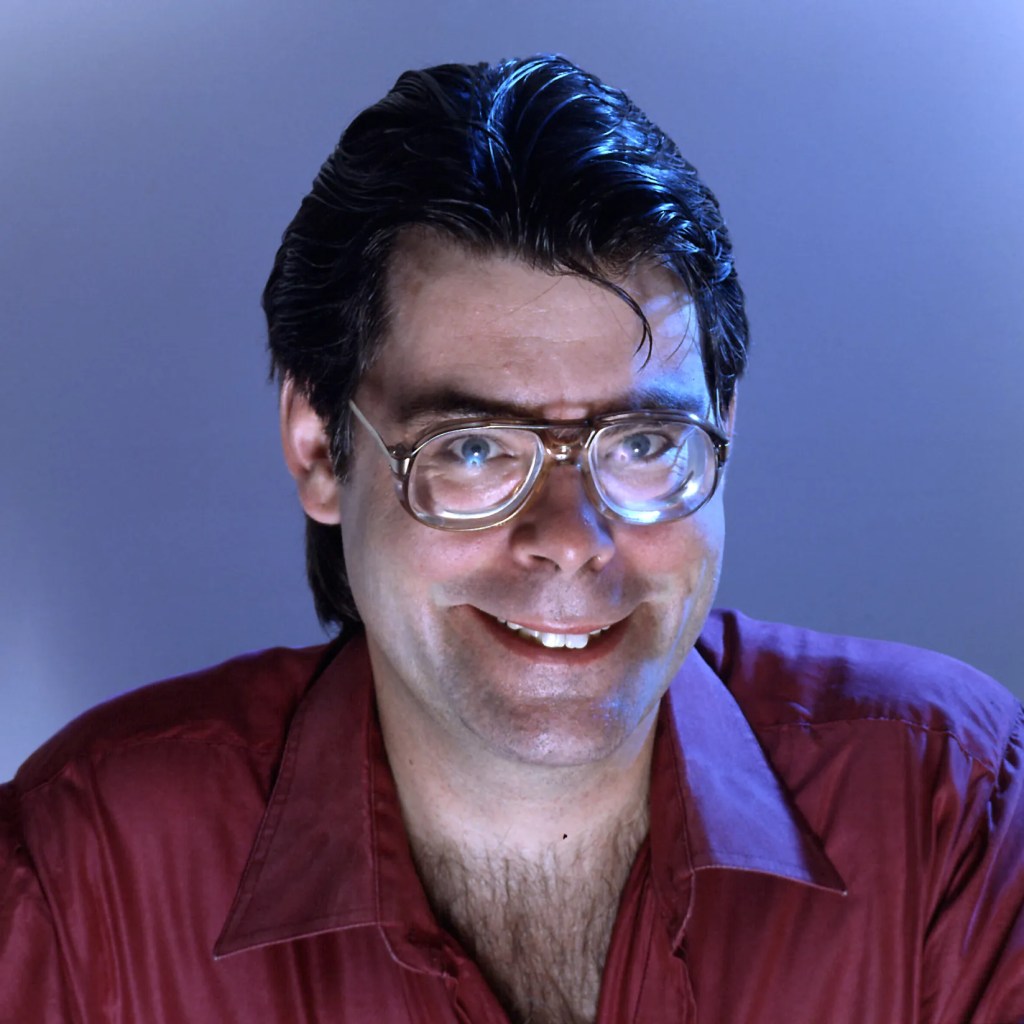
Project ALF.

Iiiiiiiit’s baaaaaaaaack!

As anyone who has read this blog for more than a day knows, I’m a huge fan of Stephen King’s books…but what about his movies? There have been over 200 adaptations of King’s novels and short stories (I checked IMDB), so which one is the best? Truth is the really great ones aren’t actually horror movies: The Shawshank Redemption, The Green Mile, and Stand By Me are some of the best films ever made based on King’s work, but none of them qualify as horror. When you get into the scary content, the sad truth is that a lot of the adaptations are sub-par. (I mean…have you SEEN Maximum Overdrive? Whoever directed that movie doesn’t seem to have the slightest idea what Stephen King is all about. It’s like he was on cocaine or something.)

That said, there are SOME good horror movies based on King’s work. Many people would point immediately to The Shining, but I’m not among them. Look, it’s a good movie, but as an adaptation of King’s book it is terrible. I’d rather focus on movies that DO adapt the books more or less faithfully.

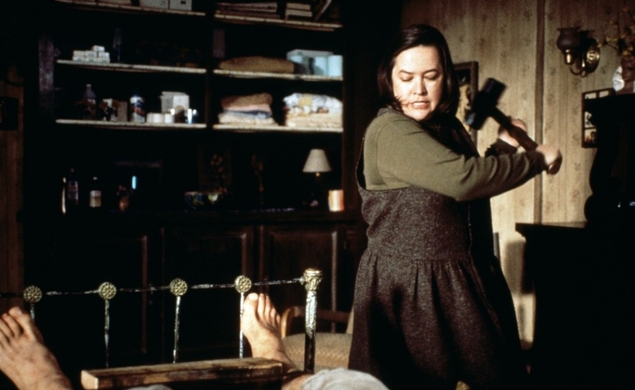
I already mentioned 1408 earlier, and I’d place it close to the top of this list. At the VERY top, though, would be Misery, the James Caan/Kathy Bates adaptation about a writer (it’s a Stephen King movie, of COURSE it’s about a writer) who gets in a terrible car accident only to be saved by his biggest fan. As he begins to heal, though, he discovers that he may have been better off in the wreck. 

Some people, however, would classify Misery more as a thriller than a horror movie, so for those who like to split hairs, let’s talk about The Mist. A mysterious fog full of murderous monsters rolls over a small town, trapping dozens of people in a supermarket. The adaptation is solid, but what really elevates it is the ending. Frank Darabont, who wrote and directed this film (and Shawshank and The Green Mile, so you see his pedigree) changed the ending of the story, something that I usually find outrageous. But the ending he put on was so shocking and dark that even Stephen King himself says he prefers it to the original. 

And I’ve got to give credit to It. I consider this one of King’s best novels – perhaps THE best Stephen King novel – and we’ve gotten TWO pretty good adaptations. The original miniseries from the 90s did the best it could on network television, and Tim Curry is iconic as Pennywise. But in 2017 we got a fantastic adaptation of half of the novel, with Bill Skarsgard taking Pennywise and making him his own. Admittedly, It Chapter Two from 2019 didn’t quite live up to the first part, but you can watch the first part on its own and get a solid, satisfying story. It’s darn near perfect.

It’s good to be the King.

The Wonderful World of Disney

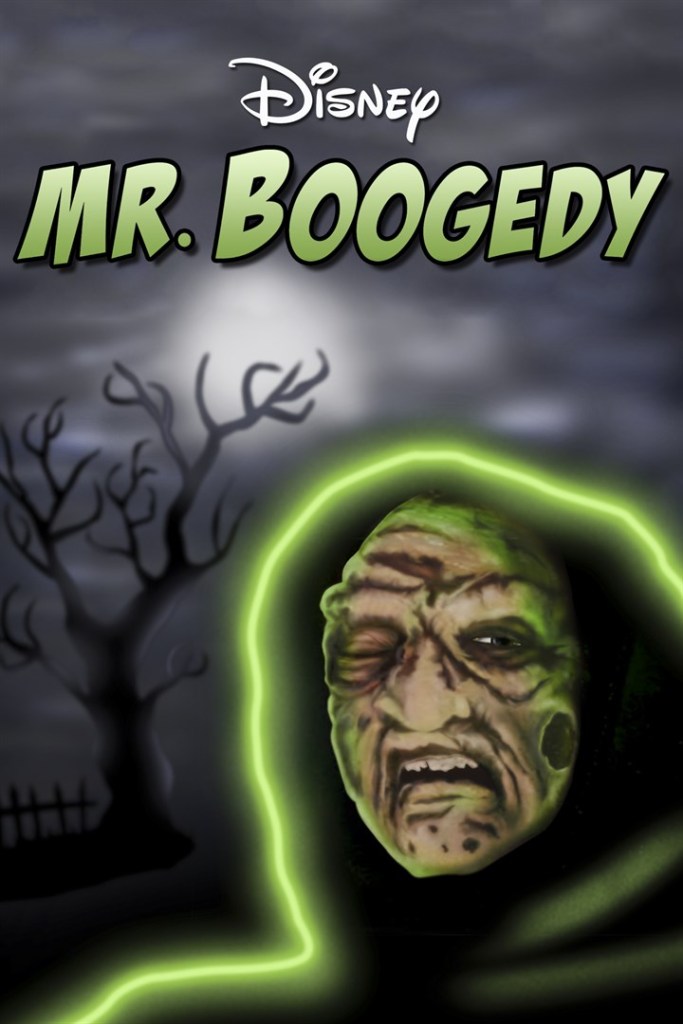
Ryan Tait gave me a category I NEVER would have thought of, but absolutely love: my favorite Wonderful World of Disney Halloween movie. Back in the day, before even the Disney channel, Wonderful World was a delightful showcase for Disney content of all stripes, and some of those made-for-TV movies still hold a warm place in my heart today. My favorite for this category is going to both show my age and make a lot of people wonder what the hell I’m talking about, but I have a deep abiding fondness for the 1986 film Mr. Boogedy.

From the studio that brought you Old Yeller.

A novelty salesman and his family move into a new house that turns out to be haunted (SO MANY of these movies are about people who move into haunted houses, and there are some downright unscrupulous realtors out there) by both some kind ghosts who have been trapped there and by the malevolent spirit who has kept them prisoner. It’s a silly, cheesy movie, but it’s so much fun. And the cast has a great pedigree. Richard Masur of the 90s It, a pre-Buffy the Vampire Slayer Kristy Swanson, a pre-Married With Children David Faustino, and young Benji Gregory, on the cusp of superstardom for his role on the sitcom…not making it up this time…ALF. 

Benji wasn’t in the movie, though.

Both Mr. Boogedy and its (perhaps even better) sequel, Bride of Boogedy, are available on Disney+…but I’m hesitant to tell you to go and watch them if you’ve never seen them before. It’s one of those things where I know my fondness for the movie comes from having watched it over and over again as a child, and I suspect that somebody watching it now, for the first time, as an adult, wouldn’t love it the way that I do. But if you HAVE seen it before and remember it warmly, go check it out. I watched it last year and I still love it.

Installments Past a Sequel

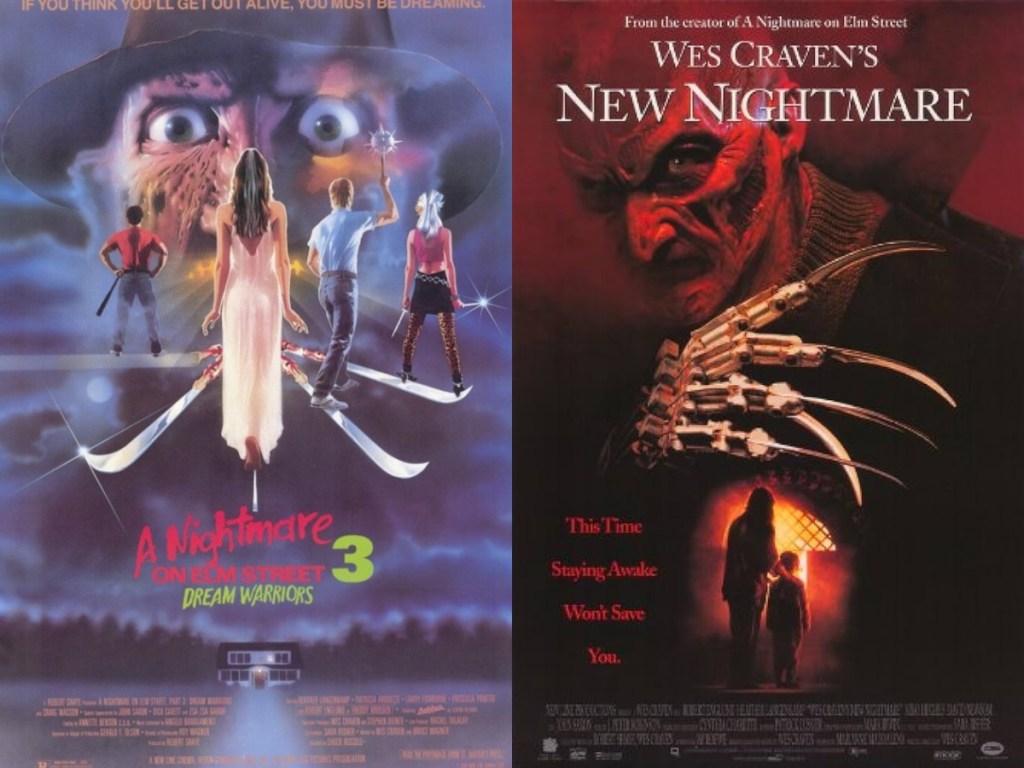
Jasper Fahrig asked what I thought were good installments of a franchise past the first sequel. It’s a truth of filmmaking that long-running series often suffer from diminishing returns. The deeper you get, the worse the franchise often becomes, so finding a good movie that’s part 3 or higher isn’t always easy. Fortunately, Wes Craven is there to hook us up with not one, but two films in the Nightmare on Elm Street franchise. Craven wrote and directed the original Nightmare, but sat out the sequel. When Part Three (Dream Warriors) was made, he came back to help with the story. After a part two that many people admittedly enjoy, but doesn’t really fit with the rest of the franchise, part three is GREAT. Robert Englund is in top form, Heather Langenkamp returns as Nancy (the BEST final girl outside of Laurie Strode), and the crazy horror dream imagery is used to the best effect in the entire series. What’s more, the movie was directed by Chuck Russell (whose remake of The Blob I mentioned last week) and co-written by Frank Darabont. Maybe I’m NOT a horror fan, guys, maybe I’m just a fan of several very specific filmmakers.

But Craven wasn’t quite done. He stepped away from Freddy after that and three more sequels incredibly diluted the character before Wes came back to save the day one more time with Wes Craven’s New Nightmare. Langenkamp is back again, but this time she plays HERSELF, an actress who finds herself haunted by the spirit of Freddy Kruger, the killer from that old movie she made years ago. Craven also appears as himself in the movie, as does Robert Englund, playing both himself and Freddy Krueger. The movie uses the language of the Nightmare series to make a statement about the power of storytelling and belief. It was ” meta” two years before Craven would redefine “meta” with the Scream franchise, and it’s hands-down my favorite Nightmare.

A double feature to keep you up all night.

Award-Worthy Horror

Seth Pontiff wanted to know some horror movie performances that I thought were worthy of Oscar consideration. Oooh, that’s a good one. I’ve often complained about the way the Academy ignores genre movies, but there HAVE been a scarce few performances that got nods. Kathy Bates actually won best actress for Misery, and the next year both Jodie Foster and Anthony Hopkins would take home statues for Silence of the Lambs, but those are movies that the Academy can classify as “Thrillers” without getting their hands dirty in a straight-up horror movie.

So who should have been recognized, but wasn’t? I have to say, I think it’s an outright crime that Boris Karloff was never recognized for his work as the Frankenstein monster. He played the creature three times, twice in movies that are indisputable classics, and infused the monster with such depth and humanity that the viewer comes out the other end on his side. There was so much sadness and power in the character, interspersed with other moments like unbridled joy at those few times he thinks he’s found a kindred spirit, and Karloff sells every second of it. There’s a reason that every kid who draws a picture of the creature gives him a flattop and bolts on his neck, and it’s not because Mary Shelley described him that way.

Another performance that I think was awardworthy? Jamie Lee Curtis as Laurie Strode in Halloween. Not the 1978 film…the one from 2018. This is going to be controversial, I know, because that film has become EXTREMELY divisive among horror fans. And in truth, I was highly disappointed in the final film in that trilogy. But when I look at the 2018 movie by itself I am in awe of her performance. Curtis plays Laurie Strode as a trauma survivor who has spent her entire life preparing for the other shoe to drop. It’s a performance full of anguish and pain, and she sells it every second she’s on screen. I’m glad that she got her Oscar last year for Everything Everywhere All at Once, but I really believe she should have had it sooner.
I’m actually not great at Photoshop either, so pretend I made it look like these two are holding little statues.

Psychological Horror

And finally, AJ Peden asked me about my favorite psychological horror movies. What makes this difficult is that it’s really hard to define what “psychological horror” actually is. The Wikipedia definition (yeah, I looked it up) says it’s horror “with a particular focus on mental, emotional, and psychological states to frighten, disturb, or unsettle its audience.” Well gee, that narrows it down, right? Another problem here is that so many of these movies overlap into other subgenres: ghost stories, slasher movies, found footage films, etc., have all had prime examples of what we could call “psychological horror.” 

I suppose my favorites in this incredibly broad subcategory would have to go back to the great Alfred Hitchcock. Psycho is the obvious example – it’s a great movie with a brilliant twist halfway through the film and a second brilliant twist at the end of the film. It’s also one of the prototypes for the slasher. So is Peeping Tom, which is also a dandy example of psychological horror. In that film, directed by Michael Powell, Karlheinz Bohm plays a photographer making a documentary about fear by filming the deaths of his victims. I suppose a 1960 audience may have been enticed by the title or the high sexual content (by 1960s standards) of the film, but the way Bohm’s character messes with your head is really powerful.

In the 60s, this was scarier than asbestos.

For more modern examples, I think Jordan Peele has kind of taken the forefront of the wave. Get Out, the movie that made people realize that guy from the goofy sketch comedy show was actually a master of terror, was not only a meditation on race relations, but a terrifying film about the potential of having your body literally stolen from you and the mental state that would result from – or compel somebody to do – such a thing. There have been a lot of films since Get Out that have tried to capture that same flavor (The Barbarian comes to mind, as does X and its prequel, Pearl), but I think as far as today’s filmmakers go, Peele wears the crown. 

And I think that’s going to wrap it up, guys. There are a few other suggestions I didn’t get to, but those are either in categories where I haven’t seen enough movies to really form an opinion (Patrick Slagle – sorry, I don’t have a lot of folk horror movies in my catalog) or categories where my answer is so basic that I don’t know that I have anything interesting to say about it. (Rene Gautreaux: the best religious-based horror movie is still the original The Exorcist. Tony Cirillo, my favorite puppet from the Puppet Master franchise is Blade, because blades are cool.) 

I hope you enjoyed this little experiment as much as I did. I had a lot of fun letting you guys tell me what to write about, and I think we uncovered a few gems in the process. May this two-parter help you find some new stuff to watch in the remainder of this spooky season, and keep your eyes right here! I don’t think it’s going to be too long before I ask you all to help me Play Favorites again. 

Blake M. Petit is a writer, teacher, and dad from Ama, Louisiana. His current writing project is the superhero adventure series Other People’s Heroes: Little Stars, a new episode of which is available every Wednesday on Amazon’s Kindle Vella platform. All this and nobody asked about the best zombie movie? Ah well, maybe next time. 

Geek Punditry #39: In a Streaming World, Does Size Matter?

Two years ago, in a move that made pundits across the world scratch their heads and say, “Well how the hell did that happen?”, Netflix purchased the Roald Dahl Story Company. This trust, of course, is responsible for the works of the creator of such things as Charlie and the Chocolate Factory, James and the Giant Peach, Matilda, and that one short story about the snake. At the time, Netflix announced that this acquisition would lead to the development of their own shared universe, copying the Marvel Method just like everybody else has been trying to do for the last decade. So far, though, we haven’t seen a ton of stuff that feels like it’s part of that world. We’ve gotten a film version of the theatrical Matilda: The Musical, and later this year they’re going to release Wonka, an origin story for a character that Tim Burton definitively proved in his film version has absolutely no need for an origin story, but not much else.

Pictured: Much Else.

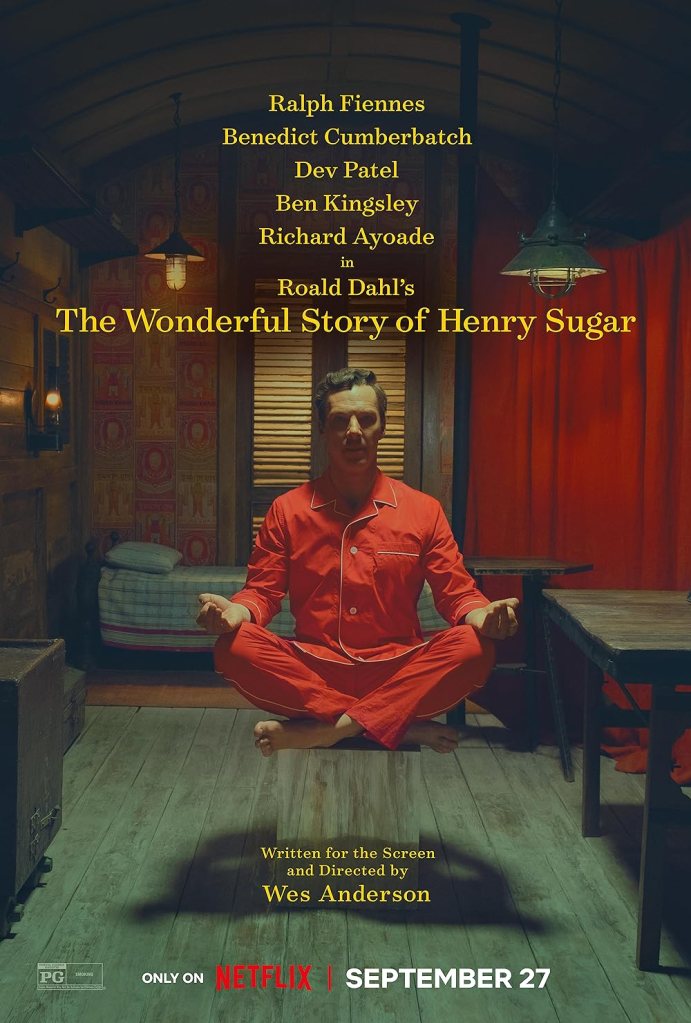
Earlier this week, though, Netflix surprised us all by dropping The Wonderful Story of Henry Sugar, a film based on one of Dahl’s short stories. The movie is directed by Wes Anderson (who also directed the Dahl adaptation The Fantastic Mr. Fox back in 2009) and stars Benedict Cumberbatch as a compulsive gambler who finds a secret to a mysterious power that could potentially make him the wealthiest man in the world. Despite a premise that could easily go very, very dark, the film (and the story it is based on) is remarkably sweet and optimistic, lacking the cynicism that so often creeps in when modern filmmakers attempt to adapt a classic piece of literature that didn’t have a lot of cynicism in the first place. It’s very much a Wes Anderson film, carrying on an odd obsession with films mimicking stage plays that we also saw in his recent feature Asteroid City. The sets of the film are flown in and out in full view of the cameras, the majority of dialogue is spoken directly to the viewer as if the actors were narrating a play, and even visual effects are done in a dime-and-nickel fashion, such as making a character “levitate” by having the actor sit on a box painted to match the set behind him. It’s weird and bizarre and utterly delightful.

It’s also only 39 minutes long.

Although originally presumed to be a feature film when announced, Anderson quickly corrected people, saying that it’s actually the first of four shorts he is making adapting various Dahl stories for Netflix. True, 39 minutes is longer than most of us think of as a “short” film (the classic Looney Tunes shorts were usually in the seven-minute range, and even the Three Stooges rarely broke 20), but it’s certainly not long enough to qualify as a feature film, which has to hit at least 80 minutes to be worthy of consideration. We’ve all seen poorly-made films that pad out their running time to hit that mark, in some extreme cases even running the credits at an excruciatingly slow pace just to cross that 80-minute finish line. The Academy of Motion Picture Arts and Sciences officially defines a short film as running no longer than 40 minutes, including credits, so Anderson got in just under the wire if he’s looking for Oscar consideration, which I’m sure Netflix would LOVE. 

“That’s 43 minutes, Wes. Ya gotta chop four more if you’re gonna party with this guy.”

The odd thing is, as recently as 10 years ago, a film of this nature would have struggled to find a home. Since the end of the era of true theatrical shorts (an era I long for, an era I would dearly love to see return), a lot of theaters never would have run one as long as Henry Sugar. The only way such a film would get any theatrical showing would be in a showcase of short films, which wouldn’t be in wide release, or as part of an anthology of shorts, which historically have not performed all that well. As far as a TV release, it could possibly be aired as a “special,” but would certainly be cut up to add commercial breaks, and possibly even cut down to make room for more commercials. At any rate, stopping a film of this nature to show an ad for Tide Pods would be absolutely gutting to the flow and pace, and make for a far less enjoyable experience than watching it all in one go, like a stage play, as Anderson intended.

Netflix is honestly the perfect home for a film of this nature, and it’s not just this one. Although I have many issues and concerns with the streaming culture that we all live in nowadays, one of the main advantages I think it has given us is the freedom to make a film as long or as short as necessary to tell the story. 

Many people get twitchy at the prospect of watching a movie that’s “too long” (these people usually define that as anything north of 90 minutes). I don’t know if it’s a short attention span or a bladder that just can’t wait, but once they see that runtime creep towards 130, 140 or higher, there are lots of people who would rather skip the whole experience. I have no problem with a long movie – most of my favorites would fall into this category, in fact – so long as the story justifies the length. I hear people complain about the length of the Peter Jackson Lord of the Rings films, for example, but I’ve never been given a satisfactory answer when I ask them what they think could be cut for time without damaging the story. This is why miniseries became so popular in the 80s and 90s, giving more time to adapt a novel that couldn’t fit into a two-hour theatrical experience. It’s why full television series are now being based on books, things like Game of Thrones or Outlander, stories that just flat-out couldn’t squeeze into a movie. And this is, for the most part, a positive thing.

A priceless moment of cinema.

The opposite is also true, however. If stretching out a movie longer than it should be is dull, padding a short movie to make it feature length is deadly. As an avid and enthusiastic moviegoer, I’ve probably seen hundreds of films in theaters over the course of my life, and one of the few times I can remember ever actually falling asleep was in the 2001 film Imposter. (Side note: pound for pound, boring movies are even worse than bad movies. A boring action movie is simply unforgivable.) The film was about an alien race using androids as hidden human bombs trying to attack Earth, and Gary Sinese’s desperate attempt to prove he was not one of these living bombs. It’s a good concept, and Sinese is a great actor, so it’s almost criminal how unbearably dull that film is. I was baffled as to how such an excruciatingly boring movie could be made…until I found out that it was originally made as a short film, part of an anthology of science fiction stories, and it was then expanded out to feature length. If you carved out the parts of the movie that were part of the original short, you may have had a good, taut sci-fi thriller, but by adding additional unnecessary scenes to essentially triple the length of the film, it’s as entertaining as watching Hollywood accountants try to lie about how much money a movie made. 

This movie, for instance, made at least twelve bucks while I took a nap.

Telling a short story is an art that requires different skills than longform stories. The tools are the same, but you wield them differently. A long story can spend time developing plot AND character AND setting AND mood AND theme, whereas shorter works often have to settle for focusing on just one or two of the elements. When it’s done well, it can be a masterpiece. But even those masterpieces can be damaged if you go back and start adding things that don’t belong. It’s like taking a VW Beetle, cutting it in half, and inserting a segment from a stretch limousine. You’ve taken two perfectly good automobiles and turned them into an abomination that doesn’t belong on the road.

It’s hard to make a feature film out of a short story, because by definition, those stories are intended to be short. It CAN be done very well, of course. Several of Stephen King’s short stories have been made into solid features – 1408, the original Children of the Corn, and by all accounts the new adaptation of The Boogeyman (I haven’t seen it yet but I hear very good things about it) each took a brief story and expanded it into features that are engaging and entertaining. On the other hand, sometimes the filmmakers can’t quite build a feature out of a short story, giving us lesser offerings like The Mangler. And sometimes they just try to trade on the name and make no effort at adapting the story at all, and here I of course am referring to Lawnmower Man.

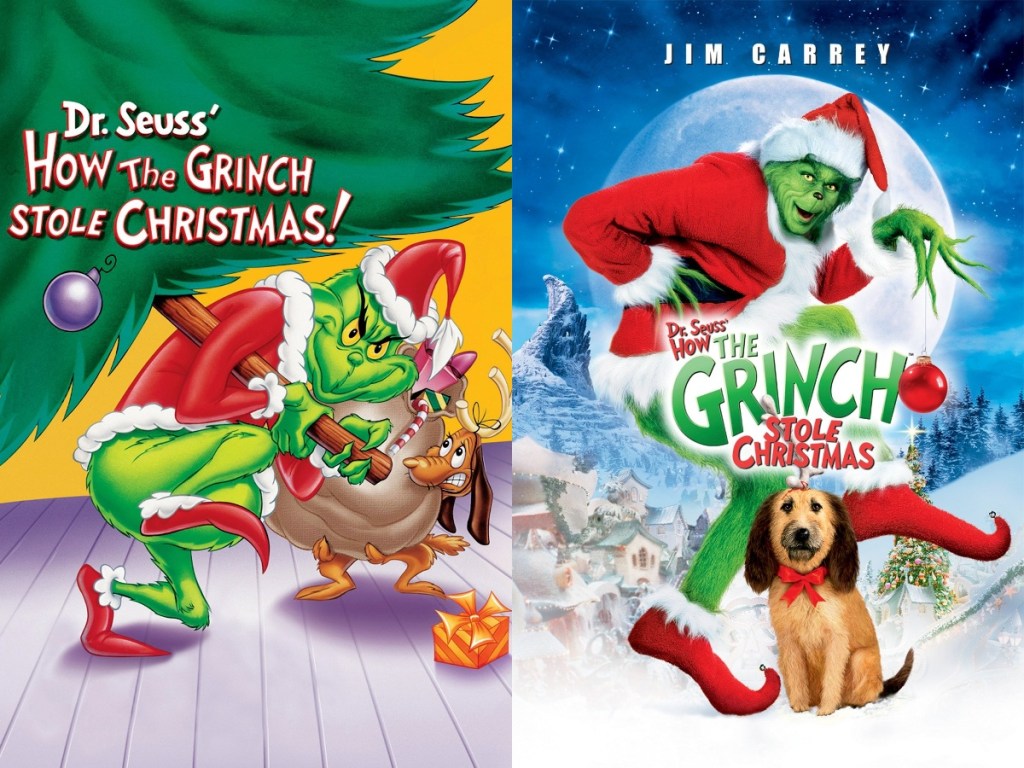
Children’s books are frequent victims of this problem. Books for kids – especially picture books for young children – may only have enough story to last 20 minutes or so. But if you want a theatrical release, that just ain’t long enough, and you have to start inventing stuff out of whole cloth. Sometimes it works. Dreamworks took two short children’s books – Shrek and How to Train Your Dragon – and turned them into flourishing franchises by using the book more as inspiration than a blueprint. On the other hand, look at the awful efforts that the late Dr. Seuss has been subjected to. There have been two separate feature films based on How the Grinch Stole Christmas, and both of them suffer from inflation and unnecessary backstory. What Chuck Jones nailed in 26 minutes, Ron Howard and Jim Carrey puffed out to a painful 104. 

The less said about The Cat in the Hat, the better.

Scientific proof that bigger isn’t always better.

The streaming world has changed this paradigm, though. Previously, there were only two “acceptable” outlets for a film: television or theatrical release. Sure, direct-to-video was a thing, but those usually tried to emulate theatrical movies in form, either to fool people or to maintain an air of respectability. But whether you were making a project for theaters or TV, either way you were chained by scheduling in one way or another. In traditional ad-supported television, almost anything you make has to fit perfectly into a strict schedule of 30 or 60-minute blocks, minus an exact amount of time for commercials. Deviation is not tolerated, because we have to fit in a very specific amount of advertising time. Even premium cable channels, which are not beholden to advertisers, often use that 30-minute grid for scheduling, then pad out the remaining time with promos for their own networks so they can start the next movie or TV show on the hour.

Theatrical movies have a little more wiggle room – there isn’t a hard and fast rule that a movie has to be EXACTLY 90 minutes – but there are still parameters that have to be adhered to. If a movie is less than 80 minutes, theater chains usually won’t run it, as filmgoers will be disappointed at spending $127 on tickets, candy, and soda to take their family out to see something that’s over in under an hour and a half. On the other hand, the longer a movie is, the fewer times a day it can be shown, meaning fewer tickets sold, which again makes theater owners hesitate unless it’s a film they feel is a guaranteed blockbuster. Marvel movies can get away with a longer runtime because they historically bring big box office. Oscar bait dramas can do so as well, particularly if they come from a major studio. But if you’ve got a no-name director, no big stars, and aren’t tied to a recognizable IP, showing up at AMC with your 3-hour long epic about the Battle of New Orleans probably isn’t going to fly.

But on Netflix, Prime Video, or any of the other bajillion streaming services, neither of these factors need to be considered. A viewer doesn’t have to be in front of their TV at 8 o’clock because that’s when their favorite show airs anymore. They don’t have to show up at the theater at 6:45 to get settled in before the previews roll at 7, and they don’t have to worry about running out in the middle of the film to feed the parking meter because Kumquat Warriors 7: The Kumquatening is a longer movie than the previous three combined. In a streaming world there is no reason to make a movie or TV show any longer or shorter than is necessary to effectively tell the story. 

By the time Avatar 4 comes out, you’re gonna need to get a hotel room for the night to finish it.

Streaming series have been running with this a lot. Although they still kinda aim for the old TV paradigm of half-hour comedies and one-hour dramas, they aren’t strict about it. If an episode takes 37 minutes instead of 30, no big deal. If it only reaches 48 minutes instead of 60, we can let it slide. The series The Orville, for its most recent season, jumped from the Fox broadcast network to the Hulu streaming service, and once they were no longer locked in to 42 minutes of show plus 18 for commercials, they delivered an entire season of episodes that went well over an hour. Several of them are long enough that they could have been released as theatrical films. And for the most part, they were very entertaining and compelling, using the freedom of the format to great effect.

And while movies can have the freedom to get longer, things like Henry Sugar are demonstrating that the real freedom is to get shorter. In 2020, in the midst of the Covid lockdowns, Rob Savage made a horror film called Host. The film used the lockdown to great effect, telling a story of a group of friends on a zoom meeting that accidentally summon a dangerous spirit. Shudder picked the movie up and it became a cult hit, despite the fact that the running time is only 57 minutes. This is a film that never could have found a theatrical release without adding a half-hour of fluff, but the streaming world allowed Savage to just tell his story as he saw fit, and that gave it wings that it wouldn’t have had with any traditional distribution model.

To be fair, though, most of us feel this way if we need to attend a Zoom meeting for work.

There are a lot of things about the streaming world that concern me – I’ve mentioned many of them before. But if there’s one thing that is definitely positive about it, it’s the fact that time constraints are largely a thing of the past. The freedom to tell a story in the most effective way without trying to adhere to largely arbitrary rules of running time has already produced some really great content. The important thing is that a filmmaker is allowed to include whatever is necessary but not forced to add things that don’t matter, and that path (in the hands of a skilled crew) will make better movies. If there’s nothing else we can learn, it’s that when it comes to telling a good story, size isn’t what matters at all.  

Blake M. Petit is a writer, teacher, and dad from Ama, Louisiana. His current writing project is the superhero adventure series Other People’s Heroes: Little Stars, a new episode of which is available every Wednesday on Amazon’s Kindle Vella platform. He‘s hoping that this season’s finale of Lego Masters has a seven-hour streaming cut.

Geek Punditry #35: Cracking Open the Mailbag

Here at the Geek Punditry Global Media Hub and Frozen Yogurt Emporium, we do our best to keep on the cutting edge of popular culture. We check in on all the websites. We read the “Tweets” and the “X”s. We “Insta” and we “Thread.” We do not TikTok, however, because although we do have several incurable neuroses, narcissism is not one of them.

And as such, occasionally we find ourselves being asked questions by you, the faithful reader, about some of the elements of pop culture that are flickering across the internet as we speak. So this week, we’re going to crack open our bulging folder of email and address some of the questions that you’ve had for us lately.

Dear Geek Punditry,
I’ve recently subscribed to the Marvel and DC Comics apps so I can get down and read a whole bunch of comic books, and I was wondering where to start. There’s so much stuff on there and I’m not sure what I should read first.
Overwhelmed in Omaha

Overwhelmed,

You’ve certainly come to the right place. While the sheer amount of content on these two apps can be intimidating, if you figure out how to filter through it and find the things you like, the services are worthwhile. For example, if you’ve got the DC Ultra level, you can access all of Neil Gaiman’s Sandman and Bill Willingham’s Fables. The recently-released first issue of Mark Waid and Bryan Hitch’s Superman: The Last Days of Lex Luthor is there, and it is excellent. I’ve been using the app myself to catch up on those Knight Terrors miniseries that fall into books I don’t usually buy and therefore aren’t getting physically, and I’ve enjoyed several of them as well. And of course, no visit to the DC app would be complete without reading DC Challenge and Captain Carrot and His Amazing Zoo Crew.

As for the Marvel app, when I first started using it my goal was to figure out what’s going on with the X-Men in the age of Krakoa. I started reading those books when Jonathan Hickman took over, then gave up because there were simply too many of them to keep up with. I saw the app as an opportunity to read the entire line all in one place without spending a fortune, and I’m happy to report that having all of the installments of the various X-Men related titles available in one place has in absolutely no way made it easier to keep up with them or, for that matter, even really understand what the hell is going on. I’d also recommend Chip Zdarsky’s Daredevil, which I’ve mentioned before, Gail Simone’s Variants, and for old-school fun, check out Peter Porker, the Spectacular Spider-Ham.

When the hell is THIS crossover going to happen?

Geek Punditry,

I’m a teacher, and earlier today one of my students saw the display of Superman stuff I keep in my classroom and he called it “lame.” How do I let him know that he, in fact, is the lame one, and also a stupid-head, without getting called in to the Principal’s office again?

Educational in Erie.

EE,

Ah, the “Superman is lame” argument. I’ve heard it many times. “He’s too powerful, he’s too perfect, he’s too basic.” Indeed.

First of all, I wish I could talk to the person who decided that “basic” is a pejorative. “Basic” means simple or uncomplicated, and frankly, there are a lot of days where I think it would be great if the whole damned world was more basic.

That said, the concept of Superman may be basic, but the characterization certainly is not. What you have, when you boil Superman down to his essence, is a man with the power to do virtually anything but who chooses to use that power to do good. I think people reject that concept because they can’t conceive of anybody behaving that way in real life, but that’s what makes the character so compelling to me. What kind of person, with the ability to conquer the world, would rather use it to get kittens out of trees? Of course, that’s only a small part of his job description – he also averts natural disasters, saves people from fires, thwarts supervillains, flummoxes corrupt super genius scientists/businessmen, and saves the world seven times before breakfast…and he does it because he can. Because it would be inconceivable to him to do otherwise. 

I’m not saying that there haven’t been bad Superman stories in the past (written in the past few years, beginning shortly after Action Comics #1000, theoretically speaking), but when Superman is good, there’s nothing better. Great Superman stories take this concept of an incredibly powerful alien and blend it with just a hint of the Pinocchio syndrome: he wants to be human. And like the best Pinocchios, he wants it so badly that he winds up becoming more human than anybody. Superman is a character who believes in Good – not the lowercase adjective good, but a proper noun Good that is a tangible force in the universe. He believes that most people carry it within them, and his job is to bring it out. He believes the best of everyone, he cares about everyone. In a recent story by Phillip Kennedy Johnson (Action Comics #1053) he was asked by someone why he would bother to save the life of one of his enemies. His answer was the most Superman response I’ve ever heard: if someone who has done wrong dies, they will never have an opportunity to become better.

When you don’t believe in yourself, remember that this guy would.

THIS is the Superman I love. The one who first identified himself, when asked who he was by Lois Lane, as “a friend.” The one who will never give up on people. The one whose faith in the inherent decency of humanity is both his greatest weakness and his greatest strength. If you can’t tell a great story with Superman the fault lies not with the character, but with the writer. 

Also, I like the trunks on the outside.

Hailing Frequencies Open,

In the past, you have extensively discussed your love for various iterations of Star Trek in this column. I was wondering if you would be willing to rank the various series for us, from your favorite to least favorite.

Andorian Andy

Andoriandrew,

I really hate ranking things, you know. I feel like it creates a sort of unnecessary drama, an unnatural division amongst people who, at their core, should have more in common with each other than differences. The only reason I can think of for producing a ranked list of one’s totally subjective preferences is to have something to argue about, and I don’t want to do that. I love Star Trek in all its forms, and for many different reasons.

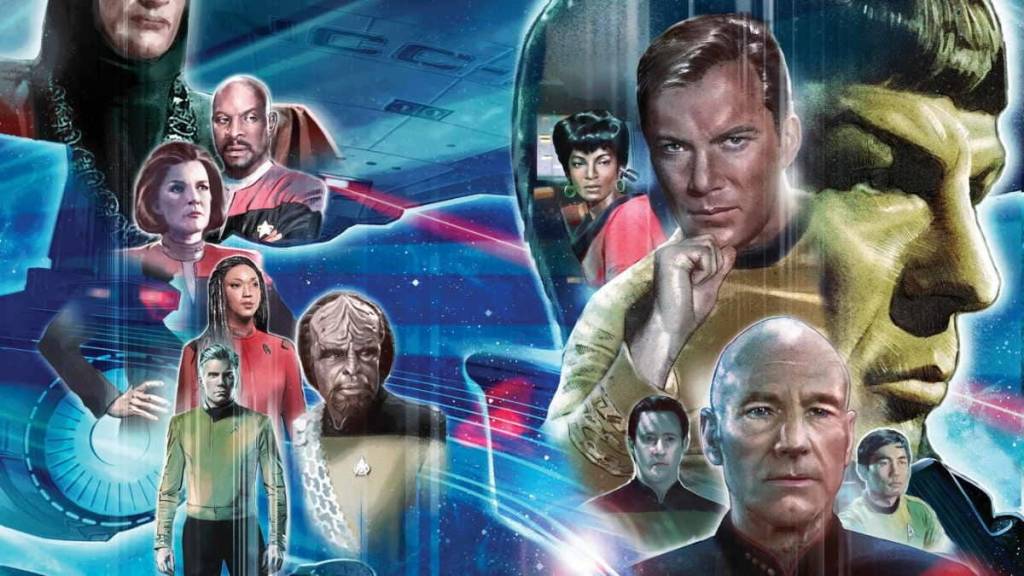
Nearly 60 years of awesome. And also that episode of Voyager where they turned into salamanders.

The Original Series created a rich, vibrant science fiction universe that has captured the imaginations of generations, and The Animated Series began to expand upon that world, allowing writers to do wilder things that the budget of a live action TV series at the time would not have allowed. Next Generation resurrected that universe, giving us some of the greatest and most beloved characters in the entire franchise (such as Data, that other great Pinocchio of the modern day). Deep Space Nine was the first series to attempt an extended story arc, and has some of the deepest and most profound stories and character arcs in the entirety of Trek. Voyager compounded the memorable characters and took an opportunity to explore different settings. Enterprise was a step back that showed us the roots of the universe that we loved so much. The Kelvin timeline films are a fun, fresh look at something that was remarkably familiar. Lower Decks shows us that there is room for both lighthearted fare and serious science fiction in the same story. The final season of Picard is a brilliant conclusion to the stories of many of our favorite characters. Strange New Worlds recontextualizes the original series and gives new life and energy to something that we thought we knew all there was to know about. Prodigy is a series that introduces kids to the core thesis and heart that makes the Star Trek universe what it is in an exciting and engaging way. And Discovery has Tig Notaro sometimes. 

Dear Constant Reader,

You’ve spoken before about your love for the works of Stephen King. With his newest novel, Holly, hitting the stands, I was wondering if you have any thoughts or feelings about the Holly Gibney character in her previous appearances or any hopes or expectations for this new story.

Roland from 1919 19th Street, Co-Op City

R19,

I am, in fact, an avowed reader of the works of Stephen King. I’ve been a fan of his since high school and I have devoured a great many of his books. As for Holly Gibney, however, I’m afraid I actually haven’t read any of the books with her in it yet. Holly first appeared in King’s 2014 novel Mr. Mercedes, you see, and 2014 also happened to be the year I got married. That’s a busy time in a person’s life, as you may have heard, and in that time I fell a bit behind on reading pretty much anything. Then just as things were starting to settle down, my wife and I had a kid, and if the transition of getting married makes you busy, the transition of becoming a parent is like having a tornado drop into the middle of your living room and steal all your books. So the truth is, I’m way behind on reading not just Stephen King, but pretty much every other author whose work I enjoy.

The good news, as I’ve mentioned before, is that my son is a bit older now and I’m finding it a bit more possible to pick up a book and read again, so I’m slowly getting back into the game. I’ve actually made several lists of authors and series that I want to get into or back into, and I’ve been chipping away at them a little at a time. The Stephen King novels I haven’t read yet are all on those lists, and I have every intention of getting to them eventually. The funny thing is that, of all of his books that I haven’t read, only three of them were published prior to 2014…and I don’t know that I’m going to get around to Pet Sematary anytime soon. As a dad, it might just be too much for me.

Guess which one of these I’m probably going to read first.

Blake,

Is it true that you just couldn’t think of any topic to write about this week that was worth devoting an entire column to, and thus resurrected this contrived mailbag format as a way to work in a variety of different topics that wouldn’t support an extended discussion? And if so, when did it occur to you that the “mailbag,” while a classic trope, is hopelessly outdated and it would be better served to structure future such columns in the form of social media interaction?

Curious in Cambodia

Dear Curious,

Shut up, that’s why. 

Blake M. Petit is a writer, teacher, and dad from Ama, Louisiana. His current writing project is the superhero adventure series Other People’s Heroes: Little Stars, a new episode of which is available every Wednesday on Amazon’s Kindle Vella platform. What’s odd is that, although he hates ranking things, he enjoys making lists. Isn’t that bizarre? 

Geek Punditry #30: Summer Reading

Summer reading. The phrase calls up different memories, different emotions, depending on how old you are. If you’re my age (or you’ve seen the memes), it may bring you back to those halcyon days when you were tracking each book you read in the pursuit of a free personal pan pizza. Depending on what school you went to, it may cause you to recall those last few hours before a new school year began, binging A Tree Grows in Brooklyn or Of Mice and Men, even though you had two months with virtually no responsibilities in which to get it done. For a lot of people, it brings to mind the beach or the pool, where you set up on a towel or a chair and pull out a romance novel, a potboiler mystery, a spy thriller, or whatever it is that you connect to. Whatever the specifics of your personal relationship with books, it seems very curious to me that people have settled on the summer as the time to read.

Of course, if you’re just trying to SOUND smart, this sucker is available on Amazon and can tell you everything you need to know.

And we can blame teachers and Pizza Hut all we want, but there’s something that makes us all reach for that to-be-read pile during the summer months. Any book lover will tell you that we add to that pile constantly, most of us have stacks and shelves (or files bursting with digital downloads) of books that we know we have no hope of finishing in our lifetime, barring one of those Twilight Zone scenarios and minus the poor eyesight. That doesn’t stop us from piling new books on, of course, as we constantly tell ourselves and our partners that we need to be grateful it’s books and not, for example, meth. As that pile gets bigger and bigger, summertime is the only time where it seems to dip a little (or at least grow more slowly). 

Me on June 1.

This is even true for those of us who, through a terrible confluence of biology and neurochemistry, happen to love both books and our own children. In my entire life, there has never been a single event that slowed down my reading more than the birth of my son. And he’s worth it, of course. I love him to death, and I make sure to tell him that every time I look at the 17 books Stephen King has published since his last haircut that I haven’t gotten around to consuming yet.

The good news, parents, is that kids get older, and eventually they do reach a point that makes it a little easier to start reading again, and this summer seems to have finally gotten my family to that sweet spot. Of course, we did need a little help. Our local public library, as they always do, has issued a “summer reading challenge” to its patrons, both children and adults. There are prizes (no pizza, sadly), and of course, bragging rights, and the weird thing is that having this carrot dangling in front of us has really worked for my family.

Not quite as well as this, of course.

The St. Charles Parish Public Library is affiliated with a reading app called “Beanstack,” which allows you to track your reading time, track books you’ve read, even track the number of pages read (although I personally have not taken advantage of this feature, as most of the books I read these days are eBooks, and tracking the pages isn’t always easy). You can write reviews as well, and share your reading with others. You earn points and badges. I got a free umbrella. It’s kind of goofy that a grown ass adult (or whatever I am) would need to treat reading books like accumulating a high score on a video game, but by God, it worked.

My summer ends next week, when the teachers at my school report back for a few days of professional development in advance of the avalanche of students the week after, but when it comes to reading, I’ve really taken advantage of this summer. Since school let out in May, I’ve recorded 80 different reading sessions, 20 different books, and a whopping 2578 minutes of reading time, most of that at night before bed, because knowing I don’t have to wake up at 5 am makes me feel a little more free to stay up late with a book like I did when I was a kid. My wife – who is not a teacher and thus does not have the summer away from work – hasn’t quite matched my numbers, but she’s also found herself reading more thanks to the use of the app. There’s something oddly communal about the experience, knowing that other people in the system are reading as well, trying to stack up their numbers, and having fun doing it.

Um…just ignore that second stat.

The communal aspect, I think, is one of the things that makes it work. I can see how many reading minutes everybody signed up for the Library system has accumulated over the summer (currently hovering at about 2.1 million, which means some of you people have been slacking), and there’s something about knowing that other people are reaching for the same goal as you are at the same time that makes it a little bit easier and a little bit more exciting. It’s the same reason people share their steps from a Fitbit, the same reason so many of us jump into NaNoWriMo every November. You’re aiming for a goal that you always have on some level. It’s easier to go after that goal when you know you’re not doing it alone.

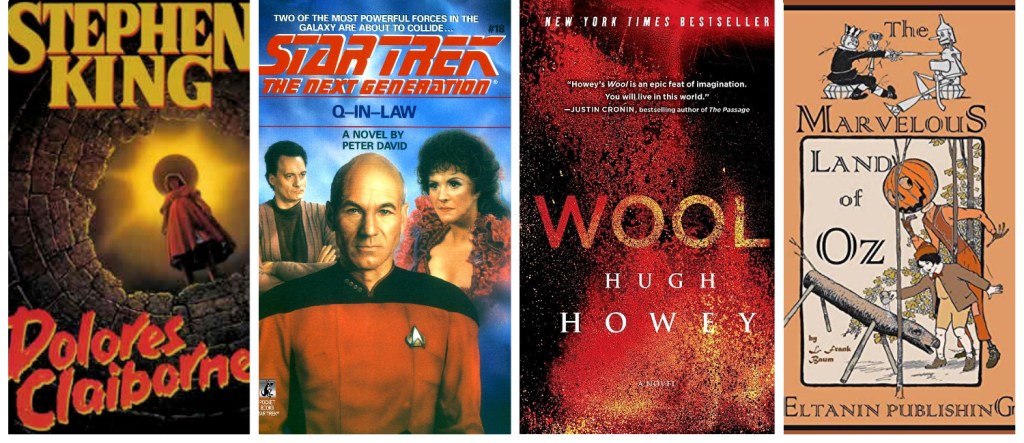
Those 20 books that I’ve dug into, by the way, are also in pursuit of various smaller goals. Most of them are in series or by authors I enjoy, but that I’ve never gotten around to finishing. I’ve started a re-read of all of L. Frank Baum’s Oz novels (in case you were wondering why I wrote about that back at the beginning of summer) with the intention of continuing on and reading the other books in the “Famous Forty” that weren’t written by him, most of which I’ve never read before. I’ve read a few Star Trek novels. I’ve read books in George R.R. Martin’s Wild Cards series and Hugh Howey’s Silo saga. I’ve even tackled two of those Stephen King books that I hadn’t gotten around to yet. He wrote four more in the time that it took me, but baby steps. 

If you can think of a better way to spend the summer, I’d love to hear what it is.

The only problem I’ve got with Beanstack is that I don’t think you can add friends from outside your own library system, so I don’t know that all of you fine folks out there could link up with me there – although if anybody knows of a similar app that’s not geographically-locked, by all means let me know. And while you’re at it, let me know how your own summer reading has gone. What have you read on the beach, what books have finally escaped your-to-read pile, and do you too feel like you read more when the heat is on?

Blake M. Petit is a writer, teacher, and dad from Ama, Louisiana. His current writing project is the superhero adventure series Other People’s Heroes: Little Stars, a new episode of which is available every Wednesday on Amazon’s Kindle Vella platform. Blake is also considering doing a total read-through of Rick Riordan’s Percy Jackson universe, but that dang Stephen King keeps adding other books he need to get to first. 

Geek Punditry #17: Fiction’s Fiction

If there’s one thing you can say about fandom, it’s that all fans of every stripe want the same thing: more. If we love a TV series, we want movie spin-offs. If we love a comic book, we want that hero to appear in multiple titles. If we love football, we feign interest in the XFL or USFL until August, because at least it’s something. Whatever it is fans want, the unifying element is that everybody wants more of it. 

The problem is that stuff takes time. The average TV season lasts for 13 episodes these days (sometimes 22, if you’re lucky), leaving well over two thirds of a year with no new content. Movie sequels can take from years to decades, and sometimes never happen at all no matter how badly you want them. Waiting for new books is a crapshoot – if you’re a Stephen King fan you’ll have three new novels to read by the time you get home from Burger King, whereas George R.R. Martin readers will have to inherit the fandom from their grandparents before they get any new content. Even comic books, which usually have a pretty standard schedule of once or twice a month, take you ten minutes to read and then you’re stuck sitting around waiting for the next installment.

Efficiency is the only reason the man on the left has a higher body count.

So in order to satiate the thirst of fans for “more,” something marvelous has happened. “Extended” Universes. Novels based on movies, comic books based on novels, TV shows based on comics, movies based on TV shows. There’s a weird, incestuous spiderweb of media that springs up around any sufficiently popular franchise, and it’s been happening for ages. Back in 1942 George F. Lowther wrote The Adventures of Superman, a novel based on the world’s most popular comic book character who, at the time, was only four years old. In 1910, Thomas Edison produced a short film based (very loosely) on Mary Shelley’s Frankenstein. Hell, way back in 1615, Miguel de Cervantes published the second volume of Don Quixote largely to spite an anonymous writer who, using the pseudonym “Alonso Fernandez de Avellaneda,” released his own unauthorized sequel to the first book, something that would have brought down a legion of Disney-owned lawyers were anyone to try that today. The point is, fans have been greedy for a long, long time.

Pictured: More.

The great thing is, if you love Star Trek and can’t wait for June 15 and the season premiere of Strange New Worlds, there are literally hundreds of novels, comic books, and video games you can consume to get your fix. And some of them are really good. And some of them have very devoted fans, and some of them have wonderfully complex and entertaining lore and mythologies all their own.

And this is where the problem comes in. When extended universes are really popular, a sort of strange conflict begins to arise when the time comes to figure out what is and what is not canon. What’s “official” to the main universe that you’re enjoying? What “counts” and what doesn’t?

It used to be relatively simple: the medium that birthed the franchise was king, and everything else could be a fun diversion, but was not considered relevant to the creation of a new “official” installment. It didn’t count, it wasn’t real, it was “Fiction’s fiction.” Because of this, at the time, these expanded works didn’t usually do anything that would have permanent repercussions to the main story. Sure, there were Star Wars comics while the original trilogy was being produced, but there was never any real danger of Han Solo dying because Lucasfilm needed him for the next movie. This did produce some “funny in hindsight” moments when early writers teased a Luke/Leia relationship because they didn’t know yet that the two of them were brother and sister. Of course, neither did George Lucas, so who can blame them?

It was Star Wars, I think, that started to change things for these extended worlds. In the early 90s, it had been years since Return of the Jedi and there did not seem to be any intent to make more movies, so a plan was hatched to continue the universe via novels and comic books. The first Timothy Zahn trilogy of novels introduced the new big bad, the fandom-beloved Grand Admiral Thrawn, while Dark Horse Comics’ Dark Empire series brought Emperor Palpatine back from the dead by revealing he had the ability to transmit his mind into cloned bodies he had ready for just such an occasion. With the success of these stories, the Star Wars universe grew exponentially, with hundreds of interwoven stories introducing new characters, heroes, villains, planets, and alien species that were as thoroughly entertaining as anything the fans had come to love in the original trilogy. Even once movies were being made again, films that sometimes contradicted elements of the extended universe, the creators did their best to pivot, explain away inconsistencies, and incorporate “official” elements into their own world. And for the most part, it worked.

Geeks in the 90s were required by law to read these books 74 times.

Then Disney bought Lucasfilm and designated everything except the six existing movies and Clone Wars TV series to be non-canon. Actually, they used the term “Star Wars Legends,” because that way they could keep reprinting and profiting off the work while usually failing to pay the creators any royalties, which is a different rant I’m not going to get into right now. There would still be an extended universe, of course, but now they were going to produce it themselves, with books, comics, and video games tied to the new “official” canon, and ostensibly, those works would be considered canon as well. So far it seems to have worked out, but that doesn’t mean I doubt for a second that Kathleen Kennedy would make a movie that  contradicted Marvel Comics’s War of the Bounty Hunters series if she so felt the urge. 

My favorite “Star,” Trek, has had its own issues with extended universes, particularly in the 80s when DC Comics held the license. Following Star Trek II: The Wrath of Khan, DC began publishing new stories assuming a status quo as it was at the end of that movie: Admiral Kirk commanding the Enterprise after the death of Spock. Then came Star Trek III: The Search For Spock, in which Spock…y’know…un-dies. Despite the fact that the movies clearly take place right after each other, chronologically, the comic writers wrote a story that dovetailed their few years of adventures into that movie best they could, then began a new status quo. The Enterprise was destroyed, so Kirk took over command of the Excelsior for reasons, while Spock became captain of a science vessel and had his own adventures. Then Star Trek IV: The Voyage Home further complicated things with a story that clearly happened immediately after the events of the previous film and did not fit the comic book canon in any conceivable way. The comic book writers flailed for a while until DC got the rights to do an ongoing series of the then-new Star Trek: The Next Generation series, at which point they rebooted the comic starring the original crew so it could start with a new first issue the same month that TNG #1 came out, and then they just pretended those other stories they told never happened.

Trek got better in the late 90s and aughts, taking a cue from Star Wars and moving into stories based on franchise installments that seemed truly “over” and therefore safe to expand upon. There was a series of novels following the Deep Space Nine characters after the conclusion of their show, another with the adventures of Captain William Riker on the Titan following the final TNG movie, and even some series featuring mostly-new casts like Peter David’s New Frontier or the Starfleet Engineering Corps books. When the J.J. Abrams films brought Trek back to the screen, it was no problem for the extended universe, since they explicitly took place in an alternate timeline. In fact, it just gave writers a whole new universe to play around in. Modern Trek does have a few clashes, though: IDW Comics (who currently holds the license) recently began an initiative to create a more tightly woven universe through a relaunched Trek series and its Defiant spin-off, both of which are good comics, but which feature versions of Data and Beverly Crusher that seem to flat-out contradict the canon of Star Trek: Picard, which seems like a bizarre choice.

One of these things is not like the others…

The “official” continuation game has been played with more and more franchises in recent years. Buffy the Vampire Slayer and Firefly continued their respective universes in comic books, while Smallville – a TV show based on a comic – had a fairly lengthy “Season 11” series that followed that show: a comic book based on a TV show based on a comic book. Then there was the film adaptation of Stephen King’s The Dark Tower, a desperate effort to squash the material of seven books into 95 minutes (that’s seven Stephen King novels, most of which are large enough to qualify for their own zip code). While most fans were disappointed in the result, the sting is mitigated slightly if people try to view the film not as an adaptation of the books, but as a sequel to them. That probably doesn’t make any sense if you haven’t read the books, but just take my word for it.

That brings us to the issue when printed media are translated to the screen. Books were first, gloriously first, but if we’re being honest here, the general public often accepts film or TV adaptations as more official. Just talk to any devotee of L. Frank Baum’s The Wonderful Wizard of Oz and its subsequent sequels about how much you love the Ruby Slippers and watch them die a little inside. James Bond was created as a hero for novels and short stories, but the films are obviously what most people are familiar with, and those are highly contradictory. Some of the movies are based on Ian Fleming’s stories, some of them use the titles of stories but very little else, and others are cut from whole cloth, but there’s just no way to pretend they share a canon. Most Bond fans don’t care, of course, and modern fans tend to see the movies as the “real” James Bond more than the novels that gave him birth. (He’s a more likable character in the movies, to be fair, so this is not necessarily a bad thing.)

As for comic books, there have been comic book movies for a very long time, but those have historically been ignored by the comics themselves. The first Batman serial from the 40s, for example, portrayed him as a government agent beating up spies, something that doesn’t sync with any canon comic book I can think of. Even really popular films, like the Christopher Reeve Superman or Tobey Maguire Spider-Man, had a negligible effect on the comic books. Then came the Marvel Cinematic Universe, and boy, things changed. With the gargantuan success of the MCU, there are now effectively two “official” Marvel Universes, and the cinematic one is by far the one that’s more recognizable to the general public. The MCU was the first time anyone had ever tried to create so intricate a universe of interwoven films and TV shows, something that made it feel more “real” than that scene in Batman Forever where Bruce Wayne casually mentions Dick Grayson’s circus is “halfway to Metropolis” but otherwise gave no indication of anything beyond the boundaries of the film. The Marvel Studios movies and shows all linked to each other and all mattered to each other, just like the comics, and the “cinematic universe” model is something everyone has been trying to replicate ever since.

And of course, occasionally elements in these extended universes become popular enough that they can cross over into the “real” worlds. Harley Quinn was created in Batman: The Animated Series and was such a hit that she joined the official comic book universe, then spread out into live action. Superman’s pal Jimmy Olsen, almost as integral a character to the mythos as Lois Lane or the Kents, made his first appearance on Superman’s radio show. The aforementioned Batman serial, which is goofy and doesn’t feel like the same character at all, is responsible for the creation of the Batcave. And even though the Star Wars Legends stuff is no longer canon, Disney is starting to allow elements of that world to leak into the “official” world, such as bringing in Timothy Zahn’s Thrawn character and allowing the resurrection of Emperor Palpatine – although to avoid being accused of copying the Dark Empire comic book, they cleverly neglected to give any comprehensible reason for his return whatsoever. 

“I’m canon now, bitches!” –Thrawn, probably

The original question was that of what is “real” in these different universes. The newfound ubiquity of the multiverse concept in storytelling makes that easier. (It’s an old concept, I know, but in recent years it’s really experienced a boom in popular culture.) Marvel officially recognizes just about every version of its characters as “real” in one corner of the multiverse or another, with stories like Spider-Verse (the comic book) and Into the Spider-Verse (the movie) bringing them all into play together. DC has a similar policy and has officially declared that the Christopher Reeve Superman movies and Michael Keaton Batman movies are set in the same universe, although whether that will be contradicted by the upcoming Flash movie remains to be seen. The truth is that the people writing any version of these IPs in any medium will pick and choose those elements that they need to make their story work, and as that can be confusing if a fan is trying to reconcile everything, this is probably a good reason not to try that. What’s “real”? What “matters”? Whatever you need for the story you’re trying to enjoy right now.

The rest of it?

Just find that corner of the multiverse where a guy named Joel told us to repeat to ourselves “It’s just a show, I should really just relax.” 

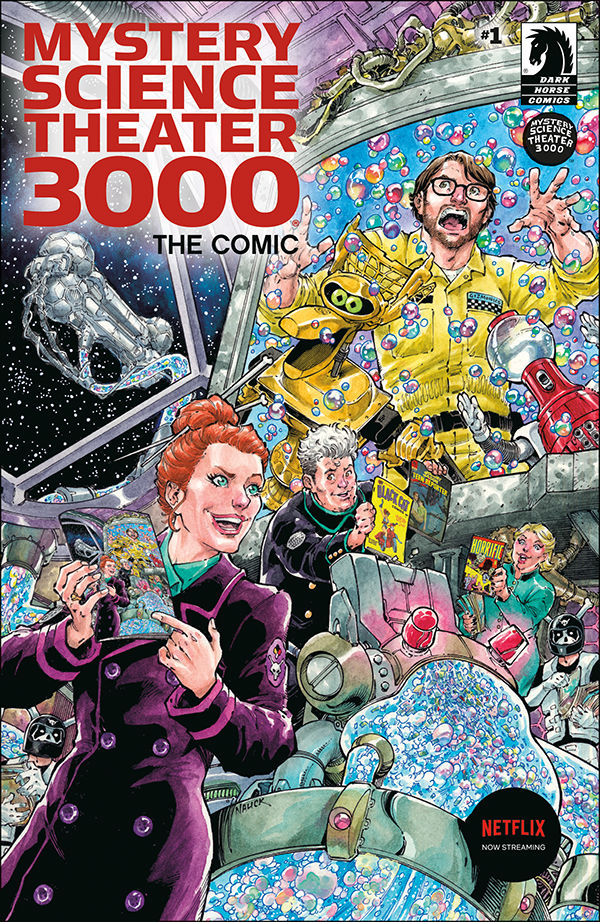
Yep. Those guys got a comic book, too.

Blake M. Petit is a writer, teacher, and dad from Ama, Louisiana. His current writing project is the superhero adventure series Other People’s Heroes: Little Stars, a new episode of which is available every Wednesday on Amazon’s Kindle Vella platform. One of his favorite Star Trek novels is Federation, by Judith and Garfield Reeves-Stevens. Don’t try to read it and then watch First Contact. It doesn’t work. 

Geek Punditry #12: Nothing New Under the Sun

One of the most common criticisms of modern movies is that there aren’t any new ideas. People point to the nearly endless stream of sequels, prequels, remakes, and franchises as evidence that Hollywood has run out of creative juice, as if there’s somehow nothing original in seventeen movies about a robot that can turn into a jet ski. There are two problems with this, though. First, it’s not really true. There are thousands of scripts circulating in the movie industry at any given time – each year a “Blacklist” is released of the best unproduced scripts currently making the rounds, and some of them eventually find a studio or a director to take them on. The problem isn’t that original stories aren’t out there, it’s that the people holding the strings of the purses are afraid to spend money on them. You can take a chance on that period drama about a coal miner who discovers a secret that will topple a kingdom, or you can make the ninth installment of an action franchise that you know is going to make at least $200 million even if it’s terrible. I’m not saying I agree with this decision, mind you, but I certainly understand it.

Nothing original my shiny hiney.

The other problem with this complaint is the assumption that this is a recent phenomenon, that it’s only in the last few years that this mythical well of creativity has run dry. What happened to those great epic films of the past based on totally original ideas? Things like Jaws or The Wizard of Oz or The Ten Commandments? You know, things that were made from whole cloth. It’s nonsense, of course. People have been borrowing stories since the first story was told. And you know what? That’s okay.

I took a quick glance at IMDB’s top 100 narrative films and counted at least 40 movies that I know are based on books, plays, real life, or are sequels – and those are just the ones I’m aware of. I’m sure that there are more, but I don’t have time to read the trivia on all of them. This also doesn’t count those films that aren’t “official” adaptations, but borrow liberally from earlier stories (such as Star Wars taking elements from Buck Rogers and Hidden Fortress). A large chunk of our most acclaimed cinema is taken from other sources. And there’s nothing wrong with that. William Shakespeare himself “borrowed” from everybody. The histories, obviously, aren’t original ideas, but beyond that we have Romeo and Juliet based on an Italian poem, Othello was lifted from a collection of short stories, and Hamlet was a straight-up ripoff of The Lion King

Rosencrantz and Guildenstern are fed.

No, seriously, it’s based on an old Danish myth about a young man who has to seek revenge after his father is murdered by his uncle. There were, in fact, several versions of this story going back hundreds of years before Shakespeare cherry-picked his favorite parts of each of them, added a ghost, wrote the song “Hakuna Matata,” and BAM! made it the most famous play in the English language. 

Something else to consider is that as vast as the well of human creativity is, we’ve been exploring it for a really long time, and there aren’t a whole lot of corners left to excavate. Back in 1895, Georges Polti published his list of “The Thirty-Six Dramatic Situations,” in which he outlined what he believed was every possible plot that any writer can use. Granted, these 36 plots are incredibly simplistic (abduction, revolt, enmity of kin, Godzilla Vs. Mechagodzilla, etc.), but I first read about these plots in a writing book nearly 20 years ago and since then I’ve never come across a story that didn’t fit at least one of them, not even Space Jam. The point, then, is not to come up with an entirely original idea, because that seems to be virtually impossible. The point is to find the story you want to tell, and then tell your version in an entertaining and satisfying way. 

Too many writers get hung up on being original and freeze. A long time ago I had a friend read a story I wrote only to panic when she asked me when was the last time I read The Chronicles of Narnia. It had been years, but upon reflection I realized I used a device remarkably similar to an element from the Narnia novel The Magician’s Nephew. I hadn’t done it intentionally – I hadn’t read the book since elementary school and I had very little memory of it – but the device was so similar I have to concede that I was drawing on it subconsciously. Another time a friend of mine asked me if I’d heard of Rick Riordan’s Percy Jackson series, and because I trusted his recommendation, I picked up the first book. I loved it and I also got sick to my stomach, because the conceit of the Greek Gods in modern times was something I had been working on in a novel of my own that pretty much died on the vine. I obviously wasn’t stealing that idea, because at the time I had never read Percy before, but the knowledge that there was such a popular book out there that used some of the same ideas slaughtered my enthusiasm for the project. In retrospect, that was a mistake. The take I was planning really wasn’t at all similar to Camp Half-Blood, the only real similarity was that it was contemporary mythological characters, but I was so shaken that I lost the thread of that story and was never able to find it again. 

“Hello, literature police? I’d like to report a murder…of my hopes and dreams.”

Rather than abandoning a story with old roots, a writer should cultivate those roots and find a new way to grow. Stan Lee famously combined Frankenstein and Dr. Jekyll and Mr. Hyde to create the Incredible Hulk, after all. Kevin Williamson and Wes Craven bought stock in decades of slasher movies to give birth to the Scream franchise. George Lucas drew on Uncle Scrooge comics by Carl Barks when he conceived of Raiders of the Lost Ark. (I know that sounds like the kind of thing I would make a joke about, but it’s not. That one’s a straight-up fact.)

Let’s go back to Shakespeare. Everyone knows Disney borrowed from Hamlet when they made The Lion King, but that’s only the tip of the iceberg. Romeo and Juliet inspired West Side Story, MacBeth became Kurasowa’s Throne of Blood, The Taming of the Shrew became Ten Things I Hate About You. As of this writing, William Shakespeare is credited as a writer for 1746 projects on IMDB. That’s nearly 2000 movies and TV shows, stories told in mediums that were not invented until he had been dead for almost three centuries. (He’s also credited once under “music department” and a baffling SIX times as “additional crew.” I could click on those links for clarification, but I kind of prefer my headcanon, in which he was involved in craft services on the set of The Human Centipede.) 

What’s more, those 1746 credits are only the films that specifically list him as a writer, not those that borrow from him without applying the credit, nor does it account for the thousands of stories that use his work outside of the realms of film and television. I did college and community theater for many years and one the best shows I was ever in was The Complete Works of William Shakespeare [Abridged], a gut-busting comedy featuring three actors trying to perform parts of all 36 of Shakespeare’s plays in one evening. Then just yesterday I got Ryan North’s book To Be Nor Not to Be, in which he retells Hamlet as a Choose-Your-Own-Adventure story. I’ve read it through once so far, choosing the “original” path of the play before I branch out and test the wackier versions, but even the “original” is really funny. (North also seems to have a much greater fondness for Rosencrantz and Guildenstern than most people, treating them in a way that’s very much at odds with Tom Stoppard, who himself used Shakespeare for the basis of his play Rosencrantz and Guildenstern Are Dead, which in turn inspired the epic drama Bubble Guppies.)

“To suffer the slings of outrageous fortune, turn to page 32. To suffer the arrows, turn to page 19.”

A lot of writers wear their influences on their sleeves. Stephen King – who you should realize by now is a perennial favorite of mine – used Robert Browning’s poem “Childe Roland to the Dark Tower Came” as the launching pad for his own The Dark Tower, the series he calls his “magnum opus.” The series has feelers and roots in dozens of his own novels and short stories, but also in the works of other creators. Along the way he sprinkled in a visit to Oz, a riddle game that feels like Twisted Tolkien Theatre, robots stolen from Marvel Comics, and nuggets of Harry Potter to fill in the gaps. King, in turn, has inspired many other writers, among them his own sons Joe Hill and Owen King and the entire writing staff of the TV show Lost.

Mythology is another popular source to “borrow” stories from, which is why I tried to do it myself before Rick Riordan inadvertently kicked my teeth in. The Odyssey, for example, has been retold multiple times: the Coen brothers transplanted it into turn-of-the 20th Century Mississippi for their film O Brother, Where Art Thou?, DC Comics used it as the basis of the Adam Strange/Starfire/Animal Man section of their year-long experimental series 52, and a few years ago some schmuck from Louisiana replaced Odysseus with Santa Claus and tried telling his own version of the story

“My name? Nobody-El.”

DC is actually returning to the Homeric well beginning this week with a series called Superman: Lost. In the first issue of this 10-issue series by writer Christopher Priest and artist Carlo Pagulayan, Clark Kent and Lois Lane are hanging out at home one evening when he’s summoned away by the Justice League to deal with an emergency. He comes back only minutes later, but now he seems to be in a state of shock. After a few panels of Lois trying to figure out what’s happened, Clark drops the bomb that – from his perspective – he’s actually been gone for 20 years. The first issue is excellent, and I’m very much looking forward to the rest of the story to see why he’s been gone so long, what timey-wimey ball of phlebotinum is going to be applied to bring him back to the present, and how much is borrowed directly from The Odyssey. Priest is a writer whose work I’ve enjoyed for a long time, so I’ve got plenty of faith going in.

The point is, originality is not the be-all and end-all of storytelling. True, it’s always great to be genuinely surprised, but that doesn’t mean that there’s not room for good movies, TV shows, or books that have a familiar flavor. If you don’t like something, fine, that’s your prerogative, but if the only thing wrong with it is that you feel like you’ve seen it before, try to decide if it has other merits before you dismiss it entirely. You may find something worth experiencing after all. 

And if not, just go watch something original and brand-new. Like The Last of Us. Or Wednesday. Or that new show Night Court. Or…

Blake M. Petit is a writer, teacher, and dad from Ama, Louisiana. His current writing project is the superhero adventure series Other People’s Heroes: Little Stars, a new episode of which is available every Wednesday on Amazon’s Kindle Vella platform. Please do not mistake this “originality isn’t everything” position as an endorsement of plagiarism or, even worse, using AI to write a story. Both of these are crimes for which you should receive, at minimum, a toilet that won’t stop running all night long even after you take off the top of the tank and stick your hand in the water to try to adjust it. That’s what you’ve got coming to you. Jerk.  

Geek Punditry #11: Write What You Know

“Write what you know.”

It’s the first piece of advice anyone gives someone who is trying to write, and like so many pieces of common homespun wisdom, it’s kinda useless when you really start to think about it. The intent behind this, of course, is to urge writers to focus their energy on topics or stories with which they have a personal connection, which makes sense because that’s always the writing you’re going to be the most passionate about. But far too many people take the phrase literally, which is the reason as soon as someone says, “so the book is about a writer from Maine,” you don’t need to hear anything else to know that they’re talking about Stephen King.

The main character of 97 novels published since breakfast.

The thing that makes King popular, though, is not that so many of his protagonists share his profession and home turf, but that so many of his protagonists ring true as characters, as real people, and smart-ass critics like the guy who wrote the preceding paragraph miss that all the time. King himself may never have been a prison guard like Paul Edgecomb (The Green Mile), a prison inmate like Andy Dufresne (Rita Hayworth and the Shawshank Redemption), or a retired Army special forces operative like Dale Barbara (Under the Dome), but the feelings and emotions that drive those characters are all things that anyone can relate to. Edgecomb is a guy who is forced to confront the fact that the job he’s about to do may not be right, Dufresne is an innocent man trapped in a system that doesn’t believe in him, Barbara is someone who just wants to leave his violent life in the past but is not allowed to do so. The core of his characters is realistic, and that’s what makes his work resonate with people.

If everyone took “write what you know” literally, there would be no science fiction in the world, no fantasy, and all the horror would be of the gruesome true crime subset. Other fiction, “literary” fiction (a term I’ve always found distasteful, as the intent seems to be to divide fiction into “the real stuff” and “everything else”) would still exist, but much of it would be unfathomably boring, because while it’s true that everyone is the hero of their own story, a large number of those stories left unadorned would be of little interest to anyone else. As much as all writers like to believe they’re Hemingway, basing their fiction on their two-fisted, hard-drinkin’ lifestyle, writing is often a very solitary craft, where you sit in a room with your instrument of choice (a computer, a typewriter, a hammer and chisel) and metaphorically slash your wrists and let it flow on to the page. If the only things that came out in my writing were from my actual life, there would be an awful lot of chapters of a character watching Star Trek and wondering if that new marshmallow Peep flavored Pepsi is any good, which is something my wife Erin assures me nobody wants to read about.

“He popped the tab and lifted the can to his mouth, nostrils tantalized by the lotus-like aroma of gelatinous sucrose.”

When someone is “writing what they know,” what they should be doing is mining their own experience to figure out what they have to say, then determining the most interesting way to say it. I’ll use myself as an example because I know how it works for me and because it gives me an excuse to plug my ongoing serial novel Other People’s Heroes: Little Stars, a new chapter of which appears every Wednesday on Amazon’s Kindle Vella platform. (See, that’s literally writing what I know. Dull, isn’t it?) Little Stars is about a young woman whose mother is the world’s most beloved superhero, and about how her life gets turned upside-down when Mom’s secret identity is revealed to the world. Believe it or not, none of these are things that have ever happened to me. However, the core of the story is about a relationship between a mother and her child.

This is where the “true” comes from.

In 2017, two things happened to my family in a matter of ten days. First, my mother unexpectedly passed away, then my wife found out she was pregnant. This caused what I called at the time a tornado of emotion. Either one of these events is a cause for complete upheaval in a person’s life. Dealing with them both at once was a maelstrom that nobody could have prepared for, and my creative output was throttled as a result. It took some time before I could figure out how to write again, and even longer (summer of 2021) before anything I began writing gained any traction and grew into something lasting, specifically Little Stars. That said, once I started to get ideas again, I began to unintentionally follow a pattern. I’ve got two other partially-formed ideas that I intend to get around to when Little Stars is over: one is about a father whose children are taken by a mysterious force, and the other is about a pair of sisters who run away from their parents when they discover a secret about their late, beloved grandmother. (There’s a lot more going on in these stories, of course, I’m not just ripping off Taken, but these are the relevant parts.) I also wrote my annual Christmas stories, including a novella with a major subplot about a divorced dad reconnecting with his son and another Christmas short about a vampire hanging out with Santa Claus in an effort to get back to his daughter. I didn’t mean to do it, and I did it several times before I realized the pattern, but my work these days is very heavily focused on stories about parents and their children. And it would be pretty damn disingenuous if I didn’t admit that this is probably because I’m still trying to work through the emotion of losing a parent and becoming a parent almost at the same time.

But that’s okay, because that’s what “writing what you know” – if done correctly – is really good for. For the audience, art is entertainment or education. If you’re really good, like Jim Henson and Joan Ganz Cooney, it can be both. But for the artist, art is therapy. It’s how we choose to understand ourselves and try to make sense of a world that seems dead-set against making any sense on its own. The joke about Stephen King is that his stories are all about writers from Maine, but people forget about how many stories connect to other parts of his life: outcast children (It), issues from fatherhood (The Shining), or substance abuse problems (line up any of his books from the 80s and throw a dart). This is what great writers do. F. Scott Fitzgerald was writing about the world around him when he created The Great Gatsby. Mark Twain based the hometown of Tom Sawyer and Huck Finn on his own childhood. Stan Lee really got bitten by that radioactive spider that one time.

100 percent historically accurate.

We’re so used to “write what you know” as a metaphor that when someone does it literally but does it really well, it’s a gut punch. For example, the movie The Big Sick was written by married couple Emily V. Gordon and Kumail Nanjiani, and it’s about a real-life incident in which Emily — very early in their relationship — fell into a coma due to a mysterious illness, creating an unexpected bond between Kumail and her family. It’s funny, deeply emotional, and a great showcase for Nanjiani as an actor. More importantly, though, it hit every nerve in my brain in a way I never could have anticipated.

I know you’re expecting a joke here, but I deeply loved this movie and you should watch it twice.

As with any movie “based on a true story” there are elements added for drama or comedy or to make a more coherent story (real life is rarely that coherent), but you could tell while watching it how true and real the heart of that film is. It also happened to come out in the aforementioned 2017, a few months after my personal turmoil began, and I found myself sitting in a movie theater next to my pregnant wife weeping like a starving infant. Not because the movie was tragic (when the coma victim is one of the co-writers of the movie, you can’t go in expecting a Nicholas Sparks ending), but because at that moment it was delivering the message I needed: that the world is hard and chaotic and awful sometimes, but it’s still possible for things to turn out okay in the end. A movie that’s 100 percent fictional could have delivered the same message, of course, but knowing that much of it was true made it hit much, much harder.

The other film I want to talk about here, a more recent one, is The Fabelmans. Steven Spielberg is a polarizing figure – movie fans often consider him one of the greatest filmmakers who ever lived, whereas movie snobs dismiss his work because it’s popular, as though that somehow disqualifies it from being good. The Fabelmans is clearly his most personal story, a movie about a young man who uncovers a family secret that rips him apart, and how he uses movies and filmmaking to cope.

A love story about a boy and his camera.

This one feels more “fictionalized” than The Big Sick, of course. Spielberg directs the film, but Nanjiani actually played himself, Spielberg didn’t use real names, and the decades of distance from the real events no doubt necessitated him conjuring up much of it out of whole cloth, but again, it’s a film with a real emotion in its soul. Reportedly, the relationship between Sam Fabelman’s parents is a reflection of Spielberg’s own, and if that’s true I have to applaud the man for his willingness to bleed on screen. The story that’s told is somewhat raw and heartbreaking, not the sort of family secret that many people could ever bring themselves to talk about, and yet he put it on a thousand movie screens and got a Best Picture nomination. Is it my favorite Spielberg movie? No. But I think it’s his most authentic, his most emotionally honest, and I truly love it for that. Plus the final scene of the film – based on a story that Spielberg has talked about in interviews in the past – is a lovely little way to cap off the story of a boy who had a rough time of it, winking just a little at the camera to assure the audience that he turned out okay in the end.

So for the writers out here, my message is not to write what you know. Write what’s real inside, what you’re really feeling, put it on the page. Dress it up however you want, of course, whether that means an alien or an undead slasher or a superhero or just a kid in Arizona, but figure out what’s real in that story. That’s what you share with us. That’s how you get to be great.

It’s easier to recognize greatness than achieve it, naturally, but I really am trying.

Blake M. Petit is a writer, teacher, and dad from Ama, Louisiana. His current writing project is the superhero adventure series Other People’s Heroes: Little Stars, a new episode of which is available every Wednesday on Amazon’s Kindle Vella platform. How many times can he post that link before it’s considered gauche? Ah, who cares?

Geek Punditry #2: A Well-Paved Mile

If you have children, one of the best things you can do with them is read together. It teaches them early on to love books and love learning, it’s quality parent-and-child time spent together, and it is likely the only chance you’ll get to read anything longer than the directions on a bottle of Children’s Imodium for several years. Kids are a joy, but they do tend to make demands of your time. For example, I’m a big fan of Stephen King. I have been ever since my uncle first introduced me to The Stand when I was in high school. I met my wife on a message board dedicated to The Dark Tower. And by the time my son was born in 2017, there were only four or five books in his lengthy catalog that I had not yet read. However, after Eddie was born, my reading time was curtailed drastically but King’s writing time was not, so those four or five unread books have expanded to approximately eleventy trillion. 

But my son is a little older now, and it’s finally starting to become a little easier to squeeze in something longer than your average comic book for my reading pleasure. I recently looked at the vast array of new King that has been produced in the last six years, carefully weighed the options, communed with the spirits of the literary world for how to begin, and finally decided to hell with it, I’m gonna read The Green Mile again.

If you’re not familiar with The Green Mile, either through the novel or the top-notch film, I have to say it’s not what people usually think of when they think of Stephen King. There are no child-munching clowns, no apocalypse viruses, not even a writer from Maine. The story is told from the perspective of an old man who was a prison guard in the 1930s, and it centers on one of his death-row inmates who turns out to be harboring a fantastic secret. It’s a character drama with a little magical realism in it, and although there are certainly intense moments, there’s nothing in the book that could really classify it as horror. It is, I say without hyperbole, one of his finest works. Also, there’s a mouse.

It’s been years since I last read the book, but dipping into it again was like visiting old friends who happened to be convicted murderers. I was immediately plunged into the world of Paul Edgecombe and John Coffey (“like the drink, only not spelled the same”). I hated Percy Wetmore all over again, I sympathized with Eduard Delacroix all over again. But as I read this time, I noticed something that had not occurred to me in previous readings of this story: namely how perfectly plotted this story is.

Conventional wisdom says there are two types of fiction writers: architects and farmers. Architects meticulously plan out every scrap and detail of a story ahead of time, decide every beat and turn, and only then, once the blueprints are done, do they write. Farmers plant some seeds with only the vaguest idea of what shape the story will eventually blossom into, but pruning and cultivating that plotted plant is part of the joy of being a writer. By all accounts (including his own), Stephen King is a farmer, and sometimes it shows. As magnificent as he is at character and concept, more than a few of his books suffer from deus ex machina endings that seem to come out of nowhere. (Read The Girl That Loved Tom Gordon some time – you can pick out the exact moment where the writer decided this kid had been wandering aimlessly through the woods long enough and it was time to wrap this puppy up.)

Even King’s best books usually include long segments of backstory or subplots which, although enjoyable to read as they help flesh out the world he is creating, are ultimately unnecessary to the plot and could easily be excised if Reader’s Digest got their hands on it. But not The Green Mile. I was actively looking for the fat when I read the book this time, and I could find none. Each and every piece feels crucial to the overall puzzle. Arlen Bitterbuck’s execution? It’s there to demonstrate how executions are supposed to go, so that what happens later has the necessary context. The Brad Dolan subplot in the framing sequence? It steers Paul’s retelling of the story to its final revelation (which itself resolves a lot of the lingering questions left behind over the course of the book). The brief mention of the only woman who ever served time in E Block? Seems extraneous at first, as her sentence is commuted and she quickly leaves the story.

However, it turns out that this woman is really there to set up another device that turns out to be important: Death by Finale. After her brief appearance in the book, Paul mentions how she eventually died of natural causes several decades later. Again, it seems like a nothing detail, but it’s really there to establish a pattern: afterwards, King tells us of the final fate of almost every named character during the last scene in which they appear. It’s easy enough to miss the first few times. Her fate and that of another inmate whose sentence was commuted (murdered in the prison laundry 12 years later) are incidental. But the pattern becomes clearer as the story goes on, especially in the final chapters, where the fates of Paul’s fellow guards and the other key figures are all stacked on top of each other. It also lends weight to a scene midway through the book where Paul, as the narrator, is somewhat apologetic to the reader for not knowing the fate of the reverend who visits with the prisoners before their executions. It’s an odd moment on first reading, but you realize later that Old Paul is telling these stories to illustrate a point about what has happened to him, so the scene with Reverend Shuster is recontextualized – Paul is sorry that he’s unable to do so this time.

Even minor details come back in an essential way later. In Part One, Paul learns about the crime for which John Coffey has been convicted and throws out little tidbits such as the tracking dogs getting confused at one point and Coffey having a lunch wrapped in paper and tied up with twine. Both are details that are seemingly there just to add flavor to the scene. Both turn out to be crucial later.

“But Blake,” you’re saying, “Isn’t that just how stories are written? It’s good writing, sure, but is it that surprising from an old pro like King?” Normally I would agree with you, but it is the circumstances under which this book was written that makes all of this so impressive to me. Those of you who weren’t reading King in 1996 (or weren’t even born yet – yikes) may not know it, but The Green Mile was not originally published as a single novel. In an experiment to recreate the serialized works of folks like Charles Dickens, King wrote and released the book in six installments, published in slim paperback “chapbooks,” and by his own admission, did not yet know how the story would end when the first part was published.

I knew about the chapbook part, of course. I was there in ‘96, eagerly awaiting each installment. I still remember sitting in the lobby of the band hall at Nicholls State University gorging myself when a new part was released. But the fact that he hadn’t finished the book when Part One was released is something I only learned recently, and frankly, it blew my mind. Did he know how Melinda Moore’s illness would factor in? Did he know the awful secret of Wild Bill Wharton? King says his wife, upon reading an early draft, asked him what happened to the mouse that disappeared halfway through the book, and from my perspective as a reader, I cannot even fathom what the ending of this story would be without Mr. Jingles. This is arguably one of King’s best works, and inarguably one of the tightest, most fat-free novels in his bibliography…and he didn’t know the ending yet when I read Part One?

That’s a straight-up magic trick.

Writers always go back and edit their work to help it flow better. Even the architects don’t always finish things exactly as intended, so a certain amount of adjustment is expected, especially in the earlier chapters. Taking that tool away is like putting a writer on a tightrope and daring them not to screw it up. I’m doing something similar now on Kindle Vella, with my series Other People’s Heroes: Little Stars (gotta get that plug in), except I’m doing a chapter a week instead of a hundred pages or so a month. And I know for damn sure that I haven’t pulled it off as perfectly as King did. Early chapters of my story set things up for a character who has turned out to be far less important than I originally planned. (Blip, if you’re reading OPH and you really want to know whose part got reduced.) Meanwhile, a character who was introduced literally just to fill a desk in one scene has become my favorite in the whole story and will be crucial to the ending. (To no one’s surprise, this character is Keriyon Hall.) None of this is unusual, especially for farmers like the King and I, but that inability to go back and adjust will make for what TV Tropes calls “early installment weirdness” for people who read it later.

All of this is to say that when one is attempting art of any kind, one tends to learn from those who have done it before and done it well. And some snooty scholarial types may take issue with this, but I don’t care: damned if there are many people in the world who do what I want to do better than Stephen King.

Blake M. Petit is a writer, teacher, and dad from Ama, Louisiana. His current writing project is the superhero adventure series Other People’s Heroes: Little Stars, a new episode of which is available every Wednesday on Amazon’s Kindle Vella platform. “Attempted art” kind of sounds like a criminal charge, doesn’t it? Like The Room or Troll 2.