I’ve written before about the “Prequel Pitfalls,” but if you’re not the sort of person who wants to go back and read an entire column just for context on the current one, here it is in a nutshell: if you’re doing a prequel, it’s difficult to create real dramatic tension, because the audience already knows what’s going to happen. In the Star Wars prequels, for example, everybody watching them knew that Anakin Skywalker was fated to become Darth Vader and the Jedi Order would be destroyed. The storytelling challenge was HOW it would happen. If you watch the TV show Smallville, you know from the first episode that Clark Kent is eventually going to become Superman, although it took an absurdly long time to get to that point. And as much as I enjoyed the original trilogy, I haven’t felt the urge to try any of the various Hunger Games prequels, because it’s hard for me to build interest in the world prior to that of the original book – I feel like I already know everything I need to know. I’m willing to accept that I may be wrong about this and those books may be great, but I’ve got other things to read that interest me more.
Because of this, I think it’s worth pointing out when a prequel accomplishes its job, and to my utter astonishment, I’m saying this about the Peacock series Crystal Lake.
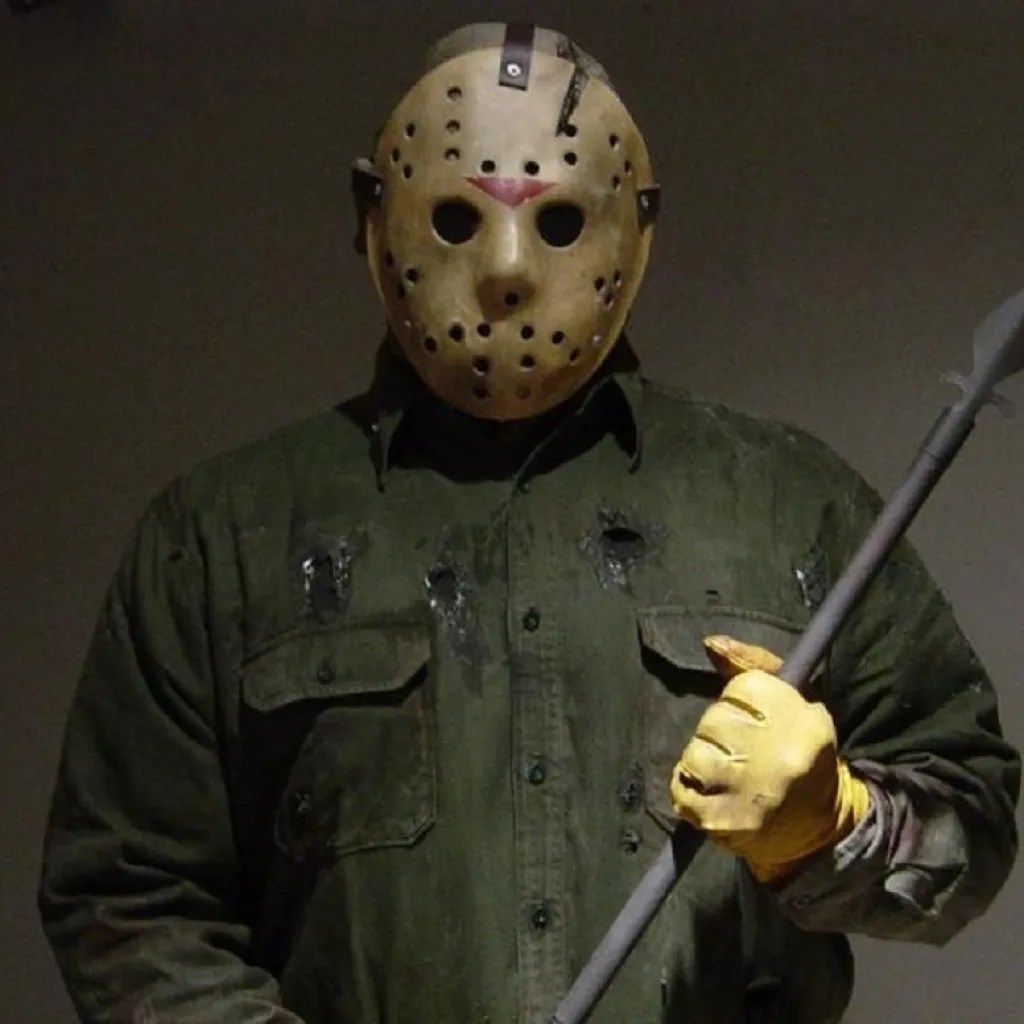
When it was announced that they were going to make a series about the world of Friday the 13th before the original movie, I blanched at the idea. The movie kind of laid out everything we needed to know, didn’t it? Jason Voorhees, a child with some sort of developmental deformation, drowns in a lake because some camp counselors are too busy engaging in “extracurricular activities” to properly keep an eye on him. Years later, when there are plans to re-open the lake, the new counselors are brutally slaughtered by an enigmatic figure that turns out to be Jason’s grieving mother. In the sequel, Jason himself returns, seemingly from the dead, and begins picking up where mommy left off.
As slasher movies go, it’s a pretty straightforward premise. In fact, if you put aside Jason’s seeming resurrection from his original drowning, there’s not even anything to indicate he’s a supernatural entity until six movies into the franchise. I didn’t need to know anything else.
Then they announced that Linda Cardellini was going to be playing Pamela Voorhees, Jason’s mother. To say the least, my interest was piqued. Cardellini is one of those actresses that I’ve always thought was particularly good, even if she’s never broken through the wall of superstardom. She’s been superstar-adjacent, taking lead roles in smaller projects and small roles in bigger ones, and even if the movie she’s been in has been a turkey (it happens to everyone once in a while), I’ve never seen a bad performance from her.
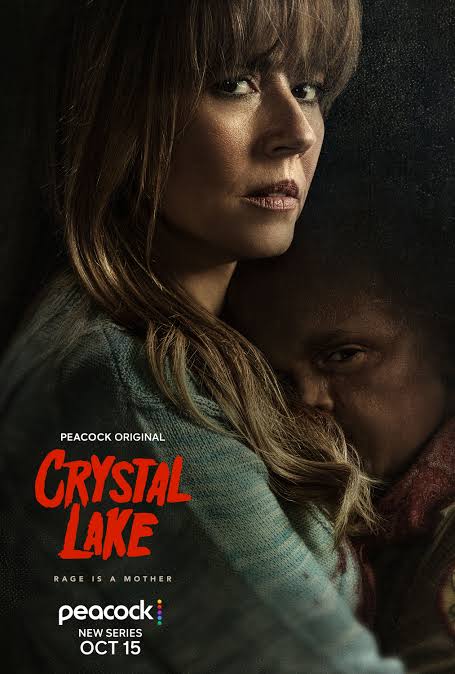
Even then, I was kind of skeptical about what possible backstory they could create that would be satisfying. What I didn’t realize, though, is that Cardellini was not just doing her usual “small role in a big production” this time. Although Crystal Lake is best described as an origin story for Jason, in truth it’s really a story about Pamela, and in it she shines.
I’m going to get into spoilers for the series, both good and bad, so if you haven’t watched it and want to bail that’s okay. Here’s the short, spoiler-free version: although I have a few qualms with the story, overall I found the series to be entertaining and Cardellini’s performance in particular to be fantastic. I think fans of the Friday franchise (Jason, not Ice Cube (I mean, maybe the Ice Cube fans too, I don’t know)) will be happy with this.
All right, spoilers start now: the first episode shows us how it all begins, with Jason’s drowning at Camp Crystal Lake. But as we progress through the series’ eight episodes, we learn that this wasn’t actually the beginning at all. Jason and Pamela had a whole history prior to this, and a series of flashbacks are paired off with the story of Pamela in the year after his apparent death to give context to the blood-soaked franchise we all know and love.
I’ll get to the stuff that I was less enthusiastic about first, and I want to preface it by saying I don’t think any of this is BAD, just a little bit of a cliche. As it turns out, Pamela was subject to a top-secret project called Argonaut, enrolled by her husband after a near-miscarriage. Although she was told she was being given treatments to allow her to carry her child to birth safely, the truth was she was being subjected to experiments to transform her baby into a sort of super-soldier, one impervious to radiation and damage like a cockroach and capable of regenerating from virtually any injury. Suddenly, Jason’s stubborn refusal to die in the movies makes a lot more sense. Once Pamela learned the truth about what was being done to her, she murdered the head of the project, took her child, and fled, eventually settling down in Crystal Lake and changing her last name to “Voorhees.”

Again, while all of this is well-told and well-performed (and I especially like how the directors changed the color palette of the episode where this is all revealed to contrast to the more muted tones of the rest of the series), it’s also a little bit of a trope. We’ve seen the “super soldier experiment creates a monster” story time and time again, and I don’t think anybody was clamoring for a scientific explanation behind the guy who took Manhattan that one time. If that were all Crystal Lake had going for it, I wouldn’t be recommending it. No, what makes this episode – and the series as a whole, really – worth watching is Cardellini’s Pamela, and how she and the writers make you sympathize with her before you’re horrified by her. That first kill she has in the Argonaut facility feels justified. She’s trying to save her son from a horrific fate inflicted upon him by his own father. Nobody is going to villainize a mother trying to save her child.
Of course, we don’t learn all this until episode seven, after which Pamela has done several other pretty bad things. I’m not going to do a beat-by-beat breakdown of the whole series, but here are some of the highlights of the writers showing her slowly descending from a mama bear protecting her cub to an unhinged murderer. In episode one, months after Jason’s apparent death, two men who turn out to be part of the Argonaut project come looking for her. When she kills the two of them, as brutal as it is, it can be written off as self-defense. But as the series progresses chronologically, Pamela commits several more murders, and with each one, it becomes less defensible. After killing the agents trying to track her down, the next kill is the mother of Grace, a young girl who was one of Jason’s only friends. Pamela kills Grace’s mother out of an assumption that she’s abusing her child, and although she WAS cruel and abusive, the cigarette burns on Grace’s arms that triggered Pamela’s rage turn out to have been self-inflicted.
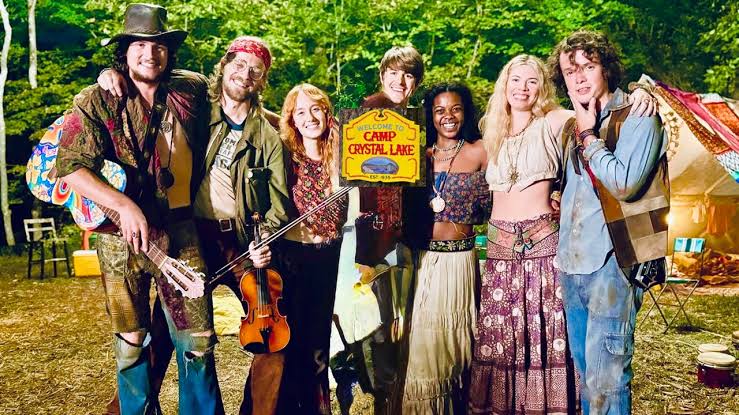
Next up, Grace – fueled by a bad LSD trip – kills the very pair of counselors who allowed Jason to drown in the first place. When Pamela discovers the crime, she hides it by brutally murdering a group of innocent hippies (relatively innocent, anyway, they WERE the ones who gave 13-year-old Grace the LSD in the first place) to make it look like they were all victims of a drug trip gone bad.
By the final episode, where Jason makes his triumphant return and crushes his own father’s skull, Pamela has gone totally off the deep end. She’s got a wild, mad look in her eyes and is reveling in how strong and powerful her little boy has become, never mind the fact that he’s moved on to slaughtering lots of people who really don’t deserve it.
It’s Cardellini’s performance that sells all of this. In stages she deteriorates, beginning as a protective mother, becoming someone who is protecting a surrogate child in Grace, and finally transforming into somebody willing to facilitate a monster out of her diseased mother’s love. It’s like those parents who e-mail teachers complaining about their child being disciplined because their little angel couldn’t possibly do anything wrong, only on a slightly larger scale.
It’s the character work that makes this series impressive. At first it feels as though the show is planning to “rehabilitate” Pamela’s character, showing that she wasn’t really that bad after all, but instead it gives us more of a Breaking Bad style deconstruction of someone who starts out basically good and becomes a monster along the way. It may have been the circumstances that caused her collapse, but ultimately, the choices she made were her own. I don’t like it when a show or movie tries to tell us that a bad guy isn’t actually a bad guy, but an exploration of someone who BECOMES bad? That can be pretty darn fascinating.
It’s not as good as the recent Carrie series I wrote about, but Cardellini’s performance is right up there with anything from that show. It’s amazing to me, here in 2026, that if there were any justice in the Academy Awards system, next year’s Emmy race would come down to the women who played, of all people, Pamela Voorhees and Carrie White.
Blake M. Petit is a writer, teacher, and dad from Ama, Louisiana. His most recent writing project is the superhero adventure series Other People’s Heroes: Little Stars, volume one of which is now available on Amazon. You can view his LitReel videos on TikTok and read his writerly yammerings on his free Substack.

