Geek Punditry #105: 2025-My Year of Superman

They say the holidays can bring people down. In my experience, though, it’s not the holiday itself that causes depression, it’s that other things that would upset you regardless seem even worse when they happen in the Christmas season. I was having a lousy December. My computer died unexpectedly and needed to be replaced, I had issues with other electronics, and dozens of other small things all seemed to erupt at the same time. None of them, in and of themselves, were that bad, but when bad luck stacks up it feels like multiplication, not addition. And when these things happen during that holiday stretch, the time when you’re supposed to be happy and joyous, it seems massively unfair and that makes everything that much worse. I was having a lousy December, is what I’m getting at.

Until Dec. 19.

On the second-to-last day of the school year I was having a hard time feeling anything happy or gleeful. It barely felt like Christmas was coming. Then the news came: the trailer was about to hit. THE trailer, the one I had been eagerly awaiting for…well, definitely over a year. It came out around 8 a.m. my time, which meant I couldn’t watch it because, of course, I had classes to teach. Somehow this didn’t seem to be an issue for my students. Over the next few hours kids kept coming up to me – knowing just how much I was looking forward to it – and asking me if I’d seen the trailer yet. No, I said, I haven’t. Ask me after lunch. No, I’m talking about complex sentences right now, ask me after lunch. Guys, I’ve had thirty of you in my room at all times, there has been no opportunity to watch a 2 ½ minute movie trailer, ask me after lunch.

Finally, when my lunch break started and my room was empty of students, I pulled up YouTube on the big Promethean board in the front of class. I did a search, but it wasn’t hard – it was already close to 12 million views at that point. I hit play and I stepped back.

Pictured: My classroom at 12:02 PM, Dec. 19, 2024.

And over an ice-covered waste, I heard an electric guitar begin to strum a beautifully triumphant melody.

And somehow, things were…better.

Superman matters.

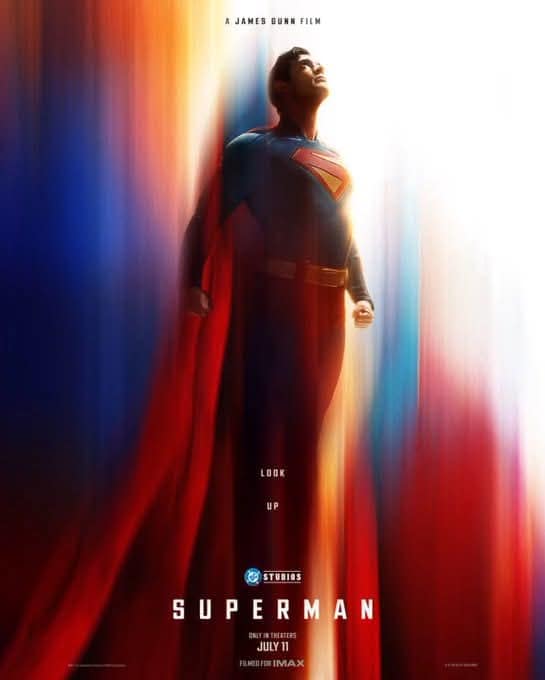
Fiction matters, if I’m being completely clear. It’s stupid and dismissive to say that something is “just” a story, because stories are our entire culture. They’re our history, they’re our religions, they’re where our heroes are built, whether those heroes are sports figures or survivalists or children sent to our planet from a dying world. And it doesn’t take too long for anyone who meets me to discover that, of these stories, Superman is my favorite. I waited for ages for the first glimpse of James Gunn’s new vision of the Man of Steel, and that trailer hit every fiber of my heart just when I needed it most. Somehow, after watching it, I looked at my problems with greater perspective. The darkness surrounding me was lifting. I felt – as cheesy as it may seem – I felt hope. There had been so much talk of whether the guy who made Guardians of the Galaxy could possibly touch the right chords for Superman, but…this trailer eradicated any fears I may have had.

I think it’s the trunks. Corenswet insisted on the trunks, did you know that?

A lot of people are dismissive of Superman. “He’s too powerful,” they say. “He’s boring.” But you see, it’s not the fact of his power that makes him interesting. Superman has the power to rule the world, but instead chooses to use it to SAVE the world. That’s what makes him a fascinating character. What kind of man, if given the opportunity that Clark Kent was given, would use it altruistically? How do you make that character believable or relatable?

“He’s too old-fashioned,” the detractors say. “He’s too corny.” But again, isn’t that sort of the point? Superman is a relic of a time when people believed in one another and had faith that, in the end, good wins out. It’s true that this is a sentiment that much of the world has turned against, but that just means that we need a Superman now more than ever. 

It’s heartening to me to know that I’m not alone in this opinion. Within 48 hours of the trailer’s release on YouTube it had become the fourth most-watched trailer ever, and is currently the most-watched trailer in Warner Bros. history…and it’s worth noting that the three trailers ahead of it are the last two Avengers movies and Spider-Man: No Way Home, each of which has been gathering views for at least half a decade now. And IMBD announced this week that, according to its user survey, Superman is the most-anticipated movie of 2025. I don’t know if it’s because everyone, like me, was charged up by this trailer or if it’s just the goodwill carrying over from James Gunn’s previous movies, but I don’t care. People want to see this movie. And watching the trailer for the 37th time, as I did while writing this, it’s not hard to see why.

The trailer shows a Superman broken and beaten, calling for help…and when that help arrives, it comes in the form of his dog, Krypto. James Gunn has the guts to pull out the old “man’s best friend” trope for this movie. There’s an inherent goodness in that idea – even people who have completely given up on the human race will usually admit that dogs are, on the whole, a lot of Very Good Boys. How can you dislike anyone whose dog loves him that much? 

Tell me that’s not the face of a Good Boy.

We also see, in the trailer, Superman shielding a little girl from a monster’s attack. He is a protector. We see a child in what appears to be a warzone raise a flag bearing the S-shield and whispering Superman’s name – because he believes. 

This kid believes in Superman. EVERYBODY should believe in Superman, because SUPERMAN WOULD BELIEVE IN YOU.

This is the important thing about Superman, the thing that the people who call him boring and old-fashioned will never understand. The question, remember, is what kind of person would use the power of a god only to HELP people, and the answer to that question is “someone who BELIEVES in people.” That’s who Superman is, more than anything else: he’s someone who believes the absolute best of EVERYBODY.

And the wild thing is, HE MEANS IT.

He believes that even his worst enemy is never beyond redemption, that there is a spark of good even in the darkest soul, if only it can be fanned into a flame. When Superman fights Lex Luthor, he doesn’t react out of anger at his enemy, but instead he mourns the fact that such a brilliant mind has chosen to waste its potential on evil. He hopes every single time that someday Lex will see the light – and on more than one occasion Lex Luthor, however reluctantly, has shown that Superman is right about him. There IS good in there, buried deep. Lex has, in desperate times, used his intellect to save the world, and even if that good is just because he wants to prove that he’s better than Superman, he still has done it, and that keeps Superman’s hope alive.

I’m sure, of course, that people who choose to look hard enough can find stories that contradict my view of the character. Quentin Tarantino sure did. But that’s kind of symptomatic of having a character that has been continually published for 87 years. Of COURSE there will be different interpretations, and not all of them will be good. I’m talking about MY Superman, though, the versions of the character that mean something to ME, the ones that I turn to when I have those days where it feels like nothing will go right and the universe itself is conspiring against me and I need to remind itself that it’s not.

And so, thanks to James Gunn, I’ve decided that I’m going to make 2025 my Year of Superman.

What does that mean? Glad you asked – here’s what’s going to happen. 

For the next year, I’m going to make an effort to read, watch, or listen to something Superman-related every single day. I might not make it – I know how I get, and there are some days where I might slip up or forget, but should that happen I resolve not to beat myself up about it, because I know that Superman wouldn’t. But I’m going to TRY.

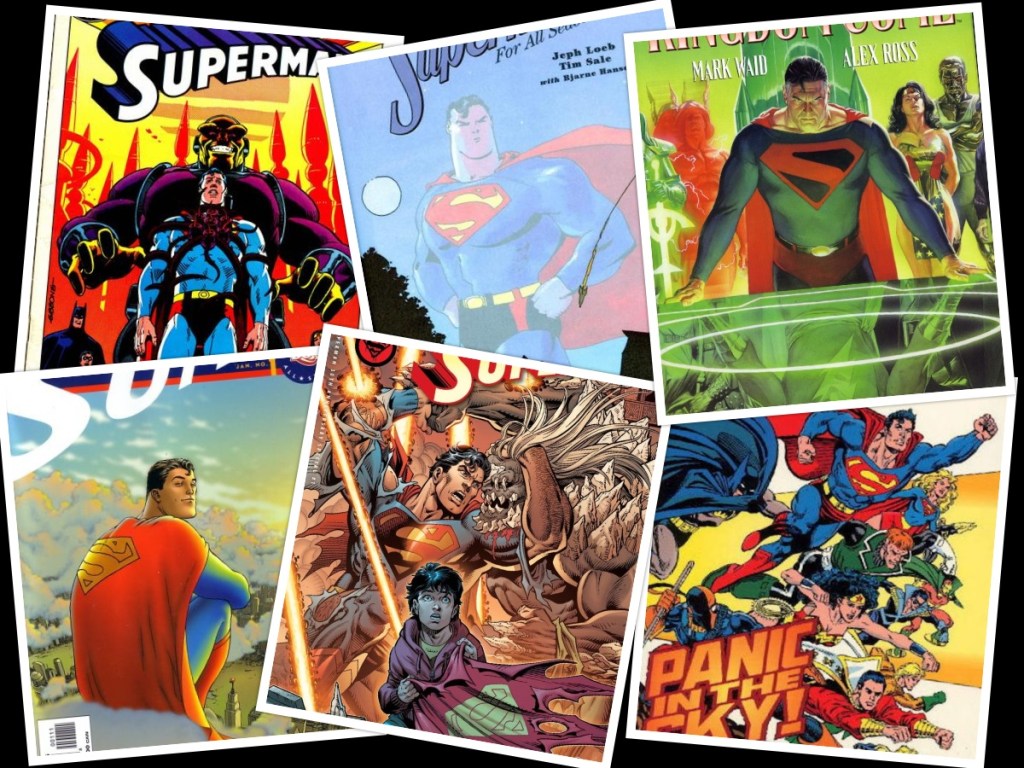
What exactly does that entail, though? Well, obviously that means comic books, movies, or TV shows featuring Superman. Either his own stories, stories where he makes a guest-appearance, stories where he serves as a member of the Justice League or Legion of Super-Heroes – any of those will count. I read the new Superman comics as they are published, and I’m going to go back this year and revisit some of my favorite stories of the past, including (but by no means limited to) things like “For the Man Who Has Everything,” “Time and Time Again,” “Panic in the Sky,” and the Death and Return of Superman saga. I’ll go back and revisit the stories that reportedly influenced James Gunn’s version of Superman, such as the graphic novels All-Star Superman and Superman For All Seasons. I will also include comics and graphic novels featuring other members of the Superman family, such as Superboy, Supergirl, Lois Lane, Jimmy Olsen, and Steel. And although it’s looking forward an entire year, I’m planning to close 2025 by reading what I consider to be the perfect “final” Superman story, Mark Waid and Alex Ross’s seminal graphic novel Kingdom Come.

This is a good start.

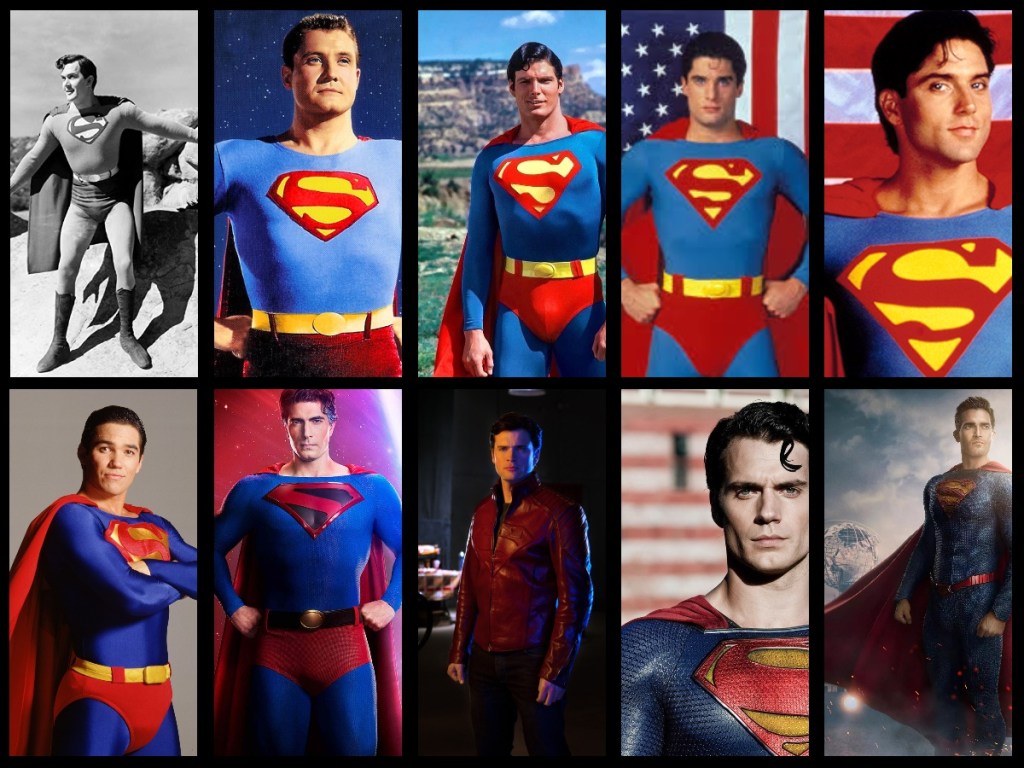
I’m going to watch Superman movies and TV shows. The Christopher Reeve movies, of course, but I’ll also watch the Brandon Routh film, the Henry Cavill movies, the Fleischer animated shorts, and the DC animated films. I’ll go back to the original movie serial starring Kirk Alyn, the first ever Superman on film. And I’ll try to visit all of the TV versions of Superman as well – George Reeves, Gerard Christopher & John Newton’s Superboy series, Dean Cain, Tom Welling, and Tyler Hoechlin. I certainly won’t have time to binge all of those shows, but I’ll try to watch at least a little of each – and I WILL spend this year finally finishing the Superman and Lois series.

I feel like this picture needs more spit-curls.

And books, of course. There are novels about Superman, some written by comic luminaries like Elliot S. Maggin and Roger Stern, others written by writers who would be less-familiar to comic book readers. I’ll work as many of them into my reading rotation as possible.

But that’s not all. I’m not only going to explore media starring Superman. I’ll also delve into things ABOUT Superman: books like Superman and Philosophy, Grant Morrison’s Supergods, or the recent Christopher Reeve documentary. I’ll listen to podcasts about Superman, such as my pal Michael Bailey’s “It All Comes Back to Superman.” I’ll read about Superman’s history and influence.

And I’m going one step further: I’ll also include those stories that are influences ON Superman. For example, I’ve already begun reading Philip Wylie’s 1930 novel Gladiator, about a young man whose scientist father experiments on him, giving him remarkable strength and speed and then urging the boy to use his powers for good. Is there any wonder that many people believe Jerry Siegel and Joe Shuster had this in mind when they created the man of steel? And in the comics, Clark Kent has told Lois Lane that his favorite movie is To Kill a Mockingbird, so I’m going to throw that movie into my Year of Superman rotation, as well as the original novel, to see where the DNA of Harper Lee’s work has intertwined with that of Siegel and Shuster. I’ll look for more such examples as the year goes on, and I’ll certainly welcome suggestions. 

You put these two together and you basically get Superman.

I’ll keep a daily journal of what Superman media I enjoyed that day, and each week I’ll write a quick wrap-up of that week in my Year of Superman, telling you what I read or watched and what some of the best “Superman moments” in that week were. Don’t worry, I’ll make that a separate post from the usual Geek Punditry, so those of you who aren’t interested will still have other, non-Super babbling from me as well. It’ll probably be on Wednesdays, since that’s when the year began this time around. Each week I’ll tell you what I watched or read, with whatever notes or thoughts feel appropriate.

Thoughts like, “I KNOW I have two dozen Superman shirts, but I don’t have THAT one.”

And of course, the centerpiece of this whole experiment will come on July 11th, when the new Superman movie comes out. I’m excited to see it, of course. I think that much is abundantly clear. But perhaps even more importantly, I want to take my son Eddie to see the movie with me. I want him to understand how much this means to me. And while I don’t want to ever force him to be into the things I’m into, I still want to share them with him. But he’s seven, he’s on the spectrum, and he’s never sat still for a “grownup” movie before. I don’t know for sure if he’ll even want to see it.

On Dec. 19, after I picked him up from school, I brought him home and we sat together and watched the trailer on YouTube, then I looked at him and said, “Do you want to see that movie next summer?” He said, “Yes,” but he says “yes” to virtually everything. Sometimes I think he does it just because he thinks if he agrees we’ll leave him alone and he can go back to watching videos of failed field goal attempts, which is his most recent obsession.

But then, a few days after Christmas, my wife and I brought him to the movies to watch Sonic the Hedgehog 3. Until now, all of the movies he’s seen in the theater have been pure cartoons, and while there’s still an awful lot of animated content in Sonic, this is still the first time he watched anything in a theater with a significant amount of live-action. I considered this a test run. The lights dimmed and the trailers started. And after trailers for Dog Man and other such kiddie fare, the screen shifted to an empty arctic landscape that looked remarkably familiar. And I heard those strums of an electric guitar.

And then there was a little hand grabbing my arm. Eddie looked up at me, a huge smile on his face and excitement in his eyes, and he whispered, “Superman.

The year is off to a pretty good start.  

Blake M. Petit is a writer, teacher, and dad from Ama, Louisiana. His most recent writing project is the superhero adventure series Other People’s Heroes: Little Stars, volume one of which is now available on Amazon. You can subscribe to his newsletter by clicking right here. He’s also started putting his LitReel videos on TikTok. He believes that this experiment will ultimately be far more successful than the previously-suggested “Year of the Toxic Avenger.”

Geek Punditry #104: The 2024 Pundy Awards

It’s the final Friday of the year, and that means it’s time once again to sit back and talk about all of my favorite things from this year. It’s time for the 2024 Pundy Awards!

Yes, just like I did in 2023, I’m going to wrap up the second year of my little column by talking about some of my favorite pieces of pop culture to come down the pipe this year. There is no rhyme or reason to this, the categories will be decided purely based on what I feel like talking about as I write this. I’m going to tell you my favorites in movies, TV, and comics from the past twelve months, and I’m gonna tell you why I dig them and why you should check them out if you haven’t already. Also in order to avoid repeating myself, I’m going to skip over shows and comic book series that I “awarded” last year. Please be aware that I’m still a fan of Abbott Elementary, Batman/Superman: World’s Finest, Fantastic Four, Skybound’s Energon Universe, and ESPECIALLY the final season of Star Trek: Lower Decks, and they’re all worth your time.

But today, I want to talk about things I haven’t talked about before. At least…stuff that I haven’t talked about as much. Let’s get on with it!

Not the only movie this year that made me feel seen.

Blake’s Favorite Animated Movie: Inside Out 2. 

Back in June, I wrote a piece about how the shine had fallen off the once-immaculate reputation of Pixar Animation studio. After a series of duds, I wondered if the sequel to Pixar’s Inside Out was going to have what it took to bring back some of the studio’s former glory. I was so, so happy to see that it did. The first Inside Out was a great look at how the mind of a child develops and learns to process emotions, anthropomorphizing the process but doing so in a way that was both entertaining and easy to understand. Inside Out 2 continued this trend, with the character of Riley getting a bit older and the emotions she experiences becoming more complicated. Adding in the likes of Envy, Ennui, Embarrassment, and especially Anxiety into the mix has changed the game, making for a movie that perfectly encapsulates the personal journey a person goes through when they grow up. The finale of the movie was absolutely remarkable, with a scene that so perfectly demonstrates the experience of an anxiety attack that I nearly broke down in the movie theater. My son, Eddie, has since declared Inside Out 2 his favorite movie, and I’m not about to argue with him.

“Another movie about hanging around outside a convenience store, Kev?”
“Nah, this time it’s a movie theater.”

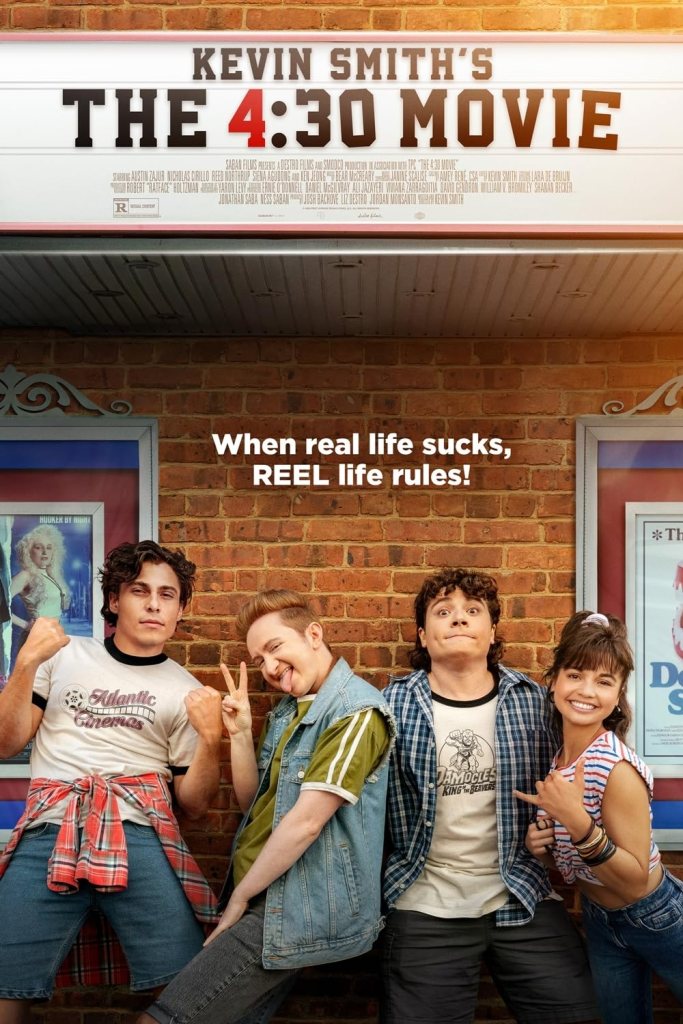
Blake’s Favorite Comedy: The 4:30 Movie.

I’ve been a fan of Kevin Smith for a very long time, and I’ve found it fascinating how his films have changed over the years. His early movies like Clerks and Mallrats were a reflection of the aimless feeling of being a young adult and trying to figure out what life is actually supposed to be. His more recent films, particularly Jay and Silent Bob Reboot and Clerks III, demonstrate a growing maturity and a sense of grappling with a life that didn’t turn out to be what you expected. Although he hasn’t let go of the filthy humor and goofy characters that made his name, he’s a subtler, more sophisticated storyteller than he used to be, and I appreciate that. The 4:30 Movie doesn’t connect to his “View Askewniverse” at all, instead telling the story of a young man in the 80s trying to find the guts to make a play for the girl he’s in love with, all set around a day going to the movies. Are there dirty jokes? Absolutely. But the film is wonderfully heartfelt, and even though neither Kevin Smith nor his alter-ego Silent Bob make an appearance on screen, you can tell that this movie was intensely personal. The final scene hammers that in especially, giving you a feeling that Kevin Smith has, in a way, told his own origin story. It’s a great movie.

Tagline: “You will believe a grown man can cry.”

Blake’s Favorite Documentary: Super/Man: The Christopher Reeve Story. 

This should not be a surprise to anybody, but the documentary about the actor who brought Superman to life for my generation was incredibly moving. Everybody knows the basics of Christopher Reeve’s story – how he played Superman, how a horseback riding accident left him paralyzed from the neck down, and how he became a crusader for the disabled in the years before his untimely death. This movie delves into his history in a deeper way, told mostly through the reflections of his now-adult children, as well as further commentary and anecdotes from other family and friends. The movie bounces back and forth between his life story prior to his accident and the way his life changed afterwards. Having his children tell the story, I think, is one of the things that really helps sell the tale. The film feels so much more intimate and personal, coming from the point of view of the people who knew and loved him the best. One thing I didn’t expect, though, was the heavy focus on Reeve’s friendship with the late Robin Williams. Again, this is something fans of the actor knew about, but the way they intertwined the tragedy of Williams’s own life with that of Christopher Reeve just made it all the more powerful. Have your tissues ready when you watch this one.

Okay, if I’m gonna be honest here, Super-Man is not the only thing in this list that made me cry.

Blake’s Favorite Family TV Series: Bluey

I know, this is another one of those “no duh” moments. I have written extensively about my love for Bluey before, in particular this spring’s season finale episode, “The Sign.” But there was simply no other TV show this year that had as deep and profound an impact on me. In the final episode of this season, we saw the Heelers preparing both for a family wedding and a move to another city, two life-changing events that the titular Bluey was having a tough time dealing with. Bandit, the dad that every father on the planet is striving to become, is trying to do the best thing for his family, even as it becomes increasingly clear to the viewer that the rest of the family doesn’t actually want to leave. It’s a beautiful story and still amazingly funny, and the final song (by cast member Meg Washington) is absolutely sublime. It comes across as a meditation on being a parent and having a child, and it’s the kind of thing that absolutely overwhelms your heart if you’ve got children of your own. I couldn’t be happier with the news that the long-talked about Bluey movie has been officially announced, and I only wish we weren’t going to have to wait until 2027 for it to hit theaters. 

Remember when science fiction was SMART? It’s finally back.

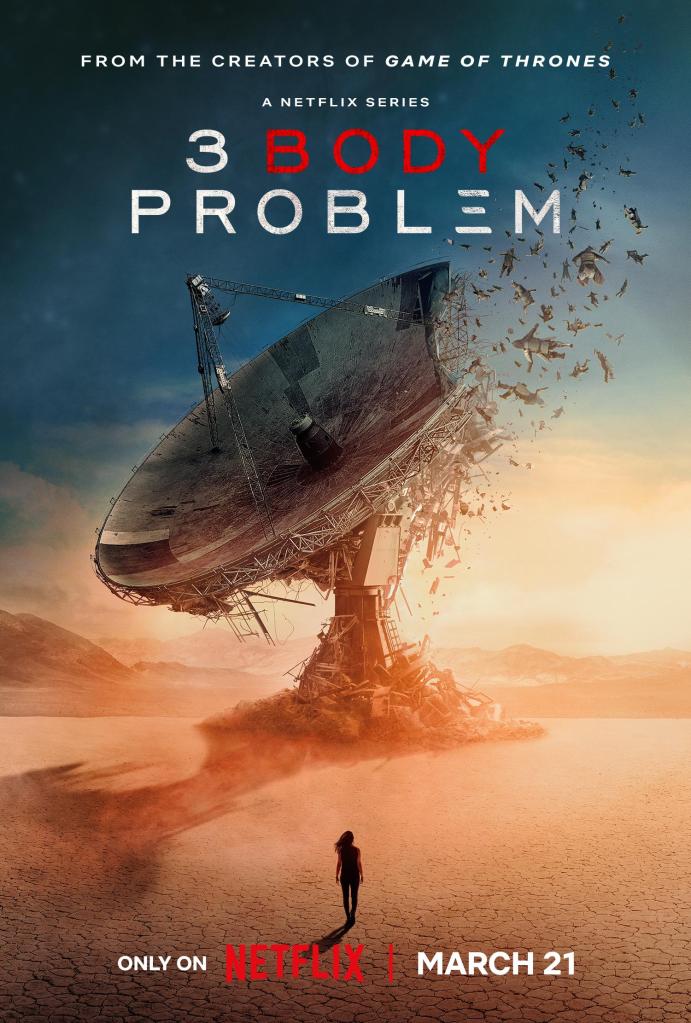
Blake’s Favorite Science Fiction Series (That Isn’t Star Trek: Lower Decks): The Three-Body Problem

This Netflix series, based on the globally popular trilogy by Cixin Liu, launched this year and grabbed me immediately. Like the novel, the first season of this show focuses on several groups of people around the world trying to uncover a mystery. The show follows scientists, police, and people from other walks of life as they slowly uncover evidence of an impending alien invasion. The novels are amazing – an incredible portrait of this sort of singular event and how it would completely reshape the entire world. So far, the first season of the show is doing the same thing, but in different ways than the book. The novels, by a Chinese author, have a cast that is mostly Chinese as well, while the TV series is more international. Characters are omitted, others are combined with one another, new characters are added – the TV show uses the framework of the novel, but takes the story in different directions to reflect the difference in cast and the different cultures of the characters. As a result, while fans of the book can still enjoy it, there’s still room to be surprised. I loved the novels, and I loved the show too, but for different reasons and in different ways. That’s one of the best things you can hope for in an adaptation.

This is the best an ongoing Spider-Man comic has been in 20 years, and it’s not even close.

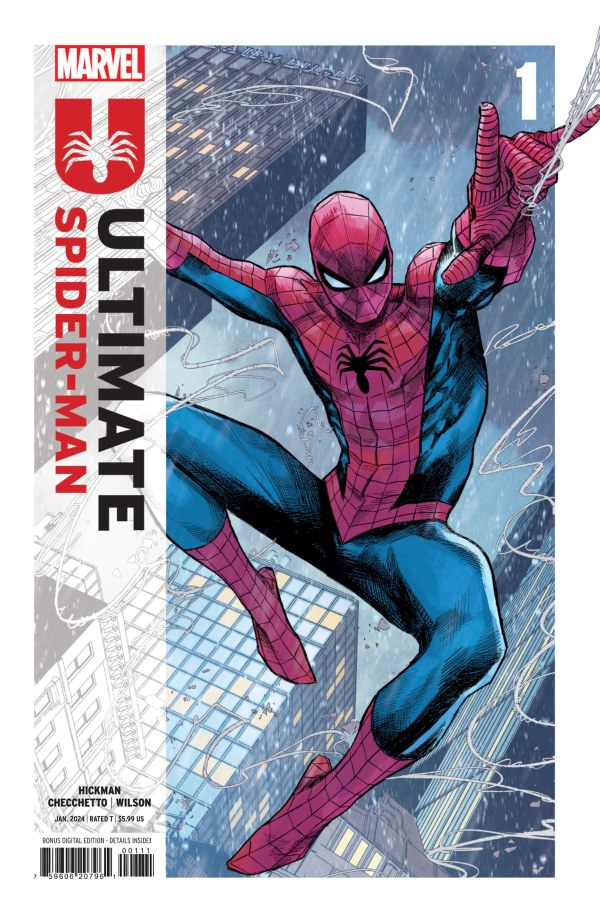
Blake’s Favorite Ongoing Marvel Comic (That Isn’t Fantastic Four): Ultimate Spider-Man

Last year, Marvel announced a relaunch of its once-prominent “Ultimate” brand, which reimagined the Marvel heroes as new characters in the modern day. That version of the Ultimate Universe eventually gave birth to Miles Morales, but other than him, the rest of the line has been mostly jettisoned. The only other survivor is the Maker, an evil version of the Fantastic Four’s Reed Richards, who has created a NEW Ultimate Universe, and it’s the flagship book of THAT line that has captured my heart this year. In the new Ultimate Universe, the Maker deliberately prevented most of the world’s superheroes from having their respective origin incidents, until their Tony Stark uncovered the truth and decided to put things right. (This is a HIGHLY condensed version of the Ultimate Invasion miniseries, by the way, which is also worth reading.) In the new Ultimate Spider-Man, we open with an adult Peter Parker who is powerless, married to Mary Jane Watson, and the father of two children when he is approached with the news that he’s supposed to be one of the world’s greatest heroes, and there’s a way to make it happen. For years, Marvel Comics has turned the mainstream Peter Parker into a punching bag, submitting him to one mindless torture and humiliation after another, to the point where stretches of his comics are unbearably depressing. Ultimate Spider-Man is the antidote to that, proving that you can tell stories about a married couple, about parents, that are entertaining and emotionally engaging without sacrificing the superheroes. This Ultimate Universe is even further removed from the main Marvel U than the original Ultimate Universe was, but this comic has been fantastic so far.

“So EVERYBODY is in the Justice League now? Ghost-Maker? Robotman? Clownhunter?”
“Okay, let’s not get carried away.”

Blake’s Favorite Ongoing DC Comic: Justice League Unlimited.

This may be a tiny bit of a cheat, as there’s only been one issue of JSU so far, but it was preceded by the excellent Absolute Power miniseries, which set the story up and was by the same magnificent writer/artist team of Mark Waid and Dan Mora, so I’m counting that towards the series. After an absence of the Justice League from the DCU for a few years, it’s time for a most triumphant return in a way that has never been done in comics before. Rather than a team of seven to ten heroes protecting the whole dang world, Waid is embracing the “Unlimited” part of the title. The Justice League – as in the classic animated series of the same name – is now a massive force, with virtually every hero on the planet Earth recruited as a member. Everyone who has ever been in the League, every Titan, everyone who wears the S-shield, Bat-symbol, or bracelets of an Amazon, is now part of the League. Waid kicks things off with a first issue showing a longtime – but fairly obscure – hero called Air Wave being taken up to the Watchtower and joining in on his first mission as a member of the Justice League. The story was great, with an engaging and entertaining point of view that is set to save Air Wave from the ranks of the D-listers, and a twist that promises great things for the series. What’s more – I’m gonna sound like a broken record here – Dan Mora is probably the best superhero artist working in American comic books right now. His characters are bold, powerful, but still wonderfully human. This book hit every box for me in the first issue and I can’t wait to see where it goes next.

“What if we replace the spinach with boba?”
“No.”

Surprise of the Year: Eye Lie Popeye

It’s been a good year for reboots of old-school characters, including Dick Tracy, Flash Gordon, Thundercats, and the Universal Monsters. But the one that surprised me the most, in a delightful way, is Massive Publishing’s new series Eye Lie Popeye, by writer/artist Marcus Williams. When the series was announced, I didn’t think it would be my thing – a new version of Popeye is fine, but the artwork showed a distinct Manga flavor to it. I’ve got no issue with people who enjoy Manga, it’s just not usually the sort of thing I’m interested in, and I planned to pass on the series. Then came Free Comic Book Day, and they released a preview of the first issue. Guys, this is why Free Comic Book Day works, because it did exactly what it is intended to do: show me a glimpse of something that I hadn’t planned on reading, but that I found incredibly entertaining. Williams shows a deep knowledge of Popeye and his enormous cast of characters, and while the book DOES have that Manga influence, I was startled by just how well all of it managed to fit together. The style works for the characters, the storyline feels like the kind of thing that used to be done in the classic comic strips (which are quite different from the seven-minute slugfests that people who only know Popeye from his animated shorts might expect). Overall, I never would have thought it, but this was one of my favorite comic book finds of the year.

And that’s it for this year, friends – some, but not all, of my favorite movies, TV shows, and comics of 2024. Feel free to share your own favorites in the comments, and here’s to coming back here in a short 52 weeks to do it all over again!

Blake M. Petit is a writer, teacher, and dad from Ama, Louisiana. His most recent writing project is the superhero adventure series Other People’s Heroes: Little Stars, volume one of which is now available on Amazon. You can subscribe to his newsletter by clicking right here. He’s also started putting his LitReel videos on TikTok. And yeah, he barely mentioned it, but Lower Decks was amazing. Go read it. Go read it now. 

Geek Punditry #97: Already Gone From a Theater Near Me

Two things that people learn about me very quickly are that I’m a teacher and that I’m a nerd, and not in that order. In my classroom, I’ve got a corner behind my desk where I put my geekery on full display, with Superman figures, LEGO constructs, Star Trek models, and a whole bulletin board collage made of comic book images clipped from the likes of the Previews catalog (assembled by my wife each year when she comes in to help me get my classroom ready). The long and short of it is that nobody who walks into my room has any doubt as to what kind of stuff I’m into. And this often leads to fun conversations with my students about the movies, shows, and characters I like. Frequently, though, it also leads to conversations like the one I had a few days ago, when a student came up to me very excited and asked if I’d seen Venom: The Last Dance yet because she wanted to talk about it, and I had to sadly disappoint her and say, “No, I’ve got a kid, remember?”

Not pictured: parenting.

My son, of course, is the light of my life, but as I’ve mentioned here many times in the past, he has seriously curtailed my moviegoing. Erin and I rarely make it to the movies anymore, and it’s even rarer that we go to a movie we can’t bring seven-year-old Eddie to, so this is about the time of year where I start to take stock of all the recent releases I haven’t seen yet and trying to figure out how to prioritize them. I always want to watch as many new releases as I can, but going to the theater is rarely an option, and there are quite a few movies that I simply can’t watch with my son. This is why I still haven’t seen Deadpool and Wolverine, although thanks to the Internet I already knew about every surprise and cameo in that film approximately 20 minutes after the first screening let out, because people on the internet are jerks.

If I want to squeeze in these movies before the end of the year, I need to get started, not the least because in that window between Thanksgiving and Christmas I usually push aside new releases and just binge as much holiday content as I can. Sure, there are also new Christmas movies every year, but the ones I’m most interested in – such as The Best Christmas Pageant Ever and Red One – are theatrical releases, and 99 percent of the remaining Christmas movies are cozy romances from the Hallmark Channel or one of their increasing number of imitators. That’s not quite my style. 

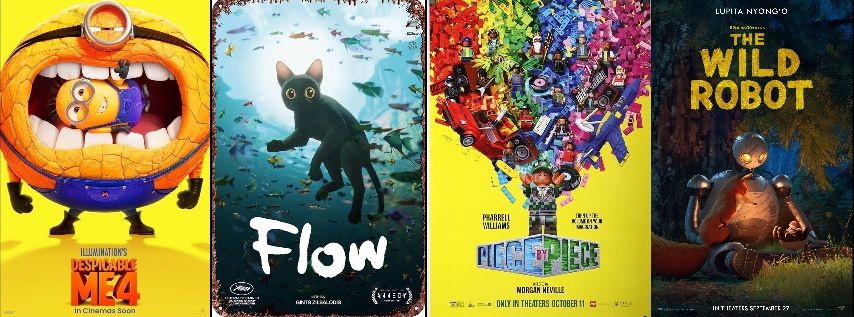
As it stands right now, my Letterboxd list of movies I want to watch from 2024 is over twice as long as the list of movies that I’ve actually seen from 2024, so it’s time for me to prioritize. Keeping in mind that I have to check which movies are actually available via one of the assorted streaming services, and I may not be able to watch all of these anyway, let me start by figuring out which movies I can share with Eddie. Some are simple: he likes the Minions, so getting him to watch Despicable Me 4 should be no trick. Flow looks intriguing, and the visuals may just be the thing to hold his attention. I think the novelty will be enough to keep him interested during the unlikely Pharrell Williams LEGO-animated biopic Piece By Piece as well, so we’ll probably give that a try. And I’m personally dying to see The Wild Robot, which I think he’ll be into, even though when we gave him the choice between seeing that or TransFormers One in the theaters, he went for the major IP. 

If I’m watching a movie with the kid, it pretty much needs to look like this.

We haven’t had as much luck getting him to pay attention to live-action movies, though, so I don’t know if he’d be down for If or Harold and the Purple Crayon…on the other hand, he liked the first two movies, so Sonic the Hedgehog 3 looks like a no-brainer. And even though it’s a documentary, the kid loves airplanes, so I might take a chance and see if he’d be interested in The Blue Angels.

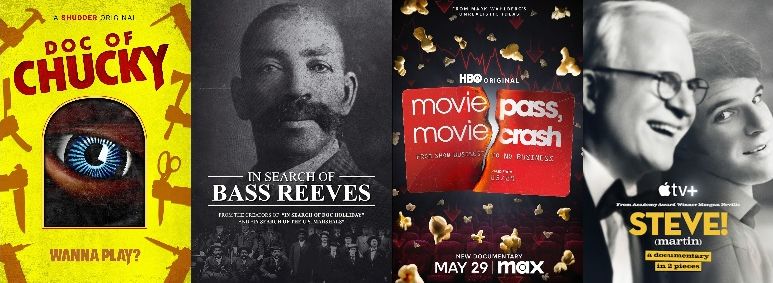
Speaking of documentaries, this has been a heck of a year for them. Two of the best movies I HAVE seen have been documentaries, the charming Jim Henson: Idea Man, and the magnificent Super/Man: The Christopher Reeve Story. But looking at my list of 2024 movies, I see several other documentaries waiting for my attention. Doc of Chucky is a mammoth five-hour deep dive into the Child’s Play horror franchise, similar to the huge documentaries Crystal Lake Memories (about the Friday the 13th films) and Never Sleep Again (detailing the Nightmare on Elm Street series). If it’s anything like those previous two documentaries, it’ll be a lot of interviews and discussions about the development, shooting, and legacy of those movies – sort of like the world’s longest DVD extra. Some people may not be into that kind of thing, but I can watch it for hours…and I’ll need to, if I want to get through the whole film. Other documentaries on my radar include In Search of Bass Reeves, the history of the legendary escaped slave who became one of the most storied lawmen in the old west, MoviePass, MovieCrash, detailing the short life and disaster of the MoviePass service, and the more obvious films Music By John Williams and STEVE! (martin) a documentary in 2 pieces. I’ll need to check on which of these are most safe to watch while the kid is bouncing around the house. If he starts humming John Williams music, that’s fine, but there are certain Steve Martin routines I don’t need him repeating as he walks around second grade.

These are all nonfiction, so watching them would count as educational.

Next up on my list are movies that I think will probably be safe ENOUGH to watch while Eddie is around, but that aren’t specifically FOR him. For instance, there was a whole Godzilla movie this year we didn’t get to – Godzilla/Kong: The New Empire, and that’s something that has to be on my end-of-year list if I’m to have any business calling myself a geek. I have similar feelings about Beetlejuice! Beetlejuice!, although I’m a bit more reluctant to watch that one with Eddie. I don’t think he’ll get scared by it – my little dude has proven to be almost disturbingly fearless in the face of things like Spirit Halloween and guys in monster costumes – but once again, there’s language in there that I don’t quite want him to start repeating. I’ve heard good things about the action/comedy Fall Guy, though, so I’ll have to check on the language content to see if that would be an Eddie-safe viewing. (If you’ve already seen it, please feel free to expound in the comments.) 

Horror movies are an obvious no-go with the kid. If I am to watch those, it’ll likely be on my laptop while he’s watching cartoons or sports. The unwatched horror movies on this year’s list include Daddy’s Head, Night Swim, A Quiet Place Day One, Trap, The Substance, and Watchers, all of which I am resigned to not watching on the actual television. The same goes for darker actioners like Monkey Man, Love Lies Bleeding, or The Ministry of Ungentlemanly Warfare. As for Alien: Romulus…maybe if we can get the kid to bed early some night. 

Man, you watch one alien invasion body horror flick with your second grader and everybody wants to make it into a THING.

It saddens me how relatively few comedies are being made these days, because I think the world needs more deliberate comedy in it as opposed to the ironic kind that real life continues to subject us to. That’s why one of the movies I’m most anxious to watch – if parenting ever gives me a chance – is Kevin Smith’s The 4:30 Movie. It seems as though the film is a sort of love letter to the moviegoing experience, especially as it was in the 1980s, and damned if that isn’t exactly what I want to watch. It’s Kevin Smith, so I expect there to be a degree of the crude humor he’s best known for, but his more recent films (like Jay and Silent Bob Reboot and Clerks III) have also displayed a surprising depth and heart that I hope he’s carried over to this new film. 

I haven’t even gotten around to most of this year’s comic book or superhero movies. In addition to the aforementioned Venom sequel and Deadpool and Wolverine, I have yet to watch Madame Web, Hellboy: The Crooked Man, Megamind Vs. The Doom Syndicate, or Joker: Folie a Deux. And admittedly, every one of these movies has received a heavy critical thrashing, but the comic book completist in me insists on watching them. Perhaps at least a little less divisive is DC’s two-part animated adaptation of Watchmen. This one particularly has me interested, as the script was written by J. Michael Straczynski, creator of Babylon 5 and a fine writer. This is the third Watchmen production, of course. First came the Zach Snyder movie, which I thought was okay, if a little TOO slavishly devoted to the source material right up until the end. Then there was the HBO miniseries, which wasn’t an adaptation at all but rather a sequel to the original graphic novel. It was magnificent, but no one has yet done an actual adaptation of the story that’s knocked it out of the park. Could Straczynski and director Brandon Vietti finally pull it off? 

If the internet is to be trusted, one of these is going to turn out to be the worst movie I see all year.

And finally, there are the “serious” films. The dramas. The award bait. I enjoy watching these things, but I know that even if there’s no objectionable content, my kid would lose interest in seconds and wander off to try to dismantle the refrigerator or something. So I wouldn’t even make the effort to watch a movie like Ghostlight in front of him – a drama about a construction worker who winds up in a local theater performing Romeo and Juliet with his own estranged daughter. Nor Miller’s Girl – a young writer gets mixed up in a project with her teacher, which made it to my list primarily on the strength of starring Jenna Ortega and Martin Freeman as the student and teacher, respectively. And DEFINITELY not Francis Ford Coppala’s sci-fi drama Megalopolis, a film which has garnered such divisive and vitriolic reviews that I feel compelled to watch it if for no other reason than intellectual curiosity. 

And the thing is, guys, even if I were to somehow manage to watch each and every film I’ve mentioned here, that still would only be about HALF of the films on my “To-Watch” list by the end of the year. I know I won’t get through the whole thing, I know it’s virtually impossible. So my task here, in the last lap of 2024, is to figure out which ones are both worthy of my time and to get in as many of the best ones as I can.

Blake M. Petit is a writer, teacher, and dad from Ama, Louisiana. His most recent writing project is the superhero adventure series Other People’s Heroes: Little Stars, volume one of which is now available on Amazon. The great thing about this weekly column is that sometimes he can use it to justify the sort of nonsense list-making he does all the time by calling it writing. 

Geek Punditry #91: What Measure Horror?

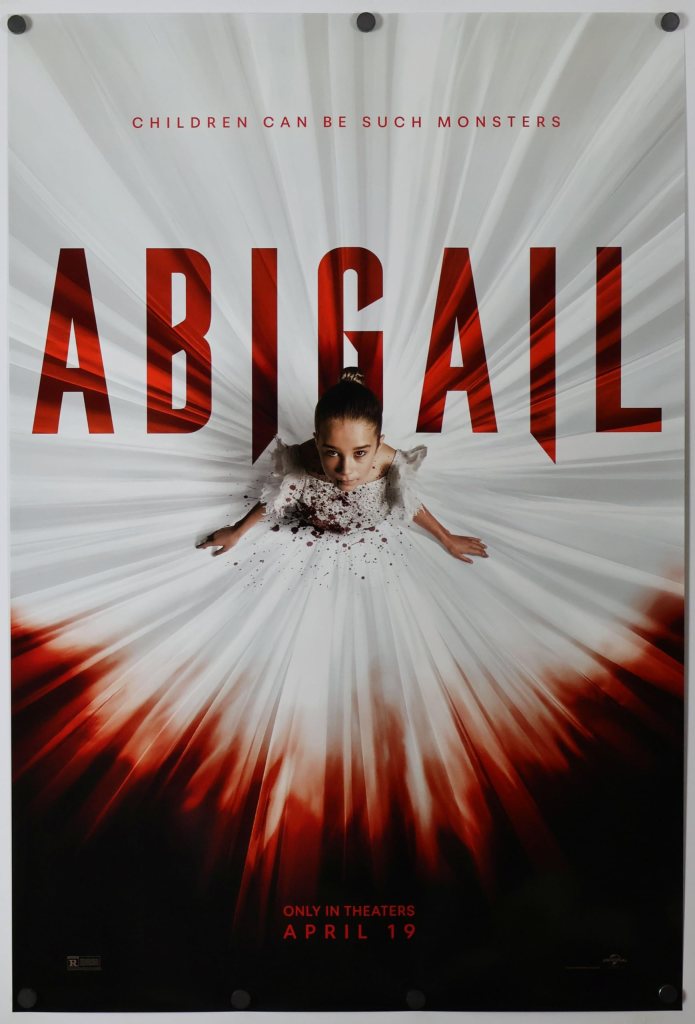
As part of my Pregaming for Scary Season, my wife suggested I watch the new movie Abigail. I’d heard mixed things, but between her recommendation and the fact that it was by the same writing and directing team responsible for the last two Scream movies (which I greatly enjoyed), I decided to give it a shot. I’m really glad I did. Abigail is about a group of crooks hired to kidnap the ballet-dancing daughter of a wealthy man. As they hold her, awaiting their ransom demands being met, they begin to fall prey to a series of increasingly unlikely mishaps. 

Mishaps like a grande jeté gone horrifically wrong.

I don’t want to tell you anything more about the plot. If you’ve seen the trailers, you probably already know the biggest twist in the film, because the idiots in marketing gave it away even though the film is structured in such a way that it seems quite clear it was intended to be a surprise. I’m just going to say that I recommend you NOT look up the rest of the plot if you haven’t seen it yet and just watch it with an open mind. It’s a great, original twist on an old trope.

It got me wondering why so many people on the internet were down on it, though. I thought the movie was loads of fun. So I went back to find some of the complaints about the film and the major one seemed to be that it wasn’t SCARY enough. 

Guys.

Okay, it’s not a movie that will make anybody wet their pants. There are a couple of jump scares and a LOT of gore, but nothing in it is going to keep me awake at night. But the thing is…is that REALLY the only metric by which a horror movie should be measured? 

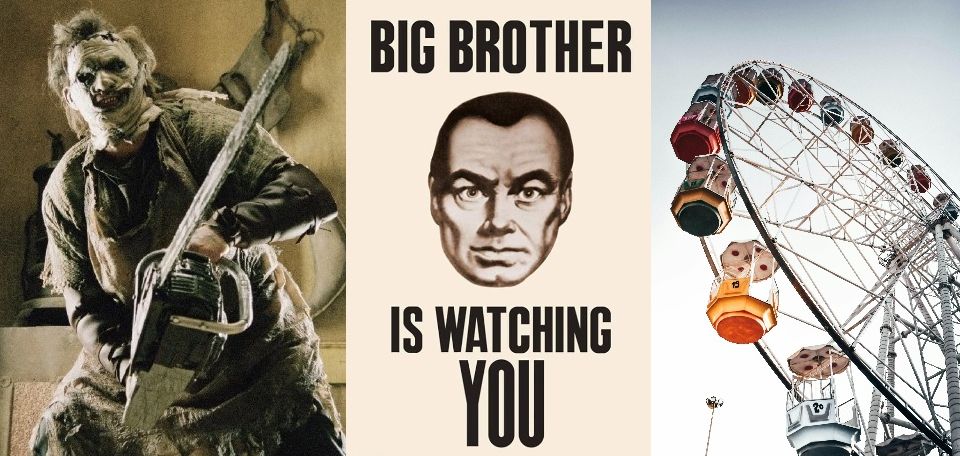
I suppose part of the question is what exactly one expects from “horror.” If you go by the strict definition of the word, yes, “horror” is supposed to be scary. But if I’m being honest, guys, there are very few movies that I find legitimately frightening. I’m not trying to sound like some macho jerk, like I’m above being scared. I get scared all the time. There’s a fair in town this weekend and I need to make sure we go on the day Erin is off work because I’m far too scared of heights to take our son on the Ferris Wheel. It’s just that jump scares and gore — while effective in the moment — are not the sort of thing that linger in my psyche. Stories that I find REALLY scary are the ones with unsettling or disquieting implications for the human monster. 1984, for instance, terrifies me. And I know enough about the movie A Serbian Film to know that I never, ever need to watch it. (If you don’t know what I’m talking about, just take my word for it. Don’t look it up. Seriously.)

From left to right, least scary to most scary.

Gore, similarly, only bothers me when it gets too “real.” Historically speaking, the gore in a lot of horror movies has been so over-the-top as to become comical, almost cartoonish. The things that Jason Voorhees does to a camper are largely impossible, and thus, not particularly disturbing to me. The stuff that IS disturbing is the stuff that – again – I don’t care to watch, like the wave of “torture porn” that was popular after the first Saw movie. Which is ironic, as the original Saw is actually relatively light on gore. The franchise didn’t get particularly bloody until the sequels, when it began to ride the trend of torture porn that was popularized by the over-the-top IMITATORS of the first film, who took it to ridiculous extremes.

Similarly, I was listening to one of my favorite podcasts recently – Star Trek: The Next Conversation, featuring Matt Mira and Andy Secunda going through the vast Trek library an episode at a time – when Matt argued that he didn’t count The Walking Dead as horror because he doesn’t think zombies are scary. That’s kind of short sighted. Sure, ONE zombie isn’t going to be that terrifying. I think most able-bodied adults could survive a single zombie, unless it was one of those fast ones from movies like the Dawn of the Dead remake, but that’s going to open up an argument as to whether we should even count them as zombies at all, and that’s an entirely different column. But the horror of a zombie, from the earliest days of George Romero, comes because of the HERD mentality. One zombie? No biggie. Whack him in the head. A hundred zombies? Bring me my brown pants. It’s like a bee sting. Unless you’ve got allergies or other  medical conditions, a single bee is just an annoyance. But if an entire HIVE falls on your head, I don’t care how good a shape you’re in, you’re going to have a very, very bad day. 

“BOO! Did…did that scare…no? Okay, close your eyes, I’m gonna try again…”

I count zombies in the same category as any other movie monster, like werewolves, vampires, mummies, and my ol’ buddy Frankenstein’s creation. They are a type of creature, and while they certainly CAN be played for comedy (or any other genre, really – there are a shocking number of zombie romances out there), their ROOTS are in horror, and as such are part of the genre whether you, personally, are frightened by them or not. 

My point is, I don’t judge the quality of a horror movie by its ability to keep me awake at night, but rather by the same standards I judge any other movie: writing, acting, innovation, music, direction. And by those metrics, I consider Abigail to be a pretty successful film. It takes a very familiar subgenre of horror and does something with it that I haven’t seen before, which is a huge mark in its favor. The writing is strong, with witty dialogue and several moments that were genuinely funny. The performances were very good as well, particularly that of 15-year-old Alisha Weir as Abigail. (I should point out that she’s currently 15, probably closer to 13 when the movie was filmed, and entirely convincing as the 12-year-old title character.) It was also great to see current horror It-Girl Kathryn Newton playing against type. Movies like Freaky and Lisa Frankenstein have kind of given her a sort of 80s Winona Ryder “dark teen in a quirky horror movie” vibe, although it should be noted she’s also been in Detective Pikachu and Ant-Man and the Wasp: Quantumania, and thus far more than a one-trick pony. This movie keeps her in the same KIND of movie where she’s become a queen, but she gets to do a very different CHARACTER than she usually does, which was fun.

But a contingent of the internet seems to think I should disregard all of that because the movie didn’t make me toss and turn until 3 in the morning. (LIFE does that, I don’t need movies to do it.) And like everything else on the internet, I’m sure it’s a small minority of loudmouths who make these complaints. Most horror movie fans that I know are among the warmest, most welcoming people I’ve ever met. But there’s always that jerk who thinks that any movie made after they turned 17 is garbage, and will loudly voice that opinion.

The thing that really baffles me is that a lot of those people who whine about how “not scary” a movie like Abigail is are the same ones who will bemoan the days of Freddy Kruger and Michael Myers. Fellas, I hate to break it to you, but Freddy ain’t scary. Sure, the CONCEPT is frightening – a demon that has the ability to stalk you in your dreams, in the one place where you SHOULD be the most safe but, at the same time, are at your most helpless. That’s a terrifying thought. But go back and watch those movies. Robert Englund is a blast to watch. Heather Langenkamp deserves far more credit than she gets for being one of the all-time great Final Girls. And Wes Craven, of course, was a master storyteller. But I’ve seen every one of those movies multiple times, and I never even ONCE was worried that anything in them could possibly happen in my life. If I had, I probably never would have gone back to them again. 

“BOO! No..no good? Geez, you’re a tough nut to crack…”

Most horror fans are great, of course, but there are snobs in that fandom just like any other. And like a lot of snobs, there’s a recency prejudice that seems to lock a lot of people out of current stuff that’s really good just because they think that the stuff from their formative years is the greatest that will ever be. (I wrote about this with cartoon fans a couple of months ago. It’s the same concept.) So with October coming, with the glorious Creepy Movie Bacchanalia that we’re all going to indulge in impending in just days, here’s my message. Give stuff a chance. Try new things. Watch new movies – and I don’t just mean movies that came out last week, but rather anything you personally haven’t tried in the past. And don’t think that the ONLY thing that matters is that you get nightmares.

Sometimes, a scream can just be for fun.

Blake M. Petit is a writer, teacher, and dad from Ama, Louisiana. His most recent writing project is the superhero adventure series Other People’s Heroes: Little Stars, volume one of which is now available on Amazon. You can subscribe to his newsletter by clicking right here. He’s trying to do the math to figure out just how many monster movies he can squeeze in between now and Oct. 31. He’s terrible at math, but the only answer he can arrive at is “not enough.”

Geek Punditry #90: The Mount Rushmore of Monsters

Yesterday, September 19, when I got home from work, my wife was ready and waiting for something we’ve been looking forward to for months: putting up the Halloween decorations. Oh I know, some people may scoff. Some may say it’s too early. Some may say that preparing for Halloween before October is a terrible breach of seasonal etiquette. To these people I say, bite my gourd. Halloween is one of my favorite times of the year, and I’ve been waiting for this day since I went back to work from summer vacation on August 1. It is well past time, as far as I am concerned.

Our decorations aren’t terribly complex, because we can’t afford anything terribly complex. Nor are they terribly scary, because we have a seven-year-old and we don’t want to give him nightmares. But Eddie does love monsters and creepy crawlies, so we’re not above hanging a few ghosts from the trees, wrapping the posts in front of our door with LED lights, and setting up inflatables of the likes of Slimer and the Stay-Puft Marshmallow Man. We’d have more if we could, but we’re happy with what we got.

Pictured: Not Complex Decorations

As we were decorating, though, I started to think about just which horror icons I would adorn our home with if money was no object. If I could grab the icons of terror from any time period, who would they be? In short, what creatures belong on the Mount Rushmore of Monsters?

It was honestly too hard to narrow down all the different monsters from throughout history to a simple quartet, so I decided instead to do three different mountains dedicated to three different eras: the Universal Monsters, 80s Slashers, and 21st Century Terrors. Obviously there are plenty of other ways I could subdivide things, but restricting myself to these three keeps me from going overboard (and gives me an excuse to return to this topic later, should I so choose). 

I’m making my decisions based on how iconic I think the monsters are – how far have they come in terms of penetrating popular culture? For example, no matter how good a movie I think Behind the Mask: The Rise of Leslie Vernon is (and it IS a GREAT movie, and you should all watch it) the fact that he’s kind of faded away since then is going to keep Leslie off the list.

But enough of that. Who HAS made the cut?

Universal Monsters

Universal Studios didn’t invent the horror movie, and in fact, most of their iconic creatures came not from them, but from the annals of public domain. That said, when people think of these classic monsters, the average member of the public is picturing the versions that came from the Universal monster flicks. The Universal Monsters are still known worldwide, a valuable brand that even kids will recognize without ever having seen a single one of their films. Their versions of Dracula, Frankenstein, the Wolfman, the Invisible Man, and many more are absolute legends. How in the world do you narrow it down to just four?

Well, you do it by deciding which ones are the MOST iconic, which ones are known by EVERYBODY – even people who hate monster movies or don’t like Halloween. And for that reason, I think the first two spots have to go to the Frankenstein Monster and his lovely Bride, as portrayed by Boris Karloff and Elsa Lanchester, respectively. Karloff wasn’t the only actor to play the creature for Universal (Lon Chaney Jr., Bela Lugosi, and Glenn Strange each had turns as well), but he was the first and there can be no denying that he was the most memorable. It’s his picture that you see on the merch, his face that the Halloween masks are based on, and his rendition that has informed pretty much everything from his three successors to Frankenberry cereal. As for the Bride, despite the fact that she only appeared in the one film – and only in the final scene of the movie at that – she has become as iconic as the Monster himself. The tall hair with the white streak, the bandage-wrapped body draped in gossamer, and Lanchester’s wide eyes and legendary scream have earned a permanent place in pop culture.

“Still a better love story than–” Ah, you know the joke.

Spot #3 on the mountain couldn’t possibly be given to anybody but Bela Lugosi as Dracula. People don’t often realize that Lugosi only played the count twice, in the original 1931 Dracula, then not again until 1948 in Abbott and Costello Meet Frankenstein. But like Karloff’s Frankenstein Monster, his is the most recognizable version of Bram Stoker’s bloodsucker. Everything we accept about Dracula’s hairstyle, his clothes, and his accent (a remnant of Lugosi’s own Hungarian background) come from this version of the creature. Even today, when you watch a Hotel Transylvania movie, it’s Lugosi that Adam Sandler is doing a parody of. Like Karloff, his depiction of the monster is so famous that anybody who tried to do a novel-accurate version of Dracula would probably be met with confused looks as people asked why the hell he has a mustache.

“Sometimes I do, in fact, say ‘Blah, blah, blah’.”

And then there’s the final spot and…guys, this is hard for me. REALLY hard. Not because there isn’t an obvious choice, but because it means I’m going to have to sideline one of my favorites. I love Lon Chaney Jr. as the Wolfman. I think he’s got some of the best, most nuanced performances in the entire Universal monster canon, and if this mountain was just my favorites, he’d be right up there. But in terms of how ICONIC he is…well…there are a lot of werewolves in movieland, and he doesn’t quite have the complete dominance over his version of the monster that Karloff and Lugosi do. But you know which monster IS instantly recognizable as the one and only Universal creation? The Creature From the Black Lagoon.

He’s not my favorite of the monsters (in fact, a few years ago I actually ranked him as my LEAST favorite of the iconic Universal Monsters), but EVERYBODY knows the Creature. And since this is the only iconic Universal Monster that is a wholly original creation, not based on an existing book or folklore, there’s not even any real competition for him to have to crush. He’s the one and only. (Although the most famous knock-off happened to win the Academy Award for Best Picture. Go figure, Universal exec who turned down Guillermo Del Toro.)   

And he never needs a moisturizer either. Guy is legit.

80s Slashers

It has been said by many a horror fan that the slashers of the 80s are the spiritual successors to the Universal Monsters. Granted, they’re far gorier and less kid-friendly than the classics; I’ll sit down and watch a Universal classic with my son, but we’re not going to be sharing a Nightmare on Elm Street marathon any time soon. But at the same time, many of these creatures have achieved the same level of cultural awareness as the creatures of the golden age of cinema. In other words, although not everybody may have watched all of – or ANY of – the Friday the 13th movies, I don’t think there is anyone in the western world who can see somebody wear a hockey mask and pick up a knife without thinking, “JASON!”

Which is why, by the way, he gets the first spot on the 80s Mount Rushmore. Jason Voorhees is synonymous with slasher movies. Even though he wasn’t the bad guy in the first movie and he didn’t get his iconic hockey mask until the third, the version of Jason we’ve had since then has made his mark on our culture. It’s a go-to Halloween costume for bigger dudes (guilty) because it’s so simple – the mask, a weapon, some old clothes and everybody knows who you are. He’s a lumbering monument to the iconic nature of the 80s slasher. Also, the question of which version of Jason is most iconic is largely moot, since no matter who plays him, the mask makes him look pretty much the same. Besides, the best one was Kane Hodder and you know it. 

The downfall of the summer camp industry began here.

Next to him will be his one-time sparring partner, Freddy Krueger, and this time the creature IS permanently associated with one actor, Robert Englund. (Jackie Earle Haley played him in the Nightmare on Elm Street remake, and although I don’t think anyone really blames that movie’s failure on his performance, it’s still a version we’d rather forget.) In an era where most of the slasher icons were silent killers – hulking brutes who were just as capable of breaking your bones as slitting your throat – Englund’s Freddy is svelte, agile, and with a wonderfully wicked sense of humor that has made him as beloved in the real world as he is terrifying to the teens of Elm Street. Even before the two characters faced off in the movie Freddy Vs. Jason, people would often say their names in a single breath as the two most well-known movie monsters of the era.

The only guy on this list to have recorded a song with Will Smith.

The third slot belongs to another quiet killer, Michael Myers from the Halloween franchise. (I know, the first movie came out in 1978, but he’s part of that 80s echelon of horror regardless.) Like Jason, many actors have played the role, but unlike Jason I don’t know that there’s necessarily a consensus as to who did it the best. That said, the creepy killer in a William Shatner mask painted white is indelibly linked to the holiday of Halloween. If you weren’t afraid he might stick a knife in their stomach, you might be sending your kids to sit on his lap for a picture like we do Santa Claus and the Easter Bunny. Jason and many other killers over the decades have taken their cues from John Carpenter’s creation, and few have done it better.

The original strong silent type.

The fourth spot is a little tougher this time. There’s an argument to be made for Leatherface, gruesome titan of the Texas Chainsaw Massacre franchise, but A) only ONE of his films actually came out in the 80s, and B) I don’t think he’s nearly as recognizable to the general public as Freddy, Jason, or Michael. But you know who is? CHUCKY. 

“Chucky, I appreciate your offer, but I’ve considered the situation and…well…I have decided that I do not, in fact, ‘wanna play’.”

Charles Lee Ray, the bloodthirsty serial killer played by Brad Dourif who has possessed the body of a child’s “Good Guy” doll and, in the process, made us all afraid of our kid’s toys, has earned his spot on my Mount Rushmore. Okay, only one of Chucky’s movies (the original Child’s Play) came out in the 80s, but he’s a MUCH more recognizable figure than Leatherface. In addition to his film series, he’s the star of a TV series that is currently on the air and – let’s face it: the merch. Chucky’s as much a brand as he is a character at this point. Everybody knows who he is and what he looks like, and the name “Chucky” is now permanently associated with a red-haired pint-sized whelp who brings chaos and despair in his wake, although part of that may be attributable to the cartoon Rugrats. 

21st Century Terrors

This last mountain of mine is going to be the most challenging, mostly because the pop culture penetration part is a little harder to say for sure with modern monsters. Lots of things are popular when they’re NEW, but will they still be instantly recognized 40 to 90 years later like the monsters I’ve talked about already? Only time will tell. That said, these are the four that I would currently put on the mountain, based on how popular they are NOW and how popular I think they are likely to remain. I’ll go in chronological order of their first films for this batch.

First up is Victor Crowley, the hatchet-wielding killer of Adam Green’s…well…Hatchet series. Victor is a good ol’ Louisiana swamp boy, accidentally killed by his own father as the result of a cruel Halloween prank gone tragically wrong and transformed into a murderous, vengeful spirit that allows no one to leave his home in Honey Island Swamp alive should they be so foolish as to venture there after dark. 

“No, Victor, you’re still a…a handsome young man…”

I admit to a little bias on this first choice – I’m a big fan of Adam Green and his work in general, so I’m always ready to promote it a little bit. Regardless, I think Victor (who has ONLY been played by Kane Hodder) is highly deserving of this spot. The first Hatchet movie, in 2006, came at a time when virtually all horror was a remake or reboot, either of an older franchise or of a Japanese horror film. Green had the guts to come out with an 80s-style slasher in a time when they weren’t in vogue and created a popular, beloved franchise. It’s been a few years since his last outing (in 2017’s Victor Crowley) but he’s still filling toy stores and turning out new comic books from American Mythology, keeping him alive until Green and Hodder are ready to polish up their hatchets and bring him back to the screen.

Next, from 2009, I’m picking Sam from writer/director Michael Dougherty’s anthology film Trick ‘r Treat. This is one of my favorite Halloween movies, an annual must-watch featuring four delightfully scary stories that all center around the same small town on the same Halloween night, with the diminutive orange-and-burlap clad creature called Sam serving as the common element to all four of them. The movie has a highly devoted fan base, and every few years we get our hearts broken all over again as news of a sequel is announced and then, sadly, nothing happens. Despite that, though, Sam has only become more and more popular as an icon, with costumes, decorations, and toys filling the shelves of a Spirit Halloween near you even as we speak – and really, is there a better measure of an iconic monster than that?

The cutest lil’ lunatic of the season.

The psycho that gets the third spot comes from 2016’s Terrifier by writer/director Damien Leone: Art the Clown. (And let me just say for the benefit of those readers who happen to be my wife that I intended to include Art BEFORE you looked over my shoulder and saw the title of this column and said, “You better include Art the Clown.” You’re welcome.) Art actually appeared in a couple of short films and the 2013 anthology All Hallow’s Eve, played then by Mike Gianelli. But it wasn’t until the 2016 Terrifier, when David Howard took over the role, that the character really started to get stratospheric popularity.

If you weren’t scared of clowns already, this guy will change that.

What is it, exactly, that makes Art so creepy? I suppose part of it is just our cultural fear of clowns, which has only gotten worse in the last decade. Part of it is the unnerving design of the character and his ghastly makeup. But a lot of the credit has to go to Howard’s performance. His Art is lithe, quiet, menacing, and probably the single most brutal horror to yet appear on my list. Seriously, if one of my Mount Rushmore Monsters was coming after me, there’s nobody I’ve mentioned that I would be more disturbed by than Art the Clown. Art, like Sam, has begun to ascend that Mount Rushmore of Merchandise as well, with costumes, decorations, and tchotchkes appearing everywhere this Halloween season in anticipation of the upcoming Terrifier 3 which, amusingly enough, is going to be a Christmas film. My wife got a stuffy of him when we made our first Spirit trip this year. It’s adorable.

The last monster on my last mountain? It’s going to be a controversial choice, I know, but I challenge anyone to make an argument that Bill Skarsgård’s rendition of Pennywise the Dancing Clown doesn’t belong there. Like Art, the villain of Stephen King’s It has that creepy vibe to him, but unlike Art, he’s a chatterbox. He’s as likely to talk the terror into you as he is to jump out from a closet. Whereas Art is an anomaly, a creature of unknown origins who is all the more horrible for it, we know what the deal is with Pennywise. He’s a nightmare out of time, a beast from another universe that preys on our fears and surfaces every 27 years to do so. And Skarsgård is flawless in the role – sly, charming, compelling, and an absolute terror every second he’s on the screen.

This is the guy who WOULD say “yes,” when Chucky asks if he wants to play.

I know some of my Stephen King purist friends will turn on me for this one. And look, I love Tim Curry as much as anybody. But he’s be honest here, Skarsgård’s version of the character has completely eclipsed Tim Curry in terms of cultural awareness. Children of the 80s and 90s remember Curry as Pennywise, but if you ask anyone who didn’t see that miniseries in their formative years, the vision of the character they come away with is Bill Skarsgård. 

And damned if I don’t think he earned it.

There you have it, friends, three Mountains of Malevolence. But lists like this one are intended to INSPIRE discussion, not settle a debate. So tell me, who would YOU put on each of those mountains? And what other mountains would you build? Let me hear all about your Quartets of Corruption! 

Blake M. Petit is a writer, teacher, and dad from Ama, Louisiana. His most recent writing project is the superhero adventure series Other People’s Heroes: Little Stars, volume one of which is now available on Amazon. You can subscribe to his newsletter by clicking right here. Other mountains he considered were Hammer Horror, Final Girls, Horror Heroes…ah well. Next time. 

Geek Punditry #88: Blake’s Five Favorite Superhero Movie Scenes

It’s time for a new Geek Punditry feature: Blake’s Five Favorites! In Five Favorites, I’m just going to talk about something that’s been on my mind and discuss my…well…my five favorite examples of that thing. Now keep in mind that this list is inherently subjective and not at all comprehensive. You may disagree with my choices, and that’s fine. And there may be other examples out there that I’d like even better, but I haven’t seen them yet. And if we’re being totally honest, if you asked me again tomorrow, my list may be totally different. I’m funny that way. But for now, as of the time I’m writing this, I want to tell you about my five favorite scenes from superhero movies. This is NOT a list of my five favorite superhero movies (although there would definitely be overlap), but a list of the five individual scenes in the history of superhero cinema that make me feel the happiest, proudest, most excited, or most touched. And obviously, these are going to be FULL of spoilers, so if you haven’t seen these movies by now, you may want to skip. Let’s see if any of your favorites make the list.

#5: James Gordon Lives (The Dark Knight, 2008)

Very few superheroes can really do their job alone, and those that try usually wind up learning early on that attempting to do so is a mistake. And for all his talk about being a lone wolf, decades of storytelling have built up a sizable contingent of heroes surrounding Batman. He’s got sons (biological, adopted, AND surrogate), daughter-figures, father-figures, friends, allies, lovers, and even frenemies. And of all the characters that have taken up arms with the Batman during the years of his crusade, my favorite is police commissioner James Gordon. There’s something inspiring about the one good cop trying to clean up a filthy, corrupt department and forging an alliance with an agent outside of the law to do it. I don’t really care for any version of Batman that casts Gordon as an incompetent, which is perhaps the most unforgivable of the many sins in the Joel Schumaker movies. 

Of all the actors who have played Gordon, Gary Oldman in the Dark Knight trilogy is hands-down my favorite. He really sells Gordon as a good man who recognizes that things are out of control and takes the necessary steps to set things right, and I absolutely LOVED how this film showed the pact between Gordon, Batman, and Harvey Dent that worked so well for all characters in The Long Halloween.

“I believe in Crystal Lig–I mean, Harvey Dent.”

So I was pretty darn startled when, partway through the film, Gordon is killed. I was shocked. I was stunned. And although the large part of me didn’t believe it could be true, I also recognized that director Chris Nolan had already taken some liberties with canon and I couldn’t be TOTALLY sure that he wouldn’t make that big of a turn. A while later, Batman and Dent hatch a plan to trick the Joker into attacking a convoy. The plan works, the Joker winds up on the ground with a gun to his head, and the cop holding that gun whips off his mask to reveal Gordon, alive, his faked death revealed to be all part of the plan.

Gordon: I’ve got you, you son of a bitch.
Me, in the back of the theater, screaming: YEEEAAH, YOU DO!!!

It is a testament to the love of my girlfriend at the time that, after I jumped and CHEERED in that movie theater, she still agreed to marry me. Someday I hope our son gets as thrilled at this scene as I am every time I watch it.

#4: You Are Who You Choose to Be (The Iron Giant, 1999)

Let’s get this out of the way before we go any further: Hell YES, The Iron Giant is a superhero movie. A childlike creature of immense power comes to Earth from outer space and chooses to use his powers to help people. There is no adequate definition of the term “superhero” that can justifiably exclude Brad Bird’s gargantuan guardian. As if that weren’t enough, the Giant befriends a young boy, Hogarth, who teaches him about being human using what is arguably the greatest possible source material: Superman comic books. (The argument, by the way, is whether or not these are a better source than Charles Schulz’s Peanuts, but the movie is set in 1957 and Schulz’s greatest philosophical work was still ahead of him.)

Plus, this looks a lot better than painting a zigzag stripe around his midsection.

Lost on Earth and with no memories, the giant goes through the usual sort of mishaps that ETs usually get into, only with fewer Reese’s Pieces, while the military picks up on his trail and tries to chase him down. Late in the film, the Giant’s true nature is revealed: he was created by some distant alien civilization as a weapon. As he struggles against his own programming, a panicked government agent orders a nuclear attack on the robot, one that will destroy not only the Giant, but an entire town of innocent people. The Giant, however, overcomes his programming and remembers something Hogarth told him earlier in the film: “You are who you choose to be.”

The Giant makes his choice. He is not a weapon. He is not a gun.

He blasts into the sky to intercept the missile, choosing to sacrifice himself to save the town full of innocents, and in the last second before impact, he whispers the name that he has chosen.

“Superman…”

If you can watch this scene without tears, I don’t know if I want to talk to you.

You can’t tell me that Clark wouldn’t be proud to see this guy wearing his shield.

In this scene the Giant proves he understands sacrifice, he understands selflessness, he understands choosing to believe in the fundamental goodness of humanity. He understands what being a hero actually is.

He understands Superman.

A hell of a lot better than most other people, I would argue.

#3: Peter One, Peter Two, Peter Three (Spider-Man: No Way Home, 2021)

Tom Holland, as I’ve often said, is my favorite of the actors who have played Spider-Man on the big screen. But that doesn’t mean I don’t have a fondness for the other two, Toby Maguire and Andrew Garfield. And it was immensely satisfying to me to see the three of them share the stage together in the final act of Spider-Man: No Way Home. In this film, the MCU version of Spider-Man has screwed up badly, breaking a spell Dr. Strange was trying to cast to wipe memory of his secret identity from the public, and drawing in people from alternate realities, destabilizing the very fabric of the multiverse back before people were doing that every other week. The whole thing builds to a battle against the nastiest rogue any live-action Spider-Man has ever faced, Willem DaFoe’s Green Goblin, who ups the ante in this film by (last time I’m warning you against spoilers) murdering Peter’s Aunt May. 

While the MCU never showed us Holland getting bitten by a radioactive spider or the death of Ben Parker, they found a different way to demonstrate Peter’s character development by spreading it across three films. Homecoming was about him learning how to be a hero. Far From Home was about him learning to be his OWN kind of hero, separate from Tony Stark. This film is about learning the COST of being a hero. It’s May’s death, not Ben’s, that really hammers that home for us all. 

But Holland doesn’t have to learn this lesson alone, because the multiversal rift hasn’t only brought in villains. Holland’s Peter finds himself allied with his previous incarnations, Maguire and Garfield, each of whom has some baggage to bring to the table, and each of whom is essential to the full development of Holland’s character.

“Wait, you’re the youngest, why are YOU Peter One? This is worse than when Barry Allen called Jay Garrick’s universe ‘Earth-2’.”

While Holland wrestles with his own failures, he sees Maguire, who is implied to have found a sort of stability and love with his version of Mary Jane Watson. In Maguire, Holland sees that there is hope for the future, even in the wake of seemingly unsurmountable tragedy. Garfield, meanwhile, has tortured himself over the death of Gwen Stacy ever since the end of Amazing Spider-Man 2 and become a darker, more broken Spider-Man because of it. But in perhaps the greatest moment of this movie, Garfield saves the MCU version of MJ from suffering the same fate. The look of simultaneous anguish and relief on Garfield’s face is tectonic: he has atoned for his failure. He hasn’t failed again. In him, Holland sees the hope for redemption.

We should all have a moment where we can find that kind of peace.

When the girl who just FELL OFF THE STATUE OF LIBERTY has to ask if YOU’RE okay, it’s an emotional moment.

Seeing what the other two have gone through and how they came out the other side is perhaps the most important part of Tom Holland’s journey in this movie, guiding him to the new life he has to lead at the end with no family and no friends who remember his existence. He’s striking out on his own – lonely, yes, but with the knowledge that hope and redemption are real and possible. And no matter what movie he shows up in next or who directs it, if Tom Holland swings again, that’s the Spider-Man I want to see…the one shaped by the lessons of his multiversal brothers. 

#2: Avengers…Assemble (Avengers: Endgame, 2019)

You want to know what makes Avengers: Endgame so great? You know what it does that so many other attempts at a “cinematic universe” (and even much of the MCU in the years since then) have failed at? Payoff. What’s the point in a cinematic universe if not to introduce long-term story threads that eventually are brought together in a satisfying way? Endgame pulled together the threads of eleven years of storytelling and almost two dozen movies to put together a finale that served as a powerful conclusion for every part of the Marvel Cinematic Universe, provided you pretended that there weren’t any TV shows that were related to it.

And the best part of that film, for me, was the final battle scene, probably the most thrilling such scene in the history of superhero movies. The Hulk has undone the “snap” from the end of the previous film, bringing back all of the people Thanos killed five years ago, and as he launches his attack on the broken Avengers, their friends start to filter in. 

It starts with “On your left.”

We remember this signal from the Falcon – one of the lost – and the rest of the heroes begin to arrive. The Avengers who were dusted in Wakanda. The Guardians of the Galaxy, along with Spider-Man and Dr. Strange, brought back from the far reaches of space. The armies of Wakanda, the acolytes from Wong’s temple. The battlefield is populated with more heroes than we’ve ever seen in a superhero movie before, and Captain America kicks it off with the words that fans have been waiting a DECADE to hear: 

Me, squeezing my wife’s arm: He’s gonna say it, HE’S GONNA SAY IT…

“Avengers…assemble.

But even that wasn’t the greatest part of the scene, wasn’t? Oh, no, as fantastic as that was, there’s still one more bit of payoff to come, when Thor and Thanos grapple on the battlefield and suddenly the mad Titan is struck by Thor’s hammer Mjolnir, scavenged from the past along with the Infinity Stones. The hammer smashes into Thanos’s face, flying through the air, hurtling back to the hand that threw it…but if not Thor, whose hand is guiding it?

It returns to the hand of Captain America, and the movie theater EXPLODED. At least, the theater where I was sitting did. In all my life, I have NEVER heard such an outpouring of cheers and excitement from a movie audience as I did in that moment, and I seriously doubt I ever will again. This, my friends, this was payoff for the entirety of the franchise. As we all know, Mjolnir is enchanted, and can only be lifted by someone who is “worthy.”

“I KNEW IT!!!” Thor shouts.

We all did, Thor. We all did.

I mean, this scene was amazing, but you know the Iron Giant could lift the hammer too, right?

#1: You’ve Got Me? Who’s Got You? (Superman, 1978)

But my favorite scene, guys…my single favorite scene in superhero movie history, the scene I would ask to have playing on the screen if they were strapping me down on one of those tables from Soylent Green, comes from the first Richard Donner Superman movie. We’ve spent half the film watching baby Kal-El become Clark Kent, watching him grow up into Christopher Reeve, watching him shape the persona he’s going to wear as a mild-mannered reporter, but we have not yet seen HIM. We have not yet seen more than a glimpse of the title character. Until Lois Lane – of course – is involved in a helicopter accident. The whirlybird falls and Lois falls OUT of it, and it’s curtains for the Daily Planet’s star reporter.

Until she falls harmlessly into a pair of waiting arms.

This strange visitor, this proud figure in red and blue, lifts Lois in one hand and catches the helicopter in the other, and he reassures her that everything will be fine by simply saying, “I’ve got you.”

And Lois, flabbergasted, shouts, “You’ve got me? Who’s got YOU?”

How anybody can call Romeo and Juliet a love story while this scene exists in the universe is beyond me.

I think we take for granted, in superhero stories, the miraculous things that these characters are supposed to be capable of. We’ve seen so many movies, read so many comic books with people who can fly and shoot lasers from their eyes and walk through walls that we forget how astonishing these things would be in the real world. But Superman was the first movie to attempt such a thing on this scale, and in-universe, it’s something that has never existed before. Up until this point, the world of this film is ostensibly our own. The astonishment that Margot Kidder brings to that moment is absolutely perfect, as is Christopher Reeve’s reaction. He gently places her (and the helicopter) back on the roof, but before he can leave, Lois asks him who he is.

And he gives the only answer that matters:

“A friend.”

There are two things, I think, essential to the character of Superman. One is the protector, the defender, the man who will stop at nothing to save the lives of everyone around him. The Iron Giant showed us that side of Superman. The other side, though, is the man of infinite compassion and kindness, a belief in the better angels of human nature if only there is someone to guide them. Superman is the hero who never gives up on anyone, even his bitterest enemy, because somewhere inside of them he KNOWS there is a flicker of good waiting to be fanned into a flame. Batman tries to strike fear into the hearts of criminals. Superman is there to show us all that there is a better way. 

And when he looks at you like this, can’t you actually BELIEVE it?

I’ve got high hopes for James Gunn and David Corenswet, but it’s hard to believe that anything they can do could ever capture that essence as simply and perfectly as the two words, “a friend.”

Blake M. Petit is a writer, teacher, and dad from Ama, Louisiana. His most recent writing project is the superhero adventure series Other People’s Heroes: Little Stars, volume one of which is now available on Amazon. You can subscribe to his newsletter by clicking right here. Next time: his five favorite McDonald’s breakfast sandwiches! (Spoiler alert: steak, egg, and cheese bagel.)

Geek Punditry #82: I’m Going to Go Back There Someday

It’s that time again, friends. Every year, as July races to a close, kids sharpen pencils for school, and teachers spend an inordinate amount of time and money getting their classrooms suitable to post on Instagram, the geeks of the world converge on San Diego, California for the annual bacchanalia officially known as Comic-Con International. And every year I sit here in Louisiana, gazing to the west, and wishing I could be there with ‘em.

Goals.

It’s a bucket list thing for me, guys. Some day, at least ONCE, I want to go to San Diego Comic-Con. I’ve got a lot of friends who have been – heck, with the pals I have who work in comics, I’ve got a lot of friends who go pretty much every year. I see the posts and I gaze at the photos shared on social media and I think about what it would be like to be there, even though I know it’s not going to happen any time soon. It’s expensive, first of all. Admission to the convention aside, I think about the costs of airfare, food, car rental or Ubers to get around, and hotel rooms (some reportedly going for over $1000 a night on this particular weekend) and I know there’s no way this can be swung on a teacher’s salary in the current economy. Then there’s the kiddo – making this trip would either require my wife to take time off work to stay home with our son or her take off work so all three of us could go together. Going together is my preference, but not really feasible at the moment. So it stays on that bucket list, unchecked, right next to “Play Benjamin Franklin in a production of 1776.

Also goals.

“Ah, it’s okay Blake,” say some of my friends. “Comic-Con isn’t what it used to be anyway.” And that, at least, is true. It’s been a really long time since Comic-Con was actually about comic books. The media empires have taken it over – movie and TV studios are the stars of the really big panels, and video game companies flock there to shill their upcoming games. And while I don’t begrudge any of them, comics are my real jam, and are what I’d really want to see. I’d rather go to a DC Comics panel than a Warner Bros. panel most days…although if it were James Gunn and company talking about the upcoming Superman movie, it’d be a heck of an internal battle. 

Still wanna go, though.

It also doesn’t seem to be quite as big in terms of making news as it used to be. For years in these waning days of July, I would refresh my web browser all day long, waiting for news reports coming from San Diego to tell me what was going to happen over the next year in the world of entertainment. Marvel would unveil whole slates of films there back when such a thing seemed like a wise thing to do, and fans like myself would teeter on the edge of Firefox to see what was coming next. I don’t feel like that happens as much anymore. Studios are so desperate to stay relevant that they squeeze out announcements all year long, often prematurely, very often promising things that wind up never happening. It’s frustrating, to be sure. But in terms of what it does to Comic-Con it’s even worse, as so many of the “big” panels have changed. There’s no longer an opportunity to blow our minds with announcements of what’s to come, but rather just a recap of the announcements that have been made since the last time they recapped their announcements. 

Yet I still wish I was there.

It’s not like I’ve never been to a convention, of course. When I was young, I went with my Uncle Todd to a few Star Trek conventions (these don’t really exist anymore, as Comic-Con and its many imitators have become a catch-all for pop culture and cons specific to a single franchise have become much rarer). When the Chicago Comic-Con was still a big deal I did a road trip with my buddies Mike and James. I’ve been to Philly and Houston, and many Wizard World-turned-Fan Expo shows here in New Orleans. And I’ve been to dozens of smaller shows, which are honestly better when it comes to the comic book side of things. Back in April, Erin and I took Eddie to a small show in Covington (right across Lake Pontchartrain from New Orleans) and it was honestly the BEST show I’ve been to in YEARS when it comes to the number of vendors selling comic books and comic paraphernalia, as opposed to thousands of headshots you could get signed by whatever actors are in attendance. I loved that little show, and I’m looking forward to the next one.

Observe the Native North American Geek in his natural habitat.

But I still feel that COMPULSION to go to the BIG one.

Why?

Because in a weird way it feels like home.

I don’t know if younger readers will get this, because the stigma about being into “nerdy” stuff seems to have largely gone away. With Marvel and Star Wars being so mainstream and things like Game of Thrones and The Boys becoming media juggernauts, things that we used to consider niche entertainment have become dominant parts of the cultural zeitgeist. But when I was in high school in the 90s, I was always made to feel like I didn’t belong because I read comics and watched cartoons. I clung to the things I loved, but often felt the need to hide them, lest I become even more of an outcast than I already was. I’d even quit Disney and Archie comics not because I didn’t like them anymore, but because I let people put it in my head that if I was in high school and reading Uncle Scrooge something must have been wrong with me. If I was seen with a Star Trek novel or an X-Men t-shirt, the reaction quite clearly elicited the same response every time: you do not belong here. High school was a bitch of a place, guys.

I’ve got a core memory of a time in 1993 when Superman: The Man of Steel #22 came out. This was during the whole “Death and Return of Superman” storyline, and John Henry Irons IMMEDIATELY became my favorite of the four potential heirs to the throne. I brought the comic to school with me and, on a break outside, I sat on a bench to read it. And within seconds, a jerk from my PE class yanked it out of my hands because I was such a “nerd,” threw dirt into the die-cut cover, and stomped away laughing.

I can’t help but feel that John Henry would have known how to deal with it.

I don’t remember the guy’s name. I couldn’t pick his face out of a lineup. But I’ll never forget what he did, because you CAN’T forget anything that makes you feel that small.

I look at my own students, and I don’t see that anymore. Oh sure, there are still cliques and groups, there will ALWAYS be cliques and groups, but they aren’t really based on things like what kind of pop culture a kid is into anymore. I see a lot of kids who read Manga (not enough into western comics, but that’s a separate issue), but I never see anyone get bullied for that. You want to pick on a kid for playing video games? Dude, that’s a club whose membership is EVERYBODY. Things have changed and, in this respect at least, have very much changed for the better.

But I come from a time BEFORE those changes, when I only knew two or three other kids in my school who were openly comic book fans, and most of them wound up moving away before we graduated. It was a lonely time.

The first time I walked into a comic book convention, it was like I had finally found my tribe. There were people here who not only wouldn’t MOCK me for reading Superman, but would join me in a spirited debate over the credentials of the Man of Steel, Cyborg, Superboy, and Eradicator, and which of them (if any) were the real deal. There were people here who could ALSO explain why some crew members on the Enterprise wore red while others wore gold or blue. There were people who not only wouldn’t mock me for loving Uncle Scrooge comics, but they would join me in line to get a print and comics signed by Don Rosa, perhaps the greatest artist ever to draw the Laird of the Clan McDuck. (Yeah, I love Carl Barks too, but I said what I said.)

If my house caught on fire I would save my son, and then this. My wife is faster than me, she’s already outside at this point, that’s why I didn’t mention her.

Nobody should ever have to feel the way I felt on that day back in 1993, certainly not because of what they like to read or watch. But I wish that EVERYBODY could have that experience of walking into a room and suddenly feeling like that’s where you’ve belonged all along.

I still get that when I walk into my local comic shop (BSI Comics in Metairie, Louisiana – and I’ll never be shy about giving them the shout-out). I feel that way on Free Comic Book Day, when hundreds of like-minded folks come together to see what’s new. And I feel that way when I attend a show full of people selling, drawing, reading, and talking about comics and movies and TV shows. And even the people who aren’t into the same comics and movies and TV shows as I am are still part of the same tribe, because we know that even if I’m into Star Trek and you’re into Star Wars, we’re still more alike than we are different.

Not like that Stargate weirdo.

So why would I possibly want to go to the big, bloated, past-its-glory-days Comic-Con International in San Diego? 

Because in a way that I don’t know if you can understand if you’re lucky enough to never have felt like an outcast, it’s where I feel like I belong. With my people. With my tribe. Just because I’ve never been doesn’t mean it doesn’t call to me like home.

Ah well. Maybe next year.

Blake M. Petit is a writer, teacher, and dad from Ama, Louisiana. His most recent writing project is the superhero adventure series Other People’s Heroes: Little Stars, volume one of which is now available on Amazon. You can subscribe to his newsletter by clicking right here. He believes the Great Gonzo said it best when he sang, “I’ve never been there, but I know the way,” and a tip of the hat to Steve J. Rogers for putting that bug in his ear. 

Geek Punditry #80: If You Liked the Movie, You Should Read the Book

For some time now I’ve had the novelization of the TV show Charles in Charge sitting in my eBay searches, contemplating whether or not I should jump on it.

The first thing they teach you in blogger school is to start a column with a sentence that will compel the reader to continue in the hopes of making sense of what you’re saying. How am I doing?

You see, we live in a time when people like me (nerds) often go back and recapture things from our youth – things that we remember fondly or that tickle a nostalgic button somewhere in our soul. Often these things take the form of toys, but just as popular are other collectibles like trading cards, comics, vintage video games, and – of course – books. So the reason I’m thinking about getting this book, which is oddly enough a novelization of the opening episodes of the SECOND SEASON of Charles in Charge (I later learned that there is a novelization of the pilot I’ve never seen in person), is because I remember getting it at one of those glorious Scholastic Book Fairs that we used to anticipate with the same excitement and fervor as we would Christmas morning. It’s purely a nostalgia thing, friends.

Don’t tell the eBay seller I borrowed their picture for this, okay?

Eh?

Oh, you mean you were wondering why the hell there was a Charles in Charge novel in the first place, aren’t you?

That also goes back to the time period in which I grew up, a magical, halcyon time known as the 1980s. It was a heck of a time to grow up. We had the best music, sodas were clear sometimes, and cigarettes had only been bad for you for like 20 minutes. But that doesn’t mean everything was perfect. This was in an era before streaming services, an era before you could pull up popular entertainment on demand from your remote control without even having to get off your couch and look for clean pants. If you saw a TV show you liked, the only way to experience it again was hope for a rerun. If you loved a movie, you had to wait for it to come on HBO (if you had it) or rent it from these ancient temples that we called “video stores.” You couldn’t even just go out and BUY the VHS tape the way you later could the DVD, because in the early days of home video the studios made the movies prohibitively expensive (nobody in their right mind would – or should – have paid $120 for a VHS copy of The Land Before Time 2) so that most people couldn’t afford to build a home library and, instead, the studios made their money using the video stores as the middleman. Eventually, the prices of VHS tapes dropped and home libraries became a thing, but for much of my childhood if there was a movie you really loved, there was only one surefire way to experience it again whenever you wanted: buying the novelization.

When you need to hear Madonna as Breathless Mahoney, this is the next best thing.

Novelizations have been around almost as long as film, going back to the silent era. In 1966 Isaac Asimov was hired to novelize the film Fantastic Voyage. (He was so disappointed with the result that he came back years later with a “sequel” called Fantastic Voyage II: Destination Brain, which just used the premise of miniaturized scientists going into a human body and otherwise was completely independent). One of the most interesting examples, I think, is 2001: A Space Odyssey. Author Arthur C. Clarke and director Stanley Kubrick collaborated on the story, then Clark wrote the novel WHILE Kubrick worked on the film, so which of them technically is the adaptation of the other? If you ever figure it out, let me know.

But in the 80s, the novelization was huge. I had stacks of them for the formative movies of my youth: E.T.: The Extra-Terrestrial, Batman, Dick Tracy, Back to the Future…not to mention the requisite Star Trek and Star Wars books. Not all of them were very good, of course. Some of them were downright terrible. But there was something interesting about reading these books, which were often based on early drafts of the film’s script. The novels had to be written quickly, usually while the film was still in production, in order to have them printed and on the shelves when the movie came out, so if things changed during the production, the novel would sometimes be based on the original version rather than the change. The novelization of the second X-Men movie, for example, is so different (up to which characters lived and died) that you’d be hard-pressed to believe the writer even KNEW anything about the X-Men…if it weren’t Chris Claremont, whose work on the characters in the 70s and 80s is pretty much the main reason that those characters survived past the 70s and 80s without falling into obscurity.

“Claremont! Who the hell is ‘Bolverine’?”

Screenplays often lack the detail that you get in a novel as well, and as such the authors had to conjure up a lot of the characters’ backstory, inner monologue, and other elements that wouldn’t have room to go into in a feature film. Goonies is a phenomenal example of this. It’s a movie that everybody my age grew up idolizing, that we watched over and over again, that became a fundamental part of our psyche. So we all know that the reason Josh Brolin’s character Brandon has to steal a child’s bicycle after his brother Mikey (Sean Astin) lets the air out of his own bike tires is because he flunked his driver’s test. But the novel tells us that the REASON Brand flunked his test is because he suffers from claustrophobia and freaked out about being the car with the driving instructor, a stranger. Overcoming his claustrophobia in the caves becomes an interesting running element through the novel. It also gives us a little insight into what happens to the characters after the movie ends – for instance, Chunk’s parents officially adopt Sloth and give him the name Jason Sloth Cohen at his Bar Mitzvah. It’s adorable. 

Not to mention the subtle suggestions that Mikey is actually the reincarnation of One-Eyed Willie.

And of course, these novelizations were turned out in large numbers, especially the ones for kids. The Charles in Charge book I mentioned before is only one of many such novelizations I got from a Scholastic imprint called Point, which specialized in middle grade books. This resulted in a lot of those aforementioned novelizations, plus an avalanche of the kind of kiddie horror books that would turn so many people into lifelong horror fans, such as the Goosebumps line. It got to a point (no pun intended) that I would actually look for that Point logo at the Scholastic Book fair, as I knew those were books for people like me. In fact, a while back I finally DID jump on eBay to snag one of those old Point books from my youth, their novelization of the Mel Brooks comedy Spaceballs. When I got the book I saw, to my surprise, that it was written by “Jovial Bob Stine.” This name meant nothing to me when the movie came out in 1987, but looking back on it now I realize that this was one of the various pen names used by someone who would soon become a Scholastic legend – R.L. Stine, creator of those Goosebumps novels I mentioned before.

It’s JOVIAL, see. Also hilarious. Says so right there.

Some of these books have become real collector’s items. If you look up the original novelizations of some of the 80s horror movies like Halloween, Friday the 13th, or A Nightmare on Elm Street, you see them going for hundreds of dollars now. Considering the demand, it’s actually really surprising to me that you don’t see them reissued more often, or at least offered digitally. In some cases, I suppose it’s a rights issue (the rights for Friday the 13th are notoriously complicated at the moment), but some are less understandable. DC Comics recently announced a new novel, Batman: Resurrection, which will serve as a direct sequel to the 1989 Batman movie. That sounds cool – but why not reissue the novelization of the original movie to go with it? 

Trust me, geeks will eat this stuff up.

Novelizations are still produced today, but not as many as there were back in the 80s and 90s. A lot of sci-fi movies still get them, but the odds of seeing a novel based on, for instance, the premiere of Abbot Elementary seems fairly remote. Obviously, with the streaming era, it’s not as necessary to have a book to get your hands on the story the way it was when I was a kid. More than that, though, I think that the streaming era has broken down the audience so that these things aren’t part of the cultural conversation the way they used to be. When something like the first few Star Wars movies came out, they were a phenomenon that EVERYBODY had to talk about, had to experience. They lingered in theaters for months, even years, before finally filtering out and making way for something new. That doesn’t happen anymore. A movie lives or dies based on its opening weekend. TV series dump an entire season at once and everybody has forgotten about it a week later. It’s a sad thing, I think, a change that I’m not fond of, but it’s the world we live in now.

So I’ll keep my eye on eBay and keep my finger over that “buy it now” button. I’m not saying I’ll get every old novel I see, of course. I’m just saying that if I COULD, I WOULD.

Blake M. Petit is a writer, teacher, and dad from Ama, Louisiana. His most recent writing project is the superhero adventure series Other People’s Heroes: Little Stars, volume one of which is now available on Amazon. You can subscribe to his newsletter by clicking right here. If you ever see a decent price for the novelization of Howard the Duck, let him know.

Geek Punditry #79: The Case For ID3

On holidays, we all have certain favorite movies that we like to return to. At Christmas we all binge It’s a Wonderful Life, A Christmas Story, and dozens of others. Around Halloween we’ll sit down to watch Hocus Pocus or, appropriately, Halloween. On Arbor Day, of course, Swamp Thing. And although the Fourth of July doesn’t quite have the cinematic pedigree of some of those other holidays, there are definitely movies appropriate to watch at this time of year. 1776 is one of my favorite musicals of all time, and my wife’s favorite movie, Jaws, has enough July 4th talk to count even though the film ends several days after the holiday. But of course the most obvious movie to watch in early July is the 1996 blockbuster film Independence Day, the Roland Emmerich/Dean Devlin sci-fi extravaganza in which the Fresh Prince, Lone Starr, Cousin Eddie, and Jeff Goldblum come together and summon the power of America to save the world from an alien invasion.

If you had barbecue this week, you have this man to thank.

The movie – which I know we’ve all seen – is big, over-the-top, aggressively bombastic, and I love every frame of it. It is FUN, fun in a way that many blockbusters in the years since have forgotten how to be. The special effects are better than most movies we get today, the musical score is an absolute masterpiece, and the final act of the movie has one Big Damn Hero moment after another – and when done well, there’s nothing better than a Big Damn Hero moment. It is, quite frankly, a perfect film for what it is. If Bill Pullman had REALLY run for President in 1996, he would have won in a landslide. 

20 years later, a sequel was attempted. Independence Day: Resurgence was…not as good as the original. For reasons that I’m going to get into shortly, the movie felt kind of stale and like it was trying too hard, whereas the original made its sense of spectacle feel effortless. But this year, after rewatching the original a few days ago, I decided to give the sequel another chance. It…still isn’t a great movie. But the tragedy of it is that it had the POTENTIAL to be. The actual STORY is very strong. Let me give you the reader’s digest version of the important stuff that happens in Resurgence:

“If it helps, imagine you’re hearing this in my voice.”

It has been 20 years since Earth successfully destroyed the invading alien force. In that time, humanity has come together in a way previously unheard of, scavenging the alien technology to create an age of technological advancement that has helped create peace across the planet. Suddenly, another spacecraft appears. Humanity, fearful of a second invasion, attacks first this time, but discovers that this is NOT the same alien race that attacked them before – in fact, our old enemy is PURSUING this newcomer. We again have to battle the invaders, this time with the help of the newcomer, who we learn is an envoy of a coalition of survivors of the Big Bad Aliens, whom they call the Harvesters. We discover that Earth has become famous across the galaxy for being the only planet to ever successfully defend itself against the Harvesters. They are our FANS, and they want us to come into outer space to lead the fight to stop the bad guys once and for all.

“See? That doesn’t sound so bad, does it?”

If that sounds 1000 percent better than the movie you remember watching back in 2016, that’s because it is. The plot is fantastic – it expands upon the original mythology and elevates the threat, with the promise of exploring a much larger and grander universe that the original film only hinted at. But the final product didn’t deliver on that level. The cast was reduced to a series of Xerox copies of the original characters and the story structure was broken down in such a way that it mimicked the first movie far too comfortably to be satisfying. I always say that if there’s one thing fans want it’s “More,” but movie executives never understand what that MEANS. We don’t want the SAME thing, we want that familiar thing to CONTINUE and GROW and EXPAND. And while Resurgence had all the potential in the world to do that, by reducing it to a copy of the original, it failed.

The characters didn’t help. They tried to elevate the children of Will Smith and Bill Pullman’s characters to the new heroes, but there was none of the sense of heroism from the original. Pullman’s President Tom Whitmore at least got a proper sendoff, but Will Smith died off-screen and the wife Goldblum reconciled with in the original is gone without a trace, replaced by a new love interest. Was Margaret Colin unwilling to return? I have no idea. But we’re stuck with another less interesting love interest in a movie that already has a less interesting love story between Pullman’s daughter and Thor’s brother. (The one who isn’t Loki.) This also largely damages the character arc Goldblum received in the first movie, and if there’s one thing I hate, it’s a sequel that erases previous character development. 

I dare you to name a single one of these characters who wasn’t played by Jeff Goldblum. See? It’s even harder than Avatar.

But that spark, man…that spark is still there. And the idea of a movie about the human race joining together with an intergalactic federation to take the fight TO the Harvesters still REALLY appeals to me. So that’s why I’m here today, friends. Since the 20th Century Fox acquisition, Independence Day is now the property of the Walt Disney International Shadow Government and Entertainment Consortium (although they had to be reminded that this only referred to the film franchise and not the actual holiday). That in mind, I want to suggest that they take a chance on a new movie – or maybe even a Disney+ series – to continue the story.

Let’s talk about how to do this, guys. First of all, we don’t want to FORGET Resurgence. The whole point of this exercise is to remember that there IS a solid core of a story there. So instead, I say we do an Evil Dead 2. The second Evil Dead movie had a much greater distribution (and budget) than the first, and since he couldn’t be sure that much of their audience would ever have seen the original, creator Sam Raimi used the opening act of the sequel to make a condensed recap/remake of the previous movie. It is possible to watch Evil Dead 2 without ever having watched the original and not miss a beat. So with ID3, we start with a sequence that runs through everything I just said in my recap, because nothing else in that movie is really necessary for the story that’s going to get told next.

Second, at this point we need an almost entirely new cast. Bill Pullman’s character died in the sequel, and most of the new characters are pretty forgettable. We can try to squeeze in Jeff Goldblum just because he’s Jeff Goldblum and I don’t think it’s possible to look into those steely eyes and tell him “no,” but the one guy we can’t do without? Brent Spiner as Dr. Brakish Okun, whose increased screen time in the sequel is probably the best part of Resurgence. Not only is he the in-universe expert on the aliens, but his long contact with them gave him a sort of psychic link that will be invaluable.

Not to mention his experience in interspecies relations.

Once we’ve got all that established, we need a ten year time skip. We’re in space now. We are in command of the coalition of survivors, and here’s where we REALLY have fun, because we get to see all of these different kinds of alien creatures. We learn about their worlds that have been destroyed and the society they have built in the wake of the Harvesters attacks. We can tell the story of the war with the Harvesters, and there’s room for a lot more beyond that. What about the previous wars, the ones that were lost? Are there other races out there in need of a rescue? Are there other races out there even WORSE than the Harvesters themselves? There’s potential in every one of these ideas to tell a compelling story. Everybody is all about doing “shared universes” these days – this would be a chance to expand the universe of Independence Day into a sci-fi backdrop as rich and exciting as the best of Star Trek or Star Wars.

IF it’s done right.

Which of these two did it right, Disney? Come on. This isn’t a trick question.

That’s what it always boils down to, isn’t it? The truth is, a lot of modern sci-fi is pretty divisive. For everyone who loves The Mandalorian, you can find five people complaining about The Acolyte. Some Star Trek fans refuse to consider Lower Decks canon, some hate Discovery. Picard is that amazingly rare show where virtually everybody agrees it got BETTER in the last season. And the truth is, no matter what would be attempted with another Independence Day, there are a lot of people who will hate it sight unseen and never give it a chance.

But I don’t think that’s a good enough reason not to try.

Everybody knows that the studios are terrified to take a chance on a NEW idea, a NEW IP. They would much rather just try to pump dollars out of the ones that already exist. And since they’re doing that anyway, why not at least TRY to do so with a franchise that still has a lot of unrealized potential? 

That’s my thoughts on it, anyway.

Maybe next time I’ll tell DC Comics how to fix the Legion of Super-Heroes. Really, the fact that they haven’t just put me in charge of this stuff yet is ridiculous. 

Blake M. Petit is a writer, teacher, and dad from Ama, Louisiana. His most recent writing project is the superhero adventure series Other People’s Heroes: Little Stars, volume one of which is now available on Amazon. You can subscribe to his newsletter by clicking right here. Step one of fixing the Legion is to pretend the most recent incarnation never happened, by the way.

Geek Punditry #78: In the Name of the Faithful

I think the movie Holes is pretty good.

I know, it’s unusual for me to kick off one of these columns with something so overtly political, but bear with me here.

Holes, which came out in 2003, is an adaptation of Louis Sachar’s young adult novel of the same name. The story is about a kid named Stanley Yelnats who is falsely accused of stealing a pair of very expensive celebrity shoes from a charity auction and sentenced to 18 months at a juvenile detention facility called Camp Green Lake. As it turns out there’s nothing green about the camp, nor is there a lake there anymore – just the desert remains of a dried lakebed where the detainees are forced to dig five-foot holes day after day in an effort to “build their character.” The film bounces around three different timelines: Stanley’s story is intercut with that of his great-great-grandfather, who accidentally brought a curse down on five generations of his family, and the origin story of a brutal outlaw named “Kissin’” Kate Barlow, who terrorized the Green Lake community a century ago. 

Trigger warning: may offend people with holes.

I remembered enjoying the movie when it first came out, but a few days ago I watched it for the first time in several years and I was really impressed by how tightly plotted the film is. Even with juggling three timelines there is virtually no fat in the plot. Everything in the story turns out to be significant in the end, either to revealing the truth about the two timelines that take place in the past or to bringing the storyline of the present day to a satisfying conclusion. It’s a really good movie, and I’m not even kidding when I say that screenwriters could do worse than to study it when it comes to learning how to put a story together.

Part of the reason for the tightness of the story, I think, is because the screenplay was written by Louis Sachar himself, adapting his own novel. True, sometimes when this happens the original writer can be a tad too precious about keeping their favorite bits or not understand the necessities of adaptation, but Sachar did a stellar job. However, as I often do when I watch a movie I really enjoy, I spent a little time online afterwards looking into the history of the film and learned something I hadn’t known before: Sachar’s script was NOT the first attempt to adapt the book. The first attempt at adapting the story was written by Richard Kelly, who is probably best known as the writer and director of Donnie Darko, which film scholars among you will recognize as being one of the last movies one would think about when drawing comparisons to Holes. Furthermore, that Kelly script – as it turns out – is freely available online, and I clicked on it to take a look.

The beloved children’s classic reimagined by…this guy.

Kelly’s version begins with a narrator described as an “elderly voice” saying – and I swear, I am transcribing this verbatim: “Once…when it was still early in the twenty-first century…there existed a prison in a sea of sand.”

Holy crap.

It continues. 

“All signs of life in this place had been destroyed by something terrible…and that something had dried up into the earth…and the earth was a prison for all mankind.”

HOLY.

CRAP.

Had Kelly even read the book?

Incidentally, the ellipses you’re seeing in these passages were there originally, I didn’t omit anything. This is HOW IT IS WRITTEN.

At this point I saved the link so I could go back and read it later, because something this completely bonkers has to be examined slowly, carefully. When Stanley “Kramer” shows up later on the page, the narrator continues by telling us “He did not feel sorry for what he had done…but feeling sorrow is not adequate punishment for such a crime. Feeling sorrow does not absolve the crime from the memory of the victims…if the victims are still breathing.”

Was Kelly even aware of the fact that there is a book?

Adaptations are not a new art form, guys. The Greeks borrowed from existing myths and legends when they invented modern theater. Virtually all of Shakespeare’s most famous plays are based on history, mythology, or earlier poetry that he expanded in his own way. The Lego Movie was based on the works of Eudora Welty. So it’s not that I have any objection to adapting a work from one medium to another. But at SOME point, it seems like someone has to ask the question: if I’m changing the story this much, is it even still really an adaptation?

Change is inevitable when changing from one medium to another, and for any of a thousand reasons. In The Hunger Games, for instance, the novel is written from the first-person point of view of Katniss Everdeen and is heavily loaded with her internal monologue. This is difficult to do well in a movie, and thus the information we learn in monologue – whether it’s plot-driven or character-driven – has to be imparted to the audience in a different way. Sometimes the changes are pragmatic. Back to Holes for a moment – in the novel, Stanley begins the story as a fat boy who gradually loses weight due to the physical labor he’s forced to undergo. The filmmakers decided to drop this and cast the relatively slim Shia LaBoeuf under the reasoning that it would be too difficult to make a 14-year-old actor gain and lose weight so drastically over the course of filming, not to mention potentially dangerous to his health. That is a 100 percent acceptable change. 

Sometimes changes are just a matter of understanding what the audience can handle. I’ll give you two examples from Stephen King. Cujo is a book about a mother and her child trapped in an increasingly hot car by a violent and rabid St. Bernard. In the book – spoiler alert here for a 43-year-old novel – the child dies of heatstroke. But in the movie, the filmmakers let the kid live, thinking his death would be too much for the audience. There’s a similar change in the film version of Misery, about a writer who gets in a terrible car accident and is rescued by his “biggest fan,” who turns out to be a deranged lunatic. In the book, to prevent Paul Sheldon from escaping, the insane Annie Wilkes cuts off his feet. If that sentence shocked you it’s probably because you are more familiar with the famous scene in the movie, where she “only” hobbles him by breaking his ankles with a sledgehammer. Reportedly, the producers felt like audiences would never forgive the actress, Kathy Bates, if she went so far as to actually cut his feet off. And if you think that audiences are smart enough to know the difference between the actor and the behavior of their character, look up the way “fans” treated Anna Gunn for the things Skyler White did on Breaking Bad.

If social media had existed in 1990, Kathy Bates might still be in hiding for this.

When it comes to these changes, the filmmakers chose to lessen the tragedy of the book. I don’t think that we’re saying that book readers are more accepting of gore or death than people who watch movies, though. I think the lesson here is that it is more difficult – more disturbing – to watch certain tragedies than to read about them. On the other hand, there’s the adaptation of King’s novella The Mist, which is a book with an ambiguous ending. The film, however, goes in the OPPOSITE direction, making the ending OVERTLY tragic. In this case, though, making the ending far worse than the original actually works. Stephen King himself has reportedly said he prefers the ending of the movie to the that of the story he wrote. 

Time is also a big factor when it comes to adaptation. If you’re adapting a doorstopper novel, especially into a film intended for theatrical distribution, it’s virtually impossible to squeeze in everything. Lord of the Rings fans have elevated the absence of Tom Bombadil from the film version of the beloved trilogy to meme status. To a lesser degree, the same is true for the Scouring of the Shire. As much as I appreciate those sequences in the book, though, when we’re talking about movies that already have a running time that’s longer than the first marriages of certain people I went to college with, I can forgive Peter Jackson for laying those pieces aside.

Changes from one medium to another are a necessity, because no two types of storytelling have exactly the same requirements or demands. I don’t mind changes, provided that making the change does not alter or pervert the spirit or intent of the original work, and here’s where I’m going to piss some people off, because Starship Troopers. It’s one of those movies that flopped when it came out but has grown a devoted following in recent years. That seems to happen a lot – something people disliked when it came out is rediscovered years later and lauded or, conversely, something that was once popular is hit with backlash and people suddenly declare that they never thought it was that good in the first place and they only saw it in the theaters 27 times “ironically.” I don’t do that a lot, honestly. I’ve certainly reevaluated movies after the fact, sometimes enjoying them more, sometimes less, but I don’t think I’ve ever done a complete 180 on a film. Which brings us back to Starship Troopers. 

My friends, I’m here to tell ya that I thought it sucked then and I think it sucks now. 

I’m going to pause here so the type of person who writes angry responses without bothering to read my point can write an angry response without bothering to read my point.

Fans of the movie praise Paul Verhoeven for making a witty sci-fi anti-war satire, a movie in which the entire human military is thinly painted as Nazis in training. However, none of this is applicable to the book, which is most certainly not anti-war, nor is it in the practice of making the humans into the bad guys. In fact, the book – which I should admit I was already a fan of before the movie was made – isn’t really plot-driven at all, but is more of an examination of the life of a soldier in a hypothetical science fiction future. The war against the insectoid aliens is there, but it’s more of a backdrop, a way of examining the world that author Robert Heinlein created. It’s no surprise, then, to find out that Verhoeven admittedly never even finished reading the book, finding it too “boring” and “militaristic.” 

Sir, I must say this: if you can’t even finish reading the source material of an adaptation, I submit that you are not the right person to adapt it. 

Here’s the thing, folks: I have no objection to Verhoeven making an anti-war movie, or a satire, or a movie in which humans are thinly-disguised bad guys. This is his right as a filmmaker, and there are plenty of good movies that do just this. I do, however, have a strong objection to him doing so by trading in on a novel by Robert Heinlein which is none of those things. I simply don’t think it’s fair, either to readers of the novel or to Heinlein himself, and in disputes of this nature I’m pretty much always going to side with the original author’s intent. If Verhoven had made a virtually identical movie, changing the names and calling it something like Spaceship Soldiers instead, we would not be having this conversation right now…but it’s also possible that we wouldn’t be talking about the movie AT ALL, that without the connection to Heinlein, the film would have been forgotten entirely.

It’s not a question of which of these men I agree with more, it’s a question of whether it is ethically right of Verhoven to use Heinlein’s story to espouse views that Heinlein’s story clearly disagreed with. Personally, I don’t think it is. I know that this is an area in which a lot of people will disagree with me. Hell, maybe Heinlein himself would disagree with me. But I ask you this: Arlo Guthrie’s 18-minute song “Alice’s Restaurant,” which was essentially a protest against the Vietnam war, was made into a similarly anti-war film. Had Guthrie not been involved in the film, but rather it was made by somebody else who painted Guthrie’s character as a fool and his protest against the war as misguided, would that have been fair to Guthrie?

What I’m getting at, friends, is this: if you’re a fan of Starship Troopers, is your acceptance of the adaptation process based on which political viewpoint you agree with? If that’s the case, I’m afraid that we will not be able to meet halfway on this one, and I hope that we can still be friends and that you’ll still come back next week when I’m writing about how awesome the theme from DuckTales is or something.

Adapting a story from one medium to another should be done for one of two reasons. First, if it is an exceptionally good story and you want to retell it for a different audience. Great! Do it! But if it IS an exceptionally good story, then why do you want to change it?

The second, more cynical reason, is because the story is popular, and you’re hoping to make money by appealing to the pre-existing audience. Okay, I can live with that. But if the story IS already popular and has a pre-existing audience, WHY DO YOU WANT TO CHANGE IT?

The answer, by the way, is because writers can be a vain bunch (yes, I am including myself in that number) and a good number cannot resist the urge to put their own stamp on something. This is what Richard Kelly did (remember him?) in his Holes adaptation. He wasn’t writing an adaptation of Louis Sachar’s novel Holes, he was writing a Richard Kelly movie that was vaguely suggested by a novel by Louis Sachar. And for a fan of Louis Sachar’s novel, that would have been MASSIVELY disappointing. 

But writers do this anyway, because for some people it’s more important that something is “theirs” than it is that they treat the source material faithfully. Sometimes that means they’ve created a brand-new breakout character, like the people who gave us Scrappy Doo. Sometimes that means “updating” a story for a whole new audience, the way the smash hit film Barb Wire “updated” the story of Casablanca to become beloved by the ages. And sometimes it’s because the author is just trying to trade on somebody else’s work to spread their own message to the masses, which makes me wonder how strong a storyteller you actually are if you can’t get your message out without borrowing somebody else’s name.

I’m not saying it’s impossible to do a complete re-imagining of a work and do it well. The Netflix miniseries Fall of the House of Usher is an excellent example. Writer/director Mike Flanagan didn’t even TRY to do a straight adaptation of Edgar Allan Poe’s short story. Instead, what he did was grab bits and pieces of dozens of DIFFERENT Poe stories and reassemble them into something totally original and unique. It was as if he had gotten his hands on ten different Edgar Allan Poe Lego kits, threw away the instructions, and used the bricks to create his own thing. It was fantastic, and is one of the projects I point to when I say that Flanagan is, in fact, the right man to adapt Stephen King’s The Dark Tower if anyone ever has the guts to give him the money to do it. But he didn’t do it by twisting or changing Poe’s work into something unrecognizable. Quite the opposite – he did something that was totally his and slipped in recognizable elements to help us see the larger picture. 

Definitely the weirdest Lego movie.

Then there’s the wild movie that actually gets its name from the process we’re talking about, Adaptation, which is ostensibly an adaptation of Susan Orlean’s nonfiction book The Orchid Thief. The book is a portrait of a horticulturalist who was arrested for poaching flowers, but that’s not the movie screenwriter Charlie Kaufman wrote. Instead, he wrote a movie about how he (Kaufman himself, as a character in the movie) struggled with adapting the book. He fictionalizes Orlean and John Leroche, the subject of the book, and creates a fictional twin brother for himself – both Charlie and “Donald” Kaufman are played by Nicolas Cage in one of those movies that earns him his reputation of doing kind of insane movies. Orlean herself was understandably taken aback when she read the script, but in more recent interviews has said she’s come around and now loves the movie, which was in no way a literal adaptation of her work but still successfully communicated the book’s themes of longing and obsession. Also there’s a car chase.

Most adaptations, I think, usually fall somewhere in-between the highly faithful Holes and the bonkers left turns of Adaptation. I always point to The Wizard of Oz here – most people’s version of Oz is the one we saw in 1939, the Judy Garland movie that has become a legitimate cultural classic. It’s a lovely movie, it’s beautifully filmed, and the music is timeless. As an adaptation, though, it’s mid. The film leaves out lots of sequences from the book, compresses two good witches into one (making Glinda seem like kind of a jerk for not telling Dorothy that the Ruby Slippers could send her home at the beginning, whereas in the original book those are two entirely different witches and the first apparently doesn’t know), and changes a few things – most egregiously the ending, which implies that Dorothy’s journey to Oz was just a dream. This is not at all suggested by the book, but the ending of the film has become so iconic that it’s inspired a thousand other “all just a dream” endings, which – speaking as a writer – is a crime I consider only slightly worse than lighting an orphanage full of puppies on fire and chaining the doors on your way out. But even then, the sense of wonder and awe that the film gives us DOES successfully communicate the wonder and awe of the book, and for that reason I can still love it. 

A good adaptation has the potential to breathe new life into an existing work. A bad one, though, has the power to choke a work to death. If it ever comes down to a choice between one or the other, I know which side I’m going to be on.

Blake M. Petit is a writer, teacher, and dad from Ama, Louisiana. His most recent writing project is the superhero adventure series Other People’s Heroes: Little Stars, volume one of which is now available on Amazon. You can subscribe to his newsletter by clicking right here. He’s not kidding about the theme from DuckTales, you know. As TV themes go, he dares you to name more of a banger.