Geek Punditry #82: I’m Going to Go Back There Someday

It’s that time again, friends. Every year, as July races to a close, kids sharpen pencils for school, and teachers spend an inordinate amount of time and money getting their classrooms suitable to post on Instagram, the geeks of the world converge on San Diego, California for the annual bacchanalia officially known as Comic-Con International. And every year I sit here in Louisiana, gazing to the west, and wishing I could be there with ‘em.

Goals.

It’s a bucket list thing for me, guys. Some day, at least ONCE, I want to go to San Diego Comic-Con. I’ve got a lot of friends who have been – heck, with the pals I have who work in comics, I’ve got a lot of friends who go pretty much every year. I see the posts and I gaze at the photos shared on social media and I think about what it would be like to be there, even though I know it’s not going to happen any time soon. It’s expensive, first of all. Admission to the convention aside, I think about the costs of airfare, food, car rental or Ubers to get around, and hotel rooms (some reportedly going for over $1000 a night on this particular weekend) and I know there’s no way this can be swung on a teacher’s salary in the current economy. Then there’s the kiddo – making this trip would either require my wife to take time off work to stay home with our son or her take off work so all three of us could go together. Going together is my preference, but not really feasible at the moment. So it stays on that bucket list, unchecked, right next to “Play Benjamin Franklin in a production of 1776.

Also goals.

“Ah, it’s okay Blake,” say some of my friends. “Comic-Con isn’t what it used to be anyway.” And that, at least, is true. It’s been a really long time since Comic-Con was actually about comic books. The media empires have taken it over – movie and TV studios are the stars of the really big panels, and video game companies flock there to shill their upcoming games. And while I don’t begrudge any of them, comics are my real jam, and are what I’d really want to see. I’d rather go to a DC Comics panel than a Warner Bros. panel most days…although if it were James Gunn and company talking about the upcoming Superman movie, it’d be a heck of an internal battle. 

Still wanna go, though.

It also doesn’t seem to be quite as big in terms of making news as it used to be. For years in these waning days of July, I would refresh my web browser all day long, waiting for news reports coming from San Diego to tell me what was going to happen over the next year in the world of entertainment. Marvel would unveil whole slates of films there back when such a thing seemed like a wise thing to do, and fans like myself would teeter on the edge of Firefox to see what was coming next. I don’t feel like that happens as much anymore. Studios are so desperate to stay relevant that they squeeze out announcements all year long, often prematurely, very often promising things that wind up never happening. It’s frustrating, to be sure. But in terms of what it does to Comic-Con it’s even worse, as so many of the “big” panels have changed. There’s no longer an opportunity to blow our minds with announcements of what’s to come, but rather just a recap of the announcements that have been made since the last time they recapped their announcements. 

Yet I still wish I was there.

It’s not like I’ve never been to a convention, of course. When I was young, I went with my Uncle Todd to a few Star Trek conventions (these don’t really exist anymore, as Comic-Con and its many imitators have become a catch-all for pop culture and cons specific to a single franchise have become much rarer). When the Chicago Comic-Con was still a big deal I did a road trip with my buddies Mike and James. I’ve been to Philly and Houston, and many Wizard World-turned-Fan Expo shows here in New Orleans. And I’ve been to dozens of smaller shows, which are honestly better when it comes to the comic book side of things. Back in April, Erin and I took Eddie to a small show in Covington (right across Lake Pontchartrain from New Orleans) and it was honestly the BEST show I’ve been to in YEARS when it comes to the number of vendors selling comic books and comic paraphernalia, as opposed to thousands of headshots you could get signed by whatever actors are in attendance. I loved that little show, and I’m looking forward to the next one.

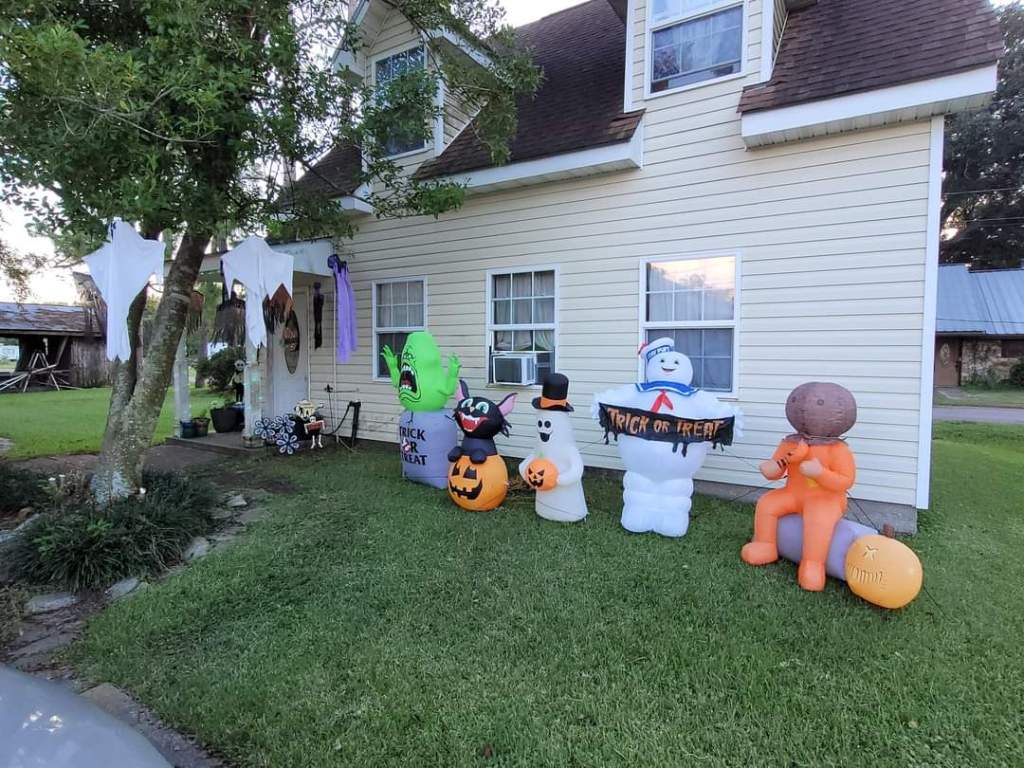
Observe the Native North American Geek in his natural habitat.

But I still feel that COMPULSION to go to the BIG one.

Why?

Because in a weird way it feels like home.

I don’t know if younger readers will get this, because the stigma about being into “nerdy” stuff seems to have largely gone away. With Marvel and Star Wars being so mainstream and things like Game of Thrones and The Boys becoming media juggernauts, things that we used to consider niche entertainment have become dominant parts of the cultural zeitgeist. But when I was in high school in the 90s, I was always made to feel like I didn’t belong because I read comics and watched cartoons. I clung to the things I loved, but often felt the need to hide them, lest I become even more of an outcast than I already was. I’d even quit Disney and Archie comics not because I didn’t like them anymore, but because I let people put it in my head that if I was in high school and reading Uncle Scrooge something must have been wrong with me. If I was seen with a Star Trek novel or an X-Men t-shirt, the reaction quite clearly elicited the same response every time: you do not belong here. High school was a bitch of a place, guys.

I’ve got a core memory of a time in 1993 when Superman: The Man of Steel #22 came out. This was during the whole “Death and Return of Superman” storyline, and John Henry Irons IMMEDIATELY became my favorite of the four potential heirs to the throne. I brought the comic to school with me and, on a break outside, I sat on a bench to read it. And within seconds, a jerk from my PE class yanked it out of my hands because I was such a “nerd,” threw dirt into the die-cut cover, and stomped away laughing.

I can’t help but feel that John Henry would have known how to deal with it.

I don’t remember the guy’s name. I couldn’t pick his face out of a lineup. But I’ll never forget what he did, because you CAN’T forget anything that makes you feel that small.

I look at my own students, and I don’t see that anymore. Oh sure, there are still cliques and groups, there will ALWAYS be cliques and groups, but they aren’t really based on things like what kind of pop culture a kid is into anymore. I see a lot of kids who read Manga (not enough into western comics, but that’s a separate issue), but I never see anyone get bullied for that. You want to pick on a kid for playing video games? Dude, that’s a club whose membership is EVERYBODY. Things have changed and, in this respect at least, have very much changed for the better.

But I come from a time BEFORE those changes, when I only knew two or three other kids in my school who were openly comic book fans, and most of them wound up moving away before we graduated. It was a lonely time.

The first time I walked into a comic book convention, it was like I had finally found my tribe. There were people here who not only wouldn’t MOCK me for reading Superman, but would join me in a spirited debate over the credentials of the Man of Steel, Cyborg, Superboy, and Eradicator, and which of them (if any) were the real deal. There were people here who could ALSO explain why some crew members on the Enterprise wore red while others wore gold or blue. There were people who not only wouldn’t mock me for loving Uncle Scrooge comics, but they would join me in line to get a print and comics signed by Don Rosa, perhaps the greatest artist ever to draw the Laird of the Clan McDuck. (Yeah, I love Carl Barks too, but I said what I said.)

If my house caught on fire I would save my son, and then this. My wife is faster than me, she’s already outside at this point, that’s why I didn’t mention her.

Nobody should ever have to feel the way I felt on that day back in 1993, certainly not because of what they like to read or watch. But I wish that EVERYBODY could have that experience of walking into a room and suddenly feeling like that’s where you’ve belonged all along.

I still get that when I walk into my local comic shop (BSI Comics in Metairie, Louisiana – and I’ll never be shy about giving them the shout-out). I feel that way on Free Comic Book Day, when hundreds of like-minded folks come together to see what’s new. And I feel that way when I attend a show full of people selling, drawing, reading, and talking about comics and movies and TV shows. And even the people who aren’t into the same comics and movies and TV shows as I am are still part of the same tribe, because we know that even if I’m into Star Trek and you’re into Star Wars, we’re still more alike than we are different.

Not like that Stargate weirdo.

So why would I possibly want to go to the big, bloated, past-its-glory-days Comic-Con International in San Diego? 

Because in a way that I don’t know if you can understand if you’re lucky enough to never have felt like an outcast, it’s where I feel like I belong. With my people. With my tribe. Just because I’ve never been doesn’t mean it doesn’t call to me like home.

Ah well. Maybe next year.

Blake M. Petit is a writer, teacher, and dad from Ama, Louisiana. His most recent writing project is the superhero adventure series Other People’s Heroes: Little Stars, volume one of which is now available on Amazon. You can subscribe to his newsletter by clicking right here. He believes the Great Gonzo said it best when he sang, “I’ve never been there, but I know the way,” and a tip of the hat to Steve J. Rogers for putting that bug in his ear. 

Geek Punditry #80: If You Liked the Movie, You Should Read the Book

For some time now I’ve had the novelization of the TV show Charles in Charge sitting in my eBay searches, contemplating whether or not I should jump on it.

The first thing they teach you in blogger school is to start a column with a sentence that will compel the reader to continue in the hopes of making sense of what you’re saying. How am I doing?

You see, we live in a time when people like me (nerds) often go back and recapture things from our youth – things that we remember fondly or that tickle a nostalgic button somewhere in our soul. Often these things take the form of toys, but just as popular are other collectibles like trading cards, comics, vintage video games, and – of course – books. So the reason I’m thinking about getting this book, which is oddly enough a novelization of the opening episodes of the SECOND SEASON of Charles in Charge (I later learned that there is a novelization of the pilot I’ve never seen in person), is because I remember getting it at one of those glorious Scholastic Book Fairs that we used to anticipate with the same excitement and fervor as we would Christmas morning. It’s purely a nostalgia thing, friends.

Don’t tell the eBay seller I borrowed their picture for this, okay?

Eh?

Oh, you mean you were wondering why the hell there was a Charles in Charge novel in the first place, aren’t you?

That also goes back to the time period in which I grew up, a magical, halcyon time known as the 1980s. It was a heck of a time to grow up. We had the best music, sodas were clear sometimes, and cigarettes had only been bad for you for like 20 minutes. But that doesn’t mean everything was perfect. This was in an era before streaming services, an era before you could pull up popular entertainment on demand from your remote control without even having to get off your couch and look for clean pants. If you saw a TV show you liked, the only way to experience it again was hope for a rerun. If you loved a movie, you had to wait for it to come on HBO (if you had it) or rent it from these ancient temples that we called “video stores.” You couldn’t even just go out and BUY the VHS tape the way you later could the DVD, because in the early days of home video the studios made the movies prohibitively expensive (nobody in their right mind would – or should – have paid $120 for a VHS copy of The Land Before Time 2) so that most people couldn’t afford to build a home library and, instead, the studios made their money using the video stores as the middleman. Eventually, the prices of VHS tapes dropped and home libraries became a thing, but for much of my childhood if there was a movie you really loved, there was only one surefire way to experience it again whenever you wanted: buying the novelization.

When you need to hear Madonna as Breathless Mahoney, this is the next best thing.

Novelizations have been around almost as long as film, going back to the silent era. In 1966 Isaac Asimov was hired to novelize the film Fantastic Voyage. (He was so disappointed with the result that he came back years later with a “sequel” called Fantastic Voyage II: Destination Brain, which just used the premise of miniaturized scientists going into a human body and otherwise was completely independent). One of the most interesting examples, I think, is 2001: A Space Odyssey. Author Arthur C. Clarke and director Stanley Kubrick collaborated on the story, then Clark wrote the novel WHILE Kubrick worked on the film, so which of them technically is the adaptation of the other? If you ever figure it out, let me know.

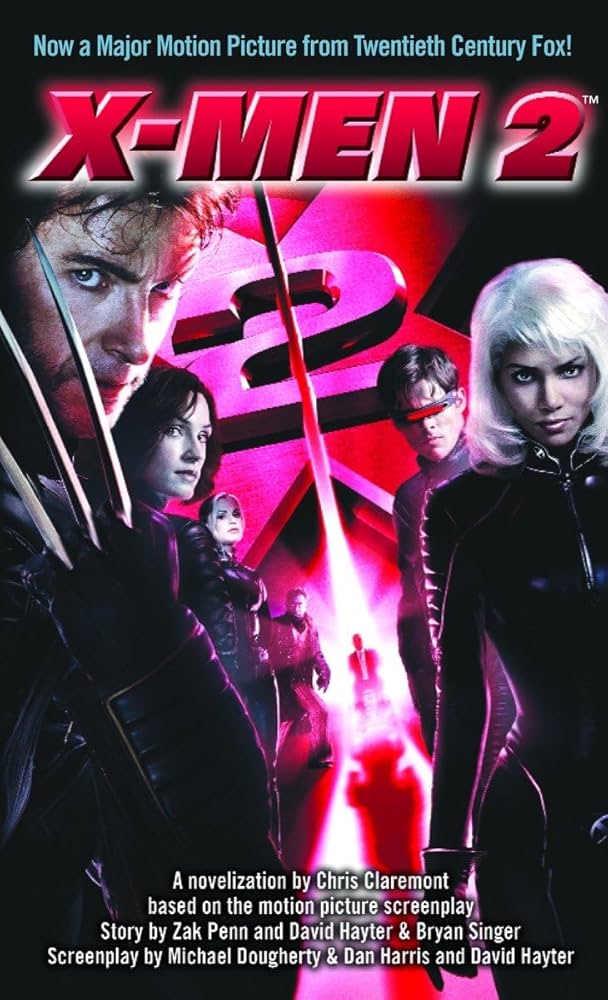
But in the 80s, the novelization was huge. I had stacks of them for the formative movies of my youth: E.T.: The Extra-Terrestrial, Batman, Dick Tracy, Back to the Future…not to mention the requisite Star Trek and Star Wars books. Not all of them were very good, of course. Some of them were downright terrible. But there was something interesting about reading these books, which were often based on early drafts of the film’s script. The novels had to be written quickly, usually while the film was still in production, in order to have them printed and on the shelves when the movie came out, so if things changed during the production, the novel would sometimes be based on the original version rather than the change. The novelization of the second X-Men movie, for example, is so different (up to which characters lived and died) that you’d be hard-pressed to believe the writer even KNEW anything about the X-Men…if it weren’t Chris Claremont, whose work on the characters in the 70s and 80s is pretty much the main reason that those characters survived past the 70s and 80s without falling into obscurity.

“Claremont! Who the hell is ‘Bolverine’?”

Screenplays often lack the detail that you get in a novel as well, and as such the authors had to conjure up a lot of the characters’ backstory, inner monologue, and other elements that wouldn’t have room to go into in a feature film. Goonies is a phenomenal example of this. It’s a movie that everybody my age grew up idolizing, that we watched over and over again, that became a fundamental part of our psyche. So we all know that the reason Josh Brolin’s character Brandon has to steal a child’s bicycle after his brother Mikey (Sean Astin) lets the air out of his own bike tires is because he flunked his driver’s test. But the novel tells us that the REASON Brand flunked his test is because he suffers from claustrophobia and freaked out about being the car with the driving instructor, a stranger. Overcoming his claustrophobia in the caves becomes an interesting running element through the novel. It also gives us a little insight into what happens to the characters after the movie ends – for instance, Chunk’s parents officially adopt Sloth and give him the name Jason Sloth Cohen at his Bar Mitzvah. It’s adorable. 

Not to mention the subtle suggestions that Mikey is actually the reincarnation of One-Eyed Willie.

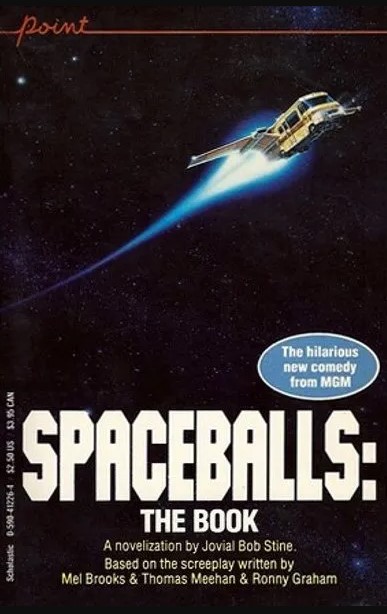
And of course, these novelizations were turned out in large numbers, especially the ones for kids. The Charles in Charge book I mentioned before is only one of many such novelizations I got from a Scholastic imprint called Point, which specialized in middle grade books. This resulted in a lot of those aforementioned novelizations, plus an avalanche of the kind of kiddie horror books that would turn so many people into lifelong horror fans, such as the Goosebumps line. It got to a point (no pun intended) that I would actually look for that Point logo at the Scholastic Book fair, as I knew those were books for people like me. In fact, a while back I finally DID jump on eBay to snag one of those old Point books from my youth, their novelization of the Mel Brooks comedy Spaceballs. When I got the book I saw, to my surprise, that it was written by “Jovial Bob Stine.” This name meant nothing to me when the movie came out in 1987, but looking back on it now I realize that this was one of the various pen names used by someone who would soon become a Scholastic legend – R.L. Stine, creator of those Goosebumps novels I mentioned before.

It’s JOVIAL, see. Also hilarious. Says so right there.

Some of these books have become real collector’s items. If you look up the original novelizations of some of the 80s horror movies like Halloween, Friday the 13th, or A Nightmare on Elm Street, you see them going for hundreds of dollars now. Considering the demand, it’s actually really surprising to me that you don’t see them reissued more often, or at least offered digitally. In some cases, I suppose it’s a rights issue (the rights for Friday the 13th are notoriously complicated at the moment), but some are less understandable. DC Comics recently announced a new novel, Batman: Resurrection, which will serve as a direct sequel to the 1989 Batman movie. That sounds cool – but why not reissue the novelization of the original movie to go with it? 

Trust me, geeks will eat this stuff up.

Novelizations are still produced today, but not as many as there were back in the 80s and 90s. A lot of sci-fi movies still get them, but the odds of seeing a novel based on, for instance, the premiere of Abbot Elementary seems fairly remote. Obviously, with the streaming era, it’s not as necessary to have a book to get your hands on the story the way it was when I was a kid. More than that, though, I think that the streaming era has broken down the audience so that these things aren’t part of the cultural conversation the way they used to be. When something like the first few Star Wars movies came out, they were a phenomenon that EVERYBODY had to talk about, had to experience. They lingered in theaters for months, even years, before finally filtering out and making way for something new. That doesn’t happen anymore. A movie lives or dies based on its opening weekend. TV series dump an entire season at once and everybody has forgotten about it a week later. It’s a sad thing, I think, a change that I’m not fond of, but it’s the world we live in now.

So I’ll keep my eye on eBay and keep my finger over that “buy it now” button. I’m not saying I’ll get every old novel I see, of course. I’m just saying that if I COULD, I WOULD.

Blake M. Petit is a writer, teacher, and dad from Ama, Louisiana. His most recent writing project is the superhero adventure series Other People’s Heroes: Little Stars, volume one of which is now available on Amazon. You can subscribe to his newsletter by clicking right here. If you ever see a decent price for the novelization of Howard the Duck, let him know.

Geek Punditry #79: The Case For ID3

On holidays, we all have certain favorite movies that we like to return to. At Christmas we all binge It’s a Wonderful Life, A Christmas Story, and dozens of others. Around Halloween we’ll sit down to watch Hocus Pocus or, appropriately, Halloween. On Arbor Day, of course, Swamp Thing. And although the Fourth of July doesn’t quite have the cinematic pedigree of some of those other holidays, there are definitely movies appropriate to watch at this time of year. 1776 is one of my favorite musicals of all time, and my wife’s favorite movie, Jaws, has enough July 4th talk to count even though the film ends several days after the holiday. But of course the most obvious movie to watch in early July is the 1996 blockbuster film Independence Day, the Roland Emmerich/Dean Devlin sci-fi extravaganza in which the Fresh Prince, Lone Starr, Cousin Eddie, and Jeff Goldblum come together and summon the power of America to save the world from an alien invasion.

If you had barbecue this week, you have this man to thank.

The movie – which I know we’ve all seen – is big, over-the-top, aggressively bombastic, and I love every frame of it. It is FUN, fun in a way that many blockbusters in the years since have forgotten how to be. The special effects are better than most movies we get today, the musical score is an absolute masterpiece, and the final act of the movie has one Big Damn Hero moment after another – and when done well, there’s nothing better than a Big Damn Hero moment. It is, quite frankly, a perfect film for what it is. If Bill Pullman had REALLY run for President in 1996, he would have won in a landslide. 

20 years later, a sequel was attempted. Independence Day: Resurgence was…not as good as the original. For reasons that I’m going to get into shortly, the movie felt kind of stale and like it was trying too hard, whereas the original made its sense of spectacle feel effortless. But this year, after rewatching the original a few days ago, I decided to give the sequel another chance. It…still isn’t a great movie. But the tragedy of it is that it had the POTENTIAL to be. The actual STORY is very strong. Let me give you the reader’s digest version of the important stuff that happens in Resurgence:

“If it helps, imagine you’re hearing this in my voice.”

It has been 20 years since Earth successfully destroyed the invading alien force. In that time, humanity has come together in a way previously unheard of, scavenging the alien technology to create an age of technological advancement that has helped create peace across the planet. Suddenly, another spacecraft appears. Humanity, fearful of a second invasion, attacks first this time, but discovers that this is NOT the same alien race that attacked them before – in fact, our old enemy is PURSUING this newcomer. We again have to battle the invaders, this time with the help of the newcomer, who we learn is an envoy of a coalition of survivors of the Big Bad Aliens, whom they call the Harvesters. We discover that Earth has become famous across the galaxy for being the only planet to ever successfully defend itself against the Harvesters. They are our FANS, and they want us to come into outer space to lead the fight to stop the bad guys once and for all.

“See? That doesn’t sound so bad, does it?”

If that sounds 1000 percent better than the movie you remember watching back in 2016, that’s because it is. The plot is fantastic – it expands upon the original mythology and elevates the threat, with the promise of exploring a much larger and grander universe that the original film only hinted at. But the final product didn’t deliver on that level. The cast was reduced to a series of Xerox copies of the original characters and the story structure was broken down in such a way that it mimicked the first movie far too comfortably to be satisfying. I always say that if there’s one thing fans want it’s “More,” but movie executives never understand what that MEANS. We don’t want the SAME thing, we want that familiar thing to CONTINUE and GROW and EXPAND. And while Resurgence had all the potential in the world to do that, by reducing it to a copy of the original, it failed.

The characters didn’t help. They tried to elevate the children of Will Smith and Bill Pullman’s characters to the new heroes, but there was none of the sense of heroism from the original. Pullman’s President Tom Whitmore at least got a proper sendoff, but Will Smith died off-screen and the wife Goldblum reconciled with in the original is gone without a trace, replaced by a new love interest. Was Margaret Colin unwilling to return? I have no idea. But we’re stuck with another less interesting love interest in a movie that already has a less interesting love story between Pullman’s daughter and Thor’s brother. (The one who isn’t Loki.) This also largely damages the character arc Goldblum received in the first movie, and if there’s one thing I hate, it’s a sequel that erases previous character development. 

I dare you to name a single one of these characters who wasn’t played by Jeff Goldblum. See? It’s even harder than Avatar.

But that spark, man…that spark is still there. And the idea of a movie about the human race joining together with an intergalactic federation to take the fight TO the Harvesters still REALLY appeals to me. So that’s why I’m here today, friends. Since the 20th Century Fox acquisition, Independence Day is now the property of the Walt Disney International Shadow Government and Entertainment Consortium (although they had to be reminded that this only referred to the film franchise and not the actual holiday). That in mind, I want to suggest that they take a chance on a new movie – or maybe even a Disney+ series – to continue the story.

Let’s talk about how to do this, guys. First of all, we don’t want to FORGET Resurgence. The whole point of this exercise is to remember that there IS a solid core of a story there. So instead, I say we do an Evil Dead 2. The second Evil Dead movie had a much greater distribution (and budget) than the first, and since he couldn’t be sure that much of their audience would ever have seen the original, creator Sam Raimi used the opening act of the sequel to make a condensed recap/remake of the previous movie. It is possible to watch Evil Dead 2 without ever having watched the original and not miss a beat. So with ID3, we start with a sequence that runs through everything I just said in my recap, because nothing else in that movie is really necessary for the story that’s going to get told next.

Second, at this point we need an almost entirely new cast. Bill Pullman’s character died in the sequel, and most of the new characters are pretty forgettable. We can try to squeeze in Jeff Goldblum just because he’s Jeff Goldblum and I don’t think it’s possible to look into those steely eyes and tell him “no,” but the one guy we can’t do without? Brent Spiner as Dr. Brakish Okun, whose increased screen time in the sequel is probably the best part of Resurgence. Not only is he the in-universe expert on the aliens, but his long contact with them gave him a sort of psychic link that will be invaluable.

Not to mention his experience in interspecies relations.

Once we’ve got all that established, we need a ten year time skip. We’re in space now. We are in command of the coalition of survivors, and here’s where we REALLY have fun, because we get to see all of these different kinds of alien creatures. We learn about their worlds that have been destroyed and the society they have built in the wake of the Harvesters attacks. We can tell the story of the war with the Harvesters, and there’s room for a lot more beyond that. What about the previous wars, the ones that were lost? Are there other races out there in need of a rescue? Are there other races out there even WORSE than the Harvesters themselves? There’s potential in every one of these ideas to tell a compelling story. Everybody is all about doing “shared universes” these days – this would be a chance to expand the universe of Independence Day into a sci-fi backdrop as rich and exciting as the best of Star Trek or Star Wars.

IF it’s done right.

Which of these two did it right, Disney? Come on. This isn’t a trick question.

That’s what it always boils down to, isn’t it? The truth is, a lot of modern sci-fi is pretty divisive. For everyone who loves The Mandalorian, you can find five people complaining about The Acolyte. Some Star Trek fans refuse to consider Lower Decks canon, some hate Discovery. Picard is that amazingly rare show where virtually everybody agrees it got BETTER in the last season. And the truth is, no matter what would be attempted with another Independence Day, there are a lot of people who will hate it sight unseen and never give it a chance.

But I don’t think that’s a good enough reason not to try.

Everybody knows that the studios are terrified to take a chance on a NEW idea, a NEW IP. They would much rather just try to pump dollars out of the ones that already exist. And since they’re doing that anyway, why not at least TRY to do so with a franchise that still has a lot of unrealized potential? 

That’s my thoughts on it, anyway.

Maybe next time I’ll tell DC Comics how to fix the Legion of Super-Heroes. Really, the fact that they haven’t just put me in charge of this stuff yet is ridiculous. 

Blake M. Petit is a writer, teacher, and dad from Ama, Louisiana. His most recent writing project is the superhero adventure series Other People’s Heroes: Little Stars, volume one of which is now available on Amazon. You can subscribe to his newsletter by clicking right here. Step one of fixing the Legion is to pretend the most recent incarnation never happened, by the way.

Geek Punditry #78: In the Name of the Faithful

I think the movie Holes is pretty good.

I know, it’s unusual for me to kick off one of these columns with something so overtly political, but bear with me here.

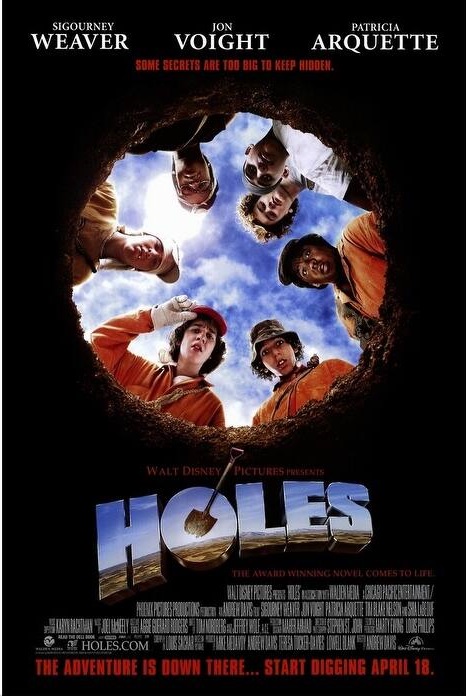
Holes, which came out in 2003, is an adaptation of Louis Sachar’s young adult novel of the same name. The story is about a kid named Stanley Yelnats who is falsely accused of stealing a pair of very expensive celebrity shoes from a charity auction and sentenced to 18 months at a juvenile detention facility called Camp Green Lake. As it turns out there’s nothing green about the camp, nor is there a lake there anymore – just the desert remains of a dried lakebed where the detainees are forced to dig five-foot holes day after day in an effort to “build their character.” The film bounces around three different timelines: Stanley’s story is intercut with that of his great-great-grandfather, who accidentally brought a curse down on five generations of his family, and the origin story of a brutal outlaw named “Kissin’” Kate Barlow, who terrorized the Green Lake community a century ago. 

Trigger warning: may offend people with holes.

I remembered enjoying the movie when it first came out, but a few days ago I watched it for the first time in several years and I was really impressed by how tightly plotted the film is. Even with juggling three timelines there is virtually no fat in the plot. Everything in the story turns out to be significant in the end, either to revealing the truth about the two timelines that take place in the past or to bringing the storyline of the present day to a satisfying conclusion. It’s a really good movie, and I’m not even kidding when I say that screenwriters could do worse than to study it when it comes to learning how to put a story together.

Part of the reason for the tightness of the story, I think, is because the screenplay was written by Louis Sachar himself, adapting his own novel. True, sometimes when this happens the original writer can be a tad too precious about keeping their favorite bits or not understand the necessities of adaptation, but Sachar did a stellar job. However, as I often do when I watch a movie I really enjoy, I spent a little time online afterwards looking into the history of the film and learned something I hadn’t known before: Sachar’s script was NOT the first attempt to adapt the book. The first attempt at adapting the story was written by Richard Kelly, who is probably best known as the writer and director of Donnie Darko, which film scholars among you will recognize as being one of the last movies one would think about when drawing comparisons to Holes. Furthermore, that Kelly script – as it turns out – is freely available online, and I clicked on it to take a look.

The beloved children’s classic reimagined by…this guy.

Kelly’s version begins with a narrator described as an “elderly voice” saying – and I swear, I am transcribing this verbatim: “Once…when it was still early in the twenty-first century…there existed a prison in a sea of sand.”

Holy crap.

It continues. 

“All signs of life in this place had been destroyed by something terrible…and that something had dried up into the earth…and the earth was a prison for all mankind.”

HOLY.

CRAP.

Had Kelly even read the book?

Incidentally, the ellipses you’re seeing in these passages were there originally, I didn’t omit anything. This is HOW IT IS WRITTEN.

At this point I saved the link so I could go back and read it later, because something this completely bonkers has to be examined slowly, carefully. When Stanley “Kramer” shows up later on the page, the narrator continues by telling us “He did not feel sorry for what he had done…but feeling sorrow is not adequate punishment for such a crime. Feeling sorrow does not absolve the crime from the memory of the victims…if the victims are still breathing.”

Was Kelly even aware of the fact that there is a book?

Adaptations are not a new art form, guys. The Greeks borrowed from existing myths and legends when they invented modern theater. Virtually all of Shakespeare’s most famous plays are based on history, mythology, or earlier poetry that he expanded in his own way. The Lego Movie was based on the works of Eudora Welty. So it’s not that I have any objection to adapting a work from one medium to another. But at SOME point, it seems like someone has to ask the question: if I’m changing the story this much, is it even still really an adaptation?

Change is inevitable when changing from one medium to another, and for any of a thousand reasons. In The Hunger Games, for instance, the novel is written from the first-person point of view of Katniss Everdeen and is heavily loaded with her internal monologue. This is difficult to do well in a movie, and thus the information we learn in monologue – whether it’s plot-driven or character-driven – has to be imparted to the audience in a different way. Sometimes the changes are pragmatic. Back to Holes for a moment – in the novel, Stanley begins the story as a fat boy who gradually loses weight due to the physical labor he’s forced to undergo. The filmmakers decided to drop this and cast the relatively slim Shia LaBoeuf under the reasoning that it would be too difficult to make a 14-year-old actor gain and lose weight so drastically over the course of filming, not to mention potentially dangerous to his health. That is a 100 percent acceptable change. 

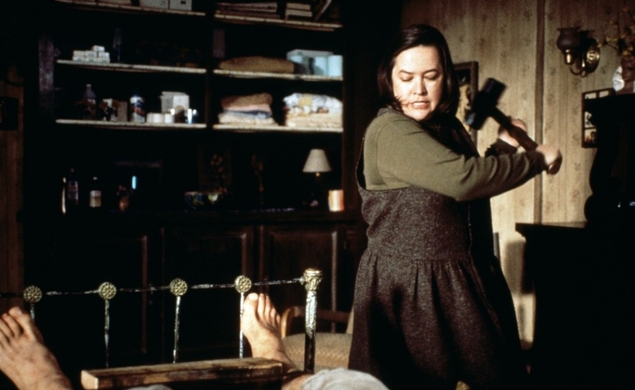
Sometimes changes are just a matter of understanding what the audience can handle. I’ll give you two examples from Stephen King. Cujo is a book about a mother and her child trapped in an increasingly hot car by a violent and rabid St. Bernard. In the book – spoiler alert here for a 43-year-old novel – the child dies of heatstroke. But in the movie, the filmmakers let the kid live, thinking his death would be too much for the audience. There’s a similar change in the film version of Misery, about a writer who gets in a terrible car accident and is rescued by his “biggest fan,” who turns out to be a deranged lunatic. In the book, to prevent Paul Sheldon from escaping, the insane Annie Wilkes cuts off his feet. If that sentence shocked you it’s probably because you are more familiar with the famous scene in the movie, where she “only” hobbles him by breaking his ankles with a sledgehammer. Reportedly, the producers felt like audiences would never forgive the actress, Kathy Bates, if she went so far as to actually cut his feet off. And if you think that audiences are smart enough to know the difference between the actor and the behavior of their character, look up the way “fans” treated Anna Gunn for the things Skyler White did on Breaking Bad.

If social media had existed in 1990, Kathy Bates might still be in hiding for this.

When it comes to these changes, the filmmakers chose to lessen the tragedy of the book. I don’t think that we’re saying that book readers are more accepting of gore or death than people who watch movies, though. I think the lesson here is that it is more difficult – more disturbing – to watch certain tragedies than to read about them. On the other hand, there’s the adaptation of King’s novella The Mist, which is a book with an ambiguous ending. The film, however, goes in the OPPOSITE direction, making the ending OVERTLY tragic. In this case, though, making the ending far worse than the original actually works. Stephen King himself has reportedly said he prefers the ending of the movie to the that of the story he wrote. 

Time is also a big factor when it comes to adaptation. If you’re adapting a doorstopper novel, especially into a film intended for theatrical distribution, it’s virtually impossible to squeeze in everything. Lord of the Rings fans have elevated the absence of Tom Bombadil from the film version of the beloved trilogy to meme status. To a lesser degree, the same is true for the Scouring of the Shire. As much as I appreciate those sequences in the book, though, when we’re talking about movies that already have a running time that’s longer than the first marriages of certain people I went to college with, I can forgive Peter Jackson for laying those pieces aside.

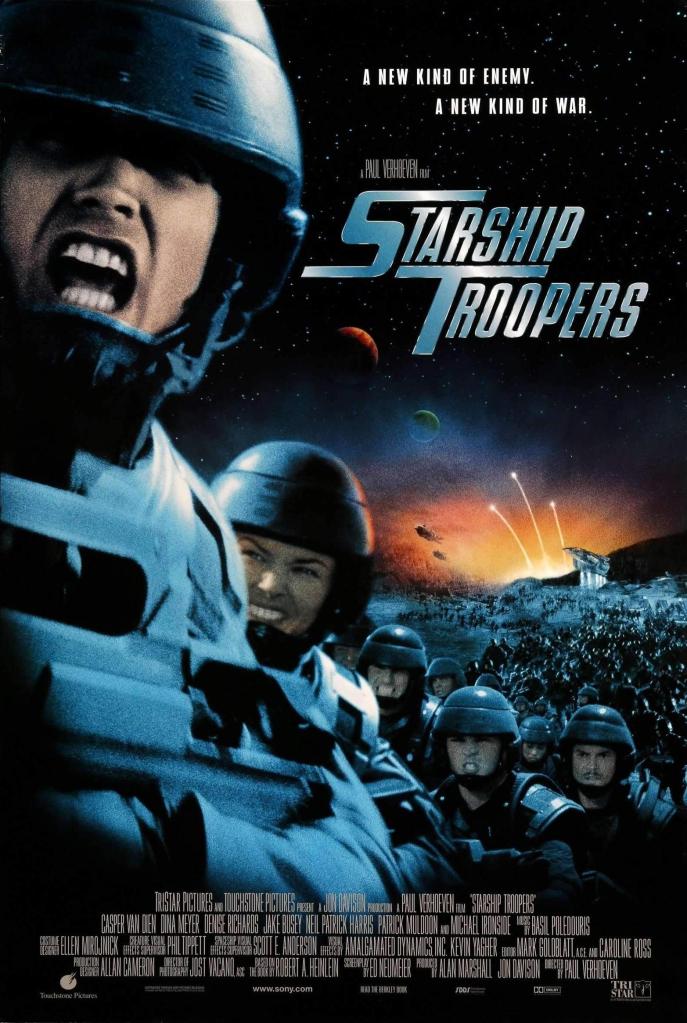
Changes from one medium to another are a necessity, because no two types of storytelling have exactly the same requirements or demands. I don’t mind changes, provided that making the change does not alter or pervert the spirit or intent of the original work, and here’s where I’m going to piss some people off, because Starship Troopers. It’s one of those movies that flopped when it came out but has grown a devoted following in recent years. That seems to happen a lot – something people disliked when it came out is rediscovered years later and lauded or, conversely, something that was once popular is hit with backlash and people suddenly declare that they never thought it was that good in the first place and they only saw it in the theaters 27 times “ironically.” I don’t do that a lot, honestly. I’ve certainly reevaluated movies after the fact, sometimes enjoying them more, sometimes less, but I don’t think I’ve ever done a complete 180 on a film. Which brings us back to Starship Troopers. 

My friends, I’m here to tell ya that I thought it sucked then and I think it sucks now. 

I’m going to pause here so the type of person who writes angry responses without bothering to read my point can write an angry response without bothering to read my point.

Fans of the movie praise Paul Verhoeven for making a witty sci-fi anti-war satire, a movie in which the entire human military is thinly painted as Nazis in training. However, none of this is applicable to the book, which is most certainly not anti-war, nor is it in the practice of making the humans into the bad guys. In fact, the book – which I should admit I was already a fan of before the movie was made – isn’t really plot-driven at all, but is more of an examination of the life of a soldier in a hypothetical science fiction future. The war against the insectoid aliens is there, but it’s more of a backdrop, a way of examining the world that author Robert Heinlein created. It’s no surprise, then, to find out that Verhoeven admittedly never even finished reading the book, finding it too “boring” and “militaristic.” 

Sir, I must say this: if you can’t even finish reading the source material of an adaptation, I submit that you are not the right person to adapt it. 

Here’s the thing, folks: I have no objection to Verhoeven making an anti-war movie, or a satire, or a movie in which humans are thinly-disguised bad guys. This is his right as a filmmaker, and there are plenty of good movies that do just this. I do, however, have a strong objection to him doing so by trading in on a novel by Robert Heinlein which is none of those things. I simply don’t think it’s fair, either to readers of the novel or to Heinlein himself, and in disputes of this nature I’m pretty much always going to side with the original author’s intent. If Verhoven had made a virtually identical movie, changing the names and calling it something like Spaceship Soldiers instead, we would not be having this conversation right now…but it’s also possible that we wouldn’t be talking about the movie AT ALL, that without the connection to Heinlein, the film would have been forgotten entirely.

It’s not a question of which of these men I agree with more, it’s a question of whether it is ethically right of Verhoven to use Heinlein’s story to espouse views that Heinlein’s story clearly disagreed with. Personally, I don’t think it is. I know that this is an area in which a lot of people will disagree with me. Hell, maybe Heinlein himself would disagree with me. But I ask you this: Arlo Guthrie’s 18-minute song “Alice’s Restaurant,” which was essentially a protest against the Vietnam war, was made into a similarly anti-war film. Had Guthrie not been involved in the film, but rather it was made by somebody else who painted Guthrie’s character as a fool and his protest against the war as misguided, would that have been fair to Guthrie?

What I’m getting at, friends, is this: if you’re a fan of Starship Troopers, is your acceptance of the adaptation process based on which political viewpoint you agree with? If that’s the case, I’m afraid that we will not be able to meet halfway on this one, and I hope that we can still be friends and that you’ll still come back next week when I’m writing about how awesome the theme from DuckTales is or something.

Adapting a story from one medium to another should be done for one of two reasons. First, if it is an exceptionally good story and you want to retell it for a different audience. Great! Do it! But if it IS an exceptionally good story, then why do you want to change it?

The second, more cynical reason, is because the story is popular, and you’re hoping to make money by appealing to the pre-existing audience. Okay, I can live with that. But if the story IS already popular and has a pre-existing audience, WHY DO YOU WANT TO CHANGE IT?

The answer, by the way, is because writers can be a vain bunch (yes, I am including myself in that number) and a good number cannot resist the urge to put their own stamp on something. This is what Richard Kelly did (remember him?) in his Holes adaptation. He wasn’t writing an adaptation of Louis Sachar’s novel Holes, he was writing a Richard Kelly movie that was vaguely suggested by a novel by Louis Sachar. And for a fan of Louis Sachar’s novel, that would have been MASSIVELY disappointing. 

But writers do this anyway, because for some people it’s more important that something is “theirs” than it is that they treat the source material faithfully. Sometimes that means they’ve created a brand-new breakout character, like the people who gave us Scrappy Doo. Sometimes that means “updating” a story for a whole new audience, the way the smash hit film Barb Wire “updated” the story of Casablanca to become beloved by the ages. And sometimes it’s because the author is just trying to trade on somebody else’s work to spread their own message to the masses, which makes me wonder how strong a storyteller you actually are if you can’t get your message out without borrowing somebody else’s name.

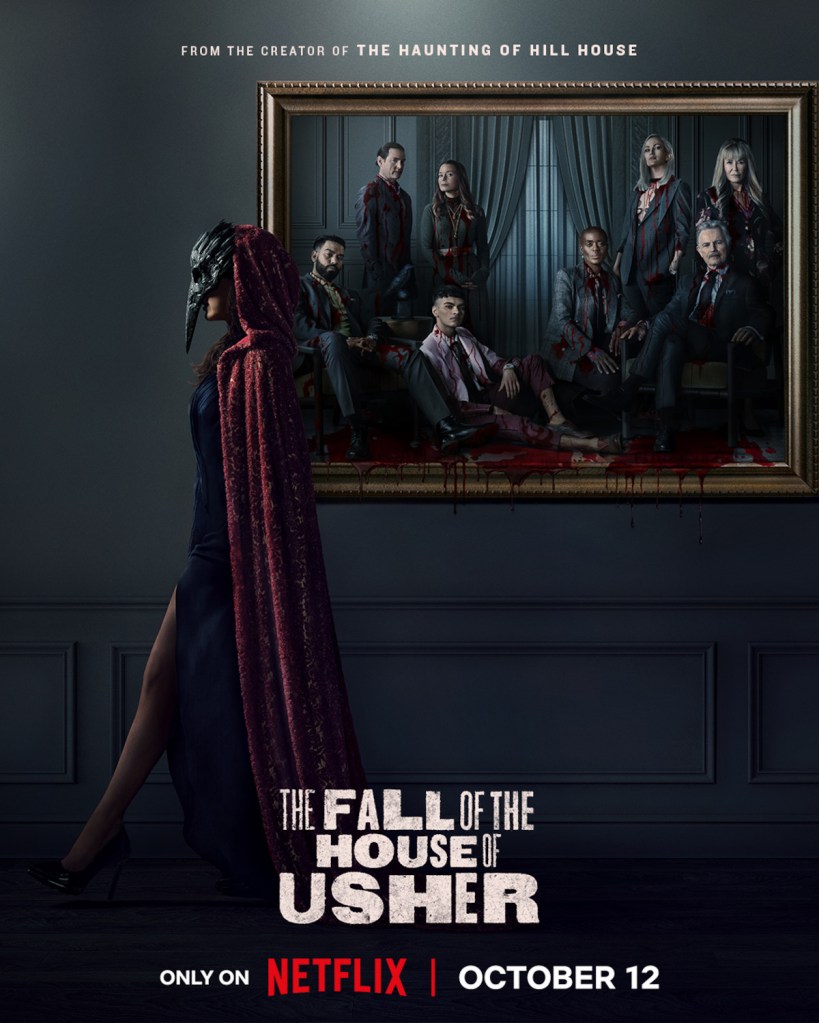
I’m not saying it’s impossible to do a complete re-imagining of a work and do it well. The Netflix miniseries Fall of the House of Usher is an excellent example. Writer/director Mike Flanagan didn’t even TRY to do a straight adaptation of Edgar Allan Poe’s short story. Instead, what he did was grab bits and pieces of dozens of DIFFERENT Poe stories and reassemble them into something totally original and unique. It was as if he had gotten his hands on ten different Edgar Allan Poe Lego kits, threw away the instructions, and used the bricks to create his own thing. It was fantastic, and is one of the projects I point to when I say that Flanagan is, in fact, the right man to adapt Stephen King’s The Dark Tower if anyone ever has the guts to give him the money to do it. But he didn’t do it by twisting or changing Poe’s work into something unrecognizable. Quite the opposite – he did something that was totally his and slipped in recognizable elements to help us see the larger picture. 

Definitely the weirdest Lego movie.

Then there’s the wild movie that actually gets its name from the process we’re talking about, Adaptation, which is ostensibly an adaptation of Susan Orlean’s nonfiction book The Orchid Thief. The book is a portrait of a horticulturalist who was arrested for poaching flowers, but that’s not the movie screenwriter Charlie Kaufman wrote. Instead, he wrote a movie about how he (Kaufman himself, as a character in the movie) struggled with adapting the book. He fictionalizes Orlean and John Leroche, the subject of the book, and creates a fictional twin brother for himself – both Charlie and “Donald” Kaufman are played by Nicolas Cage in one of those movies that earns him his reputation of doing kind of insane movies. Orlean herself was understandably taken aback when she read the script, but in more recent interviews has said she’s come around and now loves the movie, which was in no way a literal adaptation of her work but still successfully communicated the book’s themes of longing and obsession. Also there’s a car chase.

Most adaptations, I think, usually fall somewhere in-between the highly faithful Holes and the bonkers left turns of Adaptation. I always point to The Wizard of Oz here – most people’s version of Oz is the one we saw in 1939, the Judy Garland movie that has become a legitimate cultural classic. It’s a lovely movie, it’s beautifully filmed, and the music is timeless. As an adaptation, though, it’s mid. The film leaves out lots of sequences from the book, compresses two good witches into one (making Glinda seem like kind of a jerk for not telling Dorothy that the Ruby Slippers could send her home at the beginning, whereas in the original book those are two entirely different witches and the first apparently doesn’t know), and changes a few things – most egregiously the ending, which implies that Dorothy’s journey to Oz was just a dream. This is not at all suggested by the book, but the ending of the film has become so iconic that it’s inspired a thousand other “all just a dream” endings, which – speaking as a writer – is a crime I consider only slightly worse than lighting an orphanage full of puppies on fire and chaining the doors on your way out. But even then, the sense of wonder and awe that the film gives us DOES successfully communicate the wonder and awe of the book, and for that reason I can still love it. 

A good adaptation has the potential to breathe new life into an existing work. A bad one, though, has the power to choke a work to death. If it ever comes down to a choice between one or the other, I know which side I’m going to be on.

Blake M. Petit is a writer, teacher, and dad from Ama, Louisiana. His most recent writing project is the superhero adventure series Other People’s Heroes: Little Stars, volume one of which is now available on Amazon. You can subscribe to his newsletter by clicking right here. He’s not kidding about the theme from DuckTales, you know. As TV themes go, he dares you to name more of a banger.

Geek Punditry #76: Butts in the Seats

My wife and I took our son to the movies this week. You may remember last year, when I wrote about the experience of taking then five-year-old Eddie to the movies for the first time, a wonderful day that, unfortunately, we’ve only been able to duplicate a handful of times since then. I love the movies, I love going to the movies, but we can’t do it as often as I’d like. This week was special, though. Every time my wife and I have taken Eddie to the movies, it’s been our idea. “Want to see Puss in Boots? Want to see Super Mario Brothers?” But not this time. No, for the first time in his life, Eddie asked us, of his own accord, to take him to see a SPECIFIC film, and there’s no way I was going to deny that request when he asked, “Can we go to The Garfield Movie?”

Am I supposed to say “No” to this face?

It was pretty good. It wasn’t great, of course. It wasn’t Up, but it wasn’t The Good Dinosaur either. There were a couple of good chuckles and some nice Easter Eggs as well. Most importantly, Eddie loved it, and that made the whole experience worthwhile. When we left the theater Wednesday, I went to post a picture of him in the theater (like parents are now legally obligated to do) only to see a shocking headline on Facebook: “Sony Pictures Acquires Alamo Drafthouse in Lifeline to Cinema Chain.” The headline stunned me. I knew the Alamo Drafthouse had been struggling – it shockingly shut down several locations just last week – but I didn’t know that it was up for sale. And for it to be sold to Sony was particularly jarring, because it’s not that long ago that this acquisition would have been illegal.

In the 1940s, the government banned movie studios from owning movie theaters on the grounds of preventing the rise of a monopoly. After all, in an era where a town may only have two or three theaters (if that), if those theaters were all owned by Universal Studios, then it would be pretty much impossible for anyone in that town to ever see a movie from Warner Bros., Disney, Paramount, or anybody else. That law was repealed in 2020, and honestly, I get the reasoning. It made sense in the 40s, but the concerns that made it necessary don’t exist anymore. First of all, we no longer live in the era of single- or double-screen moviehouses, and there’s not a studio on the planet turning out movies fast enough to fill up a modern multiplex on its own. Universal was the highest-grossing studio in the world in 2023, and they released only 24 theatrical films. Can you imagine a modern movie theater surviving showing an average of two new movies a month?

Not even Disney could fill this behemoth alone.

The other thing that makes the fears of a monopoly a nonissue is that the greatest competitor of a movie theater is no longer another movie theater: it’s the world of streaming. Streaming was already a thing in 2020, before the Covid pandemic hit, but when movie theaters were forced to close studios and viewers alike turned to streaming as the primary alternative. Now studios are trying to bring people back to the theaters, but a huge percentage of the viewers have settled in on their couches and don’t want to get back up. The Alamo Drafthouse is by no means the only chain suffering. Theaters have been closing all over the place. Last week my family took a trip to Pittsburgh for our niece’s graduation, and my wife Erin noticed a new Busy Beaver hardware store had been built since the last time we were in town. A second later I realized that the Busy Beaver was occupying the former theater where Erin and I saw the last movie we went to before the pandemic on New Year’s Day in 2020. 

While I understand the convenience and value of the world of streaming, I am firm in my belief that there’s no better way to watch a movie than in a movie theater. I don’t want them to die. But in a world where their biggest threat is a thumb-sized device that everyone can plug into their television at home, how do we convince people to go back into a theater? How do we get them to pay for tickets and concessions and do battle with the jackass in the row in front of you who won’t turn off his phone and the jackass behind you who keeps kicking your chair?

My thoughts on this question have evolved several times, and they continue to do so. At one point, I thought that the best way for theaters to push forward is to make themselves more of an all-in-one destination. Don’t just serve popcorn, but have full menus, drinks, alcoholic beverages…take the old idea of “dinner and a movie” and put it in a single location. And make the films themselves events – don’t just show new movies, but have classics, retrospectives, festivals, host Q&As with actors and directors and writers. Make going to the movies an EVENT. It sounds great! Except that everything I just described is EXACTLY what made the Alamo Drafthouse chain a success in the first place, and clearly, that is no longer enough. Sure, this sort of thing caters to people like ME, people who ALREADY would rather be in a theater than sitting on the couch at home, but it doesn’t really do anything to draw in prospective viewers who are resistant to the idea. Even big chains like AMC have tried similar things, expanding their concessions from just popcorn and nachos to include things like burgers, salads, pizza, and chicken tenders. It hasn’t made enough of a difference. 

I mean…they’re not getting RID of popcorn, though, right?

There’s also the problem that…well…“Dinner and a movie” is the classic date night, but in my professional capacity as a high school English teacher, I can tell you that kids today aren’t doing that. I don’t think they even GO on “dates” anymore. A typical teenage relationship in 2024 follows this outline: first they “talk,” then they “hang out,” then one of them asks the other one to “go out,” and then one of them “cheats on” the other, and then they “break up” and repeat the cycle with somebody else. At no point are they required to actually go on a “date.” In fact, thanks to social media apps, they can go through the entire cycle without ever even being physically in the SAME ROOM, sometimes during the course of a single fourth-period gym class. So how do you convince THESE kids to go to a movie theater? 

“And kids, that’s how I hooked up with your mother.”

The answer – the ONLY answer – is to somehow make going to the movie theaters a positive experience that cannot be duplicated at home. Last summer we got a bright spot when the “Barbenheimer” phenomenon made it cool to go to a double-feature about the creation of the nuclear bomb and the life of a plastic doll. That was GREAT, and it made both movies hits. But we’re in a hitless world at the moment. Even the one-two punch of Furiosa and The Garfield Movie (or as I like to call it “Garfuriosa”) didn’t prevent Memorial Day Weekend 2024 from having the lowest box office in nearly three decades. This past weekend people were THRILLED to see Bad Boys: Ride or Die take in $56 million at the box office, which sounds great, but is it really THAT good, relatively speaking? The previous film in the franchise, which came out in January of 2020, opened with about $68 million. Then last year The Marvels opened with $47 million, only $9 million difference, and yet it was considered a dismal failure. Obviously, it’s relative: one is the latest installment in the multi-katrillion dollar Marvel Cinematic Universe, whereas the other is kind of a redemption project for Will Smith after the Slap Heard Round the World, but STILL. 

So what do we do to entice people to see a movie in a theater? Several things have been tried, to varying degrees of success. Merchandise, for example. After all, it’s what’s keeping touring rock bands alive now that CD sales have died. When we took Eddie to see The Garfield Movie on Wednesday, he IMMEDIATELY gravitated towards a souvenir concession bundle that included a popcorn bucket, collectible cup, and a plush Garfield doll. (Odie was also available, but come on.) Fortunately Eddie’s godmother gave him an AMC gift card a couple of months ago that went toward the bundle, because it cost as much as the two drinks and large popcorn his mom and dad split that same day. Although the price is an obvious concern, I like the idea of movie theater exclusive merchandise in principle. It appeals to the collectors and it gives you a reason to go to the theater. Popcorn buckets seem to currently be the most popular type of merch. The Dune Part 2 bucket was given a rather…suggestive design that turned out to be so infamous you HAVE to believe they did it deliberately. Not to be outdone, the upcoming Deadpool and Wolverine has similarly suggestive buckets that seem to mock the phenomenon, as befitting a Deadpool movie. Of course, you have other collectible buckets as well, such as a ghost trap for a Ghostbusters movie or an Optimus Prime bucket for TransFormers. It’s worth pointing out, of course, that they are severely stretching the definition of “bucket” by featuring full-on toys or models that are buckets only in that have a cavity theoretically large enough to hold a few pieces of popcorn, but the snack is really secondary, isn’t it?

“This is it, folks. This is how we’re gonna save cinema.”

Of course the problem with merch, as with anything else, is that if it proves too successful it will quickly get overdone. By the time the 97th Fast and Furious movie hits, people will be asking if they really WANT to eat popcorn out of Vin Diesel’s head. (Be fair, though, it IS more bucket-shaped than Optimus Prime.) Also, a lot of theaters will allow you to walk in and buy the merch without buying a ticket to see the movie, which satisfies the collector but rather defeats the purpose of using merch as a draw to get butts in the seats. 

At one point, theaters thought that going 3-D was going to be the carrot that lured in audiences. After all, you can’t watch a huge 3-D movie in your HOUSE, can you? Of course, we quickly learned two things. First: 3-D televisions were relatively easy to make so you COULD watch them in your house but, second, nobody actually wanted to watch 3-D at home. From there it didn’t take long to make people realize they didn’t actually want 3-D in theaters either. The studios loved 3-D because it was harder to pirate and created an excuse to charge more for a ticket, and while it hasn’t entirely gone away, the bloom is off the rose. 3-D has never had what I call a Wizard of Oz moment. In 1939, people who had never seen color film before had their minds blown when Judy Garland opened up the door to her farmhouse and bombarded them with the multicolor wonderland of the Munchkin City. If you watched the same movie on a black-and-white TV, you’d never know what the big deal was. The Wizard of Oz proved that color can make a movie better. Nothing, to my experience, has done the same for 3-D. In fact, with the glasses darkening the screen and lots of people suffering from headaches or eyestrain, in many ways 3-D makes going to the movies objectively worse.

Every 3-D movie ever made combined never came close to the impact of this moment.

What about getting rid of the things that make people turn away from movies? Easier said than done. High prices for tickets and concessions are a concern, of course, but when’s the last time you saw the price of ANYTHING actually go DOWN? Then there’s the frequent complaint about the glut of advertising before a movie starts. If you take your seat ten minutes before showtime, you’ll see an ad for Coca-Cola, then for Honda, then for the Fandango at Home service, then Rusty’s All-In-One Tire Salon and U-Pour-It Yogurt Emporium all before the trailers even begin. It absolutely can get annoying, but it’s also helping to pay the bills for the theater and preventing said ticket and concession prices from getting EVEN HIGHER than they already are. 

Okay, so the ads aren’t going anywhere…can something be done about the jerks in the movie theater with you, the ones who won’t shut up or turn off their phone? Several years ago AMC actually flirted with the idea of making some of their theaters “mobile friendly,” allowing texting and the like. Among the people who actually enjoy going to the movie theaters, this went over about as well as suggesting they sprinkle every third popcorn bucket with anthrax powder. Of course, if the idea is to corral everybody who’s going to be an asshole by texting in the theater into a single screen where they won’t bother anybody else, I see the merit in it. On the other hand, that would bring these people into contact with each other and increase the odds that they breed more assholes, assuming the relationship lasts longer than gym class. 

 What if we tried – and this is really going to blow people’s minds – what if we tried just making more movies that people want to watch? Look, I love superhero movies, and I don’t want them to go away, but not EVERYTHING has to be a life-or-death full-blown special effects spectacle set in a 20-film cinematic universe and starring people who make more per minute of screentime than you and your entire family will make in the next 30 years. Mid-level movies used to be a thing. When’s the last time there was a hit romantic comedy? An era-defining western? A non-animated family film that wasn’t made to satisfy the ego of some aging superstar trying to cling to relevance? 

In the 1980s, John Cusack made 472 different classic comedies that nobody would take a chance on in 2024.

People complain that Hollywood doesn’t have any new ideas, but that’s not true. The ideas are out there. The problem is that the studios (in other words, the people with the bank accounts) don’t want to take the risk on something that’s not a proven IP or that doesn’t have a huge built-in audience, so those risky, experimental movies just aren’t being made. We’ve got a sequel to Beetlejuice coming out this year, which is fine, but in the current cinematic environment it seems pretty unlikely that the original would ever be made today. Oddly enough, the only genre that seems immune to this is horror: there are still lots of horror movies made, lots of ORIGINAL horror movies made, and while they aren’t making Star Wars numbers at the box office, they’re doing okay. This is because horror movies are usually relatively cheap to make, but they’ve also got the most dedicated fan base of any specific genre in film. If the romcom fans came out for their movies the way horror fans do, Sandra Bullock could buy her own island by now.

This is one of those times when I’m just talking about a problem while recognizing that I don’t actually know what the solution is. I’ve got suggestions, of course, you just read over 2000 words worth of suggestions, but I don’t know whether any of them will actually WORK. That said, SOMETHING has to be done before the modern movie theater goes the way of the drive-in or vaudeville before it. The experience of sitting in a theater with a crowd of fans and enjoying a movie together is special to me, and I don’t want it to go away. I just want to make it better again. So if you’re one of the people who have given up on theaters, tell me why you quit and tell me what it would take to make you come back. If you’re with me, if you want to help theaters stay alive, then what lifelines would you recommend? How would you do it? Remember guys, there’s no wrong answer and it’s not stupid if it works. This is about ENCOURAGING discussion, not ENDING it. Join me, won’t you?

Blake M. Petit is a writer, teacher, and dad from Ama, Louisiana. His most recent writing project is the superhero adventure series Other People’s Heroes: Little Stars, volume one of which is now available on Amazon. You can subscribe to his newsletter by clicking right here. And he’s not kidding, give him all the suggestions you can think of. It will save him from having to come up with another column idea.

Geek Punditry #74: Playing Favorites With Summer Part Two

It’s time for part two of Playing Favorites with Summer, folks! In case you missed part one, when I do a “Playing Favorites” column I ask my pals on social media to suggest categories related to a given topic, then I share what I think are the best examples of each from the worlds of movies, TV, books, and comic books. In part one of “Playing Favorites With Summer,” I talked about my favorite summer road trip movies, coming of age movies, and beach movies, as well as some of the best summer reads for students. Let’s delve into part two, shall we?

Baseball Movies

Lew Beitz wanted to know what I think are some of the best baseball movies out there. Although baseball season starts in the spring and ends in the fall, almost any great baseball movie will also qualify as a summertime movie, since that’s when most of the season falls and, frankly, we’ve all pretty much decided that baseball is the official sport of summer. Last week I mentioned The Sandlot when I was writing about coming-of-age movies, so let’s just take that one as a given.

Beyond that, there are plenty of great baseball movies out there. A League of Their Own is one that frequently comes up, for example. Penny Marshall directed this 1992 film loosely based on the real story of the All-American Girls Professional Baseball League, a  women’s baseball league that was founded during World War II, as too many of the male baseball players had joined the fight against the Axis powers to put on a baseball season. The league folded in 1954 because AAGPBL was far too unwieldy an acronym to compete with MLB, but the league still has its legacy today, by which I mean this movie. The film stars Geena Davis, Lori Petty, Rosie O’Donnell, and Madonna as members of the Rockford Peaches, with Tom Hanks doing a great turn as a washed-up coach trying to redeem himself with the girls’ team. There’s something about sports movies that lends itself really well to the “dramedy,” that hybrid film too serious to call a pure comedy but too funny to be called a drama, and A League of Their Own is one of the all-time great examples of that.

It’s a shame Jeter never wore that uniform.

If you want something more dramatic, there are a pair of numeric “true stories” well worth watching. 42 is the story of Jackie Robinson, the man who famously broke the color barrier by becoming the first African American to play major league baseball. The late Chadwick Boseman is phenomenal as Robinson, bringing the same sort of strength and dignity that defined not only his most famous role as Marvel’s the Black Panther, but also defined the man himself. Also well worth watching is 61*, directed by Billy Crystal, about the year that Roger Maris (Barry Pepper) and Mickey Mantle (Thomas Jane) raced one another in an effort to beat Babe Ruth’s single-season home run record. Crystal’s love of baseball is legendary, and he really puts every bit of that love on the screen in this film. 

You know what makes a great baseball movie, right? Math.

But my all-time favorite baseball movie, one that I have never grown even the slightest bit tired of, is the 1989 fantasy film Field of Dreams. Kevin Costner plays an Iowa farmer who is persuaded by a mysterious voice to turn his cornfield into a baseball diamond. Although it seems crazy to risk his livelihood in such a fashion, once the diamond is finished, it becomes populated by the spirits of lost baseball players, miraculously brought back into the game. It’s a beautiful story, with great performances by Amy Madigan, Burt Lancaster, Ray Liotta and James Earl Jones. However, I would be remiss not to point out that this movie is, at its heart, a story about a father and a son. That didn’t quite resonate with me when I was 12 years old. But like a lot of other stories that I’ve revisited since my own child was born, it hits differently now. I hope I don’t sound like a broken record with this kind of thing, but there’s an emotional component to parent/child stories that I don’t know that anyone can quite understand if they aren’t a parent themselves. I know I didn’t get it before 2017. I get it now, and it makes the movie all the better for it.  

If you show it on HBO 492 times a month in the early 90s, we will watch it.

Summer Annual Crossovers

Cameron James asked me what some of my favorite comic book “summer annual crossover events” were. Here’s a quick history lesson, for those of you who aren’t comic book fans. Comics, historically, have come out once a month, twelve times a year. Fairly early on, though, publishers started releasing giant sized special issues once a year, hence “Annual.” In the early days, these were often reprints of popular stories, but later they started to produce original stories, bigger stories. The first Amazing Spider-Man Annual, for example, was the issue where his greatest enemies first banded together as the Sinister Six. 

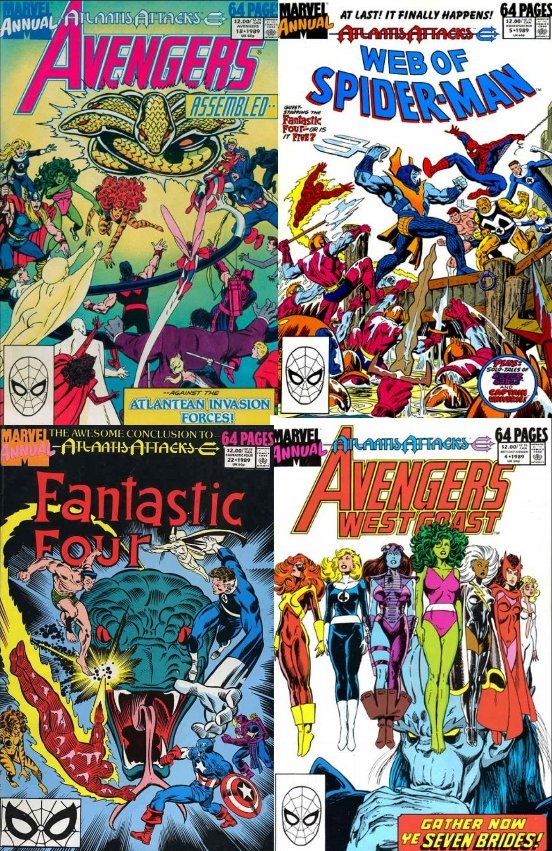
For a time in the late 80s and early 90s, Marvel and DC Comics both observed a tradition of using those annual editions – traditionally published throughout the summer – for a special crossover event, with one story that threaded throughout all of them. Marvel started this in 1988 with a storyline called The Evolutionary War, but I’ve always found their BEST summer annual storyline to be 1989’s Atlantis Attacks. In this story, a despotic ruler takes over the undersea kingdom of Atlantis and plans a war against the surface world – at first in secret, but later openly – as part of a master plan to resurrect the ancient Egyptian serpent god Set. The story serves as a sequel to several older Marvel stories in which Set had played a part, and in addition to the main story each issue had a back-up feature re-telling the story of Set with art by Mark Bagley, who would later become one of my favorite Spider-Man artists of all time. The story itself was really good, and the back-ups gave a lot of interesting insight into classic Marvel history that was pretty cool for a 12-year-old Blake who hadn’t been born yet when a lot of those stories were told.

The funny thing is that the world nearly ended because a bunch of people were fighting over a hat.

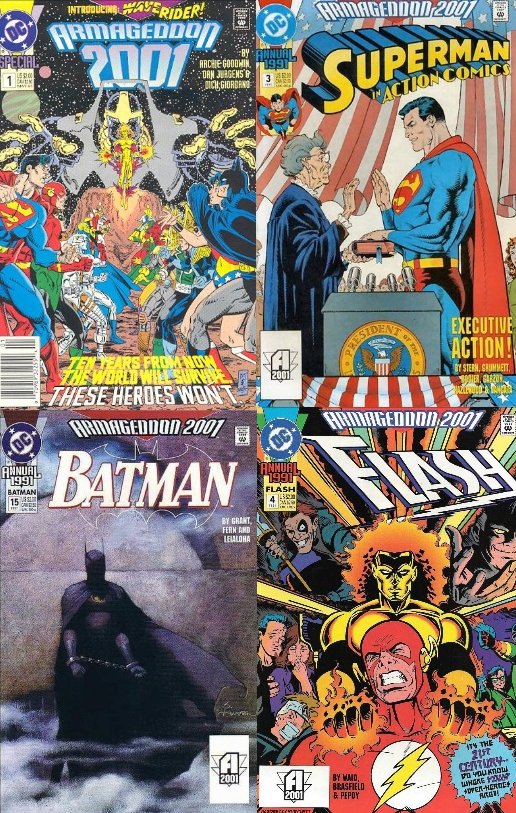
Since imitation is the sincerest form of flattery, DC followed suit in 1991 with their first – and, as it turned out best – annual event, Armageddon 2001. In a not-too-distant future, Matthew Ryder lives in a world controlled by a fascist dictator named Monarch who has shaped the world into his own Orwellian version of perfection. Nobody knows who Monarch is, although rumors persist that he was once one of Earth’s superheroes, before he killed the rest of them back in the year 2001. Ryder subjects himself to a time-travel experiment, gaining powers and taking the name Waverider. He travels back to the “present” of 1991, ten years before the rise of Monarch, to read the futures of DC’s heroes and stop the Monarch’s reign before it can happen.

He’s a 10 but he doesn’t use his power to see the future to tell you the Powerball numbers.

The practical result of this was that each issue told a story of a possible future for the hero, freeing the writers up to do wild stories free of the consequences of continuity. Like any crossover with lots of different writers taking part, the individual stories can be hit and miss, but I’ve always had a great affinity for certain ones in this crossover: the Flash retired and in the witness protection program, Batman incarcerated in Arkham Asylum, and Superman becoming President of the United States. The story was great, but the ending was derailed because somehow the identity of Monarch was leaked early. Fans found out that Monarch was going to be revealed as Captain Atom in the final issue of the story, and DC balked. It’s funny, since these days comic book publishers release spoilers to their OWN stories months in advance, but back in 1991 that was considered serious enough that they changed the ending, instead revealing Monarch to be Hank Hall, aka Hawk. The rationale here seemed to be that, since the comic Hawk starred in (Hawk and Dove) was being canceled anyway, no one would be upset. The problem, though, was that since Hawk wasn’t as popular as Captain Atom, it felt anticlimactic – not to mention confusing, since in the future that Waverider observed, Hawk was one of the few heroes shown to actively fight AGAINST Monarch, seeming to make it IMPOSSIBLE for him to be the despot. Every time I look back at that series I wonder what the original ending would have looked like.

The summer annual crossovers only lasted a few more years after that, although both DC and Marvel have brought them back every so often. With the modern compulsion to relaunch and renumber their titles every year and a half, though, it’s gotten pretty confusing to keep track of them all, and it’s just one of many things I’m going to fix when they all come to their senses and put me in charge of comics.

Summer Comedies

And finally, my wife Erin asked me to chime in with the best summer comedies. I knew I would have to save this for last because a lot of the best summer comedies also fall into one of the other categories that I’ve already covered. So let’s take it as a given that National Lampoon’s Vacation, Back to the Beach, The Sandlot, and A League of Their Own all belong on this list. 

That said, let’s get to some of the great summer comedies that haven’t already been covered in one of the other categories, shall we? And let’s start with the greatest summer comedy of all time, perhaps the greatest movie ever made, perhaps the yardstick against which all cinema – past, present, and future – shall invariably be measured. 

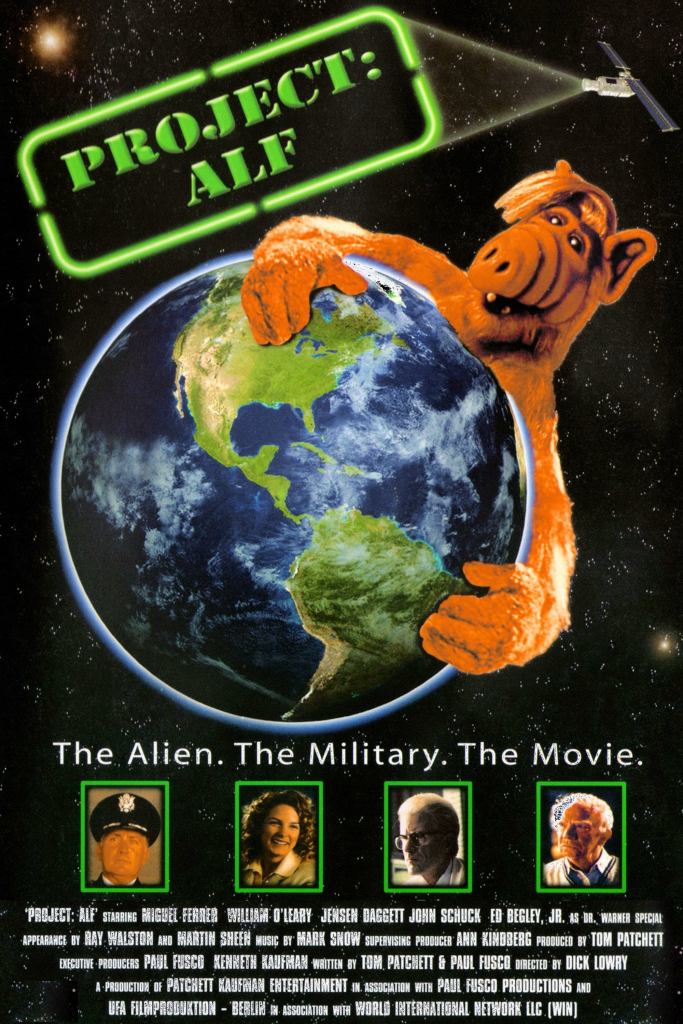
Project ALF.

The real Project ALF are the friends we made along the way.

My favorite summer comedy is, like many of the other movies on this list, a film that has been near and dear to me since my childhood: 1987’s Ernest Goes to Camp. I unironically and unapologetically love this movie. Jim Varney’s “Ernest” character, created originally as an ad pitchman that was hired out to assorted companies for regional commercials across much of the south (I remember him originally as a spokesman for the Louisiana Gas Service Company) has his first great adventure as a handyman at a summer camp who gets his shot at a dream job of being a camp counselor for a group of troubled young boys. The film has a lot of the staples of 80s comedy: the “slobs versus snobs” mentality, the bad guy is an evil land developer, and there’s a startling lack of supervision for the children in this story…but at the same time, Jim Varney is charming and endearing as the most iconic goofball with a heart of gold since Gomer Pyle. The world just didn’t deserve a star as bright as his, did it? 

If he had been the counselor at Crystal Lake, Jason wouldn’t have stood a chance.

Ernest has achieved a nice sort of renaissance in recent years. People sincerely love many of his movies (especially the Christmas and Halloween films), the camp where the movie was filmed hosts an annual Ernest Day celebration every summer, and a documentary about Jim Varney and Ernest is in the works. When the temperatures soar and school lets out, this is a movie that I have to return to just as surely as I watch him save Christmas in December and see him Scared Stupid in October. 

Summer camp, of course, serves as the setting for a lot of great comedies, such as Meatballs (the beginning of what I think of as the Bill Murray Summer Trilogy along with Caddyshack and What About Bob?), and last year’s indie darling Theater Camp, all of which are summer comedies I greatly enjoy. Of course, in the interest of fairness, I should point out that summer camps are also a popular setting for horror movies, like Sleepaway Camp, the Friday the 13th series, and the truly gruesome Wet Hot American Summer. 

Moving away from camp, though, let’s take a look at some other great summer comedies. When Erin proposed that I write about this category, she specifically asked if I’d ever seen the John Cusack movie One Crazy Summer. I told her that, no, I hadn’t. She acted shocked. I told her, “Yeah, well, you still haven’t seen The Rocketeer.” And she said, “Yes I have!” And I shot back, “No, you fell asleep while I was watching The Rocketeer, that doesn’t count.” And there’s your little glimpse into married life for this week, kids. 

But Erin, you’ll be happy to know that I DID watch your precious One Crazy Summer in preparation for this column, and I found it to be…okay. In this 1986 comedy, Cusack plays “Hoops” McCann, a fallen high school basketball star who takes off after graduation with his pal George (Joel Murray, meaning we’ve pulled off the Murray Hat Trick if you count Brian Doyle-Murray’s appearance in National Lampoon’s Vacation) to spend the summer on Nantucket Island. Hoops winds up getting involved in the efforts of a local girl (Demi Moore) to save a family home from some land developers, because in the 80s a full 87 percent of movie villains were land developers (as opposed to a mere 79 percent of villains in real life). 

Am I the only one who thought the sun in this poster was supposed to look like Jack Nicholson?

Like I said, I thought the movie was okay, and I imagine that I would have much warmer feelings for it if I had seen it in its intended context (that being 1986). The thing is, it doesn’t quite seem to know what it wants to be. There are moments, especially during the Bobcat Goldthwait antics, where it seems to be treading the line with the kind of surrealist slapstick we get in movies like Airplane! or History of the World Part I, but if that’s the intention it doesn’t quite go far ENOUGH. If you’re going for surreal comedy, it kind of needs to be over-the-top to land. In One Crazy Summer, though, the first real hint that it may be that kind of humor is when George denies being lazy just before the camera pulls pack to reveal a dead Christmas tree strapped to the roof of his car (this is in June, remember), then it’s several minutes before we get anything else that feels like that brand of comedy (some girls making faces at George’s sister who get stuck that way). If you’re trying to party with the Zuckers or Mel Brooks, you’ve gotta go all-in, and with all due respect to the great Savage Steve Holland, he doesn’t quite reach that peak.

Okay, this column is already getting super long, so let me throw out two more summer comedies that couldn’t be more different than each other. The first is a movie that STARTS as a summer camp film before leaving the camp for other family summer activities, the 1961 Disney classic The Parent Trap. Haley Mills plays a pair of identical girls who happen to meet at summer camp and figure out that they’re twin sisters, separated by their parents when they divorced years ago, and hatch a scheme to force them back together. The sheer cruelty of doing that to a pair of siblings aside, this is a movie I DID grow up watching over and over again, and it’s always held a warm place in my heart. Aside from growing up with a crush on Haley Mills despite the fact that she was some three decades too old for me, the movie features Maureen O’Hara at her loveliest as their mother, while Brian Keith does his best John Wayne impression. I am aware of the Lindsay Lohan remake, and while it has its good points, this is one of those times that nothing will ever conquer the original. 

Sassy sister films.

And finally, let’s bounce ahead to 2010 for the Alan Tudyk/Tyler Labine comedy Tucker and Dale Versus Evil. Tudyk and Labine play a pair of good-hearted rednecks on a camping trip who run into a pack of college kids on their own vacation. The guys in the college group, showing a shocking lack of genre awareness, mistakenly believe that Tucker and Dale are Wrong Turn-style psycho killers and go on the offensive, only to find themselves on the wrong side of the fight. The movie is kind of a horror/comedy, with Tudyk and Labine giving hilarious performances in a movie that upends the “Killer Hillbilly” subgenre of horror by turning the usual victims into the bad guys. Both of our stars are so sweet and charming that it’s incomprehensible anybody could think of them as dangerous, and you quickly find yourself rooting for the snobs to get their goofishly gory comeuppance. I dearly love this movie and, frankly, I don’t think it’s too late to give us a sequel. Tucker and Dale Save Christmas, anybody?

There are so many great summer movies out there. While writing this column, I wound up putting together a Letterboxd list (because that’s what I do), and I would welcome anyone to fill in any omissions I may have. Summer is long, my friends, and there’s plenty of time to spend indulging in the greats of cinema and comics while we wait for the chill of autumn to hit the air. Have a great summer, and I’ll see you next time when, once again, I decide it’s time to Play Favorites.

Blake M. Petit is a writer, teacher, and dad from Ama, Louisiana. His most recent writing project is the superhero adventure series Other People’s Heroes: Little Stars, volume one of which is now available on Amazon. You can subscribe to his newsletter by clicking right here. In response to his wife’s unspoken question, no, he hasn’t watched Better Off Dead yet, but he’ll try to get to it soon. Erin seemed to have a crush on young John Cusack that rivals Blake’s fondness for Haley Mills. 

Geek Punditry #73: Playing Favorites With Summer Part One

We are, my friends, on the cusp of one of the most storied times of the year: summer! Time to hit the beach, go out on vacation, pull the kids out of school and spend a lot of time with a good book in your hand, longing for the days when such an activity would reward you with a personal pan pizza. And with the new season before us, we here at Geek Punditry Global Headquarters and Corrugated Cardboard Museum have decided to spend a couple of weeks PLAYING FAVORITES with summertime. For newcomers, Playing Favorites is that occasional feature in which I throw out a topic and ask you, the hive mind of social media, to suggest categories related to that topic so that we can discuss some of the best of the best. Let’s take a look at what you guys suggested in part one of this feature.

Beach Movies

Lew Beitz cut right to the chase and asked me for some of my favorite summer beach movies. This is the kind of thing we all think about when summer rolls around, isn’t it? Not just going to the beach, but entertainment regarding the beach. In the 60s it was an entire subgenre all of its own, with approximately 17,000 such films made during this decade starring Frankie Avalon and Annette Funicello alone, sporting subtle titles such as Beach Blanket Bingo or How to Stuff a Wild Bikini. To be honest, I don’t really have a great affinity for those movies – they were well before my time and I didn’t really grow up with them. On the other hand, I do have a great deal of affection for Back to the Beach, the 1987 vehicle starring those two as a pair of midwestern parents who wind up returning to the beach of their youth. I think part of my appreciation for this bizarre little movie can be attributed to my mother, who was a fan of the original films and saw to it that this movie was on rotation in our house when I was young. But beyond that, there’s an inexplicably entertaining element to this movie. It was meta before meta was cool, acting not only as a sequel to the ol’ Frankie and Annette films, but as a parody of them as well. On the other hand, the humor IS pretty dated, with a lot of it requiring an awareness of old pop culture that modern audiences just won’t have. There are a lot of cameos from TV and movie stars of the 60s, for instance, and the joke about Annette’s obsession with peanut butter will just be baffling to anybody too young to remember that she did a series of commercials for Skippy back in the day. On the other hand, the scene of Pee-Wee Herman performing “Surfin’ Bird” is pretty timeless. 

If you don’t necessarily want your beach movies to be full of comedy, it’s hard to go wrong with Jaws. It seems sort of pointless to recap this movie – if you’ve seen it, you know that it’s great, and if you haven’t, no amount of pontificating from me is likely to change your mind. But the movie that made Steven Spielberg is practically a flawless film: tense, thrilling, and full of great characters and wonderful character moments. Even the things that may be technically flawed, such as the artificial nature of the shark, work to the movie’s advantage, as Spielberg was forced to minimize Bruce’s screen time and thereby making it far more effective than it possibly could have been if they put him on screen at every opportunity. It’s the film that made everybody afraid of the water! What better movie to get yourself into the mood for the beach?

These two movies should be all it takes to yet you to September.

Summer Reading

Rachel Ricks wants to know what I think are the best “summer reading books” for elementary, junior high, and high school. This is actually a tougher question than you would think, considering that I’m both a writer and a teacher, but the truth is I’m not 100 percent sure what it is the kids are reading these days. Not elementary or middle school, anyway. For my high schoolers, I see waves happen. There was a time where every kid was carrying a copy of Twilight, which gave way to The Fault in Our Stars, which in turn passed the torch to 13 Reasons Why. These days, the name I’m most likely to see from a kid who digs reading is Colleen Hoover. And the thing is, guys, while I am still a voracious reader (that streak I mentioned last week currently stands at 358 days) I haven’t made a huge effort to check out these particular books because…well…they just aren’t my type.

Anyway, the way Rachel phrased the question makes me think she’s speaking specifically about the sort of summer reading that is often required by schools: when a kid leaves at the beginning of summer with a list of books that they’re going to pretend to have read by the time they come back in the fall. Assigning a book to read is tough. You always know that a substantial portion of the class will do anything they possibly can to avoid actually having to crack the book open. And we’ve all heard those stories of people so discouraged by some required book that they give up on reading altogether. I can promise you, folks, that no teacher wants to assign a book that makes you never want to pick one up again.

I’m going to bow out of elementary school recommendations, as I have none. As far as middle school goes, you can’t go wrong with classics like The Giver or The Outsiders. And if you’re looking for a gateway drug to get a young reader into the world of Stephen King, I think that middle school is an appropriate age to introduce them to his fantasy (yes, fantasy) novel Eyes of the Dragon. I’m also a fan of a few more recent works for this age group, such as Rick Riordan’s Percy Jackson and the Olympians series or the other assorted spin-off series set in that same universe. 

If you haven’t read at least ONE of these books, then either you didn’t go to school in the United States, or you’re the reason Cliff Notes is a thing.

For your high schoolers, you shouldn’t be surprised to see The Great Gatsby, To Kill a Mockingbird or Grapes of Wrath show up in their reading lists. And these are all good books, fundamental pieces of American literature and well worth reading. That said, these are books for people who are deeply into books already, and aren’t exactly casual reads. Try to hook a modern reader with things like The Hunger Games, The Maze Runner, or Twinkle Twinkle, book one of the Other People’s Heroes: Little Stars trilogy, now available both in print and as an eBook from Amazon.com

(You had to know I was going to work that in somewhere.)

Road Trip Movies

Tim Stevens wants to know what I think are some of the best summer road trip movies. The road trip is a classic subgenre, usually in comedy, although there are some great road trip dramas or dramadies (Little Miss Sunshine for example) as well. When you think of a summer road trip, though, the thing that comes to mind is vacation movies, and the king of them all is National Lampoon’s Vacation. While this 1983 Chevy Chase film has become heavily overshadowed by its Christmas-themed threequel, I think people forget how much fun the original is. Clark Griswold (Chase, of course) and his wife Ellen (the grossly underrated Beverly D’Angelo) load the family into a station wagon to take a road trip out to the legendary Wallyworld Theme Park, and all hell breaks loose along the way. It’s not the first road trip movie, of course, but I think it is the platonic ideal of the road trip as a slapstick comedy. A lot of the jokes are very 80s and may not land that well with modern audiences, but I still enjoy the movie. Honorable mention goes to the sequel, European Vacation, in which Clark and Ellen take two entirely different children with the same names as the previous pair to tour the continent on another wacky road trip. 

Not as well known but highly entertaining is the 2014 movie Chef, which was written by, directed by, and starred Jon Favreau. Favruea plays Carl Casper, a famous chef (duh) who boils over at a food critic and loses his restaurant job. With his zest for life gone, Carl and his son Percy (Emjay Anthony) buy a food truck and set off across the country to try to infuse themselves with the savory parts of existence. Just thinking about movies for this list makes me realize it’s been way too long since I devoured Chef – it’s such a great movie. It has some of the same flavor as City Slickers and Hot Tub Time Machine, films about men who have been diced and minced by the world and inexplicably discover ways to relish life again. But the added ingredient of Casper’s relationship with his son helps to separate from those other films, baking up not only a road trip movie, but also a film about a family learning to love one another again. 

To be honest, though, I don’t know that John Leguizamo was the best choice to take over the Beverly D’Angelo role.

Summer Glau Movies

Duane Hower asked me what my favorite Summer Glau movie is. I see what you did there, Duane, very funny. I bet you thought I wouldn’t entertain your joke suggestion, didn’t you? Well, the joke is on you, my friend, because we all know the right answer to this question. The best movie ever starring Summer Glau? Clearly.

Project ALF.

Can you imagine what Melmacian tanlines look like?

Summer Coming-Of-Age Movies

Duane also asked what the best summer coming-of-age movies are. (Jeffrey Lee, I should note, asked for summer “life lesson” movies, and I think that’s pretty much the same thing, so I’m going to combine those two suggestions.) Coming-of-age, like road trips, is kind of a subgenre all of its own, one that often (but not always) crosses over with summer movies in that ol’ venn diagram in our heads. And once again, I think the best example is also the obvious one. Stand By Me, the 1986 movie directed by Rob Reiner and based on the novella “The Body” by Stephen King, is one of those films that sort of codifies the trope for all films that come afterwards. Four young boys (River Phoenix, Jerry O’Connell, Corey Feldman, and Wil Wheaton) discover that a missing boy from a nearby town has been found dead near a railroad track, but the discoverers don’t want to report the body because they found it while in a stolen car. The boys decide to set out on a hike to find the body on their own, and along the way, face the treacherous precipice between staying a kid and becoming an adult. This is the second time I’ve mentioned Stephen King in this week’s column, and in neither case was I talking about horror, have you noticed that? I mean yeah, the macguffin in this movie is a dead body, but that’s as close to being a scary movie as it gets. Instead, it’s a deep, meaningful, and powerful character study about these four boys that gives us glimpses of the men they will grow up to be. Reportedly, after Stephen King watched this movie he broke down in tears and told Reiner it was the best movie that had ever been made based on his work. (Admittedly, this was before Misery, The Shawshank Redemption, or The Green Mile, but that doesn’t change the fact that Stand By Me is an incredible film.)

The other great summer-specific coming of age movie, which again is a film that will probably say more about my age and the era of movies that was fundamental to me than anything else, is the 1993 movie The Sandlot. New kid in town Scotty Smalls (Tom Guiry) befriends a group of young boys that play a perpetual baseball game in a nearby sandlot. Smalls joins the game and becomes a member of the group during a summer that really feels authentic. While not nearly as serious or deep as Stand By Me, The Sandlot is a fun movie that feeds the sort of nostalgia that summer triggers in a lot of us, reminding us of bygone days without real responsibilities or anxieties that seem to be the fundamental building blocks of adult life.

One of these movies features a ghastly, bloodthirsty dog that terrorizes the boys of a small town. The other is based on a Stephen King story.

Okay, friends, I think that’s about enough for part one. I’ve got a few suggestions banked for part two of this segment next week but there’s room for more! If you’ve got an idea for a summertime topic from the worlds of comic books, movies, television, or books, I would LOVE to hear it! Post it in the comments, on the socials where you found the link to this column, or you can email it to me at info@blakempetit.com. See you next week, where we continue playing favorites!

Blake M. Petit is a writer, teacher, and dad from Ama, Louisiana. His most recent writing project is the superhero adventure series Other People’s Heroes: Little Stars, volume one of which is now available on Amazon. You can subscribe to his newsletter by clicking right here. His REAL favorite Summer Glau movie, of course, is Knights of Badassdom. He knows you all expected him to say Serenity, but Joe Lynch’s horror/comedy deserves more love. 

Geek Punditry #66: The Frankenssance

Earlier this week, the internet was abuzz with an image released from the upcoming film The Bride! (The exclamation point is part of the title – I’m interested, but not so excited as to declare it via punctuation.) Written and directed by Maggie Gyllenhaal, this movie seems to be an updated version of the Frankenstein story, moved to the 1930s and starring Bale as the monster and Jessie Buckly as the titular bride. Director James Whale’s original Bride of Frankenstein is probably the best of the old Universal Monster movies from the 30s and 40s, and ol’ Vic’s creation is hands-down my favorite classic monster, so news of this film intrigues me. But I think it intrigues me even more than it ordinarily would  because with this movie, at least the fifth Frankenstein-derived film released or announced in recent years, it seems that we are in the midst of a full-scale Frankenssance.

Of course, all anybody wants to talk about is the tattoo.

Let’s do a quick bit of literary spelunking for anyone who doesn’t know the story (both of you). In 1816, Mary Godwin was vacationing at the home of her friend Lord Byron with her soon-to-be husband Percy Shelley. This was in the era when visiting a friend could be an extended stay that lasted weeks or months at a time, as opposed to modern times when it lasts until the owner of the home claps his knees and says, “Well, I don’t let me keep you any longer” because the Pelicans game starts in a half-hour and he doesn’t want to watch it with a dirty Celtics fan like you. It was an exceptionally rainy and dreary summer, and to pass the time trapped inside, Byron proposed that they each write a “ghost story” to entertain one another. If you ever wonder which of them won that little competition, remember that it’s 200 years later and the only one that we’re still reading is the one that was written by the 19-year-old girl.

By the way, I really want to stress how amazing that is to me. Whenever somebody talks about the creation of Frankenstein, or the Modern Prometheus, they focus on how shocking it was that it was written by a woman. That shouldn’t be what surprises you. I’m a high school English teacher and I’m not shocked at all that a masterpiece of literature was written by a woman. I’m shocked that it was written by somebody the same age as a student that I had to ask to stop from pouring Pop Rocks into a bottle of Coke in the back of my classroom last week while I was trying to review gerunds. 

But I digress. The story follows Victor Frankenstein, a college dropout (nope, he’s not a doctor) who is so obsessed with conquering death following the loss of his mother that he finds a way to reanimate dead tissue. But when he does so, he’s so horrified by the hideousness of his creation that he flees in terror, leaving it to fend for itself. I always interpret his fear as being an expression of the Uncanny Valley problem, where something is so CLOSE to looking authentically human that even the smallest deviation is unacceptable to the eye, which is one of the many ways that the story of Frankenstein is a great metaphor for modern AI.

The Gold Standard. Okay, the GREEN standard.

Most people, of course, think of Boris Karloff’s version of the creature when they think of Frankenstein’s monster: the monosyllabic, hulking brute with the flattop, green skin, and bolts on his neck, whereas none of that really applies to the vision in Shelley’s novel. But that’s okay. I think that one of the things that really makes a character – any character – into a timeless one is its potential for reinvention. Compare the original Arthur Conan Doyle Sherlock Holmes stories to the Basil Rathbone movies, the Robert Downey Jr. version, or the Benedict Cumberbatch series. All are perfectly valid, but very different from one another. Think of all the different depictions there have been of Batman, Superman, Tarzan, Dorothy of Oz, Cinderella…if a character is unable to be adapted, it’s not a character likely to achieve immortality. Victor Frankenstein may not have lived forever himself, but the versatility of his creation ensures that his name will last forever.

Like I said, we all know Boris Karloff, but he wasn’t the first cinematic Frankenstein. That honor belongs to Augustus Phillips, who played the creature in a 14-minute film produced by Thomas Edison in 1910. After Karloff played the creature, the role was passed to Lon Chaney Jr., then Bela Lugosi, then Glenn Strange, who rounded out Universal’s original version of the creature in one of my favorite films of all time, Abbott and Costello Meet Frankenstein

I’m not kidding. This is maybe my favorite movie of all time. I will never get tired of it.

Since then the list of actors who have played the creature is staggering: Robert De Niro in Mary Shelley’s Frankenstein (1994), Christopher Lee in The Curse of Frankenstein (1957), Aaron Eckhart in I, Frankenstein (2014), Clancy Brown in The Bride (1985), and Tom Noonan in The Monster Squad (1987), and that just scratches the surface. There was a stage version in which Benedict Cumberbatch and Johnny Lee Miller EACH played the Creature and Victor Frankenstein, alternating nights. As of this writing, IMDB credits Mary Shelley as the writer on 115 different projects, and frankly, I think that number is low. I mentioned last week that I’ve got a little obsession with creating lists. On Letterboxd, I’ve logged 55 different movies that I tagged as adapting or being inspired by Mary Shelley’s creation, including Mel Brooks’s Young Frankenstein, The Rocky Horror Picture Show, the Hotel Transylvania series, all of the Universal films that featured the creature and several – but not all – of the Hammer Horror films that did the same. I’ve got a list of nearly 50 other Frankenstein movies that I haven’t seen yet, but I hope to get around to eventually. 

Whole lotta Frankie goin’ on.

There’s a LOT of Frankenstein out there, is what I’m getting at. And while they haven’t all been great, there have been a lot of very interesting ones. We seem to have reached one of those moments in the cultural zeitgeist (there’s another English teacher word for you, folks) where the Creature is in ascendance. In addition to Gyllenaal’s The Bride!, Guillermo del Toro is working on his own version of the story for Netflix starring Oscar Isaac as Victor, Jacob Eldori as the creature, and current horror It Girl Mia Goth in a role that doesn’t seem to have been specified yet. A lot of sources seem to be reporting that she’s playing the Bride, but those same sources also reported that Isaac was playing the creature and Andrew Garfield was playing Victor Frankenstein, and those reports seem to have been wrong. It likely depends on how faithful del Toro intends to be to the original novel. (The bride existed in the original novel, by the way, but was destroyed by Victor before he could bring her to life.) It’s hard to say which of these two movies I’m more interested in. The images of Christian Bale are intriguing, but I don’t think I’ve ever been disappointed by a Guillermo del Toro film. The man won best picture for what was essentially a remake of The Creature From the Black Lagoon, and let’s hear it for the Universal executive who passed on that movie. 

The man made us root for THIS, he can make any movie he wants.

Of course, two upcoming films would not, in and of themselves, qualify as a Frankenssance. But those aren’t the only ones. In the last two years there have been at least three significant films based at least in part on the Frankenstein legend, all of which I’ve watched during my spring break, because that’s what spring break is for. First up, let’s talk about Poor Things, the movie that scored Oscar nominations for Best Picture and Best Director and a Best Actress win for Emma Stone. Based on the novel by Alasdair Gray, this film tells of a dead young woman (Stone) whose body is reanimated by a scientist (Willem Dafoe). The woman, dubbed Bella, starts with a blank slate of a mind, an infant mentality, and as she grows to learn about the world around her, finds herself rejecting many of the Victorian standards of morality and the world’s treatment of women. I haven’t read the book, but the film was an interesting statement about gender roles of the time period. I was a little disappointed that they didn’t spend as much time with Willem Dafoe’s character, though, a malformed scientist who seems to have an unusual kind of kinship with Bella. The film never quite makes it plain, but the interpretation I came away with is that Dafoe’s Godwin Baxter was actually the original Frankenstein monster, carrying on his father’s work. I don’t know if that was the intention of the film or the original novel. I suppose I could look it up, but where would the fun be in that?

Frankenstein, Frankensteiner, Frankensteinest.

Earlier this year we saw the release of the Zelda Williams-directed Lisa Frankenstein. In this film, set in 1989, Kathryn Newton (the actress getting all of the horror movie roles that aren’t going to Mia Goth) plays a teenage girl trying to begin a new life in a new town after her father remarries only six months after her mother’s violent death. Lisa doesn’t seem to fit in anywhere, not with her brutally abusive stepmother (Carla Guigno) or her well-meaning but vapid new stepsister (Liza Soberano). The closest thing she has to a friend is a bust on a tombstone she finds in an old, abandoned cemetery. A bolt of lightning reanimates the corpse underneath (Cole Sprouse) and they embark on a vendetta of revenge. The film is a horror comedy, although it’s got a darker, even meaner tone than I expected, but it’s made very well. The movie is the directorial debut for Williams (daughter of the late Robin) and I’m very interested to see what she can do next.

But the best neo-Frankenstein I’ve watched lately is probably the one you’re least likely to have heard of: The Angry Black Girl and Her Monster, written and directed by Bomani J. Story. Originally released via Shudder and now on Hulu, if you’re a Frankenstein fan, you’ve gotta check it out. Laya DeLeon Hayes plays Vicaria, a teenage girl who (like the original Victor) has been obsessed with conquering death since the early loss of her mother. Her rage is compounded when she loses her brother to violence, and she sets out to prove that death is a disease and she can cure it. The movie is set in the present-day, and Story wears his influences on his sleeve. It’s the furthest removed film from Mary Shelly’s original time, and yet, it also seems to be the one most devoted to her original vision. The idea of treating death as a disease is very much reflective of what Shelley wrote about 200 years ago, and while Story applies a contemporary lens and modern social issues to his tale, it still feels very authentically Frankenstein.

As I always say, if there’s one thing that a geek always wants, it’s more. For a fan of Shelley and Karloff and Strange like myself, this new influx of Frankenstein material can only be a good thing. I’m always anxious to see another twist or another take on the story. Keep them coming, Hollywood, and I’ll keep watching.

And once this wave passes, we’ll talk about giving the Wolfman his turn.

Blake M. Petit is a writer, teacher, and dad from Ama, Louisiana. His most recent writing project is the superhero adventure series Other People’s Heroes: Little Stars, now complete on Amazon’s Kindle Vella platform. If you didn’t know he was a devoted fan of Frankenstein, he can only imagine that you didn’t pay attention last Christmas when he was re-presenting all of his old short stories, like “Warmth.”

Geek Punditry #64: Classics Are Better Big

With all due respect to films like Psycho, Vertigo, The Birds, and North By Northwest, Alfred Hitchcock’s best movie is the Jimmy Stewart thriller Rear Window. In this taut little drama, Stewart plays a photographer who was injured in a car crash and is stuck in a wheelchair while he recovers. Unable to leave his apartment, he takes to observing the activities of his neighbors through the windows as a sort of perverse entertainment – entertainment that takes a chilling turn when he thinks he sees one of his neighbors commit murder.

“Mr. Gower, no! No, what are you doing?”

Sure, there are some elements that are kind of icky – Stewart is literally spying on his neighbors for most of the film, which isn’t exactly kosher. And how anyone could be so interested in what’s going on across the way when your girlfriend is Grace Kelly and she’s at your house every fifteen minutes seems almost beyond belief. But hey, it’s a movie. Suspension of disbelief is a thing. The thing that makes Rear Window so great is that virtually the entire film takes place in a single room, and despite that, Hitchcock is able to amplify the tension even more than when he had Cary Grant dangling from Mount Rushmore five years later. A single-room thriller is very difficult to pull off, but he did it TWICE, both in this masterpiece and in the underrated Rope. 

Pick up your pulse without ever leaving the room.

The reason I’m talking about Rear Window today, though, is not because I’m going to give you a list of confined space thrillers worth watching (Wait Until Dark, Phone Booth, Buried – that’s enough of a list to get started), but because I noticed a few days ago that this year marks the 70th anniversary of the film and, lo and behold, Fathom Events is holding a nationwide anniversary screening on August 25. This, of course, is a date of monumental significance because it also happens to be the birthdate of several notable figures, namely Sean Connery, Tim Burton, Regis Philbin, Billy Ray Cyrus, and myself. (Incidentally, if this doesn’t completely disprove astrology once and for all, I don’t know what will.) Anyway, whilst I’m sure I’ll be occupied with the customary parades, speeches, and address to the nation, the idea of seeing my favorite Hitchcock movie on my birthday IN A MOVIE THEATER is enticing as hell.

 Not long ago, I saw a Facebook conversation in which one person expressed an interest in an upcoming screening of Shrek at his local theater, and somebody else began to chastise him for buying a ticket to watch a movie he can watch at home for free. This is an all too common attitude, of course, especially with younger audiences. I know I’m about to sound like a curmudgeonly old man (because I, like Tim Burton and Billy Ray and our fellow August 25th baby Claudia Schiffer, AM a curmudgeonly old man). My high school students are perfectly happy watching everything on their phone screen. Of course, they’re also incapable of paying attention to anything longer than 37 seconds in length, which I assume is the maximum amount of time you can spend watching a film intended to be projected onto a 70-foot screen on a device smaller than a slice of bread. I wholeheartedly believe that a screen as small as a smartphone is a terrible way to watch any sort of longform entertainment and that is part of the reason that younger generations have such an abysmal attention span and, furthermore, I would like to invite you all to get the hell off my lawn.

I know it sounds like I’m blaming TikTok for this, but there’s a good reason for that: I am.

That aside, though, the larger question seems to be why one would pay for movie theater prices to see a movie that you’ve already seen. That, at least, is an argument I can comprehend. My answer to that, though, is that I’m not lining up to rewatch Mac and Me, I want to see Rear Freaking Window. As I wrote last year, I sincerely believe that every movie is more enjoyable if viewed in a theater with a receptive and enthusiastic audience. That’s true whether I’ve seen a movie five thousand times or zero times (and, truth be told, I bet that watching Mac and Me could actually be a hoot if you have the right people in the theater with you). 

Having the proper audience is important, of course. With new movies, this is a crapshoot – the studios tend to make every movie look as homogenous as possible to draw in every quadrant, and nobody knows for sure if what they’re going to watch is any good or not. I always HOPE a movie is going to be good, of course. I don’t understand “hatewatching.” I can honestly say I’ve never walked into a movie theater WISHING for a movie that disappoints me. But when it’s a movie that no one has ever seen before, you’re rolling the dice.

That said, the right audience is essential. My wife Erin and I saw this firsthand when RiffTrax did their live theater screening of the Doctor Who serial, The Five Doctors. RiffTrax, if you don’t know, is put on by classic cast members of Mystery Science Theater 3000, and they carry on the mission of cracking jokes at movies. It’s a blast, if you’re a fan.

IF you’re a fan.

If you don’t know what you’re getting into this poster is very confusing. Mathematically speaking.

When we arrived at the theater, we encountered a couple wearing heavy Who regalia who were very excited about a theatrical screening of the legendary story. They took a seat behind us and began to excitedly chatter…but in that chatter, it became quite obvious to Erin and I that while these two were major fans of Doctor Who, they didn’t seem to know WHAT RIFFTRAX IS. As the presentation started, the riffers launched into a short film about safety around electrical wires, cracking their usual jokes about the absurdity of the film, and I heard the man behind us tell his wife, “I hope they don’t do this during the whole movie.”
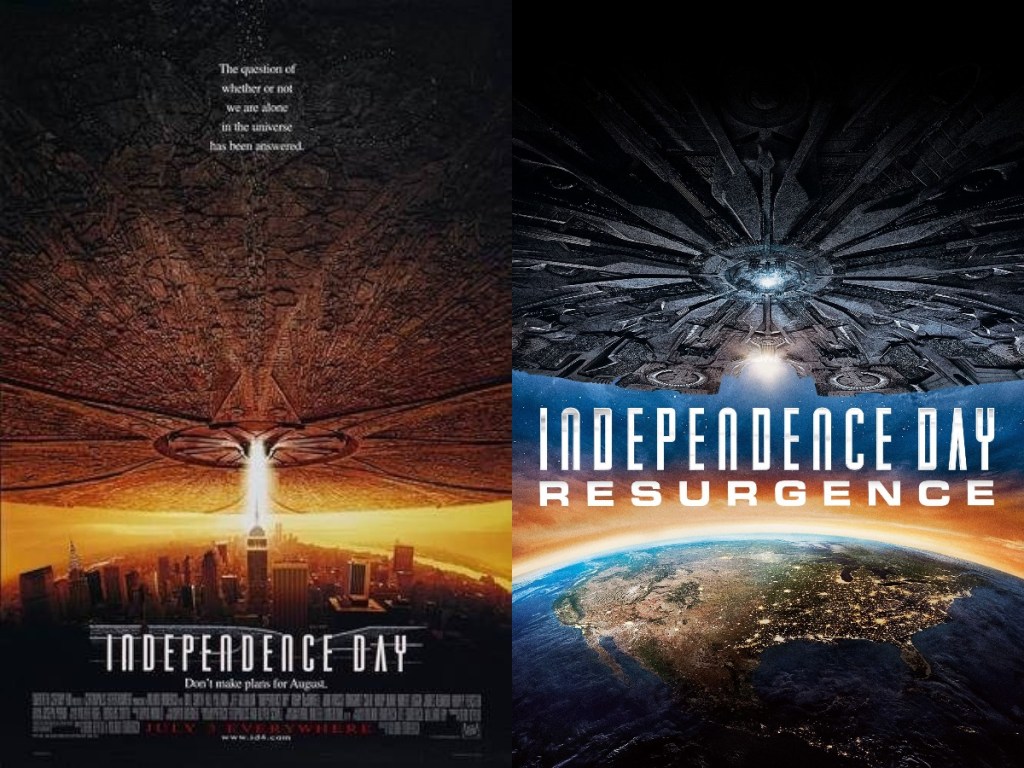
I turned into that emoji with the clenched teeth. 😬 

They lasted about 15 minutes into the Doctor Who serial and left, clearly irritated at the irreverence with which their beloved Doctor was being treated. And I felt bad for them, because they obviously didn’t know what they were getting into…but once they were gone, the rest of us had a grand old time. 

It’s about being with the right crowd. One of the most fun experiences I’ve ever had in a movie theater was when the Star Trek documentary Trekkies was released back in 1997. The film is a glimpse into the lives of Trek fans from across the country, a particularly niche subject matter, and it didn’t get a wide release. However, someone I knew happened to have a connection at the local UPN affiliate (home of Star Trek: Voyager) and scored some free passes to a screening they were hosting. The result was an entire theater full of people who LOVED STAR TREK, and there is no better atmosphere in which to watch this movie. We laughed at the people who went a little too far. We cracked jokes about the woman who dressed up her poodle as Spock. And we collectively shed a tear when James Doohan shared the beautiful (and now oft-told) story of how his connection with a fan saved them from committing suicide. 

AND he was shot six times on D-Day! The man didn’t need to go to outer space to be a hero.

That “right crowd” mindset works very well when going to see a classic movie in the theater. Odds are, the majority of the audience HAS seen the movie before and is excited to see it with a crowd, and those that HAVEN’T seen it before are there because they want to join in the fun. It’s the reason that interactive screenings of The Rocky Horror Picture Show have endured for such a long time. To give another example: Erin’s favorite movie is Jaws, and as it was released before either of us were born (we’re old, but we ain’t THAT old), when a special screening was announced at a Movie Tavern within an hour’s driving distance, we decided to make it a date night. (It goes without saying that this was before Eddie was born, although Erin was pregnant at the time.) Near us sat a father with his daughter, who I guessed was about 13 years old and who clearly had never seen the movie before. She was doing fine right up until the scene where Richard Dreyfuss finds Ben Gardner’s decapitated head drifting in the shipwreck underwater, at which point she jumped into her dad’s lap and stayed there for the rest of the movie. It was amazing.

This was a major bonding moment.

After Gene Wilder died, there were special screenings of Willy Wonka and the Chocolate Factory and Blazing Saddles, and we did a double feature. Saddles is – and I say this with firm conviction and damn the mobs who want to piss on everything older than 2008 – one of the funniest movies ever made, and seeing it for the first time in a theater was fun. But Wonka was downright magical. The screening was full of parents with kids, many of whom had never seen the movie before. Those kids were mesmerized, drawn into the magic and swept up in this 50-year-old film in a way that the 15-year-old remake by my birthday buddy Burton couldn’t hope to match.

Betcha he never would have used AI and charged kids fifty bucks for a half a lemonade, either.

And you know, I don’t think those kids would care if they HAD seen the movie before. Seeing it on the screen is DIFFERENT. It’s only adults that are too stupid to push that aside. If my son can watch the same YouTube video of the 2017 Times Square New Year’s Eve ball drop 47 times in a row, he sure as hell isn’t going to walk into a screening of Despicable Me and say, “Daddy, I’ve seen this before.”

When I was a kid, Disney used to frequently re-release their classic movies. I got to see films from decades before I was born like Snow White, Sleeping Beauty, and The Sword in the Stone. With the exception of one-night or short-term engagements, that doesn’t happen anymore (possibly because Disney is afraid people will remember how much better the original versions of these movies are than the lifeless remakes they’re turning out lately). But damn it, it should. My family doesn’t get to the movies much these days, but if I was at a movie theater right now and given a choice between seeing Fast and Furious 11 for the first time or watching Raiders of the Lost Ark for the twentieth time (but the first time in a theater), it wouldn’t even be close. 

With movie theater attendance struggling, there’s a desperate effort to create content that fills seats, but I feel like theaters are missing out on an obvious opportunity here. Doing a revival screening of Casablanca or The Wizard of Oz may not sell as many tickets as a Marvel movie, but it also costs a hell of a lot less to put back into theaters. Give us more classic family movies! Give us more events! When the Special Editions of the original Star Wars trilogy hit theaters in the 90s, we fans came out in FORCE (pun intended), not because we wanted to see Greedo shoot first, but because we wanted to see him in a room the size of a house and full of other people who loved the movie as much as we did. 

These screenings DO happen. Like I said, Fathom Events does anniversary and event screenings a lot. There was the aforementioned Gene Wilder double feature. And Disney just announced an all-day nine movie marathon of the Star Wars films on May 4th. But I don’t want to have to wait for an anniversary that ends in a 5 or 0 or for somebody to die before I get to see a classic.

Our only hope.

I wish there were a nearby, easily-accessible theater in my area that frequently did revivals or special screenings of classics, but alas, there aren’t a ton of options, especially if you don’t have a lot of opportunities to go into New Orleans proper. So I keep an eye on Fathom events and I cross my fingers for special screenings and I long for the day when the cinematic community figures out how to make this happen.

And I hope to see Hitch’s cameo the way it was meant to be seen: big enough to fall into his nostrils. 

Blake M. Petit is a writer, teacher, and dad from Ama, Louisiana. His most recent writing project is the superhero adventure series Other People’s Heroes: Little Stars, now complete on Amazon’s Kindle Vella platform. If anyone is available to babysit on August 25, let him know.

Geek Punditry #60: Taking the Challenge

As much as I love stories and storytelling – as much as I love books and comics and TV and movies – the truth is that the world is a busy damn place, and sometimes it can be difficult to find the time for these pursuits. It seems counter-intuitive, doesn’t it? That we should take the things that really make life fun and give them a lower priority than so many less enjoyable pursuits…but we all have jobs, our kids have sports, people get sick and thousands of other little obligations chip away at the things that we enjoy the most. Oddly enough, when there’s something I really LIKE, I find that making a challenge out of it is sometimes the way to become most productive. Just reading, writing, watching things in a vacuum…that can wait. But once you make a game out of it, those priorities shift in a productive way.

Pictured: the death of freedom.

We all do it. If you’re any kind of a reader at all, you probably participated in a summer reading challenge back in elementary school. Once school is out for the summer, kids are encouraged to read books to help prevent their brain from rotting before they make it back into the classroom. We all remember the glory age of the Pizza Hut Book It! Program, in which we read in exchange for free pizza (a game that remains dormant despite calls from, I assume, the United Nations to bring it back). While Pizza Hut may not be in the game anymore, a lot of local libraries still have their own competitions, and although those are usually for kids, there are apps that you can use even as an adult to get in on it. On the other hand, if you’re the sort to write books and not just read them, there’s National Novel Writing Month, or NaNoWriMo, the annual challenge in which writers all over the world attempt to write a 50,000-word novel in the 30 short days of November. I’ve taken part in that challenge many times myself – in fact, two of my published novels (Opening Night of the Dead and The Pyrite War) both began life as NaNoWriMo novels. Of course, so did several others that you’ve never heard of because they died on the vine, but let’s not belabor the point. 

Currently, the challenge I’m engaged in is “FebNEWary.” A few years ago, some movie-loving friends of mine invited me into a Facebook group where the members attempt to spend February watching movies that they’ve never seen before. Any genre is allowed, any platform, any kind of movie, as long as you watch 26 “new to you” movies, one for every letter of the alphabet. It’s harder than it sounds. Sure, it averages out to less than a movie a day, but what about those days where you have to work late or you go to your nephew’s basketball game or you have a headache and just can’t summon up the will to watch? It’s not that simple. Despite that, I’ve taken the challenge every year since it was created in 2020, and for four years in a row, I’ve made it.

In 2023, this is what progress looked like.

This year, I’ll admit, I’m a little worried. Sure, there are 29 days in February this year, and I’ve got 20 films done, as of this writing. How hard can it be to watch six more movies in the next six days? Well, those same issues that I mentioned before still apply. Work. Kids. Kids‘s sports. A kid who wants to use the television to watch sports. Lacking the motivation. It’s a possibility that it may not happen.

But whether I cross the finish line or not, I love the game of it. Over the last five years of taking part in this challenge, I’ve found that FebNEWary has an odd influence on what movies I choose. There are so many times – don’t lie to me, I know you’ve felt it too – where you’re stuck looking for something to watch. Are you in the mood for a comedy? An action movie? Do you want to be scared? Do you want to cry? When you sit down wanting to watch SOMETHING but not having an actual idea WHAT to watch, that’s when you find yourself scrolling the Netflix catalog for three hours before giving up and watching reruns of The Big Bang Theory. But during FebNEWary, that isn’t a problem. For one month a year I’m not worried about figuring out what KIND of movie I want to watch, I’m in a position where I just need to find the most acceptable movie that starts with the letter J. 

Consequently, I’ve watched several films that I may otherwise have never watched, sometimes being delightfully surprised, sometimes being utterly disgusted. But believe it or not, that’s the part of fun of it. When I watch a lousy movie in, say, June, I feel like I’ve just wasted two hours. But when I watch a bad movie in February, it’s like I’ve defeated a particularly challenging level of a video game. It actually even makes crappy movies a little more worthwhile. For example, in 2021 I watched the movie Queen Kong, a spoof from 1976 which is set in an alternate world where gender roles are (somewhat) reversed, with women holding a more dominant position over men…and then there’s a giant gorilla. The satire fails, the comedy is awful, and the gorilla suit is one of the most abominable things I’ve ever seen in my life. I never would have watched this movie if Q wasn’t one of the harder movies to tick off the list. In the five years I’ve been playing this game, this may well be the worst movie I’ve watched. Still worth it.

Then last year, Q led me to Quick Change, the 1990 heist comedy starring Bill Murray, Geena Davis, and a pre-insanity Randy Quaid. I’ve learned since that there have been reports of Murray being less than kind to Geena Davis on the set of the movie, and I mention this here only because if I don’t someone will bring it up in the comments after I say I thought the movie was actually really funny and very entertaining, and I wish I had watched it sooner.

Bad Q, better Q, best Q

The alphabetical stipulation, obviously, is very easy for some letters, but Q, X, and Z are always tough. In five years of playing, I’m proud to say that I’ve only resorted to a zombie movie twice, and one of them (Zombie Hamlet) wasn’t even REALLY a zombie movie, but a movie about somebody MAKING a zombie movie. X, for somebody who has already seen all of the X-Men movies, is an utter nightmare. I’m still looking for suggestions for this year’s X, by the way, to keep me from my emergency plan of a three-year series of the Vin Diesel xXx franchise that I have thus far avoided. Some people in the challenge cheat a little on this one, using movies like Exit Wounds on the rationalization that it SOUNDS like “X-It.” I cast no aspersions upon these people, but thus far, I am unwilling to compromise my principles in that way.

“I know, I thought this was a Fast and Furious movie too.”

If you, like me, have a ridiculously long list of movies that you want to watch and you’re never going to get around to without some sort of motivation, gameifying your viewing is a great way to do it. I’d always heard that Arsenic and Old Lace was an excellent movie, and since I needed an A, I finally confirmed that fact in 2023. The same goes for this year’s T movie, Alfred Hitchcock’s The Trouble With Harry. If you’ve never seen this one, find a chance to do it. It’s one of the few comedies ever made by Hitchcock, but it still has his bizarre and morbid proclivities right on display. In this film a kid played by Jerry Mathers (the most notable time in his life when he was not “The Beaver”) finds a dead body in the woods. As different adults are alerted to the presence of the corpse, a small community begins to form among separate people who each believe themselves responsible for the man’s death for various reasons. The freaky thing is, everybody in the movie is treating ol’ Harry’s remains as a sort of minor inconvenience. “Welp, guess we need to get this guy buried,” is the prevailing attitude, as if they just replaced their water heater and can’t figure out how to get rid of the old one. I loved this movie, but I don’t think I can do justice with it via mere description. 

It’s also a good excuse to tick off more recent films that you missed but really wanted to see. This year, for instance, my wife and I got around to watching Godzilla Minus One (which was excellent), The Marvels (which I am happy — but not surprised — to report is a much better movie than the internet wants you to believe it is), and Elemental (which I find better than most recent Pixar movies, but not quite up to the standards of their Golden Age). It’s also a chance to find movies that you otherwise may never have watched, and are the better for it. My “A” this year was The Artifice Girl, an independent sci-fi movie from 2022 written and directed by Franklin Ritch. The movie is about a trio of people who use an artificial intelligence to bait and capture child predators online. The premise is dark, but don’t let that put you off – Ritch doesn’t wallow in the darkness of that world. The movie isn’t really ABOUT child predators, it’s about the moral and ethical use of artificial intelligence. The genius here was in giving the investigators a goal that nobody would disagree is noble (saving children), but then using that to ask the ethical questions about HOW to use AI to do it. With AI becoming such a prominent part of our lives, I expect to see more sci-fi movies that tackle this topic. I don’t expect most of them to do it this well, though, and I strongly recommend you watch this movie at your earliest convenience. If you’ve got the Hoopla app (available through many local libraries for free), it’s waiting for you there.

My occasional “Not making a joke here, just watch this movie” plea. All right, now back to the comedy.

It may seem silly to resort to a game to make myself watch movies, because I love movies and I watch them all the time. But there’s something about having a community of people doing the same thing that makes it more fun. People taking part in the challenge make a post in the Facebook group announcing each film they watch, often with their reviews. You get to see what other people are watching, and I’ve added more than a few movies to my own watchlist based on what they recommend. I’ve recruited my wife into playing the game with me, and a few other friends both online and in real life. The community aspect of the thing makes it worthwhile, and although February is often a barren month for new cinematic content, the FebNEWary game has legitimately made it the most exciting movie month of my entire year. Even when the Christmas decorations are coming down in January, I don’t feel quite as sad because mentally I’m already trying to decide what this year’s “S” movie is going to be.

If you want to see what movies – good and bad – this game has led me to watch, here are links to my Letterboxd lists of each one, and each movie has my thoughts: 2020, 2021, 2022, 2023, 2024.

And if it sounds like something you’re interested in, join the group! We’re happy to have you. There may not be enough time left for you to squeeze in 26 movies before the end of the month, but there’s always another February coming around the corner. 

Blake M. Petit is a writer, teacher, and dad from Ama, Louisiana. His most recent writing project is the superhero adventure series Other People’s Heroes: Little Stars, now complete on Amazon’s Kindle Vella platform. He wasn’t kidding about taking suggestions for X movies. For Heaven’s sake, don’t make him make Vin Diesel a thing.