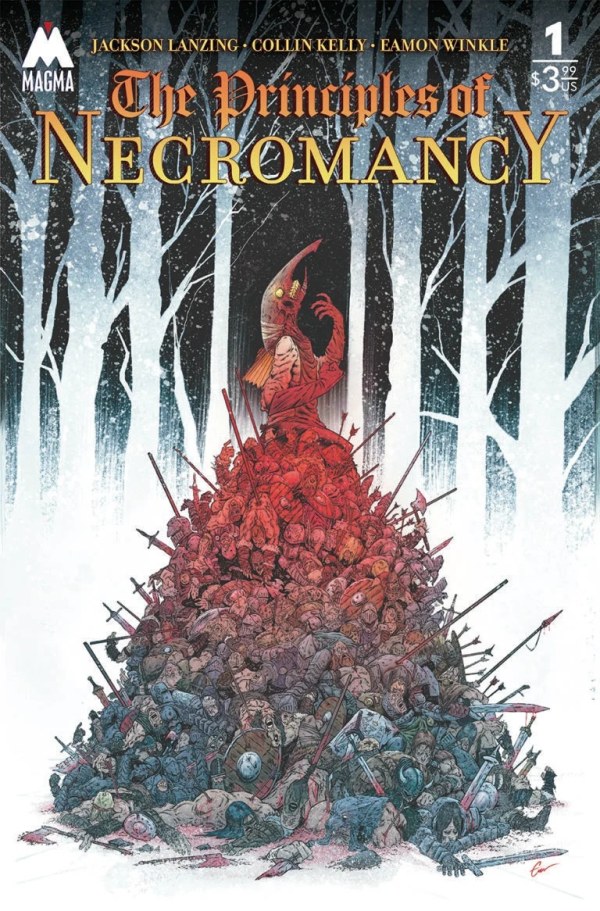
Last year (in Geek Punditry #119) I told you guys about DC Comics’ new “Compact Comics” format – a line of bargain-priced paperback editions that collect seminal and popular DC Comics storylines in a smaller format. At $9.99 a pop, these books were quickly recognized as being some of the best deals in comic books, and to date they’ve released or announced no less than 45 volumes in this series. It’s become so popular that everybody else is copying them – Oni Press is doing their own “Compact Comics” in the same size and price point (as mentioned in Geek Punditry #164) and Marvel, Boom! Studios, and IDW have all launched lines of books only slightly larger and slightly more expensive ($14.99 instead of $9.99) which are clearly intended to appeal to the same market.
With the books being so popular, I gave DC some helpful suggestions last year (in GP #124) of other comics and storylines that I thought were deserving of the Compact Comics treatment. To date, they have run with exactly zero of my suggestions. But that’s okay, I know they’re just playing hard to get.
With everybody else getting in on the fun, this year I’m going to offer more suggestions, but not just for DC. I’m going to throw out a suggestion or two for each of the five publishers (so far) that have gotten into this particular game. And as we know they’re all reading this, I assume you can expect to see these books on store shelves by next Tuesday. Obviously, I won’t suggest anything that’s already in the works, but if you’re interested in seeing what’s available, I’ve compiled a list of everything that’s been announced so far over at my League of Comic Geeks page.
DC Comics: Earth-789
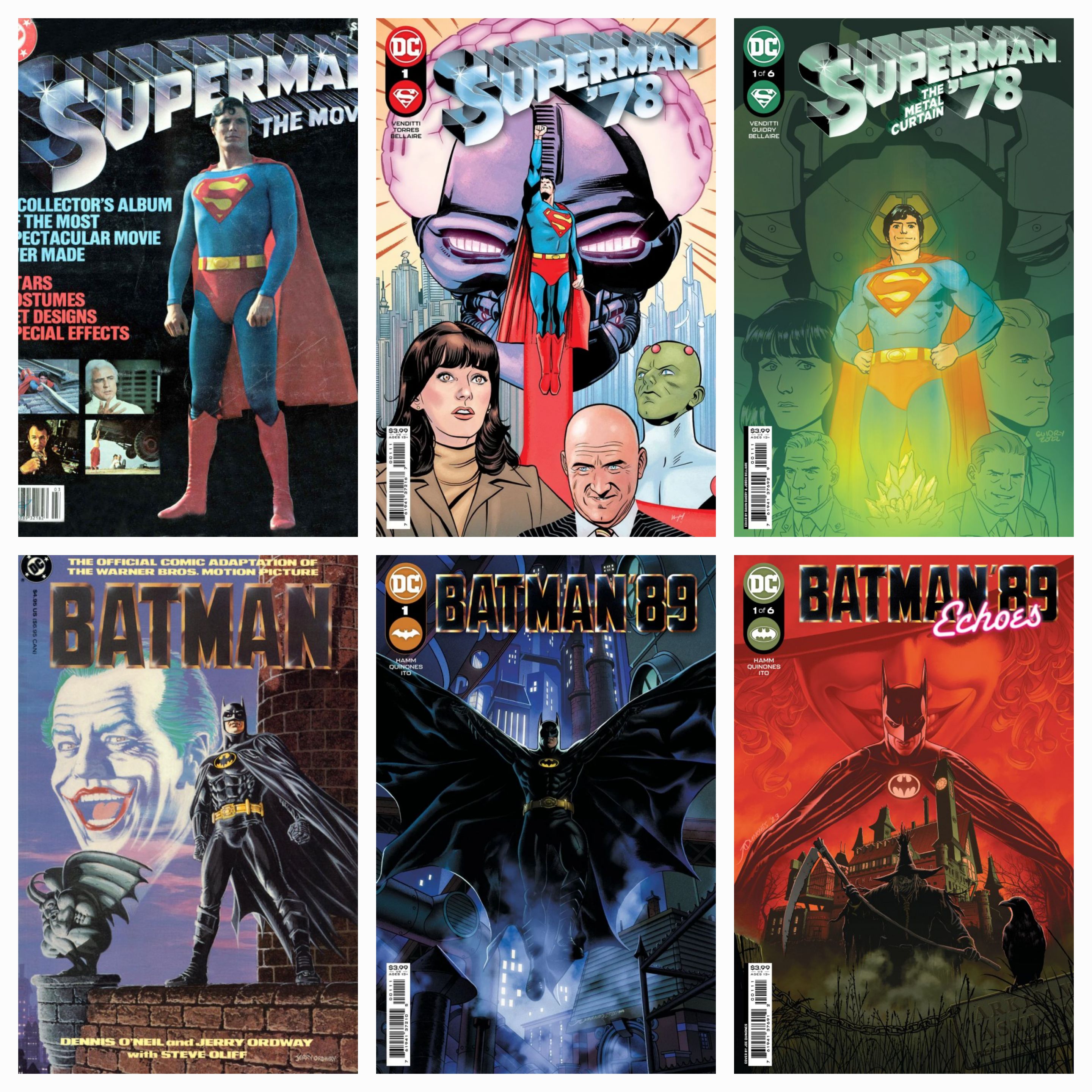
A few years ago, during one of those periodic restructurings of the DC Multiverse, DC announced that the first two Christopher Reeve Superman movies and the Michael Keaton Batman films were canonically part of the same world in their multiverse, which they declared Earth-789. They followed this up with two miniseries under the banners Superman ‘78 and Batman ‘89. (The release years of the movies, obviously – get where the multiverse designation came from now?)
Although the Batman miniseries were egregiously delayed for reasons that were never adequately explained, they weren’t bad. And the two Superman miniseries were GREAT. For their Compact Comics volumes, I would include both miniseries (12 issues total) in one book. But I wouldn’t stop there. All of the movies in these series also received comic book adaptations, so I would begin the Superman volume with the DC adaptations of Superman: The Movie and Superman II, and the Batman book with their adaptations of Batman and Batman Returns.
The other two films in each series aren’t considered canon to Earth-798, but once these two books prove to be the sales colossus we all know they would be, there could be further collections that include the adaptations of those, as well as other ancillary books like the Supergirl adaptation, the Superman Returns prequels, or the spin-off books focusing on the villains from Batman and Robin. There are also sporadic comics set in the worlds of Christopher Nolan’s Dark Knight trilogy and the Snyderverse that could theoretically be included somewhere in there, but honestly, I’m most interested in the Earth-789 stuff. Not just because it’s good, but because DC seems to have cooled on the idea of doing more stories set in this universe, and that’s a dang shame. There’s so much potential to be had there, and I would love to see them bring those characters together officially for the first time along with the John Wesley Shipp Flash, Lynda Carter Wonder Woman, and Helen Slater Supergirl to create a Justice League for that universe. They even included Hal Jordan in the second Superman ‘78 miniseries (artist Gavin Guidry modeled him on Kurt Russell as a nice little bit of “casting”), giving them a chance to expand.
Marvel Comics: Avengers Under Siege
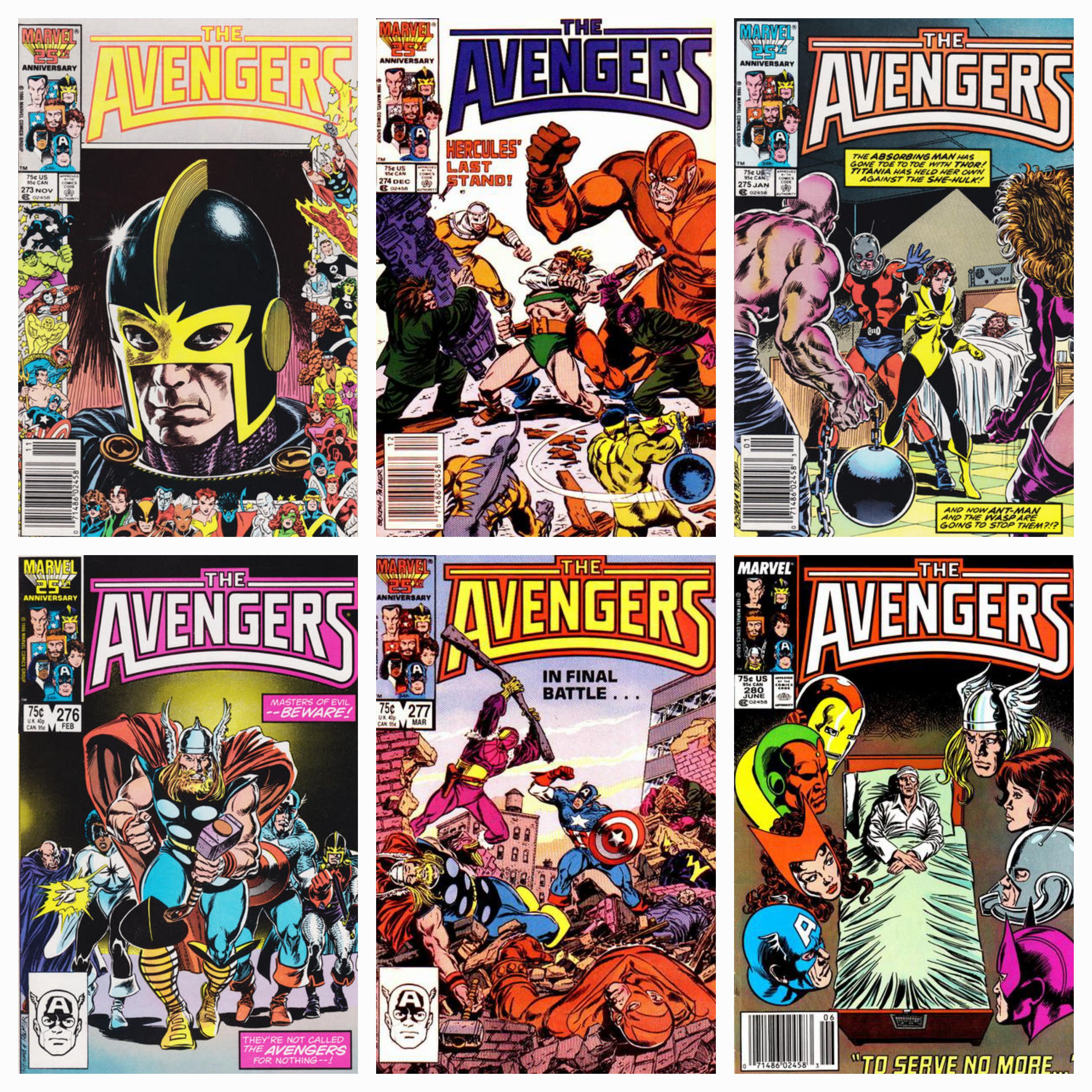
Although most of the Marvel Premier Editions have focused on more recent storylines (by which I mean comics that were published in this century, as opposed to stuff from the era in which I grew up), there’s an Avengers storyline that has always been one of my favorites and deserves the deluxe treatment. In 1986, writer Roger Stern and artist John Buscema wove a nearly year-long story in which the Avengers were infiltrated in their own home, the Avengers mansion, by Baron Zemo’s Masters of Evil. Although the villains had fought – and been bested by – the Avengers time and time again, this attack on their home was a new level of evil, and was one of the first mainstream comics I ever read that showed true, harsh consequences to being a superhero. (It should be noted that I was nine years old when this came out and hadn’t read stuff like the Death of Gwen Stacy yet.)
The story ran through Avengers #270-277, beginning with a subplot in the first few issues as the Avengers went about other business. But things really hit a boiling point in issue #273 when the villains actually broke into the mansion and beat Jarvis, the Avengers’ butler, within an inch of his life. This wasn’t a case of a hero being wounded in battle (although that would happen later in the arc with Hercules), but one of their ancillary characters almost dying because of their proximity to the heroes. Stern used Jarvis to really raise the stakes, wiping away any confidence the reader might have that the Avengers would waltz in and have an easy victory. Over the next four issues, the villains completely destroyed the mansion and nearly killed several Avengers before the heroes finally came out on top, but at no point did their victory feel like a foregone conclusion. That’s a hard trick to pull off in a mainstream comic book, a legitimate feeling of MENACE, but Stern did it.
This story has been collected twice before, in a 1998 trade paperback and a 2010 hardcover, but neither is in print anymore. It’s a great story that should find a new audience. And a Premier edition book would give them a chance to correct an oversight they made with the first two collections, both of which omitted issue #280. This was a sort of epilogue featuring a hospital-laden Jarvis thinking about his years with the Avengers and pondering his future. It belongs in the collection too, folks.
The three remaining companies that have gotten into this game – Oni Press, IDW, and Boom! Studios – each give me a bit of a quandary. You see, in all three cases, these are publishers that are built on a combination of licensed properties (things like Rick and Morty, Godzilla, or Power Rangers) and books that are owned or co-owned by their creators, rather than being the property of the publisher. There’s no “Oni Universe” like there is at Marvel or DC, and with licensing being what it is, it can sometimes be difficult to determine exactly what comics these publishers currently own the rights to, unless it’s something that’s been published recently. Let’s take them one at a time.
Oni Press
So far, Oni has published or scheduled six of their own “Compact Comics,” all of them connected to either their licenses for the cartoons Rick and Morty or Adventure Time. Earlier this year, however, they announced an upcoming partnership with Archie Comics, and they’re going to publish some of Archie’s “New Riverdale” era in the compact format as well. (This came up in the aforementioned Geek Punditry #164). So besides extending these existing licenses, which Oni comics are deserving of the Compact treatment?
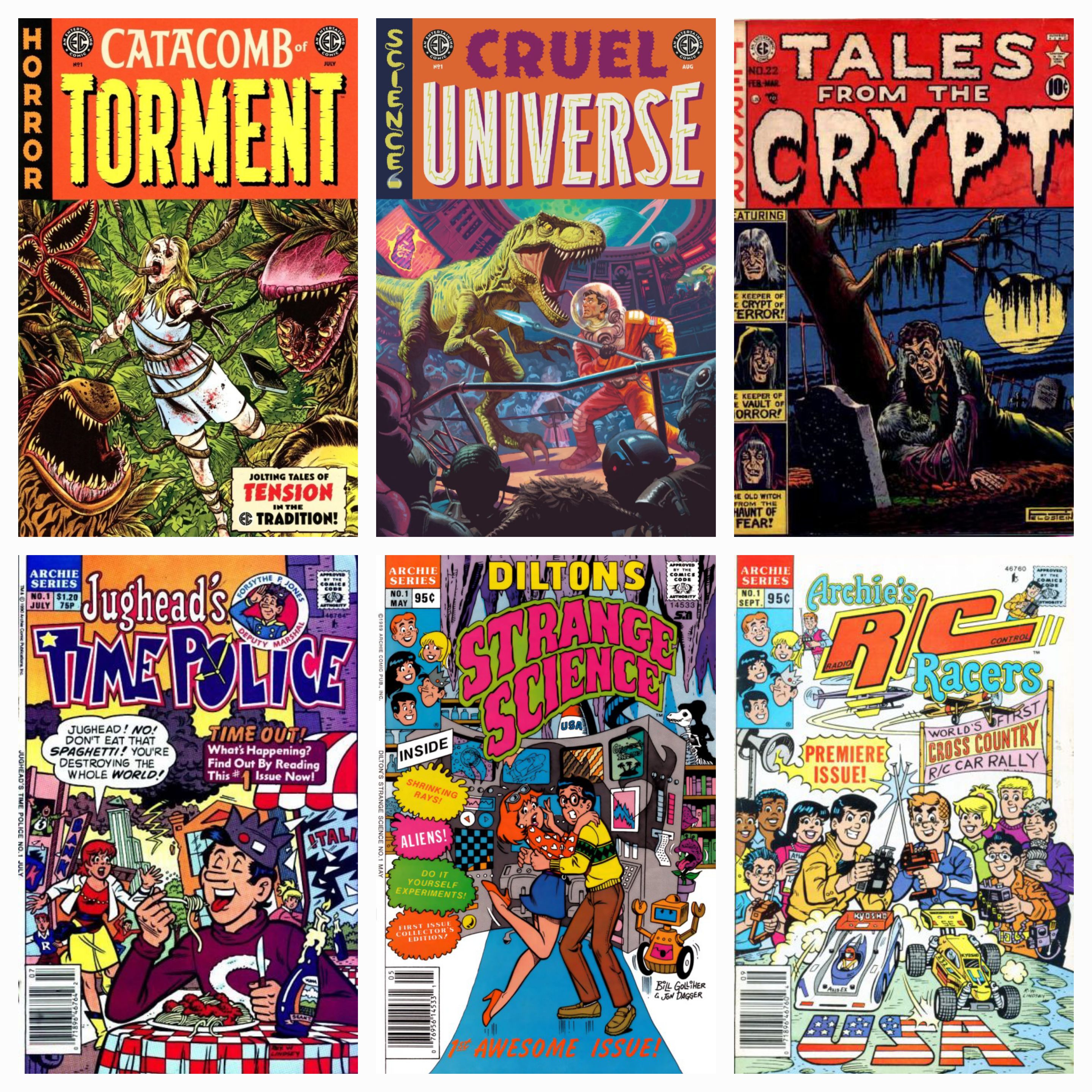
EC Comics. In recent years, Oni has become the new home of the classic publisher EC Comics, the company that gave us the likes of Tales From the Crypt and Weird Science. Oddly, though, rather than continuing those brands (I don’t know why — I would guess some sort of licensing kerfuffle), Oni is using the EC label and style for new, original titles such as Cruel Universe, Catacomb of Torment, and Blood Type. These books – horror comics or a horror/sci-fi blend – have been in production long enough to have built a decent-sized back catalogue, and it would do well to release those in compact form. And if possible, I would also love to see them reprint the classic EC stuff as well, especially the original Tales From the Crypt and its sister comics Vault of Terror and Haunt of Fear.
Since Oni is going to be handling the Archie compacts as well, here’s a bonus suggestion for them: besides just reprinting the “new Riverdale” stuff, and beyond giving us reprints of the Archie classics, I’d like to see them use this format for some of the weirder books in Archie’s catalogue. Their various versions of the Red Circle/Mighty Crusaders superheroes over the years, for example. Or even better, let’s look at the 90s – that was an era when Archie experimented with a lot of new titles with weird hooks. Veronica. Jughead’s Time Police. Dilton’s Strange Science. Jughead’s Pal Hot Dog. Archie’s R/C Racers. Jughead’s Diner. There was a lot of Jughead in these books. And while sadly none of these lasted more than a year (except for Veronica, which started as a book about her travelling to a different country in each issue, then dropped that hook and just became a straightforward Veronica comic), I think they were ahead of their time. There were a lot of stories in those books that I remember fondly, and I’d love to see a Compact Comics edition of some of these.
IDW Publishing
Of these three latecomers, IDW has already done the most with their line, with a book each for licensed properties Godzilla and Teenage Mutant Ninja Turtles, two volumes of The Rocketeer, and a whopping five collections of their various Star Trek series. They’ve also got one book each for their original series The October Faction and D4VE, and two volumes of what is arguably their flagship original property, Joe Hill’s horror/fantasy epic Locke and Key. Assuming that these series will continue (as they should), let’s dip into their existing catalogue to see what could be added.
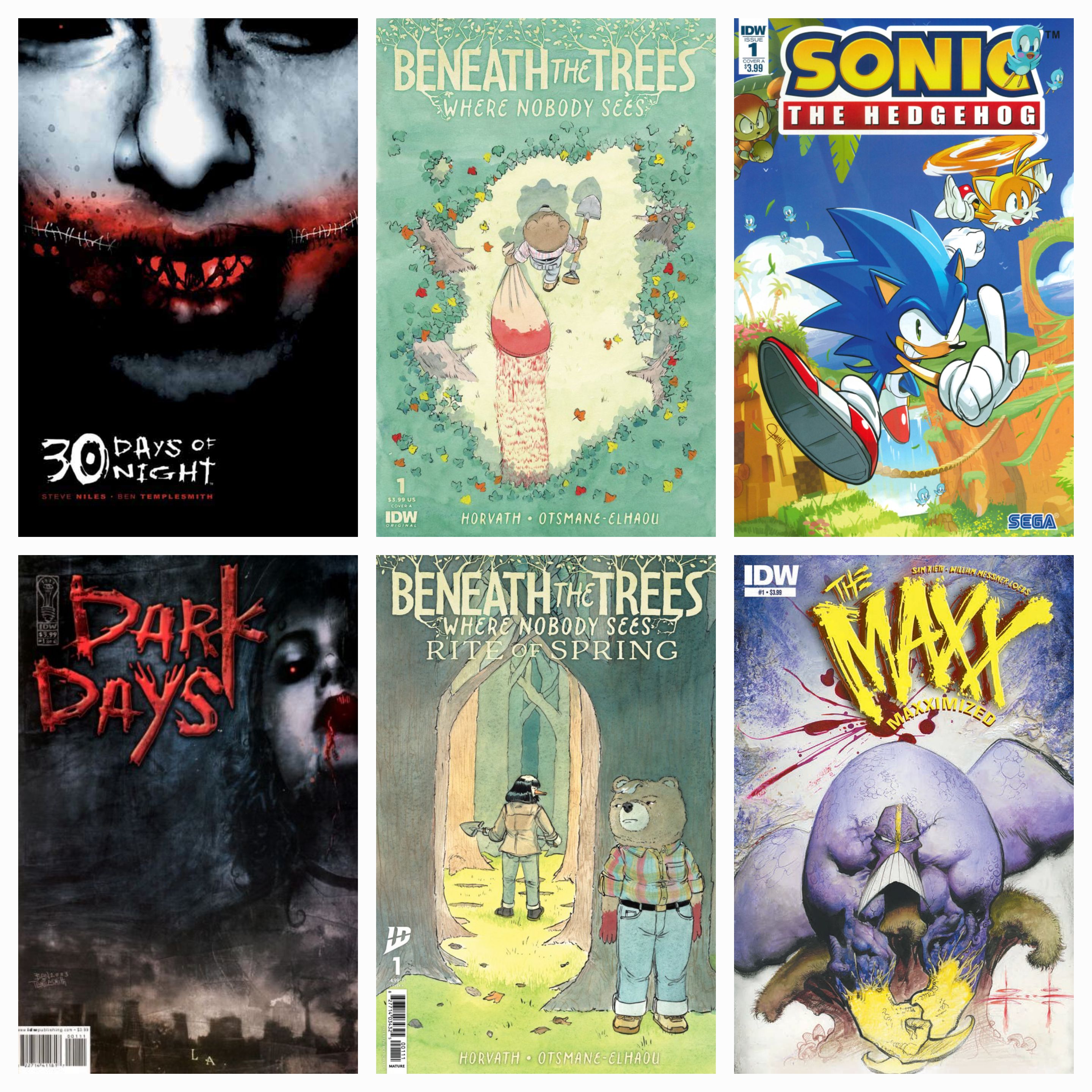
Before Locke and Key, the most famous original title published by IDW was probably Steve Niles’ vampire saga 30 Days of Night. The comic – about a town in Alaska where the sun sets for a solid month, making it a virtual buffet for a clan of hungry vampires – was really big in its day, spawning countless sequels, spin-offs, and a movie franchise. The Compact Com–I’m sorry, the “IDW Classic Collection” treatment would be a perfect place for the series to come back and find a whole new audience of readers that came up since the original series was in its heyday.
IDW is also home for the more recent hit Beneath the Trees Where Nobody Sees, a surrealistic serial killer saga by Patrick Horvath. The story, about a psychotic teddy bear whose careful cover is threatened when a second serial killer begins to strike victims in her home town, has garnered a legion of fans and there are most certainly more volumes in the works. A Classic Collection of the first two series seems like a no-brainer.
As far as IDW’s many licensed properties, some of the ones that helped build the company in the early 00s and 10s have moved on to other publishers (things like G.I. Joe, Transformers, and Ghostbusters), so those are off the table. However, IDW snatched Sonic the Hedgehog from Archie almost 10 years ago and have had a very successful run, with the main title closing in on 100 issues and plenty of spin-offs to go around. A Classic Collection of that series would do very well.
IDW was also the most recent publisher of Sam Kieth’s surrealistic superhero The Maxx. Kieth’s comic was originally published by Image, but a few years ago IDW published a remastered series (Maxximized, they called it) with more modern coloring. The book was lovely, and with Kieth sadly passing away a few months ago, I think a Classics Collection – three volumes should be enough for the entire main series – would be a good tribute to his work, much like their Rocketeer books stand sentinel for the late Dave Stevens.
Boom! Studios
The newest kid on the mini-comic block is Boom! Studios. None of their Compact Comics have even been released yet, with the first scheduled for September. Of those that have been announced, there are two volumes of their popular Mighty Morphin Power Rangers license and a one-volume collection of Victor LaVelle and Jo Mi-Gyeong’s post-apocalyptic fable Eve.
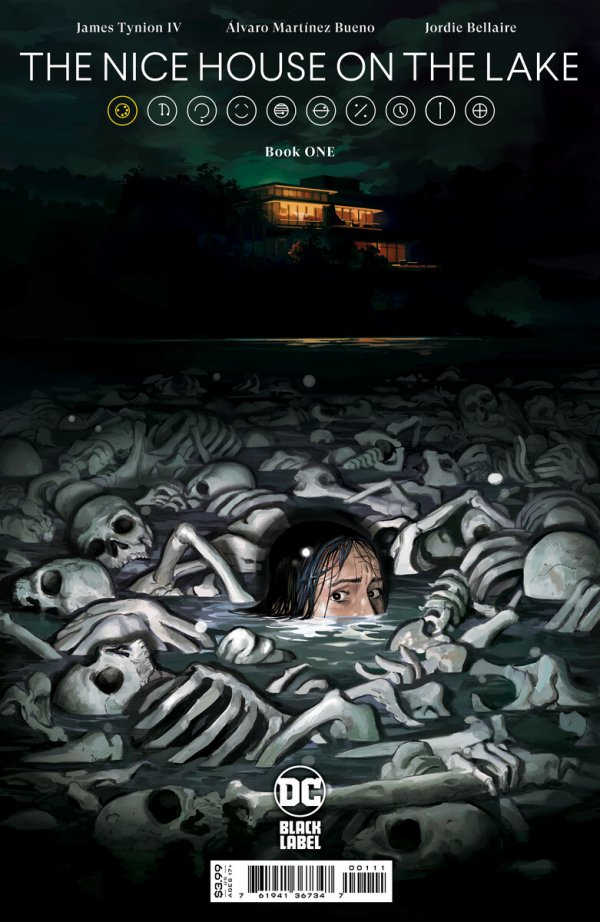
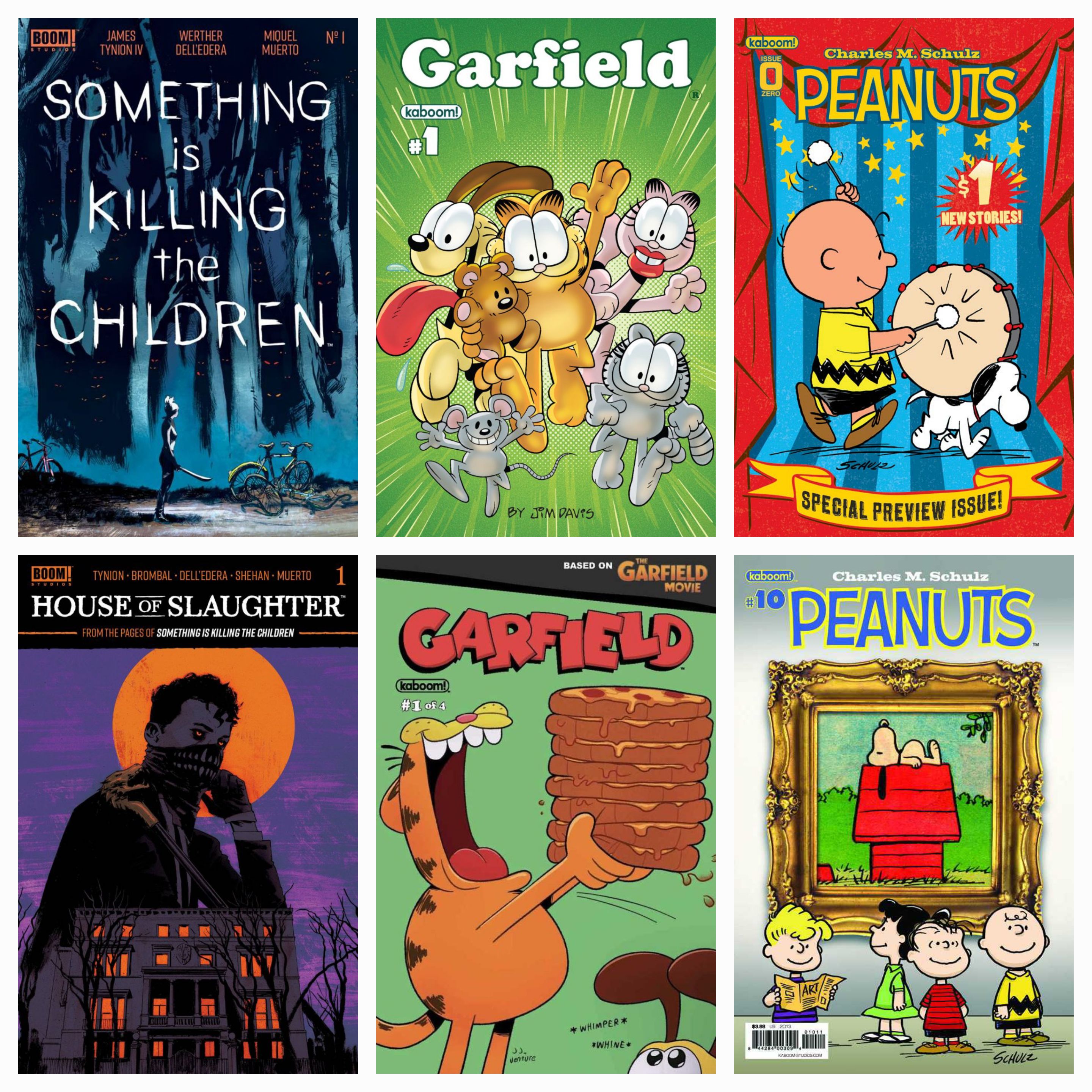
I would suggest for Boom! (and to be fair, odds are that SOMEBODY there has already brought this up) that they continue the line with James Tynion’s mega-hit Something is Killing the Children and its spin-off title House of Slaughter. SIKTC is about a small town where children are disappearing. Most aren’t found, and those that DO come back do so with tales of horrors beyond imagining. A stranger named Erica Slaughter appears in town, preparing to fight against the evil that’s engulfing it. The book is scheduled to hit its 50th issue later this year, so there’s plenty of story to share. House of Slaughter, meanwhile, is about the mysterious organization that turned Erica into a monster-hunter. This one lasted for 30 issues, with a new follow-up series, Fall of the House of Slaughter, currently in publication. This is probably Boom!’s crown jewel these days, and they’d be well-advised to Compact ‘em.
As far as their licensed properties go, Boom! has a similar problem as IDW, as many of the licenses they were built on have ended. However, they have a long-standing license to produce comics starring Jim Davis’ legendary fat cat Garfield, with a series that lasted for 36 issues and dozens of spin-off one-shots and miniseries, including a tie-in to last year’s movie and a Baby Garfield miniseries currently on the stands. There’s more than enough content for four or five Garfield collections. And let’s face it, Jim Davis has never met a licensing opportunity he didn’t like. Similarly to Garfield, Boom! also had a long run of comics based on Charles M. Schulz’s Peanuts, including an ongoing, a few mini-series, and several original graphic novels. I’d love to have these collected as well, but the most recent Peanuts book from Boom! came out in 2021, and I’m not certain if they still own the license or not. If they do, they should get on it.
There you have it, folks, five publishers and tons of suggestions for books they should add to their rapidly-growing library of smaller-scale comic book collections. I obviously love this format, and I welcome any and all books that can be added to it, but these are some of the ones that I think are really deserving of the treatment.
Blake M. Petit is a writer, teacher, and dad from Ama, Louisiana. His most recent writing project is the superhero adventure series Other People’s Heroes: Little Stars, volume one of which is now available on Amazon. He’s also started putting his LitReel videos on TikTok. He’s going to go over there on the bench now and stare hard at Image, Dark Horse, and Dynamite Entertainment until they start doing their own Compact lines to go along with everybody else.