Geek Punditry #178: Compact These II-The Compactening

Last year (in Geek Punditry #119) I told you guys about DC Comics’ new “Compact Comics” format – a line of bargain-priced paperback editions that collect seminal and popular DC Comics storylines in a smaller format. At $9.99 a pop, these books were quickly recognized as being some of the best deals in comic books, and to date they’ve released or announced no less than 45 volumes in this series. It’s become so popular that everybody else is copying them – Oni Press is doing their own “Compact Comics” in the same size and price point (as mentioned in Geek Punditry #164) and Marvel, Boom! Studios, and IDW have all launched lines of books only slightly larger and slightly more expensive ($14.99 instead of $9.99) which are clearly intended to appeal to the same market. 

With the books being so popular, I gave DC some helpful suggestions last year (in GP #124) of other comics and storylines that I thought were deserving of the Compact Comics treatment. To date, they have run with exactly zero of my suggestions. But that’s okay, I know they’re just playing hard to get.

With everybody else getting in on the fun, this year I’m going to offer more suggestions, but not just for DC. I’m going to throw out a suggestion or two for each of the five publishers (so far) that have gotten into this particular game. And as we know they’re all reading this, I assume you can expect to see these books on store shelves by next Tuesday. Obviously, I won’t suggest anything that’s already in the works, but if you’re interested in seeing what’s available, I’ve compiled a list of everything that’s been announced so far over at my League of Comic Geeks page.
DC Comics: Earth-789

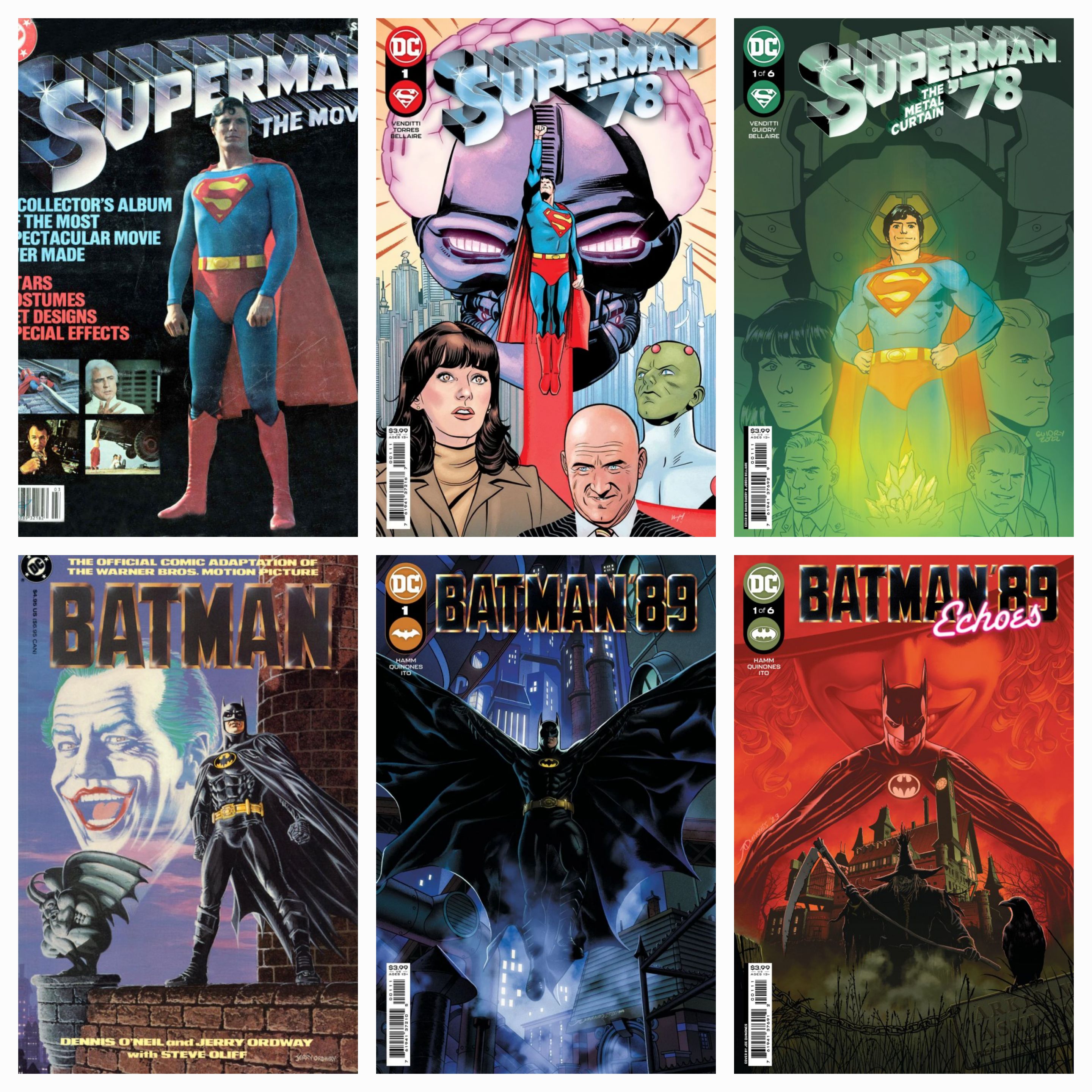
A few years ago, during one of those periodic restructurings of the DC Multiverse, DC announced that the first two Christopher Reeve Superman movies and the Michael Keaton Batman films were canonically part of the same world in their multiverse, which they declared Earth-789. They followed this up with two miniseries under the banners Superman ‘78 and Batman ‘89. (The release years of the movies, obviously – get where the multiverse designation came from now?)

Although the Batman miniseries were egregiously delayed for reasons that were never adequately explained, they weren’t bad. And the two Superman miniseries were GREAT. For their Compact Comics volumes, I would include both miniseries (12 issues total) in one book. But I wouldn’t stop there. All of the movies in these series also received comic book adaptations, so I would begin the Superman volume with the DC adaptations of Superman: The Movie and Superman II, and the Batman book with their adaptations of Batman and Batman Returns.

The other two films in each series aren’t considered canon to Earth-798, but once these two books prove to be the sales colossus we all know they would be, there could be further collections that include the adaptations of those, as well as other ancillary books like the Supergirl adaptation, the Superman Returns prequels, or the spin-off books focusing on the villains from Batman and Robin. There are also sporadic comics set in the worlds of Christopher Nolan’s Dark Knight trilogy and the Snyderverse that could theoretically be included somewhere in there, but honestly, I’m most interested in the Earth-789 stuff. Not just because it’s good, but because DC seems to have cooled on the idea of doing more stories set in this universe, and that’s a dang shame. There’s so much potential to be had there, and I would love to see them bring those characters together officially for the first time along with the John Wesley Shipp Flash, Lynda Carter Wonder Woman, and Helen Slater Supergirl to create a Justice League for that universe. They even included Hal Jordan in the second Superman ‘78 miniseries (artist Gavin Guidry modeled him on Kurt Russell as a nice little bit of “casting”), giving them a chance to expand. 
Marvel Comics: Avengers Under Siege

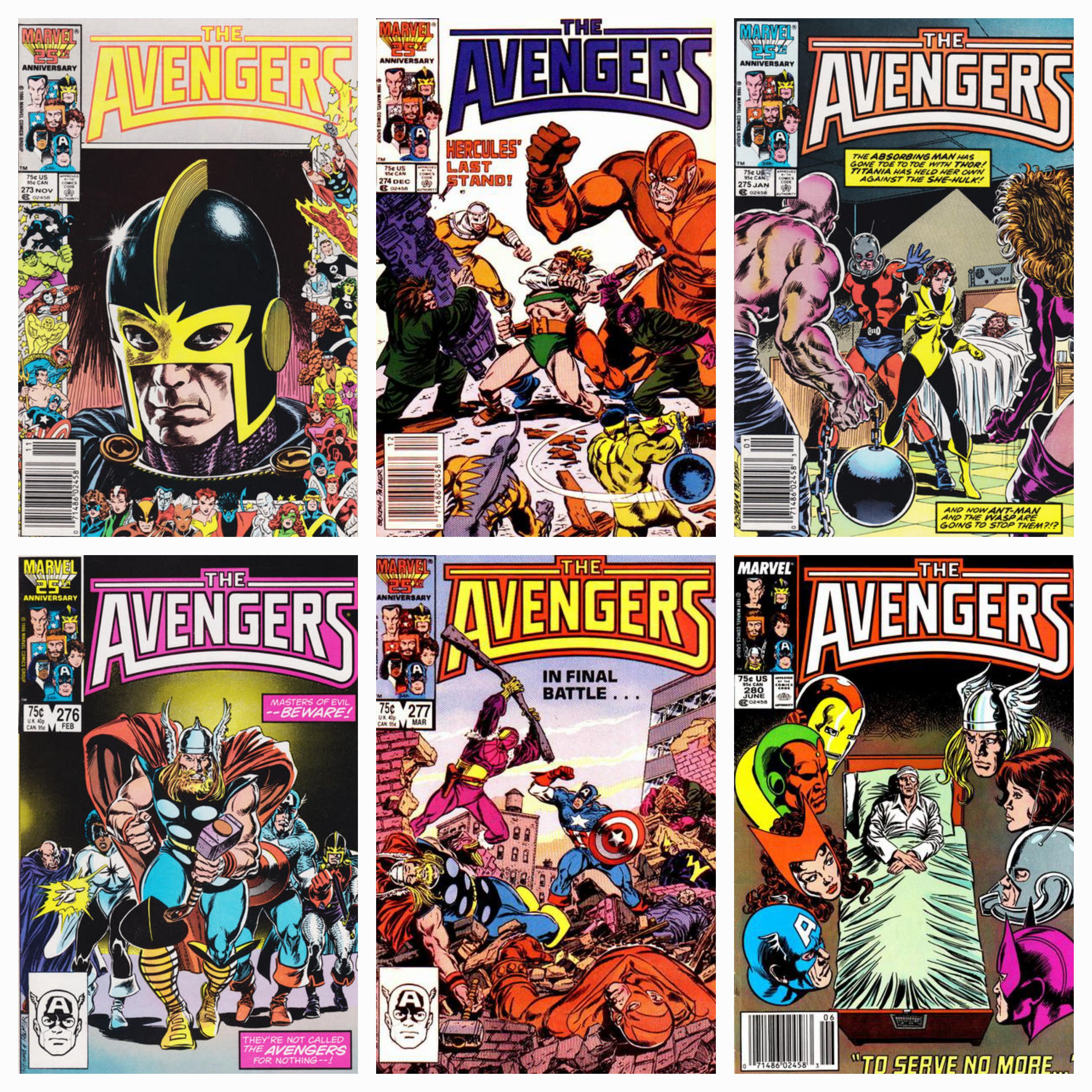
Although most of the Marvel Premier Editions have focused on more recent storylines (by which I mean comics that were published in this century, as opposed to stuff from the era in which I grew up), there’s an Avengers storyline that has always been one of my favorites and deserves the deluxe treatment. In 1986, writer Roger Stern and artist John Buscema wove a nearly year-long story in which the Avengers were infiltrated in their own home, the Avengers mansion, by Baron Zemo’s Masters of Evil. Although the villains had fought – and been bested by – the Avengers time and time again, this attack on their home was a new level of evil, and was one of the first mainstream comics I ever read that showed true, harsh consequences to being a superhero. (It should be noted that I was nine years old when this came out and hadn’t read stuff like the Death of Gwen Stacy yet.)

The story ran through Avengers #270-277, beginning with a subplot in the first few issues as the Avengers went about other business. But things really hit a boiling point in issue #273 when the villains actually broke into the mansion and beat Jarvis, the Avengers’ butler, within an inch of his life. This wasn’t a case of a hero being wounded in battle (although that would happen later in the arc with Hercules), but one of their ancillary characters almost dying because of their proximity to the heroes. Stern used Jarvis to really raise the stakes, wiping away any confidence the reader might have that the Avengers would waltz in and have an easy victory. Over the next four issues, the villains completely destroyed the mansion and nearly killed several Avengers before the heroes finally came out on top, but at no point did their victory feel like a foregone conclusion. That’s a hard trick to pull off in a mainstream comic book, a legitimate feeling of MENACE, but Stern did it.

This story has been collected twice before, in a 1998 trade paperback and a 2010 hardcover, but neither is in print anymore. It’s a great story that should find a new audience. And a Premier edition book would give them a chance to correct an oversight they made with the first two collections, both of which omitted issue #280. This was a sort of epilogue featuring a hospital-laden Jarvis thinking about his years with the Avengers and pondering his future. It belongs in the collection too, folks. 

The three remaining companies that have gotten into this game – Oni Press, IDW, and Boom! Studios – each give me a bit of a quandary. You see, in all three cases, these are publishers that are built on a combination of licensed properties (things like Rick and Morty, Godzilla, or Power Rangers) and books that are owned or co-owned by their creators, rather than being the property of the publisher. There’s no “Oni Universe” like there is at Marvel or DC, and with licensing being what it is, it can sometimes be difficult to determine exactly what comics these publishers currently own the rights to, unless it’s something that’s been published recently. Let’s take them one at a time.
Oni Press

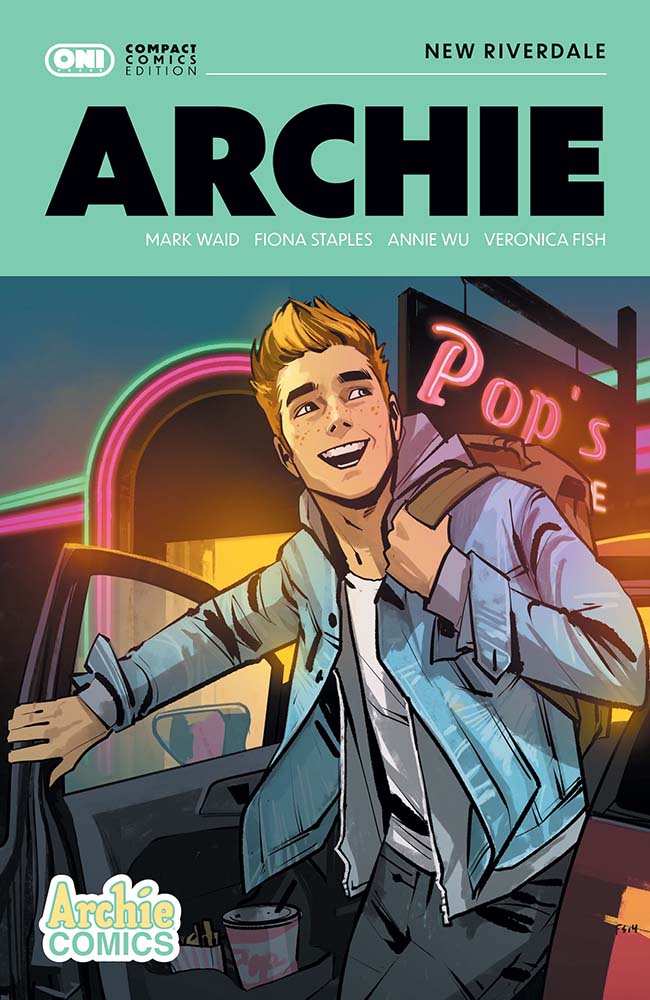
So far, Oni has published or scheduled six of their own “Compact Comics,” all of them connected to either their licenses for the cartoons Rick and Morty or Adventure Time. Earlier this year, however, they announced an upcoming partnership with Archie Comics, and they’re going to publish some of Archie’s “New Riverdale” era in the compact format as well. (This came up in the aforementioned Geek Punditry #164). So besides extending these existing licenses, which Oni comics are deserving of the Compact treatment?

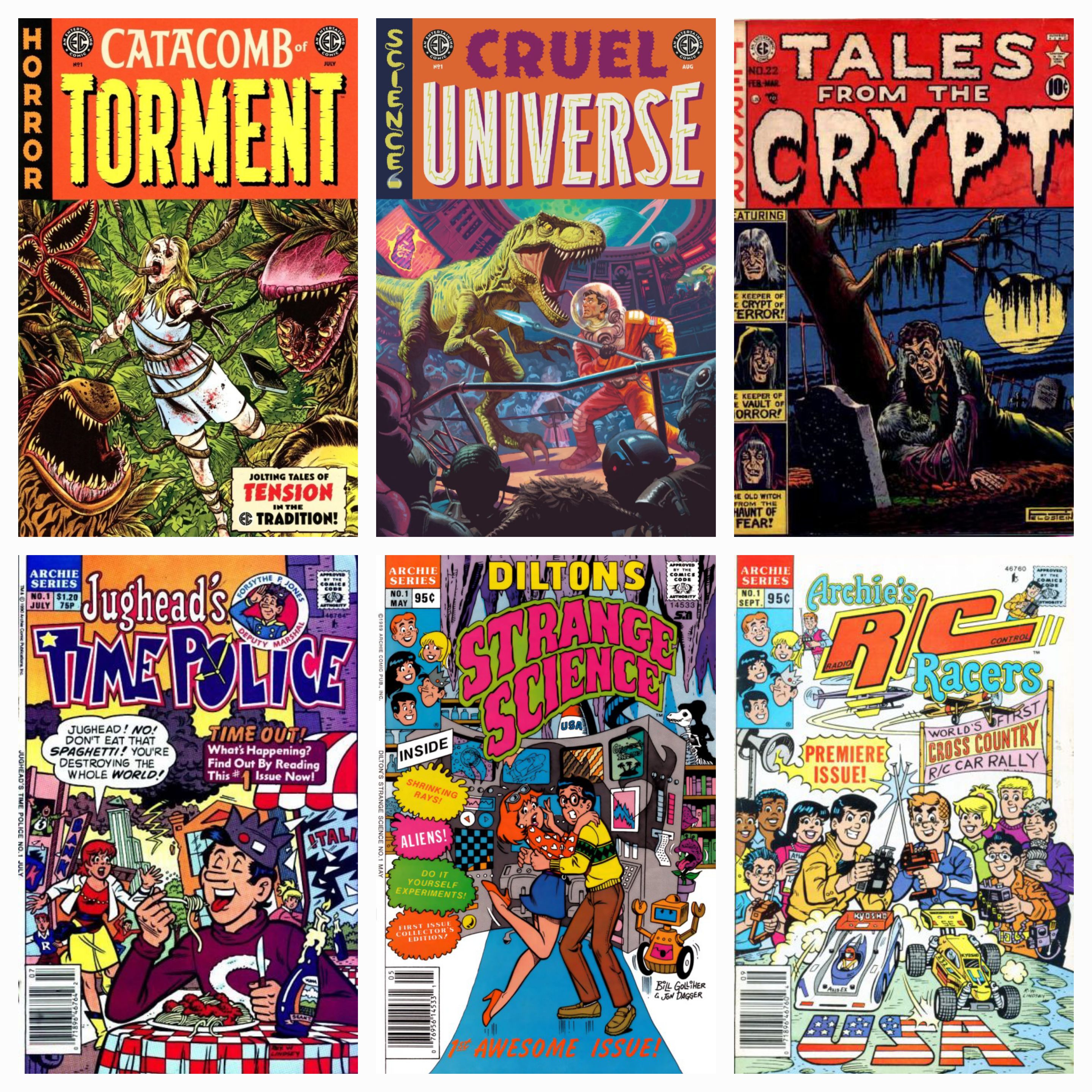
EC Comics. In recent years, Oni has become the new home of the classic publisher EC Comics, the company that gave us the likes of Tales From the Crypt and Weird Science. Oddly, though, rather than continuing those brands (I don’t know why — I would guess some sort of licensing kerfuffle), Oni is using the EC label and style for new, original titles such as Cruel Universe, Catacomb of Torment, and Blood Type. These books – horror comics or a horror/sci-fi blend – have been in production long enough to have built a decent-sized back catalogue, and it would do well to release those in compact form. And if possible, I would also love to see them reprint the classic EC stuff as well, especially the original Tales From the Crypt and its sister comics Vault of Terror and Haunt of Fear.

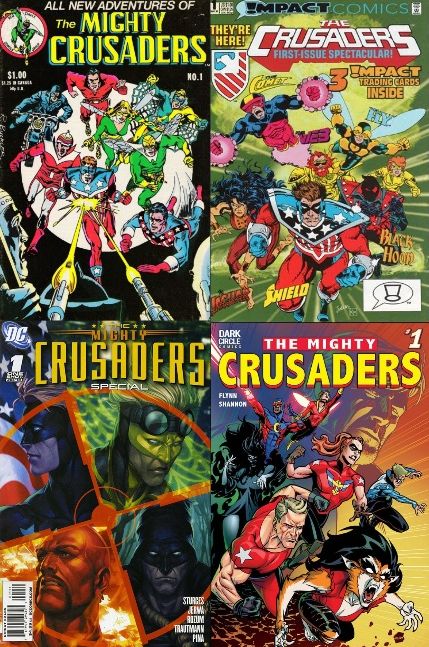
Since Oni is going to be handling the Archie compacts as well, here’s a bonus suggestion for them: besides just reprinting the “new Riverdale” stuff, and beyond giving us reprints of the Archie classics, I’d like to see them use this format for some of the weirder books in Archie’s catalogue. Their various versions of the Red Circle/Mighty Crusaders superheroes over the years, for example. Or even better, let’s look at the 90s – that was an era when Archie experimented with a lot of new titles with weird hooks. Veronica. Jughead’s Time Police. Dilton’s Strange Science. Jughead’s Pal Hot Dog. Archie’s R/C Racers. Jughead’s Diner. There was a lot of Jughead in these books. And while sadly none of these lasted more than a year (except for Veronica, which started as a book about her travelling to a different country in each issue, then dropped that hook and just became a straightforward Veronica comic), I think they were ahead of their time. There were a lot of stories in those books that I remember fondly, and I’d love to see a Compact Comics edition of some of these. 
IDW Publishing

Of these three latecomers, IDW has already done the most with their line, with a book each for licensed properties Godzilla and Teenage Mutant Ninja Turtles, two volumes of The Rocketeer, and a whopping five collections of their various Star Trek series. They’ve also got one book each for their original series The October Faction and D4VE, and two volumes of what is arguably their flagship original property, Joe Hill’s horror/fantasy epic Locke and Key. Assuming that these series will continue (as they should), let’s dip into their existing catalogue to see what could be added.

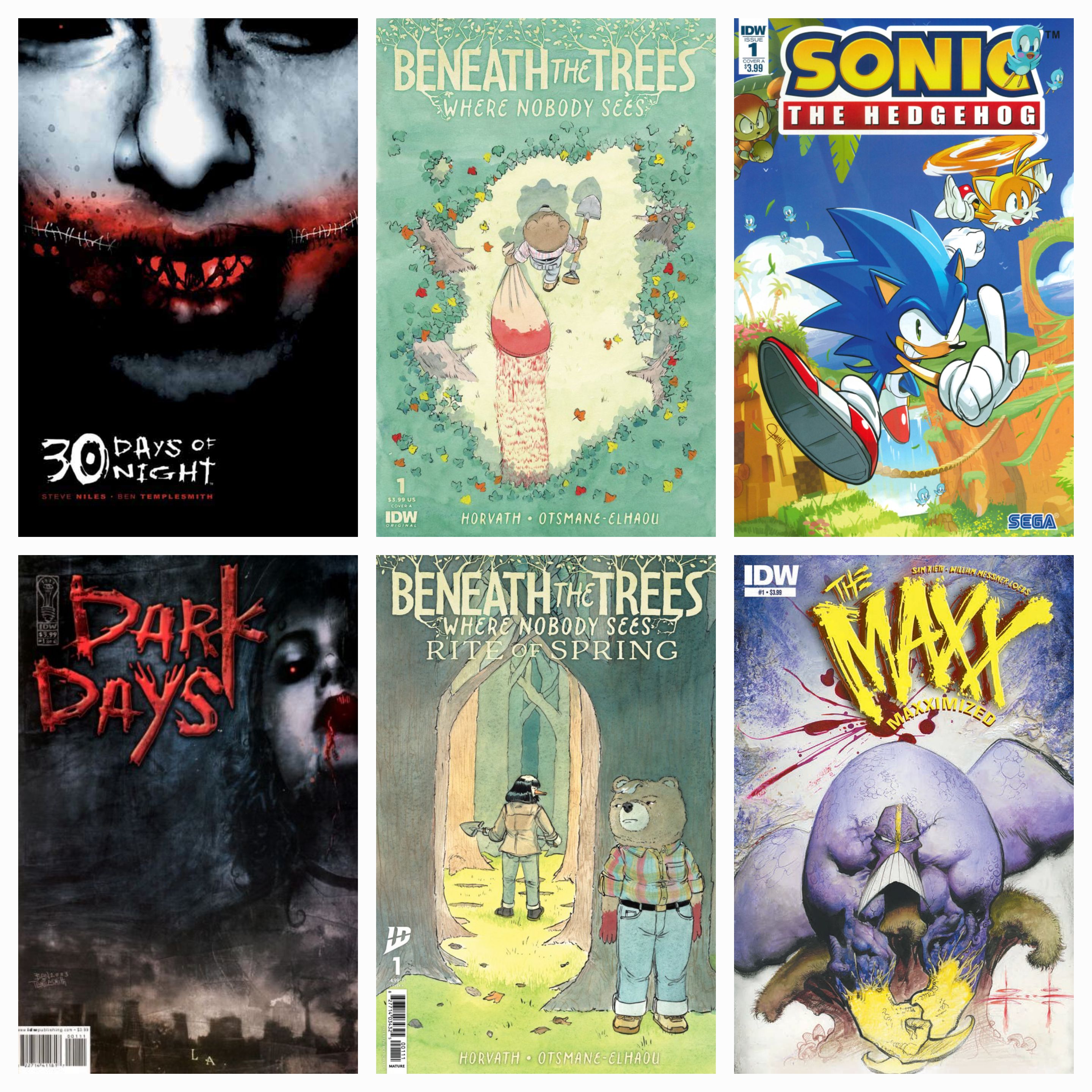
Before Locke and Key, the most famous original title published by IDW was probably Steve Niles’ vampire saga 30 Days of Night. The comic – about a town in Alaska where the sun sets for a solid month, making it a virtual buffet for a clan of hungry vampires – was really big in its day, spawning countless sequels, spin-offs, and a movie franchise. The Compact Com–I’m sorry, the “IDW Classic Collection” treatment would be a perfect place for the series to come back and find a whole new audience of readers that came up since the original series was in its heyday.

IDW is also home for the more recent hit Beneath the Trees Where Nobody Sees, a surrealistic serial killer saga by Patrick Horvath. The story, about a psychotic teddy bear whose careful cover is threatened when a second serial killer begins to strike victims in her home town, has garnered a legion of fans and there are most certainly more volumes in the works. A Classic Collection of the first two series seems like a no-brainer. 

As far as IDW’s many licensed properties, some of the ones that helped build the company in the early 00s and 10s have moved on to other publishers (things like G.I. Joe, Transformers, and Ghostbusters), so those are off the table. However, IDW snatched Sonic the Hedgehog from Archie almost 10 years ago and have had a very successful run, with the main title closing in on 100 issues and plenty of spin-offs to go around. A Classic Collection of that series would do very well. 

IDW was also the most recent publisher of Sam Kieth’s surrealistic superhero The Maxx. Kieth’s comic was originally published by Image, but a few years ago IDW published a remastered series (Maxximized, they called it) with more modern coloring. The book was lovely, and with Kieth sadly passing away a few months ago, I think a Classics Collection – three volumes should be enough for the entire main series – would be a good tribute to his work, much like their Rocketeer books stand sentinel for the late Dave Stevens.
Boom! Studios

The newest kid on the mini-comic block is Boom! Studios. None of their Compact Comics have even been released yet, with the first scheduled for September. Of those that have been announced, there are two volumes of their popular Mighty Morphin Power Rangers license and a one-volume collection of Victor LaVelle and Jo Mi-Gyeong’s post-apocalyptic fable Eve.

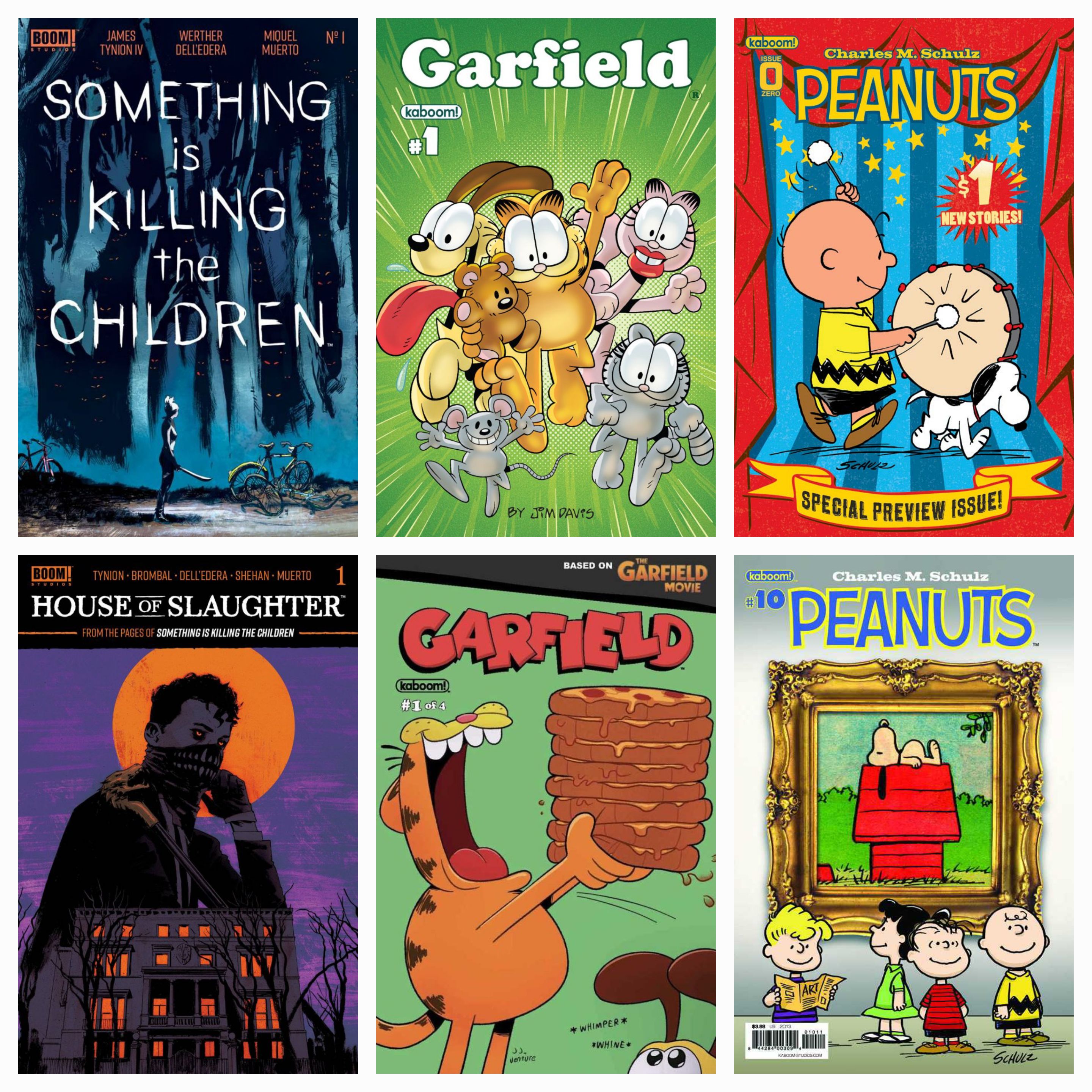
I would suggest for Boom! (and to be fair, odds are that SOMEBODY there has already brought this up) that they continue the line with James Tynion’s mega-hit Something is Killing the Children and its spin-off title House of Slaughter. SIKTC is about a small town where children are disappearing. Most aren’t found, and those that DO come back do so with tales of horrors beyond imagining. A stranger named Erica Slaughter appears in town, preparing to fight against the evil that’s engulfing it. The book is scheduled to hit its 50th issue later this year, so there’s plenty of story to share. House of Slaughter, meanwhile, is about the mysterious organization that turned Erica into a monster-hunter. This one lasted for 30 issues, with a new follow-up series, Fall of the House of Slaughter, currently in publication. This is probably Boom!’s crown jewel these days, and they’d be well-advised to Compact ‘em.

As far as their licensed properties go, Boom! has a similar problem as IDW, as many of the licenses they were built on have ended. However, they have a long-standing license to produce comics starring Jim Davis’ legendary fat cat Garfield, with a series that lasted for 36 issues and dozens of spin-off one-shots and miniseries, including a tie-in to last year’s movie and a Baby Garfield miniseries currently on the stands. There’s more than enough content for four or five Garfield collections. And let’s face it, Jim Davis has never met a licensing opportunity he didn’t like. Similarly to Garfield, Boom! also had a long run of comics based on Charles M. Schulz’s Peanuts, including an ongoing, a few mini-series, and several original graphic novels. I’d love to have these collected as well, but the most recent Peanuts book from Boom! came out in 2021, and I’m not certain if they still own the license or not. If they do, they should get on it.

There you have it, folks, five publishers and tons of suggestions for books they should add to their rapidly-growing library of smaller-scale comic book collections. I obviously love this format, and I welcome any and all books that can be added to it, but these are some of the ones that I think are really deserving of the treatment.

Blake M. Petit is a writer, teacher, and dad from Ama, Louisiana. His most recent writing project is the superhero adventure series Other People’s Heroes: Little Stars, volume one of which is now available on Amazon. He’s also started putting his LitReel videos on TikTok. He’s going to go over there on the bench now and stare hard at Image, Dark Horse, and Dynamite Entertainment until they start doing their own Compact lines to go along with everybody else. 

Geek Punditry #164: Archie Gets Small — And That Ain’t a Bad Thing

Time for an update on a couple of topics that we’ve talked about here in Geek Punditry before – both of which coincidentally have collided in recent weeks. Last August (in GP #138: Riverdale in Crisis) I wrote about how Archie Comics was changing its long-running digest program, and how that was just one of the many ways that the old stalwart publisher looked like it was in trouble. At the time, I postulated that one of the ways that Archie could possibly right the ship would be to partner up with another publisher to pull out of their dilemma. And because the laws of physics are universal and immutable, it turns out I was right. 

Coming soon!

In December, Archie announced a new partnership with Oni Press (publisher of such things as Rick and Morty and Adventure Time, among many other fine comics). Although it appears as though Archie is still publishing their own digests and one-shots, which is almost all they’ve done the last few years, Oni is going to release three new ongoing Archie series later this year: a new volume of Archie, a new Sabrina series, and a continuation of Archie’s popular horror line of titles with Archie in Hell. I’m back and forth on these. I’m more of a fan of the classic, traditional Archie comics than I am of the various attempts to modernize them over the past two decades, even though some of them (like Mark Waid’s Archie run) were done very well. I am, however, intrigued by the fact that this new Archie is going to be written by W. Maxwell Prince, creator of Image Comics’ incredible horror title Ice Cream Man as well as my favorite miniseries of last year, the decidedly non-horror Superman: The Kryptonite Spectrum.

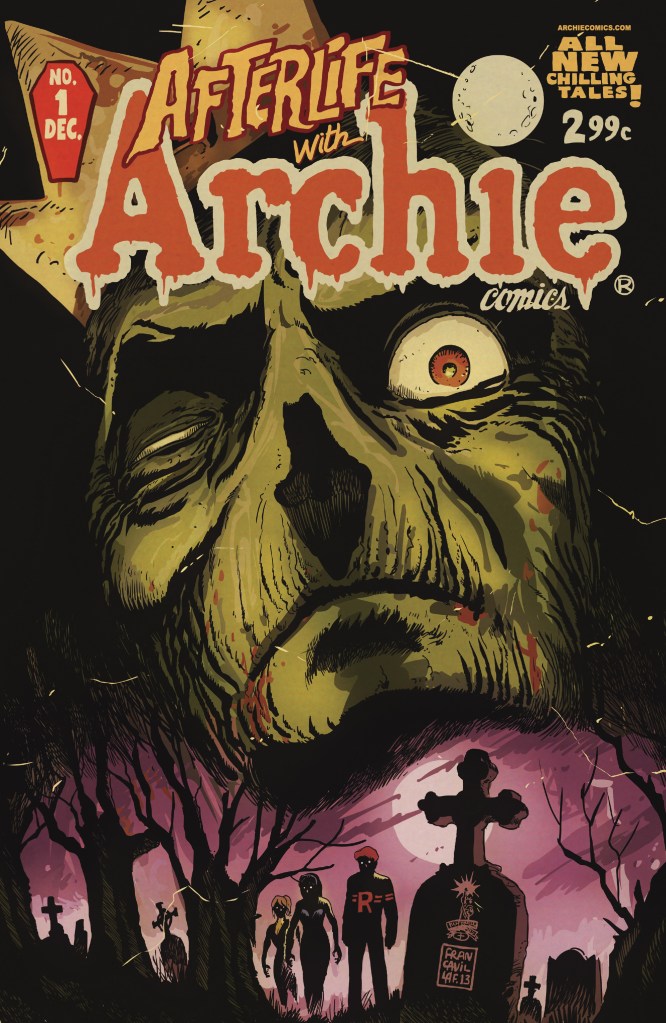
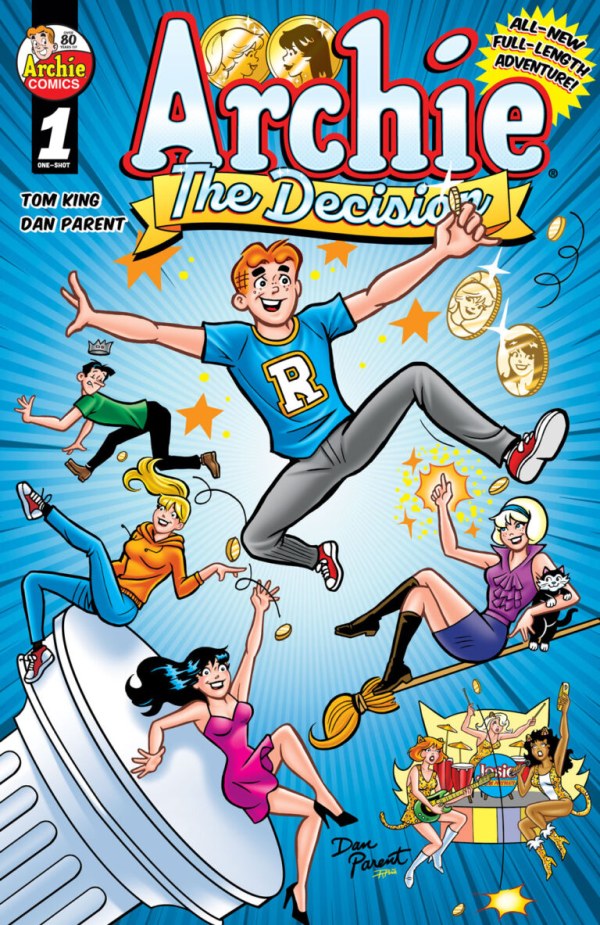
But more pertinent today is the fact that Oni is also going to release new archive and paperback editions of classic Archie stories. Earlier this week, they announced what some of those will be, including a hardcover edition of Tom King’s Archie: The Decision, omnibus collections of Archie: The Married Life, and a “definitive” edition of the horror title Afterlife With Archie. I just have to say, it is audacious as heck to produce a “definitive” edition of a comic book series that was never finished because the writer got distracted by working on the Riverdale TV show.

“So is the ‘Deluxe Edition’ going to have an ending?”
“HAHAHAHAHA! No.”

But that’s not all! Oni also announced three new collections of the “New Riverdale” comics from about a decade ago, reprinting the Archie, Sabrina, and Jughead titles from that era. And these New Riverdale collections will all be in their nifty and acclaimed Compact Comics format!

Hold on a second… “Compact Comics.” That sounds familiar.

Haven’t I seen you somewhere before?

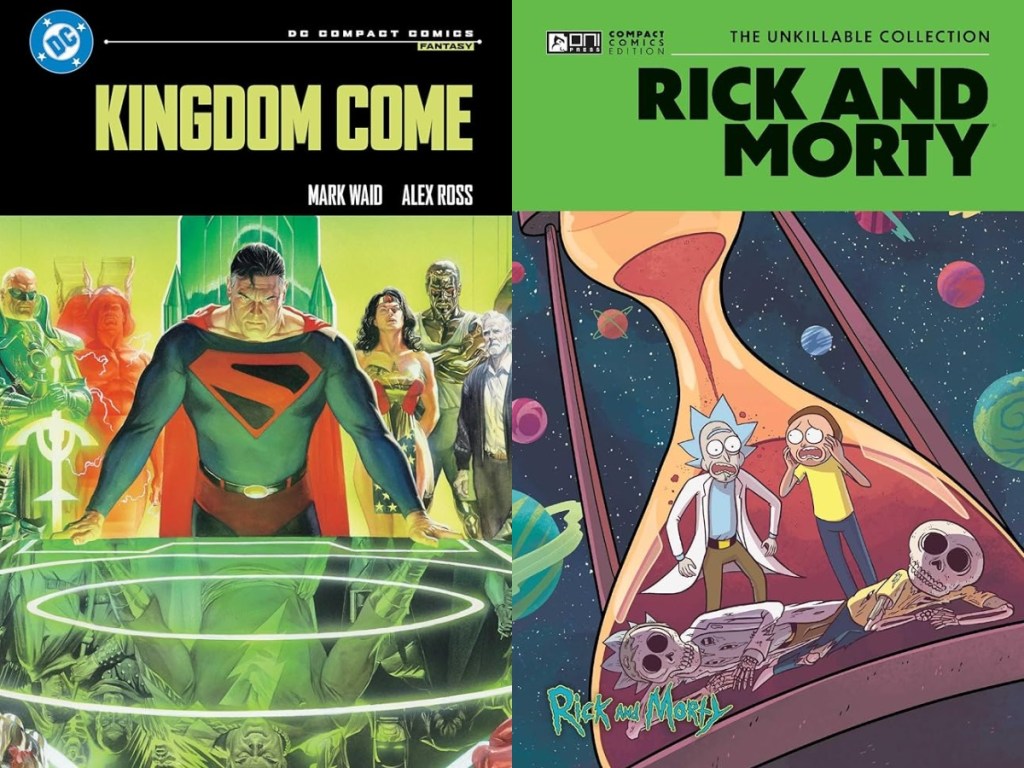
Oh yeah! It’s familiar because DC Comics launched that format back in 2024. DC’s Compact Comics are a format just slightly larger than a mass market paperback book. The series was introduced in an attempt to grab readers who otherwise might not be in a comic shop or want to carry around a full-size graphic novel. (I talked about it in GP #119: It’s the Little Things, and I suggested future titles DC could give the Compact Comics treatment in GP #124: Compact These!) DC was the first comic publisher – in the modern era, anyway – to make a major push in this digest sized-market, and with books collecting anywhere from a single 120-page graphic novel to over 400 pages of a series for only $9.99, the line has become a smash hit. By the end of this year, DC will have 37 different titles available, ranging from perennial classics like Batman: The Dark Knight Returns and Kingdom Come to newer acclaimed series like Far Sector and Supergirl: Woman of Tomorrow (The latter, coincidentally, happens to be the basis for this summer’s Supergirl movie. Funny how that works out, isn’t it?)

Now it’s true that success in any field of entertainment, comic books included, will inevitably inspire imitators, so once DC’s Compact Comics made a splash it was only a matter of time before other companies got into the game. Marvel joined the fray with their “Premiere Collection,” books that are slightly larger than DC’s and at a slightly higher price point ($14.99 instead of $9.99). Boom! Studios will also join in next month with the first “Compact Edition” of their popular Mighty Morphin Power Rangers series, also at $14.99. Oni, however, is even bolder than these two. Their Compact Comics line not only copies DC’s name, price point, and publishing dimensions, but even the trade dress is, save for the color scheme, almost identical to DC’s. Looking at an Oni Compact Comic and a DC Compact Comic, someone who doesn’t know anything about the respective companies could easily be forgiven for thinking they were released by the same publisher.

“Can I copy your homework?”
“Fine, but change it a little so the teacher doesn’t notice.”

Now don’t get me wrong, I really don’t object to any of this. I love the Compact Comics format and, as I’ve said before, I would be perfectly happy if this became the default collected format for most comic books. It’s more appealing to the casual reader, and provides an easier way to break into markets outside of the realm of die-hard fans, like drugstore bookshelves or airport shops. And as much as I dislike movie tie-in covers, DC could be forgiven if they were to release a print of the Woman of Tomorrow book with a photo of Milly Alcock on the cover and a sticker that says something like “the graphic novel that inspired the DC Studios movie!” Hardcovers, archive editions, and “deluxe” editions in the larger format are fine, of course, but if all you want is to read the story, you can’t beat this style. I am just amused by how flagrantly Oni ran with DC’s success.

As for the future of Archie – I’m very glad that they’ve found a partner to help them stay alive. And I hope that this first wave of books is enough of a success to justify future waves. As I said, the “New Riverdale” stuff isn’t really my bag, but in the future I would love to see more books in the Compact Comics format – classic Archie, of course, would be the bee’s knees. But I would also like to see some of the less traditional stuff, like Archie’s Red Circle heroes, the Mighty Crusaders – even the Impact Comics versions of those characters that were published (coincidentally) by DC back in the 90s but haven’t been seen since. 

Archie’s back library is vast and varied, even though the tales of the gang from Riverdale are their bread and butter. Having them in a good, readable, sharable format is a great thing. Here’s hoping this first wave is a huge hit so that we can all get more.

Blake M. Petit is a writer, teacher, and dad from Ama, Louisiana. His most recent writing project is the superhero adventure series Other People’s Heroes: Little Stars, volume one of which is now available on Amazon. You can subscribe to his newsletter by clicking right here. He’s also started putting his LitReel videos on TikTok. He’s waiting for the Compact Comics version of Jughead’s Diner. Go ahead, Google it. It’s a thing. 

Geek Punditry #138: Riverdale in Crisis

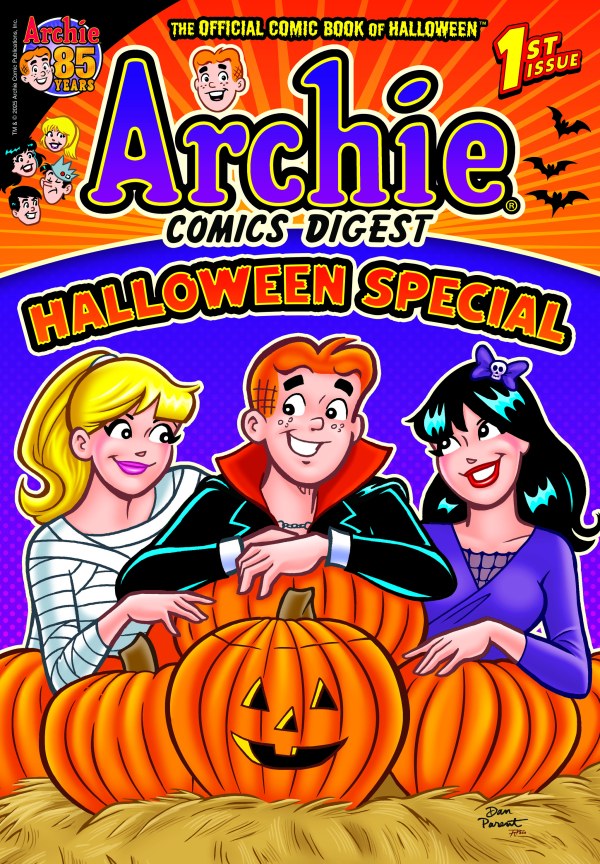
It’s a dark time for America’s Favorite Teenager. After 50 years of continuous publication, Archie Comics has ended its traditional digest comics program. Once a mainstay of supermarket and drugstore magazine racks, these little pocket-sized volumes were long considered the best value in comics, giving you hundreds of pages of Archie stories – usually a mixture of new stories and reprints – for a bargain price. Even when the price rose to $9.99 a few years ago, ten bucks for nearly 200 pages is a great deal compared to most other comics, which tend to run $3.99 or $4.99 for a page count that usually ends in the twenties. What’s worse is what the Archie digests have been replaced with: a new series of “seasonal” digests, beginning with a Halloween special, that are slightly taller than the previous digests and have half the pages, but maintain the $9.99 price point.

Surprisingly, this week’s column is not actually about Halloween.

Going from 196 pages down to 96 for the same price? It’s still more story than most comics, I grant you that, but it’s also a bit of a slap in the face to the readers.

I grew up reading Archie Comics. I loved the exploits of Archie and Jughead, I reviled the loathsome Reggie Mantle, I could not fathom why Archie wasted so much time on Veronica when Betty was clearly the better choice. And I was joining a long string of readers that went back to the 1940s, filling in all the eras in-between. My mom was never interested when I was reading X-Men or ShadowHawk, but she was an Archie reader from way back, and we even talked about them together sometimes. My sister only ever read two categories of comic books: Archie and Star Trek. This was a company with generations of fans and without the stigma of being “just for boys” that the superhero world often faced..

But that’s the problem, isn’t it? “Was.” There aren’t enough fans anymore. There was a time not too long ago when Archie Comics were the best-selling comics in America. The official sales numbers rarely reflected this, of course, as the comic book best-seller charts were based solely on the sales of Diamond Distribution to comic book stores and didn’t factor in sales in other markets, which is where Archie did the bulk of their business. But those newsstand sales have fallen precipitously, and the bankruptcy of Diamond itself has caused an upheaval in the comic book world that has many publishers flailing in an effort to figure out what to do next.

Archie has bigger problems than even that, though. With the exception of the digests, Archie hasn’t published monthly comics in several years, and their output of new stories has been reduced to a trickle. Most Archie comics these days come in one of three categories:

One-shot comics built around a theme (like sports or video games) or holidays (like Halloween and Christmas). These comics usually have one new story and several reprints. The biggest problem here is that the new stories are frequently a mere FIVE pages, hardly worth the asking price. What’s more, Archie has fallen into the speculator trap in two ways. First, they load these books up with an obscene number of variant covers. I’m not a huge fan of variants in general, but I particularly dislike them in comics that should theoretically be aimed at kids, because a kid might not realize they’re buying the same comic over and over again. The other issue is that Archie often touts these one-shots as being the “first appearance” of a new character – a relative of one of the existing characters, a new kid in school, two weird little apparitions that function as Halloween sprites, and so forth. The conventional wisdom here is that speculators will snap up “first appearances” in the hopes that the new character will take off, making their first appearance valuable on the secondary market. But with no new comics being published in which these new characters are allowed to grow and star in stories and build a fan base, who the hell is ever going to care where their first appearance was? 

“Introducing DAISY THUNDER! Wow, buy TWELVE copies!”

The second kind of book Archie is publishing is the (very) occasional “special” issue, such as the recent Archie Meets Jay and Silent Bob one-shot or last year’s Archie: The Decision. The former has the wholesome Riverdale gang meet the foul-mouthed denizens of Kevin Smith’s View Askew films, and in fact, the book was written by Smith himself. The clash of worlds is an amusing idea, but it’s something that primarily only appeals to existing fans of Kevin Smith, which is to say, people around my age. This isn’t a book you can – or should – give to your kids to get them into Archie. The Decision, meanwhile, was a special written by comic book superstar Tom King (he wrote the graphic novel that they’re making into a Supergirl movie right now, as a point of interest), and was advertised as being the story in which Archie FINALLY, after all these decades, would decide which girl he wanted to be with: Betty or Veronica. Spoiler alert: he didn’t decide.

This was the biggest tease since that Craig Ferguson movie.

The last category of Archie comics is the facsimile editions, something that lots of other publishers have been doing. These reprint classic comics, complete with the original cover, letter columns, ads, and everything else. It’s a cute idea, and I really have no issue with Archie indulging in this, except for the problem I have with EVERYBODY’s facsimile editions: variant covers. What’s the point of a facsimile with a different cover than the original? It’s no longer a facsimile, is it? (That’s a facetious question, of course. All variants are done for the same reason: to get people to buy multiple copies, a short-term boost, rather than the healthier strategy trying to get more PEOPLE to buy at least ONE copy.) 

There are the occasional others – maybe one or two miniseries a year that come, go, and are quickly forgotten. But with this meager output, it’s no wonder that Archie’s fanbase has collapsed. There are a lot of people reading this right now who are probably surprised to find out that Archie is still in business AT ALL. As kids’ attentions have shifted from written material like comics to electronic entertainment like video games and YouTube, the original pool of fans that Archie was created for has evaporated. Pre-existing, older fans drift away because it’s just “kid stuff.” And nobody is filling the void.

Not to say Archie hasn’t had chances, but they’ve squandered them. In 2013, for example, they had a hit comic with Afterlife With Archie, a straight-up horror series featuring more “mature” versions of their classic characters in the midst of a zombie apocalypse. The book was huge and it spawned a whole line of Archie Horror, with other titles starring Jughead as a werewolf, Veronica as a vampire, and Sabrina the not-so-kid-friendly Teenage Witch. But the book that launched the line, Afterlife, frittered away, putting out only 10 issues over the next three years and then vanishing when the writer, Roberto Aguirre-Sacasa, moved his career focus from comics to writing for television. The series was left unfinished, and it’s hard to even recommend it to new readers, knowing that the story has no conclusion.

“This is great! Where’s the rest of it?”
“Remember when you told me to watch Firefly? Well now we’re even.”

Ironically, Aguirre-Sacasa’s TV career involved another missed opportunity for Archie, developing the TV show Riverdale. This was a much more adult soap opera type of story starring the Archie characters, and although I was never a fan, I could appreciate just how big of a hit it was. I routinely had students in my classroom during the years that the show was on the air who discussed Archie, Betty, and Veronica the same way they did the likes of any other popular series. But if they were even aware of these characters’ comic book heritage, they didn’t care. Once, when I bought one of those aforementioned digests while grocery shopping, the cashier saw an ad for Riverdale on the back cover and started talking about how much he loved the show, going on about which characters he hated and which ones he shipped. But when he flipped the book over and saw the more traditional Archie characters on the front cover, he may as well have been staring into outer space. As popular as the show was, Archie Comics did nothing to capitalize on that while it was on the air, and now the opportunity has passed.

The point of all this is that Archie is in serious trouble. Trouble that I don’t even know if they can get out of, at least not alone. But I do have a few ideas. Could any of them work? I really don’t know, I’m not a businessman or an expert on markets or anything like that. But I’ll tell you this much: they’re at least better than doing NOTHING.

The first thing Archie needs to do is rededicate itself to actually putting out new material. And I don’t mean the occasional one-shot, they need to get into the monthly comic book game again. I would start small, giving the line four comics a month: the stalwarts Archie, Jughead, and Betty and Veronica, with the fourth spot being left open for themed one-shots, holiday specials, crossovers and the like. But these should most definitely NOT be the reprint-fests that we’ve gotten the last few years. Reprints are okay, especially for a property like Archie where the classic stories are somewhat evergreen and can both entertain (potential) new readers and charm the older readers who enjoy seeing them again. But they should NEVER be the primary focus of a four dollar comic book. New material should make up at MINIMUM half of each issue, preferably more. 

As far as the stories themselves, I think Archie should split the difference between the old-school comedic quickies and the soap opera. Keep the comics fun and lighthearted, but allow for ongoing storylines and character growth as well. Make the stories a little more sophisticated, and you’ll hold on to readers longer. You can still do one-off gag comics as backups if you really need to scratch that itch. 

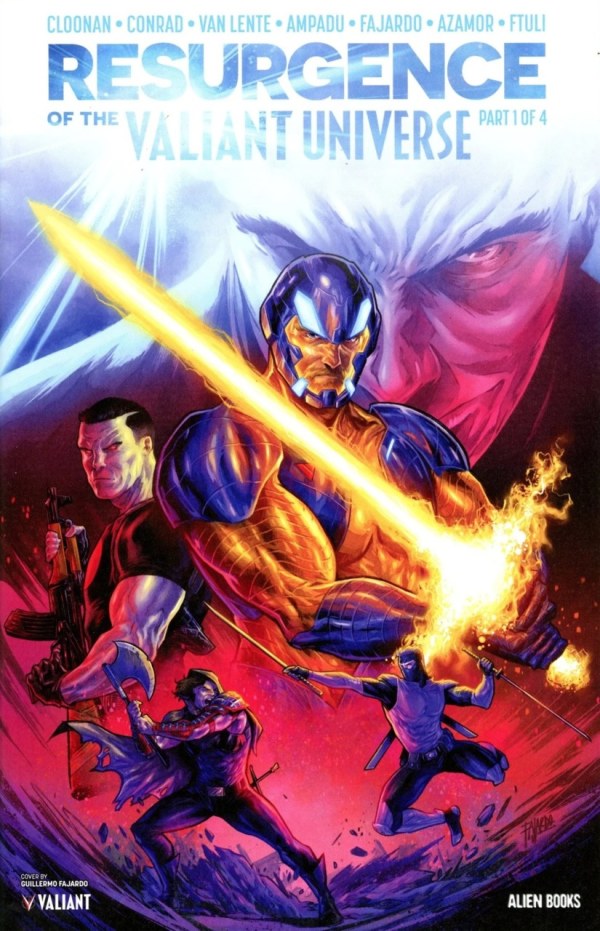
Second, I think Archie needs a partner. Over the last several years Valiant Comics went through similar problems as Archie is having, with mismanagement and poor decisions killing their brand. Valiant is in something of a rebuilding stage, which they accomplished by partnering with another publisher, Alien Books. Although still two different companies, Valiant publishes through Alien and the Alien logo appears with the Valiant logo on their covers. Valiant handles the production; Alien handles the publishing. So far it seems to be working fairly well. If Archie is struggling on this end, then a similar arrangement with another publisher might be beneficial for them.

See? They had a resurgence and everything.

The Diamond bankruptcy hit everybody as well, making it harder to get comics on the racks, and those companies that had not done so already started to sign contracts with other publishers and distributors to get their books out again. Once again, Alien and Valiant found a lifeline by turning to another publisher, this time IDW, to utilize their distribution system. Now the Alien and Valiant comics appear in the IDW catalogue that comes out in comic shops every month. Partnering with a larger publisher, once more, would help Archie solve this distribution problem.

But what if the problems are deeper than that? Having never been around the Archie offices, I don’t really know what caused the domino chain that led to their current situation, and it’s possible that there needs to be a complete overhaul. So if things are THAT bad, here’s the nuclear option:

Sell Archie Comics to another publisher.

I know, that sounds huge, and it would be a last resort. But if it’s the only way for the characters to survive, I would find that preferable than letting them die. 

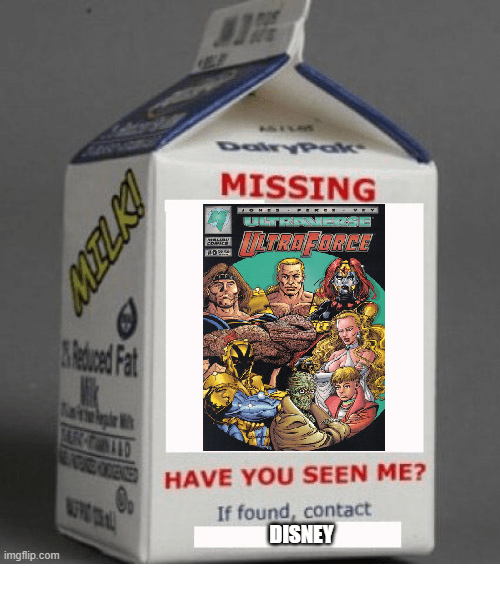
Way back in the days of the late, lamented Comixtreme website, I once wrote a column pondering – just in a “what if?” fashion – what would happen if Archie was purchased by DC Comics. Now I’m coming at this from the perspective that it may be exactly what Archie NEEDS. Why DC specifically? Well, DC has a long history of buying up characters from other publishers, and while the popularity of them may wax and wane, the characters from the former Fawcett Comics (such as the Shazam! family), Charlton Comics (Peacemaker, the Blue Beetle, the Question), Quality Comics (Plastic Man, Uncle Sam, the Freedom Fighters) and Wildstorm Comics (WildC.A.T.S., the Authority) all still show up on a fairly regular basis. They haven’t been utterly forgotten like SOME universes I could mention after they were purchased by OTHER publishers I could also mention, and here I would like you to imagine the sound of me coughing whilst squeezing in the words “Ultraverse” and “Marvel” into my hacking fit. 

Why yes, I am too cheap to pay to remove the imgflip watermark, thanks for noticing.

Archie could also fill in a void in DC’s line. They’ve got a robust program of graphic novels for younger readers, which is awesome, but their regular comic books for kids have somewhat dried up. Last year they quietly cancelled their long-running Looney Tunes and Scooby-Doo comics, leaving only Teen Titans Go as a regular DC comic for kids. Archie could fill in there. Furthermore, DC’s multiverse is pretty healthy these days and could easily find room for all the different flavors of Archie. The “Classic” comics could be on one Earth, the more soap opera-y comics from the last decade or so could be another, the horror comics could fill a few more. Heck, they could even print Archie Horror under the Black Label umbrella.

Then there are the Archie superhero comics to consider, the Red Circle heroes. Archie has had superheroes for as long as anybody else, with characters like the Comet, the Fly, and the Black Hood. Hell, Archie even beat Marvel to the punch with the first patriotic superhero, the Shield. Those characters eventually faded after World War II like most other superheroes, but Archie has made many attempts to bring them back over the years, and some of them have been really good.

What’s more, DC has partnered with Archie TWICE in the past to revive the Red Circle heroes, with the Impact Comics universe in the 1990s, then by briefly incorporating them into the DC Universe itself in the late 00s. We could include those worlds as well: the “original” Red Circlers could have their own Earth, the Impact versions could have another, and new, updated versions could be introduced into the DCU. 

You got YOUR Multiverse, we got OURS.

Of course, not being a businessman (you can tell from all the business I fail to do), I haven’t got the foggiest notion how much money it would cost to purchase Archie Comics outright. I do know, however, that DC’s parent company Warner Bros. is in something of a chaotic state itself at the moment, so that’s probably not something that would be particularly high on their agenda. If a purchase is out of the cards, then perhaps a long-term licensing agreement like DC has with Milestone Media could accomplish the same purpose. 

And DC isn’t the only game in town (although I think it would probably be BEST for Archie, should it come to that). There are other publishers with whom they could work out similar arrangements. But it’s at a point where Archie fans are grasping at straws, hoping for anything to keep the characters alive. Something has to be done, and quickly, or Riverdale High School may finally close its doors for good.

And seriously, where is Mr. Weatherbee going to find a new job at his age?

ADDENDUM: After I finished writing this column but before I posted it, Archie Comics happened to make a fairly big announcement: the aforementioned Tom King is apparently working on a new Archie feature film with Universal Studios. This is good news, and I sincerely hope that the movie is a hit, but I don’t think it’ll alleviate any of the problems I’ve been talking about. Getting people to follow the characters to the comic books is the goal here, and historically, very few movies have actually done that. Then again, who knows? Maybe Mr. King’s Archie movie will be the exception. 

Blake M. Petit is a writer, teacher, and dad from Ama, Louisiana. His most recent writing project is the superhero adventure series Other People’s Heroes: Little Stars, volume one of which is now available on Amazon. You can subscribe to his newsletter by clicking right here. He’s also started putting his LitReel videos on TikTok. He’s still holding out hope for the Jughead Vs. Joey Chestnut one-shot.