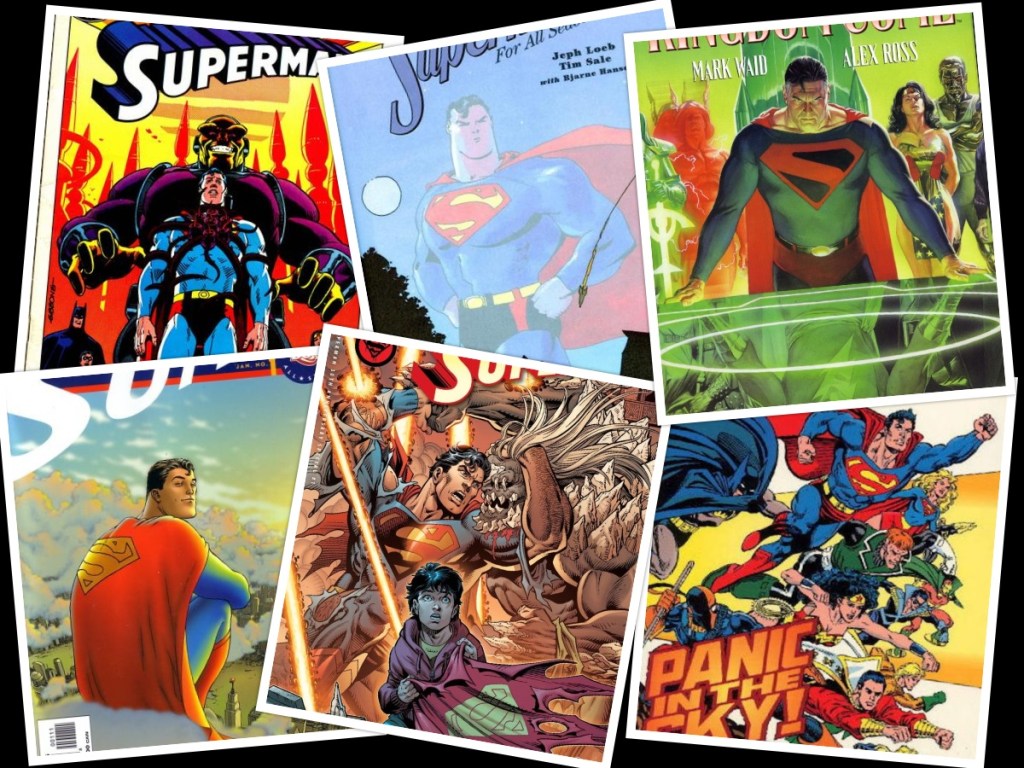
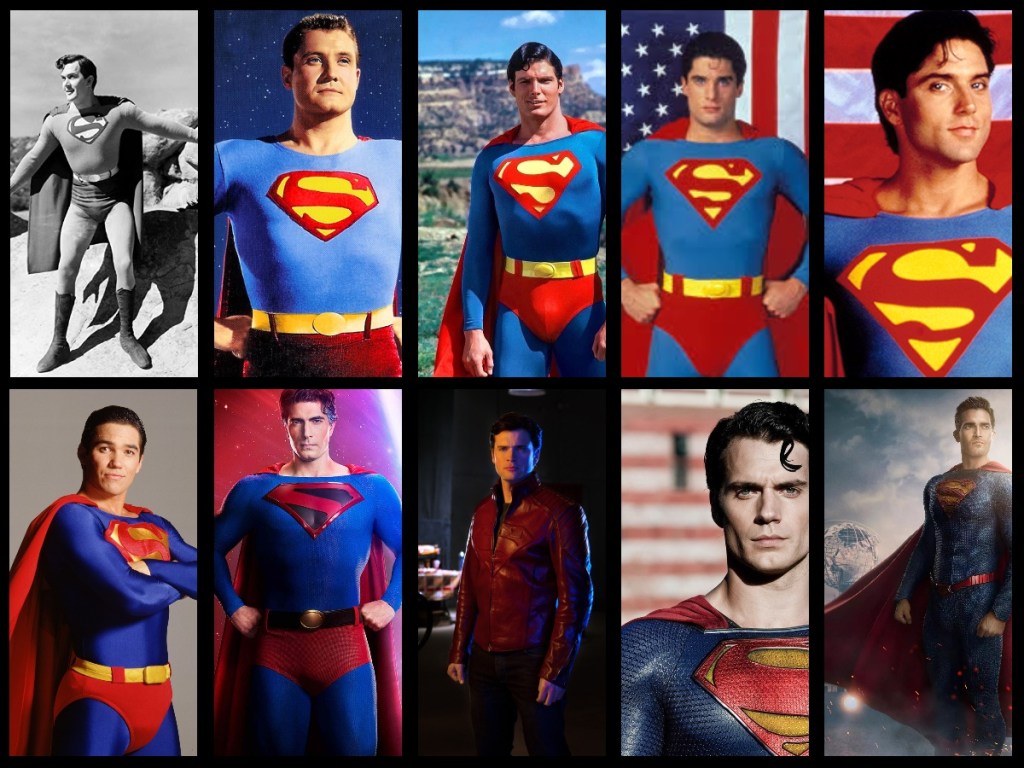
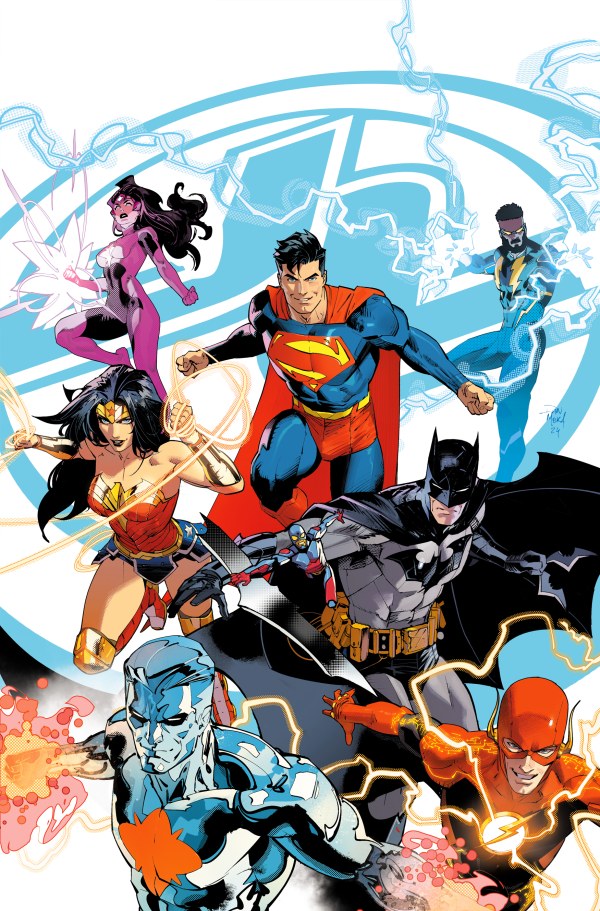
Year of Superman Week Nine: The Beginning of the End…

As I have said many times, the golden age of Superman comics – for me at least – was the late 80s and early 90s, the period we now wax nostalgically for as the “Triangle Era.” I could honestly have just spent this year reading John Byrne’s Man of Steel miniseries (that’s still coming – at some point I’m going to do an “origins” week) and then continuing on until the triangles ended ‘round about 2000 or so. But instead, I made a list of some of the most important stories and high points of the time and, those that don’t necessarily fit into another theme I have planned, I’m trying to hit in roughly chronological order. And as of now, I’m only planning to read two of the longer storylines from the era (although I reserve the right to add more later if I feel I’ve got the room), and having moved forward appropriately in the timeline, it’s time to get into one of the defining storylines of the character. 

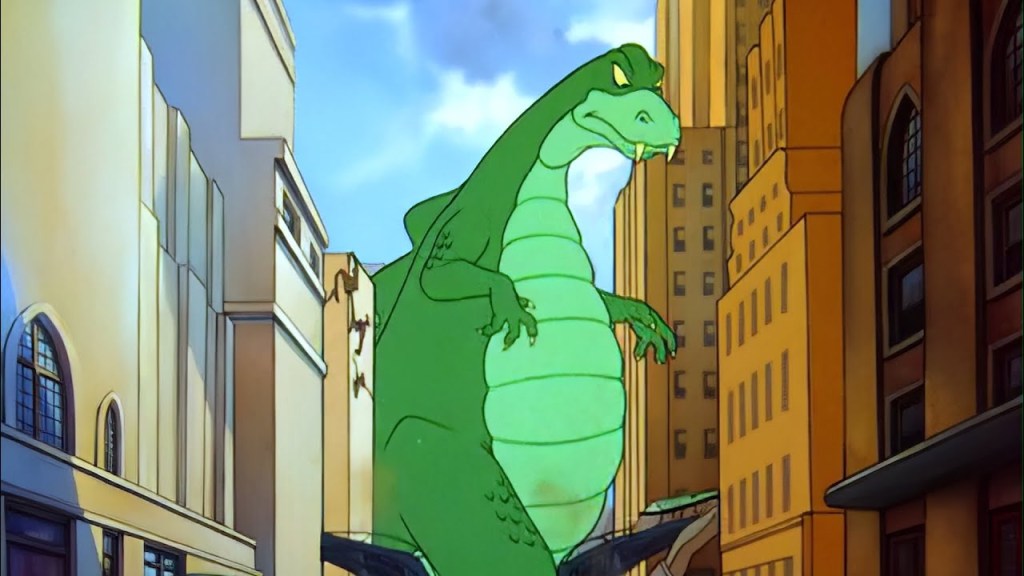
It’s October of 1992. I’m a 10th grade student with a subscription to the four Superman comics, eagerly awaiting their arrival each week and getting pretty darn mad when the US Postal service delivers them out of order (which happened, I must tell you, more than once). And even though I knew it was coming, even though it had been bandied about on TV and in newspapers for weeks prior to the beginning of the story, I didn’t know if I was really prepared for the story that — at the time – was called “Doomsday,” but that these days we typically refer to as “The Death of Superman.”

This was pretty much all I thought about for two months in the fall of 1992.

Wed., Feb. 26

Comics: Superman: The Man of Steel #18, Justice League America #69, Superman Vol. 2 #74, Adventures of Superman #497, Action Comics #684, Superman: The Man of Steel #19, Superman Vol. 2 #75

Notes: After a month of one-page prologues, the creature who would be known as Doomsday burst free from his subterranean prison in Man of Steel #18, and spends this issue stomping through the countryside, ripping up landscape and crushing animals before finding civilization. But the surprising thing, if you’re reading this for the first time, may be that Doomsday is the B-plot of this first issue. Most of the pages are used to deal with a running story from this particular series regarding a community of monsters in Metropolis’s underground. In the 90s, although the four separate Superman comics of the era continued into one another each week, each series tended to have its own subplots and stories to focus on, including the Underworlders. This issue also features Keith, an orphan who has befriended Superman and hopes to find his lost mother, and who would eventually be adopted by Perry and Alice White. 

I really love the Keith sequences in particular. The creative team on this book of Louise Simonson and Jon Bogdanove had previously done a wonderful run together on Marvel’s Power Pack, a comic book about a group of brothers and sisters who are all given powers by a benevolent alien. It was one of Marvel’s best comics of the era, and whenever Simonson writes children she brings a really authentic feel to them. Her children are inexperienced and naive at times, but never stupid or foolish. There is an inherent realism to her kids that I absolutely love. Keith was out of focus in the comics for a very long time, and with all the reboots that have happened over the years I wasn’t even sure he still existed in the DCU until recently, when Perry White was running for mayor and Keith showed up at an event with him. I hope, now that Perry is the mayor of Metropolis, we see a little more of Keith White.

Next up was what essentially was the end of Superman’s tenure with the Justice League, which had begun only nine issues before. The JLA is called in to stop Doomsday’s rampage, but Superman is on live TV doing an interview on the Cat Grant show and unaware of their battle, leaving his teammates to face the beast without their most powerful member. As Superman talks to a group of high school students, the League – if we’re being candid – gets their asses handed to them. Guy Gardner is hurt, Bloodwynd is chucked into a fire, and Blue Beetle is rendered comatose just as he was about to crack the mystery of who Bloodwynd really is. (If you remember a few weeks ago from the Justice League issues I read, that was Beetle’s primary preoccupation in this period, and if I may toot my own horn a mite, I remember solving that mystery myself when I read this issue, using the same clue that made it click for Blue Beetle. It wasn’t confirmed in the comics for several months, though.) The fight is intense, and rolls right into the next issue of Superman, #74. 

In fact, this was a running theme through the rest of this storyline. Each issue from this point on flowed seamlessly into the next and, starting with Adventures of Superman #497, each issue began to reduce the number of panels per page. Every page in that issue had four panels, the next three, then two, and in the final chapter the entire issue is told in full-page splash panels. What this does, essentially, is give the story a sense of ACCELERATION. Fewer panels means the story goes more quickly, each issue faster than the last, until we get to the final showdown on the streets of Metropolis in Superman #75. 

Superman #74: Superman joins the League to take on Doomsday. In the battle, Booster’s power suit is destroyed, Fire burns out her powers, Guy Gardner’s face is swollen so badly he can’t see, and Ice and Bloodwynd are taken down. The only one to escape unscathed is Maxima, and only because she leaves early to bring the near-death Blue Beetle to a hospital. 

Adventures of Superman #497: When Superman has to go back to rescue a family and his teammates from the house Doomsday destroyed in the previous issue, he gets a head start and starts creating havoc, taking down military helicopters and smashing into a small town before Superman can catch up to him. Supergirl (the Matrix version) sees the destruction on TV and wants to help, but her boyfriend Lex Luthor Jr. (long story, just read the Wikipedia explanation) holds her back. Maxima returns but is taken out in short order, and Superman vows to defeat the beast alone. 

Action Comics #684: The fight with Doomsday crashes into a department store, where a TV ad for an upcoming pro wrestling match at the Metropolis Area causes the beast to take notice of his destination: “Mhh-Trr-Plss…” A road sign that matches the advertisement points him towards Superman’s city as the Daily Planet helicopter – carrying Lois Lane and Jimmy Olsen – arrives to report on the carnage. The battle destroys an abandoned territory called Habitat, but the creature escapes and bounds towards Metropolis.

What it feels like being a teacher the week before a holiday.

Superman: The Man of Steel #19: Doomsday arrives in Metropolis. Cameras broadcast the battle across the world, including Smallville, where the Kents watch their son’s battle for his life on television. Supergirl finally is sent to help, but one blow from Doomsday disrupts her synthetic body and takes her out. Emil Hamilton and Bibbo (perhaps the greatest supporting character ever) bring a laser cannon to the roof to try to help, but to no avail. The Metropolis Special Crimes Unit open fire with everything they have, but they don’t even chip his hide. And in the end, Superman vows to draw the line in Metropolis.

When I read this story in high school, this issue was a great fight scene, sure, but like so many things it hits different for me now, as a parent. It seems quite telling to me that most people, like Jimmy, have the attitude that he’ll be OKAY. He’s SUPERMAN. He always comes out of it okay. But his parents, Jonathan and Martha, voice the fears of parents: “They don’t think anything bad can really happen to him.” The implication, obviously, is that the Jimmys of the world are wrong…and wrong he is.

Superman #75: The end. 

I remember distinctly the day this issue arrived in the mail. I got home from school before either of my parents got home from work, before the school bus dropped off my younger brother and sister, and I found this issue sitting in the mailbox. I brought it into the house, didn’t turn on the TV, didn’t even turn on the lights. The window in the living room gave me all the sunlight I needed as I slit open the plastic bag and opened the pages to witness the end of Earth’s greatest hero in quiet and solitude.

The story is swift, as befits an issue where every page is a single panel. Superman and Doomsday tear through Metropolis, trading blows until finally, with one last all-powerful punch, each of them collapse on the street. Lois rushes to his side and cradles him, his last words asking if Doomsday is defeated, his last thought for the city he was trying to protect, before the light fades from his eyes.

Yeah, I will admit, I cried when I read that. I still get misty today, even knowing that this was just the beginning of a much longer storyline it still hits like a kick to the gut. And even in 1992, when this was released, nobody really believed that Superman would stay dead. It was a story, and at the end of the story the status quo would be restored. That’s how these things went. 

It didn’t make it hurt any less.

This BROKE me.

And that’s what makes it one of the all-time great comic book epics, that I can read it again today and still feel that pang of loss I had when I was 15 years old. 

Man, this is a heavy way to start the week.

Thur., Feb. 27

When I woke up this morning, I went through my usual routine of showering, dressing, getting together a lunch for work, and then popping online for a few minutes until it was time to leave. Usually I want to see what the weather is going to be, if there’s any traffic snarls I should be aware of, that sort of thing.

I did not expect to begin the day with the news of the death of Gene Hackman.
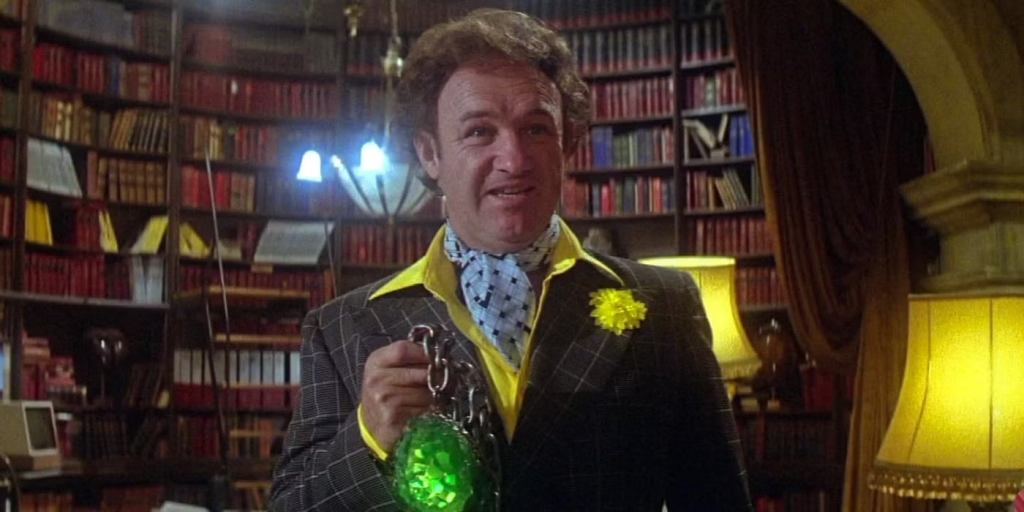
1930-2025

Hackman, of course, was a legendary actor, known for countless roles in dozens of classic films, but to me (and, I suspect, most people around my age) he is indelibly linked to the role of Lex Luthor. His Luthor was smooth, slimy, cheerfully manipulative and yet prone to brief outbursts of rage when faced with incompetence, which makes you wonder why he so often surrounded himself with incompetence. As much as Christopher Reeve shaped our perception of Superman and Margot Kidder our Lois Lane, so too did Gene Hackman shape our Lex Luthor.

As of when I write this, Thursday morning, the news is reporting that Hackman, his wife, and their dog were all found dead in their home in Arizona. Although foul play is not suspected, no cause of death has been determined. It goes without saying that my heart goes out to their families, those who knew and loved them personally. But also, it feels like a moment to raise a glass in tribute as another little piece of our childhood has left us forever. And at my age, it feels like we lose one of those pieces every other day. 

RIP, Mr. Hackman. See you in Otisburg. 

Comics: Death of Superman 30th Anniversary Special #1

Ah yes, “Death,” the traditional 30th anniversary theme.

Notes: Am I going a little out of order? Absolutely. But it feels more appropriate to read this now than to do so chronologically. In 2022, DC released this special with new stories by the same writers and artists behind the original Death of Superman event, followed up the next year with a special for the 30th anniversary of his return. I’ll get to that one too.

In the first story, Lois and Clark’s son Jon (still 10 years old, this is set before the Bendis aging controversy) in school when a familiar survivor of the Doomsday attack comes to talk to his class. This, as it turns out, is the first time Jon learns that his father died before Jon was born. I love this story – Lois’s talk with Jon is a nice sort of postmortem for everybody who read that story back when it was first published, encapsulating the feeling and emotion of the day while maintaining a bit of hope for the future. But as if that weren’t enough, we get a hell of a fight scene as well, as a construction worker who kept a chunk of Doomsday’s shattered bone all these years is suddenly transformed into a new version of the monster. The battle scene in the streets of Metropolis is pretty epic, and shows that Dan Jurgens hasn’t lost a step. It could have been published in 1992 and fit right in. It just makes it feel like more and more of a crime that he was bumped from Action Comics after issue #1000 when the status quo was upended. DC, I plead with you, find some way to have Jurgens writing and drawing Superman regularly again, preferably doing stories of Lois, Clark, and Jon in the past, like this one.

We also get three more stories, the first reuniting Adventures of Superman creators Jerry Ordway and Tom Grummett for a focus on Jonathan and Martha Kent. In the original “Death of Superman” we saw glimpses of the two of them watching the fight on TV. This story expands upon that, as they talk about some of the dark places and brutal battles their son had been in over the years. It’s a pretty good recap of the ‘86-’92 era of Superman through the eyes of the people who made Clark Kent the hero that he is. Martha’s Superman scrapbook is legendary, but this issue takes that concept one step further, showing the invisible impact Superman has on the world. It’s a really nice look at the character from a different angle. 

The third story brings back Roger Stern and Butch Guice, then the creative team on Action Comics, for a story starring Guardian at Project Cadmus, which was one of their ongoing subplot. The story shows the events of the day of Superman’s death from Guardian’s perspective, and although it doesn’t really offer any new insight into the story, it’s really great to see Guardian, Dubbilex, Dan Turpin, and some of the characters that were so important to the books at the time.

Finally, Man of Steel creators Louise Simonson and Jon Bogdanove return for a story about John Henry Irons, the man who will be Steel, and what happened to him during the Doomsday rampage. Having recently been saved from falling to his death by Superman, John Henry is determined to help him fight Doomsday, but as he follows the path of destruction, he find himself stopping at one disaster after another, pausing to save other people even as Superman fights for his life. This is why I love John Henry as a character so much – out of the four “new” Supermen that rose after his death, he was always the one who most embodied the spirit of Superman. With no powers, no weapons, without even the armor he would soon build, John Henry risks his life again and again to save others. And that’s what a Superman is for. 

Fri., Feb. 28

Legitimately some of the best stories of the era.

Comics: Justice League America #70, Adventures of Superman #498, Action Comics #685, Superman: The Man of Steel #20, Superman Vol. 2 #76, Adventures of Superman #499, Action Comics #686, Superman: The Man of Steel #21, Superman Vol. 2 #77

Notes: Although I can’t recall quite where, I remember reading an interview once with the creators behind the Death of Superman saga where one of them (probably Dan Jurgens) said that the stories that they were really interested in telling, the ones they found most compelling, were those from the “Funeral For a Friend” storyline. How does the world cope with the loss of Superman? How do we move on? How do we choose to honor his memory? The Doomsday story was a necessity to get them to that point, the “Reign of the Supermen” was the necessity to bring him back, but these stories are the heart of the saga.

Justice League America #70 picks up moments after the end of the battle with Doomsday, picking up the same dialogue – even the same narration – from the final pages of Superman #75. (And let’s hear it for Dan Jurgens, getting paid to write the same pages twice. Nice trick, sir!) The League is in a shambles: Blue Beetle comatose, Fire’s powers burned out and not returning, Ice injured, and Booster Gold’s future technology completely destroyed. As they try to pick up the pieces, the rest of the DCU’s heroes begin to assemble at JLA headquarters in New York to pay their respects to the fallen hero. It’s a touching book, with words of deep mourning and emotion that fit the grim day. For all intents and purposes, this was the end of Superman’s tenure with the League until it was restructured a few years later by Grant Morrison, but for what it was and when it was, this was a suitable ending.

Adventures of Superman #498 also picks up on the heels of Superman #75, showing the efforts to resuscitate the Man of Steel, and the ultimate futility of the attempt. This issue takes us everywhere: Supergirl tries to pull herself back together, Gangbuster is angry at himself for not being there, and in Smallville Jonathan and Martha Kent cling to one another and pray for a miracle. Somehow, even now, the thing that hits me hardest is the scene of Bibbo strapping on one of Professor Hamilton’s force field belts so he can withstand the jolt as he tried to hit Superman with hyper-charged defibrillator paddles. Bibbo is just one of those characters that’s too wholesome for the world – a big, gruff bruiser with the brains of a kid and the heart of a prince. The inherent goodness in him, in a man that the world would have cast aside, is what makes him such a perfect member of the Superman supporting cast. He’s another one we don’t see nearly enough nowadays. 

Action Comics #685 picks up that evening, as a Daily Planet extra edition announces the news no one wants to hear: “SUPERMAN–DEAD: METROPOLIS MARVEL KILLED IN ACTION.” Paul Westfield and Project: Cadmus get into a fight with Guardian and Supergirl over the right to claim the body, while everywhere else we see the world beginning to mourn. Meanwhile, at the Daily Planet, people are starting to worry about Lois. In the wake of the fight with Doomsday, thousands of people are missing – and one of them is her fiancé, Clark Kent. When they say that this is the section of the story the creators were most interesting in telling, this is the issue that I always come back to. The final page is one of the single most affecting pages I’ve ever read in a comic book, as Bibbo – having cleared out his bar so he can be alone – gets down on one knee, says a “Hail Mary,” and prays…not for Superman, but for the protection of the world he left behind. 

If this page doesn’t rip at your heart I’m not sure how to talk to you.

Superman: The Man of Steel #20 gives us the funeral. On a rainy day in Metropolis, millions of people line the streets to watch the processional as his body is brought to a hastily-erected monument in Centennial Park. In Kansas, meanwhile, the Kents hold a solemn, quiet ceremony of their own. Again, this issue shows us the impact of Superman on the world – people recalling the times he saved them, Batman deciding to take care of a guy with a bomb “Superman’s way,” and so on. We also get more of those Simonson-written kids that I like so much. 

In issue #76 of Superman, it’s Christmas! Doesn’t quite feel that way, though, with Superman gone. So in his memory the Justice League and a few others gather in Metropolis to carry out one of Superman’s annual traditions – reading and answering letters from people in need. This is a great issue, a sequel to an earlier story where we saw how Superman spends Christmas, and which I’ll no doubt read and write about this December. We also get a pair of subplots: Jimmy Olsen and Bibbo help out Mitch Anderson, the kid whose house Doomsday destroyed, and the Kents come to Metropolis with Lana Lang to hold a private wake with Lois, as four of the only people who knew who Superman really was. 

After this issue the stories take a turn. The immediate aftermath of his death and the period of mourning over, the story now becomes the struggle over his remains. In Adventures #499 we see that Westfield – defeated on the day Superman died – has burrowed into his tomb to steal his body for genetic experimentation. Action Comics #686 shows us that Cadmus is hoping to clone Superman, a storyline that obviously would become prominent later. Superman: The Man of Steel #21 takes us back to Smallville, where Jonathan’s memories of his lost son become overwhelming. In Metropolis, flooding helps Lois uncover the theft of Superman’s body, and takes the story to the front page. Finally, in Superman #77, after Supergirl and Lois recover Superman’s body and put it back where it belongs, Lex Luthor II (Lex pretending to be his own son) takes a moment to gloat in the tomb. In Smallville, though, Jonathan has been rushed to the hospital after collapsing in his field. After an issue of memories of his son, “Funeral For a Friend” ends with a chilling flatline.

The second half of “Funeral For a Friend” isn’t bad at all, but it’s there largely for setup. It plants a lot of seeds that would bear fruit in the upcoming “Reign” storyline. For pure emotional impact, the first half is one tearjerker after another, with a few more coming in the final two issues as Jonathan’s personal grief overtakes him. I know I say this a lot, but reading these issues as a parent makes them far, far more powerful than they were when I was a kid. As painful as it is to see Superman fall, seeing the utter devastation to the father who helped shape him into the hero he is may be the most heartbreaking part of the entire saga. 

Other Comics: Justice League of America #17, New Adventures of Superboy #32

Sat. March 1

Animated Film: The Death of Superman (2018)

Notes: Everywhere else, it’s just Saturday, but here in Louisiana it’s the weekend before Mardi Gras. And while I’m not a particularly enthusiastic paradegoer, my son is, and as such I make the effort to take him. Today was the Krewe of Lul parade, a nice little family-friendly small-town parade local to my community, and even better, I’ve got a cousin who lives on the parade route and always invites us to watch the parade there. It was a great day, and someone on one of the floats threw my son a ridiculously large stuffed snake, which my wife doesn’t yet know about as she had to work today, and I cannot WAIT to see her face when she gets home.

It’s got nothing to do with Superman, but c’mon, LOOK at this thing.

Parades are a little exhausting, though, especially when it’s hot outside, and I’m still a little too sun-dazzled to want to read anything today. So my Year of Superman continues at the moment with the 2018 The Death of Superman animated movie. This was actually the second attempt at animating the story, but as the first condensed the entire trilogy into one film rather than splitting it into two like this one, I’m waiting until after I finish reading the whole thing before I rewatch it. It’ll come soon enough.

Clearly, this is traditional carnival viewing.

This film was made during the period of DC animation where the movies were all set in a single universe largely based on the New 52 incarnations of the characters. As such, the story is tweaked appropriately to make it fit: the Justice League that faces Doomsday is that incarnation of the team rather than the Jurgens-era lineup, for example. And while Lois and Clark weren’t a couple in the New 52 era, here they’re in the early stages of a budding romance. Lois wants to keep their relationship a secret from their coworkers at the Planet, she hasn’t met his parents yet, and – probably most importantly – she does not yet know the secret of his duel identity. Other changes aren’t necessarily New 52 related, but help to condense the story: Doomsday’s coming to Earth, for example, is connected to the disaster that kills Hank Henshaw’s crew and sets him on the path of villainy he’ll occupy in the next movie. 

I’ve always been a fan of the voice cast here. It’s a little bit of stunt casting, placing real-life husband and wife Jerry O’Connell and Rebecca Romijn as Clark and Lois, but I like them both in their assigned roles. Rainn Wilson, meanwhile, is a deliciously wicked Lex Luthor, and Patrick Fabian has always sort of straddled the line between clean-cut and white collar crook, which somehow fits Hank Henshaw very well. We also get Rosario Dawson as a highly convincing Wonder Woman and Nathan Fillion as Hal Jordan, the Green Lantern that a lot of us thought he should have played in live action (although I have every confidence he’ll nail Guy Gardner). 

Pictured: First Officers Jack Ransom of the USS Cerritos and Una Chin-Riley of the USS Enterprise. (Colorized)

There’s a considerable amount of buildup here – it’s almost halfway into the movie before Doomsday’s rampage begins – but I think it’s necessary. This movie leans more heavily on the developing Lois/Clark romance, and that buildup is focused largely on that. We see Clark agonizing over whether to tell her his secret, Diana berating him for not telling Lois who he really is yet, even asking for advice from the soon-to-be-married Barry Allen about his relationship with Iris. That buildup to what should be the happiest moment of their lives, the engagement (and the reveal of the secret) is well-done, and thus when the battle with Doomsday begins and the inevitable happens, the whole thing feels even more tragic. The reveal is handled well too – I love the fact that Lois’s first reaction, once the shock wears off, is “This is so unethical! You’ve been writing stories about yourself!” The emotional resonance echoes after the battle too, as we see the Kents unable to get close to their son’s funeral, then see Bibbo’s beautiful prayer sequence recontextualized into a montage over the city in mourning. 

The animation isn’t my favorite, to be honest. The characters are a bit too blocky, and they’re using the New 52-era designs, which means excessive lines EVERYWHERE, and Superman’s suit is too dark and kind of bland. But once we finally get to the fight with Doomsday it’s brutal and pretty epic. The killing blow is actually far more graphic than I expected, with Superman actually hitting Doomsday hard enough to make his head spin around, and it doesn’t look “cartoony” at all. 

Also, Bibbo is in this movie. So, y’know, I like it. 

Sun. March 2

Comics: Superman Vol. 6 #23, Justice League Unlimited Vol. 2 #4, Power Girl Vol. 3 #18

But certainly, Doomsday must have mellowed out in the last 30 years, right?

Notes: I’m taking a quick break from the Death and Return saga to check in on this week’s new Superman-related titles. First up: Superman Vol. 6 #23, the latest in Joshua Williamson and Dan Mora’s ongoing saga. Doomsday is now the Time Trapper, and his control over the timestream is giving Lois a chance to pause while the contemporary Doomsday and Radiant battle it out in Metropolis as the Superman family tries to hold the line. I like what Williamson is doing here, using the original Death of Superman storyline (so I guess I’m not TOTALLY taking a break) as the framework for this new story, and giving us a neat focus on the characters . There’s a great speech from Lois when she talks about how she wept on the day Superman died, and how her tears may not have been for exactly the reasons one may have expected. It’s not a retcon, but rather a subtle recontextualization of the moment that I think actually works really well. And as usual, Dan Mora is killing it. I can’t say enough good things about his artwork. Over the past few years he’s become probably my favorite current artist in comics, and he’s earning his place on the Superman Mt. Rushmore with the likes of Curt Swan, John Byrne, and Dan Jurgens.

I’m not done with Mora yet, though – he also drew this week’s Justice League Unlimited Vol. 2 #4, this time teamed up with writer Mark Waid. The terrorist group called Inferno is unleashing havoc all over the world, with global fires crippling the Martian Manhunter and perhaps even killing Swamp Thing. In response, Mr. Terrific tries to recruit Alec Holland’s daughter Tefe, while Batman sees to the fallen J’onn J’onzz. Superman’s actual participation in this issue is minimal, appearing in just a few panels helping with the evacuation efforts from the wildfires while the big brains and the magic users try to solve the problem, but that’s actually one of the reasons I like this book so much. Waid has really stacked the deck by including virtually every hero in the DCU. It would be really tempting to still spend most of the time with the Big Guns, but Waid has done a great job crafting a story that allows for the lesser-known characters to rise to the front lines instead of Superman and Wonder Woman to be the A-team every single issue. It may be tangential to my “Year of Superman,” but it’s still maybe the best book DC is publishing right now.

Last but not least, Power Girl Vol. 3 18 continues Leah Williams and David Baldeon’s tale of the housewarming from hell. The grand opening celebration for the new Star building, complete with a bunch of guests from Asgard, is disrupted when a strange barrier traps everyone inside. Superman and Steel (John Henry) try to crack it open from the outside, while inside, Power Girl, Omen, and Steel (Natasha) attempt to get to the bottom of their predicament. This is an issue that feels very much like a middle chapter, incomplete and with a lot of questions. In and of itself, there’s nothing wrong with that, but I don’t know if they structure the story quite enough to get us started before the story begins. We kick it off with the barrier already in place, then after several pages, flash back to how we got there. I don’t object to in medias res, but I don’t know if it really works well for this issue. Hopefully the next chapter of this particular story will clarify things a bit. 

Mon., March 3

Comics: Legacy of Superman #1, Supergirl/Team Luthor Special #1

Notes: After the conclusion of the “Funeral For a Friend” storyline, DC took the rather bold – for the time – step of ceasing publication of the four Superman titles for a few months. They resumed in the spring with Adventures of Superman #500, and I have to give them credit for not doing what they would do today – namely, restart each series with a new first issue. Actually, in the gap they would have published four separate miniseries for the four Supermen who took his place, THEN restarted each series with a new first issue. But I digress. In the gap, they published a few specials about what was happening in Metropolis in the wake of the Death of Superman

Don’t get too attached to that kid in the upper right-hand corner.

Legacy of Superman includes five short stories about different defenders of Metropolis. First was a Guardian story, set during the time before Lois and Supergirl retrieved Superman’s body from Cadmus, about their efforts to map Kryptonian DNA. As several of the characters wrestled with the ethics of the situation, we are introduced to the hyper-advanced Guardian clone called Auron, a character who, as I recall, seemed like he was going to be more important that he eventually turned out to be. Next was a story that brought back the old character(s) Rose and Thorn. Rose Forrest is secretly the vigilante called Thorn – a secret that even she herself does not know. It’s what at the time was called Multiple Personality Disorder, or at least a comic book-level understanding of it. With Superman dead, crime in Metropolis is on the rise, and Thorn comes back to help out. It’s a perfectly fine story, but other than reintroducing Thorn, it’s not particularly significant. Of more significance is the Gangbuster story. The longtime Superman supporting cast member is trying to step up and fill his shoes, but the fight against Metropolis’s criminals is getting harder on him, wearing him down, and making him more brutal. Story number four features Sinbad, a young boy with telekinetic powers who had appeared in a three-issue storyline a few years prior. This story, like the issues that introduced him, was by the creative team of William Messner-Loeb and Curt Swan, and I’m pretty sure it’s the last time the character ever appeared. 

The last story features Waverider, and for reasons I cannot fathom, it is not included in the DC Universe Infinite edition of this comic book. I swear that app seems less and less Infinite all the time. Fortunately, I’ve got the week off work and I’ve got the issue in my collection. Waverider (from the Armageddon 2001 storyline) has at this point joined the Linear Men (from the Time and Time Again storyline) and, upon learning of Superman’s death, is determined to use their time travel powers to save him. That is until their leader, Matthew Ryder (an alternate-timeline variant of Waverider himself) starts listing people whose contributions to history could have been greater had they lived longer and asking where they drew the line. It’s a good argument, but I’ve always wondered why Dan Jurgens didn’t take it a step further to the logical conclusion – that manipulating time for your own ends is as dangerous as the enemies to the timestream you fight, and that doing so (even with good intentions) has rarely ended well.
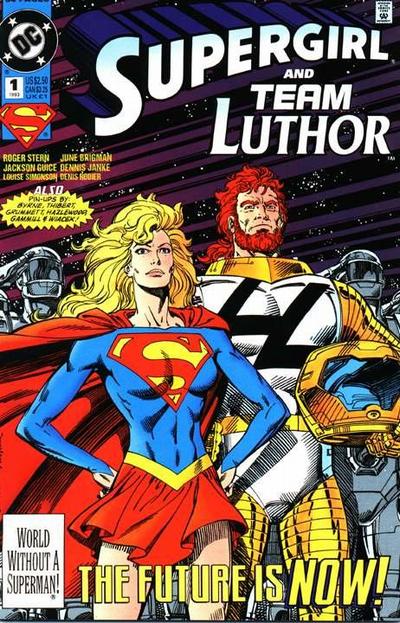
Laugh if you want, but do YOU have hair that magnificent?

The Supergirl/Team Luthor Special has two stories. The first, by Roger Stern and June Brigman, focuses on Supergirl and “Lex Luthor II”’s private police force stepping up to help fight crime in Metropolis, similar to some of the stories in the previous volume. Louise Simonson writes the second story, where Supergirl encounters some of the Underworlders whose story has been one of the major plots in Superman: The Man of Steel. Both of these stories, while perfectly fine, seemed somewhat insignificant at the time. With the benefit of hindsight, though, I see that they were planting seeds for stories that would play out in the next Supergirl miniseries and the accompanying Superman titles featuring the collapse of Project: Cadmus, the fall of the Underworld, and the end of Luthor’s charade – stories that, I’m fairly certain, wouldn’t be published for nearly a year. They plotted things REALLY well, those Triangle Era Superman writers. 

Tues., March 4

Magazines: Newstime, Wizard Superman Tribute Edition
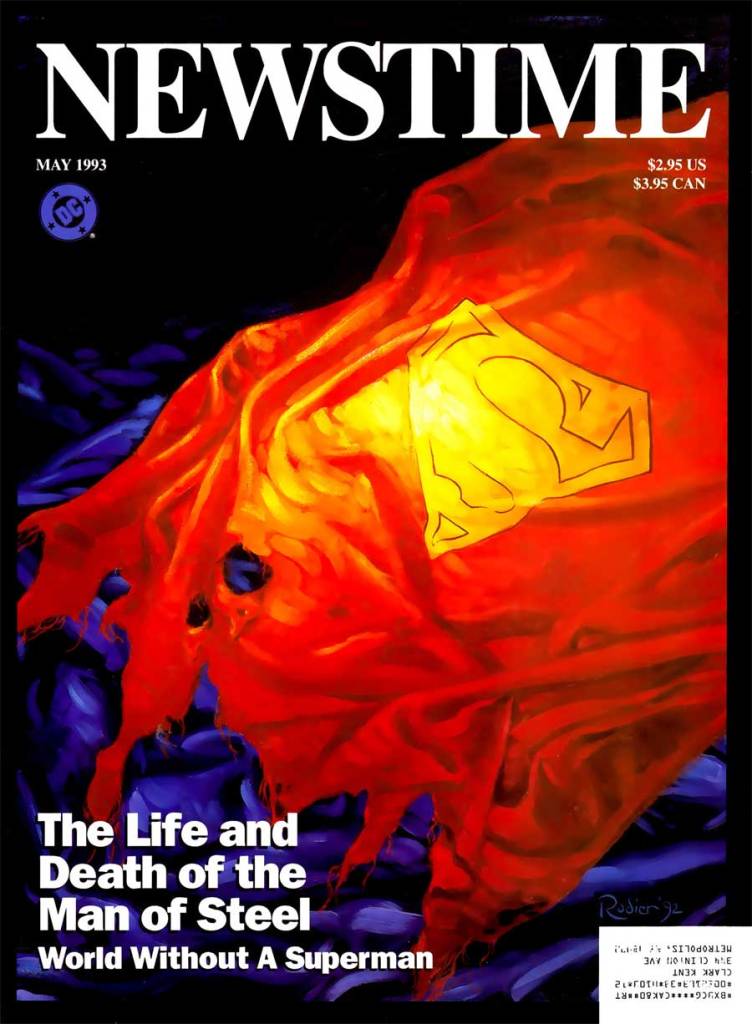
Did Jimmy win a Pulitzer for this photo, or am I just imagining things?

Notes: In addition to the two one-shot comics published during the Superman Gap, DC also released a one-off edition of Newstime, a fictional news magazine that Clark Kent worked for briefly in the comics. The magazine, featuring a “photograph” on the cover taken by Jimmy Olsen as Superman lay dying, is a sort of defictionalized artifact of a news magazine from the DC Universe, giving us in the real world a glimpse into how the DCU reacted to Superman’s death. There are, as expected, news articles written about the battle with Doomsday, the reaction of the world to Superman’s death, and the chaos that the Justice League was left in with Superman dead and so many of their members injured or powerless. The magazine fits really nicely in with the comics, with bits updating the status of some of the celebrities that were reported missing in the comic books after Doomsday’s rampage. Baseball player Hank “The Hammer” Halloran, you’ll be happy to note, survived the attack, but comedian and actor Morty Beckman died in a collapsing building. Daily Planet reporter and former Newstime editor-in-chief Clark Kent is still among the missing. 

Other things in the magazine are somewhat odd, like the article featuring quotes from assorted famous people about the death of Superman. Many of them are DC characters like Bruce Wayne, Lex Luthor II, Wonder Woman, and so on. Others, though, are from real-world figures, and they don’t all seem to be written from an in-universe perspective. A quote from William Shatner tells about how he used to dress as Superman when he was a child, Penn Jillette comments that Superman will have to die a few more times before he’ll be impressed, and John Goodman regales us with a bizarre story of his own personal encounter with Mr. Mxyzptlk following Superman’s death. I’m forced to wonder if some of these are legitimate comments they got from these people. After all, Superman’s death is one of the few comic book stories (especially back then) that made the major news cycles. 

The book finishes off with a few pages of fake movie and music reviews and lots of fake ads, and I have to give the DC crew credit for how well it’s all put together. Except for the fact that the “photos” are mostly panels taken from the comics, this looks and feel like a real news magazine, albeit much thinner than most of them. And just in case anyone thought that they’d let a book like this go without any foreshadowing, there’s a two-page ad early in the book that was meaningless when the magazine was originally published, but became quite jarring in hindsight just a few months later. 

😬

There’s one last thing I wanted to read from the “Death of Superman” era before we begin with the return tomorrow, and that’s this special Wizard Magazine tribute edition. I was a big fan of Wizard in its early years and was a subscriber for quite a long time. Eventually I got rid of all my old issues, a move which I now deeply regret, especially in the case of those few issues in which they published letters I wrote. But I held on to this Superman special, a nice little package released after the Death storyline but before the return really wrapped up. I haven’t read it in many years, though, and it’s interesting to go back and look at what the contents include.

Do you think anyone in comics has drawn versions of the same scene as many times as Dan Jurgens has this one?

There’s a piece by legendary Superman artist Curt Swan about his time with the character, to start. Jack Curtain provides a fairly comprehensive (although somewhat cynical) history of Superman, while Joel W. Tscherne gives us a good piece of the history of the post-Crisis Superman to date. Reading this article again, I’m jarred to realize that more time has passed for the most recent incarnation of Superman (the one we’ve had since DC Rebirth sort of merged the 90s Superman with the New 52 version) than had passed between John Byrne’s Man of Steel and the Doomsday story. Good grief, somebody get Waverider in here to make time slow down.

We get a retrospective on great Superman artists throughout history, a piece that is dying for a contemporary update to include all the greats who have worked on the character since then (including Stuart Immonen, Barry Kitson, Ron Frenz, Jim Lee, Ed McGuinness, Tim Sale, Frank Quitely, Alex Ross, Patrick Gleason, Jamal Campbell, and my current favorite Dan Mora – and that’s just off the top of my head). Next is a look ahead at the return of Superman, including interviews with the creators, especially Jerry Ordway, who ended his tenure as a Superman writer with Adventures of Superman #500. Then the writers for “Reign of the Supermen” talk about the four characters we’re going to meet very soon. Action Comics’s Roger Stern says that their Superman will be more “Kryptonian,” but cautions us that it’s not going to be someone trying to turn Earth INTO Krypton, like in the Eradicator storyline. Stern, you cheeky monkey. Ordway’s successor Karl Kesel talks about how Adventures of Superman will give us a more “modern” Superboy (he didn’t like being called that) who ties himself to WGBS, a TV station, rather than a stodgy old newspaper. Dan Jurgens talks a bit about the Cyborg Superman, although to me the part of this section that stands out is where he discusses Lois’s skepticism. Good for you, Lois. And Louise Simonson talks about John Henry Irons, even giving a lot of backstory about his family that I don’t know has ever been explored very much in the comic books, which is a shame. 

There’s a lot more in here, including a piece from Elliot S! Maggin about Superman as a pop icon, Andy Mangels talking about Superman’s history on TV and in film, and lots of other articles about various pieces of Superman’s history. I’ve gotten psyched to go back and read more of these, and I probably will in the coming weeks, but hopefully the stuff I’ve talked about will give you the impetus to dust off your copy (or find one on eBay) to go back and revisit this interesting time capsule of who and what Superman was in those months between his death and his return.

And speaking of his return…

…well, I’ll see you tomorrow. 

Blake M. Petit is a writer, teacher, and dad from Ama, Louisiana. His most recent writing project is the superhero adventure series Other People’s Heroes: Little Stars, volume one of which is now available on Amazon. You can subscribe to his newsletter by clicking right here. You can join in the Kryptonian Konversation every day in the Year of Superman Facebook Group!
Year of Superman Week Seven: Superman Vs. the Flash

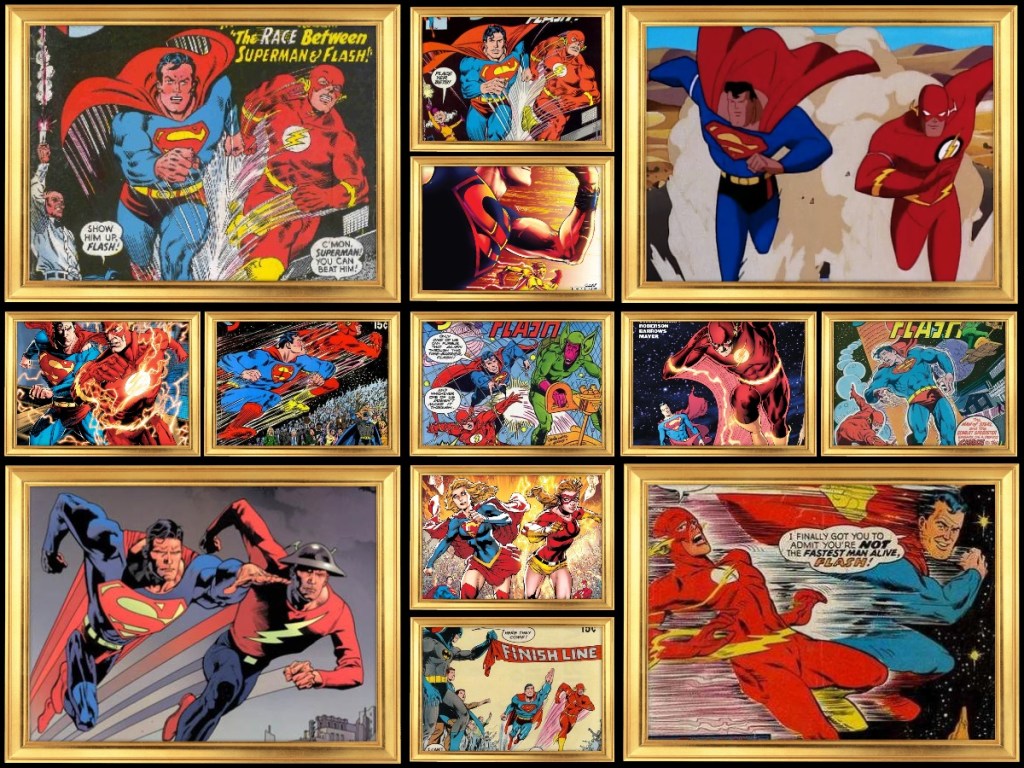
After the chaos of the last couple of weeks, I wanted to stabilize things a little bit, so it’s time for another theme week. He’s called the fastest man alive, but he’s often been forced to defend that title against the Man of Steel, so for the next seven days I’m going to put my attention on the competitions between Superman and the scarlet speedster himself. Yes, it’s Superman Vs. the Flash Week!

(Superman versus the) FLASH! (Bum bum bum bum bum) AAAH-AAAAAH!!!

Okay, I think I should make one thing clear here: in a straight-up foot race between Superman and the Flash, the Flash should win every time. Whether we’re talking about Barry Allen or Wally West, it doesn’t matter. The Flash’s entire job description is the fact that there’s nobody faster than him, and if you take that away it diminishes the character. Even Superman shouldn’t be allowed to do that.

That said, there have been many stories over the years that pit them against each other, and some of them are an awful lot of fun. 

Wed., Feb. 12

Comics: Superman #199, Flash #175

Literally, the starting line for this whole thing.

Notes: The first-ever Superman/Flash race, at least as far as I can tell, is Superman #199 from 1967. The United Nations recruit Superman and Flash to race for one another to raise funds for charity, a basic enough premise that reasonably pits the two of them against each other without some sort of contrived misunderstanding, which I greatly appreciate. Unfortunately, a pair of major crime syndicates also bet a fortune on the outcome of the race, one on Superman and one on the Flash, and so they both hatch schemes to make sure their chosen hero is the winner. After uncovering the schemes and beating the gangsters, Superman and Flash conspire to end the race in a precise tie so that neither crime syndicate can cash in on their winnings and, conveniently, so that DC Comics doesn’t have to definitively answer the question of which of the two men is the faster. 

What I find funny about this story is that, even though the story is contrived in such a way that the race ends in a tie, writer Jim Shooter almost seems to do so grudgingly. There are several times that we see the Flash doing things that seem to demonstrate that, as far as foot speed goes, he’s superior. As they race across the ocean, Flash is running on top of the water, whereas Superman has to swim at superspeed. Similarly, Supes has to burrow through sand dunes and climb over pyramids in the desert, while the Flash is simply vibrating right through them. At one point, Flash even employs a super-speed trick to rescue Superman from a random chunk of Kryptonite vomited up by a volcano without Superman even noticing. The only times Superman has an advantage is when his invulnerability or other non-speed powers give him an edge – in freezing cold, diving down a waterfall, or maintaining his balance across a frozen lake. Every task shows that the Flash’s super-speed tricks are superior, even if the story itself has to skirt the issue at the end. This would be a running theme through future competitions between Superman and Barry Allen.  

It’s covers like this, Superman. Covers like this are why some people call you a jerk.

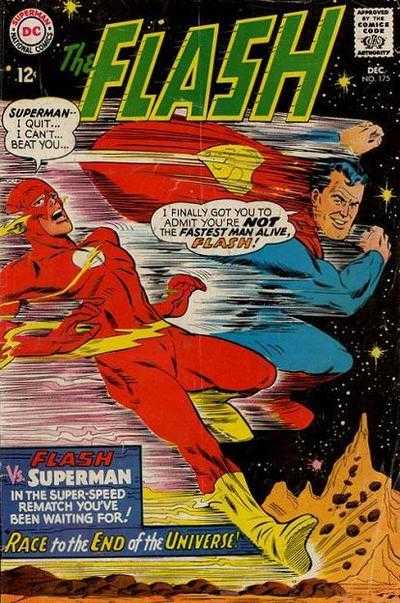
Only a few months later, they got together for a rematch in Flash #175. It starts when the two heroes wind up muscling in on each other’s territory, each of them getting an emergency alert from the other on their Justice League signal devices that their teammate denies sending out. When the JLA assembles, it turns out the signal was sent by a pair of aliens Superman and Batman have encountered before. The aliens had placed a wager on the first race and, as it ended in a tie, insist on a rematch. Instead of lapping the Earth this time, though, they’re going to force the heroes to race across the Milky Way. Oh, and just in case they need a little added incentive, they promise to annihilate Central City if the Flash loses and Metropolis if Superman is the loser. So as sports commissioners, they’re still slightly less evil than Roger Goodell. 

The aliens throw lots of traps and obstacles in front of our heroes, each of whom independently finds evidence that the race isn’t all it’s cracked up to be. But it’s the Silver Age, so neither of them ever thinks to just TELL his teammate that the race is a fake, they make vague statements about things being “off” until they beat the aliens on the last two pages, with the race once again not having any definitive winner. 

As snarky as I sound, I actually did enjoy this issue. It was a pretty decent follow-up to the first race, and it gets bonus points for the last panel, where Flash and Superman look directly at the reader and invite them to go back to the finish line on Page 21 and decide for themselves who they think won. You can’t get away with stuff like that these days.

Thur., Feb. 13

Comics: World’s Finest Comics #198-199

“Okay, we’re ACTUALLY gonna declare a winner this time, right? No more cop-outs?

Notes: Three years after the first two races, DC decided to try it again. Although World’s Finest has, historically, been the Superman/Batman team-up book, there was a period in which it was a Superman team-up title, with Superman as the anchor and different guest-stars for each issue, so it was here that they staged the next installment in this saga. And THIS time, the cover of issue #198 proclaims, “There MUST be a winner!”

Race #3 has the wildest conceit yet – the Guardians of the Universe (the little blue guys who sponsor the Green Lantern Corps) have detected an incursion of “Arachronids,” faster-than-light lifeforms that are disrupting space and time. The only way to save the universe is for two people to race in a path opposite that of the Arachronids, and the only ones speedy enough to do the job are Superman and the Flash. (This is in the days before the “Flash Family,” of course, there was only Barry and Wally West as Kid Flash. If this were to happen today there are roughly a dozen speedsters more qualified than Superman to handle this deal.) Anyway, the Guardians provide the Flash with an amulet that will allow him to race in space and he suggests – since we never actually settled the question of who’s faster – why not make this another race? 

Things are going swimmingly until the Arachronids destroy a sun, knocking our heroes off-track on a planet where the sunlight keeps shifting from yellow to red, which negates Superman’s powers. Oh, and did I mention that the time-disruptions have chucked Jimmy Olsen back to ancient Rome, where he’s about to get executed by a firing squad of archers? 

Part two of the story reveals the truth: the Arachronids were created by General Zod and a group of Phantom Zone escapees, and they’ve got Superman and the Flash captured on a planet that straddles the line between dimensions. They wind up on a world where the red sun is draining Superman’s powers and the Flash has his swiftness curtailed when the baddies steal the amulet given to him by the Guardians, leaving them to crawl towards the device that’s causing all the chaos. WHO WILL MAKE IT FIRST?

This is the first time I’ve read this particular two-parter and, I’ve gotta say, I really enjoyed it. It’s a different angle on the Superman/Flash race, one that’s apart from the usual “racing for charity” conceit or the other various contrivances that have pit them against one another. No, this time it’s a totally original contrivance, and I appreciate that. I also appreciate the fact that they TECHNICALLY declare a winner of the race this time (it’s the Flash, spoiler alert), but they do so on a world where both heroes are virtually powerless and are literally crawling towards their destination, so the question as to who’s really faster when they’re at normal power is still left up in the air. I’m sure that was the mandate at the time. I’m glad that they eventually got over that mandate, though, as some of the later stories we’re going to get around to reading will demonstrate. 

Other Comics: Jenny Sparks #6 (Superman appearance), Black Lightning Vol. 4 #3 (Steel II appearance), The Question: All Along the Watchtower #3 (Superman Cameo), Superman’s Girl Friend, Lois Lane #10

Fri., Feb. 14

Comics: DC Comics Presents #1-2

“Barry? Clark. Hey, wanna be the first guest in my new team-up book? Noooo…not a race this time…I wouldn’t do that to you…”

Notes: Eventually, World’s Finest went back to being a Superman/Batman book, and while Batman had his own team-up series (The Brave and the Bold), Superman was given his own with DC Comics Presents. In the first two issues of this series, published in 1978, we got the next installment of the friendly rivalry between Superman and the Flash – and, in fact, I’m pretty sure this was the last such story before Barry’s death in Crisis on Infinite Earths. (If I’m wrong, by all means, correct me in the comments.) 

This time around, our heroes are captured by a pair of warring alien races, one of whom has sent an agent forward in time to go through the “cosmic curtain” that separates the end of the timeline to the beginning. (Time, you see, is evidently a giant loop, but their time machines only go FORWARD, so they have to take the long way around, as if they were flying across Europe and Asia to get to California from Florida. Flat-timers hate this issue.) Since the Flash “won” the previous race, they send him to help their agent in the future, with the consequence for failure being the destruction of Earth. The other aliens, though, force Superman’s hand by telling him that if their enemy succeeds in changing time, Krypton will explode SOONER than it was supposed to, and Superman will never exist. 

The major difference between this two-parter and the previous three races between Superman and the Flash is that the race is across time, rather than space, and it’s a significant enough change to really make this one stand out. Superman’s actions seem a bit out of character, of course – he’s risking the destruction of Earth to save his own life, a task even the VILLAINS are surprised to see him willingly take. Naturally, it turns out to all be part of the plan.

This one, unlike the other three races we’ve seen, doesn’t even really try to address the issue of who “wins.” Once Superman’s plan is unveiled, the heroes work together (as it should be) to thwart BOTH sects of warring aliens and fix all the timey-wimey chaos before anyone is killed, especially Jimmy Olsen. The conclusion, then, is satisfying, but leaves the central question essentially unanswered. In fact, the first time we get anything resembling a true answer, it would have to come from Barry’s protege, Wally West, another 12 years later.

Other Comics: Superman’s Pal, Jimmy Olsen #135, Justice League of America #16, Action Comics #372

Podcast: DC Studios Showcase Episode 1 (Discussion of documentary film Super/Man: The Christopher Reeve Story)

Valentine’s Day Stuff: Today is, in case you forgot, Valentine’s Day. (And if you DID forget, this isn’t going to be posted until February 19th, so you are SERIOUSLY out of luck.) But I couldn’t let the day pass without noting my darling wife, Erin, and how she indulged my quest for the Year of Superman today.

Pictured: Love. And personal hygiene products.

She got me the McFarlane Toys Super Powers Fleischer-style Superman, a figure I’ve been hunting for ever since I found out it existed, but have been resisting paying eBay prices. If I won the lottery, I would build an entire toy display room in my palatial mansion, and one full wall would be dedicated to a collection of Super Powers figures, Marvel Secret Wars figures, and figures from comparable toy lines like the Archie Mighty Crusaders and Defenders of the Earth series of my youth. She also got me a set of the new Superman-branded Old Spice body wash and deodorant, which I first saw in an ad a week or two ago where it was being promoted along with Batman-branded products, prompting me to ask her, “Who do you think smells better? Superman or Batman? I bet Batman sweats a lot.”

And yet, she’s been married to me for over 10 years now. Get you one who understands you like mine understands me, friends. 

Sat., Feb. 15

Comic Books: Adventures of Superman #463, Flash Vol. 2 #53

“On your marks! Get se–wait a second, haven’t we done this before?”

Notes: The next time the Man of Steel and the Scarlet Speedster would face off against one another wouldn’t come until 1990, at which point both of them had experienced some drastic changes. Superman had gone through the post-Crisis John Byrne reboot, whereas Barry Allen had died in Crisis on Infinite Earths and been replaced by his protege, former Kid Flash Wally West. Like a lot of Superman history, it’s unclear if any of the previous races with Barry were canon to Superman at this time, but the story makes it quite clear that it’s the first time he’s faced off against Wally, at least, and it’s a distinction that Superman takes pretty seriously.

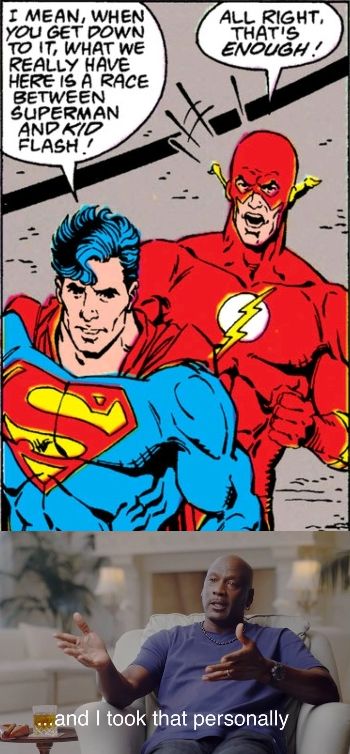
This story involves our old pal from the Fifth Dimension, Mr. Mxyzptlk, who shows up on Earth this time restructuring Mount Rushmore to include his own face. The Flash happens to get there first and, when Mxy finds out that he’s supposedly the “fastest man alive,” he decides to put that claim to a test. If Superman can beat the Flash in a race around the world, he says, he’ll pop out of our dimension for the usual 90 days. Superman notes, rather dismissively, that Wally hasn’t been the Flash that long and strongly implies that beating KID Flash won’t be too difficult, and Wally does his best impression of Michael Jordan in that meme. The race is on. 

From here out, the story is actually pretty straightforward. Unlike most of the races we don’t have to deal with any shady stipulations, misdirects for the reader, or bad guys trying to fix the outcome of the race, except for your typical Mxy shenanigans. There is a nice little scene I’d forgotten about, where Mxyzptlk tries to offer Lex Luthor a hunk of red Kryptonite but Lex turns him down, which actually makes this story a stealth prequel to the Krisis of the Krimson Kryptonite story we read last month. But as far as the actual RACE goes, it’s pretty cut and dried, with both heroes putting the pedal to the metal until, in the final stretch, Wally reaches out and beats Superman by a nose. 

Totally saving the day! As it turns out, Mxy had learned about deception from Lex in a previous visit and so he was trying it out. Although he SAID he was only going to leave Earth if Superman won, he had always REALLY planned to leave if the FLASH won. It never occurs to him to simply lie again, which is actually kind of a silly, charming hat to put on this dude in his silly, charming hat.

This was the first Superman/Flash race I ever read, and as such it’s always held a place of esteem in my personal pantheon of Superman stories, but I think it’s important to note which versions of the characters we’re looking at. Superman was only a few years post-Byrne, an era in which his power had been scaled down dramatically to make him less “godlike.” Over the years his powers would slowly creep up in strength again until today he’s more powerful than ever before, but as Supermen go, the one in this story was relatively slow. However, this was also early in Wally’s tenure as the Flash, a period during which he was much slower than Barry ever was. When Mark Waid took over Wally’s series a few years later he established that Wally had a subconscious fear of overshadowing his predecessor and had a self-imposed mental block limiting his speed. Once he got over that, he became the fastest Flash there ever was. The point is that if you took the current versions of either Superman OR the Flash and popped them into the race during this era, either of them could smoke the two characters we watched race today.

This time it’s a METAPHORICAL race! The greatest kind of race there is!

I also read issue #53 of Wally’s first solo title, a story which was NOT actually a race, despite what the cover promised. In this one, Jimmy Olsen has gotten himself captured by some South American warlord (because that’s what Jimmy Olsen DOES) and Superman decides to recruit the only person alive faster than him (as established in the previous race) to help find Jimmy before he’s unalived. This is a typical superhero team-up story: good, not special, but enjoyable. I think the most interesting thing about it, the thing that gives it a spot of interest in superhero history, is that this happens to be the issue in which Wally’s pal the Pied Piper (former villain, now reformed) comes out to him as gay. I don’t know if this is the FIRST openly gay character in mainstream comics, but he’s certainly ONE of the first, and while it’s no big deal in today’s comic book landscape, for 1991 it was a pretty surprising revelation. There ya go, ya learned something today. 

Sun., Feb. 16

Comic Book: DC First: Superman/Flash #1

Big Good Vs. Big Good.

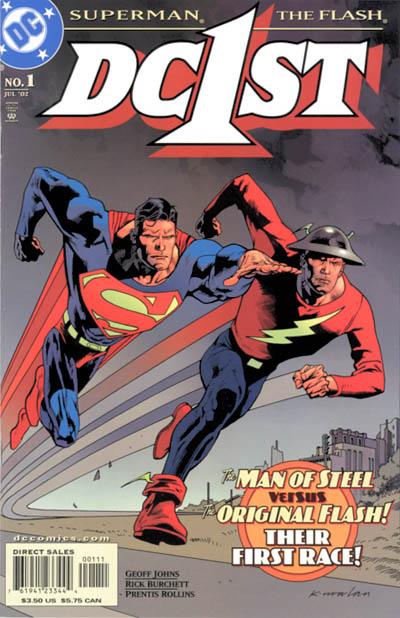
Notes: I’ve got a sick kid to take care of this afternoon and, as a parent, that has to take precedence over pretty much everything. But in-between far too frequent trips to the bathroom and a larger-than-average number of baths, I made it a point to squeeze in the next story in the Superman/Flash pantheon. This time we leap ahead to 2002 for DC First: Superman/Flash. This was a series of one-shots DC did that showed the first meetings between various characters – but as Superman’s first races between Barry Allen and Wally West were already pretty well documented, for this special they did something a little different and very cool: they showed Superman’s first race with Jay Garrick, the original Golden Age Flash. 

This issue reads more as a special issue of the then-current Flash run. It’s written by Geoff Johns, who was writing that book at the time, and it deals with subplots involving Pied Piper and Jay’s wife, Joan, with Superman’s involvement coming in coincidentally. Wally and Jay head to Metropolis to a bookshop where they’ve sourced a rare book as a gift for Joan, only to run afoul of the old Flash rogue Abra Kadabra. The faux wizard of the 64th century casts a spell that begins causing Wally to age rapidly, then tells Superman and Jay they can save him if they can catch him in a race – with the caveat that whoever touches Wally first will take the curse upon themselves. What you’ve got, then, is perhaps the greatest conceit for a Superman/Flash race of them all. They aren’t racing for charity, they aren’t racing for ego, they aren’t even racing with the fate of the world at stake. They are literally racing one another for the RIGHT TO SACRIFICE THEMSELVES TO SAVE WALLY. There is no better motivation for these two heroes.

I know I read this book when it first came out. It’s in my collection, and I was an avid reader of both the Superman comics (duh) and Flash, so I am 100 percent certain I read it. But it came out 23 years ago, and I didn’t really remember the story at all until I sat down to read it this afternoon, and it honestly blew me away. Even though it’s more of a Flash story than a Superman story, it really exemplifies the values of Superman in a way that a lot of these other races failed to do. It may be my favorite read for this week to date.  

Mon., Feb. 17

Comics: Flash: Rebirth #3, Superman #709

This issue, as far as I’m concerned, is the final word on the whole thing.

Notes: I actually struggled with whether to include this issue of Flash: Rebirth from 2009 in my Year of Superman reading. It’s the middle of a storyline, and Superman’s appearance is barely a cameo, but that one sequence in which he appears is significant enough that I felt it warranted inclusion. Barry Allen, having returned from the dead in the terribly inaccurately named Final Crisis event, is being transformed into a new Black Flash, essentially the spirit of death for speedsters such as himself. To protect Wally, his grandson Bart, and everyone else he loves, he decides he’s going to rush back into the Speed Force before the transformation can happen, and Superman takes off after him. At this point, the League had gone through its share of recent tragedies, and both Aquaman and the Martian Manhunter were dead (they got better), so Clark isn’t about to let Barry die again. 

This leads to one of my favorite pages that Geoff Johns ever wrote, as the two of them are racing each other up the Daily Planet building and Superman says, “I’ve raced you before, Barry. I even won some of those races.”*

Barry simply says, “Those were for charity, Clark.”

And then he leaves him in the dust.

Like I keep saying, the Flash SHOULD be faster than Superman. This issue is the best evidence of that ever.

(*By the way, despite what he says, I don’t actually recall Superman ever winning one of those races. There were a few ties, but every time a victor was declared it was the guy in red. I’m going to assume, from the way Clark talks, that there may have been other charity races off-panel that we didn’t get to watch. And now that I’ve said it, it’s going to manifest in the universe as a seven-part time-travel crossover event, coming this fall.) 

“You’re GROUNDED young man! That means no disrupting the time stream! Just do your homework and straight to bed!”

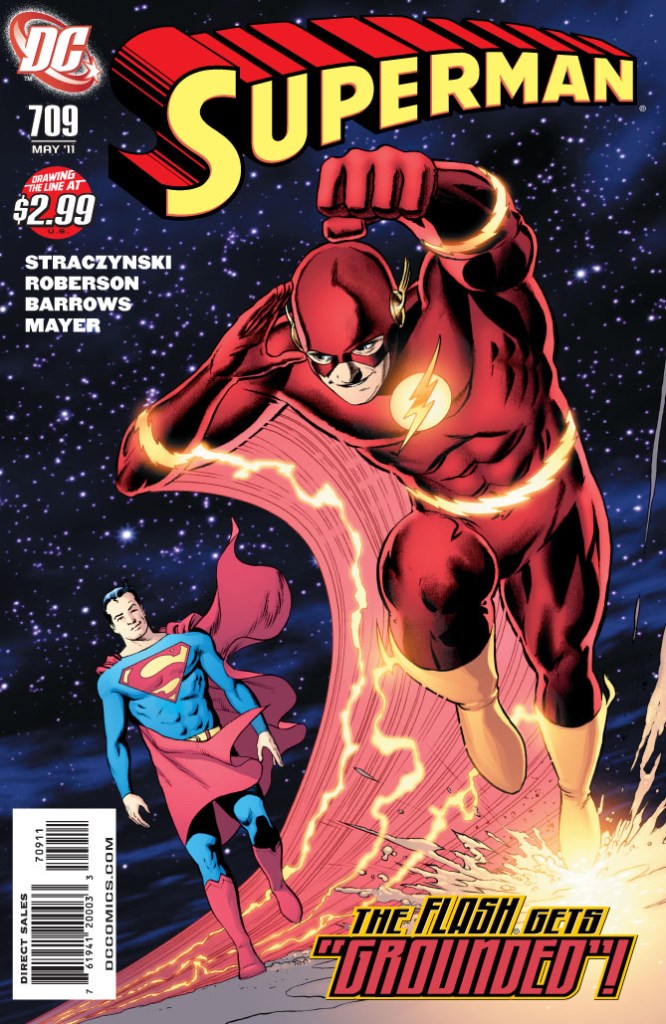
The final Superman/Flash face-off I could find in comics came in Superman #709 from 2011, part of J. Michael Straczynski’s “Grounded” storyline. In this arc, Superman decides he needs to reconnect with the ordinary people he is sworn to protect, so he commits himself to walk across the United States. It’s an interesting concept, to be certain, and Straczynski is an excellent writer, but the general consensus on this storyline is that it sort of fell flat. I think the problem is that it went on for far too long (who wants an entire year of Superman just…walking?) and even Straczynski himself seemed to lose interest in it, as evidenced by the fact that he bowed out before the story was over and it was completed by Chris Roberson. 

The “race” part of this issue is over fairly quickly. While walking through Boulder, Colorado, the entire town is suddenly transformed into a Kryptonian city. Superman soon figures out that the transformation is the work of the Flash, who has been overtaken by a Kryptonian artifact and he needs Superman to set him free. After he does so, they have a cup of coffee and talk about legacy. This is what I mean, by the way, when I say that the “Grounded” story went on too long. The story of this issue is perfectly fine, in and of itself, but when you read it in the context of the entire year-long storyline, it was too much of the same thing over and over: Superman walking somewhere, doubting himself, having a significant encounter with various characters (both new and previously established) and coming to a peaceful resolution. That’s great ONCE, but do you really want to read it twelve issues in a row?

The most interesting thing to me about this issue is that it happens concurrently with that month’s issue of Superboy, in which the Kid of Steel races KID Flash for the first time, and which Clark and Barry catch a glimpse of on a diner television. I’ll take a look at that issue tomorrow when I look at the few races I could find between members of the Superman and Flash families other than the patriarchs. 

TV Episode: Superman: The Animated Series, Season Two, Episode 4, “Speed Demons”

“Loved you on Wings, by the way.”

Notes: That’s all the comic book Superman/Flash races I could find, but there’s still this episode of Superman: The Animated Series, the first appearance of the Flash in the DC Animated Universe. In this episode he’s voiced by Charlie Schlatter, although Michael Rosenbaum would take over the character for the Justice League cartoons. (Tim Daly would be replaced as Superman by George Newburn too. I guess not everyone can be Kevin Conroy and Mark Hamill.) In this episode, Superman and the Flash are pitted against each other in, as per their first-ever encounter, a charity race. This time the rules are a bit more sensible for the two of them: the winner will be the first to complete 100 laps around the globe. Of course, just like many of their races in the comics, there’s a catch – the arm bands they’re wearing to track their progress are, in truth, using them to build up ionic energy to power a plot by the Weather Wizard. (Weather Wizard, by the way, was voiced by the late Miguel Ferrer in a delightfully dastardly way.)

This episode never makes it clear which Flash we’re watching, Barry or Wally. In terms of attitude and personality, it’s definitely influenced by the early days of Wally’s solo title. He’s slick, he’s cocky, and he relentlessly flirts with Lois Lane, none of which are things you could ever imagine Barry doing. It takes plenty of cues from the classic comics, though, such as the race itself being derailed halfway through when Superman and the Flash catch wind (rimshot) of the Weather Wizard’s plan and call it off to get around to some good ol’ fashioned thwartin’. It’s easy to forget that the Batman cartoon almost never had guest-stars from outside the Batman family, so this was one of the first times we really started to see an animated universe begin to form in the Paul Dini/Bruce Timm era. It was a real delight to revisit this episode again. 

There is ONE other Superman/Flash race that I haven’t covered here, but for what I consider a good reason. It’s part of Tom King’s Superman: Up in the Sky series, which is a magnificent comic in its own right, and I intend to cover it in its entirety at some point this year. Plus, looking at the issue with the race on its own wouldn’t really make a ton of sense, absent of the context. I’m bringing it up here mainly so that nobody thinks I forgot about it.

Tues., Feb. 18

Comics: Superboy Vol. 4 #5, Supergirl: The Fastest Women Alive #1

“I don’t know why Barry and Clark always make such a big deal about this.”

Notes: I had one day left in “Superman Vs. The Flash Week,” but I had run out of actual Superman/Flash races, so I decided to close it out with a pair of comics featuring other members of the respective Super- and Flash-Families strapping on their jogging shoes to see who’s swiftest. First was Superboy Vol. 4 #5 from 2011, the first ever Superboy/Kid Flash race (this Kid Flash being Bart Allen, Barry’s grandson, who previously had gone by “Impulse” and since has retaken that name). In this era, Superboy was living in Smallville, and his presence had rocked the town with a few supervillain attacks that resulted in some pretty major damage. This time around, the race is scheduled to raise money to rebuild the town. As the two old friends zip across the globe, though, Bart can tell that Conner Kent’s mind is elsewhere.

This issue is part of Jeff Lemire’s run on the title, a tenure that was cut tragically short by the New 52 reboot later that year. Lemire was doing a great job at grounding Superboy in a way that this version of the character so rarely is, giving him a home and a family in Smallville to contend with, and making his adventures a mix of the cosmic and the mundane, something Lemire is exceptionally good at. (And if you don’t believe me, check out his series Black Hammer.) Despite the race being a backdrop, the mundane part is the focus of the issue, with nary a supervillain plot or alien invader to disrupt things. Instead, in the midst of a race across the globe, Conner just confides in his friend about his pain over his recent breakup with Wonder Girl.

The ending of the race is a cop-out, which we’ve all come to expect, but this may be the biggest one yet. (Spoiler: somehow, Krypto crosses the finish line first and everyone accepts it, even though it feels as legit as Harry Potter’s name being tossed in the Goblet of Fire.) Still, if you’re thinking of reading this book, the Lemire run is extremely worthy of your time – it’s just that this issue, by itself, may not be quite so satisfying without the context of the rest of the run.

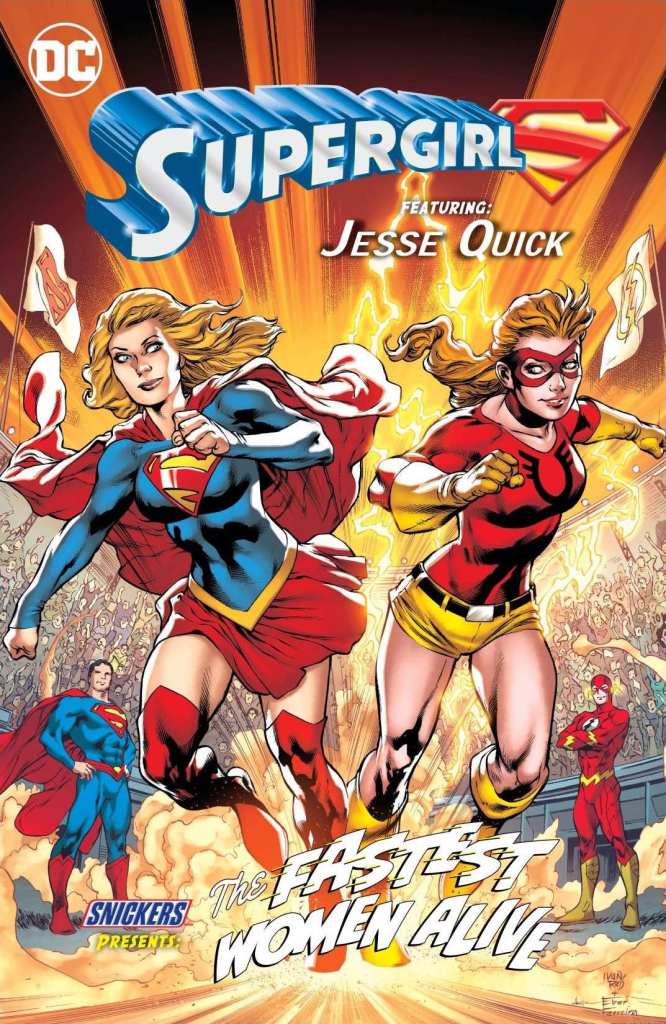
Finally, we’ve got the bizarre little one-shot Supergirl: The Fastest Women Alive, a special comic from 2019 presented by Snickers. Very, very much by Snickers. There is Snickers branding on nearly every page, and even the captions that tell you where the racers are at the moment are branded in the Snickers logo font. The message, just in case you missed it, is: Snickers.

Did we mention it’s presented by Snickers?

For the first half of the issue, though, this is actually a decent enough race between Supergirl and Jesse Quick. It uses most of the tropes of the previous races, such as it being a charity race, Supergirl not being allowed to fly, and so forth. The turn comes halfway through, though, when the racers discover that the Parasite has attacked the arena where the race began and will end, and he’s already got Superman and the Flash on the ropes. The lightning ladies rush back to save the day, but how can they possibly get the energy they need to overload and defeat the energy-sucking Parasite?

HOW CAN THEY FIND THE NECESSARY ENERGY?

SNICKERS? GOT A SUGGESTION?

This story is a full-issue equivalent of the delightfully goofy old Hostess comic book ads, only way less subtle. 

I kinda love it.

And thus, friends, concludes Superman Vs. The Flash week. My feelings haven’t really changed, I must say. In any contest of speed between a Super of any stripe and a Flash by any name, the Flashes should always be the ones to come out on top. Sorry, Superman, but it’s their whole entire deal. You can’t really compete.

But this week has proven it’s fun to watch you try anyway.

Blake M. Petit is a writer, teacher, and dad from Ama, Louisiana. His most recent writing project is the superhero adventure series Other People’s Heroes: Little Stars, volume one of which is now available on Amazon. You can subscribe to his newsletter by clicking right here. You can join in the Kryptonian Konversation every day in the Year of Superman Facebook Group!
Year of Superman Week Four: Lois Lane Week

Today I’m going to start the first of the Theme Weeks I’m planning to do for this little project. It won’t be every week, nor will the content of those weeks be 100 percent dedicated to that theme. There’s still a lot of Superman and Lois to catch up on, after all. But on these theme weeks, I’m going to focus on a specific character, creator, or concept related to Superman. For this first week, I’m going to put the spotlight on the second-most important character in the entire Superman mythos, one of the best comic book characters ever created. Welcome, friends, to Lois Lane Week! Lois has been around since day one, appearing in Action Comics #1 along with Superman himself, and over the years has grown and evolved into one of the most complex and engaging characters in comics…when she’s written correctly. In the Golden Age, Lois was a tough-as-nails, courageous, crusading reporter. The modern incarnation has a lot of the same qualities. When written properly, Lois Lane is brilliant, fearless, and a force of nature. The only Lois I’m not crazy about, honestly, is the Silver Age Lois, a character who seemed more interested in marrying Superman or proving his secret identity (because somehow that would convince him to marry her). I’m going to try to look at all ages of Lois this week.

Wed., Jan. 22

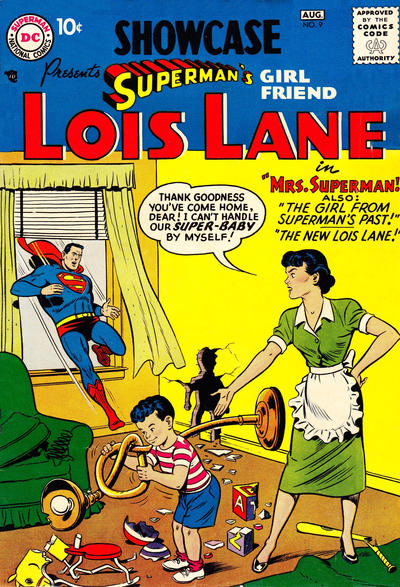
Comics: Showcase #9

Notes: DC’s Showcase comic book, in the 50s, was essentially a try-out series. Every issue or two they would change the headliner, basically using the series to test the possibilities of a new character or new title, many of which eventually spun off into their own series. Most famously, this is the series that gave us the Barry Allen Flash and the Hal Jordan Green Lantern, but today we’re focusing on Showcase #9, the prototype for the series that would be called Superman’s Girl Friend, Lois Lane.

If you swapped Lois with Chili and Superman with Bandit, this is any given episode of Bluey.

This Showcase issue is pretty indistinguishable from the early years of Lois’s solo title, with three stories each dedicated to Lois’s love life with Superman, while he treated her in a way that would have pretty much everybody on Reddit telling her to dump him, and frankly, I can’t blame them. The first story is “The Girl From Superman’s Past.” Lana Lang – Superboy’s old flame from Smallville – moves to Metropolis, and she and Lois immediately wind up sparring for the affection of the now-adult Superman, up to and including placing themselves in danger to see which one he was going choose to rescue. At the end of the story, of course, Superman has refrained from making a decision, probably because both of these women are behaving like lunatics.

“The New Lois Lane” is even more bonkers. When Superman learns that a group of crooks are on the verge of unveiling his secret identity, he creates a new alter-ego, “Allen Todd,” and counts on Lois’s trademark snooping to reveal Mr. Todd as being the real Superman. Unfortunately for him, Lois recently used a Weight and Fortune Telling Machine (no, really) that told her to change her strategy to help get the man she loves – so instead of trying to reveal his secret, she starts going behind his back to “help” him HIDE it. I tell you, some of these Silver Age Lois Lane stories are positively Shakespearean, in that they’re predicated on absurd coincidences and ridiculous misunderstandings that could easily be cleared up if either of the people involved were capable of having a simple adult conversation, for God’s sake.

Finally, there’s “Mrs. Superman,” in which Lois gets a head injury and has a coma dream about her fondest wish: marrying Superman. To get her out of it, Superman sits by her bedside and feeds her “false” information to try to snap her out of the fantasy – you know, horrible things like Superman’s real identity being Clark Kent, or that he’s cheating on her with a woman named Lulu, because every woman in Metropolis is legally required to have a name beginning with the letter “L.” I guess in this one Superman is at least trying to help Lois. Technically.

The idea, I suppose, was to make a comic book that fit in with the popular romance comics of the time, although these stories were even sillier and more convoluted than a lot of those. I guess it was popular, though, as this series lasted for 16 years and 137 issues before being merged with the Jimmy Olsen title as Superman Family. But sitting from where I am, where my Loises are all strong, independent, and smart as a whip, it’s bonkers to me that this incarnation of the character lasted as long as she did. 

Articles: “A Fond Remembrance of Mort Weisinger By His Son” and “The Superman Mythos: Roots of the Superman Confluence,” both by Eddy Zeno, from The Krypton Companion

Thur., Jan. 23

Comics: DC Horror Presents… #3 (Cameo), Superman’s Girl Friend, Lois Lane #21, Action Comics #662, Superman Vol. 2 #53

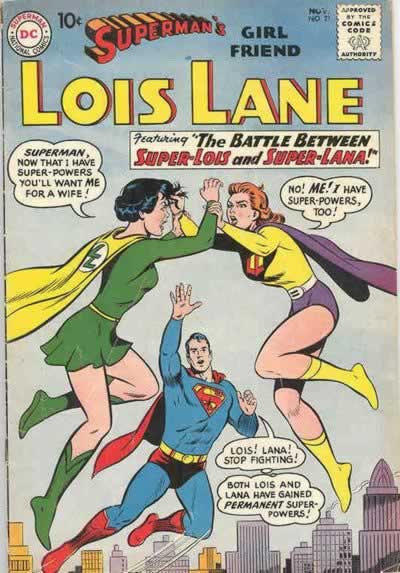
Notes: Returning to the shockingly meager offerings on DC Universe Infinite for this series, I decided to check in on Lois Lane #21, featuring a pretty well-known cover with Lois and Lana somehow superpowered and slugging it out for Superman’s affections, but I don’t think I’ve ever read this one before. The first two stories in this issue, though, are a two-parter unrelated to the cover. In “Dolls of Doom” and “Trapped in Kandor,” Lois is tricked into posing for a Lois Lane doll by a gang of criminals planning to use her against Superman. This somehow winds up with her sent to the bottled city of Kandor where she falls in love with a Kandorian who is – shockingly – a dead ringer for Superman.

I’m sorry to not have a better synopsis for this story, but I refuse to take total blame for it, because the DC Universe app has the PAGES IN THE WRONG ORDER. The middle of chapter two appears in chapter one and vice-versa, and while it is theoretically possible to read the pages in the correct order by flipping back and forth in the app, by the time I realized what the problem was I was so angry about it that I stopped trying. Hey, DC Universe Infinite: FIX THIS CRAP. 

After all, with the pages scrambled, some people may find this confusing.

The last story is the one I was really interested in anyway. “The Battle Between Super-Lois and Super-Lana” features Superman’s two favorite girls, now rival reporters, who stumble upon a magic lake that conveniently gives super powers to anyone who bathes in it. Realizing they now have all of Superman’s powers, they decide that this is the perfect time to make him choose between them by doing things like cooking giant food, finding and wearing priceless jewelry that has been lost to antiquity, and carving their own faces into mountainsides. The story ends, predictably, with the magic water wearing off and Superman once again getting out of having to make up his mind. The most important part of the legacy of this issue is that the “magic water” came back into play decades later in Alan Moore’s “Whatever Happened to the Man of Tomorrow?” (which of course you can be certain I’ll read before this Year of Superman is over.) 

It’s unfathomable to me how the book lasted this long with stories that make the title character look like an obsessed stalker and make Superman look like an indecisive jackass. I think I need an palate cleanser, so I decide to read the issues I skipped between “Krisis of the Krimson Kryptonite” and “Time and Time Again” – the story of how Clark Kent finally revealed his secret identity to Lois Lane.

The face of “WHAT THE ACTUAL F@#??”

It happened in Action Comics #662, and before I get into the story, can we talk about the cover for a minute? This is a classic by Kerry Gammill and Brett Breeding, and it’s wild to me that this hasn’t made the echelon of often-homaged covers like Action Comics #1, Superman #1, or even Superman Vol. 2 #75 (the Death of Superman issue). The angle, from Clark’s point-of-view, is perfect, and the look of total amazement on Lois’s face just kills me every time I look at it. I love this cover.

As for the story itself, the issue begins with Lois and Clark having a comics code-approved romantic evening at home, with Clark about to tell Lois the big secret just as they’re interrupted by the Silver Banshee. Her magic told her that Superman was in that apartment, but all she finds there is this tall drink of water in a pair of glasses, so she dashes out. Clark goes after her, leaving Lois somewhat confused. The middle part of the issue is pretty standard for the time period – Superman fighting the Banshee (who, I should mention, has one of the coolest designs for any Superman villain ever) while in a subplot, a LexCorp employee digs into the mystery of the company CEO’s death and his potential heir. The Lois story doesn’t come back until the last couple of pages, where Clark gives the big reveal on a full-page splash panel at the very end of the issue, leading into Superman Vol. 2 #53. 

The first few pages of this issue are devoted to the Lois and Clark story, as she tells him that she thinks – on some level – she knew his secret for a long time, but had always dismissed it, then she (understandably) asks for a little time to process this major revelation. The rest of the issue deals with Superman being asked to help escort a political prisoner being brought from the Middle East back to the ol’ U.S. of A. It’s a perfectly fine issue, but it definitely illustrates the way the Superman comics were written in the 90s. Each issue had an A-plot (which may or may not continue next week) and several ongoing B-plots that were often specific to the individual titles and writers. Anything dealing with the Clark Kent side of his life was usually relegated to the B-plots, even something as monumental as this. If this story were being told today, the revelation would have been its own one-shot issue with a half-dozen miniseries spin-offs dealing with the fallout. In these two issues, it’s less than ten pages total.

All that said, I like how they dealt with Lois here. Rather than make her look or feel foolish for not having known Clark’s secret, she confesses to having had a gut feeling. In the Silver Age, that “gut feeling” was half of her reason for existence. This is a much smarter, more mature Lois Lane, and it’s a much better interpretation of the character. 

Fri., Jan. 24

TV Episode: Superman: The Animated Series, Season 2, Episode 7, “Target”

Notes: Except for Margot Kidder, I think Dana Delaney may just be my favorite Lois Lane. Her wit and sarcasm feels so completely perfect for the character – I love the way she knows she’s the smartest one in the room, but doesn’t lord it over anybody unless they’re asking for it. It’s like if Bugs Bunny were a reporter. One of the things I particularly liked about Superman: The Animated Series is that they wrote Lois the way she SHOULD have been written in an era before she and Clark were allowed to be together. This is a Lois who, like the Lois of the Golden Age, finds Superman more fascinating than Clark. However, she doesn’t spend all her time mooning over him or trying to crack the secret of his identity. She’s someone with a thirst for truth and, along with that, a hefty appreciation of justice.

And if we’re being totally honest, there’s just something about a gal with purple eyes.

In this episode, Lois is sent a death threat just seconds before receiving a prestigious journalism award. After a quick rescue by Superman (as per usual) she embarks upon a quest to find out who’s gunning for her, with more and deadlier attempts following her as she seeks out the truth. Although both Clark and Superman appear and factor heavily into the plot, we never actually see the transition from one to the other, aiding the conceit that this is an episode told from Lois’s perspective. It’s a great episode for showing how smart and, ultimately, dangerous she can be to the wrong people (the “corrupt” that she mentions in her acceptance speech), and I like the fact that she refuses sensible precautions like staying under house arrest when there are super criminals gunning for her. It’s the kind of reckless that is 100 percent indicative of Lois Lane. And it’s great that she cracks the mystery on her own, without Superman’s help or without even hearing the clue that tells him where to find her at the end. If I have any complaint, though, it’s that she doesn’t show herself quite as capable as I’d like. Every deathtrap is escaped, narrowly, by Superman’s interference. Sure, it’s part of the usual schtick for these two, but it would have been nice if just ONCE she managed to get herself out of trouble by herself. 

Comics: Superman Adventures #12, Batman/Superman: World’s Finest #35

This issue: Lois visits downtown Detroit!

Notes: Like the episodes of the cartoon, Superman Adventures #12 demonstrates ably who Lois Lane should be. Superman has been infected with a Kryptonian virus, and Lois and Professor Emil Hamilton are in the midst of a war zone trying to get an essential ingredient for an antidote. Once the cure for the man of steel is synthesized, it’s up to Lois to transport it back to Metropolis through battlefields, across oceans, and in the midst of an awful lot of criminal types who would be perfectly happy if the cure never makes it to its destination. The story, written by Scott McCloud, perfectly showcases the cartoon’s version of Lois. We see how strong and gutsy she is, every step of the way. The best thing is that she’s not doing it because she’s in LOVE with Superman, she’s doing it because the world NEEDS Superman. A+ Lois Laning in this issue, guys. 

Sat. Jan. 25

Answering the question, “What if we write Lois Lane, but for the Pretty Little Liars demographic?”

Novel: Fallout (2015) by Gwenda Bond

Notes: This is part of a larger push to put the DC characters into young adult novels, a practice that I think is a good idea. Get ‘em while they’re young, get ‘em reading, get ‘em loving the characters. In this version, Lois is a teenager in the modern day – or at least in the modern day of 2015, when this was published, which cannot possibly be 10 years ago, so this is just more proof that math is a liar. Young Lois and her family have recently moved to Metropolis, the latest in a long line of homes as befits her army brat lifestyle, but the Lanes are hoping to put down roots this time. At a new school, Lois struggles making friends until she’s recruited for a special initiative of the Daily Planet to bring in high school students with an interest in journalism. As Lois tries to acclimate to her new passion, she finds that a group of bullies at the school may be more than they seem, and the principal may be part of a larger conspiracy. 

This book, part of a trilogy by Gwenda Bond, gives me serious Nancy Drew vibes. This is not a criticism, mind you, I think that’s actually quite appropriate for a young Lois Lane. Although the story is structured to lead her towards her destiny as the world’s greatest reporter, for most of the plot she’s doing a detective’s job, trying to crack a mystery with the help of a few sometimes reluctant friends. In fact, the only one who’s totally on her side from the beginning is her online friend, who goes by the handle “SmallvilleGuy” and is shockingly hesitant to cough up details about himself. 

I liked this book a lot more than I expected to, if I’m being honest. I’ve read a lot of novels based on comic book characters and too many of them are sort of bland, lifeless retellings of a story that would be better served as a comic book. But Gwenda Bond has a fine voice for Lois, and the way she builds up the sometimes antagonistic nature of her relationship with her father works well. Bond’s Sam Lane hits all of the right beats for that character – he’s tough, he’s strict, and he wants things to be done his way. At the same time, though, he’s not an ogre. He’s a father who wants what’s best for his children, and the conflict stems from the fact that what he thinks is best is not necessarily what Lois wants, not because he’s evil. 

The interactions with “SmallvilleGuy” are fun, but maybe a little too much like the writer is winking at the camera. I don’t mind a little bit of that, but when you spin this whole mystery around a question that the audience already knows the answer to, it doesn’t necessarily hit right. It’s not like it makes Lois look stupid or anything (just because SmallvilleGuy’s in-game avatar is an alien is no reason Lois should suspect that he’s the real thing), but you do start to twirl your finger a little and say, “Okay, let’s get on with it.”

All that said, I did like this book. I did like this Lois. And while I don’t know if I’ll get around to them right away, I’m adding the other two books in this trilogy (Double Down and Triple Threat) to my massive to-be-read list. That’s not a promise that I’ll ever get to them, if I’m being 100 percent honest, but they’re definitely on the radar. 

Comics: Superman Vol. 6 #22, Justice League Unlimited Vol. 2 #3

I hate every villain has the same tailor.

Notes: The current run of the main Superman comic has been really good. Written by Joshua Williamson with art by Dan Mora – who, in case I haven’t mentioned it recently, is far and away the best Superman artist of the modern era – our heroes find themselves in a very precarious position. Doomsday, the creature who killed Superman once, is the target of an alien invading force, forcing Superman to work with the instrument of his own destruction. He’s not alone, though – Lois is currently Superwoman. I have to say “currently” because you know that, sooner or later, the status quo will reassert itself, but giving her Kryptonian powers (however temporary) is making for an interesting twist to the dynamic. The entire Superman family has sort of become a team, defending Metropolis together, and Super-Lois has essentially been made co-leader along with her husband. This isn’t the first time that Lois has gotten powers, of course, but this is a way of portraying that relationship that I’m pretty sure we’ve never seen before. With this being my “Year of Superman,” with the movie coming out in July, and with DC giving the Man of Steel a much bigger push than they have in recent years, I couldn’t be happier that this monthly comic is really good right now. 

Sun., Jan. 26

The After School Special of Lois Lore.

Comic Books: Lois Lane #1-2

Notes: The early 80s were a weird time for Lois Lane in the comics. After all those decades of chasing after him, she “broke up” with Superman, feeling as though the relationship wasn’t going anywhere (go figure). What’s more, Clark started dating Lana Lang, which was admittedly a nice change of pace, as she was now interested in Clark Kent rather than Superboy/man, and it changed things up for a while. But the problem was, then, what do you do with Lois?

The answer, it seems, is this miniseries: two double-sized issues of two chapters each which were clearly originally intended to be a four-issue miniseries, but they condensed it for some reason. Regardless, in this refreshingly Superman-free story, Lois is covering a police investigation that turns up the body of a child, a horrifying moment that sends her deep into the investigation of child abduction and trafficking. I would have been about nine years old when this miniseries was published, so I can tell you that the whole “stranger danger” scare was a big thing at the time, and this miniseries feels very much like an attempt to connect to the After School Special audience by telling a story with an important message. Not that the message isn’t important, of course – sadly, it’s possibly even more relevant today than it was almost 40 years ago. But the way they tell the story is a bit heavy-handed, as many of these “Very Special Episodes” tend to be. 

On the other hand, it’s good to see a story where Lois is being Lois – doing reporter work, digging into a story and trying to uncover the truth. The sad thing is that Lois comes off as awfully antagonistic throughout the story: she clashes with her editor, she clashes with her sister Lucy…she clashes with everybody. And there’s a point where it feels less like frustration about her serious story not being taken seriously and a bit more like Lois has some sort of chip on her shoulder. (It may have helped if the story at any point recapped just why she and Lucy were at each other’s throats at this period.) As it is, though, we get none of that. We learn nothing about why Lois is behaving the way she is, save for general sensitivity over the subject matter. It’s a pretty dark topic , but it’s hard to conceive of a seasoned reporter like Lois Lane suddenly lashing out at everybody around her over something like this. Half the characters assume she’s upset over her breakup with Superman, and while that too would be completely out of character for her, at least it would be an explanation. 

We DO get a shocking revelation about Lana Lang…a revelation that, to the best of my knowledge, was never referenced again, and certainly has been wiped out in the half dozen or so continuity reboots since then. And in the end, the story doesn’t really have a resolution. We just run out of threads to follow. That’s how stuff like this happens in reality, sadly. But this isn’t reality, it’s fiction, and as much as I enjoy seeing a spotlight on Lois Lane, this spotlight is given to a story that forever will seem incomplete. 

Mon., Jan. 27

Comics: Superman Vol. 2 #59, Superman Vol. 2 #168, Detective Comics #756, Superman: Lois Lane #1

Enjoy it now, kids. Once Jon is born, even this won’t be far enough to get some peace and quiet.

Notes: So after getting engaged, finding out her fiancé was really Superman, losing him to time-travel shenanigans, and dealing with a dozen other problems that cropped up in the course of the four Superman comics of the era, in this issue Lois FINALLY has a chance to stop and talk to Clark about what it would mean for the two of them to be married. I’ve always enjoyed this issue.

The first half is a series of events where Lois keeps getting left behind as Clark rushes off to deal with one emergency or another – a sunken submarine, a homeless man who’s gotten his hands on a super-villain’s discarded weapons stash…you know, typical stuff. But in the second half, Clark bundles Lois up and takes her off to the top of Mt. Fuji, one place where he doubts that an emergency will call him away, for a conversation. The scene itself only takes a couple of pages, but it’s powerful. Lois asks why Clark, with all his power, would choose to be Superman, and he gives the most Superman answer imaginable: “Because no one else can.” They talk about their relationship and what they mean to one another, and by the time they return to Metropolis, it feels like a hurdle has been passed. After this, the relationship in the comics was usually rock-solid (except for that brief period where they broke up, but which eventually led directly into their wedding, and for the New 52 reboot, but we can dismiss that for timey-wimey reasons). I hate when writers throw a breakup/makeup dynamic onto their characters just because they can’t think of a way to tell compelling stories about a couple without threatening their relationship (lookin’ at you, Spider-Man writers). I’m really glad that this issue ended that era for Lois and Clark in a satisfying way. 

Also of note: this issue is kind of an epilogue to the Time and Time Again storyline from last week as well. One of the Linear Men, Liri Lee, feels responsible for the months that Superman was lost in time, so she tries to make it up to him by pausing time for Lois and Clark (without their knowledge) and allowing them to discuss their relationship uninterrupted. It’s a nice little conceit and although I don’t think it was strictly necessary, it served the purpose of showing that the original Linear Man did not act alone (something that would become significant later) and perhaps gave a little more plausibility to the notion that Superman could go that long without picking up on a disaster somewhere that needed his attention. 

Geez, how many Robins does that guy NEED?

Next up is a dandy two-parter from Superman Vol. 2 #168 and Detective Comics #756. This story comes from the era in which Lex Luthor had been elected President of the United States, and things kick off when Lois learns from her father (Lex’s secretary of state) that he’s somehow regained possession of the Kryptonite ring we last mentioned back in the Dark Knight Over Metropolis storyline. Superman, being Superman, is reluctant to break into the White House to get the ring, so Lois decides to enlist the help of somebody somewhat less reluctant: Batman.

This is a great story. I love seeing Lois being proactive and using her husband’s ties to the superhero community to right a wrong. I also love how Superman winds up in conflict with his wife and best friend in a way that doesn’t seem convoluted or out of character. Of course Superman would refuse to break into the White House, no matter who’s sitting in that chair or what the provocation, and of course Lois and Bruce wouldn’t give a damn about all that when it comes to getting that sort of a weapon out of Lex Luthor’s hands. It’s a dandy little character play from writers Jeph Loeb and Greg Rucka (respectively) and it’s only slightly undermined by the ending. I don’t mind at all that Clark and Bruce hatched a scheme of their own, but I’m admittedly a tad disappointed that they didn’t let Lois in on it. That said, it’s a fine story that shows, as the best stories do, just how proactive Lois Lane can be. 

Just as grounded in reality as her ’86 miniseries.

I’ll wrap up today with Superman: Lois Lane, a one-shot from the New 52 era. I won’t get into the pros and cons of that time period at the moment – odds are at some point later this year I’ll get into it a little bit – but I will say one of my least favorite things about that period was the way DC erased pretty much every superhero marriage and returned to the old status quo of Lois not knowing Clark’s identity and, for most of the run, not having any sort of relationship with him either. In fact, Superman only makes a cameo in this issue, and Clark isn’t mentioned at all.

That said, if you just change the costume Superman wears in his cameo, this story could very easily be dropped into pretty much any continuity or any time period for Superman. It’s a self-contained story about Lois, starting with her sister Lucy showing up on her doorstep, injured, begging for help. Lucy’s roommate, Amanda, has been transformed into some sort of monster by a strange street drug, and she pleads with Lois to rescue her. Like a lot of the best Lois stories, this one showcases her detective skills, hunting down the origin of the drug that’s terrorizing Amanda and going to whatever lengths it takes to save her. It’s not a bad story, although it does showcase just how much Lucy Lane has become something of a punching bag over the years. That poor girl never seems to catch a break. 

Tues., Jan. 28

AKA Superman versus the Three Stooges

Movie: Superman II

Notes: The first Superman film, with Christopher Reeve and Margot Kidder, remains one of my favorite movies ever made, and by far my favorite superhero film. But ever since the release of the “Donner Cut” in 2006 I’ve harbored a belief that, had the film been completed as intended, Superman II would have surpassed it.

Not to say that the Superman II we have isn’t good. Quite to the contrary, it’s a great movie. Superman facing off against a trio of Kryptonian villains, Lex Luthor bouncing from enemy to ally to, at the end, a desperate attempt at becoming a frenemy before Superman deposits him with the police. And most importantly this week, this is the movie where I feel like Margot Kidder’s Lois Lane gets her best moments. In this film, Lois discovers the truth, that Clark Kent is Superman. They share a tender love story in which he decides to give up his powers, which his mother Lara (or rather, her approximation in a Kryptonian data crystal) tells him is the only way he can ever be with a human woman. But when Zod and company attack Earth, seeking the son of Jor-El, he has to find a way to restore himself and save the world. It’s a great superhero movie mixed up with a beautifully tragic love story. But there are two things about it I’ve never cared for. One is the end, where Superman erases Lois’s memory with a…well…a super-kiss. It’s a dumb power, one that we’ve never seen show up anywhere else except for a short gag in Scott Kurtz’s PVP comic strip, but the power itself isn’t the problem. It feels awfully cruel of Clark to do that to Lois, not unlike the stupid kinds of things that we saw from Superman throughout the Silver Age. Even if you couch it in the belief that Lois will be happier without knowing the truth, I don’t care for that.

The other problem is something that was much better in the Donner cut: the way that Lois discovers Clark’s secret. In the film, as completed, Lois hurls herself from Niagara Falls, expecting Superman to save her and finally prove her suspicion that he and Clark are one and the same. Clark manages to pull her out without divulging his identity, but only minutes later, he pointlessly trips and falls into a fireplace, allowing her to see that he isn’t harmed. It’s awful. Clark is way too experienced – not to mention way too smart – to give away the world’s greatest secret that way.

The Donner cut is SO. MUCH. BETTER. If you’ve never seen it, you can watch the pertinent scene on YouTube, and I urge you to do so if you haven’t. (I believe that the YouTube version was actually cobbled together from screen tests and was not intended for use in the final film, but that doesn’t matter.) If you don’t feel like watching it, allow me to explain what makes it so great.

As in the finished movie, Lois has failed in an attempt at proving Clark is Superman, and is discussing her suspicions with him. Suddenly, she pulls a gun. He goes into his usual blubbering Clark routine, trying to talk her out of doing something rash, but to his horror, she pulls the trigger. He starts for a moment, but then, realizing there’s no way out of this one, he stands up, straight as a board, glaring at her. He takes off his glasses, activating that Clark-to-Superman transformation that Christopher Reeve could pull off like nobody else, and says, “You realize, of course, if you’d been wrong Clark Kent would have been killed.”  Lois raises the gun and says, “Well, they’re blank.” Clark’s head falls to his chest, realizing just how deftly he’s been outsmarted.

A face that says, “God help me, I love this infuriating woman so, so much.”

No Lois Lane has ever Lois Laned as hard as Margot Kidder Lois Laned in this scene. 

Comics: Superwoman Special #1, DC Comics Presents #69, Supergirl Vol. 2 #21, Justice League of America #15, New Adventures of Superboy #31

She was always a woman of steel. She just has the jammies now.

Notes: I decided to close out “Lois Week” with a re-reading of Superwoman Special #1, which came out just over a month ago and is part of the current ongoing storyline in the Superman comics. A few months back, Lois suddenly started showing up in a Superwoman costume, displaying the same powers as her super-hubby and fighting alongside him, with no indication as to how this happened. This special finally gives us the skinny as Lois tells the other two super-women in Metropolis, Lana Lang and Kara, how she got her powers. In last fall’s Absolute Power crossover, Amanda Waller set out to steal the powers from the world’s heroes (and villains, but mostly the heroes). Waller was, of course, defeated, but when the powers were restored not everything went as planned. Some powers were altered and some went to the wrong people, including Lois suddenly having Kryptonian powers. An examination from Mr. Terrific and the Atom concludes that Lois does, indeed, have Kryptonian powers, but there seems to be a limit – every time she uses them, she is in danger of burning them out. Being Lois, she isn’t content to sit on the sidelines when people are in danger, hence the new Superwoman. The other thing the reader learns in this issue that the heroes don’t is where, exactly, her powers came from. She has inadvertently stolen the powers from one of Superman’s greatest enemies, General Zod, and it seems unlikely that he’s going to be happy when he finds out where his powers have gone.

This special is kind of a fill-in-the-blanks moment, revealing the backstory in the currently ongoing storyline, but there are a few moments I really like. The coffee klatch with Lois, Supergirl, and Lana Lang (who has also been a Superwoman for a few years now, if you haven’t kept up) works really well to help establish the relationship between these three women, arguably the most important ones in Clark’s life, except of course for Martha. Second, I love the scene where Lois reveals to Clark that she’s gained powers. There’s no moment of shock or disbelief – Clark has seen enough weird stuff that it doesn’t even phase him. They just decide to have a nice, romantic flight together before it’s time to get to the bottom of it all.

The last thing I really like is the one thing that I think may possibly be a permanent, or at least long-term change. Lois isn’t going to keep Zod’s powers forever, I don’t think anybody even remotely familiar with comic books thinks that’s going to happen. But her OTHER new job that is showcased in this issue MAY last for a good while. Perry White, in recent issues, stepped down as editor-in-chief of the Daily Planet to run for mayor of Metropolis, leaving Lois in charge. Once he won the election, her temporary position became less temporary. It’s actually been really fun to see Lois as the boss, particularly those moments where her journalistic integrity clashes with her knowledge as Superman’s wife. (There was a story in one of the other titles recently where she took Clark off of any Superman-related stories as they were a conflict of interest, even if the two of them are the only ones who know it.) I really love having Lois in charge, and as great a character as Perry White is, this new dynamic is one that I think has a lot of storytelling mileage in it, and I hope they don’t revert to status quo on this one any time soon. 

Blake M. Petit is a writer, teacher, and dad from Ama, Louisiana. His most recent writing project is the superhero adventure series Other People’s Heroes: Little Stars, volume one of which is now available on Amazon. You can subscribe to his newsletter by clicking right here. You can join in the Kryptonian Konversation every day in the Year of Superman Facebook Group!

Year of Superman Week Three: Toys, Time-Travel, and a Podcast

This week, friends, I have gone out of my way to prove myself even nerdier than I already was. I’ve started a Facebook group dedicated specifically to this little Year of Superman project. These weekly blog posts aren’t going anywhere, but in the Facebook group I’m going to do a daily post (unless I forget), as well as talk about any Superman news that comes out, such as the recent announcement of the new Superman Unlimited comic book series by Dan Slott and Rafael Albuquerque. I’ll also be using the group to crowdsource ideas for upcoming theme weeks, so if you want to be part of the conversation, please join us there at the Year of Superman Facebook Group.

Wed., Jan. 15

Funko Pop: Joey Tribbiani (from Friends) as Superman

It looks great, but I keep hearing this voice behind me saying, “Hey, Lois, how YOU doiiiiiin’…?”

Notes: In my classroom, behind my desk, I have a bit of a Superman shrine. A few shelves of the bookcase immediately behind where I sit are devoted to assorted Superman toys and knick knacks, including a good collection of Funko Pops. In fact, tracking down the assorted Superman-related Funkos is a nice little side hobby. Today I’ve got a new one, a late Christmas present from my wife Erin, because it was a pre-order that didn’t come in until this week. It’s Joey from Friends wearing a Superman costume (like he did in that one episode). I’m excited to put him on the shelf next to Phoebe from Friends wearing a Supergirl costume (like she did in that one episode). I’m also slightly nervous because they’ve announced a new wave of Smallville Pops including Clark in his “Blur” jacket and Kara in the Supergirl colors, plus I have no doubt whatsoever that the James Gunn movie later this year will have a wave of Funkos to accompany it. I need to add more shelves to my classroom, is what I’m saying. 

Comics: Time and Time Again, originally printed in Adventures of Superman #467, Action Comics #663, Superman Vol. 2 #54, Adventures of Superman #468, Action Comics #664, Superman Vol. 2 #55, Adventures of Superman #469, Action Comics #665; Challengers of the Unknown Vol. 5 #1 (Superman as temporary member)

Whereas if I could time travel, I’d just go to July 11th so I could watch the movie.

Notes: I decided to try to only do one 90s storyline per week, so as to avoid overload, but it’s interesting how closely grouped together they’ve all been so far. This story, which takes place only a few months after the Krisis of the Krimson Kryptonite I read last week, picks up on many of those same threads, particularly Lois and Clark’s engagement. In the books I skipped over to get to this storyline there were a couple I maybe should have read: the issues where Clark reveals his identity to Lois. This story begins with the two of them having a frank and – refreshingly mature and adult – conversation about that revelation. Lois was planning to marry Clark Kent, and the knowledge that she’s also marrying Superman has her worried about the implications behind that. (Can you IMAGINE the Lois of the 1950s having this reaction? It’s so great.) Their conversation, though, is interrupted when a time traveler calling himself the Linear Man attacks Booster Gold in the skies above Metropolis, planning to take Booster back to his original time period in the 25th century. Superman sees the fight and jumps in to help, but damages the Linear Man’s equipment and winds up getting lost in the timestream, bouncing between the past and the future for, oh, about seven issues or so. 

I do like a time travel story, and this is a fun one, with Superman bouncing back and forth through time, encountering the Justice Society and Etrigan the Demon in the past, and the Legion of Super-Heroes at three different points in their own history. The story does sharply remind me, though, that this particular incarnation of Superman (thanks to the 1986 John Byrne reboot) was never a member of the Legion. The Legion is another of my favorite DC properties, although it’s been terribly mishandled in recent years, but I’ve always felt it works best if you keep the anchor to Superman – he’s the inspiration for the group, and what’s more, I like seeing him as a member. Seeing these brief interactions with them in their early years, again in their heyday, and once more in the “Five Years Later” era just makes me want to read more Legion stories. But this is the year of SUPERMAN…I’ll just have to give them their own theme week.

Each chapter of this story, after the first one, goes back to the “present” in Metropolis, showing various members of Superman’s supporting cast for one or two panels. We see Jimmy Olsen’s mom interrupt his date with Lucy Lane, Perry and Alice White coming together over the grief of the death of their son, LexCorp struggling with what to do in the wake of Lex Luthor’s (seeming) death, and Bibbo being Bibbo. Most of these are setting up things that will come to fruition in later issues, but all of them end up unresolved in the final chapter, where Superman bounces back to the present day, lands on the moon, and heads for home. I actually went on and read the next issue – Action Comics #665 – to see if any of this was addressed. What we got was a good scene with Lois and Clark reuniting, he having been lost in time for several months, but her only having experienced a few hours since he left her. I really like this scene – it’s a good bookend for the beginning of the story, where they were talking about their relationship. They didn’t make it explicit, but I feel like this experience of “losing” Clark for a few hours is what helped Lois come to terms with what being married to Superman would be like. And the last 34 years have pretty much proven that to be correct.  

Thur., Jan. 16

Podcast: It All Comes Back to Superman Series 2, Episode 6

Podcasting’s Michael Bailey is – to use the vernacular of my generation – a buddy of mine. Although I have not yet been fortunate enough to meet him in person, we’ve had a long and friendly association over the years as colleagues – as podcasters (before my unfortunate retirement from that arena), as columnists, as bloggers, and most importantly, as Superman fans. Whenever there’s any new Superman news coming down the pipe, I’m always interested to hear Michael’s take on it. He is one of the very few people I know who, were they to tell me to my face they were a bigger Superman fan than I am, I would not attempt to argue the point.

It’s like “Six Degress of Kevin Bacon,” but with a spit curl.

Today (and a bit of yesterday) I fired up his podcast It All Comes Back to Superman on my drive to and from work to listen to his take on the trailer for the James Gunn Superman, the same trailer that started me on this whole journey. For over an hour, Michael breaks down the trailer and talks about it, comparing the way it is made to those of the previous two theatrical Superman attempts and placing it in a bit of historical context, in addition to giving his personal feelings on it. I’m happy – but not surprised – to hear that his feelings are a virtual mirror of my own. He sounds excited, enthusiastic, and energized, not just by the trailer itself, but by the specific elements of the trailer that touched me the most (things like the use of the John Williams score, the boy raising the Superman flag, and of course, Krypto). 

There are a lot of people out there podcasting about this kind of stuff. If you’re a Superman fan and want the thoughts of a fellow Superman fan, this is really the podcast to check out. 

Comics: Wonder Woman Vol. 6 #16 (Clark Kent cameo, Jimmy Olsen appearance), Plastic Man No More! #4 (Superman appearance), Jenny Sparks #5 (Superman Appearance), Justice League of America #14 (Team Member)

Fri., Jan 17

Say what you will, but Washington has always been a weird town.

Comics: Action Comics #371, Action Comics Annual #3

Notes: By the 60s, a lot of the silliness of the Silver Age had begun to die down, but that didn’t stop this 1969 issue of Action Comics from bringing in just a hint of it for good measure. In this story, Superman gets partial amnesia from a space mission – he remembers that he’s Superman, but somehow completely loses the memory of being Clark Kent. As he sets out to discover who he really is, he decides to ask the one person he suspects he may have shared his secret with: Batman!

Ha ha! Just kidding. No, that would make sense. No, instead Superman deduces that he may have told his secret to the President of the United States. And if that assumption seems absurd, this next one is gonna knock you for a loop. When he arrives in Washington he learns that the President is missing, and obviously concludes that he IS the President. So with a little prosthetic makeup, he settles back into his presidential role of meeting dignitaries and dancing with the visiting Lois Lane from the Daily Planet. An assassin makes an attempt on his life, only for him to be saved by Lois’s fellow Planet reporter, Clark Kent. Or, actually, a spy disguising himself as Clark in an effort to get close to the president. They say that in real life we expect coincidence but in fiction we don’t stand for it. Stories like this are the reason why.

Anyway, this goofy story ends with the real President returning but Superman not getting his memory back. It’s going to be continued next issue, where we’re promised that Superman is going to think he’s a professional wrestler. I’m gonna have to read that one, but first, this story makes me think of a different story in which Superman becomes President. 

Action Comics Annual #3 was part of the Armageddon 2001 storyline, in which a time-traveler named Waverider comes back in time because, in his future, one of Earth’s superheroes has become a tyrant that has taken over the world. Waverider is trying to find the person who will one day become Monarch by using his powers to view their futures. It’s a great concept for a crossover event because it allows all of the annuals to be self-contained “Elseworlds”-type stories about possible futures for the DC heroes, such as this one, in which Superman is elected President of the United States. I remember being really excited for this series when it came out and I sought out and devoured every installment, even those for titles I didn’t usually read. This was one of the best. In this possible future, Clark’s old friend Pete Ross is running for president when Clark has to save him from an assassination attempt that winds up revealing his identity to the world. With Pete alive but injured, he implores Clark to take over and run for office himself. 

What I’ve always enjoyed about this issue is how overwhelmingly positive it is. Although there is conflict, we watch as Superman uses his power, his wisdom, and his connections with the greater superhero community to bring peace to the world. In the last few years it’s become increasingly popular to tell stories of a “Superman gone bad,” losing his mind and taking over the world. And yeah, some of those stories have been pretty good. (The comic adaptation of the video game Injustice: Gods Among Us stands out to me as being one of the better-made examples of this trope.) But it’s a trope that has become majorly overdone. This issue, published over 30 years ago, is the antidote to that. Although I doubt that the mainstream comics would never go down the route of making Superman an overtly political figure (in fact, I sincerely hope they never do), showing a world under his control that changes for the better instead of the worse feels far more in keeping with who and what Superman is. 

Other Comics: Superman #6, Action Comics #556

Notes on Superman #6: There isn’t much to say about this issue until the last page. Lois, injured, is in need of a blood transfusion, and Clark “tears open his skin” so that he can donate to her. In modern comics, this would probably result in her getting super powers and becoming Superwoman (as she currently is, as I’m writing this), but back in 1940 the only effect was her making a startlingly rapid recovery and feeling just great afterwards. The last panel is what stays with me, though, where we see Clark thinking about how he’s feeling an inclination to tell Lois the secret of his double identity. I’ve heard from different sources over the years that Siegel and Shuster had planned to have Superman reveal his identity to Lois and for the two of them to get married way back in the 1940s, but the editors wouldn’t allow them to do it. It took over 50 years before they finally got the two of them down the aisle, and I can’t help but wonder what the history of Superman would have looked like had they been allowed to get them together way back when. 

Sat., Jan. 18

TV Episodes: Superman and Lois, Season One, Ep. 13, “Fail Safe”; Ep. 14, “The Eradicator”; Ep. 15 (Season Finale), “The Last Sons of Krypton”.

TV’s second-best dad after Bandit Heeler.

Notes: In “Fail Safe,” the title comes from a conversation Superman has with Lois’s dad, General Sam Lane, who is promising to dismantle the weapons systems his people had prepared to deal with him should Superman ever go bad. Clark tells him not to, however, recognizing the possibility of him being taken over again, and knowing that a “fail safe” is a good idea. The scene has some slight echoes of Dark Knight Over Metropolis, where he gives a similar speech to Batman, but it’s really interesting to see him say it to Sam. In the comics, Sam Lane usually has a far more antagonistic relationship with Superman. This version has shades of that, but on the whole is much more level-headed and reasonable, perhaps because this is one of the few continuities in which he knows Clark’s dual identity. He’s so reasonable, in fact, that he contacts Lois and tells her about Clark’s request. The resulting conversation leads to the fail safe being taken out of Lane’s hands and given to the one other person Clark trusts with it: John Henry Irons. Much like in the comics, John Henry is quickly becoming one of my favorite side-characters on this show.

We also see Jonathan, in a low moment, hanging out with John Henry. I don’t know where this particular storyline is going, but I can see a version of this where the non-powered Jonathan, in an effort to keep up with his superpowered family, might become a sort of apprentice to Steel. I like this idea, as a concept – Jonathan feeling inferior to his dad and twin brother is a nice impetus to push him in this direction and make him a distinct, unique version of the character. 

“The Eradicator” is your standard penultimate episode of the season. There’s a lot of setup and a cliffhanger. Among other things, we see Jonathan pushing harder to become part of John Henry’s weapon-building projects, Lana’s family deciding to leave Smallville, Jordan getting upset over this because he only started dating Lana’s daughter Sarah about 20 minutes ago, and the people of Smallville getting increasingly angry over the presence of Sam Lane’s DOD troops are they try to clean the caverns near the town of X-Kryptonite and hunt down Morgan Edge, who has managed to merge himself with the deadly Kryptonian artifact called the Eradicator. If you’re not familiar with the term from the comic books, take it from me when I tell you that the Eradicator is about as friendly as the name would imply. The episode, of course, ends with a cliffhanger – the uber-powered Edge attacking Sam, Sarah, and the twins on the road and taking Jordan captive, then Jordan being taken over by the conscious of an evil Kryptonian. I hate when that happens.

“The Last Sons of Krypton,” the season finale, starts off with Clark being forced to fight his own son. The old trope of Jordan moving his mouth with an old man’s voice coming out of it is…cheesy. But at the same time, the scene hits me in my Dad bone. The idea of your child turning against you, against their will, placing you in a position where you may have to hurt them to save the world…it’s hard to imagine a more nightmarish position for a parent to be in. The scene later in the episode, where Jonathan helps his brother break free, really takes it out of me. It’s corny as hell. It’s overdone and overused and overwritten, and somehow it’s making my eyes a little blurry, because there’s something about that familial love that cuts right into me no matter how corny and overdone and overwritten the scene may be. 

At the end of this first season of the show, I think I need to look back and see how they’re doing so far. It’s a CW show, and it has a lot of the same flavor that we go with shows like Smallville, The Flash, and of course, Supergirl. At the same time, this is a different angle than those other shows. I hesitate to use the term more “mature,” because that makes it seem like it’s intended for older viewers, and I think this may be the most family-accessible out of all of them. But it’s not told from the point of view of a teenager or a young twentysomething like most of the other shows that network produced. That teen angle is still there, through the twins, but the title characters are older, are parents, and the show is reflective of this different perspective. For a superhero show, that’s really refreshing. For a Superman show, it’s practically a necessity. Overall, I would give this first season a B+. 

Sun., Jan. 19

I’ve always been fascinated at how the Kryptonian justice system was based on album covers.

Comics: Action Comics #1091, #1092

Notes: Action Comics #1091 finishes off the 12-issue “Phantoms” storyline written by Mark Waid. Waid was ascendant during my fundamental 90s reading years, with a dominant run on Flash and going on to do memorable work with the JLA, Captain America, and plenty of others. One of the greatest Superman stories of all time, Kingdom Come, was written by him. And yet he’s never had an extended run on the character. The closest he’s come is his three years (and counting) on Batman/Superman: World’s Finest, which is only half a Superman book and is set in the past. I would love to see him take over one of the regular, modern continuity Superman comics full time one of these days, but stories like “Phantoms” make for good reading until that happens. This Waid doing what Waid is good at – taking old-school concepts (in this case, the Phantom Zone) and using them as the focal point for a story with modern sensibilities. Best of all, he rescues Mon-El of the Legion of Super-Heroes from the… (oh man, how do I be kind here?) …from the controversial interpretation of the most recent Brian Michael Bendis run on the title. Actually, if there’s no space for Waid on a Superman book at the moment, how about we let him fix the Legion? They need it. 

Issue #1092 continues with the “Superman Superstars” initiative (rather than having a single creative team for Action Comics these days, they’re bringing on big-name creators for short-term arcs). In this story, part one of John Ridley’s “Force Majeure,” we saw Clark confronting Major Disaster. Disaster is an old-school villain who has tried to go straight in the past, but in this issue we see him backslide, leading to a Superman who is uncharacteristically angry and disappointed. I’m not sure how I feel about this story, frankly. Superman being disappointed by an enemy he thought had reformed is reasonable, but the anger he displays seems almost out of character. I’m also not wild about Major Disaster going bad again. It’s not unusual to see a comic book story where a villain goes straight, but those are almost always “overturned” by later writers who make them villains again. I’m never a fan of that trope. It feels like it undermines the story from the writer who reformed them in the first place (although I suppose the same argument could be made for a writer who turns a bad guy good). Moreover, it also speaks to a kind of cynicism, as though redemption is not possible. That’s not a theme that I buy into, and frankly, I don’t think Superman would buy it either. But it’s just the first part of the story. Let’s wait and see where it goes. 

Mon. Jan. 20

Short: “The Arctic Giant”

Here in southern Louisiana, we’re prepping for a winter storm the likes of which we almost never see. Seriously, they’re calling for the heaviest snowfall we’ve seen in these parts in 130 years. So when I saw that the next Fleischer short to watch was “The Arctic Giant…” well, I simply couldn’t resist. 

In this cartoon, arctic scientists find a tyrannosaurus frozen in ice, with the added discovery that the creature may still be alive, should it happen to thaw out. I don’t know why anybody would say such a thing out loud, because that pretty much guarantees that’s exactly what will happen – especially when Lois Lane is in the building. 

Pictured: Arctic

I know that I shouldn’t exactly expect scientific accuracy from these shorts, but this “tyrannosaurus” looks like Dino from the Flintstones with green skin and pointy teeth. Still, I have never and will never mind a little silliness in these cartoons. There’s a weird delight in watching this impossible creature stomp around Metropolis like a proto-Godzilla, stomping on bridges and wapping buildings with his gorgeously-animated tail. The scene where it destroys a bridge, similarly, is a sight to behold. It sounds odd to call such a thing “beautiful,” but the animation of its devastation is so well done that I can’t think of a better word to use. 

We also get one of my favorite bits of characterization from any of these shorts. After Superman saves Lois from the dinosaur he tells her to stay put, to which she bows and replies in a deliciously snarky, “Yes, m’lord.” Joan Alexander nails this line with just the perfect level of sarcasm. 

I don’t know if this is the BEST of the four Superman shorts so far, but I think it’s my favorite. 

Comic: DC Vs. Vampires: World War V #6 (Lois Lane, Supergirl appearances)

Tues. Jan. 21

Comic Read: Superman #266

Notes: Today is, to put it simply, a very unusual day here in Louisiana. I mentioned in yesterday’s entry that we were gearing up for a winter storm like we rarely see here. It’s turned out to be far beyond anyone’s expectations – higher snowfall than we’ve seen in the past 130 years has buried the region. Schools are closed, businesses are closed, ROADS are closed, and I’m cuddled with my family, nice and warm. We took Eddie out to play in the snow a little bit, but he made it quite clear that he prefers the warmth, so it didn’t last long. I did, I should note, wear my Superman beanie when I went outside – bought it a few years ago before a particularly cold Mardi Gras parade and it’s stayed in my jacket pocket ever since for just such an occasion.

This is NOT a normal Tuesday down here.

Back inside, I decided for my Superman reading today I should find something appropriately arctic. My first thought was to find a comic centering on the Fortress of Solitude, but that turned out to be harder than I thought. You see, I do love the DC Universe Infinite app, I use it every day, but there are some egregious holes in the catalog. For example, the first run of Action Comics – the one that lasted until the New 52 reboot – lasted for 904 issues. The app, as of this writing, includes 480 of them. That’s a pretty substantial lapse, and it includes issues like the classic Fortress story from issue #241, “The Super-Key to Fort Superman.” The other assorted long-running Superman titles have similar gaps, and other relevant issues like DC Special Series #26 (the Fortress of Solitude treasury edition special) are all missing. To be fair, it’s not only Superman that has this problem. If you look at most of the long runners – Batman, Wonder Woman, etc. – you’ll see similar holes in the run. So DC, if you’re reading this – and I know you are – consider this my plea to start filling in these gaps. We would greatly appreciate it.

“It was more impressive when Neal Adams did this bit with the sand guy.”

Anyway, with the Fortress idea shot down, I continued to look for something cold-themed, finally settling on Superman #266, “The Nightmare Maker.” In this issue from 1973, Superman faces off against a villain who claims to be THE Abominable Snowman, although he doesn’t look anything like that guy from the Rudolph cartoon. It’s an okay story, but it sort of falls into an early Bronze-age miasma that a lot of the Superman comics lapsed into. They had mostly outgrown the Silver Age silliness, but the character and the world was still struggling to find an identity, so there are a lot of issues like this one, the sort of thing Smallville fans would eventually dub “freak of the week” stories. Eventually, I know, the characters got richer and the world grew more complex. But this is just from an era of Superman that I don’t vibe with as well.  

Next week, guys, I’m going to do the first of what I imagine will be fairly regular “theme weeks” here. I’ve got several ideas for different characters or tropes to focus on this year, and while I won’t make EVERYTHING that week about the theme (still got a lot of episodes of Superman and Lois to catch up on), on those weeks I’ll have a specific focus. For my first theme week, I’m going to turn my attention to the most important character in the entire mythos other than Superman himself: Lois Lane. If you have suggestions for specific comic book stories or TV episodes that you think are the Best of Lois – either on her own or focusing on her relationship with Clark Kent – let me know in the comments, or at the new Year of Superman Facebook Group!

Blake M. Petit is a writer, teacher, and dad from Ama, Louisiana. His most recent writing project is the superhero adventure series Other People’s Heroes: Little Stars, volume one of which is now available on Amazon. You can subscribe to his newsletter by clicking right here. You can join in the Kryptonian Konversation every day in the Year of Superman Facebook Group!

Geek Punditry #105: 2025-My Year of Superman

They say the holidays can bring people down. In my experience, though, it’s not the holiday itself that causes depression, it’s that other things that would upset you regardless seem even worse when they happen in the Christmas season. I was having a lousy December. My computer died unexpectedly and needed to be replaced, I had issues with other electronics, and dozens of other small things all seemed to erupt at the same time. None of them, in and of themselves, were that bad, but when bad luck stacks up it feels like multiplication, not addition. And when these things happen during that holiday stretch, the time when you’re supposed to be happy and joyous, it seems massively unfair and that makes everything that much worse. I was having a lousy December, is what I’m getting at.

Until Dec. 19.

On the second-to-last day of the school year I was having a hard time feeling anything happy or gleeful. It barely felt like Christmas was coming. Then the news came: the trailer was about to hit. THE trailer, the one I had been eagerly awaiting for…well, definitely over a year. It came out around 8 a.m. my time, which meant I couldn’t watch it because, of course, I had classes to teach. Somehow this didn’t seem to be an issue for my students. Over the next few hours kids kept coming up to me – knowing just how much I was looking forward to it – and asking me if I’d seen the trailer yet. No, I said, I haven’t. Ask me after lunch. No, I’m talking about complex sentences right now, ask me after lunch. Guys, I’ve had thirty of you in my room at all times, there has been no opportunity to watch a 2 ½ minute movie trailer, ask me after lunch.

Finally, when my lunch break started and my room was empty of students, I pulled up YouTube on the big Promethean board in the front of class. I did a search, but it wasn’t hard – it was already close to 12 million views at that point. I hit play and I stepped back.

Pictured: My classroom at 12:02 PM, Dec. 19, 2024.

And over an ice-covered waste, I heard an electric guitar begin to strum a beautifully triumphant melody.

And somehow, things were…better.

Superman matters.

Fiction matters, if I’m being completely clear. It’s stupid and dismissive to say that something is “just” a story, because stories are our entire culture. They’re our history, they’re our religions, they’re where our heroes are built, whether those heroes are sports figures or survivalists or children sent to our planet from a dying world. And it doesn’t take too long for anyone who meets me to discover that, of these stories, Superman is my favorite. I waited for ages for the first glimpse of James Gunn’s new vision of the Man of Steel, and that trailer hit every fiber of my heart just when I needed it most. Somehow, after watching it, I looked at my problems with greater perspective. The darkness surrounding me was lifting. I felt – as cheesy as it may seem – I felt hope. There had been so much talk of whether the guy who made Guardians of the Galaxy could possibly touch the right chords for Superman, but…this trailer eradicated any fears I may have had.

I think it’s the trunks. Corenswet insisted on the trunks, did you know that?

A lot of people are dismissive of Superman. “He’s too powerful,” they say. “He’s boring.” But you see, it’s not the fact of his power that makes him interesting. Superman has the power to rule the world, but instead chooses to use it to SAVE the world. That’s what makes him a fascinating character. What kind of man, if given the opportunity that Clark Kent was given, would use it altruistically? How do you make that character believable or relatable?

“He’s too old-fashioned,” the detractors say. “He’s too corny.” But again, isn’t that sort of the point? Superman is a relic of a time when people believed in one another and had faith that, in the end, good wins out. It’s true that this is a sentiment that much of the world has turned against, but that just means that we need a Superman now more than ever. 

It’s heartening to me to know that I’m not alone in this opinion. Within 48 hours of the trailer’s release on YouTube it had become the fourth most-watched trailer ever, and is currently the most-watched trailer in Warner Bros. history…and it’s worth noting that the three trailers ahead of it are the last two Avengers movies and Spider-Man: No Way Home, each of which has been gathering views for at least half a decade now. And IMBD announced this week that, according to its user survey, Superman is the most-anticipated movie of 2025. I don’t know if it’s because everyone, like me, was charged up by this trailer or if it’s just the goodwill carrying over from James Gunn’s previous movies, but I don’t care. People want to see this movie. And watching the trailer for the 37th time, as I did while writing this, it’s not hard to see why.

The trailer shows a Superman broken and beaten, calling for help…and when that help arrives, it comes in the form of his dog, Krypto. James Gunn has the guts to pull out the old “man’s best friend” trope for this movie. There’s an inherent goodness in that idea – even people who have completely given up on the human race will usually admit that dogs are, on the whole, a lot of Very Good Boys. How can you dislike anyone whose dog loves him that much? 

Tell me that’s not the face of a Good Boy.

We also see, in the trailer, Superman shielding a little girl from a monster’s attack. He is a protector. We see a child in what appears to be a warzone raise a flag bearing the S-shield and whispering Superman’s name – because he believes. 

This kid believes in Superman. EVERYBODY should believe in Superman, because SUPERMAN WOULD BELIEVE IN YOU.

This is the important thing about Superman, the thing that the people who call him boring and old-fashioned will never understand. The question, remember, is what kind of person would use the power of a god only to HELP people, and the answer to that question is “someone who BELIEVES in people.” That’s who Superman is, more than anything else: he’s someone who believes the absolute best of EVERYBODY.

And the wild thing is, HE MEANS IT.

He believes that even his worst enemy is never beyond redemption, that there is a spark of good even in the darkest soul, if only it can be fanned into a flame. When Superman fights Lex Luthor, he doesn’t react out of anger at his enemy, but instead he mourns the fact that such a brilliant mind has chosen to waste its potential on evil. He hopes every single time that someday Lex will see the light – and on more than one occasion Lex Luthor, however reluctantly, has shown that Superman is right about him. There IS good in there, buried deep. Lex has, in desperate times, used his intellect to save the world, and even if that good is just because he wants to prove that he’s better than Superman, he still has done it, and that keeps Superman’s hope alive.

I’m sure, of course, that people who choose to look hard enough can find stories that contradict my view of the character. Quentin Tarantino sure did. But that’s kind of symptomatic of having a character that has been continually published for 87 years. Of COURSE there will be different interpretations, and not all of them will be good. I’m talking about MY Superman, though, the versions of the character that mean something to ME, the ones that I turn to when I have those days where it feels like nothing will go right and the universe itself is conspiring against me and I need to remind itself that it’s not.

And so, thanks to James Gunn, I’ve decided that I’m going to make 2025 my Year of Superman.

What does that mean? Glad you asked – here’s what’s going to happen. 

For the next year, I’m going to make an effort to read, watch, or listen to something Superman-related every single day. I might not make it – I know how I get, and there are some days where I might slip up or forget, but should that happen I resolve not to beat myself up about it, because I know that Superman wouldn’t. But I’m going to TRY.

What exactly does that entail, though? Well, obviously that means comic books, movies, or TV shows featuring Superman. Either his own stories, stories where he makes a guest-appearance, stories where he serves as a member of the Justice League or Legion of Super-Heroes – any of those will count. I read the new Superman comics as they are published, and I’m going to go back this year and revisit some of my favorite stories of the past, including (but by no means limited to) things like “For the Man Who Has Everything,” “Time and Time Again,” “Panic in the Sky,” and the Death and Return of Superman saga. I’ll go back and revisit the stories that reportedly influenced James Gunn’s version of Superman, such as the graphic novels All-Star Superman and Superman For All Seasons. I will also include comics and graphic novels featuring other members of the Superman family, such as Superboy, Supergirl, Lois Lane, Jimmy Olsen, and Steel. And although it’s looking forward an entire year, I’m planning to close 2025 by reading what I consider to be the perfect “final” Superman story, Mark Waid and Alex Ross’s seminal graphic novel Kingdom Come.

This is a good start.

I’m going to watch Superman movies and TV shows. The Christopher Reeve movies, of course, but I’ll also watch the Brandon Routh film, the Henry Cavill movies, the Fleischer animated shorts, and the DC animated films. I’ll go back to the original movie serial starring Kirk Alyn, the first ever Superman on film. And I’ll try to visit all of the TV versions of Superman as well – George Reeves, Gerard Christopher & John Newton’s Superboy series, Dean Cain, Tom Welling, and Tyler Hoechlin. I certainly won’t have time to binge all of those shows, but I’ll try to watch at least a little of each – and I WILL spend this year finally finishing the Superman and Lois series.

I feel like this picture needs more spit-curls.

And books, of course. There are novels about Superman, some written by comic luminaries like Elliot S. Maggin and Roger Stern, others written by writers who would be less-familiar to comic book readers. I’ll work as many of them into my reading rotation as possible.

But that’s not all. I’m not only going to explore media starring Superman. I’ll also delve into things ABOUT Superman: books like Superman and Philosophy, Grant Morrison’s Supergods, or the recent Christopher Reeve documentary. I’ll listen to podcasts about Superman, such as my pal Michael Bailey’s “It All Comes Back to Superman.” I’ll read about Superman’s history and influence.

And I’m going one step further: I’ll also include those stories that are influences ON Superman. For example, I’ve already begun reading Philip Wylie’s 1930 novel Gladiator, about a young man whose scientist father experiments on him, giving him remarkable strength and speed and then urging the boy to use his powers for good. Is there any wonder that many people believe Jerry Siegel and Joe Shuster had this in mind when they created the man of steel? And in the comics, Clark Kent has told Lois Lane that his favorite movie is To Kill a Mockingbird, so I’m going to throw that movie into my Year of Superman rotation, as well as the original novel, to see where the DNA of Harper Lee’s work has intertwined with that of Siegel and Shuster. I’ll look for more such examples as the year goes on, and I’ll certainly welcome suggestions. 

You put these two together and you basically get Superman.

I’ll keep a daily journal of what Superman media I enjoyed that day, and each week I’ll write a quick wrap-up of that week in my Year of Superman, telling you what I read or watched and what some of the best “Superman moments” in that week were. Don’t worry, I’ll make that a separate post from the usual Geek Punditry, so those of you who aren’t interested will still have other, non-Super babbling from me as well. It’ll probably be on Wednesdays, since that’s when the year began this time around. Each week I’ll tell you what I watched or read, with whatever notes or thoughts feel appropriate.

Thoughts like, “I KNOW I have two dozen Superman shirts, but I don’t have THAT one.”

And of course, the centerpiece of this whole experiment will come on July 11th, when the new Superman movie comes out. I’m excited to see it, of course. I think that much is abundantly clear. But perhaps even more importantly, I want to take my son Eddie to see the movie with me. I want him to understand how much this means to me. And while I don’t want to ever force him to be into the things I’m into, I still want to share them with him. But he’s seven, he’s on the spectrum, and he’s never sat still for a “grownup” movie before. I don’t know for sure if he’ll even want to see it.

On Dec. 19, after I picked him up from school, I brought him home and we sat together and watched the trailer on YouTube, then I looked at him and said, “Do you want to see that movie next summer?” He said, “Yes,” but he says “yes” to virtually everything. Sometimes I think he does it just because he thinks if he agrees we’ll leave him alone and he can go back to watching videos of failed field goal attempts, which is his most recent obsession.

But then, a few days after Christmas, my wife and I brought him to the movies to watch Sonic the Hedgehog 3. Until now, all of the movies he’s seen in the theater have been pure cartoons, and while there’s still an awful lot of animated content in Sonic, this is still the first time he watched anything in a theater with a significant amount of live-action. I considered this a test run. The lights dimmed and the trailers started. And after trailers for Dog Man and other such kiddie fare, the screen shifted to an empty arctic landscape that looked remarkably familiar. And I heard those strums of an electric guitar.

And then there was a little hand grabbing my arm. Eddie looked up at me, a huge smile on his face and excitement in his eyes, and he whispered, “Superman.

The year is off to a pretty good start.  

Blake M. Petit is a writer, teacher, and dad from Ama, Louisiana. His most recent writing project is the superhero adventure series Other People’s Heroes: Little Stars, volume one of which is now available on Amazon. You can subscribe to his newsletter by clicking right here. He’s also started putting his LitReel videos on TikTok. He believes that this experiment will ultimately be far more successful than the previously-suggested “Year of the Toxic Avenger.”

Geek Punditry #103: Blake’s Five Favorite Santa Claus Stories

Once again, it’s time for Five Favorites, that semi-regular feature here in Geek Punditry where I give you my five favorite examples of something. “Favorite,” of course, is a relative term, and is actually pretty fluid for me. I may think of something tomorrow that would supplant one of the choices on this list if I were to write this again. But for here, for today, I want to talk about five of my all-time favorite Santa Claus stories.

With Christmas only days away, the big guy is up north checking out his list, loading up the sleigh, and slopping the reindeer, so it only seems fair to me that I talk about some of the stories that have made him such a beloved icon to the young and the young at heart for centuries now. Let’s talk about the tales that make St. Nicholas so great.

The Autobiography of Santa Claus as told to Jeff Guinn. 

This book, which is celebrating its 30th anniversary this year, has long been a favorite of mine. You see, when Santa decided it was time to tell the truth about his life story, he recruited journalist Jeff Guinn to help him compose the book, a deep dive into the life of the man who was once known as Nicholas, Bishop of Myra. 

If you’ve been reading my stuff for a while you’ve probably heard me talk about this book before, because it’s one I return to every few years. Guinn’s book mines actual history, including the true life of Nicholas, and combines it with a sort of subtle, beautiful magic. People expecting a superhero-style origin story for Santa Claus will be disappointed, because the truth is that Nicholas was just sort of “chosen” by unexplained forces, and to this day still doesn’t know why…but he knows that his mission is to give the world the gift of hope. 

The story is lovely, and I love the way he mixes real history with fantasy. In fact, the history doesn’t stop with Nicholas’s life, but goes on to show Santa’s interaction with things like the composition of the song “Silent Night,” his influence on Charles Dickens and Clement Clarke Moore, and the lives of some of the very unusual and unexpected helpers he’s accrued in his many centuries on this Earth. 

The book has two sequels. How Mrs. Claus Saves Christmas gives us a dive into Oliver Cromwell and his war on Christmas, and how Santa’s wife saved the holiday. The Great Santa Search rounds out the trilogy with a story set in the modern day, in which Santa finds himself competing on a TV reality show to prove who is, in fact, the true Santa Claus. All of the books are great, but the first one is my favorite.

Santa Claus: The Movie

If it’s a superhero origin that you’re looking for, though, this 1985 movie is for you. It was produced by Alexander and Ilya Salkind, riding the success of their Superman movies starring Christopher Reeve. And in fact, this movie is pretty much a straight rip of the structure of the first Superman movie: it begins with the character’s origin story (Santa and his wife are saved from freezing to death by the elves, who are there to recruit him), spends about half the film showing the hero’s development, and then introduces the villain at about the halfway point. From there we get to the real story, Santa fighting for relevance in a modern world where a corrupt toymaker is stealing his thunder.

I was eight years old when this movie came out, and that was apparently the perfect time to fall in love with it. I still love it. And David Huddleston – aka the Big Lebowski himself – is still my Santa Claus. When I close my eyes and picture St. Nicholas, it’s the David Huddleston version – his smile, his charm, his warm laugh are indelible parts of the Santa Claus archetype in my head. John Lithgow fills in Gene Hackman’s role as the villain, playing a cost-cutting toy executive named B.Z. who sees Christmas as nothing more than a profit margin. Dudley Moore is also along for the ride as Patch, one of the elves who finds himself in a bit of a crisis of faith. 

It’s a shame that this movie never got any sequels, because it was set up in such a way that there were many more stories to tell, but it underperformed and apparently did major damage to Dudley Moore’s career. Before this he was a rising comedy icon, and afterwards he fell off the A-list. I still think it’s a fantastic movie, though, and I have to admit that when I watch it, I wonder what would have happened if John Lithgow had ever had a turn playing Lex Luthor.

The Life and Adventures of Santa Claus by L. Frank Baum

For a different take on Santa’s origin, let’s wind the clock back to 1902. L. Frank Baum is riding the high of his hit children’s book The Wizard of Oz and he’s looking for a new project. Rather than return to Oz, though, he goes in a different direction and a different fairy tale – that of a young child abandoned in the woods and raised by fairies to become the most giving man in the world.

This is a very different take on Santa than most modern versions. It’s light on the fancy and heavy on the fantasy, with Santa being forced to do battle with monsters and creatures that are out to stop his quest to bring toys to children, and a conclusion that feels like it could have fallen out of the likes of Tolkien or C.S. Lewis. It’s hard to remember sometimes that the way we think about Santa Claus today was sort of codified by lots of little things over the early part of the 20th century – influences from poems, books, songs, and even the original AI-free Coca-Cola Santa Claus ads. But Baum’s book was before most of those things, and although his Santa doesn’t exactly jive with the Santa we know and love (no North Pole workshop, ten reindeer instead of eight, different fairy creatures instead of elves, and so forth), it’s still a fascinating read. It’s especially interesting if you’re a fan of the Oz books, as I am. This was two years before Baum would go back to his most famous creation and transform Oz from a single novel into a franchise, but it feels like it belongs in that “universe.” In fact, in later books Baum would link many of his unrelated books to the world of Oz through the connections of characters, other fairylands, and creatures that would grow in prominence. If you want to consider this the origin of Santa Claus in the universe of Oz, it’s not hard.

The Year Without a Santa Claus

Let’s get away from origin stories, though. We all love the Rankin/Bass classics, and their Christmas specials are legendary. In the top two specials, namely Rudolph and Frosty, Santa is just a supporting character. But they did give Santa a few specials of his own, and this second one is my favorite. In this 1974 Animagic classic, Mickey Rooney voices a Santa Claus that’s down with a nasty cold. This, coupled with a feeling of apathy from the children of the world about his annual visit, brings him to the conclusion that he’s going to skip a year. As the world faces the prospect of a Year Without a Santa Claus, it’s up to Mrs. Claus and a couple of helper elves to convince the big guy to pop a Zyrtec and get his act together.

This is the best of Rankin/Bass’s Santa-centric specials, although the most memorable thing about this cartoon isn’t Santa itself. We have this special to thank for the introduction of the Heatmiser and Coldmiser, battling brothers and sons of Mother Earth. They’re the best original Rankin/Bass characters by far, they have the best original song from any Rankin/Bass special by far, and even now you see them showing up in merch and decorations every year. It’s not easy for a new character to break into the pantheon of Christmas icons, but the Miser Brothers made the cut thanks to this awesome special and the fantastic musical arrangement of Maury Laws. The boys are a delight.

DC Comics Presents #67: Twas the Fright Before Christmas

Let’s wrap things up with this comic book from 1984. DC Comics Presents was a series in which Superman would team up with a different guest-star in each issue. Usually it was his fellow superheroes like the Flash, Batgirl, or the Metal Men. On occasion he’d have to partner up with a villain like the Joker. On more than one occasion he had to pair off with different versions of himself like Superboy, Clark Kent, or his counterpart from Earth-2. And on one memorable occasion he met up with He-Man and the Masters of the Universe, characters who were still on the rise.

But my favorite issue of the book is this one. Written by Len Wein with art by the most iconic Superman artist of the era, Curt Swan, in this issue Superman stumbles upon a little boy who tries to hold up a sidewalk Santa with a toy gun. Superman whisks the child off to his Fortress of Solitude at the North Pole where he determines that the child was hypnotized by a device in the toy, made by his old foe the Toyman. Leaving the Fortress, the boy’s toy zaps Superman with a burst of “white dwarf energy” which knocks him from the sky and leaves them stranded in the Arctic Circle. Luckily, they’re saved by some of the pole’s other residents. Superman and Santa then team up to save Christmas from the machinations of the sinister Toyman.

It’s a pretty silly story, but silly in a fun way. This is towards the end of the era in which Superman was allowed to be a little goofy, just two years before John Byrne would reimagine the character in his classic Man of Steel miniseries. And although that depiction of Superman has largely informed the character in the years since, it’s nice to see that modern writers aren’t afraid to bring back the kinds of things that made this story so memorable every once in a while. It ends with one of my LEAST favorite tropes, especially in a Christmas story (the whole “It was all just a dream…OR WAS IT?” nonsense), but that doesn’t diminish my love for it at all. I tend to go back and read this comic again every Christmas

Once again, guys, ask me tomorrow and there’s a good chance I would pick five totally different stories to populate this list, but as I write it here on December 20th, these are five of my favorite Santa Claus stories of all time. But I’m always open for new ones – what are yours?

Blake M. Petit is a writer, teacher, and dad from Ama, Louisiana. His most recent writing project is the superhero adventure series Other People’s Heroes: Little Stars, volume one of which is now available on Amazon. You can subscribe to his newsletter by clicking right here. He’s also started putting his LitReel videos on TikTok. Honorable mention goes to a story John Byrne did for Marvel’s What The?! comic where Santa twists his ankle delivering to Latveria and Dr. Doom has to take over and finish his route for him. 
Geek Punditry #100: If I Were King of Comics

Here we are, my friends, 100 Fridays later. In the first week of January 2023, I was thinking of how much I missed the days of writing for Comixtreme and recording my podcast, and I wanted to find a regular way to get my voice back out there in the world. How could I do it? I asked myself. How can I reach out and gift humanity with my invaluable thoughts, insights,and trademark witticisms, in this era where the world clearly needs me more than ever before?

Then I remembered I had a blog that I was barely using, and maybe it would be a nice little challenge for me to find something – once a week, just find SOMETHING – that I liked enough to write a few paragraphs about. 

And of course, it has become the global phenomenon and world-altering sensation you see before you today. 

As I approached the 100th installment of the column hundreds of voracious readers have called “on the internet somewhere,” I tried really hard to decide what to write about. What, in the enormous global marketplace of popular culture that I had made my home, was worthy of dedicating the landmark 100th column to? Star Trek? Stephen King? Superman? Bluey? I feel like I’ve kind of talked about those various topics…well, “extensively” seems in some ways to be too mild a term, but we’ll roll with that right now. No, I needed something a little bit different.

Then I remembered an idea I’d had some time ago, but that I had pushed aside. Something I thought needed to percolate a little more. Something that the world would HAVE to sit up and take notice of. And it seemed perfect. So this week, ladies and gentlemen, allow me to explain to you what exactly I would do if I were in charge of comic books.

You all know I’m a comic book geek, and I have been since I was a small child. Not to discount my love of movies, TV, or novels…I’m a fan of storytelling in general. But comics are in many ways my medium of choice. I’m a regular Wednesday visitor at my local comic shop, I know all the members of the Legion of Super-Heroes, and I can tell you – in order – every publisher that has ever had the Star Trek license. (Gold Key, Marvel, DC, Malibu but only Deep Space Nine, back to Marvel, Wildstorm – which was by then a DC imprint – and currently IDW. Sorry, ladies. I’m taken.)

As much as I love comic books, though, there are certain practices in the industry that I’m not a fan of, certain things that I think could be done better. In this era, where there’s so much competition for the attention of an audience coming from virtually every region of our culture, it’s imperative that comic book publishers find ways to draw in new readers and retain existing ones. Ways to make the sometimes complex mythologies of American comic books a little less of a roadblock, and make the space a little more welcoming. For the 100th Geek Punditry, guys, here are some rules that would be implemented if I were King of Comics.

Numbering

As most people know, comic book series are numbered, and for many decades the numbering convention was simple. You started with issue #1, proceeded to #2, and so forth. You just put the numbers in order. Seemed like a simple idea. But at some point things started to get a little more convoluted. After World War II, many of the existing superhero comics had been cancelled. But in the 50s, looking for a new hit after public favor turned against things like horror comics, DC decided to bring back some of their defunct characters with a new incarnation. A new Flash was created – Barry Allen – and after a few tryout issues in the pages of Showcase, they gave him his own title. Barry took over the numbering of the Golden Age Flash, Jay Garrick, and his first issue was #104. Here’s where it gets confusing: they then did they same thing with Green Lantern. But in this case the new guy – Hal Jordan – did NOT pick up from Alan Scott’s title with issue #39, but instead got his own first issue, Green Lantern Vol. 2 #1.

Make it make sense.

It would not be the last time this happened. In the 80s they gave new first issues to Superman, Wonder Woman, and The Flash, and in those cases, the lapse in publishing between the previous volume and the new was not nearly as long as it had been in the silver age. Then in the 90s, Marvel did it with four of their flagship titles at once – Avengers, Fantastic Four, Iron Man, and Captain America – as part of a new initiative where the titles were essentially farmed out to Jim Lee and Rob Liefeld and set in a different world than the “regular” Marvel Universe. When the books were brought back to the “regular” Universe a year later, they were given a THIRD first issue…and then all hell broke loose.

Since then, virtually every comic book published by Marvel or DC Comics has been canceled and relaunched with a new first issue, most of them multiple times. Batman, at last count, is on its conservative third volume. Superman is at six. Punisher – if I’m counting correctly – has recently concluded volume FOURTEEN. The longest running comic book at either publisher that has not been restarted at least ONCE? Looney Tunes, which recently celebrated issue #281. (It should be noted, though, that even this is the fourth volume of Looney Tunes, having been published by various other companies before Warner Bros. wholly absorbed DC Comics.)

Winner of the gold medal in “not starting over for no reason.”

The conventional wisdom seems to be that a new first issue will bring in higher sales numbers than issue #482, and that might be true. But increasingly, it has proven that a tenth issue #7 does NOT have appreciably more readers than issue #489 would have. In other words, the restarting game gives a short-term sales bump, but does nothing to retain readers, which is what the goal should be.

Anyway, to appease fans (such as myself) who prefer maintaining the original numbering rather than the constant restarts, Marvel and DC have begun featuring “legacy numbers” on the covers of their books – in other words, what issue would this be had the book never been restarted? Which is why the recent Superman Vol. 6 #20 also bears a little symbol indicating that the “Legacy Number” of this issue is #863.

Only long-time Superman fans will understand what I mean when I say “at least it’s in a triangle.”

Confused yet?

Making it even more confusing is the way that many series have changed titles over the years, and trying to figure out which is which. Thor started as Journey Into Mystery, one of Marvel’s assorted sci-fi titles. But after he made his debut, Thor quickly took over the comic book, and the title was changed from Journey into Mystery to The Mighty Thor with issue #126 When calculating the Thor legacy numbers, the original JIM numbers seem to count, but JIM itself has been re-started several times over the years. Journey Into Mystery Vol. 2 does NOT count, apparently, as it ran concurrently with Mighty Thor. And let’s not forget that the current series carrying the Legacy Number is actually called Immortal Thor, which has the same legacy numbers as did previous volumes like Mighty Thor, King Thor, Thor: God of Thunder, or the (at last count) six different series that have just been called Thor. 

According to the legacy numbers, these are all issues of the same title.

Then there’s the fact that it’s inconsistently applied, especially at DC. Superman (on Volume 6), Batman (Volume 3), Flash (Volume 6), and Green Arrow (Volume 7) all have Legacy Numbers on their covers. Nightwing (Volume 4), Harley Quinn (Volume 4), and Titans (Volume 4) do not, and I can see no particular reason why. 

It’s an absolute mess. True story: when the Captain Marvel movie came out in 2018 my wife – who is a geek but not as big a geek as I am – was interested in reading some of the comics to learn more about the character, but after several attempts to figure out which volume to start with, she gave up. If the plan here is to get MORE readers, it’s failing miserably.

So how do we fix this problem? 

Here’s what I would make the standard rule: first of all, the Legacy Numbers should be mandatory for any series that continues the title or star of a previous series. The editors would need to get together right away, decide which books count towards the “legacy” and then stick with it from then on. 

Second, I would have them stop with the constant relaunches. If a character is returning after ten years away…okay, a new first issue might be justified. If we’re going back to issue #1 because there’s a new inker, it’s not. It’s become a common practice to start over with a new first issue any time there’s a change of creative team, especially when there’s a new writer. It’s too much. So here’s the rule: there must be a minimum of three years since the previous volume before a new first issue is justified. If the final issue of Captain Dudeman was #47 and it came out eighteen months ago, then you either have to start with Captain Dudeman #48 or you have to change the title. 

That second stipulation, I think, would start to get used very frequently. One of the reasons that the renumbering has gotten so rampant is that every time a new writer is brought onto a series they want to make their own mark – which is fair. But in so doing, they often want a clean slate, a sort of “back-to-basics” approach for the character, which has resulted in several books in the last few years where the first issue shows the heroes in a wholly different situation than they were in when the previous volume ended, and then it’s not until several issues later that the reasons for the change are actually explained. Sometimes it works (Fantastic Four and Daredevil both did this effectively in their most recent relaunches) and sometimes it doesn’t (the current run of Amazing Spider-Man should be studied by scholars as a cautionary example of what NEVER to do).

I don’t want to take away a writer’s ability to tell the stories they way they see fit, that’s not what this is about. But if the plan is to tell a totally different story, changing the title of the series is a good way to reduce confusion. Telling somebody “You have to read Green Lantern – but not that one, or that one, or that one…” is a recipe for the kind of bafflement that drove my wife away. But saying “Green Lantern: Emerald Champions is a great series” is a HELL of a lot easier for the casual reader to comprehend. You can keep the legacy numbers that way, but having a subtitle or supertitle (that’s when you preface the main title with something else, such as Peter Parker, the Spectacular Spider-Man) makes it a lot easier to differentiate one run from another. 

What this really boils down to is that I never again want to see a comic book called Fantastic Four #1. When I was a kid, owning that book would have been a gold mine. Now I’ve got six different books called that, and it’s ridiculous. 

Cover Confusion

The way the comics industry handles its covers is also an issue, and there are two primary problems I want to tackle. First, let’s talk about pin-up covers. This isn’t as bad as it once was, but for a while there in the 00s and 10s, there was an awful trend of comic books having generic pictures of the main character or characters on the cover, something that may be a fabulous piece of art but doesn’t tell the reader anything about the story between the pages. The argument at the time, I believe, was that they wanted every issue to be an accessible first issue for a new reader. While that may be a noble goal, that doesn’t make a damned bit of sense. Anybody who picks up a comic because they like the picture of Spider-Man on the cover is going to have a hard time keeping up if they open up the comic and run into “Revenge of the Return of the Colonoscopy of the Sinister Six: Part Five of Seventeen.” Congratulations – you sold that one issue…but they aren’t coming back. 

“Wow, great cover!”
“Thanks!”
“What’s the story about?”
“What the hell is a story?”

Pin-up art is fine, but a great comic book cover should tell a story. Think about some of the all-time most memorable covers: Amazing Spider-Man #129 features the webspinner dangling in front of the faces of his friends, agonizing over which of them was going to die in that issue. Green Lantern (Vol. 3) #49 shows a power-mad Hal Jordan brandishing a set of rings stolen from his fallen comrades, a look of pure chaos in his eyes. Wolverine: Blood Hunt #2 shows the ol’ Canucklehead on a motorcycle with a French vampire babe being chased by a mob of vampire stormtroopers while fleeing an explosion that is also being escaped by an overhead passenger jet.

If just that description isn’t enough to make you pick up the book and look inside, I don’t think you actually like comic books.

Now THAT’S art.

These days it’s better, although many variant covers still have what I call the Pinup Problem. So here’s going to be the rule for this one: cover art MUST be relevant to the story inside. That doesn’t mean it has to be a depiction of an actual SCENE from the story. Thematic covers, like the above Amazing Spider-Man #129, are fine. Covers promising a twist or a mystery, anything like that is just dandy, provided it has SOMETHING to do with the story. The only exceptions, the only time a simple pin-up is acceptable, are when it’s the first issue of a series (and presumably a good jumping-on point anyway), if it’s the introduction of a new character, or for certain milestone issues, such as an issue number that ends in a double zero.  

Now that we’ve cleaned THAT little problem up, let’s talk about the REAL issue: variant covers. 

There’s debate over when, exactly, variant covers became a thing, although most people seem to agree that the first mainstream example of printing copies of the same book with two different covers was probably Man of Steel #1 in 1986, the John Byrne relaunch of the entire Superman mythos. That was an instance where it was novel and interesting and fun. People made an effort to buy both covers to make their collection “complete.” It was really cool.

You could get with this, or — alternatively — hear me out on this one…you could get with THAT.

But like so many good things, it got overdone. It didn’t happen overnight, mind you. It was quite some time before having two covers became a regular practice, and even longer before it reached the heights it has today. Even as late as ten years ago, having multiple covers was still more of an exception than a rule. But the rules have changed and HOW. 

If you pick up any random issue of a new comic from a mainstream publisher today, odds are that you will have between two and five covers to choose from. First issues are frequently more. For the first issue of this summer’s Uncanny X-Men relaunch, League of Comic Geeks (the website I use to track my own collection) lists 32 separate cover variants. And even THAT is chump change compared to the most recent relaunch of Teenage Mutant Ninja Turtles from IDW Publishing, which currently stands at – 

Are you sitting down? Are you sitting down in the sewer?

ONE HUNDRED AND SEVENTY-SEVEN DIFFERENT COVERS.

If you are the sort of person who feels the need to get every available cover and you’re a Ninja Turtles fan, I hope you can still afford your insulin.

I’M SAYING IT’S KIND OF A LOT.

The reason they do this, of course, is because people continue to BUY them. And when there are stories every other day about some comic shop or another closing down or a publisher being unable to pay its creators, I can’t fault them for looking for ways to increase revenue. But the problem is that this simply bleeds money out of the existing fans until they get fed up and walk away entirely. And like the renumbering problem, this doesn’t do anything to actually get NEW fans into reading, which is what the long-term goal should be.

This is not to say that I hate variants in their entirety. I rather like them when they do something CLEVER with them, such as what I call “theme” months, where all the variants have a different trend. For instance, DC recently did a run of variants covers that were mock-ups of the packaging of the old Super Powers action figures. (I should point out that other publishers, including Marvel, have been doing action figure variants for a long time, but this was the first time I recall them being used as a monthly theme.) In October, there were a series of variants by artist Kelley Jones showing the DC heroes as kids in Halloween costumes. Marvel did a series not long ago of variant “homage” covers based on some of their old vampire comics, and another run that showed their characters facing off against Godzilla. That kind of stuff doesn’t really bother me, except for the fact that they add to the preposterous number of variants on the shelf.

I don’t know art, but I know what I hate. And I don’t hate this.

I also really like the “sketch” covers that have become popular in recent years. These are blank covers printed on a different cardstock that fans can use to draw their own artwork or have an artist draw something for them. They’re popular for commissions at comic book conventions and events like Free Comic Book Day, and I don’t think the blanks really cause a lot of confusion on the racks compared to the 30-plus X-Men covers. 

The worst part, I think, is that so many of these “variants” are barely worthy of being considered a separate cover. You commission a piece of art from an artist and you’ve got a cover. Print it with no logo or trade dress and it’s a “virgin” variant. Print it without colors and it’s a “sketch” variant. Print it with metallic ink and it’s a “foil” variant. You can crank out a dozen different covers with one sketch and people will continue to buy them. It’s insane.

I recognize that there are a lot of people who LIKE these variants, even if they aren’t MY thing. So in my capacity as the benevolent overlord of comic books, I don’t want to ban them entirely. Here are the restrictions I’ll put in place:

  • A standard issue of a comic book shall have no more than three covers: the “main” cover, a variant cover, and a “theme” variant for that month. 
  • First issues will be limited to five covers, including the theme cover.
  • Milestone issues, such as anniversaries, will be allowed extra variants consisting of no more than one-tenth of the number of issues the book has run. For instance, the 50th issue will be allowed 5 variants, the 100th issue will be allowed 10 variants, and so on. 
  • Retailer-exclusive variants will not count against the total. These are covers commissioned by – and only available from – specific retailers, such as an individual comic shop, store chain, or online retailer.
  • There will be no restrictions on “sketch” covers, nor will they count against the number of variants allowed. 

See? I can be as flexible as the next guy, provided the next guy isn’t Plastic Man.

Anyway, there we have it, guys. Comic books are fixed!

Well…okay, maybe not. There are still plenty of other things in the world of my favorite medium that need to be addressed. Other problems to solve, other fires to put out…but I’ve already gone on for nearly 3500 words, which is pretty massive for one of these Geek Punditry columns. So I think it’s time to put this topic aside, at least for now.

But that’s okay. After all, I’ve got to save something to write about when Geek Punditry #200 rolls around.

Blake M. Petit is a writer, teacher, and dad from Ama, Louisiana. His most recent writing project is the superhero adventure series Other People’s Heroes: Little Stars, volume one of which is now available on Amazon. You can subscribe to his newsletter by clicking right here. He’s also started putting his LitReel videos on TikTok. His goal to take over all of social media after it has started to slide towards irrelevance continues. 

Geek Punditry #94: Four Color Terror

It’s October of course – glorious October, that precious time of year in which all the creepies crawl and the goblins gob and the gremlins grem. And at this time of year, many of us reach out and look for scary stories to cast to our televisions, books to fill our Kindles, and anything seasonal that might give us a little bit of a chill. A few days ago, for example, I saw someone on Facebook ask for recommendations for modern horror comics. While horror has long been a mainstay of the comic book medium – in fact, it was the biggest seller back in the 1950s, before the Comics Code strangled the life out of it – it’s not what most people think of when they think of comics these days. And that’s a shame, because like any other form of storytelling, there are plenty of scares to be had if only you know where to look.

Scary comics, of course, are different from scary movies or TV shows. Although they’re both visual mediums, comics don’t have some of the tools that filmmakers use to terrify people. There’s no creepy music, no way to rely on a jump scare, and even simple surprises can be difficult to pull off, as a shocking image can be spoiled if not carefully placed on the page to avoid allowing a major reveal before the creators are ready for it. (Robert Kirkman, who created The Walking Dead, is quite vocal about how aware he is of this sort of thing – he always tried to reserve majorly shocking moments for the first panel of a left-hand page to avoid a page-turn spoiler.) In terms of horror, comics have more in common with novels than film – they have to be reliant on mood and tone to pull off their scares. Sure, there ARE shock comics out there – even going back to the days of Tales From the Crypt and its blood-drenched contemporaries, there were plenty of comics that relied on gore. But these kinds of shock scenes are like slasher movies – good for a scare in the moment and plenty of fun, but they don’t necessarily create LASTING terror the way that a good book can. 

So here are a few comics from recent years that I think are particularly successful at delivering the scares, stories that are well worth tracking down and reading as part of your Halloween wind-up.

On that initial Facebook post that prompted this column, one of the respondents stuck his metaphorical nose in the air and replied, “WELL, you won’t find any good horror from MARVEL or DC, but…”

What a prick.

It’s true that Marvel and DC are known as superhero publishers, and that’s what most of their audience comes to the table for, but that doesn’t mean they aren’t capable of delivering in other genres, even within the confines of their existing superhero universes. The best horror comic Marvel has published in a long time is actually Immortal Hulk. This series, which ran for 50 issues from 2018 through 2021, was written by Al Ewing with art mostly by penciller Joe Bennett, and followed the “death” of the Hulk in Marvel’s Civil War II event. Comic book characters die and come back to life all the time, of course. It’s reached the point where it’s not just a cliche, it’s almost a JOKE to say you’re going to kill off a major character. But Ewing takes the old comic book concept of the “revolving door in Heaven” and turns it on its head, becoming a literal green “door” in Hell. 

“I bet this stuff never happens to Jean Grey.”

In this series, Ewing explores WHY characters like the Hulk seem to die and come back over and over again, drawing in most of the gamma-powered characters (hero and villain alike) in the Marvel Universe and telling a deeply unsettling story about Bruce Banner, the multiple personalities that co-exist inside his head, and a battle against his true greatest enemy. Despite being a part of the Marvel Universe and occasionally guest-starring characters like the Avengers and the Fantastic Four, this is a legitimately creepy story and probably one of my favorite runs of Hulk of all time, second only to Peter David’s legendary first run back in the 80s and 90s. If you don’t think there’s room in a shared universe for something truly scary and disturbing, I challenge you to check out this series right away.

On the DC side, there isn’t an awful lot of horror to be found in the modern DC Universe itself. Even those characters that use the trappings of horror, such as Dr. Fate or the Creature Commandos (coming soon to MAX!) aren’t usually used in legitimately frightening stories. But DC’s library doesn’t stop at the outskirts of Metropolis. From DC’s Black Label line, writer James Tynion IV and artist Alvaro Martinez brought us The Nice House on the Lake in 2021, a 12-issue sci-fi saga about a group of ten people who are invited by a mutual friend for a little getaway in the titular nice house on the lake. Some of them know each other, some are nearly strangers, and the only thing they all have in common is their buddy Walter. But on their first night in the house, something utterly heart-stopping happens that I’m not about to reveal because it would ruin the beginning of one of the best and most original horror comics in years. This 12-issue series was absolutely phenomenal, full of well-drawn characters and a concept that is creepy and compelling all at the same time. The creative team has reunited for a sequel, The Nice House By the Sea, the third issue of which was recently released. Grab the collected edition of the first series and come aboard.

“That’s it, we’re firing the pool guy.”

Speaking of Robert Kirkman, as I did that back in paragraph two, his Skybound Entertainment (published via Image Comics) has been giving us more horror lately as well. The house that The Walking Dead built has been branching out into licensed comics, including two pretty significant horror properties. First is Creepshow: what started as a George Romero/Stephen King movie that paid tribute to the likes of the old EC Comics has expanded into a franchise with the current anthology TV series on Shudder. Skybound has taken to publishing Creepshow comics now, with three miniseries and a few one-shots, including a Christmas special last year and another one-off adapting a story by King’s son, the prolific horror author Joe Hill. Most regular issues of the comic include two stories by assorted writers and artists, each of which includes the requisite amount of gore and most of which display the kind of twisted sense of justice that befits a tribute to the likes of Tales From the Crypt. As with any anthology, the quality of the individual stories can vary – in other words, some are better than others. But if you’re looking for the sort of tongue-in-cheek horror that we got from the Cryptkeeper back in the day, there’s no better place to look right now. 

“If you think this is safe, you’re GRAVE-ly mistaken! Hahahahahaaaaa, I’m no John Kassir.”

Kirkman has also acquired – to my shock and delight – the license to the classic Universal Monsters. While Dracula and Frankenstein may be public domain, this license includes the versions specific to the films of Bela Lugosi and Boris Karloff, as well as the original Universal creations. Even better, each of the series they’ve produced so far has been drastically different from all of the others, making for a very diverse and enjoyable reading experience. The line began last year with Universal Monsters: Dracula, a four-issue series by James Tynion IV (the Nice House on the Lake guy) and artist Martin Simmonds. Tynion and Simmonds retell the story of the movie through the perspective of a mental patient, with a heavy emphasis on the character of Renfield. Simmonds’ artwork is bizarre and scattershot, befitting the point of view of someone who is mentally unstable, and the whole thing is wonderfully creepy. 

“Look into my eyes…do you have any Kit-kats?”

The second miniseries, written by Dan Watters and Ram V with art by Matthew Roberts, is Universal Monsters: The Creature From the Black Lagoon Lives! This one is a straight-up sequel to the original film trilogy, set in the modern day as a woman decides to delve into the mystery of the swamp monster from decades ago. And like most great horror, it’s more about the humans that are wreaking havoc than the monster itself. It’s a fantastic, worthy sequel that could easily be made into a movie if Universal Pictures had any idea what it was doing with these classic creations. 

“Guillermo Del Toro was gonna do WHAT with me?”

Most recently, they’ve kicked off a series based on my favorite member of the Universal Pantheon with Michael Walsh’s Universal Monsters: Frankenstein. We all know that Henry Frankenstein (changed from the novel’s “Victor” for reasons I’ve never understood) stole the corpses of the dead to make his creature, but how often have we really thought about the people that the Karloff monster once was? This miniseries is told from the point of view of a young boy who, still in grief over his father’s death, discovers that his late father’s body is now part of Frankenstein’s monster. It’s a brilliantly original concept. As big a Frankenstein fan as I am, it’s not easy to find an angle on the story that I haven’t seen before, and Walsh nails it.

“The knee bone’s connected to the — HIP bone!
The hip bone’s connected to my — DAD’S bone…”

Sticking with Image Comics, let’s talk about their acclaimed ongoing series Ice Cream Man, written by W. Maxwell Prince with art by Martin Morazzo. The horror series tells a different story in each issue, with the only connective tissue at first seeming to be Rick, the titular Ice Cream Man, who rolls through each issue at some point. The series hits on all kinds of disturbing themes, dealing heavily with existential dread and frequently drifting into Kafkaesque body horror and other such things. It’s a bleak, nihilistic comic, which isn’t usually my thing, but Prince very slowly and subtly reveals that these seemingly one-off stories are, in fact, connected, and there’s a vast backstory of deep cosmic horror that Rick has spawned from. The stories delve into terrors that deal with the very nature of existence, taking very human fears and externalizing them the way that few other stories – comic books or otherwise – can do effectively. It’s remarkably disquieting horror.

If you hear the bells on THIS guy’s truck, RUN.

Rounding out our time with Image Comics, there’s a new series from Geoff Johns and Ivan Reis worth mentioning. Only one issue of Hyde Street has been published so far, but it’s already got its hooks into me. On Hyde Street, we see characters like “Mr. X-Ray” and a twisted Boy Scout going by the name of “Pranky” as they lead the unsuspecting residents and visitors of Hyde Street down dark paths of destruction. They’re in some sort of competition, reaping souls for a hidden gamemaster for purposes that have not yet been revealed. As I said, there’s only been one issue so far, but it hints at a vast and complex mythology, and there are few writers out there who do that better than Geoff Johns. I’m very excited to see where this series is going.

“You know, Clark never uses his X-Ray vision this way.”

Finally, I’m going to leave you with a lesser-known miniseries from Magma Comix that just recently wrapped, The Principles of Necromancy. Written by Collin Kelly and Jackson Lanzing with art by Eamon Winkle, this tale of horror is set in a world where magic has been ostensibly driven out by the “City King,” leaving in its wake a realm of reason and science. Not everybody subscribes to these beliefs, however. The miniseries features the ghastly Dr. Jakob Eyes, the man inventing the art of necromancy in an effort to conquer death itself. If body horror is your thing, this is a book to check out, as we watch Eyes’ gruesome experiments and deliciously twisted practices over the course of four issues which ends on a note that leaves things wide open for further exploration of this dark world. Kelly and Lanzing have become favorite writers of mine in the last few years, doing great work at Marvel, DC, and IDW (particularly with their run on Star Trek), and it was on their names that I decided to pick up this series. I’m very glad that I did.

This image just demonstrates how little I actually know about interior decorating.

So my point, friends, is that horror is out there. If you’re still looking for creepy comics to fill your bookshelf before Halloween ends, here are some fine suggestions for you, and I’m sure the folks down at your local comic shop can give you even more. Dive in and get ready for a chill on every page.

Blake M. Petit is a writer, teacher, and dad from Ama, Louisiana. His most recent writing project is the superhero adventure series Other People’s Heroes: Little Stars, volume one of which is now available on Amazon. You can subscribe to his newsletter by clicking right here. He misses the days of Friday the 13th and Nightmare on Elm Street comics, though. Those need to come back. 

Geek Punditry #88: Blake’s Five Favorite Superhero Movie Scenes

It’s time for a new Geek Punditry feature: Blake’s Five Favorites! In Five Favorites, I’m just going to talk about something that’s been on my mind and discuss my…well…my five favorite examples of that thing. Now keep in mind that this list is inherently subjective and not at all comprehensive. You may disagree with my choices, and that’s fine. And there may be other examples out there that I’d like even better, but I haven’t seen them yet. And if we’re being totally honest, if you asked me again tomorrow, my list may be totally different. I’m funny that way. But for now, as of the time I’m writing this, I want to tell you about my five favorite scenes from superhero movies. This is NOT a list of my five favorite superhero movies (although there would definitely be overlap), but a list of the five individual scenes in the history of superhero cinema that make me feel the happiest, proudest, most excited, or most touched. And obviously, these are going to be FULL of spoilers, so if you haven’t seen these movies by now, you may want to skip. Let’s see if any of your favorites make the list.

#5: James Gordon Lives (The Dark Knight, 2008)

Very few superheroes can really do their job alone, and those that try usually wind up learning early on that attempting to do so is a mistake. And for all his talk about being a lone wolf, decades of storytelling have built up a sizable contingent of heroes surrounding Batman. He’s got sons (biological, adopted, AND surrogate), daughter-figures, father-figures, friends, allies, lovers, and even frenemies. And of all the characters that have taken up arms with the Batman during the years of his crusade, my favorite is police commissioner James Gordon. There’s something inspiring about the one good cop trying to clean up a filthy, corrupt department and forging an alliance with an agent outside of the law to do it. I don’t really care for any version of Batman that casts Gordon as an incompetent, which is perhaps the most unforgivable of the many sins in the Joel Schumaker movies. 

Of all the actors who have played Gordon, Gary Oldman in the Dark Knight trilogy is hands-down my favorite. He really sells Gordon as a good man who recognizes that things are out of control and takes the necessary steps to set things right, and I absolutely LOVED how this film showed the pact between Gordon, Batman, and Harvey Dent that worked so well for all characters in The Long Halloween.

“I believe in Crystal Lig–I mean, Harvey Dent.”

So I was pretty darn startled when, partway through the film, Gordon is killed. I was shocked. I was stunned. And although the large part of me didn’t believe it could be true, I also recognized that director Chris Nolan had already taken some liberties with canon and I couldn’t be TOTALLY sure that he wouldn’t make that big of a turn. A while later, Batman and Dent hatch a plan to trick the Joker into attacking a convoy. The plan works, the Joker winds up on the ground with a gun to his head, and the cop holding that gun whips off his mask to reveal Gordon, alive, his faked death revealed to be all part of the plan.

Gordon: I’ve got you, you son of a bitch.
Me, in the back of the theater, screaming: YEEEAAH, YOU DO!!!

It is a testament to the love of my girlfriend at the time that, after I jumped and CHEERED in that movie theater, she still agreed to marry me. Someday I hope our son gets as thrilled at this scene as I am every time I watch it.

#4: You Are Who You Choose to Be (The Iron Giant, 1999)

Let’s get this out of the way before we go any further: Hell YES, The Iron Giant is a superhero movie. A childlike creature of immense power comes to Earth from outer space and chooses to use his powers to help people. There is no adequate definition of the term “superhero” that can justifiably exclude Brad Bird’s gargantuan guardian. As if that weren’t enough, the Giant befriends a young boy, Hogarth, who teaches him about being human using what is arguably the greatest possible source material: Superman comic books. (The argument, by the way, is whether or not these are a better source than Charles Schulz’s Peanuts, but the movie is set in 1957 and Schulz’s greatest philosophical work was still ahead of him.)

Plus, this looks a lot better than painting a zigzag stripe around his midsection.

Lost on Earth and with no memories, the giant goes through the usual sort of mishaps that ETs usually get into, only with fewer Reese’s Pieces, while the military picks up on his trail and tries to chase him down. Late in the film, the Giant’s true nature is revealed: he was created by some distant alien civilization as a weapon. As he struggles against his own programming, a panicked government agent orders a nuclear attack on the robot, one that will destroy not only the Giant, but an entire town of innocent people. The Giant, however, overcomes his programming and remembers something Hogarth told him earlier in the film: “You are who you choose to be.”

The Giant makes his choice. He is not a weapon. He is not a gun.

He blasts into the sky to intercept the missile, choosing to sacrifice himself to save the town full of innocents, and in the last second before impact, he whispers the name that he has chosen.

“Superman…”

If you can watch this scene without tears, I don’t know if I want to talk to you.

You can’t tell me that Clark wouldn’t be proud to see this guy wearing his shield.

In this scene the Giant proves he understands sacrifice, he understands selflessness, he understands choosing to believe in the fundamental goodness of humanity. He understands what being a hero actually is.

He understands Superman.

A hell of a lot better than most other people, I would argue.

#3: Peter One, Peter Two, Peter Three (Spider-Man: No Way Home, 2021)

Tom Holland, as I’ve often said, is my favorite of the actors who have played Spider-Man on the big screen. But that doesn’t mean I don’t have a fondness for the other two, Toby Maguire and Andrew Garfield. And it was immensely satisfying to me to see the three of them share the stage together in the final act of Spider-Man: No Way Home. In this film, the MCU version of Spider-Man has screwed up badly, breaking a spell Dr. Strange was trying to cast to wipe memory of his secret identity from the public, and drawing in people from alternate realities, destabilizing the very fabric of the multiverse back before people were doing that every other week. The whole thing builds to a battle against the nastiest rogue any live-action Spider-Man has ever faced, Willem DaFoe’s Green Goblin, who ups the ante in this film by (last time I’m warning you against spoilers) murdering Peter’s Aunt May. 

While the MCU never showed us Holland getting bitten by a radioactive spider or the death of Ben Parker, they found a different way to demonstrate Peter’s character development by spreading it across three films. Homecoming was about him learning how to be a hero. Far From Home was about him learning to be his OWN kind of hero, separate from Tony Stark. This film is about learning the COST of being a hero. It’s May’s death, not Ben’s, that really hammers that home for us all. 

But Holland doesn’t have to learn this lesson alone, because the multiversal rift hasn’t only brought in villains. Holland’s Peter finds himself allied with his previous incarnations, Maguire and Garfield, each of whom has some baggage to bring to the table, and each of whom is essential to the full development of Holland’s character.

“Wait, you’re the youngest, why are YOU Peter One? This is worse than when Barry Allen called Jay Garrick’s universe ‘Earth-2’.”

While Holland wrestles with his own failures, he sees Maguire, who is implied to have found a sort of stability and love with his version of Mary Jane Watson. In Maguire, Holland sees that there is hope for the future, even in the wake of seemingly unsurmountable tragedy. Garfield, meanwhile, has tortured himself over the death of Gwen Stacy ever since the end of Amazing Spider-Man 2 and become a darker, more broken Spider-Man because of it. But in perhaps the greatest moment of this movie, Garfield saves the MCU version of MJ from suffering the same fate. The look of simultaneous anguish and relief on Garfield’s face is tectonic: he has atoned for his failure. He hasn’t failed again. In him, Holland sees the hope for redemption.

We should all have a moment where we can find that kind of peace.

When the girl who just FELL OFF THE STATUE OF LIBERTY has to ask if YOU’RE okay, it’s an emotional moment.

Seeing what the other two have gone through and how they came out the other side is perhaps the most important part of Tom Holland’s journey in this movie, guiding him to the new life he has to lead at the end with no family and no friends who remember his existence. He’s striking out on his own – lonely, yes, but with the knowledge that hope and redemption are real and possible. And no matter what movie he shows up in next or who directs it, if Tom Holland swings again, that’s the Spider-Man I want to see…the one shaped by the lessons of his multiversal brothers. 

#2: Avengers…Assemble (Avengers: Endgame, 2019)

You want to know what makes Avengers: Endgame so great? You know what it does that so many other attempts at a “cinematic universe” (and even much of the MCU in the years since then) have failed at? Payoff. What’s the point in a cinematic universe if not to introduce long-term story threads that eventually are brought together in a satisfying way? Endgame pulled together the threads of eleven years of storytelling and almost two dozen movies to put together a finale that served as a powerful conclusion for every part of the Marvel Cinematic Universe, provided you pretended that there weren’t any TV shows that were related to it.

And the best part of that film, for me, was the final battle scene, probably the most thrilling such scene in the history of superhero movies. The Hulk has undone the “snap” from the end of the previous film, bringing back all of the people Thanos killed five years ago, and as he launches his attack on the broken Avengers, their friends start to filter in. 

It starts with “On your left.”

We remember this signal from the Falcon – one of the lost – and the rest of the heroes begin to arrive. The Avengers who were dusted in Wakanda. The Guardians of the Galaxy, along with Spider-Man and Dr. Strange, brought back from the far reaches of space. The armies of Wakanda, the acolytes from Wong’s temple. The battlefield is populated with more heroes than we’ve ever seen in a superhero movie before, and Captain America kicks it off with the words that fans have been waiting a DECADE to hear: 

Me, squeezing my wife’s arm: He’s gonna say it, HE’S GONNA SAY IT…

“Avengers…assemble.

But even that wasn’t the greatest part of the scene, wasn’t? Oh, no, as fantastic as that was, there’s still one more bit of payoff to come, when Thor and Thanos grapple on the battlefield and suddenly the mad Titan is struck by Thor’s hammer Mjolnir, scavenged from the past along with the Infinity Stones. The hammer smashes into Thanos’s face, flying through the air, hurtling back to the hand that threw it…but if not Thor, whose hand is guiding it?

It returns to the hand of Captain America, and the movie theater EXPLODED. At least, the theater where I was sitting did. In all my life, I have NEVER heard such an outpouring of cheers and excitement from a movie audience as I did in that moment, and I seriously doubt I ever will again. This, my friends, this was payoff for the entirety of the franchise. As we all know, Mjolnir is enchanted, and can only be lifted by someone who is “worthy.”

“I KNEW IT!!!” Thor shouts.

We all did, Thor. We all did.

I mean, this scene was amazing, but you know the Iron Giant could lift the hammer too, right?

#1: You’ve Got Me? Who’s Got You? (Superman, 1978)

But my favorite scene, guys…my single favorite scene in superhero movie history, the scene I would ask to have playing on the screen if they were strapping me down on one of those tables from Soylent Green, comes from the first Richard Donner Superman movie. We’ve spent half the film watching baby Kal-El become Clark Kent, watching him grow up into Christopher Reeve, watching him shape the persona he’s going to wear as a mild-mannered reporter, but we have not yet seen HIM. We have not yet seen more than a glimpse of the title character. Until Lois Lane – of course – is involved in a helicopter accident. The whirlybird falls and Lois falls OUT of it, and it’s curtains for the Daily Planet’s star reporter.

Until she falls harmlessly into a pair of waiting arms.

This strange visitor, this proud figure in red and blue, lifts Lois in one hand and catches the helicopter in the other, and he reassures her that everything will be fine by simply saying, “I’ve got you.”

And Lois, flabbergasted, shouts, “You’ve got me? Who’s got YOU?”

How anybody can call Romeo and Juliet a love story while this scene exists in the universe is beyond me.

I think we take for granted, in superhero stories, the miraculous things that these characters are supposed to be capable of. We’ve seen so many movies, read so many comic books with people who can fly and shoot lasers from their eyes and walk through walls that we forget how astonishing these things would be in the real world. But Superman was the first movie to attempt such a thing on this scale, and in-universe, it’s something that has never existed before. Up until this point, the world of this film is ostensibly our own. The astonishment that Margot Kidder brings to that moment is absolutely perfect, as is Christopher Reeve’s reaction. He gently places her (and the helicopter) back on the roof, but before he can leave, Lois asks him who he is.

And he gives the only answer that matters:

“A friend.”

There are two things, I think, essential to the character of Superman. One is the protector, the defender, the man who will stop at nothing to save the lives of everyone around him. The Iron Giant showed us that side of Superman. The other side, though, is the man of infinite compassion and kindness, a belief in the better angels of human nature if only there is someone to guide them. Superman is the hero who never gives up on anyone, even his bitterest enemy, because somewhere inside of them he KNOWS there is a flicker of good waiting to be fanned into a flame. Batman tries to strike fear into the hearts of criminals. Superman is there to show us all that there is a better way. 

And when he looks at you like this, can’t you actually BELIEVE it?

I’ve got high hopes for James Gunn and David Corenswet, but it’s hard to believe that anything they can do could ever capture that essence as simply and perfectly as the two words, “a friend.”

Blake M. Petit is a writer, teacher, and dad from Ama, Louisiana. His most recent writing project is the superhero adventure series Other People’s Heroes: Little Stars, volume one of which is now available on Amazon. You can subscribe to his newsletter by clicking right here. Next time: his five favorite McDonald’s breakfast sandwiches! (Spoiler alert: steak, egg, and cheese bagel.)

Geek Punditry #86: This is How We Do It Presents…Absolute Power

Hello, everybody, and welcome to This is How We Do It, the latest Geek Punditry feature-within-a-feature. In This is How We Do It, which I intend to be a recurring segment here, I’m just going to showcase a piece of storytelling that I think is being done exceptionally well and talk about why I think it’s so great. It is the antidote to Internet negativity. And the subject of the inaugural This is How We Do It is going to be the currently-ongoing DC Comics crossover event, Absolute Power. Fair warning, it’s not going to be possible to talk about why this is so great without spoiling some things, so this will be a spoilerful discussion. If you’re not up to date on reading this fantastic series, you may want to hold off on reading this at least until you get to issue #2 of the main title, because that’s the most recent issue as I write this.

Get ready, because this one ROCKS.

Comic crossovers are by no means a new thing, and I’ve talked before at length about them but I feel like I need to give a brief overview of what I mean here. In these “event” storylines, there is usually a main narrative that brings together the various characters of a publisher’s shared universe (in this case, DC Comics), while assorted spin-offs and special issues of the series that star the individual characters tell other angles of the story. The earliest such event I can find that followed this format is DC’s Crisis on Infinite Earths from 1985-86. (It’s true that Marvel Super Heroes Secret Wars came out first, guys, but there were no spin-offs of that book, which to me makes it more of an embryonic version of the crossover as it exists today.) DC has done dozens of them, as has Marvel. In fact, pretty much every publisher that has a shared universe (or even Multiverse) has dipped their toes in the format at one time or another – Image Comics, Valiant Comics, IDW, Dynamite, even Archie Comics has had crossover events. 

So what makes Absolute Power so good? In a word: construction. Some events seem to come out of nowhere and have little ongoing impact – last year’s DC summer event Knight Terrors, for instance, has made relatively few ripples after it was over. Others will sometimes take existing heroes and force them to behave wildly out of character for the purposes of the narrative (lookin’ at YOU, Marvel’s Civil War). And sometimes, they’re just so overblown and complicated that it’s impossible to keep track of what’s actually going on. Absolute Power suffers from exactly zero percent of these problems.

Mark Millar knows what he did.

A good crossover really needs to start with a good antagonist, and this story has one of the best: Amanda Waller, who has decided that superheroes are the biggest threat to the planet. Waller is an established character, best known for her role as being in charge of the various incarnations of the Suicide Squad (a group of supervillains that she forces to do jobs for the government in exchange for reduced sentences – with the caveat that if they step out of line she’ll set off an explosive device she had implanted in their NECK). Waller has always tread the line of what makes an anti-hero, usually using underhanded methods to accomplish goals that are more or less positive…ish. However, that placed her perfectly for her role of the villain in this story, being a natural extrapolation of who she has always been as a character. In fact, Waller is the BEST kind of villain – the sort that, in her own mind, is 100 percent justified in her actions. Waller COMPLETELY believes that what she’s doing is the right, moral, ethical thing to do, and that makes her both more interesting and more dangerous than any bad guy who’s just in it for the Evulz. 

What do you MEAN, she doesn’t look like a good guy?

The next thing that makes a crossover work, in my opinion, is setup. Before the original Crisis on Infinite Earths happened, there were months of stories from DC where a mysterious, shadowy figure was shown to be monitoring the heroes of Earth. (As it turned out, he wasn’t the bad guy, but you could certainly be forgiven for thinking he was.) Absolute Power has a more obvious setup, but a very effective one. Waller has taken the villains from two recent storylines – Queen Braniac from the House of Brainiac Superman story, and Failsafe, a robotic duplicate of Batman with all of his tactical genius and none of his morals and ethics. She has combined their respective tech with the work of the old Justice League villain Professor Ivo to create a set of androids who can steal superpowers, and sent them out to attack, depower, and capture both superheroes and villains alike. In the first issue of Absolute Power, dozens of heroes have their powers stolen and most of them are taken prisoner by Waller. By the time the second issue rolls around, those heroes who remain at large have begun assembling at Superman’s Fortress of Solitude to plan a counter-offensive.

Imagine how nasty a character Amanda has to be that THESE two are her MINIONS.

Another important element is that the characters be true to themselves, and here I’ve got to give it up to writer Mark Waid. Waid was a mainstay of DC Comics in the 90s and early 00s, with a legendary run on The Flash and turning out the best of DC’s Elseworlds line with Kingdom Come. After a long exile, he’s returned to DC and is crushing it with books like Batman/Superman: World’s Finest. In short, there are few people in comics who know the characters as well as Mark Waid, and he’s proving it again here. Aside from using Waller to her logical extreme, he’s showing perfectly who the various DC heroes are, such as a depowered but still dauntless Superman. When Batman and Mr. Terrific get into a squabble over who should be the leader of this little resistance group, it’s Nightwing who steps up, gives a rousing speech that would make Jean-Luc Picard stand and applaud, and takes command. The best part, though, is Batman’s reaction: watching Dick Grayson, the original Robin, take his place as the natural rallying point for a group of shattered, broken, and frightened heroes, Batman simply gives us a sly smile and says, “That’s my boy.”

For Batman, this is an almost shamefully embarrassing display of pride.

And I haven’t even talked about the artwork by Dan Mora, who is probably my favorite artist working at DC right now. It’s phenomenal, with real emotion and characterization displayed on the characters’ faces and mannerisms. A good artist can always make or break a book, and Mora – as he’s done with Waid on Batman/Superman – is doing an incredible job.

The next aspect that makes a crossover work is what happens in the spin-off books. In the original Crisis, the main story was supplemented by chapters in the various ongoing comics showing what was happening to those heroes during the Crisis itself, and that was the template for crossovers for a long time. Somewhere along the line, though, it became less likely for an individual series to be interrupted by a crossover and we’d get several – sometimes DOZENS – of spin-off one-shots and miniseries doing the job instead. I don’t think it’s a coincidence that this shift in how crossovers were told corresponded with the point where the comic book WRITERS became the stars of the show, their prominence somewhat overtaking the artists. If the guy writing, for example, Uncanny X-Men at the time didn’t want his X-Men storyline interrupted because of World War Hulk, then the main title would remain unmolested and a World War Hulk: X-Men miniseries would take its place. The far extreme of this policy was what DC did last year with Knight Terrors, where EVERY ongoing DC comic was replaced for two months with a two-part miniseries showing that character’s interaction with the event, and many of them were never touched upon again.

For the most part, I’m in favor of a writer getting to tell the story the way they want, but speaking as a READER, I prefer when the crossovers touch the regular title. To me, that gives them greater weight, makes them feel more “important” than putting them into a spin-off miniseries. Absolute Power has returned to form on this. The ongoing titles are picking up the story threads started in the main series and running with them. After Nightwing gives the heroes various assignments in Absolute Power #2, we see them start to carry out their missions in the pages of Superman, Batman, Wonder Woman and other titles. In other books, like Green Lantern, we get side stories of some of the heroes who have been captured or are still on the run. And then there’s Green Arrow, which deals with the most shocking development of the story to date: longtime Justice League member Green Arrow has inexplicably turned tables and joined Amanda Waller, fighting his friends! Obviously, anything this incredible has to be covered in the main Absolute Power title, so what’s going on in his book right now? We see how his supporting cast – his son Connor, various former sidekicks and so on – are reacting to the fact that their patriarch seems to have broken bad. 

Crossover chapters that are actually RELEVANT? Is that ALLOWED?

There are, I should concede, two spin-off miniseries for Absolute Power, but both are a bit more justified. Absolute Power: Origins is a deep dive into Amanda Waller’s backstory, showing how she went from a grieving mother who lost family members to violence (and how many heroes have had that same motivation?) to the magnificent bastard she is today. Absolute Power: Task Force VII, on the other hand, tells stories focusing on Waller’s seven power-stealing androids and their interactions with the heroes. Neither may be absolutely NECESSARY to the story, but I feel as though they both add something that otherwise we wouldn’t have, which is what a good spin-off should do. 

The last thing that I think makes for a solid crossover is the impact of the story after it ends. I hate to keep picking on Knight Terrors, because I don’t really think it was a bad story, but the overall impact on the DC Universe since then has been negligible. The only significant thread I can think of was increasing Waller’s paranoia, but she already had that in spades and, what’s more, the Beast World event that FOLLOWED Knight Terrors did that same job, but better. Obviously, it’s impossible to tell right now just how Absolute Power will shape the DCU going forward, but there are hints in the solicitations for upcoming comics. After the series ends we’re going to be treated to a new initiative called “DC All-In,” which will start with a one-shot before branching out. This isn’t going to be a continuity reboot as DC has done in the past, but it will launch several new titles and some of the existing books will get new creative teams and new directions. The one that I’m most excited for will be the newly-announced Justice League Unlimited, done by the Absolute Power team of Waid and Mora. Although they’re playing details close to the vest until the end of Absolute Power, preliminary artwork and buzz indicate that this comic will be taking its cue from the cartoon series of the same name, in which the League expanded to include virtually every hero in the DC Universe, with different ones called up as needed. This is honestly the way I’ve thought they should have run the League for the past twenty years, since the cartoon was launched, and the fact that it’s finally happening makes me giddy. The fact that it’s Waid and Mora taking the reigns makes me ECSTATIC. 

Holy crap, guys, Santa got my letter.

So even now, only halfway through the event, I feel as though Absolute Power has all the earmarks of one of the DC Universe’s classic storylines. All the pieces are in place and the right creative team is there. I haven’t enjoyed a book of this nature this much in years, and the fact that I’m equally excited for the stuff promised to come next makes it even better. So for the next creative team – from any publisher – who’s looking to do a multi-character, multi-title crossover epic event series, I can offer no better advice than to look to Mark Waid, Dan Mora, and Absolute Power.

Because THIS is how we do it.

Blake M. Petit is a writer, teacher, and dad from Ama, Louisiana. His most recent writing project is the superhero adventure series Other People’s Heroes: Little Stars, volume one of which is now available on Amazon. You can subscribe to his newsletter by clicking right here. Now if only the next event series were to bring back Captain Carrot to his deserved place of prominence in the DC Universe.