Geek Punditry #197: It’s Not “Elevated” — It’s Just Good

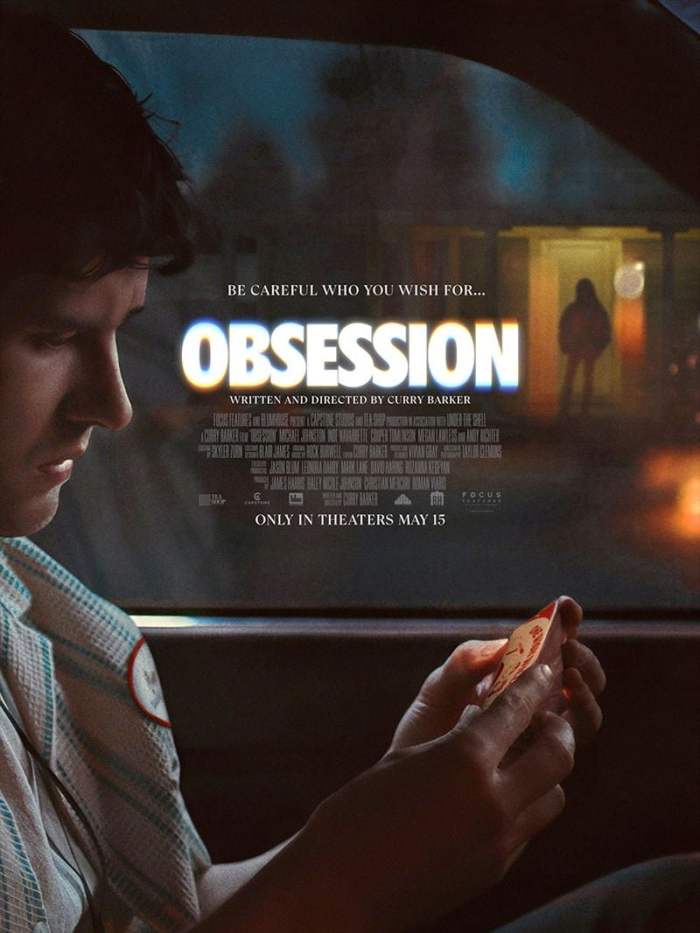
As always, October has got me in the mood for spooky novels, short stories about monsters that appear with no rational explanation, comics hosted by a decaying corpse with a wicked sense of humor, and undead cereal mascots with the most advanced case of rosacea you’ve ever seen. And if you’re a horror fan, we are in something of a golden age. Not only are we being inundated with a lot of horror movies, but many of them are REALLY GOOD. And if that wasn’t enough, they’re achieving CRITICAL AND COMMERCIAL ACCLAIM as well. As somebody who lived through the lean years of the early aughts, when almost every horror movie was a reboot, a sequel, or a remake of a Japanese film, it’s like a dream come true. Back on January 1st it probably wouldn’t have been hard to predict that Spider-Man: Brand New Day would be the highest-grossing movie of the year so far, but there are few people who would have suggested the likes of Obsession and Backrooms would also sit proudly in the top ten ahead of a new Star Wars film, a Steven Spielberg sci-fi epic, or Paw Patrol: The Dino Movie.
You’d be surprised how much this guy and Marshall have in common.

Even movies that didn’t score the box office heights of those two have been doing very well, relatively. Movies like Lee Cronin’s The Mummy and Buddy both generated all the chatter. Iron Lung may only have made $27 million at the box office, but with its shoestring budget and a self-released model that eschewed any sort of major studio backing it’s considered a massive success story. And it ain’t even over yet: this weekend brings us the aquatic thriller Whalefall and next week drops DC Studios’ body horror film Clayface, both of which are drawing fantastic early reviews. In an era where general audiences are starving for entertainment, horror movie fans feel like we’ve killed the fatted calf.

But as we are in this era of excellent and acclaimed horror, it still chafes me sometimes when I see the hoops that the mainstream has to leap through before they can accept that a horror movie is just…good.

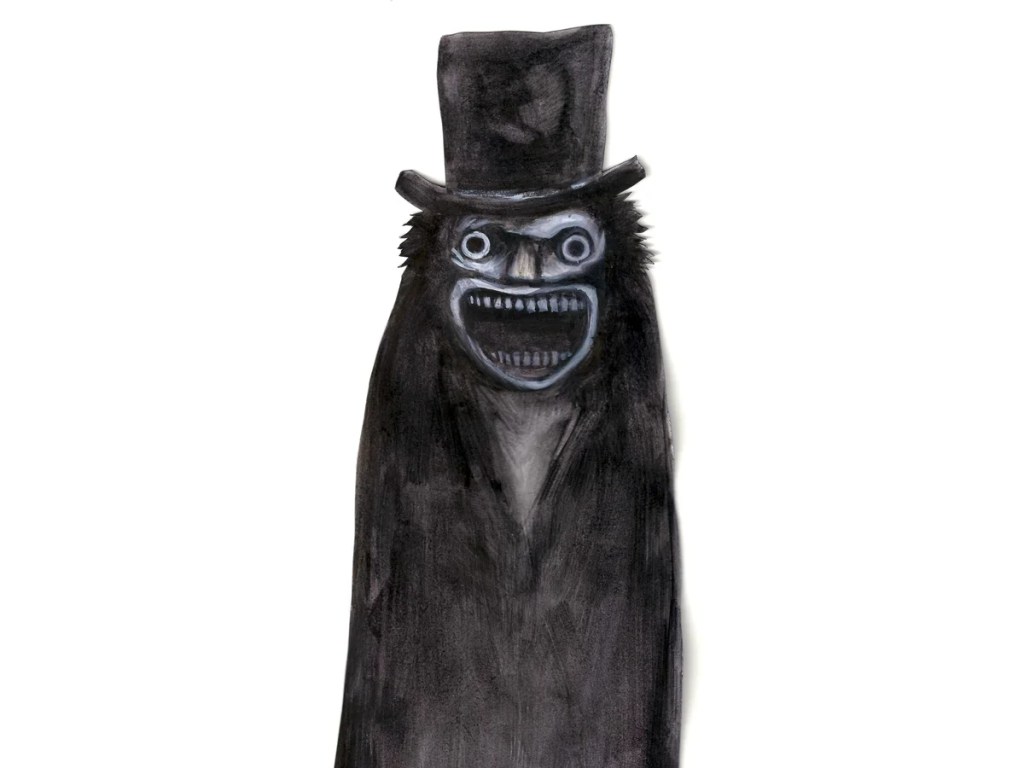
The term “elevated” horror has been around for some time now. I don’t remember exactly when I first began hearing it but I know it goes back at least to movies like The Babadook or It Follows, both from 2014, so it’s not a new concept. It is, however, kind of an insulting one. When I hear a movie described as “elevated” horror, the gist I get is that this is a horror movie that’s actually ABOUT something: some sort of crisis, some trauma, some dark aspect of the human condition that the movie is exploring. In The Babadook, for example, people who dissect these things point out that the monster itself is not actually a “traditional” monster, but rather a manifestation of the main character’s repressed grief over the death of her husband. It Follows, similarly, is about the anxiety of a teenager discovering her burgeoning sexuality. You see, these elevated movies aren’t REALLY horror, not like Freddy or Jason, they’re movies that use horror movie THEMES to actually EXPLORE something of artful depth.
Pictured: Repressed Grief

And some people may be nodding their heads along with this and saying, “Sure, what’s wrong with that?” And the answer is: there’s nothing wrong with it. That’s why horror writers have been doing it SINCE THE INVENTION OF THE GENRE.

One can easily make the argument that Frankenstein, specifically the second edition, is really about Mary Shelley wrestling with her anxieties over death after the loss of her husband and children. Bram Stoker’s Dracula is often seen as a metaphor for female liberation in an era before such a thing was a mainstream concept. How far back you wanna go? The folktale of Bluebeard is about women being afraid of the power of an overbearing man. In The Odyssey (Homer’s, not Nolan’s) it’s easy to view parts of Odysseus’s journey into the underworld as being about the terrors of war and the guilt of the people who survive it. Every werewolf legend is seated in a terror of a violent, animalistic urge that may be hiding in the person sitting next to you. When you say that horror that’s “about” something is “elevated,” you discount the fact that horror has ALWAYS been about something.

Let’s look again at some of this year’s big hitters: Obsession and Backrooms. I recently read an article on Substack (which I’m sorry to say I can’t find and link to, but if you’re interested – hey! – go ahead and subscribe to MY Substack and get a free short story in your mailbox) that argued both of these movies are, at least in part, about the “male loneliness epidemic.” That’s not a hard argument to make. In Obsession, every bad thing that happens can be traced to the fact that Bear is a pathetic, weak-willed creature who doesn’t have the courage to just admit to his actual feelings. Backrooms is fueled by the pain of a man who has lost his wife and is losing his company and has pretty much given up on his dreams. This same Substack writer, it should be noted, went on to argue that a lot of this year’s other box office winners — including Project: Hail Mary, Spider-Man, and even The Odyssey (Nolan’s, not Homers) — are about this same theme. I’ll let you decide for yourself if they all fit, but does that make Brand New Day an elevated superhero movie?

Tone is something else that frequently gets referenced when someone calls a horror movie “elevated.” If you look at the examples I’ve given so far, you’ll probably notice that all of these movies have kind of a slow burn. They start from a place of relative normalcy, although often a bleak, somewhat hopeless kind of “normal,” and then over the course of the movie the supernatural elements incrementally creep into the characters’ lives before finally reaching that point of maximum chaos and violence. I can accept movies with that tone as being a subcategory of horror, but there are a lot of non-horror movies that have that same kind of dour feeling: No Country For Old Men, Apocalypse Now, The Road, even Oppenheimer (Nolan’s, not Homer’s). If all it takes to be “elevated” is a general sense that everything sucks and it isn’t going to get any better, turn it on CNN. They’ve been trying to elevate the news for decades.

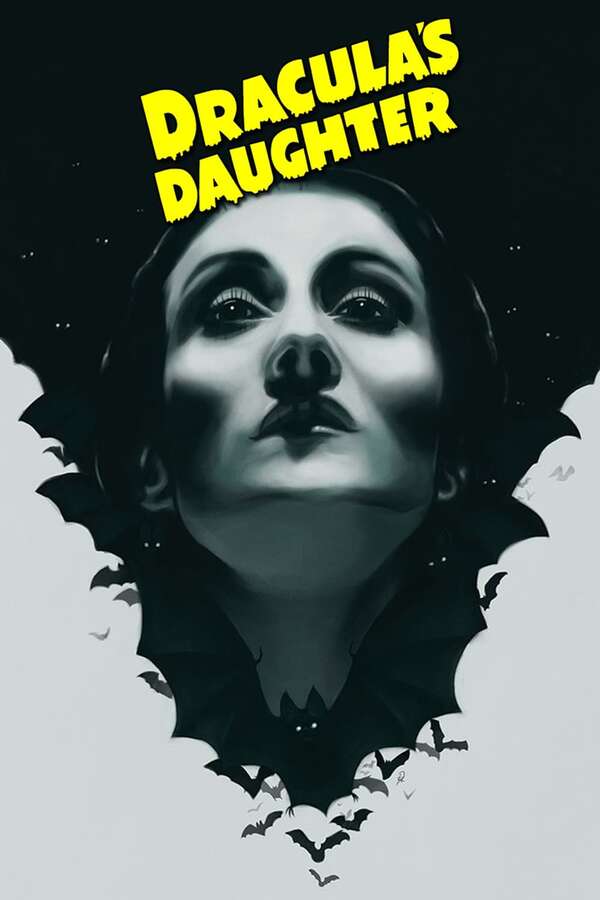
Even horror that’s “lowbrow” is about SOMETHING. People who talk about elevated horror as if that makes them some sort of Svengali are ignoring the fact that slasher movies of the 80s were predominately about “punishing” people for perceived sins like sex and drinking, that monster movies of the 50s were manifest versions of Cold War anxieties, or that even as early as 1936 Dracula’s Daughter took cues from Bram Stoker and painted the consequences of sexual repression as bloodthirsty monsters.
It’s basically a woman’s empowerment fable. Like Xanadu or something.

All of this is to say that “elevated” horror is nothing new, and pretending like it is doesn’t make you smart, it just makes you sound pretentious. I’m not disparaging any of the movies that are called elevated, mind you, I’m just disparaging the people who call them that. The filmmakers themselves will usually tell you that they weren’t making any effort at “elevation,” they were just making a scary movie…like people always have. If you think calling it “elevated” somehow gives you permission to appreciate something that you usually wouldn’t associate with, that’s a you problem, my friend. It’s not the genre. Horror has always lived in this area, and it’s not going anywhere.

Blake M. Petit is a writer, teacher, and dad from Ama, Louisiana. His most recent writing project is the superhero adventure series Other People’s Heroes: Little Stars, volume one of which is now available on Amazon. You can view his LitReel videos on TikTok and read his writerly yammerings on his free Substack.

Geek Punditry #184: Finding Freddy

The news hit like a scream, jolting you out of a peaceful sleep: Paramount Pictures has acquired the rights to do a reboot of the historic slasher franchise A Nightmare on Elm Street. This shouldn’t come as TOO big a shock, of course. The culture of the entertainment business is absolutely OBSESSED with intellectual property – they would much rather take something that was popular at one point and try to resurrect it than put in the work to cultivate anything new. And to be honest, I don’t even object to the reboot in principle. Of all the horror icons of the 1980s, Freddy Krueger is probably my favorite. It was going to be done sooner or later; it’s just a question of whether or not it will be done the right way.

“Didja miss me?”

And that brings us to the real difficulty in doing any kind of Nightmare reboot: finding a new Freddy Krueger. The reason that Freddy is my favorite of the icons is that he’s the most unique – a nasty sense of humor, a quick wit and a menacing tone of voice that isn’t present in most of the other slashers of the era. Michael Myers, Jason Voorhees, or Leatherface can be entertaining, but they’re all masked, silent killers. That’s not to say that they don’t have personalities of their own or that some performers aren’t better than others, but because of the nature of what those characters are, it’s far easier to accept a new actor putting on one of those masks than somebody else playing Freddy.

But Robert Englund, the actor that made Freddy who he is, is 79 years old. Although he’s still a working actor – in fact, he’s poised to play a major role in the upcoming sequel to the classic Behind the Mask – he has made it quite clear that he just doesn’t feel capable of the stunt work and long, torturous hours in the makeup chair that playing Freddy requires anymore (although he HAS said he would be willing to return to voice the character should there ever be an animated version of Nightmare). This won’t be the first time that Freddy was recast, of course. In 2010 there was a remake starring Jackie Earle Haley as the “Springwood Slasher.” That movie turned out to be something of a train wreck, though, and although most of the fans will concede that it wasn’t Haley’s performance that was lacking, they would also rather wipe the slate clean rather than be reminded of it.

Why is it so hard to imagine somebody else as Freddy Krueger? Other iconic characters have been recast in the past. In fact, for some characters it’s outright expected. There have been six official James Bond actors, and when one retires nobody questions IF the part should be recast, but only with WHO. The same thing goes for Superman, Batman, and several others. Granted, there are always people who are adamant that “their” version of the character is the only one, but that’s a really narrow minded point of view. It’s fine to say that Christopher Reeve is your favorite Superman – I ain’t here to argue with you – but to say that he’s the only one who should ever be allowed to play the character is absurd. 

“You fellas have room for one more?” — David, being unfailingly polite.

On the flipside, Marvel fans love to point out that only one actor has played Wolverine in live-action movies, Hugh Jackman. These fans always forget the necessary caveat with a statement like that: “So far.” 20th Century Fox got extremely lucky with Jackman, casting an actor who had the physicality and personality to make the character work for DECADES, not to mention a willingness to keep returning, even after “retiring” once. But had he decided not to come back at the time that they were planning the soft reboot of X-Men: Days of Future Past, the character would almost certainly have been recast along with Cyclops and Jean Grey. And now that the X-Men are finally joining the MCU, everybody knows it’s only a matter of time before somebody else puts on that pointy mask of his. 

This particular problem, this permanent association of a role with a singular actor, is a product of the film era. On stage, there is no presumption that a character will be forever associated with a single actor, no matter how good they are. I think the reason for that is that every theatrical production is a unique experience, something that cannot be reproduced (barring filmed versions of the stage play, of course). That ethereal quality is one of the things that makes theater magical. Movies, however, feel more permanent. If you go into ten different theaters with live performances of the same play, it will be different every time. If you go into ten theaters showing the same movie, it won’t change. If it were possible to go into a theater and watch the same live performance of a play forever, people might still be adamant in saying that Julie Andrews is the only person who could ever play Eliza Doolittle in My Fair Lady rather than immediately associating that character with Audrey Hepburn from the film. 

It would have been a different movie, but you can’t tell me it wouldn’t still be good.

But as so often happens, Eliza Doolittle leads us back to Freddy Krueger. Now that Paramount has announced their intention to move forward with the new film, the question of who should play Freddy has to be asked. And I’m going to say something that may or may not be a hot take – you tell me. If the person suggested is an actor you are aware of without having to look them up, they’re probably the wrong choice for the role. This is a case where we need an actor that can be fully immersed in the character. Putting Tom Holland (to throw out one truly terrible suggestion) in the makeup will not give us Freddy Krueger, it will give us Tom Holland cosplaying as Freddy Krueger. And this isn’t a knock on Holland’s acting abilities, it’s just that he’s too well-known for us to completely lose ourselves in the character.

The best choice for Freddy is probably somebody that nobody reading this has ever heard of before, someone who can embody the character and whom we’ll all accept without the baggage of previous roles or celebrity personality. The cult of celebrity isn’t as powerful as it once was anyway, after all. There are few faces in Hollywood that are guaranteed to open a movie on their own anymore, and those that ARE in that club are highly unlikely to consider the Freddy role. Besides, horror as a genre has never been as obsessed with that as the rest of the industry. That’s not to say that horror fans don’t have their favorite actors – we’ll line up for the likes of Kane Hodder, Jamie Lee Curtis, or Robert Englund himself. But we’re JUST as likely to throw our support behind a movie that has nobody we recognize if the premise, writing, and acting are good enough.

One of the biggest hits of the year was Backrooms, a horror movie based on a creepypasta, of all things. The biggest name in the cast is Chiwetel Ejiofor – a fine actor, and a great addition to any cast, but nobody looking at his filmography would call him a horror icon. The closest thing in the movie to a horror “star” is Mark Duplass of the Creep franchise, but even he’s hardly a household name. 

“Wait, is somebody saying I should play Freddy?”

All of this is to say that while horror fans DO show up for certain names, there are a lot of other reasons they go to the movies too. And in a case like Freddy Krueger, it’s far more important to get somebody who can play the role than it is to get somebody the audience recognizes. What Paramount should do, if they’ve got any sense at all, is cast as wide a net as possible, find the best Freddy out there, and then build the movie around his performance rather than his number of social media follows. 

Do they have that kind of sense? We can only hope so. 

If they do it right, maybe in a couple of years it’ll be hard to get to sleep again. 

Blake M. Petit is a writer, teacher, and dad from Ama, Louisiana. His most recent writing project is the superhero adventure series Other People’s Heroes: Little Stars, volume one of which is now available on Amazon. He’s also started putting his LitReel videos on TikTok. For more discussion of casting, go into any Dungeon Crawler Carl group on Facebook, ask who they think should play any given character in the upcoming TV show, then hide under a desk.