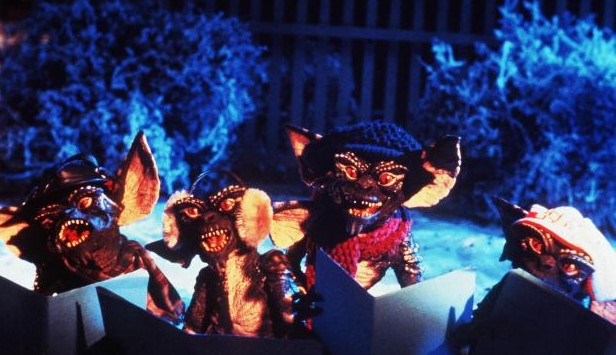
Geek Punditry #111: Playing Favorites With Love Stories Part Two

Ah, Valentine’s Day: the day to show your affection to the one you love, or perhaps the ones if you’re Nick Cannon or somebody. The day that we celebrate passion and romance. The day that everyone who is not, currently, in a relationship does their absolute best to ignore, because those of us who DO have cause to celebrate on this day can – admittedly – be absolutely sickening at times. And most importantly, it’s the day where we feature Part Two of “Playing Favorites With Love Stories.” Just like last week with Part One, I took to social media and asked my friends to throw out suggestions for love story categories to talk about, and this week I’m going to tackle a few more. Grab your sweetie and pull up a chair – there’s some heart-shaped excellence coming your way.

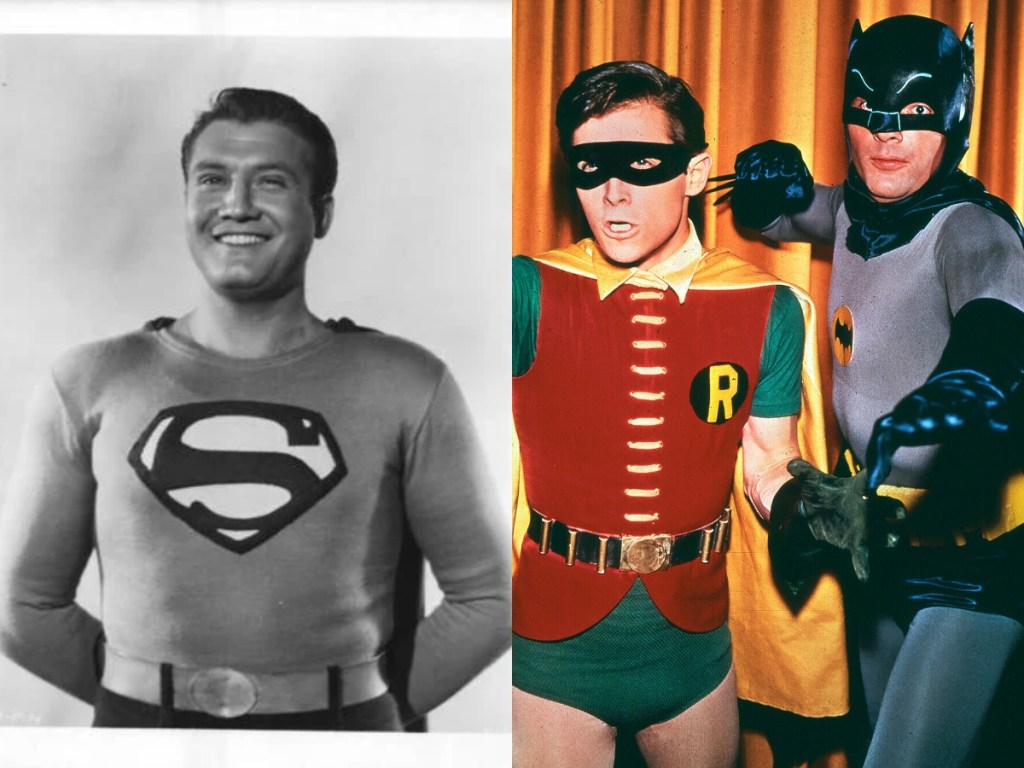
Superhero Love

Eric LeBlanc asked me for my “favorite superhero movies that are just love stories with violence.” That’s an interesting way to phrase it, particularly since a lot of traditional love stories are also “love stories with violence,” but I’m up for the challenge. I have, after all, watched a superhero movie or two in my time, and because of that I think I am uniquely qualified to declare that the best superhero love story ever to grace the silver screen is probably 1980’s Superman II.

Nothing says romance like fighting three evil prison escapees and crashing through a Coke sign.

Part of this, I concede, may be recency bias. I watched Superman II again only a few weeks ago as part of my ongoing Year of Superman project (with new posts every Wednesday – tell your friends!) so it’s still pretty fresh in my mind, but it’s perhaps my favorite depiction of the Superman/Lois Lane relationship on screen. The whole film hinges on the idea that Superman, upon having Lois finally prove his dual identity, decides that he wants to be with her and that the only way to do so is to give up his powers. As it turns out, though, super-timing was not one of his abilities. No sooner has he abdicated his super-ness than he gets his clock cleaned by a jerk in a diner and finds out – oh yeah – while he was off in the arctic circle becoming human again, General Zod and his cronies have escaped the Phantom Zone and are about to take over the world.

Much as I love the Zod stuff, the Superman and Lois relationship is the soul of this movie, and so much credit needs to go to Christopher Reeve and Margot Kidder for making it work. Kidder’s fire and verve absolutely make it believable that this is a woman a man of steel would fall in love with, would be willing to sacrifice everything to be with, and that steers us into the tragedy of it all when he is forced to conclude that the world needs Superman more than Superman needs love. Your heart breaks for the both of them, even if the film kind of chickens out at the end and he uses the heretofore-unknown “super kiss” power to make her forget the whole thing. The super kiss is really the only part of the film that bothers me, but it’s not nearly enough to knock this excellent film from its perch at the top of the mountain. 

Next is perhaps an odd choice, but I’ve always been fond of Dr. Horrible’s Sing-Along Blog, the musical that came about as a result of a 2008 writer’s strike. Dr. Horrible (Neil Patrick Harris) is an aspiring supervillain trying to crack into the big leagues when he finds himself falling for a girl he meets doing laundry (played flawlessly by Felicia Day). Unfortunately for him, her life is saved by his arch-enemy, the superhero Captain Hammer (Nathan Fillion), who – as heroes go – is way less Superman and way more Guy Gardner. Apropos, I know.
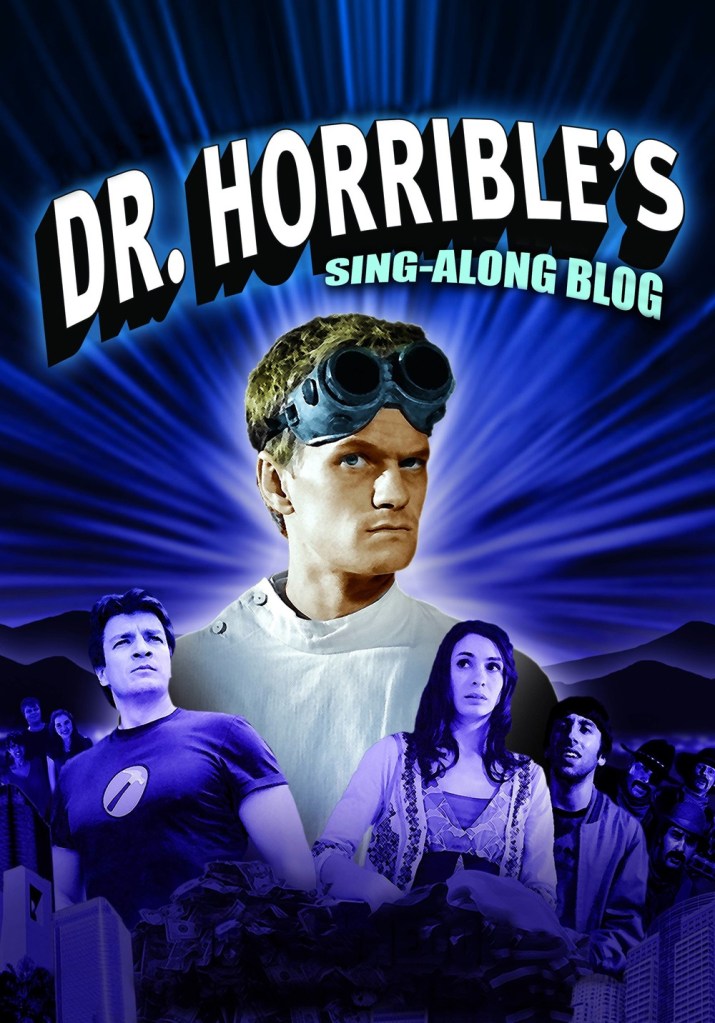
The supervillain musical Joker: Folie à Deux WISHES it could be.

I absolutely love this one. The songs are catchy, the three main actors are at the top of their form, and the conclusion is suitably heartbreaking. And it nicely meets Eric’s qualification of “a love story with violence.”

Not every superhero love story has to end sadly, though, although it seems like most of the really good movies do. But I don’t want to leave you utterly bereft of happy endings, so even though Eric specifically asked for movies, I’m going to throw out a comic book recommendation, one that I’ve been a fan of for many years: Thom Zahler’s delightful series Love and Capes.

Pictured: Love. Also pictured: Capes.

This story, described by Zahler as a romantic situation comedy, focuses on Abby Tennyson, a bookshop owner who is stunned, in the first issue, when she learns that her boyfriend Mark is actually the world’s most powerful superhero, the Crusader. Abby and Mark have one of the healthiest relationships in the entirety of superhero comics, and the way we watch their relationship grow and develop over the years – through dating, marriage, and parenthood – is the absolute rebuttal to any comic book writer who argues that there are no interesting stories to tell about a couple in a happy relationship. (Lookin’ – as always – as YOU, Spider-Man editorial office.) This series is a favorite of mine not only because it’s a great story (it is) but because it enjoys the rare honor of being one of the only comic books that I’ve ever discovered upon a recommendation from Erin, my own girlfriend (at the time, now wife). In fact, she and I were even guests at Mark and Abby’s wedding. No, really.
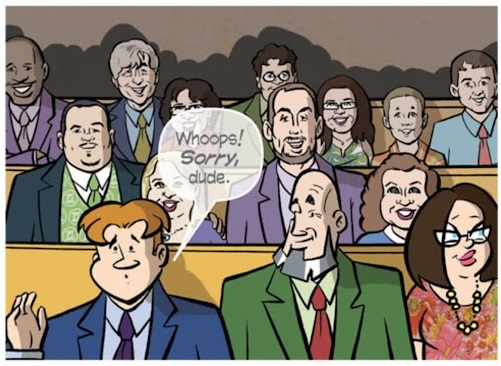
I was mostly there to check out the venue.

Platonic Love

Chance Simoncelli suggested the best “platonic” love stories. I really like this suggestion – it seems like much of the media is focused on romantic love, which is fine, but they zero in on it to the expense of every other type of relationship. It’s like the entertainment world doesn’t seem to grasp the concept that sometimes people are just friends, with no romantic connection, but that doesn’t mean their love isn’t deep and true and sincere. This is one of the reasons I hate fanfiction, if we’re being perfectly blunt.

But on rare occasions, they do manage to get it right, and share with us a deep, committed bond between two people that never indulge in any hanky-panky, and I think those stories should be celebrated. One of my favorites comes from the TV show Parks and Recreation. Nick Offerman’s Ron Swanson and Amy Poehler’s Leslie Knope couldn’t possibly be more different. Leslie is a chipper, enthusiastic-to-a-fault government employee who sees working in public service as the highest calling there is, whereas Ron is a grouchy straw Libertarian who sees all government work as inherently useless and wants nothing more than for everybody to leave him alone. Somehow, they’re the best of friends. Their devotion to one another is so powerful that in the final season of the show, after a time jump, the two of them have a wedge driven between them and it’s as horrifying and shocking as it would have been had either of them broken up with their respective spouses. The episode where the two of them reconnect and reconcile their differences is one of the most beautiful and sweetest in the entire series, as their bonds are once again forged over a mutual affection, respect, and a love for breakfast foods.

On any given day, I am both of these people.

There’s also a great example from the show Friends. First of all, I think it’s time we all admit that, in terms of friendship, Joey Tribbiani was the MVP of that show. The whole thesis of the series is that these six people are one another’s found family, but the level of loyalty and devotion that Matt LeBlanc’s character shows to each of the other five at various points in the series is above and beyond, and I don’t know if he gets enough credit for that. The late-seasons dalliance with Rachel aside (we can all agree that was Friends’ worst plotline, right?), he is the staunchest of the group.

And the best such relationship, I think, is the one he has with Lisa Kudrow’s Phoebe. With the other four pairing off and going through assorted romantic shenanigans of one sort or another for the entire run of the series, these two are simply friends through thick and thin. There were occasional episodes where we saw some flirtatious banter between them, and once in a while they would allude to the notion of them hooking up somewhere down the line, but at no point does it ever come across as a serious intention. Frankly, although they both enjoy playing the game with one another, I think Joey and Phoebe love each other TOO much to ever get physical, because they already know their relationship is perfect the way it is. In fact, she may be the one woman on the entire planet that Joey feels that way about, and if that’s not special I don’t know what is.
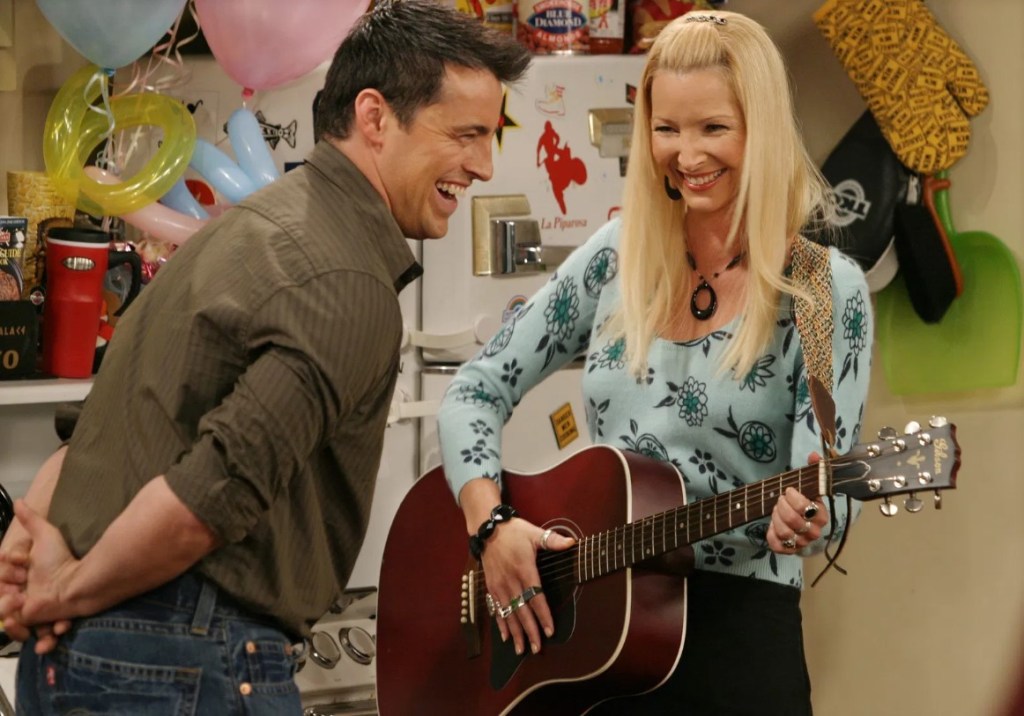
Somehow the womanizer and the former mugger were the wholesome, beating heart of the show.

I also need to give a little credit to Disney here. True, they have done as much to push romantic love as being the apex of a relationship as any studio on the planet, but there was one time they deliberately steered away from that and they nailed it, and I of course am talking about Frozen. It’s a Disney Princess movie from the outset and, as such, people expect it to follow the usual tropes of a Disney Princess movie, including the damsel in distress and the handsome prince. And for much of the film it does use these tropes, including Anna being afflicted by an errant piece of magic that threatens to turn her into ice if the spell is not broken by an act of true love. 

I know it’s fashionable to hate on Frozen and call it overrated now, and I’ll be the first to admit that the hype train it rode for many years went a lot farther than it probably should, but that doesn’t take away from the fact that the filmmakers were brilliant in how they subverted the expectations of a Princess movie. While Anna is looking for “true love” to cure her, her handsome prince reveals himself to be an opportunistic villain who was only planning to marry her to move himself into position to become king. If she dies, all the better for him. In the end, though, Anna IS saved by an act of true love: not by her false fiance Hans, nor even from the stout-hearted Kristoff, whose love for Anna IS pure. Anna is saved by her sister Elsa, stepping in to defeat Hans at the last second and breaking her own spell. The love between the two sisters is at the heart of the film, far more than Anna’s love triangle, and that makes it a unique and special film in the Disney canon. And I don’t care HOW sick you are of hearing “Let It Go,” it gets my respect for that. 
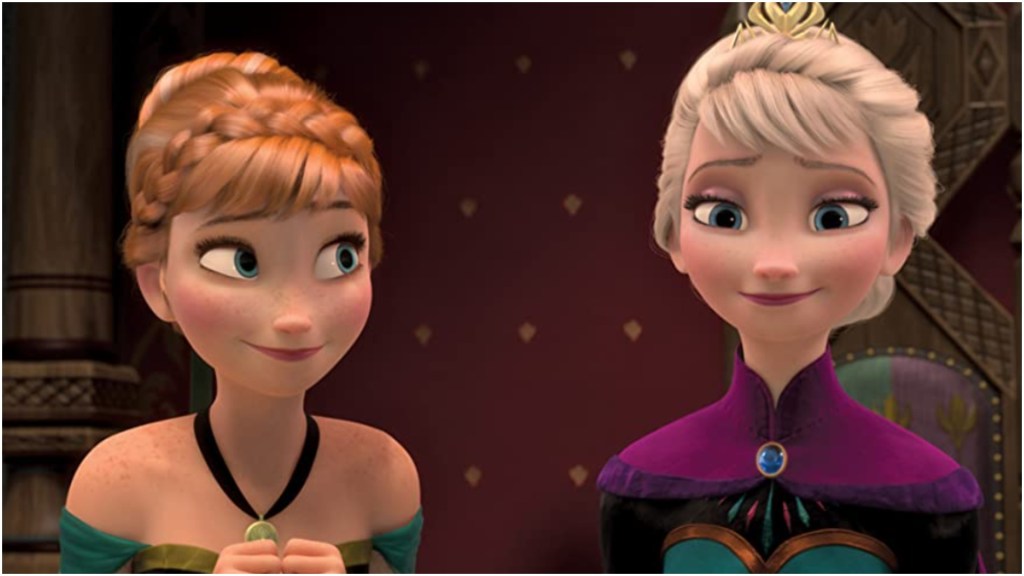
“Are you thinking what I’m thinking?”
“Yes, those fanfiction writers are messed up.”

Finally, of course, we can’t forget the greatest platonic love story of all: a story not between man and woman, not between friends, not between family, but between the sole survivor of a dying world and his appetite.

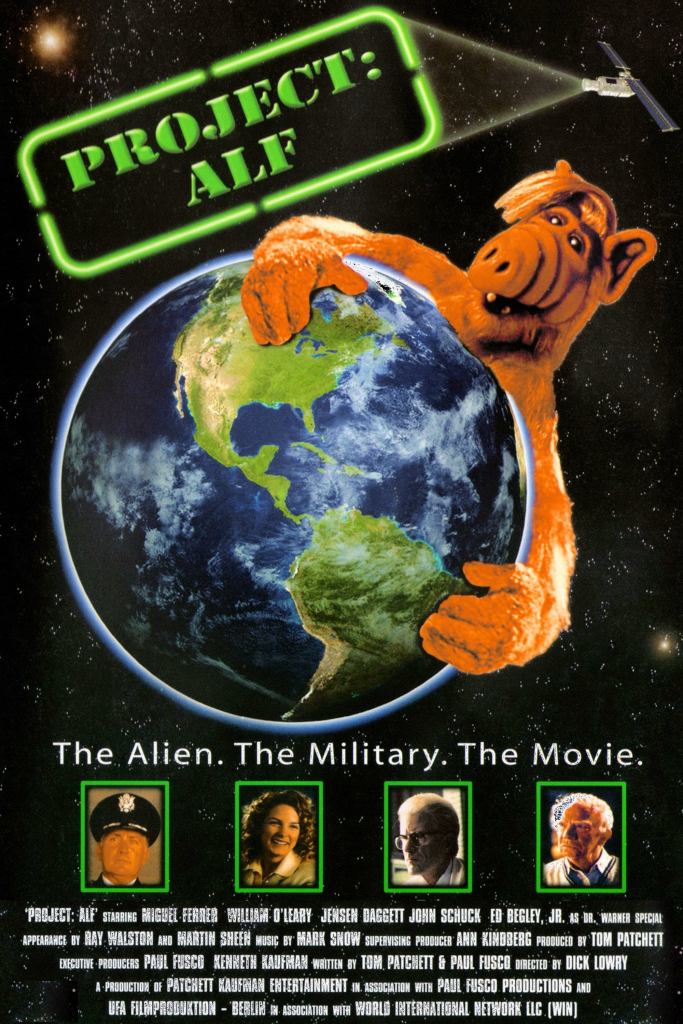
Project ALF.

The true platonic love affair is between me and this joke.

Will They/Won’t They?

Finally, Duane Hower asks for the best “Will they/Won’t they?” in geek culture, “and why is it Buffy and Spike?” Ah yes, the “Will they/Won’t they?” It’s the trope that fuels a million stories and makes half of them frustrating. The truth is, any time they try a “Will they/Won’t they?” the storytellers are playing with fire. Setting up a WTWT is incredibly easy: get two characters, hint at a degree of attraction between them, and then make the audience shriek uncontrollably as you refuse to settle the question. But concluding that arc in a satisfying way is a lot harder than it seems on the surface. If you resolve it too quickly you give up fuel for future stories. If you play it out too long, the audience gets frustrated. If you resolve it at exactly the right time, half the audience will hate the outcome, no matter what the outcome happens to be. Duane mentions Buffy the Vampire Slayer, and I concede that it’s a pretty good example, as far as WTWT go, but mostly because of how adroitly the storytellers managed the timing.

There are tons of classic examples: Pam and Jim from The Office, Sam and Diane (and later, Sam and Rebecca) from Cheers, Ted and Robin from How I Met Your Mother? and so forth, and while some of them navigated the minefield better than others, I think the relationship between Janine and Gregory in Abbott Elementary is one of the better examples. In the first episode, Gregory joins the Abbott Elementary faculty and we quickly see sparks between him and Janine, who happens to be in a long-term relationship. In truth, for the first few episodes Abbott adheres so closely to the format of The Office that it’s almost uncanny. But the relationship between the two of them changes and takes unexpected turns over the next few seasons. Relationships change, feelings change, and while the attraction between them remains undeniable, you’ve got a case here where you genuinely aren’t sure which way they’re going to take the characters. In fact, a late season three episode sets up things to put the kibosh on them once and for all just before the season finale changes everything. One of the reasons I think Abbott is the best comedy currently on television is because of its hilarious and shockingly realistic depiction of a school setting, but the Janine/Gregory relationship is a close second.
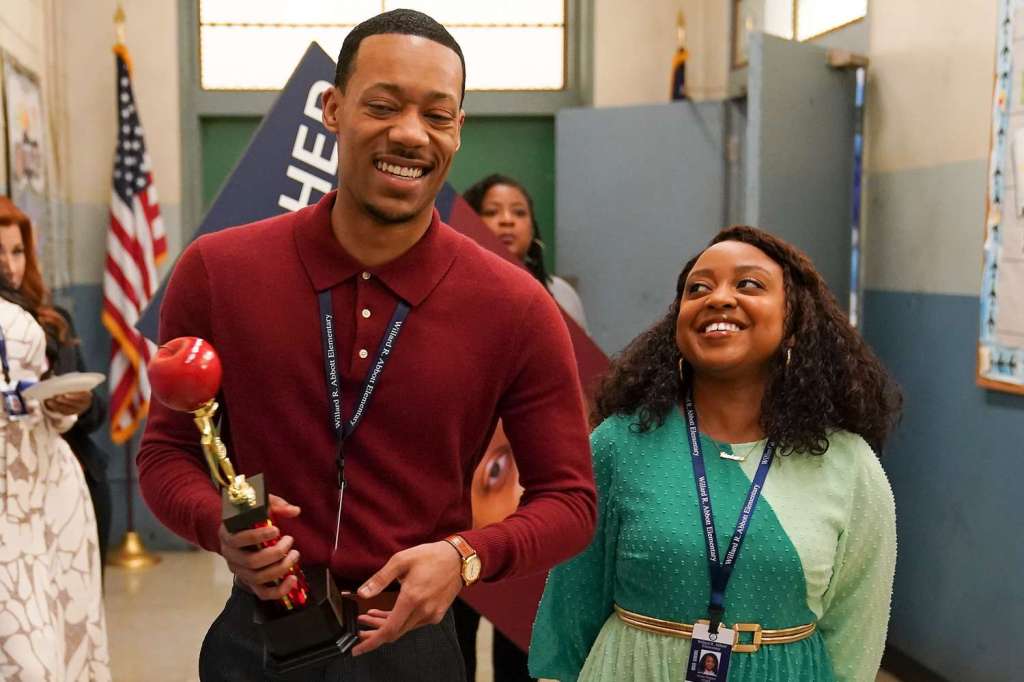
Fun fact: putting this much adorable in a single room is considered a health hazard in 29 states.

But perhaps the greatest example of a WTWT in the history of television comes from the brilliant, magnificent, legendary, and frankly underrated sitcom Newsradio. This 90s show about the staff of a New York radio station is one of the smartest and funniest television shows in the entire history of the medium, with whip-smart writing and a cast that performs their roles with such ease, grace, and humor that watching it can almost make you forget what a dumpster fire of a human being Andy Dick turned out to be. As the show was in development, though, the network (NBC) insisted that they include a WTWT among the cast. That was absurd, the writers said. That wasn’t the show they were doing! That wasn’t the story they were trying to tell! This was supposed to be a workplace comedy, not a romcom!

“Give us a WTWT,” NBC intoned deeply, whilst carefully counting their Seinfeld money.

FIIIIIIIIIINE,” the Newsradio writers replied, tweaking the first episode to set up a WTWT between Dave Foley and Maura Tierney’s characters. “Happy now?”

“Delighted,” NBC said, lighting a cigar on fire with a $100-bill with Jason Alexander’s signature on it.

And then the Newsradio writers took their mandated WTWT and resolved it in the SECOND EPISODE by hooking up the two characters officially.

“Look, we’re not Mulder and Scully, let’s just get on with it.”

Newsradio is one of the greatest sitcoms of all time, but the way they thumbed their nose at the network may be their crowning achievement.

Thus concludes PLAYING FAVORITES WITH LOVE STORIES, friends. I hope you all have a fantastic Valentine’s Day. Spend it with someone you love, fire up some of these stories we’ve mentioned, and remember that Phil Hartman was a genius

Blake M. Petit is a writer, teacher, and dad from Ama, Louisiana. His most recent writing project is the superhero adventure series Other People’s Heroes: Little Stars, volume one of which is now available on Amazon. You can subscribe to his newsletter by clicking right here. He’s also started putting his LitReel videos on TikTok. Did you know that Jon and Liz the veterinarian finally hooked up in the Garfield comic strip? No really, it’s true. Just throwing that out there to remind you that there’s hope for everybody.

Geek Punditry #110: Playing Favorites With Love Stories

It’s been a while, but it’s time once again for Playing Favorites! Yes, Playing Favorites, that Geek Punditry mini feature in which I throw out a category and my pals on social media suggest related topics wherein we pick some of the best of the best. With Valentine’s Day looming, this week I asked people to share ideas for love story topics. So grab that special someone and let’s get to it! 

Bad Choices 

Jeff Edwards asked for love stories where it’s clear that the people involved made the wrong choice. It’s a funny idea, because I’m sure we can all think of at least one movie where we’ve walked away saying something like, “What the hell did he SEE in her?” And as far as I’m concerned the absolute apex of this trope is from the Lord of the Rings film trilogy. 

No, I didn’t expect to be writing about Lord of the Rings this week either, but here we are. 

Now I love these movies. I think they are masterpieces, and I respect that Peter Jackson didn’t play all fast and loose with canon like SOME fantasy filmmakers I could mention. But if there’s one thing I simply will never understand, it’s why Aragorn would choose Arwen over Eowyn.

Seriously, why is this even a contest?

Sure, Liv Tyler is a classical beauty, but even 20 years ago I would have climbed over her and an entire briar patch to get to Miranda Otto. Nor is it just a matter of looks. Arwyn has that elvish grace and delicacy that makes you feel like you’re embracing a porcelain doll, and I don’t care for that. Eowyn is strong and brave, she killed the Witch King with the power of semantics, and I hear she’s doing her best to get better at making stew. She’s got it all.

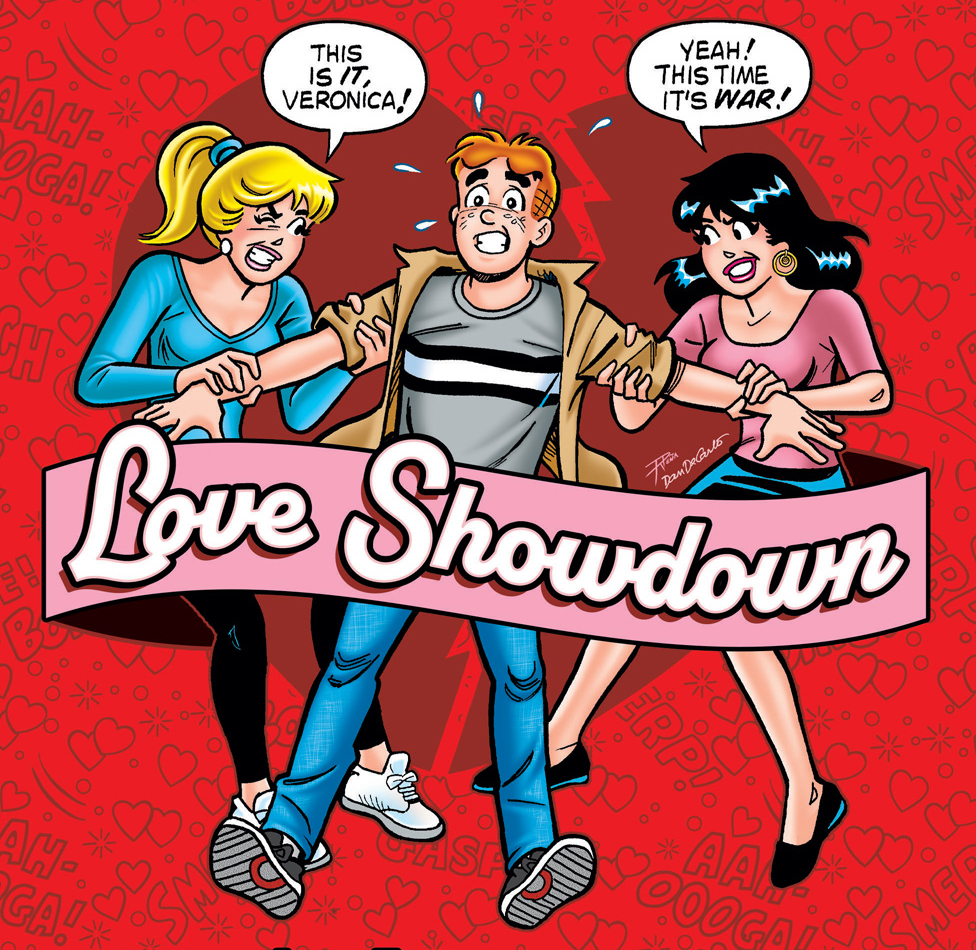
In second place is a tie between every story ever written in which Archie Andrews chooses Veronica Lodge over Betty Cooper. I get it. Archie, Betty, and Veronica are the eternal love triangle, and we all know that there’s never going to be a TRUE resolution. They’ve had attempts over the years, but it never sticks. But there is a word that the French have for people who prefer Veronica over Betty: wrongo.

Frankly, they can both do better.

I don’t want this to sound like I hate Veronica, mind you. I think she gets a bit of a bad rap. There have been numerable stories that have shown that, underneath her rich girl veneer, she has a good heart. But that doesn’t change the fact that she’s spoiled and selfish, and that Archie is dazzled by her beauty. Betty, on the other hand, is entirely loyal and devoted to him, and loves him without reservation, whereas Veronica on many occasions has been known to toss him aside at a moment’s notice. In fact, that’s probably WHY Archie goes for Veronica – because she’s less attainable. 

What an incredibly stupid reason. What an incredibly realistic reason.

As if that weren’t enough, Archie ignores the very sensible advice of his friends. I’m not saying that if my friends hadn’t liked Erin when I starting dating her that I would have ended the relationship, but at the very least it would have made me question what was up. True friends, people who honestly have your back, should be listened to, and Jughead has made it ABUNDANTLY clear over the years that he’s Team Betty. Archie. Archibald. Listen to your bro.

It’s a little easier to justify when you remember that Archie and the gang are all, in fact, teenagers, and as such he is even more inclined to make incredibly stupid choices than we males of the biologically adult variety. The characters aren’t ever going to grow up, but if they DID, I would like to think that Archie’s better judgment would finally kick in and he would see that the girl next door is the way to go, hopefully before Betty finally comes to HER senses and dumps his ass for Adam Chisolm.

Yes, as a matter of fact, I DO feel ways about things. 

Finally, although this is not a hill that I personally am prepared to die on, my wife wishes me to share her sincere belief that, in West Side Story, Tony was an absolute idiot for going after Maria when Anita was, like, RIGHT THERE. This is true of both the original and the remake. This is even true of the older Rita Moreno IN the remake. I, on the other hand, just want to point out that West Side Story is a multiversal variant of Romeo and Juliet, and as such, pretty much everybody in that story makes nothing but bad choices all day and all night. 

Electric Love

My uncle Todd Petit asked for the best love story involving a robot or cyborg, which is extremely specific, but that’s cool with me! I was a little hesitant to pick this one, though, mostly because in the Facebook comments several people already went straight to what I think is probably the best robot love story of all time.

Project ALF. 

Ah, I’ve missed this stupid, stupid joke.

No, wait, I’m thinking of the best alien/feline love stories. Obviously, the best love story involving robots comes from the Pixar masterpiece WALL-E. I love this movie, and I assume pretty much everybody who has a soul also loves it, and perhaps the main reason is the deep, perfect, sincere love that is expressed in this film. WALL-E is a garbage robot; his job for centuries has been just to collect trash and compact it. There’s no emotional component to this. But after all these hundreds of years of solitude, he finds himself growing a personality – likes, dislikes, hobbies. He begins saving select items from the trash that he finds interesting and grows a little collection. He makes friends with a cockroach. He is mesmerized by the movie Hello, Dolly! 

He even gave her flowers.

And then he meets EVE, a robot that is searching the dead Earth for signs that life can return, and it’s instant sparks. It’s like watching a busted down Ford Pinto fall in love with a sleek new electric hybrid vehicle (coming this fall in Cars 4!) but it WORKS. At first, EVE isn’t particularly impressed by WALL-E, but his sweetness, kindness, and courage melt her electronic heart. And perhaps the most amazing thing about it is that their entire relationship is almost completely wordless. Neither of them have any dialogue other than occasionally saying their names, but that doesn’t matter. By the end of this movie you are crying and cheering and imagining a new Earth populated by a slendering human population and all of WALL-E and EVE’s little robot babies.

That said, good on Pixar for resisting the urge to name him ADD-M. 

As for other great robot love stories…well, the one that comes most clearly to mind is actually one of the most tragic, and it’s from Star Trek: The Next Generation. Like most Star Trek shows in the pre-modern era, this show changed and evolved considerably over its first few seasons. Perhaps the most visible change (other than Riker’s beard) was the departure of Denise Crosby, who played security chief Tasha Yar in season one. Crosby asked to be written out of the show, frustrated over the lack of attention and development her character was getting, and honestly, you can’t blame her. Go back and watch that first season again and you’ll see most of the writing did her no favors at all. But there is ONE element of her abbreviated story that stuck with the characters for all time, and that was her relationship with the android Data. The idea of Data is that he is a Pinocchio, a robot that looks almost human and that wants to be a real boy, if only he knew what emotions were.

She had an AI boyfriend BEFORE it was cool.

Data is my favorite Next Generation character, and in my top three of all Star Trek characters, and the reason is because of his emotional journey. The conceit was that, as an android, he desired the emotions he did not have, but even in that description you can see the contradiction. DESIRE is an emotion. If you HAVE no emotions, how can you DESIRE them? My read on Data, the way I feel about the character, is that he truly DID have emotions from the very beginning – he simply didn’t understand them, know how to process them, know how to define them, and therefore he BELIEVED he had none. After Tasha Yar is killed off, Data returns to her in his thoughts many times. For six seasons, then again 30 years later in the final season of Star Trek: Picard, it is Data that recalls Tasha more than anybody else, Data who brings her up, Data who reveals in that Picard episode that his memories of her are a core component of his personality matrix. The great legacy of Tasha Yar is the fact that, for the rest of his existence, poor Data has been mourning a woman he didn’t really understand he was in love with. 

Sitcom Love

Rachel Ricks asks what I think is the best romance from a sitcom. That’s such a tricky one. There are a lot of great sitcom COUPLES – Bob and Linda Belcher, Herman and Lily Munster, and so forth – but if it’s a pairing that was already together when the show begins, I don’t think I can count them. To count it as a romance, I think we need to see the relationship blossom INTO love.

I also don’t really count those stories that end poorly or where the characters don’t really belong together. Sam and Diane on Cheers may be one of the all-time legendary sitcom couples, but they were utterly toxic to one another and never belonged together. Not to say that a love story HAS to have a happy ending (see what I said about Data), but if it’s a sitcom, I want something a bit more lighthearted.

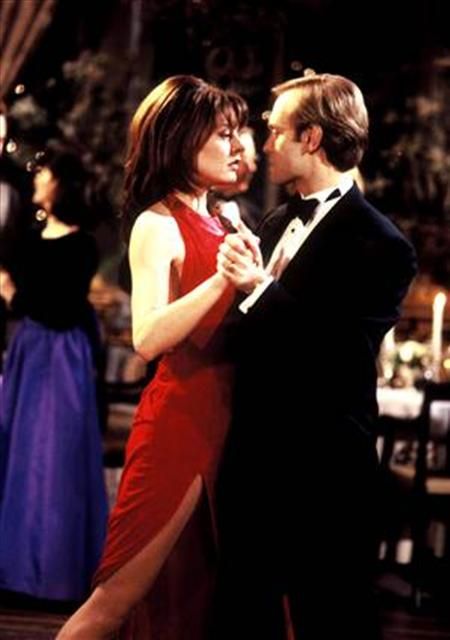
So I’m gonna stick to the Cheersiverse and say one of my favorite sitcom romances is Niles and Daphne from Frasier. And it’s odd, because it started off as a pretty poor depiction of a relationship – when they meet, Niles is already married (to an utterly reprehensible woman who browbeats and emasculates him at every turn) and pines for Daphne in secret for years. She, meanwhile, is completely oblivious to his affection and treats him with the same love and care that she does Eddie the dog. Eventually, though, his marriage to Maris ends and the two of them find one another. The arc where they’re both with other people but wind up boomeranging into each other’s arms is one of my favorites, and from that point onward the love and affection between them elevates both characters.

Pictured: Steam Heat

There’s a relatively early episode where they have to pretend to be a couple as one of the screwball schemes that happened in every other episode of Frasier, and they play the part so convincingly that Niles almost believes she shares his affection until she compliments him on how good an actor he is. The heartbreak David Hyde Pierce conveys is palpable, and you die a little for him. But it’s bought back years later, when they get together and revisit that scene again, bringing it all full circle. I just love watching those two. 

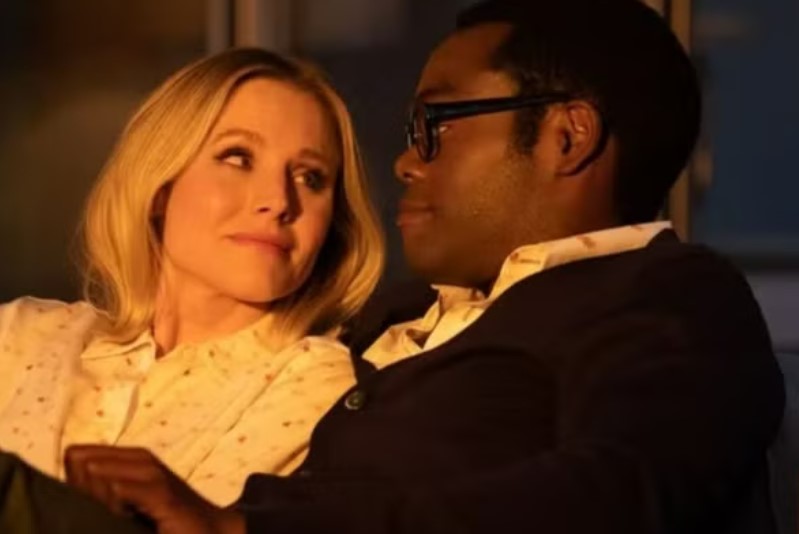
I also simply adore the relationship between Eleanor and Chidi on The Good Place. This show, about a self-proclaimed “Arizona dirtbag” (played in an adorable way that only Kristen Bell could have pulled off) who goes to Heaven due to what amounts to a clerical error, is one of the smartest and most emotionally profound sitcoms of the past decade, if not of all time. The relationship that develops between Eleanor and Chidi (William Jackson Harper) is one of the core elements of what makes it such a magnificent show. Eleanor has spent her life being self-centered and scuzzy, whereas Chidi’s life has been one of anxiety and apprehension. Eleanor acts without thinking, Chidi overthinks EVERYTHING to the point of catastrophe. The way each of them makes the other a better person is beautiful and heartwarming. 

If this screenshot doesn’t make you want to cry, you did NOT watch the last episode.

There’s a lot more to The Good Place than I revealed in that little recap, because if you’ve never seen the show I don’t want to spoil any of the incredible twists and surprises that it includes, but go and watch it and tell me you’re not rooting for Eleanor and Chidi every step of the way.

Okay, folks, I think that’s going to bring us to the end of part one of “Playing Favorites With Love Stories.” There are still several great suggestions for topics, though, so I’m not done yet. Come back next Friday, Valentine’s Day, for part two. And until then, hey, share this with someone you love. 

Blake M. Petit is a writer, teacher, and dad from Ama, Louisiana. His most recent writing project is the superhero adventure series Other People’s Heroes: Little Stars, volume one of which is now available on Amazon. You can subscribe to his newsletter by clicking right here. He’s also started putting his LitReel videos on TikTok. He maintains that the purest love story on TV is Gomez and Morticia Addams, but nobody asked about that, so he’s gonna drop it here. 

Geek Punditry #85: Playing Favorites With School (Part Two)

It’s time for round two of Playing Favorites With School! For any newcomers out there who, perhaps, didn’t see last week’s life-changing exploration into pop culture effluvia, “Playing Favorites” is my recurring feature in which I ask my friends on social media to suggest categories related to a specific topic, then I expound upon what I think are some of the best examples of those categories. In part one of the “School” series, I talked about some of my favorite School Sitcoms, High School Superheroes, High School Horror movies, and shows where the actors were maaaaaybe a little too old to be playing teenagers. This week we’re returning to the pile of suggestions for a few more rounds!

Hero Schools

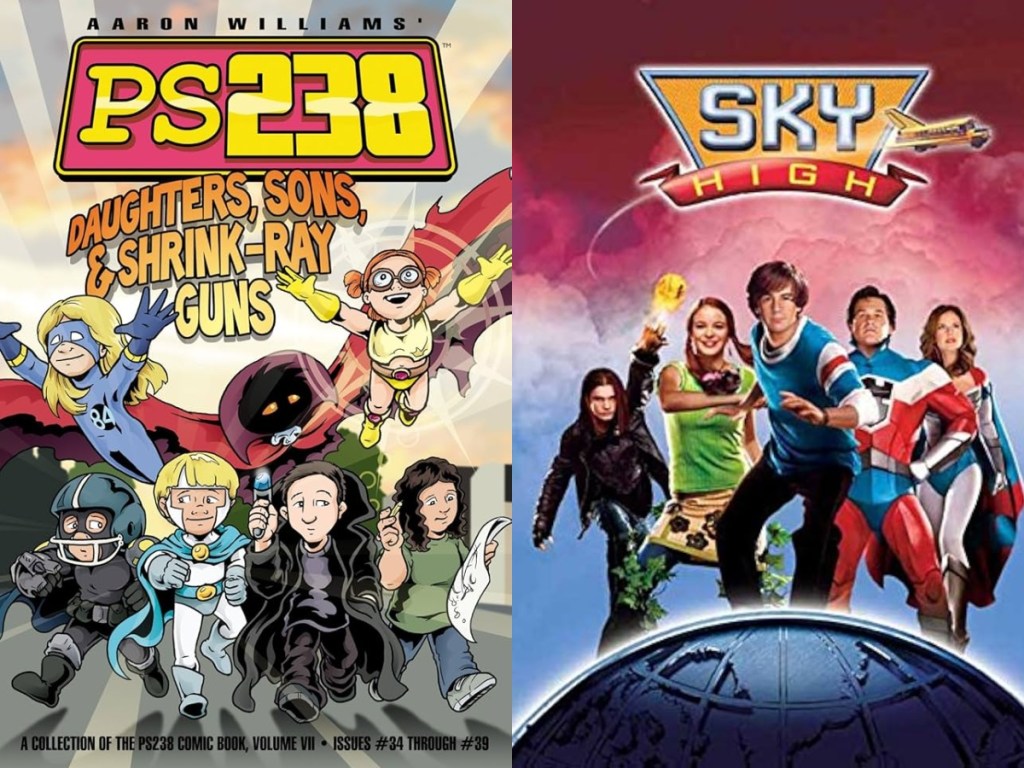
Sandy Brophy asked about my favorite “hero schools.” I’m interpreting this as a school that is intended to teach students to be heroes, so I’ll skip the obvious answer of Hogwarts, as that’s more of a general education facility in the setting and not specifically intended to turn out champions. There’s a little overlap with one of last week’s suggestions – in “High school superheroes,” I talked about the amazing Aaron Williams comic book/webcomic PS238, which is about an elementary school for superheroes. Not long after that, though, it became known among comic book readers as “the idea so nice Disney stole it twice,” as the House of Mouse released the films Sky High (2005) and Zoom (2006), both of which feature a very similar idea. Of the two, I find that Sky High is a better film. The characters are more memorable and the world is fleshed out in a much better way. The story focuses on Will Stronghold (Michael Angarano), the son of two of the world’s greatest superheroes, who is sent off to the local superhero academy despite the fact that he did not inherit any of their powers. This, by the way, is where the comparison to PS238 REALLY comes into play, since this is almost exactly the backstory of one the main characters in that comic’s ensemble. The story goes in a different direction, though, and it’s a fun, colorful movie that really uses Kurt Russell (as Will’s super-awesome superhero dad) to very good effect.

It’s the same picture.

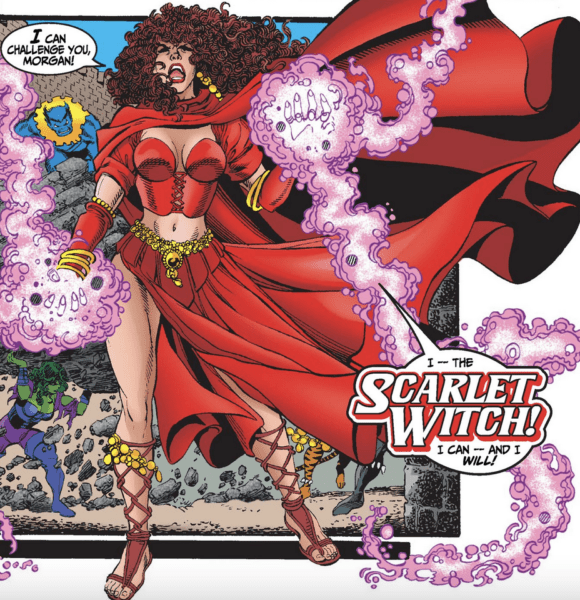
Marvel Comics also has a pretty good series that only came out in recent years, Strange Academy, about a school specifically for magic-users in the Marvel Universe. Set in New Orleans (which always gives it extra points from me IF it’s done well), the series focuses on a group of magic-powered kids who have been gathered by the likes of Dr. Strange, the Scarlet Witch, Magik of the X-Men (herself a graduate of one of the all-time great superhero school comics, The New Mutants) and other powerful mystical faculty members to teach them to use their abilities in ways that won’t rip open a portal to the Dark Dimension or something. The comic, by Skottie Young and Humberto Ramos, is a wild look into the magic side of Marvel, and can go from a lighthearted school comedy to a blood-chilling cosmic horror story in the course of a single issue. The main series ended a while back, but the Academy has stuck around in assorted miniseries and one-shots since then.

Class picture day is a challenge.

The last one I’ll point to is one of my favorite science fiction novels of all time, Ender’s Game by Orson Scott Card. Following an alien invasion that was narrowly defeated, planet Earth has come together in a precarious alliance to prepare for another invasion that they are certain is imminent. As part of their preparations, they are finding the most brilliant children on the planet and taking them to an orbital Battle School where they are trained to fight the wars that will determine the fate of the human race. The novel focuses on Ender Wiggin, a five-year-old prodigy, who is brought to Battle School without knowing that many of the people observing him believe that he is humanity’s last hope. The book is an absolute masterpiece of characterization and world-building, and I’ll never forgive the film adaptation for falling so flat. 

I had a whole different joke planed for this caption until I saw the STUPID sticker on the cover.

Pep Rally Scenes

Duane Hower tossed out the clever suggestion of “movies with a pep rally scene.” I’m going to be honest, I actually had to turn to Google for this one, because although I feel like I’ve seen a hundred movies with a pep rally, for some reason those specific scenes didn’t click into my brain until I went back and started looking. A pep rally, of course, is that singularly high school phenomenon where the school gathers and cheers – usually, but not always – for the school’s athletes in order to get them psyched up for the Big Game. It’s a standard of American high schools, although I admit, I’ve wondered how well such things translate in other countries. DO any other countries have pep rallies? If you went to high school outside of the US, please, let me know if you ever went to a pep rally. 

Anyway, the best motion picture to ever encapsulate this singularly academic experience is the classic Alfred Hitchcock historo-religious drama…

Project ALF.

Bah-dump, TISSSSSSS

The first one that rings a bell to me is the Emma Stone comedy Easy A. I’ve always liked this movie, as it’s a very clever comedic modernization of Hawthorne’s The Scarlet Letter, featuring a high school girl who is scandalized when she lies about sleeping with a college guy, and before long the (false) story is turning up more places than Snoop Dogg at the Olympics. Olive (Stone’s character) leans into the lie at first, but as things spiral out of control she needs to find a way out. As part of that plan, she interrupts a pep rally with a musical performance of the song “Knock on Wood.” It makes sense in context. But the scene is goofy and wild, and utterly in character for Olive while using the tropes of a high school movie to advance the overall theme of the film. In other words, I like this silly scene because, in actuality, I think it’s pretty smart. 

It’s always fun to see fans of this movie get disappointed when they find out it’s actually based on literature.

Aaaand…I’m actually having trouble thinking of any other movies with a pep rally that I actually like. I could have sworn that there was one in Teen Wolf, but maybe I’m just thinking of the basketball games. Sorry, Duane, looks like yours is gonna be a one-and-done.

Movies based on high school reading lists

Rachel Ricks wants to know what are some of the best movies based on books that may be read in a high school English class. If Rachel and I hadn’t gone to college together, I would suspect that this question was posed by a student hoping to get suggestions for a movie to watch in order to get out of their homework and I would have to say, “Nice try.”

But the fact of the matter is, even the BEST movies adapted from books never match up 100 percent with the text. Writing and filmmaking are two very different disciplines, with different demands and different requirements, and what works in one medium does not always work in another. I like to think of movies as interpretations of a book – presenting the story in a way that, hopefully, maintains the spirit of the original while still standing on its own.

All of that is to say that I think To Kill a Mockingbird is perhaps the greatest movie ever made based on a book that I would assign to a student. The book is a masterpiece – a fable about a good man fighting a good fight against overwhelming odds. In this case, that good man is Atticus Finch, and that good fight is defending an innocent black man from charges of raping a white woman in a time and place where such an accusation not only puts the life of the accused on the line, but pushes the entire town onto the edge of a cliff that it may plunge off depending on how things go. It’s kind of sad how relevant that still is. The book is fantastic and the movie is just as good. Gregory Peck’s depiction of Atticus was once voted the best film hero of all time by the American Film Institute, and even though that was before any of the Deadpool movies were made, I think it’s a ranking that holds up.

Left: A masterpiece. Right: Also a masterpiece.

It’s a lot to get through (both the movie and the book), but I think Gone With the Wind deserves a place on this list as well. Margaret Mitchell’s novel of the Civil War is so iconic that it informs pretty much EVERYBODY’s mental image of Georgia in the 1800s, even if they’ve never read the book or seen the movie. The film itself is also a triumph of the art form, adapting a gargantuan novel into a mammoth film while still being engaging and compelling throughout. Plus, it’s indirectly responsible for one of the funniest sketches in the history of The Carol Burnett Show. 

And as an English teacher, I do have an unabashed love of the works of William Shakespeare. I’ve taught several of his plays Romeo and Juliet, Julius Caesar, Othello, but I think the best movie I’ve ever seen based on one of his works is the Kenneth Branagh version of Hamlet. The film clocks in at a hefty four hours long as Branagh – unlike most people who adapt Shakespeare – films the ENTIRE text of the play, making no edits or omissions. You’re left with a film that feels a little bloated in places but, at the same time, is an excellent tool for showcasing the bard’s words and has some dandy performances.

It’s not 100 percent accurate, of course. In the original Shakespeare Hamlet only frosted the tips of his hair.

Honorable mention goes to two classic movies that are based on classic works of literature: Frankenstein and The Wizard of Oz. The reason these two only get an honorable mention is because, as anyone who has both read the books and seen the movies can tell you, the movies are fantastic, thrilling, celebrations of the cinematic artform…but dang, they do a piss-poor job of actually adapting the story of the book. I love them both, but not as adaptations.

This brings us to the end of yet another installment of Playing Favorites, folks. Once again, I hope you’ve enjoyed this somewhat random peek into what rattles around inside my brain. What other column are you going to find that talks about both Strange Academy and To Kill a Mockingbird on the same page? If you want to participate in upcoming Playing Favorites columns, be sure to follow me on Facebook, Threads, or “Twittex” for the next time I toss out a topic and wait for your responses. Or even subscribe to my weekly newsletter, where I chat about what I’m working on and throw out my legendary “What’s Cool This Week?” recommendations. And in the meantime, have a great school year – or, alternately, appreciate the fact that you don’t have to go back.

Blake M. Petit is a writer, teacher, and dad from Ama, Louisiana. His most recent writing project is the superhero adventure series Other People’s Heroes: Little Stars, volume one of which is now available on Amazon. You can subscribe to his newsletter by clicking right here. Was there a pep rally in Buffy the Vampire Slayer? Damn it, this is hard. 

Geek Punditry #84: Playing Favorites With School (Part One)

It’s August, gang, and across this great fruited plain of ours, Americans are gearing up for that most turbulent of seasons: back to school. Many of us are already back in session, and the rest are getting ready to eke out those last bits of summertime fun before the doors fly open. Stores are stocked with pencils, students are picking out their first day outfits, parents are trying to get them to answer questions for their “Back to School” social media posts, and teachers are doing their best to keep the economy of Columbia solvent by buying all of the coffee. And what better way to commemorate this change of seasons than with another installment of everyone’s favorite Geek Punditry feature-within-a-feature, PLAYING FAVORITES? 

If you’re new, here’s how it works: a couple of weeks before a playing favorites column, I go out on social media and give my peeps a topic, such as SCHOOL, and ask them to suggest different categories for me to talk about. Then I select my favorite categories from your suggestions and tell you all what I think are some of the best of the best in each one of them. It’s a good time for everybody. So let’s see what kind of back to school shenanigans were on your minds this week, shall we?

Dawson Casting

Steven J. Rogers asked for some of my favorite examples of actors who are a little “long in the tooth” for their role as a high school student. The experts in this phenomenon (by which I mean the editors of TV Tropes) call it Dawson Casting, the practice of using actors in their 20s or even 30s to play high school students, named for the TV executive who invented the system, Herringbone Q. Casting.

No, seriously, it’s named for the show Dawson’s Creek, which is one of the most well-known examples of the trope, but it’s by no means the FIRST and certainly not the WORST. The trope goes back hundreds of years. Even Shakespeare is likely to have indulged in it – Hamlet, for instance, is supposed to be a college student, but there are lines in the fifth act that indicate that he used to get piggyback rides from his father’s court jester, who has explicitly been dead and buried for 23 years. Unless ol’ Yorick was playing games with Hamlet as a zygote, the math don’t math. 

There are two ways to look at this question: am I trying to figure out who did it BEST – as in, which older actors were most convincing as teens? Or am I trying to figure out who did it in the most ENTERTAINING fashion, as in making me burst out laughing when a guy who could be doing commercials for Metamucil saunters into homeroom? I’ll answer both.

Most of these kiddos are older than they look. Especially the one in the glasses.

As far as who was the most convincing, I think the crown has to go to the TV version of Buffy the Vampire Slayer. When that show launched in 1997, Sarah Michelle Gellar was 20 playing a 15-year-old – and to be fair, that’s a much smaller gap than many Dawsons have had to contend with over the years. But she was the YOUNGEST member of the main cast. Alyson Hannigan was 23 and Nicolas Brendan 26, and all of them were pretty convincing as teenagers. The only one who you couldn’t really buy was Charisma Carpenter (27 at the time). And while you aren’t really shocked to hear that these actors were in their 20s, it’s not nearly as blatant as some of the more hilarious examples of this trope. 

In general, the shows that get away with this the best are the ones that don’t try to get away with as much. The high school students in Cobra Kai were mostly in their early 20s when the show began, and not noticeably too old. On Smallville, I don’t think that Tom Welling was really successful at convincing anybody that he was 14 years old in season one (the actor was 24 at the time), but the rest of the cast was mostly in their early 20s and far more convincing. I suppose the trick with pulling a Dawson is to not press your luck.

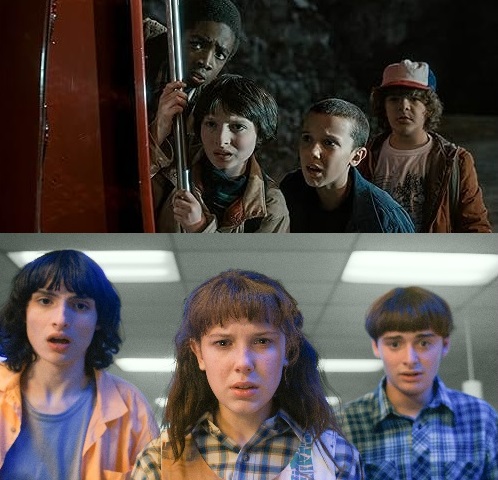
You know who DID press their luck? Stranger Things. It wasn’t a problem in the first couple of seasons – with the five main kids played by actual…y’know…KIDS. And even the teenagers were pretty convincing: Joe Keery (Steve) was 24 playing 17, Natalia Dyer (Nancy) was 21 playing 16, Charlie Heaton (Jonathan) was 22 playing 16, and all of them were believable as high school students. But the long gaps between seasons were starting to strain credulity even in season four, and Keery is going to be 32 playing 19 or 20 in the show’s upcoming final season. He may be able to pull it off, but the likes of Gaten Matarazzo (Dustin) and Finn Wolfhard (Mike) playing 15 at the age of 22 are going to be a harder sell, especially since we’re all so familiar with what they looked like AS KIDS. 

No really, it’s just two and a half years later.

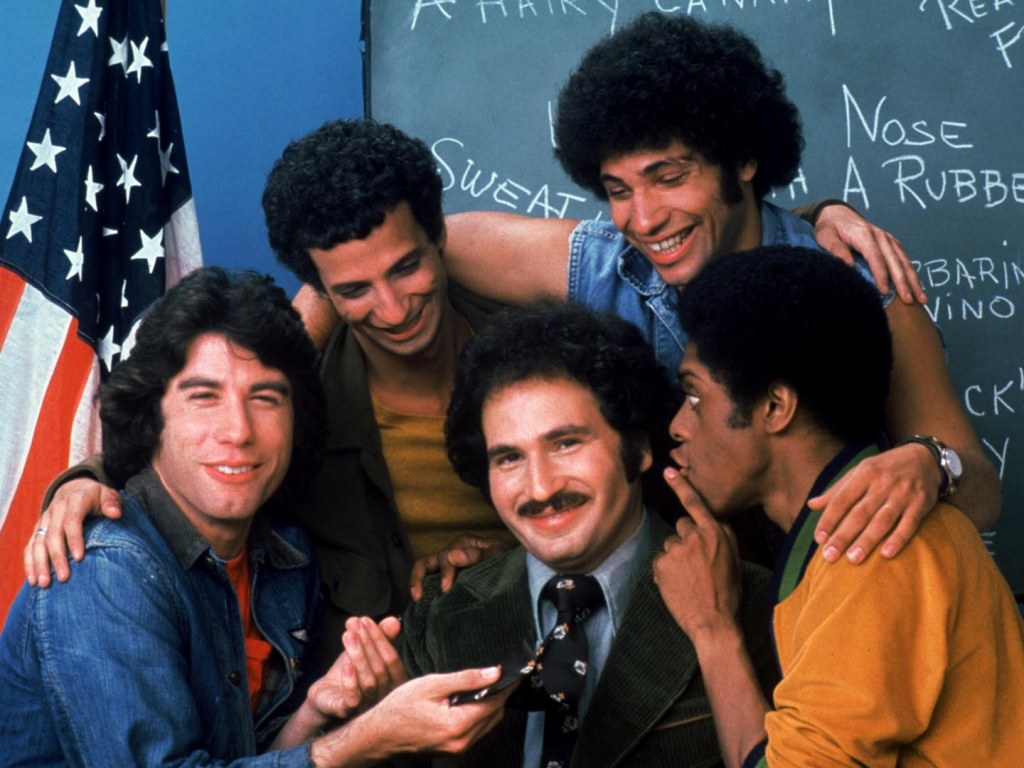
But I don’t think any show has ever been as hilariously Dawsoned as the 70s sitcom Welcome Back, Kotter. When the show began in 1975, you had high school students played by John Travolta (then 21), Lawrence Hilton-Jacobs (23), Robert Hegyes (24) and Ron Palillo (26) and frankly, I would have guessed older for each of them. While they were around the same ages as many of the other “teenage” actors we’ve already discussed, they were nowhere near as successful at hiding their age. Alyson Hannigan could pass as a high school student, whereas Ron Palillo looked more like somebody’s podiatrist. Gabe Kaplan was once quoted as saying that the reason the show’s ratings collapsed after three seasons is that the cast was getting too old to convincingly play teenagers, which made me ask the obvious question: at what point DID he think they were convincing? 

“Signed, Epstein’s chiropractor.”

School Sitcoms

Rachel Ricks asked for some of my favorite school sitcoms. This is an interesting subject for me. Like so many of us, I grew up watching shows like Saved By The Bell, and I loved it. And while I never really thought that show was a documentary on the lives of high school students (I must have tried that “Time Out” thing a hundred times before I got hit by that marching snare drummer and decided to call it quits), I at least thought that it would get the SPIRIT of being high school right.

Damn, was that off. It’s almost hard to watch that show now, especially as a teacher myself, not only because of how inaccurate that show is in regards to how a school actually works, but because it casts virtually every adult as a total blithering idiot. Seriously, go back and watch that show sometime – it’s a miracle Mr. Belding can even tie his shoes. 

New drinking game: take a shot every time someone does something that should have gotten a teacher fired.

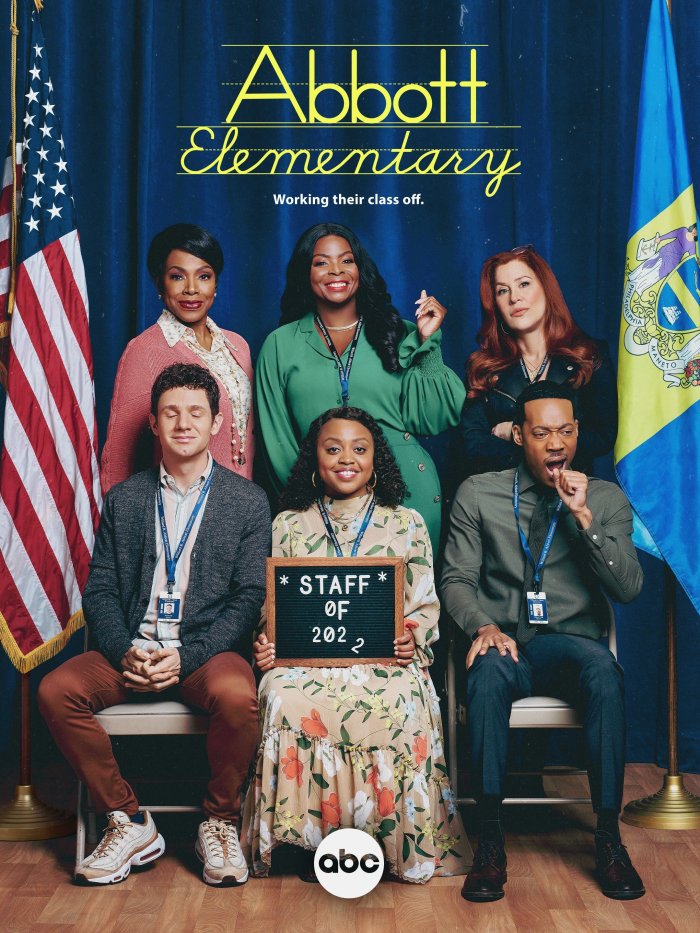
So when it comes to “school sitcoms,’ showing actual respect for teachers is a high priority for me, and that’s why I can’t stop talking about Abbott Elementary. It’s the rare school show that makes the teachers the stars rather than the students AND treats their characters with respect AND does a pretty accurate job of showing what school life is like. Granted, the teachers on that show have a bit more free time away from their students than a real elementary school teacher ever would, but I’m willing to allow that for the sake of comedy. What’s more, the characters all have real depth and charm, and most of them are very good at what they do. Plus the show deals with real issues such as government funding, parental involvement, and other issues that teachers fight against every single day, but does it in a way that’s entertaining. I can’t say enough good things about this show.

This is honestly my favorite comedy on TV right now.

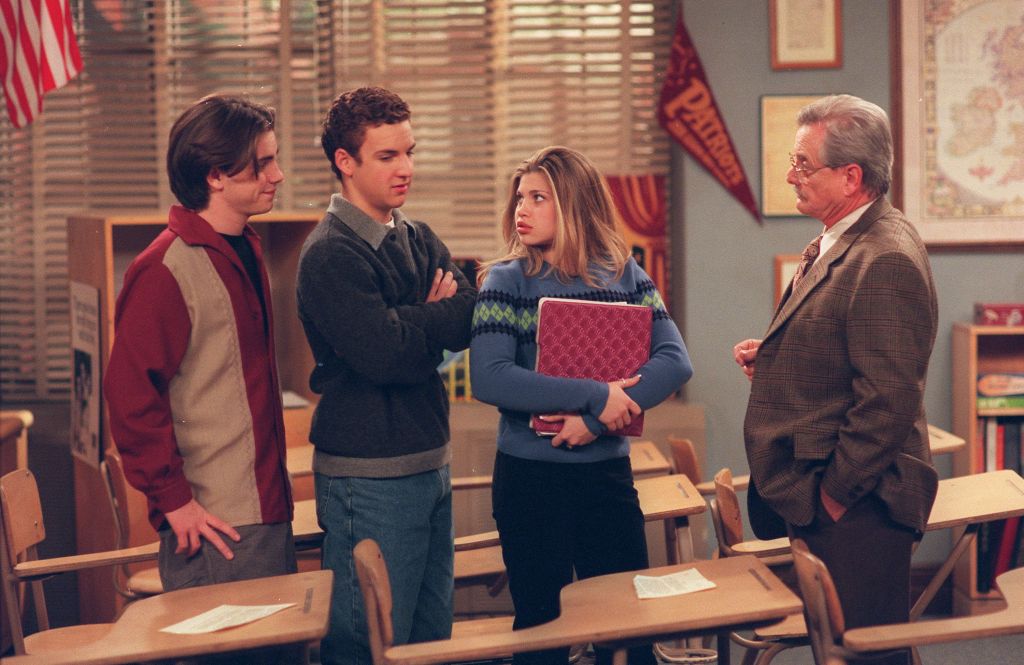
I mentioned how the adults in Saved By the Bell are all buffoons. This is true, but it’s hardly exclusive to Bayside High. If you look back on the annals of TV shows in a school setting, I would guess 90 percent of the teachers (and parents, for that matter) are portrayed as morons. And for that reason, I have to have a special place in my heart for Boy Meets World. The show traces Ben Savage’s character (Cory Matthews) from elementary school through college, and although there were goofy grownups on occasion, that was by no means the norm. In fact, the show gives us William Daniels as Mr. Feeny, probably the Gold Standard against which all TV teachers should be measured. He’s compassionate, wise, understanding, but firm when necessary. He’s almost as much a parent to Cory as he is a teacher. Is it really realistic that he taught the same group of kids from fifth grade until they’re going for their undergraduate degrees? Absolutely not. But it’s an acceptable break from reality in the name of keeping such a fantastic character front and center in the show.
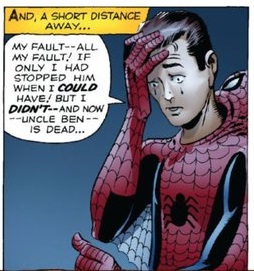
What Bandit Heeler is to fathering, Mr. Feeny is to teachering.

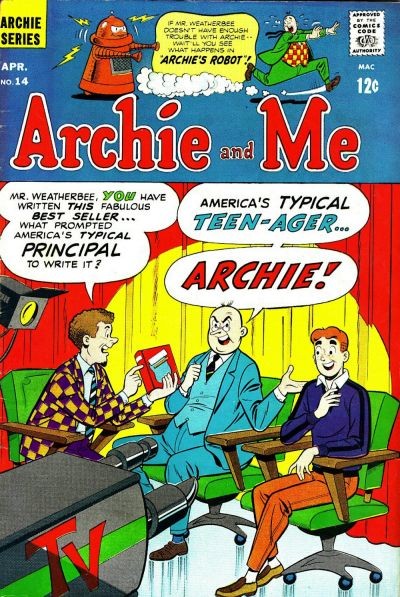
And although it’s not a television show, I love Archie Comics. I mean CLASSIC Archie Comics, their teenage sitcom romcom years, not the way they were adapted on Riverdale. I’m talking about the eight decades of comic strips about Archie Andrews struggling to choose between Betty and Veronica and going to Riverdale High. As a kid, I loved reading the stories (Jughead was kind of an icon for me) and as an adult I’ve come to appreciate the fact that the faculty of Riverdale High School – Miss Grundy, Professor Flutesnoot, Coach Clayton, Mr. Weatherbee – are usually portrayed as good, caring teachers who are doing their best for their students, even if they’re doing so while trying to avoid whatever catastrophe Archie is pulling along in his wake. 

To date, not a single one of my students has prompted me to write a bestseller. Get your act together, kids.

High School Superheroes

Lew Beitz wants to know who some of my favorite high school superheroes are. It’s an interesting question – in the early days of comic books, there weren’t a lot of teenage superheroes. The kids were relegated to the sidekick role for most of the Golden Age, and it wasn’t until the 60s – specifically with the introduction of Spider-Man – that having a teenager as the main star of a superhero series started to come into vogue. Spidey eventually went off to college and became an adult, but he remains the template for superheroes that are still in their high school years. Everyone from Firestorm to Invincible to Ms. Marvel (the current Kamala Khan version) has drawn inspiration from those early Stan Lee/Steve Ditko comics, and none of them are shy about it.

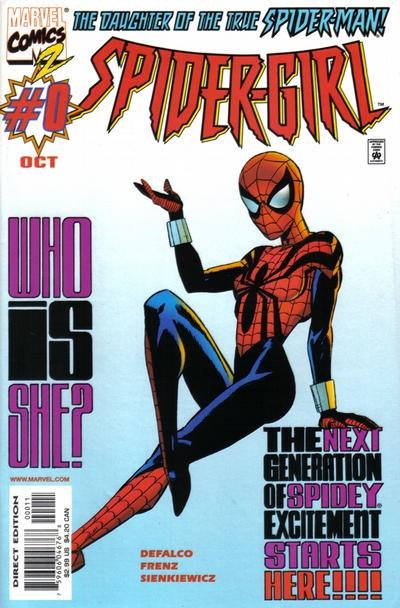
I’m going to try to limit my response to characters for whom school – or at least their classmates – are a major factor in their stories. Teen Titans, for example, isn’t going to work because the vast majority of those comics don’t include school as a setting at all, instead being the stories of kid superheroes who hang out independently of their own lives. So keeping school in mind, it’s hard to think of anybody who has done it better than Peter Parker’s DAUGHTER (in one corner of the multiverse, anyway), May Parker, the amazing Spider-Girl. Created by Tom DeFalco and Ron Frenz in 1997, this storyline comes from a world where Peter Parker aged more or less in “real time” from the 1960s and, at this point, had a teenage daughter who inherited his powers. Originally intended as a one-off character in an issue of What If?, “Mayday” Parker proved wildly popular and spun off into her own long-running series. And just like her dad, the supporting cast was largely full of her high school contemporaries – friends, rivals, potential love interests and so forth. Few comic books since those early days of Amazing Spider-Man had made such good use of the cast of teenagers, and I think it’s one of the reasons that this series remains a fan favorite, even though these days May herself only pops up once in a while during a “Spider-Verse” thing.

What I love about this cover is that it’s bold enough to ask “Who is she?” and dumb enough to answer the same question at the top.

And although Lew specified HIGH school, I have to give a special shout out to a series about ELEMENTARY school superheroes, Aaron Williams’ PS238. This comic book featured a cast of preteen titans, many of them the children of adult superheroes, who attended a special school deep beneath a “normal” elementary school where they were all ostensibly students. The book is really funny, and does a great job of picking apart many of the tropes and cliches of superhero comics. One student, for example, has the amusingly dull superhero code name “84,” because she is the 84th person registered with the standard FISS (flight, invulnerability, speed, and strength) powerset. Although the book IS very funny, it’s also a solid superhero comic book, creating a rich world with a fascinating history and a lot of secrets to uncover. The comic lasted only 51 issues, which wasn’t nearly long enough, although Williams has continued the adventures of the characters as a webcomic. 

One of the best comic books you’ve never read.

High School Horror

Finally my wife Erin – who absolutely understands her brand – wants me to talk about my favorite high school horror movies. And naturally, there is one that leaps right to the forefront of the mind, a chilling, terrifying tale that will ring out through the annals of academia from now until the end of time.

Project ALF.

Highly educational.

Actually, this might not be as easy as it sounds. Sure, there’s no shortage of horror movies about TEENAGERS, but how many of them actually have SCHOOL as a dominant setting? Friday the 13th, of course, is set at a summer camp. Some of the other stalwarts of the slasher genre like Halloween, A Nightmare on Elm Street, and Scream, may incorporate a school into the story (especially in the earlier installments), but the school is largely incidental. If the characters weren’t teenagers, you could have them all going to work and not much else would need to be changed.

So for horror that’s actually ABOUT a school, I’m going to give a shout out to a movie that I really think is underrated – Robert Rodriguez’s sci-fi/horror movie The Faculty. In what is essentially an updated version of Invasion of the Body Snatchers, Frodo Baggins and a group of high school students start to see signs that the faculty of their high school have become overcome by parasitic alien invaders, conquerors from beyond the stars who are coming to take over the Earth. Of course, it’s only this band of high school misfits that have a hope of stopping them. The Faculty came out in 1998, riding a wave of post-Scream teenage horror movies, and it somewhat got lost in the mix. But it’s a good movie, one that defies the surge of slasher knockoffs that it was swimming amongst, and has its own identity that’s pretty darn entertaining.

And this time it didn’t take Elijah Wood twelve hours of movie time to save the world.

Carrie, of course, is another classic of this particular subgenre. The movie is based on Stephen King’s first published novel, so the story of Carrie White really is what made his name in two different mediums. Sissy Spacek is Carrie – a teenage girl who has lived a sheltered life with a brutal, unforgiving fundamentalist mother. A rather late onset of physical maturation brings with it a telekinetic power of great destructive potential, and when her crueler classmates push Carrie too far, the blood flows. It’s a great movie, although I’ve always felt like Carrie was less a villain than a victim – an innocent who is beaten and berated until she actually breaks, and when someone with her kind of powers break, the consequences will be devastating. 

Finally, as someone who enjoys a good horror/comedy hybrid, I want to give a shout out to the 2020 film Freaky, directed by Christopher Landon and written by Landon and Michael Kennedy. This film is a slasher movie crossed with the body swap comedy of Freaky Friday. Millie Kessler, a bullied high school senior (Kathryn Newton), is attacked by a serial killer called the Blissfield Butcher (Vince Vaughan), who has gotten his hands on a cursed knife. The attack winds up swapping their minds, placing the Butcher’s consciousness in Millie’s body and vice versa (which is another example of a body swap comedy). A lot of the fun of this movie comes from watching Vaughn’s performance as a teenage girl, trying to get Millie’s friends on his side while Newton goes on a killing spree. It’s a really good movie, and helped Newton blow up to a point where she’s showing up in Marvel movies, while still doing indie horror like Lisa Frankenstein.

I’ve watched this trilogy seven times and it still doesn’t make a damned bit of sense.

That’s it for this week, guys. There will be more Playing Favorites next week, and if you’ve got some more suggestions, they’re welcome. In the meantime, a reminder for those parents who have yet to get their kids back-to-school supplies:

There is no excuse for Rose Art crayons. Ever. Just don’t. 

Blake M. Petit is a writer, teacher, and dad from Ama, Louisiana. His most recent writing project is the superhero adventure series Other People’s Heroes: Little Stars, volume one of which is now available on Amazon. You can subscribe to his newsletter by clicking right here. Have you ever tried to color an entire page with one of those stupid Rose Art sticks? You may as well be using a candle.

Geek Punditry #74: Playing Favorites With Summer Part Two

It’s time for part two of Playing Favorites with Summer, folks! In case you missed part one, when I do a “Playing Favorites” column I ask my pals on social media to suggest categories related to a given topic, then I share what I think are the best examples of each from the worlds of movies, TV, books, and comic books. In part one of “Playing Favorites With Summer,” I talked about my favorite summer road trip movies, coming of age movies, and beach movies, as well as some of the best summer reads for students. Let’s delve into part two, shall we?

Baseball Movies

Lew Beitz wanted to know what I think are some of the best baseball movies out there. Although baseball season starts in the spring and ends in the fall, almost any great baseball movie will also qualify as a summertime movie, since that’s when most of the season falls and, frankly, we’ve all pretty much decided that baseball is the official sport of summer. Last week I mentioned The Sandlot when I was writing about coming-of-age movies, so let’s just take that one as a given.

Beyond that, there are plenty of great baseball movies out there. A League of Their Own is one that frequently comes up, for example. Penny Marshall directed this 1992 film loosely based on the real story of the All-American Girls Professional Baseball League, a  women’s baseball league that was founded during World War II, as too many of the male baseball players had joined the fight against the Axis powers to put on a baseball season. The league folded in 1954 because AAGPBL was far too unwieldy an acronym to compete with MLB, but the league still has its legacy today, by which I mean this movie. The film stars Geena Davis, Lori Petty, Rosie O’Donnell, and Madonna as members of the Rockford Peaches, with Tom Hanks doing a great turn as a washed-up coach trying to redeem himself with the girls’ team. There’s something about sports movies that lends itself really well to the “dramedy,” that hybrid film too serious to call a pure comedy but too funny to be called a drama, and A League of Their Own is one of the all-time great examples of that.

It’s a shame Jeter never wore that uniform.

If you want something more dramatic, there are a pair of numeric “true stories” well worth watching. 42 is the story of Jackie Robinson, the man who famously broke the color barrier by becoming the first African American to play major league baseball. The late Chadwick Boseman is phenomenal as Robinson, bringing the same sort of strength and dignity that defined not only his most famous role as Marvel’s the Black Panther, but also defined the man himself. Also well worth watching is 61*, directed by Billy Crystal, about the year that Roger Maris (Barry Pepper) and Mickey Mantle (Thomas Jane) raced one another in an effort to beat Babe Ruth’s single-season home run record. Crystal’s love of baseball is legendary, and he really puts every bit of that love on the screen in this film. 

You know what makes a great baseball movie, right? Math.

But my all-time favorite baseball movie, one that I have never grown even the slightest bit tired of, is the 1989 fantasy film Field of Dreams. Kevin Costner plays an Iowa farmer who is persuaded by a mysterious voice to turn his cornfield into a baseball diamond. Although it seems crazy to risk his livelihood in such a fashion, once the diamond is finished, it becomes populated by the spirits of lost baseball players, miraculously brought back into the game. It’s a beautiful story, with great performances by Amy Madigan, Burt Lancaster, Ray Liotta and James Earl Jones. However, I would be remiss not to point out that this movie is, at its heart, a story about a father and a son. That didn’t quite resonate with me when I was 12 years old. But like a lot of other stories that I’ve revisited since my own child was born, it hits differently now. I hope I don’t sound like a broken record with this kind of thing, but there’s an emotional component to parent/child stories that I don’t know that anyone can quite understand if they aren’t a parent themselves. I know I didn’t get it before 2017. I get it now, and it makes the movie all the better for it.  

If you show it on HBO 492 times a month in the early 90s, we will watch it.

Summer Annual Crossovers

Cameron James asked me what some of my favorite comic book “summer annual crossover events” were. Here’s a quick history lesson, for those of you who aren’t comic book fans. Comics, historically, have come out once a month, twelve times a year. Fairly early on, though, publishers started releasing giant sized special issues once a year, hence “Annual.” In the early days, these were often reprints of popular stories, but later they started to produce original stories, bigger stories. The first Amazing Spider-Man Annual, for example, was the issue where his greatest enemies first banded together as the Sinister Six. 

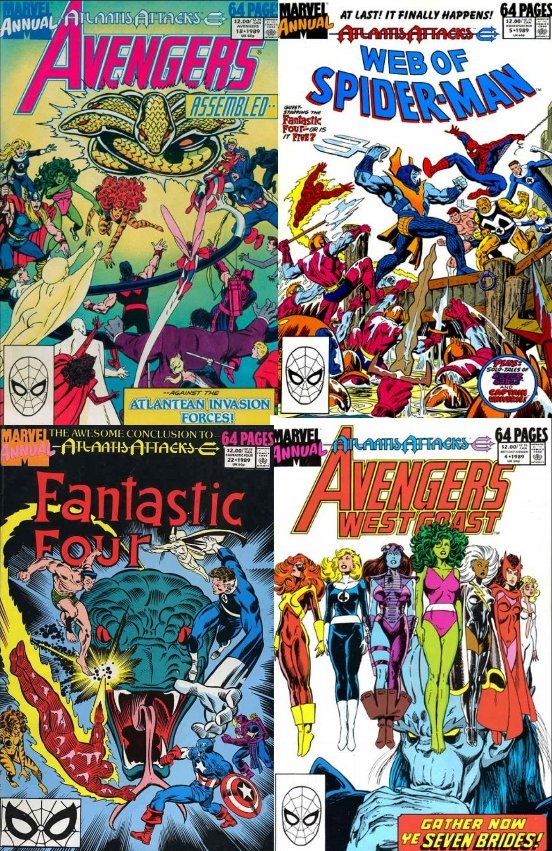
For a time in the late 80s and early 90s, Marvel and DC Comics both observed a tradition of using those annual editions – traditionally published throughout the summer – for a special crossover event, with one story that threaded throughout all of them. Marvel started this in 1988 with a storyline called The Evolutionary War, but I’ve always found their BEST summer annual storyline to be 1989’s Atlantis Attacks. In this story, a despotic ruler takes over the undersea kingdom of Atlantis and plans a war against the surface world – at first in secret, but later openly – as part of a master plan to resurrect the ancient Egyptian serpent god Set. The story serves as a sequel to several older Marvel stories in which Set had played a part, and in addition to the main story each issue had a back-up feature re-telling the story of Set with art by Mark Bagley, who would later become one of my favorite Spider-Man artists of all time. The story itself was really good, and the back-ups gave a lot of interesting insight into classic Marvel history that was pretty cool for a 12-year-old Blake who hadn’t been born yet when a lot of those stories were told.

The funny thing is that the world nearly ended because a bunch of people were fighting over a hat.

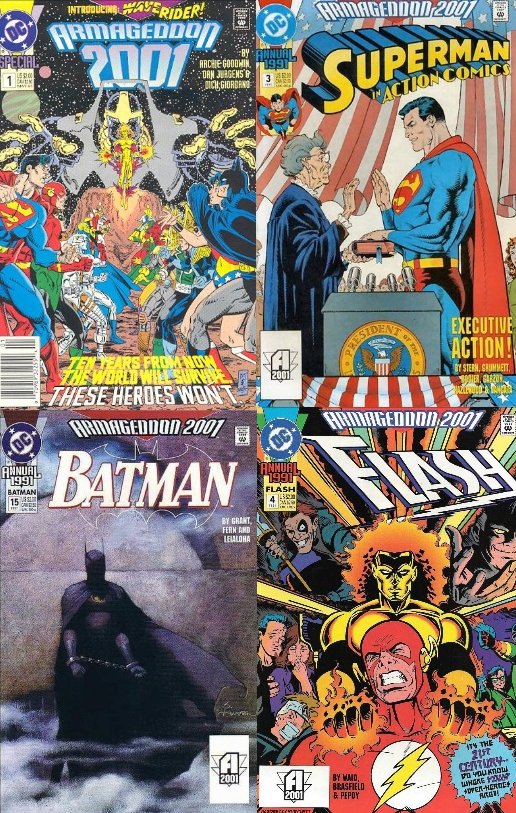
Since imitation is the sincerest form of flattery, DC followed suit in 1991 with their first – and, as it turned out best – annual event, Armageddon 2001. In a not-too-distant future, Matthew Ryder lives in a world controlled by a fascist dictator named Monarch who has shaped the world into his own Orwellian version of perfection. Nobody knows who Monarch is, although rumors persist that he was once one of Earth’s superheroes, before he killed the rest of them back in the year 2001. Ryder subjects himself to a time-travel experiment, gaining powers and taking the name Waverider. He travels back to the “present” of 1991, ten years before the rise of Monarch, to read the futures of DC’s heroes and stop the Monarch’s reign before it can happen.

He’s a 10 but he doesn’t use his power to see the future to tell you the Powerball numbers.

The practical result of this was that each issue told a story of a possible future for the hero, freeing the writers up to do wild stories free of the consequences of continuity. Like any crossover with lots of different writers taking part, the individual stories can be hit and miss, but I’ve always had a great affinity for certain ones in this crossover: the Flash retired and in the witness protection program, Batman incarcerated in Arkham Asylum, and Superman becoming President of the United States. The story was great, but the ending was derailed because somehow the identity of Monarch was leaked early. Fans found out that Monarch was going to be revealed as Captain Atom in the final issue of the story, and DC balked. It’s funny, since these days comic book publishers release spoilers to their OWN stories months in advance, but back in 1991 that was considered serious enough that they changed the ending, instead revealing Monarch to be Hank Hall, aka Hawk. The rationale here seemed to be that, since the comic Hawk starred in (Hawk and Dove) was being canceled anyway, no one would be upset. The problem, though, was that since Hawk wasn’t as popular as Captain Atom, it felt anticlimactic – not to mention confusing, since in the future that Waverider observed, Hawk was one of the few heroes shown to actively fight AGAINST Monarch, seeming to make it IMPOSSIBLE for him to be the despot. Every time I look back at that series I wonder what the original ending would have looked like.

The summer annual crossovers only lasted a few more years after that, although both DC and Marvel have brought them back every so often. With the modern compulsion to relaunch and renumber their titles every year and a half, though, it’s gotten pretty confusing to keep track of them all, and it’s just one of many things I’m going to fix when they all come to their senses and put me in charge of comics.

Summer Comedies

And finally, my wife Erin asked me to chime in with the best summer comedies. I knew I would have to save this for last because a lot of the best summer comedies also fall into one of the other categories that I’ve already covered. So let’s take it as a given that National Lampoon’s Vacation, Back to the Beach, The Sandlot, and A League of Their Own all belong on this list. 

That said, let’s get to some of the great summer comedies that haven’t already been covered in one of the other categories, shall we? And let’s start with the greatest summer comedy of all time, perhaps the greatest movie ever made, perhaps the yardstick against which all cinema – past, present, and future – shall invariably be measured. 

Project ALF.

The real Project ALF are the friends we made along the way.

My favorite summer comedy is, like many of the other movies on this list, a film that has been near and dear to me since my childhood: 1987’s Ernest Goes to Camp. I unironically and unapologetically love this movie. Jim Varney’s “Ernest” character, created originally as an ad pitchman that was hired out to assorted companies for regional commercials across much of the south (I remember him originally as a spokesman for the Louisiana Gas Service Company) has his first great adventure as a handyman at a summer camp who gets his shot at a dream job of being a camp counselor for a group of troubled young boys. The film has a lot of the staples of 80s comedy: the “slobs versus snobs” mentality, the bad guy is an evil land developer, and there’s a startling lack of supervision for the children in this story…but at the same time, Jim Varney is charming and endearing as the most iconic goofball with a heart of gold since Gomer Pyle. The world just didn’t deserve a star as bright as his, did it? 

If he had been the counselor at Crystal Lake, Jason wouldn’t have stood a chance.

Ernest has achieved a nice sort of renaissance in recent years. People sincerely love many of his movies (especially the Christmas and Halloween films), the camp where the movie was filmed hosts an annual Ernest Day celebration every summer, and a documentary about Jim Varney and Ernest is in the works. When the temperatures soar and school lets out, this is a movie that I have to return to just as surely as I watch him save Christmas in December and see him Scared Stupid in October. 

Summer camp, of course, serves as the setting for a lot of great comedies, such as Meatballs (the beginning of what I think of as the Bill Murray Summer Trilogy along with Caddyshack and What About Bob?), and last year’s indie darling Theater Camp, all of which are summer comedies I greatly enjoy. Of course, in the interest of fairness, I should point out that summer camps are also a popular setting for horror movies, like Sleepaway Camp, the Friday the 13th series, and the truly gruesome Wet Hot American Summer. 

Moving away from camp, though, let’s take a look at some other great summer comedies. When Erin proposed that I write about this category, she specifically asked if I’d ever seen the John Cusack movie One Crazy Summer. I told her that, no, I hadn’t. She acted shocked. I told her, “Yeah, well, you still haven’t seen The Rocketeer.” And she said, “Yes I have!” And I shot back, “No, you fell asleep while I was watching The Rocketeer, that doesn’t count.” And there’s your little glimpse into married life for this week, kids. 

But Erin, you’ll be happy to know that I DID watch your precious One Crazy Summer in preparation for this column, and I found it to be…okay. In this 1986 comedy, Cusack plays “Hoops” McCann, a fallen high school basketball star who takes off after graduation with his pal George (Joel Murray, meaning we’ve pulled off the Murray Hat Trick if you count Brian Doyle-Murray’s appearance in National Lampoon’s Vacation) to spend the summer on Nantucket Island. Hoops winds up getting involved in the efforts of a local girl (Demi Moore) to save a family home from some land developers, because in the 80s a full 87 percent of movie villains were land developers (as opposed to a mere 79 percent of villains in real life). 

Am I the only one who thought the sun in this poster was supposed to look like Jack Nicholson?

Like I said, I thought the movie was okay, and I imagine that I would have much warmer feelings for it if I had seen it in its intended context (that being 1986). The thing is, it doesn’t quite seem to know what it wants to be. There are moments, especially during the Bobcat Goldthwait antics, where it seems to be treading the line with the kind of surrealist slapstick we get in movies like Airplane! or History of the World Part I, but if that’s the intention it doesn’t quite go far ENOUGH. If you’re going for surreal comedy, it kind of needs to be over-the-top to land. In One Crazy Summer, though, the first real hint that it may be that kind of humor is when George denies being lazy just before the camera pulls pack to reveal a dead Christmas tree strapped to the roof of his car (this is in June, remember), then it’s several minutes before we get anything else that feels like that brand of comedy (some girls making faces at George’s sister who get stuck that way). If you’re trying to party with the Zuckers or Mel Brooks, you’ve gotta go all-in, and with all due respect to the great Savage Steve Holland, he doesn’t quite reach that peak.

Okay, this column is already getting super long, so let me throw out two more summer comedies that couldn’t be more different than each other. The first is a movie that STARTS as a summer camp film before leaving the camp for other family summer activities, the 1961 Disney classic The Parent Trap. Haley Mills plays a pair of identical girls who happen to meet at summer camp and figure out that they’re twin sisters, separated by their parents when they divorced years ago, and hatch a scheme to force them back together. The sheer cruelty of doing that to a pair of siblings aside, this is a movie I DID grow up watching over and over again, and it’s always held a warm place in my heart. Aside from growing up with a crush on Haley Mills despite the fact that she was some three decades too old for me, the movie features Maureen O’Hara at her loveliest as their mother, while Brian Keith does his best John Wayne impression. I am aware of the Lindsay Lohan remake, and while it has its good points, this is one of those times that nothing will ever conquer the original. 

Sassy sister films.

And finally, let’s bounce ahead to 2010 for the Alan Tudyk/Tyler Labine comedy Tucker and Dale Versus Evil. Tudyk and Labine play a pair of good-hearted rednecks on a camping trip who run into a pack of college kids on their own vacation. The guys in the college group, showing a shocking lack of genre awareness, mistakenly believe that Tucker and Dale are Wrong Turn-style psycho killers and go on the offensive, only to find themselves on the wrong side of the fight. The movie is kind of a horror/comedy, with Tudyk and Labine giving hilarious performances in a movie that upends the “Killer Hillbilly” subgenre of horror by turning the usual victims into the bad guys. Both of our stars are so sweet and charming that it’s incomprehensible anybody could think of them as dangerous, and you quickly find yourself rooting for the snobs to get their goofishly gory comeuppance. I dearly love this movie and, frankly, I don’t think it’s too late to give us a sequel. Tucker and Dale Save Christmas, anybody?

There are so many great summer movies out there. While writing this column, I wound up putting together a Letterboxd list (because that’s what I do), and I would welcome anyone to fill in any omissions I may have. Summer is long, my friends, and there’s plenty of time to spend indulging in the greats of cinema and comics while we wait for the chill of autumn to hit the air. Have a great summer, and I’ll see you next time when, once again, I decide it’s time to Play Favorites.

Blake M. Petit is a writer, teacher, and dad from Ama, Louisiana. His most recent writing project is the superhero adventure series Other People’s Heroes: Little Stars, volume one of which is now available on Amazon. You can subscribe to his newsletter by clicking right here. In response to his wife’s unspoken question, no, he hasn’t watched Better Off Dead yet, but he’ll try to get to it soon. Erin seemed to have a crush on young John Cusack that rivals Blake’s fondness for Haley Mills. 

Geek Punditry #73: Playing Favorites With Summer Part One

We are, my friends, on the cusp of one of the most storied times of the year: summer! Time to hit the beach, go out on vacation, pull the kids out of school and spend a lot of time with a good book in your hand, longing for the days when such an activity would reward you with a personal pan pizza. And with the new season before us, we here at Geek Punditry Global Headquarters and Corrugated Cardboard Museum have decided to spend a couple of weeks PLAYING FAVORITES with summertime. For newcomers, Playing Favorites is that occasional feature in which I throw out a topic and ask you, the hive mind of social media, to suggest categories related to that topic so that we can discuss some of the best of the best. Let’s take a look at what you guys suggested in part one of this feature.

Beach Movies

Lew Beitz cut right to the chase and asked me for some of my favorite summer beach movies. This is the kind of thing we all think about when summer rolls around, isn’t it? Not just going to the beach, but entertainment regarding the beach. In the 60s it was an entire subgenre all of its own, with approximately 17,000 such films made during this decade starring Frankie Avalon and Annette Funicello alone, sporting subtle titles such as Beach Blanket Bingo or How to Stuff a Wild Bikini. To be honest, I don’t really have a great affinity for those movies – they were well before my time and I didn’t really grow up with them. On the other hand, I do have a great deal of affection for Back to the Beach, the 1987 vehicle starring those two as a pair of midwestern parents who wind up returning to the beach of their youth. I think part of my appreciation for this bizarre little movie can be attributed to my mother, who was a fan of the original films and saw to it that this movie was on rotation in our house when I was young. But beyond that, there’s an inexplicably entertaining element to this movie. It was meta before meta was cool, acting not only as a sequel to the ol’ Frankie and Annette films, but as a parody of them as well. On the other hand, the humor IS pretty dated, with a lot of it requiring an awareness of old pop culture that modern audiences just won’t have. There are a lot of cameos from TV and movie stars of the 60s, for instance, and the joke about Annette’s obsession with peanut butter will just be baffling to anybody too young to remember that she did a series of commercials for Skippy back in the day. On the other hand, the scene of Pee-Wee Herman performing “Surfin’ Bird” is pretty timeless. 

If you don’t necessarily want your beach movies to be full of comedy, it’s hard to go wrong with Jaws. It seems sort of pointless to recap this movie – if you’ve seen it, you know that it’s great, and if you haven’t, no amount of pontificating from me is likely to change your mind. But the movie that made Steven Spielberg is practically a flawless film: tense, thrilling, and full of great characters and wonderful character moments. Even the things that may be technically flawed, such as the artificial nature of the shark, work to the movie’s advantage, as Spielberg was forced to minimize Bruce’s screen time and thereby making it far more effective than it possibly could have been if they put him on screen at every opportunity. It’s the film that made everybody afraid of the water! What better movie to get yourself into the mood for the beach?

These two movies should be all it takes to yet you to September.

Summer Reading

Rachel Ricks wants to know what I think are the best “summer reading books” for elementary, junior high, and high school. This is actually a tougher question than you would think, considering that I’m both a writer and a teacher, but the truth is I’m not 100 percent sure what it is the kids are reading these days. Not elementary or middle school, anyway. For my high schoolers, I see waves happen. There was a time where every kid was carrying a copy of Twilight, which gave way to The Fault in Our Stars, which in turn passed the torch to 13 Reasons Why. These days, the name I’m most likely to see from a kid who digs reading is Colleen Hoover. And the thing is, guys, while I am still a voracious reader (that streak I mentioned last week currently stands at 358 days) I haven’t made a huge effort to check out these particular books because…well…they just aren’t my type.

Anyway, the way Rachel phrased the question makes me think she’s speaking specifically about the sort of summer reading that is often required by schools: when a kid leaves at the beginning of summer with a list of books that they’re going to pretend to have read by the time they come back in the fall. Assigning a book to read is tough. You always know that a substantial portion of the class will do anything they possibly can to avoid actually having to crack the book open. And we’ve all heard those stories of people so discouraged by some required book that they give up on reading altogether. I can promise you, folks, that no teacher wants to assign a book that makes you never want to pick one up again.

I’m going to bow out of elementary school recommendations, as I have none. As far as middle school goes, you can’t go wrong with classics like The Giver or The Outsiders. And if you’re looking for a gateway drug to get a young reader into the world of Stephen King, I think that middle school is an appropriate age to introduce them to his fantasy (yes, fantasy) novel Eyes of the Dragon. I’m also a fan of a few more recent works for this age group, such as Rick Riordan’s Percy Jackson and the Olympians series or the other assorted spin-off series set in that same universe. 

If you haven’t read at least ONE of these books, then either you didn’t go to school in the United States, or you’re the reason Cliff Notes is a thing.

For your high schoolers, you shouldn’t be surprised to see The Great Gatsby, To Kill a Mockingbird or Grapes of Wrath show up in their reading lists. And these are all good books, fundamental pieces of American literature and well worth reading. That said, these are books for people who are deeply into books already, and aren’t exactly casual reads. Try to hook a modern reader with things like The Hunger Games, The Maze Runner, or Twinkle Twinkle, book one of the Other People’s Heroes: Little Stars trilogy, now available both in print and as an eBook from Amazon.com

(You had to know I was going to work that in somewhere.)

Road Trip Movies

Tim Stevens wants to know what I think are some of the best summer road trip movies. The road trip is a classic subgenre, usually in comedy, although there are some great road trip dramas or dramadies (Little Miss Sunshine for example) as well. When you think of a summer road trip, though, the thing that comes to mind is vacation movies, and the king of them all is National Lampoon’s Vacation. While this 1983 Chevy Chase film has become heavily overshadowed by its Christmas-themed threequel, I think people forget how much fun the original is. Clark Griswold (Chase, of course) and his wife Ellen (the grossly underrated Beverly D’Angelo) load the family into a station wagon to take a road trip out to the legendary Wallyworld Theme Park, and all hell breaks loose along the way. It’s not the first road trip movie, of course, but I think it is the platonic ideal of the road trip as a slapstick comedy. A lot of the jokes are very 80s and may not land that well with modern audiences, but I still enjoy the movie. Honorable mention goes to the sequel, European Vacation, in which Clark and Ellen take two entirely different children with the same names as the previous pair to tour the continent on another wacky road trip. 

Not as well known but highly entertaining is the 2014 movie Chef, which was written by, directed by, and starred Jon Favreau. Favruea plays Carl Casper, a famous chef (duh) who boils over at a food critic and loses his restaurant job. With his zest for life gone, Carl and his son Percy (Emjay Anthony) buy a food truck and set off across the country to try to infuse themselves with the savory parts of existence. Just thinking about movies for this list makes me realize it’s been way too long since I devoured Chef – it’s such a great movie. It has some of the same flavor as City Slickers and Hot Tub Time Machine, films about men who have been diced and minced by the world and inexplicably discover ways to relish life again. But the added ingredient of Casper’s relationship with his son helps to separate from those other films, baking up not only a road trip movie, but also a film about a family learning to love one another again. 

To be honest, though, I don’t know that John Leguizamo was the best choice to take over the Beverly D’Angelo role.

Summer Glau Movies

Duane Hower asked me what my favorite Summer Glau movie is. I see what you did there, Duane, very funny. I bet you thought I wouldn’t entertain your joke suggestion, didn’t you? Well, the joke is on you, my friend, because we all know the right answer to this question. The best movie ever starring Summer Glau? Clearly.

Project ALF.

Can you imagine what Melmacian tanlines look like?

Summer Coming-Of-Age Movies

Duane also asked what the best summer coming-of-age movies are. (Jeffrey Lee, I should note, asked for summer “life lesson” movies, and I think that’s pretty much the same thing, so I’m going to combine those two suggestions.) Coming-of-age, like road trips, is kind of a subgenre all of its own, one that often (but not always) crosses over with summer movies in that ol’ venn diagram in our heads. And once again, I think the best example is also the obvious one. Stand By Me, the 1986 movie directed by Rob Reiner and based on the novella “The Body” by Stephen King, is one of those films that sort of codifies the trope for all films that come afterwards. Four young boys (River Phoenix, Jerry O’Connell, Corey Feldman, and Wil Wheaton) discover that a missing boy from a nearby town has been found dead near a railroad track, but the discoverers don’t want to report the body because they found it while in a stolen car. The boys decide to set out on a hike to find the body on their own, and along the way, face the treacherous precipice between staying a kid and becoming an adult. This is the second time I’ve mentioned Stephen King in this week’s column, and in neither case was I talking about horror, have you noticed that? I mean yeah, the macguffin in this movie is a dead body, but that’s as close to being a scary movie as it gets. Instead, it’s a deep, meaningful, and powerful character study about these four boys that gives us glimpses of the men they will grow up to be. Reportedly, after Stephen King watched this movie he broke down in tears and told Reiner it was the best movie that had ever been made based on his work. (Admittedly, this was before Misery, The Shawshank Redemption, or The Green Mile, but that doesn’t change the fact that Stand By Me is an incredible film.)

The other great summer-specific coming of age movie, which again is a film that will probably say more about my age and the era of movies that was fundamental to me than anything else, is the 1993 movie The Sandlot. New kid in town Scotty Smalls (Tom Guiry) befriends a group of young boys that play a perpetual baseball game in a nearby sandlot. Smalls joins the game and becomes a member of the group during a summer that really feels authentic. While not nearly as serious or deep as Stand By Me, The Sandlot is a fun movie that feeds the sort of nostalgia that summer triggers in a lot of us, reminding us of bygone days without real responsibilities or anxieties that seem to be the fundamental building blocks of adult life.

One of these movies features a ghastly, bloodthirsty dog that terrorizes the boys of a small town. The other is based on a Stephen King story.

Okay, friends, I think that’s about enough for part one. I’ve got a few suggestions banked for part two of this segment next week but there’s room for more! If you’ve got an idea for a summertime topic from the worlds of comic books, movies, television, or books, I would LOVE to hear it! Post it in the comments, on the socials where you found the link to this column, or you can email it to me at info@blakempetit.com. See you next week, where we continue playing favorites!

Blake M. Petit is a writer, teacher, and dad from Ama, Louisiana. His most recent writing project is the superhero adventure series Other People’s Heroes: Little Stars, volume one of which is now available on Amazon. You can subscribe to his newsletter by clicking right here. His REAL favorite Summer Glau movie, of course, is Knights of Badassdom. He knows you all expected him to say Serenity, but Joe Lynch’s horror/comedy deserves more love. 

Geek Punditry #62: Playing Favorites With Superheroes Part Two

We’re back again, folks, with the second round of PLAYING FAVORITES with superheroes. For those of you who are new, in “Playing Favorites” I choose a topic and ask my friends on social media to suggest categories for me to discuss my favorite examples. This time around the topic is superheroes, and in the first installment I discussed my favorite legacy superheroes, superhero logos, superhero TV shows, super-pets, and superhero costumes. This time I’m dipping into the list of suggestions and pulling out a few more topics to ramble about. Join me, won’t you?

Origin Stories

Lew Beitz is back, this time asking what my favorite superhero origin stories are. I’m running with this because it gives me a chance to share with you my personal feelings on origin stories, which are thus: in this day and age, origin stories are largely unnecessary. In the early days of the superhero, before all the tropes were codified and the rules established, it may have been a requirement to explain how Alan Scott became the Green Lantern or where that humanoid robot called the Human Torch came from, but when’s the last time you saw a truly ORIGINAL origin story? Most of them, even with good characters, are remakes and rehashes of origins we’ve seen before. As early as 1962 Stan Lee recognized that it was getting hard to come up with an origin that hadn’t already been done, so he just decided these five kids he was writing about were all BORN with their powers and called them the X-Men. This, of course, turned out to be a decision of almost obscene serendipity, which would also be a great name for a rock band.

“Metaphor, schmetaphor, I’m just out of ideas.”

Furthermore, in a world where even someone who’s never touched a comic book is intimately aware of superhero tropes through movies and TV, does it really matter anymore? Think about this – one of the best superhero movies ever made was Pixar’s The Incredibles. It’s a great film. It’s a great SUPERHERO film. But do you know how Mr. Incredible and Elasti-Girl got their powers? No. Do you care? No. No more than it matters what compelled every single character on a medical drama to be a doctor or every officer on a police procedural to become a cop. I’m not saying that we should never tell an origin story again, I’m just saying that unless you’ve got a really interesting and compelling take, do it away with it via a line or two of expository dialogue. The origin is almost never a character’s best story, and if it IS, then that’s not a character who’s going to be around very long. 

All that is to say that, like with the costume, Spider-Man probably has the best origin story in comics. Earlier characters usually had very clean origins – Superman is an alien from a dead planet, Captain America became a super-soldier through a government experiment, etc. Others had good motivation, like Batman wanting to avenge the deaths of his parents or Plastic Man being a criminal whose life was saved through an act of kindness and decided to join the side of angels. But with Spider-Man, the origin took a new level. No, not the part about being bitten by a radioactive spider – that’s how Peter Parker got his POWERS, that’s not what made him Spider-Man. What made him Spider-Man was the death of his uncle, Ben Parker. I don’t think I need to recount how it happened (there are three stories that NEVER need to be filmed again, no matter how many reboots happen: the explosion of Krypton, the deaths of Thomas and Martha Wayne, and the murder of Ben Parker), but WHY it happened matters. Ben died because his nephew did not take the opportunity to do the right thing when it was presented to him, and Peter has been trying to atone for that original sin ever since. Sure, there are a lot of heroes who are motivated by the death of a loved one, and I can’t even say for certain that Spider-Man was the FIRST hero who bore a personal sense of responsibility for his loss, but he is certainly the most notable.

The leading cause of death for male actors age 65-80 is “Playing Ben Parker.”

Incidentally, this is also the reason I think the Tom Holland trilogy of Spider-Man movies in the MCU is nearly perfect. Even though we never see how Pete got his powers in the MCU, the three movies do the job of the emotional component of his origin beautifully. In the first film, he has to learn what it really means to be a hero. In the second, after Tony Stark’s death, he has to learn how to be his OWN kind of hero. And in the third, which pulls a fantastically unexpected twist on the traditional Spider-Man origin, he learns the COST of being a hero. It’s not until the final moments of No Way Home, Tom Holland’s sixth film wearing the costume, that he truly, fully becomes Spider-Man.

Publisher Jump

Duane Hower asked an interesting question about my favorite superheroes who have changed publishers over the years. This has happened more often than you might think. There have been a lot of characters who have moved from one publisher to another, often because their original publisher went out of business and sold or licensed their characters to somebody else. DC Comics, for example, has absorbed the heroes from lots of defunct publishers, including Quality Comics (Plastic Man being the most notable of their characters), Charlton Comics (giving them the likes of Blue Beetle and the Question), Jim Lee’s Wildstorm (featuring the WildC.A.T.s and Gen 13) and Fawcett Publishing (original home of the Shazam family). Marvel has done this as well, buying the heroes of Malibu Comics, especially their Ultraverse line, but unlike DC they buried their purchase and still show no signs of doing anything with them nearly 30 years later.

If you go to the Marvel Comics commissary this picture appears on all of the milk cartons.

My favorite character from this category, aside from Shazam and the Blue Beetle, is probably Magnus: Robot Fighter. Originally published by Western Publishing’s Gold Key imprint, Western shut down their comic publishing in the 80s (although they have recently resurrected the brand, with a new Boris Karloff horror anthology now being published and a new kids’ comic in the crowdfunding stage). In the 90s, they licensed some of their characters to Valiant Comics, who used Magnus and Solar, Man of the Atom, as the cornerstones for their own superhero universe. Magnus was a hero from the distant future of 4000 A.D., a world where sentient robots were beginning to run wild and had to be battled, which means ChatGPT got here nearly 2000 years early. I loved that book, and when Valiant itself went under the license for Magnus and the other Western characters began to bounce to various publishers, including iBooks, Dark Horse, and Dynamite. None of those ever had the zing of the Valiant version, though. I don’t know who currently owns the license, but I kind of hope that now that Gold Key exists again, they’ll make an effort to bring back the original.

Pictured: The moderators of every comic book group on Facebook that’s trying to stop members from posting AI art.

The other way a hero can bounce publishers is if it is not owned by the publisher itself, but rather the creator, who moves to different publishers over time. For example, Matt Wagner’s titles Grendel and Mage were originally published by Comico, but after that publisher died he took them to Dark Horse and Image, respectively. Kurt Busiek’s Astro City started at Image Comics, moved to Jim Lee’s Wildstorm (published via Image), then moved to DC when DC bought Wildstorm. It was published under the Wildstorm imprint for years before moving to DC’s Vertigo line (perhaps the worst fit possible), and recently bounced back to Image.

But the best hero to play the publisher mambo is Mike Allred’s Madman, a character published by Tundra Comics, Dark Horse, Image, and Allred’s own AAA Pop over the years. Madman is a modern take on the Frankenstein story (he even uses the name “Frank Einstein”), a hero who was brought to life in a reanimated corpse and doesn’t remember his previous existence. The book is full of wild sci-fi concepts and can go from hilariously funny to deeply philosophical at the turn of a page. It’s been too long since there was a new Madman story, so if you’re listening, Mr. Allred, please bring him back. I miss him.

I know it’s hard to believe, but this comic is even cooler than it looks.

Cursed By Their Powers

My uncle Todd Petit, who gave me some Green Lantern and Legion of Super-Heroes comics when I was a kid and thus is largely responsible for half the things I write about, asked who my favorite characters are with powers that are “as much a curse as a blessing.” It’s an interesting trope, isn’t it, to have superpowers that ruin your life? It’s an idea that gets used again and again, because when it’s done well, it works like nobody’s business. The Hulk is probably the most well-known example, a man who transforms uncontrollably into a manifestation of his own Id and breaks tanks. Then there’s Rogue of the X-Men, whose power makes it impossible to have physical contact with another human being without stealing their powers, their memory, and potentially (if the contact is prolonged) their lives. It really makes Halle Berry’s Storm seem tone deaf in the first X-Men movie when she tells Rogue there’s nothing wrong with her, and every time I watch it I hope for the deleted scene where Anna Paquin tells her, “The hell there isn’t.” 

Anyway, I think there’s one story that expresses that concept better than any other. And that story?

Project: ALF.

If I ever go through a whole “Playing Favorites” column without posting this, consider it a signal that I have been abducted and am being held hostage.

No, of course, my favorite “cursed by his own powers” hero is Benjamin J. Grimm, the Thing, of the Fantastic Four. Put yourself in Ben’s position for a minute. Your best friend convinces you to help him steal a rocketship he built. He ropes his girlfriend and her kid brother into coming along for the ride. The four of you are bombarded with space-rays that give you all amazing powers, but transform your bodies as well. The kicker is, unlike your three teammates, you can’t turn your powers off. Reed Richards can stop stretching, Sue can become visible, and Johnny can quench the flames of the Human Torch, but Benjy is trapped in an orange rock shell 24/7. If anybody in comics has the right to complain that he lost the superhero lottery it’s him.

Instead, he became the ever-lovin’ blue-eyed idol o’ millions.

Too many writers would use this as an excuse to make him a bad guy. He would turn against the team, become the villain, try to exact revenge on Reed – and to be fair, for a long time he was the grouchy and often antagonistic member of the Fantastic Four. But over the 63 years since the characters were created, the opposite has happened. He has become kinder, tender, a beautiful spirit. He could have been the monster, but instead, he is the knight in stony armor. He’s smart, he’s funny, he’s compassionate, and he’s still never afraid to get his hands dirty when the situation calls for it. He made peace with his curse, reembraced his faith, found love, and in recent years has even become a husband and a father. The amazing thing about Ben is how he has persevered and grown despite his “curse.” I think writer Chris Claremont put it best in the Fantastic Four Vs. the X-Men miniseries from 1987, when Ben had his powers taken by the aforementioned Rogue. Claremont, perhaps the purplest prose penner whoever picked up a pen, describes the sensation thusly:

Instantly, as her body is flooded with the Thing’s awesome strength, her awareness is filled with the totality of his being – all he was and is and dreams/despairs of being. She thought she’d be attacking a toad. Instead, she’s touched the soul of a prince.

That’s actually Rogue on the left. She…had a standard MO.

Ben is one of the good ones, is what I’m saying.

Honorable mention goes to DC’s Firestorm. Firestorm has gone through several iterations over the years, but the original Firestorm was created when a nuclear accident (so, so many of those in superhero universes) fused two people together: physicist Dr. Martin Stein and teenage jock Ronnie Raymond. The accident merged them into a single, extremely powerful being who would go on to join the Justice League and then get sued by Ghost Rider for stealing his whole “flaming head” bit.

Clearly, this guy is miserable with his lot in life.

Here’s where the “cursed” part comes in: when Stein and Ronnie were originally fused together, Stein was unconscious. So whenever they merge into Firestorm, Ronnie is in charge and Stein becomes a voice in his head, offering advice but having no control. What’s more, in the early days of their partnership, Stein didn’t even remember being Firestorm whenever he and Ronnie were split, so he was constantly waking up with big chunks of his life missing and having no idea what happened. The reason it’s only an honorable mention is because the writers did away with that part relatively early, and I guess I can understand why. It must be hard to write around the fact that one of your main characters is constantly in fear of a blackout and the other has to find ways around it, and so Stein started retaining his memory of their partnership. Still, I think the idea of a superhero whose life keeps getting screwed up because he doesn’t KNOW he’s a superhero is pretty intriguing, and I bet somebody could do something really interesting with the concept.

Sidekicks

Jim MacQuarrie asks my favorite superhero sidekick. The sidekick is such a weird concept, isn’t it? Going back to the pre-superhero days of Sherlock Holmes and Watson (and certainly even earlier), the sidekick is a character who traditionally exists so that the hero has an audience surrogate to explain things to instead of having to talk to himself. For some reason, when the concept of the sidekick was incorporated into comic books, they got the idea that the best way to handle this was to make them all children or, at most, teenagers, thereby making a large number of superheroes guilty of multiple counts of child endangerment. Choosing a favorite sidekick is actually kind of tricky, because the best ones don’t usually become particularly compelling or interesting until they stop acting as sidekicks and become heroes in their own right – Dick Grayson is far more interesting as Nightwing than he ever was as Robin, Wally West is a better Flash than Kid Flash, and so forth.

I think the best of all time is Tim Drake, the third Robin. Part of it was because he had such a different motivation than his predecessors. Dick Grayson and Jason Todd each became Robins to help avenge their own personal tragedies, much as Batman did, but not Tim. Tim was, to put it simply, a Batman fanboy who figured out that Robin was Dick Grayson because they shared a move he saw Dick perform in the circus as a child. From there it was easy enough to figure out that Bruce was Batman, and he kept that secret until the death of Jason Todd, when he saw Batman begin to be swallowed by darkness and realized he needed a balance. Dick and Jason became Robins to avenge their parents. Tim became Robin to save Batman. 

Of course, being a great sidekick basically makes you “the best of the rest.”

He’s also the smartest of the Robins, with Bruce conceding that he’ll someday be a better detective than Batman himself. The trouble is, ever since Grant Morrison introduced Bruce’s biological son Damian Wayne to continuity and made him Robin, writers have struggled with Tim. Damian has won me over, mind you – he’s become an interesting and entertaining character in his own right – but very few writers in the years since have really known what to do with Tim, including the current writers of the Batman-associated titles. And that’s a shame, because he was such a great character for such a long time.

Different Interpretations

We’ll wrap up this installment with a question by Hunter Fagan, who asked about my favorite heroes with drastically different interpretations in the main continuity. (In other words, like how Batman went from lighthearted and child-friendly in the 50s to dark and brooding in the 80s while ostensibly still being the same character.) I think my answer for this one is going to be Jennifer Walters, the She-Hulk. Jennifer was a lawyer who was injured in a gang shooting and had to get a blood transfusion from her only available relative – who turned out to be her cousin Bruce Banner, the Hulk. The result is…well, it’s right there in the name, isn’t it?

Comic books reached their peak in 1989. Change my mind.

In the early years, Jen was kind of bland. She wasn’t AS angry as the Hulk, she kept her wits about her better than he did, she beat up bad guys, repeat. After her book got canceled, she wound up joining the Avengers and started to become a more well-rounded character. She joined the Fantastic Four for a while, temporarily replacing the Thing (he was really mad at Reed Richards during this period) and became a favorite of writer/artist John Byrne, who brought her back to her own series in 1989. This new series was where the She-Hulk I love was fully formed: smart, funny, constantly winking at the audience and knocking down that fourth wall with all the strength that would be implied by a Hulk. (It should be pointed out that this was two years before Deadpool was created and even longer before he began breaking the fourth wall himself.) Since Byrne’s She-Hulk most writers have kept the lighthearted tone, although few of them have had her speaking to the writer or expediting her travel by having the reader turn the comic book page the way Byrne did. And say what you will, I thought Tatiana Maslany’s portrayal of the character in the titular Disney+ miniseries was spot on, and I still hold out hope that she’ll be brought back in some capacity.

And thus we end another installment of Playing Favorites, guys. I didn’t get to every suggestion – some of them were a little too similar to others, some I just didn’t have much to say about, and some I just ran out of room. But it’s always a blast to do one of these, so if you aren’t following me on Facebook or Threads (@BlakeMP25), you should do that! Because it’s only a matter of time before a new category comes to mind and I ask you all to help me Play Favorites again.

Blake M. Petit is a writer, teacher, and dad from Ama, Louisiana. His most recent writing project is the superhero adventure series Other People’s Heroes: Little Stars, now complete on Amazon’s Kindle Vella platform. Barely a mention of Superman this week. There. Ya happy?

Geek Punditry #61: Playing Favorites With Superheroes Part One

It’s time once again for PLAYING FAVORITES! It’s that semi-regular Geek Punditry mini-column in which I throw out a topic to you, my friends in the world of social media, and ask you to suggest different categories in which I discuss what I consider to be the best of the best. This time around, the topic is superheroes. Born in the pages of American comic books, but with roots in pulp magazines, myth, and thousands of other sources, the superhero is considered to be the modern mythology, with pantheons not only in comics, but in movies, TV, video games, and pretty much every other media you can name. And I am, it cannot be understated, a fan of the superhero. So what, then, are some of my favorites?

Legacy Heroes

Sandy Brophy is going to kick things off for us by asking for my favorite legacy heroes. A “legacy” hero, for those of you who may not have been reading comic books since you were six years old, is the term used when a superhero’s name and identity is passed on from one person to another. For example, in the early days of comics, the Flash was a college student by the name of Jay Garrick. After superheroes fell out of favor and stopped being published for a while, they were resurrected in the 1950’s with the creation of a brand-new Flash, this time a police scientist named Barry Allen. Barry was the Flash for a long time before dying in Crisis on Infinite Earths (it took longer than usual, but eventually he got better), and his nephew/sidekick Wally West, aka Kid Flash, took over as the new Flash.

And so on, and so on, and so on.

This also, by the way, is my answer to Sandy’s question. The Flash is undoubtedly my favorite legacy hero in comics. By the time I started reading comics Wally was the main Flash, and even decades later he’s still the one I feel is most compelling. He was young when he became the Flash, and thanks to the magic of comic book time I eventually caught up with him at the same time he was being written by Mark Waid, who turned him into a fully fleshed-out and wonderfully realized character in his own right. He got married, had kids, and he grew and matured. He was also – as Waid said – the first sidekick to “fulfill the promise,” in other words, to take over for his mentor. He’s also still, to the best of my recollection, the ONLY one to do so on a permanent basis. It’s true that Dick Grayson (the original Robin) became Batman for a while, and Captain America’s sidekick Bucky took up the shield when Steve Rogers was temporarily dead, but both of them reverted back to their other adult IDs (Nightwing and the Winter Soldier, respectively) when the original came back. Not so Wally. Barry returned and Wally stuck around, and although there’s been a lot of timey-wimey nonsense and attempts to sort of push him to the side, he’s bounced back. Wally is, again, the primary Flash, even in a world where Jay and Barry exist, and the nominal head of the Flash family. And he’s just the best.

There are other good legacy heroes, don’t get me wrong. I enjoy the Jaime Reyes version of the Blue Beetle (although my heart will always belong to Ted Kord, himself the second Blue Beetle following Dan Garrett), and there are few who will argue that Kamala Khan hasn’t done more with the Ms. Marvel title than either of her predecessors, but Wally West is the ultimate legacy hero in my book.

Superhero Logos

My buddy Owen Marshall wants to know what some of my favorite superhero LOGOS are – those titles that splash across the cover of a comic book to (hopefully) let you know what you’re about to read. I’ll talk about what I think makes a good logo in general, then get into specifics. I think a great logo is something that stands out in a way that evokes the hero in question. The Superman logo, for instance, is relatively simple – his name, slightly curved, with drop letters that give it a sense of weight, of solidity. Any time you see that logo you think that somebody could just grab it off the cover – and, in fact, there have been many covers where that very thing has happened.

You can’t beat a classic.

Spider-Man’s original logo is great for similar reasons. It’s solid, but it’s also easy to partner up with a web in the background to help get across the idea that you’re dealing with a wallcrawler. And, like Superman, it’s a short enough logo that it’s very easy to add an adjective to the title (as in the AMAZING Spider-Man, the SPECTACULAR Spider-Man), but just as easy to drop a subtitle underneath (Spider-Man: Renew Your Vows). There have been many attempts over the years to create a new Spider-Man logo, but frankly, there’s never been one I like as much as the original, and it seems it’s never anything but a matter of time before they return to it.

Yeah, that’s the stuff.

The Avengers also have a fantastic logo. They’ve had several, of course, but I’m specifically talking about the most famous version, the one that Marvel Studios used for the basis of its movie design. It’s clean and bold, and the arrow in the letter “A” gives it a sense of forward motion that sort of plants the idea that these are heroes who are about to go out and DO something.

The arrow is in case you forget and try reading it right-to-left.

Green Lantern has had a great many logos over the years, many of which actually include a lantern, but my favorite doesn’t. I like the logo that premiered in 2005 with Green Lantern: Rebirth and which remained the primary version of the logo until just a few years ago. This version has that tilt to one side and a cool roundness to it that…okay, just hear me out on this…it makes me think of classic cars from the 50s. Smooth, sleek, fast…and those are words that apply to Green Lantern, especially the Hal Jordan version. 

And it’s all spacey and stuff.

I could probably spend an entire month just going through different logos, but I’m just going to cap it off here by saying that there are hundreds of awesome logos and if you want to read more about them I highly recommend the blog of comic book letterer and designer Todd Klein, who frequently makes posts where he discusses the design and history of comic’s greatest (and worst) logos, which is like drinking mother’s milk to a nerd like me. 

Superhero TV (pre-2000)

My old friend Patrick Slagle wants to know my favorite superhero live action TV shows. Well that’s easy! There have been SO many to choose from – Stargirl was great, and I was deeply enamored of Legends of Tomorrow, and then there was–

Oh, wait.

He specified shows from BEFORE the year 2000. Well. That makes it a lot more difficult. We’ve been in a superhero renaissance in the last decade or so, guys, with such an abundance of shows that even I haven’t gotten around to watching them all yet. (Peacemaker, for example, is still warming my “to-watch” list.) But if I’m going to restrict myself to the cultural wasteland that was 1999 and earlier, I guess there’s only the obvious choice.

Project: ALF.

If I don’t do this at least once in every Playing Favorites column the Don said he was gonna break my thumbs.

The superhero shows of my formative years…let’s be honest guys, they weren’t that great. The two most fundamental ones are probably the Bill Bixby/Lou Ferrigno Incredible Hulk and Lynda Carter as Wonder Woman. And while those are both good shows, neither of them were series I would watch on repeat, the sort of thing that makes a TV series worm its way into my psyche and become a part of the vast tapestry that is your friendly neighborhood Geek Pundit. And the truth is, a lot of the other shows of that era don’t hold up. Look at the 70s Amazing Spider-Man or Shazam! shows and try to convince me that these are fundamental pieces of Americana. The Greatest American Hero is a show I know I used to watch, plus it’s got the most earwormy theme song in superhero history, but I couldn’t relate the plot of a single episode after the pilot. It got better later, with the surprisingly decent Superboy TV series (mostly after Gerard Christopher took over the role from John Newton) and the “fun but fluffy” era of Lois and Clark: The New Adventures of Superman.

There are some wild swings in quality happening in this picture.

If I have to pick (and I do, it’s my damn game), I guess I’m going to have to give props to the two shows that I think launched the genre on TV: George Reeves in The Adventures of Superman and the Adam West/Burt Ward Batman show from 1966. I’ve always had a complicated relationship with the West/Ward era. When I hit those peak teenage years of arrogance and knowitallitude that most of us go through, I began to actively dislike that show, blaming it for people treating comic books as childish and infantile for decades after it was off the air and tarnishing the reputation of the caped crusader. Fortunately as I got older, I got over myself, thus disqualifying myself from ever running for elected office, but at the same time getting a sense of perspective. Sure, it wasn’t MY Batman, but I learned to appreciate it for what it was. I’ve softened to the show now. I even watch the reruns on MeTV Saturday nights between Svengoolie and Star Trek.

There’s no school like the old school.

George Reeves, though, I’ve always appreciated. He was the Curt Swan Superman come to life – square-jawed, barrel-chested, friend to all the innocent. But at the same time, he had a wicked sense of humor, showing clear joy whenever he got to take down a bad guy and taking a sly sort of pleasure any time he thwarted Lois Lane’s attempts to one-up him. I love the Reeves Superman and I don’t think he gets the respect he deserves. DC has launched a series of comics featuring the Christopher Reeve Superman as Superman ‘78, and that’s great. I love ‘em. But am I really the only person who would pick up a comic book called The Adventures of Superman ‘52?

Superhero Animals

I really like Marvel’s Scarlet Witch. She’s had several costumes over the years, but the best is the one George Perez whipped up for her for the Heroes Return era. It was red, naturally, which helps you identify her via color-coding, but the design also drew on the character’s Romani heritage, with a rare long skirt and robes that make you think of a fortune teller. All of that builds together and links her to her mystical roots. I’m fairly certain that if I didn’t know who the Avengers were and someone asked me which one I thought was the Scarlet Witch, I’d say, “Well, gotta be the woman in red, and not the tiger girl in the bikini.”

Jim MacQuarrie asked for my favorite Super-Animal, while Lew Beitz wants to know my favorite Super-PET. These two categories are close enough that I’ll talk about them together. They’re not EXACTLY the same, but there’s plenty of overlap. The way I look at it, we can divide super-animals into two categories: the ones that serves as an animal sidekick to the main hero, such as Krypto the Superdog, and those that are distinct heroes in their own right, like Hoppy the Marvel Bunny. The former are characters in established universes, while the latter usually exist in a Disney-esque universe where there are no humans at all, but instead races of anthropomorphic animals running the show.

As far as super-pets go, the Superman family has the deepest – and weirdest – bench to draw from. Krypto the Superdog and Beppo the Supermonkey are both animals from Krypton who made their way to Earth and gained powers like Superman and Supergirl. Supergirl also has a cat named Streaky who gains and loses his powers on a rotating basis thanks to exposure to something called X-Kryptonite (it was the 50s, it was safe to give something a name like that because there was no internet). Then there was Supergirl’s horse, Comet, who was actually a centaur from ancient Greece named Biron that was cursed and trapped in the form of a full horse. He hung around for a couple of thousand years before he met Supergirl and started to assist her on her missions, fell in love with her, and learned he could briefly become human when an actual comet passed close to Earth, allowing him to date Supergirl without telling her who he really –

Stop looking at me like that, I’m not making this up.

Superman is surprisingly indiscriminate about who he gives a cape to.

Anyway, Krypto is kind of the gold standard of super-pets, but there are a few others outside of the Super-Family worth mentioning. Wonder Woman’s kangaroo, Kanga, for instance. Ace the Bat-Hound, who Batman gives a mask to cover the bat-shaped patch of fur on his face and thus protect his secret identity. Chameleon Boy’s pet Proty who, like Chameleon Boy, is a shapeshifter, and fully sapient, and who can and did occasionally impersonate full grown adults, which makes you ask where the hell the Legion of Super-Heroes gets off treating him like a pet. And of course Damian Wayne, the current Robin, has Bat-Cow.

The only superhero who’s a source of 50 percent of the food groups.

Then there are the other types of Super-Animals: anthropomorphic heroes in their own right. Everyone who has heard me talk for five minutes will know that my favorite of these is Captain Carrot and his Amazing Zoo Crew. Created by Roy Thomas and Scott Shaw!, this 80s phenomenon was about a group of superhero animals who got powers from meteors that fell to (their version of) Earth. After meeting a dimension-hopping Superman, they were inspired to become heroes in their own right. The art is cartoony and the premise is silly, but what I’ve always loved about Captain Carrot and company is that their stories – at least in the 80s – weren’t played like cartoons. The plots were straight out of the pages of Golden and Silver Age comics, facing giant monsters and villains with cold-rays and all kinds of classic tropes. They were funny, sure, but not at the expense of the characters, as many of the modern writers who have tried to use Captain Carrot have forgotten. When I say I want a revival of the old-school Captain Carrot, I say it unironically and with love.

By contrast, there’s perhaps the most famous super-animal of the day, thanks to his starring role in an Academy Award-winning motion picture. I refer, of course, to Peter Porker, the Spectacular Spider-Ham. Spider-Ham’s comic hit JUST when I stared reading comics in earnest, and I devoured it. In this hilarious take on the Spider-Man story, Peter was the pet spider of mad scientist May Porker, who accidentally irradiated herself and bit him. The spider turned into a pig while maintaining his spider-powers. When May recovered from the radiation, her memory was erased and she thought she was just a kindly old lady and Peter was her nephew.

Move over, “The Boys,” the REAL heroes are back in town.

I’m not making this up either, but I wish I could take credit for it. The early Spider-Ham comics were a lot of fun, then he disappeared for decades before experiencing a renaissance in recent years. Like Captain Carrot, his modern adventures are sillier and more “cartoony” than the earlier ones, but UNlike Captain Carrot, the cartoony interpretation fits better, and has made him a better character.

My favorite Spider-Ham story, though, is not from the comics and not from the cartoons, but from the mouth of his creator, Tom DeFalco, when I met him at a convention a few years ago. He was signing reprints of the first appearance of Spider-Ham and his other great Spider character, Spider-Girl. I bought them both and told him how much I loved Spider-Ham when I was a kid, and he told how surprised he was when Marvel Comics sent him an invitation to the premiere of Spider-Man: Into the Spider-Verse. He didn’t understand why he was getting an invitation, and someone said, “It’s probably because Spider-Ham is in it.” And DeFalco, shocked, exclaimed, “SPIDER-HAM is in a MOVIE?”

Timeless. 

Favorite Superhero Costumes

My wife Erin, who always cuts the line because nobody else who submits questions has ever made lasagna for me, wants to know what my favorite superhero costumes are, both male and female. I think it was Alex Ross who said that the test of a good superhero costume is whether you could identify the character based just on the name, even if you knew nothing about them. Batman, for example. Green Lantern. Captain America. The 90s was an era where this consistently failed, especially in the X-Men comics and those later characters created by former X-artists. If you showed someone who knows nothing about comics pictures of Gambit, Cable, Maverick, Shatterstar, and Deadpool, then asked them to match the names to the pictures, any correct answers would happen purely because of the law of averages.

But anyway, when I read Ross’s definition, he also used that definition to argue that the greatest superhero costume of all time belongs to Spider-Man. It’s hard to argue with him. Nobody who saw a lineup of the Marvel Comics all-stars would have any difficulty telling that this guy is Spider-Man and not, for example, Wonder Man. And while that’s true of MOST of Spider-Man’s assorted costumes over the years, the original is still my favorite. The black costume is cool-looking, but the ol’ red-and-blues have a brighter, more optimistic tone that suits Spider-Man better. Spider-Man is a hard luck hero, to be sure, but he should never be a depressing, brooding character like Daredevil. (Are you listening, current Marvel editorial?) He’s the guy who should never give up and always finds it in himself to do the right thing, and the red and blue color scheme says that better than any of his other assorted looks. 

I don’t even blame him for admiring his own reflection.

Using the same metric, I also think the Rocketeer has a phenomenal costume. He is literally a human rocket, with a rocket pack strapped to his back and a helmet that evokes the speed and energy of the burgeoning space age. The rest of the outfit, though, with the brown bomber jacket and the jodhpur pants brings in the idea of his aviator background and grounds him in the World War II era where he belongs. 

This picture makes me want to make swooshy noises.

Honorable mention goes to the Flash, Green Lantern (Hal Jordan costume, although I have a soft spot for the one John Stewart wore in the Justice League cartoon) and Marvel’s Nova.

Erin also asked about my favorite female costumes, which I find is a little harder to do going by Alex Ross’s metric. Too many female costumes are designed more for titillation rather than actually identifying the character. And even those that DO clearly identify them often do so via a logo or symbol that marks them, such as Wonder Woman.

I think “Morgan” was the screenwriter of Doctor Strange and the Multiverse of Madness.

Harley Quinn is another one that is pretty obvious, at least in her original costume. The red-and-black color scheme, white makeup, and bangled headpiece brings up the notion of a Harlequin, which of course is the inspiration for the character. She’s changed her look several times over the past few years, and while some of her looks have been pretty good, none of them draw their inspiration from her roots the way her first look does. On the other hand, they’ve come up with a pretty solid justification for her changing her look – once she got over the Joker and dumped his homicidal ass, she doesn’t want to wear the costume that identifies her as his sidekick anymore.

Let’s face it, I could have posted a picture of a random duck here and you still could have pictured Harley’s get-up.

Then there’s Supergirl. She’s had a lot of costumes, the most iconic look being the basic Superman outfit, only with bare legs and a skirt. That’s not her best look, though. For me, my favorite Supergirl costume came from the 1970s, when she wore a loose blouse with a small S-shield over her heart rather than the full-size shield most superfolks wear. I love that look – it still clearly marks her as a member of the Super-family, but it’s very different from anything any of the others wear. Being loose instead of skintight like most superhero costumes, it’s got a freeing quality that speaks to a lighter version of the character in a period where she was working to get out of her more famous cousin’s shadow. It’s such a great look and I never stop wishing they would bring it back.

What can I say? She’s got the look.

That’s about it for this week, guys, but there are plenty of other questions I haven’t gotten to yet. So be sure to come by next week for Playing Favorites With Superheroes Part Two, and if you have a suggestion that I haven’t covered, go ahead and drop in in the comments. Up, up, and away!

Blake M. Petit is a writer, teacher, and dad from Ama, Louisiana. His most recent writing project is the superhero adventure series Other People’s Heroes: Little Stars, now complete on Amazon’s Kindle Vella platform. He realizes he talks about the Superman family a lot whenever he gets on to a superhero discussion, but let’s be honest, people. It’s either gonna be this or Star Trek.

Geek Punditry #50: Playing Favorites With Christmas Part Two

Roast your chestnuts and deck your halls, folks! It’s time once again for Playing Favorites, the Geek Punditry recurring feature in which I ask my pals on social media for categories of some kind of storytelling and I talk about my favorites in those categories. This time around I’m Playing Favorites with Christmas stories. Last week, in part one of this feature that will go down in history with the works of Charles Dickens, Frank Capra, and Quincey Magoo, I talked about some of my favorite Christmas comedies, my favorite Christmas horror movies, my favorite Christmas stories from a preexisting IP, and my favorite songs written specifically for a Christmas movie. This week we’re cracking open the suggestions and looking at a few more different categories. So cinch up your comically-oversized black leather belt! Just like Santa Claus when you leave out an assortment of cookies on Christmas Eve, it’s time to Play Favorites!

Rankin and Bass

Duane Hower asked me for my favorite Rankin and Bass Christmas special. This is a toughie, guys. Rankin and Bass is the studio that I think is most associated with Christmas, the people that gave us Frosty the Snowman, Santa Claus is Comin’ to Town, Rudolph the Red-Nosed Reindeer, and that weird Smokey the Bear movie that nobody ever remembers. They branched out to other holidays as well, with Here Comes Peter Cottontail and the Halloween epic Mad Monster Party. They even lent Rudolph to other holidays with Rudolph’s Shiny New Year and Rudolph and Frosty’s Christmas in July. They made their own version of The Hobbit, and in the 80s they gave us afterschool masterpieces such as Thundercats and Silverhawks. What I’m getting at here is…well…I really like the works of Rankin and Bass. So picking a singular favorite would be nearly impossible.

This is what Christmas looked like when we were kids.

The good news is, it’s my dang column and I don’t need to limit myself to just one choice if I don’t want to. I think we can all agree that the best-known and most-beloved of the Rankin and Bass catalog are the best-known and most-beloved for a reason:  Frosty the Snowman, Santa Claus is Comin’ to Town, and Rudolph the Red-Nosed Reindeer. Each of these took a legendary song and extrapolated an entire world based on it. Rudolph’s special created whole new characters that have become a welcome addition to any Christmas village such as Yukon Cornelius, Bumble the Abominable Snowman, and Hermey the Elf (who wants to be a dentist). From Santa Claus is Comin’ to Town we have the Burgermeister Meisterburger – the most fun Yuletide villain since King Herod – and a worthy origin story for the character at the center of the Rankin and Bass universe. And while I don’t know if anyone would argue that Frosty’s arch-enemy Professor Hinkle is as iconic as those others, everybody loves that cartoon and will gladly watch it every year.

Having said all that, let me talk a little bit about some of the other Rankin and Bass specials that may not be as iconic, but that I still enjoy. A couple of weeks ago I mentioned The Life and Adventures of Santa Claus, an adaptation of the novel by L. Frank Baum that gives Santa a more fantastic origin than most, and which I am an avowed fan of due to its (tenuous but real) connection to the universe of Baum’s Oz novels, which I’ve mentioned before I really enjoy. And just as last week I marked “The Snow Miser Song/The Heat Miser Song” from The Year Without a Santa Claus as one of the best pieces of music composed for a Christmas film, I also love the special as a whole. Like many a superhero franchise, with Santa’s origin out of the way Rankin and Bass were free to just tell a charming story with the character, expand his world, and keep the magic alive.

“Ten bucks if you eat the yellow snowball, Young Santa.”

‘Twas the Night Before Christmas is another one I deeply enjoy. A VERY loose adaptation of the poem by Clement Clarke Moore, in this half-hour an entire city is in danger of being put on Santa’s naughty list because of one anonymous citizen who wrote a letter to the newspaper claiming that Santa is a fraud. You’ve got to wonder why the editor actually chose to run that letter in the first place, or at the very least why he failed to include the disclaimer that the letter only represents the opinion of its writer and not necessarily the opinions of the newspaper, the town, or the National Football League, but at that point the damage was done and it’s up to a clockmaker and his mouse buddy to fix it. If you haven’t watched this one in a while give it a spin this year – I promise when the special’s featured song begins you’ll recognize it. 

Rankin and Bass also did a few religious specials in addition to all the secular ones. Nestor the Long-Eared Christmas Donkey isn’t really anything to write home about (it’s really Rudolph plus Bambi times Jesus, and Don Bluth did a much better job telling essentially the same story for Disney in Small One), but I have a fondness for their version of The Little Drummer Boy, and it’s certainly worth putting into your Christmas rotation. 

Claymation

Amber Foret wanted to know my favorite Claymation Christmas films. I’m not sure if she, too, was thinking of Rankin and Bass, but I’m going to treat it as a separate category, because they’re two different things. While both are examples of stop motion animation, Rankin and Bass used puppets made of wood or metal with real fabric clothing and the like, whereas “Claymation” specifically refers to stop motion created using malleable substances like plasticine. Aardman Animation, creators of the Wallace and Gromit cartoons and Chicken Run films, use the clay technique. I know that a lot of people don’t really care about the difference, but I’m going to differentiate them for two very important reasons.

1: I’m a pedantic son of a bitch that way.

2: It gives me another category.

And there are two Claymation projects that rise to the top. The first, from 1987, is Will Vinton’s Claymation Christmas Celebration. Vinton – who actually trademarked the term “Claymation” for his own studio – became prominent in the 80s for his work in animation, particularly the California Raisins commercials. In this half-hour special a pair of dinosaurs, Rex and Herb, host a presentation of classic Christmas carols, all while the gluttonous Herb tries to discover the true meaning of the word “wassail.” It’s a great special, with several segments having a bizarre, surreal quality to them. Many, such as the “Carol of the Bells” number, are really funny. Others, like “Joy to the World,” use different techniques to do animation that looks very different than you’d expect. And their rendition of “Oh Christmas Tree” is simply lovely. The special also includes the California Raisins with their legendary rendition of “Rudolph the Red-Nosed Reindeer,” and a jazzy version of “We Three Kings” that still springs immediately to my mind whenever I hear the song.

Christmas: Bringing together carnivores and herbivores since 65,000,000 B.C.

The other Claymation special I want to talk about is a British production from 1999: Robbie the Reindeer in Hooves of Fire. Robbie is the son of a very, very famous reindeer (some may even call him the most famous reindeer of all) who, trapped in his dad’s shadow, is trying to make a name for himself. His goal is to become Santa’s navigator, thanks to a nose that has a built-in GPS function, but the only way he’s going to pull it off is by conquering some rather malevolent rivals in the Reindeer Games. Although not an Aardman production, this special is full of the weird, dry British humor that makes me love Aardman, Monty Python, Fawlty Towers and the like. There were also two sequels to the special, Legend of the Lost Tribe and Close Encounters of the Herd Kind. The first one is the best, but all three are worth watching. Do your best to find the original British versions, though, rather than the American versions where the voices were all re-dubbed by the likes of Ben Stiller and Brittney Spears. Nothing against them, but come on – if you’ve got Jane Horrocks, Mark Gatiss, and Rhys Ifans doing the voices, why the hell would you replace them? 

You know it’s brilliant because they don’t even need to specify which award it won.

A Christmas Without a Lesson

Rene Gauthreaux decided to make things hard on me by asking the biggest stumper of the bunch: my favorite Christmas movie where no one learns a lesson.

Project ALF.

Because y’see, by now he had ALREADY learned that you shouldn’t eat cats.

This one is tough, guys, because the essence of Christmas is redemption. If you think back to the religious meaning of the holiday, it’s baked right into the story. Even if you ignore that, the vast majority of truly great Christmas stories involve somebody finding a way to make peace with their past and embrace their future – A Christmas Carol, It’s a Wonderful Life, Violent Night, and so forth. So picking a Christmas movie where no lesson is learned, let alone a really GOOD such film, is a rather gargantuan task. I thought hard about this one. I wracked my brain. I even went to Letterboxd and scoured over my list of every Christmas movie I’ve ever watched. (What, you mean you don’t have one?)

Finally, I came to the conclusion that the best lesson-free Christmas movie ever made is the wonderfully bizarre Rare Exports: A Christmas Tale. This 2010 film from Finland is about a research team and a family that get embroiled in a task to capture the most dangerous game there is, a unique species that is prized by hunters for its strange properties and remarkable abilities, and which are terribly dangerous, but utterly indispensable at the holidays. I don’t want to say too much more, because if you haven’t seen it I don’t want to ruin the surprise, but the movie is really funny, totally messed-up, and absolutely not to show the kids if you’re just trying to get them to stop watching Santa Buddies for the 900th time. But if you like weird, you don’t mind  little gore, and you can handle a movie with tongue planted firmly in its cheek, Rare Exports is worth checking out.

If there IS a lesson to learn here, it’s probably about that hat.

Christmas Fantasy

Kylie Wells hit me with another toughie: my favorite Christmas fantasy. You wouldn’t think this one would be too difficult, as by rights almost any Christmas story that recognizes the reality behind Santa or Rudolph would inherently count as fantasy, but Kylie specified that she was talking about the sort of “high fantasy” that inhabits the worlds of J.R.R. Tolkien or C.S. Lewis, and once you apply that filter the list gets much shorter. People have tried to tackle this very specific subgenre several times, and to be honest, most of the efforts have kind of fallen flat. The best one that comes to mind is the Rankin and Bass adaptation of L. Frank Baum’s The Life and Adventures of Santa Claus, but I’ve written about that a lot this month, so I don’t want to go back to that well again.

For some reason, the magic of Christmas and the magic of high fantasy just don’t mix very well. In fact, a lot of the efforts are laughable – the 2014 film The Christmas Dragon was actually spoofed in the most recent season of Mystery Science Theater 3000. Then a few years ago, while looking for a Christmas movie with my wife, my father, my sister, and her kids, we stumbled upon the 2018 Italian film Legend of the Christmas Witch. When I say this movie is bad…guys, I think it may be safe to call this the Troll 2 of Christmas movies. In fact, although it is not my pick to answer Kylie’s question, I’m gonna recommend you all go and watch this movie just to see for yourself how amazingly, wonderfully bad it is. Every so often Erin, Heather and I talk about seeing if it’s still streaming anywhere (I just checked – as of this writing it’s on FreeVee, Tubi TV, and the Roku Channel) and watching it again with someone else who has not yet had the pleasure. In fact, I’m just going to quote my own review of the film I wrote at the time to give you a taste of what you’re in for:

“At one point in this movie the witch’s boyfriend has to take off his dinosaur mask so he can tell her students to steal a bunch of toy bicycles to ride into the mountains while he distracts the dragonfly drones, and if that doesn’t make you want to watch it I don’t even know what to tell you.”

You have been warned.

Seriously, this is one of the worst movies I’ve ever seen. Watch it twice.

But for an actual good movie that embraces the elements of fantasy, the best example I can think of is Hogfather, the 2006 miniseries that adapts the late, great Terry Pratchett’s Discworld novel of the same name. If you’ve never read a Discworld book you’re missing out – it’s a fantasy series that brilliantly satirizes not only the tropes of fantasy, but also modern culture, with different aspects targeted by the different books. Hogfather isn’t TECHNICALLY a Christmas movie, as Christmas doesn’t exist on the Disc, but it’s about their equivalent: Hogswatch, a holiday in which the good children of the Disc are visited by the Hogfather…except this year, the Hogfather is missing, the entire fabric of belief on the Disc is in jeopardy, and the only person who can possibly save Hogswatch (and the world) is Death. No, like literally, Death. The Grim Reaper. Guy with the scythe. The big “Th-th-th-that’s all, folks!” He’s the guy who’s gotta save the world.

Him and his granddaughter.

Anyway, it’s a great book and a great miniseries, and damned if I can think of a better fantasy movie for the Christmas season.

I AM HERE TO SAVE THE HOLIDAYS AND DRINK EGG NOG. AND I AM ALL OUT OF EGG NOG.

Atypical Christmas

We’re going to wrap things up by talking about the category I’m sure you’ve all been waiting for. Jon McCarthy wanted to know my favorite “atypical” Christmas movie (Jon, by the way, is an awesome comic book writer and creator of the comics Endangered and Comic Book Trivia. His newest comic, a New Orleans-based horror one-shot called Loup Garou, was released just this past Wednesday, and you should all run out to your local comic shop and buy a copy, or demand they order one for you if they foolishly failed to have one in stock.) Liese Aucoin, similarly, asked about my favorite “Non-Christmas Christmas Stories, other than Die Hard.” (Liese, to the best of my knowledge, has not written any comic books about werewolves in New Orleans.)

Since I think Jon and Liese are basically asking the same thing, I’m going to combine my answer, especially since it gives me a chance to tackle the greatest Christmas controversy since “Who spiked the egg nog?” Namely: what exactly constitutes a Christmas movie? Die Hard, of course, is the originator of this particular meme, when it became popular among a certain part of the population to call it their “favorite Christmas movie” ironically, as it’s an action movie SET at Christmas, but doesn’t really have the usual trappings of Yuletide cheer. Since then, people have stacked up dozens of movies that fit the same criteria: a Christmas setting, but not really a Christmasy story: films in this category include (but are not limited to) Lethal Weapon, Batman Returns, Kiss Kiss Bang Bang, and Rambo

This has become a surprisingly delicate subject, with some people who get violently angry when you suggest one of these films counts as a Christmas movie. (Ironically, in this instance they are behaving more like Martin Riggs from Lethal Weapon than Bob Crachit.) On the other hand, sometimes the people who are in favor of such movies are so obnoxiously smug about it that it can be embarrassing to admit you agree with them lest you be considered a douche by association.

So let me settle this once and for all. First of all: watch whatever you want, whenever you want, and who the hell cares if somebody else agrees with you if something is a Christmas movie or not? Gatekeeping is stupid, life is too short, so enjoy yourself.

Second: I’m going to explain what I PERSONALLY think makes for a Christmas movie, something I outlined in more detail a few years ago, but I have to stress that this is MY criteria. Go ahead and create your own. Doesn’t upset me in the slightest. 

For me to count something as a Christmas movie it needs to fit any TWO of the following THREE criteria:

  1. It must take place PRIMARILY during the Christmas season. (Movies with only one scene set at Christmas, like Toy Story or Star Trek: Generations don’t count.)
  2. It must feature a traditional Christmas character in a prominent role. (Santa Claus, Rudolph, the Grinch, Ernest P. Worrell, Jesus…y’know, the usual.)
  3. It must include a traditional Christmas theme such as family, love, fear (that “ghost stories” thing I mentioned last week) or, of course, redemption.

So by my criteria, of COURSE Die Hard counts as a Christmas movie, as it meets criteria #1 and #3. (It’s about the redemption of John McClain and the real hero of the film, Sgt. Al Powell.) 

Each of these films meet two out of the three criteria, and are therefore equally Christmasy. It’s just science, people.

All right, all that out of the way, what am I picking as my FAVORITE atypical Christmas movies? With Die Hard removed from the equation and taken as a given? Well, there are still several others to choose from. Sure, I like Lethal Weapon and Batman Returns and Iron Man 3 (I honestly think it’s underrated in the Marvel Cinematic Universe pantheon), but I don’t often work those into my Christmas rotation. One movie I DO like watching this time of year? Well obviously it’s the one about that cheerful guy in the red suit with the power to fly all around the world. I’m talkin’ 2019’s Shazam! 

The bubble gum even kinda makes it look like he has a very shiny nose.

Based on the DC Comic, we’re treated to the story of young Billy Batson (played by Asher Angel), a foster kid who has been bouncing from one home to another for years in a quest to find his birth mother, whom he was separated from as a small child. He’s recently been placed in a new home when an encounter with an ancient wizard gives him the power to transform into the world’s mightest mortal, Shazam (with his adult form played to perfection by Zachary Levi). The movie is set at Christmastime – the final battle, in fact, takes place at a Christmas festival – so it meets criteria #1. And family is one of the major themes of great Christmas stories, so this film lands criteria #3, telling a truly touching story about “found families,” and how the bonds that forge a true family are based not on blood, but on love. It’s a sweet, exciting movie that I sincerely enjoy. Hell, may be the only person out there who liked the sequel – although admittedly, not as much as the first one.

Wow, guys, I have gone on for a WHILE on this one, but hopefully I’ve given you all some movies to check out in the last ten days until Christmas. I know I’m going to be diving into at least some of these films before Santa drops by on Christmas Eve. Thanks to everyone who gave me a suggestion – once again, it was a lot of fun. And I’ll see you again next time I decide to Play Favorites!

Blake M. Petit is a writer, teacher, and dad from Ama, Louisiana. His current writing project is the superhero adventure series Other People’s Heroes: Little Stars, a new episode of which is available every Wednesday on Amazon’s Kindle Vella platform. You know what else you should watch this December? The Rocketeer. It’s not a Christmas movie, Blake just doesn’t think it gets enough love.

Geek Punditry #49: Playing Favorites With Christmas Part One

Ah, Christmas. My favorite time of year. The time of lights and tinsel, candy canes and egg nog, and most relevant to this blog, movies and stories. I love Christmas in general, but perhaps my favorite thing about it is the surfeit of wonderful stories set around the season, which I indulge in almost to the exclusion of everything else between Thanksgiving and the 25th of December. The thing is, most of my favorite movies and books are evergreen. I can watch Back to the Future in June, I can read Ender’s Game on St. Patrick’s Day, and nothing feels wrong about it. But a great Christmas story just doesn’t feel right unless I’m consuming it sometime after Santa rides in the Macy’s parade and some time before that ball drops in Times Square on New Year’s Eve. So in this window, I have to take in a LOT of stuff.

This week I’m Playing Favorites with Christmas. I asked my friends on social media to suggest different categories relating to Christmas movies, books, TV shows, etc., and like I did with horror movies at Halloween, this week I’m going to examine these categories and talk about some of my favorites in each one. And if you’ve got suggestions for more categories – drop ‘em in the comments! There’s still a few movie nights left before Christmas!

“They said this one is about the Donnor Party. I hope it’s good, I love reindeer.”

Christmas Comedies

Lew Beitz is going to kick us off this week by asking for some of my favorite Christmas comedies. A lot of great Christmas movies have funny parts, of course, and I think the trifecta that most people will turn to when asked this question are – in order of release – A Christmas Story (1983), National Lampoon’s Christmas Vacation (1989), and Home Alone (1990). 

In A Christmas Story, Bob Clark blended together several semi-autobiographical short stories by Jean Shepherd (who narrates the story) and turned out a timeless movie that captures the essence of childhood at Christmas while still being unceasingly funny. There can be no doubting the iconic status of a movie that has turned a plastic lamp shaped like a woman’s leg in fishnet stockings into a traditional Christmas decoration. 

Christmas Vacation is the third and greatest of the Vacation films, about a dad (played by Chevy Chase) who desperately tries to recreate the magic of his youth for his own family, but struggles against a more cynical age. This is not only the best Vacation film, but the best movie Chevy Chase ever made. It was SO good that afterwards a federal judge ruled he was legally prohibited from being funny for the next 20 years. The ban was lifted in 2009, and Chase joined the cast of the show Community

Home Alone has Joe Pesci and Daniel Stern getting hit in the face with paint cans.

So those, I think, are the big three. But I don’t just want to leave you with the obvious answers, so I’m giving an honorable mention to another beloved Christmas comedy, the 1988 epic Ernest Saves Christmas. I am an unabashed fan of Jim Varney and his Ernest P. Worrell character (go ahead, try to abash me, I dare ya), and this is possibly the purest expression of what Ernest was. Sure, at this point he had already gone to camp, but in that film he was sort of a sweet-hearted, simple agent of chaos in a relatively realistic world. This is the movie where the Ernestverse really started to spiral into screwball comedy. In this film, Ernest is a cab driver that falls in with a guy who tells him he’s Santa Claus. He’s about to retire and needs to find the man who’s been chosen to take his place, an actor on a kids’ TV show, before it’s time for his Christmas Eve run. There’s some wacky stuff with a pair of elves and reindeer caught up in a shipping mishap, but that’s not the real draw of this movie. Seeing the golden, childlike heart of Ernest as he does his best to help Santa is one of the best reasons to love this character, even as he presents us with his funniest film. Choosing a favorite Ernest movie, frankly, is like trying to select a single rose petal as the most beautiful, but there you are.

And if you prefer your Christmas movies with a religious connotation, you’ve got the father, the sons, and the holy ghost right here.

Christmas Songs From Movies

Rachel Ricks has asked me for some of my favorite songs written specifically for a Christmas movie, differentiating them (I assume) from those pre-existing songs that are incorporated into holiday classics, like “Rudolph the Red-Nosed Reindeer,” “Frosty the Snowman,” and “Human Centipede.” 

Again, I’ll mention the most iconic example first, then talk about some others. The most famous – and arguably the best – Christmas song ever written for a movie is probably “White Christmas,” written for the 1942 film Holiday Inn and then used as the title and centerpiece number for the semi-remake of the movie as White Christmas in 1954. It’s a lovely song that I’m sure many people today don’t even realize was from a movie, and those that do know its cinematic origin probably misattribute it to the later, more famous film.

It’s not my personal favorite, though. Two other songs edge it out. For pure fun, you can’t beat “The Snow Miser Song/The Heat Miser Song” from 1974’s The Year Without a Santa Claus. In this Rankin and Bass classic, as you know, Mrs. Claus has to entreat these two thermally-opposed brothers to cooperate with one another in a convoluted plot to save Christmas. They both eventually agree, but not before performing this absolute banger of a musical number about how awesome they each are compared to their brother and how much better it is when Christmas is cold or hot, depending on which one of them is singing at the time. (The Snow Miser happens to be correct, by the way.) Even though neither song is particularly Christmasy (except for the lines where the brothers proclaim themselves Mr. White Christmas or Mr. Green Christmas, respectively), it’s so catchy and so much fun to sing along to that it’s become a staple on my Christmas playlist.

If you’re Team Heat Miser, you’re just wrong.

But my absolute favorite Christmas song originally written for a movie is “Silver Bells.” This song made its debut in 1951 in the Bob Hope movie The Lemon Drop Kid, about a silver-tongued con artist (Hope, naturally) who winds up owing a massive gambling debt to a gangster and has to come up with a contrived scheme to pay it back by Christmas Eve. The movie is charming and deserves a place with the other great films of its era, but never seems to be mentioned alongside the likes of White Christmas, It’s a Wonderful Life, or Miracle on 34th Street.

“Children laughing, people passing, something something joke, about the shape of my nose…”

As far as WHY I love that song so much…odd as it may sound, I love it because it feels to me like a love letter to New York. The song mentions “city sidewalks” without ever specifying the city, but New York is where much of the film is set and it’s where Hope is wandering when he sings the song. I’ve never really been to New York. (Spent a night in a hotel there once when a flight was canceled, but all I saw was the airport, the hotel, and the shuttle in-between so I don’t count that.) Despite that, though, decades of cultural osmosis has indelibly given me a vision of New York in December as being the most Christmasy city in the world. God knows the city has its problems, but the movies have done a truly magical job of painting it as the place to be for the holidays. It’s the setting for Miracle on 34th Street, Home Alone 2, Elf, and plenty of other classics. From the Macy’s Parade on Thanksgiving to the tree lighting in Rockefeller Center to the Times Square ball drop on New Year’s Eve, there is an intangible yuletide magic associated with New York City that this song captures perfectly. Frankly, if I ever DO go to New York, I hope it’s NOT at Christmas, because I’m pretty sure that the reality would fall very short of the snowglobe fantasy I’ve built up in my mind, in which “Silver Bells” is the background music.

Christmas IPs

Adam Santino asked about my favorite Christmas movies based on a pre-existing intellectual property, such as National Lampoon’s Christmas Vacation or He-Man and She-Ra: A Christmas Special. To clarify, for the sake of anyone unfamiliar with the term, Adam is basically asking for my favorite films based on an established brand that happened to have a Christmas-themed special or installment. Christmas Vacation, as I’ve already mentioned, is the gold standard, but there are a lot of possibilities to choose from here, and I think the correct answer is obvious.

Project ALF.

That’s right, the running gag didn’t end on Halloween.

No, but seriously, it will not surprise anyone to find out I’m a devotee of the classics: A Charlie Brown Christmas, Disney shorts like Pluto’s Christmas Tree, and the epic Star Wars Holiday Special. But there are two productions that immediately spring to mind, and they’re both courtesy of the Jim Henson people. The Muppets and their cousins at Sesame Street have each shared the joy of Christmas with us many, many times, but for my money there’s nothing finer than 1992’s A Muppet Christmas Carol. The first major Muppet production after the death of Jim Henson was something of a risk for the studio. Nobody was really sure if the magic would still be there without the man who gave his soul to Kermit the Frog. But the results were remarkable: by casting Michael Caine as Scrooge (as perhaps my favorite Ebenezer Scrooge of all time) and having Gonzo the Great stand in as Charles Dickens to serve as the narrator, they managed to make a film that is not only one of the most textually-faithful adaptations of Charles Dickens’s novel out there, but is still full of the humor, music, and heart that make the Muppets so special. It’s such a shame that Disney has lost the plot on these characters, because one need look no farther than this movie to see just how much potential the Muppets have, how much the Muppets matter, and how perfect they can be.

The other film that comes to mind is from 1978: Christmas Eve on Sesame Street. In this special, Big Bird is horrified when Oscar the Grouch tells him there’s no way Santa can fit down the little chimneys in the apartments on Sesame Street, and Big Bird sets out on a quest to figure out how Santa can do his job. There are a few subplots as well, with Cookie Monster struggling to write a letter to Santa and Bert and Ernie doing their own charming twist on The Gift of the Magi, but it’s the main plot that sets this special apart. 

It is said that, when Sesame Street was being developed, the idea was that Big Bird would play the part of the naive younger sibling, while Oscar would be the grumpy older sibling with a bit of an attitude. (Not relevant to this story, but Grover was intended to be the neglected middle child, and DANG does that make things make sense.) The dynamic between Big Bird and Oscar is wonderfully authentic, a fact made even more impressive when you remember that the late Caroll Spinney was the performer for both characters. Near the end, when Big Bird has gone missing due to his Santaquest, Maria (played by Sonia Manzano) lays into Oscar in a way that’s less like the mother figure she would eventually become and more like a big sister angry at someone picking on her little brother. It’s her performance in this special that I think explains why she was the first crush for a hell of a lot of viewers (and, if we’re being honest here, of Oscar himself). Finally, the special features Sesame Street’s lovely holiday anthem “Keep Christmas With You” performed by Bob McGrath, a scene that has even more resonance since his passing last year. 

The magic of Christmas is best expressed through the power of felt.

Christmas Horror

We’re gonna wrap up Part One of the yuletide “Playing Favorites” column with a suggestion from my wife Erin, who (staying 100 percent on brand) wants to know about my favorite Christmas horror movies. I know that a lot of traditionalists don’t care for scary movies at Christmas, but I think that’s a bit short sighted. The truth is, there is a long tradition of horror taking place at Christmastime, a tradition that goes back much, much farther than even the era of cinema. Before Halloween really took off, weaving creepy yarns next to the fire at Christmas was a longstanding tradition. It’s the reason the song “It’s the Most Wonderful Time of the Year” includes the line “There’ll be scary ghost stories and tales of the glories of Christmases long, long ago.” And lest we forget, the most famous Christmas novel of all time is about a miserable bastard who is tormented by ghosts until he accepts the fact that he is, in fact, a miserable bastard and swears to get his act together.

All that said, I love a good scary story at Christmas – but I do have my limits. I like ghost stories. I like monsters. But I’m not as big a fan of human monsters at Christmas, and what I’m getting at here is that I’m not really fond of Christmas slasher movies. They’re a whole subgenre that I respect for its place in the canon, but the likes of Silent Night, Deadly Night or Black Christmas aren’t really my cup of tea. I like my Christmas stories with a shot of hope and redemption, and you don’t really get that with the bleaker kinds of horror movies. No, my Christmas horror movies have to offer at least a chance at a happy ending, which is why the greatest of them all is obviously Gremlins. Supposedly Chris Columbus’s original script for the 1984 classic was much darker and more violent than what was put on screen, and while I think that darker version of the story may be interesting, I’m really quite glad they changed focus before the cameras rolled. The movie nicely balances the adorable (Gizmo) with the abominable (all of his Gremlin offspring) in a way that has plenty of jumpscares and just a teeny dash of gore, but at the same time, isn’t so terrifying that I couldn’t show it to my 13-year-old niece. It’s also really funny, which is never a bad thing.

Maybe I spoke too soon about my favorite Christmas song.

The other horror movie that comes to mind this time of year is more recent, 2015’s Krampus. Directed by Michael Dougherty, who also co-wrote it, the film features a family very much at odds with one another: an obnoxious brother-in-law, a pair of bully cousins, a judgmental and overbearing aunt, until finally young Max (played by Emjay Anthony) loses his Christmas spirit and wishes them all away. That night a horrible blizzard cuts the power and traps the family in the house…and then the fun begins. 

Dougherty is also the writer and director of the phenomenal Halloween anthology Trick ‘r Treat, which is implied to take place in the same cinematic universe as Krampus, and he brings the same sensibility to the project. Just like Trick ‘r Treat, the evil forces come after characters who have violated the spirit of the holiday and are – in one way or another – due some sort of karmic punishment. Unlike the Halloween film, though (and far more in keeping with Christmas) even the worst characters in Krampus have moments where they show that maybe they’re not irredeemable after all. The ending is a bit of a mind screw and there’s some debate as to what it actually means, although an official graphic novel tie-in Dougherty contributes to gives a bit of information that seems to support the slightly optimistic interpretation of the movie’s finale.

Pictured: optimism.

Whew, that’s plenty of Christmas goodness for you guys to seek out, and we’re just getting started! I’ve got several other suggestions that I just don’t have room for this week, so come back next Friday and look for some more of your categories in Playing Favorites With Christmas Part Two! And if you’ve got a suggestion of your own, there’s still time! Drop it in the comments right here, or on whatever social media post you followed to get here!

Blake M. Petit is a writer, teacher, and dad from Ama, Louisiana. His current writing project is the superhero adventure series Other People’s Heroes: Little Stars, a new episode of which is available every Wednesday on Amazon’s Kindle Vella platform. He is desperately awaiting the suggestion that allows him to discuss 1982’s Christmas Comes to Pac-Land, so we’re begging you, don’t give him that chance.