When Amazon announced that Prime Video was going to make a miniseries based on Stephen King’s novel Carrie, I had the same reaction as pretty much every other sentient lifeform: I added a package of Fruit Rollups to my cart and ignored it. After all, what possible reason could there be for adapting Carrie yet AGAIN?
Then someone gave me a perfectly reasonable answer to that question: Mike Flanagan.
There seems to be a rule that in any given era, one filmmaker is allowed to make the truly great adaptations of Stephen King’s work. For a while there, that was Frank Darabont. After he finished The Mist, he decided it was time to take a breather and passed the torch on to Flanagan. Flanagan’s original movies, like Hush and Oculus, have all been entertaining. When he started doing long-form miniseries for Netflix, we got some amazing television based on classic horror: things like The Haunting of Hill House and The Fall of the House of Usher. But most pertinently, he’s done three previous Stephen King movies; every one of them is a film that was an unconventional choice at best, and every one has been a triumph.
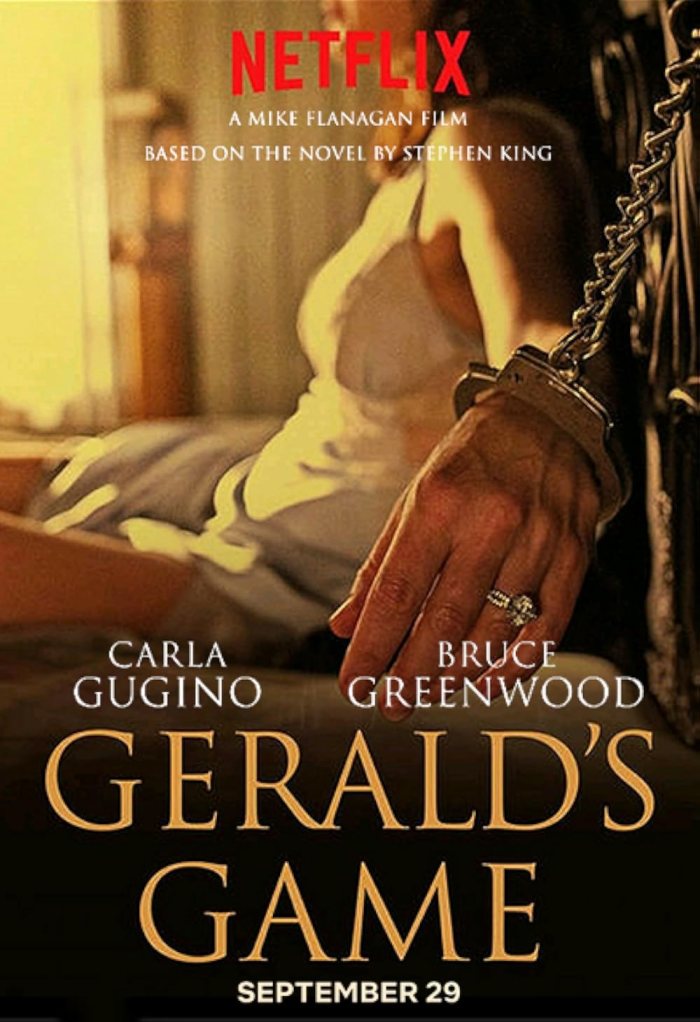
Gerald’s Game is a novel about a woman who is handcuffed to a bed when her husband has a fatal heart attack during a little…well…game. (No points for guessing the husband’s name.) Almost the entire novel is the wife, Jessie, trying to escape, having flashbacks to different portions of her life that give context to the predicament she finds herself in, or fearing a strange phantom that may or may not be real. Because of the very nature of the story and the fact that at least 50 percent of it all takes place in Jessie’s head, it spent decades as one of those books that the unimaginative declare “unfilmable.” But in 2017 Flanagan filmed it, Carla Guigno delivered a knockout performance as Jessie, and Flanagan was on the map.
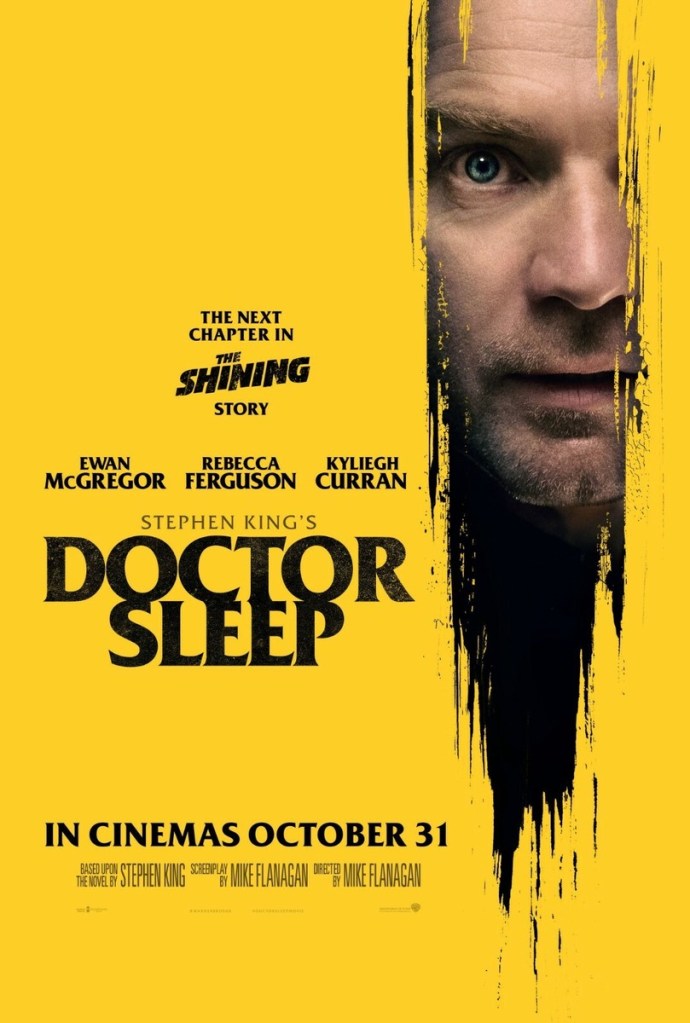
In 2019 he tackled Doctor Sleep, a novel that was problematic for a totally different reason. The book is a sequel to Stephen King’s classic The Shining, which of course was made into an iconic movie by Stanley Kubrick in 1980. Kubrick’s film took some wild swings with the novel, though, and despite being considered one of the must-watch films in the canon of American horror, Stephen King himself was not a fan. At the very least, most people will agree that while the film is effective in its own right, it does a poor job of actually adapting the novel. Doctor Sleep is a sequel to the book, not the movie, and as such it went in directions that were faithful to the original story but flat-out contradicted Kubrick’s film. Making Doctor Sleep into a sequel to Kubrick’s movie while still satisfying fans of the novel seemed an insurmountable task. But somehow, Flanagan pulled it off.
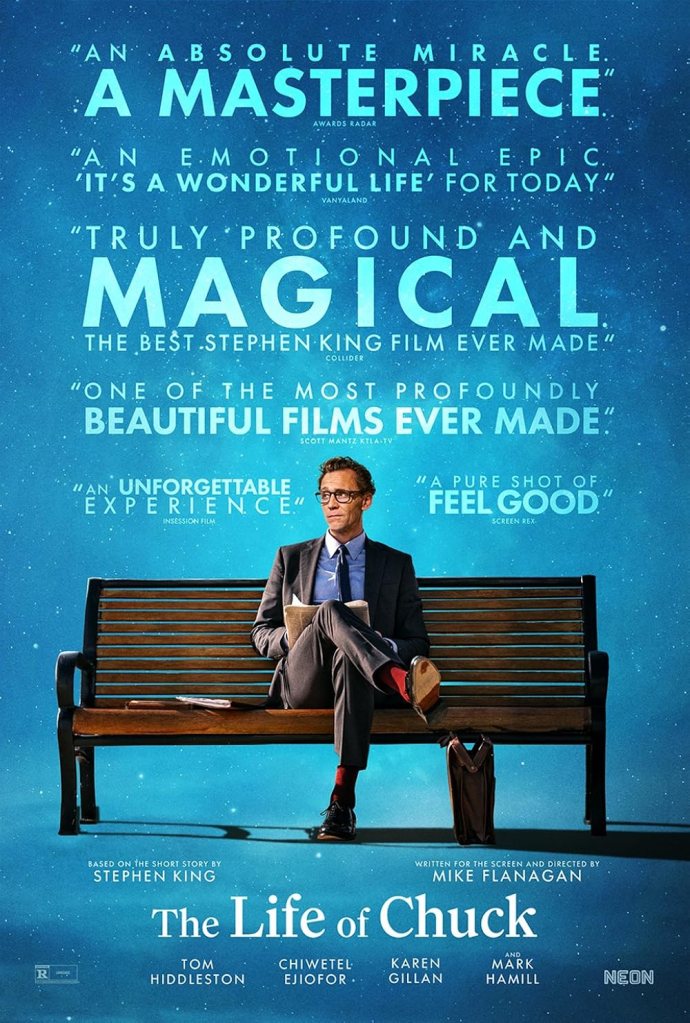
Then just two years ago, he adapted King’s novella The Life of Chuck, one of those books King writes periodically to remind people that he does not only, in fact, write horror. Chuck is a tender, bittersweet, beautiful tale, but for reasons that are hard to discuss without giving away some of the best twists of the story, it didn’t seem like a likely candidate for adaptation. But Flanagan rounded up Tom Hiddleston and several members of his usual repertory of actors and turned out one of the most powerful, lovely, and heartfelt films based on a King work since the era of The Shawshank Redemption and The Green Mile (both Darabont films).
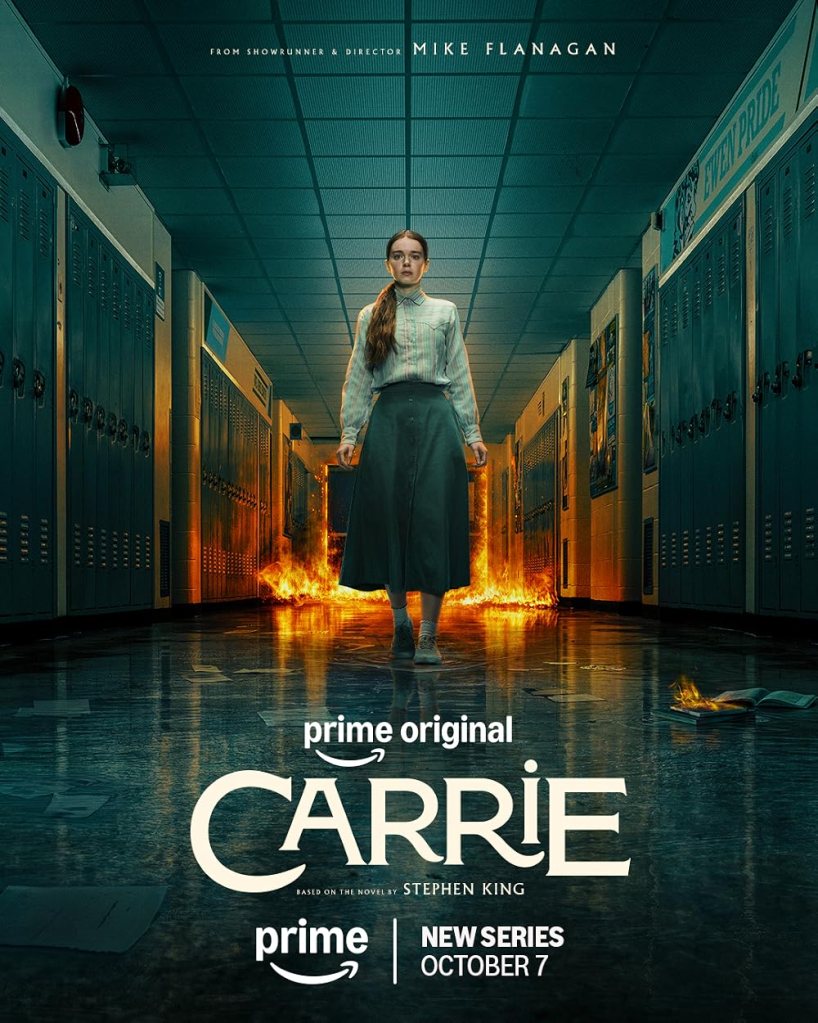
All that said, Carrie is a different matter than any of those. To make an eight-hour miniseries based on Carrie seemed like a wild idea at the outset. It’s already been adapted three previous times (not counting the stage musical), and the first of those adaptations is considered a seminal classic of the horror genre. What’s more – eight hours? The original novel is pretty slim, especially by Stephen King standards. The only way to stretch a story out that much is to add things that aren’t in the original. The good news is that Flanagan has proven himself to be adept at that time and again. After I watched his Fall of the House of Usher, I described it as him taking all of his Edgar Allan Poe LEGO sets, dumping them into a pile, and building something totally new out of the familiar pieces. Similarly, his Haunting of Hill House uses the original Shirley Jackson novel less as source material and more as a general suggestion. What Flanagan has done with these stories in the past is take the elements that we already know and use them as the context for new, gripping stories. And although the changes weren’t as dramatic as those other examples, he did the same thing when he adapted Carrie.
Flanagan’s series dropped a few weeks ago, and it’s really buzzing amongst fans of Stephen King and Flanagan himself. The talk is mostly positive, although there do seem to be people upset about the ending. (I am not one of them.) I’m going to get into some spoilers today so if you haven’t watched it yet, you may want to skip the rest of this column until you do, but be assured that I was very satisfied both in the show itself and its potential implications for King/Flanagan collaborations in the future.
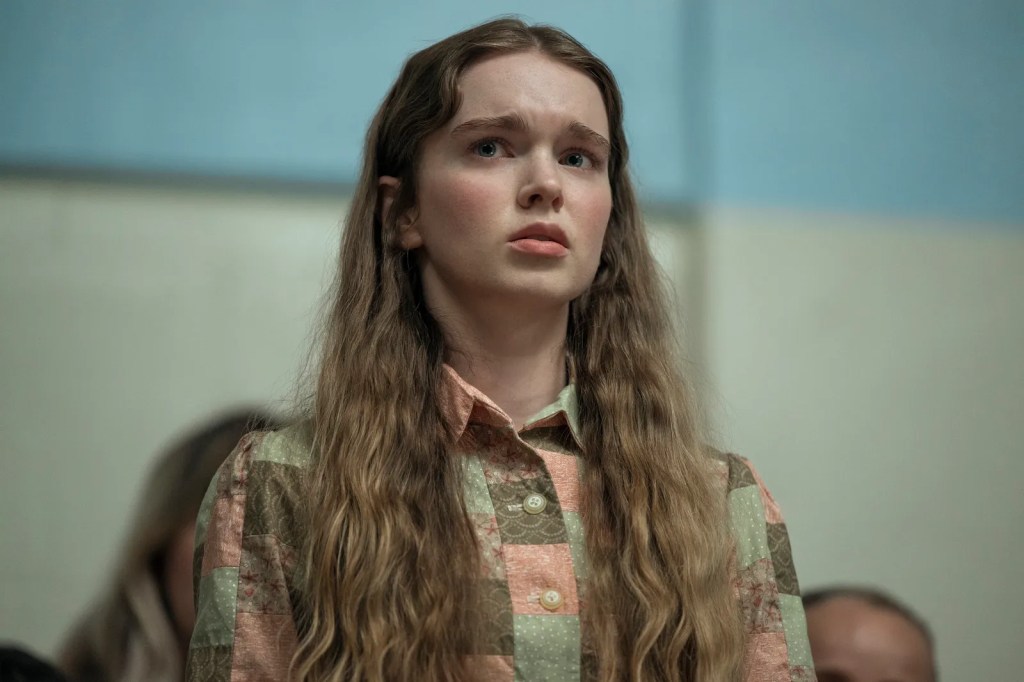
The basic framework of the story is more or less the same as what we already know: Carrie White (played wonderfully by Summer H. Howell) is a young girl who is bullied at school and smothered by her overbearing mother (Samantha Sloyan, one of Flanagan’s regular collaborators, delivering a phenomenal performance). After a traumatic episode surrounding her first period, Carrie discovers she has telekinetic powers. The bullying continues until a bloody climax at the prom leaves hundreds of people dead and sends Carrie off for a fateful confrontation with her own mother. Those elements are all still there. But that story has been told very adroitly in less than two hours in the past. To expand it to eight episodes, Flanagan added a lot of stuff that isn’t in the King original or any of the previous films.
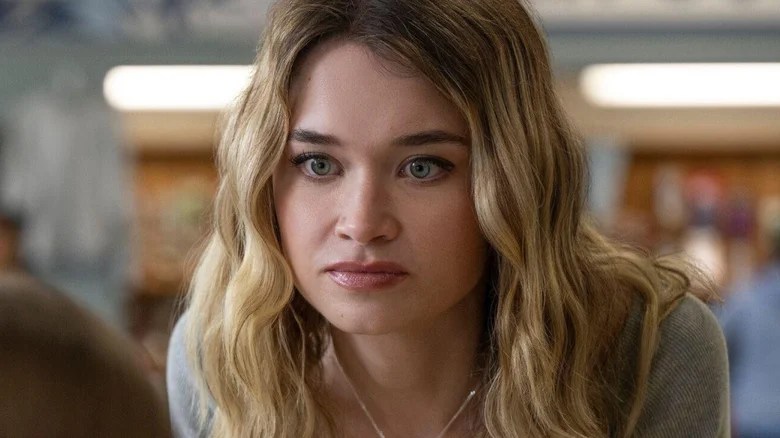
Much of the additive elements are spent enhancing the characters’ backstories. Chris Hargensen, for instance, is a fairly static character in the original. Carrie’s primary tormentor is an uber-example of a high school “Mean Girl” decades before that term was even coined. In Flanagan’s version, we spend almost as much time with Chris (played with delightful nastiness by Alison Thornton) as we do with Carrie herself, and we see the circumstances that shaped her into who she is. She’s got parents who are neglectful and narcissistic, and her father (Michael Trucco, another Flanagan regular) in particular is an unfeeling jerk who seems to see his daughter more as an annoyance than an actual child. And as bad as those parents are, it’s even worse for Chris when she finds out that they’re going through a divorce.
You may remember, a few weeks ago, when I wrote a column (GP #194: Can We Just Let Bad Guys Be Bad?) about the fact that I find the trend of “humanizing” villains to be tedious, and my praise for Carrie may seem contradictory. I’m here to tell you, that’s not the case. While it’s true that the TV series explores the reasons behind Chris’s behavior, it doesn’t try to justify that behavior like the recent East of Eden or to reshape the story so she’s not really a villain as in Wicked or Maleficent. Yeah, Chris’s life sucks, and we see that, but at no point does the show attempt to EXCUSE her behavior. Do you feel bad for a kid whose parents barely seem to recognize that she exists? Sure. Does that sympathy disappear when she creates the “@CarrieRed” Instagram account to terrorize not only Carrie, but the entire student body and faculty of Ewan High School? So, so much. The show demonstrates that Chris’s parents are terrible people, but that does not make anything that she does okay. Over and over again, she makes the choices of a sadistic, heartless monster. Over and over again she is presented with an opportunity to recant that behavior, and instead she chooses to double down. Chris Hargensen is a villain, and her villainy is not excused.
Carrie’s mother Margaret White is similarly expanded upon by the adaptation, and like Chris that exploration gives context without attempting to give justification. In the original, and in most adaptations, Margaret’s violent religious fundamentalism and paranoia are the fuel that feeds Carrie’s rampage. This adaptation shaves some of those edges off: while the fundamentalism is still an element of the character, Flanagan doesn’t lean on it as much as usual. Instead, we see a Margaret that, like Chris, could potentially be an object of sympathy: as the series begins she is recently widowed and forced to take a job and send her teenage daughter to school for the first time. She’s been largely isolated and sees the world as attacking her child, a child who needs protection. There’s a particularly emotional scene in episode four when Carrie comes home covered in mud and heartbroken because she’s learned that Chris has been orchestrating her torment while pretending to be her friend. The audience – and Carrie – expect Margaret to explode and punish her for the crime of going out late and lying about her whereabouts, but the instant she sees Carrie standing there, filthy and sobbing, Margaret’s anger evaporates and she takes Carrie into a sincere, comforting embrace, behaving more like a mother than we’ve ever seen.
But again, none of this is ever used to justify the dark parts of her character. Margaret IS overbearing, smothering, and even abusive (the famous “prayer closet” from other iterations of the story remains as the most prominent symbol of her crippling fundamentalist nature). She’s also petty, getting her manager at work fired when it is clear to the audience that the woman is doing everything she can to HELP Margaret, a new widow she recognizes is desperately struggling. We see Margaret’s invasive nature, hiding cameras around the house to spy on Carrie when she has to be at work. I mentioned earlier that Chris has opportunities to pull back from her own behavior – in the last such instance it seems as though she is about to do so, until Margaret (displaying an utter lack of mercy) goads her until she again doubles down. We see how she has isolated Carrie from the world for her entire life and would have continued to do so had her circumstances not changed in such a tragic fashion. Margaret is a mother who sincerely believes she’s doing the best thing for her child, but at the same time, has been strangling that child from the moment she emerged from the womb. Margaret White is a villain, and her villainy is not excused.
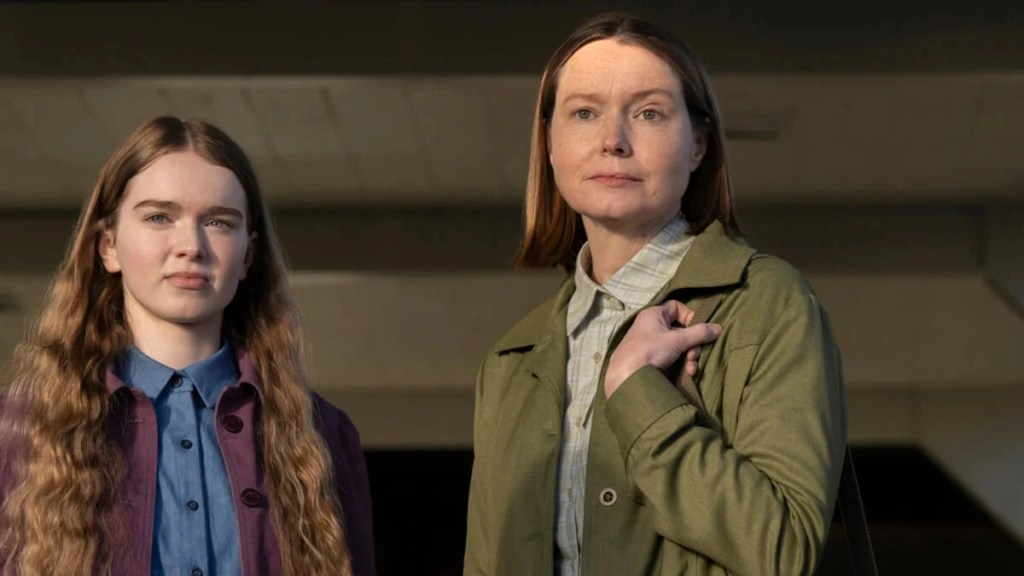
As for Carrie…well, Carrie’s villainy doesn’t need to be tempered, because Carrie White is not a villain, and never has been. Carrie is a victim. She’s a victim of Chris and a victim of her mother. She’s a victim of a world that is structured in a way that is terribly unkind to anybody that is different. She’s a victim of her own genetics, having an incredible and terrible power that she does not understand and ultimately cannot control. Carrie is never really given the chance that Chris had, to pull back from her mistakes. Once she breaks, there is no opportunity to rectify anything. Carrie White is not a villain, but rather an example of the fact that you don’t HAVE to be a villain to be responsible for horrifying things.
There are, I should point out, some people who disagree with me about this – they feel that Flanagan DID go too far, that he DID try too hard to make Chris and Margaret into sympathetic figures. To these people I will say that I respect your right to your opinion, but go get your own dang column.
The other major changes to the story, which again are all additive, are perhaps even more intriguing than the character work Flanagan did – and again, I caution you, I’m about to get spoileriffic up in this piece. The miniseries brings in a framing sequence that exists in the novel but was left out of the classic Brian DePalma movie: it’s set after the cataclysmic prom night, and some of the survivors of the massacre are being interviewed, telling their versions of the story. The end of episode one, however, drops a bombshell that has not existed in any other version of Carrie, namely that our titular character was not acting alone that night.
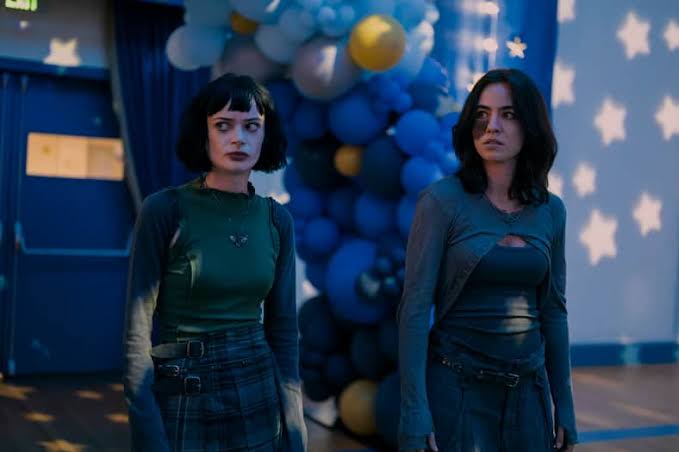
As the series progresses, we learn that there are other people like Carrie, people with various psychic powers. Some of them want her to join them, other people are trying to actively destroy the psychics. In the climactic prom scene, in fact, after Chris and her boyfriend have doused poor Carrie in pig’s blood, Flanagan’s version has Carrie’s psychic friend Emaline (Thalia Dudek) “take the wheel” and use Carrie’s body and powers to lash out. This is the one contention people have with the series that I can kind of agree with. Usually, Carrie is the one that carries out the Prom Night massacre, having lost control of herself. In this version, Emaline is the primary aggressor and Carrie is mostly a weapon. I suspect that in large part, Flanagan made this change so that the character wouldn’t be too psychologically damaged to continue the story. Normally, if this were the end, that wouldn’t be an issue, but just yesterday (as I post this) Amazon has announced that they’ve given a green light to a second season of this show.
At the end of Flanagan’s series, Carrie survives and escapes with Emaline, fleeing into an unknown future. Although Carrie was announced as a miniseries, Flanagan has said that he’s got plans for a three-season story arc, and as the first season pretty much covers the entire novel, there are a LOT of questions about where he’s planning to take it. But fans of Flanagan and King probably already have at least an inkling.
Carrie was Stephen King’s first published novel, but he has come back to the well of people with different kinds of psychic powers over and over again in the decades since. The way the different factions are presented in Carrie even evokes – quite deliberately, I’m certain – different groups and organizations that exist in stories such as Firestarter, The Institute, and even Doctor Sleep, which you should remember, was also adapted by Mike Flanagan. It seems more than likely that Flanagan is planning to draw on some of this mythology in future seasons.
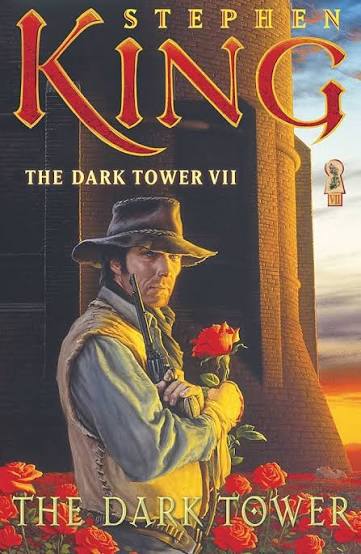
But that’s not all. One of the most prominent uses for psychics in the work of Stephen King comes from his magnum opus The Dark Tower. One of the many (many, MAAAANY) subplots in this series involves the Big Bad, the Crimson King, forcing different psychics to work as “Breakers,” using their powers to literally “break” the beams of force that hold up the Dark Tower itself, which is a sort of nexus of all creation. If the Tower falls, so does the entire multiverse. It’s kind of a big deal.
There have been plans for years to try to adapt The Dark Tower to screen, and one movie version that made a horrifically misguided attempt to condense eight novels (many of which are the size of phone books) into a film of less than two hours. Let’s not talk about that. What’s important is who currently holds the rights to try a new adaptation of the saga: Mike Flanagan. I’ve written before (in Geek Punditry #160: The Difficulty of a Kingamatic Universe) about how tough it’s going to be to do justice to this property, but Flanagan is determined. He’s been highly vocal about his desire to bring this series to the screen in as faithful an adaptation as possible. His plan, he says, is to make a TV series that would run for five seasons, then two feature films to complete the epic. And unlike Carrie, his goal is to simply film the books and try NOT to change things up too much.
However, anyone who knows anything about storytelling can tell you that SOME changes are inevitable. Cinema and books are different mediums, and things that work in one don’t always work in another. Most fans, I think, can accept this as long as the adaptation is done well. But there’s a bigger issue involved in The Dark Tower than your standard adaptation pitfalls: the eight books in the series are not wholly self-contained. They contain references to and characters from numerous other works of Stephen King’s, and a great many of his other books return the favor, containing references (sometimes blatant, sometimes oblique) to The Dark Tower itself. This causes a totally different problem when it comes to adapting the series: licensing rights. Over the five decades of his career, almost every story King has ever written has had the rights sold to one studio or filmmaker or another, and many of them are still held by those other companies. ‘Salem’s Lot and It, two novels that have quite important ties to the series, are both owned by Warner Bros. Another significant novel, The Stand, was the property of Paramount last time I checked. I don’t have a comprehensive list of where the rest of his works currently lie, but be confident in knowing that they’re all the heck over the place.
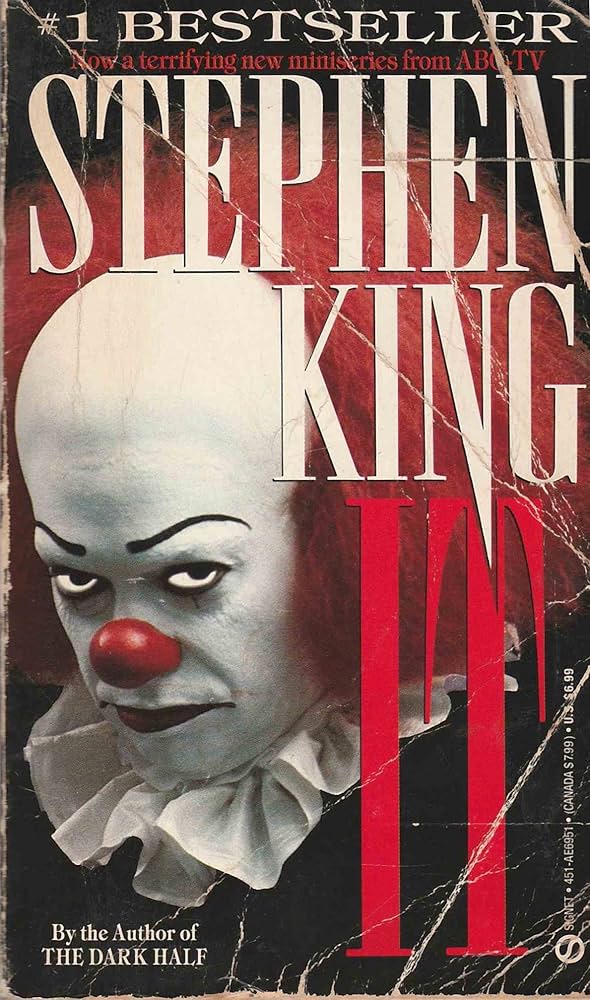
What this means is that, in order to adapt The Dark Tower, Flanagan is going to have to do one of two things: either negotiate the rights with all the other companies that own bits and pieces of King’s multiverse, or make changes to work around those properties he can’t get his hands on.
The good news is that probably the three MOST significant connections, from the three books I mentioned previously, are tied up in two companies that have merged into one; Warner Bros and Paramount are now both part of Skydance. That might make ironing out those wrinkles slightly easier…then again it might not. It depends largely on the attitude of the executives involved. But Flanagan worked with Warner Bros for Doctor Sleep, so presumably, there are already some inroads there.
Flanagan seems quite optimistic. It’s taking time to get this project started, but it IS moving forward. And if you look back at his previous work, he’s been aiming for this all along. As far back as his Gerald’s Game adaptation he was dropping Dark Tower references. He continued that in Doctor Sleep and Carrie, even though none of those properties are among the ones that are more directly connected to the Tower. It is entirely conceivable that Flanagan has already begun laying the groundwork for a Stephen King cinematic universe, the likes of which fans have long thought impossible, and that some of the plans he has for Carrie’s future include establishing elements he can use in his Dark Tower – such as characters he has the rights to that may take the place of characters he can’t get. (I’ve got no idea who owns the rights to Insomnia, for example, but it would be relatively simple to swap out the significant psychic who came from that novel with somebody else, and I doubt most fans would be terribly upset about it.)
If you’ve followed me for any length of time, you know how important The Dark Tower is to me. It’s one of my favorite series ever written. I met my wife on a long-defunct Dark Tower message board. It is entirely conceivable that, were it not for this series of novels, my son would not exist.
It kinda means something to me, is what I’m saying.
So I want to see justice done to these books as much as anybody alive. And after watching Carrie, I am more confident than ever that if we’re EVER going to get a successful version of The Dark Tower, it’s going to be thanks to Mike Flanagan. In the meantime, I’m looking at every King project he makes (and the next one is going to be a new version of The Mist – another highly linkable story) as one more brick in the long, long road to the Tower.
Because Flanagan knows, if anyone does, that all things serve the Beam.
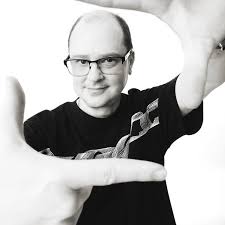
Blake M. Petit is a writer, teacher, and dad from Ama, Louisiana. His most recent writing project is the superhero adventure series Other People’s Heroes: Little Stars, volume one of which is now available on Amazon. You can view his LitReel videos on TikTok and read his writerly yammerings on his free Substack.