Geek Punditry #3: Beware the Binge

“I’m not going to start watching a show on Netflix. They’re just going to cancel it anyway.”

Everyone reading this, I promise, has heard someone on social media (or maybe in real life, if you’re the sort of person who has such a thing) echo that very sentiment recently. Every time a new show hits, someone says it. Every time a show gets canceled, someone says it. Every time I go through the drive-through at Wendy’s someone says it, which is actually kind of weird and makes me wonder if they’re still having staffing issues. But the point is, I get it. In this day and age, when television has become more more serialized and most shows – even half-hour comedies – have ongoing story arcs that play out across a season or even across an entire series, there are few things more frustrating to a television fan than getting invested in a series, watching their way through the end of the first season, feeling their pulse race with the cliffhanger finale, and then learning that there will never be a season two. 

The blame for this is usually placed on Netflix itself (although they’re hardly the only culprit), and while I agree that Netflix deserves a lion’s share of the culpability, I don’t think it’s for the reason most people usually mean. 

The assumption people have is that Netflix is just impatient. They won’t give people a chance to find a show and get to enjoy it. But I don’t think that’s what’s happening, not exactly. Netflix (and most streaming services) rarely release their actual numbers, so it’s hard to say with any degree of certainty how many people are watching any given show or how quickly, but a hypothesis has been making the rounds that I think is worth examining. Some shows are getting the axe despite seemingly large numbers, while others with smaller viewership are being allowed to continue, a practice that doesn’t seem to make any sense if you consider it series-by-series. It makes a lot more sense, though, if you look at it episode-by-episode.

What seems to be happening is that Netflix is basing their decisions not on total numbers of hours watched, as people tend to assume, but by how many people finish a season. If, for example, 20 million people watch the first episode of Mind Your Manners With Simon Cowell, that sounds better than the 15 million who watched the first episode of Toenail Fungus Finds of Eastern Europe, right? 

But keep watching the numbers. How do they trend? What percentage of that original number stuck it out to the end? If, by the end of the season, Toenail Fungus has retained 11 million viewers, but Simon Cowell has dropped down to 4 million, what makes more sense to renew? People who skipped out on Simon after three episodes are far less likely to come back for a theoretical second season than the much larger number of people who stuck around to find out exactly what kind of mold was growing under Slobodan Milosevic’s left pinky toe in the pulse-pounding season finale. 

The practical result of this is that shows that don’t get binged heavily in the first couple of weeks are far less likely to get invited back, and this is where that conventional wisdom comes back into play. Shows are not being given time to find an audience, you’re right. But the solution here is not to require every damn person on the planet to binge every show the second it hits the streamer. Doing things that way makes it far, far harder for a show to get traction unless it’s based on an existing IP like Wednesday. Something like The Midnight Club may be every bit as worthy of getting a new season, but as it doesn’t have that built-in fanbase, the chances of it hitting the same way are much worse. 

There are exceptions, of course. Stranger Things and Squid Game are both shows that seemingly came out of nowhere and had no ties (other than thematic ones) to previous movies, characters or TV shows that could have carried over their audience – but they’re called exceptions for a reason. For each of those, how many series like The October Faction, Cursed or Archive 81 have suffered an ignoble death?

There is a solution to this problem, but Netflix doesn’t want to hear it. In fact, I think a lot of you reading this right now will be horrified at the suggestion. But I’m going to say it anyway.

You know how to deal with the problem of people not binging shows quickly enough to save them?

Stop making shows bingeable. 

Excuse me, I need to go wash the tomatoes people just hurled at me from my hair and clothes.

But I’m serious about this. The problem is that Netflix is basing their decisions on how many people watch an entire season of a series in X amount of days, with X being some magical number they’re not going to tell us but which was clearly too small to save Jupiter’s Legacy. And as it seems these shows are getting cut faster and faster, you cannot blame any viewer for deciding not to invest their time, which means that the new shows won’t have anyone to watch them and then they’ll get cut too, and now we’re just in a never ending loop of cancellation and misery, like being back in high school, but sandwiched between a baking show and a murder documentary. 

But let’s look at other streamers. Netflix isn’t the only game in town anymore, after all, and few of their competitors have suffered from this same cancellation outrage. So what’s the difference?

Part of the problem is that tiny little “X” number – expecting people to find a show, binge a show, talk about a show, and then expand the audience in a remarkably short period of time. It’s really hard, and considering just how many entertainment options now exist, it’s nearly impossible. But look at the Marvel or Star Wars shows on Disney+, or the assorted Star Trek series on Paramount+. Not only are people watching, but people are talking about them. And not just for the days or (in rare cases) weeks of a Netflix hit, but for months. What’s the difference?

Disney and Paramount release their series the old-fashioned way: one episode a week. And that lets the audience find the show in a way that Netflix’s “drop ’em all right now” model never will.

How many Star Wars fans, disgruntled by Disney’s cinematic output, had to be convinced to try the likes of The Mandalorian or Andor? How many Star Trek fans immediately dismissed Prodigy or Lower Decks for being animated series until other fans persuaded them to give them a chance? If they had been released the Netflix way, the conversation would have ended in a few days, and a lot of people would never have given these shows a try.

It’s not a perfect analogy, I admit, because those are shows based on existing – and, let’s be honest, massive — IPs, but it still demonstrates something. I hear people talking about these shows not just on the weekend after they’re released, but for months. Love them or hate them, these series have people engaged for a very long time, posting about them on social media, writing thinkpieces, and making memes. And every week, when a new episode comes out, the cycle repeats. This doesn’t happen with a binge show. Even Wednesday, Netflix’s most recent hit, had a quick surge of popularity, a lot of people talking about a dance sequence, and that one meme with Wednesday Addams next to a girl who looks like Luna Lovegood crossed with Phoebe Buffay, and then…it kinda dried up. Sure, people liked the show. Sure, people are looking forward to season two. But nobody is talking about it anymore right now, less than two months after it dropped. 

Compare that to the third season of Star Trek: Picard, which I guarantee will have people on the internet wildly pontificating for the entire ten weeks it’s on the air. And love it or hate it, they’re going to come back every Thursday for the next episode and do it all over again. And while they’re talking, other people will hear them, and the more people who hear them, the more people are likely to watch it, and that’s where the binging comes in. 

I’m not going to pretend I don’t binge watch. Of course I do, it’s 2023, it’s how media is consumed now. But for a new series it’s just not an effective strategy. Pre-streaming shows like Lost or How I Met Your Mother built their audience because fans got invested in the story, the characters, and the mystery, and they came back to talk about them again week after week, season after season. They shared their theories, they wrote fanfiction, they drew pictures of their favorite characters and, most importantly, they told other people how much they loved their favorite shows for a very, very long time. And say what you will about how those respective shows ended, they still have devoted and passionate fan bases that will spend more time talking about them than anyone is spending on Uncoupled. The ability to binge is a great tool for new fans, to get people who are discovering a show later to catch up and to join in on the fun. But as a way of kicking a series off? It’s like Netflix is Lucy holding the football and Inside Job is Charlie Brown, running in for his chance without realizing it’s already a lost cause.

Abandoning the binge-release model won’t save every deserving show, of course. Even in the days before streaming there were lots of great shows that never got past a first season, including some that weren’t even on the Fox Network. And sure, some viewers have no patience for the weekly release anymore, but I sincerely believe that the potential audience that never gets to find these shows under the current system outnumbers the people who will refuse to watch just because they can’t do it all at once.

So there’s my challenge, Netflix. Instead of dropping full seasons in 2023, try doing an episode a week. Then look at how many viewers make it to the end. 

And then maybe give The Joel McHale Show With Joel McHale another chance, would you?

Blake M. Petit is a writer, teacher, and dad from Ama, Louisiana. His current writing project is the superhero adventure series Other People’s Heroes: Little Stars, a new episode of which is available every Wednesday on Amazon’s Kindle Vella platform. He hasn’t actually gotten around to Wednesday season one yet, if we’re being perfectly honest here. 

Geek Punditry #2: A Well-Paved Mile

If you have children, one of the best things you can do with them is read together. It teaches them early on to love books and love learning, it’s quality parent-and-child time spent together, and it is likely the only chance you’ll get to read anything longer than the directions on a bottle of Children’s Imodium for several years. Kids are a joy, but they do tend to make demands of your time. For example, I’m a big fan of Stephen King. I have been ever since my uncle first introduced me to The Stand when I was in high school. I met my wife on a message board dedicated to The Dark Tower. And by the time my son was born in 2017, there were only four or five books in his lengthy catalog that I had not yet read. However, after Eddie was born, my reading time was curtailed drastically but King’s writing time was not, so those four or five unread books have expanded to approximately eleventy trillion. 

But my son is a little older now, and it’s finally starting to become a little easier to squeeze in something longer than your average comic book for my reading pleasure. I recently looked at the vast array of new King that has been produced in the last six years, carefully weighed the options, communed with the spirits of the literary world for how to begin, and finally decided to hell with it, I’m gonna read The Green Mile again.

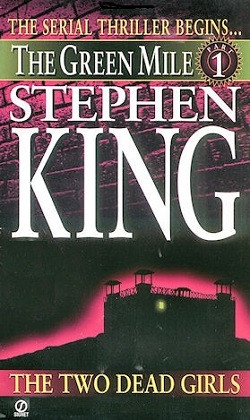
If you’re not familiar with The Green Mile, either through the novel or the top-notch film, I have to say it’s not what people usually think of when they think of Stephen King. There are no child-munching clowns, no apocalypse viruses, not even a writer from Maine. The story is told from the perspective of an old man who was a prison guard in the 1930s, and it centers on one of his death-row inmates who turns out to be harboring a fantastic secret. It’s a character drama with a little magical realism in it, and although there are certainly intense moments, there’s nothing in the book that could really classify it as horror. It is, I say without hyperbole, one of his finest works. Also, there’s a mouse.

It’s been years since I last read the book, but dipping into it again was like visiting old friends who happened to be convicted murderers. I was immediately plunged into the world of Paul Edgecombe and John Coffey (“like the drink, only not spelled the same”). I hated Percy Wetmore all over again, I sympathized with Eduard Delacroix all over again. But as I read this time, I noticed something that had not occurred to me in previous readings of this story: namely how perfectly plotted this story is.

Conventional wisdom says there are two types of fiction writers: architects and farmers. Architects meticulously plan out every scrap and detail of a story ahead of time, decide every beat and turn, and only then, once the blueprints are done, do they write. Farmers plant some seeds with only the vaguest idea of what shape the story will eventually blossom into, but pruning and cultivating that plotted plant is part of the joy of being a writer. By all accounts (including his own), Stephen King is a farmer, and sometimes it shows. As magnificent as he is at character and concept, more than a few of his books suffer from deus ex machina endings that seem to come out of nowhere. (Read The Girl That Loved Tom Gordon some time – you can pick out the exact moment where the writer decided this kid had been wandering aimlessly through the woods long enough and it was time to wrap this puppy up.)

Even King’s best books usually include long segments of backstory or subplots which, although enjoyable to read as they help flesh out the world he is creating, are ultimately unnecessary to the plot and could easily be excised if Reader’s Digest got their hands on it. But not The Green Mile. I was actively looking for the fat when I read the book this time, and I could find none. Each and every piece feels crucial to the overall puzzle. Arlen Bitterbuck’s execution? It’s there to demonstrate how executions are supposed to go, so that what happens later has the necessary context. The Brad Dolan subplot in the framing sequence? It steers Paul’s retelling of the story to its final revelation (which itself resolves a lot of the lingering questions left behind over the course of the book). The brief mention of the only woman who ever served time in E Block? Seems extraneous at first, as her sentence is commuted and she quickly leaves the story.

However, it turns out that this woman is really there to set up another device that turns out to be important: Death by Finale. After her brief appearance in the book, Paul mentions how she eventually died of natural causes several decades later. Again, it seems like a nothing detail, but it’s really there to establish a pattern: afterwards, King tells us of the final fate of almost every named character during the last scene in which they appear. It’s easy enough to miss the first few times. Her fate and that of another inmate whose sentence was commuted (murdered in the prison laundry 12 years later) are incidental. But the pattern becomes clearer as the story goes on, especially in the final chapters, where the fates of Paul’s fellow guards and the other key figures are all stacked on top of each other. It also lends weight to a scene midway through the book where Paul, as the narrator, is somewhat apologetic to the reader for not knowing the fate of the reverend who visits with the prisoners before their executions. It’s an odd moment on first reading, but you realize later that Old Paul is telling these stories to illustrate a point about what has happened to him, so the scene with Reverend Shuster is recontextualized – Paul is sorry that he’s unable to do so this time.

Even minor details come back in an essential way later. In Part One, Paul learns about the crime for which John Coffey has been convicted and throws out little tidbits such as the tracking dogs getting confused at one point and Coffey having a lunch wrapped in paper and tied up with twine. Both are details that are seemingly there just to add flavor to the scene. Both turn out to be crucial later.

“But Blake,” you’re saying, “Isn’t that just how stories are written? It’s good writing, sure, but is it that surprising from an old pro like King?” Normally I would agree with you, but it is the circumstances under which this book was written that makes all of this so impressive to me. Those of you who weren’t reading King in 1996 (or weren’t even born yet – yikes) may not know it, but The Green Mile was not originally published as a single novel. In an experiment to recreate the serialized works of folks like Charles Dickens, King wrote and released the book in six installments, published in slim paperback “chapbooks,” and by his own admission, did not yet know how the story would end when the first part was published.

I knew about the chapbook part, of course. I was there in ‘96, eagerly awaiting each installment. I still remember sitting in the lobby of the band hall at Nicholls State University gorging myself when a new part was released. But the fact that he hadn’t finished the book when Part One was released is something I only learned recently, and frankly, it blew my mind. Did he know how Melinda Moore’s illness would factor in? Did he know the awful secret of Wild Bill Wharton? King says his wife, upon reading an early draft, asked him what happened to the mouse that disappeared halfway through the book, and from my perspective as a reader, I cannot even fathom what the ending of this story would be without Mr. Jingles. This is arguably one of King’s best works, and inarguably one of the tightest, most fat-free novels in his bibliography…and he didn’t know the ending yet when I read Part One?

That’s a straight-up magic trick.

Writers always go back and edit their work to help it flow better. Even the architects don’t always finish things exactly as intended, so a certain amount of adjustment is expected, especially in the earlier chapters. Taking that tool away is like putting a writer on a tightrope and daring them not to screw it up. I’m doing something similar now on Kindle Vella, with my series Other People’s Heroes: Little Stars (gotta get that plug in), except I’m doing a chapter a week instead of a hundred pages or so a month. And I know for damn sure that I haven’t pulled it off as perfectly as King did. Early chapters of my story set things up for a character who has turned out to be far less important than I originally planned. (Blip, if you’re reading OPH and you really want to know whose part got reduced.) Meanwhile, a character who was introduced literally just to fill a desk in one scene has become my favorite in the whole story and will be crucial to the ending. (To no one’s surprise, this character is Keriyon Hall.) None of this is unusual, especially for farmers like the King and I, but that inability to go back and adjust will make for what TV Tropes calls “early installment weirdness” for people who read it later.

All of this is to say that when one is attempting art of any kind, one tends to learn from those who have done it before and done it well. And some snooty scholarial types may take issue with this, but I don’t care: damned if there are many people in the world who do what I want to do better than Stephen King.

Blake M. Petit is a writer, teacher, and dad from Ama, Louisiana. His current writing project is the superhero adventure series Other People’s Heroes: Little Stars, a new episode of which is available every Wednesday on Amazon’s Kindle Vella platform. “Attempted art” kind of sounds like a criminal charge, doesn’t it? Like The Room or Troll 2. 

Geek Punditry #1: The Next Next Generation

I’ve been a Star Trek fan for close to 40 years now. I liked the original series, the movies, the Nickelodeon reruns of the animated series, and when The Next Generation premiered, I was a steady customer. Deep Space Nine set the hook even more firmly, giving the strongest story and the greatest character arcs of any Trek to date (even now, 30 years after the series’ debut). After that, though, although my passion for the Trek universe was untarnished, my satisfaction with specific series and movies began to vary. I never particularly cared for Voyager, and although I liked Enterprise, I was too busy in those pre-DVR days to keep up with it. I liked the Abrams movies well enough, but I thirsted for a new show, and then Discovery…well it wouldn’t be until Lower Decks that a new Trek series would fully capture my heart.

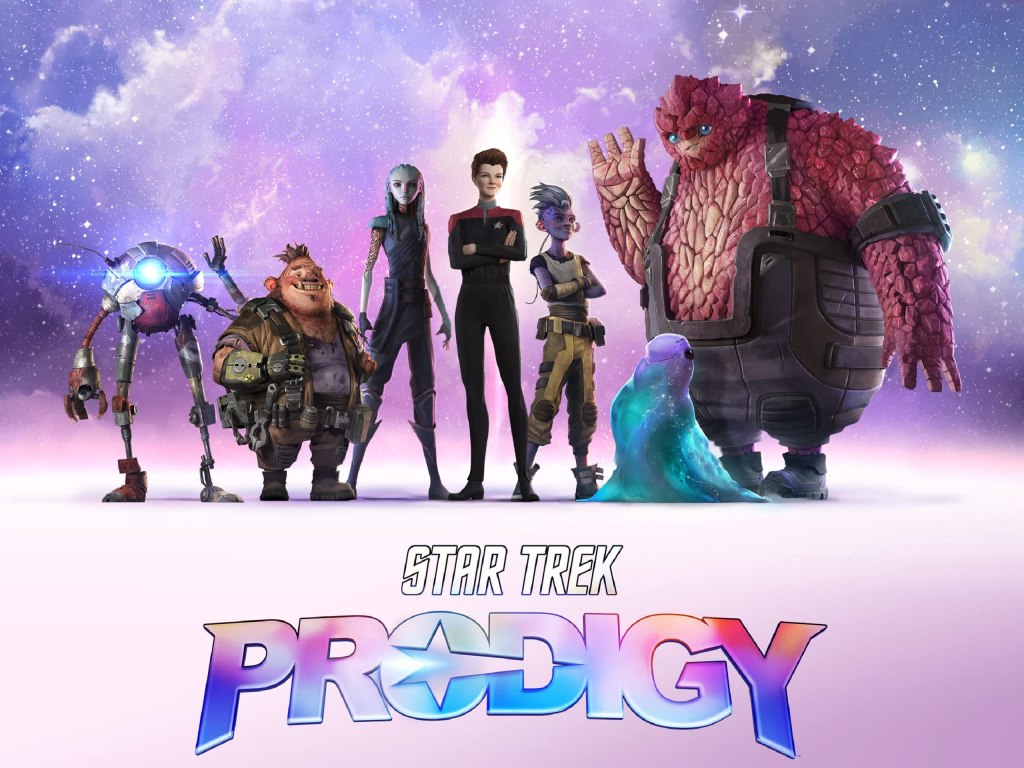
Then came Star Trek: Prodigy. Another animated series, and the first one to be specifically targeted at children. I knew I would watch it, I knew I would give it a chance, because it’s Star Trek. I ALWAYS give Star Trek a chance. But my expectations, to be honest, were not high.

At first, those low expectations seemed to be justified. We were back in the Delta Quadrant from Voyager (ugh), far away from the stories and situations I loved. The cast was made up entirely of brand-new or obscure species, which further divorced this series from the Trek saga that began in 1966. Worst of all, these characters had never even heard of Starfleet or the United Federation of Planets. If it weren’t for the prototype Starfleet vessel they found and the holographic recreation of Kathryn Janeway on board, there would be nothing about this series to designate it as Star Trek at all. It wasn’t bad. It wasn’t loaded with shoestring stories and catchphrase-spouting idiots like so many shows targeted at kids. But I finished the first episode – the first few episodes, actually – feeling like I had watched something that belonged in the world of The Clone Wars or one of the subsequent Disney Star Wars series. Not to say anything negative about those cartoons – they’re good Star Wars. But I didn’t want good Star Wars. I wanted good Star TREK.

After watching a few episodes together, my wife gave me permission to watch the rest of the season without her, as polite an indication of dissatisfaction as there can be, and I really couldn’t blame her. This wasn’t what we expected coming in. And I considered joining her in abandoning the show, because I wasn’t really satisfied, but…

Something told me to keep going. Maybe it’s my renewed devotion to Trek that has become far more passionate over the last few years. Maybe it was that each episode was only a 22-minute investment instead of an hour. Maybe I’m just pigheaded. But I kept watching.

And thank God I did, because as the season wore on, I realized I was watching the most brilliant magic trick TV has given us since someone found a hatch on Lost.

The thing I forgot in the first few episodes was that this is, first and foremost, a show for kids. It’s a show that airs on Nickelodeon, where kids can stumble upon it, and not just on Paramount+, where the existing fans seek it out. That’s important, though, because this is the first Star Trek project since 1966 that is intended specifically for an audience that has no pre-existing expectations of Star Trek. The familiar aliens, the ships, the characters, the lore – everything I love would be completely foreign and meaningless to a child watching this as their first Star Trek.

Just. Like. The. Characters. On. The. Show.

This is where the Hageman brothers, the showrunners, did something so unbelievably brilliant that I want to hug them until security has to drag me away.

As the season continued, through the holo-Janeway at first, we saw bits and pieces of familiarity. A known alien species. A recognizable name. An Easter Egg or three. And the Prodigy kids began to learn about the history and the mission of Starfleet – which is, of course, the history and mission of Star Trek.

And they loved it.

Loved it so much, in fact, that by the midseason finale (where we see the real Janeway and not just the hologram), all they wanted was to be a part of it.

And who can blame them?

I saw someone on Facebook describe Prodigy as a show about kids from Star Wars trying to run away to Star Trek, and never has a description been more apt. But the beautiful thing, the glorious thing, is that the show is constructed in such a way that the kids watching at home (like my 8-year-old nephew Grant, watching with his Trek-loving mother) who know nothing about this Trek are on this journey with them. 

In the second half of the season the curtain is pulled back further – it wasn’t just Easter Eggs anymore, but full plots and stories built on the scaffold of classic Trek and intended for the new kids, the ones still learning. And by the time we reached the magnificent two-part season finale, the trick was complete. The first half of the season taught the kids to appreciate Trek. The second half is where the Protostar crew proves they belong there, and do so in the finest tradition of Kirk, Spock, Data, and Dax.

If you, like my wife, decided to bail on this show after a few episodes, it’s totally understandable. I get it. You didn’t know. But I’m here to tell you that it’s worth revisiting. Give it another shot, at least until the midseason finale, before you pass final judgment. It’s worth it to see how they took a bunch of characters who had no business being in Star Trek and turned them into a crew as worthy as any that has ever borne the name. 

Blake M. Petit is a writer, teacher, and dad from Ama, Louisiana. His current writing project is the superhero adventure series Other People’s Heroes: Little Stars, a new episode of which is available every Wednesday on Amazon’s Kindle Vella platform. You wouldn’t believe how long it took him to type this up, what with all his fingers crossed for Picard season 3 the entire time.

Free Comic Book Day: The Return

My favorite day of the year hasn’t really happened since 2019.

I know, favorite days are supposed to happen annually, but if you think about what the state of the world has been since March of 2020, it shouldn’t be too hard to figure out what exactly has gone wrong. Among the many, many things that we lost because of Covidpalooza was a day I look forward to every year, a day that makes me tingle with anticipation, tremble with excitement, and quiver with bodily reactions I should probably stop referring to metaphorically. But it’s back. It’s here. It’s Saturday.

It’s Free Comic Book Day 2022!

For many years now, the comic book publishers, distributors, and shops of North America have celebrated the first Saturday in May as Free Comic Book Day, an event where special free comics are given out at stores across the land. The better stores (such as my local shop, BSI Comics in Metairie, Louisiana) have gone even further, expanding from simply handing out books to turning the event into something of a mini-convention full of games, cosplay, and sales, as well as hosting writers and artists hoping to sell some of their wares and meet the fans. In 2020, when the pandemic was still fresh, the event was canceled entirely, with the books (most of which had already been printed) given out piecemeal through a “Free Comic Book Summer” which didn’t really scratch the same itch. You see, it’s not just about the freebies, it’s about the EXPERIENCE. It was like getting a late Christmas present in mid-January… it’s not really the same, is it? Then in 2021, a new wave pushed the event back from its usual May home to August, and another wave – at least in my area – curtailed the event dramatically.

Saturday, it’s back in full force.

For a long time now – first as a podcaster and now as a writer – I’ve manned a table at BSI Comics for FCBD, and I couldn’t look forward to it more. It’s not about the free stuff (although let’s face it, we all love free stuff), but it’s about a chance to celebrate an art form I love dearly. Comic books are a unique form of entertainment, and while they’re finally starting to garner a little bit of the respect they deserve from the public at large, for too many people they’re still looked upon as disposable entertainment, kids’ stuff (as if there’s something wrong with that) or just an IP to be exploited for movies.And yeah, they can be all of those things, but they can also be so much more. Comics are an art form, and a unique one. They’re a blend of words and pictures that doesn’t exist in the same way in any other form of storytelling, and that’s a kind of magic. I love FCBD as a chance to show off to people who maybe don’t view comics this way, or who don’t know where to find them, or who have incorrect assumptions about the art form – take these people and show them what comics are capable of.

But that’s not the only thing. As I said, I’ve been sitting at my table at BSI for several years now, and in that time I’ve befriended a lot of people – local fans, other local creators, people whose work I respect and admire and whose company I enjoy. But, like those relatives you only get a chance to see at Christmas and Thanksgiving, a lot of these are people I don’t often get to hang around with except at comic book conventions and FCBD. This isn’t just a chance to peddle a couple of books or get a couple of free comics — it’s a chance to hang out with some friends. 

Free Comic Book Day is a chance – a sadly rare chance for me – to spend a day around people I like, to meet new people who like the things that I do, and to celebrate those wonderful, beautiful, gloriously geeky things we have in common. And if I happen to sell a few books in the process, even better. Quick sales pitch: I’ll be there selling copies of all four of my novels as well as my humor book, Everything You Need to Know to Survive English Class. I’ve also unearthed a box of my first (and to date only) comic book credit, the short story “Ryan and Radar,” with art by Matt Weldon and published in Tales From the Plex #4, so there’ll be copies of that as well. Plus I’ll be giving out free bookmarks and fist bumps all day long. I also know local writer Kurt Amacker and comic creator and children’s book author Vernon Smith will be there too, among other confirmed guests. 

So if you’re in the New Orleans area, come down to BSI and say hello. If you’re not in New Orleans, go to www.freecomicbookday.com and look for a local participating shop. And while you’re there, remember, the comics are free to YOU, but not to the store – so shop around and see if there’s anything you’d like to pick up while you’re there. 

See you in the shop!

How I would handle Universal’s “Dark Universe”

Universal doesn’t seem to know what it wants to do with its classic monsters. And while many would argue that we don’t really need a “Dark Universe” connecting them all, the monster rally movies did the shared universe before it was cool, and damn it, I want to see them do it again. So as often seems to happen, I’ve spent too much time thinking about how I would write stories for a property I do not own and could never officially write, and what the hell, I may as well share the ideas with you. 

First of all, you don’t start from scratch. You go back to what has already worked. And that means we gotta start with Brendan Fraser. Because everybody loves him and his Mummy movies are the best use of the Universal Monsters since the Creature From the Black Lagoon’s first splash. We canonize his films, as well as the Hugh Jackman Van Helsing, which had the same director and planned for them to be connected in the first place. 

So here’s what we do. It’s 1953. Rick O’Connell has long since retired. He and Evie are living a good life somewhere quiet, with a library for her to tend, their family to enjoy, and most importantly… no mummies.

Until the day a tour of artifacts from the Egyptian museum comes to town. 

Rick is reluctant, but Evie convinces him it would be fun to go and look at the artifacts for old times’ sake. As they do so, their young granddaughter Elsa happens across some hieroglyphics that have thus far evaded translation. The youngest O’Connell, however, has inherited both her grandmother’s brilliance and her grandfather’s recklessness, and quickly solves the inscription. As she does so, the mummy traveling as part of the exhibit awakens. The O’Connells flee, barely making it out alive and rushing back to Evie’s library to try to figure out exactly what little Elsa said. When they arrive, however, they find a young woman, packed to the gills with weapons and arcane artifacts, has broken into their home and is waiting for them.

Her name, she says, is Van Helsing. She is the latest in a long line of monster-slayers, and they’ve been keeping an eye on the O’Connells ever since that business with Imhotep. This new Mummy, like Imhotep, was a high priest. However, he found something far more powerful than anything Imhotep ever touched upon… the power of belief. The arcane and supernatural forces in the world are fueled by the belief that humans have in them – the more people who believe in them, the more powerful they grow. And the newest Mummy, awakened by Elsa’s careless words, has woken up to a world in which a new form of communication is in ascendance… television.

The Mummy visits a local carnival and manipulates the belief in the freakshow to bring two new acolytes to life: a wolfman and a gillman. Together, they take over a television station, preparing for that night’s big broadcast of the most popular television program of the age, I Love Lucy. The Mummy’s plan is to force someone at the network to break into the show with live footage of the monsters, showing millions of people the truth of their existence at once. The O’Connells and Van Helsing have to chase them down, having an adventure across the city fighting monsters of all types, trying to get to the broadcast headquarters before the truth of the monsters’ existence becomes so widespread that it will be impossible to get it back into the bottle. 

But they’re too late.

The broadcast goes out and, as people at home see the terrifying power of the Mummy and his minions, their power begins to grow. All over the world we see glimpses of creatures waking up – an enormous golem-like corpse in Eastern Europe begins moving, a malformed creature in France begins softly singing, the heir to the Griffin family finds traces of his ancestor’s legendary formula. All is lost.

Until Elsa commandeers the camera, reading off the cue cards to begin the planned live commercial for the evening. As she does so, people at home start to laugh at their own fear, realizing that they’ve just been watching a TV show, none of it is real. As they do so, the Mummy’s power fades, collapses, until the O’Connells and Van Helsing manage to slay the monsters in a triumphant finish. 

The world is safe again.

Until we see a tall, thin man watching the broadcast from somewhere else. He is as fiendishly handsome as he is evil-looking, and as he watches, he strokes his chin, pondering the possibilities of what he has witnessed. After planning all night, he notices that the sun is about to rise, and so he slips into his coffin, and closes the lid. 

Blake M. Petit is a writer, teacher, and dad from Ama, Louisiana. His current writing project is the superhero adventure series Other People’s Heroes: Little Stars, a new episode of which is available every Wednesday on Amazon’s Kindle Vella platform. If anyone reading this happens to be an executive for Universal Studios, you should know that he will work cheap.

Ghostbusters: Afterlife — A Review

Let’s be honest here: reboots are hard.

Studios like them, of course, because they’re counting on the audience carrying over and giving the refurbished IP the gas it needs to get to a new audience, one that maybe didn’t grow up with the original. The trick, then, is to create something that the original audience will support, but at the same time is satisfying to someone unfamiliar with the property. A lot of reboots fail at least one of these two essential tasks. And a lot of them, trying to do both, wind up pleasing no one.

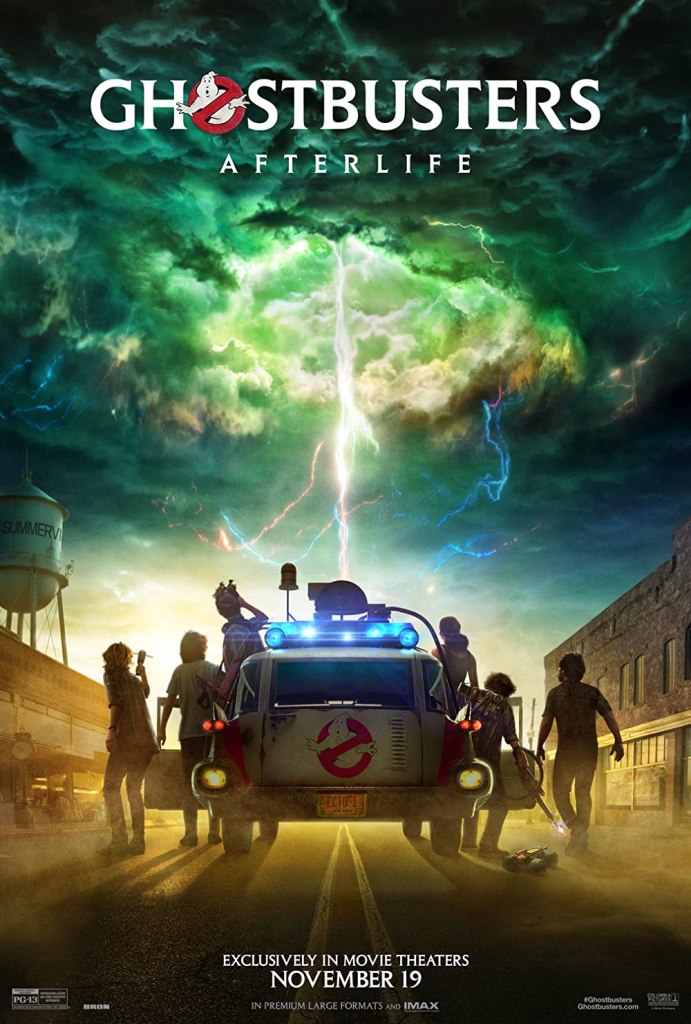
Ghostbusters: Afterlife is the unicorn, that reboot that will have the old fans applaud and bring the next generation with them.

I won’t talk much about the plot, except to say that it’s set in the modern day, the events of the first two movies happened but are considered by many to be a hoax or an urban legend, and that it’s about some kids uncovering a legacy they were entirely unaware of. 

That said, the plot isn’t the thing that’s got me so in love with this movie. Oh, I enjoyed it immensely, don’t get me wrong, and I think it hits almost every beat without fail, crafting a story that is respectful to the movies of the 1980s without ever running the risk of locking out somebody who doesn’t know anything about the Ghostbusters except that their dad really likes to wear the costume on Halloween. The script is funny and creepy and full of energy, and it just plain works. But that is by no means the most important thing about this movie. The tone, the feel of the thing matters much, much more.

I’ve heard people calling it Ghostbusters by way of Stranger Things, which is fair, in that both this movie and Stranger Things draw from the 80s, Spielbergian, Amblin-esque concept of a world where children are brave, heroic figures instead of props to be held hostage or obstacles getting in their parents’ way. This is the type of E.T., Goonies portrait of childhood where kids are willing to place themselves on the line and face dangers for adventure, for their loved ones, and for the greater good. McKenna Grace absolutely steals this movie as Phoebe, a 12-year-old socially awkward girl whose predilection towards science and logic has left her without much in the way of human contact beyond her older brother, Trevor and her mother. This is her movie, a movie about her finding herself, finding her history, finding her team, and doing so in an utterly triumphant way. 

The characters are not a simple “Generation Xerox” from the original films either. It’s true that Phoebe has much of Egon’s intellect and adorkable nature, and that Podcast carries over a lot of Ray’s wide-eyed wonder and excitement, but that’s pretty much where the similarities end. These two, along with the other newbies, are allowed to grow and develop into their own people instead of just being “The New Peter” or “The New Winston.” You learn about each of them, you feel for each of them, and chances are at some point in your life you’ve been at least one of them. (I was Trevor in high school. And college. And most of my 20s, if we’re being entirely honest here.) 

Fans of the original Ghostbusters know that no future incarnation of the franchise will ever be like the first two films again. It can’t be, not since Harold Ramis passed away in 2014. So instead, Jason Reitman took his father’s most famous work and used it as a foundation for a new Ghostbusters, a new world that I am so happy and eager to explore. But at the same time, this is a movie I want to watch with my 11-year-old niece, who has never seen the first two movies but wants to be a scientist, so she can see a girl just one year older than her utterly kicking ass. And with her seven-year-old brother, who just loves monsters and the Ghostbusters. 

Too many reboots think about one of two audiences, the old or the new, and try to just leave a back door open for the other. Afterlife is wide open, inviting in everyone, having something for everyone, and reminding us just how good bustin’ can make us feel. 

Review also shared on my Letterboxd page.

Blake M. Petit is a writer, teacher, and dad from Ama, Louisiana. His current writing project is the superhero adventure series Other People’s Heroes: Little Stars, a new episode of which is available every Wednesday on Amazon’s Kindle Vella platform. He has been that dad wearing a Ghostbusters costume on Halloween, along with his son Edward, whose own Ghostbusters jumpsuit just said “Rookie.” His wife wore a Slimer t-shirt, and it was adorable.

Halloween Kills: A Review

I’ve seen a lot of people complaining online about Halloween Kills. In and of itself, there’s nothing unusual about that. People complaining online is part of the natural downfall of our species — hell, some may argue that’s what online is actually for. However, it’s rare that I find myself not only disagreeing with the mob mentality, but utterly incapable of figuring out exactly what they’re angry about in the first place. All of this is to say, I thought Halloween Kills was fantastic.

I enjoyed the 2018 Halloween movie (which I STILL by God wish they had given a subtitle, because did we really need THREE movies in this franchise simply called Halloween?), but in some ways, I think I enjoyed Halloween Kills even more. I’m going to talk spoilers here, because I can’t really think of a way to explain what I liked so much without them, so if you want to remain spoiler free, go away now, secure in the knowledge that I just really, really liked the darn film.

The movie picks up mere moments after the end of the previous movie — Laurie Strode, her daughter Karen, and granddaughter Allyson are in the back of a truck fleeing from the burning remains of Laurie’s home where they trapped Michael Myers and left him to die. (Quick tangent: all three of the Strode women were utter baddasses in the first movie, they continue to be so in this one, and how great is it that Judy Greer is finally getting to play a character that’s not just the hero’s ex-wife?) Before we pick it up, though, we bounce back to 1978, the night of the original Halloween movie, for one of several scenes that flesh out what happened both on that night and during the previous film. In particular, these scenes recontextualize Frank Hawkins’s storyline, amplifying the tragedy that he’s facing in his own quest to see Michael destroyed.

“Amplifying the tragedy,” by the way, is a good way to summarize this movie as a whole. Frank accidentally killed his own partner while trying to stop Michael back in 1978. And if that wasn’t enough, we later learn that he carries even more guilt for the current slaughter because he stopped Dr. Loomis from killing Michael that night. In the present day, Michael survives the inferno when the gas is cut off and the fire extinguished by firemen who are doing what firemen are supposed to do, and then get butchered for it. Across town, we meet a new-ish group of characters having their annual Halloween support group at the bar: survivors of Michael’s original 1978 massacre (some of which are even played by the original actors). 

This is the first thing that set this movie apart for me. So many slasher movies — going back to when Halloween first popularized the genre — are about celebrating the killer. Fans aren’t necessarily going for the story or the characters or for anything except to see how many people Freddy and Jason and Michael can kill and if they can do it in a more creative way than they did last time. And I get it, I enjoy those movies too, but in a very dark way it strips of us of our ability to think about what the consequences of a night like that would be for real people.

Halloween Kills is very much about those consequences. In a rare move for a slasher movie, this film spends a lot of its run time dealing with the survivors of Michael’s rampage and the families of his victims, to the point where original survivor Tommy Doyle manages to whip dozens of them into an angry mob that puts the ones that used to chase Frankenstein’s monster to shame. It forces us to think about the fact that every time a slasher movie shows us some teenager getting impaled on a pike, in-universe this would be somebody’s son or daughter or mother or father. What Michael Myers does shouldn’t be applauded. He’s leaving behind a trail of orphans, widows, and friends who will never heal. A few moments in the film focus on the mother of Oscar, one of the teenagers killed in the last movie (a few hours ago in movie-time) for scenes that add absolutely nothing to the story, but drive home the gut-wrenching nail that this mother has just lost her son to a senseless act of violence. In one scene, Karen and Allyson argue because Allyson wants to join the aforementioned mob, whereas Karen (whose husband died just hours ago and whose mother is in a hospital bed) just wants her daughter to stay the hell where she is and be SAFE, dammit… and in that moment, both of these women are 100 percent right to feel the way that they do. 

Perhaps ironically, the other way the filmmakers this time demonstrate the real horror of a Michael Myers is by spending more time with the victims before they get ripped apart in some of the most inventive kills yet. We get to see more of their lives and who they are, and so when they die (in increasingly brutal ways) it’s far more disturbing than those of us who cheer when Victor Crowley takes a belt sander to somebody’s face are used to. 

As much as I love the tone, story, and characterization, there are a couple things about the film I have to take issue with. One is the dialogue. I don’t mind a little cheese, but there are a lot of one-liners and some heavy speechifyin’ from Anthony Michael Hall’s character that add enough ham to make a whole charcuterie tray. 

Then there’s the ending, which frankly, is baffling. In the last moments of the film, we are presented with the theory that killing literally makes Michael Myers stronger and more unstoppable, and you realize that the kills in this movie and the previous one have gotten increasingly brutal even as he seems to have grown increasingly powerful. In this moment, Michael has been beaten, shot, and stabbed to a degree that it seems for certain even HE must be dead. And then he just… stands up. And resumes the rampage, killing even several survivors we have come to love. It seems very clear that the filmmakers are taking a supernatural take on Michael Myers, something that the previous film pointedly avoided.

Whenever this has happened in previous iterations of the franchise, this has been one of the weak spots of the character — he’s much more interesting when he’s a human driven by a soul of pure evil than a demon or driven by a curse. So the decision to go in this direction is, frankly, troubling. But I remind myself that this is the end of act II, not the end of the story. The third and final film in this trilogy is coming out next year, and at this point I’ve enjoyed the first two parts of the story enough that I’m willing to go along for the ride and see if they stick the landing. 

Blake M. Petit is a writer, teacher, and dad from Ama, Louisiana. His current writing project is the superhero adventure series Other People’s Heroes: Little Stars, a new episode of which is available every Wednesday on Amazon’s Kindle Vella platform. His current child is Edward, who at the moment is watching YouTube videos of cars running over what the guy who makes the videos CLAIMS is rotten fruit, but Blake is skeptical.

What is art?

Earlier today I read something that argued the purpose of art is to subvert and shine a light on how the individual has been failed by society. It’s an interesting argument and one that got me thinking… certainly, that’s a function of art, and it’s a message that art can convey much better than most other means of communication… but to say that’s the sole purpose, or even the primary purpose… that doesn’t ring true to me.

So I asked myself, “What is art?” I tend to lean towards the definition from Scott McCloud’s Understanding Comics, which (to paraphrase) is that art is anything a human does that does not further one of the two basic instincts of survival or reproduction. In the book, he illustrates this by a caveman sticking his tongue out at a wild animal he narrowly escaped. Fleeing from the animal was survival, but taunting it afterwards… that was art.

It’s a simplistic definition, to be sure, but it’s broad enough to encompass virtually any kind of art you can name, which is what I like about it. Having said that, this works to define art, but doesn’t actually explore the purpose of art, which is what I was thinking about. Why do I — on those rare occasions I have time anymore — make art? Why do I write or sing or act or draw (poorly)? 

The common thread, I decided, is that art is something created because a person has a need to take something inside themselves and shape it, mold it into something different. It’s the creation of an inherently metaphorical representation of a piece of the artist’s soul. (Obviously, some works of art are less metaphorical than others, but the act of creation invariably creates some layer of metaphor.) 

Some people would argue, of course, that — well sure, but there’s art, and then there’s ART. HIGH art, not LOW art. I inherently reject this notion. The idea that the value a work of art has is dependent on how “elevated” the artist’s message would be is pretentious and absurd. Hell, in his time Shakespeare was a popular writer just trying to pay the bills. Had these people been alive at the time, no doubt they would have dismissed King Lear as just another money grab by a hack writer.

To me, the value of a piece of art is determined by how successfully it conveys the emotions and ideas that the artist intended. That’s true whether the art is subversive or celebratory, whether it’s dark and moody or light and joyful. If you have made people feel the way you want them to feel, your art is successful. 

Hamlet is, in my opinion, a successful work of art. So is the preschooler cartoon Bluey. So is Mark Waid and Alex Ross’s Kingdom Come, and the Mike Schur’s show The Good Place, and Weird Al Yankovic’s “Frank’s 2000-Inch TV” and Orson Scott Card’s Ender’s Game and Penelope Spheeris’s Wayne’s World and J. Michael Straczynski’s Babylon 5. And Huckleberry Finn and Newsradio and Casablanca and The Life and Times of Scrooge McDuck and “Rainbow Connection,” and Dave Barry’s Complete Guide to Guys. Not because all of these are going to change the world, but because each of them evokes in me a powerful emotional response, and laughter is just as legitimate a response as tears — although when you can create them both at the same time (lookin’ at you, Mike Schur), then you really have gone to the next level.

Art is subjective, and art intended for public consumption is dependent on the audience to determine its value. So while I enjoy consuming art and analyzing art and discussing art, I’m not big on somebody telling me what is and isn’t art. Never have been. 

Santa’s Odyssey: New Year’s Eve

On Christmas morning, as Santa Claus and two of his helpers returned to the North Pole, they came under attack by a group of holiday Icons angry that Claus was monopolizing the holiday glory. This year, stranded in the human world with no way home, Santa will be forced to take on the tasks for every other holiday — the Icons are on strike.

Previous Installments:

Epilogue: New Year’s Eve

“Are you certain about this?”

“Yes. It’s not a bad place. I liked a lot of it there. I want to see more.”

“And you’re sure it’s not just about…”

“Would it matter if it was?”

“No. No, I suppose not. Well… we’ll miss you.”

“I’ll miss you too. But it’s not like we’ll never see each other again.”

“It’s not?”

“Say hello when you drop by.”

“When on Earth would I have cause to drop by?”

“Seriously? Once a year. On Christmas Eve.”

December 31st, 1150 p.m.

The party was no different than last year. Back at the same bar, Gary stood in a corner, holding a drink that went down his throat slowly. All around him his friends were dancing, laughing, getting ready for the big kiss at midnight. It was cold outside, but he felt a chill even inside.

He sat down on a bar stool next to a blonde woman with long hair flowing down over her ears. She was short, but he didn’t realize just how short until she turned towards him and he saw her legs dangling in midair. “Everything okay?” she asked him.

“Hmm? Yeah. I’m fine. It’s just…”

“Not much of a party guy?”

“I guess not. It almost feels like an obligation, coming to this thing every year.”

She looked around at the couples canoodling in the corner. “It’s probably better if you’re with somebody. Are you?”

“With anybody?” he shook his head. “No. The only person I’d really want to be with is my son, but he’s with his mom tonight. That’s okay, though, I got him for Christmas. That was the deal.”

“You got the better end of that one.”

“I know.”

“Nobody else?”

“You know, I had a couple of roommates until a month or so ago. Good guys. I…” He trailed off, realizing if he went any further she might start asking for details. The thing that bothered him the most about his roommates being gone was not that he couldn’t remember much about them. It was that when he stopped thinking about the fact that he couldn’t remember them, he didn’t even remember that he couldn’t remember them. It was an absurd thought that struck him two or three times a day, but only for a few minutes before he was distracted and they left his thoughts all over again.

“What about you?” he asked.

“I just left a job I’ve been at for a long time. Good people there, almost family, but I did a little traveling this year and thought I would like to go out and see what else there is in the world.”

“What are you doing now?”

“Nothing at the moment, but I have a few ideas. Next year is going to be big for me.”

“Here’s to that,” he said, lifting his glass. She smiled as she clinked hers to his. It was a lovely smile.

People started to rush around, crowding in front of one TV screen or another. “It’s almost time!” someone shouted. “It’s time for the countdown!”

“Midnight already?” Gary said.

“Oooh, this will be great,” she said, raising her glass. “What do we do at midnight?”

“What, you’ve never been to a New Year’s party before?”

“Oh, sure, but it’s different where I’m from. What do you do?”

“What do I do? I just finish my drink and go home.”

“Well that doesn’t sound like much fun. What does everybody else do?”

Gary didn’t have time to answer her before the countdown started. People cheered and rushed together and clutched each other.

“Ten… nine… eight…”

“Well… they do…”

“Five… four… three…”

“Come on, Gary, what do they do?”

“One… HAPPY NEW YEAR!”

Everyone began to shout and cheer, blowing their noisemakers and drinking champagne. And of course, the kissing. People held onto the ones they loved, or the ones they liked, or the ones they barely knew but they were just drunk enough to share this moment with, and they kissed. Gary didn’t remember the last time he’d had a New Year’s–

The blond woman grabbed his neck and pulled him in, giving him a gentle kiss. It was soft and sweet — strange, that someone with the initiative to kiss him so boldly would do so in a way that felt like she’d never done it before. When it was over, he pulled back and looked at her, She was smiling. So was he.

“That’s what everyone was doing,” she said. “It’s seemed appropriate.”

“I guess it was,” he said. She giggled, he laughed, they drank.

“Hey, did I tell you my name was Gary? I don’t remember that.”

“You must have,” she said. “How else would I have known? I’m Eleanor, by the way.”

“Nice to meet you, Eleanor.”

“Nice to meet you. So, Gary, do you have any plans for 2019?”

He couldn’t help smile. “Not a one,” he said.

The End

Find me at the Forge

ForgedFirst thing’s first — to all the new folks we met at Free Comic Book Day who bought one of my books or picked up a bookmark: hello! It was great meeting you! Eddie says you were his favorite!

Next, those of you who follow me on Facebook or Twitter (and really, why wouldn’t you?) may have noticed more writing activity from me this week, specifically a piece on Superman and Superboy, a review of Avengers #1, and a piece on why I love Free Comic Book Day. You may also have noticed these articles are appearing at a new website, ForgedBy4.com. I though that a little introduction was in order.

Many years ago, I got my start in Geek Punditry at a website called Comixtreme. I was on staff there for years writing columns and reviews and I loved doing it. But CX was a forum-based site and, like many other such sites, it died a slow death after Facebook came along and changed the landscape of social media. I also had an increasingly chaotic personal life at the time, and I fell out of writing such things almost altogether. For some time now, though, I’ve had an itch to get back into it, which I’ve tried to scratch with personal blogs and social media.

It wasn’t the same.

A few weeks ago I was contacted by one of the old CX crew, Craig Reade, asking what I thought modern social media was lacking. Without any other information, but suspecting what he was getting at, I told him “If you’re trying to get something started again, I’m in.”

Craig has assembled a small (but growing) group of old Comixtreme mates and some newcomers for the new ForgedBy4, a site to celebrate the things we love about Pop Culture. Our coverage will be there to accentuate the positive: no 15-point bullet lists about why your favorite superhero would be a terrible person in real life or why everyone in your favorite movie will probably die after the credits roll. That doesn’t mean there will be no criticism or analysis, just that if one of the site’s contributing writers is talking about something, we’re approaching it from a place of fondness and affection. If you want negativity, there’s the entire rest of the internet.

We’ll have a social media presence, of course. We’re on Facebook and Twitter, and we even have a Subreddit. But our heart and soul is old-school. We’re bringing back the forum as our main place for conversation, and we hope you’ll all take a few minutes to sign up (for free) and join in. Sure, you can read our articles if you aren’t a member, but we think the experience will be richer if you are. And if you’re not really sure what you would get out of a forum experience… well, Craig explains it better than I could.

My personal blog isn’t going anywhere, of course. I’ll still be here with updates of Santa’s Odyssey and whatever else strikes my fancy, but my Geek Punditry will now be concentrated on the Forge.

Join us, won’t you?