I am a big believer in cultural comfort food. There are certain TV shows and movies you turn to when you’re having a hard time, certain books you read to lift your spirits, certain songs or artists you listen to when you need a shot in the arm. They’re different for everybody, of course. I’ve mentioned before my love of things like The Princess Bride, Cheers, obviously Star Trek, and the works of the brilliant Don Rosa, particularly The Life and Times of Scrooge McDuck. I have others, of course, these aren’t the only ones, but they are things that I know I can consistently count on to make me feel at least a little better when I’m feeling down.
This is a good thing.
But some people take it WAY too far.
You don’t need me to explain to you how social media, the invention that was supposed to bring everybody together into a grand, unified human race, has instead caused problems of microdivision and tribalism unheard of in centuries past. A few decades ago, if you really liked watching Night Court, that just meant you really liked watching Night Court. These days, thanks to social media, you can create a unified front with people who also like Night Court and turn it into your entire personality, to the point where you’re convincing the tallest person in your friend group to shave his head and trying to decide who’s going to get kicked out and recast over the course of the first two or three seasons.
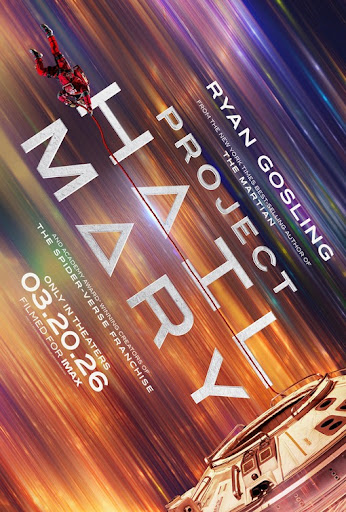
The most recent piece of media that I’ve seen taken by this frankly disturbing trend is the movie Project Hail Mary. And it wounds me to say that, because I love this movie. It is, in fact, my favorite movie of the year (so far, but looking at the slate of remaining releases I’m very skeptical that anything else will overtake it in my estimation). And as I dearly loved the film and mentioned it on Facebook multiple times, I wasn’t surprised when groups dedicated to it started being recommended to me. Looking forward to talking to other people who appreciated the remarkably sweet relationship between Grace and Rocky, the positive, optimistic outlook of the story, the beautiful special effects, or the triumphant package that was the film as a whole, I went ahead and joined such a group.
And man, I gotta tell you, that was a mistake.
These “superfans” of the movie are – there’s a clinical term incoming here, so be prepared to get out your medical dictionaries – “Goofy in their Goo-Goo Gibblets.” There are people who, and I am not exaggerating here, have absolutely no existence anymore beyond their passion for this film. There is an ongoing petition to have it re-released in movie theaters because they crave a fix like it was heroin. Just yesterday I saw a post from someone claiming that if you haven’t watched it at least five times you have no business calling yourself a fan. When the film was released digitally, someone noticed that the version on Prime Video was three or four minutes longer than the version she had purchased on another streaming service and was OUTRAGED that she was denied content, until somebody finally explained to her that the Prime Video runtime included the credits for the film’s assorted foreign language dubs at the end and the other one did not.
And these are the people on the LOW end of the Sanity Slippage Scale.
Look, there’s nothing wrong with loving a movie. If I thought there was, I wouldn’t have joined the group in the first place. But some of these people are straight-up unhinged.
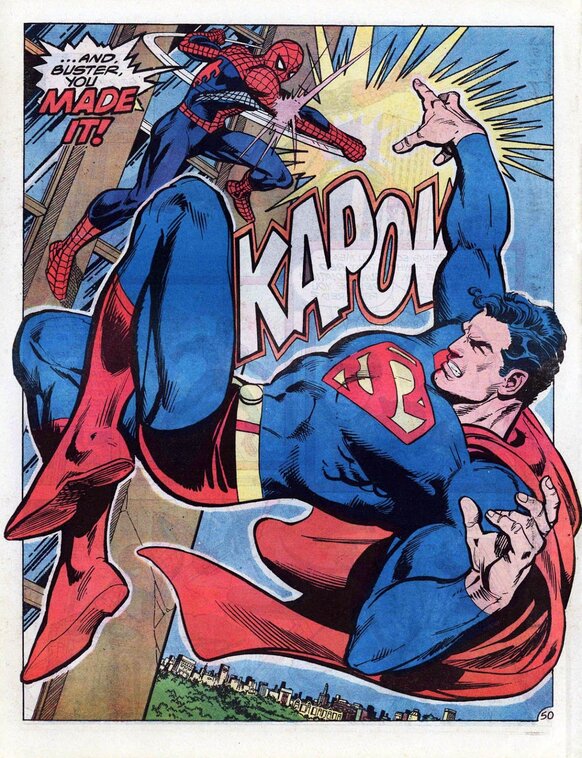
There’s an ongoing war between fans of this film and Christopher Nolan’s movie The Odyssey (a war, I suspect, that Odyssey fans remain blissfully unaware of). Why? Because the PHM fans have worked themselves into a stupor believing that next year The Odyssey is going to walk away with all of the Academy Award wins that Project Hail Mary so rightfully deserves. This is remarkably stupid for two reasons. First, it’s the Oscars, so who gives a crap? Second, it’s idiotic to think that because you love one thing, you’re not allowed to love something else as well. It’s not a marriage, you can be a fan of two movies without breaking any Commandments. I am known far and wide throughout my school as “The Superman Guy” (with good reason), but I don’t think I’m cheating on Clark Kent when I read an issue of Fantastic Four.
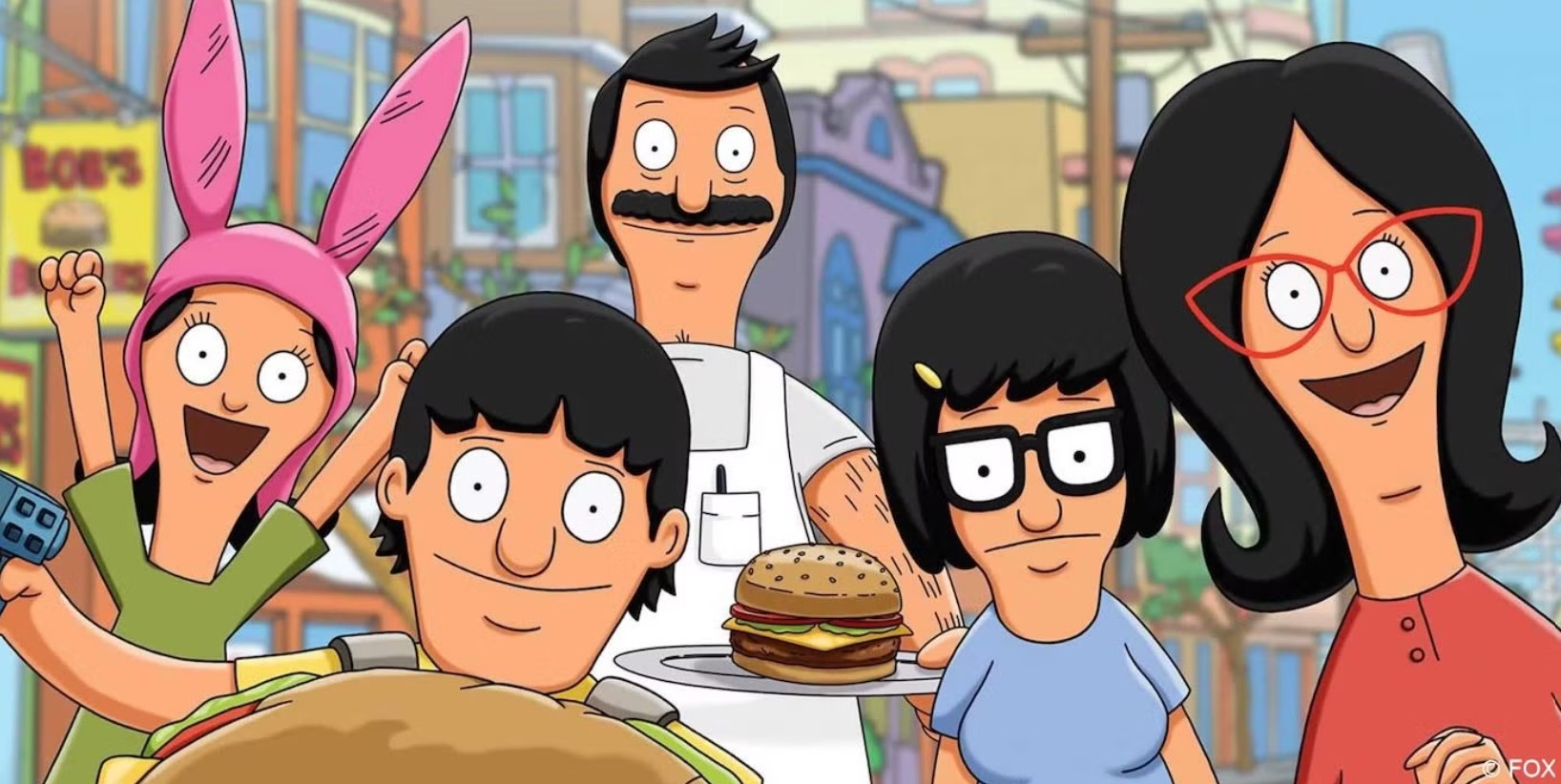
Project Hail Mary fans are, of course, not the only group that fall into this category, a group that makes you start to be a little embarrassed to admit that you’re also a fan. Bob’s Burgers fans have a lot of this going on as well. I love the show. I love the adventures of the Belcher family. But I do not fathom the people who seem to have the show running on constant repeat on Disney+ 24 hours a day, who have a panic attack every time there’s a glitch on Hulu that skips to the end of an episode, or who stock up on gasoline, wine bottles, and greasy rags every September because Football Season is going to take away their Bob on Sunday nights. I’m only half-joking about that last one, by the way: their hatred of football borders on the pathological, because they seem to have somehow convinced themselves that were it not for the NFL the Fox Network would be producing a full 52 new episodes of the series each year instead of the 13 to 25 that particular season is actually contracted for. Football has never shortened a season of Bob’s Burgers, only delayed it for a while, but trying to explain that to a superfan is a good way to get your tires slashed.
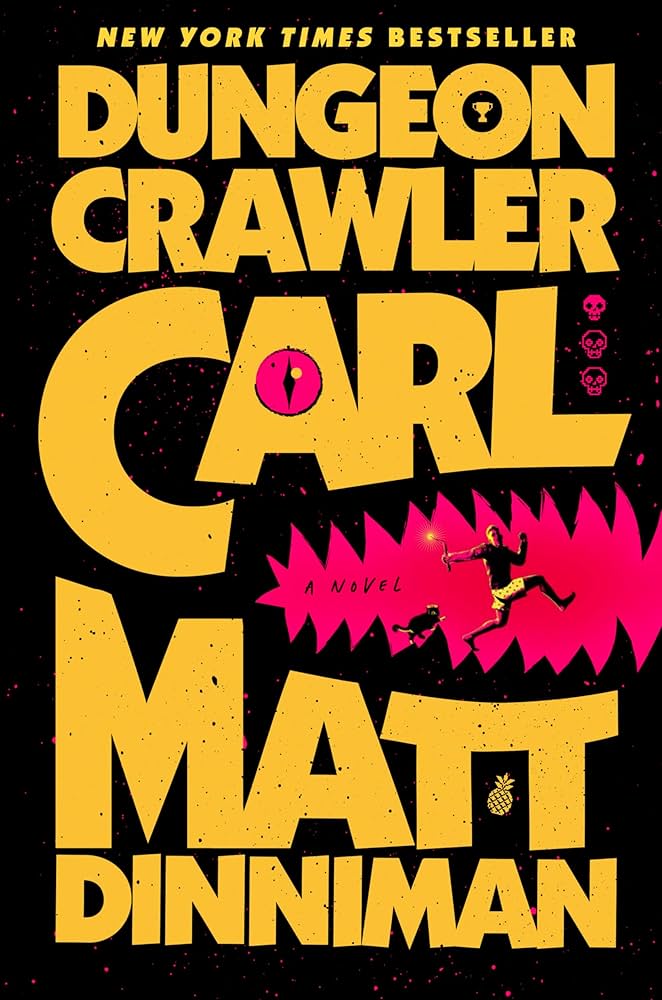
Then there’s Dungeon Crawler Carl, my most recent obsession. The adventures of Carl and Donut are already legendary, and the fan base is remarkably solid, especially considering that there’s no movie or TV show (yet – more on that in a second) and the legion of Crawlers is built entirely upon people who love BOOKS. That’s really a great thing.
But as always, there are some people who take it too far.
Once they announced that Dungeon Crawler Carl had been picked up by the Peacock streaming service for a TV series, the fan base quickly reached the brink of civil war. People arguing about who should be cast as which character drew up lines started painting protest signs. The announcement that Seth MacFarlane’s company was going to be producing the show, similarly, caused a schism between people who think he’s perfect for the job and people who think he’s the antichrist. And of course, when it was confirmed that the show is going to be live action and not animated, you could practically hear the shotguns being cocked and shells dropping into the barrel.
And as much as fans were insulted when it first aired, that old Saturday Night Live sketch where William Shatner implored Star Trek fans to “get a life” is feeling more applicable than ever.
Guys, it’s okay to like something. It’s even okay to LOVE something. But ultimately it’s just a movie, just a TV show, just a book. If you are genuinely upset, to the point of dissolving friendships and threatening violence against people, something is seriously wrong with you.
If Project Hail Mary doesn’t win best picture (and it almost certainly won’t – the Academy’s bias against genre films is legendary), is that going to make the movie worse?
If you get the same number of episodes of Bob’s Burgers, does it matter so much if they’re run from September through May with huge gaps or from January to June with fewer gaps?
If the Dungeon Crawler Carl TV series turns out to be a catastrophe, is that going to hurt the book? Someone once asked Raymond Chandler how he felt about Hollywood “ruining” his books with film adaptations, to which he replied, “Hollywood hasn’t ruined my books. They’re right there on the shelf, perfectly safe.”
Being a fan should make you happy. It should give you joy, because in this world we all need a little of that. And being part of a community that loves what you love is great, provided that it is reflected in a positive way. If you feel like you’re not allowed to love Movie X because you’ve fully devoted your life to Movie Y, it’s time to reassess your priorities. If somebody tells you they prefer one TV show over your favorite and you decide that you can never speak to that person again, the problem is yours. And if you’re so scared of a TV show or movie “destroying” a book that you love, you need to just unplug your set and go outside for a little while.
You can take your book with you. It’s okay. Maybe you’ll find somebody else who likes it too. And maybe they’ll even convince you that it’s okay to like other things as well. Balance is important, guys. Try a little sometime.
Blake M. Petit is a writer, teacher, and dad from Ama, Louisiana. His most recent writing project is the superhero adventure series Other People’s Heroes: Little Stars, volume one of which is now available on Amazon. He’s also started putting his LitReel videos on TikTok.