January brings a lot of things with it: New Year’s Resolutions, a deluge of commercials from companies offering to do your taxes, another chance for the Cowboys to choke in the playoffs, and – most importantly – new items moving into the public domain. A quick explanation for those of you who don’t know: when a creative work (like a book, painting, movie, song, etc.) moves into the “public domain,” that means that the copyright has expired and anyone is free to use that work in certain ways – remake it, create derivative works, write their own sequels, and so forth. It’s the reason that anybody can make their own version of a Shakespeare play or a Dickens novel, or why it’s okay to sing certain songs on TV without worrying about paying for the rights. The full explanation is as complicated as anything else related to the law, but currently, copyrights in the United States last for 95 years, with the work in question rolling into public domain on the first of January the next year. Over the last few years, this has taken on an almost party-like atmosphere, with people champing at the bit as they wait to see what new toys they’ll have to play with. In recent years we saw The Great Gatsby enter public domain, bringing forth a wealth of unauthorized sequels, “reimaginings,” and crappy party supplies bought by people who didn’t read or understand the book. Two years ago, the earliest Winnie-the-Pooh books joined the club, bringing with them the inevitable horror movie Winnie-the-Pooh: Blood and Honey. And a few days ago, on January 1, 2024, we got the big enchilada. “Steamboat Willie” and “Plane Crazy” entered the public domain, the first two shorts starring a little guy the world would come to know as Mickey Mouse.
I can finally post this picture without making a Disney lawyer’s Litigation Sense start to tingle.
I need you all to understand something. I am a firm adherent to protecting copyright. The person who creates a work of art is entitled to exploit that art to the fullest. Sometimes, of course, they “exploit” that right by selling the copyright to someone else or, in the case of a lot of things, they created it as a work-for-hire and a company owned the copyright from the beginning. (There are a lot of people who have been screwed by work-for-hire agreements, historically, but the principle is valid.) But I also believe that this protection should expire and that works should eventually become free to use by all, and that’s for the good of art itself. Allowing future generations to create their own twists and spins on a classic piece of art or storytelling helps to keep those works fresh and alive. But it’s also important that those works be respected in the process. So while I’m not terribly surprised that mere hours after “Steamboat Willie” became free to use we were deluged with announcements of Mickey Mouse as the star of horror movies and violent video games, I am substantially disappointed that people can’t find a better way to use this newfound freedom.
Walt Disney is rolling over in his cryogenic suspension unit right now.
There have been great works created based on things that are in the public domain. Universal Studios built their brand on it in the 1930s with their versions of Dracula and Frankenstein, neither of which were particularly faithful to the respective novels (Dracula was actually based on the stage play), but they still defined the characters for subsequent generations. Without those two films, who’s to say anybody would remember Bram Stoker or Mary Shelley today? There are a thousand and twelve versions of A Christmas Carol, and although plenty of them are trash, there are also some excellent ones. A Muppet Christmas Carol is a fantastic rendition of the story, quite faithful to the book, with one of Michael Caine’s most legendary performances. Scrooged is a great update of the story to the 1980s, with Bill Murray giving us a different but perfectly valid take on the character, making it into something new while still, clearly, owing its own existence to the Charles Dickens novel. And what about West Side Story, the 1950’s musical about street gangs that lifts cleanly from Romeo and Juliet? In fact, I would argue that West Side Story actually IMPROVES upon Romeo and Juliet. In West Side Story, the two young lovers are destined for a tragic ending because of the arbitrary labels of race and class that divide them, making a statement about those things that was not only poignant to the era and place where the musical is set, but is equally applicable to all times and all places. In the original Romeo and Juliet, though, the two young lovers are destined for a tragic ending because everybody in that play is dumber than a sack of hammers.
(Note to any ninth grade students who are scheduled to study Romeo and Juliet in this upcoming spring semester: I am TOTALLY kidding about this. Romeo and Juliet is the bomb. The bomb dot com. Listen to your teacher and stay in school.)
“The bad news is you’re still gonna die. The good news is that, thanks to public domain, you don’t have to die like a moron this time.”
Anyway, the point I’m getting at is that the folks behind Mickey’s Mouse Trap and other, similar works are taking the easy way out. They also display a pretty specious understanding of how copyright actually works, because what’s in public domain are specifically the versions of Mickey and Minnie that originally appeared in “Steamboat Willy” and “Plane Crazy,” nothing else. They also don’t seem entirely aware that copyright and trademark aren’t quite the same thing, and the trademark behind Mickey is still nice, strong, and supported by enough lawyers employed by the Walt Disney Entertainment Global Megaplex and Shadow Government to invade Portugal. They may be able to get away with showing a guy in a black-and-white Mickey Mouse costume holding a knife, but calling the movie Mickey’s Mouse Trap? I am sitting nearby with a bucket of popcorn waiting for the lawsuits to start.
“M…I…C…” “See you in court!”
But even if that weren’t the case, that doesn’t change the fact that a Mickey Mouse slasher movie is the cheap and easy way out. The freedom we get when something joins public domain is important, but far too many people waste that freedom with lazy works churned out for shock value without any real reason to create something other than to say, “Heh heh, that’s messed up.” And while I know some would disagree with me here, that’s not a good enough reason. Blood and Honey thought it would be funny to take a beloved icon of childhood and make it a bloodthirsty killer. I didn’t see the movie because, frankly, the idea itself is distasteful to me (and you’re talking to someone who’s excited about the Toxic Avenger remake, for heaven’s sake). But at least they did it first. The filmmakers behind Mickey’s Mouse Trap don’t even have THAT in their favor. They’re pulling the same joke somebody else did. It’s lazy, and it’s boring. Telling a bad joke once is unfunny. Stealing a bad joke from somebody else is the sign of a hack.
I usually have a pretty firm rule not to try to analyze a movie I haven’t seen, so I’m going to base my critique purely on the trailer, which not only looks lazy and boring, but straight-up steals one of the most famous jokes from the first Scream movie. In and of itself, the fact that they chose to showcase this joke in the trailer quashes any hopes I may have had for this movie’s transcendence, I’m sure the filmmakers, if confronted with this, would claim it’s an “homage,” but if this were an essay turned in by one of my 12th-grade students, this is where I would stop reading and simply give them an “F” for plagiarism. (Unless, of course, they gave proper citations to Kevin Williamson and Wes Craven.)
Do you have the right, legally speaking, to make a movie whose only real purpose seems to be to show cartoon characters committing brutal acts of violence? Sure. But as George Lucas tried to demonstrate to us when he had Greedo shoot first, just because you have the right to do something doesn’t always make it a good idea. The best argument for letting works into the public domain is so that new, innovative works can be built upon those things that have helped build our culture. Things like Mickey’s Mouse Trap fails on both of these counts.
“Wait, people thought we were serious about this?”
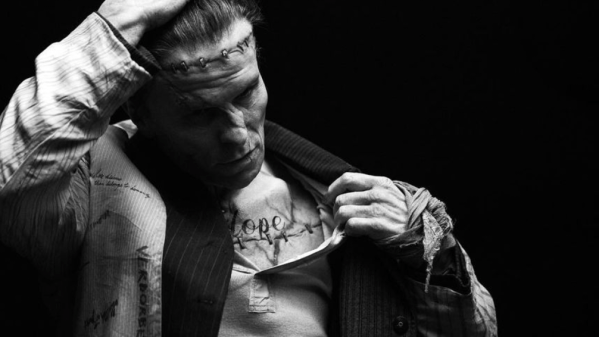
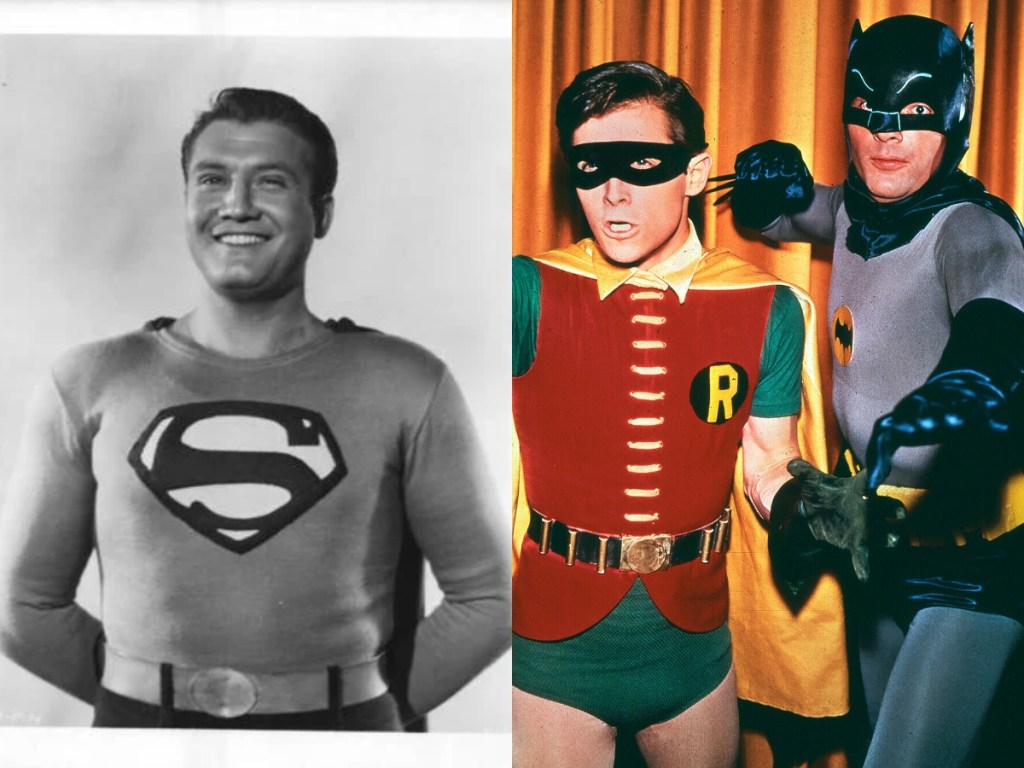
The 1920s and 30s were a pretty rich time, culturally speaking, and there are a lot of characters and works that will soon be free to use. Next year the first Marx Bros movie, The Cocoanuts, will be in the public domain, along with Ernest Hemingway’s novel A Farewell to Arms. In 2027, the aforementioned Universal Frankenstein and Dracula movies will no longer be copyrighted. And looking ahead a decade, the first appearances of Superman will be public domain in 2034, followed the next year by Batman and, the year after, Wonder Woman. And I’m sure there’s some hack filmmaker already planning to do his Superman slasher that year (hint: there already is one, it’s called Brightburn, and it was pretty good), followed by the other two, and then bringing them together as an evil Justice Society once All-Star Comics #3 joins the PDA (Public Domain Association).
“Been there, done that, murdered innocents with my heat vision.”
I’m putting you on notice now, guys: if you’re planning to exploit these works when the time comes, that’s fine. That’s your prerogative. But if your idea of doing so is nothing more than “Ha ha, what if Superman murdered people?” keep it to yourself. We all deserve better.
In the first week of January, 2023, I was in a funk. You see, I realized that I’m happier – in general – when I’m spending time talking about those things I enjoy, an itch I used to be able to scratch through various online outlets. But the rise of Facebook had strangled the forum-based websites I used to write for, the demands of parenting had forced a retirement of my podcast, and none of the alternatives I had tried since then seemed to stick. Then, like a miracle, a voice from above spoke to me:
Hey, dumbass, you have a blog.
So I challenged myself to spend 2023 writing a new piece once a week about something in the world of pop culture that I loved: comic books, movies, television and more. And I’m proud to say that as of this week, Geek Punditry #52, I will have successfully met that goal. And I enjoy doing it, and I have every intention of continuing it in 2024. But the question, then, was how to tie off my first year of blogging about those things I enjoy? The answer was obvious. I’d end the year by talking about my favorites from that year. So this week, my friends, get ready for the inaugural edition of the PUNDIE AWARDS!
Yeeeeeas, that’s right, the Pundie Awards, my hopefully-annual review of those things in pop culture that brought me the most joy over the past 12 months. The categories are entirely decided by what will allow me to talk about what I want to talk about. The winners are determined by a democratically-administered voting process including an electoral body consisting of myself. This ain’t fair or unbiased – this is just me talking about the things that came out in 2023 that I loved the most.
Ready? Let’s do movies first!
Blake’s Favorite Superhero Movie: Spider-Man: Across the Spider-Verse
As much as I loved Into the Spider-Verse, I couldn’t believe how much better the sequel turned out to be. An incredible team of writers, animators, and performers managed to elevate the story of Miles Morales by opening up the multiverse concept from the first film to incorporate not just a handful of Spider-people, but hundreds of them from remarkably disparate worlds. Not only that, but the different worlds often had wildly different animation styles from one another, all of which somehow managed to mesh perfectly.
None of that would have mattered, however, if the movie didn’t have a worthwhile story to go with it. Miles Morales has been somewhat lonely since his last adventure with the Spiders of other worlds, and when he encounters them again it seems as though his dreams are being answered, but the discoveries he makes in this film call into question his entire role in the Spider-Verse. There’s serious character drama mixed up with the superhero action in this movie, and it’s all as compelling as anything I saw on the screen this year. The tragedy is that the writer and actor strikes delayed production on the third film in the trilogy, Beyond the Spider-Verse, and we’re all left dangling from the film’s cliffhanger with no idea how long it’ll be before it is resolved.
Blake’s Favorite Horror Movie: No One Will Save You
I’ve gotta preface this by saying there are several horror movies that I wanted to see this year that I haven’t gotten around to yet, including Evil Dead Rise, The Boogeyman, Saw X, and several others. Out of those I have seen, however, No One Will Save You takes the top spot for the innovative way writer/director Brian Duffield told his story. The movie (a Hulu original, if you haven’t seen it) stars Kaitlyn Dever in a home invasion film where the invaders turn out to be from another world. What makes the film stand out though, is that it is told with almost no dialogue. The film relies on the visuals and the performances of the actors – Dever in particular – to tell the story, including unraveling the secret of why she is separated from the town in which she lives. The reveals in this movie are handled really well, and the ending is one of those conclusions that seriously screws with your brain. If that’s the kind of movie you’re looking for, look no further.
Blake’s Favorite Comedy: Renfield
Some may argue that this should have been included in the “horror” category, but my response to this would be that it’s honestly NOT that scary, it’s VERY funny, and these are MY awards, you jackass, and if you don’t like it, go write your own blog.
Anyway, Renfield. Future Lex Luthor Nicholas Hoult plays the titular character, long-suffering assistant to the king of darkness, Dracula himself (played by Nicolas Cage in a performance that chews so much scenery they must have had to reinforce the walls in the set). The concept of making a comedy about Dracula’s human minion set in modern-day New Orleans is funny in and of itself, but what elevates it is the way it handles the material. The script – written by Ryan Ridley and Walking Dead creator Robert Kirkman – takes the story of Dracula and Renfield and uses it as a metaphor for people trapped in an abusive relationship. Not to say that abusive relationships are funny, of course, but it’s one of those stories that uses humor to shed light on a serious situation by making it seem absurd. Looking at the dynamic between Renfield and Dracula is actually helpful in exploring how someone may need to deal with their abusers, and perhaps help the audience find their way to sympathize with victims of such a situation.
I feel like I’m not making it clear how funny this movie is. Trust me. It’s really funny. It just has a serious point to make in-between the laughs and the vampire shenanigans.
Blake’s Favorite Drama: The Holdovers
Paul Giamatti plays a teacher at a prestigious boys school in 1970. Stuck on the wrong side of the headmaster, Giamatti is forced to spend Christmas with a group of “holdovers” – students who, for one reason or another, are unable to return home during Christmas break. The movie turns into a pretty deep character study between three leads. Giamatti plays a bitter and heavily-disliked teacher, Dominic Sessa is one of the students that is justifiably outraged at being left behind so his mother and her new husband can take an unexpected honeymoon, and Da’Vine Joy Randolph is the school’s head cook, a grieving mother who herself is spending Christmas alone.
Each of these three, at the beginning of the film, seems to be a fairly stock character: the nasty teacher, the troubled student, the above-the-nonsense side character. But the forced proximity between the three of them slowly reveals depths to each, and by the time the movie ends we’re left feeling like we have watched three real, fully-developed people. Each of them is flawed, each of them has problems, but we understand them in a way that is undeniable and makes us love each of them just a little bit. Each of the three actors I mentioned here give a master’s performance in this movie, and it’s absolutely something worth watching.
The Most Delightful Surprise of 2023: Dungeons and Dragons: Honor Among Thieves.
This is the fourth attempt at a live-action Dungeons and Dragons film, and the problem with the previous three efforts is that they have all – and here I’m going to use a term from the Book of Leviticus – blown chunks. There was no real reason to expect Take Four to be any different.
And yet…damned if it wasn’t a really fun movie. Chris Pine plays the same kind of charming but slightly rough edged character he usually does, although this time it’s a new character instead of James T. Kirk or Steve Trevor, and he leads a group of ne’er-do-wells including Michelle Rodriguez, Justice Smith, and Sophia Lillis in a quest to steal an ancient and powerful relic. If you’ve ever played Dungeons and Dragons (which I have, although it has been a very long time since I was in a campaign), the plot feels pretty standard. What makes the movie work, though, is the humor, the characters, and the way they react to the fantasy situations that surround them. Their behavior, frankly, feels very authentic to the way that people playing the game would really behave in those situations, and while the movie doesn’t really go meta in the way that description may imply, it still delivers on pretty much every level. I wouldn’t necessarily place this on any “best of 2023” lists, but in terms of expectation versus reality, there’s not a single movie this year that over-delivered more than this one.
Let’s shift gears a bit now and talk about some of my favorite comic books of the year. I know that not everybody reading this is necessarily into comics, but y’know, maybe pay attention anyway. You might find something worth looking into. And if not, skip down to the bottom where I talk about television, by which I mean a lot of Star Trek.
Blake’s Favorite Ongoing DC Comic: Batman/Superman: World’s Finest
Written by Mark Waid with art by Dan Mora (who I said last week is probably the best Superman artist working in comic books right now), this is the most entertaining ongoing series DC is putting out, and they’ve been on a pretty big upswing this year. Set in the early days of the characters’ friendship, this story explores not only Batman and Superman themselves, but also the characters that surround them. Over the course of this year we’ve seen Superman lose a sidekick we never knew about, a murder mystery in which the primary suspect was Bruce Wayne himself, a return to the world of Waid’s classic Kingdom Come, and a fantastically entertaining one-off story about the original Robin (Dick Grayson) going on a date with Supergirl and pretty much everything going wrong.
The book is often funny, always entertaining, and takes characters we have loved for decades and makes them fresh and fun again. And that’s just Waid’s writing. The artwork is also top-notch, with Mora handling most issues and drawing the characters in a way that feels classic and powerful. I keep harping on his Superman, but there’s a reason for that: it’s so damned good. When you see a Superman by Dan Mora, you see a guy that you would find equally believable going toe-to-toe with Darkseid and then turning around and getting a cat unstuck from a tree.
It’s already spun off another book, World’s Finest: Teen Titans, featuring the early days of Robin’s own superhero team, and also written by Waid. This is a brand that DC absolutely needs to run with, because it’s as good as it gets.
But like I said, DC has really upped their game this year, so without getting into detail, I also wanna hand out some honorable mentions. Also worth reading this year from DC are Shazam! (another Waid book), Superman, Nightwing, Green Lantern, Titans, and the recently-rebooted Wonder Woman.
Blake’s Favorite Ongoing Marvel Comic: Fantastic Four
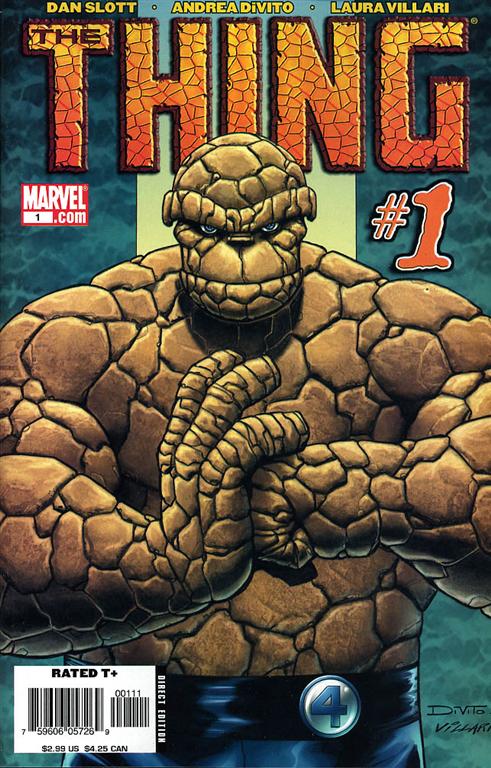
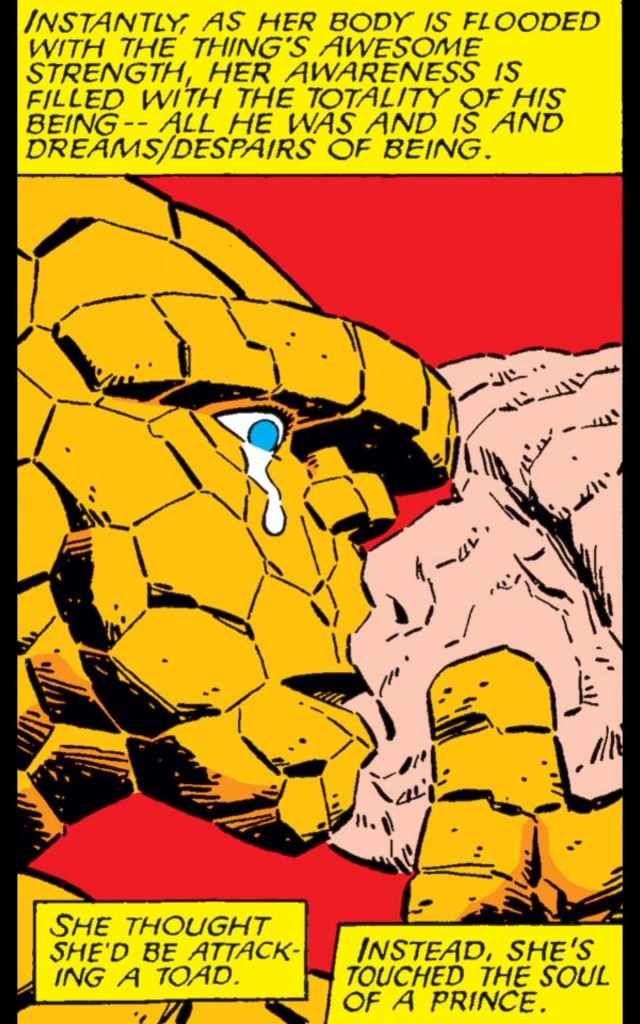
Admittedly, I am biased here. Everybody knows that the Thing is my favorite Marvel character and my second-favorite superhero of them all, right after Superman, so any book with him in it gets at least another two points on a scale of one to ten automatically. So with his bonus two points, Ryan North’s run on Fantastic Four gets, roughly, an eleven.
North’s run began in November of 2022, so most of his story came out in 2023. In the first few issues of the book, we see a Fantastic Four that has been run out of New York City and dispersed to the four winds (pun intended), and perhaps most horrifyingly of all, are without their children. The book launches with a mystery; we are not told immediately what happened to place them in this situation. But unlike certain other Marvel comics I could mention (I’m callin’ you out, Amazing Spider-Man) the mystery was revealed in issue FOUR, and was done in a way that was very satisfying and very in-character. Without getting into any spoilers, I want to say that the reason the FF left New York and the reason the kids are all missing makes perfect sense (unlike another certain book where the long-delayed revelation went against not only years of characterization but also just common freaking sense). At the same time, it changed the status quo in a way that is inherently temporary, but still paved the way for a year of very old-school sci-fi adventures. In other words, Ryan North found a way to take the FF back to the kind of crazy stories the book featured in the early days without getting rid of the modern trappings entirely or invalidating the feelings of the fans who enjoy those trappings. And now that we’re at a point where that storyline is being resolved, I’m really anxious and excited to see what North has planned next.
Blake’s Favorite Ongoing Image Comic: Radiant Black
This isn’t the first time this year I’ve mentioned how much I love Radiant Black, written by Kyle Higgins with art by Marcelo Costa. The title that launched Image’s “Massive-Verse” line (which also includes entertaining books such as Rogue Sun, No/One, and The Dead Lucky) is a superhero story about a young man, Nathan, who finds an alien artifact that gives him incredible power…until he’s hurt and put into a coma, with his best friend Marshall taking over. When Nathan wakes up, the two friends share the power until they’re forced to choose which of them gets to keep it.
Aside from just being a well-written comic with great art, Higgins and Costa do really interesting and innovative things with how the story is told. In one issue, in which Radiant Black encounters a crew making a fanfilm about him, we’re given a QR code that takes us to YouTube and shows us the actual film. Issue #25 though, the issue in which Nathan and Marshall are given their choice is the one that really elevates things when the readers are instructed to vote for which of the two of them becomes the permanent Radiant Black. The BIG shock, however, came when fans walked into comic shops to pick up issue #26 only to find two different versions: one in which Nathan took over and one in which Marshall got the job. During the currently-running “Catalyst War” storyline, there are two versions of the story, and it’s NOT just a case of penciling in a different face for each version. The two of them are different people, make different choices, and have different consequences, and it’s not until the story ends that the result of the fan vote will be revealed and one of the two timelines will be declared the “real” one.
I like good art and I love great writing, but if you REALLY want to make me go to bat for your comic book, pull some risky moves with how you tell the story and you’ll have me on your side for life.
Blake’s Favorite Comic Book Reboot: Skybound’s Energon Universe
Robert Kirkman, mentioned back in the Renfield entry, loves to surprise his audience. He didn’t announce ahead of time that issue #193 of The Walking Dead would be the last issue of the series. He didn’t tell anyone that there would be an Atom Eve special for his Invincible cartoon until it appeared on Prime Video. And earlier this year he launched a new comic, a sci-fi space opera, called Void Rivals. Nobody was really talking about this book much until the day the first issue reached the stands and, towards the end, fans were shocked to find an appearance by the Autobot Jetfire. This is how we learned that Void Rivals was not merely a new series, but the launch for a new shared universe including Void Rivals and the two classic Hasbro properties TransFormers and G.I. Joe.
There have been a lot of crossovers between TransFormers and G.I. Joe over the years, and the previous license holder IDW Publishing even tried to create a shared universe including those two and other Hasbro properties like M.A.S.K., ROM, and Micronauts. None of those efforts have ever really worked, though, because once these properties are already established, it’s too difficult to mesh them together. If the G.I. Joe team has already been around for 75 issues, why the hell have they never before referenced the giant robots that turn into oil tankers that have been fighting in downtown Las Vegas? You can’t explain it. What Kirkman and his team have done is the only real way to make a shared universe from these properties: tie them together from the inception.
So Void Rivals launched this “Energon Universe,” and it’s exploring space and some of the other alien races classic to the TransFormers franchise. The line continued with a new TransFormers book by Daniel Warren Johnson, which begins the story of how the war between the Autobots and Decepticons first spills over onto Earth. This is being followed up by two miniseries written by Joshua Williamson, Duke and Cobra Commander, which show the origins of the respective hero and villain teams of the G.I. Joe corner of the universe, and link those origins to the appearance of robot aliens on planet Earth. Void Rivals is pretty good, but TransFormers has been great, and the first issue of Duke – which came out this week – really blew me away. I’m totally on board for this universe, and I’m so happy with what Kirkman has put together.
Side note: Kirkman also gets bonus points for continuing Larry Hama’s G.I. Joe: A Real American Hero, the original series that was started by Marvel Comics back in the 80s and resurrected by IDW. It’s the classic G.I. Joe continuity, still in the hands of the man who basically created the incarnation of the franchise that we all grew up with, and I couldn’t be happier that it’s still out there.
Well that was a fun dip into the world of comic books. Let’s wrap up this look back at 2023 by discussing some of my favorite TV shows of the year, shall we?
Blake’s Favorite Star Trek Series: Lower Decks
I have made no secret of my love of Star Trek: Lower Decks. I wrote a whole column about it not too long ago, so I don’t want to spend a lot of space rehashing what I said then, but it would be disingenuous of me to write about my favorites of the year and NOT bring it up again. You can go back and look at that previous column if you want details, but it’s a show that is not only outrageously funny, but incredibly clever and truly loving towards the history behind the franchise. If you’re a fan of any incarnation of Trek and you haven’t been watching it, you’re making a mistake.
Blake’s Favorite Star Trek Series that isn’t Lower Decks: Picard, Season Three
With all due respect to Strange New Worlds – which had a phenomenal second season – the final season of Star Trek: Picard told a story we’ve been waiting to see for two decades now. The first two seasons of that show were no great shakes, it’s true, but the last season brought back the entire main crew from Star Trek: The Next Generation and gave them one last, grand adventure together, which they never really had. The finale of the TV show was never intended as their final story, since they were immediately rolling into production of the movies. The last movie in that franchise was not intended to be the last movie, and so it didn’t really give us closure either. But this story brought back everybody we loved and told a story that was exciting, heartfelt, and absolutely engaging from the first episode to the last. What’s more, it also laid the groundwork for a new generation of Trek, bringing in a new crew with a mixture of familiar and brand-new characters that fans warmly embraced. The executives at Paramount are absolute fools if they don’t capitalize on this and bring this crew back together again for more adventures.
Blake’s Favorite Comedy Series that isn’t Lower Decks: Abbott Elementary
Sometimes I need to remind myself that there are TV shows with live actors that aren’t set in outer space. Abbott Elementary is a wonderful way to do so – it’s a fantastically funny show that, at the same time, is really down-to-Earth and realistic in certain ways. The quick pitch behind this show is to call it “The Office, but in an elementary school.” It carries over the same sort of mockumentary style, and a lot of the characters seem to fit similar templates, such as the ridiculously inept boss (the principal, played by Ava Coleman), the hardass veteran (fantastically played by Barbara Howard) and the young, adorkable “will they/won’t they” couple (played by Tyler James Williams and show creator Quinta Brunson).
The thing about this show is that, while it IS very funny and the characters ARE very compelling, it also works very well as a look into the working of a real elementary school. Not ALL of it, of course – it’s a comedy and like many comedies it will often sacrifice realism for the sake of a joke. But the show deals with issues that, as a teacher, I see every day: funding difficulties, student behavior issues, intrusive parents and so forth. There are a lot of movies and TV shows set in schools, but this is the first time I’ve ever watched a show about a school that actually makes me believe that someone in the writing room might actually have been a teacher at one point.
It’s a great show with no weak links, and every time I hear about it getting an award in writing, directing, acting, or anything else, I just nod and say, “Yep. Nailed it.”
Blake’s Favorite Horror Series: Fall of the House of Usher
Writer/director Mike Flanagan has produced several films and TV shows for Netflix, and he finished up his contract this year with a miniseries kinda-sorta based on the works of Edgar Allan Poe. Kinda-sorta. Truth be told, when I watched Fall of the House of Usher, I described it to people as “Mike Flanagan bought all of the Edgar Allan Poe LEGO kits, threw away the instructions, and then built his own brand new thing out of all the pieces.”
This is not a criticism. The show is great.
The framing sequence features Bruce Greenwood as Roderick Usher, telling inspector C. Auguste Dupin (another Poe character played by Carl Lumbly) about the tragic deaths of his adult children, all of which happened in the past few weeks. What follows is a long, winding, generational tragedy, beginning in Usher’s childhood and leading up to the moments before the series actually begins. The cast is amazing, including several of Flangan’s usual troupe of actors like Carla Guigno, Henry Thomas, Kyliegh Curran, and Kate Siegel, and giving Mark Hamill perhaps the best dramatic turn of his entire career. The stories that unfold also tie into not just “Fall of the House of Usher,” but several other works of Poe as well. Episode titles, to give you an idea of what I’m talking about, include “The Masque of the Red Death,” “Murder in the Rue Morgue,” “The Tell-Tale Heart,” and “The Raven.”
If you go into this show expecting a faithful adaptation of the works of Edgar Allan Poe, you’re going to be disappointed. But if you look at it as someone using Poe as inspiration to create something entirely new, it’s a fantastic, engaging, and really disturbing series that goes right up there with the best horror on TV.
Flanagan is currently working on an adaptation of Stephen King’s epic The Dark Tower series, which previously fell flat in a movie in 2017. If there’s anyone out there who I feel has the skill and vision to make that book series – one of my favorites of all time – into a SUCCESSFUL show, it’s Mike Flanagan.
And that’s about all, guys. Out of all the new stories I read or watched in 2023, these are the ones I enjoyed the most. This isn’t comprehensive, of course: there are hundreds of movies, TV shows, and comic books that I never got around to this year. So if one of your favorites wasn’t included in this little retrospective, just comfort yourself by saying, “Well, Blake obviously didn’t watch Oppenheimer yet, so he couldn’t include it.” Because it’s either that or I DID see it and I didn’t like it as much as you, which is especially the case if your favorite movie of the year was Flamin’ Hot. Ugh.
I hope you’ve enjoyed this glimpse back at 2023, and furthermore, I hope you’ve enjoyed spending a year with me talking about the stories and storytelling that I love. That’s what Geek Punditry has really been about since day one, a chance for me to get out there and talk about these things again. And while I may not have TMZ knocking down my door begging to do commentary for them, writing this column every week has made me feel good and I’ve enjoyed doing it. So come back on the first Friday in January, and we’ll begin Geek Punditry Year Two.
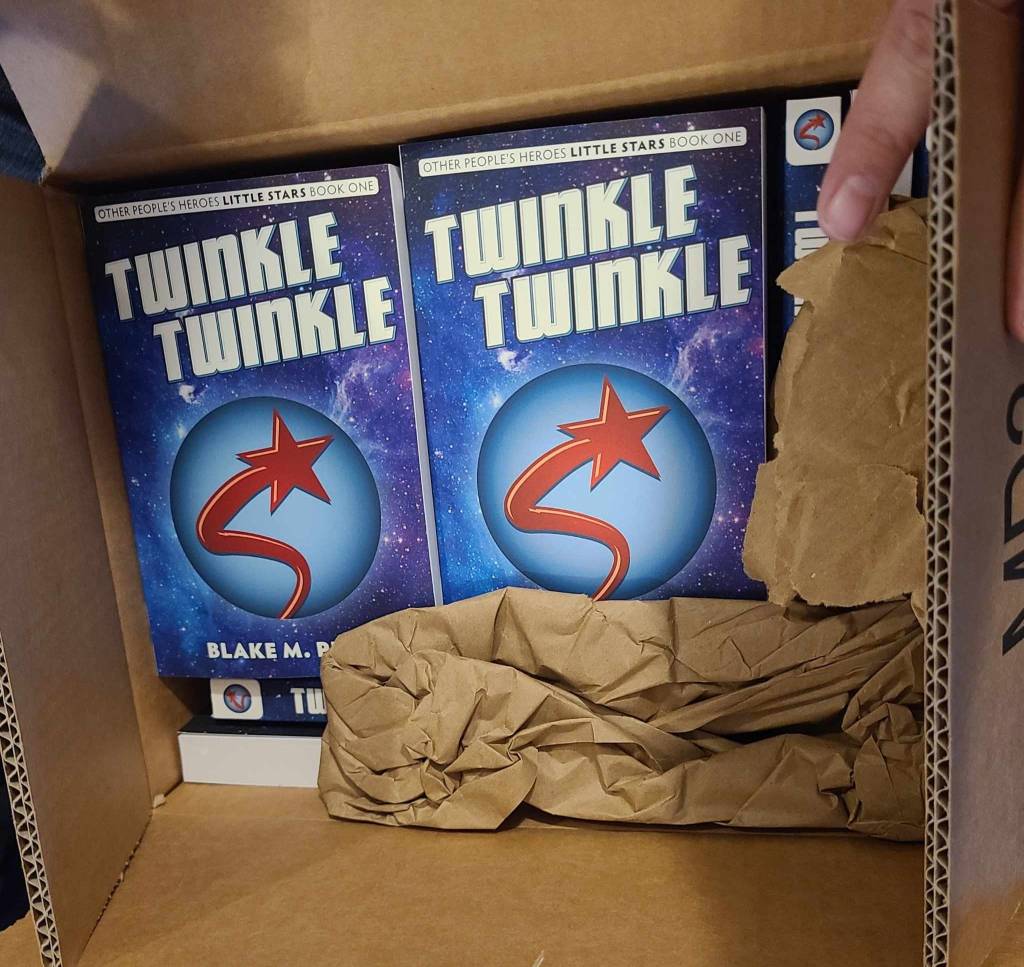
Blake M. Petit is a writer, teacher, and dad from Ama, Louisiana. His current writing project is the superhero adventure series Other People’s Heroes: Little Stars, a new episode of which is available every Wednesday on Amazon’s Kindle Vella platform. He’s trying to remember: in “Year Two,” is that the one where he finally tracks down the mugger who killed his parents in an alley, or is he thinking of something else?
Every week comic book fans go to the shop to pick up the latest exploits of their favorite heroes: Superman, the Fantastic Four, the Flash, and so forth. And this month, DC has brought back one of their top recurring characters, pairing him off with none other than the Batman in a four-issue miniseries that has proven to be the most epic tale in the battle of good versus evil since Cindy Lou Who managed to get to the Grinch. I refer, of course, to the legendary four-issue epic called Batman/Santa Claus: Silent Knight.
“Ho ho hoooold on a second, whose comic book is this, anyway?”
Written by Jeff Parker with art by Michele Bandini and covers by Dan Mora (who – I’m throwin’ this out there – may be the best Superman artist of this generation) in this story Batman and Santa have to team up to save Christmas from the demonic Krampus. This comes as a shock to Robin, Nightwing, and the other members of the Batman family, because they always thought Bruce was making one of his rare jokes when he told them that Santa Claus was one of the many teachers he went to while in training to become the world’s greatest detective. Nope. Santa is 100 percent legit. And I love that.
When an established property does a Santa Claus story, they usually go in one of two ways: either everyone is shocked to learn that Santa Claus is real, or Santa Claus is NOT real in this dismal, crapsack universe, but people learn a lesson about the True Meaning of Christmas anyway. It’s not often that you see a story – other than those aimed directly and exclusively at children – that accepts Santa as a simple fact of existence, and the breakdown of which characters are aware of Santa and those that previously were not is really hilarious. Considering the fact that this is a superhero universe, the question of Santa’s existence seems kind of silly: your best friend can juggle mountains, you work with a guy who breathes underwater, you hang out with a Olympian Demigoddess, and your Secret Santa this year wears a magic ring he got from blue aliens. Why the hell would it be hard to believe in Santa Claus?
Back in the 80s and early 90s, DC published a series of collected editions called The Greatest Stories Ever Told, a simple best-of collection featuring some of their characters. There were, to my recollection, two Batman volumes, one for Superman, one for the Joker (this was when the 1989 Batman movie was red-hot), one for the Flash and one featuring team-up stories. Alas, they completely neglected to give a volume to the greatest hero of all: St. Nicholas himself. So in honor of Silent Night, this week I’m going to entreat DC Comics to prep his well-deserved volume for next year. And not only that, I’m going to help them out by suggesting some of DC’s best Santa Claus stories for inclusion. Almost all of these are available to read on the DC Universe Infinite app, by the way, so if you’re a subscriber, you can go over there right now and check out the saga of Santa.
We’re gonna start with Action Comics #105 from way back in 1946. In “The Man Who Hated Christmas” by Jerry Siegel and John Sikela, we meet a guy who sets out to destroy the season by assassinating Santa Claus! Fortunately for children all over the world, Superman is on the case. Like Silent Night, I love this story because there’s none of the usual prevaricating over whether or not Santa really exists. Superman hears that St. Nick is in trouble and he shoots off to save the day without hesitation, helping Santa conquer his diet (it makes sense in context) and taking over when the bad guy absconds with Santa’s reindeer. It’s a charming little story with a great cover that should be read more often.
Doing this in 2023 would immediately get you cancelled.
Superman must have forgotten this early encounter, though, because when he met Santa again in 1983’s DC Comics Presents #67, he’s shocked to discover the ol’ spirit of Christmas is real. (Save your emails – we can excuse this by saying that the Action Comics example was the Earth-2 Superman, while DCP featured the Superman of Earth-1.) In “‘Twas the Fright Before Christmas” by Len Wein and Curt Swan, a young boy named Timmy Dickens (because the 80s were big on subtlety), tries to rob a street corner Santa. Superman brings Tim to his Fortress of Solitude in the arctic to get to the bottom of things. Turns out that while sneaking an early peek at his Christmas presents, Tim was zapped by one of his toys and hypnotized to commit crimes and bring the money to Superman’s old enemy, the Toyman. When leaving the Fortress, Tim’s toy zaps Superman, causing him to crash, only to be rescued by Santa’s elves. Clark and Nick team up to take down the Toyman in a battle that I’ve always loved. I first read this story when it was reprinted in Christmas With the Superheroes #1 in 1988 (also available on the app), along with several other classic Christmas stories from DC’s history worth reading…but this was the only one that featured Santa.
“The only characters available for a team-up this month are Santa Claus and Air Wave.” “AGAIN?”
Mark Waid, who made the “Santa must be real” argument beautifully in an issue of Impulse (because why WOULDN’T Barry Allen’s grandson believe in a guy in a red suit fast enough to move all over the world), gave us a tale of Santa in JLA #60 (2001, with art by Cliff Rathburn and Paul Neary). This time Plastic Man is in the spotlight, spending Christmas with his sidekick Woozy Winks and Woozy’s family. Woozy’s nephew is at that skeptical “There ain’t no Santa Claus” age, so to try to restore his Christmas spirit, Plas tells him the story of how Santa Claus joined the Justice League following a battle with the demon Neron. It’s a hilarious tale, with the boy’s stubborn skepticism causing Plastic Man to constantly elevate the stakes in the story, giving Santa heat vision, armor, and other ridiculous power ups in the course of his battle. Waid being a sentimental sort, the story ends with a nice little moment of heartwarming involving some of his teammates.
“Say it!” “No!” “Say Die Hard is NOT a Christmas movie!” “This is why you’re on the naughty list!”
JSA #55 from 2003 is one of my favorite Christmas stories of all time. Written by Geoff Johns with art by Leonard Kirk, “Be Good For Goodness’ Sake” is narrated by a department store Santa Claus getting ready for Christmas Eve, planning to spend the evening entertaining the gathered kids, while at the same time waiting for a visit for some old friends – the Justice Society of America. Johns probably has a greater love and respect for the Golden Age of comics than any writer since the days of Roy Thomas, and he drew on that masterfully with this story. It was already a fun tale about heroes reconnecting with one of their own, but the reveal of just who is wearing the Santa Claus suit still warms my heart 20 years after the book was originally published. That means I’ve read this comic at least 20 times, because it’s a once-a-year read since I first discovered it. And I’ve got no plans to stop.
Not even gonna make a joke about this one. Just read the book. It’s SO good.
2009 gave us Batman: The Brave and the Bold #12. This comic, based on the animated series of the same name, teamed up Batman with Adam Strange in “The Fight Before Christmas” by Landry Q. Walker and Eric Jones. On Christmas Eve Batman is swept up by one of Adam’s Zeta-Rays to the planet Rann where he discovers that a malevolent force is sweeping through the universe, destroying planets. It’s already taken Thanagar, and Batman was rescued from Earth just moments before its own demise. But there is still a chance to save everyone thanks to some timey-wimey shenanigans that might just set things right in a Christmas miracle. Santa, admittedly, isn’t a HUGE presence in this comic, but the end gives us a shocking new twist on the old boy that I thought was clever and fun.
“Now that the Harley Quinn cartoon has made Kite-Man more interesting, you’re officially my lamest villain, Calendar Man.”
DCU Holiday Bash #2 came out in 1997, one of many Christmas anthologies DC has done over the years, featuring a variety of seasonal stories. The best, however, was a simple two-pager by Ty Templeton called “Present Tense.” On the planet Apokalips, Darkseid is alarmed to discover an incoming invader, a mysterious and absurdly powerful craft that is avoiding his defenses and on a collision course with his citadel. Like most two-page stories this one is basically an extended buildup to a simple punchline, but it’s just fantastic. And Templeton himself shared a link this week to a fanfilm by Bad Boss Studios that recreates the story in LEGO! It’s definitely worth checking out.
You have to be REALLY aggressive to be a Doordash driver on Apokalips.
My final suggestion…actually isn’t in the DC Universe. And they no longer have the license to this franchise, so it’s not on DC Infinite. But if that Warner Bros/Paramount merger that they’re talking about winds up going through, you never know, it could come back. I’m talking about 1987 and Star Trek: The Next Generation #2. This is SUCH a bizarre comic book that I couldn’t get through this list of DC’s Santa stories without including it. “Spirit in the Sky” is written by Mike Carlin with art by Pablo Marcos, and it came out just a few months after the premiere of the TV show, which most certainly means that the comic was put into production before the creators ever got a chance to WATCH much of it…and BOY does it show. This six-issue miniseries feels consistently out of tone and character with the TV show, especially in an issue where it seems like Geordi has been killed, spurring the “emotionless” Data into a violent rage, screaming like a grieving child over the loss of his only friend. Whoo. Thank goodness when they launched the ongoing series the next year they had more of the TV show to work from.
Still better than season 4 of Discovery.
But let’s look at “Spirit in the Sky.” It’s the holiday season, and the Enterprise is hosting celebrations for the various cultures (human and otherwise) that celebrate at that time of year. As Captain Jean-Luc Picard is begrudgingly planning to make an appearance at each of the various parties, the ship encounters an alien race called the Creeg that is trailing a mysterious energy source throughout the stars. This story is truly bonkers and doesn’t feel like Star Trek at all, which may be the most Star Trek thing about it.
The prototype Cardassians were weird.
There are, of course, many other comic books featuring Santa Claus out there, and not all of them are even published by DC, but there are only three days left until Christmas, so you’ve got to pick and choose. These handsome selections should give you a solid foundation to begin your education of DC’s greatest superhero.
Blake M. Petit is a writer, teacher, and dad from Ama, Louisiana. His current writing project is the superhero adventure series Other People’s Heroes: Little Stars, a new episode of which is available every Wednesday on Amazon’s Kindle Vella platform. Dang it! He forgot all about Fables #56,where Bill Willingham answered the question as to whether Santa Claus is a Fable. Ah well, there’s always next year.
Roast your chestnuts and deck your halls, folks! It’s time once again for Playing Favorites, the Geek Punditry recurring feature in which I ask my pals on social media for categories of some kind of storytelling and I talk about my favorites in those categories. This time around I’m Playing Favorites with Christmas stories. Last week, in part one of this feature that will go down in history with the works of Charles Dickens, Frank Capra, and Quincey Magoo, I talked about some of my favorite Christmas comedies, my favorite Christmas horror movies, my favorite Christmas stories from a preexisting IP, and my favorite songs written specifically for a Christmas movie. This week we’re cracking open the suggestions and looking at a few more different categories. So cinch up your comically-oversized black leather belt! Just like Santa Claus when you leave out an assortment of cookies on Christmas Eve, it’s time to Play Favorites!
Rankin and Bass
Duane Hower asked me for my favorite Rankin and Bass Christmas special. This is a toughie, guys. Rankin and Bass is the studio that I think is most associated with Christmas, the people that gave us Frosty the Snowman, Santa Claus is Comin’ to Town, Rudolph the Red-Nosed Reindeer, and that weird Smokey the Bear movie that nobody ever remembers. They branched out to other holidays as well, with Here Comes Peter Cottontail and the Halloween epic Mad Monster Party. They even lent Rudolph to other holidays with Rudolph’s Shiny New Year and Rudolph and Frosty’s Christmas in July. They made their own version of The Hobbit, and in the 80s they gave us afterschool masterpieces such as Thundercats and Silverhawks. What I’m getting at here is…well…I really like the works of Rankin and Bass. So picking a singular favorite would be nearly impossible.
This is what Christmas looked like when we were kids.
The good news is, it’s my dang column and I don’t need to limit myself to just one choice if I don’t want to. I think we can all agree that the best-known and most-beloved of the Rankin and Bass catalog are the best-known and most-beloved for a reason: Frosty the Snowman, Santa Claus is Comin’ to Town, and Rudolph the Red-Nosed Reindeer. Each of these took a legendary song and extrapolated an entire world based on it. Rudolph’s special created whole new characters that have become a welcome addition to any Christmas village such as Yukon Cornelius, Bumble the Abominable Snowman, and Hermey the Elf (who wants to be a dentist). From Santa Claus is Comin’ to Town we have the Burgermeister Meisterburger – the most fun Yuletide villain since King Herod – and a worthy origin story for the character at the center of the Rankin and Bass universe. And while I don’t know if anyone would argue that Frosty’s arch-enemy Professor Hinkle is as iconic as those others, everybody loves that cartoon and will gladly watch it every year.
Having said all that, let me talk a little bit about some of the other Rankin and Bass specials that may not be as iconic, but that I still enjoy. A couple of weeks ago I mentioned The Life and Adventures of Santa Claus, an adaptation of the novel by L. Frank Baum that gives Santa a more fantastic origin than most, and which I am an avowed fan of due to its (tenuous but real) connection to the universe of Baum’s Oz novels, which I’ve mentioned before I really enjoy. And just as last week I marked “The Snow Miser Song/The Heat Miser Song” from The Year Without a Santa Claus as one of the best pieces of music composed for a Christmas film, I also love the special as a whole. Like many a superhero franchise, with Santa’s origin out of the way Rankin and Bass were free to just tell a charming story with the character, expand his world, and keep the magic alive.
“Ten bucks if you eat the yellow snowball, Young Santa.”
‘Twas the Night Before Christmas is another one I deeply enjoy. A VERY loose adaptation of the poem by Clement Clarke Moore, in this half-hour an entire city is in danger of being put on Santa’s naughty list because of one anonymous citizen who wrote a letter to the newspaper claiming that Santa is a fraud. You’ve got to wonder why the editor actually chose to run that letter in the first place, or at the very least why he failed to include the disclaimer that the letter only represents the opinion of its writer and not necessarily the opinions of the newspaper, the town, or the National Football League, but at that point the damage was done and it’s up to a clockmaker and his mouse buddy to fix it. If you haven’t watched this one in a while give it a spin this year – I promise when the special’s featured song begins you’ll recognize it.
Rankin and Bass also did a few religious specials in addition to all the secular ones. Nestor the Long-Eared Christmas Donkey isn’t really anything to write home about (it’s really Rudolph plus Bambi times Jesus, and Don Bluth did a much better job telling essentially the same story for Disney in Small One), but I have a fondness for their version of The Little Drummer Boy, and it’s certainly worth putting into your Christmas rotation.
Claymation
Amber Foret wanted to know my favorite Claymation Christmas films. I’m not sure if she, too, was thinking of Rankin and Bass, but I’m going to treat it as a separate category, because they’re two different things. While both are examples of stop motion animation, Rankin and Bass used puppets made of wood or metal with real fabric clothing and the like, whereas “Claymation” specifically refers to stop motion created using malleable substances like plasticine. Aardman Animation, creators of the Wallace and Gromit cartoons and Chicken Run films, use the clay technique. I know that a lot of people don’t really care about the difference, but I’m going to differentiate them for two very important reasons.
1: I’m a pedantic son of a bitch that way.
2: It gives me another category.
And there are two Claymation projects that rise to the top. The first, from 1987, is Will Vinton’s Claymation Christmas Celebration. Vinton – who actually trademarked the term “Claymation” for his own studio – became prominent in the 80s for his work in animation, particularly the California Raisins commercials. In this half-hour special a pair of dinosaurs, Rex and Herb, host a presentation of classic Christmas carols, all while the gluttonous Herb tries to discover the true meaning of the word “wassail.” It’s a great special, with several segments having a bizarre, surreal quality to them. Many, such as the “Carol of the Bells” number, are really funny. Others, like “Joy to the World,” use different techniques to do animation that looks very different than you’d expect. And their rendition of “Oh Christmas Tree” is simply lovely. The special also includes the California Raisins with their legendary rendition of “Rudolph the Red-Nosed Reindeer,” and a jazzy version of “We Three Kings” that still springs immediately to my mind whenever I hear the song.
Christmas: Bringing together carnivores and herbivores since 65,000,000 B.C.
The other Claymation special I want to talk about is a British production from 1999: Robbie the Reindeer in Hooves of Fire. Robbie is the son of a very, very famous reindeer (some may even call him the most famous reindeer of all) who, trapped in his dad’s shadow, is trying to make a name for himself. His goal is to become Santa’s navigator, thanks to a nose that has a built-in GPS function, but the only way he’s going to pull it off is by conquering some rather malevolent rivals in the Reindeer Games. Although not an Aardman production, this special is full of the weird, dry British humor that makes me love Aardman, Monty Python, Fawlty Towers and the like. There were also two sequels to the special, Legend of the Lost Tribe and Close Encounters of the Herd Kind. The first one is the best, but all three are worth watching. Do your best to find the original British versions, though, rather than the American versions where the voices were all re-dubbed by the likes of Ben Stiller and Brittney Spears. Nothing against them, but come on – if you’ve got Jane Horrocks, Mark Gatiss, and Rhys Ifans doing the voices, why the hell would you replace them?
You know it’s brilliant because they don’t even need to specify which award it won.
A Christmas Without a Lesson
Rene Gauthreaux decided to make things hard on me by asking the biggest stumper of the bunch: my favorite Christmas movie where no one learns a lesson.
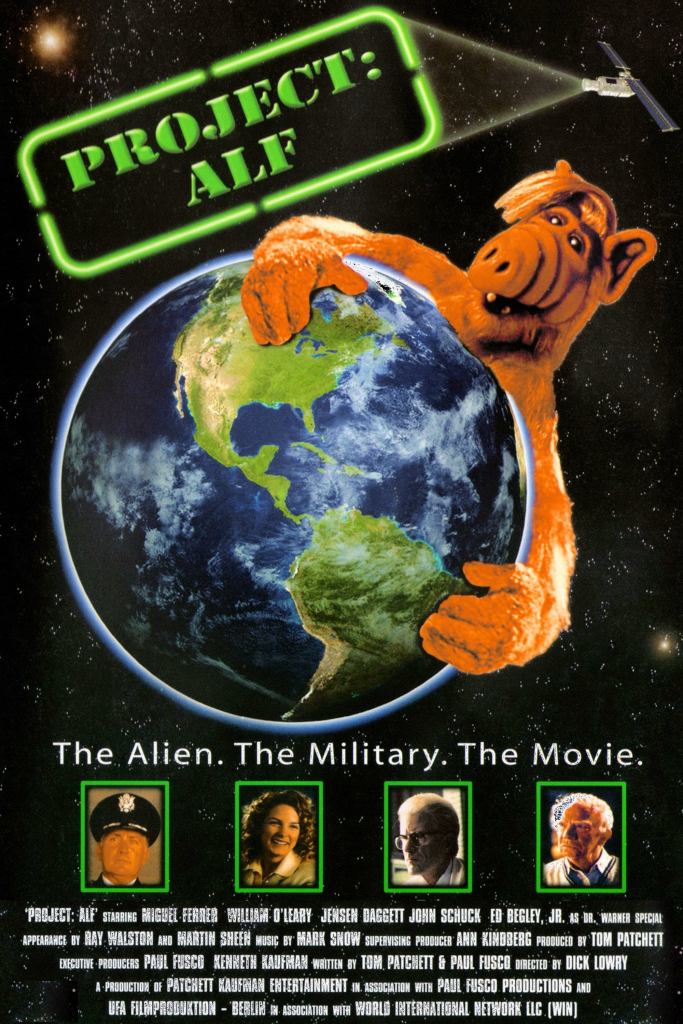
Project ALF.
Because y’see, by now he had ALREADY learned that you shouldn’t eat cats.
This one is tough, guys, because the essence of Christmas is redemption. If you think back to the religious meaning of the holiday, it’s baked right into the story. Even if you ignore that, the vast majority of truly great Christmas stories involve somebody finding a way to make peace with their past and embrace their future – A Christmas Carol, It’s a Wonderful Life, Violent Night, and so forth. So picking a Christmas movie where no lesson is learned, let alone a really GOOD such film, is a rather gargantuan task. I thought hard about this one. I wracked my brain. I even went to Letterboxd and scoured over my list of every Christmas movie I’ve ever watched. (What, you mean you don’t have one?)
Finally, I came to the conclusion that the best lesson-free Christmas movie ever made is the wonderfully bizarre Rare Exports: A Christmas Tale. This 2010 film from Finland is about a research team and a family that get embroiled in a task to capture the most dangerous game there is, a unique species that is prized by hunters for its strange properties and remarkable abilities, and which are terribly dangerous, but utterly indispensable at the holidays. I don’t want to say too much more, because if you haven’t seen it I don’t want to ruin the surprise, but the movie is really funny, totally messed-up, and absolutely not to show the kids if you’re just trying to get them to stop watching Santa Buddies for the 900th time. But if you like weird, you don’t mind little gore, and you can handle a movie with tongue planted firmly in its cheek, Rare Exports is worth checking out.
If there IS a lesson to learn here, it’s probably about that hat.
Christmas Fantasy
Kylie Wells hit me with another toughie: my favorite Christmas fantasy. You wouldn’t think this one would be too difficult, as by rights almost any Christmas story that recognizes the reality behind Santa or Rudolph would inherently count as fantasy, but Kylie specified that she was talking about the sort of “high fantasy” that inhabits the worlds of J.R.R. Tolkien or C.S. Lewis, and once you apply that filter the list gets much shorter. People have tried to tackle this very specific subgenre several times, and to be honest, most of the efforts have kind of fallen flat. The best one that comes to mind is the Rankin and Bass adaptation of L. Frank Baum’s The Life and Adventures of Santa Claus, but I’ve written about that a lot this month, so I don’t want to go back to that well again.
For some reason, the magic of Christmas and the magic of high fantasy just don’t mix very well. In fact, a lot of the efforts are laughable – the 2014 film The Christmas Dragon was actually spoofed in the most recent season of Mystery Science Theater 3000. Then a few years ago, while looking for a Christmas movie with my wife, my father, my sister, and her kids, we stumbled upon the 2018 Italian film Legend of the Christmas Witch. When I say this movie is bad…guys, I think it may be safe to call this the Troll 2 of Christmas movies. In fact, although it is not my pick to answer Kylie’s question, I’m gonna recommend you all go and watch this movie just to see for yourself how amazingly, wonderfully bad it is. Every so often Erin, Heather and I talk about seeing if it’s still streaming anywhere (I just checked – as of this writing it’s on FreeVee, Tubi TV, and the Roku Channel) and watching it again with someone else who has not yet had the pleasure. In fact, I’m just going to quote my own review of the film I wrote at the time to give you a taste of what you’re in for:
“At one point in this movie the witch’s boyfriend has to take off his dinosaur mask so he can tell her students to steal a bunch of toy bicycles to ride into the mountains while he distracts the dragonfly drones, and if that doesn’t make you want to watch it I don’t even know what to tell you.”
You have been warned.
Seriously, this is one of the worst movies I’ve ever seen. Watch it twice.
But for an actual good movie that embraces the elements of fantasy, the best example I can think of is Hogfather, the 2006 miniseries that adapts the late, great Terry Pratchett’s Discworld novel of the same name. If you’ve never read a Discworld book you’re missing out – it’s a fantasy series that brilliantly satirizes not only the tropes of fantasy, but also modern culture, with different aspects targeted by the different books. Hogfather isn’t TECHNICALLY a Christmas movie, as Christmas doesn’t exist on the Disc, but it’s about their equivalent: Hogswatch, a holiday in which the good children of the Disc are visited by the Hogfather…except this year, the Hogfather is missing, the entire fabric of belief on the Disc is in jeopardy, and the only person who can possibly save Hogswatch (and the world) is Death. No, like literally, Death. The Grim Reaper. Guy with the scythe. The big “Th-th-th-that’s all, folks!” He’s the guy who’s gotta save the world.
Him and his granddaughter.
Anyway, it’s a great book and a great miniseries, and damned if I can think of a better fantasy movie for the Christmas season.
I AM HERE TO SAVE THE HOLIDAYS AND DRINK EGG NOG. AND I AM ALL OUT OF EGG NOG.
Atypical Christmas
We’re going to wrap things up by talking about the category I’m sure you’ve all been waiting for. Jon McCarthy wanted to know my favorite “atypical” Christmas movie (Jon, by the way, is an awesome comic book writer and creator of the comics Endangered and Comic Book Trivia. His newest comic, a New Orleans-based horror one-shot called Loup Garou, was released just this past Wednesday, and you should all run out to your local comic shop and buy a copy, or demand they order one for you if they foolishly failed to have one in stock.) Liese Aucoin, similarly, asked about my favorite “Non-Christmas Christmas Stories, other than Die Hard.” (Liese, to the best of my knowledge, has not written any comic books about werewolves in New Orleans.)
Since I think Jon and Liese are basically asking the same thing, I’m going to combine my answer, especially since it gives me a chance to tackle the greatest Christmas controversy since “Who spiked the egg nog?” Namely: what exactly constitutes a Christmas movie? Die Hard, of course, is the originator of this particular meme, when it became popular among a certain part of the population to call it their “favorite Christmas movie” ironically, as it’s an action movie SET at Christmas, but doesn’t really have the usual trappings of Yuletide cheer. Since then, people have stacked up dozens of movies that fit the same criteria: a Christmas setting, but not really a Christmasy story: films in this category include (but are not limited to) Lethal Weapon, Batman Returns, Kiss Kiss Bang Bang, and Rambo.
This has become a surprisingly delicate subject, with some people who get violently angry when you suggest one of these films counts as a Christmas movie. (Ironically, in this instance they are behaving more like Martin Riggs from Lethal Weapon than Bob Crachit.) On the other hand, sometimes the people who are in favor of such movies are so obnoxiously smug about it that it can be embarrassing to admit you agree with them lest you be considered a douche by association.
So let me settle this once and for all. First of all: watch whatever you want, whenever you want, and who the hell cares if somebody else agrees with you if something is a Christmas movie or not? Gatekeeping is stupid, life is too short, so enjoy yourself.
Second: I’m going to explain what I PERSONALLY think makes for a Christmas movie, something I outlined in more detail a few years ago, but I have to stress that this is MY criteria. Go ahead and create your own. Doesn’t upset me in the slightest.
For me to count something as a Christmas movie it needs to fit any TWO of the following THREE criteria:
It must take place PRIMARILY during the Christmas season. (Movies with only one scene set at Christmas, like Toy Story or Star Trek: Generations don’t count.)
It must feature a traditional Christmas character in a prominent role. (Santa Claus, Rudolph, the Grinch, Ernest P. Worrell, Jesus…y’know, the usual.)
It must include a traditional Christmas theme such as family, love, fear (that “ghost stories” thing I mentioned last week) or, of course, redemption.
So by my criteria, of COURSE Die Hard counts as a Christmas movie, as it meets criteria #1 and #3. (It’s about the redemption of John McClain and the real hero of the film, Sgt. Al Powell.)
Each of these films meet two out of the three criteria, and are therefore equally Christmasy. It’s just science, people.
All right, all that out of the way, what am I picking as my FAVORITE atypical Christmas movies? With Die Hard removed from the equation and taken as a given? Well, there are still several others to choose from. Sure, I like Lethal Weapon and Batman Returns and Iron Man 3 (I honestly think it’s underrated in the Marvel Cinematic Universe pantheon), but I don’t often work those into my Christmas rotation. One movie I DO like watching this time of year? Well obviously it’s the one about that cheerful guy in the red suit with the power to fly all around the world. I’m talkin’ 2019’s Shazam!
The bubble gum even kinda makes it look like he has a very shiny nose.
Based on the DC Comic, we’re treated to the story of young Billy Batson (played by Asher Angel), a foster kid who has been bouncing from one home to another for years in a quest to find his birth mother, whom he was separated from as a small child. He’s recently been placed in a new home when an encounter with an ancient wizard gives him the power to transform into the world’s mightest mortal, Shazam (with his adult form played to perfection by Zachary Levi). The movie is set at Christmastime – the final battle, in fact, takes place at a Christmas festival – so it meets criteria #1. And family is one of the major themes of great Christmas stories, so this film lands criteria #3, telling a truly touching story about “found families,” and how the bonds that forge a true family are based not on blood, but on love. It’s a sweet, exciting movie that I sincerely enjoy. Hell, may be the only person out there who liked the sequel – although admittedly, not as much as the first one.
Wow, guys, I have gone on for a WHILE on this one, but hopefully I’ve given you all some movies to check out in the last ten days until Christmas. I know I’m going to be diving into at least some of these films before Santa drops by on Christmas Eve. Thanks to everyone who gave me a suggestion – once again, it was a lot of fun. And I’ll see you again next time I decide to Play Favorites!
Blake M. Petit is a writer, teacher, and dad from Ama, Louisiana. His current writing project is the superhero adventure series Other People’s Heroes: Little Stars, a new episode of which is available every Wednesday on Amazon’s Kindle Vella platform. You know what else you should watch this December? The Rocketeer. It’s not a Christmas movie, Blake just doesn’t think it gets enough love.
Ah, Christmas. My favorite time of year. The time of lights and tinsel, candy canes and egg nog, and most relevant to this blog, movies and stories. I love Christmas in general, but perhaps my favorite thing about it is the surfeit of wonderful stories set around the season, which I indulge in almost to the exclusion of everything else between Thanksgiving and the 25th of December. The thing is, most of my favorite movies and books are evergreen. I can watch Back to the Future in June, I can read Ender’s Game on St. Patrick’s Day, and nothing feels wrong about it. But a great Christmas story just doesn’t feel right unless I’m consuming it sometime after Santa rides in the Macy’s parade and some time before that ball drops in Times Square on New Year’s Eve. So in this window, I have to take in a LOT of stuff.
This week I’m Playing Favorites with Christmas. I asked my friends on social media to suggest different categories relating to Christmas movies, books, TV shows, etc., and like I did with horror movies at Halloween, this week I’m going to examine these categories and talk about some of my favorites in each one. And if you’ve got suggestions for more categories – drop ‘em in the comments! There’s still a few movie nights left before Christmas!
“They said this one is about the Donnor Party. I hope it’s good, I love reindeer.”
Christmas Comedies
Lew Beitz is going to kick us off this week by asking for some of my favorite Christmas comedies. A lot of great Christmas movies have funny parts, of course, and I think the trifecta that most people will turn to when asked this question are – in order of release – A Christmas Story (1983), National Lampoon’s Christmas Vacation (1989), and Home Alone (1990).
In A Christmas Story, Bob Clark blended together several semi-autobiographical short stories by Jean Shepherd (who narrates the story) and turned out a timeless movie that captures the essence of childhood at Christmas while still being unceasingly funny. There can be no doubting the iconic status of a movie that has turned a plastic lamp shaped like a woman’s leg in fishnet stockings into a traditional Christmas decoration.
Christmas Vacation is the third and greatest of the Vacation films, about a dad (played by Chevy Chase) who desperately tries to recreate the magic of his youth for his own family, but struggles against a more cynical age. This is not only the best Vacation film, but the best movie Chevy Chase ever made. It was SO good that afterwards a federal judge ruled he was legally prohibited from being funny for the next 20 years. The ban was lifted in 2009, and Chase joined the cast of the show Community.
Home Alone has Joe Pesci and Daniel Stern getting hit in the face with paint cans.
So those, I think, are the big three. But I don’t just want to leave you with the obvious answers, so I’m giving an honorable mention to another beloved Christmas comedy, the 1988 epic Ernest Saves Christmas. I am an unabashed fan of Jim Varney and his Ernest P. Worrell character (go ahead, try to abash me, I dare ya), and this is possibly the purest expression of what Ernest was. Sure, at this point he had already gone to camp, but in that film he was sort of a sweet-hearted, simple agent of chaos in a relatively realistic world. This is the movie where the Ernestverse really started to spiral into screwball comedy. In this film, Ernest is a cab driver that falls in with a guy who tells him he’s Santa Claus. He’s about to retire and needs to find the man who’s been chosen to take his place, an actor on a kids’ TV show, before it’s time for his Christmas Eve run. There’s some wacky stuff with a pair of elves and reindeer caught up in a shipping mishap, but that’s not the real draw of this movie. Seeing the golden, childlike heart of Ernest as he does his best to help Santa is one of the best reasons to love this character, even as he presents us with his funniest film. Choosing a favorite Ernest movie, frankly, is like trying to select a single rose petal as the most beautiful, but there you are.
And if you prefer your Christmas movies with a religious connotation, you’ve got the father, the sons, and the holy ghost right here.
Christmas Songs From Movies
Rachel Ricks has asked me for some of my favorite songs written specifically for a Christmas movie, differentiating them (I assume) from those pre-existing songs that are incorporated into holiday classics, like “Rudolph the Red-Nosed Reindeer,” “Frosty the Snowman,” and “Human Centipede.”
Again, I’ll mention the most iconic example first, then talk about some others. The most famous – and arguably the best – Christmas song ever written for a movie is probably “White Christmas,” written for the 1942 film Holiday Inn and then used as the title and centerpiece number for the semi-remake of the movie as White Christmas in 1954. It’s a lovely song that I’m sure many people today don’t even realize was from a movie, and those that do know its cinematic origin probably misattribute it to the later, more famous film.
It’s not my personal favorite, though. Two other songs edge it out. For pure fun, you can’t beat “The Snow Miser Song/The Heat Miser Song” from 1974’s The Year Without a Santa Claus. In this Rankin and Bass classic, as you know, Mrs. Claus has to entreat these two thermally-opposed brothers to cooperate with one another in a convoluted plot to save Christmas. They both eventually agree, but not before performing this absolute banger of a musical number about how awesome they each are compared to their brother and how much better it is when Christmas is cold or hot, depending on which one of them is singing at the time. (The Snow Miser happens to be correct, by the way.) Even though neither song is particularly Christmasy (except for the lines where the brothers proclaim themselves Mr. White Christmas or Mr. Green Christmas, respectively), it’s so catchy and so much fun to sing along to that it’s become a staple on my Christmas playlist.
If you’re Team Heat Miser, you’re just wrong.
But my absolute favorite Christmas song originally written for a movie is “Silver Bells.” This song made its debut in 1951 in the Bob Hope movie The Lemon Drop Kid, about a silver-tongued con artist (Hope, naturally) who winds up owing a massive gambling debt to a gangster and has to come up with a contrived scheme to pay it back by Christmas Eve. The movie is charming and deserves a place with the other great films of its era, but never seems to be mentioned alongside the likes of White Christmas, It’s a Wonderful Life, or Miracle on 34th Street.
“Children laughing, people passing, something something joke, about the shape of my nose…”
As far as WHY I love that song so much…odd as it may sound, I love it because it feels to me like a love letter to New York. The song mentions “city sidewalks” without ever specifying the city, but New York is where much of the film is set and it’s where Hope is wandering when he sings the song. I’ve never really been to New York. (Spent a night in a hotel there once when a flight was canceled, but all I saw was the airport, the hotel, and the shuttle in-between so I don’t count that.) Despite that, though, decades of cultural osmosis has indelibly given me a vision of New York in December as being the most Christmasy city in the world. God knows the city has its problems, but the movies have done a truly magical job of painting it as the place to be for the holidays. It’s the setting for Miracle on 34th Street, Home Alone 2, Elf, and plenty of other classics. From the Macy’s Parade on Thanksgiving to the tree lighting in Rockefeller Center to the Times Square ball drop on New Year’s Eve, there is an intangible yuletide magic associated with New York City that this song captures perfectly. Frankly, if I ever DO go to New York, I hope it’s NOT at Christmas, because I’m pretty sure that the reality would fall very short of the snowglobe fantasy I’ve built up in my mind, in which “Silver Bells” is the background music.
Christmas IPs
Adam Santino asked about my favorite Christmas movies based on a pre-existing intellectual property, such as National Lampoon’s Christmas Vacation or He-Man and She-Ra: A Christmas Special. To clarify, for the sake of anyone unfamiliar with the term, Adam is basically asking for my favorite films based on an established brand that happened to have a Christmas-themed special or installment. Christmas Vacation, as I’ve already mentioned, is the gold standard, but there are a lot of possibilities to choose from here, and I think the correct answer is obvious.
Project ALF.
That’s right, the running gag didn’t end on Halloween.
No, but seriously, it will not surprise anyone to find out I’m a devotee of the classics: A Charlie Brown Christmas, Disney shorts like Pluto’s Christmas Tree, and the epic Star Wars Holiday Special. But there are two productions that immediately spring to mind, and they’re both courtesy of the Jim Henson people. The Muppets and their cousins at Sesame Street have each shared the joy of Christmas with us many, many times, but for my money there’s nothing finer than 1992’s A Muppet Christmas Carol. The first major Muppet production after the death of Jim Henson was something of a risk for the studio. Nobody was really sure if the magic would still be there without the man who gave his soul to Kermit the Frog. But the results were remarkable: by casting Michael Caine as Scrooge (as perhaps my favorite Ebenezer Scrooge of all time) and having Gonzo the Great stand in as Charles Dickens to serve as the narrator, they managed to make a film that is not only one of the most textually-faithful adaptations of Charles Dickens’s novel out there, but is still full of the humor, music, and heart that make the Muppets so special. It’s such a shame that Disney has lost the plot on these characters, because one need look no farther than this movie to see just how much potential the Muppets have, how much the Muppets matter, and how perfect they can be.
The other film that comes to mind is from 1978: Christmas Eve on Sesame Street. In this special, Big Bird is horrified when Oscar the Grouch tells him there’s no way Santa can fit down the little chimneys in the apartments on Sesame Street, and Big Bird sets out on a quest to figure out how Santa can do his job. There are a few subplots as well, with Cookie Monster struggling to write a letter to Santa and Bert and Ernie doing their own charming twist on The Gift of the Magi, but it’s the main plot that sets this special apart.
It is said that, when Sesame Street was being developed, the idea was that Big Bird would play the part of the naive younger sibling, while Oscar would be the grumpy older sibling with a bit of an attitude. (Not relevant to this story, but Grover was intended to be the neglected middle child, and DANG does that make things make sense.) The dynamic between Big Bird and Oscar is wonderfully authentic, a fact made even more impressive when you remember that the late Caroll Spinney was the performer for both characters. Near the end, when Big Bird has gone missing due to his Santaquest, Maria (played by Sonia Manzano) lays into Oscar in a way that’s less like the mother figure she would eventually become and more like a big sister angry at someone picking on her little brother. It’s her performance in this special that I think explains why she was the first crush for a hell of a lot of viewers (and, if we’re being honest here, of Oscar himself). Finally, the special features Sesame Street’s lovely holiday anthem “Keep Christmas With You” performed by Bob McGrath, a scene that has even more resonance since his passing last year.
The magic of Christmas is best expressed through the power of felt.
Christmas Horror
We’re gonna wrap up Part One of the yuletide “Playing Favorites” column with a suggestion from my wife Erin, who (staying 100 percent on brand) wants to know about my favorite Christmas horror movies. I know that a lot of traditionalists don’t care for scary movies at Christmas, but I think that’s a bit short sighted. The truth is, there is a long tradition of horror taking place at Christmastime, a tradition that goes back much, much farther than even the era of cinema. Before Halloween really took off, weaving creepy yarns next to the fire at Christmas was a longstanding tradition. It’s the reason the song “It’s the Most Wonderful Time of the Year” includes the line “There’ll be scary ghost stories and tales of the glories of Christmases long, long ago.” And lest we forget, the most famous Christmas novel of all time is about a miserable bastard who is tormented by ghosts until he accepts the fact that he is, in fact, a miserable bastard and swears to get his act together.
All that said, I love a good scary story at Christmas – but I do have my limits. I like ghost stories. I like monsters. But I’m not as big a fan of human monsters at Christmas, and what I’m getting at here is that I’m not really fond of Christmas slasher movies. They’re a whole subgenre that I respect for its place in the canon, but the likes of Silent Night, Deadly Night or Black Christmas aren’t really my cup of tea. I like my Christmas stories with a shot of hope and redemption, and you don’t really get that with the bleaker kinds of horror movies. No, my Christmas horror movies have to offer at least a chance at a happy ending, which is why the greatest of them all is obviously Gremlins. Supposedly Chris Columbus’s original script for the 1984 classic was much darker and more violent than what was put on screen, and while I think that darker version of the story may be interesting, I’m really quite glad they changed focus before the cameras rolled. The movie nicely balances the adorable (Gizmo) with the abominable (all of his Gremlin offspring) in a way that has plenty of jumpscares and just a teeny dash of gore, but at the same time, isn’t so terrifying that I couldn’t show it to my 13-year-old niece. It’s also really funny, which is never a bad thing.
Maybe I spoke too soon about my favorite Christmas song.
The other horror movie that comes to mind this time of year is more recent, 2015’s Krampus. Directed by Michael Dougherty, who also co-wrote it, the film features a family very much at odds with one another: an obnoxious brother-in-law, a pair of bully cousins, a judgmental and overbearing aunt, until finally young Max (played by Emjay Anthony) loses his Christmas spirit and wishes them all away. That night a horrible blizzard cuts the power and traps the family in the house…and then the fun begins.
Dougherty is also the writer and director of the phenomenal Halloween anthology Trick ‘r Treat, which is implied to take place in the same cinematic universe as Krampus, and he brings the same sensibility to the project. Just like Trick ‘r Treat, the evil forces come after characters who have violated the spirit of the holiday and are – in one way or another – due some sort of karmic punishment. Unlike the Halloween film, though (and far more in keeping with Christmas) even the worst characters in Krampus have moments where they show that maybe they’re not irredeemable after all. The ending is a bit of a mind screw and there’s some debate as to what it actually means, although an official graphic novel tie-in Dougherty contributes to gives a bit of information that seems to support the slightly optimistic interpretation of the movie’s finale.
Pictured: optimism.
Whew, that’s plenty of Christmas goodness for you guys to seek out, and we’re just getting started! I’ve got several other suggestions that I just don’t have room for this week, so come back next Friday and look for some more of your categories in Playing Favorites With Christmas Part Two! And if you’ve got a suggestion of your own, there’s still time! Drop it in the comments right here, or on whatever social media post you followed to get here!
Blake M. Petit is a writer, teacher, and dad from Ama, Louisiana. His current writing project is the superhero adventure series Other People’s Heroes: Little Stars, a new episode of which is available every Wednesday on Amazon’s Kindle Vella platform. He is desperately awaiting the suggestion that allows him to discuss 1982’s Christmas Comes to Pac-Land,so we’re begging you, don’t give him that chance.
I think one of the hallmarks of a great character, the ones that have real staying power for generation after generation, is adaptability. Look at classical mythology: how many different iterations have there been of the likes of Odysseus, Heracles, and Jason, or the gods Zeus, Thor, and Ra? Fables and fairy tales bring up the same question – compare all the different versions of Cinderella, Snow White, or Little Red Riding Hood, and you’ll find a panoply of options to choose from. Even more modern characters with a definitive starting point change and evolve – let’s contrast either Benedict Cumberbatch or Robert Downey Jr.’s Sherlock Holmes to that of Basil Rathbone or the original Arthur Conan Doyle stories, and you’ll find what makes each version distinct from all the others. And of course, the role of Batman has been reshaped at least twice since you started reading this paragraph, even though the late Kevin Conroy absolutely nailed it. This malleability is one of the things that gives long life to a character, and I think that it’s not only a positive trait, but in many cases a necessary one. All that said, it does bring me to the question I want to address this week: which one is the real Santa Claus?
Gotta tell ya — it’s NOT this guy.
Santa, St. Nicholas, Kris Kringle, Father Christmas, whatever you call him, I’m talkin’ about the fat guy who comes to your house on Christmas Eve, eats your cookies, and leaves you toys. He is without a doubt one of the most singularly beloved characters in all of storytelling, as the hundreds of books, movies, and other assorted media that have detailed his adventures certainly prove. But unlike many of his Yuletide contemporaries like Rudolph and Frosty, there’s not exactly a single definitive version of the character, there is NOT – as John Payne tried to prove in Miracle on 34th Street – any “one and only Santa Claus.” Oh sure, there are some elements that are common to most modern versions of the character: red suit, home at the North Pole, a contingent of elves to help make toys, flying reindeer. But I think a lot of people would be surprised to learn how relatively recent many of those elements are. For instance, the notion of the reindeer flying wasn’t really codified until Clement Clark Moore’s “A Visit From St. Nicholas” in 1823, which also named them and set the number at eight, but even THAT wasn’t widely accepted as THE version of Santa until the early 20th century. Similarly, the red suit as his primary outfit is often traced to Coca-Cola ads from the 1920s, although there is some dispute about that.
This fella, on the other hand, has more street cred.
With my formative years in the 1980s, I grew up on a steady diet of Christmas specials that each offered their own take on the legend, many of which I enjoy despite the way they contradict each other. In Santa Claus is Comin’ to Town, Rankin and Bass’s (first) attempt at Santa’s life story, we see a baby that’s lost in the woods, adopted by elves, and eventually grows into a great toymaker. It’s a classic special, but several of the elements seem similar to those in L. Frank Baum’s novel The Life and Adventures of Santa Claus, in which the baby is found by a fairy instead, but similarly raises him as her own. Baum’s version of Santa works with Nooks and other fantasy creatures rather than elves, and he’s got a complement of ten reindeer to pull his sleigh, but the heart at the core of the character maintains. This version of Santa feels a bit more “high fantasy” than most, perhaps fitting in more with Tolkien, C.S. Lewis, or Baum’s own Oz books than with the character that pals around with Rudolph. (Rankin and Bass would eventually animate a version of the Baum novel in 1985, with Universal releasing a direct-to-video adaptation of their own in 2000.)
Ten reindeer, and of course, the traditional Christmas mountain lion.
The “foundling” Santa Claus is a popular version of the character, but it’s by no means the only one. David Huddleston showed us another version in 1985, with Santa Claus: The Movie, in which the titular hero is an adult toymaker recruited by elves to carry out their eternal mission of gift-giving. This is one of my favorite versions of the story for several reasons. First and foremost is Huddleston himself. His depiction of Santa Claus is spry and energetic, jolly and compassionate, and it’s still the live-action version of the character that lives in my dreams. Second, I also like the idea of Santa as a normal human who transcends and becomes something greater. Foundling Claus has some of that, but it’s somehow a little less magical to me if he’s taken in by the immortals as a baby as opposed to earning his stripes before he even meets them. And third, the movie is produced by Alexander and Ilya Salkind, who also produced one of my favorite movies of all time, the 1978 version of Superman, and they TOTALLY RIPPED OFF THEIR OWN PLOT STRUCTURE. Just like with Superman, we begin with an origin story that takes up nearly half of the film’s running time, showing the character grow and develop, and not even introducing the film’s primary antagonist until the second half, which is a story almost entirely divorced from the first half origin. I’ve always appreciated the fact that not only did they pull the same trick twice, but that it worked oh so well.
“Ho, ho, hold my beer, we gots work to do!”
Another version of Santa that you see often is the Torcherbearer, the idea that Santa is a title passed down from one generation to another. Sometimes it’s a literal father-son (or father-child) transfer, such as in Arthur Christmas or Noelle. Other times the new Santa is a sort of “chosen one,” as in Ernest Saves Christmas. And sometimes the new Santa gets the job due to a combination of calamity and dumb luck, like Tim Allen in The Santa Clause. (Side note: this is the ONLY time when it is permissible to write “Clause” with an “E” at the end of the word. The title of the movie is not referring to the character himself, but to the legal “clause” in the contract that makes Tim Allen the new Santa CLAUS. The popularity of this series, however, has caused an entire generation to consistently misspell the word, and if they don’t knock it the hell off I’m going to eventually lose it and say something that gets me banned from Facebook.)
You know why the “E” is in red? Because it’s WRONG.
I’ve honestly never been fond of the Torchbearer version of Santa as a trope, even though there are admittedly a lot of good stories told with that concept. Even more so than the “foundling,” it lessens him, makes it just a title rather than an enduring, immortal spirit, and that’s part of the magic of the character. The notion that Santa can retire, be fired, or just be replaced like the guy who makes my sandwich at Subway trivializes the entire concept to me, even if the new Santa doesn’t need to be reminded that I like extra pickles.
Then there’s the historical Santa, the one that at least tries to tie the concept to the real man who inspired the legend, St. Nicholas of Myra. Maybe it’s the Catholic in me, but I absolutely love when this is done well, and nothing has done it better than the Christmas Chronicles, a series of three novels by Jeff Guinn (not related to the two similarly-titled Netflix movies starring Kurt Russell as the kind of Santa that makes your mom want a little something extra in her stocking this year). The first book in this trilogy, The Autobiography of Santa Claus, puts Saint Nick in the driver’s seat to tell us his own life story, beginning as a child from a (relatively, for the time) wealthy family who desires to use his good fortune to help those who are not as fortunate. The book traces his entire life, including deeds both historical and apocryphal that have been attributed to Nicholas, then moving on to the point where he discovers that he appears to be immortal. (Don’t ask him why it happens: this Santa Claus firmly believes that true magic is not a trick that can be revealed, and he neither has nor desires any explanation for his powers.)
The story of Santa Claus straight from the reindeer’s mouth.
The book follows Nicholas through the centuries on a kind of Forrest Gump trip through history, meeting many well-known historical figures and even recruiting several of them into his band of helpers, including the original “King” Arthur, Leonardo Da Vinci, Teddy Roosevelt, and Attila the Hun. In the first follow-up, How Mrs. Claus Saved Christmas, Guinn again ties the legend to history, showing us how Santa’s wife kept Christmas alive during a (real) Protestant attempt to stamp out the holiday in the 1640s. The final book (so far – I keep hoping Guinn writes another) brings the characters to modern times, in which Santa learns of a reality TV show that is purporting to choose the “real” Santa Claus and he decides the only way to prevent a disaster is to enter and win it himself. I really love this series and I read it again every few years. The best part is that each of the novels has 24 chapters, structured so that you can read it to your kids one chapter a night beginning on Dec. 1 and ending on Christmas Eve.
There is, of course, no one “true” version of Santa Claus. I haven’t even brushed on the version in Bill Willingham’s Fables, in which characters from folklore are kept alive by the belief that “mundane” humans have in them (so that should tell you something about how powerful this Santa is). I haven’t talked about Grant Morrison and Dan Mora’s excellent Klaus graphic novels, which bear no relation to the also excellent animated film Klaus that Netflix released a few years ago. I haven’t looked at North from the Guardians of Childhood books (adapted for the screen as Rise of the Guardians). And this is, of course, to say nothing of the countless Santa Claus stories that offer no origin for the character at all, but just have him appear fully-formed as if sprung from the head of Zeus. But like Zeus, or Sherlock Holmes, or Batman, the great thing about Santa Claus is that there’s no requirement that you choose any one version as “THE” Santa Claus. There’s virtue and merit to every version I’ve mentioned today and to thousands that I haven’t gotten around to. The most important thing, I think, is that a depiction of Santa Claus maintains the spirit of the character – that he be a good, decent man of such overwhelming love that he spreads it to all the world’s children. If you can give me that, everything else is negotiable.
The “real” Santa Claus is whichever one you want him to be.
Man, it’s too bad Kevin Conroy never played him.
Blake M. Petit is a writer, teacher, and dad from Ama, Louisiana. His current writing project is the superhero adventure series Other People’s Heroes: Little Stars, a new episode of which is available every Wednesday on Amazon’s Kindle Vella platform. He just started rereading The Christmas Chronicles again, and dang if they’re not just as good as they were the first time he found them.
BONUS ANNOUNCEMENT!
In October I introduced a new feature to Geek Punditry, Playing Favorites, in which I give you a topic and ask you for suggestions of categories to share some of my favorite things. For example, the category for Halloween was “Horror Movies,” and suggestions included things like sci-fi/horror movies, comedy/horror hybrids, horror movie performances that I felt deserved Oscar recognition, and lots of other cool choices. It wound up filling up two full columns! (Part One, Part Two)
Well, never let it be said that I don’t know how to milk an idea to death use a good idea when it’s available. With Christmas coming up, I’m announcing the next round of Playing Favorites, in which I’m asking you guys for categories of Christmas content! Movies, books, TV shows, comics – what are the categories I can play favorites with this time? Give me your suggestions in the comments below or on whatever social media you used to find this link!
Here we are, my friends, the most chaotic, volatile, and lucrative date on the American calendar: Black Friday. Of course, Black Friday isn’t quite what it was just a few years ago. In the not-too-distant past, it wasn’t unusual to watch footage of mobs at Target trying to murder each other with croquet mallets in the attempt to get a cheap widescreen television set. That was last month in San Francisco, of course, but that sort of behavior USED to be restricted to the day after Thanksgiving. These days, though, with people having less money to spend, prices rising, and online shopping becoming easier and more tempting than ever, it’s becoming far less likely to see someone get a shiv in the kitchen section of Home Goods. We’re still planning to shop, of course, we’re still all trying to find just the right gift for the people we care about, and as far as the geeks in your life are concerned, we’ve learned something important this year. When it comes to sharing your favorite movies, music, books, or games…the truth is, physical media needs to come back.
Because no matter how hard you try, you can’t club somebody over the head with Netflix.
A few days ago Christopher Nolan, discussing the Blu-Ray release of his movie Oppenheimer, encouraged people to purchase the disc “So no evil streaming service can come steal it from you.” The joke, of course, is that over the course of 2023 it has become horribly fashionable for streaming services to quietly (or sometimes not-so-quietly) remove content from their platforms in a cost-saving measure. There are various ways this can theoretically work – by writing it off as a loss on their taxes, by licensing it off to some other service and getting money from them, and so forth, but whatever the reason the end result is the same. It becomes difficult and confusing for fans to find what they want, and in the case of the writers, directors, performers, and other people who actually made the content in question, all their work is reduced to numbers on a spreadsheet, without giving anyone the opportunity to actually experience it in the way intended.
Warner Bros.’ Max service has become the most notorious for this practice, canning numerous films that were close to completion (including a Batgirl movie, a holiday-themed sequel to Scoob!, and most recently the John Cena/Wile E. Coyote legal drama Coyote Vs. Acme), but they are by no means the only culprit. After a few weeks on their streamer, Disney+ pulled the kids’ sci-fi film Crater, later putting it out for sale or rent on digital media, but it’s no longer available as part of the prepaid package that director Kyle Patrick Alvarez’s mom can tell her friends to watch the next time they ask what her son is up to. But perhaps the strangest instance of this phenomenon came from Paramount+, the streaming service that built its audience as the online home of Star Trek, when they made the decision to not only cancel the nearly-finished second season of Star Trek: Prodigy, but to yank season one from the service as well. Since then, the show has been conspicuous by its absence. This summer they even launched a celebration of animated Star Trek to mark the 50th anniversary of Star Trek: The Animated Series, and while they spent a lot of time hyping that original series, Lower Decks, and the animated webseries Very Short Treks, they did the best they could to pretend that Prodigy didn’t exist.
But come on, who could ever forget this face?
But the fans refused to play along. A strange thing happened when it became public that Prodigy was being taken down from Paramount+. Within a day or two, the Blu-Rays and DVDs for the first half of season one were completely sold out. (The second half had not been released yet.) You couldn’t find a copy in brick and mortar stores, and online retailers like Amazon, Best Buy, and Walmart all cleared out their warehouses before you could blink. It was as if fandom all, simultaneously, realized that media that only exists on a streaming platform can be removed at any time, capriciously, and without warning, and that the only sure way to have access to the content you want is to actually own a physical copy.
What a concept.
I’m not here to decry streaming or to say I’m gonna cancel Netflix. For one thing, that would be REALLY dumb, since they’re the service that wound up saving Prodigy, and I ‘m greatly looking forward to season two. But streaming services are proving themselves to be increasingly problematic for the companies that own them. They’ve become such a huge part of our lives that it’s easy to forget they’re still a relatively new business model, and what we’ve learned this year is that even the big boys like Disney and Warner Bros. haven’t actually figured out how to make money off of them yet. And sure, some of you may be thinking, “Well Disney has enough money, why should I care if Disney+ isn’t turning a profit?” That’s very progressive of you, make sure you put that on a t-shirt. But that doesn’t change the fact that the Walt Disney Global Media Conglomerate and Shadow Government and Pottery Export Business is still, in fact, a business, and if they can’t make money off a project they’re not going to keep making it.
The “Plus” stands for “Plus all of your money.”
In the early days of broadcast TV, the burden of monetization was put on sponsors. Phillip Morris Cigarettes gave Desilu money to make I Love Lucy in exchange for the show promoting their product, everybody was happy, and lots of people got lung cancer.
Okay, maybe I was wrong — smoking DOES make you look cool.
Then came cable, and the model changed somewhat. While sponsors still existed, cable channels made the bulk of their money by selling their content to a cable provider like Cox or DirecTV, which made ITS money by charging consumers for packages of channels from those various sources. These days media companies are attempting to cut out the middleman with their own streaming services, making the content AND controlling the distribution themselves…only to discover that the middleman actually turned out to be kind of necessary in this particular equation. And since they haven’t yet worked out the new equation, they’re starting to cut corners – raising rates for the service, putting ads on streamers that didn’t have ads in the past, and of course, chopping content that they think they can make more money with some other way.
Physical media protects you from losing content, but it’s also becoming a way to show your support for a project. With streaming numbers being a closely-held secret, it can be almost impossible to tell how successful any series is. Fans were blindsided this week, for instance, when Disney+ announced that they won’t be doing a second season of the beloved Muppets Mayhem. (This has been a BAD year for shows that I loved enough to devote an entire Geek Punditry column to.) It was acclaimed by fans, but there was no physical release for us to attach our support to. I can’t say fit certain that it would have made a difference, but it certainly wouldn’t have hurt, because those numbers DO matter. When Star Trek: Picard wrapped up its third and final season, fans asked showrunner Terry Matalas what they could do to encourage Paramount to support his proposed Star Trek: Legacyspinoff series. His answer was telling: keep steaming Picard, yes, but also buy the Blu-Ray of Season Three so Paramount knows you will support it.
I’m not saying you need to rush out and buy everything that’s made, but if you want to send a message about what shows and movies you enjoy, buying the physical media helps accomplish that, and that will give support to similar projects in the future. Sure, I watched Fuller House on Netflix, but I don’t feel any particular need to get it on disc. But when Stranger Things drops its final season next year, you can bet I’ll be first in line for that complete series boxed set.
Available on twelve discs or 97 VHS tapes.
After Nolan made his comments, Guillermo del Toro added his own two cents to the discussion, saying, “Physical media is almost a Fahrenheit 451 (where people memorized entire books and thus became the book they loved) level of responsibility.” In other words, you’re not just clinging to that DVD set of the complete series of Mama’s Family for kicks, it is your civic duty. These things aren’t being preserved anymore, not by the people who actually own and control the IP, so it’s becoming incumbent upon the fans to do it themselves. This is especially true in a world where retailers like Best Buy have announced that they’re abandoning physical media sales entirely. Back before I had a kid and there was such a thing as free time, I could spent hours wandering around the Best Buy DVD section. Over the years I got sadder every time I stepped into the store, watching my favorite section get smaller and smaller. As of now, I honestly don’t remember the last time I walked into a Best Buy store, and that’s on them.
Movies and TV are not, of course, the only kinds of content affected by streaming. Music was hit a long time ago, and eBooks have been around for quite some time. In both of those arenas, though, something odd has happened. The importance of the physical media has grown in the digital age. Despite the obvious convenience of eBooks, a survey showed that in 2022 print books outsold them nearly four-to-one. And in the area of music, while lots of people use Spotify or Amazon Music to get their pop fix, die-hard fans have actually gone back in time and resurrected the vinyl album as their physical format of choice. Spotify is fine for a casual listener, but the hardcore fans want something they can see, touch, hold, display, and screech in terror when their kids hit the arm on the record player and scratch it up. I think, in the next few years, movie and TV fans will experience a similar renaissance. Casual fans will settle for Netflix and Hulu, but the collectors (a faction that will increase in both number and intensity) will thirst for that physical release with pristine picture and sound and loaded with extra features.
So be a Chris Nolan, guys. Get your Barbenheimer fix on a disc. And try not to beat anybody up in the electronics aisle.
Blake M. Petit is a writer, teacher, and dad from Ama, Louisiana. His current writing project is the superhero adventure series Other People’s Heroes: Little Stars, a new episode of which is available every Wednesday on Amazon’s Kindle Vella platform. He hopes you all have a great Christmas season, and he promises loads of holiday content right here, because that’s the kind of nerd he is.
BONUS ANNOUNCEMENT!
In October I introduced a new feature to Geek Punditry, Playing Favorites, in which I give you a topic and ask you for suggestions of categories to share some of my favorite things. For example, the category for Halloween was “Horror Movies,” and suggestions included things like sci-fi/horror movies, comedy/horror hybrids, horror movie performances that I felt deserved Oscar recognition, and lots of other cool choices. It wound up filling up two full columns! (Part One, Part Two)
Well, never let it be said that I don’t know how to milk an idea to death use a good idea when it’s available. With Christmas coming up, I’m announcing the next round of Playing Favorites, in which I’m asking you guys for categories of Christmas content! Movies, books, TV shows, comics – what are the categories I can play favorites with this time? Give me your suggestions in the comments below or on whatever social media you used to find this link!
In January, I decided to do a soft relaunch of this blog, challenging myself to find something I was happy about in pop culture to write about once a week. And although I’ve been pretty successful with that goal so far, it hasn’t always been easy. This week, for example. This week’s post is scheduled for Nov. 17, the last Friday before Thanksgiving, and in a situation like that my normal inclination is to write something about the culture of the holiday, an exploration of some of the classic movies or specials that I always associate with the season, that I revisit every year, and that helps enrich and makes the holidays more meaningful for me. There’s only one problem. In that November, there isn’t that much to be thankful for.
I mean, it’s not even deep-fat fried.
Christmas is easy – there are thousands of Christmas-themed films, TV shows, books, and comics I can turn to, and between Hallmark and the Lifetime Channel they’ve turned out 17 more since we began reading this sentence. Halloween, similarly, isn’t difficult. There are a lot of Halloween-specific movies, and really, anything on the creepy spectrum can feel Halloween-appropriate, even if it’s not set around Samhain. Thanksgiving, though? That’s tougher.
There are a few Thanksgiving movies, but to date there’s really only been one GREAT Thanksgiving movie, and that’s the 1987 classic Planes, Trains, and Automobiles. If you’ve never seen it, I recommend you check it out before next week: Steve Martin plays an executive trying to get home from a business trip in time for Thanksgiving, and absolutely everything goes wrong. But he’s not alone: fate seems to have linked his travel mishaps with a buffoonish shower curtain ring salesman (really) played by the late, great John Candy. Both of these comedians are at the top of their game in this movie – Steve Martin plays the straight man for most of the film, save for one memorable freak-out scene at a rental car counter, and Candy manages to pull the viewer on a roller coaster ride that makes his character at turns goofy, charming, unbearable, sympathetic, and even tragic. My wife Erin contends (and I do not disagree) that if Candy hadn’t passed away at such a young age, he would have had a late-career dramatic renaissance like John Goodman or Bryan Cranston. And while I wouldn’t change anything about the Breaking Bad/Better Call Saul universe, there’s an alternate reality out there where Candy lived long enough to play Saul Goodman, and I bet that’s really interesting. At any rate, this scene shows hints of that dramatic master that, sadly, will never be. There are several must-see movies every Christmas and Halloween for me, but out of all the Thanksgiving movies that exist, Planes, Trains, and Automobiles is the only one I go out of my way to watch every year.
“Seriously, shower curtain rings?”
The first runner up would probably be Fun in Balloon Land, a horrific fever dream of a film where a child wanders through a fairy land made up of hideous balloon people at the behest of a creepy narrator, intercut with scenes of the world’s most boring Thanksgiving parade. This film is truly an abomination, but the good people of RiffTrax have put out a commentary track that is a favorite of mine.
But that’s it? Only two really memorable movies? One and a half, really – Balloon Land isn’t even an hour long. Thanksgiving is one of my favorite days of the year. I feel like it deserves more.
(This is the point where someone in the comments will point out Eli Roth’s new holiday slasher flick Thanksgiving, now playing. But I haven’t seen it yet, and even if I had, I feel like a minimum of five years needs to pass before it’s fair to designate a movie as a potential “classic.” Get back to me in 2028.)
So there aren’t enough Thanksgiving movies, that’s clear. But what about holiday specials? Once again, there are some to choose from, but not as many as the other two third quarter holidays. There’s Bugs Bunny’s Thanksgiving Diet, one of the late 70s/early 80s compilation Looney Tunes specials that wraps a new framing sequence around clips from the classic cartoons. BC’s The First Thanksgiving is…weird, although thematically it at least makes a little more sense than the Christmas special. Alvin and the Chipmunks: A Chipmunk Celebration? This is baffling, as it is CLEARLY a Thanksgiving special, but they NEVER EVEN SAY THE WORD “THANKSGIVING.” They dance around it, referring to the “holiday,” which is utterly bizarre to me. Thanksgiving doesn’t even have the religious connotations that make some modern specials afraid to mention Christmas, and what’s more, this came out in 1994. Does David Seville just despise the concept of “thanks”?
“Let’s get ready for Simon’s hate crime!”
Nah, just like Christmas and Halloween, the top two specials belong to our friends from the newspaper pages: A Charlie Brown Thanksgiving and Garfield’s Thanksgiving. The former features the legendary sequence in which Charlie Brown serves a highly-ungrateful Peppermint Patty a Thanksgiving dinner of popcorn, toast, pretzels, and jellybeans. It’s a classic bit, and it really makes me wonder why Kellogg’s, who released a Great Pumpkin-themed cereal for Halloween this year, didn’t follow suit with a cereal that looks like popcorn and jellybeans.
Put that in a bowl.
As for Garfield, this special is second only to his legendary Halloween adventure, showing Jon finally get a date with Liz the Vet, who bizarrely agrees to a first date of having Thanksgiving dinner with him. Jon being Jon, though, he totally fouls up the dinner, and winds up having to call Grandma Arbuckle to save the day. The special is great, with some of the surreal humor that made Garfield back in the day so much fun. Plus, you know how sometimes they manage to make cartoon food look so good that you crave it in real life? If I could bring one cartoon character into the real world, I’d have Grandma Arbuckle show up to make dinner.
I’m getting hungry just looking at this.
If there’s one area where Thanksgiving does have a little bit of traction in pop culture, it’s in the world of the television comedy. For decades, the sitcom has used Thanksgiving as a backdrop for some classic episodes, and there are few reasons for this. First of all, with the traditional television season running from September to May, shows (especially live-action ones) would usually keep the series more or less in real time. In other words, an episode that first aired in September was usually set during September, a show that aired in February was usually set in February, and so forth. That made it easy – and even logical – to use holidays to mark the passage of time. In this streaming era, though, that concept may be endangered – when Netflix drops an entire season of a comedy in mid-July, it makes little sense to have a holiday episode. (This was even lampshaded in the first season of their Mystery Science Theater 3000 reboot, where they had a Christmas episode, but the characters quipped that people binging the series wouldn’t be watching it anywhere near Christmas.)
The other reason is that a large number of sitcoms, historically speaking, have been about some type of family: either a traditional nuclear family, a nontraditional family, or about the “found family” that we sometimes create with a group of friends or closely-knit co-workers. As Thanksgiving is arguably the holiday most associated with family as a concept, it only makes sense to tell stories about those families at Thanksgiving.
Although many sitcoms have had Thanksgiving episodes, there are two that elevated it to an artform: Friends and Bob’s Burgers. The gang at Central Perk made up what is possibly the most recognizable example of the “found family” sitcom in history, and although every one of the main six characters had at least one other biological family member they could have spent the day with, after the first season (where their respective plans all fell apart and they instead spent the holiday together), they rarely made a comment about spending Thanksgiving with anybody but each other. This resulted in some legendary episodes, including “The One With the Football” (in which a touch football game goes wildly out of hand), and “The One With All the Thanksgivings,” (where they reminisce about Thanksgivings past and, quite memorably, Chandler first tells Monica that he loves her while she has a turkey on her head).
True love.
Bob’s Burgers, meanwhile, is a show about a family that owns a burger joint, with the titular Bob being a chef with dreams of grandeur, and who sees cooking Thanksgiving dinner as a point of personal pride and a constant challenge to outdo himself. Being an animated series, the shows often get far wilder than you would often see in live action, such as the Thanksgiving where a stampede of turkeys trapped the kids in an amusement park ride, the one where Bob has to drag his wife’s injured sister to Thanksgiving dinner in a blizzard, or the time a school Thanksgiving pageant turns into a horrific and hilarious gorefest. At the core, though, this is a show about a family that sincerely and deeply loves each other, and the Thanksgiving episodes are often some of the finest reflections of that.
Also true love.
Both of these shows would make for fine Thanksgiving marathons. If only Max and Hulu (the streaming services that have them) would wise up and include a button that allows you to watch all the Thanksgiving episodes in order. We know the technology exists, people. Warner Bros., Disney? Are you listening? I’m putting you on notice: I want a “Play Thanksgiving” button come November 2024.
And of course, no discussion of Thanksgiving episodes would be complete without what is perhaps the most legendary one of them all: WKRP in Cincinnati’s “Turkeys Away.” In this episode, the manager of the titular radio station decides to stage a Thanksgiving publicity stunt by escalating a turkey giveaway to preposterous levels. This is the first episode anybody thinks of when they think of WKRP, and even people who’ve never watched the series may still be familiar with the episode’s final line, a killer punchline that has resonated in the annals of sitcom history, but which I will not spoil here for anybody who hasn’t watched the episode. It’s a classic piece of television, but it also has one perplexing footnote. The original air date for this piece of Thanksgiving history? October 30, 1978 – the day before Halloween.
“This is the best we could have hoped for.”
Still, even with these examples I have provided, it should be clear that Thanksgiving has gotten the short end of the stick when it comes to classic pieces of entertainment. I can binge Halloween specials and horror movies all October long. And once Santa comes down Main Street in the Macy’s Thanksgiving Day Parade, there are more than enough Christmas movies, specials, and TV shows to keep me pleasantly stuffed until Twelfth Night in January. But even with a relatively short 22 days between Halloween and Thanksgiving, like we have this year, there just isn’t enough content to fill it all up. So to all the people out there who make movies and TV shows, I implore you: give Thanksgiving a chance. With such relatively little competition, it really wouldn’t be that hard to make the next definitive piece of Thanksgiving culture.
I’m putting you on the same timeline as the Hulu and Max people. You got one year, folks, or I may just have to do it myself.
Blake M. Petit is a writer, teacher, and dad from Ama, Louisiana. His current writing project is the superhero adventure series Other People’s Heroes: Little Stars, a new episode of which is available every Wednesday on Amazon’s Kindle Vella platform. He realizes that he neglected to mention one specific Lifetime Thanksgiving movie, the 2015 film Jim Henson’s Turkey Hollow, produced by the Jim Henson Company and based on an idea from the legendary Jim Henson before his untimely death. It was a’ight.
I don’t know if I’ve ever mentioned it in this column before, but I’m a bit of a Star Trek fan. I know, I hide it well, but it’s the truth. I love the characters, I love the worlds, I love the alien races and the starships. If I had a holodeck like they have on the USS Enterprise, I would just use it to pretend I was a crewmember on the USS Enterprise.
“Computer, put me in the Famke Janssen episode.”
There have been many iterations of Trek over the years, of course, some that I’ve connected with more than others, but most of them have had something that draws me back and keeps me engaged. Never has there been a version of Star Trek that didn’t at LEAST make me say, “Okay, I’ll give it a shot.” But that’s not true of everyone. There are some folks out there, some alleged fans, who had that attitude when the franchise crept tentatively from the extended television hiatus that it underwent after Star Trek: Enterprise went off the air in 2005. Trek returned in 2017 with the launch of a new series, Discovery, and the promise of two more shows: Star Trek: Picard, and Star Trek: Lower Decks. Without delving too deeply into the ups and downs of the first two shows, it’s the third one that seemed to be dismissed by most fans. Lower Decks, you see, was not only an animated series, was not only a comedy, but it was created by Mike McMahan, a writer whose previous credentials included shows like Drawn Together, South Park, and Rick and Morty. And no matter what your feelings may be on those particular shows, it would be difficult to argue that someone who claimed those as his pedigree would be the right choice for a new iteration of Star Trek.
But people who said the guy who created Pickle Rick was bad for Star Trek have NEVER been so wrong. Lower Decks turned out to be a sincere love letter to the franchise, a show that was steeped in the lore and history of Trek, a show that used humor to enhance the story and characters rather than as a substitute for them. Truth be told, of all the versions of “NuTrek” that we’ve gotten since the franchise was brought back to life, it is Lower Decks that is my favorite, Lower Decks that has stolen my heart, Lower Decks that is most dedicated to the finest tradition of Star Trek, even with the bleeped-out swear words and occasional pixelated area covering an ensign’s nether regions. If you dismissed Lower Decks because it’s “just a cartoon,” then buckle up, because I’m about to tell you what you’ve been missing out on. I’ll try not to spoil every story beat from the first four seasons, but it’ll be impossible to talk about what makes the show so great without some spoilers, so from here on out, read at your own risk.
Spoiler #1: Boimler is Keyser Soze
McMahan originally sold the show as being about the least-important crew on one of Starfleet’s least-important ships. The Cerritos is the sort of vessel that comes in after a flagship like Enterprise establishes first contact with an alien race, then does all the dull administrative work that would inevitably come along with such a mission. “Second Contact” is important, you see, but not sexy, and the same would seem to be true for the crew that mans the vessel. Rather than focusing on Captain Carol Freeman (Dawnn Lewis) and her senior staff, the show’s stars are four ensigns who get the crappiest jobs available: the wild and self-destructive Beckett Mariner (Tawny Newsome), high-strung rule-follower Bradward Boimler (Jack Quaid), science nerd cyborg Sam Rutherford (Eugene Cordero), and newly-minted and extremely eager Orion science officer D’Vana Tendi (Noel Wells). The first season introduces the characters and lets us learn a bit more about them, and in that first season there’s a lot of fun to be had. There are a lot of gags derived from classic Star Trek bits like the crew succumbing to an alien virus, parasites controlling crew members, and bizarre medical conditions happening as the result of upgrades to the ship’s transporter system. It was as if the writers had watched hundreds of hours of Trek and decided to do the funny version of some of the franchise’s most time-honored bits. There have been many, many times while watching this show that I’ve laughed so hard at a gag that my wife – who hasn’t watched nearly as much classic Trek as me – has hit pause and asked me to explain the reference.
Every time I start laughing like Kayshon, she glares at me like Mariner.
It was also great for bringing in actors from the old shows. Over the four seasons of the show we’ve seen actors from The Next Generation, Deep Space Nine and Voyager all show up to reprise their characters, which is perfectly in keeping as Lower Decks takes place right after that era of Trek ended. We’ve seen William Riker and Deanna Troy (Jonathan Frakes and Marina Sirtis) on Riker’s ship Titan, we visited with Kira Nerys and Quark (Nana Visitor and Armin Shimmerman) on Deep Space Nine, and Tom Paris (Robert Duncan MacNeill) made a stop where Boimler geeked out and tried to get him to sign one of his Voyager collector’s plates.
Oh yeah – that’s something else the show does extremely well. The characters are Star Trek fans like us. Not in a fourth wall breaking way, it doesn’t go quite that far, but they’re all as aware of the heroes and the legendary ships of Starfleet as we are. They know the stories that we’ve spent decades watching because they’ve studied the logs the stars of those respective series recorded at the beginning of each episode, and they have their favorite characters. Mariner is an Uhura fangirl, Boimler once dressed as Christopher Pike for Halloween, and Tendi – upon learning that Dr. T’Ana was recommending she train as a science officer – excitedly asked, “Like Jadzia Dax?” (Lower Decks, never missing a chance for a joke, has T’Ana say she doesn’t know who the hell Tendi is talking about, she was thinking more like Spock.)
The show was fun. Callbacks to obscure aliens or worlds was fun. Bringing in elements from the original Star Trek: The Animated Series was FUN. But somewhere in the show’s second season, it became much more than just “fun.”
Pictured: “Fun”
Once the characters and the tone of the show were established, the stories started to get more intense and we began to see a larger tapestry build up around the stalwart crew of the Cerritos. The Pakleds – a goofy race of space scavengers from a single episode of The Next Generation – not only returned to the franchise but were upgraded to a legitimate threat without becoming any less funny. We began to see hints that the sweet, kindhearted Sam Rutherford had a darker past that even HE didn’t seem to know about. We saw Tendi struggle to get out of the shadow of her race’s reputation of piracy, while at the same time being determined to fight against the bigoted notion that ALL Orions were pirates. The show was touching on larger, deeper themes much the way that classic Trek always did. If there’s one problem with efforts of modern Trek to replicate the socially-conscious tone of the franchise it’s that they will often beat you in the face with a theme instead of weaving into the story. (Discovery in particular is bad about this.) In this regard Lower Decks is better about capturing the feel of the universe of Gene Roddenberry than any of the other shows of the modern era.
But that’s not all. The show doesn’t only bring in themes in a classic sci-fi fashion, they also started to use stories that felt like old-school Trek, not just because they’re recycling aliens or plot devices, but because they’re finding new ways to tell the stories that feel perfectly in keeping with the versions of Star Trek that I grew up with. For example, in the season two finale, the Cerritos is assisting the USS Archimedes (captained by Sonya Gomez, another short-lived TNG character redeemed by this show), when the “more important” ship is disabled by a plasma wave and is in danger of falling into the gravity well of a planet. The only way Cerritos can get through the wave to save them is to detach the outer hull and fly defenseless through an asteroid field. This is NOT the stuff of comedy, this is the kind of badass space adventure that Trek in the 90s would have done if it wouldn’t have cost too much to do it in live action. The rescue sequence is intense, thrilling, and full of magnificent moments for our crew to demonstrate their worth. Boimler risks his life on an underwater mission to help detach the last piece of hull (it’s in the long-discussed but never-before-seen Cetacean Ops section of the ship). Rutherford’s cybernetic implants nearly cause a disaster because he’s been making triple backup files of all his memories after losing his memories of his “best friend” Tendi in a previous episode. Every single beat feels like it was pulled from a season of the old-school Star Trek…and then made funny on top of being made awesome.
Let’s see Janeway do THAT.
When a comedy series runs for a long time, one of two things tends to happen. Some shows just get progressively sillier than they already were. Take The Simpsons, for example. In the golden era of that show, Homer Simpson was a dimwitted but basically good-hearted cartoon dad. Now, three decades in, he’s become a character so ridiculously inept that the only possible explanation for his continued survival is the highly forgiving nature of cartoon physics and biology.
The other possibility is that the show grows and matures. That doesn’t mean it stops being funny, but that the characters transcend the stereotypes they were in their embryonic forms and become truly developed and compelling creatures. By the end of season four, there can be no doubt that this is what’s happening to Lower Decks.
The two sweetest characters on the show, Rutherford and Tendi, each has a darkness to overcome. Rutherford had to face his earlier self – a bitter, nasty version of himself he didn’t even remember existed – and fight to remain the man he wants to be. Tendi, on the other hand, has had to learn to embrace the darkness of her Orion heritage rather than try to pretend it doesn’t exist, reconciling with her family and using her past as a tool to help save the day in the season four finale…but not without paying a steep cost that will certainly help propel the show into season five. (Tendi and Rutherford, by the way, have a “will they/won’t they” relationship that is utterly delightful. Rather than the antagonistic form such relationships often take, their friendship is so innocent and charming that neither of them seems to entertain the notion of anything else happening, while at the same time demonstrating so clearly that both of them have deeper feelings than friendship. Watching them dance around their attraction is one of the most rewarding and, simultaneously, most frustrating parts of the show.)
Shipping is kinda dumb. Unless it’s for these two.
Bradward Boimler, as we were introduced to him in the first episode, was the overeager and terribly anxious young ensign who was desperate to do anything to move up the ranks. He was something of a sycophant, once even lying about being from Earth’s moon in an effort to ingratiate himself with the ship’s first officer, Jack Ransom (Jerry O’Connell). At the end of season four he’s gained confidence and learned to trust more in his friends than in regulations. He even gets a chance, in the season finale, to temporarily serve as CAPTAIN of the Cerritos, and he acquits himself – as any Klingon could tell you – with honor. At the end of season one Boimler is given a chance to serve on Riker’s Titan and jumps at it, something that made perfect sense for the character at the time. If that same offer were made to him at the end of season four? I don’t believe for a second he would leave the Cerritos behind again.
Brave as Kirk, wise as Picard, steadfast as Sisko…
And then there’s Beckett Mariner. From the beginning of episode one she seems to be the most stereotypical of the crew – she’s got a bad attitude, a distaste for authority, and it’s implied that she’s been around much longer than the other ensigns, constantly sabotaging her own career and getting busted down in rank. At the end of episode one we even learn that the only reason she’s even on the Cerritos is that Captain Freeman is her mother, and the only one left in the fleet who’ll give her a chance.
Holy crap, does Mariner grow.
“I promise, we won’t let them waste your character like they did Crusher and Troi.”
Over four seasons we watch as she builds bonds of loyalty with the other ensigns and restores her relationship with Freeman. Her attempts to sink her career are themselves sunk when it turns out that her superior officer, Ransom, has true faith in her and won’t allow her to ruin her life any further. And then, towards the end of season four, we actually learn why she’s been so self-destructive. She’s been suffering from years of survivor’s guilt over the death of a friend, someone who died as an ensign, and who she doesn’t want to surpass. The realization is made all the more powerful when we realize the friend in question is also OUR friend, TNG character Sito Jaxa, who only appeared in two episodes but left a powerful impact before her tragic death in the episode…wait, lemme look it up…
Aw, you clever goose, Mike McMahan. Sito died in the Star Trek: The Next Generation episode “Lower Decks.”
You know what? I bet they did that on purpose.
With the way each of these characters has grown and evolved, even being promoted from ensigns to Junior Grade Lieutenants this season, it has become increasingly clear that Mike McMahan lied to everybody when he said that this was the show about the least-important crew members on the least-important ship in the fleet. Far from it – this show is about people able to start from nothing, find their purpose, find themselves, find each other, and become more than they ever imagined, even if nobody else in the galaxy believes they have what it takes. The least important officers? Oh no. This series is the origin story of the next legendary Star Trek crew.
And yet, in all that, the show has never stopped being funny as hell.
If you decided to not watch Lower Decks because it was a cartoon or a comedy, all I can say, my friends, is that you were wrong to do so. If you watched an episode and said it wasn’t for you, can I recommend you jump ahead to the season one finale and give it a try? Because that’s when the show really begins finding itself and starts the transformation into the sublime work of storytelling that it actually is.
Lower Decks isn’t “good for a Star Trek parody.” It’s not even “good Star Trek.”
It’s GREAT Star Trek.
And I’ll follow the heroes of the Cerritos – I BELIEVE in the heroes of the Cerritos – with all the passion and fervor that I devoted to the Enterprise or station Deep Space Nine.
McMahan caused a little bit of a stir a few weeks ago when he said on Twitter that the show’s future is not secured past the upcoming season five, and fans panicked with the belief that it was being canceled. He had to come back a few days later and clarify: he wasn’t saying he’s been told the show is on the chopping block, just that he doesn’t KNOW yet if it will be renewed beyond season five. But the best way to keep it going, in this age of streaming, is to keep watching it and keep talking about it on social media, because the guys with the checkbooks actually do pay attention to that sort of thing. So check it out and let Paramount+ know how much you love it.
It’s already prospering. Now let’s help it live long.
CERRITOS STRONG!
Blake M. Petit is a writer, teacher, and dad from Ama, Louisiana. His current writing project is the superhero adventure series Other People’s Heroes: Little Stars, a new episode of which is available every Wednesday on Amazon’s Kindle Vella platform. 2800 words about this show and he didn’t even get around to talking about what a great addition T’Lyn was in season four.
Last week in a shocking announcement, Marvel Comics revealed it will be publishing a new Spider-Man series in which Peter Parker and Mary Jane Watson are (hold your horses, folks) – married.
I know, that’s probably a total stunner to you, possibly because you think it’s impossible to tell compelling stories with a married couple. Perhaps it’s even MORE shocking when you find out that they will have children, because as we all know, anybody who is married or a parent is clearly too old to be an engaging protagonist. No, these characters are now either relegated to supporting roles as their offspring take over as the primary character, or they must be made the subject of a traumatic domino chain that is the emotional equivalent of watching all 10 Saw movies in immediate succession, possibly preceding it with The Human Centipede as an aperitif. After all, the only characters capable of maintaining an interesting narrative are young and have no familial attachments, with the possible exception of an aunt whose death is a foregone conclusion that may be teased and waved in front of our hero for years as an additional piece of mental torment.
It would only be logical if that were your reaction. After all, that’s been more or less the official stance of Marvel Comics for a couple of decades now.
🎵”Spider-Dad, Spider-Dad, Don’t you tell him his jokes are bad…”🎵
Okay, at this point I imagine the regular comic book readers out there are all nodding their heads in understanding, while those of you who only know Spider-Man as Tom Holland (or possibly Andrew Garfield or Tobey Maguire) are somewhat confused, so for the sake of that latter group, let me explain. First of all, the comic in question is a new version of Ultimate Spider-Man, written by Jonathan Hickman and explicitly set in an alternate universe than the mainstream Spider-Man. That’s right, thanks to the marvels of the multiverse, we can have that book coexisting with the “normal” Spider-Man, whose adventures will continue to be chronicled in The Amazing Spider-Man, where he remains childless, spouseless, joyless, and probably has had a puppy taken away from him in the last 15 minutes just to make sure he is constantly being beaten up by the universe.
The thing is, Peter Parker and Mary Jane Watson were married once, and for a long time. Their wedding took place in Amazing Spider-Man Annual #21, published in 1987, and it was the status quo for my formative years. I was a child when they married. I was a teenager when I read the books voraciously. And although I never once, in all that time, thought it was difficult to relate to a character who had a wife and stable family life, apparently former Marvel Comics Editor-In-Chief Joe Quesada disagreed with me. Quesada spent years after becoming Marvel’s EIC in 2000 teasing fans, talking about his distaste for the marriage and expressing his belief that it “aged” Spider-Man too much. Finally, after 20 years of having Peter and MJ as a married couple, Quesada gave us “One More Day,” a storyline in which Peter traded his marriage away to Mephisto, Marvel’s equivalent to Satan, in exchange for May Parker’s life.
You only imagined this. It’s a Mandela Effect or, like that black and blue/gold and white dress or something.
This will require a little more explanation, so buckle up: the reason Aunt May’s life was in jeopardy in the first place was because of the Civil War storyline, written by Brian Michael Bendis. This was one of those crossover storylines that involved virtually every Marvel comic being published at the time, but a lack of communication among the other writers about what was actually going on made it a garbled mess. In this story some of the Marvel Heroes began supporting a “Superhero Registration Act,” requiring superheroes to register with the government or become outlaws. Despite nearly 40 years of stories showing heroes standing up against measures such as this, many characters sided with the Pro-Registration side, led by Iron Man, as opposed to the Anti-Registration side, fronted by Captain America.
Let’s take a moment to try to parse the fact that anybody – any damned person – in the Marvel Universe would for even a split second side with Iron Man over Captain America in any question of an ethical nature, let alone a question of government overreach. Let’s parse that.
Spider-Man, for reasons, took Iron Man’s side. Then, just to prove how much he agreed with the Pro-Registration side, he revealed his secret identity to the world. This proved how great Registering was, even though several books specifically said that nobody who registered would be forced to reveal their identities to the public. Even though it said that. Spider-Man did it anyway. To support the government.
Parse that too.
And then, after 40 years of stories demonstrating that superheroes revealing their identities to the world would put their loved ones at risk, Spider-Man’s revelation shockingly put his loved ones at risk, and May Parker was shot by a bad guy.
If only someone could have predicted such an outcome.
Spider-Man being confronted by the consequences of his own actions (2007, colorized).
Finally, in order to save his aunt’s life – something that apparently was beyond medical science, the machinations of Dr. Strange, or even Disney’s in-staff physician Doc McStuffins – Peter cut a deal with Totally Not Satan: save May’s life and make everyone forget his secret identity. In exchange, Mephisto didn’t even want Pete’s soul. He just wanted to make everyone in the world forget that Peter and Mary Jane had ever been married. Even Peter and Mary Jane themselves. He wanted this for reasons.
If this whole story sounds unfathomably stupid to you there’s a good reason for it: it was. Even J. Michael Straczynski, the writer tasked writing with the story, tried to have his name taken off it. Although to be clear, he was still willing to write a story that would wipe out the marriage, he just thought this particular method of doing it was weak. I’m sure that his version would have been better, even if I personally find the planned outcome distasteful, because Straczynski is a great writer. And certain elements clearly COULD have worked, because the movies Captain America: Civil War and Spider-Man: No Way Home both borrowed select elements of that storyline and made great movies, disproving the old adage that you can’t polish a turd.
Anyway, fans were not happy, but Marvel has persevered with this new status quo. Over the years since then Peter and Mary Jane have been together and been apart, but the marriage has never been restored. Dan Slott, who wrote Spider-Man for a long time in this period, has said that people higher up the corporate chain than even Quesada (who is no longer with the company) don’t want Peter and Mary Jane to be married again, ever. And while that may be true, that just makes it crueler how often assorted writers have teased a reconciliation over the years. This teasing even included an earlier alternate reality series, Amazing Spider-Man: Renew Your Vows, which was good, but has been somewhat forgotten.
This, however, is totes canon. Well, somewhere in the Spider-Verse, anyway.
The most recent run of Amazing Spider-Man ended with Peter and Mary Jane together again (if not married) and it left them in a good place. Then came a new writer for the current run, which started with a six-month timeskip, everybody hating Spider-Man for reasons that went unexplained for a year, and Mary Jane having school-age children with another man. I stopped reading the book at this point, something I had only done once before: after “One More Day.” I have not returned, although I’ve read the explanation for everything we didn’t know in the timeskip, and the explanation this time is so egregiously stupid that it makes “One More Day” almost seem quaint by comparison.
I’m sorry if it sounds like I’m ranting, but this is important. Spider-Man is an iconic character, one that means a lot to a lot of people, including myself, and the way Marvel seems bound and determined to make him permanently miserable is, frankly, a source of real frustration to me. That’s why I was so excited when I heard about Hickman’s new Ultimate Spider-Man series. The fact that it’s set in a different universe is barely even significant at this point, as Multiverses now shoot out in pop culture like candy from a Pez dispenser. It’s a married Peter and MJ,something I have wanted to see return for 16 years. It would almost be hypocritical of me to not read this series.
Hickman is probably my favorite writer who has done consistent, long-running titles at Marvel in the past decade or more, but he’s never done a long run with Spider-Man before. Giving him the character, even as part of the new Ultimate Universe, is something that excites me. That doesn’t mean I expect the book to be all sunshine and rainbows – Hickman is too good a writer for that. But I am hoping for stories that use the dynamic of a family to tell compelling, interesting stories that use the family as part of the tapestry instead of viewing it as a nuisance that needs to be brushed aside.
But the existence of this book still doesn’t address the fundamental problem – this baffling notion that there are no good stories to be told with a family. DC Comics ran into a similar stumbling block with Superman and Lois Lane, who married in 1996 after nearly 60 years of courtship. (Pete and MJ had a comparatively brief 20 years before they tied the knot.) In 2011, as part of the “New 52” relaunch, the characters were made younger and the marriage was dissolved. It only took DC a few years to realize the mistake, though, as fans were vocal about preferring the Lois and Clark dynamic. DC eventually played along by not only restoring the marriage to canon, but by giving Lois and Clark a child, Jon.
Plenty of heroes have had long relationships. Barry Allen (the second Flash) and Iris West were together and married for quite some time before Iris’s death (which was later reversed). His protege Wally West, a character who had been around for about three years when Peter Parker was created, married Linda Park and they recently welcomed their third child. Both Flashes have had their relationships wax and wane and occasionally disappear via comic book-style reboots, but they’re back these days. (Well, Barry and Iris aren’t currently married, but they are together.) The first Flash, Jay Garrick, has similarly been married for decades, and DC even recently introduced his own daughter as part of a group of new characters who were previously “erased” from the timestream, opening up new avenues for storytelling. Elongated Man and Sue Dearbon-Dibney were a married couple for decades before falling into comic book limbo – and hey, DC, bring ‘em back. We love them. And of course, over in Marvel Comics we have Reed and Susan Richards, the prototypical comic book parents, with their children. They’ve been married for nearly 60 years now.
I mean, who wants to read about a married superhero anyway?
But the argument, I suppose, is that having a family makes a character seem “older,” and most of these previous characters I mentioned were already older than Spider-Man. Fair point, but my contention that new, exciting stories can still be told with them as married couples still stands. In fact, adding Jon Kent to the Superman mythos gave the characters a welcome new dynamic that produced some fantastic stories before Civil War’s Brian Michael Bendis took over the series and screwed it up. Wally West’s children are pretty much co-leads of his comic book, and his daughter Irey has even become besties with Maxine Baker, daughter of Wally’s sometime Justice League teammate Animal Man, yet another married superhero. And let’s not forget about Batman – while no one has got him down the aisle yet (he almost took that walk with Catwoman, but she bailed), he’s been a dad pretty much since he adopted the first Robin back in 1940. And in recent years, it’s been literal, with the addition of Damian Wayne to the family.
And the thing is, the Clark and Jon stories are nothing like the Bruce and Damian stories, and neither of those have anything in common with the stories about Wally and his kids Irey and Jai (or the newborn Wade). Because – here’s the shocking part – children are people. They’re not all identical. And when you put an interesting, developed individual into the mix with another interesting, developed individual, you’re going to get an interesting, developed story. This isn’t even counting the thousands of stories outside of comic books that have successfully told tales of parents with children.
But what about the other argument, that being married or a parent it makes it difficult for young readers to “relate” to Peter Parker? Let’s say that, just for a second, I actually believed that. (Spoiler: I don’t.) The thing is, there are two important factors that make that argument irrelevant.
First: the notion that an older Spider-Man might be a turnoff for young readers is dumb because there aren’t any younger readers. American comic books are in something of a crisis. Older readers have always drifted away, but in the past newer readers would come in and fill the void. That isn’t happening now, at least not in numbers significant enough to concern ourselves with. It’s absurd, because thanks to the success of Marvel Studios over the last decade and a half, Marvel characters are more popular than ever. But there has been approximately zero success at drawing in the kids watching those movies and getting them to read the comic books. Meanwhile, many of the strategies they’ve employed in an effort to get new readers (such as constant reboots or replacing classic characters with younger “legacy” versions) have only served to drive off the readers who have been around for years. It’s been a lose/lose situation, and comics have to admit that those “fixes” aren’t working before anything else they do is going to matter. This is a major problem in the industry, and it’s worth discussing, but preventing Spider-Man from growing as a character is not the solution.
Pictured: new comic book readers
Second: if the goal actually is to have a Spider-Man that younger readers can relate to, MARVEL ALREADY HAS ONE AND HIS NAME IS MILES MORALES. Miles is one of the few new “legacy” characters that has actually taken off and found mainstream popularity, being the star of two incredibly successful and extremely well-made animated movies. Hell, Miles Morales’s first movie won the Oscar for best Animated Feature. If Marvel’s argument is “we need a young Spider-Man,” congratulations! You’ve got him! Do the “young guy” stories with Miles and stop torturing Peter by trying to force him back into a box he outgrew in the 1980s!
(In the interest of total fairness, I should point out that Miles Morales was co-created by Brian Michael Bendis.)
“Heard of me, Marvel? I won a friggin’ Academy Award.”
I no longer harbor any hope for the “mainstream” Peter Parker and Mary Jane actually getting a happy ending, at least not until the next editorial overhaul at Marvel. That’s the thing about comics, everything is cyclical. The people in charge now won’t be in charge forever, so if you’re unhappy with the direction of a book, there are two things you can do. Cross your fingers and hope the next creative team is better, and – far more importantly – stop buying it. And since there seems to be a Spider-Man on the horizon that does seem a better fit for my tastes, I choose to support that book, rather than the one that leaves a sour, spidery taste in my mouth.
Help us, Jonathan Hickman. You’re our only hope.
Blake M. Petit is a writer, teacher, and dad from Ama, Louisiana. His current writing project is the superhero adventure series Other People’s Heroes: Little Stars, a new episode of which is available every Wednesday on Amazon’s Kindle Vella platform. He realizes that he may have some of the behind-the-scenes details incorrect in his dissertation on comic book history, but in his defense, he’s never pretended to be a journalist in this column. Which frankly gives him far greater integrity than anybody working – for example – at the New York Times.