Geek Punditry #75: The Pixar Moment

It isn’t that long ago that Pixar was perhaps the single most reliable name in family entertainment. One movie after another was not only a box office smash, but the recipient of nearly universal critical acclaim. The Toy Story films, The Incredibles, Wall-E, Up…there hasn’t been a track record of animated success like this one since the Disney Renaissance days. But over the last few years, these fortunes faltered and the one-time juggernaut has become almost a bit player in the House of Mouse. With Inside Out 2 coming out next week, the sequel to one of Pixar’s last truly great movies, there’s a chance to course correct. I have no idea if they’ll pull it off, but this seems like a good time to look back at the Golden age of Pixar in the hopes that they can find it again.

“Okay, guys, he’s talking about us, everybody line u– oh for…WHO LET THE DINOSAUR IN HERE?”

The best Pixar movies have always been allegories, presenting universal experiences in a way that kids can understand. The Toy Story movies, for instance, form a magnificent triptych about growing up using a cowboy toy as a surrogate for the audience. In the first movie, Cowboy Woody (Tom Hanks) is upset when his owner Andy gets a new, flashy Buzz Lightyear action figure (Tim Allen). Woody is forced to confront the fact that he’s no longer the center of Andy’s universe, a lesson that every child has to learn at some point or another. In Toy Story 2 Woody is shown evidence of his former glory, and ultimately must choose between chasing this sort of false promise of fame and the family he has worked so hard to cultivate. It may not be as universal a situation as the original, but it’s still a good message. The third is an outright masterpiece: Andy is all grown up and about to leave for college, and our old friends are mistakenly tossed into a donation bin. The movie is a beautiful story about growing up and letting go, but done in a way that doesn’t make it frightening for children, not to mention remarkably powerful for the grown-ups who went through it all with Andy in real time.

It’s rare that the third movie in a series is the best one. Pretty much just this and Police Academy, I guess.

Which is why Toy Story 4 was such a damned disappointment. After a crystalline metaphor for childhood, the fourth film loses all of that, having Woody abandon the rest of the toys largely because Bonnie – the child Andy bequeathed him to – doesn’t love him the way Andy did. There’s no true core here, nothing to connect the movie to that extended storyline about life that the first three made up. One could argue that it’s about letting go, except that part 3 already used that as its message, and was infinitely more effective.

Up is perhaps my favorite Pixar film. After the tragic loss of his wife, Carl Fredricksen (Ed Asner) becomes a recluse, holing up in the house he shared with her and refusing to budge. When told he has no choice but to vacate his home by a land developer, he instead hooks up the house to a buttload of helium balloons and takes it with him. The premise is ludicrous, but the movie is sublime: a fable that is ultimately about the need to move forward after a loss. It is a reminder that we will all experience tragedy in our times, but we can’t allow that to stop us from living our lives. Lots of Pixar movies can make you cry at the end. Up is the only movie I’ve ever seen that moves me to tears in the FIRST ten minutes. 

The reason behind it may be tragic, but haven’t we all wished we could do this at some point or another?

If Up is my favorite Pixar movie, then Wall-E is a very close second. A pure science fiction film, the movie is set in a future in which the Earth became so uninhabitable that humanity was forced to flee into outer space. Over the centuries, one little robot who was tasked with cleaning up the garbage left behind has kept up with his assigned task, even though it seems an exercise in futility until a probe droid from one of the human ships returns to Earth to seek signs of life. Then the remarkable happens: Wall-E falls in love.

A better love story than Twilight, and it’s not even close.

The movie is unbearably sweet, but never in a sickening or saccharine way. When you watch the interaction between Wall-E and EVE (the robot from the human ship Axiom) there is never even a second when you doubt the utter sincerity of emotion put on display. Wall-E is in love. EVE falls in love with him as well. With all the debate surrounding AI at the moment, I find it pretty incredible that 16 years ago Pixar showed us an AI with an actual soul, which is what all of the AI “art” and “writing” being churned out by the likes of ChatGPT completely lacks. Pixar made us believe in Wall-E by making him – a tiny robot with almost no dialogue and a design that (let’s be honest here) was totally ripped off of Johnny 5 from the Short Circuit movies – into a hero that displayed the best parts of humanity. Wall-E is kind, curious, and utterly devoted, not just to EVE but also to his assigned task.

Let’s talk about that task, though, because that’s where the allegory in this film comes to light. Wall-E has spent centuries gathering up garbage, compressing it into cubes, and stacking up those cubes into increasingly elaborate structures. And yet the volume of garbage barely seems to have been dented and the reason for his task (to make the world livable for humans) is long gone, seemingly forever. Why is he doing it? What’s the point? This question is echoed later when we actually arrive on the human ship, the Axiom. On this ship, the surviving humans have their every need catered to by machines, and have turned into fat, sedentary blobs who can barely even walk, let alone show the ability to make a decision on their own. But this is their life, this is all they have ever known, and thus they keep going.

And then there’s the ship itself, controlled by a computer voiced by Sigourney Weaver and cleverly designed to evoke the treacherous HAL 9000 from 2001: A Space Odyssey. (There’s a unit in my 12th grade English class where I show clips of 2001, and I’m always impressed when a student picks up on the fact that Pixar was doing a shout-out here). The Axiom hides the evidence that Earth may again be capable of sustaining life and tries to keep her charges in outer space. Why? Because it doesn’t seem possible. Because her task is to keep the humans alive, and bringing them to Earth poses too great a risk. While the Axiom computer is ostensibly the movie’s villain she, like HAL 9000, isn’t strictly evil in the way that you think of a villain being evil. She is doing what she believes is best, and her actions are only viewed as villainous because we – as the audience – have personally seen the evidence that she is wrong. 

“If you’re gonna steal, steal from the best.” –Pixar’s official motto.

The point is, Wall-E, the Axiom, and the humans on board have all spent their existence in a state of unbroken trajectory, doing the same thing over and over again for no real purpose. Purpose is not found until they all collide and discover that there is a greater potential in the universe than what they have been experiencing. Again, this is the brilliant message of the film: don’t just keep doing something useless because it’s the way that it’s always been done. Find something better. 

And it actually makes you care about a cockroach. Come on, that’s a damned magic trick.

Finding Nemo is probably my son’s favorite Pixar movie, or at least the one he talks about the most, even pointing out fish at the aquarium we took him to last week and indicating which ones were Nemo and Dory. This movie (directed, like Wall-E, by Andrew Stanton) is about a young fish who is taken away from his overprotective father, captured by a scuba diver and brought to a tank in a dentist’s office. The dad, Marlin (Albert Brooks) teams up with a fish who suffers short-term memory loss (Ellen Degeneres) in a desperate chase across the ocean to bring his boy home. Here’s the remarkable thing about this movie: from the description, it sounds like it would be the story of a child learning to obey his parent and not venture out into dangerous territory. If anything, though, it’s the opposite. Nemo is the title character, but the character arc belongs to his father, Marlin, who has been so protective of Nemo since the catastrophe that took his wife and other children that he has not allowed the child to grow. It’s MARLIN who has to learn the lesson in this movie, that a parent has to be willing to let their child swim on their own eventually. (Like so many movies about parents and children, this hits me totally differently today than it did when it was first released in 2003.)

Then there’s Coco from 2017, a movie I will defend as being the last truly great Pixar film (hopefully just “so far”). Coco is about a young man who dreams of being a musician, but is part of a family that hates music because of how his great-grandfather abandoned the family to chase a musical dream. The boy, Miguel (Anthony Gonzales), winds up trapped in the Land of the Dead, and must gain the blessing of his own ancestors to return home…but they want him to give up music. Like many of Pixar’s best films (especially Toy Story 3), Coco features a brilliant twist that turns the movie on its ear, but ultimately, this story is about the toxicity of anger and how holding on to resentment hurts not only you, but everyone you love. And like Nemo, the idea of letting your children find their own way is very present in the film. Was Pixar even TRYING to make these movies for kids?

The two horsemen of “You gotta let your kids make their own choices.”

I’m not saying that everything Pixar has done since 2017 is awful. Onward was pretty good, and had a good message about family, but it wasn’t groundbreaking the way earlier Pixar films have been. Luca was okay…but when you’re the studio that gave us Wall-E, a movie that’s just “okay” is a huge step backwards. I liked both Soul and Elemental much more than Luca, but again, it felt like Pixar was covering a lot of the same ground that they’ve covered in the past. Then there’s stuff like the Toy Story spinoff Lightyear, ostensibly the movie that Toy Story’s Andy loved so much that he needed the action figure. This movie has pretty much NO emotional framework, being a sci-fi movie about alternate timelines and the military. There’s nothing wrong with any of the elements individually, but not only do they never come together, the conceit that this was the favorite film of an 8-year-old boy is patently absurd. 

But let’s get back to Inside Out, since that’s the film that sent me down this train of thought in the first place. Inside Out is about a young girl named Riley whose family moves from Minnesota to San Francisco, and all the accompanying emotional baggage that comes along with that sort of move. However, the majority of the film is actually set inside of Riley’s head, with those emotions themselves – or rather, anthropomorphic personifications of the emotions – being the stars of the film. Joy (Amy Poehler) has been the de facto leader of Riley’s emotions since birth, but when the trauma of the move hits her, Joy and Sadness (Phillis Smith) get jaunted out of their control room on an odyssey across Riley’s mindscape in an attempt to re-establish her core emotions. 

It’s not a coincidence that the face of Toxic Positivity has the voice of Leslie Knope.

It’s a cute film with cute characters. The animation – like even the worst of Pixar’s movies – is fantastic. But what really elevates this film is the way it so perfectly creates a framework for the struggles of a child dealing with a life-changing event. On her first day at a new school Riley seizes up and the “islands” that represent the parts of her personality begin to break down because she doesn’t know how to deal with the way she feels. Memories that previously had been only associated with Joy begin to be touched by Sadness – memories of friends and places that she had to leave behind, once a source of happiness, are now cause for sorrow as she realizes those places and people are lost. 

The incursion of Sadness into Joy’s memories is, at first, treated as a tragic (almost hostile) act, and Joy is willing to do whatever she has to do to make Riley go back to the way she was. The need for growth in this movie, then, is not ONLY something that Riley has to do, but a vital task for Joy herself. In the climax of the film, when Riley is planning to run away in a quest to return to Minnesota (a task that any terrified parent in the audience will recognize as being both hopeless and life-threateningly dangerous), it is not Joy who saves the day, but Sadness. Allowing for sadness to creep into the older emotions is NECESSARY for Riley to really process what has happened to her, something that Joy has to come to accept. In the end, the message of the film is that it’s impossible to be happy all the time, and that true mental health isn’t possible if you ignore your sadness, but only if you learn how to cope with it.

 Hell of a thesis for a “kids’ movie,” right?

How good is this movie? Real mental health professionals have taken to using it to help younger patients learn how to deal with their emotions. And how many times have you used the term “core memory?” Right? It’s part of the lexicon. But it wasn’t before 2015, because as far as anyone can tell, this is the movie that coined what has become a VERY common term. It’s a film that works PERFECTLY because it takes a process that every human being has to go through at some point in their lives and turns it into a fantasy that we can all understand. 

And yet despite all of that, it’s STILL really funny.

Early Pixar understood that great storytelling is great storytelling whether it’s the parents or the kids watching it. Modern Pixar has sort of lost that thread. I’m hoping that Inside Out 2 will help bring it back. The conceit this time is that Riley is getting older and, as such, her emotions are getting more complex, with the likes of Anxiety, Embarrassment, and Ennui showing up in headquarters for Joy and company to deal with. As someone with his own anxiety struggles, I would be THRILLED if there’s a Pixar movie that can help me figure out how to sort them out.

Pixar: Meet Anxiety!
Me: Thanks, but we’ve been living together since 1987.

But I am, I must admit, nervous. Pete Docter, the co-writer and director of the first film, isn’t involved this time around. Kelsey Mann directs this one, making his feature film debut. What’s more, the only member of the original writing team that’s back is Meg LeFauve, whose only non-Inside Out writing credit for Pixar is The Good Dinosaur, which you may recall as the first Pixar movie to actually flop. I am hoping very sincerely that we get Inside Out LeFauve. 

I am bolstered somewhat by the knowledge that, although Pixar’s feature film division has struggled in recent years, the magic HAS still been there in the form of their shorts. People forget about short film and what a difficult type of storytelling that actually is. I mean, it’s never easy to tell a truly great story, but it’s arguably even harder to do it in five minutes rather than an hour and a half. Go to your Disney+ account and look at some of the recent Pixar shorts like Burrow, Bao, or my personal favorite, Float. They’ve got that old Pixar magic. Last year even gave us the delightful Carl’s Date, a short about the grouchy old man from Up trying to enter a new stage of life. It was wonderful and bite-sized enough not to undercut the original film.

The magic is still there. Pixar just has to figure out how to bring it back to the big screen. I hope with all my heart that Inside Out 2 is the movie that pulls it off.

But if it isn’t, here’s hoping that the spark of Joy riding around in my own head is able to take it in stride.

Blake M. Petit is a writer, teacher, and dad from Ama, Louisiana. His most recent writing project is the superhero adventure series Other People’s Heroes: Little Stars, volume one of which is now available on Amazon. You can subscribe to his newsletter by clicking right here. He didn’t even get around to talking about how The Incredibles is actually the best Fantastic Four movie ever made. Ah well, maybe next time.

Geek Punditry #74: Playing Favorites With Summer Part Two

It’s time for part two of Playing Favorites with Summer, folks! In case you missed part one, when I do a “Playing Favorites” column I ask my pals on social media to suggest categories related to a given topic, then I share what I think are the best examples of each from the worlds of movies, TV, books, and comic books. In part one of “Playing Favorites With Summer,” I talked about my favorite summer road trip movies, coming of age movies, and beach movies, as well as some of the best summer reads for students. Let’s delve into part two, shall we?

Baseball Movies

Lew Beitz wanted to know what I think are some of the best baseball movies out there. Although baseball season starts in the spring and ends in the fall, almost any great baseball movie will also qualify as a summertime movie, since that’s when most of the season falls and, frankly, we’ve all pretty much decided that baseball is the official sport of summer. Last week I mentioned The Sandlot when I was writing about coming-of-age movies, so let’s just take that one as a given.

Beyond that, there are plenty of great baseball movies out there. A League of Their Own is one that frequently comes up, for example. Penny Marshall directed this 1992 film loosely based on the real story of the All-American Girls Professional Baseball League, a  women’s baseball league that was founded during World War II, as too many of the male baseball players had joined the fight against the Axis powers to put on a baseball season. The league folded in 1954 because AAGPBL was far too unwieldy an acronym to compete with MLB, but the league still has its legacy today, by which I mean this movie. The film stars Geena Davis, Lori Petty, Rosie O’Donnell, and Madonna as members of the Rockford Peaches, with Tom Hanks doing a great turn as a washed-up coach trying to redeem himself with the girls’ team. There’s something about sports movies that lends itself really well to the “dramedy,” that hybrid film too serious to call a pure comedy but too funny to be called a drama, and A League of Their Own is one of the all-time great examples of that.

It’s a shame Jeter never wore that uniform.

If you want something more dramatic, there are a pair of numeric “true stories” well worth watching. 42 is the story of Jackie Robinson, the man who famously broke the color barrier by becoming the first African American to play major league baseball. The late Chadwick Boseman is phenomenal as Robinson, bringing the same sort of strength and dignity that defined not only his most famous role as Marvel’s the Black Panther, but also defined the man himself. Also well worth watching is 61*, directed by Billy Crystal, about the year that Roger Maris (Barry Pepper) and Mickey Mantle (Thomas Jane) raced one another in an effort to beat Babe Ruth’s single-season home run record. Crystal’s love of baseball is legendary, and he really puts every bit of that love on the screen in this film. 

You know what makes a great baseball movie, right? Math.

But my all-time favorite baseball movie, one that I have never grown even the slightest bit tired of, is the 1989 fantasy film Field of Dreams. Kevin Costner plays an Iowa farmer who is persuaded by a mysterious voice to turn his cornfield into a baseball diamond. Although it seems crazy to risk his livelihood in such a fashion, once the diamond is finished, it becomes populated by the spirits of lost baseball players, miraculously brought back into the game. It’s a beautiful story, with great performances by Amy Madigan, Burt Lancaster, Ray Liotta and James Earl Jones. However, I would be remiss not to point out that this movie is, at its heart, a story about a father and a son. That didn’t quite resonate with me when I was 12 years old. But like a lot of other stories that I’ve revisited since my own child was born, it hits differently now. I hope I don’t sound like a broken record with this kind of thing, but there’s an emotional component to parent/child stories that I don’t know that anyone can quite understand if they aren’t a parent themselves. I know I didn’t get it before 2017. I get it now, and it makes the movie all the better for it.  

If you show it on HBO 492 times a month in the early 90s, we will watch it.

Summer Annual Crossovers

Cameron James asked me what some of my favorite comic book “summer annual crossover events” were. Here’s a quick history lesson, for those of you who aren’t comic book fans. Comics, historically, have come out once a month, twelve times a year. Fairly early on, though, publishers started releasing giant sized special issues once a year, hence “Annual.” In the early days, these were often reprints of popular stories, but later they started to produce original stories, bigger stories. The first Amazing Spider-Man Annual, for example, was the issue where his greatest enemies first banded together as the Sinister Six. 

For a time in the late 80s and early 90s, Marvel and DC Comics both observed a tradition of using those annual editions – traditionally published throughout the summer – for a special crossover event, with one story that threaded throughout all of them. Marvel started this in 1988 with a storyline called The Evolutionary War, but I’ve always found their BEST summer annual storyline to be 1989’s Atlantis Attacks. In this story, a despotic ruler takes over the undersea kingdom of Atlantis and plans a war against the surface world – at first in secret, but later openly – as part of a master plan to resurrect the ancient Egyptian serpent god Set. The story serves as a sequel to several older Marvel stories in which Set had played a part, and in addition to the main story each issue had a back-up feature re-telling the story of Set with art by Mark Bagley, who would later become one of my favorite Spider-Man artists of all time. The story itself was really good, and the back-ups gave a lot of interesting insight into classic Marvel history that was pretty cool for a 12-year-old Blake who hadn’t been born yet when a lot of those stories were told.

The funny thing is that the world nearly ended because a bunch of people were fighting over a hat.

Since imitation is the sincerest form of flattery, DC followed suit in 1991 with their first – and, as it turned out best – annual event, Armageddon 2001. In a not-too-distant future, Matthew Ryder lives in a world controlled by a fascist dictator named Monarch who has shaped the world into his own Orwellian version of perfection. Nobody knows who Monarch is, although rumors persist that he was once one of Earth’s superheroes, before he killed the rest of them back in the year 2001. Ryder subjects himself to a time-travel experiment, gaining powers and taking the name Waverider. He travels back to the “present” of 1991, ten years before the rise of Monarch, to read the futures of DC’s heroes and stop the Monarch’s reign before it can happen.

He’s a 10 but he doesn’t use his power to see the future to tell you the Powerball numbers.

The practical result of this was that each issue told a story of a possible future for the hero, freeing the writers up to do wild stories free of the consequences of continuity. Like any crossover with lots of different writers taking part, the individual stories can be hit and miss, but I’ve always had a great affinity for certain ones in this crossover: the Flash retired and in the witness protection program, Batman incarcerated in Arkham Asylum, and Superman becoming President of the United States. The story was great, but the ending was derailed because somehow the identity of Monarch was leaked early. Fans found out that Monarch was going to be revealed as Captain Atom in the final issue of the story, and DC balked. It’s funny, since these days comic book publishers release spoilers to their OWN stories months in advance, but back in 1991 that was considered serious enough that they changed the ending, instead revealing Monarch to be Hank Hall, aka Hawk. The rationale here seemed to be that, since the comic Hawk starred in (Hawk and Dove) was being canceled anyway, no one would be upset. The problem, though, was that since Hawk wasn’t as popular as Captain Atom, it felt anticlimactic – not to mention confusing, since in the future that Waverider observed, Hawk was one of the few heroes shown to actively fight AGAINST Monarch, seeming to make it IMPOSSIBLE for him to be the despot. Every time I look back at that series I wonder what the original ending would have looked like.

The summer annual crossovers only lasted a few more years after that, although both DC and Marvel have brought them back every so often. With the modern compulsion to relaunch and renumber their titles every year and a half, though, it’s gotten pretty confusing to keep track of them all, and it’s just one of many things I’m going to fix when they all come to their senses and put me in charge of comics.

Summer Comedies

And finally, my wife Erin asked me to chime in with the best summer comedies. I knew I would have to save this for last because a lot of the best summer comedies also fall into one of the other categories that I’ve already covered. So let’s take it as a given that National Lampoon’s Vacation, Back to the Beach, The Sandlot, and A League of Their Own all belong on this list. 

That said, let’s get to some of the great summer comedies that haven’t already been covered in one of the other categories, shall we? And let’s start with the greatest summer comedy of all time, perhaps the greatest movie ever made, perhaps the yardstick against which all cinema – past, present, and future – shall invariably be measured. 

Project ALF.

The real Project ALF are the friends we made along the way.

My favorite summer comedy is, like many of the other movies on this list, a film that has been near and dear to me since my childhood: 1987’s Ernest Goes to Camp. I unironically and unapologetically love this movie. Jim Varney’s “Ernest” character, created originally as an ad pitchman that was hired out to assorted companies for regional commercials across much of the south (I remember him originally as a spokesman for the Louisiana Gas Service Company) has his first great adventure as a handyman at a summer camp who gets his shot at a dream job of being a camp counselor for a group of troubled young boys. The film has a lot of the staples of 80s comedy: the “slobs versus snobs” mentality, the bad guy is an evil land developer, and there’s a startling lack of supervision for the children in this story…but at the same time, Jim Varney is charming and endearing as the most iconic goofball with a heart of gold since Gomer Pyle. The world just didn’t deserve a star as bright as his, did it? 

If he had been the counselor at Crystal Lake, Jason wouldn’t have stood a chance.

Ernest has achieved a nice sort of renaissance in recent years. People sincerely love many of his movies (especially the Christmas and Halloween films), the camp where the movie was filmed hosts an annual Ernest Day celebration every summer, and a documentary about Jim Varney and Ernest is in the works. When the temperatures soar and school lets out, this is a movie that I have to return to just as surely as I watch him save Christmas in December and see him Scared Stupid in October. 

Summer camp, of course, serves as the setting for a lot of great comedies, such as Meatballs (the beginning of what I think of as the Bill Murray Summer Trilogy along with Caddyshack and What About Bob?), and last year’s indie darling Theater Camp, all of which are summer comedies I greatly enjoy. Of course, in the interest of fairness, I should point out that summer camps are also a popular setting for horror movies, like Sleepaway Camp, the Friday the 13th series, and the truly gruesome Wet Hot American Summer. 

Moving away from camp, though, let’s take a look at some other great summer comedies. When Erin proposed that I write about this category, she specifically asked if I’d ever seen the John Cusack movie One Crazy Summer. I told her that, no, I hadn’t. She acted shocked. I told her, “Yeah, well, you still haven’t seen The Rocketeer.” And she said, “Yes I have!” And I shot back, “No, you fell asleep while I was watching The Rocketeer, that doesn’t count.” And there’s your little glimpse into married life for this week, kids. 

But Erin, you’ll be happy to know that I DID watch your precious One Crazy Summer in preparation for this column, and I found it to be…okay. In this 1986 comedy, Cusack plays “Hoops” McCann, a fallen high school basketball star who takes off after graduation with his pal George (Joel Murray, meaning we’ve pulled off the Murray Hat Trick if you count Brian Doyle-Murray’s appearance in National Lampoon’s Vacation) to spend the summer on Nantucket Island. Hoops winds up getting involved in the efforts of a local girl (Demi Moore) to save a family home from some land developers, because in the 80s a full 87 percent of movie villains were land developers (as opposed to a mere 79 percent of villains in real life). 

Am I the only one who thought the sun in this poster was supposed to look like Jack Nicholson?

Like I said, I thought the movie was okay, and I imagine that I would have much warmer feelings for it if I had seen it in its intended context (that being 1986). The thing is, it doesn’t quite seem to know what it wants to be. There are moments, especially during the Bobcat Goldthwait antics, where it seems to be treading the line with the kind of surrealist slapstick we get in movies like Airplane! or History of the World Part I, but if that’s the intention it doesn’t quite go far ENOUGH. If you’re going for surreal comedy, it kind of needs to be over-the-top to land. In One Crazy Summer, though, the first real hint that it may be that kind of humor is when George denies being lazy just before the camera pulls pack to reveal a dead Christmas tree strapped to the roof of his car (this is in June, remember), then it’s several minutes before we get anything else that feels like that brand of comedy (some girls making faces at George’s sister who get stuck that way). If you’re trying to party with the Zuckers or Mel Brooks, you’ve gotta go all-in, and with all due respect to the great Savage Steve Holland, he doesn’t quite reach that peak.

Okay, this column is already getting super long, so let me throw out two more summer comedies that couldn’t be more different than each other. The first is a movie that STARTS as a summer camp film before leaving the camp for other family summer activities, the 1961 Disney classic The Parent Trap. Haley Mills plays a pair of identical girls who happen to meet at summer camp and figure out that they’re twin sisters, separated by their parents when they divorced years ago, and hatch a scheme to force them back together. The sheer cruelty of doing that to a pair of siblings aside, this is a movie I DID grow up watching over and over again, and it’s always held a warm place in my heart. Aside from growing up with a crush on Haley Mills despite the fact that she was some three decades too old for me, the movie features Maureen O’Hara at her loveliest as their mother, while Brian Keith does his best John Wayne impression. I am aware of the Lindsay Lohan remake, and while it has its good points, this is one of those times that nothing will ever conquer the original. 

Sassy sister films.

And finally, let’s bounce ahead to 2010 for the Alan Tudyk/Tyler Labine comedy Tucker and Dale Versus Evil. Tudyk and Labine play a pair of good-hearted rednecks on a camping trip who run into a pack of college kids on their own vacation. The guys in the college group, showing a shocking lack of genre awareness, mistakenly believe that Tucker and Dale are Wrong Turn-style psycho killers and go on the offensive, only to find themselves on the wrong side of the fight. The movie is kind of a horror/comedy, with Tudyk and Labine giving hilarious performances in a movie that upends the “Killer Hillbilly” subgenre of horror by turning the usual victims into the bad guys. Both of our stars are so sweet and charming that it’s incomprehensible anybody could think of them as dangerous, and you quickly find yourself rooting for the snobs to get their goofishly gory comeuppance. I dearly love this movie and, frankly, I don’t think it’s too late to give us a sequel. Tucker and Dale Save Christmas, anybody?

There are so many great summer movies out there. While writing this column, I wound up putting together a Letterboxd list (because that’s what I do), and I would welcome anyone to fill in any omissions I may have. Summer is long, my friends, and there’s plenty of time to spend indulging in the greats of cinema and comics while we wait for the chill of autumn to hit the air. Have a great summer, and I’ll see you next time when, once again, I decide it’s time to Play Favorites.

Blake M. Petit is a writer, teacher, and dad from Ama, Louisiana. His most recent writing project is the superhero adventure series Other People’s Heroes: Little Stars, volume one of which is now available on Amazon. You can subscribe to his newsletter by clicking right here. In response to his wife’s unspoken question, no, he hasn’t watched Better Off Dead yet, but he’ll try to get to it soon. Erin seemed to have a crush on young John Cusack that rivals Blake’s fondness for Haley Mills. 

Geek Punditry #73: Playing Favorites With Summer Part One

We are, my friends, on the cusp of one of the most storied times of the year: summer! Time to hit the beach, go out on vacation, pull the kids out of school and spend a lot of time with a good book in your hand, longing for the days when such an activity would reward you with a personal pan pizza. And with the new season before us, we here at Geek Punditry Global Headquarters and Corrugated Cardboard Museum have decided to spend a couple of weeks PLAYING FAVORITES with summertime. For newcomers, Playing Favorites is that occasional feature in which I throw out a topic and ask you, the hive mind of social media, to suggest categories related to that topic so that we can discuss some of the best of the best. Let’s take a look at what you guys suggested in part one of this feature.

Beach Movies

Lew Beitz cut right to the chase and asked me for some of my favorite summer beach movies. This is the kind of thing we all think about when summer rolls around, isn’t it? Not just going to the beach, but entertainment regarding the beach. In the 60s it was an entire subgenre all of its own, with approximately 17,000 such films made during this decade starring Frankie Avalon and Annette Funicello alone, sporting subtle titles such as Beach Blanket Bingo or How to Stuff a Wild Bikini. To be honest, I don’t really have a great affinity for those movies – they were well before my time and I didn’t really grow up with them. On the other hand, I do have a great deal of affection for Back to the Beach, the 1987 vehicle starring those two as a pair of midwestern parents who wind up returning to the beach of their youth. I think part of my appreciation for this bizarre little movie can be attributed to my mother, who was a fan of the original films and saw to it that this movie was on rotation in our house when I was young. But beyond that, there’s an inexplicably entertaining element to this movie. It was meta before meta was cool, acting not only as a sequel to the ol’ Frankie and Annette films, but as a parody of them as well. On the other hand, the humor IS pretty dated, with a lot of it requiring an awareness of old pop culture that modern audiences just won’t have. There are a lot of cameos from TV and movie stars of the 60s, for instance, and the joke about Annette’s obsession with peanut butter will just be baffling to anybody too young to remember that she did a series of commercials for Skippy back in the day. On the other hand, the scene of Pee-Wee Herman performing “Surfin’ Bird” is pretty timeless. 

If you don’t necessarily want your beach movies to be full of comedy, it’s hard to go wrong with Jaws. It seems sort of pointless to recap this movie – if you’ve seen it, you know that it’s great, and if you haven’t, no amount of pontificating from me is likely to change your mind. But the movie that made Steven Spielberg is practically a flawless film: tense, thrilling, and full of great characters and wonderful character moments. Even the things that may be technically flawed, such as the artificial nature of the shark, work to the movie’s advantage, as Spielberg was forced to minimize Bruce’s screen time and thereby making it far more effective than it possibly could have been if they put him on screen at every opportunity. It’s the film that made everybody afraid of the water! What better movie to get yourself into the mood for the beach?

These two movies should be all it takes to yet you to September.

Summer Reading

Rachel Ricks wants to know what I think are the best “summer reading books” for elementary, junior high, and high school. This is actually a tougher question than you would think, considering that I’m both a writer and a teacher, but the truth is I’m not 100 percent sure what it is the kids are reading these days. Not elementary or middle school, anyway. For my high schoolers, I see waves happen. There was a time where every kid was carrying a copy of Twilight, which gave way to The Fault in Our Stars, which in turn passed the torch to 13 Reasons Why. These days, the name I’m most likely to see from a kid who digs reading is Colleen Hoover. And the thing is, guys, while I am still a voracious reader (that streak I mentioned last week currently stands at 358 days) I haven’t made a huge effort to check out these particular books because…well…they just aren’t my type.

Anyway, the way Rachel phrased the question makes me think she’s speaking specifically about the sort of summer reading that is often required by schools: when a kid leaves at the beginning of summer with a list of books that they’re going to pretend to have read by the time they come back in the fall. Assigning a book to read is tough. You always know that a substantial portion of the class will do anything they possibly can to avoid actually having to crack the book open. And we’ve all heard those stories of people so discouraged by some required book that they give up on reading altogether. I can promise you, folks, that no teacher wants to assign a book that makes you never want to pick one up again.

I’m going to bow out of elementary school recommendations, as I have none. As far as middle school goes, you can’t go wrong with classics like The Giver or The Outsiders. And if you’re looking for a gateway drug to get a young reader into the world of Stephen King, I think that middle school is an appropriate age to introduce them to his fantasy (yes, fantasy) novel Eyes of the Dragon. I’m also a fan of a few more recent works for this age group, such as Rick Riordan’s Percy Jackson and the Olympians series or the other assorted spin-off series set in that same universe. 

If you haven’t read at least ONE of these books, then either you didn’t go to school in the United States, or you’re the reason Cliff Notes is a thing.

For your high schoolers, you shouldn’t be surprised to see The Great Gatsby, To Kill a Mockingbird or Grapes of Wrath show up in their reading lists. And these are all good books, fundamental pieces of American literature and well worth reading. That said, these are books for people who are deeply into books already, and aren’t exactly casual reads. Try to hook a modern reader with things like The Hunger Games, The Maze Runner, or Twinkle Twinkle, book one of the Other People’s Heroes: Little Stars trilogy, now available both in print and as an eBook from Amazon.com

(You had to know I was going to work that in somewhere.)

Road Trip Movies

Tim Stevens wants to know what I think are some of the best summer road trip movies. The road trip is a classic subgenre, usually in comedy, although there are some great road trip dramas or dramadies (Little Miss Sunshine for example) as well. When you think of a summer road trip, though, the thing that comes to mind is vacation movies, and the king of them all is National Lampoon’s Vacation. While this 1983 Chevy Chase film has become heavily overshadowed by its Christmas-themed threequel, I think people forget how much fun the original is. Clark Griswold (Chase, of course) and his wife Ellen (the grossly underrated Beverly D’Angelo) load the family into a station wagon to take a road trip out to the legendary Wallyworld Theme Park, and all hell breaks loose along the way. It’s not the first road trip movie, of course, but I think it is the platonic ideal of the road trip as a slapstick comedy. A lot of the jokes are very 80s and may not land that well with modern audiences, but I still enjoy the movie. Honorable mention goes to the sequel, European Vacation, in which Clark and Ellen take two entirely different children with the same names as the previous pair to tour the continent on another wacky road trip. 

Not as well known but highly entertaining is the 2014 movie Chef, which was written by, directed by, and starred Jon Favreau. Favruea plays Carl Casper, a famous chef (duh) who boils over at a food critic and loses his restaurant job. With his zest for life gone, Carl and his son Percy (Emjay Anthony) buy a food truck and set off across the country to try to infuse themselves with the savory parts of existence. Just thinking about movies for this list makes me realize it’s been way too long since I devoured Chef – it’s such a great movie. It has some of the same flavor as City Slickers and Hot Tub Time Machine, films about men who have been diced and minced by the world and inexplicably discover ways to relish life again. But the added ingredient of Casper’s relationship with his son helps to separate from those other films, baking up not only a road trip movie, but also a film about a family learning to love one another again. 

To be honest, though, I don’t know that John Leguizamo was the best choice to take over the Beverly D’Angelo role.

Summer Glau Movies

Duane Hower asked me what my favorite Summer Glau movie is. I see what you did there, Duane, very funny. I bet you thought I wouldn’t entertain your joke suggestion, didn’t you? Well, the joke is on you, my friend, because we all know the right answer to this question. The best movie ever starring Summer Glau? Clearly.

Project ALF.

Can you imagine what Melmacian tanlines look like?

Summer Coming-Of-Age Movies

Duane also asked what the best summer coming-of-age movies are. (Jeffrey Lee, I should note, asked for summer “life lesson” movies, and I think that’s pretty much the same thing, so I’m going to combine those two suggestions.) Coming-of-age, like road trips, is kind of a subgenre all of its own, one that often (but not always) crosses over with summer movies in that ol’ venn diagram in our heads. And once again, I think the best example is also the obvious one. Stand By Me, the 1986 movie directed by Rob Reiner and based on the novella “The Body” by Stephen King, is one of those films that sort of codifies the trope for all films that come afterwards. Four young boys (River Phoenix, Jerry O’Connell, Corey Feldman, and Wil Wheaton) discover that a missing boy from a nearby town has been found dead near a railroad track, but the discoverers don’t want to report the body because they found it while in a stolen car. The boys decide to set out on a hike to find the body on their own, and along the way, face the treacherous precipice between staying a kid and becoming an adult. This is the second time I’ve mentioned Stephen King in this week’s column, and in neither case was I talking about horror, have you noticed that? I mean yeah, the macguffin in this movie is a dead body, but that’s as close to being a scary movie as it gets. Instead, it’s a deep, meaningful, and powerful character study about these four boys that gives us glimpses of the men they will grow up to be. Reportedly, after Stephen King watched this movie he broke down in tears and told Reiner it was the best movie that had ever been made based on his work. (Admittedly, this was before Misery, The Shawshank Redemption, or The Green Mile, but that doesn’t change the fact that Stand By Me is an incredible film.)

The other great summer-specific coming of age movie, which again is a film that will probably say more about my age and the era of movies that was fundamental to me than anything else, is the 1993 movie The Sandlot. New kid in town Scotty Smalls (Tom Guiry) befriends a group of young boys that play a perpetual baseball game in a nearby sandlot. Smalls joins the game and becomes a member of the group during a summer that really feels authentic. While not nearly as serious or deep as Stand By Me, The Sandlot is a fun movie that feeds the sort of nostalgia that summer triggers in a lot of us, reminding us of bygone days without real responsibilities or anxieties that seem to be the fundamental building blocks of adult life.

One of these movies features a ghastly, bloodthirsty dog that terrorizes the boys of a small town. The other is based on a Stephen King story.

Okay, friends, I think that’s about enough for part one. I’ve got a few suggestions banked for part two of this segment next week but there’s room for more! If you’ve got an idea for a summertime topic from the worlds of comic books, movies, television, or books, I would LOVE to hear it! Post it in the comments, on the socials where you found the link to this column, or you can email it to me at info@blakempetit.com. See you next week, where we continue playing favorites!

Blake M. Petit is a writer, teacher, and dad from Ama, Louisiana. His most recent writing project is the superhero adventure series Other People’s Heroes: Little Stars, volume one of which is now available on Amazon. You can subscribe to his newsletter by clicking right here. His REAL favorite Summer Glau movie, of course, is Knights of Badassdom. He knows you all expected him to say Serenity, but Joe Lynch’s horror/comedy deserves more love. 

Geek Punditry #72: They Call it The Streak

My streaks, as I write this, are in mortal danger.

Last night, a nasty storm ripped through my part of Louisiana. Although my family is fine, no one was hurt, and we didn’t suffer any real damage, our power was knocked out at about 11:30 pm and, as of right now, they’re not estimating that it will be returned to my street until about midnight. We live in a weird nexus of energy, right near the parish line but connected to the grid in the neighboring parish, so when weather strikes it is not at all uncommon for us to lose power while the street on the other side of us still has theirs. When I left the house to go to work this morning, I saw that not only was the street to the west still juiced up, but so was the eastern territory to which we are ostensibly connected. In other words, it is literally JUST my street that is out of power.

So my streaks are in trouble.

It’s weird how many of us have started to carve away little corners of our lives in deference to keeping a streak intact. I kind of blame Wordle. Wordle didn’t start the concept of a streak, of course, but I think that the rush of popularity when that particular game was new and fresh is what kickstarted it. If you guys recall, back in 2021 the then-new Wordle game added a function that allowed people to share their results on social media. Suddenly, it became the hot thing, and everybody’s Facebook wall looked like they were showing screenshots of a Tetris game that only had blocks in green, gray, and gold. That’s what made Wordle catch fire, but I think one of the things that has kept that fire burning is the concept of the “streak.” How many days in a row can you play? How many days in a row can you WIN? Falling asleep at night without at least having attempted the day’s Wordle is unthinkable to the devoted. 

My Wordle for the day looks like a duckie.

Then came the Wordle imitators – the ones specific to different TV shows, sports, genres. Similar daily games started to crop up that asked you to guess movie box office totals from the past. Other games were based on Major League Baseball or the NFL. Then the New York Times bought Wordle and added it to their own growing accumulation of word games (they’ve got to do something to get people interested, no one is buying newspapers anymore), and each of those individual games has, of course, its own streak counter. And the streak CANNOT BE BROKEN. If your spouse suddenly leaps from bed at 11:45 and sneaks off downstairs, don’t worry. They’re not cheating on you, they just remembered that they haven’t done today’s “Connections” puzzle.

Besides the NYT word games, I have two other game apps where I’ve got a streak going that I admit I feel nervous to allow to lapse. It’s ridiculous, of course. There’s no practical benefit to maintaining said streak. There’s no prize or reward, except for the occasional in-game bonus, that makes it worth your while to be certain there’s five minutes carved out every single day for this particular game. And yet somehow, the idea of intentionally walking away and abandoning my streak gives me the same kind of anxiety I would have if I realized that I hadn’t eaten that day. Worse, actually, because Lord knows I could afford to skip a meal or two, but if I skip a day of playing Disney Magic Kingdoms I might not unlock Zeus in the all-new Hercules mini-event. It’s a terrifying thought.

The most inaccurate thing in Disney history is portraying these two as loving parents.

Other streaks give you little, silly awards like badges that you can only view in the app or share on social media. It’s not like they give you an actual prize, an actual medal, an actual award. I can’t walk into a coffee shop and claim a discount by flashing my Spirit Pegasus badge (believe me, I’ve tried). So why do it?

Because streaks help breed consistency, and while things like the Disney game are admittedly silly, there are other areas of my life in which consistency has real value. 

There are two streaks I’m on that I’m actually proud of, both of which are terribly close to reaching a solid year and both of which I feel I’m better off for having maintained. The first is in the Beanstack app, an app that I was introduced to last year when my wife Erin signed up the entire family for the library’s summer reading program. That particular challenge does have a few physical prizes – we got umbrellas last year for signing up, for example. We were to use that app to log our reading each day. Perhaps it’s the part of me that’s terrified to lose a streak, but of the three of us in the household, I am easily the one who used it the most. And when last summer ended, I realized I could continue to use Beanstack to track my reading, even though the summer reading challenge was over. I’ve always been an avid reader, but that reading fell off considerably after my son was born. My fear of losing my Beanstack streak has brought it back to me in force. As of right now I’ve read at least a few minutes (usually more, of course) every day for 353 consecutive days. I have logged 69 separate books at 11,822 minutes of reading time spread across 451 sessions. At this rate, I may well turn out to be the Joey Chestnut of licensed Star Trek novels, and I’m okay with that.

With summer approaching again, yesterday Beanstack let me know that my local library is once again participating in the summer reading challenge and asked me if I wanted to sign up for it again. I certainly did. Later that day, I got a text from my wife (whose email address is the one attached to the family Beanstack account) asking why she just got an email informing her that I had earned a free minitool that I can pick up at any library branch any time after June 1. That moment of confusion on her part, in and of itself, made the whole challenge worthwhile.

The other streak I’ve maintained comes from a website (not an actual app, oddly enough) called 750 Words. This is a site used to track not your reading, but your writing, with the goal of logging a minimum of 750 words a day. And guys, I’m ecstatic to announce that as of this column you are currently reading, I’ve hit 363 consecutive days, just short of a year. A lot of those words were generated via these very Geek Punditry columns I give to you every Friday. Many of them, up until January of this year, were in the service of Little Stars. There have been other assorted short stories and pieces of writing effluvia, and then a while back I started the new novel I’m working on (which I occasionally will update you on in my handy dandy newsletter). And on some days when I just plain have no juice and no energy for anything in a creative vein, I keep a journal. But whatever the case, I’ve gone almost an entire year writing at least 750 words a day, and I am quite proud of that. And yeah, I give the credit for that to me not wanting to break my dang streak.
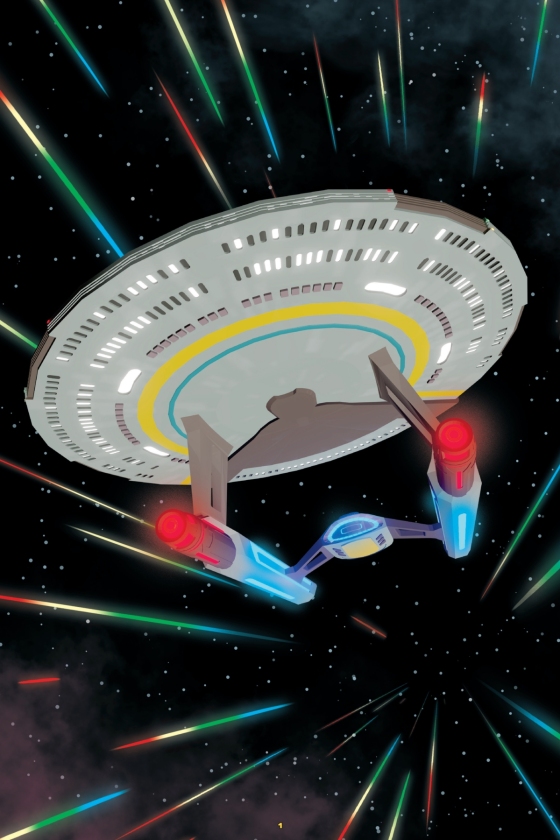
Who knew that this would turn out to be the all-time writing motivator?

So to these last two streaks, at least, I owe a debt of gratitude. And I’m glad I live in an era where, even if there’s no power to my laptop computer, I can turn out 750 words on a tablet or phone, because it’ll still count, dang it. And I’ll play my silly little games. And I’ll read, if I have to, in the dark, to make sure that streak doesn’t die.

Because sometimes it’s the little things that make it all count. 

Blake M. Petit is a writer, teacher, and dad from Ama, Louisiana. His most recent writing project is the superhero adventure series Other People’s Heroes: Little Stars, volume one of which is now available on Amazon. You can subscribe to his newsletter by clicking right here. He is currently on a 17,067-day uninterrupted streak of not wearing Crocs, and he has no intention of stopping that any time soon. 

Geek Punditry #71: Gimmie a Gimmick

As you may have heard me mention once or twice, last weekend was the annual Nerd Bacchanalia known as Free Comic Book Day, one of my favorite days of the entire calendar year. And on this day, as they always do, my friends at BSI Comics were kind enough to allow me to set up a table and sell a few copies of my new book (which you should have ordered by now). From the vantage point of my table, I was facing a wall that displayed several back issues from those halcyon days of the 1990s, which were among the most formative years of my comic book consuming lifetime. The wall was adorned with lots of those flashy “Enhanced” covers that were so popular at the time – holofoil covers, embossed covers, chromium covers, glow-in-the-dark covers…you name a goofy gimmick, comic book publishers from the 1990s slapped it on the cover of a book. And as I spent hours there looking at those books, an odd realization slowly came over me.

I kinda miss those days.

I stared at these covers for eight hours on Saturday. It does things to a man.

It’s weird. During that time gimmick covers became a glut. They seemed to be coming at an ever-faster pace with ever-weirder gimmicks, and at the time I remember getting sick and tired of them. These days, however, they have become scarce. They’re not extinct, but you don’t see them nearly as much. Instead, modern publishers have decided to go with the business model of publishing 37 different variant covers for every issue. Some of them still slip in an enhanced cover in the mix, usually holofoil or “metallic” covers (for instance, DC recently did a run of metallic covers for various books with artwork featuring only the character’s symbol on a solid background). But they are not the exception, not the rule. 

I’m not going to try to get into a comprehensive history of the gimmick cover, but I’m going to tell you a little bit about my personal experiences with them. The first cover enhancement I remember seeing was back in 1991 when DC Comics released their second Robin miniseries, Robin II: The Joker’s Wild, each issue of which had covers with holographic images. Holograms themselves weren’t anything new, of course – I even remember making them in my high school chemistry class – but this was the first time I saw one on the cover of a comic book. It was cool! It was new! It was fun! And it was – if I recall – only fifty cents more than the regular cover! SWEET!

The next time someone tells you they faked the moon landing, remind them that this was considered high tech in 1991.

Not to be outdone, the next year Marvel gave each of the four Spider-Man titles at the time a cover with a hologram to celebrate Spider-Man’s 30th anniversary. (If you, too, remember when these comics were published, don’t do the math. It’ll make you realize that Spider-Man is now in his 60s and make us all feel like that scene at the end of Saving Private Ryan.) The holograms were more elaborate than DC’s, and each issue was a giant-sized extravaganza back in the days when such a thing actually meant something, so while they were more expensive than the issues of Robin, they were inarguably awesome. 

THIS technology, on the other hand, could have taken us to Mars.

Not long after that, there was another set of four Spider-Man covers with “holofoil” enhancements – the background of the artwork was metallic and shiny and you know how much we like shiny objects, so those were also a huge hit. And thus the floodgates were opened. Actual holograms became less common (as, if I remember from my chemistry class, they were more complicated to produce), but holofoil became a popular choice. Then other enhancements started to arrive. Die-cut covers, which had long been a popular choice in the paperback book market, started to show up. It made sense, too – have Wolverine’s claws slash through the cover of the comic book and you’ve got an obvious thematic connection. Similarly, embossed covers with artwork raised and stamped into the cardstock in a 3-D fashion made the transition from horror and sci-fi novels to comic books. Glow-in-the-dark, another mainstay of other marketing strategies, became used both for spooky books like DC’s The Spectre and goofy books like the Bongo Comics Simpsons spin-off Radioactive Man. 

Valiant Comics launched Bloodshot with what I believe was the first “Chromium” cover: artwork printed on a metallic backing with some sort of plastic covering. The first two books with this process had a chromium panel embedded in cardstock, then DC upped the ante with a full chromium front cover on Superman #82 (the book that concluded the Death and Return of Superman cycle). Eventually, somebody realized that it was easier to do an entire chromium cover – front and back- – instead of just parts of one, and most chromium covers after that became full wraparound covers, with art that extended from the front to the back in one large image that was no doubt easier to produce than a chromium front and a traditional back which then somehow had to be affixed.

Most people agreed that Image Comics’ “Enriched Uranium” covers went too far.

There were a couple of really weird enhancements, too. DC’s 1992 crossover event Eclipso: The Darkness Within focused on a demonic villain that possesses people infected by a magical black diamond. To kick things off, DC published a special with a cover featuring Eclipso holding up the diamond – which was an actual plastic diamond glued to the cover. Kind of cool, until the time comes to put the comic book in a bag and store it without splitting the mylar or putting divots in the back of whatever book it’s stored next to.
My personal favorite from this era, in terms of sheer weirdness, comes from Malibu Comics. Malibu was a hot publisher at the time, and their comic Protectors kicked off a new shared universe with revamps of several Golden Age characters that had fallen into the public domain. In the fifth issue of that series, the character Night Mask was killed in an effort to show early on that being a superhero would be a dangerous path and that the untrained or inexperienced would be in grave danger. Malibu chose to communicate this message with cover art that featured a bullet hole in the character’s chest that was punched through not only the cover, but the entire comic book. I’ve often wondered if this was a last minute decision, as the hole punched straight through the art on every page, in some cases even taking out a small piece of a word balloon and making you try to guess what the dialogue was supposed to be. It’s such a weird little thing, though, that even people who barely remember that the Protectors ever existed will likely remember the comic with the hole through it. (A few years later Malibu would launch their Ultraverse line, overshadowing the Protectors universe. The publisher was later purchased by Marvel, and all of their properties would fade into obscurity except for a little IP called Men in Black.)

Historians have determined that this is the point when the Comics Code just threw up their hands and surrendered.

As tends to happen, of course, good things went too far. Whereas these sort of enhanced covers started off being used for special events – first issues, anniversaries, major storylines and so forth – they quickly became overused. Instead of a holofoil cover for a 100th issue, we were getting foil covers because it was Wednesday. An issue of Fantastic Four in which the Human Torch lost control of his flame was printed with an entirely white cover, the artwork embossed into the cardstock and almost impossible to see. They’d repeat this trick with metallic Avengers covers and, of course, other publishers would soon follow suit.

With this oversaturation, fans eventually got turned off and stopped buying them, which no doubt at least partially contributed to the late 90s collapse of the comic book speculator market, and the flow of gimmicks was reduced to a trickle. Instead, as I said before, the focus for most publishers has shifted to producing variants – the same book with lots of different covers. And these have gotten ridiculous as well: while some variants have completely different artwork, others just change the color or remove the logo and trade dress or print the uncolored artwork as a “sketch” variant. For a relaunch of Justice League of America, DC put out over fifty covers with the same artwork featuring the team raising the American flag in an Iwo Jima-like pose.  For the variants, they switched out the US flag to that of each individual state and, I think, a few territories. Easiest way to sell one guy fifty copies of the same book EVER. Marvel did something similar with a series called U.S. Avengers, putting out a different cover for each state with a different Avenger, proclaiming them the official Avenger of that state. (Some of these made perfect sense: as Monica Rambeau is the only Avenger FROM Louisiana, she is the natural choice to be the Avenger OF Louisiana. But I’m still waiting for someone to tell me why She-Hulk is the official Avenger of Idaho, with an explanation other than “Well, SOMEBODY’S gotta be.”) 

And don’t even get me started on the fact that Spider-Man, the most New York hero in any multiverse, is the Avenger of New Hampshire.

Whatever the case, the result with the variant wave is the same: they’re counting on completists to buy every cover variant of the book they can get their hands on. Which I suppose helps them sell comics, but it also burns out regular readers and does absolutely NOTHING to attract a NEW readership, which is where American comics are having such a difficult time right now. I’m sure it costs less to print a traditional cover than one with a hologram on it, but I’m really not a fan of the business model that says “convince one customer to buy the same book two dozen times” instead of the business model that says “make a comic book good enough that two dozen people will want to buy it instead of one.” 

These days you still see holofoil and metallic covers, usually when a smaller publisher does a run with 75 different variants and then doubles it by making holofoil versions of each. Marvel and DC have also each done runs of lenticular covers (an image where the artwork changes if you tilt the page or look at it from a different angle) in the last decade or so. But there hasn’t been much else. When Superman married Lois Lane in 1996, there was a special edition cover embossed and designed to resemble a wedding invitation. When the Thing from the Fantastic Four finally married his longtime girlfriend Alicia Masters in 2019, we got a bunch of covers showing the couple from every conceivable angle, but not the slightest hint of foil, nothing that glowed in the dark, and certainly nothing that could be scratched and, subsequently, sniffed. 

I don’t care what anybody says, Stan Lee’s epitaph does NOT count as a cover enhancement.

I know that if the enhancements came back they would quickly become overdone all over again. I know that after three months of Green Lantern covers where one glows and the next has a lantern shape cut out and the third glows AND has a lantern shape cut out I would probably start to get irritated because they’re charging an extra buck for each cover. But they’re doing that for a lot of the variants NOW, and while I am not someone who usually buys variants, I admit that I would be more inclined to do so if there was a little bit of an enhancement to sweeten the pot. 

The hard part is not doing covers like these, it’s doing them in such a way that people don’t get sick of them. Reserve them for important occasions. First issues are acceptable. Anniversary issues are acceptable. The beginning or end of a major storyline is acceptable. 

“Wednesday” is not.

I know that my yearning for these covers is tainted by nostalgia, but that’s not always a bad thing. Nostalgia is the only reason X-Men ‘97 exists on Disney+, and people seem to be pretty darn satisfied with it. (I haven’t watched it yet, so no spoilers.) 

I don’t know, maybe it’s just me. Maybe I’m just shouting into the wind and when you guys read this week’s column you’ll all think I’m crazy for feeling this way. Heck, even I think I’m a little crazy for feeling this way. All I know is this: when I go into BSI Comics to pick up some new books, I almost never want the variants…but once in a while, I wouldn’t mind getting my hands on an enhancement or two. 

Blake M. Petit is a writer, teacher, and dad from Ama, Louisiana. His most recent writing project is the superhero adventure series Other People’s Heroes: Little Stars, volume one of which is now available on Amazon. You can subscribe to his newsletter by clicking right here. If you go on eBay looking for some of these comics he’s talking about, don’t be fooled. The “coffee stains on page 17” variant is NOT an enhancement, no matter what the seller is telling you. 

Geek Punditry #70: How to Use Your Noodle

Paramount clearly has no idea what they’re doing with Star Trek right now. They’ve announced the cancellation of Lower Decks, which scientific researchers at Harvard University have conclusively proven to be the best Trek series in the past 25 years. They still haven’t announced any plans for what to do with the crew of the Enterprise-G, as established in the fan favorite final season of Star Trek: Picard. They killed Star Trek: Prodigy only to surrender it to Netflix. They’ve announced a new movie set in the Kelvin timeline, only it’s a prequel, which doesn’t make a damn bit of sense since the timelines are supposed to be identical up until the day Jim Kirk is born. And they’ve gone ahead with a Starfleet Academy series that nobody seems to be interested in, except for those of us who were happy when it was announced that Lower Decks star Tawny Newsome was joining the writing staff. As you may expect, this irrational and erratic behavior has led to a lot of debate and hand-wringing on the internet, because that is exactly what the internet is for. People have launched dozens of (sadly competing) Save Lower Decks campaigns, people are begging for the further adventures of Captain Seven of Nine…all the things you would expect.

Today, my friends, we are all Boimler.

Until one guy on Facebook, in one of the trillion Star Trek groups I am a member of, loudly demanded a movie be made starring Worf and explaining the fate of the Enterprise-E. This ship, the main one used in the films Star Trek: First Contact, Star Trek: Insurrection, and Star Trek: Nemesis, was briefly alluded to in the final season of Picard when it someone made a comment that they obviously couldn’t use the Enterprise-E, then everybody turned to look at Worf, who gruffly proclaimed, “That was not my fault!” It was a hilarious moment in one of the most satisfying seasons of Trek in history, but what my fellow fan doesn’t seem to understand is that the thing that MAKES that moment satisfying is that we don’t know what happened. 

TV Tropes calls this sort of thing a “Noodle Incident.” This is an event from the past that the characters make a reference to without ever actually explaining it, forcing the audience to wonder. The term comes from Bill Watterson’s legendary comic strip Calvin and Hobbes, in which there was a running gag where Calvin furiously denies that anything happened with the noodles at school or, alternately, doesn’t deny that it happened but claims it wasn’t his fault. The question that lingers with the readers, of course, is: what could have POSSIBLY happened with the noodles that would be THAT BIG A DEAL? And the answer is: we never know. When asked about it once, Watterson said he decided against explaining what the Noodle Incident was because he knew there was nothing he could put on the page that would be as satisfying or entertaining as what the readers were imagining in their heads. And Bill Watterson was absolutely right.

…and they never did.

Since that episode of Picard dropped, there has been a LOT of furious speculation about what could have happened to the Enterprise-E and why, specifically, Worf would have been blamed. Was it lost in battle? Fell into a wormhole? Destroyed in a freak transporter accident? Did it get “Tuvixed” with the ol’ Excelsior? Did Worf lose it in a poker game with a Ferengi? There are a million theories, each wackier than the last, and while I have no doubt that some day someone will write either a novel or a comic book series about the tragic end of this ship, I personally hope that the story of its demise is never officially canonized, because I think it’s more satisfying that way.

Noodle Incidents are a staple of comedy. On Home Improvement there would be allusions to disasters caused by Tim Taylor with the implication that they somehow even surpassed the ones put on screen. How I Met Your Mother had an episode where Ted wakes up to find a pineapple in his bedroom with no idea how it got there, and it’s one of the few minor details left unexplained at the end of the series. The Golden Girls milked this trope like an over productive cow. Rose’s half-told St. Olaf stories and Sophia’s vague yarns in which one is to “Picture it: Sicily” would often leave out details that forced the viewer to close in the gaps with their mind…and in every case these episodes were all the funnier without filling in the blanks. It’s almost like watching Rick and Morty on Adult Swim, where all of the swear words are bleeped out, versus watching it on MAX, where the profanity is allowed. The truth is, it’s actually funnier when you don’t hear the curse words, even if the word being hidden is obvious.

Turns out, the unedited St. Olaf stories are way, way filthier than anything on Rick and Morty.

Noodle Incidents aren’t only good for comedy, though. They work well in more serious work, too. In Casablanca, the reason Rick can’t return to the United States is never explained, nor are all of the details of his previous relationship with Ilsa. In The Dark Knight, the Joker loves to tell conflicting stories about how he got his scars, but we never find out the truth. And it’s pretty common in action movies – especially those with ongoing characters – to make a reference to a prior incident without giving us details. We don’t know what happened to Indiana Jones in Honduras, we don’t know the truth about the “Rome affair” that James Bond was mixed up in, and we’re never gonna know what happened to Hawkeye and the Black Widow in Budapest. 

And that’s probably a good thing.

It works on the same principle as hiding the monster in a horror movie. One of the things that makes Jaws so great is that you don’t actually get a good look at the shark until the very end. In this case, it was a practical consideration: they couldn’t get the mechanical shark to work properly. But the effect was solid. Similarly, in Alien, none of the original posters or marketing revealed the look of the creature, nor did it appear in full until the end of the movie. It made for one of the best haunted house movies of all time, set in outer space. By the time the sequel rolled around the appearance of the Xenomorph had become iconic and director James Cameron knew he couldn’t possibly duplicate the suspense, so he decided instead to make the second film less of a horror movie and more of an action film – and it worked very well.

“But Blake, doesn’t that suggest you may get more mileage out of the characters if you explored these blank spaces in their history?” No, no it doesn’t, because those reveals were always planned and were done for thematic effect, not plot reasons. Fans claim they want Noodle Incidents explored, but when they are, the result is invariably disappointing. I’m going to give you the most famous example in history:

Wolverine.

Turns out those things are actually made of pasta. Rotini, specifically.

When Wolverine first appeared in the comic books in 1974, he was an agent of the Canadian government sent to take on the Hulk. We found out later that he was a mutant, what his powers were, and that those claws of his were actually embedded in his hands as opposed to attached to his gloves (which was what the original creators had intended). But we didn’t know his past. As it turned out, Wolverine didn’t know his past either. He had been the subject of an experiment that bonded the indestructible metal Adamantium to his skeleton, but the process had essentially destroyed his memory. Every so often we would get vague flashes, such as an encounter with Captain America back in World War II, that seemed to indicate Wolverine was much older than he appeared, but we knew nothing specific.

And it was great. I would argue that the mystery is one of the things that made Wolverine such a popular character throughout the 80s and 90s. Then, in 2001, Marvel’s then Editor-In-Chief Joe Quesada decided it was finally time for the story to be told in Origin. Quesada, Marvel vice president Bill Jemas, and scripter Paul Jenkins collaborated on a story that revealed Wolverine – who had always thought his name was “Logan” – was once James Howlett, a sickly child born to a wealthy plantation owner in 19th century Canada. The story shows James’s powers developing, including the first time painful time he extended his claws. It explored the backstory he shares with his arch-enemy Sabretooth. It even seems to offer a Freudian explanation for his obsession with redheads. And Origin was…well, it was okay.

Also the source of Wolverine’s legendary catch phrase: “OH MY GOD, THIS HURTS SO BADLY! AUGH! AAAAAAUGH! THIS IS SO MUCH MORE PAINFUL THAN YOU CAN POSSIBLY IMAGINE! AAUGH! CUT OFF MY HANDS! PLEASE!”

But here’s the thing, folks: if you’re going to take away a Noodle Incident, the resulting story should be a hell of a lot more than just “okay.” There have been a lot of Wolverine stories told in the 23 years since his origin was revealed, but I can’t say that there have been ANY that were better stories BECAUSE I know his origin now. And if it doesn’t make the stories better, then what was the point?

Noodle Incidents, these holes in the past, are a fun bit of writing. (Those are NOT “plot holes,” however. That’s an entirely different thing that people on the internet don’t actually understand. We’ll talk about those some other time.) You can dump all kinds of weird stuff in there, and leaving them open invites the readers to do the same thing. It’s a narrative device that allows the writers to seem more clever than they actually are and in a way makes the reader or viewer a participant in the backstory of their favorite characters. Once you’ve thought about an unrevealed piece of backstory for a while, you’re never going to have a revelation that’s going to live up to what’s going on in your head. It’s best that we all remember it.

Just like I had to do that time in Kansas City with the ocelot and the caprese salad. It was a wild night.

SPECIAL REMINDER:

As I’m sure you heard on the social media, the news, billboards, that Goodyear Blimp campaign, and in the hidden track on Taylor Swift’s new album, I’ve got a new book out! Twinkle Twinkle, the first volume of the Little Stars trilogy, is now available in print or eBook, and you can get your copy by going over to Amazon and giving them a designated amount of dollars, a percentage of which will then be given to me.

Not an enormous percentage, mind you, but a percentage.

But – BUT – if you happen to be in the New Orleans area tomorrow, May 4th, you’ve got a chance to get a SIGNED copy from yours truly. Tomorrow is Free Comic Book Day and I’ll be at BSI Comics in Metairie, Louisiana selling copies of the new book (plus all of the old ones). Come on down, say hello, meet the other great writers and artists who will be sharing a space with me, and get some free goodies as well. 

Blake M. Petit is a writer, teacher, and dad from Ama, Louisiana. His most recent writing project is the superhero adventure series Other People’s Heroes: Little Stars, volume one of which is now available on Amazon. You can subscribe to his newsletter by clicking right here. He thinks there’s a certain irony in using 1700 words to explain the benefit of something that is best left unexplained, but he’ll leave the rest of that joke to your own imagination. 

Geek Punditry #69: Judging a Book By Its Cover

A few months ago, a friend of mine shared with me a website called Freebooksy.com, which alerts you to freebies in the Amazon Kindle store. It’s fairly simple – you click on the genres that you’re interested in when you sign up and each morning you get an email with a selection of free books available. Inclusion in the email is paid for by the authors and publishers, I should point out, as a promotional tool, so you see the same names over and over again, but it’s hard to complain about free. I check the email most days, but I don’t sweat it if I miss a day because I know that the same stuff will be comin’ around again before too long.

Also before too long I noticed a distinct trend, especially among those books that are designated as “thrillers”: utter homogony when it comes to cover design. On any given day when I open this newsletter and scroll to the thriller section, I will see a minimum of three covers with virtually the same style:

  • A single color palette – often blue, but reds and oranges are also popular – which creates a gradient across the book cover.
  • The title of the book in large unimpressive block letters.
  • The author’s name in smaller unimpressive block letters.
  • A line of text informing you what series this particular volume belongs to.
  • A background image that usually cuts across the middle of the book. This is often, but not always, a landscape of some sort. Popular choices are mountain ranges, swamps, beaches, and cabins in the snow.

Usually I would try to provide some pictures here to demonstrate my frustration, but considering how I’m talking about how dull and bland these covers are, I kinda feel bad calling anybody out specifically. So instead, I have used my legendary skill at Not-Quite-Photoshop-But-a-Free-Online-Alternative to create my own example of the sort of cover I see over and over and over again.

Now you know why I don’t design my own book covers.

Riveting, right? If you go to Amazon right now and click on the “thriller” genre once you figure out where they’ve hidden the books, you will see dozens and dozens of titles that duplicate that template to the letter. After a while they all blend together and there’s nothing to make me remember any of them. They always say you can’t judge a book by its cover, and that may be true, but I’m sure as hell more likely to pick up a book in the first place if the cover doesn’t look like it was made with Generic Thriller Template #1138. 

The same holds true for movie posters, by the way. Movie posters were once an art form all to themselves, with gorgeous illustrations by the likes of the great Drew Struzan that made me even more anxious to see Goonies, Indiana Jones and the Temple of Doom, or Back to the Future than the trailers did. Now book covers and movie posters seem to be churned out by committee, choosing the elements that hit the greatest number of quadrants to appeal to the largest number of people and, in the process, becoming something that is appealing to no one.

Name a movie poster from the past ten years that’s better than this one. Trick question. You can’t.

Look, I’m spoiled. Most of my book covers have been done by Jacob Bascle, who absolutely knocks it out of the park every time the way he did with the cover for Little Stars Book One: Twinkle Twinkle, which by the way is now available to preorder on Amazon. (That’s as subtle as I get, folks.) But I also know that’s because I self-publish, and if I ever get tied up with an actual publisher I may not have much of a say into who does the book cover or how. But none of that changes the fact that the people turning out book covers right now have totally lost the plot.

As with so many things that aren’t as cool now as they used to be, let’s look back at the 70s and 80s to see how it should be done. This was, I believe, a golden age for book covers and movie posters, especially when it came to genre fiction like horror or sci-fi. Sure, the artwork was lurid, over-the-top, and often terribly deceptive as far as the actual contents of the work, but sweet cinnamon sugar, was it memorable! For example, let’s look at Stephen King (the real one) and his 1978 epic The Stand. This is a gargantuan novel about a virus that escapes from a science lab and spreads out into the world with a fatality rate of over 99 percent. Those who survive wind up collecting in two groups – a mostly peace loving community in Boulder, Colorado, and a vicious, hedonistic sect in Las Vegas under the rule of King’s frequent boogeyman character Randall Flagg. It’s an amazing book and it’s the one that first made me a fan of Stephen King’s work when I read it in high school.

Now look at the first edition cover.

You think an AI “artist” could have come up with something this incredible?

Isn’t that AMAZING? There are SO MANY QUESTIONS to be asked here. Why does that dude look like Luke Skywalker? Who’s the rat guy with the sword? Why are Luke Skywalker and the rat guy dueling? Is Randall Flagg Emperor Palpatine? How does this tie into the epic saga of the insidious disease called Captain Trips? And the answer is: it doesn’t! There is absolutely nothing about this book illustration that has the barest relation to the 10,942 pages of text in-between these covers. It’s like some writer failed to deliver his fantasy novel about an uprising of lycanthropic rodents in a medieval setting and the publisher just said, “Hell, we gotta use this art somewhere” just before King’s manuscript arrived, delivered by three separate UPS trucks. And history was made. But the thing is, as little as this cover has to do with the actual book, it’s memorable as hell.

Then there’s another of my favorite books, William Goldman’s The Princess Bride. Everyone knows the movie – the epic comedy love story of true love and grand adventure. It’s a family favorite and a tale that transcends generations, finding new fans every day both young and old. It is the perfect movie for lovers, for adventure seekers, for parents, for children. And a lot of people have read the book as well. But how many of you have ever seen the cover to the 1974 edition of the book?

“Uhh…Larry…what exactly do you think a Bride is?”

I don’t even have a theory to explain this cover, the way I do the Stephen King book. It’s patently obvious that whoever painted this artwork hadn’t read the book – possibly had never read any book. In fact, I wouldn’t be too surprised if whoever painted this isn’t legally allowed within 300 yards of a library. And yet, I never forget that this cover exists.

I love going to used bookstores, and one of the best reasons is to look at this sort of wild cover art that just doesn’t exist anymore. The next time you’re in one, take a turn into the horror or sci-fi section – even if you don’t normally read horror or sci-fi – and just scan the book covers. Aliens with googly eyes, knives dripping with blood, monsters that may or may not bear any resemblance to the creatures inside the book. Walking through these stores is the closest I can get today to the experience of walking through a video store as a youth, going down that horror section and seeing the ghastly and yet somehow enticing cover art that adorned such classics as Evil Dead 2, Re-Animator, or The Stuff. Oh no, my parents never allowed me to rent these movies when I was a kid, but even then I was drawn to the artwork, and I’ve gone back and revisited a lot of those films as an adult…and you know, even the worst of them seem to trigger a hint of pleasant nostalgia for those trips down the video store aisle.

Pictured:Nostalgia.

In 2017, horror writer Grady Hendrix released Paperbacks From Hell, a book that examined the absolute avalanche of horror fiction that was produced in the 70s and 80s. Hendrix does a great job in this book of dividing up the work into different categories and discussing some of the more prominent writers, most popular novels, and intriguing trends that existed at the time. But if we’re being honest, the biggest reason to get Hendrix’s book is to get over 250 pages of full color illustrations of some of the wildest horror novel cover art that ever existed.

If this makes you want to read this book, you’re my kind of people.

The book is a love letter to the genre, and was popular enough that Valancourt books actually did a limited re-release of several of the books mentioned, original cover art intact, with a new forward by Hendrix himself. Unfortunately, that rerelease did not include John Christopher’s The Little People, a novel about a British couple that tries to turn an Irish castle into a B&B only to learn that it is infested with Nazi Leprechauns. No, there’s not a typo anywhere in that sentence.

All this goodness…no Nazi Leprechauns.

If you think I’m coming across as a stodgy old man lamenting the days of his youth – well, you’re very perceptive. But you can’t wander through a Barnes and Noble and look at the wall of $18 trade paperbacks that waits for you there with so many of the same cover tropes over and over again and objectively tell me that cover art has improved over the last 40 years. Nah, give me the days when an eyeball rolling around in a skull looked at me from the cover of a book, the time of creepy dolls and skeleton horses and eyes glaring at me from behind a set of venetian blinds. These were covers with personality. These were covers that meant something.

Not necessarily something that related to the inside of the book, of course. But something.

SPECIAL ANNOUNCEMENT:

Hey, have you ever missed a Geek Punditry column? Sad, isn’t it? How you don’t know what everyone at work is talking about around the water cooler, ostracizing you and pushing you to the fringes of society the same way they used to do because you didn’t watch Game of Thrones? Well, you’ll never have that problem again if you subscribe to my newsletter. I’m kicking off a (probably) weekly roundup of everything I’ve been doing, which will include links to the newest Geek Punditry, information about whatever new releases I have coming up, some chatter about what I’m working on, and the occasional bonus goodie as well. And as a thank you for signing up, your welcome email includes a top secret, never before seen short story from the world of Siegel City called “Sally Starcher is Cosmagirl!” So if you’re into that kind of stuff, if you want to know what I’m up to, if you just don’t want to miss out when Derek from accounting starts talking about Sally Starcher the way he used to talk about someone called “Khaleesi,” there’s an easy solution. Just click this link, drop me your email address, and you’re all set!

Blake M. Petit is a writer, teacher, and dad from Ama, Louisiana. His most recent writing project is the superhero adventure series Other People’s Heroes: Little Stars, volume one of which is now available on Amazon. You can subscribe to his newsletter by clicking on this dandy little link right here. He hasn’t had any eyeballs on his own book covers yet. He’s waiting for the right time. Maybe something about bunnies.

Geek Punditry #68: The Importance of Being Bandit (or) Yes, I Am Taking Advice From a Cartoon Dog

A few weeks ago I had one of the scariest nights of my life. My son was briefly hospitalized, and my wife and I were told he would probably have to have his appendix taken out. The idea of someone cutting open my little guy terrified me, not the least because I knew he wouldn’t really understand what was happening, and I got very little sleep sitting in that hospital chair. The story had a happy ending, fortunately. In the morning the doctors reexamined him and determined that the discomfort he was feeling was not caused by his appendix after all and was most likely a particularly nasty viral infection, and we were sent home later that day. But the night before was horrifying. I want to tell you, though, about the bright spot. That actually came early on in the process: Eddie had been sick all day and in the afternoon began throwing up with alarming frequency, prompting me to take him to urgent care. There, the doctor on call examined Eddie and advised me to take him to the emergency room.

For a parent, this is way scarier than any haunted house.

Those two words, “emergency room,” sent me into a total PANIC. I started to tremble. My hands were shaking as I texted my wife, who was at work, to meet us at the hospital. I was shaking harder when I searched for the hospital with the Pediatric ER on Google Maps – this despite the fact that I myself was a patient at that same hospital some years ago, and I knew perfectly well where it was. At that moment, though, I didn’t know much of anything and I could feel myself babbling, with questions spilling out of my mouth as frequently as Eddie gives them to me on a good day. At that moment the doctor seemed to realize that – right then and there – his primary patient wasn’t the one in the most need of immediate care. He put his hand on my shoulder and said, “Hey, I have kids too. He’s going to be okay. Nobody knows the pressure on a dad, do they?”

I could have cried right then and there. If I didn’t have to get Eddie into the car to take him to the ER I probably would have. But that moment of strength and compassion from this doctor meant more to me than I could have possibly told him, because he’s absolutely right. Society has bizarre and, frankly, contradictory expectations of fathers. On the one hand, we are often seen as the “disposable” parent. Mothers are considered primary caregivers, stores and restaurants frequently neglect to put diaper changing stations in the men’s restrooms, in custody battles the final decisions overwhelmingly favor the mother, and never once has anyone seen my wife with our son and asked if SHE was “babysitting.” On the other hand, fathers are expected to be the provider, to give the family everything that is needed, to push their own needs aside up to and including their mental health, and to never, EVER allow a crack in the armor to show lest it be revealed that they are anything less than a demigod who always has it together and can do anything all by themselves and make everything turn out in the end. It’s a cocktail of unreasonable expectations and toxic disrespect.

This is not to say that it’s easy to be a mother, of course – nothing could be further from the truth. Moms are looked upon as the nurturers and the caregivers, the emotional core of a family, and there is an immense amount of pressure associated with that role. The difference, to me, is that mothers are usually (justly) celebrated for their contributions and sacrifices, whereas fathers are made the butt of jokes. Think about the difference in our respective holidays. On Mother’s Day, flower shops are emptied, restaurants are packed, and everyone reminds you to celebrate Mom. On Father’s Day, the punchline is about which crappy tie Dad will be given this year.

My wife is wonderful. My wife couldn’t be more supportive. That’s not where this pressure comes from: it’s all about the pressure that we’ve been told all of our lives to bring on ourselves. 

All of this is to say that Bandit Heeler is the best father on television.

Pictured: What I want to be when I grow up.

I shall try to keep my statements in praise of Ludo’s cartoon Bluey brief, but in case you don’t know, Bluey is an Australian cartoon about a family in Brisbane, Australia: six-year-old Bluey Heeler (seven after a birthday episode), her little sister Bingo, their mother Chilli, and their dad, Bandit. Creator Joe Brumm based the show on his own daughters and the way they used to play when they were little, and the majority of episodes focus on the games the children play and the way their parents (and, often, other assorted grownups) get sucked into the amazing fantasy worlds they create. The fact that the Heelers and the rest of the sentient inhabitants of this universe are all dogs is of utter irrelevance. 

Over the course of three seasons and over 150 seven-minute episodes, Bluey has become that rarest of phenomenon: a show that is loved by children, but absolutely adored by parents. Bandit and Chilli love their children completely, and what’s more, love each other just as much, and none of the Heelers are shy about showing it. In an era where so many TV families are made up of characters who seemingly can’t stand each other and remain together only because of a vague description of “family” that the thesis of the show often works to destroy, the Heelers are, to put it bluntly, Squad Goals. And Bandit in particular is the father that every father who watches it wants to grow up to be.

…usually.

TV dads, historically speaking, have largely fallen into one of two categories. In the early days of TV they were bland, plastic paragons of virtue like Ward Cleaver or Ozzie Nelson. Even by the 70s, when shows were beginning to allow a bit more of an edge, Howard Cunningham from Happy Days was a faultless (if loving) font of strength. Then a switch flipped and dads went from being carved out of marble to sculpted out of mud. TV dads in the 90s and 00s were buffoons. Either they were obnoxiously indifferent to the needs of their children like Al Bundy, or they were so stupid and vapid that they should probably, legally, not be allowed to have a child in their custody without adult supervision. Even the best dads of this era, like Home Improvement’s Tim Taylor, may have genuinely loved their kids, but were also often dangerously negligent in their actions and did incredibly boneheaded things in the name of comedy. It was good for a laugh, sure, but awful for the portraiture of dads in pop culture.

There HAS to be some sort of middle ground between these two.

(In the interest of painting a comprehensive picture I should mention that there WAS at least one great TV dad of this era, Heathcliff Huxtable, but real world circumstances have sadly made it virtually impossible to look upon him as a role model anymore.)

Bandit isn’t an idiot. He’s often a step ahead of his kids, playing their games but also using them to teach. In the episode “Bikes,” for example, he has Bluey observe the kids around them to learn perseverance, whereas in “Hotel” he teaches her how to compromise with her sister. Bandit is willing to become whatever is needed to keep the kids happy, and not even just his own kids. In “See-Saw,” he realizes that Bluey’s friend Pom Pom is feeling excluded because she’s so tiny (she’s a Pomeranian, you see, a small but hearty breed), so he sets himself up as the villain, sitting on the titular see-saw and refusing to budge until Pom Pom gets a chance to “save the day.” 

This is actually what I look like any time my wife says, “We may as well finish this pizza, it would be silly to just have them box up two slices.”

He’s a fantastic dad, but…and this is the most important part…he is not flawless. “Magic Claw” is about trying to teach his girls the value of hard work, only to have his efforts hilariously collapse around him as all they’re really interested in is playing the game. (There’s a great line in this episode where he says that the girls are learning a lesson AND cleaning the house at the same time, only for Chilli to snarkily reply, “Neither of those things are happening.”) In “Ice Cream” the girls each want a lick of the others’ dessert but spend so much time prevaricating over how big a lick they’re allowed to take that their ice cream melts away. Bandit hopes they’ll learn a lesson from this but, like a dad, he feels bad for them and winds up giving them his own ice cream instead.

Every Bluey parent can quote this scene with absolutely no help from my captions.

And sometimes, the world gets to Bandit. In “Stickbird,” as the family plays on the beach, Bandit is completely preoccupied. Something is quite clearly bothering him and he’s struggling so badly that he’s not entirely present for the childrens’ game. Although the show never tells us what, exactly, is eating at him, every father who watched that cartoon saw themselves that day. We don’t know why Bandit is struggling, but we DO know that he’s trying to contain himself for the sake of his family, and I don’t know if I’ve ever felt so seen by a TV show. 

The moment when every dad in the world saw themselves.

Many fans feel like the “Stickbird” mystery, the question of what was bothering Bandit, was solved in the most recent episode, the quadruple-length “The Sign.” I’m going to spoil “The Sign” now, so stop reading if you’re trying to avoid it, but I feel like pretty much everybody who cares has already seen it. And those who have seen it know that in this 28-minute blockbuster, Bandit Dadded the hardest he has ever Dadded. 

In “The Sign,” the Heelers are planning to sell their house and move because Bandit has found a new, higher-paying job in another city, which he says multiple times throughout the episode will allow him to give his children a better life. Already, every dad in the audience is nodding in understanding. The trouble is that none of the Heeler women want to move. Chilli puts on a brave face, but you can tell that she’s upset, Bluey openly campaigns against the move, and Bingo is perfectly happy with the whole thing until Chilli realizes that she doesn’t actually understand what “selling our house” means, after which she is devastated. Bandit struggles through the whole episode with this decision, believing that moving will mean a better life even though the message is clear that the rest of the family is happy with the life they have and they don’t want to chase some abstract idea of “better.”

What are you gonna do, Bandit?

In the final moments of the episode, the family that was planning to buy the house cancels the deal after finding a home they like more (it has a pool, you see). Bandit, taking this as “A” sign, rips “THE” for sale sign out of his yard and tosses it aside just before he’s tackled by his wife, who is sobbing with joy and adoration.

THIS IS A SHOW THAT IS OSTENSIBLY FOR PRESCHOOLERS.

Bluey is the most heartfelt show on television, and although there are several episodes that have left me in tears, there has never been one that left me unsatisfied. And for me, at least, it’s because in Bandit Heeler I see someone who I wish I could be, somebody I can be on my best days and someone I can turn to for strength on my worst days. And I’m not alone. Fathers all over the world have taken up Bandit as the role model we need – someone who loves his family unconditionally, is not afraid to express those emotions, and shows us that sometimes it’s okay to not be okay. We don’t have that. The world has told us for decades that we’re not allowed to be human, that feet of clay must be hidden, that we are to have no Kryptonite. Bandit tells us that’s BS, and because of that, there are a lot of dads reaching out to talk to other dads who understand that pressure the doctor told me about.

Um…not this doctor.

When Eddie was in the hospital, after the doctors told us that it wasn’t his appendix after all and that he was going to be okay, I felt awash with relief. I texted my own father and the rest of the family to let them know the news. I sent messages to concerned friends, to those English Teacher Friends I mentioned last week, and called my grandmother to let them all know that the cause for fear was over. 

And then, because I’d been holding the emotion in for nearly 24 hours at that point, I got on Facebook and went to a group I’m in called “Bandits.” And I started to type. “Fellas, everything is okay now, but it’s been a rough night…”

Blake M. Petit is a writer, teacher, and dad from Ama, Louisiana. His most recent writing project is the superhero adventure series Other People’s Heroes: Little Stars, now complete on Amazon’s Kindle Vella platform, and hitting print on May 4th! He could write a dozen columns about how great Bluey is, but right now, he’s in a Bandit place. 

Geek Punditry #67: What Is Literature?

When you’re a high school teacher and spend most of your day around teenagers, you will overhear their conversations whether you like it or not. You hear about the TikToking, and you know who is dating who, and on frequent occasions you learn more about the way these kids spend their weekends than you ever want to know and you contemplate duct-taping your own children to a pool table from the time they’re 13 until they turn 27 or so. And on rare, extremely rare occasions, you’ll hear them discuss things that are actually relevant to your class. Earlier this week, for instance, I overheard a few girls talking about why so many people are using The Great Gatsby as themes for parties and dances these days. 

As always happens when there’s a conversation worth joining, I jumped in. “There are three reasons,” I said. “First of all, it’s the 20s again, so people are playing with that. Second, the book went into public domain a few years ago, so nobody has to pay to use these things. And third, there are a lot of people who think the movie is fun and didn’t actually pay attention when they were supposed to be reading the book.”

“Ain’t no party like a Gatsby party, ’cause a Gatsby party ends with three people dead and a complete loss of faith in the American dream!”

The Great Gatsby is, of course, a seminal work of American literature. It’s one of the best books ever written in this country, and it paints a complex and gripping narrative in a relatively short number of pages, but the book is about the unsatisfying nature of a decadent lifestyle and how pursuit of material things is shallow and destructive. Anybody who comes away from that book thinking that these characters are something to aspire towards is – and I’m going to be kind here – an utter moron.

I talked about this conversation with some of my English teacher friends (of course I have English teacher friends – we sit around and conjugate each other’s verbs and talk about which infinitives we’re crushing on) and discussed the fact that there aren’t a lot of books that we teach that provide role models or, for that matter, happy endings. Let’s face it, most books that are complicated enough for a really deep literary analysis tend towards tragic – or at best, bittersweet – endings. The least-depressing book I’ve ever used in my classroom is The Hitchhiker’s Guide to the Galaxy, and that book BEGINS with the complete destruction of the planet Earth. And one of my friends in this chat commented that this is why she sticks to reading lighthearted stuff on her own time – “literature” is too depressing.

Whaddaya gonna do? You’ve got to build bypasses.

I’ve always thought it was odd to use the word “literature” as a genre, the way I would “science fiction” or “horror.” What, exactly, qualifies something as a work of literature? Every time I walk into a bookstore with a “literature” section, I want to ask somebody who decides which books go on those shelves and which ones do not? Isn’t the very existence of a “literature” section sort of a low-key insult to all of the other books in the store that got shelved somewhere else? Ernest Hemingway’s The Old Man and the Sea goes on the literature shelves whereas William Goldman’s The Princess Bride doesn’t, but I could write you a whole dissertation on which one is a better book, and it ain’t the Hemingway.

One of these is one of the most incredible stories ever conceived by the human mind and the other one is what happens when Ernest Hemingway doesn’t go to therapy.

Is it just the age of the work? Everyone would agree that Lord of the Flies from 1954 is a great work of literature. But what about Robert Heinlein’s Rocket Ship Galileo, published in 1947? It’s not only a book that doesn’t enter the “great literature” discussion, it’s not even usually part of the conversation when you talk specifically about the work of Robert Heinlein. We got George Orwell’s 1984 in 1948, nearly twenty years after the first Nancy Drew novel, The Secret of the Old Clock, but nobody is citing the works of Carolyn Keene in the conversation of great writers. And that’s not just because she didn’t actually exist.

Is it just about the complexity of the work? Must a work deal with heavy ideas and deep themes to qualify? The Adventures of Huckleberry Finn gets my personal vote for the greatest American novel ever written (sorry, F. Scott Fitzgerald). Set 20 years before the Civil War but written about 20 years afterwards, the novel is a deep and fascinating analogy about the changes the country went through during that time period. Whereas Mark Twain’s earlier book with these characters (The Adventures of Tom Sawyer) was a simple boy’s adventure story, Huckleberry Finn is about a child struggling with the ethical quandary of whether it is morally right to help his friend Jim escape from slavery. Jim’s owner, Miss Watson, has taken care of Huck, and in the eyes of the law he is betraying her by helping in Jim’s escape. But eventually, he comes to the conclusion that he’s going to be loyal to his friend, even if it goes against the law, even if it goes against what he has been taught is morally right. The book deals with the destructive nature of bigotry, ignorance, and hypocrisy, and Huck himself becomes symbolic of the moral transmogrification that the United States was beginning to undergo. In other words, literature.

The thing is, though, a lot of these same ideas and themes can also be found in random episodes of Star Trek. If I pull out Oliver Crawford’s script for “Let That Be Your Last Battlefield,” I can get into a deep conversation about the folly of racism as we watch two aliens whose species has hunted itself to extinction because some of them are black and white whereas others are white and black. It’s a legendary episode, but could I justifiably call the script for it literature the same way I would Huck Finn or – to use the other best-known example of anti-racist literature – To Kill a Mockingbird? Most people would say no. 

“I dunno, Frank, are you sure the analogy isn’t too subtle?”

I posed this question, this “what is literature” question, to my English pals, and one of them said she once looked it up herself and read one of the characteristics that makes something literature is a focus on character and their development rather than plot. Does that really work, though? Gatsby is a very deep examination of the characters, but none of them actually CHANGE. By the end of the book, they (the ones that survive, anyway) are all the same shallow, soulless people they were when the story began and only the narrator – the criminally bland Nick Carroway – has shown any development at all, that development being disgust at the people around him. It’s like you’re left feeling when you watch the final episode of Seinfeld. 

On the other hand, my friend pointed out, the male lead in Fifty Shades of Grey seems to change by the end of that series, becoming actually devoted to the narrator. I’ll let you draw your own conclusion as to whether this qualifies as development or not, I haven’t read Fifty Shades. But if there’s one thing everyone in our English chat can agree on, it’s that Fifty Shades of Grey does NOT qualify as literature.

I want to be clear here: I haven’t seen the movies, nor read most of the books. I’ve read exactly one page, the first one, in a bookstore. I was curious as to what the big deal was, and after reading one page I said – out loud – “Oh good LORD,” and put it down. It’s not that the book is smut. If you want to read smut, go right ahead, I don’t judge you for it at all. I will, however, judge you for reading such POORLY WRITTEN smut when there is smut of much better quality readily available. I’m not telling you not to read Fifty Shades because it’s explicit, I’m telling you not to read it because you deserve better smut.

Not pictured: Literature.
Or believable characters, genuine titillation, or a functional understanding of the culture it purports to depict.

Is it the fact that something is “highbrow” what makes it literature? Well that comes with the same problem as designating something literature in the first place: who decides? To pull the Shakespeare card again, my students are ALWAYS intimidated when we start reading Hamlet because they think of Shakespeare as something for “thinky” people. Sure, that may be the way he’s considered today, but in his own time, Shakespeare was a popular writer. He was turning out play after play for the masses, and because he knew exactly what the people wanted, he loaded them with sex and violence. He was the J.J. Abrams of the 16th century. The kids don’t get that, though. If you understand what he’s actually saying, Hamlet’s line “Do you think I meant country matters?” is just as raunchy (and way more clever) than anything E.L. James wrote, but in all my years of teaching the play I’ve never had a student pick up on the subtext. Only a few of them get the later, more obvious line when Claudius is seeking Polonius’s corpse and Hamlet tells him Polonius is, “in heaven…if your messenger find him not there, seek him i’th’other place yourself.” Every so often I have a kid who asks, “Did he just tell the king to go to Hell?” and that student automatically becomes my favorite.

“I don’t look thoughtful enough. Give me 20 percent more confetti.”

The bar can’t be whether something makes you think. Last week I finished reading Liu Cixin’s novel The Three Body Problem, and that’s one of the thinkiest dang books I’ve ever read. The book follows a large cast of characters who discover a secret organization attempting to prepare Earth to be conquered by extraterrestrial invaders. This is, I must stress, an extremely barebones description of the plot, and deliberately so. This story is far deeper and more complicated than my pitiable attempt to summarize it. In fact, if someone tried to argue that it’s the best science fiction novel of the 21st century so far, I will have absolutely no ammunition with which to disagree with them. This Chinese novel was originally serialized in 2006, published as a novel in 2008, and first published in English in 2014, so no matter which edition you’ve read, it’s less than 18 years old. As such, it’s not something that I hear come into the conversation when people discuss “literature.” Not YET, anyway. Come back in 20 or 30 years and that may well change. But is it only the relative youth of the book that keeps it off the table?

Not pictured: Literature, but ask me again in 2056.

Maybe it’s a combination of all of these things. Maybe “literature” has to be deep AND intelligent AND kind of old. Maybe all these things that we now call “literature” are only in that category because they’re the best examples of their time period and we’ve forgotten 90 percent of the utter crap that was written around the same time. That’s not only possible, I think the further back in the history of storytelling you go it becomes almost undeniable. The poet W.H. Auden once said,“Some books are undeservedly forgotten; none are undeservedly remembered,” and by this I think he was trying to tell us that people will hopefully still be reading The Three Body Problem in the year 2100, whereas by then hopefully the only people who remember 50 Shades of Gray will be literary historians who cannot figure out why readers were so temporarily obsessed with a piece of mediocre Twilight fan fiction.

Increasingly, when it comes to the question of literature, I find myself using the late Supreme Court Justice Potter Stewart’s description of “obscenity.” Unable to actually define the term, he simply said, “I know it when I see it.” That’s how I feel about literature, too. But my opinion, of course, doesn’t count for more or less than anybody else’s.

Except for that guy shelving the “literature” section at Barnes and Noble. He apparently holds a little more sway than the rest of us.

Blake M. Petit is a writer, teacher, and dad from Ama, Louisiana. His most recent writing project is the superhero adventure series Other People’s Heroes: Little Stars, now complete on Amazon’s Kindle Vella platform. He doesn’t know if anyone would ever call the new trilogy version of that series, beginning with Little Stars Book One: Twinkle Twinkle, “literature,” but he DOES know it will be available in both paperback and ebook beginning on May 4, and he is CRAZY excited about it.

Geek Punditry #66: The Frankenssance

Earlier this week, the internet was abuzz with an image released from the upcoming film The Bride! (The exclamation point is part of the title – I’m interested, but not so excited as to declare it via punctuation.) Written and directed by Maggie Gyllenhaal, this movie seems to be an updated version of the Frankenstein story, moved to the 1930s and starring Bale as the monster and Jessie Buckly as the titular bride. Director James Whale’s original Bride of Frankenstein is probably the best of the old Universal Monster movies from the 30s and 40s, and ol’ Vic’s creation is hands-down my favorite classic monster, so news of this film intrigues me. But I think it intrigues me even more than it ordinarily would  because with this movie, at least the fifth Frankenstein-derived film released or announced in recent years, it seems that we are in the midst of a full-scale Frankenssance.

Of course, all anybody wants to talk about is the tattoo.

Let’s do a quick bit of literary spelunking for anyone who doesn’t know the story (both of you). In 1816, Mary Godwin was vacationing at the home of her friend Lord Byron with her soon-to-be husband Percy Shelley. This was in the era when visiting a friend could be an extended stay that lasted weeks or months at a time, as opposed to modern times when it lasts until the owner of the home claps his knees and says, “Well, I don’t let me keep you any longer” because the Pelicans game starts in a half-hour and he doesn’t want to watch it with a dirty Celtics fan like you. It was an exceptionally rainy and dreary summer, and to pass the time trapped inside, Byron proposed that they each write a “ghost story” to entertain one another. If you ever wonder which of them won that little competition, remember that it’s 200 years later and the only one that we’re still reading is the one that was written by the 19-year-old girl.

By the way, I really want to stress how amazing that is to me. Whenever somebody talks about the creation of Frankenstein, or the Modern Prometheus, they focus on how shocking it was that it was written by a woman. That shouldn’t be what surprises you. I’m a high school English teacher and I’m not shocked at all that a masterpiece of literature was written by a woman. I’m shocked that it was written by somebody the same age as a student that I had to ask to stop from pouring Pop Rocks into a bottle of Coke in the back of my classroom last week while I was trying to review gerunds. 

But I digress. The story follows Victor Frankenstein, a college dropout (nope, he’s not a doctor) who is so obsessed with conquering death following the loss of his mother that he finds a way to reanimate dead tissue. But when he does so, he’s so horrified by the hideousness of his creation that he flees in terror, leaving it to fend for itself. I always interpret his fear as being an expression of the Uncanny Valley problem, where something is so CLOSE to looking authentically human that even the smallest deviation is unacceptable to the eye, which is one of the many ways that the story of Frankenstein is a great metaphor for modern AI.

The Gold Standard. Okay, the GREEN standard.

Most people, of course, think of Boris Karloff’s version of the creature when they think of Frankenstein’s monster: the monosyllabic, hulking brute with the flattop, green skin, and bolts on his neck, whereas none of that really applies to the vision in Shelley’s novel. But that’s okay. I think that one of the things that really makes a character – any character – into a timeless one is its potential for reinvention. Compare the original Arthur Conan Doyle Sherlock Holmes stories to the Basil Rathbone movies, the Robert Downey Jr. version, or the Benedict Cumberbatch series. All are perfectly valid, but very different from one another. Think of all the different depictions there have been of Batman, Superman, Tarzan, Dorothy of Oz, Cinderella…if a character is unable to be adapted, it’s not a character likely to achieve immortality. Victor Frankenstein may not have lived forever himself, but the versatility of his creation ensures that his name will last forever.

Like I said, we all know Boris Karloff, but he wasn’t the first cinematic Frankenstein. That honor belongs to Augustus Phillips, who played the creature in a 14-minute film produced by Thomas Edison in 1910. After Karloff played the creature, the role was passed to Lon Chaney Jr., then Bela Lugosi, then Glenn Strange, who rounded out Universal’s original version of the creature in one of my favorite films of all time, Abbott and Costello Meet Frankenstein

I’m not kidding. This is maybe my favorite movie of all time. I will never get tired of it.

Since then the list of actors who have played the creature is staggering: Robert De Niro in Mary Shelley’s Frankenstein (1994), Christopher Lee in The Curse of Frankenstein (1957), Aaron Eckhart in I, Frankenstein (2014), Clancy Brown in The Bride (1985), and Tom Noonan in The Monster Squad (1987), and that just scratches the surface. There was a stage version in which Benedict Cumberbatch and Johnny Lee Miller EACH played the Creature and Victor Frankenstein, alternating nights. As of this writing, IMDB credits Mary Shelley as the writer on 115 different projects, and frankly, I think that number is low. I mentioned last week that I’ve got a little obsession with creating lists. On Letterboxd, I’ve logged 55 different movies that I tagged as adapting or being inspired by Mary Shelley’s creation, including Mel Brooks’s Young Frankenstein, The Rocky Horror Picture Show, the Hotel Transylvania series, all of the Universal films that featured the creature and several – but not all – of the Hammer Horror films that did the same. I’ve got a list of nearly 50 other Frankenstein movies that I haven’t seen yet, but I hope to get around to eventually. 

Whole lotta Frankie goin’ on.

There’s a LOT of Frankenstein out there, is what I’m getting at. And while they haven’t all been great, there have been a lot of very interesting ones. We seem to have reached one of those moments in the cultural zeitgeist (there’s another English teacher word for you, folks) where the Creature is in ascendance. In addition to Gyllenaal’s The Bride!, Guillermo del Toro is working on his own version of the story for Netflix starring Oscar Isaac as Victor, Jacob Eldori as the creature, and current horror It Girl Mia Goth in a role that doesn’t seem to have been specified yet. A lot of sources seem to be reporting that she’s playing the Bride, but those same sources also reported that Isaac was playing the creature and Andrew Garfield was playing Victor Frankenstein, and those reports seem to have been wrong. It likely depends on how faithful del Toro intends to be to the original novel. (The bride existed in the original novel, by the way, but was destroyed by Victor before he could bring her to life.) It’s hard to say which of these two movies I’m more interested in. The images of Christian Bale are intriguing, but I don’t think I’ve ever been disappointed by a Guillermo del Toro film. The man won best picture for what was essentially a remake of The Creature From the Black Lagoon, and let’s hear it for the Universal executive who passed on that movie. 

The man made us root for THIS, he can make any movie he wants.

Of course, two upcoming films would not, in and of themselves, qualify as a Frankenssance. But those aren’t the only ones. In the last two years there have been at least three significant films based at least in part on the Frankenstein legend, all of which I’ve watched during my spring break, because that’s what spring break is for. First up, let’s talk about Poor Things, the movie that scored Oscar nominations for Best Picture and Best Director and a Best Actress win for Emma Stone. Based on the novel by Alasdair Gray, this film tells of a dead young woman (Stone) whose body is reanimated by a scientist (Willem Dafoe). The woman, dubbed Bella, starts with a blank slate of a mind, an infant mentality, and as she grows to learn about the world around her, finds herself rejecting many of the Victorian standards of morality and the world’s treatment of women. I haven’t read the book, but the film was an interesting statement about gender roles of the time period. I was a little disappointed that they didn’t spend as much time with Willem Dafoe’s character, though, a malformed scientist who seems to have an unusual kind of kinship with Bella. The film never quite makes it plain, but the interpretation I came away with is that Dafoe’s Godwin Baxter was actually the original Frankenstein monster, carrying on his father’s work. I don’t know if that was the intention of the film or the original novel. I suppose I could look it up, but where would the fun be in that?

Frankenstein, Frankensteiner, Frankensteinest.

Earlier this year we saw the release of the Zelda Williams-directed Lisa Frankenstein. In this film, set in 1989, Kathryn Newton (the actress getting all of the horror movie roles that aren’t going to Mia Goth) plays a teenage girl trying to begin a new life in a new town after her father remarries only six months after her mother’s violent death. Lisa doesn’t seem to fit in anywhere, not with her brutally abusive stepmother (Carla Guigno) or her well-meaning but vapid new stepsister (Liza Soberano). The closest thing she has to a friend is a bust on a tombstone she finds in an old, abandoned cemetery. A bolt of lightning reanimates the corpse underneath (Cole Sprouse) and they embark on a vendetta of revenge. The film is a horror comedy, although it’s got a darker, even meaner tone than I expected, but it’s made very well. The movie is the directorial debut for Williams (daughter of the late Robin) and I’m very interested to see what she can do next.

But the best neo-Frankenstein I’ve watched lately is probably the one you’re least likely to have heard of: The Angry Black Girl and Her Monster, written and directed by Bomani J. Story. Originally released via Shudder and now on Hulu, if you’re a Frankenstein fan, you’ve gotta check it out. Laya DeLeon Hayes plays Vicaria, a teenage girl who (like the original Victor) has been obsessed with conquering death since the early loss of her mother. Her rage is compounded when she loses her brother to violence, and she sets out to prove that death is a disease and she can cure it. The movie is set in the present-day, and Story wears his influences on his sleeve. It’s the furthest removed film from Mary Shelly’s original time, and yet, it also seems to be the one most devoted to her original vision. The idea of treating death as a disease is very much reflective of what Shelley wrote about 200 years ago, and while Story applies a contemporary lens and modern social issues to his tale, it still feels very authentically Frankenstein.

As I always say, if there’s one thing that a geek always wants, it’s more. For a fan of Shelley and Karloff and Strange like myself, this new influx of Frankenstein material can only be a good thing. I’m always anxious to see another twist or another take on the story. Keep them coming, Hollywood, and I’ll keep watching.

And once this wave passes, we’ll talk about giving the Wolfman his turn.

Blake M. Petit is a writer, teacher, and dad from Ama, Louisiana. His most recent writing project is the superhero adventure series Other People’s Heroes: Little Stars, now complete on Amazon’s Kindle Vella platform. If you didn’t know he was a devoted fan of Frankenstein, he can only imagine that you didn’t pay attention last Christmas when he was re-presenting all of his old short stories, like “Warmth.”