A word about AI

I thought about writing this as one of my Geek Punditry columns, but that doesn’t really fit the thesis of that feature. Geek Punditry is where I write about things that I love, and this doesn’t qualify. But at the same time, it’s been pervasive lately, and in the last few weeks seems to have gotten worse than ever, so it’s time I talk about it.

Yesterday on LinkedIn, I got a sponsored message offering me the chance to apply to an AWESOME new job making UP TO $15 an hour! And all I had to do – get this – is TRAIN AI TO WRITE. The laughable thing is not the pay, nor is it the fact that they were making this offer to somebody who has been remarkably vocal about being AGAINST the use of generative AI in the arts. The really funny thing is that somehow the algorithm somehow got the idea that I would be willing to work at something that destroys everything I care about.

Using artificial intelligence to generate art of any kind – writing, comics, 3D modeling, music, you name it – is completely abhorrent to me. AI takes the work of real artists, human artists, breaks it down into data points, and spit out some sort of amalgamation that is as bland as it is fast. People love to joke that everything Hollywood puts out these days is just regurgitating old ideas anyway, but folks, you have NO idea how much worse it would get if AI becomes the norm.

I’ve heard the arguments, of course: 

  • “Human artists draw inspiration from other artists too!” Sure, but they still have the ability to innovate and make something new, which AI does not. 
  • “AI is just a tool, like a typewriter.” Bull. If someone can write an essay using a typewriter and I take the typewriter away, they can write it with a pen and paper. It might not be as fast, it might have more mistakes, but they can do it. If I take away the pen, they can scratch words out in the dirt with their fingers. But if someone can only “write” using ChatGPT and I take away ChatGPT, they’re helpless. That’s not a tool, that’s a replacement. 
  • “New technology has always replaced old technology. Do you think we should still be using the horse and buggy?” The difference here is that in the past, the creation of new technology has brought with it new jobs to replace the old ones. When the automobile arose we no longer needed as many people caring for horses, but now we needed workers in car factories, mechanics, and people to construct and maintain roadways, not to mention all of the ancillary jobs that cropped up as the tourism and hospitality industry grew exponentially to keep up with the greater ability to travel. But AI is taking away jobs WITHOUT any appreciable creation of new jobs, and that’s not sustainable. 
  • “AI is the future.” Calling something awful the way of the future has been the tool of every despot in history. You don’t get to decide what the future is, the future will decide that itself.

I was blindsided a few weeks ago when I discovered that National Novel Writing Month, the annual writing challenge that I have participated in and championed for nearly 20 years, was taking advertising from companies that use generative AI. What’s even worse, when asked to define their position on the matter, a spokesperson for NaNoWriMo said it was “ableist” to deny people the right to use AI to create. A great tactic, that. The surest way to try to get the internet on your side is to call your opponent anything-”ist,” because there’s nothing in the universe worse than being an “-ist.” But it’s a garbage argument, friends. Has anyone ever looked at one of Stephen Hawking’s books and said, “if only there was an algorithm that could have written this for him”? Has anyone ever thought that about the works of Helen Keller? Has anyone said that Beethoven, Ray Charles, or Stevie Wonder really could have made something of themselves if there was a computer to compose for them? No, NaNoWriMo, calling it “ableist” to oppose generative AI is a slap in the face to every person who has overcome their own difficulties and a transparent, pathetic attempt to deflect criticism from yourself coming from the very community that you helped to build.

I deleted my account. It hurt, but I did.

I need you to understand that I do not oppose artificial intelligence in its entirety. It CAN have uses, and it DOES have positive applications. I teach a unit on this to my senior class every year, and as such I try to keep up with what it is and how it can be used, so I flatter myself to think I know at least a little more about the topic than a lot of people. One thing AI is really good at, for example, is pattern recognition, and that can be very useful. It can detect potentially cancerous cells before they become malignant. It can be used to sort and categorize information. Hell, you could theoretically use it to help solve crimes. These are things that are beneficial, helpful, even potentially life-saving.

But using AI to write a book or draw a picture benefits nobody except for the person who didn’t want to devote the time and effort to learn how to do it themselves.

I don’t even understand how anybody can take pride in something they “create” with AI, as all they’re essentially doing is describing what they want. If I need a book cover, I contact an artist (usually my pal Jacob Bascle, who has done most of my books) and we discuss what I’d like it to look like. He does a mock-up, I give him thoughts on any changes or adjustments I want, and then he creates a finished product. But at no point in the process do I think I can call myself the artist or the designer of this piece, any more than someone who commissions a painter to paint his portrait is the artist or someone who goes down to Sears Portrait Studio (does that still exist?) can call themselves a photographer. I can be happy with the design, and I always am, but the pride I feel is because I know this is a cover that is going to get people to look at my book, not because I feel like I had any true hand in its creation. 

The problem is that the people with the pursestrings love AI because it can do the job CHEAPER and FASTER than a human being, and don’t give a damn if it’s actually BETTER. The tragedy is that, especially when you’re talking about movie and television production, these are the ones deciding WHAT GETS MADE. 

So what can we do about it? There’s only really one way to stop it: we have to make it unprofitable. If someone is using AI in the creation of a movie, or a television show, or a cartoon, or a novel, or a video game, or a comic book, we have to collectively decide to NOT SUPPORT THAT WORK. Lionsgate, for example, has recently signed a deal with an AI studio that they hope can be used to eliminate things like storyboard and visual effects artists. Awesome, right? Faster! Cheaper! Worse product that puts actual human beings out of a job, but who cares as long as it’s faster and cheaper? So that means that I can’t – and none of us should – continue to support the studio behind the Hunger Games and Saw franchise, among many others.

Then there’s James Cameron, director extraordinaire, who has joined the board of directors of Stability AI, the company behind things like the controversial Stable Diffusion system. You would think the man who created Skynet in the Terminator franchise would know better, but no. Instead, the company says that having him on board will “empower creators to tell stories in ways once unimaginable.” The real takeaway here seems to be that Cameron is more interested in shiny new technology than he is in actual creativity or innovation in storytelling, although that shouldn’t come as a surprise to anybody who has seen Avatar. 

Of course, the tough part about a boycott of these companies and creators is that you can’t trust that they’ll all be as honest about it as Lionsgate and James Cameron, so we may wind up throwing support behind AI without realizing it. That’s where we need the creators themselves to take action. Last year we saw a prolonged strike from both the writers and actors in American film over various issues, AI included, but it doesn’t seem like the industry has learned its lesson. So now we need the writers, directors, actors, and other creatives making these things to refuse to work with companies or individuals that use generative AI and, what’s more, BE VOCAL ABOUT IT. We need them to TELL us when they turn down a job because of AI so we know not to support that work, because otherwise we’ll see it quickly spiral into a modern witchhunt of accusations. Earlier this week, people accused Disney of using AI in the creation of the new poster for the upcoming Thunderbolts* movie. That accusation appears to have been unfounded, but you can be sure that more people heard the accusation than the exoneration. It just proves that we need first-hand accounts, not speculation.

I know that’s easier said than done. These people are under contract. A lot of these contracts include a clause forbidding them from speaking out against the company they’re working for. And people at the bottom of the hierarchy may not be able to afford turning down work for reasons of integrity, because ultimately most people will have to choose putting food on the table instead of principle. (The sad irony is that these people at the bottom are also the first ones that will be replaced when AI use becomes rampant.) I feel for these people, and I don’t blame them for staying quiet. So it’s going to have to be up to the people at the TOP to speak up. Can you imagine the response if people like Zoe Saldana or Sigourney Weaver said they’re not going to make any more Avatar movies as long as Cameron is involved with Stability? The impact could be seismic.

My biggest fear is that it’s already too late. Pandora’s box is cracked. (The original Pandora, not the Avatar one.) If it’s opened too widely, it’ll be impossible to stop this. We need to fight back against it now while there MAY still be time to push it back. If not, the future of the arts will just be as bleak as the one James Cameron once tried to warn us about.

Geek Punditry #91: What Measure Horror?

As part of my Pregaming for Scary Season, my wife suggested I watch the new movie Abigail. I’d heard mixed things, but between her recommendation and the fact that it was by the same writing and directing team responsible for the last two Scream movies (which I greatly enjoyed), I decided to give it a shot. I’m really glad I did. Abigail is about a group of crooks hired to kidnap the ballet-dancing daughter of a wealthy man. As they hold her, awaiting their ransom demands being met, they begin to fall prey to a series of increasingly unlikely mishaps. 

Mishaps like a grande jeté gone horrifically wrong.

I don’t want to tell you anything more about the plot. If you’ve seen the trailers, you probably already know the biggest twist in the film, because the idiots in marketing gave it away even though the film is structured in such a way that it seems quite clear it was intended to be a surprise. I’m just going to say that I recommend you NOT look up the rest of the plot if you haven’t seen it yet and just watch it with an open mind. It’s a great, original twist on an old trope.

It got me wondering why so many people on the internet were down on it, though. I thought the movie was loads of fun. So I went back to find some of the complaints about the film and the major one seemed to be that it wasn’t SCARY enough. 

Guys.

Okay, it’s not a movie that will make anybody wet their pants. There are a couple of jump scares and a LOT of gore, but nothing in it is going to keep me awake at night. But the thing is…is that REALLY the only metric by which a horror movie should be measured? 

I suppose part of the question is what exactly one expects from “horror.” If you go by the strict definition of the word, yes, “horror” is supposed to be scary. But if I’m being honest, guys, there are very few movies that I find legitimately frightening. I’m not trying to sound like some macho jerk, like I’m above being scared. I get scared all the time. There’s a fair in town this weekend and I need to make sure we go on the day Erin is off work because I’m far too scared of heights to take our son on the Ferris Wheel. It’s just that jump scares and gore — while effective in the moment — are not the sort of thing that linger in my psyche. Stories that I find REALLY scary are the ones with unsettling or disquieting implications for the human monster. 1984, for instance, terrifies me. And I know enough about the movie A Serbian Film to know that I never, ever need to watch it. (If you don’t know what I’m talking about, just take my word for it. Don’t look it up. Seriously.)

From left to right, least scary to most scary.

Gore, similarly, only bothers me when it gets too “real.” Historically speaking, the gore in a lot of horror movies has been so over-the-top as to become comical, almost cartoonish. The things that Jason Voorhees does to a camper are largely impossible, and thus, not particularly disturbing to me. The stuff that IS disturbing is the stuff that – again – I don’t care to watch, like the wave of “torture porn” that was popular after the first Saw movie. Which is ironic, as the original Saw is actually relatively light on gore. The franchise didn’t get particularly bloody until the sequels, when it began to ride the trend of torture porn that was popularized by the over-the-top IMITATORS of the first film, who took it to ridiculous extremes.

Similarly, I was listening to one of my favorite podcasts recently – Star Trek: The Next Conversation, featuring Matt Mira and Andy Secunda going through the vast Trek library an episode at a time – when Matt argued that he didn’t count The Walking Dead as horror because he doesn’t think zombies are scary. That’s kind of short sighted. Sure, ONE zombie isn’t going to be that terrifying. I think most able-bodied adults could survive a single zombie, unless it was one of those fast ones from movies like the Dawn of the Dead remake, but that’s going to open up an argument as to whether we should even count them as zombies at all, and that’s an entirely different column. But the horror of a zombie, from the earliest days of George Romero, comes because of the HERD mentality. One zombie? No biggie. Whack him in the head. A hundred zombies? Bring me my brown pants. It’s like a bee sting. Unless you’ve got allergies or other  medical conditions, a single bee is just an annoyance. But if an entire HIVE falls on your head, I don’t care how good a shape you’re in, you’re going to have a very, very bad day. 

“BOO! Did…did that scare…no? Okay, close your eyes, I’m gonna try again…”

I count zombies in the same category as any other movie monster, like werewolves, vampires, mummies, and my ol’ buddy Frankenstein’s creation. They are a type of creature, and while they certainly CAN be played for comedy (or any other genre, really – there are a shocking number of zombie romances out there), their ROOTS are in horror, and as such are part of the genre whether you, personally, are frightened by them or not. 

My point is, I don’t judge the quality of a horror movie by its ability to keep me awake at night, but rather by the same standards I judge any other movie: writing, acting, innovation, music, direction. And by those metrics, I consider Abigail to be a pretty successful film. It takes a very familiar subgenre of horror and does something with it that I haven’t seen before, which is a huge mark in its favor. The writing is strong, with witty dialogue and several moments that were genuinely funny. The performances were very good as well, particularly that of 15-year-old Alisha Weir as Abigail. (I should point out that she’s currently 15, probably closer to 13 when the movie was filmed, and entirely convincing as the 12-year-old title character.) It was also great to see current horror It-Girl Kathryn Newton playing against type. Movies like Freaky and Lisa Frankenstein have kind of given her a sort of 80s Winona Ryder “dark teen in a quirky horror movie” vibe, although it should be noted she’s also been in Detective Pikachu and Ant-Man and the Wasp: Quantumania, and thus far more than a one-trick pony. This movie keeps her in the same KIND of movie where she’s become a queen, but she gets to do a very different CHARACTER than she usually does, which was fun.

But a contingent of the internet seems to think I should disregard all of that because the movie didn’t make me toss and turn until 3 in the morning. (LIFE does that, I don’t need movies to do it.) And like everything else on the internet, I’m sure it’s a small minority of loudmouths who make these complaints. Most horror movie fans that I know are among the warmest, most welcoming people I’ve ever met. But there’s always that jerk who thinks that any movie made after they turned 17 is garbage, and will loudly voice that opinion.

The thing that really baffles me is that a lot of those people who whine about how “not scary” a movie like Abigail is are the same ones who will bemoan the days of Freddy Kruger and Michael Myers. Fellas, I hate to break it to you, but Freddy ain’t scary. Sure, the CONCEPT is frightening – a demon that has the ability to stalk you in your dreams, in the one place where you SHOULD be the most safe but, at the same time, are at your most helpless. That’s a terrifying thought. But go back and watch those movies. Robert Englund is a blast to watch. Heather Langenkamp deserves far more credit than she gets for being one of the all-time great Final Girls. And Wes Craven, of course, was a master storyteller. But I’ve seen every one of those movies multiple times, and I never even ONCE was worried that anything in them could possibly happen in my life. If I had, I probably never would have gone back to them again. 

“BOO! No..no good? Geez, you’re a tough nut to crack…”

Most horror fans are great, of course, but there are snobs in that fandom just like any other. And like a lot of snobs, there’s a recency prejudice that seems to lock a lot of people out of current stuff that’s really good just because they think that the stuff from their formative years is the greatest that will ever be. (I wrote about this with cartoon fans a couple of months ago. It’s the same concept.) So with October coming, with the glorious Creepy Movie Bacchanalia that we’re all going to indulge in impending in just days, here’s my message. Give stuff a chance. Try new things. Watch new movies – and I don’t just mean movies that came out last week, but rather anything you personally haven’t tried in the past. And don’t think that the ONLY thing that matters is that you get nightmares.

Sometimes, a scream can just be for fun.

Blake M. Petit is a writer, teacher, and dad from Ama, Louisiana. His most recent writing project is the superhero adventure series Other People’s Heroes: Little Stars, volume one of which is now available on Amazon. You can subscribe to his newsletter by clicking right here. He’s trying to do the math to figure out just how many monster movies he can squeeze in between now and Oct. 31. He’s terrible at math, but the only answer he can arrive at is “not enough.”

Geek Punditry #90: The Mount Rushmore of Monsters

Yesterday, September 19, when I got home from work, my wife was ready and waiting for something we’ve been looking forward to for months: putting up the Halloween decorations. Oh I know, some people may scoff. Some may say it’s too early. Some may say that preparing for Halloween before October is a terrible breach of seasonal etiquette. To these people I say, bite my gourd. Halloween is one of my favorite times of the year, and I’ve been waiting for this day since I went back to work from summer vacation on August 1. It is well past time, as far as I am concerned.

Our decorations aren’t terribly complex, because we can’t afford anything terribly complex. Nor are they terribly scary, because we have a seven-year-old and we don’t want to give him nightmares. But Eddie does love monsters and creepy crawlies, so we’re not above hanging a few ghosts from the trees, wrapping the posts in front of our door with LED lights, and setting up inflatables of the likes of Slimer and the Stay-Puft Marshmallow Man. We’d have more if we could, but we’re happy with what we got.

Pictured: Not Complex Decorations

As we were decorating, though, I started to think about just which horror icons I would adorn our home with if money was no object. If I could grab the icons of terror from any time period, who would they be? In short, what creatures belong on the Mount Rushmore of Monsters?

It was honestly too hard to narrow down all the different monsters from throughout history to a simple quartet, so I decided instead to do three different mountains dedicated to three different eras: the Universal Monsters, 80s Slashers, and 21st Century Terrors. Obviously there are plenty of other ways I could subdivide things, but restricting myself to these three keeps me from going overboard (and gives me an excuse to return to this topic later, should I so choose). 

I’m making my decisions based on how iconic I think the monsters are – how far have they come in terms of penetrating popular culture? For example, no matter how good a movie I think Behind the Mask: The Rise of Leslie Vernon is (and it IS a GREAT movie, and you should all watch it) the fact that he’s kind of faded away since then is going to keep Leslie off the list.

But enough of that. Who HAS made the cut?

Universal Monsters

Universal Studios didn’t invent the horror movie, and in fact, most of their iconic creatures came not from them, but from the annals of public domain. That said, when people think of these classic monsters, the average member of the public is picturing the versions that came from the Universal monster flicks. The Universal Monsters are still known worldwide, a valuable brand that even kids will recognize without ever having seen a single one of their films. Their versions of Dracula, Frankenstein, the Wolfman, the Invisible Man, and many more are absolute legends. How in the world do you narrow it down to just four?

Well, you do it by deciding which ones are the MOST iconic, which ones are known by EVERYBODY – even people who hate monster movies or don’t like Halloween. And for that reason, I think the first two spots have to go to the Frankenstein Monster and his lovely Bride, as portrayed by Boris Karloff and Elsa Lanchester, respectively. Karloff wasn’t the only actor to play the creature for Universal (Lon Chaney Jr., Bela Lugosi, and Glenn Strange each had turns as well), but he was the first and there can be no denying that he was the most memorable. It’s his picture that you see on the merch, his face that the Halloween masks are based on, and his rendition that has informed pretty much everything from his three successors to Frankenberry cereal. As for the Bride, despite the fact that she only appeared in the one film – and only in the final scene of the movie at that – she has become as iconic as the Monster himself. The tall hair with the white streak, the bandage-wrapped body draped in gossamer, and Lanchester’s wide eyes and legendary scream have earned a permanent place in pop culture.

“Still a better love story than–” Ah, you know the joke.

Spot #3 on the mountain couldn’t possibly be given to anybody but Bela Lugosi as Dracula. People don’t often realize that Lugosi only played the count twice, in the original 1931 Dracula, then not again until 1948 in Abbott and Costello Meet Frankenstein. But like Karloff’s Frankenstein Monster, his is the most recognizable version of Bram Stoker’s bloodsucker. Everything we accept about Dracula’s hairstyle, his clothes, and his accent (a remnant of Lugosi’s own Hungarian background) come from this version of the creature. Even today, when you watch a Hotel Transylvania movie, it’s Lugosi that Adam Sandler is doing a parody of. Like Karloff, his depiction of the monster is so famous that anybody who tried to do a novel-accurate version of Dracula would probably be met with confused looks as people asked why the hell he has a mustache.

“Sometimes I do, in fact, say ‘Blah, blah, blah’.”

And then there’s the final spot and…guys, this is hard for me. REALLY hard. Not because there isn’t an obvious choice, but because it means I’m going to have to sideline one of my favorites. I love Lon Chaney Jr. as the Wolfman. I think he’s got some of the best, most nuanced performances in the entire Universal monster canon, and if this mountain was just my favorites, he’d be right up there. But in terms of how ICONIC he is…well…there are a lot of werewolves in movieland, and he doesn’t quite have the complete dominance over his version of the monster that Karloff and Lugosi do. But you know which monster IS instantly recognizable as the one and only Universal creation? The Creature From the Black Lagoon.

He’s not my favorite of the monsters (in fact, a few years ago I actually ranked him as my LEAST favorite of the iconic Universal Monsters), but EVERYBODY knows the Creature. And since this is the only iconic Universal Monster that is a wholly original creation, not based on an existing book or folklore, there’s not even any real competition for him to have to crush. He’s the one and only. (Although the most famous knock-off happened to win the Academy Award for Best Picture. Go figure, Universal exec who turned down Guillermo Del Toro.)   

And he never needs a moisturizer either. Guy is legit.

80s Slashers

It has been said by many a horror fan that the slashers of the 80s are the spiritual successors to the Universal Monsters. Granted, they’re far gorier and less kid-friendly than the classics; I’ll sit down and watch a Universal classic with my son, but we’re not going to be sharing a Nightmare on Elm Street marathon any time soon. But at the same time, many of these creatures have achieved the same level of cultural awareness as the creatures of the golden age of cinema. In other words, although not everybody may have watched all of – or ANY of – the Friday the 13th movies, I don’t think there is anyone in the western world who can see somebody wear a hockey mask and pick up a knife without thinking, “JASON!”

Which is why, by the way, he gets the first spot on the 80s Mount Rushmore. Jason Voorhees is synonymous with slasher movies. Even though he wasn’t the bad guy in the first movie and he didn’t get his iconic hockey mask until the third, the version of Jason we’ve had since then has made his mark on our culture. It’s a go-to Halloween costume for bigger dudes (guilty) because it’s so simple – the mask, a weapon, some old clothes and everybody knows who you are. He’s a lumbering monument to the iconic nature of the 80s slasher. Also, the question of which version of Jason is most iconic is largely moot, since no matter who plays him, the mask makes him look pretty much the same. Besides, the best one was Kane Hodder and you know it. 

The downfall of the summer camp industry began here.

Next to him will be his one-time sparring partner, Freddy Krueger, and this time the creature IS permanently associated with one actor, Robert Englund. (Jackie Earle Haley played him in the Nightmare on Elm Street remake, and although I don’t think anyone really blames that movie’s failure on his performance, it’s still a version we’d rather forget.) In an era where most of the slasher icons were silent killers – hulking brutes who were just as capable of breaking your bones as slitting your throat – Englund’s Freddy is svelte, agile, and with a wonderfully wicked sense of humor that has made him as beloved in the real world as he is terrifying to the teens of Elm Street. Even before the two characters faced off in the movie Freddy Vs. Jason, people would often say their names in a single breath as the two most well-known movie monsters of the era.

The only guy on this list to have recorded a song with Will Smith.

The third slot belongs to another quiet killer, Michael Myers from the Halloween franchise. (I know, the first movie came out in 1978, but he’s part of that 80s echelon of horror regardless.) Like Jason, many actors have played the role, but unlike Jason I don’t know that there’s necessarily a consensus as to who did it the best. That said, the creepy killer in a William Shatner mask painted white is indelibly linked to the holiday of Halloween. If you weren’t afraid he might stick a knife in their stomach, you might be sending your kids to sit on his lap for a picture like we do Santa Claus and the Easter Bunny. Jason and many other killers over the decades have taken their cues from John Carpenter’s creation, and few have done it better.

The original strong silent type.

The fourth spot is a little tougher this time. There’s an argument to be made for Leatherface, gruesome titan of the Texas Chainsaw Massacre franchise, but A) only ONE of his films actually came out in the 80s, and B) I don’t think he’s nearly as recognizable to the general public as Freddy, Jason, or Michael. But you know who is? CHUCKY. 

“Chucky, I appreciate your offer, but I’ve considered the situation and…well…I have decided that I do not, in fact, ‘wanna play’.”

Charles Lee Ray, the bloodthirsty serial killer played by Brad Dourif who has possessed the body of a child’s “Good Guy” doll and, in the process, made us all afraid of our kid’s toys, has earned his spot on my Mount Rushmore. Okay, only one of Chucky’s movies (the original Child’s Play) came out in the 80s, but he’s a MUCH more recognizable figure than Leatherface. In addition to his film series, he’s the star of a TV series that is currently on the air and – let’s face it: the merch. Chucky’s as much a brand as he is a character at this point. Everybody knows who he is and what he looks like, and the name “Chucky” is now permanently associated with a red-haired pint-sized whelp who brings chaos and despair in his wake, although part of that may be attributable to the cartoon Rugrats. 

21st Century Terrors

This last mountain of mine is going to be the most challenging, mostly because the pop culture penetration part is a little harder to say for sure with modern monsters. Lots of things are popular when they’re NEW, but will they still be instantly recognized 40 to 90 years later like the monsters I’ve talked about already? Only time will tell. That said, these are the four that I would currently put on the mountain, based on how popular they are NOW and how popular I think they are likely to remain. I’ll go in chronological order of their first films for this batch.

First up is Victor Crowley, the hatchet-wielding killer of Adam Green’s…well…Hatchet series. Victor is a good ol’ Louisiana swamp boy, accidentally killed by his own father as the result of a cruel Halloween prank gone tragically wrong and transformed into a murderous, vengeful spirit that allows no one to leave his home in Honey Island Swamp alive should they be so foolish as to venture there after dark. 

“No, Victor, you’re still a…a handsome young man…”

I admit to a little bias on this first choice – I’m a big fan of Adam Green and his work in general, so I’m always ready to promote it a little bit. Regardless, I think Victor (who has ONLY been played by Kane Hodder) is highly deserving of this spot. The first Hatchet movie, in 2006, came at a time when virtually all horror was a remake or reboot, either of an older franchise or of a Japanese horror film. Green had the guts to come out with an 80s-style slasher in a time when they weren’t in vogue and created a popular, beloved franchise. It’s been a few years since his last outing (in 2017’s Victor Crowley) but he’s still filling toy stores and turning out new comic books from American Mythology, keeping him alive until Green and Hodder are ready to polish up their hatchets and bring him back to the screen.

Next, from 2009, I’m picking Sam from writer/director Michael Dougherty’s anthology film Trick ‘r Treat. This is one of my favorite Halloween movies, an annual must-watch featuring four delightfully scary stories that all center around the same small town on the same Halloween night, with the diminutive orange-and-burlap clad creature called Sam serving as the common element to all four of them. The movie has a highly devoted fan base, and every few years we get our hearts broken all over again as news of a sequel is announced and then, sadly, nothing happens. Despite that, though, Sam has only become more and more popular as an icon, with costumes, decorations, and toys filling the shelves of a Spirit Halloween near you even as we speak – and really, is there a better measure of an iconic monster than that?

The cutest lil’ lunatic of the season.

The psycho that gets the third spot comes from 2016’s Terrifier by writer/director Damien Leone: Art the Clown. (And let me just say for the benefit of those readers who happen to be my wife that I intended to include Art BEFORE you looked over my shoulder and saw the title of this column and said, “You better include Art the Clown.” You’re welcome.) Art actually appeared in a couple of short films and the 2013 anthology All Hallow’s Eve, played then by Mike Gianelli. But it wasn’t until the 2016 Terrifier, when David Howard took over the role, that the character really started to get stratospheric popularity.

If you weren’t scared of clowns already, this guy will change that.

What is it, exactly, that makes Art so creepy? I suppose part of it is just our cultural fear of clowns, which has only gotten worse in the last decade. Part of it is the unnerving design of the character and his ghastly makeup. But a lot of the credit has to go to Howard’s performance. His Art is lithe, quiet, menacing, and probably the single most brutal horror to yet appear on my list. Seriously, if one of my Mount Rushmore Monsters was coming after me, there’s nobody I’ve mentioned that I would be more disturbed by than Art the Clown. Art, like Sam, has begun to ascend that Mount Rushmore of Merchandise as well, with costumes, decorations, and tchotchkes appearing everywhere this Halloween season in anticipation of the upcoming Terrifier 3 which, amusingly enough, is going to be a Christmas film. My wife got a stuffy of him when we made our first Spirit trip this year. It’s adorable.

The last monster on my last mountain? It’s going to be a controversial choice, I know, but I challenge anyone to make an argument that Bill Skarsgård’s rendition of Pennywise the Dancing Clown doesn’t belong there. Like Art, the villain of Stephen King’s It has that creepy vibe to him, but unlike Art, he’s a chatterbox. He’s as likely to talk the terror into you as he is to jump out from a closet. Whereas Art is an anomaly, a creature of unknown origins who is all the more horrible for it, we know what the deal is with Pennywise. He’s a nightmare out of time, a beast from another universe that preys on our fears and surfaces every 27 years to do so. And Skarsgård is flawless in the role – sly, charming, compelling, and an absolute terror every second he’s on the screen.

This is the guy who WOULD say “yes,” when Chucky asks if he wants to play.

I know some of my Stephen King purist friends will turn on me for this one. And look, I love Tim Curry as much as anybody. But he’s be honest here, Skarsgård’s version of the character has completely eclipsed Tim Curry in terms of cultural awareness. Children of the 80s and 90s remember Curry as Pennywise, but if you ask anyone who didn’t see that miniseries in their formative years, the vision of the character they come away with is Bill Skarsgård. 

And damned if I don’t think he earned it.

There you have it, friends, three Mountains of Malevolence. But lists like this one are intended to INSPIRE discussion, not settle a debate. So tell me, who would YOU put on each of those mountains? And what other mountains would you build? Let me hear all about your Quartets of Corruption! 

Blake M. Petit is a writer, teacher, and dad from Ama, Louisiana. His most recent writing project is the superhero adventure series Other People’s Heroes: Little Stars, volume one of which is now available on Amazon. You can subscribe to his newsletter by clicking right here. Other mountains he considered were Hammer Horror, Final Girls, Horror Heroes…ah well. Next time. 

Geek Punditry #89: What is Mr. Petit Reading?

There’s a relatively new trend among teachers – English teachers, at least – that I’ve grown quite fond of: the “What am I reading?” board. There aren’t enough kids out there who read just for the pleasure of it, and it seems like that number dwindles every day. Sure, talking about books all day is one of the best parts of my job, but I think kids get the idea that I spend all my time marinating in Shakespeare or F. Scott Fitzgerald. And while I certainly enjoy many things about both of those authors, that ain’t what I read for fun. So teachers have started making signs or bulletins that declare that we’re reading for our own recreation in the hopes of stirring some conversation. I never draw attention to the board, or let them know when I’m changing it up, but in the past year or so that I’ve kept the board in my room it has spurred a few questions like, “How many books DO you read?” and “Why do you draw that little star next to so many of them?”

It’s a Starfleet delta, you heathens.

Anyway, another thing that this board has been good for is keeping me reading at a relatively brisk pace. The last thing I want is a kid asking me why I’ve spent the last month and a half on the novelization of Spaceballs. So I carve out a little time to read each day, usually before I go to bed, and I keep that board updated as often as possible. It’s been really helpful to me, giving me an impetus to read more often, and I thought today it may be fun to look back on a few recent reads that I’ve enjoyed.

A Mystery of Mysteries: The Death and Life of Edgar Allan Poe by Mark Dawidziak

I picked this book up at Barnes and Noble on my birthday, part of my Rear Window date night with my wife, and I finished reading it a couple of days ago while riding out Hurricane Francine. I like to think Edgar Allan Poe would have approved. This is a great biography of Poe, with an emphasis on the unsolved mystery surrounding his death, found wandering the streets of Baltimore in a haze, drunk, possibly rabid, and dying a few days later crying out for an unknown person called “Reynolds.”

Or so the reports say. 

Dawidziak alternates chapters between telling the story of Poe’s life and the story of Poe’s death, and in both cases he spends a lot of time unraveling a lot of the scandalous tales that have plagued the widest-read author in American history ever since his death. Was he actually an opium addict? (No.) Was he an alcoholic? (He had his troubles with alcohol, but at the time of his death he had taken – and adhered to – a temperance pledge.) Did he die of rabies? (The water he drank on his deathbed seems to rule that out.) Granted, I haven’t read a LOT of books about Poe’s life, but Dawidziak definitely paints the most balanced portrayal of the man that I’ve ever read. There’s a clear admiration of Poe in his words as well. This is obviously the work of an author who holds Poe in high regard, so it’s not surprising how much work he does to rehabilitate Poe’s reputation. At the same time, though, the writing is clear and engaging, and the book left me feeling like I know much more about the man who we all imagine hunched over a shadowed writing desk, an ominous raven perched on his shoulder. If you’re at all a fan of Poe, I can’t recommend this book enough. It’s the perfect way to pregame for Spooky Season

A Nightmare in Oz by David M. Keyes

I’ve written before – frequently – of my abiding love for L. Frank Baum’s Oz in all its forms, and when I encountered author David M. Keyes on Threads discussing his series called the “New Oz Chronicles,” I decided to give it a chance. I’m really glad I did. 

A Nightmare in Oz is set in the modern day, 120 years after Dorothy Gale’s first journey to Oz and almost as long since she and her Aunt Em and Uncle Henry came to Oz to live permanently (which happened in Baum’s sixth book, The Emerald City of Oz, in case you didn’t know). But in Oz, nobody ages or dies, so Dorothy is still a young girl here in the 21st century. The story begins with Dorothy having a nightmare – her first since coming to Oz over 100 years ago. As she seeks an answer to her dark visions, she discovers that many of the residents of Oz that, like her, originally came from the non-fairy world are having nightmares of their own: Em, Henry, the Wizard of Oz (who also came back – really people, read the original books) and even her little dog Toto. The mystery of where the nightmare comes from brings back an ancient threat and opens up the doors for an engaging new fantasy series.

Since the Oz books went into public domain, dozens of authors (maybe even hundreds) have tried to put their own stamp on the world of Baum’s creations. Some, like Eric Shanower, do their best to create a world that seems like it could have spilled from the pen of L. Frank Baum himself. Others, such as Gregory Maguire of Wicked fame, use the skeleton of Oz to do something quite different that doesn’t strictly fit in with anything that Baum has done or would have done with his stories. 

But Keyes has found a marvelous balance between these two extremes. He is taking Baum’s works as canon, and Dorothy and the other characters have the same inherent goodness and sweetness that readers of the Famous Forty would find familiar and comforting. But by bouncing the action forward a century, he also adds a layer of modernity and sophistication that many contemporary writers don’t attempt. It’s the same old Dorothy, but she’s got a century of experiences that are belied by her childlike exterior. The danger in this book feels more real and more layered than most of the old stories, while not going to the extreme of some other modern writers. I really enjoyed this book, and I’m looking forward to digging into the rest of the books in this series.  

The Naked Sun by Isaac Asimov

But this accelerated reading schedule isn’t only reserved for new books. I’ve taken advantage of it to dive back into some old favorites as well, such as Isaac Asimov’s robot series. Most recently I read the second book in the series, The Naked Sun. In a future in which the citizens of Earth are limited to lives in huge, domed cities without ever facing the outside world, Detective Elijah Baley is summoned by an old partner – Robot Daneel Olivaw – to help solve a murder on a distant planet where the sky is open to all, but is so sparsely populated that people live solitary lives without ever seeing one another in person. 

Asimov was renowned as a science fiction master, and the world-building in this series has always impressed me. We’re all familiar with the Three Laws of Robotics and all the stories that have been written trying to thwart them, but that’s just the beginning. The projected future of the human race and how Earth is made subservient to its own colonies is fascinating, as are the different types of worlds explored throughout these stories. But I don’t know that people give Asimov enough credit for how good he was as a mystery writer. This is by no means the only mystery novel Asimov wrote, and not even the only mystery/sci-fi hybrid, but the unique circumstances of the world in which the story takes place adds an additional level of complexity to the mystery that makes this one a joy to unravel.

Of course, not every book that I’ve read in the year since I started keeping my board has been a winner, but as I always do with this column, I’m doing my best to focus on those things that I love. You’re not going to hear about the clunkers. At any rate, these are just a few of the stories that I’ve dug into lately that have helped me jumpstart my love of the written word. Hopefully, you’ve been having fun with books lately too.

Blake M. Petit is a writer, teacher, and dad from Ama, Louisiana. His most recent writing project is the superhero adventure series Other People’s Heroes: Little Stars, volume one of which is now available on Amazon. You can subscribe to his newsletter by clicking right here. The toughest thing about Blake’s new reading routine? Figuring out what book to read NEXT. There’s a…sizable list of candidates. 

Geek Punditry #88: Blake’s Five Favorite Superhero Movie Scenes

It’s time for a new Geek Punditry feature: Blake’s Five Favorites! In Five Favorites, I’m just going to talk about something that’s been on my mind and discuss my…well…my five favorite examples of that thing. Now keep in mind that this list is inherently subjective and not at all comprehensive. You may disagree with my choices, and that’s fine. And there may be other examples out there that I’d like even better, but I haven’t seen them yet. And if we’re being totally honest, if you asked me again tomorrow, my list may be totally different. I’m funny that way. But for now, as of the time I’m writing this, I want to tell you about my five favorite scenes from superhero movies. This is NOT a list of my five favorite superhero movies (although there would definitely be overlap), but a list of the five individual scenes in the history of superhero cinema that make me feel the happiest, proudest, most excited, or most touched. And obviously, these are going to be FULL of spoilers, so if you haven’t seen these movies by now, you may want to skip. Let’s see if any of your favorites make the list.

#5: James Gordon Lives (The Dark Knight, 2008)

Very few superheroes can really do their job alone, and those that try usually wind up learning early on that attempting to do so is a mistake. And for all his talk about being a lone wolf, decades of storytelling have built up a sizable contingent of heroes surrounding Batman. He’s got sons (biological, adopted, AND surrogate), daughter-figures, father-figures, friends, allies, lovers, and even frenemies. And of all the characters that have taken up arms with the Batman during the years of his crusade, my favorite is police commissioner James Gordon. There’s something inspiring about the one good cop trying to clean up a filthy, corrupt department and forging an alliance with an agent outside of the law to do it. I don’t really care for any version of Batman that casts Gordon as an incompetent, which is perhaps the most unforgivable of the many sins in the Joel Schumaker movies. 

Of all the actors who have played Gordon, Gary Oldman in the Dark Knight trilogy is hands-down my favorite. He really sells Gordon as a good man who recognizes that things are out of control and takes the necessary steps to set things right, and I absolutely LOVED how this film showed the pact between Gordon, Batman, and Harvey Dent that worked so well for all characters in The Long Halloween.

“I believe in Crystal Lig–I mean, Harvey Dent.”

So I was pretty darn startled when, partway through the film, Gordon is killed. I was shocked. I was stunned. And although the large part of me didn’t believe it could be true, I also recognized that director Chris Nolan had already taken some liberties with canon and I couldn’t be TOTALLY sure that he wouldn’t make that big of a turn. A while later, Batman and Dent hatch a plan to trick the Joker into attacking a convoy. The plan works, the Joker winds up on the ground with a gun to his head, and the cop holding that gun whips off his mask to reveal Gordon, alive, his faked death revealed to be all part of the plan.

Gordon: I’ve got you, you son of a bitch.
Me, in the back of the theater, screaming: YEEEAAH, YOU DO!!!

It is a testament to the love of my girlfriend at the time that, after I jumped and CHEERED in that movie theater, she still agreed to marry me. Someday I hope our son gets as thrilled at this scene as I am every time I watch it.

#4: You Are Who You Choose to Be (The Iron Giant, 1999)

Let’s get this out of the way before we go any further: Hell YES, The Iron Giant is a superhero movie. A childlike creature of immense power comes to Earth from outer space and chooses to use his powers to help people. There is no adequate definition of the term “superhero” that can justifiably exclude Brad Bird’s gargantuan guardian. As if that weren’t enough, the Giant befriends a young boy, Hogarth, who teaches him about being human using what is arguably the greatest possible source material: Superman comic books. (The argument, by the way, is whether or not these are a better source than Charles Schulz’s Peanuts, but the movie is set in 1957 and Schulz’s greatest philosophical work was still ahead of him.)

Plus, this looks a lot better than painting a zigzag stripe around his midsection.

Lost on Earth and with no memories, the giant goes through the usual sort of mishaps that ETs usually get into, only with fewer Reese’s Pieces, while the military picks up on his trail and tries to chase him down. Late in the film, the Giant’s true nature is revealed: he was created by some distant alien civilization as a weapon. As he struggles against his own programming, a panicked government agent orders a nuclear attack on the robot, one that will destroy not only the Giant, but an entire town of innocent people. The Giant, however, overcomes his programming and remembers something Hogarth told him earlier in the film: “You are who you choose to be.”

The Giant makes his choice. He is not a weapon. He is not a gun.

He blasts into the sky to intercept the missile, choosing to sacrifice himself to save the town full of innocents, and in the last second before impact, he whispers the name that he has chosen.

“Superman…”

If you can watch this scene without tears, I don’t know if I want to talk to you.

You can’t tell me that Clark wouldn’t be proud to see this guy wearing his shield.

In this scene the Giant proves he understands sacrifice, he understands selflessness, he understands choosing to believe in the fundamental goodness of humanity. He understands what being a hero actually is.

He understands Superman.

A hell of a lot better than most other people, I would argue.

#3: Peter One, Peter Two, Peter Three (Spider-Man: No Way Home, 2021)

Tom Holland, as I’ve often said, is my favorite of the actors who have played Spider-Man on the big screen. But that doesn’t mean I don’t have a fondness for the other two, Toby Maguire and Andrew Garfield. And it was immensely satisfying to me to see the three of them share the stage together in the final act of Spider-Man: No Way Home. In this film, the MCU version of Spider-Man has screwed up badly, breaking a spell Dr. Strange was trying to cast to wipe memory of his secret identity from the public, and drawing in people from alternate realities, destabilizing the very fabric of the multiverse back before people were doing that every other week. The whole thing builds to a battle against the nastiest rogue any live-action Spider-Man has ever faced, Willem DaFoe’s Green Goblin, who ups the ante in this film by (last time I’m warning you against spoilers) murdering Peter’s Aunt May. 

While the MCU never showed us Holland getting bitten by a radioactive spider or the death of Ben Parker, they found a different way to demonstrate Peter’s character development by spreading it across three films. Homecoming was about him learning how to be a hero. Far From Home was about him learning to be his OWN kind of hero, separate from Tony Stark. This film is about learning the COST of being a hero. It’s May’s death, not Ben’s, that really hammers that home for us all. 

But Holland doesn’t have to learn this lesson alone, because the multiversal rift hasn’t only brought in villains. Holland’s Peter finds himself allied with his previous incarnations, Maguire and Garfield, each of whom has some baggage to bring to the table, and each of whom is essential to the full development of Holland’s character.

“Wait, you’re the youngest, why are YOU Peter One? This is worse than when Barry Allen called Jay Garrick’s universe ‘Earth-2’.”

While Holland wrestles with his own failures, he sees Maguire, who is implied to have found a sort of stability and love with his version of Mary Jane Watson. In Maguire, Holland sees that there is hope for the future, even in the wake of seemingly unsurmountable tragedy. Garfield, meanwhile, has tortured himself over the death of Gwen Stacy ever since the end of Amazing Spider-Man 2 and become a darker, more broken Spider-Man because of it. But in perhaps the greatest moment of this movie, Garfield saves the MCU version of MJ from suffering the same fate. The look of simultaneous anguish and relief on Garfield’s face is tectonic: he has atoned for his failure. He hasn’t failed again. In him, Holland sees the hope for redemption.

We should all have a moment where we can find that kind of peace.

When the girl who just FELL OFF THE STATUE OF LIBERTY has to ask if YOU’RE okay, it’s an emotional moment.

Seeing what the other two have gone through and how they came out the other side is perhaps the most important part of Tom Holland’s journey in this movie, guiding him to the new life he has to lead at the end with no family and no friends who remember his existence. He’s striking out on his own – lonely, yes, but with the knowledge that hope and redemption are real and possible. And no matter what movie he shows up in next or who directs it, if Tom Holland swings again, that’s the Spider-Man I want to see…the one shaped by the lessons of his multiversal brothers. 

#2: Avengers…Assemble (Avengers: Endgame, 2019)

You want to know what makes Avengers: Endgame so great? You know what it does that so many other attempts at a “cinematic universe” (and even much of the MCU in the years since then) have failed at? Payoff. What’s the point in a cinematic universe if not to introduce long-term story threads that eventually are brought together in a satisfying way? Endgame pulled together the threads of eleven years of storytelling and almost two dozen movies to put together a finale that served as a powerful conclusion for every part of the Marvel Cinematic Universe, provided you pretended that there weren’t any TV shows that were related to it.

And the best part of that film, for me, was the final battle scene, probably the most thrilling such scene in the history of superhero movies. The Hulk has undone the “snap” from the end of the previous film, bringing back all of the people Thanos killed five years ago, and as he launches his attack on the broken Avengers, their friends start to filter in. 

It starts with “On your left.”

We remember this signal from the Falcon – one of the lost – and the rest of the heroes begin to arrive. The Avengers who were dusted in Wakanda. The Guardians of the Galaxy, along with Spider-Man and Dr. Strange, brought back from the far reaches of space. The armies of Wakanda, the acolytes from Wong’s temple. The battlefield is populated with more heroes than we’ve ever seen in a superhero movie before, and Captain America kicks it off with the words that fans have been waiting a DECADE to hear: 

Me, squeezing my wife’s arm: He’s gonna say it, HE’S GONNA SAY IT…

“Avengers…assemble.

But even that wasn’t the greatest part of the scene, wasn’t? Oh, no, as fantastic as that was, there’s still one more bit of payoff to come, when Thor and Thanos grapple on the battlefield and suddenly the mad Titan is struck by Thor’s hammer Mjolnir, scavenged from the past along with the Infinity Stones. The hammer smashes into Thanos’s face, flying through the air, hurtling back to the hand that threw it…but if not Thor, whose hand is guiding it?

It returns to the hand of Captain America, and the movie theater EXPLODED. At least, the theater where I was sitting did. In all my life, I have NEVER heard such an outpouring of cheers and excitement from a movie audience as I did in that moment, and I seriously doubt I ever will again. This, my friends, this was payoff for the entirety of the franchise. As we all know, Mjolnir is enchanted, and can only be lifted by someone who is “worthy.”

“I KNEW IT!!!” Thor shouts.

We all did, Thor. We all did.

I mean, this scene was amazing, but you know the Iron Giant could lift the hammer too, right?

#1: You’ve Got Me? Who’s Got You? (Superman, 1978)

But my favorite scene, guys…my single favorite scene in superhero movie history, the scene I would ask to have playing on the screen if they were strapping me down on one of those tables from Soylent Green, comes from the first Richard Donner Superman movie. We’ve spent half the film watching baby Kal-El become Clark Kent, watching him grow up into Christopher Reeve, watching him shape the persona he’s going to wear as a mild-mannered reporter, but we have not yet seen HIM. We have not yet seen more than a glimpse of the title character. Until Lois Lane – of course – is involved in a helicopter accident. The whirlybird falls and Lois falls OUT of it, and it’s curtains for the Daily Planet’s star reporter.

Until she falls harmlessly into a pair of waiting arms.

This strange visitor, this proud figure in red and blue, lifts Lois in one hand and catches the helicopter in the other, and he reassures her that everything will be fine by simply saying, “I’ve got you.”

And Lois, flabbergasted, shouts, “You’ve got me? Who’s got YOU?”

How anybody can call Romeo and Juliet a love story while this scene exists in the universe is beyond me.

I think we take for granted, in superhero stories, the miraculous things that these characters are supposed to be capable of. We’ve seen so many movies, read so many comic books with people who can fly and shoot lasers from their eyes and walk through walls that we forget how astonishing these things would be in the real world. But Superman was the first movie to attempt such a thing on this scale, and in-universe, it’s something that has never existed before. Up until this point, the world of this film is ostensibly our own. The astonishment that Margot Kidder brings to that moment is absolutely perfect, as is Christopher Reeve’s reaction. He gently places her (and the helicopter) back on the roof, but before he can leave, Lois asks him who he is.

And he gives the only answer that matters:

“A friend.”

There are two things, I think, essential to the character of Superman. One is the protector, the defender, the man who will stop at nothing to save the lives of everyone around him. The Iron Giant showed us that side of Superman. The other side, though, is the man of infinite compassion and kindness, a belief in the better angels of human nature if only there is someone to guide them. Superman is the hero who never gives up on anyone, even his bitterest enemy, because somewhere inside of them he KNOWS there is a flicker of good waiting to be fanned into a flame. Batman tries to strike fear into the hearts of criminals. Superman is there to show us all that there is a better way. 

And when he looks at you like this, can’t you actually BELIEVE it?

I’ve got high hopes for James Gunn and David Corenswet, but it’s hard to believe that anything they can do could ever capture that essence as simply and perfectly as the two words, “a friend.”

Blake M. Petit is a writer, teacher, and dad from Ama, Louisiana. His most recent writing project is the superhero adventure series Other People’s Heroes: Little Stars, volume one of which is now available on Amazon. You can subscribe to his newsletter by clicking right here. Next time: his five favorite McDonald’s breakfast sandwiches! (Spoiler alert: steak, egg, and cheese bagel.)

Geek Punditry #87: Make Me Laugh, Make Me Laugh, Make Me Laugh

It has been said that the whole world loves a clown, or at least, it used to be said until that odd summer a few years back where it seemed like terrifying clown encounters were turning up on the news every other day. (Kids, ask your parents.) But I think the fundamental truth behind this old chestnut is still valid: everybody likes to laugh. Whether you’re looking for a pleasant escape from the troubles of the world or you just need that endorphin rush of a good chuckle, you would be hard-pressed to find a single human on the planet who does not enjoy finding something funny. It’s the reason that classic sitcoms are in such heavy rotation – the television landscape was built on the backs of reruns of I Love Lucy, Gilligan’s Island, and The Beverly Hillbillies. It’s the reason that superfans of shows like The Office, Friends, and Bob’s Burgers can watch those shows in constant rotation without ever getting tired of them. It’s the reason why America profoundly rejected the show Whitney. Because ultimately, we all want to see things that are FUNNY.

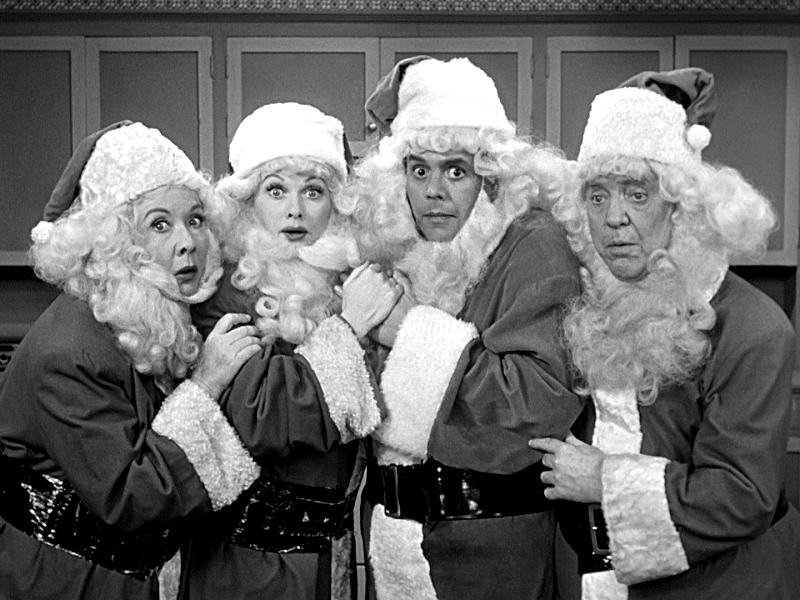
All of the advances of western civilization can be traced back to these seven people.

And yes, I very much enjoy those classic shows I mentioned before, but as I’ve written in the past, I’m always on the search for something new. Anybody who reads this column on a regular basis knows of my deep, profound love for Abbott Elementary and Star Trek: Lower Decks, but that doesn’t mean there isn’t room in my heart for a brand-new set of wacky characters to give me a tickle. The new television season is starting soon (kids, ask your parents) and there are a few shows that I’ve picked up on my radar that I’m interested in. Now I haven’t watched any of these shows yet. I don’t know any more about them than what I can read in a network-provided press release or watch in glimpses of the trailers that are out there in the wild, but today I want to talk about three upcoming shows that have caught my interest enough at least to watch the first few episodes once they start airing in a month or two.

The first two shows are coming from the NBC network, and I discovered them because the house of the Peacock showed approximately 872,000 commercials for each of them during the course of their Olympic coverage. But while Katie Ledecky was waiting at the finish line for the rest of the competitors in her swim meet to catch up, there was almost enough time to air an entire episode of the upcoming show St. Denis Medical. The show is done in the popular “mockumentary” style of shows like The Office and Abbott Elementary, only this time instead of a dysfunctional paper company or a dysfunctional public school, it’s set in a dysfunctional hospital, the optimal setting for wackiness. The show stars Allison Tolman as Alex, the recently-promoted supervising nurse in the hospital’s emergency department, at the head of an ensemble that includes David Alan Grier, Josh Lawson, Mekki Leeper, Kahyun Kim, and Kaliko Kauahi. 

It’s just like The Office! You got yer Jim, you got yer Pam…I think David Alan Grier is Todd Packer…

There are two reasons that this show got my attention. First of all, it was created by Justin Spitzer, a former Office writer who went on to create the show Superstore, which I very much enjoyed. (Kaliko Kauahi, who played Sandra on that show, is another reason I’m interested.) The other thing that gets my attention is Wendi McLendon-Covey, who’ll be playing the executive director of the hospital. You may know her from Reno 911 or The Goldbergs, where she played the over-the-top matriarch of the family. Superstore and The Goldbergs are two of the more recent comedies that I’ve really gotten into, so I’m already invested in some of the pieces in this particular jigsaw puzzle. And while the commercials definitely seem to imply that McLendon-Covey’s character is going to be the “Michael Scott” of this particular series, the energy she’s giving is more button-down and straightlaced than the chaotic mama vibe she used on Goldbergs for the past ten years, so I’m hoping to see her stretch out and do some new things. The show is scheduled to premiere on November 12, so I’ll…well, I’ll probably watch it on Peacock the next day, because who actually watches live television anymore?

The next NBC show that’s grabbed my attention is Happy’s Place, starring Reba McEntire. McEntire is, of course, a legend of country music, but I’m not going to hold that against her. Undoubtedly, history will remember her more for her role in the Tremors movies and, even more importantly, the 2001 sitcom Reba. In that show, she played a mom who was newly single after discovering that her dentist husband had an affair with his hygienist, and the weird new family that was forged as a result. She proved herself to be a good comic actress in that show, playing the sort of no-nonsense, smart-mouthed mom that we all love so darn much. In the new show, Reba’s father is recently deceased, leaving her with two legacies: ownership of his bar, and a half-sister she never knew about (played by Belissa Escobedo). Reba seems to have a track record for comedies based on infidelity.

Regardless, I really do like her as an actress, and I’m glad to see that Happy’s Place will be reuniting her with Melissa Peterman, who in the previous sitcom played the hygienist who broke up her marriage and somehow turned into a weird surrogate sister. The two of them had fantastic comic chemistry in that show, and they’ve worked together several times since then. You get the sense that the two actresses are genuinely friends in real life, and that often translates to good performances, especially in comedy.

Meanwhile, the Star Trek: Voyager nerds are just hoping that Naomi Wildman makes a guest appearance.

Some people will scoff at the fact that, like Reba, Happy Place’s is a traditional multi-camera sitcom. It’s become popular in the last decade or so to turn your nose up at shows that have a studio audience and a laugh track. My rebuttal to this is: Cheers, Fraiser, The Honeymooners, Happy Days, Laverne and Shirley, Night Court, Good Times, Sanford and Son, Home Improvement, Everybody Loves Raymond, Mama’s Family, Newhart. Many, if not the majority, of great television comedies were in this format. A format is a format, and whether a show is good or bad has nothing to do with the format and everything to do with the writing and performances. It’s never going to be an obstacle to me giving a show a chance, and I’ll be tuning in on or around its premiere date of Oct. 18.

The last show I’m looking forward to is coming from the FX network and streaming on Hulu, English Teacher. I’m a little wary of this one, but I’ve heard enough to at least want to give it a shot. The show is about a high school teacher, played by Brian Jordan Alvarez, who – and here I am quoting – “finds himself at the intersection of professional, political, and personal aspects of working at a high school.” This is perhaps the most bland description of a television show in the entirety of the universe, and in and of itself would not be of particular interest to anybody. What’s more, I’m always a bit apprehensive about shows set in a school, since historically speaking, most shows set in schools have had little to no idea what a school is actually like.

I have to be honest, this is exactly what happens in my classroom every morning.

Then I watched the trailer, and I have to admit, the writers seem to have at least an idea of what they’re talking about. In the trailer, Alvarez’s character approaches the principal (played by Enrico Colantoni) about an essay that a student turned in that was clearly written by ChatGPT. Colantoni’s character replies that he doesn’t see the problem, as AI is “the future,” which makes it quite clear that he is the villain of the piece.

Okay, maybe “villain” is too strong a word, but he’s obviously playing the usual sitcom trope of the inept authority figure. It’s not flattering, but anyone who has taught for any period of time has had a period where they’ve had to deal with an administrator who has no business being an administrator. (I am lucky in that I do not currently have that problem, thank goodness, but I’ve definitely felt it in the past.) The trailer was starting to win me over, and it got a little better as we watched him deal with a student who claims that it’s cultural appropriation for her friend to try to learn to speak Mandarin because “you’re not Japanese.” The joke, of course, is that the student is espousing a self-righteous opinion that is itself based on totally inaccurate information, and boy-HOWDY, have I dealt with THAT in my time as a teacher.

Now I’ve only seen about 90 seconds of the show, so it’s entirely possible that the rest of it will be a train wreck, but the point of a trailer is to get you interested enough to give the show a chance, and this one has succeeded. I don’t know if I’ll ever watch a second episode after the show premieres on Sept. 2, but I know enough to watch at least the FIRST one and hope for the best.

Ultimately, I don’t know if any of these shows will be any good. And if they ARE, I don’t know if I’m the only one who thinks they are. They may stink. Or worse, they may be tossed on that far-too-large pile of shows that had potential but never made it past a first season. But maybe, just MAYBE, at least ONE of them will be a new show to make me chuckle and keep those endorphins flowing.

And that’s all I’m really looking for anyway.

Blake M. Petit is a writer, teacher, and dad from Ama, Louisiana. His most recent writing project is the superhero adventure series Other People’s Heroes: Little Stars, volume one of which is now available on Amazon. You can subscribe to his newsletter by clicking right here. If one of these shows DOES turn out to be great but winds up getting canceled anyway, he apologizes. The universe seems to like letting him get attached to something and then yanking it away. It’s like that Coke with Coffee they had for a year or two and then discontinued, leaving his mornings bleak and full of despair. Not that he’s bitter or anything.

Geek Punditry #86: This is How We Do It Presents…Absolute Power

Hello, everybody, and welcome to This is How We Do It, the latest Geek Punditry feature-within-a-feature. In This is How We Do It, which I intend to be a recurring segment here, I’m just going to showcase a piece of storytelling that I think is being done exceptionally well and talk about why I think it’s so great. It is the antidote to Internet negativity. And the subject of the inaugural This is How We Do It is going to be the currently-ongoing DC Comics crossover event, Absolute Power. Fair warning, it’s not going to be possible to talk about why this is so great without spoiling some things, so this will be a spoilerful discussion. If you’re not up to date on reading this fantastic series, you may want to hold off on reading this at least until you get to issue #2 of the main title, because that’s the most recent issue as I write this.

Get ready, because this one ROCKS.

Comic crossovers are by no means a new thing, and I’ve talked before at length about them but I feel like I need to give a brief overview of what I mean here. In these “event” storylines, there is usually a main narrative that brings together the various characters of a publisher’s shared universe (in this case, DC Comics), while assorted spin-offs and special issues of the series that star the individual characters tell other angles of the story. The earliest such event I can find that followed this format is DC’s Crisis on Infinite Earths from 1985-86. (It’s true that Marvel Super Heroes Secret Wars came out first, guys, but there were no spin-offs of that book, which to me makes it more of an embryonic version of the crossover as it exists today.) DC has done dozens of them, as has Marvel. In fact, pretty much every publisher that has a shared universe (or even Multiverse) has dipped their toes in the format at one time or another – Image Comics, Valiant Comics, IDW, Dynamite, even Archie Comics has had crossover events. 

So what makes Absolute Power so good? In a word: construction. Some events seem to come out of nowhere and have little ongoing impact – last year’s DC summer event Knight Terrors, for instance, has made relatively few ripples after it was over. Others will sometimes take existing heroes and force them to behave wildly out of character for the purposes of the narrative (lookin’ at YOU, Marvel’s Civil War). And sometimes, they’re just so overblown and complicated that it’s impossible to keep track of what’s actually going on. Absolute Power suffers from exactly zero percent of these problems.

Mark Millar knows what he did.

A good crossover really needs to start with a good antagonist, and this story has one of the best: Amanda Waller, who has decided that superheroes are the biggest threat to the planet. Waller is an established character, best known for her role as being in charge of the various incarnations of the Suicide Squad (a group of supervillains that she forces to do jobs for the government in exchange for reduced sentences – with the caveat that if they step out of line she’ll set off an explosive device she had implanted in their NECK). Waller has always tread the line of what makes an anti-hero, usually using underhanded methods to accomplish goals that are more or less positive…ish. However, that placed her perfectly for her role of the villain in this story, being a natural extrapolation of who she has always been as a character. In fact, Waller is the BEST kind of villain – the sort that, in her own mind, is 100 percent justified in her actions. Waller COMPLETELY believes that what she’s doing is the right, moral, ethical thing to do, and that makes her both more interesting and more dangerous than any bad guy who’s just in it for the Evulz. 

What do you MEAN, she doesn’t look like a good guy?

The next thing that makes a crossover work, in my opinion, is setup. Before the original Crisis on Infinite Earths happened, there were months of stories from DC where a mysterious, shadowy figure was shown to be monitoring the heroes of Earth. (As it turned out, he wasn’t the bad guy, but you could certainly be forgiven for thinking he was.) Absolute Power has a more obvious setup, but a very effective one. Waller has taken the villains from two recent storylines – Queen Braniac from the House of Brainiac Superman story, and Failsafe, a robotic duplicate of Batman with all of his tactical genius and none of his morals and ethics. She has combined their respective tech with the work of the old Justice League villain Professor Ivo to create a set of androids who can steal superpowers, and sent them out to attack, depower, and capture both superheroes and villains alike. In the first issue of Absolute Power, dozens of heroes have their powers stolen and most of them are taken prisoner by Waller. By the time the second issue rolls around, those heroes who remain at large have begun assembling at Superman’s Fortress of Solitude to plan a counter-offensive.

Imagine how nasty a character Amanda has to be that THESE two are her MINIONS.

Another important element is that the characters be true to themselves, and here I’ve got to give it up to writer Mark Waid. Waid was a mainstay of DC Comics in the 90s and early 00s, with a legendary run on The Flash and turning out the best of DC’s Elseworlds line with Kingdom Come. After a long exile, he’s returned to DC and is crushing it with books like Batman/Superman: World’s Finest. In short, there are few people in comics who know the characters as well as Mark Waid, and he’s proving it again here. Aside from using Waller to her logical extreme, he’s showing perfectly who the various DC heroes are, such as a depowered but still dauntless Superman. When Batman and Mr. Terrific get into a squabble over who should be the leader of this little resistance group, it’s Nightwing who steps up, gives a rousing speech that would make Jean-Luc Picard stand and applaud, and takes command. The best part, though, is Batman’s reaction: watching Dick Grayson, the original Robin, take his place as the natural rallying point for a group of shattered, broken, and frightened heroes, Batman simply gives us a sly smile and says, “That’s my boy.”

For Batman, this is an almost shamefully embarrassing display of pride.

And I haven’t even talked about the artwork by Dan Mora, who is probably my favorite artist working at DC right now. It’s phenomenal, with real emotion and characterization displayed on the characters’ faces and mannerisms. A good artist can always make or break a book, and Mora – as he’s done with Waid on Batman/Superman – is doing an incredible job.

The next aspect that makes a crossover work is what happens in the spin-off books. In the original Crisis, the main story was supplemented by chapters in the various ongoing comics showing what was happening to those heroes during the Crisis itself, and that was the template for crossovers for a long time. Somewhere along the line, though, it became less likely for an individual series to be interrupted by a crossover and we’d get several – sometimes DOZENS – of spin-off one-shots and miniseries doing the job instead. I don’t think it’s a coincidence that this shift in how crossovers were told corresponded with the point where the comic book WRITERS became the stars of the show, their prominence somewhat overtaking the artists. If the guy writing, for example, Uncanny X-Men at the time didn’t want his X-Men storyline interrupted because of World War Hulk, then the main title would remain unmolested and a World War Hulk: X-Men miniseries would take its place. The far extreme of this policy was what DC did last year with Knight Terrors, where EVERY ongoing DC comic was replaced for two months with a two-part miniseries showing that character’s interaction with the event, and many of them were never touched upon again.

For the most part, I’m in favor of a writer getting to tell the story the way they want, but speaking as a READER, I prefer when the crossovers touch the regular title. To me, that gives them greater weight, makes them feel more “important” than putting them into a spin-off miniseries. Absolute Power has returned to form on this. The ongoing titles are picking up the story threads started in the main series and running with them. After Nightwing gives the heroes various assignments in Absolute Power #2, we see them start to carry out their missions in the pages of Superman, Batman, Wonder Woman and other titles. In other books, like Green Lantern, we get side stories of some of the heroes who have been captured or are still on the run. And then there’s Green Arrow, which deals with the most shocking development of the story to date: longtime Justice League member Green Arrow has inexplicably turned tables and joined Amanda Waller, fighting his friends! Obviously, anything this incredible has to be covered in the main Absolute Power title, so what’s going on in his book right now? We see how his supporting cast – his son Connor, various former sidekicks and so on – are reacting to the fact that their patriarch seems to have broken bad. 

Crossover chapters that are actually RELEVANT? Is that ALLOWED?

There are, I should concede, two spin-off miniseries for Absolute Power, but both are a bit more justified. Absolute Power: Origins is a deep dive into Amanda Waller’s backstory, showing how she went from a grieving mother who lost family members to violence (and how many heroes have had that same motivation?) to the magnificent bastard she is today. Absolute Power: Task Force VII, on the other hand, tells stories focusing on Waller’s seven power-stealing androids and their interactions with the heroes. Neither may be absolutely NECESSARY to the story, but I feel as though they both add something that otherwise we wouldn’t have, which is what a good spin-off should do. 

The last thing that I think makes for a solid crossover is the impact of the story after it ends. I hate to keep picking on Knight Terrors, because I don’t really think it was a bad story, but the overall impact on the DC Universe since then has been negligible. The only significant thread I can think of was increasing Waller’s paranoia, but she already had that in spades and, what’s more, the Beast World event that FOLLOWED Knight Terrors did that same job, but better. Obviously, it’s impossible to tell right now just how Absolute Power will shape the DCU going forward, but there are hints in the solicitations for upcoming comics. After the series ends we’re going to be treated to a new initiative called “DC All-In,” which will start with a one-shot before branching out. This isn’t going to be a continuity reboot as DC has done in the past, but it will launch several new titles and some of the existing books will get new creative teams and new directions. The one that I’m most excited for will be the newly-announced Justice League Unlimited, done by the Absolute Power team of Waid and Mora. Although they’re playing details close to the vest until the end of Absolute Power, preliminary artwork and buzz indicate that this comic will be taking its cue from the cartoon series of the same name, in which the League expanded to include virtually every hero in the DC Universe, with different ones called up as needed. This is honestly the way I’ve thought they should have run the League for the past twenty years, since the cartoon was launched, and the fact that it’s finally happening makes me giddy. The fact that it’s Waid and Mora taking the reigns makes me ECSTATIC. 

Holy crap, guys, Santa got my letter.

So even now, only halfway through the event, I feel as though Absolute Power has all the earmarks of one of the DC Universe’s classic storylines. All the pieces are in place and the right creative team is there. I haven’t enjoyed a book of this nature this much in years, and the fact that I’m equally excited for the stuff promised to come next makes it even better. So for the next creative team – from any publisher – who’s looking to do a multi-character, multi-title crossover epic event series, I can offer no better advice than to look to Mark Waid, Dan Mora, and Absolute Power.

Because THIS is how we do it.

Blake M. Petit is a writer, teacher, and dad from Ama, Louisiana. His most recent writing project is the superhero adventure series Other People’s Heroes: Little Stars, volume one of which is now available on Amazon. You can subscribe to his newsletter by clicking right here. Now if only the next event series were to bring back Captain Carrot to his deserved place of prominence in the DC Universe. 

Geek Punditry #85: Playing Favorites With School (Part Two)

It’s time for round two of Playing Favorites With School! For any newcomers out there who, perhaps, didn’t see last week’s life-changing exploration into pop culture effluvia, “Playing Favorites” is my recurring feature in which I ask my friends on social media to suggest categories related to a specific topic, then I expound upon what I think are some of the best examples of those categories. In part one of the “School” series, I talked about some of my favorite School Sitcoms, High School Superheroes, High School Horror movies, and shows where the actors were maaaaaybe a little too old to be playing teenagers. This week we’re returning to the pile of suggestions for a few more rounds!

Hero Schools

Sandy Brophy asked about my favorite “hero schools.” I’m interpreting this as a school that is intended to teach students to be heroes, so I’ll skip the obvious answer of Hogwarts, as that’s more of a general education facility in the setting and not specifically intended to turn out champions. There’s a little overlap with one of last week’s suggestions – in “High school superheroes,” I talked about the amazing Aaron Williams comic book/webcomic PS238, which is about an elementary school for superheroes. Not long after that, though, it became known among comic book readers as “the idea so nice Disney stole it twice,” as the House of Mouse released the films Sky High (2005) and Zoom (2006), both of which feature a very similar idea. Of the two, I find that Sky High is a better film. The characters are more memorable and the world is fleshed out in a much better way. The story focuses on Will Stronghold (Michael Angarano), the son of two of the world’s greatest superheroes, who is sent off to the local superhero academy despite the fact that he did not inherit any of their powers. This, by the way, is where the comparison to PS238 REALLY comes into play, since this is almost exactly the backstory of one the main characters in that comic’s ensemble. The story goes in a different direction, though, and it’s a fun, colorful movie that really uses Kurt Russell (as Will’s super-awesome superhero dad) to very good effect.

It’s the same picture.

Marvel Comics also has a pretty good series that only came out in recent years, Strange Academy, about a school specifically for magic-users in the Marvel Universe. Set in New Orleans (which always gives it extra points from me IF it’s done well), the series focuses on a group of magic-powered kids who have been gathered by the likes of Dr. Strange, the Scarlet Witch, Magik of the X-Men (herself a graduate of one of the all-time great superhero school comics, The New Mutants) and other powerful mystical faculty members to teach them to use their abilities in ways that won’t rip open a portal to the Dark Dimension or something. The comic, by Skottie Young and Humberto Ramos, is a wild look into the magic side of Marvel, and can go from a lighthearted school comedy to a blood-chilling cosmic horror story in the course of a single issue. The main series ended a while back, but the Academy has stuck around in assorted miniseries and one-shots since then.

Class picture day is a challenge.

The last one I’ll point to is one of my favorite science fiction novels of all time, Ender’s Game by Orson Scott Card. Following an alien invasion that was narrowly defeated, planet Earth has come together in a precarious alliance to prepare for another invasion that they are certain is imminent. As part of their preparations, they are finding the most brilliant children on the planet and taking them to an orbital Battle School where they are trained to fight the wars that will determine the fate of the human race. The novel focuses on Ender Wiggin, a five-year-old prodigy, who is brought to Battle School without knowing that many of the people observing him believe that he is humanity’s last hope. The book is an absolute masterpiece of characterization and world-building, and I’ll never forgive the film adaptation for falling so flat. 

I had a whole different joke planed for this caption until I saw the STUPID sticker on the cover.

Pep Rally Scenes

Duane Hower tossed out the clever suggestion of “movies with a pep rally scene.” I’m going to be honest, I actually had to turn to Google for this one, because although I feel like I’ve seen a hundred movies with a pep rally, for some reason those specific scenes didn’t click into my brain until I went back and started looking. A pep rally, of course, is that singularly high school phenomenon where the school gathers and cheers – usually, but not always – for the school’s athletes in order to get them psyched up for the Big Game. It’s a standard of American high schools, although I admit, I’ve wondered how well such things translate in other countries. DO any other countries have pep rallies? If you went to high school outside of the US, please, let me know if you ever went to a pep rally. 

Anyway, the best motion picture to ever encapsulate this singularly academic experience is the classic Alfred Hitchcock historo-religious drama…

Project ALF.

Bah-dump, TISSSSSSS

The first one that rings a bell to me is the Emma Stone comedy Easy A. I’ve always liked this movie, as it’s a very clever comedic modernization of Hawthorne’s The Scarlet Letter, featuring a high school girl who is scandalized when she lies about sleeping with a college guy, and before long the (false) story is turning up more places than Snoop Dogg at the Olympics. Olive (Stone’s character) leans into the lie at first, but as things spiral out of control she needs to find a way out. As part of that plan, she interrupts a pep rally with a musical performance of the song “Knock on Wood.” It makes sense in context. But the scene is goofy and wild, and utterly in character for Olive while using the tropes of a high school movie to advance the overall theme of the film. In other words, I like this silly scene because, in actuality, I think it’s pretty smart. 

It’s always fun to see fans of this movie get disappointed when they find out it’s actually based on literature.

Aaaand…I’m actually having trouble thinking of any other movies with a pep rally that I actually like. I could have sworn that there was one in Teen Wolf, but maybe I’m just thinking of the basketball games. Sorry, Duane, looks like yours is gonna be a one-and-done.

Movies based on high school reading lists

Rachel Ricks wants to know what are some of the best movies based on books that may be read in a high school English class. If Rachel and I hadn’t gone to college together, I would suspect that this question was posed by a student hoping to get suggestions for a movie to watch in order to get out of their homework and I would have to say, “Nice try.”

But the fact of the matter is, even the BEST movies adapted from books never match up 100 percent with the text. Writing and filmmaking are two very different disciplines, with different demands and different requirements, and what works in one medium does not always work in another. I like to think of movies as interpretations of a book – presenting the story in a way that, hopefully, maintains the spirit of the original while still standing on its own.

All of that is to say that I think To Kill a Mockingbird is perhaps the greatest movie ever made based on a book that I would assign to a student. The book is a masterpiece – a fable about a good man fighting a good fight against overwhelming odds. In this case, that good man is Atticus Finch, and that good fight is defending an innocent black man from charges of raping a white woman in a time and place where such an accusation not only puts the life of the accused on the line, but pushes the entire town onto the edge of a cliff that it may plunge off depending on how things go. It’s kind of sad how relevant that still is. The book is fantastic and the movie is just as good. Gregory Peck’s depiction of Atticus was once voted the best film hero of all time by the American Film Institute, and even though that was before any of the Deadpool movies were made, I think it’s a ranking that holds up.

Left: A masterpiece. Right: Also a masterpiece.

It’s a lot to get through (both the movie and the book), but I think Gone With the Wind deserves a place on this list as well. Margaret Mitchell’s novel of the Civil War is so iconic that it informs pretty much EVERYBODY’s mental image of Georgia in the 1800s, even if they’ve never read the book or seen the movie. The film itself is also a triumph of the art form, adapting a gargantuan novel into a mammoth film while still being engaging and compelling throughout. Plus, it’s indirectly responsible for one of the funniest sketches in the history of The Carol Burnett Show. 

And as an English teacher, I do have an unabashed love of the works of William Shakespeare. I’ve taught several of his plays Romeo and Juliet, Julius Caesar, Othello, but I think the best movie I’ve ever seen based on one of his works is the Kenneth Branagh version of Hamlet. The film clocks in at a hefty four hours long as Branagh – unlike most people who adapt Shakespeare – films the ENTIRE text of the play, making no edits or omissions. You’re left with a film that feels a little bloated in places but, at the same time, is an excellent tool for showcasing the bard’s words and has some dandy performances.

It’s not 100 percent accurate, of course. In the original Shakespeare Hamlet only frosted the tips of his hair.

Honorable mention goes to two classic movies that are based on classic works of literature: Frankenstein and The Wizard of Oz. The reason these two only get an honorable mention is because, as anyone who has both read the books and seen the movies can tell you, the movies are fantastic, thrilling, celebrations of the cinematic artform…but dang, they do a piss-poor job of actually adapting the story of the book. I love them both, but not as adaptations.
This brings us to the end of yet another installment of Playing Favorites, folks. Once again, I hope you’ve enjoyed this somewhat random peek into what rattles around inside my brain. What other column are you going to find that talks about both Strange Academy and To Kill a Mockingbird on the same page? If you want to participate in upcoming Playing Favorites columns, be sure to follow me on Facebook, Threads, or “Twittex” for the next time I toss out a topic and wait for your responses. Or even subscribe to my weekly newsletter, where I chat about what I’m working on and throw out my legendary “What’s Cool This Week?” recommendations. And in the meantime, have a great school year – or, alternately, appreciate the fact that you don’t have to go back.
Blake M. Petit is a writer, teacher, and dad from Ama, Louisiana. His most recent writing project is the superhero adventure series Other People’s Heroes: Little Stars, volume one of which is now available on Amazon. You can subscribe to his newsletter by clicking right here. Was there a pep rally in Buffy the Vampire Slayer? Damn it, this is hard. 
Geek Punditry #84: Playing Favorites With School (Part One)

It’s August, gang, and across this great fruited plain of ours, Americans are gearing up for that most turbulent of seasons: back to school. Many of us are already back in session, and the rest are getting ready to eke out those last bits of summertime fun before the doors fly open. Stores are stocked with pencils, students are picking out their first day outfits, parents are trying to get them to answer questions for their “Back to School” social media posts, and teachers are doing their best to keep the economy of Columbia solvent by buying all of the coffee. And what better way to commemorate this change of seasons than with another installment of everyone’s favorite Geek Punditry feature-within-a-feature, PLAYING FAVORITES? 

If you’re new, here’s how it works: a couple of weeks before a playing favorites column, I go out on social media and give my peeps a topic, such as SCHOOL, and ask them to suggest different categories for me to talk about. Then I select my favorite categories from your suggestions and tell you all what I think are some of the best of the best in each one of them. It’s a good time for everybody. So let’s see what kind of back to school shenanigans were on your minds this week, shall we?

Dawson Casting

Steven J. Rogers asked for some of my favorite examples of actors who are a little “long in the tooth” for their role as a high school student. The experts in this phenomenon (by which I mean the editors of TV Tropes) call it Dawson Casting, the practice of using actors in their 20s or even 30s to play high school students, named for the TV executive who invented the system, Herringbone Q. Casting.

No, seriously, it’s named for the show Dawson’s Creek, which is one of the most well-known examples of the trope, but it’s by no means the FIRST and certainly not the WORST. The trope goes back hundreds of years. Even Shakespeare is likely to have indulged in it – Hamlet, for instance, is supposed to be a college student, but there are lines in the fifth act that indicate that he used to get piggyback rides from his father’s court jester, who has explicitly been dead and buried for 23 years. Unless ol’ Yorick was playing games with Hamlet as a zygote, the math don’t math. 

There are two ways to look at this question: am I trying to figure out who did it BEST – as in, which older actors were most convincing as teens? Or am I trying to figure out who did it in the most ENTERTAINING fashion, as in making me burst out laughing when a guy who could be doing commercials for Metamucil saunters into homeroom? I’ll answer both.

Most of these kiddos are older than they look. Especially the one in the glasses.

As far as who was the most convincing, I think the crown has to go to the TV version of Buffy the Vampire Slayer. When that show launched in 1997, Sarah Michelle Gellar was 20 playing a 15-year-old – and to be fair, that’s a much smaller gap than many Dawsons have had to contend with over the years. But she was the YOUNGEST member of the main cast. Alyson Hannigan was 23 and Nicolas Brendan 26, and all of them were pretty convincing as teenagers. The only one who you couldn’t really buy was Charisma Carpenter (27 at the time). And while you aren’t really shocked to hear that these actors were in their 20s, it’s not nearly as blatant as some of the more hilarious examples of this trope. 

In general, the shows that get away with this the best are the ones that don’t try to get away with as much. The high school students in Cobra Kai were mostly in their early 20s when the show began, and not noticeably too old. On Smallville, I don’t think that Tom Welling was really successful at convincing anybody that he was 14 years old in season one (the actor was 24 at the time), but the rest of the cast was mostly in their early 20s and far more convincing. I suppose the trick with pulling a Dawson is to not press your luck.

You know who DID press their luck? Stranger Things. It wasn’t a problem in the first couple of seasons – with the five main kids played by actual…y’know…KIDS. And even the teenagers were pretty convincing: Joe Keery (Steve) was 24 playing 17, Natalia Dyer (Nancy) was 21 playing 16, Charlie Heaton (Jonathan) was 22 playing 16, and all of them were believable as high school students. But the long gaps between seasons were starting to strain credulity even in season four, and Keery is going to be 32 playing 19 or 20 in the show’s upcoming final season. He may be able to pull it off, but the likes of Gaten Matarazzo (Dustin) and Finn Wolfhard (Mike) playing 15 at the age of 22 are going to be a harder sell, especially since we’re all so familiar with what they looked like AS KIDS. 

No really, it’s just two and a half years later.

But I don’t think any show has ever been as hilariously Dawsoned as the 70s sitcom Welcome Back, Kotter. When the show began in 1975, you had high school students played by John Travolta (then 21), Lawrence Hilton-Jacobs (23), Robert Hegyes (24) and Ron Palillo (26) and frankly, I would have guessed older for each of them. While they were around the same ages as many of the other “teenage” actors we’ve already discussed, they were nowhere near as successful at hiding their age. Alyson Hannigan could pass as a high school student, whereas Ron Palillo looked more like somebody’s podiatrist. Gabe Kaplan was once quoted as saying that the reason the show’s ratings collapsed after three seasons is that the cast was getting too old to convincingly play teenagers, which made me ask the obvious question: at what point DID he think they were convincing? 

“Signed, Epstein’s chiropractor.”

School Sitcoms

Rachel Ricks asked for some of my favorite school sitcoms. This is an interesting subject for me. Like so many of us, I grew up watching shows like Saved By The Bell, and I loved it. And while I never really thought that show was a documentary on the lives of high school students (I must have tried that “Time Out” thing a hundred times before I got hit by that marching snare drummer and decided to call it quits), I at least thought that it would get the SPIRIT of being high school right.

Damn, was that off. It’s almost hard to watch that show now, especially as a teacher myself, not only because of how inaccurate that show is in regards to how a school actually works, but because it casts virtually every adult as a total blithering idiot. Seriously, go back and watch that show sometime – it’s a miracle Mr. Belding can even tie his shoes. 

New drinking game: take a shot every time someone does something that should have gotten a teacher fired.

So when it comes to “school sitcoms,’ showing actual respect for teachers is a high priority for me, and that’s why I can’t stop talking about Abbott Elementary. It’s the rare school show that makes the teachers the stars rather than the students AND treats their characters with respect AND does a pretty accurate job of showing what school life is like. Granted, the teachers on that show have a bit more free time away from their students than a real elementary school teacher ever would, but I’m willing to allow that for the sake of comedy. What’s more, the characters all have real depth and charm, and most of them are very good at what they do. Plus the show deals with real issues such as government funding, parental involvement, and other issues that teachers fight against every single day, but does it in a way that’s entertaining. I can’t say enough good things about this show.

This is honestly my favorite comedy on TV right now.

I mentioned how the adults in Saved By the Bell are all buffoons. This is true, but it’s hardly exclusive to Bayside High. If you look back on the annals of TV shows in a school setting, I would guess 90 percent of the teachers (and parents, for that matter) are portrayed as morons. And for that reason, I have to have a special place in my heart for Boy Meets World. The show traces Ben Savage’s character (Cory Matthews) from elementary school through college, and although there were goofy grownups on occasion, that was by no means the norm. In fact, the show gives us William Daniels as Mr. Feeny, probably the Gold Standard against which all TV teachers should be measured. He’s compassionate, wise, understanding, but firm when necessary. He’s almost as much a parent to Cory as he is a teacher. Is it really realistic that he taught the same group of kids from fifth grade until they’re going for their undergraduate degrees? Absolutely not. But it’s an acceptable break from reality in the name of keeping such a fantastic character front and center in the show.

What Bandit Heeler is to fathering, Mr. Feeny is to teachering.

And although it’s not a television show, I love Archie Comics. I mean CLASSIC Archie Comics, their teenage sitcom romcom years, not the way they were adapted on Riverdale. I’m talking about the eight decades of comic strips about Archie Andrews struggling to choose between Betty and Veronica and going to Riverdale High. As a kid, I loved reading the stories (Jughead was kind of an icon for me) and as an adult I’ve come to appreciate the fact that the faculty of Riverdale High School – Miss Grundy, Professor Flutesnoot, Coach Clayton, Mr. Weatherbee – are usually portrayed as good, caring teachers who are doing their best for their students, even if they’re doing so while trying to avoid whatever catastrophe Archie is pulling along in his wake. 

To date, not a single one of my students has prompted me to write a bestseller. Get your act together, kids.

High School Superheroes

Lew Beitz wants to know who some of my favorite high school superheroes are. It’s an interesting question – in the early days of comic books, there weren’t a lot of teenage superheroes. The kids were relegated to the sidekick role for most of the Golden Age, and it wasn’t until the 60s – specifically with the introduction of Spider-Man – that having a teenager as the main star of a superhero series started to come into vogue. Spidey eventually went off to college and became an adult, but he remains the template for superheroes that are still in their high school years. Everyone from Firestorm to Invincible to Ms. Marvel (the current Kamala Khan version) has drawn inspiration from those early Stan Lee/Steve Ditko comics, and none of them are shy about it.

I’m going to try to limit my response to characters for whom school – or at least their classmates – are a major factor in their stories. Teen Titans, for example, isn’t going to work because the vast majority of those comics don’t include school as a setting at all, instead being the stories of kid superheroes who hang out independently of their own lives. So keeping school in mind, it’s hard to think of anybody who has done it better than Peter Parker’s DAUGHTER (in one corner of the multiverse, anyway), May Parker, the amazing Spider-Girl. Created by Tom DeFalco and Ron Frenz in 1997, this storyline comes from a world where Peter Parker aged more or less in “real time” from the 1960s and, at this point, had a teenage daughter who inherited his powers. Originally intended as a one-off character in an issue of What If?, “Mayday” Parker proved wildly popular and spun off into her own long-running series. And just like her dad, the supporting cast was largely full of her high school contemporaries – friends, rivals, potential love interests and so forth. Few comic books since those early days of Amazing Spider-Man had made such good use of the cast of teenagers, and I think it’s one of the reasons that this series remains a fan favorite, even though these days May herself only pops up once in a while during a “Spider-Verse” thing.

What I love about this cover is that it’s bold enough to ask “Who is she?” and dumb enough to answer the same question at the top.

And although Lew specified HIGH school, I have to give a special shout out to a series about ELEMENTARY school superheroes, Aaron Williams’ PS238. This comic book featured a cast of preteen titans, many of them the children of adult superheroes, who attended a special school deep beneath a “normal” elementary school where they were all ostensibly students. The book is really funny, and does a great job of picking apart many of the tropes and cliches of superhero comics. One student, for example, has the amusingly dull superhero code name “84,” because she is the 84th person registered with the standard FISS (flight, invulnerability, speed, and strength) powerset. Although the book IS very funny, it’s also a solid superhero comic book, creating a rich world with a fascinating history and a lot of secrets to uncover. The comic lasted only 51 issues, which wasn’t nearly long enough, although Williams has continued the adventures of the characters as a webcomic. 

One of the best comic books you’ve never read.

High School Horror

Finally my wife Erin – who absolutely understands her brand – wants me to talk about my favorite high school horror movies. And naturally, there is one that leaps right to the forefront of the mind, a chilling, terrifying tale that will ring out through the annals of academia from now until the end of time.

Project ALF.

Highly educational.

Actually, this might not be as easy as it sounds. Sure, there’s no shortage of horror movies about TEENAGERS, but how many of them actually have SCHOOL as a dominant setting? Friday the 13th, of course, is set at a summer camp. Some of the other stalwarts of the slasher genre like Halloween, A Nightmare on Elm Street, and Scream, may incorporate a school into the story (especially in the earlier installments), but the school is largely incidental. If the characters weren’t teenagers, you could have them all going to work and not much else would need to be changed.

So for horror that’s actually ABOUT a school, I’m going to give a shout out to a movie that I really think is underrated – Robert Rodriguez’s sci-fi/horror movie The Faculty. In what is essentially an updated version of Invasion of the Body Snatchers, Frodo Baggins and a group of high school students start to see signs that the faculty of their high school have become overcome by parasitic alien invaders, conquerors from beyond the stars who are coming to take over the Earth. Of course, it’s only this band of high school misfits that have a hope of stopping them. The Faculty came out in 1998, riding a wave of post-Scream teenage horror movies, and it somewhat got lost in the mix. But it’s a good movie, one that defies the surge of slasher knockoffs that it was swimming amongst, and has its own identity that’s pretty darn entertaining.

And this time it didn’t take Elijah Wood twelve hours of movie time to save the world.

Carrie, of course, is another classic of this particular subgenre. The movie is based on Stephen King’s first published novel, so the story of Carrie White really is what made his name in two different mediums. Sissy Spacek is Carrie – a teenage girl who has lived a sheltered life with a brutal, unforgiving fundamentalist mother. A rather late onset of physical maturation brings with it a telekinetic power of great destructive potential, and when her crueler classmates push Carrie too far, the blood flows. It’s a great movie, although I’ve always felt like Carrie was less a villain than a victim – an innocent who is beaten and berated until she actually breaks, and when someone with her kind of powers break, the consequences will be devastating. 

Finally, as someone who enjoys a good horror/comedy hybrid, I want to give a shout out to the 2020 film Freaky, directed by Christopher Landon and written by Landon and Michael Kennedy. This film is a slasher movie crossed with the body swap comedy of Freaky Friday. Millie Kessler, a bullied high school senior (Kathryn Newton), is attacked by a serial killer called the Blissfield Butcher (Vince Vaughan), who has gotten his hands on a cursed knife. The attack winds up swapping their minds, placing the Butcher’s consciousness in Millie’s body and vice versa (which is another example of a body swap comedy). A lot of the fun of this movie comes from watching Vaughn’s performance as a teenage girl, trying to get Millie’s friends on his side while Newton goes on a killing spree. It’s a really good movie, and helped Newton blow up to a point where she’s showing up in Marvel movies, while still doing indie horror like Lisa Frankenstein.

I’ve watched this trilogy seven times and it still doesn’t make a damned bit of sense.

That’s it for this week, guys. There will be more Playing Favorites next week, and if you’ve got some more suggestions, they’re welcome. In the meantime, a reminder for those parents who have yet to get their kids back-to-school supplies:

There is no excuse for Rose Art crayons. Ever. Just don’t. 

Blake M. Petit is a writer, teacher, and dad from Ama, Louisiana. His most recent writing project is the superhero adventure series Other People’s Heroes: Little Stars, volume one of which is now available on Amazon. You can subscribe to his newsletter by clicking right here. Have you ever tried to color an entire page with one of those stupid Rose Art sticks? You may as well be using a candle.

Three Wishes: The Toys That Made Us

A few days ago, a long national nightmare ended when Nacelle announced two new seasons of their hit documentary series, The Toys That Made Us. I became a huge fan of this series right away, and it’s been a long five years since we got any new episodes, so I’m absolutely ecstatic. To commemorate the news, I thought I would re-present to you a piece I wrote between seasons two and three for a sadly-defunct pop culture forum, a “Three Wishes” column where I suggested potential topics for future episodes. I’m happy to say that one of my three suggestions was included in season three, and the other two are going to be in the new episodes that were just announced, albeit in slightly different forms than what I suggested. It’s incredible that my ability to predict the future is incredibly accurate, provided that I only use it in ways that have absolutely no potential for monetary advancement on my part. Anyway, here’s what I wrote way back in 2018.

The best reason to subscribe to Netflix these days isn’t Orange is the New Black or Arrested Development. Heck, it’s not even Bright. The shining jewel in the streaming service’s crown is The Toys That Made Us, a documentary series that looks into the history and impact of some of the most popular toy lines of all time. With a lighthearted tone, the series dives into things that the viewer grew up with, chock full of interviews with the people who conceived the toys, creators who made the TV and comic book tie-ins, and supercollectors. Plus, you get all the classic toy commercials you grew up with.

The eight episodes, to date, have explored the worlds of Star Wars, Barbie, He-Man, G.I. Joe, Star Trek, TransFormers, LEGO, and Hello Kitty. That’s a ton of toyetic goodness. But if you’re like any other human being, you probably read that list and immediately asked, “Hey, what about…” and then filled in whatever your own favorite toy line is. That’s natural, there are hundreds of toy lines that have achieved enough success to have their fans, and while not all of them may have an incredible story to go with them, there are bound to be enough to fuel several more seasons of this show. Considering how popular and relatively cheap the show is to produce, Netflix would be bonkers not to ask for more. In Three Wishes, we take a look at something in pop culture and express three hopes for the future, whether those wishes are almost inevitable or pie-in-the-sky dreams. Today, we’re going to talk about three toy lines the producers should consider for their next round of episodes.

1. Teenage Mutant Ninja Turtles: The first choice here is pretty much a no-brainer. When you look at the independent comic book bubble of the 80s, it would be virtually impossible to argue that there was a bigger success than Kevin Eastman and Peter Laird’s Teenage Mutant Ninja Turtles. From their humble beginnings as a parody of Frank Miller’s Daredevil, the Turtles exploded into a global phenomenon. Their comics, through countless relaunches and spin-offs, have been featured at no less than five publishers They’ve starred in five television series and six theatrical films, and most significantly, they have dominated toy shelves for years. 

Playmates Toys has held the Turtles license since 1988, producing thousands of action figures and playsets. In addition to the countless iterations of the Turtles themselves, there have been figures of their allies and foes, movie- and TV-specific versions, the turtles in costumes such as (not officially) the Universal Monsters and (officially) the cast of Star Trek, and pretty much any other piece of merchandising you can name. With a documentary, the challenge is to find what’s compelling in real life and push it to the forefront. Although I don’t know anything about the Playmates company or how they have worked with Eastman and Laird or the Turtles’ current owner, Nickelodeon, the sheer volume and popularity of this franchise seems like it would be a ripe property to focus on for 45 minutes. 

2. Toy Biz/Marvel Toys: On the other hand, here’s a property where there is undoubtedly enough drama to make for a compelling TV episode. It may be hard to believe today, but there was a time in the 90s where the future of Marvel Comics was in serious doubt. Bad business decisions and bad acquisitions sent the biggest comic book publisher in the industry spiraling into bankruptcy, and things looked bleak at the house that Spider-Man built.

One of the things that helped pull Marvel Comics through was an unexpected merger of sorts with Toy Biz, a Canadian-based company that had the license to make Marvel toys at the time. The story of the twisting, winding relationship between the companies has been written about extensively, but that doesn’t mean there’s not more gold to mine. I’d love to hear the story told by the players in the game, as we learn the truth about how, without this little toy company, Marvel Entertainment may not have lasted long enough to make your kids cry all the way home from Infinity War.

3: McDonald’s Happy Meal Toys: In my house, we have a term for people who didn’t love McDonald’s Happy Meal toys: filthy liars. Because no matter what kind of Keto-adherent, La Croix-chugging diet you may be on today, when you were a kid there was nothing better than a cheeseburger, fries, and a new toy. Since 1979, McDonald’s has released thousands of toys, from licensed Disney characters to Chicken McNuggets in Halloween costumes to the legendary McDonald’s Changeables (toys that transformed from McDonald’s food into robots. That I never completed this series is my one regret in life.)

Not only can’t the Happy Meal toy be beaten in sheer variety, but it’s also ubiquitous as anything you can imagine, touching virtually every child in North America for the last four decades. What’s more, some of them are insanely collectible. Give me a tour of some guy’s crazy attic Happy Meal museum and, I promise, I’m watching to the end. Let’s see if anybody feels that strongly about the Burger King Kids’ Club. (Answer: no.)

Blake M. Petit, whose college roommate once said he could never date a woman who didn’t “get” Grimlock, has been pontificating about pop culture online for over a decade. You can follow him at BlakeMPetit.com and, if you’re feeling generous, check out his books on Amazon.