Geek Punditry #70: How to Use Your Noodle

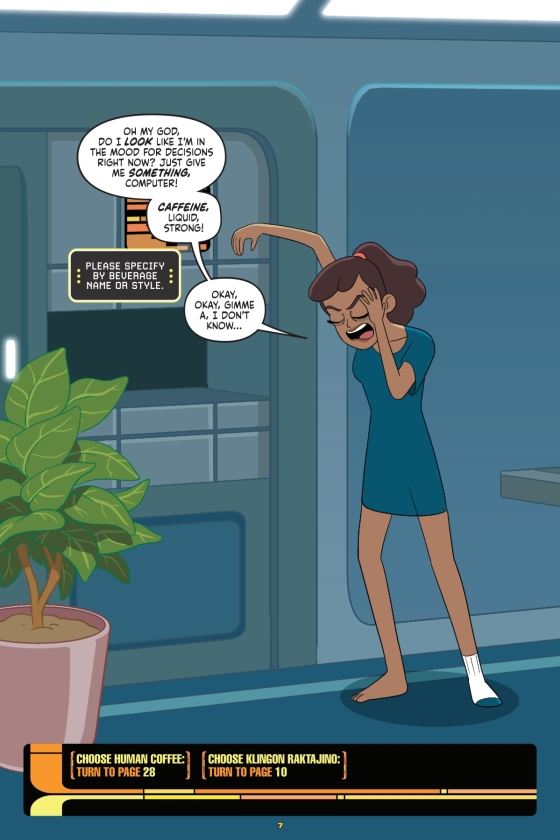
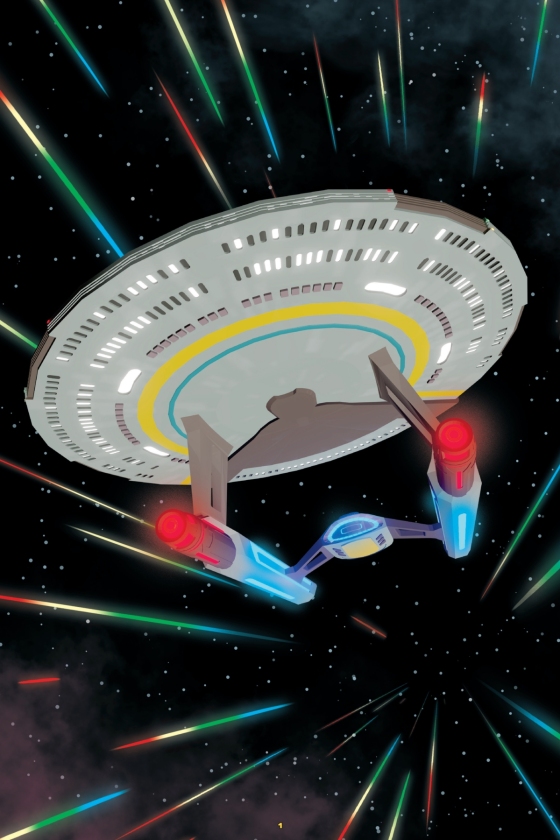
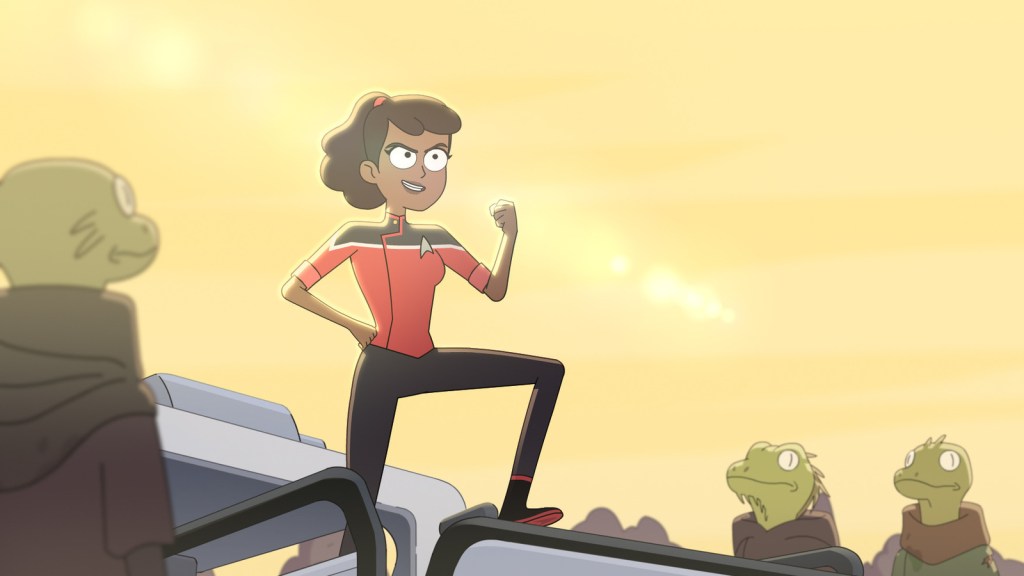
Paramount clearly has no idea what they’re doing with Star Trek right now. They’ve announced the cancellation of Lower Decks, which scientific researchers at Harvard University have conclusively proven to be the best Trek series in the past 25 years. They still haven’t announced any plans for what to do with the crew of the Enterprise-G, as established in the fan favorite final season of Star Trek: Picard. They killed Star Trek: Prodigy only to surrender it to Netflix. They’ve announced a new movie set in the Kelvin timeline, only it’s a prequel, which doesn’t make a damn bit of sense since the timelines are supposed to be identical up until the day Jim Kirk is born. And they’ve gone ahead with a Starfleet Academy series that nobody seems to be interested in, except for those of us who were happy when it was announced that Lower Decks star Tawny Newsome was joining the writing staff. As you may expect, this irrational and erratic behavior has led to a lot of debate and hand-wringing on the internet, because that is exactly what the internet is for. People have launched dozens of (sadly competing) Save Lower Decks campaigns, people are begging for the further adventures of Captain Seven of Nine…all the things you would expect.

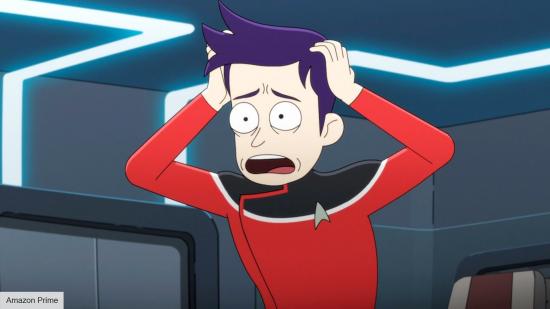
Today, my friends, we are all Boimler.

Until one guy on Facebook, in one of the trillion Star Trek groups I am a member of, loudly demanded a movie be made starring Worf and explaining the fate of the Enterprise-E. This ship, the main one used in the films Star Trek: First Contact, Star Trek: Insurrection, and Star Trek: Nemesis, was briefly alluded to in the final season of Picard when it someone made a comment that they obviously couldn’t use the Enterprise-E, then everybody turned to look at Worf, who gruffly proclaimed, “That was not my fault!” It was a hilarious moment in one of the most satisfying seasons of Trek in history, but what my fellow fan doesn’t seem to understand is that the thing that MAKES that moment satisfying is that we don’t know what happened. 

TV Tropes calls this sort of thing a “Noodle Incident.” This is an event from the past that the characters make a reference to without ever actually explaining it, forcing the audience to wonder. The term comes from Bill Watterson’s legendary comic strip Calvin and Hobbes, in which there was a running gag where Calvin furiously denies that anything happened with the noodles at school or, alternately, doesn’t deny that it happened but claims it wasn’t his fault. The question that lingers with the readers, of course, is: what could have POSSIBLY happened with the noodles that would be THAT BIG A DEAL? And the answer is: we never know. When asked about it once, Watterson said he decided against explaining what the Noodle Incident was because he knew there was nothing he could put on the page that would be as satisfying or entertaining as what the readers were imagining in their heads. And Bill Watterson was absolutely right.

…and they never did.

Since that episode of Picard dropped, there has been a LOT of furious speculation about what could have happened to the Enterprise-E and why, specifically, Worf would have been blamed. Was it lost in battle? Fell into a wormhole? Destroyed in a freak transporter accident? Did it get “Tuvixed” with the ol’ Excelsior? Did Worf lose it in a poker game with a Ferengi? There are a million theories, each wackier than the last, and while I have no doubt that some day someone will write either a novel or a comic book series about the tragic end of this ship, I personally hope that the story of its demise is never officially canonized, because I think it’s more satisfying that way.

Noodle Incidents are a staple of comedy. On Home Improvement there would be allusions to disasters caused by Tim Taylor with the implication that they somehow even surpassed the ones put on screen. How I Met Your Mother had an episode where Ted wakes up to find a pineapple in his bedroom with no idea how it got there, and it’s one of the few minor details left unexplained at the end of the series. The Golden Girls milked this trope like an over productive cow. Rose’s half-told St. Olaf stories and Sophia’s vague yarns in which one is to “Picture it: Sicily” would often leave out details that forced the viewer to close in the gaps with their mind…and in every case these episodes were all the funnier without filling in the blanks. It’s almost like watching Rick and Morty on Adult Swim, where all of the swear words are bleeped out, versus watching it on MAX, where the profanity is allowed. The truth is, it’s actually funnier when you don’t hear the curse words, even if the word being hidden is obvious.

Turns out, the unedited St. Olaf stories are way, way filthier than anything on Rick and Morty.

Noodle Incidents aren’t only good for comedy, though. They work well in more serious work, too. In Casablanca, the reason Rick can’t return to the United States is never explained, nor are all of the details of his previous relationship with Ilsa. In The Dark Knight, the Joker loves to tell conflicting stories about how he got his scars, but we never find out the truth. And it’s pretty common in action movies – especially those with ongoing characters – to make a reference to a prior incident without giving us details. We don’t know what happened to Indiana Jones in Honduras, we don’t know the truth about the “Rome affair” that James Bond was mixed up in, and we’re never gonna know what happened to Hawkeye and the Black Widow in Budapest. 

And that’s probably a good thing.

It works on the same principle as hiding the monster in a horror movie. One of the things that makes Jaws so great is that you don’t actually get a good look at the shark until the very end. In this case, it was a practical consideration: they couldn’t get the mechanical shark to work properly. But the effect was solid. Similarly, in Alien, none of the original posters or marketing revealed the look of the creature, nor did it appear in full until the end of the movie. It made for one of the best haunted house movies of all time, set in outer space. By the time the sequel rolled around the appearance of the Xenomorph had become iconic and director James Cameron knew he couldn’t possibly duplicate the suspense, so he decided instead to make the second film less of a horror movie and more of an action film – and it worked very well.

“But Blake, doesn’t that suggest you may get more mileage out of the characters if you explored these blank spaces in their history?” No, no it doesn’t, because those reveals were always planned and were done for thematic effect, not plot reasons. Fans claim they want Noodle Incidents explored, but when they are, the result is invariably disappointing. I’m going to give you the most famous example in history:

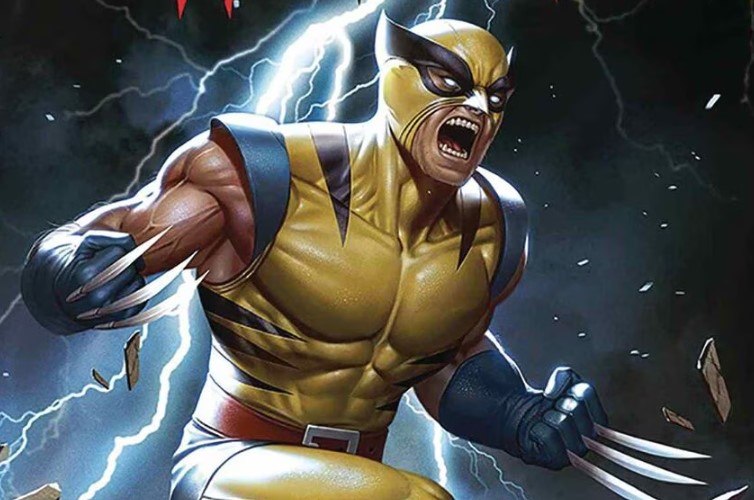
Wolverine.

Turns out those things are actually made of pasta. Rotini, specifically.

When Wolverine first appeared in the comic books in 1974, he was an agent of the Canadian government sent to take on the Hulk. We found out later that he was a mutant, what his powers were, and that those claws of his were actually embedded in his hands as opposed to attached to his gloves (which was what the original creators had intended). But we didn’t know his past. As it turned out, Wolverine didn’t know his past either. He had been the subject of an experiment that bonded the indestructible metal Adamantium to his skeleton, but the process had essentially destroyed his memory. Every so often we would get vague flashes, such as an encounter with Captain America back in World War II, that seemed to indicate Wolverine was much older than he appeared, but we knew nothing specific.

And it was great. I would argue that the mystery is one of the things that made Wolverine such a popular character throughout the 80s and 90s. Then, in 2001, Marvel’s then Editor-In-Chief Joe Quesada decided it was finally time for the story to be told in Origin. Quesada, Marvel vice president Bill Jemas, and scripter Paul Jenkins collaborated on a story that revealed Wolverine – who had always thought his name was “Logan” – was once James Howlett, a sickly child born to a wealthy plantation owner in 19th century Canada. The story shows James’s powers developing, including the first time painful time he extended his claws. It explored the backstory he shares with his arch-enemy Sabretooth. It even seems to offer a Freudian explanation for his obsession with redheads. And Origin was…well, it was okay.

Also the source of Wolverine’s legendary catch phrase: “OH MY GOD, THIS HURTS SO BADLY! AUGH! AAAAAAUGH! THIS IS SO MUCH MORE PAINFUL THAN YOU CAN POSSIBLY IMAGINE! AAUGH! CUT OFF MY HANDS! PLEASE!”

But here’s the thing, folks: if you’re going to take away a Noodle Incident, the resulting story should be a hell of a lot more than just “okay.” There have been a lot of Wolverine stories told in the 23 years since his origin was revealed, but I can’t say that there have been ANY that were better stories BECAUSE I know his origin now. And if it doesn’t make the stories better, then what was the point?

Noodle Incidents, these holes in the past, are a fun bit of writing. (Those are NOT “plot holes,” however. That’s an entirely different thing that people on the internet don’t actually understand. We’ll talk about those some other time.) You can dump all kinds of weird stuff in there, and leaving them open invites the readers to do the same thing. It’s a narrative device that allows the writers to seem more clever than they actually are and in a way makes the reader or viewer a participant in the backstory of their favorite characters. Once you’ve thought about an unrevealed piece of backstory for a while, you’re never going to have a revelation that’s going to live up to what’s going on in your head. It’s best that we all remember it.

Just like I had to do that time in Kansas City with the ocelot and the caprese salad. It was a wild night.

SPECIAL REMINDER:

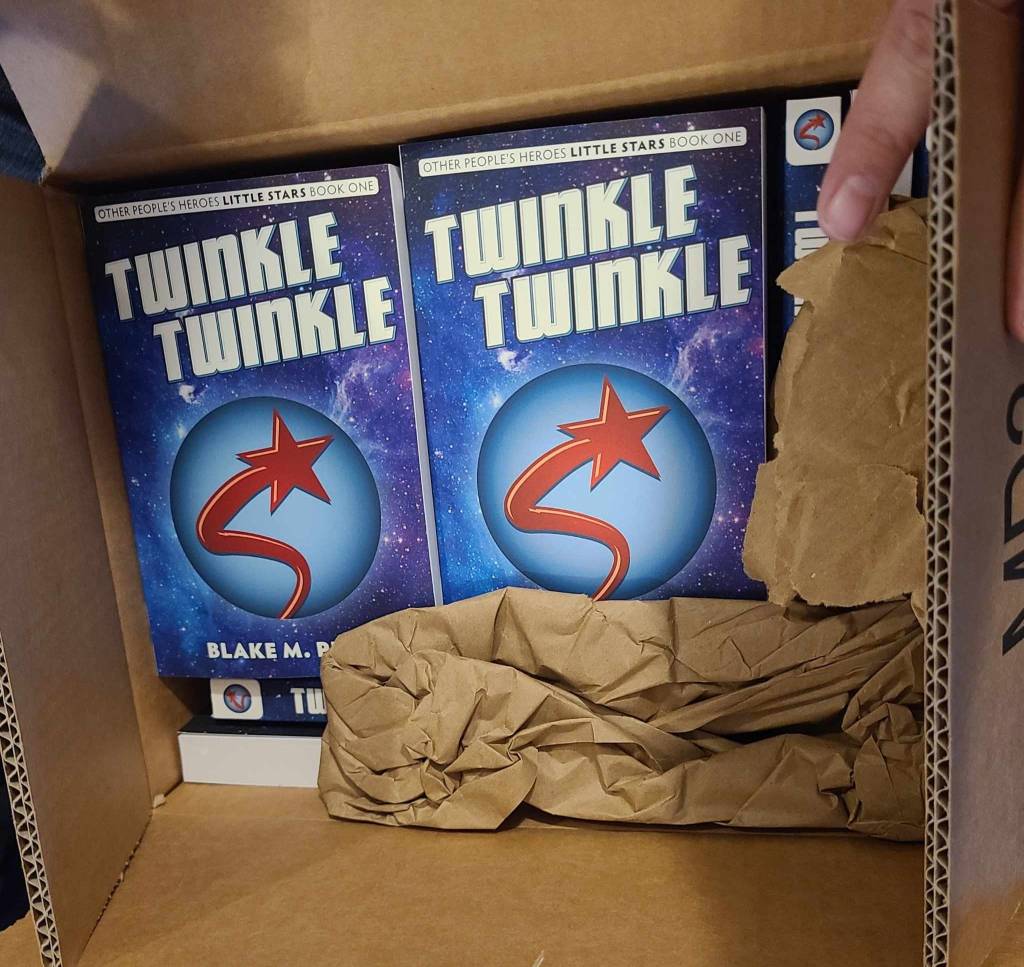
As I’m sure you heard on the social media, the news, billboards, that Goodyear Blimp campaign, and in the hidden track on Taylor Swift’s new album, I’ve got a new book out! Twinkle Twinkle, the first volume of the Little Stars trilogy, is now available in print or eBook, and you can get your copy by going over to Amazon and giving them a designated amount of dollars, a percentage of which will then be given to me.

Not an enormous percentage, mind you, but a percentage.

But – BUT – if you happen to be in the New Orleans area tomorrow, May 4th, you’ve got a chance to get a SIGNED copy from yours truly. Tomorrow is Free Comic Book Day and I’ll be at BSI Comics in Metairie, Louisiana selling copies of the new book (plus all of the old ones). Come on down, say hello, meet the other great writers and artists who will be sharing a space with me, and get some free goodies as well. 

Blake M. Petit is a writer, teacher, and dad from Ama, Louisiana. His most recent writing project is the superhero adventure series Other People’s Heroes: Little Stars, volume one of which is now available on Amazon. You can subscribe to his newsletter by clicking right here. He thinks there’s a certain irony in using 1700 words to explain the benefit of something that is best left unexplained, but he’ll leave the rest of that joke to your own imagination. 

Geek Punditry #67: What Is Literature?

When you’re a high school teacher and spend most of your day around teenagers, you will overhear their conversations whether you like it or not. You hear about the TikToking, and you know who is dating who, and on frequent occasions you learn more about the way these kids spend their weekends than you ever want to know and you contemplate duct-taping your own children to a pool table from the time they’re 13 until they turn 27 or so. And on rare, extremely rare occasions, you’ll hear them discuss things that are actually relevant to your class. Earlier this week, for instance, I overheard a few girls talking about why so many people are using The Great Gatsby as themes for parties and dances these days. 

As always happens when there’s a conversation worth joining, I jumped in. “There are three reasons,” I said. “First of all, it’s the 20s again, so people are playing with that. Second, the book went into public domain a few years ago, so nobody has to pay to use these things. And third, there are a lot of people who think the movie is fun and didn’t actually pay attention when they were supposed to be reading the book.”

“Ain’t no party like a Gatsby party, ’cause a Gatsby party ends with three people dead and a complete loss of faith in the American dream!”

The Great Gatsby is, of course, a seminal work of American literature. It’s one of the best books ever written in this country, and it paints a complex and gripping narrative in a relatively short number of pages, but the book is about the unsatisfying nature of a decadent lifestyle and how pursuit of material things is shallow and destructive. Anybody who comes away from that book thinking that these characters are something to aspire towards is – and I’m going to be kind here – an utter moron.

I talked about this conversation with some of my English teacher friends (of course I have English teacher friends – we sit around and conjugate each other’s verbs and talk about which infinitives we’re crushing on) and discussed the fact that there aren’t a lot of books that we teach that provide role models or, for that matter, happy endings. Let’s face it, most books that are complicated enough for a really deep literary analysis tend towards tragic – or at best, bittersweet – endings. The least-depressing book I’ve ever used in my classroom is The Hitchhiker’s Guide to the Galaxy, and that book BEGINS with the complete destruction of the planet Earth. And one of my friends in this chat commented that this is why she sticks to reading lighthearted stuff on her own time – “literature” is too depressing.

Whaddaya gonna do? You’ve got to build bypasses.

I’ve always thought it was odd to use the word “literature” as a genre, the way I would “science fiction” or “horror.” What, exactly, qualifies something as a work of literature? Every time I walk into a bookstore with a “literature” section, I want to ask somebody who decides which books go on those shelves and which ones do not? Isn’t the very existence of a “literature” section sort of a low-key insult to all of the other books in the store that got shelved somewhere else? Ernest Hemingway’s The Old Man and the Sea goes on the literature shelves whereas William Goldman’s The Princess Bride doesn’t, but I could write you a whole dissertation on which one is a better book, and it ain’t the Hemingway.

One of these is one of the most incredible stories ever conceived by the human mind and the other one is what happens when Ernest Hemingway doesn’t go to therapy.

Is it just the age of the work? Everyone would agree that Lord of the Flies from 1954 is a great work of literature. But what about Robert Heinlein’s Rocket Ship Galileo, published in 1947? It’s not only a book that doesn’t enter the “great literature” discussion, it’s not even usually part of the conversation when you talk specifically about the work of Robert Heinlein. We got George Orwell’s 1984 in 1948, nearly twenty years after the first Nancy Drew novel, The Secret of the Old Clock, but nobody is citing the works of Carolyn Keene in the conversation of great writers. And that’s not just because she didn’t actually exist.

Is it just about the complexity of the work? Must a work deal with heavy ideas and deep themes to qualify? The Adventures of Huckleberry Finn gets my personal vote for the greatest American novel ever written (sorry, F. Scott Fitzgerald). Set 20 years before the Civil War but written about 20 years afterwards, the novel is a deep and fascinating analogy about the changes the country went through during that time period. Whereas Mark Twain’s earlier book with these characters (The Adventures of Tom Sawyer) was a simple boy’s adventure story, Huckleberry Finn is about a child struggling with the ethical quandary of whether it is morally right to help his friend Jim escape from slavery. Jim’s owner, Miss Watson, has taken care of Huck, and in the eyes of the law he is betraying her by helping in Jim’s escape. But eventually, he comes to the conclusion that he’s going to be loyal to his friend, even if it goes against the law, even if it goes against what he has been taught is morally right. The book deals with the destructive nature of bigotry, ignorance, and hypocrisy, and Huck himself becomes symbolic of the moral transmogrification that the United States was beginning to undergo. In other words, literature.

The thing is, though, a lot of these same ideas and themes can also be found in random episodes of Star Trek. If I pull out Oliver Crawford’s script for “Let That Be Your Last Battlefield,” I can get into a deep conversation about the folly of racism as we watch two aliens whose species has hunted itself to extinction because some of them are black and white whereas others are white and black. It’s a legendary episode, but could I justifiably call the script for it literature the same way I would Huck Finn or – to use the other best-known example of anti-racist literature – To Kill a Mockingbird? Most people would say no. 

“I dunno, Frank, are you sure the analogy isn’t too subtle?”

I posed this question, this “what is literature” question, to my English pals, and one of them said she once looked it up herself and read one of the characteristics that makes something literature is a focus on character and their development rather than plot. Does that really work, though? Gatsby is a very deep examination of the characters, but none of them actually CHANGE. By the end of the book, they (the ones that survive, anyway) are all the same shallow, soulless people they were when the story began and only the narrator – the criminally bland Nick Carroway – has shown any development at all, that development being disgust at the people around him. It’s like you’re left feeling when you watch the final episode of Seinfeld. 

On the other hand, my friend pointed out, the male lead in Fifty Shades of Grey seems to change by the end of that series, becoming actually devoted to the narrator. I’ll let you draw your own conclusion as to whether this qualifies as development or not, I haven’t read Fifty Shades. But if there’s one thing everyone in our English chat can agree on, it’s that Fifty Shades of Grey does NOT qualify as literature.

I want to be clear here: I haven’t seen the movies, nor read most of the books. I’ve read exactly one page, the first one, in a bookstore. I was curious as to what the big deal was, and after reading one page I said – out loud – “Oh good LORD,” and put it down. It’s not that the book is smut. If you want to read smut, go right ahead, I don’t judge you for it at all. I will, however, judge you for reading such POORLY WRITTEN smut when there is smut of much better quality readily available. I’m not telling you not to read Fifty Shades because it’s explicit, I’m telling you not to read it because you deserve better smut.

Not pictured: Literature.
Or believable characters, genuine titillation, or a functional understanding of the culture it purports to depict.

Is it the fact that something is “highbrow” what makes it literature? Well that comes with the same problem as designating something literature in the first place: who decides? To pull the Shakespeare card again, my students are ALWAYS intimidated when we start reading Hamlet because they think of Shakespeare as something for “thinky” people. Sure, that may be the way he’s considered today, but in his own time, Shakespeare was a popular writer. He was turning out play after play for the masses, and because he knew exactly what the people wanted, he loaded them with sex and violence. He was the J.J. Abrams of the 16th century. The kids don’t get that, though. If you understand what he’s actually saying, Hamlet’s line “Do you think I meant country matters?” is just as raunchy (and way more clever) than anything E.L. James wrote, but in all my years of teaching the play I’ve never had a student pick up on the subtext. Only a few of them get the later, more obvious line when Claudius is seeking Polonius’s corpse and Hamlet tells him Polonius is, “in heaven…if your messenger find him not there, seek him i’th’other place yourself.” Every so often I have a kid who asks, “Did he just tell the king to go to Hell?” and that student automatically becomes my favorite.

“I don’t look thoughtful enough. Give me 20 percent more confetti.”

The bar can’t be whether something makes you think. Last week I finished reading Liu Cixin’s novel The Three Body Problem, and that’s one of the thinkiest dang books I’ve ever read. The book follows a large cast of characters who discover a secret organization attempting to prepare Earth to be conquered by extraterrestrial invaders. This is, I must stress, an extremely barebones description of the plot, and deliberately so. This story is far deeper and more complicated than my pitiable attempt to summarize it. In fact, if someone tried to argue that it’s the best science fiction novel of the 21st century so far, I will have absolutely no ammunition with which to disagree with them. This Chinese novel was originally serialized in 2006, published as a novel in 2008, and first published in English in 2014, so no matter which edition you’ve read, it’s less than 18 years old. As such, it’s not something that I hear come into the conversation when people discuss “literature.” Not YET, anyway. Come back in 20 or 30 years and that may well change. But is it only the relative youth of the book that keeps it off the table?

Not pictured: Literature, but ask me again in 2056.

Maybe it’s a combination of all of these things. Maybe “literature” has to be deep AND intelligent AND kind of old. Maybe all these things that we now call “literature” are only in that category because they’re the best examples of their time period and we’ve forgotten 90 percent of the utter crap that was written around the same time. That’s not only possible, I think the further back in the history of storytelling you go it becomes almost undeniable. The poet W.H. Auden once said,“Some books are undeservedly forgotten; none are undeservedly remembered,” and by this I think he was trying to tell us that people will hopefully still be reading The Three Body Problem in the year 2100, whereas by then hopefully the only people who remember 50 Shades of Gray will be literary historians who cannot figure out why readers were so temporarily obsessed with a piece of mediocre Twilight fan fiction.

Increasingly, when it comes to the question of literature, I find myself using the late Supreme Court Justice Potter Stewart’s description of “obscenity.” Unable to actually define the term, he simply said, “I know it when I see it.” That’s how I feel about literature, too. But my opinion, of course, doesn’t count for more or less than anybody else’s.

Except for that guy shelving the “literature” section at Barnes and Noble. He apparently holds a little more sway than the rest of us.

Blake M. Petit is a writer, teacher, and dad from Ama, Louisiana. His most recent writing project is the superhero adventure series Other People’s Heroes: Little Stars, now complete on Amazon’s Kindle Vella platform. He doesn’t know if anyone would ever call the new trilogy version of that series, beginning with Little Stars Book One: Twinkle Twinkle, “literature,” but he DOES know it will be available in both paperback and ebook beginning on May 4, and he is CRAZY excited about it.

Geek Punditry #65: Howard the Hero?

I am kind of a nerd. I know, I know, I hide it well, but the truth is that I have certain areas of interest about which I am extremely passionate. And one of the aspects of my nerdity that one must be aware of is the fact that I’m a little obsessed with making lists. I’ve been doing it at least since middle school, when I distinctly remember making a paper bookmark upon which I kept a list of every book I read, a list which quickly became too large for a bookmark that fit in anything less than an unabridged dictionary. The list-making obsession hasn’t changed, only the medium. I’ve often said that there are four “quadrants” of pop culture I mostly talk about here in Geek Punditry: movies, TV shows, books, and comics. It should not surprise you that I have a separate app in which I track my activity and make ridiculously detailed lists for each of these quadrants. (That would be Letterboxd, Trakt TV, Goodreads, and League of Comic Geeks, respectively. If you’re on any of those platforms, feel free to follow/friend me.) My wife says that this list-making thing is because of an inherent desire to create some semblance of order and control because in most areas of my life I feel like everything is in a state of permanent chaos and there’s nothing I can do about it. I reply by telling her to shut up, which she understands to mean, “I love you and you’re right, now stop it.”

I might have a problem.

Anyway, on Letterboxd a few years back, I decided to whip up a list of every superhero movie I could find, part of my desire to eventually watch them all. You would think that this would be a relatively non-controversial endeavor, assuming that you’ve never been on the internet. Those of us who HAVE been online at some point, however, are acutely aware that there is NOTHING online so benign that you can’t find SOMEBODY ready to argue about it. In the comments of my list, some people complained that I decided to skip non-English language films (because odds are I’ve never heard of those and I don’t want to dedicate my entire life to tracking them down), fanfilms (because for some reason those are frequently deleted and re-added to the Letterboxd database and I don’t want to have to keep putting the same movies back on again), and “adult” films (because make your own list, you weirdo). 

But what took me by surprise is when someone decided to complain that I left off the movie Howard the Duck. The exclusion had nothing to do with quality, mind you. I included every superhero movie I am even vaguely aware of, even the worst one ever made, by which I mean the Josh Trank Fantastic Four. No, I skipped Howard because – despite the fact that the movie is based on a Marvel comic book – Howard the Duck is not a superhero. He’s a comedy character, usually used in satirical stories, and while he does have adventures and has been known to interact with other inhabitants of the Marvel Universe, that doesn’t make him a superhero any more than it does Peter Parker’s Aunt May. The person who disagreed with me told me that the title of the film in his native country (Brazil) translates in English to Howard the Superhero, which he says indicates that it should be considered a superhero movie, whereas in reality it just made me question what’s wrong with the Portuguese word for “Duck.”

Never forget that THIS was the first theatrical movie based on a Marvel comic book, nerds.

So I decided that, in order to quell debate (note: this is impossible), I should probably come up with an actual definition of “superhero.” This turned out to be more difficult than it seems. You would think it’s obvious – get five different people to make a list of 100 superheroes and chances are 75 names would appear on at least four of the lists. But what MAKES a superhero? I decided to check with Merriam-Webster, which gives me two totally useless definitions. The first is “a fictional hero having extraordinary or superhuman powers,” which fails as a definition because it excludes Batman, and nobody is ever allowed to exclude Batman. The other definition is “an exceptionally skillful or successful person,” which seems kind of dumb because, arguably, Genghis Khan was exceptionally successful at what he did. And let’s not get into John Wayne Gacy.

“Behold! A superhero!”
“Put a sock in it, Diogenes.”

I needed something broad, but not too broad. I pondered, and I eventually came up with not a SINGLE definition, but a list of criteria. I would consider a character a superhero, I decided, if they fit at least TWO of the following criteria:

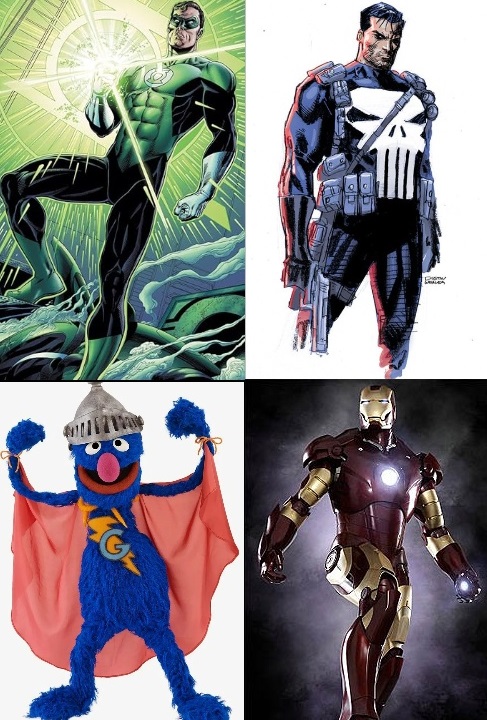
  1. Superhuman powers and abilities. These abilities need not be inherent, mind you. Green Lantern has no actual super powers, but he has a ring that gives him superhuman abilities, so he counts.
  2. A double identity, although this identity need not be secret. Everyone in the Marvel Cinematic Universe knows that Tony Stark is Iron Man – his ego wouldn’t allow them not to – but he still HAS that second identity.
  3. An identifiable (and toyetic, let’s not forget toyetic) uniform or appearance. This is, I admit, somewhat subjective. What’s identifiable to one person may not be identifiable to someone else. Think of it this way: if someone is cosplaying as a character and that cosplay is easily recognizable to someone familiar with the IP, that character probably meets this criteria.
  4. Fights crime or battles the forces of evil.
All basically the same thing.

What I like about this list is that none of these criteria make somebody a superhero by itself, but each time they’re combined you get closer to that superhero line. It also makes it easy to include anybody that I want, such as Zorro. People often say Superman (who first appeared in 1938) was the first superhero, and he is certainly the character who named the genre, but I don’t think it’s true that he’s the first. He was preceded by several characters who meet many of the criteria I’ve listed. Zorro (1919), the Lone Ranger (1933), and the Green Hornet (1936) all meet categories 2-4. The Shadow (1931) and the Phantom (also from 1936) meet all four. Even the Scarlet Pimpernel (1905) hits categories two and four. If anything, Superman is the first comic book superhero, and I’m sure even that is open for debate. As such, I included all of these “proto-heroes” on my cinematic superhero list.

Fun Fact: Canonically, the Lone Ranger is the Green Hornet’s great-uncle.
Less Fun Fact: Both of these movies are embarrassments that should never have been made.

Of course, even my criteria leaves a lot of room for debate. There are plenty of characters that one usually doesn’t think of as superheroes that fit at least two of the criteria. Harry Potter, for instance, has magical powers, fights evil, and has a very distinct appearance. The same can be said for Luke Skywalker. One could even argue that any Star Trek character from a race with psychic or shapechanging abilities would qualify. Are Spock, Odo, and Counselor Troi superheroes, or do their powers not count since they’re not unusual for members of their respective species? There are certainly people who would argue that all of these are superheroes, and while I wouldn’t put them on my personal list, I don’t know that I could effectively argue against their inclusion either.

Where, exactly, do we draw the line?

What about Indiana Jones? He fights evil. He’s easily cosplayable. And his real name is Henry Jones, Jr. Does his nickname qualify as a second identity? How about James Bond? He fights evil all the time. The uniform is a little harder to quantify – the most iconic Bond look is a tuxedo, but anybody can put on a tuxedo. And the second identity…does being Agent 007 count? Back in the day there was the fan theory that “James Bond” itself was a pseudonym passed down to whomever was Agent 007 at the time, which was a theory I liked and would most certainly qualify, until the film Skyfall quashed that theory for good.

Some people may ask what difference it even makes. We’re talking about fictional characters, after all. Who cares which ones do and do not count as superheroes? To those people I say, “Oh good for you, you’re far more well-adjusted than those of us who debate these sorts of things on the internet, please stay that way.” 

For the rest of us, I know that my attempt to define the term has probably caused more debate than it stopped. Sorry about that. If you’ve got a better definition than I do (or than Merriam-Webster does) I would love to hear it. And I’d even like to hear some unusual characters that you would say meet the criteria. But in the meantime, the only thing I can really say is that when it comes to a superhero, I know one when I see one.
And Howard, I’m sorry, it ain’t you. 

Blake M. Petit is a writer, teacher, and dad from Ama, Louisiana. His most recent writing project is the superhero adventure series Other People’s Heroes: Little Stars, now complete on Amazon’s Kindle Vella platform. He looked up the Portuguese word for “duck.” It’s “pato.” Why didn’t Brazil just call the movie “Howard o Pato”? 

Geek Punditry #64: Classics Are Better Big

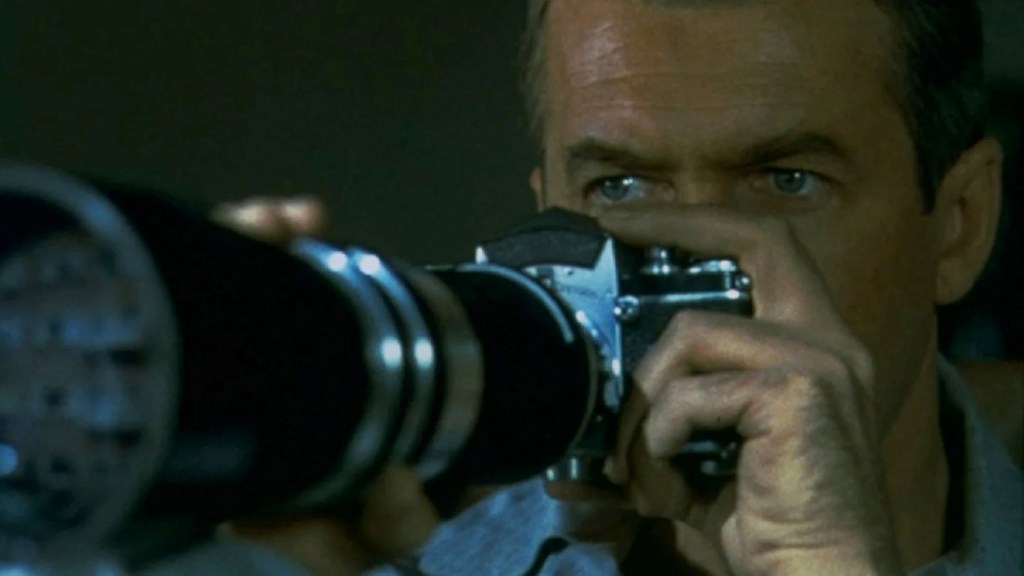
With all due respect to films like Psycho, Vertigo, The Birds, and North By Northwest, Alfred Hitchcock’s best movie is the Jimmy Stewart thriller Rear Window. In this taut little drama, Stewart plays a photographer who was injured in a car crash and is stuck in a wheelchair while he recovers. Unable to leave his apartment, he takes to observing the activities of his neighbors through the windows as a sort of perverse entertainment – entertainment that takes a chilling turn when he thinks he sees one of his neighbors commit murder.

“Mr. Gower, no! No, what are you doing?”

Sure, there are some elements that are kind of icky – Stewart is literally spying on his neighbors for most of the film, which isn’t exactly kosher. And how anyone could be so interested in what’s going on across the way when your girlfriend is Grace Kelly and she’s at your house every fifteen minutes seems almost beyond belief. But hey, it’s a movie. Suspension of disbelief is a thing. The thing that makes Rear Window so great is that virtually the entire film takes place in a single room, and despite that, Hitchcock is able to amplify the tension even more than when he had Cary Grant dangling from Mount Rushmore five years later. A single-room thriller is very difficult to pull off, but he did it TWICE, both in this masterpiece and in the underrated Rope. 

Pick up your pulse without ever leaving the room.

The reason I’m talking about Rear Window today, though, is not because I’m going to give you a list of confined space thrillers worth watching (Wait Until Dark, Phone Booth, Buried – that’s enough of a list to get started), but because I noticed a few days ago that this year marks the 70th anniversary of the film and, lo and behold, Fathom Events is holding a nationwide anniversary screening on August 25. This, of course, is a date of monumental significance because it also happens to be the birthdate of several notable figures, namely Sean Connery, Tim Burton, Regis Philbin, Billy Ray Cyrus, and myself. (Incidentally, if this doesn’t completely disprove astrology once and for all, I don’t know what will.) Anyway, whilst I’m sure I’ll be occupied with the customary parades, speeches, and address to the nation, the idea of seeing my favorite Hitchcock movie on my birthday IN A MOVIE THEATER is enticing as hell.

 Not long ago, I saw a Facebook conversation in which one person expressed an interest in an upcoming screening of Shrek at his local theater, and somebody else began to chastise him for buying a ticket to watch a movie he can watch at home for free. This is an all too common attitude, of course, especially with younger audiences. I know I’m about to sound like a curmudgeonly old man (because I, like Tim Burton and Billy Ray and our fellow August 25th baby Claudia Schiffer, AM a curmudgeonly old man). My high school students are perfectly happy watching everything on their phone screen. Of course, they’re also incapable of paying attention to anything longer than 37 seconds in length, which I assume is the maximum amount of time you can spend watching a film intended to be projected onto a 70-foot screen on a device smaller than a slice of bread. I wholeheartedly believe that a screen as small as a smartphone is a terrible way to watch any sort of longform entertainment and that is part of the reason that younger generations have such an abysmal attention span and, furthermore, I would like to invite you all to get the hell off my lawn.

I know it sounds like I’m blaming TikTok for this, but there’s a good reason for that: I am.

That aside, though, the larger question seems to be why one would pay for movie theater prices to see a movie that you’ve already seen. That, at least, is an argument I can comprehend. My answer to that, though, is that I’m not lining up to rewatch Mac and Me, I want to see Rear Freaking Window. As I wrote last year, I sincerely believe that every movie is more enjoyable if viewed in a theater with a receptive and enthusiastic audience. That’s true whether I’ve seen a movie five thousand times or zero times (and, truth be told, I bet that watching Mac and Me could actually be a hoot if you have the right people in the theater with you). 

Having the proper audience is important, of course. With new movies, this is a crapshoot – the studios tend to make every movie look as homogenous as possible to draw in every quadrant, and nobody knows for sure if what they’re going to watch is any good or not. I always HOPE a movie is going to be good, of course. I don’t understand “hatewatching.” I can honestly say I’ve never walked into a movie theater WISHING for a movie that disappoints me. But when it’s a movie that no one has ever seen before, you’re rolling the dice.

That said, the right audience is essential. My wife Erin and I saw this firsthand when RiffTrax did their live theater screening of the Doctor Who serial, The Five Doctors. RiffTrax, if you don’t know, is put on by classic cast members of Mystery Science Theater 3000, and they carry on the mission of cracking jokes at movies. It’s a blast, if you’re a fan.

IF you’re a fan.

If you don’t know what you’re getting into this poster is very confusing. Mathematically speaking.

When we arrived at the theater, we encountered a couple wearing heavy Who regalia who were very excited about a theatrical screening of the legendary story. They took a seat behind us and began to excitedly chatter…but in that chatter, it became quite obvious to Erin and I that while these two were major fans of Doctor Who, they didn’t seem to know WHAT RIFFTRAX IS. As the presentation started, the riffers launched into a short film about safety around electrical wires, cracking their usual jokes about the absurdity of the film, and I heard the man behind us tell his wife, “I hope they don’t do this during the whole movie.”

I turned into that emoji with the clenched teeth. 😬 

They lasted about 15 minutes into the Doctor Who serial and left, clearly irritated at the irreverence with which their beloved Doctor was being treated. And I felt bad for them, because they obviously didn’t know what they were getting into…but once they were gone, the rest of us had a grand old time. 

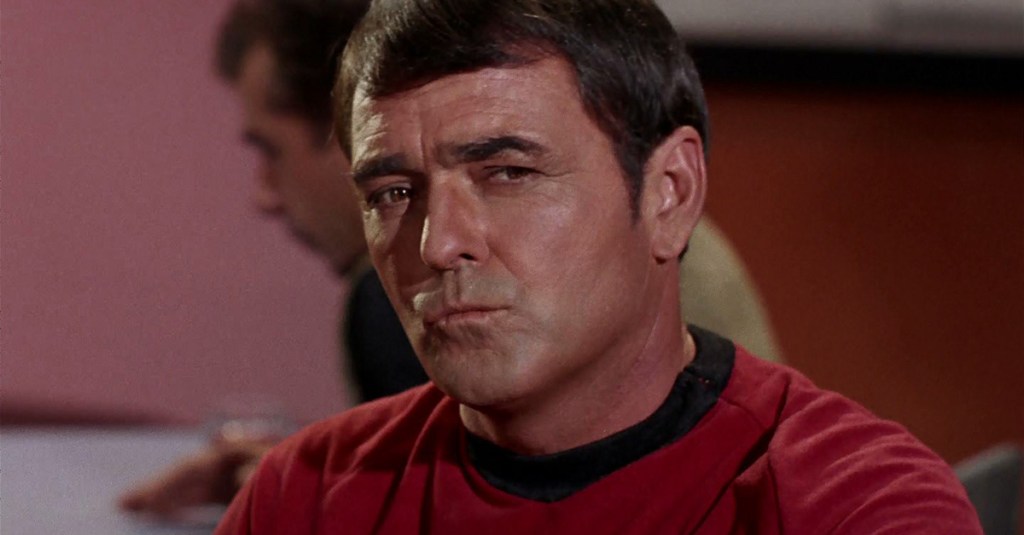
It’s about being with the right crowd. One of the most fun experiences I’ve ever had in a movie theater was when the Star Trek documentary Trekkies was released back in 1997. The film is a glimpse into the lives of Trek fans from across the country, a particularly niche subject matter, and it didn’t get a wide release. However, someone I knew happened to have a connection at the local UPN affiliate (home of Star Trek: Voyager) and scored some free passes to a screening they were hosting. The result was an entire theater full of people who LOVED STAR TREK, and there is no better atmosphere in which to watch this movie. We laughed at the people who went a little too far. We cracked jokes about the woman who dressed up her poodle as Spock. And we collectively shed a tear when James Doohan shared the beautiful (and now oft-told) story of how his connection with a fan saved them from committing suicide. 

AND he was shot six times on D-Day! The man didn’t need to go to outer space to be a hero.

That “right crowd” mindset works very well when going to see a classic movie in the theater. Odds are, the majority of the audience HAS seen the movie before and is excited to see it with a crowd, and those that HAVEN’T seen it before are there because they want to join in the fun. It’s the reason that interactive screenings of The Rocky Horror Picture Show have endured for such a long time. To give another example: Erin’s favorite movie is Jaws, and as it was released before either of us were born (we’re old, but we ain’t THAT old), when a special screening was announced at a Movie Tavern within an hour’s driving distance, we decided to make it a date night. (It goes without saying that this was before Eddie was born, although Erin was pregnant at the time.) Near us sat a father with his daughter, who I guessed was about 13 years old and who clearly had never seen the movie before. She was doing fine right up until the scene where Richard Dreyfuss finds Ben Gardner’s decapitated head drifting in the shipwreck underwater, at which point she jumped into her dad’s lap and stayed there for the rest of the movie. It was amazing.

This was a major bonding moment.

After Gene Wilder died, there were special screenings of Willy Wonka and the Chocolate Factory and Blazing Saddles, and we did a double feature. Saddles is – and I say this with firm conviction and damn the mobs who want to piss on everything older than 2008 – one of the funniest movies ever made, and seeing it for the first time in a theater was fun. But Wonka was downright magical. The screening was full of parents with kids, many of whom had never seen the movie before. Those kids were mesmerized, drawn into the magic and swept up in this 50-year-old film in a way that the 15-year-old remake by my birthday buddy Burton couldn’t hope to match.

Betcha he never would have used AI and charged kids fifty bucks for a half a lemonade, either.

And you know, I don’t think those kids would care if they HAD seen the movie before. Seeing it on the screen is DIFFERENT. It’s only adults that are too stupid to push that aside. If my son can watch the same YouTube video of the 2017 Times Square New Year’s Eve ball drop 47 times in a row, he sure as hell isn’t going to walk into a screening of Despicable Me and say, “Daddy, I’ve seen this before.”

When I was a kid, Disney used to frequently re-release their classic movies. I got to see films from decades before I was born like Snow White, Sleeping Beauty, and The Sword in the Stone. With the exception of one-night or short-term engagements, that doesn’t happen anymore (possibly because Disney is afraid people will remember how much better the original versions of these movies are than the lifeless remakes they’re turning out lately). But damn it, it should. My family doesn’t get to the movies much these days, but if I was at a movie theater right now and given a choice between seeing Fast and Furious 11 for the first time or watching Raiders of the Lost Ark for the twentieth time (but the first time in a theater), it wouldn’t even be close. 

With movie theater attendance struggling, there’s a desperate effort to create content that fills seats, but I feel like theaters are missing out on an obvious opportunity here. Doing a revival screening of Casablanca or The Wizard of Oz may not sell as many tickets as a Marvel movie, but it also costs a hell of a lot less to put back into theaters. Give us more classic family movies! Give us more events! When the Special Editions of the original Star Wars trilogy hit theaters in the 90s, we fans came out in FORCE (pun intended), not because we wanted to see Greedo shoot first, but because we wanted to see him in a room the size of a house and full of other people who loved the movie as much as we did. 

These screenings DO happen. Like I said, Fathom Events does anniversary and event screenings a lot. There was the aforementioned Gene Wilder double feature. And Disney just announced an all-day nine movie marathon of the Star Wars films on May 4th. But I don’t want to have to wait for an anniversary that ends in a 5 or 0 or for somebody to die before I get to see a classic.

Our only hope.

I wish there were a nearby, easily-accessible theater in my area that frequently did revivals or special screenings of classics, but alas, there aren’t a ton of options, especially if you don’t have a lot of opportunities to go into New Orleans proper. So I keep an eye on Fathom events and I cross my fingers for special screenings and I long for the day when the cinematic community figures out how to make this happen.

And I hope to see Hitch’s cameo the way it was meant to be seen: big enough to fall into his nostrils. 

Blake M. Petit is a writer, teacher, and dad from Ama, Louisiana. His most recent writing project is the superhero adventure series Other People’s Heroes: Little Stars, now complete on Amazon’s Kindle Vella platform. If anyone is available to babysit on August 25, let him know.

Geek Punditry #63: The TV Land Pet Sematary

In case you haven’t heard, there’s a new season of Night Court airing right now. Now that may surprise you if you, like most of us, remember the show going off the air back in 1992. But it may be slightly less shocking if I tell you that the new series, like approximately 75 percent of television these days, is a reboot.

Criminal Court Part 2, Part 2.

We live in the age of reboots on TV, and I think there are few obvious reasons for that. First of all, the people who fell in love with shows like Night Court during their formative years in the 80s and 90s are now largely the ones calling the shots at the networks, contributing greatly to the already-cyclical nature of pop culture. If you loved something once, it’s not unnatural or unusual to want to reclaim it and bring it back again, so when that kid who grew up watching DuckTales was given a shot at pitching an animated series to Disney, you damned well better believe he was gonna pitch a new DuckTales
The other reason, of course, is that the TV world in utter chaos as ratings for broadcast television drop like Wile E. Coyote strapped to an anvil and nobody knows how to interpret what little data we get from streaming services. It’s considered a safer bet to hitch your star to an older series that might bring its older audience along for the ride. It’s why we got shows like The Connors, Fuller House, Girl Meets World, Quantum Leap, Animaniacs, Raven’s Home, One Day at a Time, And Just Like That, and, for the kiddos from the aughts, iCarly. It’s why every couple of months somebody floats the idea of a new version of The Office and why Bryan Cranston likes to tease us to say he’d totally be down to resurrect Malcolm in the Middle. Reboots are here and they’re not going anywhere. It’s like all these old shows were buried in the TV Land Pet Sematary, and sometimes they come back VERY wrong.

More shambling corpses than 10 season of The Walking Dead.

The truth is, like any other wave in entertainment, there are good and bad attempts, and I think one of the things that contributes to how well a reboot is accepted is the adherence to the original. It’s bizarre how often a studio will bring back an old show and then change everything about it, sometimes resulting in something as appalling as Thundercats Go! (the Gage Creed of the TV Land Pet Sematary). The logic of the producers is usually something along the lines of “We’re trying to get new fans, not old ones.” My response to this is, “if you’re not trying to get the old fans, why the hell did you call the show Walker: Texas Ranger?” 

One of the most interesting examples of both a failed AND a successful reboot is Star Trek: Picard. When the first season was launched, the idea was to focus solely on Patrick Stewart’s Jean-Luc Picard character, with only sparse appearances from some of his old castmates. They didn’t want to just make season 8 of Star Trek: The Next Generation. The problem, of course, was that the fans just wanted season 8 of Star Trek: The Next Generation. So after two seasons of – I’m going to be kind here – dubious quality, for the third and final season they threw away most of the elements that weren’t working, got the crew of the Enterprise-D on the phone, and made one of the most entertaining and warmly-regarded seasons of TV in Trek History.

I’m never gonna get tired of this picture.

But back to Night Court. The new series is set in the same courtroom as the original, and it is a continuation rather than a full continuity restart such as Charmed, which I for one prefer. The head of the new ensemble is Melissa Rauch (of The Big Bang Theory) as Judge Abby Stone, daughter of the character played by the late Harry Anderson in the old series. While many of these reboots make an effort to have a cast that frequently blends the old and the new, there isn’t a ton of cross-pollination in Criminal Court Part Two, and for a fair enough reason: most of the original cast is no longer with us. Night Court, tragically, has suffered a far greater attrition rate than most other shows of the 80s. Of the entire original main cast, only three of them were still alive when the reboot was announced, and one of them (the great Richard Moll, who played Bull Shannon) passed away after season one without ever agreeing to make an appearance. Marsha Warfield, touchingly, has made two appearances, and Brent Spiner (who played a recurring character for a few years on the original) has shown up as well, but fans looking for familiar faces will be disappointed. 

The only original cast member that’s a regular on the new version is John Larroquette, whose Dan Fielding is almost unrecognizable as the same character. 80s Dan was sleazy, lascivious, and somebody that wouldn’t last ten minutes in a modern courthouse without getting “Me Too”ed into oblivion, which is probably the reason for the drastic change. Modern Dan is old, curmudgeonly, a combination of Oscar the Grouch and Mr. Wilson from Dennis the Menace. I’m not saying that I need a sleazeball character for a show to be enjoyable, but considering how it was his defining characteristic, it seems ridiculous that his bed-jumping past is almost completely ignored in favor of this somewhat lonely man that Dan has become. I don’t even mind that he’s changed, I just wish there was a clearer path of transition, because they don’t talk about his past at all. He’s mentioned the death of his wife, which is implied to have triggered this change in his personality, but HELL, that’s a story I want to know! Tell me about the woman who changed Dan!

I just want someone to make this make sense.

The show isn’t quite as wacky as the original either. Oh sure, the classic series didn’t start wacky, but it spun wildly out of control and by the final season it was practically a live-action cartoon. In fact, in one memorable episode, a defendant in a one-scene gag turned out to be the fully-animated and aforementioned Wile E. Coyote. The reboot occasionally makes a flailing grab at bringing that sensibility back, but it usually feels forced. So far the most authentic thing about the series is ditching the actor playing the Court Clerk and replacing him between the first two seasons. 

Anyway, the new Night Court is okay. It’s not great, it’s okay, and that’s how I feel about most of the reboots that I’ve watched. Fuller House drew most of its charm by reminding the viewers about the cheese of the original series. The Animaniacs relaunch gave me a few laughs, but there was nothing that came even close to the genius of the Anvilania episode of the classic.

And then there’s Frasier.

The show that gave the world tossed salads and scrambled eggs.

I’ve written before of my love for Cheers and how I consider it one of the greatest sitcoms of all time, and that love extends to its spinoff. In fact, I would say that Frasier and Better Call Saul belong on a special shelf labeled “spinoffs as good as and sometimes even better than the original.” It is a very, very exclusive club. Laverne and Shirley keeps petitioning for admission but is denied on the grounds of the Cindy Williams-less last season. And because I loved Frasier so damned much, I was wary of the reboot when the first season dropped last fall. I finally worked myself up to give it a watch and…

…be surprised by this…

…it’s okay.

Let me tell you a little bit about the new set-up. In the original Frasier, Kelsey Grammer’s character from Cheers moved from Boston to Seattle where his father Martin (John Mahoney) wound up moving in with him. Frasier, of course, was a Harvard-educated psychiatrist with more than a little bit of pretension, whereas his father was a retired cop who liked beer and basketball. The Odd Couple style dynamic between them provided a lot of the fuel for what was one of the greatest comedies in television history (and that’s not even bringing up the brilliance of the rest of the cast). In the reboot, Frasier moves back to Boston and moves in with his son, Frederick (played by Jack Cutmore-Scott) who has inherited both his father’s intelligence and his grandfather’s working-class sensibilities. The original show gave us a long and rewarding arc of Frasier and Martin reconnecting and forging a sincere and touching bond. In perhaps the reboot’s most interesting twist, Frasier deliberately moves in with his son in an attempt to recreate this father/son bond following Martin’s death. 

“I’m confused. Which one of them is supposed to be the new Chopper Dave?”

Cutmore-Scott and Grammer work well together, mirroring the Frasier/Martin dynamic but reversing the archetypes of the characters. The rest of the cast, though, isn’t as engaging, and I don’t think there’s anybody who watches the reboot who isn’t waiting for Niles and Daphne to show up. Obviously the late John Mahoney can’t make an appearance, but his specter hangs over the first season of the reboot and it makes for one of the most authentic elements of the show. It’s telling, though, that the two best episodes of the first season are the ones that guest-starred Bebe Neuwirth (as Frasier’s ex-wife and Freddy’s mom Lilith) and Peri Gilpin (as Frasier’s old radio producer Roz Doyle). Supposedly David Hyde Pierce and Jane Leeves, who played Niles and Daphne in the old show, were approached to appear in the reboot but declined. I’ve probably heard a half dozen explanations for why they turned the offer down, and since I have no idea which if any of them is correct, I’m not going to speculate or point fingers. All I’m going to say is the show has a much better chance of getting a season three if they find a way to get Pierce and Leeves to show up in season two.

If you’re going to bring back something from the past, you need to keep in mind what people loved about it in the first place. That doesn’t mean it needs to be exactly the same. In many cases – be it because of changing societal values or the loss of beloved performers – it can’t be. But if you don’t at least identify the spirit of the original and do your best to bring it back in the reboot, then what the hell is the point?

Blake M. Petit is a writer, teacher, and dad from Ama, Louisiana. His most recent writing project is the superhero adventure series Other People’s Heroes: Little Stars, now complete on Amazon’s Kindle Vella platform. He’s waiting with baited breath for the reboot of Mama’s Family now that Vicki Lawrence is actually age-appropriate to play Mama. 

Geek Punditry #56: The Pundy Update

January is kind of a stale month, pop culture-wise. There aren’t any huge movies out to discuss. The holiday backup has us all in its grip as we spent the month recovering from frivolity by trying to get everything back in order, so we don’t have as much time to indulge in the things we love in the first place. The playoffs are a thing. And this year especially, although the writer and actor’s strikes are over, the delay in new material has us rather struggling to find decent TV worth watching. Yes, friends, it’s a quiet time here in the Geek Punditry Global Media Hub. I don’t have a ton of things to say a lot about.

So instead of choosing a topic that doesn’t quite fit into a full column and stretching it out unnecessarily, this week I’m going to do a little bit of an update. I’ll scroll through columns from the past and give you a bit of new information to tell you how those topics are going, how I feel about them now, whether or not anything has changed since I last wrote about them. It’s this or another mailbag. What do you say?

That’s what I thought.

Item One: Last April, I wrote about the magic of the show I Love Lucy and how Lucy, in many ways, codified the sort of serialized storytelling that is commonplace on television today. (See Geek Punditry #15: How Lucy Gave Us the Arc.) In that column, I also spent a little time talking about the greatness of Pluto TV. This is an app on your smart TV that gives you free access to hundreds of channels of specialized content. There’s one channel that just shows the entirety of I Love Lucy, another devoted to The Carol Burnett Show. Others bring us RiffTrax, Mystery Science Theater 3000, Top Gear, Bar Rescue, Unsolved Mysteries, and hundreds of others. I know there are other apps, like Roku TV and FreeVee, that have similar features. Some of them even have the same specific channels. But Pluto TV is the one we use most often, so it’s the one I’m talking about.

I’m just saying, there are worse ways to spend a weekend.

Not long ago, while trying to find something appropriate for my son to watch that wouldn’t make me want to gouge my own eyeballs out, I stumbled upon Pluto’s Garfield and Friends channel, and I left it on. Eddie soon became hooked. He now specifically requests Garfield on most occasions when I let him pick what to watch unless there’s a football or hockey game on. (My kid is a sports nut, which probably makes people who knew me in college snort milk out of their noses laughing. Even if they aren’t drinking milk at the time.) I watched this show when I was a kid and I enjoyed it, but this is the first time I’ve really sat down and paid attention to it in quite some time, and can I tell you something folks? As comedy, Garfield and Friends legitimately holds up.

Comedy peaked in 1989.

While the Garfield comic strip is often criticized for being somewhat bland in its comedy, pushing no boundaries and having as much of an edge as a donut, the show is actually quite the opposite. The scripts are littered with sharp puns, sarcastic humor, and the occasional slightly more adult reference you know the writers were just hoping would slip past the censors. The fourth wall on this show is less of a rule and more of a vague suggestion, and the propensity for overly-long jokes is the kind of thing that I’ve always found hilarious. Part of the credit has to go to head writer Mark Evanier, a longtime TV and comic book writer who perhaps is best known these days as the co-writer of Sergio Aragones’s sword-and-sandals parody comic Groo the Wanderer. Evanier had spent a lot of time working on cartoons where the kind of stale, inoffensive storytelling we criticize the Garfield comic for was the norm, and apparently he went into full-on rebellion against the form. 

There are a lot of episodes of this show with kind of a downer ending, if you really think about it. Jon Arbuckle is a perennial loser and he’s treated as such. Garfield’s relationship with Penelope (who replaced the comic’s Arlene for reasons that still aren’t clear) is completely selfish, with him only loving her because her owners have an Italian restaurant. Evanier even introduced the maddening Buddy Bears specifically to mock the shows he had worked on before – the Buddy Bears’ credo is that you are never allowed to disagree with anything and you must always get along, and thus they are portrayed as completely insane. The US Acres (or Orson’s Farm segments in certain countries) similarly have a slyness to them that most cartoons of the time couldn’t touch, and few cartoons specifically for children do today. If you haven’t watched Garfield and Friends in a couple of decades, click over to Pluto TV and give it a watch. The show is still great. And if not, it’s at least better than whatever is on Disney Jr. right now.
Item Two: Back in November, I wrote about Marvel Comics announcing a new version of Ultimate Spider-Man, featuring an adult Spider-Man married to Mary Jane Watson and with two kids. (See Geek Punditry #44: What’s Wrong With a Spider-Family?) Having spent the better part of two decades complaining about Marvel Comics’s refusal to tell stories about an adult Spider-Man with a wife and a family, I felt it would be somewhat hypocritical of me not to try the new series by Jonathan Hickman and Marco Checchetto. The first issue came out a couple of weeks ago and, I’m happy to report, it’s even better than I hoped. It may well be the best single issue of a Spider-Man comic that I’ve read in twenty years. I am not exaggerating that number, friends. 

This is what a Spider-Man comic book ought to be, people.

I’m going to explain what makes it so great, but I can’t really do that without getting into spoilers for that book, as well as the miniseries that launched this new Ultimate Universe, Ultimate Invasion. So if you haven’t read either of those and are trying to stay spoiler-free, just leave it at knowing that I really liked this book and jump down to Item Three. Deal?

Ultimate Invasion was about the Maker, the Reed Richards of the original Ultimate Marvel Universe (the one that gave us Miles Morales), which was destroyed during the 2015 Secret Wars event, also written by Hickman. Miles and the Maker were the only two survivors, and migrated to the main Marvel Universe. In Invasion, the Maker decides to recreate his original universe, but with “tweaks” this time, eliminating the events that created many of that world’s superheroes and manipulating the one that remain, so we are given a world that is quite different from the Marvel Universe we’re used to. Most relevant to this book, the Maker prevented the genetically altered spider from ever biting Peter Parker, thus denying this world its Spider-Man. 

Ultimate Spider-Man #1 picks up that story in the present day, where an adult Peter is married to Mary Jane and has the aforementioned kids. But the book is loaded with many more surprises than that, such as when we find out that the editor of the Daily Bugle is, in this universe, Peter’s uncle Ben Parker. You never think about it, but in this world where Pete never becomes Spider-Man, his uncle is never murdered. Then a few pages later we learn that Ben is a widower, and that in this world it is MAY Parker who died from violence, during a terrorist attack carried out by Howard Stark (read Ultimate Invasion for that sentence to make sense). 

Aside from the surprises, I’m utterly in love with the way Hickman is writing the Peter/Mary Jane dynamic. Peter is deeply dissatisfied with his life because of this horrible, gnawing void in his stomach. He knows something is missing, but he doesn’t know what. Too many writers – too many BAD writers – would play this for drama at the expense of Peter and Mary Jane’s relationship: MJ would take his dissatisfaction personally, thinking it has something to do with her, a rift would form between them, drama would ensue. Hickman’s MJ, however, is both smart and kind enough to realize that’s not the case, and while something is missing from her husband’s life, it’s not about her and he doesn’t blame her for it. THIS Mary Jane is deeply supportive and believes in her Peter. So when he gets a message from a kid calling himself TONY Stark, claiming that the universe is messed up, Peter was supposed to be one of this world’s greatest superheroes, and there’s something in this package that can fix things, MJ is the one who encourages him to do it. And then he opens up the case and finds a vial with an itsy-bitsy spider…

This book is just gold. Hickman has built new versions of very familiar characters that feel truer to the spirit of the ones we love than any version we’ve seen in ages. I know this first issue did blockbuster numbers, but that’s not a surprise. Hickman is a hot writer, it’s launching a new universe, and it has a billion and twelve variant covers, all of which translate to sales. The key will be to see if people keep buying it six months from now. I hope they do.

Item Three: One of the consequences of this fallow period in television is that, among all of the other things that aren’t happening right now, there’s no new Star Trek for me to enjoy at the moment. I’ve mentioned my affection for Star Trek in the past (See Geek Punditry #1-55), but it occurred to me that I’ve never mentioned exactly what happened to draw me so deeply into Trek fandom over the last few years. I’ve been a Star Trek fan since I was a kid, growing up on the original series and reruns of the animated series on Nickelodeon. I got into The Next Generation and Deep Space Nine pretty heavily, and in high school and my early college years, I was a major fan. But as you get older you get into more things and different things, and my passion started to wane. It never died – I still liked the shows and I’d watch every new movie, but it wasn’t so much a lifestyle choice for me.

In 2017, my sister told me about a podcast she was listening to called Star Trek: The Next Conversation. Hosted by TV writers Matt Mira and Andy Secunda (Mira also being podcast veteran from shows like Nerdist, James Bonding, and approximately 400 others), the concept was that Andy was a Trek fan who had never watched The Next Generation for some reason, so hardcore fan Matt would walk him through the series an episode at a time as they broke down and dissected the storytelling from the perspective of TV writers. I’d listened to several of Matt’s shows before and Andy won me over immediately. There’s a friendship and chemistry between the two of them, which is probably the single most important element to making a successful podcast. Their thoughts and insights on the show are solid and interesting, and their wild tangents (the second-most important element in a successful podcast) are crazy entertaining. 

Don’t tell Paramount about the logo, though. I don’t know if there’s a copyright thing going on here.

What’s more, listening to these two guys geek out about Trek made ME geek out more about Trek. Since then, I’ve been watching every episode of Star Trek along with them, even shows I didn’t care for, because listening to these two guys talk about it has been my reward. They finished The Next Generation in May of 2022, and since then they’ve been going through my favorite series, Deep Space Nine. And if you’re willing to jump into their Patreon, they also cover Voyager, Enterprise, and all of the live-action new Trek series as new episodes drop. (They do not cover my beloved Lower Decks, sadly, because as comedy writers they feel like their nitpicking of Lower Decks would not be as entertaining as the other episodes…and honestly, based on their commentary on the Strange New Worlds/Lower Decks crossover episode, I think they’re right.)

But not only has this show made me start watching more Star Trek, my fandom has increased as well. I find myself hunting down and reading the old comic books and novels. I’ve gotten more shirts and nicknacks. I slowly began to assemble a collection of the miniature Eaglemoss Enterprise models, only to rush and get the last few when Eaglemoss went under. What I guess I’m saying is that Matt Mira and Andy Secunda are responsible for making me an even bigger nerd than I already was, and I thank them for it. 

Item Four: I don’t know if you’re the kind of person who reads the little blurbs at the end of every one of these columns, but if you are, you know that I’ve worked in a bonus joke in the last line of every one. Good for you. If you rearrange the letters in them you’ll get a secret message.

More importantly, though, that blurb has also always had a pitch for my Kindle Vella series, Other People’s Heroes: Little Stars. The language of that blurb is going to have to change beginning this week, though. I’ve always called it my “Current” writing project. As of this week, it will now be my “most recent” writing project. After two and a half years, I’ve finally finished this epic story. I talked more about it on this blog a few days ago, so I won’t get into detail about it right now, but if you’re the kind of person who likes superheroes and adventures and absolute doorstoppers of storytelling I’d like to invite you to check it out. I’m immensely proud of the story I told, and I’m hoping that you’ll enjoy it too.

Come on, people, how often do I ask you for anything?

Blake M. Petit is a writer, teacher, and dad from Ama, Louisiana. His most recent writing project is the superhero adventure series Other People’s Heroes: Little Stars, now complete on Amazon’s Kindle Vella platform. What about a Garfield/Star Trek/Spider-Man crossover? Would that be a thing? Could we make that happen?

See you at Fan Expo New Orleans!

Hey, friends — if you follow this page I assume that means that you actually like listening to me ramble on about stuff. And since one of the things I ramble the most about is Star Trek, perhaps you’d like to listen to me do that in person! This weekend is the annual Fan Expo New Orleans convention, and I’ve been invited to sit on on a fan panel named “How Star Trek: Picard Launched the Next Generation.”

People who read my Geek Punditry columns will remember that I have a LOT to say about that specific topic, and I’ll be discussing it with my pals Eric LeBlanc and Justin Toney at 3:30 p.m. in room 271. Drop in and say hi!

Geek Punditry #52: The 2023 Pundie Awards!

In the first week of January, 2023, I was in a funk. You see, I realized that I’m happier – in general – when I’m spending time talking about those things I enjoy, an itch I used to be able to scratch through various online outlets. But the rise of Facebook had strangled the forum-based websites I used to write for, the demands of parenting had forced a retirement of my podcast, and none of the alternatives I had tried since then seemed to stick. Then, like a miracle, a voice from above spoke to me:

Hey, dumbass, you have a blog. 

So I challenged myself to spend 2023 writing a new piece once a week about something in the world of pop culture that I loved: comic books, movies, television and more. And I’m proud to say that as of this week, Geek Punditry #52, I will have successfully met that goal. And I enjoy doing it, and I have every intention of continuing it in 2024. But the question, then, was how to tie off my first year of blogging about those things I enjoy? The answer was obvious. I’d end the year by talking about my favorites from that year. So this week, my friends, get ready for the inaugural edition of the PUNDIE AWARDS!

Yeeeeeas, that’s right, the Pundie Awards, my hopefully-annual review of those things in pop culture that brought me the most joy over the past 12 months. The categories are entirely decided by what will allow me to talk about what I want to talk about. The winners are determined by a democratically-administered voting process including an electoral body consisting of myself. This ain’t fair or unbiased – this is just me talking about the things that came out in 2023 that I loved the most. 

Ready? Let’s do movies first!

Blake’s Favorite Superhero Movie: Spider-Man: Across the Spider-Verse

As much as I loved Into the Spider-Verse, I couldn’t believe how much better the sequel turned out to be. An incredible team of writers, animators, and performers managed to elevate the story of Miles Morales by opening up the multiverse concept from the first film to incorporate not just a handful of Spider-people, but hundreds of them from remarkably disparate worlds. Not only that, but the different worlds often had wildly different animation styles from one another, all of which somehow managed to mesh perfectly.

None of that would have mattered, however, if the movie didn’t have a worthwhile story to go with it. Miles Morales has been somewhat lonely since his last adventure with the Spiders of other worlds, and when he encounters them again it seems as though his dreams are being answered, but the discoveries he makes in this film call into question his entire role in the Spider-Verse. There’s serious character drama mixed up with the superhero action in this movie, and it’s all as compelling as anything I saw on the screen this year. The tragedy is that the writer and actor strikes delayed production on the third film in the trilogy, Beyond the Spider-Verse, and we’re all left dangling from the film’s cliffhanger with no idea how long it’ll be before it is resolved.

Blake’s Favorite Horror Movie: No One Will Save You

I’ve gotta preface this by saying there are several horror movies that I wanted to see this year that I haven’t gotten around to yet, including Evil Dead Rise, The Boogeyman, Saw X, and several others. Out of those I have seen, however, No One Will Save You takes the top spot for the innovative way writer/director Brian Duffield told his story. The movie (a Hulu original, if you haven’t seen it) stars Kaitlyn Dever in a home invasion film where the invaders turn out to be from another world. What makes the film stand out though, is that it is told with almost no dialogue. The film relies on the visuals and the performances of the actors – Dever in particular – to tell the story, including unraveling the secret of why she is separated from the town in which she lives. The reveals in this movie are handled really well, and the ending is one of those conclusions that seriously screws with your brain. If that’s the kind of movie you’re looking for, look no further.

Blake’s Favorite Comedy: Renfield

Some may argue that this should have been included in the “horror” category, but my response to this would be that it’s honestly NOT that scary, it’s VERY funny, and these are MY awards, you jackass, and if you don’t like it, go write your own blog. 

Anyway, Renfield. Future Lex Luthor Nicholas Hoult plays the titular character, long-suffering assistant to the king of darkness, Dracula himself (played by Nicolas Cage in a performance that chews so much scenery they must have had to reinforce the walls in the set). The concept of making a comedy about Dracula’s human minion set in modern-day New Orleans is funny in and of itself, but what elevates it is the way it handles the material. The script – written by Ryan Ridley and Walking Dead creator Robert Kirkman – takes the story of Dracula and Renfield and uses it as a metaphor for people trapped in an abusive relationship. Not to say that abusive relationships are funny, of course, but it’s one of those stories that uses humor to shed light on a serious situation by making it seem absurd. Looking at the dynamic between Renfield and Dracula is actually helpful in exploring how someone may need to deal with their abusers, and perhaps help the audience find their way to sympathize with victims of such a situation. 

I feel like I’m not making it clear how funny this movie is. Trust me. It’s really funny. It just has a serious point to make in-between the laughs and the vampire shenanigans. 

Blake’s Favorite Drama: The Holdovers

Paul Giamatti plays a teacher at a prestigious boys school in 1970. Stuck on the wrong side of the headmaster, Giamatti is forced to spend Christmas with a group of “holdovers” – students who, for one reason or another, are unable to return home during Christmas break. The movie turns into a pretty deep character study between three leads. Giamatti plays a bitter and heavily-disliked teacher, Dominic Sessa is one of the students that is justifiably outraged at being left behind so his mother and her new husband can take an unexpected honeymoon, and Da’Vine Joy Randolph is the school’s head cook, a grieving mother who herself is spending Christmas alone.

Each of these three, at the beginning of the film, seems to be a fairly stock character: the nasty teacher, the troubled student, the above-the-nonsense side character. But the forced proximity between the three of them slowly reveals depths to each, and by the time the movie ends we’re left feeling like we have watched three real, fully-developed people. Each of them is flawed, each of them has problems, but we understand them in a way that is undeniable and makes us love each of them just a little bit. Each of the three actors I mentioned here give a master’s performance in this movie, and it’s absolutely something worth watching.

The Most Delightful Surprise of 2023: Dungeons and Dragons: Honor Among Thieves. 

This is the fourth attempt at a live-action Dungeons and Dragons film, and the problem with the previous three efforts is that they have all – and here I’m going to use a term from the Book of Leviticus – blown chunks. There was no real reason to expect Take Four to be any different.

And yet…damned if it wasn’t a really fun movie. Chris Pine plays the same kind of charming but slightly rough edged character he usually does, although this time it’s a new character instead of James T. Kirk or Steve Trevor, and he leads a group of ne’er-do-wells including Michelle Rodriguez, Justice Smith, and Sophia Lillis in a quest to steal an ancient and powerful relic. If you’ve ever played Dungeons and Dragons (which I have, although it has been a very long time since I was in a campaign), the plot feels pretty standard. What makes the movie work, though, is the humor, the characters, and the way they react to the fantasy situations that surround them. Their behavior, frankly, feels very authentic to the way that people playing the game would really behave in those situations, and while the movie doesn’t really go meta in the way that description may imply, it still delivers on pretty much every level. I wouldn’t necessarily place this on any “best of 2023” lists, but in terms of expectation versus reality, there’s not a single movie this year that over-delivered more than this one. 

Let’s shift gears a bit now and talk about some of my favorite comic books of the year. I know that not everybody reading this is necessarily into comics, but y’know, maybe pay attention anyway. You might find something worth looking into. And if not, skip down to the bottom where I talk about television, by which I mean a lot of Star Trek.

Blake’s Favorite Ongoing DC Comic: Batman/Superman: World’s Finest 

Written by Mark Waid with art by Dan Mora (who I said last week is probably the best Superman artist working in comic books right now), this is the most entertaining ongoing series DC is putting out, and they’ve been on a pretty big upswing this year. Set in the early days of the characters’ friendship, this story explores not only Batman and Superman themselves, but also the characters that surround them. Over the course of this year we’ve seen Superman lose a sidekick we never knew about, a murder mystery in which the primary suspect was Bruce Wayne himself, a return to the world of Waid’s classic Kingdom Come, and a fantastically entertaining one-off story about the original Robin (Dick Grayson) going on a date with Supergirl and pretty much everything going wrong.

The book is often funny, always entertaining, and takes characters we have loved for decades and makes them fresh and fun again. And that’s just Waid’s writing. The artwork is also top-notch, with Mora handling most issues and drawing the characters in a way that feels classic and powerful. I keep harping on his Superman, but there’s a reason for that: it’s so damned good. When you see a Superman by Dan Mora, you see a guy that you would find equally believable going toe-to-toe with Darkseid and then turning around and getting a cat unstuck from a tree.

It’s already spun off another book, World’s Finest: Teen Titans, featuring the early days of Robin’s own superhero team, and also written by Waid. This is a brand that DC absolutely needs to run with, because it’s as good as it gets.

But like I said, DC has really upped their game this year, so without getting into detail, I also wanna hand out some honorable mentions. Also worth reading this year from DC are Shazam! (another Waid book), Superman, Nightwing, Green Lantern, Titans, and the recently-rebooted Wonder Woman

Blake’s Favorite Ongoing Marvel Comic: Fantastic Four

Admittedly, I am biased here. Everybody knows that the Thing is my favorite Marvel character and my second-favorite superhero of them all, right after Superman, so any book with him in it gets at least another two points on a scale of one to ten automatically. So with his bonus two points, Ryan North’s run on Fantastic Four gets, roughly, an eleven.

North’s run began in November of 2022, so most of his story came out in 2023. In the first few issues of the book, we see a Fantastic Four that has been run out of New York City and dispersed to the four winds (pun intended), and perhaps most horrifyingly of all, are without their children. The book launches with a mystery; we are not told immediately what happened to place them in this situation. But unlike certain other Marvel comics I could mention (I’m callin’ you out, Amazing Spider-Man) the mystery was revealed in issue FOUR, and was done in a way that was very satisfying and very in-character. Without getting into any spoilers, I want to say that the reason the FF left New York and the reason the kids are all missing makes perfect sense (unlike another certain book where the long-delayed revelation went against not only years of characterization but also just common freaking sense). At the same time, it changed the status quo in a way that is inherently temporary, but still paved the way for a year of very old-school sci-fi adventures. In other words, Ryan North found a way to take the FF back to the kind of crazy stories the book featured in the early days without getting rid of the modern trappings entirely or invalidating the feelings of the fans who enjoy those trappings. And now that we’re at a point where that storyline is being resolved, I’m really anxious and excited to see what North has planned next.

Blake’s Favorite Ongoing Image Comic: Radiant Black

This isn’t the first time this year I’ve mentioned how much I love Radiant Black, written by Kyle Higgins with art by Marcelo Costa. The title that launched Image’s “Massive-Verse” line (which also includes entertaining books such as Rogue Sun, No/One, and The Dead Lucky) is a superhero story about a young man, Nathan, who finds an alien artifact that gives him incredible power…until he’s hurt and put into a coma, with his best friend Marshall taking over. When Nathan wakes up, the two friends share the power until they’re forced to choose which of them gets to keep it. 

Aside from just being a well-written comic with great art, Higgins and Costa do really interesting and innovative things with how the story is told. In one issue, in which Radiant Black encounters a crew making a fanfilm about him, we’re given a QR code that takes us to YouTube and shows us the actual film. Issue #25 though, the issue in which Nathan and Marshall are given their choice is the one that really elevates things when the readers are instructed to vote for which of the two of them becomes the permanent Radiant Black. The BIG shock, however, came when fans walked into comic shops to pick up issue #26 only to find two different versions: one in which Nathan took over and one in which Marshall got the job. During the currently-running “Catalyst War” storyline, there are two versions of the story, and it’s NOT just a case of penciling in a different face for each version. The two of them are different people, make different choices, and have different consequences, and it’s not until the story ends that the result of the fan vote will be revealed and one of the two timelines will be declared the “real” one. 

I like good art and I love great writing, but if you REALLY want to make me go to bat for your comic book, pull some risky moves with how you tell the story and you’ll have me on your side for life. 

Blake’s Favorite Comic Book Reboot: Skybound’s Energon Universe

Robert Kirkman, mentioned back in the Renfield entry, loves to surprise his audience. He didn’t announce ahead of time that issue #193 of The Walking Dead would be the last issue of the series. He didn’t tell anyone that there would be an Atom Eve special for his Invincible cartoon until it appeared on Prime Video. And earlier this year he launched a new comic, a sci-fi space opera, called Void Rivals. Nobody was really talking about this book much until the day the first issue reached the stands and, towards the end, fans were shocked to find an appearance by the Autobot Jetfire. This is how we learned that Void Rivals was not merely a new series, but the launch for a new shared universe including Void Rivals and the two classic Hasbro properties TransFormers and G.I. Joe. 

There have been a lot of crossovers between TransFormers and G.I. Joe over the years, and the previous license holder IDW Publishing even tried to create a shared universe including those two and other Hasbro properties like M.A.S.K., ROM, and Micronauts. None of those efforts have ever really worked, though, because once these properties are already established, it’s too difficult to mesh them together. If the G.I. Joe team has already been around for 75 issues, why the hell have they never before referenced the giant robots that turn into oil tankers that have been fighting in downtown Las Vegas? You can’t explain it. What Kirkman and his team have done is the only real way to make a shared universe from these properties: tie them together from the inception. 

So Void Rivals launched this “Energon Universe,” and it’s exploring space and some of the other alien races classic to the TransFormers franchise. The line continued with a new TransFormers book by Daniel Warren Johnson, which begins the story of how the war between the Autobots and Decepticons first spills over onto Earth. This is being followed up by two miniseries written by Joshua Williamson, Duke and Cobra Commander, which show the origins of the respective hero and villain teams of the G.I. Joe corner of the universe, and link those origins to the appearance of robot aliens on planet Earth. Void Rivals is pretty good, but TransFormers has been great, and the first issue of Duke – which came out this week – really blew me away. I’m totally on board for this universe, and I’m so happy with what Kirkman has put together.

Side note: Kirkman also gets bonus points for continuing Larry Hama’s G.I. Joe: A Real American Hero, the original series that was started by Marvel Comics back in the 80s and resurrected by IDW. It’s the classic G.I. Joe continuity, still in the hands of the man who basically created the incarnation of the franchise that we all grew up with, and I couldn’t be happier that it’s still out there.

Well that was a fun dip into the world of comic books. Let’s wrap up this look back at 2023 by discussing some of my favorite TV shows of the year, shall we?

Blake’s Favorite Star Trek Series: Lower Decks

I have made no secret of my love of Star Trek: Lower Decks. I wrote a whole column about it not too long ago, so I don’t want to spend a lot of space rehashing what I said then, but it would be disingenuous of me to write about my favorites of the year and NOT bring it up again. You can go back and look at that previous column if you want details, but it’s a show that is not only outrageously funny, but incredibly clever and truly loving towards the history behind the franchise. If you’re a fan of any incarnation of Trek and you haven’t been watching it, you’re making a mistake.

Blake’s Favorite Star Trek Series that isn’t Lower Decks: Picard, Season Three

With all due respect to Strange New Worlds – which had a phenomenal second season – the final season of Star Trek: Picard told a story we’ve been waiting to see for two decades now. The first two seasons of that show were no great shakes, it’s true, but the last season brought back the entire main crew from Star Trek: The Next Generation and gave them one last, grand adventure together, which they never really had. The finale of the TV show was never intended as their final story, since they were immediately rolling into production of the movies. The last movie in that franchise was not intended to be the last movie, and so it didn’t really give us closure either. But this story brought back everybody we loved and told a story that was exciting, heartfelt, and absolutely engaging from the first episode to the last. What’s more, it also laid the groundwork for a new generation of Trek, bringing in a new crew with a mixture of familiar and brand-new characters that fans warmly embraced. The executives at Paramount are absolute fools if they don’t capitalize on this and bring this crew back together again for more adventures.

Blake’s Favorite Comedy Series that isn’t Lower Decks: Abbott Elementary

Sometimes I need to remind myself that there are TV shows with live actors that aren’t set in outer space. Abbott Elementary is a wonderful way to do so – it’s a fantastically funny show that, at the same time, is really down-to-Earth and realistic in certain ways. The quick pitch behind this show is to call it “The Office, but in an elementary school.” It carries over the same sort of mockumentary style, and a lot of the characters seem to fit similar templates, such as the ridiculously inept boss (the principal, played by Ava Coleman), the hardass veteran (fantastically played by Barbara Howard) and the young, adorkable “will they/won’t they” couple (played by Tyler James Williams and show creator Quinta Brunson). 

The thing about this show is that, while it IS very funny and the characters ARE very compelling, it also works very well as a look into the working of a real elementary school. Not ALL of it, of course – it’s a comedy and like many comedies it will often sacrifice realism for the sake of a joke. But the show deals with issues that, as a teacher, I see every day: funding difficulties, student behavior issues, intrusive parents and so forth. There are a lot of movies and TV shows set in schools, but this is the first time I’ve ever watched a show about a school that actually makes me believe that someone in the writing room might actually have been a teacher at one point.

It’s a great show with no weak links, and every time I hear about it getting an award in writing, directing, acting, or anything else, I just nod and say, “Yep. Nailed it.” 

Blake’s Favorite Horror Series: Fall of the House of Usher

Writer/director Mike Flanagan has produced several films and TV shows for Netflix, and he finished up his contract this year with a miniseries kinda-sorta based on the works of Edgar Allan Poe. Kinda-sorta. Truth be told, when I watched Fall of the House of Usher, I described it to people as “Mike Flanagan bought all of the Edgar Allan Poe LEGO kits, threw away the instructions, and then built his own brand new thing out of all the pieces.”

This is not a criticism. The show is great.

The framing sequence features Bruce Greenwood as Roderick Usher, telling inspector C. Auguste Dupin (another Poe character played by Carl Lumbly) about the tragic deaths of his adult children, all of which happened in the past few weeks. What follows is a long, winding, generational tragedy, beginning in Usher’s childhood and leading up to the moments before the series actually begins. The cast is amazing, including several of Flangan’s usual troupe of actors like Carla Guigno, Henry Thomas, Kyliegh Curran, and Kate Siegel, and giving Mark Hamill perhaps the best dramatic turn of his entire career. The stories that unfold also tie into not just “Fall of the House of Usher,” but several other works of Poe as well. Episode titles, to give you an idea of what I’m talking about, include “The Masque of the Red Death,” “Murder in the Rue Morgue,” “The Tell-Tale Heart,” and “The Raven.” 

If you go into this show expecting a faithful adaptation of the works of Edgar Allan Poe, you’re going to be disappointed. But if you look at it as someone using Poe as inspiration to create something entirely new, it’s a fantastic, engaging, and really disturbing series that goes right up there with the best horror on TV. 

Flanagan is currently working on an adaptation of Stephen King’s epic The Dark Tower series, which previously fell flat in a movie in 2017. If there’s anyone out there who I feel has the skill and vision to make that book series – one of my favorites of all time – into a SUCCESSFUL show, it’s Mike Flanagan. 

And that’s about all, guys. Out of all the new stories I read or watched in 2023, these are the ones I enjoyed the most. This isn’t comprehensive, of course: there are hundreds of movies, TV shows, and comic books that I never got around to this year. So if one of your favorites wasn’t included in this little retrospective, just comfort yourself by saying, “Well, Blake obviously didn’t watch Oppenheimer yet, so he couldn’t include it.” Because it’s either that or I DID see it and I didn’t like it as much as you, which is especially the case if your favorite movie of the year was Flamin’ Hot. Ugh.

I hope you’ve enjoyed this glimpse back at 2023, and furthermore, I hope you’ve enjoyed spending a year with me talking about the stories and storytelling that I love. That’s what Geek Punditry has really been about since day one, a chance for me to get out there and talk about these things again. And while I may not have TMZ knocking down my door begging to do commentary for them, writing this column every week has made me feel good and I’ve enjoyed doing it. So come back on the first Friday in January, and we’ll begin Geek Punditry Year Two.

Blake M. Petit is a writer, teacher, and dad from Ama, Louisiana. His current writing project is the superhero adventure series Other People’s Heroes: Little Stars, a new episode of which is available every Wednesday on Amazon’s Kindle Vella platform. He’s trying to remember: in “Year Two,” is that the one where he finally tracks down the mugger who killed his parents in an alley, or is he thinking of something else? 

Geek Punditry #51: (DC Comics Presents) The Greatest Santa Claus Stories Ever Told

Every week comic book fans go to the shop to pick up the latest exploits of their favorite heroes: Superman, the Fantastic Four, the Flash, and so forth. And this month, DC has brought back one of their top recurring characters, pairing him off with none other than the Batman in a four-issue miniseries that has proven to be the most epic tale in the battle of good versus evil since Cindy Lou Who managed to get to the Grinch. I refer, of course, to the legendary four-issue epic called Batman/Santa Claus: Silent Knight. 

“Ho ho hoooold on a second, whose comic book is this, anyway?”

Written by Jeff Parker with art by Michele Bandini and covers by Dan Mora (who – I’m throwin’ this out there – may be the best Superman artist of this generation) in this story Batman and Santa have to team up to save Christmas from the demonic Krampus. This comes as a shock to Robin, Nightwing, and the other members of the Batman family, because they always thought Bruce was making one of his rare jokes when he told them that Santa Claus was one of the many teachers he went to while in training to become the world’s greatest detective. Nope. Santa is 100 percent legit. And I love that.

When an established property does a Santa Claus story, they usually go in one of two ways: either everyone is shocked to learn that Santa Claus is real, or Santa Claus is NOT real in this dismal, crapsack universe, but people learn a lesson about the True Meaning of Christmas anyway. It’s not often that you see a story – other than those aimed directly and exclusively at children – that accepts Santa as a simple fact of existence, and the breakdown of which characters are aware of Santa and those that previously were not is really hilarious. Considering the fact that this is a superhero universe, the question of Santa’s existence seems kind of silly: your best friend can juggle mountains, you work with a guy who breathes underwater, you hang out with a Olympian Demigoddess, and your Secret Santa this year wears a magic ring he got from blue aliens. Why the hell would it be hard to believe in Santa Claus?

Back in the 80s and early 90s, DC published a series of collected editions called The Greatest Stories Ever Told, a simple best-of collection featuring some of their characters. There were, to my recollection, two Batman volumes, one for Superman, one for the Joker (this was when the 1989 Batman movie was red-hot), one for the Flash and one featuring team-up stories. Alas, they completely neglected to give a volume to the greatest hero of all: St. Nicholas himself. So in honor of Silent Night, this week I’m going to entreat DC Comics to prep his well-deserved volume for next year. And not only that, I’m going to help them out by suggesting some of DC’s best Santa Claus stories for inclusion. Almost all of these are available to read on the DC Universe Infinite app, by the way, so if you’re a subscriber, you can go over there right now and check out the saga of Santa.

We’re gonna start with Action Comics #105 from way back in 1946. In “The Man Who Hated Christmas” by Jerry Siegel and John Sikela, we meet a guy who sets out to destroy the season by assassinating Santa Claus! Fortunately for children all over the world, Superman is on the case. Like Silent Night, I love this story because there’s none of the usual prevaricating over whether or not Santa really exists. Superman hears that St. Nick is in trouble and he shoots off to save the day without hesitation, helping Santa conquer his diet (it makes sense in context) and taking over when the bad guy absconds with Santa’s reindeer. It’s a charming little story with a great cover that should be read more often.

Doing this in 2023 would immediately get you cancelled.

Superman must have forgotten this early encounter, though, because when he met Santa again in 1983’s DC Comics Presents #67, he’s shocked to discover the ol’ spirit of Christmas is real. (Save your emails – we can excuse this by saying that the Action Comics example was the Earth-2 Superman, while DCP featured the Superman of Earth-1.) In “‘Twas the Fright Before Christmas” by Len Wein and Curt Swan, a young boy named Timmy Dickens (because the 80s were big on subtlety), tries to rob a street corner Santa. Superman brings Tim to his Fortress of Solitude in the arctic to get to the bottom of things. Turns out that while sneaking an early peek at his Christmas presents, Tim was zapped by one of his toys and hypnotized to commit crimes and bring the money to Superman’s old enemy, the Toyman. When leaving the Fortress, Tim’s toy zaps Superman, causing him to crash, only to be rescued by Santa’s elves. Clark and Nick team up to take down the Toyman in a battle that I’ve always loved. I first read this story when it was reprinted in Christmas With the Superheroes #1 in 1988 (also available on the app), along with several other classic Christmas stories from DC’s history worth reading…but this was the only one that featured Santa. 

“The only characters available for a team-up this month are Santa Claus and Air Wave.”
“AGAIN?”

Mark Waid, who made the “Santa must be real” argument beautifully in an issue of Impulse (because why WOULDN’T Barry Allen’s grandson believe in a guy in a red suit fast enough to move all over the world), gave us a tale of Santa in JLA #60 (2001, with art by Cliff Rathburn and Paul Neary). This time Plastic Man is in the spotlight, spending Christmas with his sidekick Woozy Winks and Woozy’s family. Woozy’s nephew is at that skeptical “There ain’t no Santa Claus” age, so to try to restore his Christmas spirit, Plas tells him the story of how Santa Claus joined the Justice League following a battle with the demon Neron. It’s a hilarious tale, with the boy’s stubborn skepticism causing Plastic Man to constantly elevate the stakes in the story, giving Santa heat vision, armor, and other ridiculous power ups in the course of his battle. Waid being a sentimental sort, the story ends with a nice little moment of heartwarming involving some of his teammates. 

“Say it!”
“No!”
“Say Die Hard is NOT a Christmas movie!”
“This is why you’re on the naughty list!”

JSA #55 from 2003 is one of my favorite Christmas stories of all time. Written by Geoff Johns with art by Leonard Kirk, “Be Good For Goodness’ Sake” is narrated by a department store Santa Claus getting ready for Christmas Eve, planning to spend the evening entertaining the gathered kids, while at the same time waiting for a visit for some old friends – the Justice Society of America. Johns probably has a greater love and respect for the Golden Age of comics than any writer since the days of Roy Thomas, and he drew on that masterfully with this story. It was already a fun tale about heroes reconnecting with one of their own, but the reveal of just who is wearing the Santa Claus suit still warms my heart 20 years after the book was originally published. That means I’ve read this comic at least 20 times, because it’s a once-a-year read since I first discovered it. And I’ve got no plans to stop.

Not even gonna make a joke about this one. Just read the book. It’s SO good.

2009 gave us Batman: The Brave and the Bold #12. This comic, based on the animated series of the same name, teamed up Batman with Adam Strange in “The Fight Before Christmas” by Landry Q. Walker and Eric Jones. On Christmas Eve Batman is swept up by one of Adam’s Zeta-Rays to the planet Rann where he discovers that a malevolent force is sweeping through the universe, destroying planets. It’s already taken Thanagar, and Batman was rescued from Earth just moments before its own demise. But there is still a chance to save everyone thanks to some timey-wimey shenanigans that might just set things right in a Christmas miracle. Santa, admittedly, isn’t a HUGE presence in this comic, but the end gives us a shocking new twist on the old boy that I thought was clever and fun.

“Now that the Harley Quinn cartoon has made Kite-Man more interesting, you’re officially my lamest villain, Calendar Man.”

DCU Holiday Bash #2 came out in 1997, one of many Christmas anthologies DC has done over the years, featuring a variety of seasonal stories. The best, however, was a simple two-pager by Ty Templeton called “Present Tense.” On the planet Apokalips, Darkseid is alarmed to discover an incoming invader, a mysterious and absurdly powerful craft that is avoiding his defenses and on a collision course with his citadel. Like most two-page stories this one is basically an extended buildup to a simple punchline, but it’s just fantastic. And Templeton himself shared a link this week to a fanfilm by Bad Boss Studios that recreates the story in LEGO! It’s definitely worth checking out. 

You have to be REALLY aggressive to be a Doordash driver on Apokalips.

My final suggestion…actually isn’t in the DC Universe. And they no longer have the license to this franchise, so it’s not on DC Infinite. But if that Warner Bros/Paramount merger that they’re talking about winds up going through, you never know, it could come back. I’m talking about 1987 and Star Trek: The Next Generation #2. This is SUCH a bizarre comic book that I couldn’t get through this list of DC’s Santa stories without including it. “Spirit in the Sky” is written by Mike Carlin with art by Pablo Marcos, and it came out just a few months after the premiere of the TV show, which most certainly means that the comic was put into production before the creators ever got a chance to WATCH much of it…and BOY does it show. This six-issue miniseries feels consistently out of tone and character with the TV show, especially in an issue where it seems like Geordi has been killed, spurring the “emotionless” Data into a violent rage, screaming like a grieving child over the loss of his only friend. Whoo. Thank goodness when they launched the ongoing series the next year they had more of the TV show to work from.

Still better than season 4 of Discovery.

But let’s look at “Spirit in the Sky.” It’s the holiday season, and the Enterprise is hosting celebrations for the various cultures (human and otherwise) that celebrate at that time of year. As Captain Jean-Luc Picard is begrudgingly planning to make an appearance at each of the various parties, the ship encounters an alien race called the Creeg that is trailing a mysterious energy source throughout the stars. This story is truly bonkers and doesn’t feel like Star Trek at all, which may be the most Star Trek thing about it.

The prototype Cardassians were weird.

There are, of course, many other comic books featuring Santa Claus out there, and not all of them are even published by DC, but there are only three days left until Christmas, so you’ve got to pick and choose. These handsome selections should give you a solid foundation to begin your education of DC’s greatest superhero.

Blake M. Petit is a writer, teacher, and dad from Ama, Louisiana. His current writing project is the superhero adventure series Other People’s Heroes: Little Stars, a new episode of which is available every Wednesday on Amazon’s Kindle Vella platform. Dang it! He forgot all about Fables #56, where Bill Willingham answered the question as to whether Santa Claus is a Fable. Ah well, there’s always next year.

Geek Punditry #47: The Gift of Physical

Here we are, my friends, the most chaotic, volatile, and lucrative date on the American calendar: Black Friday. Of course, Black Friday isn’t quite what it was just a few years ago. In the not-too-distant past, it wasn’t unusual to watch footage of mobs at Target trying to murder each other with croquet mallets in the attempt to get a cheap widescreen television set. That was last month in San Francisco, of course, but that sort of behavior USED to be restricted to the day after Thanksgiving. These days, though, with people having less money to spend, prices rising, and online shopping becoming easier and more tempting than ever, it’s becoming far less likely to see someone get a shiv in the kitchen section of Home Goods. We’re still planning to shop, of course, we’re still all trying to find just the right gift for the people we care about, and as far as the geeks in your life are concerned, we’ve learned something important this year. When it comes to sharing your favorite movies, music, books, or games…the truth is, physical media needs to come back.

Because no matter how hard you try, you can’t club somebody over the head with Netflix.

A few days ago Christopher Nolan, discussing the Blu-Ray release of his movie Oppenheimer, encouraged people to purchase the disc “So no evil streaming service can come steal it from you.” The joke, of course, is that over the course of 2023 it has become horribly fashionable for streaming services to quietly (or sometimes not-so-quietly) remove content from their platforms in a cost-saving measure. There are various ways this can theoretically work – by writing it off as a loss on their taxes, by licensing it off to some other service and getting money from them, and so forth, but whatever the reason the end result is the same. It becomes difficult and confusing for fans to find what they want, and in the case of the writers, directors, performers, and other people who actually made the content in question, all their work is reduced to numbers on a spreadsheet, without giving anyone the opportunity to actually experience it in the way intended.

Warner Bros.’ Max service has become the most notorious for this practice, canning numerous films that were close to completion (including a Batgirl movie, a holiday-themed sequel to Scoob!, and most recently the John Cena/Wile E. Coyote legal drama Coyote Vs. Acme), but they are by no means the only culprit. After a few weeks on their streamer, Disney+ pulled the kids’ sci-fi film Crater, later putting it out for sale or rent on digital media, but it’s no longer available as part of the prepaid package that director Kyle Patrick Alvarez’s mom can tell her friends to watch the next time they ask what her son is up to. But perhaps the strangest instance of this phenomenon came from Paramount+, the streaming service that built its audience as the online home of Star Trek, when they made the decision to not only cancel the nearly-finished second season of Star Trek: Prodigy, but to yank season one from the service as well. Since then, the show has been conspicuous by its absence. This summer they even launched a celebration of animated Star Trek to mark the 50th anniversary of Star Trek: The Animated Series, and while they spent a lot of time hyping that original series, Lower Decks, and the animated webseries Very Short Treks, they did the best they could to pretend that Prodigy didn’t exist. 

But come on, who could ever forget this face?

But the fans refused to play along. A strange thing happened when it became public that Prodigy was being taken down from Paramount+. Within a day or two, the Blu-Rays and DVDs for the first half of season one were completely sold out. (The second half had not been released yet.) You couldn’t find a copy in brick and mortar stores, and online retailers like Amazon, Best Buy, and Walmart all cleared out their warehouses before you could blink. It was as if fandom all, simultaneously, realized that media that only exists on a streaming platform can be removed at any time, capriciously, and without warning, and that the only sure way to have access to the content you want is to actually own a physical copy.

What a concept.

I’m not here to decry streaming or to say I’m gonna cancel Netflix. For one thing, that would be REALLY dumb, since they’re the service that wound up saving Prodigy, and I ‘m greatly looking forward to season two. But streaming services are proving themselves to be increasingly problematic for the companies that own them. They’ve become such a huge part of our lives that it’s easy to forget they’re still a relatively new business model, and what we’ve learned this year is that even the big boys like Disney and Warner Bros. haven’t actually figured out how to make money off of them yet. And sure, some of you may be thinking, “Well Disney has enough money, why should I care if Disney+ isn’t turning a profit?” That’s very progressive of you, make sure you put that on a t-shirt. But that doesn’t change the fact that the Walt Disney Global Media Conglomerate and Shadow Government and Pottery Export Business is still, in fact, a business, and if they can’t make money off a project they’re not going to keep making it. 

The “Plus” stands for “Plus all of your money.”

In the early days of broadcast TV, the burden of monetization was put on sponsors. Phillip Morris Cigarettes gave Desilu money to make I Love Lucy in exchange for the show promoting their product, everybody was happy, and lots of people got lung cancer.

Okay, maybe I was wrong — smoking DOES make you look cool.

Then came cable, and the model changed somewhat. While sponsors still existed, cable channels made the bulk of their money by selling their content to a cable provider like Cox or DirecTV, which made ITS money by charging consumers for packages of channels from those various sources. These days media companies are attempting to cut out the middleman with their own streaming services, making the content AND controlling the distribution themselves…only to discover that the middleman actually turned out to be kind of necessary in this particular equation. And since they haven’t yet worked out the new equation, they’re starting to cut corners – raising rates for the service, putting ads on streamers that didn’t have ads in the past, and of course, chopping content that they think they can make more money with some other way.

Physical media protects you from losing content, but it’s also becoming a way to show your support for a project. With streaming numbers being a closely-held secret, it can be almost impossible to tell how successful any series is. Fans were blindsided this week, for instance, when Disney+ announced that they won’t be doing a second season of the beloved Muppets Mayhem. (This has been a BAD year for shows that I loved enough to devote an entire Geek Punditry column to.) It was acclaimed by fans, but there was no physical release for us to attach our support to. I can’t say fit certain that it would have made a difference, but it certainly wouldn’t have hurt, because those numbers DO matter. When Star Trek: Picard wrapped up its third and final season, fans asked showrunner Terry Matalas what they could do to encourage Paramount to support his proposed Star Trek: Legacy spinoff series. His answer was telling: keep steaming Picard, yes, but also buy the Blu-Ray of Season Three so Paramount knows you will support it.

I’m not saying you need to rush out and buy everything that’s made, but if you want to send a message about what shows and movies you enjoy, buying the physical media helps accomplish that, and that will give support to similar projects in the future. Sure, I watched Fuller House on Netflix, but I don’t feel any particular need to get it on disc. But when Stranger Things drops its final season next year, you can bet I’ll be first in line for that complete series boxed set.

Available on twelve discs or 97 VHS tapes.

After Nolan made his comments, Guillermo del Toro added his own two cents to the discussion, saying, “Physical media is almost a Fahrenheit 451 (where people memorized entire books and thus became the book they loved) level of responsibility.” In other words, you’re not just clinging to that DVD set of the complete series of Mama’s Family for kicks, it is your civic duty. These things aren’t being preserved anymore, not by the people who actually own and control the IP, so it’s becoming incumbent upon the fans to do it themselves. This is especially true in a world where retailers like Best Buy have announced that they’re abandoning physical media sales entirely. Back before I had a kid and there was such a thing as free time, I could spent hours wandering around the Best Buy DVD section. Over the years I got sadder every time I stepped into the store, watching my favorite section get smaller and smaller. As of now, I honestly don’t remember the last time I walked into a Best Buy store, and that’s on them.

Movies and TV are not, of course, the only kinds of content affected by streaming. Music was hit a long time ago, and eBooks have been around for quite some time. In both of those arenas, though, something odd has happened. The importance of the physical media has grown in the digital age. Despite the obvious convenience of eBooks, a survey showed that in 2022 print books outsold them nearly four-to-one. And in the area of music, while lots of people use Spotify or Amazon Music to get their pop fix, die-hard fans have actually gone back in time and resurrected the vinyl album as their physical format of choice. Spotify is fine for a casual listener, but the hardcore fans want something they can see, touch, hold, display, and screech in terror when their kids hit the arm on the record player and scratch it up. I think, in the next few years, movie and TV fans will experience a similar renaissance. Casual fans will settle for Netflix and Hulu, but the collectors (a faction that will increase in both number and intensity) will thirst for that physical release with pristine picture and sound and loaded with extra features. 

So be a Chris Nolan, guys. Get your Barbenheimer fix on a disc. And try not to beat anybody up in the electronics aisle. 

Blake M. Petit is a writer, teacher, and dad from Ama, Louisiana. His current writing project is the superhero adventure series Other People’s Heroes: Little Stars, a new episode of which is available every Wednesday on Amazon’s Kindle Vella platform. He hopes you all have a great Christmas season, and he promises loads of holiday content right here, because that’s the kind of nerd he is.

BONUS ANNOUNCEMENT!

In October I introduced a new feature to Geek Punditry, Playing Favorites, in which I give you a topic and ask you for suggestions of categories to share some of my favorite things. For example, the category for Halloween was “Horror Movies,” and suggestions included things like sci-fi/horror movies, comedy/horror hybrids, horror movie performances that I felt deserved Oscar recognition, and lots of other cool choices. It wound up filling up two full columns! (Part One, Part Two)

Well, never let it be said that I don’t know how to milk an idea to death use a good idea when it’s available. With Christmas coming up, I’m announcing the next round of Playing Favorites, in which I’m asking you guys for categories of Christmas content! Movies, books, TV shows, comics – what are the categories I can play favorites with this time? Give me your suggestions in the comments below or on whatever social media you used to find this link!