A few weeks ago, in a move that surprised and saddened a lot of fans, Joel Hodgson sold his stake in Mystery Science Theater 3000 to his partner on the show, Shout! Factory. Hodgson created the show back in the 80s and had struggled for years to regain control of it from the parties that held it (and didn’t really know what to do with it) after the show’s cancellation in 1999. He brought it back with a massive crowdfunding campaign back in 2017 and produced three more seasons, the first two with Netflix, before crowdfunding for a fourth revival season fell short. Ever since, MST3K fans have been sort of in limbo, wondering what would come next for our beloved franchise.
Pictured: What comes next for our beloved franchise.
What I don’t think anybody expected was the announcement that hit earlier this month. RiffTrax, the spinoff movie riffing company that was founded by Joel’s successor Mike Nelson, launched their own campaign to crowdfund four new MST3K episodes, “The RiffTrax Experiments,” bringing Mike back to the Satellite of Love for the first time since the 90s. What’s more, Mike’s RiffTrax partners Kevin Murphy and Bill Corbett are along for the ride, reprising their roles as Tom Servo and Crow T. Robot, as well as their roles as the “Mads” Professor Bobo and Brain Guy. The campaign smashed its original goal of $20k in minutes, and with still a month left to go, it is currently (as of this writing) sitting at a hefty $1.8 million. That’s an awful lot of movie megacheese.
Mike, Kevin, and Bill aren’t going it alone, either. Mary Jo Pehl is coming back as Pearl Forrester, and the previous “Mads” Trace Beaulieu and Frank Conniff are returning for one of the four episodes as Dr. Clayton Forrester and TV’s Frank. The band is getting back together, and while there’s a bittersweet feeling that Joel won’t be involved, there’s still a real thrill and knowing that MST3K is going to live on. There hasn’t been any word about the people who starred in the revival series (most notably Jonah Ray, Emily Marsh, Patton Oswalt, and Felicia Day), but I hope that their time with the show hasn’t come to a permanent end.
At some point, I’m sure somebody is going to release a behind-the-scenes documentary or oral history of the last few years of MST3K and talk about how all this came about, but for now I’m going to content myself with the knowledge that MST3K will live on, and the guys who have been doing it for so long are back in the saddle again. All that said, the next question to be answered has to be this one: with four new MST3K episodes coming our way, which movies are going to get the business? The whole point of the series, after all, is to make fun of cheesy movies – the worst they can find. (La la la.) Murphy has promised that in these experiments they’re going to focus on “classic bad, not modern bad.” And there are a LOT of bad movies to choose from. They’ve already announced that one of the four will be the 1978 David Carradine film Deathsport, a sci-fi movie about a sporting event that means death for the losers. It’s kind of like The Running Man, but with motorcycles.
That means there are still spots for three more films, and while the RiffTrax crew have no doubt already decided what they will be, that doesn’t mean it can’t be fun to speculate. So here, for your edification, are my Three Wishes for movies that I would love to see get the MST3K (or even RiffTrax) treatment in the new episodes. In no particular order:
This is what losers online did before NFTs.
Evilspeak (1981)
I watched this Clint Howard clunker with my wife Erin just a few days ago for part of our 2026 FebNEWary Challenge, and before I was even ten minutes into the movie I knew that this was a film deliciously ripe for riffing. Howard plays Stanley Coopersmith, an orphaned military academy cadet who is relentlessly picked on and tortured by Stock 80s Teen Movie Bully #37 (played by Don Stark). Howard happens to stumble upon the remnants of an ancient Satanic cult (this was the 80s, did I mention that?) and begins using their sacred books to summon the spirit of their murderous leader (Night Court’s lovable giant Richard Moll) to help him enact his revenge.
There’s so much going on in this movie, and none of it is good. First of all, anybody who has ever seen Clint Howard knows that he was born at about the age of 56, making him look far older than the rest of the 30-year-olds playing teenagers in this one. Second, he summons the evil spirits with the help of an evil computer, thus predicting the rise of ChatGPT by a full four decades. The kills are ridiculous – over-the-top and goofy, with decapitations that look as realistic as popping the head off a Barbie doll and an ending that promises a sequel that – and I can’t figure out if this is a good thing or not – was never made.
This is not, by any metric that would be used by rational human beings, a good movie. But hot damn, is it FUN. You can’t help but laugh at how ridiculously melodramatic everything is, with fake tension and drama wrought from every scene. At one point I looked at my wife and paraphrased a line from another RiffTrax commentary: “This does seem like the kind of movie that would kill a dog.” (Spoiler alert: I wasn’t wrong.)
All of this is to say that Evilspeak has everything you want in a movie to be riffed. Bad acting, bad effects, a bad story, and an earnestness to it that makes it all worthwhile. It’s fun to watch this one even without the riffing, but I can only imagine how much better it would be with Mike, Kevin, and Bill slinging their bon mots.
Between this and the story of Ricky Bobby, go with this one.
Riki-Oh: The Story of Ricky (1991)
Erin introduced me to this Cantonese martial arts flick a few years ago and holy hell, is it insane. Louis Fan plays Riki-Oh Saiga, a man with super strength who is sent to a private prison where the inmates are forced to do slave labor. Of course, he has to use his powers to take down the system from within, a takedown that includes enough blood and body parts to populate a dozen and a half Stephen King adaptations.
This movie makes Evilspeak look like Fiddler on the Roof. There is no plot structure, nothing about it makes the slightest bit of sense, and the fight scenes are utterly ludicrous. Watching it is like watching a looping video of a frog in a blender for two hours, except that the frog has a more clearly definable motivation than anyone in this film. It is absurd and awful and painful, and I wanna see it riffed SOOOO bad.
That said, this one is probably a longshot. No matter who has been in the seat of the Satellite of Love, MST3K has usually tried to keep their content relatively family-friendly, and that would be hard to do with Riki-Oh. To be certain, the gore and violence is so absurd and cartoonish that it is impossible to take it seriously. Being offended by this would be like being offended by a Wile E. Coyote cartoon. But it’s still there, and editing it down would leave you with a movie that’s about seven minutes long and has absolutely nothing left to recommend it. It’s probably more likely that this would be a RiffTrax movie, as those films have often drifted into edgier content than their puppet show predecessor. But I would have felt remiss if I hadn’t at least suggested it.
This Del Toro remake went a little off the rails.
Frankenstein Conquers the World (1965)
If you think you know everything there is to know about the Frankenstein monster, think again. In this movie directed by Ishiro Honda (the same man who gave us the original Godzilla and Mothra), the Germans manage to get the heart of the Frankenstein monster during World War II and send it to Japan to keep it away from the allies. When the US bombs Hiroshima, the heart is believed to be lost – until years later, when a boy is found wandering the streets and rapidly growing to gargantuan size.
Yep. Honda turned the Frankenstein monster into a kaiju.
Some of my favorite MST3K movies are the ones where they’re riffing on giant monsters (the classic Gamera episodes, for example, and the more recent Reptilicus from the Netflix revival), and I would love to see the guys sink their teeth into this one. You get all the usual fun from mocking a kaiju movie of the era, such as destroying model cars and cities, or ripping on the inherent goofiness of a guy in a rubber suit portraying a giant monster. But on top of that, you add the Frankenstein layer, giving ample opportunity for wild riffs as the bots try to reconcile what’s happening on screen with what they know from the Boris Karloff movies or Mary Shelley’s original novel. (“Mike, I don’t understand, when is Elsa Lanchester gonna show up?”)
To be fair, this isn’t really a bad movie – certainly not the way that Evilspeak or Riki-Oh are. But virtually any giant monster movie of the 50s through the 70s can provide ample fodder for riffing, and this is one that’s a little bit different from any of the ones that they’ve done before. I think there’s room for an awful lot of fun here.
There you have it, friends, three heapin’ helpin’s of grade-A cinematic cheese that I would love to see get targeted by our pals at Mystery Science Theater 3000. I have no idea who owns the rights to any of these movies currently, I should point out – it could be that it would be logistically impossible to get one or even all three of them. But this is a wish list, after all, and stuff like that doesn’t matter nearly as much as finding something you can have fun with. Whatever the final three movies turn out to be, I couldn’t be happier to know that MST3K is going to be beaming back down to us again before too long.
Blake M. Petit is a writer, teacher, and dad from Ama, Louisiana. His most recent writing project is the superhero adventure series Other People’s Heroes: Little Stars, volume one of which is now available on Amazon. You can subscribe to his newsletter by clicking right here. He’s also started putting his LitReel videos on TikTok. Also Q: The Winged Serpent. They should do Q: The Winged Serpent.
It’s the final Geek Punditry of 2025, and you know what that means. Everybody gets a slinky!
Here you go.
Well, that or…It’s time for the 2025 Pundy Awards, the ONLY awards show that is voted on by the exclusive governing body of Me, in which the best in pop culture for the year is given the accolades it deserves. But this year’s Pundies will be a little different. 2025 was a hectic year for me, for many reasons. One of those reasons is that I immersed myself in the Year of Superman project (which you no doubt have been following here on the blog with slavish devotion). As a result, I haven’t consumed as much new media this year as I usually do. Oh, there’s always a mountain of movies that I haven’t gotten around to yet, but I’ve fallen seriously behind in my TV viewing as well. I haven’t seen the new seasons of Stranger Things, Star Trek: Strange New Worlds, Abbott Elementary, or Bob’s Burgers, and as far as watching NEW shows – it just hasn’t happened. I’ve only even seen the first two episodes of Welcome to Derry.
The point is, I don’t have as big a pool of influence to draw from as I usually do. Even amongst the new stuff, you’ll probably notice a substantial slant towards stuff related to Superman or DC Comics in general. So this year’s Pundies aren’t really going to be all that structured. I’m going to talk a little bit more freeform about the stuff that I’ve enjoyed this year.
For example, I could tell you that my favorite new movie that I saw this year was Superman. You will not be surprised. I thought James Gunn’s reinvention of the DC Universe started off beautifully, that David Corenswet, Rachel Brosnahan, and Nicholas Hoult were flawless in their respective roles, and that the future of the DCU looks very bright indeed. But if you want me to wax poetic about that, you can go back and read the review I wrote in July.
“When a cold wind blows it chills you, chills you to the bone…”
So besides Superman, what were my favorites out of the (relatively) few movies I watched this year? Let’s start with Guillermo Del Toro’s new version of Frankenstein for Netflix. I’ve loved almost everything I’ve ever seen from Del Toro, so I wasn’t surprised that I enjoyed this movie quite a bit. I was surprised at just how far it deviates from the original novel. Shifting Elizabeth’s role to the wife of Victor Frankenstein’s brother, rather than making her his own love interest, gives the story a different flavor entirely, one that I didn’t see coming and I’m not 100 percent sure if it’s an improvement. On the other hand, I loved the element of Christoph Waltz’s character funding Frankenstein’s experiments because he wants a “perfect” body for himself. Most surprisingly, though, was how he rewrote the ending of the story. In Mary Shelley’s novel, and in most adaptations, they play up the idea of Victor as a neglectful “father” for his creature, making the tragedies of the story indirectly his fault. The end of the film changes this narrative, being one of the few versions of the story in which we see him recognize his faults and show remorse for them. The only other version I can think of that does this, interestingly, is Mel Brooks’s Young Frankenstein.
The real sinners are the friends we made along the way.
Speaking of classic monsters, a lot of people have sung the praises of Ryan Coogler’s vampire movie Sinners this year. Some are even calling it a best picture candidate. I wouldn’t put it QUITE that high, but it IS an excellent movie. Michael B. Jordan plays a pair of twin brothers who return home to escape some of the sins of their past, but their attempt to become honest businessmen is broken immediately when the tavern they open is assaulted by…well…vampires. It’s not just another vampire movie, though. This film is deep, powerfully emotional, and at times even sadly beautiful. There’s a ton of killer music (excuse the pun), and Hailee Steinfeld’s performance adds to an already incredible performance by Jordan as two very different characters. It’s a horror movie, technically, but like we get from Del Toro, it’s a horror movie that appeals to people beyond the genre.
Evidence that comedy still exists.
Perhaps the most delightful surprise at the cinema this year, though, was Akiva Schaffer’s reboot of The Naked Gunwith Liam Neeson and Pamela Anderson. The idea of “spoof” movies has taken a nasty hit in the past few years, with many of them being reduced to painful reference-fests bereft of actual humor like we get from the Friedberg/Seltzer team, so I honestly didn’t have high hopes for this one. To my shock, I got the funniest movie I’ve seen in years. The humor is spot-on, feeling like the classic Leslie Nielsen films brought back to life. What’s more, Neeson plays the son of Nielsen’s character, making this a legacy sequel rather than a remake, which I always prefer anyway. But the biggest surprise – and here’s a sentence I never thought I would be writing on January 1st – was Pamela Anderson. Pamela Anderson is a FANTASTIC comedic actress. She’s got perfect timing and flawless delivery, and she and Neeson have legitimate chemistry, which apparently is due to the fact that they actually fell in love on the set of this film. The Naked Gun is proof that the movie industry CAN still make good comedies. The hard part is getting people in the theater to WATCH them.
Moving on from movies, let’s talk television. As I said, I didn’t get to watch very much new TV this year, and once I catch up I may have totally different picks for my favorites. But of the new TV I DID watch in 2025, here are the three shows I enjoyed the most.
Do you really wanna — do you REALLY wanna taste it?
First of all – and I know that we’ve already talked about James Gunn – I loved the second season of Peacemaker. The John Cena-starring show is the one definite holdover from the previous DC Universe, and Gunn spends a bare minimum amount of effort in the first episode retooling it to fit the new DCU he’s created, then he plops it right into the time immediately post-Superman. John Cena’s Peacemaker is suffering from severe trauma following the events of the first season (which is still in-continuity in broad strokes) and finds a way to an alternate dimension where his father and brother are still alive and he’s celebrated as the hero he wants to be. It seems perfect…at first. Just like the first season, the show is funny and full of action, but this season really amplifies the drama. There’s a deep storyline between Cena’s Christopher Smith and Jennifer Holland’s Emilia Harcourt that drives the season in a very real way. Danielle Brooks meanwhile, puts in an award-worthy performance as Leota Adebayo, the best original character from a DC TV series since Harley Quinn was created in Batman: The Animated Series. The ending is bittersweet, in that it sets up a new storyline but, at the moment, there’s no season three planned. The setup here is for the future of the DC Universe, and I can only hope that when it IS picked up, wherever that happens to be, it’s not only Peacemaker that makes his triumphant return, but the entire group of 11th Street Kids that we’ve come to love.
Like Kermit the Frog crossed with Loki.
This was also, as I mentioned several months back, the year I discovered Dropout TV, specifically its signature show Game Changer. If you missed that previous column, Game Changer is a game show where the contestants are usually improv comedians and the game itself changes in every episode – they never know exactly what the game will be or what the rules are until they start playing. This year’s seventh season started off with “One Year Later,” an episode in which the three contestants were given a series of wild tasks and then a solid year in which to accomplish them. The comedy comes from the creative ways that they do things like bringing a cardboard cutout of Sam Reich (the host) to the most “remote” location they can or recording the best outgoing voicemail message. Later we get the “You-Lympics,” where they have to complete a series of stunts unaware of the fact that they’re going to have to do the same ones again, competing not against each other, but against their own prior scores. “Crowd Control” brings in stand-up comedians with skill at working the crowd and makes them face an audience full of highly unusual quirks and personal history to work with, an episode that was so successful it spun off into its own series.
Spin that wheel!
But my favorite of the season, the one that I would show a newcomer to Dropout to convince them to watch Game Changer, was “Ruelette.” The players spin a giant Price is Right-style wheel which lands on different rules that they have to abide by for the rest of the game, like wearing an oversized cowboy hat or having to say everything in a singsong voice. The rules stack and twists are thrown in, and the game quickly flies completely off the rails into one of the most unhinged episodes of television I’ve ever seen. It’s glorious.
Summer belongs to them — AGAIN!
Finally, let’s talk about the revival of Disney’s Phineas and Ferb, which dropped this year. Picking up the summer after the first four seasons of the show, season five begins with the last day of school at the beginning of a new, glorious summer of games, stunts, ridiculous inventions, and Buford’s endless quest for a hot tub made out of a giant bread bowl. The hiatus since the show’s previous cancellation hasn’t dulled it in the slightest – it’s still as charming, funny, and toe-tapping as it ever was. I cannot wait for the second half of the season to drop on Disney+ next month.
As if fairy tales weren’t creepy enough.
I read a lot of books this year, I’m proud to say, but I’ve actually read relatively few NEW books. Of the dozens of books that crossed my to-read pile in 2025, only three of them were actually PUBLISHED in 2025. One of them is not worth mentioning in this column. Another was the Stephen King/Maurice Sendak collaboration on a new version of Hansel and Gretel. King takes the classic fairy tale and adds a few touches that are distinctly his, and even links to his larger universe (specifically the Dark Tower books). Sendak’s illustrations, as expected, are whimsical and ghastly at the same time, and I loved it.
And y’know what? It IS my favorite scary movie.
The other new book from this year was a nonfiction history of my favorite horror movie franchise, Your Favorite Scary Movie: How the Scream Films Rewrote the Rules of Horror by Ashley Cullins. As a fan of the Scream films (I’ve mentioned it here once or twice, I think), I sincerely enjoyed this book. Although much of the history is stuff that fans probably already knew, Cullins did in-depth interviews with dozens of the actors, writers, and other creators involved in the series over the decades, fleshing out a familiar story. She gives insight to the things we already knew, and adds a lot of stuff that we didn’t. The centerpiece of the book is a very loving, respectful tribute to the late Wes Craven, something that fans of the franchise in general or Craven specifically will find touching and even tearjerking. The book is also extremely thorough, tracking the history of the franchise from the one-act play Kevin Williamson wrote in college that provided the germ of the idea for the first film right up to the eve of filming for the seventh movie, which isn’t even coming out until 2026. I’ve read a lot of stuff about Scream, and this is probably the best book on the series I’ve come across.
Wait — Superman? Since when does this blog talk about SUPERMAN?
Finally, I want to move into the world of comic books, and again, you’re gonna hear me talk about Superman. DC declared it the “Summer of Superman,” which makes the man behind the Year of Superman laugh kind of derisively, but they absolutely stepped up. The addition of a new series this year, Superman Unlimited, gave the Man of Steel four different ongoing titles, as it joined the ongoing Superman, Action Comics, and the title he shares with his best pal from Gotham, Batman and Superman: World’s Finest. All four of the books are great right now. Superman has been part of an ongoing storyline tying into the larger DC Universe, Unlimited has focused on a story about an enormous Kryptonite meteor landing on Earth and changing the game for everybody, Action Comics is telling new stories of Clark’s early career as Superboy, and Batman and Superman is full of stories of the characters several years ago as well. (Both of the books set in the past, I should note, are written by Mark Waid, while Joshua Williamson and Dan Slott are behind Superman and Unlimited, respectfully.)
She hasn’t had it this good since Helen Slater.
That’s not all, though. With her own movie coming out next year, Supergirl got a new series written and (usually) illustrated by Sophie Campbell. In the new Supergirl comic, Campbell has Supergirl moving back to her hometown of Midvale only to find a second Supergirl getting in her way. The series is eight issues in so far, and it’s become an absolutely lovely story about found family, with Supergirl building up a team of unexpected friends around her. Campbell’s art is great as well – a bit more cartoonish than your traditional superhero comic book, but perfectly suited for the series.
A boy and his dog indeed.
Not only that, but the Superman titles gave us two of the best miniseries of the year. Krypto: The Last Dog of Krypton by Ryan North and Mike Norton, is the story of the breakout star from this summer’s hit movie. For the first time, we see Krypto’s point of view of the destruction of Krypton, his journey to Earth, and the path that eventually led him back to Kal-El in Smallville. There’s something about that dog that pulls on the heartstrings, and in the course of the five issues I cried no less than six times. Of course, I’m kind of a softie.
Kryptonite! Now in all the Kolors of the rainbow!
Finally, and I promise this is the end of me plugging Superman, I absolutely loved Superman: The Kryptonite Spectrum by W. Maxwell Prince and Martin Morazzo. Prince and Morazzo have had a hit series through Image Comics for the past several years with Ice Cream Man, an existential horror series that takes some of our most human fears and anxieties and materializes them in stories that would feel suitable in The Twilight Zone. In The Kryptonite Spectrum, Superman encounters Kryptonite meteors in colors he’s never seen before and begins experimenting to determine what they do. What’s astonishing is that, although this is by no means a horror story, Price and Morazzo still manage to tackle some of the stranger, more esoteric kinds of stories that they’ve become so well known for. The stories deal with things like the nature of time and identity, and while they may not be frightening, they’re very atypical for Superman…and they’re great.
Step aside, boys, Sue’s got this one covered.
Okay, let’s forget Superman and talk about a few other great comic books. Once again, Ryan North’s Fantastic Four is the best title Marvel Comics is publishing. Relaunching this year with art by Humberto Ramos, Fantastic Four continues to be an exploration of Marvel’s first family with time-travel adventures, an alien pet, and a focus on characters that the series has historically neglected. In the early days of the series, Susan Storm – then the Invisible Girl – was written almost as an afterthought, and frequently as a damsel in distress. A lot of writers have improved her over the years, but North has gone a step further, showing how smart, brave, and capable the Invisible Woman can be. She’s taken a leadership role and is using her powers in ways that no writer has ever done before. North’s love for the FF shows in every panel. It was recently announced that he’s taking over DC’s The Flash with artist Gavin Guidry next year, and I absolutely cannot wait.
Stuff like this is the reason people don’t want to go to the movies anymore.
Finally, I want to talk about how great Geoff Johns and Ivan Reis’s horror comic Hyde Street was this year. Published through the Ghost Machine studio by Image Comics, Hyde Street is a series about a mysterious town populated by people who are under the thumb of an unseen Gamemaker. Each of them is a person of vice or cruelty that has been trapped on Hyde Street and given the task of corrupting a certain number of souls before they can leave. Some of them are desperate for release. Others, like the demonic boy scout “Pranky,” are far past their limit of souls but are having too much fun to leave. The format leaves the series open to tell an endless number of horror stories, while still having its own backstory and mythology that’s turning out to be a lot of fun to explore.
There’s been some great storytelling in 2025, and I’m hoping to get even more in 2026. If I missed one of your favorites – well, like I said, there’s a LOT of stuff I missed this year. Let me know what I need to add to my list for next year.
Blake M. Petit is a writer, teacher, and dad from Ama, Louisiana. His most recent writing project is the superhero adventure series Other People’s Heroes: Little Stars, volume one of which is now available on Amazon. You can subscribe to his newsletter by clicking right here. He’s also started putting his LitReel videos on TikTok. Also, for the 23rd consecutive year, the best food find of the year was the return of the McRib.
As the chill finally returns to the air down here in southern Louisiana, I can feel the end of the year approaching. The last three months are always my favorite time of the year, although in this case they’re a little bittersweet. Spending this year with Superman has been fun for me, giving me something to look forward to…and while I have to admit I’m looking forward to finishing off the daily requirement, I also know I’m going to miss it. I’m thinking of ways to continue this blog without the daily stipulation into 2026 – no decisions yet, but there are things in my head.
At any rate, there are still a handful of themes I’ve got left that I want to do, but those are all anchored to specific times in one way or another, and none of them are this week. So get ready for another seven random days in the Year of Superman blog.
Notes: We’re going to start this week by looking at my list of stories that I wanted to hit this year at one point or another, but that didn’t fit into any particular theme. And if you’re not wise to the behind-the-scenes chaos that led to the writing of Superman #276, it seems as random as they come. Most comic book fans know the story behind the original Captain Marvel: originally published by Fawcett Comics, he was a smash hit and outsold pretty much every comic on the stands, including Superman at times. National Publications (the company that would later rebrand as DC) sued Fawcett, claiming Captain Marvel infringed on the Superman copyright due to the similarity in their appearance and powers. The case dragged on in court for years, until the post-World War II-era, in which superhero comics fell out of favor. Eventually, Fawcett settled the case, no longer making enough profit from the comics to continue to fight. Years later, DC would eventually license, then outright buy the characters from the Fawcett catalogue and bring them back to comics.
In 1974, DC Comics had been publishing Shazam! for over a year. His own title was set on “Earth-S,” home to the original Fawcett heroes, and although the multiverse was already very much in play at DC, for some reason editorial was wary of having him actually interact with the heroes of the DC Universe. Writer Elliot S! Maggin’s solution was this issue, “Make Way For Captain Thunder!” Using an early, rejected name for Captain Marvel, Maggin has Superman encounter a young boy – Willy Fawcett – who appears in the streets of Metropolis one day. Willie seems out of time, with a haircut that was popular 20 years earlier and expecting to pay a nickel for 35-cent bus fare. And the big clue that something isn’t kosher: he’s never heard of Superman before. Willie sees a helicopter about to rob an armored car, so he rubs his “magic belt buckle” and says the magic word “Thunder!” With a bolt of lightning (and the amusing sound effect “sha-boom!”) he transforms into…well, not Captain Marvel, but somebody who looks a hell of a lot like him.
As Captain Thunder swoops in to stop the robbery, something takes hold of his mind and, instead, he aids the crooks in stealing not only the contents, but the entire armored car. Superman comes in to save the car and Thunder turns back into Willie, who cannot remember anything that happened since his transformation. He decides to turn to Superman for help, and looks up his most famous “friend,” Clark Kent. (The notion that even a child from an alternate dimension can learn that Clark and Superman are pals within a few hours is perhaps the greatest strain on the credulity of Superman’s secret identity, by the way.) Willie tells Clark his origin – how, on a campout with his orphanage, he was summoned by an owl to follow it to a cave in the woods. There he encountered an ancient Native American medicine man, who bestowed on him the magic belt that would give him seven spiritual abilities: the power of a Tornado, the speed of a Hare, the bravery of Uncas, the wisdom of Nature, the toughness of Diamond, the flight of an Eagle, and the tenacity of a Ram!
Note to Maggin: If the editor needs to drop in a footnote explaining that Uncas was a warrior chief, you know that you’ve maybe stretched this bit to its limits.
Anyhoo, Willie became Captain Thunder, and – in my favorite page in the book – recounts his final battle with the Monster League of Evil, which was made of up, I kid you not, the Universal Monsters. The battle took place in a series of other dimensions (1953 of them, to be exact), but evidently, when Willie tried to get home he wound up on the wrong Earth, where he comes to understand that the League did something to Captain Thunder, making him turn evil when he transforms. Clark – an alien from another planet who hangs out with an Amazonian goddess and a guy from Mars and who routinely fights cyborgs and has traveled through time on countless occasions and more than once met an exact duplicate of himself from a world he calls Earth-2 – comes to the obvious conclusion that Willie is delusional.
Somehow THIS is the part that strained credulity.
Clarks recruit Lois to help him bring Willie to the police station for help, but another robbery summons his attention. He ducks away and becomes Superman, as Willie turns into his own alter-ego. But once again, as if he’s forgotten that he’ll turn evil, Captain Thunder turns evil. The crooks escape as Superman and Thunder battle it out in the skies over Metropolis. Superman manages to trick Thunder into turning back into Willie, because somehow he suddenly believes his story, and then holds him in a wrestling grip and tells Willie to change back, where he’ll somehow force Thunder to use his wisdom to overcome the Monster League’s brainwashing. There is absolutely no reason that this should work, but somehow it does, and Thunder furthermore figures out how to use his magic to return to his native dimension.
This is one of those stories that I like not in spite of how ridiculous it is, but BECAUSE of it. Details aside, there’s virtually no difference between Billy/Captain Marvel and Willie/Captain Thunder. If someone were to redraw his costume and the origin pages, it would fit perfectly as the first meeting between Big Blue and the Big Red Cheese. The incongruities also have a weird charm to it. The notion that Clark questions Willie’s story is laughable, the idea that he comes around so easily is absurd. The fight is…well, it’s an awful lot of fun. And I won’t lie, I would love to see the history of Captain Thunder’s battles against the likes of Boris Karloff, Bela Lugosi, and Lon Chaney Jr.
There were so many different one-off universes that peppered DC Comics in the years before the original Crisis. I kinda wish we could visit some of them again.
Thur., Nov. 13
Comics: Superman Vs. Lobo #1-3, Jon Kent: This Internship is My Kryptonite #19, Justice League of America #40
Notes: Today I’ve selected the three-issue Superman Vs. Lobo miniseries from 2021, written by Tim Seely and Sarah Beattie with art by Mirka Andolfo. Why? Because just like when they published this miniseries, it seemed like a good idea at the time.
That sounds snarkier than I intended. This isn’t a bad series, not at all, but it’s part of the ill-defined “Black Label” imprint at DC. When it was first announced, “Black Label” was supposed to be a more “mature readers’” imprint featuring the DC characters. Then it started to publish comics that were creator-owned and had nothing to do with the DCU Universe. Then they folded the Vertigo imprint and made those properties Black Label books. Then they brought BACK the Vertigo Imprint and moved some of the Black Label originals over there. And all the while, they were reprinting some books under Black Label that didn’t make any sense at all – such as Kingdom Come – while also publishing a few new properties that didn’t really have any content that marked them as “mature readers,” such The Last Days of Lex Luthor, which would probably be best as an Elseworlds. Then they brought back Elseworlds. What I’m getting at is, I’m not entirely certain what Black Label is supposed to be and, based on all available evidence, neither is DC Comics.
None of that, however, is the fault of the creative team of this miniseries, nor does that make it a bad story. The story kicks off with the Martian Manhunter sending Superman out into space to check on a space station that’s been damaged near the orbit of Jupiter, with astronauts in grave peril. As he’s saving them, everyone’s favorite Main Man Lobo has a vacation ruined when the resort planet he’s on is attacked by a kaiju-sized monster that turns out to be a microscopic tardigrade which has somehow been blown up to gargantuan proportions. He also meets “biologist and wildlife photography” Dr. Semedea Flik, who is an expert on single survivors of extinct species, and therefore is delighted to meet Lobo, who famously murdered his entire planet of Czarnia. Lobo, of course, doesn’t care about the destruction his fight with the tardigrade is causing, but Superman happens to be passing by in space and dives in to save both the creature and the people endangered by its rampage. Lobo, of course, sees Superman as a killjoy, ruining the fun of his fight, but Flik is thrilled to meet TWO “sole survivors” in one day. (Unless you count Supergirl or the Kandorians or Lobo’s daughter or…) When the news coverage of the fight starts painting Superman as a hero, Lobo is furious and decides to “ruin” him.
Lobo comes to Earth and gets on LexTube to begin slandering Superman. Lois (with a little help from Batman) begins a counter-offensive against Lobo online, and the vitriol online begins to fuel an army of robots that the Toyman created to prove that social media is toxic. (I guess even Winslow Schott can’t be wrong all the time.) Superman combats it by urging people to get online and post positive things and – this is far less realistic than the tardigrade kaiju – they actually start to do it. Speaking of the tardigrade, it comes to Earth, only much smaller and now demonstrating extreme intelligence. Its name, it says, is Numen, and like Superman and Lobo is the last survivor of his homeworld. Flik is THRILLED. Feeling a kinship to the two of them, Numen decides to use his vast power to give them a gift: restore and send them back to their homeworlds, but he makes a little boo-boo. On the last page, Superman finds himself on Czarnia and Lobo on Krypton.
Issue two kicks off with the Justice League searching for the missing Superman, with J’onn discovering that Krypton has somehow been restored and Green Lantern learning that Czarnia’s extinct population has come back. Numen, in a scene as funny as it is creepy, has learned that people on Earth communicate via “tweeting,” so it makes all the birds in the world explain to people that he sent Superman and Lobo back to their home planets. Of course, he’s wrong. On Czarnia, Superman – whose powers are dying under the planet’s red-tinted sun – learns that most of the population seems kind and pleasant, and Lobo was an anomaly. On Krypton, Lobo is frustrated at how “lame” the place is, but changes his tune when he realizes that there’s a sect of Kryptonians who blame their cold, sterile ways for the planet’s destruction and have decided to revert to a culture of hedonism and debauchery, his two favorite things. Flik has technology that allows her to bounce between worlds, viewing a civil war slowly brewing on Krypton between Lobo’s wild friends and the traditionalists, while Superman starts to find evidence that the Czarnians aren’t actually as nice as they pretend to be, with a deep paranoia and distrust underlying their apparent sweetness.
Lobo’s Kryptonian pals decide to expand the influence of Krypton into space, and begin by cloning an army of Lobos and sending it to Czarnia to start the genocide all over again. Superman, meanwhile, discovers that the kindly woman he’s been staying with has been leeching his blood and his powers, and manages to reverse the cell drain after she’s killed by one of the clones. As Lobo returns to Czarnia to kill his clones – and everybody else all over again – only to learn that the resurrection has turned many of them as bloodthirsty as he is. Superman makes it to Krypton and finds his parents, but is horrified to learn that Jor-El planted a killer parasite into the Lobo clones, which are still living beings. Flick finds Numen and convinces him that he’s screwed up by bringing back the dead worlds, and Numen collapses in self-pity. He removes the two worlds, but not before Jor-El tells his son how proud he is that he became a man of compassion, even for those who despise him. Flik then tells Superman and Lobo that she’s studied Numen and discovered that there are people seeking out Numen, whose birth destroyed their entire universe…Union! Zealot! Maul! Helspont! And the almost-Superman himself, Mr. Majestic! Some of the most powerful characters from the Wildstorm Universe!
Not that they CALLED it “the Wildstorm Universe” in the text, mind you, but it was still a hell of a surprise. Also a nice reminder that most Black Label comics are non-canonical. The Wildstorm heroes had been firmly integrated into the DCU at this point, so I guess that means we’re looking at two different worlds in the vast multiverse right now. I’m okay with that.
In the third issue, Flik tells us Numen’s origin. He’s part of a species that feeds on the fundamental forces of reality. When one of them is born, they consume an entire universe in order to survive. Flik begs Superman and Lobo to help her protect Numen from the “Revenge Squad” that’s after him. Superman agrees because he’s Superman, Lobo agrees because Flik agrees to pay him, and the fighting starts. While Lobo tears through half the team, Majestic and Zealot team up against Superman. In the heat of battle, Superman concedes that Majestic is more powerful than he is, but that’s not going to stop him from fighting to defend Numen with his last breath. Proving that he is, perhaps, more like Superman than he thought, Majestic is moved to put down his arms and talk. Lobo double-crosses Flik, though, setting up Numen to be killed and taking her technology and Numen’s energy to create a new universe where he’s the hero and Superman went mad after the murder of Jimmy Olsen. Lois, though, in a wonderful bit of meta-commentary, quickly figures out that the new universe they’re in is full of bad stereotypes and tropes, like so many “evil Superman” stories we’ve read, and concludes that they’re trapped in a “badly written story authored by an edgelord.” Lobo takes that personally and a battle ensues, but to everyone’s shock, he breaks down with the realization that he’s wasted the power he stole to rewrite the universe just so people would love him instead of thinking, “Maybe…I shoulda just not been a giant piece of $#*.” He expends the energy restoring the universe and integrating the orphaned Wildstorm heroes into it (so maybe it IS canonical?).
The series works on a few levels. It’s satirical, but pointedly so. First of all, it’s a bit of a deconstruction of Lobo himself. Created in the 80s as a PARODY of over-the-top, violent characters like the Punisher, his runaway popularity instead made him the poster boy, despite the fact that he exists only to exhibit all of their worst characteristics. This comic doesn’t flinch from that, reminding us over and over again that he’s a scuzzball who does not deserve admiration. The best line in the series, for example, is Superman calling Lobo “the worst person I’ve ever met, and I regularly have to spend time with Lex Luthor.” The second best, though, is directed at Lobo himself: “You think everyone is as terrible as you, and that makes you the loneliest man I’ve ever met.” Yes, Superman pities even Lobo. And all of this helps build towards a mild sort of redemption for the character in the end. He doesn’t ATONE for his awfulness, but at the very least he grows enough that he can recognize it and admit it, which – considering the place that he starts from – is not inconsiderable.
The other element of satire is pointed at the media and social media, how it tries to manipulate the narrative and how we’ve taken a piece of technology that should have brought everybody together and created greater understanding of us all and instead have decided to use it to be nasty to each other and create little echo chambers where we can sit in a virtual room and pretend that everybody who isn’t in the chamber with us is stupid and evil. It may sound a little hypocritical of me to talk this way about social media – I obviously use it all the time – but in my defense I do my best to keep my interactions online positive. I talk about the things I love, I try to steer clear of railing against things that I hate, because seriously, who needs to hear that? Even this whole “year of Superman” project is dedicated to that purpose, to me devoting 365 days to something that means something powerful and wonderful to me.
I’m not saying that everyone should use social media exactly the way that I do, I’m just saying that the world might not seem quite as terrible if they did.
Lobo included.
Fri., Nov. 14
Comic: Superman Vol. 4 #12-13,Aquaman Vol. 5 #53 (Guest appearance), Justice League of America #41-42, Adventure Comics #267
Notes: Although it wasn’t my original intention, after two days of comics that amounted to “Superman Vs. another hero,” it seems as though the universe has chosen a theme for this week for me. Who am I to argue? So today I decided to seek out another such story, landing on the two-part “Super Monster” from the Rebirth era, written by Peter J. Tomasi and Patrick Gleason with art by Doug Mahnke. In this, Superman faces off against Frankenstein. Not the kind we saw in Halloween week, though, but the actual Frankenstein’s monster, who in the modern DC Universe has taken the name “Eric Frankenstein” and joined the supernatural spy agency S.H.A.D.E. The story starts with Lois meeting a friend of hers named Candice, editor of the Hamilton Horn newspaper, who is trying to lure her away from the Planet (she had recently returned at this point – long story) only for Frankenstein to interrupt the interview and attack the editor, claiming he’s been chasing her for some time. Lois blasts Frankenstein with a weapon she’d recently “borrowed” from Batman and she and Candice flee. Superman, naturally, arrives to defend his wife, and he and Frankenstein get into it. The creature manages to get his hands on Candice and rips her face off, revealing an alien beneath.
In the second issue, Frankenstein explains that “Candice” is really a war criminal named Kroog who has been fleeing justice from several planets. Superman is glad to have captured a criminal, but admonishes Frankenstein for going after him in a way that caused destruction and potential injury to innocent people. Before they can take Kroog away, though, Frankenstein’s estranged Bride shows up. No longer with S.H.A.D.E., the Bride is now a bounty hunter and has come to take Kroog and collect the money for his head. In the scuffle over who’s going to bring Kroog in, the alien escapes. Superman has to break up the squabbling exes and together they track the alien down to bring him to justice.
The real meat of this two-parter comes towards the end of the second part. After Frankenstein and the Bride fight each other, there’s a short sequence where Lois asks the Bride about what happened to drive them apart. The answer is horrific – they had a son who became a monster (like, spiritually) and the Bride was forced to kill him to save the lives of innocents. From here we start to extrapolate that their divide is not actually based on hatred or even a lack of love between the two of them, but on the pain of their loss. As this was the era where Jon Kent was still a child, and still a relatively new addition to the Superman mythos, the story hits both Lois and the reader hard. The story ends with a quiet, wordless few pages of Lois and Clark returning home, tucking their son into bed, and giving him a goodnight kiss.
If you’re a parent, you get why this hits so hard. If you’re not, I’m not sure if I can explain it to you.
Notes: Once I realized I had accidentally stumbled into a theme, I got on the DC Universe app and just starting randomly seeking out different stories about Superman – for whatever convoluted reason – coming to blows with other heroes, because why not? That reminded me of these early comics in which Superman faces off against his future JLA teammate Booster Gold. In Booster Gold #7 from 1986, Dan Jurgens had his time-travelling hero encounter the man of steel for the first time. A year later, John Byrne and Jurgens collaborated on a two-part story that crossed over with Action Comics.
Booster Gold #7 begins with Booster, Superman, and a few hangers-on having just been abducted by an alien warlord called Galeb who is accusing them of treason, despite the fact that they don’t even know who he is. Galeb accuses them of conspiring with Ranzee, an alien who claimed to be marooned on Earth. They try to fight their way out, but Galeb’s wife – a self-proclaimed mystic – sends out a burst of mental energy that knocks all of them out, even Superman, because magic. They awaken in prison, and Ranzee tells them of how Galeb has ruled his people as a tyrant for years, leading him to steal a spaceship and go to Earth to ask the legendary Superman for help after Galeb personally tortured and murdered his wife and child. Booster wants to jump right in and take Galeb out, but the more experienced Superman cautions him about jumping into a political situation without all of the information. Galeb comes to their cell and says that he is willing to release everyone but Ranzee, who is to be executed. When Booster tries to attack, Superman steps in to stop him and the two come to blows. Superman holds back, hoping to cool Booster off, but Booster just keeps going. Eventually, Skeets shorts out Booster’s suit to stop the fight. Skeets has been investigating and learned that Ranzee lied to them – he is actually Galeb’s stepbrother and has been attempting to overthrow Galeb for years. Superman takes Booster back to Earth with his tail between his legs, arriving home at the same time as Lois Lane, who came by to interview Metropolis’s newest hero. Superman flies off, not at all impressed at his new rival.
This story, it should be noted, was published in the midst of Crisis on Infinite Earths and technically features the pre-Crisis Superman, although there is little to differentiate him from the character that would soon appear in the Byrne reboot. But it’s really interesting to me just how much Superman dislikes Booster in their first meeting. Of course, this early in his career, Booster didn’t really give him much to like. He’s cocky, hard-headed, and impulsive, and those qualities would have caused disaster had Superman not been there to get in his way. The way the character grew and evolved over the years is really remarkable, and he’s become one of my favorite DC characters.
John Byrne did one of his cover swipes (a lot of artists do cover swipes, but Byrne got the bug earlier than many – the man draws a Fantastic Four #1 swipe more often than I change my socks) to show Superman and Booster’s next encounter. Mayor Berkowitz has declared it to be Superman Day in Metropolis. The festivities are upset, though, when Booster Gold blows up the Superman statue that was supposed to be dedicated that day. He then calls a press conference where he accuses Superman of crimes against humanity for his recent incursion in the terrorist state of Qurac. Booster calls Superman down for taking political action that way, which comes off as particularly hypocritical if you just read Booster Gold #7, in which Superman stopped him from doing exactly that. Booster then decides to lure Superman into a fight by abducting the mayor’s daughter. Hearing her call for help, Superman zips in and Booster hits him way harder than Superman expected. Booster begins to pummel Superman, beating him with relative ease. With Superman on the ropes, though, a SECOND Booster appears, calling the first an imposter.
The story concludes in Booster Gold #23, once again by Dan Jurgens. A flashback informs us that this fake Booster has been in action for several days, smearing Superman, as Booster was in mourning over the recent loss of his sister and wasn’t even aware of his doppelganger. In the present, Booster manages to shred the fake’s outer covering, revealing a robot underneath. When Booster destroys it, a chunk of Kryptonite falls out, explaining how he was beating Superman. The reader learns that – surprise, surprise – the robot was sent by Lex Luthor, who was using it to gather as much data as possible on Superman for Luthor reasons. He sends a second armored operative – human this time – to attack Superman and retrieve the Kryptonite, and although his drone gets away with Luthor’s glowing rock, Superman easily captures the goon. He knows it’s Luthor’s handiwork, but the guy inside the armor claims to work for Booster Gold, is carrying Booster Gold International ID, and even the components of his armor were made by Booster’s company. Superman doesn’t buy the frame-up for a second. Booster gets the best of Luthor that night, but the epilogue brings in a new challenge for Booster that looks pretty bleak. But this ain’t the “Year of Booster Gold,” no matter how much he might wish it was, so I’m going to let you look all that up for yourself.
The antagonism between Superman and Booster continues here, although by this time Booster has become somewhat more integrated in life in Metropolis. There are even references to previous interviews with Lois, despite Booster and Superman not having encountered one another in the interim. It’s also funny to read these books by Dan Jurgens, who would of course eventually go on to be one of the most significant Superman creators of the post-Crisis era, before he was actually writing or drawing Superman on a regular basis. The character (especially in issue #7) doesn’t quite look like Jurgens’ Superman, it’s more like he was still trying to figure out how to draw him. He got Superman’s personality right away, though, with the character feeling like himself right out of the gate.
Sun. Nov. 16
Comic Books: Firestorm, the Nuclear Man #2, Justice League of America #179-180
Notes: Early in his career – in his second issue, in fact – Firestorm bumped into Superman. Makes sense, really, when you consider just how powerful “the nuclear man” actually is, Superman and the Justice League would clearly want to keep tabs on him. Let’s see how that turned out, shall we?
After a little showboating and reflecting on his origin, because back in the day a superhero was required to recap his origin once an issue, teenage superhero Ronnie Raymond goes about his day. His crush Doreen seems to be into his secret identity (nice), but his father isn’t impressed, nervous about that kind of power in the hands of an individual. And Ronnie can’t even ask his other half Professor Martin Stein for help, because in these early days of the character, Stein didn’t remember anything that happened when he and Ronnie were merged as Firestorm. (I’ve never tracked down the story where that particular tidbit was overturned. If anyone knows when it happened, let me know, would you?) Clark Kent, meanwhile, reporting on the new hero for WGBS, decides that this is exactly the sort of thing that Superman should be keeping an eye on. As he flies to New York to check in on the kid, Stein is attacked in his lab by Multiplex, the Duplicate Menace. (The much better “Multiple Man” was obviously already taken.) Fortunately for Stein, Ronnie discovers the atomic bond he shares with the older man allows him to feel it when Stein is hit and know when he’s in danger. He also discovers that they don’t need to be physically next to one another to trigger their transformation, and Firestorm arrives to take on Multiplex. As Firestorm and Multiplex trade blows, Superman arrives just in time to see the young hero get pummeled, dampening his notions of inviting Firestorm into the Justice League. Superman saves him, and despite a moment of being star-struck, Firestorm zips off in search of Multiplex. Superman follows him and watches as Firestorm captures Multiplex, promising the young hero that he may be Justice League material after all.
Okay, so it was 1978, but that last part feels WILDLY presumptuous on Superman’s part. Suggesting Justice League membership to somebody he literally has just met, who he saw fight ONE supervillain? Because he’s got drive and wants to prove himself? It would make a little more sense today, in this era of Justice League Unlimited, where pretty much everybody with a mask gets a card and a ticket to the Watchtower, but wow.
Just for funsies, I decided to follow this up with Justice League of America #179 and 180, the issues where Firestorm actually DOES join the League, published less than two (real-time) years later, a membership that I’m sure in NO way was influenced by the fact that Firestorm’s creator Gerry Conway was writing the JLA title at the time. Anyway, true to his word, Superman sponsors Firestorm’s membership in this issue, saying that the rookie hero’s “youthful exuberance” will be an asset to the team. Then once he zones out when Batman starts explaining the procedural stuff involved in being a JLA member, Ronnie gives the reader another recap of his origin (I told you, it was required). After a hearty congratulations from Superman, Firestorm returns to Earth and splits up. Ronnie sends Martin Stein (still unaware of his double life) home in a cab, then he meets his friends to check out the hot new disco in town. Seriously, disco. Who says comics from 1980 aren’t timeless? Anyway, it turns out that one of Ronnie’s friends who was supposed to meet him at the club is missing, supposedly in the clutches of a woman called “the Satin Satan.” Ronnie calls Stein back – again, and Firestorm confronts the witchlike woman, feeling her power overtake him just in time to hit his brand-new JLA signal device.
In the next issue, the League arrives in the penthouse where Firestorm was abducted, only to find the place wrecked and empty. A few minutes later, Ronnie Raymond’s friends arrive with a security guard, looking for him. Zatanna’s magic powers manage to track down Satin Satan and Firestorm, helping him get free. Together, the League fights off Satin’s demons and apparently free her from the demonic influence that’s gripping her, then everybody except Green Arrow congratulates Firestorm on a great first case.
Look.
Gerry Conway is a comic book legend, we can all agree on that, right? And Firestorm is a great character – he was really bold and unique when he was created, and he’s been someone I’ve always thought deserves to be a constant presence in the DCU in one form or another, even during the periods in which he lies fallow.
All that said, NOTHING in these three issues suggests that Firestorm is Justice League material. Sure, he comes through in the end, but he makes mistake after mistake, fumbles into traps, and generally acts like a rank amateur. I can see why Superman would want to keep an eye on somebody so powerful, and making him a member of the League in order to train him and help him get better would make a lot of sense. But it’s not framed that way, it all comes across as the League – Superman especially – getting starry-eyed at this new kid and all the neat toys he’s got and wanting him to stick around so they can play together. It comes across a little bit like Conway’s pet.
I also realize that these issues don’t QUITE fit into the “Superman Vs.” theme I’ve kinda been going for this week, but as I didn’t even really intend to do a theme this week at all, I’m not going to feel bad about that. Maybe I’ll call this week “Superman And…” instead.
The weirdest thing, though, is that the issue ends with the clear implication that Satin Satan hasn’t REALLY been set free of her demonic possession – that there is an impending danger that will come back to plague the Justice League again. But a quick check online seems to suggest that these two issues are the ONLY ONES in which she EVER APPEARED. Really? With an ending like THAT? Nobody has picked up on it and tried to do something with the MODEL-GORGEOUS DEMONIC VILLAIN in the past FOUR AND A HALF DECADES?
I’ve now read over 1,000 individual comic book issues for this Year of Superman project, and that may be the wildest thing I’ve discovered yet.
TV Episode: Superman and Lois Season 3, Ep. 3, “In Cold Blood”
Mon, Nov. 17
Comic: Captain Atom #46, Action Comics #587, Batman: Wayne Family Adventures #38 (Guest Appearance)
Notes: Like the first Firestorm comic I covered yesterday, I picked this one more or less because Superman was on the cover and I hadn’t read it before. Captain Atom wakes up on the moon, trapped in a crystalline crucifix along with several other heroes and villains, Superman included. He manages to free himself and Superman, and the two of them investigate their abduction, which turns out to be the work of a crystal alien called Kylstar (say it out loud). After a brief scuffle with their abductor, Kylstar’s translating droid tells them that his planet is ruled by an evil dictator, and he has been seeking sentient weapons – super-beings, in other words – to help him free his planet. He releases the other captives, one of whom is an alien who confirms his story (which is more than we had in the issue of Booster Gold the other day that had a lot of these same beats). Kylstar offers to return anyone who doesn’t want to go with him to their homeworld, but both Atom and Superman decide to return to Earth. After they’re gone, Kylstar casually reveals to Major Force – who agreed to accompany him – that he’s going to have to go ahead and conquer the entire galaxy to have a strong enough army to take on his enemy. Force is all about that. In the end, Superman does Cap a solid, helping him find his estranged daughter Peggy.
It’s an okay issue, and I wonder if the Kylstar storyline was picked up later on in the run. Major Force obviously made it back to Earth at some point, because he was available a few years later to commit the act that led to the “fridging” becoming a comic book-specific verb. But my appetite for a hero vs. hero fight hasn’t been satisfied. So I’ll go back to scratch that itch with another comic from John Byrne’s Action Comics team-up era, issue #587, featuring the Etrigan the Demon.
To be fair, it’s a little tricky to decide if this even counts as “hero vs. hero,” as Demon’s status is kind of flexible. Depending on the writer, he’s either a demon who tries to do good or an evil spirit FORCED to do go via his association with Jason Blood. Byrne writes Etrigran more on the good side, though, without any internal quandaries over wanting to do bad and just doing the good, so it’ll fit nicely.
The story starts with Jason Blood and his friend Glenda Mark in an antique shop in Gotham City, where she accidentally activates an old piece that suddenly captures her in a metallic column. The column expands, capturing the others in the shop as if it were trying to create a miniature city, and Jason only barely manages to summon the Demon in time to avoid being taken himself. Superman is returning to Earth from space when he spots the metal city growing and completely overtaking Gotham. He comes in and tries to wreck the expanding columns, but Etrigan attacks, telling Superman he must not harm the towers. The two of them fight for a few pages before Etrigan shows Superman that every time they break one of the columns it bleeds human blood. Etrigan explains that each column is a human who has been transformed, and the only way to stop them from dying is to do so before they are cursed, and he casts a spell to send Superman back in time. As Etrigan existed in that time, he couldn’t go with Superman (this was an old time travel rule in DC Comics that doesn’t seem to apply anymore) but he gives Superman one hour before the spell wears off and returns him to his own time, and tells him to seek out Jason Blood. Superman finds 12th Century Jason, and together they track down Morgaine le Fay in the process of creating the very artifact that started the mess. Superman dives in despite the magic and disrupts the spell, resetting the timeline. An epilogue replays the scene in the Gotham antique shop, bereft of the artifact, and all is well.
The fight between Superman and Etrigan is short, but really effective. And it’s actually nice to see one of these scuffles where Superman – however well-meaning – is in the wrong. It’s a good change of pace. This issue also has several elements that I always enjoy: time travel, doses of Arthurian legend, and John Byrne artwork. Overall, it’s a fun read.
TV Episode: Superman and Lois Season 3, Episode 4, “Too Close to Home.”
I’ve been trying to squeeze in episodes of this show again because I still want to try to finish it by the end of the year. I haven’t been writing about all of them, though, because I kind of feel like I’ve run out of things to say. I like Tyler Hoechlin and Elizabeth Tulloch. I love Wolé Parks as John Henry Irons. But the series as a whole hasn’t gripped me as much as I wanted it to. However, the scene in this episode of Clark – Clark, not Superman – in the diner, facing off against Emmitt Pergande? That’s absolute poetry.
Tues., Nov. 18
Comics: Superman/Shazam!: First Thunder #1-4
Notes: I started this inadvertent “Versus” week with Superman fighting the faux Captain Marvel, so it seems only appropriate that I end it with an early encounter with the real thing. And again, this isn’t actually a fight – Superman and Captain Marvel are never opposed to each other in this miniseries. But you know what? I don’t care. It’s still a good comic.
Published in 2005, this miniseries by Judd Winick and Josh Middleton was a contemporary take on the first meeting between Big Blue and Big Red. It begins with the wizard Shazam at the Rock of Eternity, early in “the second age of heroes,” observing the nascent members of the Justice League in action, then gives us a quick time skip to the rookie Captain Marvel averting a plane crash in Fawcett City. (It is amazing how often planes in comic book universes ALMOST crash. If it was as frequent in real life as it is in a comic book world, nobody would ever board an airplane ever again.) Meanwhile in Metropolis, Superman investigates a break-in at the Museum of Natural History that brings him into battle with a big, blue creature – a sign of that singular bane of his, magic. We also see Billy Batson homeless and refusing to go to yet another foster home, living in abandoned subway tunnels with some help from his friend, a kid named Scott. Looking at a recent newspaper, Billy sees a story about the museum robbery in Metropolis and decides to keep an eye on the Fawcett City museum. Sure enough, that night, there’s a break-in – the same crooks as in Metropolis, still trying to steal Russian artifacts. Once again, the crooks summon monsters and they hurl Captain Marvel out of the museum, where Superman is waiting to lend a hand.
In issue two, we start “one week ago,” with a summit between Dr. Thaddeus Sivana and Lex Luthor, where the two evil geniuses – despite their mutual dislike of one another – agree to cooperate, with Luthor giving Sivana use of an operative named Spec to trail Captain Marvel. Spec, we find out, managed to trail Marvel and witnessed his transformation into a child. Back in the “present,” Superman and Captain Marvel meet outside the museum for the first time and team up to fight the monsters summoned by the robbers. After fighting them off, Marvel asks Superman if they can “talk,” and the two of them have a casual conversation on the top of Mt. Everest, discussing their powers and what it’s like to be heroes. Their talk is disrupted when Superman hears a pair of dual threats coming from Fawcett – Sivana has summoned the demonic villain Sabbac via a spell which also creates a solar eclipse, and wouldn’t you know it? Dr. Bruce Gordon has once again been taken over by the spirit of Eclipso.
Yeah, he’s in this too.
Issue three kicks off with Spec finding his way to the homeless enclave where Billy Batson has been living, looking for information about “a little boy, about eleven years old, black hair,” and offering to pay handsomely. While Spec hunts Billy, Superman and Marvel take on Sabbac in Fawcett City. At the same time, Eclipso makes his move, using a satellite network to transform the people of Fawcett into – goodie! – more Eclipsos! Superman dismantles Eclipso’s machine, but still has to deal with a legion of innocent people who have been eclipsed and go on the attack, while Marvel is left to face Sabbac alone. Superman escapes and disrupts the coven that caused the Eclipse, breaking Eclipso’s hold on everyone, including Bruce Gordon, and Marvel tricks Sabbac into saying his own name, causing him to turn off his powers just like Billy uses the word “Shazam!” Superman and Marvel part as friends, but that night as Billy is reading about his own exploits in the newspaper, Sivanna (using Spec’s intel) sends an army of thugs to kidnap him.
In the final issue, Billy switches to Captain Marvel just before Sivanna’s goons open fire. He defeats them easily, but in the gunfire his friend Scott is mortally wounded. Marvel brings him to the hospital, but Scott succumbs to his injuries. Marvel bursts into the police station where Sivanna’s thugs have been taken and begins to brutalize one of them, demanding to know who hired him. Moments later, he’s ripped apart Sivanna’s corporate headquarters and has Sivanna’s throat in his hand. He chokes him, almost to death, but relents before Sivanna is killed and flees the scene. In Metropolis, Clark hears about the incident and finds Marvel again at Mt. Everest, where he plans to have him answer for attacking a police station, assaulting a prisoner, and destroying the top floor of the Sivana building…until he sees Marvel weeping. Superman is confused by Marvel’s sobbing about getting “his best friend killed,” until he says his magic word and becomes Billy Batson again. Superman demands that Billy take him to the Wizard Shazam, where he rips into him for putting a child in danger. “He’s just a boy,” he declares. Shazam replies, “He is. A boy who could use guidance.” In the last few pages, Clark Kent finds Billy in the abandoned building where he’s living now. He removes his glasses, unbuttons his shirt to reveal the “S,” and sits down to have a talk.
This is such a great story, all building up to the last few scenes, which are immensely powerful. At first, Superman sees Marvel as a contemporary, an equal, somebody who maybe can understand the burden of power that he carries because he shares it. When he discovers the truth about Billy Batson, the righteous anger that fills him is perfectly in keeping, although you have to wonder if he ever had a similar discussion with Batman about any of the Robins. In any case, this is such a great dynamic for the two of them. In a world where Superman and Billy Batson co-exist, Clark Kent would be a perfect mentor for the boy. Unfortunately, in all the reboots that have happened in the past 20 years, I’m fairly certain this story is no longer canon, and that’s a shame.
One other amusing thing I need to point out – Marvel defeats Sabbac by tricking him into saying his own name, which also happens to be the magic word that triggers his transformation. At this point, people had mistakenly been calling Captain Marvel “Shazam” for decades, since DC was using that word to secure the trademark. But Sabbac having a name that he can’t say is ridiculous, a problem Captain Marvel Jr. had since the beginning, and a problem that was exacerbated in the New 52 reboot when “Shazam” became Billy’s hero name. These days, in-universe, Billy’s alter ego is just “The Captain,” which sidesteps the problem, but it’s kind of lame as a superhero name. I dunno, maybe they should have just stuck with “Captain Thunder” in the first place.
Radio Program: The Adventures of Superman serial “The Clan of the Fiery Cross” episodes 1 and 2.
Towards the end of last year, as my most stalwart of followers certainly remember, I wrote a column about all of the movies that had come out in 2024 that I hadn’t gotten around to seeing yet. To no one’s surprise, I still haven’t gotten to see most of them. There are just so many things to watch, so many movies and shows that are pulling at my attention, and I’ve got a kid running around that not only limits what I can watch while he’s awake and paying attention, but also means that there are a LOT of sports on TV in our house. Not to mention the fact that I’ve been doing my “Year of Superman” thing since January, so a not-inconsiderable amount of my viewing time has been devoted to that in one way or another.
To date, I have seen 50 percent of these films.
2025 has not been different from 2024: there are dozens of movies that hit the box office (or streaming services) this year that I sincerely intend to watch, but simply haven’t gotten around to yet. Before I delve into those, though, let’s do a quick list of those movies I DID watch from last year’s list and, ultimately, what I thought of them:
Venom: The Last Dance-Not bad, but probably the least impressive of the trilogy.
Deadpool and Wolverine-Funny and full of the kind of delicious meta-commentary that only Deadpool can make work.
Red One-Cute, unremarkable, but not deserving of some of the hate it gets on the internet.
Despicable Me 4-Better than 3, but I still probably wouldn’t bother with these movies if my son didn’t like them.
Flow-Technologically and visually, a masterpiece, although I thought the story was weak.
Sonic the Hedgehog 3-Make it make sense that this series keeps being entertaining.
MoviePass, MovieCrash-Intriguing look at how a system that was always doomed to failure wound up failing.
Music By John Williams-Nothing particularly revelatory in this documentary, but still a lovely watch.
Godzilla/Kong: The New Empire-Much as I love giant monster movies, this one felt like more of the same.
Beetlejuice! Beetlejuice!-Not as good as the original, but as far as legacy sequels go, it’s a pretty good one.
A Quiet Place Day One-Probably the most character-driven film in this series so far, and that’s a plus.
The Substance-Incredible and absolutely worth every bit of praise it’s gotten.
The Ministry of Ungentlemanly Warfare-Made me want to read the book, which you can imagine, is high praise.
Alien: Romulus-If you’re going to keep making Alien movies you gotta find something new to do with them. I haven’t watched the new Hulu series, but I suspect that it was better than this film.
The 4:30 Movie-Tender, sweet, without being saccharine. When Kevin Smith really speaks from the heart, there are few that do it better.
Madame Web-The internet told me this was the worst movie ever made. They were wrong. It’s really more bland and generic than actively bad.
Joker: Folie a Deux-This was a thing that happened.
You know, looking back, I actually got around to more of last year’s list than I would have expected, which is a nice feeling. Of course, while I was busy watching the movies that came out LAST year, movies from THIS year just started piling up on me. Most of the reasons I don’t go to the movies as much as I used to haven’t changed: price, time, availability, and so forth. One thing, however, HAS changed. My son is eight years old now, and he’s gotten better about making it through a movie, especially a movie he’s excited about. This year my wife and I managed to take him to both Superman (naturally) and Fantastic Four: First Steps, in addition to the usual assortment of kids’ animated movies.
I consider it a legitimate moral failure that I haven’t seen this movie yet.
One such movie we did NOT get around to, though, was The Day the Earth Blew Up: A Looney Tunes Movie. Much as I wanted to support it in theaters, time was not on my side, and it’s still on my list of end-of-year films I haven’t gotten to yet. As is Pixar’s newest, Elio, a movie that seemed to come and go with no notice whatsoever. But I’ve heard from a few people who actually saw it that they liked it, and I’m hoping I can get Eddie to join me for a viewing before the year runs out. He’s also excited about Zootopia 2, so we may make a movie date out of that one. I would also like to show him director Steve Hudson’s Stitch Head, which looks to be kind of a kids’ take on Frankenstein. And although it doesn’t really seem like my kind of movie, everybody on the planet except for me seems to have gone wild over K-Pop Demon Hunters on Netflix, and I feel almost obligated to watch it out of curiosity, if nothing else.
Stop trying to tell me this was a bad movie. You didn’t see this movie. NOBODY saw this movie.
This year also brought – as years tend to do – a bunch of sequels. And if it’s a sequel to a movie I actually like, I’ll watch it. But I’m also the kind of nerd who prefers to re-watch the previous film (or films) in a series BEFORE watching the sequel, especially if it’s been a long time. So that, in addition to the usual problems of availability and time, are the reason I have yet to get to the “requel” of I Know What You Did Last Summer or the more direct sequels like 28 Years Later, Black Phone 2, Nobody 2, the Disney hit Freakier Friday, or the Disney flop Tron: Ares. A brief note about Tron: I love the original and I greatly enjoyed Tron: Legacy. I know Ares crashed and burned at the box office, but this has absolutely no impact on my desire to watch it. I don’t despise Jared Leto just because the Internet tells me to and, once this movie lands on Disney+, I fully intend to watch and evaluate it on its own merits. And you can’t stop me. Nyeah.
There’s also Wake Up Dead Man: A Knives Out Movie, which hasn’t dropped on Netflix yet, but is on my list. The first Knives Out was absolutely astounding, one of the best mysteries I’ve seen in ages (and perhaps THE best mystery/comedy I’ve ever seen). Glass Onion, the second Benoit Blanc mystery, still entertained me, but I didn’t quite find it up to the level of the original. I’m hoping that Rian Johnson and Daniel Craig bounce back with this third installment.
Netflix, as a studio, has absolutely loaded me with mystery movies this year that I just haven’t gotten to yet. In addition to Wake Up Dead Man, I’ve also got my eye on The Woman in Cabin 10. This one stars Keira Knightley as a journalist who sees a passenger go overboard on a cruise ship, then gets caught up in the question of what’s going on. Chris Columbus directed The Thursday Murder Club, a crime comedy about a group of senior mystery enthusiasts who get swept into a real life murder. The cast is incredible – Helen Mirren, Pierce Brosnan, Ben Kingsley, Celia Imrie, David Tennant, Naomi Ackie – why the hell haven’t I watched this yet?
It’s Netflix’s fault I haven’t watched this yet, not mine.
I can tell you exactly why I haven’t watched Netflix’s Frankenstein yet: because they dropped it in NOVEMBER. What a dumb move. I couldn’t be more excited to watch Guillermo del Toro’s take on my favorite monster of all time, but I’ve had my hands full the last few weeks. Why on Earth wouldn’t they put this out in October and play up the Halloween angle? Granted, they’re the ones running a billion-dollar streaming service and I’m the guy writing blogs about it for free, but I think we can all agree that I am far wiser than they are.
Speaking of horror, Frankenstein isn’t the only movie that slipped past me this year. Good Boy, the horror film told from the point of view of a loyal dog, has been on my radar for a few years now, ever since I heard the premise. It’s gotten rave reviews, and with a runtime of only 73 minutes, I’ll be kind of mad with myself if I don’t sneak it in before the end of the year. Similarly, I’m interested in the slasher throwback Marshmallow, the Shudder film Night of the Reaper, and the survival horror video game adaptation Until Dawn.
I’m saving this one for a day where I want to reduce myself to a mewling infant.
And the documentaries! I haven’t even GOTTEN to the documentaries yet! Prime Video has given us John Candy: I Like Me, a movie that seems to have left everybody who has watched it so far in tears. I’m probably going to wait until school lets out for Thanksgiving and then do a double feature of this one with the movie that gave us the title quote, the brilliant Planes, Trains, and Automobiles.
I’ve got no such excuse, though, for sleeping on Jaws at 50, a documentary about one of the greatest movies ever made, or George A. Romero’s Resident Evil, which is a documentary about a movie that was NEVER made. That’s a relatively small subgenre of entertainment documentaries, but it’s one I’ve always enjoyed. Prime Video has also given us When We Went MAD!, a documentary about the history of the magazine that we all thought was hilarious when we were nine years old. I’ll be honest, I fell out of love with Mad Magazine ages ago (and re-reading some of their stories this summer during my Year of Superman did not reignite the love affair), but a documentary about comics is always going to get a view from me.
Saying that this one “aged like milk” may actually be considered a compliment.
Speaking of comics, I did a lot better this year at watching the superhero movies that came out…well, either that or there just weren’t as many of them. But looking at my list of movies that I missed this year, there are only three superhero movies I didn’t get around too, two of which are animated Batman movies. Batman Ninja Vs. Yakuza League and Aztec Batman: Clash of Empires are both “Elseworlds”-style takes on the character, plucking him out of Gotham City and putting him into feudal Japan and the time of the Spanish conquistadors, respectively. The concept of Batman, in and of itself, is flexible enough that these things are usually at least interesting. Then there’s the long-awaited remake of The Toxic Avenger, which has finally been taken off the shelf and released after two or three years of languishing. I’m very curious to see if the legendarily cheesy Troma Studios hero will hold up to a larger budget.
OOOOH, because if you take the “e” out of the parentheses the title is — NOW I get it!
As for low budgets, there are several indie movies that got my attention this year, movies I read about online or heard discussed in podcasts, that I haven’t watched. Jonathan L. Bowen’s The Comic Shop, for example, or the British comedy Bad Apples about a teacher who accidentally abducts her worst student and then finds that suddenly her class is more manageable. Dropout comedian Isabella Roland wrote and starred in the comedy D(e)AD, about a woman whose family is haunted by her father’s ghost – everyone except for her. There’s also Hamnet, a drama about the tragedy BEHIND William Shakespeare’s Hamlet, and John-Michael Powell’s crime drama Violent Ends. I can’t tell you too much about any of these because I don’t KNOW much, except that I heard enough about them to have my curiosity piqued and put them on my watchlist.
Whatever bastard designed this did the human equivalent of putting a dog on the poster. You know what you’re in for.
Finally, in case you didn’t know, I’m kind of a fan of Stephen King. And this year has been awash in King content, with the new It TV prequel Welcome to Derry now running on HBO Max and no less than FOUR big-screen adaptations of his work, of which I have seen exactly one. The Monkey. Which I liked, but which was VERY different from the short story it’s based on. That means I still need to get to The Life of Chuck, based on a novella that I thought was pretty good, but the film is directed by Mike Flanagan, which means it’s probably brilliant. Francis Lawrence directed The Long Walk, an adaptation of one of King’s bleakest stories (originally published under his Richard Bachman pseudonym), and I look forward to seeing Mark Hamill playing the bad guy again – because despite most people thinking of him as Luke Skywalker, real ones know he’s actually the best Joker. And lest I forget Edgar Wright directed a remake of another Bachman book, The Running Man, a sci-fi action film rather than horror, but with trailers that look like an awful lot of fun.
The point is, I DO NOT HAVE ENOUGH TIME TO WATCH ALL OF THE MOVIES.
As always, I’m going to do my best to get through as many of these (and the two dozen or so other movies that are on my list that I didn’t mention) between now and the time my Christmas vacation ends in early January, but who knows how many I’ll actually get to? In the meantime, if there are any particularly good movies that came out this year that I didn’t mention that you think I haven’t seen yet, let me know. What’s adding a few more films to a list I’m never going to reach the end of anyway?
Blake M. Petit is a writer, teacher, and dad from Ama, Louisiana. His most recent writing project is the superhero adventure series Other People’s Heroes: Little Stars, volume one of which is now available on Amazon. You can subscribe to his newsletter by clicking right here. He’s also started putting his LitReel videos on TikTok. He needs to go to the opposite of that planet from Interstellar, some place where he can be there for five minutes and have time to watch 12 month’s worth of movies. He hears Detroit feels like that sometimes.
It’s the last full week before Halloween, and I’m going whole hog on the spooky content, friends. This week we’re going to find ourselves encountering some of the creepiest crawlies there are. Vampires, werewolves, mummies, and Dr. Frankenstein’s bouncing baby boy are all coming your way week, along with a few Halloween specials. We’re gonna wrap up October in classic Abbott and Costello fashion with Superman Meets the Monsters!
Comics:Superman: The Man of Steel #14, Superman Vol. 2 #70, Young Justice #3, Wonder Woman Vol. 6 #25 (Cameo)
Notes: We’re going to kick off this week with a two-part story from 1992 in which Tim Drake – at time the newly-minted Robin – pays a visit after news that an odd “blood plague” has jumped from Gotham City to Metropolis. Tim suspects that the victims, drained of blood and left to die, were the targets of a vampire, and he’s determined to hunt them down. Tim, being the smartest member of the Batman family, is absolutely right: we see the vampire appear in the home of the ill Lucy Lane whose boyfriend (at the time) Jimmy Olsen is at her bedside when he appears. The vampire pulls Lucy from her window to feast, his appearance constantly changing and cycling through various famous movie vampires, before Jimmy drives him off with the flashbulb of his camera. The next day he shows Lois the photo he took of Lucy hovering in the air, proof of the attack because vampires can’t be photographed. Dozens of people start disappearing, including Jimmy’s friend Babe (I didn’t name her, folks), a rocker girl who hired him for a photo shoot.
Since Superman is out of town dealing with a series of disasters and calamities, it’s up to the rest of our cast to do something about the situation. The next night, Jimmy, Lois, and Ella Lane (Lucy and Lois’s mom) treat her room with garlic and prepare to look out for her. Jimmy, meanwhile, goes full-out Monster Hunter with a kind of ridiculous getup that I can’t believe never made it into an action figure. Jimmy and Robin encounter each other on a rooftop (their first meeting) as they both track their suspect, the mysterious “Dr. Ruthven.” (Ruthven, by the way, I believe is an old Bulgarian name which means “Obviously I’m a vampire in disguise, I mean, come ON.”) But when Ruthven turns out to be more they can handle, Jimmy activates his signal watch, summoning Superman to his side. He manages to grab Ruthven as the sun is rising, and they watch him disintegrate. Their victory is short-lived, though, as they hear Ruthven laughing, mocking them, saying that sunlight can’t kill a “modern” vampire.
The story continues in Superman #70, with Superman and Robin patrolling the city and Robin trying to convince Superman that vampires are undead, and the usual no-killing rules therefore do not apply. Superman, meanwhile, isn’t convinced that driving a wooden stake through someone is the way to go. Jimmy, hospitalized from his own injuries fighting Ruthven, implores Superman to save Lucy. As he seeks her out, Jimmy and Robin begin making plans. That night, Superman is distracted by a subplot just long enough for Ruthven to return to Lucy’s apartment and take her away, but Jimmy and Robin trace him to an old cemetery where he’s gathered dozens of people he’s infected, including Lucy. Lucy is about to bite Superman (and, as her vampire powers are magical, it would probably work), and Jimmy tackles Robin to prevent him from staking her.
As all this is going on, the situation is being observed by the demon Blaze, an old foe of Superman’s who is concerned that there are certain dead people whose souls were marked for her, but are still in the land of the living, trapped in their undead forms. Blaze floods the cemetery with light that burns the vampire virus out of the victims. Ruthven falls onto a statue of a soldier with a bayonet, essentially staking himself. All seems to be well until the final panel, when we see a face in Babe’s eye that reveals she is not as free of the vampire influence as we would have hoped.
The Babe situation would become a running subplot for quite some time, not resolving itself until some time after Superman’s death and resurrection, so it clearly wasn’t the end of this particular storyline. But that’s how it was during the Triangle Era – this little two-parter set up lots of pieces that would pay off later. The Babe story was one of them, the Blaze storyline would flare up just a month later, and there were even seeds for the two-part “Crisis at Hand” story we read here a couple of weeks ago. It’s fun to see Jimmy hanging out with Robin as well, although there’s never any real explanation as to why Batman would have sent him to Metropolis to deal with a friggin’ vampire without any backup. This was during the period where Tim was enjoying a few miniseries before graduating to his own solo title, and the red-hot popularity of the character explains his appearance in a meta sense, but not in a story sense.
As we’ve seen before, though, it bothers me that the heroes didn’t actually win this one. Without Blaze’s intervention, Superman may well have been bitten and turned into a vampire. Ultimately, it’s hard to call this one a victory for the good guys, no matter how much fun the story actually was.
For a bonus bit of Halloween fun, let’s look at Young Justice #3 by the late Peter David with art by Todd Nauck. Tim’s back again, this time with his pals Superboy and Impulse, having fun at a Halloween party with their brand-new superhero team. Unfortunately, a cult nearby has – in an attempt to summon a demon – accidentally plucked a teenage Mr. Mxyzlptlk from back in time. He encounters the kids and, hearing about his future shenanigans from Superboy, resolves never to use his powers frivolously. Unfortunately, it’s one of those “would you kill Hitler as a baby?” scenarios – it may sound like a good idea, but the ripples through time turn out to be disastrous. Young Justice is then tasked with teaching Mxy HOW to be a prankster in order to save the world.
David’s run on Young Justice was simply a delight. It was a series that had plenty of humor and laughs, but at the same time, never once skimped on characterization. Early in this issue, for example, there’s a scene where Superboy defends Robin from a jerk at the party, not because he doesn’t think Robin can handle himself, but because as someone who hangs out WITH Robin, he’s afraid that if Robin comes off as a wimp it’ll make him look bad. There was a lot of character growth done in this series, and by the end of it Tim and Conner were fast friends, but that bond didn’t exist yet here. There’s also a subplot with Red Tornado, who was acting as a sort of senior advisor to the team, reconnecting with his daughter as she goes trick-or-treating. These little character moments were a trademark of David’s writing, and whether he was writing a cosmic epic or a goofy story about a Halloween party, either way it elevated his work and helped make it more than the sum of its parts. It’s only been a couple of months, but I miss his stuff already.
Notes: Today I’m going to tackle a couple of comics that only a Mummy could love, starting with Superboy #123, “The Curse of the Superboy Mummy.” The story begins in ancient Egypt, when an oracle sees a vision of the future with Superboy demonstrating his amazing powers. The oracle tells the royal magician how to create a potion that will turn his son Seth into a super-boy, even crafting a costume to match that in the vision. Neferti, daughter of the pharaoh, takes an interest in Seth, but he spurns her as he had no interest in her before he gained his powers. She turns to a rival magician for a charm to make Seth love her. He gives her a jade scarab, but the magician tricks her and the scarab strikes Seth down, causing both he and Neferti to drown in the sea. The two are mummified and buried together. In sorrow, Seth’s father carves a warning inscription into his son’s tomb about a calamity the oracle predicted, but he is driven out before it can be finished.
5,000 years later, Lana Lang and Clark Kent are digging up a pyramid in modern Egypt (this isn’t quite as random as it sounds – Lana’s father was an archaeology professor) and happen to unearth the mummies of Neferti and Seth who – wouldn’t you know – happen to EXACTLY resemble Lana and Superboy, whose costume Seth is still wearing. Lana doesn’t know what the inscription on the tomb says, but Clark knows ALL ancient languages, because when you’ve got super-speed you need to find some way to pass the time. It reads “Mighty Superboy! Behold Seth, the super-youth of our day, and Neferti, who slew him by mishap. Heed the warning of the magic shield which predicts that you, too, will be killed by the maid, Lana, of your time, unless you first destroy her…” The mummies crumble into dust, and Clark dismisses the prophecy. Upon returning to Smallville, Superboy gets a sudden chest pain when he picks up Lana the next day. It happens again every time he gets near Lana, which is frequent, as she seems even more trouble-prone than Silver Age Lois Lane. Together they crack the mystery – Lana foudn and has been wearing Neferti’s scarab, which is affecting Superboy much like Kryptonite. The inscription, which was never finished, was supposed to say “unless you first destroy her SCARAB.”
This is why it’s always important not to bury the lede, guys.
It’s a fun story, though, and although it has a lot of the sillier tropes of the era, it presents them in a fun, more unique way than a lot of the comics of the time. Superboy doesn’t actually FIGHT a mummy, I guess, but he’s almost killed by one, and that feels like it fits in with Halloween to me.
Clark would encounter a mummy again in the John Byrne era, in Superman #5, “The Mummy Strikes!” Clark comes in to work where Perry White shows him a video that Lois sent covering an archeological dig in South America. The video cut out, and Perry orders Clark on the next flight down there to find out what happened – of course, the fastest flight happens to be Air Superman. When he arrives he finds he camp safe, allows Lois to think Superman dropped him off (it’s not TECHNICALLY a lie) and discovers what’s going on. The archaeologists have uncovered a metal cylinder that seems to have been made by advanced technology, but is at least 6000 years old. What’s more, the pyramid they are excavating was built over a technological structure that predates human civilization. As they search the caverns, a gigantic creature wrapped like a mummy bursts through the walls and attacks them. Clark manages to “get separated” from the group so he can use his powers against the mummy, but it knocks him out. Lois finds him and the creature, whose trappings have fallen away to reveal an enormous robot. The story continues in issue #6, where Clark wakes up to find Lois holding up his Superman uniform. She tells him that he has been unconscious for “two solar days” and refers to Clark as a “handsome stranger.” Clark realizes that Lois, and the rest of the camp, have had their bodies taken over by alien forces. He learns that these creatures belong to a race that existed on Earth before humans, but who abandoned the planet when struck by a plague. About 500 of them chose to stay and placed their minds in the body of their robot, which would awaken when the race that replaced them reached a sufficient level of development, then take their planet back. Superman battles the robot, which still has the minds of most of the lost civilization, and forces it to release Lois and the rest of the team, who conveniently have no memory of their captivity. He tricks the robot into trying to download its consciousness into his Kryptonian body, which short-circuits the transfer sequence, causing the robot to explode. Superman gives Lois the story this time, “Clark” having been returned to Metropolis already.
I enjoyed this little John Byrne two-parter with its appropriate seasonal goodness. The first half, with the mummy, has some classic monster movie tropes, although the science fiction underpinnings show through the seams from the very beginning. The second half does away with those trappings (literally and figuratively), but the notion of a pre-human civilization trying to wipe out humanity is another classic trope that you could find in the sci-fi invasion films of the 50s, giving the entire thing a nice, old-school feel that’s wildly apropos for the season. There’s also a funny little runner about Clark having neglected to shave and trying not to let Lois notice that he and Superman are sporting the same five o’clock shadow. I know I usually defend Lois in the old days for not figuring out that Superman and Clark were the same person, but I have to admit, stories like this one make that tough sometimes.
I’ll close off today with the curious little book that is DC Comics Presents #53. Presents, as you may recall, was the Superman team-up book, with Superman partnering up with a different guest star in each issue. In this one, his guest star is House of Mystery, an odd choice in that it’s not exactly a CHARACTER. House of Mystery and its sister title, House of Secrets, were a pair of horror anthology comics hosted by the brothers, Cain and Abel, similar in concept to classic comics like Tales From the Crypt, but not quite as intense. In this issue, Mystery’s host Cain pops in to present to us the Superman story “The Haunting Dooms of Halloween.” The story starts with a kid – little Ricky (who probably not coincidentally looks like Ricky from Superman III,which had been released earlier that year) trick-or-treating in a Superman costume when suddenly, without warning, he turns into Superman himself. He rushes to Metropolis and bursts into Lois Lane’s Halloween party, where he abducts Lois. At the same time, Jimmy transforms into Thor – the costume HE was wearing – and tries to save her by…making it rain. Clark, wearing a Green Lantern costume, pretends that whatever magic is affecting Jimmy has struck him as well and uses his “power ring” to fly after the fake Superman.
Back at the House of Mystery, Cain is settling in to tell another story to a group of children when he gets a visitor – Mr. Mxyzptlk (Mxy seems to just LOVE Halloween), who brings in the fake Superman and Lois. He restores Ricky to normal, then starts zapping the other kids to become the monsters and ghosts they’re dressed as. The real Superman (in his own costume now) tracks them down and enters the House, and a voice warns him that he must find Lois by midnight or she’ll be lost forever. He stumbles through the house, facing not only his own fears, but assorted monsters that he’s reluctant to hurt when he realizes that they’re transformed children. As the clock strikes midnight, Superman stands in stark horror at his failure…until Mxy reveals himself, and he starts to laugh. Cain is confused until Superman explains – the whole thing is obviously a joke. Mxy may be a pest, but he wouldn’t actually HURT anyone. This is a WILD swing, by the way, as there are plenty of Mxyzptlk stories where he DOES hurt people, but in this case it seems to be right – Lois is freed from her own prank (being stuck in a room full of comic book artists chained to their drawing boards and begging her to set them free), and Mxy begins to plot his next Halloween stunt. He’s foiled not by Superman, but by little Ricky, who feeds Cain a clue to trick Mxy into banishing himself for another 90 days.
This is a really silly story, far more lighthearted than your typical House of Mystery fare, and Cain plays a more active role than he usually does. It’s very much in keeping with the Superman stories of the era, though, and a joy to read as part of my Halloween windup. I didn’t anticipate having two Mxyzptlk stories in two days, however. I suppose Halloween WOULD be his favorite time of the year, though. Hey, DC, if you’re listening, I’ve got an idea for NEXT year’s anthology theme…
Fri., Oct. 24
Comics: Superman’s Pal Jimmy Olsen #44, 52
Notes: If there’s one thing you can say about Jimmy Olsen, it’s that his life is NEVER boring. Whether he’s getting elastic powers or turning into a giant turtle, some sort of nonsense is ALWAYS happening to him. Today I’m going to take a peek into a couple of his hairiest adventures, beginning with Jimmy Olsen #44, “The Wolf-Man of Metropolis.” Superman, who has apparently learned nothing from all the times Jimmy has turned himself into a turtle, drops off a box of ancient bottles and jars that he recently uncovered, including one that purports to contain a potion that can turn someone into a “wolf-man.” When Lois asks Jimmy if it’s real, he decides to prove it’s just a superstition by drinking the contents of the bottle. (Side note: whether werewolves are real or not, is it really the best idea to drink from a bottle that’s been underground for centuries? This is why Jimmy is still a junior reporter after 85 years.) That night, the potion kicks in and turns him into a werewolf just before he’s supposed to take Lucy on a date to a masquerade party. He avoids admitting he’s a werewolf by getting her a Red Riding Hood costume, and they even win the costume contest. Over the next few nights, though, he keeps changing into a wolf and having to find increasingly unlikely explanations for why he’s still wearing the makeup. Lois immediately catches on to what happened and tells her sister, but Jimmy keeps evading the question instead of just fessing up and asking her to break the curse for him, as the bottle says it will end if he gets a kiss from a pretty girl. Jimmy gets desperate, even attempting to pay random women in the park to kiss him (had this story happened today it would be all over social media and Jimmy would be cancelled FOREVER) before Superman brings Jimmy into a dark room and gets his cousin, Supergirl, to give him a smooch and put him out of his misery.
This story makes Jimmy look so remarkably stupid that you can’t help but love it. From drinking the potion to refusing to admit it even after Lois has told Lucy about the boneheaded thing he did this time, Jimmy doesn’t make a single correct decision throughout the entirety of the tale. He doesn’t even know, at the end, that Supergirl is the one who saves him, because this is during that period when her existence was still being kept a secret, which is why Superman asks her to kiss him in the dark. I would love to have listened in when Superman called her to help with this one: “Hey, Linda, it’s Clark. My idiot friend drank a potion that – yes, AGAIN – a potion that turned him into a werewolf. Will you kiss him for me?”
Incidentally, in the backup story in this issue, Mr. Mxyzptlk disguises himself as a leprechaun. It may not be a Halloween story, but if this keeps up I may have to re-name this “Mr. Mxyzptlk” week.
Jimmy’s monstrous problems weren’t over, though. Just eight issues later, MYXYZPTLK COMES BACK! I am UTTERLY DELIGHTED. Mxy, dodging taking his own girlfriend out for a birthday date, comes to Metropolis and falls head over heels in love with Lucy Lane. Trying to find a way to sabotage Jimmy, he sees the b0ttle of wolf-man potion in Jimmy’s trophy collection and makes him drink it, but further uses his magic to turn the potion into water. It doesn’t affect Jimmy, but he doesn’t know that. Instead, Mxy places his own curse on Jimmy, one that is immune to the kiss of a beautiful girl. When the sun comes down, Jimmy becomes a wolf-man again. Once more, Superman summons Supergirl to make out with Jimmy in the dark, but it doesn’t work and he’s still stuck as a wolf. The next night, he’s working late at the Planet office when the sun goes down and he once again wolfs out. Lois takes pity on him and gives him a kiss, but once again, nothing happens. On Night Three, Lucy insists on Jimmy taking her to the zoo at night, because that’s apparently something girls did in the 1950s. Jimmy changes again, and this time Lucy kisses him (with her eyes closed, trying to pretend he’s somebody else), but again, no avail. It keeps going – Lori Lemaris, Lana Lang, nobody’s kiss saves him! Until a veiled girl on the street rushes up to him and gives him a smooch that turns him normal again. She whips off her veil to reveal the less-than-gorgeous face of Miss Gzptlsnz, Mxy’s spurned girlfriend, who enchanted her own lipstick to break Mxy’s magic. She tricks Mxy into going home and follows him, then he goes back to Lucy to tell her he’s normal again, but this time she spurns him because he’s kissed too many girls this week.
I have no notes. This story is perfect and, although I haven’t actually looked it up, I assume it won the Nobel Prize for literature.
Sat., Oct. 25
Comics: Superman #143, Action Comics #531, Green Lantern Vol. 8 #27 (Superboy Guest Appearance), Green Lantern Corps Vol. 4 (Superboy Guest Appearance), Green Lantern Vol. 8 #28 (Superboy Guest Appearance), Action Comics #1091, Superman Unlimited #6, Batman/Superman: World’s Finest #44
Notes: Today we’re going to spend a little time with Superman and his encounters with my favorite creature of them all – the Frankenstein monster. The creature has been in the public domain since the dawn of comics, and he’s showed up everywhere. In modern times, the DC version has even become a secret agent and adopted the name “Eric Frankenstein.” But we’re going to look at earlier versions this time out, starting with Superman #143: “Bizarro Meets Frankenstein!”
On Bizarro World, the Bizarro kids love Earth movies – terrifying monsters like Charlie Chaplin and comedies starring the likes of the Wolfman and Mummy. But Bizarro #1 is outraged when he sees a commercial advertising a new Frankenstein movie as starring “the world’s scariest monster.” Determined to prove that he, Bizarro, is scarier than Frankenstein, he zips to Earth, scaring the crap out of a Yeti just to prove that he can before he makes his way to Metropolis. First, he finds the actor wearing the monster makeup and chucks him out of the window, then makes his way to the movie set. To his shock, though, instead of being terrified of him, everyone laughs and the actresses even line up to give him kisses. Unbeknownst to him, the director saw Superman on set earlier and told the girls that he must have put on Bizarro makeup to stir up publicity to his Frankenstein movie. I assume this story must take place on an alternate Earth where that kind of logic makes sense.
Bizarro’s attempts to generate terror continue to fail. A few actors on a western set shoot at him to make him dance (having accidentally chewed a loco weed that’s growing on the movie lot) and a couple of kids don’t fear him, but treat him like Santa Claus (Bizarro doesn’t know that the kids’ parents are part of a circus freakshow, so ain’t nothin’ gonna creep them out). Finally, he gets back to the Frankenstein set, where he starts tearing stuff up, but once again, there’s no fear on anyone’s faces. Superman finally drives Bizarro off by playing a recording to make Bizarro think someone is screaming in terror and a static electricity machine to make the actors’ hair stand on end. Back on Bizarro World, Bizarro decides to celebrate Halloween (Dec. 24, of course) with his kids with a marionette of the scariest monster on Earth – Superman.
My goodness, what a delightfully absurd story. Perhaps the funniest thing is that Bizarro himself isn’t the one acting backwards this time. His goal of proving that he’s the scariest monster of them all is actually pretty straightforward, and in truth, is more logical than most of his stories often are. But even for the Silver Age, the set of contrived coincidences that keep people from fearing him over and over again just stack up to a point of utter absurdity. I love this story for what it is, though: ridiculous, cheesy fun.
Action Comics #531gives us “The Devil and the Daily Planet!” Morgan Edge is making preparations to sell the Daily Planet to a sleazy tabloid publisher named Mort Waxman, a decision that has Clark and his colleagues quite upset. As he’s being shown around the building, Waxman is attacked Scooby-Doo style by a ghost who tells him to get out. The staff begins searching the building, and Lois and Clark run afoul of a Frankenstein-type monster dead set on getting Waxman, whom he calls his “creator,” and Jimmy and Perry wind up fighting a horde of demons that attack a mysterious woman in the printing room. The whole thing turns out to be the work of the ghost of the Planet’s original printer’s assistant, who loves the newspaper and refuses to see it destroyed by Waxman. In the end, Edge is convinced that the paper is too important to turn over to a profiteering scum merchant like Waxman, marking one of the few instances in comic book history of Morgan Edge demonstrating something like integrity.
Marv Wolfman and Joe Staton are responsible for this one, and it’s pretty good. This is from 1982, that era when the Superman comics as a whole were kind of stale, but this was a different sort of story. Superman wasn’t quite the hero in this one, facing a supernatural threat where he was confused as anybody else, but the story holds up the ideals of the character very well. I also really like Staton’s Frankenstein Monster – it’s a nice design that is more evocative of the original Mary Shelley novel than the more popular movie rendition, and it really works well for the character here.
In addition to the creepy content, I’m also going to read some of the recent Superman comics today – it’s been a couple of weeks, and I’ve got several of them built up. Action Comics #1091 continues Mark Waid’s Superboy story with Sam Lane trying to capture young Clark. He escapes easily, but the realization that the military is after him leaves Clark rattled, especially since he was sent there by Captain Comet. When he confronts him, Comet tells Clark he knew that Lane would try to catch him and he wanted to see how Superboy would handle a problem he couldn’t simply punch. Clark soon realizes there’s more going on than Adam Blake is telling him. I said an issue or two ago that I hoped Mark Waid wasn’t taking the route of turning Captain Comet, one of DC’s longest running heroes (maybe never an A-list hero, but still a hero) into a villain. The reveal in this issue is really well-planned, and the final pages between Superboy and Captain Comet are magnificent. It’s perfectly in character for both of them, and it’s wonderful to see a story where a Clark this young starts learning the lessons that will make him the greatest hero of them all.
Dan Slott and Rafael Albuquerque (with Mike Norton this time) continue their story in Superman Unlimited #6. A visit to the Kryptonite-rich country of El Cadero to retrieve a Kryptonian sunstone runs into some problems as Clark’s lead suit is ripped open, exposing him to the incredible amount of Kryptonite radiation permeating the country. At that moment, of course, the Kobra operatives choose to take action. This is the sixth issue, the half-year mark of the title, which is traditionally where the first trade paperback collection will end. That makes it a decent time to take stock of where the series as a whole is going. Slott has set up a really interesting status quo, with a potentially hostile nation having control of the largest Kryptonite stockpile on the planet, Superman discovering a new power, and of course, the return of the Supermobile. The last page also is extremely promising, setting up future storylines for a couple of characters who have been underutilized lately. I’m hoping the second half of this title’s first year is as good as its first, because it’s been a strong addition to the Superman family of titles.
Waid is back for Batman/Superman: World’s Finest #44. Superman and Batman decide to send Robin (Dick Grayson – remember, this series is set in the past) to investigate a company that may have ties to LexCorp. Concerned about his safety, though, they ask Supergirl – who hasn’t held the highest opinion of Robin since their disastrous and hilarious date back in issue #12 of this series, to keep an eye on him from a distance. When the facility they’re in turns out to be experimenting with a synthetic Kryptonite, the fight gets a lot harder, and funnier. I absolutely love the antagonistic attraction Waid laces into the interactions of these two characters. It’s a funny dynamic to play up that’s pretty unique in pairings between the Superman and Batman families. I hope, at some point, we get to see Waid write a contemporary story with the two of them to see how the grown-up Nightwing and Supergirl get along these days.
Sun., Oct. 26
Comics: Superman’s Pal Jimmy Olsen #142-143, Krypto: The Last Dog of Krypton #5, Superman: The Kryptonite Spectrum #3, Supergirl Vol. 8 #6, Justice League Red #3, New History of the DC Universe #4
Notes: More monsterly fun begins today with Superman’s Pal Jimmy Olsen #142, part of Jack Kirby’s run, in which Jimmy and Supes meet “The Man From Transilvane!” A vampire called Dragorin casts his spell on Laura Conway, secretary of Jimmy and Clark’s boss, Morgan Edge. When she passes out in the office, they quickly discover her vampiric affliction, and Dragorin appears to interrogate her about her previous employer, Dabney Donovan. Jimmy and Clark go to investigate Donovan’s old lab, where they face off with a werewolf, causing Clark to duck out and Superman to take his place. Together, they figure out that Dragorin is seeking information about a cemetery called Bloodmoor. They track Dragolin to Bloodmoor, where they find his secret – the miniature planet Transilvane, buried beneath his mausoleum! The story continues in issue #143, where we learn that Donovan created the entire planet, complete with its monster-like inhabitants, as one of his experiments. They find Dragorin in what looks like a coffin, but Superman realizes they’re more like decompression chambers, helping them make the transition from Transilvane to Earth. The monsters put Superman in a torture device, hoping to force him to reveal Donovan’s whereabouts. Unfortunately for them, Superman doesn’t know, and also, he’s Superman, so the torture device isn’t all that effective. Donovan’s machines are about to unleash a “Genocide Spray,” cleansing Transilvane’s surface of all life to prepare it for new experiments. Superman manages to stop the spray and send the Transilvanians back home. Together, he and Jimmy figure out that the beings from Transilvane were “copiers” – creatures of a fluid atomic base that transformed into monstrous forms because Donovan flooded their planet with images from horror movies. Superman decides to give them a more peaceful world, and they switch the movie in Donovan’s machine to Oklahoma.
There’s a reason they called Jack Kirby the King of Comics, and I suppose that reason is that no other man on Earth could have gotten away with starting a story by showing a vampire attacking a secretary and ending it by having Superman convert the entire population of a miniature planet into devotees of musical theatre. Kirby had no hesitation to take wild swings, and the more I read of his Jimmy Olsen run, the more convinced I am that this series showcased that better than anything else. Still, for all the fun I’ve had so far this week, I’ve seen relatively few legitimate monsters. There was a robot wrapped up like a mummy, an actor in Frankenstein makeup, kids turned into monsters by Mxy-magic, Jimmy turned into a wolfman without losing his inherent Jimmytude…and now this alien that’s kinda like a vampire. I feel the need for REAL monsters. Fortunately, I’ve got a few more comics lined up that may understand the assignment a little better.
Halfway through the Saints/Buccaneers football game, I decided that if I was going to cry this afternoon it should be for a GOOD reason, so I picked up Krypto: The Last Dog of Krypton #5. The final issue of Ryan North and Mike Norton’s miniseries is just as flawless as the first four issues as Krypto, still wandering, stumbles upon a family in trouble. Remembering some of the hardships he’s endured since coming to Earth, he comes to their rescue, and then something miraculous happens.
This is, simply put, a beautiful comic book. North has a pipeline right to the heart of the reader, tapping into emotion that greatly outstrips any other comic on the market right now. His Krypto never says a word, but nevertheless proves over and over again what kind of hero he truly is. Norton, meanwhile, is putting forth his A-game in every panel, filling Krypto’s canine face with courage and emotion.
This is the best miniseries of 2025. I’m putting it out there right now. It’s perfect.
Of course, Superman: The Kryptonite Spectrum may be a close second. The third issue of W. Maxwell Prince and Martin Morazzo’s Black Label series starts with a Superman who has been reduced to a teenager after exposure to a new kind of Cobalt Kryptonite, so the Justice League places him in the custody of one of the few people who can relate to what he’s going through: Billy Batson. As Batman tries to seek a cure to the Cobalt K’s effects, he stumbles upon a surprising revelation about the Rainbow Kryptonite in his possession. Billy and Clark, meanwhile, decide to visit a local amusement park that turns out to be a trap set by their respective foes, Dr. Sivana and the Toyman. Hilarity ensues.
Well, not “hilarity,” actually, but “existential drama ensues” doesn’t have the same ring to it. Prince layers his story with the same kind of deep questions and introspective moments that have made Ice Cream Man such a hit, but at the same time, respecting the characters and crafting a tone that feels kind of like the Silver Age taken a bit more seriously. It’s All Star Superman played for drama. And all of that is a good thing.
Sophie Campbell’s Supergirl #6 give us a brand-new Halloween tale. Kara is being plagued by bad dreams about her own past: her time as a Red Lantern, the time she was manipulated by Darkseid, and her own death in Crisis on Infinite Earths. As her friends try to figure out what’s wrong with her, Supergirl faces a demonic being called Nightflame who claims to be a facet of Kara’s own personality. It’s a quick, self-contained story, but there’s a lot to like about it. Campbell reflects a lot of elements of Supergirl’s past that seem to be intended to help differentiate which of her stories and versions are still in continuity these days (in addition to the previous stories I mentioned, her father’s tenure as a Cyborg Superman and the epic events of Woman of Tomorrow are both referenced). I have to wonder if DC disseminated Mark Waid’s notes for The New History of the DC Universe to its writers as they were coming in, because Campbell works hard to reflect the reality that miniseries has given us. But it doesn’t just show us the tough times in Supergirl’s past – it’s a story about a girl who has confronted her own demons and is working past them. For the most part, this series has been pretty lighthearted, but Supergirl is a character who has endured an awful lot of trauma (arguably much more than her cousin) and Campbell isn’t shying away from showing that.
Nightflame, by the way, is yet another Character from Supergirl’s past, and the cover is even an homage to her prior appearance from Adventure Comics #421. You’ve gotta appreciate the attention to detail.
The mystery deepens in Justice League Red #3. As Cyborg and Green Lantern try to save Red Canary from the Church of Blood, Power Girl confronts Red Tornado over the “gift” he offered her at the end of last issue. Red Tornado is starting to come apart – he’s afraid he’s losing his humanity and, at the same time, using his algorithm to try to predict future catastrophic events that his newly-assembled strike force is intended to prevent. But there’s one future – one REALLY bad future – that he’s got his eye on, and this issue he tells us what he’s going to need the team to do. I like the premise here, of Red Tornado putting together a red ops – um, black ops – team that does jobs he can’t divulge to the rest of the Justice League. I just hope writer Saladin Ahmed can pull it off without permanent damage to the character. I suppose it’ll all come down to how the rest of this miniseries shakes out.
Mark Waid finishes up his romp through the multiverse with New History of the DC Universe #4, with Barry Allen bringing us from the events of Blackest Night right up to the most recent events in the DCU. I’m a little surprised that he didn’t try to touch upon the Legion of Super-Heroes more, but I suppose that’s being saved for the regular comics. I did like how the notes at the end touch upon virtually all of the many potential futures of the DC Universe. There are a lot of great characters out there, and it would be kind of a shame to decanonize any of them. The book works well in terms of trying to explain the reason behind the assorted contradictions of DC history, if not explaining the contradictions themselves. By the end of it all, I feel like we have a solid foundation and understanding of just what stories matter, with a real pathway to the future. I’m going to have to go back at some point and read these four issues (and the extensive notes in the end) in one fell swoop.
Notes: There was more blood-sucking goodness to be had in Superman #344 from 1980, “The Monsters Among Us” by Paul Levitz and Curt Swan. Lois and Clark are sent to cover a seance at an old castle that is intended to summon the spirit of mystic Roland Randall on the 50th anniversary of his death. The medium, a blind woman named Cassandra Craft, tells Clark that she senses an “inner strength” to him, something he quickly denies. When the seance begins, Cassandra cries out and faints, waking up to say that Randall’s spirit is terrified of something. Clark spots two figures in the storm raging outside and ducks away so Superman can investigate. The two shapes burst into the room, appearing as Dracula and the Frankenstein monster, and they’re after Cassandra. After a quick battle with Superman the monsters escape, vowing to return. The next day, after a bizarre vignette where the Frankenstein monster steals some cakes from a bakery truck and briefly tousles with Superman, they return to the castle seeking Cassandra. He manages to fight them off, setting the creature on fire and creating a miniature sun with a hydrogen balloon to cripple Dracula. With the monsters out for the count, the Phantom Stranger appears out of nowhere and spirits them away.
No, really, that’s how it ends. No explanation, no rationalization, not even a “to be continued.” Dracula, at least, says something like “Not again!” but that doesn’t actually tell us ANYTHING. On the one hand, I’m glad that Superman actually had the monsters beaten already by the time the deus ex machina showed up, but on the other hand, what the hell, Paul Levitz? A good story with a very frustrating finale.
In Action Comics #577 by Keith Giffen and Robert Loren Fleming, Superman faces off with “Caitiff, the first vampire!” The Metropolis Center for Disease Control reports a number of “suspicious deaths.” Seeing a news report promising footage of what’s going on, a creature named Caitiff decides to stop it from airing again on the evening news, which means he’s going to target the WGBS anchor, Clark Kent. Clark, meanwhile, is reluctant to show the footage, which he believes to be the work of a vampire. (Isn’t it refreshing, by the way, that in most of these stories Clark doesn’t waste any time with the whole “vampires aren’t real” nonsense? The man is an alien, his best friend is an Amazon goddess, he frequently does battle with a pint-sized wizard from the fifth dimension – vampire skepticism would be absolutely absurd in the DC Universe.) Caitiff attacks Clark on the air but, as a vampire, his image doesn’t transmit over the broadcast, so he’s visible to the people in the studio. He vanishes into mist and Clark – as Superman – takes after him, further exacerbating the indigestion his frequent disappearances cause his director, Josh Coyne. Superman inhales the mist that makes up the vampire, but Caitiff attacks him psychically, stirring up feelings of immense loneliness and causing Superman to black out long enough for him to escape. He tracks the vampire to a subterranean lair full of desiccated skeletons. At first Superman is horrified, believing them to be Caitiff’s victims, but Caitiff reveals that these are the remains of his own family, his own people, who were exterminated by humans over the years, Catiff is the last of them. He slips away and Superman is left to pity the creature who, like Superman, is the last of his kind.
This is a dark tale, and really genuinely sad. It evokes the feeling of some of the great monster movies like The Wolfman or the original Frankenstein, where the creature comes across less as a demon and more like a victim of circumstance. Caitiff seems to have no true malice within him, only a well-justified fear of humans and their actions towards his kind. The panel where he talks about how human scientists dissected his own child is particularly chilling. This works very well as a sad meditation on humanity, which is something you often get out of good monster stories.
Superman faced a Lord of Darkness yet again in 2002, in Superman #180 by Jeph Loeb, Geoff Johns, and Ian Churchill. Lois, Clark, and Jimmy visit the home of the mysterious Count Rominoff “somewhere in eastern Europe.” Rominoff, an admirer of Lois’s work, has invited them to his castle where he promises a rare interview in light of the recent annexation of a nearby country by General Zod. That night, Lois is roused from her slumber and she roams the grounds, where Superman appears just in time to save her from a werewolf attack, then the appearance of a vampire. She passes out and wakes up in the morning with no memory of the late night excursion, which has Clark understandably worried. That night, as Rominoff’s thrall Elizabeth goes after Jimmy, Rominoff is revealed to be Dracula himself and clashes with Superman over Lois. Dracula reveals that he invited Lois specifically because he wanted to lure Superman to his castle. He uses his magic to hypnotize Superman and bites him, only to find himself suddenly in agonizing pain.
Remember what a vampire’s main weakness is? That’s right, the sun.
Remember Superman’s power source? That’s right. THE SUN.
Biting Superman turns out to be like biting into a solar battery. Dracula howls in pain and disintegrates, and Superman snaps out of it none the worse for the experience. Jimmy, meanwhile, has just managed to escape Elizabeth, but as the Planet staff goes home, we see that Elizabeth has found a new home of her own amongst the Creature Commandos.
The interesting thing about this is that, despite feeling like a mostly one-off story, it’s highly intertwined with plots that were running through the books at the time. The Zod thing is the most obvious part, but we also see that Lois is still bitter at Clark for choosing to save Wonder Woman’s life over that of Lois’s father during the recent Our Worlds at War crossover, and that friction between them persists throughout the issue. On the other hand, even though Superman doesn’t actually “beat” Dracula through his own agency, I absolutely LOVE the way Loeb wraps up the conflict. Connecting Superman’s solar cells to Dracula’s fatal weakness is the sort of little bit of cleverness that makes a story far more enjoyable to me. I’m sure that, in the 23 years since this story was written, Superman MUST have faced another vampire, but I’m not sure if this has come up again. I know it didn’t during the DC Vs. Vampires series, but that’s an Elseworlds. I want to believe this is a canon vampire immunity for the main line.
One last Super-family/Dracula clash came interestingly, in Batgirl #14 from 2010. This issue was part of Bryan Q. Miller’s excellent, underrated Batgirl run, which starred Stephanie Brown and was derailed by the New 52 reboot the following year. But one of the running subplots he had was a friendship between Stephanie and Supergirl. I really enjoyed that, and it’s a shame that they haven’t touched upon it again since Stephanie came back from comic book oblivion a few years ago. In “Terror in the 3rd Dimension,” Kara drops by Gotham City to have a girls’ night with Stephanie. Kara, who was still written as being new to Earth at the time, is in love with Stephanie’s relatively “normal” life, living with her mom and attending college, and she’s hoping to share in some of those experiences. They wind up deciding to take in a 3-D revival of a vampire movie. As they’re watching the film, an experiment at the campus super collider (of COURSE they have a super collider on a college campus in Gotham City) causes several Bela Lugosi-style Draculas to leap from the screen and terrorize the crowd. Batgirl and Supergirl find that the lab’s experiments in “hard light” force fields lasted one second, creating 24 Draculas – one for each frame of the film that played during that second. One of the science students who was behind the experiments gives them a set of control rods that will destabilize them if they, y’know, stake the Draculas through the heart.
It’s the sort of premise that’s so ridiculous that only works if the story KNOWS it’s ridiculous and refuses to take itself seriously. Fortunately, that’s a perfect description of Miller’s run on this book. Sure, it’s a Batman-family book, and sometimes it got dark, but Stephanie herself was kind of the antidote to that. It came out of the time when Bruce Wayne was believed to be dead and Dick Grayson took over as Batman, and the books as a whole were consumed with darkness. This title specifically, and her friendship with Supergirl in particular, made this feel like a light in that darkness. You’ve probably seen Mike Maihack’s delightful Supergirl/Batgirl comics online (how DC has yet to commission this man to do a graphic novel is beyond me). Although that’s the Barbara Gordon Batgirl instead of Stephanie, it’s got a similar tone to this book, and the relationship between our two heroines is lovely. Somebody pass this issue over to Sophie Campbell – I want this dynamic back.
DC’s latest crossover event has also begun, and it’s time to play a little catch-up on DC KO. The time-tossed heroes from the Omega Act special have come with dire news. Darkseid has placed a “Heart of Apokalips” at the center of Earth, something that will overrun the planet with Omega Energy and give Darkseid the power to reshape reality as he wishes. The only hope is for one of the Justice League to take it first – and the only way to get through it is through personal combat with one another, for reasons that writer Scott Snyder explains much better than I can here. Is it a comic book-y type of excuse to have a bunch of heroes fight each other? Heck no! Because the bad guys find out about it and sneak their way into the tournament, so it’s a comic book-y type of excuse to have a bunch of heroes AND villains fight each other!
That’s snarky, I know, because it’s all a little convoluted, but that doesn’t mean I didn’t enjoy it. Snyder does a really good job of selling the stakes and having the heroes prepare to do battle with each other without it seeming out of character. There are even some nice surprises in this one, including one character who doesn’t make it into the first round of the contest, something that’s going to surprise everyone. So far so good.
The spin-offs are hitting as well. In Titans #28, the Titans are tasked with evacuating Earth, assisted by Jonathan Kent. Superman #31, meanwhile, is not only tying into the crossover, but seriously paying off the assorted storylines that have been going on in this title since DC All-In started. Before leaving for the KO tournament, Superman consults the simulation of Jor-El at the Fortress of Solitude for any knowledge Krypton may have had about Darkseid and the Omega Energy. Failing that, he helps coordinate LexCorp’s resources – along with Brainiac’s miniaturization tech – to help facilitate the evacuation of Earth. After he leaves, Lois isn’t satisfied and makes her way to the Fortress to interview Jor-El herself. Her conversation with the Kryptonian archives brings unexpected fruit, and a surprise visitor to the Fortress turns everything on its head. It’s always nice, during these crossover events, when it feels as though the story has been planned out. Ever since the original Crisis on Infinite Earths, events have been plagued by “red skies” crossovers – issues with the event labelling but nothing to do with the story except the color of the sky to indicate something big is happening elsewhere. This feels like the opposite of that – a comic that has told its own story very well, but at the same time, contributes to the overall crossover AND uses it to extend its own storylines. It’s great stuff.
Tues., Oct. 28
Comics: DC’s Zatannic Panic (Cameo), DCU Halloween Special #1 (2008), Taste of Justice #15 (Starring Jimmy Olsen)
Notes: Let’s close off this week with some seasonal stuff, starting with the annual DC Halloween special. This year, the marketing people who come up with the titles for these things continue to earn their paycheck with Zatannic Panic, which – shockingly – has no stories starring anyone from the Superman family. Superman DOES make a brief appearance in the delightful Ambush Bug story that serves as a nice meta-commentary on the Halloween special as a whole, but that ain’t enough for me. So I dipped back into the DC Infinity archives and pulled out the 2008 DCU Halloween Special, a title that would last for three years, then fade away before the annual specials returned in the Rebirth era with a different wild title each year. (My favorite, by the way, is still the 2021 special, Are You Afraid of Darkseid?)
The 2008 special – hosted Cryptkeeper-style by the late Ralph and Sue Dibney – starts off with a Superman story. In “Deadline: Halloween” by Mike Johnson and Tony Shasteen, Clark is working late after the Daily Planet Halloween party, where Perry warns Clark to take it easy before he ends up like “Old Man McCampbell,” an old reporter who died before finishing his last story. Clark hears some odd noises, and when he investigates, he finds himself facing what appear to be ghosts of some of his greatest enemies. After getting knocked around a little, a ghostly Lex Luthor pulls him into a framed newspaper, which changes to a picture of Clark with the headline “Reporter Missing.” With him tapped in the paper, the ghost of McCampbell appears and commandeers Clark’s computer to finally finish his last story. Clark awakens at his computer, believing he finished his story in his sleep, then goes home where he greets a trio of trick-or-treaters dressed like Batman who mock Clark’s fake-looking Superman costume.
The nature of these specials sometimes works against the stories being told. I feel like there’s a good story here, something that would have worked well in a longer tale, but in seven pages there’s not enough buildup, not enough development of the McCampbell ghost to really feel like we’ve got a satisfying payoff. Looks like I will, yet again, have to seek some Super Halloween content elsewhere.
Animated Short: Krypto Saves the Day: Halloween Havoc
Notes: The second of the new DC Studios Krypto shorts just happens to be Halloween-themed, and even though it dropped a few weeks ago, I held off on watching it until this week so I could include it as a seasonally-appropriate addition to the blog. Halloween Havoc, written and directed by David Gemmill, in this one Clark Kent (dressed as Frankenstein) realizes he’s running low on Halloween candy and leaves Krypto in charge while he goes out to get more. This turns out to be a drastic mistake as Krypto is almost immediately distracted by a black cat and goes, once again, on a citywide chase trying to get his quarry, causing havoc (hey, I bet THAT’S where the title comes from!) and potentially ruining Halloween for children everywhere in the process.
Like the first short, “School Bus Scuffle,” this one is really cute and clever. The gags land and there are even a couple of Easter Eggs for DC Comics fans who are paying attention. The final punchline is perfect, and even helped to answer a concern I found myself thinking about as the short went on. And special mention has to go to musical composer Paul Fraser, who I imagine was given the instructions “Make it sound like The Munsters, but not enough to get sued.”
After two chase scene shorts, though, I’m very curious about the other two that haven’t dropped yet. Will they go in a different direction next time, or is Krypto going to be DC Studios’ answer to Tom and Jerry, every episode being a chaotic and futile effort to get his quarry before realizing the error of his ways and proving himself to be a good boy at the very end?
Hope you’ve enjoyed “Superman Meets the Monsters” week, friends. There are still three days left in October as I write this, but the next blog isn’t scheduled to be posted until Nov. 5, so I’m not going to do any more Halloween focus – although you may still get bits and pieces. Hope you all have a fun, safe, and (dare I say it?) SUPER Halloween!
Matt Groening, creator of The Simpsons, famously said he believes one of the keys to an iconic cartoon character design is whether the character is recognizable just from their silhouette. Think about it – if you show pretty much anybody anywhere in the world the mouse-ear shape, they’ll instantly recognize Mickey Mouse. The same can be said for characters like SpongeBob Squarepants, Phineas and Ferb, Bugs Bunny, and a lot of the other cartoon all-stars. And Groening himself is legendary for utilizing this tactic with the signature nine spikes on Bart Simpson’s head or the trademark antenna on the top of Futurama’s robot character Bender Bending Rodriguez. But as insightful as this piece of wisdom is, I don’t think it applies only to cartoons. In truth, any truly great design should have elements that make it instantly recognizable. And with Halloween only three weeks away, this week I’m going to help you all make your costuming decisions by applying this reasoning to horror movie icons.
Of course, the silhouette isn’t the only thing that makes for a horror icon. There are several factors to take into consideration. The overall design, in addition to just the silhouette, needs to be memorable. The characters themselves should be interesting and unique. A character should be popular enough that people will recognize them and you won’t have to spend the entire Halloween party explaining what your costume is. And when you’re talking about Halloween costumes, above all else, they should be fun to play. So let’s go over some of the all-time great horror movie icons and see just how they stack up to this metric before you suit up for your Halloween party.
Every one is a winner.
We’re gonna start old-school with the Universal Monsters. The great thing about these characters is that they are all INSTANTLY recognizable, even to children who were born 90 years after the movies were released and have never seen any of them. Characters like Dracula, the Frankenstein Monster, and the Invisible Man are all based on classic literature and are not Universal originals, but when you ask somebody to picture them, they invariably envision the versions popularized by Bela Lugosi, Boris Karloff, and Claude Rains, respectively. In fact, those designs are all copyrighted (at least for the next few years). If you were to make a movie about Frankenstein, you couldn’t give your monster the flattop or neck-bolts, because those are all owned by Universal Studios even though the monster himself isn’t. So these classic horrors all meet the standard of memorability and recognizability. The only caveat comes with the Mummy and the Wolfman. Although those are, of course, classic monsters, the designs here (while still amazing for the time) aren’t as immediately attributable to the Universal designs specifically. It’s very easy to mistake Im-Ho-Tep or Larry Talbot for a generic mummy or werewolf. And of course, there’s nothing wrong with being a generic werewolf. But if you want to be the Lon Chaney Jr. Wolfman specifically, you may need something like a silver wolf-headed cane as an accessory to drive the point home.
I don’t think even a mother could love that face.
The 70s and 80s gave us our next great wave of horror movie icons, and many of them have persevered. Leatherface, the killer from Texas Chainsaw Massacre, was probably the first great iconic character of the era. He’s got an easily-identifiable apron, a mask made of human skin, and – of course – a chainsaw to whip around his intended victims. He arguably started the trend of slasher movie icons that would explode in popularity in later years. He wouldn’t necessarily be my first choice to cosplay as, however. To be blunt, his appearance is a lot scarier than some of his successors. That’s not always a deal-breaker, of course, but you have to consider your audience. I’m a dad, and if I’m going to any sort of Halloween event there’s a 99 percent chance that there will be children in attendance. Leatherface is immediately frightening in a way that even the likes of Freddy and Jason are not. Of course, if you’re going to an adults-only event or to something like a horror convention, that’s less of a concern, but you should always keep in mind who’s going to see your costume. There’s also his signature weapon to consider. Having a prop to use as part of your costume is a plus, but you have to remember that you’re going to be keeping track of the thing all night long. Do you really want to spend the entire party looking for places to put your chainsaw?
Eh, my money is still on the Gorn.
Michael Myers from Halloween is a really simple costume – all you need is a jumpsuit and a mask. A bladed weapon is recommended, but optional. And that’s all it will take to be a character that 99 percent of people will recognize whether they’ve ever seen one of his movies or not. The question now becomes: how dedicated are you to staying in character? Michael is a silent killer. He stalks and he tracks you like an unstoppable monolith, and he never says a word. The closest thing you get to an emotion from him is when he tilts his head quizzically to look at the victim he’s just pinned to the wall. If you’re the type of costumer who enjoys not only dressing up, but also embodying the character that you’re playing (minus the actual murder part, of course), you have to be prepared to spend the evening being very restrained, slow, and deliberate with your movements. It’s not a dealbreaker, but you should definitely check if four out of five dentists recommend Michael Myers or somebody else.
“Yeah, I slept on Mario Lemieux’s couch for like six months after I got drafted…”
Jason Voorhees of Friday the 13th has a similar concern. Again, the costume is pretty simple – virtually any ragged, ratty slacks and shirt will be suitable as his clothing, and an easy-to-aquire mask and machete will complete the ensemble. And as far as iconic characters go, I would say that Jason is perhaps even more recognizable to the general public than Michael Myers is. Michael has a William Shatner mask that’s spray-painted white, but almost ANY hockey mask will evoke feelings of Jason. Like Michael, Jason doesn’t talk. Unlike Michael, though, he’s much faster and more brutal, expressing his emotion through his actions rather than words. It can be a fun part to play depending on how willing you are to commit.
The absolute worst dream analyst in the phone book.
The great slasher triumvirate is completed with Freddy Krueger of A Nightmare on Elm Street. Iconic, indeed. Everybody knows Freddy on sight, with his classic red-and-green sweater, fedora, and bladed glove. The tricky thing with Freddy is his face. The character is a burn victim, and although he’s so ubiquitous in pop culture that I don’t really have the same concerns about him being too scary for kids that I have with Leatherface, the burns present a different problem. You see, Freddy – unlike Jason or Michael – is a talker. His quick, dark sense of humor is integral to the character, and if you’re gonna dress up like Freddy you’re going to want to throw out bon mots all night long, with an emphasis on extra “bitch”es should you encounter anybody at the party dressed like Rick and Morty. If you wear a Freddy mask, though, that talkiness becomes more difficult and cumbersome. Wearing a rubber mask makes it more difficult for people to understand what you’re saying, and actually speaking under the mask increases the temperature beneath the rubber roughly ten degrees per “bitch.” If you live in a climate like I do in Louisiana, that ten degrees may be the difference between life or death. The alternative to a mask is makeup, which can be time-consuming, difficult to apply, and easy to mess up. Please understand, I’m not saying any of this to discourage someone from playing Freddy – I just want to point out some of the possible concerns that come with such a costume.
“Chuck, look, I’ve thought it over and… well… I’ve decided that, no, I do NOT want to play.”
The last great slasher icon of the 80s is probably Chucky from the Child’s Play franchise. When my son was five years old, we took him to Spirit Halloween and we toured all the costumes before finally asking him which one he wanted. He jumped in delight and exclaimed “CHUCKY JUMPSUIT!” I actually took out my phone and recorded him saying it because I knew nobody would ever believe he picked it on his own.
My wife Erin and I are both horror movie fans, but we’re not idiots – our five-year-old son had never seen any of the Child’s Play movies, and the 8-year-old he is now STILL hasn’t seen any of them. But that doesn’t matter – Chucky is one of those ubiquitous characters that even kids recognize. His bright blue overalls and multicolor sweater, a shock of red hair, and freckles across his nose all give us a nice, friendly image that kids enjoy. That is, of course, the point of the character – he’s a child’s doll that is possessed by the spirit of a serial killer, so of COURSE his image is something that would be appealing to children. However, this also leads to a problem: it’s hard to wear this costume as an adult without coming across as creepy, and not in the right way. Five-year-old Eddie was the most adorable little serial killer ever, but if a 35-year-old puts on the jumpsuit, he needs to be DARN sure he’s got a receptive audience before he shows up, or he’s going to be getting strange looks all night.
Still groovy after all these years.
Not every horror icon is a villain, of course. Ash Williams, Bruce Campbell’s hero from the Evil Dead franchise, is another solid costume choice. Most of the costume is relatively simple too – slacks, a blue shirt, a bandolier, and some blood splattered across your face. The most iconic part of Ash’s appearance, though, is the most difficult: in Evil Dead 2, Ash’s hand becomes possessed by a Deadite and he is forced to amputate it, then top off the stump with a chainsaw. Now you’ve got all the same problems as cosplaying Leatherface with the added difficulty of finding a way to keep a chainsaw attached to your hand all night. Alternatively, you could go with Ash from the third film, Army of Darkness, in which he replaces the chainsaw with a mechanical hand. It’s certainly easier than the chainsaw, but it’s FAR less iconic and less likely to be recognized. And honestly, even WITH the chainsaw, Ash doesn’t have the cultural penetration of a Freddy or a Jason. If you’re wearing the costume to a horror convention, people will know you immediately, but for the office Halloween party, be prepared to explain your costume over and over again.
Greenscreen backdrop of an 80s New York skyline sold separately.
Of course, as far as 80s monster movie heroes go, there’s nothing more iconic than the Ghostbusters. This has become a classic choice for a Halloween costume because it ticks all the boxes: it’s simple, it’s recognizable, and it’s fun. You need two things: a jumpsuit with a Ghostbusters patch and a name tag, and a proton pack. The jumpsuit is readily available in any costume shop and easy to make if you’re so inclined. The proton pack is more difficult, but there are inflatable ones that are lightweight and are usually included with commercial costumes, or more expensive and detailed ones that you can buy or assemble yourself. It’s also a highly adaptable costume. There are the classic khaki jumpsuits from the first movie, the gray variants from Ghostbusters II, the 2016 jumpsuits, multicolored costumes from The Real Ghostbusters cartoon, the red parkas from the Frozen Empire movie, versions from other cartoons, video games, toys…the list goes on. And fans often come up with their own original variants and designs. In fact, similar to the 501st Stormtrooper Legion (a Star Wars fan collective that has expanded far beyond just cosplay to things like public appearances and charity work), there are Ghostbusters chapters all over the world of fans who enjoy this sort of thing. I don’t have the time, talent, or money to be a really good cosplayer, but I’ve always said that if I DID have the opportunity to join such a group, it would be the Louisiana Ghostbusters.
“Stabbity-Stab-Stab-Stab!” -Ghostface in Scream 7, probably.
Moving on from the 80s, let’s look at the most iconic horror character of the 90s: Ghostface. The killer from the Scream movies is unique in that the costume is the only constant – a different set of villains wears it in every movie. In fact, over the six Scream movies to date, over a dozen different characters have donned the mask to engage in murderous shenanigans. But this lack of uniformity hasn’t been an obstacle for Ghostface becoming an icon – in fact, it’s probably the STRENGTH behind it. More so than any other character, anybody can wear the Ghostface mask.
It’s also unique in that the costume itself didn’t actually originate with the movies. It was part of a line of Halloween masks produced by a company called Fun World. Director Wes Craven liked the mask, put the character in black robes, and entered into a licensing deal with Fun World that has had them rolling in cash for nearly 30 years now. Not everybody may know the name “Ghostface,” of course, but we all recognize “the guy from Scream.” A few weeks ago my sister told me that my 11-year-old nephew – who is even less likely to have seen the movies than my 5-year-old was, because my sister is NOT a horror fan – has declared his intention to be Ghostface for Halloween this year. I’m very proud as an uncle and I can’t wait to see him when my sister and I take our kids trick-or-treating together. I just wish the boys had collaborated on being movie killers in the same year, because that would have been cute. (Eddie isn’t going as a murderer this year – he wants to be Superman. This is the proudest moment of my entire life.)
Since the turn of the century there have been several efforts at creating new horror icons. And while characters like Victor Crowley of the Hatchet franchise, Trick ‘r Treat’s Sam, and Leslie Vernon of the woefully underrated Behind the Mask are great and have many of the trademarks that make for a classic icon, the only recent monsters that have reached the degree of cultural penetration that the classics enjoy are a pair of clowns.
Nope, no nightmare fuel here.
In 2017 we got a theatrical version of Stephen King’s It. The first dramatization of It, a TV miniseries from 1990, featured Tim Curry as Pennywise the Clown, and he was magnificent. Curry in general is magnificent, of course, and his makeup as Pennywise is suitably creepy when Tim Curry is wearing it. But Bill Skarsgard from the 2017 version – let’s be honest here – has broken into the mainstream in a way that Tim Curry’s never quite did. The design of the makeup is creepier, and Skarsgard’s performance is unsettling in a more insidious way. A lot of people would recognize you if you dressed as Tim Curry’s Pennywise, but EVERYBODY recognizes the Skarsgard version. Either version is relatively easy to cosplay – you need the costume and the wig, which are readily available. Skarsgard’s makeup is more complicated, though, and if you don’t want to subject yourself to the same masking problems you’d have with Freddy, make sure that you – or someone you trust – is capable of making that transformation.
Llllllllllllllllllladies.
The most recent character to break into the echelon of horror icons, though, is probably Art the Clown of the Terrifier franchise. Art was originally played by Mike Giannelli in a series of short films and anthology segments, but Giannelli retired from acting and the role was taken over by David Howard Thornton for the first full-length Terrifier film in 2016. A malevolent clown with a stark black-and-white costume and makeup that is immediately recognizable, Art has risen to iconic status faster than anybody since Ghostface. As far as horror icons go, Art is perhaps the darkest, most brutal, most sadistic character ever to crack into the public consciousness. He’s more violent, more aggressive, and while the voiceless beast DOES still have a sense of humor, it’s so dark that it makes the likes of Freddy Krueger look like an episode of Bluey by comparison.
Naturally, he’s become a huge favorite among horror fans.
In terms of costuming, again, Art is relatively easy. Costumes and masks are available, and since Art doesn’t talk you don’t have to worry about being muffled. On the other hand, makeup is more expressive and less restrictive than a mask, so if you’ve got the skill (or someone with the skill to help you) I would always prefer the makeup approach. Something else to consider is that Art – while huge among horror fans – is not necessarily someone that the average person on the street will recognize, at least not YET. On the other hand, even if your audience doesn’t know ART the Clown, the general appearance of the character is more than sufficient to give the idea that this is NOT a funny clown, and the mystique is preserved.
There are plenty of other characters that we didn’t quite touch on, of course, and you should always go with whatever is comfortable and fun for you. Hopefully I’ve given you a few tools you can use to evaluate your own costume choices when you’re making the decision. You’ve got three weeks left, folks – get started.
Blake M. Petit is a writer, teacher, and dad from Ama, Louisiana. His most recent writing project is the superhero adventure series Other People’s Heroes: Little Stars, volume one of which is now available on Amazon. You can subscribe to his newsletter by clicking right here. He’s also started putting his LitReel videos on TikTok. Since Eddie is Superman this year, he’ll be wearing his own Kryptonian pajamas come Halloween night. Scary can wait.
Back home from our trip, it’s time to play catch up. I hit the local comic shop on Wednesday to grab a few weeks’ worth of comics, and I’m going to start week 26 by going over the Superman-related titles in the mix. Let’s see what we’ve got!
Notes: The Mark Waid era of Action begins! I’ve been excited for this one ever since they announced he was taking over this title with a feature on Superboy. Ever since 1986, DC has gone back and forth several times over whether Clark Kent ever had a career as Superboy in-continuity. It looks like this series is going to finally settle the question once and for all…or at least until some new editor comes in and decides to change it again. But until then, I’m psyched to enjoy the ride.
Let’s hear it for the Kid of Steel!
Action Comics #1087 has Clark Kent – as an adult – reminiscing about an “Expo of Tomorrow” he attended with his parents when he was 15 years old, and how an encounter with a villain on that day would shape the rest of his life. Have we seen the story of Superman’s public debut before? Yes, dozens of times. Does that make me any less thrilled with the comic I just read? Not in the slightest.
Like I said, we’ve seen the story of SuperMAN’s debut over and over again. This is different. This is SuperBOY – a Superboy whose powers are new to him, who has never been in a fight before, and who’s wearing red converse sneakers instead of boots. He’s determined to do good, but at this embryonic stage he’s still trying to learn how. Fortunately, he’s got Jonathan and Martha Kent in his corner. Jonathan has taught him about the lost heroes of the Golden Age, drilled him relentlessly on their feats and adventures, so he could get a feeling for the heroic ideal. And when the time comes to prove himself…well, it doesn’t go as smoothly as it might go today, but it’s an authentic, entertaining, and uplifting story. Waid – who is also currently restructuring the timeline of the DC Universe in another miniseries I’ll get to shortly – is the perfect person to reintroduce the adventures of Superman when he was a boy.
So embarrassing when someone shows up wearing your outfit.
Sophie Campbell’s Supergirl #2 picks up where the first issue left off – there’s a second Supergirl in Midvale who seems to have captured the hearts of the town. And I have to admit I was pretty tickled when I realized that the fake Supergirl was actually a new incarnation of Lesla-Lar, the Kryptonian doppelganger that we read about back in Supergirl Week. This time around, Lesla is a Kandorian with something of an obsession with Supergirl who convinces herself that she could do the job better than the genuine article. She finds a way out of Kandor, mesmerizes the Danvers, and transforms herself into a near-duplicate of Kara Zor-El (which is much better than her being just a random lookalike as in the Silver Age). Lesla also manages to tamper with Kara’s costume, causing her to turn to a friend for help: Lena Luthor.
I’m already loving this version of Supergirl. There’s a sweetness to the book, a sense of humor that more recent versions of Supergirl haven’t had. Campbell is also already doing the legwork of building up Kara’s supporting cast, and Lena makes for a fantastic addition. The two of them acknowledge that things have gone kind of sideways between Superman and Lex, but they don’t let it affect them – and in a genre where stupid misunderstandings are used to cause conflict more often than a comic gets variant covers, that’s a wonderful change of pace. Campbell’s Supergirl is already one of my most-anticipated books from DC each month.
Oh geez, he’s got that “I’m so disappointed” look on his face. I HATE that.
In Superman #27, Lois is still reeling from the loss of her Superwoman powers, while Superman is struggling with a sudden burst of Red Kryptonite energy. Meanwhile, Mercy and Lex have a heart-to-heart. This is kind of an odd issue – part two of “Superman Red” seems to be an epilogue of sorts. This issue, combined with the previous one, feels like it was intended to tie off some of the plotlines that have been running through this series since the first issue, clearing the table for next issue’s new storyline to dive headlong into the greater mystery of DC All In. That’s not necessarily a bad thing, but it does make the issue feel a little weak on its own.
This is why you don’t go into bars in some of the seedier parts of Daxam.
Superman Unlimited #2 continues Dan Slott’s inaugural storyline. The enormous Kryptonite meteor that landed in the country of El Caldero has upended everything, making the tiny nation one of the most economically prosperous countries on Earth overnight. But black market Kryptonite is getting into the hands of villains everywhere, which I’m sure you can imagine causes some problems for the Man of Steel. Meanwhile, Lois is launching the new global Daily Planet initiative, and only one man seems to remember the fact that Kryptonite is NOT only harmful to Kryptonians – unfortunately that one man is Jack Ryder.
Slott is having a lot of fun with the pieces here. He finds a new angle on Superman’s little-used solar flare power, and in so doing manages to escalate the stakes of the Kryptonite storyline just a little (which is about all you want in chapter two of a storyline). I’m also glad that he hasn’t ignored the fact that Kryptonite is, in fact, radioactive. I don’t know that it’s necessarily public knowledge that it once gave Lex Luthor cancer, but that’s certainly the sort of thing that would become scuttlebutt and whispered rumors and make its way to a conspiracy theorist podcast, which seems to be how they’re casting Jack Ryder now. It’s a good fit, and it gives a good reason for the Creeper to show up at a crucial moment in the story that turns out to make things even more complicated.
The strange thing is that, although the consequences of this storyline are obviously global, Slott manages to give us a perspective that keeps things smaller. It’s mostly about Superman and how he deals with the problem, and while all the seeds are here to make this a story that can (and, logically, should) impact the entire DC Earth, he’s building to that instead of going to planet-wide societal upheaval right from the jump. There’s a build here that I appreciate, and it makes it even more exciting to anticipate the next issue.
Thur., June 26
Comics: Justice League Unlimited Vol. 2 #8, Batman/Superman: World’s Finest #40, New History of the DC Universe #1, DC X Sonic the Hedgehog #4
No, Superman IS on this cover. Look between Aquaman and Wonder Woman. No, lower. There ya go.
Notes: Continuing today with the recent releases, I’m kicking it off with Justice League Unlimited #8, the end of Mark Waid’s “We Are Yesterday” crossover. With Grodd having absorbed the Omega Energy of the late Darkseid and scattered the Justice League throughout time, Air Wave has done his best to compensate – bringing heroes from across the time stream to the present to aid them in their battle.
I don’t want to talk too much about what happens here – I hate spoilers, after all – but if you’re the kind of person who likes crazy superhero battles, this will be eminently satisfying to you. It’s an exciting book with gorgeous artwork and a genuinely surprising ending. I’ve got no idea where Waid is going with this, although its significance to the overall story arc that seems to be “DC All In” is abundantly clear. If you’re following what’s going on in the DC Universe, you really can’t afford not to be reading this book.
It’s like that time King Kong interrupted Johnny Carson.
Waid is also doing his thing in Batman/Superman: World’s Finest #40. With “We Are Yesterday” over, this book settles back into its usual groove of telling stories of the World’s Finest heroes in the past. In this particular issue, Perry White and James Gordon are guests on a podcast together when a kaiju attacks, so Batman jumps into a giant robot he’s had prepared for just such an occasion and joins Superman in taking it down. And once again, friends, I would like to point out that occasionally this whole Year of Superman blog allows me to type sentences like the preceding, and that makes it all worth it.
I’ve got to be a little forgiving for the setup of this issue. The podcast in question is – like Jack Ryder’s show in Superman Unlimited – of the shock host variety. Jim Gordon is ostensibly there to defend Gotham from the hosts’s recent attacks, while Perry is there to defend print journalism, but that doesn’t really explain why they’re on the SAME episode, except to provide a (paper-thin) excuse to have Lois, Clark, and Bruce all in the same building when the giant monster shows up. But it still makes more sense than 90 percent of Silver Age contrivances, and the rest of the issue is a load of fun, so I give it a pass.
This one is for all you Arion: Lord of Atlantis fans out there.
My Mark Waid triple feature continues with the first issue of New History of the DC Universe, a comic that is, frankly, a long time in coming. With reboots both hard and soft having plagued DC Comics for decades, I welcome an attempt at creating a definitive timeline, establishing which heroes and stories are canon to the current incarnation of the DCU. Now the pitfall of such a project is that canon only remains canon until the next person down the line decides to change it, but for now at least, I think we can accept this book as being THE history, and there’s no better person to write it than Mark Waid.
The series is framed as a history of the universe as compiled by Barry Allen, who has a better idea than most of just how time has been monkeyed with over the years. And while the connection to Superman actually doesn’t come in until literally the last panel of the last page, I felt like it deserved mention here in the blog, if for no other reason than how impressive it is that Waid and co-researcher Dave Wielgosz (who provides a remarkably detailed index at the end of the book) have crafted a timeline that works. There’s nothing here that doesn’t make sense, and Waid even takes the opportunity to canonize several characters whose existence in the current DCU may have been suspect, such as the original Red Tornado, the Alpha Centurion, and – strangely enough – Robin Hood. Yeah, that one. Pretty much the only thing he DIDN’T mention is Hugo Danner from Gladiator, who I mentioned a couple of weeks ago was the father of the Young All-Stars member Iron Munro (although Munro and the All-Stars DID merit inclusion).
Most shocking of all, however, is a panel that places into the timeline the arrival of a Terminian alien who crashes to Earth and is adopted by a human couple – on a plantation in the American south in the 1800s. This baby will grow up to be Milestone Comics’ Icon, a character I’m planning to cover in a later week where I discuss characters clearly intended to be the Superman of their respective universes. This is the first I’ve heard of any plans to put the Milestone characters back in the DC Universe proper, and I’m very interested to see if Static, Blood Syndicate and the others show up when we reach their respective point in the timeline in future issues.
At any rate, this book is essentially required reading for any fan of the DC Universe, and I can’t recommend it enough.
Now HERE’S a race I wanna see.
Last but not least, Ian Flynn wrote DC X Sonic the Hedgehog #4 (instead of Mark Waid), but he did a great job with it. Last issue focused on Team Sonic stuck on the DC Earth, while this issue gives us the reverse of that, with the Justice League trying to keep things from falling apart during Apokalips’ attack on Sonic’s world. There’s a particularly entertaining exchange between Superman and Dr. Robotnik that I really enjoyed. As I’ve said when I wrote about this book in the past, it’s nothing groundbreaking, but darned if it isn’t fun.
Fri., June 27
Movie: Superman Returns (2006)
Notes: After a cinematic absence of many years, Warner Bros poached a filmmaker who had success making films with Marvel Comics characters and handed him the reigns of the Man of Steel in the hopes of evoking the feel of the Richard Donner era, bridging Superman back to greatness. There’s a sentence that’s as accurate today as it was in 2006, when Brian Singer directed Superman Returns. Unlike James Gunn’s Superman or Zack Snyder’s Man of Steel, Returns was a direct sequel to the Christopher Reeve films, or at least the first two of them. The conceit here was that, some time shortly after the events of the second film, astronomers located the former location of Krypton amongst the stars, and Superman went into space in hopes of finding his heritage. He found, instead, only rubble, and returned to Earth five years later to a world that had changed greatly in his absence.
This is one of those movies that was unfairly maligned in its day, although it’s also a movie that has grown dramatically in the estimation of the public since then. Brandon Routh did his best impression of Christopher Reeve, both as Superman and as Clark Kent, and created a character that both evoked and paid tribute to the hero so many of us had grown up with. And although Kevin Spacey has quite rightly been cancelled since the movie came out, it would be disingenuous not to admit that he did a magnificent job channeling Gene Hackman’s Lex Luthor.
Why, then, did this movie not land? There are a few reasons. I think the premise from which it begins is flawed in and of itself. It’s hard to imagine Superman abandoning Earth for such a long time, even in the name of seeking out Krypton. As much as this planet and its people mean to him, there’s no logical way he’d head out that way without some sort of concrete reason to. Looking at rubble isn’t good enough, and there’s nothing in the movie to indicate he was given ANY hope of finding something more substantial. To be fair, though, it’s possible that a more reasonable explanation was part of the story at some point but got filtered out by Hollywood’s classic “too many cooks” problem.
There are bigger problems in credulity when it comes to maintaining Clark Kent’s secret identity. There have always been jokes about how the glasses function as a disguise, but it’s even harder to imagine nobody – not even Lois Lane – would EVER question the fact that Clark went away at the same time that Superman left Earth then returned to the Planet at the same time that Superman returned to the…well… planet, with a lowercase “p.”
But the big elephant in the room is Jason White, Lois’s little boy whom everyone believes is the child of her fiancé, Richard White, even though it’s blindingly obvious to the viewer that he’s actually the son of Superman. I don’t object to Superman being a father – I think that’s pretty clear from the stuff I’ve written about Jon Kent in the comics – but I have to draw the line at the TIMING. If Jason is Clark’s son, he obviously had to be conceived before he left Earth, and yet nobody – not even Richard – seems to question Lois when she says he’s Richard’s kid. That would mean she would have to have been involved with him at the same time as she was with Superman (presumably their dalliance in Superman II). So why does everybody in this movie act as if Richard is hands-down Jason’s father? Even if Richard knows Jason’s not his, there’s a moment where he questions if Lois was ever in love with Superman, subtly implying he wants to know IF she ever hooked up with him. So who does HE think Jason’s father is? It just doesn’t piece together.
Of course, that leads me to the biggest problem I have with this movie: Kate Bosworth’s Lois Lane. I feel like I’ve made it profoundly clear how much I admire the character of Lois Lane when she’s written well – her intelligence, her integrity, her courage. Bosworth’s Lois doesn’t display ANY of that. There’s a softness to her that doesn’t belong to Lois Lane no matter how you slice it, and I never believe the chemistry between her and Routh.
All that said, the good in this movie outweighs the bad. Routh’s Clark Kent/Superman, Frank Langella’s Perry White, Sam Huntington’s Jimmy Olsen – all of them work. John Ottman’s score is a nice build on the classic John Williams themes. And there are some sequences in this movie that are legitimately stunning even 19 years later: the scene where Superman saves the plane (obviously inspired by John Byrne’s Man of Steel) is a total thrill ride throughout. Little moments, like when he gets shot in the eye and we see a close-up of the bullet crunching, or the scene where he holds up that famous green car from Action Comics #1 – all of that works for me, and works very, very well.
Wait, where’s the dude running away in a panic in the lower lefthand corner?
Despite its flaws, this movie and Brandon Routh deserved better than they got. A good sequel COULD have been made, even though Warner Bros. decided instead to go another way. I’m just glad that Routh got a shot at redemption during the Arrowverse’s Crisis on Infinite Earths event, where he showed off how good a Superman he was.
Comics: Metamorpho: The Element Man #6 (Guest Appearance), Zatanna Vol. 3 #5 (Cameo)
Sat., June 28
Graphic Novels: Superman: Emperor Joker (Collects Superman Vol. 2 #160-161, Adventures of Superman #582-583, Superman: The Man of Steel #104-105, Action Comics #769-770, and Superman: Emperor Joker #1), Superman: The Last Son (Collects Action Comics #844-846, 851, Annual #11)
This is why I’d rather play Uno.
Notes: Although my Superman On-The-Go week is over, there were a few graphic novels I downloaded but didn’t get around to, so I thought I would dip into those today. First off was Emperor Joker, a two-month event from the four Superman titles in 2000. Superman wakes up in a world that has gone mad: he is imprisoned in Arkham, his powers diminished, and Bizarro is the leader of a JLA made up of amplified versions of villains. He can’t remember how the world got this way, nor does he remember what the world was like before, but it’s clear that something is wrong. Lois Lane is a corporate CEO, Superman is a fugitive on the run, and Mr. Mxyzptlyk is trying desperately to find him.
I think it’s important to note that, although the storyline is known as “Emperor Joker” TODAY, that wasn’t the case when it first came out. The first four issues were published under the title “Superman: Arkham,” and the one-shot that comes in the middle (the fifth chapter of the story) was solicited as Superman: Emperor ?. This was back when things like the evil mastermind who has transformed the entire world were actually kept SECRET, instead of being published in Entertainment Weekly the day before the comic actually comes out. The reveal didn’t come until chapter four, when Mxyzptlk tells Superman that the world has been taken over by a godlike Joker. Turns out Mxy thought it would be fun to give the Joker a teeny bit of his own power – about 1 percent. But he didn’t reckon with the madman’s cunning, and Joker wound up taking 99 percent of Mxy’s fifth-dimensional abilities and reshaped the entire world in his own insane image. The real Justice Leaguers are pathetic creatures, hunted as villains, and only Mxy and Superman know what’s wrong. Superman manages to recruit this world’s versions of Superboy, Supergirl, and Steel to his cause, and they set out on a quest to find the one man who can defeat the Joker: Batman.
There’s good and bad in this story. It’s a nice change of pace, first of all, to put that much power in the Joker’s hands and have Superman have to deal with it. There’s also some meta-commentary in here about the power of faith and how it restores the changed heroes, as well as an interesting note about how the Joker’s obsession with Batman prevents him from eliminating his enemy entirely and, therefore, leaves the window open for his own defeat.
But there are some moments of disconnect in here as well. This was in the waning days of the “Triangle Era,” and by this point all of the creators who had made that a golden age for Superman fans were gone. This isn’t to say that any of the creative teams of the time (Jeph Loeb and Ed McGuinness on Superman, J.M. DeMatteis and Mike S. Miller on Adventures, Mark Schulz and Doug Mahnke on Man of Steel, and Joe Kelly and Kano on Action) weren’t doing good work, but there was a disconnect and it showed. This was especially evident in the artwork: things like Lois’s hairstyle and Steel’s armor varied wildly from issue to issue. It would be easy to dismiss this as just part of the Joker’s madness manifesting itself visually, but if that’s the case, it should happen constantly and be noted in-story rather than just flip when a new penciller takes over the next chapter.
It’s a good story, a story I remember enjoying when it was first published and I still enjoy now, but there are things that could have been better.
“The Last Son” has a different meaning when it’s Superman than, say, the Duggars.
Next was Superman: The Last Son, a storyline from 2006. In this one, a spacecraft crashes in Metropolis and, inside, Superman finds a young boy who speaks Kryptonian. The child is initially sought out by the government (because duh), so Superman helps him escape into hiding and crafts a new identity for him – Christopher Kent, whom he tries to pass off as the child of a late cousin – and tries to convince Lois that they should adopt him. The point might become moot, however, when the child’s REAL parents arrive on Earth: General Zod and Ursa…and they want their son BACK.
Geoff Johns co-wrote this one with his former boss and mentor, a guy who’s somewhat familiar with Superman, director Richard Donner. This is probably most evident in the scenes where Superman consults the crystal with the memories of his late father, Jor-El. Artist Adam Kubert doesn’t go so far as to try to draw Jor-El to resemble Marlon Brando, but Johns and Donner absolutely write the character with Brando’s voice, with speech patterns and mannerisms that feel very on-mark for the version of Jor-El from the 1978 movie.
This is one of those stories that I find most interesting in retrospect. It was a great story (if unforgivably delayed at the time), but there are a few things established here that are kind of hilarious in perspective of how the characters would change a decade later. When Clark tells Lois he wants to adopt the Kryptonian boy, she objects. He’s too busy being Superman, she says, whereas she’s too busy being a reporter. Neither of them, in her opinion, are meant to be parents. There are also moments where both Ursa and Jor-El insist that Lois, as a human, could not conceive a child with a Kryptonian. All of them, of course, would turn out to be wrong, as the Convergence event in 2015 gave us Jon Kent. (In fairness, Superman had no powers when Jon was conceived, so Lois’s pregnancy seemed relatively normal. But still.)
This wasn’t the last story with Chris Kent – named, I should mention, in honor of the recently-departed Christopher Reeve. Like Jon, though, he’d turn up again later having aged and become a hero of his own. He’s back in the DCU these days, a kid again, but he now goes by his birth name of Lor-Zod and seems to be following his father in the family business (being evil), so it would seem that this story probably isn’t considered canon anymore. And that’s kind of too bad, because if you look at it from a certain angle you could see Lois’s experiences with Chris as changing her mind about motherhood, helping to shape her into the Supermom she would turn out to be. If nothing else, it’s cool to read a comic book that was shaped by Donner himself.
Comics: Justice League of America #27, DC Vs. Vampires: World War V #9 (Supergirl, Steel appearances)
Sun., June 29
Comics: The Superman Monster #1
“Braaains…” “That’s ZOMBIES, Klaus.” “Oh — um — FIRE BAAAAAAD…”
Notes: On a rainy Sunday afternoon, I scroll through the DC Universe app looking for today’s Superman reading and – for no particular reason – I decide to click open The Superman Monster. This is an Elseworlds one-shot from 1999, written by Dan Abnett and Andy Lanning with art by Anthony Williams. As you may have guessed from the cover art or the title, this is a mashup of Superman with Mary Shelley’s Frankenstein. This is a fun little combo for me – my favorite superhero and my favorite monster. Two great tastes that taste great together.
In 19th century Ingolstadt, we meet Vicktor Luthor, a man of science. Vicktor is engaged to the lovely Eloise Edge, but he carries a dark hunger within him, an urge – since the untimely passing of his parents – to find a way to conquer death. That path is opened up to him when he finds a mysterious metal shell in the woods, a craft from another world. Inside are the skeletal remains of its only passenger, along with a holographic message from someone called Jor-El, father of the vessel’s deceased inhabitant, carrying with it the knowledge of an alien world. Luthor uses the alien remains and alien knowledge to bring to life a creature – a being of immense power, but who quickly spins out of Luthor’s control.
I’m a teacher (I may have mentioned that once or twice), and my honors seniors study Mary Shelley’s Frankenstein every year, so I have more than a passing knowledge with the book, which is really quite different from the Boris Karloff movie that most people think of when they think of the Frankenstein Monster. I’m surprised, then, to see just how good an adaptation of the novel this comic book actually is. Oh, obviously it’s not an exact 1-to-1 adaptation. There are no aliens or holograms in Shelley’s novel, for instance. But the comic actually brings in a lot of the little moments from the book that adaptations often leave out. The kindly family in the woods that the creature tries to find shelter with become the kindly older couple the Kants, mourning the loss of their son Klaus, who take the creature in. (It’s a happier relationship here than in the novel, but the ending is no less tragic.) Eloise becomes a substitute for the Bride of Frankenstein, who is built but never brought to life in the book. In truth, Shelley’s themes mesh together with the Superman legend surprisingly well.
Then there are the odd moments, things that feel like a DC editorial mandate. The hologram that Luthor finds, for instance, is Jor-El wearing the clothing of the John Byrne era. Sure, that was the style of Jor-El in the comics at the time, but this is an Elseworlds – we’ve changed the inhabitants of Metropolis to German villagers in the 19th century and Superman into a walking corpse, but redesigning Jor-El was verboten for some reason. While the artwork throughout it pretty strong, little things like that take me out of it just a little bit. You don’t see stuff like that these days – look at a modern story like Dark Knights of Steel and there’s no attempt to adhere to current designs, nor should there be.
This is the kind of thing that really sets DC’s Elseworlds apart from Marvel’s What If? series, at least back then. Whereas the What If? stories traditionally used the main Marvel Universe as a starting point and then spun out an alternate history, Elseworlds could (and usually did) posit a story that never could have happened in the comics and followed them to a conclusion. These days, the two franchises have kind of moved closer together, where either can be used for either type of story, but for 1999 this was a quintessential Elseworlds yarn. It’s not so far off the mark that you can’t recognize Superman for what he is, but at the same time, it’s a take from a different angle, a fun sort of combination with a different story, not unlike Superman’s Metropolis, Batman: Nosferatu, or Green Lantern: 1,001 Emerald Nights. It’s too bad, with all the other Elseworlds characters that have cropped up in the Multiverse, that we haven’t seen the Superman Monster again.
I own this book, so I’m sure I’ve read it before, but it’s been long enough that I forgot most of it. I’m glad I read it again, but if I’m being honest, I kind of wish that I’d held off until October and worked it into some Super Halloween reading. Ah well, I’m sure I’ll find other seasonally appropriate stories when the time comes.
Mon. June 30
TV Special: Superman’s 50th Anniversary: A Celebration of the Man of Steel
And he doesn’t look a day over 87.
Notes: With the movie (THE movie) coming out next week, I’ve got a list of very specific things I’m going to hit in the week preceding it…but I’m a bit aimless as to how to finish up THIS week. Not quite feeling like hitting the DC app this morning, I decided to scroll through my list of things to watch, and more or less randomly decided to go to YouTube, where I’ve found the 1988 CBS television special Superman’s 50th Anniversary: A Celebration of the Man of Steel. Sorry to all the Kate and Allie and Designing Women fans – the special makes it clear at the beginning that those shows won’t be airing tonight, but they’ll be back next week.
This special, celebrating Superman’s 50th, starts with a narrator telling us Superman’s origin overlaid on footage from the original Superman movie serial from 1948 – until the planet explodes and we shift to the 1978 Richard Donner/Christopher Reeve movie. Apparently, in the universe of this special, Krypton is in black and white, whereas Earth is in color. Then we meet Dana Carvey, “Chief Historian of the Junior Supermen of America,” who promises to explore Superman’s history and interview some of the people who know him best: “The Metropolotians.”
Oh man – this whole special is gonna be a bit, isn’t it?
In fact, it turns out to be far more schizophrenic than that. The special is a bit of a history, using clips from pretty much every incarnation of the character at this point (Kirk Alyn, George Reeves, Christopher Reeve, and the Fleischer cartoons). And some of the narration is actually on-point – in a discussion of Superman’s powers, for instance, Dana Carvey mentions how Superman couldn’t actually fly in the early days, but instead jumped from place to place before he developed into – and I quote – “the Nijinsky of the air.”
We get interviews with people involved with Superman, like Christopher Reeve, but then it bounces to comedians in-character. Fred Willard, for instance, plays the Deputy Mayor of Metropolis desperately trying to emphasize that there are things in the city beyond JUST Superman – museums, for example. The Amazing Kreskin talks about how his powers are different than Superman’s. Hal Holbrook shows up in a (rather unimpressive) Superman costume preparing for his one-man show about Superman’s life, an apparent follow-up to his one-man show about Mark Twain. The golden moment here is Noel Neill appearing as Lois’s mother, Ella Lane, describing how she’s tried to talk her daughter out of chasing that Superman because he’s just never going to settle down. Then just seconds later, the goodwill is thrown out in a groan-inducing interview with Jan Hooks as a woman who claimed to have a fling with Superman and whose “hybrid” child is half-Superman. “He’s got X-Ray vision, but only in one eye, so he gets terrible headaches.”
I guess that’s supposed to be funny?
The special was produced by Lorne Michaels of Saturday Night Live, which is no doubt why so many SNL cast members past and present appear…but it doesn’t seem to know what it wants to BE. Is this a celebration of Superman or a parody? A sketch show or a documentary? It tries to be both, but it CAN’T.
There are some nice moments, though – a brief interview with Kirk Alyn where he talks about how much he loved playing Superman and how proud he was to be the FIRST Superman on screen. Jack Larson, the Jimmy Olsen from the George Reeves series, similarly gives a brief but sweet interview. John Byrne also gets an interview where he discusses how Siegel and Shuster pulled the character together and sold him to DC Comics – again, it’s a good moment, but far too short.
There is, however, one moment that makes watching the entire special worthwhile for me: RALPH NADER. Remember back in “Super-Sponsor Week,” when I took to YouTube to find different Superman-related commercials, and I found a bit with Ralph Nader doing a sort of public service announcement warning people only to buy their Kryptonite from a legitimate dealer? I had no idea where that commercial came from or why it exists. So I hope you can imagine just how excited I was when it showed up as PART OF THIS SPECIAL. The mystery is solved. I can finally get a decent night’s sleep again.
I’m not sure how I feel about this special, honestly. They tried to do a real dip into Superman’s history at some moments, which kind of undermine the in-universe comedy bits. The comedy bits, on the other hand, make the real world segments feel entirely out of place. I wish they had picked one path to take and stuck with it rather than this halfhearted attempt to have their cake and eat it too.
TV Episode: Super Mega Cakes Season 1, Episode 1: “Superman.”
Looks good enough to eat, right?
Notes: True confession time. I like TV baking shows, and when I saw the ad for this new one — Super Mega Cakes — scroll across my screen at some point, I realized I would have to watch at least the first episode. Celebrity baker Duff Goldman and his team is tasked with competing against six teams of non-celebrity bakers, baking six mega cakes in battle at the same time. And because this is a Food Network show and therefore part of the Warner Bros/Discovery umbrella, at least for the next five minutes, some of the themes are connected to specific IP. One baker’s theme is Classic Cartoons (with the Looney Tunes and Tom and Jerry specifically shown). Another gets an “ocean predators” theme, and I just BETCHA that episode will be airing during Shark Week. But for the first episode, the one that I’m talking about today, the pitch is Superman-themed cakes.
The Superman battle pits Duff against baker Elizabeth Rowe, who decides to base her design on a scene in the trailer for the new movie (did I mention there was a new movie coming out?) in which a Kaiju attacks the Daily Planet office. Part of the requirements for the cake is that there has to be an animated element, so Rowe decides to have Clark, mid-change to Superman, turn his heat vision on the monster (although Rowe and her team constantly refer to his power as “laser eyes,” and part of me is rooting for her to lose just because of that). She’ll also have Lois brandishing a fire extinguisher, which is a cute touch. The final requirement that was mentioned is that the flavor of the cake has to be inspired by the theme, so Rowe decides to do a peanut butter filling because “Superman loves peanut butter.”
You know what? Superman used to SELL peanut butter, so I’m gonna allow that.
Team Duff, on the other hand, plans a three-foot tall Superman figure bursting out of the Fortress of Solitude made out of ice. Superman will be accompanied by Krypto, because Krypto is also in the new movie. (DID YOU KNOW THERE’S GOING TO BE A MOVIE?) But when Duff’s partner Ralph sees just how big Elizabeth’s kaiju is shaping up to be, he upscales the figures of Clark and Krypto to life-size. Duff’s tasting element is rhubarb jam, because Clark loves Martha’s rhubarb pie. (My wife: “Y’all nerds know way too much about this man.”) For his animated element, Supercake is going to use his (correctly-named) heat vision to carve an S-shield in the ice.
I’m not going to go into a blow-by-blow of the whole episode. If you like these kinds of shows, you probably know how it goes – we watch the cake artists at work, we see them overcome unexpected obstacles, there’s a confessional segment where they tell about some sort of personal hardship that makes you want to root for them DESPITE the fact that they keep calling it “laser vision,” the music gets super-duper intense just before the timer runs out and then, BAM! There’s a ridiculously impressive cake. And I gotta tell ya, the cakes DO look amazing.
Damn. Now I want cake.
Comics: DC Vs. Vampires: World War Z #10 (Appearance by Supergirl, Lois Lane)
Tues., July 1
Comics: Adventure Comics #346-347
Notes: Once again, I find myself faced with the sad duty of eulogizing someone here in the Year of Superman blog, as yesterday afternoon we were told of the passing of Jim Shooter at the age of 73. Shooter was perhaps one of the most remarkable comic creators of all time – certainly possessing the most unique history. At the age of 13, he submitted a story to DC Comics featuring what he considered, at the time, one of DC’s weakest properties: the Legion of Super-Heroes. Not only did editor Mort Weisinger buy the story from Shooter, but at the age of 14 he was hired as the regular writer for the Legion’s tales in Adventure Comics. Shooter would go on to write other comics for DC, including – among many others – the very first ever race between Superman and the Flash from Superman #199. He wrote a variety of comics for DC, many of them part of the Superman family, for about a decade before he bounced over to Marvel Comics. There he eventually rose to the position of Editor-In-Chief, spearheading Marvel’s New Universe line and writing their first major crossover event, Marvel Super-Heroes Secret Wars. After leaving Marvel, Shooter founded Valiant Comics, as well as other enterprises that perhaps are not remembered as well.
Although sometimes a controversial figure (word has it that he wasn’t always the easiest editor to work with), Shooter is one of those figures whose stamp on the comic book landscape is undeniable. Both as a writer and an editor, he is responsible for some of the most significant and memorable stories and characters in comic book history.
So to commemorate him, I decided today to go back and read a story I didn’t get to back in Legion of Super-Heroes week: his first ever Legion story, a two-parter from Adventure Comics #346 and #347 – a story written by a 13-year-old boy. (Take THAT, 17-year-old Mary Shelley creating Frankenstein.)
Hint: The traitor is the one who isn’t mentioned in any OTHER Legion stories of the past 60 years.
In the shockingly-titled “One of Us is a Traitor” Superboy, serving as interim leader, introduces four new young heroes all vying for Legion membership. Princess Projectra has the power to cast illusions! Nemesis Kid has a strange “alchemical” power that allows him to defend himself and defeat any foe! Ferro Lad can transform into living iron! And Karate Kid’s skill at Martial Arts is ALMOST enough to allow him to defeat Superboy! All four are unanimously accepted as members of the Legion.
Before the Legion has even had a chance to welcome their newbies, though, a new threat rears its head: Garlak, warlord of the distant world of Khund, is threatening to invade Earth if the planet doesn’t surrender in one hour. And just in case Superboy gets any smart ideas, he warns them, he has a healthy supply of Kryptonite weapons. Superboy splits the Legion into three teams to protect Earth’s three defense towers, but in private, Garlak gloats that he’s already slipped a spy into the Legion ranks to guarantee his success. And in fact, when the first of the defense towers is attacked, Phantom Girl is left questioning Karate Kid’s loyalty to the team when he sends her away at a critical moment and the first of Earth’s three defense towers is destroyed.
In part two of the story, Superboy leads an air-squad to defend the second tower, but their Kryptonite weapons weaken him and the tower is lost. Checking on the Legionnaires who were supposed to defend it on the ground, they find their teammates unconscious, temporarily incapacitated by a gas attack, with one person missing – Karate Kid. Racing to Legion HQ, they find Karate Kid standing over the wreckage of the Legion’s arsenal, but when Superboy shouts out, “All right, Kid! The game’s up!” it is not Karate Kid who steps out to confess, but Nemesis Kid. He’s already signaled the Khund to attack, and plans to be richly rewarded as Earth perishes. But Superboy isn’t without his own tricks – he reveals a secret fourth defense tower that helps fend off the Khund as the Legion takes the fight to their spacecraft. Karate Kid proves his worth by singlehandedly capturing the Khund leader, but Nemesis Kid’s powers allow him to teleport away, and Superboy is left wondering if they’ll ever see him again.
He’s no Daniel LaRusso, but let’s see Jaden Smith’s Karate Kid do THAT.
First off, if you didn’t already know, there’s no way in hell you would EVER guess this story was written by a 13-year-old. Not only does it fit with the style of the other DC Comics of the 60s, it’s BETTER than most of them – a more intense story, sharper characterization, and while Karate Kid is obviously a red herring from the beginning, most red herrings at this time were obvious. The only knock I could give this story is the kind of lame way that Nemesis Kid reveals himself: “Oh, Superboy said ‘Kid.’ He must be talking to me and not the guy who’s literally standing over the destroyed arsenal, whose name also happens to have ‘Kid’ in it. Better give myself up.” But even THAT isn’t any lamer than most other stories of the time, and I can easily give it a pass.
What’s more, in his first story, Shooter has contributed SEVERAL lasting elements to the Legion of Super-Heroes: Projectra and Karate Kid would go on to have long, storied careers with the Legion (to date, Karate Kid and Mon-El, using the name Valor, are the only Legionnaires to ever get their own ongoing comic book series). Ferro Lad’s time as a Legionnaire was cut tragically short, but as the first Legionnaire to die (and stay dead) in battle, he left an indelible mark on the franchise. Kind of like Tasha Yar on Star Trek: The Next Generation, Ferro Lad turned out to be more important in death than it was in life. And even the bad guys from this story, the Khunds, would go on to be long-time alien antagonists not only for the Legion, but even in the DC comics set in the present day, although it should be noted that the Khunds would change to a more alien-like appearance, whereas in this story Shooter and artist Sheldon Moldoff (working off Shooter’s thumbnail sketches, no less!) kind of made Garlak look like Attila the Hun in space.
Not a bad first day on the job for someone whose contemporaries made their money delivering newspapers.
Thank you, Mr. Shooter from the hearts of the fans of the Legion. And Superman. And major crossover events. And the Valiant Comics characters. Let’s face it, you had your hand in everything, and we’re all better for having your work in comics.
This weekend is Father’s Day, the one day a year in which people pretend to appreciate all the things that fathers do for their family. But I mean, it’s tough – after all, where are our role models in the world of pop culture? If you look in the annals of fiction, the number of truly good, successful fathers is completely overwhelmed by the gargantuan number who act like buffoons. There was a 20-year stretch from around 1990 through 2010 when it was federally mandated that at least 47 percent of all television comedies feature a father who was an absolute idiot married to a woman who treated him like he was an absolute idiot, but it was acceptable because she was hotter than he was.
But even though these lousy dads get the focus, is that really fair? There ARE good fathers in fiction, just like there are bad ones. Just like real life. So today, in Geek Punditry, I’m going to choose some fictional dads and rank them on a scale from the best to the worst.
(In the interest of completion, I should mention that we here at Geek Punditry Global Headquarters and While-U-Wait Notary Services are, of course, aware of the exploits of one Theodore Huxtable. Had this column been written a decade ago, he most assuredly would have been ranked among the top dads in fiction. However, through no fault of the character, Cliff’s legacy has been tarnished by the actor who PLAYED him, so we’re going to pass on further comment.)
BEST: Bandit Heeler.
It’s been a minute since I talked about Bluey here in this column, but that’s mostly because it’s been a year since the last new episode, so I’ve had to content myself with reruns. But let’s make no mistake – of all the fathers in the annals of popular fiction, it’s hard to argue that anyone is more devoted than Bandit Heeler. Bandit’s daughters are two little balls of chaos, full of life and energy, and also constantly dragging their dad into their games. And Bandit steps up every time – he plays along, he expands the world of the game, and he occasionally uses it to teach a lesson.
But he makes mistakes, of course. He does – on rare occasions – show his exasperation with his kids. And his attempts at teaching a lesson can sometimes fall on deaf ears, such as in the episode “Magic Claw,” in which he persuades the girls to do chores to get money for a “claw machine,” played by Bandit himself. “They’re learning a valuable lesson, and we’re getting the house clean!” he says. His wife Chili, simply shakes her head and says “Neither of those things are happening.” But when the lesson fails, Bandit rolls with the punches, accepting that sometimes the lesson that needs to be learned is his own.
When he is offered a chance to move to another town for more money, in “The Sign,” he takes that job not because he wants to leave his home in Brisbane, but because he thinks it will make a better life for his wife and kids. And when he realizes that neither his wife nor his kids actually WANT to leave, that they are perfectly content with the good life they already have, Bandit wisely steps back from the transfer. He sees they don’t need money to chase happiness, as they already have it.
Bandit is the dad that every dad in the world wants to live up to. It’s not just a meme. It’s the truth.
WORST: Victor Frankenstein
He may not be a biological father, but every bit of tragedy that can be wrung out of the pages of Mary Shelley’s Frankenstein can be boiled down to parental abandonment. In his thirst to conquer death, Victor creates a creature out of the corpses of the dead and uses an arcane process to infuse it with life. He brings a new, intelligent being into the world, and by any reasonable definition of the word, that makes him the creature’s father. So what’s the first thing Victor does upon achieving parenthood?
He abandons his son.
He is so horrified by seeing this collection of corpses come to life that he runs in terror, leaving it alone. And at this point, it should be noted, the creature is analogous to a baby – his mind is a blank slate. He knows nothing, understands nothing. He wanders into the woods where he spies on a family long enough to learn things like language, then when he tries to join them, he is rejected again. He grows understandably angry and bitter, and decides (less understandably) to take his rage out on the entire human race, but ESPECIALLY on dear ol’ dad.
Had Victor taken half a second to stop, to THINK, it all may have been avoided – the death of his brother, the death of his fiancé, the deaths of all the other people who crossed the creature’s path at the wrong time. Had he actually attempted to RAISE his creature, as a father should, things may have been very, very different. But he was weak, he was foolish, and he ran, leaving an embryo to turn into an abomination. Short of direct abuse, abandonment is as low on the scale of parenthood as you can get.
So there’s our rating scale, friends. At the top, Bandit Heeler at 100 percent. At the bottom is Victor Frankenstein with a big honkin’ zero. Let’s grab a few other dads from the world of fiction and see where they measure up. This isn’t a comprehensive list, mind you, just the first few fictional dads that occurred to me (and that I thought would be interesting to write about).
Bob Belcher, Bob’s Burgers
Bob Belcher is the father of three children, plus his wife Linda, who can at times be the equivalent of two more. Plus his best friend (or best “customer” depending on when you ask him) Teddy, so that’s like eight. And while Bob is constantly worried, anxious, and long-suffering with a restaurant that barely seems to break even, there’s one thing that you can never say about Bob, and that’s that he doesn’t love his kids. Tina, Gene, and Louise would each be a handful on their own. They are, respectively, a neurotic boy-crazed preteen girl who seems to share his anxiety issues, a middle child who has taken the middle child hunger for attention to an absurd extreme, and a little demon more devoted to pandemonium than anything else. Any ONE of Bob’s kids could wear a parent to the nub.
But although Bob’s frustration is constant, he does his best to keep from taking it out on the kids. He supports them. He cares about them. No matter how bizarre or incomprehensible their latest obsession may be, Bob never once shames them or even tries to talk them out of it, unless it’s a situation where he feels they may be in actual danger (physical or emotional). When Tina is swindled out of a beloved Equestranauts toy, Bob not only spends days memorizing every tidbit of Equestranauts errata that he can get his hands on in an effort to con the con man, he goes to a convention in a horse costume and even subjects himself to GETTING A TATTOO to get it back. When a rock and roll laser show he loved as a child is about to close forever, he moves Heaven and Earth to bring Gene with him to see it one last time, because he wants to share it with his son. And no matter how many pranks she pulls or ulcers she may cause him, it is evident in every episode just how much Louise adores her father – even if she’d never admit it.
On the Good Dad Scale of Victor to Bandit, Bob Belcher is about a 90.
Frasier Crane, Cheers & Frasier & Frasier (again)
Kelsey Grammar’s Frasier Crane started out as a pretty good dad. After his son, Fredrick, was born, in the last few seasons of Cheers we see several episodes that show him as a loving and devoted father, even (and especially) after his wife leaves the two of them in the final season. Remember, abandonment is an automatic failing grade. But when he got his own spinoff, the tailored Italian loafers were on the other foot – Fredrick stays with his ex-wife in Boston, while Frasier moves across the country to Seattle. It was a practical decision for the producers of the show – they wanted to get the character as far away from any elements of Cheers as they could to allow the show to stand on its own. But in doing so, they made Frasier come across as a very absent father. Once or twice a season we’d get an episode where Freddy comes to visit his dad or Frasier goes back to Boston to visit Freddy, and in those episodes we usually see a loving relationship, but for the most part Frasier isn’t there.
In fairness, the character eventually recognizes his mistake, and in the Frasier reboot that hit a couple of years ago, after the death of his own father, Frasier moves BACK to Boston to live with Freddy, hoping to forge the bond that he neglected for far too long. It wasn’t a case of “too little, too late,” as Freddy does, in fact, show that he loves his father. But the new dynamic demonstrates so clearly that Frasier and Freddy don’t really understand each other that he simply can’t get a high score.
On the Good Dad Scale of Victor to Bandit, Frasier Crane is about a 40. Ironically, by the end of the first Frasier run, his dad Marty had climbed up to about 75.
Tim “The Toolman” Taylor, Home Improvement
Tim Allen’s character on Home Improvement didn’t INVENT the trope of a bumbling husband and long-suffering wife, but I would argue that the two decades of adherence to it are in large part to the popularity of his show. Tim plays Tim, the host of a TV home improvement show obsessed with juicing up every gadget he can get his hands on in the quest for “more power.” He’s also the father of three young boys (who, over the course of the show, become three teenage boys). His efforts at parenthood are the main plot of around half the episodes and a B-plot in most of the others.
Tim can be oblivious at times, often getting so caught up in whatever his current project is that he misses the obvious cues that people around him aren’t enjoying his tomfoolery. But I think it’s important to recognize that Tim never deliberately sets out to harm anyone. And in fact, the only person who usually gets hurt by his antics is Tim himself. What’s more, he genuinely enjoys spending time with his sons, although he can get frustrated when they don’t necessarily share his own interests (these stories are usually played out with his middle son, played by Jonathan Taylor Thomas) and has trouble connecting with the things they want that he doesn’t. But there can never be any doubt that Tim loves his boys, something he tries to make clear as his own father died when he was a child and he’s felt a gaping void his entire life. And whenever Tim realizes his mistakes (usually thanks to the wisdom of Wilson, the Neighbor Behind the Fence) he tries his best to make amends.
On the Good Dad Scale of Victor to Bandit, Tim Taylor is about a 65. He passes, just not with flying colors.
Peter Griffin, Family Guy
In the early days of Family Guy, Peter Griffin was kind of a less-loveable Homer Simpson. He was a dolt, he screwed up all the time, and he often behaved selfishly. But while Homer usually came around and realized his mistakes, genuinely loving his wife and kids, over the years Peter has doubled down on his stupidity, selfishness, and mean-spiritedness. He ignores his youngest child, leaving him to spend all his time with the dog, and Peter and – frankly – the entire rest of the family are frequently cruel and even abusive to his daughter, Meg. It’s an awful, toxic relationship, and despite an occasional episode that tries to show a bond between the members of the Griffin family, the formula of the show always drifts back to the fact that these are people who pretty much hate each other and would have no reason to associate with one another were they not related.
On the Good Dad Scale of Victor to Bandit, Peter Griffin is a 10, and that’s the ONLY time you’ll ever call Peter called a ten.
Jeff Morales, Spider-Man: Into the Spider-Verse
Jeff is the father of Miles Morales, a teenage boy who becomes the new Spider-Man after the original dies in battle. He’s also a cop, and he’s also kind of a dork. And that’s one of the things that makes him a great father. Jeff’s establishing character moment comes early in Into the Spider-Verse, where he drops Miles off at school. He tells Miles that he loves him, but when Miles starts to leave without reply, Jeff blares his police siren and tells him over his loudspeaker, “You’ve gotta say I love you back.”
At first, it seems like a typical parent trying to embarrass his kid, but I always thought this scene was more important, more indicative than that. If you just want to embarrass your child, there are thousands of different ways to do it, and every dad on this list (even the good ones) has found his own unique spin on that concept. Jeff is playing his dad card to embarrass Miles a little, yes, but more importantly, he wants his son to know two things.
He loves him.
It’s okay to SAY it.
There are SO MANY dads – not just in fiction, but sadly, in real life – who seem to think those words are something to shy away from. That it’s somehow unmanly to express that emotion, that a “real” dad would NEVER say such a thing to his child, especially his son. What utter nonsense. If Peter Griffin’s dad had told him he loved him once in a while, maybe his own family wouldn’t be the human equivalent of a cesspool.
Jeff wants Miles to know that he loves him and that he’s not ashamed to express it, and that’s a lesson that more dads in the world need to know. For that, if nothing else, he gets a very high score. On the Good Dad Scale of Victor to Bandit, Jeff Morales is an 85.
Heinz Doofenshmirtz, Phineas and Ferb
Yes, I’m bringing up Phineas and Ferb. Yes, AGAIN.
Dr. Heinz Doofenshmirtz is a supervillain. He spends his days working on one invention after another in an effort to conquer or bring humiliation to those who he believes have wronged him. He is funded by an absurdly generous alimony agreement with his ex-wife, Charlene. He gets beaten up by a platypus every single day.
And he loves his daughter, Vanessa, with such total devotion that you can’t possibly hate him.
Doof usually has some sort of preposterous backstory to explain his scheme of the day, and a great many of them deal with just how awful his own parents were. They made him stand out in the yard because they couldn’t afford a garden gnome. His father named the dog “Only Son.” When his mother’s second child turned out to be a boy, they made Heinz wear the girl’s clothes she had mistakenly made for an entire year, while showing blatant favoritism to the new kid, Roger. They abandoned him to be raised by ocelots. And even before any of these other indignities, NEITHER of his parents bothered to show up for his birth.
Doof will be damned if he EVER allows his daughter to feel anything less than complete adoration from him.
This isn’t to say that he’s the PERFECT dad, of course. He wants Vanessa to follow him into the family business, which is “Evil.” He’s overprotective and occasionally intrusive, such as when he pretended to be a teenager to accompany her on a campout. He spends YEARS trying to hunt down a toy she wanted as a child, never considering that as a teenager she may not actually want it anymore. When some dude on a motorcycle catcalls his daughter, he zaps him into another dimension. (Okay, that one actually should go in the plus column.) But everything he does is done with sincere love and a desire to give his daughter the happy childhood he never had, even recruiting his arch-nemesis Perry the Platypus to help throw Vanessa a birthday party.
On the Good Dad Scale of Victor to Bandit, Heinz Doofenshmirtz is about an 80. He’s the most inept supervillain on the planet, but he just may be the greatest dad in the ENTIRE TRI-STATE AREA!!!
We could do this much longer, friends – there are countless other fictional dads we could bring up and debate and find their place on the scale, but I think I’ve gone through enough to make my point. Have a great Father’s Day, and make sure your own dad knows you’d put him at the top of the list.
Blake M. Petit is a writer, teacher, and dad from Ama, Louisiana. His most recent writing project is the superhero adventure series Other People’s Heroes: Little Stars, volume one of which is now available on Amazon. You can subscribe to his newsletter by clicking right here. He’s also started putting his LitReel videos on TikTok. On his best days as a dad, he knows he’s not at Bandit standards, but if he can hit Dr. D, he feels like he’s done all right.
Allow me to preface this by saying this column is NOT about Superman. I’m gonna do my best to restrict that to the Wednesday blogs during this Year of Superman, which you all of course should be reading and sharing with your friends and joining the Facebook group. But the thing that triggered this week’s column came from the new “Icons” trailer for James Gunn’s upcoming Superman movie, so I gotta start there.
A few days ago, DC Studios released a new 30-second spot for the movie. There wasn’t a lot of new stuff in this one – most of it was footage that appeared in the first trailer, with a few new seconds of Nicholas Hoult as Lex Luthor and a final shot of David Corenswet as Superman flying directly at the camera, his full face clearly in view. I thought it was a great shot, and a lot of the Superman fans and groups I’m associated with started passing it around social media. Some people even used it as cover photos on Facebook and that sort of thing. But as is always the case there was a contingent of people – I hesitate to call them “fans” for reasons that will soon become abundantly clear – who started whining and complaining that the face had been altered via CGI.
How could anyone hate this face?
First of all, I didn’t for a second think that it had. It looked perfectly natural to me. Second, the idea of complaining that CGI is being used in a movie where the main character is a flying alien, a woman with bird wings fights a kaiju, and there’s a character who can magically create anything he imagines with his glowing green ring is abundantly stupid. Of course there will be CGI. It’s only worth complaining if the CGI is bad, and nothing I’ve seen so far fits that pedigree. But the whining reached the point where Gunn himself on social media stated that there was no CGI altering done to Corenswet’s face, and pointed out something that anybody with a brain probably already knew – that pointing a camera directly in a person’s face might sometimes look slightly different than an angle captured from the side.
But I have no doubt that the people who complained in the first place aren’t satisfied. Such people never are. These non-fans exist only to find things to get outraged about. These are the people who get up in arms over every casting announcement, declare a move a failure before a foot of film has been shot, and harass actors until they quit social media altogether. The word “fan” is short for “fanatic,” and these are the people who take the literal definition of the word to the extreme. They are not fans, but they are responsible for what I like to call Fanufactured Outrage.
Fanufactured Outrage is the phenomenon where people – usually, but not exclusively on social media – get angry over a problem that does not exist until they invent it in their heads. They’re the ones who hate a superhero costume that they haven’t even seen an official image of, the ones who despise any casting decision that doesn’t perfectly mirror the image they have of a character in their mind, and the ones who have decided that popular culture reached its zenith when they were approximately 13 years old and everything has been downhill ever since.
A few days ago, for example, someone in a Svengoolie group brought up the Guillermo Del Toro Frankenstein movie that’s coming out later this year. I am on record as being very excited for this movie (not as much as Superman, but it’s probably #3 on my 2025 most-anticipated list, with Fantastic Four: First Steps coming in second). Del Toro is a phenomenal director, and I cannot think of a better choice to do a new version of Frankenstein. This is the man, remember, who won Best Picture and Best Director for what was essentially a reboot of Creature From the Black Lagoon. And while most of the fans were, indeed, excited, there were the naysayers. My favorite was the one who just whined “No more remakes, they’re never any good.”
Yeah, nothing interesting in this image at all.
So many problems with this, of course. First of all, the idea that there’s never been a good remake is patently false, and we can go back at least as far as The Maltese Falcon to prove that. Second, I don’t really consider Del Toro’s Frankenstein a remake any more than any of the 30,000 versions of A Christmas Carol are remakes of each other – it’s a new movie that draws on the same original source material, but not necessarily a remake of the Boris Karloff film or of any of the other hundreds of versions of Frankenstein that have been made. And finally, even if you do consider every version of Frankenstein since the first one a remake, this person disproved their own assertion, as the Karloff version was NOT the first film version of Frankenstein any more than the Judy Garland Wizard of Oz was the first version of that story, or the smash hit Dune films were the first adaptation of Frank Herbert’s novel.
When that last bit was pointed out to the original complainer, though, his response was something along the lines of, “I mean nothing since 1970. It all sucks”
Write that down, folks. There hasn’t been any good movie made in the past 55 years. The only thing this guy has proven is that he’s built a little box for himself that he refuses to peek out of, and while I suppose he has the right to do so, none of the rest of us should feel any obligation to give a damn what he’s whining about from behind the cardboard flap.
Perpetrators of Fanufactured Outrage exist in every fandom and every medium, and while I do believe they are a minority group, they are also often the loudest such group, which can make them difficult to ignore no matter how hard we try. The “mute” button on most social media makes it a little easier, but it’s kind of like fighting the Hydra – you cut off one Fanatic and two more will sprout to take his place.
Their zeal to pick things apart isn’t helped by the news cycle, which runs with everything that is even remotely clickbaitable, regardless of whether they should or not. When the movie X-Men Origins: Wolverine was in post-production, for instance, a full-length cut of the movie was somehow leaked and began making its rounds on the internet. The problem was it was an unfinished work cut: rough, with no music, and without even any special effects. Of course, the fans hated it. But what did they expect? It wasn’t finished. It was still missing essential elements. It wasn’t even like reading the first draft of a book before it gets a polish, it’s like reading a book that hasn’t had any of the adjectives implanted yet, as we writers do at the Adjective Implantation Plant down on 45th and Broad. The film was excoriated before it was even given a chance.
Somehow they didn’t see the GENIUS in this.
To be fair, the finished movie wasn’t exactly good either, but that doesn’t mean it deserved the treatment it got.
Perhaps the worst is when they Fanufacture Outrage over something that doesn’t even exist, like the rumors that fly through the air of Hollywood at any given day. They’re impossible to escape, predicated on overheard snippets of conversation, someone wistfully explaining what they would do with a franchise, or leaked information that may have been under consideration at one point but has since been abandoned. The smog in Los Angeles, according to a recent Environmental Protection Agency survey, is estimated to be at least 76 percent Hollywood rumors, and the Fanatics will latch on to every one of them and get pissed about them.
It doesn’t help when the “news” sites run with this kind of information as if it has any weight. I find this is particularly true in terms of casting news. Sonic the Hedgehog star Ben Schwartz, for instance, recently made news when he said that he would like to play Plastic Man in a DC movie. Let me make something clear at the outset: this is an A+ casting idea. Schwartz would be absolutely perfect as Eel O’Brian. It would basically be someone with the heart of his Sonic character and the attitude of his Parks and Recreation character, plus he’s got the look.
Yeah, I can’t see this at ALL.
The only problem here is that neither James Gunn nor anybody else at DC has said anything about a Plastic Man movie, nor have they given any indication that the character is slated to appear in any of the other movies or TV shows that are in the works. This was just a case of someone asking Schwartz who he would want to play, if given the chance, and the sites running with it, and lots of stupid people getting angry about it. You see this sort of thing all the time. Just a few days after the Schwartz “news” we went through the same cycle again when Cynthia Erivo from Wicked said she would love to play Storm in the MCU X-Men reboot. Again, it would be a solid casting choice and it would sure as hell bring in a lot of fans who may otherwise not see the movie, but it’s still just her saying “I would like…” which isn’t news to me.
If you need a third example, pick any Hollywood actor between the ages 20 and 50 and, odds are, you can find an article where they’ve said they want to play Batman. They’re everywhere.
And since these things aren’t even really news, it’s even stupider when the fanatics Fanufacture their Outrage over these. You’re getting mad over something that isn’t even happening.
We can’t stop the fanatics from doing what fanatics do, sadly, but there are some things that we can do to mitigate the damage. First of all, the news sites need to actually report on news and not rumors. I know, I may as well be asking for a winning lottery ticket and a faucet in my house that dispenses hot and cold running root beer, but if it DID happen, it would keep things to a minimum. Ben Schwartz – or anybody else – wanting to play a character isn’t news unless they’ve actually had a conversation with James Gunn or somebody else associated with the studio. Stop telling us about it.
Second, we need to ignore anybody who has made up their mind about a film, TV show, book, video game, or anything else that they haven’t even seen yet. We especially need to ignore them if the content in question isn’t even finished being made.
And finally, and most importantly friends, I implore you…don’t engage with these idiots. Don’t feed their Fanaticism. Use that mute button.
It’s there for a reason.
Blake M. Petit is a writer, teacher, and dad from Ama, Louisiana. His most recent writing project is the superhero adventure series Other People’s Heroes: Little Stars, volume one of which is now available on Amazon. You can subscribe to his newsletter by clicking right here. He’s also started putting his LitReel videos on TikTok. He’s still ticked about that leaked work print of Sausage Party that ruined the movie by being a completed and accurate depiction of the final film.
It’s October of course – glorious October, that precious time of year in which all the creepies crawl and the goblins gob and the gremlins grem. And at this time of year, many of us reach out and look for scary stories to cast to our televisions, books to fill our Kindles, and anything seasonal that might give us a little bit of a chill. A few days ago, for example, I saw someone on Facebook ask for recommendations for modern horror comics. While horror has long been a mainstay of the comic book medium – in fact, it was the biggest seller back in the 1950s, before the Comics Code strangled the life out of it – it’s not what most people think of when they think of comics these days. And that’s a shame, because like any other form of storytelling, there are plenty of scares to be had if only you know where to look.
Scary comics, of course, are different from scary movies or TV shows. Although they’re both visual mediums, comics don’t have some of the tools that filmmakers use to terrify people. There’s no creepy music, no way to rely on a jump scare, and even simple surprises can be difficult to pull off, as a shocking image can be spoiled if not carefully placed on the page to avoid allowing a major reveal before the creators are ready for it. (Robert Kirkman, who created The Walking Dead, is quite vocal about how aware he is of this sort of thing – he always tried to reserve majorly shocking moments for the first panel of a left-hand page to avoid a page-turn spoiler.) In terms of horror, comics have more in common with novels than film – they have to be reliant on mood and tone to pull off their scares. Sure, there ARE shock comics out there – even going back to the days of Tales From the Crypt and its blood-drenched contemporaries, there were plenty of comics that relied on gore. But these kinds of shock scenes are like slasher movies – good for a scare in the moment and plenty of fun, but they don’t necessarily create LASTING terror the way that a good book can.
So here are a few comics from recent years that I think are particularly successful at delivering the scares, stories that are well worth tracking down and reading as part of your Halloween wind-up.
On that initial Facebook post that prompted this column, one of the respondents stuck his metaphorical nose in the air and replied, “WELL, you won’t find any good horror from MARVEL or DC, but…”
What a prick.
It’s true that Marvel and DC are known as superhero publishers, and that’s what most of their audience comes to the table for, but that doesn’t mean they aren’t capable of delivering in other genres, even within the confines of their existing superhero universes. The best horror comic Marvel has published in a long time is actually Immortal Hulk. This series, which ran for 50 issues from 2018 through 2021, was written by Al Ewing with art mostly by penciller Joe Bennett, and followed the “death” of the Hulk in Marvel’s Civil War II event. Comic book characters die and come back to life all the time, of course. It’s reached the point where it’s not just a cliche, it’s almost a JOKE to say you’re going to kill off a major character. But Ewing takes the old comic book concept of the “revolving door in Heaven” and turns it on its head, becoming a literal green “door” in Hell.
“I bet this stuff never happens to Jean Grey.”
In this series, Ewing explores WHY characters like the Hulk seem to die and come back over and over again, drawing in most of the gamma-powered characters (hero and villain alike) in the Marvel Universe and telling a deeply unsettling story about Bruce Banner, the multiple personalities that co-exist inside his head, and a battle against his true greatest enemy. Despite being a part of the Marvel Universe and occasionally guest-starring characters like the Avengers and the Fantastic Four, this is a legitimately creepy story and probably one of my favorite runs of Hulk of all time, second only to Peter David’s legendary first run back in the 80s and 90s. If you don’t think there’s room in a shared universe for something truly scary and disturbing, I challenge you to check out this series right away.
On the DC side, there isn’t an awful lot of horror to be found in the modern DC Universe itself. Even those characters that use the trappings of horror, such as Dr. Fate or the Creature Commandos (coming soon to MAX!) aren’t usually used in legitimately frightening stories. But DC’s library doesn’t stop at the outskirts of Metropolis. From DC’s Black Label line, writer James Tynion IV and artist Alvaro Martinez brought us The Nice House on the Lake in 2021, a 12-issue sci-fi saga about a group of ten people who are invited by a mutual friend for a little getaway in the titular nice house on the lake. Some of them know each other, some are nearly strangers, and the only thing they all have in common is their buddy Walter. But on their first night in the house, something utterly heart-stopping happens that I’m not about to reveal because it would ruin the beginning of one of the best and most original horror comics in years. This 12-issue series was absolutely phenomenal, full of well-drawn characters and a concept that is creepy and compelling all at the same time. The creative team has reunited for a sequel, The Nice House By the Sea, the third issue of which was recently released. Grab the collected edition of the first series and come aboard.
“That’s it, we’re firing the pool guy.”
Speaking of Robert Kirkman, as I did that back in paragraph two, his Skybound Entertainment (published via Image Comics) has been giving us more horror lately as well. The house that The Walking Dead built has been branching out into licensed comics, including two pretty significant horror properties. First is Creepshow: what started as a George Romero/Stephen King movie that paid tribute to the likes of the old EC Comics has expanded into a franchise with the current anthology TV series on Shudder. Skybound has taken to publishing Creepshow comics now, with three miniseries and a few one-shots, including a Christmas special last year and another one-off adapting a story by King’s son, the prolific horror author Joe Hill. Most regular issues of the comic include two stories by assorted writers and artists, each of which includes the requisite amount of gore and most of which display the kind of twisted sense of justice that befits a tribute to the likes of Tales From the Crypt. As with any anthology, the quality of the individual stories can vary – in other words, some are better than others. But if you’re looking for the sort of tongue-in-cheek horror that we got from the Cryptkeeper back in the day, there’s no better place to look right now.
“If you think this is safe, you’re GRAVE-ly mistaken! Hahahahahaaaaa, I’m no John Kassir.”
Kirkman has also acquired – to my shock and delight – the license to the classic Universal Monsters. While Dracula and Frankenstein may be public domain, this license includes the versions specific to the films of Bela Lugosi and Boris Karloff, as well as the original Universal creations. Even better, each of the series they’ve produced so far has been drastically different from all of the others, making for a very diverse and enjoyable reading experience. The line began last year with Universal Monsters: Dracula, a four-issue series by James Tynion IV (the Nice House on the Lake guy) and artist Martin Simmonds. Tynion and Simmonds retell the story of the movie through the perspective of a mental patient, with a heavy emphasis on the character of Renfield. Simmonds’ artwork is bizarre and scattershot, befitting the point of view of someone who is mentally unstable, and the whole thing is wonderfully creepy.
“Look into my eyes…do you have any Kit-kats?”
The second miniseries, written by Dan Watters and Ram V with art by Matthew Roberts, is Universal Monsters: The Creature From the Black Lagoon Lives! This one is a straight-up sequel to the original film trilogy, set in the modern day as a woman decides to delve into the mystery of the swamp monster from decades ago. And like most great horror, it’s more about the humans that are wreaking havoc than the monster itself. It’s a fantastic, worthy sequel that could easily be made into a movie if Universal Pictures had any idea what it was doing with these classic creations.
“Guillermo Del Toro was gonna do WHAT with me?”
Most recently, they’ve kicked off a series based on my favorite member of the Universal Pantheon with Michael Walsh’s Universal Monsters: Frankenstein. We all know that Henry Frankenstein (changed from the novel’s “Victor” for reasons I’ve never understood) stole the corpses of the dead to make his creature, but how often have we really thought about the people that the Karloff monster once was? This miniseries is told from the point of view of a young boy who, still in grief over his father’s death, discovers that his late father’s body is now part of Frankenstein’s monster. It’s a brilliantly original concept. As big a Frankenstein fan as I am, it’s not easy to find an angle on the story that I haven’t seen before, and Walsh nails it.
“The knee bone’s connected to the — HIP bone! The hip bone’s connected to my — DAD’S bone…”
Sticking with Image Comics, let’s talk about their acclaimed ongoing series Ice Cream Man, written by W. Maxwell Prince with art by Martin Morazzo. The horror series tells a different story in each issue, with the only connective tissue at first seeming to be Rick, the titular Ice Cream Man, who rolls through each issue at some point. The series hits on all kinds of disturbing themes, dealing heavily with existential dread and frequently drifting into Kafkaesque body horror and other such things. It’s a bleak, nihilistic comic, which isn’t usually my thing, but Prince very slowly and subtly reveals that these seemingly one-off stories are, in fact, connected, and there’s a vast backstory of deep cosmic horror that Rick has spawned from. The stories delve into terrors that deal with the very nature of existence, taking very human fears and externalizing them the way that few other stories – comic books or otherwise – can do effectively. It’s remarkably disquieting horror.
If you hear the bells on THIS guy’s truck, RUN.
Rounding out our time with Image Comics, there’s a new series from Geoff Johns and Ivan Reis worth mentioning. Only one issue of Hyde Street has been published so far, but it’s already got its hooks into me. On Hyde Street, we see characters like “Mr. X-Ray” and a twisted Boy Scout going by the name of “Pranky” as they lead the unsuspecting residents and visitors of Hyde Street down dark paths of destruction. They’re in some sort of competition, reaping souls for a hidden gamemaster for purposes that have not yet been revealed. As I said, there’s only been one issue so far, but it hints at a vast and complex mythology, and there are few writers out there who do that better than Geoff Johns. I’m very excited to see where this series is going.
“You know, Clark never uses his X-Ray vision this way.”
Finally, I’m going to leave you with a lesser-known miniseries from Magma Comix that just recently wrapped, The Principles of Necromancy. Written by Collin Kelly and Jackson Lanzing with art by Eamon Winkle, this tale of horror is set in a world where magic has been ostensibly driven out by the “City King,” leaving in its wake a realm of reason and science. Not everybody subscribes to these beliefs, however. The miniseries features the ghastly Dr. Jakob Eyes, the man inventing the art of necromancy in an effort to conquer death itself. If body horror is your thing, this is a book to check out, as we watch Eyes’ gruesome experiments and deliciously twisted practices over the course of four issues which ends on a note that leaves things wide open for further exploration of this dark world. Kelly and Lanzing have become favorite writers of mine in the last few years, doing great work at Marvel, DC, and IDW (particularly with their run on Star Trek), and it was on their names that I decided to pick up this series. I’m very glad that I did.
This image just demonstrates how little I actually know about interior decorating.
So my point, friends, is that horror is out there. If you’re still looking for creepy comics to fill your bookshelf before Halloween ends, here are some fine suggestions for you, and I’m sure the folks down at your local comic shop can give you even more. Dive in and get ready for a chill on every page.
Blake M. Petit is a writer, teacher, and dad from Ama, Louisiana. His most recent writing project is the superhero adventure series Other People’s Heroes: Little Stars, volume one of which is now available on Amazon. You can subscribe to his newsletter by clicking right here. He misses the days of Friday the 13th and Nightmare on Elm Street comics, though. Those need to come back.
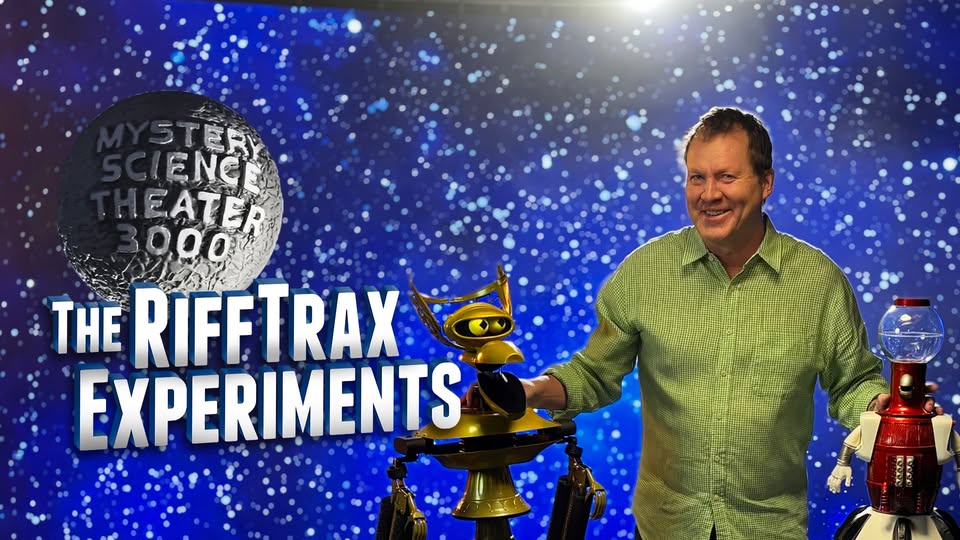
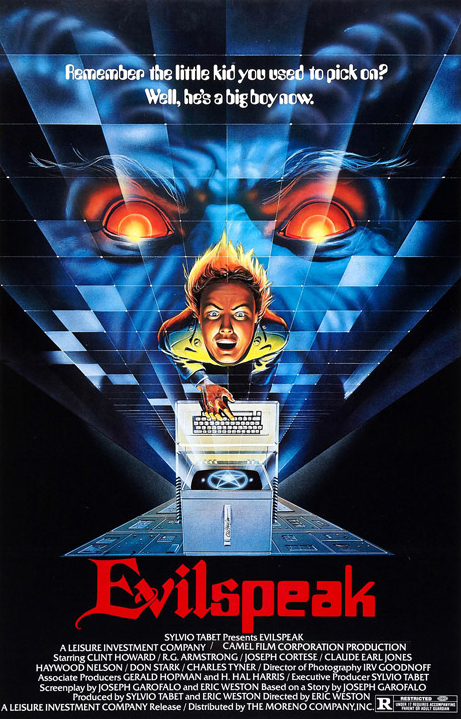
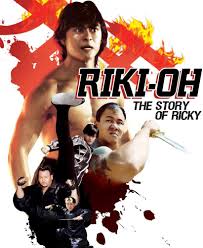
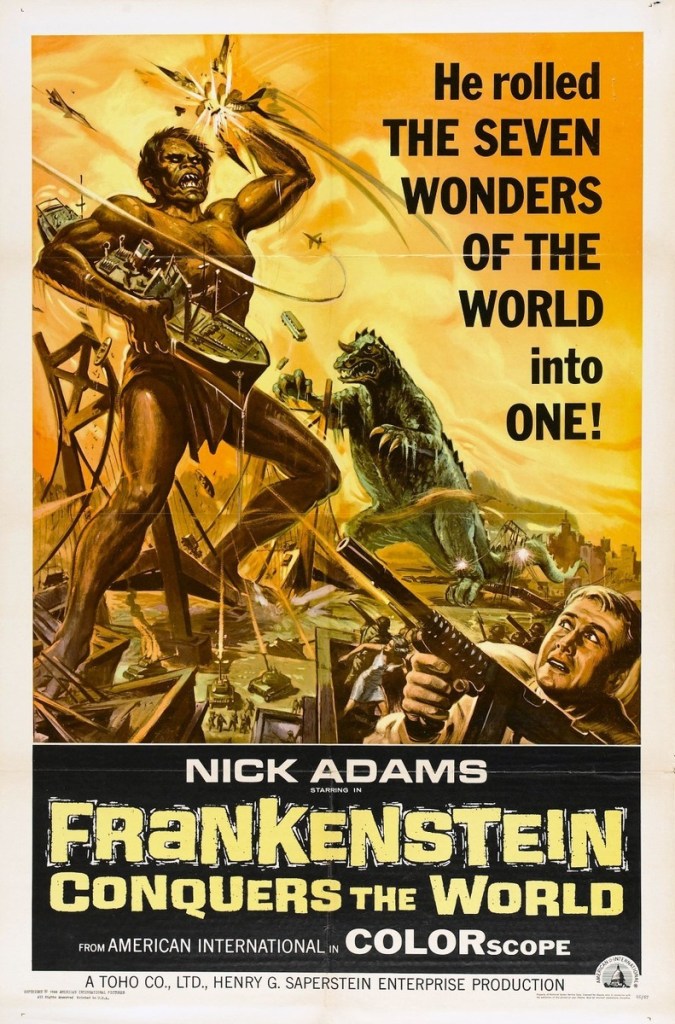


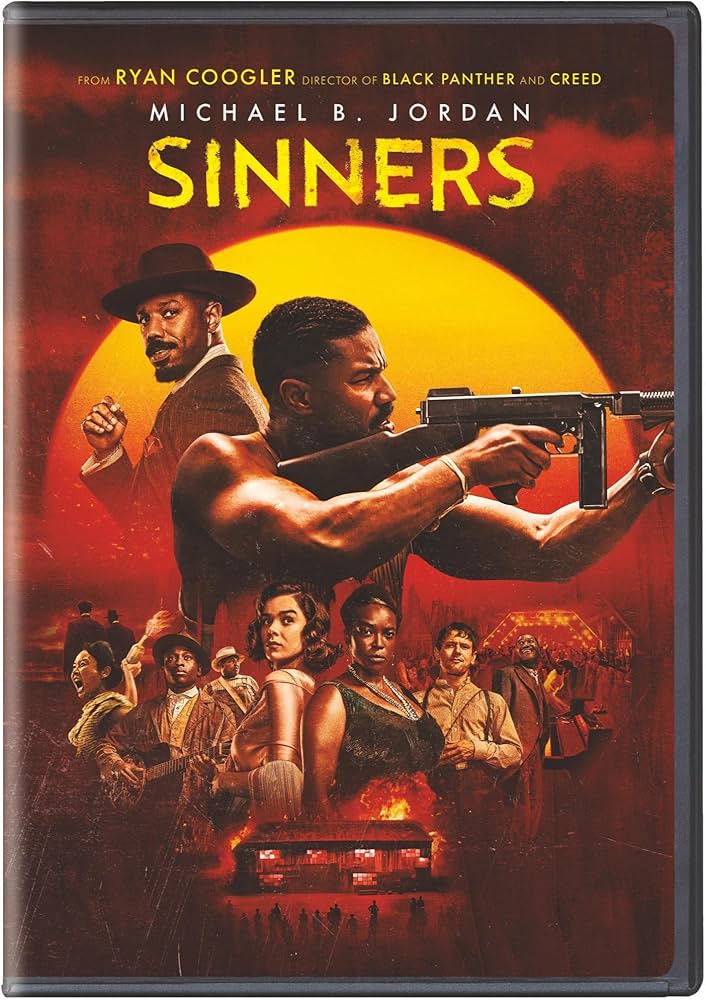

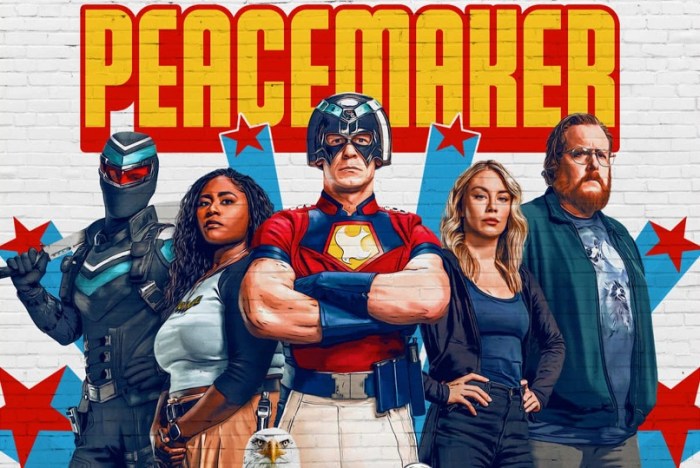
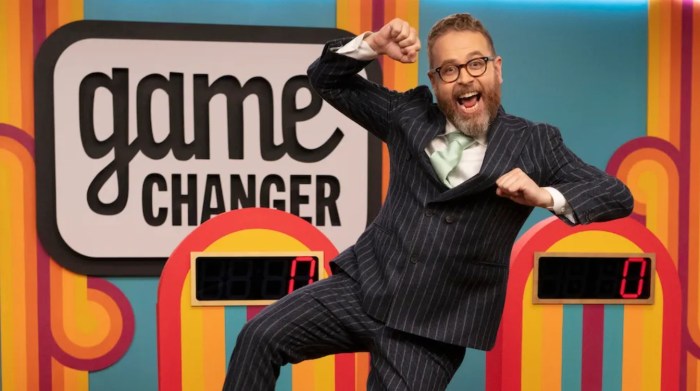
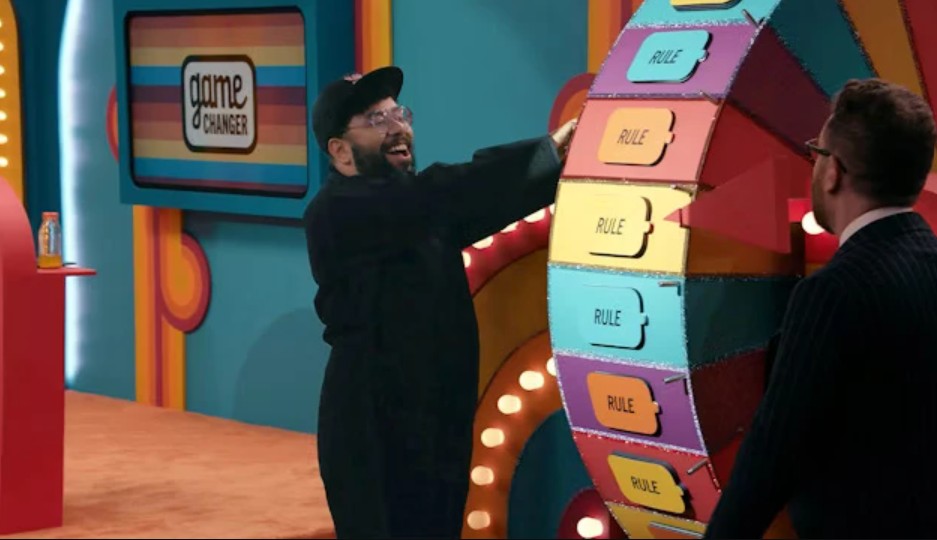
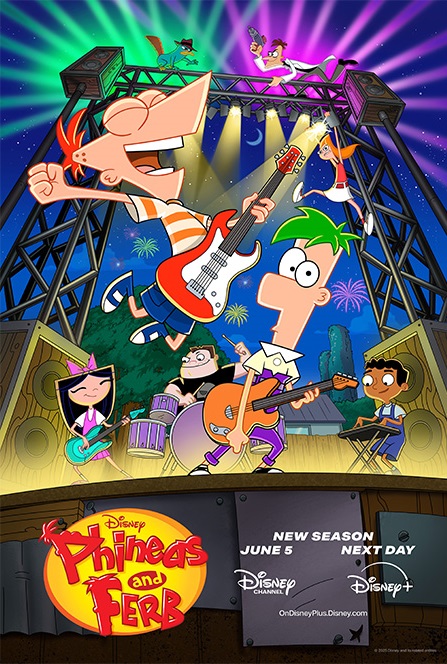
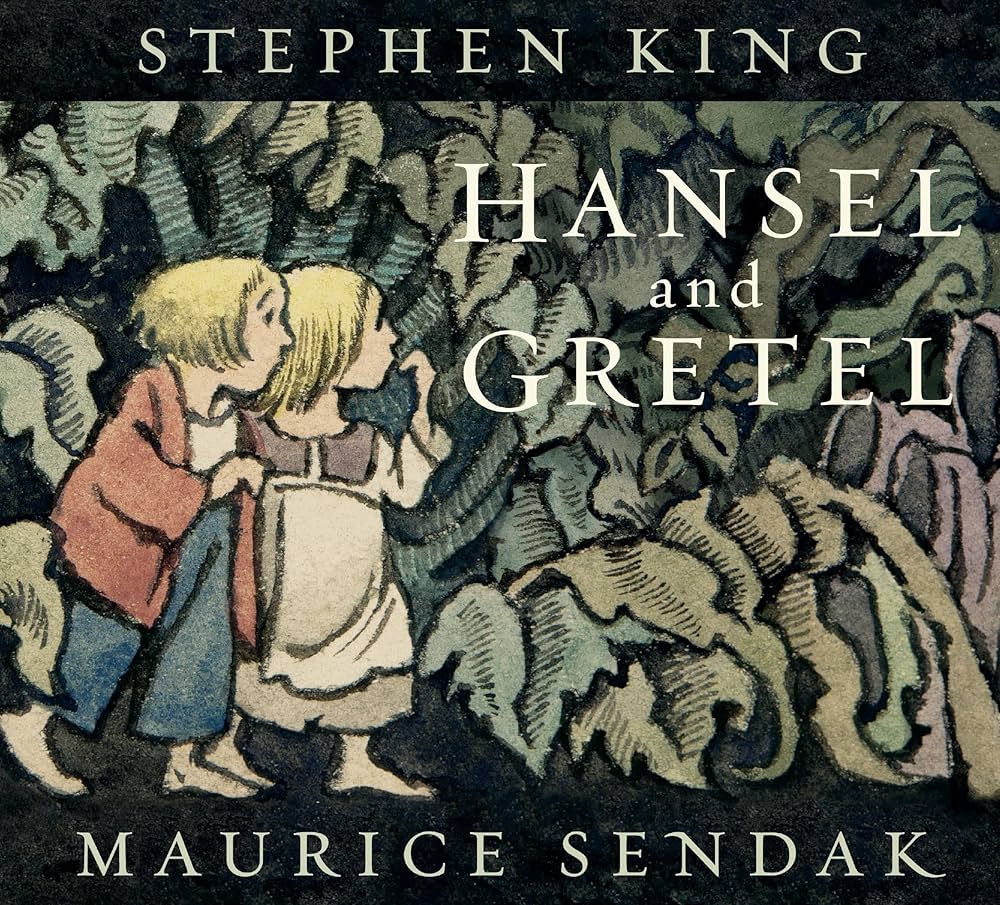
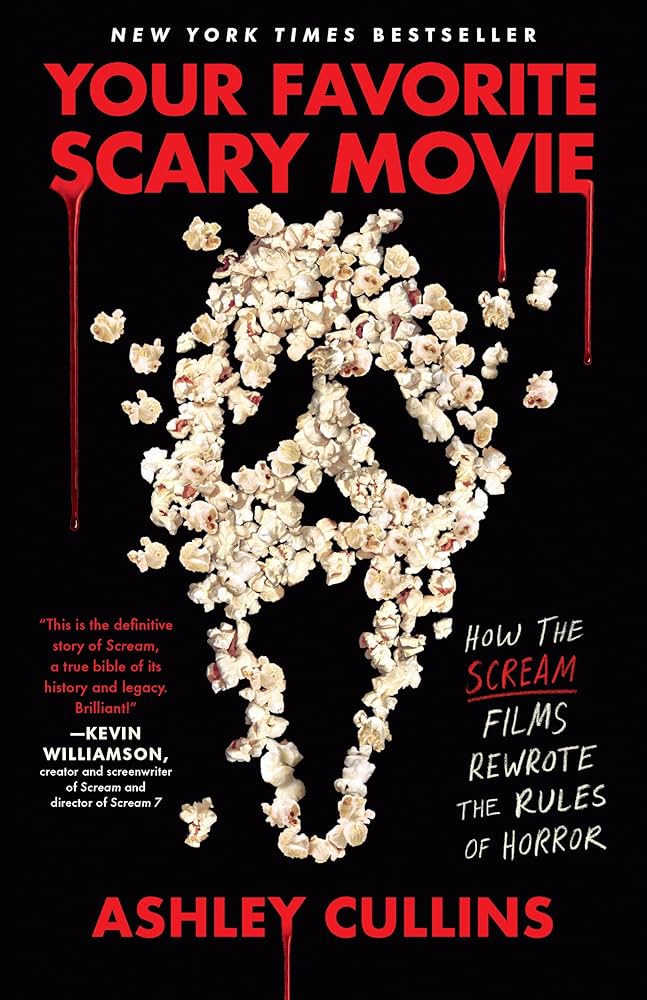
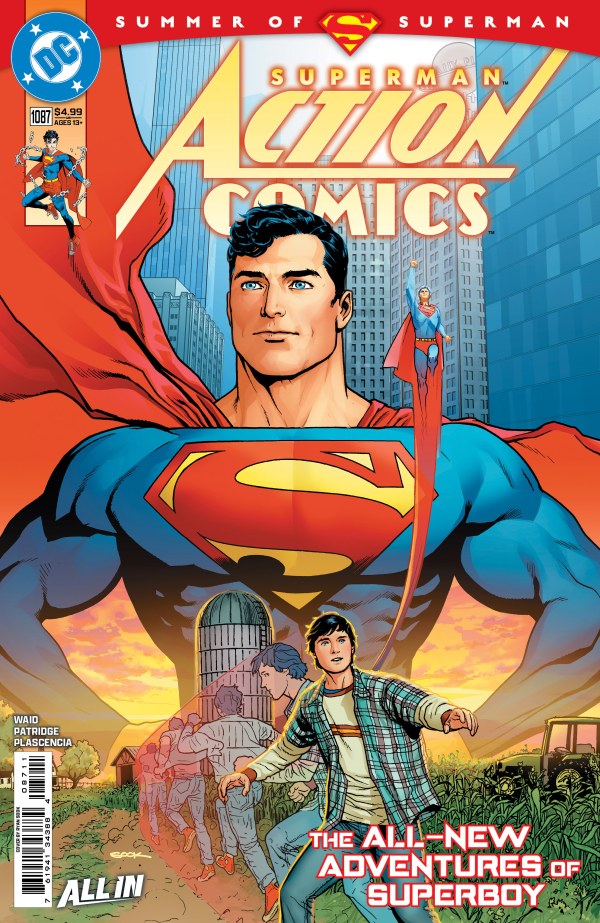


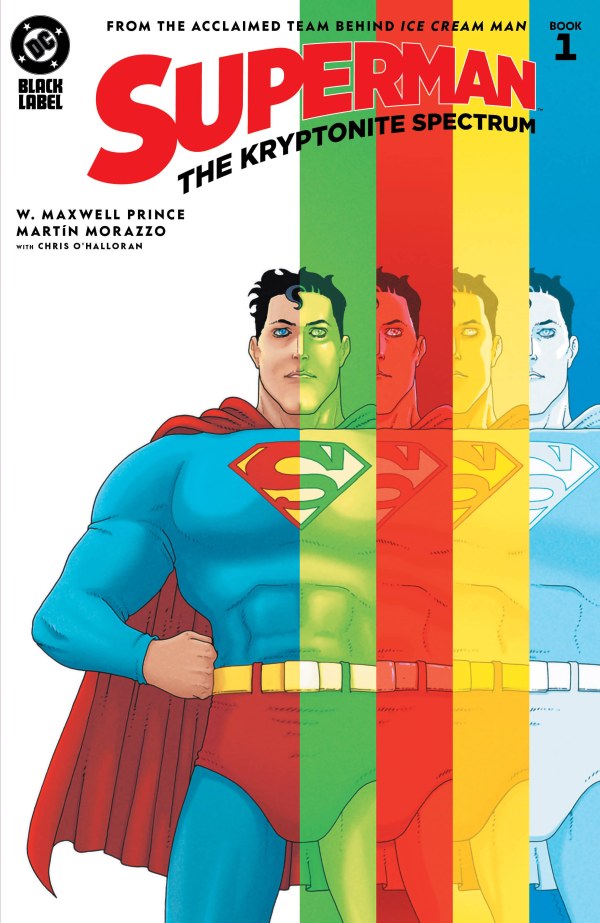
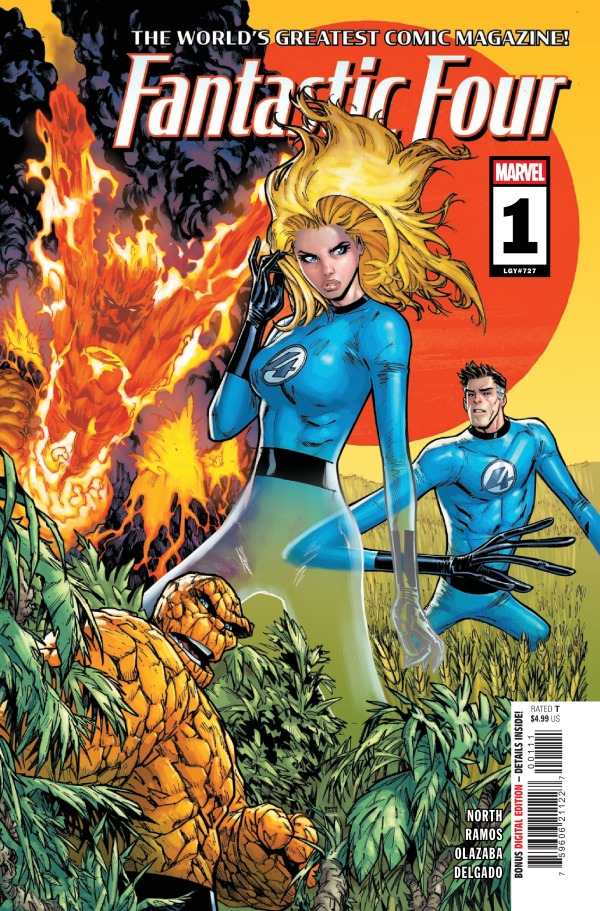
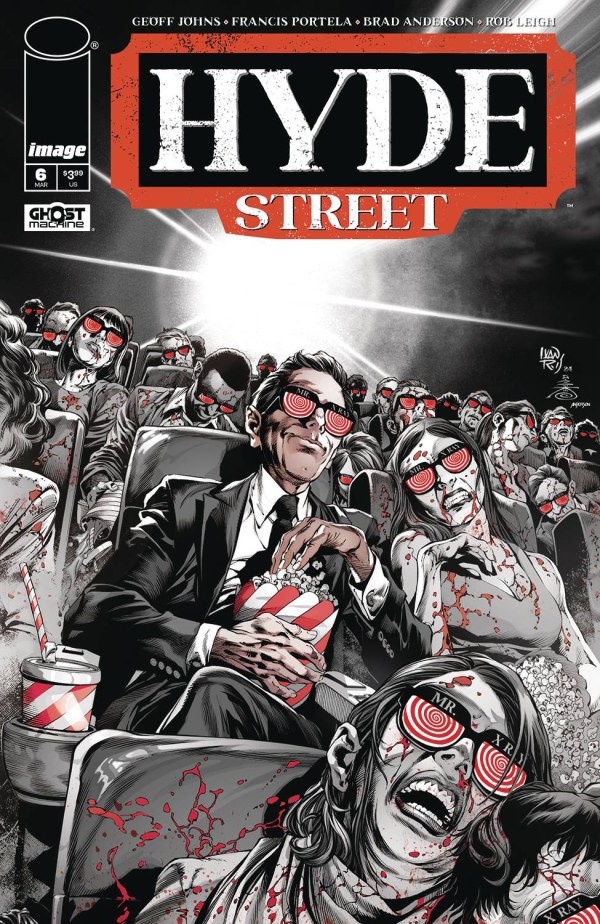

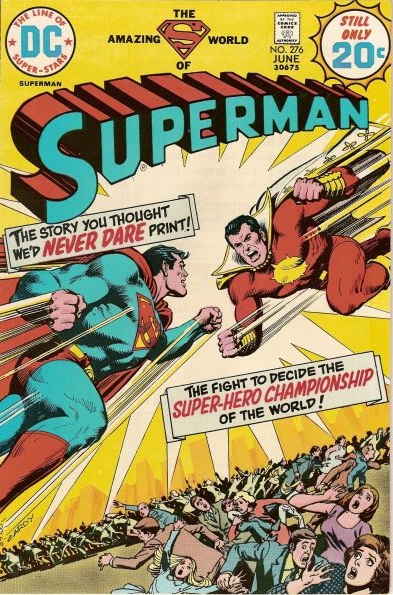


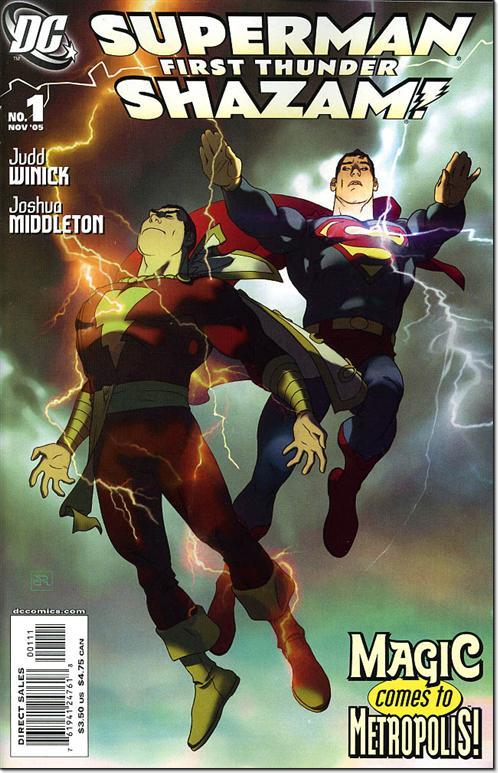

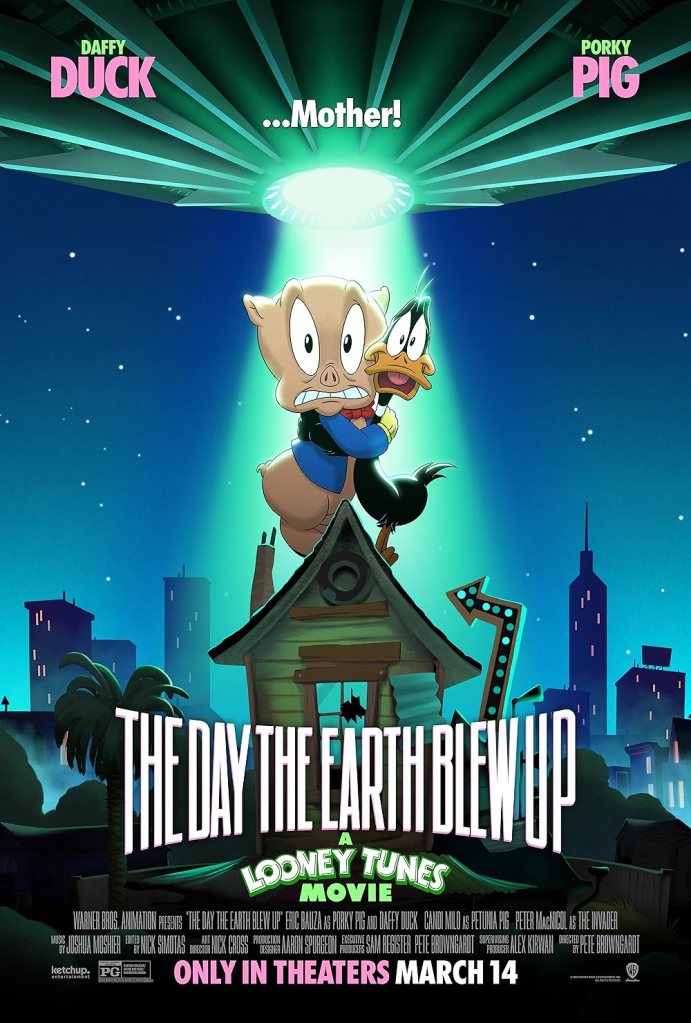
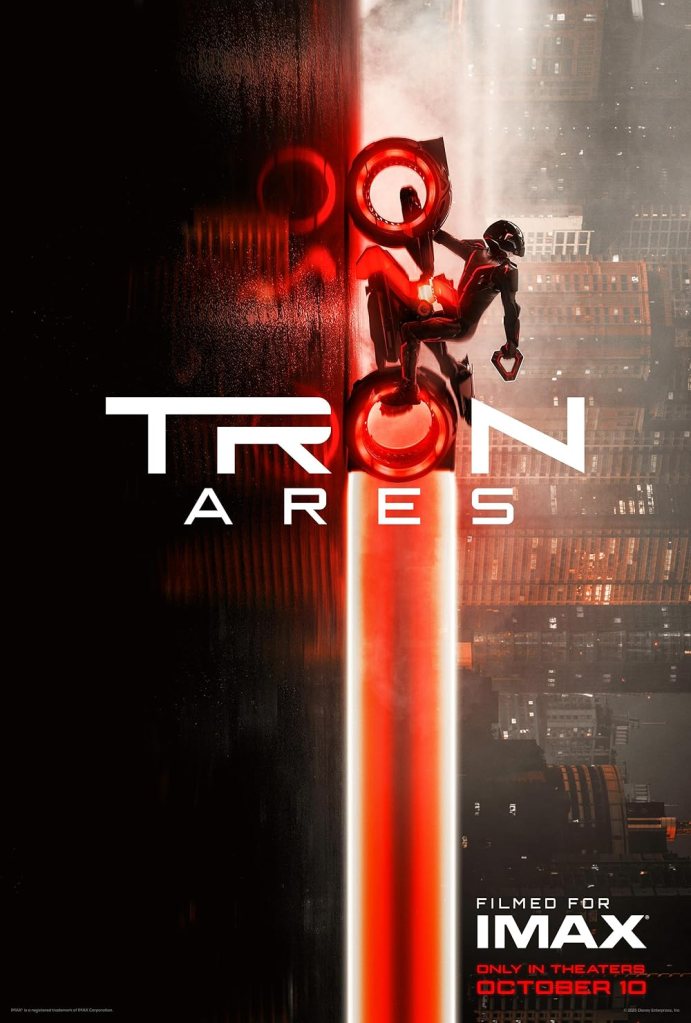
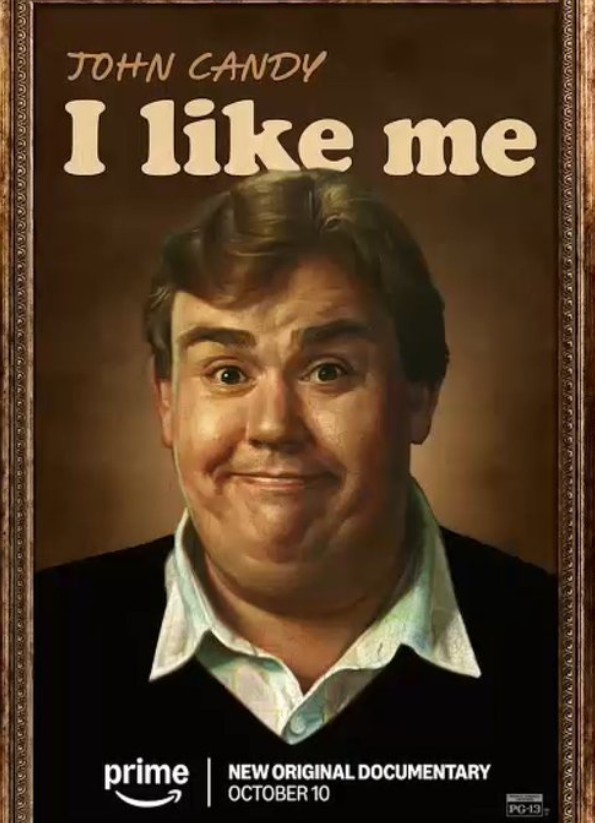
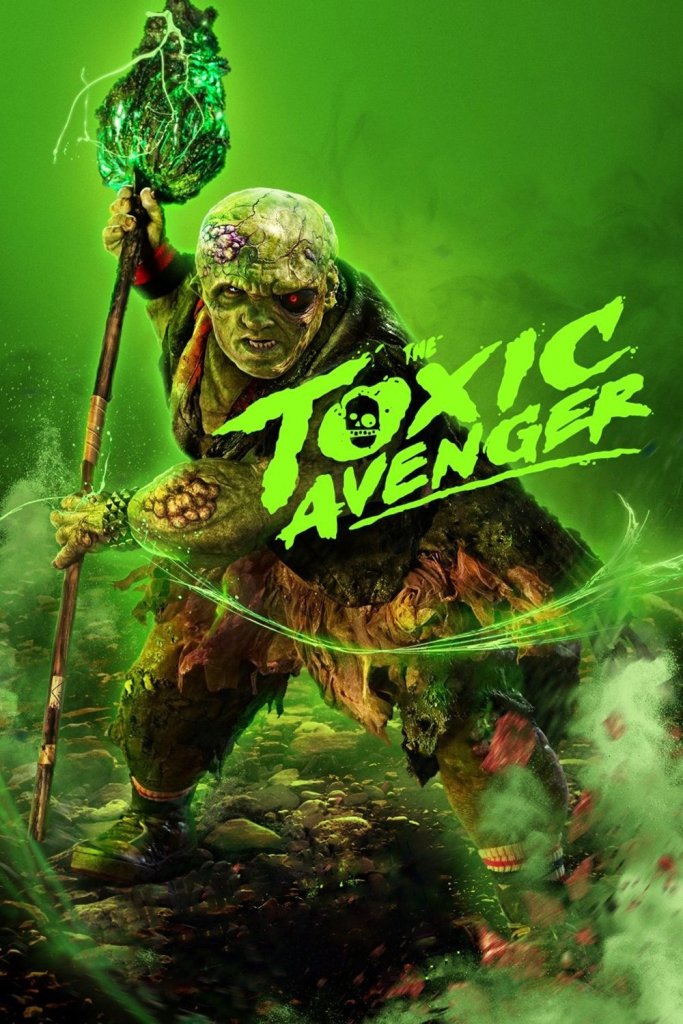


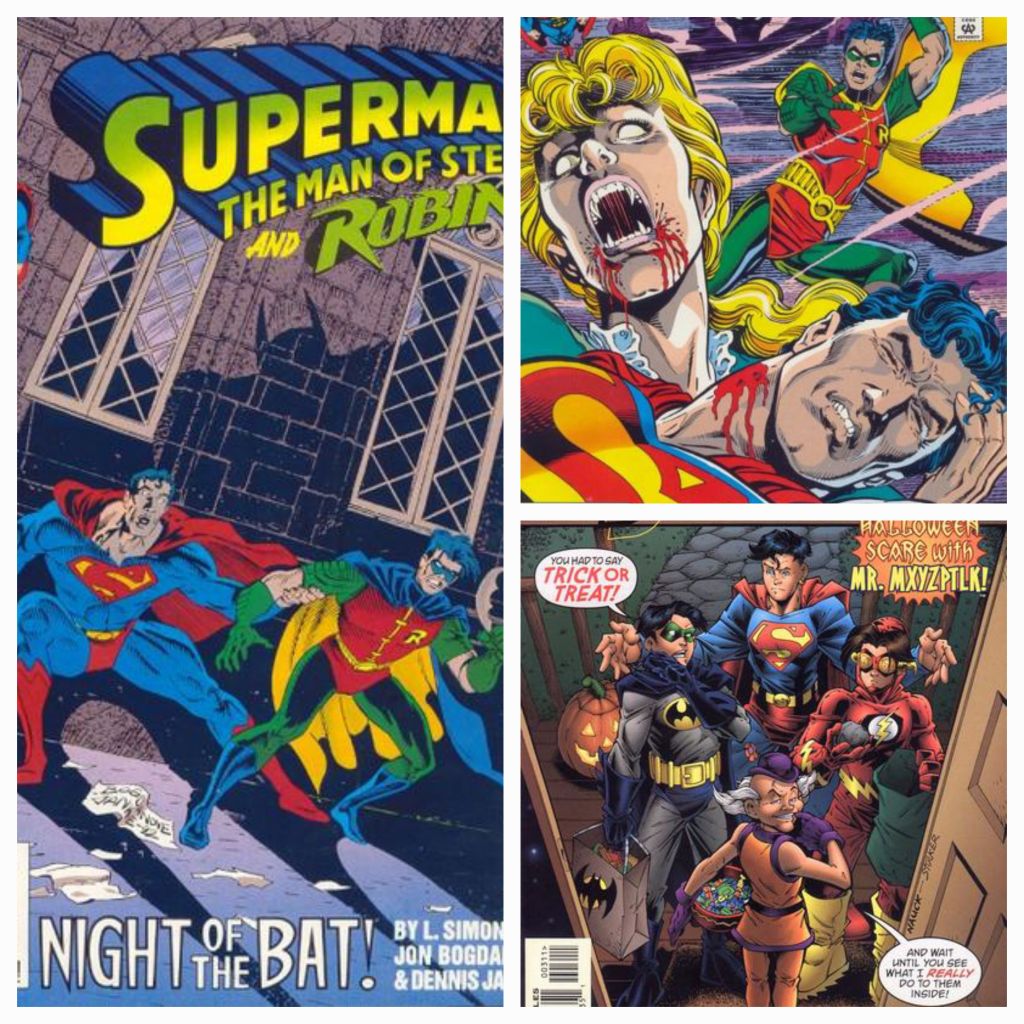
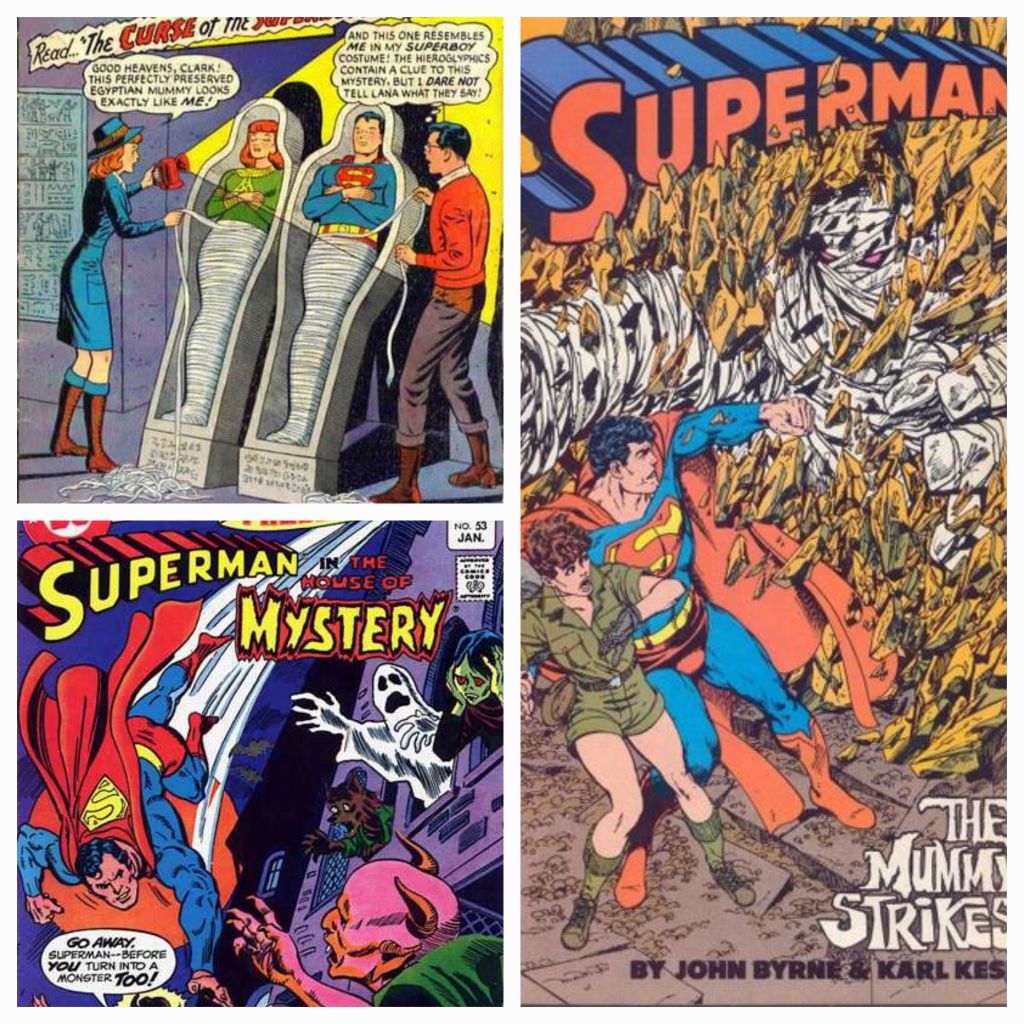


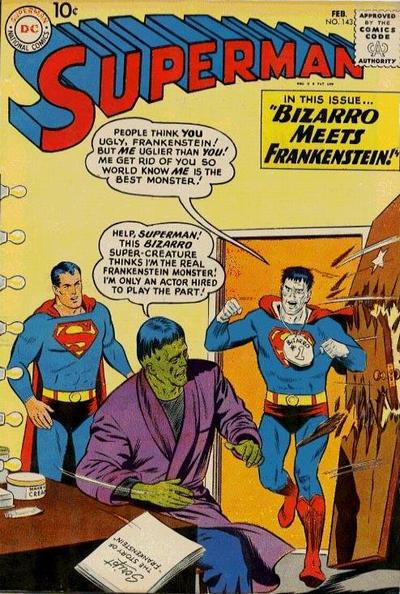
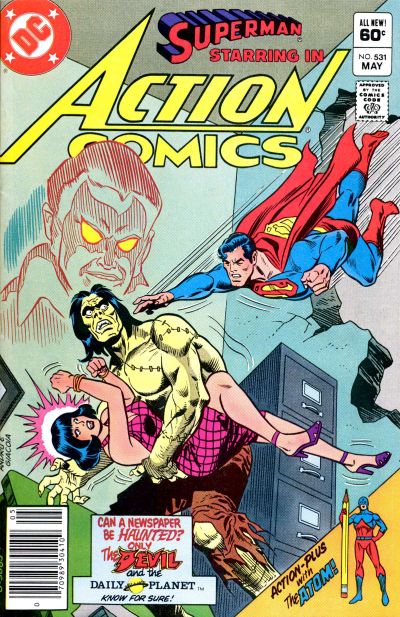


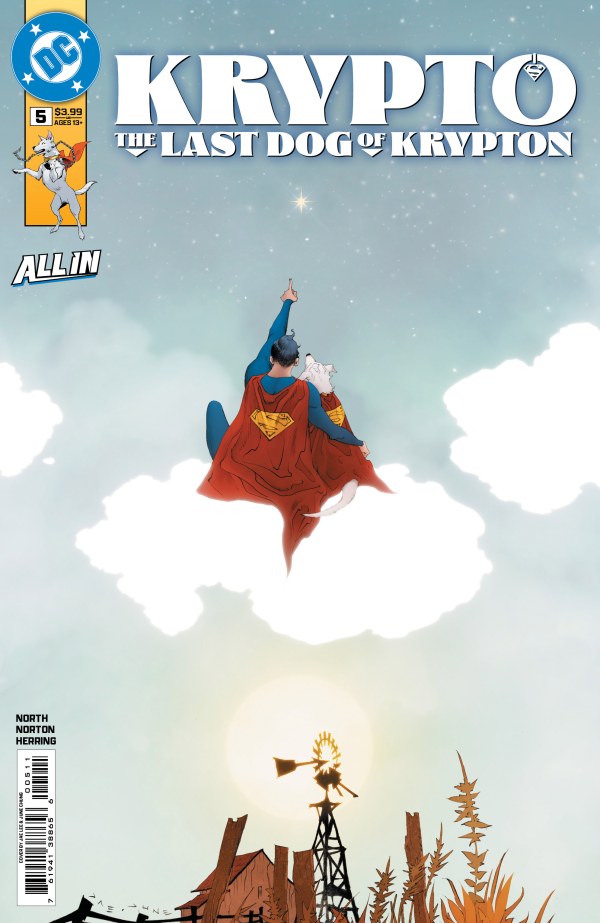

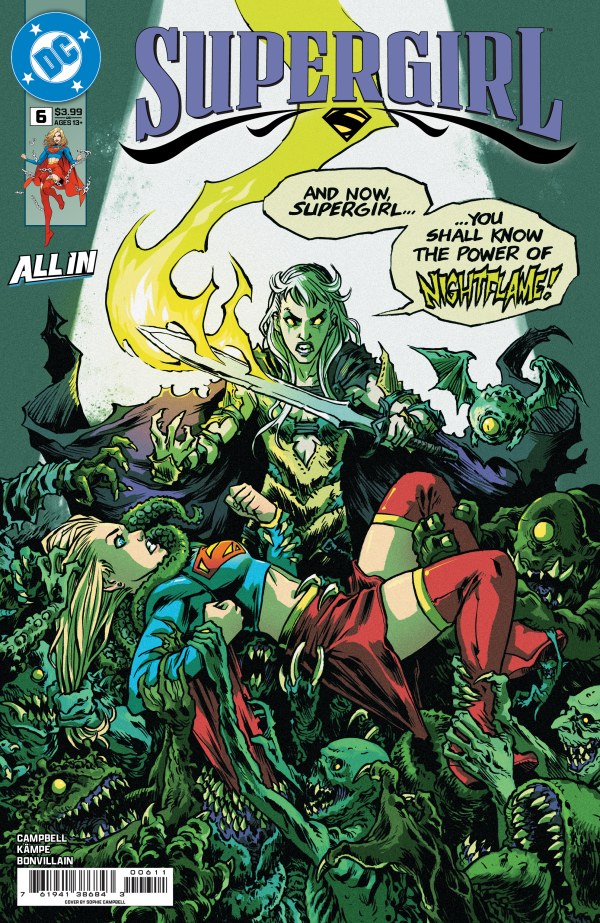


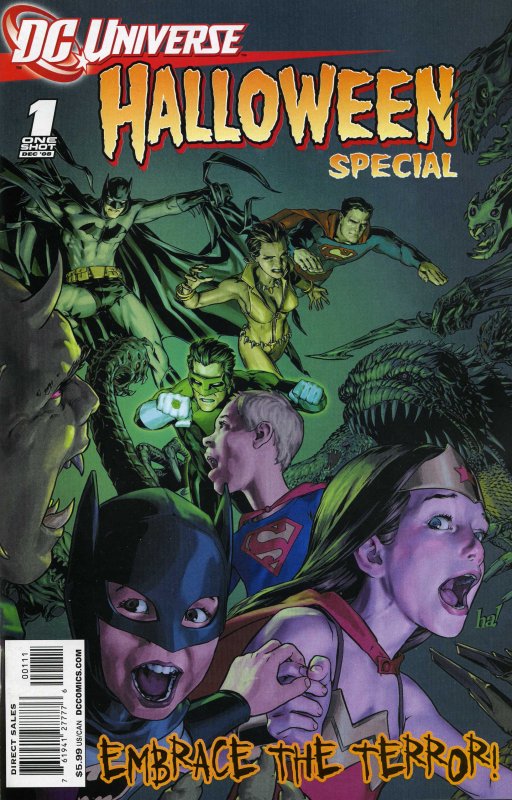


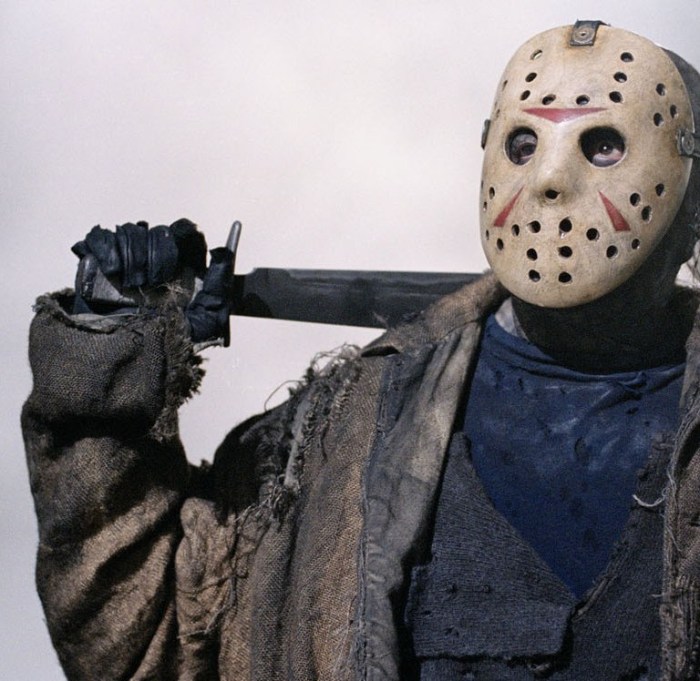

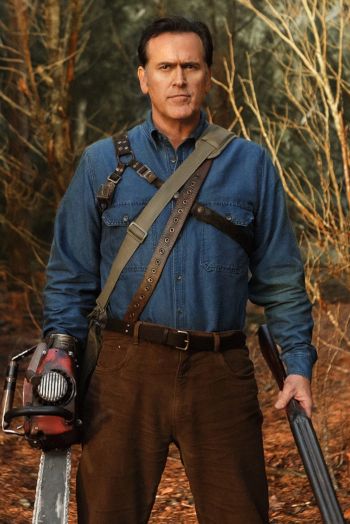




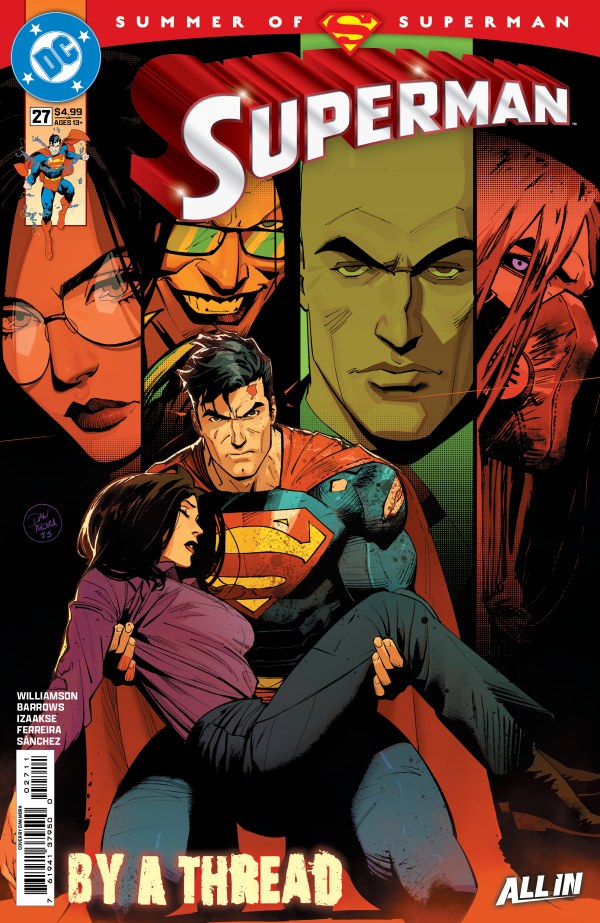






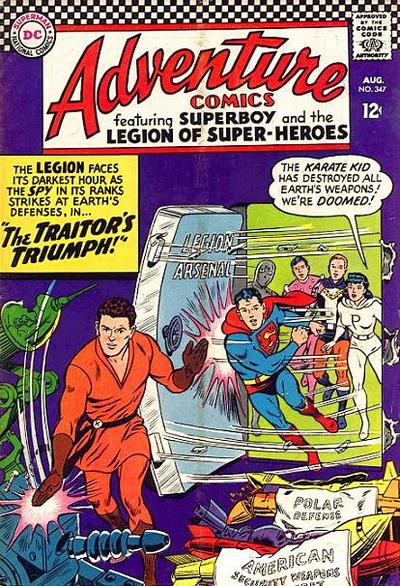




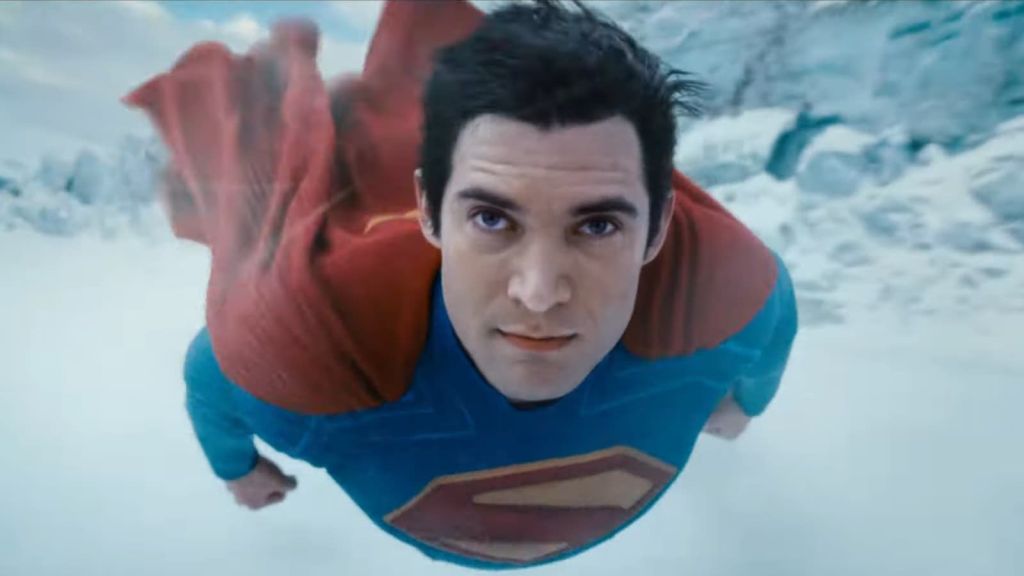


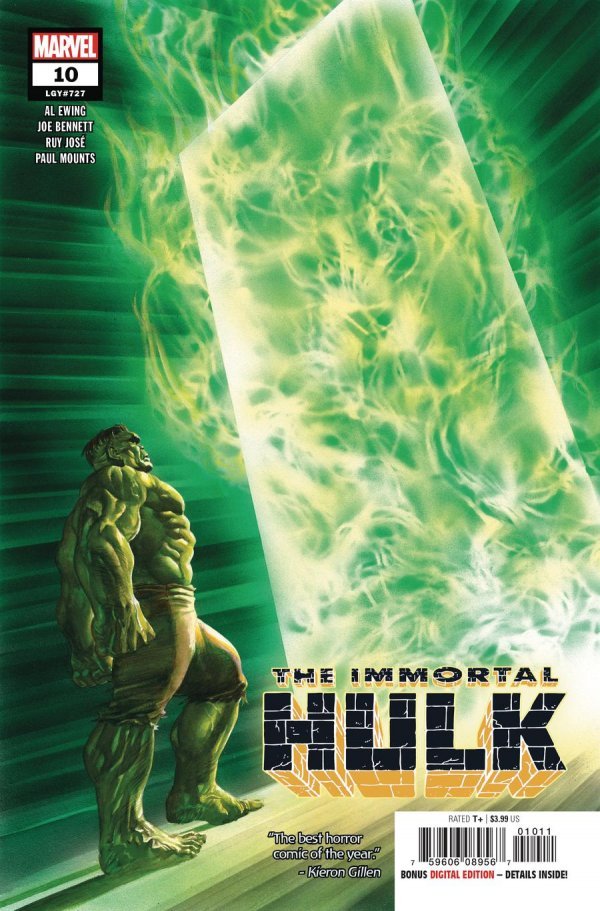
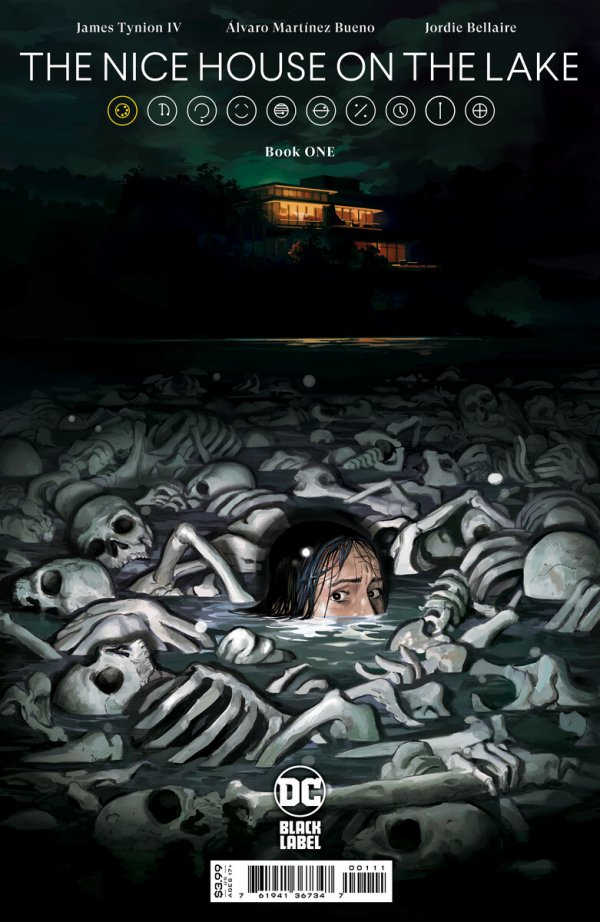


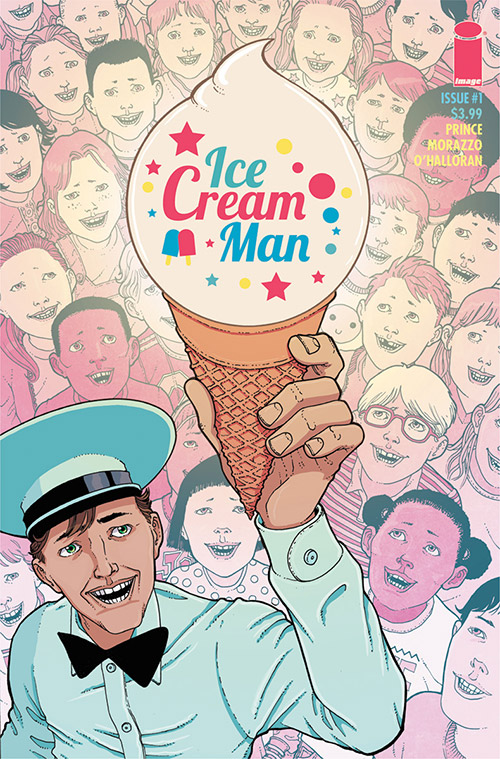

 Blake M. Petit