Yesterday, January 1st, was the first day since 2024 that I didn’t read, watch, or listen to anything related to Superman.
And I missed doing it.
Unless you’ve been living under a Kryptonite rock, you know that at the end of 2024, enthused for the then-upcoming James Gunn movie, I declared that 2025 would be my Year of Superman, and for the next 365 days I adhered to that. Every day for a solid year I read comics, watched movies and TV shows, listened to podcasts, and otherwise spent time with stories featuring my favorite superhero and his extended family. 52 blog posts later (all of which are archived right here, by the way) it’s time for me to look back and think about what it all means to me.
Nailed it.
To begin with, I don’t do this very often, but I’ve got to congratulate myself for actually accomplishing the goal. In that original column when I announced the project, I said that I would give myself grace, fully expecting that at some point in the year I would slip up and miss a day. And let me tell you, there were days in 2025 in which I didn’t want to read or watch anything. Bad days came and I didn’t want to do much more than retreat to my own Fortress of Solitude. But I didn’t. I made it without missing a single day. Let’s talk about what that means by the numbers. Over the course of 2025, the media I consumed included:
1 TV special (the Superman 50th Anniversary special)
And finally – are you ready for this? 1206 individual comic book issues that featured at least one story in which a member of the Superman family appeared.
That’s – and keep in mind that I’m referring to myself here – batshit insane. I don’t know if David Corenswet spent as much time in 2025 thinking about Superman as I did. So after all that…what does it mean? What have I learned about him?
The truth is, I find that the things I already believed were mostly affirmed. Superman has been around for nearly 90 years now, and in that time there have been many stories told about him and many different interpretations of the character. And that’s all fine. But let me tell you about MY Superman, what I get from the character, why he matters so damned much to ME.
In Man of Steel, Henry Cavill popularized to the mainstream something that had been part of the comics for a few years at that point, that the S-shield Superman wears, the emblem of the House of El (at least going back to the 1978 Christopher Reeve movie) was a Kryptonian symbol for hope. But what exactly does that mean? Is it just because Superman is so powerful? Is it because when you see that symbol, you know that the danger you’re in is only temporary, that somebody will be there to save you? Is that “S” just for “Superman,” or does it also mean “Savior?”
Yeah. That guy. Any of him.
Superman’s story has a lot of allusions to Christianity, with Marlon Brando’s Jor-El even referring to Kal-El as “my only son,” but Jerry Siegel and Joe Shuster were Jewish and the story perhaps fits the concept of Moses even better. If you’ll forgive a brief moment of spirituality, Jesus was sent as the Savior of the human race in a direct way, and we get that whenever Superman saves someone falling from a burning building, leaps in front of a speeding bullet, or stops a locomotive to save the kid stuck on the tracks. Moses, on the other hand, was a less direct kind of savior, a leader, someone who GUIDES his people to a better world. And it is in this capacity that the parallels to Superman are stronger. Sure, Superman will save you from a flood, but more importantly, he’s there to show you that there’s a better way.
Let’s say it one more time: It’s not subtle.
It’s almost a cliche to say it at this point, but Superman’s greatest power is not his strength, his speed, his ability to fly or see through walls. His greatest power is his compassion, his unflinching belief in the goodness of people, and his ability to help others see things that way as well. Superman is the man who will never give up on you: no matter who you are or what you’ve done, he will always have faith in your ability to be better.
If you’re going to wear that shield, Kenan, you need to remember this.
In the climax of the new movie, David Corenswet tells Nicholas Hoult’s Lex Luthor that his greatest strength is his humanity, and that he hopes for the good of the world that some day Luthor will realize the same thing about himself. From anybody else, that line would sound trite, pat, and cloying. From Superman, you believe it. The tragedy of Lex Luthor is not that he’s a criminal or a killer or anything else. That makes him a villain. What makes him a tragic figure, what Superman laments every time he faces him, is that he has a mind that could make the world a better place, but chooses to use it selfishly. And every time he faces Luthor, Superman hopes that this will be the time that Luthor sees the light. It’s even happened in the comics a few times, where Lex has turned good. It’s always been temporary, of course, except for in self-contained continuities like All-Star Superman, but we’ve seen time and again that even Lex Luthor has within him a seed of redemption. We’ve seen time and again that Superman is right. And if he’s right – if even LEX LUTHOR has the potential to be a better person tomorrow than he is today – then what does that mean for the rest of us?
Superman believes the best of you. And he inspires you to believe the best in others. In the final episode of Superman and Lois we see him in flight with his extended family of heroes, and we learn that he and Lois manage to change their world for the better. In Final Night, we are reminded that half the superheroes in the world look to him as inspiration (the other half, naturally, look to Batman). The whole point of The Iron Giant is that the Giant himself – an alien weapon – looks to the example of Superman and sees that he can make himself better.
The Giant gets it better than anybody on BlueSky.
We cannot bend steel in our bare hands. We cannot leap tall buildings in a single bound. We cannot change the course of mighty rivers, or freeze those rivers with our breath. We cannot fly through space unaided, travel through time, or crush a lump of coal into a diamond. Those things are beyond us.
But we can believe in the best of each other. And maybe, if we do enough of that, those others will actually begin to earn that trust. And maybe, if we do enough of that, we can learn to believe in the best of ourselves.
We should believe the best of ourselves.
Because Superman would.
Remind yourself, in those times where you’re dangling off the edge of that cliff and you think you’ll never make it, that Superman would believe in you.
And who are you to tell Superman that he’s wrong?
And don’t you forget it.
So now what?
Some people, after spending an entire year dwelling on a single character, would get tired of it. I…I’m not. I want more Superman. And there’s so much more to come. There’s the Supergirl movie coming out later this year, of course. And a new season of My Adventures of Superman is also scheduled to drop some time in 2026. Next year we’ll get Man of Tomorrow. DC Comics has announced some really interesting things for the ongoing Superman comics after the current DC KO event wraps up that I’m certainly going to want to talk about. They’ve also teased the return of the Legion of Super-Heroes, and come on, if Superman’s not involved with that in some way, what are we even doing? And let’s not forget that in March, after decades apart, Superman is finally going to meet Marvel’s friendly neighborhood webslinger again in a new Superman/Spider-Man crossover.
We’re back, baby!
Then there’s all the stuff on my list that I just didn’t get around to this year: John Ostrander’s amazing miniseries The Kents, Grant Morrison’s DC One Million event (which – let’s be honest – is a Superman story at its core), or the “world without Superman” Elseworlds series Justice League: The Nail. There are still several animated films I didn’t get to watch. I had hoped to do an entire week on fanfilms, but ran out of time. And I had stories picked out for weeks focusing on Jimmy Olsen, Lex Luthor, Kong Kenan, and other characters that didn’t get scratched off the list.
The truth is, I don’t want to stop reading, watching, or writing about Superman. I just don’t want to HAVE to do it EVERY DAY.
So consider this my official announcement. Starting in 2026 and going on…well, as long as I wanna do it, I’ll be bringing you SUPERMAN STUFF right here on the blog. Sometimes it’ll be new comics, new movies, new TV shows. Sometimes it’ll be classic stuff that I haven’t talked about before. I’ll still endeavor to have at least one blog post a week, but they won’t be as long as they were in 2025 (you’re welcome) and they may not necessarily always be on a Wednesday.
The world of Superman is vast, and despite the mountain of stuff that I mentioned in the list above, there’s plenty more to dig into. The regular Geek Punditry blog here on Fridays won’t change. But I’m going to continue to devote real estate here to talking about the characters and stories that I love.
Because there’s something to be learned here. And it’s a lesson we can all use.
Blake M. Petit is a writer, teacher, and dad from Ama, Louisiana. His most recent writing project is the superhero adventure series Other People’s Heroes: Little Stars, volume one of which is now available on Amazon. You can subscribe to his newsletter by clicking right here. He’s also started putting his LitReel videos on TikTok. To all the people who sent him messages urging him to make 2026 “The Year of Captain Underpants,” he considered it. A little.
In last week’s column, a work of foundational literary greatness which has already replaced things like the Magna Carta in terms of historical significance, we discussed the collapse of Diamond Distribution and the way its disintegration has disrupted things for the comic book world in North America. But that’s only part of the story. Like traditional books, the digital market for comic books has become a significant player. True, comic fans (even more so than readers of regular books) have a strong collector’s mindset and will probably never outgrow the desire for physical copies. But for comic readers, the convenience of digital is appealing to many.
REMEMBER. REMEMBER WHAT THEY TOOK FROM US.
Once upon a time, there was a great little app called Comixology. It wasn’t the only game in digital comics, but it quickly became the dominant one because it cut deals with virtually every major publisher and almost every minor one you could name. It had a gargantuan catalogue to choose from. There were a mountain of comics available for free as well – lots of first issues and special one-shots in addition to simple previews – enough to let you try almost anything before you started to think about whether you wanted to buy anything or not. There were sales every week, where tons of comics were reduced in price and others were made freebies temporarily. One time, Marvel had an event in which the first issue of EVERY MARVEL TITLE was free for a few days, and the response from people “purchasing” the digital comics was so great that the app crashed and they had to issue rain checks. They even had a program in which independent comic book creators – those making comics on their own without the benefit of a publisher – could submit their work to Comixology and make it available for sale on the biggest digital comic book platform in existence.
It was popular, is what I’m saying.
“Sounds great, Blake,” you’re saying. “What happened to it?”
Amazon bought it, of course.
Don’t you smile at me like you don’t know what you did.
Look, I’m not going to get into the various reasons that people hate Amazon. I’m not going to get into politics or the abusive nature of how they treat their workforce. I’m certainly not going to point out the fact that Jeff Bezos really, really looks like Lex Luthor. I’m going to focus on what’s actually pertinent to this column, namely the fact that when Amazon purchased Comixology, they turned it from a fun, easy app to use to read and collect digital comics into a system that – and here I am directly quoting St. Francis of Assissi – “sucks.”
Like many things Amazon buys, nothing changed…at first. But they slowly began to integrate Comixology’s functions with their own. They married your Comixology library with the library from the Amazon Kindle store, their own digital platform, and eventually they did away with the simple, easy-to-use, easy-to navigate Comixology website. By forcing you to access the digital comics via Amazon’s own website, they absolutely crippled its usefulness.
On Comixology, it was easy to track comics in various ways – title, publisher, creators. One could simply click on a single title – Amazing Spider-Man, for example – and add each issue that you wanted to your cart, then buy them. Amazon’s interface does NOT make this simple. When you do a search on Amazon your results are determined by algorithm, a word I am beginning to despise in much the same way I despise words like “smallpox” or “cauliflower crust pizza.” So instead of simply searching for Spider-Man and finding the various series of Spider-Man comics, now when I search for Spider-Man I get a dozen “sponsored” results, a couple hundred Funko pops and t-shirts, some movies and TV shows, and EVENTUALLY I’ll find individual comic books that have no logical sequence or arrangement that can be detected by the human brain. It’s an utter mess and nearly impossible to keep track of what you already own or to find what you’re looking for.
Even worse, Amazon eventually abandoned the Comixology app as well, fusing it with the Kindle Reader. The Kindle Reader is adequate for books, but as a platform for keeping track of thousands of individual comic books amongst hundreds of series, it is an absolute nightmare. I still have my “collection,” but it’s so rare now that I get a digital comic from Amazon that if they shut down the entire system tomorrow, it would be weeks before I would even notice. I DO use the Kindle Reader frequently, mind you, but I have to “hide” the comic books to prevent the app from crushing under the weight loading the ridiculous number of comics I accumulated during the years of Comixology’s existence. When Amazon killed Comixology, they abandoned one good app and made an adequate app less easy to use even when I’m not reading comics.
This is not to say that I’ve stopped reading comics digitally. Far from it – in any given week I probably read more comics on my tablet than I do on paper (especially with the whole Year of Superman thing I’ve been doing since January). It’s just that I’ve found other ways to do it. And in many ways, these alternatives are far preferable if your ultimate goal is not just to have a paper copy of every conceivable comic in the universe sealed in plastic. There are so many X-Men titles, for example, that trying to collect them all could bankrupt the average American. But with an affordable subscription to Marvel’s digital app, you can read as many of the books as you want if you’re willing to wait a few months.
Marvel and DC both have similar apps with a subscription that lets you read their massive back catalogue, but I think they’re the only two individual publishers that have such a thing. And that makes sense, honestly. The other players in the comic book game are either too small to have a bench deep enough to justify the subscription model (you could potentially read every comic Abstract Studios has ever produced in a couple of months, for example, and then why would you maintain the subscription?) or they are heavily reliant on comics that are owned by their creators (such as Image Comics) and IPs licensed from TV, movies, toys, and so forth (Dark Horse, Dynamite, IDW, and many other publishers have a long list of these). Having so many books owned by different copyright holders makes arranging a digital subscription service difficult and subject to having huge swaths of their catalogues suddenly vanish if their deal with the owner of the IP is not renewed.
Tunnel, meet light.
There are alternatives, however. GlobalComix, for example, is a service that has a lot of comics – including new comics – available for purchase, as well as a subscription service that gives you access to their entire library for $6.99 a month or $69 for a yearly pass. Their catalogue includes publishers including (but not limited to) Dark Horse, Image, Mad Cave Studios, IDW, anime publisher Kodasha, TONS of small publishers, and even selections from DC and (beginning on Oct. 15) Marvel. It’s not immune to the problems I mentioned before, of course. If a deal with a certain publisher or rightsholder expires and isn’t renewed, then the readers’ access will be cut off. But in this case, GlobalComix has deals with enough different publishers that the loss of any one specific publisher isn’t likely to cause the whole system to collapse.
You can purchase individual comics to read if you don’t want the subscription, similar to how we all once built up our huge Comixology libraries, but the notion of a digital “collection” seems weird when a subscription is available. If it would cost more to buy two new comics this month than it would cost to buy an unlimited monthly subscription, why the hell buy the two comics? It’s not like you actually “own” them. As we’ve learned with things like licensed movies and music, you never really “own” digital content unless you’ve got it on a hard drive somewhere. All you “own” is a license to read it, and that can be revoked. I guess the only kind of digital exception to that would be something like an NFT, but the whole concept of NFTs is – and once again I’m going to quote St. Francis – “as stupid as a pig touring the Hormel plant.”
That said, there does seem to be a small niche appearing for digital “collectibles” of a sort, and that’s the concept of personalization. This summer, comic publisher DSTLRY announced that they were launching a new digital comics platform called Neon Ichiban. DSTLRY, it should be noted, was founded by David Steinberger and Chip Mosher, the guys who founded Comixology in the first place before selling it to Amazon in 2014. I guess after their decade-long non-compete clause expired, they decided that something had to be done about the mess that was made of their baby.
“We got out of our beds stuffed with Amazon money because SOMEBODY has gotta fix this mess.” — Steinberg and Mosher, probably.
The program is still in beta at the moment, but I’ve signed up for it and some of the things I’ve seen have been pretty promising. It’s not hard to find what you’re looking for on the site, or to add it to your collection. Technically, I should say, I haven’t actually purchased anything from Neon Ichiban yet. I’m a little reluctant to do so while it’s still in beta, even though I’m sure they intend to roll any beta purchases over into the finished version of the site. I have, however, “bought” several of the free comics available in order to test out the functionality, and it’s not bad.
There are definitely things that need to be improved, primarily the fact that they need to roll out a dedicated app for the service. At present there is no app, and customers have to read their comics through the Neon Ichiban website. The interface is okay, but not nearly as convenient as having an app will be, especially when reading on mobile (which is preferable – to me, at least – to reading on a computer screen). The service is also still fairly new, the Beta only launching in August, so they’re working on building up their back catalogue. I’m impressed by some of the publishers they’ve already partnered with, though, including the juggernauts of Marvel and DC, as well Dark Horse, Vault Comics, Kodansha, and others, with the promise of more to come in the near future. Each week since the Beta has launched they’ve added that week’s new comics from the participating publishers to the service, and they’ve all been slowly adding older books to the library as well. The last time I checked Marvel (not surprisingly) had the largest back catalogue on the site, and although it’s not nearly the number of comics available on Marvel’s own app, it’s not inconsiderable either.
Still, all of this is similar enough to GlobalComix that it would be hard to recommend one service over the other, at least as far as purchasing individual comics goes. And for those who don’t care about “owning” a digital copy, Global’s subscription model gives them the edge. But Neon Ichiban has something that I haven’t heard of before that will probably get people’s attention: some of the comics in their catalogue are labeled “Remarque-able.” Spelling aside, I dug around trying to figure out what the hell that actually means, and from what I can tell, it’s an interesting idea. It seems that “Remarque-able” books will be available to be digitally altered, adding things like digital autographs or commissioned sketches to the comic, similar to the way you can get an artist to sketch on a blank comic book cover now. The idea of a digital autograph seems a little silly to me, to be honest, but if I could commission – for example – Dan Jurgens to draw a one-of-a-kind sketch of Superman on a digital copy of Action Comics #1000…well, I’m not saying I would do it OFTEN, but I admit I understand how such a thing would be appealing to a portion of the audience. There is the question of what – if any – restrictions are in place. If I pay an artist to draw Batman on the cover of a blank Spider-Man, most of them would do it (even if such a request seems odd). Would the same thing apply to a Remarque-able comic, or would they have tighter restrictions on what could be drawn there? Would there be limitations regarding graphic or adult content? And if so, what would they be? I don’t know yet, and those questions need to be answered. Whether I ever did it myself would depend entirely on what artists and books are available and how much it would cost, but it’s something I would at least consider.
So while people in the real world are falling over each other trying to figure out how to get comic books in stores again, there are fortunately already systems in place to keep the digital flow going, and many of them are far superior to what we’re seeing from Amazon. That is, of course, an extremely low bar, but it’s a bar that’s being hurtled nonetheless.
The future of comics is in flux, I can’t deny that, but I’m not one of those people who think the future is fading either. Comics aren’t going away. They’re evolving in several areas, but people are doing things to get them to the readers, which is where they belong. And like in the physical distribution front, I think having a few different competing digital services is probably a good idea. As much as I liked Comixology, had there been any serious competitors at the time, it wouldn’t have been such a disaster when Amazon ruined it. I haven’t gone all-in on either GlobalComix or Neon Ichiban yet, but knowing that they’re both out there is honestly pretty comforting.
At the moment, though, I’ve still got 90 years of Superman comics to get through first.
Blake M. Petit is a writer, teacher, and dad from Ama, Louisiana. His most recent writing project is the superhero adventure series Other People’s Heroes: Little Stars, volume one of which is now available on Amazon. You can subscribe to his newsletter by clicking right here. He’s also started putting his LitReel videos on TikTok. Now he’s thinking of commissioning Scott Shaw! to draw a Spider-Ham/Captain Carrot mashup. Really, people, the time has come.
When I started the Year of Superman back in January, I decided early on that I wasn’t going to spend the entire year reading stories from the “Triangle Era,” even though that is hands-down my favorite period of Superman comics. I did decide, though, that I would allow myself two indulgences. I would give myself a few weeks to delve into the epic and game-changing Death and Return of Superman storyline in the early part of the year. Then, later, I would allow myself to read the longer and more divisive saga of “Electric” Superman. The period where Superman’s powers and costume changed so radically was a major point of contention for a lot of readers at the time, although I feel that — like many stories of the era — it is looked back upon more fondly than it was initially received. But I have never gone back and read that era as a whole since it first came out.
I think it’s time.
That said, there’s a question that must be answered: exactly WHEN does this saga begin and end? It’s not as cut-and-dried as the Death of Superman, beginning with Doomsday’s appearance in Man of Steel #18. This story doesn’t begin in the issue where he gets the new costume. Superman’s power change is at least partially a result of an attempt to restore his powers after they are lost during the Final Night crossover. And after he is returned to “normal,” that issue ends with a cliffhanger that dovetails into a time-travel adventure against the villain Dominus that lasts several months before things are finally reset. Along the way he participates in more than one crossover event, is a regular member of the Justice League, and makes multiple guest appearances in lots of comics, including the Ultimate Access miniseries I read last week. All told, were I to read EVERY comic book with Electric Superman, it would be more than double (possibly triple) the number of issues in the Death and Return saga. That’s a LOT.
So here’s what I’ve decided:
I’m going to read all of the issues of the regular Superman titles from the beginning of Final Night to the end of the Dominus storyline. I’ll read the main issues of any crossover in which Electric Superman appears, as well as crossover chapters in which Superman or members of the family appear. I’ll also read the annuals with Electric Superman. I’m going to skip the JLA issues, because after all, it’s part of Grant Morrison’s run and that whole thing is really one massive story in and of itself. And I’m not going to get into every guest-appearance he makes just because I think it would be a pain to try to track them all down, but I reserve the right to sneak one in if I really want to.
Even shortened like this, it’s still going to be the single largest endeavor of the Year of Superman. And I’m kind of excited to get into it.
All of this is to say, buckle up. It’s time to get sparkly.
Comics:Final Night #0-4, Power of Shazam! #20, Superman Vol. 2 #117, Adventures of Superman #540, Supergirl Vol. 4 #3, Action Comics #727, Superboy Vol. 3 #33, Legion of Super-Heroes Vol. 4 #86, Superman: The Man of Steel #62, Green Lantern Vol. 3 #81
Notes: It was a weird time in DC Comics. Hal Jordan had gone mad after the destruction of Coast City and took on the villain name Parallax following Zero Hour. Kyle Rayner was Green Lantern. Half of the Legion of Super-Heroes was stranded in the 20th century. And Lois Lane had ended her engagement to Clark Kent. Then, as if things weren’t bad enough, some idiot turns out the lights.
In The Final Night, by Karl Kesel and Stuart Immonen, an alien identifying herself as Dusk crashes her ship into Metropolis, where she is confronted by Superman, the Special Crimes Unit, and the time-tossed Legion of Super-Heroes. Dusk warns that a Sun Eater is approaching Earth, and that she has rushed ahead of it from world to world, trying to save people from its devastation, but thus far she has always failed. Superman quickly rallies the world’s heroes (and even some of the villains – they’ve got just as much to lose if the sun is eaten as the heroes do) and they take to space to try to stop the Sun Eater, but despite their best efforts, at the end of the first issue, Earth’s sun is consumed and the world is plunged into darkness.
Issue two begins in rather dramatic fashion, when Lex Luthor – who has been in hiding – appears to offer his aid to the Justice League and Earth’s heroes in saving the world, including a powerful splash page of Superman and his worst enemy shaking hands in the face of a common threat. Meanwhile, the worlds’ heroes are in overdrive trying to protect people both from the drastic climate crisis as well as from each other. It soon becomes apparent, however, that with the sun gone, Superman’s powers are declining rapidly. Amidst all of this a new hero appears: a young man calling himself Ferro.
In issue three things go from bad to worse. Turns out the sun isn’t actually GONE, but cut off inside the Sun Eater, where it’s trying to heal itself, but Luthor and Brainiac 5 realize that they have less than 24 hours left before the sun goes hyper-nova, wiping out everything in the solar system. Dusk makes plans to leave Earth before the end, as she has so many times before, but the Phantom Stranger takes her on a whirlwind Ebenezer Scrooge-like tour of the Earth, allowing her to witness our heroes’ refusal to give up, even in what is literally the darkest of hours. And as everyone begins making preparations for the bitter end, Guy Gardner is surprised by the appearance of a bright, beautiful green.
Final Night #4 brings us to the brink. Luthor and Brainiac 5 have constructed a series of force-field bombs they believe will contain the nova and destroy the Sun Eater, but their chosen pilot, Green Lantern, disappears. Superman insists on going himself, and takes a moment to write a farewell letter to Lois, from whom he was estranged at the time. As he’s writing, through, Ferro steals the ship with the intention of making the suicide run on his own. As they try to stop him, Parallax arrives and offers to save the sun. Despite the reservations of some of the heroes (especially Batman), he does so – at the cost of his own life. Hal Jordan, once and future Green Lantern, falls as he dispels the darkness within.
The end of the story doesn’t quite hit the same now as it did in 1996, knowing as we all do that Hal would eventually return and become Green Lantern again. But as a way to end the arc he had been on since the Death of Superman it was fitting. Also fitting was the reaction of the other heroes: Superman chooses to believe that Hal Jordan found redemption in the end for the atrocities of Parallax, whereas Batman believes a moment of good at the end can never erase the slate. It says quite a bit about each of these heroes, and the book seems to recognize that. At the end of the issue, as Clark and Bruce debate Hal’s sacrifice, Karl Kesel writes a caption that has always stuck with me: “They are the world’s finest heroes, and all the rest follow the lead of one or the other.”
It’s an interesting perspective on the philosophy of the DC Universe, isn’t it?
Let’s talk for a moment about the assorted spin-off chapters. As I said, I didn’t read all of the assorted spin-offs, only those featuring Superman or a member of the family, but that still added an additional nine books to the five-issue main series. I’ll hit the high points in order, as dictated by the reading list on the DC Infinite app:
Power of Shazam! #20: As the weather begins deteriorating with the loss of the sun, Superman and the Marvels go into first responder mode while the wizards Shazam and Ibis try to find a magical solution to the problem. Superman’s presence here is minor, but there are interesting notes. First, this happens right after the sun is lost, so Superman’s powers are only beginning to wane. Second, there’s an amusing moment where Captain Marvel promises Superman “I won’t be distracted like when I faced that Thunder God,” a funny and oblique reference to the events of DC Vs. Marvel.
Superman #117: This one is a cheat. Despite the banner on the cover, it’s not really part of the crossover. The issue wraps up an ongoing story with Superman and Professor Hamilton in the Fortress of Solitude and advances a few subplots, but it only ties in to the Final Night on the last few pages, when Superman receives word that something is approaching Earth. If you’re doing a readthrough of the story, this is utterly skippable.
Adventures of Superman #540: Perry White fights valiantly to put out an edition of the Daily Planet, reasoning that failure to do so would be like giving up and admitting defeat. Emil, still in the Fortress of Solitude, starts transmitting his own research to S.T.A.R. Labs in an attempt to help. And in Metropolis, as Superman’s powers continue to dwindle, Ferro gets a rather heartbreaking origin. The Perry stuff is great, and the Ferro stuff sets the character up nicely for his future with the Legion.
Supergirl #3: Peter David’s epic run was interrupted pretty early by this crossover appearance. Supergirl (this is the Matrix version, remember), has very recently found herself bound to a mortal girl named Linda Danvers, and in her new home of Leesburg, people are beginning to fall apart as they beg for the return of the sun. The issue is mostly spent developing subplots for the series in the context of the crossover, and skippable if you just want to read Final Night, but it reminds me as always just how good David’s run on this character was. I may not be able to fit it in before the end of the year (it’s a total of 80 issues, plus assorted crossovers, annuals, and specials), but so, so worth reading.
Action Comics #727: A somewhat quiet, subdued issue. As Metropolis is blanketed with snow, a Superman whose powers are nearly gone struggles to keep the peace. Meanwhile, a desperate man finds new hope. Inconsequential to the main story, but this is actually one of those times where I really feel a crossover event works well, telling an emotional self-contained tale against the backdrop of the greater events.
Superboy #33: In Superboy’s home of Hawaii, people are gathering at the base of an active volcano for warmth. Roxy Leech, his manager’s daughter and Superboy’s best friend, decides that with the world ending in 24 hours there’s nothing left to lose and confesses her love for him, which is kind of awkward, as his girlfriend Tana Moon is on TV reporting on the crisis just as the volcano erupts. Turns out it’s a monster with the inventive name of Lava causing trouble. The ending here is particularly bittersweet, and surprisingly effective.
Legion of Super-Heroes Vol. 4 #86: Ferro proves his mettle (get it?) by offering to dive into the sun with an enormous bomb to get it going again. Luthor and Brainiac already have devised their plan to send Green Lantern instead, though, but when he mysteriously vanishes (whisked away by Parallax, as it happened), Superman steps up to do it instead…something that doesn’t sit too well with Ferro.
Superman: The Man of Steel #62: An interesting little side-trip. Almost de-powered, Superman tries to help a power plant stay functional to keep people from freezing in the dark. Meanwhile, Hamilton discovers that imminent destruction of the sun and sends word to the Daily Planet, while learning about the last days of Krypton and how eerily reminiscent they are of the current situation.
Green Lantern #81: An epilogue to the Final Night story featuring the funeral of Hal Jordan. Kyle Rayner is nervous, finding himself in the position of being asked to speak the death of a man he never met until he turned bad. Superman begins the ceremony, calling Hal a hero, before calling up other speakers who knew him best: Guy Gardner, John Stewart, Black Canary (speaking in the stead of the also dead-at-the-time Oliver Queen), the Flash, Carol Ferris, and finally Kyle. The heroes travel to the Coast City memorial, where Alan Scott turns the eternal flame green, and then Swamp Thing (making a rare non-Vertigo appearance for the time period) brings life back to the desolated landscape. In the end, even Batman finds it within himself to forgive.
A lovely story, although of course, it wouldn’t be the end at all. Nor is it the end for Superman because – as you may have noticed – I haven’t mentioned anything about his powers coming BACK yet. After the sun was restored, he – and everyone else – assumed his powers would go back to normal. But as we’re going to see soon, that isn’t what happened at all.
Thur., Aug 28
Comics: Superman Vol. 6 #29, Justice League Unlimited Vol. 2 #10, Justice League: Dark Tomorrow Special #1, Green Lantern Vol. 8 #25 (Superboy Guest Appearance)
Notes: Gonna take a quick pause from the burgeoning Electric storyline to read some of the new Superman comics that dropped this week. Superman #29 continues the “Legion of Darkseid” story as Superman plans a trip to the future to save the Legion of Super-Heroes with the most unexpected partner of all time.
It’s going to be hard to talk about this issue – I don’t really want to spoil anything, so can I just talk about vibes? As in, “I freaking love the vibes from this book”? Superman going into the future to save the Legion is exactly what I’ve been thirsting for. What’s more, writer Joshua Williamson is showing respect for EVERY incarnation of the Legion to date, weaving them all into this story (somehow) whilst still tying everything in to the ongoing “DC All In” saga. Again, without spoiling anything, if you haven’t read last year’s DC All-In Special or the Summer of Superman Specialthat came out in April, you’re missing out on the building blocks of this story. Superman even gets one of his trademark rousing speeches in which he espouses exactly what I’ve always felt is true: he may have been the inspiration for the Legion, but the Legion was every bit as much an inspiration to HIM.
Despite the darkness of this story, something about it is feeling…right. It rings true. And by the time the tale ends and the dust has settled, I feel like we just might finally have a true Legion again.
Justice League Unlimited #10 actually takes place before the “Darkseid’s Legion” storyline, and involves the League trying to protect the Doomsday Time Trapper, who feels the encroachment of Darkseid and his Legion. Meanwhile, the Trinity have a little heart-to-heart about what happened with Air Wave (the whole “tricked by Grodd” thing) and how they need to approach Justice League recruitment in the future. As always, Mark Waid proves just how well he knows these characters, placing Superman and Batman at odds with one another on this matter, with Wonder Woman as the mediator between the two. Clark also gets in a pretty sharp jab at Bruce, which I don’t think he gets to do quite often enough.
Also, Dan Mora drew both of these issues, and he’s phenomenal. Really, any time these days I read a comic book where I don’t feel the artwork is up to snuff, I wish that they could clone Mora and have him do all of it.
I also read the Justice League: Dark Tomorrow Special, which came out a few weeks ago but, somehow, I’d missed. I’m glad I grabbed it, though, because it feels pretty significant to this whole All In/Darkseid story that’s going on. Someone is hunting down and killing time travelers, which puts roughly half the Justice League at risk – especially those time-lost heroes from the “We Are Yesterday” crossover. A mysterious time-traveler calling himself “Legend” partners up with Air Wave and the lost heroes to try to save them. The issue is both an epilogue to “We Are Yesterday” and a prologue to future stories (including “Darkseid’s Legion” and the upcoming “DC KO”), and although the Super-family participation is minimal, it definitely feels significant, and if you’re following the ongoing saga of the DCU these days, you should pick it up.
Fri., Aug. 29
Comic Books: Superman Vol. 2 #118, Superman: The Wedding Album #1
Notes: I only briefly mentioned it when I read Final Night the other day, but at this point Lois and Clark were separated, she having called off their engagement and taken an assignment in Asia to get away from him. It was a bit of a delaying tactic – Warner Bros wanted corporate synergy and refused to allow DC Comics to have the two of them get married until they were also married on the then-running Lois and Clark: The New Adventures of Superman TV show. It was actually that edict that led to the Death of Superman in the first place, when they had to scrap their plans to marry them off in 1992. Here, four years later, after one delaying tactic after another, they finally got married on the show, and DC had to quickly follow suit.
In Superman #118 we pick up on her, chasing down a heroin ring in the far East. Back in Metropolis, meanwhile, S.T.A.R. Labs is working on the fact that, despite the sun coming back, Superman’s powers are still gone. After a seemingly-pointless reiteration of his origin, Wonder Woman and Lori Lemaris convince Superman to try to get Lois back. Lois, meanwhile, encounters a young man who tells her a lesson he learned as a child from an American stranger. It’s pretty clear where this is going from the very beginning, but Lois is still taken by surprise when she learns who her new friend’s old friend happens to be, and she makes a decision to return to Metropolis. Short? Abrupt? Hell yeah. But DC wasn’t given a lot of time to get things back in order – they needed to have the wedding of the century align with the TV show.
And this brings us to Superman: The Wedding Album, an event nearly 60 years in the making. This 88-page whopper told a hefty tale written by the five writers of the Superman comics of the era (Dan Jurgens, Karl Kesel, David Michelinie, Louise Simonson, and Roger Stern), with art by the regular teams and several other artists who had worked with Superman over the years, including John Byrne, Gil Kane, Paul Ryan, Tom Grummett, and a flashback sequence using pages by the great Curt Swan. It’s a nicely fitting tribute to the characters, kicking off with Lois being Lois – pretending to want to marry the head of the drug trafficking ring as a way to both bust him, at the same time, hitch a ride on his private jet back to Metropolis. She storms into the Daily Planet office wearing a ragged and torn wedding dress, then has it out with Clark. He fills her in on what’s been going on in her absence: he’s acting as Managing Editor of the Planet while Perry recovers from chemotherapy, oh yeah, and his powers are gone. (There’s a particularly funny line here: “Remember when the sun went out a while ago, Lois?” As if that’s the sort of thing a person could just forget.) The sequence ends with the entire Planet staff crowding around, trying to peek through the door, and seeing the two of them in an embrace, back where they belong.
The bulk of the special, after that, is all about wedding preparations: Lois’s bridal shower, the happy couple picking out their dress and tux, and house-hunting. And while it’s all fairly normal, non-superhero stuff, the writers manage to really infuse it with character. Lois’s mom is desperate to control things while her father makes no effort to disguise his distaste at his daughter’s choice of partner. Clark’s parents, meanwhile, do their best to play mediator. A fight breaks out at the Ace O’Clubs during the bachelor party, and Clark gets a visit from a friend to tell him that Metropolis will be taken care of during his honeymoon. Oh yeah – and the apartment that Lois fell in love with but couldn’t get is now theirs, courtesy of the building’s owner, one Bruce Wayne.
I’m really glad that they avoided the typical superhero wedding episode, where the ceremony is disrupted by a villain causing havoc or some natural disaster. The closest thing we get is Mr. Mxyzptlk popping in right before the blessed occasion to tell Clark he’s looking forward to screwing around with Mr. and Mrs. Kent very soon. Then it all closes off with a nice, simple, uneventful wedding that is heartfelt, sincere, and lavishly illustrated (with several members of the creative team in attendance).
It’s a sweet issue, one that finally puts the will they/won’t they of six decades to rest and allows us to move on to something new.
Turns out they were saving the chaos for the honeymoon.
Sat., Aug. 30
Podcast: Back to the Bins Episode #685: Superman S.C.O.R.E. III
Notes: It’s finally here! Regular blog readers may recall a while back when I joined Paul Spataro to record an episode of his Back to the Bins podcast, each of us discussing comics about the relationship between Superman and Wonder Woman. The episode has finally dropped, so make sure you check it out. It’s available on the Two True Freaks Podcast Network page, or you can find it on Spotify, Apple Podcasts, or wherever you download your podcasts. Join us for a chat about this unique super-couple.
Comics: Taste of Justice #6, Adventures of Superman #541, Action Comics #728, Superman: The Man of Steel #63
Notes: A quick peek at Taste of Justice #6 – a short but fun story in which Martha Kent is injured (mildly – this series seems to specialize in minor mishaps most of the time), leaving Clark and Jonathan to try their hand at making her famous rhubarb pie. Interestingly, whereas most chapters of this online serial comic have led up to a triumphant dish being prepared, this one takes a different tack – the resultant pie isn’t up to Martha’s usual standards, a fact which she clearly finds somewhat amusing. I didn’t see that coming.
That done, it’s a dive back to 1996, where we’re going to read the comics that make up Lois and Clark’s honeymoon. After a surprisingly low-key and uneventful wedding, their trip to Hawaii makes up for it. Adventures of Superman #541 picks up at the wedding reception, after which the happy couple whisks off to the island paradise, where their celebrations are interrupted by an explosion. With Superman still powerless, fortunately, they happen to be on Superboy’s home turf. The explosion was caused by a creature that claims to be an island spirit called a Menehune, and the happy couple wind up meeting up with Superboy and his own reporter girlfriend, Tana Moon. The story is okay – more like we’re seeing a “Lower Decks” style peek in an issue of Superboy really. But the side quest is derailed on the last page, when Clark is shot and kidnapped by men in a speedboat. Of course, these guys don’t seem to realize that they’ve just made the biggest mistake of their lives: they’ve pissed off Lois Lane.
Action Comics #728 picks up with Clark waking up in the custody of the brother of the very drug trafficker that Lois captured in the Wedding Album. Apparently Rajiv, as his name goes, holds something of a familial grudge. I have to admit, I found this issue kind of underwhelming. Clark spends most of the issue engrossed in a flashback to another time when his powers weren’t of any use, facing a terrorist armed with a chunk of Kryptonite. The flashback really adds nothing to the story, save for eventually reminding Clark that he has studied techniques to make it appear as though his heart has stopped beating – techniques that work just as well if he has powers or not. He uses his little trick to attempt an escape, only to learn that any such effort will be futile, as he’s being held captive on a submarine at the bottom of the Pacific Ocean. Good reveal, but it leaves us with about two pages of plot progression for the whole issue.
Superman: The Man of Steel #63 picks up with Clark being brought to a private island belonging to Rajiv as Lois begins the task of doing what she does best: following leads. In this case, she’s trying to track down her missing husband, which takes her all of four pages before she begins a guerilla assault on Rajiv’s compound. (And they call Batman the world’s greatest detective.) As she attempts her rescue, Clark learns that Rajiv isn’t tracking her out of petty revenge: when she bested his brother, Lois made off with a knife that, unbeknownst to her, has hidden in its hilt computer codes capable of hacking satellite technology and bringing down aircraft at will. As Clark stalls for time, trying to convince Rajiv that Lois found and sold the codes, she breaks in and saves the day.
The honeymoon arc as a whole is okay. You all should know by now how much I love a story where Lois has a chance to kick some ass, and she most certainly does that in the Man of Steel issue. For all the times Clark has saved her over the years, it’s really great to see how capable she is when the need arises. My beef really comes with how quick the whole thing is, especially the sequence where Lois tracks down Rajiv’s island. It just comes far too easily, even for someone as smart and capable as Lois. Considering that she only appeared on one page of Action #728, that issue feels even more superfluous than it does at first blush. It would have been far more satisfying, in my opinion, to truncate the flashback sequence in that issue and devote those pages to showing Lois hunting down Clark. It would make the Action issue feel far more relevant and the Man of Steel issue feel less rushed. It’s all about the pacing, people.
Still, kudos to Lois and Clark for having a honeymoon they could never forget. But when their vacation to paradise ends, it’s going to be time to get down to the real issue at hand: finding a way to restore Superman’s missing powers.
Sun., Aug. 31
Comic Books: Superman Vol. 2 #119, Adventures of Superman #542, Action Comics #729, Superman: The Man of Steel #64
Notes: With the honeymoon over, it’s time to figure out what’s up with Clark’s powers. In Superman #119, Superman and the time-tossed Legion of Super-Heroes both arrive at LexCorp looking for help with their respective predicaments. They take a ship to the same orbital platform we saw back in the Superman/Aliens crossover (a rare instance of such a crossover being addressed as canon, helped no doubt by the fact that Dan Jurgens wrote both of them) and Brainiac 5 attempts to draw solar energy to jumpstart Clark’s powers…an effort met with failure. And in the midst of this Lex gets some surprising news: he’s going to be a daddy.
In Adventures #542, Superman heads to Project Cadmus for help but, again, finds himself stonewalled. Instead, he simply winds up on a brief psychedelic adventure with some of Jack Kirby’s stranger creations, the Hairies, before borrowing Guardian’s Whiz Wagon. He flies it down to Action Comics #729, where – en route to his Fortress in the Antarctic – he winds up at an energy research station where the crew has unwittingly unleashed a strange entity from the center of the Earth. Superman manages to best the creature even without his powers (paralleled with a subplot about Perry White going through chemotherapy) before finally making it to the Fortress where Emil Hamilton has been all this time. But even all his Kryptonian tech doesn’t restore his powers before Mr. Miracle and Big Barda pop in via Boom Tube, saying that the fate of the universe depends on Superman’s powers.
Finally, “Power Struggle” concludes in Man of Steel #64. The New Gods tell Superman that their world of New Genesis has somehow been destroyed, and the only hope of finding the truth is to retrieve the datacore in Metron’s suit…a datacore that can only be accessed by melting the suit in the heat of the sun itself. Metron assures Superman that their dive into the sun will recharge his powers quickly enough to pull them both out of the star before they’re killed…and miraculously, it works. Superman’s powers are restored, Metron is saved, and the data is retrieved. It all seems just so…neat and tidy. TOO neat and tidy, if you catch my drift.
Getting his powers back, as it would turn out, was just the beginning.
Bonus: Comics in the wild!
Notes: Some time ago, DC announced that they were going to start selling comics at Dollar Tree locations. The comics would all be reprints, of course: most of them either the first issue in a story that is available in graphic novel form or a standalone comic, including many aimed at kids. The program expanded to reach various convenience stores, grocery stores, and other outlets. But today was the first time I ever actually saw any in the wild. After my son’s birthday party, we stopped for gas and I saw the rack inside the station. I had to go through it, fascinated by some of the choices for their reprint specials. The first appearance of the modern Supergirl from Superman/Batman is in the mix, as well as at least two current issues of Mark Waid’s World’s Finest series (each the beginning of a storyline, of course), and the first issue of Christopher Priest’s Superman: Lost. They weren’t ALL Superman comics, of course – there was the expected assortment of Batman comics, Harley Quinn comics, and Scooby-Doo comics, some of them all at the same time – but the very existence of this rack out there, outside of comic book stores where they can be seen by anybody…it was heartwarming to me.
Of course I had to get a couple. I picked up the reprint of John Byrne’s Superman #1 from 1987, as well as the reprint of the first issue of Batman Adventures Vol. 2. Like the Compact Comics, I feel like it’s important we support these things, friends.
Mon., Sept. 1
Comics: Superman Vol. 2#120,Adventures of Superman #543, Action Comics #730, Superman: The Man of Steel #65, Superman Vol. 2 #121,Adventures of Superman #544, Action Comics #731, Superman: The Man of Steel #66, Jon Kent: This Internship is My Kryptonite #6, Gotham City Sirens: Unfit For Orbit #5 (Power Girl guest appearance)
Notes: There was a bit of a lull in the Superman comics after he got his powers back but before they transformed. Let’s see what we can get through today. In Superman #120, Lex Luthor has a dream about his oncoming child idolizing Superman, a dream that chills him to the bone and opens up an issue of different characters talking about what they would do with Superman’s powers: Lex, Emil Hamilton, Jimmy Olsen, Cat Grant, Perry White, and a random kid who gets locked out of his house and needs Superman’s help. It’s a cute little breather of an issue, which was probably due at this point, although it had been entirely too long since we saw Lois. She hadn’t had a significant appearance since the honeymoon ended, and it’s time to really get into the adventures of Mr. and Mrs. Superman. There is one significant piece of foreshadowing, though: when Emil studies Superman to make sure that his powers are, indeed, back to normal, the scanner he’s using shorts out due to an unexpected electrical surge.
In the immortal words of C+C Music Factory, “Things That Make You Go Hmmmm…”
Adventures of Superman #543 shows us the newlyweds finally settling into their new apartment and Superman checking into a couple of escaped villains. Turns out the villains in question are being recruited for a new version of the good ol’ Superman Revenge Squad. A strange figure watching from the shadows has pulled together Anomaly, Barrage, Misa, Riot, and most troublingly, Maxima. When DC released this year’s Superman Treasury Edition I mentioned that I was disappointed to see Maxima reverting to her old villainous ways. I guess I’d forgotten that this wasn’t the first time she’d suffered from a bout of recidivism. The Squad makes its attack in Action Comics #730, but not before one of the very-frequent scenes of Superman flying over Metropolis pondering recent events to bring any casual readers up to speed. I never noticed until this read-through just how frequently that happened in the Triangle Era. I suppose they clung to the idea that any comic book could be somebody’s first, and they were doing their best to make sure that everyone knew what was going on. Admirable – but these days I’m very curious as to whether that old adage still bears any truth at all. Anyway, the fight goes poorly – the five villains, used to working on their own, wind up stumbling over each other and stabbing each other in the back, but by the last panel they manage to have Superman down, his head covered with a slime that Misa is using the block his powers. Geez, Misa, he JUST got them back.
Man of Steel #65 wraps the story up as the Metropolis Special Crimes Unit arrives on the scene and joins the fight. For a full-issue fight scene, it’s not bad. It’s really nice to see the SCU used to the top of their intelligence, being legitimately effective in a fight against superpowered villains instead of just coming across as the useless cops that so often populate superhero comics. As the Revenge Squad is rounded up, their mysterious benefactor watches and plans his next move. I’ll tell you what I REALLY like here – it’s been so long since I read these issues that I’ve completely forgotten who the mysterious bad guy is that pulled the Revenge Squad together. I don’t know when the reveal is going to come, but I hope it lands.
Superman #121 has writer Dan Jurgens once again pick up penciling duties (a rarity for this era) for a “very special issue” about Clark Kent befriending a ten-year-old girl who witnessed a gang shooting. When Superman tries to eliminate the guns from her housing project, thinking it will make it safe for her…well, let’s just say I’m kind of surprised that Jurgens would have written Superman as being so naive.
Adventures #544 starts off with what I’m comfortable calling a controversial moment: Clark Kent is gunned down in the middle of a busy streetcorner. If that’s not confusing enough, it gets weirder when Lois arrives on the scene at the same time as…another Clark. Turns out the doppelganger is tied into the return of Intergang, which no doubt is going to cause trouble later on. Action #731 features another return: Lois and Clark are trying to enjoy an evening at home together when word comes of an attack by an old foe of his Cauldron – but he’s different than before. While Clark holds him off, Lois helps unravel the mystery of who is controlling the cyborg villain this time.
Finally (for today) let’s look at Superman: The Man of Steel #66. Remember Rajiv, the creep who messed up Lois and Clark’s honeymoon trying to get his hands on codes that would allow him to take over a satellite defense network? Well, seems like he got the codes, because in this issue he starts raining fire all over the world, demanding a billion-dollar ransom to stop. The story cuts between Superman taking to space to stop him and scenes on the ground where various people, including Bibbo, Jimmy Olsen, and Perry White’s family, try to help in their own way. It’s an interesting little experiment by Louise Simonson and Jon Bogdanove, a story ostensibly about how the S-shield itself stands for something to people and the power it has even on its own. It would be another decade before the concept of the shield being the Kryptonian word for “Hope” came about, but this has some of that same feel to it, and I like it on that level.
It’s odd, in retrospect, how these stories feel so disconnected from what’s coming. Except for the electric spark in Superman #120, there’s really been no buildup to the power switch. The news had already come out that the story was coming, of course, people knew that Superman was about to get a new costume and new power set, but they didn’t expend a lot of shoe leather on the concept for the first two months after the wedding storyline ended.
That’ll change very soon.
Tues., Sept. 2
Comic Books: Superman Vol. 2 #122, Adventures of Superman #545, Action Comics #732, Superman: The Man of Steel #67, Superman Vol. 2 #123
Notes: The final month before the big switch begins in Superman #122. At this time, DC was still under the edict that Kal-El was to be the ONLY Kryptonian who survived the destruction of Krypton. That said, they had found ways around that with alternatives to the Kryptonian characters and concepts of the past: the Matrix Supergirl, an Earth dog Bibbo named “Krypto,” and most recently, a new version of the city of Kandor. In this continuity, Kandor was still a miniaturized city in a bottle that Superman was keeping safe in the Fortress of Solitude, but rather than a Kryptonian city, it was a town made of aliens from various worlds, all collected by an entity named Tolos before Superman saved them. In this issue, his powers start to go wild, causing electrical devices to explode and his body to phase in and out. Superman takes Lois to the Fortress to try to get to the bottom of it, wondering if the dimensional phase that had brought him to Kandor could be responsible, but inadvertently winds up releasing a blue-skinned, horned alien called Ceritak. In Adventures #545, things just get worse as Superman’s powers go out of control. He sparks uncontrollably, falling through walls and losing the ability to fly, all of which contribute to a power outage that goes across the city and frees the Atomic Skull from prison. The Skull, suffering from the delusion that he was the hero of an old movie serial and that Superman and everyone else were characters in the serial, winds up in battle against Superman, seeming to atomize him.
Action #732 continues the battle because, obviously, Superman isn’t really dead. His energy was somehow dissipated by the skull, and he finds himself reconstituting at that Antarctic energy research station he stopped by when he was powerless a few issues back. Lois plays along with the Skull’s delusion as a delaying tactic and, making his way back to Metropolis, Superman starts to learn some of the capabilities of his new powers. He isn’t strong anymore and can’t fly, but he can bound around like energy, control magnetic waves, and access computer systems by touch. Eventually, he manages to bring the Skull down, but he has no idea what’s happening to him.
Superman: The Man of Steel #67 is next, although the title has become highly inaccurate at this point. (This is a good opportunity to talk about how, were this story to be told today, it would reach this point and then DC would likely cancel all four series and re-start them with new first issues, including changing the title of this one. Man of Energy doesn’t really have the same ring, though. I don’t know what they’d call it.) As news of Superman’s mutating powers starts to leak out, Lois clashes with the Planet’s new sensationalist circulation manager over their coverage. Meanwhile, Ceritak has made his way to Metropolis, where he’s inadvertently sewing some chaos. In the midst of the battle between the two Superman’s powers go absolutely haywire, causing a citywide blackout.
A quick aside before I move on to the main event: Jon Bogdanove. He’s one of my favorite Superman artists, mostly because his style has a sort of classic, old-fashioned sensibility that meshes perfectly with Superman. He gives us a huge, barrel-chested, squared-jawed hero that not only fits, but practically DEFINES the classic Superman mold. As Superman shifts from his traditional status quo to the electrical version, you’d think it would clash with his style…but somehow it doesn’t. Along with fine art and color work by Denis Janke and Digital Chameleon, he makes a creature of pure energy still invoke the core of Superman. That, along with several well-placed and highly amusing visual gags in this issue, call to mind some of his best work on Marvel’s Power Pack. I don’t think Bogs gets enough credit in general, and I wanted to call out this issue in particular as being a high point.
Finally, after a week of reading, we come to the book that I started this journey for: Superman #123. As Superman fights with the confused Ceritak (who Bibbo accidentally renames “Scorn”), he winds up in Hamilton’s lab, unable to control his new energy-body. Hamilton is approached by Erica del Portenza, wife (at the time) of Lex Luthor, who has an experimental cyber-woven polymer that she believes may be of assistance. Loath as they are to accept help from Luthor, Hamilton sees no choice and uses the fabric to create a containment suit. In his new duds, Superman finds that he can control his power while in energy-form as well as shift back to a fully human (and powerless) Clark Kent. As he says on the last page, “there’s a new Superman in town.”
This is such a wild story so far. After a rather slow buildup, we’ve got a Superman now with a completely different power set and costume, and while I don’t think I believed even then that this change was intended to be permanent, DC did their best to pretend this new status quo was going to last. So looking ahead to reading more of this, I’m expecting to see the sort of subplots and side-stories that defined the Triangle Era while, at the same time, continuing the story of the electro-Superman, leading up to the era of Superman-Red and Superman-Blue.
And despite feeling a bit of scorn (no pun intended) for this storyline for a very long time now, I find myself kind of looking forward to it.
Well, my friends, once again the powers that be in the world of entertainment have proven that they turn to us here at Geek Punditry for their ideas. Last year, DC and Marvel Comics announced that they were going to be reprinting their classic crossovers of the past (stuff like Superman meeting Spider-Man, Batman fighting the Hulk, and the two universes actually merging as Amalgam Comics) in two hefty hardcover omnibus editions after two decades of the companies holding off on any kind of collaboration. At the time, I suggested that this project could potentially be a precursor for NEW crossovers to finally appear, and sure enough, earlier this year they announced a two-part event in which DC’s perennial cash cow Batman will meet Marvel’s insanely popular Merc with a Mouth, Deadpool. As this is clearly an idea that nobody else could have come up with had I not proposed it here on my blog, I am comfortable taking full credit for this world-changing news.
I expect Deadpool to thank me personally.
The fun will start in September, when Marvel’s Deadpool/Batman will arrive, written by Zeb Wells with art by Greg Capullo. In November it’ll be DC’s turn: Batman/Deadpool by Grant Morrison and Dan Mora. While this particular pairing wouldn’t have been my first choice for the new era of crossovers, I can’t pretend I don’t understand the reasoning behind it. You’re combining two of the most popular (and profitable) characters in comic books, and honestly, a fourth-wall breaking character like Deadpool is liable to be a laugh riot no matter who you partner him up with, so I’m looking forward to these two books.
But the fun doesn’t end with Deadpool and Batman! Recently, Marvel announced that their half of the crossover – in addition to the Deadpool/Batman meeting – will include three back-up stories with other pairings. Chip Zdarsky and Terry Dodson will team up Captain America and Wonder Woman, Kelly Thompson and Gurihiru will bring us an encounter between Jeff the Land Shark and Krypto the Superdog, and perhaps most excitingly, Adam Kubert will draw a meeting between Daredevil and Green Arrow written by someone who had magnificent runs on both of those characters in the past, filmmaker and Geek Emeritus Kevin Smith.
In many ways, I’m actually more excited for the back-ups. Not to say I don’t think that there’s fun to be had with Deadpool and Batman, but Captain America and Wonder Woman is such a natural matchup that it’s shocking it never happened in the past. Thompson and Gurihiru’s comics starring Jeff are delightful all-ages fare, and I think adding Krypto to the mix will be a blast. And again, having Smith return to the two characters with whom he arguably has done his best comics work is pretty darned exciting to me.
But let’s remember, these backups are coming in Marvel’s half of the event. DC’s book comes out two months later, so the solicitation information that tells us about the DC backups, if any, likely won’t be available until August. Considering the way these crossovers usually work, with the two publishers wanting equity for their characters, I think it’s almost certain that the DC book will give us three additional backup stories of their own. The question, then, becomes obvious: who will be the stars?
As we have already established that the two dominant publishers in the American comic book space are mining my little-known blog for their ideas (guys, just put me on the payroll, I work cheap), I’m going to take this opportunity to dust off my “Three Wishes” format, in which I throw out three things I would like to see. If it were up to me, these are the backups you would see in Batman/Deadpool come November, with an added bonus of which creators I would have handle the stories.
Booster Gold/TVA
If you didn’t watch Loki on Disney+, I should explain that the Time Variance Authority, or TVA, is an entity in the Marvel Multiverse which is tasked with protecting the integrity of the timestream. In older stories, the TVA was literally made up of a legion of faceless bureaucrats and was a nice satire on corporate politics. The Loki TV series, though, fleshed out the concept quite a bit and made it an engine that could actually support stories of its own rather than just react to things happening in other comic books. They even got their own miniseries earlier this year, in which they built a task force of multiversal heroes including Spider-Gwen, Captain Carter, and an alternate dimension version of Gambit, among others.
So for an organization dedicated to defending the timestream, who better to have them cross paths with than DC’s Booster Gold? Michael Jon Carter, a disgraced football star from the future, decided he would be better off in another time, so he stole various pieces of technology he knew would essentially make him a superhero and travelled back in time to our present day. Booster, as a character, started off very self-centered and egotistical, but as time went on, he grew and developed greatly, eventually accepting a role of defending the timestream, even though most other heroes (except Batman, who knows the truth) picture him as a jerk and a screw-up.
The conflict would be that Booster and the TVA basically have the same job description, but from their perspective, the TVA would view Booster as one of the time anomalies they’re dedicated to preventing. There’s room for some great storytelling here, as this would be a far more believable misunderstanding than the usual hero vs. hero battle. As for who should tell this tale, I’d recruit Ryan North – a writer with a sharp sense of humor who has done work with the TVA in the past – and Booster’s creator Dan Jurgens as co-writer and artist.
Captain Carrot/Spider-Ham
This would build off of the Krypto/Jeff story from the first volume – something that’s a little sillier. Both Marvel and DC have a world in their multiverse that’s basically full of living cartoon animals, so matching up those characters would be natural. DC’s Captain Carrot – a character longtime readers know I’ve loved since childhood – is the leader of his Zoo Crew, the primary heroes of his Earth. Spider-Ham, on the other hand, was originally a little spider named Peter who was bitten by a radioactive pig and transformed into a pig with the powers of a spider. It’s a ridiculous reversal of Spider-Man’s origin, and that’s what I love about it.
I’m not really sure what story I would tell with these two, to be perfectly honest, but it would be enough for me just to see them share a page together. You know who I think would be able to tell a good story with them, though? Comic scribe Gail Simone, who has not only a fantastic flair for comedy, but also tells some of the best character-driven stories in comics. As for the artist, it would have to be somebody who’s shown a proclivity towards more “cartoony” comic books in their artwork. Captain Carrot’s co-creator Scott Shaw wouldn’t be a bad choice, but I think he’s retired, so instead I’d hire somebody like Roger Langridge, who did a beautiful job on the Muppet comics several years ago and recently has done a little work on Dynamite’s Darkwing Duck – another comic about a cartoon animal superhero.
Superman/Fantastic Four
Now I know what you’re thinking. “Blake, they already DID a Superman/Fantastic Four” crossover back in 1999. Dan Jurgens wrote AND drew it. You’ve been reading and watching Superman stuff every day this year, do you mean to tell us you didn’t KNOW that?”
Of course I knew that, you dork. I’m not talking about THAT Superman or Fantastic Four. I mean the ones from the movies.
As you may have heard, this summer’s two big superhero movies are going to be Superman and Fantastic Four: First Steps. Both of these are relaunching the respective properties for their new cinematic universes. And both of them look absolutely wonderful. As a teacher, I usually don’t look forward to July – it’s like one big month-long Sunday afternoon before I have to go back to work. But this year, these two movies have me excited and thrilled for July to come.
Some people, however, have to turn everything into a competition. Marvel fans who reflexively hate anything with the DC stamp on it, Superman fans who talk as though Clark is going to swoop in and beat up the FF…and all of that is ridiculous. The idea of the movies being in competition with each other is largely manufactured by loony fans rather than rationality. Marvel and DC have shared creators for decades in comic books, and even in the current cinematic landscape it’s still happening. (Don’t tell me you’ve forgotten that James Gunn directed Marvel’s Guardians of the Galaxy trilogy or that Reed Richards himself, Pedro Pascal, was in Wonder Woman 1984.) There is literally no reason not to root for BOTH of these films to be huge, massive, entertaining success stories. And what’s more, the characters themselves would feel that way as well.
So that’s the story I would tell. I’d have a story where an entity from each universe – let’s say, for example, Marvel’s Grandmaster and DC’s Superboy Prime– would encounter each other in the Multiverse and get into a debate about their respective heroes, then try to pit Superman and the FF against each other…but SPECIFICALLY, the David Corenswet Superman and the MCU version of the Fantastic Four. They would meet and be told to do battle, then the Grandmaster and Prime would be utterly BAFFLED when they refuse to fight each other, citing that there’s no reason to do so, and then teaming up to defeat their captors.
The meta commentary would make the more bloodthirsty “fan’s” heads EXPLODE. So worth it.
The creative team? Well, if they don’t let me write this one myself, I think it would be a nice project for Mark Waid, who knows and loves these characters better than just about anybody. As the artist, I would get somebody old-school, such as Jerry Ordway, to put his spin on it.
There you go, friends – three epic crossover stories that are coming soon to a comic book near you…or at least, they would be if I had my way. But these are just MY picks. What about yours? Feel free to share your own “three wishes” for potential Marvel/DC crossovers in the comments!
Blake M. Petit is a writer, teacher, and dad from Ama, Louisiana. His most recent writing project is the superhero adventure series Other People’s Heroes: Little Stars, volume one of which is now available on Amazon. You can subscribe to his newsletter by clicking right here. He’s also started putting his LitReel videos on TikTok. This is usually where he’d make a joke about how much he loves Captain Carrot, but he already put that in the main article, so frankly, he doesn’t know how to end this. Hey, is that a rabbit over there? [Scurries away.]
Here at Geek Punditry Global Headquarters and Communications Hub and Lawn Care Emporium, we have five separate but equally important departments: the Department of Movie Stuff, the the Department of TV Stuff, the Department of Book Stuff, the Department of Comic Stuff, and the Jimmy John’s down on the third floor. And we try our best to balance those departments out, spending a little bit of time on each and not overwhelming our legion of adoring readers with any one topic above any other. But even though last week’s topic was about comic books, and I feel we’ve gotten a little comic book heavy lately, we’re going back to DC Comics again this week. There are two important reasons for this:
The topic we’re going to discuss is of great significance and, if studied properly, has the potential to turn into a great boon not only for DC Comics, but for the entire comic book landscape.
I couldn’t think of anything else to write about.
Last year, our friends at DC kicked off a publishing initiative called “Compact Comics.” This new line of paperback editions, all bearing a distinctive trade dress, collects some of DC’s most popular and important storylines in volumes smaller than the usual trade paperback design. At 8.5 by 5.5 inches, these full-color editions are almost exactly the size of a current fiction paperback that you might buy at any bookstore. They sell for $9.99, and have become a hit in both comic shops and in other retail outlets. And frankly, it couldn’t have come at a better time.
“You see, we call them COMPACT because they’re SMALL.” –Guy who paid $250,000 for his marketing degree.
Comics are in a bit of a crisis, although to be honest, there’s nothing new about that. I’ve been reading comic books for 40 years and I can’t remember a time when people didn’t fear that the industry was in the midst of some crisis or another. But we’re in a time where the distribution model is in absolute turmoil, with so many publishers abandoning Diamond Distribution (which had a monopoly on the comic book distribution market for decades) that the company had to declare bankruptcy earlier this year. As Diamond scrambled for a new owner to right the ship, all of the comic book publishers were flailing about, trying to make sure that they could still get their product into the hands of readers.
What does this have to do with Compact Comics? Nothing – at least not directly. DC abandoned Diamond some time ago, and they’re one of the few publishers big enough to weather this particular storm without any real chaos. But the issue here is how to get readers to pick up the comics, and what DC has done is found a format that is inherently appealing to those readers, something that will draw people in and get them not only to read one volume, but to go back to the shop and pick up another one. And that’s exactly what everybody in comic books should be trying to do.
I didn’t have a banana for scale so, as per FDA guidelines, I used Dean Koontz instead.
First of all, the size is important, and don’t let anybody tell you differently. Traditional graphic novels in the larger trade paperback format have been fine for a long time, but they’re not as portable as the Compact Comics. They’re good as archival editions, whereas Compact Comics are the sort of thing that will appeal to a casual reader – someone who is browsing the stacks at an airport bookstore or shuffling through the available volumes at Barnes & Noble looking for their next great read. It’s not a coincidence that the Compact Comics size is very similar to that of Japanese Manga, which is enormously popular. (The day I realized that Manga now had a section three times as large as the traditional graphic novel shelves at Barnes & Noble, I died a little inside.) Some may see this as an attempt by DC to court the Manga reader, and I think there’s at least a little truth to that. But I think it’s even more true that they simply recognized that the portability is one of the things that contributes to the success of Manga, so they decided to run with it.
This isn’t new, of course. Manga has been growing in popularity for decades, so why has it taken American comics so long to catch up to this smaller format? Honestly, I think it’s the printing technology. Most Manga is in black-and-white, and therefore easier and cheaper to print. Most American comics, on the other hand, are in color, making them not only more expensive, but more difficult to reduce in size to the smaller format without muddying the colors or losing detail in the artwork. But printing technology has improved, and anyone glancing through a Compact Comic will be able to tell you that the artwork looks just as good now as it did in the original printing – in the cases of some of the older stories that have been remastered, even better.
“He’s big! He’s blue! He’s right in front of you!”
The next thing, and this cannot be understated, is the price. TEN BUCKS for a complete graphic novel? These days, that’s the deal of the century. A full-size graphic novel of comparable length will usually go in the $25 to $30 range. In fact, most individual comic books these days sell for $3.99 or $4.99. That means that for the same price as two issues of Action Comics, I can get all twelve issues of Watchmen and have a complete story. It’s an incredible bargain, especially for somebody dipping their toes into comic books for the first time. Imagine a potential reader who, for example, is excited about James Gunn’s upcoming Superman movie and is interested in reading some of the comic books that inspired it. They may look at the trade paperback or hardcover editions of some of those books retailing for anywhere from $25 to $50 (depending on how fancy the edition is) and rightly blanch. Even four bucks for a 22-page comic book story is an awful lot. But over 250 pages of Grant Morrison and Frank Quitely’s All-Star Superman for $9.99? That, my friends, is the sweet spot. With everything in the universe getting more and more expensive, seeing such a low price point is absolutely going to get a reader’s attention.
And I think it’s also important to note which stories DC selected to include in the first wave of Compact Comics. Aside from the aforementioned All-Star Superman and Watchmen, both bona fide classics, DC also included two of the more successful Batman stories from the past couple of decades, The Court of Owls and Hush. They populated the line with stories featuring their most popular (and – let’s be honest – cinematic) characters, including Wonder Woman: Earth One, Harley Quinn and the Gotham City Sirens, Catwoman: Trail of the Catwoman, and Brian Azzarello and Lee Bermejo’s chilling Joker graphic novel. Then they tossed in a recent hit, the Green Lantern science fiction murder mystery Far Sector. And as the coup de grace (which is Latin for “a cooper full of grass”) they gave us the first volume of Scott Snyder’s horror series American Vampire. Why is that so significant? Well, Snyder had a co-writer for the backup stories in the first six issues of this excellent series, a little fella by the name of Stephen King.
And in case you didn’t know, King’s name on the cover of a book is the closest thing in the publishing world to a license to print money. For once, DC knew what they were doing.
Admittedly, his name is usually a bit larger.
The line was so popular that a second wave of Compact Comics will be hitting shops this over the course of this year, this time including Kingdom Come, Static Season One, DCeased, Batwoman: Elegy, Superman: Birthright, The Authority: Book One, Superman/Batman: Book One, DC: The New Frontier, Wonder Woman: Blood and Guts, Harley Quinn: Wild at Heart, Batman: The Long Halloween, Y: The Last Man Book One, V For Vendetta, and We3. As with the first wave, we have a good mix of perennial classics, more recent favorites, properties that are linked to upcoming DC Studios releases, and a few really strong comics from outside the DC Universe itself that have proven popular to folks who don’t read superheroes.
And of course, as the initiative has proven successful, it’s being imitated. A few months after it was clear that Compact Comics was a hit, Marvel Comics announced its own new “Premier Collection,” a similar-sized set of graphic novels (9 by 6 inches, just a half-inch larger per side) with a $14.99 price point (a bit higher than the Compact Comics, but still more palpable than a traditional graphic novel to a new reader). This line kicked off in February with a new edition of Daredevil: Born Again, which – what a co-inky-dink! – just happens to have the same title as the recent hit show on Disney+. Isn’t it nice how stuff like that just works out sometimes?
“Kevin? C.B. What’s the slate for 2025 again?”
But DC (and anyone who copies them) has to play it smart. So far they have, but it’s imperative that they make sure that the books they’re putting out fulfill the needs of the reader. For standalone books like We3 or The New Frontier, the task is done. Put out the book and keep it in print. Maybe throw out a new cover or a new afterword for an anniversary edition, but there’s not much else to think about. But go back and look at that list of titles again. Did you notice how many of them include the words “Book One?” And even several of them that don’t have “Book One” in the name have follow-ups (Batman: The Long Halloween was followed by Batman: Dark Victory, and Jeph Loeb is currently finishing his trilogy with The Last Halloween) or were originally released as part of an ongoing series that readers would like to continue reading (Wonder Woman: Blood and Guts was part of Brian Azzarello’s 2011 run on the character).
If the intent on DC’s part is that the readers will be drawn into the Compact Comics and then drift over to the standard-sized graphic novels for the rest of the series, that would be a huge mistake. Readers may like convenience, but we also like consistency. And if you don’t believe me, ask any book reader how they feel about a series of fantasy novels that doesn’t put the publisher’s logo, author’s name, or volume number in the same PLACE on the spine of every volume. Have a bucket handy when you do so, though, because just the thought of that may cause some bibliophiles to throw up.
No, if a reader STARTS reading Y: The Last Man in Compact Comics format, they’re going to want to CONTINUE reading Y: The Last Man in Compact Comics format. Yes, DC, that means selling all TEN volumes in this new size when it’s time to do a new printing. I concede, it wouldn’t have made sense to put out all ten volumes at once when the format was still new and untested. But once the format has demonstrated it has legs, you’ve got to stick with it. Will each individual volume make less money than the larger editions? Yes, it will. But I honestly think that what you gain in the number of sales will more than make up for any shortfall in the single unit profits.
“No, seriously, this thing is enormous. Where’s the real Volume 2?”
So what comes next for Compact Comics? Assuming the new wave (which will begin in May with Kingdom Come) is as successful as the first, I think we could see these books on the market for a very long time. In fact, outside of hardcore comic book collectors, I could see the compact size becoming the format of choice for the casual reader. I don’t have any trouble at all foreseeing a future where this becomes the standard way that people read collected editions and original graphic novels. And I don’t think that’s a bad thing at all. In truth, I think ANYTHING that makes comics easier to get in the hands of people who don’t have them there already is a good thing.
And so, so nice to look at.
I’ve got a few of the Compact Comics myself, and I couldn’t be happier with the format. They look good, they read great, and they look oh-so pretty on a shelf. If I had the money and space, I’d put up an entire bookcase with each of the ten that have been printed so far, leaving room for the next wave, Marvel’s Premier Editions, and anybody else who wants to play along. I sincerely believe that this is a great thing for comic books, and I hope that every publisher out there is paying attention to how well this line is doing. Because if you’re thinking about the future of comics, this just may be where we find it.
Blake M. Petit is a writer, teacher, and dad from Ama, Louisiana. His most recent writing project is the superhero adventure series Other People’s Heroes: Little Stars, volume one of which is now available on Amazon. You can subscribe to his newsletter by clicking right here. He’s also started putting his LitReel videos on TikTok. Yeah, he’s the kind of nerd who can write 2,000 words about a printing format, but YOU’RE the kind of nerd who READ 2,000 words about a printing format, so let’s not pretend we’re so different, all right?
It’s a new week and, for the first time in a month, I’m NOT going to be spending it with the Death of Superman storyline. As much as I love that story, I’m happy to move on to something else…but I’m also not really interested in doing anything “structured” this week. I kind of want to bounce around, hit all quarters, and read lots of different things. To that end, I asked folks on Social Media to suggest their favorite single-issue Superman stories. I already have my own list of these, but I wanted to do a little crowd sourcing and maybe find some stories that I wouldn’t have thought of, or maybe have never even read before. There are some interesting choices in here, so I’m going to spend a few days sifting through them. This week, it’s SUPERMAN BY REQUEST!
Wed., March 26
Comics:Justice League of America #194, Superman Annual #11
Next time, stick to Go Fish.
Notes: I’m starting off with this suggestion, an issue of the original Justice League run I’ve never read before. This one intrigued me, because although many of those old Justice League comics are great, there are few that I’ve seen that I would specifically mark off as a great SUPERMAN story. Let’s see what it is about this one that makes it stand out.
It starts at a carnival in Metropolis, where Lois Lane is racking up prizes on the midway and forcing Clark to carry them. Clark encounters a fortune teller who reveals his double identity, then casts some sort of spell rapidly turning him into an old man. Over the course of the issue we check in on other members of the League – Flash, Elongated Man, Green Lantern, Black Canary, and Zatanna – each of whom has an encounter with a different figure ripped from a deck of tarot cards before they all converge on the Justice League Satellite and track down the source of their woes: their old foe Amos Fortune.
This is kind of perplexing. It’s a perfectly good issue, and I enjoyed reading it. Gerry Conway had a decent run on Justice League and this story, with lovely art and an eye-popping cover by George Perez, comes from the high point of the era. But I specifically asked for great single-issue Superman stories, and he only really appears in the first few pages and the last few pages. Sure, he’s the one that takes down Fortune at the end, but this isn’t so much a “great single-issue Superman story” as it is a “good single-issue Justice League story featuring Superman.” But y’know, when I decided to crowdsource, I knew that I would be seeing different people’s takes on what makes for a good Superman story. I imagine the person who recommended this one did so because of Superman’s good standing at the end.
Worst birthday since that time I didn’t get the G.I. Joe aircraft carrier.
Having gone with one of the Internet’s suggestions, I’m going to move on to one of the issues that was on my own list, a comic that is frequently cited among the greatest Superman stories ever told (and was, in fact, included in the trade paperback anthology of that name): Alan Moore and Dave Gibbons’ “For the Man Who Has Everything” from Superman Annual #11. It’s Superman’s birthday, and Wonder Woman, Batman, and Robin (Jason Todd) are meeting him at the Fortress of Solitude for a little party. When they arrive, though, they find Superman tangled in the snares of the Black Mercy, an alien parasite that traps its host in a hallucination of their own deepest desires. As they try to free him, they are attacked by Mongul, who sent the creature in the first place, and their only chance to survive is to free the Man of Steel.
There are a lot of layers here to peel apart, starting with Superman’s hallucination. The Black Mercy shows him a world where Krypton was never destroyed, where he grew up there, married, and had children…however, in the decades since, a movement has arisen protesting the use of the Phantom Zone as a punishment for criminals. And since the Phantom Zone was discovered by Jor-El, the House of El is the target of their ire. It’s an intriguing sort of political debate, and it’s kind of sad to see that in his “deepest desire,” Superman still has to watch Krypton self-destruct, even if it’s metaphorical this time. This is, however, very much a product of its time. In the early 80s, it’s easy enough to imagine that Superman’s greatest dream would be a world where Krypton never was destroyed. In the post-Byrne era, he didn’t have that nostalgic love for Krypton (which makes more sense, since he has no memories of it), and even through all the changes that the character has undergone over the years, that aspect has never really come back, at least not to the degree it was in the Silver Age. Were this story to be told today, I think it’s more likely Clark’s dream would be a perfect Earth, free of crime and disaster, where a Superman was no longer needed.
I also love the interaction of Mongul with the others. Moore gets some great little witticisms, like asking Batman to make the “yellow creature” stop shuffling, or the point where he recognizes that human society makes distinctions based on age and gender and, therefore, asks them to tell him which one of them is the polite one for him to kill first. If this story had never happened, I think Mongul would have been just one of many would-be alien conquerors that litter the DC Universe. This is what made him stand out, made him memorable.
Once Superman is released, the fight is great too. The rage that Gibbons places in his eyes is both righteous and frightening. He really cuts loose, telling Mongul to “burn” as he blasts him with his heat vision – which was rare at the time. Heat vision was almost never used as an offensive weapon then, certainly not directly against the bad guy. It’s something that became more common later, and I think this is most likely where that came from.
This is a brilliant comic book, and deservedly considered one of the greatest Superman stories ever. It’s even the source for the ONLY adaptation of Alan Moore’s work that the man himself signs off on – an episode of Justice League Unlimited. I should watch that soon.
Thur., March 27
Comics: Superman Vol. 6 #26, Justice League Unlimited Vol. 2 #5, Power Girl Vol. 3 #19, Shazam! Vol. 4 #20
Those two fronts, oddly enough, are a Nor’easter and the facade at the entrance to the Magic Kingdom at Disney World.
Notes: It’s another recent recap day for me. There were three Superman-adjacent books that his the stands this week, and I’m ready to pick into them, beginning with Superman #26, which I loved. Lex Luthor’s memory is slowly returning (since the events of the Lex Luthor Special, specifically). While this is good, in that he may be regaining the knowledge of how to deal with the stasis field holding Doomsday and the Radiant, it also opens us up to the danger of the old Luthor returning. Meanwhile, Lois “Superwoman” Lane goes on her first Justice League mission and winds up finding out something shocking about Supercorp. Everything builds up to a last scene and especially a last PAGE reveal that knocks your socks off. It’s the kind of issue that makes you want to go back and re-read the issues beforehand to admire how well the writer, Josh Williamson, has set everything up. I won’t be doing that today, exactly, but it feels like it may be in the cards before the 25th issue finale next month.
Mark Waid and Dan Mora come back for Justice League Unlimited #5, continuing the saga of the mysterious terrorist group called Inferno. The super terrorists attack globally at once, not only targeting power plants, but somehow kidnapping the attendees of the annual G20 summit, including dozens of world leaders and several members of the Justice League. And among the missing, only Supergirl has a clue where they’ve been taken. This issue kicks off the crossover event between this title and Waid’s Batman/Superman: World’s Finest, and it’s a story I’ve been looking forward to. It’s got time travel, it’s got oodles and oodles of heroes, and it’s linking two of the three best DC Universe books being published right now (the third being Superman itself).
Finally, Power Girl #19 shows us the missing heroes coming home just in time for Power Girl to get a pretty major surprise on the news. This issue, frankly, feels rushed, and I suspect that’s at least in part because next month appears to be the end of the series. There’s a sense here that Leah Williams was told the book was ending at issue #20 when she had a lot more planned, and she’s trying to race towards a satisfying conclusion. If that’s the case, I can’t really hold her accountable for that – it’s happened to a lot of good books over the years, and sometimes the first casualty of that kind of thing is coherence. That seems to be the case here.
Fri., March 28
I just have answer keys from old tests in MY file cabinet.
Comics: Action Comics #399
Notes: Action Comics #399 is an old favorite of mine. It’s one of those books that has a cover that can’t help but grab you – Superman in a morgue next to a guy in a suspiciously short skirt, with drawers containing two dead and pickled Supermen, telling him that the third empty drawer is waiting for him. This is a cover that DEMANDS answers. Why are there two other Supermen? Why is ours called “Superman III?” Why are they in jars? Where’s Richard Pryor?
Sometimes, you get a cover like this and wind up disappointed in the story inside. That happened frequently in the silver age – there was a period where the editor (usually the great Julius Schwartz) would have the cover artist whip up the wildest image he could think of, frequently involving some sort of monkey or gorilla, and then task the poor writer with coming up with some kind of story to justify that image. I don’t know that this is the case here, but where it was the script or the cover that came first, this is one where Leo Dorfman’s story lives up to the artwork.
It begins with Superman rushing off to stop a power generator explosion, something so volatile that is has the potential to ignite Earth’s atmosphere. Before he can deal with it, though, he is suddenly kidnapped, whisked away by a mysterious force and finding himself in a strange room with men who appear to be George Washington, Abraham Lincoln, and George Custer. Superman quickly realizes his fellow captives are not imposters, but that they – and he – have been transported through time. He escapes and confronts his abductors, who turn out to be historians that have taken each of them from a point in time immediately before their deaths for study. Superman is then given an even greater shock: he is, in fact, the third Superman. After Superman died battling a “space vampire,” he was cloned, with the duplicate having no memory of his death. The clone, then, met a similar fate, making our Superman, in fact, Superman III – but the cloning will no longer be stable if another copy is needed, thus Superman III will be the last, and he is destined to die stopping the power generator from destroying the world.
At first, Superman is reluctant to take the trip back, but concedes when he realizes that staying in the future would result in the destruction of the timeline and the deaths of billions…but he somehow survives the explosion. It is then that he discovers the truth – he was taken not only through time, but to an alternate universe, where his fate and those of his fellow captors was different than in our own world. He lives on, but somewhere in the multiverse, Superman III is lying in state.
Man, I still can’t get away from the death of Superman, can I?
Anyway, I read this story in Superman From the 30s to the 70s, a book that I used to check out from the library religiously as a child. A few years ago, I was lucky enough to find a copy at a used bookstore, and it’s a treasure to me now. It’s full of great stories like this one and, in fact, is probably responsible for the bulk of my exposure to Superman before I became a full-time reader in those nascent days just before the Triangle Era began. I haven’t read this story in years, but I find it just as entertaining now as I did back then – a great sci-fi concept with the expected twist (Superman wasn’t REALLY going to die, even as a child I knew that), but the twist is done in such a way that it still carries weight. A Superman died, just not our Superman.
Hmm. I wonder if that universe still exists out there somewhere in the oft-rebooted and rebuilt DC Multiverse? That would be a fun project – a story that looks in on some of these one-shot alternate worlds from the Silver and Bronze Ages. Who at DC do I pitch that idea to?
Sat., March 29
Comic: Hitman #34
They say you should never meet your heroes, but when your hero is Superman, I think it’s okay.
Notes: This is such an odd book, on the outside, to include in this project. Hitman is by far the most successful alumni of DC’s Bloodlines crossover, and he had an ongoing series that lasted quite a while and still has a large fan base. The thing is, Hitman was created – and his series was written – by Garth Ennis, creator of The Boys, who you may know has a pretty vocal and heated distaste for superheroes. He doesn’t like ‘em. He created The Boys specifically to tear them down. But the one exception to that rule seems to be Superman. And it’s obvious when you read this comic, because it’s as tender and effusive a love letter to the Man of Steel as any comic book I’ve ever read.
In this issue, Tommy Monaghan – the titular Hitman – is on a rooftop in Gotham City when suddenly, inexplicably, he comes across Superman, brooding into the night sky. Monaghan turns into a stumbling fanboy for a moment until he realizes that something is bothering Superman. He convinces the hero to open up and he tells a story about a mission in space, a tragic failure, and how it’s eating away at him.
And then the most improbable thing in comic book history happens: Tommy Monaghan helps Superman.
The vast majority of this issue is simply a conversation between the two men on the rooftop. Superman tells the story of a doomed space flight and he confesses how he struggles sometimes with living up to what people expect him to be. Then Monaghan turns it all around, explaining what the idea of Superman means to people and framing him as a metaphor for America itself. “You’re everything that’s great about this country an’ you don’t even know it,” he says, and then goes on to explain a pretty singular philosophy that is just as true today as it was when this issue came out in 1998. In the end, he’s shared what he thinks Superman – and America itself – is really about, and Earth’s greatest hero returns to the sky, his failure no longer weighing on him quite as heavily as it did a few moments before.
Then, because it’s still an issue of Hitman, Tommy murders somebody, but you don’t really mind so much.
People talk often about Superman For All Seasons and All Star Superman (specifically the issue where Superman talks the girl off the ledge) as some of the stories that most perfectly exemplify who and what Superman is, and they’re right. Those are amazing stories, brilliant stories, stories I fully intend to revisit before the movie hits screens this July. But if someone wants to know what there is to love about Superman, I can’t think of any single issue of any comic book more suited to the task than this one.
And the fact that the guy who understands Superman so incredibly well has such a deep hatred of every other superhero still makes me chuckle.
Sun., March 30
“I’m sorry…I can’t do that, Clark…” (It’s a 2001 joke. Get some culture, people.)
Comic: Superman #300
Notes: Ah, another beloved classic. Once again it’s an “imaginary story,” as one can probably tell by the cover, and one that is particularly indicative of its time. In this alternate world, the destruction of Krypton happened much later, and baby Kal-El’s rocket came to Earth in the “present” of 1976. And rather than landing in a Kansas cornfield, it made a splashdown in the ocean as both American and Soviet vessels raced to snag it. The rocket – and the baby inside – was claimed by the Americans, and thus did the Cold War enter a new stage on this planet.
The story takes us through two more “acts.” In 1990, the teenage Kal-El (called “Skyboy” by the US military) is revealed to the world and tensions between nations almost precipitate World War III, sparking the young man to flee and go into hiding. Then in 2001, an imposter makes a move, claiming to be the star-child, and the boy – now a man – has to come out of hiding to save the world.
Whether you call them Elseworlds or Imaginary Stories or something else entirely, it’s always interesting to me how often these DC stories tweak things, then twist them around to make them fit the original universe. For instance, the “Skyboy” costume the military gives Kal-El is, of course, identical to the traditional “Superman” uniform, right down to the S-shield, even though in these days the symbol wasn’t a Kryptonian glyph that came to Earth with him like it’s usually portrayed these days. Nope, just a crazy coincidence. Second, when Kal-El goes into hiding, he decides to borrow the names of two of his father-figures, one Thomas Clark and Kent Garrett, making him…oh, come on, you can guess, right? And as this Clark Kent grows up…well whaddaya know…he becomes a reporter. It’s almost like the philosophy of these stories is that there are just some constants in the multiverse, and no matter what details are changed, the end result will be kind of the same. When you consider the thesis of more recent stories like Doomsday Clock (I’ll probably read that again at some point this year) it actually makes sense. Superman is, not only metaphorically, but literally, the center of the DC Universe. Everything revolves around him in one way or another, and it seems kind of fitting that the universe itself will take pains to make that path consistent.
Mon., March 31
Comics: DC Comics Presents #83, Superman #127
Seriously, you’re never gonna guess who they’re all grimacing at.
Notes: Let’s kick off Monday with another recommended comic, DC Comics Presents #83. I think I’ve mentioned it before, but DC Comics Presents was, essentially, the Superman team-up book of the era. Every issue had Superman pair off with a different guest star, and in this one, he’s joining up with Batman and the Outsiders. That team has an interesting pedigree as well – Batman has quit the Justice League over its refusal to get involved in an international incident, and winds up leading a new team of offbeat characters: Black Lightning, Geo-Force, Katana, Metamorpho, and Halo. As a result of his actions, tensions between Batman and Superman were rather high at this period, with the two best friends finding themselves at odds. This issue kicks off with the return of the ORIGINAL Outsider – Alfred Pennyworth. The Outsider was an evil and powerful alter-ego of his that apparently can be unleashed to wreak havoc on the world due to a simple bump on the head. Ah, it was a simpler time.
When the Outsider turns himself into a tornado (seriously, he was freakishly powerful) and attacks a farming community, Superman joins in the hunt. He winds up joining the OutsiderS to battle the OutsideR in the Batcave, while Batman himself chases down the issue’s real villain, his foe Ira “I.Q.” Quimby.
I’d have to check the timeline, but this issue appears to take place after Superman and Batman have buried the hatchet. There’s no trace of that earlier animosity over Batman quitting the League, and I recall that they specifically addressed it and came to terms in the book that starred both of them, World’s Finest Comics. So what you have here is a simple team-up. In fact, considering that it’s written by Batman and the Outsiders creator Mike W. Barr, it really feels more like an issue of that comic that guest-stars Superman than the other way around. It’s a good issue, and I find it interesting that someone out there declared it their favorite.
Jack Black played Superman in the 2005 version.
Let’s dive further back in time to Superman #127 from 1959. This issue kicks off with “When There Was NO Clark Kent!” In this one, Superman recalls a time when an accident led Lois to believe that Clark Kent had been killed in an explosion. Superman decides that his life will be less complicated if he just does away with being Clark and remains Superman full-time… then he asks Jimmy Olsen if he can be his roommate.
What the hell was going on in 1959?
Anyway, Superman’s new address gets leaked to the public by means of Jimmy Olsen being stupid enough to put Superman’s name on the buzzer in the apartment building, and he’s soon inundated with the demands of his adoring public 24/7, to say nothing of the demands of his Kryptonite-bearing enemies. By the end of the story, he finds a convoluted way to bring Clark back to life. This is a really funny story from a modern perspective, from years of reading a Superman who understands and even CRAVES the normality of Clark Kent’s life and who will do anything to preserve it. It’s so bizarre that back then he would have considered Clark so disposable.
“The Make-Believe Superman” is story #2 in this issue. In this one, a suburban dad – embarrassed at his pedestrian life – decides to tell his son’s class at school that he’s really Superman, because there is absolutely no flaw in this plan. Except, of course, when he gets caught up in a scheme by some robbers who have taken Clark Kent hostage and threaten to kill him unless “Superman” goes along with their scheme.
Hilarity ensues.
It’s really the third story in this issue that’s most significant, the first appearance of Titano the Super-Ape. A gentle ape named Toto is sent into outer space, where a burst of strange radiation turns him into a giant and gives him the power to shoot Kryptonite rays from his eyes. In true King Kong fashion, he falls in love with Lois Lane, who somehow has the presence of mind to re-named him “Titano” even as she’s afraid she’s going to get killed. That Lois, she gives new meaning to the term “clear-headed.” Titano would become a recurring foil for Superman, although most of the time he’s portrayed in much the way that his obvious cinematic inspiration is – a force of nature, an animal acting out his own nature, and not specifically evil. As far as the story itself goes, it’s cute.
Tues., April 1
Comic: Superman #145, DC Comics Presents #70
Remember that time Superman fought a Robert Frost poem?
Notes: It seemed appropriate to read this particular issue today, although the pertinent reason doesn’t turn up until three stories deep. The first story, “The Secret Identity of Superman,” deals once again with Lois’s turmoil over the fact that Superman won’t marry her. (Really, they did Lois SO dirty in these stories.) This time, she thinks it’s because he’s afraid she couldn’t keep his secret identity a secret if she ever knew about it, so Jimmy Olsen decides to “help” by telling her Superman’s secret: he’s really science fiction writer Rock Stirling! Actually, Jimmy is just testing Lois to see if she CAN keep the secret, thinking that knowing the answer one way or another will be a favor to both of them. People who were alive in the 1950s – did you really pull this kind of crap on your friends back then?
Anyway, Lois turns out to be so hilariously bad at keeping the secret that four pages later, she’s inadvertently announced that Stirling is Superman on national television, prompting the real Superman to race to his rescue when some crooks come after the writer with Kryptonite. Stirling actually saves Superman by throwing his lead typewriter over the meteor, allowing Superman to melt it and get his strength back long enough to stop the crooks. In the end, Jimmy tells Lois to cheer up – “Superman thinks a lot of you! Maybe he’ll marry you some day even if you CAN’T keep a secret.”
There’s a reason the comic wasn’t called Superman’s Girl Friend Lois Lane’s Pal Jimmy Olsen.
Story #2 features Superman in “The Interplanetary Circus.” An alien circus comes to Earth to put on a show, and Lois and Clark head out to the big top. Lois – and virtually everyone else – thinks that the “alien” bit is just a gimmick and the fabulous creatures they see are all robots (which raises the question of just how good they thought robots could be at the time, because this is WAY beyond Pirates of the Caribbean), but Clark’s super-senses indicate that it’s all real. In fact, when Superman has to prevent a disaster at the circus, the ringmaster offers him a job. When he declines, he tries to take Superman by force, which of course works out about as well as you expect.
The Silver Age was such an odd time for Superman. After spending the Golden Age beating dangerous criminals, going into war zones, and stopping domestic violence, we got about a 20-year period where his major concerns seemed to be things like convincing aliens to leave Earth and preventing Lois Lane from marrying him. Different sensibilities, I suppose. These stories do have charm, but there’s a limit.
It’s the final story in this issue that made me decide to read it today. In “The Night of March 31st,” Clark Kent writers in his diary that “Nothing exciting happened today – will patrol Metropolis, as usual, tomorrow. Supergirl isn’t ready yet to have her existence revealed to the world.” Then, after writing all this stuff in a paper diary in plain English where anybody could read it, Clark goes to sleep. In the morning, he’s awakened by an urgent call from Perry White asking him to get Superman to meet him at the Daily Planet, only to find that Perry has somehow been transformed to a Bizarro. From there things only get wilder – he rushes to an oceanic observatory only to find his old girlfriend Lori Lemaris, the mermaid, with legs and drowning. Then Supergirl — at the time still acting as Superman’s “secret weapon” — shows up to put out a fire in broad daylight, revealing her existence to the world. Krypto and Streaky burst in at the Planet offices to play with Jimmy and Lois, Mr. Mxyzptlk shows up to take Lois out to lunch…every panel is full of strange occurrences and even stranger sight gags. We see Superman with no cape, wearing slacks over his costume, wearing Clark’s glasses, with a backwards S-shield, and dozens of other little visual oddities. Nothing about the story seems to make any sense whatsoever, even up to the point where Lex Luthor, Bizarro, and Brainiac team up to save him from a Kryptonite-wielding Lana Lang.
Why is all of this crazy stuff happening, you ask? It’s simple – we began with Clark writing his March 31st entry, then going to sleep, so then what day is it when he wakes up?
I personally hate April Fool’s Day, at least the way it exists today. It should be a day for gentle, harmless jokes and pranks, but far too many people use it as an excuse to pull mean-spirited gags and then brush it off with “Can’t you take a joke?” Social media has made it even worse – it’s hard enough these days to sort the truth from the nonsense online, and April Fool’s Day annually bombards us with an avalanche of garbage that gullible people panic over because they think it’s real. It’s gotten so bad that when Marvel Studios announced Spider-Man: Brand New Day as the title for the next movie, I went to Google and started looking for other sources to corroborate that it wasn’t just a joke.
All that said, though, this is actually a fun story. It’s completely ridiculous, and there’s a lot of fun to be had in going through it a panel at a time and picking out all of the ridiculous things that the writers and artists work in – things like the Leaning Tower of Pisa being in Metropolis, Lois’s hair changing from panel to panel, and Clark changing to Superman in front of a pair of onlookers that give off a kind of vibe that…well, see for yourself, I guess.
I honestly can’t decide which joke to go with here, friends, write one yourself.
Anyway, the story is utterly ridiculous, but it’s harmless fun, and that’s what April Fool’s Day SHOULD be.
The only kind of AI I’ll allow on this blog.
DC Comics Presents #70 has no seasonal contribution to make but it does have a personal connection for me. The Metal Men are some of my favorite B-list (or, even C-list, if we’re being honest here) DC characters, and this is the first story featuring them I ever read. I always just loved the concept – a team of robots, each of which is comprised of a single metal (Gold, Tin, Mercury, Lead, Steel, and Platinum), with personalities and powers associated with that metal. I suppose it was that I was also a huge Isaac Asimov fan, and as such anything with robots was really entertaining to me.
In this story, the robot heroes are abducted by a mysterious enemy and put through a series of trials, some of them being “eliminated” and removed along the way. Mercury and Tin, for example, can’t make the cut in severe cold, and Lead is bounced when he starts to melt in great heat. As their trials go on, an image flashes on Clark Kent’s computer at the Daily Planet, alerting him to their plight, and it’s Superman to the rescue…but the heat melting Lead is being powered by red solar energy, reducing Superman’s powers and making it a real fight.
I haven’t read this issue in quite a while, but I’ve always enjoyed this sort of “And Then There Were None” tale, where characters get picked off one by one. The only real strike against it comes when the villain finally stands revealed – a sort of standard mad scientist who is doing these trials out of fear of some ill-defined apocalypse that would eliminate the human race, hoping to find a way to preserve life. Superman himself points out how stupid his plan is, and that’s gotta smart.
And thus ends the first “Superman By Request” week. I may do more later in the year, especially if I need another break from longer storylines or themes as I did this week. But you know, I think I’m ready for a new theme next week…so in honor of the goodest boy in the universe and the REAL star of James Gunn’s first Superman trailer, I hereby declare April 2-April 8 to be KRYPTO WEEK. See you next Wednesday!
Another week, and finally some good news. For those of you who follow along in the blog and know about the car troubles that have been weighing me down the last couple of weeks, the car has been fixed and it’s on the road again. So I’m recharged and ready to get back into it. Let’s get started, shall we?
Wed., March 19
Animated Feature: Superman/Doomsday (2007)
Notes: Back in 2007, the big news was that Warner Bros. animation was starting a series of direct-to-DVD movies based on DC comics, starting with this one, the animated adaptation of the Death and Return saga. It was the first of an initiative that lasted (as far as I can tell) right up until last year, when the two-part Watchmen adaptation was released. I haven’t heard about any new films since then, though, save for a Japanese-produced sequel to Batman: Ninja. I hope that this series isn’t a casualty of the new James Gunn universe.
Anyway, when this movie first released, it was a big deal. We were psyched for it, excited to see a more adult animated version of the DC Universe. Don’t misunderstand, the Diniverse (home of Batman: The Animated Series, Superman: The Animated Series, Justice League Unlimited, Static Shock and more) was and remains a favorite…but within the constraints of a TV-PG rating. We wanted something a little more. The fact that it was a big deal that this movie was rated PG-13 is actually kind of quaint, considering we now live in a world where Wolverine drops F-bombs like Kanye West being dropped by his managers.
In 2007, we thought this was groundbreaking.
All that said, although I remember enjoying this movie at the time, it doesn’t hold up that well. Condensing the Death and Return trilogy into a scant 77 minutes was probably the first mistake. The battle with Doomsday is actually pretty well done, but it feels too brief considering the gravity of the situation. Then, the movie jettisons most of the “Funeral” and “Reign” storylines entirely, going from Superman’s death to a new Superman popping up to take in a bizarre version of Toman that even the great John DiMaggio can’t make entertaining. The result is that it feels like Superman is “dead” for about 20 minutes. Of course, it’s not the real Superman at this point, something that soon becomes evident as Lois realizes that he has none of Superman’s memories. Nope, this is a clone – but it ain’t Superboy. It’s a clone created by Lex Luthor (a clone he gets off on abusing under red solar lamps in one particularly squicky scene), crafted to give him the chance to ruin Superman’s reputation from beyond the grave. It starts to work when he begins getting more violent with the criminals he thwarts, going to extremes that even the Eradicator wouldn’t. But no problem, the REAL Superman wakes up in the Fortress of Solitude because…he can. Really, it’s just that on Earth, he can come back from death. That’s the only explanation we get.
The relationship between Superman and Lois is weird here too. The two of them are dating – he even takes her off at the beginning of the film for a romp at the Fortress of Solitude that, while not explicit, would certainly have strained the limits of a kid-friendly rating. But at the same time, she’s dating SUPERMAN, and still doesn’t know that he’s Clark Kent (although she has her suspicions). I guess it’s a more of a modernized take on the old Silver Age status quo, but that was a bad look then and it’s a bad look now. To be fair, they do work it into the plot, as she goes to seek out Martha Kent after Superman dies, trying to share her grief with the only person on Earth who MIGHT understand what she’s going through, but it could have been served just as well having a more traditional Lois/Clark relationship.
The casting has its ups and downs. Adam Baldwin is a decent Superman, and James Marsden is a great Lex Luthor, but Anne Heche is sorely miscast as Lois Lane. She doesn’t have the steel in her voice (excuse the pun) that Lois should have, and the way she goes after Superman to badger his secret identity out of him is an awful way to write the character. Plus, it makes HIM look bad for not trusting her with the secret. They even try to work around the fact that Clark goes missing after Superman dies because he was on assignment in Afghanistan, which is far too neat a solution.
I get it. It was their first attempt not only at adapting this storyline, but at making an animated DC superhero movie. There was a pretty steep learning curve that needed to be addressed. But man, am I glad that they came back a few years ago and took another swing at this storyline, because the two-parter was much, much better. I watched Part One, The Death of Superman, back in Week Nine of this project. I’ll try to tackle Reign of the Supermen before week 12 ends.
Comics:Black Lightning Vol. 4 #4 (Guest Appearances by Superman, John Henry & Natasha Irons), Jenny Sparks #7 (Guest Appearance)
Thur., March 20
I hear Spielberg used these covers as inspiration for that scene in Jaws.
Comics: Superman/Doomsday: Hunter/Prey #1-3
Notes: About a year after his return from the grave, Dan Jurgens gave us this three-issue miniseries featuring what fans were clamoring for: a rematch between Superman and Doomsday. Apparently, since he came back, Clark has been suffering from recurring nightmares about the battle with Doomsday, worried about the fact that the Cyborg threw his body into space and parts unknown. The fears are justified – a space cruiser picks up the rock the Cyborg strapped him to and Doomsday wakes up, resuming his quest of slaughter amongst the crew. The ship brings him to Apokalips, where he begins a rampage that causes even Darkseid’s minions terror, and then it gets worse – the Cyborg himself returns, having transferred his consciousness onto a device he slipped onto Doomsday, where he just bided his time until he had the opportunity to construct a new body.
On Earth, Superman hunts down Waverider and the Linear Men, hoping they will tell him Doomsday’s secrets, but all he gets is a cryptic clue that points him to Apokalips. Oberon of the Justice League hooks him up with a Mother Box, and he sets out, just in time to see the Cyborg and Doomsday causing untold destruction, even beating down the mighty Darkseid.
This is the series that gives us the origin of Doomsday, and it turns out to be as horrific as one would expect. Millennia ago, an alien scientist strove to create a “perfect” being. And what better way to do that then by going to a planet so violent and inhospitable that virtually nothing could survive on the surface, jettison an infant to be brutally slaughtered, and then cloning him over and over again to find new ways to survive? The ultimate result of this experiment, after decades of violence and torture, was Doomsday, a creature who has the ability to evolve and recover from any injury. In short, he can never be killed the same way twice. Unfortunately for the scientists, he also evolved to consider literally any form of life a threat. He kills them all, then hitches a ride into space to begin a reign of terror. Oh yes, and the planet where all this happened? It was in the ancient past of a little world called Krypton. Eventually he was defeated by the Radiant, an energy being from another world, and was “buried” on an asteroid that, after untold centuries, crash landed on Earth.
Ah, you know the rest.
Issue three of this series is almost pure fight scene. By the end of it, Darkseid has trapped the Cyborg’s consciousness in a little ball, and Superman and Waverider throw Doomsday through time to be swallowed up by the end of the universe itself. He got better.
Jurgens takes advantage of the “prestige format” of this miniseries, free from the constraints of the comics code. While still relatively mild compared to a “mature readers” comic book, he really amps up the violence this time around. We see Doomsday’s victims ripped in half, their heads pulled off, and all manner of gore that was pretty intense compared to the typical Superman comic of the Triangle Era. Keeping the bulk of the story on Apokalips also nicely sidesteps the consequences of fitting this story into the regular Triangle books. Had the rematch happened on Earth, there would have had to have been a whole new subplot about the destruction, the devastation, the PTSD everyone suffered from Doomsday’s return. This way, only a handful of people on Earth even know that it happened, and it’s taken care of with everybody none the wiser. It’s well-constructed.
It’s also a nice showcase of the way that Jurgens – like many creators – shows off his pet creations. There are a few characters that Jurgens created or co-created that he keeps coming back to time and time again. Booster Gold is probably the most famous of these, but he also loved to keep coming back to Waverider and the Linear Men. I’m a big fan of them as well – to this day, I think Waverider has one of the coolest designs of any character that came out of the 90s (not a single pouch or pocket, even), and I also like a good time travel story. He fits in nicely, and on those rare occasions he shows up nowadays, I always like seeing him.
Of course, this wasn’t the end for Doomsday. Even throwing him into the heat death at the end of the universe wouldn’t be enough to take such a lucrative character off the table forever. But it would be a little while before he showed up in continuity again. In fact, the next time we saw him, it wouldn’t be set in the regular timeline at all.
Literature.
Novel: The Death and Life of Superman by Roger Stern (finished)
Notes: I wrote about the bulk of this novel in last week’s blog recap, so I don’t have too much more to say, other than to note how Roger Stern tweaked the ending. He left out Green Lantern’s involvement in the finale, which seems like an odd choice, considering how meticulously he stuck to the story in the earlier scenes with the Justice League. There’s also a bit of a change at the end: in the comic book, Superman’s powers were restored when the Cyborg tried to hit him with Kryptonite, but the Eradicator dove in front of the beam. The mingling of the Kryptonite and the Eradicator’s energy was what it took to bring Superman back to full power. In the novel, though, the Eradicator chooses to pour his energy into Superman and recharge him. I have to say, I like the comic book version better. Either way the Eradicator gets his heroic sacrifice, but somehow it’s more satisfying if he dies trying to SAVE Superman, rather than dying just to give him back his powers. Even more than the Green Lantern omission, I’m not sure what spurred this change in the story. All that said, none of this ruins the book. It’s a fun read, especially for completists like myself, and I suggest you poke around and find yourself a copy if you’re so inclined.
Fri., March 21
Comic:Doomsday Annual #1
You know, technically, there’s no such thing as “first annual.” Something can’t be a yearly event until it happens twice. This one didn’t happen twice. Please enjoy “Doomsday Not-Really-An-Annual #1.”
Notes: By 1995, DC had stopped doing annual crossover storylines like Bloodlines and, instead, began doing annual THEMES instead. This year, the annual theme was “Year One,” with every annual telling an early story of the character in question. Not a bad way to do it, really, I wish that modern annuals had any sort of rhyme or reason to them. Over at Marvel their Annual editors don’t even know there are numbers higher than “one.” But most interesting was how they would occasionally drop an “annual” for a character who didn’t even have a regular series, such as this. On the anniversary of Superman’s death, people have made a pilgrimage to the site where the monster first broke free from his confinement. As it turns out, the gathering was arranged by our old friend Mitch Anderson, he whose home was destroyed by Doomsday during the original rampage. The crowd and a group of soldiers guarding the area nearly come to blows until Superman arrives, settling things down, and begins to regale the people with stories of Doomsday’s past. The anthology issue includes the creature’s first battle against Darkseid, an ancient encounter with the Green Lantern Corps, and an epilogue of sorts to Hunter/Prey. It’s not bad – the Darkseid story especially is good, no doubt bolstered by the writing and artwork of Dan Jurgens – but compared to most of the other appearances of Doomsday, it’s a little forgettable.
Sat. March 22
Comics: Absolute Superman #5, Action Comics #1084, Batman/Superman: World’s Finest #37, DC X Sonic the Hedgehog #1
Notes: It’s that time again, friends. Once again, I’m going to spend a Saturday afternoon checking in on the recent Superman comics – most of them, anyway. This week we got the long-delayed release of the second issue of Superman: The Last Days of Lex Luthor, a Black Label comic by Mark Waid and Bryan Hitch. The first issue, as I recall, was magnificent…but it came out nearly two years ago. I’ve got no idea what the cause was for the gargantuan wait, but I’ve frankly sort of forgotten what happened in issue one. I could go back and read it, but the third and final issue is supposedly going to come out next month. I think, instead, I’ll just hold off on reading #2 and hit all three of them when the final issue is released. So here are the other Superman and Superman-adjacent comics from the past few weeks:
The weird thing is that this image was originally drawn for a Pepto-Bismol commercial.
Absolute Superman #5: The newest DC Universe continues to reveal its secrets, with this issue telling the story of the last days of Krypton. I’ve said many times that I don’t really need origin stories anymore – we’ve seen them a billion times and there’s not really a need for them anymore, especially in terms of the most popular characters. I never again need to see the murder of Thomas and Martha Wayne, I never need to see Peter Parker get bitten by a spider, and I never need to see Krypton explode. The exception to this rule is the rare story that does it differently. In the Absolute Universe, Kal-El wasn’t sent to Earth as a baby. Here, as a child, he is one of a group of Kryptonians that Jor-El has gathered in an effort to escape Krypton’s destruction – not even a fraction of her population, but more than the sole survivor their son usually is. I’ve really been enjoying what they’ve done with the Absolute line. I wouldn’t want this to be the “main” DC Universe, but as an alternate reality, it works, and it’s working quite well.
Action Comics #1084: John Ridley’s “Force Majeure” arc ends this issue, and it does – to be fair – address my biggest issue with the arc. I’ve said before, I hate recidivism stories. No matter how realistic they may be, once I’ve watched a former villain go through a redemption arc I don’t like seeing them backslide, and Major Disaster is no exception. As this story ends, we at least get a slightly more palatable reason for his reversion to a crook. It helps, but it’s still just not the kind of story I want to read, especially in a Superman book. There’s enough darkness in the world, Action Comics is a place where I want to see the light shine through.
Batman/Superman: World’s Finest #37: Although this title is ostensibly a Batman/Superman book, there are times where Mark Waid really uses it as his playground to touch upon the entire DC Universe. Batman and Superman are almost side characters in this issue, with the bulk of the story landing on the shoulders of Aquaman, Swamp Thing, and Lori Lemaris. Lori kissed Superman at the end of last issue, her old feelings for him resurfacing, and in this issue her husband is understandably having issues dealing with it. They work through their issues while the heroes fight to, y’know, save the world, as they do. Nobody knows the DC Universe like Mark Waid does, and it’s great to know that they’ve tapped him to write the upcoming New History of the DC Universe miniseries.
DC X Sonic the Hedgehog #1: Man, do I love a ridiculous crossover event, and this most certainly qualifies. In this issue, Darkseid has invaded the world of Sonic the Hedgehog aboard his “Ragna Rock,” a mobile battlestation that can cross dimensions. The Justice League follows him, and join forces with Sonic and friends to take him down. This is surprisingly refreshing for one of these crossover events. For starters, whenever there’s a crossover between two universes that can’t mix as easily as, say, DC and Marvel, it’s usually the characters from the less-grounded world coming to the more-grounded one – the DC/Looney Tunes crossover from years back being a prime example. Here we get the reverse, which is a nice change of pace. Second, there’s never even an iota of the usual “heroes get into a misunderstanding and fight before they team up against the bad guy” nonsense that we see time and time again. The League and Team Sonic immediately recognize each other as heroes and quickly not only partner up, but pair off, with the members of each team gravitating towards their most logical counterpart on the other. Superman winds up with Knuckles, the “strongest” of the Sonic heroes, and while their personalities are very different, there’s a mutual respect from the outset. I suspect at least part of this is because the comic is written by longtime Sonic writer Ian Flynn, who probably knows those characters better than anybody alive, and finds it fairly easy to integrate them with the world-famous Justice League. It’s a silly book, to be certain, but you know what? I like silly.
Sun., March 23
These covers, on the other hand, inspired a scene from Paddington 2.
Comics: Superman: The Doomsday Wars #1-3
Notes: The second Superman/Doomsday rematch, once again a Dan Jurgens joint, came in 1998. In another three-issue miniseries, we see Superman wrestling with his failures – specifically the death of Cat Grant’s son Adam at the hands of the Toyman. He keeps flashing back to a failure of his as a teenager, in which his family’s entire herd of cows froze to death while he was helpless to save them, and the dual failures are eating at him. Things are compounded when he learns that Lana Lang – who at this point was married to Pete Ross – has given birth, but the baby came prematurely and is near death. As Superman races to bring the child to medical attention, Doomsday returns and begins tearing through the Justice League…and this time, he’s not the mindless brute Superman faced before.
I have to say, as a sequel to the original Doomsday fight, I actually prefer this one to Hunter/Prey. The stakes are much more personal here, with Lana and Pete’s child hanging in the balance, and with Doomsday himself (spoiler) being propelled by Brainiac’s intelligence, making him far more dangerous. The story also takes place during the Grant Morrison era of the Justice League, so Doomsday is fighting a far more experienced and more powerful team than he did the first time. We don’t see the entire fight, but the stuff we see is really good, and in some instances (such as what he does to Plastic Man) downright chilling.
The one thing I’m not really down with is the characterization of Pete Ross. In the classic Superboy stories from the Silver Age, Pete was Clark’s best friend and the only one outside of the Kents who knew his secret identity, although Clark didn’t know that Pete knew it. After the Man of Steel reboot, the Superboy years never happened and the role of secret-keeper was switched to Lana, which was fine, but there are moments where Pete just doesn’t feel right. He’s outraged at Lana when she asks to speak to Clark privately (so she can ask him to have Superman save her son), and while a little insecurity about her speaking to the man Lana was in love with for so many years may be understandable, the blind rage he shows when he finds out that Superman is trying to save his child doesn’t make any sense at all. To be fair, Pete comes around by the end of the miniseries, but it’s a journey he never should have really been on in the first place.
Mon., March 24
Imagine this guy showing up on the bridge of the Cerritos.
Feature Film: Reign of the Supermen (2019)
Notes: The sequel to The Death of Superman picks up six months after the end of the first film, which in and of itself is an improvement over Superman/Doomsday, which made it seem as though the big guy was dead for about the length of an episode of Bluey. Almost simultaneously, four different people show up wearing the s-shield, and…oh, what the hell am I doing? You know how this story goes by now.
Instead of wasting time on a recap, let’s just talk about how this animated film works as an adaptation. The changes, for the most part, seem to be in service of making the story fit the animated DCU they were working with at the time. For example, in the absence of both Cadmus and WGBS, Superboy is a creation of LexCorp, although he still maintains his essentially good heart. In fact, his debut is interrupted by the Eradicator, showing up to eliminate “known criminal” Lex Luthor and winding up fighting the Kid, Steel, AND the Cyborg. It works pretty well – if there was anybody watching this who somehow didn’t know the story, it’s a good misdirect as far as hiding the Cyborg’s true nature. They also tie Superboy’s origin into the reconned version from his Teen Titans era – making him a mix of Superman and Lex’s DNA – which works better in this universe. An odd tweak has Henshaw, the Cyborg, initially working for Darkseid (deliciously voiced by the late, great Tony Todd) as part of his status as this DCU’s Big Bad. Instead of an attack on Coast City, Henshaw builds an army by offering them the same technology that “resurrected” him – really Apokalips tech. The end of the story isn’t quite as dramatic – we don’t get anything like the devastation of Coast City – but they manage to make the battle deeply personal, with the Cyborg’s rage being a bit more focused and less megalomaniacal.
There’s really good stuff with Lois in here, such as a nice early scene where she and Wonder Woman commiserate over Superman’s absence. Later, she deduces John Henry’s secret identity, then teams up with him to uncover who the Cyborg is – funny for a character who, in her own words, is “the worst with secret identities.” But it makes Lois look smarter, more capable, and gives her an agency that she lacked even in the original story. She’s also present for the finale this time, taking an active role in the battle with the Cyborg, and I love seeing it.
There are also nice Easter Eggs in this movie as well, such as newspaper cover photos that are based on the covers to the Reign of the Supermen comics. It’s the sort of thing that only the hardcore fans might notice but…well, if you haven’t noticed by now, I’m a hardcore fan.
I don’t want to spend too much more time talking about the casting of this one, as there isn’t much more to say this time around than I said when I watched the first one a few weeks ago, but I do need to point out Rainn Wilson’s Lex Luthor again. While still slick and serpentine, Wilson plays him a bit funnier this time around. There’s a dismissive conversation with Superboy about how a clone is no different than a biological child that left me laughing, for instance, and he carries that same sensibility throughout the film.
This is a far superior adaptation of the story than the animated DC’s first attempt. It’s not totally faithful, but it works well for the world in which it is set, and that’s what I’m asking for here.
Tues., March 25
I bought a bunch of these balloons once. My niece said I ruined her sixth birthday.
Comic Books: Superman: Day of Doom #1-4
Notes: To all things there must come an ending…even the saga of Superman’s death and return. I’m going to wrap up this surprisingly long dive into that storyline with the four-issue miniseries Superman: Day of Doom from 2002, published to coincide with the 10th anniversary of the story, written by Dan Jurgens with art by Jurgens and Bill Sienkiewicz. It’s the anniversary of Superman’s death in the DCU too (which anniversary isn’t really made explicit) and Daily Planet newbie Ty Duffyis tasked with writing a piece about people’s feelings about that monumental event. Despite not seeing the newsworthiness in a story that’s been told time and again, Duffy starts to dig, beginning with an interview with Blue Beetle and Booster Gold. (Remember what I said about Booster being one of Jurgens’s pet characters? This isn’t a complaint, I love seeing Booster Gold.) From there he begins an Odyssey that takes him to all walks of life in Metropolis, finding the stories that haven’t been told before.
The strength of this series, honestly, comes in those scenes where we hear new perspectives. Duffy talks to Perry White and Jimmy Olsen, but we saw them on the day. We know how they felt. It’s far more impactful when he talks to a random bystander who was left in a wheelchair thanks to Doomsday’s rampage, a priest who ministered to the suffering after the Coast City disaster, or uncovers the undisguised glee the Prankster felt when he heard that Superman was dead.
There’s a running thread throughout the series as well, about someone causing disasters along a path that perfectly mirrors Doomsday’s trail of destruction. As the trail reaches Metropolis at the end of the third issue, the two storylines finally collide, with Duffy laying in to Superman with the truth about why he resents the hero’s return from the dead so much, just pages before he too is taken by the mystery villain.
The story is surprisingly open-ended. Superman is forced to confront the tragedies that so many other people suffered during the battle with Doomsday and beyond, but the villain gets away and his true nature goes unrevealed. Even Duffy, who is the crux of this story’s emotional journey, doesn’t seem to really get the catharsis one would expect at the end. There’s a bitterness here that’s surprising. Don’t misunderstand – it’s pretty realistic. Even at the time of the original Doomsday storyline, the writers made it a point to refer to how many people Doomsday had killed, but they’d never really dug into those stories before. Even the most prominent Doomsday victims in the comics of the time – Mitch Anderson and his family – survived the rampage with the loss of their home, but no loss of life. And the Justice League showed up and built them a new house at Christmas, so where was the tragedy?
I have to wonder if writing this was a kind of catharsis for Jurgens himself. It feels almost like the writer is performing an act of penance, trying to atone for all the hundreds of fictional people that he killed (to say nothing of the seven million of Coast City) in the service of the story of the life and death of one man. It’s certainly the way that Duffy views the event, and it’s so odd that the comic book gives you the impression that – at least on some level – Dan Jurgens feels the same way.
The story of Superman’s death was tragic. The story of his return was triumphant. Day of Doom is a somewhat dark attempt to reconcile the two. It’s probably not something to be read in the immediate aftermath of the Death of Superman – after the upbeat ending of that story, it’s something that’ll bring you right down.
But it is most certainly a story that should be read.
Other Comics: Superman’s Girl Friend, Lois Lane #11,
And thus, finally, we reach the end of the epic saga of the Death and Life of Superman, and I am reminded why I decided not to do TOO many of these extended storylines over the course of this year. I do have one more planned, but it’s going to be a few months before I’m ready to tackle it. Starting tomorrow I’m planning to get a little more random again…but I’m also looking for some help. I’m asking you, dear readers, to suggest some of the best single-issue Superman stories ever written for me to dig into. After spending nearly a month with one story, I want shorts. So hit me in the comments with your suggestions. They can come from any era, any continuity, any Superman you want. They don’t even have to be from a Superman comic book – if you can find a really great story from an issue of Blue Devil or something, I’m down for it. Preference will be given to stories available on the DC Universe Infinite app, but that doesn’t mean I’ll automatically reject stories that aren’t. Next week, it’s gonna be SUPERMAN BY REQUEST!
With Captain America: Brave New World currently in movie theaters, eyes of Marvel fans are turning to the next film from the studio, coming out in May, Thunderbolts*. Yes, that asterisk is part of the title. No, as it turns out, it isn’t actually important. But we’ll get to that later. Although they’re not exactly the Avengers (more on that later, too) the Thunderbolts have been bouncing around the Marvel Universe in one form or another for nearly 30 years, having first appeared in 1997. Despite the pedigree of having been around for such a long time, a lot of people don’t seem to quite understand who the Thunderbolts are, and honestly, you can’t blame them. If you look at their publishing history, it seems as though Marvel doesn’t really know who they are either.
Pictured: Even we don’t the hell know.
Let’s go into the history, shall we? It started in 1996, when the Marvel Universe came under attack by a villain named Onslaught. Powerful and ravenous, he started off fighting the X-Men before taking on virtually every superhero in the world and, when he was finally defeated, both the Avengers and Fantastic Four were killed in the battle. Or so it appeared, anyway – as it turned out, Franklin Richards saved them at the last second by shoving them onto an Alternate Earth, because things like that just happen in comic book universes sometimes. But the world at large BELIEVED that they were dead, and that was enough to cause serious chaos. With the Avengers and Fantastic Four gone, it was open season for villains, who saw an opportunity with the biggest, boldest heroes in the universe unavailable to thwart them.
Then the Thunderbolts appeared.
I’m confused, which one of these guys is played by David Harbour?
A brand new team of brand new heroes, paragons of courage who had never been seen before, burst on the scene and began cleaning up the town. The gigantic Atlas! Armored hero MACH-1! The cosmic-powered Meteorite! High-flying Songbird! The scientific wizard Techno! And their sword-wielding leader, holder of a mantle of a forgotten World War II hero, Citizen V! After an appearance in Incredible Hulk, the Thunderbolts slid into their own series, written by Kurt Busiek and drawn by Mark Bagley. I was – and still am – a huge fan of both Busiek and Bagley, and so I naturally was eager to read the book, but it was a little confusing before we got there. Who were these new characters? Why should we care about them? Did they REALLY think they were worthy of replacing the Avengers?
And then, at the end of the first issue, Busiek hit us with a curveball that comic books have not been able to duplicate since. Citizen V traded his heroic mask for another one, a purple one…he was really Baron Helmut Zemo, arch-enemy of Captain America, and each of the Thunderbolts was a member of his Masters of Evil in disguise. When the Avengers and FF vanished, they decided to masquerade as heroes and win over the public trust as part of Zemo’s plan for world domination.
There will never be a reveal this awesome again, and I blame Mark Zuckerberg for that.
And we, the readers, were FLOORED.
It’s so hard to imagine, in today’s landscape, how such a reveal could have been pulled off. All of the press leading up to this issue just talked about these great new heroes and how awesome they were and how cool it was going to be to have new stars in the Marvel Universe. Honestly, it felt like standard comic book hype, and were it not for the fact that I enjoyed the creative team so much, I probably wouldn’t have read the comic at all, which would have been a huge mistake because it turned out to be phenomenal. But such a magic trick simply couldn’t happen in the current landscape. If Marvel tried to tell this story today, three days before the issue was published you would have a headline on the site formerly known as Comic Book Resources, shared on Facebook, announcing something like “Ending of Thunderbolts #1 will shock Avengers fans!” with a thumbnail image of Citizen V wearing Zemo’s mask just to make sure that everything was good and thoroughly ruined before it could be read.
The modern media is so, so stupid.
Anyway, the Avengers and Fantastic Four eventually returned to the main Marvel Earth, forcing Zemo to accelerate his plans for conquest, but in the time when they pretended to be heroes something funny happened to many of the members of the Thunderbolts. They began to realize that it wasn’t such a bad thing that they got to WIN a fight once in a while instead of getting beaten up. They started to enjoy the cheers and applause of the hero-starved citizens of New York. They actually found satisfaction in helping people instead of committing crimes. And when Zemo took action, the rest of the team rebelled against him, deciding that they’d rather remain heroes than go back to their old lives of villainy.
From there, the book underwent the first of what would be countless shifts in status quo. Instead of the adventures of villains pretending to be heroes, it was now a book about former villains seeking redemption, and this is the golden age of the franchise. They tried to make good. They even were joined by Hawkeye, who left the Avengers to help them out. Hawkeye himself had begun his career as an adversary for Iron Man, and he credited Captain America giving him a chance to join the Avengers for turning his life around. He saw leading the Thunderbolts as an opportunity to pay it forward. And so the book went on for some time – some of the members backsliding at times, new members joining, the roster shifting around, but for the entirety of Busiek’s run, then that of his successor Fabian Nicieza, it was one of my favorite books Marvel was publishing.
Then in issue #76, they inexplicably dumped the entire concept. Issue #75 ended the story of the Thunderbolts we knew and loved and the next month we got a whole new story with new characters in what could best be described as “Supervillain Fight Club.” It was baffling, it was awful, and it was Thunderbolts in name only. It also only lasted six issues before the book was cancelled. Not too long after that, they brought back the original team for a second run that lasted a few more years, and it was good, but once again they took a sharp turn. This time around the team was replaced by a new group of villains – not reformed ones this time – rounded up to do tasks for the government. It felt like a carbon copy of DC’s Suicide Squad at this point. And it didn’t get better.
Pictured: Your guess is as good as mine.
Since then, the team has been reinvented seemingly dozens of times. The Suicide Squad knock-off has been done more than once. At one point the team was re-christened “Dark Avengers” and made of villains pretending to be heroes (ESTABLISHED heroes this time, like the Scorpion pretending to be Spider-Man, Daken pretending to be Wolverine, and so forth) . One time it was made up of antiheroes like the Punisher, Deadpool, and Elektra. Another time it was villains trying to HUNT the Punisher. Once it was villains deputized by the Kingpin of Crime while he was mayor of New York, and another time it was a group of HEROES deputized by Luke Cage when HE was mayor of New York. And on occasion we’ve even got a group of super-spies like the Winter Soldier and the White Widow, which seems to be the version that the upcoming movie is based on.
Pictu–oh, whatever.
The problem, then, comes when somebody asks the question “Who are the Thunderbolts?” because you just read about 1300 words on that very subject, and we STILL don’t have a definitive answer. Ever since the original version of the Thunderbolts ended, Marvel has recycled the name over and over again but has never found any concept that STICKS. Even the super-spy incarnation of the team seems to have been willed into existence so that they have something to synergize with the movie.
And let’s talk about the movie, while we’re at it. Some time back, the title was slightly changed from Thunderbolts to Thunderbolts* with an asterisk. People asked Marvel if the asterisk was, in fact, part of the title, and they confirmed that it was. This led to mass speculation on the internet as to the significance of that asterisk. Why was it there? WHAT DID IT MEAN? It’s the kind of rabid online speculation that movie studios love because they don’t have to do very much to get the audience talking about the film. It did wonders back in the day for movies like The Blair Witch Project and The Matrix, which managed to get an enormous amount of word of mouth with relatively simple ad campaigns back in the early days of the internet. It’s a great strategy when you have a good payoff.
Spoiler alert: this time there was NOT a good payoff.
Like, not even the Great Lakes Avengers?
When the most recent round of posters for Thunderbolts* was released, we saw what the asterisk stood for, and the revelation was met with a resounding “Meh.” At the bottom of the poster, with the asterisk attached to indicate the footnote, was the tagline “The Avengers are not available.” It’s actually not a bad tagline. It seems to indicate the tone of the movie – slightly tongue-in-cheek, indicating that this is NOT a story about paladins like Captain America or knights in armor like Iron Man. If they had never made a big deal out of the asterisk and simply released that poster without comment, I would have thought it was a cute detail. But after the buildup it got, it may have been the biggest letdown in the MCU since everybody forgot there’s a giant hand sticking out of the Earth after the events of Eternals.
I obviously haven’t seen the movie yet, and I am not here to talk trash about it. I never want there to be a bad superhero movie. I want every one of them to knock my socks off, and I really hope that this one does too. But the trailers seem to have that same feeling of a wannabe Suicide Squad with a group of characters that seem assembled not because it makes sense but because these are the pieces Marvel has on hand and they don’t know what to do with them.
Which, frankly, is a pretty good description of what it’s been like to try reading Thunderbolts comics for the last two decades or so.
The Thunderbolts were at their best when it was a story about villains trying to make good. It was a compelling book then and it could still be one now. There are even seeds, I think, in recent comics, such as the recent Venom War tie-in miniseries Zombiotes. The old Spider-Man villain Shocker was on a quest to bring back his friend Boomerang from the dead, and wound up fighting alongside the heroes She-Hulk and Hellcat during an invasion of…let’s just say “monsters,” because I don’t want to spend another 1300 words explaining THAT one. But that story could easily be a germ for a new Thunderbolts team. And it’s a book that would allow for reinvention WITHOUT changing the concept, with characters rotating in and out – some of them succeeding in their heroic goal, others falling from grace. There’s drama to be mined there and SO MANY villains that could be used, if Marvel did it right.
No offense, Bucky, but I’d rather read this group.
Or, you know, we could spend another 20 years throwing Thunder spaghetti at the wall in the hopes that something, ANYTHING sticks.
I suppose the real test will be to see if anything sticks to the movie screen.
Blake M. Petit is a writer, teacher, and dad from Ama, Louisiana. His most recent writing project is the superhero adventure series Other People’s Heroes: Little Stars, volume one of which is now available on Amazon. You can subscribe to his newsletter by clicking right here. He’s also started putting his LitReel videos on TikTok. If Marvel is looking for a writer to try this obviously brilliant concept, they should know that Blake can be hired relatively cheap.
After the chaos of the last couple of weeks, I wanted to stabilize things a little bit, so it’s time for another theme week. He’s called the fastest man alive, but he’s often been forced to defend that title against the Man of Steel, so for the next seven days I’m going to put my attention on the competitions between Superman and the scarlet speedster himself. Yes, it’s Superman Vs. the Flash Week!
(Superman versus the) FLASH! (Bum bum bum bum bum) AAAH-AAAAAH!!!
Okay, I think I should make one thing clear here: in a straight-up foot race between Superman and the Flash, the Flash should win every time. Whether we’re talking about Barry Allen or Wally West, it doesn’t matter. The Flash’s entire job description is the fact that there’s nobody faster than him, and if you take that away it diminishes the character. Even Superman shouldn’t be allowed to do that.
That said, there have been many stories over the years that pit them against each other, and some of them are an awful lot of fun.
Wed., Feb. 12
Comics:Superman #199, Flash #175
Literally, the starting line for this whole thing.
Notes: The first-ever Superman/Flash race, at least as far as I can tell, is Superman #199 from 1967. The United Nations recruit Superman and Flash to race for one another to raise funds for charity, a basic enough premise that reasonably pits the two of them against each other without some sort of contrived misunderstanding, which I greatly appreciate. Unfortunately, a pair of major crime syndicates also bet a fortune on the outcome of the race, one on Superman and one on the Flash, and so they both hatch schemes to make sure their chosen hero is the winner. After uncovering the schemes and beating the gangsters, Superman and Flash conspire to end the race in a precise tie so that neither crime syndicate can cash in on their winnings and, conveniently, so that DC Comics doesn’t have to definitively answer the question of which of the two men is the faster.
What I find funny about this story is that, even though the story is contrived in such a way that the race ends in a tie, writer Jim Shooter almost seems to do so grudgingly. There are several times that we see the Flash doing things that seem to demonstrate that, as far as foot speed goes, he’s superior. As they race across the ocean, Flash is running on top of the water, whereas Superman has to swim at superspeed. Similarly, Supes has to burrow through sand dunes and climb over pyramids in the desert, while the Flash is simply vibrating right through them. At one point, Flash even employs a super-speed trick to rescue Superman from a random chunk of Kryptonite vomited up by a volcano without Superman even noticing. The only times Superman has an advantage is when his invulnerability or other non-speed powers give him an edge – in freezing cold, diving down a waterfall, or maintaining his balance across a frozen lake. Every task shows that the Flash’s super-speed tricks are superior, even if the story itself has to skirt the issue at the end. This would be a running theme through future competitions between Superman and Barry Allen.
It’s covers like this, Superman. Covers like this are why some people call you a jerk.
Only a few months later, they got together for a rematch in Flash #175. It starts when the two heroes wind up muscling in on each other’s territory, each of them getting an emergency alert from the other on their Justice League signal devices that their teammate denies sending out. When the JLA assembles, it turns out the signal was sent by a pair of aliens Superman and Batman have encountered before. The aliens had placed a wager on the first race and, as it ended in a tie, insist on a rematch. Instead of lapping the Earth this time, though, they’re going to force the heroes to race across the Milky Way. Oh, and just in case they need a little added incentive, they promise to annihilate Central City if the Flash loses and Metropolis if Superman is the loser. So as sports commissioners, they’re still slightly less evil than Roger Goodell.
The aliens throw lots of traps and obstacles in front of our heroes, each of whom independently finds evidence that the race isn’t all it’s cracked up to be. But it’s the Silver Age, so neither of them ever thinks to just TELL his teammate that the race is a fake, they make vague statements about things being “off” until they beat the aliens on the last two pages, with the race once again not having any definitive winner.
As snarky as I sound, I actually did enjoy this issue. It was a pretty decent follow-up to the first race, and it gets bonus points for the last panel, where Flash and Superman look directly at the reader and invite them to go back to the finish line on Page 21 and decide for themselves who they think won. You can’t get away with stuff like that these days.
Thur., Feb. 13
Comics: World’s Finest Comics #198-199
“Okay, we’re ACTUALLY gonna declare a winner this time, right? No more cop-outs?
Notes: Three years after the first two races, DC decided to try it again. Although World’s Finest has, historically, been the Superman/Batman team-up book, there was a period in which it was a Superman team-up title, with Superman as the anchor and different guest-stars for each issue, so it was here that they staged the next installment in this saga. And THIS time, the cover of issue #198 proclaims, “There MUST be a winner!”
Race #3 has the wildest conceit yet – the Guardians of the Universe (the little blue guys who sponsor the Green Lantern Corps) have detected an incursion of “Arachronids,” faster-than-light lifeforms that are disrupting space and time. The only way to save the universe is for two people to race in a path opposite that of the Arachronids, and the only ones speedy enough to do the job are Superman and the Flash. (This is in the days before the “Flash Family,” of course, there was only Barry and Wally West as Kid Flash. If this were to happen today there are roughly a dozen speedsters more qualified than Superman to handle this deal.) Anyway, the Guardians provide the Flash with an amulet that will allow him to race in space and he suggests – since we never actually settled the question of who’s faster – why not make this another race?
Things are going swimmingly until the Arachronids destroy a sun, knocking our heroes off-track on a planet where the sunlight keeps shifting from yellow to red, which negates Superman’s powers. Oh, and did I mention that the time-disruptions have chucked Jimmy Olsen back to ancient Rome, where he’s about to get executed by a firing squad of archers?
Part two of the story reveals the truth: the Arachronids were created by General Zod and a group of Phantom Zone escapees, and they’ve got Superman and the Flash captured on a planet that straddles the line between dimensions. They wind up on a world where the red sun is draining Superman’s powers and the Flash has his swiftness curtailed when the baddies steal the amulet given to him by the Guardians, leaving them to crawl towards the device that’s causing all the chaos. WHO WILL MAKE IT FIRST?
This is the first time I’ve read this particular two-parter and, I’ve gotta say, I really enjoyed it. It’s a different angle on the Superman/Flash race, one that’s apart from the usual “racing for charity” conceit or the other various contrivances that have pit them against one another. No, this time it’s a totally original contrivance, and I appreciate that. I also appreciate the fact that they TECHNICALLY declare a winner of the race this time (it’s the Flash, spoiler alert), but they do so on a world where both heroes are virtually powerless and are literally crawling towards their destination, so the question as to who’s really faster when they’re at normal power is still left up in the air. I’m sure that was the mandate at the time. I’m glad that they eventually got over that mandate, though, as some of the later stories we’re going to get around to reading will demonstrate.
Other Comics:Jenny Sparks #6 (Superman appearance), Black Lightning Vol. 4 #3 (Steel II appearance), The Question: All Along the Watchtower #3 (Superman Cameo), Superman’s Girl Friend, Lois Lane #10
Fri., Feb. 14
Comics: DC Comics Presents #1-2
“Barry? Clark. Hey, wanna be the first guest in my new team-up book? Noooo…not a race this time…I wouldn’t do that to you…”
Notes: Eventually, World’s Finest went back to being a Superman/Batman book, and while Batman had his own team-up series (The Brave and the Bold), Superman was given his own with DC Comics Presents. In the first two issues of this series, published in 1978, we got the next installment of the friendly rivalry between Superman and the Flash – and, in fact, I’m pretty sure this was the last such story before Barry’s death in Crisis on Infinite Earths. (If I’m wrong, by all means, correct me in the comments.)
This time around, our heroes are captured by a pair of warring alien races, one of whom has sent an agent forward in time to go through the “cosmic curtain” that separates the end of the timeline to the beginning. (Time, you see, is evidently a giant loop, but their time machines only go FORWARD, so they have to take the long way around, as if they were flying across Europe and Asia to get to California from Florida. Flat-timers hate this issue.) Since the Flash “won” the previous race, they send him to help their agent in the future, with the consequence for failure being the destruction of Earth. The other aliens, though, force Superman’s hand by telling him that if their enemy succeeds in changing time, Krypton will explode SOONER than it was supposed to, and Superman will never exist.
The major difference between this two-parter and the previous three races between Superman and the Flash is that the race is across time, rather than space, and it’s a significant enough change to really make this one stand out. Superman’s actions seem a bit out of character, of course – he’s risking the destruction of Earth to save his own life, a task even the VILLAINS are surprised to see him willingly take. Naturally, it turns out to all be part of the plan.
This one, unlike the other three races we’ve seen, doesn’t even really try to address the issue of who “wins.” Once Superman’s plan is unveiled, the heroes work together (as it should be) to thwart BOTH sects of warring aliens and fix all the timey-wimey chaos before anyone is killed, especially Jimmy Olsen. The conclusion, then, is satisfying, but leaves the central question essentially unanswered. In fact, the first time we get anything resembling a true answer, it would have to come from Barry’s protege, Wally West, another 12 years later.
Other Comics:Superman’s Pal, Jimmy Olsen #135, Justice League of America #16, Action Comics #372
Podcast: DC Studios Showcase Episode 1 (Discussion of documentary film Super/Man: The Christopher Reeve Story)
Valentine’s Day Stuff: Today is, in case you forgot, Valentine’s Day. (And if you DID forget, this isn’t going to be posted until February 19th, so you are SERIOUSLY out of luck.) But I couldn’t let the day pass without noting my darling wife, Erin, and how she indulged my quest for the Year of Superman today.
Pictured: Love. And personal hygiene products.
She got me the McFarlane Toys Super Powers Fleischer-style Superman, a figure I’ve been hunting for ever since I found out it existed, but have been resisting paying eBay prices. If I won the lottery, I would build an entire toy display room in my palatial mansion, and one full wall would be dedicated to a collection of Super Powers figures, Marvel Secret Wars figures, and figures from comparable toy lines like the Archie Mighty Crusaders and Defenders of the Earth series of my youth. She also got me a set of the new Superman-branded Old Spice body wash and deodorant, which I first saw in an ad a week or two ago where it was being promoted along with Batman-branded products, prompting me to ask her, “Who do you think smells better? Superman or Batman? I bet Batman sweats a lot.”
And yet, she’s been married to me for over 10 years now. Get you one who understands you like mine understands me, friends.
Sat., Feb. 15
Comic Books: Adventures of Superman #463, Flash Vol. 2 #53
“On your marks! Get se–wait a second, haven’t we done this before?”
Notes: The next time the Man of Steel and the Scarlet Speedster would face off against one another wouldn’t come until 1990, at which point both of them had experienced some drastic changes. Superman had gone through the post-Crisis John Byrne reboot, whereas Barry Allen had died in Crisis on Infinite Earths and been replaced by his protege, former Kid Flash Wally West. Like a lot of Superman history, it’s unclear if any of the previous races with Barry were canon to Superman at this time, but the story makes it quite clear that it’s the first time he’s faced off against Wally, at least, and it’s a distinction that Superman takes pretty seriously.
This story involves our old pal from the Fifth Dimension, Mr. Mxyzptlk, who shows up on Earth this time restructuring Mount Rushmore to include his own face. The Flash happens to get there first and, when Mxy finds out that he’s supposedly the “fastest man alive,” he decides to put that claim to a test. If Superman can beat the Flash in a race around the world, he says, he’ll pop out of our dimension for the usual 90 days. Superman notes, rather dismissively, that Wally hasn’t been the Flash that long and strongly implies that beating KID Flash won’t be too difficult, and Wally does his best impression of Michael Jordan in that meme. The race is on.
From here out, the story is actually pretty straightforward. Unlike most of the races we don’t have to deal with any shady stipulations, misdirects for the reader, or bad guys trying to fix the outcome of the race, except for your typical Mxy shenanigans. There is a nice little scene I’d forgotten about, where Mxyzptlk tries to offer Lex Luthor a hunk of red Kryptonite but Lex turns him down, which actually makes this story a stealth prequel to the Krisis of the Krimson Kryptonite story we read last month. But as far as the actual RACE goes, it’s pretty cut and dried, with both heroes putting the pedal to the metal until, in the final stretch, Wally reaches out and beats Superman by a nose.
Totally saving the day! As it turns out, Mxy had learned about deception from Lex in a previous visit and so he was trying it out. Although he SAID he was only going to leave Earth if Superman won, he had always REALLY planned to leave if the FLASH won. It never occurs to him to simply lie again, which is actually kind of a silly, charming hat to put on this dude in his silly, charming hat.
This was the first Superman/Flash race I ever read, and as such it’s always held a place of esteem in my personal pantheon of Superman stories, but I think it’s important to note which versions of the characters we’re looking at. Superman was only a few years post-Byrne, an era in which his power had been scaled down dramatically to make him less “godlike.” Over the years his powers would slowly creep up in strength again until today he’s more powerful than ever before, but as Supermen go, the one in this story was relatively slow. However, this was also early in Wally’s tenure as the Flash, a period during which he was much slower than Barry ever was. When Mark Waid took over Wally’s series a few years later he established that Wally had a subconscious fear of overshadowing his predecessor and had a self-imposed mental block limiting his speed. Once he got over that, he became the fastest Flash there ever was. The point is that if you took the current versions of either Superman OR the Flash and popped them into the race during this era, either of them could smoke the two characters we watched race today.
This time it’s a METAPHORICAL race! The greatest kind of race there is!
I also read issue #53 of Wally’s first solo title, a story which was NOT actually a race, despite what the cover promised. In this one, Jimmy Olsen has gotten himself captured by some South American warlord (because that’s what Jimmy Olsen DOES) and Superman decides to recruit the only person alive faster than him (as established in the previous race) to help find Jimmy before he’s unalived. This is a typical superhero team-up story: good, not special, but enjoyable. I think the most interesting thing about it, the thing that gives it a spot of interest in superhero history, is that this happens to be the issue in which Wally’s pal the Pied Piper (former villain, now reformed) comes out to him as gay. I don’t know if this is the FIRST openly gay character in mainstream comics, but he’s certainly ONE of the first, and while it’s no big deal in today’s comic book landscape, for 1991 it was a pretty surprising revelation. There ya go, ya learned something today.
Sun., Feb. 16
Comic Book:DC First: Superman/Flash #1
Big Good Vs. Big Good.
Notes: I’ve got a sick kid to take care of this afternoon and, as a parent, that has to take precedence over pretty much everything. But in-between far too frequent trips to the bathroom and a larger-than-average number of baths, I made it a point to squeeze in the next story in the Superman/Flash pantheon. This time we leap ahead to 2002 for DC First: Superman/Flash. This was a series of one-shots DC did that showed the first meetings between various characters – but as Superman’s first races between Barry Allen and Wally West were already pretty well documented, for this special they did something a little different and very cool: they showed Superman’s first race with Jay Garrick, the original Golden Age Flash.
This issue reads more as a special issue of the then-current Flash run. It’s written by Geoff Johns, who was writing that book at the time, and it deals with subplots involving Pied Piper and Jay’s wife, Joan, with Superman’s involvement coming in coincidentally. Wally and Jay head to Metropolis to a bookshop where they’ve sourced a rare book as a gift for Joan, only to run afoul of the old Flash rogue Abra Kadabra. The faux wizard of the 64th century casts a spell that begins causing Wally to age rapidly, then tells Superman and Jay they can save him if they can catch him in a race – with the caveat that whoever touches Wally first will take the curse upon themselves. What you’ve got, then, is perhaps the greatest conceit for a Superman/Flash race of them all. They aren’t racing for charity, they aren’t racing for ego, they aren’t even racing with the fate of the world at stake. They are literally racing one another for the RIGHT TO SACRIFICE THEMSELVES TO SAVE WALLY. There is no better motivation for these two heroes.
I know I read this book when it first came out. It’s in my collection, and I was an avid reader of both the Superman comics (duh) and Flash, so I am 100 percent certain I read it. But it came out 23 years ago, and I didn’t really remember the story at all until I sat down to read it this afternoon, and it honestly blew me away. Even though it’s more of a Flash story than a Superman story, it really exemplifies the values of Superman in a way that a lot of these other races failed to do. It may be my favorite read for this week to date.
Mon., Feb. 17
Comics: Flash: Rebirth #3, Superman #709
This issue, as far as I’m concerned, is the final word on the whole thing.
Notes: I actually struggled with whether to include this issue of Flash: Rebirth from 2009 in my Year of Superman reading. It’s the middle of a storyline, and Superman’s appearance is barely a cameo, but that one sequence in which he appears is significant enough that I felt it warranted inclusion. Barry Allen, having returned from the dead in the terribly inaccurately named Final Crisis event, is being transformed into a new Black Flash, essentially the spirit of death for speedsters such as himself. To protect Wally, his grandson Bart, and everyone else he loves, he decides he’s going to rush back into the Speed Force before the transformation can happen, and Superman takes off after him. At this point, the League had gone through its share of recent tragedies, and both Aquaman and the Martian Manhunter were dead (they got better), so Clark isn’t about to let Barry die again.
This leads to one of my favorite pages that Geoff Johns ever wrote, as the two of them are racing each other up the Daily Planet building and Superman says, “I’ve raced you before, Barry. I even won some of those races.”*
Barry simply says, “Those were for charity, Clark.”
And then he leaves him in the dust.
Like I keep saying, the Flash SHOULD be faster than Superman. This issue is the best evidence of that ever.
(*By the way, despite what he says, I don’t actually recall Superman ever winning one of those races. There were a few ties, but every time a victor was declared it was the guy in red. I’m going to assume, from the way Clark talks, that there may have been other charity races off-panel that we didn’t get to watch. And now that I’ve said it, it’s going to manifest in the universe as a seven-part time-travel crossover event, coming this fall.)
“You’re GROUNDED young man! That means no disrupting the time stream! Just do your homework and straight to bed!”
The final Superman/Flash face-off I could find in comics came in Superman #709 from 2011, part of J. Michael Straczynski’s “Grounded” storyline. In this arc, Superman decides he needs to reconnect with the ordinary people he is sworn to protect, so he commits himself to walk across the United States. It’s an interesting concept, to be certain, and Straczynski is an excellent writer, but the general consensus on this storyline is that it sort of fell flat. I think the problem is that it went on for far too long (who wants an entire year of Superman just…walking?) and even Straczynski himself seemed to lose interest in it, as evidenced by the fact that he bowed out before the story was over and it was completed by Chris Roberson.
The “race” part of this issue is over fairly quickly. While walking through Boulder, Colorado, the entire town is suddenly transformed into a Kryptonian city. Superman soon figures out that the transformation is the work of the Flash, who has been overtaken by a Kryptonian artifact and he needs Superman to set him free. After he does so, they have a cup of coffee and talk about legacy. This is what I mean, by the way, when I say that the “Grounded” story went on too long. The story of this issue is perfectly fine, in and of itself, but when you read it in the context of the entire year-long storyline, it was too much of the same thing over and over: Superman walking somewhere, doubting himself, having a significant encounter with various characters (both new and previously established) and coming to a peaceful resolution. That’s great ONCE, but do you really want to read it twelve issues in a row?
The most interesting thing to me about this issue is that it happens concurrently with that month’s issue of Superboy, in which the Kid of Steel races KID Flash for the first time, and which Clark and Barry catch a glimpse of on a diner television. I’ll take a look at that issue tomorrow when I look at the few races I could find between members of the Superman and Flash families other than the patriarchs.
TV Episode: Superman: The Animated Series, Season Two, Episode 4, “Speed Demons”
“Loved you on Wings, by the way.”
Notes: That’s all the comic book Superman/Flash races I could find, but there’s still this episode of Superman: The Animated Series, the first appearance of the Flash in the DC Animated Universe. In this episode he’s voiced by Charlie Schlatter, although Michael Rosenbaum would take over the character for the Justice League cartoons. (Tim Daly would be replaced as Superman by George Newburn too. I guess not everyone can be Kevin Conroy and Mark Hamill.) In this episode, Superman and the Flash are pitted against each other in, as per their first-ever encounter, a charity race. This time the rules are a bit more sensible for the two of them: the winner will be the first to complete 100 laps around the globe. Of course, just like many of their races in the comics, there’s a catch – the arm bands they’re wearing to track their progress are, in truth, using them to build up ionic energy to power a plot by the Weather Wizard. (Weather Wizard, by the way, was voiced by the late Miguel Ferrer in a delightfully dastardly way.)
This episode never makes it clear which Flash we’re watching, Barry or Wally. In terms of attitude and personality, it’s definitely influenced by the early days of Wally’s solo title. He’s slick, he’s cocky, and he relentlessly flirts with Lois Lane, none of which are things you could ever imagine Barry doing. It takes plenty of cues from the classic comics, though, such as the race itself being derailed halfway through when Superman and the Flash catch wind (rimshot) of the Weather Wizard’s plan and call it off to get around to some good ol’ fashioned thwartin’. It’s easy to forget that the Batman cartoon almost never had guest-stars from outside the Batman family, so this was one of the first times we really started to see an animated universe begin to form in the Paul Dini/Bruce Timm era. It was a real delight to revisit this episode again.
There is ONE other Superman/Flash race that I haven’t covered here, but for what I consider a good reason. It’s part of Tom King’s Superman: Up in the Sky series, which is a magnificent comic in its own right, and I intend to cover it in its entirety at some point this year. Plus, looking at the issue with the race on its own wouldn’t really make a ton of sense, absent of the context. I’m bringing it up here mainly so that nobody thinks I forgot about it.
Tues., Feb. 18
Comics:Superboy Vol. 4 #5, Supergirl: The Fastest Women Alive #1
“I don’t know why Barry and Clark always make such a big deal about this.”
Notes: I had one day left in “Superman Vs. The Flash Week,” but I had run out of actual Superman/Flash races, so I decided to close it out with a pair of comics featuring other members of the respective Super- and Flash-Families strapping on their jogging shoes to see who’s swiftest. First was Superboy Vol. 4 #5 from 2011, the first ever Superboy/Kid Flash race (this Kid Flash being Bart Allen, Barry’s grandson, who previously had gone by “Impulse” and since has retaken that name). In this era, Superboy was living in Smallville, and his presence had rocked the town with a few supervillain attacks that resulted in some pretty major damage. This time around, the race is scheduled to raise money to rebuild the town. As the two old friends zip across the globe, though, Bart can tell that Conner Kent’s mind is elsewhere.
This issue is part of Jeff Lemire’s run on the title, a tenure that was cut tragically short by the New 52 reboot later that year. Lemire was doing a great job at grounding Superboy in a way that this version of the character so rarely is, giving him a home and a family in Smallville to contend with, and making his adventures a mix of the cosmic and the mundane, something Lemire is exceptionally good at. (And if you don’t believe me, check out his series Black Hammer.) Despite the race being a backdrop, the mundane part is the focus of the issue, with nary a supervillain plot or alien invader to disrupt things. Instead, in the midst of a race across the globe, Conner just confides in his friend about his pain over his recent breakup with Wonder Girl.
The ending of the race is a cop-out, which we’ve all come to expect, but this may be the biggest one yet. (Spoiler: somehow, Krypto crosses the finish line first and everyone accepts it, even though it feels as legit as Harry Potter’s name being tossed in the Goblet of Fire.) Still, if you’re thinking of reading this book, the Lemire run is extremely worthy of your time – it’s just that this issue, by itself, may not be quite so satisfying without the context of the rest of the run.
Finally, we’ve got the bizarre little one-shot Supergirl: The Fastest Women Alive, a special comic from 2019 presented by Snickers. Very, very much by Snickers. There is Snickers branding on nearly every page, and even the captions that tell you where the racers are at the moment are branded in the Snickers logo font. The message, just in case you missed it, is: Snickers.
Did we mention it’s presented by Snickers?
For the first half of the issue, though, this is actually a decent enough race between Supergirl and Jesse Quick. It uses most of the tropes of the previous races, such as it being a charity race, Supergirl not being allowed to fly, and so forth. The turn comes halfway through, though, when the racers discover that the Parasite has attacked the arena where the race began and will end, and he’s already got Superman and the Flash on the ropes. The lightning ladies rush back to save the day, but how can they possibly get the energy they need to overload and defeat the energy-sucking Parasite?
HOW CAN THEY FIND THE NECESSARY ENERGY?
SNICKERS? GOT A SUGGESTION?
This story is a full-issue equivalent of the delightfully goofy old Hostess comic book ads, only way less subtle.
I kinda love it.
And thus, friends, concludes Superman Vs. The Flash week. My feelings haven’t really changed, I must say. In any contest of speed between a Super of any stripe and a Flash by any name, the Flashes should always be the ones to come out on top. Sorry, Superman, but it’s their whole entire deal. You can’t really compete.
But this week has proven it’s fun to watch you try anyway.
As I approach the end of January, having finished up my first theme week, I find myself in a bit of a pickle in regards to what Superman content I want to read today. I’m not ready to kick off another theme week yet, but as I look over my (prodigious) list, I find that most of the stuff I’m particularly excited for is all suited for one of the theme weeks I’ve got planned for later in the year. So what, then, should I read on this random Wednesday? Never let it be said that I make things easy on myself. After some brief deliberation, I just scroll through the offerings on DC Universe Infinite until I settle, fairly randomly, on my first read for the week.
Wed., Jan. 29
Comics:Legends of the DC Universe #39, Superman Vs. Meshi #1
Notes: DC once published a title called Batman: Legends of the Dark Knight, which featured a different creative team on every story arc telling stories that were not necessarily constrained by any particular continuity. There were some amazing stories told in this series, and they eventually spun the idea off into Legends of the DC Universe, a series which not only switched out the creative team with every story, but also the main character. This issue, a one-off by Danny Fingeroth and Randy Green, is called “Sole Survivor of Earth.”
Which, let’s face it, sounds like a depressing idea even if you WERE that sole survivor.
The issue begins with a very familiar scene – a scientist and his wife concerned about an upcoming disaster that could mean the end of life on their planet, a fear made even more prescient due to their infant son. But we aren’t on Krypton this time – we’re in Washington state. Superman, meanwhile, is at the Fortress of Solitude, building a memorial to his Kryptonian parents, when he gets a notification of a disturbance at the Earth’s core. The scientist, Dr. Balboa, has been studying the tremors and trying to stabilize them, only to accidentally trigger a sequence that could destroy the Earth. In desperation, he and his wife drop their son into a spaceship and blast him to another inhabited system. Why not? It worked for the last guy.
Except in this case, the “last guy” manages to save the world, stopping the destruction Balboa’s experiments caused but sapping a lot of his power anyway. When he tracks down Dr. Balboa, he learns about the child in the rocket and sets off to space, despite his own power loss, to find him.
This is a good issue. It’s never going to make a boxed set of the Greatest Superman Stories Ever Told (that reminds me, I’ve got to find and read my copy of The Greatest Superman Stories Ever Told), but it’s a fun story that nicely turns the traditional Superman origin story backwards. There’s not a lot of tension, to be honest, because the outcome is never in any doubt. Nobody thinks that Balboa is actually going to blow up the Earth, and there’s no such thing as an infant in danger once Superman finds out that they need help. Their survival is pretty much guaranteed. But that doesn’t make it any less fun to look at things from a different point of view once in a while.
I also, somewhat randomly, went back and read Superman Vs. Meshi #1. This manga series was a part of a line of books that DC co-produced with Kodansha Comics. Joker: One Operation Joker was another, and the third, Batman: Justice Buster is still running. I always considered this the most bizarre of the three, though, because…well… it’s about Superman eating at Japanese chain restaurants.
You will believe a man can fry…rice. I’m sorry, that was terrible.
No. Really. That’s what this entire series is about. And it ran for 23 issues.
In this first issue, having been turned down by Lois for a lunch date, Clark whips over to Japan to indulge at an all-you-can eat yakitori joint. (For people, like myself, who have no idea what yakitori is, I Googled it – chicken skewers.) There’s a brief fight scene – a flashback as he remembers the villain he fought who on the day he first discovered the restaurant, but the bulk of the story is him ordering various meat skewers and gushing over how delicious they are. The writer, Satoshi Miyagawa, lovingly describes the food in a way that makes you wonder whether you’re reading a superhero comic book or a restaurant review, and at one point he’s so “overwhelmed by flavor” that the food literally activates his heat vision. He even goes on about how well the yakitori pairs with the soda he ordered.
Perhaps the weirdest thing is that none of this ever feels out of character. Would Superman pop over to Japan just for lunch? Yeah, I think he would. Would he have a running inner monologue about how good the food is and how it all comes together? People forget that Clark Kent is a writer, and like most writers I know, he probably has an inner monologue that never shuts the hell up. The only difference is that this is a scene that they would almost never write in an American comic because it’s too important that we get to the scene where he has to beat the crap out of Terra-Man or something.
This book is so WEIRD. But for some reason, I like it.
Thur., Jan. 30
TV Episodes: Superman and Lois Season 2, Ep. 1, “What Lies Beneath”
The “V” season, apparently.
Notes: The second season starts off right where season one ended – the rescue of Natasha Irons from John Henry’s original universe…but in her universe, this Natasha is the daughter of Lois Lane, something that causes issues for the both of them. Meanwhile, both Jordan and Jonathan are facing issues with their respective girlfriends, and the teenagers acting like teenagers have Lois and Clark butting heads with each other.
In my notes on the season one finale, I mentioned that this show was cut from a different cloth than other CW shows. As season two begins, though, it feels a bit more CW than ever. The clash between Lois and Clark over Jonathan’s behavior feels really forced – Lois is taking her frustrations out on Clark and he’s not acting with the degree of empathy one would expect from Superman. I’m actually starting to feel a little vibe from the Lois Lane miniseries that I read last week, where Lois acted inexplicably angry towards everyone. Eventually, she explains this as anger over her own mother leaving her family when she was young, and thinking she’s like that because she doesn’t feel anything motherly for Natasha…who, we have to stress here, is NOT her daughter. It doesn’t really make that much sense.
Natasha, meanwhile, is behaving even more irrational, taking her frustrations out on her father and somehow blaming him for the fact that the people who were her friends in her home dimension don’t know her here. Huh? In her case, at least, the frustration is more understandable, but the show skips over showing us why Natasha can’t seem to fit in. There’s an undercurrent of rage to this episode that’s baffling me.
Superheroes? Oh yeah, there’s a little of that. Superman learns that Sam Lane’s replacement at the DOD is using the X-Kryptonite recovered in season one to create his own little army, complete with his shield, which Superman isn’t happy about. I sense this is going to be the undercurrent for this season.
Comics: Superman: Lex Luthor Special #1, DC’s Lex and the City #1
I mean, not so’s you would notice, Lex.
Notes: I also read a couple of this weeks’ new comics today, one of which is more relevant than the others. The Superman: Lex Luthor Special is continuing the ongoing storyline from the main Superman comic and, in fact, is written by regular writer Joshua Williamson. In last fall’s DC All In Special, Darkseid was (seemingly) killed, but a new, alternate universe was forged, infused by Darkseid’s negative energy, as opposed to the more hopeful environment of the main DCU. In this issue, Mr. Terrific is trying to crack the secret of this other world (which readers will know is the setting of DC’s Absolute Superman and other titles), but the inherent darkness is too much. There’s only one man brilliant enough to understand this but with a mind that won’t be corrupted by it…unfortunately, Lex Luthor has had amnesia for some time, and has been trying to live down the dark deeds of his previous self.
This is hardly the first time we’ve seen Lex try to be a good guy, but much like we’ve seen Lois become Superwoman before, this series has been handling it well. It’s such a tight balancing act with Lex, as we see there is a goodness in him, but it’s usually overshadowed by his darker, more selfish nature. This issue seems to promise that story is moving forward now, with a final revelation that’s going to change things. I’m more interested in the flashbacks to Lex’s childhood that help paint who he really is. Good issue.
This week also gave us DC’s annual Valentine’s Day special this year titled DC’s Lex and the City. Luthor is the star of the title story in this anthology, in which a gossip columnist gets tangled in his web. It seems a little farfetched that Lex would be smitten with this woman, to be honest, but despite that It’s an okay story. It’s an okay anthology, with some stories being better than others, as is usually the case. If you’re planning to read this, the Mr. Freeze story is the prize of the bunch. Really, though, the main reason I’m even taking any notes about it is to point out that whoever is giving titles to DC’s holiday specials deserves a raise. Lex and the City is hilarious, and it goes right up there with the Christmas special Grifter Got Run Over By a Reindeer and the Halloween haunt Are You Afraid of Darkseid?, among others. I love it.
Fri., Jan. 31st
Comics: Day of the Krypton Man from Superman Vol. 2 #41, Adventures of Superman #464, Action Comics #651, Superman Vol. 2 #42, Adventures of Superman #465, Action Comics #652; Return of the Krypton Man from Superman: The Man of Steel #1, Superman Vol. 2 #57, Adventures of Superman #480, Action Comics #667
It’s so embarrassing when they mix up your suits at the cleaners.
Notes: Today I (again, randomly) decided to read the two storylines that most contributed to the creation of the Eradicator, one of the best concepts of the late 80s before he got a little watered down (as happens to a lot of great villains, am I right Venom, Carnage, Sabretooth, the Joker, and Doomsday?) I considered starting with the storyline that where he first showed up, but the Exile arc is pretty long and I’ve already decided to restrict myself to only two long story arcs this year, lest I have no room for anything else. So here’s the short version: while exiled in space, Superman found a Kryptonian artifact called the Eradicator which he brought back to Earth, where it constructed a citadel in the antarctic, which eventually became this continuity’s version of the Fortress of Solitude. As Day of the Krypton Man begins Draaga, an alien Superman encountered during that arc, is coming to Earth to get his revenge on the big guy. At the same time, that cosmic bruiser Lobo is heading to Earth to prove how tough HE is by throwing down with Supes. Also, Maxima of Almerac is once again zipping to Metropolis to convince Superman to become her mate. And if that wasn’t enough, when they get to Earth they all find a Superman that is becoming cold and aloof, ignoring his family and friends and approaching his task as Earth’s protector with stark logic rather than his trademark compassion. He’s firing people from his new job as editor at Newstime magazine, forgetting Lana Lang’s birthday, and spurning Lois when she tries to ask him out. This is, simply, neither the Superman nor the Clark Kent any of us know.
The Eradicator’s doing, as it turns out. The device is manipulating Superman, transforming him both mentally and physically into the “ideal” Kryptonian. His encounters with the three alien menaces all end in ways that would be out of character for Superman when he’s in his right mind, the fight with Draaga even transporting the top half of the Statue of Liberty to the moon. (Professor Hamilton’s fault – he was trying to help, but if Superman was himself he’d never have allowed the fight to happen at such a popular tourist attraction in the first place.) Eventually he makes the decision to abandon both of his identities, Superman AND Clark Kent, and live merely as Kal-El, a Kryptonian trying to bring Krypton to Earth.
I love the ending of this one. What ultimately snaps him out of it and allows him to break free of the Eradicator’s influence is concern for his parents, Jonathan and Martha Kent. When the Eradicator endangers the two of them, his reprogramming of Clark’s brain starts to break down and the real Superman comes back. Over the nearly 90 years that this character has existed, the degree to which he identifies as a Kryptonian has always varied wildly from one incarnation to another. This is the way I see him: he’s a human, a resident of the planet Earth, who happens to have a Kryptonian heritage. And when the two clash, it’s Clark Kent that wins out over Kal-El.
At the end of this story, Superman balls up the Eradicator and chucks it into the sun, thinking that’ll be the end of it, but about 15 months (and one engagement) later, he shows up again in the appropriately-titled Return of the Krypton Man storyline. The Eradicator returns, this time in a humanoid form, having used his time in the sun to begin the process of transforming it into a red dwarf to mimic the sun of Krypton. The next step in his plan is to terraform Earth itself into a replica of his dead planet. I may have mentioned a few weeks ago how tired I am of the “Kryptonian villain tries to turn Earth into Krypton” trope…well, I first read this story when it was originally published, long BEFORE I got tired of it, so it doesn’t bother me quite as much.
“And take THAT!”
Although this one is four issues instead of six, each of those four issues was giant-sized, so the page count works out about the same. Despite that, this one feels like a much quicker read. This storyline started with Superman: The Man of Steel #1, the book which gave the “Triangle Era” of Superman four titles and essentially making his adventures a weekly rather than a bunch of semi-related monthlies. With this storyline the creative teams were slightly shuffled as well. The Superman/Eradicator fight is ongoing, beginning at the end of Man of Steel #1 and continuing more or less uninterrupted throughout the other three issues, while a number of subplots are established or developed throughout the four issues. Among them we’ve got Perry White, on leave from the Daily Planet, trying to save his marriage; his temporary replacement laying off 10 percent of the newspaper staff, including Jimmy Olsen; Cat Grant finding herself the target of harassment from her boss while Jose Delgado (aka Gangbuster) looks after her son; and a terrorist group called Cerberus making attacks across Metropolis. All of these stories play out and develop as Superman and the Eradicator fight on Earth, off in space, and back to Earth again.
Superman wins, of course, with the help of Emil Hamilton. This is a decent story that eventually turns out to be setup for the Death and Return of Superman story, which I’ll probably be getting to in just a couple of weeks. I do wonder, though, if they were already planning that when this storyline was put to press or if it was just one of those moments of serendipity.
Sat., Feb. 1
TV Episode: Superman and Lois Season 2, Ep. 2, “The Ties That Bind”, Ep. 3, “The Thing in the Mines”, Ep. 4, “The Inverse Method”
Notes: It’s been a rough 24 hours for me, and I have to confess, I wasn’t certain I’d get around to Superman today. But I’ve gone this far and I don’t want to break the streak so early in the year, so I’m jumping into the next few episodes of Superman and Lois.
There’s a LOT going on in these few episodes. Clark is being plagued by strange visions and emotional outbursts that are making him dangerous. Trying to figure out what’s going on, he discovers that his newly-found brother has somehow regained his powers. Lois is being targeted by a podcast host who’s getting sources of hers from an old story about a cult to recant their testimonies to her. Jonathan suspects a kid at school is taking some sort of super-steroid. Jordan finds out his girlfriend had a fling at camp. Lana decides to run for mayor. John Henry and Natasha try to settle in on the Kent farm. This is the Dagwood Sandwich of CW superhero shows.
Not to say that it’s bad. There’s a lot of stuff going on, but the show doesn’t really have difficulty keeping everything straight. And it’s likely that, before the season is over, everything will come together like an episode of Seinfeld. It’s just weird to have so many different plots running at the same time, moving in and out of each other as the focus switches around the various characters involved.
The Lois plot, involving the cult, is the one that’s bothering me at the moment, mostly because once again we see Lucy Lane turning up as a punching bag. I don’t think we’ve seen Lucy before in this continuity (someone correct me if I’m wrong) but I immediately think of all the stuff that’s happened to the character in the comics over the years. She was blind for a while, she was a villain for a while, she gets dumped by Jimmy Olsen, she marries Ron Troupe and has a baby, but if I’m being perfectly honest I haven’t got the foggiest notion if that kid even still exists in the current DC Universe. And here she is, a former cult member who seems to be disavowing the sister that tried to save her. This isn’t really a knock on the show, it’s just telling a story, but I really dislike the trope of making a character the universe’s punching bag. (I know I’ve said it before, but it’s the reason I don’t enjoy most modern Spider-Man comics anymore.) I guess I’m just saying that I wish Lucy would get a break. Everybody needs one once in a while.
Nice little surprise towards the end of episode three, though: Superman battles the “Thing in the Mines” from the title, a powerful enemy in a suit of armor. When Superman cracks the armor open, though, he finds a distorted version of his own face staring back at him. Is this their version of Bizarro? And have they found a way to do the character that actually makes him menacing? Unlike Lucy, Bizarro is a character I can take either way, either as the ultra-powerful menace OR as the misunderstood giant who’s not actually out to HURT anyone, but is dangerous just by virtue of his power. If he’s a pure bad guy this time around, I’m okay with that.
Last thing I’ll point out is the increased focus on Natasha. I like how she’s turning around. She felt kind of whiny in that first episode this season, but she’s come back and shows a lot of wit and intelligence in these. I’m willing to chalk that first appearance to growing pains as the writers tried to figure out the character. I’m already liking her much more.
Episode four (I’m writing this as I watch and not going back to edit, just for clarity) seems to prove that I’m right. The Mine Guy looks about as Bizarro as you could get in live-action without getting goofy.
Sun., Feb. 2
Comic: DC Speechless #3
Silent but delightful.
Notes:DC Speechless was a short digital-first series by Gustavo Duarte. Each issue placed a different character in a wordless, comedic adventure of some sort. In this issue, Superman is forced to face down a couple of giant bugs attacking not only Metropolis, but also his wardrobe.
These silent issues are always a neat challenge for storytellers. Getting everything across through pictures only is a mark of a great artist, and Duarte is really good at telling a funny story. I enjoyed this quickie for what it is – simple, a little silly, and beautifully drawn.
Mon., Feb. 3
Comic Book: Superman #123
A psychologist could have a field day with this.
Notes: It’s time for a little more Silver Age silliness. Before the first appearance of Kara Zor-El, the Supergirl we all know and love, there was a proto “Super-Girl” that first appeared in this comic. An archeologist gives Jimmy Olsen a souvenir – an ancient totem that can ostensibly grant three wishes once a century. Jimmy, having earlier overheard Superman tell Lois that he could only ever marry a “super girl” who wouldn’t be in danger from his lifestyle, decides to wish up a prospective wife for him. This, friends, is why he’s called “Superman’s pal.”
Of course, things go wrong as the girl keeps blundering into things and screwing them up, because that’s apparently what super powered women do, until she finally sacrifices herself to save Superman from some Kryptonite. The funniest part is the panel where Jimmy uses the totem to wish her away before she dies, where he chokes and says, “We’ll never forget you,” then everbody promptly proceeded to never mention her again, not even a few months later when Superman met his cousin from Krypton who looked virtually identical to the girl that his best friend conjured up or him to marry. Wild time.
Ah, but the fun wasn’t over. Jimmy got THREE wishes from the totem, remember, so this is a full-length three-parter! In the second part of the story some crooks read the Daily Planet story outlining how Jimmy used the totem to create Super-Girl, then break into his apartment to steal the magic artifact and use it to take away Superman’s powers. That’s it. Not for powers of their own. Not to, I dunno, kill Superman. Not even just for a mountain of money so that the criminals don’t have to crime anymore. The underworld of Metropolis was really short-sighted at the time, weren’t they? Anyway, Superman and Jimmy use some stunts to mimic his powers and make the crooks think the wish didn’t worry so they’ll retrieve the totem, at which point he shows up, captures them, and has Jimmy cancel the wish.
With just one wish left, Jimmy wants to make it a great one to make up for how the first two screwed up. (Jimmy, for heaven’s sake, just wish for a winning lottery ticket like a normal person.) This time he decides it’d be swell if he could send Superman back in time to meet his parents, but since he doesn’t want Superman to hear him MAKING his wish, he types it up. And apparently he’s as bad at spelling as Lois legendarily is, because he accidentally types “I wish for Superman to MATE his parents on Krypton.” Supes is whisked back in time to an era before his parents married. One might expect him to have to play Cupid here, based on how Jimmy’s typo was phrased, but Jor-El and Lara are already a couple. They just can’t get married yet because they’re accused of being part of a terrorist plot to overthrow the government and they wind up needing their son’s help to clear their names. This includes tricking a villain into accidentally creating Kryptonite, which seems kind of counter to the whole “no killing” thing, but I digress.
It’s another case of insane Silver Age storytelling – all three parts of this “novel” (which they loved to call these stories on the cover) are predicated on wild misunderstandings, incredible cases of jumping to conclusions, and just plain bafflingly stupid choices on the parts of the heroes and villains alike. I’m a teacher, and I’m constantly telling my students that it isn’t fair to use the standards of the modern day to judge the citizens of an earlier time, but stories like this make it pretty dang tempting sometimes.
Tues., Feb. 4
Short:The Bulleteers
Notes: After a very random and, frankly, pretty harsh week for me outside of the Superman blogosphere, I decided to close things off with another of the classic Fleischer shorts. Next up is The Bulleteers from 1942. In this one, the bad guys (you can tell they’re bad guys because they’re all wearing the same cowl with a point in the front but no mask) create a bullet-shaped rocket car they intend to use to rob the Metropolis treasury.
The very faces of evil.
I do not understand the motivations of villains like these. They want money? They have invented a flying car that turns into a giant bullet. They can afford to construct a secret base in the core of a mountain, complete with turning one side of that mountain into a hidden drawbridge-style door. I don’t know exactly what the overhead on any of this stuff is, but it seems to me that patents on this kind of technology alone have to be far more than the city of Metropolis could possibly be able to cough up.
Anyway, after the Bulleteers crash into the Treasury building, which conveniently seems to keep all of the money in the city in one enormous vault, Superman gets his hand on it and rips it apart in midair, saving the day. Good for him.
Tangent: This isn’t directly Superman-related, but I think it’s something worth addressing. Today, the trailer for the new Marvel movie Fantastic Four: First Steps was released. You may not know this, but my love for the Fantastic Four is almost – not quite, but ALMOST – up there with my love of Superman. The Thing is my second-favorite character in all of comics, and I firmly believe he’s the best thing Stan Lee and Jack Kirby ever did. I saw the trailer and I enjoyed it immensely. I even made an incredibly dorky TikTok video about it, in my own inimitable style.
The reason I’m bringing it up here, though, is because in some of the Superman groups I follow, I saw people posting the video and saying they don’t think it will be competition for James Gunn’s Superman. And I have to ask this question, guys.
Why does it NEED to be?
Seriously, where is it written that every film has to be a direct rival of every other? Or every studio? Is it because they come out in the same month, Superman on July 11th and Fantastic Four two weeks later on the 25th? Or is it just because Marvel and DC fans have some sort of deep-seated need in their very souls to somehow prove their dominance over the other?
It makes no sense to me. I am looking forward to Superman. Hell, I decided to devote this entire YEAR to how much I’m looking forward to it. But that doesn’t mean I’m not allowed to look forward to Fantastic Four. It doesn’t mean if I like one, I am not allowed to like the other. It’s said that a rising tide raises all ships, and I sincerely believe that – a great superhero movie will make people thirst for MORE great superhero movies, and hopefully the studios will learn the right lessons from one another about what MAKES a great superhero movie. Judging by the trailers from these two films, I feel as though they have.
And if there’s no other reason to ask why they have to be opposed to one another, just ask yourself this: would Superman want it that way? Would he want to be rivals? Or would he be in the front row of the cinema on July 25th, cheering for the adventures of Marvel’s first family with the rest of us.
I rather suspect that would be the case, don’t you?
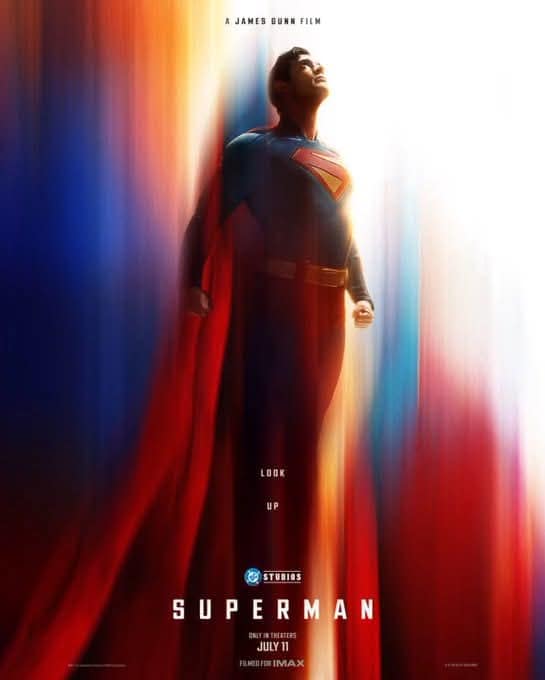
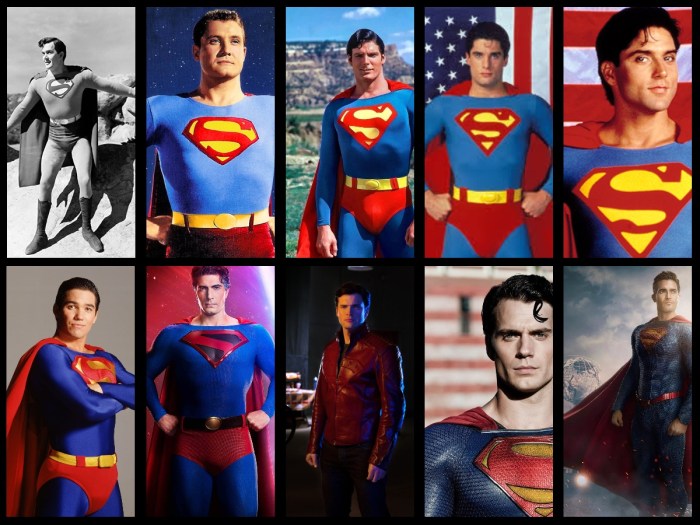
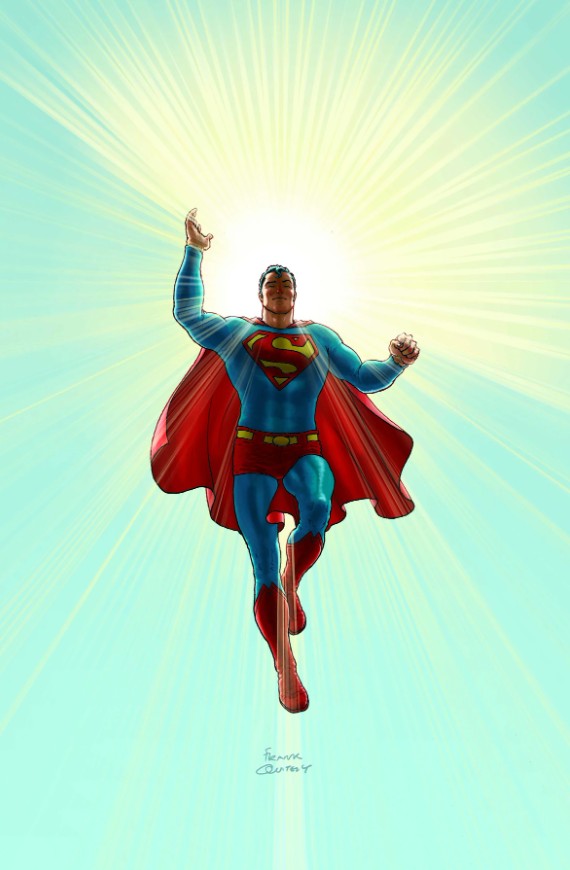
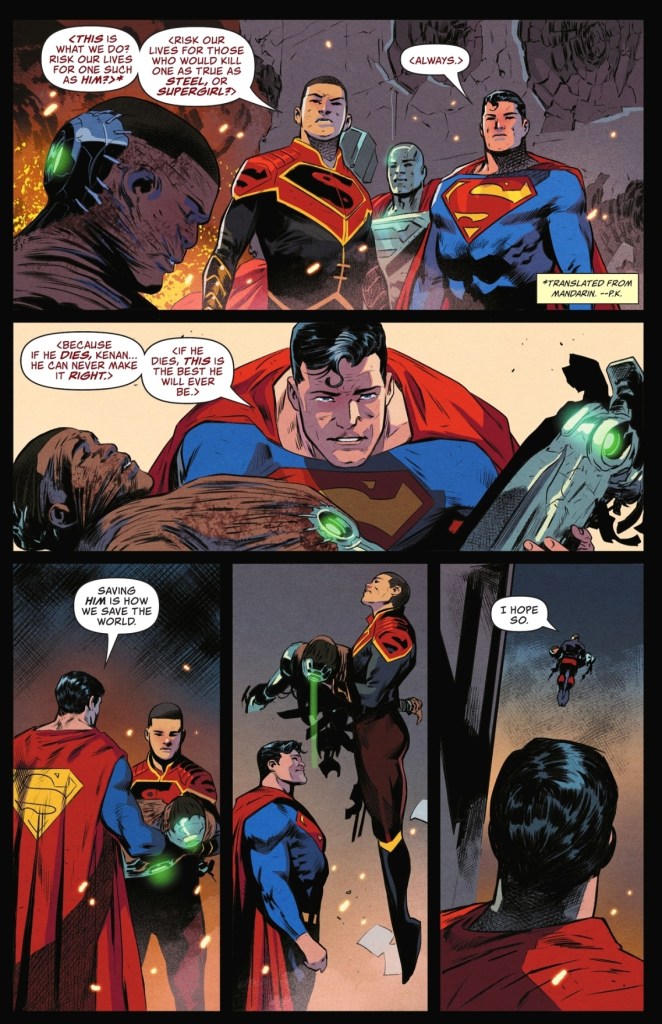
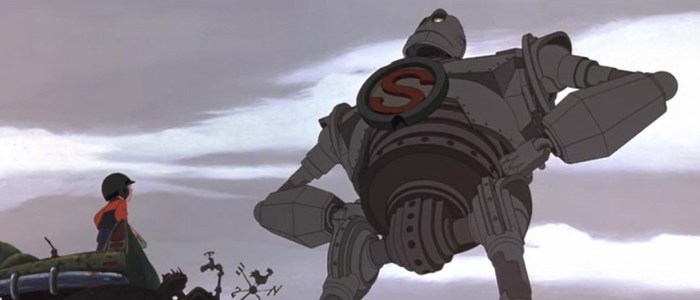

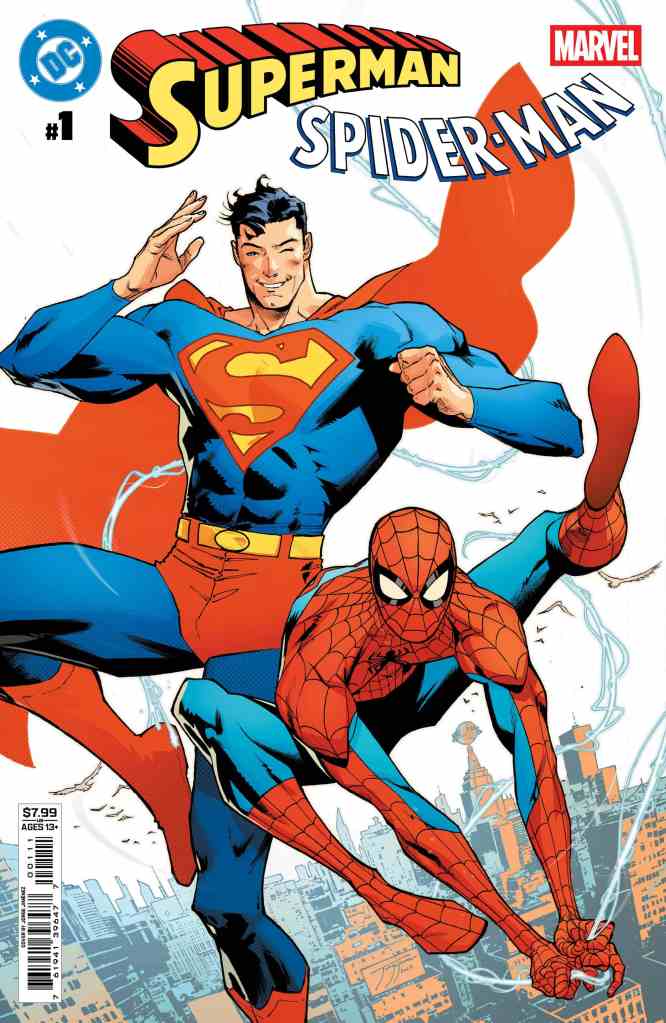






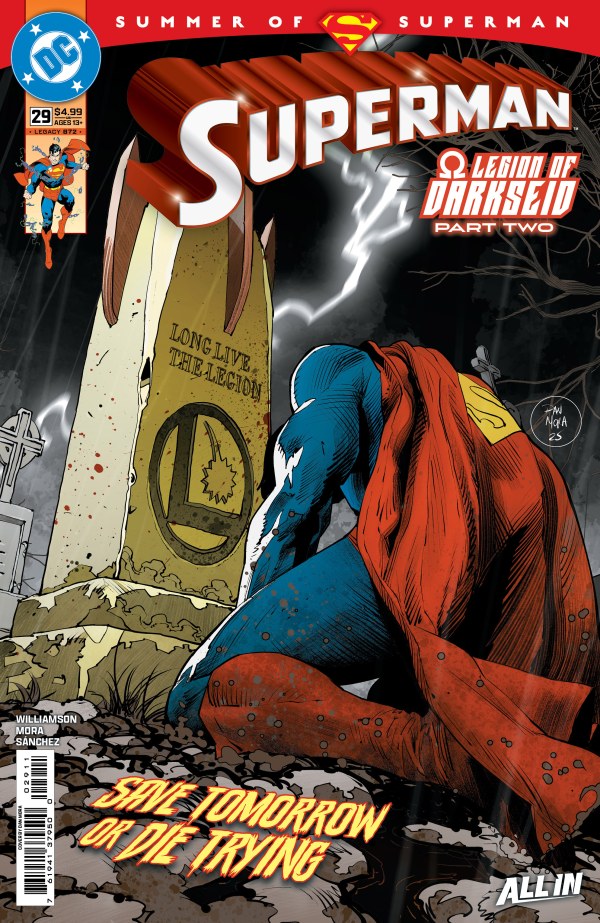

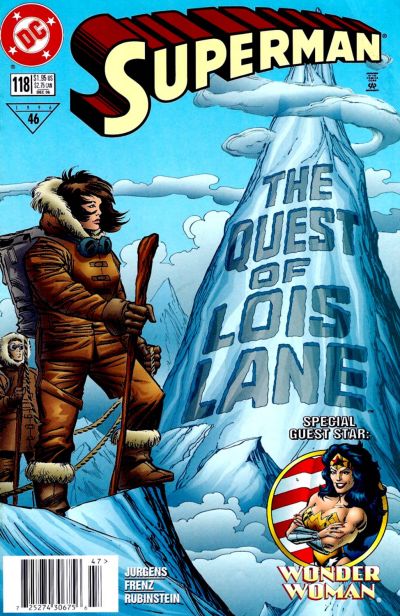
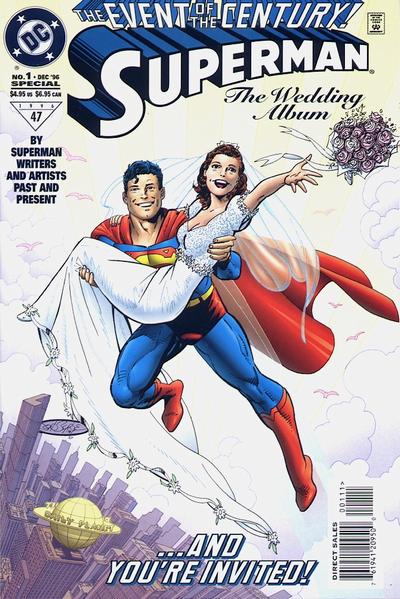


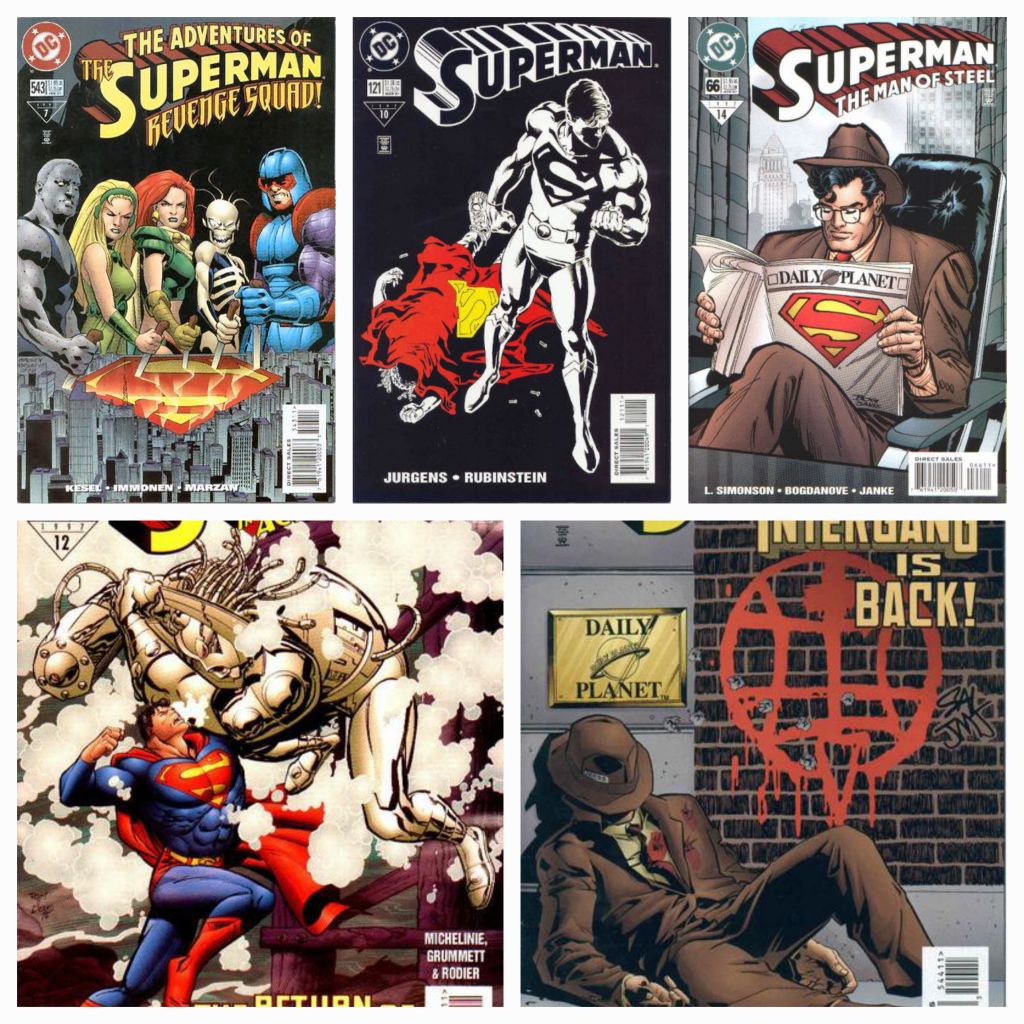
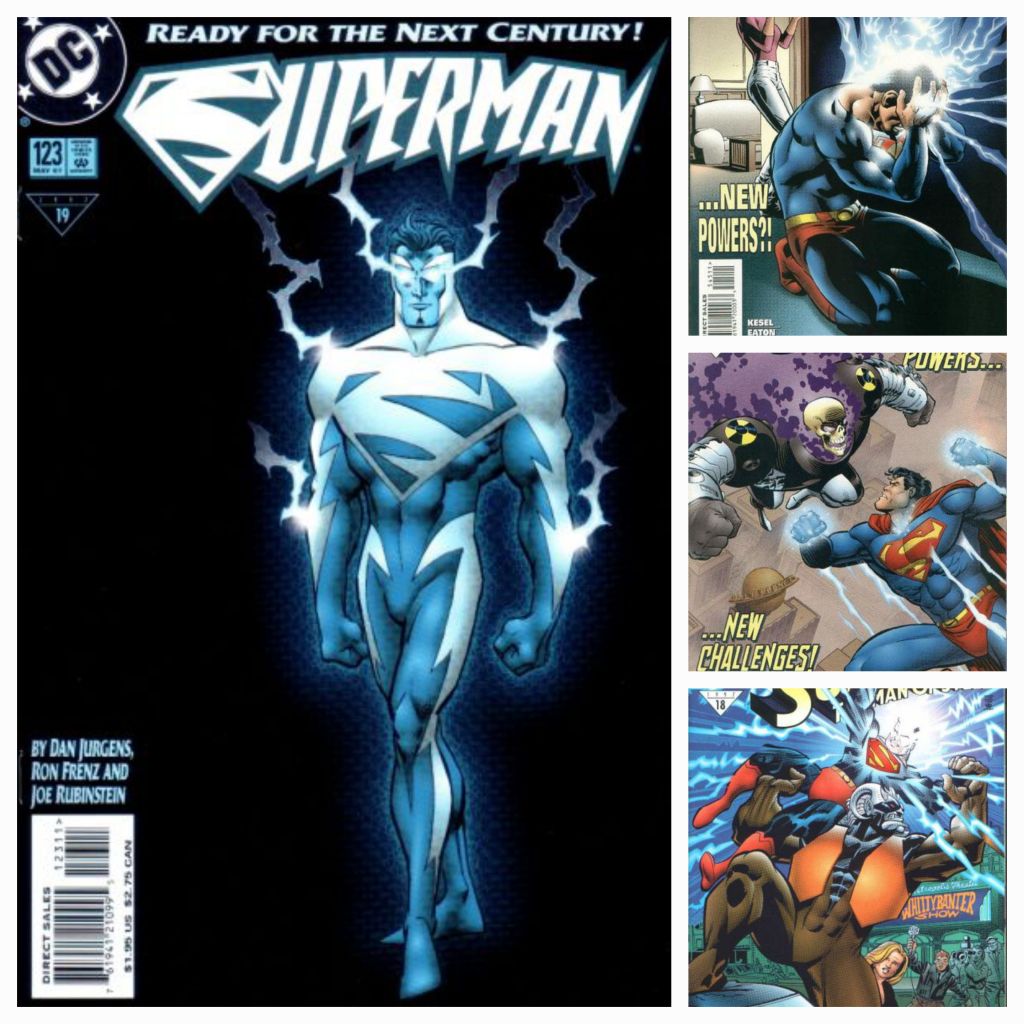
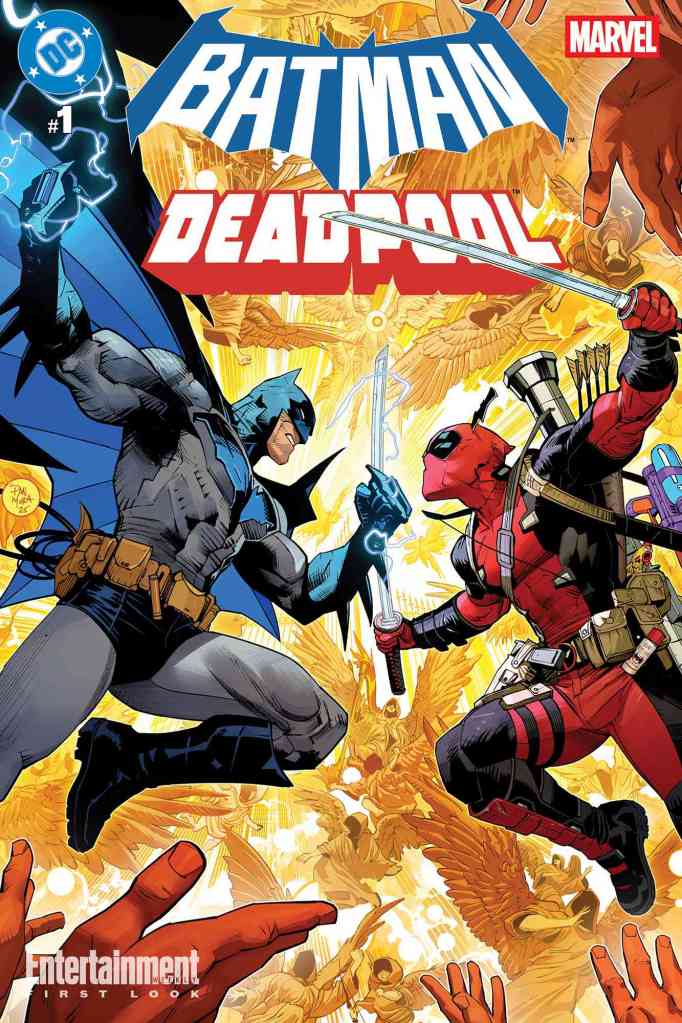
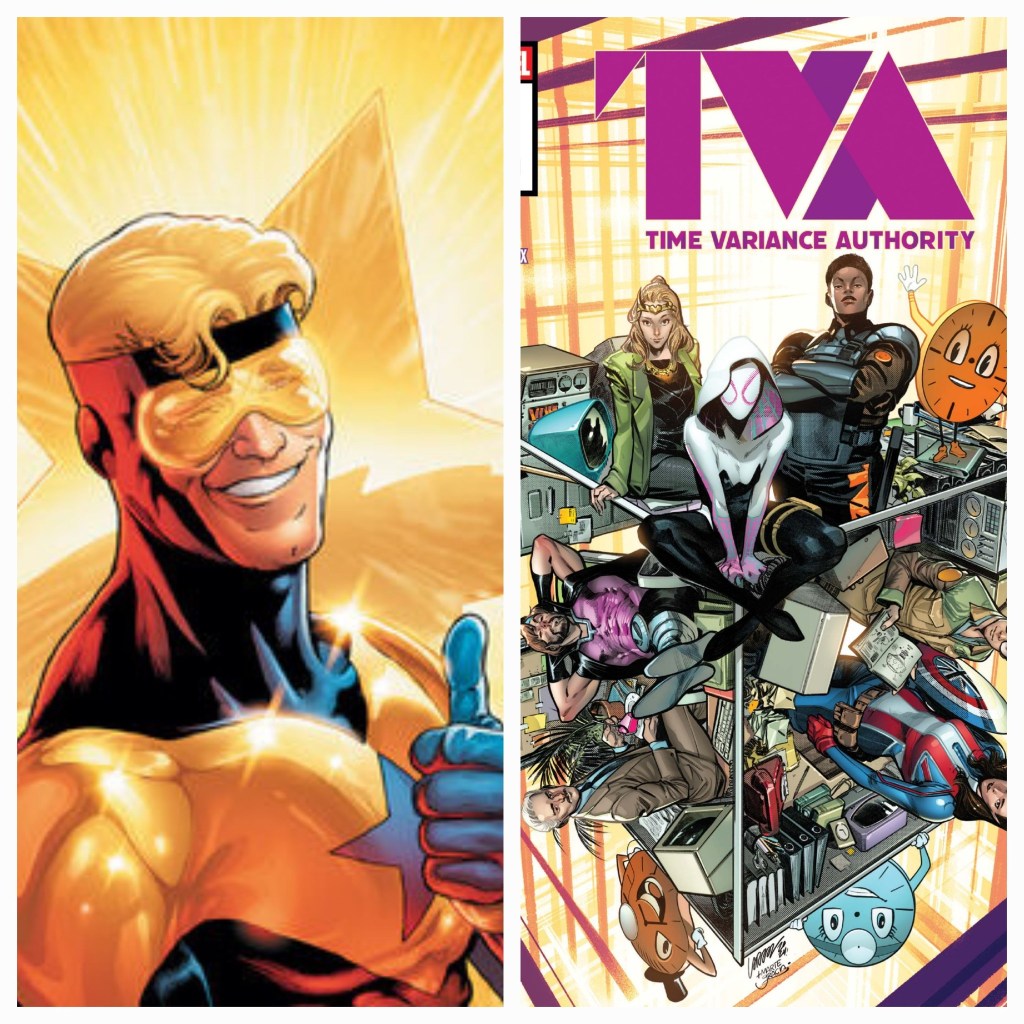


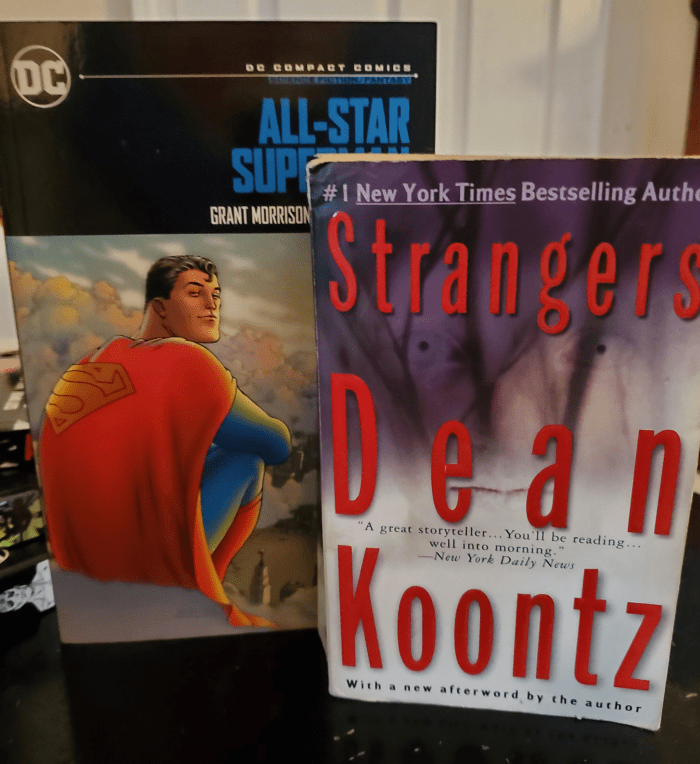


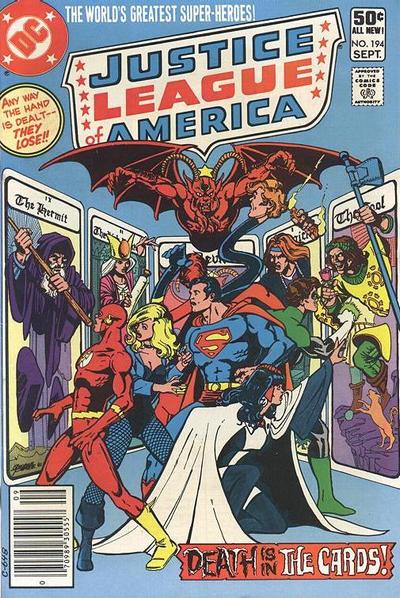

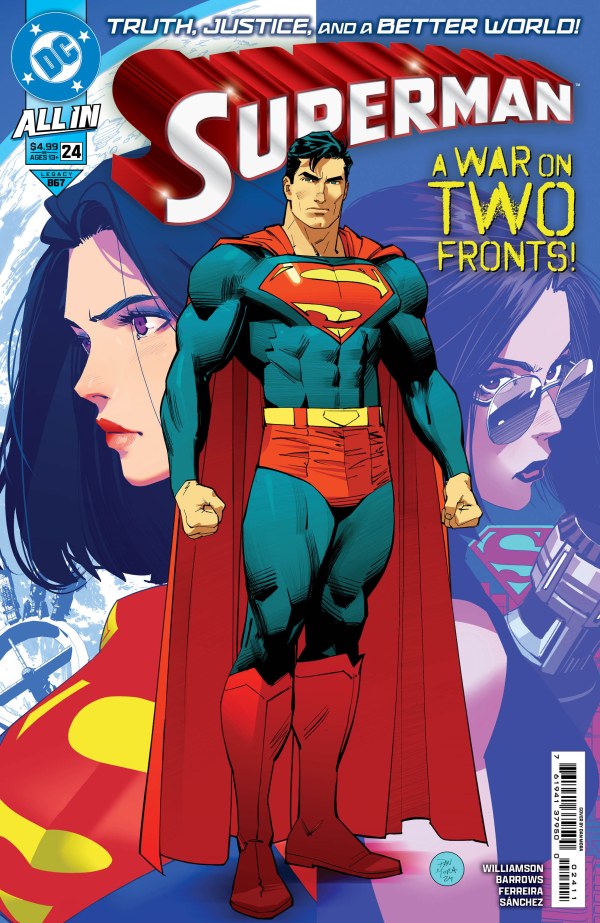









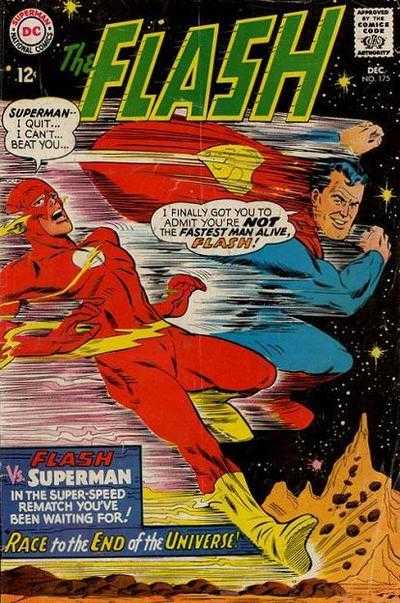



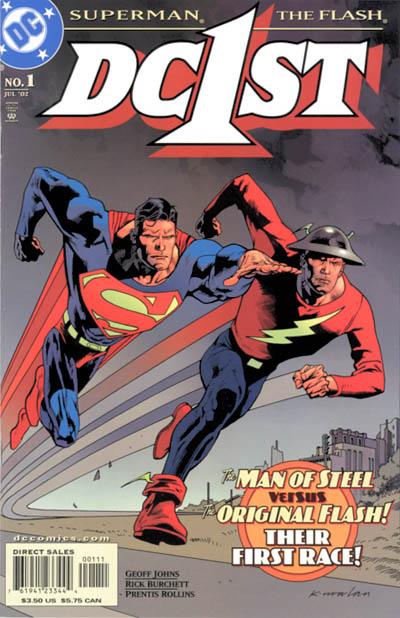

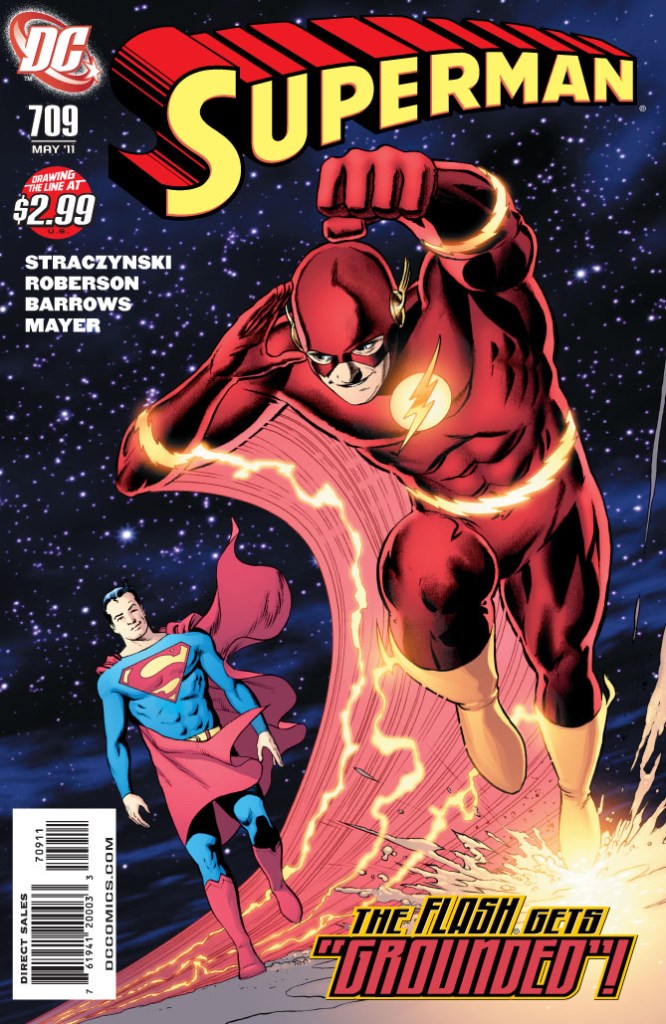


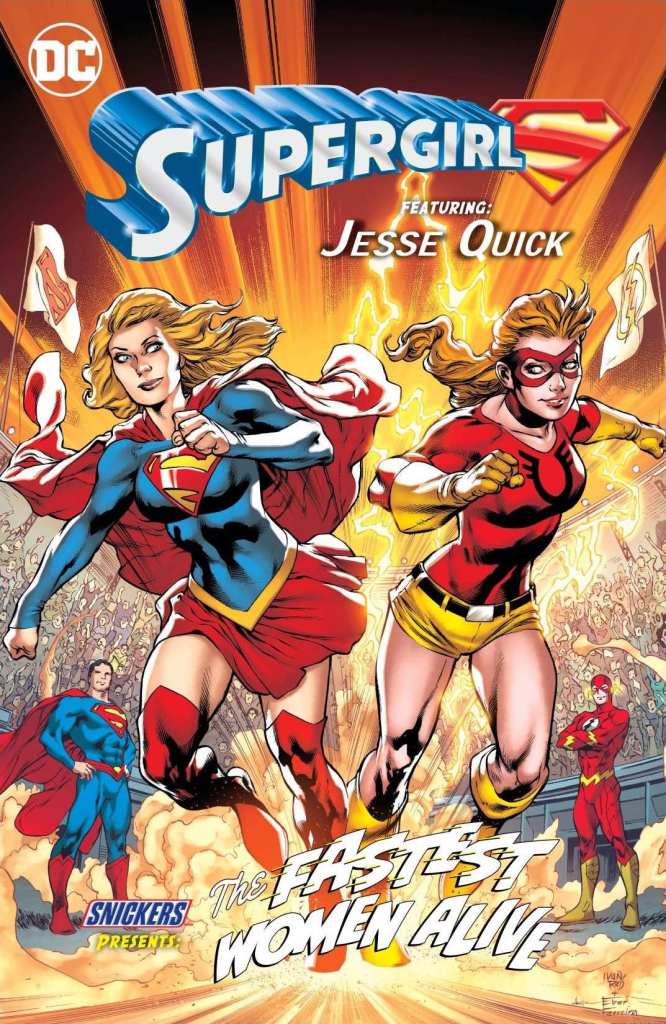
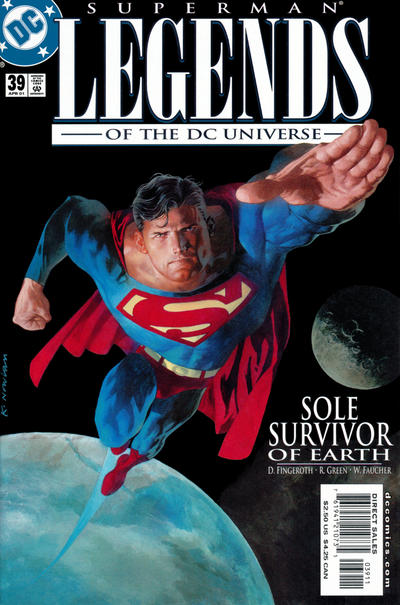


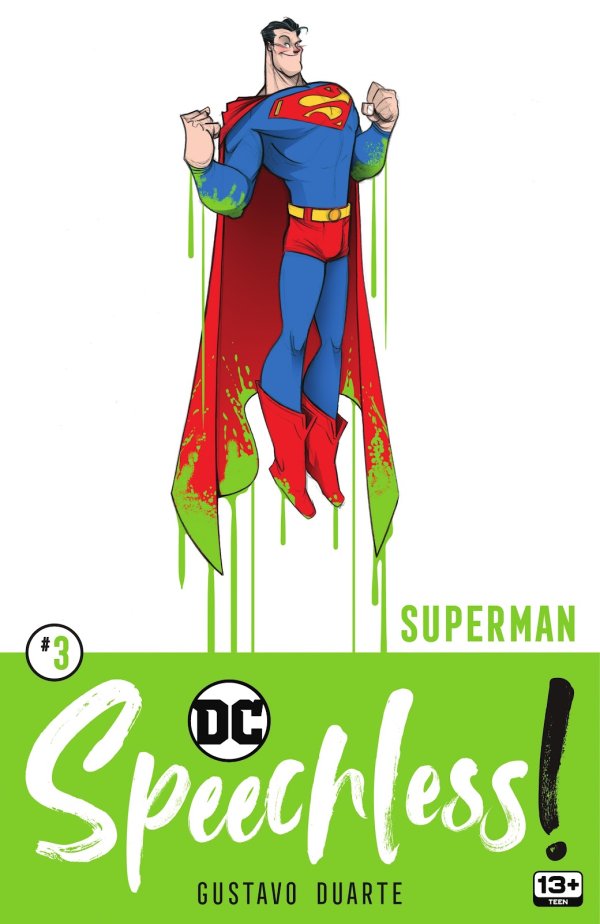


 Blake M. Petit