With her own movie coming out next year, DC Comics has wisely decided to bring back Supergirl’s ongoing series, and with the first issue hitting stands last week, I thought it would be appropriate to dedicate Week 21 of the Year of Superman to Kara Zor-El. This week I’ll be digging into some of the most important and best stories of the girl of steel in comics, television, movies, and more. I’m specifically going to limit myself to stories featuring the Kara Zor-El version of the character. There are other Supergirls, to be certain, and I’ll probably touch upon them at some point, but I’ve already got more Supergirl stories than I’ll likely have time to cover on my list even BEFORE I add stuff starring the Matrix/Linda Danvers version. So Peter David fans, just sit tight. I don’t know exactly when it’ll happen, but I’ll get to your Supergirl before the year is out.
And as always, you can check out earlier blogs in the Year of Superman Archive!
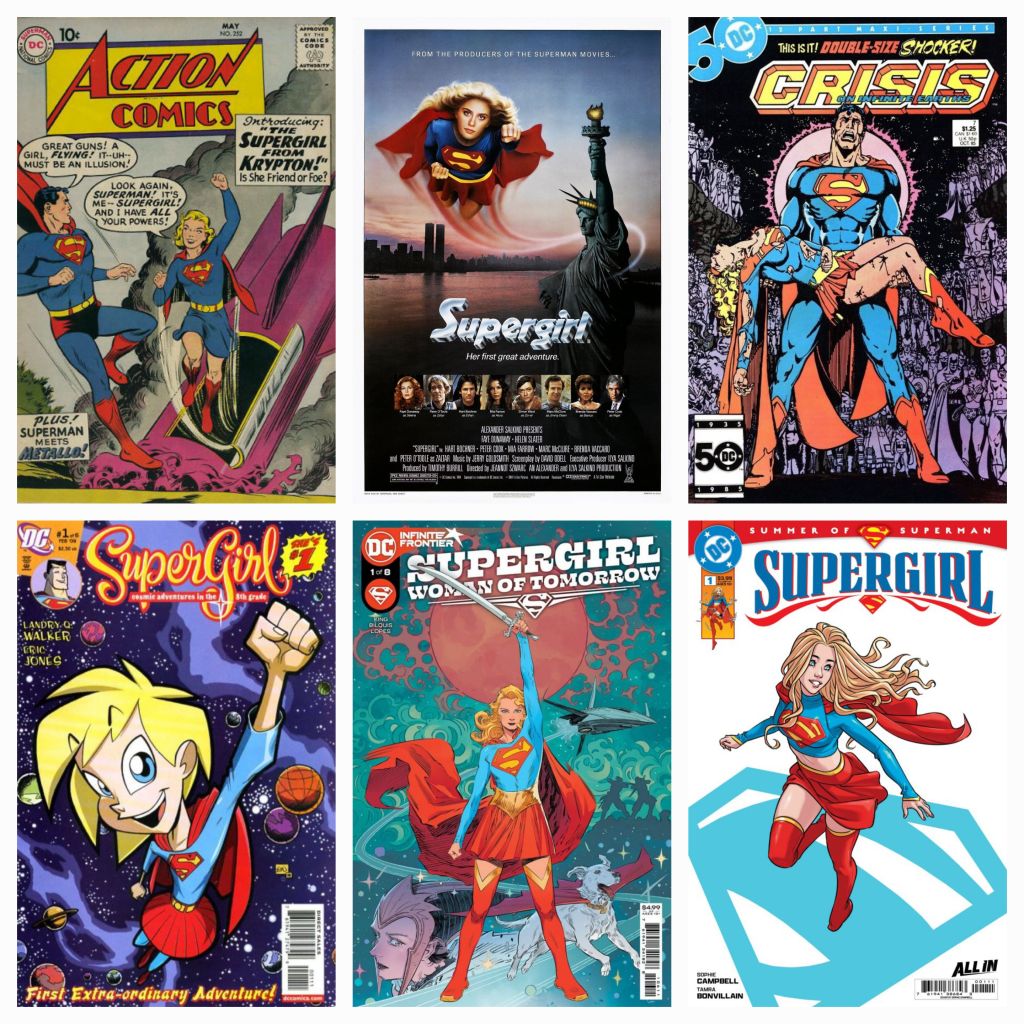
For now, though, let’s dig into the history of DC’s Maid of Might.
Wed., May 21
Comics: Action Comics #252, Action Comics #275, Action Comics #279-285
Notes: I’ll start off, appropriately enough, with Supergirl’s first appearance from Action Comics #252, by Otto Binder and Al Plastino. Although as was often the case at the time, the cover story was not the FIRST story in the issue. It starts with the first appearance of Metallo. I won’t get too much into that story, except to note that one plot point involves Metallo being able to impersonate Superman merely by shaving off his mustache. In the Silver Age DC Universe, there were apparently only three faces that everyone had to share.

After a Congorilla story, we finally get to the main event: “The Supergirl From Krypton.” Superman is summoned to the site of a crashing rocketship, where he is stunned to discover a teenage girl who has all the same powers as he does. It turns out that she’s a survivor of Krypton as well, from a city that escaped Krypton’s destruction and protected itself by covering the ground with lead to save them from the remains of their home turning into deadly Kryptonite. But when a meteor shower destroys the lead, the girl’s parents put her into a spacecraft and sent her to Earth, where they’d been watching the last son of Krypton through a space telescope. Superman and the girl, Kara, discover that their fathers were brothers, making them cousins, and just like a good cousin, Superman immediately puts a wig on her and drops her off at a local orphanage until she’s trained in using her powers. She randomly chooses the name “Linda Lee,” another “L.L.,” which at this point is so unlikely that even Superman himself has to point it out.
This is kind of an embryonic version of Supergirl’s origin. There are several aspects that would later change and others that would be added – for instance, the original story doesn’t identify her home as “Argo City,” as later stories would, nor did it establish that the city escaped Krypton’s destruction because it was beneath a transparent dome. Instead it just sort of…made it somehow. Also, in this version, the Zor-El family peeked at Earth for years, but never connected the dots that Superman was the son of Jor-El. Later stories would make it clear that they knew that Superman was one of their family and that they sent Kara to him specifically for that reason.
The last thing that I have to point out is just how quickly Superman decides to drop his cousin off at an orphanage. It’s a bizarre situation – he doesn’t even make it to another PAGE before he brings her to Midvale. I get it – it was the Silver Age and DC Comics would never have allowed them to upset the status quo in such a way that Clark Kent now had a teenage girl living under his roof…but still, it feels kind of cold-hearted. Modern-day Clark Kent would NEVER do that. At this point, especially since the Warworld storyline a couple of years ago, he’s collecting new family members like he’s a Pokémon trainer.
The next few stories I’m going to cover come from Supergirl’s early days, when she was living in hiding as Superman’s “Secret Weapon.” He decided to keep her existence a secret from the world for…reasons that I’ve frankly never understood. I guess it had something to do with not wanting her to go public until she had command of her abilities or something, but that sure never stopped Batman from throwing a Robin out onto the street with him. Action Comics #275 starts with the dandy Brainiac story “The Menace of Red-Green Kryptonite,” where an insidious device from Brainiac makes Superman start…stealing hats. He confides the truth about the ray to Supergirl and eventually beats Brainiac after only a minor international incident, covering the fact that the ray actually made him grow a third eye in the back of his head. It was the Silver Age, people, what’reya gonna do?
But the real reason I read this issue was for the second story, “Ma and Pa Kent Adopt Supergirl.” In what is essentially an “imaginary story” (although it doesn’t carry that label), Supergirl is sad because Superman was raised by a loving family while she’s stuck at an orphanage. (GO FIGURE, CLARK.) So that night, she has a dream in which she, not Kal-El, was the child of Jor-El and Lara, and was the first Kryptonian to come to Earth and be adopted by the Kents. Her early years are similar to those of Clark, until her teenage years where we start to see some curveballs. Her bestie, Lana Lang, winds up dating the guy “Linda” is crushing on, so she’s stuck with some dude named Lex Luthor. A Kryptonian rocket somes to Earth, but instead of Krypto the Superdog, she finds a super-parrot from Krypton to be her super-pet. The biggest change? Whereas young Clark Kent helps his father run his general store, young Linda Kent stays at home to help her mother clean. Because she’s a girl.
I can’t even sometimes.
It gets even wackier when Lex overhears Linda’s parrot “Squawky,” sitting on his perch, chirping “Linda Kent is Supergirl!” Lex, knowing Linda is crushing on Bob Benson, tells him her secret so that he’ll pay attention to her. The dream ends when Linda finds out that Bob is only interested in her now because she’s Supergirl, and she dumps him.
As far as dream sequences go, it’s funny to note how even Kara’s subconscious has the same sort of inherent misogyny that so many Lois Lane stories of the time enjoyed.
Supergirl finally gets her wish for parents in Action Comics #279…after a story in which Hercules and Sampson show up in Metropolis and try to court Lois Lane and Lana Lang. It’s such a ridiculous story, even by Silver Age standards, that I don’t even know what to say about it. So let’s move on to “Supergirl’s Secret Enemy.” In this one, a jealous girl from Krypton named Lesla-Lar…
Yes. Lesla-Lar.
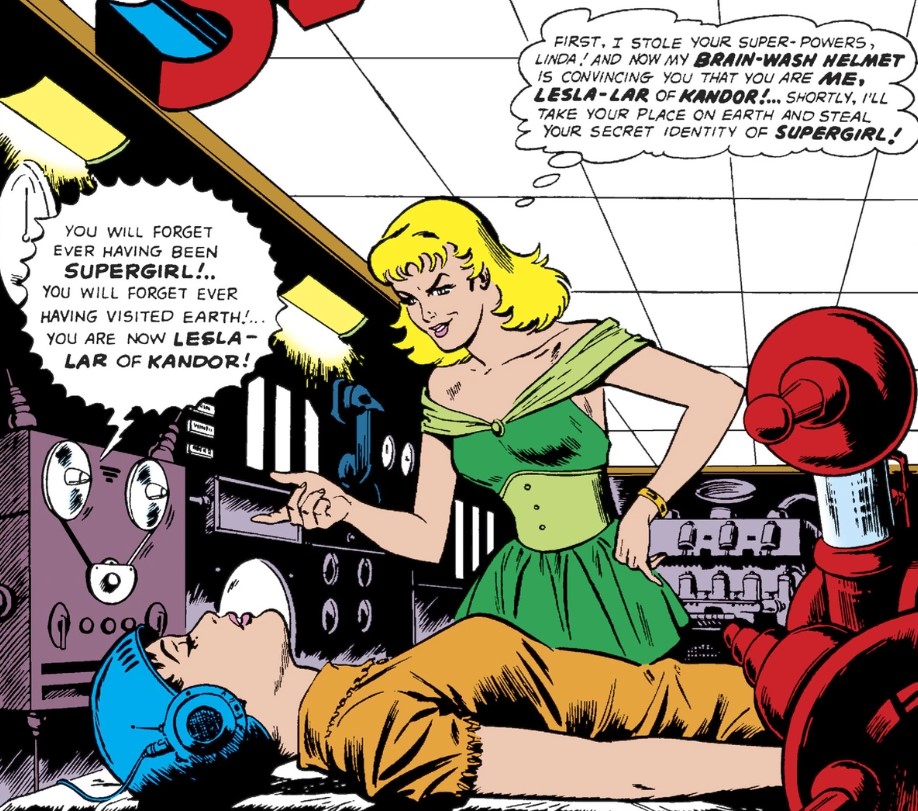
…has stolen Supergirl’s powers with a Kryptonite ray. Stuck as a normal human girl, Supergirl allows herself to be adopted, because apparently the existence of her super powers is what kept her from being adoptable before. She goes home with Mr. and Mrs. Fred Danvers, where her new dad immediately tells her to change her hair because she’s too old to be wearing pigtails, which if we’re being honest, is creepy as hell. Superman, meanwhile, vows to try to find a way to restore her powers, but Lesla-Lar isn’t finished yet. As Linda sleeps that night, Lesla teleports her to Kandor and brainwashes her, then switches places with her at the Danvers’ home, her own Kryptonian powers intact.
This nonsense goes on for several issues, with Lesla swapping with Linda while she’s asleep and Linda having no idea she’s being abducted and living a second life in Kandor. My favorite bit comes in Action #281. As Superman and the fake Supergirl prepare to reveal herself to the world, Krypto the Superdog figures out that she’s an imposter via his sense of super-smell recognizing that Lesla wears the wrong perfume. (I love that friggin’ dog.) With his super-vision, he sees the real Supergirl in Kandor. Krypto hits a switch to swap Linda and Lesla again, but the brainwashing continues. She has no memory of the swap and STILL Doesn’t have her powers. Testing a theory, Superman brings her back in time, where she discovers she still has her powers! That’s right! Science means NOTHING! So he LEAVES HER THERE, only for her to realize he’s dropped her off in the year 1692! She begins to use her powers openly, making people think she’s a witch, then gives up and uses her powers to return home…where her powers once again disappear, making this whole time-travel segment utterly meaningless and nonsensical.
Action Comics #282 begins with me being genuinely baffled at how this ridiculous story isn’t over yet. Superman has built Supergirl a replica of the Legion of Super-Heroes’ time machine so she can test out whether her powers will return if she goes to the future. He can’t go with her, though, because he’s busy with “urgent problems.” Hey Superman, you know what makes “urgent” problems less urgent? A FREAKING TIME MACHINE. Anyway, in the future, Linda discovers that her powers have once again returned, and starts superheroing again. She saves the Earth from a Martian invasion (has anyone talked to J’onn J’onzz about this?) but when she gets back her powers are gone again…UNTIL THEY RETURN. And now she’s even STRONGER than Superman! And in Kandor, Lesla-Lar is arrested! And in the end, we find out that Mr. Mxyzptlk is responsible for giving her powers back AND making her immune to Kryptonite! Did they have a DART BOARD with random plot points in the DC offices back in 1961?
The next two issues each feature a pair of red Kryptonite stories, one each for Superman and Supergirl, at the end of which Mxyzptlk’s tampering wears off, leaving Supergirl again vulnerable to GREEN Kryptonite…but also, somehow, her regular powers are back. There is absolutely no explanation as to why her powers return to normal, but I don’t even care at this point, because the whole reason I read this little chain of bonkers was to get to issue #285, in which Superman FINALLY reveals Supergirl to the world.
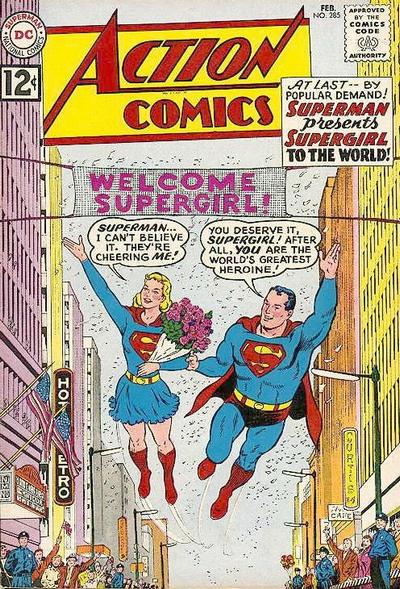
It starts off with telling the Danvers that they adopted a Supergirl (something that would have been a little hard to disguise, as she had to catch their car when Fred drove off a bridge), then goes on to a televised announcement that makes the world so excited you’d think the McRib had come back. The first half of the issue is just showing how the entire world – nay, the UNIVERSE – has become #TeamSupergirl. In the second half, while Superman is in space, she fights a Kaiju.
I think that’s enough Silver Age silliness. I make jokes, but I hope it’s also evident that I have a real soft spot for these stories. No matter how ridiculous or silly they may seem, there’s a heart to them that not all comic books have, and even the silliest elements (such as a dog wearing a cape) can bear the seeds of greatness. Plenty of that to come for the girl of steel.
Thur., May 22
Comics: Crisis on Infinite Earths #7, Superman #415, Christmas With the Super-Heroes #2, Supergirl Vol. 8 #1, Superman Unlimited #1, Action Comics #1086, DC X Sonic the Hedgehog #3, Batman/Superman: World’s Finest #39
Notes: So yesterday we dug into the origins of the Silver Age Supergirl. Today we’re gonna look at her ending. After years of secret adventures, time-travel with the Legion of Super-Heroes, and attempts to modernize her in the 70s and 80s by making her a college student and, later, a teacher, when the decision was made to restructure the DC Universe in the mid-80s, Supergirl was going to be taken off the table. So Crisis on Infinite Earths #7 gave her a heroic send-off (with one of the most iconic comic book covers of all time).
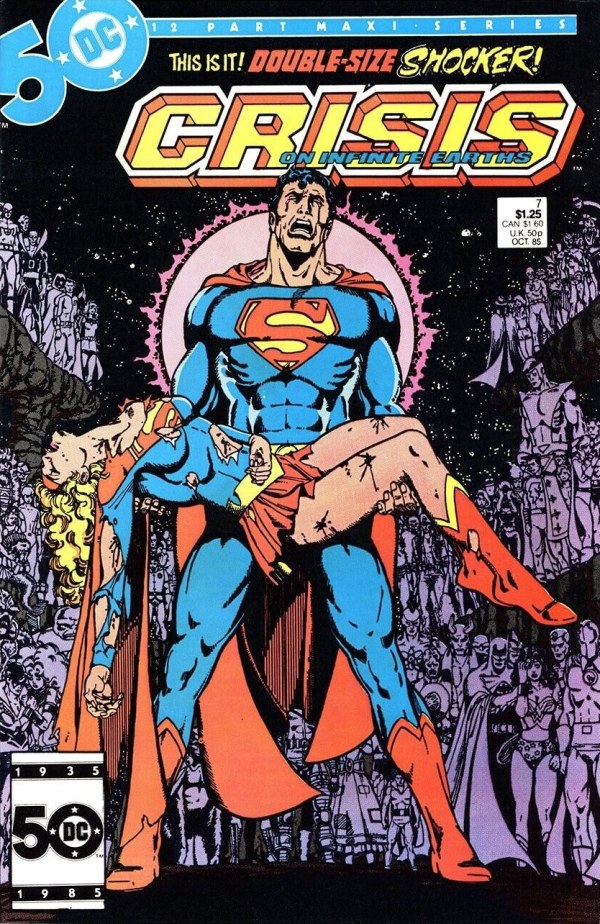
I’m not going to dig TOO deeply into the lore of Crisis. (I’m actually still contemplating whether I’ll do a week or two dedicated to the assorted DC crisis events and the roles of the Supers in each one – it’s a good idea, I think, but kind of a daunting task when you look at it.) Here’s the TL:DR: the Anti-Monitor is causing the destruction of the Multiverse, and at this point, only five universes remain. After a discussion of how the Multiverse was created in the first place, the heroes launch an assault on the Anti-Monitor’s citadel. Superman and Dr. Light find an enormous solar collector, an engine that is reducing the vibrational differences between the multiple Earths, causing them to occupy the same space and destroy one another. Superman winds up in a head-to-head battle against the Anti-Monitor, a being so immensely powerful that he’s being beaten to death – until Supergirl swoops in to the rescue. With her cousin on the ropes, Supergirl drives the Anti-Monitor into his own solar collector. When she looks back to check on Superman and Dr. Light, the Anti-Monitor unleashes a fatal attack, then escapes to lick his wounds. Kara lives just long enough to know that she succeeded – the solar collector is destroyed and the remaining worlds are saved.
For now.
And then she dies in Kal-El’s arms.
If there’s one thing that bristles me in these crisis events, it’s when a hero dies a meaningless death. And these days, the revolving door in comic book heaven has begun to swing so rapidly that it’s impossible to take ANY death seriously. That said, if the story itself is good, it can still be impactful. Marv Wolfman and George Perez gave Kara the send-off she deserved – dying not only to save the entirety of the Multiverse, but specifically, to save her cousin. In terms of sheer scope, not even the Death of Superman can match up to it.
That wasn’t quite the end for the original Kara Zor-El, however. I also want to look at a pair of epilogues to her story. The first came shortly after her death, in Superman #415.

With the knowledge that this entire continuity would soon be rendered moot by the Man of Steel anyway, the creative teams on the Superman books took some big swings in their last year, including this story by Cary Bates and Curt Swan. Superman’s fancy ears pick up on a hypersonic code used to access the Fortress of Solitude, and since the only other person who knew that code is the late Supergirl, he races there immediately, finding an extraterrestrial invader stealing something from his memorial to her. The alien identifies himself as Salkor, superhero of his planet, and regales us with the story of how, two years ago, he found Supergirl drifting in space suffering from Kryptonite poisoning. He saved her, but she awakened with no memory of who she was (another amnesia story – I should be taking a tally of these). Salkor dubs the beautiful stranger ”Jasma.” The two of them become partners in defending his world, quickly falling in love. They got married, and Salkor gave her a device called a Hokku, which can record memories. But Jasma vanished one day after battling a mercenary called Naxx, and Salkor eventually tracked her down to Earth, where the news of her death broke his heart. He went to the Fortress merely to retrieve the Hokku he gave her.
But Naxx is there as well, seeking revenge against Supergirl for defeating him. The two men she loved the most team up to defeat the mercenary, then find a holographic message left for both of them. In it, Kara tells Salkor that she regained her memories, but lost knowledge of him, making her way back to Earth, her full memories not being restored until later. Superman and Salkor part as friends, united in their grief for the girl of steel.
It’s kind of a wild story. Cary Bates is counting on the reader accepting that Kara – upon regaining her memory – wouldn’t tell Clark or anybody else about her marriage on another planet. (Although I guess keeping that kind of thing a secret would be sort of a Silver Age thing to do.) The other thing is that Kara supposedly got her memory back after a battle that happened in her own series, and having read that series, I gotta tell you that the issues after that battle do NOT read like a girl mourning her lost love from across the universe.
Still, none of that makes this a bad story. It’s a sad, bittersweet farewell to a beloved character that DC knew was about to be taken off the table very definitively, in that once Byrne’s reboot kicked in she wouldn’t exist at all.
The most enduring epilogue to the story of Supergirl, however, didn’t come until 1989 and DC’s second Christmas With the Super-Heroes special…which I have to admit, I feel weird about reading in May, as I’m usually quite strict about limiting seasonal content to the appropriate season. But hey, this is Christmas with a purpose. There are several good stories in this issue, starting with an uncharacteristically dour Superman story by Paul Chadwick (but it’s got an optimistic ending). Then, after stories featuring Batman, Wonder Woman, Enemy Ace, Green Lantern and the Flash, we finally get to the real reason we’re including this in Supergirl week: the Deadman story!
Bear with me, I’m going somewhere with this.
In “Should Auld Acquaintance Be Forgot” by Alan Brennert and Dick Giordano, Deadman is drifting around having a very bitter Christmas. The lights, the music, the goodwill – to a ghost, denied even the pleasure of human touch unless he steals those moments away from someone who is living – well, it’s all kind of depressing. After a few brief encounters where he does just that, steals time from the living, a despondent Boston Brand rages against the goddess that trapped him in this state…until he’s suddenly approached by a young woman who can see him, hear him – even touch him, as evidenced when she whips off his mask. Deadman has been feeling sorry for himself, for the fact that for all the good he’s done, nobody even knows about it. The young woman looks him in the eye and says, “We do it because it needs to be done. Because if we don’t, no one else will. And we do it even if no one knows what we’ve done. Even if no one knows we exist. Even if no one remembers we EVER existed.” Having restored some of Boston’s faith, the woman turns to leave, but he stops her, saying “I don’t even know your name.”

It didn’t mean anything to Deadman, but it meant a hell of a lot to us.
To this day, I’m kind of surprised that DC allowed this story to go through. The edict was that Superman was the sole survivor of Krypton, that he always had been, that we were supposed to pretend that Supergirl and Krypto and the Kandorians and all the rest just…never were. But Alan Brennert used that edict to surreptitiously pay tribute to a fallen hero and give all the fans a little wink at the camera.
Man, I love this story.
But enough about the past – how about the present? I’m going to take a few paragraphs now to talk about some of the new Superman-family comics that have come out in the last couple of weeks, starting with the first issue of the new volume of Supergirl.

The new series, with story and art by Sophie Campbell, starts off with a great recap of Supergirl’s current status quo. Considering how much it’s changed and been warped over the years, this is pretty necessary, even for regular readers like me. Here’s the quick version: Supergirl (now a young adult who seems to have carried over some of the history of her pre-Crisis version) returns to Midvale, where the Danvers have returned to their old home. When she gets there, she finds that the town is obsessed with being the home of Supergirl, which sets Kara off a little bit…especially when she encounters another girl wearing a Supergirl costume who seems to have convinced the town that she’s the real deal. I absolutely LOVED this first issue. Campbell does a great job bringing new readers up to speed on who Kara is these days, including lots of little Easter Eggs like her hair color-changing comb, a reference to the late (apparently) Dick Malverne, and some of her old costumes. The art style is also awesome – it looks like it could have come from a cartoon, although not a SPECIFIC cartoon. It’s not aping Superman: The Animated Series or anything else, it’s just a kind of playful, lightly inked style that feels very much like a cartoon, and I hope everyone understands that I mean that as a compliment. I put this first issue down feeling very good about the future of the Girl of Steel.

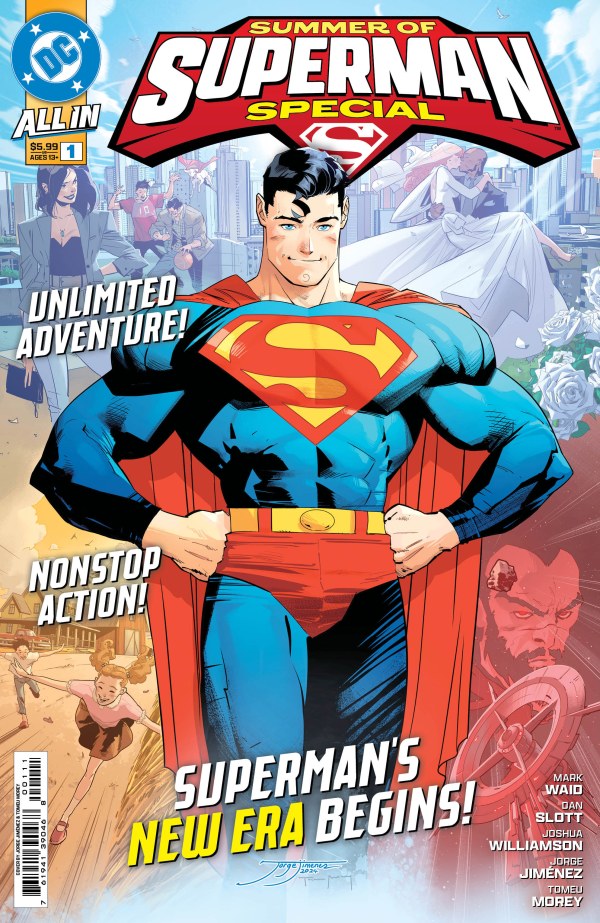
Also launching this week is Dan Slott and Rafael Albuquerque’s Superman Unlimited, which we got a preview of on Free Comic Book Day. The first act of this issue are the same pages from that book, in which we learn about the Daily Planet’s new status quo as a global news organization, then Superman flies into space where he finds an enormous Kryptonite meteor plummeting towards Earth. Superman’s life flashes before his eyes, providing a VERY handy recap of all the major points of his story in continuity for the sake of anybody who has never read Superman, or at least, hasn’t read him in a long time. (Most importantly to me: Slott establishes that Clark WAS, in fact, Superboy, and he WAS, in fact, a member of the Legion of Super-Heroes, and for reinstating that piece of continuity I believe he deserves, at minimum, the Nobel Prize.)
The book ends on a nice little cliffhanger, and while most of it is set-up, it’s a really satisfying set-up. Slott has a good handle on the character, and Albuquerque’s artwork is great. DC is very much living up to their “Summer of Superman” pledge thus far.
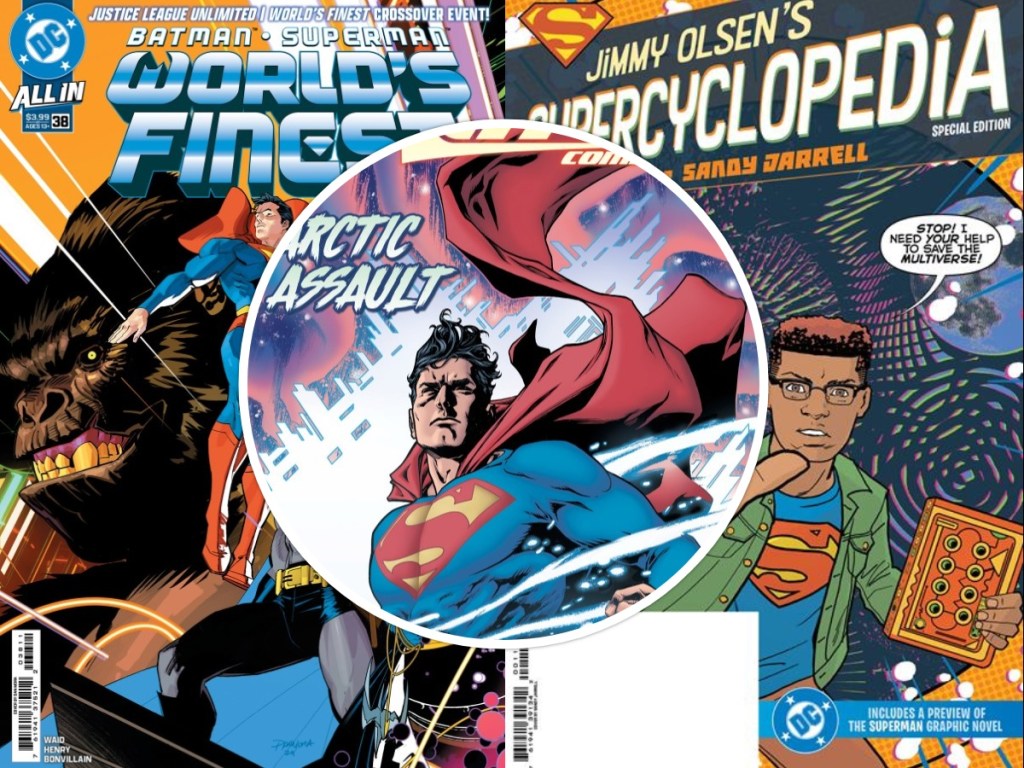
This is already shaping up to be the longest blog in the history of the Year of Superman (so far), so lemme rapid-fire the last few. Action Comics #1086 is the finale of “Solitude” by G. Willow Wilson and Gavin Guidry, finishing up Superman’s battle against the Kilg%re in the Arctic. Good issue, great art, and I still really like the Arctic costume Superman wears in this one. I want it on a Funko Pop. Issue #2 of DC X Sonic the Hedgehog ended with the Justice League trapped in Sonic’s world and Team Sonic on Earth. In issue 3, the Sonic characters have to step up and replace the Justice League, not only when it comes to protecting Earth, but also in finding the Chaos Emeralds needed to reopen the portal to return home. They do so while wearing the Justice League’s uniforms, and there will most certainly be action figures of these. Finally, Batman/Superman: World’s Finest #39 brings us part four of “We Are Yesterday.” The modern day Superman, Batman, and Nightwing get swapped with their respective counterparts from the World’s Finest era in a charming story. While the versions from the past keep getting glimpses of the future, the current versions are stuck trying not to alter anything from history. There are a few really great moments in this issue, and I’m psyched for the last two chapters.
Fri., May 23
Comics: Superman/Batman #8-13, 19

Notes: After nearly two decades of a Superman Status Quo that allowed for no other Kryptonians, the tide finally changed in the early 2000s. First came the restoration of Krypto, and then “The Supergirl From Krypton,” a six-issue story from Superman/Batman #8-13, written by Jeph Loeb with art by the late Michael Turner. With Superman in hiding as the rest of the world’s heroes try to gather up Kryptonite from a massive meteor that fell in the previous storyline (yeah, Unlimited isn’t the first time such a thing has been done), Batman is called upon to investigate an enormous chunk in Gotham Harbor. That chunk includes a rocket, and in that rocket turns out to be a confused teenage girl speaking Kryptonian. When she’s brought to Superman, the two converse in Kryptonian and he proudly introduces her to Bruce as Kara Zor-el, his cousin.
The two keep Supergirl in hiding for months, Batman in particular feeling skeptical as to the truth about who she says she is, before Wonder Woman demands to bring her to Themyscira. Kara trains there for a time, but the island is attacked by Darkseid’s forces (including Doomsday clones) who kidnap Kara and take her to Apokolips. The three heroes team up with Big Barda to mount a rescue effort, only to find that Kara has been brainwashed by Darkseid. Clark has to break her out of it, bringing her back to Earth. As he takes her to Smallville, though, Darkseid attacks again, seemingly killing Kara with his Omega Beams. Superman unleashes like never before, taking Darkseid to space and trapping him in the Source Wall, where he declares the Lord of Apokalips will never bother them again (spoiler alert: he was wrong). Kara, we then learn, was teleported to safety, and Superman introduces Supergirl to Earth’s heroes.
Hey, look at that. I CAN write a shorter recap.
Anyway, as far as modern interpretations of Kara’s origin go, this works out much better than finding her in a rocket and immediately taking her to the orphanage. It was inevitable that Batman would play a large part in the story (remember the title of the series, after all), but it’s nice to note how heavily they leaned on Wonder Woman in this too. If there’s anyone on Earth that Kara could relate to in her first few days on the planet, after all, it’s probably her. This is – more or less – the Kara that exists today, although there are some continuity questions that definitely arise, such as her having lived with the Danvers in her current series.
There was also an epilogue of sorts a few issues later, issue #19, where we saw more of Kara trying to fit in and taking down bad guys. That issue was later reprinted as issue #0 of her next ongoing series (I believe it was Supergirl Vol. 4), which eventually established some things about Kara that have remained in continuity – such as the idea that she was actually OLDER than Kal-El, but trapped in suspended animation for decades as he grew up, and the notion that her powers are potentially greater than his. I rather like both of these conceits and I’m glad that DC, as well as most of the adaptations, have stuck with them over the years.
Sat., May 24
Comics: Supergirl: Woman of Tomorrow #1-8
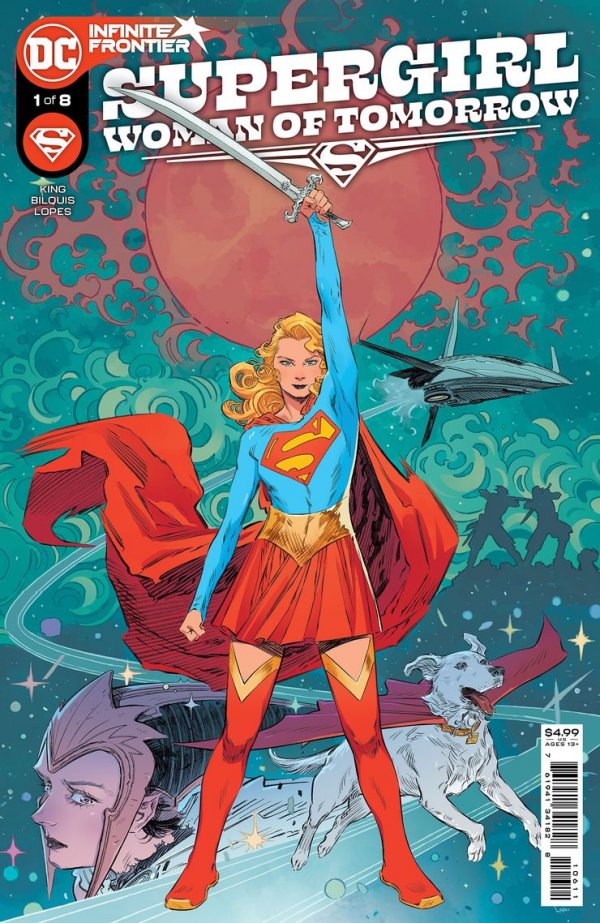
Notes: Today I decided to jump to the most acclaimed Supergirl story of the modern era, and the inspiration for her upcoming movie, Supergirl: Woman of Tomorrow by Tom King and Bilquis Evely. In this 2021-2022 miniseries, Supergirl has taken Krypto on a little spaceflight to celebrate her 21st birthday, off for a party on a planet where a red sun diminishes her powers. On this world, she meets a child named Ruthye Marye Knoll, who tries to hire Supergirl to hunt down and kill an assassin named Krem of the Yellow Hills, the man who murdered Ruthye’s father. Supergirl initially refuses, but when a fight against Krem mortally wounds Krypto, Supergirl’s only hope is to track down Krem and get a sample of the poison that is killing our good, good boy. What follows is an eight-issue odyssey across the universe as Supergirl and Ruthye seek Krem and, in the process, learn where true power comes from.
Tom King is, as I’ve said before in this blog, a somewhat divisive writer. And honestly, I don’t agree with it. I’ve never read a story by Tom King that I really hated, even the ones that get the most vitriol online. In fact – here’s a confession for you – if you had asked me the summer of 2022 what my least-favorite King story was, I probably would have said Supergirl: Woman of Tomorrow.
And I would have been wrong.
Allow me to explain. This book is a slow burn. There’s some action, yes, but it’s only a superhero comic by a technicality. There are very few superhero elements to it, and even fewer science fiction elements. In fact, between the purple prose and the gorgeous artwork by Bilquis Evely, it reads more like a fantasy epic than either of the other more logical genres into which it is usually placed. And I don’t mind a slow burn at all, but slow burns don’t always work in monthly comic books. By the time each issue of Woman of Tomorrow came out, I had sort of forgotten and lost track of where the story was, and that made it a difficult read. I don’t like the process of “writing for the trade paperback” that some writers engage in, and this is a perfect example of why.
Last summer, though, on an airplane to Pittsburgh, I decided to give this story another chance. I read it in its entirety for the first time, and when I did THAT, it was a totally different ballgame. Suddenly I understood why it was so highly acclaimed. I understood why DC Studios had chosen it to be the inspiration for the upcoming movie, because when you read all eight chapters together, my friends, it’s a beautiful thing.
The story is told not through Supergirl’s eyes, but through a book written by Ruthye years after the events have taken place. So instead of hearing inner monologue from Kara about how misguided this poor, orphaned child is to seek revenge, we get Ruthye’s interpretation of events, and we get to see how she is shaped and changed by the presence of Supergirl in her life. This isn’t an action story, but a character study and a meditation on what is needed to bring peace to a troubled soul. The S-shield, as we all know, stands for hope, and that’s the characteristic that we all so often attribute to Superman. That’s fine. But when it comes to SuperGIRL, I think her strongest power is her compassion, her capacity to love, and her ability to impart those feelings on others. This story sells it without misstep.
The ending of the book, I have to warn you, is oddly ambiguous. In fact, it wasn’t until my third reading that I really think I’ve fully grasped what happened. It’s a character moment that fits perfectly, and if my interpretation is correct, it’s actually one of the few spots of humor in what is otherwise a very dramatic tale. But there’s debate out there over what actually happened, so I’ll leave it to you to read and decide for yourself what you think is the final fate of Ruthye Marye Knoll and Krem of the Yellow Hills.
I’m also tremendously impressed that they’re going with this story, in particular, to base a MOVIE on. I’m not sure exactly HOW faithful it’ll be to the comic book. They have, of course, included both Ruthye and Krem in the cast (played respectively by Eve Ridley and Matthias Schoenaerts), but they’ve also thrown in Jason Momoa as Lobo, who doesn’t appear anywhere in the story. If they keep it MOSTLY faithful, though, it’s going to be quite a departure for superhero fans. We’ve gotten used to years of movies where the stakes just keep getting raised – gotta beat the villain becomes gotta win the war becomes gotta save the world becomes gotta save half the universe. Now we’ve even got multiple universes at risk. But at its core, the stakes for Woman of Tomorrow are relatively small. There are no universes, planets, or civilizations in danger. The struggles in this comic book are done for the sake of one dog wounded by poisoned arrows and one girl wounded by a shattered heart. Compared to your average superhero movie, that’s small potatoes. But I think that’s exactly what we need – a reminder that a story need not be about the sake of the entire universe to be compelling, and that the battle for a single soul is just as worthy of telling. It’s a beautiful comic book. Here’s hoping we get a beautiful movie, too.
Sun., May 25
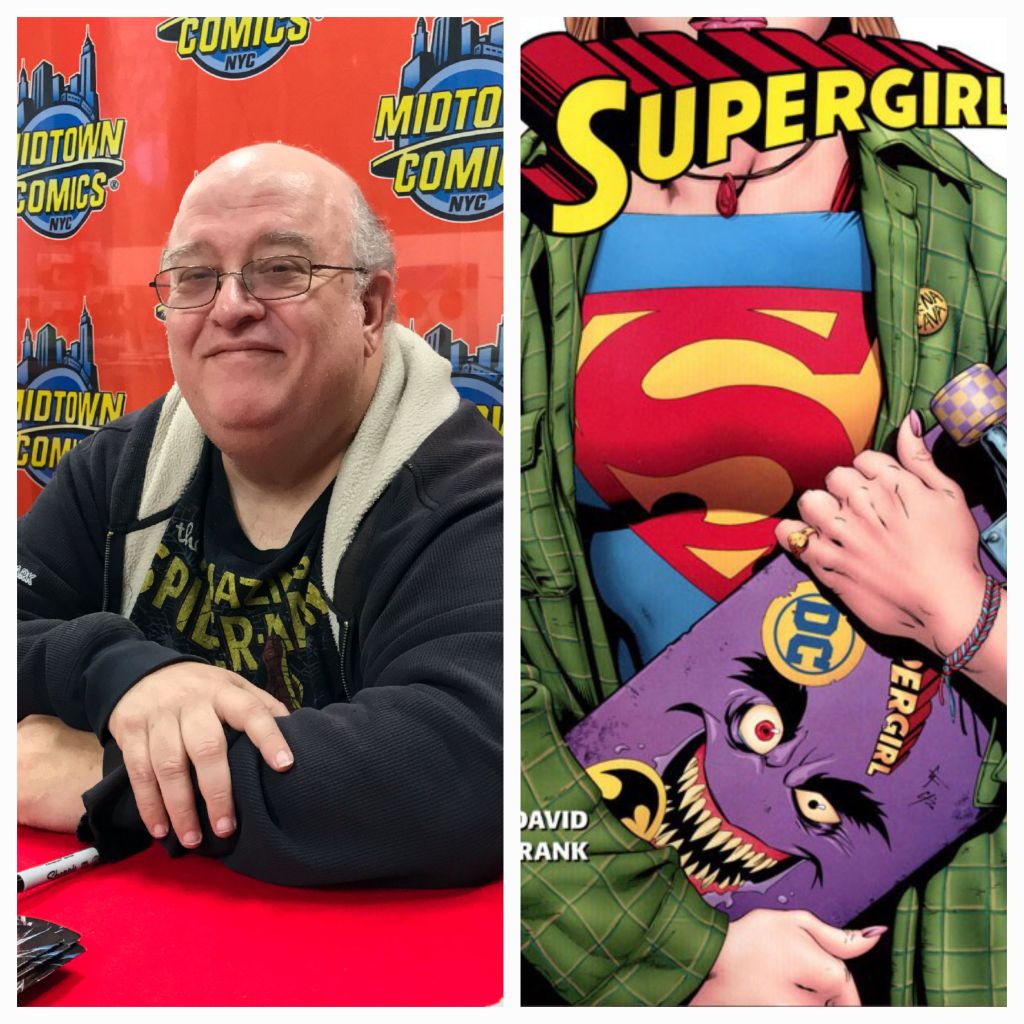
Once again, we’ve got to pause the Year of Superman to pay tribute to a creator who has left us. Today it was announced that legendary comic book writer and novelist Peter David has passed away. David may have been one of the most prolific writers of the last half-century, having done epic runs on Marvel comics like Incredible Hulk , Captain Marvel, Spider-Man, and X-Factor, having co-created Spider-Man 2099, adapting Stephen King’s Dark Tower series, and work at DC on books like Young Justice, Aquaman, and Star Trek. David also wrote dozens of novels, including Star Trek adaptations and original stories, works adapting various other comics, movies, and TV shows, and his own original works such as Sir Apropos of Nothing. He wrote for TV and movies as well, including episodes of Babylon 5 and, with Bill Mumy, creating the Nickelodeon sci-fi series Space Cases. David never did an extended run on Superman, but his Supergirl series from the 90s took the Matrix version of that character and turned it on its ear, reinventing her, melding bits of classic Supergirl lore, and turning her into an entirely unique creation the likes of which neither DC nor anybody else had ever seen before. In fact, the only page of original comic book art I own is a page by Leonard Kirk from one of David’s Supergirl issues, in which she encounters Mary Marvel. I had already planned to cover at least the beginning of David’s Supergirl run in a later week, but I feel like it’s going to be sooner than I intended now.
His characters were always rich and his prose was full of humor and imagination. He was a favorite of mine for a very long time, and although his output has dwindled in recent years as his health declined, the knowledge that there will never be more has me deeply saddened.
RIP, “Writer of Stuff.” You are already missed.
TV Episodes: Superman: The Animated Series Season 2, Episode 27-28, “Little Girl Lost” Parts 1 and 2
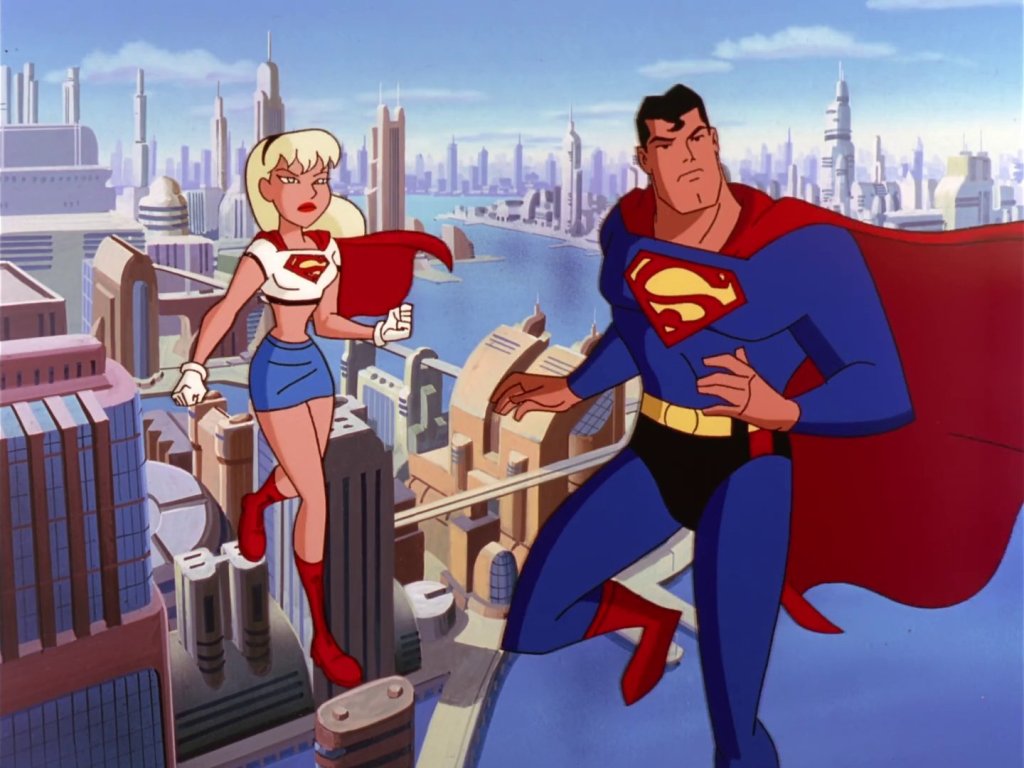
Notes: Superman takes a craft into deep space, following the path of the rocket that brought him to Earth, in the hopes of finding some remnant of his destroyed homeworld. To his dismay, the planet is nothing but debris, but his spacecraft picks up a distress beacon from another world in the system. Superman arrives to find a frozen planet and a hologram telling him that this world was Argo, sister planet of Krypton, which was thrown out of its orbit when Krypton was destroyed. Superman finds a single survivor, a young girl in suspended animation. He brings the girl, Kara, back to Earth, where the Kents care for her as she acclimates to Earth. But Kara, anxious to explore the world, rushes to Metropolis in the hopes of “helping” Clark deal with his current Intergang problem. Instead of listening to Clark’s warning to wait in his apartment, though, Kara flirts her way into accompanying Jimmy Olsen on his own Intergang investigation. Part one of the two-parter ends with Jimmy and Kara going a bit too far and coming face-to-face with Granny Goodness and the Female Furies of Apokalips. In part two, as Supergirl throws down with the Furies, Superman shows up to help, but gets captured by the Furies. Supergirl finds a device in the rubble to open a portal to Apokalips and heads off to rescue him. She does, but destroys the machine that would have stopped a comet Darkseid has hurtled towards Earth. Superman tries stopping it the hard way, but the momentum is just too great, prompting Kara to fly into it at top speed, destroying it. You know – like Supergirls do. In the end, Jimmy gets the scoop of the year – Supergirl stops Intergang AND saves the world – and Earth gets a brand-new hero.
I may be cheating here just a little bit. I said that this week I was only going to focus on Kara Zor-El, and TECHNICALLY, this Supergirl doesn’t qualify, as she’s actually Kara In-Ze of Argo. But I’m including it anyway for a few reasons. First: this was obviously the compromise Paul Dini and Bruce Timm came up with when DC wouldn’t allow them to have a Kryptonian Supergirl. Second: this two-part episode is too classic not to include. And third: It’s my blog, dammit.
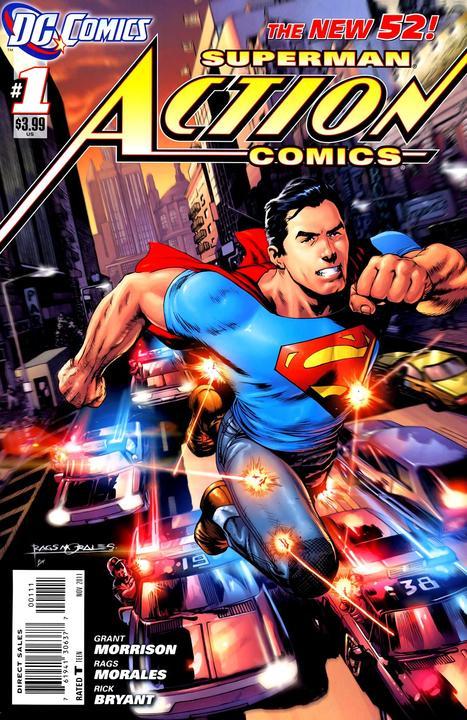
Kryptonian or not, in terms of personality, this is EXACTLY who I think Supergirl should be in her early days on Earth. She’s young, earnest, eager to help people, but also restless and impatient, faced with an entire new planet to explore in the hopes of finding a new home to replace the one that she lost. There have been times (lookin’ at YOU, New 52) where Supergirl has been played more angsty, more angry at having lost her homeworld…and while that may be justified, that doesn’t really feel like her character to me. Whereas Robin is the tempering influence to Batman, bringing light into the darkness of his world, I see Supergirl as a sort of conduit to Superman’s youth, a reminder that even to heroes with the power and responsibilities of gods, there is still room for joy. This, I think, is my favorite Supergirl, and the animated series captured that masterfully.
TV Episode: Smallville, Season 7, Episode 2, “Kara”
Notes: I was a devoted viewer of Smallville during its TV run. I never missed an episode, and I enjoyed most of it. But I actually haven’t really revisited the show that much since the initial airing, so this is an interesting experience. I know I’ve seen this episode before, but watching it out of context like this, I’m trying to remember just what was going on in the show. Lois and Clark aren’t a couple yet, and she doesn’t seem to know about his powers, but where are all the 1,001 CW subplots at this point in season 7? Maybe it’s time to do a full rewatch.
Maybe not just yet, I’ve got a LOT of other Superman on my plate.

Anyway, in this episode Clark and Lois find a spacecraft and encounter a young woman who swiftly knocks out Lois and warns Clark not to touch her stuff before zooming into the sky and looking down into a token from the House of El with the image of a baby in it. Clark is stunned not only to face another Kryptonian, but one who – unlike him – can FLY. As Chloe tracks down a subplot (I’m gonna skip the non-Kara stuff in my recap or we’ll be here all day), Clark seeks out the flying girl, who is shocked to find that he has powers as well. Together they piece together their combined history: she is Kara, daughter of Zor-El, sent to Earth to protect her baby cousin and, with him, save Krypton from destruction. But when her ship landed on Earth in the same meteor shower that brought Kal-El to the Kents, she was buried and trapped in suspended animation for 18 years until a collapsing dam a few episodes ago set her free. Bigger problems, though – someone has taken her ship, and if they don’t get it back, the humans trying to open it up may well trigger a nuclear explosion.
Unlike the animated Kara, this episode doesn’t actually end the story, but I don’t have time to down an entire season of Smallville, so let me just talk a little about Laura Vandervoot and her version of the character. Despite being the Supergirl actress with, objectively, the name that is most fun to say at parties, her version of the character is a bit angrier than I usually like. She’s got a little bit of a chip on her shoulder, angry at having been sent to a world that she clearly views as being primitive, perhaps even angrier at learning that the baby she was sent to protect is now older than she is. None of this is out of character, mind you, considering the way that the story is shaped in Smallville, and by the end of this episode we come around to the fact that much of her anger is based on grief over the loss of her homeworld. Vandervoot’s Supergirl isn’t my favorite, but it would be hard to argue that it isn’t perfect for this specific series.
TV Episodes: My Adventures With Superman Season 2, Episodes 4-10

Notes: I almost forgot that Supergirl made her debut in the second season of My Adventures With Superman – forgot mostly because I never got around to FINISHING that second season. So on a lazy Sunday afternoon with my wife at work, I decided to play a little catch-up. I’m not going to go into a deep recap of an entire half-season of the show, but here’s the quick version: Kara comes to Earth and brings Clark to her “Father,” who turns out to be not Zor-El, but Brainiac. Brainiac tries to use Clark’s body to take over Earth in the name of his “New Kryptonian Empire,” but Lois saves him with the Power of Love, and then all our heroes team up to fight Brainiac.
I don’t mean for that to sound dismissive, because there’s really quite a lot about this show I like. But I’ll get more into that when I do “Pilot Week” or whatever the hell I’m going to wind up calling it. Today, let’s talk about Kara. This version of Kara has been manipulated by Brainiac for an unknown number of years, and she comes to Earth with an anger to her, even more than the Smallville version. As I’ve said before, I don’t like Angry Supergirl, but I did like watching how – over the course of this season – Clark and his friends chipped away and the shell Brainiac built around her and helped guide her to the light. Her interactions with Jimmy Olsen in particular are adorable, with both of them coming across as young people with a crush who don’t really know how to deal with it.
The climactic battle, to be honest, is a little disappointing. What we get in the end is a Kara under Brainiac’s mind-control doing battle with Clark, who tries to turn things around using the standard “I know you’re still in there!” defense that superheroes always use on allies suffering from mind control. I won’t spoil the ending of the fight for you, but if you’re at all familiar with storytelling tropes, I probably don’t have to. That said, the execution of this very familiar trope is pretty good, and ultimately, we end the season with a new version of Supergirl that I hope to see more of in season three.
Mon., May 26
Comics: Supergirl: Cosmic Adventures in the 8th Grade #1-6

Notes: In 2008, writer Landry Q. Walker and artist Eric Jones gave us an utterly delightful young readers miniseries, Supergirl: Cosmic Adventures in the 8th Grade. This series gave us a ground-up reimagining for Supergirl in a format for younger readers. It was one of DC’s early attempts this century to start making headway into the YA market, and when they launched their YA graphic novel program a few years later, the paperback edition of this story was rightfully included.
In this version, Kara’s rocket crashes in Metropolis, where she accidentally thwarts a Lex Luthor plot. She tells Superman her story – she’s from Argo, a moon of Krypton in this continuity, and stowed away on a rocket her father was sending to Earth to contact Superman. Unfortunately, she passed through a dimensional barrier to get to Earth, and Superman has no idea how to send her back. A Supergirl who’s homesick is nothing new, but it’s pretty rare for that home to still exist, giving her a quest to find a way back.
Stuck on Earth, Superman supplies her with a secret identity and enrolls her in Stanhope Boarding School, where she struggles to fit in to this new Earth culture. She has difficulty controlling her powers and accidentally creates an evil duplicate of herself – Belinda Zee (who is not QUITE a Bizarro, but kind of like the Mean Girls version of that) who begins making her life a living hell. Things start to pick up when she finally makes a friend, an incredibly smart young woman named Lena Thorul. Things are starting to look better…but may get worse when Kara finds out her only friend is the sister of Lex Luthor.
Over the course of six issues, we’re treated to new versions of Comet and Streaky, we get teases about the Legion of Super-Heroes, and the revelation of the real villain of the piece still cracks me up all these years later. It was a truly magnificent series, one that I passed along to my nieces once they were old enough to start reading comics. The tragedy is that the book ends with multiple sequel hooks, and Walker and Jones tried for years to get the promised Cosmic Adventures in the 9th Grade underway. For some reason or another, though, it just never happened, and after the untimely passing of Eric Jones in 2022, it seems unlikely that it ever will. But this is without a doubt one of my favorite interpretations of Supergirl, one that even an old man like me enjoys coming back and revisiting every so often. The book has been reprinted several times, with a new edition scheduled for release in August (no doubt as part of the whole “Summer of Superman” foofarah). And if you’ve got kids around that middle school age, it’s a perfect book for them.
Tues., May 27
Movie: Supergirl (1984)
Novel: Supergirl by Norma Fox Mazer
Comic: Supergirl: The Official Adaptation of the Movie #1
Notes: In 1984, the Salkinds decided to expand their Superman movie franchise with a spinoff featuring his cousin. And as luck would have it, I own not only the DVD, but also the novelization of the film AND the comic book adaptation of the same. So I thought it would be pretty fitting to close off Supergirl Week by taking a look at all three versions of this story.

In the movie, we find ourselves on Argo City, last remnant of the planet Krypton, where young Kara (Helen Slater) is shown a powerful device called the Omegahedron by her teacher, Zaltar (Peter O’Toole). But Zaltar wasn’t supposed to have the Omegahedron, and an accident sends it beyond the shield that protects Argo from space. Turns out that the Omegahedron was the city’s power source, and without it, they have only days to live. Kara takes a ship to follow the Omegahedron to Earth, where it has fallen into the hands of a would-be witch named Selena (Faye Dunaway). The Omegahedron enhances Selena’s power’s greatly, taking her from the level of parlor tricks to being a potential world-conquering threat. Unfortunately for the world, Superman is on a mission in outer space.
In her search for the Omegahedron, Kara takes on the human identity of Linda Lee and enrolls in a local boarding school, where she forges a letter from her famous cousin, Daily Planet reporter Clark Kent, to vouch for her. She’s assigned a dorm room with Lucy Lane (Maureen Teefy), sister of Lois, who she quickly befriends and introduces her to her kinda-boyfriend Jimmy Olsen (Marc McClure, reprising his role from the Reeve movies). With the threat of utter destruction looming for Argo City, Linda proceeds to…take classes and play field hockey. Seriously, she spends a large chunk of this film acting like a normal Earth girl trying to hide her powers with absolutely no sense of urgency to save her family, friends, and entire civilization, for whom she is their only hope of survival. Selena, meanwhile, is practicing her magic, casting a spell that she intends to use to get the hunky handyman Ethan (Hart Bochner, whom you may remember as being the asshole John McClane doesn’t know in Die Hard) to fall in love with her. Instead, it accidentally makes him head-over-heels for Linda. For some reason, this also has the side-effect of making him talk the way that people who don’t understand Shakespeare think characters in Shakespeare plays talk.
Selena somehow manages to send Supergirl to the Phantom Zone, where she finds Zaltar has been exiled for his role in the loss of the Omegahedron. As Selena creates a mountain in the middle of Midvale to serve as her new fortress, Supergirl struggles to escape the Zone. Zaltar, who has fallen into despair in the Zone, leads her to the one way to escape, which makes you wonder why Zod and company never gave that one a shot. Zaltar perishes in the escape attempt, but Kara makes it through, returns to Earth, and defeats Selena, bringing the Omegahedron back to Argo City. And in the end, I’m just left wondering what the hell Clark Kent is gonna thnk when Jimmy gets back to Metropolis and says, “Hey, I met your cousin. Also I was briefly captured by a witch until a girl wearing a Superman costume beat her up.”
I’ll cut to the chase: this is not a good movie. The villain performances are hammy and overacted, the love potion subplot is just plain creepy (Selena’s fixation on the much younger Ethan has a nonconsensual “Mrs. Robinson” vibe, and even once it rebounds and he falls for Linda one should remember that he’s an adult and she’s a high school student), and there’s a lot of little nonsensical stuff that was probably necessitated by the low budget, such as Kara popping out of her spacecraft in a Supergirl costume with no explanation. And the abundance of cheese in this film just makes the stuff that IS good even more tragic, because so much of this movie deserved better than it got.
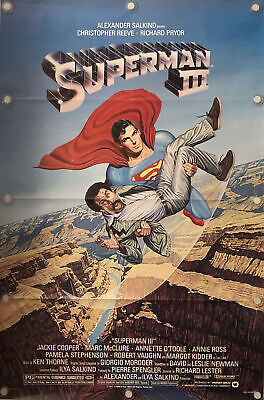
Helen Slater, first of all. She is perfectly cast – quiet and lovely, with an otherworldly charm that is entirely appropriate for the character. She pulls off the “stranger in a strange land” routine flawlessly, and she alone would make this movie worth watching. In the modern movie climate, they’d have had her make a cameo in Superman III or something before spinning her off into her own film, and this is one of the few times where I wish they HAD used modern techniques in the 80s, just because I wish we could have seen her play Supergirl more than once. (I’m not counting that scene in Flash.) As it is, the only real ties to the Christopher Reeve films are a poster of Superman in Lucy’s dorm and a totally superfluous appearance by Marc McClure as Jimmy Olsen, adding nothing to the plot. I would like to give them credit for adhering to canon by having him date Lucy Lane, but as with Ethan, in this continuity he’s way too old to be hooking up with a high school student.
The score, by Jerry Goldsmith, also top-notch. Not John Williams good, of course, but it’s got a nice ethereal quality to it, less like a science fiction score and more like a fantasy film, which is appropriate for the tone of this movie. You could drop this score into something like Willow and it wouldn’t feel out of place at all.
Even the special effects, considering the time period, are pretty good. And I love the design of Argo City, even if it doesn’t really match what Richard Donner’s version of Krypton looked like in the first Superman movie, but I can chalk that up to different cities having different styles. I mean, it’s not like New Orleans looks like San Francisco, right?

As was often the case in the 80s, Supergirl got a novelization as well. I happened to pick it up on eBay some time back, in one of those moments where I snag weird stuff that I like. (By the way, if anyone wants to get me something for my birthday, just find a box of old movie and TV novelizations from the 80s on eBay. I have a strange fascination with those.) The novelization is by Norma Fox Mazer, whose body of work outside of this adaptation seems to be largely in the category of novels for children and teenage girls, which is pretty appropriate for adapting Supergirl. Her pedigree absolutely shows, too, filling the book with odd diversions and tangents that feel like the could have spilled from a Judy Blume novel, things like Kara feeling intimidated by her mother’s beauty, or interjections from Lucy’s point of view that work in the sort of slang that an adult novelist in the 80s probably thought that teenagers used, although as a child of the 80s myself I’m somewhat skeptical of their authenticity.
The strangest thing about the book, though, is the timeline. The film makes it quite clear that Kara has only days to recover the Omegahedron before Argo is doomed, but the novel makes it seem as though Linda is enrolled at Stanhope for months before she recovers it and makes it home. It seems as though she’d return to a dead planet as far as the novel goes. But like I said, I have a weird fascination with these kinds of novelizations, especially since many of them were written before the film itself was finished, and I find the differences intriguing. This isn’t a great novel in the same way that the film isn’t a great movie, but like the movie, I still had fun reading it.

The comic book adaptation does a better job, I think. Written by Joey Cavlieri with art by Gray Morrow, it tells the story in a much more abbreviated way. This mostly eliminates the problem of making it seem like Kara is spending too much time on Earth while Argo is dying, and the art by Morrow is really lovely. He even does a good job of making the characters look like the actors, which isn’t easy. And even artists who do that well often do so at the expense of a certain liveliness, with art that looks like a static photographic rather than a dynamic comic book page. Morrow conquers that challenge. With the material they were given to work with, I think the comic did a superior job of adapting what was a weak screenplay.
Originally I planned for Supergirl Week to include the pilot episode of Melissa Benoist’s TV series from 2015 as well, but fate had other plans, in the form of a power outage followed by an internet outage yesterday and into this morning that cut into the time that I planned to devote to the show. But you know, I’m pretty sure this is already the longest installment of the Year of Superman blog to date, so maybe it’s okay if I leave one thing for later. Besides, I’ve long planned a week where I watch the pilot episodes of all the assorted Superman TV shows, and I think I’ll have time to sneak in Melissa then. And if not, who knows? There may be time yet for Supergirl Week Part II.
Blake M. Petit is a writer, teacher, and dad from Ama, Louisiana. His most recent writing project is the superhero adventure series Other People’s Heroes: Little Stars, volume one of which is now available on Amazon. You can subscribe to his newsletter by clicking right here. You can join in the Kryptonian Konversation every day in the Year of Superman Facebook Group!