Geek Punditry #25: Artificially Entertaining

In this week’s episode of “Things People Are Outraged Over on the Internet,” we’re going to talk about Marvel’s Secret Invasion. The new miniseries dropped its premiere episode this week, bringing back Samuel L. Jackson’s Nick Fury as the star of an espionage thriller about the Skrulls – a race of shapeshifting aliens – infiltrating Earth and subtly influencing world events by pretending to be human, a clever analogue for what happens when Californians move to Texas. But the thing that has people upset isn’t the content of the show, it’s the opening credits sequence, in which the bizarre and unsettling images shown to the viewer turned out to have been created, at least in part, by an AI image algorithm.

Bet you couldn’t even tell.

AI has become a hot button topic in creative endeavors. Not so long ago, the world of comic and commercial art was consumed with a debate over how AI functions, with many programs essentially scraping the internet for existing artwork and using that as a basis to synthesize new images. Some people argue that this isn’t all that different from a human artist drawing inspiration from the works of other artists, while others say that this amounts to plagiarism on the part of the person using the AI to generate “new” work. While I’m not an expert on any of these matters, I find them fascinating and a little bit scary, not only as a fan of media, but as a writer and as a high school teacher as well. AI is becoming more and more prevalent, and the fact of the matter is that we as a society are going to have to decide what the place for things like the Secret Invasion opening sequence is.

For what it’s worth, the US Copyright Office has already laid down a ruling. Earlier this year, following a debate over a comic book created with AI art, the Copyright Office ruled that only work made “by humans” is eligible for copyright. So the next time your neighbor tries to show you that painting made by having his dachshund dip his little weiner legs in paint and walk across a canvas, feel free to steal the painting and put it on a T-shirt. 

Back to Secret Invasion, though. When word got out that the intro sequence was made using AI, there was something of an internet firestorm. Artists were pretty angry about it, saying that the AI had cost graphic artists work, and the studio responsible for it quickly tried to “clarify” the announcement that it was AI animation. Method Studios, the company that made the sequence, released a statement to the Hollywood Reporter which read, in part, “AI is just one tool among the array of tool sets our artists used. No artists’ jobs were replaced by incorporating these new tools; instead, they complemented and assisted our creative teams.” If that doesn’t clear things up for you, congratulations! You’re normal. One of the things that makes AI so controversial is the confusion over how exactly it works, and for those of us who don’t entirely understand it all, statements like this one do absolutely nothing to illuminate the issue.

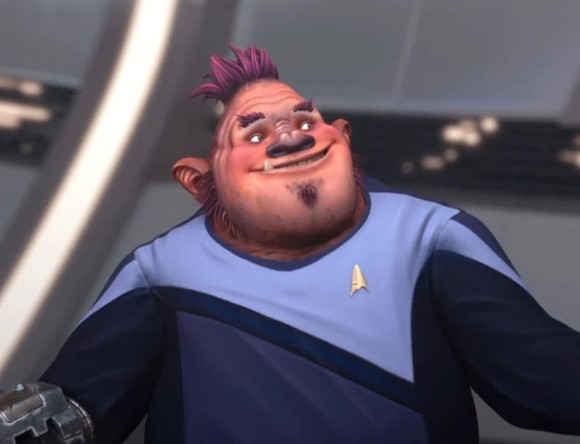
Speaking purely from an artistic standpoint, I get what the makers of the show were going for. A lot of AI art is, for lack of a better term, “unearthly.” For all the things it can do well, a lot of the images you get from an AI generator like OpenAI are still a little “off” when it comes to creating realistic images of people. You get people with extra fingers, noses where they shouldn’t be, or faces that look like they went right up to the edge of the Uncanny Valley and bungee jumped in. That unearthly quality is actually quite appropriate for the story behind Secret Invasion, which is (again) about alien shapeshifters that are ALMOST human, but not quite. So yeah, I get the idea. But just because I understand the idea doesn’t make it a good one, particularly considering the current climate in Hollywood when it comes to AI. 

In addition to the aforementioned controversy that consumed the world of comic books not that long ago, I feel like somebody at Marvel Studios should have opened the blinds of their office windows and looked at all of the writers currently marching in picket lines. The Writer’s Guild of America went on strike on May 2, and for almost two months Hollywood has not been allowed to generate new scripts or make any changes to existing ones. They could go ahead and film scripts that are already finished, but nothing new is being made. A lot of film and TV productions have had to freeze production, including some of Marvel’s own upcoming shows like Daredevil: Born Again. And while there are many, many issues at play here in the writer’s strike, one of the big ones is the proposed use of artificial intelligence in Hollywood productions. The fact that apparently NOBODY on the Secret Invasion team thought about this at any point in the seven weeks since the strike began and said, “Hey, maybe we should change up the title sequence” is truly baffling.  

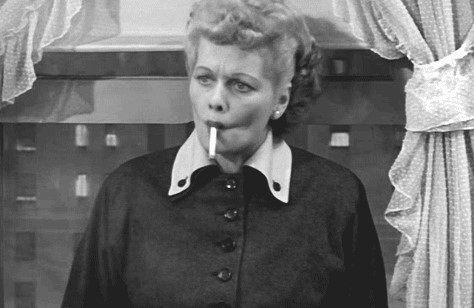
This is what AI sees when it looks out the window. Uncanny.

Writers, as you may imagine, aren’t keen on the idea of AI being used to turn out scripts. Of course, many of you have probably seen posts on the internet where people used AI to write a script for, say, an episode of Seinfeld, and what it returned was something that was full of cliches and tropes related to the material, but laughably inept. It was funny because of how close it was, but wasn’t close enough to pass for the real thing. The same thing goes for a lot of the AI artwork we’ve mentioned. “Ha ha!” you say. “An algorithm will never be able to produce work of the same quality as a human being!”

Elaine: Hello, Jerrald. Shall we resume our frequently-alluded to previous relationship?
Jerry: Perhaps, after I have finished enjoying Superman and breakfast cereal.
George: Women despise me.
Kramer: I have entered the room!

Except that ten years ago, it was unfathomable that an algorithm would be able to produce something as close as those fake Seinfeld scripts, or that almost-but-not-quite real image of a Skrull used in Secret Invasion. And here’s the other thing, guys: the AI isn’t going to get any dumber. It’s just going to get better at it. And while some people will still argue (and I hope they’re right) that no AI will ever be able to produce something as good as a work of art created entirely by a human being…that’s not the point. With most of the media we consume being turned out by giant corporations (remember Secret Invasion is owned by Marvel, which is owned by Disney, which is owned by the Skrull Empire), the question is will it get good enough? At what point will CEOs say, “Why are we paying writers when we can just have the computer spit out a script that people will come and see anyway, even if it’s stale and derivative and just a Xerox copy of a thousand better ideas?”

Because if that remains an option, you know they will.

“No,” the corporate types say. “AI is just a tool, and artists have always had to learn to use new tools to create their own art. It’s no different.”

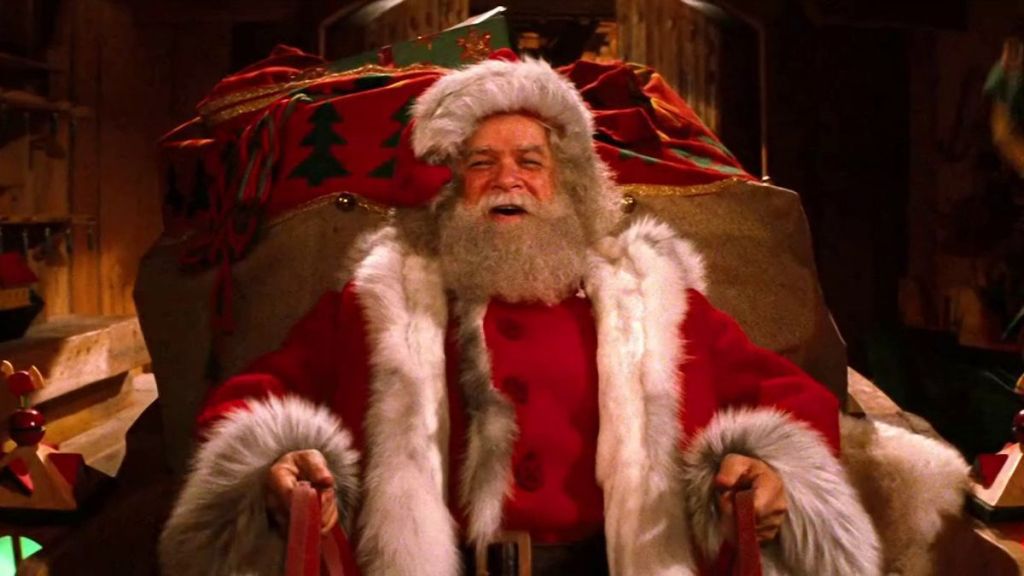
It is different, though. A typewriter is a tool that allows people to put words on the page faster. An airbrush is a tool that allows painters to have very precise control of their lines. Photoshop is a tool that allows for different effects to be made on preexisting images, carefully and intentionally manipulated by the person using the software. But never before has it been possible to say to one of these tools, “Hey, give me a picture of Santa Claus wearing a Star Trek uniform” and then just sit back and wait 0.8 seconds for the work to be done. 

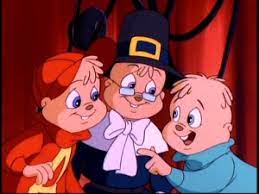
Nailed it.

As I mentioned before, I’m a high school teacher, and I actually teach an entire unit about Artificial Intelligence in which we touch upon many aspects of the concept. The idea is that it’s a high-interest subject that’s going to be very relevant to the lives of my students (most of whom are in the 16 to 18-year-old age range) that is very controversial, allowing for them to learn to write arguments to defend their positions on a complicated topic, no matter what that position may be. The upshot of it is that I’ve learned way more about AI than I ever thought possible, and some of it scares the bejeezus out of me. When I started teaching this unit a few years ago, the conclusion that many students arrived at was that the integration of AI into society would eliminate many low-level jobs and that our economy would have to pivot to something that’s more craft-based – in other words, giving more importance to the arts. Writing, painting, making things by hand, things that AI can’t do. Hah. Boy, were we wrong.

Another thing that’s come up is the problem of academic dishonesty, of students using AI the way that the studio bosses will, and just having them whip up their schoolwork for them. In the past, it’s been relatively easy to catch someone plagiarizing an essay. You just pop the text into Google and you can find it in seconds. I’ve caught students copying from Sparknotes, from Wikipedia…one time a kid turned in a book report that had been copied verbatim from the back of the DVD case of the movie version of the book. It’s almost funny. But with AI doing the work, the student still isn’t learning squat, but it’s a lot harder to catch.

“In conclusion, the best part of The Great Gatsby was when Leo Titanic held up his champagne and made that meme.”

Last week, as an experiment, I played around a little with ChatGPT, probably the best-known of the AI algorithms that are being used in this fashion. I fed it an essay prompt regarding Kate Chopin’s classic “The Story of an Hour,” a story that’s less than four pages long, and as such makes for a great subject for a quick writing exercise. The essay that ChatGPT spit back to me (so fast that my hand hadn’t even left the keyboard yet) answered the question fully, on-point, and if a student were to turn it in to me the only clue I would have had that it was plagiarized would be if I simply didn’t think the kid in question was capable of work that good…and I’d have no way to prove it. 

Now I’m not bringing this up because I want anyone to suggest solutions to the problem. We (and by we, I mean the teachers and school district I’m a part of) are already discussing the issue and looking for ways to deal with it. I bring it up just to illustrate the point. Some people will say, “Well why does it matter if the kid knows ‘The Story of an Hour’? When are they ever going to use that information in real life?” They won’t, you moron, that’s not why we write essays. We write essays so that students will know how to construct an argument, and having the computer do it for you is just going to leave you unable to do it yourself. (These are probably the same people who whine that they were never taught “how to do taxes” but also slept through every basic math class they ever took.)

Now to be fair, AI can be used as a tool. Not long ago I had a very interesting discussion with a comic book writer/artist of my acquaintance who told me some of the ways he was using it – to help with research, for example, or to evaluate his own work. And there’s definitely merit to that. I played around with ChatGPT some more and tried it in the ways he suggested. As a research assistant, I determined that it can definitely give me better and more nuanced details than a simple Google search can. On the other hand, some of these AI programs have been known to make up information out of whole cloth that SOUNDED correct in order to answer the query. Some of them have even written citations for sources that do not exist, which is kinda hilarious to me. 

Then there was the question of using it to polish your own writing. I fed ChatGPT the first two pages of a new story I’m working on and asked what it thought. It gave me a response that was very complimentary, telling me that the characters were well-illustrated and that I’d done a good job of painting a picture of the two teenagers having a conversation on that page. Then it gave me tips for improving my sentence structure.

I was gobsmacked, not just by the entirely accurate critique of my structure problem, but by how well it understood what I was trying to write about. It said, and I quote, “Overall, the passage you wrote has an engaging and descriptive style that draws the reader into the narrator’s perspective and world…There is a conversational tone to the narration, which adds authenticity and relatability to the character’s voice. The passage effectively blends introspection, self-reflection, and storytelling to create a strong narrative voice.” I’m quoting this, by the way, not to brag about how awesome I am, but because if I were to read this in a review of my work written by a human being I would have been terribly flattered, and when I realized I was equally flattered by the AI…well, I was a little embarrassed. Fortunately, nobody would ever know I felt that way even momentarily unless I did something stupid like post it on the internet. 

AI is an increasingly complicated issue, and I’m not trying to settle the debate, merely to illustrate how I feel about it. There’s no getting rid of it at this point, the box is open and Pandora has run away to hide under the bed and point a finger at Epimetheus to try to deflect blame. Since we can’t eliminate it, then, the only thing to do is to try to figure out how to use it responsibly. 

As for what exactly that means, your guess is as good as mine. 

UPDATE: A Facebook conversation about this topic with artist Jesse Elliott has led to him posting his thoughts on the issue on his own blog. Please head over there and read his perspective!

Blake M. Petit is a writer, teacher, and dad from Ama, Louisiana. His current writing project is the superhero adventure series Other People’s Heroes: Little Stars, a new episode of which is available every Wednesday on Amazon’s Kindle Vella platform. Just for giggles, after he finished writing this column he showed it to ChatGPT to ask its opinion. It returned a seven-point critique that basically said, “Hey, ya did pretty good.” ChatGPT is at least genial. If it takes over the world it will do so very politely. 

Geek Punditry #24: Searching For a New Style

Just a few weeks ago, I wrote about experimental storytelling, looking for movies, books, or other media that found a new, innovative way to tell a story. As tends to happen, shortly after I wrote that column, I stumbled across something that absolutely would have been under discussion had I been aware of it at the time. It’s kind of like getting home from the supermarket and realizing you forgot an essential ingredient for the cake you’re making for my wife’s birthday, and I better haul ass back over there before she gets home. As a purely hypothetical example. 

Last week I watched Searching, a 2018 film starring John Cho and Debra Messing, directed by Aneesh Chaganty, and written by Chaganty and Sev Ohanian. The film is a mystery and thriller about a father (Cho) whose teenage daughter (Michelle La) disappears, and the only clues he can find to her disappearance are those he can plumb from the depths of her laptop computer. Fortunately, despite the setup, they resisted the urge to do a Taken knock-off. The interesting thing about Searching is that the entire story is told through the screens of phones and computers. All you – as the audience – ever see is what appears on that screen. 

John Cho checks his Reddit upvotes: THRILLER!

This isn’t the first movie to use that conceit, of course. I can think of at least three movies from the past decade told via computer screens: Open Windows (2014), Unfriended (2014), and Host (2020). Those three movies all have far more in common with each other than Searching, though. First of all, those are all horror movies. Second, the things we see on the screen in those films are mostly open Windows for Skype, Zoom, or other such teleconferencing aps. Although there is some playing with the format, in many ways they’re an evolution of the found footage craze.

Searching is different. We still see the actors on screen fairly frequently (there’s a lot of Facetime happening in this movie, plus security footage, TV news broadcasts, and other justifications to put them on camera), but that’s not the usually compelling part of the film. The interesting thing is seeing Cho’s character using the information on his daughter’s laptop to track her down: old vlogs, emails, and different social media and other accounts that, over the course of the film, paint a picture of the girl he raised. It helps the audience to understand her, and from a storytelling standpoint, it also helps Cho to realize he no longer really knows his daughter the way he believed he did. The mystery is good. It’s compelling. But the format is what I really want to talk about today.

Although some of those earlier movies I mentioned do some of the things we see in Searching, it’s the way the movie uses the digital space that makes it stand out. We’re watching this mystery solved as the different elements are revealed to Cho. It’s not exactly realtime, there are jumps and lapses and the whole film takes place over the course of about a week, but it almost feels like realtime. We get to see things from Cho’s perspective – a text message he types then deletes unsent, for example – that reveal things about the character. In a conventional movie, this is all the stuff that happens before the scene where the detective shows up and says, “I found some information about your daughter, Mr. Kim.” In this movie, that stuff is the story. You wouldn’t think a scene focused on someone trying to change their Gmail password would be tense and compelling, but I’ll be damned if Chaganty didn’t make it work.

The face of every parent checking out their teenager’s browser history.

At least part of it, I think, is that it feels so relatable. We’ve all used social media, we’ve all done Google searches…we actually know what it is that Cho’s character is doing throughout the film, so we’re anxious to see the result. Occasionally, our familiarity with the language of computers clues us in to information that may not be immediately obvious to the detective himself if he’s not looking at the right area of the screen. And most importantly, in this digital age we live in, it seems very possible that REAL mysteries are solved this way now. All of this together made it a film that was fun to watch.

This raised a question, though. Did I like Searching because it was a good story, or did I like it just because it was an original gimmick? There are a lot of storytelling gimmicks that are cool the first time you see them, but get stale quickly. 3-D is the best example I can think of. Sure, there’s a visceral thrill to seeing a 3-D movie…or at least, there was the first 500 times it was done. But I have yet to see a movie in which 3-D actually improved the story, and that’s what it will take to convert me. I call it the “Wizard of Oz” moment. That was the movie that demonstrated that color could be used to make a story better than it would be in black and white. I haven’t seen 3-D’s Wizard of Oz moment.

And that’s what I needed to answer about the way Searching was told. Was this “on-screen” narrative technique something that could add new elements to the vocabulary of cinema, or was it just a one-off trick that would grow stale if repeated? There’s no way to answer that without trying it again.

And so they did.

Earlier this year we got Missing, a sort-of sequel to Searching written and directed by Nicholas D. Johnson and Will Merrick. I say “sort of” because, although it continues the use of the on-screen narrative, the stories really aren’t connected in any way. It’s a new cast, a new mystery, and except for a few times where the characters reference a Netflix “true crime” series they watch that (in-universe) depicts the events of the first movie, there’s no connection between the two whatsoever. In Missing we follow the efforts of a daughter (Storm Reid) trying to track down her mother (Mia Long), who never comes home from a vacation in Columbia with her boyfriend (the terribly-underutilized Ken Leung).

Storm Reid checks her Reddit upv — what, they can reuse the poster but I can’t reuse the joke?

Okay, so it’s another missing person movie. But complaining about that would be like going to see a Chucky movie and complaining that they’re using that talking doll again. It’s just the conceit of the franchise. The question is whether the sequel can tell a satisfying story, now that the audience has seen and is used to the trick of following the events on the computer screen. And from my perspective, at least, the answer was yes.

Except for the missing person angle, Missing really doesn’t borrow from Searching in the plot department. First of all, using the teenager as the protagonist (and, for purposes of the story, the main detective) makes us approach the story in a different way. Her resources weren’t quite as vast as those of an adult, and she was less likely than an adult may be to sit back and wait for the police to take care of matters happening in another country. This leads to an unlikely friendship between Reid’s character and Joaquim de Almeida, who she contacts using an app to hire someone for minor chores and turns him into her man on the ground in the country where her mother disappeared, but she can’t follow. The way the two of them work together from thousands of miles apart to unlock clues is entertaining and leads to some touching moments.

There are, admittedly, a few times where it seems like the filmmakers are aping Searching a little too closely, but they wind up using those as opportunities for plot twists and surprises. Without getting into spoiler territory for either film, I feel like anyone who has seen Searching will have certain expectations that make it almost impossible to identify the villain of Missing until the reveal. Storm Reid’s character and circumstances are different enough from those of John Cho that it doesn’t feel any more derivative than any other two missing person movies you might watch. 

Like all sequels, there is an imperative to escalate the story. The scope is broader – the movie goes international this time – and the climax is told more through security camera footage, making it a bit more traditionally “cinematic” than the first film. Even then, though, the story manages to use the concept and the characters to their advantage, providing a key piece of information that would have been a little dull if they tried the same trick in a conventional movie. The important thing here is that, once again, the style worked. And if it works twice, that’s a good indicator that it may not just be a gimmick, it may be a legitimately new way to tell a story.

I think, to me at least, that’s the difference between a gimmick and a new storytelling technique: repeatability. The aforementioned found footage movies are a perfect example. The Blair Witch Project wasn’t the first found footage movie, but it catapulted the concept into the mainstream. Several years later Paranormal Activity brought it back. Both of them inspired dozens of imitators that were found wanting, but that doesn’t mean found footage itself can’t work. It just needs to be applied to the right project. Although there have been found footage films in numerous genres, the most popular and successful examples have usually been horror movies, which lend themselves to that format very well. Similarly, this “on-screen” narrative works very well for a mystery, because what you’re really watching is somebody trying to piece together a puzzle. Do I want to watch a thousand crappy mystery movies about someone using their kid’s laptop to track them down? No. But now that the format is out there and proven, I am very interested to see what other kinds of stories can be told this way.

She was actually crying in this scene because they made her watch the sequel.

And that doesn’t just mean in movies, either. The more I think about this setup, the more I think it could make for a very compelling video game. It would be a sort of digital equivalent to an escape room. In fact, it reminded me of the last time I played an escape room on a family vacation to Hot Springs. In the game, we used a deceased relative’s computer to sift through documents and emails to figure out where in the room to look for clues. For my nieces and nephew, the high point of the game was when I retrieved a hidden clue tied to a pair of ancient granny panties from an air duct, but for me I really enjoyed the way the game was put together, which I think would translate digitally very well. 

This photograph is the reason I can never run for political office outside of Chicago.

I can imagine a game where the player takes the role of the detective, similar to John Cho and Storm Reid in their respective films, and has to crack some sort of mystery. As the game begins you are presented with a laptop interface with a video clip that you’re instructed to play to set up the story, then you use the information on the computer to crack the case. This would, admittedly, be a pretty substantial undertaking. The game would have to come preloaded with documents, files, video and audio clips, emails, social media platforms…it’d be a task to plan the whole thing out and produce all of the clues necessary, not to mention figure out a way to guide the player through it in a way that creates a satisfying experience, but I honestly think it would be a lot of fun. 

I should mention here that I am not a gamer, I haven’t owned a video game console since my parents got a Sega Genesis I shared with my brother and sister, so it’s entirely possible that what I just described already exists. If it does, I don’t know about it, but I would be very interested if you could point me in that direction. In fact, I imagine at least three of you have already posted an angry response to point out my ignorance of some game that fits the pattern exactly. (“Clearly you’ve never played Leisure Suit Larry 19: Larry’s Hard Drive.”) If so, just send me a gentle notification, will you? Especially if it’s a mobile game.

I’m happy to find something that I hadn’t encountered before. Storytelling is one of my favorite things in the world (it comes #3 after my family and the return of the McRib), so any time someone can show me a way to do it that I haven’t seen before, I’m fascinated. I’m just crossing my fingers that the storytellers who see Searching and Missing and think “I can do that” learn the right lessons instead of just hitting copy and paste. 

Blake M. Petit is a writer, teacher, and dad from Ama, Louisiana. His current writing project is the superhero adventure series Other People’s Heroes: Little Stars, a new episode of which is available every Wednesday on Amazon’s Kindle Vella platform. It’s kind of amazing how much better the security was on John Cho’s kid’s laptop than in the entire Louisiana Office of Motor Vehicles. 

Geek Punditry #23: The Next Star Wars?

Like most sane people, here’s a phrase I don’t say very often: Quentin Tarantino has a point. 

I know, but bear with me.

In a recent conversation with Deadline, Tarantino said that streaming movies – as opposed to movies that have a theatrical release – aren’t really a part of the cultural zeitgeist. “It’s almost like they don’t even exist,” Tarantino said, and I think he’s on to something there. Think about it – of all the movies that have gone straight to a streaming service over the last few years, bypassing a theatrical release, how many of them that weren’t already based on an existing Intellectual Property have had any sort of major cultural footprint? When’s the last time you heard someone talking about Netflix’s The Adam Project, Prime’s The Map of Tiny Perfect Things, or Shudder’s Blood Relatives? These are all good movies. They’re movies I would recommend to people. But they simply aren’t part of the cultural conversation. I’m not saying that Free Guy is a better movie for Ryan Reynolds than The Adam Project was, but based on the fact that one has 661,000 views on Letterboxd as opposed to 302,000 for the other, I AM saying that more people are aware of the former. 

This isn’t to say Tarantino is right about everything, of course. For one thing, I don’t care for feet. But more germane to the topic, later in the same interview he says that all television is “soap operas,” that he doesn’t think about a few weeks after he watched the last episode. That’s silly on the face of it – shows like The X-Files or Breaking Bad have been gone for some time, but still have huge fan bases. And some new streaming shows have cracked into the mainstream, like Stranger Things or Bridgerton. Somehow it’s easier for TV shows to build fan bases than movies, possibly for some of the reasons I discussed back when I was talking about the problem with binge-watching

“Why can’t I remember what happened on the last episode of The Goldbergs?”

Back to the movies, though. I thought about this, trying to come up with the most culturally significant streaming-first movie I could think of – even asked the question on a writer’s thread I’m a part of, and was given exactly one suggestion: the Netflix sci-fi thriller Bird Box. That’s a good example. It was a big hit, people really got into it when it came out, and it’s got a hefty 894,000 views on Letterboxd. But that was five years ago. Before you read this column, when’s the last time you thought about Bird Box? There was a discussion of a sequel when the film first came out, but it hasn’t happened yet, although Netflix DID announce a spin-off film, Bird Box Barcelona, which is going to drop in July and be forgotten by August. 

Early contender for “Best Picture you definitely watched this year but don’t remember anything about.”

There’s a permanence to theatrical movies that streaming films don’t enjoy, possibly because streaming is just easier. Going to the movies is a commitment. You have to drive down there, plan your snacks, buy a ticket or commit petty larceny to enter, and then devote your time. That guy you went to school with who saw Star Wars in the theater 27 times made it a LIFESTYLE CHOICE. Whereas watching something 27 times on streaming just requires you to click a button and be too lazy to look for something else.

But the more I thought about the problem, the more I realized that Tarantino wasn’t quite right. (What are the odds?) It’s true that streaming movies haven’t hit the way that blockbuster movies of the past have, but then again…have any theatrical movies hit that hard either? Sure, there are successful movies, but they’re all sequels, remakes, or based on existing IPs. When was the last truly original blockbuster movie?

As of this writing, Box Office Mojo lists the top ten movies of 2023 so far as:

1. The Super Mario Bros. Movie

2. Guardians of the Galaxy Vol. 3

3. Avatar: The Way of Water

4. Ant-Man and the Wasp: Quantumania

5. The Little Mermaid

6. John Wick Chapter 4

7. Spider-Man: Across the Spider-Verse

8. Creed III

9. Fast X

10. Puss in Boots: The Last Wish

“It’s a-me, a license to print money!”

In other words, eight sequels, one remake, and one movie based on what is arguably the most famous video game franchise in human history. The top movie on the list that’s an actual original idea is M3GAN at #12, which is actually a holdover from 2022 that took in $95 million after the calendar flipped. The highest-grossing film released in 2023 with no previous IP to drawn on is Cocaine Bear at #16. 

I’m not saying anything negative about any of these movies, I want to stress that. I’m just saying that if you’re looking for something new to add to the cultural zeitgeist, this is not the place to look.

Several years ago, a friend of mine tried to argue that the then-upcoming Pirates of the Caribbean sequel Dead Man’s Chest would launch the film into a legitimate franchise, that it would turn it into that generation’s Star Wars. And while there were five Pirates films (with a sixth one occasionally teased by Disney), I don’t think there’s anyone that would argue it has had the level of cultural penetration that Star Wars has. You can see Star Wars shirts, toys, books, comics, and other assorted paraphernalia everywhere you look. If you say the phrase “May the Force be with you,” everybody immediately knows what you’re talking about. Hell, in certain company saying “I love you” without following it immediately with “I know” will feel strange. What’s the last new franchise you can say that about?

Star Wars, by the way, is an arbitrary metric. One could easily point to any number of franchises with deep cultural penetration – Star Trek, James Bond, A Nightmare on Elm Street… all things that are easily recognizable even if somebody isn’t a fan of that particular franchise. However, Star Wars is arguably the new franchise that has had the greatest impact worldwide in the last 50 years or so, so that’s what I’m going to use. People have been trying to make the next Star Wars for years, but it’s just not working.

People often argue that there are no new ideas in Hollywood, but that’s not true. The ideas are there, it’s just that – as I’ve pointed out before – the people who are in charge of the budgets are afraid to spend money on something that isn’t proven. That’s why they want sequels, remakes, or movies based on preexisting IPs. Comic books, in the past 20 years, have become very lucrative IP farms, which is why Disney bought Marvel in the first place. If a novel is really popular, it can break in. (Bird Box and Bridgerton, I should point out, were both novels before Netflix got them.) In VERY rare examples, a filmmaker may become a big enough name in his own right to get the budget to do something both new AND big, which is where the first Avatar movie came from, built not on any existing franchise but on the name of writer/director James Cameron.

This movie only exists because you saw Titanic 27 times.

Avatar is a really bizarre example. It looked, when the first movie was released in 2009, like it had that kind of Star Wars potential for cultural impact. The Way of Water is the sequel to the highest-grossing movie of all time, and like M3GAN it actually came out last year, but made so much money after Jan. 1 that it currently occupies the #3 spot for the 2023…but so what? For the 13 years in-between movies, nobody was talking about it. Nobody was wearing t-shirts or buying merch outside of Disney’s Animal Kingdom, and I defy anybody to give me one memorable quote from the first movie that isn’t just being used to mock the word “unobtanium.” The amount of money that a movie makes proves a lot of people see it, but it doesn’t necessarily demonstrate anything about the franchise’s longevity.

Many other sci-fi franchises have been attempted over the years, most of them falling flat for one reason or another. In 2012 Disney released John Carter, an adaptation of the Edgar Rice Burroughs novel that virtually invented the kind of planetary science fiction that has been a staple of the genre ever since. None of the major Star franchises could exist without it: not Wars, not Trek, not Search. But while I will defend that film to my dying breath (I think it was a great movie with loads of potential) it fell victim to terrible marketing and a Disney studio that simply didn’t know what to do with it. They even saddled it with a horribly bland title because they were afraid that boys wouldn’t want to watch a movie with the title of the original novel (A Princess of Mars) and that girls wouldn’t want to watch the proposed alternate title (John Carter of Mars). The movie bombed, the franchise died.

The next year Lionsgate tried to do the same thing with another of my favorite novels, Ender’s Game. Despite featuring Harrison Ford and a pre-stardom Hailee Steinfeld, though, the movie fell flat. It’s just as well – the sequels to the novel don’t at all lend themselves to a Star Wars-style franchise. The direct sequels dive into deeply philosophical and spiritual science fiction, meditations on the soul and the nature of sentience itself, with relatively few sci-fi “Pew Pews.” The spinoff Ender’s Shadow series DOES feature “Pew Pews,” but not in space, focusing on the geopolitical chaos left behind after humanity was temporarily united in the face of an alien invasion. 

The first rule of Dead Franchise Club is you do not talk about Dead Franchise Club.

So maybe sci-fi isn’t what’s going to bring us the next Star Wars. What about fantasy? There have been three pretty successful fantasy franchises since the turn of the millennium: Lord of the Rings, Harry Potter, and Game of Thrones. But all three of those are based on books that came out in the 20th century and spent years – decades in the case of Lord of the Rings – building up an audience that would carry over. And while there is certainly no shortage of references to those franchises in toys, clothing lines and other assorted paraphernalia, while nobody would look at you like an alien anymore for dropping a reference to any of them, are they Star Wars? They’re CLOSE, but follow-ups to the original series of Lord of the Rings and Harry Potter have been divisive (actually, that IS pretty Star Wars), while the follow up to Game of Thrones was pretty well received so far, but a lot of people are still angry over the ending of the original TV series or the lack of ending of the novels. They might make it there, but they aren’t there yet.

From left: the new Luke Skywalker, Han Solo, and Princess Leia.

I’m about to say something controversial, something that will infuriate certain people such as my sister…but I think the most original franchise in the last 23 years to truly make its way into the cultural consciousness is Universal’s The Fast and the Furious. Or Fast and Furious. Or The Fast Saga. Look, they can’t even really agree on a NAME for the franchise, but everyone knows what it is, and the fanbase is gargantuan.

“I don’t need the Force. I got FAMILY.”

The Fast and the Furious came out in 2001, and although it borrows its name from a mostly-forgotten 1954 film starring John Ireland, I’m not going to count it as a remake. First of all, the stories have absolutely nothing in common except that both include cars, and second, 99 percent of you had no idea the 1954 film even existed until you read this paragraph, so it’s clearly not cashing in on nostalgia the way most remakes do. 

Anyway, it’s been 22 years since the first Fast movie came out, and if the tenth movie that was released earlier this month is any indication, it’s not slowing down (bah-dump-bump!). It’s already cracked the top 10 films of the year, and although Vin Diesel says that Fast X is the first film in a story-ending trilogy, Universal Studios is very, very quick to remind people that this is the end of the story of Dominic Toretto and NOT the franchise as a whole. There’s already one spinoff and a Netflix cartoon, with at least two more spinoffs planned, including a second film about Dwayne Johnson’s Luke Hobbs character and another “female-centric” spinoff that is currently wandering Hollywood in search of a better title. 

Although the movies started out as mid-grade, clunky action films, somewhere around the fourth or fifth movie they hit some sort of power up and became high-grade clunky action films. Where we started with a story about a cop who was trying to bring down a group suspected of hijacking and robbing big rig trucks, we now have a franchise about ridiculously skilled street drivers being used as Mission: Impossible-level super spies, saving the world and looking good while doing it. At the point where the movies stopped making any attempt at having any logic or coherence behind them, they also became ridiculously fun to watch. And if nothing else, that’s what has made this preposterously unlikely franchise so endearing. It remembers something that most other attempts at world-building have forgotten: namely that blockbuster movies are supposed to be fun, dammit!

When I say “the next Star Wars” I hope there’s no confusion. I’m not trying to REPLACE Star Wars, or anything else for that matter. I love what I love, and I don’t want any of it to go away. But there’s always room for something new, and that’s what I’m hoping for. And when it comes to “new,” we need to do better.

Blake M. Petit is a writer, teacher, and dad from Ama, Louisiana. His current writing project is the superhero adventure series Other People’s Heroes: Little Stars, a new episode of which is available every Wednesday on Amazon’s Kindle Vella platform. He could not remember the title of Bridgerton while writing this, and wound up having to text some friends asking “What’s the name of that show you all watch that’s like a horny Downton Abbey?”

Geek Punditry #22: Share Your Perfect Movie

A little over a year ago, in an effort to get people on Facebook to talk about something positive rather than simply despising each other as loudly as possible, I asked the following question: “What are some movies (sequels notwithstanding) that are virtually flawless in all respects, that there is no way you can imagine them possibly being improved upon, and that any discussion of remaking them would be the purest hubris?”

The goal behind this was simply to get some good-natured conversation going for a change, to get people talking about “perfect” movies that they love, but I was quickly amazed by the variety of answers I started to receive. It was also telling to me how widely spread the responses were. Plenty of classic movies got mentioned, as well as a lot of modern popular hits, but then there were the obscure movies like the Japanese drama An Autumn Afternoon or the pre-blockbuster Eddie Murphy action movie 48 Hrs. Now when I say a “perfect” movie, to me that means that there is no legitimate criticism or room for improvement, that everything about the movie is as good as it could possibly have been in the time and place in which it was made. This is, of course, inherently subjective, but that’s the point. I can give the definition to anyone, but it’s seeing what movies they think qualify that really became intriguing to me.

So I wound up doing what I usually do when I’m talking about movies and I get caught up in it: I went to Letterboxd and made a list. (Side note: I love Letterboxd. It’s one of my favorite places on the internet. It’s a social media platform where movie lovers can write reviews, share lists, and talk about movies. It’s a wonderful place for movie fans. It’s what Goodreads should be for books, if Goodreads wasn’t owned by Amazon now and every other click on the site didn’t attempt to divert you to spend money.) I listed every movie that someone suggested as being “perfect,” according to their own criteria, and I ranked them based on how many people suggested each one. I thought today it would be fun to walk through the list of suggestions I’ve collected since last year, talk about them a little, and then throw open the door for more. This list is a never-ending work in progress, so I’m always happy to hear what you think deserves a place here.

“It’s flawless.”
“But doesn’t his own mom hit on–“
“FLAWLESS.”

So far, 339 separate movies have been suggested by at least one person. Of those, I’ve seen 237 of them, and although I definitely don’t agree with all of them, that’s okay. The point is to see what SOMEbody thinks is perfect, not EVERYbody. The top choices, however, are pretty tough to argue with. The #1 choice, “nominated” by 12 separate people (myself included) is Back to the Future. The last time I mentioned Marty McFly and the Doc in this column, it was when I talked about Pop Culture Comfort Food – the whole trilogy is something I can throw on to make myself feel better on a bad day, but there’s something about that first movie that’s practically sorcery. Writer Bob Gale and director Robert Zemeckis found a way to weave together sci-fi time travel gobbledygook with a story that’s funny and uplifting, with a musical score by Alan Silvestri that I’d put among the top five of all time. I don’t want to get too deep into what makes this movie perfect because, let’s be honest here, you probably already know. I don’t think I’ve ever met anybody who doesn’t love the original Back to the Future, and if I did, I don’t think I could trust them.

The only reason that anyone uses the phrase “as you wish” anymore.

The second movie on my ranked list is also one of my comfort films (although when I wrote about it before I was talking more about the book than the film): Rob Reiner’s adaptation of William Goldman’s The Princess Bride. Eleven people suggested this one – a romantic comedy that’s full of classic quotes and unforgettable characters. It’s a fairy tale that makes everyone believe in love without making it seem like something that can only exist in fairy tales. It’s the reason people who aren’t wrestling fans know who Andre the Giant was. And sure, there are some bits about it that crack a little under scrutiny: in the fight between Westley and Inigo, for example, it’s horribly obvious when Cary Elwes is replaced by a stunt double to do flips on a bar, and the edges of the hidden mat are clearly visible when he lands a few seconds later. But I wouldn’t change those if I could – even those things are part of the film’s charm. Even the things that aren’t perfect IN The Princess Bride are perfect FOR The Princess Bride. It’s pretty telling that among the very few things that people on the internet can agree about is that NOBODY wants to see a remake of this movie.

Moving down the list from this point, a modern psychologist or anthropologist could really start to paint a portrait of the kind of people I associate with on social media, because The Shawshank Redemption and The Big Lebowski got seven votes each. These are two films that are enormously popular among people my age, movies that came out during those high school and college years in which many of us formally adopt the pop culture influences that become permanent parts of our identities. Shawshank is one of my personal favorite films, a film that takes the setting of a brutal New England prison and weaves a story about undying hope that is, in its own way, as inspiring as The Princess Bride itself. It’s a little hobby of mine to tell people who don’t already know that it’s based on a book by Stephen King, especially if they don’t like horror and they think that’s all he can write. 

Add in The Matrix and you’ve got 74 percent of college dorm walls circa 1999.

The Big Lebowski was my generation’s Rebel Without a Cause, a movie that was elevated to a lofty position based on the Rule of Cool. People saw in Jeff Bridges’s character a sort of carefree slacker god. “The Dude” became a role model, and while the lifestyle he enjoys in the film isn’t really something that works in the real world, that doesn’t particularly matter when it comes to making us fall in love with a movie, does it?

There are two kinds of people: people who love The Iron Giant and people who…I don’t know…probably murder kittens in their sleep.

The Iron Giant got six mentions, and if there’s any movie that deserves more it’s this one. The story, about an alien robot who falls to Earth and learns what it means to be human, resonated with me instantly. It’s the best Superman movie without Superman in it that you’ve ever seen, and it’s easily the most animated performance Vin Diesel has ever given. 

Next up, we get clumps of movies with the same number of votes. Five people each voted for Alien (the original), Clue, The Godfather, and Groundhog’s Day, and I would not argue with any of them. Four votes each go to Casablanca, Heathers, Labyrinth, The Lord of the Rings: The Fellowship of the Ring, Raiders of the Lost Ark, and my wife Erin’s favorite movie, Jaws. Again, there’s nothing here that I would really disagree with, except to say that I think some of those deserve a higher rating (which you, dear reader, are invited to provide if you’re so inclined).

Two movies made perfect by way of subtraction.

I do want to point out here that The Godfather and Jaws both occupy places on a very small but important list: movies that are better than the book they’re based on. The standard argument is that the book is better, and I agree that it’s usually true, but these two pretty darn perfect movies both got that way by jettisoning parts of the respective books that would have hurt the films. In the case of The Godfather, a long and rather uncomfortable subplot about Johnny Fontaine and his sexual conquests is reduced to little more than a cameo for the character in the film. The subplot is unpleasant to read and really has nothing to do with the story of the Corleone family, which is what the story is really about. In the case of Jaws, there’s a subplot about Ellen Brody having an affair with Matt Hooper, which is obviously the sort of shenanigans that the wife of the police chief worried about a killer shark and the marine biologist who has been called in to help capture said shark are going to get down to in between measuring the bite radius on the remains of the victims. I don’t know, maybe it had something to do with the 70s, the idea of throwing in unnecessary storylines about people gettin’ down, but thank goodness the filmmakers had the good sense to leave those parts out of the respective films. Had they gone in intact, I don’t know that I could support either of those movies being on this list.

I’m not going to go through the entire list here – there are still over 300 movies that I haven’t mentioned yet. But I invite you to read the list yourself and let me know if you agree or disagree. The list is a work in progress. I’ve added several movies myself since I first drafted it (Everything Everywhere All at Once being the most recent film that I’ve seen to make the cut) and I’ve periodically asked for more suggestions. Now I’m asking you. Are you irritated that your favorite movie didn’t get mentioned? Hey, mention it yourself! You think a movie that’s down at position #187 deserves to be higher? Give it a nomination and it’ll move up. You’re angry because you don’t think #163 deserves to be on the list at all? Well, sorry to say it, but that’s not going to change. Even if you don’t like it – even if I don’t like it – somebody called it perfect, and that’s all it takes to get on the list.

You can make suggestions here on the blog, on the Letterboxd list itself, or on whatever social media platform you used to follow the link. And remember the ground rules: first, no “joke” suggestions. Sarcasm doesn’t always translate that well on the internet, and if I think you’re suggesting something ironically, I’m just going to throw it out. Second, no BULK suggestions. Don’t just say, for instance, “all the James Bond” movies, because there are 26 of them and if you say “all of them” I’m going to question your critical thinking skills. And finally, be specific. Some stories have been told more than once, some titles have been used multiple times. Don’t just say Hamlet, tell me WHICH Hamlet – preferably the year of release, but at least tell me who the actors are so I know which version you’re voting for.

If nothing else, it’s a chance to see what movies people love, what movies matter to people, and to make your voice heard at least a little. And for the chance to talk about what people enjoy, I think that’s worth the few moments of thought.

Blake M. Petit is a writer, teacher, and dad from Ama, Louisiana. His current writing project is the superhero adventure series Other People’s Heroes: Little Stars, a new episode of which is available every Wednesday on Amazon’s Kindle Vella platform. TV shows don’t count for this experiment, unfortunately, or else his son would no doubt have forced a thousand episodes of Paw Patrol onto the list. 

Geek Punditry #21: A Complete Trip Down the Yellow Brick Road

No matter what your particular fandom is, there are many different strains of Geekery – the Viewer just watches the movies or shows, the Shipper is obsessed with who is (or should be) hooking up with who, the Collector wants the merch, the Debater just likes to argue – and all of them are perfectly valid. One of the more difficult ones to be, though, is the Completionist. The Completionist is someone who wants to read, watch, or play every incarnation of their favorite franchise, no matter what. (When you cross this with the Collector, you wind up with someone who can open a museum.) Being a Completionist can be time-consuming or all-encompassing if you allow it to be, which is why I try to restrain myself, because I definitely have Completionist tendencies. I can refrain from reading every Star Trek novel ever written, but I definitely want to watch every movie and TV series in the franchise, even the one I don’t like. (Yes, that’s singular.)

Completionism is more difficult with some properties than others, of course. Fans of modern franchises like Game of Thrones or Harry Potter have it relatively easy – the number of books, movies, and TV shows is comparatively small and all of them are easily available for anyone who wants them. A George R.R. Martin Completionist’s fear is that the series will never be finished, not that they won’t be able to find it. But it gets much more difficult if you’re a Completionist for an older property, especially one that has lapsed into the public domain. For example, I’m a big fan of L. Frank Baum’s Land of Oz, and if I really wanted to, I could spend the rest of my life trying to complete my experience in that world and never have a chance of success. When Oz is mentioned, the average person usually thinks of The Wizard of Oz, the 1939 film starring Judy Garland and absolutely zero suicidal Munchkins, no matter what Freddy Campbell told you in sixth grade. The movie is, of course, a legitimate classic, and everybody has seen it. Fewer people have read the novel it’s based on, The Wonderful Wizard of Oz, although most people are probably at least vaguely aware that it exists. What even fewer people understand, though, is just HOW MUCH Oz content exists in the wild.

Wait a second, I think Google Image Search may have screwed something up here…

Baum himself wrote 14 novels about Oz, plus assorted short stories, some stage plays, and even a couple of silent movies. After he passed away, his position of “Royal Historian of Oz” was passed on by the publisher to Ruth Plumly Thompson, who wrote even more books than Baum before the title got passed along again. All in all, the “original” Oz series consisted of FORTY different books by seven different authors before it was retired in 1963. Not that the authors retired, though. Many of them wrote other Oz books later in life, although those are not usually counted among the “Famous Forty,” as they are known to Ozites. 

But this is only the beginning. In addition to the seven official “Royal Historians,” other people started to put out their own versions of Oz, even before the earliest books started to slip into the public domain. W.W. Denslow, the illustrator of the original Wizard of Oz, tried doing his own Oz stories without Baum after the two had a falling-out, although they didn’t enjoy the staying power of his collaborator. Some of Baum’s own children wrote Oz books that wound up getting squelched when they were sued by their father’s publisher for violating their copyright. But once the Baum books went into Public Domain, things exploded.

A quick explanation of Public Domain, just in case there’s anyone who doesn’t know what that means: when someone makes a creative work, they (or their employer, if it’s a work-for-hire) automatically own the copyright to that work. Copyright can be sold, transferred, or licensed, but only the copyright owner has the legal right to profit off that specific work in any way. Eventually, some time after the creator’s death, copyright expires and these creative works lapse into what is called Public Domain, which means that nobody owns the rights any longer and anybody is free to create their own derivative work based upon it. It’s the reason why so many people do their own versions of Shakespeare’s plays and why there are ten billion different versions of Charles Dickens’s A Christmas Carol – you don’t have to pay anybody to use the story, but you still get to trade on the public opinion of the name to build your audience. Copyright laws have changed over the years, mostly due to the efforts of the lobbyists working for the major IP holders (Disney in particular) trying to get it extended over and over again, but eventually it does end. It’s going to be really interesting to see what happens when Steamboat Willie, the first Mickey Mouse cartoon, finally enters public domain next year.

Another masterpiece brought to you courtesy of Public Domain.

Having said that: a work can be in public domain, but the derivative works can still be copyrighted. The Baum Oz novels are in public domain, but the MGM movie is not, so you cannot use any elements specific to the film in your own work without paying up. The best example of this came with Return to Oz, the 1985 Disney film that you may remember as giving you nightmares when you were seven years old. The movie was based on the second and third Baum books, The Marvelous Land of Oz and Ozma of Oz, and they were free to use those elements, but they also wanted one of the most iconic symbols of Oz: the Ruby Slippers. The problem is that in Baum’s books, Dorothy’s magic shoes were silver. MGM changed them to Ruby to better show off their Technicolor process, and they still owned the copyright on Ruby Slippers, so Disney had to pay them for the right to use Ruby Slippers in the film. Crazy, right?

This one shot cost Disney seven times your annual income.

Anyway, once the copyright finally ended on the earliest Oz books, the ones by Baum, it became legal for anybody to tell their own versions of or use elements from that story as they wished. From SyFy’s Tin Man miniseries to the classic musical The Wiz, the public domain nature of Oz has led to hundreds if not thousands of derivative works. And here’s where it gets hard to be a completionist: not only is there simply too much stuff out there to read or watch it all, it’s almost impossible to even create a comprehensive list.

A while back, I decided to try to compile a list of Oz books and short stories, but even with the help of websites like The Royal Timeline of Oz or their sister website, Wikipedia, it became apparent that the sheer volume of what I was attempting to do made it nearly impossible. I started putting together a Google Sheet with all of the different Oz books I could find, a list that as of this writing is breezing past 400 different works and still going. That’s to say nothing of the hundreds of Oz comic books (a few of them are on my Sheet, but not nearly all) or countless movies and shorts that have been built around Baum’s universe. By the way, I invite anyone interested to take a look at my sheet and let me know what I’m missing – I may never finish the list but I’ll never stop adding to it either. It’s the Completionist in me.

You see, in addition to the “official” works, dozens of other publishers have taken it upon themselves to continue the stories, both in ways that are faithful to Baum’s original works and others in ways that Baum may never have considered or even approved of. That’s another aspect of Public Domain: the fact that anybody can make a derivative work can often draw upon people who are doing so not out of love for the original property, but in an attempt to subvert it. Earlier this year, for example, we saw the release of the film Winnie the Pooh: Blood and Honey, which takes A.A. Milne’s beloved icons of childhood joy and innocence and turns them into bloodthirsty horror movie slashers. Give me a break.

Oh, bother.

Look, I like horror movies. I like slasher movies. I like goofy slasher movies. But I don’t care for people who take a crap on precious childhood memories. Characters like Pooh and Tigger are beloved by children all over the world – do they really need to see Pooh gutting somebody with a chainsaw? Full disclaimer here: I have not seen Blood and Honey, nor do I intend to, because it’s the concept itself I dislike. (Quick note to mention that it’s the original Milne books that are in public domain, not the more well-known Disney version of Winnie the Pooh. Man, it always seems to come back to Disney, doesn’t it?)

That doesn’t mean that there’s no room for a dark derivative of an old story, of course. Let’s run down the Yellow Brick Road again to Gregory Maguire’s Wicked, a novel of Oz that tells the life story of the Wicked Witch of the West. Like the original Wizard of Oz, Wicked is a fine novel that has been somewhat overshadowed by its own musical adaptation, but no matter which version of the story of Elphaba you’re enjoying, it’s definitely a more mature version of Oz than Baum ever wrote. With Wicked, though, Gregory Maguire was using Baum’s backdrop to tell an intriguing story, something with interesting social commentary, something that had a point. I have no problem with that whatsoever. What bothers me is when someone twists an icon of childhood without a good reason to do so, when somebody creates something shocking just for the sake of being shocking. I don’t care for that. I don’t respect it. And everything I’ve seen of Blood and Honey makes me feel like that’s what the movie does. If I’m wrong, by all means, let me know.

Anyway, the point is that with all of the Oz out there, it seems impossible that I’ll ever get through it all. I’ve read all of the Oz books Baum himself wrote, but I haven’t made it through the rest of the Famous Forty yet. I’ve enjoyed Eric Shanower’s original graphic novels and I loved the adaptations of the Baum originals he did with Skottie Young for Marvel Comics, but Zenescope Comics’ Grimm Fairy Tales has a whole Oz spinoff line that I’ve barely touched upon. I’ve still got three out of four Wicked Years books to read, and I’ve only begun to scratch the surface of the series by later authors like March Laumer or Baum’s own great-grandson Roger S. Baum. And this is to say nothing of the “official” productions that are still coming out! The International Wizard of Oz club produces an annual magazine, Oziana, which always includes new short stories (and sometimes even short novels) set in Baum’s world. And as they had the utter temerity to begin publishing Oziana back in 1971, before I was even born, it seems quite unlikely that I’ll ever be able to track down every piece of Oz media that exists.

Slow down! I’ve got twelve decades of IP to catch up on!

But that isn’t going to stop me from trying, is it?

Completionism is a fool’s game, my friends, and it’s a game that most of us are doomed to lose. But even so, it can still be an awful lot of fun to play.

Blake M. Petit is a writer, teacher, and dad from Ama, Louisiana. His current writing project is the superhero adventure series Other People’s Heroes: Little Stars, a new episode of which is available every Wednesday on Amazon’s Kindle Vella platform. He is most definitely not writing this column just to give people ideas for what to get him for Father’s Day, his Birthday, Christmas, or International Oz Completionist Day. 

Geek Punditry #20: Prequel Pitfalls

If you haven’t heard, there’s a new Hunger Games movie coming out. “But how can that be?” you ask. “Didn’t the original trilogy of four movies end the story in a tidy, satisfying manner?” Eh, kinda. But this one isn’t another sequel, it’s a prequel, The Ballad of Songbirds and Snakes, based on the prequel novel by the creator of the series, Suzanne Collins. I was a big fan of the novels, and the movies were…okay. But I haven’t yet read the prequel novel and I’m honestly not feeling a huge need to do so. As I mentioned a few weeks ago during one of my almost-weekly Star Trek discussions, pulling off a satisfying prequel is tricky as hell, and not a lot of franchises have done a good job of it. So before you line up to see Songbirds and Snakes, let’s take a little time this week to discuss what it is that makes prequels difficult and a few franchises that have overcome that inherent degree of difficulty to give us a satisfying result. 

You know, by definition, ballads have words, so I’m expecting these birds and snakes to talk. Do it, you cowards.

Any time you return to a successful franchise, there is a compulsion to raise the stakes. There’s no reason to go back to familiar territory, after all, if you can’t enhance the next installment – greater spectacle, more blood, a more fervent tugging on the heartstrings. It’s the reason that horror movie sequels always have a higher body count and why the first Fast and Furious movie was about illegal street racing but in the most recent one they were literally driving cars into outer space. And while we usually think about this escalation issue in terms of sequelitis, we want the same thing out of a prequel.

Even sequels don’t always pull off the escalation in a satisfying way (in truth, the list of sequels that are better than the original film is relatively small when you consider how many sequels have been made), but it’s even more difficult to do so when rolling back in time because many of the things audiences usually want to discover about the characters and the world they live in have already been established by the original. Going back to Star Trek as my example (because this is my blog, dammit), when you sit down to watch an episode of Strange New Worlds, there is never any fear in your heart that Spock might die because you know he’s still alive during the original series. Not to say that death is the only challenge a character might face, but the same logic applies to most of the unanswered questions we usually cling to. No one cares about a “will they/won’t they” romance with characters who we’ve already seen having “willed” or “won’ted.” That invasion that’s happening is kind of dull if you know from the original movie that the aliens are, indeed, successful in conquering the world. And if a character that has no children in the original film gets pregnant in the prequel, get ready for bad things to happen. Bad prequels feel like watching somebody draw a connect-the-dots picture. We watch as the story goes from point 1 to point 2 to point 3, and no matter how many numbers you have in the image, you’re never surprised by what happens next.

From left to right: Safe, At-Risk, Hella Safe, Don’t Get Too Attached, Gonna Survive the Series But Wind Up in a Space Wheelchair, Originally Played by Majel Barret Part 1, Originally Played By Majel Barret Part 2, Could Buy it at Any Time, and Bet You Forgot This Guy Was in TOS.

So how can you make a prequel work? Well, there are a few ways. One is to rely less on a story that just marches towards the original and instead try to tell a story that matches the original’s flavor in a satisfying way. You’re drawing on the same page, but you aren’t just playing connect-the-dots. This is what makes Strange New Worlds work. Yeah, I’m never worried that Spock is in mortal danger, but the truth is that we were never really worried when we watched the original series either, were we? This was a pre-Game of Thrones era, a time where series regulars didn’t get killed off randomly. It’s literally the reason that the redshirt trope came to exist: they needed to kill off SOMEBODY who wasn’t in the credits, so cannon fodder lined up in the casting office. Strange New Worlds takes the sort of episodic approach that the original series did, and while the stories are perhaps a bit more sophisticated than those that Shatner and Nimoy performed in, the tone is really spot-on perfect. That’s what makes the show so satisfying, even without the spectre of the Grim Reaper hovering over half of the cast.

Another way to make a prequel work is to use the setting of the original property, but an entirely (or almost-entirely) new cast of characters whose fates have not been determined. Star Trek has tried this approach as well. Enterprise was a series about the founding of the Federation, 200-ish years before Kirk. Even though you always felt the world we knew from the original series as the North Star that the Enterprise NX-01 was sailing towards, there was room for danger for these individual characters. They also tried this with Discovery, but this time set it only a decade pre-TOS and mingled in characters so hopelessly intertwined with Spock that it became a distraction to simply try figuring out how any of it meshed with the stories we already loved. The second season finale had a half-assed attempt at explaining why the events of Discovery had never come up in-universe before (especially Spock never mentioning an adopted sister that he was apparently quite devoted to, even when his rogue half-brother previously turned up in Star Trek V), but it just never properly landed.

Of course, no discussion of prequels would be complete without the franchise that popularized the term, and in fact includes one of the greatest prequels ever made. That franchise is Star Wars. The prequel? Rogue One.

No, not the other three. You see, another way to make a prequel work is to subvert the audience’s expectations – make them think they know what you’re going to do, but give it an unexpected twist. Since the audience knows how the story will end, you have to pull off some pretty big surprises to get there. This is both how the prequel trilogy failed and Rogue One succeeds. The trilogy is about the fall of Anakin Skywalker, the character everyone who saw the original films knows will eventually become Darth Vader. We know from the original series that Anakin was a Jedi who fell to the Dark Side of the Force and became an apprentice to the insidious Emperor Palpatine. It sounds like a story that’s ripe for tragedy. But in telling that story, George Lucas stuck painfully to the blueprints, with nothing particularly shocking or surprising about Anakin’s fall except for the sheer number of details that failed to mesh with the original series. (“Hey Leia, remember your mom?” “The one who died giving birth to me? Yeah, she was beautiful, but sad.”)

Rogue One, on the other hand, is not only the best Star Wars film of the Disney era, it’s one of the best examples ever of how to toy with an audience’s expectations. In the original Star Wars Leia delivers data to the Rebellion that will help them to defeat the Empire’s superweapon, the Death Star, with the only explanation of how it was obtained being the single sentence, “Many Bothans died to bring us this information.” (EDIT: I have been reminded that the Bothans line was actually about the second Death Star from Return of the Jedi. I deeply regret this error, but it does open a window to make a Rogue Two movie about the Bothans.) Rogue One tells the full story of how this vital information was secured, and director Gareth Edwards and his screenwriting team pulled off a damn magic trick in doing so. We, the audience, already know that the mission will ultimately be successful – it’s literally how the original trilogy begins. So how can you build suspense for that? Well, first you introduce a cast of interesting and sympathetic characters, characters that fit in the Star Wars universe but don’t fall cleanly into the cookie cutter shapes of the older films, and make the audience feel for them. Then – and I’m about to spoil a movie that came out seven years ago, so stop reading if you haven’t seen it – then after we grow to love and care about the characters that are on a mission we know beyond a shadow of a doubt will be successful…

This poster and caption provided as a public service buffer in case you haven’t seen the movie yet.

…THEY ALL DIE.

They succeed in transmitting the information, but every character we’ve come to love dies in the attempt. This kind of ending, where every major character dies and which TV Tropes calls a “Bolivian Army Ending” after the finale of Bonnie and Clyde, is dangerous for a writer. There’s a real risk of being accused of trying for shock value, upsetting the audience in a visceral way that may not be truly satisfying. Rogue One nails it, though. The characters die heroically, succeeding in their mission at the cost of their own lives, and even as the audience is left weeping for them we’re also left with the knowledge that their sacrifice was not in vain. The movie ends just seconds before the beginning of the original Star Wars movie, and even though they were made nearly 40 years apart, watching them together gives the original an added context and an added weight that actually makes it better.

That’s what a great prequel does, by the way. It recontextualizes the original property in such a fashion that you look at it differently. Let’s talk about Better Call Saul, the spin-off of AMC’s drama Breaking Bad. It’s not often that somebody creates what is perhaps the greatest dramatic TV series of all time, but somehow, Vince Gilligan managed to do it twice. The fact that the second time was a prequel is the TV equivalent of walking a tightrope blindfolded and then doing it again backwards.

Breaking Bad was a series about a high school chemistry teacher who winds up falling into the world of drugs and organized crime. Bryan Cranston’s Walter White starts off as a deeply sympathetic and wonderfully human character – beaten down by a life that didn’t go the way he expected, a marriage that has grown stale, struggling to connect with his son…and if that wasn’t enough, in the first episode he learns he has cancer. It begins in desperation, cooking methamphetamines in order to make money to take care of his wife and children after his death. Over the course of five seasons, though, we watch this man transform from a quiet, relatable antihero into a cold-blooded crime lord, somebody who is terrifying to watch, but the writing and performances are so compelling that you just can’t look away.

Not since Dan Fielding have you loved a sleazy lawyer so much.

One of the characters who gets pulled into Walter White’s web is Saul Goodman, a shyster lawyer whose services are provided to the criminal element of Albuquerque when they’re in a tight jam. Bob Odenkirk’s performance as Saul was an instant hit, providing comic relief at necessary moments while still having the emotional gravity that the show demanded. When Breaking Bad finished its run, Gilligan and Peter Gould spun off the Saul character into his own series that began some years earlier. On paper it doesn’t sound like a great idea – who cares how a shyster lawyer became a shyster? It turns out, everybody.

Better Call Saul premiered with Bob Odenkirk playing…well, not Saul Goodman, but Jimmy McGill, an attorney trying to get out of the shadow of his brother and struggling to make ends meet. Like Walter White, he makes an early decision out of desperation that pulls him into the criminal underworld of New Mexico, and from there, the story is about how Jimmy McGill transforms into Saul Goodman.

Aside from – again – the excellent writing and phenomenal performances of the cast, the thing that makes Better Call Saul so compelling is the way it acts as a PARALLEL to Breaking Bad. We know where Saul Goodman ends up, but like Walter White, we watch in impotent terror as he falls deeper and deeper into the chaos that surrounds him. Like Walter, sometimes he makes terrible choices. Like Walter, sometimes he is compelled to make these decisions by forces beyond his control. There’s a lovely contrast here, too. Walter begins doing bad things with the intent of helping his loved ones, but is eventually intoxicated by the criminal lifestyle. Jimmy/Saul, on the other hand, is a con artist who’s trying to stay on the straight and narrow but just keeps slipping until he surrenders entirely. 

Both shows are about someone who begins as a basically decent man becoming something much darker and losing himself in the process – Walter becomes the criminal kingpin “Heisenberg,” while Jimmy McGill becomes smooth-talkin’ Saul Goodman. When watching Breaking Bad the characters of White and Goodman couldn’t be further apart from one another. Watching Better Call Saul makes you realize maybe they aren’t that different after all.

Beyond just Odenkirk’s character, though, Better Call Saul features frequent appearances by other characters from the earlier series, and knowing that these characters are safe from death doesn’t hurt the show at all. Nowhere is this more evident than with Jonathan Banks’s character Mike Ehrmantraut, who was a major supporting player on Breaking Bad, but is so vital to the prequel that they almost could have titled it Better Call Mike. Mike is a rough character, a former cop turned criminal who is willing to and capable of doing very bad things in pursuit of his goals, and when we first see him in Better Call Saul he doesn’t seem very different than he does in the other show. Then we see his relationship with his daughter-in-law and granddaughter, a story that we knew from the previous series, but not in its entirety, and much like Saul Goodman and Walter White, he becomes more sympathetic. Mike, Saul, and Walter all do terrible things for the purpose of helping people they care about, and as an audience member, they force us to question how far we would go for the people we love. In the case of Saul and Mike, the knowledge that they’re eventually going to fail gives the show the air of a Shakespearean tragedy. Their fall is as guaranteed as that of Anakin Skywalker, but is far more compelling.

Going backwards in the timeline can be dangerous, and the truth is there are far more examples of franchises that have made the attempt and fallen flat. But as these few examples show, it is possible to make a prequel work.  

What I’m getting at is that my Decepticon Babies pitch is NOT any stupider than anything you let Michael Bay put on screen, Paramount, so dammit, return my calls. 

Blake M. Petit is a writer, teacher, and dad from Ama, Louisiana. His current writing project is the superhero adventure series Other People’s Heroes: Little Stars, a new episode of which is available every Wednesday on Amazon’s Kindle Vella platform. There are probably some people who thought he was joking about the “cars in outer space” crack. Heh. Just watch F9, guys. 

Geek Punditry #19: Mad Scientist Storytelling

When you hear the word “experiment,” you usually think of something scientific: a guy in a lab coat mixing multicolor liquids from test tubes over a Bunsen burner, electrifying that corpse he’s got strapped to the table, or kidnapping strangers and throwing them into a deathtrap together to see how they react. Or maybe not, I don’t know what your high school science classes were like. But experiments don’t have to be  scientific. In the arts, experiments can be a way to drive in new directions, inspiring new waves of creativity, and transforming storytelling. Movies were once an experiment: a melding of theater and photography to create something that had not existed before in any meaningful way. Repeating the experiment but replacing photography with hand-drawn art invented animation. Virtually every kind of story and every way a story can be told was an experiment at first, and that’s what makes it worthwhile to try. And while it’s possible to take chances within your art – in the message, in the characters, in the story itself – what I’m interested in today are those creations that take chances with the form of art, something that is created in an unusual way or presented to the audience in a fashion that they aren’t used to, because that kind of Mad Science Storytelling is what I find really inspiring.

Pictured: How Nicholas Sparks imagines himself.

The thing that brought this topic to my mind this week was Dracula Daily. Once a Tumblr blog and now a free Substack, Dracula Daily is presenting an old, familiar story in a fresh new form. The original Dracula by Bram Stoker was an epistolary novel, a story told through documents composed by the characters in the story. This can take lots of different forms – diary or journal entries, personal letters, newspaper clippings, police reports, and so forth. In a way, it’s kind of the grandparent of modern found footage movies. It was a highly popular format in Stoker’s time, and although not as dominant anymore, it still exists today.

What the team behind Dracula Daily is doing is taking the original novel and breaking it down by the dates on the “documents,” then sending those chunks out via email on the corresponding date. The earliest part of the novel chronologically, for example, is a journal entry by Jonathan Harker dated May 3, and Dracula Daily began up on that date, emailing Harker’s journal to everyone signed up for the list. This went on for a few days until May 9, when Mina Murray sent a letter to her friend Lucy Westenra, which was that day’s installment, and so forth. It’s a fun way to experience a familiar story, and if that sounds interesting to you, there’s plenty of time to catch up – only eight short installments have been sent out as of this writing, and the project will continue until the story’s end in November.

“Dear Diary: The Count is soooooo dreamy. He looks just like the guy from Leaving Las Vegas.”

Dracula Daily brought experimental stories back to my mind, but the notion has hovered there for a while because of a few other experimental stories I watched earlier this year. The thing about experiments is that sometimes experiments can…well…fail. And as the point of this blog is to celebrate what I love, I didn’t want to talk about just negative examples without having positives as well. I’ll get back to a few cool positives in a bit, but first let me tell you about the two things that, in my opinion, fell a little flat, but at the very least, were interesting.

First was a movie from last year called The Seven Faces of Jane, starring Gillian Jacobs. This is a film attempt at creating an “exquisite corpse:” Seven filmmakers were given an opportunity to make a chapter of the story of Jane, played by Jacobs, over the course of a long weekend after she dropped off her child at camp. The experiment interested me, as did the fact that one of the chapters was directed by Jacobs’s Community co-star Ken Jeong and also featured another Community alumnus, Joel McHale. Community being one of the greatest TV shows of the century, I’ll peek at literally anything people involved in that show are up to. However, Jane uses a TRUE exquisite corpse format, meaning that the filmmakers had no idea what the stories being told either before or after their segments would be. As a result, we don’t really get a movie as much as seven short films starring Gillian Jacobs and a blue car. There’s no consistency, nothing to adhere the segments together. The segments come from different genres, have clashing tones, and the primary character seems to be a completely different person from one minute to the next. Anthology movies can work, but there’s usually some sort of unifying element or theme that the film rallies around. In this movie that’s supposed to be Jane, but the segments are so different from one another that it’s impossible to accept it as a unified weekend from the life of a real person. For God’s sake, there are three separate segments about her briefly reconnecting with the long-lost love of her life, and it’s a different long-lost love every time. That’s a hell of a weekend. 

The other experiment that falls a little flat I’m going to be a bit kinder to, as I haven’t watched the whole thing…but if I thought the experiment was working, I would have watched it by now. I’m talking about the Netflix miniseries Kaleidoscope. The series tells the story of a heist, and heist movies are fun. The high concept, though, the thing that makes it experimental, is that the episodes can theoretically be watched in any order. Each episode (with a color-coded name, as befits the idea of a kaleidoscope) shows a segment in time relating to the heist, from the “Violet” episode set 24 years before through the “Pink” episode, six months after. When you hit the play button, Netflix randomizes the order of the episodes, with the only constant being the “White” episode – the story of the heist itself – coming last. 

It’s a fascinating concept, and nonlinear storytelling is certainly an interesting thing to experiment with, as the thousands of film students who have worshiped Quentin Tarantino for 30 years will vehemently attest. But the problem is that by randomizing the episodes, you’re also pretty much requiring every single episode be a good jumping-on point for the story, and that’s what didn’t work for me. I was randomly assigned the “Orange” episode (three weeks before the heist) as my introduction, and I just felt lost. I didn’t know who the characters were and, much worse, I didn’t care. Having a confused audience isn’t necessarily a bad thing as long as they’re  compelled  to follow along until the confusion is alleviated. I wasn’t compelled. 

To date I’ve only watched the one episode of Kaleidoscope, and it’s possible that further watching would change how I feel, but with so many other TV shows competing for my time, I need a really compelling reason to give a second chance to one that left me so flat. In the interest of fairness, though, there are a lot of people who disagree with me. I can say that the Orange episode isn’t a good place to start, which in and of itself seems to indicate that the randomizing option isn’t entirely successful, but a quick Google search will show you that virtually everyone who has watched the entire series has a different opinion as to which is the best order to watch the episodes in. For the life of me, I can’t figure out if this proves that the experiment was a failure or a success that I’m just not seeing.

As experiments go, these two kinda Britta’d it.

So after those two duds, I was really excited about experimentation, but I needed to find better examples. Netflix’s Black Mirror: Bandersnatch came to mind, as it’s an “interactive movie” which requires that the viewer make decisions for the character at various points in the story, leading to several possible endings. It’s a fun movie and well-made, but ultimately it’s a filmed version of one of those old Choose Your Own Adventure books that 80s kids like me grew up loving. Yes, it’s an experiment, but it’s kind of an old one, like growing a bean in a paper cup in elementary school science class. It’s fun because it’s new to you, because it’s your bean, but it’s not something that you can really point to as innovative. 
I asked friends on social media to suggest other experimental works, and the one that kept coming up was Mark Z. Danielewski’s novel House of Leaves, which is an examination of a documentary that doesn’t exist unless maybe it does about a house that…well, it’s complicated. But the book is pieced together in a very unorthodox way, in a semi-epistolary format that also plays with things like the color of the printing and the orientation of the page. Because of these elements, it’s the sort of book that you can’t read on your phone or a tablet, you have to have an actual physical copy on hand, and it’s mainly for that reason that I haven’t gotten around to finishing it yet. In fact, I haven’t even got far enough into it to make an educated statement about its effectiveness either way. I’ve got a five-year-old son, people, what do you want from me? I promise I’ll try to read it eventually and, when I do, I’ll tell you what I thought. 
Then another movie came across my radar, a little indie film called Jethica. Directed by Pete Ohs, this quick movie tells about a pair of old high school friends who reconnect after several years. One of them tells the other about a struggle she had with a stalker, and how that trauma is following her, quite literally. I don’t want to say too much more because I don’t want to spoil the movie (available on the Fandor app or to check out from Hoopla), but also because as good as the movie is, it’s the way it was made that really fascinates me. I learned about the film when Ohs was a guest on The Movie Crypt podcast, and the description of how the film was made blew my mind. Ohs brought his cast together and rented out a trailer for two weeks,  went there with a rough outline of the first half of the story, and then the five of them got together once a day to work out what the next scenes to be filmed would be, how to tell the story, and write a script as a team. Halfway through the shoot they took a day off from filming to figure out the rest of the story, then repeated the process to get to the end. 

As a writer and as someone who has directed theater productions (although never a film, I concede), this is one of the gutsiest things I’ve ever heard of. First of all, the fact that he began making the movie without even knowing the ending blows my mind. I’ve often said that when it comes to writing I’m more of a gardener than an architect – I plant seeds and cultivate them rather than planning out everything in advance – but I still have to have an idea of where it’s going to go before I start. I’m willing to take detours and change my mind along the way, but I still need some endpoint to march towards.

Second, the degree of collaboration is astonishing. I love collaborating with other creative people. I feel like I’m at my best when there are other artistic types around me, that the creative energy allows us to feed off each other. But the degree of trust that Ohs had in his cast is truly next level. The film’s script is credited to Ohs and the four members of the cast, all as co-writers, and that’s darn near magic.

And as if that wasn’t enough, Ohs then explained that this is how he always makes his movies.

Mind blown.

No, the name of the movie is Jethica. You thought that was a typo, didn’t you?

The guts to try something different is really the essence of experimental storytelling. If you’re not taking a risk, after all, where’s the experiment? And that brings me to the last example I want to bring up today, Kyle Higgins’s excellent superhero comic book from Image, Radiant Black. The story of a disillusioned young man who comes into possession of a mysterious and powerful suit of armor has been a big hit for Image and has even launched a new shared universe, both with spinoffs of Radiant Black and through crossovers with other books like Ryan Parrott’s Rogue Sun (which also did a sort of “Choose Your Own Adventure” timey-wimey issue a while back). But all of that stuff is standard in superhero comics. What makes Radiant Black an interesting experiment is the degree of connectivity Higgins has with his audience, finding ways to surprise the reader and make them involved that mainstream comics don’t often do.

The first time I noticed Higgins taking a chance with the book came in issue #15, in which Radiant Black discovers a movie crew making a fan film about him. A cute concept, one that I’m a little surprised that I hadn’t seen in comics before, but the surprise came on the last page where there was a QR code. Scanning the code brought you to a YouTube video, an animated short of the film that was made in the comic you just finished reading (and featuring the voice of Batman Beyond star Will Friedle). It was a clever way to bring the readers into the world of the comic, make it a little more “real,” and include them in the process.

But in the most recent issue, #24, he did something much more surprising, which is kind of spoilery, so if you’re reading Radiant Black and you haven’t caught up yet, go catch up before you read the rest of this.

This comic cover doubles as a spoiler buffer. See? EXPERIMENTAL.

Alright, if you’re still reading I assume either you’re caught up or you’re not worried about the spoiler. It’s on you. Radiant Black pulled a bait-and-switch a few issues in, where the main character, Nathan, was put into a coma and the armor was passed to his best friend, Marshall. Marshall was Radiant Black for a while until Nathan awoke from his coma and they discovered the ability to pass the armor back and forth between the two of them. This has been the status quo in the book for some time, leading up to the end of issue #24 where a proclamation is made by one of those cosmic-type beings that occasionally make proclamations in comic books: the armor can no longer be shared! Nathan and Marshall must choose which of them will be the sole Radiant Black from now on! 

And in the middle of that last page…ANOTHER QR CODE. This one takes you to a webpage where you vote on which of the two friends will be the permanent Radiant Black. 

Again, it’s about the writer having guts. No doubt he has plans for both characters, an idea of where the series is going to go no matter which way the vote goes, but think of the implications of that. This means Higgins has taken the time to map out and develop two different storylines, having the faith that both of them are worthy of telling and knowing that one of them will have to be abandoned. It’s hard enough to come up with one story that you believe in enough to tell. Doing two with the intention of junking one? Mr. Higgins, I salute you.

Now this isn’t the first time that comic book fans have voted on the fate of a character. There was the infamous Batman: A Death in the Family storyline from 1988, in which the second Robin, Jason Todd, was caught in an explosion after being beaten nearly to death by the Joker. Fans were asked to call a 900 number (ask your parents, kids) to vote on whether he would survive or not. Fans chose “not.” (This book, by the way, also inspired a Choose Your Own Adventure version, the Death in the Family animated movie, which came out a few years ago. You see why I couldn’t call Bandersnatch a proper experiment on its own merits?) 

More recently, Marvel has used the internet to poll fans for the last few years to occasionally realign the lineup of their X-Men characters, having the readers vote on the final member of the team. And of course in the ancient times (by which I mean the 1960s), DC Comics allowed fans to mail in their votes for the leaders of the Legion of Super-Heroes. None of these are as gutsy as what Higgins has done, though. In the case of the Legion, the question of who was technically leading the team at the time rarely had relevance to the stories being told – it was simple to swap out one for another as the story demanded. The same goes for X-Men – with so many characters in the book, having wiggle room for the last one isn’t problematic. Whether Robin lived or died, of course, was a much bigger deal, but Batman was also a much bigger book and then came with a smaller risk. You know Batman and the X-Men aren’t going to be canceled. The writer might get fired, sure. The book might be overhauled or renamed or it may start over with a new first issue because it’s Wednesday and they haven’t had one in a while, but one way or another that book is still going to be published next month.

Fun fact: In comic books people who are legally dead CAN come back and vote. In comic books and Chicago.

Radiant Black, like most Image titles, is creator-owned, and if it crashes, that’s kind of the end of it. But Higgins isn’t just a good enough writer to launch a new popular superhero title in a crowded landscape with a dwindling audience. He’s a confident enough writer to do it in a unique, creative, and risky way that still entertains his readers. It’s that confidence, I think, that impresses me the most. “Confidence” seems to be his middle name. It’s mine too, but in my case it’s preceded by “Complete Lack Of.” 

People have been telling stories for so long and have found so many different ways to do it that it seems almost impossible that there are any methods still waiting to be found. Even when an experiment doesn’t quite work, like Jane or Kaleidoscope, the people who tried it get my respect for the attempt. But when something new does work, that’s when a creator is going to make me a part of the audience for the long haul. 

Blake M. Petit is a writer, teacher, and dad from Ama, Louisiana. His current writing project is the superhero adventure series Other People’s Heroes: Little Stars, a new episode of which is available every Wednesday on Amazon’s Kindle Vella platform. He is accepting suggestions for other experimental stories all the time. Let’s have ‘em! What should he be reading or watching? He swears, he WILL get around to House of Leaves one of these days.

Geek Punditry #18: The Animation Hole

J. Michael Straczynsi is an accomplished storyteller, a phenomenal writer, and a little bit of a troll when it comes to teasing his fans with the promise of upcoming content. Among his other achievements, Straczynski is the creator of Babylon 5, which a lot of people consider one of the finest science fiction shows ever made, and which is in many ways a precursor to the current model of long-form storytelling that we enjoy on television. But while B5 is acclaimed, it’s obviously not as well known as the likes of Star Wars and Star Trek. Aside from the series itself, the universe has only enjoyed a few TV or direct-to-DVD movies, a spinoff series that lasted a single season, and a relative handful of novels, comic books, and short stories which are all long out of print and not even available digitally. Last week I told you guys how fans always want “more.” By that metric, Babylon 5 fans have been starving for a long time.

This week's news that Babylon 5 is going to return with a new movie should be met with joy -- but some fans are put off because the film will be animated. Why, in 2023, are we still looking down on animation?
But lunchtime is coming…

This week, though, we were finally promised a meal when JMS announced an upcoming Babylon 5 animated movie. Although we don’t yet know the plot, the title, or the release date, Straczynski told us the following: the film includes the voices of most of the surviving members of the original cast, the movie is already finished and will be released “very soon,” and it is – in his opinion – the best thing they’ve done with Babylon 5 since the original series ended. And as with most news announced to a group of starving genre fans, the reaction had two phases:

1: YES! New Babylon 5 content! FINALLY! The prophecy has been fulfilled!

Followed shortly thereafter by…

2: Pfft. 

Any time a popular franchise makes an announcement, there is a “Pfft” contingent, and while that contingent is usually small, it is extraordinarily vocal. One “Pfft” is capable of raising his voice on the internet above approximately 5,000 fans who are genuinely happy and excited about the project, and he does so in such a manner to indicate that the news is nothing to get excited about, and anyone who is excited is beneath him. These people have existed since the dawn of  civilization, the first recorded practitioner expressing their displeasure with a cave painting of a pack of wildebeest made by Hector “Ugg” Gutierrez, but which was clearly inferior to the one made by his arch-rival, Andy Warhol.

But back to the Babylon 5 announcement, specifically. The “Pfft” people usually latch on to a few key elements to fuel their derision, such as the cast or writing. In this case, though, since it’s almost all the original people involved in the new project, they have focused their spite on the medium: animation.

“Pfft. It’s a cartoon?”

“Pfft. I’ll wait for the real show to come back.”

“Pfft. Look at what happened to Star Wars.”

(That last one is the most perplexing to me, actually, since many of the Star Wars animated projects have been widely acclaimed, but it does demonstrate the phenomenon of cross-fandom “Pffting,” an activity that has always existed but which has become much more prevalent in this age of the internet.)

Look, I’m not here to tell anybody what to like. I’m not telling anyone they have to enjoy something, and I’m not telling anyone their opinions are invalid. I am, however, going to say that if your argument against a project is based solely on the fact that it’s animated, an opinion formed before even a single frame of the project has been seen by the public, then you’re kind of a dink.

“Come on, you don’t think anyone actually liked this, do you?”

The idea that animation is strictly a medium for children is a stupid one, and one that’s never made much sense to me. It certainly wasn’t the intention when it was invented. Early cartoons were made for a mass audience, with references to popular culture that would often go over the heads of children and plenty of double entendre that definitely wasn’t intended for the little’uns. It’s hard to watch classic Looney Tunes shorts with a discerning eye and think that bits like Bugs Bunny’s Clark Gable imitation were intended for kids even in the 1940s, or that the leggy girls the male toons would often chase after weren’t there for a little bit of grown-up fanservice. The people who made those cartoons were really trying to entertain themselves, and the fact that their work also entertained everybody else just showed how talented they were.

After my standard “I am not a historian” disclaimer, I’m going to say that I think the (largely American) perception of animation being strictly a medium for children probably is due to television. Once TV became more prolific and turned into a fixture in most American homes, content for every member of the family became a requirement, and cartoons became the preferred delivery system for the kids. Saturday morning cartoons blossomed, and they were glorious. They eventually migrated to weekday afternoons so kids had something to watch after school. And then, even older works (like the aforementioned Looney Tunes) were repackaged and shown during these children’s blocks, cementing them as kid stuff in the tightly-closed mind of the public. It’s a stigma that was set firmly, and while I think the last few decades have started to chip away at that mindset, things like the reaction to the Babylon 5 announcement prove that it’s still real for a lot of people. 

The thing is, none of the arguments for animation being only for kids hold up to even minimal scrutiny. Let’s break them down, shall we?

“Animation is childish.”

Sure, it can be. It can be a realm of crude humor and slapstick comedy and lowbrow jokes and goofy gags, just like the Three Stooges – who (although they did have a cartoon in their later years) were decidedly human. The things that people call “childish” are elements of the way the story is written or presented, not the medium. Animation can be mature and serious, and I’m not just talking about raunchy humor like South Park. I’m talking about things like the razor-sharp satire of early seasons of The Simpsons. I mean experimental films like Batman: Death in the Family. How about Isao Takahata’s Grave of the Fireflies, a story about two Japanese children surviving an American firebombing during World War II? It’s a transcendent film, but most definitely not something that any reasonable parent would show a small child.  

To call something “childish” derisively seems to mean that the content is not worthy for consumption by adults. And to be certain, there are kids’ shows that fall under that category. But even shows that are aimed at kids don’t necessarily lock out parents altogether. Bluey is the most current example of this – this Australian show ostensibly for preschoolers is a favorite among kids, but has been embraced by parents all over the world for portraying a loving mother and father (sure, they’re dogs, but so what?) who do their best with their children, fall short sometimes, but keep on going. The characters have become inspirational, role models even. Animated dads have far too often been cast in the mold of Peter Griffin. The truth is, every dad should aim to be a Bandit Heeler. 

Bluey is an instructional video on parenting disguised as a show for preschoolers.

And there are far more examples. The original Animaniacs series came out when I was in middle school, and it was a show my father actually enjoyed as well. It was part of the Fox Kids lineup, but like the Looney Tunes shorts that were their true parents, it had layers of satire and entendre that kids never would have understood. I was in college before I realized the episode “King Yakko” (which you may just know as “the Anvilania episode”) was a full-plot reference to the 1933 Marx Brothers’ movie Duck Soup. Yeah, that was a joke for kids in the 90s. 

How you make something does not determine the proper audience. What you make does. 

If you’re anywhere close to my age you know EXACTLY which joke this is.

“It’s just a cartoon, I can’t feel anything like I do for human actors.”

That’s a failure of the viewer, not the film. Animation can be deep, powerful, meaningful, and personal, and it all depends on the story you’re telling. If somebody came up to me and said that the saddest 60 seconds of television ever made came at the end of the Futurama episode “Jurassic Bark,” I would be utterly incapable of arguing against it. After a full episode about Fry, trapped 1000 years in the future, coming to terms with losing the dog he left behind but finding comfort in the fact that he had a full life without him, the viewer learns that Seymour, the dog in question, literally spent the rest of his life waiting for his master to return before quietly passing away in front of the pizza parlor where Fry worked. Even somebody who hates dogs has to feel something for that.

97 percent of you got a lump in your throat when you saw this picture. The other three percent are assholes.

“But Futurama is adult animation,” you say. “Not all animation is like that.” I’m going to ignore the fact that you just utterly shattered your own argument that animation is all for kids and move on to examples that are for children, but which are still deeply moving for adults. How about the Pixar film Up? As a teacher, there are occasionally days where we show films because of reasons, such as having a room full of standardized testers who have finished early and I need to kill time before we return to our normal classes. On days like that I have a strict rule to never show the movie Up, because I may have to teach some of these 9th graders when they become seniors and I don’t need them remembering that time I sobbed like an infant in front of them. The beginning of Up tells the story of a boy and girl who grow up, fall in love, marry, discover they cannot have children, and grow old together before the woman, Ellie, leaves her husband Carl as a widower, and utterly alone. It’s a powerful story and it’s told, after their initial meeting as children is over, completely without words. It’s entirely visual, requiring the viewer to infer what has happened to them at each stage, and causing their souls to crumble as the reality sets in. I admit, I’m a softie. I cry at movies. At TV shows. Whenever I heard the John Williams anthem from Superman. But this was the only time in my life a movie made me cry in the first ten minutes.

I’m gonna make you people cry before the end of this column.

Emotion is an intended byproduct of art, all art. Whether it’s a film, a poem, a painting, or a concerto, art is created for the express purpose of evoking an emotional response from the audience. And great animation can nail it just as much as live action.

“Animation is just a cheap way to tell the story.”

First off, buy a calculator. The price tag on rendering animation can be pretty staggering. But I’ll give you the benefit of the doubt here – maybe you mean that animation looks cheap. Sure. Sometimes. It’s hard to imagine that anyone involved in the 2012 magnum opus Foodfight! is particularly proud of what they have loosed onto an unsuspecting world. But that’s bad animation. Bad live action sucks too. So does bad writing, bad acting, bad special effects. If your argument is that “animation is bad,” you’re choosing to ignore the mountains of good animation that exist or the mountains of bad everything else you had to wade through to get there.

If Futurama and Up didn’t get a tear out of you, the existence of this abomination should do the trick.

Let’s go back to Babylon 5 for a second. Although very few details have been released, and everything I am about to say is speculation, the fact that Warner Bros. owns the property makes it reasonable to assume that the animated film is the work of the Warner Bros. Animation studio, the company whose history goes back to those magnificent Looney Tunes I keep bringing up. For a more recent example, and one that is thematically much closer to what the B5 movie will likely be, this is also the studio that has made the collection of DC Comics animated films that have come out over the last several years, movies like All-Star Superman, Batman: Under the Red Hood, Superman Vs. the Elite and Justice League Vs. the Fatal Five. The current unit is also responsible for many films featuring the likes of Scooby Doo and other Hanna-Barbera properties, Tom and Jerry, and…you guessed it! The Looney Tunes. And while people may debate the relative quality of any of those productions – they may dislike the story, the casting, the character design – one thing they rarely complain about is the quality of the animation itself. WBA knows what it’s doing.

And frankly, the notion of using animation for science fiction just plain makes sense. When you’re telling a story in a world beyond our own – be it sci-fi, fantasy, horror, or superheroes – the special effects are often make-or-break. The filmmakers have to convincingly create something that does not exist in the world and put it in front of an audience in a way that it appears real. Some people are great at this. Some people are not. Animation removes that requirement. Star Trek is often derided for its reliance on “rubber forehead aliens” – in other words, alien species that are created by slapping some prosthetics on human actors. Well what else were you supposed to do, especially with the budget and technological limitations of television in the 1960s? When the Star Trek animated series was created, for the first time, there were recurring alien creatures who were not wholly humanoid, such as the tripedal Edosian officer Arex. Even in modern times, where improved effects make it easier to show things that are less human, we still see a much wider variety of alien species on the animated series Lower Decks and Prodigy than we do on any of the live-action Treks, and you never hear anyone say that they look “fake”.

I mean, in live action this guy might look silly.

What about superhero movies? Since Marvel Studios changed the way blockbusters are made, the “Pfft” crowd has come out in force to complain about the overabundance of special effects that are used. “Did you see the new Ant-Man movie?” they say, ignorantly forgetting that the Wasp receives equal billing with her partner. “It’s just a couple of people in CGI suits in front of a green screen for two and a half hours.”

You know what movie they never say that about? The Incredibles.

In fact, after The Incredibles and the largely-forgotten but highly-enjoyable TMNT (an animated feature starring the Teenage Mutant Ninja Turtles that you likely didn’t know existed) I came to the opinion that animation is the perfect medium for superhero movies. I’m not saying that animating a huge action sequence is easy, but when literally the entirety of the universe is created digitally or on a drawing board, there are fewer limitations. The live action Marvel movies recognize this, which is the reason they’re so heavily reliant on CGI these days. And while their live action features have been a mixed bag, DC’s animated superhero projects have been a hallmark of quality ever since Batman: The Animated Series. Even non-superhero, non-science fiction movies do this these days. I’ll never forget the hilarious moment when Disney’s “live action” remake of The Lion King had so little live action that the Golden Globes nominated it for Best Animated Feature. I still laugh about that.

Superheroes and animation go together like ham and eggs, peanut butter and jelly, sauteed sea bass and rum raisin ice cream…

Animation is a medium. It’s a method of telling a story, and dismissing an entire medium because of what you perceive it to be is a kind of ignorance. If the Babylon 5 animated film comes out and underwhelms…well, that would suck. I love B5 and I want more stories in that universe, and I think that the success or failure of this film will impact the odds of that happening in the near future. But if it turns out to be a dud, there’s one thing I’m sure about: it won’t be because it was “just a cartoon.”

Blake M. Petit is a writer, teacher, and dad from Ama, Louisiana. His current writing project is the superhero adventure series Other People’s Heroes: Little Stars, a new episode of which is available every Wednesday on Amazon’s Kindle Vella platform. Thanks to his wife, Erin, for reminding him to include the Futurama example when he told her what this week’s column would be about. 

Geek Punditry #16: The Case For Star Trek: Legacy

You know, I had a column planned this week. Took some notes. Had it mapped out in my brain. And then I went and watched the finale of Star Trek: Picard, the magnificent, joyous finale that was honestly everything I wanted it to be, and suddenly what I was going to write about has gone completely out of my head. Instead, this week, I’m going to look ahead to the future of Star Trek – specifically about Picard showrunner Terry Matalas’s proposed Star Trek: Legacy series, and why it needs to happen. So here’s your warning, friends: after this point there WILL be spoilers for Picard, all the way to the final credits. If you haven’t watched it yet, continue reading at your own risk.

RED ALERT! SHIELDS UP! SPOILERS INCOMING!

After two seasons of Picard that were disjointed and felt forced, the third and final season gave fans what we wanted all along: a suitable ending for the cast of Star Trek: The Next Generation. The last time we saw these characters together in canon was in the film Star Trek: Nemesis, which left us on a bittersweet note that was never resolved. Data was destroyed, Will Riker and Deanna Troi went off to the Titan, and the heroes we’d come to love were scattered to the cosmic winds. In this final season of Picard, Terry Matalas brought back Data and reunited the seven core cast members of The Next Generation (well…EIGHT core members, actually, since he even resurrected the Enterprise-D) so that their story could end the way they deserved. Now, rather than leaving behind our friends in a state of mourning, we say farewell to them as they are together, happy, and in the wake of their greatest triumph. This is something that cannot be said for the characters in any other Star Trek series, and if this is in fact the last time we see these heroes (and I suspect it is at least the last time we see them all together), it is a fitting goodbye.

But Matalas did not JUST reunite the TNG crew. He also built a new crew, combining a few of the characters from the first two seasons of Picard with others created for this season, and we leave them on the bridge of the Titan, newly rechristened as the USS Enterprise-G. It is at this point that Matalas is staring Paramount executives in the eye and challenging them to greenlight a series about this new crew, a series he has been calling Star Trek: Legacy to anybody who’ll listen, even though it hasn’t actually been approved by Paramount.

Yet.

Let’s talk about the reasons that a Terry Matalas-led Star Trek: Legacy is not only possible, but exactly what long term Trek fans are hungry for.

CONTINUING THE SAGA

“Look at us! Here we are! Right where we belong…”

After Nemesis, every Trek series or movie for nearly two decades went backwards in time. Star Trek: Enterprise was about the ship that led to the creation of the Federation, the J.J. Abrams movies showed us the crew of the original series in an alternate timeline, and Discovery started its first season about a decade or so before the original series. Without debating the relative quality of any of these projects, none of them moved forward in the time period that fans had come to love through three series and four movies. That didn’t happen until Picard. And with that series finished, we are once again left without a continuation of that period in live action. Strange New Worlds and the upcoming Starfleet Academy series are in different points in the timeline, and while the animated Prodigy series seems to be in that time period (it’s honestly a little nebulous exactly where it falls), I think most fans probably join me in wanting a flagship series set in the 25th century. 

This is the most well-developed era in the Trek timeline, with elements from TNG, Deep Space Nine and Voyager all in play, and so far the only show that’s playing with all these toys is the animated comedy Lower Decks. And while it’s true that eras that have not been explored as much have room for development, that doesn’t quench the thirst for exploration of the storylines, cultures, alien races, and characters we already know. A show set in this time period would allow us to check in with those elements and see where they go in the future – something that would be inevitable with Voyager alumni Seven of Nine as captain of the Enterprise-G and two members of the bridge crew whose parents are members of the TNG crew. (Not to mention the fact that Riker and Troi have a daughter who is currently enrolled in Starfleet Academy, and could easily join the show later if we really wanted to ramp up the fan service). 

It would also allow the show to address the one glaring absence from Picard: the characters from Star Trek: Deep Space Nine. For the first eight episodes of the season the major threat were the Changelings, the main antagonists from DS9, but except for Worf nobody from DS9 ever made an appearance. I suspect we probably would have seen them if not for the passing of Rene Auberjonois, who played the Changeling Odo on that series – but alas, it was not to be. Regardless of why we didn’t see them, DS9 remains my favorite Trek series, and a Legacy show could (and should) check in on the station, what’s been going on with Bajor since the Dominion War…maybe even finally provide some resolution to the final fate of Captain Benjamin Sisko.

THE ENTERPRISE IS THE HEART OF STAR TREK

There are a lot of letters left in the alphabet.

When the original Star Trek series debuted in 1966, there wasn’t necessarily a conceit that there was anything special about the ship among the other ships in the fleet except that it was the one we were following. Throughout the show and the original movies, though, we got the impression that the Enterprise crew stood out, and by the time TNG launched in 1987, it was declared that the Enterprise was the name given to the flagship of Starfleet. This was codified with the Star Trek: Enterprise series, which retroactively applied that name to the first ship capable of Warp 5, and the adventures of that particular crew led to the birth of the United Federation of Planets. The point is, while the Star Trek universe is vast and diverse with room for many, many stories, the Enterprise is the core of that universe.

True, we have Strange New Worlds, which is set on the Enterprise NCC-1701 in the pre-Kirk years, but that’s kind of the problem. Don’t get me wrong, I love SNW, but the inherent difficulty with any prequel series is that certain elements are closed off as storytelling avenues. At no point in SNW are you ever going to fear that the ship will be destroyed or that any of the characters who show up in the original series, such as Spock or Dr. M’Benga, are in mortal danger. There can be great adventures told with Pike’s Enterprise, but it will inevitably be trapped in the “past” of Star Trek. The 25th century, for many fans, is the “present,” and we haven’t had canonical, ongoing stories of an Enterprise in that time period since TNG went off the air in 1994. The look of the ship can change, the crew can change, the letter at the end of the registry number can change, but the fact of the matter is that without an Enterprise, Star Trek simply isn’t complete. As Jack Crusher observed when the Enterprise-G was unveiled, “Names mean almost everything.”

A CHANCE FOR NEW DANGERS

“Um, you got something on your…on your face…oh, dear God…”

In addition to bringing back the TNG crew one last time, Picard also gave a definitive, final conclusion to the story of that era’s greatest threat: the Borg. When this malevolent race was introduced in TNG it was a terrifying idea: an artificial intelligence that propagated by taking the technology of conquered worlds and transforming the biological inhabitants of the destroyed civilizations into mindless drones, kind of like when Disney buys a new IP. But like many popular villains, the Borg got a little overused over the years (even as recently as season two of Picard). What the finale gave us was one last face-off between the Borg Queen and Jean-Luc Picard, one that was eminently satisfying, but also done in a way that should take the Borg off the table for good.

(I say “should” here because I’m realistic. With any long-running franchise, eventually new hands will take over, and when that happens they often will bring back the elements they loved from the past. Someday somebody WILL sit down in a Paramount boardroom and say, “Okay, here’s how we’re gonna bring the Borg back.” It’s inevitable. But I don’t think it will happen soon and I don’t think that person will be Terry Matalas.)

With the Borg gone, it’s time to bring in new threats, new enemies, new villains. This is a chance to have a fresh start in a familiar setting, which from a creative standpoint can be a hell of a lot of fun.

A NEW GENERATION

“Okay, now that I’m captain, when is it my turn to kill Tuvix?”

Like I said, the way Matalas stacked the crew of the Enterprise-G was a straight-up challenge to Paramount, loading the bridge with characters that matter to us. We already knew Seven of Nine from Voyager of course, but the crew also includes Picard’s former aide Rafi, who after two years finally spent this season blossoming into a compelling character through her partnership and friendship with Worf. We have Jack Crusher, son of Beverly Crusher and Jean-Luc Picard, who seems to have embraced his parents’ philosophy after struggling with it for some time. We have Sidney “Crash” LaForge at the helm, piloting the ship and determined to get out of the shadow of her legendary father. Over the course of this season we grew to care about these characters. Beyond the previous relationship between Seven and Rafi, we also saw Seven and Jack build a rapport which paid off when she named him a special counselor to the Captain. There was also a clear chemistry between Jack and Sidney, and the idea of Geordi LaForge showing up periodically to bristle at his daughter flirting with Jean-Luc Picard’s son is absolutely delicious. 

Matalas crafted these characters in such a way that the potential is obvious, and showcased them to make us want more. And just in case that wasn’t enough, he closed the series with a mid-credit stinger in which Jack Crusher meets his dad’s best frenemy, Q, who tells Jack that his own trials are just beginning. Translating this scene into Klingon and back again reveals that what he REALLY means is, “Come on, Paramount+, I double dog dare you to greenlight this spinoff.”

And then there’s the elephant in the room.

LET’S TALK ABOUT SHAW

The most beloved dipshit ever to come out of Chicago.

Liam Shaw, played by Todd Stashwick, was introduced in the first episode of this season as captain of the Titan, and he initially came across as an antagonist. He didn’t like Seven of Nine, even though she was his first officer. He had no respect for Picard and Riker when they came on to his ship and tried to divert his mission. He even insulted Picard’s wine, setting up what would turn out to be one of the season’s best running gags. But by the end of the first episode you knew who Liam Shaw was: an asshole that you couldn’t stand and couldn’t wait to see get what was coming to him.

Then something magic happened.

We realized that nothing Shaw was doing was out of line. These two relics, neither of whom had any official standing with Starfleet at the moment, showed up on his ship and tried to send him off on a very spurious mission with no orders and a half-assed explanation, almost destroying the ship and killing everybody in the process. We, the audience, trust Picard and Riker because we’ve known them since jelly bracelets were in fashion, but Shaw has no such luxury. As for his relationship with Seven, as it turns out he was a survivor of Wolf 359, the most infamous Borg attack of all time (before this one), which happened to be led by Picard himself during the time he was assimilated. The man probably had to deal with PTSD every time he looked at Seven. 

Shaw’s abrasive qualities became part of his charm, especially as he continued to show himself to be highly qualified and competent, not only as Captain, but also as an engineer later on in the season. His voluminous ego doesn’t go away, but it also doesn’t stop him from doing the right thing, as we see when he gets injured a few episodes later and immediately transfers command of the Titan to Riker, a man he clearly doesn’t like, because he knows it’s the best chance for survival. Over nine episodes Shaw goes from an unlikable asshole to a tremendously likable asshole.

And then he dies.

Not a pointless, meaningless death, not a Tasha Yar death. Liam Shaw dies to buy Picard and the others time to escape the Borg as they’re taking over the Titan, and with his last breath passes his ship over to Seven of Nine (using her chosen name for the first time). Then, just to rub a little salt in the wound, we later found out that he had already recommended Seven’s promotion to captain even before the events of the season had begun.

But he’s dead, right? So why does it even matter?

Come on, guys. Since when has being dead ever stopped a great character? The entire season was filmed before it premiered, so there was no way of knowing just how much the fans would grow to embrace Liam Shaw when the decision was made to kill him off, but Matalas says he has an idea for how to bring him back if and when the opportunity presents itself. As for the question of what to do with him afterwards…honestly, I’m not sure. They won’t (and shouldn’t) take Seven out of the Captain’s chair to make room for him, and I certainly don’t want to see another series with a painfully dubious chain of command such as has plagued Discovery since the end of season one, but I want more stories with Liam Shaw. And I know I’m not alone.

Hell, maybe he’d be happy to step out of the command chair and become chief engineer.

Let’s take one last look at the most beautiful bird in the galaxy.

There’s an adage in the entertainment business that giving the audience what they want isn’t necessarily the best way to tell a story. But sometimes you go so far in the opposite direction that you wind up with a stupid, chaotic, and utterly insulting mess that seems more like they actively hate the audience that made them successful in the first place, and here I am specifically thinking of what Marvel Comics insists on doing with The Amazing Spider-Man. Season three of Picard has proven there’s nothing wrong with giving people what they want, you just need to find a good story in which to do it. Terry Matalas did that this season, and he knocked it out of the park. He’s earned the right to do it again.

Star Trek: Legacy, Paramount.

Make it so.

Blake M. Petit is a writer, teacher, and dad from Ama, Louisiana. His current writing project is the superhero adventure series Other People’s Heroes: Little Stars, a new episode of which is available every Wednesday on Amazon’s Kindle Vella platform. He also wants to push his idea for a Star Trek: Fleet Museum animated anthology series, where in each episode a holographic tour guide based on Geordi LaForge tells a story about one of the legendary ships in his museum to a pack of tourists. He’s not kidding about this. Call him, Paramount, you all should talk. 

Geek Punditry #15: How Lucy Gave Us the Arc

A few weeks ago I wrote about how, for a lot of people, familiar TV shows, books, and movies, act as a kind of pop culture comfort food, something that calms, soothes, and entertains you almost as much as a visit with an old friend. We rewatch these shows because the familiarity does us good and makes us happy, and that’s what makes Pluto TV the best app around, in my opinion. Pluto TV gives you (free) access to hundreds of channels that provide you with this sort of entertainment. There are channels dedicated to old sitcoms, channels dedicated to old gameshows, an entire channel that shows reruns of The Carol Burnett Show, another that gives you a steady stream of Mystery Science Theater 3000, one that’s all RiffTrax, and two separate channels dedicated to repeats of the various Star Trek series. My son specifically asks to watch “Nick Jr. on Pluto TV” as opposed to asking for a particular show, and as that has weaned him away from YouTube I’m not complaining in the slightest. There are also channels for news, sports, music, movies, cartoons, and (for my wife) true crime shows and documentaries. It’s honestly an app that has something for everyone. 

I swear they’re not paying me to say this. I just really like it.

But most pertinently to this week’s Geek Punditry, there’s a channel that only shows episodes of I Love Lucy, the timeless sitcom about the love between Lucy and Ricky Ricardo and the barely-disguised loathing of their best friends, Fred and Ethel Mertz. To my surprise, once we added the Lucy channel to our regular Pluto TV rotation, I learned that my wife had not watched this show growing up, so for her, it’s all new. It’s given me a good excuse to voraciously rewatch the show and, since Pluto shows the entire series in order, it’s also allowed me to notice something that hadn’t occurred to me before.  I don’t need to remind anyone what a groundbreaking, legendary series this was, about how it literally invented the rerun, how it pioneered the three-camera setup used by many sitcoms ever since, or about how Lucille Ball was simply one of the funniest human beings ever to walk the Earth. But what I didn’t realize until recently is that Lucy and Desi also apparently invented – or at least codified – one of the primary elements of television that exists today: the story arc.

“Luuuuuucy…are you breaking new ground in televised entertainment AGAIN?”

These days, of course, arcs are commonplace, and no longer the purview of only soap operas. Babylon 5 is largely responsible for bringing the technique to science fiction, blazing a trail that shows like Star Trek: Deep Space Nine began to follow a few years later. Then Lost premiered in 2004, probably the first mega-hit to run with an ongoing storyline, and since then almost any drama that isn’t a police procedural (and many that are) has followed suit. 

Comedies were a different breed, though. A “sitcom” is literally a “situation comedy,” and changing up the situation was a big no-no. In the past TV comedies existed in a state of permanent status quo, where anything that changed in the story had to be changed back by the end of the episode. If it was a show about a nuclear family, that family stayed nuclear. If it was a show about a workplace, the people employed at that workplace stayed constant. Nobody ever moved away without moving right home again, nobody in the main cast ever got married or divorced, and if somebody lost their job, they had to regain it in 30 minutes or less. There’s a single episode of The Honeymooners where Ralph is laid off but they forgot to put him back behind the wheel of the bus before the episode ended. They simply ignored it the next week and moved on as if nothing had happened, but it was so shocking that it became a punchline in an episode of Family Guy decades later.

“When I catch the guy who forgot to gimme my job back, BANG! ZOOM!”

Now I could be wrong. I’m not a TV historian, and I know that things like radio dramas and soap operas had arc-based stories for some time, but when it comes to primetime shows, especially comedies, I feel like this is another area where Lucy broke new ground. Over the six seasons of the show, I count no less than six storylines that can legitimately be described as “arcs” (which, for ease of discussion, I will hereby define as a story thread or change to the status quo that carries through multiple episodes before resolution). The first was a matter of necessity: when Lucille Ball was pregnant during the second season of the show, they decided to incorporate it into the story rather than disguise it like so many shows have done before and since. (It was not, however, the first TV show to depict a pregnancy, as is often erroneously reported. A mostly-forgotten show called Mary Kay and Johnny actually beat them to the punch by a full four years, and they did it for the same reason that Lucy did.) Lucy’s pregnancy was announced in season 2, episode 10 and the baby was born in episode 16, with the five episodes in-between pretty much all dealing with the pregnancy as that episode’s major plot point.

Before and, for a time, after the birth of Little Ricky, I Love Lucy was mostly content with the one-off stories that were sitcom staples. In season 4, however, things changed with an absolutely massive arc in which the cast uprooted and went to Hollywood. It started in season 4, episode 6, when Ricky had a screen test with a movie producer. The next couple of episodes dealt with him waiting to hear back about the test, getting an offer to do a movie, planning a trip to Hollywood with the Mertzes for some reason, and several episodes of buying a car, fixing up the car, and driving from New York to California before finally arriving in Hollywood in episode 17. The cast stayed in California for the remainder of the 30-episode season, not returning home to New York until episode 6 of season 5. The arc was in many ways an excuse to bring in a bunch of celebrity guest stars like John Wayne and Harpo Marx, but it was still an unprecedented change to a series of this nature.

“Do you really think they’ll watch five episodes of us driving?”
“Of course they will, Nintendo hasn’t been invented yet.”

They didn’t stay home very long, though. In episode 10 of season 5, Ricky’s band is given an opportunity to tour Europe, and after a few episodes of getting a passport and (again) planning a trip with the Mertzes, they set off on a cruise ship in episode 13 and then continued traveling the continent for the remainder of the season’s 26 episodes. 

Season 6, the final season of the show in its original form, brought with it two more arcs. The first one, once again, was based on travel, with episodes 6-9 centered around a vacation to Miami and to Cuba to meet Ricky’s relatives (with the Mertzes). The final arc is a little harder to define, but it’s there. In episode 15, Lucy decides she’s tired of city life and wants to move to the country. Cue several episodes about buying a house, moving, and settling down in their new home, along with the Mertzes, proving that Bert and Ernie’s was not television’s first codependent relationship. Episode 20 is about the Ricardos and Mertzes trying (hilariously) to start up an egg farm, and that’s where I declare the “arc” over, as the remainder of the season’s (and series’) 27 episodes didn’t really deal with the move anymore, but the fact that they were new in town did still turn up as a plot point more than once.

No other show at the time had ever done so many extended storylines, especially nothing as long as the Hollywood arc, and it was a long time before such things were handled the same way. While changes in the status quo began to be allowed, they still often took the form of a single episode where a change was made and a new status quo took over: the move of the Laverne and Shirley characters to California, Richie joining the Army and leaving Happy Days, and of course, the infamous introduction of Cousin Oliver on The Brady Bunch are good examples of this. Changes were happening, but they were done so quickly that it was almost like a whole new show took over after an episode rather than the sort of slow burn that Lucy and Desi pulled off.

No matter how mad you are about what happened on your favorite show, remember, it could be worse.

Comedies now embrace arcs as well. The Office, for example, started off with the unrequited love between Jim and Pam, which was the sort of thing that sitcoms had always done, but then they did something shocking in season three and (gasp) REQUITED it. So they needed new arcs. They had the “Michael Scott Paper Company” storyline, the Sabre arc, the Dwight/Angela/Andy love triangle, and assorted other storylines of varying length and quality. Most other successful sitcoms these days bring in arcs after a while, if not built in to the DNA of the series from the very beginning. But as I sit there with Pluto TV showing me Lucy spending two episodes ruining and then trying to fix John Wayne’s footprints in wet cement in the middle of their year-long brush with Hollywood, I am in awe of the people who blazed the trail for everyone else.

Blake M. Petit is a writer, teacher, and dad from Ama, Louisiana. His current writing project is the superhero adventure series Other People’s Heroes: Little Stars, a new episode of which is available every Wednesday on Amazon’s Kindle Vella platform. He didn’t even touch on the Pluto channels for Doctor Who, Top Gear, or The Price is Right, because how much awesome can you realistically handle in one column?