As much as I love stories and storytelling – as much as I love books and comics and TV and movies – the truth is that the world is a busy damn place, and sometimes it can be difficult to find the time for these pursuits. It seems counter-intuitive, doesn’t it? That we should take the things that really make life fun and give them a lower priority than so many less enjoyable pursuits…but we all have jobs, our kids have sports, people get sick and thousands of other little obligations chip away at the things that we enjoy the most. Oddly enough, when there’s something I really LIKE, I find that making a challenge out of it is sometimes the way to become most productive. Just reading, writing, watching things in a vacuum…that can wait. But once you make a game out of it, those priorities shift in a productive way.
Pictured: the death of freedom.
We all do it. If you’re any kind of a reader at all, you probably participated in a summer reading challenge back in elementary school. Once school is out for the summer, kids are encouraged to read books to help prevent their brain from rotting before they make it back into the classroom. We all remember the glory age of the Pizza Hut Book It! Program, in which we read in exchange for free pizza (a game that remains dormant despite calls from, I assume, the United Nations to bring it back). While Pizza Hut may not be in the game anymore, a lot of local libraries still have their own competitions, and although those are usually for kids, there are apps that you can use even as an adult to get in on it. On the other hand, if you’re the sort to write books and not just read them, there’s National Novel Writing Month, or NaNoWriMo, the annual challenge in which writers all over the world attempt to write a 50,000-word novel in the 30 short days of November. I’ve taken part in that challenge many times myself – in fact, two of my published novels (Opening Night of the Deadand The Pyrite War) both began life as NaNoWriMo novels. Of course, so did several others that you’ve never heard of because they died on the vine, but let’s not belabor the point.
Currently, the challenge I’m engaged in is “FebNEWary.” A few years ago, some movie-loving friends of mine invited me into a Facebook group where the members attempt to spend February watching movies that they’ve never seen before. Any genre is allowed, any platform, any kind of movie, as long as you watch 26 “new to you” movies, one for every letter of the alphabet. It’s harder than it sounds. Sure, it averages out to less than a movie a day, but what about those days where you have to work late or you go to your nephew’s basketball game or you have a headache and just can’t summon up the will to watch? It’s not that simple. Despite that, I’ve taken the challenge every year since it was created in 2020, and for four years in a row, I’ve made it.
In 2023, this is what progress looked like.
This year, I’ll admit, I’m a little worried. Sure, there are 29 days in February this year, and I’ve got 20 films done, as of this writing. How hard can it be to watch six more movies in the next six days? Well, those same issues that I mentioned before still apply. Work. Kids. Kids‘s sports. A kid who wants to use the television to watch sports. Lacking the motivation. It’s a possibility that it may not happen.
But whether I cross the finish line or not, I love the game of it. Over the last five years of taking part in this challenge, I’ve found that FebNEWary has an odd influence on what movies I choose. There are so many times – don’t lie to me, I know you’ve felt it too – where you’re stuck looking for something to watch. Are you in the mood for a comedy? An action movie? Do you want to be scared? Do you want to cry? When you sit down wanting to watch SOMETHING but not having an actual idea WHAT to watch, that’s when you find yourself scrolling the Netflix catalog for three hours before giving up and watching reruns of The Big Bang Theory. But during FebNEWary, that isn’t a problem. For one month a year I’m not worried about figuring out what KIND of movie I want to watch, I’m in a position where I just need to find the most acceptable movie that starts with the letter J.
Consequently, I’ve watched several films that I may otherwise have never watched, sometimes being delightfully surprised, sometimes being utterly disgusted. But believe it or not, that’s the part of fun of it. When I watch a lousy movie in, say, June, I feel like I’ve just wasted two hours. But when I watch a bad movie in February, it’s like I’ve defeated a particularly challenging level of a video game. It actually even makes crappy movies a little more worthwhile. For example, in 2021 I watched the movie Queen Kong, a spoof from 1976 which is set in an alternate world where gender roles are (somewhat) reversed, with women holding a more dominant position over men…and then there’s a giant gorilla. The satire fails, the comedy is awful, and the gorilla suit is one of the most abominable things I’ve ever seen in my life. I never would have watched this movie if Q wasn’t one of the harder movies to tick off the list. In the five years I’ve been playing this game, this may well be the worst movie I’ve watched. Still worth it.
Then last year, Q led me to Quick Change, the 1990 heist comedy starring Bill Murray, Geena Davis, and a pre-insanity Randy Quaid. I’ve learned since that there have been reports of Murray being less than kind to Geena Davis on the set of the movie, and I mention this here only because if I don’t someone will bring it up in the comments after I say I thought the movie was actually really funny and very entertaining, and I wish I had watched it sooner.
Bad Q, better Q, best Q
The alphabetical stipulation, obviously, is very easy for some letters, but Q, X, and Z are always tough. In five years of playing, I’m proud to say that I’ve only resorted to a zombie movie twice, and one of them (Zombie Hamlet) wasn’t even REALLY a zombie movie, but a movie about somebody MAKING a zombie movie. X, for somebody who has already seen all of the X-Men movies, is an utter nightmare. I’m still looking for suggestions for this year’s X, by the way, to keep me from my emergency plan of a three-year series of the Vin Diesel xXx franchise that I have thus far avoided. Some people in the challenge cheat a little on this one, using movies like Exit Wounds on the rationalization that it SOUNDS like “X-It.” I cast no aspersions upon these people, but thus far, I am unwilling to compromise my principles in that way.
“I know, I thought this was a Fast and Furious movie too.”
If you, like me, have a ridiculously long list of movies that you want to watch and you’re never going to get around to without some sort of motivation, gameifying your viewing is a great way to do it. I’d always heard that Arsenic and Old Lace was an excellent movie, and since I needed an A, I finally confirmed that fact in 2023. The same goes for this year’s T movie, Alfred Hitchcock’s The Trouble With Harry. If you’ve never seen this one, find a chance to do it. It’s one of the few comedies ever made by Hitchcock, but it still has his bizarre and morbid proclivities right on display. In this film a kid played by Jerry Mathers (the most notable time in his life when he was not “The Beaver”) finds a dead body in the woods. As different adults are alerted to the presence of the corpse, a small community begins to form among separate people who each believe themselves responsible for the man’s death for various reasons. The freaky thing is, everybody in the movie is treating ol’ Harry’s remains as a sort of minor inconvenience. “Welp, guess we need to get this guy buried,” is the prevailing attitude, as if they just replaced their water heater and can’t figure out how to get rid of the old one. I loved this movie, but I don’t think I can do justice with it via mere description.
It’s also a good excuse to tick off more recent films that you missed but really wanted to see. This year, for instance, my wife and I got around to watching Godzilla Minus One (which was excellent), The Marvels(which I am happy — but not surprised — to report is a much better movie than the internet wants you to believe it is), and Elemental (which I find better than most recent Pixar movies, but not quite up to the standards of their Golden Age). It’s also a chance to find movies that you otherwise may never have watched, and are the better for it. My “A” this year was The Artifice Girl, an independent sci-fi movie from 2022 written and directed by Franklin Ritch. The movie is about a trio of people who use an artificial intelligence to bait and capture child predators online. The premise is dark, but don’t let that put you off – Ritch doesn’t wallow in the darkness of that world. The movie isn’t really ABOUT child predators, it’s about the moral and ethical use of artificial intelligence. The genius here was in giving the investigators a goal that nobody would disagree is noble (saving children), but then using that to ask the ethical questions about HOW to use AI to do it. With AI becoming such a prominent part of our lives, I expect to see more sci-fi movies that tackle this topic. I don’t expect most of them to do it this well, though, and I strongly recommend you watch this movie at your earliest convenience. If you’ve got the Hoopla app (available through many local libraries for free), it’s waiting for you there.
My occasional “Not making a joke here, just watch this movie” plea. All right, now back to the comedy.
It may seem silly to resort to a game to make myself watch movies, because I love movies and I watch them all the time. But there’s something about having a community of people doing the same thing that makes it more fun. People taking part in the challenge make a post in the Facebook group announcing each film they watch, often with their reviews. You get to see what other people are watching, and I’ve added more than a few movies to my own watchlist based on what they recommend. I’ve recruited my wife into playing the game with me, and a few other friends both online and in real life. The community aspect of the thing makes it worthwhile, and although February is often a barren month for new cinematic content, the FebNEWary game has legitimately made it the most exciting movie month of my entire year. Even when the Christmas decorations are coming down in January, I don’t feel quite as sad because mentally I’m already trying to decide what this year’s “S” movie is going to be.
If you want to see what movies – good and bad – this game has led me to watch, here are links to my Letterboxd lists of each one, and each movie has my thoughts: 2020, 2021, 2022, 2023, 2024.
And if it sounds like something you’re interested in, join the group! We’re happy to have you. There may not be enough time left for you to squeeze in 26 movies before the end of the month, but there’s always another February coming around the corner.
Blake M. Petit is a writer, teacher, and dad from Ama, Louisiana. His most recent writing project is the superhero adventure series Other People’s Heroes: Little Stars, now complete on Amazon’s Kindle Vella platform. He wasn’t kidding about taking suggestions for X movies. For Heaven’s sake, don’t make him make Vin Diesel a thing.
It was the kind of news that grinds the internet to a halt, sometimes for upwards of 17 seconds. After years, decades even, where some of the most sought-after comic books of all time were out of print and unavailable unless you wanted to pay crazy eBay prices, this week DC and Marvel Comics announced a pair of omnibus editions collecting most of the crossover comics that have been produced over the years featuring meetings between the two most famous superhero pantheons in the world.
This is not a drill, people!
I’m not sure if younger fans will realize exactly how big a deal this sort of thing is. From the moment that the two respective worlds solidified, there were fans who were anxious to see the Justice League meet the Avengers, the X-Men meet the Teen Titans, Brother Voodoo meet Brother Power: The Geek. It’s like when you have toys from multiple toy lines and try to play with them all together. I know that every kid my age, at some point, had their G.I. Joes face off against Darth Vader, the TransFormers clash with He-Man, and the Thundercats and Silverhawks grab a drink down at the bar. Those were the stories that spilled out of our imagination. But the idea of a “real,” “official” story in which such a thing happened was the stuff of dreams. So in 1975, when the two publishers announced their first joint venture, it was like a dream come true!
For Wizard of Oz fans, that is. Yes, because of some weird things like licensing agreements with MGM and the public domain status of the original novel, the first comic co-produced by Marvel and DC Comics was an adaptation of MGM’s The Wizard of Oz, hitting the stands a scant 36 years after the film’s debut. I was only around for the last few years of it, guys, but it really seems like the 70s were a bizarre time.
The part where Wolverine rips out the Cowardly Lion’s entrails, in retrospect, may have been a tad overboard.
But that collaboration seemed to grease the wheels between the two publishers and, in 1976, fans got Superman Vs. the Amazing Spider-Man. Like the Oz book, this was an oversized treasury edition featuring the clash of the respective publisher’s two most popular characters, and it was a hit. In 1981 there was a second Superman/Spider-Man meeting, followed by Batman Vs. the Incredible Hulk (or, as I like to call it, “Battle of the Bruces”), and in 1982 we got The Uncanny X-Men and the New Teen Titans. Then work began on an Avengers/Justice League crossover, a story that would surely be the crown jewel for the two publishers, but things kind of fell apart. Not only did that planned crossover never happen, but all crossovers between the two dried up for over a decade.
Childhoods were defined in these books.
That changed in 1994, when the era of comic book excess was in full swing, and the two collaborated again with what would be the first of two Batman/Punisher crossovers. It wasn’t Bruce Wayne, though – this story took place during the Knightfall era, and the Punisher ran across the Jean-Paul Valley version of Batman. By the time the sequel rolled around, Bruce was back and Frank Castle learned what the real Batman is like. This pair kicked off a new wave of Marvel/DC crossovers including Batman/Spider-Man, Batman/Daredevil, Batman/Captain America – look, by the 90s it was clear who DC’s top seller was. But Superman got in on the fun too, meeting both the Hulk and the Fantastic Four. Green Lantern met up with the Silver Surfer, and then there was the villain-centric Darkseid Vs. Galactus: The Hunger by John Byrne.
College years, on the other hand, were defined by THESE books.
The creme de la creme, of course, was 1996’s mega-event DC Vs. Marvel, where the two universes collided in a four-issue slugfest where the fans voted for the winners of the five top battles. This was a great gimmick from a sales standpoint but posed something of a creative challenge, as writers Peter David and Ron Marz had to figure out some way to have Lobo (an indestructible alien with Superman-level strength) lose a fight to Wolverine (a character who is considerably less powerful unless you count his mutant ability to sell a trillion copies and, in this case, garner a trillion extra votes). Their solution, hilariously, was to have the two of them duck behind a counter and only have Wolverine pop up, thereby avoiding the need to actually explain how he could possibly have won.
Nerds argued over this for almost 60 years before Marvel and DC decided to settle things. It didn’t stop nerds from arguing.
Specious battles aside (I also take issue with Storm of the X-Men beating Wonder Woman with a bolt of lightning and Batman beating Captain America because the latter got hit by a wave of water from a flooding sewer which threw off his aim), the book was a smash hit. It spawned two sequel miniseries, but the thing that fans remember most were the series of one-shots that came in-between issues three and four of the main storyline, the Amalgam Universe. Basically, the Marvel and DC Universes were merged, and we got 12 one-shots starring character mashups like Super Soldier (Superman fused with Captain America), Dark Claw (Batman and Wolverine), Speed Demon (Flash and Ghost Rider) and so forth. A year later there were another series of 12 one-shots, half of which were follow-ups to the original dozen and the other six introducing new mashups like the Lobo the Duck (Lobo and Howard the Duck) and Iron Lantern (Iron Man and Green La– look, do I have to spell out EVERYTHING?).
The next time someone tells you that drawing doofy fan mashups won’t get you anywhere, show them this.
The Marvel/DC crossover craze ended in 2003 with the long-awaited JLA/Avengers crossover, and it came about in a sort of odd way. The legendary George Perez, whom everyone agreed was the only man alive who should draw this book, joined upstart publisher CrossGen Comics, and CrossGen made all of its talent sign exclusive contracts for the term of their employment. The only loophole allowed was in Perez’s contract, which stated he would be allowed to do JLA/Avengers if it ever happened. That seemed to be enough to get Marvel and DC to figure things out, and the four-issue miniseries finally came about. But that’s the last time any Marvel or DC characters met one another.
There were other crossovers in that era, of course. Marvel’s Iron Man met Valiant’s X-O Manowar, and Daredevil encountered Shi from Crusade Comics. DC and Dark Horse comics became besties: Superman crossed over with Michael Allred’s Madman, the Joker fought the Mask, and Batman met both Grendel and Hellboy (the latter with Starman in tow). But the two biggest games in comics stopped playing together at that point, possibly because of corporate chicanery and possibly because the always friendly rivalry between the two publishers became somewhat less friendly for a while.
Marvel, in fact, seems to have quit crossovers altogether. A search on the Internet (which, as we all know, has never been wrong about anything) seems to indicate the last time Marvel characters crossed over with any other publisher was back in 2009, when the Avengers and Thunderbolts were featured with Top Cow Comics characters in a miniseries called Fusion. We’ve recently got a new crossover, though, with Wolverine fighting the Predator, but as both characters are now owned by the Walt Disney Corporation and IP Farm and Macaroni Grill, and therefore both published by Marvel, I don’t know that it technically counts.
And it’s not like other publishers haven’t gotten into the game as well. Before Disney bought Fox, Dark Horse Comics held the rights to Aliens and Predator, and they fought EVERYBODY. Superman Vs. Aliens, Batman Vs. Predator, Green Lantern Vs. Aliens, Magnus: Robot Fighter Vs. Predator, WildC.A.T.S. Vs. Aliens, Archie Vs. Predator (no, I’m not kidding), Batman and Superman Vs. Aliens and Predator…it was a cottage industry.
Fellas, when THIS many people have trouble getting along with you, maybe it’s time to admit that the problem is YOU.
And their sparring partners often met other publishers’ characters as well. Archie Comics has crossed over with – among others – the Punisher, Batman ‘66, Harley Quinn and Poison Ivy, Vampirella and Red Sonja, and the Tiny Titans. They also crossed over with the Teenage Mutant Ninja Turtles when Archie was publishing THAT book, but since the Turtles have moved to IDW Publishing they’ve encountered the Mighty Morphin Power Rangers (twice), Batman (four times), and the characters from Stranger Things, which has also crossed over with Dungeons and Dragons, which has also crossed over with Rick and Morty. The Power Rangers have also met both the Justice League and Godzilla, and the Justice League and Godzilla are currently meeting each other – along with King Kong – in a crossover with the Legendary Monsterverse.
While Marvel has pulled out of the crossover game (which is something I largely suspect is an edict from Disney, although I have nothing to back that up, it’s just a gut feeling), DC has kept it up. Besides the aforementioned TMNT, Power Rangers, and Godzilla/Kong crossovers, the Justice League has met the characters from Jeff Lemire’s Black Hammer, and enjoyed crossovers with corporate siblings the Looney Tunes and the Hanna-Barbera cartoon characters. Batman and Scooby-Doo, who have met in cartoons many times, now share an ongoing children’s comic. DC has also partnered with IDW for Star Trek/Green Lantern, Star Trek/Legion of Super-Heroes, and an inventive crossover between DC’s Sandman Universe and Joe Hill’s Locke and Key. IDW seems to love crossovers, even with different licensed properties in their own stable. While they owned the licenses to these assorted properties, they crossed over TransFormers with Ghostbusters, Back to the Future, and Star Trek: The Animated Series (making new Autobots out of the Ecto-1, the Delorean, and the Enterprise, respectively). Star Trek, by the way, also crossed over with the X-Men when Marvel owned that license, in two one-shot comics and a prose novel titled Planet X. And Valiant and Image Comics did the “universes merge” story three whole years before Amalgam Comics in a series called Deathmate, which is largely remembered today for the fact that Rob Liefeld’s issue of the series was hilariously late.
IDW is the Nick Cannon of comic book crossover events. No, not musically.
In fact, there’s only one really major franchise that has significant comic book presence that – as far as I know – has never done an official crossover, and that’s Star Wars. Even before the Disney buyout and the comics moved to Marvel, Dark Horse never made an effort to have Luke Skywalker meet Barb Wire or something. The closest they’ve come was in an out-of-continuity story in the Star Wars Tales anthology comic from 2004, in which the Millennium Falcon gets lost in a galaxy far, far away and crash-lands on a primitive planet, only for the remains to be discovered centuries later by an archeologist strongly implied to be Indiana Jones.
I know it can seem overwhelming if you’re a casual fan, trying to make all of these things work out. The good news is, you don’t have to. The vast majority of these crossovers are either considered non-canonical to the main properties or are of such little consequence to the ongoing story that they may as well be. There are rare exceptions (the WildC.A.T.S./Aliens crossover killed off several members of Wildstorm Comics’ Stormwatch team, for example), but for the most part, they can be read on their own, self-contained, without impacting the ongoing comics in any significant way.
So why do them at all?
Because they’re fun. They’re fun for the readers, who like seeing beloved characters interact, and they’re fun for the creators, who enjoy making them just as much. It’s true that there was a saturation point of crossovers in the early 2000s, but the solution to saturation is to slow down the flow, not cut it off entirely.
So the announcement of the two DC/Marvel omnibus editions is welcome. The DC Versus Marvel: The Amalgam Age omnibus will collect the DC Vs. Marvel miniseries, its two sequels, and 13 of the 24 Amalgam books. The DC Versus Marvel omnibus will collect most of their other crossovers. But the exclusion of the remaining 11 Amalgam books is surprising and a little frustrating, and the DC Versus Marvel omnibus will exclude JLA/Avengers, which was reprinted in a very limited charity run two years ago after George Perez announced that he was suffering from terminal cancer. The fact that it was once again Perez being on a deadline that got that book off to the printer is a sad sort of cosmic convergence.
No joke here. George Perez was one of the greatest comic book artists ever to pick up a pencil, and he deserves all the love and respect he gets.
I hope that there are plans to reprint the rest of the Amalgam books at some point, but even if there aren’t, the fact that they’re doing the omnibus editions at all is encouraging. It’s something fans have wanted for a very long time and we didn’t really think would ever happen. It also, of course, has everybody asking a couple of pertinent questions. First, why now? What has changed in the Marvel/DC relations that allows these books to finally see print again? A lot of the people responsible for the bad blood between the publishers are gone now, and that may indeed play a significant role. And if THAT has changed, let’s just ask the most obvious question of them all:
Could this be a precursor to more?
As I said, it’s been over 20 years since the Marvel and DC Universes connected in any official capacity and a lot has changed. I think there are a lot of fans who would be interested to see Miles Morales meet Damian Wayne or have Kamala Khan interact with Jon Kent. How would the Titans of today – now DC’s premiere super-team – react to the X-Men in the age of Krakoa? And come on, fans have been pining for a Deadpool/Harley Quinn crossover for ages. Such a book would be as good a license to print money as Wolverine was in the 90s.
I’m not saying it will happen. I’m just saying that if it DID, it would be cool.
I’m also saying that the two omnibus books are coming out in August, which also happens to be my birthday month. I’m just. Sayin’.
Not too long ago, I remember seeing a statistic that said among adults who read frequently, men are more likely to be nonfiction readers, whereas women are more likely to read fiction. When you consider just how prodigious the romance section of a bookstore can be, the idea that women read fiction makes perfect sense. (I’m not trying to indulge in gender stereotypes here, but let’s be honest, ain’t nobody marketing a Harlequin bodice-ripper to a male audience.) I’m a bit more confused about the men reading nonfiction, though. Sure, I suppose men are more likely to be into things like military history and other such subjects, but if I were single and looking to meet a woman in a bookstore, I would probably start hanging around the true crime section. And subsequently get arrested, now that I think about it. Dear God, I’m glad I’m married. Anyway, I suppose I’m a bit of an odd duck in that I very rarely read nonfiction. My shelves are stacked with novels and comic books, for the most part. And when I DO read nonfiction, it’s usually nonfiction that, in one way or another, is ABOUT fiction. In fact, my favorite nonfiction books are all about the movies.
It’s like if The Godfather were written by a sarcastic robot.
Back in 2002, Mystery Science Theater 3000 alumni Kevin Murphy (a few years before the birth of RiffTrax) released his book A Year at the Movies. I bought it, mostly, because it was written by Tom Servo and I thought that was cool, but I was amazed at how utterly engrossed I was when I opened up the book and started reading. In the years after MST3K ended its initial run, Murphy had become – understandably – a bit disenchanted with the movies. For this book, he embarked upon a quest to rediscover them. His goal was to attend a public screening of a movie every day for an entire calendar year, and this book is a memoir of his experience.
And it’s great.
First of all, it’s funny. This should come as absolutely no surprise to anybody, that a book written by Kevin Murphy has plenty of knee-slapping moments. But it’s a lot more than that. Murphy doesn’t just go down to the local megaplex 365 times. He explores the world, going to film festivals and special events. He travels to the smallest movie theater in America, visits a theater built inside an ice hotel where the movie is projected onto a wall of snow, experiences a film festival in a country where the sun doesn’t set for months at a time. He takes Mike Nelson with him to watch Corky Romano. Reading about these adventures makes me want to go and join in.
In Kevin Murphy’s Odyssey, this is Scylla AND Charybdis.
And he talks about the movies, of course. The good ones, the bad ones, the ones in-between. The book is part film critique and part travelogue. And it should be mentioned that the year mentioned in the title happens to be 2001 – so fair warning, when you get to September, something happens that obviously is of far greater significance than Kevin’s little movie watching project, but nonetheless impacts his quest.
It’s a magnificent book and I’ve often wished Murphy would write a sequel. In this age of streaming and the massive changes that have undergone the movie theater business in the last decade, I’m wondering what his findings would be if he tried to do this again. Mr. Murphy, if you’re reading this, I know you’re pretty dang busy with RiffTrax, but I read this book probably every other year and I would LOVE to intercut it with a Part II.
The fact that I do re-read this book, on average, every two years or so, brings me to my next point. Obviously, this is the kind of writing that appeals to me. So I need more. I need more books ABOUT movies. Not just the making of movies (although there are obviously some excellent books written about that very subject matter), but books by people who love movies, about WHY they love movies, about HOW they love movies. So let me tell you some of my favorites that I’ve found in the years since Kevin Murphy inadvertently set me off on my own quest, then I’ll open the floor for recommendations from the audience.
Not THAT Showgirls. Except for the one part where he talks about Showgirls.
In terms of matching the flavor that Kevin Murphy brought to his project, the next best thing I’ve found is Showgirls, Teen Wolves, and Astro Zombies: A Film Critic’s Year-Long Quest to Find the Worst Movie Ever Made. Written by Michael Adams, this is a book whose subtitle lays out its premise exactly. Adams, at the time a writer for Empire magazine, was struck by the idea of trying to find the worst movie of all time. The book chronicles his journey of hunting down DVDs and old VHS tapes, categorizing them, brushing with fame, and the conclusions he has reached at the end. The amazing thing about this book – like most of the books I’m talking about here – is that even when he’s telling me how awful the movies are, Adams describes them in such a fun and charming way that I find myself adding many of them to my watchlist on Letterboxd.
Brian W. Collins had a similar project, his Horror Movie a Day blog, where he watched and reviewed a different horror movie every single day for a few years. Eventually he gave up on the “daily” aspect of the project, but he still publishes new reviews relatively often, and he put the best of them into Horror Movie a Day: The Book. In this one, Collins simply chooses some of his favorite reviews (not necessarily his favorite MOVIES) and divides them up into several categories. For horror movie fans, this is a fun way to find lots of movies you may never have heard of and get opinions on movies that you already have your own thoughts on. Collins is also a strong writer, and his style is entertaining to read in and of itself.
Of course, I don’t want to discount books about MAKING movies. There are three books by Dustin McNeill worth mentioning here, the first two co-written with Travis Mullins, all of which are about some of our favorite slasher flicks. In Taking Shape: Developing Halloween From Script to Scream, McNeill and Mullins do meticulous research and conduct lots of interviews with the principal writers, directors, actors, and other people involved in the production of the various movies in the Halloween franchise, beginning with the original in 1978 and going up to the most recent film at the time of publication, which was 2019. What I love about this book is that even though I’ve seen all of these movies time and again, there are a lot of things that went on behind the scenes that I never knew about. It’s not like some lame clickbait article with a headline like “20 things you never knew about Halloween III that turns out to be 17 things everybody knows and three things that are bullshit. This book gives serious, entertaining insight into the production of one of the most iconic horror franchises of all time.
It’s the Lord of the Rings of books about slasher movies, some of which were never actually made.
The sequel, Taking Shape II: The Lost Halloween Sequels, gives the same treatment to all the Halloween movies that were NOT made over the decades – the rejected pitches, the movies that started production but died on the vine and so forth. I liked this book even more than the first one, because it not only gives great insight into the way the movie business works, but it lands with a wealth of ideas for movies that never existed but that, in a few cases, really sounded a hell of a lot better than the movies that were actually made.
Before either of those two, though, McNeill published Slash of the Titans: The Road to Freddy Vs. Jason. It’s the same conceit as the Halloween books, but focused solely on the project that ultimately became Freddy Vs. Jason. The movie was in development for many, many years, and McNeill breaks down all of the various iterations that it went through before finally landing on the one that made it to the screen. It, too, is a fascinating read. McNeill has several other similar books on his bibliography that I haven’t gotten around to reading yet, but I want to, including another Mullins collaboration, Reign of Chucky, and a book co-written with J. Michael Roddy called Adventures in Amity: Tales From the Jaws Ride that sounds pretty darn interesting.
All of these books are well worth reading if you’re a fan of the movies in question or even just a fan of movies in general. I am, however, always in search of more. My question for you, guys, is simple: what are your favorite books ABOUT movies? Books that are similar to the ones I listed above, books that aren’t at all like any of them, I am open to all suggestions. Movies are one of the greatest forms of storytelling, and stories about that form of storytelling – be it from the perspective of an insider or an outsider – absolutely fascinate me. Hit me up with your favorite picks, and maybe in a few months I’ll come back and do a follow-up to this column evaluating what you guys recommend.
Blake M. Petit is a writer, teacher, and dad from Ama, Louisiana. His most recent writing project is the superhero adventure series Other People’s Heroes: Little Stars, now complete on Amazon’s Kindle Vella platform. Has anyone ever written anything about that Star Wars movie? Seems like that would have been chronicled somewhere by now, right?
I’ve never really been a fan of the term “guilty pleasure.” It seems inherently reductive to me. It’s announcing to the world that you’re ashamed of something you like, but I don’t think anyone should have to feel that way. If you’re a grown-up who’s into Squishmallows, so what? Get yourself a Squishmallow. Tell your friends so they’ll load you down with them on your birthday. Why would that be anything to be embarrassed about? Adult Fans of Lego? We’re a thriving community. And if anybody tries to tell me that Bluey is “just a kid’s show,” I will personally offer to help them look for the soul they have obviously misplaced.
Don’t call yourself a dad if you can get through this episode without a lump in your throat.
That said, I do UNDERSTAND the idea of a guilty pleasure. There are some things that you enjoy that, for one reason or another, you feel like maybe you shouldn’t. It’s not a matter of shame for me, though, it’s more a question of why does this one thing, this piece of pop culture that includes so many elements that I usually find reprehensible, for some reason not only hold my attention, but leaves me thirsting for more? It’s not a guilty pleasure for me, it’s a confusing one. And here, of course, I am referring to the Peacock “reality” competition series, The Traitors.
It’s kinda like Knives Out, only the characters aren’t as likable.
I’m not a huge fan of reality competition to begin with. I watched the first few seasons of Survivor back in the day, the show that popularized (if not outright invented) this hybrid game show and docudrama, in which people in competition with each other are also forced to live together. The thing that makes this type of show stand out is that we aren’t solely watching the competition, but also the lives of these people in-between the events. The thing that made the format revolutionary, though, is also the thing that turned me off. Those day-to-day moments became much darker. The contestants started to turn into vile, backstabbing jerks to each other, and it became increasingly difficult to pull for anybody. It wasn’t long before the majority of shows in this category were wiped clean from my viewing slate. Most of the reality competitions I watch these days are the ones that focus solely on the “competition” part, like The Great British Baking Show, Masterchef, LEGO Masters, or Crime Scene Kitchen. Without the manufactured drama between games to make people hate each other, these shows are much more pleasant to watch. In fact, there are plenty of times on British Baking Show where one contestant will drop what they’re doing to help out one of their OPPONENTS in a moment of need, an act of kindness and goodwill that on a show like Big Brother would result in somebody’s spleen being removed and served to the group for dinner with a light balsamic glaze.
“It was kind of you to help Jeannie with her tartlet, but I’m afraid we WILL have to feed you to the leopard now.”
But back to The Traitors. Based (as so many of these things are) on a British series of the same name, when I heard about the first season a year ago I thought it would be worth a watch. The concept reminded me a little of one of the few reality competitions that I DID enjoy, The Mole. In that show, contestants worked together on a series of missions, with each success adding to the prize pot that would be awarded to the final victor at the end. One of them, however, was a “Mole” working for the producers and actively attempting to sabotage the others. This was a fun show in that the viewer got to play along, analyzing the clues and observing the behavior of the competitors in an attempt to figure out who the Mole was. Netflix brought that show back in 2022 for a reboot which worked well, although a promised second season has not yet materialized.
The Traitors is similar. Again, the competitors are working together to win challenges, and again, the prize money for each challenge goes into a pot to be awarded to the winners at the end. But there are several major differences. First of all, rather than a single Mole, a small group of the competitors are secretly chosen in the first episode to be the Traitors. And their task is NOT to sabotage the missions – in fact, it is in their best interest to see the missions succeed, because at the end of the game the prize will be split among the winners. If the non-traitors, or “Faithful,” manage to eliminate all of the Traitors by the end of the game, they win and those that lasted to the end share the pot. However, if even ONE Traitor remains at the end, then the Faithful get nothing and the money is divided among the remaining Traitors. Like most shows, each night the Faithful vote someone out, hoping like hell that they get one of the Traitors and not one of their own. But afterwards, the Traitors are allowed to choose a Faithful to “murder” and eliminate from the game.
Unlike The Mole, the audience is aware of who the Traitors are from the very beginning. We watch as they are chosen and we watch as they plan and scheme against the Faithful. We also watch the Faithful’s attempts to weed them out, which feel increasingly bizarre and nonsensical to those of us on the outside who already know the solution to the puzzle and can’t figure out how they could be so egregiously wrong.
The big thing about The Traitors, though, is that when I tuned in to season one last year, about half of the contestants turned out to be veterans from various other reality competition series like Big Brother. They hadn’t played THIS game before, but they played similar ones, and they think they’re savvy enough to carry through to the end. Not being a fan of those shows, the personalities were blanks to me, but they were frequently shown acting as though they were experts or major stars. I was even more alarmed in season two when it turned out virtually EVERY competitor was a reality show vet, including some dude who unironically calls himself “Johnny Bananas.” These were people who had actually turned appearing on these shows into a career. Would I be able to handle this level of ego on my television?
This is what it looks like to be famous for being famous.
To my shock and confusion, the answer seems to be yes.
The show is incredibly backstabby, and the competitors take it super personally. I get that there’s a lot of money on the line, but to hear them talk about the Traitors as if they were Nazi war criminals instead of people trying to win a game show seems a bit much. Are they lying? Sure – but in the context of the game I don’t really see that as any more unethical than bluffing at poker. Are they kicking out innocent people? Absolutely – because they have to do that in order to win the game. It’s in the DNA of the thing. And yet the Faithful seem to talk as though they were literal thieves and murderers. I want to go up to some of these competitors and ask them what they think THEY would be doing had they been chosen to be Traitors, and wait to hear them try to do ethical backflips to try to avoid conceding that they would behave precisely the same way. In both seasons so far (season two is only six episodes in, as I write this), I have found myself surprisingly rooting for the Traitors to win, because the level of rage and invective that comes from the Faithful actually makes the Traitors seem like far more agreeable people. Also because the Faithful are unbearably stupid.
I need to correct that. It’s not really fair to call them unbearably stupid. It’s the way these shows are made. The producers prod the contestants to say certain things and act certain ways, and then they take their performances and edit them down, taking whatever reality exists on the set and shaving it away to sculpt them into characters: this is the arrogant guy, this is the ditzy girl, this is the narcissist, this is the bitch. Actually, on The Traitors, they seem to sculpt multiple bitches. But the point is, I am aware that the figures I see on the screen are not the people that they really are, but rather who the producers of the show want me to THINK they are. So the accurate thing to say is that the producers want me to THINK the Faithful are unbearably stupid.
“Okay, Kate, tell us again how smart you are. But…maybe don’t try to spell it this time.”
I know it’s easy for me, from my perch on the couch knowing exactly who the “bad guys” are, to laugh at the wrong avenues the Faithful follow to try to capture them, but even without that filter, I just don’t see how a lot of their tactics make sense. In the first episode, the Traitors are selected duck-duck-goose style, blindfolded, as the host of the show walks around the room and taps the chosen on the shoulder. As soon as the blindfolds come off, before even the Traitors have a chance to find out who the other Traitors are, the accusations begin. “This guy breathed funny.” “I’m getting Traitor vibes from her.” “I’ve been suspicious of him since DAY ONE.” Dude, it’s Day Two. Stop acting like that’s impressive.
Another contestant gets confused by one of the Traitor’s “victims” and, unable to figure out why they killed that person, declares that the Traitors must be really stupid. This person who has utterly failed to track down a single one of the Traitors and has voted out several innocent people in the effort, helping their cause all along, is calling THEM stupid. I wanted to throw something at the TV.
One contestant is determined that “The Traitor HAS to be an Alpha Male.” Why? Because other Alpha Males are among his “victims.” This is ludicrous for various reasons. First of all, the Faithful are aware that there are, in fact, multiple Traitors. Second, the whole “Alpha Male” concept in and of itself is a myth. Even the biologists who first coined the term among wolves later dismissed it, saying they had misinterpreted the data, but the idea lingers. I’ve always thought that anyone who refers to himself as an “Alpha Male” as some sort of badge of honor is someone not worth paying attention to, but I suppose I need to extend that policy to include anyone who uses the term “Alpha Male” in an attempt to identify a fake murder suspect on reality television.
So I watch each episode, worried that the Faithful will get dumber and dumber and hoping that the Traitors – who damn it all, I actually like – can pull it off. I watch as the strategies learned from being on Survivor and Big Brother and The Challenge and The Bachelor inevitably fail, I watch as assorted Real Housewives decide which clique they’re going to be in, I watch as the only people with common sense are targeted by the rest of the Faithful and voted off the show, and I ask myself why the hell I keep watching this?
Gotta be because Alan Cumming is the host.
I’m not saying that this guy not coming back is the REASON X-Men 3 sucked, but it sure didn’t help.
As another great fictional detective, Benoit Blanc, once observed, “It makes no damn sense. Compels me, though.”
There’s nothing else I can say to explain why I keep watching The Traitors.
January is kind of a stale month, pop culture-wise. There aren’t any huge movies out to discuss. The holiday backup has us all in its grip as we spent the month recovering from frivolity by trying to get everything back in order, so we don’t have as much time to indulge in the things we love in the first place. The playoffs are a thing. And this year especially, although the writer and actor’s strikes are over, the delay in new material has us rather struggling to find decent TV worth watching. Yes, friends, it’s a quiet time here in the Geek Punditry Global Media Hub. I don’t have a ton of things to say a lot about.
So instead of choosing a topic that doesn’t quite fit into a full column and stretching it out unnecessarily, this week I’m going to do a little bit of an update. I’ll scroll through columns from the past and give you a bit of new information to tell you how those topics are going, how I feel about them now, whether or not anything has changed since I last wrote about them. It’s this or another mailbag. What do you say?
That’s what I thought.
Item One: Last April, I wrote about the magic of the show I Love Lucy and how Lucy, in many ways, codified the sort of serialized storytelling that is commonplace on television today. (See Geek Punditry #15: How Lucy Gave Us the Arc.) In that column, I also spent a little time talking about the greatness of Pluto TV. This is an app on your smart TV that gives you free access to hundreds of channels of specialized content. There’s one channel that just shows the entirety of I Love Lucy, another devoted to The Carol Burnett Show. Others bring us RiffTrax, Mystery Science Theater 3000, Top Gear, Bar Rescue, Unsolved Mysteries, and hundreds of others. I know there are other apps, like Roku TV and FreeVee, that have similar features. Some of them even have the same specific channels. But Pluto TV is the one we use most often, so it’s the one I’m talking about.
I’m just saying, there are worse ways to spend a weekend.
Not long ago, while trying to find something appropriate for my son to watch that wouldn’t make me want to gouge my own eyeballs out, I stumbled upon Pluto’s Garfield and Friends channel, and I left it on. Eddie soon became hooked. He now specifically requests Garfield on most occasions when I let him pick what to watch unless there’s a football or hockey game on. (My kid is a sports nut, which probably makes people who knew me in college snort milk out of their noses laughing. Even if they aren’t drinking milk at the time.) I watched this show when I was a kid and I enjoyed it, but this is the first time I’ve really sat down and paid attention to it in quite some time, and can I tell you something folks? As comedy, Garfield and Friends legitimately holds up.
Comedy peaked in 1989.
While the Garfield comic strip is often criticized for being somewhat bland in its comedy, pushing no boundaries and having as much of an edge as a donut, the show is actually quite the opposite. The scripts are littered with sharp puns, sarcastic humor, and the occasional slightly more adult reference you know the writers were just hoping would slip past the censors. The fourth wall on this show is less of a rule and more of a vague suggestion, and the propensity for overly-long jokes is the kind of thing that I’ve always found hilarious. Part of the credit has to go to head writer Mark Evanier, a longtime TV and comic book writer who perhaps is best known these days as the co-writer of Sergio Aragones’s sword-and-sandals parody comic Groo the Wanderer. Evanier had spent a lot of time working on cartoons where the kind of stale, inoffensive storytelling we criticize the Garfield comic for was the norm, and apparently he went into full-on rebellion against the form.
There are a lot of episodes of this show with kind of a downer ending, if you really think about it. Jon Arbuckle is a perennial loser and he’s treated as such. Garfield’s relationship with Penelope (who replaced the comic’s Arlene for reasons that still aren’t clear) is completely selfish, with him only loving her because her owners have an Italian restaurant. Evanier even introduced the maddening Buddy Bears specifically to mock the shows he had worked on before – the Buddy Bears’ credo is that you are never allowed to disagree with anything and you must always get along, and thus they are portrayed as completely insane. The US Acres (or Orson’s Farm segments in certain countries) similarly have a slyness to them that most cartoons of the time couldn’t touch, and few cartoons specifically for children do today. If you haven’t watched Garfield and Friends in a couple of decades, click over to Pluto TV and give it a watch. The show is still great. And if not, it’s at least better than whatever is on Disney Jr. right now.
Item Two: Back in November, I wrote about Marvel Comics announcing a new version of Ultimate Spider-Man, featuring an adult Spider-Man married to Mary Jane Watson and with two kids. (See Geek Punditry #44: What’s Wrong With a Spider-Family?) Having spent the better part of two decades complaining about Marvel Comics’s refusal to tell stories about an adult Spider-Man with a wife and a family, I felt it would be somewhat hypocritical of me not to try the new series by Jonathan Hickman and Marco Checchetto. The first issue came out a couple of weeks ago and, I’m happy to report, it’s even better than I hoped. It may well be the best single issue of a Spider-Man comic that I’ve read in twenty years. I am not exaggerating that number, friends.
This is what a Spider-Man comic book ought to be, people.
I’m going to explain what makes it so great, but I can’t really do that without getting into spoilers for that book, as well as the miniseries that launched this new Ultimate Universe, Ultimate Invasion. So if you haven’t read either of those and are trying to stay spoiler-free, just leave it at knowing that I really liked this book and jump down to Item Three. Deal?
Ultimate Invasion was about the Maker, the Reed Richards of the original Ultimate Marvel Universe (the one that gave us Miles Morales), which was destroyed during the 2015 Secret Wars event, also written by Hickman. Miles and the Maker were the only two survivors, and migrated to the main Marvel Universe. In Invasion, the Maker decides to recreate his original universe, but with “tweaks” this time, eliminating the events that created many of that world’s superheroes and manipulating the one that remain, so we are given a world that is quite different from the Marvel Universe we’re used to. Most relevant to this book, the Maker prevented the genetically altered spider from ever biting Peter Parker, thus denying this world its Spider-Man.
Ultimate Spider-Man #1 picks up that story in the present day, where an adult Peter is married to Mary Jane and has the aforementioned kids. But the book is loaded with many more surprises than that, such as when we find out that the editor of the Daily Bugle is, in this universe, Peter’s uncle Ben Parker. You never think about it, but in this world where Pete never becomes Spider-Man, his uncle is never murdered. Then a few pages later we learn that Ben is a widower, and that in this world it is MAY Parker who died from violence, during a terrorist attack carried out by Howard Stark (read Ultimate Invasion for that sentence to make sense).
Aside from the surprises, I’m utterly in love with the way Hickman is writing the Peter/Mary Jane dynamic. Peter is deeply dissatisfied with his life because of this horrible, gnawing void in his stomach. He knows something is missing, but he doesn’t know what. Too many writers – too many BAD writers – would play this for drama at the expense of Peter and Mary Jane’s relationship: MJ would take his dissatisfaction personally, thinking it has something to do with her, a rift would form between them, drama would ensue. Hickman’s MJ, however, is both smart and kind enough to realize that’s not the case, and while something is missing from her husband’s life, it’s not about her and he doesn’t blame her for it. THIS Mary Jane is deeply supportive and believes in her Peter. So when he gets a message from a kid calling himself TONY Stark, claiming that the universe is messed up, Peter was supposed to be one of this world’s greatest superheroes, and there’s something in this package that can fix things, MJ is the one who encourages him to do it. And then he opens up the case and finds a vial with an itsy-bitsy spider…
This book is just gold. Hickman has built new versions of very familiar characters that feel truer to the spirit of the ones we love than any version we’ve seen in ages. I know this first issue did blockbuster numbers, but that’s not a surprise. Hickman is a hot writer, it’s launching a new universe, and it has a billion and twelve variant covers, all of which translate to sales. The key will be to see if people keep buying it six months from now. I hope they do.
Item Three: One of the consequences of this fallow period in television is that, among all of the other things that aren’t happening right now, there’s no new Star Trek for me to enjoy at the moment. I’ve mentioned my affection for Star Trek in the past (See Geek Punditry #1-55), but it occurred to me that I’ve never mentioned exactly what happened to draw me so deeply into Trek fandom over the last few years. I’ve been a Star Trek fan since I was a kid, growing up on the original series and reruns of the animated series on Nickelodeon. I got into The Next Generation and Deep Space Nine pretty heavily, and in high school and my early college years, I was a major fan. But as you get older you get into more things and different things, and my passion started to wane. It never died – I still liked the shows and I’d watch every new movie, but it wasn’t so much a lifestyle choice for me.
In 2017, my sister told me about a podcast she was listening to called Star Trek: The Next Conversation. Hosted by TV writers Matt Mira and Andy Secunda (Mira also being podcast veteran from shows like Nerdist, James Bonding, and approximately 400 others), the concept was that Andy was a Trek fan who had never watched The Next Generation for some reason, so hardcore fan Matt would walk him through the series an episode at a time as they broke down and dissected the storytelling from the perspective of TV writers. I’d listened to several of Matt’s shows before and Andy won me over immediately. There’s a friendship and chemistry between the two of them, which is probably the single most important element to making a successful podcast. Their thoughts and insights on the show are solid and interesting, and their wild tangents (the second-most important element in a successful podcast) are crazy entertaining.
Don’t tell Paramount about the logo, though. I don’t know if there’s a copyright thing going on here.
What’s more, listening to these two guys geek out about Trek made ME geek out more about Trek. Since then, I’ve been watching every episode of Star Trek along with them, even shows I didn’t care for, because listening to these two guys talk about it has been my reward. They finished The Next Generation in May of 2022, and since then they’ve been going through my favorite series, Deep Space Nine. And if you’re willing to jump into their Patreon, they also cover Voyager, Enterprise, and all of the live-action new Trek series as new episodes drop. (They do not cover my beloved Lower Decks, sadly, because as comedy writers they feel like their nitpicking of Lower Decks would not be as entertaining as the other episodes…and honestly, based on their commentary on the Strange New Worlds/Lower Decks crossover episode, I think they’re right.)
But not only has this show made me start watching more Star Trek, my fandom has increased as well. I find myself hunting down and reading the old comic books and novels. I’ve gotten more shirts and nicknacks. I slowly began to assemble a collection of the miniature Eaglemoss Enterprise models, only to rush and get the last few when Eaglemoss went under. What I guess I’m saying is that Matt Mira and Andy Secunda are responsible for making me an even bigger nerd than I already was, and I thank them for it.
Item Four: I don’t know if you’re the kind of person who reads the little blurbs at the end of every one of these columns, but if you are, you know that I’ve worked in a bonus joke in the last line of every one. Good for you. If you rearrange the letters in them you’ll get a secret message.
More importantly, though, that blurb has also always had a pitch for my Kindle Vella series,Other People’s Heroes: Little Stars. The language of that blurb is going to have to change beginning this week, though. I’ve always called it my “Current” writing project. As of this week, it will now be my “most recent” writing project. After two and a half years, I’ve finally finished this epic story. I talked more about it on this blog a few days ago, so I won’t get into detail about it right now, but if you’re the kind of person who likes superheroes and adventures and absolute doorstoppers of storytelling I’d like to invite you to check it out. I’m immensely proud of the story I told, and I’m hoping that you’ll enjoy it too.
Come on, people, how often do I ask you for anything?
Blake M. Petit is a writer, teacher, and dad from Ama, Louisiana. His most recent writing project is the superhero adventure series Other People’s Heroes: Little Stars, now complete on Amazon’s Kindle Vella platform. What about a Garfield/Star Trek/Spider-Man crossover? Would that be a thing? Could we make that happen?
Stephen King’s Dark Tower series, as I’ve mentioned many times, is one of my favorite stories ever written. King is often thought of as a horror novelist, and he is, but The Dark Tower is more of a fantasy series, encompassing multiple worlds, wizards, magic artifacts, and a cowboy. And it was because of my love for his series that I was interested in Robert Silverberg’s Legends anthology when it was released way back in 1998. In this anthology, several popular writers were invited to contribute a novella set in their most famous fantasy universe. King contributed The Little Sisters of Eluria, a prequel that told a story about Roland of Gilead in the early years of his quest. There were other writers involved, of course, some I was familiar with and others I wasn’t. I loved Orson Scott Card’s sci-fi novel Ender’s Game, but I hadn’t read any of his Tales of Alvin Maker before. I’d heard of The Wheel of Time, but I’d never touched on Robert Jordan. And while the name George R.R. Martin was totally unfamiliar to me, I rather liked The Hedge Knight, the prequel to something called Game of Thrones, and I thought I would have to check it out some time.
I can’t help but think that, were this published today, Raymond E. Feist would be bumped off the cover to make room for that Martin fella.
But of the new (to me) writers that I discovered via the Legends anthology, none resonated so clearly as the unique and inimitable voice of Terry Pratchett. In The Sea and Little Fishes, a group of witches tried to dissuade a force of nature named Granny Weatherwax from participating in their annual “witch trials” because everyone was tired of losing to her. The concept was far sillier than the other books in the anthology. As it turned out, it was more memorable too.
The Sea and Little Fishes, I learned, belonged to Pratchett’s Discworld series, and over the next few years, I would find myself drawn to the Disc time and time again. The Discworld is exactly what it sounds like: a planet that’s actually flat, carried through the endless expanse of space upon the backs of four enormous elephants, which in turn stand upon the back of a gargantuan turtle, the Great A’Tuin, that drifts through the cosmos. On Discworld, magic is so plentiful as to be almost a tangible element, and is far more dangerous because of that. The Discworld is what you get when you line up every fantasy universe, mythology, and religion in existence, break them with a hammer, and don’t pay attention to what you’re doing when you’re putting the pieces back together. It is an absolute delight.
This is the world as Kyrie Irving imagines it.
After reading the installment from Legends, Pratchett’s name stood out to me, and I kept it in mind the next time I went to the mall (kids, ask your parents) and rushed down to B. Dalton Bookseller (kids, ask your parents). When I went to the fantasy section, I was taken aback to realize that there were over a dozen Discworld novels, and I had no idea where to begin. Remember, this was 1998, and we didn’t all have a device in our pockets that we can use to access the full totality of human knowledge but instead use to watch stupid videos of morons doing a “spontaneous” dance routine in a grocery store. Unsure of where to start, I picked the book that looked most appealing. It was nearly Christmas at the time, the novel was called Hogfather, and the cover had red and white stripes and a guy in a sleigh. It was worth a shot.
HO. HO. HO.
I mentioned Hogfather here last month, calling the TV adaptation one of the best fantasy Christmas movies there is. What I had no way of knowing was that Hogfather was totally the wrong book to begin my Discworld journey. The story was about the Hogfather (Fantasy Santa Claus) getting murdered by a guy named Teatime and replaced by Death himself (HUH?), while Death’s granddaughter (DOUBLE HUH?) Susan (QUADRUPLE HUH?) tries to solve the mystery of what happened to the ol’ fat man. I would learn later that this was actually the twentieth book in the Discworld series and the fourth in which Death was one of the principal characters. It was insane. It was confusing. I had no idea what was going on.
And yet, I loved every page.
Terry Pratchett had a gift for words, a way of turning a phrase that no other writer in my experience can match. Hogfather, for instance, included the following exchange when Death tried to leave a small child a weapon as a present:
‘You can’t give her that!’ she screamed. ‘It’s not safe!’ IT’S A SWORD, said the Hogfather. THEY’RE NOT MEANT TO BE SAFE. ‘She’s a child!’ shouted Crumley. IT’S EDUCATIONAL. ‘What if she cuts herself?’ THAT WILL BE AN IMPORTANT LESSON.
See? Genius.
Other bon mots that Pratchett provided us with over the years include “Multiple exclamation marks are a sure sign of a diseased mind,” “That just goes to show that you never know, although what it is we never know I suspect we’ll never know,” and “A good bookshop is just a genteel Black Hole that knows how to read.” The man painted with words the way Van Gogh used colors, and his paintings were no less elaborate.
I learned, eventually, that while it was true that Hogfather was the wrong book to begin reading Discworld, it’s also true that EVERY book is the wrong book to begin reading Discworld. The entire universe – which expanded to a full 41 books by the time Pratchett died in 2015 – is an enormous, brilliant, glorious mess of time and space and trolls and vampires and witches and wizards and monsters and a set of luggage that runs behind its owner on hundreds of tiny little legs. There is absolutely no correct order to read these books in, and you’re just as well off throwing a dart in the fantasy section as you would be attempting to read the books in publication order.
This image is different every time you look at it.
When I first began to wade into the Discworld books, my immediate response was to compare them to the works of Douglas Adams, writer of the Hitchhiker’s Guide to the Galaxy series. It was a fair enough comparison – they were both British authors, they both used a sort of parody of a traditional genre universe as a setting for satire, and they seemed to have a lot of overlap in their senses of humor. It also didn’t hurt that Adams was the only other British humorist I was familiar with in those days, having devoured all of the Hitchhiker’s books time and again. In fact, in conversation it was not uncommon for me to describe Discworld as the fantasy equivalent of Hitchhiker’s Guide.
As I got older and read deeper into Pratchett’s catalog, though, that comparison felt less and less apt. The truth was – much as it would pain high school Blake to hear this – Pratchett’s work outpaces Adams in a lot of ways. And one of the biggest reasons for that, I believe, is that Pratchett branched out, whereas Adams did not. In the Hitchhiker’s series, Adams stuck pretty closely to the adventures of Arthur Dent and the assorted weirdos who came into his orbit. (The only Adams-penned Hitchhiker’s story I’m aware of in which Arthur is not the central character is the short story “Young Zaphod Plays it Safe,” although I’m sure someone will correct me if there are others.) And after a while, it became clear that Adams was getting kind of tired of it. The first two books in the series were essentially adaptations of Adams’s radio drama of the same name upon which the series was based. The third book – as I would learn many years later – was a reworking of one of his scripts for Doctor Who that had not been produced. Book four was pretty good, with a more personal story for Arthur that brought him to a kind, sweet conclusion, and then came a fifth book that undid Arthur’s happy ending in the same sense that an 18-wheeler barrelling down the highway will “undo” a tower of playing cards that someone inconveniently left out in the middle of the road. Adams was a cynical person, and a certain bitterness crept into that last book in a way that ended the series on an unsatisfying note. Even Adams himself wasn’t satisfied with it and was planning a sixth book when he passed away, which is really the only reason I accept Eoin Colfer’s follow-up, And Another Thing…, as series canon.
(This, by the way, will not happen to Pratchett. Upon his death his daughter – as per his request – took his hard drive full of his notes and unfinished stories and had it crushed by a steamroller to make sure no one else could continue his work. No, really. So that’s it for new Discworld stuff, at least until the far future when it comes face to face with our old pal Public Domain.)
Most writers only think about using one of these on the critics.
But back to Pratchett. Whereas Adams seemed to get bored with his creation, stagnating with Arthur Dent and company despite having all of time and space to play with, Pratchett realized by book three that he should take advantage of his entire sandbox. After two books about the wizard Rincewind, the third novel in the series, Equal Rites, was an adventure of Granny Weatherwax, she who would later turn up in the novella that introduced me to Pratchett in the first place. This was followed by Mort, the first story where Death was a main character, although he’d appeared in the others. Over the course of the 41 books, Pratchett developed at least seven different subsets of characters that he would follow from time to time, as well as devoting several novels to one-off characters and storylines. And while these various subsets could and did cross over and interact, there were so many of them that it would have been impossible to grow bored. Unlike the Hitchhiker’s series, there is no one single “main character” in the Discworld, and that’s all to the good.
In fact, the only character that I think even appears in every novel is Death, and I’m not even 100 percent sure about that. You see, I haven’t read all the books yet. I’ve gotten through roughly half of them. It’s a common problem of mine – when I get into something I really like I try to read (or watch or whatever) everything that’s available, but it’s only a matter of time before I come across something ELSE I really like, and now I’ve got TWO series I’m trying to keep up with, and then I discover another author, and then there’s a new book in a series that I thought was over ten years ago, and before you know it, there’s so many things I haven’t read that I’m never going to finish before I go off to follow Pratchett to the land beyond the Disc. Regular book readers know exactly what I’m talking about, but in case anyone thinks I’m exaggerating, I actually keep a spreadsheet of what series and authors I am currently reading and what books I haven’t gotten to yet. At the moment I am alternating between going through all of the Discworld novels, all of Rick Riordan’s Percy Jackson universe, Scott Sigler’s Galactic Football League and assorted spinoffs, every official Oz novel, every UNofficial Oz novel, Orson Scott Card’s Enderverse, the Wild Card novels, the various series that connect to Isaac Asimov’s Foundation series, approximately 4000 Star Trek books, and the complete works of Stephen King. Fans of George R.R. Martin don’t realize how lucky they are. Sure, you may never finish the series, but that’s gonna be GEORGE’S fault, not because YOU were poor at managing your time.
If I’ve got any shot at finishing my reading list this year, this is going to have to be June.
But Sir Terry (given the Order of the British Empire in 1998, the same year I discovered him, although admittedly, this was probably a coincidence) deserves all of the attention. He was a genius, he was an artist, and he’s probably the funniest British human being to never be a member of Monty Python. So it’s time I buckle down and finish my trip across the Disc.
The good news is, that just got a little bit easier. You may be familiar with Humblebundle, the online retailer that offers digital packages of books, games, and software at a massive markdown with some of the money earmarked for assorted charities. It’s a way to get a lot of content for a low price, and I’ve purchased many a selection of books and graphic novels there, which only exacerbates my problem of having entirely too many things to read and not nearly enough time to do it, although I maintain that as vices go, that one is far preferable to, say, methamphetamines. Humblebundle is currently offering a bundle of almost the entire Discworld series, $400 worth of books, for as low as $18 (although you have the option to pay less for fewer books or pay more to give more support). The money for this bundle is going towards Room to Read, a charity that promotes literacy amongst young children, and if you can name a better use for that money I’ll jump off the edge of the Disc. If you haven’t experienced the glory of Terry Pratchett before, here’s your chance to do so for pennies. And if you have, here’s a way to finish the journey, or start it all over again. But the bundle is only available until Feb. 1, so don’t get stuck like the water in the River Ankh. It’s a good cause, and it’s a great read – get to it.
Blake M. Petit is a writer, teacher, and dad from Ama, Louisiana. His current writing project is the superhero adventure series Other People’s Heroes: Little Stars, a new episode of which is available every Wednesday on Amazon’s Kindle Vella platform. He thinks maybe he’ll read Snuff next. Or maybe Unseen Academicals. Or maybe A Hat Full of Sky.Ugh, this is hard.
My little Geek Punditry column is about pop culture, especially pop culture that I’m personally interested in. I tried writing about pop culture I wasn’t interested in once, but as it turns out, I found that really boring. Anyway, my pop culture awareness tends to have four quadrants, all of which have been frequent subjects of conversation here: books, movies, television, and comic books. These are the four ways I tend to consume stories, and I’m happy with them. There’s one major area of American pop culture where my awareness remains relatively low, though: video games. I’ve never been a huge gamer. The only video game console I’ve ever owned was one-third of the Sega Genesis my parents got for my brother, my sister, and me to share one Christmas. I play a few mobile games, but those are mostly in the genres of “tell this guy to do a job for 16 hours” or “put the red 5 on the black 6.” I’ve never Called a Duty, I don’t Halo, and whenever people start talking about “the new Madden” I get confused because he died in 2021 and I didn’t know they were planning to reboot him. In other words, I don’t video game much.
But there was a game, many years ago, that I got really into for a while. It was a hell of a game, one that crossed over into my “comic book” quadrant and appealed to me on that level. It was a game that allowed me to conjure up my own superheroes (something I had been doing since I was approximately seven years old anyway) and insert them into a world full of hundreds of other players, fighting alongside them in defense of the peaceful citizens of Paragon City. The game was City of Heroes, and I loved it.
This was, indeed, my jam.
City of Heroes was an MMORPG (massively multiplayer online roleplaying game) that launched way back in 2004. The appeal of the game was that, rather than playing as Superman or the X-Men or any of the superheroes that had scored their own video games over the years, players could create their OWN characters, live their OWN stories. The creation engine was pretty impressive, too – there was a decent array of power types to choose from, and lots of different body types, uniform templates, and colors. You could make a character that looked like pretty much anything you could imagine. At first, I made versions of my own pre-existing characters (my first main character was based on Lightman, a character I’d created back in high school and who later made brief appearances in the world of my novel Other People’s Heroes). I later branched out and made new characters, some of which I enjoyed so much that they stayed with me and made their way into my writing. The often-mentioned but little seen hero STAT from Little Stars was my healer character from City of Heroes. It was a name and visual I really liked, and I wound up writing an entire backstory for him. It was too much work to go to waste. (He’s got his own book in my head somewhere, and I hope to write it some day.)
STAT before and after his cape upgrade. This was a real thing, folks.
The city lasted for several years, and I played a lot – sometimes with friends with whom I had formed a Supergroup, sometimes with random characters I encountered wandering around the massive server. The game kept putting out new content and new stories, eventually expanding into a spinoff game called City of Villains. My main character from THAT game was Malefactory, a villain whose power allowed him to create robotic drones – and if you’re reading Little Stars like all people who are good of heart and statistically likely to win a large amount of money in the lottery next week, you may recognize that Malefactory followed STAT to Siegel City and became that story’s main antagonist.
Admittedly, the ultimate evil could use more JPEGs.
Anyway, I loved the game. I loved the lore behind it. I loved the fact that a subscription to the game included a subscription to the Top Cow comic book series with stories featuring the game’s legendary NPC heroes like Statesman and villains like Lord Recluse. The comic even included work from some of my favorite writers and artists like Mark Waid, Dan Jurgens, and Troy Hickman (whose Common Grounds is still one of the most inventive and entertaining superhero comics I’ve ever read, and I wish it would come back). The world of City of Heroes just kept getting bigger and bigger, and I was enjoying it and more.
No, actual, physical comic books. They came in the mail. Ask your parents, kids.
And then, like an asshole, life happened.
When City of Heroes first launched I was in my twenties with no family of my own and few responsibilities that really demanded my time. A few years later, things had changed. I became a teacher, a job which you may famously remember was the point of a joke when Richard Dreyfuss said he thought teachers had a lot of free time in the motion picture Mr. Holland’s Opus. I became more active in my local theater company, with rehearsals four nights a week, and more in the last few weeks before a show. I launched a podcast with a friend who lived 90 minutes away, which in those pre-Skype days turned recording a couple of episodes on a Sunday into an all-day affair. I found myself spending less and less time in Paragon City, not because I wasn’t still enjoying the game, but because that time just wasn’t there anymore.
In early 2011, City of Heroes took an even bigger hit – the launch of DC Universe Online. It was another MMORPG, another game that allowed you to design and play your own superhero characters, but now you could have your characters fight alongside the likes of Batman, the Flash, or Harley Quinn. There were even in-game events that corresponded to stories currently happening in the DC Comics. How could a nerd like me resist? I played DCU Online for almost a year…and then the same time constraints that drew me away from City of Heroes ended that avenue for me as well.
But not before I took this screenshot to prove to my friends that I met Superman and Wonder Woman and that guy in the flying mouse costume.
Even though I hadn’t played in ages at that point, I was sad when NCSoft announced that they were going to shut down City of Heroes in November of 2012. It really was a great game, one that I had always hoped to return to someday, and the knowledge that I wouldn’t have that chance was pretty depressing. But life went on – after all, November of 2012 was also the month I got engaged, and that resulting marriage led to the current little time-eater in my life, my son Eddie. Having a family is the best thing that ever happened to me, make no mistake about that, but it would be dishonest if I didn’t admit there are some things from my younger days that I sometimes miss, like having a quiet place to record a podcast or the free time to be Max Bialystock in The Producers.
If parenthood effectively ended my podcasting and stage acting careers, how could I possibly play video games with a small child in the house? No, seriously, I’m asking. I know people who both have children AND an active video game profile, and I don’t know how the hell they can do it. Sure, as Eddie has gotten older I’ve been able to do more reading and writing, or watch more movies, but those are all things that have either a literal or metaphorical pause button that allows me to stop at a moment’s notice if the boy needs attention. That doesn’t work in an MMORPG – how am I supposed to tell my teammates that their healer is abandoning them to fight Lord Recluse without him because the kid just asked me if I wanted to guess how many Uncrustables can fit in the tank on the back of the toilet?
But even though I knew I had no opportunity to play, the fact that it wouldn’t be an option kind of sucked.
Last year, I was made aware that superfans of the game had created their own little outlaw servers to host clones of the game unofficially. Some of those servers had even united as City of Heroes: Homecoming, and were adding in content from the various official editions and updates of the late, lamented game. The servers were funded entirely by donations, and the game was free to play for everyone. When I heard about it, I thought about jumping in, but I hesitated. Time, of course, was still my primary concern, but there was also the fact that the game was unofficial. At any point, I knew, NCSoft could discover the existence of the rogue server, demand it be shut down, and all would be lost. It would be just my luck to find my way back to the game, get really into it again, and then immediately have it taken away. So while I tipped my hat to the heroes who were keeping City of Heroes alive, I stepped aside.
Second best homecoming ever. Right after Spider-Man, but before the DHS game of ’98.
This is awesome.
It was awesome that there were people who loved Paragon City (and who, unlike me, are tech-savvy) enough to bring it back.
It was awesome that the community survived and spread the word of something that they loved, looking for other people who loved it like they do, instead of just whining and complaining about its absence.
And it was especially awesome that the company which would have completely been within their legal rights to shut the whole thing down, even though it’s a property that they are not currently using and seem to have no intention of resurrecting, decided instead to make a deal with the fans to allow their project to continue to exist.
Everything about this story is awesome to me.
Nothing has changed about my life, of course. As I type this I’ve got a six-year-old sitting on my hip, bouncing up and down and cheering at a hockey game, so this isn’t a good time to fire up the portal and dive into Paragon City for my triumphant return. I don’t know if that time will ever come, if I’m being totally honest.
But it’s awesome to know that if that time DOES come, the City of Heroes will be there waiting for me. If you’re ever wandering around Paragon City and you happen to run into STAT, the Medical Marvel, that means I’ll have found my way back.
Say hi. Maybe we can save the world together some time.
Blake M. Petit is a writer, teacher, and dad from Ama, Louisiana. His current writing project is the superhero adventure series Other People’s Heroes: Little Stars, a new episode of which is available every Wednesday on Amazon’s Kindle Vella platform. If any superfans of City of Heroes happen to read this and notice that he got some of the details of the game or the history wrong, go easy on him. Hell, he had to Google the game to remember that it was even CALLED “Paragon City.” It’s been a decade, peeps.
January brings a lot of things with it: New Year’s Resolutions, a deluge of commercials from companies offering to do your taxes, another chance for the Cowboys to choke in the playoffs, and – most importantly – new items moving into the public domain. A quick explanation for those of you who don’t know: when a creative work (like a book, painting, movie, song, etc.) moves into the “public domain,” that means that the copyright has expired and anyone is free to use that work in certain ways – remake it, create derivative works, write their own sequels, and so forth. It’s the reason that anybody can make their own version of a Shakespeare play or a Dickens novel, or why it’s okay to sing certain songs on TV without worrying about paying for the rights. The full explanation is as complicated as anything else related to the law, but currently, copyrights in the United States last for 95 years, with the work in question rolling into public domain on the first of January the next year. Over the last few years, this has taken on an almost party-like atmosphere, with people champing at the bit as they wait to see what new toys they’ll have to play with. In recent years we saw The Great Gatsby enter public domain, bringing forth a wealth of unauthorized sequels, “reimaginings,” and crappy party supplies bought by people who didn’t read or understand the book. Two years ago, the earliest Winnie-the-Pooh books joined the club, bringing with them the inevitable horror movie Winnie-the-Pooh: Blood and Honey. And a few days ago, on January 1, 2024, we got the big enchilada. “Steamboat Willie” and “Plane Crazy” entered the public domain, the first two shorts starring a little guy the world would come to know as Mickey Mouse.
I can finally post this picture without making a Disney lawyer’s Litigation Sense start to tingle.
I need you all to understand something. I am a firm adherent to protecting copyright. The person who creates a work of art is entitled to exploit that art to the fullest. Sometimes, of course, they “exploit” that right by selling the copyright to someone else or, in the case of a lot of things, they created it as a work-for-hire and a company owned the copyright from the beginning. (There are a lot of people who have been screwed by work-for-hire agreements, historically, but the principle is valid.) But I also believe that this protection should expire and that works should eventually become free to use by all, and that’s for the good of art itself. Allowing future generations to create their own twists and spins on a classic piece of art or storytelling helps to keep those works fresh and alive. But it’s also important that those works be respected in the process. So while I’m not terribly surprised that mere hours after “Steamboat Willie” became free to use we were deluged with announcements of Mickey Mouse as the star of horror movies and violent video games, I am substantially disappointed that people can’t find a better way to use this newfound freedom.
Walt Disney is rolling over in his cryogenic suspension unit right now.
There have been great works created based on things that are in the public domain. Universal Studios built their brand on it in the 1930s with their versions of Dracula and Frankenstein, neither of which were particularly faithful to the respective novels (Dracula was actually based on the stage play), but they still defined the characters for subsequent generations. Without those two films, who’s to say anybody would remember Bram Stoker or Mary Shelley today? There are a thousand and twelve versions of A Christmas Carol, and although plenty of them are trash, there are also some excellent ones. A Muppet Christmas Carol is a fantastic rendition of the story, quite faithful to the book, with one of Michael Caine’s most legendary performances. Scrooged is a great update of the story to the 1980s, with Bill Murray giving us a different but perfectly valid take on the character, making it into something new while still, clearly, owing its own existence to the Charles Dickens novel. And what about West Side Story, the 1950’s musical about street gangs that lifts cleanly from Romeo and Juliet? In fact, I would argue that West Side Story actually IMPROVES upon Romeo and Juliet. In West Side Story, the two young lovers are destined for a tragic ending because of the arbitrary labels of race and class that divide them, making a statement about those things that was not only poignant to the era and place where the musical is set, but is equally applicable to all times and all places. In the original Romeo and Juliet, though, the two young lovers are destined for a tragic ending because everybody in that play is dumber than a sack of hammers.
(Note to any ninth grade students who are scheduled to study Romeo and Juliet in this upcoming spring semester: I am TOTALLY kidding about this. Romeo and Juliet is the bomb. The bomb dot com. Listen to your teacher and stay in school.)
“The bad news is you’re still gonna die. The good news is that, thanks to public domain, you don’t have to die like a moron this time.”
Anyway, the point I’m getting at is that the folks behind Mickey’s Mouse Trap and other, similar works are taking the easy way out. They also display a pretty specious understanding of how copyright actually works, because what’s in public domain are specifically the versions of Mickey and Minnie that originally appeared in “Steamboat Willy” and “Plane Crazy,” nothing else. They also don’t seem entirely aware that copyright and trademark aren’t quite the same thing, and the trademark behind Mickey is still nice, strong, and supported by enough lawyers employed by the Walt Disney Entertainment Global Megaplex and Shadow Government to invade Portugal. They may be able to get away with showing a guy in a black-and-white Mickey Mouse costume holding a knife, but calling the movie Mickey’s Mouse Trap? I am sitting nearby with a bucket of popcorn waiting for the lawsuits to start.
“M…I…C…” “See you in court!”
But even if that weren’t the case, that doesn’t change the fact that a Mickey Mouse slasher movie is the cheap and easy way out. The freedom we get when something joins public domain is important, but far too many people waste that freedom with lazy works churned out for shock value without any real reason to create something other than to say, “Heh heh, that’s messed up.” And while I know some would disagree with me here, that’s not a good enough reason. Blood and Honey thought it would be funny to take a beloved icon of childhood and make it a bloodthirsty killer. I didn’t see the movie because, frankly, the idea itself is distasteful to me (and you’re talking to someone who’s excited about the Toxic Avenger remake, for heaven’s sake). But at least they did it first. The filmmakers behind Mickey’s Mouse Trap don’t even have THAT in their favor. They’re pulling the same joke somebody else did. It’s lazy, and it’s boring. Telling a bad joke once is unfunny. Stealing a bad joke from somebody else is the sign of a hack.
I usually have a pretty firm rule not to try to analyze a movie I haven’t seen, so I’m going to base my critique purely on the trailer, which not only looks lazy and boring, but straight-up steals one of the most famous jokes from the first Scream movie. In and of itself, the fact that they chose to showcase this joke in the trailer quashes any hopes I may have had for this movie’s transcendence, I’m sure the filmmakers, if confronted with this, would claim it’s an “homage,” but if this were an essay turned in by one of my 12th-grade students, this is where I would stop reading and simply give them an “F” for plagiarism. (Unless, of course, they gave proper citations to Kevin Williamson and Wes Craven.)
Do you have the right, legally speaking, to make a movie whose only real purpose seems to be to show cartoon characters committing brutal acts of violence? Sure. But as George Lucas tried to demonstrate to us when he had Greedo shoot first, just because you have the right to do something doesn’t always make it a good idea. The best argument for letting works into the public domain is so that new, innovative works can be built upon those things that have helped build our culture. Things like Mickey’s Mouse Trap fails on both of these counts.
“Wait, people thought we were serious about this?”
The 1920s and 30s were a pretty rich time, culturally speaking, and there are a lot of characters and works that will soon be free to use. Next year the first Marx Bros movie, The Cocoanuts, will be in the public domain, along with Ernest Hemingway’s novel A Farewell to Arms. In 2027, the aforementioned Universal Frankenstein and Dracula movies will no longer be copyrighted. And looking ahead a decade, the first appearances of Superman will be public domain in 2034, followed the next year by Batman and, the year after, Wonder Woman. And I’m sure there’s some hack filmmaker already planning to do his Superman slasher that year (hint: there already is one, it’s called Brightburn, and it was pretty good), followed by the other two, and then bringing them together as an evil Justice Society once All-Star Comics #3 joins the PDA (Public Domain Association).
“Been there, done that, murdered innocents with my heat vision.”
I’m putting you on notice now, guys: if you’re planning to exploit these works when the time comes, that’s fine. That’s your prerogative. But if your idea of doing so is nothing more than “Ha ha, what if Superman murdered people?” keep it to yourself. We all deserve better.
In the first week of January, 2023, I was in a funk. You see, I realized that I’m happier – in general – when I’m spending time talking about those things I enjoy, an itch I used to be able to scratch through various online outlets. But the rise of Facebook had strangled the forum-based websites I used to write for, the demands of parenting had forced a retirement of my podcast, and none of the alternatives I had tried since then seemed to stick. Then, like a miracle, a voice from above spoke to me:
Hey, dumbass, you have a blog.
So I challenged myself to spend 2023 writing a new piece once a week about something in the world of pop culture that I loved: comic books, movies, television and more. And I’m proud to say that as of this week, Geek Punditry #52, I will have successfully met that goal. And I enjoy doing it, and I have every intention of continuing it in 2024. But the question, then, was how to tie off my first year of blogging about those things I enjoy? The answer was obvious. I’d end the year by talking about my favorites from that year. So this week, my friends, get ready for the inaugural edition of the PUNDIE AWARDS!
Yeeeeeas, that’s right, the Pundie Awards, my hopefully-annual review of those things in pop culture that brought me the most joy over the past 12 months. The categories are entirely decided by what will allow me to talk about what I want to talk about. The winners are determined by a democratically-administered voting process including an electoral body consisting of myself. This ain’t fair or unbiased – this is just me talking about the things that came out in 2023 that I loved the most.
Ready? Let’s do movies first!
Blake’s Favorite Superhero Movie: Spider-Man: Across the Spider-Verse
As much as I loved Into the Spider-Verse, I couldn’t believe how much better the sequel turned out to be. An incredible team of writers, animators, and performers managed to elevate the story of Miles Morales by opening up the multiverse concept from the first film to incorporate not just a handful of Spider-people, but hundreds of them from remarkably disparate worlds. Not only that, but the different worlds often had wildly different animation styles from one another, all of which somehow managed to mesh perfectly.
None of that would have mattered, however, if the movie didn’t have a worthwhile story to go with it. Miles Morales has been somewhat lonely since his last adventure with the Spiders of other worlds, and when he encounters them again it seems as though his dreams are being answered, but the discoveries he makes in this film call into question his entire role in the Spider-Verse. There’s serious character drama mixed up with the superhero action in this movie, and it’s all as compelling as anything I saw on the screen this year. The tragedy is that the writer and actor strikes delayed production on the third film in the trilogy, Beyond the Spider-Verse, and we’re all left dangling from the film’s cliffhanger with no idea how long it’ll be before it is resolved.
Blake’s Favorite Horror Movie: No One Will Save You
I’ve gotta preface this by saying there are several horror movies that I wanted to see this year that I haven’t gotten around to yet, including Evil Dead Rise, The Boogeyman, Saw X, and several others. Out of those I have seen, however, No One Will Save You takes the top spot for the innovative way writer/director Brian Duffield told his story. The movie (a Hulu original, if you haven’t seen it) stars Kaitlyn Dever in a home invasion film where the invaders turn out to be from another world. What makes the film stand out though, is that it is told with almost no dialogue. The film relies on the visuals and the performances of the actors – Dever in particular – to tell the story, including unraveling the secret of why she is separated from the town in which she lives. The reveals in this movie are handled really well, and the ending is one of those conclusions that seriously screws with your brain. If that’s the kind of movie you’re looking for, look no further.
Blake’s Favorite Comedy: Renfield
Some may argue that this should have been included in the “horror” category, but my response to this would be that it’s honestly NOT that scary, it’s VERY funny, and these are MY awards, you jackass, and if you don’t like it, go write your own blog.
Anyway, Renfield. Future Lex Luthor Nicholas Hoult plays the titular character, long-suffering assistant to the king of darkness, Dracula himself (played by Nicolas Cage in a performance that chews so much scenery they must have had to reinforce the walls in the set). The concept of making a comedy about Dracula’s human minion set in modern-day New Orleans is funny in and of itself, but what elevates it is the way it handles the material. The script – written by Ryan Ridley and Walking Dead creator Robert Kirkman – takes the story of Dracula and Renfield and uses it as a metaphor for people trapped in an abusive relationship. Not to say that abusive relationships are funny, of course, but it’s one of those stories that uses humor to shed light on a serious situation by making it seem absurd. Looking at the dynamic between Renfield and Dracula is actually helpful in exploring how someone may need to deal with their abusers, and perhaps help the audience find their way to sympathize with victims of such a situation.
I feel like I’m not making it clear how funny this movie is. Trust me. It’s really funny. It just has a serious point to make in-between the laughs and the vampire shenanigans.
Blake’s Favorite Drama: The Holdovers
Paul Giamatti plays a teacher at a prestigious boys school in 1970. Stuck on the wrong side of the headmaster, Giamatti is forced to spend Christmas with a group of “holdovers” – students who, for one reason or another, are unable to return home during Christmas break. The movie turns into a pretty deep character study between three leads. Giamatti plays a bitter and heavily-disliked teacher, Dominic Sessa is one of the students that is justifiably outraged at being left behind so his mother and her new husband can take an unexpected honeymoon, and Da’Vine Joy Randolph is the school’s head cook, a grieving mother who herself is spending Christmas alone.
Each of these three, at the beginning of the film, seems to be a fairly stock character: the nasty teacher, the troubled student, the above-the-nonsense side character. But the forced proximity between the three of them slowly reveals depths to each, and by the time the movie ends we’re left feeling like we have watched three real, fully-developed people. Each of them is flawed, each of them has problems, but we understand them in a way that is undeniable and makes us love each of them just a little bit. Each of the three actors I mentioned here give a master’s performance in this movie, and it’s absolutely something worth watching.
The Most Delightful Surprise of 2023: Dungeons and Dragons: Honor Among Thieves.
This is the fourth attempt at a live-action Dungeons and Dragons film, and the problem with the previous three efforts is that they have all – and here I’m going to use a term from the Book of Leviticus – blown chunks. There was no real reason to expect Take Four to be any different.
And yet…damned if it wasn’t a really fun movie. Chris Pine plays the same kind of charming but slightly rough edged character he usually does, although this time it’s a new character instead of James T. Kirk or Steve Trevor, and he leads a group of ne’er-do-wells including Michelle Rodriguez, Justice Smith, and Sophia Lillis in a quest to steal an ancient and powerful relic. If you’ve ever played Dungeons and Dragons (which I have, although it has been a very long time since I was in a campaign), the plot feels pretty standard. What makes the movie work, though, is the humor, the characters, and the way they react to the fantasy situations that surround them. Their behavior, frankly, feels very authentic to the way that people playing the game would really behave in those situations, and while the movie doesn’t really go meta in the way that description may imply, it still delivers on pretty much every level. I wouldn’t necessarily place this on any “best of 2023” lists, but in terms of expectation versus reality, there’s not a single movie this year that over-delivered more than this one.
Let’s shift gears a bit now and talk about some of my favorite comic books of the year. I know that not everybody reading this is necessarily into comics, but y’know, maybe pay attention anyway. You might find something worth looking into. And if not, skip down to the bottom where I talk about television, by which I mean a lot of Star Trek.
Blake’s Favorite Ongoing DC Comic: Batman/Superman: World’s Finest
Written by Mark Waid with art by Dan Mora (who I said last week is probably the best Superman artist working in comic books right now), this is the most entertaining ongoing series DC is putting out, and they’ve been on a pretty big upswing this year. Set in the early days of the characters’ friendship, this story explores not only Batman and Superman themselves, but also the characters that surround them. Over the course of this year we’ve seen Superman lose a sidekick we never knew about, a murder mystery in which the primary suspect was Bruce Wayne himself, a return to the world of Waid’s classic Kingdom Come, and a fantastically entertaining one-off story about the original Robin (Dick Grayson) going on a date with Supergirl and pretty much everything going wrong.
The book is often funny, always entertaining, and takes characters we have loved for decades and makes them fresh and fun again. And that’s just Waid’s writing. The artwork is also top-notch, with Mora handling most issues and drawing the characters in a way that feels classic and powerful. I keep harping on his Superman, but there’s a reason for that: it’s so damned good. When you see a Superman by Dan Mora, you see a guy that you would find equally believable going toe-to-toe with Darkseid and then turning around and getting a cat unstuck from a tree.
It’s already spun off another book, World’s Finest: Teen Titans, featuring the early days of Robin’s own superhero team, and also written by Waid. This is a brand that DC absolutely needs to run with, because it’s as good as it gets.
But like I said, DC has really upped their game this year, so without getting into detail, I also wanna hand out some honorable mentions. Also worth reading this year from DC are Shazam! (another Waid book), Superman, Nightwing, Green Lantern, Titans, and the recently-rebooted Wonder Woman.
Blake’s Favorite Ongoing Marvel Comic: Fantastic Four
Admittedly, I am biased here. Everybody knows that the Thing is my favorite Marvel character and my second-favorite superhero of them all, right after Superman, so any book with him in it gets at least another two points on a scale of one to ten automatically. So with his bonus two points, Ryan North’s run on Fantastic Four gets, roughly, an eleven.
North’s run began in November of 2022, so most of his story came out in 2023. In the first few issues of the book, we see a Fantastic Four that has been run out of New York City and dispersed to the four winds (pun intended), and perhaps most horrifyingly of all, are without their children. The book launches with a mystery; we are not told immediately what happened to place them in this situation. But unlike certain other Marvel comics I could mention (I’m callin’ you out, Amazing Spider-Man) the mystery was revealed in issue FOUR, and was done in a way that was very satisfying and very in-character. Without getting into any spoilers, I want to say that the reason the FF left New York and the reason the kids are all missing makes perfect sense (unlike another certain book where the long-delayed revelation went against not only years of characterization but also just common freaking sense). At the same time, it changed the status quo in a way that is inherently temporary, but still paved the way for a year of very old-school sci-fi adventures. In other words, Ryan North found a way to take the FF back to the kind of crazy stories the book featured in the early days without getting rid of the modern trappings entirely or invalidating the feelings of the fans who enjoy those trappings. And now that we’re at a point where that storyline is being resolved, I’m really anxious and excited to see what North has planned next.
Blake’s Favorite Ongoing Image Comic: Radiant Black
This isn’t the first time this year I’ve mentioned how much I love Radiant Black, written by Kyle Higgins with art by Marcelo Costa. The title that launched Image’s “Massive-Verse” line (which also includes entertaining books such as Rogue Sun, No/One, and The Dead Lucky) is a superhero story about a young man, Nathan, who finds an alien artifact that gives him incredible power…until he’s hurt and put into a coma, with his best friend Marshall taking over. When Nathan wakes up, the two friends share the power until they’re forced to choose which of them gets to keep it.
Aside from just being a well-written comic with great art, Higgins and Costa do really interesting and innovative things with how the story is told. In one issue, in which Radiant Black encounters a crew making a fanfilm about him, we’re given a QR code that takes us to YouTube and shows us the actual film. Issue #25 though, the issue in which Nathan and Marshall are given their choice is the one that really elevates things when the readers are instructed to vote for which of the two of them becomes the permanent Radiant Black. The BIG shock, however, came when fans walked into comic shops to pick up issue #26 only to find two different versions: one in which Nathan took over and one in which Marshall got the job. During the currently-running “Catalyst War” storyline, there are two versions of the story, and it’s NOT just a case of penciling in a different face for each version. The two of them are different people, make different choices, and have different consequences, and it’s not until the story ends that the result of the fan vote will be revealed and one of the two timelines will be declared the “real” one.
I like good art and I love great writing, but if you REALLY want to make me go to bat for your comic book, pull some risky moves with how you tell the story and you’ll have me on your side for life.
Blake’s Favorite Comic Book Reboot: Skybound’s Energon Universe
Robert Kirkman, mentioned back in the Renfield entry, loves to surprise his audience. He didn’t announce ahead of time that issue #193 of The Walking Dead would be the last issue of the series. He didn’t tell anyone that there would be an Atom Eve special for his Invincible cartoon until it appeared on Prime Video. And earlier this year he launched a new comic, a sci-fi space opera, called Void Rivals. Nobody was really talking about this book much until the day the first issue reached the stands and, towards the end, fans were shocked to find an appearance by the Autobot Jetfire. This is how we learned that Void Rivals was not merely a new series, but the launch for a new shared universe including Void Rivals and the two classic Hasbro properties TransFormers and G.I. Joe.
There have been a lot of crossovers between TransFormers and G.I. Joe over the years, and the previous license holder IDW Publishing even tried to create a shared universe including those two and other Hasbro properties like M.A.S.K., ROM, and Micronauts. None of those efforts have ever really worked, though, because once these properties are already established, it’s too difficult to mesh them together. If the G.I. Joe team has already been around for 75 issues, why the hell have they never before referenced the giant robots that turn into oil tankers that have been fighting in downtown Las Vegas? You can’t explain it. What Kirkman and his team have done is the only real way to make a shared universe from these properties: tie them together from the inception.
So Void Rivals launched this “Energon Universe,” and it’s exploring space and some of the other alien races classic to the TransFormers franchise. The line continued with a new TransFormers book by Daniel Warren Johnson, which begins the story of how the war between the Autobots and Decepticons first spills over onto Earth. This is being followed up by two miniseries written by Joshua Williamson, Duke and Cobra Commander, which show the origins of the respective hero and villain teams of the G.I. Joe corner of the universe, and link those origins to the appearance of robot aliens on planet Earth. Void Rivals is pretty good, but TransFormers has been great, and the first issue of Duke – which came out this week – really blew me away. I’m totally on board for this universe, and I’m so happy with what Kirkman has put together.
Side note: Kirkman also gets bonus points for continuing Larry Hama’s G.I. Joe: A Real American Hero, the original series that was started by Marvel Comics back in the 80s and resurrected by IDW. It’s the classic G.I. Joe continuity, still in the hands of the man who basically created the incarnation of the franchise that we all grew up with, and I couldn’t be happier that it’s still out there.
Well that was a fun dip into the world of comic books. Let’s wrap up this look back at 2023 by discussing some of my favorite TV shows of the year, shall we?
Blake’s Favorite Star Trek Series: Lower Decks
I have made no secret of my love of Star Trek: Lower Decks. I wrote a whole column about it not too long ago, so I don’t want to spend a lot of space rehashing what I said then, but it would be disingenuous of me to write about my favorites of the year and NOT bring it up again. You can go back and look at that previous column if you want details, but it’s a show that is not only outrageously funny, but incredibly clever and truly loving towards the history behind the franchise. If you’re a fan of any incarnation of Trek and you haven’t been watching it, you’re making a mistake.
Blake’s Favorite Star Trek Series that isn’t Lower Decks: Picard, Season Three
With all due respect to Strange New Worlds – which had a phenomenal second season – the final season of Star Trek: Picard told a story we’ve been waiting to see for two decades now. The first two seasons of that show were no great shakes, it’s true, but the last season brought back the entire main crew from Star Trek: The Next Generation and gave them one last, grand adventure together, which they never really had. The finale of the TV show was never intended as their final story, since they were immediately rolling into production of the movies. The last movie in that franchise was not intended to be the last movie, and so it didn’t really give us closure either. But this story brought back everybody we loved and told a story that was exciting, heartfelt, and absolutely engaging from the first episode to the last. What’s more, it also laid the groundwork for a new generation of Trek, bringing in a new crew with a mixture of familiar and brand-new characters that fans warmly embraced. The executives at Paramount are absolute fools if they don’t capitalize on this and bring this crew back together again for more adventures.
Blake’s Favorite Comedy Series that isn’t Lower Decks: Abbott Elementary
Sometimes I need to remind myself that there are TV shows with live actors that aren’t set in outer space. Abbott Elementary is a wonderful way to do so – it’s a fantastically funny show that, at the same time, is really down-to-Earth and realistic in certain ways. The quick pitch behind this show is to call it “The Office, but in an elementary school.” It carries over the same sort of mockumentary style, and a lot of the characters seem to fit similar templates, such as the ridiculously inept boss (the principal, played by Ava Coleman), the hardass veteran (fantastically played by Barbara Howard) and the young, adorkable “will they/won’t they” couple (played by Tyler James Williams and show creator Quinta Brunson).
The thing about this show is that, while it IS very funny and the characters ARE very compelling, it also works very well as a look into the working of a real elementary school. Not ALL of it, of course – it’s a comedy and like many comedies it will often sacrifice realism for the sake of a joke. But the show deals with issues that, as a teacher, I see every day: funding difficulties, student behavior issues, intrusive parents and so forth. There are a lot of movies and TV shows set in schools, but this is the first time I’ve ever watched a show about a school that actually makes me believe that someone in the writing room might actually have been a teacher at one point.
It’s a great show with no weak links, and every time I hear about it getting an award in writing, directing, acting, or anything else, I just nod and say, “Yep. Nailed it.”
Blake’s Favorite Horror Series: Fall of the House of Usher
Writer/director Mike Flanagan has produced several films and TV shows for Netflix, and he finished up his contract this year with a miniseries kinda-sorta based on the works of Edgar Allan Poe. Kinda-sorta. Truth be told, when I watched Fall of the House of Usher, I described it to people as “Mike Flanagan bought all of the Edgar Allan Poe LEGO kits, threw away the instructions, and then built his own brand new thing out of all the pieces.”
This is not a criticism. The show is great.
The framing sequence features Bruce Greenwood as Roderick Usher, telling inspector C. Auguste Dupin (another Poe character played by Carl Lumbly) about the tragic deaths of his adult children, all of which happened in the past few weeks. What follows is a long, winding, generational tragedy, beginning in Usher’s childhood and leading up to the moments before the series actually begins. The cast is amazing, including several of Flangan’s usual troupe of actors like Carla Guigno, Henry Thomas, Kyliegh Curran, and Kate Siegel, and giving Mark Hamill perhaps the best dramatic turn of his entire career. The stories that unfold also tie into not just “Fall of the House of Usher,” but several other works of Poe as well. Episode titles, to give you an idea of what I’m talking about, include “The Masque of the Red Death,” “Murder in the Rue Morgue,” “The Tell-Tale Heart,” and “The Raven.”
If you go into this show expecting a faithful adaptation of the works of Edgar Allan Poe, you’re going to be disappointed. But if you look at it as someone using Poe as inspiration to create something entirely new, it’s a fantastic, engaging, and really disturbing series that goes right up there with the best horror on TV.
Flanagan is currently working on an adaptation of Stephen King’s epic The Dark Tower series, which previously fell flat in a movie in 2017. If there’s anyone out there who I feel has the skill and vision to make that book series – one of my favorites of all time – into a SUCCESSFUL show, it’s Mike Flanagan.
And that’s about all, guys. Out of all the new stories I read or watched in 2023, these are the ones I enjoyed the most. This isn’t comprehensive, of course: there are hundreds of movies, TV shows, and comic books that I never got around to this year. So if one of your favorites wasn’t included in this little retrospective, just comfort yourself by saying, “Well, Blake obviously didn’t watch Oppenheimer yet, so he couldn’t include it.” Because it’s either that or I DID see it and I didn’t like it as much as you, which is especially the case if your favorite movie of the year was Flamin’ Hot. Ugh.
I hope you’ve enjoyed this glimpse back at 2023, and furthermore, I hope you’ve enjoyed spending a year with me talking about the stories and storytelling that I love. That’s what Geek Punditry has really been about since day one, a chance for me to get out there and talk about these things again. And while I may not have TMZ knocking down my door begging to do commentary for them, writing this column every week has made me feel good and I’ve enjoyed doing it. So come back on the first Friday in January, and we’ll begin Geek Punditry Year Two.
Blake M. Petit is a writer, teacher, and dad from Ama, Louisiana. His current writing project is the superhero adventure series Other People’s Heroes: Little Stars, a new episode of which is available every Wednesday on Amazon’s Kindle Vella platform. He’s trying to remember: in “Year Two,” is that the one where he finally tracks down the mugger who killed his parents in an alley, or is he thinking of something else?
Every week comic book fans go to the shop to pick up the latest exploits of their favorite heroes: Superman, the Fantastic Four, the Flash, and so forth. And this month, DC has brought back one of their top recurring characters, pairing him off with none other than the Batman in a four-issue miniseries that has proven to be the most epic tale in the battle of good versus evil since Cindy Lou Who managed to get to the Grinch. I refer, of course, to the legendary four-issue epic called Batman/Santa Claus: Silent Knight.
“Ho ho hoooold on a second, whose comic book is this, anyway?”
Written by Jeff Parker with art by Michele Bandini and covers by Dan Mora (who – I’m throwin’ this out there – may be the best Superman artist of this generation) in this story Batman and Santa have to team up to save Christmas from the demonic Krampus. This comes as a shock to Robin, Nightwing, and the other members of the Batman family, because they always thought Bruce was making one of his rare jokes when he told them that Santa Claus was one of the many teachers he went to while in training to become the world’s greatest detective. Nope. Santa is 100 percent legit. And I love that.
When an established property does a Santa Claus story, they usually go in one of two ways: either everyone is shocked to learn that Santa Claus is real, or Santa Claus is NOT real in this dismal, crapsack universe, but people learn a lesson about the True Meaning of Christmas anyway. It’s not often that you see a story – other than those aimed directly and exclusively at children – that accepts Santa as a simple fact of existence, and the breakdown of which characters are aware of Santa and those that previously were not is really hilarious. Considering the fact that this is a superhero universe, the question of Santa’s existence seems kind of silly: your best friend can juggle mountains, you work with a guy who breathes underwater, you hang out with a Olympian Demigoddess, and your Secret Santa this year wears a magic ring he got from blue aliens. Why the hell would it be hard to believe in Santa Claus?
Back in the 80s and early 90s, DC published a series of collected editions called The Greatest Stories Ever Told, a simple best-of collection featuring some of their characters. There were, to my recollection, two Batman volumes, one for Superman, one for the Joker (this was when the 1989 Batman movie was red-hot), one for the Flash and one featuring team-up stories. Alas, they completely neglected to give a volume to the greatest hero of all: St. Nicholas himself. So in honor of Silent Night, this week I’m going to entreat DC Comics to prep his well-deserved volume for next year. And not only that, I’m going to help them out by suggesting some of DC’s best Santa Claus stories for inclusion. Almost all of these are available to read on the DC Universe Infinite app, by the way, so if you’re a subscriber, you can go over there right now and check out the saga of Santa.
We’re gonna start with Action Comics #105 from way back in 1946. In “The Man Who Hated Christmas” by Jerry Siegel and John Sikela, we meet a guy who sets out to destroy the season by assassinating Santa Claus! Fortunately for children all over the world, Superman is on the case. Like Silent Night, I love this story because there’s none of the usual prevaricating over whether or not Santa really exists. Superman hears that St. Nick is in trouble and he shoots off to save the day without hesitation, helping Santa conquer his diet (it makes sense in context) and taking over when the bad guy absconds with Santa’s reindeer. It’s a charming little story with a great cover that should be read more often.
Doing this in 2023 would immediately get you cancelled.
Superman must have forgotten this early encounter, though, because when he met Santa again in 1983’s DC Comics Presents #67, he’s shocked to discover the ol’ spirit of Christmas is real. (Save your emails – we can excuse this by saying that the Action Comics example was the Earth-2 Superman, while DCP featured the Superman of Earth-1.) In “‘Twas the Fright Before Christmas” by Len Wein and Curt Swan, a young boy named Timmy Dickens (because the 80s were big on subtlety), tries to rob a street corner Santa. Superman brings Tim to his Fortress of Solitude in the arctic to get to the bottom of things. Turns out that while sneaking an early peek at his Christmas presents, Tim was zapped by one of his toys and hypnotized to commit crimes and bring the money to Superman’s old enemy, the Toyman. When leaving the Fortress, Tim’s toy zaps Superman, causing him to crash, only to be rescued by Santa’s elves. Clark and Nick team up to take down the Toyman in a battle that I’ve always loved. I first read this story when it was reprinted in Christmas With the Superheroes #1 in 1988 (also available on the app), along with several other classic Christmas stories from DC’s history worth reading…but this was the only one that featured Santa.
“The only characters available for a team-up this month are Santa Claus and Air Wave.” “AGAIN?”
Mark Waid, who made the “Santa must be real” argument beautifully in an issue of Impulse (because why WOULDN’T Barry Allen’s grandson believe in a guy in a red suit fast enough to move all over the world), gave us a tale of Santa in JLA #60 (2001, with art by Cliff Rathburn and Paul Neary). This time Plastic Man is in the spotlight, spending Christmas with his sidekick Woozy Winks and Woozy’s family. Woozy’s nephew is at that skeptical “There ain’t no Santa Claus” age, so to try to restore his Christmas spirit, Plas tells him the story of how Santa Claus joined the Justice League following a battle with the demon Neron. It’s a hilarious tale, with the boy’s stubborn skepticism causing Plastic Man to constantly elevate the stakes in the story, giving Santa heat vision, armor, and other ridiculous power ups in the course of his battle. Waid being a sentimental sort, the story ends with a nice little moment of heartwarming involving some of his teammates.
“Say it!” “No!” “Say Die Hard is NOT a Christmas movie!” “This is why you’re on the naughty list!”
JSA #55 from 2003 is one of my favorite Christmas stories of all time. Written by Geoff Johns with art by Leonard Kirk, “Be Good For Goodness’ Sake” is narrated by a department store Santa Claus getting ready for Christmas Eve, planning to spend the evening entertaining the gathered kids, while at the same time waiting for a visit for some old friends – the Justice Society of America. Johns probably has a greater love and respect for the Golden Age of comics than any writer since the days of Roy Thomas, and he drew on that masterfully with this story. It was already a fun tale about heroes reconnecting with one of their own, but the reveal of just who is wearing the Santa Claus suit still warms my heart 20 years after the book was originally published. That means I’ve read this comic at least 20 times, because it’s a once-a-year read since I first discovered it. And I’ve got no plans to stop.
Not even gonna make a joke about this one. Just read the book. It’s SO good.
2009 gave us Batman: The Brave and the Bold #12. This comic, based on the animated series of the same name, teamed up Batman with Adam Strange in “The Fight Before Christmas” by Landry Q. Walker and Eric Jones. On Christmas Eve Batman is swept up by one of Adam’s Zeta-Rays to the planet Rann where he discovers that a malevolent force is sweeping through the universe, destroying planets. It’s already taken Thanagar, and Batman was rescued from Earth just moments before its own demise. But there is still a chance to save everyone thanks to some timey-wimey shenanigans that might just set things right in a Christmas miracle. Santa, admittedly, isn’t a HUGE presence in this comic, but the end gives us a shocking new twist on the old boy that I thought was clever and fun.
“Now that the Harley Quinn cartoon has made Kite-Man more interesting, you’re officially my lamest villain, Calendar Man.”
DCU Holiday Bash #2 came out in 1997, one of many Christmas anthologies DC has done over the years, featuring a variety of seasonal stories. The best, however, was a simple two-pager by Ty Templeton called “Present Tense.” On the planet Apokalips, Darkseid is alarmed to discover an incoming invader, a mysterious and absurdly powerful craft that is avoiding his defenses and on a collision course with his citadel. Like most two-page stories this one is basically an extended buildup to a simple punchline, but it’s just fantastic. And Templeton himself shared a link this week to a fanfilm by Bad Boss Studios that recreates the story in LEGO! It’s definitely worth checking out.
You have to be REALLY aggressive to be a Doordash driver on Apokalips.
My final suggestion…actually isn’t in the DC Universe. And they no longer have the license to this franchise, so it’s not on DC Infinite. But if that Warner Bros/Paramount merger that they’re talking about winds up going through, you never know, it could come back. I’m talking about 1987 and Star Trek: The Next Generation #2. This is SUCH a bizarre comic book that I couldn’t get through this list of DC’s Santa stories without including it. “Spirit in the Sky” is written by Mike Carlin with art by Pablo Marcos, and it came out just a few months after the premiere of the TV show, which most certainly means that the comic was put into production before the creators ever got a chance to WATCH much of it…and BOY does it show. This six-issue miniseries feels consistently out of tone and character with the TV show, especially in an issue where it seems like Geordi has been killed, spurring the “emotionless” Data into a violent rage, screaming like a grieving child over the loss of his only friend. Whoo. Thank goodness when they launched the ongoing series the next year they had more of the TV show to work from.
Still better than season 4 of Discovery.
But let’s look at “Spirit in the Sky.” It’s the holiday season, and the Enterprise is hosting celebrations for the various cultures (human and otherwise) that celebrate at that time of year. As Captain Jean-Luc Picard is begrudgingly planning to make an appearance at each of the various parties, the ship encounters an alien race called the Creeg that is trailing a mysterious energy source throughout the stars. This story is truly bonkers and doesn’t feel like Star Trek at all, which may be the most Star Trek thing about it.
The prototype Cardassians were weird.
There are, of course, many other comic books featuring Santa Claus out there, and not all of them are even published by DC, but there are only three days left until Christmas, so you’ve got to pick and choose. These handsome selections should give you a solid foundation to begin your education of DC’s greatest superhero.
Blake M. Petit is a writer, teacher, and dad from Ama, Louisiana. His current writing project is the superhero adventure series Other People’s Heroes: Little Stars, a new episode of which is available every Wednesday on Amazon’s Kindle Vella platform. Dang it! He forgot all about Fables #56,where Bill Willingham answered the question as to whether Santa Claus is a Fable. Ah well, there’s always next year.



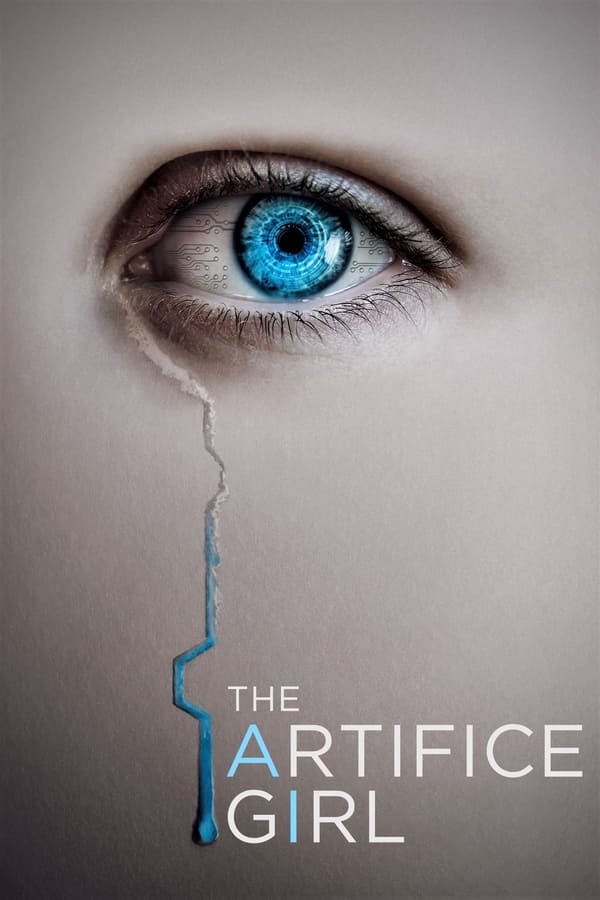


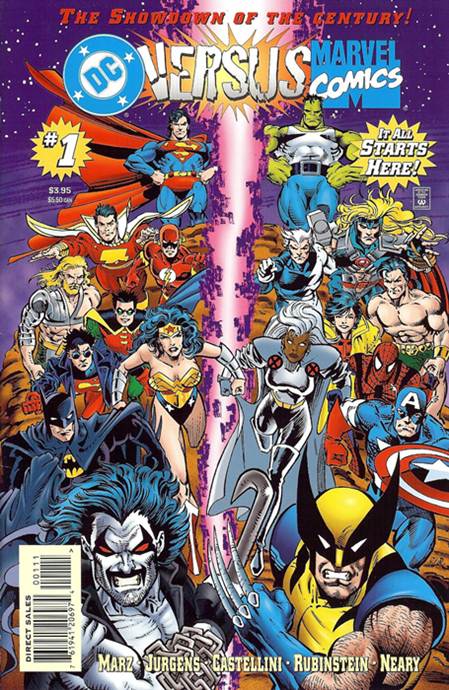
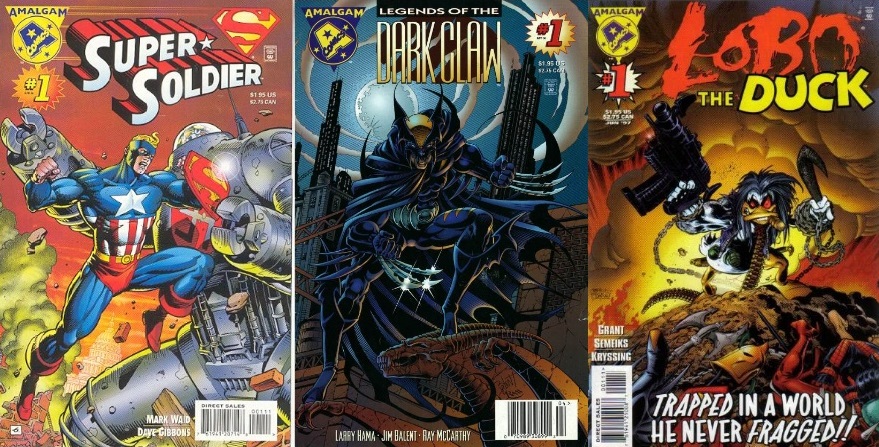

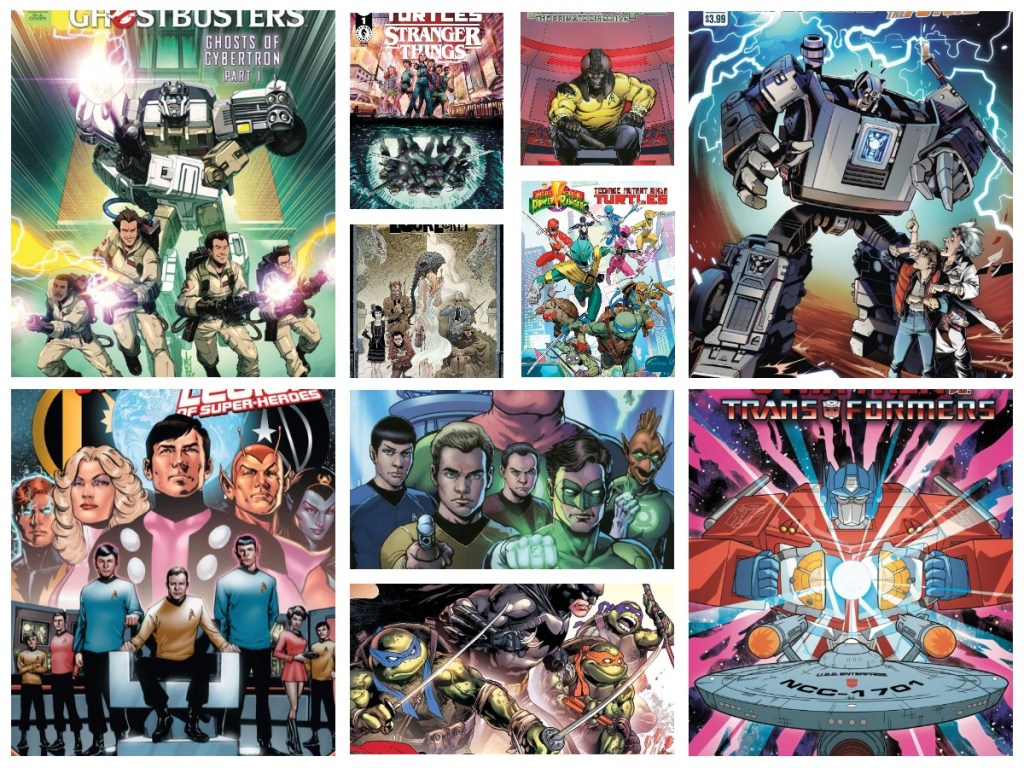


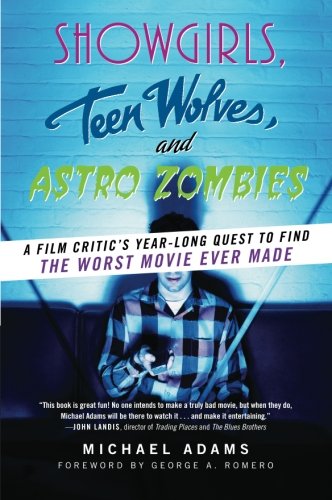


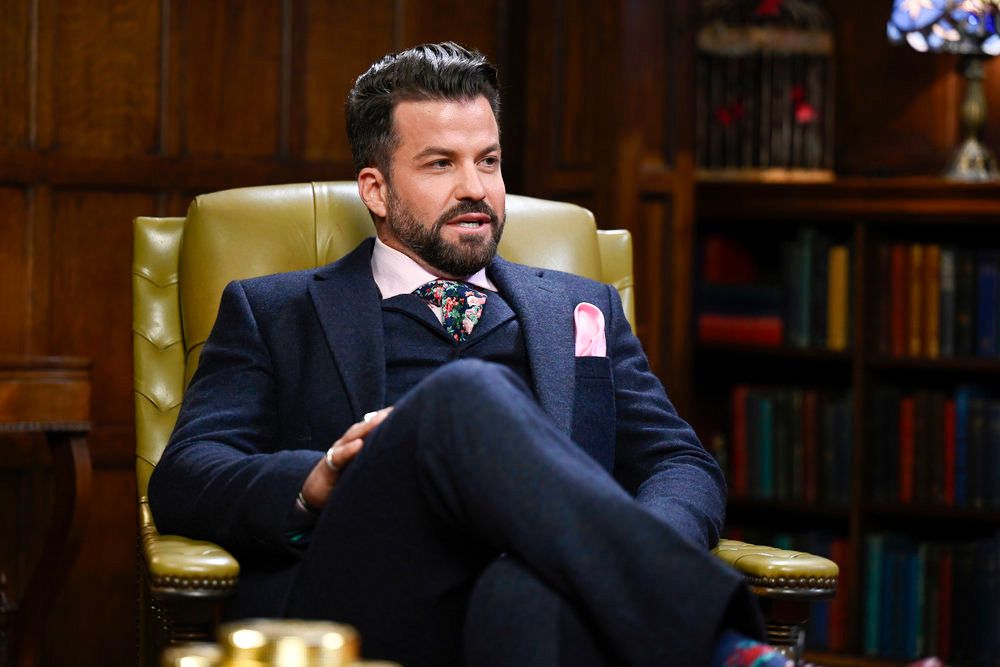





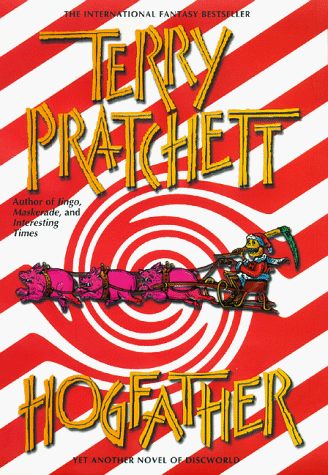


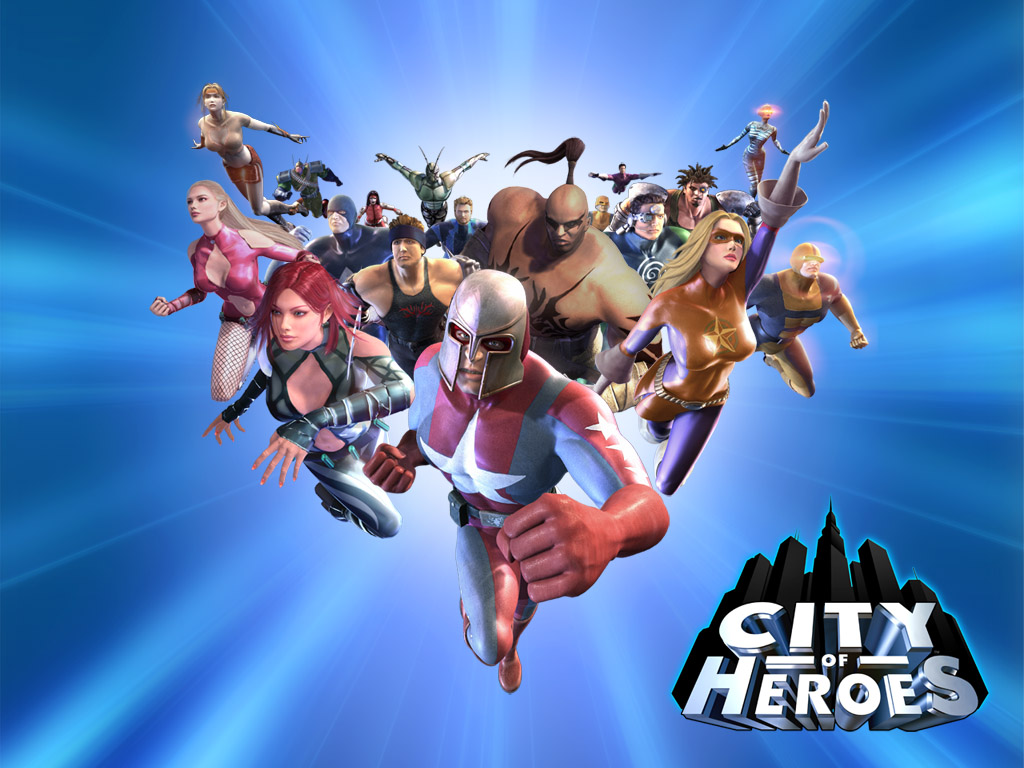




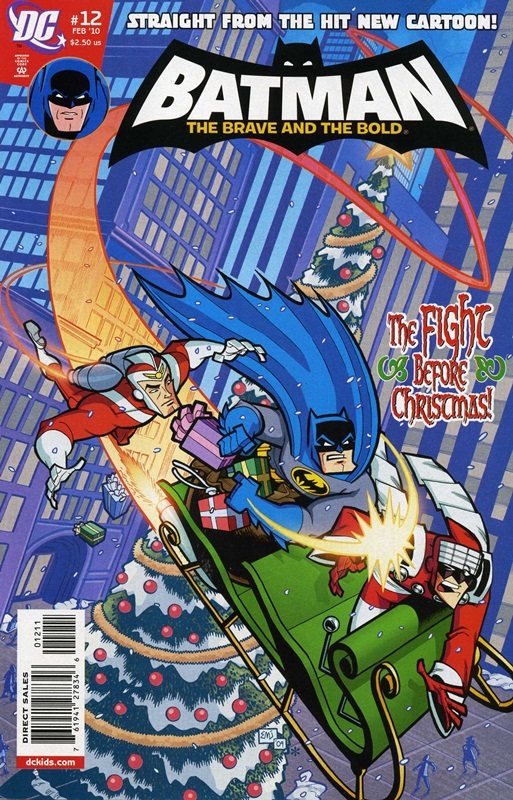


 Blake M. Petit