Geek Punditry #146: Scary Starters

If you read last week’s column – and obviously you should have, because it was a masterpiece – you may remember me mentioning that my 11-year-old nephew is planning to be Ghostface for Halloween this year. This is amusing to me because his mom, my sister, is very much NOT a horror movie fan, and I know for certain my nephew has never seen any of those films. It’s just evidence of how pervasive the Ghostface icon has become. But a few days later I got another nice surprise when my sister asked me if I thought her daughter, who turns 15 this weekend, was old enough to watch the Scream movies.

When I tell you I wanted to squeal with delight…

I smiled bigger than this.

I get questions like this a lot. I suppose that my multiple qualifications as a teacher, father, writer, and geek pundit all make people confident that I have a good idea of what media is appropriate for what age group, and I’m flattered by the faith they have in me. On the other hand, the question isn’t always that simple. Age-based ratings like your PG, PG-13, and R from the MPAA are a decent enough guide, but that’s all they are: a GUIDE. The truth is that every kid is different. There are 13-year-olds who can handle the same scary movies that would give their same-aged classmates nightmares for a week. So when I’m given these questions, I always give a general opinion, but I couch it in the caveat that “You know your kids better than anybody else, so use your best judgment.” 

But in this case, I know my niece really well. She’s grown up to be a fan of the morbid and macabre, she is slightly obsessed with all permutations of Five Nights at Freddy’s, and she’s smart enough to separate fiction from reality. When I got hit with this question, I had no doubt that she could handle it. The bigger question, honestly, was whether my sister would be okay with it.

“As far as the Scream movies go,” I told her, “There’s not any nudity. There IS violence, but compared to a lot of other franchises it’s relatively tame. There’s language, but she goes to a public high school, so I guarantee there’s nothing she hasn’t heard before. They’re all streaming on Paramount+, so yeah, I think it’s okay.”

Of course, it doesn’t hurt that Scream is – as I’ve stated many times – my favorite horror movie franchise, mainly because I think the writing and characterization are heads and shoulders above most of the other ones. But I still wouldn’t suggest that my niece be allowed to watch them if I didn’t think she was ready for it.

A few days later, I happened across a link to an article from Letterboxd that listed 20 PG-13 horror movies, films that were suggested as sort of “starters” for people who are just getting into the genre and didn’t want anything TOO intense. I’ve seen most of the films on that list and I agree that many of them are good choices – The Sixth Sense, for example, or Night of the Comet. And I was surprised at just how tonally diverse the list was, including things as chilling as The Ring and as family-friendly as Monster Squad.

I forwarded the link to both my niece and her mom, and my niece replied that she’s already seen Scary Stories to Tell in the Dark and now she has an excuse to watch the others on the list. I love this kid.

For the kids.

All this is to say, I’m really looking forward to helping usher her into the world of horror movie fandom, because I find that by and large horror movie fans are some of the nicest, kindest, most down-to-earth people I’ve ever met. Compared to certain other fandoms I could mention, like those from a galaxy far, far away, horror fans are usually very respectful of differing opinions and eager to listen, able to have conversations about their favorites and least favorites without devolving into name-calling or anger, and are extremely generous and supportive of the movies and creators that they enjoy. I know my niece would be positively embraced by this community, and it’s really important to find your tribe. I’m not saying that everybody in the world should be a horror fan, but I AM saying that if more people BEHAVED like horror fans, the world would be a much better place.

So if you’re into horror, or if you’ve got a teenager in your life that’s drifting in that direction, check out that Letterboxd list I linked to above. It’s a good starting place. And here are a few more suggestions for movies that didn’t quite make the Letterboxd cut, as well as other non-movie media sources that a burgeoning horror fan could start getting into this spooky season.

This is why dads mow the lawn every other morning.

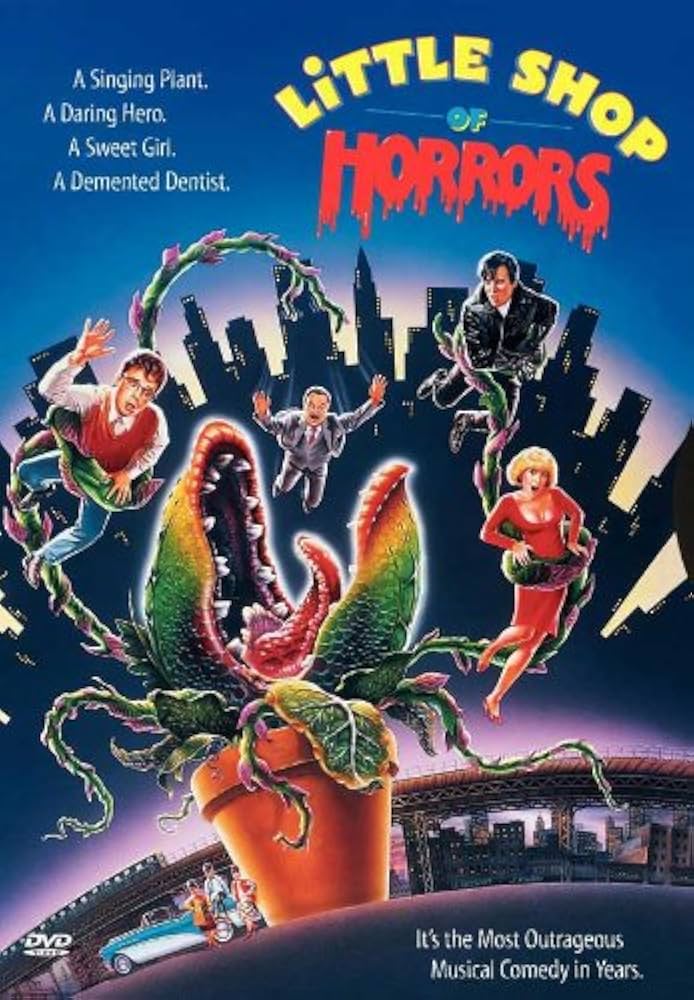
The most glaring omission from the Letterboxd list – and my wife pointed this out almost immediately – is Little Shop of Horrors. It’s the chilling tale of a little New York flower shop where a young man finds and cultivates a new breed of plant that turns out to be an alien invader that thirsts for human flesh. Fun for the whole family! The Roger Corman original from 1960 is a cheesy schlockfest – it’s fun to watch, but only if you’re really into “good bad movies.” However, the 1986 musical version directed by Frank Oz is a masterpiece. The music is phenomenal, the performances are fantastic, and it’s just one more reason to love Rick Moranis. The puppetry by Jim Henson Studios holds up brilliantly today, and it’s impossible to imagine anyone walking away from this movie without having a new favorite song. My niece is already a geek for musicals, so I know this would be right up her alley. I just hope my sister is ready for weeks and weeks of her kid casually singing “Dentist!” and “Suddenly, Seymour.”

“Do you think you’ve got the CHOPS for this one, kiddies?”

Although it’s more intense than the stuff on the Letterboxd list, I have to give a strong recommendation to the legendary HBO TV series Tales From the Crypt. Based on the classic EC Comics (which themselves are well worth reading), this anthology series presented a half-hour morality tale each week, a different story with a different twist that usually involved a bad person doing bad things and getting a karmically appropriate comeuppance. The show adapted stories from the original comic book as well as some of its sister series, The Haunt of Fear, The Vault of Horror, and others. It also gave us one of the all time great horror icons in the Cryptkeeper, the John Kassir-voiced puppet who served as the host of the show with a ghoulishly gleeful sense of humor at the beginning and end of each episode. The general content level is a step up from Scream – there was sex sometimes, and the violence was kicked up a notch. At the same time, though, the violence was often treated very nonchalantly, brought up to an almost cartoonish level and hard to take seriously, which is part of the charm. 

HBO treated this series very well, bringing in big-name guest-stars and directors like Martin Sheen, Brooke Shields, Catherine O’Hara, Christopher Reeve, Steve Buscemi, Tim Curry, and tons of others. The show gave us seven seasons with 93 episodes, as well as three theatrical films and a more kid-centric animated spinoff, Tales From the Cryptkeeper. There’s fun to be had in all of them.

“I know I look like the Cryptkeeper, but I don’t really talk. I’m animated beautifully, though.”

I also have to give a recommendation to its spiritual successor, Creepshow. In the original Creepshow movie from 1982, director George Romero (of Night of the Living Dead fame) teamed up with Stephen King for a film that was inspired by and tonally reminiscent of the original Tales From the Crypt comics years before the TV show brought it back to the public consciousness. The first Creepshow was written entirely by King, and he even starred in one of the anthology segments himself. The first sequel also adapted King stories, although both he and George Romero were absent entirely from the third installment. The legacy of the film persevered, though, and in 2019 the Shudder streaming service brought it back as an anthology TV series that lasted for four seasons and a few specials (including a Halloween special and an animated Christmas special). What’s more, the TV shows spawned a new comic book anthology series from Skybound (the company owned by Robert Kirkman, creator of The Walking Dead), bringing the whole style of tongue-in-cheek horror with a dash of dark comedy back to its original format. All of these are worth indulging and, as they’re anthologies, can be picked up one episode or installment at a time without requiring a huge binge to get through an entire story like some TV shows, comics, or film series.

The Ditko version was a lot cleaner.

Finally, if you’re looking for a horror tinged-take on characters you already know and love, there are several options available. Marvel fans may be aware of the recent Marvel Zombies animated series, but they may not know that it’s based on a line of comic books, which themselves were started by Robert Kirkman before he left Marvel and devoted himself entirely to his own company. In the original Marvel Zombies, an old-fashioned zombie virus struck the Fantastic Four, turning them into flesh-eaters. It spread out from there, and once it hit the super-speedster Quicksilver, any chance of stopping it from being a global pandemic was lost. In the Marvel Zombies universe, the undead retain their human intelligence, although their zombie hunger overtakes their former heroic morality. It’s a fun series that has had many permutations. The hard part for a newbie would likely be just keeping track of which order to read the many assorted graphic novels in and figuring out which ones are part of the main continuity or standalone.

Well, the end of everything until next issue.

DC Comics has also given us two horror-themed worlds to explore in recent years. First was DCEased, a book that I have to believe was given the greenlight primarily on the strength of the pun in the title. In the main DC Universe, Darkseid has spent 50 years or so trying to find the “Anti-Life Equation,” a formula that would give him control over all life. In DCEased, the equation is cut loose, transforming anyone it touches into a mindless killing machine. It’s not TECHNICALLY a zombie story, but it uses many zombie tropes to tell what turns out to be a generational tale of broken heroes desperate to find a way to save their world.

“Okay, but that’s just a placeholder title, right? We’re gonna come up with something more clever before it’s published, right? Right? Guys?”

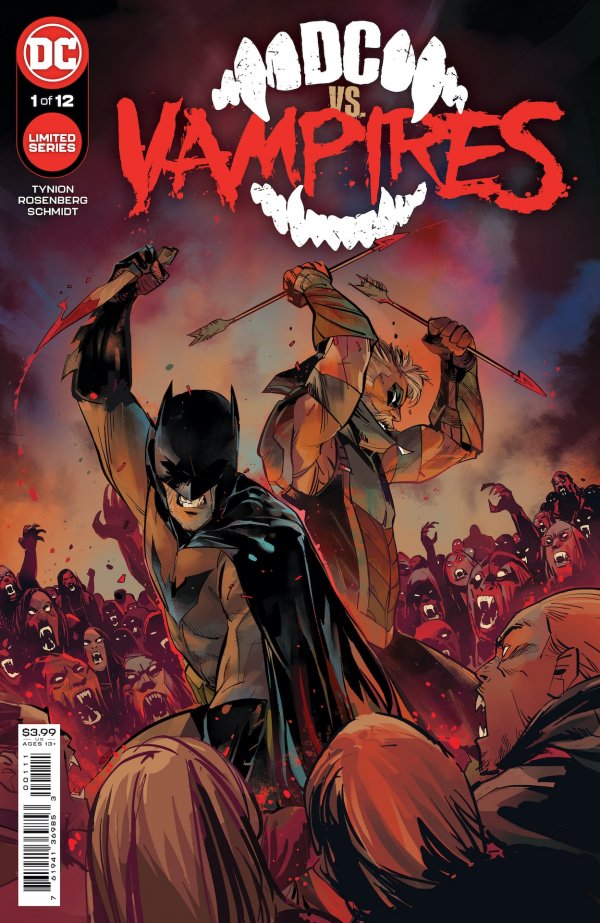
Finally, there’s DC Vs. Vampires where – once again – some of DC’s best and brightest are turned into creepy-crawlies. This time, we wind up with a world where Batgirl becomes queen of the vampires and the heroes are divided into dead and undead and are embroiled in a civil war that engulfs their entire world. The most recent (and possibly final) volume of this series just ended, and the paperback edition should be coming soon. Like Marvel Zombies and DCEased, it works as a fun horror take on some familiar characters.

So there you are, friends – a few gateways into the world of the macabre. I’m sure you have suggestions of your own, and I’d love to hear them in the comments. With two weeks left until Halloween, it’s time for the Creepy Content to completely take over.

Blake M. Petit is a writer, teacher, and dad from Ama, Louisiana. His most recent writing project is the superhero adventure series Other People’s Heroes: Little Stars, volume one of which is now available on Amazon. You can subscribe to his newsletter by clicking right here. He’s also started putting his LitReel videos on TikTok. He skipped over recommending Plants Vs. Zombies. They know what they did. 

Geek Punditry #134: Three Wishes For the DC Universe

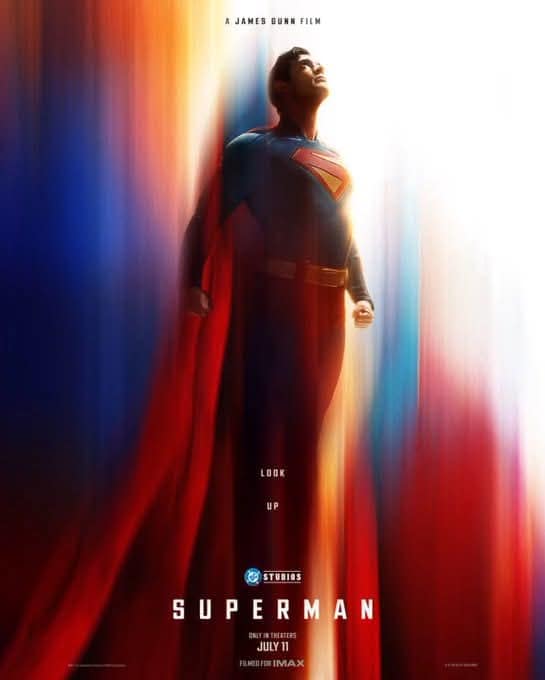
I’m sitting here two weeks after the debut of James Gunn’s Superman movie and I’m quite happy. As of the time I write this, it’s sitting at almost $260 million domestically and nearly $433 million worldwide, which in this post-COVID era is nothing to sneeze at. It’s already the top-grossing superhero movie of the year so far, and most importantly, it’s been embraced by the public. The critics love it, the fans love it, and people are still talking about it two weeks later, something you can’t really say for some of the other summer movies like Jurassic World: Rebirth. Lines like “Maybe being kind is the real punk rock” have achieved meme status, and not in a mocking way like that CEO at the Coldplay concert. Most importantly, it has gotten people reenergized. Sure, there are some people who don’t like it, and it’s fair to not like something, but if the REASON you don’t like something is because Superman believes in goodness, has a sense of humor, or wants to protect the life of even the smallest creature, then I’ll be frank: your opinion does not matter to me.

My face when I think about the bit with the squirrel.

With this movie doing well, eyes are now turning to the rest of James Gunn’s new DC Universe. When he and producer Peter Safran took over as co-heads of DC Studios a few years ago, they announced a slew of projects, but Gunn has also been very clear that he’s not going to move forward with anything until the script is ready, so several of those projects are on the back burner. The ones that are definitely on the schedule are – in order of release – season two of the Peacemaker TV series next month, the Lanterns series for early next year, the new Supergirl movie next summer, and a Clayface movie next fall. (Clayface, by the way, is the most indicative of the fact that Gunn is not married to a roadmap – it was not part of the initial announcement and Gunn said the character wasn’t even on the radar for a solo film, but writer Mike Flanagan pitched him a story that was so good they put it on the fast track.)

The hero we didn’t know we needed.

Movies in the works but not yet on the schedule are a Brave and the Bold movie (featuring Batman and the Damian Wayne Robin), The Authority, Swamp Thing, and Sgt. Rock. On TV, they’re working on live-action shows including Paradise Island, Waller, and Booster Gold, and in animation, they’re working on Blue Beetle, Mr. Miracle, and a second season of Creature Commandos. Other things have been tossed around, including a movie featuring Bane and Deathstroke, and Supergirl screenwriter Ana Nogueira has reportedly turned in a script for a Teen Titans movie AND has been hired to do a script for Wonder Woman. Following the success of Superman, rumors are flying about shows starring Edi Gathegi’s Mr. Terrific and Skyler Gisando as Jimmy Olsen. There are other series and films in the works as well, but the ones I haven’t mentioned thus far (such as the sequel to Matt Reeves’ The Batman or an animated Starfire series for children) are mostly intended to be part of DC Studios’ “Elseworlds” imprint and not part of the DCU proper. 

So obviously, there’s a LOT to look forward to in the next several years. But what is it I always say about fans? What do fans want above all else?

That’s right. Fans want MORE.

So today I want to talk about my Three Wishes for the new DCU. What are three projects that I would love to see? If I had a chance to sit down with James Gunn and convince him to add three of my dream projects to the schedule, what would they be? Let’s do one live-action series, one animated series, and one movie, just to cover all the bases that this DCU is touching. I’m also going to try to incorporate some themes or genres that the other projects haven’t gotten around to yet. 

Live action series: Legion of Super-Heroes

Call the casting department and tell them to put a pot of coffee on.

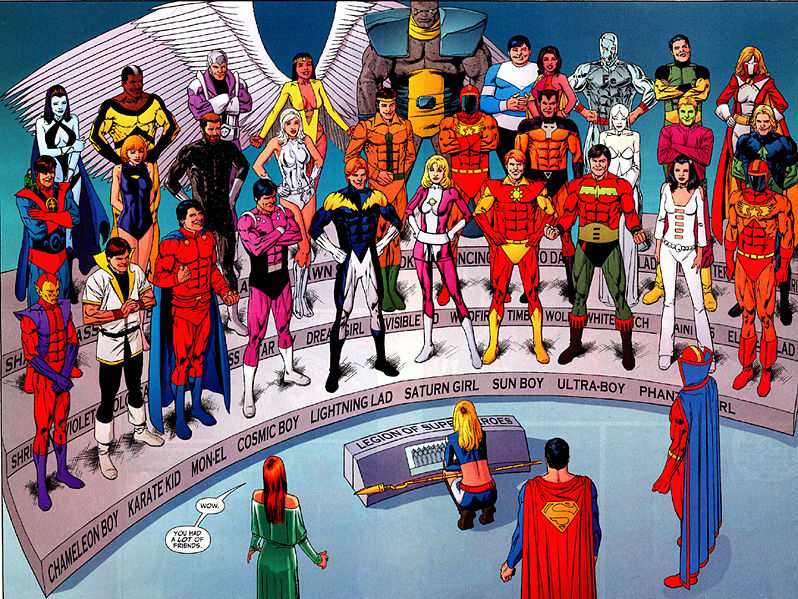
My love for the Legion of Super-Heroes is no secret. I think it’s one of DC’s greatest franchises: the heroes of the 31st century, who have modeled themselves after the greatest heroes of our time. Dozens of heroes from different worlds, cultures, and species, allowing for any number of different characters and character dynamics. The series presents an opportunity to do science fiction and superheroes at the same time, and as Gunn has made it clear that he wants the different DC projects to each have a different feeling, this would fill a niche that isn’t there yet. (Okay, technically I suppose the Lanterns TV series will have a science fiction element to it, but from all the descriptions it seems like that show is going to be more of a military mystery/drama. That’s great, but I want a real space opera.) 

But this would have to be a TV series. The Legion of Super-Heroes is, frankly, just too big for a movie. There are literally dozens of characters in the group, and even if you were to narrow down the focus to a core group of, say, seven or eight, you need time to explore who each of them are and how they relate to one another. You couldn’t do justice to the Legion in two hours. 

The next thing is that I believe that the Legion is strongest as a spin-off of Superman. It’s how the characters were first introduced back in 1958, as kids who loved the legend of Clark Kent and travelled back in time to recruit him to join their club when he was just a teenager. It creates something of a stable time loop: the Legion models itself after Superman, but the Legion also taught Clark Kent to be a superhero in the first place. So I would use the early 2000s Legion of Super-Heroes animated series as my inspiration, casting someone to play a teenage Clark Kent and having him as a regular member of the cast. This would also open the door to have David Corenswet do a cameo as adult Clark at some point, probably in the last episode. 

I don’t know if Corenswet is a jewelry guy, but I think this ring would look pretty good on him.

What’s more, although the Legion is set 1000 years in the future, that doesn’t mean that it can’t still be used to establish things for the contemporary stories. Alien races like the Khund or the Dominators, who could easily show up in other DC projects, could be introduced there. And the series could be used to give sneak peaks as to what will happen in the other movies and shows. (“Hey, why does the woman in this old photo have a golden lasso?” “Don’t worry, Clark, you’ll find out soon enough.”) 

Is the reason I’m suggesting this series just because I love the Legion and I want other people to love it too? I’m not gonna lie, that’s probably at least 75 percent of my reasoning here. But that doesn’t make it a bad idea. I think this show could be great. 

Animated Series: Deadman

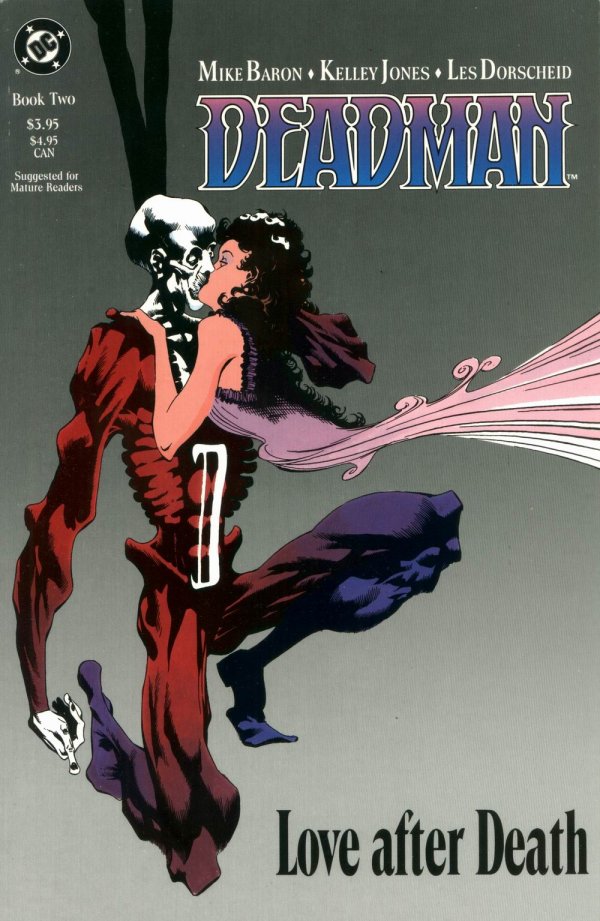
With Clayface playing in the realm of body horror (it has been compared, tonally, to David Cronenberg’s The Fly), the supernatural corner of the DC Universe is waiting for some exploration. Deadman is the answer. If you’re unfamiliar with the character, Boston Brand was a circus performer who was murdered in the middle of his act. Rather than going to the great beyond, though, he was sent back to Earth as a ghost to solve his own murder. With the ability to possess the bodies of other people, Deadman has had a long and bizarre career as a superhero that most people (even in the DC Universe) don’t even know exists. 

And you thought YOUR Monday sucked.

By the very nature of who the character is, Deadman has been used plenty of times to delve into the world of horror stories. He is, of course, a literal ghost, so haunted houses and poltergeists and all manner of demonic foes are par for the course for him. And he also regularly runs across other DC characters who are mired in this world of magic and the supernatural, like the Spectre, the Phantom Stranger, and Zatanna, giving a series of this nature an opportunity to open up the world even further.

As for why it would be best as an animated project – there’s a certain creative freedom in animation. It allows you to do things that would stretch credulity in live action, even with the best special effects. Have you ever noticed that the animated Star Trek series are far more likely to bring in characters who are not, strictly, humanoid? Creatures with three arms or body types that you could never fit a human actor into? That’s because in animation you don’t have to pay for huge animatronics, make actors spend days in the makeup chair applying heavy or even painful prosthetics, or worry about sketchy CGI that just doesn’t mesh against the human actors standing in front of a green screen. Animation would give them the freedom to really explore the afterlife, plunge into the depths of Hell, or put Deadman through extreme transformations like the nearly-skeletal Kelley Jones version of the character without having to torture the performers. 

Very few actresses would be willing to have their torso removed to do this scene justice.

It could be groundbreaking in another sense as well. Animation is finally starting to crack free from the decades-old bias that it’s only intended for children, but it’s still rare to see adult-oriented animated projects that aren’t comedies. Even Creature Commandos, which was basically an action movie with monsters, leaned heavily on dark humor. Any humor in Deadman would likely come from Boston himself cracking wise, as the situations he plunges into would be deadly serious…no pun intended. 

Movie: Firestorm

With page-rippin’ power!

Firestorm is one of DC’s perennial B-listers. The character inspires incredible amounts of devotion from his fans, but the NUMBER of fans just isn’t big enough to crack him into the mainstream. This could finally be a chance to fix that. Although several characters over the years have shared the name and the powers, the crux is usually that two people (originally scientist Martin Stein and high school student Ronnie Raymond) are fused into a single super-powerful being as the result of a nuclear accident. One of the two – Stein in the original – is dormant in the fused Firestorm persona, only able to offer advice to the one who’s steering the ship. This allows for a sort of “odd couple” dynamic, putting together two characters who don’t necessarily belong together and forcing them to literally work as one for the greater good. 

Writer Gerry Conway, who co-created the character, had done a long run on Marvel’s Spider-Man and was attempting to recreate the dynamic of a younger hero, which DC didn’t really have at the time. Their heroes were all older, the younger ones were all sidekicks, so putting a teenager in the driver’s seat was different for them, and the character quickly became beloved, even becoming the youngest person to ever join the Justice League (at the time at least). But after 100 issues of his solo series, the doors were shuttered way back in 1990 and, despite several strong attempts to give him a resurgence, he’s struggled to really become big again ever since.

For the movie, I would make Martin Stein sort of the “man in the chair,” the person inadvertently responsible for Firestorm, but not part of Firestorm himself. I’d keep the part of Ronnie’s origin where he gets suckered into joining a group of “protestors” to impress a girl, only to find out that they’re actually eco-terrorists. But when the accident happens, rather than fuse with Stein, I’d have him fuse with the second Firestorm, Jason Rusch, who I would make Stein’s lab assistant. 

“Fusion Confusion” was my nickname when I worked at that restaurant making sushi burritos.

The dynamic we’d have here would be Jason believing Ronnie’s a dumb jock while Ronnie sees Jason as a stuck-up egghead, and the two would slowly and begrudgingly learn to respect each other – the old “together we are more than the sum of our parts” routine. The eco-terrorists would be linked to a bigger bad, of course, who is targeting different scientific institutions in the DCU such as S.T.A.R.Labs, and giving us an opportunity to include other science-based heroes such as Captain Atom, Hourman, Stargirl, or the Flash – who has been oddly absent from all official conversation about the current DCU. There’d even be a clear opportunity to bring in Edi Gathegi as Mr. Terrific again, because when you have a science problem, who better to call than the smartest man in the world? I kind of like the idea of Stein being one of Mr. Terrific’s former professors who now finds himself running to his old student for help. 

Okay, James Gunn, the ball is in your court now. You’re doing a great job so far, don’t get me wrong, but there’s always room to bring in even more goodness. Here are my suggestions. 

Now I’ve got to get back to finishing up season one of Peacemaker before season two drops. 

Blake M. Petit is a writer, teacher, and dad from Ama, Louisiana. His most recent writing project is the superhero adventure series Other People’s Heroes: Little Stars, volume one of which is now available on Amazon. You can subscribe to his newsletter by clicking right here. He’s also started putting his LitReel videos on TikTok. Come back to him in a month, he’ll probably have three totally different suggestions. 

Geek Punditry #127: Revival Vs. Reboot

As you no doubt have heard by now, at least partially because I’ve mentioned it here two weeks in a row, Disney’s brought back its fantastic animated series Phineas and Ferb, and the first part of the new season dropped on Disney+ today. It may surprise you, then, to know that as of this writing, I haven’t watched it yet. You see, I have to wait for my wife to get home from work, because as any competent marriage therapist would tell you, holding off on watching coveted television programming until your spouse is available to watch it with you is a love language. 

But I don’t want to talk about Phineas and Ferb specifically today, I want to talk about what it represents: the TV Revival. That concept of bringing back old TV shows from the dead. It’s not a new idea, of course. The history of television is littered with shows that were cancelled and then came back after some time. Game shows like Jeopardy, Supermarket Sweep, and Let’s Make a Deal are all better remembered from their second incarnation than the original, for example. The 80s gave us resurrected versions of old sitcoms like Leave it to Beaver and The Munsters. And for a time, it was popular to continue a TV series by creating an animated version, as they did with the likes of Star Trek, Happy Days, or Gilligan’s Island. 

It’s like time stood still.

But in recent years, where studio executives are more hesitant than ever to take a chance on a new idea, it seems as though the revival has become a fundamental part of the television landscape. Is anybody going to want to watch a comedy about the goings-on at a municipal courthouse? Maybe not…unless we remind them that they already DID a few decades ago by making that show a new version of Night Court. Go ahead and look at any current network TV schedule (or spin through the offerings of a streaming service) and you’ll be astonished at just how much of the current episodic landscape is stuffed to the gills with shows that have relaunched older ones. I don’t object to revivals as a concept, but like anything else in the sphere of entertainment, I fear that we’ve reached a point of saturation where they’ve become a crutch rather than a tool.

That said, that doesn’t mean resurrecting an old show can’t be successful. But what, exactly, does it take to make a good one? The creators of Phineas and Ferb released a video to social media a few days ago, ramping up to the new season, where they very explicitly chanted “It’s not a reboot – it’s a REVIVAL!” It’s an important distinction, although I think there are a lot of people who don’t understand the difference. A reboot, to me, means starting a franchise over from scratch. You take the concepts, the tropes, the characters, but begin from square one, as though there had never been a previous iteration. Wednesday is a good example of this – there’s nothing that specifically ties it to the canon of any of the previous versions of the Addams Family – not the original TV series, the animated series, the 90s film series, the more recent animated films, the Broadway musical, or the original comic strips that the whole franchise was based on. It’s using the pieces of the older shows, but it is inherently its own thing. So yeah, reboots CAN be good.

In general, though, I prefer a revival – you’re not eliminating the previous canon. You’re not starting over. You’re just picking up where you left off. The original Phineas and Ferb took place across one epic summer. The new season – which they wisely promote as “Season Five” rather than “Season One” of a new series – starts one year later, at the beginning of the NEXT epic summer. Night Court returned to the same courtroom after an absence of many years, bringing back one returning character and one new character who was the child of an original. You get a revival more often when the old cast – or at least some of them – is still active and wants to return. We’ll be getting that with the new version of King of the Hill, coming to Hulu soon, and creator Bill Lawrence has announced a Scrubs revival where – although nobody has officially signed on yet – many original cast members have expressed interest in returning.

If this picture doesn’t make you vaguely uncomfortable, you’re too young.

Sometimes it can be difficult to tell whether a show is a revival or a reboot at first. In 2005, when the BBC brought back its defunct science fiction series Doctor Who, it wasn’t immediately clear if the old shows were in canon or not. And as part of the Doctor’s whole deal is that he occasionally regenerates into a new body, you couldn’t even make up your mind based on the fact that there were no returning cast members. Slowly, references to the old series started to appear, and eventually it was made explicit that this was a continuation – not only of the old series, but it even included the American co-produced TV movie that had tried (and failed) to revive the franchise a decade before. The show has been reinvented many times since then, and the DNA of the franchise makes it fairly easy to do so, but every version has thankfully been a revival rather than a reboot.

This straight-up wouldn’t work with a revival of The Andy Griffith Show.

The reason I prefer revivals is because a reboot has a tendency to dismiss the original. It takes place in a universe where the original didn’t happen and doesn’t matter, and that makes no sense to me. From the perspective of a studio, the only advantage a revival or reboot has over a brand-new property is the built-in audience, so why would you START by declaring that the thing the audience loved doesn’t exist anymore? Paul Feig and the cast of the 2016 Ghostbusters reboot will claim until their dying breath that their film failed at the box office because the fans were put off by the all-female cast, but any conversation with a true fan of the franchise will make it pretty clear the reason it was rejected was because fans wanted a revival. And when they got a true revival a few years later with Ghostbusters: Afterlife (with a main character that was a preteen girl), fans were delighted. 

That’s not to say that a reboot CAN’T be good. When J.J. Abrams was given the task of rebooting Star Trek for the big screen, he wisely took the track of making it an alternate universe. A villain traveled back in time and created an alternate reality in which these new films would take place. The original timeline still existed, and was still available when the TV revivals began a few years later. No matter what you think of the Abrams Star Trek films, most fans will agree that the alternate timeline was a good idea. Similarly J. Michael Straczynksi has been trying for years to get a reboot of his seminal science fiction series Babylon 5 off the ground. In 2023, he even gave us an animated film, Babylon 5: The Road Home, which ended in a way that – similar to the Star Trek example – opened up a different, alternate timeline in which the reboot could take place.

The classic sci-fi trope of “Eh, close enough.”

Of course, it’s easier to do that with a science fiction series than it would be a drama or a sitcom. If somebody wanted to do a reboot of The Golden Girls, for example, it’s unlikely that they would start with a CGI Betty White causing some sort of temporal rift that would take us to a different dimension where the girls all moved in together in 2025 rather than 1985. But that also begs the question: would you really WANT a reboot where they cast people other than Bea Arthur, Rue McClanahan, Estelle Getty, and Betty White anyway?

That’s another thing that revivals have over reboots: the continuity of keeping a cast that the fans love. One of the reasons a Babylon 5 reboot is more likely than a revival is because so many members of that cast, in the years since the show ended, have sadly passed away at a surprisingly young age. Over the course of that show’s five years, 17 actors were series regulars for at least one season. Seven of them are no longer with us, and several others have retired from acting altogether. It would be anathema to many of us to see Bruce Boxleitner’s John Sheridan return with somebody other than Mira Furlan playing his wife, Delenn. In a new timeline, though, with new actors in BOTH roles…that feels a little easier to swallow.

Some shows, however, simply should never be brought back, for many of these same reasons. Any ideas of a Friends revival, for example, went up in smoke with the sad death of Matthew Perry. Any revival, even a one-off movie – would necessitate either recasting Chandler Bing (which fans will tell you is basically impossible) or writing him out of the show by having him either die or leave his wife and children, which would be depressing as hell. As for a reboot…poll the fans. Ask if anybody would want a different cast, and I’m pretty sure you’ll hear a resounding NO.

It would be impossible to recreate this and a mistake to even try.

It’s less of a problem if the actor is still alive and has chosen not to return, or if they’ve fallen from grace in the years since the show’s airing and neither the studio nor the fans want them back. Tom Welling and Michael Rosenbaum, two of the stars of Smallville, occasionally make noise about wanting to bring back the show as an animated series or through animated movies. Many fans would welcome this, although it is unlikely that anyone will bat an eye if Chloe Sullivan is recast. (I’m not gonna get into it – if you don’t know why this would be necessary, just Google it.) In a less problematic example, former child actor Erik Per Sullivan has retired from the business, so when a revival of Malcolm in the Middle was announced, nobody was really angry that they decided to recast his character of Dewey.  

In general, though, revivals are more interesting to me – I want to see a continuation of the original series. There was chatter for years about a reboot of Buffy the Vampire Slayer, but Sarah Michelle Gellar wasn’t interested. Therefore, I wasn’t interested. Then they announced that they’d landed on a pitch that Gellar IS interested in, a pitch in which she is mentoring a new character entirely rather than trying to have somebody else play Buffy Summers… well, at this point, I’m willing to listen.

(There’s an irony here in that Gellar’s series was, in fact, a reboot of a mediocre movie starring Kristy Swanson as Buffy. But again, it just goes to prove to you that reboots CAN work sometimes.)

There’s an adorable video of when Gellar called Ryan Kiera Armstrong and told her that she got the part, because REAL slayers go by three names.

For some shows, the question of reboot vs revival is academic, of course. It doesn’t matter for nonscripted series like game shows, or shows that dramatize real events such as Unsolved Mysteries. You may miss Robert Stack, but that doesn’t mean the show can’t be made without him. Similarly, anthology series like The Twilight Zone are by their very nature immune to this. That show has been brought back several times over the years, and as there was never a regular cast or set of characters to follow, it’s a non-issue as long as the show has the flavor of the original – in this case, that of a sci-fi show with horror elements and, usually, some sort of twist ending. 

The biggest problem comes when a resurrected series – whether it’s a reboot or revival – lacks that taste of the original. Every so often you’ll hear about a new version of a show where they proudly announce that none of the current creators are fans of the original. This is a position so bafflingly stupid that I’m surprised it’s not mandated by federal law. While it’s true that some fans can be a bit too close to the property, a bit too reverent, if NOBODY involved in the creation of a show has any passion for it, the odds of creating something that satisfies the existing fan base drops so dramatically as to be almost nonexistent. 

“Well, we’re not making this show for the OLD fans,” some of these studio executives say. “We’re trying to appeal to NEW fans.”

Bullshit. If all that matters is acquiring a new audience, there’s no reason to bring back an old property. By bringing back a classic IP you are inherently announcing a desire to get the attention of an existing fan base, and by creating something you know will dissatisfy them, all you’re doing is trying to court controversy, as if that somehow inoculates you against the need to make a good show. Sometimes I think they’re COUNTING on that. They know their reboot is weak, so they rile up the fans against it, giving them a handy shield of claiming that these narrow-minded old fuddy-duddies just don’t want something new, thereby preventing them from having to admit that they made something that sucks.

Ultimately, I try to judge any show – revival, reboot, or brand-new idea – on its own merits. But when you’re reaching back to a classic series, you need to really think about what made that show successful in the first place before you even THINK about giving it a try.

Blake M. Petit is a writer, teacher, and dad from Ama, Louisiana. His most recent writing project is the superhero adventure series Other People’s Heroes: Little Stars, volume one of which is now available on Amazon. You can subscribe to his newsletter by clicking right here. He’s also started putting his LitReel videos on TikTok. Someday, he swears, somebody is gonna do a revival of Cop Rock, but they’re gonna do it RIGHT this time.

Geek Punditry #115: Swept Up By the Past

I know that parents brag about their kids a lot, and a lot of it is overblown and unwarranted, but today I’ve got a legitimate achievement for you. I am willing to bet that my son is the only second grader in the entire state of Louisiana who plays Supermarket Sweep when he’s supposed to be getting ready for school in the morning.

Bite it, Teletubbies.

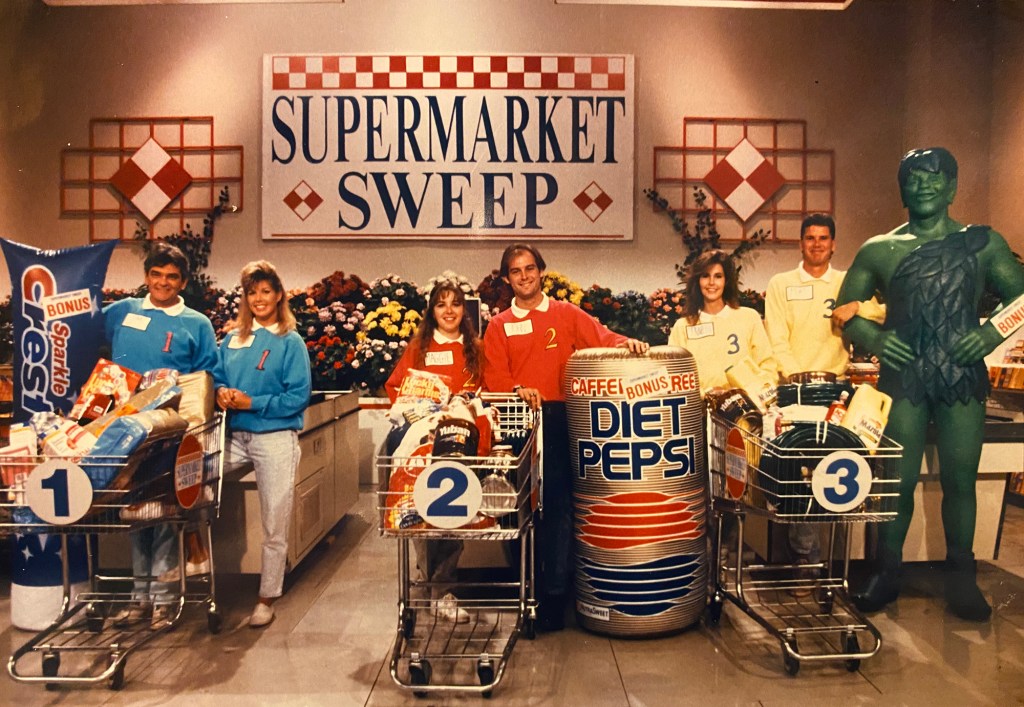
I’ve written before about my love for Pluto TV and their various channels full of old TV shows. If you’re a Pluto viewer, though, and you stick with a single channel long enough, you see the shows start to cycle back to the beginning, so I find that we tend to go through phases. For a while there, whenever we turned on Pluto TV it was to watch I Love Lucy. Then there was a period where we were stuck on the channel with old episodes of Cheers and Frasier. We went through a Top Gear period and a Nick Jr. Channel phase and a nice chunk of time where we watched the old Mr. Rogers’ Neighborhood. But in recent weeks we’ve gravitated towards Supermarket Sweep, the old 90s game show where contestants answered trivia questions and played games about groceries and shopping, not to win money, but to win TIME. Then they used that time in a mad dash through the supermarket, trying to grab as much as they could in bonuses and merchandise for the right to play the final $5000 game. If you were around in the first half of the 90s, I’m sure you watched this show. I’m sure you thought about being ON this show. Hell, host David Ruprecht even ENTICED you with it at the end of every episode: “Remember, the next time you’re at the checkout counter and you hear that beep (BEEP BEEP), think of the fun you could have on Supermarket Sweep!”

Such a tease, that David Ruprecht.

The face of temptation.

Anyway, we can never quite predict which shows Eddie will latch on to, and something about Supermarket Sweep has really captured his attention. He runs around the house, grabbing random items for his “sweep,” and declaring which ones are bonus items and how much the bonuses are worth. Unlike the original sweep, where bonuses were usually worth something between $50 and $300, sometimes Eddie will declare the bonuses his mother and I have won to be worth, and I quote, “ZERO DOLLARS,” followed by an insane giggle. It’s all about the joys of parenting.

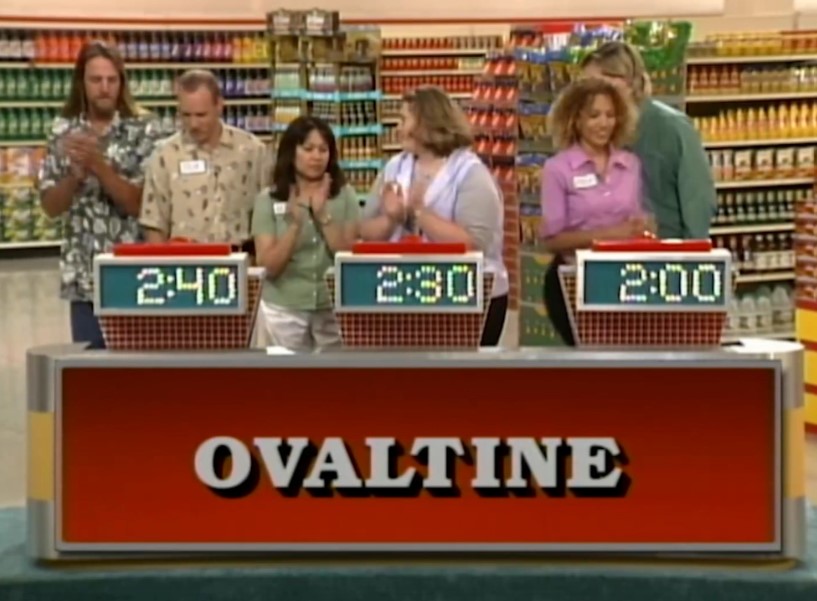
Watching this 30-year-old game show is a kind of television comfort food. It’s very low-stress, except when you’ve figured out one of the clues and the contestants haven’t and you’re YELLING at them that they’re supposed to be looking for the FLINTSTONES VITAMINS, NOT THE FRUITY PEBBLES, YOU MORON! At one point, I was writing something on my laptop when my wife shouted “KUDOS!”, and for a moment I thought she was congratulating me before I realized she was referring to a granola bar. Sometimes the answer will be a product neither Erin or I have ever heard of, or sometimes it’ll be something they stopped making 20 years ago and suddenly we find that we miss it. It really tugs on those nostalgic strings. 

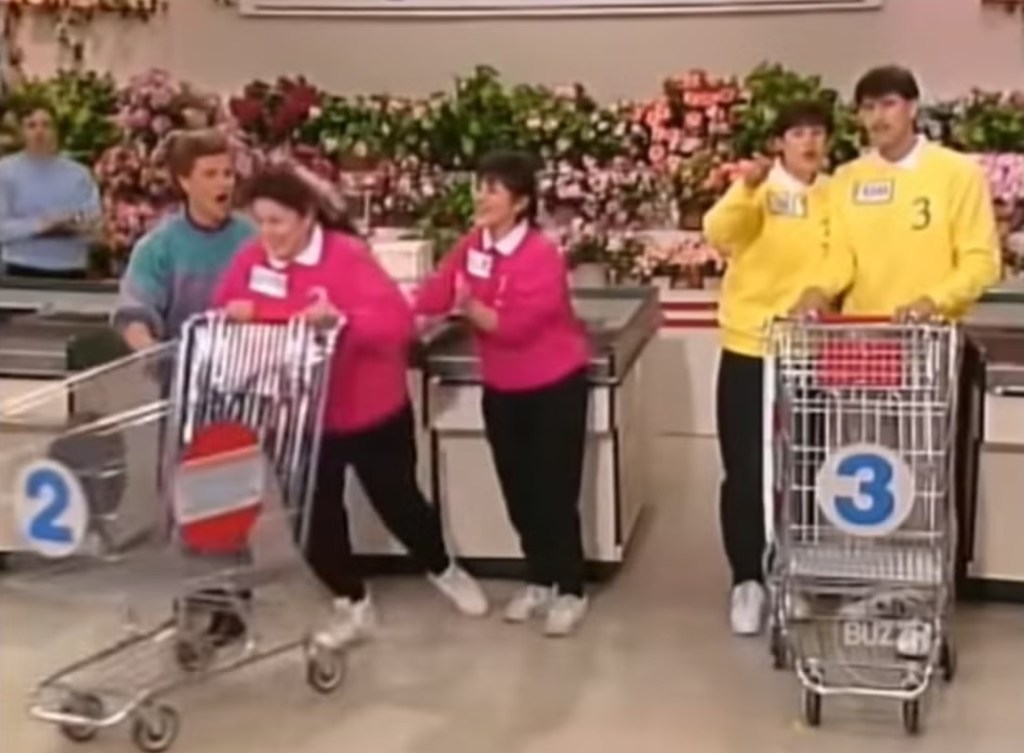
This episode triggered Ralphie Parker’s PTSD.

There’s also a quaintness to it. For instance, in one game the contestants are presented with three different products and they have to guess which one costs more than, say, $2. And I laugh, because every one of those products would be at least $7 today, and I realize that if I were to go back in time and be a contestant on this show, I would be very, very bad at the pricing games.

There was a revival of Supermarket Sweep a few years ago hosted by Leslie Jones, but it didn’t last. I watched it a couple of times, and it didn’t really get to me the way the old ones do. I feel like modern games shows work really hard to amplify the stakes. Bigger prizes, bigger sets, flashy graphics. I’ve seen shows that literally have an enormous roulette wheel, others where an incorrect answer will have someone ejected into a pool of water…and I still haven’t got the slightest idea what Fox’s The Floor is supposed to be.

Like this, but starring Rob Lowe.

Even the old stalwarts have had to change with the times. Wheel of Fortune and Jeopardy both have bigger prizes on the line than they did back in the day, and while part of that can certainly be chalked up to inflation, it also feels like there’s an effort to keep “modernizing” it. Wheel has new types of puzzles than they used to, for instance, with sometimes baffling rules. Jeopardy is still played more or less the way it always has been, but it’s become more attached to the cult of celebrity. It’s been a long time now since they got rid of their five-day limit for returning champions, but in recent years there’s been a push to make “stars” out of any champion who gets on a particularly long winning streak. I get it, it’s playing the media game, but watching these shows today does bring out a thirst for the classics.

A few years back, after Hurricane Ida hit, we were without internet at our house for about a month. Fortunately, we have an antenna, so we weren’t completely cut off from the world around us, but we certainly didn’t want to watch news coverage of the storm 24 hours a day. So my wife and I (this was before Eddie had quite reached the point where he was demanding control over the remote) settled on leaving the TV most of the time on one of the many digital channels that have cropped up since the analog signal was abandoned, one that showed nothing but game show reruns 24 hours a day. There was no Supermarket Sweep there, but we found ourselves reacquainted with old shows like Hollywood Squares, Match Game, and Card Sharks, cycling through the old games and chuckling at the old prizes. 

That’s right, Bob, flip it like you mean it.

It’s a similar feeling to watching old sitcoms or science fiction shows, but there’s a strange contradiction when it comes to the stakes. If I’m watching an old episode of Star Trek, there’s a tension there about the fate of the crew of the Starship Enterprise, even though I know for a fact that these are all actors, that nobody was actually hurt in the filming of this episode, and that pretty much everybody not wearing red is guaranteed to be back next week unless their name is Denise Crosby. On the other hand, watching an old game show has none of that tension, even though the people on that show WERE real people and WERE playing for real money and prizes that might have changed their lives. The game shows are less intense for the viewer, even though there is far more at stake for the people involved. It’s such a weird juxtaposition, but it’s true.

“And if you get the Jolly Green Giant bonus, it comes with some of your absent father’s love.”

I don’t know how long Eddie is going to remain obsessed with Supermarket Sweep. If past performance is any indicator, it will go on until we stumble upon something else, purely by chance, that diverts his attention. It could be a cartoon, could be a sitcom, could be another game show. There’s no telling. But in the meantime, I’m kind of enjoying a virtual run down the aisle, trying to stack up on those big blocks of cheese worth $30 each or grabbing the three items from David Ruprecht’s shopping list for a bonus $250. And when the contestant can’t figure out that the clue is supposed to send them shopping for Aquafresh Toothpaste, I am there to yell the correct answer at the screen, only for Eddie to echo me a moment later. 

It’s not game-changing television. It’s not Squid Game or Yellowstone, it’s not something people will be talking about around the water cooler if people still do that sort of thing. But it’s nice.

Sometimes just nice is okay.

Blake M. Petit is a writer, teacher, and dad from Ama, Louisiana. His most recent writing project is the superhero adventure series Other People’s Heroes: Little Stars, volume one of which is now available on Amazon. You can subscribe to his newsletter by clicking right here. He’s also started putting his LitReel videos on TikTok. Also nice: reruns of The Dating Game that do not involve serial killers. So, that’s at least 75 percent of them.

Geek Punditry #113: The Medium is Killing the Message

When you teach the same subject for long enough, there are certain topics and certain lessons you start to look forward to. One of my favorite things to cover with my 12th grade English students, for example, is Hamlet, and I particularly look forward to the famous “To be or not to be” scene. I always start by telling the kids that this is the big one, the grande supreme enchilada, the most famous speech that Willie Shakes ever wrote which, by proxy, also makes it one of the most famous speeches ever written in the entire history of the English language. Then I look at the kid who has already volunteered to read the speech out loud and say, “No pressure.”

Here’s a level three nerd joke. Ahem: “Took him 900 years to get this part right.”

After we read and discuss the speech together, I show them clips of several different film versions of Hamlet. We talk about how different actors play the role, how the different settings change their interpretation of the scene, and fun English class stuff like that. The most entertaining version – to me, at least – is when we watch Ethan Hawke’s depiction of the scene from 2000. In this version, director Michael Almereyda has changed the setting to the modern day (or at least, what was modern in 2000) and has Hamlet deliver this speech wandering the Action Movies section of a Blockbuster Video store. But I’m showing this to contemporary high school students. Even the oldest of them wasn’t born until 2007, and the vast majority of them have no idea what they’re looking at. Popular guesses include a gas station, a convenience store, and a bookstore. The ones that DO recognize Blockbuster Video, I assume, do so because they’ve seen Captain Marvel.

The weird thing is, after updating the setting, they kept the headgear 100 percent historically accurate.

It’s funny to me, to see the cultural disconnect between the film and the modern audience. No doubt Almereyda intended to make the movie contemporary, but in choosing that particular setting, this film feels even more dated than a traditional version of Hamlet set in the 7th century. And the percentage of my students who know where Hawke is before I explain it gets smaller with each passing year. These are kids who have never – and WILL never – browse the video section of a store.

And as entertaining as the lesson usually is, the fact that this is an artifact of times gone by makes me a little sadder each year.

I grew up in the 80s. I was in high school and college in the 90s. The peak of Video Store Culture is intertwined with the most important developmental years of my life. I remember as a kid, my parents taking us down to the video store and letting us roam the aisles looking for movies to watch. My younger brother and sister would gravitate towards the kids’ movies, and while they would pour over the shelves trying to make their own decisions, I found myself drifting to sections of the store I knew my parents would NEVER allow us to rent from, especially the horror section. Ghoulish monsters, blood dripping down faces, whatever the hell was going on with the box art for The Stuff…I was mesmerized. 

9-year-old me would have TRADED my brother to find out what was going on here.

VHS box art of the 1980s was a unique art form that has no peer in the history of pop culture, save perhaps for paperback book covers of the same era. Great box art could make even the lamest, cheesiest low-budget schlockfest seem tempting. But my folks weren’t the sort who would allow a 9-year-old kid to rent something like Creepshow no matter HOW enticing the box art was. So those movies found a home in my psyche only in poster form, which is how they remained until I was old enough to rent them and watch them myself. At which point – let’s be honest – I discovered that a great many of those movies were better as box art than they ever were as films. But that was okay.  

As I got older and went to video stores myself, I would gravitate to all kinds of movies, devouring things that I’d been curious about for years but had never been able to indulge in before. Not just horror, but classic sci-fi, old comedies, or indie darlings I’d heard good things about like Magnolia. It didn’t hurt that around the time I graduated college, my best friend Jason became the manager – and eventually owner – of the video store I most often patronized, so I got to sample an awful lot of movies for free. And as culture shifted from VHS to DVD, I went from being simply a viewer to a collector. I would go to Best Buy, Circuit City, Borders, or Barnes and Noble and spend hours walking through the shelves, examining the DVD cases, trying to find old favorites to add to my shelf or new movies I’d never heard of that were worth a watch. I could do this alone, but it was more fun to do it with Jason or our other friends. Either way, though, there was a tangibility to holding those cases in my hands, reading the description on the back, studying the list of special features to see if there was a good making-of featurette or commentary track that would be worth listening to or – of course – admiring the cover art.

This is a pleasure that has largely been lost to us. Netflix slaughtered the video store in its sleep, and of those retail stores I mentioned the only one that both still exists and has a physical media section at all is Barnes and Noble, and it’s nowhere near what it used to be. And while I know that we always lose certain cultural elements as time passes and culture evolves, this is one of those changes that has hurt not only the people who make these movies, but the consumers who watch them as well. 

It’s the streaming era I’m talking about, of course. That’s what killed the video store, that’s what has DVD and Blu-Ray sales on life support. (Thank God for horror movie fans, one of the last stalwart groups to demand physical media for their preferred art form. They’re the ones keeping the whole thing alive right now.) Sure, the convenience of streaming can’t be beat. I don’t need to go down to the video store anymore. I don’t need to HOPE that the movie I want to watch will be available. I don’t have to take the risk that I’ll get a disc with a scratch that has rendered it unplayable, and never again will I need to double-check that I’ve rewound a tape before I return it.

Was there anything worse than opening the DVD case at home and seeing THIS?

But this same convenience has made the entire movie-watching experience feel more disposable, like it doesn’t matter anymore. If I went down to Jason’s video store hoping to rent Scream 2 only to find that it had already been rented, that’s when I would look for something different and discover movies that I may otherwise have never watched, like Amelie. With streaming, you just have to hope that the movie you want is on a service you subscribe to, and if it is, there’s no need to roam.

But even if the movie you want ISN’T on your service, or even if you don’t know what you want to watch, the browsing experience isn’t the same. In a store, looking at a movie case, you had the opportunity to pick it up, read the back, gaze at that beautiful, beautiful cover art. Today, every movie is reduced not to art, but to a thumbnail. Most of the time it’s a still shot from the movie, probably a close-up of the biggest star in the film, with the title superimposed on top of it. It’s bland, lifeless. Just as the greatest box art could make me watch the worst movies, so can a cookie-cutter thumbnail cause me to scroll right past one of the best movies of the year, and I’ll never know. 

We’ve lost the community aspect as well. For people like me, TALKING about the movie after I’ve watched it is just as vital a part of the experience as actually watching it. Discussing what we liked, what we didn’t like, what did we think the sequel would be like, should there even be a sequel at all? At the video store, you can chat with other customers. “What are you getting? Oh, I’ve seen that one, that’s great. Say, I really liked From Dusk ‘Till Dawn but I’m not sure what to watch next. Any suggestions?” Sure, the streaming services TRY to do this, but I would take the suggestion of a random film geek in a video store over the Netflix algorithm every second of my life, and it wouldn’t even be a struggle.

Netflix has “We think you’ll love these.” Your local video store had “Vinnie’s picks.” Nobody ever saw Vinnie. No one knew who he was. But Vinnie introduced you to Boondock Saints and you LOVED him for it.

And with this, the respect given to a movie by the audience is being cut down. I know a lot of people who’ll stop a movie if they aren’t engaged in the first five minutes. And sure, that’s your prerogative, but there’s something to be said for a slow burn. Some movies need to be given time to get into the story, and sometimes that’s what makes it effective. In the video rental days, once we made it home with a movie we WATCHED the damn thing, no matter how bad the first five minutes were, because that was our only option. And I think we were better for it. I don’t want to tell you that you should sit around watching something you don’t like, but the disposability of entertainment has caused us to forget how to give a story a fair chance. I can spend twice as long scrolling through the options on Hulu than I ever did looking at the DVDs at Borders, but I’ll end up far less satisfied.

Then there’s the way movies are presented today. TVs have, for the most part, gotten substantially larger than they were when I was a kid. You would think that would make the viewing experience better, but somehow the opposite has happened. My students, my nieces and nephews, are more likely to watch a movie on their Chomebook, their tablet, or – worst of all – their PHONE. Not to say I’m not guilty of this at times – when my sports fanatic son is bound and determined to watch a lacrosse match between two colleges I’ve never heard of with an announcer who has all the life and energy of the sloth from Zootopia, minus the personality, I’m certainly not above pulling up an episode of Star Trek on my laptop. But it’s not my preferred method of watching anything, and the idea of watching an entire motion picture on a phone screen is giving me a migraine. But to kids today it’s common. I’ve had students tell me they’ve watched entire movies chopped up into two-minute segments and posted (in portrait mode for the love of God) to TikTok, a practice which I’m pretty sure is directly responsible for the sharp rise in instances of bird flu in the United States.

I took this picture myself just to illustrate my point and it STILL makes me want to punch me in the face.

The only thing that mitigates the sting for me is that I know I’m not alone. I have many friends – both in real life and on social media – who join me in bemoaning the decline of video store culture, and while there may not be enough of us to bring that culture BACK, it helps to know that other people feel the same way as you do. Coincidentally, on the same day this week my students were confused by the Blockbuster store in Hamlet, I listened to an episode of the Movie Crypt podcast in which filmmaker Alex Ross Perry discussed his new documentary Videoheaven, a “video essay” (in his own words) about the rise, influence, and fall of the video store told through clips of movies and TV shows featuring video stores. The movie is almost three hours long, he says, and frankly, it sounds amazing. I am very excited about this film and very anxious to get a chance to watch it.

I’ve never met Mr. Ross Perry, but just based on this poster, I suspect he’d be my kinda people.

Ironically, I’ll probably have to wait until it comes to streaming.

Blake M. Petit is a writer, teacher, and dad from Ama, Louisiana. His most recent writing project is the superhero adventure series Other People’s Heroes: Little Stars, volume one of which is now available on Amazon. You can subscribe to his newsletter by clicking right here. He’s also started putting his LitReel videos on TikTok. Yes, he’s old. You wanna make somethin’ of it?

Geek Punditry #106: Spoiler Alert

This time it’s Squid Game’s fault. The most popular Netflix series on the planet dropped a second season a few weeks ago, right in the middle of the break between semesters for most schools, so approximately seventeen bajillion people binged the entire thing before they went back. Of all the human beings on the planet Earth, according to my meticulous records accrued by reading social media posts, the only one who has not watched the entirety of Squid Game season two is some schlub named Blake M. Petit in Louisiana. In my defense, I’ve got other things occupying my attention. In December, I mostly watch Christmas movies until the 26th, at which point I try to spend the next week catching up on movies I missed that year. Then on Jan. 1, I began my Year of Superman project, so while I certainly WANT to watch Squid Game, I simply haven’t gotten around to it yet. 

Spoiler: The real Squid Game is the friends we made along the way. Who then get shot in the head.

This does not stop my students, of course, and when we returned from the Christmas break on Monday, I found myself several times having to stop them from babbling everything that happened in the show that I haven’t watched yet. I ask you to remember, now, that this is season two. This is a season that dropped mere days ago, not months or years, but several of them walked into the room wanting to tell me all about it, despite my admonitions NOT to do so. And I think it’s time, once again, to talk about spoilers.

I’ve seen the studies that say that some people PREFER to be spoiled – that knowing beforehand what happens in a story reduces their anxiety and allows them to enjoy the story better. Speaking as somebody who lives with anxiety as a constant companion that I wish I could jettison out of my brain and into outer space, I can only call this theory utter balderdash. It makes no sense to me AT ALL. I cannot, for the life of me, fathom how it feels BETTER to know that Rosebud was his mother’s maiden name, that Jack Dawson makes it onto the door, or that Captain America dies from using the Infinity Gauntlet before you actually see it. I get far more anxiety from being AFRAID of getting spoiled than I EVER have from wondering what will happen in the story next.

However, I’m also mature enough to accept that no two brains work the same way, and that while the messed-up hunk of meat in MY skull is absolutely spoiler-adverse, that doesn’t mean that people who prefer spoilers aren’t real. I get that. I don’t UNDERSTAND it, but I GET it. However, the fact that people watch and enjoy things differently from one another makes for an even BETTER reason to avoid spoilers, not a WORSE one. You see, if a person WANTS spoilers for virtually anything – a movie, a book, a TV show – they are readily available. They can be found in just seconds on Google, or if you want to get absolutely insane fake spoilers like I wrote in the preceding paragraph, you can get them on ChatGPT. Those who want to be spoiled can easily alleviate their anxiety. But for those of us who DON’T want spoilers, someone throwing them around casually is a severe blow to our enjoyment of whatever story you guys are out to ruin for us.

“But you know, Blake,” some of you say, “If the spoiler ruins the story, then it wasn’t really a good story in the first place.” I have heard this from many people, many times. I have also heard people say that thin crust pizza is better than thick crust. All of these people are – and here I’m going to use a somewhat complicated literary term, so I apologize in advance if you don’t quite get where I’m coming from – full of horseshit. 

Writers construct stories in a certain way. They create characters, select conflict, craft a setting, all to generate a certain effect in the reader or viewer. All of these things are tools in a vast and complicated toolbox, and one of those tools is the power of the reveal. Take something like The Sixth Sense, for example. I’m going to spoil it now, and I’m warning you in advance because that’s the decent thing to do, but I also know that it’s a relatively old and very well-known movie, so I’m not TOO worried about ruining it for anybody. Still, if you don’t know what happens, here’s your last chance to bow out.

“And they keep calling Chicago Style ‘casserole’.”
“What, do they think that’s an insult or something?”
“I guess.”

In this movie, a psychologist played by Bruce Willis attempts to help a boy played by Haley Joel Osment who believes he can see ghosts. Most of the movie focuses on Willis’s character as he tries to steer Osment through this bizarre ability of his and lead him to making peace with his strange power in the moments before the final revelation at the end – that Willis himself is a ghost, although he didn’t know it. 

It was a great moment, a fantastic surprise that not only made the movie exciting, but made viewers want to go back and watch it again to look for the many clues they missed the first time around. There’s a scene, for instance, where Willis is at dinner with his wife, talking to her as she grows frustrated and walks out on him. On first viewing, it seems as though she’s angry at him and is refusing to have a conversation, but watching it later it becomes clear that she can’t see or hear him, and what the audience thought was anger over his frequent absences is actually grief over his death. Once you realize that, you realize that NOBODY other than Osment’s character ever directly talks to or interacts with Willis in the entire film, a realization that is far more meaningful and rewarding the second time you watch it…IF you didn’t get it the first time.

Although writer/director M. Night Shyamalan has become something of a punchline in later years for an overreliance on twist endings like this one, this is the movie that made his career, and it was a hit for a reason. But if you go into the movie knowing that Willis is a ghost, you lose that shock at the end and, instead, spend the movie picking apart the little clues that are only intended to be significant in retrospect. 

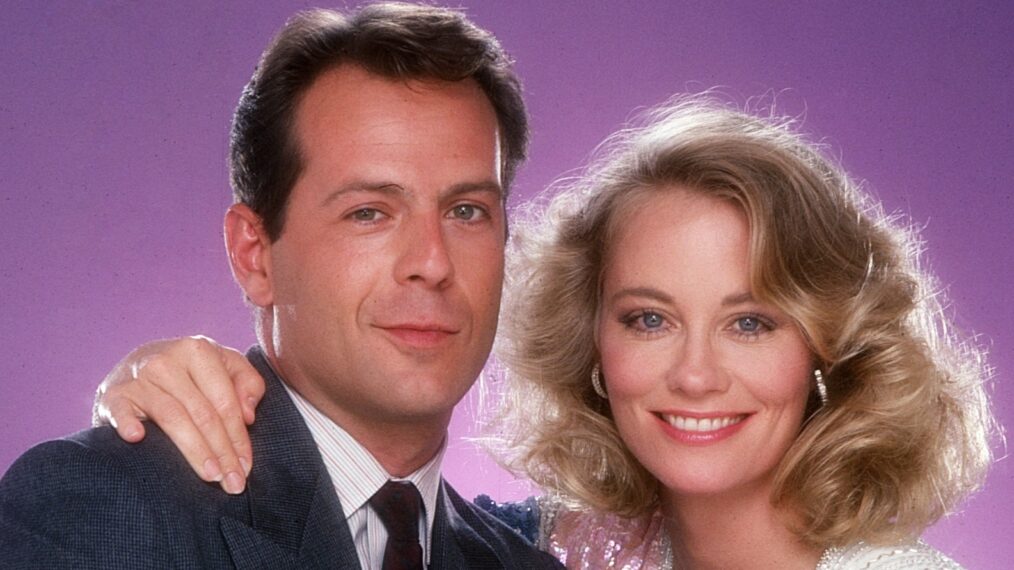
What’s really weird is that Moonlighting had the same twist, but nobody ever caught on.

Or, to put it more simply, if a writer chooses to use a reveal in a story, they are doing so for a purpose. If that reveal is spoiled, you are both robbing the writer of the right to tell the story as they intend AND robbing the audience of the ability to enjoy the story as the writer wanted them to. Saying that if a spoiler ruins a story then it wasn’t a good story is like saying that if you make a pizza without sauce and it doesn’t taste right that means it wasn’t a good pizza. Maybe not, but if COULD have been if you hadn’t LEFT OUT A VITAL INGREDIENT.

What I’m getting down to is that avoiding spoilers should be a simple matter of common courtesy. If you want to get spoiled, you can. Fine. Go nuts. As I always say, it’s your life and you have the right to enjoy things the way you want, and my feelings about it should have no dominion over your own. However, when you throw around spoilers on social media or in a crowded room, you’re taking that same right away from other people. Not being able to go to the movies very often – especially to see R-rated movies – I knew I would be spoiled on Deadpool and Wolverine long before I actually got to watch it, and I was right. That movie is built on several surprise moments, with cameo appearances by actors and characters who haven’t been seen in Marvel movies in years, or in at least one case, ever. But I didn’t get to see the movie until four months after it hit theaters, and every cameo in the film had been spoiled for me before I got to see it. At this point I don’t even get angry anymore, just frustrated. I still enjoyed the movie, don’t get me wrong. I just know I would have enjoyed it MORE if I DIDN’T know that Lea Thompson was going to show up to reprise her role as Beverly from Howard the Duck.

“Well that’s on you, Blake,” someone says. “You should avoid those parts of social media.” By the way, if anybody ever figures out who this person is who keeps shouting out from the back of the room to interrupt my columns, let me know. He’s a jerk. The thing is, people drop these spoilers EVERYWHERE. It’s not like I’m part of a Deadpool Group on Facebook where I expect to get barraged by this stuff. It shows up in random posts on all social media. And even if I unplugged from social media entirely, that wouldn’t save me from things like the kid who walked into my classroom the day before the second Doctor Strange movie was released and – loudly – announced who one of the unrevealed characters was. 

To his credit, when he saw how angry I was, that kid at least had the decency to apologize. 

People shouldn’t have to spend their entire lives like Keanu Reeves in bullet time, twisting and contorting in midair to avoid having things ruined for them. Common courtesy should dictate that spoilers be restricted to a time and place where they are expected and welcome. 

Pictured: Logging on to Facebook the week any given Marvel movie is released.

All that said, there IS a statute of limitations here. People use common experiences – such as stories – as a shared reference point just as a basic element of communication. We aren’t quite as bad as the aliens on that one episode of Star Trek that communicated 100 percent via metaphor (the “Darmok and Jalad at Tanagra” episode – even if you don’t watch Trek, I guarantee you’ve heard the reference online), but we DO use our common experiences, including story, to relate to one another. Eventually, any story that is sufficiently popular enters the sphere of public knowledge, and it’s no longer reasonable to expect to remain spoiler-free. Another example from school – a few days ago my English class was discussing the way artificial intelligence is depicted in the media, and the movie The Matrix came up. I started to hem and haw a little bit, trying to talk about the movie without giving away anything important, until one of my students said, “Mr. Petit, that movie is 25 years old.” I thanked her for making me feel like Methuselah, but her point was well-made, and after that I stopped worrying about ruining the movie and just talked about it. The conversation went much better after that. 

But again, this is a movie that was released a quarter of a century ago. (If I have to feel like an old man when I think about The Matrix, so does everybody else.) I would never have done this with a movie that came out last year, let alone last month. And even if the movie WAS old, I wouldn’t do it if somebody had asked me not to.

What I’m calling for, my friends, is simple courtesy. If you don’t mind spoilers, fine. That’s your prerogative. But that doesn’t give you the right to ruin things for people who DO. Think before you spoiler. And the newer a movie or TV show is, think even harder. 

And here’s hoping I get around to season two of Squid Game before one of these kids ruins season three for me.

Blake M. Petit is a writer, teacher, and dad from Ama, Louisiana. His most recent writing project is the superhero adventure series Other People’s Heroes: Little Stars, volume one of which is now available on Amazon. You can subscribe to his newsletter by clicking right here. He’s also started putting his LitReel videos on TikTok. In case you didn’t catch the joke, all of the spoilers he dropped in this column (except for the Sixth Sense example) were fake. Lea Thompson wasn’t in Deadpool and Wolverine. It was Lady Gaga.

Geek Punditry #105: 2025-My Year of Superman

They say the holidays can bring people down. In my experience, though, it’s not the holiday itself that causes depression, it’s that other things that would upset you regardless seem even worse when they happen in the Christmas season. I was having a lousy December. My computer died unexpectedly and needed to be replaced, I had issues with other electronics, and dozens of other small things all seemed to erupt at the same time. None of them, in and of themselves, were that bad, but when bad luck stacks up it feels like multiplication, not addition. And when these things happen during that holiday stretch, the time when you’re supposed to be happy and joyous, it seems massively unfair and that makes everything that much worse. I was having a lousy December, is what I’m getting at.

Until Dec. 19.

On the second-to-last day of the school year I was having a hard time feeling anything happy or gleeful. It barely felt like Christmas was coming. Then the news came: the trailer was about to hit. THE trailer, the one I had been eagerly awaiting for…well, definitely over a year. It came out around 8 a.m. my time, which meant I couldn’t watch it because, of course, I had classes to teach. Somehow this didn’t seem to be an issue for my students. Over the next few hours kids kept coming up to me – knowing just how much I was looking forward to it – and asking me if I’d seen the trailer yet. No, I said, I haven’t. Ask me after lunch. No, I’m talking about complex sentences right now, ask me after lunch. Guys, I’ve had thirty of you in my room at all times, there has been no opportunity to watch a 2 ½ minute movie trailer, ask me after lunch.

Finally, when my lunch break started and my room was empty of students, I pulled up YouTube on the big Promethean board in the front of class. I did a search, but it wasn’t hard – it was already close to 12 million views at that point. I hit play and I stepped back.

Pictured: My classroom at 12:02 PM, Dec. 19, 2024.

And over an ice-covered waste, I heard an electric guitar begin to strum a beautifully triumphant melody.

And somehow, things were…better.

Superman matters.

Fiction matters, if I’m being completely clear. It’s stupid and dismissive to say that something is “just” a story, because stories are our entire culture. They’re our history, they’re our religions, they’re where our heroes are built, whether those heroes are sports figures or survivalists or children sent to our planet from a dying world. And it doesn’t take too long for anyone who meets me to discover that, of these stories, Superman is my favorite. I waited for ages for the first glimpse of James Gunn’s new vision of the Man of Steel, and that trailer hit every fiber of my heart just when I needed it most. Somehow, after watching it, I looked at my problems with greater perspective. The darkness surrounding me was lifting. I felt – as cheesy as it may seem – I felt hope. There had been so much talk of whether the guy who made Guardians of the Galaxy could possibly touch the right chords for Superman, but…this trailer eradicated any fears I may have had.

I think it’s the trunks. Corenswet insisted on the trunks, did you know that?

A lot of people are dismissive of Superman. “He’s too powerful,” they say. “He’s boring.” But you see, it’s not the fact of his power that makes him interesting. Superman has the power to rule the world, but instead chooses to use it to SAVE the world. That’s what makes him a fascinating character. What kind of man, if given the opportunity that Clark Kent was given, would use it altruistically? How do you make that character believable or relatable?

“He’s too old-fashioned,” the detractors say. “He’s too corny.” But again, isn’t that sort of the point? Superman is a relic of a time when people believed in one another and had faith that, in the end, good wins out. It’s true that this is a sentiment that much of the world has turned against, but that just means that we need a Superman now more than ever. 

It’s heartening to me to know that I’m not alone in this opinion. Within 48 hours of the trailer’s release on YouTube it had become the fourth most-watched trailer ever, and is currently the most-watched trailer in Warner Bros. history…and it’s worth noting that the three trailers ahead of it are the last two Avengers movies and Spider-Man: No Way Home, each of which has been gathering views for at least half a decade now. And IMBD announced this week that, according to its user survey, Superman is the most-anticipated movie of 2025. I don’t know if it’s because everyone, like me, was charged up by this trailer or if it’s just the goodwill carrying over from James Gunn’s previous movies, but I don’t care. People want to see this movie. And watching the trailer for the 37th time, as I did while writing this, it’s not hard to see why.

The trailer shows a Superman broken and beaten, calling for help…and when that help arrives, it comes in the form of his dog, Krypto. James Gunn has the guts to pull out the old “man’s best friend” trope for this movie. There’s an inherent goodness in that idea – even people who have completely given up on the human race will usually admit that dogs are, on the whole, a lot of Very Good Boys. How can you dislike anyone whose dog loves him that much? 

Tell me that’s not the face of a Good Boy.

We also see, in the trailer, Superman shielding a little girl from a monster’s attack. He is a protector. We see a child in what appears to be a warzone raise a flag bearing the S-shield and whispering Superman’s name – because he believes. 

This kid believes in Superman. EVERYBODY should believe in Superman, because SUPERMAN WOULD BELIEVE IN YOU.

This is the important thing about Superman, the thing that the people who call him boring and old-fashioned will never understand. The question, remember, is what kind of person would use the power of a god only to HELP people, and the answer to that question is “someone who BELIEVES in people.” That’s who Superman is, more than anything else: he’s someone who believes the absolute best of EVERYBODY.

And the wild thing is, HE MEANS IT.

He believes that even his worst enemy is never beyond redemption, that there is a spark of good even in the darkest soul, if only it can be fanned into a flame. When Superman fights Lex Luthor, he doesn’t react out of anger at his enemy, but instead he mourns the fact that such a brilliant mind has chosen to waste its potential on evil. He hopes every single time that someday Lex will see the light – and on more than one occasion Lex Luthor, however reluctantly, has shown that Superman is right about him. There IS good in there, buried deep. Lex has, in desperate times, used his intellect to save the world, and even if that good is just because he wants to prove that he’s better than Superman, he still has done it, and that keeps Superman’s hope alive.

I’m sure, of course, that people who choose to look hard enough can find stories that contradict my view of the character. Quentin Tarantino sure did. But that’s kind of symptomatic of having a character that has been continually published for 87 years. Of COURSE there will be different interpretations, and not all of them will be good. I’m talking about MY Superman, though, the versions of the character that mean something to ME, the ones that I turn to when I have those days where it feels like nothing will go right and the universe itself is conspiring against me and I need to remind itself that it’s not.

And so, thanks to James Gunn, I’ve decided that I’m going to make 2025 my Year of Superman.

What does that mean? Glad you asked – here’s what’s going to happen. 

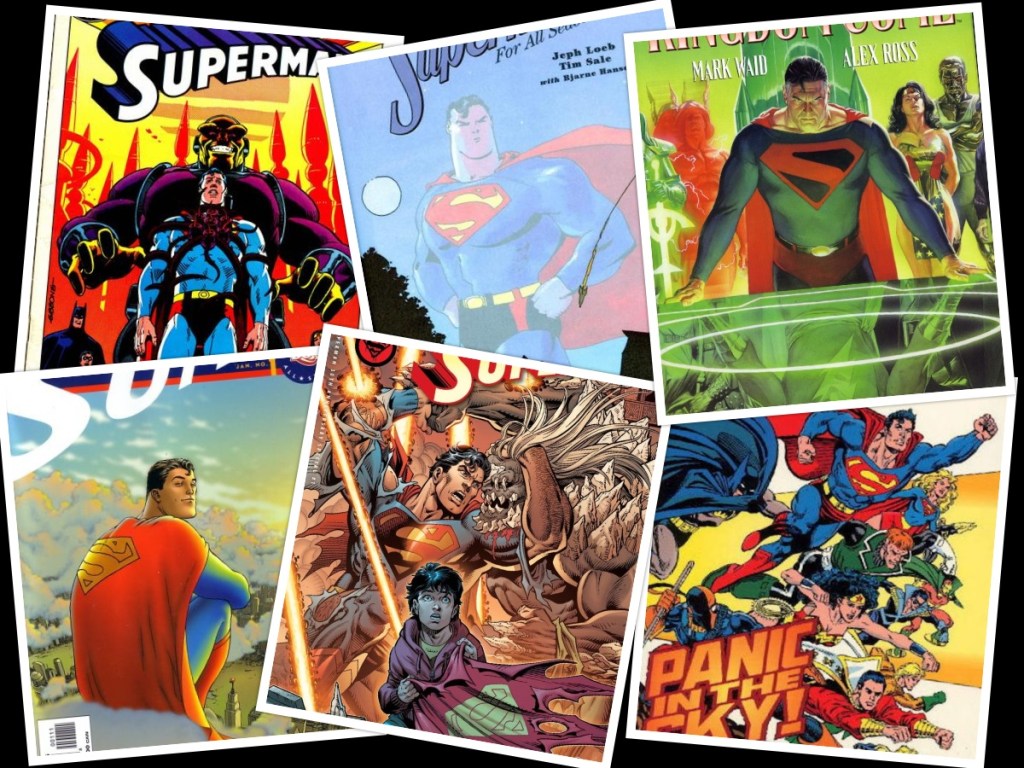
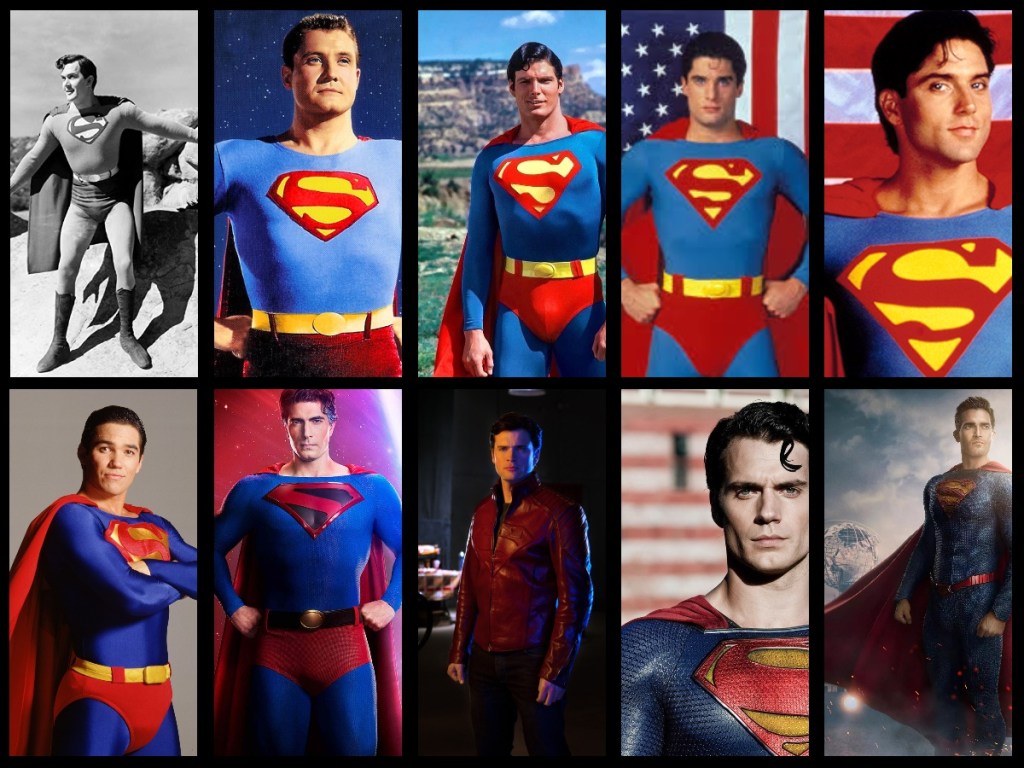
For the next year, I’m going to make an effort to read, watch, or listen to something Superman-related every single day. I might not make it – I know how I get, and there are some days where I might slip up or forget, but should that happen I resolve not to beat myself up about it, because I know that Superman wouldn’t. But I’m going to TRY.

What exactly does that entail, though? Well, obviously that means comic books, movies, or TV shows featuring Superman. Either his own stories, stories where he makes a guest-appearance, stories where he serves as a member of the Justice League or Legion of Super-Heroes – any of those will count. I read the new Superman comics as they are published, and I’m going to go back this year and revisit some of my favorite stories of the past, including (but by no means limited to) things like “For the Man Who Has Everything,” “Time and Time Again,” “Panic in the Sky,” and the Death and Return of Superman saga. I’ll go back and revisit the stories that reportedly influenced James Gunn’s version of Superman, such as the graphic novels All-Star Superman and Superman For All Seasons. I will also include comics and graphic novels featuring other members of the Superman family, such as Superboy, Supergirl, Lois Lane, Jimmy Olsen, and Steel. And although it’s looking forward an entire year, I’m planning to close 2025 by reading what I consider to be the perfect “final” Superman story, Mark Waid and Alex Ross’s seminal graphic novel Kingdom Come.

This is a good start.

I’m going to watch Superman movies and TV shows. The Christopher Reeve movies, of course, but I’ll also watch the Brandon Routh film, the Henry Cavill movies, the Fleischer animated shorts, and the DC animated films. I’ll go back to the original movie serial starring Kirk Alyn, the first ever Superman on film. And I’ll try to visit all of the TV versions of Superman as well – George Reeves, Gerard Christopher & John Newton’s Superboy series, Dean Cain, Tom Welling, and Tyler Hoechlin. I certainly won’t have time to binge all of those shows, but I’ll try to watch at least a little of each – and I WILL spend this year finally finishing the Superman and Lois series.

I feel like this picture needs more spit-curls.

And books, of course. There are novels about Superman, some written by comic luminaries like Elliot S. Maggin and Roger Stern, others written by writers who would be less-familiar to comic book readers. I’ll work as many of them into my reading rotation as possible.

But that’s not all. I’m not only going to explore media starring Superman. I’ll also delve into things ABOUT Superman: books like Superman and Philosophy, Grant Morrison’s Supergods, or the recent Christopher Reeve documentary. I’ll listen to podcasts about Superman, such as my pal Michael Bailey’s “It All Comes Back to Superman.” I’ll read about Superman’s history and influence.

And I’m going one step further: I’ll also include those stories that are influences ON Superman. For example, I’ve already begun reading Philip Wylie’s 1930 novel Gladiator, about a young man whose scientist father experiments on him, giving him remarkable strength and speed and then urging the boy to use his powers for good. Is there any wonder that many people believe Jerry Siegel and Joe Shuster had this in mind when they created the man of steel? And in the comics, Clark Kent has told Lois Lane that his favorite movie is To Kill a Mockingbird, so I’m going to throw that movie into my Year of Superman rotation, as well as the original novel, to see where the DNA of Harper Lee’s work has intertwined with that of Siegel and Shuster. I’ll look for more such examples as the year goes on, and I’ll certainly welcome suggestions. 

You put these two together and you basically get Superman.

I’ll keep a daily journal of what Superman media I enjoyed that day, and each week I’ll write a quick wrap-up of that week in my Year of Superman, telling you what I read or watched and what some of the best “Superman moments” in that week were. Don’t worry, I’ll make that a separate post from the usual Geek Punditry, so those of you who aren’t interested will still have other, non-Super babbling from me as well. It’ll probably be on Wednesdays, since that’s when the year began this time around. Each week I’ll tell you what I watched or read, with whatever notes or thoughts feel appropriate.

Thoughts like, “I KNOW I have two dozen Superman shirts, but I don’t have THAT one.”

And of course, the centerpiece of this whole experiment will come on July 11th, when the new Superman movie comes out. I’m excited to see it, of course. I think that much is abundantly clear. But perhaps even more importantly, I want to take my son Eddie to see the movie with me. I want him to understand how much this means to me. And while I don’t want to ever force him to be into the things I’m into, I still want to share them with him. But he’s seven, he’s on the spectrum, and he’s never sat still for a “grownup” movie before. I don’t know for sure if he’ll even want to see it.

On Dec. 19, after I picked him up from school, I brought him home and we sat together and watched the trailer on YouTube, then I looked at him and said, “Do you want to see that movie next summer?” He said, “Yes,” but he says “yes” to virtually everything. Sometimes I think he does it just because he thinks if he agrees we’ll leave him alone and he can go back to watching videos of failed field goal attempts, which is his most recent obsession.

But then, a few days after Christmas, my wife and I brought him to the movies to watch Sonic the Hedgehog 3. Until now, all of the movies he’s seen in the theater have been pure cartoons, and while there’s still an awful lot of animated content in Sonic, this is still the first time he watched anything in a theater with a significant amount of live-action. I considered this a test run. The lights dimmed and the trailers started. And after trailers for Dog Man and other such kiddie fare, the screen shifted to an empty arctic landscape that looked remarkably familiar. And I heard those strums of an electric guitar.

And then there was a little hand grabbing my arm. Eddie looked up at me, a huge smile on his face and excitement in his eyes, and he whispered, “Superman.

The year is off to a pretty good start.  

Blake M. Petit is a writer, teacher, and dad from Ama, Louisiana. His most recent writing project is the superhero adventure series Other People’s Heroes: Little Stars, volume one of which is now available on Amazon. You can subscribe to his newsletter by clicking right here. He’s also started putting his LitReel videos on TikTok. He believes that this experiment will ultimately be far more successful than the previously-suggested “Year of the Toxic Avenger.”

Geek Punditry #102: Making a Merrython

When the holidays roll around, one thing you can be certain of is that I’ll be queuing up all of the great Christmas movies and specials. And I don’t just mean the obvious ones like It’s a Wonderful Life, National Lampoon’s Christmas Vacation, the Rankin/Bass catalogue, or the legendary yuletide adventures of Garfield and Charlie Brown. I also have a great affection for Christmas episodes of old TV shows. As I’ve written before, there was a time when I would get home from school and watch reruns of old sitcoms for hours on end, allowing me to have a far greater memory of the contents of said television programs than I ever will less pertinent information, such as my wife’s telephone number. 

In this age of streaming, it seems like it would be simplicity itself to cultivate a massive playlist of holiday-themed episodes to start your own Christmas marathon…but alas, that does not seem to be the case. Although most streaming services have a “holiday” category, none of them seem to have what I really want, namely an option to just create my own playlist of episodes and set it to run on shuffle. I want an easily-curated selection of shows for a Yuletide Marathon – a Merrython, if you will. 

But if Netflix, Hulu, and Paramount Plus won’t let me do it, damn them, I’ll do it myself. Plex is a great system, an app that I can use to arrange and watch all of the movies and TV shows I’ve got saved on my own server, complete with my own cultivated playlists and a shuffle option. Now the catch here is that you actually have to provide the video yourself, which obviously limits things a little bit…but I started collecting DVDs almost a quarter of a century ago. I’ve got a LOT of TV shows on disc, and I’ve got lots of compilation DVDs of Christmas episodes from assorted TV series that I can throw into the mix as well.

While I certainly encourage everybody to create their own playlists, today I’m going to share with you a part of MINE. Here are just a few of my favorite Christmas-themed episodes of my favorite sitcoms, many of them episodes that are sitting in my Plex queue waiting to be watched. On Plex I set the playlist to shuffle, so I never know what’s coming up next…but for you guys, I’ll put them in chronological order.

The Honeymooners: “Twas the Night Before Christmas.” Season 1, episode 13, original air date Dec. 24, 1955.

My love for The Honeymooners knows no bounds. The only sitcom duo better than the pairing of Jackie Gleason and Art Carney is the pairing of Jackie Gleason and Audrey Meadows. Ralph Kramden’s antics with both his best friend and his wife are legendary, and have become part of the DNA of television comedy. While I can’t be certain that the Kramdens are the FIRST example of a sitcom schlub married to a woman who’s way out of his league, it’s definitely the trope codifier.

This legendary episode sees Ralph struggling to get a present for his wife, Alice, on the day before Christmas. Ralph is berating himself for having previously squandered money that he could have used to get her something nice on a bowling ball for himself (and before anybody says “Simpsons did it!” I must remind you that this show was some three decades before the adventures of Homer and Marge). As is always the case, Ralph ropes his sidekick Ed Norton into a variety of short-lived schemes to try to get the money or get a present for Alice, each of which is thwarted in a delightfully goofy fashion. In the end, the story works out to a sort of one-sided but utterly heartfelt variation of “The Gift of the Magi,” one that I never get tired of watching this time of year. Audrey Meadows was an absolute treasure, and this episode shows that as well as any.

I Love Lucy: “The I Love Lucy Christmas Show.” Season 6, episode 27, original air date Dec. 24, 1956

In this episode, the Ricardos and Mertzes are spending Christmas Eve together, struggling with decorating the tree and talking about how wonderful it was to have a child – Little Ricky – with whom to celebrate the holidays. I’ve mentioned before what an innovative show I Love Lucy was, on top of just being one of the funniest shows in television history, but this episode in particular has some historical significance. When Lucille Ball was pregnant in real life, they incorporated her pregnancy into the show. Those episodes proved to be overwhelmingly popular, and they wanted to milk a little of that juice again, so they used this episode to showcase the characters remembering the adventures they had surrounding Little Ricky’s birth. You see, not only did Lucy and Desi invent the rerun, but this Christmas episode marks the first clip show in television history.

These days, a lot of people consider clip shows tedious and wasteful, a cheap way to squeeze out an extra episode without spending a lot of money actually filming it, and in this day of shorter seasons the practice is almost extinct. But seventy years ago it was a chance for people to re-watch segments they loved, because there was no other option.

The show didn’t only recycle the clips, though, but also a gag at the end when all four adults (Lucy, Ricky, Fred, and Ethel) each independently decide to dress as Santa Claus to surprise Little Ricky. They wind up getting into a slapstick chase in the living room, during which a fifth Santa appears. As they remove each other’s beards trying to determine who is who, the superfluous St. Nick grins and vanishes before their eyes. They had first used this gag at the end of a season one episode, “Drafted,” in a tag that had nothing to do with the episode itself, and had shown it again in subsequent Christmases. This “remake” made a lot more sense, given the episode it was used to conclude. 

Cheers: “The Spy Who Came in For a Cold One.” Season 1, Episode 12, original air date Dec. 16, 1982.

Cheers did a few Christmas episodes over its 11-year run, but none of them cling to my mind better than this one from the first season. This was, of course, a period where the show was still kind of trying to find its identity. It was still predominantly a romantic comedy, focusing on Sam and Diane’s relationship, but even at this point the ensemble piece it would eventually become was starting to shine through.

In this episode, a stranger shows up for a drink at the bar around Christmas and “accidentally” lets it slip to the patrons that he is – drumroll please – a spy. Diane, ever the pragmatist, meets his claim with the expected skepticism, but most of the rest of the gang plays along with it, plying the stranger for stories of his exciting lifestyle. When Diane finds a way to trap the spy in his own web, everything blows up in her face.

Aside from the date and the decorations, this isn’t an especially Christmasy story. We don’t get the usual “very valuable lesson” that so many of these episodes come with, nor is there a heartwarming moment at the end where everybody gets together for a group hug and reminds one another that friends are the real family. But I like the way it hammers down the dynamics of the group, how Diane gets a somewhat needed comeuppance about being too smart for her own good, and how it deftly establishes some of the tone and tropes that would follow the series further down the line, even after Shelley Long left the show. 

The Golden Girls: “Twas the Nightmare Before Christmas.” Season 2, episode 11, original air date Dec. 20, 1986.

It’s Christmas in Miami, and the girls are all making plans to jet off to visit their respective families in other parts of the country. Things get derailed, however, when a man dressed as Santa Claus shows up at Rose’s grief counseling center and starts taking hostages.

Hopefully, by this point, nobody needs me to tell them what a brilliant show Golden Girls was. You had a cast of four outrageously talented comedic actresses and a team of writers who were willing to push the envelope in ways that few other shows in the 1980s took a chance doing, and it has legitimately become recognized as one of the greatest TV comedies ever made. The amazing thing about this particular episode is the way it breaks down the story into three segments, any of which would have been an entire episode of a lesser sitcom. It starts with a funny scene showing the gift exchange between the girls before they leave for the holidays, which itself is ripe with comedic potential. Then we crash into the hostage situation, which seems like it would be the whole episode on its own until Sophia casually takes the gun away from the hostage-taker and berates Dorothy for not being able to tell the difference between a real gun and a fake. The final act shows the girls – now stranded in Miami and unable to make their flights – having a Christmas Eve dinner in a diner where they slowly come to the realization that they haven’t missed out on a Christmas with family after all.

This episode wraps up with some of the schmaltz that the Cheers episode was missing, and it’s just lovely. It was only the second season of the show, and while the bond between the characters was evident, this was the episode that kind of cemented how deeply the four of them all cared about one another, which (despite any friction on the set in real-life) was truly the core of the show. And of course, typical of the Golden Girls, the drippy, gooey sentiment at the end is nicely undercut by a joke from Sophia, who is one of the greatest characters in television history.  

ALF: “ALF’s Special Christmas.” Season 2, episodes 12 & 13 (two-part episode), original air date Dec. 14, 1987

Ah, is there anything that says “TV in the 80s” better than the adventures of a Muppet-esque alien living with a typical American family to the delight of audiences everywhere and – apparently – to the eternal disdain of the cast that had to work with him? From all accounts, the set of ALF was not a pleasant place to be, but this show was a favorite of mine as a kid, and I’m still on a quest to complete my run of the Marvel ALF comic books (50 regular issues, three annuals, two Christmas specials, a “spring” special, and two digests). It’s an oddly formative part of my personality.

In this two-part episode, the family leaves the Tanner home for a trip into the woods for Christmas. Willie rents a cabin for the family to stay in where ALF will be free from prying eyes, but as tends to happen, the little furball gets lost, winding up in a hospital where he’s mistaken for a doll and given to a child with a serious illness. He befriends the girl and eventually leaves, but the memory of her clings to him. Meanwhile, the Tanners find out that the man they’re renting the cabin from is giving it to them – two weeks after the death of his wife, he seems to be divesting himself of a lot of things…

This is honestly a pretty dark episode, even for a show like ALF, which frequently mixed a little darkness into its humor. (Cat buffet, anybody?) The two plotlines are about a child with a terminal illness and an old man contemplating suicide – fun for the whole family, right? But the whole thing is done with the typical ALF touch. There’s some goofy humor in it, and a dose of heart that makes the darkness a bit more bearable…and honestly, I think that’s kind of the point. The show doesn’t turn a blind eye to the bad things in the world, but does its best to show how to cope with them. That’s something I’ve always appreciated about it.

Frasier: “Frasier Grinch.” Season 3, episode 9, original air date Dec. 19, 1995

Let’s wing our way back to the Cheers Universe for this third-season episode of its successful spinoff show. The original Frasier was a brilliant series and arguably the most successful comedy spinoff of all time, but there was one thing about the adventures of Frasier Crane in Seattle that always kinda bugged me: the distance from his son. When the producers decided to give Kesley Grammar a spinoff they shipped him off to the other side of the country to do their best to resist the urge to have cameos from his former co-stars every other week, but the side effect here was that Frasier often came off as a very absentee father…ironic, as one of the best parts of this show was watching as Frasier rekindled his relationship with his own father, Martin. In this episode, Fraiser’s son Freddy is coming to Seattle to spend the holidays with his dad, and Frasier decides to shower the boy with the very thing every kid wants for Christmas: educational toys! It’s not long before Frasier realizes the enormity of his error and has to venture out to find the gifts Freddy REALLY wants for Christmas.

Like Diane in the parent show, the intelligentsia in the Crane family occasionally needed a reminder that they were not always the smartest ones in the room. This episode does a lot to help Frasier seem like a well-meaning father willing to go to great lengths to give his child a Merry Christmas (the least he could do, as he only sees the kid in one or two episodes a season). It also has some really great stuff with Martin, nailing the dynamic between Kelsey Grammar and John Mahoney. Frasier did many more Christmas episodes than Cheers, but this is my favorite.

Community: “Abed’s Uncontrollable Christmas.” Season 2, episode 11, original air date Dec. 9, 2010.

By the second season of Community, the show had firmly embraced its role of commenting on and parodying the various tropes of sitcoms, and in this episode they went one step further by parodying classic Christmas specials. The entire episode is done in stop motion animation, mimicking the old Rankin/Bass “Animagic” style, as Abed is somehow stuck seeing the world as a holiday special. With the help of Professor Duncan, Abed’s study group tries to get to the bottom of his delusion and help him see the world the way that it really is.

This is not the first sitcom to try an animated special for the holidays – Home Improvement had a memorable episode that had a segment in stop motion animation, for example. But what elevates Community is that the episode does not ONLY parody Christmas specials, but also makes a real commentary on the characters. Despite his delusions, we learn things in this episode about Abed and his family that leave deep fingerprints on the character and make him a little more understandable than he may have been in the past. The episode has one of the most bizarre explanations for “the meaning of Christmas” that I’ve ever heard, but damned if it isn’t just perfect for this show. 

Abbott Elementary: “Holiday Hookah.” Season 2, episode 10, original air date Dec. 7, 2022.

The newest entry on my Christmas playlist comes from what I maintain is the best live-action comedy currently on television, ABC’s Abbott Elementary. After the last day of school before the winter break, young teachers Janine and Gregory (who have had your classic “will they/won’t they” thing happening for some time now) happen to run into each other at a hookah bar, each with a group of friends. Even if you’ve never seen an episode of this particular series, if you’ve watched other shows that use the same trope (see about a billion other shows) you’ll see the trajectory that this plotline is taking. There’s awkwardness, obvious attraction, confusion, and a reluctance to hook up with somebody you work with. It’s all done well, but is kind of standard stuff.

What I really like about this episode is actually the B-plot. Two of the older veteran teachers, Barbara and Melissa, have a tradition of having a Christmas dinner together after the end of the fall term each year. This year Jacob – a young teacher who fancies himself to be far cooler than he actually is – finds out about their celebration and winds up crashing their “Christmas Lounge.” The interaction between these three is wildly funny, and the relationship between Barbara (Sheryl Lee Ralph) and Melissa (Lisa Ann Walter) has become a core pillar of the show at this point. Although the two are almost diametrically opposites of one another, personality-wise, their shared experience and long relationship has them stand out as the best of friends. It’s one of the sweeter, most realistic elements of the show (I can name several pairs of teachers I know in real life that remind me very much of these two), and I think this episode showcases that extremely well.

We also get your usual “somebody has to learn a lesson” moments that frequently accompany any Christmas episode, and as befits this series, they come from unlikely sources. Ava – the crazy principal who often seems wholly unsuited for her job – comes to Janine’s rescue, while Jacob gets his head screwed on straight thanks to the timely intervention of conspiracy nut custodian Mr. Johnson. All of it together makes for a fine Christmas viewing. 

There you have it, friends, some sitcom classics to get you in the Christmas mood this year. This is, of course, not to be considered a comprehensive list. There are hundreds of shows that have done Christmas episodes, and creating a truly complete list is probably beyond my abilities as a humble Geek Pundit. Which is why I invite you to share some of your favorites here in the comments, or on whatever social media you followed to get here! What are some of the all-time great Christmas episodes that have made it to YOUR Merrython playlist?

Blake M. Petit is a writer, teacher, and dad from Ama, Louisiana. His most recent writing project is the superhero adventure series Other People’s Heroes: Little Stars, volume one of which is now available on Amazon. You can subscribe to his newsletter by clicking right here. He didn’t even get to Laverne and Shirley, The Simpsons, Bob’s Burgers, The Beverly Hillbillies, Friends, Family Ties, Night Court, Family Matters, Perfect Strangers, Mama’s Family, Seinfeld, The Office, or The Big Bang Theory. Maybe there needs to be a sequel to this column next year. 

Geek Punditry #63: The TV Land Pet Sematary

In case you haven’t heard, there’s a new season of Night Court airing right now. Now that may surprise you if you, like most of us, remember the show going off the air back in 1992. But it may be slightly less shocking if I tell you that the new series, like approximately 75 percent of television these days, is a reboot.

Criminal Court Part 2, Part 2.

We live in the age of reboots on TV, and I think there are few obvious reasons for that. First of all, the people who fell in love with shows like Night Court during their formative years in the 80s and 90s are now largely the ones calling the shots at the networks, contributing greatly to the already-cyclical nature of pop culture. If you loved something once, it’s not unnatural or unusual to want to reclaim it and bring it back again, so when that kid who grew up watching DuckTales was given a shot at pitching an animated series to Disney, you damned well better believe he was gonna pitch a new DuckTales

The other reason, of course, is that the TV world in utter chaos as ratings for broadcast television drop like Wile E. Coyote strapped to an anvil and nobody knows how to interpret what little data we get from streaming services. It’s considered a safer bet to hitch your star to an older series that might bring its older audience along for the ride. It’s why we got shows like The Connors, Fuller House, Girl Meets World, Quantum Leap, Animaniacs, Raven’s Home, One Day at a Time, And Just Like That, and, for the kiddos from the aughts, iCarly. It’s why every couple of months somebody floats the idea of a new version of The Office and why Bryan Cranston likes to tease us to say he’d totally be down to resurrect Malcolm in the Middle. Reboots are here and they’re not going anywhere. It’s like all these old shows were buried in the TV Land Pet Sematary, and sometimes they come back VERY wrong.

More shambling corpses than 10 season of The Walking Dead.

The truth is, like any other wave in entertainment, there are good and bad attempts, and I think one of the things that contributes to how well a reboot is accepted is the adherence to the original. It’s bizarre how often a studio will bring back an old show and then change everything about it, sometimes resulting in something as appalling as Thundercats Go! (the Gage Creed of the TV Land Pet Sematary). The logic of the producers is usually something along the lines of “We’re trying to get new fans, not old ones.” My response to this is, “if you’re not trying to get the old fans, why the hell did you call the show Walker: Texas Ranger?” 

One of the most interesting examples of both a failed AND a successful reboot is Star Trek: Picard. When the first season was launched, the idea was to focus solely on Patrick Stewart’s Jean-Luc Picard character, with only sparse appearances from some of his old castmates. They didn’t want to just make season 8 of Star Trek: The Next Generation. The problem, of course, was that the fans just wanted season 8 of Star Trek: The Next Generation. So after two seasons of – I’m going to be kind here – dubious quality, for the third and final season they threw away most of the elements that weren’t working, got the crew of the Enterprise-D on the phone, and made one of the most entertaining and warmly-regarded seasons of TV in Trek History.

I’m never gonna get tired of this picture.

But back to Night Court. The new series is set in the same courtroom as the original, and it is a continuation rather than a full continuity restart such as Charmed, which I for one prefer. The head of the new ensemble is Melissa Rauch (of The Big Bang Theory) as Judge Abby Stone, daughter of the character played by the late Harry Anderson in the old series. While many of these reboots make an effort to have a cast that frequently blends the old and the new, there isn’t a ton of cross-pollination in Criminal Court Part Two, and for a fair enough reason: most of the original cast is no longer with us. Night Court, tragically, has suffered a far greater attrition rate than most other shows of the 80s. Of the entire original main cast, only three of them were still alive when the reboot was announced, and one of them (the great Richard Moll, who played Bull Shannon) passed away after season one without ever agreeing to make an appearance. Marsha Warfield, touchingly, has made two appearances, and Brent Spiner (who played a recurring character for a few years on the original) has shown up as well, but fans looking for familiar faces will be disappointed. 

The only original cast member that’s a regular on the new version is John Larroquette, whose Dan Fielding is almost unrecognizable as the same character. 80s Dan was sleazy, lascivious, and somebody that wouldn’t last ten minutes in a modern courthouse without getting “Me Too”ed into oblivion, which is probably the reason for the drastic change. Modern Dan is old, curmudgeonly, a combination of Oscar the Grouch and Mr. Wilson from Dennis the Menace. I’m not saying that I need a sleazeball character for a show to be enjoyable, but considering how it was his defining characteristic, it seems ridiculous that his bed-jumping past is almost completely ignored in favor of this somewhat lonely man that Dan has become. I don’t even mind that he’s changed, I just wish there was a clearer path of transition, because they don’t talk about his past at all. He’s mentioned the death of his wife, which is implied to have triggered this change in his personality, but HELL, that’s a story I want to know! Tell me about the woman who changed Dan!

I just want someone to make this make sense.

The show isn’t quite as wacky as the original either. Oh sure, the classic series didn’t start wacky, but it spun wildly out of control and by the final season it was practically a live-action cartoon. In fact, in one memorable episode, a defendant in a one-scene gag turned out to be the fully-animated and aforementioned Wile E. Coyote. The reboot occasionally makes a flailing grab at bringing that sensibility back, but it usually feels forced. So far the most authentic thing about the series is ditching the actor playing the Court Clerk and replacing him between the first two seasons. 

Anyway, the new Night Court is okay. It’s not great, it’s okay, and that’s how I feel about most of the reboots that I’ve watched. Fuller House drew most of its charm by reminding the viewers about the cheese of the original series. The Animaniacs relaunch gave me a few laughs, but there was nothing that came even close to the genius of the Anvilania episode of the classic.

And then there’s Frasier.

The show that gave the world tossed salads and scrambled eggs.

I’ve written before of my love for Cheers and how I consider it one of the greatest sitcoms of all time, and that love extends to its spinoff. In fact, I would say that Frasier and Better Call Saul belong on a special shelf labeled “spinoffs as good as and sometimes even better than the original.” It is a very, very exclusive club. Laverne and Shirley keeps petitioning for admission but is denied on the grounds of the Cindy Williams-less last season. And because I loved Frasier so damned much, I was wary of the reboot when the first season dropped last fall. I finally worked myself up to give it a watch and…

…be surprised by this…

…it’s okay.

Let me tell you a little bit about the new set-up. In the original Frasier, Kelsey Grammer’s character from Cheers moved from Boston to Seattle where his father Martin (John Mahoney) wound up moving in with him. Frasier, of course, was a Harvard-educated psychiatrist with more than a little bit of pretension, whereas his father was a retired cop who liked beer and basketball. The Odd Couple style dynamic between them provided a lot of the fuel for what was one of the greatest comedies in television history (and that’s not even bringing up the brilliance of the rest of the cast). In the reboot, Frasier moves back to Boston and moves in with his son, Frederick (played by Jack Cutmore-Scott) who has inherited both his father’s intelligence and his grandfather’s working-class sensibilities. The original show gave us a long and rewarding arc of Frasier and Martin reconnecting and forging a sincere and touching bond. In perhaps the reboot’s most interesting twist, Frasier deliberately moves in with his son in an attempt to recreate this father/son bond following Martin’s death. 

“I’m confused. Which one of them is supposed to be the new Chopper Dave?”

Cutmore-Scott and Grammer work well together, mirroring the Frasier/Martin dynamic but reversing the archetypes of the characters. The rest of the cast, though, isn’t as engaging, and I don’t think there’s anybody who watches the reboot who isn’t waiting for Niles and Daphne to show up. Obviously the late John Mahoney can’t make an appearance, but his specter hangs over the first season of the reboot and it makes for one of the most authentic elements of the show. It’s telling, though, that the two best episodes of the first season are the ones that guest-starred Bebe Neuwirth (as Frasier’s ex-wife and Freddy’s mom Lilith) and Peri Gilpin (as Frasier’s old radio producer Roz Doyle). Supposedly David Hyde Pierce and Jane Leeves, who played Niles and Daphne in the old show, were approached to appear in the reboot but declined. I’ve probably heard a half dozen explanations for why they turned the offer down, and since I have no idea which if any of them is correct, I’m not going to speculate or point fingers. All I’m going to say is the show has a much better chance of getting a season three if they find a way to get Pierce and Leeves to show up in season two.

If you’re going to bring back something from the past, you need to keep in mind what people loved about it in the first place. That doesn’t mean it needs to be exactly the same. In many cases – be it because of changing societal values or the loss of beloved performers – it can’t be. But if you don’t at least identify the spirit of the original and do your best to bring it back in the reboot, then what the hell is the point?

Blake M. Petit is a writer, teacher, and dad from Ama, Louisiana. His most recent writing project is the superhero adventure series Other People’s Heroes: Little Stars, now complete on Amazon’s Kindle Vella platform. He’s waiting with baited breath for the reboot of Mama’s Family now that Vicki Lawrence is actually age-appropriate to play Mama. 

Geek Punditry #57: Guilty Reality

I’ve never really been a fan of the term “guilty pleasure.” It seems inherently reductive to me. It’s announcing to the world that you’re ashamed of something you like, but I don’t think anyone should have to feel that way. If you’re a grown-up who’s into Squishmallows, so what? Get yourself a Squishmallow. Tell your friends so they’ll load you down with them on your birthday. Why would that be anything to be embarrassed about? Adult Fans of Lego? We’re a thriving community. And if anybody tries to tell me that Bluey is “just a kid’s show,” I will personally offer to help them look for the soul they have obviously misplaced.

Don’t call yourself a dad if you can get through this episode without a lump in your throat.

That said, I do UNDERSTAND the idea of a guilty pleasure. There are some things that you enjoy that, for one reason or another, you feel like maybe you shouldn’t. It’s not a matter of shame for me, though, it’s more a question of why does this one thing, this piece of pop culture that includes so many elements that I usually find reprehensible, for some reason not only hold my attention, but leaves me thirsting for more? It’s not a guilty pleasure for me, it’s a confusing one. And here, of course, I am referring to the Peacock “reality” competition series, The Traitors. 

It’s kinda like Knives Out, only the characters aren’t as likable.

I’m not a huge fan of reality competition to begin with. I watched the first few seasons of Survivor back in the day, the show that popularized (if not outright invented) this hybrid game show and docudrama, in which people in competition with each other are also forced to live together. The thing that makes this type of show stand out is that we aren’t solely watching the competition, but also the lives of these people in-between the events. The thing that made the format revolutionary, though, is also the thing that turned me off. Those day-to-day moments became much darker. The contestants started to turn into vile, backstabbing jerks to each other, and it became increasingly difficult to pull for anybody. It wasn’t long before the majority of shows in this category were wiped clean from my viewing slate. Most of the reality competitions I watch these days are the ones that focus solely on the “competition” part, like The Great British Baking Show, Masterchef, LEGO Masters, or Crime Scene Kitchen. Without the manufactured drama between games to make people hate each other, these shows are much more pleasant to watch. In fact, there are plenty of times on British Baking Show where one contestant will drop what they’re doing to help out one of their OPPONENTS in a moment of need, an act of kindness and goodwill that on a show like Big Brother would result in somebody’s spleen being removed and served to the group for dinner with a light balsamic glaze. 

“It was kind of you to help Jeannie with her tartlet, but I’m afraid we WILL have to feed you to the leopard now.”

But back to The Traitors. Based (as so many of these things are) on a British series of the same name, when I heard about the first season a year ago I thought it would be worth a watch. The concept reminded me a little of one of the few reality competitions that I DID enjoy, The Mole. In that show, contestants worked together on a series of missions, with each success adding to the prize pot that would be awarded to the final victor at the end. One of them, however, was a “Mole” working for the producers and actively attempting to sabotage the others. This was a fun show in that the viewer got to play along, analyzing the clues and observing the behavior of the competitors in an attempt to figure out who the Mole was. Netflix brought that show back in 2022 for a reboot which worked well, although a promised second season has not yet materialized.

The Traitors is similar. Again, the competitors are working together to win challenges, and again, the prize money for each challenge goes into a pot to be awarded to the winners at the end. But there are several major differences. First of all, rather than a single Mole, a small group of the competitors are secretly chosen in the first episode to be the Traitors. And their task is NOT to sabotage the missions – in fact, it is in their best interest to see the missions succeed, because at the end of the game the prize will be split among the winners. If the non-traitors, or “Faithful,” manage to eliminate all of the Traitors by the end of the game, they win and those that lasted to the end share the pot. However, if even ONE Traitor remains at the end, then the Faithful get nothing and the money is divided among the remaining Traitors. Like most shows, each night the Faithful vote someone out, hoping like hell that they get one of the Traitors and not one of their own. But afterwards, the Traitors are allowed to choose a Faithful to “murder” and eliminate from the game.

Unlike The Mole, the audience is aware of who the Traitors are from the very beginning. We watch as they are chosen and we watch as they plan and scheme against the Faithful. We also watch the Faithful’s attempts to weed them out, which feel increasingly bizarre and nonsensical to those of us on the outside who already know the solution to the puzzle and can’t figure out how they could be so egregiously wrong. 

The big thing about The Traitors, though, is that when I tuned in to season one last year, about half of the contestants turned out to be veterans from various other reality competition series like Big Brother. They hadn’t played THIS game before, but they played similar ones, and they think they’re savvy enough to carry through to the end. Not being a fan of those shows, the personalities were blanks to me, but they were frequently shown acting as though they were experts or major stars. I was even more alarmed in season two when it turned out virtually EVERY competitor was a reality show vet, including some dude who unironically calls himself “Johnny Bananas.” These were people who had actually turned appearing on these shows into a career. Would I be able to handle this level of ego on my television?

This is what it looks like to be famous for being famous.

To my shock and confusion, the answer seems to be yes.

The show is incredibly backstabby, and the competitors take it super personally. I get that there’s a lot of money on the line, but to hear them talk about the Traitors as if they were Nazi war criminals instead of people trying to win a game show seems a bit much. Are they lying? Sure – but in the context of the game I don’t really see that as any more unethical than bluffing at poker. Are they kicking out innocent people? Absolutely – because they have to do that in order to win the game. It’s in the DNA of the thing. And yet the Faithful seem to talk as though they were literal thieves and murderers. I want to go up to some of these competitors and ask them what they think THEY would be doing had they been chosen to be Traitors, and wait to hear them try to do ethical backflips to try to avoid conceding that they would behave precisely the same way. In both seasons so far (season two is only six episodes in, as I write this), I have found myself surprisingly rooting for the Traitors to win, because the level of rage and invective that comes from the Faithful actually makes the Traitors seem like far more agreeable people. Also because the Faithful are unbearably stupid.

I need to correct that. It’s not really fair to call them unbearably stupid. It’s the way these shows are made. The producers prod the contestants to say certain things and act certain ways, and then they take their performances and edit them down, taking whatever reality exists on the set and shaving it away to sculpt them into characters: this is the arrogant guy, this is the ditzy girl, this is the narcissist, this is the bitch. Actually, on The Traitors, they seem to sculpt multiple bitches. But the point is, I am aware that the figures I see on the screen are not the people that they really are, but rather who the producers of the show want me to THINK they are. So the accurate thing to say is that the producers want me to THINK the Faithful are unbearably stupid.

“Okay, Kate, tell us again how smart you are. But…maybe don’t try to spell it this time.”

I know it’s easy for me, from my perch on the couch knowing exactly who the “bad guys” are, to laugh at the wrong avenues the Faithful follow to try to capture them, but even without that filter, I just don’t see how a lot of their tactics make sense. In the first episode, the Traitors are selected duck-duck-goose style, blindfolded, as the host of the show walks around the room and taps the chosen on the shoulder. As soon as the blindfolds come off, before even the Traitors have a chance to find out who the other Traitors are, the accusations begin. “This guy breathed funny.” “I’m getting Traitor vibes from her.” “I’ve been suspicious of him since DAY ONE.” Dude, it’s Day Two. Stop acting like that’s impressive. 

Another contestant gets confused by one of the Traitor’s “victims” and, unable to figure out why they killed that person, declares that the Traitors must be really stupid. This person who has utterly failed to track down a single one of the Traitors and has voted out several innocent people in the effort, helping their cause all along, is calling THEM stupid. I wanted to throw something at the TV.

One contestant is determined that “The Traitor HAS to be an Alpha Male.” Why? Because other Alpha Males are among his “victims.” This is ludicrous for various reasons. First of all, the Faithful are aware that there are, in fact, multiple Traitors. Second, the whole “Alpha Male” concept in and of itself is a myth. Even the biologists who first coined the term among wolves later dismissed it, saying they had misinterpreted the data, but the idea lingers. I’ve always thought that anyone who refers to himself as an “Alpha Male” as some sort of badge of honor is someone not worth paying attention to, but I suppose I need to extend that policy to include anyone who uses the term “Alpha Male” in an attempt to identify a fake murder suspect on reality television.

So I watch each episode, worried that the Faithful will get dumber and dumber and hoping that the Traitors – who damn it all, I actually like – can pull it off. I watch as the strategies learned from being on Survivor and Big Brother and The Challenge and The Bachelor inevitably fail, I watch as assorted Real Housewives decide which clique they’re going to be in, I watch as the only people with common sense are targeted by the rest of the Faithful and voted off the show, and I ask myself why the hell I keep watching this?

Gotta be because Alan Cumming is the host.

I’m not saying that this guy not coming back is the REASON X-Men 3 sucked, but it sure didn’t help.

As another great fictional detective, Benoit Blanc, once observed, “It makes no damn sense. Compels me, though.”

There’s nothing else I can say to explain why I keep watching The Traitors.

Or why I can’t wait for season three.

Blake M. Petit is a writer, teacher, and dad from Ama, Louisiana. His most recent writing project is the superhero adventure series Other People’s Heroes: Little Stars, now complete on Amazon’s Kindle Vella platform. He’s about to start Tweeting at Netflix to find out when the hell The Mole is coming back.