Geek Punditry #185: What I Mean By “More”

One of the messages I always try to impart here in Geek Punditry is that if there’s one thing every fan wants, it’s more. I believe that and I stand by it. However, there are a lot of people – unfortunately, these are often the people in charge of deciding what projects are actually made and which ones are not – who don’t understand what that means, and we saw a perfect example of that this week via creator Felicia Day.
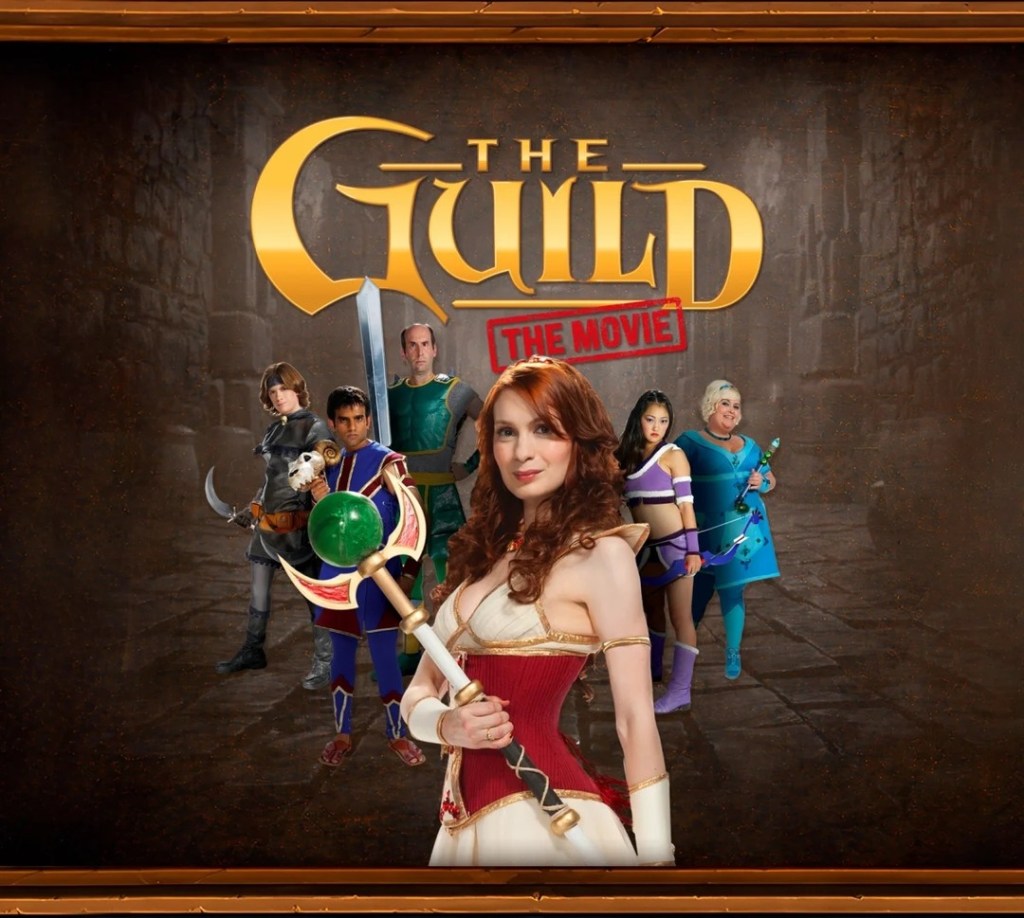
They’re back, baby!

Felicia Day, sometimes called the queen of the internet, rocked Kickstarter this week with her project to create a reunion movie for her webseries The Guild. Back in 2007 Day, frustrated that she wasn’t getting the kind of roles that she wanted, decided to write and star in her own series and release it on that “Internet” all the kids were talking about. Her series, The Guild, was a story about members of an online roleplaying game (kind of a World of Warcraft with the numbers filed off) who decided to meet in person for the first time. The dynamics between the six wildly disparate members of the Guild made for some great character drama in the midst of a delightful awkward and relatable geek-centered comedy series. The show ran for six seasons and a few spin-off comic books, and is still warmly regarded. 

So it’s not a surprise that when Day announced her plan to bring back the entire original cast to make a reunion movie for the show’s 20th anniversary, the fans turned out in droves. The campaign launched on July 21st, three days ago as of this writing, with a funding goal of $1.5 million. In just that short amount of time it has SHATTERED the goal, currently sitting at $3.5 million with 28 days left to go. Day reports that it is the fastest movie project to achieve funding in Kickstarter history, proving without a doubt that the fans of this property haven’t gone anywhere and that they want – as I always say – more

Which made it even funnier when Day said that the reason the project is getting made in the first place is because of some studio exec who didn’t get it. According to Day, the impetus for the movie happened when she was called into the office of a studio executive who wanted to discuss bringing back The Guild. The executive – who, like the studio they worked for, remained nameless – evidently floated the idea of making a new series that was relevant to “modern” gamers with a younger cast. And Day, showing the same steel that led her to make the series in the first place, decided that the only way a Guild reboot would be done right would be to do it herself.

And this is what I’m talking about. When I say that fans want “more,” I don’t just mean that we want the name of a beloved IP slapped on to a generic product. We want more of the things we loved in the first place. What made the original Guild so delightful were the characters, the performances, and the story that was so ridiculous while still being so relatable. Different actors? Different characters? Even if they were excellent performers with a solid story, they would already be starting from a deficit because they wouldn’t be what the fans were looking for.
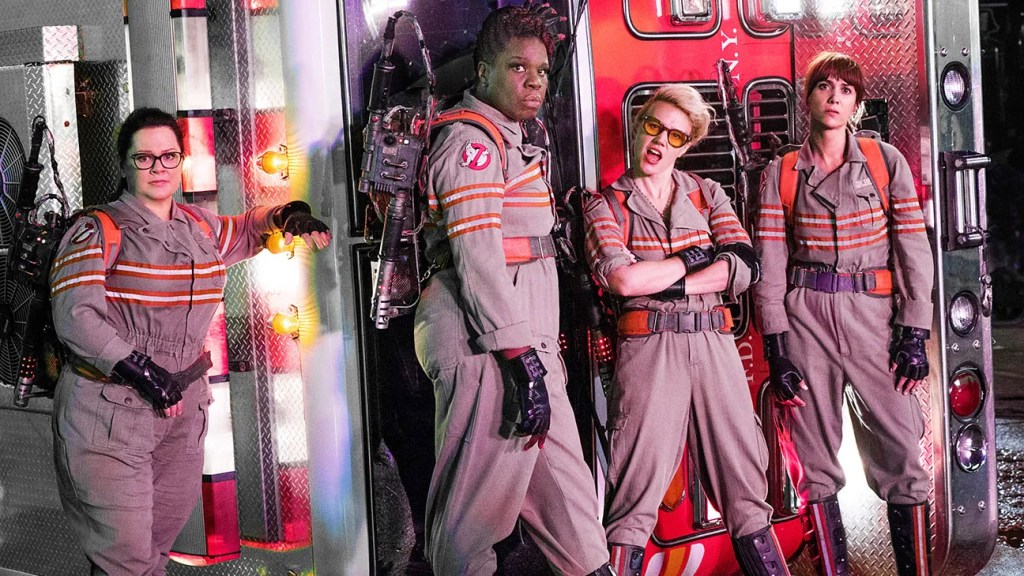
For example…

When a reboot is attempted, perhaps the easiest way to make it fail is to make it without any regard for what made it popular in the first place. We’ve seen it time and again. To use a controversial example, let’s talk about the 2016 Ghostbusters movie. Although Leslie Jones will insist to her dying breath that anybody who didn’t like it is simply a misogynist, that’s a cheap way to dismiss legitimate criticism and ignores what the fans have been saying since the day it was announced. It’s not that we didn’t want to see female Ghostbusters, it’s that NOBODY wanted a continuity reboot. We wanted to continue the adventures of the characters and the world that we fell in love with in the 1980s. If the 2016 movie had simply been framed as a sequel, a new team of Ghostbusters coming up decades after the original retired, they could have used the exact cast and it would have been much better received. In fact, the heartwarming reception to Ghostbusters: Afterlife seemed to prove just that. Not only was the main character in that film female, but also a kid, and the fans loved it because it was part of what we already loved. 

 It’s not always possible to just bring back the cast in its entirety the way that Felicia Day is doing, of course. Harold Ramis – Egon Spengler from the first two Ghostbusters movies – had passed away by the time the 2016 movie was made. But Afterlife made him a staunch presence in the film, even if the actor himself could not be there. It was perhaps the way the movie served as a tribute not only to the actor but to the character himself that was (at least partially) responsible for the film’s success.

By contrast…

We can play this game with any number of reboots, both good and bad. Top Gun: Maverick was a success because the engine the story was based on came from a beloved character from the first film – Anthony Edwards’ Goose. He couldn’t appear, of course, because the character died in the original, but his presence – along with Val Kilmer’s final role – was what made Maverick successful. Mad Max: Fury Road was a smash hit because the world that George Miller created with the originals allowed for a bit of reinvention. The idea is that each movie is a different story about a “folk hero” in a post-apocalyptic world, so if there are contradictions or discrepancies, they are easily explained away. The device allowed for a reboot that kept the flavor of the original but was not only commercially successful, but also critically acclaimed.

On the flipside, you have things like Josh Trank’s Fantastic Four movie, where the director famously told the cast NOT to read any of the comic books it was based on, and resulted in perhaps the worst comic book movie ever produced by a major studio. (And I’ve seen enough of them that I feel comfortable making that statement.) The 1998 Psycho remake tried to go in the other direction – not only trying to stay true to the original, but making an almost shot-for-shot remake. The result was a movie that only served to remind everybody that a remake was utterly unnecessary. 

I could bring up Star Wars here, but I have no desire to spend the rest of my summer dodging assassination attempts from both sides.

I do my best not to dismiss a reboot or remake entirely just because it is, in fact, a reboot or remake. It is possible to do either one of them successfully, and although there have been plenty of terrible ones, there have been great ones as well. But creative success always seems to start from the same place: do the people making this new version understand what it is that made the original a success in the first place? If they do, they’ve at least got a fighting chance. But if they don’t…well, what even is the point?

Blake M. Petit is a writer, teacher, and dad from Ama, Louisiana. His most recent writing project is the superhero adventure series Other People’s Heroes: Little Stars, volume one of which is now available on Amazon. He’s also started putting his LitReel videos on TikTok.  

Geek Punditry #127: Revival Vs. Reboot

As you no doubt have heard by now, at least partially because I’ve mentioned it here two weeks in a row, Disney’s brought back its fantastic animated series Phineas and Ferb, and the first part of the new season dropped on Disney+ today. It may surprise you, then, to know that as of this writing, I haven’t watched it yet. You see, I have to wait for my wife to get home from work, because as any competent marriage therapist would tell you, holding off on watching coveted television programming until your spouse is available to watch it with you is a love language. 

But I don’t want to talk about Phineas and Ferb specifically today, I want to talk about what it represents: the TV Revival. That concept of bringing back old TV shows from the dead. It’s not a new idea, of course. The history of television is littered with shows that were cancelled and then came back after some time. Game shows like Jeopardy, Supermarket Sweep, and Let’s Make a Deal are all better remembered from their second incarnation than the original, for example. The 80s gave us resurrected versions of old sitcoms like Leave it to Beaver and The Munsters. And for a time, it was popular to continue a TV series by creating an animated version, as they did with the likes of Star Trek, Happy Days, or Gilligan’s Island. 

It’s like time stood still.

But in recent years, where studio executives are more hesitant than ever to take a chance on a new idea, it seems as though the revival has become a fundamental part of the television landscape. Is anybody going to want to watch a comedy about the goings-on at a municipal courthouse? Maybe not…unless we remind them that they already DID a few decades ago by making that show a new version of Night Court. Go ahead and look at any current network TV schedule (or spin through the offerings of a streaming service) and you’ll be astonished at just how much of the current episodic landscape is stuffed to the gills with shows that have relaunched older ones. I don’t object to revivals as a concept, but like anything else in the sphere of entertainment, I fear that we’ve reached a point of saturation where they’ve become a crutch rather than a tool.

That said, that doesn’t mean resurrecting an old show can’t be successful. But what, exactly, does it take to make a good one? The creators of Phineas and Ferb released a video to social media a few days ago, ramping up to the new season, where they very explicitly chanted “It’s not a reboot – it’s a REVIVAL!” It’s an important distinction, although I think there are a lot of people who don’t understand the difference. A reboot, to me, means starting a franchise over from scratch. You take the concepts, the tropes, the characters, but begin from square one, as though there had never been a previous iteration. Wednesday is a good example of this – there’s nothing that specifically ties it to the canon of any of the previous versions of the Addams Family – not the original TV series, the animated series, the 90s film series, the more recent animated films, the Broadway musical, or the original comic strips that the whole franchise was based on. It’s using the pieces of the older shows, but it is inherently its own thing. So yeah, reboots CAN be good.

In general, though, I prefer a revival – you’re not eliminating the previous canon. You’re not starting over. You’re just picking up where you left off. The original Phineas and Ferb took place across one epic summer. The new season – which they wisely promote as “Season Five” rather than “Season One” of a new series – starts one year later, at the beginning of the NEXT epic summer. Night Court returned to the same courtroom after an absence of many years, bringing back one returning character and one new character who was the child of an original. You get a revival more often when the old cast – or at least some of them – is still active and wants to return. We’ll be getting that with the new version of King of the Hill, coming to Hulu soon, and creator Bill Lawrence has announced a Scrubs revival where – although nobody has officially signed on yet – many original cast members have expressed interest in returning.

If this picture doesn’t make you vaguely uncomfortable, you’re too young.

Sometimes it can be difficult to tell whether a show is a revival or a reboot at first. In 2005, when the BBC brought back its defunct science fiction series Doctor Who, it wasn’t immediately clear if the old shows were in canon or not. And as part of the Doctor’s whole deal is that he occasionally regenerates into a new body, you couldn’t even make up your mind based on the fact that there were no returning cast members. Slowly, references to the old series started to appear, and eventually it was made explicit that this was a continuation – not only of the old series, but it even included the American co-produced TV movie that had tried (and failed) to revive the franchise a decade before. The show has been reinvented many times since then, and the DNA of the franchise makes it fairly easy to do so, but every version has thankfully been a revival rather than a reboot.

This straight-up wouldn’t work with a revival of The Andy Griffith Show.

The reason I prefer revivals is because a reboot has a tendency to dismiss the original. It takes place in a universe where the original didn’t happen and doesn’t matter, and that makes no sense to me. From the perspective of a studio, the only advantage a revival or reboot has over a brand-new property is the built-in audience, so why would you START by declaring that the thing the audience loved doesn’t exist anymore? Paul Feig and the cast of the 2016 Ghostbusters reboot will claim until their dying breath that their film failed at the box office because the fans were put off by the all-female cast, but any conversation with a true fan of the franchise will make it pretty clear the reason it was rejected was because fans wanted a revival. And when they got a true revival a few years later with Ghostbusters: Afterlife (with a main character that was a preteen girl), fans were delighted. 

That’s not to say that a reboot CAN’T be good. When J.J. Abrams was given the task of rebooting Star Trek for the big screen, he wisely took the track of making it an alternate universe. A villain traveled back in time and created an alternate reality in which these new films would take place. The original timeline still existed, and was still available when the TV revivals began a few years later. No matter what you think of the Abrams Star Trek films, most fans will agree that the alternate timeline was a good idea. Similarly J. Michael Straczynksi has been trying for years to get a reboot of his seminal science fiction series Babylon 5 off the ground. In 2023, he even gave us an animated film, Babylon 5: The Road Home, which ended in a way that – similar to the Star Trek example – opened up a different, alternate timeline in which the reboot could take place.

The classic sci-fi trope of “Eh, close enough.”

Of course, it’s easier to do that with a science fiction series than it would be a drama or a sitcom. If somebody wanted to do a reboot of The Golden Girls, for example, it’s unlikely that they would start with a CGI Betty White causing some sort of temporal rift that would take us to a different dimension where the girls all moved in together in 2025 rather than 1985. But that also begs the question: would you really WANT a reboot where they cast people other than Bea Arthur, Rue McClanahan, Estelle Getty, and Betty White anyway?

That’s another thing that revivals have over reboots: the continuity of keeping a cast that the fans love. One of the reasons a Babylon 5 reboot is more likely than a revival is because so many members of that cast, in the years since the show ended, have sadly passed away at a surprisingly young age. Over the course of that show’s five years, 17 actors were series regulars for at least one season. Seven of them are no longer with us, and several others have retired from acting altogether. It would be anathema to many of us to see Bruce Boxleitner’s John Sheridan return with somebody other than Mira Furlan playing his wife, Delenn. In a new timeline, though, with new actors in BOTH roles…that feels a little easier to swallow.

Some shows, however, simply should never be brought back, for many of these same reasons. Any ideas of a Friends revival, for example, went up in smoke with the sad death of Matthew Perry. Any revival, even a one-off movie – would necessitate either recasting Chandler Bing (which fans will tell you is basically impossible) or writing him out of the show by having him either die or leave his wife and children, which would be depressing as hell. As for a reboot…poll the fans. Ask if anybody would want a different cast, and I’m pretty sure you’ll hear a resounding NO.

It would be impossible to recreate this and a mistake to even try.

It’s less of a problem if the actor is still alive and has chosen not to return, or if they’ve fallen from grace in the years since the show’s airing and neither the studio nor the fans want them back. Tom Welling and Michael Rosenbaum, two of the stars of Smallville, occasionally make noise about wanting to bring back the show as an animated series or through animated movies. Many fans would welcome this, although it is unlikely that anyone will bat an eye if Chloe Sullivan is recast. (I’m not gonna get into it – if you don’t know why this would be necessary, just Google it.) In a less problematic example, former child actor Erik Per Sullivan has retired from the business, so when a revival of Malcolm in the Middle was announced, nobody was really angry that they decided to recast his character of Dewey.  

In general, though, revivals are more interesting to me – I want to see a continuation of the original series. There was chatter for years about a reboot of Buffy the Vampire Slayer, but Sarah Michelle Gellar wasn’t interested. Therefore, I wasn’t interested. Then they announced that they’d landed on a pitch that Gellar IS interested in, a pitch in which she is mentoring a new character entirely rather than trying to have somebody else play Buffy Summers… well, at this point, I’m willing to listen.

(There’s an irony here in that Gellar’s series was, in fact, a reboot of a mediocre movie starring Kristy Swanson as Buffy. But again, it just goes to prove to you that reboots CAN work sometimes.)

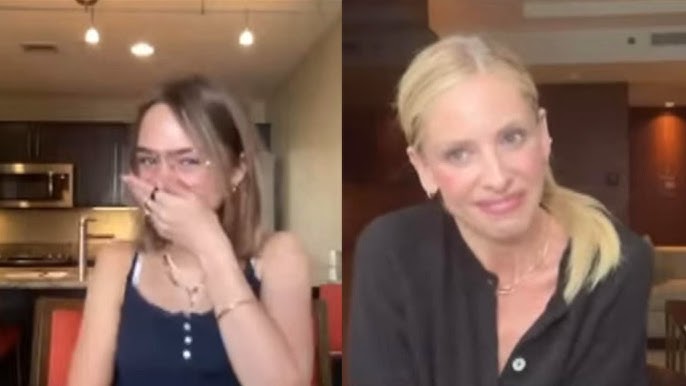
There’s an adorable video of when Gellar called Ryan Kiera Armstrong and told her that she got the part, because REAL slayers go by three names.

For some shows, the question of reboot vs revival is academic, of course. It doesn’t matter for nonscripted series like game shows, or shows that dramatize real events such as Unsolved Mysteries. You may miss Robert Stack, but that doesn’t mean the show can’t be made without him. Similarly, anthology series like The Twilight Zone are by their very nature immune to this. That show has been brought back several times over the years, and as there was never a regular cast or set of characters to follow, it’s a non-issue as long as the show has the flavor of the original – in this case, that of a sci-fi show with horror elements and, usually, some sort of twist ending. 

The biggest problem comes when a resurrected series – whether it’s a reboot or revival – lacks that taste of the original. Every so often you’ll hear about a new version of a show where they proudly announce that none of the current creators are fans of the original. This is a position so bafflingly stupid that I’m surprised it’s not mandated by federal law. While it’s true that some fans can be a bit too close to the property, a bit too reverent, if NOBODY involved in the creation of a show has any passion for it, the odds of creating something that satisfies the existing fan base drops so dramatically as to be almost nonexistent. 

“Well, we’re not making this show for the OLD fans,” some of these studio executives say. “We’re trying to appeal to NEW fans.”

Bullshit. If all that matters is acquiring a new audience, there’s no reason to bring back an old property. By bringing back a classic IP you are inherently announcing a desire to get the attention of an existing fan base, and by creating something you know will dissatisfy them, all you’re doing is trying to court controversy, as if that somehow inoculates you against the need to make a good show. Sometimes I think they’re COUNTING on that. They know their reboot is weak, so they rile up the fans against it, giving them a handy shield of claiming that these narrow-minded old fuddy-duddies just don’t want something new, thereby preventing them from having to admit that they made something that sucks.

Ultimately, I try to judge any show – revival, reboot, or brand-new idea – on its own merits. But when you’re reaching back to a classic series, you need to really think about what made that show successful in the first place before you even THINK about giving it a try.

Blake M. Petit is a writer, teacher, and dad from Ama, Louisiana. His most recent writing project is the superhero adventure series Other People’s Heroes: Little Stars, volume one of which is now available on Amazon. You can subscribe to his newsletter by clicking right here. He’s also started putting his LitReel videos on TikTok. Someday, he swears, somebody is gonna do a revival of Cop Rock, but they’re gonna do it RIGHT this time.