Geek Punditry #105: 2025-My Year of Superman

They say the holidays can bring people down. In my experience, though, it’s not the holiday itself that causes depression, it’s that other things that would upset you regardless seem even worse when they happen in the Christmas season. I was having a lousy December. My computer died unexpectedly and needed to be replaced, I had issues with other electronics, and dozens of other small things all seemed to erupt at the same time. None of them, in and of themselves, were that bad, but when bad luck stacks up it feels like multiplication, not addition. And when these things happen during that holiday stretch, the time when you’re supposed to be happy and joyous, it seems massively unfair and that makes everything that much worse. I was having a lousy December, is what I’m getting at.

Until Dec. 19.

On the second-to-last day of the school year I was having a hard time feeling anything happy or gleeful. It barely felt like Christmas was coming. Then the news came: the trailer was about to hit. THE trailer, the one I had been eagerly awaiting for…well, definitely over a year. It came out around 8 a.m. my time, which meant I couldn’t watch it because, of course, I had classes to teach. Somehow this didn’t seem to be an issue for my students. Over the next few hours kids kept coming up to me – knowing just how much I was looking forward to it – and asking me if I’d seen the trailer yet. No, I said, I haven’t. Ask me after lunch. No, I’m talking about complex sentences right now, ask me after lunch. Guys, I’ve had thirty of you in my room at all times, there has been no opportunity to watch a 2 ½ minute movie trailer, ask me after lunch.

Finally, when my lunch break started and my room was empty of students, I pulled up YouTube on the big Promethean board in the front of class. I did a search, but it wasn’t hard – it was already close to 12 million views at that point. I hit play and I stepped back.

Pictured: My classroom at 12:02 PM, Dec. 19, 2024.

And over an ice-covered waste, I heard an electric guitar begin to strum a beautifully triumphant melody.

And somehow, things were…better.

Superman matters.

Fiction matters, if I’m being completely clear. It’s stupid and dismissive to say that something is “just” a story, because stories are our entire culture. They’re our history, they’re our religions, they’re where our heroes are built, whether those heroes are sports figures or survivalists or children sent to our planet from a dying world. And it doesn’t take too long for anyone who meets me to discover that, of these stories, Superman is my favorite. I waited for ages for the first glimpse of James Gunn’s new vision of the Man of Steel, and that trailer hit every fiber of my heart just when I needed it most. Somehow, after watching it, I looked at my problems with greater perspective. The darkness surrounding me was lifting. I felt – as cheesy as it may seem – I felt hope. There had been so much talk of whether the guy who made Guardians of the Galaxy could possibly touch the right chords for Superman, but…this trailer eradicated any fears I may have had.

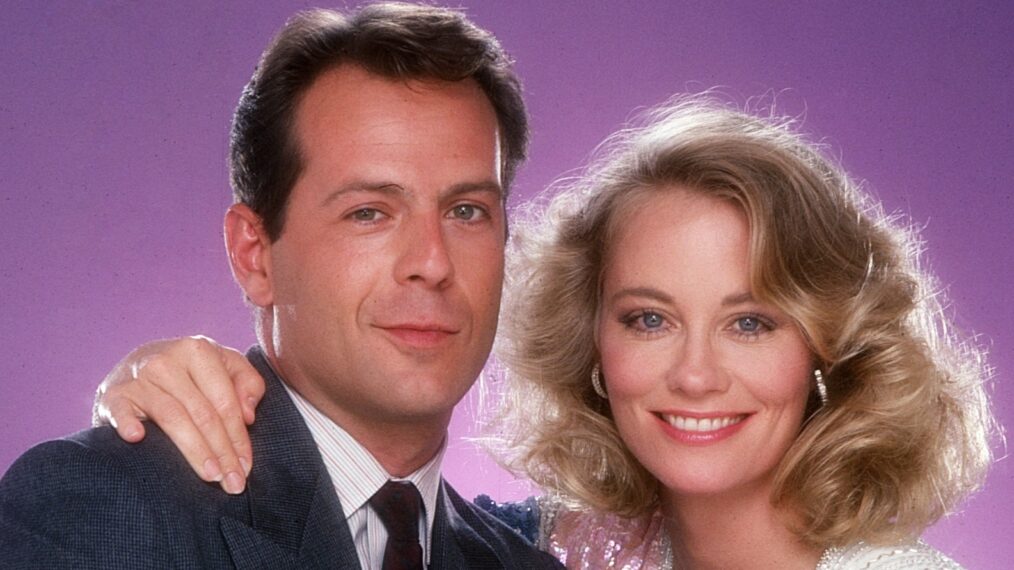
I think it’s the trunks. Corenswet insisted on the trunks, did you know that?

A lot of people are dismissive of Superman. “He’s too powerful,” they say. “He’s boring.” But you see, it’s not the fact of his power that makes him interesting. Superman has the power to rule the world, but instead chooses to use it to SAVE the world. That’s what makes him a fascinating character. What kind of man, if given the opportunity that Clark Kent was given, would use it altruistically? How do you make that character believable or relatable?

“He’s too old-fashioned,” the detractors say. “He’s too corny.” But again, isn’t that sort of the point? Superman is a relic of a time when people believed in one another and had faith that, in the end, good wins out. It’s true that this is a sentiment that much of the world has turned against, but that just means that we need a Superman now more than ever. 

It’s heartening to me to know that I’m not alone in this opinion. Within 48 hours of the trailer’s release on YouTube it had become the fourth most-watched trailer ever, and is currently the most-watched trailer in Warner Bros. history…and it’s worth noting that the three trailers ahead of it are the last two Avengers movies and Spider-Man: No Way Home, each of which has been gathering views for at least half a decade now. And IMBD announced this week that, according to its user survey, Superman is the most-anticipated movie of 2025. I don’t know if it’s because everyone, like me, was charged up by this trailer or if it’s just the goodwill carrying over from James Gunn’s previous movies, but I don’t care. People want to see this movie. And watching the trailer for the 37th time, as I did while writing this, it’s not hard to see why.

The trailer shows a Superman broken and beaten, calling for help…and when that help arrives, it comes in the form of his dog, Krypto. James Gunn has the guts to pull out the old “man’s best friend” trope for this movie. There’s an inherent goodness in that idea – even people who have completely given up on the human race will usually admit that dogs are, on the whole, a lot of Very Good Boys. How can you dislike anyone whose dog loves him that much? 

Tell me that’s not the face of a Good Boy.

We also see, in the trailer, Superman shielding a little girl from a monster’s attack. He is a protector. We see a child in what appears to be a warzone raise a flag bearing the S-shield and whispering Superman’s name – because he believes. 

This kid believes in Superman. EVERYBODY should believe in Superman, because SUPERMAN WOULD BELIEVE IN YOU.

This is the important thing about Superman, the thing that the people who call him boring and old-fashioned will never understand. The question, remember, is what kind of person would use the power of a god only to HELP people, and the answer to that question is “someone who BELIEVES in people.” That’s who Superman is, more than anything else: he’s someone who believes the absolute best of EVERYBODY.

And the wild thing is, HE MEANS IT.

He believes that even his worst enemy is never beyond redemption, that there is a spark of good even in the darkest soul, if only it can be fanned into a flame. When Superman fights Lex Luthor, he doesn’t react out of anger at his enemy, but instead he mourns the fact that such a brilliant mind has chosen to waste its potential on evil. He hopes every single time that someday Lex will see the light – and on more than one occasion Lex Luthor, however reluctantly, has shown that Superman is right about him. There IS good in there, buried deep. Lex has, in desperate times, used his intellect to save the world, and even if that good is just because he wants to prove that he’s better than Superman, he still has done it, and that keeps Superman’s hope alive.

I’m sure, of course, that people who choose to look hard enough can find stories that contradict my view of the character. Quentin Tarantino sure did. But that’s kind of symptomatic of having a character that has been continually published for 87 years. Of COURSE there will be different interpretations, and not all of them will be good. I’m talking about MY Superman, though, the versions of the character that mean something to ME, the ones that I turn to when I have those days where it feels like nothing will go right and the universe itself is conspiring against me and I need to remind itself that it’s not.

And so, thanks to James Gunn, I’ve decided that I’m going to make 2025 my Year of Superman.

What does that mean? Glad you asked – here’s what’s going to happen. 

For the next year, I’m going to make an effort to read, watch, or listen to something Superman-related every single day. I might not make it – I know how I get, and there are some days where I might slip up or forget, but should that happen I resolve not to beat myself up about it, because I know that Superman wouldn’t. But I’m going to TRY.

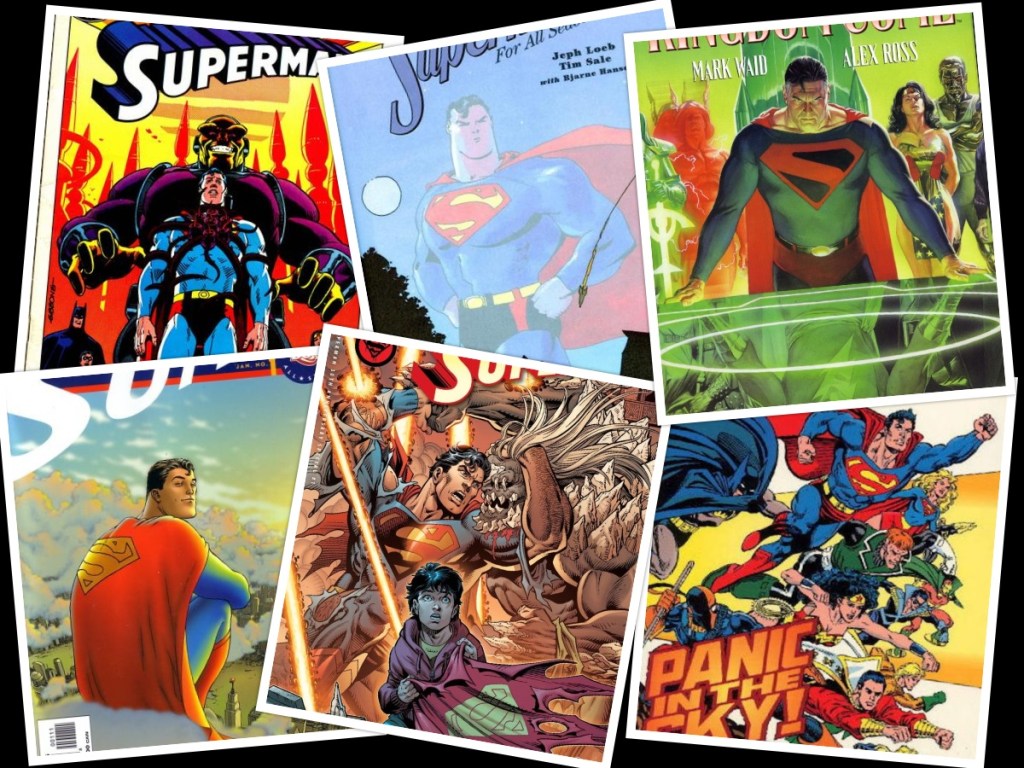
What exactly does that entail, though? Well, obviously that means comic books, movies, or TV shows featuring Superman. Either his own stories, stories where he makes a guest-appearance, stories where he serves as a member of the Justice League or Legion of Super-Heroes – any of those will count. I read the new Superman comics as they are published, and I’m going to go back this year and revisit some of my favorite stories of the past, including (but by no means limited to) things like “For the Man Who Has Everything,” “Time and Time Again,” “Panic in the Sky,” and the Death and Return of Superman saga. I’ll go back and revisit the stories that reportedly influenced James Gunn’s version of Superman, such as the graphic novels All-Star Superman and Superman For All Seasons. I will also include comics and graphic novels featuring other members of the Superman family, such as Superboy, Supergirl, Lois Lane, Jimmy Olsen, and Steel. And although it’s looking forward an entire year, I’m planning to close 2025 by reading what I consider to be the perfect “final” Superman story, Mark Waid and Alex Ross’s seminal graphic novel Kingdom Come.

This is a good start.

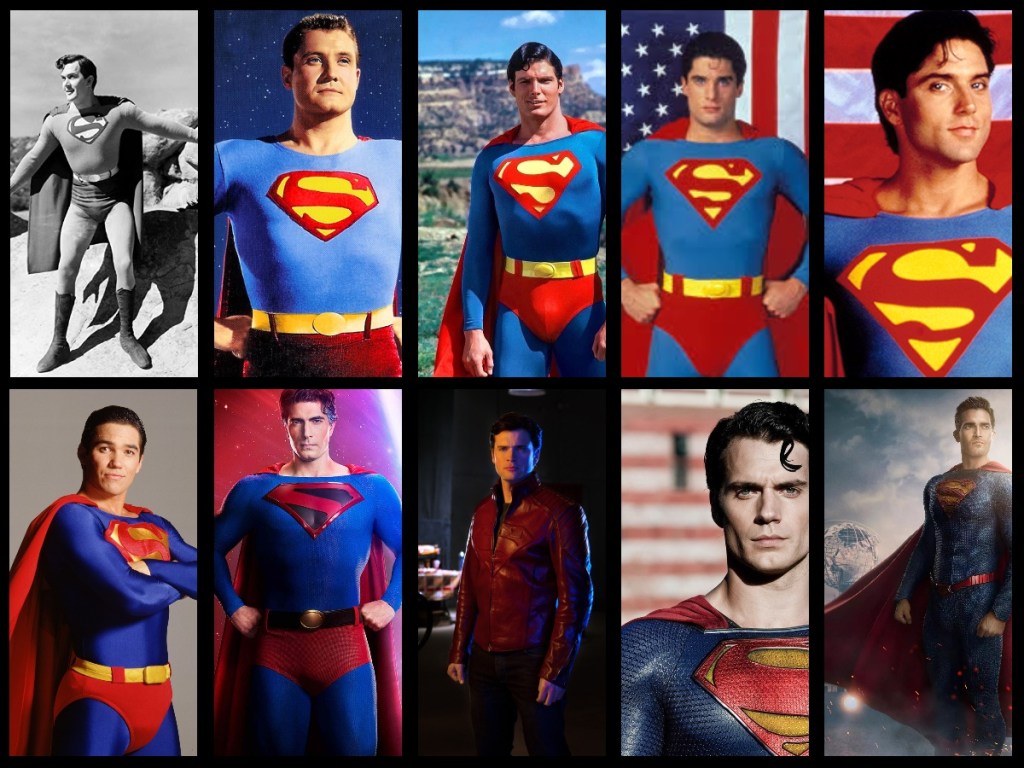
I’m going to watch Superman movies and TV shows. The Christopher Reeve movies, of course, but I’ll also watch the Brandon Routh film, the Henry Cavill movies, the Fleischer animated shorts, and the DC animated films. I’ll go back to the original movie serial starring Kirk Alyn, the first ever Superman on film. And I’ll try to visit all of the TV versions of Superman as well – George Reeves, Gerard Christopher & John Newton’s Superboy series, Dean Cain, Tom Welling, and Tyler Hoechlin. I certainly won’t have time to binge all of those shows, but I’ll try to watch at least a little of each – and I WILL spend this year finally finishing the Superman and Lois series.

I feel like this picture needs more spit-curls.

And books, of course. There are novels about Superman, some written by comic luminaries like Elliot S. Maggin and Roger Stern, others written by writers who would be less-familiar to comic book readers. I’ll work as many of them into my reading rotation as possible.

But that’s not all. I’m not only going to explore media starring Superman. I’ll also delve into things ABOUT Superman: books like Superman and Philosophy, Grant Morrison’s Supergods, or the recent Christopher Reeve documentary. I’ll listen to podcasts about Superman, such as my pal Michael Bailey’s “It All Comes Back to Superman.” I’ll read about Superman’s history and influence.

And I’m going one step further: I’ll also include those stories that are influences ON Superman. For example, I’ve already begun reading Philip Wylie’s 1930 novel Gladiator, about a young man whose scientist father experiments on him, giving him remarkable strength and speed and then urging the boy to use his powers for good. Is there any wonder that many people believe Jerry Siegel and Joe Shuster had this in mind when they created the man of steel? And in the comics, Clark Kent has told Lois Lane that his favorite movie is To Kill a Mockingbird, so I’m going to throw that movie into my Year of Superman rotation, as well as the original novel, to see where the DNA of Harper Lee’s work has intertwined with that of Siegel and Shuster. I’ll look for more such examples as the year goes on, and I’ll certainly welcome suggestions. 

You put these two together and you basically get Superman.

I’ll keep a daily journal of what Superman media I enjoyed that day, and each week I’ll write a quick wrap-up of that week in my Year of Superman, telling you what I read or watched and what some of the best “Superman moments” in that week were. Don’t worry, I’ll make that a separate post from the usual Geek Punditry, so those of you who aren’t interested will still have other, non-Super babbling from me as well. It’ll probably be on Wednesdays, since that’s when the year began this time around. Each week I’ll tell you what I watched or read, with whatever notes or thoughts feel appropriate.

Thoughts like, “I KNOW I have two dozen Superman shirts, but I don’t have THAT one.”

And of course, the centerpiece of this whole experiment will come on July 11th, when the new Superman movie comes out. I’m excited to see it, of course. I think that much is abundantly clear. But perhaps even more importantly, I want to take my son Eddie to see the movie with me. I want him to understand how much this means to me. And while I don’t want to ever force him to be into the things I’m into, I still want to share them with him. But he’s seven, he’s on the spectrum, and he’s never sat still for a “grownup” movie before. I don’t know for sure if he’ll even want to see it.

On Dec. 19, after I picked him up from school, I brought him home and we sat together and watched the trailer on YouTube, then I looked at him and said, “Do you want to see that movie next summer?” He said, “Yes,” but he says “yes” to virtually everything. Sometimes I think he does it just because he thinks if he agrees we’ll leave him alone and he can go back to watching videos of failed field goal attempts, which is his most recent obsession.

But then, a few days after Christmas, my wife and I brought him to the movies to watch Sonic the Hedgehog 3. Until now, all of the movies he’s seen in the theater have been pure cartoons, and while there’s still an awful lot of animated content in Sonic, this is still the first time he watched anything in a theater with a significant amount of live-action. I considered this a test run. The lights dimmed and the trailers started. And after trailers for Dog Man and other such kiddie fare, the screen shifted to an empty arctic landscape that looked remarkably familiar. And I heard those strums of an electric guitar.

And then there was a little hand grabbing my arm. Eddie looked up at me, a huge smile on his face and excitement in his eyes, and he whispered, “Superman.

The year is off to a pretty good start.  

Blake M. Petit is a writer, teacher, and dad from Ama, Louisiana. His most recent writing project is the superhero adventure series Other People’s Heroes: Little Stars, volume one of which is now available on Amazon. You can subscribe to his newsletter by clicking right here. He’s also started putting his LitReel videos on TikTok. He believes that this experiment will ultimately be far more successful than the previously-suggested “Year of the Toxic Avenger.”

Geek Punditry #102: Making a Merrython

When the holidays roll around, one thing you can be certain of is that I’ll be queuing up all of the great Christmas movies and specials. And I don’t just mean the obvious ones like It’s a Wonderful Life, National Lampoon’s Christmas Vacation, the Rankin/Bass catalogue, or the legendary yuletide adventures of Garfield and Charlie Brown. I also have a great affection for Christmas episodes of old TV shows. As I’ve written before, there was a time when I would get home from school and watch reruns of old sitcoms for hours on end, allowing me to have a far greater memory of the contents of said television programs than I ever will less pertinent information, such as my wife’s telephone number. 

In this age of streaming, it seems like it would be simplicity itself to cultivate a massive playlist of holiday-themed episodes to start your own Christmas marathon…but alas, that does not seem to be the case. Although most streaming services have a “holiday” category, none of them seem to have what I really want, namely an option to just create my own playlist of episodes and set it to run on shuffle. I want an easily-curated selection of shows for a Yuletide Marathon – a Merrython, if you will. 

But if Netflix, Hulu, and Paramount Plus won’t let me do it, damn them, I’ll do it myself. Plex is a great system, an app that I can use to arrange and watch all of the movies and TV shows I’ve got saved on my own server, complete with my own cultivated playlists and a shuffle option. Now the catch here is that you actually have to provide the video yourself, which obviously limits things a little bit…but I started collecting DVDs almost a quarter of a century ago. I’ve got a LOT of TV shows on disc, and I’ve got lots of compilation DVDs of Christmas episodes from assorted TV series that I can throw into the mix as well.

While I certainly encourage everybody to create their own playlists, today I’m going to share with you a part of MINE. Here are just a few of my favorite Christmas-themed episodes of my favorite sitcoms, many of them episodes that are sitting in my Plex queue waiting to be watched. On Plex I set the playlist to shuffle, so I never know what’s coming up next…but for you guys, I’ll put them in chronological order.

The Honeymooners: “Twas the Night Before Christmas.” Season 1, episode 13, original air date Dec. 24, 1955.

My love for The Honeymooners knows no bounds. The only sitcom duo better than the pairing of Jackie Gleason and Art Carney is the pairing of Jackie Gleason and Audrey Meadows. Ralph Kramden’s antics with both his best friend and his wife are legendary, and have become part of the DNA of television comedy. While I can’t be certain that the Kramdens are the FIRST example of a sitcom schlub married to a woman who’s way out of his league, it’s definitely the trope codifier.

This legendary episode sees Ralph struggling to get a present for his wife, Alice, on the day before Christmas. Ralph is berating himself for having previously squandered money that he could have used to get her something nice on a bowling ball for himself (and before anybody says “Simpsons did it!” I must remind you that this show was some three decades before the adventures of Homer and Marge). As is always the case, Ralph ropes his sidekick Ed Norton into a variety of short-lived schemes to try to get the money or get a present for Alice, each of which is thwarted in a delightfully goofy fashion. In the end, the story works out to a sort of one-sided but utterly heartfelt variation of “The Gift of the Magi,” one that I never get tired of watching this time of year. Audrey Meadows was an absolute treasure, and this episode shows that as well as any.

I Love Lucy: “The I Love Lucy Christmas Show.” Season 6, episode 27, original air date Dec. 24, 1956

In this episode, the Ricardos and Mertzes are spending Christmas Eve together, struggling with decorating the tree and talking about how wonderful it was to have a child – Little Ricky – with whom to celebrate the holidays. I’ve mentioned before what an innovative show I Love Lucy was, on top of just being one of the funniest shows in television history, but this episode in particular has some historical significance. When Lucille Ball was pregnant in real life, they incorporated her pregnancy into the show. Those episodes proved to be overwhelmingly popular, and they wanted to milk a little of that juice again, so they used this episode to showcase the characters remembering the adventures they had surrounding Little Ricky’s birth. You see, not only did Lucy and Desi invent the rerun, but this Christmas episode marks the first clip show in television history.

These days, a lot of people consider clip shows tedious and wasteful, a cheap way to squeeze out an extra episode without spending a lot of money actually filming it, and in this day of shorter seasons the practice is almost extinct. But seventy years ago it was a chance for people to re-watch segments they loved, because there was no other option.

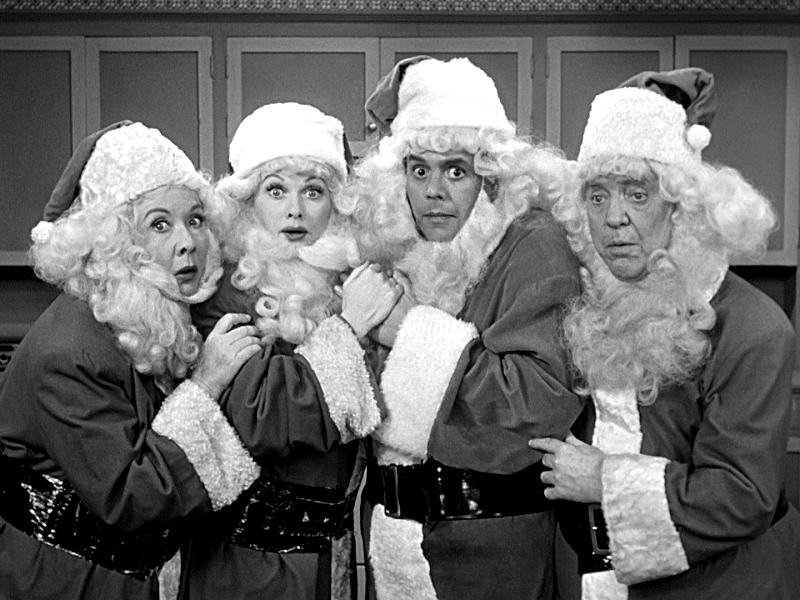
The show didn’t only recycle the clips, though, but also a gag at the end when all four adults (Lucy, Ricky, Fred, and Ethel) each independently decide to dress as Santa Claus to surprise Little Ricky. They wind up getting into a slapstick chase in the living room, during which a fifth Santa appears. As they remove each other’s beards trying to determine who is who, the superfluous St. Nick grins and vanishes before their eyes. They had first used this gag at the end of a season one episode, “Drafted,” in a tag that had nothing to do with the episode itself, and had shown it again in subsequent Christmases. This “remake” made a lot more sense, given the episode it was used to conclude. 

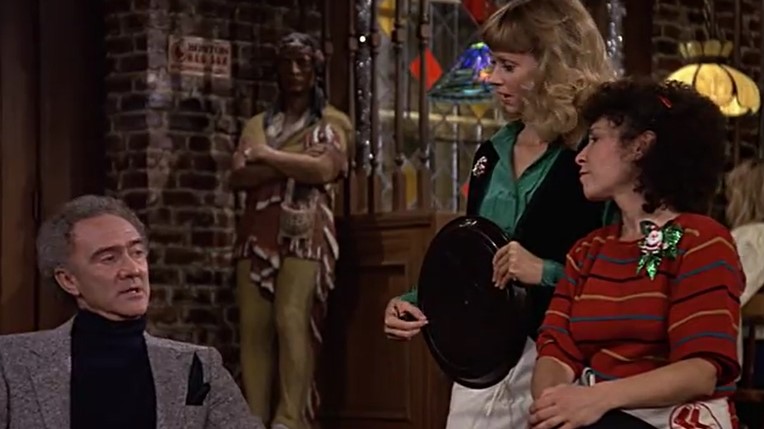
Cheers: “The Spy Who Came in For a Cold One.” Season 1, Episode 12, original air date Dec. 16, 1982.

Cheers did a few Christmas episodes over its 11-year run, but none of them cling to my mind better than this one from the first season. This was, of course, a period where the show was still kind of trying to find its identity. It was still predominantly a romantic comedy, focusing on Sam and Diane’s relationship, but even at this point the ensemble piece it would eventually become was starting to shine through.

In this episode, a stranger shows up for a drink at the bar around Christmas and “accidentally” lets it slip to the patrons that he is – drumroll please – a spy. Diane, ever the pragmatist, meets his claim with the expected skepticism, but most of the rest of the gang plays along with it, plying the stranger for stories of his exciting lifestyle. When Diane finds a way to trap the spy in his own web, everything blows up in her face.

Aside from the date and the decorations, this isn’t an especially Christmasy story. We don’t get the usual “very valuable lesson” that so many of these episodes come with, nor is there a heartwarming moment at the end where everybody gets together for a group hug and reminds one another that friends are the real family. But I like the way it hammers down the dynamics of the group, how Diane gets a somewhat needed comeuppance about being too smart for her own good, and how it deftly establishes some of the tone and tropes that would follow the series further down the line, even after Shelley Long left the show. 

The Golden Girls: “Twas the Nightmare Before Christmas.” Season 2, episode 11, original air date Dec. 20, 1986.

It’s Christmas in Miami, and the girls are all making plans to jet off to visit their respective families in other parts of the country. Things get derailed, however, when a man dressed as Santa Claus shows up at Rose’s grief counseling center and starts taking hostages.

Hopefully, by this point, nobody needs me to tell them what a brilliant show Golden Girls was. You had a cast of four outrageously talented comedic actresses and a team of writers who were willing to push the envelope in ways that few other shows in the 1980s took a chance doing, and it has legitimately become recognized as one of the greatest TV comedies ever made. The amazing thing about this particular episode is the way it breaks down the story into three segments, any of which would have been an entire episode of a lesser sitcom. It starts with a funny scene showing the gift exchange between the girls before they leave for the holidays, which itself is ripe with comedic potential. Then we crash into the hostage situation, which seems like it would be the whole episode on its own until Sophia casually takes the gun away from the hostage-taker and berates Dorothy for not being able to tell the difference between a real gun and a fake. The final act shows the girls – now stranded in Miami and unable to make their flights – having a Christmas Eve dinner in a diner where they slowly come to the realization that they haven’t missed out on a Christmas with family after all.

This episode wraps up with some of the schmaltz that the Cheers episode was missing, and it’s just lovely. It was only the second season of the show, and while the bond between the characters was evident, this was the episode that kind of cemented how deeply the four of them all cared about one another, which (despite any friction on the set in real-life) was truly the core of the show. And of course, typical of the Golden Girls, the drippy, gooey sentiment at the end is nicely undercut by a joke from Sophia, who is one of the greatest characters in television history.  

ALF: “ALF’s Special Christmas.” Season 2, episodes 12 & 13 (two-part episode), original air date Dec. 14, 1987

Ah, is there anything that says “TV in the 80s” better than the adventures of a Muppet-esque alien living with a typical American family to the delight of audiences everywhere and – apparently – to the eternal disdain of the cast that had to work with him? From all accounts, the set of ALF was not a pleasant place to be, but this show was a favorite of mine as a kid, and I’m still on a quest to complete my run of the Marvel ALF comic books (50 regular issues, three annuals, two Christmas specials, a “spring” special, and two digests). It’s an oddly formative part of my personality.

In this two-part episode, the family leaves the Tanner home for a trip into the woods for Christmas. Willie rents a cabin for the family to stay in where ALF will be free from prying eyes, but as tends to happen, the little furball gets lost, winding up in a hospital where he’s mistaken for a doll and given to a child with a serious illness. He befriends the girl and eventually leaves, but the memory of her clings to him. Meanwhile, the Tanners find out that the man they’re renting the cabin from is giving it to them – two weeks after the death of his wife, he seems to be divesting himself of a lot of things…

This is honestly a pretty dark episode, even for a show like ALF, which frequently mixed a little darkness into its humor. (Cat buffet, anybody?) The two plotlines are about a child with a terminal illness and an old man contemplating suicide – fun for the whole family, right? But the whole thing is done with the typical ALF touch. There’s some goofy humor in it, and a dose of heart that makes the darkness a bit more bearable…and honestly, I think that’s kind of the point. The show doesn’t turn a blind eye to the bad things in the world, but does its best to show how to cope with them. That’s something I’ve always appreciated about it.

Frasier: “Frasier Grinch.” Season 3, episode 9, original air date Dec. 19, 1995

Let’s wing our way back to the Cheers Universe for this third-season episode of its successful spinoff show. The original Frasier was a brilliant series and arguably the most successful comedy spinoff of all time, but there was one thing about the adventures of Frasier Crane in Seattle that always kinda bugged me: the distance from his son. When the producers decided to give Kesley Grammar a spinoff they shipped him off to the other side of the country to do their best to resist the urge to have cameos from his former co-stars every other week, but the side effect here was that Frasier often came off as a very absentee father…ironic, as one of the best parts of this show was watching as Frasier rekindled his relationship with his own father, Martin. In this episode, Fraiser’s son Freddy is coming to Seattle to spend the holidays with his dad, and Frasier decides to shower the boy with the very thing every kid wants for Christmas: educational toys! It’s not long before Frasier realizes the enormity of his error and has to venture out to find the gifts Freddy REALLY wants for Christmas.

Like Diane in the parent show, the intelligentsia in the Crane family occasionally needed a reminder that they were not always the smartest ones in the room. This episode does a lot to help Frasier seem like a well-meaning father willing to go to great lengths to give his child a Merry Christmas (the least he could do, as he only sees the kid in one or two episodes a season). It also has some really great stuff with Martin, nailing the dynamic between Kelsey Grammar and John Mahoney. Frasier did many more Christmas episodes than Cheers, but this is my favorite.

Community: “Abed’s Uncontrollable Christmas.” Season 2, episode 11, original air date Dec. 9, 2010.

By the second season of Community, the show had firmly embraced its role of commenting on and parodying the various tropes of sitcoms, and in this episode they went one step further by parodying classic Christmas specials. The entire episode is done in stop motion animation, mimicking the old Rankin/Bass “Animagic” style, as Abed is somehow stuck seeing the world as a holiday special. With the help of Professor Duncan, Abed’s study group tries to get to the bottom of his delusion and help him see the world the way that it really is.

This is not the first sitcom to try an animated special for the holidays – Home Improvement had a memorable episode that had a segment in stop motion animation, for example. But what elevates Community is that the episode does not ONLY parody Christmas specials, but also makes a real commentary on the characters. Despite his delusions, we learn things in this episode about Abed and his family that leave deep fingerprints on the character and make him a little more understandable than he may have been in the past. The episode has one of the most bizarre explanations for “the meaning of Christmas” that I’ve ever heard, but damned if it isn’t just perfect for this show. 

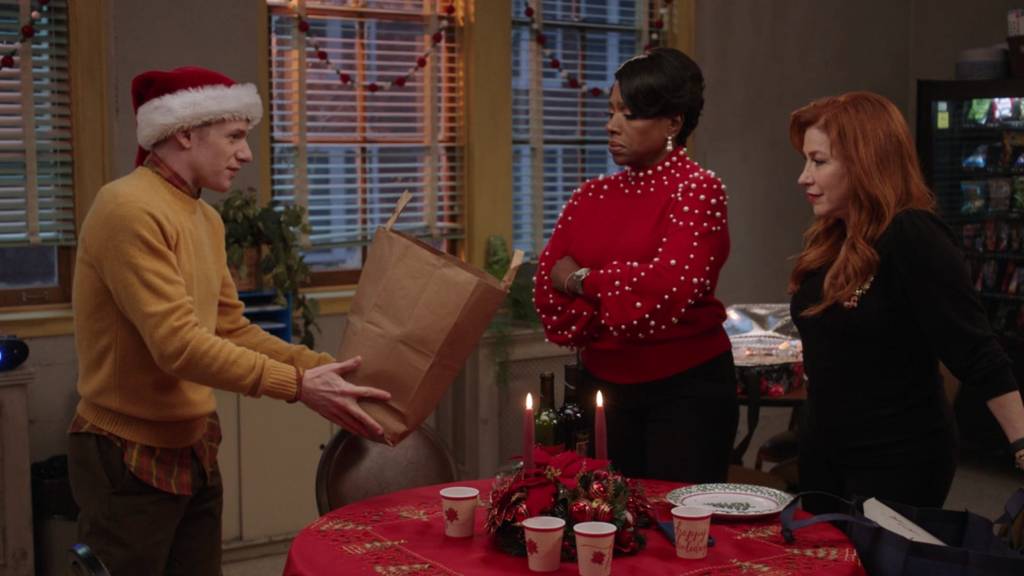
Abbott Elementary: “Holiday Hookah.” Season 2, episode 10, original air date Dec. 7, 2022.

The newest entry on my Christmas playlist comes from what I maintain is the best live-action comedy currently on television, ABC’s Abbott Elementary. After the last day of school before the winter break, young teachers Janine and Gregory (who have had your classic “will they/won’t they” thing happening for some time now) happen to run into each other at a hookah bar, each with a group of friends. Even if you’ve never seen an episode of this particular series, if you’ve watched other shows that use the same trope (see about a billion other shows) you’ll see the trajectory that this plotline is taking. There’s awkwardness, obvious attraction, confusion, and a reluctance to hook up with somebody you work with. It’s all done well, but is kind of standard stuff.

What I really like about this episode is actually the B-plot. Two of the older veteran teachers, Barbara and Melissa, have a tradition of having a Christmas dinner together after the end of the fall term each year. This year Jacob – a young teacher who fancies himself to be far cooler than he actually is – finds out about their celebration and winds up crashing their “Christmas Lounge.” The interaction between these three is wildly funny, and the relationship between Barbara (Sheryl Lee Ralph) and Melissa (Lisa Ann Walter) has become a core pillar of the show at this point. Although the two are almost diametrically opposites of one another, personality-wise, their shared experience and long relationship has them stand out as the best of friends. It’s one of the sweeter, most realistic elements of the show (I can name several pairs of teachers I know in real life that remind me very much of these two), and I think this episode showcases that extremely well.

We also get your usual “somebody has to learn a lesson” moments that frequently accompany any Christmas episode, and as befits this series, they come from unlikely sources. Ava – the crazy principal who often seems wholly unsuited for her job – comes to Janine’s rescue, while Jacob gets his head screwed on straight thanks to the timely intervention of conspiracy nut custodian Mr. Johnson. All of it together makes for a fine Christmas viewing. 

There you have it, friends, some sitcom classics to get you in the Christmas mood this year. This is, of course, not to be considered a comprehensive list. There are hundreds of shows that have done Christmas episodes, and creating a truly complete list is probably beyond my abilities as a humble Geek Pundit. Which is why I invite you to share some of your favorites here in the comments, or on whatever social media you followed to get here! What are some of the all-time great Christmas episodes that have made it to YOUR Merrython playlist?

Blake M. Petit is a writer, teacher, and dad from Ama, Louisiana. His most recent writing project is the superhero adventure series Other People’s Heroes: Little Stars, volume one of which is now available on Amazon. You can subscribe to his newsletter by clicking right here. He didn’t even get to Laverne and Shirley, The Simpsons, Bob’s Burgers, The Beverly Hillbillies, Friends, Family Ties, Night Court, Family Matters, Perfect Strangers, Mama’s Family, Seinfeld, The Office, or The Big Bang Theory. Maybe there needs to be a sequel to this column next year. 

Geek Punditry #63: The TV Land Pet Sematary

In case you haven’t heard, there’s a new season of Night Court airing right now. Now that may surprise you if you, like most of us, remember the show going off the air back in 1992. But it may be slightly less shocking if I tell you that the new series, like approximately 75 percent of television these days, is a reboot.

Criminal Court Part 2, Part 2.

We live in the age of reboots on TV, and I think there are few obvious reasons for that. First of all, the people who fell in love with shows like Night Court during their formative years in the 80s and 90s are now largely the ones calling the shots at the networks, contributing greatly to the already-cyclical nature of pop culture. If you loved something once, it’s not unnatural or unusual to want to reclaim it and bring it back again, so when that kid who grew up watching DuckTales was given a shot at pitching an animated series to Disney, you damned well better believe he was gonna pitch a new DuckTales

The other reason, of course, is that the TV world in utter chaos as ratings for broadcast television drop like Wile E. Coyote strapped to an anvil and nobody knows how to interpret what little data we get from streaming services. It’s considered a safer bet to hitch your star to an older series that might bring its older audience along for the ride. It’s why we got shows like The Connors, Fuller House, Girl Meets World, Quantum Leap, Animaniacs, Raven’s Home, One Day at a Time, And Just Like That, and, for the kiddos from the aughts, iCarly. It’s why every couple of months somebody floats the idea of a new version of The Office and why Bryan Cranston likes to tease us to say he’d totally be down to resurrect Malcolm in the Middle. Reboots are here and they’re not going anywhere. It’s like all these old shows were buried in the TV Land Pet Sematary, and sometimes they come back VERY wrong.

More shambling corpses than 10 season of The Walking Dead.

The truth is, like any other wave in entertainment, there are good and bad attempts, and I think one of the things that contributes to how well a reboot is accepted is the adherence to the original. It’s bizarre how often a studio will bring back an old show and then change everything about it, sometimes resulting in something as appalling as Thundercats Go! (the Gage Creed of the TV Land Pet Sematary). The logic of the producers is usually something along the lines of “We’re trying to get new fans, not old ones.” My response to this is, “if you’re not trying to get the old fans, why the hell did you call the show Walker: Texas Ranger?” 

One of the most interesting examples of both a failed AND a successful reboot is Star Trek: Picard. When the first season was launched, the idea was to focus solely on Patrick Stewart’s Jean-Luc Picard character, with only sparse appearances from some of his old castmates. They didn’t want to just make season 8 of Star Trek: The Next Generation. The problem, of course, was that the fans just wanted season 8 of Star Trek: The Next Generation. So after two seasons of – I’m going to be kind here – dubious quality, for the third and final season they threw away most of the elements that weren’t working, got the crew of the Enterprise-D on the phone, and made one of the most entertaining and warmly-regarded seasons of TV in Trek History.

I’m never gonna get tired of this picture.

But back to Night Court. The new series is set in the same courtroom as the original, and it is a continuation rather than a full continuity restart such as Charmed, which I for one prefer. The head of the new ensemble is Melissa Rauch (of The Big Bang Theory) as Judge Abby Stone, daughter of the character played by the late Harry Anderson in the old series. While many of these reboots make an effort to have a cast that frequently blends the old and the new, there isn’t a ton of cross-pollination in Criminal Court Part Two, and for a fair enough reason: most of the original cast is no longer with us. Night Court, tragically, has suffered a far greater attrition rate than most other shows of the 80s. Of the entire original main cast, only three of them were still alive when the reboot was announced, and one of them (the great Richard Moll, who played Bull Shannon) passed away after season one without ever agreeing to make an appearance. Marsha Warfield, touchingly, has made two appearances, and Brent Spiner (who played a recurring character for a few years on the original) has shown up as well, but fans looking for familiar faces will be disappointed. 

The only original cast member that’s a regular on the new version is John Larroquette, whose Dan Fielding is almost unrecognizable as the same character. 80s Dan was sleazy, lascivious, and somebody that wouldn’t last ten minutes in a modern courthouse without getting “Me Too”ed into oblivion, which is probably the reason for the drastic change. Modern Dan is old, curmudgeonly, a combination of Oscar the Grouch and Mr. Wilson from Dennis the Menace. I’m not saying that I need a sleazeball character for a show to be enjoyable, but considering how it was his defining characteristic, it seems ridiculous that his bed-jumping past is almost completely ignored in favor of this somewhat lonely man that Dan has become. I don’t even mind that he’s changed, I just wish there was a clearer path of transition, because they don’t talk about his past at all. He’s mentioned the death of his wife, which is implied to have triggered this change in his personality, but HELL, that’s a story I want to know! Tell me about the woman who changed Dan!

I just want someone to make this make sense.

The show isn’t quite as wacky as the original either. Oh sure, the classic series didn’t start wacky, but it spun wildly out of control and by the final season it was practically a live-action cartoon. In fact, in one memorable episode, a defendant in a one-scene gag turned out to be the fully-animated and aforementioned Wile E. Coyote. The reboot occasionally makes a flailing grab at bringing that sensibility back, but it usually feels forced. So far the most authentic thing about the series is ditching the actor playing the Court Clerk and replacing him between the first two seasons. 

Anyway, the new Night Court is okay. It’s not great, it’s okay, and that’s how I feel about most of the reboots that I’ve watched. Fuller House drew most of its charm by reminding the viewers about the cheese of the original series. The Animaniacs relaunch gave me a few laughs, but there was nothing that came even close to the genius of the Anvilania episode of the classic.

And then there’s Frasier.

The show that gave the world tossed salads and scrambled eggs.

I’ve written before of my love for Cheers and how I consider it one of the greatest sitcoms of all time, and that love extends to its spinoff. In fact, I would say that Frasier and Better Call Saul belong on a special shelf labeled “spinoffs as good as and sometimes even better than the original.” It is a very, very exclusive club. Laverne and Shirley keeps petitioning for admission but is denied on the grounds of the Cindy Williams-less last season. And because I loved Frasier so damned much, I was wary of the reboot when the first season dropped last fall. I finally worked myself up to give it a watch and…

…be surprised by this…

…it’s okay.

Let me tell you a little bit about the new set-up. In the original Frasier, Kelsey Grammer’s character from Cheers moved from Boston to Seattle where his father Martin (John Mahoney) wound up moving in with him. Frasier, of course, was a Harvard-educated psychiatrist with more than a little bit of pretension, whereas his father was a retired cop who liked beer and basketball. The Odd Couple style dynamic between them provided a lot of the fuel for what was one of the greatest comedies in television history (and that’s not even bringing up the brilliance of the rest of the cast). In the reboot, Frasier moves back to Boston and moves in with his son, Frederick (played by Jack Cutmore-Scott) who has inherited both his father’s intelligence and his grandfather’s working-class sensibilities. The original show gave us a long and rewarding arc of Frasier and Martin reconnecting and forging a sincere and touching bond. In perhaps the reboot’s most interesting twist, Frasier deliberately moves in with his son in an attempt to recreate this father/son bond following Martin’s death. 

“I’m confused. Which one of them is supposed to be the new Chopper Dave?”

Cutmore-Scott and Grammer work well together, mirroring the Frasier/Martin dynamic but reversing the archetypes of the characters. The rest of the cast, though, isn’t as engaging, and I don’t think there’s anybody who watches the reboot who isn’t waiting for Niles and Daphne to show up. Obviously the late John Mahoney can’t make an appearance, but his specter hangs over the first season of the reboot and it makes for one of the most authentic elements of the show. It’s telling, though, that the two best episodes of the first season are the ones that guest-starred Bebe Neuwirth (as Frasier’s ex-wife and Freddy’s mom Lilith) and Peri Gilpin (as Frasier’s old radio producer Roz Doyle). Supposedly David Hyde Pierce and Jane Leeves, who played Niles and Daphne in the old show, were approached to appear in the reboot but declined. I’ve probably heard a half dozen explanations for why they turned the offer down, and since I have no idea which if any of them is correct, I’m not going to speculate or point fingers. All I’m going to say is the show has a much better chance of getting a season three if they find a way to get Pierce and Leeves to show up in season two.

If you’re going to bring back something from the past, you need to keep in mind what people loved about it in the first place. That doesn’t mean it needs to be exactly the same. In many cases – be it because of changing societal values or the loss of beloved performers – it can’t be. But if you don’t at least identify the spirit of the original and do your best to bring it back in the reboot, then what the hell is the point?

Blake M. Petit is a writer, teacher, and dad from Ama, Louisiana. His most recent writing project is the superhero adventure series Other People’s Heroes: Little Stars, now complete on Amazon’s Kindle Vella platform. He’s waiting with baited breath for the reboot of Mama’s Family now that Vicki Lawrence is actually age-appropriate to play Mama. 

Geek Punditry #57: Guilty Reality

I’ve never really been a fan of the term “guilty pleasure.” It seems inherently reductive to me. It’s announcing to the world that you’re ashamed of something you like, but I don’t think anyone should have to feel that way. If you’re a grown-up who’s into Squishmallows, so what? Get yourself a Squishmallow. Tell your friends so they’ll load you down with them on your birthday. Why would that be anything to be embarrassed about? Adult Fans of Lego? We’re a thriving community. And if anybody tries to tell me that Bluey is “just a kid’s show,” I will personally offer to help them look for the soul they have obviously misplaced.

Don’t call yourself a dad if you can get through this episode without a lump in your throat.

That said, I do UNDERSTAND the idea of a guilty pleasure. There are some things that you enjoy that, for one reason or another, you feel like maybe you shouldn’t. It’s not a matter of shame for me, though, it’s more a question of why does this one thing, this piece of pop culture that includes so many elements that I usually find reprehensible, for some reason not only hold my attention, but leaves me thirsting for more? It’s not a guilty pleasure for me, it’s a confusing one. And here, of course, I am referring to the Peacock “reality” competition series, The Traitors. 

It’s kinda like Knives Out, only the characters aren’t as likable.

I’m not a huge fan of reality competition to begin with. I watched the first few seasons of Survivor back in the day, the show that popularized (if not outright invented) this hybrid game show and docudrama, in which people in competition with each other are also forced to live together. The thing that makes this type of show stand out is that we aren’t solely watching the competition, but also the lives of these people in-between the events. The thing that made the format revolutionary, though, is also the thing that turned me off. Those day-to-day moments became much darker. The contestants started to turn into vile, backstabbing jerks to each other, and it became increasingly difficult to pull for anybody. It wasn’t long before the majority of shows in this category were wiped clean from my viewing slate. Most of the reality competitions I watch these days are the ones that focus solely on the “competition” part, like The Great British Baking Show, Masterchef, LEGO Masters, or Crime Scene Kitchen. Without the manufactured drama between games to make people hate each other, these shows are much more pleasant to watch. In fact, there are plenty of times on British Baking Show where one contestant will drop what they’re doing to help out one of their OPPONENTS in a moment of need, an act of kindness and goodwill that on a show like Big Brother would result in somebody’s spleen being removed and served to the group for dinner with a light balsamic glaze. 

“It was kind of you to help Jeannie with her tartlet, but I’m afraid we WILL have to feed you to the leopard now.”

But back to The Traitors. Based (as so many of these things are) on a British series of the same name, when I heard about the first season a year ago I thought it would be worth a watch. The concept reminded me a little of one of the few reality competitions that I DID enjoy, The Mole. In that show, contestants worked together on a series of missions, with each success adding to the prize pot that would be awarded to the final victor at the end. One of them, however, was a “Mole” working for the producers and actively attempting to sabotage the others. This was a fun show in that the viewer got to play along, analyzing the clues and observing the behavior of the competitors in an attempt to figure out who the Mole was. Netflix brought that show back in 2022 for a reboot which worked well, although a promised second season has not yet materialized.

The Traitors is similar. Again, the competitors are working together to win challenges, and again, the prize money for each challenge goes into a pot to be awarded to the winners at the end. But there are several major differences. First of all, rather than a single Mole, a small group of the competitors are secretly chosen in the first episode to be the Traitors. And their task is NOT to sabotage the missions – in fact, it is in their best interest to see the missions succeed, because at the end of the game the prize will be split among the winners. If the non-traitors, or “Faithful,” manage to eliminate all of the Traitors by the end of the game, they win and those that lasted to the end share the pot. However, if even ONE Traitor remains at the end, then the Faithful get nothing and the money is divided among the remaining Traitors. Like most shows, each night the Faithful vote someone out, hoping like hell that they get one of the Traitors and not one of their own. But afterwards, the Traitors are allowed to choose a Faithful to “murder” and eliminate from the game.

Unlike The Mole, the audience is aware of who the Traitors are from the very beginning. We watch as they are chosen and we watch as they plan and scheme against the Faithful. We also watch the Faithful’s attempts to weed them out, which feel increasingly bizarre and nonsensical to those of us on the outside who already know the solution to the puzzle and can’t figure out how they could be so egregiously wrong. 

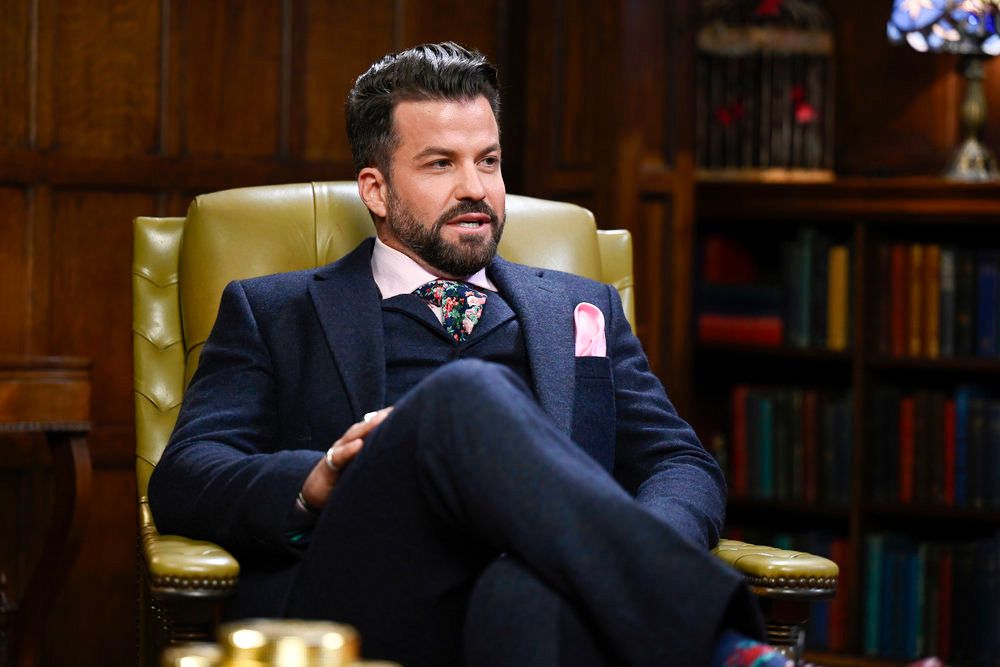
The big thing about The Traitors, though, is that when I tuned in to season one last year, about half of the contestants turned out to be veterans from various other reality competition series like Big Brother. They hadn’t played THIS game before, but they played similar ones, and they think they’re savvy enough to carry through to the end. Not being a fan of those shows, the personalities were blanks to me, but they were frequently shown acting as though they were experts or major stars. I was even more alarmed in season two when it turned out virtually EVERY competitor was a reality show vet, including some dude who unironically calls himself “Johnny Bananas.” These were people who had actually turned appearing on these shows into a career. Would I be able to handle this level of ego on my television?

This is what it looks like to be famous for being famous.

To my shock and confusion, the answer seems to be yes.

The show is incredibly backstabby, and the competitors take it super personally. I get that there’s a lot of money on the line, but to hear them talk about the Traitors as if they were Nazi war criminals instead of people trying to win a game show seems a bit much. Are they lying? Sure – but in the context of the game I don’t really see that as any more unethical than bluffing at poker. Are they kicking out innocent people? Absolutely – because they have to do that in order to win the game. It’s in the DNA of the thing. And yet the Faithful seem to talk as though they were literal thieves and murderers. I want to go up to some of these competitors and ask them what they think THEY would be doing had they been chosen to be Traitors, and wait to hear them try to do ethical backflips to try to avoid conceding that they would behave precisely the same way. In both seasons so far (season two is only six episodes in, as I write this), I have found myself surprisingly rooting for the Traitors to win, because the level of rage and invective that comes from the Faithful actually makes the Traitors seem like far more agreeable people. Also because the Faithful are unbearably stupid.

I need to correct that. It’s not really fair to call them unbearably stupid. It’s the way these shows are made. The producers prod the contestants to say certain things and act certain ways, and then they take their performances and edit them down, taking whatever reality exists on the set and shaving it away to sculpt them into characters: this is the arrogant guy, this is the ditzy girl, this is the narcissist, this is the bitch. Actually, on The Traitors, they seem to sculpt multiple bitches. But the point is, I am aware that the figures I see on the screen are not the people that they really are, but rather who the producers of the show want me to THINK they are. So the accurate thing to say is that the producers want me to THINK the Faithful are unbearably stupid.

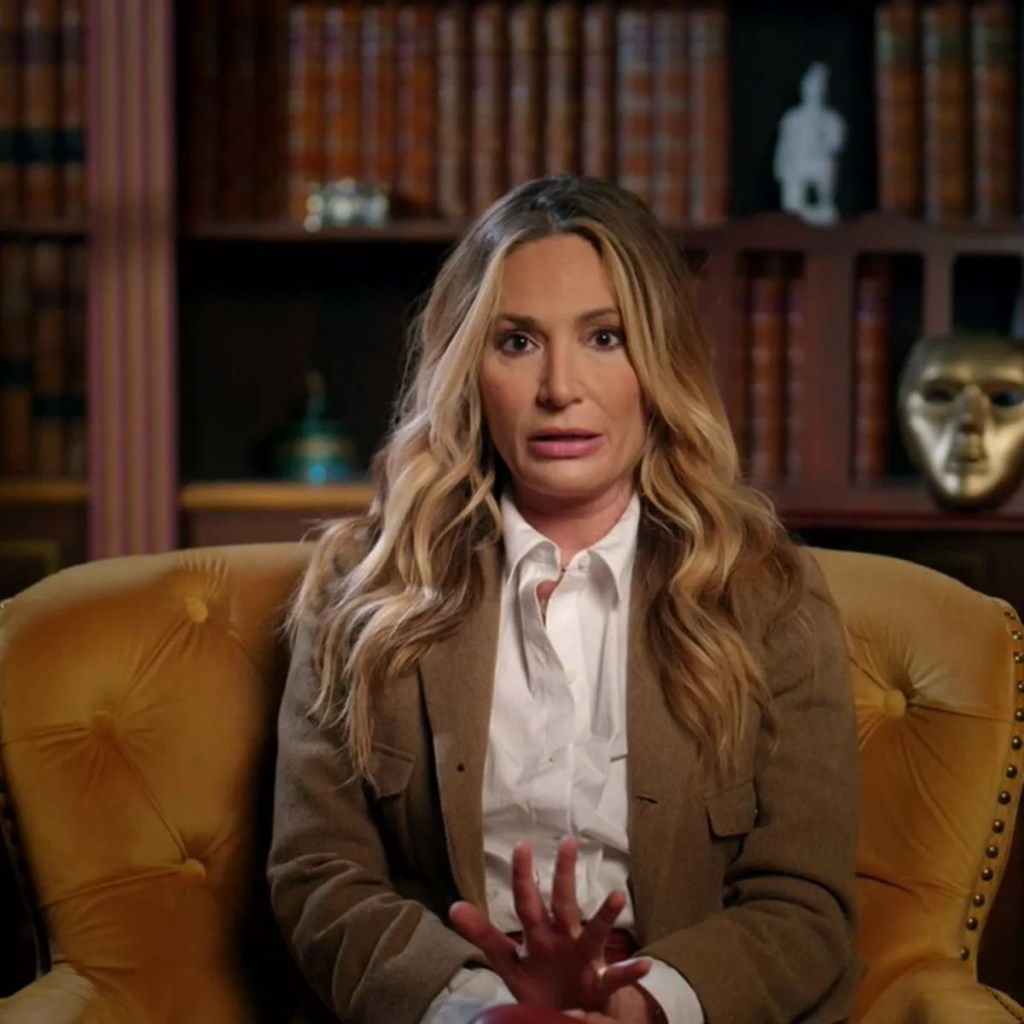
“Okay, Kate, tell us again how smart you are. But…maybe don’t try to spell it this time.”

I know it’s easy for me, from my perch on the couch knowing exactly who the “bad guys” are, to laugh at the wrong avenues the Faithful follow to try to capture them, but even without that filter, I just don’t see how a lot of their tactics make sense. In the first episode, the Traitors are selected duck-duck-goose style, blindfolded, as the host of the show walks around the room and taps the chosen on the shoulder. As soon as the blindfolds come off, before even the Traitors have a chance to find out who the other Traitors are, the accusations begin. “This guy breathed funny.” “I’m getting Traitor vibes from her.” “I’ve been suspicious of him since DAY ONE.” Dude, it’s Day Two. Stop acting like that’s impressive. 

Another contestant gets confused by one of the Traitor’s “victims” and, unable to figure out why they killed that person, declares that the Traitors must be really stupid. This person who has utterly failed to track down a single one of the Traitors and has voted out several innocent people in the effort, helping their cause all along, is calling THEM stupid. I wanted to throw something at the TV.

One contestant is determined that “The Traitor HAS to be an Alpha Male.” Why? Because other Alpha Males are among his “victims.” This is ludicrous for various reasons. First of all, the Faithful are aware that there are, in fact, multiple Traitors. Second, the whole “Alpha Male” concept in and of itself is a myth. Even the biologists who first coined the term among wolves later dismissed it, saying they had misinterpreted the data, but the idea lingers. I’ve always thought that anyone who refers to himself as an “Alpha Male” as some sort of badge of honor is someone not worth paying attention to, but I suppose I need to extend that policy to include anyone who uses the term “Alpha Male” in an attempt to identify a fake murder suspect on reality television.

So I watch each episode, worried that the Faithful will get dumber and dumber and hoping that the Traitors – who damn it all, I actually like – can pull it off. I watch as the strategies learned from being on Survivor and Big Brother and The Challenge and The Bachelor inevitably fail, I watch as assorted Real Housewives decide which clique they’re going to be in, I watch as the only people with common sense are targeted by the rest of the Faithful and voted off the show, and I ask myself why the hell I keep watching this?

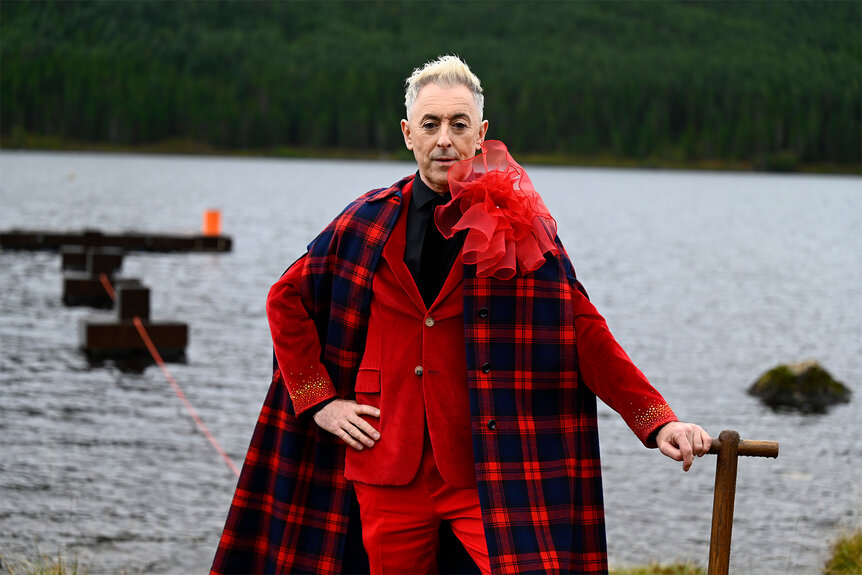
Gotta be because Alan Cumming is the host.

I’m not saying that this guy not coming back is the REASON X-Men 3 sucked, but it sure didn’t help.

As another great fictional detective, Benoit Blanc, once observed, “It makes no damn sense. Compels me, though.”

There’s nothing else I can say to explain why I keep watching The Traitors.

Or why I can’t wait for season three.

Blake M. Petit is a writer, teacher, and dad from Ama, Louisiana. His most recent writing project is the superhero adventure series Other People’s Heroes: Little Stars, now complete on Amazon’s Kindle Vella platform. He’s about to start Tweeting at Netflix to find out when the hell The Mole is coming back.