Allow me to preface this by saying this column is NOT about Superman. I’m gonna do my best to restrict that to the Wednesday blogs during this Year of Superman, which you all of course should be reading and sharing with your friends and joining the Facebook group. But the thing that triggered this week’s column came from the new “Icons” trailer for James Gunn’s upcoming Superman movie, so I gotta start there.
A few days ago, DC Studios released a new 30-second spot for the movie. There wasn’t a lot of new stuff in this one – most of it was footage that appeared in the first trailer, with a few new seconds of Nicholas Hoult as Lex Luthor and a final shot of David Corenswet as Superman flying directly at the camera, his full face clearly in view. I thought it was a great shot, and a lot of the Superman fans and groups I’m associated with started passing it around social media. Some people even used it as cover photos on Facebook and that sort of thing. But as is always the case there was a contingent of people – I hesitate to call them “fans” for reasons that will soon become abundantly clear – who started whining and complaining that the face had been altered via CGI.
How could anyone hate this face?
First of all, I didn’t for a second think that it had. It looked perfectly natural to me. Second, the idea of complaining that CGI is being used in a movie where the main character is a flying alien, a woman with bird wings fights a kaiju, and there’s a character who can magically create anything he imagines with his glowing green ring is abundantly stupid. Of course there will be CGI. It’s only worth complaining if the CGI is bad, and nothing I’ve seen so far fits that pedigree. But the whining reached the point where Gunn himself on social media stated that there was no CGI altering done to Corenswet’s face, and pointed out something that anybody with a brain probably already knew – that pointing a camera directly in a person’s face might sometimes look slightly different than an angle captured from the side.
But I have no doubt that the people who complained in the first place aren’t satisfied. Such people never are. These non-fans exist only to find things to get outraged about. These are the people who get up in arms over every casting announcement, declare a move a failure before a foot of film has been shot, and harass actors until they quit social media altogether. The word “fan” is short for “fanatic,” and these are the people who take the literal definition of the word to the extreme. They are not fans, but they are responsible for what I like to call Fanufactured Outrage.
Fanufactured Outrage is the phenomenon where people – usually, but not exclusively on social media – get angry over a problem that does not exist until they invent it in their heads. They’re the ones who hate a superhero costume that they haven’t even seen an official image of, the ones who despise any casting decision that doesn’t perfectly mirror the image they have of a character in their mind, and the ones who have decided that popular culture reached its zenith when they were approximately 13 years old and everything has been downhill ever since.
A few days ago, for example, someone in a Svengoolie group brought up the Guillermo Del Toro Frankenstein movie that’s coming out later this year. I am on record as being very excited for this movie (not as much as Superman, but it’s probably #3 on my 2025 most-anticipated list, with Fantastic Four: First Steps coming in second). Del Toro is a phenomenal director, and I cannot think of a better choice to do a new version of Frankenstein. This is the man, remember, who won Best Picture and Best Director for what was essentially a reboot of Creature From the Black Lagoon. And while most of the fans were, indeed, excited, there were the naysayers. My favorite was the one who just whined “No more remakes, they’re never any good.”
Yeah, nothing interesting in this image at all.
So many problems with this, of course. First of all, the idea that there’s never been a good remake is patently false, and we can go back at least as far as The Maltese Falcon to prove that. Second, I don’t really consider Del Toro’s Frankenstein a remake any more than any of the 30,000 versions of A Christmas Carol are remakes of each other – it’s a new movie that draws on the same original source material, but not necessarily a remake of the Boris Karloff film or of any of the other hundreds of versions of Frankenstein that have been made. And finally, even if you do consider every version of Frankenstein since the first one a remake, this person disproved their own assertion, as the Karloff version was NOT the first film version of Frankenstein any more than the Judy Garland Wizard of Oz was the first version of that story, or the smash hit Dune films were the first adaptation of Frank Herbert’s novel.
When that last bit was pointed out to the original complainer, though, his response was something along the lines of, “I mean nothing since 1970. It all sucks”
Write that down, folks. There hasn’t been any good movie made in the past 55 years. The only thing this guy has proven is that he’s built a little box for himself that he refuses to peek out of, and while I suppose he has the right to do so, none of the rest of us should feel any obligation to give a damn what he’s whining about from behind the cardboard flap.
Perpetrators of Fanufactured Outrage exist in every fandom and every medium, and while I do believe they are a minority group, they are also often the loudest such group, which can make them difficult to ignore no matter how hard we try. The “mute” button on most social media makes it a little easier, but it’s kind of like fighting the Hydra – you cut off one Fanatic and two more will sprout to take his place.
Their zeal to pick things apart isn’t helped by the news cycle, which runs with everything that is even remotely clickbaitable, regardless of whether they should or not. When the movie X-Men Origins: Wolverine was in post-production, for instance, a full-length cut of the movie was somehow leaked and began making its rounds on the internet. The problem was it was an unfinished work cut: rough, with no music, and without even any special effects. Of course, the fans hated it. But what did they expect? It wasn’t finished. It was still missing essential elements. It wasn’t even like reading the first draft of a book before it gets a polish, it’s like reading a book that hasn’t had any of the adjectives implanted yet, as we writers do at the Adjective Implantation Plant down on 45th and Broad. The film was excoriated before it was even given a chance.
Somehow they didn’t see the GENIUS in this.
To be fair, the finished movie wasn’t exactly good either, but that doesn’t mean it deserved the treatment it got.
Perhaps the worst is when they Fanufacture Outrage over something that doesn’t even exist, like the rumors that fly through the air of Hollywood at any given day. They’re impossible to escape, predicated on overheard snippets of conversation, someone wistfully explaining what they would do with a franchise, or leaked information that may have been under consideration at one point but has since been abandoned. The smog in Los Angeles, according to a recent Environmental Protection Agency survey, is estimated to be at least 76 percent Hollywood rumors, and the Fanatics will latch on to every one of them and get pissed about them.
It doesn’t help when the “news” sites run with this kind of information as if it has any weight. I find this is particularly true in terms of casting news. Sonic the Hedgehog star Ben Schwartz, for instance, recently made news when he said that he would like to play Plastic Man in a DC movie. Let me make something clear at the outset: this is an A+ casting idea. Schwartz would be absolutely perfect as Eel O’Brian. It would basically be someone with the heart of his Sonic character and the attitude of his Parks and Recreation character, plus he’s got the look.
Yeah, I can’t see this at ALL.
The only problem here is that neither James Gunn nor anybody else at DC has said anything about a Plastic Man movie, nor have they given any indication that the character is slated to appear in any of the other movies or TV shows that are in the works. This was just a case of someone asking Schwartz who he would want to play, if given the chance, and the sites running with it, and lots of stupid people getting angry about it. You see this sort of thing all the time. Just a few days after the Schwartz “news” we went through the same cycle again when Cynthia Erivo from Wicked said she would love to play Storm in the MCU X-Men reboot. Again, it would be a solid casting choice and it would sure as hell bring in a lot of fans who may otherwise not see the movie, but it’s still just her saying “I would like…” which isn’t news to me.
If you need a third example, pick any Hollywood actor between the ages 20 and 50 and, odds are, you can find an article where they’ve said they want to play Batman. They’re everywhere.
And since these things aren’t even really news, it’s even stupider when the fanatics Fanufacture their Outrage over these. You’re getting mad over something that isn’t even happening.
We can’t stop the fanatics from doing what fanatics do, sadly, but there are some things that we can do to mitigate the damage. First of all, the news sites need to actually report on news and not rumors. I know, I may as well be asking for a winning lottery ticket and a faucet in my house that dispenses hot and cold running root beer, but if it DID happen, it would keep things to a minimum. Ben Schwartz – or anybody else – wanting to play a character isn’t news unless they’ve actually had a conversation with James Gunn or somebody else associated with the studio. Stop telling us about it.
Second, we need to ignore anybody who has made up their mind about a film, TV show, book, video game, or anything else that they haven’t even seen yet. We especially need to ignore them if the content in question isn’t even finished being made.
And finally, and most importantly friends, I implore you…don’t engage with these idiots. Don’t feed their Fanaticism. Use that mute button.
It’s there for a reason.
Blake M. Petit is a writer, teacher, and dad from Ama, Louisiana. His most recent writing project is the superhero adventure series Other People’s Heroes: Little Stars, volume one of which is now available on Amazon. You can subscribe to his newsletter by clicking right here. He’s also started putting his LitReel videos on TikTok. He’s still ticked about that leaked work print of Sausage Party that ruined the movie by being a completed and accurate depiction of the final film.
Today I’m going to start the first of the Theme Weeks I’m planning to do for this little project. It won’t be every week, nor will the content of those weeks be 100 percent dedicated to that theme. There’s still a lot of Superman and Lois to catch up on, after all. But on these theme weeks, I’m going to focus on a specific character, creator, or concept related to Superman. For this first week, I’m going to put the spotlight on the second-most important character in the entire Superman mythos, one of the best comic book characters ever created. Welcome, friends, to Lois Lane Week! Lois has been around since day one, appearing in Action Comics #1 along with Superman himself, and over the years has grown and evolved into one of the most complex and engaging characters in comics…when she’s written correctly. In the Golden Age, Lois was a tough-as-nails, courageous, crusading reporter. The modern incarnation has a lot of the same qualities. When written properly, Lois Lane is brilliant, fearless, and a force of nature. The only Lois I’m not crazy about, honestly, is the Silver Age Lois, a character who seemed more interested in marrying Superman or proving his secret identity (because somehow that would convince him to marry her). I’m going to try to look at all ages of Lois this week.
Wed., Jan. 22
Comics:Showcase #9
Notes: DC’s Showcase comic book, in the 50s, was essentially a try-out series. Every issue or two they would change the headliner, basically using the series to test the possibilities of a new character or new title, many of which eventually spun off into their own series. Most famously, this is the series that gave us the Barry Allen Flash and the Hal Jordan Green Lantern, but today we’re focusing on Showcase #9, the prototype for the series that would be called Superman’s Girl Friend, Lois Lane.
If you swapped Lois with Chili and Superman with Bandit, this is any given episode of Bluey.
This Showcase issue is pretty indistinguishable from the early years of Lois’s solo title, with three stories each dedicated to Lois’s love life with Superman, while he treated her in a way that would have pretty much everybody on Reddit telling her to dump him, and frankly, I can’t blame them. The first story is “The Girl From Superman’s Past.” Lana Lang – Superboy’s old flame from Smallville – moves to Metropolis, and she and Lois immediately wind up sparring for the affection of the now-adult Superman, up to and including placing themselves in danger to see which one he was going choose to rescue. At the end of the story, of course, Superman has refrained from making a decision, probably because both of these women are behaving like lunatics.
“The New Lois Lane” is even more bonkers. When Superman learns that a group of crooks are on the verge of unveiling his secret identity, he creates a new alter-ego, “Allen Todd,” and counts on Lois’s trademark snooping to reveal Mr. Todd as being the real Superman. Unfortunately for him, Lois recently used a Weight and Fortune Telling Machine (no, really) that told her to change her strategy to help get the man she loves – so instead of trying to reveal his secret, she starts going behind his back to “help” him HIDE it. I tell you, some of these Silver Age Lois Lane stories are positively Shakespearean, in that they’re predicated on absurd coincidences and ridiculous misunderstandings that could easily be cleared up if either of the people involved were capable of having a simple adult conversation, for God’s sake.
Finally, there’s “Mrs. Superman,” in which Lois gets a head injury and has a coma dream about her fondest wish: marrying Superman. To get her out of it, Superman sits by her bedside and feeds her “false” information to try to snap her out of the fantasy – you know, horrible things like Superman’s real identity being Clark Kent, or that he’s cheating on her with a woman named Lulu, because every woman in Metropolis is legally required to have a name beginning with the letter “L.” I guess in this one Superman is at least trying to help Lois. Technically.
The idea, I suppose, was to make a comic book that fit in with the popular romance comics of the time, although these stories were even sillier and more convoluted than a lot of those. I guess it was popular, though, as this series lasted for 16 years and 137 issues before being merged with the Jimmy Olsen title as Superman Family. But sitting from where I am, where my Loises are all strong, independent, and smart as a whip, it’s bonkers to me that this incarnation of the character lasted as long as she did.
Articles: “A Fond Remembrance of Mort Weisinger By His Son” and “The Superman Mythos: Roots of the Superman Confluence,” both by Eddy Zeno, from The Krypton Companion
Thur., Jan. 23
Comics: DC Horror Presents… #3 (Cameo), Superman’s Girl Friend, Lois Lane #21, Action Comics #662, Superman Vol. 2 #53
Notes: Returning to the shockingly meager offerings on DC Universe Infinite for this series, I decided to check in on Lois Lane #21, featuring a pretty well-known cover with Lois and Lana somehow superpowered and slugging it out for Superman’s affections, but I don’t think I’ve ever read this one before. The first two stories in this issue, though, are a two-parter unrelated to the cover. In “Dolls of Doom” and “Trapped in Kandor,” Lois is tricked into posing for a Lois Lane doll by a gang of criminals planning to use her against Superman. This somehow winds up with her sent to the bottled city of Kandor where she falls in love with a Kandorian who is – shockingly – a dead ringer for Superman.
I’m sorry to not have a better synopsis for this story, but I refuse to take total blame for it, because the DC Universe app has the PAGES IN THE WRONG ORDER. The middle of chapter two appears in chapter one and vice-versa, and while it is theoretically possible to read the pages in the correct order by flipping back and forth in the app, by the time I realized what the problem was I was so angry about it that I stopped trying. Hey, DC Universe Infinite: FIX THIS CRAP.
After all, with the pages scrambled, some people may find this confusing.
The last story is the one I was really interested in anyway. “The Battle Between Super-Lois and Super-Lana” features Superman’s two favorite girls, now rival reporters, who stumble upon a magic lake that conveniently gives super powers to anyone who bathes in it. Realizing they now have all of Superman’s powers, they decide that this is the perfect time to make him choose between them by doing things like cooking giant food, finding and wearing priceless jewelry that has been lost to antiquity, and carving their own faces into mountainsides. The story ends, predictably, with the magic water wearing off and Superman once again getting out of having to make up his mind. The most important part of the legacy of this issue is that the “magic water” came back into play decades later in Alan Moore’s “Whatever Happened to the Man of Tomorrow?” (which of course you can be certain I’ll read before this Year of Superman is over.)
It’s unfathomable to me how the book lasted this long with stories that make the title character look like an obsessed stalker and make Superman look like an indecisive jackass. I think I need an palate cleanser, so I decide to read the issues I skipped between “Krisis of the Krimson Kryptonite” and “Time and Time Again” – the story of how Clark Kent finally revealed his secret identity to Lois Lane.
The face of “WHAT THE ACTUAL F@#??”
It happened in Action Comics #662, and before I get into the story, can we talk about the cover for a minute? This is a classic by Kerry Gammill and Brett Breeding, and it’s wild to me that this hasn’t made the echelon of often-homaged covers like Action Comics #1, Superman #1, or even Superman Vol. 2 #75 (the Death of Superman issue). The angle, from Clark’s point-of-view, is perfect, and the look of total amazement on Lois’s face just kills me every time I look at it. I love this cover.
As for the story itself, the issue begins with Lois and Clark having a comics code-approved romantic evening at home, with Clark about to tell Lois the big secret just as they’re interrupted by the Silver Banshee. Her magic told her that Superman was in that apartment, but all she finds there is this tall drink of water in a pair of glasses, so she dashes out. Clark goes after her, leaving Lois somewhat confused. The middle part of the issue is pretty standard for the time period – Superman fighting the Banshee (who, I should mention, has one of the coolest designs for any Superman villain ever) while in a subplot, a LexCorp employee digs into the mystery of the company CEO’s death and his potential heir. The Lois story doesn’t come back until the last couple of pages, where Clark gives the big reveal on a full-page splash panel at the very end of the issue, leading into Superman Vol. 2 #53.
The first few pages of this issue are devoted to the Lois and Clark story, as she tells him that she thinks – on some level – she knew his secret for a long time, but had always dismissed it, then she (understandably) asks for a little time to process this major revelation. The rest of the issue deals with Superman being asked to help escort a political prisoner being brought from the Middle East back to the ol’ U.S. of A. It’s a perfectly fine issue, but it definitely illustrates the way the Superman comics were written in the 90s. Each issue had an A-plot (which may or may not continue next week) and several ongoing B-plots that were often specific to the individual titles and writers. Anything dealing with the Clark Kent side of his life was usually relegated to the B-plots, even something as monumental as this. If this story were being told today, the revelation would have been its own one-shot issue with a half-dozen miniseries spin-offs dealing with the fallout. In these two issues, it’s less than ten pages total.
All that said, I like how they dealt with Lois here. Rather than make her look or feel foolish for not having known Clark’s secret, she confesses to having had a gut feeling. In the Silver Age, that “gut feeling” was half of her reason for existence. This is a much smarter, more mature Lois Lane, and it’s a much better interpretation of the character.
Fri., Jan. 24
TV Episode: Superman: The Animated Series, Season 2, Episode 7, “Target”
Notes: Except for Margot Kidder, I think Dana Delaney may just be my favorite Lois Lane. Her wit and sarcasm feels so completely perfect for the character – I love the way she knows she’s the smartest one in the room, but doesn’t lord it over anybody unless they’re asking for it. It’s like if Bugs Bunny were a reporter. One of the things I particularly liked about Superman: The Animated Series is that they wrote Lois the way she SHOULD have been written in an era before she and Clark were allowed to be together. This is a Lois who, like the Lois of the Golden Age, finds Superman more fascinating than Clark. However, she doesn’t spend all her time mooning over him or trying to crack the secret of his identity. She’s someone with a thirst for truth and, along with that, a hefty appreciation of justice.
And if we’re being totally honest, there’s just something about a gal with purple eyes.
In this episode, Lois is sent a death threat just seconds before receiving a prestigious journalism award. After a quick rescue by Superman (as per usual) she embarks upon a quest to find out who’s gunning for her, with more and deadlier attempts following her as she seeks out the truth. Although both Clark and Superman appear and factor heavily into the plot, we never actually see the transition from one to the other, aiding the conceit that this is an episode told from Lois’s perspective. It’s a great episode for showing how smart and, ultimately, dangerous she can be to the wrong people (the “corrupt” that she mentions in her acceptance speech), and I like the fact that she refuses sensible precautions like staying under house arrest when there are super criminals gunning for her. It’s the kind of reckless that is 100 percent indicative of Lois Lane. And it’s great that she cracks the mystery on her own, without Superman’s help or without even hearing the clue that tells him where to find her at the end. If I have any complaint, though, it’s that she doesn’t show herself quite as capable as I’d like. Every deathtrap is escaped, narrowly, by Superman’s interference. Sure, it’s part of the usual schtick for these two, but it would have been nice if just ONCE she managed to get herself out of trouble by herself.
Notes: Like the episodes of the cartoon, Superman Adventures #12 demonstrates ably who Lois Lane should be. Superman has been infected with a Kryptonian virus, and Lois and Professor Emil Hamilton are in the midst of a war zone trying to get an essential ingredient for an antidote. Once the cure for the man of steel is synthesized, it’s up to Lois to transport it back to Metropolis through battlefields, across oceans, and in the midst of an awful lot of criminal types who would be perfectly happy if the cure never makes it to its destination. The story, written by Scott McCloud, perfectly showcases the cartoon’s version of Lois. We see how strong and gutsy she is, every step of the way. The best thing is that she’s not doing it because she’s in LOVE with Superman, she’s doing it because the world NEEDS Superman. A+ Lois Laning in this issue, guys.
Sat. Jan. 25
Answering the question, “What if we write Lois Lane, but for the Pretty Little Liars demographic?”
Novel: Fallout (2015) by Gwenda Bond
Notes: This is part of a larger push to put the DC characters into young adult novels, a practice that I think is a good idea. Get ‘em while they’re young, get ‘em reading, get ‘em loving the characters. In this version, Lois is a teenager in the modern day – or at least in the modern day of 2015, when this was published, which cannot possibly be 10 years ago, so this is just more proof that math is a liar. Young Lois and her family have recently moved to Metropolis, the latest in a long line of homes as befits her army brat lifestyle, but the Lanes are hoping to put down roots this time. At a new school, Lois struggles making friends until she’s recruited for a special initiative of the Daily Planet to bring in high school students with an interest in journalism. As Lois tries to acclimate to her new passion, she finds that a group of bullies at the school may be more than they seem, and the principal may be part of a larger conspiracy.
This book, part of a trilogy by Gwenda Bond, gives me serious Nancy Drew vibes. This is not a criticism, mind you, I think that’s actually quite appropriate for a young Lois Lane. Although the story is structured to lead her towards her destiny as the world’s greatest reporter, for most of the plot she’s doing a detective’s job, trying to crack a mystery with the help of a few sometimes reluctant friends. In fact, the only one who’s totally on her side from the beginning is her online friend, who goes by the handle “SmallvilleGuy” and is shockingly hesitant to cough up details about himself.
I liked this book a lot more than I expected to, if I’m being honest. I’ve read a lot of novels based on comic book characters and too many of them are sort of bland, lifeless retellings of a story that would be better served as a comic book. But Gwenda Bond has a fine voice for Lois, and the way she builds up the sometimes antagonistic nature of her relationship with her father works well. Bond’s Sam Lane hits all of the right beats for that character – he’s tough, he’s strict, and he wants things to be done his way. At the same time, though, he’s not an ogre. He’s a father who wants what’s best for his children, and the conflict stems from the fact that what he thinks is best is not necessarily what Lois wants, not because he’s evil.
The interactions with “SmallvilleGuy” are fun, but maybe a little too much like the writer is winking at the camera. I don’t mind a little bit of that, but when you spin this whole mystery around a question that the audience already knows the answer to, it doesn’t necessarily hit right. It’s not like it makes Lois look stupid or anything (just because SmallvilleGuy’s in-game avatar is an alien is no reason Lois should suspect that he’s the real thing), but you do start to twirl your finger a little and say, “Okay, let’s get on with it.”
All that said, I did like this book. I did like this Lois. And while I don’t know if I’ll get around to them right away, I’m adding the other two books in this trilogy (Double Down and Triple Threat) to my massive to-be-read list. That’s not a promise that I’ll ever get to them, if I’m being 100 percent honest, but they’re definitely on the radar.
Notes: The current run of the main Superman comic has been really good. Written by Joshua Williamson with art by Dan Mora – who, in case I haven’t mentioned it recently, is far and away the best Superman artist of the modern era – our heroes find themselves in a very precarious position. Doomsday, the creature who killed Superman once, is the target of an alien invading force, forcing Superman to work with the instrument of his own destruction. He’s not alone, though – Lois is currently Superwoman. I have to say “currently” because you know that, sooner or later, the status quo will reassert itself, but giving her Kryptonian powers (however temporary) is making for an interesting twist to the dynamic. The entire Superman family has sort of become a team, defending Metropolis together, and Super-Lois has essentially been made co-leader along with her husband. This isn’t the first time that Lois has gotten powers, of course, but this is a way of portraying that relationship that I’m pretty sure we’ve never seen before. With this being my “Year of Superman,” with the movie coming out in July, and with DC giving the Man of Steel a much bigger push than they have in recent years, I couldn’t be happier that this monthly comic is really good right now.
Sun., Jan. 26
The After School Special of Lois Lore.
Comic Books: Lois Lane #1-2
Notes: The early 80s were a weird time for Lois Lane in the comics. After all those decades of chasing after him, she “broke up” with Superman, feeling as though the relationship wasn’t going anywhere (go figure). What’s more, Clark started dating Lana Lang, which was admittedly a nice change of pace, as she was now interested in Clark Kent rather than Superboy/man, and it changed things up for a while. But the problem was, then, what do you do with Lois?
The answer, it seems, is this miniseries: two double-sized issues of two chapters each which were clearly originally intended to be a four-issue miniseries, but they condensed it for some reason. Regardless, in this refreshingly Superman-free story, Lois is covering a police investigation that turns up the body of a child, a horrifying moment that sends her deep into the investigation of child abduction and trafficking. I would have been about nine years old when this miniseries was published, so I can tell you that the whole “stranger danger” scare was a big thing at the time, and this miniseries feels very much like an attempt to connect to the After School Special audience by telling a story with an important message. Not that the message isn’t important, of course – sadly, it’s possibly even more relevant today than it was almost 40 years ago. But the way they tell the story is a bit heavy-handed, as many of these “Very Special Episodes” tend to be.
On the other hand, it’s good to see a story where Lois is being Lois – doing reporter work, digging into a story and trying to uncover the truth. The sad thing is that Lois comes off as awfully antagonistic throughout the story: she clashes with her editor, she clashes with her sister Lucy…she clashes with everybody. And there’s a point where it feels less like frustration about her serious story not being taken seriously and a bit more like Lois has some sort of chip on her shoulder. (It may have helped if the story at any point recapped just why she and Lucy were at each other’s throats at this period.) As it is, though, we get none of that. We learn nothing about why Lois is behaving the way she is, save for general sensitivity over the subject matter. It’s a pretty dark topic , but it’s hard to conceive of a seasoned reporter like Lois Lane suddenly lashing out at everybody around her over something like this. Half the characters assume she’s upset over her breakup with Superman, and while that too would be completely out of character for her, at least it would be an explanation.
We DO get a shocking revelation about Lana Lang…a revelation that, to the best of my knowledge, was never referenced again, and certainly has been wiped out in the half dozen or so continuity reboots since then. And in the end, the story doesn’t really have a resolution. We just run out of threads to follow. That’s how stuff like this happens in reality, sadly. But this isn’t reality, it’s fiction, and as much as I enjoy seeing a spotlight on Lois Lane, this spotlight is given to a story that forever will seem incomplete.
Enjoy it now, kids. Once Jon is born, even this won’t be far enough to get some peace and quiet.
Notes: So after getting engaged, finding out her fiancé was really Superman, losing him to time-travel shenanigans, and dealing with a dozen other problems that cropped up in the course of the four Superman comics of the era, in this issue Lois FINALLY has a chance to stop and talk to Clark about what it would mean for the two of them to be married. I’ve always enjoyed this issue.
The first half is a series of events where Lois keeps getting left behind as Clark rushes off to deal with one emergency or another – a sunken submarine, a homeless man who’s gotten his hands on a super-villain’s discarded weapons stash…you know, typical stuff. But in the second half, Clark bundles Lois up and takes her off to the top of Mt. Fuji, one place where he doubts that an emergency will call him away, for a conversation. The scene itself only takes a couple of pages, but it’s powerful. Lois asks why Clark, with all his power, would choose to be Superman, and he gives the most Superman answer imaginable: “Because no one else can.” They talk about their relationship and what they mean to one another, and by the time they return to Metropolis, it feels like a hurdle has been passed. After this, the relationship in the comics was usually rock-solid (except for that brief period where they broke up, but which eventually led directly into their wedding, and for the New 52 reboot, but we can dismiss that for timey-wimey reasons). I hate when writers throw a breakup/makeup dynamic onto their characters just because they can’t think of a way to tell compelling stories about a couple without threatening their relationship (lookin’ at you, Spider-Man writers). I’m really glad that this issue ended that era for Lois and Clark in a satisfying way.
Also of note: this issue is kind of an epilogue to the Time and Time Again storyline from last week as well. One of the Linear Men, Liri Lee, feels responsible for the months that Superman was lost in time, so she tries to make it up to him by pausing time for Lois and Clark (without their knowledge) and allowing them to discuss their relationship uninterrupted. It’s a nice little conceit and although I don’t think it was strictly necessary, it served the purpose of showing that the original Linear Man did not act alone (something that would become significant later) and perhaps gave a little more plausibility to the notion that Superman could go that long without picking up on a disaster somewhere that needed his attention.
Geez, how many Robins does that guy NEED?
Next up is a dandy two-parter from Superman Vol. 2 #168 and Detective Comics #756. This story comes from the era in which Lex Luthor had been elected President of the United States, and things kick off when Lois learns from her father (Lex’s secretary of state) that he’s somehow regained possession of the Kryptonite ring we last mentioned back in the Dark Knight Over Metropolis storyline. Superman, being Superman, is reluctant to break into the White House to get the ring, so Lois decides to enlist the help of somebody somewhat less reluctant: Batman.
This is a great story. I love seeing Lois being proactive and using her husband’s ties to the superhero community to right a wrong. I also love how Superman winds up in conflict with his wife and best friend in a way that doesn’t seem convoluted or out of character. Of course Superman would refuse to break into the White House, no matter who’s sitting in that chair or what the provocation, and of course Lois and Bruce wouldn’t give a damn about all that when it comes to getting that sort of a weapon out of Lex Luthor’s hands. It’s a dandy little character play from writers Jeph Loeb and Greg Rucka (respectively) and it’s only slightly undermined by the ending. I don’t mind at all that Clark and Bruce hatched a scheme of their own, but I’m admittedly a tad disappointed that they didn’t let Lois in on it. That said, it’s a fine story that shows, as the best stories do, just how proactive Lois Lane can be.
Just as grounded in reality as her ’86 miniseries.
I’ll wrap up today with Superman: Lois Lane, a one-shot from the New 52 era. I won’t get into the pros and cons of that time period at the moment – odds are at some point later this year I’ll get into it a little bit – but I will say one of my least favorite things about that period was the way DC erased pretty much every superhero marriage and returned to the old status quo of Lois not knowing Clark’s identity and, for most of the run, not having any sort of relationship with him either. In fact, Superman only makes a cameo in this issue, and Clark isn’t mentioned at all.
That said, if you just change the costume Superman wears in his cameo, this story could very easily be dropped into pretty much any continuity or any time period for Superman. It’s a self-contained story about Lois, starting with her sister Lucy showing up on her doorstep, injured, begging for help. Lucy’s roommate, Amanda, has been transformed into some sort of monster by a strange street drug, and she pleads with Lois to rescue her. Like a lot of the best Lois stories, this one showcases her detective skills, hunting down the origin of the drug that’s terrorizing Amanda and going to whatever lengths it takes to save her. It’s not a bad story, although it does showcase just how much Lucy Lane has become something of a punching bag over the years. That poor girl never seems to catch a break.
Tues., Jan. 28
AKA Superman versus the Three Stooges
Movie: Superman II
Notes: The first Superman film, with Christopher Reeve and Margot Kidder, remains one of my favorite movies ever made, and by far my favorite superhero film. But ever since the release of the “Donner Cut” in 2006 I’ve harbored a belief that, had the film been completed as intended, Superman II would have surpassed it.
Not to say that the Superman II we have isn’t good. Quite to the contrary, it’s a great movie. Superman facing off against a trio of Kryptonian villains, Lex Luthor bouncing from enemy to ally to, at the end, a desperate attempt at becoming a frenemy before Superman deposits him with the police. And most importantly this week, this is the movie where I feel like Margot Kidder’s Lois Lane gets her best moments. In this film, Lois discovers the truth, that Clark Kent is Superman. They share a tender love story in which he decides to give up his powers, which his mother Lara (or rather, her approximation in a Kryptonian data crystal) tells him is the only way he can ever be with a human woman. But when Zod and company attack Earth, seeking the son of Jor-El, he has to find a way to restore himself and save the world. It’s a great superhero movie mixed up with a beautifully tragic love story. But there are two things about it I’ve never cared for. One is the end, where Superman erases Lois’s memory with a…well…a super-kiss. It’s a dumb power, one that we’ve never seen show up anywhere else except for a short gag in Scott Kurtz’s PVP comic strip, but the power itself isn’t the problem. It feels awfully cruel of Clark to do that to Lois, not unlike the stupid kinds of things that we saw from Superman throughout the Silver Age. Even if you couch it in the belief that Lois will be happier without knowing the truth, I don’t care for that.
The other problem is something that was much better in the Donner cut: the way that Lois discovers Clark’s secret. In the film, as completed, Lois hurls herself from Niagara Falls, expecting Superman to save her and finally prove her suspicion that he and Clark are one and the same. Clark manages to pull her out without divulging his identity, but only minutes later, he pointlessly trips and falls into a fireplace, allowing her to see that he isn’t harmed. It’s awful. Clark is way too experienced – not to mention way too smart – to give away the world’s greatest secret that way.
The Donner cut is SO. MUCH. BETTER. If you’ve never seen it, you can watch the pertinent scene on YouTube, and I urge you to do so if you haven’t. (I believe that the YouTube version was actually cobbled together from screen tests and was not intended for use in the final film, but that doesn’t matter.) If you don’t feel like watching it, allow me to explain what makes it so great.
As in the finished movie, Lois has failed in an attempt at proving Clark is Superman, and is discussing her suspicions with him. Suddenly, she pulls a gun. He goes into his usual blubbering Clark routine, trying to talk her out of doing something rash, but to his horror, she pulls the trigger. He starts for a moment, but then, realizing there’s no way out of this one, he stands up, straight as a board, glaring at her. He takes off his glasses, activating that Clark-to-Superman transformation that Christopher Reeve could pull off like nobody else, and says, “You realize, of course, if you’d been wrong Clark Kent would have been killed.” Lois raises the gun and says, “Well, they’re blank.” Clark’s head falls to his chest, realizing just how deftly he’s been outsmarted.
A face that says, “God help me, I love this infuriating woman so, so much.”
No Lois Lane has ever Lois Laned as hard as Margot Kidder Lois Laned in this scene.
Comics: Superwoman Special #1, DC Comics Presents #69, Supergirl Vol. 2 #21, Justice League of America #15, New Adventures of Superboy #31
She was always a woman of steel. She just has the jammies now.
Notes: I decided to close out “Lois Week” with a re-reading of Superwoman Special #1, which came out just over a month ago and is part of the current ongoing storyline in the Superman comics. A few months back, Lois suddenly started showing up in a Superwoman costume, displaying the same powers as her super-hubby and fighting alongside him, with no indication as to how this happened. This special finally gives us the skinny as Lois tells the other two super-women in Metropolis, Lana Lang and Kara, how she got her powers. In last fall’s Absolute Power crossover, Amanda Waller set out to steal the powers from the world’s heroes (and villains, but mostly the heroes). Waller was, of course, defeated, but when the powers were restored not everything went as planned. Some powers were altered and some went to the wrong people, including Lois suddenly having Kryptonian powers. An examination from Mr. Terrific and the Atom concludes that Lois does, indeed, have Kryptonian powers, but there seems to be a limit – every time she uses them, she is in danger of burning them out. Being Lois, she isn’t content to sit on the sidelines when people are in danger, hence the new Superwoman. The other thing the reader learns in this issue that the heroes don’t is where, exactly, her powers came from. She has inadvertently stolen the powers from one of Superman’s greatest enemies, General Zod, and it seems unlikely that he’s going to be happy when he finds out where his powers have gone.
This special is kind of a fill-in-the-blanks moment, revealing the backstory in the currently ongoing storyline, but there are a few moments I really like. The coffee klatch with Lois, Supergirl, and Lana Lang (who has also been a Superwoman for a few years now, if you haven’t kept up) works really well to help establish the relationship between these three women, arguably the most important ones in Clark’s life, except of course for Martha. Second, I love the scene where Lois reveals to Clark that she’s gained powers. There’s no moment of shock or disbelief – Clark has seen enough weird stuff that it doesn’t even phase him. They just decide to have a nice, romantic flight together before it’s time to get to the bottom of it all.
The last thing I really like is the one thing that I think may possibly be a permanent, or at least long-term change. Lois isn’t going to keep Zod’s powers forever, I don’t think anybody even remotely familiar with comic books thinks that’s going to happen. But her OTHER new job that is showcased in this issue MAY last for a good while. Perry White, in recent issues, stepped down as editor-in-chief of the Daily Planet to run for mayor of Metropolis, leaving Lois in charge. Once he won the election, her temporary position became less temporary. It’s actually been really fun to see Lois as the boss, particularly those moments where her journalistic integrity clashes with her knowledge as Superman’s wife. (There was a story in one of the other titles recently where she took Clark off of any Superman-related stories as they were a conflict of interest, even if the two of them are the only ones who know it.) I really love having Lois in charge, and as great a character as Perry White is, this new dynamic is one that I think has a lot of storytelling mileage in it, and I hope they don’t revert to status quo on this one any time soon.
This week, friends, I have gone out of my way to prove myself even nerdier than I already was. I’ve started a Facebook group dedicated specifically to this little Year of Superman project. These weekly blog posts aren’t going anywhere, but in the Facebook group I’m going to do a daily post (unless I forget), as well as talk about any Superman news that comes out, such as the recent announcement of the new Superman Unlimited comic book series by Dan Slott and Rafael Albuquerque. I’ll also be using the group to crowdsource ideas for upcoming theme weeks, so if you want to be part of the conversation, please join us there at the Year of Superman Facebook Group.
Wed., Jan. 15
Funko Pop: Joey Tribbiani (from Friends) as Superman
It looks great, but I keep hearing this voice behind me saying, “Hey, Lois, how YOU doiiiiiin’…?”
Notes: In my classroom, behind my desk, I have a bit of a Superman shrine. A few shelves of the bookcase immediately behind where I sit are devoted to assorted Superman toys and knick knacks, including a good collection of Funko Pops. In fact, tracking down the assorted Superman-related Funkos is a nice little side hobby. Today I’ve got a new one, a late Christmas present from my wife Erin, because it was a pre-order that didn’t come in until this week. It’s Joey from Friends wearing a Superman costume (like he did in that one episode). I’m excited to put him on the shelf next to Phoebe from Friends wearing a Supergirl costume (like she did in that one episode). I’m also slightly nervous because they’ve announced a new wave of Smallville Pops including Clark in his “Blur” jacket and Kara in the Supergirl colors, plus I have no doubt whatsoever that the James Gunn movie later this year will have a wave of Funkos to accompany it. I need to add more shelves to my classroom, is what I’m saying.
Comics: Time and Time Again, originally printed in Adventures of Superman #467, Action Comics #663, Superman Vol. 2 #54, Adventures of Superman #468, Action Comics #664, Superman Vol. 2 #55, Adventures of Superman #469, Action Comics #665; Challengers of the Unknown Vol. 5 #1 (Superman as temporary member)
Whereas if I could time travel, I’d just go to July 11th so I could watch the movie.
Notes: I decided to try to only do one 90s storyline per week, so as to avoid overload, but it’s interesting how closely grouped together they’ve all been so far. This story, which takes place only a few months after the Krisis of the Krimson Kryptonite I read last week, picks up on many of those same threads, particularly Lois and Clark’s engagement. In the books I skipped over to get to this storyline there were a couple I maybe should have read: the issues where Clark reveals his identity to Lois. This story begins with the two of them having a frank and – refreshingly mature and adult – conversation about that revelation. Lois was planning to marry Clark Kent, and the knowledge that she’s also marrying Superman has her worried about the implications behind that. (Can you IMAGINE the Lois of the 1950s having this reaction? It’s so great.) Their conversation, though, is interrupted when a time traveler calling himself the Linear Man attacks Booster Gold in the skies above Metropolis, planning to take Booster back to his original time period in the 25th century. Superman sees the fight and jumps in to help, but damages the Linear Man’s equipment and winds up getting lost in the timestream, bouncing between the past and the future for, oh, about seven issues or so.
I do like a time travel story, and this is a fun one, with Superman bouncing back and forth through time, encountering the Justice Society and Etrigan the Demon in the past, and the Legion of Super-Heroes at three different points in their own history. The story does sharply remind me, though, that this particular incarnation of Superman (thanks to the 1986 John Byrne reboot) was never a member of the Legion. The Legion is another of my favorite DC properties, although it’s been terribly mishandled in recent years, but I’ve always felt it works best if you keep the anchor to Superman – he’s the inspiration for the group, and what’s more, I like seeing him as a member. Seeing these brief interactions with them in their early years, again in their heyday, and once more in the “Five Years Later” era just makes me want to read more Legion stories. But this is the year of SUPERMAN…I’ll just have to give them their own theme week.
Each chapter of this story, after the first one, goes back to the “present” in Metropolis, showing various members of Superman’s supporting cast for one or two panels. We see Jimmy Olsen’s mom interrupt his date with Lucy Lane, Perry and Alice White coming together over the grief of the death of their son, LexCorp struggling with what to do in the wake of Lex Luthor’s (seeming) death, and Bibbo being Bibbo. Most of these are setting up things that will come to fruition in later issues, but all of them end up unresolved in the final chapter, where Superman bounces back to the present day, lands on the moon, and heads for home. I actually went on and read the next issue – Action Comics #665 – to see if any of this was addressed. What we got was a good scene with Lois and Clark reuniting, he having been lost in time for several months, but her only having experienced a few hours since he left her. I really like this scene – it’s a good bookend for the beginning of the story, where they were talking about their relationship. They didn’t make it explicit, but I feel like this experience of “losing” Clark for a few hours is what helped Lois come to terms with what being married to Superman would be like. And the last 34 years have pretty much proven that to be correct.
Thur., Jan. 16
Podcast: It All Comes Back to Superman Series 2, Episode 6
Podcasting’s Michael Bailey is – to use the vernacular of my generation – a buddy of mine. Although I have not yet been fortunate enough to meet him in person, we’ve had a long and friendly association over the years as colleagues – as podcasters (before my unfortunate retirement from that arena), as columnists, as bloggers, and most importantly, as Superman fans. Whenever there’s any new Superman news coming down the pipe, I’m always interested to hear Michael’s take on it. He is one of the very few people I know who, were they to tell me to my face they were a bigger Superman fan than I am, I would not attempt to argue the point.
It’s like “Six Degress of Kevin Bacon,” but with a spit curl.
Today (and a bit of yesterday) I fired up his podcast It All Comes Back to Supermanon my drive to and from work to listen to his take on the trailer for the James Gunn Superman, the same trailer that started me on this whole journey. For over an hour, Michael breaks down the trailer and talks about it, comparing the way it is made to those of the previous two theatrical Superman attempts and placing it in a bit of historical context, in addition to giving his personal feelings on it. I’m happy – but not surprised – to hear that his feelings are a virtual mirror of my own. He sounds excited, enthusiastic, and energized, not just by the trailer itself, but by the specific elements of the trailer that touched me the most (things like the use of the John Williams score, the boy raising the Superman flag, and of course, Krypto).
There are a lot of people out there podcasting about this kind of stuff. If you’re a Superman fan and want the thoughts of a fellow Superman fan, this is really the podcast to check out.
Comics: Wonder Woman Vol. 6 #16 (Clark Kent cameo, Jimmy Olsen appearance), Plastic Man No More! #4 (Superman appearance), Jenny Sparks #5 (Superman Appearance), Justice League of America #14 (Team Member)
Fri., Jan 17
Say what you will, but Washington has always been a weird town.
Notes: By the 60s, a lot of the silliness of the Silver Age had begun to die down, but that didn’t stop this 1969 issue of Action Comics from bringing in just a hint of it for good measure. In this story, Superman gets partial amnesia from a space mission – he remembers that he’s Superman, but somehow completely loses the memory of being Clark Kent. As he sets out to discover who he really is, he decides to ask the one person he suspects he may have shared his secret with: Batman!
Ha ha! Just kidding. No, that would make sense. No, instead Superman deduces that he may have told his secret to the President of the United States. And if that assumption seems absurd, this next one is gonna knock you for a loop. When he arrives in Washington he learns that the President is missing, and obviously concludes that he IS the President. So with a little prosthetic makeup, he settles back into his presidential role of meeting dignitaries and dancing with the visiting Lois Lane from the Daily Planet. An assassin makes an attempt on his life, only for him to be saved by Lois’s fellow Planet reporter, Clark Kent. Or, actually, a spy disguising himself as Clark in an effort to get close to the president. They say that in real life we expect coincidence but in fiction we don’t stand for it. Stories like this are the reason why.
Anyway, this goofy story ends with the real President returning but Superman not getting his memory back. It’s going to be continued next issue, where we’re promised that Superman is going to think he’s a professional wrestler. I’m gonna have to read that one, but first, this story makes me think of a different story in which Superman becomes President.
Action Comics Annual #3 was part of the Armageddon 2001 storyline, in which a time-traveler named Waverider comes back in time because, in his future, one of Earth’s superheroes has become a tyrant that has taken over the world. Waverider is trying to find the person who will one day become Monarch by using his powers to view their futures. It’s a great concept for a crossover event because it allows all of the annuals to be self-contained “Elseworlds”-type stories about possible futures for the DC heroes, such as this one, in which Superman is elected President of the United States. I remember being really excited for this series when it came out and I sought out and devoured every installment, even those for titles I didn’t usually read. This was one of the best. In this possible future, Clark’s old friend Pete Ross is running for president when Clark has to save him from an assassination attempt that winds up revealing his identity to the world. With Pete alive but injured, he implores Clark to take over and run for office himself.
What I’ve always enjoyed about this issue is how overwhelmingly positive it is. Although there is conflict, we watch as Superman uses his power, his wisdom, and his connections with the greater superhero community to bring peace to the world. In the last few years it’s become increasingly popular to tell stories of a “Superman gone bad,” losing his mind and taking over the world. And yeah, some of those stories have been pretty good. (The comic adaptation of the video game Injustice: Gods Among Us stands out to me as being one of the better-made examples of this trope.) But it’s a trope that has become majorly overdone. This issue, published over 30 years ago, is the antidote to that. Although I doubt that the mainstream comics would never go down the route of making Superman an overtly political figure (in fact, I sincerely hope they never do), showing a world under his control that changes for the better instead of the worse feels far more in keeping with who and what Superman is.
Other Comics:Superman #6, Action Comics #556
Notes on Superman #6: There isn’t much to say about this issue until the last page. Lois, injured, is in need of a blood transfusion, and Clark “tears open his skin” so that he can donate to her. In modern comics, this would probably result in her getting super powers and becoming Superwoman (as she currently is, as I’m writing this), but back in 1940 the only effect was her making a startlingly rapid recovery and feeling just great afterwards. The last panel is what stays with me, though, where we see Clark thinking about how he’s feeling an inclination to tell Lois the secret of his double identity. I’ve heard from different sources over the years that Siegel and Shuster had planned to have Superman reveal his identity to Lois and for the two of them to get married way back in the 1940s, but the editors wouldn’t allow them to do it. It took over 50 years before they finally got the two of them down the aisle, and I can’t help but wonder what the history of Superman would have looked like had they been allowed to get them together way back when.
Sat., Jan. 18
TV Episodes: Superman and Lois, Season One, Ep. 13, “Fail Safe”; Ep. 14, “The Eradicator”; Ep. 15 (Season Finale), “The Last Sons of Krypton”.
TV’s second-best dad after Bandit Heeler.
Notes: In “Fail Safe,” the title comes from a conversation Superman has with Lois’s dad, General Sam Lane, who is promising to dismantle the weapons systems his people had prepared to deal with him should Superman ever go bad. Clark tells him not to, however, recognizing the possibility of him being taken over again, and knowing that a “fail safe” is a good idea. The scene has some slight echoes of Dark Knight Over Metropolis, where he gives a similar speech to Batman, but it’s really interesting to see him say it to Sam. In the comics, Sam Lane usually has a far more antagonistic relationship with Superman. This version has shades of that, but on the whole is much more level-headed and reasonable, perhaps because this is one of the few continuities in which he knows Clark’s dual identity. He’s so reasonable, in fact, that he contacts Lois and tells her about Clark’s request. The resulting conversation leads to the fail safe being taken out of Lane’s hands and given to the one other person Clark trusts with it: John Henry Irons. Much like in the comics, John Henry is quickly becoming one of my favorite side-characters on this show.
We also see Jonathan, in a low moment, hanging out with John Henry. I don’t know where this particular storyline is going, but I can see a version of this where the non-powered Jonathan, in an effort to keep up with his superpowered family, might become a sort of apprentice to Steel. I like this idea, as a concept – Jonathan feeling inferior to his dad and twin brother is a nice impetus to push him in this direction and make him a distinct, unique version of the character.
“The Eradicator” is your standard penultimate episode of the season. There’s a lot of setup and a cliffhanger. Among other things, we see Jonathan pushing harder to become part of John Henry’s weapon-building projects, Lana’s family deciding to leave Smallville, Jordan getting upset over this because he only started dating Lana’s daughter Sarah about 20 minutes ago, and the people of Smallville getting increasingly angry over the presence of Sam Lane’s DOD troops are they try to clean the caverns near the town of X-Kryptonite and hunt down Morgan Edge, who has managed to merge himself with the deadly Kryptonian artifact called the Eradicator. If you’re not familiar with the term from the comic books, take it from me when I tell you that the Eradicator is about as friendly as the name would imply. The episode, of course, ends with a cliffhanger – the uber-powered Edge attacking Sam, Sarah, and the twins on the road and taking Jordan captive, then Jordan being taken over by the conscious of an evil Kryptonian. I hate when that happens.
“The Last Sons of Krypton,” the season finale, starts off with Clark being forced to fight his own son. The old trope of Jordan moving his mouth with an old man’s voice coming out of it is…cheesy. But at the same time, the scene hits me in my Dad bone. The idea of your child turning against you, against their will, placing you in a position where you may have to hurt them to save the world…it’s hard to imagine a more nightmarish position for a parent to be in. The scene later in the episode, where Jonathan helps his brother break free, really takes it out of me. It’s corny as hell. It’s overdone and overused and overwritten, and somehow it’s making my eyes a little blurry, because there’s something about that familial love that cuts right into me no matter how corny and overdone and overwritten the scene may be.
At the end of this first season of the show, I think I need to look back and see how they’re doing so far. It’s a CW show, and it has a lot of the same flavor that we go with shows like Smallville, The Flash, and of course, Supergirl. At the same time, this is a different angle than those other shows. I hesitate to use the term more “mature,” because that makes it seem like it’s intended for older viewers, and I think this may be the most family-accessible out of all of them. But it’s not told from the point of view of a teenager or a young twentysomething like most of the other shows that network produced. That teen angle is still there, through the twins, but the title characters are older, are parents, and the show is reflective of this different perspective. For a superhero show, that’s really refreshing. For a Superman show, it’s practically a necessity. Overall, I would give this first season a B+.
Sun., Jan. 19
I’ve always been fascinated at how the Kryptonian justice system was based on album covers.
Comics: Action Comics #1091, #1092
Notes: Action Comics #1091finishes off the 12-issue “Phantoms” storyline written by Mark Waid. Waid was ascendant during my fundamental 90s reading years, with a dominant run on Flash and going on to do memorable work with the JLA, Captain America, and plenty of others. One of the greatest Superman stories of all time, Kingdom Come, was written by him. And yet he’s never had an extended run on the character. The closest he’s come is his three years (and counting) on Batman/Superman: World’s Finest, which is only half a Superman book and is set in the past. I would love to see him take over one of the regular, modern continuity Superman comics full time one of these days, but stories like “Phantoms” make for good reading until that happens. This Waid doing what Waid is good at – taking old-school concepts (in this case, the Phantom Zone) and using them as the focal point for a story with modern sensibilities. Best of all, he rescues Mon-El of the Legion of Super-Heroes from the… (oh man, how do I be kind here?) …from the controversial interpretation of the most recent Brian Michael Bendis run on the title. Actually, if there’s no space for Waid on a Superman book at the moment, how about we let him fix the Legion? They need it.
Issue #1092 continues with the “Superman Superstars” initiative (rather than having a single creative team for Action Comics these days, they’re bringing on big-name creators for short-term arcs). In this story, part one of John Ridley’s “Force Majeure,” we saw Clark confronting Major Disaster. Disaster is an old-school villain who has tried to go straight in the past, but in this issue we see him backslide, leading to a Superman who is uncharacteristically angry and disappointed. I’m not sure how I feel about this story, frankly. Superman being disappointed by an enemy he thought had reformed is reasonable, but the anger he displays seems almost out of character. I’m also not wild about Major Disaster going bad again. It’s not unusual to see a comic book story where a villain goes straight, but those are almost always “overturned” by later writers who make them villains again. I’m never a fan of that trope. It feels like it undermines the story from the writer who reformed them in the first place (although I suppose the same argument could be made for a writer who turns a bad guy good). Moreover, it also speaks to a kind of cynicism, as though redemption is not possible. That’s not a theme that I buy into, and frankly, I don’t think Superman would buy it either. But it’s just the first part of the story. Let’s wait and see where it goes.
Mon. Jan. 20
Short: “The Arctic Giant”
Here in southern Louisiana, we’re prepping for a winter storm the likes of which we almost never see. Seriously, they’re calling for the heaviest snowfall we’ve seen in these parts in 130 years. So when I saw that the next Fleischer short to watch was “The Arctic Giant…” well, I simply couldn’t resist.
In this cartoon, arctic scientists find a tyrannosaurus frozen in ice, with the added discovery that the creature may still be alive, should it happen to thaw out. I don’t know why anybody would say such a thing out loud, because that pretty much guarantees that’s exactly what will happen – especially when Lois Lane is in the building.
Pictured: Arctic
I know that I shouldn’t exactly expect scientific accuracy from these shorts, but this “tyrannosaurus” looks like Dino from the Flintstones with green skin and pointy teeth. Still, I have never and will never mind a little silliness in these cartoons. There’s a weird delight in watching this impossible creature stomp around Metropolis like a proto-Godzilla, stomping on bridges and wapping buildings with his gorgeously-animated tail. The scene where it destroys a bridge, similarly, is a sight to behold. It sounds odd to call such a thing “beautiful,” but the animation of its devastation is so well done that I can’t think of a better word to use.
We also get one of my favorite bits of characterization from any of these shorts. After Superman saves Lois from the dinosaur he tells her to stay put, to which she bows and replies in a deliciously snarky, “Yes, m’lord.” Joan Alexander nails this line with just the perfect level of sarcasm.
I don’t know if this is the BEST of the four Superman shorts so far, but I think it’s my favorite.
Comic: DC Vs. Vampires: World War V #6 (Lois Lane, Supergirl appearances)
Tues. Jan. 21
Comic Read: Superman #266
Notes: Today is, to put it simply, a very unusual day here in Louisiana. I mentioned in yesterday’s entry that we were gearing up for a winter storm like we rarely see here. It’s turned out to be far beyond anyone’s expectations – higher snowfall than we’ve seen in the past 130 years has buried the region. Schools are closed, businesses are closed, ROADS are closed, and I’m cuddled with my family, nice and warm. We took Eddie out to play in the snow a little bit, but he made it quite clear that he prefers the warmth, so it didn’t last long. I did, I should note, wear my Superman beanie when I went outside – bought it a few years ago before a particularly cold Mardi Gras parade and it’s stayed in my jacket pocket ever since for just such an occasion.
This is NOT a normal Tuesday down here.
Back inside, I decided for my Superman reading today I should find something appropriately arctic. My first thought was to find a comic centering on the Fortress of Solitude, but that turned out to be harder than I thought. You see, I do love the DC Universe Infinite app, I use it every day, but there are some egregious holes in the catalog. For example, the first run of Action Comics – the one that lasted until the New 52 reboot – lasted for 904 issues. The app, as of this writing, includes 480 of them. That’s a pretty substantial lapse, and it includes issues like the classic Fortress story from issue #241, “The Super-Key to Fort Superman.” The other assorted long-running Superman titles have similar gaps, and other relevant issues like DC Special Series #26 (the Fortress of Solitude treasury edition special) are all missing. To be fair, it’s not only Superman that has this problem. If you look at most of the long runners – Batman, Wonder Woman, etc. – you’ll see similar holes in the run. So DC, if you’re reading this – and I know you are – consider this my plea to start filling in these gaps. We would greatly appreciate it.
“It was more impressive when Neal Adams did this bit with the sand guy.”
Anyway, with the Fortress idea shot down, I continued to look for something cold-themed, finally settling on Superman #266, “The Nightmare Maker.” In this issue from 1973, Superman faces off against a villain who claims to be THE Abominable Snowman, although he doesn’t look anything like that guy from the Rudolph cartoon. It’s an okay story, but it sort of falls into an early Bronze-age miasma that a lot of the Superman comics lapsed into. They had mostly outgrown the Silver Age silliness, but the character and the world was still struggling to find an identity, so there are a lot of issues like this one, the sort of thing Smallville fans would eventually dub “freak of the week” stories. Eventually, I know, the characters got richer and the world grew more complex. But this is just from an era of Superman that I don’t vibe with as well.
Next week, guys, I’m going to do the first of what I imagine will be fairly regular “theme weeks” here. I’ve got several ideas for different characters or tropes to focus on this year, and while I won’t make EVERYTHING that week about the theme (still got a lot of episodes of Superman and Lois to catch up on), on those weeks I’ll have a specific focus. For my first theme week, I’m going to turn my attention to the most important character in the entire mythos other than Superman himself: Lois Lane. If you have suggestions for specific comic book stories or TV episodes that you think are the Best of Lois – either on her own or focusing on her relationship with Clark Kent – let me know in the comments, or at the new Year of Superman Facebook Group!
It’s the second week of my year-long adventure in reading, watching, and generally enjoying all things Superman. This week, I take a look at the earliest Fleischer cartoons, I watch more of Superman and Lois, and I take my family to Fan Expo New Orleans!
Wed., Jan. 8
Comics:Krisis of the Krimson Kryptonite, story found in Superman Vol. 2, #49, Adventures of Superman #472, Starman #28, Action Comics #659, & Superman Vol. 2 #50; Black Lightning Vol. 4 #2 (Guest-appearance by Natasha Irons, aka Steel), Supergirl Vol. 2 #20 (Guest-appearance by Superman)
When you spell “red” with a K.
Notes: I’ve got to be careful with some of these comics. My goal, in this “Year of Superman,” is to spend a little time with ALL eras of the Man of Steel, but every time I go back and look at one of the comics from my formative years, I feel the urge to just go on reading them. I could very easily make this “my year of reading Superman comics from the 90s” if I didn’t show a little restraint and restrict myself to the high points. All that said, I couldn’t possibly do this without reading Krisis of the Krimson Kryptonite. As much as the first Christopher Reeve movie made me a fan of the character himself, this is the story that made me a fan of Superman COMICS.
I was relatively new into comics at the time, and if there was one character I followed more than others, at this point, it was Spider-Man. But then something happened which was pretty rare at the time – Superman turned up on the news. After over 50 years, they said, he was going to ask Lois Lane to marry him. I was intrigued and I sought out the five parts of this story to see what was going on. And then I got the next Adventures of Superman the week after. And then I came back for the next week’s Action Comics. And I haven’t missed an issue of any of the regular Superman comic books ever since. It’s a pretty darn impressive streak, if I do say so myself. I also eventually hunted down almost all of the previous comics since the reboot of the character in 1986, so when I say that this era is MY Superman, I mean that as literally as possible for anybody who didn’t actually create the books themselves.
What’s interesting is that the element of this story that got me – and presumably a lot of other people – to buy it is almost a throwaway moment. The bulk of the story involves the Red Kryptonite (only called “Krimson” on the covers) given to Lex Luthor by Superman’s old sparring partner, Mr. Mxyzptlk. Mxy is busy in another dimension – delightfully implied to be harassing the Fantastic Four as the Impossible Man – and he’s going to miss his scheduled tete a tete with Superman. Instead, he gives Luthor the Red Kryptonite – the first instance of such an element in the post-Crisis continuity, and promises it will make Luthor “Superman’s equal.” Instead of giving Luthor powers, though, the rock takes the power AWAY from Superman.
Most of the five issues – four issues of the Superman comics and a crossover with Starman, also written by Action Comics scribe Roger Stern – involve Superman either trying to figure out where his powers went, trying to get them back, or trying to compensate for their loss with things like a suit of powered armor. It’s a nice change of pace, watching a story where Clark has to rely on his brains, resources, and friends rather than the raw power of the Man of Steel. It also nicely showcases the supporting cast Superman had built up around him at the time. Besides the usual merry band at the Daily Planet, we also get to see him with the likes of Guardian, Gangbuster, and one of my favorite side-characters, Professor Emil Hamilton. They’re Superman’s supporting cast as much as the Planet staff is Clark’s, and they serve a similar function in the story.
As for the engagement – it crops up in the last chapter, when Martha Kent calls Clark and asks if he’s bothered to unpack his suitcase since his last trip to Kansas, and there he finds the Kent family engagement ring. He shows it to Lois during a quick lunch at the cafe in the Planet building and proposes with all the romance of saying, “So, you wanna?” Then they get interrupted, he gets his powers back, and on the last page of the issue she accepts. It’s hardly the most memorable proposal in the world, but oddly enough, it feels somewhat appropriate for this version of the characters. These are people who never have time to slow down or stop, whether they’re acting as reporters or as superheroes, and even something as monumental as a marriage proposal has that same kind of mood and cadence. This was the first story where I really saw the character potential in Lois and Clark, beyond just the cookie cutter stereotypes of the Silver Age, and it’s what I’ve enjoyed about them ever since.
TV Episodes:Superman and Lois, Season One, Episode 8, “Holding the Wrench”; Episode 9, “Loyal Subjekts.”
Thur., Jan. 9
Comics: Infinity, Inc. #2 (Power Girl-team member), Superman #5, New Adventures of Superboy #30
Next time, on Extreme Makeover Kryptonian Home Edition…
Notes: (On Superman #5) It’s a hoot to go back and read these early adventures of Superman. In the lead story of this comic, from 1940, Superman is out to cleanse Metropolis of the scourge of…drumroll please…slot machines. In this modern age, when every issue is about stopping a time-travelling alien telepathic computer intelligence from taking over the multiverse and plunging the entirety of humanity into perpetual mind-control and slavery, there’s something darn quaint about a comic where the stakes are “a racketeer is tricking kids into dropping pennies into this rigged game.” It couldn’t maintain an extended run, of course, but I think it would be fun to see a modern writer do a one-off story where Superman gets caught up in trying to solve some problem on a similar level…like an unscrupulous Girl Scout leader hoarding all the good streetcorners to sell Thin Mints or something.
It’s also interesting to note that, while much has been made of the powers Superman GAINED over the years – flight, X-ray vision, freezing breath, and so forth – there are other powers that sort of vanished after a while. In one of the stories in this issue, Superman impersonates somebody by “contorting his features” until he looks like the man – which evidently also includes whitening his hair, getting a receding hairline, and growing a mustache. Thank goodness they eventually moved away from powers like this one in favor of more sensible abilities, such as “Rebuilding the Great Wall of China Vision.”
Fri., Jan. 10
Shorts: “The Mad Scientist” (aka “Superman”) & “The Mechanical Monsters,” Fleischer Studios, 1941
Old-School Cool
When I was a kid, my grandmother had a VHS tape full of old cartoons that she would put on whenever we went to her house. I didn’t realize it at the time, but it was one of those compilation volumes made up entirely of cartoons that were (or at least were thought to be) in the public domain, so the distributor could make a quick buck off of them. I didn’t care then and, honestly, I wouldn’t care now. This tape introduced me to the Looney Tunes short “A Tale of Two Kitties,” which I believe is the genesis of my lifelong love affair with Bud Abbott and Lou Costello.
But the tape also included several of the old Fleisher Superman shorts, meaning that this is another of my early encounters with the Man of Steel. Looking back on it now, over 80 years after it was made, it’s STILL a blueprint in how superhero stories should be told. The origin is done away with in the first minute of this cartoon, giving the audience everything they need to know to understand the story that’s about to unfold – and remember, this cartoon was made only three years after Superman’s comic book debut, so it wasn’t a given that everyone watching these shorts during their Saturday matinee would be familiar with his origin like we all are today.
Next we have an animation style that’s smooth, fluid, and gorgeous. It looks as good as the best work Disney or Warner Bros were putting out. I’ve heard that these cartoons were supposedly the most expensive animated shorts ever made at the time. I can’t confirm if that’s true or not, but looking at just how good the animation is, I can easily believe it. In one sequence, for example, the titular Mad Scientist shoots his superlaser at a target, only for Superman to swoop in and push back against it, actually punching the laser beam all the way back to the Scientist’s lair. In terms of how physics works, this doesn’t make the slightest bit of sense. But when the animation is this good, you just straight up don’t care.
Finally, let’s talk about Bud Collyer. We all know how good Christopher Reeve was, and George Reeves get a lot of love as well. Tim Daly and George Newburn are frequently talked about for the animated Supermen. But Bud Collyer – who voiced Superman here and on the radio show – doesn’t get nearly enough love, in my opinion. His Clark Kent is high-pitched and a little mealy-mouthed, whereas when he shifts to his Superman persona he drops his voice a full octave and suddenly fills the space with his presence. His Clark/Superman divide is every bit as impressive as that of Christopher Reeve, albeit in a totally different medium.
The second Fleischer Superman short, “The Mechanical Monsters,” is every bit as good as the first. The design of the robots is really impressive, capable of transforming into various configurations to carry out their master’s nefarious tasks. Like Bud Collyer as Superman, Joan Alexander is a wonderful early Lois Lane. She’s got a slight sultry tone at moments, then shifts into mild panic when the robots show up. Moments later, though, she’s going after the robots herself, having overcome her fear and showing us how tough as nails Lois Lane should be.
This short also shows Superman using his X-Ray vision for the first time, and it’s WILD – the pupils of his eyes recede and are replaced by a weird energy. I’ve never seen X-Ray vision depicted this way anywhere else, and it’s crazy, and I love it.
These cartoons are fundamental parts of Superman history. If anyone hasn’t watched them, especially these first two, get out there and find them. They’re all on YouTube, but watching this is making me thirst for the recently-released Blu-Ray remaster of them all.
Sat. Jan. 11
TV Episodes:Superman and Lois, Season 1, Episode 10, “O Mother, Where Art Thou?”, Episode 11: “A Brief Reminiscence In-Between Cataclysmic Events”, Episode 12: “Through the Valley of Death”
And to date, zero percent of the cast members of THIS show have been involved in a cult.
Notes on Episode 10: As I said, this is my first time watching through Superman and Lois, and I’m enjoying it. I’ve been told by many fine superfans of my association that Tyler Hoechlin is the best on-screen Superman since Christopher Reeve, and that’s a pretty massive statement to make. I’m not seeing it yet, but I definitely see the potential here, as I approach the end of the first season. He’s got the right temperament – he’s strong, but gentle, fearless, but kind. He hits all of the beats I want in a Superman, and all that remains is to see if he gets great stories to go with his great performance.
Episode 10, “O Mother, Where Art Thou?”, is not quite giving me those vibes. The show takes pretty wild swings with continuity, including having Kal-El’s Kryptonian mother, Lara Lor-Van, being a scientist behind a project that has the potential to destroy humanity if used the wrong way by her son – not Superman, but rather his heretofore unknown half-brother, who has been hiding on Earth under the name of Morgan Edge. I don’t actually mind the divergences from continuity. I mean, this is a show where Lois and Clark have twin sons and move back to Smallville to raise them, not to mention the fact that John Henry Irons comes from an alternate universe where he was married to Lois Lane. Like I said, wild swings aren’t a problem. The issue I’m having at the moment is that the show is employing two tropes that have been done to death: the Sibling Our Hero Never Knew About, and – a more Superman-specific one – the Evil Kryptonian Trying to Bring Back Krypton By Destroying Earth. Both of these are things that we have seen many, many times in the past, and I’m a little tired of them.
That said, even the most exhausted trope can be revived if the storytellers are good enough, and this show is doing a pretty good job. It may be Lara’s invention that has caused the danger, for instance, but they avoid making Lara herself a villain, showing that her technology has been abused. This episode has a good bit where Lara’s consciousness is “downloaded” into Lana Lang, giving her a chance to have some heartfelt conversations with both Clark and Lois that feel very genuine. As someone who has lost his own mother, I think a lot about the kind of conversations I would have with her if I could, if she was back in this world even just for an hour. I want to talk to her about my child, her grandson that she never met. I want to tell her what my life is like. And seeing Clark having those conversations with Lara – even a Lara riding shotgun in Lana’s body – hits me pretty deep. It’s a powerful scene, and it very much overcomes any reluctance I may have from the stuff that’s a bit more “it’s all been done.”
Notes on Episode 11: As the title of this episode implies, we step aside from the Morgan Edge invasion of Earth storyline to show a flashback of Clark’s early days, including the creation of the Fortress of Solitude, his return to Smallville, and his arrival in Metropolis. I absolutely ADORE the fact that, in this continuity, Superman’s original costume is basically the Fleischer cartoon suit. Even more, I love seeing Tyler doing the “awkward Clark in the Big City” stuff that he doesn’t do as much with the show based in Smallville. And is there any other actor in the world who could get a compliment about the costume and actually sell the line, “Thanks, my mom made it for me”?
This episode, fortunately, isn’t really an “origin of Superman” story, but more of an “origin of Lois and Clark” story. It’s less about him and more about THEM, and that’s what makes it work. Tyler Hoechlin and Elizabeth Tulloch are a fabulous pair, and this episode allows for a showcase on them as a couple rather than as parents – which, if there are any parents out there, you know is not exactly the same thing. But as I mentioned a few days ago, when I was reading Krisis of the Krimson Kryptonite, I prefer a dynamic where Lois falls in love with Clark rather than Superman. To me, I always see Clark as the real character and Superman just as a name he uses when he’s not using his own. This episode is just touching in a way we don’t always get to see.
Notes on Episode 12: Aw, I was right about John Henry. He’s on our side now. Isn’t that the best?
Wait, what the hell do you mean, this wasn’t the season finale?
Sun. Jan. 12
Today I’m heading out to Fan Expo New Orleans, the biggest convention that hits my town and one of my favorite weekends of the year. It’s also something that will take up most of the day, and tonight there’s playoff football, so I squeeze in my Year of Superman viewing while my wife is taking a shower before we leave. With time being of the essence, I go with the next Fleischer short.
Short: “Billion Dollar Limited”
Notes: In this one, a bunch of gangsters with cool masks and a cooler car plan a heist of a moving train that’s carrying an enormous amount of cash. Lois Lane winds up on the train as well, because she’s Lois Lane and the laws of narrative causality declare that this is to be the case. Superman doesn’t show up until about halfway through the film, when Clark Kent intercepts a report of the train running wild on the Daily Planet teletype machine, and then he flies into action.
Speaking of “flies,” this short leaves me wondering – are the Fleischer cartoons where it was established that Superman actually FLIES, rather than just leaping from place to place, as he does in the early comic books? I feel like I read that somewhere once. I suppose I could look it up, but I’m leaving for Fan Expo in a few minutes. Anyway, the short is great.
Notes Before Fan Expo: Like I said, this is the biggest show of the year in the New Orleans area, and I’m always excited to go, even though none of the things on my schedule are Superman-related. I’ve been invited – as I have for the past few years – to sit in on some panels, one about fantasy movies and another about why we love Star Trek. (In terms of fandoms, Star Trek is a close number two behind Superman on my list.) I was planning to wear a Superman shirt today, just to keep the branding that I’m trying to establish here, but that plan got derailed when I found out Don Rosa was going to be at the show. Rosa, if you don’t know, is a now-retired cartoonist who did some of the finest Uncle Scrooge and Donald Duck comics of all time, including the legendary story The Life and Times of Scrooge McDuck. I’m crazy excited to meet him today, even though I’ve met him before. And just so that this rambling isn’t completely bereft of Superman, I should point out that the last time I saw him at a convention I purchased from him this recreation of the Action Comics #1 cover starring our beloved ducks.
Ain’t it a beaut?
Notes After Fan Expo: I decided that for this convention – and any other shows I might happen to attend over the course of this year – I would document any Superman-related purchases or activities here in the blog. For this show, though, that was a relatively slim prospect. Sad as it makes me, it feels like the larger the convention, the less the actual comic book content, whether you’re talking about vendors or panels or guests. Everything is being consumed by movies, TV, and anime, which is something that makes me sad, and will most likely be a Geek Punditry feature in the near future.
There were a lot of Superman-related guests at this show: assorted Clark Kents including Tom Welling, Brandon Routh, Dean Cain, Tyler Hoechlin, Tim Daly, and George Newburn all made appearances, plus several other actors from different supporting casts, but I’ve never been the sort to chase autographs or celebrity pictures. I did, however, get Don Rosa’s recreation of Adventure Comics #247, the first appearance of the Legion of Super-Heroes, with Scrooge McDuck taking Superboy’s place. From back issue bins, I pulled copies of Superman #250 and #281, and the recent Beetlejuice Beetlejuice variant cover for Superman Vol. 6 #17. And at one of the many candy-making booths, my lovely wife Erin got us a slab of the “Fudge of Steel,” which had a nicely Clark Kentian color scheme.
This was worth the risk of getting hit by one of the many collapsing buildings on any given New Orleans streetcorner.
Mon., Jan. 13
Comics: Justice League of America #13
Trust me, Superman IS in there.
Notes: These early Justice League stories are always fun, in the silliest of Silver Age ways. When the JLA was first introduced, Superman and Batman were often sidelined to make room for the other, less-popular characters, which is pretty much the opposite of what happens in superhero team books today. (Anyone remember that era in the 00s when Wolverine was in four X-Men books and three Avengers titles a month?) Eventually they stopped doing that and began integrating them into the stories more, but that brought up another problem: how do you come up with a menace that challenges Superman without having a villain that could basically turn Green Arrow into putty on the bottom of his shoe? The result were silly stories like this one, where the Justice League is abducted by aliens and essentially made to compete in the Space Olympics against robot duplicates of themselves. This ostensibly has something to do with saving the universe. It’s a good time.
Short Story: “Dateline: Metropolis” by Karen Haber (from The Further Adventures of Superman) anthology
Notes: Despite the unforgivably boring title, I really liked this little story. Lois Lane, her usual news-sniffing nose working overtime – has stumbled on the story of the century. The strange, evasive man in the glasses and bland suits has evaded her over and over again, but now she’s got him nailed to the wall. Now she’s finally going to prove that Superman’s true identity is…mysterious businessman Roger Gunn.
The story is told mostly though Lois’s point of view, with both Superman and Clark Kent playing a supporting role. (In fact, I’m pretty sure that Superman never actually appears in the story at all, but is only mentioned.) But Karen Haber takes the old status quo of Lois trying to ferret out Superman’s secrets and turns it on its ear by changing her target. There’s a devilishly funny charm to this story, as the reader sees Lois rushing from one false conclusion to another, completely oblivious to all the subtle clues that her fellow reporter – with whom she is sharing her “Gunn is Superman” theory – is just as likely a candidate as the weird businessman with a mysterious past and a temperament that doesn’t suffer the existence of a bully very well.
The voice of the story works very well for me too. I don’t know if it was intentional on the writer’s part, but reading this story, I could very much hear Margot Kidder reciting Lois’s lines, Christopher Reeve’s squeaky put-on Clark Kent voice as he tries to reason with her, and Jackie Cooper’s Perry White bellowing at her when she goes too far. This feels so much like a lost episode of the Superman ‘78 series, and there’s something really charming about that.
Tues., Jan. 14
Comics: Superman’s Girl Friend, Lois Lane #9, World’s Finest Comics #303, Superman’s Pal, Jimmy Olsen #134
Notes on Lois Lane #9:The DC Universe Infinite app is a great resource. You get access to thousands of thousands of comic books covering the entire history of the publisher from the Golden Age to as recent as a month ago, and it’s already been a nice help in my Year of Superman project. That said, there are some pretty substantial gaps in the library, including large swaths of Superman’s Girl Friend, Lois Lane, which is a shame because I would LOVE to go in and do a definitive tally of just how many stories in this ludicrous comic book series involved Lois either trying to reveal Superman’s identity, marry him, or both.
There wasn’t another comic book musician guest star this controversial until Eminem.
The first story in this issue, “The Most Hated Girl in Metropolis,” turns Lois into a pariah when a story she wrote exposing Clark as Superman is printed. Lois claims that she wrote the story over a year ago and discarded it when she found out her evidence was faulty, but somehow it made it to the front page of the Daily Planet without anybody knowing, which raises some serious questions about their copyediting procedure. As she desperately protests her innocence, everyone treats her like Typhoid Mary for six pages until it turns out the whole thing was a ruse to trick Lois before she’s named “girl reporter of the year” on the TV show This is Your Life. This is just one of the many unconscionably cruel jokes played on Lois in the course of this series, and it gets even worse when Superman gets an amnesia victim to pretend to be Clark so they can appear together. Dude, you’ve got robots. You’ve got Batman. Leave people who have suffered brain injuries alone.
In the second story in this issue, Clark has to save Lois from marrying a caveman. I have no notes.
Like the caveman, this panel aged really well.
And finally, in “Superman’s Mystery Song,” Pat Boone tries to make Lois into a musical sensation because he was extremely popular at the time and they figured putting him on the cover would sell a few copies. I have no idea where to look up the sales records of comic books from the 1950s, but if anybody can tell me if this issue did, in fact, experience the Pat Boone Bump, please let me know.
When people call Superman boring, I obviously don’t agree, but I understand where they’re coming from. They’re thinking of comic books from this era, a time when the comics were pretty bland, the stakes were either relatively low or utterly false, and the characters were just sort of plopped into a formula and went through the motions over and over again. This is what happened to the superhero genre after World War II, and it didn’t really start to break out of it until Stan Lee and Marvel Comics changed the paradigm and made it more permissible for superheroes to be – well – interesting. And Superman DID get better in the 60s and 70s. But for my money, the character’s golden age didn’t come until the 80s and 90s.
Thus ends week two, my friends. As I’ve said before, I don’t have a specific blueprint for this little project, but I’m starting to get ideas for “themed” weeks, with things like Superman parodies, time travel stories, Elseworlds, and other things. But I’m certainly open for suggestions. If you have a specific Superman story you’d like me to cover – whether that story is in the comics, a TV episode, or anything else – I would love to hear from you.
Welcome to the first week of my grand “Year of Superman” experiment. Over the next 12 months, I’m going to do my best to read, watch, or listen to at least one piece of Superman-related media every day. As I go along, I’ll keep a journal of each day’s entries as well as thoughts on some of the stories I’ve read or watched, then I’ll try to share them here with you on Wednesdays. Please keep in mind that my thoughts on these pieces of Superman history are likely to contain spoilers, so if there’s anything you’re trying to remain spoiler-free on, you may want to skip that specific entry.
As the year began, I wanted to focus a bit on the earliest days of Superman. I read the first Superman story as it appeared in the first two issues of Action Comics (and thank goodness for the DC Universe Infinity app for making that possible). I also read Gladiator, the 1930 novel that many people believe was a direct influence on Jerry Siegel and Joe Shuster when they created Superman. And I re-watched the movie that started my love affair with Superman, the first Christopher Reeve movie from 1978, directed by Richard Donner. Here, then, are my thoughts on Week 1 of the Year of Superman.
Wed., Jan. 1
Comics:Action Comics #1, 2, 1079
Notes: (On Action #1, 2) The embryonic Superman is so different from who he eventually becomes. He’s snarkier than usual, and much more ruthless, doing things like throwing an abusive husband against a wall, carrying a man along electrical poles, and forcing a munitions manufacturer to join the army and put his own life at stake. But even here, with methods that would seem very out of place in today’s stories, the moral core is there — a steadfast belief that, as Mark Waid wrote sixty years later in Kingdom Come, “There is a right and a wrong in the universe, and that distinction is not difficult to make.” The real world, of course, is infinitely more complicated than that, and there are a great many times when it IS difficult to figure out the right thing to do for mere mortals like you and me, but Superman doesn’t — and shouldn’t — have that problem.
Thur., Jan. 2
Movie: Superman (1978)
Notes: The 1978 film with Christopher Reeve will always be the gold standard, won’t it? The tagline was “You’ll believe a man can fly,” but that’s hardly the most impressive thing about the movie. In his performance, Reeve created a Superman that was warm, compassionate, and kind, all of which are things that we need even more today than when this movie was first made. This movie still has one of my single favorite moments in film history: the part where Lois falls from a helicopter. Superman reveals himself to Metropolis for the first time, gliding into the air and catching her in one hand and the helicopter in the other. He places them both on the roof of the Daily Planet building and Lois, in her shock, asks him, “Who are you?”
His reply is simple, elegant, and perfect: “A friend.”
And although my steadfast belief is and will remain that Clark Kent is the real person, that Superman is just another name that he uses and that the reason he is the greatest hero in the world is because of the upbringing of Jonathan and Martha Kent…despite that, there is a moment in this movie that shows Jor-El knew who his son was destined to be as well. The line in the Fortress of Solitude, during the tutelage montage: “They can be a great people, Kal-El, they wish to be. They lack only the light to show them the way.”
That’s who Superman is. They knew it in 1978. And if nothing else with this little experiment, I hope to remind people of that today.
Comics:Black Canary: Best of the Best #1 (Lois, Clark, and Krypto cameo), Superman/Fantastic Four, Absolute Superman #3, Incredible Hulk Vs. Superman
Notes: (On Absolute Superman #3) Young Kal-El refuses to use generative AI to write. Further evidence that he’s the greatest hero there is.
Notes: (On Detective #1091) A surprisingly Superman-relevant guest spot in this issue. Batman has been offered an experimental medical treatment with the potential to greatly increase his lifespan, so he does something he very rarely does: he turns to Superman for advice. Assorted comics over the years have established that Superman ages very slowly and is, compared to the humans around him, functionally immortal, but it’s not something they talk about much in the mainstream comics. Writer Tom Taylor brings that to the forefront with a lovely speech about how Clark carries that knowledge, with an emphasis on the fact that he trusts Bruce Wayne to find a way to use this gift for the greatest good. Frank Miller was wrong. The world is better when Superman and Batman are friends.
Movie:Music byJohn Williams (Documentary, includes segment on Superman ’78)
Sat. Jan. 4
Novel: Gladiator (1930) by Philip Wylie
Notes: In the late 19th century, a reclusive scientist develops a treatment that gives incredible power to his unborn son. As the child, Hugo Danner, grows to manhood, he develops remarkable strength and speed, finds himself impervious to injury, and must then go out into the world to discover what place – if any – he will have in it.
This is the first time I’ve read this book, although I’ve long heard it cited as being a likely inspiration for Superman. Jerry Siegel and Joe Shuster – to my knowledge – never confirmed that this book was on their minds when they were conceiving the character, but the similarities are too striking to ignore. Hugo Danner’s powers are virtually the same as those of Superman in the early days, before he developed flight or super-senses or some of the more outlandish abilities he has today. What’s more, the sort of ethical struggles he faces are virtual mirrors of those that later writers would apply to the man of steel. Hugo is a one-of-a-kind human being, Clark Kent is a last-of-his-kind alien. Hugo has to learn lessons about the danger of his powers, if they go unchecked, which is a lesson that we frequently see in Superman origin stories. Hugo has to deal with the fact that, despite all of his power, there are some things in the world he simply cannot change, which of course is a typical theme in Superman’s stories.
What really sets things apart is how the two characters deal with the circumstances of their lives. In many ways, the way Wylie develops Hugo Danner is the opposite of what happens with Superman. As Clark learns to believe in and have faith in humanity, Hugo finds himself growing increasingly cynical and bitter as the story goes on. Clark transforms himself into a hero, but Hugo has thoughts of anger and rage that, at times, tread the line of outright villainy. We’ve seen so many stories with “evil” versions of Superman in recent years – things like The Boys or Irredeemable, which show the consequences of a character with Superman-like power but without the Superman ethos. The odd thing about Gladiator is that it feels very much like it could have served as an origin story for Homelander or Plutonian, rather than our own Superman.
I’m impressed by the writing style in some ways. Wylie is sharper and snappier, less consumed with fluff than other writers of his time, and the book is a very easy read. That said, “easy” doesn’t always mean “pleasant.” The book is a novel only in the technical definition of the term. There’s no singular antagonist, save perhaps for Hugo’s powers themselves, and there’s not a singular plot, either. Rather, we get the story of Hugo’s life, from his childhood, to his college years, to his exploits during World War I, and then beyond. We don’t get cohesion, except for a throughline of seeing how the world wears him down to the point of turning against humanity as a whole. The end of the book is particularly unsatisfying – it seems as though Wylie felt like he’d said everything he had to say and then found a quick (and, frankly, unbelievable) way to end things without actually having to resolve the ethical questions he’d addressed in the book.
It’s interesting, particularly from a historical standpoint, to see this prototypical Superman, but I’m very glad that the writers who helped turn Clark Kent into the hero he is didn’t draw quite as much from this early version as they might have.
Comic:DC Vs. Vampires: World War V #5 (Supergirl appearance)
Article: “Superman’s Editor Mort Weisinger” by Will Murray, essay in The Krypton Companion
Sun, Jan. 5
Graphic Novel: Superman: Dark Knight Over Metropolis. (Collects Action Comics Annual #1, Adventures of Superman #466, Action Comics #653, Superman Vol. 2 #44, Adventures of Superman #467, Action Comics #654.)
Notes: Having read the scene in Detective Comics #1091 a few days ago, today I decided to go back to one of the early encounters between Superman and Batman in the post-Crisis continuity. The 90s was the era when I got into Superman comics big-time, the era that I still feel represents some of the best storytelling the character has ever had, and it’s always fun to revisit it. Oddly, one of the few things I’m NOT crazy about is the somewhat antagonistic relationship between Superman and Batman at the time. In this story, a former employee of Lex Luthor who has found evidence that Clark Kent is Superman confronts him with the knowledge, as well as Luthor’s Kryptonite ring. She flees and is murdered, and the ring makes its way to Gotham City and Batman, who comes to Metropolis to unravel the mystery.
The story is solid – Dan Jurgens, Jerry Ordway, and Roger Stern were the writers of the three Superman books at the time and they had already seamlessly forged the flow that would come to define what we now call the “Triangle Era” of Superman, with the story moving from one title and creative team to another seamlessly. It still jars me to see a Superman and Batman that don’t quite get along and constantly question one another’s methods. On the other hand, this book DOES start to forge a respect between the two of them. The two of them recognize that their respective methods work for their respective cities. Most importantly, at the end of the story Clark visits Bruce in Gotham, giving him the Kryptonite ring with the reasoning that he’s worried that someday someone may take control of him and turn him against humankind, and if that ever happens he wants the only sure way to stop him to be in the hands of someone he trusts. It would be some time before Superman and Batman regained the Super BFF status that they enjoyed in the Silver and Bronze ages, but I feel like it began here.
Also of note, the issues collected in this graphic novel include a bit of a relationship upgrade for Lois and Clark, who had flirted (literally and figuratively) with being a couple for some time. In these issues, Clark pushes to make it official. One of the many things I love about the 90s Superman is what they did with the relationship between these two. Lois Lane, when written properly, is a powerful and dynamic character in her own right, and it suits the couple much more to have this version, where she falls in love with Clark Kent BEFORE she knows he’s Superman. It’s far, far preferable to the stories of the 50s, where she’s out to trick the Man of Steel into marrying her or – failing that – revealing his secret identity. This is the genesis of MY Lois and Clark, and it’s the pairing that we still see in the comics today.
Mon., Jan. 6
Short Story: “Lucifer Over Lancaster” by Elizabeth Hand & Paul Witcover (from the 1993 anthology The Further Adventures of Superman)
Notes: It’s been ages since I read this book, full of short stories about Superman, many of them by writers you don’t usually associate with the character. This one, for example, is about a doctor who experiments with a strange alien creature that residents of his home in Lancaster begin to suspect of being the Devil himself. I have to admit, I’m not wild about this one. The story has a long diatribe about how Superman and Clark Kent are both disguises and Kal-El is the “real” personality, associating himself more with Krypton than Earth. I don’t get this take on the character at all. Granted, he’s the last son of Krypton, but in virtually every incarnation of the character, he’s sent to Earth as a baby. It just doesn’t make sense that he would identify that strongly with his alien heritage to the point of considering his other two identities secondary. The character is a little cold in this story, too, speaking to a clearly remorseful Dr. Rule with what feels like unnecessary aggression. I’ve set myself up for a long journey this year, and I suppose it’s inevitable that I’ll run across versions of Superman that don’t quite jive with me. I guess this is the first.
TV Episode: Superman and Lois Season 1, Episode 7, “Man of Steel”
Notes: I know it’s going to shock people, but I totally missed out on Superman and Lois when it was on the air. It wasn’t deliberate. I watched the first two episodes and I enjoyed it, but then other things started to steal my attention and I just got further and further behind, always intending to come back and give it a chance. I finally made it back a few months ago, when every other Superman fan I knew was talking about how amazing the series finale was. Well, I figured, if the show is over, what better time to start binging the entire thing? I made it through the first six episodes before the end of 2024, and now that the Year of Superman is upon me, I’m getting back in with the intention of getting through the rest of the show this year.
Anyway, in this episode we see Lois and Clark’s son Jordan struggling to control his newfound hearing powers, while Lois tries to unravel the mystery of this mysterious visitor called “Captain Luthor,” who seems to hail from another universe in which he and Lois were a couple and where Superman turned bad. I know a lot of people have gotten burned out on the multiverse concept in the last few years, but I’ve always been a fan of it when it’s done well. This one is pretty interesting – as Lois and Clark are certain that this stranger is an alternate version of Clark’s arch-nemesis, but as we see flashbacks to this stranger building a suit of daughter with his and Lois’s daughter “Nat,” it becomes increasingly clear (long before Lois finds his actual name) that this is REALLY an alternate of one of Clark’s greatest ALLIES, Steel.
The DC Universe Steel, John Henry Irons, has been one of my favorite Superman spinoff characters ever since his debut back in 1993 during the “Death of Superman” arc. Steel in the comics is a good man with a great mind who uses Superman as an inspiration to redeem a mistake. This John is different – just as smart, and with what seem to be good intentions, but his experience with an evil Superman has turned him into an antagonist. It’s a pretty surprising take on a character I love, but I’m not upset at all. John is opposed to Superman here, but there’s a long way to go in this series, and I feel like this character, somehow, is going to lead to a version of the John Henry Irons that I’m such a fan of.
Nobody tell me if I’m right or not. I’m looking forward to finding out for myself.
It’s particularly nice to see Clark’s sons, especially the powerless Jonathan, get to play the cavalry in this episode. The relationship between Clark and Jonathan Kent in the comics is the best addition to the Superman mythos since he and Lois finally got married back in the 90s. This show adds a second son and changes the dynamic between the two considerably, but I’m really enjoying seeing where they go with it.
Tue. Jan. 7
Comic: Superman #76
Notes: Having read Dark Knight Over Metropolis a few days ago, I got the idea to go back to the first story showing Superman and Batman discovering one another’s identities. Although they had been shown as partners in stories prior to 1952’s Superman #76, this is the story that showed HOW they discovered one another’s identities and…well, it’s baffling that this is the sort of storytelling they got away with in that time period. Having basically eradicated crime in Gotham City, Batman decides to take a vacation, booking a spot on a cruise ship. Meanwhile, Clark Kent is booked on that same ship because…well, because he had accrued time off. In one of those wacky coincidences, Bruce Wayne and Clark Kent are assigned one another as roommates. In an even wackier coincidence, an emergency breaks out on the ship and they both decide to change into their superhero uniforms after turning off the lights. And then, wackiest coincidence, a light shines through the porthole, revealing their true identities to one another.
It’s the most ridiculous secret identity reveal of all time, and I read Marvel’s Civil War.
The rest of the story is pretty standard 50s fodder. The two of them team up to thwart a criminal on the ship, Lois Lane happens to be along for the ride, and Superman – I swear to you, they did this kind of stuff all the time in the 1950s – convinces Batman to flirt with her as a distraction so she wouldn’t try to solve the crime herself and put herself into danger. I don’t know what’s crazier, that Superman would come up with a plan so bafflingly stupid or that the world’s greatest detective went along with it.
But I do have a soft spot for this story. I first read it when I was a kid, when I feverishly checked out the book Superman: From the 30s to the 70s from my local library over and over again, and I remember this story fondly. Does it hold up? No. But I can forgive that, as a relic of the time.
Speaking of relics, the way they depicted Lois Lane back then is mad. This is just one of many stories from the era where Superman straight-up gaslights her either to “protect her from harm” or to prevent her from getting too close to him, even though they were publicly dating. (Lois and Superman, that is, not Lois and Clark.) In fact, the last story in this issue is another Lois Lane Lovetrap, where SHE comes up with the brilliant plan to get Clark Kent to marry her friend Lorraine because…that…will make Superman…marry Lois? I know it doesn’t make any sense. I read the story two minutes ago and I can’t make it make sense. All I can say is, thank God for Margot Kidder, because she really was the blueprint for how Lois has been depicted from the 80s on, and the world is so much better for it.
Thus ends Week One of the Year of Superman. I wanted to tell you that, although I have a list of stories I plan to revisit, it’s not nearly extensive enough to last a whole year. So I’m open for requests! Do you have a specific Superman comic book, story, or TV episode you’d like me to weigh in on? Go ahead and drop your requests in the comments!
They say the holidays can bring people down. In my experience, though, it’s not the holiday itself that causes depression, it’s that other things that would upset you regardless seem even worse when they happen in the Christmas season. I was having a lousy December. My computer died unexpectedly and needed to be replaced, I had issues with other electronics, and dozens of other small things all seemed to erupt at the same time. None of them, in and of themselves, were that bad, but when bad luck stacks up it feels like multiplication, not addition. And when these things happen during that holiday stretch, the time when you’re supposed to be happy and joyous, it seems massively unfair and that makes everything that much worse. I was having a lousy December, is what I’m getting at.
Until Dec. 19.
On the second-to-last day of the school year I was having a hard time feeling anything happy or gleeful. It barely felt like Christmas was coming. Then the news came: the trailer was about to hit. THE trailer, the one I had been eagerly awaiting for…well, definitely over a year. It came out around 8 a.m. my time, which meant I couldn’t watch it because, of course, I had classes to teach. Somehow this didn’t seem to be an issue for my students. Over the next few hours kids kept coming up to me – knowing just how much I was looking forward to it – and asking me if I’d seen the trailer yet. No, I said, I haven’t. Ask me after lunch. No, I’m talking about complex sentences right now, ask me after lunch. Guys, I’ve had thirty of you in my room at all times, there has been no opportunity to watch a 2 ½ minute movie trailer, ask me after lunch.
Finally, when my lunch break started and my room was empty of students, I pulled up YouTube on the big Promethean board in the front of class. I did a search, but it wasn’t hard – it was already close to 12 million views at that point. I hit play and I stepped back.
Pictured: My classroom at 12:02 PM, Dec. 19, 2024.
And over an ice-covered waste, I heard an electric guitar begin to strum a beautifully triumphant melody.
And somehow, things were…better.
Superman matters.
Fiction matters, if I’m being completely clear. It’s stupid and dismissive to say that something is “just” a story, because stories are our entire culture. They’re our history, they’re our religions, they’re where our heroes are built, whether those heroes are sports figures or survivalists or children sent to our planet from a dying world. And it doesn’t take too long for anyone who meets me to discover that, of these stories, Superman is my favorite. I waited for ages for the first glimpse of James Gunn’s new vision of the Man of Steel, and that trailer hit every fiber of my heart just when I needed it most. Somehow, after watching it, I looked at my problems with greater perspective. The darkness surrounding me was lifting. I felt – as cheesy as it may seem – I felt hope. There had been so much talk of whether the guy who made Guardians of the Galaxy could possibly touch the right chords for Superman, but…this trailer eradicated any fears I may have had.
I think it’s the trunks. Corenswet insisted on the trunks, did you know that?
A lot of people are dismissive of Superman. “He’s too powerful,” they say. “He’s boring.” But you see, it’s not the fact of his power that makes him interesting. Superman has the power to rule the world, but instead chooses to use it to SAVE the world. That’s what makes him a fascinating character. What kind of man, if given the opportunity that Clark Kent was given, would use it altruistically? How do you make that character believable or relatable?
“He’s too old-fashioned,” the detractors say. “He’s too corny.” But again, isn’t that sort of the point? Superman is a relic of a time when people believed in one another and had faith that, in the end, good wins out. It’s true that this is a sentiment that much of the world has turned against, but that just means that we need a Superman now more than ever.
It’s heartening to me to know that I’m not alone in this opinion. Within 48 hours of the trailer’s release on YouTube it had become the fourth most-watched trailer ever, and is currently the most-watched trailer in Warner Bros. history…and it’s worth noting that the three trailers ahead of it are the last two Avengers movies and Spider-Man: No Way Home, each of which has been gathering views for at least half a decade now. And IMBD announced this week that, according to its user survey,Superman is the most-anticipated movie of 2025. I don’t know if it’s because everyone, like me, was charged up by this trailer or if it’s just the goodwill carrying over from James Gunn’s previous movies, but I don’t care. People want to see this movie. And watching the trailer for the 37th time, as I did while writing this, it’s not hard to see why.
The trailer shows a Superman broken and beaten, calling for help…and when that help arrives, it comes in the form of his dog, Krypto. James Gunn has the guts to pull out the old “man’s best friend” trope for this movie. There’s an inherent goodness in that idea – even people who have completely given up on the human race will usually admit that dogs are, on the whole, a lot of Very Good Boys. How can you dislike anyone whose dog loves him that much?
Tell me that’s not the face of a Good Boy.
We also see, in the trailer, Superman shielding a little girl from a monster’s attack. He is a protector. We see a child in what appears to be a warzone raise a flag bearing the S-shield and whispering Superman’s name – because he believes.
This kid believes in Superman. EVERYBODY should believe in Superman, because SUPERMAN WOULD BELIEVE IN YOU.
This is the important thing about Superman, the thing that the people who call him boring and old-fashioned will never understand. The question, remember, is what kind of person would use the power of a god only to HELP people, and the answer to that question is “someone who BELIEVES in people.” That’s who Superman is, more than anything else: he’s someone who believes the absolute best of EVERYBODY.
And the wild thing is, HE MEANS IT.
He believes that even his worst enemy is never beyond redemption, that there is a spark of good even in the darkest soul, if only it can be fanned into a flame. When Superman fights Lex Luthor, he doesn’t react out of anger at his enemy, but instead he mourns the fact that such a brilliant mind has chosen to waste its potential on evil. He hopes every single time that someday Lex will see the light – and on more than one occasion Lex Luthor, however reluctantly, has shown that Superman is right about him. There IS good in there, buried deep. Lex has, in desperate times, used his intellect to save the world, and even if that good is just because he wants to prove that he’s better than Superman, he still has done it, and that keeps Superman’s hope alive.
I’m sure, of course, that people who choose to look hard enough can find stories that contradict my view of the character. Quentin Tarantino sure did. But that’s kind of symptomatic of having a character that has been continually published for 87 years. Of COURSE there will be different interpretations, and not all of them will be good. I’m talking about MY Superman, though, the versions of the character that mean something to ME, the ones that I turn to when I have those days where it feels like nothing will go right and the universe itself is conspiring against me and I need to remind itself that it’s not.
And so, thanks to James Gunn, I’ve decided that I’m going to make 2025 my Year of Superman.
What does that mean? Glad you asked – here’s what’s going to happen.
For the next year, I’m going to make an effort to read, watch, or listen to something Superman-related every single day. I might not make it – I know how I get, and there are some days where I might slip up or forget, but should that happen I resolve not to beat myself up about it, because I know that Superman wouldn’t. But I’m going to TRY.
What exactly does that entail, though? Well, obviously that means comic books, movies, or TV shows featuring Superman. Either his own stories, stories where he makes a guest-appearance, stories where he serves as a member of the Justice League or Legion of Super-Heroes – any of those will count. I read the new Superman comics as they are published, and I’m going to go back this year and revisit some of my favorite stories of the past, including (but by no means limited to) things like “For the Man Who Has Everything,” “Time and Time Again,” “Panic in the Sky,” and the Death and Return of Superman saga. I’ll go back and revisit the stories that reportedly influenced James Gunn’s version of Superman, such as the graphic novels All-Star Superman and Superman For All Seasons. I will also include comics and graphic novels featuring other members of the Superman family, such as Superboy, Supergirl, Lois Lane, Jimmy Olsen, and Steel. And although it’s looking forward an entire year, I’m planning to close 2025 by reading what I consider to be the perfect “final” Superman story, Mark Waid and Alex Ross’s seminal graphic novel Kingdom Come.
This is a good start.
I’m going to watch Superman movies and TV shows. The Christopher Reeve movies, of course, but I’ll also watch the Brandon Routh film, the Henry Cavill movies, the Fleischer animated shorts, and the DC animated films. I’ll go back to the original movie serial starring Kirk Alyn, the first ever Superman on film. And I’ll try to visit all of the TV versions of Superman as well – George Reeves, Gerard Christopher & John Newton’s Superboy series, Dean Cain, Tom Welling, and Tyler Hoechlin. I certainly won’t have time to binge all of those shows, but I’ll try to watch at least a little of each – and I WILL spend this year finally finishing the Superman and Lois series.
I feel like this picture needs more spit-curls.
And books, of course. There are novels about Superman, some written by comic luminaries like Elliot S. Maggin and Roger Stern, others written by writers who would be less-familiar to comic book readers. I’ll work as many of them into my reading rotation as possible.
But that’s not all. I’m not only going to explore media starring Superman. I’ll also delve into things ABOUT Superman: books like Superman and Philosophy, Grant Morrison’s Supergods, or the recent Christopher Reeve documentary. I’ll listen to podcasts about Superman, such as my pal Michael Bailey’s “It All Comes Back to Superman.” I’ll read about Superman’s history and influence.
And I’m going one step further: I’ll also include those stories that are influences ON Superman. For example, I’ve already begun reading Philip Wylie’s 1930 novel Gladiator, about a young man whose scientist father experiments on him, giving him remarkable strength and speed and then urging the boy to use his powers for good. Is there any wonder that many people believe Jerry Siegel and Joe Shuster had this in mind when they created the man of steel? And in the comics, Clark Kent has told Lois Lane that his favorite movie is To Kill a Mockingbird, so I’m going to throw that movie into my Year of Superman rotation, as well as the original novel, to see where the DNA of Harper Lee’s work has intertwined with that of Siegel and Shuster. I’ll look for more such examples as the year goes on, and I’ll certainly welcome suggestions.
You put these two together and you basically get Superman.
I’ll keep a daily journal of what Superman media I enjoyed that day, and each week I’ll write a quick wrap-up of that week in my Year of Superman, telling you what I read or watched and what some of the best “Superman moments” in that week were. Don’t worry, I’ll make that a separate post from the usual Geek Punditry, so those of you who aren’t interested will still have other, non-Super babbling from me as well. It’ll probably be on Wednesdays, since that’s when the year began this time around. Each week I’ll tell you what I watched or read, with whatever notes or thoughts feel appropriate.
Thoughts like, “I KNOW I have two dozen Superman shirts, but I don’t have THAT one.”
And of course, the centerpiece of this whole experiment will come on July 11th, when the new Superman movie comes out. I’m excited to see it, of course. I think that much is abundantly clear. But perhaps even more importantly, I want to take my son Eddie to see the movie with me. I want him to understand how much this means to me. And while I don’t want to ever force him to be into the things I’m into, I still want to share them with him. But he’s seven, he’s on the spectrum, and he’s never sat still for a “grownup” movie before. I don’t know for sure if he’ll even want to see it.
On Dec. 19, after I picked him up from school, I brought him home and we sat together and watched the trailer on YouTube, then I looked at him and said, “Do you want to see that movie next summer?” He said, “Yes,” but he says “yes” to virtually everything. Sometimes I think he does it just because he thinks if he agrees we’ll leave him alone and he can go back to watching videos of failed field goal attempts, which is his most recent obsession.
But then, a few days after Christmas, my wife and I brought him to the movies to watch Sonic the Hedgehog 3. Until now, all of the movies he’s seen in the theater have been pure cartoons, and while there’s still an awful lot of animated content in Sonic, this is still the first time he watched anything in a theater with a significant amount of live-action. I considered this a test run. The lights dimmed and the trailers started. And after trailers for Dog Man and other such kiddie fare, the screen shifted to an empty arctic landscape that looked remarkably familiar. And I heard those strums of an electric guitar.
And then there was a little hand grabbing my arm. Eddie looked up at me, a huge smile on his face and excitement in his eyes, and he whispered, “Superman.”
The year is off to a pretty good start.
Blake M. Petit is a writer, teacher, and dad from Ama, Louisiana. His most recent writing project is the superhero adventure series Other People’s Heroes: Little Stars, volume one of which is now available on Amazon. You can subscribe to his newsletter by clicking right here. He’s also started putting his LitReel videos on TikTok. He believes that this experiment will ultimately be far more successful than the previously-suggested “Year of the Toxic Avenger.”
It’s the final Friday of the year, and that means it’s time once again to sit back and talk about all of my favorite things from this year. It’s time for the 2024 Pundy Awards!
Yes, just like I did in 2023, I’m going to wrap up the second year of my little column by talking about some of my favorite pieces of pop culture to come down the pipe this year. There is no rhyme or reason to this, the categories will be decided purely based on what I feel like talking about as I write this. I’m going to tell you my favorites in movies, TV, and comics from the past twelve months, and I’m gonna tell you why I dig them and why you should check them out if you haven’t already. Also in order to avoid repeating myself, I’m going to skip over shows and comic book series that I “awarded” last year. Please be aware that I’m still a fan of Abbott Elementary, Batman/Superman: World’s Finest, Fantastic Four, Skybound’s Energon Universe, and ESPECIALLY the final season of Star Trek: Lower Decks, and they’re all worth your time.
But today, I want to talk about things I haven’t talked about before. At least…stuff that I haven’t talked about as much. Let’s get on with it!
Not the only movie this year that made me feel seen.
Blake’s Favorite Animated Movie: Inside Out 2.
Back in June, I wrote a piece about how the shine had fallen off the once-immaculate reputation of Pixar Animation studio. After a series of duds, I wondered if the sequel to Pixar’s Inside Out was going to have what it took to bring back some of the studio’s former glory. I was so, so happy to see that it did. The first Inside Out was a great look at how the mind of a child develops and learns to process emotions, anthropomorphizing the process but doing so in a way that was both entertaining and easy to understand. Inside Out 2 continued this trend, with the character of Riley getting a bit older and the emotions she experiences becoming more complicated. Adding in the likes of Envy, Ennui, Embarrassment, and especially Anxiety into the mix has changed the game, making for a movie that perfectly encapsulates the personal journey a person goes through when they grow up. The finale of the movie was absolutely remarkable, with a scene that so perfectly demonstrates the experience of an anxiety attack that I nearly broke down in the movie theater. My son, Eddie, has since declared Inside Out 2 his favorite movie, and I’m not about to argue with him.
“Another movie about hanging around outside a convenience store, Kev?” “Nah, this time it’s a movie theater.”
Blake’s Favorite Comedy: The 4:30 Movie.
I’ve been a fan of Kevin Smith for a very long time, and I’ve found it fascinating how his films have changed over the years. His early movies like Clerks and Mallrats were a reflection of the aimless feeling of being a young adult and trying to figure out what life is actually supposed to be. His more recent films, particularly Jay and Silent Bob Reboot and Clerks III, demonstrate a growing maturity and a sense of grappling with a life that didn’t turn out to be what you expected. Although he hasn’t let go of the filthy humor and goofy characters that made his name, he’s a subtler, more sophisticated storyteller than he used to be, and I appreciate that. The 4:30 Movie doesn’t connect to his “View Askewniverse” at all, instead telling the story of a young man in the 80s trying to find the guts to make a play for the girl he’s in love with, all set around a day going to the movies. Are there dirty jokes? Absolutely. But the film is wonderfully heartfelt, and even though neither Kevin Smith nor his alter-ego Silent Bob make an appearance on screen, you can tell that this movie was intensely personal. The final scene hammers that in especially, giving you a feeling that Kevin Smith has, in a way, told his own origin story. It’s a great movie.
Tagline: “You will believe a grown man can cry.”
Blake’s Favorite Documentary: Super/Man: The Christopher Reeve Story.
This should not be a surprise to anybody, but the documentary about the actor who brought Superman to life for my generation was incredibly moving. Everybody knows the basics of Christopher Reeve’s story – how he played Superman, how a horseback riding accident left him paralyzed from the neck down, and how he became a crusader for the disabled in the years before his untimely death. This movie delves into his history in a deeper way, told mostly through the reflections of his now-adult children, as well as further commentary and anecdotes from other family and friends. The movie bounces back and forth between his life story prior to his accident and the way his life changed afterwards. Having his children tell the story, I think, is one of the things that really helps sell the tale. The film feels so much more intimate and personal, coming from the point of view of the people who knew and loved him the best. One thing I didn’t expect, though, was the heavy focus on Reeve’s friendship with the late Robin Williams. Again, this is something fans of the actor knew about, but the way they intertwined the tragedy of Williams’s own life with that of Christopher Reeve just made it all the more powerful. Have your tissues ready when you watch this one.
Okay, if I’m gonna be honest here, Super-Man is not the only thing in this list that made me cry.
Blake’s Favorite Family TV Series: Bluey
I know, this is another one of those “no duh” moments. I have written extensively about my love for Bluey before, in particular this spring’s season finale episode, “The Sign.” But there was simply no other TV show this year that had as deep and profound an impact on me. In the final episode of this season, we saw the Heelers preparing both for a family wedding and a move to another city, two life-changing events that the titular Bluey was having a tough time dealing with. Bandit, the dad that every father on the planet is striving to become, is trying to do the best thing for his family, even as it becomes increasingly clear to the viewer that the rest of the family doesn’t actually want to leave. It’s a beautiful story and still amazingly funny, and the final song (by cast member Meg Washington) is absolutely sublime. It comes across as a meditation on being a parent and having a child, and it’s the kind of thing that absolutely overwhelms your heart if you’ve got children of your own. I couldn’t be happier with the news that the long-talked about Bluey movie has been officially announced, and I only wish we weren’t going to have to wait until 2027 for it to hit theaters.
Remember when science fiction was SMART? It’s finally back.
Blake’s Favorite Science Fiction Series (That Isn’t Star Trek: Lower Decks): The Three-Body Problem
This Netflix series, based on the globally popular trilogy by Cixin Liu, launched this year and grabbed me immediately. Like the novel, the first season of this show focuses on several groups of people around the world trying to uncover a mystery. The show follows scientists, police, and people from other walks of life as they slowly uncover evidence of an impending alien invasion. The novels are amazing – an incredible portrait of this sort of singular event and how it would completely reshape the entire world. So far, the first season of the show is doing the same thing, but in different ways than the book. The novels, by a Chinese author, have a cast that is mostly Chinese as well, while the TV series is more international. Characters are omitted, others are combined with one another, new characters are added – the TV show uses the framework of the novel, but takes the story in different directions to reflect the difference in cast and the different cultures of the characters. As a result, while fans of the book can still enjoy it, there’s still room to be surprised. I loved the novels, and I loved the show too, but for different reasons and in different ways. That’s one of the best things you can hope for in an adaptation.
This is the best an ongoing Spider-Man comic has been in 20 years, and it’s not even close.
Last year, Marvel announced a relaunch of its once-prominent “Ultimate” brand, which reimagined the Marvel heroes as new characters in the modern day. That version of the Ultimate Universe eventually gave birth to Miles Morales, but other than him, the rest of the line has been mostly jettisoned. The only other survivor is the Maker, an evil version of the Fantastic Four’s Reed Richards, who has created a NEW Ultimate Universe, and it’s the flagship book of THAT line that has captured my heart this year. In the new Ultimate Universe, the Maker deliberately prevented most of the world’s superheroes from having their respective origin incidents, until their Tony Stark uncovered the truth and decided to put things right. (This is a HIGHLY condensed version of the Ultimate Invasion miniseries, by the way, which is also worth reading.) In the new Ultimate Spider-Man, we open with an adult Peter Parker who is powerless, married to Mary Jane Watson, and the father of two children when he is approached with the news that he’s supposed to be one of the world’s greatest heroes, and there’s a way to make it happen. For years, Marvel Comics has turned the mainstream Peter Parker into a punching bag, submitting him to one mindless torture and humiliation after another, to the point where stretches of his comics are unbearably depressing. Ultimate Spider-Man is the antidote to that, proving that you can tell stories about a married couple, about parents, that are entertaining and emotionally engaging without sacrificing the superheroes. This Ultimate Universe is even further removed from the main Marvel U than the original Ultimate Universe was, but this comic has been fantastic so far.
“So EVERYBODY is in the Justice League now? Ghost-Maker? Robotman? Clownhunter?” “Okay, let’s not get carried away.”
Blake’s Favorite Ongoing DC Comic: Justice League Unlimited.
This may be a tiny bit of a cheat, as there’s only been one issue of JSU so far, but it was preceded by the excellent Absolute Power miniseries, which set the story up and was by the same magnificent writer/artist team of Mark Waid and Dan Mora, so I’m counting that towards the series. After an absence of the Justice League from the DCU for a few years, it’s time for a most triumphant return in a way that has never been done in comics before. Rather than a team of seven to ten heroes protecting the whole dang world, Waid is embracing the “Unlimited” part of the title. The Justice League – as in the classic animated series of the same name – is now a massive force, with virtually every hero on the planet Earth recruited as a member. Everyone who has ever been in the League, every Titan, everyone who wears the S-shield, Bat-symbol, or bracelets of an Amazon, is now part of the League. Waid kicks things off with a first issue showing a longtime – but fairly obscure – hero called Air Wave being taken up to the Watchtower and joining in on his first mission as a member of the Justice League. The story was great, with an engaging and entertaining point of view that is set to save Air Wave from the ranks of the D-listers, and a twist that promises great things for the series. What’s more – I’m gonna sound like a broken record here – Dan Mora is probably the best superhero artist working in American comic books right now. His characters are bold, powerful, but still wonderfully human. This book hit every box for me in the first issue and I can’t wait to see where it goes next.
“What if we replace the spinach with boba?” “No.”
Surprise of the Year: Eye Lie Popeye
It’s been a good year for reboots of old-school characters, including Dick Tracy, Flash Gordon, Thundercats, and the Universal Monsters. But the one that surprised me the most, in a delightful way, is Massive Publishing’s new series Eye Lie Popeye, by writer/artist Marcus Williams. When the series was announced, I didn’t think it would be my thing – a new version of Popeye is fine, but the artwork showed a distinct Manga flavor to it. I’ve got no issue with people who enjoy Manga, it’s just not usually the sort of thing I’m interested in, and I planned to pass on the series. Then came Free Comic Book Day, and they released a preview of the first issue. Guys, this is why Free Comic Book Day works, because it did exactly what it is intended to do: show me a glimpse of something that I hadn’t planned on reading, but that I found incredibly entertaining. Williams shows a deep knowledge of Popeye and his enormous cast of characters, and while the book DOES have that Manga influence, I was startled by just how well all of it managed to fit together. The style works for the characters, the storyline feels like the kind of thing that used to be done in the classic comic strips (which are quite different from the seven-minute slugfests that people who only know Popeye from his animated shorts might expect). Overall, I never would have thought it, but this was one of my favorite comic book finds of the year.
And that’s it for this year, friends – some, but not all, of my favorite movies, TV shows, and comics of 2024. Feel free to share your own favorites in the comments, and here’s to coming back here in a short 52 weeks to do it all over again!
Blake M. Petit is a writer, teacher, and dad from Ama, Louisiana. His most recent writing project is the superhero adventure series Other People’s Heroes: Little Stars, volume one of which is now available on Amazon. You can subscribe to his newsletter by clicking right here. He’s also started putting his LitReel videos on TikTok. And yeah, he barely mentioned it, but Lower Decks was amazing. Go read it. Go read it now.
Once again, it’s time for Five Favorites, that semi-regular feature here in Geek Punditry where I give you my five favorite examples of something. “Favorite,” of course, is a relative term, and is actually pretty fluid for me. I may think of something tomorrow that would supplant one of the choices on this list if I were to write this again. But for here, for today, I want to talk about five of my all-time favorite Santa Claus stories.
With Christmas only days away, the big guy is up north checking out his list, loading up the sleigh, and slopping the reindeer, so it only seems fair to me that I talk about some of the stories that have made him such a beloved icon to the young and the young at heart for centuries now. Let’s talk about the tales that make St. Nicholas so great.
The Autobiography of Santa Claus as told to Jeff Guinn.
This book, which is celebrating its 30th anniversary this year, has long been a favorite of mine. You see, when Santa decided it was time to tell the truth about his life story, he recruited journalist Jeff Guinn to help him compose the book, a deep dive into the life of the man who was once known as Nicholas, Bishop of Myra.
If you’ve been reading my stuff for a while you’ve probably heard me talk about this book before, because it’s one I return to every few years. Guinn’s book mines actual history, including the true life of Nicholas, and combines it with a sort of subtle, beautiful magic. People expecting a superhero-style origin story for Santa Claus will be disappointed, because the truth is that Nicholas was just sort of “chosen” by unexplained forces, and to this day still doesn’t know why…but he knows that his mission is to give the world the gift of hope.
The story is lovely, and I love the way he mixes real history with fantasy. In fact, the history doesn’t stop with Nicholas’s life, but goes on to show Santa’s interaction with things like the composition of the song “Silent Night,” his influence on Charles Dickens and Clement Clarke Moore, and the lives of some of the very unusual and unexpected helpers he’s accrued in his many centuries on this Earth.
The book has two sequels. How Mrs. Claus Saves Christmas gives us a dive into Oliver Cromwell and his war on Christmas, and how Santa’s wife saved the holiday. The Great Santa Search rounds out the trilogy with a story set in the modern day, in which Santa finds himself competing on a TV reality show to prove who is, in fact, the true Santa Claus. All of the books are great, but the first one is my favorite.
Santa Claus: The Movie
If it’s a superhero origin that you’re looking for, though, this 1985 movie is for you. It was produced by Alexander and Ilya Salkind, riding the success of their Superman movies starring Christopher Reeve. And in fact, this movie is pretty much a straight rip of the structure of the first Superman movie: it begins with the character’s origin story (Santa and his wife are saved from freezing to death by the elves, who are there to recruit him), spends about half the film showing the hero’s development, and then introduces the villain at about the halfway point. From there we get to the real story, Santa fighting for relevance in a modern world where a corrupt toymaker is stealing his thunder.
I was eight years old when this movie came out, and that was apparently the perfect time to fall in love with it. I still love it. And David Huddleston – aka the Big Lebowski himself – is still my Santa Claus. When I close my eyes and picture St. Nicholas, it’s the David Huddleston version – his smile, his charm, his warm laugh are indelible parts of the Santa Claus archetype in my head. John Lithgow fills in Gene Hackman’s role as the villain, playing a cost-cutting toy executive named B.Z. who sees Christmas as nothing more than a profit margin. Dudley Moore is also along for the ride as Patch, one of the elves who finds himself in a bit of a crisis of faith.
It’s a shame that this movie never got any sequels, because it was set up in such a way that there were many more stories to tell, but it underperformed and apparently did major damage to Dudley Moore’s career. Before this he was a rising comedy icon, and afterwards he fell off the A-list. I still think it’s a fantastic movie, though, and I have to admit that when I watch it, I wonder what would have happened if John Lithgow had ever had a turn playing Lex Luthor.
The Life and Adventures of Santa Claus by L. Frank Baum
For a different take on Santa’s origin, let’s wind the clock back to 1902. L. Frank Baum is riding the high of his hit children’s book The Wizard of Oz and he’s looking for a new project. Rather than return to Oz, though, he goes in a different direction and a different fairy tale – that of a young child abandoned in the woods and raised by fairies to become the most giving man in the world.
This is a very different take on Santa than most modern versions. It’s light on the fancy and heavy on the fantasy, with Santa being forced to do battle with monsters and creatures that are out to stop his quest to bring toys to children, and a conclusion that feels like it could have fallen out of the likes of Tolkien or C.S. Lewis. It’s hard to remember sometimes that the way we think about Santa Claus today was sort of codified by lots of little things over the early part of the 20th century – influences from poems, books, songs, and even the original AI-free Coca-Cola Santa Claus ads. But Baum’s book was before most of those things, and although his Santa doesn’t exactly jive with the Santa we know and love (no North Pole workshop, ten reindeer instead of eight, different fairy creatures instead of elves, and so forth), it’s still a fascinating read. It’s especially interesting if you’re a fan of the Oz books, as I am. This was two years before Baum would go back to his most famous creation and transform Oz from a single novel into a franchise, but it feels like it belongs in that “universe.” In fact, in later books Baum would link many of his unrelated books to the world of Oz through the connections of characters, other fairylands, and creatures that would grow in prominence. If you want to consider this the origin of Santa Claus in the universe of Oz, it’s not hard.
The Year Without a Santa Claus
Let’s get away from origin stories, though. We all love the Rankin/Bass classics, and their Christmas specials are legendary. In the top two specials, namely Rudolph and Frosty, Santa is just a supporting character. But they did give Santa a few specials of his own, and this second one is my favorite. In this 1974 Animagic classic, Mickey Rooney voices a Santa Claus that’s down with a nasty cold. This, coupled with a feeling of apathy from the children of the world about his annual visit, brings him to the conclusion that he’s going to skip a year. As the world faces the prospect of a Year Without a Santa Claus, it’s up to Mrs. Claus and a couple of helper elves to convince the big guy to pop a Zyrtec and get his act together.
This is the best of Rankin/Bass’s Santa-centric specials, although the most memorable thing about this cartoon isn’t Santa itself. We have this special to thank for the introduction of the Heatmiser and Coldmiser, battling brothers and sons of Mother Earth. They’re the best original Rankin/Bass characters by far, they have the best original song from any Rankin/Bass special by far, and even now you see them showing up in merch and decorations every year. It’s not easy for a new character to break into the pantheon of Christmas icons, but the Miser Brothers made the cut thanks to this awesome special and the fantastic musical arrangement of Maury Laws. The boys are a delight.
DC Comics Presents #67: Twas the Fright Before Christmas
Let’s wrap things up with this comic book from 1984. DC Comics Presents was a series in which Superman would team up with a different guest-star in each issue. Usually it was his fellow superheroes like the Flash, Batgirl, or the Metal Men. On occasion he’d have to partner up with a villain like the Joker. On more than one occasion he had to pair off with different versions of himself like Superboy, Clark Kent, or his counterpart from Earth-2. And on one memorable occasion he met up with He-Man and the Masters of the Universe, characters who were still on the rise.
But my favorite issue of the book is this one. Written by Len Wein with art by the most iconic Superman artist of the era, Curt Swan, in this issue Superman stumbles upon a little boy who tries to hold up a sidewalk Santa with a toy gun. Superman whisks the child off to his Fortress of Solitude at the North Pole where he determines that the child was hypnotized by a device in the toy, made by his old foe the Toyman. Leaving the Fortress, the boy’s toy zaps Superman with a burst of “white dwarf energy” which knocks him from the sky and leaves them stranded in the Arctic Circle. Luckily, they’re saved by some of the pole’s other residents. Superman and Santa then team up to save Christmas from the machinations of the sinister Toyman.
It’s a pretty silly story, but silly in a fun way. This is towards the end of the era in which Superman was allowed to be a little goofy, just two years before John Byrne would reimagine the character in his classic Man of Steel miniseries. And although that depiction of Superman has largely informed the character in the years since, it’s nice to see that modern writers aren’t afraid to bring back the kinds of things that made this story so memorable every once in a while. It ends with one of my LEAST favorite tropes, especially in a Christmas story (the whole “It was all just a dream…OR WAS IT?” nonsense), but that doesn’t diminish my love for it at all. I tend to go back and read this comic again every Christmas
Once again, guys, ask me tomorrow and there’s a good chance I would pick five totally different stories to populate this list, but as I write it here on December 20th, these are five of my favorite Santa Claus stories of all time. But I’m always open for new ones – what are yours?
Blake M. Petit is a writer, teacher, and dad from Ama, Louisiana. His most recent writing project is the superhero adventure series Other People’s Heroes: Little Stars, volume one of which is now available on Amazon. You can subscribe to his newsletter by clicking right here. He’s also started putting his LitReel videos on TikTok. Honorable mention goes to a story John Byrne did for Marvel’s What The?! comic where Santa twists his ankle delivering to Latveria and Dr. Doom has to take over and finish his route for him.
Here we are, my friends, 100 Fridays later. In the first week of January 2023, I was thinking of how much I missed the days of writing for Comixtreme and recording my podcast, and I wanted to find a regular way to get my voice back out there in the world. How could I do it? I asked myself. How can I reach out and gift humanity with my invaluable thoughts, insights,and trademark witticisms, in this era where the world clearly needs me more than ever before?
Then I remembered I had a blog that I was barely using, and maybe it would be a nice little challenge for me to find something – once a week, just find SOMETHING – that I liked enough to write a few paragraphs about.
And of course, it has become the global phenomenon and world-altering sensation you see before you today.
As I approached the 100th installment of the column hundreds of voracious readers have called “on the internet somewhere,” I tried really hard to decide what to write about. What, in the enormous global marketplace of popular culture that I had made my home, was worthy of dedicating the landmark 100th column to? Star Trek? Stephen King? Superman? Bluey? I feel like I’ve kind of talked about those various topics…well, “extensively” seems in some ways to be too mild a term, but we’ll roll with that right now. No, I needed something a little bit different.
Then I remembered an idea I’d had some time ago, but that I had pushed aside. Something I thought needed to percolate a little more. Something that the world would HAVE to sit up and take notice of. And it seemed perfect. So this week, ladies and gentlemen, allow me to explain to you what exactly I would do if I were in charge of comic books.
You all know I’m a comic book geek, and I have been since I was a small child. Not to discount my love of movies, TV, or novels…I’m a fan of storytelling in general. But comics are in many ways my medium of choice. I’m a regular Wednesday visitor at my local comic shop, I know all the members of the Legion of Super-Heroes, and I can tell you – in order – every publisher that has ever had the Star Trek license. (Gold Key, Marvel, DC, Malibu but only Deep Space Nine, back to Marvel, Wildstorm – which was by then a DC imprint – and currently IDW. Sorry, ladies. I’m taken.)
As much as I love comic books, though, there are certain practices in the industry that I’m not a fan of, certain things that I think could be done better. In this era, where there’s so much competition for the attention of an audience coming from virtually every region of our culture, it’s imperative that comic book publishers find ways to draw in new readers and retain existing ones. Ways to make the sometimes complex mythologies of American comic books a little less of a roadblock, and make the space a little more welcoming. For the 100th Geek Punditry, guys, here are some rules that would be implemented if I were King of Comics.
Numbering
As most people know, comic book series are numbered, and for many decades the numbering convention was simple. You started with issue #1, proceeded to #2, and so forth. You just put the numbers in order. Seemed like a simple idea. But at some point things started to get a little more convoluted. After World War II, many of the existing superhero comics had been cancelled. But in the 50s, looking for a new hit after public favor turned against things like horror comics, DC decided to bring back some of their defunct characters with a new incarnation. A new Flash was created – Barry Allen – and after a few tryout issues in the pages of Showcase, they gave him his own title. Barry took over the numbering of the Golden Age Flash, Jay Garrick, and his first issue was #104. Here’s where it gets confusing: they then did they same thing with Green Lantern. But in this case the new guy – Hal Jordan – did NOT pick up from Alan Scott’s title with issue #39, but instead got his own first issue, Green Lantern Vol. 2 #1.
Make it make sense.
It would not be the last time this happened. In the 80s they gave new first issues to Superman, Wonder Woman, and The Flash, and in those cases, the lapse in publishing between the previous volume and the new was not nearly as long as it had been in the silver age. Then in the 90s, Marvel did it with four of their flagship titles at once – Avengers, Fantastic Four, Iron Man, and Captain America – as part of a new initiative where the titles were essentially farmed out to Jim Lee and Rob Liefeld and set in a different world than the “regular” Marvel Universe. When the books were brought back to the “regular” Universe a year later, they were given a THIRD first issue…and then all hell broke loose.
Since then, virtually every comic book published by Marvel or DC Comics has been canceled and relaunched with a new first issue, most of them multiple times. Batman, at last count, is on its conservative third volume. Superman is at six. Punisher – if I’m counting correctly – has recently concluded volume FOURTEEN. The longest running comic book at either publisher that has not been restarted at least ONCE? Looney Tunes, which recently celebrated issue #281. (It should be noted, though, that even this is the fourth volume of Looney Tunes, having been published by various other companies before Warner Bros. wholly absorbed DC Comics.)
Winner of the gold medal in “not starting over for no reason.”
The conventional wisdom seems to be that a new first issue will bring in higher sales numbers than issue #482, and that might be true. But increasingly, it has proven that a tenth issue #7 does NOT have appreciably more readers than issue #489 would have. In other words, the restarting game gives a short-term sales bump, but does nothing to retain readers, which is what the goal should be.
Anyway, to appease fans (such as myself) who prefer maintaining the original numbering rather than the constant restarts, Marvel and DC have begun featuring “legacy numbers” on the covers of their books – in other words, what issue would this be had the book never been restarted? Which is why the recent Superman Vol. 6 #20 also bears a little symbol indicating that the “Legacy Number” of this issue is #863.
Only long-time Superman fans will understand what I mean when I say “at least it’s in a triangle.”
Confused yet?
Making it even more confusing is the way that many series have changed titles over the years, and trying to figure out which is which. Thor started as Journey Into Mystery, one of Marvel’s assorted sci-fi titles. But after he made his debut, Thor quickly took over the comic book, and the title was changed from Journey into Mystery to The Mighty Thor with issue #126 When calculating the Thor legacy numbers, the original JIM numbers seem to count, but JIM itself has been re-started several times over the years. Journey Into Mystery Vol. 2 does NOT count, apparently, as it ran concurrently with Mighty Thor. And let’s not forget that the current series carrying the Legacy Number is actually called Immortal Thor, which has the same legacy numbers as did previous volumes like Mighty Thor, King Thor, Thor: God of Thunder, or the (at last count) six different series that have just been called Thor.
According to the legacy numbers, these are all issues of the same title.
Then there’s the fact that it’s inconsistently applied, especially at DC. Superman (on Volume 6), Batman (Volume 3), Flash (Volume 6), and Green Arrow (Volume 7)all have Legacy Numbers on their covers. Nightwing (Volume 4), Harley Quinn (Volume 4), and Titans (Volume 4)do not, and I can see no particular reason why.
It’s an absolute mess. True story: when the Captain Marvel movie came out in 2018 my wife – who is a geek but not as big a geek as I am – was interested in reading some of the comics to learn more about the character, but after several attempts to figure out which volume to start with, she gave up. If the plan here is to get MORE readers, it’s failing miserably.
So how do we fix this problem?
Here’s what I would make the standard rule: first of all, the Legacy Numbers should be mandatory for any series that continues the title or star of a previous series. The editors would need to get together right away, decide which books count towards the “legacy” and then stick with it from then on.
Second, I would have them stop with the constant relaunches. If a character is returning after ten years away…okay, a new first issue might be justified. If we’re going back to issue #1 because there’s a new inker, it’s not. It’s become a common practice to start over with a new first issue any time there’s a change of creative team, especially when there’s a new writer. It’s too much. So here’s the rule: there must be a minimum of three years since the previous volume before a new first issue is justified. If the final issue of Captain Dudeman was #47 and it came out eighteen months ago, then you either have to start with Captain Dudeman #48 or you have to change the title.
That second stipulation, I think, would start to get used very frequently. One of the reasons that the renumbering has gotten so rampant is that every time a new writer is brought onto a series they want to make their own mark – which is fair. But in so doing, they often want a clean slate, a sort of “back-to-basics” approach for the character, which has resulted in several books in the last few years where the first issue shows the heroes in a wholly different situation than they were in when the previous volume ended, and then it’s not until several issues later that the reasons for the change are actually explained. Sometimes it works (Fantastic Four and Daredevil both did this effectively in their most recent relaunches) and sometimes it doesn’t (the current run of Amazing Spider-Man should be studied by scholars as a cautionary example of what NEVER to do).
I don’t want to take away a writer’s ability to tell the stories they way they see fit, that’s not what this is about. But if the plan is to tell a totally different story, changing the title of the series is a good way to reduce confusion. Telling somebody “You have to read Green Lantern – but not that one, or that one, or that one…” is a recipe for the kind of bafflement that drove my wife away. But saying “Green Lantern: Emerald Champions is a great series” is a HELL of a lot easier for the casual reader to comprehend. You can keep the legacy numbers that way, but having a subtitle or supertitle (that’s when you preface the main title with something else, such as Peter Parker, the Spectacular Spider-Man) makes it a lot easier to differentiate one run from another.
What this really boils down to is that I never again want to see a comic book called Fantastic Four #1. When I was a kid, owning that book would have been a gold mine. Now I’ve got six different books called that, and it’s ridiculous.
Cover Confusion
The way the comics industry handles its covers is also an issue, and there are two primary problems I want to tackle. First, let’s talk about pin-up covers. This isn’t as bad as it once was, but for a while there in the 00s and 10s, there was an awful trend of comic books having generic pictures of the main character or characters on the cover, something that may be a fabulous piece of art but doesn’t tell the reader anything about the story between the pages. The argument at the time, I believe, was that they wanted every issue to be an accessible first issue for a new reader. While that may be a noble goal, that doesn’t make a damned bit of sense. Anybody who picks up a comic because they like the picture of Spider-Man on the cover is going to have a hard time keeping up if they open up the comic and run into “Revenge of the Return of the Colonoscopy of the Sinister Six: Part Five of Seventeen.” Congratulations – you sold that one issue…but they aren’t coming back.
“Wow, great cover!” “Thanks!” “What’s the story about?” “What the hell is a story?”
Pin-up art is fine, but a great comic book cover should tell a story. Think about some of the all-time most memorable covers: Amazing Spider-Man #129 features the webspinner dangling in front of the faces of his friends, agonizing over which of them was going to die in that issue. Green Lantern (Vol. 3) #49 shows a power-mad Hal Jordan brandishing a set of rings stolen from his fallen comrades, a look of pure chaos in his eyes. Wolverine: Blood Hunt #2 shows the ol’ Canucklehead on a motorcycle with a French vampire babe being chased by a mob of vampire stormtroopers while fleeing an explosion that is also being escaped by an overhead passenger jet.
If just that description isn’t enough to make you pick up the book and look inside, I don’t think you actually like comic books.
Now THAT’S art.
These days it’s better, although many variant covers still have what I call the Pinup Problem. So here’s going to be the rule for this one: cover art MUST be relevant to the story inside. That doesn’t mean it has to be a depiction of an actual SCENE from the story. Thematic covers, like the above Amazing Spider-Man #129, are fine. Covers promising a twist or a mystery, anything like that is just dandy, provided it has SOMETHING to do with the story. The only exceptions, the only time a simple pin-up is acceptable, are when it’s the first issue of a series (and presumably a good jumping-on point anyway), if it’s the introduction of a new character, or for certain milestone issues, such as an issue number that ends in a double zero.
Now that we’ve cleaned THAT little problem up, let’s talk about the REAL issue: variant covers.
There’s debate over when, exactly, variant covers became a thing, although most people seem to agree that the first mainstream example of printing copies of the same book with two different covers was probably Man of Steel #1 in 1986, the John Byrne relaunch of the entire Superman mythos. That was an instance where it was novel and interesting and fun. People made an effort to buy both covers to make their collection “complete.” It was really cool.
You could get with this, or — alternatively — hear me out on this one…you could get with THAT.
But like so many good things, it got overdone. It didn’t happen overnight, mind you. It was quite some time before having two covers became a regular practice, and even longer before it reached the heights it has today. Even as late as ten years ago, having multiple covers was still more of an exception than a rule. But the rules have changed and HOW.
If you pick up any random issue of a new comic from a mainstream publisher today, odds are that you will have between two and five covers to choose from. First issues are frequently more. For the first issue of this summer’s Uncanny X-Men relaunch, League of Comic Geeks (the website I use to track my own collection) lists 32 separate cover variants. And even THAT is chump change compared to the most recent relaunch of Teenage Mutant Ninja Turtles from IDW Publishing, which currently stands at –
Are you sitting down? Are you sitting down in the sewer?
If you are the sort of person who feels the need to get every available cover and you’re a Ninja Turtles fan, I hope you can still afford your insulin.
I’M SAYING IT’S KIND OF A LOT.
The reason they do this, of course, is because people continue to BUY them. And when there are stories every other day about some comic shop or another closing down or a publisher being unable to pay its creators, I can’t fault them for looking for ways to increase revenue. But the problem is that this simply bleeds money out of the existing fans until they get fed up and walk away entirely. And like the renumbering problem, this doesn’t do anything to actually get NEW fans into reading, which is what the long-term goal should be.
This is not to say that I hate variants in their entirety. I rather like them when they do something CLEVER with them, such as what I call “theme” months, where all the variants have a different trend. For instance, DC recently did a run of variants covers that were mock-ups of the packaging of the old Super Powers action figures. (I should point out that other publishers, including Marvel, have been doing action figure variants for a long time, but this was the first time I recall them being used as a monthly theme.) In October, there were a series of variants by artist Kelley Jones showing the DC heroes as kids in Halloween costumes. Marvel did a series not long ago of variant “homage” covers based on some of their old vampire comics, and another run that showed their characters facing off against Godzilla. That kind of stuff doesn’t really bother me, except for the fact that they add to the preposterous number of variants on the shelf.
I don’t know art, but I know what I hate. And I don’t hate this.
I also really like the “sketch” covers that have become popular in recent years. These are blank covers printed on a different cardstock that fans can use to draw their own artwork or have an artist draw something for them. They’re popular for commissions at comic book conventions and events like Free Comic Book Day, and I don’t think the blanks really cause a lot of confusion on the racks compared to the 30-plus X-Men covers.
The worst part, I think, is that so many of these “variants” are barely worthy of being considered a separate cover. You commission a piece of art from an artist and you’ve got a cover. Print it with no logo or trade dress and it’s a “virgin” variant. Print it without colors and it’s a “sketch” variant. Print it with metallic ink and it’s a “foil” variant. You can crank out a dozen different covers with one sketch and people will continue to buy them. It’s insane.
I recognize that there are a lot of people who LIKE these variants, even if they aren’t MY thing. So in my capacity as the benevolent overlord of comic books, I don’t want to ban them entirely. Here are the restrictions I’ll put in place:
A standard issue of a comic book shall have no more than three covers: the “main” cover, a variant cover, and a “theme” variant for that month.
First issues will be limited to five covers, including the theme cover.
Milestone issues, such as anniversaries, will be allowed extra variants consisting of no more than one-tenth of the number of issues the book has run. For instance, the 50th issue will be allowed 5 variants, the 100th issue will be allowed 10 variants, and so on.
Retailer-exclusive variants will not count against the total. These are covers commissioned by – and only available from – specific retailers, such as an individual comic shop, store chain, or online retailer.
There will be no restrictions on “sketch” covers, nor will they count against the number of variants allowed.
See? I can be as flexible as the next guy, provided the next guy isn’t Plastic Man.
Anyway, there we have it, guys. Comic books are fixed!
Well…okay, maybe not. There are still plenty of other things in the world of my favorite medium that need to be addressed. Other problems to solve, other fires to put out…but I’ve already gone on for nearly 3500 words, which is pretty massive for one of these Geek Punditry columns. So I think it’s time to put this topic aside, at least for now.
But that’s okay. After all, I’ve got to save something to write about when Geek Punditry #200 rolls around.
Blake M. Petit is a writer, teacher, and dad from Ama, Louisiana. His most recent writing project is the superhero adventure series Other People’s Heroes: Little Stars, volume one of which is now available on Amazon. You can subscribe to his newsletter by clicking right here. He’s also started putting his LitReel videos on TikTok. His goal to take over all of social media after it has started to slide towards irrelevance continues.
I’ve never been much of a video gamer. Oh sure, I’ve played SOME, but the last time I owned a console was when my parents gave my brother, sister, and me a Sega Genesis for Christmas one year, to give you an idea of how long it’s been since I had regular access to any platforms. Still, I live in the year 2024, so even though I don’t PLAY video games, I get constantly bombarded with the advertising for them and have a basic knowledge of what at least the most popular ones are. Because of that basic awareness, there was a moment not that long ago where I felt a bit of an urge to get into a new game: when I heard about Multiversus. This is a video game that draws characters from dozens of properties owned by Warner Bros, including characters from Looney Tunes, Scooby-Doo, Rick and Morty, Steven Universe, Adventure Time, Game of Thrones, and of course, the DC Universe. A fighting game in and of itself doesn’t really appeal to me, but…a game where I can pit Superman against Bugs Bunny or Tom and Jerry? Where the Powerpuff Girls can take on Jason Voorhees or Beetlejuice? Where Gizmo from Gremlins can face off against Agent Smith from The Matrix?
It’s like being a kid again.
And did I mention the Iron Giant? Did I mention the Iron Freaking Giant?
I didn’t play a ton of video games as a kid, but I DID have a lot of action figures, and while some kids are meticulous about keeping the different lines of figures separate, I always mashed mine together. I saw no contradiction in having my G.I. Joes interact with the Masters of the Universe even though, relative to Duke and Snake-Eyes, He-Man and his crew were giants with a serious thyroid problem. And although there was no way Lion-O from Thundercats could actually fit inside and ride Optimus Prime, that didn’t stop me from PRETENDING he could as they rushed off to tackle Darth Vader and his army of B-level DC and Marvel villains culled from the Super Powers and Secret Wars lines. (Side note: a personal dream of mine would be to begin a collection of those superhero figures from my youth. I don’t need them in the packaging or in mint condition, but I at least need them to have all the limbs and, when appropriate, capes. There was also a short-lived line based on Archie Comics’ Mighty Crusaders that I would like to include. Christmas is coming up, people.)
In a way, I think this is even why I like certain modern toy lines. Things like Funko Pops take characters from virtually any franchise you can imagine and recreate them in the same style and the same scale, something I would have been all over as a child. Even LEGO has appeal for that same reason, although LEGO’s appeal obviously goes much further.
Anyway, Multiversus seems to run with this idea in the same way that I would have when I was a kid, and although I still haven’t (and probably will not) play the game, I AM reading the comic book miniseries based on it, Multiversus: Collision Detected, written by Bryan Q. Miller with art by Jon Sommariva and covers by Dan Mora, who is perhaps my favorite artist working in comics today. The comic is fun and wild, with the characters from the different universes all spilling into the DCU as the Justice League tries to make sense of what’s going on. It gets really crazy when the bad guys show up, including the Wicked Witch of the West from The Wizard of Oz and, wildest of all, The Nothing from The Neverending Story. Obviously there was never a “Nothing” action figure back in the day, but you better believe this is the kind of story I would weave on the living room floor with mountains of figures from every conceivable IP of the 80s battling it out with one another.
“Yeah, a collision of FUN!” “For the last time, Stuart, stop pitching taglines.”
There is a certain thrill that comes with combining characters that we don’t normally see together. Comic books do it all the time, with crossovers between different publishers and different universes. Marvel and DC just last month released the first of two giant omnibus hardcovers collecting most of their crossovers to date, a hefty volume that’s a testament to the fact that geeks like me love stuff like this. How would these characters who should never meet react to one another? Would they fight? Would they get along? Would they team up? Would they fall in love?
Considering the love lives of their respective mentors, only having an impermeable dimensional barrier between them is practically a win.
For some reason that last one is often a sticking point in crossovers. There’s a certain segment of the population that thinks that the best love story Tim Drake (the third Robin) ever had happened in the pages of the DC Vs. Marvel crossover, when he and the X-Men’s junior member Jubilee fell for each other in a tragically doomed romance that had to end when their universes were separated again. In the 90s, Valiant Comics and Image Comics based their Deathmate crossover on the fact that their nigh-omnipotent characters Solar and Void met and came together, causing their universes to merge.
Other crossovers are based on how ridiculous the idea may be. Archie Meets the Punisher is a real comic that happened because their respective publishers recognized that the two properties couldn’t be more different from one another, but somehow turned into a story that was not only entertaining, but respectful of BOTH very diverse universes. Then there was the Star Trek/X-Men crossover, a story that you will NEVER convince me wasn’t conceived entirely around the page where Nurse Chapel calls for “Dr. McCoy” and both Leonard “Bones” McCoy of the USS Enterprise and Henry “Beast” McCoy of the X-Men answer at the same time, then look at one another incredulously.
“My work here is done.” “Lobdell, we need 47 more pages.” “I already wrote the only one that matters.”
I think this mashup madness is the main reason I’m still playing one of the few mobile games I play, Disney Magic Kingdoms. It’s an idle game, where you build up your theme park by adding rides and concession stands and the like, but the real appeal to me is the ability to “collect” characters from various Disney-owned properties, including not only the classic Disney characters and the films of the Disney animated canon, but also the characters from Pixar, the Muppets, Indiana Jones, and Star Wars. Earlier this year they started adding properties from the franchises they acquired in their absorption of 20th Century Fox as well, beginning with the heroes of the Ice Age movies. While I don’t expect them to add EVERY IP in their catalog (it’s hard to imagine the Xenomorph from Aliens running around outside Dumbo’s Flying Elephants), I’m really surprised that they have not yet started including Marvel characters, but I also suspect it’s only a matter of time.
Marvel is slowly starting to take advantage of their corporate parentage as well. They’ve done crossovers where the Predator has fought Wolverine and Black Panther, and another where the Avengers deal with Aliens. Less likely but more fun, we’ve had a series of one-shots casting the Disney heroes as the Marvel superheroes. So far we’ve gotten Donald Duck as Wolverine and Thor, and upcoming specials will give us Minnie Mouse as Captain Marvel and the Fab Four (Mickey, Minnie, Donald, and Goofy) as Marvel’s Fantastic Four. They’ve also taken their popular “What If?” comic book and released an Aliens miniseries based on an alternate universe where Carter Burke, Paul Reiser’s character from Aliens, survived. And as a curious note, the comic book is co-written by Paul Reiser himself. No further miniseries have been announced yet, but I thought the Aliens comic was really entertaining, so I wouldn’t be surprised if we start seeing more “What If?”s based on Marvel’s corporate siblings like Predator, Planet of the Apes, or Star Wars either.
Got my fingers crossed for “What if Goofy Became the Punisher.”
(That joke is WAY darker when you realize it has to be Goofy because, canonically, he’s the only father in the group.)
We don’t get these sort of “everything but the kitchen sink” crossovers much on TV or in the movies, though. Oh sure, we get the occasional crossover like Godzilla Vs. Kong, Freddy Vs. Jason, or Kramer Vs. Kramer, but real multi-universe mashups are kind of rare. I think it’s part of the reason that we all loved Who Framed Roger Rabbit? so much. Yeah, it’s a great movie, but it’s also the only place, canonically, where we’ve ever seen Mickey Mouse and Bugs Bunny together, or Donald Duck face off against Daffy Duck. The film also included Droopy Dog, Betty Boop, Woody Woodpecker, and a real Who’s Who of cartoon stars of the 30s and 40s – and as those are still the greatest cartoon stars of all time, we loved it. Wreck-It Ralph would do the same thing with video game characters, and the Toy Story films did a lot of that with the classic playthings of our youth, and yeah, we love them for it.
Eat your heart out, “DeNiro and Pacino in Heat.”
And of course, let’s not forget the greatest crossover event of all time, 1990’s Cartoon All-Stars to the Rescue, which combined the forces of the Smurfs, the Muppet Babies, Alvin and the Chipmunks, Garfield, Winnie-the-Pooh, Alf, the Looney Tunes, Slimer from The Real Ghostbusters, and Huey, Dewey, and Louie from Ducktales in a half-hour anti-drug special that’s so bizarre you have to imagine that they were actually ON drugs while making it. (This is a real special, people. Don’t take my word for it, you can watch it on YouTube.)
And yet, even THAT has a certain weird charm to it.
It’s important to remember that the people who make cartoons, movies, comic books, and video games, were once children as well – at least, until they are all replaced by AI – and as such they enjoyed throwing their toys together just as much as we did. That’s why I’m digging the Multiversus comic, why I’m reading the “What If” specials in which the Disney stars become Marvel heroes. It’s not because I’m looking for something huge, something life-changing, something of great profundity.
It’s just fun.
And honestly, guys, shouldn’t that be enough?
Blake M. Petit is a writer, teacher, and dad from Ama, Louisiana. His most recent writing project is the superhero adventure series Other People’s Heroes: Little Stars, volume one of which is now available on Amazon. You can subscribe to his newsletter by clicking right here. If you’ve played Multiversus, he’s got a question for you: have they overpowered Shaggy in deference to his status as a meme? Because honestly, that would be kinda cool.
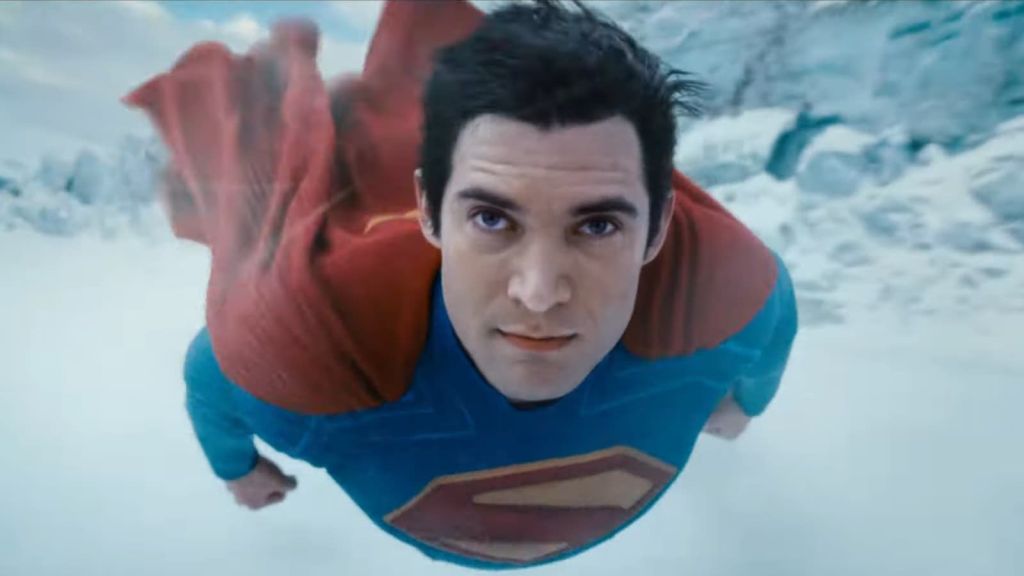


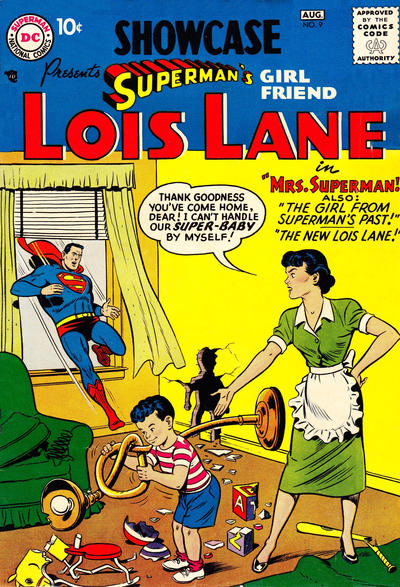
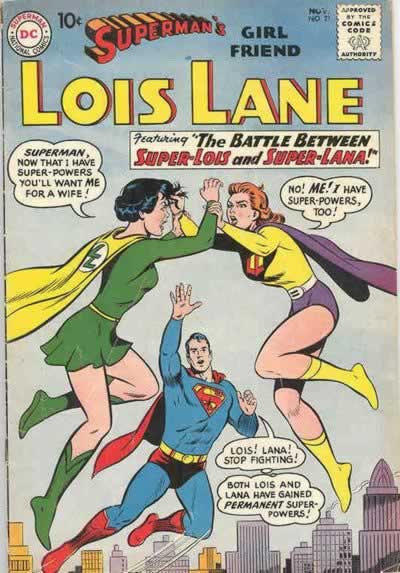


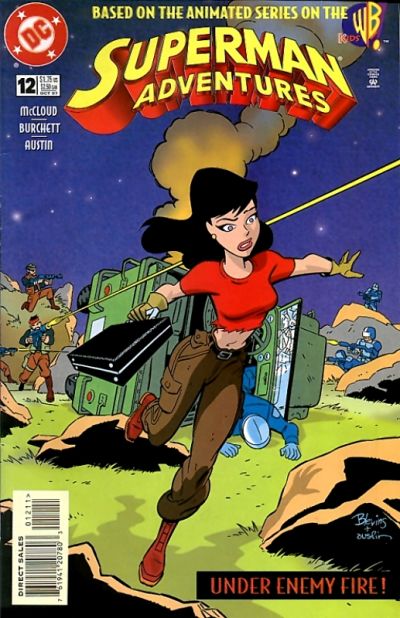
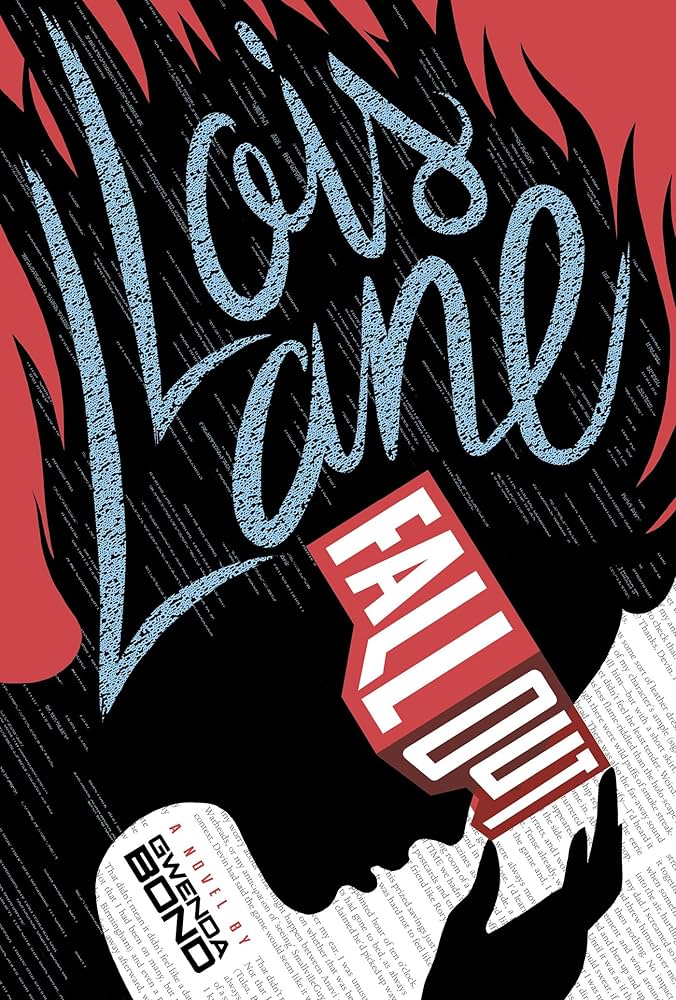

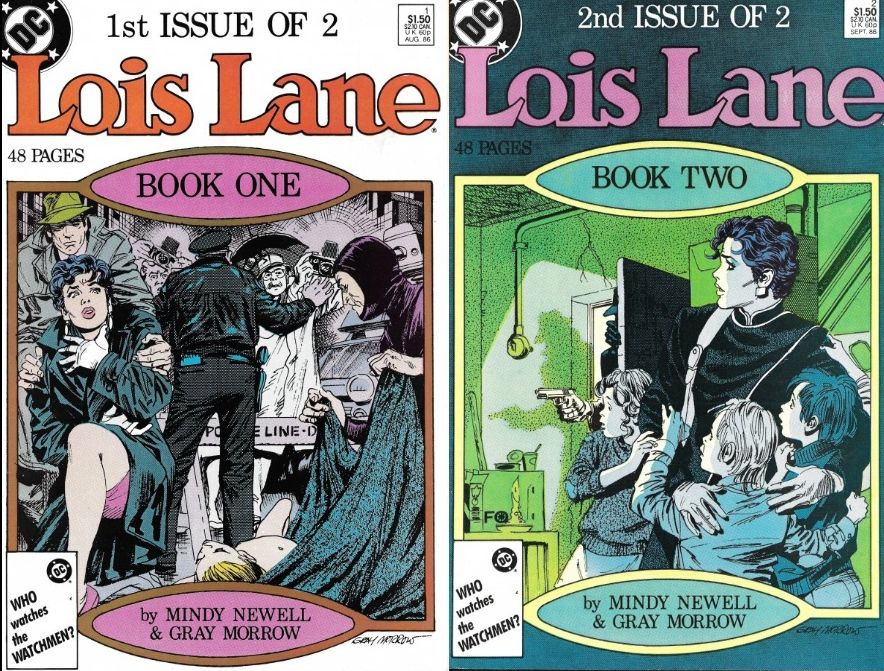

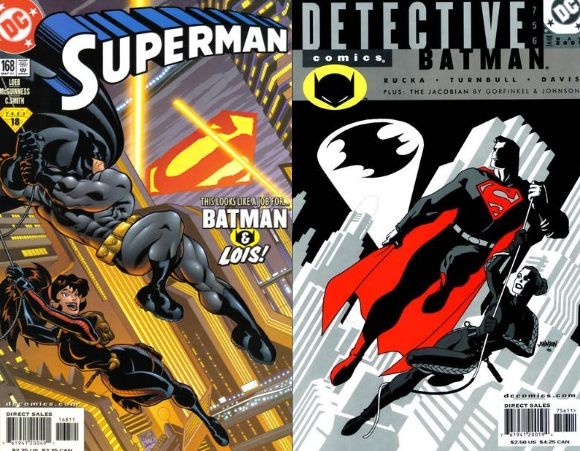


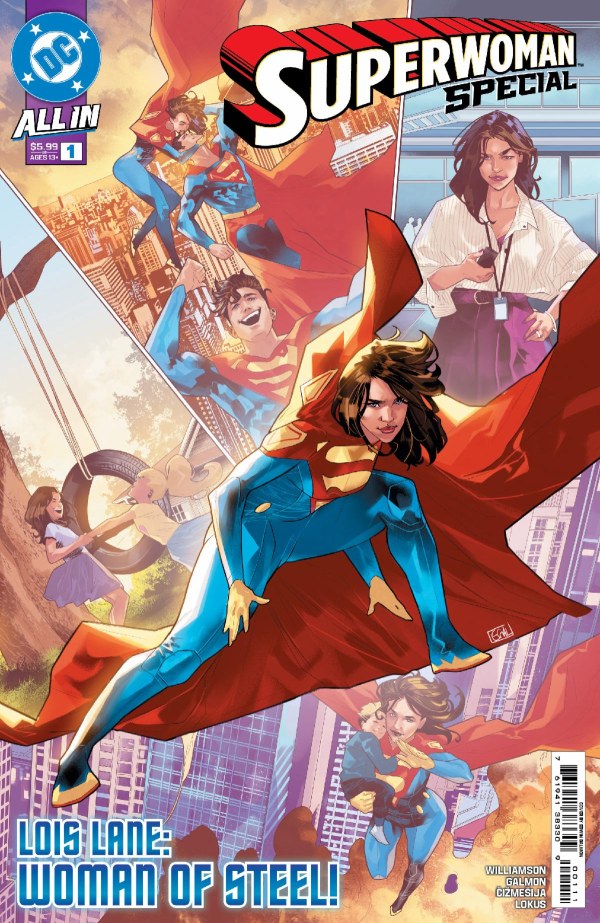


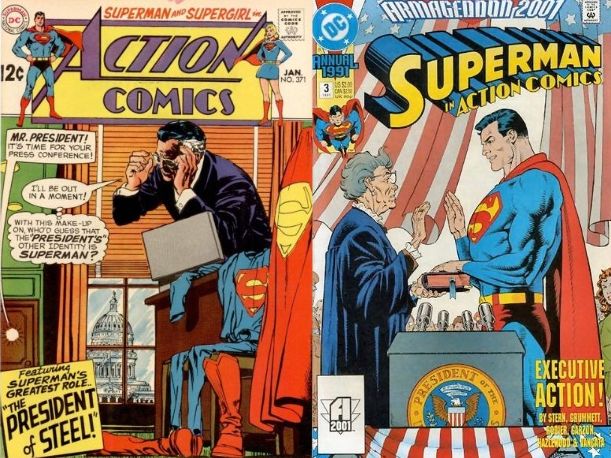


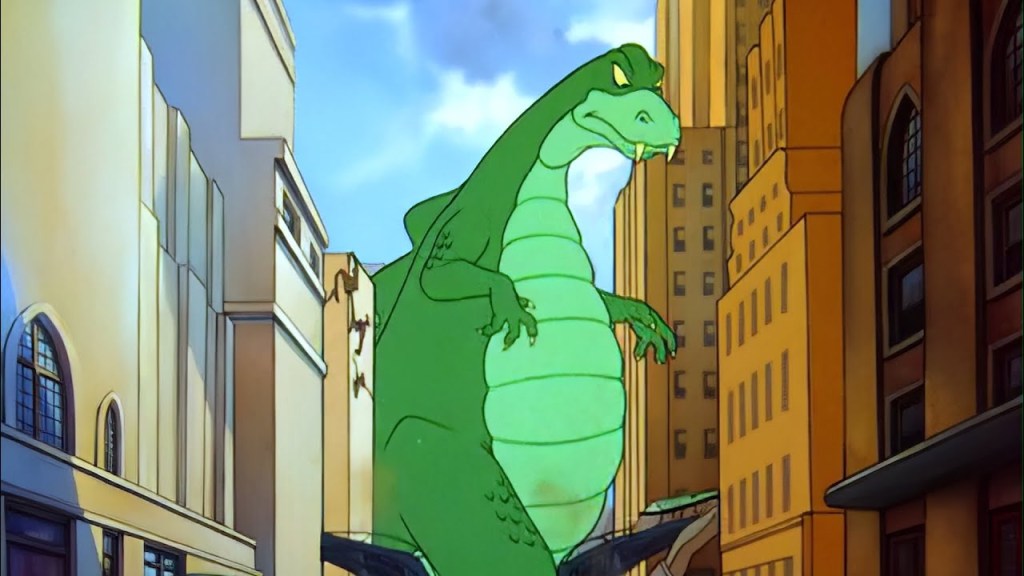

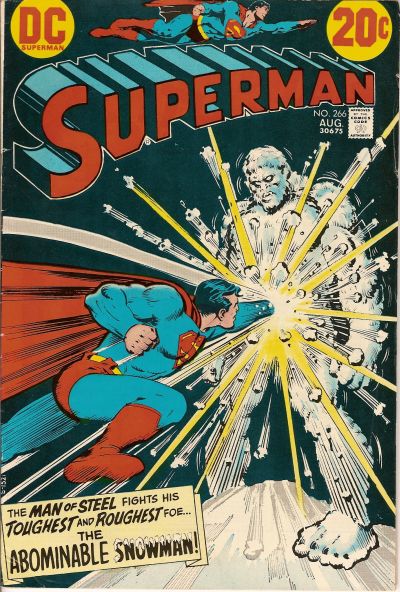

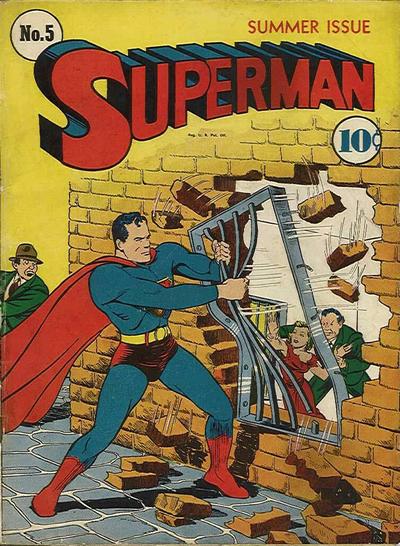
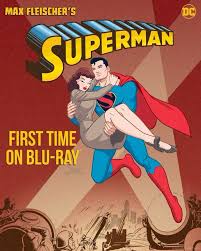

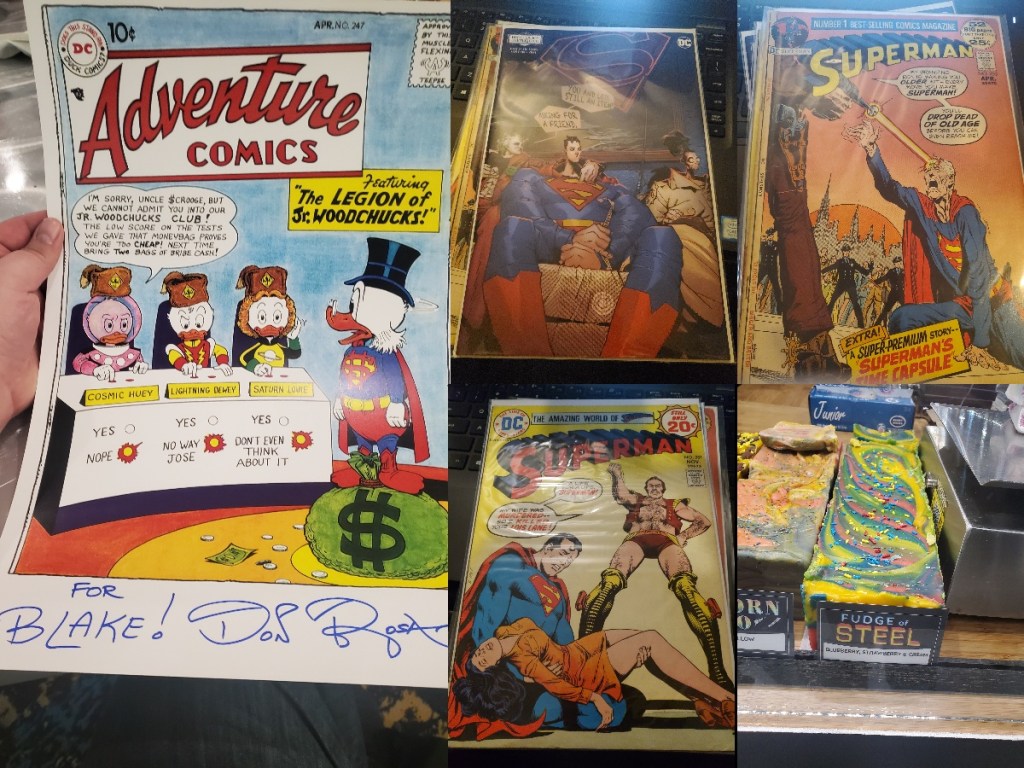

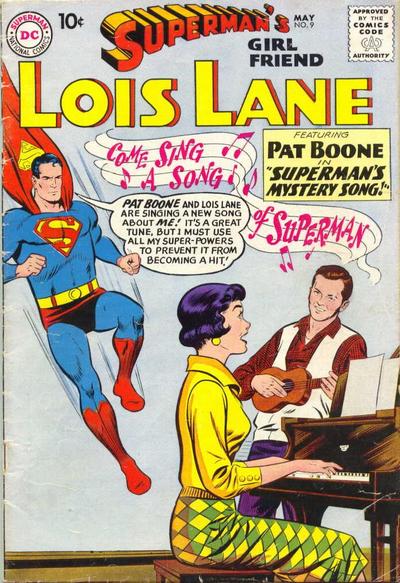
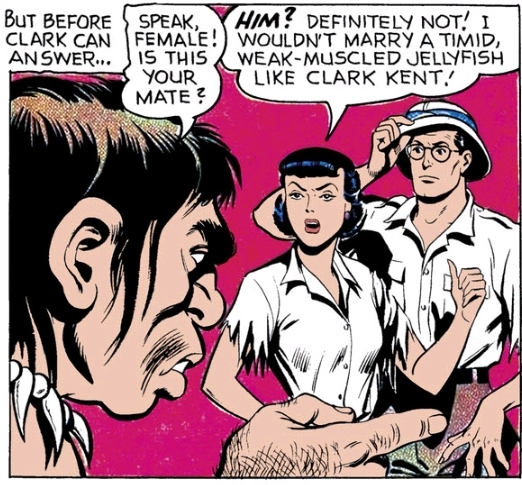


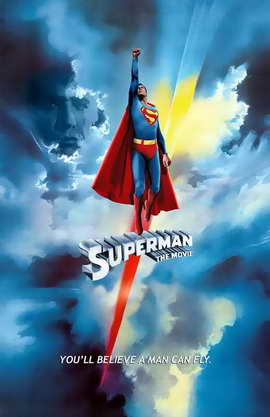


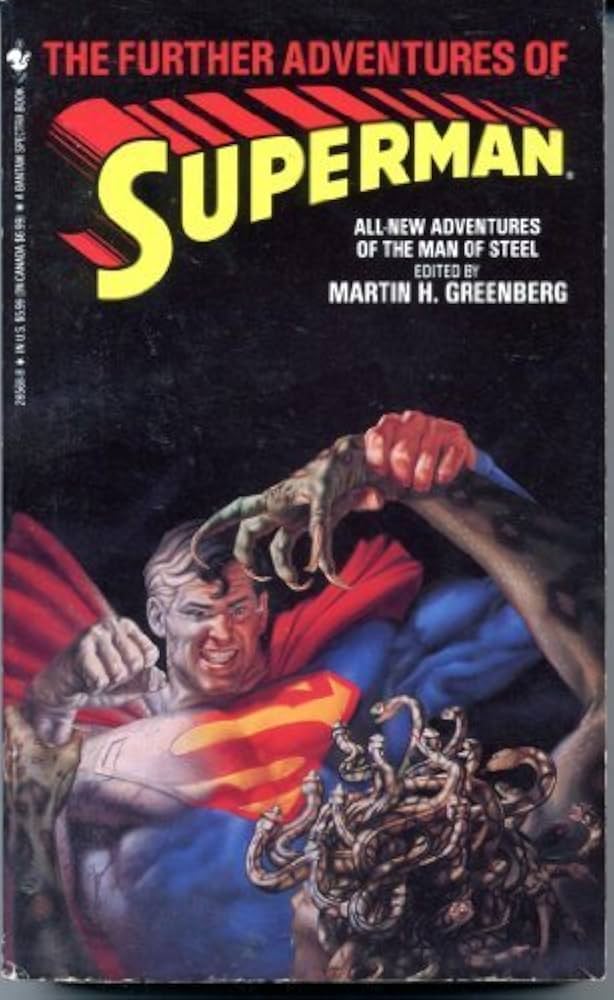




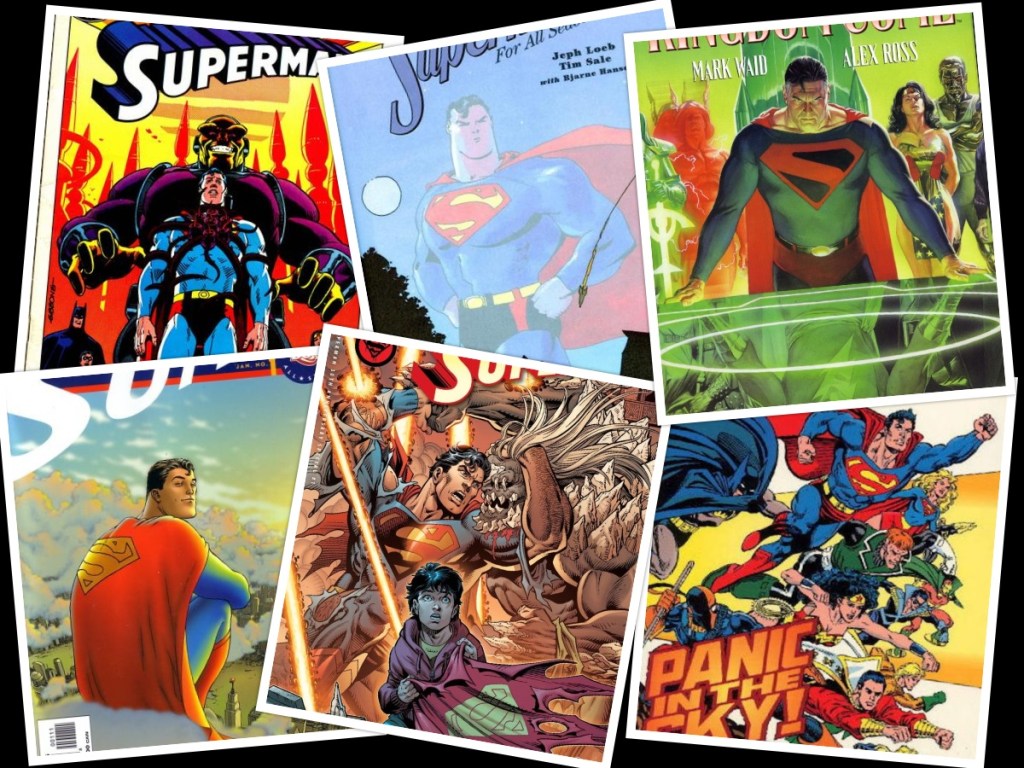
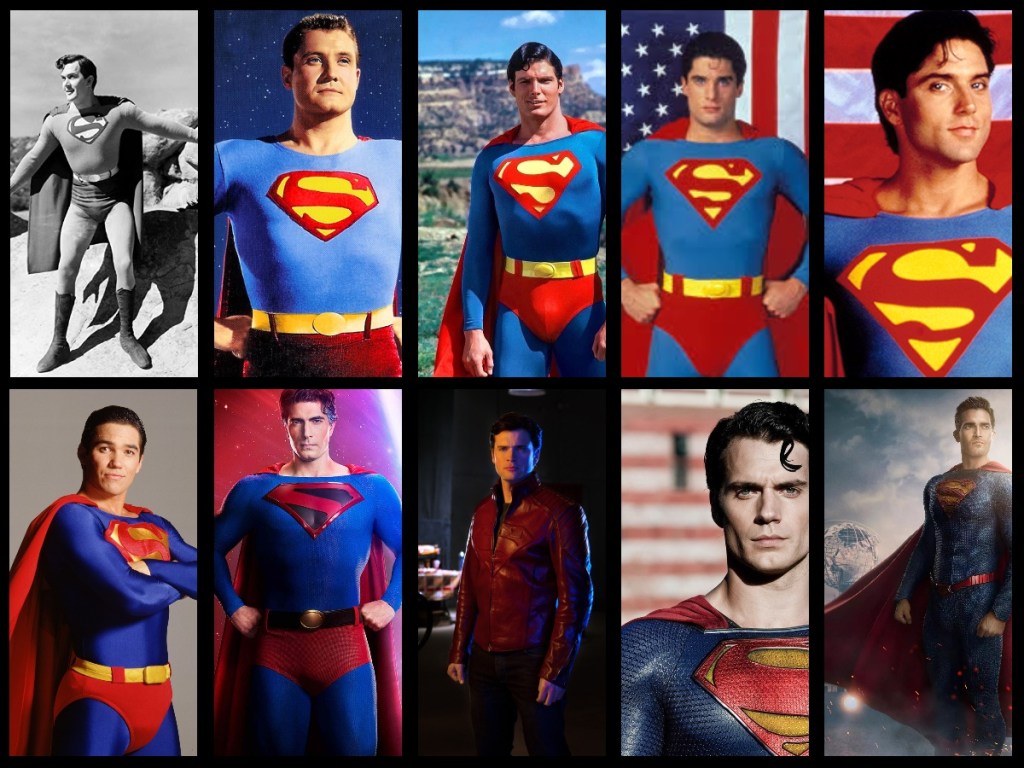






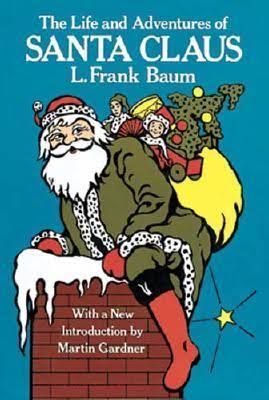

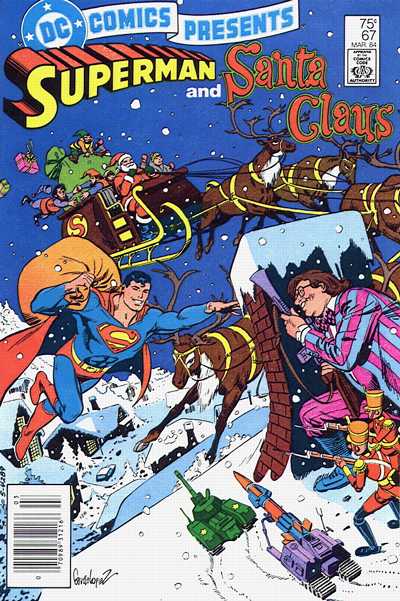


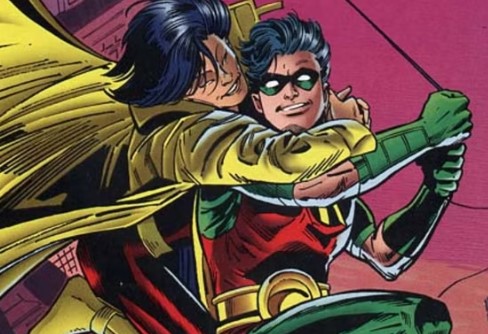

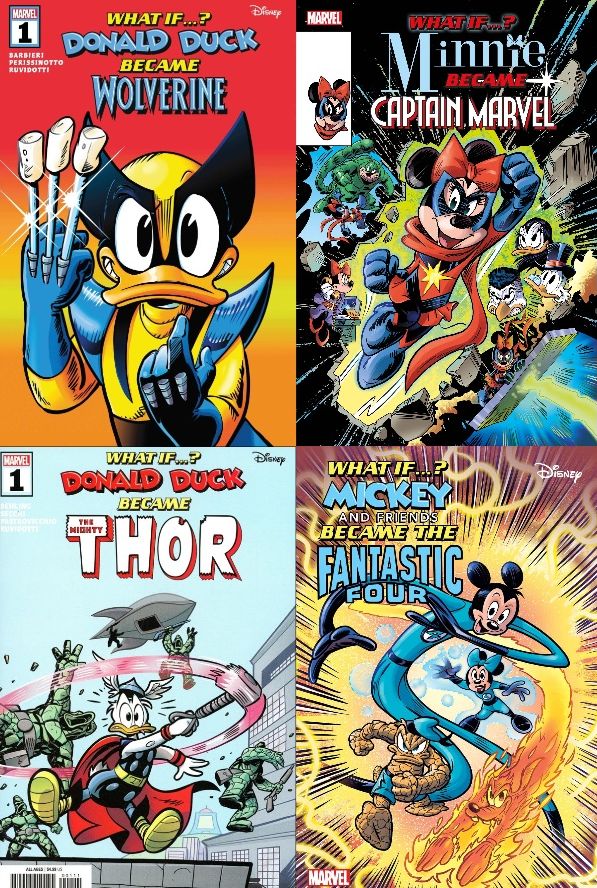
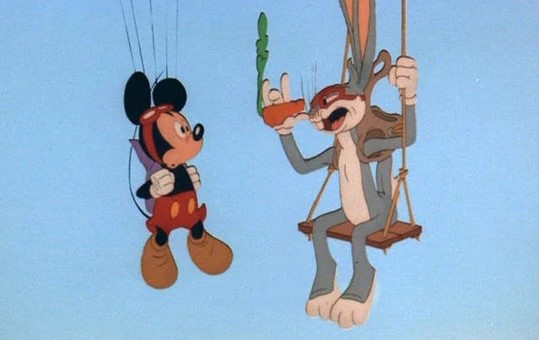
 Blake M. Petit