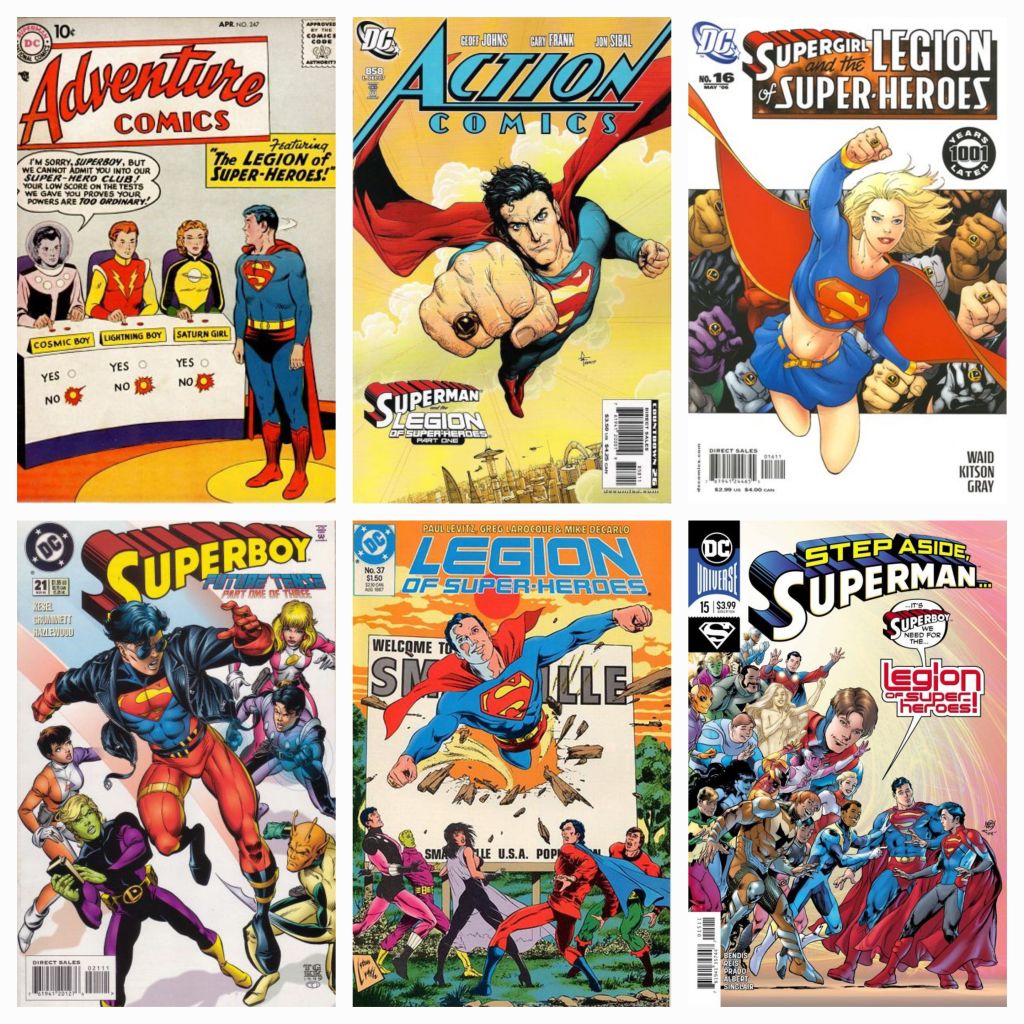
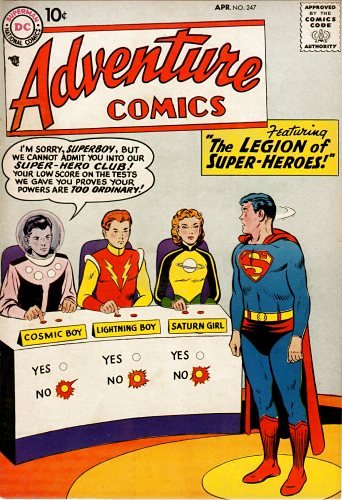
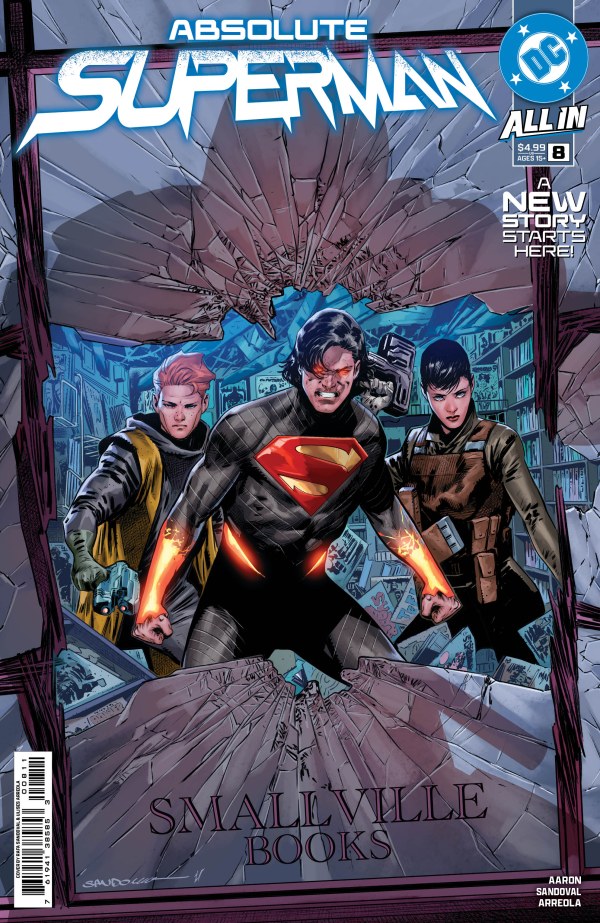
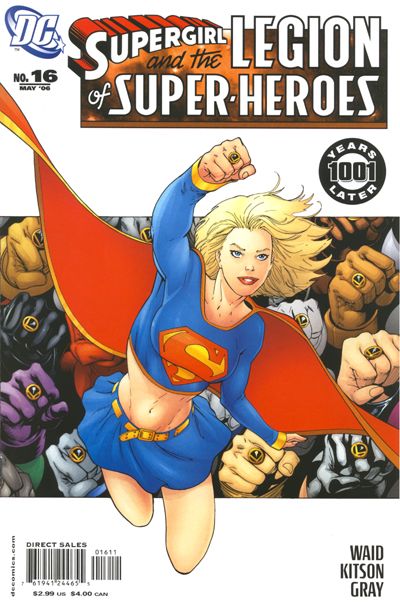
It’s the last full week before Halloween, and I’m going whole hog on the spooky content, friends. This week we’re going to find ourselves encountering some of the creepiest crawlies there are. Vampires, werewolves, mummies, and Dr. Frankenstein’s bouncing baby boy are all coming your way week, along with a few Halloween specials. We’re gonna wrap up October in classic Abbott and Costello fashion with Superman Meets the Monsters!

And as always, you can check out earlier blogs in the Year of Superman Archive!
Wed., Oct. 22
Comics: Superman: The Man of Steel #14, Superman Vol. 2 #70, Young Justice #3, Wonder Woman Vol. 6 #25 (Cameo)
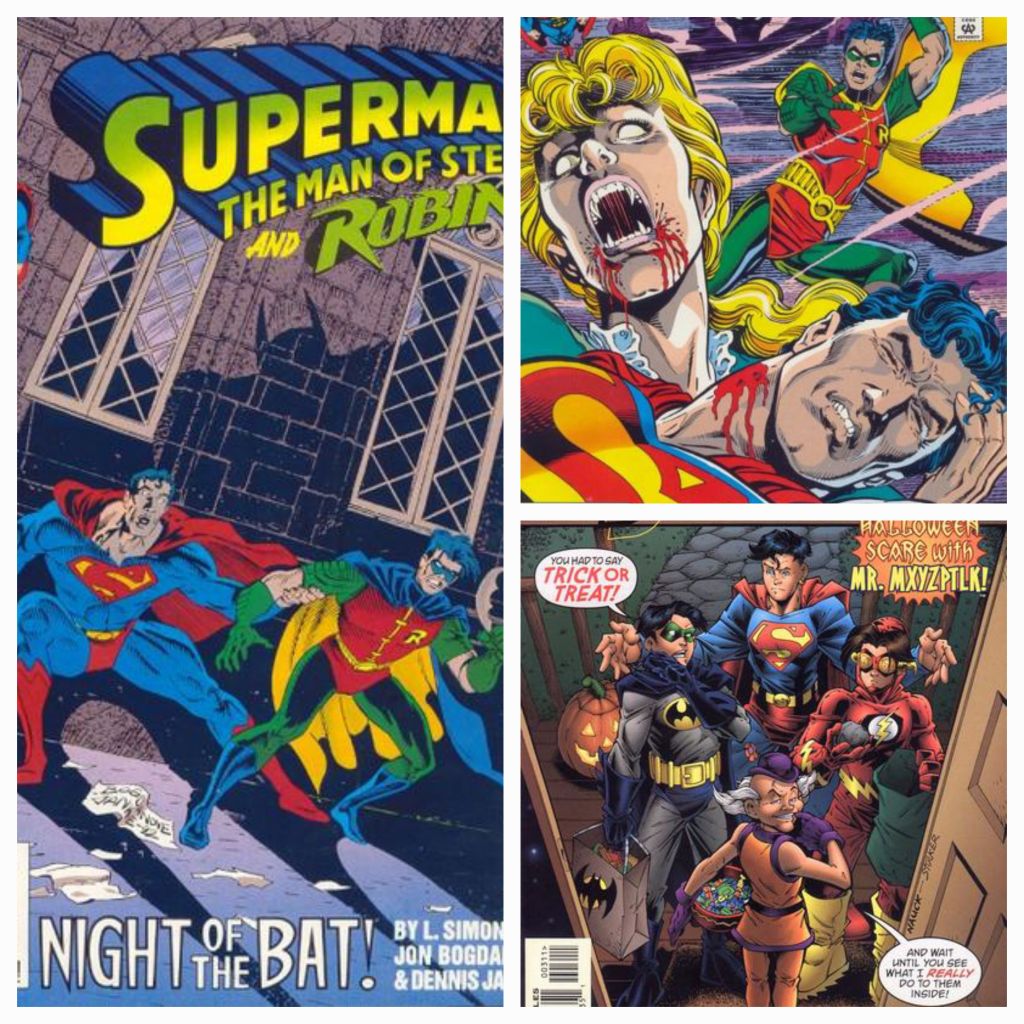
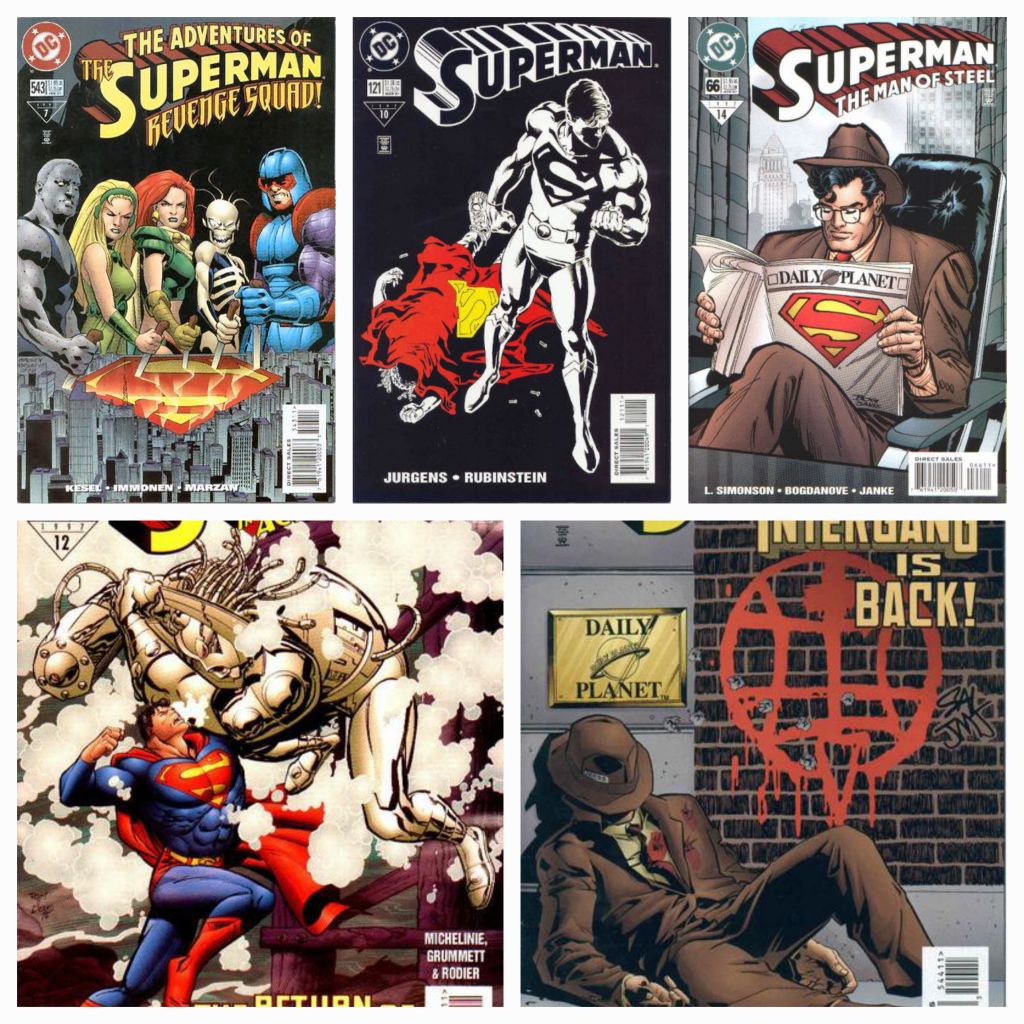
Notes: We’re going to kick off this week with a two-part story from 1992 in which Tim Drake – at time the newly-minted Robin – pays a visit after news that an odd “blood plague” has jumped from Gotham City to Metropolis. Tim suspects that the victims, drained of blood and left to die, were the targets of a vampire, and he’s determined to hunt them down. Tim, being the smartest member of the Batman family, is absolutely right: we see the vampire appear in the home of the ill Lucy Lane whose boyfriend (at the time) Jimmy Olsen is at her bedside when he appears. The vampire pulls Lucy from her window to feast, his appearance constantly changing and cycling through various famous movie vampires, before Jimmy drives him off with the flashbulb of his camera. The next day he shows Lois the photo he took of Lucy hovering in the air, proof of the attack because vampires can’t be photographed. Dozens of people start disappearing, including Jimmy’s friend Babe (I didn’t name her, folks), a rocker girl who hired him for a photo shoot.
Since Superman is out of town dealing with a series of disasters and calamities, it’s up to the rest of our cast to do something about the situation. The next night, Jimmy, Lois, and Ella Lane (Lucy and Lois’s mom) treat her room with garlic and prepare to look out for her. Jimmy, meanwhile, goes full-out Monster Hunter with a kind of ridiculous getup that I can’t believe never made it into an action figure. Jimmy and Robin encounter each other on a rooftop (their first meeting) as they both track their suspect, the mysterious “Dr. Ruthven.” (Ruthven, by the way, I believe is an old Bulgarian name which means “Obviously I’m a vampire in disguise, I mean, come ON.”) But when Ruthven turns out to be more they can handle, Jimmy activates his signal watch, summoning Superman to his side. He manages to grab Ruthven as the sun is rising, and they watch him disintegrate. Their victory is short-lived, though, as they hear Ruthven laughing, mocking them, saying that sunlight can’t kill a “modern” vampire.
The story continues in Superman #70, with Superman and Robin patrolling the city and Robin trying to convince Superman that vampires are undead, and the usual no-killing rules therefore do not apply. Superman, meanwhile, isn’t convinced that driving a wooden stake through someone is the way to go. Jimmy, hospitalized from his own injuries fighting Ruthven, implores Superman to save Lucy. As he seeks her out, Jimmy and Robin begin making plans. That night, Superman is distracted by a subplot just long enough for Ruthven to return to Lucy’s apartment and take her away, but Jimmy and Robin trace him to an old cemetery where he’s gathered dozens of people he’s infected, including Lucy. Lucy is about to bite Superman (and, as her vampire powers are magical, it would probably work), and Jimmy tackles Robin to prevent him from staking her.
As all this is going on, the situation is being observed by the demon Blaze, an old foe of Superman’s who is concerned that there are certain dead people whose souls were marked for her, but are still in the land of the living, trapped in their undead forms. Blaze floods the cemetery with light that burns the vampire virus out of the victims. Ruthven falls onto a statue of a soldier with a bayonet, essentially staking himself. All seems to be well until the final panel, when we see a face in Babe’s eye that reveals she is not as free of the vampire influence as we would have hoped.
The Babe situation would become a running subplot for quite some time, not resolving itself until some time after Superman’s death and resurrection, so it clearly wasn’t the end of this particular storyline. But that’s how it was during the Triangle Era – this little two-parter set up lots of pieces that would pay off later. The Babe story was one of them, the Blaze storyline would flare up just a month later, and there were even seeds for the two-part “Crisis at Hand” story we read here a couple of weeks ago. It’s fun to see Jimmy hanging out with Robin as well, although there’s never any real explanation as to why Batman would have sent him to Metropolis to deal with a friggin’ vampire without any backup. This was during the period where Tim was enjoying a few miniseries before graduating to his own solo title, and the red-hot popularity of the character explains his appearance in a meta sense, but not in a story sense.
As we’ve seen before, though, it bothers me that the heroes didn’t actually win this one. Without Blaze’s intervention, Superman may well have been bitten and turned into a vampire. Ultimately, it’s hard to call this one a victory for the good guys, no matter how much fun the story actually was.
For a bonus bit of Halloween fun, let’s look at Young Justice #3 by the late Peter David with art by Todd Nauck. Tim’s back again, this time with his pals Superboy and Impulse, having fun at a Halloween party with their brand-new superhero team. Unfortunately, a cult nearby has – in an attempt to summon a demon – accidentally plucked a teenage Mr. Mxyzlptlk from back in time. He encounters the kids and, hearing about his future shenanigans from Superboy, resolves never to use his powers frivolously. Unfortunately, it’s one of those “would you kill Hitler as a baby?” scenarios – it may sound like a good idea, but the ripples through time turn out to be disastrous. Young Justice is then tasked with teaching Mxy HOW to be a prankster in order to save the world.
David’s run on Young Justice was simply a delight. It was a series that had plenty of humor and laughs, but at the same time, never once skimped on characterization. Early in this issue, for example, there’s a scene where Superboy defends Robin from a jerk at the party, not because he doesn’t think Robin can handle himself, but because as someone who hangs out WITH Robin, he’s afraid that if Robin comes off as a wimp it’ll make him look bad. There was a lot of character growth done in this series, and by the end of it Tim and Conner were fast friends, but that bond didn’t exist yet here. There’s also a subplot with Red Tornado, who was acting as a sort of senior advisor to the team, reconnecting with his daughter as she goes trick-or-treating. These little character moments were a trademark of David’s writing, and whether he was writing a cosmic epic or a goofy story about a Halloween party, either way it elevated his work and helped make it more than the sum of its parts. It’s only been a couple of months, but I miss his stuff already.
Thur., Oct. 23
Comics: Superboy #123, Superman Vol. 2 #5-6, DC Comics Presents #53, Superman #11, Action Comics #559
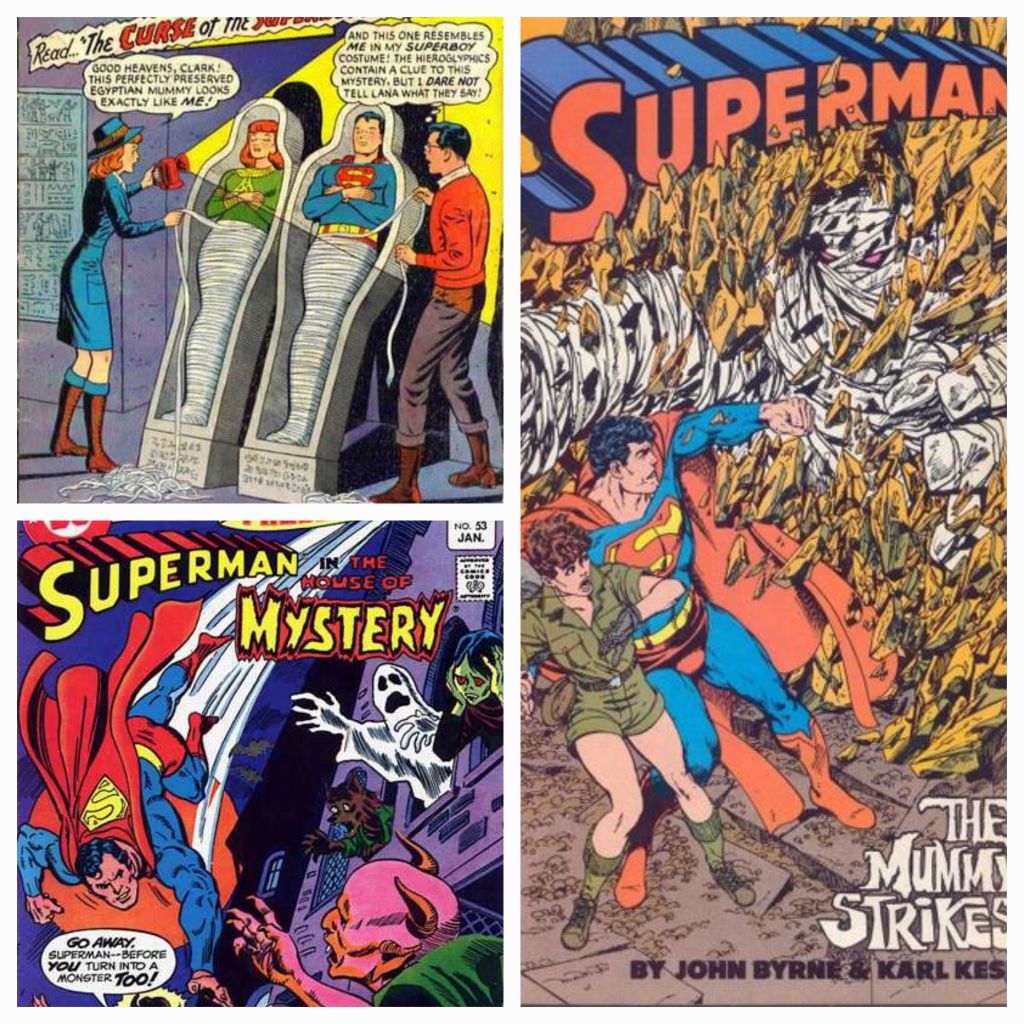
Notes: Today I’m going to tackle a couple of comics that only a Mummy could love, starting with Superboy #123, “The Curse of the Superboy Mummy.” The story begins in ancient Egypt, when an oracle sees a vision of the future with Superboy demonstrating his amazing powers. The oracle tells the royal magician how to create a potion that will turn his son Seth into a super-boy, even crafting a costume to match that in the vision. Neferti, daughter of the pharaoh, takes an interest in Seth, but he spurns her as he had no interest in her before he gained his powers. She turns to a rival magician for a charm to make Seth love her. He gives her a jade scarab, but the magician tricks her and the scarab strikes Seth down, causing both he and Neferti to drown in the sea. The two are mummified and buried together. In sorrow, Seth’s father carves a warning inscription into his son’s tomb about a calamity the oracle predicted, but he is driven out before it can be finished.
5,000 years later, Lana Lang and Clark Kent are digging up a pyramid in modern Egypt (this isn’t quite as random as it sounds – Lana’s father was an archaeology professor) and happen to unearth the mummies of Neferti and Seth who – wouldn’t you know – happen to EXACTLY resemble Lana and Superboy, whose costume Seth is still wearing. Lana doesn’t know what the inscription on the tomb says, but Clark knows ALL ancient languages, because when you’ve got super-speed you need to find some way to pass the time. It reads “Mighty Superboy! Behold Seth, the super-youth of our day, and Neferti, who slew him by mishap. Heed the warning of the magic shield which predicts that you, too, will be killed by the maid, Lana, of your time, unless you first destroy her…” The mummies crumble into dust, and Clark dismisses the prophecy. Upon returning to Smallville, Superboy gets a sudden chest pain when he picks up Lana the next day. It happens again every time he gets near Lana, which is frequent, as she seems even more trouble-prone than Silver Age Lois Lane. Together they crack the mystery – Lana foudn and has been wearing Neferti’s scarab, which is affecting Superboy much like Kryptonite. The inscription, which was never finished, was supposed to say “unless you first destroy her SCARAB.”
This is why it’s always important not to bury the lede, guys.
It’s a fun story, though, and although it has a lot of the sillier tropes of the era, it presents them in a fun, more unique way than a lot of the comics of the time. Superboy doesn’t actually FIGHT a mummy, I guess, but he’s almost killed by one, and that feels like it fits in with Halloween to me.
Clark would encounter a mummy again in the John Byrne era, in Superman #5, “The Mummy Strikes!” Clark comes in to work where Perry White shows him a video that Lois sent covering an archeological dig in South America. The video cut out, and Perry orders Clark on the next flight down there to find out what happened – of course, the fastest flight happens to be Air Superman. When he arrives he finds he camp safe, allows Lois to think Superman dropped him off (it’s not TECHNICALLY a lie) and discovers what’s going on. The archaeologists have uncovered a metal cylinder that seems to have been made by advanced technology, but is at least 6000 years old. What’s more, the pyramid they are excavating was built over a technological structure that predates human civilization. As they search the caverns, a gigantic creature wrapped like a mummy bursts through the walls and attacks them. Clark manages to “get separated” from the group so he can use his powers against the mummy, but it knocks him out. Lois finds him and the creature, whose trappings have fallen away to reveal an enormous robot. The story continues in issue #6, where Clark wakes up to find Lois holding up his Superman uniform. She tells him that he has been unconscious for “two solar days” and refers to Clark as a “handsome stranger.” Clark realizes that Lois, and the rest of the camp, have had their bodies taken over by alien forces. He learns that these creatures belong to a race that existed on Earth before humans, but who abandoned the planet when struck by a plague. About 500 of them chose to stay and placed their minds in the body of their robot, which would awaken when the race that replaced them reached a sufficient level of development, then take their planet back. Superman battles the robot, which still has the minds of most of the lost civilization, and forces it to release Lois and the rest of the team, who conveniently have no memory of their captivity. He tricks the robot into trying to download its consciousness into his Kryptonian body, which short-circuits the transfer sequence, causing the robot to explode. Superman gives Lois the story this time, “Clark” having been returned to Metropolis already.
I enjoyed this little John Byrne two-parter with its appropriate seasonal goodness. The first half, with the mummy, has some classic monster movie tropes, although the science fiction underpinnings show through the seams from the very beginning. The second half does away with those trappings (literally and figuratively), but the notion of a pre-human civilization trying to wipe out humanity is another classic trope that you could find in the sci-fi invasion films of the 50s, giving the entire thing a nice, old-school feel that’s wildly apropos for the season. There’s also a funny little runner about Clark having neglected to shave and trying not to let Lois notice that he and Superman are sporting the same five o’clock shadow. I know I usually defend Lois in the old days for not figuring out that Superman and Clark were the same person, but I have to admit, stories like this one make that tough sometimes.
I’ll close off today with the curious little book that is DC Comics Presents #53. Presents, as you may recall, was the Superman team-up book, with Superman partnering up with a different guest star in each issue. In this one, his guest star is House of Mystery, an odd choice in that it’s not exactly a CHARACTER. House of Mystery and its sister title, House of Secrets, were a pair of horror anthology comics hosted by the brothers, Cain and Abel, similar in concept to classic comics like Tales From the Crypt, but not quite as intense. In this issue, Mystery’s host Cain pops in to present to us the Superman story “The Haunting Dooms of Halloween.” The story starts with a kid – little Ricky (who probably not coincidentally looks like Ricky from Superman III, which had been released earlier that year) trick-or-treating in a Superman costume when suddenly, without warning, he turns into Superman himself. He rushes to Metropolis and bursts into Lois Lane’s Halloween party, where he abducts Lois. At the same time, Jimmy transforms into Thor – the costume HE was wearing – and tries to save her by…making it rain. Clark, wearing a Green Lantern costume, pretends that whatever magic is affecting Jimmy has struck him as well and uses his “power ring” to fly after the fake Superman.
Back at the House of Mystery, Cain is settling in to tell another story to a group of children when he gets a visitor – Mr. Mxyzptlk (Mxy seems to just LOVE Halloween), who brings in the fake Superman and Lois. He restores Ricky to normal, then starts zapping the other kids to become the monsters and ghosts they’re dressed as. The real Superman (in his own costume now) tracks them down and enters the House, and a voice warns him that he must find Lois by midnight or she’ll be lost forever. He stumbles through the house, facing not only his own fears, but assorted monsters that he’s reluctant to hurt when he realizes that they’re transformed children. As the clock strikes midnight, Superman stands in stark horror at his failure…until Mxy reveals himself, and he starts to laugh. Cain is confused until Superman explains – the whole thing is obviously a joke. Mxy may be a pest, but he wouldn’t actually HURT anyone. This is a WILD swing, by the way, as there are plenty of Mxyzptlk stories where he DOES hurt people, but in this case it seems to be right – Lois is freed from her own prank (being stuck in a room full of comic book artists chained to their drawing boards and begging her to set them free), and Mxy begins to plot his next Halloween stunt. He’s foiled not by Superman, but by little Ricky, who feeds Cain a clue to trick Mxy into banishing himself for another 90 days.
This is a really silly story, far more lighthearted than your typical House of Mystery fare, and Cain plays a more active role than he usually does. It’s very much in keeping with the Superman stories of the era, though, and a joy to read as part of my Halloween windup. I didn’t anticipate having two Mxyzptlk stories in two days, however. I suppose Halloween WOULD be his favorite time of the year, though. Hey, DC, if you’re listening, I’ve got an idea for NEXT year’s anthology theme…
Fri., Oct. 24
Comics: Superman’s Pal Jimmy Olsen #44, 52

Notes: If there’s one thing you can say about Jimmy Olsen, it’s that his life is NEVER boring. Whether he’s getting elastic powers or turning into a giant turtle, some sort of nonsense is ALWAYS happening to him. Today I’m going to take a peek into a couple of his hairiest adventures, beginning with Jimmy Olsen #44, “The Wolf-Man of Metropolis.” Superman, who has apparently learned nothing from all the times Jimmy has turned himself into a turtle, drops off a box of ancient bottles and jars that he recently uncovered, including one that purports to contain a potion that can turn someone into a “wolf-man.” When Lois asks Jimmy if it’s real, he decides to prove it’s just a superstition by drinking the contents of the bottle. (Side note: whether werewolves are real or not, is it really the best idea to drink from a bottle that’s been underground for centuries? This is why Jimmy is still a junior reporter after 85 years.) That night, the potion kicks in and turns him into a werewolf just before he’s supposed to take Lucy on a date to a masquerade party. He avoids admitting he’s a werewolf by getting her a Red Riding Hood costume, and they even win the costume contest. Over the next few nights, though, he keeps changing into a wolf and having to find increasingly unlikely explanations for why he’s still wearing the makeup. Lois immediately catches on to what happened and tells her sister, but Jimmy keeps evading the question instead of just fessing up and asking her to break the curse for him, as the bottle says it will end if he gets a kiss from a pretty girl. Jimmy gets desperate, even attempting to pay random women in the park to kiss him (had this story happened today it would be all over social media and Jimmy would be cancelled FOREVER) before Superman brings Jimmy into a dark room and gets his cousin, Supergirl, to give him a smooch and put him out of his misery.
This story makes Jimmy look so remarkably stupid that you can’t help but love it. From drinking the potion to refusing to admit it even after Lois has told Lucy about the boneheaded thing he did this time, Jimmy doesn’t make a single correct decision throughout the entirety of the tale. He doesn’t even know, at the end, that Supergirl is the one who saves him, because this is during that period when her existence was still being kept a secret, which is why Superman asks her to kiss him in the dark. I would love to have listened in when Superman called her to help with this one: “Hey, Linda, it’s Clark. My idiot friend drank a potion that – yes, AGAIN – a potion that turned him into a werewolf. Will you kiss him for me?”
Incidentally, in the backup story in this issue, Mr. Mxyzptlk disguises himself as a leprechaun. It may not be a Halloween story, but if this keeps up I may have to re-name this “Mr. Mxyzptlk” week.

Jimmy’s monstrous problems weren’t over, though. Just eight issues later, MYXYZPTLK COMES BACK! I am UTTERLY DELIGHTED. Mxy, dodging taking his own girlfriend out for a birthday date, comes to Metropolis and falls head over heels in love with Lucy Lane. Trying to find a way to sabotage Jimmy, he sees the b0ttle of wolf-man potion in Jimmy’s trophy collection and makes him drink it, but further uses his magic to turn the potion into water. It doesn’t affect Jimmy, but he doesn’t know that. Instead, Mxy places his own curse on Jimmy, one that is immune to the kiss of a beautiful girl. When the sun comes down, Jimmy becomes a wolf-man again. Once more, Superman summons Supergirl to make out with Jimmy in the dark, but it doesn’t work and he’s still stuck as a wolf. The next night, he’s working late at the Planet office when the sun goes down and he once again wolfs out. Lois takes pity on him and gives him a kiss, but once again, nothing happens. On Night Three, Lucy insists on Jimmy taking her to the zoo at night, because that’s apparently something girls did in the 1950s. Jimmy changes again, and this time Lucy kisses him (with her eyes closed, trying to pretend he’s somebody else), but again, no avail. It keeps going – Lori Lemaris, Lana Lang, nobody’s kiss saves him! Until a veiled girl on the street rushes up to him and gives him a smooch that turns him normal again. She whips off her veil to reveal the less-than-gorgeous face of Miss Gzptlsnz, Mxy’s spurned girlfriend, who enchanted her own lipstick to break Mxy’s magic. She tricks Mxy into going home and follows him, then he goes back to Lucy to tell her he’s normal again, but this time she spurns him because he’s kissed too many girls this week.
I have no notes. This story is perfect and, although I haven’t actually looked it up, I assume it won the Nobel Prize for literature.
Sat., Oct. 25
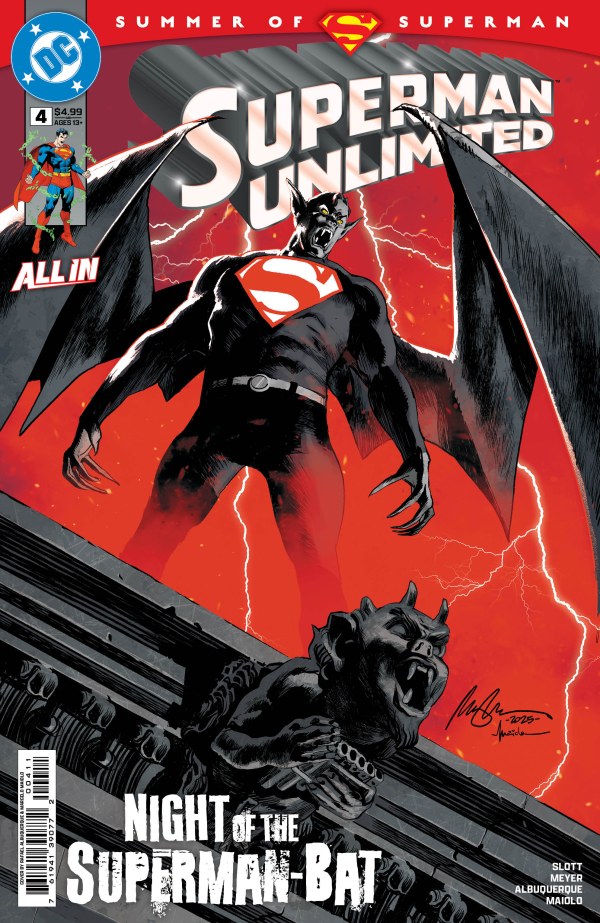
Comics: Superman #143, Action Comics #531, Green Lantern Vol. 8 #27 (Superboy Guest Appearance), Green Lantern Corps Vol. 4 (Superboy Guest Appearance), Green Lantern Vol. 8 #28 (Superboy Guest Appearance), Action Comics #1091, Superman Unlimited #6, Batman/Superman: World’s Finest #44
Notes: Today we’re going to spend a little time with Superman and his encounters with my favorite creature of them all – the Frankenstein monster. The creature has been in the public domain since the dawn of comics, and he’s showed up everywhere. In modern times, the DC version has even become a secret agent and adopted the name “Eric Frankenstein.” But we’re going to look at earlier versions this time out, starting with Superman #143: “Bizarro Meets Frankenstein!”
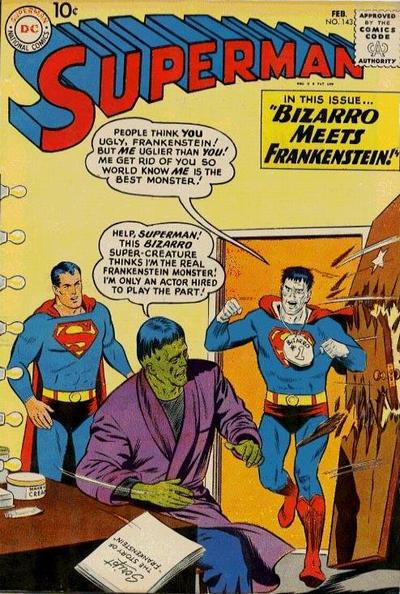
On Bizarro World, the Bizarro kids love Earth movies – terrifying monsters like Charlie Chaplin and comedies starring the likes of the Wolfman and Mummy. But Bizarro #1 is outraged when he sees a commercial advertising a new Frankenstein movie as starring “the world’s scariest monster.” Determined to prove that he, Bizarro, is scarier than Frankenstein, he zips to Earth, scaring the crap out of a Yeti just to prove that he can before he makes his way to Metropolis. First, he finds the actor wearing the monster makeup and chucks him out of the window, then makes his way to the movie set. To his shock, though, instead of being terrified of him, everyone laughs and the actresses even line up to give him kisses. Unbeknownst to him, the director saw Superman on set earlier and told the girls that he must have put on Bizarro makeup to stir up publicity to his Frankenstein movie. I assume this story must take place on an alternate Earth where that kind of logic makes sense.
Bizarro’s attempts to generate terror continue to fail. A few actors on a western set shoot at him to make him dance (having accidentally chewed a loco weed that’s growing on the movie lot) and a couple of kids don’t fear him, but treat him like Santa Claus (Bizarro doesn’t know that the kids’ parents are part of a circus freakshow, so ain’t nothin’ gonna creep them out). Finally, he gets back to the Frankenstein set, where he starts tearing stuff up, but once again, there’s no fear on anyone’s faces. Superman finally drives Bizarro off by playing a recording to make Bizarro think someone is screaming in terror and a static electricity machine to make the actors’ hair stand on end. Back on Bizarro World, Bizarro decides to celebrate Halloween (Dec. 24, of course) with his kids with a marionette of the scariest monster on Earth – Superman.
My goodness, what a delightfully absurd story. Perhaps the funniest thing is that Bizarro himself isn’t the one acting backwards this time. His goal of proving that he’s the scariest monster of them all is actually pretty straightforward, and in truth, is more logical than most of his stories often are. But even for the Silver Age, the set of contrived coincidences that keep people from fearing him over and over again just stack up to a point of utter absurdity. I love this story for what it is, though: ridiculous, cheesy fun.
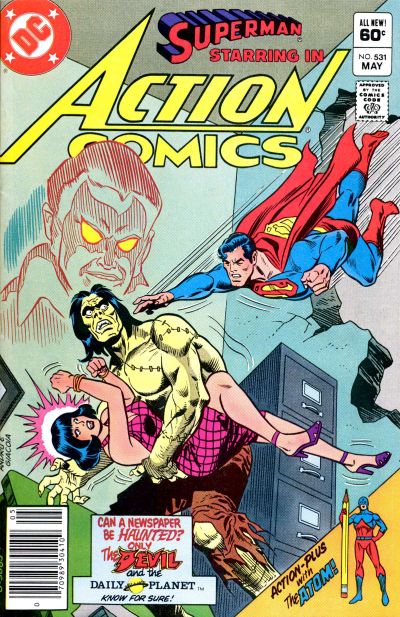
Action Comics #531gives us “The Devil and the Daily Planet!” Morgan Edge is making preparations to sell the Daily Planet to a sleazy tabloid publisher named Mort Waxman, a decision that has Clark and his colleagues quite upset. As he’s being shown around the building, Waxman is attacked Scooby-Doo style by a ghost who tells him to get out. The staff begins searching the building, and Lois and Clark run afoul of a Frankenstein-type monster dead set on getting Waxman, whom he calls his “creator,” and Jimmy and Perry wind up fighting a horde of demons that attack a mysterious woman in the printing room. The whole thing turns out to be the work of the ghost of the Planet’s original printer’s assistant, who loves the newspaper and refuses to see it destroyed by Waxman. In the end, Edge is convinced that the paper is too important to turn over to a profiteering scum merchant like Waxman, marking one of the few instances in comic book history of Morgan Edge demonstrating something like integrity.
Marv Wolfman and Joe Staton are responsible for this one, and it’s pretty good. This is from 1982, that era when the Superman comics as a whole were kind of stale, but this was a different sort of story. Superman wasn’t quite the hero in this one, facing a supernatural threat where he was confused as anybody else, but the story holds up the ideals of the character very well. I also really like Staton’s Frankenstein Monster – it’s a nice design that is more evocative of the original Mary Shelley novel than the more popular movie rendition, and it really works well for the character here.

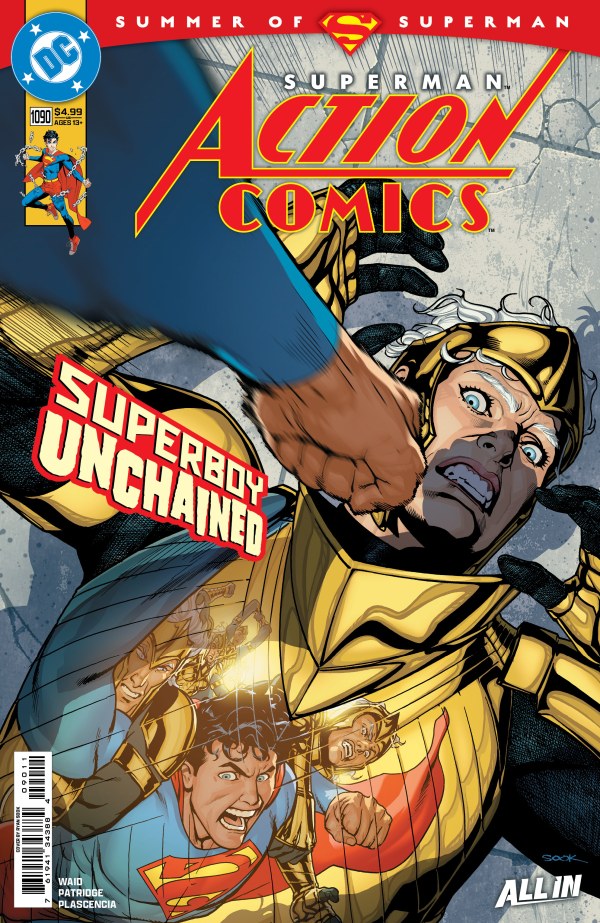
In addition to the creepy content, I’m also going to read some of the recent Superman comics today – it’s been a couple of weeks, and I’ve got several of them built up. Action Comics #1091 continues Mark Waid’s Superboy story with Sam Lane trying to capture young Clark. He escapes easily, but the realization that the military is after him leaves Clark rattled, especially since he was sent there by Captain Comet. When he confronts him, Comet tells Clark he knew that Lane would try to catch him and he wanted to see how Superboy would handle a problem he couldn’t simply punch. Clark soon realizes there’s more going on than Adam Blake is telling him. I said an issue or two ago that I hoped Mark Waid wasn’t taking the route of turning Captain Comet, one of DC’s longest running heroes (maybe never an A-list hero, but still a hero) into a villain. The reveal in this issue is really well-planned, and the final pages between Superboy and Captain Comet are magnificent. It’s perfectly in character for both of them, and it’s wonderful to see a story where a Clark this young starts learning the lessons that will make him the greatest hero of them all.

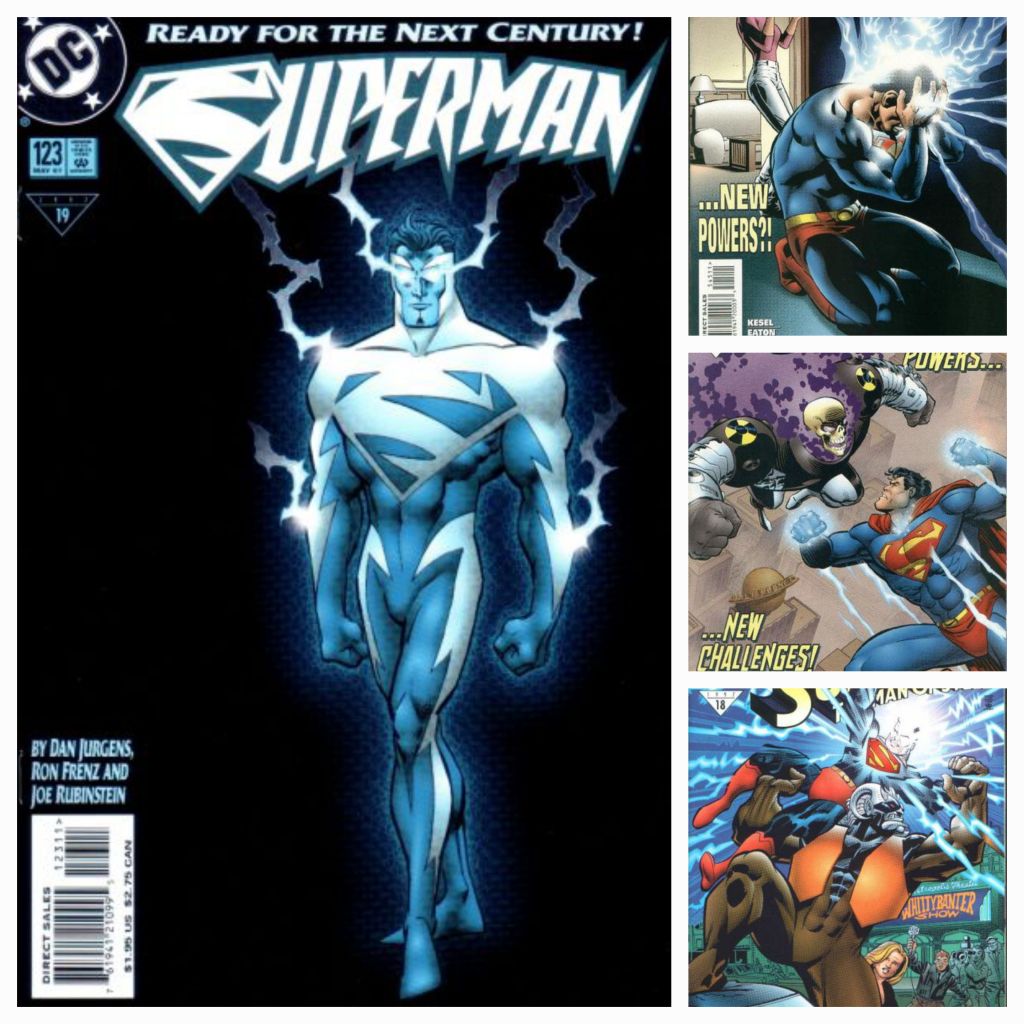
Dan Slott and Rafael Albuquerque (with Mike Norton this time) continue their story in Superman Unlimited #6. A visit to the Kryptonite-rich country of El Cadero to retrieve a Kryptonian sunstone runs into some problems as Clark’s lead suit is ripped open, exposing him to the incredible amount of Kryptonite radiation permeating the country. At that moment, of course, the Kobra operatives choose to take action. This is the sixth issue, the half-year mark of the title, which is traditionally where the first trade paperback collection will end. That makes it a decent time to take stock of where the series as a whole is going. Slott has set up a really interesting status quo, with a potentially hostile nation having control of the largest Kryptonite stockpile on the planet, Superman discovering a new power, and of course, the return of the Supermobile. The last page also is extremely promising, setting up future storylines for a couple of characters who have been underutilized lately. I’m hoping the second half of this title’s first year is as good as its first, because it’s been a strong addition to the Superman family of titles.

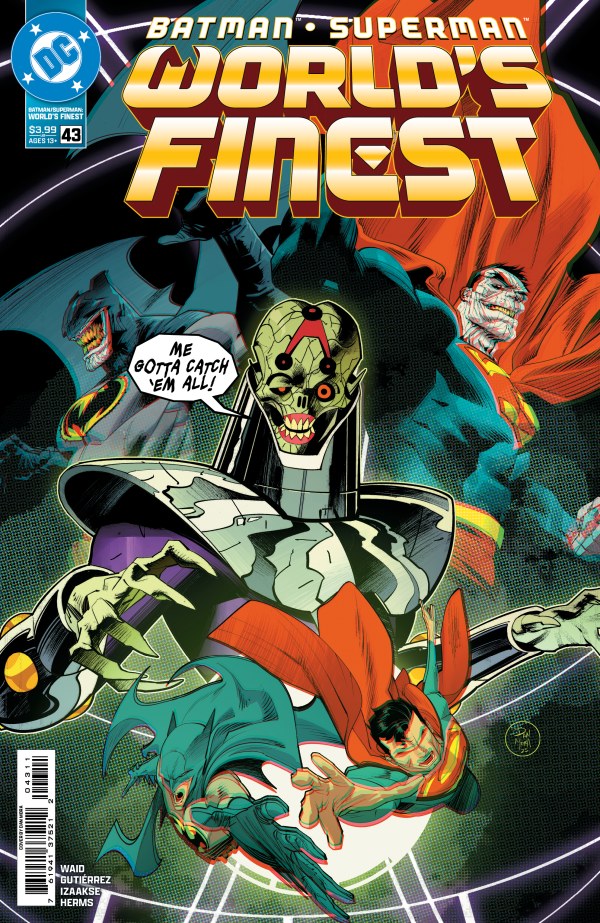
Waid is back for Batman/Superman: World’s Finest #44. Superman and Batman decide to send Robin (Dick Grayson – remember, this series is set in the past) to investigate a company that may have ties to LexCorp. Concerned about his safety, though, they ask Supergirl – who hasn’t held the highest opinion of Robin since their disastrous and hilarious date back in issue #12 of this series, to keep an eye on him from a distance. When the facility they’re in turns out to be experimenting with a synthetic Kryptonite, the fight gets a lot harder, and funnier. I absolutely love the antagonistic attraction Waid laces into the interactions of these two characters. It’s a funny dynamic to play up that’s pretty unique in pairings between the Superman and Batman families. I hope, at some point, we get to see Waid write a contemporary story with the two of them to see how the grown-up Nightwing and Supergirl get along these days.
Sun., Oct. 26
Comics: Superman’s Pal Jimmy Olsen #142-143, Krypto: The Last Dog of Krypton #5, Superman: The Kryptonite Spectrum #3, Supergirl Vol. 8 #6, Justice League Red #3, New History of the DC Universe #4

Notes: More monsterly fun begins today with Superman’s Pal Jimmy Olsen #142, part of Jack Kirby’s run, in which Jimmy and Supes meet “The Man From Transilvane!” A vampire called Dragorin casts his spell on Laura Conway, secretary of Jimmy and Clark’s boss, Morgan Edge. When she passes out in the office, they quickly discover her vampiric affliction, and Dragorin appears to interrogate her about her previous employer, Dabney Donovan. Jimmy and Clark go to investigate Donovan’s old lab, where they face off with a werewolf, causing Clark to duck out and Superman to take his place. Together, they figure out that Dragorin is seeking information about a cemetery called Bloodmoor. They track Dragolin to Bloodmoor, where they find his secret – the miniature planet Transilvane, buried beneath his mausoleum! The story continues in issue #143, where we learn that Donovan created the entire planet, complete with its monster-like inhabitants, as one of his experiments. They find Dragorin in what looks like a coffin, but Superman realizes they’re more like decompression chambers, helping them make the transition from Transilvane to Earth. The monsters put Superman in a torture device, hoping to force him to reveal Donovan’s whereabouts. Unfortunately for them, Superman doesn’t know, and also, he’s Superman, so the torture device isn’t all that effective. Donovan’s machines are about to unleash a “Genocide Spray,” cleansing Transilvane’s surface of all life to prepare it for new experiments. Superman manages to stop the spray and send the Transilvanians back home. Together, he and Jimmy figure out that the beings from Transilvane were “copiers” – creatures of a fluid atomic base that transformed into monstrous forms because Donovan flooded their planet with images from horror movies. Superman decides to give them a more peaceful world, and they switch the movie in Donovan’s machine to Oklahoma.
There’s a reason they called Jack Kirby the King of Comics, and I suppose that reason is that no other man on Earth could have gotten away with starting a story by showing a vampire attacking a secretary and ending it by having Superman convert the entire population of a miniature planet into devotees of musical theatre. Kirby had no hesitation to take wild swings, and the more I read of his Jimmy Olsen run, the more convinced I am that this series showcased that better than anything else. Still, for all the fun I’ve had so far this week, I’ve seen relatively few legitimate monsters. There was a robot wrapped up like a mummy, an actor in Frankenstein makeup, kids turned into monsters by Mxy-magic, Jimmy turned into a wolfman without losing his inherent Jimmytude…and now this alien that’s kinda like a vampire. I feel the need for REAL monsters. Fortunately, I’ve got a few more comics lined up that may understand the assignment a little better.
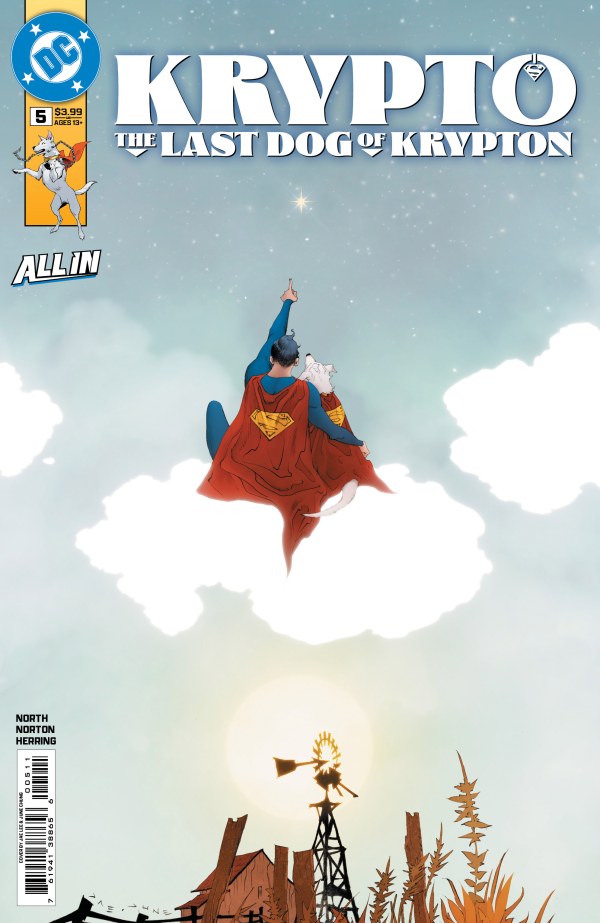
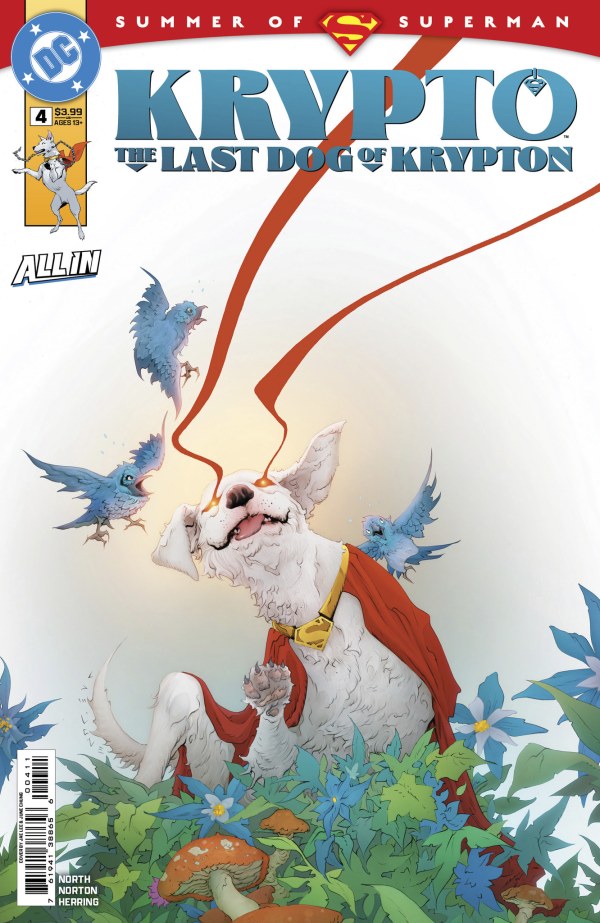
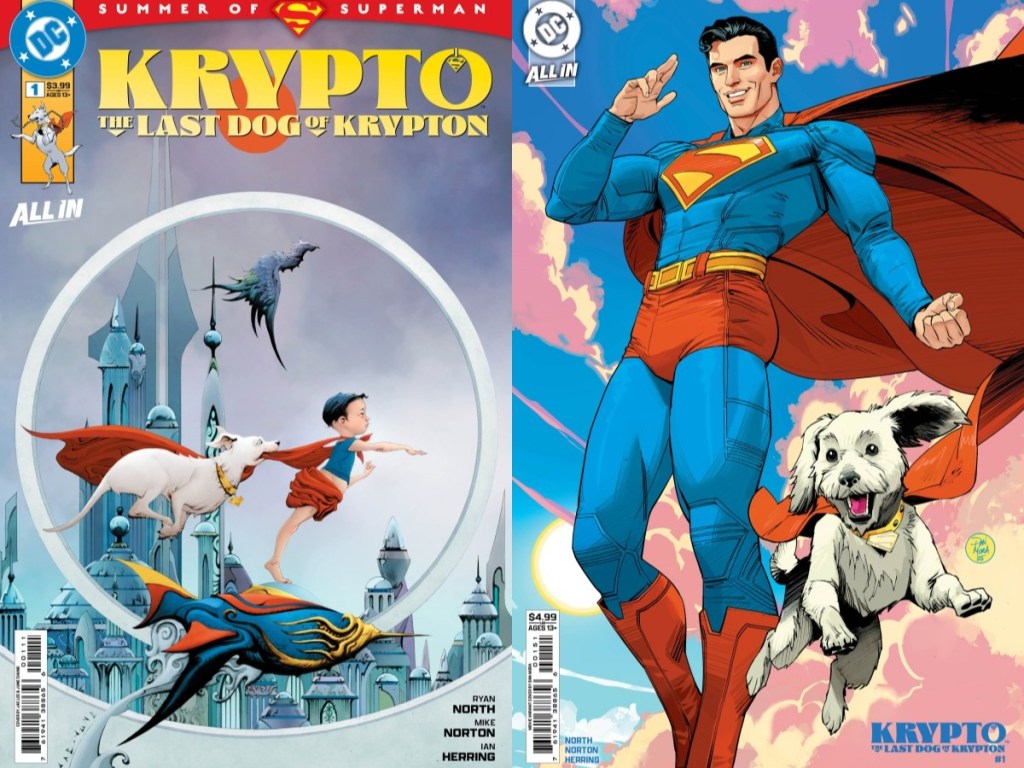
Halfway through the Saints/Buccaneers football game, I decided that if I was going to cry this afternoon it should be for a GOOD reason, so I picked up Krypto: The Last Dog of Krypton #5. The final issue of Ryan North and Mike Norton’s miniseries is just as flawless as the first four issues as Krypto, still wandering, stumbles upon a family in trouble. Remembering some of the hardships he’s endured since coming to Earth, he comes to their rescue, and then something miraculous happens.
This is, simply put, a beautiful comic book. North has a pipeline right to the heart of the reader, tapping into emotion that greatly outstrips any other comic on the market right now. His Krypto never says a word, but nevertheless proves over and over again what kind of hero he truly is. Norton, meanwhile, is putting forth his A-game in every panel, filling Krypto’s canine face with courage and emotion.
This is the best miniseries of 2025. I’m putting it out there right now. It’s perfect.

Of course, Superman: The Kryptonite Spectrum may be a close second. The third issue of W. Maxwell Prince and Martin Morazzo’s Black Label series starts with a Superman who has been reduced to a teenager after exposure to a new kind of Cobalt Kryptonite, so the Justice League places him in the custody of one of the few people who can relate to what he’s going through: Billy Batson. As Batman tries to seek a cure to the Cobalt K’s effects, he stumbles upon a surprising revelation about the Rainbow Kryptonite in his possession. Billy and Clark, meanwhile, decide to visit a local amusement park that turns out to be a trap set by their respective foes, Dr. Sivana and the Toyman. Hilarity ensues.
Well, not “hilarity,” actually, but “existential drama ensues” doesn’t have the same ring to it. Prince layers his story with the same kind of deep questions and introspective moments that have made Ice Cream Man such a hit, but at the same time, respecting the characters and crafting a tone that feels kind of like the Silver Age taken a bit more seriously. It’s All Star Superman played for drama. And all of that is a good thing.
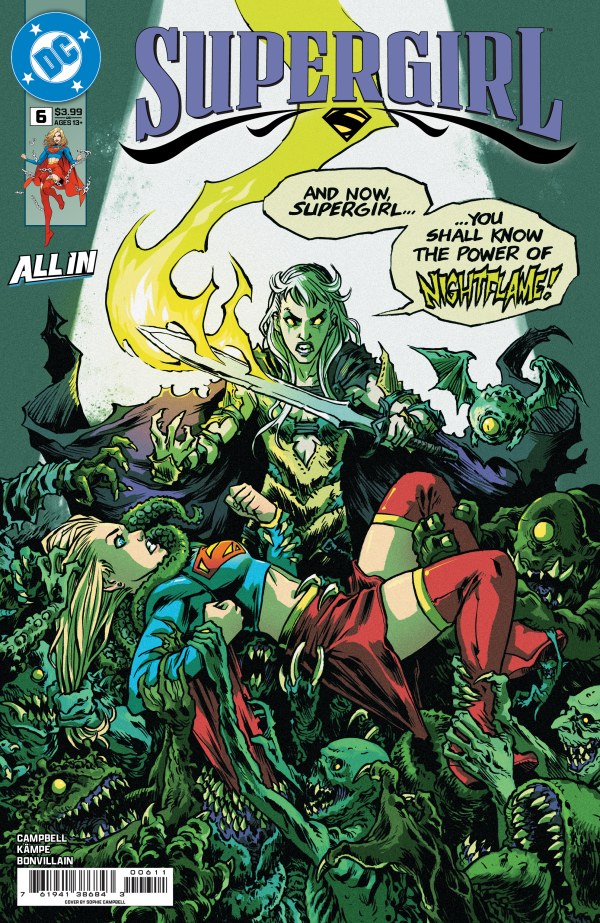
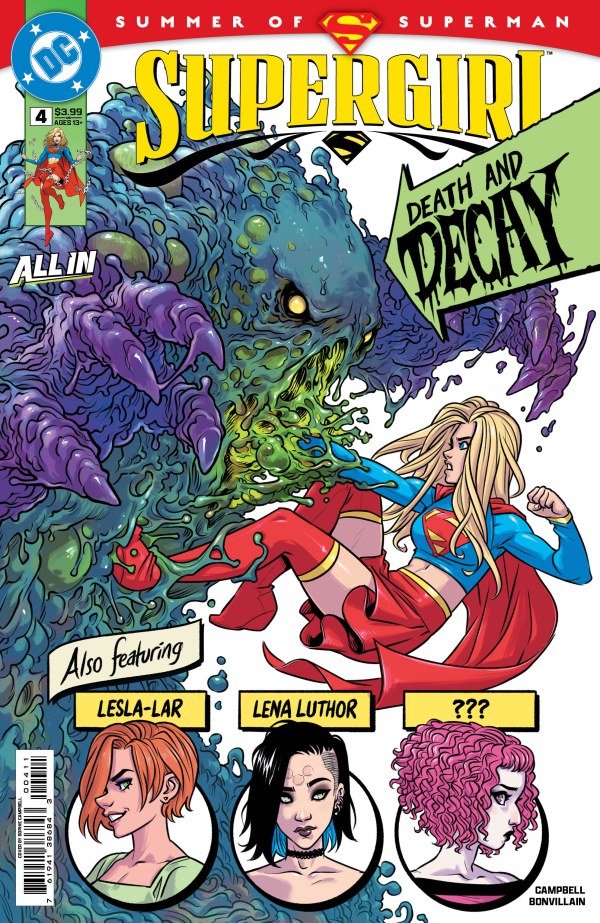
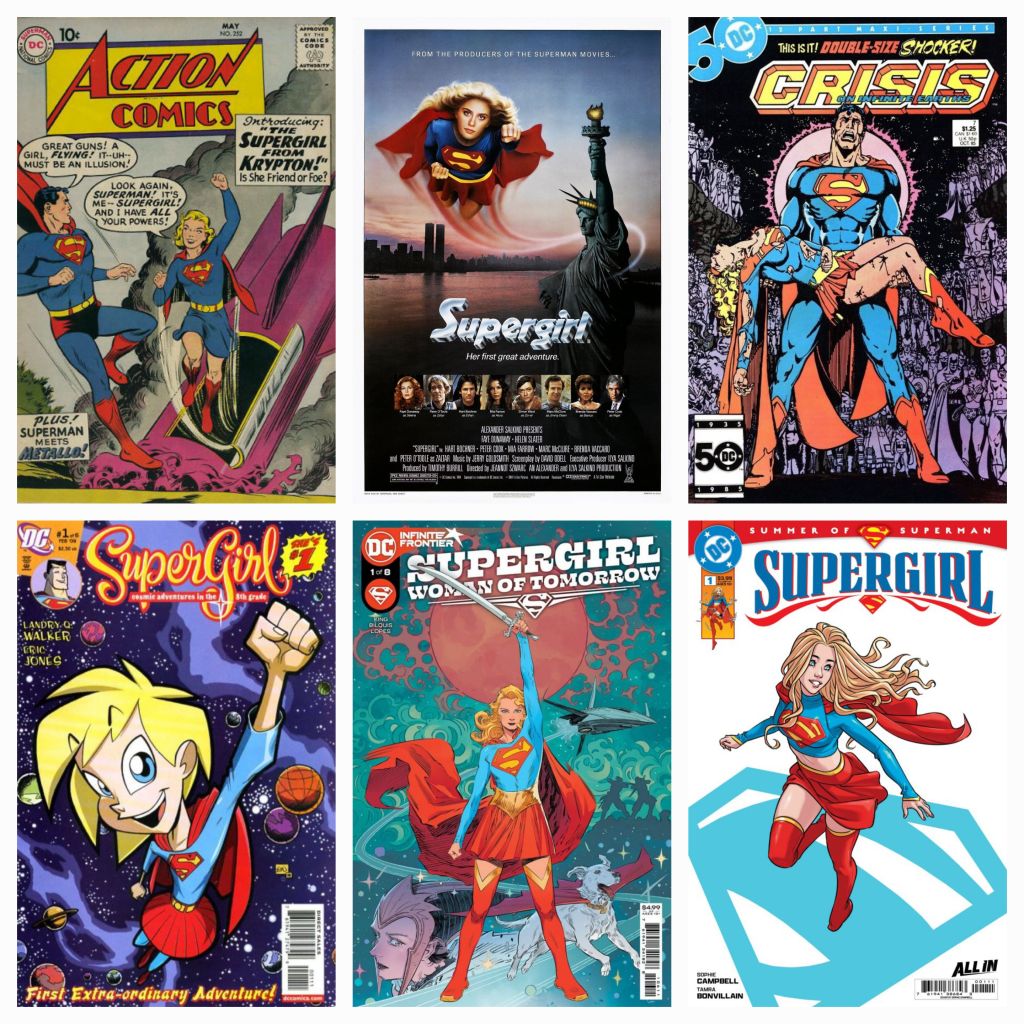
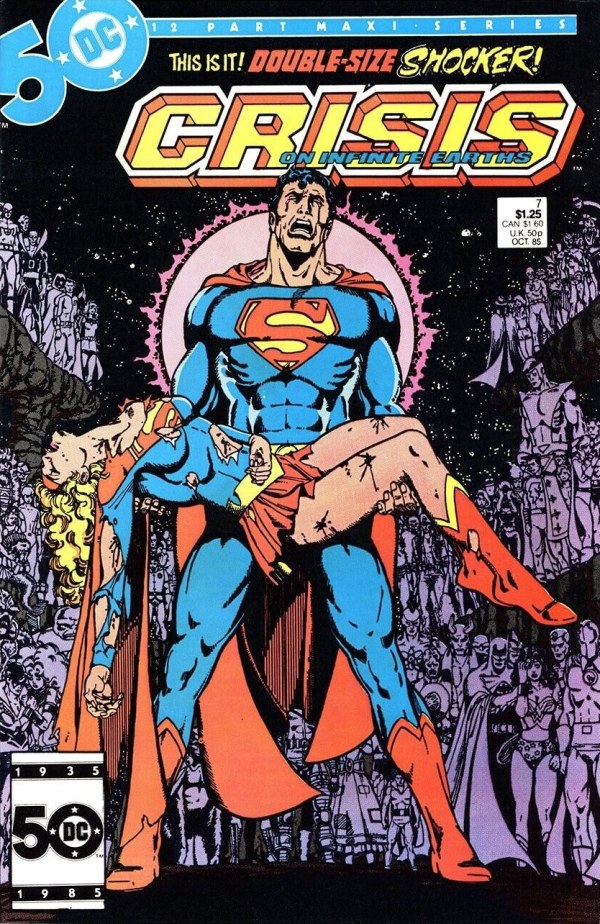
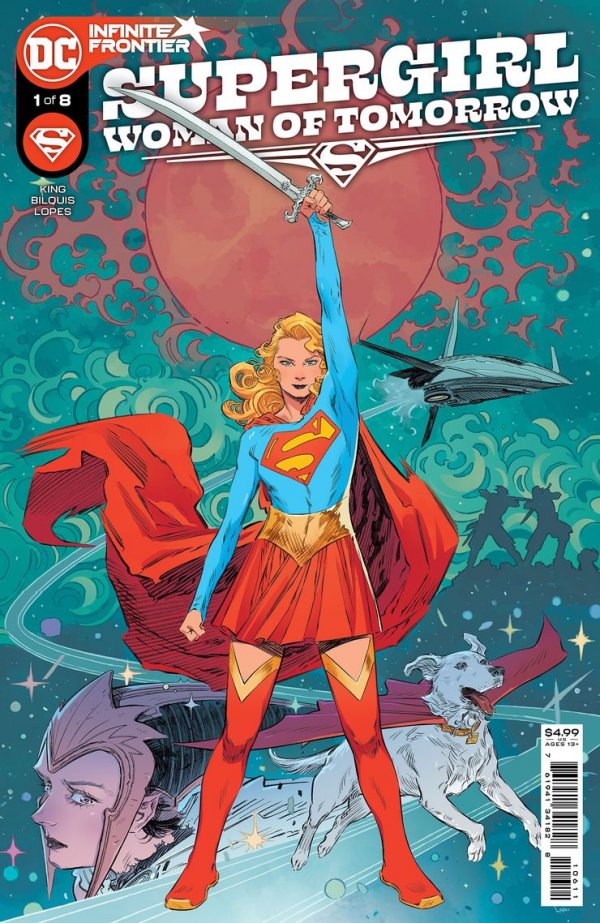
Sophie Campbell’s Supergirl #6 give us a brand-new Halloween tale. Kara is being plagued by bad dreams about her own past: her time as a Red Lantern, the time she was manipulated by Darkseid, and her own death in Crisis on Infinite Earths. As her friends try to figure out what’s wrong with her, Supergirl faces a demonic being called Nightflame who claims to be a facet of Kara’s own personality. It’s a quick, self-contained story, but there’s a lot to like about it. Campbell reflects a lot of elements of Supergirl’s past that seem to be intended to help differentiate which of her stories and versions are still in continuity these days (in addition to the previous stories I mentioned, her father’s tenure as a Cyborg Superman and the epic events of Woman of Tomorrow are both referenced). I have to wonder if DC disseminated Mark Waid’s notes for The New History of the DC Universe to its writers as they were coming in, because Campbell works hard to reflect the reality that miniseries has given us. But it doesn’t just show us the tough times in Supergirl’s past – it’s a story about a girl who has confronted her own demons and is working past them. For the most part, this series has been pretty lighthearted, but Supergirl is a character who has endured an awful lot of trauma (arguably much more than her cousin) and Campbell isn’t shying away from showing that.
Nightflame, by the way, is yet another Character from Supergirl’s past, and the cover is even an homage to her prior appearance from Adventure Comics #421. You’ve gotta appreciate the attention to detail.
The mystery deepens in Justice League Red #3. As Cyborg and Green Lantern try to save Red Canary from the Church of Blood, Power Girl confronts Red Tornado over the “gift” he offered her at the end of last issue. Red Tornado is starting to come apart – he’s afraid he’s losing his humanity and, at the same time, using his algorithm to try to predict future catastrophic events that his newly-assembled strike force is intended to prevent. But there’s one future – one REALLY bad future – that he’s got his eye on, and this issue he tells us what he’s going to need the team to do. I like the premise here, of Red Tornado putting together a red ops – um, black ops – team that does jobs he can’t divulge to the rest of the Justice League. I just hope writer Saladin Ahmed can pull it off without permanent damage to the character. I suppose it’ll all come down to how the rest of this miniseries shakes out.
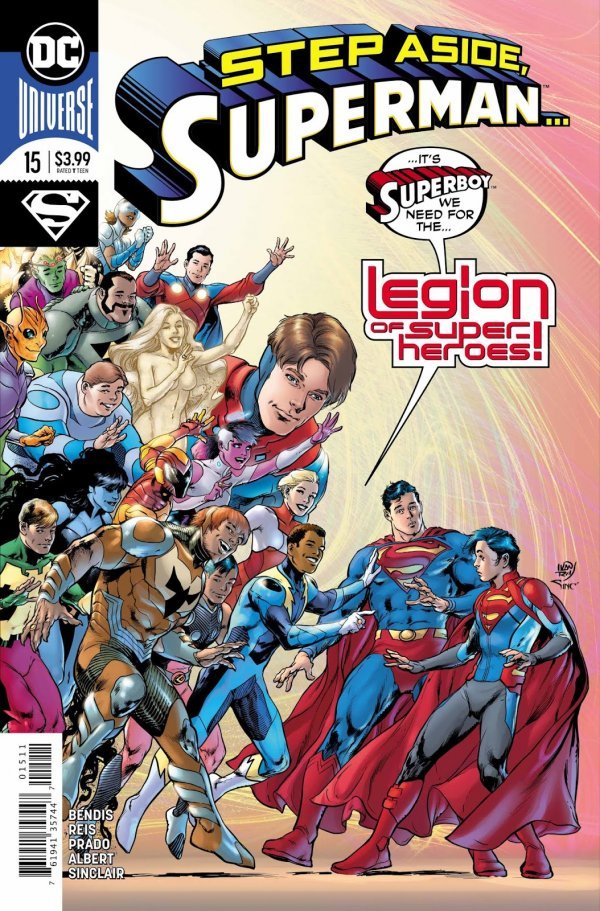
Mark Waid finishes up his romp through the multiverse with New History of the DC Universe #4, with Barry Allen bringing us from the events of Blackest Night right up to the most recent events in the DCU. I’m a little surprised that he didn’t try to touch upon the Legion of Super-Heroes more, but I suppose that’s being saved for the regular comics. I did like how the notes at the end touch upon virtually all of the many potential futures of the DC Universe. There are a lot of great characters out there, and it would be kind of a shame to decanonize any of them. The book works well in terms of trying to explain the reason behind the assorted contradictions of DC history, if not explaining the contradictions themselves. By the end of it all, I feel like we have a solid foundation and understanding of just what stories matter, with a real pathway to the future. I’m going to have to go back at some point and read these four issues (and the extensive notes in the end) in one fell swoop.
Mon., Oct. 27

Comics: Superman #344, Action Comics #577, Superman Vol. 2 #180, Batgirl Vol. 3 #14 (Supergirl guest appearance), DC KO #1, Titans Vol. 4 #28 (Cameo), 29 (Guest-Appearance, Jonathan Kent). Superman Vol. 6 #31
Notes: There was more blood-sucking goodness to be had in Superman #344 from 1980, “The Monsters Among Us” by Paul Levitz and Curt Swan. Lois and Clark are sent to cover a seance at an old castle that is intended to summon the spirit of mystic Roland Randall on the 50th anniversary of his death. The medium, a blind woman named Cassandra Craft, tells Clark that she senses an “inner strength” to him, something he quickly denies. When the seance begins, Cassandra cries out and faints, waking up to say that Randall’s spirit is terrified of something. Clark spots two figures in the storm raging outside and ducks away so Superman can investigate. The two shapes burst into the room, appearing as Dracula and the Frankenstein monster, and they’re after Cassandra. After a quick battle with Superman the monsters escape, vowing to return. The next day, after a bizarre vignette where the Frankenstein monster steals some cakes from a bakery truck and briefly tousles with Superman, they return to the castle seeking Cassandra. He manages to fight them off, setting the creature on fire and creating a miniature sun with a hydrogen balloon to cripple Dracula. With the monsters out for the count, the Phantom Stranger appears out of nowhere and spirits them away.
No, really, that’s how it ends. No explanation, no rationalization, not even a “to be continued.” Dracula, at least, says something like “Not again!” but that doesn’t actually tell us ANYTHING. On the one hand, I’m glad that Superman actually had the monsters beaten already by the time the deus ex machina showed up, but on the other hand, what the hell, Paul Levitz? A good story with a very frustrating finale.
In Action Comics #577 by Keith Giffen and Robert Loren Fleming, Superman faces off with “Caitiff, the first vampire!” The Metropolis Center for Disease Control reports a number of “suspicious deaths.” Seeing a news report promising footage of what’s going on, a creature named Caitiff decides to stop it from airing again on the evening news, which means he’s going to target the WGBS anchor, Clark Kent. Clark, meanwhile, is reluctant to show the footage, which he believes to be the work of a vampire. (Isn’t it refreshing, by the way, that in most of these stories Clark doesn’t waste any time with the whole “vampires aren’t real” nonsense? The man is an alien, his best friend is an Amazon goddess, he frequently does battle with a pint-sized wizard from the fifth dimension – vampire skepticism would be absolutely absurd in the DC Universe.) Caitiff attacks Clark on the air but, as a vampire, his image doesn’t transmit over the broadcast, so he’s visible to the people in the studio. He vanishes into mist and Clark – as Superman – takes after him, further exacerbating the indigestion his frequent disappearances cause his director, Josh Coyne. Superman inhales the mist that makes up the vampire, but Caitiff attacks him psychically, stirring up feelings of immense loneliness and causing Superman to black out long enough for him to escape. He tracks the vampire to a subterranean lair full of desiccated skeletons. At first Superman is horrified, believing them to be Caitiff’s victims, but Caitiff reveals that these are the remains of his own family, his own people, who were exterminated by humans over the years, Catiff is the last of them. He slips away and Superman is left to pity the creature who, like Superman, is the last of his kind.
This is a dark tale, and really genuinely sad. It evokes the feeling of some of the great monster movies like The Wolfman or the original Frankenstein, where the creature comes across less as a demon and more like a victim of circumstance. Caitiff seems to have no true malice within him, only a well-justified fear of humans and their actions towards his kind. The panel where he talks about how human scientists dissected his own child is particularly chilling. This works very well as a sad meditation on humanity, which is something you often get out of good monster stories.
Superman faced a Lord of Darkness yet again in 2002, in Superman #180 by Jeph Loeb, Geoff Johns, and Ian Churchill. Lois, Clark, and Jimmy visit the home of the mysterious Count Rominoff “somewhere in eastern Europe.” Rominoff, an admirer of Lois’s work, has invited them to his castle where he promises a rare interview in light of the recent annexation of a nearby country by General Zod. That night, Lois is roused from her slumber and she roams the grounds, where Superman appears just in time to save her from a werewolf attack, then the appearance of a vampire. She passes out and wakes up in the morning with no memory of the late night excursion, which has Clark understandably worried. That night, as Rominoff’s thrall Elizabeth goes after Jimmy, Rominoff is revealed to be Dracula himself and clashes with Superman over Lois. Dracula reveals that he invited Lois specifically because he wanted to lure Superman to his castle. He uses his magic to hypnotize Superman and bites him, only to find himself suddenly in agonizing pain.
Remember what a vampire’s main weakness is? That’s right, the sun.
Remember Superman’s power source? That’s right. THE SUN.
Biting Superman turns out to be like biting into a solar battery. Dracula howls in pain and disintegrates, and Superman snaps out of it none the worse for the experience. Jimmy, meanwhile, has just managed to escape Elizabeth, but as the Planet staff goes home, we see that Elizabeth has found a new home of her own amongst the Creature Commandos.
The interesting thing about this is that, despite feeling like a mostly one-off story, it’s highly intertwined with plots that were running through the books at the time. The Zod thing is the most obvious part, but we also see that Lois is still bitter at Clark for choosing to save Wonder Woman’s life over that of Lois’s father during the recent Our Worlds at War crossover, and that friction between them persists throughout the issue. On the other hand, even though Superman doesn’t actually “beat” Dracula through his own agency, I absolutely LOVE the way Loeb wraps up the conflict. Connecting Superman’s solar cells to Dracula’s fatal weakness is the sort of little bit of cleverness that makes a story far more enjoyable to me. I’m sure that, in the 23 years since this story was written, Superman MUST have faced another vampire, but I’m not sure if this has come up again. I know it didn’t during the DC Vs. Vampires series, but that’s an Elseworlds. I want to believe this is a canon vampire immunity for the main line.
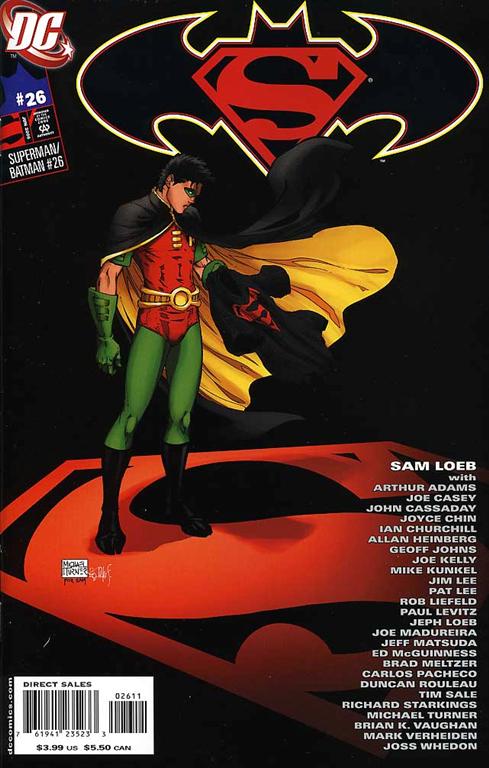
One last Super-family/Dracula clash came interestingly, in Batgirl #14 from 2010. This issue was part of Bryan Q. Miller’s excellent, underrated Batgirl run, which starred Stephanie Brown and was derailed by the New 52 reboot the following year. But one of the running subplots he had was a friendship between Stephanie and Supergirl. I really enjoyed that, and it’s a shame that they haven’t touched upon it again since Stephanie came back from comic book oblivion a few years ago. In “Terror in the 3rd Dimension,” Kara drops by Gotham City to have a girls’ night with Stephanie. Kara, who was still written as being new to Earth at the time, is in love with Stephanie’s relatively “normal” life, living with her mom and attending college, and she’s hoping to share in some of those experiences. They wind up deciding to take in a 3-D revival of a vampire movie. As they’re watching the film, an experiment at the campus super collider (of COURSE they have a super collider on a college campus in Gotham City) causes several Bela Lugosi-style Draculas to leap from the screen and terrorize the crowd. Batgirl and Supergirl find that the lab’s experiments in “hard light” force fields lasted one second, creating 24 Draculas – one for each frame of the film that played during that second. One of the science students who was behind the experiments gives them a set of control rods that will destabilize them if they, y’know, stake the Draculas through the heart.
It’s the sort of premise that’s so ridiculous that only works if the story KNOWS it’s ridiculous and refuses to take itself seriously. Fortunately, that’s a perfect description of Miller’s run on this book. Sure, it’s a Batman-family book, and sometimes it got dark, but Stephanie herself was kind of the antidote to that. It came out of the time when Bruce Wayne was believed to be dead and Dick Grayson took over as Batman, and the books as a whole were consumed with darkness. This title specifically, and her friendship with Supergirl in particular, made this feel like a light in that darkness. You’ve probably seen Mike Maihack’s delightful Supergirl/Batgirl comics online (how DC has yet to commission this man to do a graphic novel is beyond me). Although that’s the Barbara Gordon Batgirl instead of Stephanie, it’s got a similar tone to this book, and the relationship between our two heroines is lovely. Somebody pass this issue over to Sophie Campbell – I want this dynamic back.
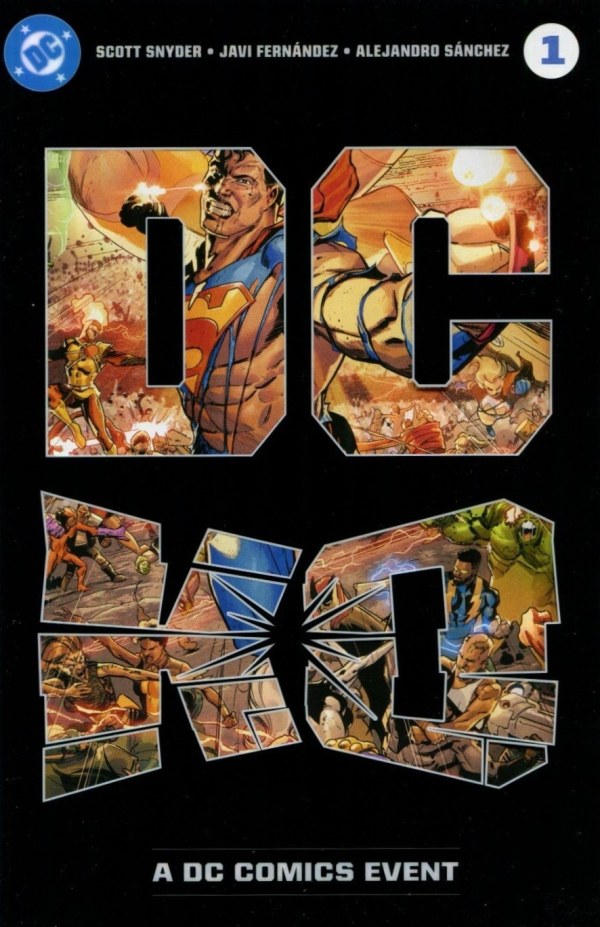
DC’s latest crossover event has also begun, and it’s time to play a little catch-up on DC KO. The time-tossed heroes from the Omega Act special have come with dire news. Darkseid has placed a “Heart of Apokalips” at the center of Earth, something that will overrun the planet with Omega Energy and give Darkseid the power to reshape reality as he wishes. The only hope is for one of the Justice League to take it first – and the only way to get through it is through personal combat with one another, for reasons that writer Scott Snyder explains much better than I can here. Is it a comic book-y type of excuse to have a bunch of heroes fight each other? Heck no! Because the bad guys find out about it and sneak their way into the tournament, so it’s a comic book-y type of excuse to have a bunch of heroes AND villains fight each other!
That’s snarky, I know, because it’s all a little convoluted, but that doesn’t mean I didn’t enjoy it. Snyder does a really good job of selling the stakes and having the heroes prepare to do battle with each other without it seeming out of character. There are even some nice surprises in this one, including one character who doesn’t make it into the first round of the contest, something that’s going to surprise everyone. So far so good.

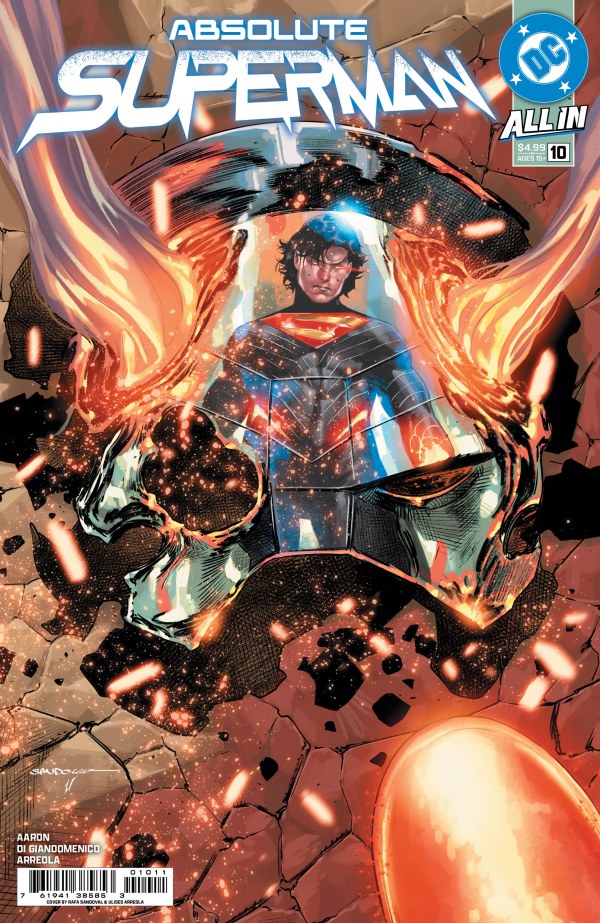
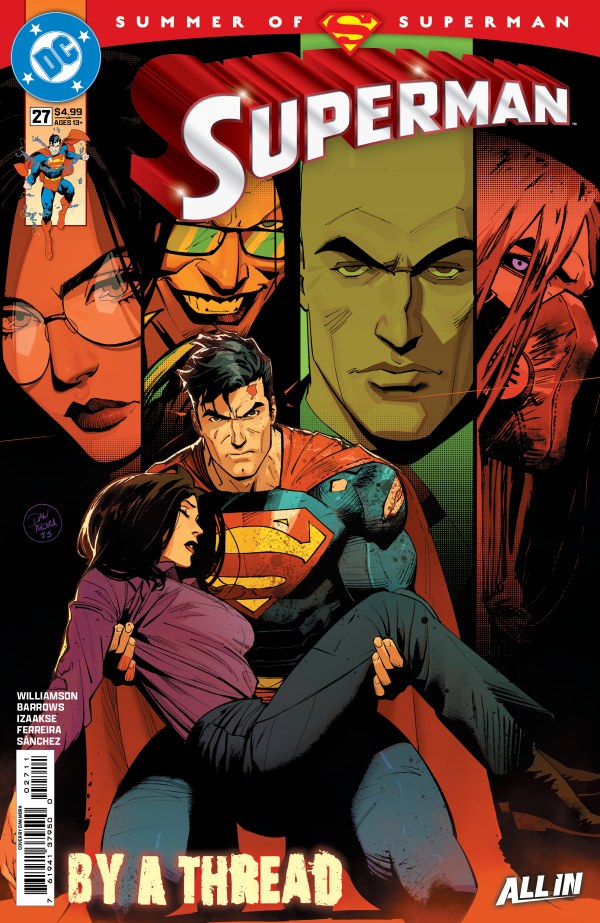
The spin-offs are hitting as well. In Titans #28, the Titans are tasked with evacuating Earth, assisted by Jonathan Kent. Superman #31, meanwhile, is not only tying into the crossover, but seriously paying off the assorted storylines that have been going on in this title since DC All-In started. Before leaving for the KO tournament, Superman consults the simulation of Jor-El at the Fortress of Solitude for any knowledge Krypton may have had about Darkseid and the Omega Energy. Failing that, he helps coordinate LexCorp’s resources – along with Brainiac’s miniaturization tech – to help facilitate the evacuation of Earth. After he leaves, Lois isn’t satisfied and makes her way to the Fortress to interview Jor-El herself. Her conversation with the Kryptonian archives brings unexpected fruit, and a surprise visitor to the Fortress turns everything on its head. It’s always nice, during these crossover events, when it feels as though the story has been planned out. Ever since the original Crisis on Infinite Earths, events have been plagued by “red skies” crossovers – issues with the event labelling but nothing to do with the story except the color of the sky to indicate something big is happening elsewhere. This feels like the opposite of that – a comic that has told its own story very well, but at the same time, contributes to the overall crossover AND uses it to extend its own storylines. It’s great stuff.
Tues., Oct. 28
Comics: DC’s Zatannic Panic (Cameo), DCU Halloween Special #1 (2008), Taste of Justice #15 (Starring Jimmy Olsen)
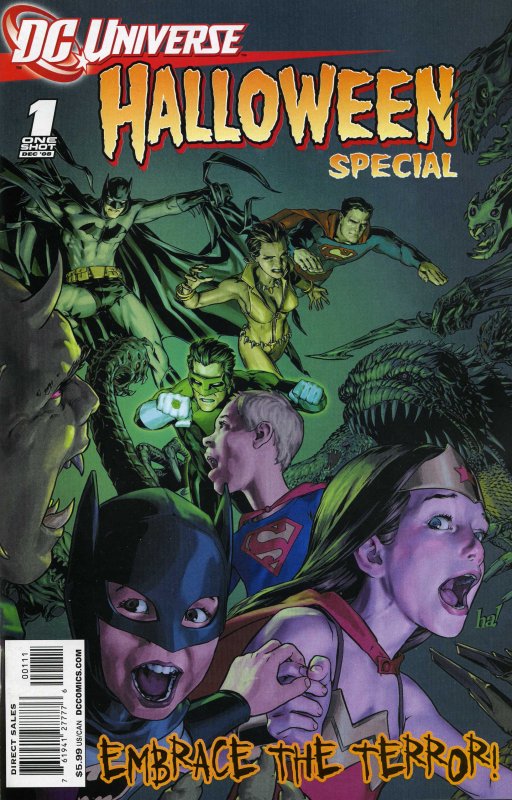
Notes: Let’s close off this week with some seasonal stuff, starting with the annual DC Halloween special. This year, the marketing people who come up with the titles for these things continue to earn their paycheck with Zatannic Panic, which – shockingly – has no stories starring anyone from the Superman family. Superman DOES make a brief appearance in the delightful Ambush Bug story that serves as a nice meta-commentary on the Halloween special as a whole, but that ain’t enough for me. So I dipped back into the DC Infinity archives and pulled out the 2008 DCU Halloween Special, a title that would last for three years, then fade away before the annual specials returned in the Rebirth era with a different wild title each year. (My favorite, by the way, is still the 2021 special, Are You Afraid of Darkseid?)
The 2008 special – hosted Cryptkeeper-style by the late Ralph and Sue Dibney – starts off with a Superman story. In “Deadline: Halloween” by Mike Johnson and Tony Shasteen, Clark is working late after the Daily Planet Halloween party, where Perry warns Clark to take it easy before he ends up like “Old Man McCampbell,” an old reporter who died before finishing his last story. Clark hears some odd noises, and when he investigates, he finds himself facing what appear to be ghosts of some of his greatest enemies. After getting knocked around a little, a ghostly Lex Luthor pulls him into a framed newspaper, which changes to a picture of Clark with the headline “Reporter Missing.” With him tapped in the paper, the ghost of McCampbell appears and commandeers Clark’s computer to finally finish his last story. Clark awakens at his computer, believing he finished his story in his sleep, then goes home where he greets a trio of trick-or-treaters dressed like Batman who mock Clark’s fake-looking Superman costume.
The nature of these specials sometimes works against the stories being told. I feel like there’s a good story here, something that would have worked well in a longer tale, but in seven pages there’s not enough buildup, not enough development of the McCampbell ghost to really feel like we’ve got a satisfying payoff. Looks like I will, yet again, have to seek some Super Halloween content elsewhere.
Animated Short: Krypto Saves the Day: Halloween Havoc

Notes: The second of the new DC Studios Krypto shorts just happens to be Halloween-themed, and even though it dropped a few weeks ago, I held off on watching it until this week so I could include it as a seasonally-appropriate addition to the blog. Halloween Havoc, written and directed by David Gemmill, in this one Clark Kent (dressed as Frankenstein) realizes he’s running low on Halloween candy and leaves Krypto in charge while he goes out to get more. This turns out to be a drastic mistake as Krypto is almost immediately distracted by a black cat and goes, once again, on a citywide chase trying to get his quarry, causing havoc (hey, I bet THAT’S where the title comes from!) and potentially ruining Halloween for children everywhere in the process.
Like the first short, “School Bus Scuffle,” this one is really cute and clever. The gags land and there are even a couple of Easter Eggs for DC Comics fans who are paying attention. The final punchline is perfect, and even helped to answer a concern I found myself thinking about as the short went on. And special mention has to go to musical composer Paul Fraser, who I imagine was given the instructions “Make it sound like The Munsters, but not enough to get sued.”
After two chase scene shorts, though, I’m very curious about the other two that haven’t dropped yet. Will they go in a different direction next time, or is Krypto going to be DC Studios’ answer to Tom and Jerry, every episode being a chaotic and futile effort to get his quarry before realizing the error of his ways and proving himself to be a good boy at the very end?
Hope you’ve enjoyed “Superman Meets the Monsters” week, friends. There are still three days left in October as I write this, but the next blog isn’t scheduled to be posted until Nov. 5, so I’m not going to do any more Halloween focus – although you may still get bits and pieces. Hope you all have a fun, safe, and (dare I say it?) SUPER Halloween!
Blake M. Petit is a writer, teacher, and dad from Ama, Louisiana. His most recent writing project is the superhero adventure series Other People’s Heroes: Little Stars, volume one of which is now available on Amazon. You can subscribe to his newsletter by clicking right here. You can join in the Kryptonian Konversation every day in the Year of Superman Facebook Group!