Geek Punditry #47: The Gift of Physical

Here we are, my friends, the most chaotic, volatile, and lucrative date on the American calendar: Black Friday. Of course, Black Friday isn’t quite what it was just a few years ago. In the not-too-distant past, it wasn’t unusual to watch footage of mobs at Target trying to murder each other with croquet mallets in the attempt to get a cheap widescreen television set. That was last month in San Francisco, of course, but that sort of behavior USED to be restricted to the day after Thanksgiving. These days, though, with people having less money to spend, prices rising, and online shopping becoming easier and more tempting than ever, it’s becoming far less likely to see someone get a shiv in the kitchen section of Home Goods. We’re still planning to shop, of course, we’re still all trying to find just the right gift for the people we care about, and as far as the geeks in your life are concerned, we’ve learned something important this year. When it comes to sharing your favorite movies, music, books, or games…the truth is, physical media needs to come back.

Because no matter how hard you try, you can’t club somebody over the head with Netflix.

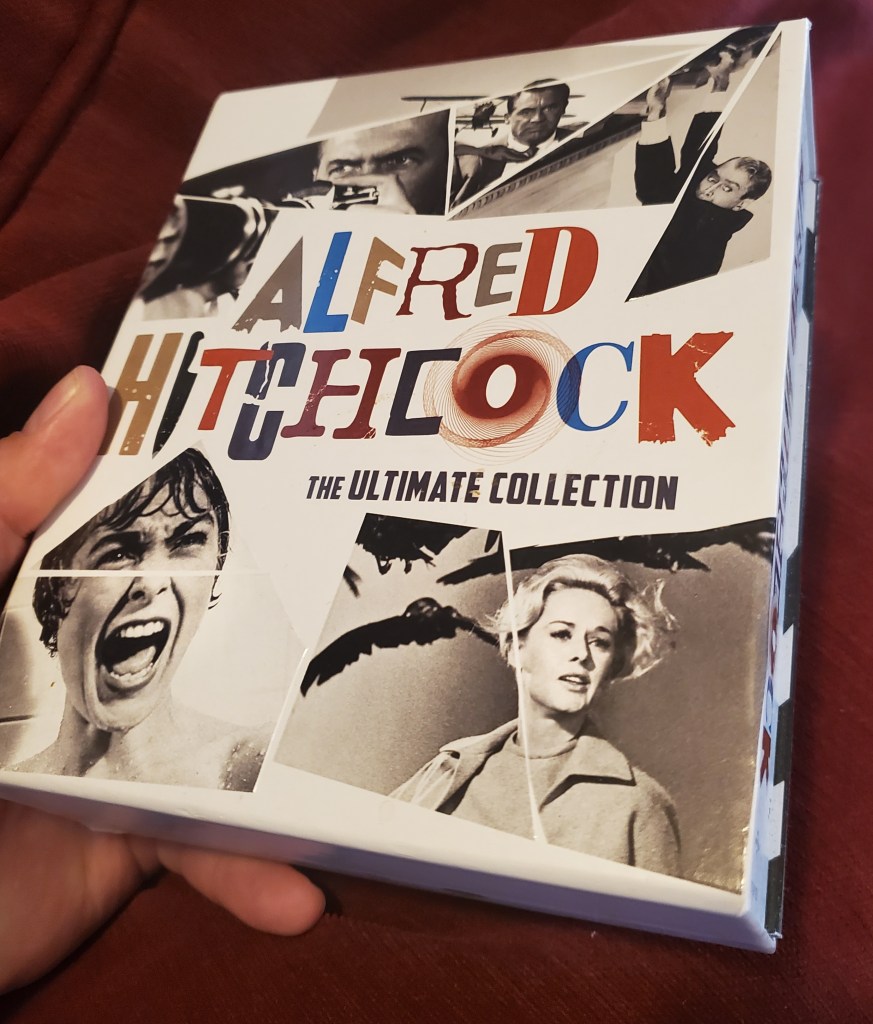
A few days ago Christopher Nolan, discussing the Blu-Ray release of his movie Oppenheimer, encouraged people to purchase the disc “So no evil streaming service can come steal it from you.” The joke, of course, is that over the course of 2023 it has become horribly fashionable for streaming services to quietly (or sometimes not-so-quietly) remove content from their platforms in a cost-saving measure. There are various ways this can theoretically work – by writing it off as a loss on their taxes, by licensing it off to some other service and getting money from them, and so forth, but whatever the reason the end result is the same. It becomes difficult and confusing for fans to find what they want, and in the case of the writers, directors, performers, and other people who actually made the content in question, all their work is reduced to numbers on a spreadsheet, without giving anyone the opportunity to actually experience it in the way intended.

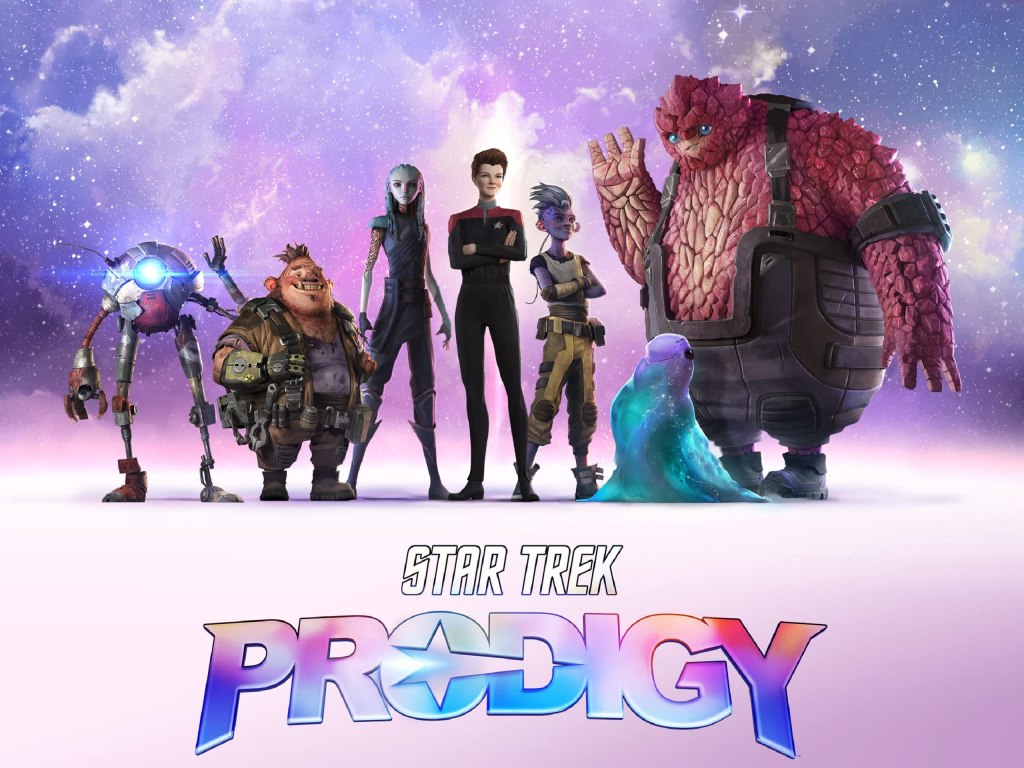
Warner Bros.’ Max service has become the most notorious for this practice, canning numerous films that were close to completion (including a Batgirl movie, a holiday-themed sequel to Scoob!, and most recently the John Cena/Wile E. Coyote legal drama Coyote Vs. Acme), but they are by no means the only culprit. After a few weeks on their streamer, Disney+ pulled the kids’ sci-fi film Crater, later putting it out for sale or rent on digital media, but it’s no longer available as part of the prepaid package that director Kyle Patrick Alvarez’s mom can tell her friends to watch the next time they ask what her son is up to. But perhaps the strangest instance of this phenomenon came from Paramount+, the streaming service that built its audience as the online home of Star Trek, when they made the decision to not only cancel the nearly-finished second season of Star Trek: Prodigy, but to yank season one from the service as well. Since then, the show has been conspicuous by its absence. This summer they even launched a celebration of animated Star Trek to mark the 50th anniversary of Star Trek: The Animated Series, and while they spent a lot of time hyping that original series, Lower Decks, and the animated webseries Very Short Treks, they did the best they could to pretend that Prodigy didn’t exist. 

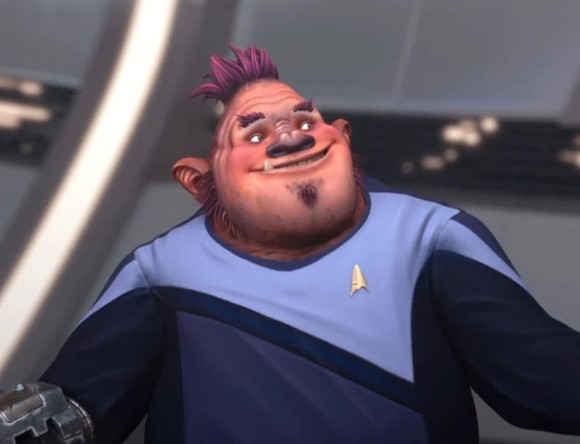
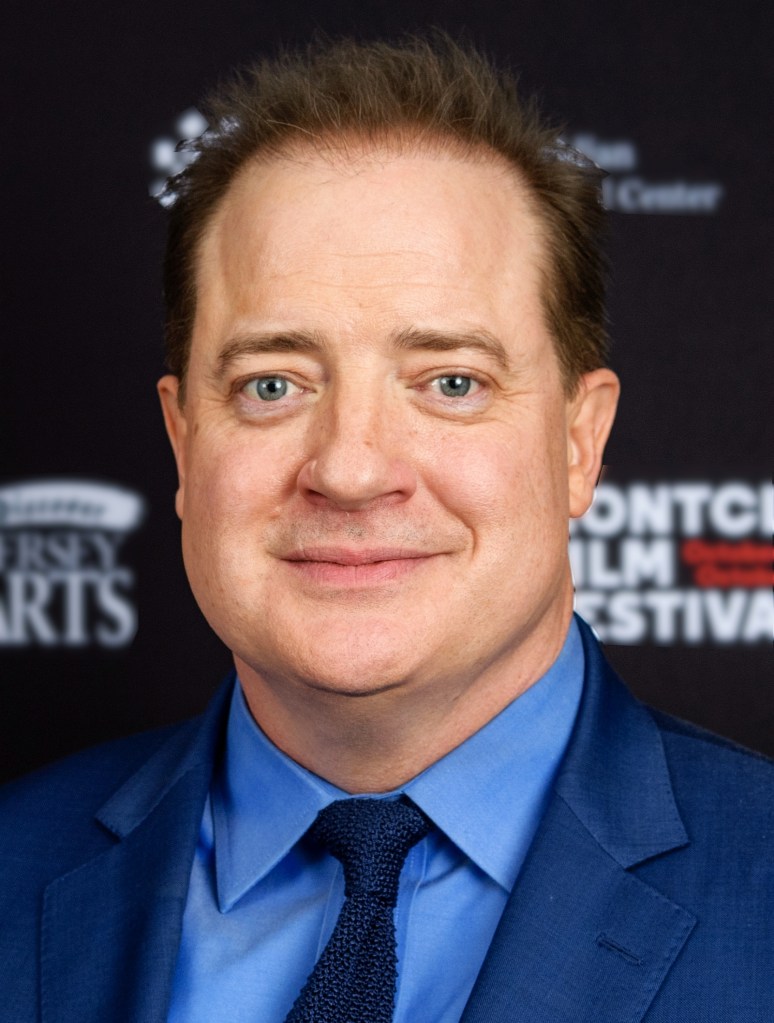
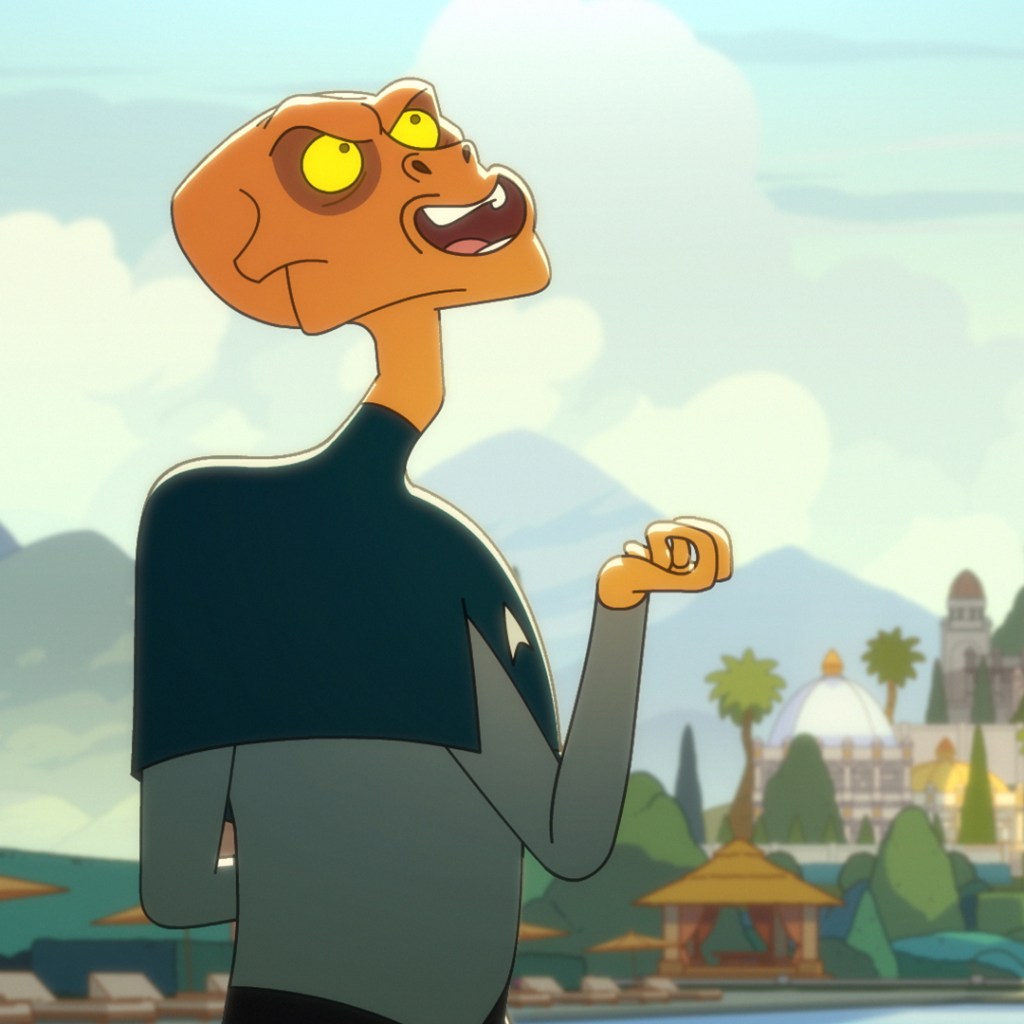
But come on, who could ever forget this face?
But the fans refused to play along. A strange thing happened when it became public that Prodigy was being taken down from Paramount+. Within a day or two, the Blu-Rays and DVDs for the first half of season one were completely sold out. (The second half had not been released yet.) You couldn’t find a copy in brick and mortar stores, and online retailers like Amazon, Best Buy, and Walmart all cleared out their warehouses before you could blink. It was as if fandom all, simultaneously, realized that media that only exists on a streaming platform can be removed at any time, capriciously, and without warning, and that the only sure way to have access to the content you want is to actually own a physical copy.

What a concept.

I’m not here to decry streaming or to say I’m gonna cancel Netflix. For one thing, that would be REALLY dumb, since they’re the service that wound up saving Prodigy, and I ‘m greatly looking forward to season two. But streaming services are proving themselves to be increasingly problematic for the companies that own them. They’ve become such a huge part of our lives that it’s easy to forget they’re still a relatively new business model, and what we’ve learned this year is that even the big boys like Disney and Warner Bros. haven’t actually figured out how to make money off of them yet. And sure, some of you may be thinking, “Well Disney has enough money, why should I care if Disney+ isn’t turning a profit?” That’s very progressive of you, make sure you put that on a t-shirt. But that doesn’t change the fact that the Walt Disney Global Media Conglomerate and Shadow Government and Pottery Export Business is still, in fact, a business, and if they can’t make money off a project they’re not going to keep making it. 

The “Plus” stands for “Plus all of your money.”

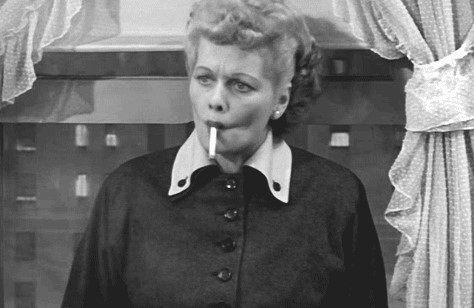
In the early days of broadcast TV, the burden of monetization was put on sponsors. Phillip Morris Cigarettes gave Desilu money to make I Love Lucy in exchange for the show promoting their product, everybody was happy, and lots of people got lung cancer.

Okay, maybe I was wrong — smoking DOES make you look cool.

Then came cable, and the model changed somewhat. While sponsors still existed, cable channels made the bulk of their money by selling their content to a cable provider like Cox or DirecTV, which made ITS money by charging consumers for packages of channels from those various sources. These days media companies are attempting to cut out the middleman with their own streaming services, making the content AND controlling the distribution themselves…only to discover that the middleman actually turned out to be kind of necessary in this particular equation. And since they haven’t yet worked out the new equation, they’re starting to cut corners – raising rates for the service, putting ads on streamers that didn’t have ads in the past, and of course, chopping content that they think they can make more money with some other way.

Physical media protects you from losing content, but it’s also becoming a way to show your support for a project. With streaming numbers being a closely-held secret, it can be almost impossible to tell how successful any series is. Fans were blindsided this week, for instance, when Disney+ announced that they won’t be doing a second season of the beloved Muppets Mayhem. (This has been a BAD year for shows that I loved enough to devote an entire Geek Punditry column to.) It was acclaimed by fans, but there was no physical release for us to attach our support to. I can’t say fit certain that it would have made a difference, but it certainly wouldn’t have hurt, because those numbers DO matter. When Star Trek: Picard wrapped up its third and final season, fans asked showrunner Terry Matalas what they could do to encourage Paramount to support his proposed Star Trek: Legacy spinoff series. His answer was telling: keep steaming Picard, yes, but also buy the Blu-Ray of Season Three so Paramount knows you will support it.

I’m not saying you need to rush out and buy everything that’s made, but if you want to send a message about what shows and movies you enjoy, buying the physical media helps accomplish that, and that will give support to similar projects in the future. Sure, I watched Fuller House on Netflix, but I don’t feel any particular need to get it on disc. But when Stranger Things drops its final season next year, you can bet I’ll be first in line for that complete series boxed set.

Available on twelve discs or 97 VHS tapes.

After Nolan made his comments, Guillermo del Toro added his own two cents to the discussion, saying, “Physical media is almost a Fahrenheit 451 (where people memorized entire books and thus became the book they loved) level of responsibility.” In other words, you’re not just clinging to that DVD set of the complete series of Mama’s Family for kicks, it is your civic duty. These things aren’t being preserved anymore, not by the people who actually own and control the IP, so it’s becoming incumbent upon the fans to do it themselves. This is especially true in a world where retailers like Best Buy have announced that they’re abandoning physical media sales entirely. Back before I had a kid and there was such a thing as free time, I could spent hours wandering around the Best Buy DVD section. Over the years I got sadder every time I stepped into the store, watching my favorite section get smaller and smaller. As of now, I honestly don’t remember the last time I walked into a Best Buy store, and that’s on them.

Movies and TV are not, of course, the only kinds of content affected by streaming. Music was hit a long time ago, and eBooks have been around for quite some time. In both of those arenas, though, something odd has happened. The importance of the physical media has grown in the digital age. Despite the obvious convenience of eBooks, a survey showed that in 2022 print books outsold them nearly four-to-one. And in the area of music, while lots of people use Spotify or Amazon Music to get their pop fix, die-hard fans have actually gone back in time and resurrected the vinyl album as their physical format of choice. Spotify is fine for a casual listener, but the hardcore fans want something they can see, touch, hold, display, and screech in terror when their kids hit the arm on the record player and scratch it up. I think, in the next few years, movie and TV fans will experience a similar renaissance. Casual fans will settle for Netflix and Hulu, but the collectors (a faction that will increase in both number and intensity) will thirst for that physical release with pristine picture and sound and loaded with extra features. 

So be a Chris Nolan, guys. Get your Barbenheimer fix on a disc. And try not to beat anybody up in the electronics aisle. 

Blake M. Petit is a writer, teacher, and dad from Ama, Louisiana. His current writing project is the superhero adventure series Other People’s Heroes: Little Stars, a new episode of which is available every Wednesday on Amazon’s Kindle Vella platform. He hopes you all have a great Christmas season, and he promises loads of holiday content right here, because that’s the kind of nerd he is.

BONUS ANNOUNCEMENT!

In October I introduced a new feature to Geek Punditry, Playing Favorites, in which I give you a topic and ask you for suggestions of categories to share some of my favorite things. For example, the category for Halloween was “Horror Movies,” and suggestions included things like sci-fi/horror movies, comedy/horror hybrids, horror movie performances that I felt deserved Oscar recognition, and lots of other cool choices. It wound up filling up two full columns! (Part One, Part Two)

Well, never let it be said that I don’t know how to milk an idea to death use a good idea when it’s available. With Christmas coming up, I’m announcing the next round of Playing Favorites, in which I’m asking you guys for categories of Christmas content! Movies, books, TV shows, comics – what are the categories I can play favorites with this time? Give me your suggestions in the comments below or on whatever social media you used to find this link!

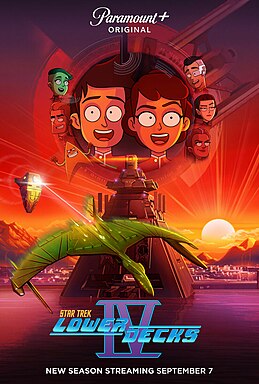
Geek Punditry #45: Lower Decks is Higher Trek

I don’t know if I’ve ever mentioned it in this column before, but I’m a bit of a Star Trek fan. I know, I hide it well, but it’s the truth. I love the characters, I love the worlds, I love the alien races and the starships. If I had a holodeck like they have on the USS Enterprise, I would just use it to pretend I was a crewmember on the USS Enterprise

“Computer, put me in the Famke Janssen episode.”

There have been many iterations of Trek over the years, of course, some that I’ve connected with more than others, but most of them have had something that draws me back and keeps me engaged. Never has there been a version of Star Trek that didn’t at LEAST make me say, “Okay, I’ll give it a shot.” But that’s not true of everyone. There are some folks out there, some alleged fans, who had that attitude when the franchise crept tentatively from the extended television hiatus that it underwent after Star Trek: Enterprise went off the air in 2005. Trek returned in 2017 with the launch of a new series, Discovery, and the promise of two more shows: Star Trek: Picard, and Star Trek: Lower Decks. Without delving too deeply into the ups and downs of the first two shows, it’s the third one that seemed to be dismissed by most fans. Lower Decks, you see, was not only an animated series, was not only a comedy, but it was created by Mike McMahan, a writer whose previous credentials included shows like Drawn Together, South Park, and Rick and Morty. And no matter what your feelings may be on those particular shows, it would be difficult to argue that someone who claimed those as his pedigree would be the right choice for a new iteration of Star Trek. 

But people who said the guy who created Pickle Rick was bad for Star Trek have NEVER been so wrong. Lower Decks turned out to be a sincere love letter to the franchise, a show that was steeped in the lore and history of Trek, a show that used humor to enhance the story and characters rather than as a substitute for them. Truth be told, of all the versions of “NuTrek” that we’ve gotten since the franchise was brought back to life, it is Lower Decks that is my favorite, Lower Decks that has stolen my heart, Lower Decks that is most dedicated to the finest tradition of Star Trek, even with the bleeped-out swear words and occasional pixelated area covering an ensign’s nether regions. If you dismissed Lower Decks because it’s “just a cartoon,” then buckle up, because I’m about to tell you what you’ve been missing out on. I’ll try not to spoil every story beat from the first four seasons, but it’ll be impossible to talk about what makes the show so great without some spoilers, so from here on out, read at your own risk.

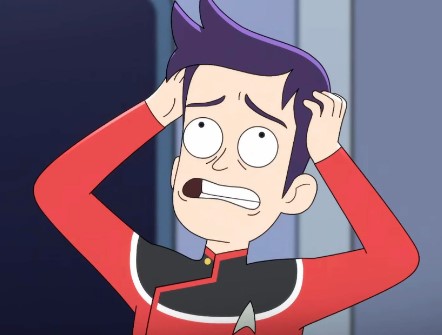
Spoiler #1: Boimler is Keyser Soze

McMahan originally sold the show as being about the least-important crew on one of Starfleet’s least-important ships. The Cerritos is the sort of vessel that comes in after a flagship like Enterprise establishes first contact with an alien race, then does all the dull administrative work that would inevitably come along with such a mission. “Second Contact” is important, you see, but not sexy, and the same would seem to be true for the crew that mans the vessel. Rather than focusing on Captain Carol Freeman (Dawnn Lewis) and her senior staff, the show’s stars are four ensigns who get the crappiest jobs available: the wild and self-destructive Beckett Mariner (Tawny Newsome), high-strung rule-follower Bradward Boimler (Jack Quaid), science nerd cyborg Sam Rutherford (Eugene Cordero), and newly-minted and extremely eager Orion science officer D’Vana Tendi (Noel Wells). The first season introduces the characters and lets us learn a bit more about them, and in that first season there’s a lot of fun to be had. There are a lot of gags derived from classic Star Trek bits like the crew succumbing to an alien virus, parasites controlling crew members, and bizarre medical conditions happening as the result of upgrades to the ship’s transporter system. It was as if the writers had watched hundreds of hours of Trek and decided to do the funny version of some of the franchise’s most time-honored bits. There have been many, many times while watching this show that I’ve laughed so hard at a gag that my wife – who hasn’t watched nearly as much classic Trek as me – has hit pause and asked me to explain the reference. 

Every time I start laughing like Kayshon, she glares at me like Mariner.

It was also great for bringing in actors from the old shows. Over the four seasons of the show we’ve seen actors from The Next Generation, Deep Space Nine and Voyager all show up to reprise their characters, which is perfectly in keeping as Lower Decks takes place right after that era of Trek ended. We’ve seen William Riker and Deanna Troy (Jonathan Frakes and Marina Sirtis) on Riker’s ship Titan, we visited with Kira Nerys and Quark (Nana Visitor and Armin Shimmerman) on Deep Space Nine, and Tom Paris (Robert Duncan MacNeill) made a stop where Boimler geeked out and tried to get him to sign one of his Voyager collector’s plates. 

Oh yeah – that’s something else the show does extremely well. The characters are Star Trek fans like us. Not in a fourth wall breaking way, it doesn’t go quite that far, but they’re all as aware of the heroes and the legendary ships of Starfleet as we are. They know the stories that we’ve spent decades watching because they’ve studied the logs the stars of those respective series recorded at the beginning of each episode, and they have their favorite characters. Mariner is an Uhura fangirl, Boimler once dressed as Christopher Pike for Halloween, and Tendi – upon learning that Dr. T’Ana was recommending she train as a science officer – excitedly asked, “Like Jadzia Dax?” (Lower Decks, never missing a chance for a joke, has T’Ana say she doesn’t know who the hell Tendi is talking about, she was thinking more like Spock.)

The show was fun. Callbacks to obscure aliens or worlds was fun. Bringing in elements from the original Star Trek: The Animated Series was FUN. But somewhere in the show’s second season, it became much more than just “fun.”

Pictured: “Fun”

Once the characters and the tone of the show were established, the stories started to get more intense and we began to see a larger tapestry build up around the stalwart crew of the Cerritos. The Pakleds – a goofy race of space scavengers from a single episode of The Next Generation – not only returned to the franchise but were upgraded to a legitimate threat without becoming any less funny. We began to see hints that the sweet, kindhearted Sam Rutherford had a darker past that even HE didn’t seem to know about. We saw Tendi struggle to get out of the shadow of her race’s reputation of piracy, while at the same time being determined to fight against the bigoted notion that ALL Orions were pirates. The show was touching on larger, deeper themes much the way that classic Trek always did. If there’s one problem with efforts of modern Trek to replicate the socially-conscious tone of the franchise it’s that they will often beat you in the face with a theme instead of weaving into the story. (Discovery in particular is bad about this.) In this regard Lower Decks is better about capturing the feel of the universe of Gene Roddenberry than any of the other shows of the modern era.

But that’s not all. The show doesn’t only bring in themes in a classic sci-fi fashion, they also started to use stories that felt like old-school Trek, not just because they’re recycling aliens or plot devices, but because they’re finding new ways to tell the stories that feel perfectly in keeping with the versions of Star Trek that I grew up with. For example, in the season two finale, the Cerritos is assisting the USS Archimedes (captained by Sonya Gomez, another short-lived TNG character redeemed by this show), when the “more important” ship is disabled by a plasma wave and is in danger of falling into the gravity well of a planet. The only way Cerritos can get through the wave to save them is to detach the outer hull and fly defenseless through an asteroid field. This is NOT the stuff of comedy, this is the kind of badass space adventure that Trek in the 90s would have done if it wouldn’t have cost too much to do it in live action. The rescue sequence is intense, thrilling, and full of magnificent moments for our crew to demonstrate their worth. Boimler risks his life on an underwater mission to help detach the last piece of hull (it’s in the long-discussed but never-before-seen Cetacean Ops section of the ship). Rutherford’s cybernetic implants nearly cause a disaster because he’s been making triple backup files of all his memories after losing his memories of his “best friend” Tendi in a previous episode. Every single beat feels like it was pulled from a season of the old-school Star Trek…and then made funny on top of being made awesome.

Let’s see Janeway do THAT.

When a comedy series runs for a long time, one of two things tends to happen. Some shows just get progressively sillier than they already were. Take The Simpsons, for example. In the golden era of that show, Homer Simpson was a dimwitted but basically good-hearted cartoon dad. Now, three decades in, he’s become a character so ridiculously inept that the only possible explanation for his continued survival is the highly forgiving nature of cartoon physics and biology.

The other possibility is that the show grows and matures. That doesn’t mean it stops being funny, but that the characters transcend the stereotypes they were in their embryonic forms and become truly developed and compelling creatures. By the end of season four, there can be no doubt that this is what’s happening to Lower Decks.  

The two sweetest characters on the show, Rutherford and Tendi, each has a darkness to overcome. Rutherford had to face his earlier self – a bitter, nasty version of himself he didn’t even remember existed – and fight to remain the man he wants to be. Tendi, on the other hand, has had to learn to embrace the darkness of her Orion heritage rather than try to pretend it doesn’t exist, reconciling with her family and using her past as a tool to help save the day in the season four finale…but not without paying a steep cost that will certainly help propel the show into season five. (Tendi and Rutherford, by the way, have a “will they/won’t they” relationship that is utterly delightful. Rather than the antagonistic form such relationships often take, their friendship is so innocent and charming that neither of them seems to entertain the notion of anything else happening, while at the same time demonstrating so clearly that both of them have deeper feelings than friendship. Watching them dance around their attraction is one of the most rewarding and, simultaneously, most frustrating parts of the show.) 

Shipping is kinda dumb. Unless it’s for these two.

Bradward Boimler, as we were introduced to him in the first episode, was the overeager and terribly anxious young ensign who was desperate to do anything to move up the ranks. He was something of a sycophant, once even lying about being from Earth’s moon in an effort to ingratiate himself with the ship’s first officer, Jack Ransom (Jerry O’Connell). At the end of season four he’s gained confidence and learned to trust more in his friends than in regulations. He even gets a chance, in the season finale, to temporarily serve as CAPTAIN of the Cerritos, and he acquits himself – as any Klingon could tell you – with honor. At the end of season one Boimler is given a chance to serve on Riker’s Titan and jumps at it, something that made perfect sense for the character at the time. If that same offer were made to him at the end of season four? I don’t believe for a second he would leave the Cerritos behind again.

Brave as Kirk, wise as Picard, steadfast as Sisko…

And then there’s Beckett Mariner. From the beginning of episode one she seems to be the most stereotypical of the crew – she’s got a bad attitude, a distaste for authority, and it’s implied that she’s been around much longer than the other ensigns, constantly sabotaging her own career and getting busted down in rank. At the end of episode one we even learn that the only reason she’s even on the Cerritos is that Captain Freeman is her mother, and the only one left in the fleet who’ll give her a chance.

Holy crap, does Mariner grow.

“I promise, we won’t let them waste your character like they did Crusher and Troi.”

Over four seasons we watch as she builds bonds of loyalty with the other ensigns and restores her relationship with Freeman. Her attempts to sink her career are themselves sunk when it turns out that her superior officer, Ransom, has true faith in her and won’t allow her to ruin her life any further. And then, towards the end of season four, we actually learn why she’s been so self-destructive. She’s been suffering from years of survivor’s guilt over the death of a friend, someone who died as an ensign, and who she doesn’t want to surpass. The realization is made all the more powerful when we realize the friend in question is also OUR friend, TNG character Sito Jaxa, who only appeared in two episodes but left a powerful impact before her tragic death in the episode…wait, lemme look it up…

Aw, you clever goose, Mike McMahan. Sito died in the Star Trek: The Next Generation episode “Lower Decks.”

You know what? I bet they did that on purpose.

With the way each of these characters has grown and evolved, even being promoted from ensigns to Junior Grade Lieutenants this season, it has become increasingly clear that Mike McMahan lied to everybody when he said that this was the show about the least-important crew members on the least-important ship in the fleet. Far from it – this show is about people able to start from nothing, find their purpose, find themselves, find each other, and become more than they ever imagined, even if nobody else in the galaxy believes they have what it takes. The least important officers? Oh no. This series is the origin story of the next legendary Star Trek crew. 

And yet, in all that, the show has never stopped being funny as hell.

If you decided to not watch Lower Decks because it was a cartoon or a comedy, all I can say, my friends, is that you were wrong to do so. If you watched an episode and said it wasn’t for you, can I recommend you jump ahead to the season one finale and give it a try? Because that’s when the show really begins finding itself and starts the transformation into the sublime work of storytelling that it actually is. 

Lower Decks isn’t “good for a Star Trek parody.” It’s not even “good Star Trek.”

It’s GREAT Star Trek.

And I’ll follow the heroes of the Cerritos – I BELIEVE in the heroes of the Cerritos – with all the passion and fervor that I devoted to the Enterprise or station Deep Space Nine. 

McMahan caused a little bit of a stir a few weeks ago when he said on Twitter that the show’s future is not secured past the upcoming season five, and fans panicked with the belief that it was being canceled. He had to come back a few days later and clarify: he wasn’t saying he’s been told the show is on the chopping block, just that he doesn’t KNOW yet if it will be renewed beyond season five. But the best way to keep it going, in this age of streaming, is to keep watching it and keep talking about it on social media, because the guys with the checkbooks actually do pay attention to that sort of thing. So check it out and let Paramount+ know how much you love it.

It’s already prospering. Now let’s help it live long.

CERRITOS STRONG!

Blake M. Petit is a writer, teacher, and dad from Ama, Louisiana. His current writing project is the superhero adventure series Other People’s Heroes: Little Stars, a new episode of which is available every Wednesday on Amazon’s Kindle Vella platform. 2800 words about this show and he didn’t even get around to talking about what a great addition T’Lyn was in season four. 

Geek Punditry #35: Cracking Open the Mailbag

Here at the Geek Punditry Global Media Hub and Frozen Yogurt Emporium, we do our best to keep on the cutting edge of popular culture. We check in on all the websites. We read the “Tweets” and the “X”s. We “Insta” and we “Thread.” We do not TikTok, however, because although we do have several incurable neuroses, narcissism is not one of them.

And as such, occasionally we find ourselves being asked questions by you, the faithful reader, about some of the elements of pop culture that are flickering across the internet as we speak. So this week, we’re going to crack open our bulging folder of email and address some of the questions that you’ve had for us lately.

Dear Geek Punditry,
I’ve recently subscribed to the Marvel and DC Comics apps so I can get down and read a whole bunch of comic books, and I was wondering where to start. There’s so much stuff on there and I’m not sure what I should read first.
Overwhelmed in Omaha

Overwhelmed,

You’ve certainly come to the right place. While the sheer amount of content on these two apps can be intimidating, if you figure out how to filter through it and find the things you like, the services are worthwhile. For example, if you’ve got the DC Ultra level, you can access all of Neil Gaiman’s Sandman and Bill Willingham’s Fables. The recently-released first issue of Mark Waid and Bryan Hitch’s Superman: The Last Days of Lex Luthor is there, and it is excellent. I’ve been using the app myself to catch up on those Knight Terrors miniseries that fall into books I don’t usually buy and therefore aren’t getting physically, and I’ve enjoyed several of them as well. And of course, no visit to the DC app would be complete without reading DC Challenge and Captain Carrot and His Amazing Zoo Crew.

As for the Marvel app, when I first started using it my goal was to figure out what’s going on with the X-Men in the age of Krakoa. I started reading those books when Jonathan Hickman took over, then gave up because there were simply too many of them to keep up with. I saw the app as an opportunity to read the entire line all in one place without spending a fortune, and I’m happy to report that having all of the installments of the various X-Men related titles available in one place has in absolutely no way made it easier to keep up with them or, for that matter, even really understand what the hell is going on. I’d also recommend Chip Zdarsky’s Daredevil, which I’ve mentioned before, Gail Simone’s Variants, and for old-school fun, check out Peter Porker, the Spectacular Spider-Ham.

When the hell is THIS crossover going to happen?

Geek Punditry,

I’m a teacher, and earlier today one of my students saw the display of Superman stuff I keep in my classroom and he called it “lame.” How do I let him know that he, in fact, is the lame one, and also a stupid-head, without getting called in to the Principal’s office again?

Educational in Erie.

EE,

Ah, the “Superman is lame” argument. I’ve heard it many times. “He’s too powerful, he’s too perfect, he’s too basic.” Indeed.

First of all, I wish I could talk to the person who decided that “basic” is a pejorative. “Basic” means simple or uncomplicated, and frankly, there are a lot of days where I think it would be great if the whole damned world was more basic.

That said, the concept of Superman may be basic, but the characterization certainly is not. What you have, when you boil Superman down to his essence, is a man with the power to do virtually anything but who chooses to use that power to do good. I think people reject that concept because they can’t conceive of anybody behaving that way in real life, but that’s what makes the character so compelling to me. What kind of person, with the ability to conquer the world, would rather use it to get kittens out of trees? Of course, that’s only a small part of his job description – he also averts natural disasters, saves people from fires, thwarts supervillains, flummoxes corrupt super genius scientists/businessmen, and saves the world seven times before breakfast…and he does it because he can. Because it would be inconceivable to him to do otherwise. 

I’m not saying that there haven’t been bad Superman stories in the past (written in the past few years, beginning shortly after Action Comics #1000, theoretically speaking), but when Superman is good, there’s nothing better. Great Superman stories take this concept of an incredibly powerful alien and blend it with just a hint of the Pinocchio syndrome: he wants to be human. And like the best Pinocchios, he wants it so badly that he winds up becoming more human than anybody. Superman is a character who believes in Good – not the lowercase adjective good, but a proper noun Good that is a tangible force in the universe. He believes that most people carry it within them, and his job is to bring it out. He believes the best of everyone, he cares about everyone. In a recent story by Phillip Kennedy Johnson (Action Comics #1053) he was asked by someone why he would bother to save the life of one of his enemies. His answer was the most Superman response I’ve ever heard: if someone who has done wrong dies, they will never have an opportunity to become better.

When you don’t believe in yourself, remember that this guy would.

THIS is the Superman I love. The one who first identified himself, when asked who he was by Lois Lane, as “a friend.” The one who will never give up on people. The one whose faith in the inherent decency of humanity is both his greatest weakness and his greatest strength. If you can’t tell a great story with Superman the fault lies not with the character, but with the writer. 

Also, I like the trunks on the outside.

Hailing Frequencies Open,

In the past, you have extensively discussed your love for various iterations of Star Trek in this column. I was wondering if you would be willing to rank the various series for us, from your favorite to least favorite.

Andorian Andy

Andoriandrew,

I really hate ranking things, you know. I feel like it creates a sort of unnecessary drama, an unnatural division amongst people who, at their core, should have more in common with each other than differences. The only reason I can think of for producing a ranked list of one’s totally subjective preferences is to have something to argue about, and I don’t want to do that. I love Star Trek in all its forms, and for many different reasons.

Nearly 60 years of awesome. And also that episode of Voyager where they turned into salamanders.

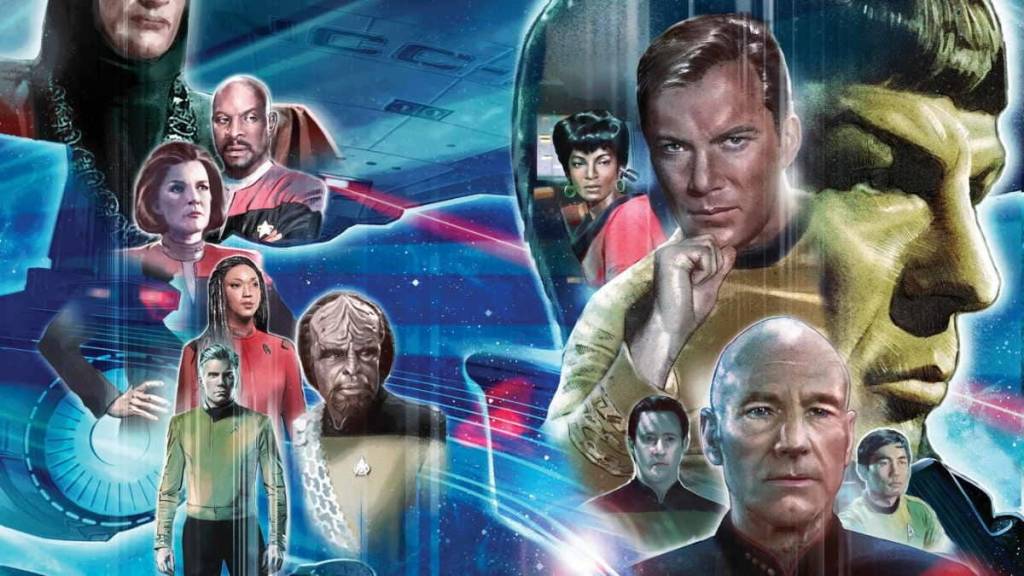
The Original Series created a rich, vibrant science fiction universe that has captured the imaginations of generations, and The Animated Series began to expand upon that world, allowing writers to do wilder things that the budget of a live action TV series at the time would not have allowed. Next Generation resurrected that universe, giving us some of the greatest and most beloved characters in the entire franchise (such as Data, that other great Pinocchio of the modern day). Deep Space Nine was the first series to attempt an extended story arc, and has some of the deepest and most profound stories and character arcs in the entirety of Trek. Voyager compounded the memorable characters and took an opportunity to explore different settings. Enterprise was a step back that showed us the roots of the universe that we loved so much. The Kelvin timeline films are a fun, fresh look at something that was remarkably familiar. Lower Decks shows us that there is room for both lighthearted fare and serious science fiction in the same story. The final season of Picard is a brilliant conclusion to the stories of many of our favorite characters. Strange New Worlds recontextualizes the original series and gives new life and energy to something that we thought we knew all there was to know about. Prodigy is a series that introduces kids to the core thesis and heart that makes the Star Trek universe what it is in an exciting and engaging way. And Discovery has Tig Notaro sometimes. 

Dear Constant Reader,

You’ve spoken before about your love for the works of Stephen King. With his newest novel, Holly, hitting the stands, I was wondering if you have any thoughts or feelings about the Holly Gibney character in her previous appearances or any hopes or expectations for this new story.

Roland from 1919 19th Street, Co-Op City

R19,

I am, in fact, an avowed reader of the works of Stephen King. I’ve been a fan of his since high school and I have devoured a great many of his books. As for Holly Gibney, however, I’m afraid I actually haven’t read any of the books with her in it yet. Holly first appeared in King’s 2014 novel Mr. Mercedes, you see, and 2014 also happened to be the year I got married. That’s a busy time in a person’s life, as you may have heard, and in that time I fell a bit behind on reading pretty much anything. Then just as things were starting to settle down, my wife and I had a kid, and if the transition of getting married makes you busy, the transition of becoming a parent is like having a tornado drop into the middle of your living room and steal all your books. So the truth is, I’m way behind on reading not just Stephen King, but pretty much every other author whose work I enjoy.

The good news, as I’ve mentioned before, is that my son is a bit older now and I’m finding it a bit more possible to pick up a book and read again, so I’m slowly getting back into the game. I’ve actually made several lists of authors and series that I want to get into or back into, and I’ve been chipping away at them a little at a time. The Stephen King novels I haven’t read yet are all on those lists, and I have every intention of getting to them eventually. The funny thing is that, of all of his books that I haven’t read, only three of them were published prior to 2014…and I don’t know that I’m going to get around to Pet Sematary anytime soon. As a dad, it might just be too much for me.

Guess which one of these I’m probably going to read first.

Blake,

Is it true that you just couldn’t think of any topic to write about this week that was worth devoting an entire column to, and thus resurrected this contrived mailbag format as a way to work in a variety of different topics that wouldn’t support an extended discussion? And if so, when did it occur to you that the “mailbag,” while a classic trope, is hopelessly outdated and it would be better served to structure future such columns in the form of social media interaction?

Curious in Cambodia

Dear Curious,

Shut up, that’s why. 

Blake M. Petit is a writer, teacher, and dad from Ama, Louisiana. His current writing project is the superhero adventure series Other People’s Heroes: Little Stars, a new episode of which is available every Wednesday on Amazon’s Kindle Vella platform. What’s odd is that, although he hates ranking things, he enjoys making lists. Isn’t that bizarre? 

Geek Punditry #33: You Joke Because You Love

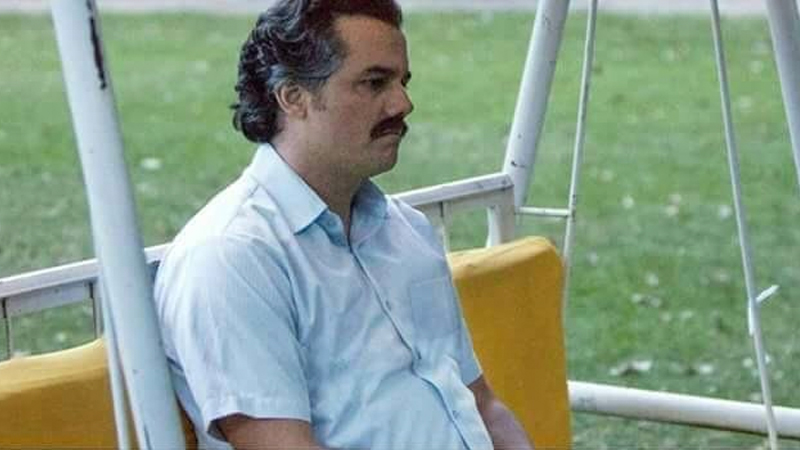
Last week was the season finale of Star Trek: Strange New Worlds, so when Thursday rolled around and I didn’t have a new installment of my favorite franchise waiting for me, I was not unlike that meme where the guy sits on a swing and pines away for something, probably football season. It was kind of pathetic to watch, actually. Just ask my wife.

“I wonder if Captain Pike’s hair misses me, too.”

But that sadness was mitigated by the fact that in just a few short weeks, on Sept. 7, the new season of Star Trek: Lower Decks is dropping. There was a time when Star Trek went off the air and we had no idea how long it would be before it returned to television (that time was called 2005 and the answer turned out to be 12 years, by the way), but in this day and age we’ve got more to work with. There’s been a semi-regular flow of Star Trek since Discovery first hit screens six years ago, and some of it has been magnificent: Prodigy, Strange New Worlds, season three of Picard…but the truth is, of all the “NuTrek” shows, none of them have made me as consistently joyful as Lower Decks.

Boldly going to season four.

A lot of fans were dismissive when Lower Decks was announced. An animated Star Trek? A comedy? A comedy produced by someone who worked on Rick and Morty? If you’re the kind of Trekkie who wants the show to lean more on the dramatic side, it kind of sounded like a recipe for disaster. But every Trek series has had plenty of lighthearted moments, and even the occasional full-blown comedic episode (unless you’re trying to tell me we were supposed to take “Spock’s Brain” seriously), so I was happy to give it a chance.

I couldn’t be more satisfied with the results. I went in expecting to see a parody of Star Trek, but the truth is that isn’t really what Lower Decks is. It’s funny, absolutely. The characters are hilarious and the performances by the main cast are magnificent. But it’s not the comedy alone that makes Lower Decks work – what really makes it land is the fact that if you take away the jokes, you’re still left with plots that would work solidly on a more mainstream science fiction series. The season 2 finale is a great example: when a more “important” ship than the USS Cerritos is endangered on a first contact mission, our crew has to step up and save the day. Ultimately, they discover the only way to traverse a dangerous asteroid field is to strip off the outer hull of their ship and pilot through manually. (Trust me, it makes sense in context.) The scenes of the crew coming together to dismantle their own vessel and then maneuver through the field are as tense and action-packed as Trek at its best, and still funny to boot.

Many fans were won over by the first season. Not everyone, of course. There are still some who argue that Lower Decks lacks in actual comedy, and is just a rapid-fire recitation of references to other Trek series. While it’s true that the show is very reference-heavy, to say that this is the only source of comedy is untrue and reductive. So much of what makes it funny it comes from the characters, and it is the characters that make the show worth watching. The references are fun, however, and I think it’s the references that prove something that I sincerely believe to be true: the best parodies are made by people who honestly and sincerely love the thing they’re making fun of. 

Mike McMahan, the creator and showrunner of Lower Decks, was a writer on several animated shows, but he came onto the radar of the Trek producers via – of all things – a Twitter account in which he posted synopses for episodes of a fictional eighth season of Star Trek: The Next Generation. The account became a hit and he eventually rolled that into writing an officially-licensed book. Warped: An Engaging Guide to the Never-Aired 8th Season was a hilarious look at what might have been but, more importantly, the writing showed that McMahan truly understood the show, the characters, and their universe, and that was what he built the comedy on. When he got the chance to do the same with Lower Decks, it was as engaging and funny as anyone could have hoped for. 

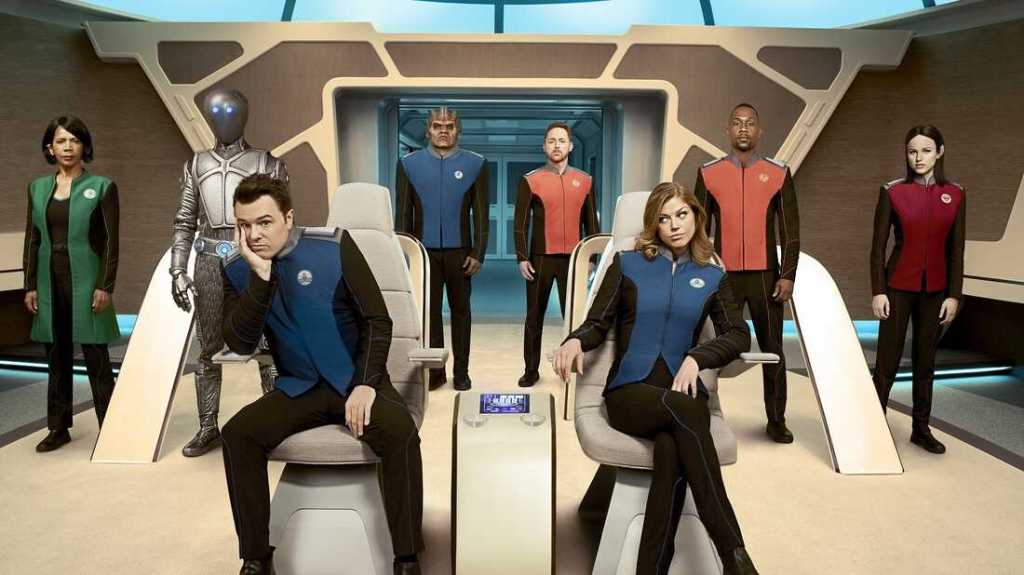
It should be noted that McMahan wasn’t the first writer to do that with Star Trek. By my count, he was at least the fourth. There are two previous projects that also take loving jabs at Trek while still working as science fiction in their own right. David Howard and Robert Gordon’s script for Galaxy Quest transports a bunch of Trek-esque actors into a Trek-stye adventure, and Seth MacFarlane’s The Orville started out as a comedic take on Trek tropes and quickly evolved into a sci-fi series as deep and powerful as Trek at its best, albeit with a few more jokes. In both cases, these were projects envisioned by creators who had a deep love of the franchise and wanted to pay tribute to it in their own way. 

“No, it’s not a Star Trek knock-off. Because our captain wears blue and our doctor wears green, that’s why.”

This is the thing that needs to be understood: something can be a great comedy and still be a great example of the kind of story that’s being told. It’s always frustrated me how the Academy Awards typically ignores comedy in most of the major categories, as if it is somehow less artful than drama. It’s only slightly better with awards shows like the Golden Globes or the Emmys, which separate comedies into their own category, with a subtle implication that they don’t deserve to compete against the “real” movies. There’s a sort of snobbish attitude that thinks of comedy as “lower” art. That’s ridiculous, of course. Comedy has existed since the birth of drama. Shakespeare’s tragedies may get more play in schools, but I’ll argue that Much Ado About Nothing is a vastly superior play to Romeo and Juliet any day of the week. And as far as the acting part goes, giving a great comedic performance is a skill set that not everyone has. All acting is about building and releasing tension, but the demands of comedy require you to land the release in a way that often far more difficult than drama. Think about how many great comedic performers have gone on to give great dramatic performances. Off the top of my head there was Jim Carrey in Man on the Moon, Robin Williams in Dead Poet’s Society, and Carol Burnett put forth a fantastic performance in the final season of Better Call Saul. Speaking of which, the “Gilliamverse” duo of Bob Odenkirk in Saul and Bryan Cranston in Breaking Bad pretty much embody this concept. On the converse, how many actors who became known as great dramatists then went on to give fantastic comedic performances? I’m sure the list exists, but the flip side is much more extensive. Go ahead, tell me Orson Welles’s best-known comedic performance. I’ll wait. 

You picked this one, right?

Great comedies are often great examples of the stories that they are supposedly parodying. Two of the most formative movies of my childhood, two of the movies that are probably responsible for shaping my sense of storytelling into what it is today, fall into this category. Ghostbusters began with Dan Aykroyd’s personal desire to tell a story about the paranormal. Although the script evolved and changed considerably from his original vision by the time it was on the screen, it was a fantastic story with some genuinely creepy moments buoyed up by some of the greatest comedic performances ever put to screen. The next year, Bob Gale and Robert Zemeckis gave us Back to the Future, a movie that’s effective as a science fiction film, but even more impressive as a relationship comedy about teenagers in love and a son rediscovering his parents. These movies are classics and are pretty much universally recognized as such. (Heck, as of this writing, Back to the Future still sits atop my personal “Perfect Movies” poll and has done so for over a year.)

Nor is this only true in film and television. Look at Douglas Adams The Hitchhiker’s Guide to the Galaxy and its assorted sequels. Begun as a radio drama before becoming part of the modern literary canon, Adams uses science fiction and humor hand-in-hand to satirize any number of targets. Terry Pratchett did the same thing with the fantasy genre in his Discworld novels – parodies of fantasy tropes, to be certain, but at the same time marvelous examples of a fully-realized fantasy world that had a lot of interesting things to say about the actual world we all live in most of the time. 

Recently I found a new member for this club of parodies that also perfectly encapsulate the thing that they’re parodying: the Hulu series Only Murders in the Building. I mentioned this show a few weeks ago when discussing shows I haven’t watched yet that I would try to get through during the (still ongoing) writer’s and actor’s strikes in Hollywood. Since then, I’ve made it through the first two seasons and begun the third, and I’m frankly angry at myself for not having watched it before. If you’re unfamiliar, the show stars Steve Martin, Martin Short, and Selena Gomez as neighbors in an enormous Manhattan apartment building. Initially strangers to one another, they bond over their mutual love of a true crime podcast. When a murder takes place in their own building, they decide to launch a podcast of their own while they try to solve it.

“That Petit guy is talking about us again. Get the murder.”

The show is a deft send-up of podcasts like Serial, with Tina Fey appearing in several episodes as an obvious stand-in for Serial’s host, Sarah Koenig. While gently mocking the format, it also occasionally says some serious things about the nature of an audience that draws entertainment from the death and suffering of real people (which, let’s face it, is what we all do when we “enjoy” the true crime genre). There are dark moments as well, as the pasts of each character are slowly opened up and revealed to the viewer throughout the course of the investigation. What’s more, the show isn’t afraid to get experimental, as we see in the format-breaking episode seven, which tells the story in a way few shows would have the guts to do. It’s also not afraid to tug at the heartstrings, as we see in season two when several episodes revolve around the concept of fatherhood and what it means, which is something that cuts into me personally pretty deeply.

In the midst of all this, though, there are two things that absolutely have to be said:

  1. The show is outrageously funny.
  2. Each season so far has been a fantastically-structured mystery in its own right.

In their mocking of the true crime culture, show creators Steve Martin and John Hoffman have managed to make one of the most engaging TV mysteries I’ve ever watched, laying out clues, unraveling threads, and sending us chasing after red herrings with the aplomb of Arthur Conan Doyle or Alfred Hitchcock. Even if it wasn’t funny, it would still be a good mystery, and that’s what really matters in regards to my grander point.

Good comedy is damned hard to do, and it deserves respect. And when that comedy lands, it’s not just funny, it’s transformative. It’s not fair to say Only Murders is a great mystery “for a comedy,” to call Lower Decks a good Trek show “for a comedy,” to say that Terry Pratchett’s Discworld novels are solid fantasy “for a comedy.” They just are. They’re great examples of their genres that also happen to be comedies.

When we can get everybody to wrap their brains around the premise, maybe the people who make us laugh will finally be able to get their due.

Blake M. Petit is a writer, teacher, and dad from Ama, Louisiana. His current writing project is the superhero adventure series Other People’s Heroes: Little Stars, a new episode of which is available every Wednesday on Amazon’s Kindle Vella platform. Hey, he hasn’t used Star Trek as a main topic in this column for six weeks now, he deserved this one.

Geek Punditry #30: Summer Reading

Summer reading. The phrase calls up different memories, different emotions, depending on how old you are. If you’re my age (or you’ve seen the memes), it may bring you back to those halcyon days when you were tracking each book you read in the pursuit of a free personal pan pizza. Depending on what school you went to, it may cause you to recall those last few hours before a new school year began, binging A Tree Grows in Brooklyn or Of Mice and Men, even though you had two months with virtually no responsibilities in which to get it done. For a lot of people, it brings to mind the beach or the pool, where you set up on a towel or a chair and pull out a romance novel, a potboiler mystery, a spy thriller, or whatever it is that you connect to. Whatever the specifics of your personal relationship with books, it seems very curious to me that people have settled on the summer as the time to read.

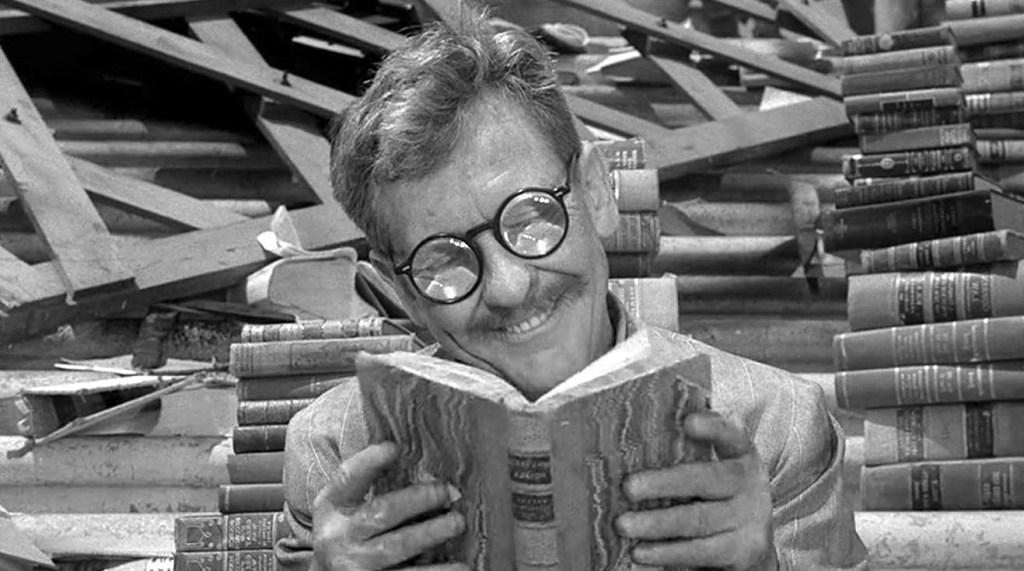
Of course, if you’re just trying to SOUND smart, this sucker is available on Amazon and can tell you everything you need to know.

And we can blame teachers and Pizza Hut all we want, but there’s something that makes us all reach for that to-be-read pile during the summer months. Any book lover will tell you that we add to that pile constantly, most of us have stacks and shelves (or files bursting with digital downloads) of books that we know we have no hope of finishing in our lifetime, barring one of those Twilight Zone scenarios and minus the poor eyesight. That doesn’t stop us from piling new books on, of course, as we constantly tell ourselves and our partners that we need to be grateful it’s books and not, for example, meth. As that pile gets bigger and bigger, summertime is the only time where it seems to dip a little (or at least grow more slowly). 

Me on June 1.

This is even true for those of us who, through a terrible confluence of biology and neurochemistry, happen to love both books and our own children. In my entire life, there has never been a single event that slowed down my reading more than the birth of my son. And he’s worth it, of course. I love him to death, and I make sure to tell him that every time I look at the 17 books Stephen King has published since his last haircut that I haven’t gotten around to consuming yet.

The good news, parents, is that kids get older, and eventually they do reach a point that makes it a little easier to start reading again, and this summer seems to have finally gotten my family to that sweet spot. Of course, we did need a little help. Our local public library, as they always do, has issued a “summer reading challenge” to its patrons, both children and adults. There are prizes (no pizza, sadly), and of course, bragging rights, and the weird thing is that having this carrot dangling in front of us has really worked for my family.

Not quite as well as this, of course.

The St. Charles Parish Public Library is affiliated with a reading app called “Beanstack,” which allows you to track your reading time, track books you’ve read, even track the number of pages read (although I personally have not taken advantage of this feature, as most of the books I read these days are eBooks, and tracking the pages isn’t always easy). You can write reviews as well, and share your reading with others. You earn points and badges. I got a free umbrella. It’s kind of goofy that a grown ass adult (or whatever I am) would need to treat reading books like accumulating a high score on a video game, but by God, it worked.

My summer ends next week, when the teachers at my school report back for a few days of professional development in advance of the avalanche of students the week after, but when it comes to reading, I’ve really taken advantage of this summer. Since school let out in May, I’ve recorded 80 different reading sessions, 20 different books, and a whopping 2578 minutes of reading time, most of that at night before bed, because knowing I don’t have to wake up at 5 am makes me feel a little more free to stay up late with a book like I did when I was a kid. My wife – who is not a teacher and thus does not have the summer away from work – hasn’t quite matched my numbers, but she’s also found herself reading more thanks to the use of the app. There’s something oddly communal about the experience, knowing that other people in the system are reading as well, trying to stack up their numbers, and having fun doing it.

Um…just ignore that second stat.

The communal aspect, I think, is one of the things that makes it work. I can see how many reading minutes everybody signed up for the Library system has accumulated over the summer (currently hovering at about 2.1 million, which means some of you people have been slacking), and there’s something about knowing that other people are reaching for the same goal as you are at the same time that makes it a little bit easier and a little bit more exciting. It’s the same reason people share their steps from a Fitbit, the same reason so many of us jump into NaNoWriMo every November. You’re aiming for a goal that you always have on some level. It’s easier to go after that goal when you know you’re not doing it alone.

Those 20 books that I’ve dug into, by the way, are also in pursuit of various smaller goals. Most of them are in series or by authors I enjoy, but that I’ve never gotten around to finishing. I’ve started a re-read of all of L. Frank Baum’s Oz novels (in case you were wondering why I wrote about that back at the beginning of summer) with the intention of continuing on and reading the other books in the “Famous Forty” that weren’t written by him, most of which I’ve never read before. I’ve read a few Star Trek novels. I’ve read books in George R.R. Martin’s Wild Cards series and Hugh Howey’s Silo saga. I’ve even tackled two of those Stephen King books that I hadn’t gotten around to yet. He wrote four more in the time that it took me, but baby steps. 

If you can think of a better way to spend the summer, I’d love to hear what it is.

The only problem I’ve got with Beanstack is that I don’t think you can add friends from outside your own library system, so I don’t know that all of you fine folks out there could link up with me there – although if anybody knows of a similar app that’s not geographically-locked, by all means let me know. And while you’re at it, let me know how your own summer reading has gone. What have you read on the beach, what books have finally escaped your-to-read pile, and do you too feel like you read more when the heat is on?

Blake M. Petit is a writer, teacher, and dad from Ama, Louisiana. His current writing project is the superhero adventure series Other People’s Heroes: Little Stars, a new episode of which is available every Wednesday on Amazon’s Kindle Vella platform. Blake is also considering doing a total read-through of Rick Riordan’s Percy Jackson universe, but that dang Stephen King keeps adding other books he need to get to first. 

Geek Punditry #27: Death and Taxes-A Streaming Crisis

A few days ago, between eating entirely too much barbecue and trying to figure out if there was room for apple pie, my sister and I were talking about movies and TV shows we’d recently watched with our kids. She mentioned a Disney+ original film called Crater, a science fiction adventure about a bunch of kids living on a lunar mining colony. I’d heard of the film before, and I thought it would be something that my son might have an interest in, at least the spaceship parts, and made a note to check it out soon. Unfortunately, “soon” didn’t turn out to be soon enough, because the next day word came down that Crater was being removed from the platform less than two months after its release, and would no longer be available anywhere.

Turns out the title was actually a reference to the film’s chances.

This isn’t the only Disney+ original to get this treatment. The Willow series, canceled after just one season, was also unceremoniously axed, as well as the quirky documentary The World According to Jeff Goldblum, among others. Nor is Disney+ the only streaming platform to do such a thing in recent months. Netflix has removed shows such as Hemlock Grove, Hulu quietly evaporated Y: The Last Man, and before they dropped the “HBO” from their name, HBO Max made headlines by removing a lot of content, including the almost-finished but now never-to-be-seen Batgirl movie starring Leslie Grace and the most beloved man on the Internet, Brendan Fraser. 

If the new Betty White couldn’t save that movie, nothing could.

There have been various reasons given for these cancellations: merchandising revenue losses, a lack of viewers, to avoid paying royalties or residuals to the people involved, or most egregiously, some of them were cut so that the studio could use the massive cost of production as a tax write-off to counteract losses elsewhere in the company. Whatever the specific reason, they all boil down to the same thing: the studio believes they can somehow make more money by erasing these films and TV series and pretending they never existed than they can by allowing them to remain on the streamer. 

I am not an economist. I don’t pretend to understand exactly how these things work. What I’m seeing is that we are once again seeing creative work being strangled in the name of the bottom line.

Now let me be clear about this: no, I’m not an economist, but I’m not an idiot either. I know that it’s called show business for a reason, and I accept that the people putting out the money have to make money back if they’re going to keep doing it. There are few things in the universe I find stupider than when someone says that an artist or a writer should just do their creative work “for the art” and not worry about the money, as if artists and writers are somehow immune to the need to eat. These things need to turn a profit one way or another, and I’m okay with that in principle. I just wish they would find some way to do it that doesn’t come at the expense of the people who make the damn things.

I write. I try to write every day. And I’m not doing it just because it feels good to push buttons on a keyboard, I do it because I want people (like you) to read what I have to say. When I hear about things like what happened to Crater, I’m thinking about the people who wrote the movie, the director who steered the ship, the actors who performed in it, the set designers and special effects artists and musicians and everybody else who bled for that film, believing that their work would be out there for the world to watch whenever they wanted…except now it’s not available anywhere. That has to be gut-wrenching. Even if a movie or TV show is canceled because it’s objectively terrible, I feel for the people involved. Nobody tries to make a bad movie, after all. I can’t imagine anybody who walks on to a set thinking, “Let’s make this puppy suck.” They’re doing what they can to make an entertaining product so that it will be seen. Even the infamous 1994 Fantastic Four movie isn’t immune to this principle. The movie was literally rushed out as quickly as possible so that the studio wouldn’t lose the rights to the franchise, never having any intention of actually releasing it…but none of the people making the movie knew that. They did the best they could, and honestly, crappy special effects aside, they’ve done better than anyone else with the FF in live action so far. 

That’s not even a joke. This is literally the best we’ve had so far.

The issue here is that streaming services are bleeding money. None of them, not even the juggernauts, are making enough to cover the costs of the original content they’re creating, and that’s largely in part to the way the streaming universe has bifurcated. It wasn’t so bad when it was just Netflix, Hulu, and Prime Video, and pretty much everything you wanted to find was on one of those if it was anywhere. But then we saw the tentacles begin to reach out as nearly every studio or network decided to create its own service instead of signing with one of the existing streamers: Disney+, Max, Paramount+, Britbox, AMC+, Shudder, ESPN+, Screambox, Apple TV+, Peacock, MGM+…not only did it quickly get unwieldy, but it’s terribly frustrating how over fifty percent of them just stole the “Plus” from Disney rather than trying to come up with an original name. 

Pick one. I dare you.

There are simply too many streamers for the average person to keep up with. Even if they had the money for them all (which the average person does not), keeping track of what’s streaming where or what services have the shows and movies you actually want to watch is getting to be a full-time job. What’s more, there’s the question of signing up for a service just for one series or one movie – nobody sane would do that, right? So instead, people sign up for the free trial and binge what they want, then cancel once they’re finished. The streamers obviously don’t make money that way, and if they don’t make their money they’re not going to keep doing it. 

Let’s look at the biggest recent example. Paramount+ (previously CBS All-Access) was, frankly, the house that Star Trek built. The big selling point for the streamer when it launched was that it had every episode of every Star Trek series, and that furthermore, it was going to be launching several new Trek series, bringing it back to television for the first time since the cancellation of Star Trek: Enterprise twelve years prior. And for a few years, it was working out okay…until a few weeks ago when Paramount announced that the animated series Star Trek: Prodigy was being canceled, that the almost-finished second season would not be shown on the service, and that the existing first season would be removed. And before you could blink your eyes, the crew of the USS Protostar was GONE.

Cheer up, guys. They cancelled Kirk’s show too. Twice.

Now everyone who reads this column knows I’m a Trek nerd. In fact, my inaugural Geek Punditry column was all about how awesome the first season of Prodigy was. So nobody is going to be surprised to learn I’m upset about this. But I’ll bet I’m nowhere near as upset as the cast and crew of that series.

Something funny happened once Prodigy was removed, though. Within 48 hours, the Blu-Ray of the first season was sold out at Amazon, Target, Walmart, Best Buy…pretty much anywhere you can buy Blu-Rays. Sadly, the Blu-Ray only had the first half of the first season, not the second set of 10 episodes, not the cliffhanger ending that may never be resolved now. But the fans mobilized and actually spent the money, which is what Paramount wanted in the first place.

Streaming is a great thing in terms of convenience. It’s fantastic to be able to pull up any episode of Star Trek (except for those 20 episodes of Prodigy) from my remote control without worrying about changing discs or tracking down when it’s going to be broadcast. But as if we didn’t know it already, the unstable landscape of the streaming world means that no matter how much you love something, it can be taken away at the whim of some studio accountant. Supporting the things you love, while important, is only ever going to be part of the equation. What I think we’ve all learned here is that having a permanent way to keep them is more important than ever.

Blake M. Petit is a writer, teacher, and dad from Ama, Louisiana. His current writing project is the superhero adventure series Other People’s Heroes: Little Stars, a new episode of which is available every Wednesday on Amazon’s Kindle Vella platform. After he heard about Prodigy getting the ax, he added all of the Star Trek Blu-Rays he didn’t already own to his Amazon wish list. Can you blame him?

Geek Punditry #20: Prequel Pitfalls

If you haven’t heard, there’s a new Hunger Games movie coming out. “But how can that be?” you ask. “Didn’t the original trilogy of four movies end the story in a tidy, satisfying manner?” Eh, kinda. But this one isn’t another sequel, it’s a prequel, The Ballad of Songbirds and Snakes, based on the prequel novel by the creator of the series, Suzanne Collins. I was a big fan of the novels, and the movies were…okay. But I haven’t yet read the prequel novel and I’m honestly not feeling a huge need to do so. As I mentioned a few weeks ago during one of my almost-weekly Star Trek discussions, pulling off a satisfying prequel is tricky as hell, and not a lot of franchises have done a good job of it. So before you line up to see Songbirds and Snakes, let’s take a little time this week to discuss what it is that makes prequels difficult and a few franchises that have overcome that inherent degree of difficulty to give us a satisfying result. 

You know, by definition, ballads have words, so I’m expecting these birds and snakes to talk. Do it, you cowards.

Any time you return to a successful franchise, there is a compulsion to raise the stakes. There’s no reason to go back to familiar territory, after all, if you can’t enhance the next installment – greater spectacle, more blood, a more fervent tugging on the heartstrings. It’s the reason that horror movie sequels always have a higher body count and why the first Fast and Furious movie was about illegal street racing but in the most recent one they were literally driving cars into outer space. And while we usually think about this escalation issue in terms of sequelitis, we want the same thing out of a prequel.

Even sequels don’t always pull off the escalation in a satisfying way (in truth, the list of sequels that are better than the original film is relatively small when you consider how many sequels have been made), but it’s even more difficult to do so when rolling back in time because many of the things audiences usually want to discover about the characters and the world they live in have already been established by the original. Going back to Star Trek as my example (because this is my blog, dammit), when you sit down to watch an episode of Strange New Worlds, there is never any fear in your heart that Spock might die because you know he’s still alive during the original series. Not to say that death is the only challenge a character might face, but the same logic applies to most of the unanswered questions we usually cling to. No one cares about a “will they/won’t they” romance with characters who we’ve already seen having “willed” or “won’ted.” That invasion that’s happening is kind of dull if you know from the original movie that the aliens are, indeed, successful in conquering the world. And if a character that has no children in the original film gets pregnant in the prequel, get ready for bad things to happen. Bad prequels feel like watching somebody draw a connect-the-dots picture. We watch as the story goes from point 1 to point 2 to point 3, and no matter how many numbers you have in the image, you’re never surprised by what happens next.

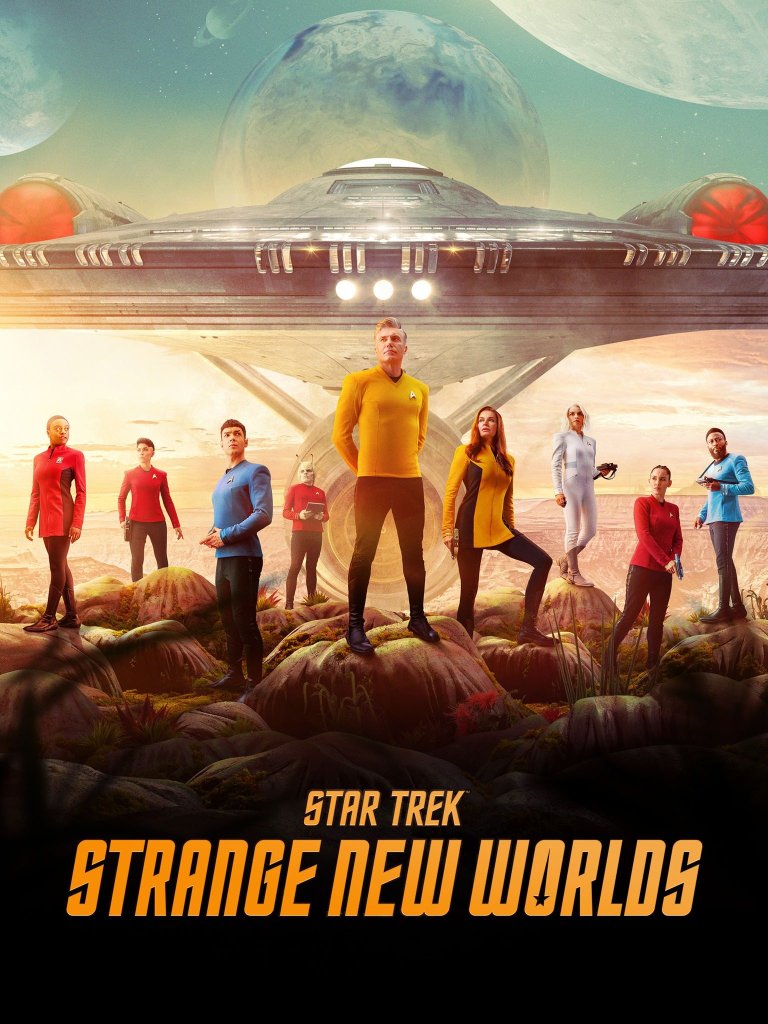
From left to right: Safe, At-Risk, Hella Safe, Don’t Get Too Attached, Gonna Survive the Series But Wind Up in a Space Wheelchair, Originally Played by Majel Barret Part 1, Originally Played By Majel Barret Part 2, Could Buy it at Any Time, and Bet You Forgot This Guy Was in TOS.

So how can you make a prequel work? Well, there are a few ways. One is to rely less on a story that just marches towards the original and instead try to tell a story that matches the original’s flavor in a satisfying way. You’re drawing on the same page, but you aren’t just playing connect-the-dots. This is what makes Strange New Worlds work. Yeah, I’m never worried that Spock is in mortal danger, but the truth is that we were never really worried when we watched the original series either, were we? This was a pre-Game of Thrones era, a time where series regulars didn’t get killed off randomly. It’s literally the reason that the redshirt trope came to exist: they needed to kill off SOMEBODY who wasn’t in the credits, so cannon fodder lined up in the casting office. Strange New Worlds takes the sort of episodic approach that the original series did, and while the stories are perhaps a bit more sophisticated than those that Shatner and Nimoy performed in, the tone is really spot-on perfect. That’s what makes the show so satisfying, even without the spectre of the Grim Reaper hovering over half of the cast.

Another way to make a prequel work is to use the setting of the original property, but an entirely (or almost-entirely) new cast of characters whose fates have not been determined. Star Trek has tried this approach as well. Enterprise was a series about the founding of the Federation, 200-ish years before Kirk. Even though you always felt the world we knew from the original series as the North Star that the Enterprise NX-01 was sailing towards, there was room for danger for these individual characters. They also tried this with Discovery, but this time set it only a decade pre-TOS and mingled in characters so hopelessly intertwined with Spock that it became a distraction to simply try figuring out how any of it meshed with the stories we already loved. The second season finale had a half-assed attempt at explaining why the events of Discovery had never come up in-universe before (especially Spock never mentioning an adopted sister that he was apparently quite devoted to, even when his rogue half-brother previously turned up in Star Trek V), but it just never properly landed.

Of course, no discussion of prequels would be complete without the franchise that popularized the term, and in fact includes one of the greatest prequels ever made. That franchise is Star Wars. The prequel? Rogue One.

No, not the other three. You see, another way to make a prequel work is to subvert the audience’s expectations – make them think they know what you’re going to do, but give it an unexpected twist. Since the audience knows how the story will end, you have to pull off some pretty big surprises to get there. This is both how the prequel trilogy failed and Rogue One succeeds. The trilogy is about the fall of Anakin Skywalker, the character everyone who saw the original films knows will eventually become Darth Vader. We know from the original series that Anakin was a Jedi who fell to the Dark Side of the Force and became an apprentice to the insidious Emperor Palpatine. It sounds like a story that’s ripe for tragedy. But in telling that story, George Lucas stuck painfully to the blueprints, with nothing particularly shocking or surprising about Anakin’s fall except for the sheer number of details that failed to mesh with the original series. (“Hey Leia, remember your mom?” “The one who died giving birth to me? Yeah, she was beautiful, but sad.”)

Rogue One, on the other hand, is not only the best Star Wars film of the Disney era, it’s one of the best examples ever of how to toy with an audience’s expectations. In the original Star Wars Leia delivers data to the Rebellion that will help them to defeat the Empire’s superweapon, the Death Star, with the only explanation of how it was obtained being the single sentence, “Many Bothans died to bring us this information.” (EDIT: I have been reminded that the Bothans line was actually about the second Death Star from Return of the Jedi. I deeply regret this error, but it does open a window to make a Rogue Two movie about the Bothans.) Rogue One tells the full story of how this vital information was secured, and director Gareth Edwards and his screenwriting team pulled off a damn magic trick in doing so. We, the audience, already know that the mission will ultimately be successful – it’s literally how the original trilogy begins. So how can you build suspense for that? Well, first you introduce a cast of interesting and sympathetic characters, characters that fit in the Star Wars universe but don’t fall cleanly into the cookie cutter shapes of the older films, and make the audience feel for them. Then – and I’m about to spoil a movie that came out seven years ago, so stop reading if you haven’t seen it – then after we grow to love and care about the characters that are on a mission we know beyond a shadow of a doubt will be successful…

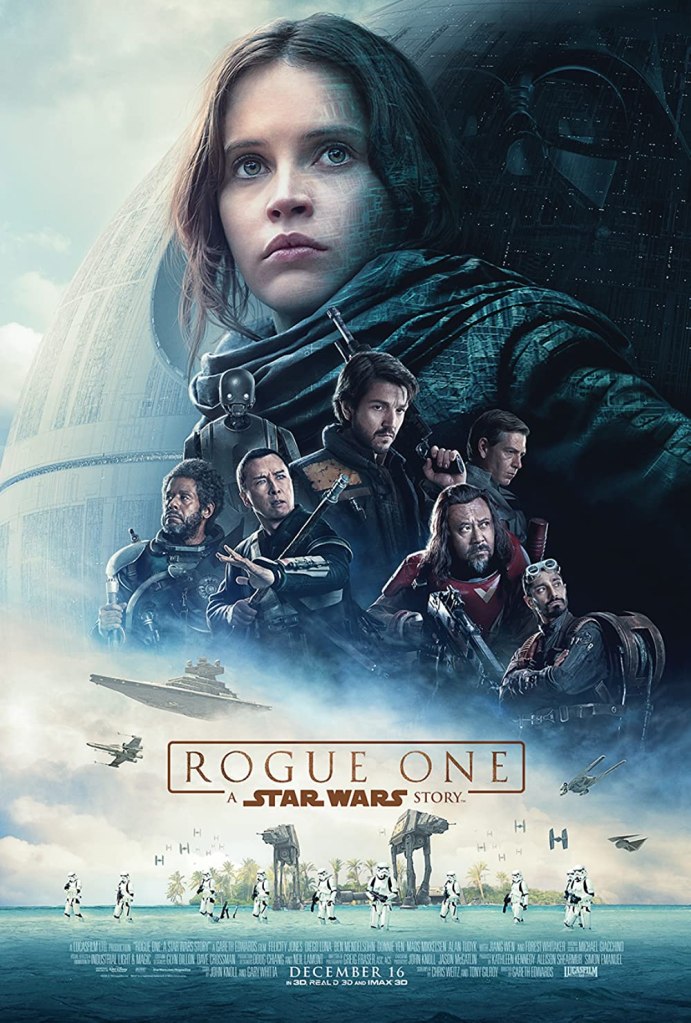
This poster and caption provided as a public service buffer in case you haven’t seen the movie yet.

…THEY ALL DIE.

They succeed in transmitting the information, but every character we’ve come to love dies in the attempt. This kind of ending, where every major character dies and which TV Tropes calls a “Bolivian Army Ending” after the finale of Bonnie and Clyde, is dangerous for a writer. There’s a real risk of being accused of trying for shock value, upsetting the audience in a visceral way that may not be truly satisfying. Rogue One nails it, though. The characters die heroically, succeeding in their mission at the cost of their own lives, and even as the audience is left weeping for them we’re also left with the knowledge that their sacrifice was not in vain. The movie ends just seconds before the beginning of the original Star Wars movie, and even though they were made nearly 40 years apart, watching them together gives the original an added context and an added weight that actually makes it better.

That’s what a great prequel does, by the way. It recontextualizes the original property in such a fashion that you look at it differently. Let’s talk about Better Call Saul, the spin-off of AMC’s drama Breaking Bad. It’s not often that somebody creates what is perhaps the greatest dramatic TV series of all time, but somehow, Vince Gilligan managed to do it twice. The fact that the second time was a prequel is the TV equivalent of walking a tightrope blindfolded and then doing it again backwards.

Breaking Bad was a series about a high school chemistry teacher who winds up falling into the world of drugs and organized crime. Bryan Cranston’s Walter White starts off as a deeply sympathetic and wonderfully human character – beaten down by a life that didn’t go the way he expected, a marriage that has grown stale, struggling to connect with his son…and if that wasn’t enough, in the first episode he learns he has cancer. It begins in desperation, cooking methamphetamines in order to make money to take care of his wife and children after his death. Over the course of five seasons, though, we watch this man transform from a quiet, relatable antihero into a cold-blooded crime lord, somebody who is terrifying to watch, but the writing and performances are so compelling that you just can’t look away.

Not since Dan Fielding have you loved a sleazy lawyer so much.

One of the characters who gets pulled into Walter White’s web is Saul Goodman, a shyster lawyer whose services are provided to the criminal element of Albuquerque when they’re in a tight jam. Bob Odenkirk’s performance as Saul was an instant hit, providing comic relief at necessary moments while still having the emotional gravity that the show demanded. When Breaking Bad finished its run, Gilligan and Peter Gould spun off the Saul character into his own series that began some years earlier. On paper it doesn’t sound like a great idea – who cares how a shyster lawyer became a shyster? It turns out, everybody.

Better Call Saul premiered with Bob Odenkirk playing…well, not Saul Goodman, but Jimmy McGill, an attorney trying to get out of the shadow of his brother and struggling to make ends meet. Like Walter White, he makes an early decision out of desperation that pulls him into the criminal underworld of New Mexico, and from there, the story is about how Jimmy McGill transforms into Saul Goodman.

Aside from – again – the excellent writing and phenomenal performances of the cast, the thing that makes Better Call Saul so compelling is the way it acts as a PARALLEL to Breaking Bad. We know where Saul Goodman ends up, but like Walter White, we watch in impotent terror as he falls deeper and deeper into the chaos that surrounds him. Like Walter, sometimes he makes terrible choices. Like Walter, sometimes he is compelled to make these decisions by forces beyond his control. There’s a lovely contrast here, too. Walter begins doing bad things with the intent of helping his loved ones, but is eventually intoxicated by the criminal lifestyle. Jimmy/Saul, on the other hand, is a con artist who’s trying to stay on the straight and narrow but just keeps slipping until he surrenders entirely. 

Both shows are about someone who begins as a basically decent man becoming something much darker and losing himself in the process – Walter becomes the criminal kingpin “Heisenberg,” while Jimmy McGill becomes smooth-talkin’ Saul Goodman. When watching Breaking Bad the characters of White and Goodman couldn’t be further apart from one another. Watching Better Call Saul makes you realize maybe they aren’t that different after all.

Beyond just Odenkirk’s character, though, Better Call Saul features frequent appearances by other characters from the earlier series, and knowing that these characters are safe from death doesn’t hurt the show at all. Nowhere is this more evident than with Jonathan Banks’s character Mike Ehrmantraut, who was a major supporting player on Breaking Bad, but is so vital to the prequel that they almost could have titled it Better Call Mike. Mike is a rough character, a former cop turned criminal who is willing to and capable of doing very bad things in pursuit of his goals, and when we first see him in Better Call Saul he doesn’t seem very different than he does in the other show. Then we see his relationship with his daughter-in-law and granddaughter, a story that we knew from the previous series, but not in its entirety, and much like Saul Goodman and Walter White, he becomes more sympathetic. Mike, Saul, and Walter all do terrible things for the purpose of helping people they care about, and as an audience member, they force us to question how far we would go for the people we love. In the case of Saul and Mike, the knowledge that they’re eventually going to fail gives the show the air of a Shakespearean tragedy. Their fall is as guaranteed as that of Anakin Skywalker, but is far more compelling.

Going backwards in the timeline can be dangerous, and the truth is there are far more examples of franchises that have made the attempt and fallen flat. But as these few examples show, it is possible to make a prequel work.  

What I’m getting at is that my Decepticon Babies pitch is NOT any stupider than anything you let Michael Bay put on screen, Paramount, so dammit, return my calls. 

Blake M. Petit is a writer, teacher, and dad from Ama, Louisiana. His current writing project is the superhero adventure series Other People’s Heroes: Little Stars, a new episode of which is available every Wednesday on Amazon’s Kindle Vella platform. There are probably some people who thought he was joking about the “cars in outer space” crack. Heh. Just watch F9, guys. 

Geek Punditry #18: The Animation Hole

J. Michael Straczynsi is an accomplished storyteller, a phenomenal writer, and a little bit of a troll when it comes to teasing his fans with the promise of upcoming content. Among his other achievements, Straczynski is the creator of Babylon 5, which a lot of people consider one of the finest science fiction shows ever made, and which is in many ways a precursor to the current model of long-form storytelling that we enjoy on television. But while B5 is acclaimed, it’s obviously not as well known as the likes of Star Wars and Star Trek. Aside from the series itself, the universe has only enjoyed a few TV or direct-to-DVD movies, a spinoff series that lasted a single season, and a relative handful of novels, comic books, and short stories which are all long out of print and not even available digitally. Last week I told you guys how fans always want “more.” By that metric, Babylon 5 fans have been starving for a long time.

This week's news that Babylon 5 is going to return with a new movie should be met with joy -- but some fans are put off because the film will be animated. Why, in 2023, are we still looking down on animation?
But lunchtime is coming…

This week, though, we were finally promised a meal when JMS announced an upcoming Babylon 5 animated movie. Although we don’t yet know the plot, the title, or the release date, Straczynski told us the following: the film includes the voices of most of the surviving members of the original cast, the movie is already finished and will be released “very soon,” and it is – in his opinion – the best thing they’ve done with Babylon 5 since the original series ended. And as with most news announced to a group of starving genre fans, the reaction had two phases:

1: YES! New Babylon 5 content! FINALLY! The prophecy has been fulfilled!

Followed shortly thereafter by…

2: Pfft. 

Any time a popular franchise makes an announcement, there is a “Pfft” contingent, and while that contingent is usually small, it is extraordinarily vocal. One “Pfft” is capable of raising his voice on the internet above approximately 5,000 fans who are genuinely happy and excited about the project, and he does so in such a manner to indicate that the news is nothing to get excited about, and anyone who is excited is beneath him. These people have existed since the dawn of  civilization, the first recorded practitioner expressing their displeasure with a cave painting of a pack of wildebeest made by Hector “Ugg” Gutierrez, but which was clearly inferior to the one made by his arch-rival, Andy Warhol.

But back to the Babylon 5 announcement, specifically. The “Pfft” people usually latch on to a few key elements to fuel their derision, such as the cast or writing. In this case, though, since it’s almost all the original people involved in the new project, they have focused their spite on the medium: animation.

“Pfft. It’s a cartoon?”

“Pfft. I’ll wait for the real show to come back.”

“Pfft. Look at what happened to Star Wars.”

(That last one is the most perplexing to me, actually, since many of the Star Wars animated projects have been widely acclaimed, but it does demonstrate the phenomenon of cross-fandom “Pffting,” an activity that has always existed but which has become much more prevalent in this age of the internet.)

Look, I’m not here to tell anybody what to like. I’m not telling anyone they have to enjoy something, and I’m not telling anyone their opinions are invalid. I am, however, going to say that if your argument against a project is based solely on the fact that it’s animated, an opinion formed before even a single frame of the project has been seen by the public, then you’re kind of a dink.

“Come on, you don’t think anyone actually liked this, do you?”

The idea that animation is strictly a medium for children is a stupid one, and one that’s never made much sense to me. It certainly wasn’t the intention when it was invented. Early cartoons were made for a mass audience, with references to popular culture that would often go over the heads of children and plenty of double entendre that definitely wasn’t intended for the little’uns. It’s hard to watch classic Looney Tunes shorts with a discerning eye and think that bits like Bugs Bunny’s Clark Gable imitation were intended for kids even in the 1940s, or that the leggy girls the male toons would often chase after weren’t there for a little bit of grown-up fanservice. The people who made those cartoons were really trying to entertain themselves, and the fact that their work also entertained everybody else just showed how talented they were.

After my standard “I am not a historian” disclaimer, I’m going to say that I think the (largely American) perception of animation being strictly a medium for children probably is due to television. Once TV became more prolific and turned into a fixture in most American homes, content for every member of the family became a requirement, and cartoons became the preferred delivery system for the kids. Saturday morning cartoons blossomed, and they were glorious. They eventually migrated to weekday afternoons so kids had something to watch after school. And then, even older works (like the aforementioned Looney Tunes) were repackaged and shown during these children’s blocks, cementing them as kid stuff in the tightly-closed mind of the public. It’s a stigma that was set firmly, and while I think the last few decades have started to chip away at that mindset, things like the reaction to the Babylon 5 announcement prove that it’s still real for a lot of people. 

The thing is, none of the arguments for animation being only for kids hold up to even minimal scrutiny. Let’s break them down, shall we?

“Animation is childish.”

Sure, it can be. It can be a realm of crude humor and slapstick comedy and lowbrow jokes and goofy gags, just like the Three Stooges – who (although they did have a cartoon in their later years) were decidedly human. The things that people call “childish” are elements of the way the story is written or presented, not the medium. Animation can be mature and serious, and I’m not just talking about raunchy humor like South Park. I’m talking about things like the razor-sharp satire of early seasons of The Simpsons. I mean experimental films like Batman: Death in the Family. How about Isao Takahata’s Grave of the Fireflies, a story about two Japanese children surviving an American firebombing during World War II? It’s a transcendent film, but most definitely not something that any reasonable parent would show a small child.  

To call something “childish” derisively seems to mean that the content is not worthy for consumption by adults. And to be certain, there are kids’ shows that fall under that category. But even shows that are aimed at kids don’t necessarily lock out parents altogether. Bluey is the most current example of this – this Australian show ostensibly for preschoolers is a favorite among kids, but has been embraced by parents all over the world for portraying a loving mother and father (sure, they’re dogs, but so what?) who do their best with their children, fall short sometimes, but keep on going. The characters have become inspirational, role models even. Animated dads have far too often been cast in the mold of Peter Griffin. The truth is, every dad should aim to be a Bandit Heeler. 

Bluey is an instructional video on parenting disguised as a show for preschoolers.

And there are far more examples. The original Animaniacs series came out when I was in middle school, and it was a show my father actually enjoyed as well. It was part of the Fox Kids lineup, but like the Looney Tunes shorts that were their true parents, it had layers of satire and entendre that kids never would have understood. I was in college before I realized the episode “King Yakko” (which you may just know as “the Anvilania episode”) was a full-plot reference to the 1933 Marx Brothers’ movie Duck Soup. Yeah, that was a joke for kids in the 90s. 

How you make something does not determine the proper audience. What you make does. 

If you’re anywhere close to my age you know EXACTLY which joke this is.

“It’s just a cartoon, I can’t feel anything like I do for human actors.”

That’s a failure of the viewer, not the film. Animation can be deep, powerful, meaningful, and personal, and it all depends on the story you’re telling. If somebody came up to me and said that the saddest 60 seconds of television ever made came at the end of the Futurama episode “Jurassic Bark,” I would be utterly incapable of arguing against it. After a full episode about Fry, trapped 1000 years in the future, coming to terms with losing the dog he left behind but finding comfort in the fact that he had a full life without him, the viewer learns that Seymour, the dog in question, literally spent the rest of his life waiting for his master to return before quietly passing away in front of the pizza parlor where Fry worked. Even somebody who hates dogs has to feel something for that.

97 percent of you got a lump in your throat when you saw this picture. The other three percent are assholes.

“But Futurama is adult animation,” you say. “Not all animation is like that.” I’m going to ignore the fact that you just utterly shattered your own argument that animation is all for kids and move on to examples that are for children, but which are still deeply moving for adults. How about the Pixar film Up? As a teacher, there are occasionally days where we show films because of reasons, such as having a room full of standardized testers who have finished early and I need to kill time before we return to our normal classes. On days like that I have a strict rule to never show the movie Up, because I may have to teach some of these 9th graders when they become seniors and I don’t need them remembering that time I sobbed like an infant in front of them. The beginning of Up tells the story of a boy and girl who grow up, fall in love, marry, discover they cannot have children, and grow old together before the woman, Ellie, leaves her husband Carl as a widower, and utterly alone. It’s a powerful story and it’s told, after their initial meeting as children is over, completely without words. It’s entirely visual, requiring the viewer to infer what has happened to them at each stage, and causing their souls to crumble as the reality sets in. I admit, I’m a softie. I cry at movies. At TV shows. Whenever I heard the John Williams anthem from Superman. But this was the only time in my life a movie made me cry in the first ten minutes.

I’m gonna make you people cry before the end of this column.

Emotion is an intended byproduct of art, all art. Whether it’s a film, a poem, a painting, or a concerto, art is created for the express purpose of evoking an emotional response from the audience. And great animation can nail it just as much as live action.

“Animation is just a cheap way to tell the story.”

First off, buy a calculator. The price tag on rendering animation can be pretty staggering. But I’ll give you the benefit of the doubt here – maybe you mean that animation looks cheap. Sure. Sometimes. It’s hard to imagine that anyone involved in the 2012 magnum opus Foodfight! is particularly proud of what they have loosed onto an unsuspecting world. But that’s bad animation. Bad live action sucks too. So does bad writing, bad acting, bad special effects. If your argument is that “animation is bad,” you’re choosing to ignore the mountains of good animation that exist or the mountains of bad everything else you had to wade through to get there.

If Futurama and Up didn’t get a tear out of you, the existence of this abomination should do the trick.

Let’s go back to Babylon 5 for a second. Although very few details have been released, and everything I am about to say is speculation, the fact that Warner Bros. owns the property makes it reasonable to assume that the animated film is the work of the Warner Bros. Animation studio, the company whose history goes back to those magnificent Looney Tunes I keep bringing up. For a more recent example, and one that is thematically much closer to what the B5 movie will likely be, this is also the studio that has made the collection of DC Comics animated films that have come out over the last several years, movies like All-Star Superman, Batman: Under the Red Hood, Superman Vs. the Elite and Justice League Vs. the Fatal Five. The current unit is also responsible for many films featuring the likes of Scooby Doo and other Hanna-Barbera properties, Tom and Jerry, and…you guessed it! The Looney Tunes. And while people may debate the relative quality of any of those productions – they may dislike the story, the casting, the character design – one thing they rarely complain about is the quality of the animation itself. WBA knows what it’s doing.

And frankly, the notion of using animation for science fiction just plain makes sense. When you’re telling a story in a world beyond our own – be it sci-fi, fantasy, horror, or superheroes – the special effects are often make-or-break. The filmmakers have to convincingly create something that does not exist in the world and put it in front of an audience in a way that it appears real. Some people are great at this. Some people are not. Animation removes that requirement. Star Trek is often derided for its reliance on “rubber forehead aliens” – in other words, alien species that are created by slapping some prosthetics on human actors. Well what else were you supposed to do, especially with the budget and technological limitations of television in the 1960s? When the Star Trek animated series was created, for the first time, there were recurring alien creatures who were not wholly humanoid, such as the tripedal Edosian officer Arex. Even in modern times, where improved effects make it easier to show things that are less human, we still see a much wider variety of alien species on the animated series Lower Decks and Prodigy than we do on any of the live-action Treks, and you never hear anyone say that they look “fake”.

I mean, in live action this guy might look silly.

What about superhero movies? Since Marvel Studios changed the way blockbusters are made, the “Pfft” crowd has come out in force to complain about the overabundance of special effects that are used. “Did you see the new Ant-Man movie?” they say, ignorantly forgetting that the Wasp receives equal billing with her partner. “It’s just a couple of people in CGI suits in front of a green screen for two and a half hours.”

You know what movie they never say that about? The Incredibles.

In fact, after The Incredibles and the largely-forgotten but highly-enjoyable TMNT (an animated feature starring the Teenage Mutant Ninja Turtles that you likely didn’t know existed) I came to the opinion that animation is the perfect medium for superhero movies. I’m not saying that animating a huge action sequence is easy, but when literally the entirety of the universe is created digitally or on a drawing board, there are fewer limitations. The live action Marvel movies recognize this, which is the reason they’re so heavily reliant on CGI these days. And while their live action features have been a mixed bag, DC’s animated superhero projects have been a hallmark of quality ever since Batman: The Animated Series. Even non-superhero, non-science fiction movies do this these days. I’ll never forget the hilarious moment when Disney’s “live action” remake of The Lion King had so little live action that the Golden Globes nominated it for Best Animated Feature. I still laugh about that.

Superheroes and animation go together like ham and eggs, peanut butter and jelly, sauteed sea bass and rum raisin ice cream…

Animation is a medium. It’s a method of telling a story, and dismissing an entire medium because of what you perceive it to be is a kind of ignorance. If the Babylon 5 animated film comes out and underwhelms…well, that would suck. I love B5 and I want more stories in that universe, and I think that the success or failure of this film will impact the odds of that happening in the near future. But if it turns out to be a dud, there’s one thing I’m sure about: it won’t be because it was “just a cartoon.”

Blake M. Petit is a writer, teacher, and dad from Ama, Louisiana. His current writing project is the superhero adventure series Other People’s Heroes: Little Stars, a new episode of which is available every Wednesday on Amazon’s Kindle Vella platform. Thanks to his wife, Erin, for reminding him to include the Futurama example when he told her what this week’s column would be about. 

Geek Punditry #17: Fiction’s Fiction

If there’s one thing you can say about fandom, it’s that all fans of every stripe want the same thing: more. If we love a TV series, we want movie spin-offs. If we love a comic book, we want that hero to appear in multiple titles. If we love football, we feign interest in the XFL or USFL until August, because at least it’s something. Whatever it is fans want, the unifying element is that everybody wants more of it. 

The problem is that stuff takes time. The average TV season lasts for 13 episodes these days (sometimes 22, if you’re lucky), leaving well over two thirds of a year with no new content. Movie sequels can take from years to decades, and sometimes never happen at all no matter how badly you want them. Waiting for new books is a crapshoot – if you’re a Stephen King fan you’ll have three new novels to read by the time you get home from Burger King, whereas George R.R. Martin readers will have to inherit the fandom from their grandparents before they get any new content. Even comic books, which usually have a pretty standard schedule of once or twice a month, take you ten minutes to read and then you’re stuck sitting around waiting for the next installment.

Efficiency is the only reason the man on the left has a higher body count.

So in order to satiate the thirst of fans for “more,” something marvelous has happened. “Extended” Universes. Novels based on movies, comic books based on novels, TV shows based on comics, movies based on TV shows. There’s a weird, incestuous spiderweb of media that springs up around any sufficiently popular franchise, and it’s been happening for ages. Back in 1942 George F. Lowther wrote The Adventures of Superman, a novel based on the world’s most popular comic book character who, at the time, was only four years old. In 1910, Thomas Edison produced a short film based (very loosely) on Mary Shelley’s Frankenstein. Hell, way back in 1615, Miguel de Cervantes published the second volume of Don Quixote largely to spite an anonymous writer who, using the pseudonym “Alonso Fernandez de Avellaneda,” released his own unauthorized sequel to the first book, something that would have brought down a legion of Disney-owned lawyers were anyone to try that today. The point is, fans have been greedy for a long, long time.

Pictured: More.

The great thing is, if you love Star Trek and can’t wait for June 15 and the season premiere of Strange New Worlds, there are literally hundreds of novels, comic books, and video games you can consume to get your fix. And some of them are really good. And some of them have very devoted fans, and some of them have wonderfully complex and entertaining lore and mythologies all their own.

And this is where the problem comes in. When extended universes are really popular, a sort of strange conflict begins to arise when the time comes to figure out what is and what is not canon. What’s “official” to the main universe that you’re enjoying? What “counts” and what doesn’t?

It used to be relatively simple: the medium that birthed the franchise was king, and everything else could be a fun diversion, but was not considered relevant to the creation of a new “official” installment. It didn’t count, it wasn’t real, it was “Fiction’s fiction.” Because of this, at the time, these expanded works didn’t usually do anything that would have permanent repercussions to the main story. Sure, there were Star Wars comics while the original trilogy was being produced, but there was never any real danger of Han Solo dying because Lucasfilm needed him for the next movie. This did produce some “funny in hindsight” moments when early writers teased a Luke/Leia relationship because they didn’t know yet that the two of them were brother and sister. Of course, neither did George Lucas, so who can blame them?

It was Star Wars, I think, that started to change things for these extended worlds. In the early 90s, it had been years since Return of the Jedi and there did not seem to be any intent to make more movies, so a plan was hatched to continue the universe via novels and comic books. The first Timothy Zahn trilogy of novels introduced the new big bad, the fandom-beloved Grand Admiral Thrawn, while Dark Horse Comics’ Dark Empire series brought Emperor Palpatine back from the dead by revealing he had the ability to transmit his mind into cloned bodies he had ready for just such an occasion. With the success of these stories, the Star Wars universe grew exponentially, with hundreds of interwoven stories introducing new characters, heroes, villains, planets, and alien species that were as thoroughly entertaining as anything the fans had come to love in the original trilogy. Even once movies were being made again, films that sometimes contradicted elements of the extended universe, the creators did their best to pivot, explain away inconsistencies, and incorporate “official” elements into their own world. And for the most part, it worked.

Geeks in the 90s were required by law to read these books 74 times.

Then Disney bought Lucasfilm and designated everything except the six existing movies and Clone Wars TV series to be non-canon. Actually, they used the term “Star Wars Legends,” because that way they could keep reprinting and profiting off the work while usually failing to pay the creators any royalties, which is a different rant I’m not going to get into right now. There would still be an extended universe, of course, but now they were going to produce it themselves, with books, comics, and video games tied to the new “official” canon, and ostensibly, those works would be considered canon as well. So far it seems to have worked out, but that doesn’t mean I doubt for a second that Kathleen Kennedy would make a movie that  contradicted Marvel Comics’s War of the Bounty Hunters series if she so felt the urge. 

My favorite “Star,” Trek, has had its own issues with extended universes, particularly in the 80s when DC Comics held the license. Following Star Trek II: The Wrath of Khan, DC began publishing new stories assuming a status quo as it was at the end of that movie: Admiral Kirk commanding the Enterprise after the death of Spock. Then came Star Trek III: The Search For Spock, in which Spock…y’know…un-dies. Despite the fact that the movies clearly take place right after each other, chronologically, the comic writers wrote a story that dovetailed their few years of adventures into that movie best they could, then began a new status quo. The Enterprise was destroyed, so Kirk took over command of the Excelsior for reasons, while Spock became captain of a science vessel and had his own adventures. Then Star Trek IV: The Voyage Home further complicated things with a story that clearly happened immediately after the events of the previous film and did not fit the comic book canon in any conceivable way. The comic book writers flailed for a while until DC got the rights to do an ongoing series of the then-new Star Trek: The Next Generation series, at which point they rebooted the comic starring the original crew so it could start with a new first issue the same month that TNG #1 came out, and then they just pretended those other stories they told never happened.

Trek got better in the late 90s and aughts, taking a cue from Star Wars and moving into stories based on franchise installments that seemed truly “over” and therefore safe to expand upon. There was a series of novels following the Deep Space Nine characters after the conclusion of their show, another with the adventures of Captain William Riker on the Titan following the final TNG movie, and even some series featuring mostly-new casts like Peter David’s New Frontier or the Starfleet Engineering Corps books. When the J.J. Abrams films brought Trek back to the screen, it was no problem for the extended universe, since they explicitly took place in an alternate timeline. In fact, it just gave writers a whole new universe to play around in. Modern Trek does have a few clashes, though: IDW Comics (who currently holds the license) recently began an initiative to create a more tightly woven universe through a relaunched Trek series and its Defiant spin-off, both of which are good comics, but which feature versions of Data and Beverly Crusher that seem to flat-out contradict the canon of Star Trek: Picard, which seems like a bizarre choice.

One of these things is not like the others…

The “official” continuation game has been played with more and more franchises in recent years. Buffy the Vampire Slayer and Firefly continued their respective universes in comic books, while Smallville – a TV show based on a comic – had a fairly lengthy “Season 11” series that followed that show: a comic book based on a TV show based on a comic book. Then there was the film adaptation of Stephen King’s The Dark Tower, a desperate effort to squash the material of seven books into 95 minutes (that’s seven Stephen King novels, most of which are large enough to qualify for their own zip code). While most fans were disappointed in the result, the sting is mitigated slightly if people try to view the film not as an adaptation of the books, but as a sequel to them. That probably doesn’t make any sense if you haven’t read the books, but just take my word for it.

That brings us to the issue when printed media are translated to the screen. Books were first, gloriously first, but if we’re being honest here, the general public often accepts film or TV adaptations as more official. Just talk to any devotee of L. Frank Baum’s The Wonderful Wizard of Oz and its subsequent sequels about how much you love the Ruby Slippers and watch them die a little inside. James Bond was created as a hero for novels and short stories, but the films are obviously what most people are familiar with, and those are highly contradictory. Some of the movies are based on Ian Fleming’s stories, some of them use the titles of stories but very little else, and others are cut from whole cloth, but there’s just no way to pretend they share a canon. Most Bond fans don’t care, of course, and modern fans tend to see the movies as the “real” James Bond more than the novels that gave him birth. (He’s a more likable character in the movies, to be fair, so this is not necessarily a bad thing.)

As for comic books, there have been comic book movies for a very long time, but those have historically been ignored by the comics themselves. The first Batman serial from the 40s, for example, portrayed him as a government agent beating up spies, something that doesn’t sync with any canon comic book I can think of. Even really popular films, like the Christopher Reeve Superman or Tobey Maguire Spider-Man, had a negligible effect on the comic books. Then came the Marvel Cinematic Universe, and boy, things changed. With the gargantuan success of the MCU, there are now effectively two “official” Marvel Universes, and the cinematic one is by far the one that’s more recognizable to the general public. The MCU was the first time anyone had ever tried to create so intricate a universe of interwoven films and TV shows, something that made it feel more “real” than that scene in Batman Forever where Bruce Wayne casually mentions Dick Grayson’s circus is “halfway to Metropolis” but otherwise gave no indication of anything beyond the boundaries of the film. The Marvel Studios movies and shows all linked to each other and all mattered to each other, just like the comics, and the “cinematic universe” model is something everyone has been trying to replicate ever since.

And of course, occasionally elements in these extended universes become popular enough that they can cross over into the “real” worlds. Harley Quinn was created in Batman: The Animated Series and was such a hit that she joined the official comic book universe, then spread out into live action. Superman’s pal Jimmy Olsen, almost as integral a character to the mythos as Lois Lane or the Kents, made his first appearance on Superman’s radio show. The aforementioned Batman serial, which is goofy and doesn’t feel like the same character at all, is responsible for the creation of the Batcave. And even though the Star Wars Legends stuff is no longer canon, Disney is starting to allow elements of that world to leak into the “official” world, such as bringing in Timothy Zahn’s Thrawn character and allowing the resurrection of Emperor Palpatine – although to avoid being accused of copying the Dark Empire comic book, they cleverly neglected to give any comprehensible reason for his return whatsoever. 

“I’m canon now, bitches!” –Thrawn, probably

The original question was that of what is “real” in these different universes. The newfound ubiquity of the multiverse concept in storytelling makes that easier. (It’s an old concept, I know, but in recent years it’s really experienced a boom in popular culture.) Marvel officially recognizes just about every version of its characters as “real” in one corner of the multiverse or another, with stories like Spider-Verse (the comic book) and Into the Spider-Verse (the movie) bringing them all into play together. DC has a similar policy and has officially declared that the Christopher Reeve Superman movies and Michael Keaton Batman movies are set in the same universe, although whether that will be contradicted by the upcoming Flash movie remains to be seen. The truth is that the people writing any version of these IPs in any medium will pick and choose those elements that they need to make their story work, and as that can be confusing if a fan is trying to reconcile everything, this is probably a good reason not to try that. What’s “real”? What “matters”? Whatever you need for the story you’re trying to enjoy right now.

The rest of it?

Just find that corner of the multiverse where a guy named Joel told us to repeat to ourselves “It’s just a show, I should really just relax.” 

Yep. Those guys got a comic book, too.

Blake M. Petit is a writer, teacher, and dad from Ama, Louisiana. His current writing project is the superhero adventure series Other People’s Heroes: Little Stars, a new episode of which is available every Wednesday on Amazon’s Kindle Vella platform. One of his favorite Star Trek novels is Federation, by Judith and Garfield Reeves-Stevens. Don’t try to read it and then watch First Contact. It doesn’t work. 

Geek Punditry #16: The Case For Star Trek: Legacy

You know, I had a column planned this week. Took some notes. Had it mapped out in my brain. And then I went and watched the finale of Star Trek: Picard, the magnificent, joyous finale that was honestly everything I wanted it to be, and suddenly what I was going to write about has gone completely out of my head. Instead, this week, I’m going to look ahead to the future of Star Trek – specifically about Picard showrunner Terry Matalas’s proposed Star Trek: Legacy series, and why it needs to happen. So here’s your warning, friends: after this point there WILL be spoilers for Picard, all the way to the final credits. If you haven’t watched it yet, continue reading at your own risk.

RED ALERT! SHIELDS UP! SPOILERS INCOMING!

After two seasons of Picard that were disjointed and felt forced, the third and final season gave fans what we wanted all along: a suitable ending for the cast of Star Trek: The Next Generation. The last time we saw these characters together in canon was in the film Star Trek: Nemesis, which left us on a bittersweet note that was never resolved. Data was destroyed, Will Riker and Deanna Troi went off to the Titan, and the heroes we’d come to love were scattered to the cosmic winds. In this final season of Picard, Terry Matalas brought back Data and reunited the seven core cast members of The Next Generation (well…EIGHT core members, actually, since he even resurrected the Enterprise-D) so that their story could end the way they deserved. Now, rather than leaving behind our friends in a state of mourning, we say farewell to them as they are together, happy, and in the wake of their greatest triumph. This is something that cannot be said for the characters in any other Star Trek series, and if this is in fact the last time we see these heroes (and I suspect it is at least the last time we see them all together), it is a fitting goodbye.

But Matalas did not JUST reunite the TNG crew. He also built a new crew, combining a few of the characters from the first two seasons of Picard with others created for this season, and we leave them on the bridge of the Titan, newly rechristened as the USS Enterprise-G. It is at this point that Matalas is staring Paramount executives in the eye and challenging them to greenlight a series about this new crew, a series he has been calling Star Trek: Legacy to anybody who’ll listen, even though it hasn’t actually been approved by Paramount.

Yet.

Let’s talk about the reasons that a Terry Matalas-led Star Trek: Legacy is not only possible, but exactly what long term Trek fans are hungry for.

CONTINUING THE SAGA

“Look at us! Here we are! Right where we belong…”

After Nemesis, every Trek series or movie for nearly two decades went backwards in time. Star Trek: Enterprise was about the ship that led to the creation of the Federation, the J.J. Abrams movies showed us the crew of the original series in an alternate timeline, and Discovery started its first season about a decade or so before the original series. Without debating the relative quality of any of these projects, none of them moved forward in the time period that fans had come to love through three series and four movies. That didn’t happen until Picard. And with that series finished, we are once again left without a continuation of that period in live action. Strange New Worlds and the upcoming Starfleet Academy series are in different points in the timeline, and while the animated Prodigy series seems to be in that time period (it’s honestly a little nebulous exactly where it falls), I think most fans probably join me in wanting a flagship series set in the 25th century. 

This is the most well-developed era in the Trek timeline, with elements from TNG, Deep Space Nine and Voyager all in play, and so far the only show that’s playing with all these toys is the animated comedy Lower Decks. And while it’s true that eras that have not been explored as much have room for development, that doesn’t quench the thirst for exploration of the storylines, cultures, alien races, and characters we already know. A show set in this time period would allow us to check in with those elements and see where they go in the future – something that would be inevitable with Voyager alumni Seven of Nine as captain of the Enterprise-G and two members of the bridge crew whose parents are members of the TNG crew. (Not to mention the fact that Riker and Troi have a daughter who is currently enrolled in Starfleet Academy, and could easily join the show later if we really wanted to ramp up the fan service). 

It would also allow the show to address the one glaring absence from Picard: the characters from Star Trek: Deep Space Nine. For the first eight episodes of the season the major threat were the Changelings, the main antagonists from DS9, but except for Worf nobody from DS9 ever made an appearance. I suspect we probably would have seen them if not for the passing of Rene Auberjonois, who played the Changeling Odo on that series – but alas, it was not to be. Regardless of why we didn’t see them, DS9 remains my favorite Trek series, and a Legacy show could (and should) check in on the station, what’s been going on with Bajor since the Dominion War…maybe even finally provide some resolution to the final fate of Captain Benjamin Sisko.

THE ENTERPRISE IS THE HEART OF STAR TREK

There are a lot of letters left in the alphabet.

When the original Star Trek series debuted in 1966, there wasn’t necessarily a conceit that there was anything special about the ship among the other ships in the fleet except that it was the one we were following. Throughout the show and the original movies, though, we got the impression that the Enterprise crew stood out, and by the time TNG launched in 1987, it was declared that the Enterprise was the name given to the flagship of Starfleet. This was codified with the Star Trek: Enterprise series, which retroactively applied that name to the first ship capable of Warp 5, and the adventures of that particular crew led to the birth of the United Federation of Planets. The point is, while the Star Trek universe is vast and diverse with room for many, many stories, the Enterprise is the core of that universe.

True, we have Strange New Worlds, which is set on the Enterprise NCC-1701 in the pre-Kirk years, but that’s kind of the problem. Don’t get me wrong, I love SNW, but the inherent difficulty with any prequel series is that certain elements are closed off as storytelling avenues. At no point in SNW are you ever going to fear that the ship will be destroyed or that any of the characters who show up in the original series, such as Spock or Dr. M’Benga, are in mortal danger. There can be great adventures told with Pike’s Enterprise, but it will inevitably be trapped in the “past” of Star Trek. The 25th century, for many fans, is the “present,” and we haven’t had canonical, ongoing stories of an Enterprise in that time period since TNG went off the air in 1994. The look of the ship can change, the crew can change, the letter at the end of the registry number can change, but the fact of the matter is that without an Enterprise, Star Trek simply isn’t complete. As Jack Crusher observed when the Enterprise-G was unveiled, “Names mean almost everything.”

A CHANCE FOR NEW DANGERS

“Um, you got something on your…on your face…oh, dear God…”

In addition to bringing back the TNG crew one last time, Picard also gave a definitive, final conclusion to the story of that era’s greatest threat: the Borg. When this malevolent race was introduced in TNG it was a terrifying idea: an artificial intelligence that propagated by taking the technology of conquered worlds and transforming the biological inhabitants of the destroyed civilizations into mindless drones, kind of like when Disney buys a new IP. But like many popular villains, the Borg got a little overused over the years (even as recently as season two of Picard). What the finale gave us was one last face-off between the Borg Queen and Jean-Luc Picard, one that was eminently satisfying, but also done in a way that should take the Borg off the table for good.

(I say “should” here because I’m realistic. With any long-running franchise, eventually new hands will take over, and when that happens they often will bring back the elements they loved from the past. Someday somebody WILL sit down in a Paramount boardroom and say, “Okay, here’s how we’re gonna bring the Borg back.” It’s inevitable. But I don’t think it will happen soon and I don’t think that person will be Terry Matalas.)

With the Borg gone, it’s time to bring in new threats, new enemies, new villains. This is a chance to have a fresh start in a familiar setting, which from a creative standpoint can be a hell of a lot of fun.

A NEW GENERATION

“Okay, now that I’m captain, when is it my turn to kill Tuvix?”

Like I said, the way Matalas stacked the crew of the Enterprise-G was a straight-up challenge to Paramount, loading the bridge with characters that matter to us. We already knew Seven of Nine from Voyager of course, but the crew also includes Picard’s former aide Rafi, who after two years finally spent this season blossoming into a compelling character through her partnership and friendship with Worf. We have Jack Crusher, son of Beverly Crusher and Jean-Luc Picard, who seems to have embraced his parents’ philosophy after struggling with it for some time. We have Sidney “Crash” LaForge at the helm, piloting the ship and determined to get out of the shadow of her legendary father. Over the course of this season we grew to care about these characters. Beyond the previous relationship between Seven and Rafi, we also saw Seven and Jack build a rapport which paid off when she named him a special counselor to the Captain. There was also a clear chemistry between Jack and Sidney, and the idea of Geordi LaForge showing up periodically to bristle at his daughter flirting with Jean-Luc Picard’s son is absolutely delicious. 

Matalas crafted these characters in such a way that the potential is obvious, and showcased them to make us want more. And just in case that wasn’t enough, he closed the series with a mid-credit stinger in which Jack Crusher meets his dad’s best frenemy, Q, who tells Jack that his own trials are just beginning. Translating this scene into Klingon and back again reveals that what he REALLY means is, “Come on, Paramount+, I double dog dare you to greenlight this spinoff.”

And then there’s the elephant in the room.

LET’S TALK ABOUT SHAW

The most beloved dipshit ever to come out of Chicago.

Liam Shaw, played by Todd Stashwick, was introduced in the first episode of this season as captain of the Titan, and he initially came across as an antagonist. He didn’t like Seven of Nine, even though she was his first officer. He had no respect for Picard and Riker when they came on to his ship and tried to divert his mission. He even insulted Picard’s wine, setting up what would turn out to be one of the season’s best running gags. But by the end of the first episode you knew who Liam Shaw was: an asshole that you couldn’t stand and couldn’t wait to see get what was coming to him.

Then something magic happened.

We realized that nothing Shaw was doing was out of line. These two relics, neither of whom had any official standing with Starfleet at the moment, showed up on his ship and tried to send him off on a very spurious mission with no orders and a half-assed explanation, almost destroying the ship and killing everybody in the process. We, the audience, trust Picard and Riker because we’ve known them since jelly bracelets were in fashion, but Shaw has no such luxury. As for his relationship with Seven, as it turns out he was a survivor of Wolf 359, the most infamous Borg attack of all time (before this one), which happened to be led by Picard himself during the time he was assimilated. The man probably had to deal with PTSD every time he looked at Seven. 

Shaw’s abrasive qualities became part of his charm, especially as he continued to show himself to be highly qualified and competent, not only as Captain, but also as an engineer later on in the season. His voluminous ego doesn’t go away, but it also doesn’t stop him from doing the right thing, as we see when he gets injured a few episodes later and immediately transfers command of the Titan to Riker, a man he clearly doesn’t like, because he knows it’s the best chance for survival. Over nine episodes Shaw goes from an unlikable asshole to a tremendously likable asshole.

And then he dies.

Not a pointless, meaningless death, not a Tasha Yar death. Liam Shaw dies to buy Picard and the others time to escape the Borg as they’re taking over the Titan, and with his last breath passes his ship over to Seven of Nine (using her chosen name for the first time). Then, just to rub a little salt in the wound, we later found out that he had already recommended Seven’s promotion to captain even before the events of the season had begun.

But he’s dead, right? So why does it even matter?

Come on, guys. Since when has being dead ever stopped a great character? The entire season was filmed before it premiered, so there was no way of knowing just how much the fans would grow to embrace Liam Shaw when the decision was made to kill him off, but Matalas says he has an idea for how to bring him back if and when the opportunity presents itself. As for the question of what to do with him afterwards…honestly, I’m not sure. They won’t (and shouldn’t) take Seven out of the Captain’s chair to make room for him, and I certainly don’t want to see another series with a painfully dubious chain of command such as has plagued Discovery since the end of season one, but I want more stories with Liam Shaw. And I know I’m not alone.

Hell, maybe he’d be happy to step out of the command chair and become chief engineer.

Let’s take one last look at the most beautiful bird in the galaxy.

There’s an adage in the entertainment business that giving the audience what they want isn’t necessarily the best way to tell a story. But sometimes you go so far in the opposite direction that you wind up with a stupid, chaotic, and utterly insulting mess that seems more like they actively hate the audience that made them successful in the first place, and here I am specifically thinking of what Marvel Comics insists on doing with The Amazing Spider-Man. Season three of Picard has proven there’s nothing wrong with giving people what they want, you just need to find a good story in which to do it. Terry Matalas did that this season, and he knocked it out of the park. He’s earned the right to do it again.

Star Trek: Legacy, Paramount.

Make it so.

Blake M. Petit is a writer, teacher, and dad from Ama, Louisiana. His current writing project is the superhero adventure series Other People’s Heroes: Little Stars, a new episode of which is available every Wednesday on Amazon’s Kindle Vella platform. He also wants to push his idea for a Star Trek: Fleet Museum animated anthology series, where in each episode a holographic tour guide based on Geordi LaForge tells a story about one of the legendary ships in his museum to a pack of tourists. He’s not kidding about this. Call him, Paramount, you all should talk.