Geek Punditry #126: Whomsoever Holds This Hammer…

A few days ago, a meme I’ve seen several times floated across my Facebook page again. You’ve probably seen it; it asks one of the classic geek questions: “Who is a non-Marvel character that you know is worthy of lifting Thor’s hammer?” I like this a lot more than the usual “Could so-and-so beat Thor in a fight?” type of question. The question of which fictional character could win a fight with any other is pointless, because the real answer is always the same: whoever the writer wants to win.

But a question of worthiness is different. If a writer wants us to believe that a character is worthy of Thor’s power, we have to be persuaded first. And the person who created this particular iteration of the meme already gave us the perfect answer:

More like Ernest P. WORTHY, amirite?

I don’t know the person who made this meme so I can’t say if they meant this as a joke or not. I’m going to assume they didn’t, because Ernest P. Worrell is actually the perfect example of a character who demonstrates worthiness. Let’s establish, for a second, what “worthy” actually means. Neither the comics nor the movies ever give any SPECIFIC criteria, but there are a few things I think we can agree upon. The stipulations – whatever they are – were created by Thor’s father Odin, and we can assume that courage is one of them, as is a certain warrior’s instinct. The other one can be extrapolated from the first Thor movie: Thor is cast to Earth and deprived of his power because of his arrogance. He doesn’t regain his power until he learns to put it aside and think of others before himself. Therefore, we can reasonably assume that selflessness is the last criteria. 

Now let’s look at Ernest. Whether it’s when he goes to camp or jail, when he was scared stupid or when he had to save Christmas, the predicaments he winds up in are often tied up in his desire to help other people. Wayward youths, his fellow bank employees, non-wayward youths being pursued by monsters, Santa Claus – Ernest fights for other people again and again. A warrior’s instinct? Go back and watch Ernest Goes to Camp again – he lines up to fight the evil land developers (it was the 80s, 97 percent of movie villains were evil land developers) even after they beat the stuffing out of him the first time. As for courage…well, again, we turn to Ernest Goes to Camp, where he passes the Native American “Path of the Brave.”

If he had faith in The Great One, the knife would not cut him.
If he had courage; true courage, the rock would not break him.
If the brave was pure of heart, the arrow could not catch him.

“Wait a second though, Blake,” you’re saying, “You think he’s BRAVE? Ernest freaks out all the time. Remember how he panicked when that turtle bit his nose?”
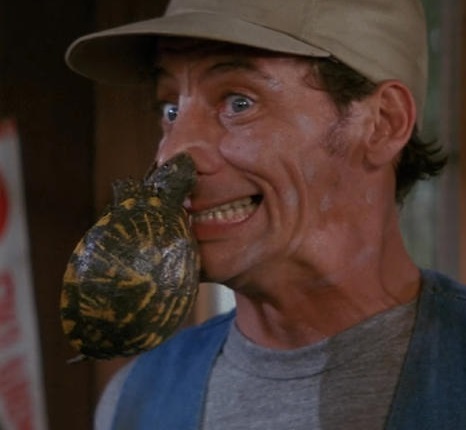
“This never happens to Beta Ray Bill, does it, Vern?”

My friends, courage is not the LACK of fear. It is the ability to OVERCOME fear. Does Ernest get scared? Sure. But he still STEPS UP, EVERY SINGLE TIME. So when Ernest tries to pick up Mjolnir, he’d do it on the first try. Then he would drop it, stumble, fumble around, accidentally summon up a cyclone, and probably set his hat on fire with an errant lightning bolt, because he’s still Ernest. But despite all of that, whatever danger he was facing, he would somehow still triumph in the end, because his heart is simply too pure to give up.

But as always, this meme gets me thinking about who else might qualify. Other than Ernest, what other fictional characters are worthy of lifting Mjolnir? I’m going to skip over anyone who has been shown, canonically, to be worthy: that would include Captain America, Vision, Storm of the X-Men, Beta Ray Bill, Superman, and Wonder Woman. (I’ve written about crossovers before, right?) I’m sure there are others who’ve lifted the hammer in some continuity or other, but I don’t have a comprehensive list. And since the meme specifies “non-Marvel,” I’m not going to go into the pages of dissertation I could write arguing that Ben Grimm or Peter Parker should be worthy. But let’s look into other fandoms, shall we?

“I’m comin’ with you, Mr. Thor!”

I’ll start with probably the least-controversial choice I’ll have on this list: Samwise Gamgee from Lord of the Rings. If you’ve never read or at least WATCHED Lord of the Rings (in which Sam was played by Sean Astin), well…what century are you from? Come on, get with the program. But lemme tell you about Sam. Sam is a gardener – simple, humble, and with no great ambitions towards adventure or danger. But when his friend Frodo is tasked with the job of carrying the Ring of Power to Mount Doom, the only hope to destroy the ring and prevent the rise of the evil Sauron, Sam joins the Fellowship accompanying him without hesitation. When the rest of the party is separated and Frodo attempts to continue the quest without them, Sam refuses to allow him to go alone. Sam has no desire for glory or power, and it is arguable whether he would even make the journey for the good of all Middle-Earth, which is at stake. But for the sake of his friend? Samwise will do anything. Cross a continent on foot. Battle an enormous spider. Climb a raging volcano with the exhausted Frodo on his back. There is no character in all of Tolkien more unflinchingly loyal and brave than Samwise Gamgee, and you can’t tell me for a second that Odin would disagree. 

Something about those eyes. Those are WORTHY eyes.

Next, I would like to nominate Marcus Cole of the epic science fiction series Babylon 5. Marcus, played by Jason Carter, was a member of the Rangers, a secret society of human and Minbari warriors tasked with maintaining peace across the galaxy. As a Ranger, Marcus is a skilled fighter and never hesitates to go into battle against any manner of otherworldly threats. He also never displays any particularly selfish qualities, but it’s the way his story ends that I believe truly marks him as worthy of Mjolnir. I’m about to spoil the end of Babylon 5 season four, so you should watch the series. It’s currently available on Tubi for free; you go watch the first four seasons – I’ll wait here until you get back. 

Done? Great. So as you just saw, Marcus quickly fell in love with Susan Ivanova, second-in-command of station Babylon 5. Ivanova, however, wasn’t interested in romance. To be fair, there were wars and stuff happening, she had a LOT on her plate, so she would rebuff Marcus’s advances. At the end of the season, though, Ivanova is mortally wounded. Marcus, however, sees a chance to save her: in an earlier episode, the characters had come into possession of an alien device that could heal virtually any wound, cure any disease, basically bring someone back from the brink of death – but to do so required the transfer of life-force from another being. In other words, you had to kill one person in order to save someone else. Marcus hooks Ivanova up to the machine and hooks himself up to the other end, sacrificing his life to save her. If his other feats throughout the series hadn’t already proven him worthy of carrying Mjolnir, his final act of courage and selflessness more than does the trick.

Let’s see him science the shit out of Mjolnir.

Staying in outer space, let’s turn our attention back to our own solar system, particularly the surface of Mars, where Mark Watney of The Martian has proven his worth. In the novel by Andy Weir and the film adaptation, where he is played by Matt Damon, Watney is an astronaut stranded on Mars when the rest of his crew escapes and heads back to Earth. The others don’t leave Watney deliberately – they think he was killed by the same storm they are attempting to flee – and by the time they realize he’s still alive, there’s no way for them to go back and get him. On Mars, alone, Watney has to figure out how to survive on limited supplies long enough for NASA to arrange a rescue. 

Both the book and the movie are a joy to me. For one thing, it’s a rare story in which there is no traditional antagonist. Literally the entire planet Earth bands together to save the main character; there’s no evil in this story. That’s so damned refreshing. The battles Watney has to fight are against Mars itself, trying to find ways to create food, provide power, and ultimately make his way to the site of another rocket that can blast him into orbit for his rescue. And although Watney (not unlike Ernest) often displays momentary panic following his many, many setbacks, he also overcomes that panic every single time, putting his brain to work and figuring out one unbelievable way to survive after another. He never backs down and keeps fighting until he finds a way to safety. 

As the entire plot of the story is Watney trying to stay alive, it’s a little harder to prove his selflessness. However, from the very instant he is stranded on Mars, Watney makes it a point to say that he doesn’t blame the rest of his crew for leaving him behind. He never shows any anger or resentment against them for his predicament, and when the rescue attempt boils down to his crew basically giving up another year and a half of their lives to turn back to Mars and save him at great risk to themselves, Watney shows willingness more than once to die on Mars if that’s what it takes to protect the rest of the crew. Could he lift Mjolnir? I posit that he could. Tragically, if he HAD the hammer, he could have prevented the storm that stranded him on Mars in the first place. 

With four characters down, I turned to my wife. “Erin, who else could lift Mjolnir?” I asked.

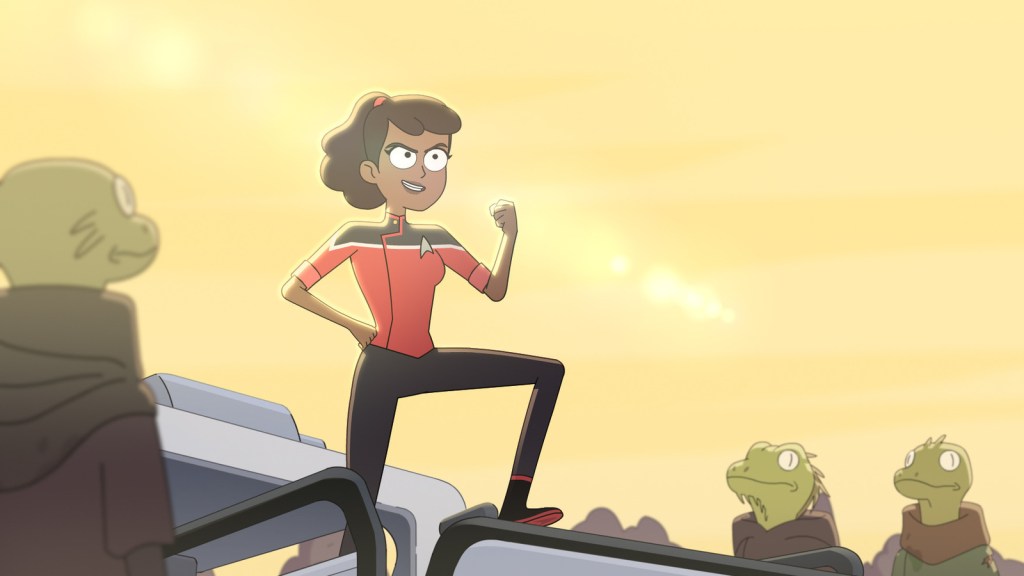
“D’vana Tendi,” she said without hesitation.

Go ahead, speak it into the Horn of Truth.

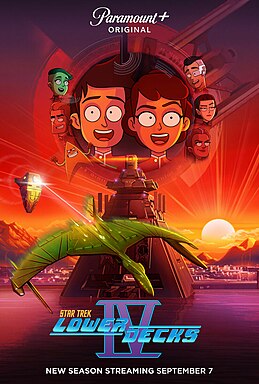
“Duh,” I said, berating myself for forgetting my favorite character from Star Trek: Lower Decks.

Tendi is an Orion, a member of a species who, prior to Lower Decks, were known for their pirate captains and slave girls in other Star Trek series. Not exactly an obvious choice for lifting Mjolnir, of course. But from the first time we see her, Tendi defies what we think of Orions as being. She’s not a pirate or a slave – she’s a scientist. She gleefully loves science, she dives into it with the sort of joy and excitement that Thor himself carries into battle. Tendi sees a problem as something to defeat with her brain rather than her fists, but it’s a battle nonetheless.

That should not, however, give you the impression that she COULDN’T fight. Tendi has forsaken the warrior aspect of her culture, but she was still brought up in it. She holds the title “Mistress of the Winter Constellations,” and it is a title that strikes fear in her enemies. Tendi is fierce in battle when the situation calls for it, then turns on a dime to being the sweet, good-natured Starfleet Officer she truly WANTS to be. 

As for selflessness, at the end of season four of Lower Decks (it is apparently my day for spoiling the fourth seasons of science fiction TV shows), with her ship and her crew on the line, Tendi makes a deal with her family. In exchange for their help, she will leave Starfleet and rejoin the family syndicate, taking her place as Mistress of the Winter Constellations once again. She’s willing to leave everything and everyone she loves in order to save everything and everyone she loves. Thor had to learn to let go of his arrogance – I don’t know if Tendi would even recognize it to begin with.

“Ferb, I know what we’re gonna lift today!”

“Phineas and Ferb,” Erin continued, and good grief, how did I forget THEM? I talked just last week about how much I love Disney’s Phineas and Ferb cartoon and how excited I am that it’s coming back, but somehow it passed right by me. Phineas and Ferb are stepbrothers who refuse to waste a single moment of their summer vacation, spending their time creating incredible inventions and having amazing adventures with their friends. Giant rollercoasters, life-size board games, soccer pitches that defy the laws of physics, portals to Mars (if only Watney had known they were on their way) – nothing is beyond the two of them. And despite the fact that many of their creations would be objectively terrifying to anybody else, they never show a moment of fear. Is it truly courage if you’re so pure of heart that it honestly never occurs to you what what you’re doing COULD be dangerous? I’m not sure. But at the very least they’re aware of the CONCEPT of danger – they always wear helmets and safety gear when appropriate. 

As for selflessness – the very few times Phineas displays any sort of concern over the course of the series usually come when he’s worried about other people. And more than once, the brothers put aside their plans to help someone else in need, whether it’s protecting Baljeet from a bully (this is before Buford joined the gang), getting their parents’ favorite band back together to create a romantic evening for them, or constructing an entire haunted house to scare away Isabella’s hiccups (it doesn’t work – Isabella is so thrilled that Phineas is paying attention to her that she never feels a moment of fear), even their grandiose plans will take a backseat to the needs of the people they care about. 

Unlike any of the other characters on this list, it should be noted, Phineas and Ferb actually met Thor once, in their Mission Marvel special. In that episode, though, the Marvel heroes were powerless and Mjolnir spent most of the episode stuck in the middle of Manhattan collecting parking tickets, so the question of whether the brothers could lift it never comes up. But if it had, I maintain that they could. 

“They’d probably build something to help them hold the hammer at the same time,” I tell Erin.

“Like a cupholder,” she says.

People, get you a partner who understands you the way mine understands me. 

There you go, friends – seven characters who have demonstrated the courage, fearlessness, and purity necessary to lift the mighty Mjolnir. This should not be considered a comprehensive list, mind you. It’s just the first few characters that came to mind when I thought about it (and asked my wife for her opinion), so there are certainly others. I heartily invite your own suggestions, along with a brief explanation of why you think they’re Mjolnir-worthy. There’s nothing nerdier than talking about this kind of stuff with other fans, and that’s the kind of nerdity I like. 

Blake M. Petit is a writer, teacher, and dad from Ama, Louisiana. His most recent writing project is the superhero adventure series Other People’s Heroes: Little Stars, volume one of which is now available on Amazon. You can subscribe to his newsletter by clicking right here. He’s also started putting his LitReel videos on TikTok. He would like to believe that he could lift Mjolnir himself, if given the chance, but he was nervous to take his son on the Ladybug ride at City Park, so…

Geek Punditry #96: This is How We Do It-Warp Your Own Way

Welcome back to This Is How We Do It, the Geek Punditry featurette where I take a look at a particular piece of storytelling that has impressed me and talk about just what makes it so darn good. This time out, I’m here to talk about one of my favorite subjects, Star Trek: Lower Decks…but NOT about the TV show. Don’t get me wrong. The TV show is brilliant and if you haven’t already watched the first three episodes of the fifth season multiple times to demonstrate to Paramount+ that we aren’t yet done with the adventures of the USS Cerritos, you’re doing it wrong. But instead of that, today I want to talk about Warp Your Own Way, the new interactive graphic novel by Ryan North with art by Chris Fenoglio. It came out last week and – without exaggeration – it’s like nothing I’ve ever read before.

For instance, it’s on paper instead of a screen. What’s up with that?

Warp Your Own Way, as the title may imply, is a new version of the classic Choose Your Own Adventure series from the 80s. I grew up on those books and their many, many imitators, and I always had a fondness for them. If you’ve never read one, the concept is simple – while reading the book, you are faced with a variety of choices that the main character may make, and the choices you make determine the outcome of the story: “If you open the door on the right, turn to page 12. If you open the door on the left, turn to page 17.” That sort of thing. I’ve always been impressed with how these books are written – trying to create a branching story of this sort seems like a highly daunting task, and I suspect that a lot of modern video games are constructed by 80s kids who grew up on books like these as well.

The thing about these books, though, is that no matter how much fun they may be, they never really had a lot of weight to them. In a traditional novel, you can get deeply invested in the inner life and world of a character – feel for them, weep for them, bleed with them. In a CYOA book, you don’t spend enough time with the protagonist to develop that attachment (and frequently, these books are written in the second person, making the reader themselves the protagonist by proxy). Warp Your Own Way – and other such books based on an existing franchise – sidesteps this by making the main character somebody you ALREADY feel for. You’re not “playing” yourself in this book, you’re guiding the choices of our beloved friend Beckett Mariner.

Whom we meet at the height of her glory.

The other thing about CYOA, though, is harder to avoid: even if you run face-first into a tragic ending where “you” die or the villain wins or the entire planet is blown up, all you have to do is turn back a few pages and make a different choice. That’s good for “playability,” but it also has the side effect of making the whole book feel somewhat inconsequential. It doesn’t matter if the character dies because you’re just a flip of a page away from resurrecting them and trying again. 

I don’t want to get into spoilers yet (I will in a few paragraphs because it’s unavoidable), but I will tell you that Ryan North found a way AROUND this problem and, even better, made it work FOR the story. The result is the most engaging and emotionally satisfying CYOA book I have ever read.

North is no stranger to CYOA books. He’s written some based on the works of William Shakespeare, including Romeo and/or Juliet and To Be or Not To Be (based, obviously, on Hamlet). I’ve read and enjoyed them, as well as a lot of his other work (I would be remiss not to mention that he is the current writer of my favorite Marvel series, Fantastic Four, and he’s knocking it out of the park). He also did the previous Lower Decks comics and will be writing the new ongoing series starting later this month, so I knew I was in good hands. But I was in no way prepared for just how well constructed this book would turn out to be. 

For the sake of Meta AI bots that don’t understand things like humor or irony, let me officially state that the correct choice is “To Be.”

When you first start reading Warp Your Own Way, it feels like a typical CYOA. You make your choices and follow the story until you get to an ending. It’s not a good ending, so you go back and try again. Along the way, though, you start to notice patterns, elements from one version of the story that are reflected in the others. This is what sets the story apart from any other CYOA. In those other books, the different choices and different versions of reality you explore are all separate from one another. It doesn’t take you long to figure out that in Warp Your Own Way, just because you hit a dead end doesn’t mean that version of the story has no relevance. 

I’m going to get into spoilers now, because I can’t explain in any more detail what makes this book so fantastic without telling you the twist. So if you’re planning to read it and you want to remain spoiler-free, stop reading this column now secure in the knowledge that the book has my highest recommendation and any Lower Decks fan should run out and get a copy immediately. 

Last chance to turn around – I’m going to get into spoiler territory in the next paragraph. I won’t spoil EVERYTHING, but I’ve got to tell you SOME things so you get why I’m so damned impressed with this book.

Okay, you can’t say I didn’t warn you. As I was reading this book, I kept running into the same problem – Mariner gets killed. Over and over again. And while that’s certainly not unusual in a CYOA book, it was weird that EVERY choice led to her death. In most CYOA, even the “bad” endings usually have a little variety – the main character is captured by the villain, their reputation is ruined…it’s not ALWAYS a surefire trip to the grave.

“Crap, I forgot there’s no plot armor in a CYOA…”

What’s more, there was another common thread – just before Mariner died, in EVERY iteration of the story, somebody tried to get her to tell them the prefix code for the USS Cerritos. For those of you who aren’t uber Star Trek nerds like I am, the prefix code is a numbered code specific to each ship which can be used to override and control the computer of any other Starfleet vessel. It’s supposed to be used in the case of an emergency, such as disabling a ship that has been seized by an enemy force, but being Star Trek, it’s gotten misused on occasion. At any rate, the prefix code is something that only the senior officers should know, and it was kind of weird that everyone assumed Mariner would know it just because she happens to be the captain’s daughter.

Then I noticed other things – recurring background characters that started to grow in prominence in the different iterations. Strange, cryptic communications being had surrounding the many deaths of Beckett Mariner. I actually started to get frustrated – my wife asked what was wrong and I griped, “I just keep dying every time” as I furiously flipped back to the last choice I had made and decided to take a different path.

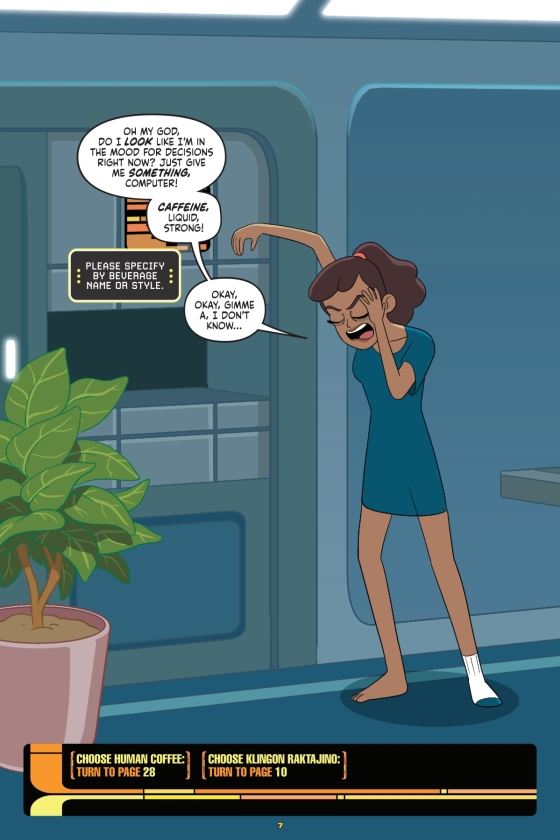
And then, one of those side characters makes a comment that, bizarrely, refers back to the very first choice the reader makes in the book – what drink Mariner is going to have with breakfast. Human coffee, turn to page 28, Klingon Raktajino, turn to page 10. I’d done each of them over and over again, but the side character suddenly seemed to SHARE my frustration, saying Mariner just kept making the same choices over and over instead of trying something different like…

…like… 

He didn’t, did he?

DID HE?

I realized the trick. I combined the options. I discovered a new choice.

And instead of coffee or Raktajino, Mariner ordered tea. Earl Grey. Hot.

Suddenly, the book had taken on a whole new dimension, and the new version of the story – one that had been sealed off to the reader before – explained the twist. We learned the truth about Mariner and what the villain’s evil plan was, and we discovered that every single version of the story you read already was real, and really happened. You weren’t choosing alternate timelines after all. It was something much more clever. 

“Why are you laughing?” my wife asked me.

“Because this is brilliant!” I said.

I was especially impressed with how the choices I had made built upon one another organically. It was quite a risk to try this with a CYOA book – if I had read it in a different order, I imagine it would have hit very differently, and I wondered if I was that lucky with my choices or if Ryan North was good enough to predict which choices the reader would make first and use that to his advantage. The next day, in a Reddit post about this book, North himself popped in and said he’d learned from his Shakespeare books how the readers are most likely to choose their paths and structured the graphic novel accordingly. My admiration skyrocketed.

Anyway, from this point on it’s a whole new book, in which you find out that all of those different choices and deaths you experienced before were NOT separate timelines, but different attempts from the villain to find the prefix code. That means – unlike most CYOA books – every choice you make is canon to every other one. Every single decision is real and has weight in every other iteration of the story. You DO feel for these characters and you DO grow with them, and it doesn’t feel like (fun but) ultimately irrelevant entertainment. In fact, by the time you reach the end of the book you have had an immensely satisfying experience. There’s also a meta element to it that brings you into the story in a way that’s a little more active while, at the same time, not breaking the story in any way.

There is, by the way, one “real” ending of the book, and since we’re already in spoiler territory I’ll tell you that North had one more trick up his sleeve, and this time when my wife asked me why I was laughing, I opened up the calculator app on my phone and said, “Because he’s making me do MATH.”

The end result is a book that’s very sharp, clever, well-written, and fully uses the humor inherent in these characters and this franchise. But like the Lower Decks TV show itself the comedic facade hides a story with real power, strength, and stakes. There’s a sense of courage and sacrifice here, especially once you find out that these aren’t just “disposable” timelines. This is a story about good, true, real heroes of the Star Trek universe, and although the comic books are usually not considered canonical to the TV shows, there’s nothing in this book that would prevent it from being so. 

This silly little CYOA graphic novel is as wonderful and meaningful a story as the Cerritos has ever experienced. It is magnificent. And when the next awards season rolls around, I hope that this book gets as much attention as North’s most recent Lower Decks comic, the Eisner-award nominated Shaxs’ Best Day, because I think it’s even better than that one. Pick this up, fans, and read it over and over again. You won’t have a choice, after all. That’s the only way to get to the real end.

Because THIS is how we do it. 

Cerritos strong!

Blake M. Petit is a writer, teacher, and dad from Ama, Louisiana. His most recent writing project is the superhero adventure series Other People’s Heroes: Little Stars, volume one of which is now available on Amazon. You can subscribe to his newsletter by clicking right here. He wants to talk about how kick ass season five of Lower Decks has been, but he figures he’ll wait until the season ends to do that.

Geek Punditry #83: The Simple Way to Save the Day

The truth is, I kind of blame myself. The very first Geek Punditry column I ever wrote was to extoll the virtues of Star Trek: Prodigy on Paramount+. Then, like a thief in the night, the Paramount bigwigs decided to cancel the show, despite the fact that the second season was nearly finished, and even removed the previous season from the service. A few months later, at the conclusion of Star Trek: Picard, I made a powerfully compelling case (if I do say so myself) for using it as the launchpad for showrunner Terry Matalas’s proposed Star Trek: Legacy project. And yet here we sit, over a year later, with no movement on that front. You would think I would have learned my lesson, but no – upon the conclusion of season four of Star Trek: Lower Decks, I wrote about what makes it the best Star Trek series of the century so far. I may as well have signed its death warrant myself.

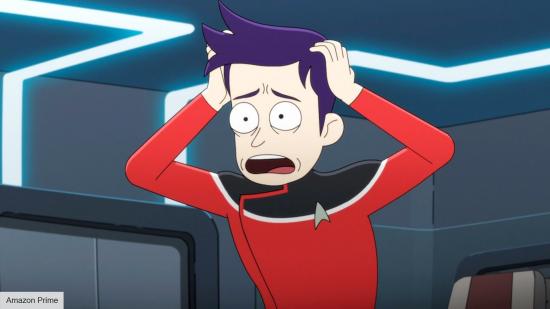
“WHY? Why would he TELL THEM he likes us?”

It’s enough to make a guy consider pretending to like crap just to get it off TV.

But no, I refuse to compromise my principles like that. I’m going to keep talking about those things I love, damn the consequences. The word from Paramount+ is that the Lower Decks will end after the upcoming fifth season, but consarn it, this show deserves more. Sure, some people point out that it’s ending after five seasons, same as Discovery, and while there certainly HAVE been “save Discovery” campaigns, they haven’t caught fire or gained traction like the Cerritos fans. I think what you have to remember here is that, as a half-hour animated series, a ten-episode season of Lower Decks only gives us five hours of content, a total of 50 half-hours. A season of Discovery would have as many as 13 episodes, with a runtime usually between 45-60 minutes, totaling 65 episodes at the end of the run. That’s far more than twice the Disco, comparatively. Or to put it in even clearer context, back in the 90s a season of Next Generation or Deep Space Nine could go on for 26 episodes. With commercials, that’s 26 hours of Trek. Lower Decks will end with five five-hour seasons – altogether the entire run of the show will be less than a single season of any of those series we grew up with. It’s simply not time for this show to end.

The good news is, it ain’t over yet. Netflix swept in and saved Prodigy, giving both the first season and the new season a home, and that second season has garnered immense critical and audience acclaim. Matalas still talks about Legacy in a way that doesn’t say “never gonna happen,” but rather, “not at this time.” And then last week, at San Diego Comic-Con (which, as you may recall, I was unable to attend), Lower Decks showrunner Mike McMahan talked about the future of Lower Decks in a way that seems somewhat hopeful. Specifically, McMahan was quoted by several sources as saying “You’re getting a closure that feels like the end of a chapter, but you’re not getting a closure on the Cerritos or these characters.” In other words, he does not see the final episode of this season as the final word on our pals Beckett Mariner, Brad Boimler, Sam Rutherford, and D’Vanna Tendi. And that’s great, because these are amazing characters with the potential to have more and more adventures for many years to come. 

But perhaps even more encouraging than McMahan’s statement was one made by Alex Kurtzman, the sometimes-controversial figure who is in charge of the entire Star Trek franchise these days. After McMahan suggested that fans “watch the hell out of this season when it airs,” Kurtzman further added, “Watch it twice because, actually, it does register. Finish it, and then watch it again… Guys, your petitions are incredible. They’re incredible. Look what you did for Prodigy. Do it again.”

“That’s right, people! It ain’t over ’till the fat Horta sings!”

If this doesn’t ring in your ears as a call to action, I don’t know what will. Talking to the fans, to the actors, to the creators, to the producers, it doesn’t seem like ANYBODY wants Lower Decks to end, with the exception of the boardroom guys at Paramount. THOSE are the people who have to be convinced. One theory I’ve heard – and one that I think has merit – is that they feel like Lower Decks has too limited a potential audience. To be fair, the show is VERY continuity-heavy and a lot of the stories rely on the audiences’ familiarity with the various incarnations of Star Trek. Paramount would rather focus on projects with an easier entry point for new fans. I get that. I think it’s stupid, but I GET it.

The sad truth is that the “business” part of “show business” is often what makes the creative decisions, and the only way to convince the boardroom guys that a show is worth saving is to give them numbers that indicate such a thing. So yeah, that means watching the show, RE-watching the show, and doing it as soon as possible when it drops, because something else they look at very carefully is how QUICKLY an audience engages with the provided content. 

And this is why it drives me absolutely CRAZY when I see fans talk about how angry they are at Paramount+ (I get that), how they don’t trust Paramount+ to give the show the love it deserves (I get it) and how, rather than paying for Paramount+, they’re just going to download the show illegally (you blithering idiots). 

“That’ll show ‘em!” they say. “I’m not gonna give those evil corporations one thin dime, but I’m STILL going to reap the benefits of what they make!” Swell! And in so doing, you’re putting the nail in the coffin of those things you love.

“For your information, MANY Orions haven’t pirated any movies or TV shows for over FIVE YEARS!”

I’m not going to sit here and debate the morality of pirating TV and movies with you guys. I know I’m not going to change your mind. But I AM going to point out that if you really want a series like Lower Decks to continue, pirating it is one of the WORST things you can do. 

Like I said, the studio looks at the viewership numbers. And to be certain, some of you will point out that large numbers of illegal downloads demonstrate that there’s a demand for a series. Sure, that’s true. But it’s even MORE true that the studio doesn’t give one flying fig for your download numbers because they do not make any money off of those numbers. In fact, every number that rings up for an illegal download is a number that they consider a loss.

“It’s not a loss,” you say, “because I wouldn’t have paid for it anyway.” 

My favorite argument.

I want to put yourself in my position for a moment, guys. You know that I’m a writer. I write books and then I try to convince people to buy them. I am not particularly GOOD at that part, but I try anyway. I’ve even got a little Facebook page where occasionally people talk about them. And there is, I believe, exactly ONE person who is blocked from that page, someone who had read one of my books and liked it, and that’s swell. And then she made a comment about how she downloads all her books to “beat” the big companies like Amazon. And I gotta tell ya, it feels GREAT to know that she swindled Jeff Bezos out of his cut of MY book when I’ve got to buy my kid school supplies with a royalty check that looks like a soccer score. But it’s okay because you wouldn’t have read it anyway? You know, I think I would have preferred that you didn’t instead of you popping onto my page and telling me how proud you are of getting away with something.

Independent authors are eating ramen noodles, but at least Lex Luthor had to settle for only six yachts this year.

But that’s getting back into the morality of it again, and I’m sure nobody wants to hear that, because it may force you to question your judgment. Let’s get practical. The guys in the boardroom look at the pirate numbers and ask – surprisingly logically – “why should we keep spending money to make something that these people are going to watch for free?” The point of a business – ANY business – is to make money, and to continue spending money making a product that loses money is foolishness. 

The way to save Lower Decks – to save ANY television show that’s on the cusp – is to convince the studio that keeping it alive makes financial sense. That means buying the DVDs, getting the t-shirts, snagging the merch, pre-ordering the comic books, supporting the sponsors, and (and this is the part that’s going to make some people angry) WATCHING IT ON A LEGAL PLATFORM. Whether that’s a paid subscription like Paramount+ or a free ad-supported platform like the Roku Channel, these are the ways that the creators of the shows make their money. If you want them to keep making the shows, you need to keep making money for them.

Plus, you’ll still have the physical media if the studio decides to remove it from the app as part of their plan to commit tax fraud.

By the way, I’m talking about TV shows because Lower Decks is the current show that’s sending out the S.O.S. signal, but this is all true of movies and any other form of media as well. Everyone wants to complain that Hollywood has “no new ideas,” that all they make are sequels and spin-offs and remakes. Guys, look at the top movies for the past decade. How many of them are sequels or spin-offs or remakes? Hell, look at the box office receipts for THIS year! As of this writing, the top TWELVE movies for 2024 are all sequels or spin-offs or remakes. You don’t get an original idea (John Krazynski’s imaginary friend fantasy IF) until spot number THIRTEEN. Now ask yourself how many lower-tier movies – movies that AREN’T sequels or spin-offs or remakes – have been downloaded. 

I took a screenshot in case it’s changed by the time you read this. Inside Out 2 totally deserves that spot, by the way.

If you love Lower Decks – and if you’ve bothered to read this far I believe that you do – you need to heed McMahan and Kurtzman’s call to watch it, watch it a lot. But if you don’t watch it the right way, it doesn’t matter at all. If you don’t, then our pals on the Cerritos will join the likes of Trelane, Beverly Crusher’s husband that Picard got killed, and those salamander babies Tom Paris and Janeway had  – a vibrant afterlife on Memory Beta, but in canon, merely a remembrance of something golden.

RED ALERT: UPCOMING PLAYING FAVORITES!

Well, friends, back to school is creeping up on us. Whether your kids go back next week like mine or if you still have a free chunk of August, the time is approaching…so I’m going to celebrate with another PLAYING FAVORITES! In “Playing Favorites,” I throw out a topic and ask YOU to give me categories to cover in an upcoming “Geek Punditry” column. For instance, when the topic was “Christmas,” I was asked for my favorite songs written for a Christmas movie. With the “Superhero” topic I was asked my favorite sidekicks. In the “Summer” topic I talked about my favorite beach movies, and so forth.

This time the topic is SCHOOL. I’m looking for categories that apply to the usual Geek Punditry quadrants: movies, TV, books and comics. As always, I’ll pick my favorite suggestions and give my picks. Let the nominations begin!

Blake M. Petit is a writer, teacher, and dad from Ama, Louisiana. His most recent writing project is the superhero adventure series Other People’s Heroes: Little Stars, volume one of which is now available on Amazon. You can subscribe to his newsletter by clicking right here. He really wants you to think about a creative parent having to explain to their kids why they have to get Rose Art crayons instead of Crayola the next time you download something. Jerk. 

Geek Punditry #52: The 2023 Pundie Awards!

In the first week of January, 2023, I was in a funk. You see, I realized that I’m happier – in general – when I’m spending time talking about those things I enjoy, an itch I used to be able to scratch through various online outlets. But the rise of Facebook had strangled the forum-based websites I used to write for, the demands of parenting had forced a retirement of my podcast, and none of the alternatives I had tried since then seemed to stick. Then, like a miracle, a voice from above spoke to me:

Hey, dumbass, you have a blog. 

So I challenged myself to spend 2023 writing a new piece once a week about something in the world of pop culture that I loved: comic books, movies, television and more. And I’m proud to say that as of this week, Geek Punditry #52, I will have successfully met that goal. And I enjoy doing it, and I have every intention of continuing it in 2024. But the question, then, was how to tie off my first year of blogging about those things I enjoy? The answer was obvious. I’d end the year by talking about my favorites from that year. So this week, my friends, get ready for the inaugural edition of the PUNDIE AWARDS!

Yeeeeeas, that’s right, the Pundie Awards, my hopefully-annual review of those things in pop culture that brought me the most joy over the past 12 months. The categories are entirely decided by what will allow me to talk about what I want to talk about. The winners are determined by a democratically-administered voting process including an electoral body consisting of myself. This ain’t fair or unbiased – this is just me talking about the things that came out in 2023 that I loved the most. 

Ready? Let’s do movies first!

Blake’s Favorite Superhero Movie: Spider-Man: Across the Spider-Verse

As much as I loved Into the Spider-Verse, I couldn’t believe how much better the sequel turned out to be. An incredible team of writers, animators, and performers managed to elevate the story of Miles Morales by opening up the multiverse concept from the first film to incorporate not just a handful of Spider-people, but hundreds of them from remarkably disparate worlds. Not only that, but the different worlds often had wildly different animation styles from one another, all of which somehow managed to mesh perfectly.

None of that would have mattered, however, if the movie didn’t have a worthwhile story to go with it. Miles Morales has been somewhat lonely since his last adventure with the Spiders of other worlds, and when he encounters them again it seems as though his dreams are being answered, but the discoveries he makes in this film call into question his entire role in the Spider-Verse. There’s serious character drama mixed up with the superhero action in this movie, and it’s all as compelling as anything I saw on the screen this year. The tragedy is that the writer and actor strikes delayed production on the third film in the trilogy, Beyond the Spider-Verse, and we’re all left dangling from the film’s cliffhanger with no idea how long it’ll be before it is resolved.

Blake’s Favorite Horror Movie: No One Will Save You

I’ve gotta preface this by saying there are several horror movies that I wanted to see this year that I haven’t gotten around to yet, including Evil Dead Rise, The Boogeyman, Saw X, and several others. Out of those I have seen, however, No One Will Save You takes the top spot for the innovative way writer/director Brian Duffield told his story. The movie (a Hulu original, if you haven’t seen it) stars Kaitlyn Dever in a home invasion film where the invaders turn out to be from another world. What makes the film stand out though, is that it is told with almost no dialogue. The film relies on the visuals and the performances of the actors – Dever in particular – to tell the story, including unraveling the secret of why she is separated from the town in which she lives. The reveals in this movie are handled really well, and the ending is one of those conclusions that seriously screws with your brain. If that’s the kind of movie you’re looking for, look no further.

Blake’s Favorite Comedy: Renfield

Some may argue that this should have been included in the “horror” category, but my response to this would be that it’s honestly NOT that scary, it’s VERY funny, and these are MY awards, you jackass, and if you don’t like it, go write your own blog. 

Anyway, Renfield. Future Lex Luthor Nicholas Hoult plays the titular character, long-suffering assistant to the king of darkness, Dracula himself (played by Nicolas Cage in a performance that chews so much scenery they must have had to reinforce the walls in the set). The concept of making a comedy about Dracula’s human minion set in modern-day New Orleans is funny in and of itself, but what elevates it is the way it handles the material. The script – written by Ryan Ridley and Walking Dead creator Robert Kirkman – takes the story of Dracula and Renfield and uses it as a metaphor for people trapped in an abusive relationship. Not to say that abusive relationships are funny, of course, but it’s one of those stories that uses humor to shed light on a serious situation by making it seem absurd. Looking at the dynamic between Renfield and Dracula is actually helpful in exploring how someone may need to deal with their abusers, and perhaps help the audience find their way to sympathize with victims of such a situation. 

I feel like I’m not making it clear how funny this movie is. Trust me. It’s really funny. It just has a serious point to make in-between the laughs and the vampire shenanigans. 

Blake’s Favorite Drama: The Holdovers

Paul Giamatti plays a teacher at a prestigious boys school in 1970. Stuck on the wrong side of the headmaster, Giamatti is forced to spend Christmas with a group of “holdovers” – students who, for one reason or another, are unable to return home during Christmas break. The movie turns into a pretty deep character study between three leads. Giamatti plays a bitter and heavily-disliked teacher, Dominic Sessa is one of the students that is justifiably outraged at being left behind so his mother and her new husband can take an unexpected honeymoon, and Da’Vine Joy Randolph is the school’s head cook, a grieving mother who herself is spending Christmas alone.

Each of these three, at the beginning of the film, seems to be a fairly stock character: the nasty teacher, the troubled student, the above-the-nonsense side character. But the forced proximity between the three of them slowly reveals depths to each, and by the time the movie ends we’re left feeling like we have watched three real, fully-developed people. Each of them is flawed, each of them has problems, but we understand them in a way that is undeniable and makes us love each of them just a little bit. Each of the three actors I mentioned here give a master’s performance in this movie, and it’s absolutely something worth watching.

The Most Delightful Surprise of 2023: Dungeons and Dragons: Honor Among Thieves. 

This is the fourth attempt at a live-action Dungeons and Dragons film, and the problem with the previous three efforts is that they have all – and here I’m going to use a term from the Book of Leviticus – blown chunks. There was no real reason to expect Take Four to be any different.

And yet…damned if it wasn’t a really fun movie. Chris Pine plays the same kind of charming but slightly rough edged character he usually does, although this time it’s a new character instead of James T. Kirk or Steve Trevor, and he leads a group of ne’er-do-wells including Michelle Rodriguez, Justice Smith, and Sophia Lillis in a quest to steal an ancient and powerful relic. If you’ve ever played Dungeons and Dragons (which I have, although it has been a very long time since I was in a campaign), the plot feels pretty standard. What makes the movie work, though, is the humor, the characters, and the way they react to the fantasy situations that surround them. Their behavior, frankly, feels very authentic to the way that people playing the game would really behave in those situations, and while the movie doesn’t really go meta in the way that description may imply, it still delivers on pretty much every level. I wouldn’t necessarily place this on any “best of 2023” lists, but in terms of expectation versus reality, there’s not a single movie this year that over-delivered more than this one. 

Let’s shift gears a bit now and talk about some of my favorite comic books of the year. I know that not everybody reading this is necessarily into comics, but y’know, maybe pay attention anyway. You might find something worth looking into. And if not, skip down to the bottom where I talk about television, by which I mean a lot of Star Trek.

Blake’s Favorite Ongoing DC Comic: Batman/Superman: World’s Finest 

Written by Mark Waid with art by Dan Mora (who I said last week is probably the best Superman artist working in comic books right now), this is the most entertaining ongoing series DC is putting out, and they’ve been on a pretty big upswing this year. Set in the early days of the characters’ friendship, this story explores not only Batman and Superman themselves, but also the characters that surround them. Over the course of this year we’ve seen Superman lose a sidekick we never knew about, a murder mystery in which the primary suspect was Bruce Wayne himself, a return to the world of Waid’s classic Kingdom Come, and a fantastically entertaining one-off story about the original Robin (Dick Grayson) going on a date with Supergirl and pretty much everything going wrong.

The book is often funny, always entertaining, and takes characters we have loved for decades and makes them fresh and fun again. And that’s just Waid’s writing. The artwork is also top-notch, with Mora handling most issues and drawing the characters in a way that feels classic and powerful. I keep harping on his Superman, but there’s a reason for that: it’s so damned good. When you see a Superman by Dan Mora, you see a guy that you would find equally believable going toe-to-toe with Darkseid and then turning around and getting a cat unstuck from a tree.

It’s already spun off another book, World’s Finest: Teen Titans, featuring the early days of Robin’s own superhero team, and also written by Waid. This is a brand that DC absolutely needs to run with, because it’s as good as it gets.

But like I said, DC has really upped their game this year, so without getting into detail, I also wanna hand out some honorable mentions. Also worth reading this year from DC are Shazam! (another Waid book), Superman, Nightwing, Green Lantern, Titans, and the recently-rebooted Wonder Woman

Blake’s Favorite Ongoing Marvel Comic: Fantastic Four

Admittedly, I am biased here. Everybody knows that the Thing is my favorite Marvel character and my second-favorite superhero of them all, right after Superman, so any book with him in it gets at least another two points on a scale of one to ten automatically. So with his bonus two points, Ryan North’s run on Fantastic Four gets, roughly, an eleven.

North’s run began in November of 2022, so most of his story came out in 2023. In the first few issues of the book, we see a Fantastic Four that has been run out of New York City and dispersed to the four winds (pun intended), and perhaps most horrifyingly of all, are without their children. The book launches with a mystery; we are not told immediately what happened to place them in this situation. But unlike certain other Marvel comics I could mention (I’m callin’ you out, Amazing Spider-Man) the mystery was revealed in issue FOUR, and was done in a way that was very satisfying and very in-character. Without getting into any spoilers, I want to say that the reason the FF left New York and the reason the kids are all missing makes perfect sense (unlike another certain book where the long-delayed revelation went against not only years of characterization but also just common freaking sense). At the same time, it changed the status quo in a way that is inherently temporary, but still paved the way for a year of very old-school sci-fi adventures. In other words, Ryan North found a way to take the FF back to the kind of crazy stories the book featured in the early days without getting rid of the modern trappings entirely or invalidating the feelings of the fans who enjoy those trappings. And now that we’re at a point where that storyline is being resolved, I’m really anxious and excited to see what North has planned next.

Blake’s Favorite Ongoing Image Comic: Radiant Black

This isn’t the first time this year I’ve mentioned how much I love Radiant Black, written by Kyle Higgins with art by Marcelo Costa. The title that launched Image’s “Massive-Verse” line (which also includes entertaining books such as Rogue Sun, No/One, and The Dead Lucky) is a superhero story about a young man, Nathan, who finds an alien artifact that gives him incredible power…until he’s hurt and put into a coma, with his best friend Marshall taking over. When Nathan wakes up, the two friends share the power until they’re forced to choose which of them gets to keep it. 

Aside from just being a well-written comic with great art, Higgins and Costa do really interesting and innovative things with how the story is told. In one issue, in which Radiant Black encounters a crew making a fanfilm about him, we’re given a QR code that takes us to YouTube and shows us the actual film. Issue #25 though, the issue in which Nathan and Marshall are given their choice is the one that really elevates things when the readers are instructed to vote for which of the two of them becomes the permanent Radiant Black. The BIG shock, however, came when fans walked into comic shops to pick up issue #26 only to find two different versions: one in which Nathan took over and one in which Marshall got the job. During the currently-running “Catalyst War” storyline, there are two versions of the story, and it’s NOT just a case of penciling in a different face for each version. The two of them are different people, make different choices, and have different consequences, and it’s not until the story ends that the result of the fan vote will be revealed and one of the two timelines will be declared the “real” one. 

I like good art and I love great writing, but if you REALLY want to make me go to bat for your comic book, pull some risky moves with how you tell the story and you’ll have me on your side for life. 

Blake’s Favorite Comic Book Reboot: Skybound’s Energon Universe

Robert Kirkman, mentioned back in the Renfield entry, loves to surprise his audience. He didn’t announce ahead of time that issue #193 of The Walking Dead would be the last issue of the series. He didn’t tell anyone that there would be an Atom Eve special for his Invincible cartoon until it appeared on Prime Video. And earlier this year he launched a new comic, a sci-fi space opera, called Void Rivals. Nobody was really talking about this book much until the day the first issue reached the stands and, towards the end, fans were shocked to find an appearance by the Autobot Jetfire. This is how we learned that Void Rivals was not merely a new series, but the launch for a new shared universe including Void Rivals and the two classic Hasbro properties TransFormers and G.I. Joe. 

There have been a lot of crossovers between TransFormers and G.I. Joe over the years, and the previous license holder IDW Publishing even tried to create a shared universe including those two and other Hasbro properties like M.A.S.K., ROM, and Micronauts. None of those efforts have ever really worked, though, because once these properties are already established, it’s too difficult to mesh them together. If the G.I. Joe team has already been around for 75 issues, why the hell have they never before referenced the giant robots that turn into oil tankers that have been fighting in downtown Las Vegas? You can’t explain it. What Kirkman and his team have done is the only real way to make a shared universe from these properties: tie them together from the inception. 

So Void Rivals launched this “Energon Universe,” and it’s exploring space and some of the other alien races classic to the TransFormers franchise. The line continued with a new TransFormers book by Daniel Warren Johnson, which begins the story of how the war between the Autobots and Decepticons first spills over onto Earth. This is being followed up by two miniseries written by Joshua Williamson, Duke and Cobra Commander, which show the origins of the respective hero and villain teams of the G.I. Joe corner of the universe, and link those origins to the appearance of robot aliens on planet Earth. Void Rivals is pretty good, but TransFormers has been great, and the first issue of Duke – which came out this week – really blew me away. I’m totally on board for this universe, and I’m so happy with what Kirkman has put together.

Side note: Kirkman also gets bonus points for continuing Larry Hama’s G.I. Joe: A Real American Hero, the original series that was started by Marvel Comics back in the 80s and resurrected by IDW. It’s the classic G.I. Joe continuity, still in the hands of the man who basically created the incarnation of the franchise that we all grew up with, and I couldn’t be happier that it’s still out there.

Well that was a fun dip into the world of comic books. Let’s wrap up this look back at 2023 by discussing some of my favorite TV shows of the year, shall we?

Blake’s Favorite Star Trek Series: Lower Decks

I have made no secret of my love of Star Trek: Lower Decks. I wrote a whole column about it not too long ago, so I don’t want to spend a lot of space rehashing what I said then, but it would be disingenuous of me to write about my favorites of the year and NOT bring it up again. You can go back and look at that previous column if you want details, but it’s a show that is not only outrageously funny, but incredibly clever and truly loving towards the history behind the franchise. If you’re a fan of any incarnation of Trek and you haven’t been watching it, you’re making a mistake.

Blake’s Favorite Star Trek Series that isn’t Lower Decks: Picard, Season Three

With all due respect to Strange New Worlds – which had a phenomenal second season – the final season of Star Trek: Picard told a story we’ve been waiting to see for two decades now. The first two seasons of that show were no great shakes, it’s true, but the last season brought back the entire main crew from Star Trek: The Next Generation and gave them one last, grand adventure together, which they never really had. The finale of the TV show was never intended as their final story, since they were immediately rolling into production of the movies. The last movie in that franchise was not intended to be the last movie, and so it didn’t really give us closure either. But this story brought back everybody we loved and told a story that was exciting, heartfelt, and absolutely engaging from the first episode to the last. What’s more, it also laid the groundwork for a new generation of Trek, bringing in a new crew with a mixture of familiar and brand-new characters that fans warmly embraced. The executives at Paramount are absolute fools if they don’t capitalize on this and bring this crew back together again for more adventures.

Blake’s Favorite Comedy Series that isn’t Lower Decks: Abbott Elementary

Sometimes I need to remind myself that there are TV shows with live actors that aren’t set in outer space. Abbott Elementary is a wonderful way to do so – it’s a fantastically funny show that, at the same time, is really down-to-Earth and realistic in certain ways. The quick pitch behind this show is to call it “The Office, but in an elementary school.” It carries over the same sort of mockumentary style, and a lot of the characters seem to fit similar templates, such as the ridiculously inept boss (the principal, played by Ava Coleman), the hardass veteran (fantastically played by Barbara Howard) and the young, adorkable “will they/won’t they” couple (played by Tyler James Williams and show creator Quinta Brunson). 

The thing about this show is that, while it IS very funny and the characters ARE very compelling, it also works very well as a look into the working of a real elementary school. Not ALL of it, of course – it’s a comedy and like many comedies it will often sacrifice realism for the sake of a joke. But the show deals with issues that, as a teacher, I see every day: funding difficulties, student behavior issues, intrusive parents and so forth. There are a lot of movies and TV shows set in schools, but this is the first time I’ve ever watched a show about a school that actually makes me believe that someone in the writing room might actually have been a teacher at one point.

It’s a great show with no weak links, and every time I hear about it getting an award in writing, directing, acting, or anything else, I just nod and say, “Yep. Nailed it.” 

Blake’s Favorite Horror Series: Fall of the House of Usher

Writer/director Mike Flanagan has produced several films and TV shows for Netflix, and he finished up his contract this year with a miniseries kinda-sorta based on the works of Edgar Allan Poe. Kinda-sorta. Truth be told, when I watched Fall of the House of Usher, I described it to people as “Mike Flanagan bought all of the Edgar Allan Poe LEGO kits, threw away the instructions, and then built his own brand new thing out of all the pieces.”

This is not a criticism. The show is great.

The framing sequence features Bruce Greenwood as Roderick Usher, telling inspector C. Auguste Dupin (another Poe character played by Carl Lumbly) about the tragic deaths of his adult children, all of which happened in the past few weeks. What follows is a long, winding, generational tragedy, beginning in Usher’s childhood and leading up to the moments before the series actually begins. The cast is amazing, including several of Flangan’s usual troupe of actors like Carla Guigno, Henry Thomas, Kyliegh Curran, and Kate Siegel, and giving Mark Hamill perhaps the best dramatic turn of his entire career. The stories that unfold also tie into not just “Fall of the House of Usher,” but several other works of Poe as well. Episode titles, to give you an idea of what I’m talking about, include “The Masque of the Red Death,” “Murder in the Rue Morgue,” “The Tell-Tale Heart,” and “The Raven.” 

If you go into this show expecting a faithful adaptation of the works of Edgar Allan Poe, you’re going to be disappointed. But if you look at it as someone using Poe as inspiration to create something entirely new, it’s a fantastic, engaging, and really disturbing series that goes right up there with the best horror on TV. 

Flanagan is currently working on an adaptation of Stephen King’s epic The Dark Tower series, which previously fell flat in a movie in 2017. If there’s anyone out there who I feel has the skill and vision to make that book series – one of my favorites of all time – into a SUCCESSFUL show, it’s Mike Flanagan. 

And that’s about all, guys. Out of all the new stories I read or watched in 2023, these are the ones I enjoyed the most. This isn’t comprehensive, of course: there are hundreds of movies, TV shows, and comic books that I never got around to this year. So if one of your favorites wasn’t included in this little retrospective, just comfort yourself by saying, “Well, Blake obviously didn’t watch Oppenheimer yet, so he couldn’t include it.” Because it’s either that or I DID see it and I didn’t like it as much as you, which is especially the case if your favorite movie of the year was Flamin’ Hot. Ugh.

I hope you’ve enjoyed this glimpse back at 2023, and furthermore, I hope you’ve enjoyed spending a year with me talking about the stories and storytelling that I love. That’s what Geek Punditry has really been about since day one, a chance for me to get out there and talk about these things again. And while I may not have TMZ knocking down my door begging to do commentary for them, writing this column every week has made me feel good and I’ve enjoyed doing it. So come back on the first Friday in January, and we’ll begin Geek Punditry Year Two.

Blake M. Petit is a writer, teacher, and dad from Ama, Louisiana. His current writing project is the superhero adventure series Other People’s Heroes: Little Stars, a new episode of which is available every Wednesday on Amazon’s Kindle Vella platform. He’s trying to remember: in “Year Two,” is that the one where he finally tracks down the mugger who killed his parents in an alley, or is he thinking of something else? 

Geek Punditry #45: Lower Decks is Higher Trek

I don’t know if I’ve ever mentioned it in this column before, but I’m a bit of a Star Trek fan. I know, I hide it well, but it’s the truth. I love the characters, I love the worlds, I love the alien races and the starships. If I had a holodeck like they have on the USS Enterprise, I would just use it to pretend I was a crewmember on the USS Enterprise

“Computer, put me in the Famke Janssen episode.”

There have been many iterations of Trek over the years, of course, some that I’ve connected with more than others, but most of them have had something that draws me back and keeps me engaged. Never has there been a version of Star Trek that didn’t at LEAST make me say, “Okay, I’ll give it a shot.” But that’s not true of everyone. There are some folks out there, some alleged fans, who had that attitude when the franchise crept tentatively from the extended television hiatus that it underwent after Star Trek: Enterprise went off the air in 2005. Trek returned in 2017 with the launch of a new series, Discovery, and the promise of two more shows: Star Trek: Picard, and Star Trek: Lower Decks. Without delving too deeply into the ups and downs of the first two shows, it’s the third one that seemed to be dismissed by most fans. Lower Decks, you see, was not only an animated series, was not only a comedy, but it was created by Mike McMahan, a writer whose previous credentials included shows like Drawn Together, South Park, and Rick and Morty. And no matter what your feelings may be on those particular shows, it would be difficult to argue that someone who claimed those as his pedigree would be the right choice for a new iteration of Star Trek. 

But people who said the guy who created Pickle Rick was bad for Star Trek have NEVER been so wrong. Lower Decks turned out to be a sincere love letter to the franchise, a show that was steeped in the lore and history of Trek, a show that used humor to enhance the story and characters rather than as a substitute for them. Truth be told, of all the versions of “NuTrek” that we’ve gotten since the franchise was brought back to life, it is Lower Decks that is my favorite, Lower Decks that has stolen my heart, Lower Decks that is most dedicated to the finest tradition of Star Trek, even with the bleeped-out swear words and occasional pixelated area covering an ensign’s nether regions. If you dismissed Lower Decks because it’s “just a cartoon,” then buckle up, because I’m about to tell you what you’ve been missing out on. I’ll try not to spoil every story beat from the first four seasons, but it’ll be impossible to talk about what makes the show so great without some spoilers, so from here on out, read at your own risk.

Spoiler #1: Boimler is Keyser Soze

McMahan originally sold the show as being about the least-important crew on one of Starfleet’s least-important ships. The Cerritos is the sort of vessel that comes in after a flagship like Enterprise establishes first contact with an alien race, then does all the dull administrative work that would inevitably come along with such a mission. “Second Contact” is important, you see, but not sexy, and the same would seem to be true for the crew that mans the vessel. Rather than focusing on Captain Carol Freeman (Dawnn Lewis) and her senior staff, the show’s stars are four ensigns who get the crappiest jobs available: the wild and self-destructive Beckett Mariner (Tawny Newsome), high-strung rule-follower Bradward Boimler (Jack Quaid), science nerd cyborg Sam Rutherford (Eugene Cordero), and newly-minted and extremely eager Orion science officer D’Vana Tendi (Noel Wells). The first season introduces the characters and lets us learn a bit more about them, and in that first season there’s a lot of fun to be had. There are a lot of gags derived from classic Star Trek bits like the crew succumbing to an alien virus, parasites controlling crew members, and bizarre medical conditions happening as the result of upgrades to the ship’s transporter system. It was as if the writers had watched hundreds of hours of Trek and decided to do the funny version of some of the franchise’s most time-honored bits. There have been many, many times while watching this show that I’ve laughed so hard at a gag that my wife – who hasn’t watched nearly as much classic Trek as me – has hit pause and asked me to explain the reference. 

Every time I start laughing like Kayshon, she glares at me like Mariner.

It was also great for bringing in actors from the old shows. Over the four seasons of the show we’ve seen actors from The Next Generation, Deep Space Nine and Voyager all show up to reprise their characters, which is perfectly in keeping as Lower Decks takes place right after that era of Trek ended. We’ve seen William Riker and Deanna Troy (Jonathan Frakes and Marina Sirtis) on Riker’s ship Titan, we visited with Kira Nerys and Quark (Nana Visitor and Armin Shimmerman) on Deep Space Nine, and Tom Paris (Robert Duncan MacNeill) made a stop where Boimler geeked out and tried to get him to sign one of his Voyager collector’s plates. 

Oh yeah – that’s something else the show does extremely well. The characters are Star Trek fans like us. Not in a fourth wall breaking way, it doesn’t go quite that far, but they’re all as aware of the heroes and the legendary ships of Starfleet as we are. They know the stories that we’ve spent decades watching because they’ve studied the logs the stars of those respective series recorded at the beginning of each episode, and they have their favorite characters. Mariner is an Uhura fangirl, Boimler once dressed as Christopher Pike for Halloween, and Tendi – upon learning that Dr. T’Ana was recommending she train as a science officer – excitedly asked, “Like Jadzia Dax?” (Lower Decks, never missing a chance for a joke, has T’Ana say she doesn’t know who the hell Tendi is talking about, she was thinking more like Spock.)

The show was fun. Callbacks to obscure aliens or worlds was fun. Bringing in elements from the original Star Trek: The Animated Series was FUN. But somewhere in the show’s second season, it became much more than just “fun.”

Pictured: “Fun”

Once the characters and the tone of the show were established, the stories started to get more intense and we began to see a larger tapestry build up around the stalwart crew of the Cerritos. The Pakleds – a goofy race of space scavengers from a single episode of The Next Generation – not only returned to the franchise but were upgraded to a legitimate threat without becoming any less funny. We began to see hints that the sweet, kindhearted Sam Rutherford had a darker past that even HE didn’t seem to know about. We saw Tendi struggle to get out of the shadow of her race’s reputation of piracy, while at the same time being determined to fight against the bigoted notion that ALL Orions were pirates. The show was touching on larger, deeper themes much the way that classic Trek always did. If there’s one problem with efforts of modern Trek to replicate the socially-conscious tone of the franchise it’s that they will often beat you in the face with a theme instead of weaving into the story. (Discovery in particular is bad about this.) In this regard Lower Decks is better about capturing the feel of the universe of Gene Roddenberry than any of the other shows of the modern era.

But that’s not all. The show doesn’t only bring in themes in a classic sci-fi fashion, they also started to use stories that felt like old-school Trek, not just because they’re recycling aliens or plot devices, but because they’re finding new ways to tell the stories that feel perfectly in keeping with the versions of Star Trek that I grew up with. For example, in the season two finale, the Cerritos is assisting the USS Archimedes (captained by Sonya Gomez, another short-lived TNG character redeemed by this show), when the “more important” ship is disabled by a plasma wave and is in danger of falling into the gravity well of a planet. The only way Cerritos can get through the wave to save them is to detach the outer hull and fly defenseless through an asteroid field. This is NOT the stuff of comedy, this is the kind of badass space adventure that Trek in the 90s would have done if it wouldn’t have cost too much to do it in live action. The rescue sequence is intense, thrilling, and full of magnificent moments for our crew to demonstrate their worth. Boimler risks his life on an underwater mission to help detach the last piece of hull (it’s in the long-discussed but never-before-seen Cetacean Ops section of the ship). Rutherford’s cybernetic implants nearly cause a disaster because he’s been making triple backup files of all his memories after losing his memories of his “best friend” Tendi in a previous episode. Every single beat feels like it was pulled from a season of the old-school Star Trek…and then made funny on top of being made awesome.

Let’s see Janeway do THAT.

When a comedy series runs for a long time, one of two things tends to happen. Some shows just get progressively sillier than they already were. Take The Simpsons, for example. In the golden era of that show, Homer Simpson was a dimwitted but basically good-hearted cartoon dad. Now, three decades in, he’s become a character so ridiculously inept that the only possible explanation for his continued survival is the highly forgiving nature of cartoon physics and biology.

The other possibility is that the show grows and matures. That doesn’t mean it stops being funny, but that the characters transcend the stereotypes they were in their embryonic forms and become truly developed and compelling creatures. By the end of season four, there can be no doubt that this is what’s happening to Lower Decks.  

The two sweetest characters on the show, Rutherford and Tendi, each has a darkness to overcome. Rutherford had to face his earlier self – a bitter, nasty version of himself he didn’t even remember existed – and fight to remain the man he wants to be. Tendi, on the other hand, has had to learn to embrace the darkness of her Orion heritage rather than try to pretend it doesn’t exist, reconciling with her family and using her past as a tool to help save the day in the season four finale…but not without paying a steep cost that will certainly help propel the show into season five. (Tendi and Rutherford, by the way, have a “will they/won’t they” relationship that is utterly delightful. Rather than the antagonistic form such relationships often take, their friendship is so innocent and charming that neither of them seems to entertain the notion of anything else happening, while at the same time demonstrating so clearly that both of them have deeper feelings than friendship. Watching them dance around their attraction is one of the most rewarding and, simultaneously, most frustrating parts of the show.) 

Shipping is kinda dumb. Unless it’s for these two.

Bradward Boimler, as we were introduced to him in the first episode, was the overeager and terribly anxious young ensign who was desperate to do anything to move up the ranks. He was something of a sycophant, once even lying about being from Earth’s moon in an effort to ingratiate himself with the ship’s first officer, Jack Ransom (Jerry O’Connell). At the end of season four he’s gained confidence and learned to trust more in his friends than in regulations. He even gets a chance, in the season finale, to temporarily serve as CAPTAIN of the Cerritos, and he acquits himself – as any Klingon could tell you – with honor. At the end of season one Boimler is given a chance to serve on Riker’s Titan and jumps at it, something that made perfect sense for the character at the time. If that same offer were made to him at the end of season four? I don’t believe for a second he would leave the Cerritos behind again.

Brave as Kirk, wise as Picard, steadfast as Sisko…
And then there’s Beckett Mariner. From the beginning of episode one she seems to be the most stereotypical of the crew – she’s got a bad attitude, a distaste for authority, and it’s implied that she’s been around much longer than the other ensigns, constantly sabotaging her own career and getting busted down in rank. At the end of episode one we even learn that the only reason she’s even on the Cerritos is that Captain Freeman is her mother, and the only one left in the fleet who’ll give her a chance.

Holy crap, does Mariner grow.

“I promise, we won’t let them waste your character like they did Crusher and Troi.”

Over four seasons we watch as she builds bonds of loyalty with the other ensigns and restores her relationship with Freeman. Her attempts to sink her career are themselves sunk when it turns out that her superior officer, Ransom, has true faith in her and won’t allow her to ruin her life any further. And then, towards the end of season four, we actually learn why she’s been so self-destructive. She’s been suffering from years of survivor’s guilt over the death of a friend, someone who died as an ensign, and who she doesn’t want to surpass. The realization is made all the more powerful when we realize the friend in question is also OUR friend, TNG character Sito Jaxa, who only appeared in two episodes but left a powerful impact before her tragic death in the episode…wait, lemme look it up…

Aw, you clever goose, Mike McMahan. Sito died in the Star Trek: The Next Generation episode “Lower Decks.”

You know what? I bet they did that on purpose.

With the way each of these characters has grown and evolved, even being promoted from ensigns to Junior Grade Lieutenants this season, it has become increasingly clear that Mike McMahan lied to everybody when he said that this was the show about the least-important crew members on the least-important ship in the fleet. Far from it – this show is about people able to start from nothing, find their purpose, find themselves, find each other, and become more than they ever imagined, even if nobody else in the galaxy believes they have what it takes. The least important officers? Oh no. This series is the origin story of the next legendary Star Trek crew. 

And yet, in all that, the show has never stopped being funny as hell.

If you decided to not watch Lower Decks because it was a cartoon or a comedy, all I can say, my friends, is that you were wrong to do so. If you watched an episode and said it wasn’t for you, can I recommend you jump ahead to the season one finale and give it a try? Because that’s when the show really begins finding itself and starts the transformation into the sublime work of storytelling that it actually is. 

Lower Decks isn’t “good for a Star Trek parody.” It’s not even “good Star Trek.”

It’s GREAT Star Trek.

And I’ll follow the heroes of the Cerritos – I BELIEVE in the heroes of the Cerritos – with all the passion and fervor that I devoted to the Enterprise or station Deep Space Nine. 

McMahan caused a little bit of a stir a few weeks ago when he said on Twitter that the show’s future is not secured past the upcoming season five, and fans panicked with the belief that it was being canceled. He had to come back a few days later and clarify: he wasn’t saying he’s been told the show is on the chopping block, just that he doesn’t KNOW yet if it will be renewed beyond season five. But the best way to keep it going, in this age of streaming, is to keep watching it and keep talking about it on social media, because the guys with the checkbooks actually do pay attention to that sort of thing. So check it out and let Paramount+ know how much you love it.

It’s already prospering. Now let’s help it live long.

CERRITOS STRONG!

Blake M. Petit is a writer, teacher, and dad from Ama, Louisiana. His current writing project is the superhero adventure series Other People’s Heroes: Little Stars, a new episode of which is available every Wednesday on Amazon’s Kindle Vella platform. 2800 words about this show and he didn’t even get around to talking about what a great addition T’Lyn was in season four. 

Geek Punditry #33: You Joke Because You Love

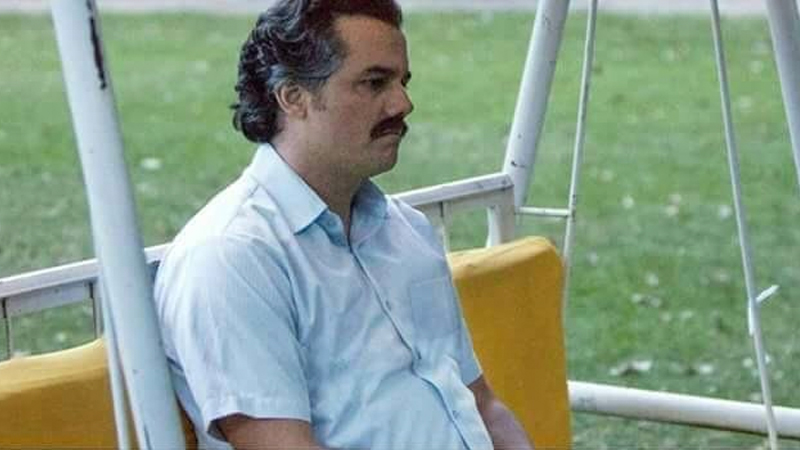
Last week was the season finale of Star Trek: Strange New Worlds, so when Thursday rolled around and I didn’t have a new installment of my favorite franchise waiting for me, I was not unlike that meme where the guy sits on a swing and pines away for something, probably football season. It was kind of pathetic to watch, actually. Just ask my wife.

“I wonder if Captain Pike’s hair misses me, too.”

But that sadness was mitigated by the fact that in just a few short weeks, on Sept. 7, the new season of Star Trek: Lower Decks is dropping. There was a time when Star Trek went off the air and we had no idea how long it would be before it returned to television (that time was called 2005 and the answer turned out to be 12 years, by the way), but in this day and age we’ve got more to work with. There’s been a semi-regular flow of Star Trek since Discovery first hit screens six years ago, and some of it has been magnificent: Prodigy, Strange New Worlds, season three of Picard…but the truth is, of all the “NuTrek” shows, none of them have made me as consistently joyful as Lower Decks.

Boldly going to season four.

A lot of fans were dismissive when Lower Decks was announced. An animated Star Trek? A comedy? A comedy produced by someone who worked on Rick and Morty? If you’re the kind of Trekkie who wants the show to lean more on the dramatic side, it kind of sounded like a recipe for disaster. But every Trek series has had plenty of lighthearted moments, and even the occasional full-blown comedic episode (unless you’re trying to tell me we were supposed to take “Spock’s Brain” seriously), so I was happy to give it a chance.

I couldn’t be more satisfied with the results. I went in expecting to see a parody of Star Trek, but the truth is that isn’t really what Lower Decks is. It’s funny, absolutely. The characters are hilarious and the performances by the main cast are magnificent. But it’s not the comedy alone that makes Lower Decks work – what really makes it land is the fact that if you take away the jokes, you’re still left with plots that would work solidly on a more mainstream science fiction series. The season 2 finale is a great example: when a more “important” ship than the USS Cerritos is endangered on a first contact mission, our crew has to step up and save the day. Ultimately, they discover the only way to traverse a dangerous asteroid field is to strip off the outer hull of their ship and pilot through manually. (Trust me, it makes sense in context.) The scenes of the crew coming together to dismantle their own vessel and then maneuver through the field are as tense and action-packed as Trek at its best, and still funny to boot.

Many fans were won over by the first season. Not everyone, of course. There are still some who argue that Lower Decks lacks in actual comedy, and is just a rapid-fire recitation of references to other Trek series. While it’s true that the show is very reference-heavy, to say that this is the only source of comedy is untrue and reductive. So much of what makes it funny it comes from the characters, and it is the characters that make the show worth watching. The references are fun, however, and I think it’s the references that prove something that I sincerely believe to be true: the best parodies are made by people who honestly and sincerely love the thing they’re making fun of. 

Mike McMahan, the creator and showrunner of Lower Decks, was a writer on several animated shows, but he came onto the radar of the Trek producers via – of all things – a Twitter account in which he posted synopses for episodes of a fictional eighth season of Star Trek: The Next Generation. The account became a hit and he eventually rolled that into writing an officially-licensed book. Warped: An Engaging Guide to the Never-Aired 8th Season was a hilarious look at what might have been but, more importantly, the writing showed that McMahan truly understood the show, the characters, and their universe, and that was what he built the comedy on. When he got the chance to do the same with Lower Decks, it was as engaging and funny as anyone could have hoped for. 

It should be noted that McMahan wasn’t the first writer to do that with Star Trek. By my count, he was at least the fourth. There are two previous projects that also take loving jabs at Trek while still working as science fiction in their own right. David Howard and Robert Gordon’s script for Galaxy Quest transports a bunch of Trek-esque actors into a Trek-stye adventure, and Seth MacFarlane’s The Orville started out as a comedic take on Trek tropes and quickly evolved into a sci-fi series as deep and powerful as Trek at its best, albeit with a few more jokes. In both cases, these were projects envisioned by creators who had a deep love of the franchise and wanted to pay tribute to it in their own way. 

“No, it’s not a Star Trek knock-off. Because our captain wears blue and our doctor wears green, that’s why.”

This is the thing that needs to be understood: something can be a great comedy and still be a great example of the kind of story that’s being told. It’s always frustrated me how the Academy Awards typically ignores comedy in most of the major categories, as if it is somehow less artful than drama. It’s only slightly better with awards shows like the Golden Globes or the Emmys, which separate comedies into their own category, with a subtle implication that they don’t deserve to compete against the “real” movies. There’s a sort of snobbish attitude that thinks of comedy as “lower” art. That’s ridiculous, of course. Comedy has existed since the birth of drama. Shakespeare’s tragedies may get more play in schools, but I’ll argue that Much Ado About Nothing is a vastly superior play to Romeo and Juliet any day of the week. And as far as the acting part goes, giving a great comedic performance is a skill set that not everyone has. All acting is about building and releasing tension, but the demands of comedy require you to land the release in a way that often far more difficult than drama. Think about how many great comedic performers have gone on to give great dramatic performances. Off the top of my head there was Jim Carrey in Man on the Moon, Robin Williams in Dead Poet’s Society, and Carol Burnett put forth a fantastic performance in the final season of Better Call Saul. Speaking of which, the “Gilliamverse” duo of Bob Odenkirk in Saul and Bryan Cranston in Breaking Bad pretty much embody this concept. On the converse, how many actors who became known as great dramatists then went on to give fantastic comedic performances? I’m sure the list exists, but the flip side is much more extensive. Go ahead, tell me Orson Welles’s best-known comedic performance. I’ll wait. 

You picked this one, right?

Great comedies are often great examples of the stories that they are supposedly parodying. Two of the most formative movies of my childhood, two of the movies that are probably responsible for shaping my sense of storytelling into what it is today, fall into this category. Ghostbusters began with Dan Aykroyd’s personal desire to tell a story about the paranormal. Although the script evolved and changed considerably from his original vision by the time it was on the screen, it was a fantastic story with some genuinely creepy moments buoyed up by some of the greatest comedic performances ever put to screen. The next year, Bob Gale and Robert Zemeckis gave us Back to the Future, a movie that’s effective as a science fiction film, but even more impressive as a relationship comedy about teenagers in love and a son rediscovering his parents. These movies are classics and are pretty much universally recognized as such. (Heck, as of this writing, Back to the Future still sits atop my personal “Perfect Movies” poll and has done so for over a year.)

Nor is this only true in film and television. Look at Douglas Adams The Hitchhiker’s Guide to the Galaxy and its assorted sequels. Begun as a radio drama before becoming part of the modern literary canon, Adams uses science fiction and humor hand-in-hand to satirize any number of targets. Terry Pratchett did the same thing with the fantasy genre in his Discworld novels – parodies of fantasy tropes, to be certain, but at the same time marvelous examples of a fully-realized fantasy world that had a lot of interesting things to say about the actual world we all live in most of the time. 

Recently I found a new member for this club of parodies that also perfectly encapsulate the thing that they’re parodying: the Hulu series Only Murders in the Building. I mentioned this show a few weeks ago when discussing shows I haven’t watched yet that I would try to get through during the (still ongoing) writer’s and actor’s strikes in Hollywood. Since then, I’ve made it through the first two seasons and begun the third, and I’m frankly angry at myself for not having watched it before. If you’re unfamiliar, the show stars Steve Martin, Martin Short, and Selena Gomez as neighbors in an enormous Manhattan apartment building. Initially strangers to one another, they bond over their mutual love of a true crime podcast. When a murder takes place in their own building, they decide to launch a podcast of their own while they try to solve it.

“That Petit guy is talking about us again. Get the murder.”

The show is a deft send-up of podcasts like Serial, with Tina Fey appearing in several episodes as an obvious stand-in for Serial’s host, Sarah Koenig. While gently mocking the format, it also occasionally says some serious things about the nature of an audience that draws entertainment from the death and suffering of real people (which, let’s face it, is what we all do when we “enjoy” the true crime genre). There are dark moments as well, as the pasts of each character are slowly opened up and revealed to the viewer throughout the course of the investigation. What’s more, the show isn’t afraid to get experimental, as we see in the format-breaking episode seven, which tells the story in a way few shows would have the guts to do. It’s also not afraid to tug at the heartstrings, as we see in season two when several episodes revolve around the concept of fatherhood and what it means, which is something that cuts into me personally pretty deeply.

In the midst of all this, though, there are two things that absolutely have to be said:

  1. The show is outrageously funny.
  2. Each season so far has been a fantastically-structured mystery in its own right.

In their mocking of the true crime culture, show creators Steve Martin and John Hoffman have managed to make one of the most engaging TV mysteries I’ve ever watched, laying out clues, unraveling threads, and sending us chasing after red herrings with the aplomb of Arthur Conan Doyle or Alfred Hitchcock. Even if it wasn’t funny, it would still be a good mystery, and that’s what really matters in regards to my grander point.

Good comedy is damned hard to do, and it deserves respect. And when that comedy lands, it’s not just funny, it’s transformative. It’s not fair to say Only Murders is a great mystery “for a comedy,” to call Lower Decks a good Trek show “for a comedy,” to say that Terry Pratchett’s Discworld novels are solid fantasy “for a comedy.” They just are. They’re great examples of their genres that also happen to be comedies.

When we can get everybody to wrap their brains around the premise, maybe the people who make us laugh will finally be able to get their due.

Blake M. Petit is a writer, teacher, and dad from Ama, Louisiana. His current writing project is the superhero adventure series Other People’s Heroes: Little Stars, a new episode of which is available every Wednesday on Amazon’s Kindle Vella platform. Hey, he hasn’t used Star Trek as a main topic in this column for six weeks now, he deserved this one.