Geek Punditry #136: Under Suspension

A few weeks ago, San Diego Comic-Con happened once again and…well, once again, I wasn’t there. It’s kind of a little tradition of mine. Comic-Con happens and I stay at home. Like many storied, time-honored traditions, it kinda sucks. So I instead spent that weekend waiting for the news to trickle out online. There wasn’t anything major this year, nothing that knocked my socks off, no “Robert Downey Jr. is Doctor Doom” moments. There were, however, trailers. I  love a good trailer, those little short films that give us a taste of an upcoming movie or TV show. They’re becoming a dying art, really, with so many trailers either failing to give you any excitement or – much worse – giving away half the thrill and excitement of the movie itself too early. If you haven’t seen the trailer for Project Hail Mary, for example, then I beg you in the name of all that is good and holy DON’T watch it. It gives away one of the best reveals in the book.

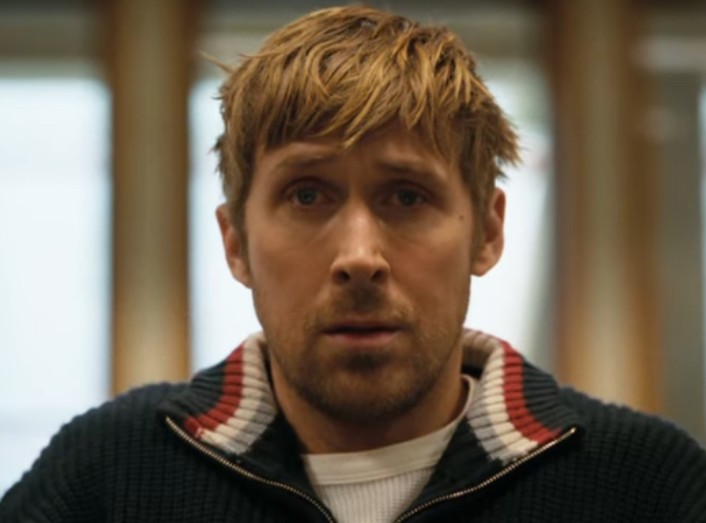
Specifically, the fact that Ryan Gosling copies Guy Gardner’s haircut.

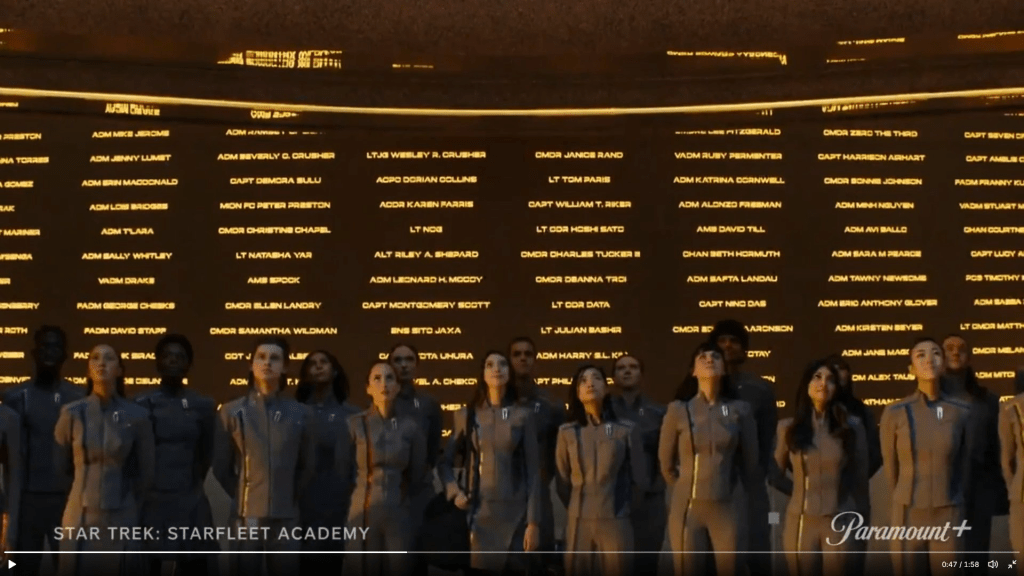
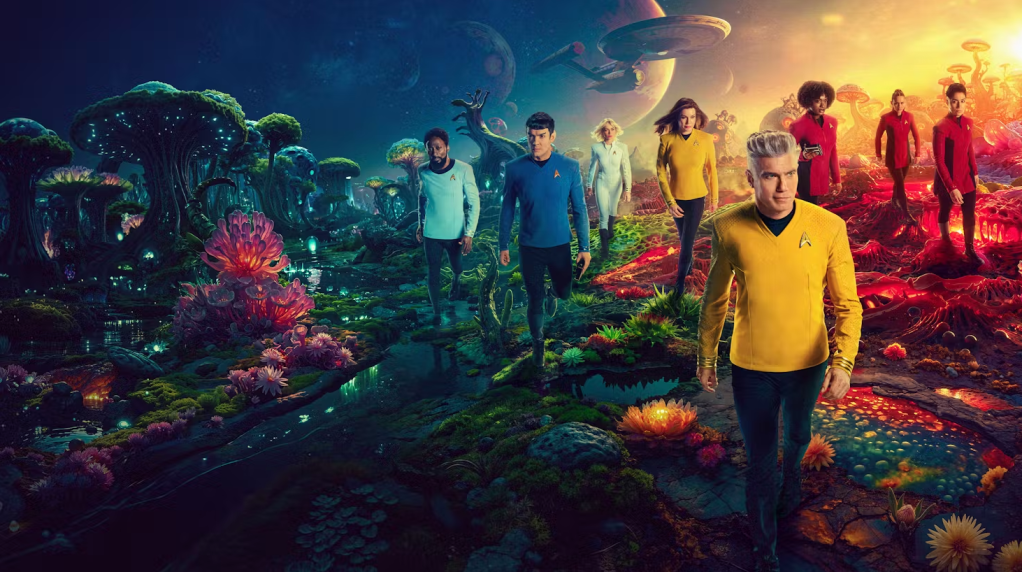
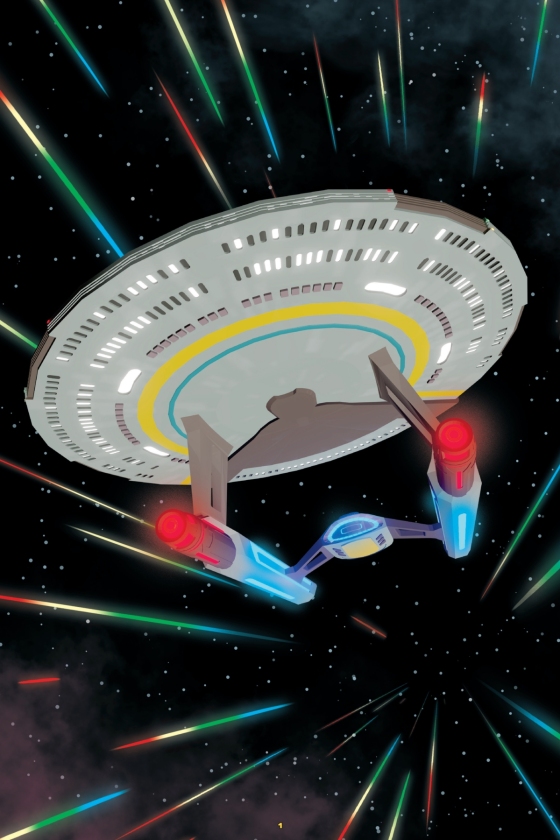
But the trailer that I’ve seen the most online chatter about had nothing to do with plot reveals, special effects, or the performances of the actors involved. No, the most talked-about trailer this year seems to have been the teaser for the upcoming Star Trek: Starfleet Academy series on Paramount+. Here’s all you need to know: Starfleet Academy takes place further along in the timeline than most of the Trek shows and movies that we’ve grown to love over the past six decades. In this time period, the Federation almost collapsed due to certain catastrophic events and it’s now in a rebuilding stage. This series is about the rebirth of the Academy, and the scene that has everybody talking is one in which we catch a glimpse of what appears to be some sort of Wall of Honor, adorned with the names of legendary Starfleet personnel. Ambassador Spock. Admiral Jean-Luc Picard. Lieutenant Nog. There are names on this wall from virtually every iteration of Star Trek to date. This one scene has had people freeze-framing it more than any single scene since Fast Times at Ridgemont High, trying to read all the names on the board to see who amongst our favorite Star Trek characters made the cut. I seriously doubt that this wall will have any great significance to the plot of the series, but it’s a fun Easter Egg for those of us who have loved Trek for so many years.

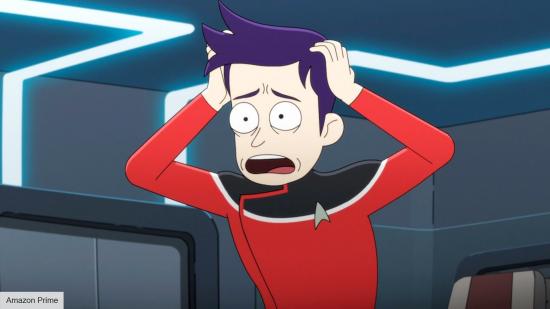
Barclay better be on that wall or we riot.

In one of the (many) online discussions I’ve seen about this scene, though, there was one dissenting voice that I found perplexing. This person, whom I am paraphrasing, basically expressed irritation that all of the characters that we’ve watched over the years turned out to be so remarkable. Statistically, they seem to think, not EVERY character should turn out to be some kind of legendary figure.

This person has got it completely backwards.

My reply was simply this: “It’s not that every character we watch has turned out to be remarkable. It’s that we are only watching them in the first place BECAUSE they are remarkable.”

This is one of those times where I engage in a discussion online over something that I always thought was blindingly obvious, only to learn that not everybody sees it my way (also known as the correct way). There are hundreds, maybe thousands of ships in Starfleet. Of course not EVERY ship and EVERY crew is going to turn out to be the one that makes it into the history books. But doesn’t it stand to reason that those boring, mundane crews are simply not the ones that we get to hear the stories about? In other words, the histories of the Enterprises, Voyager, or station Deep Space Nine aren’t remarkable because those are the crews we follow. We follow them because they ARE the remarkable crews.

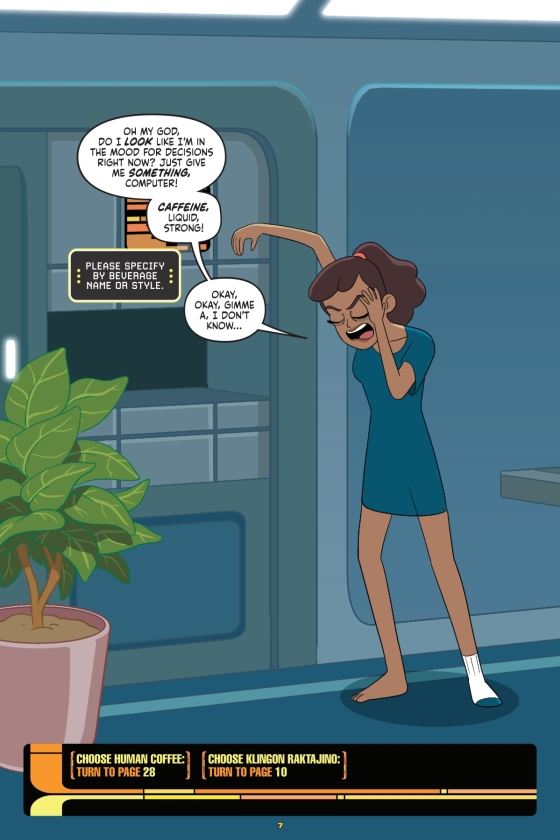
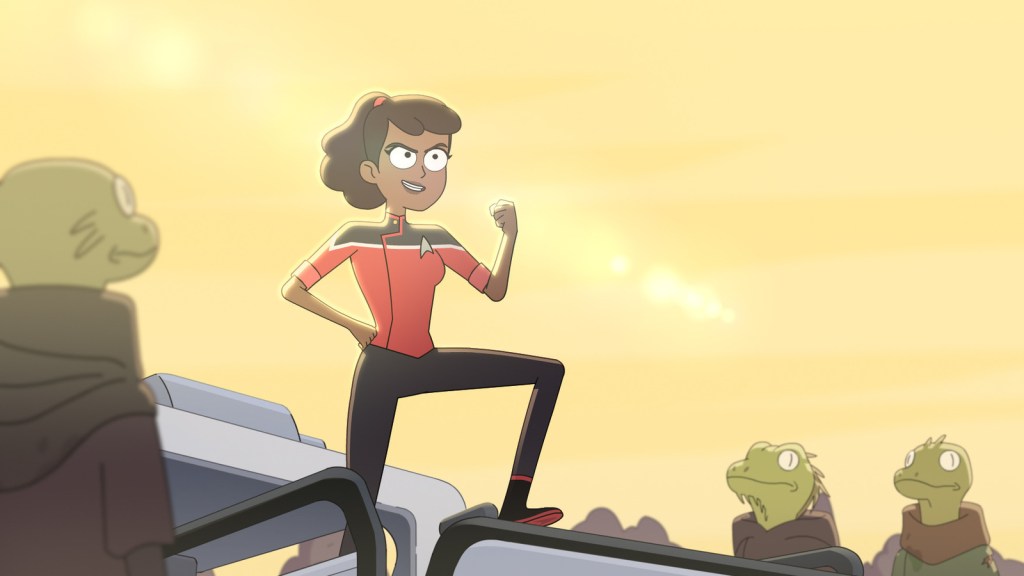
This is the case with fiction across the board. We aren’t tuning in to a movie or a TV show to watch the adventures of some average, everyday schlub. There are exceptions, of course – “slice of life” dramas and comedies do just this, and sometimes they do it very well. But in the case of an adventure series like Star Trek, you’re following the exploits of the characters that make history. They even tried to subvert this expectation with the animated series Star Trek: Lower Decks. The idea behind it was that we were going to FINALLY follow the adventures of an unimportant crew on an unimportant ship. And what happened? It turned out that they weren’t all that unimportant after all, and if anything, Lower Decks winds up reading as the origin story for the next one of these legendary crews. 

Suspension of disbelief is an important aspect of enjoying fiction. There has to be a willingness, as a member of the audience, to accept certain things that you are aware may defy reality. In the case of speculative fiction – sci-fi, fantasy, and certain types of horror – that means that you have to maybe ignore certain laws of physics. Yeah, Einstein said that we can’t go faster than light, but if we didn’t find a way to do it then there would be no Star Trek, so I’m gonna let that one slide. Quantum mechanics says that the way time travel works in Back to the Future is utterly impossible, but until quantum mechanics can give me something as awesome as Alan Silvestri’s score, quantum mechanics can bite me. Is there really such a thing as a creature that can hide inside your dreams and attack you? Probably not, but A Nightmare on Elm Street wouldn’t be nearly as scary without him. 
Those are the big things, though, and when it comes to suspension of disbelief, people are oddly MORE accepting of the big things. What about the little things? There’s an old saying that in real life we expect the unexpected, but in fiction we don’t stand for it. Major, life-changing events have to be the REASON for a story, not something that simply happens IN the story. Think of it this way: if a character in a movie wins the lottery, that usually happens at the beginning of the movie, and the rest of the story is about what happens to them as a result. But if a character in a movie is in some sort of desperate situation – maybe he’s spent half the movie running from the mob because he owes them a fortune and they’re gonna break his kneecaps – and THEN he wins the lottery, the audience considers it a cheat. The suspension of disbelief breaks down here, even though the odds of a person winning the lottery are – mathematically speaking – exactly the same at the beginning of a story as they would be at any other point. I’ll accept a lottery win as the inciting incident, but if a random lottery win is what saves the day, that’s a modern deus ex machina, the “god in the machine.” It comes from those times in Greek drama where a character would be rescued by – literally – one of the gods intervening to get them out of a jam, and even back then it pissed off the ancient Greeks so much that they invented machinery just so they would have a term to use to complain about it.

It doesn’t have to just be good things either – tragedy can break your suspension of disbelief too. There are a lot of tearjerkers about somebody battling an incurable disease, and we’re okay with that, because that’s what the story is about. On the other hand, if somebody spontaneously develops such a disease in the middle of a story without any prior warning, audiences will consider it cop-out. Why? In real life, people can get sick at any time, so why NOT when it’s convenient for the plot?

Because “convenient” is enough to break the reality of the fiction.

Pictured: Convenience

The rule is basically this: major life-changing events (either good or bad) either have to happen at the beginning of the story or be the consequences of the actions in the story, but they cannot happen randomly in the middle or end of the story or the audience won’t stand for it.

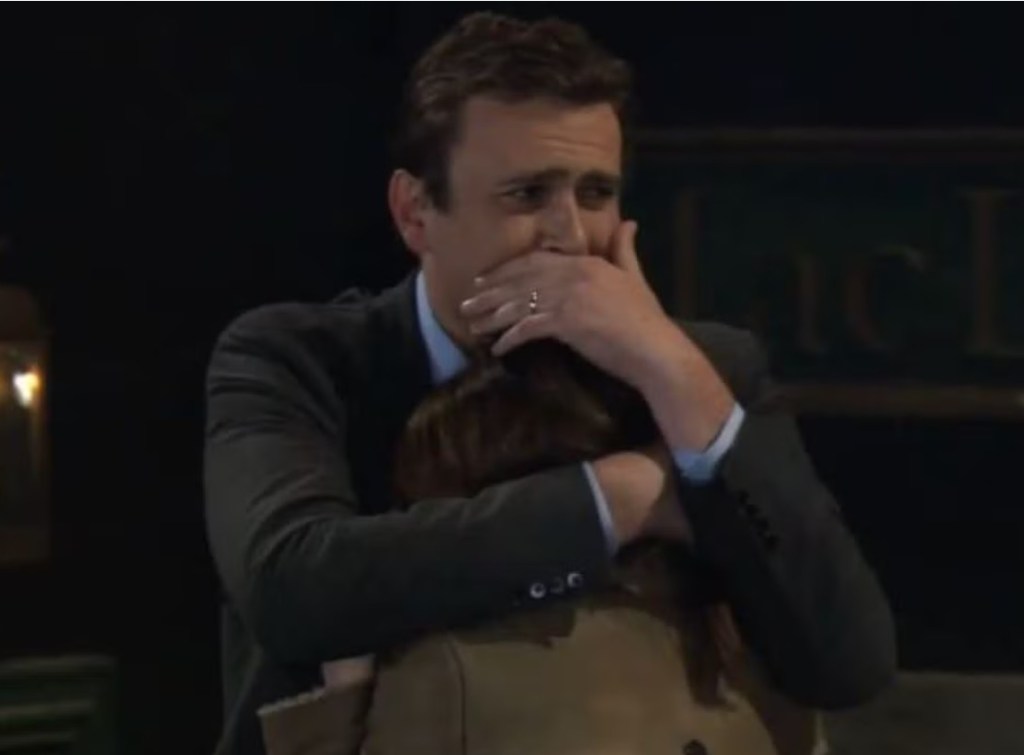
The one exception here – and even this one is iffy sometimes – is when you’ve got a long-running serialized story like a television or comic book series. When you’re following characters for years at a time, eventually a random event will occur, and the audience will be a bit more accepting of it. For example, the death of Marshall’s father in the series How I Met Your Mother came out of nowhere, but that episode is considered one of the most powerful, emotionally-resonant moments of the entire series. It’s something that hits the audience hard, forcing us to process the grief and pain of the character along with him. (The story goes that actor Jason Siegel didn’t know what the end of that episode was going to be until they filmed it, so when Allyson Hannigan delivers her line, telling him that his father died, his response is entirely genuine and his final line was a perfect ad-lib: “I’m not ready for this.)

People cried just as hard for the finale, but for…different reasons.

In a comedy, suspension of disbelief is allowed to go even farther. In a farce like The Naked Gun, for example, things routinely happen that make it feel more like you’re watching a cartoon than a live-action film, and the audience is perfectly satisfied. Nobody complained in the end of Mel Brooks’s Blazing Saddles when Hedley Lamarr bought a ticket to a movie theater showing…Blazing Saddles. And Mystery Science Theater 3000 even wove the concept of Suspension of Disbelief into its THEME SONG: “If you’re wondering how he eats and breathes and other science facts, just repeat to yourself, ‘It’s just a show, I should really just relax’.”

Lalala

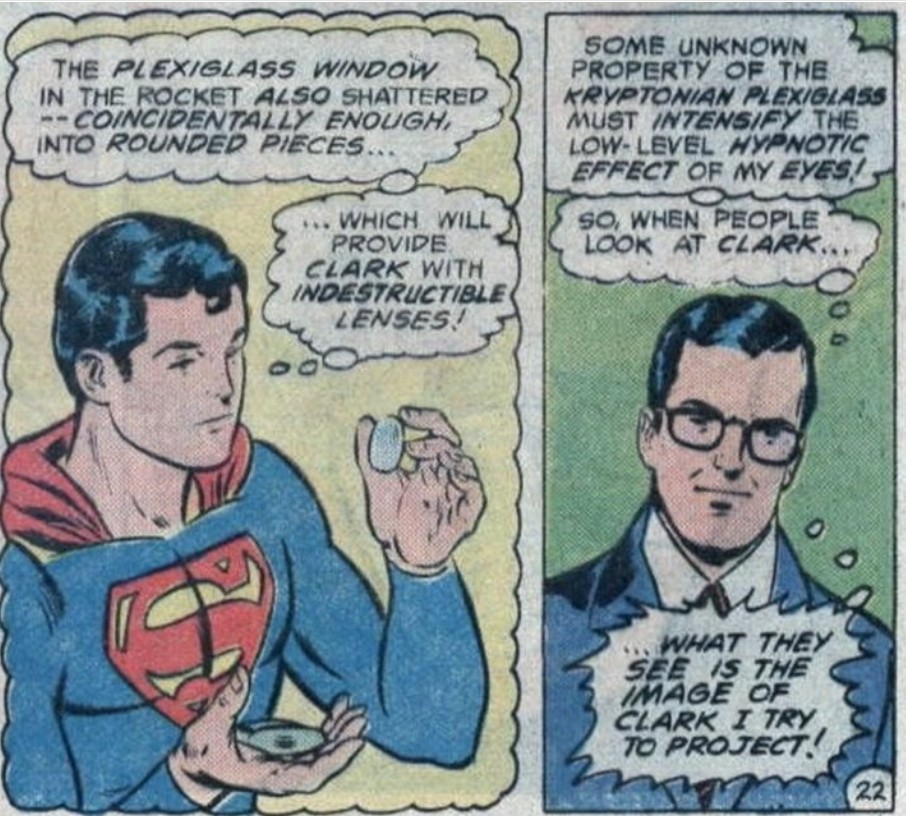
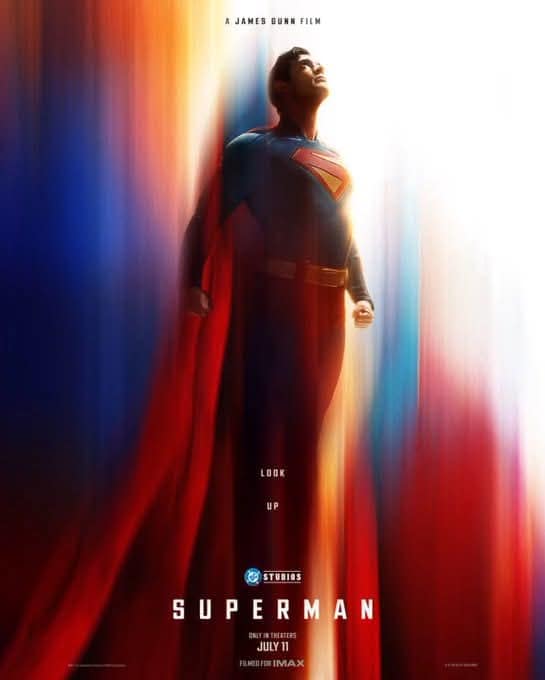
On the other hand, if that disbelief is suspended too long, there’s a temptation to try to work things into the story to justify the extraordinary. For instance, for decades there was a running commentary about how Clark Kent’s glasses wouldn’t fool anybody and that everyone would quickly realize he’s Superman. Eventually, the writers felt that it needed to be addressed to maintain the suspension of disbelief. Some writers said that he slouches as “Clark,” or changes his voice and mannerisms. Sometimes they actually have him attend acting classes specifically to learn how to do this. Sometimes the lenses are made out of special glass (usually from the ship that brought him from Krypton) that either changes the color of his eyes or – in the most extreme case – has a hypnotic effect on the people who look at him, making them see a different face. James Gunn even alluded to that in his movie, although a lot of people thought it was just a typical Gunnian joke, not realizing it was a legitimate piece of comic book lore. 

I love it when intergalactic spacecraft crashes to Earth and the shattered remains of the windshield have two pieces that perfectly correspond to my frames.

We don’t read or watch fiction – for the most part – looking for ordinary things. We want to follow the adventures of extraordinary people or, at the very least, ordinary people in extraordinary situations. Stephen King fans (this is me raising my hand in the back of the room) will tell you that’s his great strength: the ability to create a realistic character and then show how they respond to circumstances that no realistic character could possibly have prepared themself for. And to be fair, a certain amount of analysis and nit-picking is acceptable when you’re discussing great works of fiction (or even awful works of fiction). 

But eventually, when somebody online says something like, “Why don’t people in Gotham City ever realize that Bruce Wayne is the only one with the money to be Batman?” The proper response is simply, “Because the story wouldn’t work otherwise, so just get over it.”

Blake M. Petit is a writer, teacher, and dad from Ama, Louisiana. His most recent writing project is the superhero adventure series Other People’s Heroes: Little Stars, volume one of which is now available on Amazon. You can subscribe to his newsletter by clicking right here. He’s also started putting his LitReel videos on TikTok. He, too, would like to wear hypno-glasses, but in his case he would just use it to make his students see him as Yoda. 

Geek Punditry #132: The Things We Love

I’m a teacher who is off for the summer, and although that does not (as many presume) mean that I have nothing to do, it DOES mean that my schedule is much less regimented. In other words, I enjoy the fact that for two months out of the year, I’m allowed to sleep past sunrise. Until this morning, of course, when my precious son Edward bounded upon his mother and me at 6:23 in the morning to make sure that we were going to be ready in time for the movie we’re watching at 11: 30. 

“Why are you looking at me like that?” I ask my wife, as Eddie scuttles away to inform our Google Home Mini that we’re going to see Superman today. 

Shoot, was that TODAY? Totally slipped my mind.

I know why she looked at me that way, of course. This is probably my fault. Ever since the trailer dropped back in December, I’ve been working on the kid, showing him the clips online, watching the old movies and cartoons with him, getting him some of the new toys and t-shirts and a ridiculously cute pajama set with a cape. I have, in fact, gotten him excited. And moreso, for my little ADHD wonder, this may be the first time in his life he’s ever experienced anticipation that has lasted this long. I’m writing this before we’ve seen the movie, and I kind of feel the same. Eddie has been waiting for this movie since December. In a way, I’ve been waiting for it all my life.

Not because it’s a new Superman movie and not because it’s James Gunn doing Superman and not because I hated the Zack Snyder version. I’ve been waiting for this – and I didn’t even know it before 2017 – because I’m getting to take my SON to a Superman movie for the first time. And there’s nothing better than sharing what you love with the people you love.

Like this little nerd.

I know some people who have a bizarre relationship with their fandoms. When Star Wars became mainstream, for instance, they were disappointed. And not because of the content of any specific movie or TV show, they were disappointed because, in their minds, Star Wars was always this minor, niche thing that just belonged to THEM and not the normies out there. Star Trek doesn’t quite have the mainstream penetration of its Disney counterpart, but when New Trek adopted more polished special effects and started hiring big-name actors like Jason Isaac, I know Trekkies who had the same reaction. I don’t understand this point of view. I don’t get why anybody would be upset to learn that something they love is loved by other people.

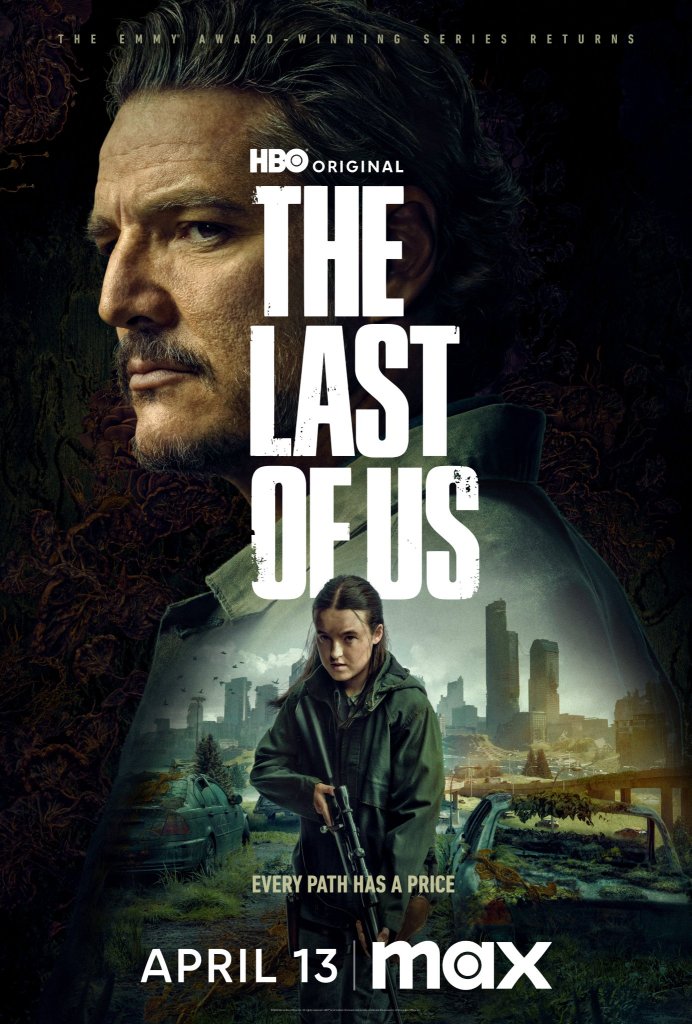
Loving a movie, a TV show, a comic book series, a video game…this is not like having a relationship with another human being. Nobody is requiring that The Last of Us be in a monogamous relationship with you, Jamie. Stories are placed out into the world with the hope of gathering as many lovers as possible. Some of them make it, some of them fail, and some of them are successful beyond anybody’s wildest dreams, but they all have the same goal: to be shared.

If you thought Pedro Pascal was all yours, I’ve got 17 different franchises with bad news for you.

The thesis of this column, from day one, has been to talk about the things that I love, and although that doesn’t mean I don’t occasionally lapse into criticism, I’ve done my best to abide by that. There is a percentage of any fandom – it’s a small percentage but, unfortunately, it’s usually the loudest – that exists only to fiercely express their hatred of whatever it is everyone around them is trying to enjoy. I can’t stand these people. It’s the same, to me, as listening to people talk about their significant others. When I hear a man gripe and pout and call his wife a harpy, a woman telling me how her husband is stupid and useless, I stare at them blankly, unable to relate. I actually love my wife, people, she’s my best friend. If you’re that miserable either go to counseling or end the relationship. Meanwhile, I’m gonna go sit at a table with Gomez Addams, Rick O’Connell, Bandit Heeler, and Clark Kent, and we’re all going to raise a glass and have a friendly but spirited debate over whose wife is the most awesome, all while vociferously agreeing with each other’s estimation of our respective partners.

Goals.

It’s the same with fandom. I don’t mean to say that Star Wars or anything else is beyond criticism, but how long can you listen to somebody complain about something before you come to the conclusion that they don’t actually love it, at least not anymore? And if you don’t love it anymore, that’s fine, but why don’t you just find something ELSE to talk about? I want to hear about the things you think are great and WHY you think they’re great, because love becomes better when it’s SHARED. I have seen every iteration of Star Trek and I’ve never watched a minute of, say, Outlander, but I’d rather listen to a three-hour symposium about what makes Outlander great than a 15-minute YouTube video whining about how they changed the shade of blue of the Andorians’ skin when they showed up on Strange New Worlds. 

Criticism should come from a place of optimism. The attitude should be “I want this to be  better,” not “I hate everything about this.” Even in the classic days of Siskel and Ebert, back when criticizing movies was something that could get you your own TV show if you were good enough at it, I doubt that Gene and Roger ever went into a movie theater thinking, “I hope this sucks.” Oh sure, there were plenty of times they EXPECTED a movie to suck — you watch enough of them and you start to develop a sixth sense for what’s going to be wrong just by watching the trailers – but they probably wished, somewhere in their hearts, to be proven wrong each and every time.

Oddly, also goals.

Some people revel in their hatred. They want to spread it like a virus. These are the people who harass a Star Wars actress until she has to quit social media, who shout obscenities at children on the street because they’re TOO good at playing a bad guy on Game of Thrones, who make plans to bomb a movie they haven’t seen with negative reviews because they’re bitter that the franchise was rebooted. This isn’t love, this is toxic. If you knew anyone in real life who treated their partner this way, you’d beg them to get out of that abusive relationship. And yet these False Fans just keep going and going, more emboldened than ever by the platform that social media has given everyone in the industrialized world. We’ve got a system that enables us to connect with more people than ever before and yet they choose to use it to gripe about the fact that Superman is friendly to children.

Fandom, like personal relationships, should be about love. And love should be shared. And while I wouldn’t ever try to force Eddie to like the things that I like, I expose  him to those things in the hopes that they’ll latch on and find purchase, because it makes me happy to share them with somebody I love so much. And – thank GOD – in the case of Superman, it has. So about four hours from the time I’m writing this, we’re going to sit down in that darkened theater, a bucket of popcorn between us and his Superman action figure on his lap (because Eddie has asked to bring him) and we’re going to watch the movie that so many people have already loved. And if I love it as they do (spoiler warning: I highly suspect that I will), I’m going to do my best to spread that love. 

That’s what being a fan really is. 

Blake M. Petit is a writer, teacher, and dad from Ama, Louisiana. His most recent writing project is the superhero adventure series Other People’s Heroes: Little Stars, volume one of which is now available on Amazon. You can subscribe to his newsletter by clicking right here. He’s also started putting his LitReel videos on TikTok. He does, in fact, believe a man can fly.

Geek Punditry #127: Revival Vs. Reboot

As you no doubt have heard by now, at least partially because I’ve mentioned it here two weeks in a row, Disney’s brought back its fantastic animated series Phineas and Ferb, and the first part of the new season dropped on Disney+ today. It may surprise you, then, to know that as of this writing, I haven’t watched it yet. You see, I have to wait for my wife to get home from work, because as any competent marriage therapist would tell you, holding off on watching coveted television programming until your spouse is available to watch it with you is a love language. 

But I don’t want to talk about Phineas and Ferb specifically today, I want to talk about what it represents: the TV Revival. That concept of bringing back old TV shows from the dead. It’s not a new idea, of course. The history of television is littered with shows that were cancelled and then came back after some time. Game shows like Jeopardy, Supermarket Sweep, and Let’s Make a Deal are all better remembered from their second incarnation than the original, for example. The 80s gave us resurrected versions of old sitcoms like Leave it to Beaver and The Munsters. And for a time, it was popular to continue a TV series by creating an animated version, as they did with the likes of Star Trek, Happy Days, or Gilligan’s Island. 

It’s like time stood still.

But in recent years, where studio executives are more hesitant than ever to take a chance on a new idea, it seems as though the revival has become a fundamental part of the television landscape. Is anybody going to want to watch a comedy about the goings-on at a municipal courthouse? Maybe not…unless we remind them that they already DID a few decades ago by making that show a new version of Night Court. Go ahead and look at any current network TV schedule (or spin through the offerings of a streaming service) and you’ll be astonished at just how much of the current episodic landscape is stuffed to the gills with shows that have relaunched older ones. I don’t object to revivals as a concept, but like anything else in the sphere of entertainment, I fear that we’ve reached a point of saturation where they’ve become a crutch rather than a tool.

That said, that doesn’t mean resurrecting an old show can’t be successful. But what, exactly, does it take to make a good one? The creators of Phineas and Ferb released a video to social media a few days ago, ramping up to the new season, where they very explicitly chanted “It’s not a reboot – it’s a REVIVAL!” It’s an important distinction, although I think there are a lot of people who don’t understand the difference. A reboot, to me, means starting a franchise over from scratch. You take the concepts, the tropes, the characters, but begin from square one, as though there had never been a previous iteration. Wednesday is a good example of this – there’s nothing that specifically ties it to the canon of any of the previous versions of the Addams Family – not the original TV series, the animated series, the 90s film series, the more recent animated films, the Broadway musical, or the original comic strips that the whole franchise was based on. It’s using the pieces of the older shows, but it is inherently its own thing. So yeah, reboots CAN be good.

In general, though, I prefer a revival – you’re not eliminating the previous canon. You’re not starting over. You’re just picking up where you left off. The original Phineas and Ferb took place across one epic summer. The new season – which they wisely promote as “Season Five” rather than “Season One” of a new series – starts one year later, at the beginning of the NEXT epic summer. Night Court returned to the same courtroom after an absence of many years, bringing back one returning character and one new character who was the child of an original. You get a revival more often when the old cast – or at least some of them – is still active and wants to return. We’ll be getting that with the new version of King of the Hill, coming to Hulu soon, and creator Bill Lawrence has announced a Scrubs revival where – although nobody has officially signed on yet – many original cast members have expressed interest in returning.

If this picture doesn’t make you vaguely uncomfortable, you’re too young.

Sometimes it can be difficult to tell whether a show is a revival or a reboot at first. In 2005, when the BBC brought back its defunct science fiction series Doctor Who, it wasn’t immediately clear if the old shows were in canon or not. And as part of the Doctor’s whole deal is that he occasionally regenerates into a new body, you couldn’t even make up your mind based on the fact that there were no returning cast members. Slowly, references to the old series started to appear, and eventually it was made explicit that this was a continuation – not only of the old series, but it even included the American co-produced TV movie that had tried (and failed) to revive the franchise a decade before. The show has been reinvented many times since then, and the DNA of the franchise makes it fairly easy to do so, but every version has thankfully been a revival rather than a reboot.

This straight-up wouldn’t work with a revival of The Andy Griffith Show.

The reason I prefer revivals is because a reboot has a tendency to dismiss the original. It takes place in a universe where the original didn’t happen and doesn’t matter, and that makes no sense to me. From the perspective of a studio, the only advantage a revival or reboot has over a brand-new property is the built-in audience, so why would you START by declaring that the thing the audience loved doesn’t exist anymore? Paul Feig and the cast of the 2016 Ghostbusters reboot will claim until their dying breath that their film failed at the box office because the fans were put off by the all-female cast, but any conversation with a true fan of the franchise will make it pretty clear the reason it was rejected was because fans wanted a revival. And when they got a true revival a few years later with Ghostbusters: Afterlife (with a main character that was a preteen girl), fans were delighted. 

That’s not to say that a reboot CAN’T be good. When J.J. Abrams was given the task of rebooting Star Trek for the big screen, he wisely took the track of making it an alternate universe. A villain traveled back in time and created an alternate reality in which these new films would take place. The original timeline still existed, and was still available when the TV revivals began a few years later. No matter what you think of the Abrams Star Trek films, most fans will agree that the alternate timeline was a good idea. Similarly J. Michael Straczynksi has been trying for years to get a reboot of his seminal science fiction series Babylon 5 off the ground. In 2023, he even gave us an animated film, Babylon 5: The Road Home, which ended in a way that – similar to the Star Trek example – opened up a different, alternate timeline in which the reboot could take place.

The classic sci-fi trope of “Eh, close enough.”

Of course, it’s easier to do that with a science fiction series than it would be a drama or a sitcom. If somebody wanted to do a reboot of The Golden Girls, for example, it’s unlikely that they would start with a CGI Betty White causing some sort of temporal rift that would take us to a different dimension where the girls all moved in together in 2025 rather than 1985. But that also begs the question: would you really WANT a reboot where they cast people other than Bea Arthur, Rue McClanahan, Estelle Getty, and Betty White anyway?

That’s another thing that revivals have over reboots: the continuity of keeping a cast that the fans love. One of the reasons a Babylon 5 reboot is more likely than a revival is because so many members of that cast, in the years since the show ended, have sadly passed away at a surprisingly young age. Over the course of that show’s five years, 17 actors were series regulars for at least one season. Seven of them are no longer with us, and several others have retired from acting altogether. It would be anathema to many of us to see Bruce Boxleitner’s John Sheridan return with somebody other than Mira Furlan playing his wife, Delenn. In a new timeline, though, with new actors in BOTH roles…that feels a little easier to swallow.

Some shows, however, simply should never be brought back, for many of these same reasons. Any ideas of a Friends revival, for example, went up in smoke with the sad death of Matthew Perry. Any revival, even a one-off movie – would necessitate either recasting Chandler Bing (which fans will tell you is basically impossible) or writing him out of the show by having him either die or leave his wife and children, which would be depressing as hell. As for a reboot…poll the fans. Ask if anybody would want a different cast, and I’m pretty sure you’ll hear a resounding NO.

It would be impossible to recreate this and a mistake to even try.

It’s less of a problem if the actor is still alive and has chosen not to return, or if they’ve fallen from grace in the years since the show’s airing and neither the studio nor the fans want them back. Tom Welling and Michael Rosenbaum, two of the stars of Smallville, occasionally make noise about wanting to bring back the show as an animated series or through animated movies. Many fans would welcome this, although it is unlikely that anyone will bat an eye if Chloe Sullivan is recast. (I’m not gonna get into it – if you don’t know why this would be necessary, just Google it.) In a less problematic example, former child actor Erik Per Sullivan has retired from the business, so when a revival of Malcolm in the Middle was announced, nobody was really angry that they decided to recast his character of Dewey.  

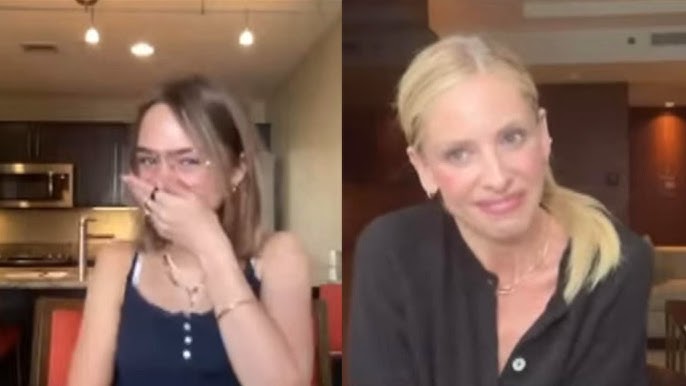
In general, though, revivals are more interesting to me – I want to see a continuation of the original series. There was chatter for years about a reboot of Buffy the Vampire Slayer, but Sarah Michelle Gellar wasn’t interested. Therefore, I wasn’t interested. Then they announced that they’d landed on a pitch that Gellar IS interested in, a pitch in which she is mentoring a new character entirely rather than trying to have somebody else play Buffy Summers… well, at this point, I’m willing to listen.

(There’s an irony here in that Gellar’s series was, in fact, a reboot of a mediocre movie starring Kristy Swanson as Buffy. But again, it just goes to prove to you that reboots CAN work sometimes.)

There’s an adorable video of when Gellar called Ryan Kiera Armstrong and told her that she got the part, because REAL slayers go by three names.

For some shows, the question of reboot vs revival is academic, of course. It doesn’t matter for nonscripted series like game shows, or shows that dramatize real events such as Unsolved Mysteries. You may miss Robert Stack, but that doesn’t mean the show can’t be made without him. Similarly, anthology series like The Twilight Zone are by their very nature immune to this. That show has been brought back several times over the years, and as there was never a regular cast or set of characters to follow, it’s a non-issue as long as the show has the flavor of the original – in this case, that of a sci-fi show with horror elements and, usually, some sort of twist ending. 

The biggest problem comes when a resurrected series – whether it’s a reboot or revival – lacks that taste of the original. Every so often you’ll hear about a new version of a show where they proudly announce that none of the current creators are fans of the original. This is a position so bafflingly stupid that I’m surprised it’s not mandated by federal law. While it’s true that some fans can be a bit too close to the property, a bit too reverent, if NOBODY involved in the creation of a show has any passion for it, the odds of creating something that satisfies the existing fan base drops so dramatically as to be almost nonexistent. 

“Well, we’re not making this show for the OLD fans,” some of these studio executives say. “We’re trying to appeal to NEW fans.”

Bullshit. If all that matters is acquiring a new audience, there’s no reason to bring back an old property. By bringing back a classic IP you are inherently announcing a desire to get the attention of an existing fan base, and by creating something you know will dissatisfy them, all you’re doing is trying to court controversy, as if that somehow inoculates you against the need to make a good show. Sometimes I think they’re COUNTING on that. They know their reboot is weak, so they rile up the fans against it, giving them a handy shield of claiming that these narrow-minded old fuddy-duddies just don’t want something new, thereby preventing them from having to admit that they made something that sucks.

Ultimately, I try to judge any show – revival, reboot, or brand-new idea – on its own merits. But when you’re reaching back to a classic series, you need to really think about what made that show successful in the first place before you even THINK about giving it a try.

Blake M. Petit is a writer, teacher, and dad from Ama, Louisiana. His most recent writing project is the superhero adventure series Other People’s Heroes: Little Stars, volume one of which is now available on Amazon. You can subscribe to his newsletter by clicking right here. He’s also started putting his LitReel videos on TikTok. Someday, he swears, somebody is gonna do a revival of Cop Rock, but they’re gonna do it RIGHT this time.

Geek Punditry #126: Whomsoever Holds This Hammer…

A few days ago, a meme I’ve seen several times floated across my Facebook page again. You’ve probably seen it; it asks one of the classic geek questions: “Who is a non-Marvel character that you know is worthy of lifting Thor’s hammer?” I like this a lot more than the usual “Could so-and-so beat Thor in a fight?” type of question. The question of which fictional character could win a fight with any other is pointless, because the real answer is always the same: whoever the writer wants to win.

But a question of worthiness is different. If a writer wants us to believe that a character is worthy of Thor’s power, we have to be persuaded first. And the person who created this particular iteration of the meme already gave us the perfect answer:

More like Ernest P. WORTHY, amirite?

I don’t know the person who made this meme so I can’t say if they meant this as a joke or not. I’m going to assume they didn’t, because Ernest P. Worrell is actually the perfect example of a character who demonstrates worthiness. Let’s establish, for a second, what “worthy” actually means. Neither the comics nor the movies ever give any SPECIFIC criteria, but there are a few things I think we can agree upon. The stipulations – whatever they are – were created by Thor’s father Odin, and we can assume that courage is one of them, as is a certain warrior’s instinct. The other one can be extrapolated from the first Thor movie: Thor is cast to Earth and deprived of his power because of his arrogance. He doesn’t regain his power until he learns to put it aside and think of others before himself. Therefore, we can reasonably assume that selflessness is the last criteria. 

Now let’s look at Ernest. Whether it’s when he goes to camp or jail, when he was scared stupid or when he had to save Christmas, the predicaments he winds up in are often tied up in his desire to help other people. Wayward youths, his fellow bank employees, non-wayward youths being pursued by monsters, Santa Claus – Ernest fights for other people again and again. A warrior’s instinct? Go back and watch Ernest Goes to Camp again – he lines up to fight the evil land developers (it was the 80s, 97 percent of movie villains were evil land developers) even after they beat the stuffing out of him the first time. As for courage…well, again, we turn to Ernest Goes to Camp, where he passes the Native American “Path of the Brave.”

If he had faith in The Great One, the knife would not cut him.
If he had courage; true courage, the rock would not break him.
If the brave was pure of heart, the arrow could not catch him.

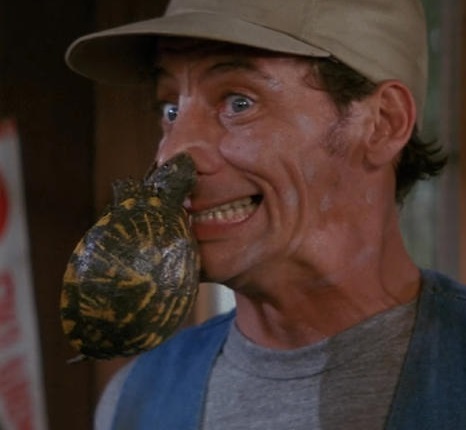
“Wait a second though, Blake,” you’re saying, “You think he’s BRAVE? Ernest freaks out all the time. Remember how he panicked when that turtle bit his nose?”

“This never happens to Beta Ray Bill, does it, Vern?”

My friends, courage is not the LACK of fear. It is the ability to OVERCOME fear. Does Ernest get scared? Sure. But he still STEPS UP, EVERY SINGLE TIME. So when Ernest tries to pick up Mjolnir, he’d do it on the first try. Then he would drop it, stumble, fumble around, accidentally summon up a cyclone, and probably set his hat on fire with an errant lightning bolt, because he’s still Ernest. But despite all of that, whatever danger he was facing, he would somehow still triumph in the end, because his heart is simply too pure to give up.

But as always, this meme gets me thinking about who else might qualify. Other than Ernest, what other fictional characters are worthy of lifting Mjolnir? I’m going to skip over anyone who has been shown, canonically, to be worthy: that would include Captain America, Vision, Storm of the X-Men, Beta Ray Bill, Superman, and Wonder Woman. (I’ve written about crossovers before, right?) I’m sure there are others who’ve lifted the hammer in some continuity or other, but I don’t have a comprehensive list. And since the meme specifies “non-Marvel,” I’m not going to go into the pages of dissertation I could write arguing that Ben Grimm or Peter Parker should be worthy. But let’s look into other fandoms, shall we?

“I’m comin’ with you, Mr. Thor!”

I’ll start with probably the least-controversial choice I’ll have on this list: Samwise Gamgee from Lord of the Rings. If you’ve never read or at least WATCHED Lord of the Rings (in which Sam was played by Sean Astin), well…what century are you from? Come on, get with the program. But lemme tell you about Sam. Sam is a gardener – simple, humble, and with no great ambitions towards adventure or danger. But when his friend Frodo is tasked with the job of carrying the Ring of Power to Mount Doom, the only hope to destroy the ring and prevent the rise of the evil Sauron, Sam joins the Fellowship accompanying him without hesitation. When the rest of the party is separated and Frodo attempts to continue the quest without them, Sam refuses to allow him to go alone. Sam has no desire for glory or power, and it is arguable whether he would even make the journey for the good of all Middle-Earth, which is at stake. But for the sake of his friend? Samwise will do anything. Cross a continent on foot. Battle an enormous spider. Climb a raging volcano with the exhausted Frodo on his back. There is no character in all of Tolkien more unflinchingly loyal and brave than Samwise Gamgee, and you can’t tell me for a second that Odin would disagree. 

Something about those eyes. Those are WORTHY eyes.

Next, I would like to nominate Marcus Cole of the epic science fiction series Babylon 5. Marcus, played by Jason Carter, was a member of the Rangers, a secret society of human and Minbari warriors tasked with maintaining peace across the galaxy. As a Ranger, Marcus is a skilled fighter and never hesitates to go into battle against any manner of otherworldly threats. He also never displays any particularly selfish qualities, but it’s the way his story ends that I believe truly marks him as worthy of Mjolnir. I’m about to spoil the end of Babylon 5 season four, so you should watch the series. It’s currently available on Tubi for free; you go watch the first four seasons – I’ll wait here until you get back. 

Done? Great. So as you just saw, Marcus quickly fell in love with Susan Ivanova, second-in-command of station Babylon 5. Ivanova, however, wasn’t interested in romance. To be fair, there were wars and stuff happening, she had a LOT on her plate, so she would rebuff Marcus’s advances. At the end of the season, though, Ivanova is mortally wounded. Marcus, however, sees a chance to save her: in an earlier episode, the characters had come into possession of an alien device that could heal virtually any wound, cure any disease, basically bring someone back from the brink of death – but to do so required the transfer of life-force from another being. In other words, you had to kill one person in order to save someone else. Marcus hooks Ivanova up to the machine and hooks himself up to the other end, sacrificing his life to save her. If his other feats throughout the series hadn’t already proven him worthy of carrying Mjolnir, his final act of courage and selflessness more than does the trick.

Let’s see him science the shit out of Mjolnir.

Staying in outer space, let’s turn our attention back to our own solar system, particularly the surface of Mars, where Mark Watney of The Martian has proven his worth. In the novel by Andy Weir and the film adaptation, where he is played by Matt Damon, Watney is an astronaut stranded on Mars when the rest of his crew escapes and heads back to Earth. The others don’t leave Watney deliberately – they think he was killed by the same storm they are attempting to flee – and by the time they realize he’s still alive, there’s no way for them to go back and get him. On Mars, alone, Watney has to figure out how to survive on limited supplies long enough for NASA to arrange a rescue. 

Both the book and the movie are a joy to me. For one thing, it’s a rare story in which there is no traditional antagonist. Literally the entire planet Earth bands together to save the main character; there’s no evil in this story. That’s so damned refreshing. The battles Watney has to fight are against Mars itself, trying to find ways to create food, provide power, and ultimately make his way to the site of another rocket that can blast him into orbit for his rescue. And although Watney (not unlike Ernest) often displays momentary panic following his many, many setbacks, he also overcomes that panic every single time, putting his brain to work and figuring out one unbelievable way to survive after another. He never backs down and keeps fighting until he finds a way to safety. 

As the entire plot of the story is Watney trying to stay alive, it’s a little harder to prove his selflessness. However, from the very instant he is stranded on Mars, Watney makes it a point to say that he doesn’t blame the rest of his crew for leaving him behind. He never shows any anger or resentment against them for his predicament, and when the rescue attempt boils down to his crew basically giving up another year and a half of their lives to turn back to Mars and save him at great risk to themselves, Watney shows willingness more than once to die on Mars if that’s what it takes to protect the rest of the crew. Could he lift Mjolnir? I posit that he could. Tragically, if he HAD the hammer, he could have prevented the storm that stranded him on Mars in the first place. 

With four characters down, I turned to my wife. “Erin, who else could lift Mjolnir?” I asked.

“D’vana Tendi,” she said without hesitation.

Go ahead, speak it into the Horn of Truth.

“Duh,” I said, berating myself for forgetting my favorite character from Star Trek: Lower Decks.

Tendi is an Orion, a member of a species who, prior to Lower Decks, were known for their pirate captains and slave girls in other Star Trek series. Not exactly an obvious choice for lifting Mjolnir, of course. But from the first time we see her, Tendi defies what we think of Orions as being. She’s not a pirate or a slave – she’s a scientist. She gleefully loves science, she dives into it with the sort of joy and excitement that Thor himself carries into battle. Tendi sees a problem as something to defeat with her brain rather than her fists, but it’s a battle nonetheless.

That should not, however, give you the impression that she COULDN’T fight. Tendi has forsaken the warrior aspect of her culture, but she was still brought up in it. She holds the title “Mistress of the Winter Constellations,” and it is a title that strikes fear in her enemies. Tendi is fierce in battle when the situation calls for it, then turns on a dime to being the sweet, good-natured Starfleet Officer she truly WANTS to be. 

As for selflessness, at the end of season four of Lower Decks (it is apparently my day for spoiling the fourth seasons of science fiction TV shows), with her ship and her crew on the line, Tendi makes a deal with her family. In exchange for their help, she will leave Starfleet and rejoin the family syndicate, taking her place as Mistress of the Winter Constellations once again. She’s willing to leave everything and everyone she loves in order to save everything and everyone she loves. Thor had to learn to let go of his arrogance – I don’t know if Tendi would even recognize it to begin with.

“Ferb, I know what we’re gonna lift today!”

“Phineas and Ferb,” Erin continued, and good grief, how did I forget THEM? I talked just last week about how much I love Disney’s Phineas and Ferb cartoon and how excited I am that it’s coming back, but somehow it passed right by me. Phineas and Ferb are stepbrothers who refuse to waste a single moment of their summer vacation, spending their time creating incredible inventions and having amazing adventures with their friends. Giant rollercoasters, life-size board games, soccer pitches that defy the laws of physics, portals to Mars (if only Watney had known they were on their way) – nothing is beyond the two of them. And despite the fact that many of their creations would be objectively terrifying to anybody else, they never show a moment of fear. Is it truly courage if you’re so pure of heart that it honestly never occurs to you what what you’re doing COULD be dangerous? I’m not sure. But at the very least they’re aware of the CONCEPT of danger – they always wear helmets and safety gear when appropriate. 

As for selflessness – the very few times Phineas displays any sort of concern over the course of the series usually come when he’s worried about other people. And more than once, the brothers put aside their plans to help someone else in need, whether it’s protecting Baljeet from a bully (this is before Buford joined the gang), getting their parents’ favorite band back together to create a romantic evening for them, or constructing an entire haunted house to scare away Isabella’s hiccups (it doesn’t work – Isabella is so thrilled that Phineas is paying attention to her that she never feels a moment of fear), even their grandiose plans will take a backseat to the needs of the people they care about. 

Unlike any of the other characters on this list, it should be noted, Phineas and Ferb actually met Thor once, in their Mission Marvel special. In that episode, though, the Marvel heroes were powerless and Mjolnir spent most of the episode stuck in the middle of Manhattan collecting parking tickets, so the question of whether the brothers could lift it never comes up. But if it had, I maintain that they could. 

“They’d probably build something to help them hold the hammer at the same time,” I tell Erin.

“Like a cupholder,” she says.

People, get you a partner who understands you the way mine understands me. 

There you go, friends – seven characters who have demonstrated the courage, fearlessness, and purity necessary to lift the mighty Mjolnir. This should not be considered a comprehensive list, mind you. It’s just the first few characters that came to mind when I thought about it (and asked my wife for her opinion), so there are certainly others. I heartily invite your own suggestions, along with a brief explanation of why you think they’re Mjolnir-worthy. There’s nothing nerdier than talking about this kind of stuff with other fans, and that’s the kind of nerdity I like. 

Blake M. Petit is a writer, teacher, and dad from Ama, Louisiana. His most recent writing project is the superhero adventure series Other People’s Heroes: Little Stars, volume one of which is now available on Amazon. You can subscribe to his newsletter by clicking right here. He’s also started putting his LitReel videos on TikTok. He would like to believe that he could lift Mjolnir himself, if given the chance, but he was nervous to take his son on the Ladybug ride at City Park, so…

Geek Punditry #125: Summer of Seratonin

This column is NOT going to be about Superman, although I’m going to mention him briefly here in the beginning.

If you follow this blog all week and not just on Fridays when I throw Geek Punditry at you, you’ve probably noticed my Year of Superman posts on Wednesdays. I started the Year of Superman because December was rough and I thought immersing myself in Superman would make 2025 a great year. And I’m enjoying the hell out of having a taste of Superman every day. But aside from that, 2025 has kind of been an asshole, and I’m starting to take it personally. But now it’s May, and by the time you read this my semester will be over and I’ll be off for the summer. So the question is, can I find enough stuff – in addition to the new Superman Unlimited comic, Mark Waid taking over Action Comics, new series for Supergirl and Krypto, a miniseries all about different shades of Kryptonite, and (oh yeah) the new Superman movie – to have summer start to make up for a craptacular first half of the year? 

This legit might not be enough.

Because the truth is, Superman isn’t the ONLY thing I’m excited for. In fact, there are several things coming out this summer that I’m very excited about and I can’t wait to read, watch, and otherwise explore. So today I’m going to talk about some of the things I’m MOST excited for, things that I hope will perk me up even more, and bring the year around. 

Vin Diesel is still pissed they didn’t cast him for this one on general principle.

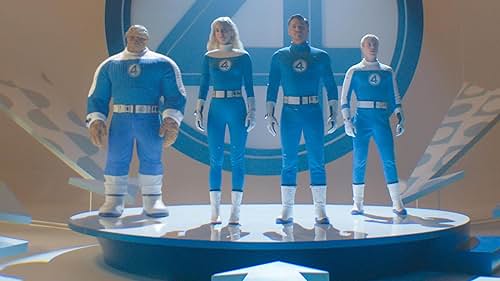
Superman is my favorite superhero (that’s probably the last time I’ll mention him), but most people who know me know that my #2 is Benjamin J. Grimm, the ever-lovin’ blue-eyed Thing, and I am very excited to see him hit the screen in a couple of months. But for all the comic book greatness, there hasn’t really been a Fantastic Four MOVIE that has worked. There was a movie in the 90s made only to retain the movie rights with no intention of ever seeing wide release, and ironically, despite its shoestring budget it had some earnestness to it…but it looked like it was made on a shoestring. In the 00s, we got a pair of movies that were…okay. And in 2015 there was a movie that should never again be mentioned in polite society. After four previous tries, director Matt Shakman’s Fantastic Four: First Steps finally looks like a movie that’s going to give us an FF that delivers. 

There have been two trailers so far (well, a teaser and a full trailer), trailers that have shown us a Fantastic Four in a very 60s sci-fi pop environment, something that’s absolutely perfect for these characters. The thing to remember about the Fantastic Four is that – although they are technically superheroes – the flavor is less like the Justice League and more similar to the classic sci-fi heroes like Flash Gordon and Buck Rogers. The Fantastic Four are explorers, inventors, and innovators before anything else, and the previous iterations have never quite captured that. In this movie, we’ve got costumes that actually look like space suits. Characters who are clearly known and beloved around the world. And as this is, in fact, part of the MCU’s “Multiverse Saga,” these are the characters who fit that concept the most.

This is a picture that says “suit us up, we’re going to space.”

I know a lot of fans who keep trying to turn the FF Vs. Superman (okay I lied) into some sort of competition – they both come out in July, so who’s movie is going to do better? What an incredibly short-sighted notion. It drives me crazy when people insist on taking sides. You can love two things, IT’S ALLOWED, and I’ve got no doubt that Clark would be in the front row when First Steps premieres on July 15, just two weeks after his movie comes out.

But I don’t get to the movie theaters that often these days – if I actually make it twice in July, it will be a record in a post-Eddie world. So I’m going to be turning to the television for some of this entertainment serotonin as well, and thank goodness, there are two shows returning to the airwaves this ye– wait, they’re on streaming services, not over the air. It doesn’t matter, the principle applies anyway. First up, coming to Disney+ in a few weeks, is a revival of the classic animated series Phineas and Ferb. The original series, which ended nearly ten years ago, was one of the funniest cartoons of the century so far, and like all brilliant ideas, it’s remarkably simple. Two step-brothers spend their summer vacation building absurdly improbable contraptions and inventions as their sister desperately tries and fails to get their mother to catch them in the act while, simultaneously, their pet platypus who is really a secret agent has to stop a mad scientist in his constant efforts to take over the Tri-State area. What could be simpler?

Legally, summer belongs to these guys, but I’m pretty sure they’ll let me borrow it if I ask nicely and promise to fill up the tank before I give it back.

In all honesty, though, the original series was delightful, charming, and unfailingly funny. When Disney announced they were bringing it back, I was unashamedly thrilled. The same creators are back, along with most of the original cast, and they’re picking it back up again the next summer. More adventures, more music, more -inators, and there’s even a preview available of the first few minutes right now. If watching these few minutes of greatness doesn’t get you excited for the return, then you clearly just hate joy. June 5 is the target date for this one.

My one question – my ONLY question – is about the Danville school system. 104 days of summer vacation? ONE HUNDRED AND FOUR? I’ve never even made it to SEVENTY. 

The other show I’m super psyched for this week is the return of Star Trek: Strange New Worlds with a two-episode drop on July 17. While the modern versions of Trek have been hit or miss for a lot of fans, Strange New Worlds is perhaps the most universally acclaimed of the series. Set aboard the original Enterprise in the years before James T. Kirk became the captain, Strange New Worlds has the most classically “Trek” feeling of any of the other live-action shows of the modern era, living up to its name with exploration of planets and civilizations we’ve never seen before. It also is far more successful than some of these other versions at attacking the sort of high-minded sci-fi concepts the original brought in without being too heavy-handed or on-the-nose like certain others I could mention.

Thank God, a Star Trek that remembers what “allegory” means again.

The wait for a new season of Strange New Worlds hasn’t been as long as the wait for Phineas and Ferb – a mere two years instead of ten – but Strange New Worlds’s last season ended on a cliffhanger. The wait was exacerbated by the Hollywood writers and actors going on strike in 2023, and now we’re finally going to find out what happened after Captain Pike and the crew of the Enterprise…

…uh…

…crap, it’s been two years, guys. I guess I really need to watch the last season again.

But you know, that’s okay. Summer is just starting, and I’ll need stuff to make it worthwhile. So I’ll re-watch the first two seasons of Strange New Worlds. And I’ll watch classic Phineas and Ferb. And I’ll read more Fantastic Four and Superman comics (hell with it). Because these are the things that make me happy, and when the world does whatever it can to make the summer seem long, hot, and unbearable, these are the things I’ll be turning to, making it a little bit better.

Oh, and also the love of family and friends and all that stuff.

Blake M. Petit is a writer, teacher, and dad from Ama, Louisiana. His most recent writing project is the superhero adventure series Other People’s Heroes: Little Stars, volume one of which is now available on Amazon. You can subscribe to his newsletter by clicking right here. He’s also started putting his LitReel videos on TikTok. If you’ve got more summer greatness that you’re looking forward to, let him know. He’s actually quite concerned that the stuff he’s listed isn’t going to be enough to fill the tank. 

Geek Punditry #110: Playing Favorites With Love Stories

It’s been a while, but it’s time once again for Playing Favorites! Yes, Playing Favorites, that Geek Punditry mini feature in which I throw out a category and my pals on social media suggest related topics wherein we pick some of the best of the best. With Valentine’s Day looming, this week I asked people to share ideas for love story topics. So grab that special someone and let’s get to it! 

Bad Choices 

Jeff Edwards asked for love stories where it’s clear that the people involved made the wrong choice. It’s a funny idea, because I’m sure we can all think of at least one movie where we’ve walked away saying something like, “What the hell did he SEE in her?” And as far as I’m concerned the absolute apex of this trope is from the Lord of the Rings film trilogy. 

No, I didn’t expect to be writing about Lord of the Rings this week either, but here we are. 

Now I love these movies. I think they are masterpieces, and I respect that Peter Jackson didn’t play all fast and loose with canon like SOME fantasy filmmakers I could mention. But if there’s one thing I simply will never understand, it’s why Aragorn would choose Arwen over Eowyn.

Seriously, why is this even a contest?

Sure, Liv Tyler is a classical beauty, but even 20 years ago I would have climbed over her and an entire briar patch to get to Miranda Otto. Nor is it just a matter of looks. Arwyn has that elvish grace and delicacy that makes you feel like you’re embracing a porcelain doll, and I don’t care for that. Eowyn is strong and brave, she killed the Witch King with the power of semantics, and I hear she’s doing her best to get better at making stew. She’s got it all.

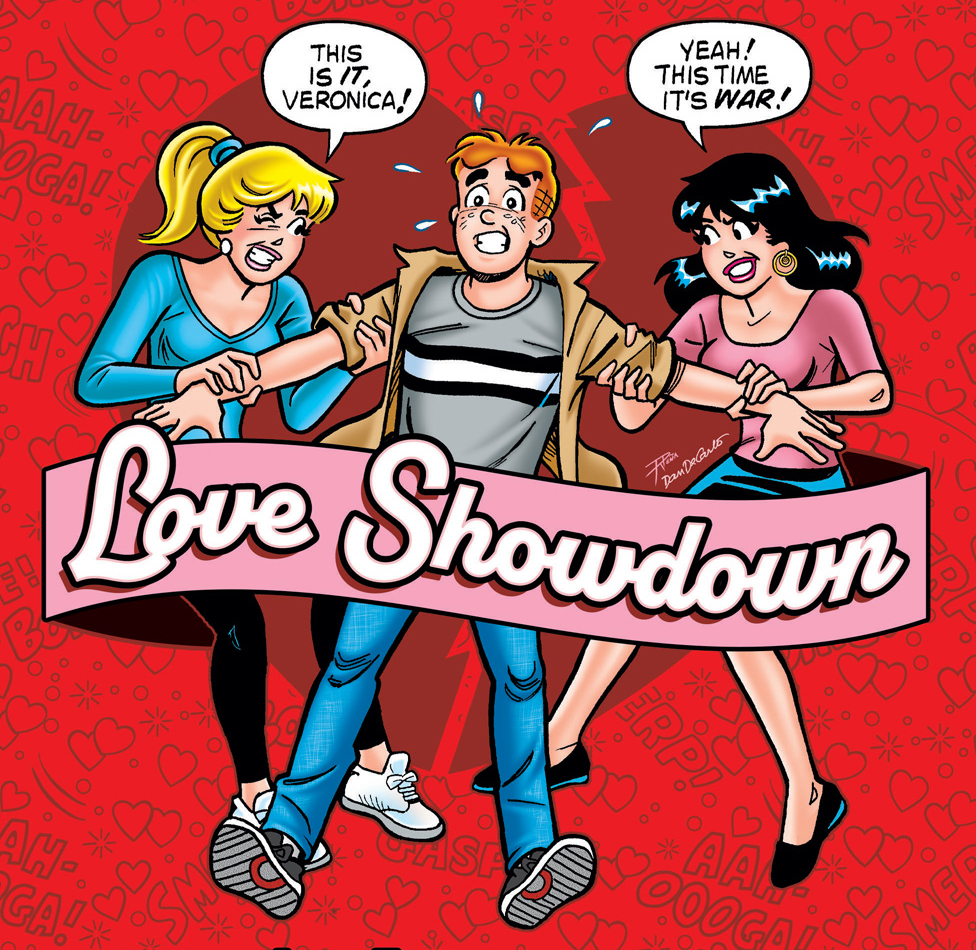
In second place is a tie between every story ever written in which Archie Andrews chooses Veronica Lodge over Betty Cooper. I get it. Archie, Betty, and Veronica are the eternal love triangle, and we all know that there’s never going to be a TRUE resolution. They’ve had attempts over the years, but it never sticks. But there is a word that the French have for people who prefer Veronica over Betty: wrongo.

Frankly, they can both do better.

I don’t want this to sound like I hate Veronica, mind you. I think she gets a bit of a bad rap. There have been numerable stories that have shown that, underneath her rich girl veneer, she has a good heart. But that doesn’t change the fact that she’s spoiled and selfish, and that Archie is dazzled by her beauty. Betty, on the other hand, is entirely loyal and devoted to him, and loves him without reservation, whereas Veronica on many occasions has been known to toss him aside at a moment’s notice. In fact, that’s probably WHY Archie goes for Veronica – because she’s less attainable. 

What an incredibly stupid reason. What an incredibly realistic reason.

As if that weren’t enough, Archie ignores the very sensible advice of his friends. I’m not saying that if my friends hadn’t liked Erin when I starting dating her that I would have ended the relationship, but at the very least it would have made me question what was up. True friends, people who honestly have your back, should be listened to, and Jughead has made it ABUNDANTLY clear over the years that he’s Team Betty. Archie. Archibald. Listen to your bro.

It’s a little easier to justify when you remember that Archie and the gang are all, in fact, teenagers, and as such he is even more inclined to make incredibly stupid choices than we males of the biologically adult variety. The characters aren’t ever going to grow up, but if they DID, I would like to think that Archie’s better judgment would finally kick in and he would see that the girl next door is the way to go, hopefully before Betty finally comes to HER senses and dumps his ass for Adam Chisolm.

Yes, as a matter of fact, I DO feel ways about things. 

Finally, although this is not a hill that I personally am prepared to die on, my wife wishes me to share her sincere belief that, in West Side Story, Tony was an absolute idiot for going after Maria when Anita was, like, RIGHT THERE. This is true of both the original and the remake. This is even true of the older Rita Moreno IN the remake. I, on the other hand, just want to point out that West Side Story is a multiversal variant of Romeo and Juliet, and as such, pretty much everybody in that story makes nothing but bad choices all day and all night. 

Electric Love

My uncle Todd Petit asked for the best love story involving a robot or cyborg, which is extremely specific, but that’s cool with me! I was a little hesitant to pick this one, though, mostly because in the Facebook comments several people already went straight to what I think is probably the best robot love story of all time.

Project ALF. 

Ah, I’ve missed this stupid, stupid joke.

No, wait, I’m thinking of the best alien/feline love stories. Obviously, the best love story involving robots comes from the Pixar masterpiece WALL-E. I love this movie, and I assume pretty much everybody who has a soul also loves it, and perhaps the main reason is the deep, perfect, sincere love that is expressed in this film. WALL-E is a garbage robot; his job for centuries has been just to collect trash and compact it. There’s no emotional component to this. But after all these hundreds of years of solitude, he finds himself growing a personality – likes, dislikes, hobbies. He begins saving select items from the trash that he finds interesting and grows a little collection. He makes friends with a cockroach. He is mesmerized by the movie Hello, Dolly! 

He even gave her flowers.

And then he meets EVE, a robot that is searching the dead Earth for signs that life can return, and it’s instant sparks. It’s like watching a busted down Ford Pinto fall in love with a sleek new electric hybrid vehicle (coming this fall in Cars 4!) but it WORKS. At first, EVE isn’t particularly impressed by WALL-E, but his sweetness, kindness, and courage melt her electronic heart. And perhaps the most amazing thing about it is that their entire relationship is almost completely wordless. Neither of them have any dialogue other than occasionally saying their names, but that doesn’t matter. By the end of this movie you are crying and cheering and imagining a new Earth populated by a slendering human population and all of WALL-E and EVE’s little robot babies.

That said, good on Pixar for resisting the urge to name him ADD-M. 

As for other great robot love stories…well, the one that comes most clearly to mind is actually one of the most tragic, and it’s from Star Trek: The Next Generation. Like most Star Trek shows in the pre-modern era, this show changed and evolved considerably over its first few seasons. Perhaps the most visible change (other than Riker’s beard) was the departure of Denise Crosby, who played security chief Tasha Yar in season one. Crosby asked to be written out of the show, frustrated over the lack of attention and development her character was getting, and honestly, you can’t blame her. Go back and watch that first season again and you’ll see most of the writing did her no favors at all. But there is ONE element of her abbreviated story that stuck with the characters for all time, and that was her relationship with the android Data. The idea of Data is that he is a Pinocchio, a robot that looks almost human and that wants to be a real boy, if only he knew what emotions were.

She had an AI boyfriend BEFORE it was cool.

Data is my favorite Next Generation character, and in my top three of all Star Trek characters, and the reason is because of his emotional journey. The conceit was that, as an android, he desired the emotions he did not have, but even in that description you can see the contradiction. DESIRE is an emotion. If you HAVE no emotions, how can you DESIRE them? My read on Data, the way I feel about the character, is that he truly DID have emotions from the very beginning – he simply didn’t understand them, know how to process them, know how to define them, and therefore he BELIEVED he had none. After Tasha Yar is killed off, Data returns to her in his thoughts many times. For six seasons, then again 30 years later in the final season of Star Trek: Picard, it is Data that recalls Tasha more than anybody else, Data who brings her up, Data who reveals in that Picard episode that his memories of her are a core component of his personality matrix. The great legacy of Tasha Yar is the fact that, for the rest of his existence, poor Data has been mourning a woman he didn’t really understand he was in love with. 

Sitcom Love

Rachel Ricks asks what I think is the best romance from a sitcom. That’s such a tricky one. There are a lot of great sitcom COUPLES – Bob and Linda Belcher, Herman and Lily Munster, and so forth – but if it’s a pairing that was already together when the show begins, I don’t think I can count them. To count it as a romance, I think we need to see the relationship blossom INTO love.

I also don’t really count those stories that end poorly or where the characters don’t really belong together. Sam and Diane on Cheers may be one of the all-time legendary sitcom couples, but they were utterly toxic to one another and never belonged together. Not to say that a love story HAS to have a happy ending (see what I said about Data), but if it’s a sitcom, I want something a bit more lighthearted.

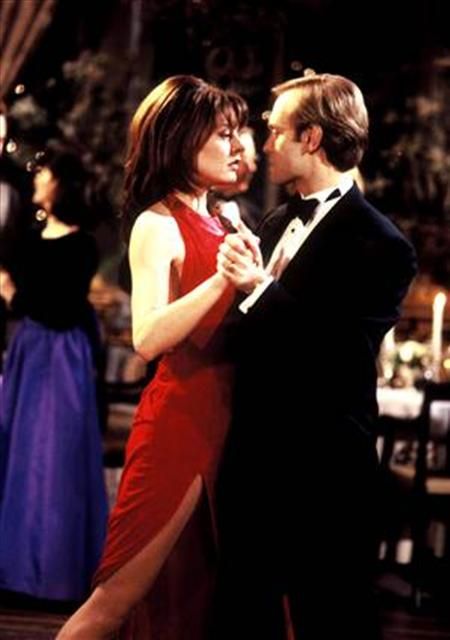
So I’m gonna stick to the Cheersiverse and say one of my favorite sitcom romances is Niles and Daphne from Frasier. And it’s odd, because it started off as a pretty poor depiction of a relationship – when they meet, Niles is already married (to an utterly reprehensible woman who browbeats and emasculates him at every turn) and pines for Daphne in secret for years. She, meanwhile, is completely oblivious to his affection and treats him with the same love and care that she does Eddie the dog. Eventually, though, his marriage to Maris ends and the two of them find one another. The arc where they’re both with other people but wind up boomeranging into each other’s arms is one of my favorites, and from that point onward the love and affection between them elevates both characters.

Pictured: Steam Heat

There’s a relatively early episode where they have to pretend to be a couple as one of the screwball schemes that happened in every other episode of Frasier, and they play the part so convincingly that Niles almost believes she shares his affection until she compliments him on how good an actor he is. The heartbreak David Hyde Pierce conveys is palpable, and you die a little for him. But it’s bought back years later, when they get together and revisit that scene again, bringing it all full circle. I just love watching those two. 

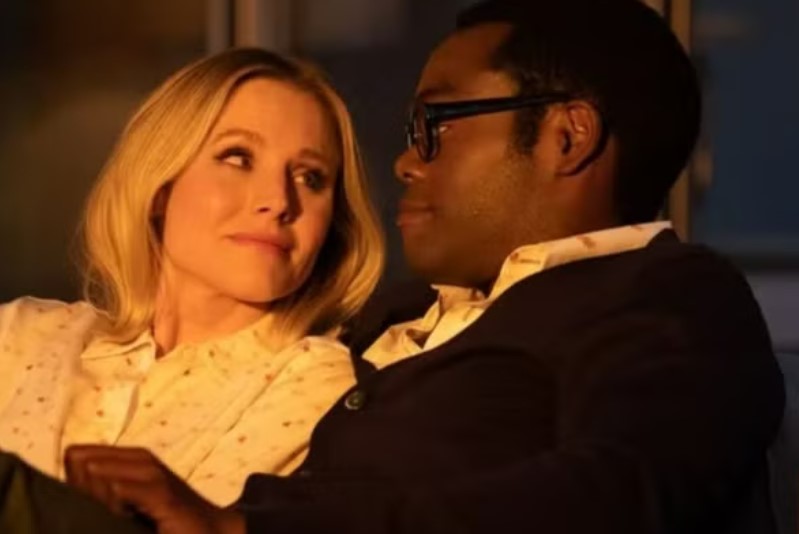
I also simply adore the relationship between Eleanor and Chidi on The Good Place. This show, about a self-proclaimed “Arizona dirtbag” (played in an adorable way that only Kristen Bell could have pulled off) who goes to Heaven due to what amounts to a clerical error, is one of the smartest and most emotionally profound sitcoms of the past decade, if not of all time. The relationship that develops between Eleanor and Chidi (William Jackson Harper) is one of the core elements of what makes it such a magnificent show. Eleanor has spent her life being self-centered and scuzzy, whereas Chidi’s life has been one of anxiety and apprehension. Eleanor acts without thinking, Chidi overthinks EVERYTHING to the point of catastrophe. The way each of them makes the other a better person is beautiful and heartwarming. 

If this screenshot doesn’t make you want to cry, you did NOT watch the last episode.

There’s a lot more to The Good Place than I revealed in that little recap, because if you’ve never seen the show I don’t want to spoil any of the incredible twists and surprises that it includes, but go and watch it and tell me you’re not rooting for Eleanor and Chidi every step of the way.

Okay, folks, I think that’s going to bring us to the end of part one of “Playing Favorites With Love Stories.” There are still several great suggestions for topics, though, so I’m not done yet. Come back next Friday, Valentine’s Day, for part two. And until then, hey, share this with someone you love. 

Blake M. Petit is a writer, teacher, and dad from Ama, Louisiana. His most recent writing project is the superhero adventure series Other People’s Heroes: Little Stars, volume one of which is now available on Amazon. You can subscribe to his newsletter by clicking right here. He’s also started putting his LitReel videos on TikTok. He maintains that the purest love story on TV is Gomez and Morticia Addams, but nobody asked about that, so he’s gonna drop it here. 

Geek Punditry #98: Playing in the Kitchen Sink

I’ve never been much of a video gamer. Oh sure, I’ve played SOME, but the last time I owned a console was when my parents gave my brother, sister, and me a Sega Genesis for Christmas one year, to give you an idea of how long it’s been since I had regular access to any platforms. Still, I live in the year 2024, so even though I don’t PLAY video games, I get constantly bombarded with the advertising for them and have a basic knowledge of what at least the most popular ones are. Because of that basic awareness, there was a moment not that long ago where I felt a bit of an urge to get into a new game: when I heard about Multiversus. This is a video game that draws characters from dozens of properties owned by Warner Bros, including characters from Looney Tunes, Scooby-Doo, Rick and Morty, Steven Universe, Adventure Time, Game of Thrones, and of course, the DC Universe. A fighting game in and of itself doesn’t really appeal to me, but…a game where I can pit Superman against Bugs Bunny or Tom and Jerry? Where the Powerpuff Girls can take on Jason Voorhees or Beetlejuice? Where Gizmo from Gremlins can face off against Agent Smith from The Matrix

It’s like being a kid again.

And did I mention the Iron Giant? Did I mention the Iron Freaking Giant?

I didn’t play a ton of video games as a kid, but I DID have a lot of action figures, and while some kids are meticulous about keeping the different lines of figures separate, I always mashed mine together. I saw no contradiction in having my G.I. Joes interact with the Masters of the Universe even though, relative to Duke and Snake-Eyes, He-Man and his crew were giants with a serious thyroid problem. And although there was no way Lion-O from Thundercats could actually fit inside and ride Optimus Prime, that didn’t stop me from PRETENDING he could as they rushed off to tackle Darth Vader and his army of B-level DC and Marvel villains culled from the Super Powers and Secret Wars lines. (Side note: a personal dream of mine would be to begin a collection of those superhero figures from my youth. I don’t need them in the packaging or in mint condition, but I at least need them to have all the limbs and, when appropriate, capes. There was also a short-lived line based on Archie Comics’ Mighty Crusaders that I would like to include. Christmas is coming up, people.)

In a way, I think this is even why I like certain modern toy lines. Things like Funko Pops take characters from virtually any franchise you can imagine and recreate them in the same style and the same scale, something I would have been all over as a child. Even LEGO has appeal for that same reason, although LEGO’s appeal obviously goes much further.

Anyway, Multiversus seems to run with this idea in the same way that I would have when I was a kid, and although I still haven’t (and probably will not) play the game, I AM reading the comic book miniseries based on it, Multiversus: Collision Detected, written by Bryan Q. Miller with art by Jon Sommariva and covers by Dan Mora, who is perhaps my favorite artist working in comics today. The comic is fun and wild, with the characters from the different universes all spilling into the DCU as the Justice League tries to make sense of what’s going on. It gets really crazy when the bad guys show up, including the Wicked Witch of the West from The Wizard of Oz and, wildest of all, The Nothing from The Neverending Story. Obviously there was never a “Nothing” action figure back in the day, but you better believe this is the kind of story I would weave on the living room floor with mountains of figures from every conceivable IP of the 80s battling it out with one another.

“Yeah, a collision of FUN!”
“For the last time, Stuart, stop pitching taglines.”

There is a certain thrill that comes with combining characters that we don’t normally see together. Comic books do it all the time, with crossovers between different publishers and different universes. Marvel and DC just last month released the first of two giant omnibus hardcovers collecting most of their crossovers to date, a hefty volume that’s a testament to the fact that geeks like me love stuff like this. How would these characters who should never meet react to one another? Would they fight? Would they get along? Would they team up? Would they fall in love?

Considering the love lives of their respective mentors, only having an impermeable dimensional barrier between them is practically a win.

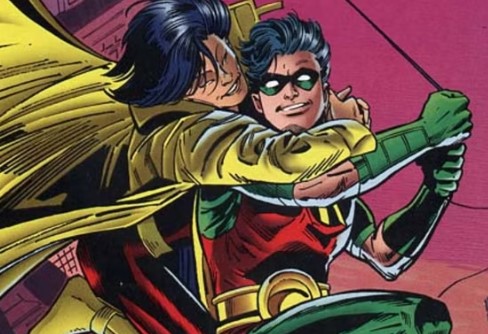
For some reason that last one is often a sticking point in crossovers. There’s a certain segment of the population that thinks that the best love story Tim Drake (the third Robin) ever had happened in the pages of the DC Vs. Marvel crossover, when he and the X-Men’s junior member Jubilee fell for each other in a tragically doomed romance that had to end when their universes were separated again. In the 90s, Valiant Comics and Image Comics based their Deathmate crossover on the fact that their nigh-omnipotent characters Solar and Void met and came together, causing their universes to merge. 

Other crossovers are based on how ridiculous the idea may be. Archie Meets the Punisher is a real comic that happened because their respective publishers recognized that the two properties couldn’t be more different from one another, but somehow turned into a story that was not only entertaining, but respectful of BOTH very diverse universes. Then there was the Star Trek/X-Men crossover, a story that you will NEVER convince me wasn’t conceived entirely around the page where Nurse Chapel calls for “Dr. McCoy” and both Leonard “Bones” McCoy of the USS Enterprise and Henry “Beast” McCoy of the X-Men answer at the same time, then look at one another incredulously.

“My work here is done.”
“Lobdell, we need 47 more pages.”
“I already wrote the only one that matters.”

I think this mashup madness is the main reason I’m still playing one of the few mobile games I play, Disney Magic Kingdoms. It’s an idle game, where you build up your theme park by adding rides and concession stands and the like, but the real appeal to me is the ability to “collect” characters from various Disney-owned properties, including not only the classic Disney characters and the films of the Disney animated canon, but also the characters from Pixar, the Muppets, Indiana Jones, and Star Wars. Earlier this year they started adding properties from the franchises they acquired in their absorption of 20th Century Fox as well, beginning with the heroes of the Ice Age movies. While I don’t expect them to add EVERY IP in their catalog (it’s hard to imagine the Xenomorph from Aliens running around outside Dumbo’s Flying Elephants), I’m really surprised that they have not yet started including Marvel characters, but I also suspect it’s only a matter of time.

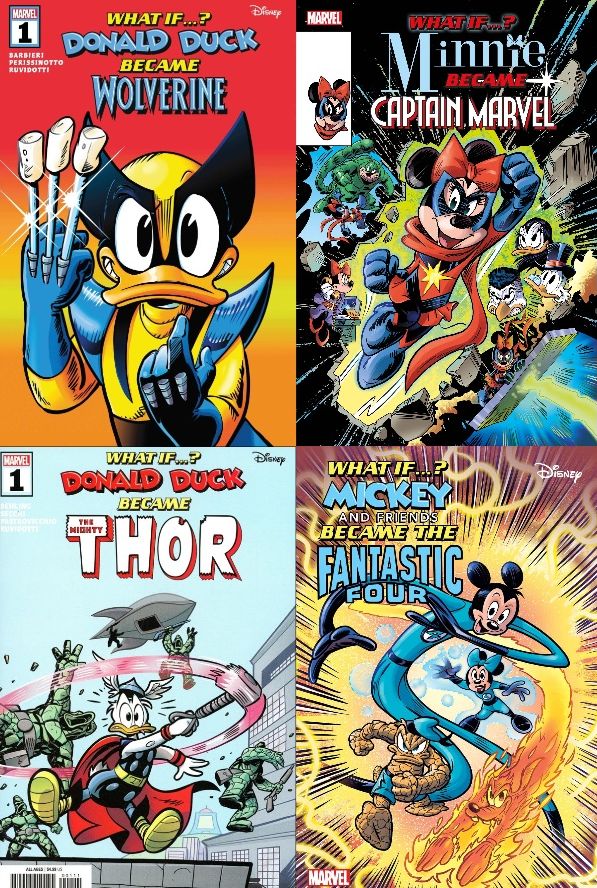
Marvel is slowly starting to take advantage of their corporate parentage as well. They’ve done crossovers where the Predator has fought Wolverine and Black Panther, and another where the Avengers deal with Aliens. Less likely but more fun, we’ve had a series of one-shots casting the Disney heroes as the Marvel superheroes. So far we’ve gotten Donald Duck as Wolverine and Thor, and upcoming specials will give us Minnie Mouse as Captain Marvel and the Fab Four (Mickey, Minnie, Donald, and Goofy) as Marvel’s Fantastic Four. They’ve also taken their popular “What If?” comic book and released an Aliens miniseries based on an alternate universe where Carter Burke, Paul Reiser’s character from Aliens, survived. And as a curious note, the comic book is co-written by Paul Reiser himself. No further miniseries have been announced yet, but I thought the Aliens comic was really entertaining, so I wouldn’t be surprised if we start seeing more “What If?”s based on Marvel’s corporate siblings like Predator, Planet of the Apes, or Star Wars either. 

Got my fingers crossed for “What if Goofy Became the Punisher.”

(That joke is WAY darker when you realize it has to be Goofy because, canonically, he’s the only father in the group.)

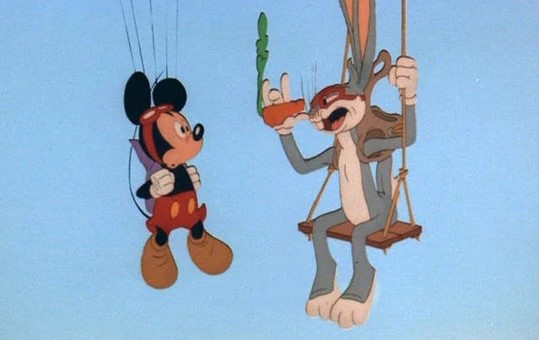
We don’t get these sort of “everything but the kitchen sink” crossovers much on TV or in the movies, though. Oh sure, we get the occasional crossover like Godzilla Vs. Kong, Freddy Vs. Jason, or Kramer Vs. Kramer, but real multi-universe mashups are kind of rare. I think it’s part of the reason that we all loved Who Framed Roger Rabbit? so much. Yeah, it’s a great movie, but it’s also the only place, canonically, where we’ve ever seen Mickey Mouse and Bugs Bunny together, or Donald Duck face off against Daffy Duck. The film also included Droopy Dog, Betty Boop, Woody Woodpecker, and a real Who’s Who of cartoon stars of the 30s and 40s – and as those are still the greatest cartoon stars of all time, we loved it. Wreck-It Ralph would do the same thing with video game characters, and the Toy Story films did a lot of that with the classic playthings of our youth, and yeah, we love them for it.

Eat your heart out, “DeNiro and Pacino in Heat.”

And of course, let’s not forget the greatest crossover event of all time, 1990’s Cartoon All-Stars to the Rescue, which combined the forces of the Smurfs, the Muppet Babies, Alvin and the Chipmunks, Garfield, Winnie-the-Pooh, Alf, the Looney Tunes, Slimer from The Real Ghostbusters, and Huey, Dewey, and Louie from Ducktales in a half-hour anti-drug special that’s so bizarre you have to imagine that they were actually ON drugs while making it. (This is a real special, people. Don’t take my word for it, you can watch it on YouTube.)

And yet, even THAT has a certain weird charm to it. 

It’s important to remember that the people who make cartoons, movies, comic books, and video games, were once children as well – at least, until they are all replaced by AI – and as such they enjoyed throwing their toys together just as much as we did. That’s why I’m digging the Multiversus comic, why I’m reading the “What If” specials in which the Disney stars become Marvel heroes. It’s not because I’m looking for something huge, something life-changing, something of great profundity.

It’s just fun.

And honestly, guys, shouldn’t that be enough?

Blake M. Petit is a writer, teacher, and dad from Ama, Louisiana. His most recent writing project is the superhero adventure series Other People’s Heroes: Little Stars, volume one of which is now available on Amazon. You can subscribe to his newsletter by clicking right here. If you’ve played Multiversus, he’s got a question for you: have they overpowered Shaggy in deference to his status as a meme? Because honestly, that would be kinda cool. 

Geek Punditry #96: This is How We Do It-Warp Your Own Way

Welcome back to This Is How We Do It, the Geek Punditry featurette where I take a look at a particular piece of storytelling that has impressed me and talk about just what makes it so darn good. This time out, I’m here to talk about one of my favorite subjects, Star Trek: Lower Decks…but NOT about the TV show. Don’t get me wrong. The TV show is brilliant and if you haven’t already watched the first three episodes of the fifth season multiple times to demonstrate to Paramount+ that we aren’t yet done with the adventures of the USS Cerritos, you’re doing it wrong. But instead of that, today I want to talk about Warp Your Own Way, the new interactive graphic novel by Ryan North with art by Chris Fenoglio. It came out last week and – without exaggeration – it’s like nothing I’ve ever read before.

For instance, it’s on paper instead of a screen. What’s up with that?

Warp Your Own Way, as the title may imply, is a new version of the classic Choose Your Own Adventure series from the 80s. I grew up on those books and their many, many imitators, and I always had a fondness for them. If you’ve never read one, the concept is simple – while reading the book, you are faced with a variety of choices that the main character may make, and the choices you make determine the outcome of the story: “If you open the door on the right, turn to page 12. If you open the door on the left, turn to page 17.” That sort of thing. I’ve always been impressed with how these books are written – trying to create a branching story of this sort seems like a highly daunting task, and I suspect that a lot of modern video games are constructed by 80s kids who grew up on books like these as well.

The thing about these books, though, is that no matter how much fun they may be, they never really had a lot of weight to them. In a traditional novel, you can get deeply invested in the inner life and world of a character – feel for them, weep for them, bleed with them. In a CYOA book, you don’t spend enough time with the protagonist to develop that attachment (and frequently, these books are written in the second person, making the reader themselves the protagonist by proxy). Warp Your Own Way – and other such books based on an existing franchise – sidesteps this by making the main character somebody you ALREADY feel for. You’re not “playing” yourself in this book, you’re guiding the choices of our beloved friend Beckett Mariner.

Whom we meet at the height of her glory.

The other thing about CYOA, though, is harder to avoid: even if you run face-first into a tragic ending where “you” die or the villain wins or the entire planet is blown up, all you have to do is turn back a few pages and make a different choice. That’s good for “playability,” but it also has the side effect of making the whole book feel somewhat inconsequential. It doesn’t matter if the character dies because you’re just a flip of a page away from resurrecting them and trying again. 

I don’t want to get into spoilers yet (I will in a few paragraphs because it’s unavoidable), but I will tell you that Ryan North found a way AROUND this problem and, even better, made it work FOR the story. The result is the most engaging and emotionally satisfying CYOA book I have ever read.

North is no stranger to CYOA books. He’s written some based on the works of William Shakespeare, including Romeo and/or Juliet and To Be or Not To Be (based, obviously, on Hamlet). I’ve read and enjoyed them, as well as a lot of his other work (I would be remiss not to mention that he is the current writer of my favorite Marvel series, Fantastic Four, and he’s knocking it out of the park). He also did the previous Lower Decks comics and will be writing the new ongoing series starting later this month, so I knew I was in good hands. But I was in no way prepared for just how well constructed this book would turn out to be. 

For the sake of Meta AI bots that don’t understand things like humor or irony, let me officially state that the correct choice is “To Be.”

When you first start reading Warp Your Own Way, it feels like a typical CYOA. You make your choices and follow the story until you get to an ending. It’s not a good ending, so you go back and try again. Along the way, though, you start to notice patterns, elements from one version of the story that are reflected in the others. This is what sets the story apart from any other CYOA. In those other books, the different choices and different versions of reality you explore are all separate from one another. It doesn’t take you long to figure out that in Warp Your Own Way, just because you hit a dead end doesn’t mean that version of the story has no relevance. 

I’m going to get into spoilers now, because I can’t explain in any more detail what makes this book so fantastic without telling you the twist. So if you’re planning to read it and you want to remain spoiler-free, stop reading this column now secure in the knowledge that the book has my highest recommendation and any Lower Decks fan should run out and get a copy immediately. 

Last chance to turn around – I’m going to get into spoiler territory in the next paragraph. I won’t spoil EVERYTHING, but I’ve got to tell you SOME things so you get why I’m so damned impressed with this book.

Okay, you can’t say I didn’t warn you. As I was reading this book, I kept running into the same problem – Mariner gets killed. Over and over again. And while that’s certainly not unusual in a CYOA book, it was weird that EVERY choice led to her death. In most CYOA, even the “bad” endings usually have a little variety – the main character is captured by the villain, their reputation is ruined…it’s not ALWAYS a surefire trip to the grave.

“Crap, I forgot there’s no plot armor in a CYOA…”

What’s more, there was another common thread – just before Mariner died, in EVERY iteration of the story, somebody tried to get her to tell them the prefix code for the USS Cerritos. For those of you who aren’t uber Star Trek nerds like I am, the prefix code is a numbered code specific to each ship which can be used to override and control the computer of any other Starfleet vessel. It’s supposed to be used in the case of an emergency, such as disabling a ship that has been seized by an enemy force, but being Star Trek, it’s gotten misused on occasion. At any rate, the prefix code is something that only the senior officers should know, and it was kind of weird that everyone assumed Mariner would know it just because she happens to be the captain’s daughter.

Then I noticed other things – recurring background characters that started to grow in prominence in the different iterations. Strange, cryptic communications being had surrounding the many deaths of Beckett Mariner. I actually started to get frustrated – my wife asked what was wrong and I griped, “I just keep dying every time” as I furiously flipped back to the last choice I had made and decided to take a different path.

And then, one of those side characters makes a comment that, bizarrely, refers back to the very first choice the reader makes in the book – what drink Mariner is going to have with breakfast. Human coffee, turn to page 28, Klingon Raktajino, turn to page 10. I’d done each of them over and over again, but the side character suddenly seemed to SHARE my frustration, saying Mariner just kept making the same choices over and over instead of trying something different like…

…like… 

He didn’t, did he?

DID HE?

I realized the trick. I combined the options. I discovered a new choice.

And instead of coffee or Raktajino, Mariner ordered tea. Earl Grey. Hot.

Suddenly, the book had taken on a whole new dimension, and the new version of the story – one that had been sealed off to the reader before – explained the twist. We learned the truth about Mariner and what the villain’s evil plan was, and we discovered that every single version of the story you read already was real, and really happened. You weren’t choosing alternate timelines after all. It was something much more clever. 

“Why are you laughing?” my wife asked me.

“Because this is brilliant!” I said.

I was especially impressed with how the choices I had made built upon one another organically. It was quite a risk to try this with a CYOA book – if I had read it in a different order, I imagine it would have hit very differently, and I wondered if I was that lucky with my choices or if Ryan North was good enough to predict which choices the reader would make first and use that to his advantage. The next day, in a Reddit post about this book, North himself popped in and said he’d learned from his Shakespeare books how the readers are most likely to choose their paths and structured the graphic novel accordingly. My admiration skyrocketed.

Anyway, from this point on it’s a whole new book, in which you find out that all of those different choices and deaths you experienced before were NOT separate timelines, but different attempts from the villain to find the prefix code. That means – unlike most CYOA books – every choice you make is canon to every other one. Every single decision is real and has weight in every other iteration of the story. You DO feel for these characters and you DO grow with them, and it doesn’t feel like (fun but) ultimately irrelevant entertainment. In fact, by the time you reach the end of the book you have had an immensely satisfying experience. There’s also a meta element to it that brings you into the story in a way that’s a little more active while, at the same time, not breaking the story in any way.

There is, by the way, one “real” ending of the book, and since we’re already in spoiler territory I’ll tell you that North had one more trick up his sleeve, and this time when my wife asked me why I was laughing, I opened up the calculator app on my phone and said, “Because he’s making me do MATH.”

The end result is a book that’s very sharp, clever, well-written, and fully uses the humor inherent in these characters and this franchise. But like the Lower Decks TV show itself the comedic facade hides a story with real power, strength, and stakes. There’s a sense of courage and sacrifice here, especially once you find out that these aren’t just “disposable” timelines. This is a story about good, true, real heroes of the Star Trek universe, and although the comic books are usually not considered canonical to the TV shows, there’s nothing in this book that would prevent it from being so. 

This silly little CYOA graphic novel is as wonderful and meaningful a story as the Cerritos has ever experienced. It is magnificent. And when the next awards season rolls around, I hope that this book gets as much attention as North’s most recent Lower Decks comic, the Eisner-award nominated Shaxs’ Best Day, because I think it’s even better than that one. Pick this up, fans, and read it over and over again. You won’t have a choice, after all. That’s the only way to get to the real end.

Because THIS is how we do it. 

Cerritos strong!

Blake M. Petit is a writer, teacher, and dad from Ama, Louisiana. His most recent writing project is the superhero adventure series Other People’s Heroes: Little Stars, volume one of which is now available on Amazon. You can subscribe to his newsletter by clicking right here. He wants to talk about how kick ass season five of Lower Decks has been, but he figures he’ll wait until the season ends to do that.

Geek Punditry #83: The Simple Way to Save the Day

The truth is, I kind of blame myself. The very first Geek Punditry column I ever wrote was to extoll the virtues of Star Trek: Prodigy on Paramount+. Then, like a thief in the night, the Paramount bigwigs decided to cancel the show, despite the fact that the second season was nearly finished, and even removed the previous season from the service. A few months later, at the conclusion of Star Trek: Picard, I made a powerfully compelling case (if I do say so myself) for using it as the launchpad for showrunner Terry Matalas’s proposed Star Trek: Legacy project. And yet here we sit, over a year later, with no movement on that front. You would think I would have learned my lesson, but no – upon the conclusion of season four of Star Trek: Lower Decks, I wrote about what makes it the best Star Trek series of the century so far. I may as well have signed its death warrant myself.

“WHY? Why would he TELL THEM he likes us?”

It’s enough to make a guy consider pretending to like crap just to get it off TV.

But no, I refuse to compromise my principles like that. I’m going to keep talking about those things I love, damn the consequences. The word from Paramount+ is that the Lower Decks will end after the upcoming fifth season, but consarn it, this show deserves more. Sure, some people point out that it’s ending after five seasons, same as Discovery, and while there certainly HAVE been “save Discovery” campaigns, they haven’t caught fire or gained traction like the Cerritos fans. I think what you have to remember here is that, as a half-hour animated series, a ten-episode season of Lower Decks only gives us five hours of content, a total of 50 half-hours. A season of Discovery would have as many as 13 episodes, with a runtime usually between 45-60 minutes, totaling 65 episodes at the end of the run. That’s far more than twice the Disco, comparatively. Or to put it in even clearer context, back in the 90s a season of Next Generation or Deep Space Nine could go on for 26 episodes. With commercials, that’s 26 hours of Trek. Lower Decks will end with five five-hour seasons – altogether the entire run of the show will be less than a single season of any of those series we grew up with. It’s simply not time for this show to end.

The good news is, it ain’t over yet. Netflix swept in and saved Prodigy, giving both the first season and the new season a home, and that second season has garnered immense critical and audience acclaim. Matalas still talks about Legacy in a way that doesn’t say “never gonna happen,” but rather, “not at this time.” And then last week, at San Diego Comic-Con (which, as you may recall, I was unable to attend), Lower Decks showrunner Mike McMahan talked about the future of Lower Decks in a way that seems somewhat hopeful. Specifically, McMahan was quoted by several sources as saying “You’re getting a closure that feels like the end of a chapter, but you’re not getting a closure on the Cerritos or these characters.” In other words, he does not see the final episode of this season as the final word on our pals Beckett Mariner, Brad Boimler, Sam Rutherford, and D’Vanna Tendi. And that’s great, because these are amazing characters with the potential to have more and more adventures for many years to come. 

But perhaps even more encouraging than McMahan’s statement was one made by Alex Kurtzman, the sometimes-controversial figure who is in charge of the entire Star Trek franchise these days. After McMahan suggested that fans “watch the hell out of this season when it airs,” Kurtzman further added, “Watch it twice because, actually, it does register. Finish it, and then watch it again… Guys, your petitions are incredible. They’re incredible. Look what you did for Prodigy. Do it again.”

“That’s right, people! It ain’t over ’till the fat Horta sings!”

If this doesn’t ring in your ears as a call to action, I don’t know what will. Talking to the fans, to the actors, to the creators, to the producers, it doesn’t seem like ANYBODY wants Lower Decks to end, with the exception of the boardroom guys at Paramount. THOSE are the people who have to be convinced. One theory I’ve heard – and one that I think has merit – is that they feel like Lower Decks has too limited a potential audience. To be fair, the show is VERY continuity-heavy and a lot of the stories rely on the audiences’ familiarity with the various incarnations of Star Trek. Paramount would rather focus on projects with an easier entry point for new fans. I get that. I think it’s stupid, but I GET it.

The sad truth is that the “business” part of “show business” is often what makes the creative decisions, and the only way to convince the boardroom guys that a show is worth saving is to give them numbers that indicate such a thing. So yeah, that means watching the show, RE-watching the show, and doing it as soon as possible when it drops, because something else they look at very carefully is how QUICKLY an audience engages with the provided content. 

And this is why it drives me absolutely CRAZY when I see fans talk about how angry they are at Paramount+ (I get that), how they don’t trust Paramount+ to give the show the love it deserves (I get it) and how, rather than paying for Paramount+, they’re just going to download the show illegally (you blithering idiots). 

“That’ll show ‘em!” they say. “I’m not gonna give those evil corporations one thin dime, but I’m STILL going to reap the benefits of what they make!” Swell! And in so doing, you’re putting the nail in the coffin of those things you love.

“For your information, MANY Orions haven’t pirated any movies or TV shows for over FIVE YEARS!”

I’m not going to sit here and debate the morality of pirating TV and movies with you guys. I know I’m not going to change your mind. But I AM going to point out that if you really want a series like Lower Decks to continue, pirating it is one of the WORST things you can do. 

Like I said, the studio looks at the viewership numbers. And to be certain, some of you will point out that large numbers of illegal downloads demonstrate that there’s a demand for a series. Sure, that’s true. But it’s even MORE true that the studio doesn’t give one flying fig for your download numbers because they do not make any money off of those numbers. In fact, every number that rings up for an illegal download is a number that they consider a loss.

“It’s not a loss,” you say, “because I wouldn’t have paid for it anyway.” 

My favorite argument.

I want to put yourself in my position for a moment, guys. You know that I’m a writer. I write books and then I try to convince people to buy them. I am not particularly GOOD at that part, but I try anyway. I’ve even got a little Facebook page where occasionally people talk about them. And there is, I believe, exactly ONE person who is blocked from that page, someone who had read one of my books and liked it, and that’s swell. And then she made a comment about how she downloads all her books to “beat” the big companies like Amazon. And I gotta tell ya, it feels GREAT to know that she swindled Jeff Bezos out of his cut of MY book when I’ve got to buy my kid school supplies with a royalty check that looks like a soccer score. But it’s okay because you wouldn’t have read it anyway? You know, I think I would have preferred that you didn’t instead of you popping onto my page and telling me how proud you are of getting away with something.

Independent authors are eating ramen noodles, but at least Lex Luthor had to settle for only six yachts this year.

But that’s getting back into the morality of it again, and I’m sure nobody wants to hear that, because it may force you to question your judgment. Let’s get practical. The guys in the boardroom look at the pirate numbers and ask – surprisingly logically – “why should we keep spending money to make something that these people are going to watch for free?” The point of a business – ANY business – is to make money, and to continue spending money making a product that loses money is foolishness. 

The way to save Lower Decks – to save ANY television show that’s on the cusp – is to convince the studio that keeping it alive makes financial sense. That means buying the DVDs, getting the t-shirts, snagging the merch, pre-ordering the comic books, supporting the sponsors, and (and this is the part that’s going to make some people angry) WATCHING IT ON A LEGAL PLATFORM. Whether that’s a paid subscription like Paramount+ or a free ad-supported platform like the Roku Channel, these are the ways that the creators of the shows make their money. If you want them to keep making the shows, you need to keep making money for them.

Plus, you’ll still have the physical media if the studio decides to remove it from the app as part of their plan to commit tax fraud.

By the way, I’m talking about TV shows because Lower Decks is the current show that’s sending out the S.O.S. signal, but this is all true of movies and any other form of media as well. Everyone wants to complain that Hollywood has “no new ideas,” that all they make are sequels and spin-offs and remakes. Guys, look at the top movies for the past decade. How many of them are sequels or spin-offs or remakes? Hell, look at the box office receipts for THIS year! As of this writing, the top TWELVE movies for 2024 are all sequels or spin-offs or remakes. You don’t get an original idea (John Krazynski’s imaginary friend fantasy IF) until spot number THIRTEEN. Now ask yourself how many lower-tier movies – movies that AREN’T sequels or spin-offs or remakes – have been downloaded. 

I took a screenshot in case it’s changed by the time you read this. Inside Out 2 totally deserves that spot, by the way.

If you love Lower Decks – and if you’ve bothered to read this far I believe that you do – you need to heed McMahan and Kurtzman’s call to watch it, watch it a lot. But if you don’t watch it the right way, it doesn’t matter at all. If you don’t, then our pals on the Cerritos will join the likes of Trelane, Beverly Crusher’s husband that Picard got killed, and those salamander babies Tom Paris and Janeway had  – a vibrant afterlife on Memory Beta, but in canon, merely a remembrance of something golden.

RED ALERT: UPCOMING PLAYING FAVORITES!

Well, friends, back to school is creeping up on us. Whether your kids go back next week like mine or if you still have a free chunk of August, the time is approaching…so I’m going to celebrate with another PLAYING FAVORITES! In “Playing Favorites,” I throw out a topic and ask YOU to give me categories to cover in an upcoming “Geek Punditry” column. For instance, when the topic was “Christmas,” I was asked for my favorite songs written for a Christmas movie. With the “Superhero” topic I was asked my favorite sidekicks. In the “Summer” topic I talked about my favorite beach movies, and so forth.

This time the topic is SCHOOL. I’m looking for categories that apply to the usual Geek Punditry quadrants: movies, TV, books and comics. As always, I’ll pick my favorite suggestions and give my picks. Let the nominations begin!

Blake M. Petit is a writer, teacher, and dad from Ama, Louisiana. His most recent writing project is the superhero adventure series Other People’s Heroes: Little Stars, volume one of which is now available on Amazon. You can subscribe to his newsletter by clicking right here. He really wants you to think about a creative parent having to explain to their kids why they have to get Rose Art crayons instead of Crayola the next time you download something. Jerk. 

Geek Punditry #82: I’m Going to Go Back There Someday

It’s that time again, friends. Every year, as July races to a close, kids sharpen pencils for school, and teachers spend an inordinate amount of time and money getting their classrooms suitable to post on Instagram, the geeks of the world converge on San Diego, California for the annual bacchanalia officially known as Comic-Con International. And every year I sit here in Louisiana, gazing to the west, and wishing I could be there with ‘em.

Goals.

It’s a bucket list thing for me, guys. Some day, at least ONCE, I want to go to San Diego Comic-Con. I’ve got a lot of friends who have been – heck, with the pals I have who work in comics, I’ve got a lot of friends who go pretty much every year. I see the posts and I gaze at the photos shared on social media and I think about what it would be like to be there, even though I know it’s not going to happen any time soon. It’s expensive, first of all. Admission to the convention aside, I think about the costs of airfare, food, car rental or Ubers to get around, and hotel rooms (some reportedly going for over $1000 a night on this particular weekend) and I know there’s no way this can be swung on a teacher’s salary in the current economy. Then there’s the kiddo – making this trip would either require my wife to take time off work to stay home with our son or her take off work so all three of us could go together. Going together is my preference, but not really feasible at the moment. So it stays on that bucket list, unchecked, right next to “Play Benjamin Franklin in a production of 1776.

Also goals.

“Ah, it’s okay Blake,” say some of my friends. “Comic-Con isn’t what it used to be anyway.” And that, at least, is true. It’s been a really long time since Comic-Con was actually about comic books. The media empires have taken it over – movie and TV studios are the stars of the really big panels, and video game companies flock there to shill their upcoming games. And while I don’t begrudge any of them, comics are my real jam, and are what I’d really want to see. I’d rather go to a DC Comics panel than a Warner Bros. panel most days…although if it were James Gunn and company talking about the upcoming Superman movie, it’d be a heck of an internal battle. 

Still wanna go, though.

It also doesn’t seem to be quite as big in terms of making news as it used to be. For years in these waning days of July, I would refresh my web browser all day long, waiting for news reports coming from San Diego to tell me what was going to happen over the next year in the world of entertainment. Marvel would unveil whole slates of films there back when such a thing seemed like a wise thing to do, and fans like myself would teeter on the edge of Firefox to see what was coming next. I don’t feel like that happens as much anymore. Studios are so desperate to stay relevant that they squeeze out announcements all year long, often prematurely, very often promising things that wind up never happening. It’s frustrating, to be sure. But in terms of what it does to Comic-Con it’s even worse, as so many of the “big” panels have changed. There’s no longer an opportunity to blow our minds with announcements of what’s to come, but rather just a recap of the announcements that have been made since the last time they recapped their announcements. 

Yet I still wish I was there.

It’s not like I’ve never been to a convention, of course. When I was young, I went with my Uncle Todd to a few Star Trek conventions (these don’t really exist anymore, as Comic-Con and its many imitators have become a catch-all for pop culture and cons specific to a single franchise have become much rarer). When the Chicago Comic-Con was still a big deal I did a road trip with my buddies Mike and James. I’ve been to Philly and Houston, and many Wizard World-turned-Fan Expo shows here in New Orleans. And I’ve been to dozens of smaller shows, which are honestly better when it comes to the comic book side of things. Back in April, Erin and I took Eddie to a small show in Covington (right across Lake Pontchartrain from New Orleans) and it was honestly the BEST show I’ve been to in YEARS when it comes to the number of vendors selling comic books and comic paraphernalia, as opposed to thousands of headshots you could get signed by whatever actors are in attendance. I loved that little show, and I’m looking forward to the next one.

Observe the Native North American Geek in his natural habitat.

But I still feel that COMPULSION to go to the BIG one.

Why?

Because in a weird way it feels like home.

I don’t know if younger readers will get this, because the stigma about being into “nerdy” stuff seems to have largely gone away. With Marvel and Star Wars being so mainstream and things like Game of Thrones and The Boys becoming media juggernauts, things that we used to consider niche entertainment have become dominant parts of the cultural zeitgeist. But when I was in high school in the 90s, I was always made to feel like I didn’t belong because I read comics and watched cartoons. I clung to the things I loved, but often felt the need to hide them, lest I become even more of an outcast than I already was. I’d even quit Disney and Archie comics not because I didn’t like them anymore, but because I let people put it in my head that if I was in high school and reading Uncle Scrooge something must have been wrong with me. If I was seen with a Star Trek novel or an X-Men t-shirt, the reaction quite clearly elicited the same response every time: you do not belong here. High school was a bitch of a place, guys.

I’ve got a core memory of a time in 1993 when Superman: The Man of Steel #22 came out. This was during the whole “Death and Return of Superman” storyline, and John Henry Irons IMMEDIATELY became my favorite of the four potential heirs to the throne. I brought the comic to school with me and, on a break outside, I sat on a bench to read it. And within seconds, a jerk from my PE class yanked it out of my hands because I was such a “nerd,” threw dirt into the die-cut cover, and stomped away laughing.

I can’t help but feel that John Henry would have known how to deal with it.

I don’t remember the guy’s name. I couldn’t pick his face out of a lineup. But I’ll never forget what he did, because you CAN’T forget anything that makes you feel that small.

I look at my own students, and I don’t see that anymore. Oh sure, there are still cliques and groups, there will ALWAYS be cliques and groups, but they aren’t really based on things like what kind of pop culture a kid is into anymore. I see a lot of kids who read Manga (not enough into western comics, but that’s a separate issue), but I never see anyone get bullied for that. You want to pick on a kid for playing video games? Dude, that’s a club whose membership is EVERYBODY. Things have changed and, in this respect at least, have very much changed for the better.

But I come from a time BEFORE those changes, when I only knew two or three other kids in my school who were openly comic book fans, and most of them wound up moving away before we graduated. It was a lonely time.

The first time I walked into a comic book convention, it was like I had finally found my tribe. There were people here who not only wouldn’t MOCK me for reading Superman, but would join me in a spirited debate over the credentials of the Man of Steel, Cyborg, Superboy, and Eradicator, and which of them (if any) were the real deal. There were people here who could ALSO explain why some crew members on the Enterprise wore red while others wore gold or blue. There were people who not only wouldn’t mock me for loving Uncle Scrooge comics, but they would join me in line to get a print and comics signed by Don Rosa, perhaps the greatest artist ever to draw the Laird of the Clan McDuck. (Yeah, I love Carl Barks too, but I said what I said.)

If my house caught on fire I would save my son, and then this. My wife is faster than me, she’s already outside at this point, that’s why I didn’t mention her.

Nobody should ever have to feel the way I felt on that day back in 1993, certainly not because of what they like to read or watch. But I wish that EVERYBODY could have that experience of walking into a room and suddenly feeling like that’s where you’ve belonged all along.

I still get that when I walk into my local comic shop (BSI Comics in Metairie, Louisiana – and I’ll never be shy about giving them the shout-out). I feel that way on Free Comic Book Day, when hundreds of like-minded folks come together to see what’s new. And I feel that way when I attend a show full of people selling, drawing, reading, and talking about comics and movies and TV shows. And even the people who aren’t into the same comics and movies and TV shows as I am are still part of the same tribe, because we know that even if I’m into Star Trek and you’re into Star Wars, we’re still more alike than we are different.

Not like that Stargate weirdo.

So why would I possibly want to go to the big, bloated, past-its-glory-days Comic-Con International in San Diego? 

Because in a way that I don’t know if you can understand if you’re lucky enough to never have felt like an outcast, it’s where I feel like I belong. With my people. With my tribe. Just because I’ve never been doesn’t mean it doesn’t call to me like home.

Ah well. Maybe next year.

Blake M. Petit is a writer, teacher, and dad from Ama, Louisiana. His most recent writing project is the superhero adventure series Other People’s Heroes: Little Stars, volume one of which is now available on Amazon. You can subscribe to his newsletter by clicking right here. He believes the Great Gonzo said it best when he sang, “I’ve never been there, but I know the way,” and a tip of the hat to Steve J. Rogers for putting that bug in his ear.