Geek Punditry #195: Paperback Blues

If you can remember back a full seven days to my previous Geek Punditry column (#194: Can We Just Let Bad Guys Be Bad?), you may recall that the discussion was spurred by the announcement of a new Netflix miniseries adapting John Steinbeck’s novel East of Eden. The book lovers among you will not be surprised to learn, then, that as I spent some time pondering the changes being made between the book and the show, I got a hair up my nose to give the book another read. This was a little difficult, however, when it came to my attention that I suffered from a chronic condition shared by over 7 billion people on this green planet of ours: I don’t actually own a copy of East of Eden. 
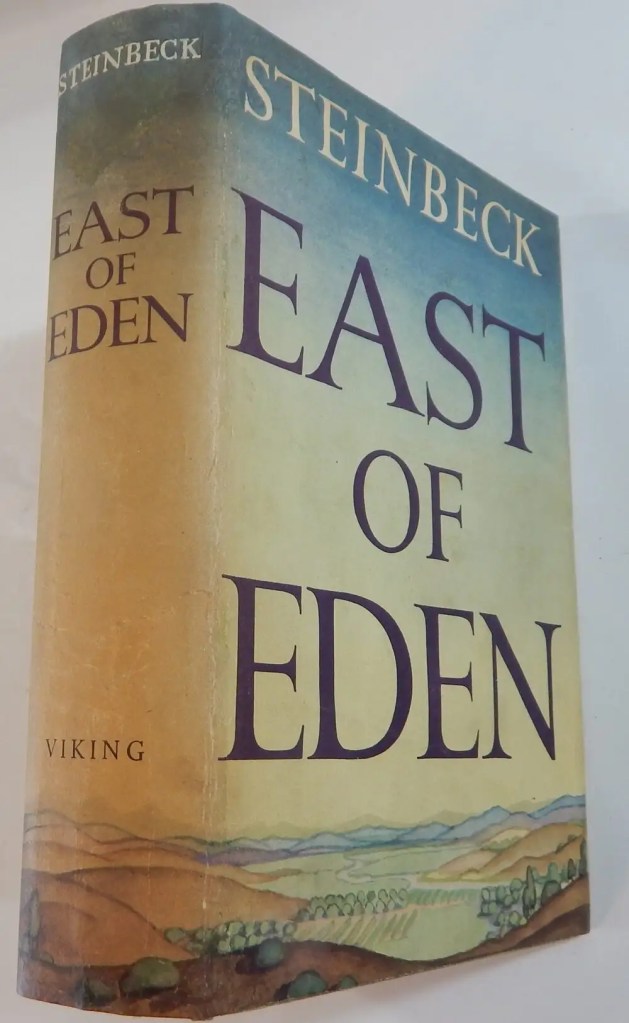
And I feel like it’s judging me for that.

I own books, of course. I own a LOT of books. And the recent shenanigans by people like the bastards at Anthropic have made me more adamant than ever that owning as many books as possible is a good thing. That said, I DO have a limited amount of storage, and I’ve drifted more towards eBooks for most of my casual reading. I still love physical books, but unless it’s a keepsake (like a signed edition or something written by a friend of mine), something that’s unavailable in eBook format, or a book I need to complete a collection, I’m usually satisfied with the electronic version. So I decided to look into how much the eBook of East of Eden costs.

$12.99. And I looked at that $12.99 with the same sort of distrust that you look at the current prices at whatever gas pump is nearest to your house.

Look, I am a writer, and I believe wholeheartedly in paying writers what they’re worth. That said, I also believe that anyone charging more than ten bucks for an eBook is gouging you, because there are virtually none of the production, shipping, or storage costs involved with creating a print book. And when it’s a book that’s nearly 75 years old, the incredulity just rises.

That afternoon, I happened to be taking my son on our biweekly trip to the local library. While we were there, I thought, I should just check the book out. That’s what libraries are FOR, after all. They are a vital part of our community, and by NOT checking out books, I am doing them a disservice. It was such an obvious solution. So after convincing Edward that he actually had to follow ME through the stacks for a change, instead of me racing after him on a frantic search for the kitty pictures hidden around the children’s room as part of the library’s monthly scavenger hunt, I tracked the Steinbeck book down and looked at it.

I reeeeeally looked at it.

East of Eden is Steinbeck’s longest novel. And by “longest,” I mean it clocks in at about the same page count as Stephen King can turn out on a typical Sunday in October – it’s hefty. Let’s be clear about this: I do not mind a long book. I am by no means intimidated at the idea of reading a doorstopper. But I am also realistic, and I had serious doubts about my ability to finish the book and return it to the library in a timely manner. And even though the good people who work at the St. Charles Parish Public Library (Destrehan Branch) are uniformly kind, friendly, and helpful, I also reread Stephen King’s The Library Policeman a couple of months ago and I didn’t want to risk it.
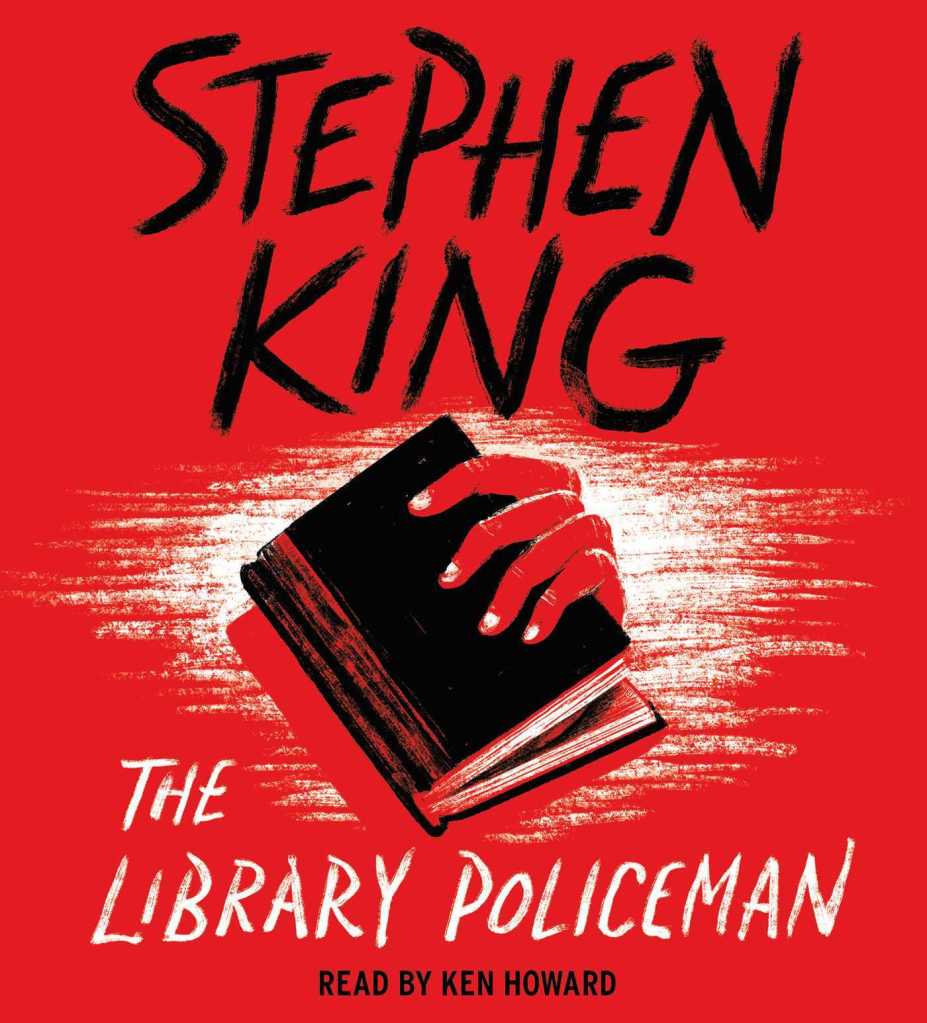
Yeah, yeah, “it’s just a book” — SOME OF US CAN’T TAKE THAT CHANCE.

Anyway, I told myself, I’m an English teacher. I really should OWN a copy of such a seminal work in the canon of American literature. I should just get a paperback instead. So I looked it up: $20.

Then I went back outside to stare at the gas station again.

I remember a time – a time not all that long ago – when most paperback books fell in the $5.99 to $7.99 range. And sure, East of Eden is a huge book, clocking in at over 600 pages. But I started to look around at the NEW release paperbacks as well, many of which would take a full three or four whacks to kill a mouse, as opposed to the one thump that East of Eden would require, and I saw that $20 was about the average price these days. Part of that is because American publishing has all but abandoned the mass market paperback: the smaller sized and more affordable book that was ubiquitous for decades, small enough to fit into a largeish pocket, the glorious format upon which most people born before the turn of the century learned how to love books. Sadly, after making books accessible to the masses for nearly 100 years, this format has become almost nonexistent. If you ask publishers and distributors why that is, a lot of them will tell you that “the market” was no longer purchasing them, was no longer interested in them. As a member of “the market,” however, I can tell you that I was never surveyed about this decision. I never reached a point where I thought, “You know, I’m going to buy this larger version of the book that costs twice as much.” I just noticed that the smaller, less expensive versions were no longer being published for some reason. 

Although I have no statistics, quotes, or data, I firmly believe that the push away from mass market was spurred almost entirely by a publishing industry that wanted an excuse to increase its prices. And again, writers deserve to be paid. But I don’t believe for a second that, in the vast majority of cases, the inflated price tag on these books has equaled an increased cut for the person who actually created the book. Almost universally, the added revenue being collected is going into the coffers of the publisher, which of course provides the invaluable service of deciding which books they want you to spend money on.

I also believe – without statistics or data – that this format shift is also at least partially responsible for the decline in literacy in America. Look, there are a lot of reasons that people might not want to read books: social media, video games, other media drawing their attention, being afraid of being labelled a “nerd,” difficulty finding books that match their interests, their mother read Danielle Steele that one time she got hit by an ice cream truck and there’s no WAY they’re taking THAT risk, and so forth. But I think the fact that books are no longer cheap enough to be an impulse purchase makes every single one of those problems even worse than it already is. 

The funny thing is that while traditional publishing is doing everything it can to make it harder for people to become a part of their audience, comic book publishers are doing the OPPOSITE. I’ve written at length about DC Comics and their “Compact Comics” line, (In GP #119, GP #124, GP #164, and GP #178, but who’s counting?) so I’ll just do a quick recap here. DC now has a line of paperback editions of some of their most popular stories and graphic novels in a smaller format – ironically, about the same size as most of the paperback novels that have shoved mass market paperbacks into their grave. These Compact Comics collect the same stories that are published in traditionally-sized graphic novels, which usually have a price point ranging anywhere from $20 to $40, depending on the length. DC’s Compact Comics, however, have a uniform price tag of $9.99. And this format has proven to be a MASSIVE hit, selling out printing after printing not only in comic book stores, but in big box bookstores and other places that people buy books, like Walmart and Target. The line is so successful that nearly every other major comic book publisher has responded with their own line of smaller-sized bargain-priced paperbacks, and the result is an easily-accessible, affordable series of books that is appealing to both old and new readers alike.
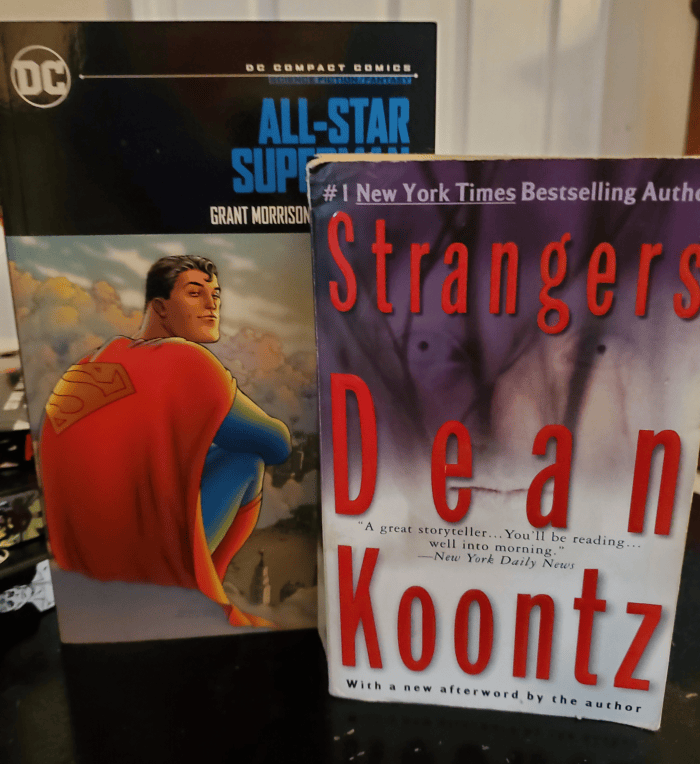
Size-wise, these two books are everything you could want. Content-wise…well, one of them is.

Compact Comics also blow the argument for a $20 paperback out of the water. While a traditional book may have to pay a designer, a cover artist, and a few other people besides the author, a comic book has many, many more hands than that: multiple writers and artists, colorists, letterers, editors, and so forth. And while each of their pieces of the pie may be smaller than those of a single author who has written a single novel, the color pages and the paper that holds those images is also of a better stock than your usual paperback. The production cost for a Compact Comic is inarguably higher than that of a novel, and yet DC can afford to sell them for half the price.

To put it another way, if I have $20 in my pocket, I can buy Steinbeck’s East of Eden, or I can buy a copy of Mark Waid and Alex Ross’s exquisite graphic novel Kingdom Come AND have enough money left over for compact anthology of comics from Oni Press’s Rick and Morty series. And I’m sorry, but Steinbeck never ONCE included a plumbus in any of his novels, so this isn’t even really a contest.
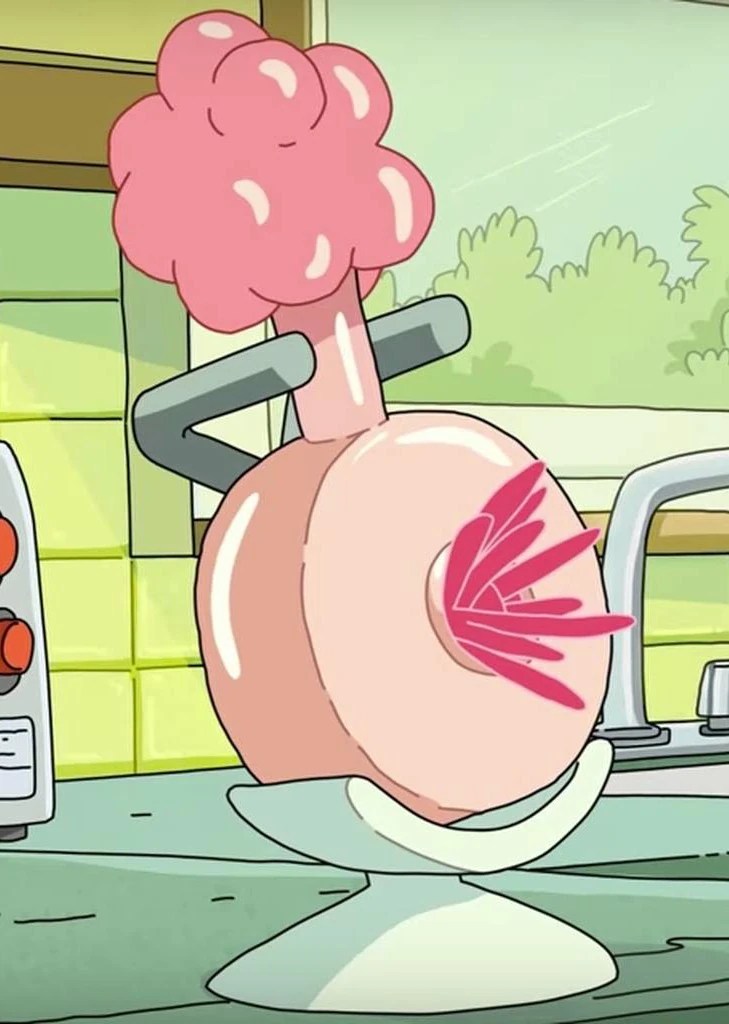
If you look hard enough, though, you can probably find one in Shakespeare.

As a teacher, a writer, and a reader, I hear the phrase “literacy crisis” thrown around on a daily basis. Authors are desperately hustling to try to get readers. Readers are finding themselves in a cultural wasteland as it becomes more difficult to find people in your daily life that you can share your love of books with. Teachers are crawling behind students on hands and knees BEGGING them to read just a chapter or two of The Great Gatsby, because there’s a scene where a woman gets hit by a car, maybe because she’d read a Danielle Steele novel, I dare you to prove that she HADN’T. In fact, EVERYBODY seems to be doing anything they can to try to get people reading again.

Everybody, that is, except for the companies that have established themselves as the de facto gatekeepers of the entire world of literature: the publishers. Rather than making books available and attractive to as many people as possible, they seem to be on a quest to identify micro-cohorts of potential readers and squeeze every drop of cash out of THEM, rather than make reading appealing to the masses.

It’s an insane practice, but that’s the world we live in.

I broke down and got the Kindle version of the Steinbeck book, by the way. At $12.99, it would take me almost three years of late fines at the library to offset the cost, but by then I should be almost finished reading it.

Blake M. Petit is a writer, teacher, and dad from Ama, Louisiana. His most recent writing project is the superhero adventure series Other People’s Heroes: Little Stars, volume one of which is now available on Amazon. You can view his LitReel videos on TikTok and read his writerly yammerings on his free Substack.
Geek Punditry #123: TBR Terrors

Warning: This week’s Geek Punditry might be disturbing for people who love books, because this week I’m going to be discussing the three most terrifying letters for a bibliophile: TBR.

Almost as scary as IRS.

TBR, if you aren’t a reader, stands for “To Be Read,” and it’s something that will chill the blood of anyone who actually enjoys reading, because the TBR is the most intimidating thing in the universe. Some of us have actual, physical piles of TBR books. For others, it’s just a list. Still more have a sizeable section of our e-reader’s memory taken up with books that they’re going to read, and I quote, “someday, I swear to God.” But no matter what form your TBR takes, the existence of the TBR is a constant reminder that there are more books deserving of our time than we can possibly devote that time to.

It’s so easy to make that TBR bigger. All it takes is for you to become aware of a book that sounds good. Your favorite author has a new release? It goes into the TBR. Your friend tells you about something great they read on a recent beach trip? TBR. You’re wandering through one of those bookstores that you somehow keep stumbling into when you’re supposed to be buying groceries or perhaps extinguishing a fire, and some book catches your eye? TBR. There’s a new cover on this one? T.B.R. 

A NEW FOREWORD? By HAROLD BLOOM?

Adding a book to your TBR is easy, almost effortless, especially if you just maintain a list. But getting them electronically is easy too – after all, ebooks are usually mostly text (unless you’re talking about graphic novels, but that is a different – albeit similar – conversation). Text files don’t take up nearly as much space on a storage disc as music, videos, or photographs, so you can store a LOT more books on your phone or tablet than anything else, and you can add more…and more…and more.

Then there are the physical book readers, those who have overflowing shelves of books they’ve read and three times as many shelves of books in the TBR. For some of us, we display books the way a hunter or a fisherman will have a prize kill mounted and placed on the wall.

“Here we are, Under the Dome by Stephen King. Hardcover, 1074 pages. I brought this bad boy down back in 2011.”

“Cool. Say, what are all these books on these shelves over here?”

“We’re not gonna talk about those.”

So yes, adding a book to the TBR is effortless. But removing it is a torture the likes of which should seriously have been studied by the Geneva Convention, because it requires you to actually READ the book.

Oh, what fresh Hell is THIS?

“But Blake,” you’re saying, “I thought you said that the whole TBR thing is only relevant to people who LIKE to read.”

Oh, you silly person. Just because you LIKE to read doesn’t mean you actually get to DO it. We live in a world of chaos and terror and reality television, and although reading is a pastime that we book lovers dearly enjoy engaging in, the universe frequently colludes to deny us the time to do it. What’s more, even if you find the time, the little things that chip away at you day in and day out may sometimes leave you too emotionally exhausted to actually do the thing that you do to relax. If you just like, for example, watching baseball, then when you get home you can turn on a baseball game and the extent of your intellectual engagement will be formulating your Facebook post explaining why the umpire is an idiot. But reading is, ipso facto, a more mentally demanding pastime than many of these others, and after a long day at work or with the kids or just dealing with the avalanche of depression that social media has somehow convinced us to plug directly into our veins, the idea of picking up that novel about the vampire apocalypse may start to seem a little daunting, no matter how good the writing is.

The point is, stuff is added to the TBR much, much faster than it can feasibly be removed unless you physically drag your bookshelf into a sterile room with no connection to the outside world. The closest thing many of us get to that sort of distraction-free environment is reading on an airplane, which is actually where I achieved some of my greatest TBR accomplishments before I started traveling with a child, at which point even that avenue was largely closed to me. 

“I don’t actually want to go to Taipei, but how else am I supposed to finish reading the new Hunger Games prequel?”

To make matters worse, although you CAN eventually get a book off the TBR by reading it, a lot of us also like to…this is insane, but listen to me here…we like to read books AGAIN. 

We’re crazy, I know. But there are legitimate reasons for doing so. Perhaps the next book in the series is about to come out, but it’s been 17 years since George R.R. Martin released the last one, so you need to read it again to refresh your memory. Perhaps the last time you read To Kill a Mockingbird was in high school and you have come to recognize that your perspective as an adult is vastly different than that of the 16-year-old who previously read the book and it may be worth re-evaluating it from this new point of view. Maybe it’s just a comfort book, and you feel the need to return to it every so often to sort of ground yourself and remind yourself of the things in the world that you actually like and make you happy as opposed to…well…everything else. No matter the reason, the practical result is that even a book once removed from the TBR can be returned to the TBR at any moment and without warning, and then once again, your only shot at removing it is to read it all over. 

People who don’t read books are listening to this and assuming that I’ve lost my mind, whereas book readers are nodding at me and trying to remember if To Kill a Mockingbird is already on their TBR and, if not, adding it. 

The sheer volume of books that exist doesn’t help. No matter how old you currently are, people were writing books thousands of years before you were born, and at least seven of them are worth reading. What’s worse, there are a bunch of assholes out there right now casually writing even more great books that deserve to be read, as if you didn’t already have enough on your plate, the inconsiderate jerks. There is a point where most book readers have to face the fact that yes, they own more books than they can ever hope to finish reading in their lifetime, but they’re still reluctant to get rid of any of them, because any of these books MIGHT be called up to the major league at any given moment. 

“Well, Blake,” you continue, having this dialogue despite the fact that I wrote this several days before it was posted online and your ability to speak back through the time-space continuum is uncanny, “At least if you’ve got a massive TBR, you never have to worry about what you’re going to read next, right?” Ha ha ha! What an idiot! No, having a TBR makes it even HARDER to choose your next read. Think of it this way, if you have lunch at Raising Cane’s, you really only have one choice to make: will you substitute your cole slaw with extra fries or extra toast? But if you go to, say, the Cheesecake Factory, they hand you a menu so thick that, at first glance, you may think it should be added to your TBR. So let me ask you, my friends, at which restaurant will you have an easier time making a decision? 

Exactly.

The last book I took off my TBR was The Final Girl Support Group by Grady Hendrix. It was a great book, about a group of survivors of slasher-type murderers (the characters are very thinly veiled homages to the final girls of movies like Friday the 13th, Scream, Silent Night Deadly Night, and many others) who have an therapy group they attend together until someone starts trying to kill them. This is the third of Hendrix’s books I have read and I’ve really become a fan of the way he blends plots right out of a scary movie with a dark and sharp sense of humor. Unfortunately for me, after three hits in a row from him, I’ve pretty much decided that every book he’s ever written deserves to be on my TBR. I’m looking at Horrorstör next, billed as “a haunted house story set in a furniture store.” It sounds ridiculous and amazing, and there’s no telling how long it will be on the TBR before I get to it.

“Look at me, Song of Achilles! Take in my glory, The Redemption of Time! THE TBR CAN BE ESCAPED!”

But the point is, I FINISHED Support Group, so I got to take it off the TBR. Great! Go me! So…what next? More horror? Do I want another horror story so quickly, or do I want to mix it up a little bit? A little comedy? There was definitely humor in Support Group, but it wasn’t a laugh riot, so something a little lighter might be welcome. I’ve got a ton of Star Trek novels I haven’t gotten around to yet…but it hasn’t been THAT long since I read one. Maybe I should go back and pick up one of the Ruth Plumly Thompson Oz books I haven’t gotten around to, except that I didn’t really care for the last one I read, Grampa in Oz, and while I intend to eventually read all of the Famous Forty, I’ve put her on probation for a while. I read the first book of that trilogy by Gwenda Bond a couple of months ago and I really liked that, so perhaps I should pick up book two. Or maybe…

And my mind goes around like this for hours at a time until a friend of mine on Facebook posts that she just started reading Hail Mary by Andy Weir which, of course, makes me think that it’s time to finally go back and read The Martian for a second time.

Not even joking, this is the most scientifically-accurate book I’ve read since my second year of college.

Again, non-readers are ready to send me to an asylum. Book lovers know EXACTLY what I’m going through. 

So my friends, be kind to those of us who love to read. We have chosen a recreational activity that frequently includes as much planning and careful mental preparation as getting another job, except that instead of getting paid for it, we just get more books to put on the TBR. It’s a curse.

A lovely, wonderful-smelling curse that none of us would give up even if we could. 

Blake M. Petit is a writer, teacher, and dad from Ama, Louisiana. His most recent writing project is the superhero adventure series Other People’s Heroes: Little Stars, volume one of which is now available on Amazon. You can subscribe to his newsletter by clicking right here. He’s also started putting his LitReel videos on TikTok. He added six books to his TBR while writing this. Shut up.