Once again, it’s time to look into the reviews of some of the Superman-related comics that have dropped in the last few weeks, including some pretty massive events. Let’s get right to it.
DC KO #4 Title: Trial By Absolute Writers: Scott Snyder & Joshua Williamson Art: Javi Fernandez & Xermancio Main Cover: Javi Fernandez
The Final Four have made their way through all comers, but before they can turn their attention to one another, four new combatants have entered the fray. Tainted by the energy of Darkseid, the combatants will be forced to fight the Absolute Universe versions of Superman, Batman, and Wonder Woman – as well as Booster Gold who has been possessed by Darkseid himself.
This event has promised us one throwdown after another, and there’s no way to argue that it hasn’t lived up to that promise. This issue is perhaps the most high-octane, brutal battle yet. The fight between the four remaining heroes and villains with their Absolute counterparts is scripted and drawn with incredible energy and brutality, but at the same time, Scott Snyder has not skimped at all when it comes to character and story. In fact, there are multiple twists in this issue that catch you off-guard and send the story spinning into new, unexpected directions. At the same time, the twists all fit the characters – a great twist is one that is a surprise without violating what you already know about the world you’re reading, and Snyder pulls that off.
For people who are into Superman (know anybody like that?) seeing “our” Superman face off against the Absolute Kal-El is one of the high points of the issue. Neither character is disrespected or nerfed in respect to the other, but there’s also no room for any doubt as to which of the two is the original. I am slightly disappointed at just how the Absolute characters were used, however. Similar to the surprise guest stars from the Boss Battle one-shot, the Absolute heroes are in and out rather quickly. It’s not even clear as to when, exactly, this story takes place in the Absolute timeline – Superman seems to know Batman here, whereas in their respective comics, they haven’t met yet. Although there’s definite promise here for future brushes between the two worlds, it feels like this encounter will mostly be a footnote for the Absolute characters, even as it sets up the conclusion for the Final Four.
I know I’m being deliberately vague here, by the way – I suppose it’s clear that Superman is one of the Final Four (as it should be) but I’m trying to avoid spelling out who else is in that group in case anyone is trying to remain spoiler-free. Considering just how this one ends, though, I don’t know if I’ll be able to keep that up for the finale. So if you’re reading along with these reviews, I would highly recommend being up-to-date with DC KO when I drop my thoughts on issue five. Whenever that might be.
Superman Unlimited #10 Title: Die Laughing Part Two Writer: Dan Slott Art: Mike Norton Main Cover: Dave Johnson
Intergang has set its sights on Metropolis’s new mayor, Perry White, and they’ve contracted the Prankster to take care of the problem. But Oswald Loomis’s nephew is trying to step into his uncle’s role and take over the family business, and the NEW Prankster isn’t quite as funny as his predecessor.
This is a solid issue. There’s something up with this new Prankster – in these two issues he’s appeared we never find out his real name, and there’s no explanation for his bizarre powers, something Uncle Oswald has never had. I feel like this is just part of a coming, larger story, even as these two issues work perfectly well as a couplet. I also like how a big part of the middle of this story isn’t about the power of Superman, but rather the investigative skills of Clark Kent. Not to say that Superman is entirely absent, but we see more Clark than we often do these days, and I appreciate that.
We also get a quick interlude with Jon, who’s been setting up the new Daily Planet office in Smallville, only to get an ominous warning from an unexpected source. Even more so than the Prankster stuff, this is explicitly setup, especially since DC has revealed their “Reign of the Superboys” initiative that’s going through all of the Super-titles after DC KO ends. If you didn’t know, Jonathan is going to take the reigns of this title for an indeterminate amount of time, and it looks like the groundwork is being laid here.
I’m still really digging Mike Norton’s Superman. I love the way his character works, with the kind of strong lines and clean character work that made so many of the Triangle Era artists stand out, and I hope we see more and more Superman from him in the future.
Superman #35 Title: Life Secrets (A DC KO Tie-In) Writer: Joshua Williamson Art: Eddy Barrows, Eber Ferreira, Julio Ferreira Main Cover: Dan Mora
The final instalment of this title’s DC KO storyline runs with the conclusion of issue #4 and leads straight into #5. In fact, I wouldn’t be surprised if at least one of the storylines that’s been going through this book turns out to be crucial to the conclusion of the crossover. But that’s not the one that works best.
We’re following two intertwined threads here. First, the Doomsday/Time Trapper is reeling from the events of issue #4 and trying to gird himself for what must come next. After all, at least part of him is the creature that was created eons ago for the express purpose of destroying Darkseid, and it may be time for that charge to finally come due. Meanwhile, Lois and Superboy-Prime continue their faceoff with Darkseid’s Legion, and it is this latter part that is particularly revelatory.
From the moment he was introduced in this title, we’ve been building a redemption arc for Prime, and it gets center stage in this issue, where he is faced with choices that he’s made before and is given an opportunity to make better choices this time. I’m not in the business of giving out spoilers, but it should be pointed out that when “Reign of the Superboys” takes over the Superman titles next month, DC has revealed that Prime is going to be the start of this title for the time being.
There’s also a great face-off between Lois and Darkseid’s Saturn Girl. Just like prime, this series has hinted that the dark Legion may not be completely beyond hope, and that hope spot is further explored this month. I’m really anxious for the final issue of the crossover to drop…which I guess will be today as you read this. Holy cats, why are you reading this blog instead of DC KO #5? Have you lost your senses?
Action Comics #1095 Title: Pressure Writer: Mark Waid Art: Patricio Delpeche Main Cover: Ryan Sook
The adventures of Superboy in Action Comics continue, although Clark actually takes a back seat this issue. Last month, on a camping trip, Pete Ross happened to spy Clark Kent going into action as Superboy. This issue is Pete’s story, as he struggles with this knowledge and wrestles with whether to confront Clark with what he has learned – and ask why his best friend would ever keep such a secret.
I adored this issue. Mark Waid, human comic book encyclopedia that he is, is doing a phenomenal job of mining the classic tales of Superboy to bring the drama to this series. In the Silver Age this was the status quo – Pete knew that Clark was Superboy (even learned it the same way as he did in Waid’s story, if I’m not mistaken) and chose to keep that knowledge to himself. But as was so often the case with those Silver Age tales, there wasn’t an awful lot of thought given to the implications of this sort of thing. How would Pete feel about learning his best friend was keeping such a gargantuan secret? Doesn’t Clark know that he can trust him? Does anybody else know? And why would Pete choose to keep what he’s learned to himself instead of talking to Clark about it?
The answer to that last question is because it was the Silver Age, and if anybody in a Silver Age DC story had the ability to have a rational adult conversation about anything 95 percent of the stories would have ended on the second page. But Waid actually finds a way to justify Pete’s actions, draping his decision in a metaphor for a real-world issue and presenting it in such a way that makes perfect sense and somehow makes all of the characters – Pete, Clark, even Lana Lang – come across as behaving in a mature, emotionally intelligent way. How often could you say that back in the 50s?
Supergirl #10 Title: My Bloody Valentine Writer: Sophie Campbell Art: Joe Quinones Main Cover: Sophie Campbell
It’s Valentine’s Day, and Kara has a date with the mysterious, long-haired, tattooed boy of her dreams. Her friends Lena and Luna, however, are following along, sensing something is amiss.
After last issue’s slight misstep, this one is more of what I’ve come to enjoy about this series. The “date” is mostly a setup for this issue’s fight scene, but Campbell isn’t having a fight just for the sake of a fight. In the midst of battle we get some good character moments and the ongoing storyline of Kara and her friends (particularly Lena Luthor, in this case) continues nicely. Lena made a mistake in the last issue for which she’s trying to mend fences, and while this issue doesn’t patch everything up in a neat little bow, it also doesn’t cause some insurmountable gap between the friends like books that lean on melodrama are wont to do. Kara and Lena both some some real emotional maturity here, which is particularly funny when juxtaposed against the “date” scene, which works mostly as a parody of gooey Silver Age romance comics tropes.
I have to point out, though, that the recent run of holiday issues is starting to strain credulity a little bit. Literally half the issues of this series have been holiday stories at this point (Halloween, Thanksgiving, Christmas, New Year’s, and now Valentine’s Day) and while comic book time is naturally elastic, it does have its limits. As this issue begins, Lena and Luna are going to visit Kara on Valentine’s Day to try to make up for their screwup at the New Year’s Eve party – so it’s been six weeks since they spoke to one another? Nobody has made any effort to patch things up before now? I’m willing to forgive, because this really is a great book, but I’m crossing my fingers that next issue’s story (part of the “Reign of the Superboys” initiative) won’t be a visit to show us how they celebrate St. Patrick’s Day in Kandor.
Batman/Superman: World’s Finest #48 Title: Day For Night Part One Writer: Mark Waid Art: Marcus To Main Cover: Dan Mora
Once again, Mark Waid has been let loose in his favorite playground, the DC Universe. In this issue we leave behind our pals Superman and Batman and instead visit their arch Earth-3 counterparts, Ultraman and Owlman, as they begin plans to expand their Crime Syndicate to unprecedented levels, with world conquest as their goal.
Waid is building out Earth-3 quite a bit here, introducing versions of DC heroes that I’m pretty sure have never showed up in a Crime Syndicate story before (although I could potentially be wrong about that – I’m certainly not the walking encyclopedia of comic book knowledge that Waid is). There’s a particularly amusing sequence that really puts the relationship between Owlman and Talon (his Robin analogue) into focus. All of it works up to a nice last-page surprise that seems poised to set up the rest of this arc. As per usual, I’m very excited to see where this is going to go next.
Adventures of Superman: Book of El #6 Title: The Warworld Engines Writer: Phillip Kennedy Johnson Art: Scott Godlewski Main Cover: Scott Godlewski
This issue we at last return to Otho-Ra and Osul-Ra, Superman’s adopted children, who disappeared back in the first issue after Superman was abducted to the future. We also come across another clan wearing Superman-like sigils, while our hero is battered and beaten down.
I’m trying, guys, I REALLY am trying to get interested in this book, but it’s just not working. Having left behind the Green Lantern stuff (although future covers seem to indicate we’re not done with it yet), we’ve gotten back to Superman vs. Warworld, which was an era of Action Comics that, if I’m being honest, bored me stiff. Despite his power, “cosmic” Superman stories rarely work for me. The character is all about heart and how he deals with people, and throwing him into deep space against all-powerful entities and sci-fi clans that think he’s just a legend…it’s too far from the things that make me keep reading Superman comic books. It just isn’t connecting with me, no matter how much I wish it was.
New History of the DC Universe: The Dakota Incident #1 Writers: Joseph P. Illidge, Stephanie Williams, Morgan Hampton, & Nikolas Draper-Ivey Art: Valentine De Landro, Carlo Pagulayan, Stephen Segovia, Jason Paz, Fico Ossio, & Edwin Galmon Main Cover: Diego Olortegui
Strictly speaking, I don’t feel obligated to review this book the way I do many of the other Superman appearances. He shows up in this book, but his appearance is brief and it’s not his story. That said, I liked this book quite a lot and I wanted to talk about it and it’s my own blog – dammit – so I’m gonna write about this if I want to.
Spinning out of last year’s fantastic New History of the DC Universe miniseries is this one-shot focusing on the heroes of the Milestone universe. As the previous NHOTDCU explained, the Milestone heroes (versions that are fairly close to their original incarnations from the 90s) have always existed in the current incarnation of the DC Universe, but they all vanished from the public eye after something referred to as the “Dakota Incident.” This issue delves into their history, showing the reader just how they fit into the DCU, and the events of the incident that led to their departure.
I’m impressed at how relatively easily they worked the characters into the DC Universe while still keeping their original stories mostly intact. There is one element that’s added to link the origins of many of the Milestone heroes to the DC Universe proper, but that addition doesn’t really change anything about who they are or how their adventures unfolded back then. The issue also places a heavy emphasis on Static, holding him up as perhaps the most significant of these characters. That makes sense – he’s certainly the most well-known and popular Milestone character among the general public (by virtue of his old cartoon show if nothing else), but it also fits with the character of Virgil Hawkins very well.
For fans of these characters, especially the original versions, this issue serves very well to integrate them into the DC Universe, explain their absence, and – most importantly – set the stage for their return. It’s already been teased in various places, not the least of which is the last page of this issue, and I am very much looking forward to seeing the heroes of Dakota rise again.
Blake M. Petit is a writer, teacher, and dad from Ama, Louisiana. His most recent writing project is the superhero adventure series Other People’s Heroes: Little Stars, volume one of which is now available on Amazon. Don’t forget, you can check out earlier blogs in the Year of Superman/Superman Stuff Archive! Got a request for a future “Superman Stuff”? Drop it in the comments!
As the chill finally returns to the air down here in southern Louisiana, I can feel the end of the year approaching. The last three months are always my favorite time of the year, although in this case they’re a little bittersweet. Spending this year with Superman has been fun for me, giving me something to look forward to…and while I have to admit I’m looking forward to finishing off the daily requirement, I also know I’m going to miss it. I’m thinking of ways to continue this blog without the daily stipulation into 2026 – no decisions yet, but there are things in my head.
At any rate, there are still a handful of themes I’ve got left that I want to do, but those are all anchored to specific times in one way or another, and none of them are this week. So get ready for another seven random days in the Year of Superman blog.
Notes: We’re going to start this week by looking at my list of stories that I wanted to hit this year at one point or another, but that didn’t fit into any particular theme. And if you’re not wise to the behind-the-scenes chaos that led to the writing of Superman #276, it seems as random as they come. Most comic book fans know the story behind the original Captain Marvel: originally published by Fawcett Comics, he was a smash hit and outsold pretty much every comic on the stands, including Superman at times. National Publications (the company that would later rebrand as DC) sued Fawcett, claiming Captain Marvel infringed on the Superman copyright due to the similarity in their appearance and powers. The case dragged on in court for years, until the post-World War II-era, in which superhero comics fell out of favor. Eventually, Fawcett settled the case, no longer making enough profit from the comics to continue to fight. Years later, DC would eventually license, then outright buy the characters from the Fawcett catalogue and bring them back to comics.
In 1974, DC Comics had been publishing Shazam! for over a year. His own title was set on “Earth-S,” home to the original Fawcett heroes, and although the multiverse was already very much in play at DC, for some reason editorial was wary of having him actually interact with the heroes of the DC Universe. Writer Elliot S! Maggin’s solution was this issue, “Make Way For Captain Thunder!” Using an early, rejected name for Captain Marvel, Maggin has Superman encounter a young boy – Willy Fawcett – who appears in the streets of Metropolis one day. Willie seems out of time, with a haircut that was popular 20 years earlier and expecting to pay a nickel for 35-cent bus fare. And the big clue that something isn’t kosher: he’s never heard of Superman before. Willie sees a helicopter about to rob an armored car, so he rubs his “magic belt buckle” and says the magic word “Thunder!” With a bolt of lightning (and the amusing sound effect “sha-boom!”) he transforms into…well, not Captain Marvel, but somebody who looks a hell of a lot like him.
As Captain Thunder swoops in to stop the robbery, something takes hold of his mind and, instead, he aids the crooks in stealing not only the contents, but the entire armored car. Superman comes in to save the car and Thunder turns back into Willie, who cannot remember anything that happened since his transformation. He decides to turn to Superman for help, and looks up his most famous “friend,” Clark Kent. (The notion that even a child from an alternate dimension can learn that Clark and Superman are pals within a few hours is perhaps the greatest strain on the credulity of Superman’s secret identity, by the way.) Willie tells Clark his origin – how, on a campout with his orphanage, he was summoned by an owl to follow it to a cave in the woods. There he encountered an ancient Native American medicine man, who bestowed on him the magic belt that would give him seven spiritual abilities: the power of a Tornado, the speed of a Hare, the bravery of Uncas, the wisdom of Nature, the toughness of Diamond, the flight of an Eagle, and the tenacity of a Ram!
Note to Maggin: If the editor needs to drop in a footnote explaining that Uncas was a warrior chief, you know that you’ve maybe stretched this bit to its limits.
Anyhoo, Willie became Captain Thunder, and – in my favorite page in the book – recounts his final battle with the Monster League of Evil, which was made of up, I kid you not, the Universal Monsters. The battle took place in a series of other dimensions (1953 of them, to be exact), but evidently, when Willie tried to get home he wound up on the wrong Earth, where he comes to understand that the League did something to Captain Thunder, making him turn evil when he transforms. Clark – an alien from another planet who hangs out with an Amazonian goddess and a guy from Mars and who routinely fights cyborgs and has traveled through time on countless occasions and more than once met an exact duplicate of himself from a world he calls Earth-2 – comes to the obvious conclusion that Willie is delusional.
Somehow THIS is the part that strained credulity.
Clarks recruit Lois to help him bring Willie to the police station for help, but another robbery summons his attention. He ducks away and becomes Superman, as Willie turns into his own alter-ego. But once again, as if he’s forgotten that he’ll turn evil, Captain Thunder turns evil. The crooks escape as Superman and Thunder battle it out in the skies over Metropolis. Superman manages to trick Thunder into turning back into Willie, because somehow he suddenly believes his story, and then holds him in a wrestling grip and tells Willie to change back, where he’ll somehow force Thunder to use his wisdom to overcome the Monster League’s brainwashing. There is absolutely no reason that this should work, but somehow it does, and Thunder furthermore figures out how to use his magic to return to his native dimension.
This is one of those stories that I like not in spite of how ridiculous it is, but BECAUSE of it. Details aside, there’s virtually no difference between Billy/Captain Marvel and Willie/Captain Thunder. If someone were to redraw his costume and the origin pages, it would fit perfectly as the first meeting between Big Blue and the Big Red Cheese. The incongruities also have a weird charm to it. The notion that Clark questions Willie’s story is laughable, the idea that he comes around so easily is absurd. The fight is…well, it’s an awful lot of fun. And I won’t lie, I would love to see the history of Captain Thunder’s battles against the likes of Boris Karloff, Bela Lugosi, and Lon Chaney Jr.
There were so many different one-off universes that peppered DC Comics in the years before the original Crisis. I kinda wish we could visit some of them again.
Thur., Nov. 13
Comics: Superman Vs. Lobo #1-3, Jon Kent: This Internship is My Kryptonite #19, Justice League of America #40
Notes: Today I’ve selected the three-issue Superman Vs. Lobo miniseries from 2021, written by Tim Seely and Sarah Beattie with art by Mirka Andolfo. Why? Because just like when they published this miniseries, it seemed like a good idea at the time.
That sounds snarkier than I intended. This isn’t a bad series, not at all, but it’s part of the ill-defined “Black Label” imprint at DC. When it was first announced, “Black Label” was supposed to be a more “mature readers’” imprint featuring the DC characters. Then it started to publish comics that were creator-owned and had nothing to do with the DCU Universe. Then they folded the Vertigo imprint and made those properties Black Label books. Then they brought BACK the Vertigo Imprint and moved some of the Black Label originals over there. And all the while, they were reprinting some books under Black Label that didn’t make any sense at all – such as Kingdom Come – while also publishing a few new properties that didn’t really have any content that marked them as “mature readers,” such The Last Days of Lex Luthor, which would probably be best as an Elseworlds. Then they brought back Elseworlds. What I’m getting at is, I’m not entirely certain what Black Label is supposed to be and, based on all available evidence, neither is DC Comics.
None of that, however, is the fault of the creative team of this miniseries, nor does that make it a bad story. The story kicks off with the Martian Manhunter sending Superman out into space to check on a space station that’s been damaged near the orbit of Jupiter, with astronauts in grave peril. As he’s saving them, everyone’s favorite Main Man Lobo has a vacation ruined when the resort planet he’s on is attacked by a kaiju-sized monster that turns out to be a microscopic tardigrade which has somehow been blown up to gargantuan proportions. He also meets “biologist and wildlife photography” Dr. Semedea Flik, who is an expert on single survivors of extinct species, and therefore is delighted to meet Lobo, who famously murdered his entire planet of Czarnia. Lobo, of course, doesn’t care about the destruction his fight with the tardigrade is causing, but Superman happens to be passing by in space and dives in to save both the creature and the people endangered by its rampage. Lobo, of course, sees Superman as a killjoy, ruining the fun of his fight, but Flik is thrilled to meet TWO “sole survivors” in one day. (Unless you count Supergirl or the Kandorians or Lobo’s daughter or…) When the news coverage of the fight starts painting Superman as a hero, Lobo is furious and decides to “ruin” him.
Lobo comes to Earth and gets on LexTube to begin slandering Superman. Lois (with a little help from Batman) begins a counter-offensive against Lobo online, and the vitriol online begins to fuel an army of robots that the Toyman created to prove that social media is toxic. (I guess even Winslow Schott can’t be wrong all the time.) Superman combats it by urging people to get online and post positive things and – this is far less realistic than the tardigrade kaiju – they actually start to do it. Speaking of the tardigrade, it comes to Earth, only much smaller and now demonstrating extreme intelligence. Its name, it says, is Numen, and like Superman and Lobo is the last survivor of his homeworld. Flik is THRILLED. Feeling a kinship to the two of them, Numen decides to use his vast power to give them a gift: restore and send them back to their homeworlds, but he makes a little boo-boo. On the last page, Superman finds himself on Czarnia and Lobo on Krypton.
Issue two kicks off with the Justice League searching for the missing Superman, with J’onn discovering that Krypton has somehow been restored and Green Lantern learning that Czarnia’s extinct population has come back. Numen, in a scene as funny as it is creepy, has learned that people on Earth communicate via “tweeting,” so it makes all the birds in the world explain to people that he sent Superman and Lobo back to their home planets. Of course, he’s wrong. On Czarnia, Superman – whose powers are dying under the planet’s red-tinted sun – learns that most of the population seems kind and pleasant, and Lobo was an anomaly. On Krypton, Lobo is frustrated at how “lame” the place is, but changes his tune when he realizes that there’s a sect of Kryptonians who blame their cold, sterile ways for the planet’s destruction and have decided to revert to a culture of hedonism and debauchery, his two favorite things. Flik has technology that allows her to bounce between worlds, viewing a civil war slowly brewing on Krypton between Lobo’s wild friends and the traditionalists, while Superman starts to find evidence that the Czarnians aren’t actually as nice as they pretend to be, with a deep paranoia and distrust underlying their apparent sweetness.
Lobo’s Kryptonian pals decide to expand the influence of Krypton into space, and begin by cloning an army of Lobos and sending it to Czarnia to start the genocide all over again. Superman, meanwhile, discovers that the kindly woman he’s been staying with has been leeching his blood and his powers, and manages to reverse the cell drain after she’s killed by one of the clones. As Lobo returns to Czarnia to kill his clones – and everybody else all over again – only to learn that the resurrection has turned many of them as bloodthirsty as he is. Superman makes it to Krypton and finds his parents, but is horrified to learn that Jor-El planted a killer parasite into the Lobo clones, which are still living beings. Flick finds Numen and convinces him that he’s screwed up by bringing back the dead worlds, and Numen collapses in self-pity. He removes the two worlds, but not before Jor-El tells his son how proud he is that he became a man of compassion, even for those who despise him. Flik then tells Superman and Lobo that she’s studied Numen and discovered that there are people seeking out Numen, whose birth destroyed their entire universe…Union! Zealot! Maul! Helspont! And the almost-Superman himself, Mr. Majestic! Some of the most powerful characters from the Wildstorm Universe!
Not that they CALLED it “the Wildstorm Universe” in the text, mind you, but it was still a hell of a surprise. Also a nice reminder that most Black Label comics are non-canonical. The Wildstorm heroes had been firmly integrated into the DCU at this point, so I guess that means we’re looking at two different worlds in the vast multiverse right now. I’m okay with that.
In the third issue, Flik tells us Numen’s origin. He’s part of a species that feeds on the fundamental forces of reality. When one of them is born, they consume an entire universe in order to survive. Flik begs Superman and Lobo to help her protect Numen from the “Revenge Squad” that’s after him. Superman agrees because he’s Superman, Lobo agrees because Flik agrees to pay him, and the fighting starts. While Lobo tears through half the team, Majestic and Zealot team up against Superman. In the heat of battle, Superman concedes that Majestic is more powerful than he is, but that’s not going to stop him from fighting to defend Numen with his last breath. Proving that he is, perhaps, more like Superman than he thought, Majestic is moved to put down his arms and talk. Lobo double-crosses Flik, though, setting up Numen to be killed and taking her technology and Numen’s energy to create a new universe where he’s the hero and Superman went mad after the murder of Jimmy Olsen. Lois, though, in a wonderful bit of meta-commentary, quickly figures out that the new universe they’re in is full of bad stereotypes and tropes, like so many “evil Superman” stories we’ve read, and concludes that they’re trapped in a “badly written story authored by an edgelord.” Lobo takes that personally and a battle ensues, but to everyone’s shock, he breaks down with the realization that he’s wasted the power he stole to rewrite the universe just so people would love him instead of thinking, “Maybe…I shoulda just not been a giant piece of $#*.” He expends the energy restoring the universe and integrating the orphaned Wildstorm heroes into it (so maybe it IS canonical?).
The series works on a few levels. It’s satirical, but pointedly so. First of all, it’s a bit of a deconstruction of Lobo himself. Created in the 80s as a PARODY of over-the-top, violent characters like the Punisher, his runaway popularity instead made him the poster boy, despite the fact that he exists only to exhibit all of their worst characteristics. This comic doesn’t flinch from that, reminding us over and over again that he’s a scuzzball who does not deserve admiration. The best line in the series, for example, is Superman calling Lobo “the worst person I’ve ever met, and I regularly have to spend time with Lex Luthor.” The second best, though, is directed at Lobo himself: “You think everyone is as terrible as you, and that makes you the loneliest man I’ve ever met.” Yes, Superman pities even Lobo. And all of this helps build towards a mild sort of redemption for the character in the end. He doesn’t ATONE for his awfulness, but at the very least he grows enough that he can recognize it and admit it, which – considering the place that he starts from – is not inconsiderable.
The other element of satire is pointed at the media and social media, how it tries to manipulate the narrative and how we’ve taken a piece of technology that should have brought everybody together and created greater understanding of us all and instead have decided to use it to be nasty to each other and create little echo chambers where we can sit in a virtual room and pretend that everybody who isn’t in the chamber with us is stupid and evil. It may sound a little hypocritical of me to talk this way about social media – I obviously use it all the time – but in my defense I do my best to keep my interactions online positive. I talk about the things I love, I try to steer clear of railing against things that I hate, because seriously, who needs to hear that? Even this whole “year of Superman” project is dedicated to that purpose, to me devoting 365 days to something that means something powerful and wonderful to me.
I’m not saying that everyone should use social media exactly the way that I do, I’m just saying that the world might not seem quite as terrible if they did.
Lobo included.
Fri., Nov. 14
Comic: Superman Vol. 4 #12-13,Aquaman Vol. 5 #53 (Guest appearance), Justice League of America #41-42, Adventure Comics #267
Notes: Although it wasn’t my original intention, after two days of comics that amounted to “Superman Vs. another hero,” it seems as though the universe has chosen a theme for this week for me. Who am I to argue? So today I decided to seek out another such story, landing on the two-part “Super Monster” from the Rebirth era, written by Peter J. Tomasi and Patrick Gleason with art by Doug Mahnke. In this, Superman faces off against Frankenstein. Not the kind we saw in Halloween week, though, but the actual Frankenstein’s monster, who in the modern DC Universe has taken the name “Eric Frankenstein” and joined the supernatural spy agency S.H.A.D.E. The story starts with Lois meeting a friend of hers named Candice, editor of the Hamilton Horn newspaper, who is trying to lure her away from the Planet (she had recently returned at this point – long story) only for Frankenstein to interrupt the interview and attack the editor, claiming he’s been chasing her for some time. Lois blasts Frankenstein with a weapon she’d recently “borrowed” from Batman and she and Candice flee. Superman, naturally, arrives to defend his wife, and he and Frankenstein get into it. The creature manages to get his hands on Candice and rips her face off, revealing an alien beneath.
In the second issue, Frankenstein explains that “Candice” is really a war criminal named Kroog who has been fleeing justice from several planets. Superman is glad to have captured a criminal, but admonishes Frankenstein for going after him in a way that caused destruction and potential injury to innocent people. Before they can take Kroog away, though, Frankenstein’s estranged Bride shows up. No longer with S.H.A.D.E., the Bride is now a bounty hunter and has come to take Kroog and collect the money for his head. In the scuffle over who’s going to bring Kroog in, the alien escapes. Superman has to break up the squabbling exes and together they track the alien down to bring him to justice.
The real meat of this two-parter comes towards the end of the second part. After Frankenstein and the Bride fight each other, there’s a short sequence where Lois asks the Bride about what happened to drive them apart. The answer is horrific – they had a son who became a monster (like, spiritually) and the Bride was forced to kill him to save the lives of innocents. From here we start to extrapolate that their divide is not actually based on hatred or even a lack of love between the two of them, but on the pain of their loss. As this was the era where Jon Kent was still a child, and still a relatively new addition to the Superman mythos, the story hits both Lois and the reader hard. The story ends with a quiet, wordless few pages of Lois and Clark returning home, tucking their son into bed, and giving him a goodnight kiss.
If you’re a parent, you get why this hits so hard. If you’re not, I’m not sure if I can explain it to you.
Notes: Once I realized I had accidentally stumbled into a theme, I got on the DC Universe app and just starting randomly seeking out different stories about Superman – for whatever convoluted reason – coming to blows with other heroes, because why not? That reminded me of these early comics in which Superman faces off against his future JLA teammate Booster Gold. In Booster Gold #7 from 1986, Dan Jurgens had his time-travelling hero encounter the man of steel for the first time. A year later, John Byrne and Jurgens collaborated on a two-part story that crossed over with Action Comics.
Booster Gold #7 begins with Booster, Superman, and a few hangers-on having just been abducted by an alien warlord called Galeb who is accusing them of treason, despite the fact that they don’t even know who he is. Galeb accuses them of conspiring with Ranzee, an alien who claimed to be marooned on Earth. They try to fight their way out, but Galeb’s wife – a self-proclaimed mystic – sends out a burst of mental energy that knocks all of them out, even Superman, because magic. They awaken in prison, and Ranzee tells them of how Galeb has ruled his people as a tyrant for years, leading him to steal a spaceship and go to Earth to ask the legendary Superman for help after Galeb personally tortured and murdered his wife and child. Booster wants to jump right in and take Galeb out, but the more experienced Superman cautions him about jumping into a political situation without all of the information. Galeb comes to their cell and says that he is willing to release everyone but Ranzee, who is to be executed. When Booster tries to attack, Superman steps in to stop him and the two come to blows. Superman holds back, hoping to cool Booster off, but Booster just keeps going. Eventually, Skeets shorts out Booster’s suit to stop the fight. Skeets has been investigating and learned that Ranzee lied to them – he is actually Galeb’s stepbrother and has been attempting to overthrow Galeb for years. Superman takes Booster back to Earth with his tail between his legs, arriving home at the same time as Lois Lane, who came by to interview Metropolis’s newest hero. Superman flies off, not at all impressed at his new rival.
This story, it should be noted, was published in the midst of Crisis on Infinite Earths and technically features the pre-Crisis Superman, although there is little to differentiate him from the character that would soon appear in the Byrne reboot. But it’s really interesting to me just how much Superman dislikes Booster in their first meeting. Of course, this early in his career, Booster didn’t really give him much to like. He’s cocky, hard-headed, and impulsive, and those qualities would have caused disaster had Superman not been there to get in his way. The way the character grew and evolved over the years is really remarkable, and he’s become one of my favorite DC characters.
John Byrne did one of his cover swipes (a lot of artists do cover swipes, but Byrne got the bug earlier than many – the man draws a Fantastic Four #1 swipe more often than I change my socks) to show Superman and Booster’s next encounter. Mayor Berkowitz has declared it to be Superman Day in Metropolis. The festivities are upset, though, when Booster Gold blows up the Superman statue that was supposed to be dedicated that day. He then calls a press conference where he accuses Superman of crimes against humanity for his recent incursion in the terrorist state of Qurac. Booster calls Superman down for taking political action that way, which comes off as particularly hypocritical if you just read Booster Gold #7, in which Superman stopped him from doing exactly that. Booster then decides to lure Superman into a fight by abducting the mayor’s daughter. Hearing her call for help, Superman zips in and Booster hits him way harder than Superman expected. Booster begins to pummel Superman, beating him with relative ease. With Superman on the ropes, though, a SECOND Booster appears, calling the first an imposter.
The story concludes in Booster Gold #23, once again by Dan Jurgens. A flashback informs us that this fake Booster has been in action for several days, smearing Superman, as Booster was in mourning over the recent loss of his sister and wasn’t even aware of his doppelganger. In the present, Booster manages to shred the fake’s outer covering, revealing a robot underneath. When Booster destroys it, a chunk of Kryptonite falls out, explaining how he was beating Superman. The reader learns that – surprise, surprise – the robot was sent by Lex Luthor, who was using it to gather as much data as possible on Superman for Luthor reasons. He sends a second armored operative – human this time – to attack Superman and retrieve the Kryptonite, and although his drone gets away with Luthor’s glowing rock, Superman easily captures the goon. He knows it’s Luthor’s handiwork, but the guy inside the armor claims to work for Booster Gold, is carrying Booster Gold International ID, and even the components of his armor were made by Booster’s company. Superman doesn’t buy the frame-up for a second. Booster gets the best of Luthor that night, but the epilogue brings in a new challenge for Booster that looks pretty bleak. But this ain’t the “Year of Booster Gold,” no matter how much he might wish it was, so I’m going to let you look all that up for yourself.
The antagonism between Superman and Booster continues here, although by this time Booster has become somewhat more integrated in life in Metropolis. There are even references to previous interviews with Lois, despite Booster and Superman not having encountered one another in the interim. It’s also funny to read these books by Dan Jurgens, who would of course eventually go on to be one of the most significant Superman creators of the post-Crisis era, before he was actually writing or drawing Superman on a regular basis. The character (especially in issue #7) doesn’t quite look like Jurgens’ Superman, it’s more like he was still trying to figure out how to draw him. He got Superman’s personality right away, though, with the character feeling like himself right out of the gate.
Sun. Nov. 16
Comic Books: Firestorm, the Nuclear Man #2, Justice League of America #179-180
Notes: Early in his career – in his second issue, in fact – Firestorm bumped into Superman. Makes sense, really, when you consider just how powerful “the nuclear man” actually is, Superman and the Justice League would clearly want to keep tabs on him. Let’s see how that turned out, shall we?
After a little showboating and reflecting on his origin, because back in the day a superhero was required to recap his origin once an issue, teenage superhero Ronnie Raymond goes about his day. His crush Doreen seems to be into his secret identity (nice), but his father isn’t impressed, nervous about that kind of power in the hands of an individual. And Ronnie can’t even ask his other half Professor Martin Stein for help, because in these early days of the character, Stein didn’t remember anything that happened when he and Ronnie were merged as Firestorm. (I’ve never tracked down the story where that particular tidbit was overturned. If anyone knows when it happened, let me know, would you?) Clark Kent, meanwhile, reporting on the new hero for WGBS, decides that this is exactly the sort of thing that Superman should be keeping an eye on. As he flies to New York to check in on the kid, Stein is attacked in his lab by Multiplex, the Duplicate Menace. (The much better “Multiple Man” was obviously already taken.) Fortunately for Stein, Ronnie discovers the atomic bond he shares with the older man allows him to feel it when Stein is hit and know when he’s in danger. He also discovers that they don’t need to be physically next to one another to trigger their transformation, and Firestorm arrives to take on Multiplex. As Firestorm and Multiplex trade blows, Superman arrives just in time to see the young hero get pummeled, dampening his notions of inviting Firestorm into the Justice League. Superman saves him, and despite a moment of being star-struck, Firestorm zips off in search of Multiplex. Superman follows him and watches as Firestorm captures Multiplex, promising the young hero that he may be Justice League material after all.
Okay, so it was 1978, but that last part feels WILDLY presumptuous on Superman’s part. Suggesting Justice League membership to somebody he literally has just met, who he saw fight ONE supervillain? Because he’s got drive and wants to prove himself? It would make a little more sense today, in this era of Justice League Unlimited, where pretty much everybody with a mask gets a card and a ticket to the Watchtower, but wow.
Just for funsies, I decided to follow this up with Justice League of America #179 and 180, the issues where Firestorm actually DOES join the League, published less than two (real-time) years later, a membership that I’m sure in NO way was influenced by the fact that Firestorm’s creator Gerry Conway was writing the JLA title at the time. Anyway, true to his word, Superman sponsors Firestorm’s membership in this issue, saying that the rookie hero’s “youthful exuberance” will be an asset to the team. Then once he zones out when Batman starts explaining the procedural stuff involved in being a JLA member, Ronnie gives the reader another recap of his origin (I told you, it was required). After a hearty congratulations from Superman, Firestorm returns to Earth and splits up. Ronnie sends Martin Stein (still unaware of his double life) home in a cab, then he meets his friends to check out the hot new disco in town. Seriously, disco. Who says comics from 1980 aren’t timeless? Anyway, it turns out that one of Ronnie’s friends who was supposed to meet him at the club is missing, supposedly in the clutches of a woman called “the Satin Satan.” Ronnie calls Stein back – again, and Firestorm confronts the witchlike woman, feeling her power overtake him just in time to hit his brand-new JLA signal device.
In the next issue, the League arrives in the penthouse where Firestorm was abducted, only to find the place wrecked and empty. A few minutes later, Ronnie Raymond’s friends arrive with a security guard, looking for him. Zatanna’s magic powers manage to track down Satin Satan and Firestorm, helping him get free. Together, the League fights off Satin’s demons and apparently free her from the demonic influence that’s gripping her, then everybody except Green Arrow congratulates Firestorm on a great first case.
Look.
Gerry Conway is a comic book legend, we can all agree on that, right? And Firestorm is a great character – he was really bold and unique when he was created, and he’s been someone I’ve always thought deserves to be a constant presence in the DCU in one form or another, even during the periods in which he lies fallow.
All that said, NOTHING in these three issues suggests that Firestorm is Justice League material. Sure, he comes through in the end, but he makes mistake after mistake, fumbles into traps, and generally acts like a rank amateur. I can see why Superman would want to keep an eye on somebody so powerful, and making him a member of the League in order to train him and help him get better would make a lot of sense. But it’s not framed that way, it all comes across as the League – Superman especially – getting starry-eyed at this new kid and all the neat toys he’s got and wanting him to stick around so they can play together. It comes across a little bit like Conway’s pet.
I also realize that these issues don’t QUITE fit into the “Superman Vs.” theme I’ve kinda been going for this week, but as I didn’t even really intend to do a theme this week at all, I’m not going to feel bad about that. Maybe I’ll call this week “Superman And…” instead.
The weirdest thing, though, is that the issue ends with the clear implication that Satin Satan hasn’t REALLY been set free of her demonic possession – that there is an impending danger that will come back to plague the Justice League again. But a quick check online seems to suggest that these two issues are the ONLY ONES in which she EVER APPEARED. Really? With an ending like THAT? Nobody has picked up on it and tried to do something with the MODEL-GORGEOUS DEMONIC VILLAIN in the past FOUR AND A HALF DECADES?
I’ve now read over 1,000 individual comic book issues for this Year of Superman project, and that may be the wildest thing I’ve discovered yet.
TV Episode: Superman and Lois Season 3, Ep. 3, “In Cold Blood”
Mon, Nov. 17
Comic: Captain Atom #46, Action Comics #587, Batman: Wayne Family Adventures #38 (Guest Appearance)
Notes: Like the first Firestorm comic I covered yesterday, I picked this one more or less because Superman was on the cover and I hadn’t read it before. Captain Atom wakes up on the moon, trapped in a crystalline crucifix along with several other heroes and villains, Superman included. He manages to free himself and Superman, and the two of them investigate their abduction, which turns out to be the work of a crystal alien called Kylstar (say it out loud). After a brief scuffle with their abductor, Kylstar’s translating droid tells them that his planet is ruled by an evil dictator, and he has been seeking sentient weapons – super-beings, in other words – to help him free his planet. He releases the other captives, one of whom is an alien who confirms his story (which is more than we had in the issue of Booster Gold the other day that had a lot of these same beats). Kylstar offers to return anyone who doesn’t want to go with him to their homeworld, but both Atom and Superman decide to return to Earth. After they’re gone, Kylstar casually reveals to Major Force – who agreed to accompany him – that he’s going to have to go ahead and conquer the entire galaxy to have a strong enough army to take on his enemy. Force is all about that. In the end, Superman does Cap a solid, helping him find his estranged daughter Peggy.
It’s an okay issue, and I wonder if the Kylstar storyline was picked up later on in the run. Major Force obviously made it back to Earth at some point, because he was available a few years later to commit the act that led to the “fridging” becoming a comic book-specific verb. But my appetite for a hero vs. hero fight hasn’t been satisfied. So I’ll go back to scratch that itch with another comic from John Byrne’s Action Comics team-up era, issue #587, featuring the Etrigan the Demon.
To be fair, it’s a little tricky to decide if this even counts as “hero vs. hero,” as Demon’s status is kind of flexible. Depending on the writer, he’s either a demon who tries to do good or an evil spirit FORCED to do go via his association with Jason Blood. Byrne writes Etrigran more on the good side, though, without any internal quandaries over wanting to do bad and just doing the good, so it’ll fit nicely.
The story starts with Jason Blood and his friend Glenda Mark in an antique shop in Gotham City, where she accidentally activates an old piece that suddenly captures her in a metallic column. The column expands, capturing the others in the shop as if it were trying to create a miniature city, and Jason only barely manages to summon the Demon in time to avoid being taken himself. Superman is returning to Earth from space when he spots the metal city growing and completely overtaking Gotham. He comes in and tries to wreck the expanding columns, but Etrigan attacks, telling Superman he must not harm the towers. The two of them fight for a few pages before Etrigan shows Superman that every time they break one of the columns it bleeds human blood. Etrigan explains that each column is a human who has been transformed, and the only way to stop them from dying is to do so before they are cursed, and he casts a spell to send Superman back in time. As Etrigan existed in that time, he couldn’t go with Superman (this was an old time travel rule in DC Comics that doesn’t seem to apply anymore) but he gives Superman one hour before the spell wears off and returns him to his own time, and tells him to seek out Jason Blood. Superman finds 12th Century Jason, and together they track down Morgaine le Fay in the process of creating the very artifact that started the mess. Superman dives in despite the magic and disrupts the spell, resetting the timeline. An epilogue replays the scene in the Gotham antique shop, bereft of the artifact, and all is well.
The fight between Superman and Etrigan is short, but really effective. And it’s actually nice to see one of these scuffles where Superman – however well-meaning – is in the wrong. It’s a good change of pace. This issue also has several elements that I always enjoy: time travel, doses of Arthurian legend, and John Byrne artwork. Overall, it’s a fun read.
TV Episode: Superman and Lois Season 3, Episode 4, “Too Close to Home.”
I’ve been trying to squeeze in episodes of this show again because I still want to try to finish it by the end of the year. I haven’t been writing about all of them, though, because I kind of feel like I’ve run out of things to say. I like Tyler Hoechlin and Elizabeth Tulloch. I love Wolé Parks as John Henry Irons. But the series as a whole hasn’t gripped me as much as I wanted it to. However, the scene in this episode of Clark – Clark, not Superman – in the diner, facing off against Emmitt Pergande? That’s absolute poetry.
Tues., Nov. 18
Comics: Superman/Shazam!: First Thunder #1-4
Notes: I started this inadvertent “Versus” week with Superman fighting the faux Captain Marvel, so it seems only appropriate that I end it with an early encounter with the real thing. And again, this isn’t actually a fight – Superman and Captain Marvel are never opposed to each other in this miniseries. But you know what? I don’t care. It’s still a good comic.
Published in 2005, this miniseries by Judd Winick and Josh Middleton was a contemporary take on the first meeting between Big Blue and Big Red. It begins with the wizard Shazam at the Rock of Eternity, early in “the second age of heroes,” observing the nascent members of the Justice League in action, then gives us a quick time skip to the rookie Captain Marvel averting a plane crash in Fawcett City. (It is amazing how often planes in comic book universes ALMOST crash. If it was as frequent in real life as it is in a comic book world, nobody would ever board an airplane ever again.) Meanwhile in Metropolis, Superman investigates a break-in at the Museum of Natural History that brings him into battle with a big, blue creature – a sign of that singular bane of his, magic. We also see Billy Batson homeless and refusing to go to yet another foster home, living in abandoned subway tunnels with some help from his friend, a kid named Scott. Looking at a recent newspaper, Billy sees a story about the museum robbery in Metropolis and decides to keep an eye on the Fawcett City museum. Sure enough, that night, there’s a break-in – the same crooks as in Metropolis, still trying to steal Russian artifacts. Once again, the crooks summon monsters and they hurl Captain Marvel out of the museum, where Superman is waiting to lend a hand.
In issue two, we start “one week ago,” with a summit between Dr. Thaddeus Sivana and Lex Luthor, where the two evil geniuses – despite their mutual dislike of one another – agree to cooperate, with Luthor giving Sivana use of an operative named Spec to trail Captain Marvel. Spec, we find out, managed to trail Marvel and witnessed his transformation into a child. Back in the “present,” Superman and Captain Marvel meet outside the museum for the first time and team up to fight the monsters summoned by the robbers. After fighting them off, Marvel asks Superman if they can “talk,” and the two of them have a casual conversation on the top of Mt. Everest, discussing their powers and what it’s like to be heroes. Their talk is disrupted when Superman hears a pair of dual threats coming from Fawcett – Sivana has summoned the demonic villain Sabbac via a spell which also creates a solar eclipse, and wouldn’t you know it? Dr. Bruce Gordon has once again been taken over by the spirit of Eclipso.
Yeah, he’s in this too.
Issue three kicks off with Spec finding his way to the homeless enclave where Billy Batson has been living, looking for information about “a little boy, about eleven years old, black hair,” and offering to pay handsomely. While Spec hunts Billy, Superman and Marvel take on Sabbac in Fawcett City. At the same time, Eclipso makes his move, using a satellite network to transform the people of Fawcett into – goodie! – more Eclipsos! Superman dismantles Eclipso’s machine, but still has to deal with a legion of innocent people who have been eclipsed and go on the attack, while Marvel is left to face Sabbac alone. Superman escapes and disrupts the coven that caused the Eclipse, breaking Eclipso’s hold on everyone, including Bruce Gordon, and Marvel tricks Sabbac into saying his own name, causing him to turn off his powers just like Billy uses the word “Shazam!” Superman and Marvel part as friends, but that night as Billy is reading about his own exploits in the newspaper, Sivanna (using Spec’s intel) sends an army of thugs to kidnap him.
In the final issue, Billy switches to Captain Marvel just before Sivanna’s goons open fire. He defeats them easily, but in the gunfire his friend Scott is mortally wounded. Marvel brings him to the hospital, but Scott succumbs to his injuries. Marvel bursts into the police station where Sivanna’s thugs have been taken and begins to brutalize one of them, demanding to know who hired him. Moments later, he’s ripped apart Sivanna’s corporate headquarters and has Sivanna’s throat in his hand. He chokes him, almost to death, but relents before Sivanna is killed and flees the scene. In Metropolis, Clark hears about the incident and finds Marvel again at Mt. Everest, where he plans to have him answer for attacking a police station, assaulting a prisoner, and destroying the top floor of the Sivana building…until he sees Marvel weeping. Superman is confused by Marvel’s sobbing about getting “his best friend killed,” until he says his magic word and becomes Billy Batson again. Superman demands that Billy take him to the Wizard Shazam, where he rips into him for putting a child in danger. “He’s just a boy,” he declares. Shazam replies, “He is. A boy who could use guidance.” In the last few pages, Clark Kent finds Billy in the abandoned building where he’s living now. He removes his glasses, unbuttons his shirt to reveal the “S,” and sits down to have a talk.
This is such a great story, all building up to the last few scenes, which are immensely powerful. At first, Superman sees Marvel as a contemporary, an equal, somebody who maybe can understand the burden of power that he carries because he shares it. When he discovers the truth about Billy Batson, the righteous anger that fills him is perfectly in keeping, although you have to wonder if he ever had a similar discussion with Batman about any of the Robins. In any case, this is such a great dynamic for the two of them. In a world where Superman and Billy Batson co-exist, Clark Kent would be a perfect mentor for the boy. Unfortunately, in all the reboots that have happened in the past 20 years, I’m fairly certain this story is no longer canon, and that’s a shame.
One other amusing thing I need to point out – Marvel defeats Sabbac by tricking him into saying his own name, which also happens to be the magic word that triggers his transformation. At this point, people had mistakenly been calling Captain Marvel “Shazam” for decades, since DC was using that word to secure the trademark. But Sabbac having a name that he can’t say is ridiculous, a problem Captain Marvel Jr. had since the beginning, and a problem that was exacerbated in the New 52 reboot when “Shazam” became Billy’s hero name. These days, in-universe, Billy’s alter ego is just “The Captain,” which sidesteps the problem, but it’s kind of lame as a superhero name. I dunno, maybe they should have just stuck with “Captain Thunder” in the first place.
Radio Program: The Adventures of Superman serial “The Clan of the Fiery Cross” episodes 1 and 2.
The monthlong journey through Superman’s electric era was fun, but I’m ready to mix it up again and get back to some different types of stories. So this week I’ve decided to go without a theme. I’ll grab random stories to enjoy each day, without any overarching plan or goal. I’ll get back to themes in October. And I’ve got plans for October.
Comics:Superman #162, Taste of Justice #12 (Krypto Appearance), Harley Quinn in Paradise #37 (Cameo), Jon Kent: This Internship is My Kryptonite #13
Notes: With the saga of Electric Superman behind me, I realized that there’s one thing I should have read that I forgot to include. Like “The Death of Superman,” the long-running epic of Superman Red and Superman Blue was not a unique idea to the Triangle Era, having drawn a little inspiration from a Silver Age “Imaginary Story.” Today, even though I’m purposely leaving this week open for random readings as the mood strikes me, I wanted to go back and read the original story of Superman Red and Superman Blue from 1963. I read this story for the first time when I was a kid, included in the delightful Greatest Superman Stories Ever Told trade paperback, which now that I think about it, may be the first trade paperback I ever got. I wonder how the contents of that would change were they to make a new volume today.
Anyway, in “The Amazing Story of Superman-Red and Superman-Blue” by Leo Dorfman, with art by the immortal Curt Swan, we start off with a discussion of Superman’s many failings. The publisher of the Daily Planet puts out a post listing raises for every employee except for Clark Kent (in fact it specifically says “Clark Kent: No Increase,” like that time on The Simpsons that the power plant announced layoffs in alphabetical order and only said “Simpson, Homer”), and before the bruising has even subsided, he’s summoned to the Fortress of Solitude where the citizens of Kandor are pissed that he hasn’t gotten around to enlarging them yet. And while they’re on the subject, why hasn’t he found a cure for Kryptonite poisoning or eradicated crime on Earth? Is he a Superman or isn’t he?
I gotta be honest, the Kandorians kinda seem like assholes in this one.
At any rate, they give him six months to try to accomplish all of these feats or they’re going to have him switch places with a Kandorian citizen and let the new guy try to do it. Superman, apparently forgetting the fact that he is – relative to them – the size of the Empire State Building, agrees to their terms. He tells Supergirl that he’s invented a “brain evolution machine” that could theoretically improve his mental power a hundredfold. The catch is that the machine is powered by radiation from all different colors of Kryptonite, so there’s a significant chance that something could go wrong. As it turns out, though, something goes extraordinarily RIGHT. The machine splits Superman into two beings, each 100 times smarter than the original. Unlike the last time this happened under the influence of Red Kryptonite, though, this time there’s no evil twin – they’re both still good.
The two super-geniuses quickly put their brains to work solving the issues that Kandor set forth for them, beginning with repairing Brainiac’s enlarging ray (which he’d never been able to do before) and restoring Krypton by causing a chain reaction that magnetically draws every chunk of Kryptonite in the universe to the planet and, at the same time, neutralizing their harmful rays. Kandor is enlarged on its rebuilt homeworld, and the first two problems on his list are solved just like that.
Before they can move on to the next item on their list, they get a telepathic signal from Lori Lemaris. The Atlanteans saw what they did for Kandor and ask them to help them find an uninhabited ocean planet to live on, since they’re “tired of being considered freaks here on Earth.” This is kind of a crazy notion – it’s not like the existence of Atlantis was common knowledge at the time, so who exactly was calling them freaks? It’s also weird that nobody ever stops to consider what Aquaman has to say about all this, although I suppose you need to remember that at this time, DC didn’t care nearly as much about continuity as they would later.
Once that’s taken care of, it’s crime time. The Supermen invent a ray that can “erase all thoughts of evil” from the minds of the world’s criminals, which they swiftly deploy through a series of satellites. Instantaneously, every villain on Earth is reformed. Bank robbers return their loot, escaped prisoners turn themselves in, the Soviet Union dumps all its missiles into the sea! Even Brainiac, coming from space to attack Superman again, has a change of heart when he gets in range of the satellites. And GEEZ, is this a story that would take on a different aspect if it were written today. If you were reading comics in the mid-aughts, you probably remember Identity Crisis, the DC event which revealed that certain members of the Justice League had agreed to use Zatanna’s magic to essentially brainwash certain criminals over time, removing memories and – in the case of Dr. Light – turning him from a serious threat into a buffoon. The revelation of their actions caused a schism in the League that nearly destroyed it before it was rebuilt in the wake of Infinite Crisis. One could argue that what happens in this story is far worse. Sure, there’s no more crime, but it’s at the cost of effectively brainwashing the entire planet. These are our HEROES, folks.
Not to say it’s all bad. Once the rays hit Lex Luthor and reform him, he whips up a serum that, after the Supermen distribute it into the world’s drinking water supply, instantaneously eradicates all disease from the Earth, even allowing him to grow his hair back. Yes, they even eradicate male pattern baldness.
The final chapter of this three-part “novel” shows us the end of the Supermen’s career. With Krypton restored and crime wiped out, Supergirl releases the Phantom Zone criminals (who are immediately reformed by the rays) and together they decide to go back to live on New Krypton, but not before the Legion of Super-Heroes pops in to say goodbye to her, and also give her a spaceship. Remember that, people, good friends are the greatest treasure. The Supermen then decide to turn their attention to the greatest danger of all: women. Superman, it seems, had always struggled between two girls, Lois Lane and Lana Lang, and unable to make a decision, kept them at arm’s length. Now that there’s no crime to endanger Superman’s wife, there’s no longer any reason to stay single. For the first time it turns out that Red and Blue aren’t EXACTLY alike – Red prefers Lois, while Blue is conveniently Team Lana, so each of them goes to reveal his identity and propose to the girl he loves. They each agree immediately to marry Superman (they most certainly would NOT have married Clark, let’s be honest), but are stunned when they discover that there are two of him.
Have they not been watching the news? I…I feel like the two Supermen who eradicated crime and spread Lex Luthor’s serum to cure all disease would have made the news.
Wait, LOIS AND LANA would have made the news, they BOTH WORKED for news organizations.
Anyway, their double wedding is disrupted when Best Man Jimmy Olsen and Maid of Honor Lucy Lane decide to tie the knot as well, making Lois and Lana considerably more understanding than any bride who was ever featured on TLC. Red decides he wants to retire to Krypton, taking Lois, Krypto, and Comet the Super-Horse with him, while Blue stays on Earth to devote his life to science while his robots take over the job of patrolling the Earth for natural disasters and accidents, which surprises me inasmuch as Dorfman didn’t have him invent an anti-Earthquake ray or something. The end.
This story…It’s been several years since I read it, and I have to admit, it hits a little differently than it used to. I still enjoy it. It’s got that sweet, naive charm of the Silver Age, and I’ve got a heavy chain of nostalgia that makes me appreciate it. At the same time, though, there’s a lot of stuff in here that very much would not fly today. In fact, I’m kind of surprised that nobody has latched on to this for one of the far-too-frequent “evil Superman” stories, returning to this “imaginary world” (which is now just considered part of the multiverse) to look into the consequences of actually manipulating the brains of the entire planet the way these Supermen do. There are several other things in the story that are a little iffy, but nothing as awe-inspiringly wild as that.
It was a different world 60 years ago, wasn’t it?
Thur. Sept. 26
Comics: Adventures of Superman #473
Notes: When I started this year, I compiled a sizable document listing the assorted theme weeks I had planned or was considering, along with another list of specific stories that I wanted to include for one reason or another. With the end of the year coming faster than it seems, I’ve decided to pepper these weeks that aren’t adhering to any particular theme with more of these random stories that made the list because I remember reading them and I wanted to visit them again. Such is the case with Adventures of Superman #473.
This issue came immediately after Lois and Clark’s engagement in Superman #50 which – if you recall when I wrote about the whole “Krisis of the Krimson Kryptonite” storyline months ago – is the story that actually locked me in as a regular Superman reader. That makes this one of the earliest Superman stories that drew me into this incarnation of the character, as well as the one that showed me a bit of what was then the status quo of the Green Lantern Corps, which at the time didn’t really exist. It was kind of foundational for my entry into the DCU.
Plus, that Dan Jurgens cover just slaps.
The story starts with Lois and Clark telling Jimmy the news of their engagement over lunch – a lunch disrupted when an enormous Green Lantern symbol appears in the sky over Metropolis. When the symbol morphs into an S-Shield, Lois rushes to write up the story that one of the Lanterns is trying to contact Superman, leaving Clark (who still hasn’t told her his identity at this point) the opportunity to sneak off. He flies to New York to find Guy Gardner, but Gardner didn’t send the signal. Gardner uses his ring to track the signal to a location in Wyoming where Hal Jordan is being held by a giant alien whose ship crashed on Earth centuries ago. Hal is helpless, his ring’s charge having been spent just as he signaled Superman, plus the alien is siphoning energy from his power battery. They find him beneath an air force base where Hal escapes and recharges his ring, then with the addition of Superman’s will, they take back the emerald energy he stole. The alien is despondent, believing himself trapped on Earth, but Superman and the Lanterns take pity on him and restore his ship to space with enough energy to finally, after centuries, return home.
This is a nice self-contained issue, with the only major link to the ongoing storylines being Lois and Clark’s engagement and a few references to the still-fresh wound of the death of Jerry White. But the book turned out to be pretty fundamental to me. As I said, I was still relatively new to DC at the time it came out, and this served as something of a gateway for me to both the Justice League America series that Guy was a member of, as well as the then-new Green Lantern series featuring the down-and-out, gray-templed, globetrotting Hal Jordan that existed at the time. I knew who the Justice League and Green Lantern were, of course, but at this point my perspectives on the characters were built primarily around pre-Crisis comics that my uncle had given me and the way they were depicted on shows like Super Friends. With this book my eyes were opened to a larger world. I became a fan of these properties, especially Green Lantern, and I’ve been a faithful reader of that comic ever since (with the exception of one writer whose run turned me off so much that I dropped the book until it ended – but the less said about that bleak period the better).
This book is also a great glimpse at the way the characters were written at the time. Gardner, for example, had the same stupid, brash attitude that Nathan Fillion made so much fun in the movie, although he’s perhaps even a little more dimwitted. There’s one point, for instance, where Superman shows his exasperation that the alien has allied himself with two old sparring partners of his named Dreadnaught and Psi-Phon, and Gardner takes that as a cue to go after them with a power ring-generated chainsaw. There’s some interesting contradictions here as well – he’s jingoistic enough to casually wish for a new war so he could show what he can do, but too dense to realize that the airplanes attacking them are American. Fortunately, this particular facet of the character has dulled over time.
Superman, meanwhile, is all him. When the alien believes himself to be stranded, Superman hits him with a classic observation: “How come extraterrestrials are always coming here and causing all kinds of trouble instead of asking for assistance? All you have to do is ASK!” The giant alien is suitably ashamed of his behavior before Superman helps him out anyway, because of course, he’s Superman.
A fun book from early in Jurgens’ run, and I enjoyed revisiting it again after all this time.
Fri., Sept. 26
Comics: Superman’s Pal Jimmy Olsen #139, 141, All-Star Squadron #36 (Team Member)
Notes: Here’s a fun, weird one that should have been worked into the week of Superman’s Strangest Team-Ups. Jack Kirby, who at this point was doing pretty much whatever he wanted with this title, had made Project: Cadmus a regular co-feature of Jimmy Olsen’s adventures. This is the issue where the Project unveiled the Guardian, the clone of the Golden Age hero who became a regular member of Superman’s supporting cast in this same basic form during the Triangle Era. Guardian changed a bit before the 90s, though. In this one he’s much more focused on being a clone, even commenting how it’s always an “experience” to meet an “original” human like Clark Kent. (That’s what we call dramatic irony, by the way, kiddos.) By the Triangle Era, Guardian had shed the conceit of making his status as a clone such a big part of his identity and was just the original Jim Harper in a new body.
The rest of the story involves “Goody Rickels,” WGBS employee with an uncanny resemblance to Don Rickles. Morgan Edge can’t stand him and tries to manipulate things to get rid of him, and honestly, it’s hard to blame him. It’s a really weird little story and, despite the promise on the cover of “Two Rickles,” the real Don doesn’t appear until part two of the story, which comes in issue #141. (Issue #140 was a giant-sized issue of reprints.) The second part begins with the bold cover proclamation: “Kirby says: Don’t ask! Just buy it!” Jimmy, Guardian, and Goody have been given a meal with a toxin that will activate and cause them to explode within 24 hours if they don’t get the antidote. As Guardian searches for it, Jimmy and Goody wind up at WBGS where the real Don Rickles is in a meeting with Morgan Edge. There’s a big dust-up and Goody is on the verge of exploding when Guardian shows up with the antidote. This also happens to be the issue where Clark Kent, in space with the New Gods, gets his first-ever glimpse of Apokolips, which is an interesting historical note for a comic book with Don Rickles on the cover.
Sat., Sept. 27
Comics: Superman Unlimited #5, Superman Vol. 6 #30, Justice League Unlimited Vol. 2 #11, New History of the DC Universe #3, Aquaman: Yo-Ho-Hold on To Your Hook #11 (Guest Appearance)
Notes: Once again, today I’m picking up the new Superman-related comics for the week, including two new issues of the ongoing, Justice League Unlimited, and a return to the reshaping of DC’s history.
We’re starting it off with Superman Unlimited #5. The Daily Planet gets word that the Kult of Kobra is operating in El Caldero, the “Kryptonite Kingdom.” What’s more, the Calderan mining operation is about to uncover a Kryptonian Sunstone, the same kind of technology that built Superman’s Fortress of Solitude. Donning a suit of Kryptonite-proof armor and catching a ride in one of the most gloriously anachronistic pieces of Superman tech, he heads to Caldero to try to get the Sunstone before Kobra. The story seems to be picking up a little here. Previous issues have been largely one-off stories that connect to the larger story of the Kryptonite Kingdom, but this one gives us a nice little cliffhanger. It looks like the story is opening up, and I’m excited to see where it’s going to go.
The story of Darkseid’s Legion continues in Superman #30. Superman’s supposed ally, Superboy-Prime, has turned (insert surprised Pikachu face here), joining Darkseid’s Legion and capturing him, along with the long-suffering Booster Gold. The issue wraps up this (surprisingly short) storyline, but also acts as a lead-in to the upcoming DC KO event, and although I don’t want to get into too much more detail about what happens, Joshua Williamson pulls off a hell of a trick. There’s a brilliant reversal of expectations in this book, leading up to a climax (before the epilogue) that felt positively stirring. There’s a reason Superman is the greatest hero there is, and it’s got nothing to do with his powers. It’s about what he represents, what he stands for, what he means to other people. And boy-howdy, does this issue understand that. I love Superman, I love the Legion, I love Booster Gold…and I love what this issue does with all three of them.
We also, incidentally, get to use Prime’s meta awareness to give us what is objectively one of the most funny panels in a Superman comic all year. You’ll know it when you see it.
Justice League Unlimited #11 is another prelude to DC KO, this one starting off with the Justice League Watchtower being invaded by an army of Parademons. At the same time, beneath the country of Markovia, a League squad including Power Girl and Captain Atom find themselves in battle against some of Darkseid’s Legion. The battle goes poorly on both fronts and we get Leaguers down before a last page that ties very nicely into this week’s issue of Superman. I love when comics pull off tricks like this one, two stories that happen simultaneously and tie together in the end. It’s a nice way to make the shared universe conceit work, and theoretically, you don’t HAVE to read both of them to understand either one. It sure makes it more satisfying when you do, though.
And Waid returns with a plethora of artists to bring us New History of the DC Universe #3. Picking up on the aftermath of the original Crisis on Infinite Earths, Barry begins to recount the era of the DC Universe that made for my foundational years – the late 80s and early 90s – all the way up to Barry Allen’s resurrection in Final Crisis. As Barry is, in fact the narrator of this series, you could simply call this issue “stuff that happened while I was dead.” Once again, I’m impressed at how Mark Waid has gone about smoothing over certain elements of the combined/rebooted/revamped DC Universe. For instance, when Supergirl came back in 2004, she was introduced as though she were a brand-new character, her death in the original Crisis being removed from continuity. Waid has it both ways here – Supergirl DID die in the crisis, and the story we read in Jeph Loeb’s Superman/Batman run has been retconned slightly – rather than introducing her to Earth to use her as a weapon, now Darkseid actually resurrected Supergirl for the same reason. Waid also, once again, brings in elements of the Milestone Universe, specifically the 90s incarnations of the characters, marking them as denizens of the DCU proper in such a way that certainly makes it seem as though there are plans afoot to bring them back again.
This series really is a nerd’s dream. And as a nerd, I approve.
Sun., Sept. 28
Comics: Superman #125, DC Vs. Vampires: World War V #11 (Appearances by Supergirl, Steel, Lois Lane)
Notes: Let me tell you something about my family. My son is a football nut. Like, he’s crazed. If there is an NFL game on, he is insistent upon watching it, to the point that he begged me to take him to church yesterday on Saturday afternoon so that he could stay home this morning, Sunday, and watch the Steelers/Vikings game in Dublin at 8:30 am. He also gets up and gets VERY excited and VERY hyper, and the point is, by the time the early game ended and the noon game began, I was already exhausted by this little creature which I am emotionally, biologically, and legally responsible for. I didn’t really have it in me to get into any deep Superman lore today, so I scrolled through the DC app looking for the silliest, most ridiculous one-off comic I could find. The winner turned out to be Superman #125 from 1958.
The first story, “Lois Lane’s Super-Dream,” begins with Lois falling into a coma when she falls from a ten-foot ledge trying to sneak into the Metropolis Science Fair a week early, which has got to be the stupidest way she’s ever almost gotten herself killed, even in the Silver Age. She gets a blood transfusion to save her life, but her subconscious mind thinks she got it from Superman, and she has a dream where his blood gave her powers as well. In the dream she puts on a red wig and starts calling herself “Power Girl,” and she’s actually fairly effective until – again, in the dream – Clark Kent is nearly killed in an explosion. Power Lois gives Clark a transfusion of her blood, and now HE’S got powers too. Go figure. So she makes him a Power Man costume and the most comically ridiculous mustache anyone not named Oliver Queen has ever worn and makes him join her as a superhero. But Power Clark, in Lois’s subconscious, keeps screwing things up due to a combination of cowardice and ineptitude. The whole story kind of makes Lois look bad, showing not only what she really thinks of Clark, but the particularly cruel way she treats him as her sidekick.
“Clark Kent’s College Days” is next, the beginning of an “Untold Tales of Superman” series. I’ve read this story many times, as it too was included in either the Greatest Superman Stories Ever Told or Superman From the 30’s to the 70’s books (I honestly don’t remember which) I read so many times as a kid. Clark gets an invitation to his college class reunion and begins to reminisce about his early days at Metropolis University, where he’s putting on his weakling act and letting the upper classmen haze him. The seniors aren’t the real problem, though – in year two, Clark’s teacher Professor Maxwell catches Clark using his vision powers to weld a seam in a robot and immediately deduces that one of his students must be Superboy. In this next class, he begins hooking his students up to a lie detector and asking if they’re Superboy, which makes you wonder what the hell he’s supposed to be teaching. Clark barely escapes being interviewed before class ends, and Maxwell begins a series of schemes that could make Lucy Ricardo proud, attempting to prove that Clark is Superboy, even to the point of exposing him to Kryptonite. But Clark winds up outsmarting him every time, and finally escapes the Professor’s attention by strapping in and letting him ask if he’s Superboy. Clark says “No,” and passes the test. Is it because of his powers? His Kryptonian physiology being incompatible with the machine? Nah, it’s because he decided, right at that moment, that it was time to consider himself an adult and start referring to himself as “Superman.”
The cover story that got me to read this issue comes last, “Superman’s New Power.” Superman finds a pocket of fires in the core of the Earth that are causing tremors above in Metropolis. As he stabilizes the fires, he uncovers a tiny space ship that seems to have been embedded in Earth’s crust for eons. The ship blows up, and he later realizes his powers have changed. His normal powers (except, conveniently, invulnerability) have vanished, even as he gains the new ability to shoot a tiny replica of himself from his fingertips. The mini Superman has all his normal powers, so Superman’s career as a crimefighter shifts to being more of a puppeteer, sending Lil’ Superman into danger instead. While he proves just as effective as the real thing, Superman finds himself feeling emasculated at sitting on the sidelines while his teeny proxy goes into danger. The story ends when Tiny sacrifices himself to save Superman from a chunk of Kryptonite some crooks hurl at him. The Kryptonite makes Tiny vanish and Superman’s powers return to normal, ending with a panel where he contemplates whether Tiny had a consciousness and will of his own and made the sacrifice deliberately.
I’ve said it before and I’ll say it again: the 50s were a wild time.
Mon., Sept. 29
Comics: Superman Vol. 2 #2, Justice League of America #30 (Team Member)
Notes: Returning to my list of random Superman stories that I’ve read at some point, here’s yet another that I remember reading first in the old Greatest Superman Stories Ever Told trade paperback. The second issue of the John Byrne reboot in Superman #2 is a good story, and it’s got one of the best Lex Luthor moments of all time…at least, “best” in the sense that it’s one of the greatest expressions of who Lex is as a character, not in that it makes him look good.
At this point, Superman had been active for a few years (mostly glossed over in the Man of Steel miniseries), and Luthor is looking for any clues that could potentially help him destroy the Man of Steel. He finds them, along with analyst Amanda McCoy, in the form of a red-haired woman who seems to keep showing up when Superman is active. As they search for the strange woman, Luthor turns to his frequent flunky Sidney Happersan, who is examining the Metallo cyborg they captured in Superman #1. Determining that the Kryptonite heart in Metallo’s chest is potentially fatal to Superman, Lex ruthlessly rips it from him even though Happersan warns him that it will kill the cyborg. (Don’t worry, he got better.)
In Smallville, a pair of Luthor’s goons are looking for things that link Clark Kent to Superman, as Clark seems to be the one who gets all the big scoops. They drug Jonathan and Martha Kent then ransack their house, stealing Martha’s scrapbook of newspaper clippings regarding Superman. As they leave the house, they’re spotted by the passing Lana Lang, whom they drug and (realizing that she can identify them) kidnap. Imagine Lex’s glee, of course, when she turns out to be the very red-haired woman his people are searching for.
Days later, Clark Kent comes home to find a series of bloody footprints leading to his apartment and Lana hiding there, having been tortured for information that she refused to give. Sensing Luthor’s involvement, Superman barges into LexCorp, only to find that Luthor’s got a new piece of jewelry – a ring with a glowing green stone that keeps Superman at bay. Stymied, and with no actual proof of Luthor’s involvement, he takes Lana back to Smallville. In Metropolis, Amanda runs all the data they’ve found through the computer, seeking the link between Superman and Clark Kent, and she arrives at one inexorable conclusion: Clark Kent IS Superman.
And Luthor is furious at the absurdity of it. “I know that no man with the power of Superman would ever PRETEND to be a mere HUMAN!” he shouts, firing Amanda McCoy on the spot because “I have no place in my organization for people who cannot see the OBVIOUS.”
Ah, what a fantastic story, Mr. Byrne. This is the ultimate platonic ideal of who and what Lex Luthor is, especially at that time. He’s ruthless and cruel – his treatment of Lana, of Amanda, even of Metallo all demonstrate that. He’s intelligent, but not the super-scientist he was in the Silver Age or would become again. But he’s also so unbelievably arrogant that when the answer to all of his questions is served up to him on a silver platter, he rejects it because he cannot fathom anyone with Superman’s power being so good that he would “pretend” to be Clark Kent. Byrne actually used this as part of the punchline in his “Superbman Vs. the Fantastical Four” story from Marvel’s What The–?! #2, with the fake Dr. Doom telling Rex Ruthless that Superbman COULDN’T be a normal human because that would make him “nicer than us.”
This story is also important in that it sets up a number of different elements that would be of tremendous importance later, especially the Kryptonite Ring. That little domino would set off multiple chains. Luthor would learn to his grave error that he was wrong about the radiation being harmless to humans, and that wearing the ring constantly gives him cancer. This ultimately leads to him faking his own death, cloning a younger body, and returning to Metropolis pretending to be his own son. Amanda McCoy came back later desperate to prove she was right, stealing the ring but being killed in an alley for it, leading to theDark Knight Over Metropolis story where Superman gave the ring to Batman, a concept which has been a consistent part of the characterization of the two heroes ever since.
It’s also a pretty good showing for Lana, proving – even under torture – that she’s a good friend and worthy of Clark’s trust, never betraying his secret. In Man of Steel, Byrne had turned Lana into something of a broken bird, heartbroken at the realization that Clark Kent was too big and too important to the world to be in her life the way that she wanted. It took a long time to rebuild her character, and this issue I think was the beginning of that.
Even these short stories can be great sometimes.
Tues., Sept. 30
Graphic Novel: Superman: True Brit
Notes: I decided to cap off this week with something relatively lighthearted – perhaps even a bit silly, and this 2004 Elseworlds graphic novel certainly fits the bill. True Brit brought John Byrne back to do artwork for the Man of Steel again, but this time in a story written by Kim Johnson “with some help” by Monty Python legend John Cleese, who of course is most famous for that one “Bicycle Repairman” sketch that we covered back in Parody Week. (There’s a brief shout-out to that bit in the book, as well.) Like many Elseworlds, it starts with a “what if” type of scenario – Jor-El sends his infant son to Earth. Instead of Kansas, though, this time his spacecraft lands in what Jor-El calls “their most advanced, most powerful nation – the British Empire!” Kal-El is found by a British farm couple, Jonathan and Martha Clark, who raise him as their son Colin. He struggles to control his powers, even after being told of his true alien heritage, and when the time comes to go off to University Mrs. Clark admonishes him to keep the powers hidden away in shame.
Studying journalism, he becomes smitten with his classmate Louisa Layne-Ferret, but she doesn’t show any interest in him until he accidentally impales a classmate with a cricket bat just before graduation. He winds up using his powers to get stories for a sleazy rag called the Daily Smear, where he finds out the famous rock band the Rutles (another in-joke) are in mortal danger, forcing him for the first time to act publicly in a Union Jack-adored Superman costume.
The Smear runs with it, making the Superman stories more outrageous and scandalous, to the point where the Clarks even move without telling Colin where they’re going. But his fortunes change when the Queen sets him some “impossible” tasks – making the trains run on time, reducing the wait time for hip operations (the solution, by the way, is to convince the surgeons to play less golf), and raising the quality of the programming of the BBC. But all his work may come to a screeching halt when he runs afoul of his greatest enemy: the Bat-Man.
The story is rife with gags and jokes that almost could have qualified this graphic novel for Parody Week in and of itself. For instance, when his adoptive parents think Colin can fly, they advise him to flap his arms like a bird, which causes a bit of amusing chaos and resultant property damage. When he finally does fly – with a horse – the poor animal has to be carted away to a veterinary hospital and treated for shock. An attempt to milk the cows with his super-speed and strength leaves them…let’s say “unhinged.” Perhaps my favorite joke comes when his mother tries to steer him into being a postman rather than a journalist, and he fires back with “I don’t CARE about respect! I’d rather be a REPORTER!”
Ah, maybe it’s just the ex-reporter in me that finds that hilarious, I dunno. But that seems to be the main thesis of this book. Rather than telling a story about Superman in another culture, True Brit comes across as Howard and Cleese giving a scathing indictment of the British media. Most of the book comes down to a heavy and brutal satire of the state of the British press, with the more lurid types of publications rising in prominence and the few legitimate reporters being buried. It’s a funny book, although I imagine a lot of the Britishisms are lost on an American audience.
Byrne’s artwork is interesting here. While not as cartoonish as he used in his What The–?! story, nor is it as clean and straightforward as his usual style as seen in his Superman run. He somewhat splits the difference here, drawing a world that still feels like part of the DC Multiverse but, at the same time, having enough fun with it to allow some silly sight gags, outrageous facial expressions, and goofy poses.
This week was a nice change of pace, friends, but October begins tomorrow. And October begins my favorite part of the year — those last three months that I love so much. And this year being the Year of Superman, it’s gonna be even better. For the next few weeks, as we approach Halloween, we’re going to be looking at darker versions of Superman, Superman gone wrong, a focus on his greatest villain, and more! See you then!
After last week’s extended wind-up, this week it’s time to do a deep dive into the era of Electric Blue Superman. I’ve honestly got no idea how far into the run I’ll get in the next seven days, but I intended to have a good time finding out.
Before I get into it, though, some fun news hit today. James Gunn hopped on social media earlier with a post of image by Jim Lee: Superman (in the David Corenswet costume) and Lex Luthor in his power armor. Along with the image came the caption, “Man of Tomorrow. July 9, 2027.” This is pretty exciting. We knew he was working on the next movie already, but this is far more information than I thought we would possibly get before next year. We’ve got what seems to be a title, and maybe even a hint of the plot, with Lex in his armor. Obviously, I’m pumped.
After all, isn’t the one thing Superman has always been missing a screwdriver?
But I gotta tell you this story. I got a message right before lunch and, being in class at the time, I obviously couldn’t stop to look at my phone. When the lunch bell rang, the students left the room and I checked to see that Mark had shared this image. I got excited, I replied, and then I stepped out into the hall. Not 90 seconds after I got Mark’s message, a student ran up to me – not even a student I teach, just one who knows me – who wanted to know if I had seen James Gunn’s announcement yet.
Comics:Adventures of Superman #546, Action Comics #733, Superman: The Man of Steel #68, Superman Vol. 2 #124
That image looks…familiar somehow.
Notes: In Adventures of Superman #546, Lois Lane has her first meeting with her new and improved husband. As glad as she is to see him okay, he’s just as angry when he sees that the Daily Planet’s inflammatory new columnist Dirk Armstrong has painted him as a menace…mostly because Clark thinks he was right. When word comes in that Dirk’s blind daughter, Ashbury, has been kidnapped, Superman races to search for her, only to get sidetracked when he’s attacked by his old foe Metallo, who wants to try his hand at facing the new Superman. Don’t worry about the kidnapping victim, though – Ashbury is rescued by Scorn, who she briefly mistakes for Superman. Liking the role of hero, Scorn puts on Superman’s old symbol as his own.
In Action #733, Superman just manages to escape from Metallo’s clutches by switching to his human form, but winds up injured in the process. Hoping to gain more control over his new powers he seeks out someone who has similar experience: the energy-hero called the Ray. After a few tips, Metallo rises again, and Superman figures out some new tricks to take him down. This is an interesting issue – Ray only appears on a few pages, despite getting a nice “guest-starring” credit and half the cover. But what he does here isn’t insignificant, helping Superman start to figure out his powers and even theorizing that the reason he has no powers in his human form is because he subconsciously is imitating humans as he sees them. I like the fact that Superman isn’t above going to a younger hero for help when he needs it, even one as relatively inexperienced as the Ray. It’s the sort of thing that works well as a character beat, showing how even-tempered and nuanced he is.
The battle with Metallo continues in Man of Steel #68, and courtesy of Jimmy Olsen, it gets a lot harder. At this period, Jimmy was working as a TV reporter for WGBS news instead of his traditional photographer gig, and desperate to stay on top of the ratings heap, he starts covering the Metallo fight and explaining Superman’s new powers based on information he got from Professor Hamilton. Metallo is monitoring the TV broadcast, though, and using Jimmy’s broadcast to change his tactics. Superman manages to beat him, but winds up spinning into space, having absorbed far too much energy.
After ending Man of Steel #68, Dan Jurgens makes the rather odd choice to begin Superman #124 after the crisis has been resolved, with Lois and Clark discussing how the Planet’s publisher, Franklin Stern, is angry over his frequent absences lately. Then Clark dives into a flashback in which he’s saved from dissipating into energy in outer space by the timely intervention of one of Jurgens’ favorite creations, Booster Gold. The rescue fries the armor Booster has been wearing for some time, though – actually, ever since his original super-suit was destroyed in battle with Doomsday. Superman brings Booster to Hamilton, who uses the leftover weave from Superman’s containment suit and combines it with the remaining future technology Booster brought back from the future with him, giving him a new suit that’s a bit more in line with his classic one. I love when you see stuff like this – Jurgens clearly wasn’t happy with how the writers that followed him on Justice League America changed Booster’s armor and used this opportunity to fix it a little bit.
This issue gives us a lot of advancement on several subplots as well. Jimmy kind of patches up his relationship with Lois and Clark, ashamed of how his broadcast had endangered Superman, just in time for Perry White to storm into the Planet office and announce that his cancer is in remission and demand his job back. In Kandor, the town’s rulers find evidence that the bottled city – which is actually out of phase in another dimension – is on the verge of destruction. And Scorn is drawn to Lois and Clark’s apartment, where he finds one of Clark’s old costumes.
Reading these issues this way, one after another, following the story for long periods of time, is really making me feel nostalgic for the Triangle Era in a way that not even the Death of Superman. I love having this quick progression of story, so unlike a typical monthly comic book story. Even right now, when the Superman comics are really good, this is a different feeling. It’s a feeling I like.
Ah, I wish we could get it back.
Thur., Sept. 4
Comics: Adventures of Superman #547, Action Comics #734, Superman: The Man of Steel #69, Superman Vol. 2 #125, Secret Six Vol. 5 (Super-Son)
The Atom only went along because Superman told him they’d go spelunking instead of skydiving.
Notes: Still adjusting to his new powers, in Adventures #547, Superman is alerted to the crisis in Kandor and decides to reach out to a hero with experience in size manipulation: the Atom. At this point, though, Ray Palmer had gone through an even more radical transformation than Superman, having been reduced in age to a teenager. He was currently the leader of a new, very different version of the Teen Titans in a book written and drawn by our old pal Dan Jurgens. Still, despite having a teenager’s body and attitude, he retained his memories, and as a former Justice Leaguer, jumps at the chance to work with one of the big guns. Hamilton journeys to the Fortress with the two heroes, and Superman and the Atom dive down into Kandor. Scorn, meanwhile, is wandering around Metropolis stalking Ashbury and carrying around the Superman costume he took from Clark’s apartment, seemingly trying to decide what he wants his path to be now that he’s free of Kandor.
Action #734 picks up with Ashbury reuniting with Scorn, although the blind girl is still under the misapprehension that he’s Superman. At that same time Rock – a villain Superman caught a few months back – breaks out. With Superman and the Atom in Kandor, though, Scorn takes care of Rock by himself, to the confusion of the SCU, who sees this horned, blue brute wearing Superman’s old costume. In Kandor, Superman and the Atom fight off some of the city’s peacekeepers who are still loyal to their original captor, Tolos, and a group of dissidents manage to attack the city’s environmental generator. The city is beginning to freeze, but that’s not even the real issue. They’ve got one hour to get the generator back online before everyone in Kandor suffocates to death.
In Man of Steel #69, Superman, the Atom, and a telekinetic local named Faern try to get to the generator to start it up again. But the generator is bombed, and in the explosion, Tolos is revealed to be alive and hiding in Faern’s body. He escapes and takes over Superman, which I’m sure you can imagine is inconvenient for everyone. Outside of Kandor, Scorn has crashed at Ashbury’s apartment, with the blind girl finally figuring out that he’s not actually Superman, but she befriends him anyway. When her dad shows up, though, he thinks Scorn is a menace and Scorn, not realizing Dirk is Ash’s father, leaps from the window with her in his arms. Perry White demands that Planet staff get to the bottom of the Scorn situation, and still more questions about Clark’s attendance issue are raised.
I bring up that last point mostly because I think it’s an interesting note for the character. One of the reasons for Clark choosing the job of a reporter is usually the notion that it will allow him to be absent frequently to act as Superman under the guise of “covering a story.” That might work if he’s gone for a few hours, but as we’ve seen in these books lately, his other job sometimes has to take him away for days, weeks, even months at a time. The excuses he (and later, Lois) come up with to explain his disappearances often strain credulity and are frequently lampshaded these days. All of this is just to say that things like this are why I like the interpretation of the characters that say Perry White knows – or at least strongly suspects – that Clark is Superman, because otherwise he’d never put up with this.
The Kandor story wraps up in Superman #125. Tolos, controlling Superman’s body, frees himself from Kandor and attacks Hamilton, who’s been holding vigil over the bottled city. But Hamilton manages to science Tolos out, sending them both – separately – back into the bottle. Superman manages to trick Tolos, trapping him in the “glass” of the bottle, which is actually an energy barrier containing the city in its pocket dimension. Reuniting with the Atom, the two heroes manage to fix the machines that maintain the city’s environment, and the story ends with Superman swearing to the people of Kandor to find a way and a place to release them from the bottle and set them free.
It sounds awfully familiar, actually.
The first extended team-up between Energy Superman and the Atom is an interesting glimpse at the characters and the time. Superman is still learning the ropes of his energy form, but he’s still essentially the same person at his core. The Atom, on the other hand, has his memories and powers intact, but the brashness and eagerness of a teenager. Almost every other page in these four issues includes a reference to him hoping to impress Superman enough that he’ll score an invitation into the newly-formed (at the time) Justice League. The story flows together the way the Triangle Era did, and although this version of Kandor has been excised from continuity, there’s some interesting stuff going on. I especially like Scorn – a character who looks like a monster but decides that, if he’s gonna be stuck on Earth, there are worse things to be than Superman. He’s not wrong.
Fri., Sept. 5
Comics: Adventures of Superman #548, Action Comics #735, Superman: The Man of Steel #70
“Why you electrocuting yourself? Why you electrocuting yourself?”
Notes: In an epilogue to last month’s adventure, Kandor is shifting its allegiance from Tolos to Superman. In fact, his shield (the current, electric blue one) is showing up as a graffiti tag on city walls. Superman tells the Atom he’d be willing to recommend the Atom to rejoin the League, but suggests he could be of more use leading the Teen Titans, which he decides to take as a challenge. Clark returns to the Planet and tries to excuse his absence by saying he was hunting down the story on the new Superman, to which Perry replies, “Which one?” But while working on the story, Lois drops a bomb on Clark that he hadn’t been made aware of before: that the electronic fabric in his new suit was supplied by Lex Luthor. He rushes to LexCorp Tower, suspecting Lex of being involved with his power change as he’s tried tampering with them in the past, but leaves when Erica fakes a problem with her pregnancy. And in a moment that’s chilling to any long-time DC fan, the Phantom Stranger pops in to tell Clark that there’s some great disturbance in the universe, something that may or may not be connected to Superman’s new powers. And the fact that he’s not sure should be pretty scary to anyone.
(Wait — has anyone told Booster Gold that HIS suit has LexCorp tech too?)
Action #735 brings us the return of Saviour, a delusional serial killer who wants to “punish” liars and fakes, and who doesn’t believe that Superman actually returned from the dead and is dedicated to killing the “imposter” using his name. Ashbury, meanwhile, has found a hiding place for Scorn in the abandoned pool at her school. When Scorn hears Saviour on the radio calling Superman out, he is determined to help. Superman’s new energy powers allow him to find a way to cancel out Saviour’s energy, taking him out, but he manages to slip away and vow revenge.
In Man of Steel #70 Superman and Scorn part as friends, but not before Superman tells the alien he has to bring Ashbury – a 17-year-old girl – back to her father. Although Ash protests, Scorn trusts Superman’s judgment, and she finally acquiesces upon learning her absence is taking its toll on Dirk’s health. WGBS, meanwhile, airs Jimmy’s interview with Hamilton about Superman’s new powers, despite the fact that it gave Metallo an edge in the fight, and this time Saviour picks up on it. With his reality-warming, he starts to mimic Superman’s new powers to get his attention. Scorn and even Bibbo get in on it, with Bibbo snatching a crib sheet Saviour wrote to keep track of what he learned about Superman’s powers. Superman and Scorn beat Saviour, but Jimmy’s relationship with his friends is damaged even further.
Jimmy could rarely catch a break during the Triangle Era. A running theme seemed to be him making a foolish mistake and then having one consequence after another stacked up on him like an enormous Dagwood Sandwich of Suck. It honestly could get a little tiresome after a while. These days we don’t see him quite as often as I’d like, but when we do, it’s usually more in the vein of the weirdness magnet that Matt Fraction (and, to a lesser degree, James Gunn) used him as. I prefer that.
Sat. Sept. 6
Comic Books: Adventures of Superman: Book of El #1, Absolute Superman #11, Justice League Vs. Godzilla Vs. Kong 2 #4
Notes: I’m taking a break today from the electric saga to pick into this week’s new Superman titles, starting with Adventures of Superman: Book of El #1.
🎶”Who wrote the book of El?”🎶 “I told you, Phillip Kennedy Johnson. Stop singing.”
This new miniseries is written by Phillip Kennedy Johnson as sort of the conclusion to his run on the Super-titles that followed Brian Michael Bendis’s run and lasted into the Dawn of DC era before he stepped aside. I had mixed feelings about his run. Coming off of the (ahem) previous writer it was inevitable that it would be an improvement, and there were certainly things about Johnson’s run that I enjoyed, but I ultimately got turned off. In this period, Johnson wrote about a Superman that was depowered on Warworld, and for most of that run, it was the only regular comic featuring Clark Kent. (The Superman title was sidelined and replaced with Jon Kent as Superman: Son of Kal-El.) I got burned out on Warworld eventually. Towards the end of the run I realized what the problem was – it was simply too long. A solid year of Superman on another planet and separated from Lois, Metropolis, and all the other elements that make Superman so great just didn’t work for me. In the Triangle Era they could have gotten away with it because a twelve-issue storyline would still only last three months, but 12 was too much. I greatly preferred the final section of Johnson’s run, after Superman returned to Earth and Action Comics became kind of a Superman Family title.
All that said, let’s look at what Book of El gives us. The story starts on a lazy day in Smallville, with the Kent family all together: Lois and Clark, Jonathan and Martha, Jon, and the adopted twins from Johnson’s run, Otho-Ra and Osul-Ra, who have ostensibly been living with Lois and Clark this whole time but who even the good writers of the modern Superman titles consistently forget about. Their idyllic afternoon is shattered by an attack by Kryl-Ux, an enemy from Warworld, leading an invasion force and – seemingly – hurling Superman into the future. On the last few pages Clark encounters Ronan Kent, a descendent of his from Johnson’s Future State comics, and the knowledge that he disappeared from Earth hundreds of years ago.
I really do like the way Johnson writes the whole Kent family together. He gives each character a voice that fits them, and his Lois and Clark interactions (so infrequent during his Warworld storyline) are excellent. The revelation at the end takes all the air out of the tires, though. Clark is missing for centuries? Presumed dead? And the invasion of Earth is successful? The whole thing may as well end with a big banner that says “THIS STORY WILL BE RESET AND THIS FUTURE WILL NOT HAPPEN.” By the end of this miniseries, I have absolutely ZERO doubt, something will happen that will eliminate the future of Ronan Kent from being a potential future. That doesn’t mean the story can’t still be good, but it excises the whole thing from consequence in continuity, and that hurts.
Brainiac doing his best Cryptkeeper voice: “What the matter, Kal? Got GORE-gia on your mind? HEEHEHEEHEHEHEHEEEE!!!”
In Absolute Superman #11, Kal-El is in the clutches of Brainiac, who is forcing him to experience hundreds of torturous simulations of the final days of Krypton with the intention of brainwashing him into becoming a tool for Ra’s Al Ghul. Despite some early success, though, Kal-El begins to resist the reprogramming. Meanwhile, Lois and Jimmy are captives of Talia, and find a very unexpected rescuer coming to their aid. This series is progressing a little slowly, to be honest, but this issue is solid. There’s a lot of action and great stuff with Kal-El and Brainiac, and I particularly like the way Jason Aaron is playing with [REDACTED] when that particular character comes to the rescue. Good stuff here.
Finally, we have Justice League Vs. Godzilla Vs. Kong 2 #4. The League is trying to recruit Godzilla to help with the current situation, but something in the other realm where Godzilla resides is preventing the Kryptonians from fully processing the solar radiation that powers them. To even the score, Mr. Terrific whips up a device that will temporarily make Superman kaiju-size…but at the same time, reduce his intellect to a point where he’s operating on pure instinct. That’s right: it’s Godzilla vs. Kaiju-Superman!
And somebody decided to go with a cover of a few random League members facing a water monster that doesn’t even appear in this issue. I swear, boneheaded movies like this are the reason I should be put in charge of comic books.
Sun., Sept. 7
Comic Books: Superman Vol. 2 #126, Adventures of Superman #549, Action Comics #736, Superman: The Man of Steel #71, Superman Vol. 2 #127
Clark had trouble making friends in this era.
Notes: It’s back to the electric era today, starting with Superman #126, in which our new electrified hero faces his Dark Knight buddy. Lex Luthor is planning his legal defense for his…well, trillions of crimes. But his scheme is to argue that he was somehow influenced by the Kryptonite ring that gave him cancer. Despite the fact that it might help Luthor, Mr. Truth and Justice Superman has no choice but to go to Batman and retrieve the ring. He returns it after some tests or run – or so he thinks. Luthor had one of his “scientists” pull a fast one, replacing the ring with a duplicate. Superman and Batman don’t know that the ring in the Batcave is a fake…but Luthor doesn’t know that Kryptonite no longer affects Superman in his energy form.
There’s an awful lot going on in this issue. In addition to the main plot I just recapped, there’s a great sequence where Superman saves the city from a plane crash, having to figure out how to use his new powers to do something that would have been relatively simple for the “old” Superman. Scorn is also convinced to abandon the Superman costume he’s been wearing and forge a name for himself. There’s good stuff there, but the actual Superman/Batman meeting is kind of a letdown. I would have hoped Batman would have more to say about Clark’s transformation, as this is presumably the first time they’ve encountered each other since it happened, but Batman barely seems to notice. It feels like those early Byrne issues where the two were tense rivals at best. Granted, they weren’t yet Superbesties again at this period, but as teammates in Grant Morrison’s Justice League, I would have expected them to be a bit more cordial to one another.
Adventures of Superman #549 stars with Superman forced to do something he didn’t need to do when he had hearing and vision powers: go on patrol. Instead of stumbling on Intergang, though, he winds up in the middle of a rumble between the Newsboy Legion and the Dingbats of Danger Street. No, really, those are actual comic book characters. Jimmy, meanwhile, is struggling to find some credibility after his recent struggles. He decides to check in on Lois and Clark, but arrives just as Intergang firebombs their building as a warning to Lois to back off. Superman evacuates the building, but is then forced to go back in as a powerless Clark to protect his identity. After spending the night in the hospital suffering from smoke inhalation, he goes to Professor Hamilton to ask if he’s discovered a way to restore his powers to normal, but Hamilton gives him the shocking news that this change seems to be permanent. Also at the end, Superman brings in yet another obscure group of DC kid characters to settle the issue between the Newsboys and the Dingbats, and Jimmy decides he’s going to resurrect his career by making one of the stupidest decisions he’s ever made in his entire life, and keep in mind that this is a man who once married a gorilla.
Action Comics #736: The mysterious shadowy figure who recently assembled a Superman Revenge Squad starts assembling…well…a new Superman Revenge Squad. He busts Barrage out of prison, then recruits Rock and the Parasite to his cause, with a promise of more to come. Clark, meanwhile, is depressed over the revelation that the change to his powers will be permanent. He heads to Pennsylvania on assignment for the Planet, only to get trapped in a coal mine collapse with a bunch of miners. The old Superman could get them out in moments, of course, but if he were to fire up his new electrical powers, he runs the risk of igniting the coal dust in the air and killing them all. This is the kind of story that they do every so often to prove that Superman is more than his powers – he’s actually got a brain, too. Clark finds a way to save everybody without his powers, because that’s what Superman does, no matter what costume he’s wearing.
Man of Steel #71 picks up on the Jimmy Olsen Bonehead Show. After the incident at the apartment, Jimmy is convinced he’s figured out Superman’s secret identity, and the rest of the crew at WBGS news is trying to convince him to pursue and report it. But at the same time Bibbo, who punched Jimmy out a few issues ago for his LAST boneheaded move, gets back in the boxing ring and wins, then surrenders his title as penance for hitting Jimmy. Somehow this is enough to cause a moral quandary in a man who should have NO moral quandary about the question of WHETHER OR NOT TO RUIN THE LIFE OF HIS BEST FRIEND, JAMES BARTHOLOMEW OLSEN, WHAT IN THE NAME OF NERON ARE YOU THINKING?
Ahem.
Also, the mysterious recruiter picks up a new villain, an electrical woman named Baud, to join his new Revenge Squad, and his identity is revealed as…Morgan Edge. It’s not the most dramatic reveal, honestly, but it tracks. He sends them to fight Superman, because that’s what he does.
And in Superman #127, Superman narrowly escapes the Revenge Squad as they start to fight amongst themselves. Superman lets the Parasite take out the other three, then bounces in and reverses things on his magenta rival, defeating him by using his new powers to suck the excess energy from him and leaving him helpless. Then, Lois and Clark get a visit from Jimmy, who asks their advice on whether he should pursue the story of the century, even if it will get someone “really mad at him.” Clark, being Clark, tells him that the truth is the most important thing, and Jimmy leaves renewed in his determination to blow Superman’s secret identity, because they are really writing him as unforgivably stupid at this point in the series. Honestly, I’d forgotten about all this. Jimmy. James. Jimothy. What the hell, dude?
Mon., Sept. 8
Comics: Adventures of Superman#550, Action Comics #737, Superman: The Man of Tomorrow #9, Jon Kent: This Internship is My Kryptonite #7, Justice League of America #28
Or “The Adventures of Superman’s Stupidest Friend, Jimmy Olsen.”
Notes: Jimmy’s giant bonehead extravaganza comes to a head in the “double-sized anniversary issue” Adventures of Superman #550. As he prepares his news special in which he plans to reveal Superman’s identity, he tries to justify it in his head by saying that, without his hearing and vision powers to alert him to danger, Superman’s identity being public would make it SO MUCH EASIER for people to come to him for help, displaying the kind of mental gymnastics that wouldn’t be associated with Superman again until Zack Snyder fans started to desperately try to pretend that the James Gunn movie wasn’t successful. Jimmy invites Lois and Clark to the taping of his special, along with two other guests: former football pro Johnny Dakota and Newstime magazine publisher Collin Thornton, both of whom also happen to live in the same building as our happy couple. Lois storms out of taping as Jimmy reveals what’s up his slave, but Clark instead gives Jimmy a kind but firm dressing-down about how Superman wouldn’t do anything to hurt anybody. The speech doesn’t fall on deaf ears, but Jimmy realizes it’s too late to back down now, and so on live TV he announces that Superman’s secret identity is…NOBODY!
Okay, he did the right thing in the end, but Jimmy B. Olsen comes across – both in-universe and to the reader – as one of the dumbest characters in the entire DCU.
Predictably, he gets fired from WGBS and he decides to take a little time off, even keeping the truth about Superman’s secret to himself…that Superman is really, of course, Collin Thornton.
I dislike this take on Jimmy so, SO much. I’ve talked before about how I prefer it when characters are played to the top of their intelligence, and this is as far from that as it could possibly go. Not only does Jimmy completely miss every clue that Clark is, in fact Superman, a fact that even a child could infer from the speech Clark gives him in this issue, but his emotional intelligence would have that same child look at him in disgust. One of my favorite bits of the new movie is the scene in the end, where Perry White and Jimmy Olsen quip about how long Lois and Superman have been hooking up. The scene can be read one of two ways: either they know Lois is involved with their biggest headline, OR they know that Lois is involved with Clark and that Clark happens to be Superman. There’s been quite a lot of chatter online about this, and personally, I prefer the latter interpretation, much for the same reason that I believe that James Gordon knows that Batman is really Bruce Wayne – he’s just too smart NOT to have figured it out, but he knows it’s best to keep it to himself. THAT’s the Perry and Jimmy I want to read about.
Not this assclown.
But as it turns out, the dumbification of Jimmy Olsen wasn’t over yet. Action Comics #737picks up the thread, as (in an issue by guest writer Mark Waid) Olsen is attacked by Intergang, who isn’t buying his claim that Superman has no secret identity, and they’re ready to get the truth out of him. Jimmy just barely manages to escape – in only his boxers, which only serves to deepen his public humiliation when he’s picked up by the police. It just gets worse when the people who bail him out turn out not to be family or friends, but the same Intergang agents who were after him before. Meanwhile, at Lex Luthor’s trial, Lex’s lawyer argues that Lex, while dying of Kryptonite radiation, was saved by one of his research team, but lay comatose for months, only coming out of it shortly before the Final Night crisis. The real criminal was his clone, “Lex Luthor Jr.” (which is technically true, if you ignore the fact that Junior was just Lex’s brain in a younger body). The real kicker, though, is when the defense actually produces the clone – now aging, infirm, and raging in court. The judge, reluctantly, allows Lex to go free.
There are a couple of good bits in this one, even as Jimmy continues to act like a bonehead. First, after Lex’s trial, a snide and confident Lex Luthor informs his lawyer that everything he just said in court was bupkis, he was indeed the one responsible for the “clone’s” crimes, and he’s about to go launch a plan to destroy the Justice League which the attorney can’t tell anyone about due to attorney/client privilege. It’s just the kind of utterly arrogant thing that makes Lex such a delicious villain, and Waid sells it nicely. Another good bit is at the end, when a desperate Jimmy turns to Bibbo for help. The same Bibbo who punched Jimmy out for his jackass behavior not that long ago comes to his aid because, in his own words, “We’re both pals o’ Superman, and dat’s a pretty solid brotherhood.”
The world needs more Bibbo Bibbowski in it.
A quick note about the next book I’m going to be reading, Superman: The Man of Tomorrow #9. During the “Triangle Era” we had four monthly Superman comics, which equaled 48 issues of Superman a year. As you may have heard, though, years actually have about 52 weeks. Comic books come out on Wednesday, and roughly four times a year you get a month with five Wednesdays in it instead of four. DC decided to fill in these gap weeks with Man of Tomorrow, a bonus title that only appeared in these missing Wednesdays. It was a fun idea, but they rarely added anything substantial to the ongoing storyline (I suppose DC knew that even with a triangle on the cover some people would skip it) and eventually it was phased out in lieu of DC’s “fifth week” events, where they’d fill Wednesday #5 with a series of themed one-shots like Girlfrenzy or New Year’s Evil.
Anyhoo, Man of Tomorrow #9 is kind of the perfect expression of this series. It’s a one-off story in which Jonathan and Martha – talking about their son’s recent transformation – run down all of the other trials and tribulations he’s faced over the years. The book is really nothing but a condensed history lesson of all the main storylines that had happened to the character in the decade since John Byrne’s Man of Steel reboot, which is kind of an odd choice for a book they’re afraid would only be purchased by the most intrepid of readers, because they would be far more likely than the casuals to already know all of this stuff. The cover is pretty misleading too, with a banner that proclaims “The Secrets of Superman’s Costume!” Spoiler alert: there are absolutely no secrets in this book, just a parade of Superman’s history with a visual focus – courtesy of artists Paul Ryan and Brett Breeding – on the assorted different costumes and appearances Superman had over the years. We got glimpses of pretty much everything, from the armor he wore during Krisis of the Krimson Kryptonite to the circus strongman getup from Time and Time Again to the battle suit Mother Box gave him in Superman/Doomsday: Hunter/Prey. In fact, if I were a toy manufacturer looking to do a really comprehensive line of figures featuring every different getup Superman ever wore, this book would be a pretty valuable resource for this time period. As a story it’s cute, but kind of a throwaway.
Tues., Sept. 9
Short Film: Superman 75
And he doesn’t look a day over 87.
Notes: My original plan for today was to read the Superman annuals that featured ol’ Electric Blue, but September 9th turned out to be one of those days that just gets away from you. I had my hands full with various things, and by the time I’m writing this at nearly 7:30 pm, I haven’t had a chance to indulge in any Superman content. It’s time to play one of the little “emergency cards” I had planned out at the beginning of the year – a quickie I could sneak in on a day like this one, when time is of the essence and I might not have another chance to keep my streak alive. Today I chose Superman 75, a two-minute animated short directed by Zack Snyder and Bruce Timm to celebrate Superman’s 75th anniversary back in 2013.
Say what you will about Snyder (and at some point, before the year ends, I intend to do so), but this short really does show a respect for the character of Superman. In two minutes, Snyder and Timm craft a wonderful little visual retrospective of Superman’s 75-year history, which I still can’t believe was already 12 years ago. I hope DC has some plans in place for year 90, it’s going to be here before they know it.
Anyway, over the two minutes of the short – which is mostly set to the classic John Williams score — we start off with an extreme close-up of the S-shield from the cover of Action Comics #1, which then springs to life and then begins evolving through the various ages of the character. At turn, we see glimpses of the Fleisher Superman, some Golden Age comics, George Reeves, the proliferation of new heroes and villains that joined Superman in the Silver Age, a glimpse of the Super Friends, a dip into the 70s when Superman boxed Muhammad Ali, the death and return, the electric era, the Animated Series, Smallville, Kingdom Come, and the New 52 (WHEW!) before the short finally wraps with a glimpse of Henry Cavill in that first promo shot we ever saw of him, where Superman was standing in the rubble of what looked like a bank vault. For the last segment the music shifts to the Hans Zimmer score, paying what I still think was a suitable tribute to the character as he was at the time.
I’ve watched this cartoon probably a half-dozen times since it was first released, and I enjoy it every single time. It’s a nice visual history of my favorite hero, and it’s the sort of thing I’d like to see them revisit and update every so often. But when I watched it on my laptop this time, something interesting happened. My son, Eddie, heard the now-familiar strains of the John Williams music coming from the computer and asked what I was watching. So I had him sit on the couch next to me so we could watch it together. As we went through the short I briefly informed him which eras we were passing through, and he thrilled at the appearance of Krypto during the Silver Age segment. Of course he did – we all love Krypto. If James Gunn throws Beppo into the Man of Tomorrow movie, I’ll show this short to Eddie again and he’ll go wild over that.
Assuming I have a little more time tomorrow, I’ll get around to those annuals, and then continue on my journey through Superman’s electrical era. Until then, friends!
Well, my friends, once again the powers that be in the world of entertainment have proven that they turn to us here at Geek Punditry for their ideas. Last year, DC and Marvel Comics announced that they were going to be reprinting their classic crossovers of the past (stuff like Superman meeting Spider-Man, Batman fighting the Hulk, and the two universes actually merging as Amalgam Comics) in two hefty hardcover omnibus editions after two decades of the companies holding off on any kind of collaboration. At the time, I suggested that this project could potentially be a precursor for NEW crossovers to finally appear, and sure enough, earlier this year they announced a two-part event in which DC’s perennial cash cow Batman will meet Marvel’s insanely popular Merc with a Mouth, Deadpool. As this is clearly an idea that nobody else could have come up with had I not proposed it here on my blog, I am comfortable taking full credit for this world-changing news.
I expect Deadpool to thank me personally.
The fun will start in September, when Marvel’s Deadpool/Batman will arrive, written by Zeb Wells with art by Greg Capullo. In November it’ll be DC’s turn: Batman/Deadpool by Grant Morrison and Dan Mora. While this particular pairing wouldn’t have been my first choice for the new era of crossovers, I can’t pretend I don’t understand the reasoning behind it. You’re combining two of the most popular (and profitable) characters in comic books, and honestly, a fourth-wall breaking character like Deadpool is liable to be a laugh riot no matter who you partner him up with, so I’m looking forward to these two books.
But the fun doesn’t end with Deadpool and Batman! Recently, Marvel announced that their half of the crossover – in addition to the Deadpool/Batman meeting – will include three back-up stories with other pairings. Chip Zdarsky and Terry Dodson will team up Captain America and Wonder Woman, Kelly Thompson and Gurihiru will bring us an encounter between Jeff the Land Shark and Krypto the Superdog, and perhaps most excitingly, Adam Kubert will draw a meeting between Daredevil and Green Arrow written by someone who had magnificent runs on both of those characters in the past, filmmaker and Geek Emeritus Kevin Smith.
In many ways, I’m actually more excited for the back-ups. Not to say I don’t think that there’s fun to be had with Deadpool and Batman, but Captain America and Wonder Woman is such a natural matchup that it’s shocking it never happened in the past. Thompson and Gurihiru’s comics starring Jeff are delightful all-ages fare, and I think adding Krypto to the mix will be a blast. And again, having Smith return to the two characters with whom he arguably has done his best comics work is pretty darned exciting to me.
But let’s remember, these backups are coming in Marvel’s half of the event. DC’s book comes out two months later, so the solicitation information that tells us about the DC backups, if any, likely won’t be available until August. Considering the way these crossovers usually work, with the two publishers wanting equity for their characters, I think it’s almost certain that the DC book will give us three additional backup stories of their own. The question, then, becomes obvious: who will be the stars?
As we have already established that the two dominant publishers in the American comic book space are mining my little-known blog for their ideas (guys, just put me on the payroll, I work cheap), I’m going to take this opportunity to dust off my “Three Wishes” format, in which I throw out three things I would like to see. If it were up to me, these are the backups you would see in Batman/Deadpool come November, with an added bonus of which creators I would have handle the stories.
Booster Gold/TVA
If you didn’t watch Loki on Disney+, I should explain that the Time Variance Authority, or TVA, is an entity in the Marvel Multiverse which is tasked with protecting the integrity of the timestream. In older stories, the TVA was literally made up of a legion of faceless bureaucrats and was a nice satire on corporate politics. The Loki TV series, though, fleshed out the concept quite a bit and made it an engine that could actually support stories of its own rather than just react to things happening in other comic books. They even got their own miniseries earlier this year, in which they built a task force of multiversal heroes including Spider-Gwen, Captain Carter, and an alternate dimension version of Gambit, among others.
So for an organization dedicated to defending the timestream, who better to have them cross paths with than DC’s Booster Gold? Michael Jon Carter, a disgraced football star from the future, decided he would be better off in another time, so he stole various pieces of technology he knew would essentially make him a superhero and travelled back in time to our present day. Booster, as a character, started off very self-centered and egotistical, but as time went on, he grew and developed greatly, eventually accepting a role of defending the timestream, even though most other heroes (except Batman, who knows the truth) picture him as a jerk and a screw-up.
The conflict would be that Booster and the TVA basically have the same job description, but from their perspective, the TVA would view Booster as one of the time anomalies they’re dedicated to preventing. There’s room for some great storytelling here, as this would be a far more believable misunderstanding than the usual hero vs. hero battle. As for who should tell this tale, I’d recruit Ryan North – a writer with a sharp sense of humor who has done work with the TVA in the past – and Booster’s creator Dan Jurgens as co-writer and artist.
Captain Carrot/Spider-Ham
This would build off of the Krypto/Jeff story from the first volume – something that’s a little sillier. Both Marvel and DC have a world in their multiverse that’s basically full of living cartoon animals, so matching up those characters would be natural. DC’s Captain Carrot – a character longtime readers know I’ve loved since childhood – is the leader of his Zoo Crew, the primary heroes of his Earth. Spider-Ham, on the other hand, was originally a little spider named Peter who was bitten by a radioactive pig and transformed into a pig with the powers of a spider. It’s a ridiculous reversal of Spider-Man’s origin, and that’s what I love about it.
I’m not really sure what story I would tell with these two, to be perfectly honest, but it would be enough for me just to see them share a page together. You know who I think would be able to tell a good story with them, though? Comic scribe Gail Simone, who has not only a fantastic flair for comedy, but also tells some of the best character-driven stories in comics. As for the artist, it would have to be somebody who’s shown a proclivity towards more “cartoony” comic books in their artwork. Captain Carrot’s co-creator Scott Shaw wouldn’t be a bad choice, but I think he’s retired, so instead I’d hire somebody like Roger Langridge, who did a beautiful job on the Muppet comics several years ago and recently has done a little work on Dynamite’s Darkwing Duck – another comic about a cartoon animal superhero.
Superman/Fantastic Four
Now I know what you’re thinking. “Blake, they already DID a Superman/Fantastic Four” crossover back in 1999. Dan Jurgens wrote AND drew it. You’ve been reading and watching Superman stuff every day this year, do you mean to tell us you didn’t KNOW that?”
Of course I knew that, you dork. I’m not talking about THAT Superman or Fantastic Four. I mean the ones from the movies.
As you may have heard, this summer’s two big superhero movies are going to be Superman and Fantastic Four: First Steps. Both of these are relaunching the respective properties for their new cinematic universes. And both of them look absolutely wonderful. As a teacher, I usually don’t look forward to July – it’s like one big month-long Sunday afternoon before I have to go back to work. But this year, these two movies have me excited and thrilled for July to come.
Some people, however, have to turn everything into a competition. Marvel fans who reflexively hate anything with the DC stamp on it, Superman fans who talk as though Clark is going to swoop in and beat up the FF…and all of that is ridiculous. The idea of the movies being in competition with each other is largely manufactured by loony fans rather than rationality. Marvel and DC have shared creators for decades in comic books, and even in the current cinematic landscape it’s still happening. (Don’t tell me you’ve forgotten that James Gunn directed Marvel’s Guardians of the Galaxy trilogy or that Reed Richards himself, Pedro Pascal, was in Wonder Woman 1984.) There is literally no reason not to root for BOTH of these films to be huge, massive, entertaining success stories. And what’s more, the characters themselves would feel that way as well.
So that’s the story I would tell. I’d have a story where an entity from each universe – let’s say, for example, Marvel’s Grandmaster and DC’s Superboy Prime– would encounter each other in the Multiverse and get into a debate about their respective heroes, then try to pit Superman and the FF against each other…but SPECIFICALLY, the David Corenswet Superman and the MCU version of the Fantastic Four. They would meet and be told to do battle, then the Grandmaster and Prime would be utterly BAFFLED when they refuse to fight each other, citing that there’s no reason to do so, and then teaming up to defeat their captors.
The meta commentary would make the more bloodthirsty “fan’s” heads EXPLODE. So worth it.
The creative team? Well, if they don’t let me write this one myself, I think it would be a nice project for Mark Waid, who knows and loves these characters better than just about anybody. As the artist, I would get somebody old-school, such as Jerry Ordway, to put his spin on it.
There you go, friends – three epic crossover stories that are coming soon to a comic book near you…or at least, they would be if I had my way. But these are just MY picks. What about yours? Feel free to share your own “three wishes” for potential Marvel/DC crossovers in the comments!
Blake M. Petit is a writer, teacher, and dad from Ama, Louisiana. His most recent writing project is the superhero adventure series Other People’s Heroes: Little Stars, volume one of which is now available on Amazon. You can subscribe to his newsletter by clicking right here. He’s also started putting his LitReel videos on TikTok. This is usually where he’d make a joke about how much he loves Captain Carrot, but he already put that in the main article, so frankly, he doesn’t know how to end this. Hey, is that a rabbit over there? [Scurries away.]
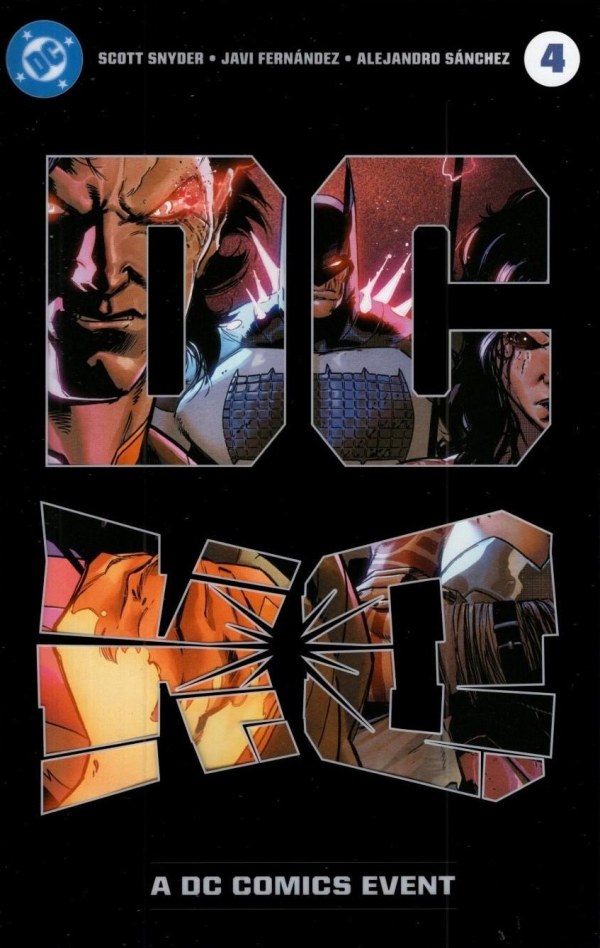
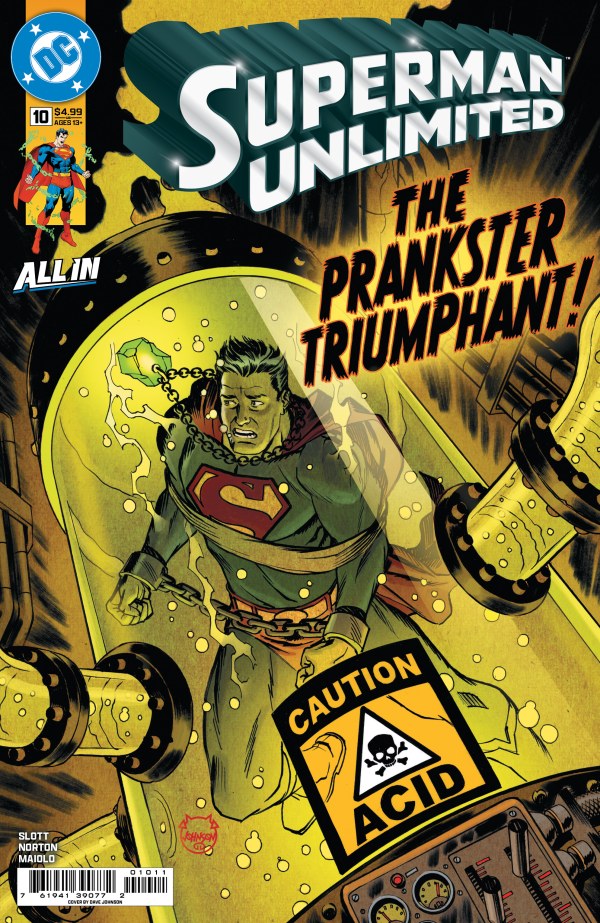
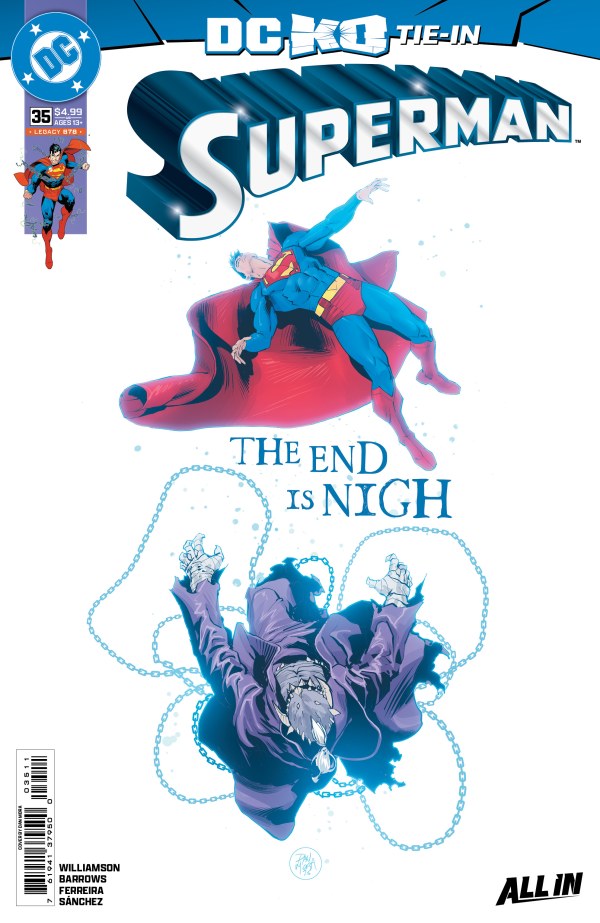
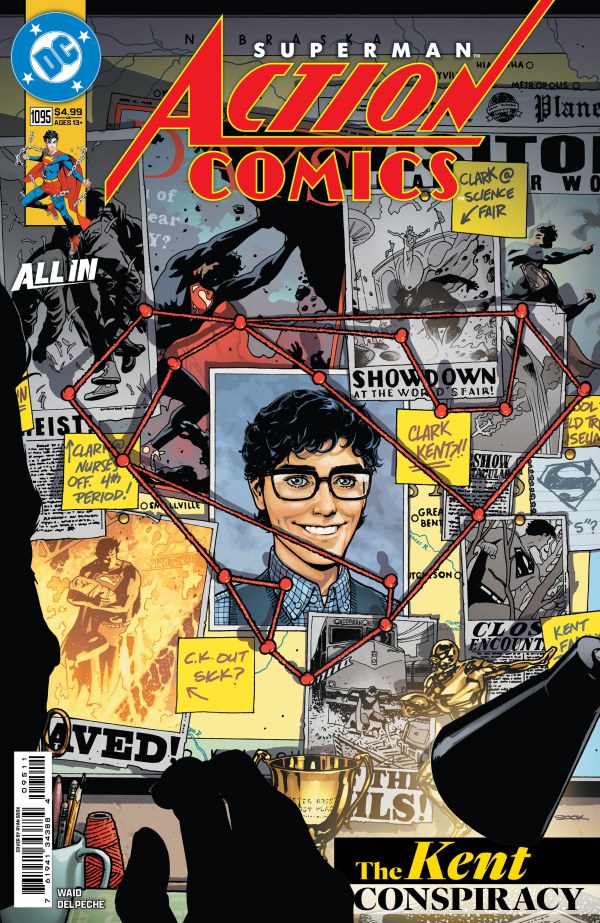
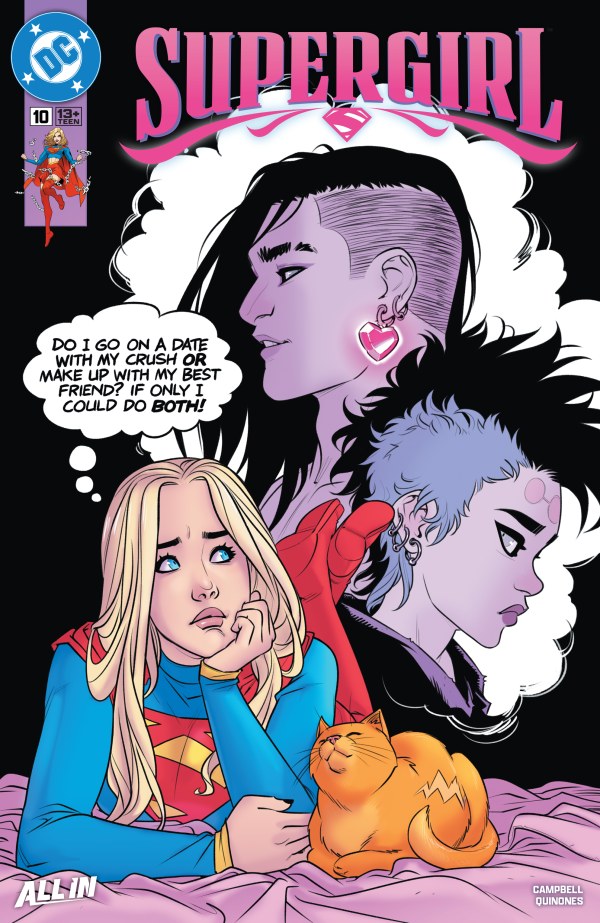
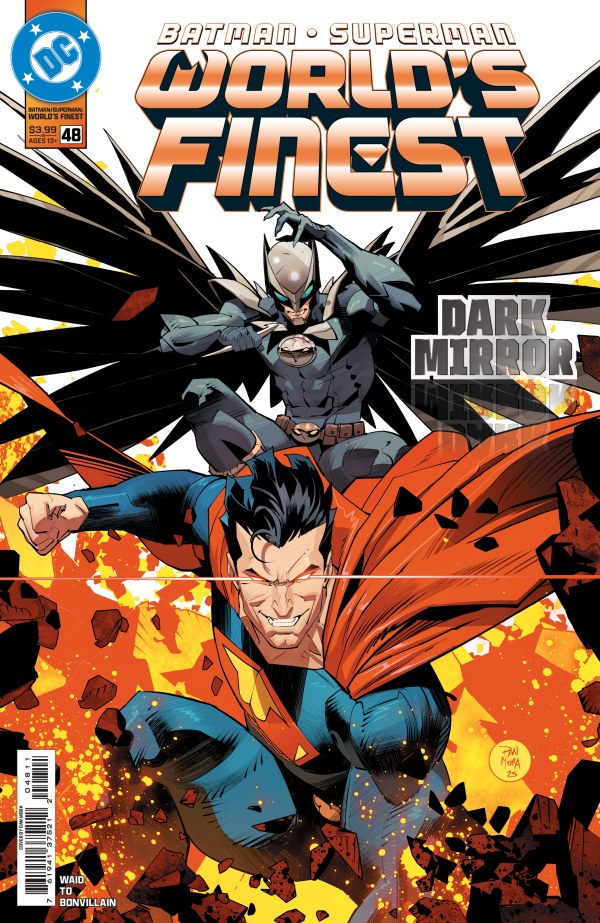
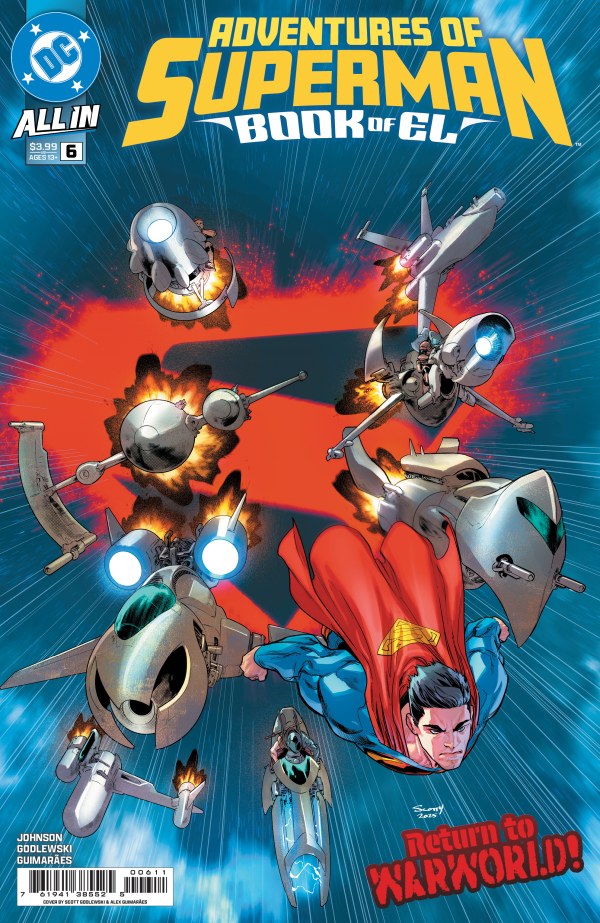
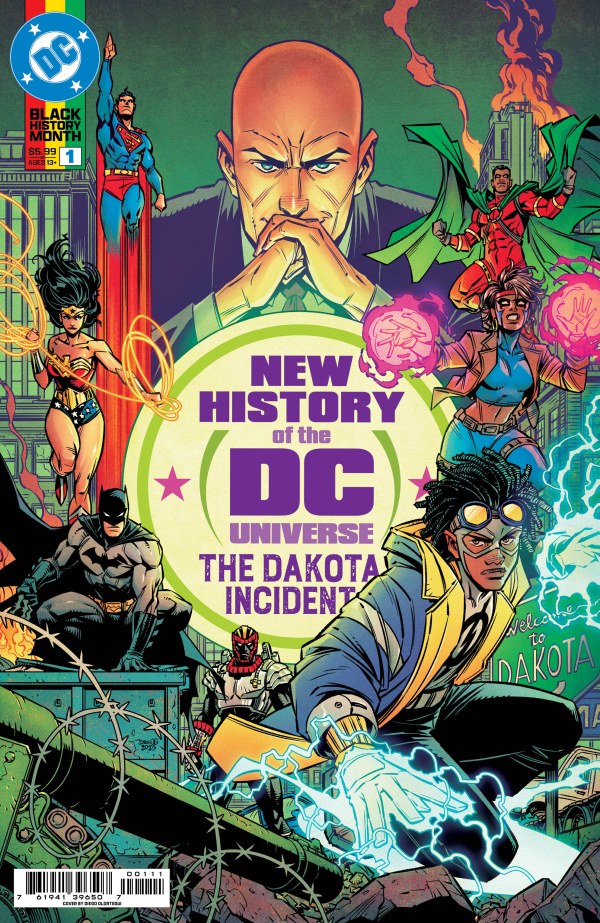

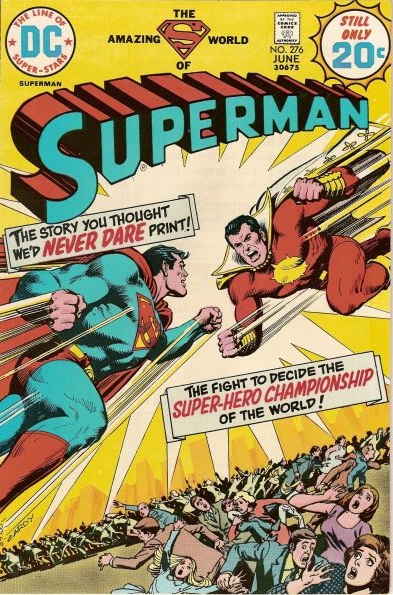


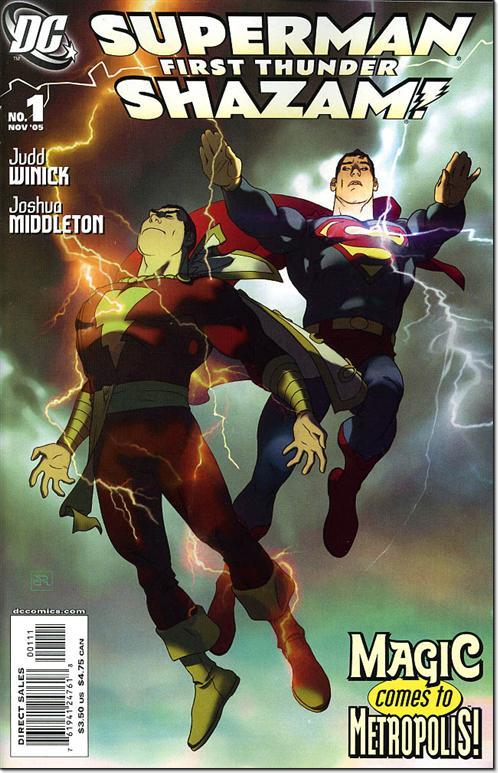


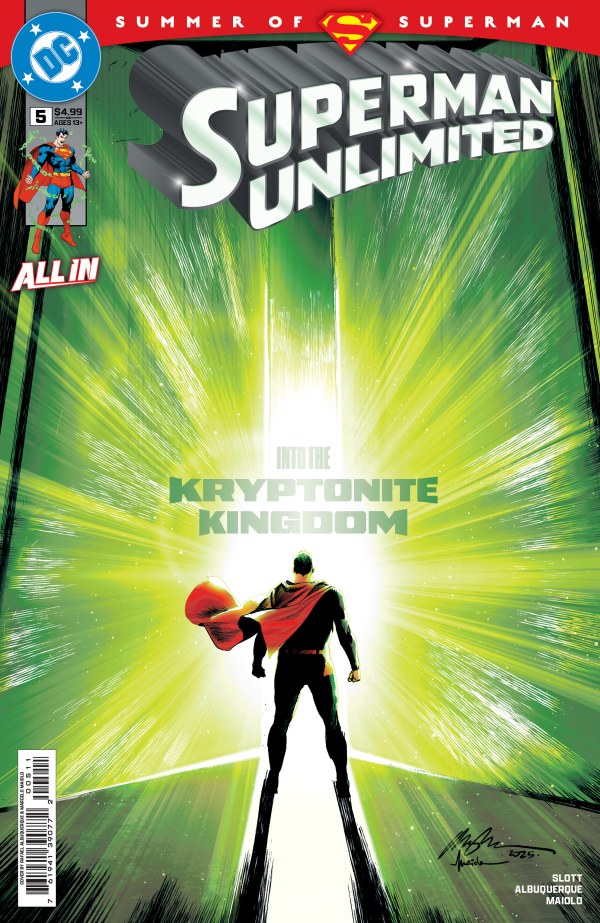

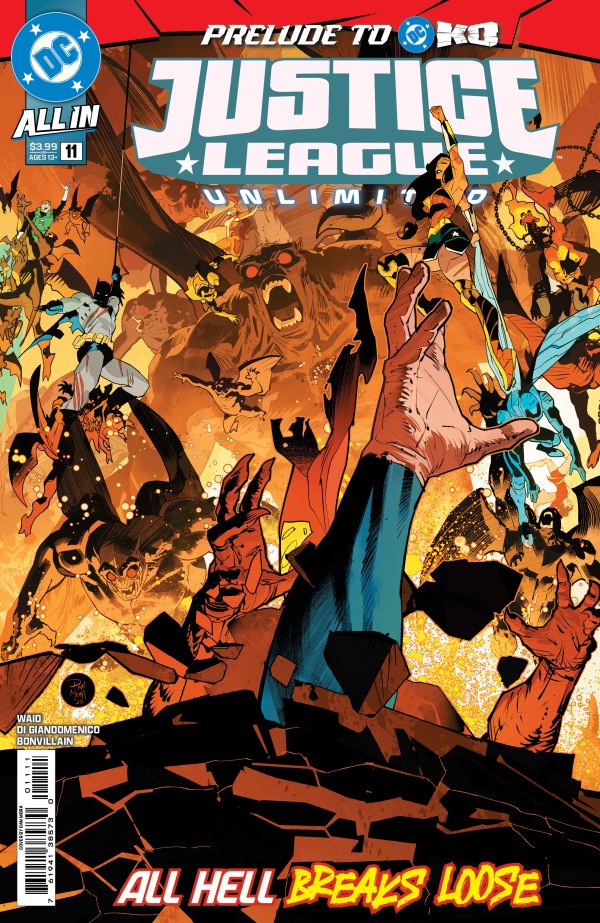

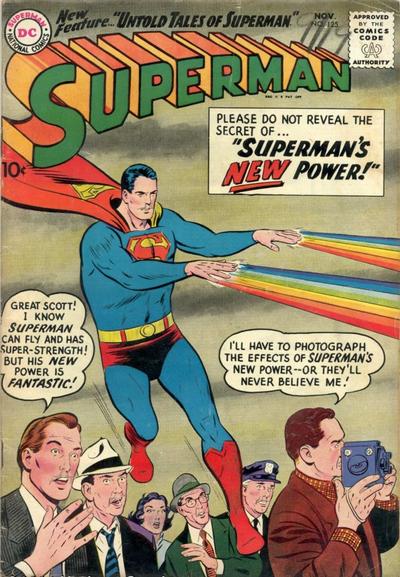
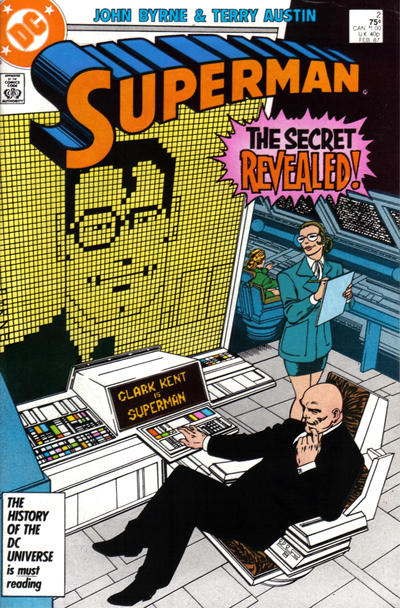



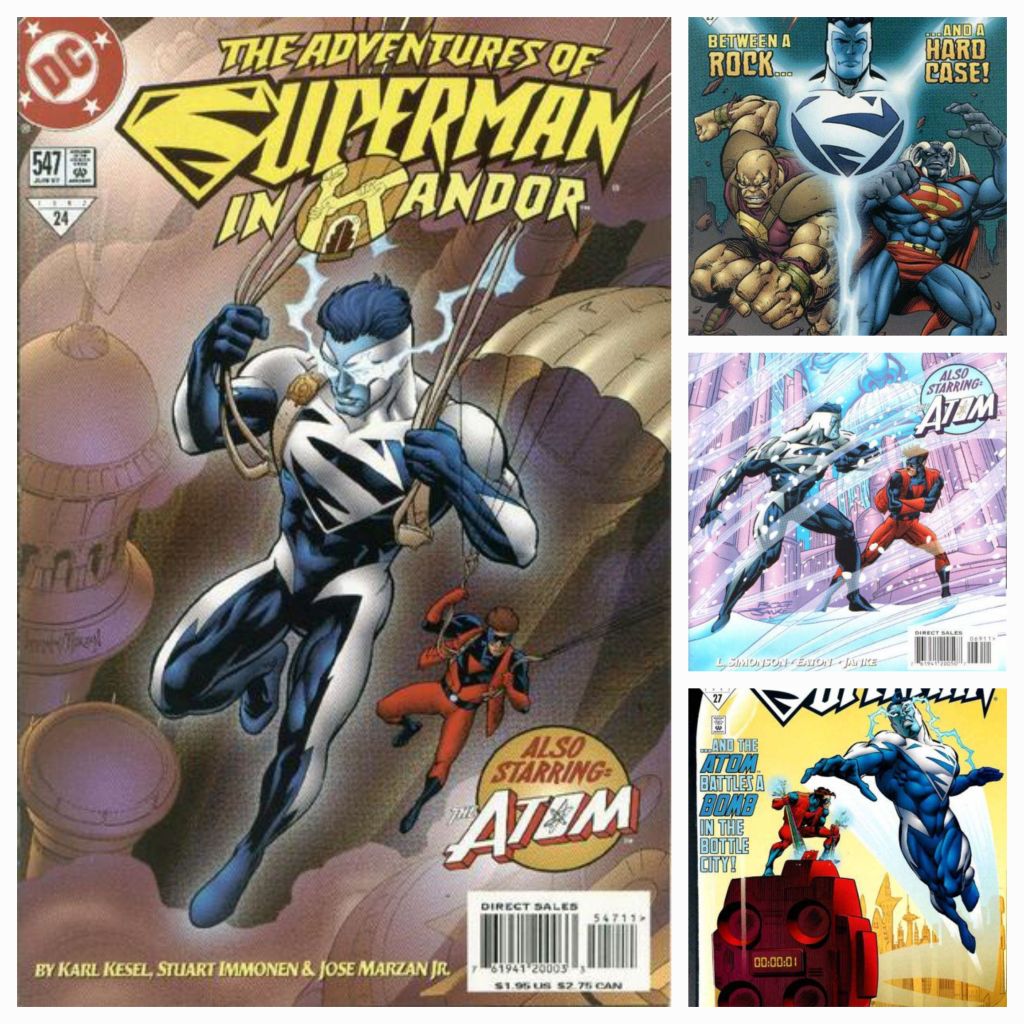
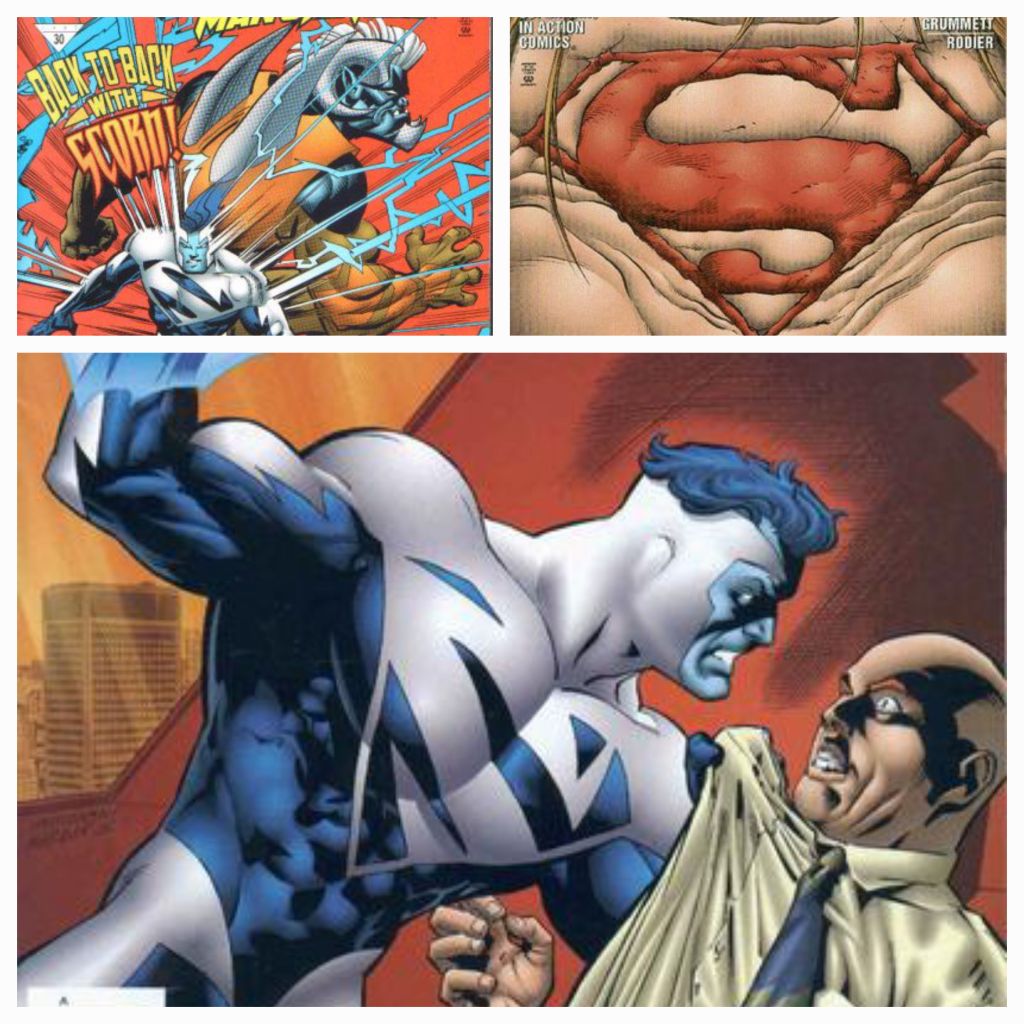
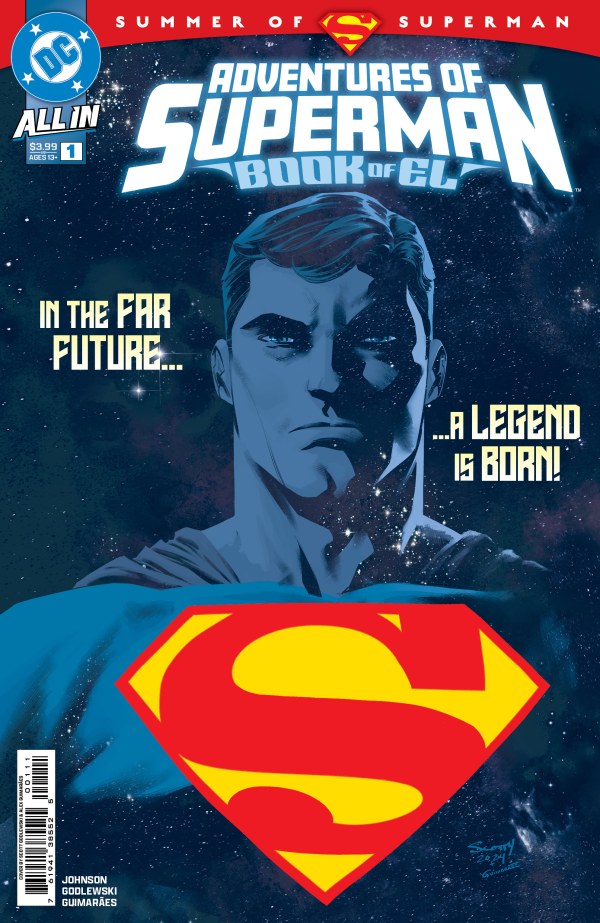


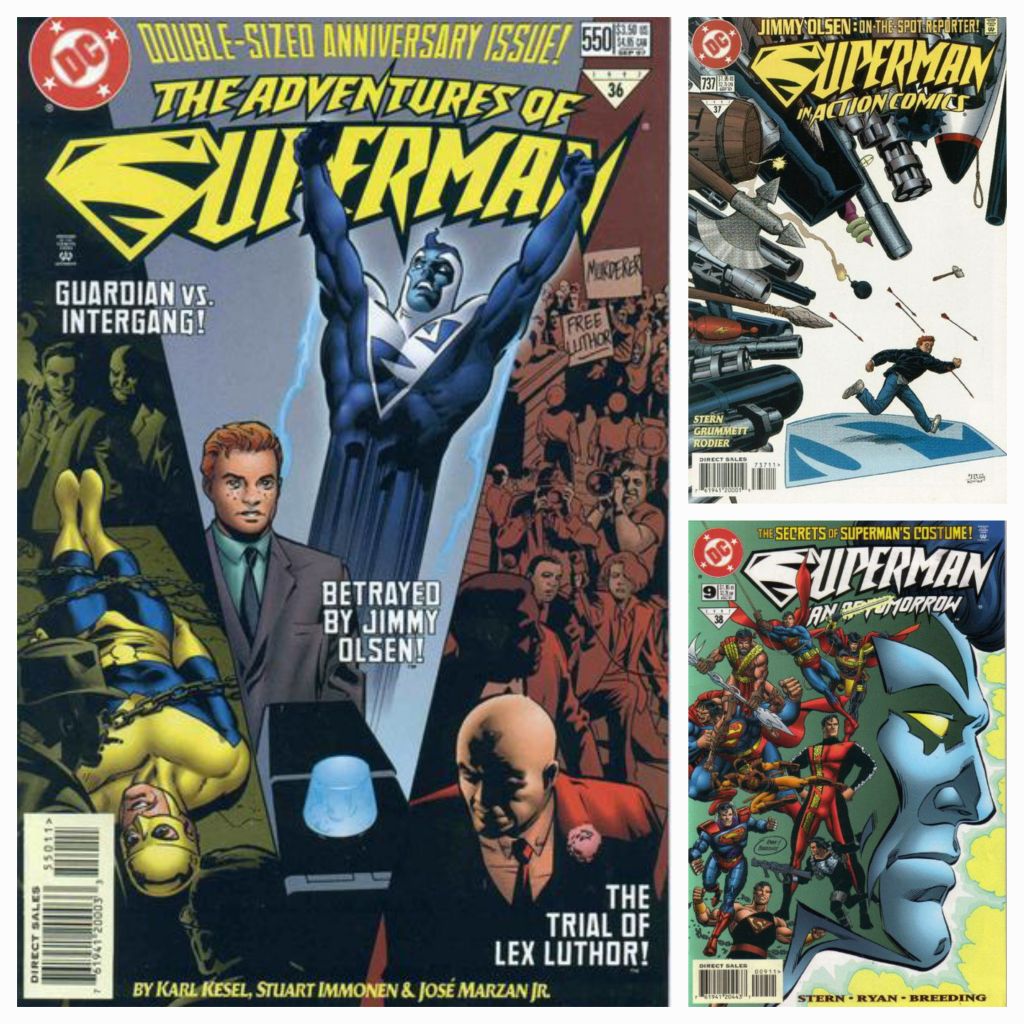

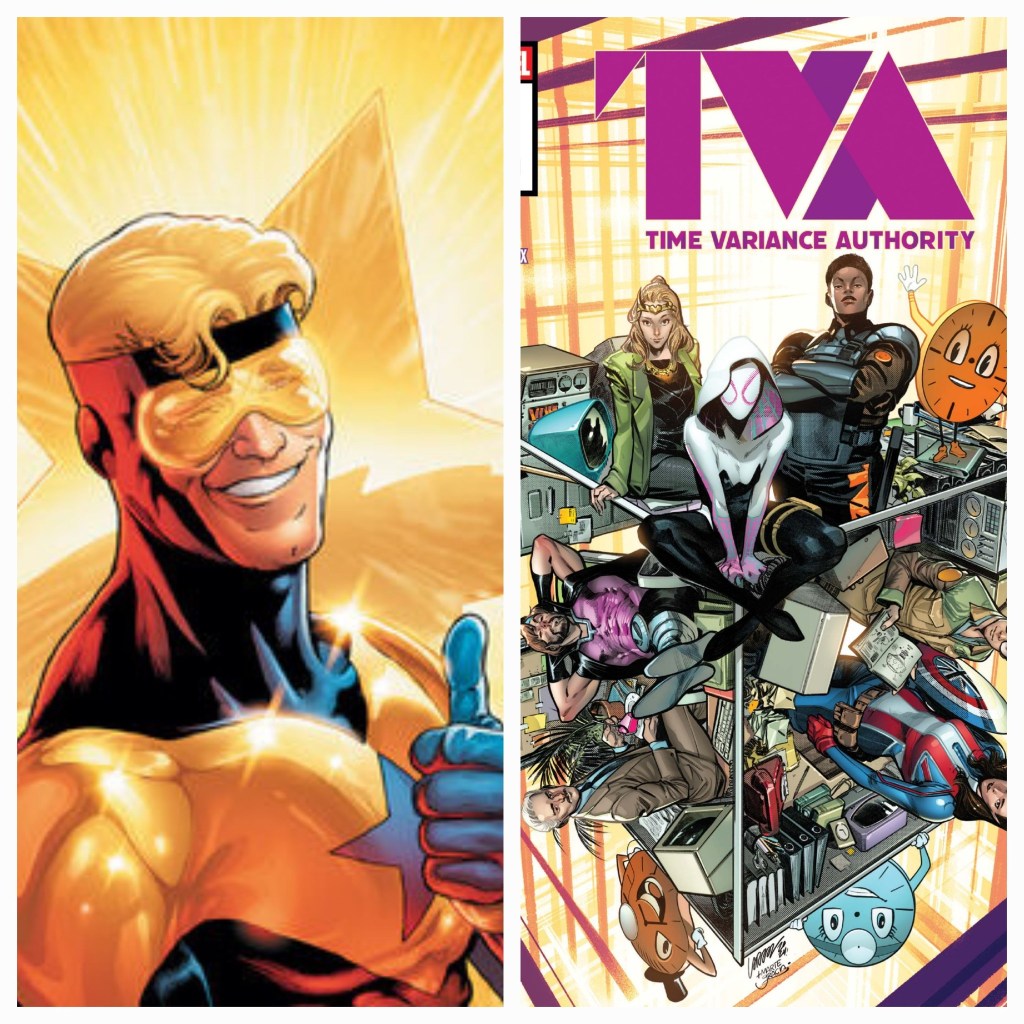


 Blake M. Petit