Geek Punditry #21: A Complete Trip Down the Yellow Brick Road

No matter what your particular fandom is, there are many different strains of Geekery – the Viewer just watches the movies or shows, the Shipper is obsessed with who is (or should be) hooking up with who, the Collector wants the merch, the Debater just likes to argue – and all of them are perfectly valid. One of the more difficult ones to be, though, is the Completionist. The Completionist is someone who wants to read, watch, or play every incarnation of their favorite franchise, no matter what. (When you cross this with the Collector, you wind up with someone who can open a museum.) Being a Completionist can be time-consuming or all-encompassing if you allow it to be, which is why I try to restrain myself, because I definitely have Completionist tendencies. I can refrain from reading every Star Trek novel ever written, but I definitely want to watch every movie and TV series in the franchise, even the one I don’t like. (Yes, that’s singular.)

Completionism is more difficult with some properties than others, of course. Fans of modern franchises like Game of Thrones or Harry Potter have it relatively easy – the number of books, movies, and TV shows is comparatively small and all of them are easily available for anyone who wants them. A George R.R. Martin Completionist’s fear is that the series will never be finished, not that they won’t be able to find it. But it gets much more difficult if you’re a Completionist for an older property, especially one that has lapsed into the public domain. For example, I’m a big fan of L. Frank Baum’s Land of Oz, and if I really wanted to, I could spend the rest of my life trying to complete my experience in that world and never have a chance of success. When Oz is mentioned, the average person usually thinks of The Wizard of Oz, the 1939 film starring Judy Garland and absolutely zero suicidal Munchkins, no matter what Freddy Campbell told you in sixth grade. The movie is, of course, a legitimate classic, and everybody has seen it. Fewer people have read the novel it’s based on, The Wonderful Wizard of Oz, although most people are probably at least vaguely aware that it exists. What even fewer people understand, though, is just HOW MUCH Oz content exists in the wild.
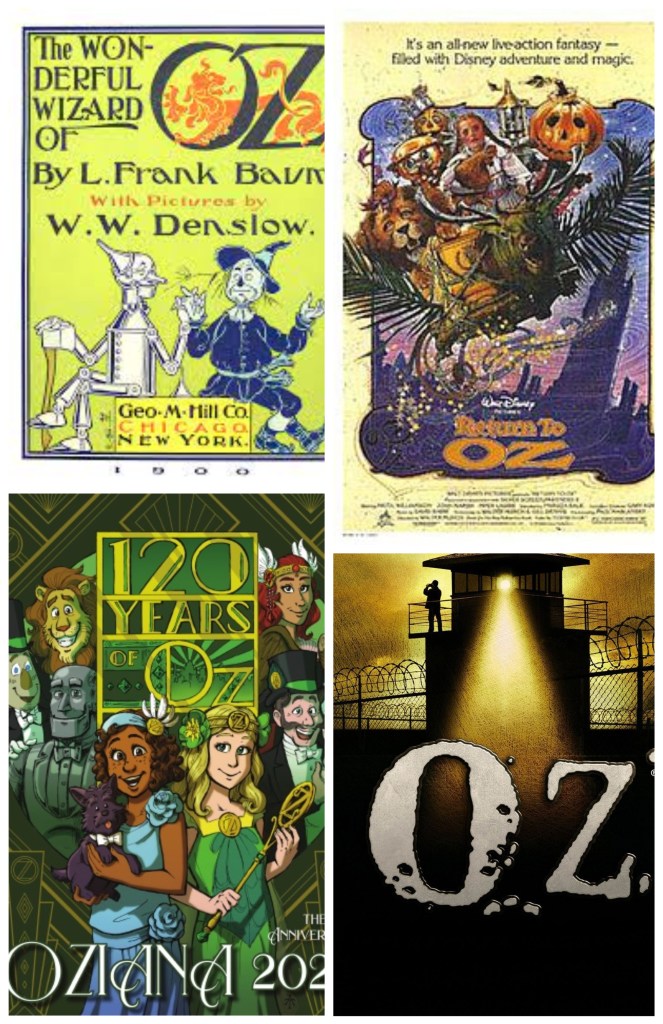
Wait a second, I think Google Image Search may have screwed something up here…

Baum himself wrote 14 novels about Oz, plus assorted short stories, some stage plays, and even a couple of silent movies. After he passed away, his position of “Royal Historian of Oz” was passed on by the publisher to Ruth Plumly Thompson, who wrote even more books than Baum before the title got passed along again. All in all, the “original” Oz series consisted of FORTY different books by seven different authors before it was retired in 1963. Not that the authors retired, though. Many of them wrote other Oz books later in life, although those are not usually counted among the “Famous Forty,” as they are known to Ozites. 

But this is only the beginning. In addition to the seven official “Royal Historians,” other people started to put out their own versions of Oz, even before the earliest books started to slip into the public domain. W.W. Denslow, the illustrator of the original Wizard of Oz, tried doing his own Oz stories without Baum after the two had a falling-out, although they didn’t enjoy the staying power of his collaborator. Some of Baum’s own children wrote Oz books that wound up getting squelched when they were sued by their father’s publisher for violating their copyright. But once the Baum books went into Public Domain, things exploded.

A quick explanation of Public Domain, just in case there’s anyone who doesn’t know what that means: when someone makes a creative work, they (or their employer, if it’s a work-for-hire) automatically own the copyright to that work. Copyright can be sold, transferred, or licensed, but only the copyright owner has the legal right to profit off that specific work in any way. Eventually, some time after the creator’s death, copyright expires and these creative works lapse into what is called Public Domain, which means that nobody owns the rights any longer and anybody is free to create their own derivative work based upon it. It’s the reason why so many people do their own versions of Shakespeare’s plays and why there are ten billion different versions of Charles Dickens’s A Christmas Carol – you don’t have to pay anybody to use the story, but you still get to trade on the public opinion of the name to build your audience. Copyright laws have changed over the years, mostly due to the efforts of the lobbyists working for the major IP holders (Disney in particular) trying to get it extended over and over again, but eventually it does end. It’s going to be really interesting to see what happens when Steamboat Willie, the first Mickey Mouse cartoon, finally enters public domain next year.
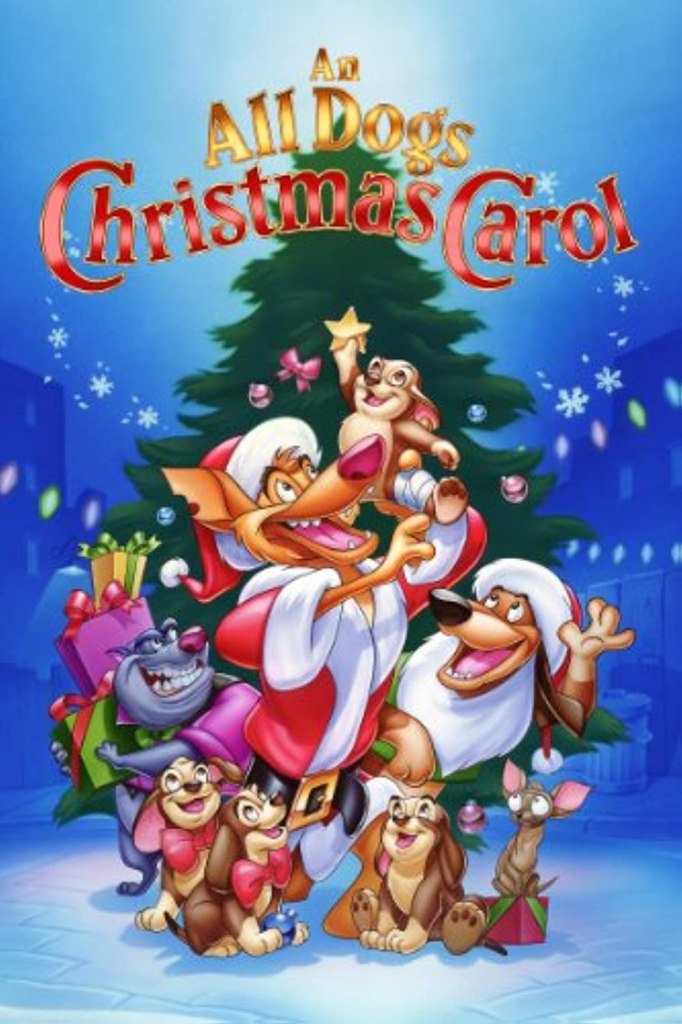
Another masterpiece brought to you courtesy of Public Domain.

Having said that: a work can be in public domain, but the derivative works can still be copyrighted. The Baum Oz novels are in public domain, but the MGM movie is not, so you cannot use any elements specific to the film in your own work without paying up. The best example of this came with Return to Oz, the 1985 Disney film that you may remember as giving you nightmares when you were seven years old. The movie was based on the second and third Baum books, The Marvelous Land of Oz and Ozma of Oz, and they were free to use those elements, but they also wanted one of the most iconic symbols of Oz: the Ruby Slippers. The problem is that in Baum’s books, Dorothy’s magic shoes were silver. MGM changed them to Ruby to better show off their Technicolor process, and they still owned the copyright on Ruby Slippers, so Disney had to pay them for the right to use Ruby Slippers in the film. Crazy, right?
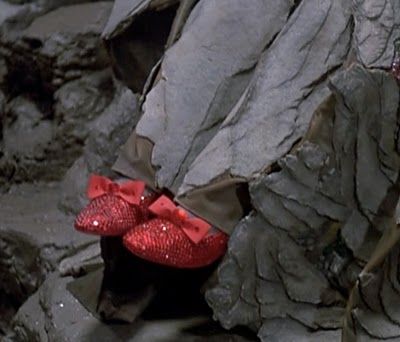
This one shot cost Disney seven times your annual income.

Anyway, once the copyright finally ended on the earliest Oz books, the ones by Baum, it became legal for anybody to tell their own versions of or use elements from that story as they wished. From SyFy’s Tin Man miniseries to the classic musical The Wiz, the public domain nature of Oz has led to hundreds if not thousands of derivative works. And here’s where it gets hard to be a completionist: not only is there simply too much stuff out there to read or watch it all, it’s almost impossible to even create a comprehensive list.

A while back, I decided to try to compile a list of Oz books and short stories, but even with the help of websites like The Royal Timeline of Oz or their sister website, Wikipedia, it became apparent that the sheer volume of what I was attempting to do made it nearly impossible. I started putting together a Google Sheet with all of the different Oz books I could find, a list that as of this writing is breezing past 400 different works and still going. That’s to say nothing of the hundreds of Oz comic books (a few of them are on my Sheet, but not nearly all) or countless movies and shorts that have been built around Baum’s universe. By the way, I invite anyone interested to take a look at my sheet and let me know what I’m missing – I may never finish the list but I’ll never stop adding to it either. It’s the Completionist in me.

You see, in addition to the “official” works, dozens of other publishers have taken it upon themselves to continue the stories, both in ways that are faithful to Baum’s original works and others in ways that Baum may never have considered or even approved of. That’s another aspect of Public Domain: the fact that anybody can make a derivative work can often draw upon people who are doing so not out of love for the original property, but in an attempt to subvert it. Earlier this year, for example, we saw the release of the film Winnie the Pooh: Blood and Honey, which takes A.A. Milne’s beloved icons of childhood joy and innocence and turns them into bloodthirsty horror movie slashers. Give me a break.

Oh, bother.

Look, I like horror movies. I like slasher movies. I like goofy slasher movies. But I don’t care for people who take a crap on precious childhood memories. Characters like Pooh and Tigger are beloved by children all over the world – do they really need to see Pooh gutting somebody with a chainsaw? Full disclaimer here: I have not seen Blood and Honey, nor do I intend to, because it’s the concept itself I dislike. (Quick note to mention that it’s the original Milne books that are in public domain, not the more well-known Disney version of Winnie the Pooh. Man, it always seems to come back to Disney, doesn’t it?)

That doesn’t mean that there’s no room for a dark derivative of an old story, of course. Let’s run down the Yellow Brick Road again to Gregory Maguire’s Wicked, a novel of Oz that tells the life story of the Wicked Witch of the West. Like the original Wizard of Oz, Wicked is a fine novel that has been somewhat overshadowed by its own musical adaptation, but no matter which version of the story of Elphaba you’re enjoying, it’s definitely a more mature version of Oz than Baum ever wrote. With Wicked, though, Gregory Maguire was using Baum’s backdrop to tell an intriguing story, something with interesting social commentary, something that had a point. I have no problem with that whatsoever. What bothers me is when someone twists an icon of childhood without a good reason to do so, when somebody creates something shocking just for the sake of being shocking. I don’t care for that. I don’t respect it. And everything I’ve seen of Blood and Honey makes me feel like that’s what the movie does. If I’m wrong, by all means, let me know.

Anyway, the point is that with all of the Oz out there, it seems impossible that I’ll ever get through it all. I’ve read all of the Oz books Baum himself wrote, but I haven’t made it through the rest of the Famous Forty yet. I’ve enjoyed Eric Shanower’s original graphic novels and I loved the adaptations of the Baum originals he did with Skottie Young for Marvel Comics, but Zenescope Comics’ Grimm Fairy Tales has a whole Oz spinoff line that I’ve barely touched upon. I’ve still got three out of four Wicked Years books to read, and I’ve only begun to scratch the surface of the series by later authors like March Laumer or Baum’s own great-grandson Roger S. Baum. And this is to say nothing of the “official” productions that are still coming out! The International Wizard of Oz club produces an annual magazine, Oziana, which always includes new short stories (and sometimes even short novels) set in Baum’s world. And as they had the utter temerity to begin publishing Oziana back in 1971, before I was even born, it seems quite unlikely that I’ll ever be able to track down every piece of Oz media that exists.

Slow down! I’ve got twelve decades of IP to catch up on!

But that isn’t going to stop me from trying, is it?

Completionism is a fool’s game, my friends, and it’s a game that most of us are doomed to lose. But even so, it can still be an awful lot of fun to play.

Blake M. Petit is a writer, teacher, and dad from Ama, Louisiana. His current writing project is the superhero adventure series Other People’s Heroes: Little Stars, a new episode of which is available every Wednesday on Amazon’s Kindle Vella platform. He is most definitely not writing this column just to give people ideas for what to get him for Father’s Day, his Birthday, Christmas, or International Oz Completionist Day. 
Geek Punditry #9: Pop Culture Comfort Food

Reportedly, there are studies that indicate people like rewatching old TV shows and movies because there is comfort to be found in familiarity. I don’t have those particular studies in front of me because I don’t feel like looking them up at the moment (this is a highly scientific approach), but I completely believe it. When the world is starting to be too much, I often find myself going back to movies, books, or comics that I have enjoyed before. There’s something about returning to old stories that makes it feel like you’re reconnecting with a friend. There’s an ease and a comfort that can be desperately needed when there’s a weight on your shoulders, when the anxiety begins sending the pins and needles across your skin, when every text or phone call makes you worry that the worst has happened. I go back to these things a lot, is what I’m saying.

And since I know I’m not alone in this, I thought that this week I would share with you some of my storytelling comfort food. I’m going to tell you one example from each of my preferred forms of media (movies, TV, books, and comics) that I can and have returned to more times than I can count, stories I know as well as the walk from my car to the front door, characters who are as close to me as family. When I’m feeling down or beat up or that nothing is going to be okay, these are the places I turn to so that I can be reminded…sometimes it can be.

Movies: Back to the Future 

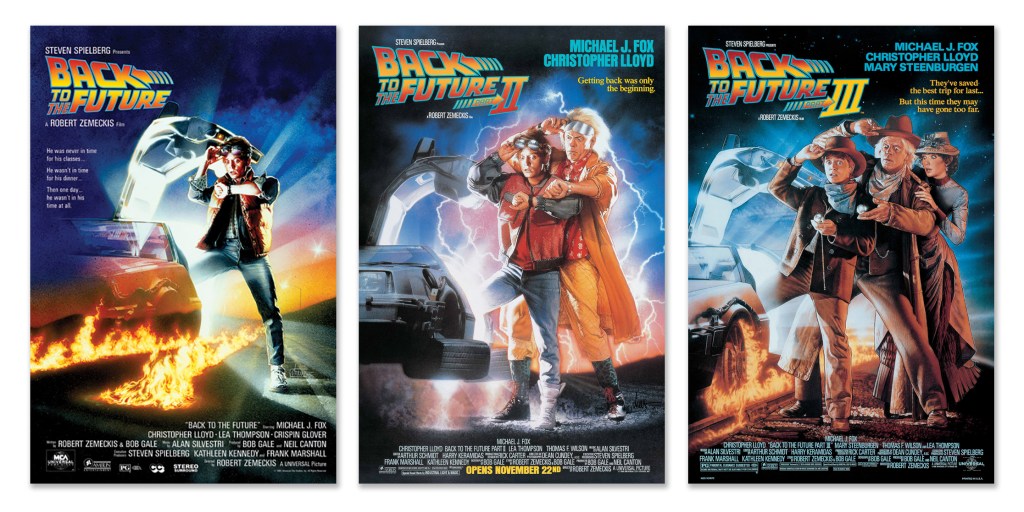
A series that never fails to take you back in time.

In the interest of clarity, I guess I should say the Back to the Future trilogy, because heaven knows I can never stop with one. The first movie came out when I was 8 years old, and I distinctly remember sitting down in front of the fireplace after my parents rented it and put the VHS tape in. I remember how quickly and deeply I fell in love with the film and how we went to the movies together to see Part II, and how we went out during a storm while out of town on a family vacation on the opening weekend of Part III to see just how the saga concluded. I even remember my father commenting on the weather and saying that anybody who went out in it to see the movie must have been a die hard fan. Which, of course, I was.

I know I don’t have to explain to anyone why these films are so great, and I’m certainly not going to waste any time on a recap, but I’m going to tell you what it is about them that makes me feel better. Part of it, like with all of the things I’m going to share with you, are the characters. There’s something about the unorthodox friendship between Doc Brown and Marty McFly that resonated with me even as a child. I had already spent years dreaming of being picked up by a tornado and thrown to Oz or finding a closet door with a passage to Narnia, but even at eight it was starting to seem like either of those would be a stretch. Finding an eccentric mentor who would bring me along on grand adventures seemed much more plausible. Even now, at a stage in life where I find myself relating more to Doc than Marty, that relationship seems pure and genuine. (Ironically, I think that’s part of the reason Rick and Morty became so popular so fast – it’s a parody of the Doc/Marty relationship, but that parody wouldn’t have worked as well if there was something foul or sordid about the original.)

Then there’s the basic fantasy of time travel, of being able to hop into a machine that can whisk you away to another place. The idea of seeing the past and the future is tantalizing, and I would be lying if I said I wouldn’t be tempted to use Gray’s Sports Almanac the same way Marty intended to. 

The other thing, which people may perhaps not think of immediately but I consider of utmost importance, is the music. The best movies often have memorable scores, but Alan Silvestri’s composition is one of the all-time greats. The sweeping tones automatically bring to mind the film, hit those triggers in your memory and pull you into the world of Hill Valley, and charge your heart with anticipation. The music moves from exciting to thrilling to, ultimately, triumphant. When you hear Alan Silvestri’s score to Back to the Future, you find yourself capable of believing that even when things are tough, like they were for Marty McFly, there is a solution that will make everything turn out okay in the end.

And c’mon. The car is really cool.

Television: Cheers 

Where people know troubles are all the same.

Bet you expected me to say Star Trek, didn’t you? Yeah, I know, Trek is my jam, but sometimes you wanna go where everybody knows your name.

Cheers, the sitcom about a little bar in Boston, has two distinct stages, and I love them both…but not equally, if I’m being honest. In the early years, the show was mostly a workplace romcom about Sam and Diane, with the rest of the characters there to add flavor. It was a fine show, it was a funny show, but I was a fairly young child at the time and, although my parents watched it, I didn’t really start paying attention to the series until I got older. This may be part of the reason that – although I would never skip the Diane years when doing a rewatch – it’s the Rebecca years that leave the most indelible mark on my memory.

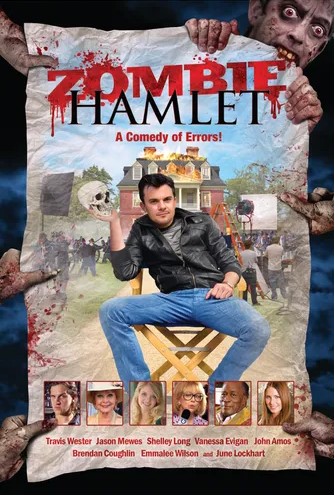
But my relative age isn’t the only reason the second life of Cheers is my preferred era. Like I said, during the Shelley Long years, the show centered around Sam and Diane’s relationship. This was good. This made for some excellent television. But after Long left to become a major movie star (I recently watched her performance in 2012’s Zombie Hamlet, and I highly recommend it), they replaced her with the recently-deceased Kirstie Alley, and although there were the occasional flirtations with making her couple off with Sam like they did with Diane, the writers wisely realized that the same chemistry wasn’t there, and shifted the focus from a romcom to more of an ensemble comedy. The other characters grew in prominence, Rebecca Howe found a different niche to fill than the one vacated by Diane Chambers, and the show blossomed yet again. 

While the likes of Woody, Cliff, Carla, and Norm all had their moments in the pre-Rebecca days, post-Diane they had far more episodes in the spotlight. Frasier Crane was a Diane castoff who stuck around, but it was in the Rebecca era that he bloomed to one of the stars of the show, eventually spinning off into his own series (also a comfort watch for me), with a revival of the latter currently in the works. I’m not saying that the early years of Cheers weren’t GOOD, please don’t misunderstand me. It was a remarkable comedy, the character of Coach was sorely missed for the rest of the series, and the episode guest-starring John Cleese is perhaps one of the funniest half-hours of television ever put to film. It’s just that the pure love I feel for the series, the way I have affection for these characters as if they were personal friends of mine, the fact that I remember that Frasier’s first wife “Nanny G”’s phone number was 555-6792…that’s all a product of the Kirstie Alley years, and I’m fine with that.

Boy, I deserve some sort of trophy for THAT deep cut. 

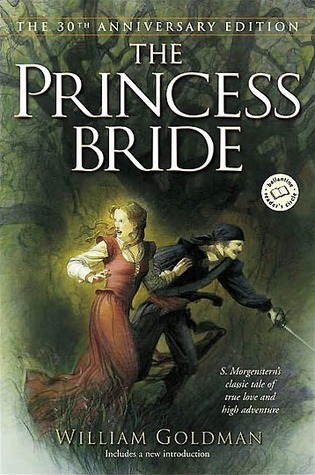
Book: The Princess Bride by William Goldman. 

Skipping this would be inconceivable.

I may be cheating a little bit here, since much of what is wonderful about this novel is also applicable to the movie, which I also love and watch as comfort on many an occasion. But this is probably the novel I have read more times than any other (a feat which I insist is more impressive than the movie you’ve watched most often). It is the book I pick up when I’m sad. It’s the story I turn to when I’m depressed. It’s the tale I want to hear again when I feel like there is nothing good and beautiful in the world. I need this story at those times, because if it were true that there is nothing good and beautiful in the world, then how could a novel such as this even exist?

I know you’ve seen the movie, so I won’t bother to retell you the story. Instead, I’ll tell you about the elements unique to the book so that you can understand why it resonates with me so deeply. 

First of all the framing sequence. In the film, the tale of Westley and Buttercup is being read by a grandfather to his sick grandson. In the book, Goldman creates a metatextual story (this was before metatextual stories) about his own family, in which his father read the story to him as a child. It was not until adulthood that he tried reading it himself to his own son (a fictional son, by the way, as the real William Goldman had only daughters) and realized his dad skipped all the boring bits and just read him “the good parts.” The book is presented as adult Goldman abridging a classic novel by getting rid of all the flowery muck and bits of Elizabethan satire that modern audiences wouldn’t give a crap about. It’s a really funny conceit, and it’s executed so perfectly that a lot of people reading the book for the first time don’t realize the framing sequence is fiction as well. (It’s me. I’m a lot of people. I didn’t get it the first time.)

Second, the writing is simply marvelous. A lot of the great bits of dialogue made it into the film, which isn’t a surprise since Goldman wrote the screenplay himself, but there simply wasn’t room for everything, and many of those pieces left on the floor are absolutely priceless. For instance, the movie largely ignores Buttercup’s parents and their unending bickering, for which they keep score. It skips over the history of Fezzik entirely and leaves out all but the most essential parts of Inigo’s backstory, which makes an already amazing character so much richer. There’s more time spent with Humperdink, more time devoted to Vizzini, and much more to Westley and Buttercup’s burgeoning romance. Because yeah, it is a kissing book.

I don’t begrudge Goldman any of the cuts, of course. The very premise of the novel is that sometimes parts of a story don’t translate from medium to medium. But if you’ve only seen the movie you haven’t experienced the whole story.

The last thing about this book is perhaps the most important: the message. In the framing sequence, Goldman discusses a conversation with an old neighborhood woman who served as something of a mentor to him. This segment concludes with the child Goldman learning that life isn’t fair. Rather than being angry or hurt at the realization, though, he is utterly jubilant to hear the news, because once you accept that life ISN’T fair, isn’t SUPPOSED to be fair, then a lot of the crap the world throws around suddenly makes a LOT more sense. This is, I think, a very important message, and the great thing about it is how it is presented in a way that is joyful and positive rather than dour and depressing.

The point I’m getting at is that if you haven’t read this book, you should, and I’m envious that you’re going to get to experience it for the first time, which I will never have the chance to do again. But hey, that’s all right, because life isn’t fair.

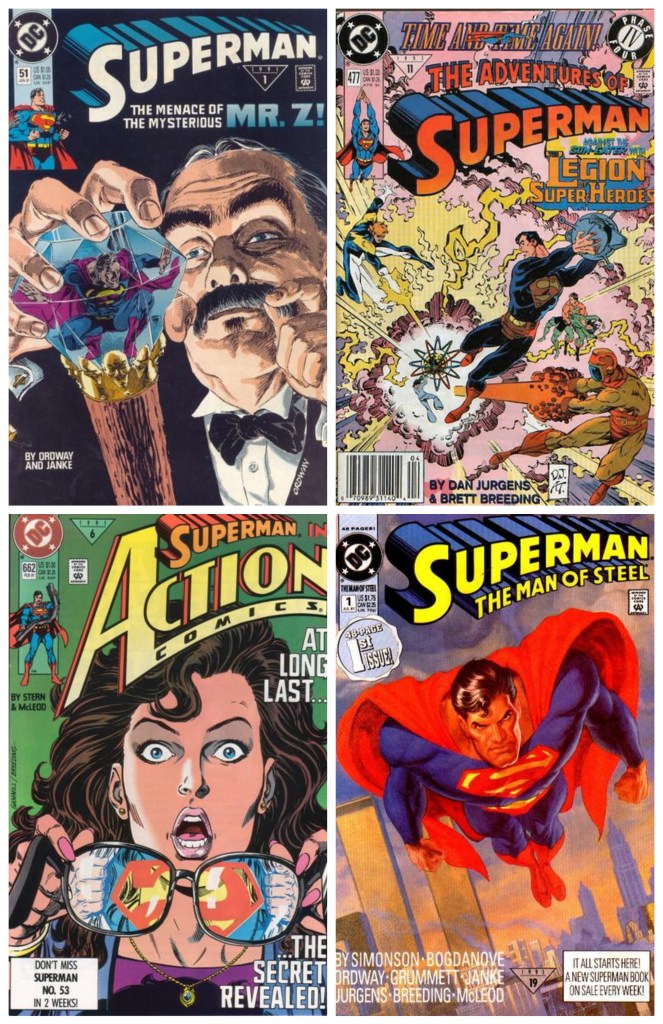
Comics: The Triangle Era Superman.

This was MY Golden Age

Okay, this paragraph is just for the uber-nerds like myself who already know all about the “Triangle Era” of Superman. The rest of you can skip to the next paragraph. Ahem. I’m about to give a super-condensed history of the era. I know I’m leaving out a bunch of stuff. Like William Goldman, I choose to focus on the good parts rather than telling everybody the intricacies of comic book numbering and whatnot. Please don’t send me corrective emails.

In 1986, DC Comics hired writer/artist John Byrne to revitalize the Superman character. He took over both Superman and Action Comics, the two titles that starred the hero, and they added a third book to the line as well, Adventures of Superman, which was usually done by other creators such as Marv Wolfman. After a while, Byrne left the character in the hands of other writers and artists, and while he had done good work in his time, it was after his departure that a certain kind of alchemy began to happen. With Superman starring in three comic books a month, the writers and artists would have to collaborate to make sure they weren’t contradicting or causing problems for each other. This collaboration began to grow more intricate, and in time, the three different titles began to function almost as one. Stories that began in Adventures of Superman one week would continue in Action Comics the week after. Before long a fourth title was added, Superman: The Man of Steel, so that there were four monthly Superman books that worked almost as a single weekly title. Then someone noticed that 4×12=48, but there were 52 weeks in a year, so a fifth title (Superman: The Man of Tomorrow) was added to fill in the extra gaps. At some point, DC started to put a triangle on the cover of each issue demonstrating which week of the year it was to help readers keep track of what order the books went in, thus the “Triangle Era” was born.

The weekly nature of the serial was a great concept. Knowing that there would be a new chapter of an ongoing storyline each and every week forged hardcore loyalty and created a devoted fanbase that still exists today. What’s more, although the main story was ongoing, each individual series had its own subplots that made it stand out. Adventures, for example, was more often going to deal with the mad scientists of Project: Cadmus, while Man of Steel devoted time to a story about an orphanage and a young child who would eventually be adopted by Perry White. The books were part of a larger whole, but still had their own flavor and identity.

The Triangle Era lasted over ten years, but those early days happened just as I started reading the books and featured many of the writers, artists, and storylines that are still most dear to me: Lois learning Clark’s double identity, their engagement and marriage, the somewhat vindicated-by-history era of Superman Blue/Superman Red, the classic “Panic in the Sky” storyline, and of course, the legendary Death and Return of Superman were all products of the Triangle Era. Like all comfort media, part of my love for these books is no doubt because these were the comics I read in my formative years. But there’s also the fact that, for a very long time, these comic books were just really good. The world of Superman, which had not-undeservedly been called stale and out of date a decade earlier, was suddenly energetic, exciting, and full of new characters, concepts, heroes, and villains. Many people have made Superman comics over the years, but Dan Jurgens, Brett Breeding, Roger Stern, Bob McCleod, Jerry Ordway, Tom Grummett, Louise Simonson, and Jon Bogdanove remain the gold standard in my mind.

As the song goes, these are a few of my favorite things. These are stories, characters, and worlds that I never grow tired of. These are the things that mean something to me, things I flat-out refuse to let go of, things that come together and help make me who I am.

So what are yours?

Blake M. Petit is a writer, teacher, and dad from Ama, Louisiana. His current writing project is the superhero adventure series Other People’s Heroes: Little Stars, a new episode of which is available every Wednesday on Amazon’s Kindle Vella platform. He bets you thought he was kidding about Zombie Hamlet, didn’t you?

Pictured: the career worth leaving Cheers for.