Time for an update on a couple of topics that we’ve talked about here in Geek Punditry before – both of which coincidentally have collided in recent weeks. Last August (in GP #138: Riverdale in Crisis) I wrote about how Archie Comics was changing its long-running digest program, and how that was just one of the many ways that the old stalwart publisher looked like it was in trouble. At the time, I postulated that one of the ways that Archie could possibly right the ship would be to partner up with another publisher to pull out of their dilemma. And because the laws of physics are universal and immutable, it turns out I was right.
Coming soon!
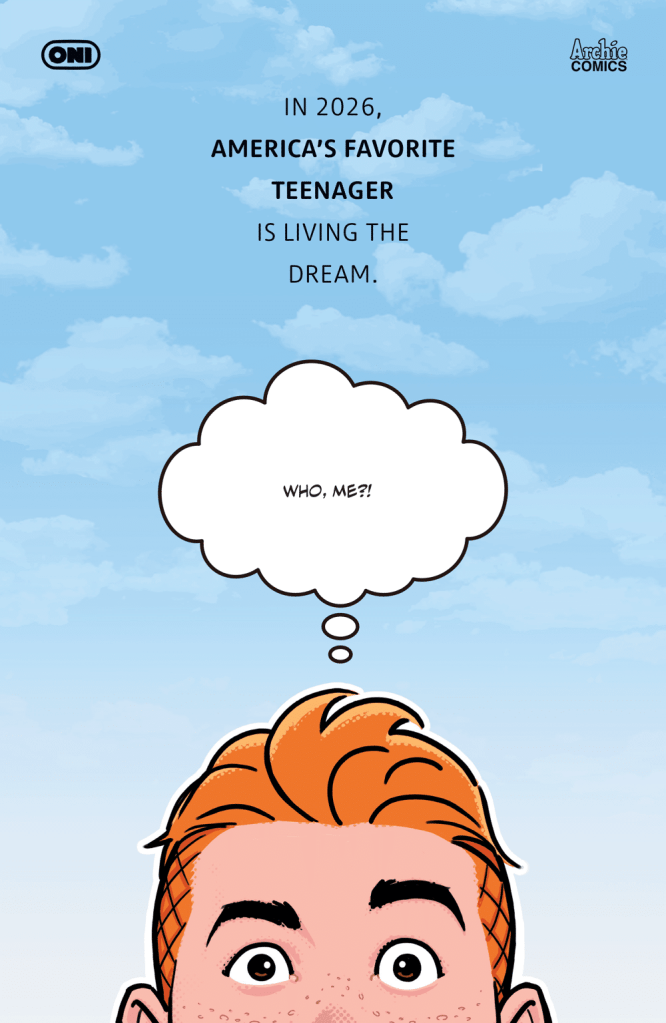
In December, Archie announced a new partnership with Oni Press (publisher of such things as Rick and Morty and Adventure Time, among many other fine comics). Although it appears as though Archie is still publishing their own digests and one-shots, which is almost all they’ve done the last few years, Oni is going to release three new ongoing Archie series later this year: a new volume of Archie, a new Sabrina series, and a continuation of Archie’s popular horror line of titles with Archie in Hell. I’m back and forth on these. I’m more of a fan of the classic, traditional Archie comics than I am of the various attempts to modernize them over the past two decades, even though some of them (like Mark Waid’s Archie run) were done very well. I am, however, intrigued by the fact that this new Archie is going to be written by W. Maxwell Prince, creator of Image Comics’ incredible horror title Ice Cream Man as well as my favorite miniseries of last year, the decidedly non-horror Superman: The Kryptonite Spectrum.
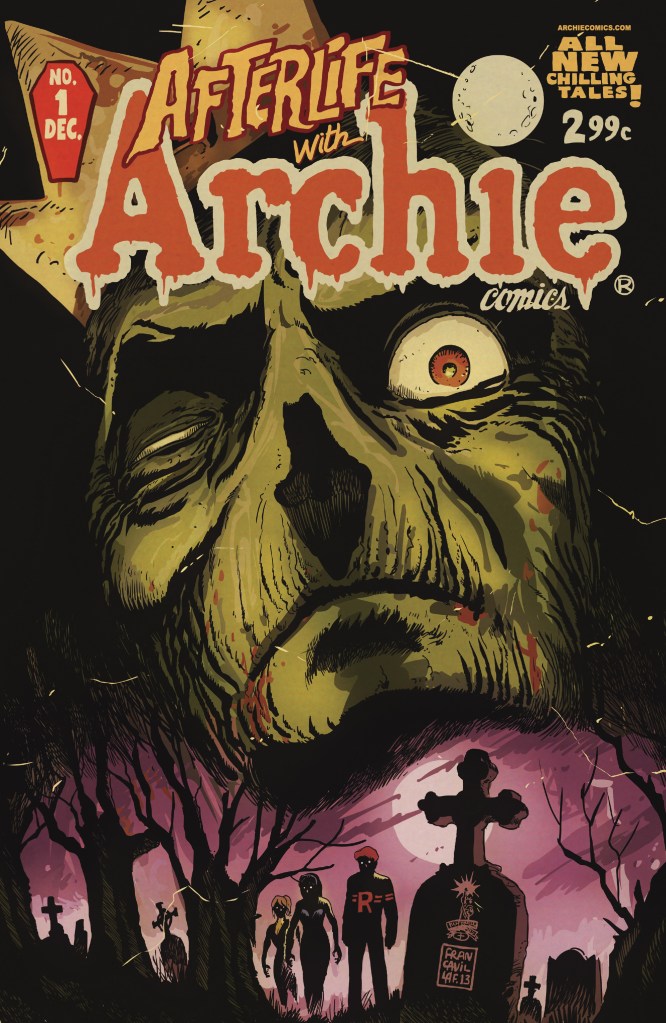
But more pertinent today is the fact that Oni is also going to release new archive and paperback editions of classic Archie stories. Earlier this week, they announced what some of those will be, including a hardcover edition of Tom King’s Archie: The Decision, omnibus collections of Archie: The Married Life, and a “definitive” edition of the horror title Afterlife With Archie. I just have to say, it is audacious as heck to produce a “definitive” edition of a comic book series that was never finished because the writer got distracted by working on the Riverdale TV show.
“So is the ‘Deluxe Edition’ going to have an ending?” “HAHAHAHAHA! No.”
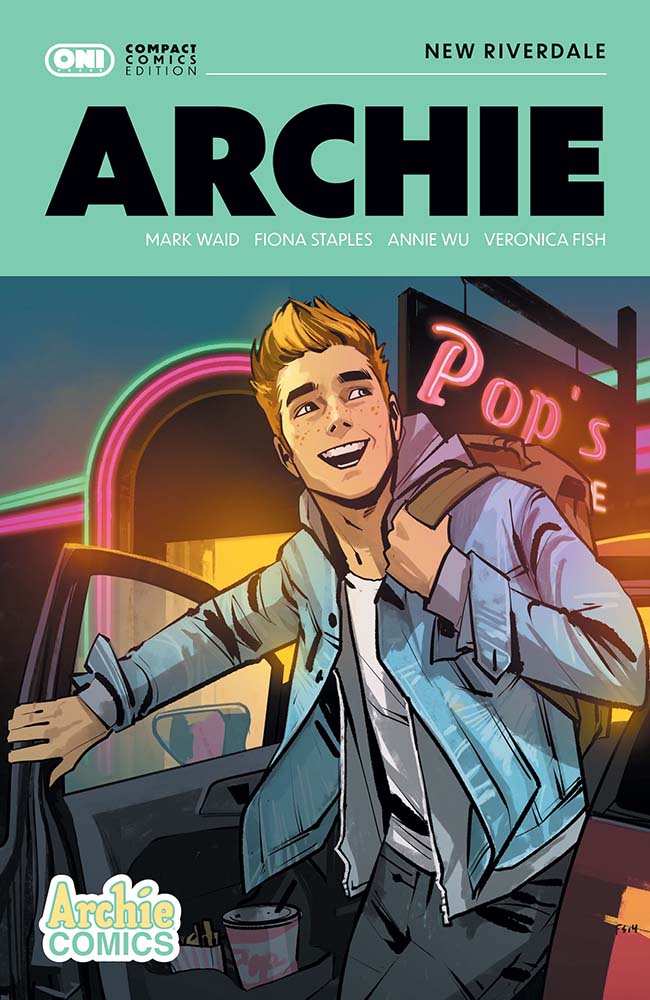
But that’s not all! Oni also announced three new collections of the “New Riverdale” comics from about a decade ago, reprinting the Archie, Sabrina, and Jughead titles from that era. And these New Riverdale collections will all be in their nifty and acclaimed Compact Comics format!
Hold on a second… “Compact Comics.” That sounds familiar.
Haven’t I seen you somewhere before?
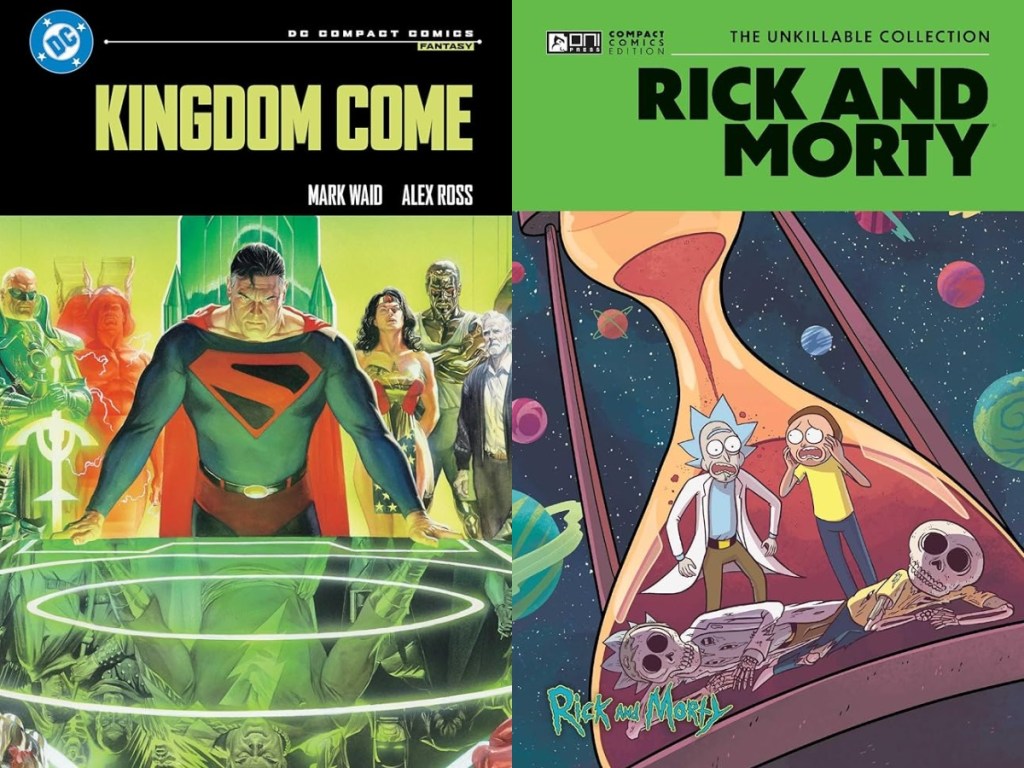
Oh yeah! It’s familiar because DC Comics launched that format back in 2024. DC’s Compact Comics are a format just slightly larger than a mass market paperback book. The series was introduced in an attempt to grab readers who otherwise might not be in a comic shop or want to carry around a full-size graphic novel. (I talked about it in GP #119: It’s the Little Things, and I suggested future titles DC could give the Compact Comics treatment in GP #124: Compact These!) DC was the first comic publisher – in the modern era, anyway – to make a major push in this digest sized-market, and with books collecting anywhere from a single 120-page graphic novel to over 400 pages of a series for only $9.99, the line has become a smash hit. By the end of this year, DC will have 37 different titles available, ranging from perennial classics like Batman: The Dark Knight Returns and Kingdom Come to newer acclaimed series like Far Sector and Supergirl: Woman of Tomorrow (The latter, coincidentally, happens to be the basis for this summer’s Supergirl movie. Funny how that works out, isn’t it?)
Now it’s true that success in any field of entertainment, comic books included, will inevitably inspire imitators, so once DC’s Compact Comics made a splash it was only a matter of time before other companies got into the game. Marvel joined the fray with their “Premiere Collection,” books that are slightly larger than DC’s and at a slightly higher price point ($14.99 instead of $9.99). Boom! Studios will also join in next month with the first “Compact Edition” of their popular Mighty Morphin Power Rangers series, also at $14.99. Oni, however, is even bolder than these two. Their Compact Comics line not only copies DC’s name, price point, and publishing dimensions, but even the trade dress is, save for the color scheme, almost identical to DC’s. Looking at an Oni Compact Comic and a DC Compact Comic, someone who doesn’t know anything about the respective companies could easily be forgiven for thinking they were released by the same publisher.
“Can I copy your homework?” “Fine, but change it a little so the teacher doesn’t notice.”
Now don’t get me wrong, I really don’t object to any of this. I love the Compact Comics format and, as I’ve said before, I would be perfectly happy if this became the default collected format for most comic books. It’s more appealing to the casual reader, and provides an easier way to break into markets outside of the realm of die-hard fans, like drugstore bookshelves or airport shops. And as much as I dislike movie tie-in covers, DC could be forgiven if they were to release a print of the Woman of Tomorrow book with a photo of Milly Alcock on the cover and a sticker that says something like “the graphic novel that inspired the DC Studios movie!” Hardcovers, archive editions, and “deluxe” editions in the larger format are fine, of course, but if all you want is to read the story, you can’t beat this style. I am just amused by how flagrantly Oni ran with DC’s success.
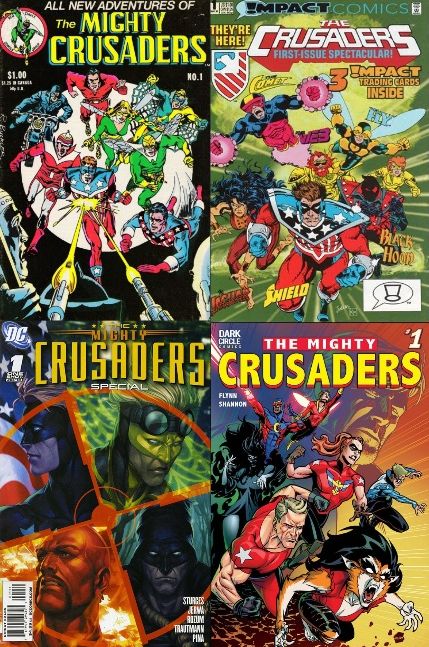
As for the future of Archie – I’m very glad that they’ve found a partner to help them stay alive. And I hope that this first wave of books is enough of a success to justify future waves. As I said, the “New Riverdale” stuff isn’t really my bag, but in the future I would love to see more books in the Compact Comics format – classic Archie, of course, would be the bee’s knees. But I would also like to see some of the less traditional stuff, like Archie’s Red Circle heroes, the Mighty Crusaders – even the Impact Comics versions of those characters that were published (coincidentally) by DC back in the 90s but haven’t been seen since.
Archie’s back library is vast and varied, even though the tales of the gang from Riverdale are their bread and butter. Having them in a good, readable, sharable format is a great thing. Here’s hoping this first wave is a huge hit so that we can all get more.
Blake M. Petit is a writer, teacher, and dad from Ama, Louisiana. His most recent writing project is the superhero adventure series Other People’s Heroes: Little Stars, volume one of which is now available on Amazon. You can subscribe to his newsletter by clicking right here. He’s also started putting his LitReel videos on TikTok. He’s waiting for the Compact Comics version of Jughead’s Diner. Go ahead, Google it. It’s a thing.
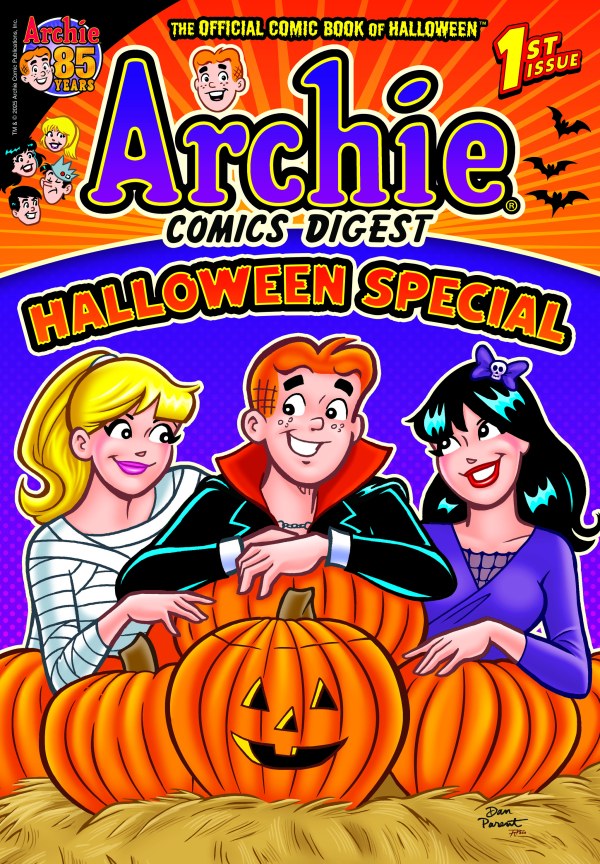
It’s a dark time for America’s Favorite Teenager. After 50 years of continuous publication, Archie Comics has ended its traditional digest comics program. Once a mainstay of supermarket and drugstore magazine racks, these little pocket-sized volumes were long considered the best value in comics, giving you hundreds of pages of Archie stories – usually a mixture of new stories and reprints – for a bargain price. Even when the price rose to $9.99 a few years ago, ten bucks for nearly 200 pages is a great deal compared to most other comics, which tend to run $3.99 or $4.99 for a page count that usually ends in the twenties. What’s worse is what the Archie digests have been replaced with: a new series of “seasonal” digests, beginning with a Halloween special, that are slightly taller than the previous digests and have half the pages, but maintain the $9.99 price point.
Surprisingly, this week’s column is not actually about Halloween.
Going from 196 pages down to 96 for the same price? It’s still more story than most comics, I grant you that, but it’s also a bit of a slap in the face to the readers.
I grew up reading Archie Comics. I loved the exploits of Archie and Jughead, I reviled the loathsome Reggie Mantle, I could not fathom why Archie wasted so much time on Veronica when Betty was clearly the better choice. And I was joining a long string of readers that went back to the 1940s, filling in all the eras in-between. My mom was never interested when I was reading X-Men or ShadowHawk, but she was an Archie reader from way back, and we even talked about them together sometimes. My sister only ever read two categories of comic books: Archie and Star Trek. This was a company with generations of fans and without the stigma of being “just for boys” that the superhero world often faced..
But that’s the problem, isn’t it? “Was.” There aren’t enough fans anymore. There was a time not too long ago when Archie Comics were the best-selling comics in America. The official sales numbers rarely reflected this, of course, as the comic book best-seller charts were based solely on the sales of Diamond Distribution to comic book stores and didn’t factor in sales in other markets, which is where Archie did the bulk of their business. But those newsstand sales have fallen precipitously, and the bankruptcy of Diamond itself has caused an upheaval in the comic book world that has many publishers flailing in an effort to figure out what to do next.
Archie has bigger problems than even that, though. With the exception of the digests, Archie hasn’t published monthly comics in several years, and their output of new stories has been reduced to a trickle. Most Archie comics these days come in one of three categories:
One-shot comics built around a theme (like sports or video games) or holidays (like Halloween and Christmas). These comics usually have one new story and several reprints. The biggest problem here is that the new stories are frequently a mere FIVE pages, hardly worth the asking price. What’s more, Archie has fallen into the speculator trap in two ways. First, they load these books up with an obscene number of variant covers. I’m not a huge fan of variants in general, but I particularly dislike them in comics that should theoretically be aimed at kids, because a kid might not realize they’re buying the same comic over and over again. The other issue is that Archie often touts these one-shots as being the “first appearance” of a new character – a relative of one of the existing characters, a new kid in school, two weird little apparitions that function as Halloween sprites, and so forth. The conventional wisdom here is that speculators will snap up “first appearances” in the hopes that the new character will take off, making their first appearance valuable on the secondary market. But with no new comics being published in which these new characters are allowed to grow and star in stories and build a fan base, who the hell is ever going to care where their first appearance was?
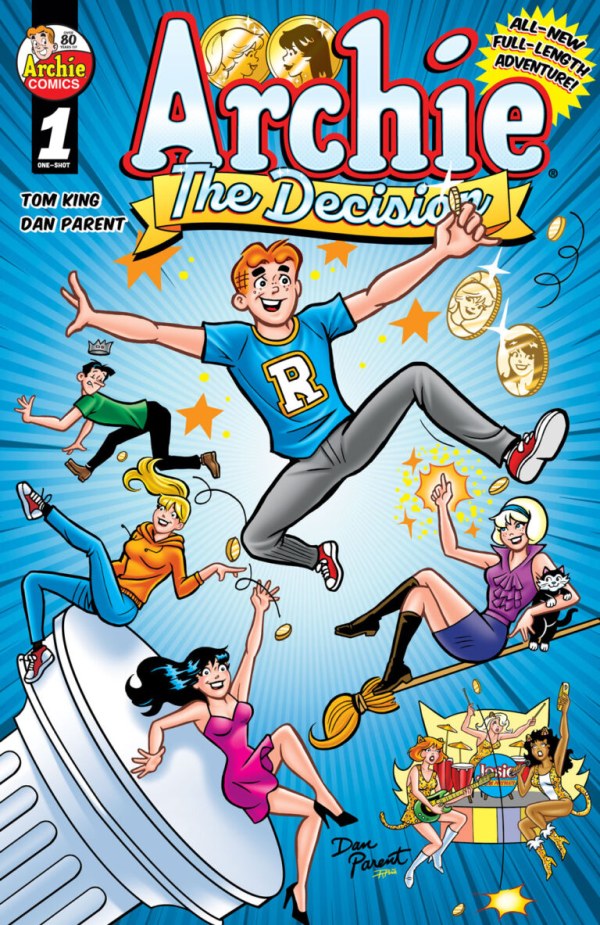
The second kind of book Archie is publishing is the (very) occasional “special” issue, such as the recent Archie Meets Jay and Silent Bob one-shot or last year’s Archie: The Decision. The former has the wholesome Riverdale gang meet the foul-mouthed denizens of Kevin Smith’s View Askew films, and in fact, the book was written by Smith himself. The clash of worlds is an amusing idea, but it’s something that primarily only appeals to existing fans of Kevin Smith, which is to say, people around my age. This isn’t a book you can – or should – give to your kids to get them into Archie. The Decision, meanwhile, was a special written by comic book superstar Tom King (he wrote the graphic novel that they’re making into a Supergirl movie right now, as a point of interest), and was advertised as being the story in which Archie FINALLY, after all these decades, would decide which girl he wanted to be with: Betty or Veronica. Spoiler alert: he didn’t decide.
The last category of Archie comics is the facsimile editions, something that lots of other publishers have been doing. These reprint classic comics, complete with the original cover, letter columns, ads, and everything else. It’s a cute idea, and I really have no issue with Archie indulging in this, except for the problem I have with EVERYBODY’s facsimile editions: variant covers. What’s the point of a facsimile with a different cover than the original? It’s no longer a facsimile, is it? (That’s a facetious question, of course. All variants are done for the same reason: to get people to buy multiple copies, a short-term boost, rather than the healthier strategy trying to get more PEOPLE to buy at least ONE copy.)
There are the occasional others – maybe one or two miniseries a year that come, go, and are quickly forgotten. But with this meager output, it’s no wonder that Archie’s fanbase has collapsed. There are a lot of people reading this right now who are probably surprised to find out that Archie is still in business AT ALL. As kids’ attentions have shifted from written material like comics to electronic entertainment like video games and YouTube, the original pool of fans that Archie was created for has evaporated. Pre-existing, older fans drift away because it’s just “kid stuff.” And nobody is filling the void.
Not to say Archie hasn’t had chances, but they’ve squandered them. In 2013, for example, they had a hit comic with Afterlife With Archie, a straight-up horror series featuring more “mature” versions of their classic characters in the midst of a zombie apocalypse. The book was huge and it spawned a whole line of Archie Horror, with other titles starring Jughead as a werewolf, Veronica as a vampire, and Sabrina the not-so-kid-friendly Teenage Witch. But the book that launched the line, Afterlife, frittered away, putting out only 10 issues over the next three years and then vanishing when the writer, Roberto Aguirre-Sacasa, moved his career focus from comics to writing for television. The series was left unfinished, and it’s hard to even recommend it to new readers, knowing that the story has no conclusion.
“This is great! Where’s the rest of it?” “Remember when you told me to watch Firefly? Well now we’re even.”
Ironically, Aguirre-Sacasa’s TV career involved another missed opportunity for Archie, developing the TV show Riverdale. This was a much more adult soap opera type of story starring the Archie characters, and although I was never a fan, I could appreciate just how big of a hit it was. I routinely had students in my classroom during the years that the show was on the air who discussed Archie, Betty, and Veronica the same way they did the likes of any other popular series. But if they were even aware of these characters’ comic book heritage, they didn’t care. Once, when I bought one of those aforementioned digests while grocery shopping, the cashier saw an ad for Riverdale on the back cover and started talking about how much he loved the show, going on about which characters he hated and which ones he shipped. But when he flipped the book over and saw the more traditional Archie characters on the front cover, he may as well have been staring into outer space. As popular as the show was, Archie Comics did nothing to capitalize on that while it was on the air, and now the opportunity has passed.
The point of all this is that Archie is in serious trouble. Trouble that I don’t even know if they can get out of, at least not alone. But I do have a few ideas. Could any of them work? I really don’t know, I’m not a businessman or an expert on markets or anything like that. But I’ll tell you this much: they’re at least better than doing NOTHING.
The first thing Archie needs to do is rededicate itself to actually putting out new material. And I don’t mean the occasional one-shot, they need to get into the monthly comic book game again. I would start small, giving the line four comics a month: the stalwarts Archie, Jughead, and Betty and Veronica, with the fourth spot being left open for themed one-shots, holiday specials, crossovers and the like. But these should most definitely NOT be the reprint-fests that we’ve gotten the last few years. Reprints are okay, especially for a property like Archie where the classic stories are somewhat evergreen and can both entertain (potential) new readers and charm the older readers who enjoy seeing them again. But they should NEVER be the primary focus of a four dollar comic book. New material should make up at MINIMUM half of each issue, preferably more.
As far as the stories themselves, I think Archie should split the difference between the old-school comedic quickies and the soap opera. Keep the comics fun and lighthearted, but allow for ongoing storylines and character growth as well. Make the stories a little more sophisticated, and you’ll hold on to readers longer. You can still do one-off gag comics as backups if you really need to scratch that itch.
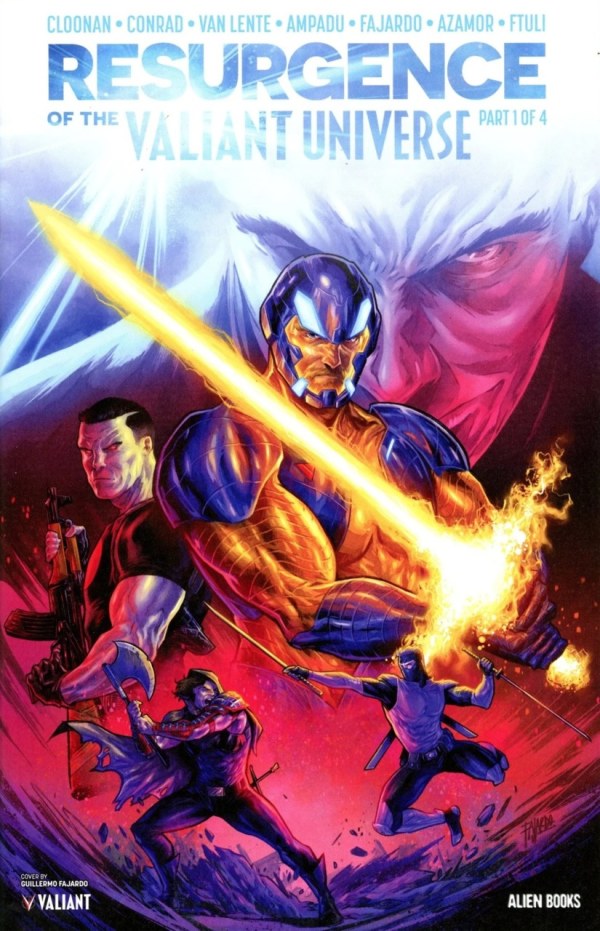
Second, I think Archie needs a partner. Over the last several years Valiant Comics went through similar problems as Archie is having, with mismanagement and poor decisions killing their brand. Valiant is in something of a rebuilding stage, which they accomplished by partnering with another publisher, Alien Books. Although still two different companies, Valiant publishes through Alien and the Alien logo appears with the Valiant logo on their covers. Valiant handles the production; Alien handles the publishing. So far it seems to be working fairly well. If Archie is struggling on this end, then a similar arrangement with another publisher might be beneficial for them.
See? They had a resurgence and everything.
The Diamond bankruptcy hit everybody as well, making it harder to get comics on the racks, and those companies that had not done so already started to sign contracts with other publishers and distributors to get their books out again. Once again, Alien and Valiant found a lifeline by turning to another publisher, this time IDW, to utilize their distribution system. Now the Alien and Valiant comics appear in the IDW catalogue that comes out in comic shops every month. Partnering with a larger publisher, once more, would help Archie solve this distribution problem.
But what if the problems are deeper than that? Having never been around the Archie offices, I don’t really know what caused the domino chain that led to their current situation, and it’s possible that there needs to be a complete overhaul. So if things are THAT bad, here’s the nuclear option:
Sell Archie Comics to another publisher.
I know, that sounds huge, and it would be a last resort. But if it’s the only way for the characters to survive, I would find that preferable than letting them die.
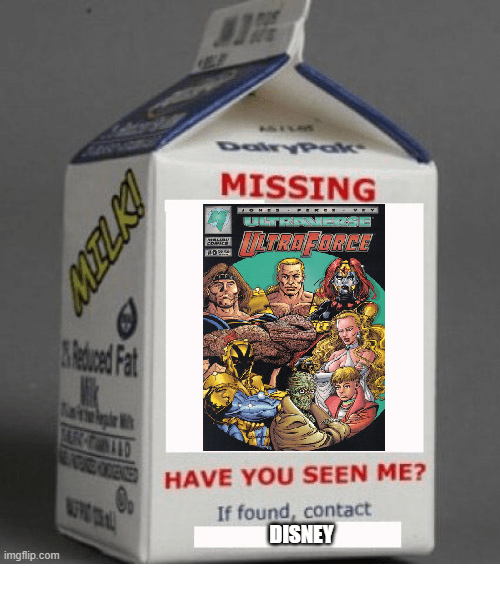
Way back in the days of the late, lamented Comixtreme website, I once wrote a column pondering – just in a “what if?” fashion – what would happen if Archie was purchased by DC Comics. Now I’m coming at this from the perspective that it may be exactly what Archie NEEDS. Why DC specifically? Well, DC has a long history of buying up characters from other publishers, and while the popularity of them may wax and wane, the characters from the former Fawcett Comics (such as the Shazam! family), Charlton Comics (Peacemaker, the Blue Beetle, the Question), Quality Comics (Plastic Man, Uncle Sam, the Freedom Fighters) and Wildstorm Comics (WildC.A.T.S., the Authority) all still show up on a fairly regular basis. They haven’t been utterly forgotten like SOME universes I could mention after they were purchased by OTHER publishers I could also mention, and here I would like you to imagine the sound of me coughing whilst squeezing in the words “Ultraverse” and “Marvel” into my hacking fit.
Why yes, I am too cheap to pay to remove the imgflip watermark, thanks for noticing.
Archie could also fill in a void in DC’s line. They’ve got a robust program of graphic novels for younger readers, which is awesome, but their regular comic books for kids have somewhat dried up. Last year they quietly cancelled their long-running Looney Tunes and Scooby-Doo comics, leaving only Teen Titans Go as a regular DC comic for kids. Archie could fill in there. Furthermore, DC’s multiverse is pretty healthy these days and could easily find room for all the different flavors of Archie. The “Classic” comics could be on one Earth, the more soap opera-y comics from the last decade or so could be another, the horror comics could fill a few more. Heck, they could even print Archie Horror under the Black Label umbrella.
Then there are the Archie superhero comics to consider, the Red Circle heroes. Archie has had superheroes for as long as anybody else, with characters like the Comet, the Fly, and the Black Hood. Hell, Archie even beat Marvel to the punch with the first patriotic superhero, the Shield. Those characters eventually faded after World War II like most other superheroes, but Archie has made many attempts to bring them back over the years, and some of them have been really good.
What’s more, DC has partnered with Archie TWICE in the past to revive the Red Circle heroes, with the Impact Comics universe in the 1990s, then by briefly incorporating them into the DC Universe itself in the late 00s. We could include those worlds as well: the “original” Red Circlers could have their own Earth, the Impact versions could have another, and new, updated versions could be introduced into the DCU.
You got YOUR Multiverse, we got OURS.
Of course, not being a businessman (you can tell from all the business I fail to do), I haven’t got the foggiest notion how much money it would cost to purchase Archie Comics outright. I do know, however, that DC’s parent company Warner Bros. is in something of a chaotic state itself at the moment, so that’s probably not something that would be particularly high on their agenda. If a purchase is out of the cards, then perhaps a long-term licensing agreement like DC has with Milestone Media could accomplish the same purpose.
And DC isn’t the only game in town (although I think it would probably be BEST for Archie, should it come to that). There are other publishers with whom they could work out similar arrangements. But it’s at a point where Archie fans are grasping at straws, hoping for anything to keep the characters alive. Something has to be done, and quickly, or Riverdale High School may finally close its doors for good.
And seriously, where is Mr. Weatherbee going to find a new job at his age?
ADDENDUM: After I finished writing this column but before I posted it, Archie Comics happened to make a fairly big announcement: the aforementioned Tom King is apparently working on a new Archie feature film with Universal Studios. This is good news, and I sincerely hope that the movie is a hit, but I don’t think it’ll alleviate any of the problems I’ve been talking about. Getting people to follow the characters to the comic books is the goal here, and historically, very few movies have actually done that. Then again, who knows? Maybe Mr. King’s Archie movie will be the exception.
Blake M. Petit is a writer, teacher, and dad from Ama, Louisiana. His most recent writing project is the superhero adventure series Other People’s Heroes: Little Stars, volume one of which is now available on Amazon. You can subscribe to his newsletter by clicking right here. He’s also started putting his LitReel videos on TikTok. He’s still holding out hope for the Jughead Vs. Joey Chestnut one-shot.
It’s been a while, but it’s time once again for Playing Favorites! Yes, Playing Favorites, that Geek Punditry mini feature in which I throw out a category and my pals on social media suggest related topics wherein we pick some of the best of the best. With Valentine’s Day looming, this week I asked people to share ideas for love story topics. So grab that special someone and let’s get to it!
Bad Choices
Jeff Edwards asked for love stories where it’s clear that the people involved made the wrong choice. It’s a funny idea, because I’m sure we can all think of at least one movie where we’ve walked away saying something like, “What the hell did he SEE in her?” And as far as I’m concerned the absolute apex of this trope is from the Lord of the Rings film trilogy.
No, I didn’t expect to be writing about Lord of the Rings this week either, but here we are.
Now I love these movies. I think they are masterpieces, and I respect that Peter Jackson didn’t play all fast and loose with canon like SOME fantasy filmmakers I could mention. But if there’s one thing I simply will never understand, it’s why Aragorn would choose Arwen over Eowyn.
Seriously, why is this even a contest?
Sure, Liv Tyler is a classical beauty, but even 20 years ago I would have climbed over her and an entire briar patch to get to Miranda Otto. Nor is it just a matter of looks. Arwyn has that elvish grace and delicacy that makes you feel like you’re embracing a porcelain doll, and I don’t care for that. Eowyn is strong and brave, she killed the Witch King with the power of semantics, and I hear she’s doing her best to get better at making stew. She’s got it all.
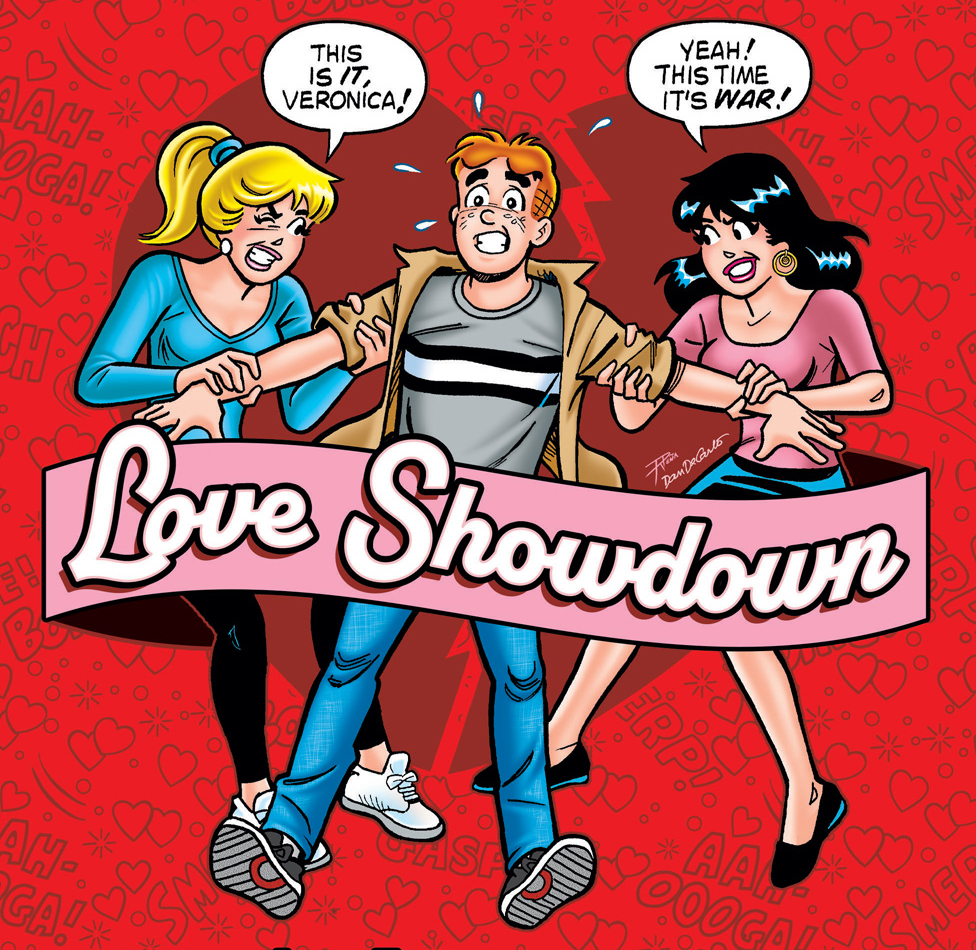
In second place is a tie between every story ever written in which Archie Andrews chooses Veronica Lodge over Betty Cooper. I get it. Archie, Betty, and Veronica are the eternal love triangle, and we all know that there’s never going to be a TRUE resolution. They’ve had attempts over the years, but it never sticks. But there is a word that the French have for people who prefer Veronica over Betty: wrongo.
Frankly, they can both do better.
I don’t want this to sound like I hate Veronica, mind you. I think she gets a bit of a bad rap. There have been numerable stories that have shown that, underneath her rich girl veneer, she has a good heart. But that doesn’t change the fact that she’s spoiled and selfish, and that Archie is dazzled by her beauty. Betty, on the other hand, is entirely loyal and devoted to him, and loves him without reservation, whereas Veronica on many occasions has been known to toss him aside at a moment’s notice. In fact, that’s probably WHY Archie goes for Veronica – because she’s less attainable.
What an incredibly stupid reason. What an incredibly realistic reason.
As if that weren’t enough, Archie ignores the very sensible advice of his friends. I’m not saying that if my friends hadn’t liked Erin when I starting dating her that I would have ended the relationship, but at the very least it would have made me question what was up. True friends, people who honestly have your back, should be listened to, and Jughead has made it ABUNDANTLY clear over the years that he’s Team Betty. Archie. Archibald. Listen to your bro.
It’s a little easier to justify when you remember that Archie and the gang are all, in fact, teenagers, and as such he is even more inclined to make incredibly stupid choices than we males of the biologically adult variety. The characters aren’t ever going to grow up, but if they DID, I would like to think that Archie’s better judgment would finally kick in and he would see that the girl next door is the way to go, hopefully before Betty finally comes to HER senses and dumps his ass for Adam Chisolm.
Yes, as a matter of fact, I DO feel ways about things.
Finally, although this is not a hill that I personally am prepared to die on, my wife wishes me to share her sincere belief that, in West Side Story, Tony was an absolute idiot for going after Maria when Anita was, like, RIGHT THERE. This is true of both the original and the remake. This is even true of the older Rita Moreno IN the remake. I, on the other hand, just want to point out that West Side Story is a multiversal variant of Romeo and Juliet, and as such, pretty much everybody in that story makes nothing but bad choices all day and all night.
Electric Love
My uncle Todd Petit asked for the best love story involving a robot or cyborg, which is extremely specific, but that’s cool with me! I was a little hesitant to pick this one, though, mostly because in the Facebook comments several people already went straight to what I think is probably the best robot love story of all time.
Project ALF.
Ah, I’ve missed this stupid, stupid joke.
No, wait, I’m thinking of the best alien/feline love stories. Obviously, the best love story involving robots comes from the Pixar masterpiece WALL-E. I love this movie, and I assume pretty much everybody who has a soul also loves it, and perhaps the main reason is the deep, perfect, sincere love that is expressed in this film. WALL-E is a garbage robot; his job for centuries has been just to collect trash and compact it. There’s no emotional component to this. But after all these hundreds of years of solitude, he finds himself growing a personality – likes, dislikes, hobbies. He begins saving select items from the trash that he finds interesting and grows a little collection. He makes friends with a cockroach. He is mesmerized by the movie Hello, Dolly!
He even gave her flowers.
And then he meets EVE, a robot that is searching the dead Earth for signs that life can return, and it’s instant sparks. It’s like watching a busted down Ford Pinto fall in love with a sleek new electric hybrid vehicle (coming this fall in Cars 4!) but it WORKS. At first, EVE isn’t particularly impressed by WALL-E, but his sweetness, kindness, and courage melt her electronic heart. And perhaps the most amazing thing about it is that their entire relationship is almost completely wordless. Neither of them have any dialogue other than occasionally saying their names, but that doesn’t matter. By the end of this movie you are crying and cheering and imagining a new Earth populated by a slendering human population and all of WALL-E and EVE’s little robot babies.
That said, good on Pixar for resisting the urge to name him ADD-M.
As for other great robot love stories…well, the one that comes most clearly to mind is actually one of the most tragic, and it’s from Star Trek: The Next Generation. Like most Star Trek shows in the pre-modern era, this show changed and evolved considerably over its first few seasons. Perhaps the most visible change (other than Riker’s beard) was the departure of Denise Crosby, who played security chief Tasha Yar in season one. Crosby asked to be written out of the show, frustrated over the lack of attention and development her character was getting, and honestly, you can’t blame her. Go back and watch that first season again and you’ll see most of the writing did her no favors at all. But there is ONE element of her abbreviated story that stuck with the characters for all time, and that was her relationship with the android Data. The idea of Data is that he is a Pinocchio, a robot that looks almost human and that wants to be a real boy, if only he knew what emotions were.
She had an AI boyfriend BEFORE it was cool.
Data is my favorite Next Generation character, and in my top three of all Star Trek characters, and the reason is because of his emotional journey. The conceit was that, as an android, he desired the emotions he did not have, but even in that description you can see the contradiction. DESIRE is an emotion. If you HAVE no emotions, how can you DESIRE them? My read on Data, the way I feel about the character, is that he truly DID have emotions from the very beginning – he simply didn’t understand them, know how to process them, know how to define them, and therefore he BELIEVED he had none. After Tasha Yar is killed off, Data returns to her in his thoughts many times. For six seasons, then again 30 years later in the final season of Star Trek: Picard, it is Data that recalls Tasha more than anybody else, Data who brings her up, Data who reveals in that Picard episode that his memories of her are a core component of his personality matrix. The great legacy of Tasha Yar is the fact that, for the rest of his existence, poor Data has been mourning a woman he didn’t really understand he was in love with.
Sitcom Love
Rachel Ricks asks what I think is the best romance from a sitcom. That’s such a tricky one. There are a lot of great sitcom COUPLES – Bob and Linda Belcher, Herman and Lily Munster, and so forth – but if it’s a pairing that was already together when the show begins, I don’t think I can count them. To count it as a romance, I think we need to see the relationship blossom INTO love.
I also don’t really count those stories that end poorly or where the characters don’t really belong together. Sam and Diane on Cheers may be one of the all-time legendary sitcom couples, but they were utterly toxic to one another and never belonged together. Not to say that a love story HAS to have a happy ending (see what I said about Data), but if it’s a sitcom, I want something a bit more lighthearted.
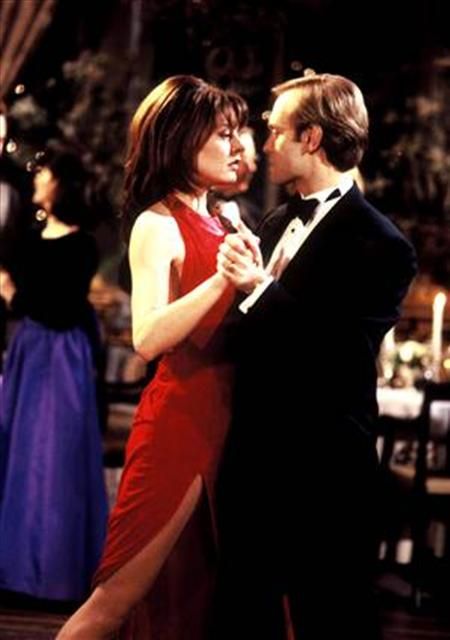
So I’m gonna stick to the Cheersiverse and say one of my favorite sitcom romances is Niles and Daphne from Frasier. And it’s odd, because it started off as a pretty poor depiction of a relationship – when they meet, Niles is already married (to an utterly reprehensible woman who browbeats and emasculates him at every turn) and pines for Daphne in secret for years. She, meanwhile, is completely oblivious to his affection and treats him with the same love and care that she does Eddie the dog. Eventually, though, his marriage to Maris ends and the two of them find one another. The arc where they’re both with other people but wind up boomeranging into each other’s arms is one of my favorites, and from that point onward the love and affection between them elevates both characters.
Pictured: Steam Heat
There’s a relatively early episode where they have to pretend to be a couple as one of the screwball schemes that happened in every other episode of Frasier, and they play the part so convincingly that Niles almost believes she shares his affection until she compliments him on how good an actor he is. The heartbreak David Hyde Pierce conveys is palpable, and you die a little for him. But it’s bought back years later, when they get together and revisit that scene again, bringing it all full circle. I just love watching those two.
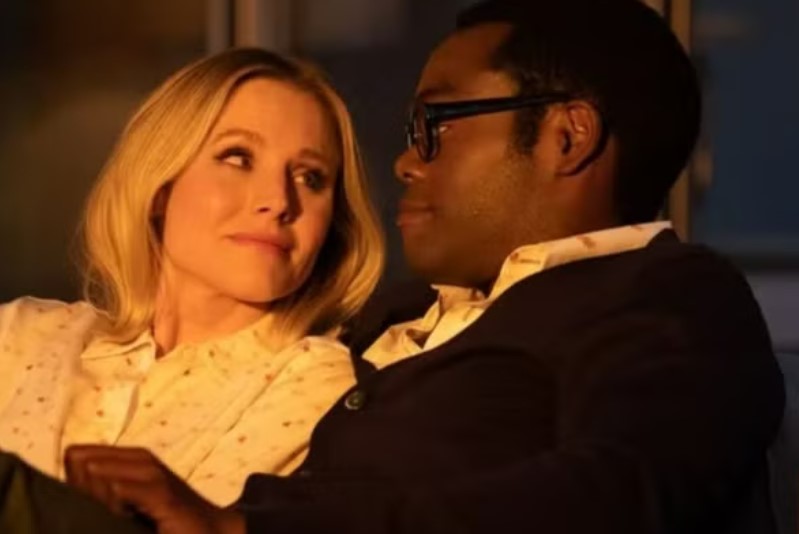
I also simply adore the relationship between Eleanor and Chidi on The Good Place. This show, about a self-proclaimed “Arizona dirtbag” (played in an adorable way that only Kristen Bell could have pulled off) who goes to Heaven due to what amounts to a clerical error, is one of the smartest and most emotionally profound sitcoms of the past decade, if not of all time. The relationship that develops between Eleanor and Chidi (William Jackson Harper) is one of the core elements of what makes it such a magnificent show. Eleanor has spent her life being self-centered and scuzzy, whereas Chidi’s life has been one of anxiety and apprehension. Eleanor acts without thinking, Chidi overthinks EVERYTHING to the point of catastrophe. The way each of them makes the other a better person is beautiful and heartwarming.
If this screenshot doesn’t make you want to cry, you did NOT watch the last episode.
There’s a lot more to The Good Place than I revealed in that little recap, because if you’ve never seen the show I don’t want to spoil any of the incredible twists and surprises that it includes, but go and watch it and tell me you’re not rooting for Eleanor and Chidi every step of the way.
Okay, folks, I think that’s going to bring us to the end of part one of “Playing Favorites With Love Stories.” There are still several great suggestions for topics, though, so I’m not done yet. Come back next Friday, Valentine’s Day, for part two. And until then, hey, share this with someone you love.
Blake M. Petit is a writer, teacher, and dad from Ama, Louisiana. His most recent writing project is the superhero adventure series Other People’s Heroes: Little Stars, volume one of which is now available on Amazon. You can subscribe to his newsletter by clicking right here. He’s also started putting his LitReel videos on TikTok. He maintains that the purest love story on TV is Gomez and Morticia Addams, but nobody asked about that, so he’s gonna drop it here.
It’s August, gang, and across this great fruited plain of ours, Americans are gearing up for that most turbulent of seasons: back to school. Many of us are already back in session, and the rest are getting ready to eke out those last bits of summertime fun before the doors fly open. Stores are stocked with pencils, students are picking out their first day outfits, parents are trying to get them to answer questions for their “Back to School” social media posts, and teachers are doing their best to keep the economy of Columbia solvent by buying all of the coffee. And what better way to commemorate this change of seasons than with another installment of everyone’s favorite Geek Punditry feature-within-a-feature, PLAYING FAVORITES?
If you’re new, here’s how it works: a couple of weeks before a playing favorites column, I go out on social media and give my peeps a topic, such as SCHOOL, and ask them to suggest different categories for me to talk about. Then I select my favorite categories from your suggestions and tell you all what I think are some of the best of the best in each one of them. It’s a good time for everybody. So let’s see what kind of back to school shenanigans were on your minds this week, shall we?
Dawson Casting
Steven J. Rogers asked for some of my favorite examples of actors who are a little “long in the tooth” for their role as a high school student. The experts in this phenomenon (by which I mean the editors of TV Tropes) call it Dawson Casting, the practice of using actors in their 20s or even 30s to play high school students, named for the TV executive who invented the system, Herringbone Q. Casting.
No, seriously, it’s named for the show Dawson’s Creek, which is one of the most well-known examples of the trope, but it’s by no means the FIRST and certainly not the WORST. The trope goes back hundreds of years. Even Shakespeare is likely to have indulged in it – Hamlet, for instance, is supposed to be a college student, but there are lines in the fifth act that indicate that he used to get piggyback rides from his father’s court jester, who has explicitly been dead and buried for 23 years. Unless ol’ Yorick was playing games with Hamlet as a zygote, the math don’t math.
There are two ways to look at this question: am I trying to figure out who did it BEST – as in, which older actors were most convincing as teens? Or am I trying to figure out who did it in the most ENTERTAINING fashion, as in making me burst out laughing when a guy who could be doing commercials for Metamucil saunters into homeroom? I’ll answer both.
Most of these kiddos are older than they look. Especially the one in the glasses.
As far as who was the most convincing, I think the crown has to go to the TV version of Buffy the Vampire Slayer. When that show launched in 1997, Sarah Michelle Gellar was 20 playing a 15-year-old – and to be fair, that’s a much smaller gap than many Dawsons have had to contend with over the years. But she was the YOUNGEST member of the main cast. Alyson Hannigan was 23 and Nicolas Brendan 26, and all of them were pretty convincing as teenagers. The only one who you couldn’t really buy was Charisma Carpenter (27 at the time). And while you aren’t really shocked to hear that these actors were in their 20s, it’s not nearly as blatant as some of the more hilarious examples of this trope.
In general, the shows that get away with this the best are the ones that don’t try to get away with as much. The high school students in Cobra Kai were mostly in their early 20s when the show began, and not noticeably too old. On Smallville, I don’t think that Tom Welling was really successful at convincing anybody that he was 14 years old in season one (the actor was 24 at the time), but the rest of the cast was mostly in their early 20s and far more convincing. I suppose the trick with pulling a Dawson is to not press your luck.
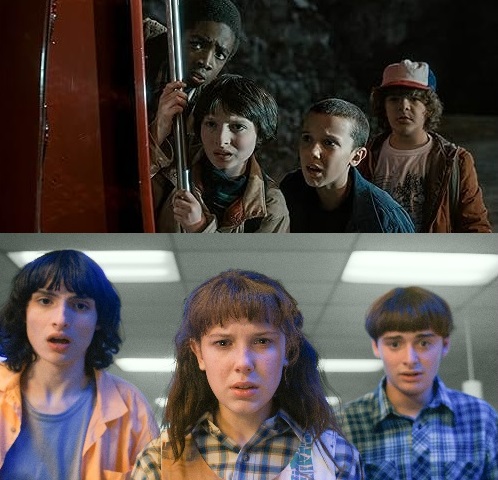
You know who DID press their luck? Stranger Things. It wasn’t a problem in the first couple of seasons – with the five main kids played by actual…y’know…KIDS. And even the teenagers were pretty convincing: Joe Keery (Steve) was 24 playing 17, Natalia Dyer (Nancy) was 21 playing 16, Charlie Heaton (Jonathan) was 22 playing 16, and all of them were believable as high school students. But the long gaps between seasons were starting to strain credulity even in season four, and Keery is going to be 32 playing 19 or 20 in the show’s upcoming final season. He may be able to pull it off, but the likes of Gaten Matarazzo (Dustin) and Finn Wolfhard (Mike) playing 15 at the age of 22 are going to be a harder sell, especially since we’re all so familiar with what they looked like AS KIDS.
No really, it’s just two and a half years later.
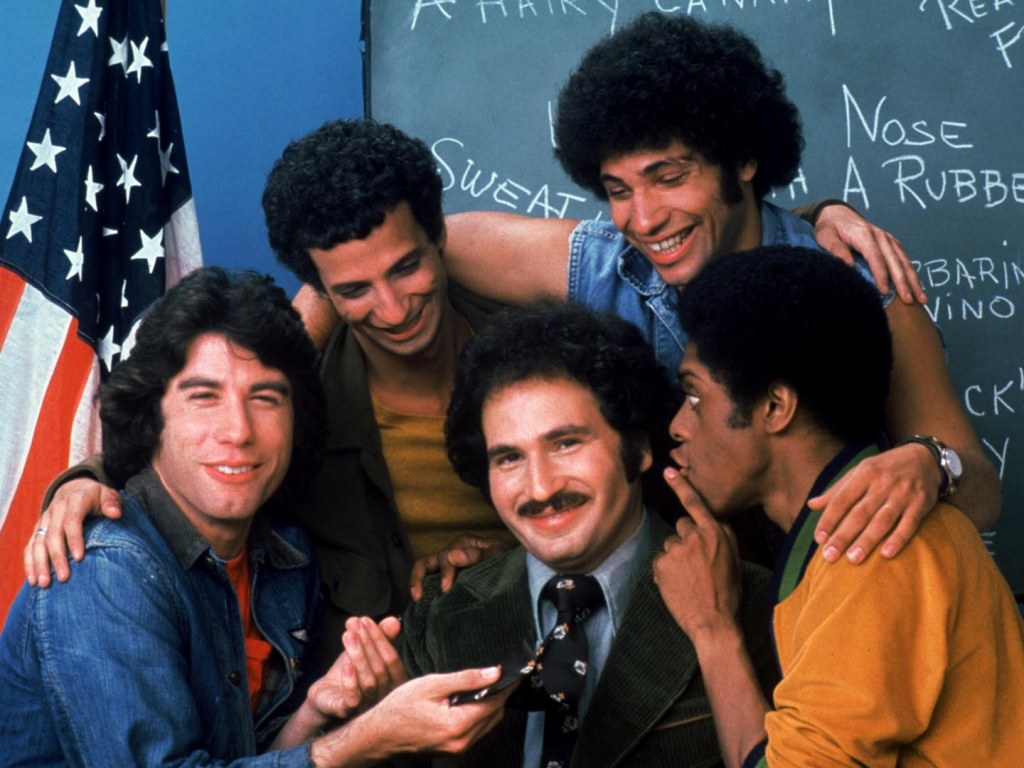
But I don’t think any show has ever been as hilariously Dawsoned as the 70s sitcom Welcome Back, Kotter. When the show began in 1975, you had high school students played by John Travolta (then 21), Lawrence Hilton-Jacobs (23), Robert Hegyes (24) and Ron Palillo (26) and frankly, I would have guessed older for each of them. While they were around the same ages as many of the other “teenage” actors we’ve already discussed, they were nowhere near as successful at hiding their age. Alyson Hannigan could pass as a high school student, whereas Ron Palillo looked more like somebody’s podiatrist. Gabe Kaplan was once quoted as saying that the reason the show’s ratings collapsed after three seasons is that the cast was getting too old to convincingly play teenagers, which made me ask the obvious question: at what point DID he think they were convincing?
“Signed, Epstein’s chiropractor.”
School Sitcoms
Rachel Ricks asked for some of my favorite school sitcoms. This is an interesting subject for me. Like so many of us, I grew up watching shows like Saved By The Bell, and I loved it. And while I never really thought that show was a documentary on the lives of high school students (I must have tried that “Time Out” thing a hundred times before I got hit by that marching snare drummer and decided to call it quits), I at least thought that it would get the SPIRIT of being high school right.
Damn, was that off. It’s almost hard to watch that show now, especially as a teacher myself, not only because of how inaccurate that show is in regards to how a school actually works, but because it casts virtually every adult as a total blithering idiot. Seriously, go back and watch that show sometime – it’s a miracle Mr. Belding can even tie his shoes.
New drinking game: take a shot every time someone does something that should have gotten a teacher fired.
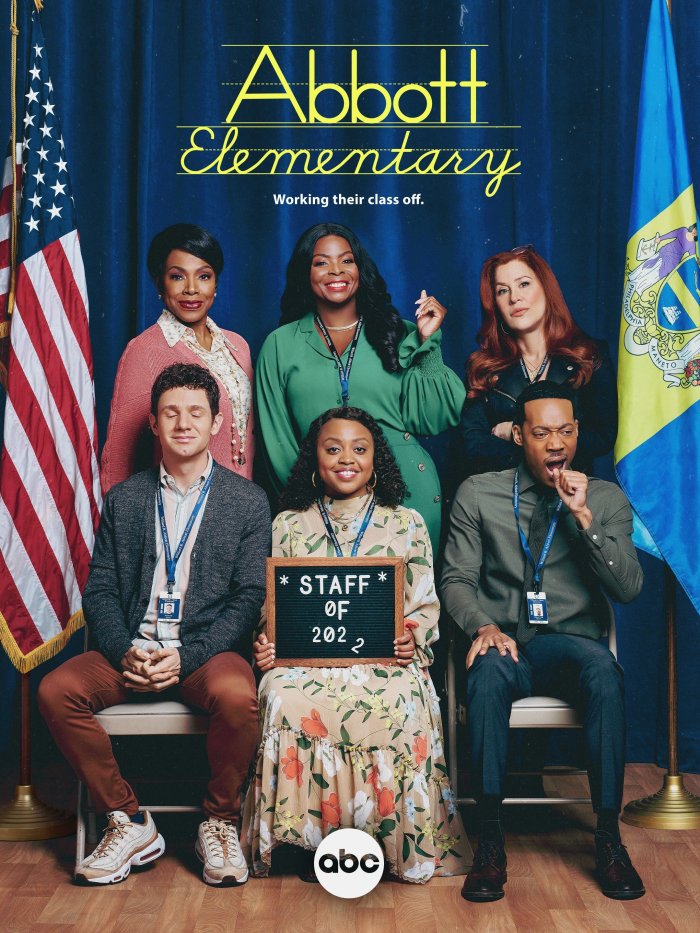
So when it comes to “school sitcoms,’ showing actual respect for teachers is a high priority for me, and that’s why I can’t stop talking about Abbott Elementary. It’s the rare school show that makes the teachers the stars rather than the students AND treats their characters with respect AND does a pretty accurate job of showing what school life is like. Granted, the teachers on that show have a bit more free time away from their students than a real elementary school teacher ever would, but I’m willing to allow that for the sake of comedy. What’s more, the characters all have real depth and charm, and most of them are very good at what they do. Plus the show deals with real issues such as government funding, parental involvement, and other issues that teachers fight against every single day, but does it in a way that’s entertaining. I can’t say enough good things about this show.
This is honestly my favorite comedy on TV right now.
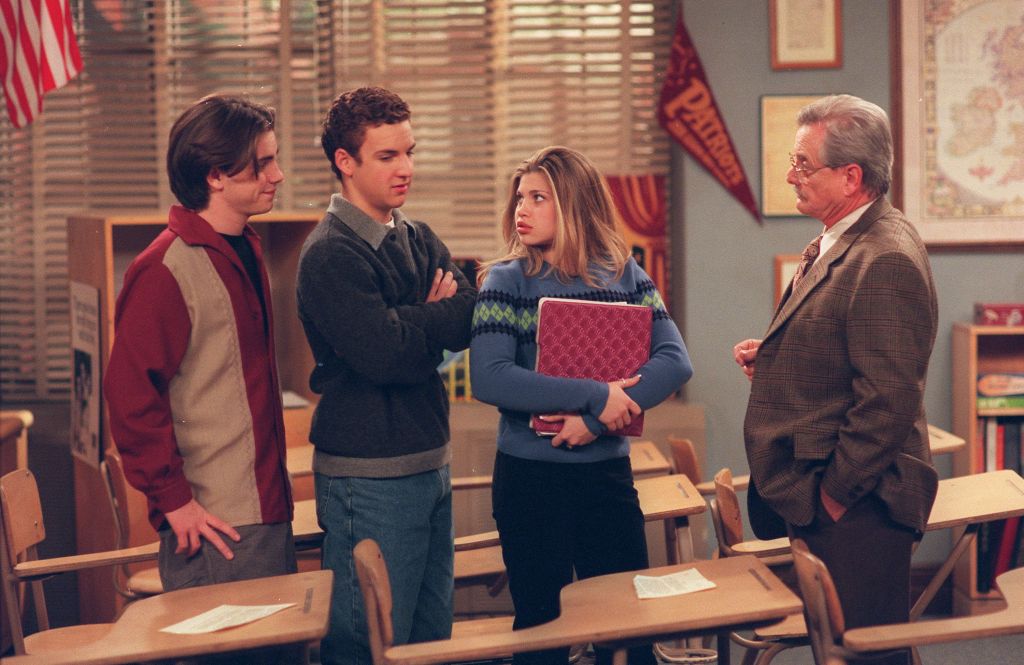
I mentioned how the adults in Saved By the Bell are all buffoons. This is true, but it’s hardly exclusive to Bayside High. If you look back on the annals of TV shows in a school setting, I would guess 90 percent of the teachers (and parents, for that matter) are portrayed as morons. And for that reason, I have to have a special place in my heart for Boy Meets World. The show traces Ben Savage’s character (Cory Matthews) from elementary school through college, and although there were goofy grownups on occasion, that was by no means the norm. In fact, the show gives us William Daniels as Mr. Feeny, probably the Gold Standard against which all TV teachers should be measured. He’s compassionate, wise, understanding, but firm when necessary. He’s almost as much a parent to Cory as he is a teacher. Is it really realistic that he taught the same group of kids from fifth grade until they’re going for their undergraduate degrees? Absolutely not. But it’s an acceptable break from reality in the name of keeping such a fantastic character front and center in the show.
What Bandit Heeler is to fathering, Mr. Feeny is to teachering.
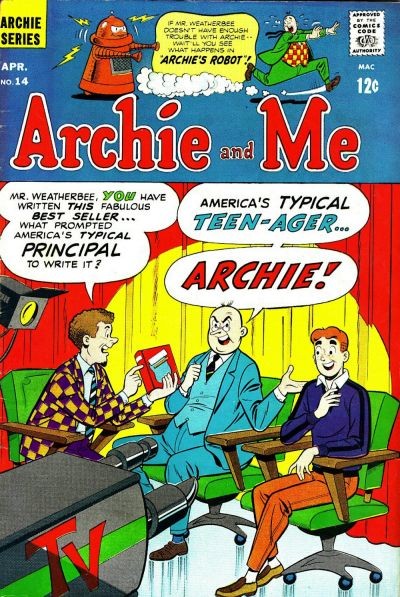
And although it’s not a television show, I love Archie Comics. I mean CLASSIC Archie Comics, their teenage sitcom romcom years, not the way they were adapted on Riverdale. I’m talking about the eight decades of comic strips about Archie Andrews struggling to choose between Betty and Veronica and going to Riverdale High. As a kid, I loved reading the stories (Jughead was kind of an icon for me) and as an adult I’ve come to appreciate the fact that the faculty of Riverdale High School – Miss Grundy, Professor Flutesnoot, Coach Clayton, Mr. Weatherbee – are usually portrayed as good, caring teachers who are doing their best for their students, even if they’re doing so while trying to avoid whatever catastrophe Archie is pulling along in his wake.
To date, not a single one of my students has prompted me to write a bestseller. Get your act together, kids.
High School Superheroes
Lew Beitz wants to know who some of my favorite high school superheroes are. It’s an interesting question – in the early days of comic books, there weren’t a lot of teenage superheroes. The kids were relegated to the sidekick role for most of the Golden Age, and it wasn’t until the 60s – specifically with the introduction of Spider-Man – that having a teenager as the main star of a superhero series started to come into vogue. Spidey eventually went off to college and became an adult, but he remains the template for superheroes that are still in their high school years. Everyone from Firestorm to Invincible to Ms. Marvel (the current Kamala Khan version) has drawn inspiration from those early Stan Lee/Steve Ditko comics, and none of them are shy about it.
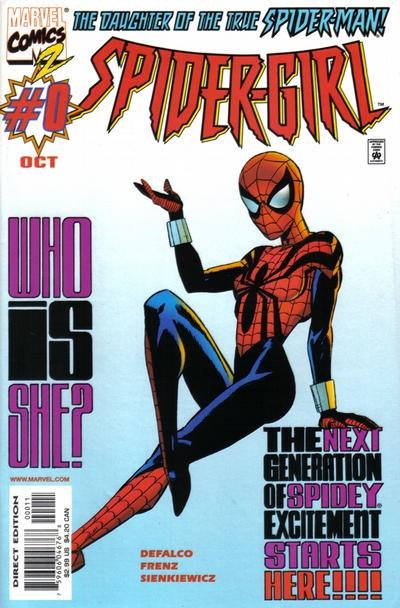
I’m going to try to limit my response to characters for whom school – or at least their classmates – are a major factor in their stories. Teen Titans, for example, isn’t going to work because the vast majority of those comics don’t include school as a setting at all, instead being the stories of kid superheroes who hang out independently of their own lives. So keeping school in mind, it’s hard to think of anybody who has done it better than Peter Parker’s DAUGHTER (in one corner of the multiverse, anyway), May Parker, the amazing Spider-Girl. Created by Tom DeFalco and Ron Frenz in 1997, this storyline comes from a world where Peter Parker aged more or less in “real time” from the 1960s and, at this point, had a teenage daughter who inherited his powers. Originally intended as a one-off character in an issue of What If?, “Mayday” Parker proved wildly popular and spun off into her own long-running series. And just like her dad, the supporting cast was largely full of her high school contemporaries – friends, rivals, potential love interests and so forth. Few comic books since those early days of Amazing Spider-Man had made such good use of the cast of teenagers, and I think it’s one of the reasons that this series remains a fan favorite, even though these days May herself only pops up once in a while during a “Spider-Verse” thing.
What I love about this cover is that it’s bold enough to ask “Who is she?” and dumb enough to answer the same question at the top.
And although Lew specified HIGH school, I have to give a special shout out to a series about ELEMENTARY school superheroes, Aaron Williams’ PS238. This comic book featured a cast of preteen titans, many of them the children of adult superheroes, who attended a special school deep beneath a “normal” elementary school where they were all ostensibly students. The book is really funny, and does a great job of picking apart many of the tropes and cliches of superhero comics. One student, for example, has the amusingly dull superhero code name “84,” because she is the 84th person registered with the standard FISS (flight, invulnerability, speed, and strength) powerset. Although the book IS very funny, it’s also a solid superhero comic book, creating a rich world with a fascinating history and a lot of secrets to uncover. The comic lasted only 51 issues, which wasn’t nearly long enough, although Williams has continued the adventures of the characters as a webcomic.
One of the best comic books you’ve never read.
High School Horror
Finally my wife Erin – who absolutely understands her brand – wants me to talk about my favorite high school horror movies. And naturally, there is one that leaps right to the forefront of the mind, a chilling, terrifying tale that will ring out through the annals of academia from now until the end of time.
Project ALF.
Highly educational.
Actually, this might not be as easy as it sounds. Sure, there’s no shortage of horror movies about TEENAGERS, but how many of them actually have SCHOOL as a dominant setting? Friday the 13th, of course, is set at a summer camp. Some of the other stalwarts of the slasher genre like Halloween, A Nightmare on Elm Street, and Scream, may incorporate a school into the story (especially in the earlier installments), but the school is largely incidental. If the characters weren’t teenagers, you could have them all going to work and not much else would need to be changed.
So for horror that’s actually ABOUT a school, I’m going to give a shout out to a movie that I really think is underrated – Robert Rodriguez’s sci-fi/horror movie The Faculty. In what is essentially an updated version of Invasion of the Body Snatchers, Frodo Baggins and a group of high school students start to see signs that the faculty of their high school have become overcome by parasitic alien invaders, conquerors from beyond the stars who are coming to take over the Earth. Of course, it’s only this band of high school misfits that have a hope of stopping them. The Faculty came out in 1998, riding a wave of post-Scream teenage horror movies, and it somewhat got lost in the mix. But it’s a good movie, one that defies the surge of slasher knockoffs that it was swimming amongst, and has its own identity that’s pretty darn entertaining.
And this time it didn’t take Elijah Wood twelve hours of movie time to save the world.
Carrie, of course, is another classic of this particular subgenre. The movie is based on Stephen King’s first published novel, so the story of Carrie White really is what made his name in two different mediums. Sissy Spacek is Carrie – a teenage girl who has lived a sheltered life with a brutal, unforgiving fundamentalist mother. A rather late onset of physical maturation brings with it a telekinetic power of great destructive potential, and when her crueler classmates push Carrie too far, the blood flows. It’s a great movie, although I’ve always felt like Carrie was less a villain than a victim – an innocent who is beaten and berated until she actually breaks, and when someone with her kind of powers break, the consequences will be devastating.
Finally, as someone who enjoys a good horror/comedy hybrid, I want to give a shout out to the 2020 film Freaky, directed by Christopher Landon and written by Landon and Michael Kennedy. This film is a slasher movie crossed with the body swap comedy of Freaky Friday. Millie Kessler, a bullied high school senior (Kathryn Newton), is attacked by a serial killer called the Blissfield Butcher (Vince Vaughan), who has gotten his hands on a cursed knife. The attack winds up swapping their minds, placing the Butcher’s consciousness in Millie’s body and vice versa (which is another example of a body swap comedy). A lot of the fun of this movie comes from watching Vaughn’s performance as a teenage girl, trying to get Millie’s friends on his side while Newton goes on a killing spree. It’s a really good movie, and helped Newton blow up to a point where she’s showing up in Marvel movies, while still doing indie horror like Lisa Frankenstein.
I’ve watched this trilogy seven times and it still doesn’t make a damned bit of sense.
That’s it for this week, guys. There will be more Playing Favorites next week, and if you’ve got some more suggestions, they’re welcome. In the meantime, a reminder for those parents who have yet to get their kids back-to-school supplies:
There is no excuse for Rose Art crayons. Ever. Just don’t.
Blake M. Petit is a writer, teacher, and dad from Ama, Louisiana. His most recent writing project is the superhero adventure series Other People’s Heroes: Little Stars, volume one of which is now available on Amazon. You can subscribe to his newsletter by clicking right here. Have you ever tried to color an entire page with one of those stupid Rose Art sticks? You may as well be using a candle.









 Blake M. Petit