Geek Punditry #156: The 2025 Pundy Awards!

It’s the final Geek Punditry of 2025, and you know what that means. Everybody gets a slinky!

Here you go.

Well, that or…It’s time for the 2025 Pundy Awards, the ONLY awards show that is voted on by the exclusive governing body of Me, in which the best in pop culture for the year is given the accolades it deserves. But this year’s Pundies will be a little different. 2025 was a hectic year for me, for many reasons. One of those reasons is that I immersed myself in the Year of Superman project (which you no doubt have been following here on the blog with slavish devotion). As a result, I haven’t consumed as much new media this year as I usually do. Oh, there’s always a mountain of movies that I haven’t gotten around to yet, but I’ve fallen seriously behind in my TV viewing as well. I haven’t seen the new seasons of Stranger Things, Star Trek: Strange New Worlds, Abbott Elementary, or Bob’s Burgers, and as far as watching NEW shows – it just hasn’t happened. I’ve only even seen the first two episodes of Welcome to Derry.

The point is, I don’t have as big a pool of influence to draw from as I usually do. Even amongst the new stuff, you’ll probably notice a substantial slant towards stuff related to Superman or DC Comics in general. So this year’s Pundies aren’t really going to be all that structured. I’m going to talk a little bit more freeform about the stuff that I’ve enjoyed this year.

For example, I could tell you that my favorite new movie that I saw this year was Superman. You will not be surprised. I thought James Gunn’s reinvention of the DC Universe started off beautifully, that David Corenswet, Rachel Brosnahan, and Nicholas Hoult were flawless in their respective roles, and that the future of the DCU looks very bright indeed. But if you want me to wax poetic about that, you can go back and read the review I wrote in July

“When a cold wind blows it chills you, chills you to the bone…”

So besides Superman, what were my favorites out of the (relatively) few movies I watched this year? Let’s start with Guillermo Del Toro’s new version of Frankenstein for Netflix. I’ve loved almost everything I’ve ever seen from Del Toro, so I wasn’t surprised that I enjoyed this movie quite a bit. I was surprised at just how far it deviates from the original novel. Shifting Elizabeth’s role to the wife of Victor Frankenstein’s brother, rather than making her his own love interest, gives the story a different flavor entirely, one that I didn’t see coming and I’m not 100 percent sure if it’s an improvement. On the other hand, I loved the element of Christoph Waltz’s character funding Frankenstein’s experiments because he wants a “perfect” body for himself. Most surprisingly, though, was how he rewrote the ending of the story. In Mary Shelley’s novel, and in most adaptations, they play up the idea of Victor as a neglectful “father” for his creature, making the tragedies of the story indirectly his fault. The end of the film changes this narrative, being one of the few versions of the story in which we see him recognize his faults and show remorse for them. The only other version I can think of that does this, interestingly, is Mel Brooks’s Young Frankenstein.

The real sinners are the friends we made along the way.

Speaking of classic monsters, a lot of people have sung the praises of Ryan Coogler’s vampire movie Sinners this year. Some are even calling it a best picture candidate. I wouldn’t put it QUITE that high, but it IS an excellent movie. Michael B. Jordan plays a pair of twin brothers who return home to escape some of the sins of their past, but their attempt to become honest businessmen is broken immediately when the tavern they open is assaulted by…well…vampires. It’s not just another vampire movie, though. This film is deep, powerfully emotional, and at times even sadly beautiful. There’s a ton of killer music (excuse the pun), and Hailee Steinfeld’s performance adds to an already incredible performance by Jordan as two very different characters. It’s a horror movie, technically, but like we get from Del Toro, it’s a horror movie that appeals to people beyond the genre.

Evidence that comedy still exists.

Perhaps the most delightful surprise at the cinema this year, though, was Akiva Schaffer’s reboot of The Naked Gun with Liam Neeson and Pamela Anderson. The idea of “spoof” movies has taken a nasty hit in the past few years, with many of them being reduced to painful reference-fests bereft of actual humor like we get from the Friedberg/Seltzer team, so I honestly didn’t have high hopes for this one. To my shock, I got the funniest movie I’ve seen in years. The humor is spot-on, feeling like the classic Leslie Nielsen films brought back to life. What’s more, Neeson plays the son of Nielsen’s character, making this a legacy sequel rather than a remake, which I always prefer anyway. But the biggest surprise – and here’s a sentence I never thought I would be writing on January 1st – was Pamela Anderson. Pamela Anderson is a FANTASTIC comedic actress. She’s got perfect timing and flawless delivery, and she and Neeson have legitimate chemistry, which apparently is due to the fact that they actually fell in love on the set of this film. The Naked Gun is proof that the movie industry CAN still make good comedies. The hard part is getting people in the theater to WATCH them.

Moving on from movies, let’s talk television. As I said, I didn’t get to watch very much new TV this year, and once I catch up I may have totally different picks for my favorites. But of the new TV I DID watch in 2025, here are the three shows I enjoyed the most.

Do you really wanna — do you REALLY wanna taste it?

First of all – and I know that we’ve already talked about James Gunn – I loved the second season of Peacemaker. The John Cena-starring show is the one definite holdover from the previous DC Universe, and Gunn spends a bare minimum amount of effort in the first episode retooling it to fit the new DCU he’s created, then he plops it right into the time immediately post-Superman. John Cena’s Peacemaker is suffering from severe trauma following the events of the first season (which is still in-continuity in broad strokes) and finds a way to an alternate dimension where his father and brother are still alive and he’s celebrated as the hero he wants to be. It seems perfect…at first. Just like the first season, the show is funny and full of action, but this season really amplifies the drama. There’s a deep storyline between Cena’s Christopher Smith and Jennifer Holland’s Emilia Harcourt that drives the season in a very real way. Danielle Brooks meanwhile, puts in an award-worthy performance as Leota Adebayo, the best original character from a DC TV series since Harley Quinn was created in Batman: The Animated Series. The ending is bittersweet, in that it sets up a new storyline but, at the moment, there’s no season three planned. The setup here is for the future of the DC Universe, and I can only hope that when it IS picked up, wherever that happens to be, it’s not only Peacemaker that makes his triumphant return, but the entire group of 11th Street Kids that we’ve come to love.

Like Kermit the Frog crossed with Loki.

This was also, as I mentioned several months back, the year I discovered Dropout TV, specifically its signature show Game Changer. If you missed that previous column, Game Changer is a game show where the contestants are usually improv comedians and the game itself changes in every episode – they never know exactly what the game will be or what the rules are until they start playing. This year’s seventh season started off with “One Year Later,” an episode in which the three contestants were given a series of wild tasks and then a solid year in which to accomplish them. The comedy comes from the creative ways that they do things like bringing a cardboard cutout of Sam Reich (the host) to the most “remote” location they can or recording the best outgoing voicemail message. Later we get the “You-Lympics,” where they have to complete a series of stunts unaware of the fact that they’re going to have to do the same ones again, competing not against each other, but against their own prior scores. “Crowd Control” brings in stand-up comedians with skill at working the crowd and makes them face an audience full of highly unusual quirks and personal history to work with, an episode that was so successful it spun off into its own series.

Spin that wheel!

But my favorite of the season, the one that I would show a newcomer to Dropout to convince them to watch Game Changer, was “Ruelette.” The players spin a giant Price is Right-style wheel which lands on different rules that they have to abide by for the rest of the game, like wearing an oversized cowboy hat or having to say everything in a singsong voice. The rules stack and twists are thrown in, and the game quickly flies completely off the rails into one of the most unhinged episodes of television I’ve ever seen. It’s glorious.

Summer belongs to them — AGAIN!

Finally, let’s talk about the revival of Disney’s Phineas and Ferb, which dropped this year. Picking up the summer after the first four seasons of the show, season five begins with the last day of school at the beginning of a new, glorious summer of games, stunts, ridiculous inventions, and Buford’s endless quest for a hot tub made out of a giant bread bowl. The hiatus since the show’s previous cancellation hasn’t dulled it in the slightest – it’s still as charming, funny, and toe-tapping as it ever was. I cannot wait for the second half of the season to drop on Disney+ next month.

As if fairy tales weren’t creepy enough.

I read a lot of books this year, I’m proud to say, but I’ve actually read relatively few NEW books. Of the dozens of books that crossed my to-read pile in 2025, only three of them were actually PUBLISHED in 2025. One of them is not worth mentioning in this column. Another was the Stephen King/Maurice Sendak collaboration on a new version of Hansel and Gretel. King takes the classic fairy tale and adds a few touches that are distinctly his, and even links to his larger universe (specifically the Dark Tower books). Sendak’s illustrations, as  expected, are whimsical and ghastly at the same time, and I loved it.

And y’know what? It IS my favorite scary movie.

The other new book from this year was a nonfiction history of my favorite horror movie franchise, Your Favorite Scary Movie: How the Scream Films Rewrote the Rules of Horror by Ashley Cullins. As a fan of the Scream films (I’ve mentioned it here once or twice, I think), I sincerely enjoyed this book. Although much of the history is stuff that fans probably already knew, Cullins did in-depth interviews with dozens of the actors, writers, and other creators involved in the series over the decades, fleshing out a familiar story. She gives insight to the things we already knew, and adds a lot of stuff that we didn’t. The centerpiece of the book is a very loving, respectful tribute to the late Wes Craven, something that fans of the franchise in general or Craven specifically will find touching and even tearjerking. The book is also extremely thorough, tracking the history of the franchise from the one-act play Kevin Williamson wrote in college that provided the germ of the idea for the first film right up to the eve of filming for the seventh movie, which isn’t even coming out until 2026. I’ve read a lot of stuff about Scream, and this is probably the best book on the series I’ve come across. 

Wait — Superman? Since when does this blog talk about SUPERMAN?

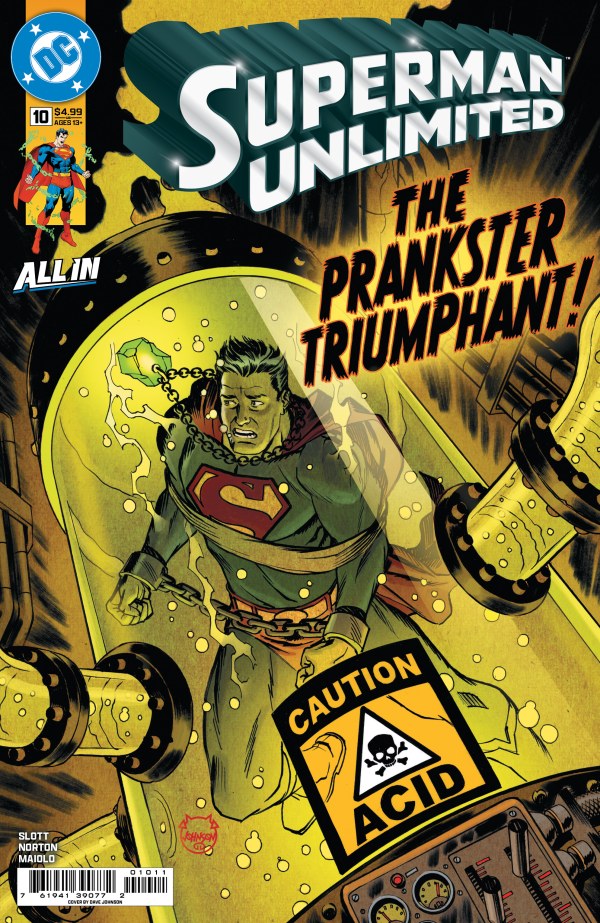
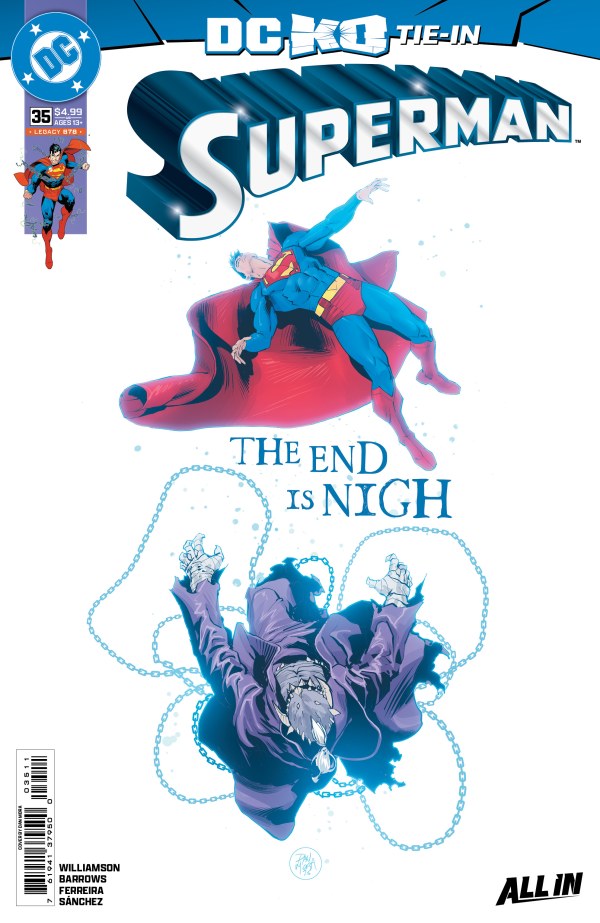
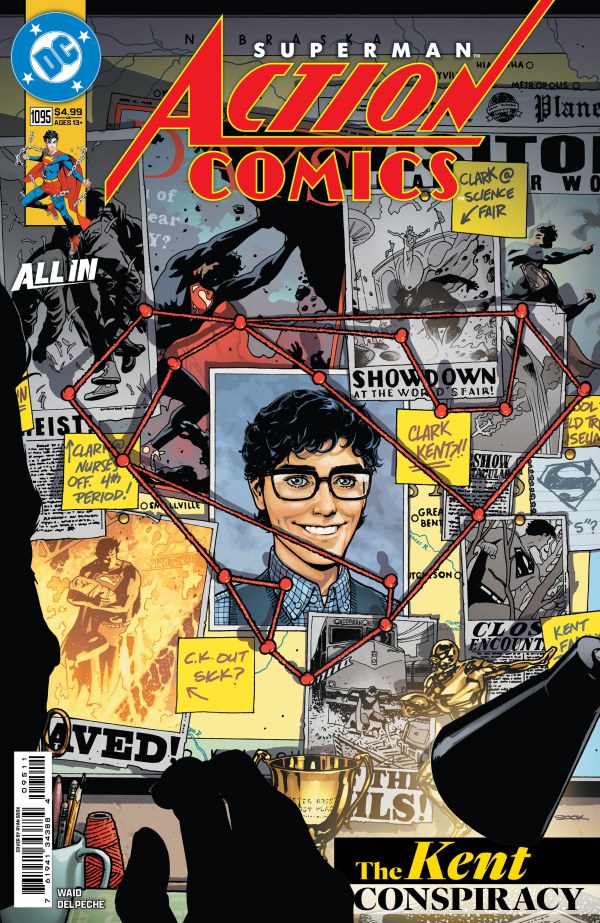
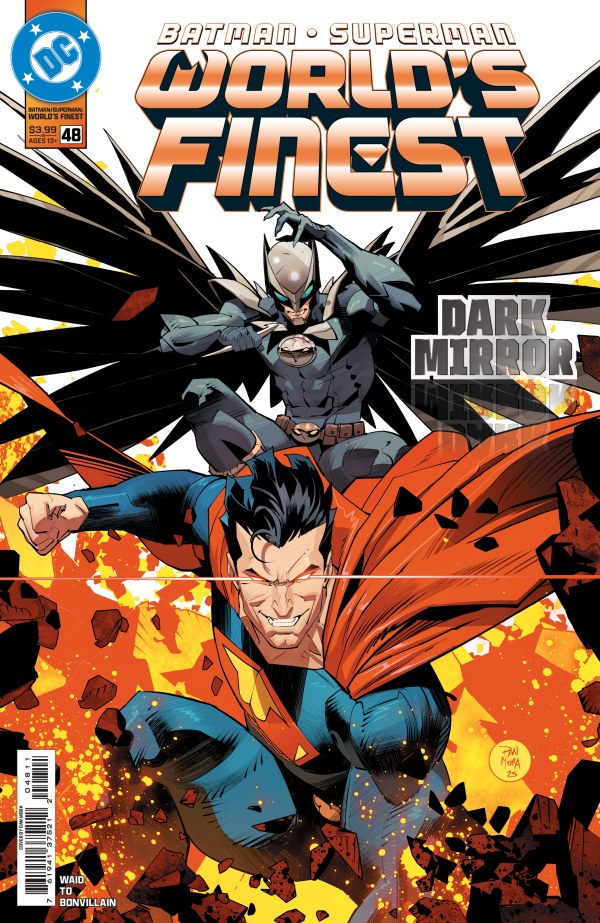
Finally, I want to move into the world of comic books, and again, you’re gonna hear me talk about Superman. DC declared it the “Summer of Superman,” which makes the man behind the Year of Superman laugh kind of derisively, but they absolutely stepped up. The addition of a new series this year, Superman Unlimited, gave the Man of Steel four different ongoing titles, as it joined the ongoing Superman, Action Comics, and the title he shares with his best pal from Gotham, Batman and Superman: World’s Finest. All four of the books are great right now. Superman has been part of an ongoing storyline tying into the larger DC Universe, Unlimited has focused on a story about an enormous Kryptonite meteor landing on Earth and changing the game for everybody, Action Comics is telling new stories of Clark’s early career as Superboy, and Batman and Superman is full of stories of the characters several years ago as well. (Both of the books set in the past, I should note, are written by Mark Waid, while Joshua Williamson and Dan Slott are behind Superman and Unlimited, respectfully.)

She hasn’t had it this good since Helen Slater.

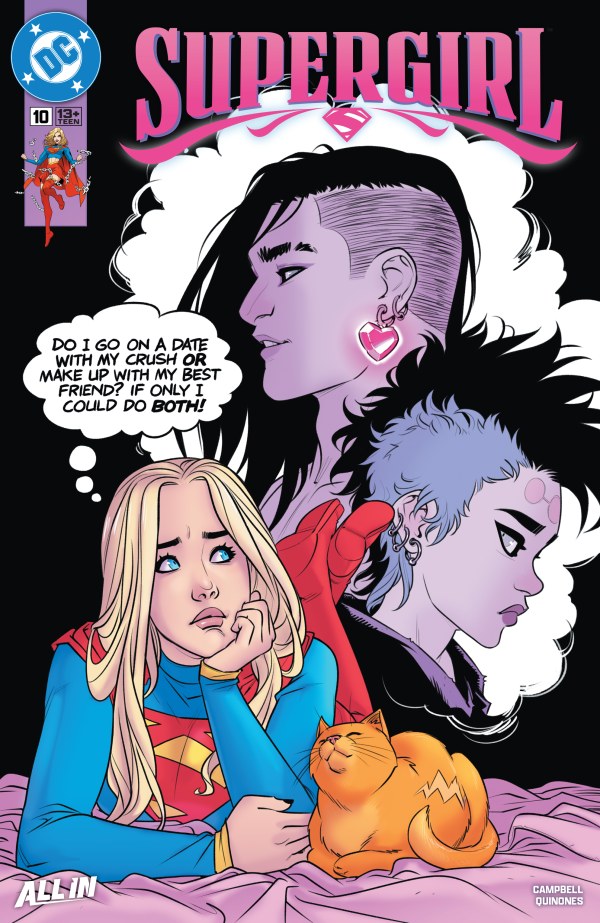
That’s not all, though. With her own movie coming out next year, Supergirl got a new series written and (usually) illustrated by Sophie Campbell. In the new Supergirl comic, Campbell has Supergirl moving back to her hometown of Midvale only to find a second Supergirl getting in her way. The series is eight issues in so far, and it’s become an absolutely lovely story about found family, with Supergirl building up a team of unexpected friends around her. Campbell’s art is great as well – a bit more cartoonish than your traditional superhero comic book, but perfectly suited for the series.

A boy and his dog indeed.

Not only that, but the Superman titles gave us two of the best miniseries of the year. Krypto: The Last Dog of Krypton by Ryan North and Mike Norton, is the story of the breakout star from this summer’s hit movie. For the first time, we see Krypto’s point of view of the destruction of Krypton, his journey to Earth, and the path that eventually led him back to Kal-El in Smallville. There’s something about that dog that pulls on the heartstrings, and in the course of the five issues I cried no less than six times. Of course, I’m kind of a softie.

Kryptonite! Now in all the Kolors of the rainbow!

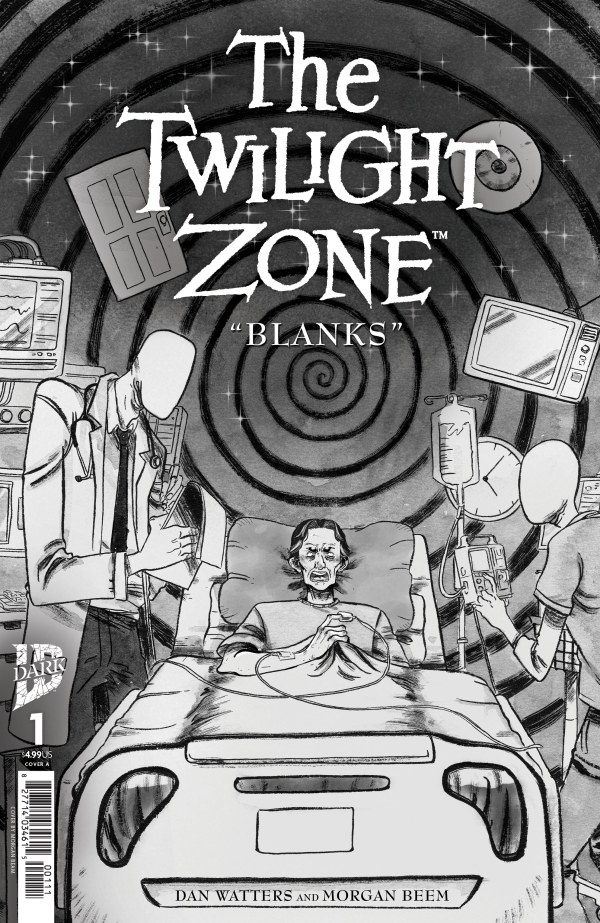
Finally, and I promise this is the end of me plugging Superman, I absolutely loved Superman: The Kryptonite Spectrum by W. Maxwell Prince and Martin Morazzo. Prince and Morazzo have had a hit series through Image Comics for the past several years with Ice Cream Man, an existential horror series that takes some of our most human fears and anxieties and materializes them in stories that would feel suitable in The Twilight Zone. In The Kryptonite Spectrum, Superman encounters Kryptonite meteors in colors he’s never seen before and begins experimenting to determine what they do. What’s astonishing is that, although this is by no means a horror story, Price and Morazzo still manage to tackle some of the stranger, more esoteric kinds of stories that they’ve become so well known for. The stories deal with things like the nature of time and identity, and while they may not be frightening, they’re very atypical for Superman…and they’re great.

Step aside, boys, Sue’s got this one covered.

Okay, let’s forget Superman and talk about a few other great comic books. Once again, Ryan North’s Fantastic Four is the best title Marvel Comics is publishing. Relaunching this year with art by Humberto Ramos, Fantastic Four continues to be an exploration of Marvel’s first family with time-travel adventures, an alien pet, and a focus on characters that the series has historically neglected. In the early days of the series, Susan Storm – then the Invisible Girl – was written almost as an afterthought, and frequently as a damsel in distress. A lot of writers have improved her over the years, but North has gone a step further, showing how smart, brave, and capable the Invisible Woman can be. She’s taken a leadership role and is using her powers in ways that no writer has ever done before. North’s love for the FF shows in every panel. It was recently announced that he’s taking over DC’s The Flash with artist Gavin Guidry next year, and I absolutely cannot wait.

Stuff like this is the reason people don’t want to go to the movies anymore.

Finally, I want to talk about how great Geoff Johns and Ivan Reis’s horror comic Hyde Street was this year. Published through the Ghost Machine studio by Image Comics, Hyde Street is a series about a mysterious town populated by people who are under the thumb of an unseen Gamemaker. Each of them is a person of vice or cruelty that has been trapped on Hyde Street and given the task of corrupting a certain number of souls before they can leave. Some of them are desperate for release. Others, like the demonic boy scout “Pranky,” are far past their limit of souls but are having too much fun to leave. The format leaves the series open to tell an endless number of horror stories, while still having its own backstory and mythology that’s turning out to be a lot of fun to explore. 

There’s been some great storytelling in 2025, and I’m hoping to get even more in 2026. If I missed one of your favorites – well, like I said, there’s a LOT of stuff I missed this year. Let me know what I need to add to my list for next year.

Blake M. Petit is a writer, teacher, and dad from Ama, Louisiana. His most recent writing project is the superhero adventure series Other People’s Heroes: Little Stars, volume one of which is now available on Amazon. You can subscribe to his newsletter by clicking right here. He’s also started putting his LitReel videos on TikTok. Also, for the 23rd consecutive year, the best food find of the year was the return of the McRib.

Year of Superman Week 51: A Very Kryptonian Kristmas

As I write this it’s December 17, one scant week until Christmas Eve. And I don’t mind telling you guys, we need a little Christmas right this very minute. Don’t worry, I’m not gonna quote the entire song. I will, however, spend the next several days reading some of my favorite classic Superman stories set around the holidays. I’ll also tackle this year’s DC Christmas special, which I’ve been sitting on in anticipation of this week, and I’ll take a look at the third Krypto short, Package Pandemonium.

And as always, you can check out earlier blogs in the Year of Superman Archive!

Wed., Dec. 17

Comic: DC Comics Presents #67, DC Go! Holiday Special #7 (Bizarro), DC Go! Holiday Special #8 (Sunshine Superman)

Notes: I’m starting this week with one of my all-time favorites, a comic book I’ve loved since I was a kid and I go back and re-read pretty much every year at this time. DC Comics Presents was, of course, the Superman team-up book for much of the 80s, and in issue #67 Superman teamed up with the greatest hero of them all: Santa Claus.

In “‘Twas the Fright Before Christmas” (a title which I feel has probably been used and reused hundreds of times over the years), Superman happens to pass by a kid using a toy gun to try to hold up a sidewalk Santa Claus on Christmas Eve. Superman determines that the toy gun actually has a device that’s controlling the boy’s mind, and he whisks him off to the Fortress of Solitude to investigate. Superman breaks the mind control and the boy, “Timmy Dickens” (because Len Wein and E. Nelson Bridwell were not subtle writers) tells him how he found some of his Christmas presents early. Superman deduces that it’s the work of his old foe the Toyman, and bundles up Tim to bring him home. Just moments after he takes to the Arctic air, Timmy’s other toy blasts him with a ray that sends him crashing to the ground, unconscious. As Tim pleads with him to wake up, a group of tiny men with pointy ears appear as if from nowhere and take them both to safety. 

Back in Metropolis, we see the Toyman monologing about how he found a chunk of white dwarf matter that he used to create heavy gravity, cancelling Superman’s powers, and believes him to be dead…but JUST in case (the Toyman may be crazy, but he’s not an idiot) he starts preparing a few other weapons. Superman, meanwhile, wakes up surrounded by his rescuers. When he asks where he is, his eyes clear and he sees Santa Claus standing over him, welcoming him to his top-secret workshop. He gives Superman a tour of the workshop, triggering memories in Superman of a holo-projector he played with as a baby, a gift from Jor-El that was lost when Krypton exploded. With Superman still weak from the gravity beam, Santa offers to give him and Timmy a lift back to Metropolis in his sleigh. They stop at Toyman’s hideout and Superman bursts in to stop his old foe, but between the earlier blast and Toyman’s Kryptonite-armed toys, the pushover of a villain turns out to be far more dangerous than usual. Santa drops down the chimney and lets some of his own toys out, and the tiny warriors help the Man of Steel defeat the Toyman in an epic battle. After the Toyman is taken away, Santa gives Superman safe toys to replace all of Toyman’s tainted gifts. As he finishes his rounds he’s about to take Tim home, but Tim’s toy blasts him again, knocking him out. He wakes up back in the arctic snow, Tim standing over him, and he believes the events of the evening to be a dream. But after he brings Timmy home, he returns to Clark Kent’s apartment to find a special gift in his cape pouch – the holo-toy his father made for him.

Usually, I despise the whole “It’s all a dream…or WAS it?” trope, but this is one of the few stories where I give it a pass. Part of it, I suppose, is the nostalgia behind it. I was probably ten or eleven years old the first time I read this story, and it’s as dear a holiday yarn to me as the likes of Rudolph and Frosty. There’s so much charm to it, and I just love Curt Swan’s depiction of Santa Claus. As much as he is one of the iconic Superman artists of all time, sometimes I wish he had gotten to do a Santa miniseries or something, just because his style lends itself so well to the character. 

The story also plays on nostalgia as well, with Superman remembering the toy from Jor-El and thinking fondly of Christmases past. And while Superman’s initial skepticism about Santa DOES seem a little silly, considering all of the other outlandish things in the DC Universe that he knows are real (lest we forget, he has previously visited an alternate dimension occupied entirely by funny animals), they at least justify it by him saying that he would have seen Santa’s workshop at the North Pole if it existed and Santa casually telling him that nobody sees the workshop unless he WANTS them to. That whole “magic vulnerability” again, y’know? 

This story, along with several other classics, was reprinted in 1988 in the first of two Christmas With the Super-Heroes specials. It was my first exposure to not only this story, but other classics like the Teen Titans “Swingin’ Christmas Carol” and “Silent Night of the Batman.” Both this issue and the entire special are – for once – available on the DC Infinity app, and if you want a little holiday cheer, it’s worth the read. 

Dec. 18

Comics: Superman Vol. 2 #64, Adventures of Superman #487, DC Go! Holiday Special #12 (Super-Pets), DC Go! Holiday Special #13 (Bizarro)

Notes: This was probably the first Superman Christmas story I remember reading as an ongoing fan of the comic, surprisingly enough. I’d only come on-board 14 issues prior, during the Krisis of the Krimson Kryptonite, and there wasn’t a Christmas story the previous year. This one made up for it, though, with “Metropolis Mailbag” written by Dan Jurgens with art by the late Butch Guice. This story established something that we’ve come back to in the Superman titles a few times over the years: people send letters to him all the time and they pile up in the Metropolis post office, as he doesn’t actually have an address. Then, a few days before Christmas, he comes by and reads and responds to as many of them as he actually can.

The task of reading the mail is arduous for Superman, the hero who wants to help everybody and sees the mountains of letters as a visual representation of all the desperate people beyond his help. This year, at least, he has a little company, as Lois is joining him in reading the letters so she can write a story about Superman’s tradition for the Daily Planet. After sifting through fan letters and get-rich-quick schemes, he starts to sift out the people he can actually help, such as an Auschwitz survivor who has discovered that the sister whom she thought died in the war is still alive, but she has no means to get to Germany to see her. The triumph of their reunion is quickly dulled, however, when he finds another letter from a boy whose father is dying from a brain tumor. Superman visits the child in the hospital, arriving just minutes after Terry Baldwin Sr. passes away. Although Mrs. Baldwin is grateful that he came, Terry Jr. – who wrote the letter – is outraged. Superman sits with the boy and tries to explain himself, but he’s not having it.
“But you’re SUPERman!” Terry shouts.

“No. I’m SuperMAN. And there are many, many things I just cannot do.”

After a few weepy panels (both for the characters and the reader), the doctors come by to ask Mrs. Baldwin if her husband was an organ donor. Superman, sensing an opportunity to take some good from this tragedy, tells her about a letter he received earlier from another woman in desperate need of a heart transplant. In what can only be categorized as a Christmas miracle, Baldwin’s heart is a perfect match, and Superman swiftly delivers it. 

One last letter comes from a charity for disadvantaged kids that can’t afford Christmas presents or a Santa Claus this year, asking Superman to make an appearance to distract them from the lack of toys. As always, Superman does it one better with the help of his friends. Emil Hamilton whips up a sleigh and plays Santa, delivering a load of toys donated by one Mr. Bruce Wayne. Superman flies the sleigh down to visit the kids, incognito, and slips away before any of them suspect that they’ve witnessed anything other than Christmas magic.

This issue has been a favorite of mine for decades now. It’s a sweet, simple extrapolation of who Superman is and what would likely happen in a world where he existed – a mountain of pleas for his attention, of course, and the way he tries to handle as many of them as possible. 

The story also humanizes Superman in ways that few other stories do. It’s natural enough to see him in pain over all the people he simply cannot help – that’s just part and parcel for who a Superman should be. But the panel where he’s arriving at the hospital, unable to save Terry Sr., cuts right into the gut. Jurgens has him pause for a moment on the hospital roof before going inside, thinking about the boy whose world he’s about to shatter, thinking, “I hope he understands. I hope he won’t hate me.” You read this panel, Guice drawing Superman’s face in shadow, and you’re not hearing the voice of the world’s greatest hero. You’re hearing a very human man who loves people, who desires connection, and allows a very relatable moment of despair at the thought that he’ll be blamed for something beyond his control. It’s one of those single panels that encapsulates the character just beautifully. 

The story worked so well that it was revisited a few times, most notably one year later when Superman was “dead” after his battle with Doomsday and the rest of Earth’s heroes picked up his mail and dealt with it in his honor. But this original did it best. It’s a perennial read for me, a work of art, and it is as Superman as Superman gets. 

Fri., Dec. 19

Comics: New Adventures of Superboy #39, DC Go! Holiday Special #19, 20

Notes: It’s the last work day of the year for me, and honestly, I’m ready for it. I need some time to decompress, although I fear terribly that those circumstances I keep talking about are going to do their best to prevent such decompression in the home stretch of the Year of Superman. Still, I spent Thanksgiving with Superboy, so I’m bringing him back for one last go today in “A World Without Christmas” by Paul Kupperberg and Kurt Schaffenberger. 

It’s Christmas Eve in Smallville, but Clark’s classmate Bash isn’t feeling it. Bash – whose parents had to go out of town unexpectedly, leaving him alone – rants against the commercialization of Christmas and storms out of the Kents’ Christmas party. Clark heads after him, approaching him as Superboy, figuring that Bash would be more receptive to him that way. It doesn’t work – Bash continues to rail against the world. Playing a little Dickens, Superboy whisks Bash to an alternate reality where there is no Christmas, and Smallville is a dilapidated dump. Bash encounters that world’s Clark Kent, who runs away from him in fear, summoning an angry mob that’s out for blood, wanting to drive out the “costumed stranger” and the “Bashford Punk” from town. The two are separated, and Superboy is found by that world’s Jonathan Kent, one of the few decent people left. He takes Superboy to an underground hideout where, to Superboy’s shock, he finds Bash teaching Jonathan’s friends to sing “Silent Night.” Superboy takes Bash back home, his Christmas spirit renewed, neither of them ever learning that the leader of Jonathan’s resistance is that world’s Bash Bashford. 

It’s a different kind of Christmas story, that’s for sure – kind of bleak and melancholy. Although I suppose the ultimate message is that good can be found anywhere, which is appropriate enough for the Christmas season. I’ll allow it. 

Sat., Dec. 20

Short Film: Krypto Saves the Day: Package Pandemonium

Notes: It’s the third of the four Krypto shorts, this time giving us a warm, fuzzy tale of absolute chaos that feels delightfully appropriate for the holiday season. It’s Christmastime in Metropolis, and while Clark is sending out his Christmas cards, Krypto’s X-Ray vision happens to spot a postal worker carrying a package with a mouthwatering t-bone steak. Hunger overwhelms Krypto’s urge to be a good boy, and calamity ensues.

Okay, three cartoons in and I think it’s safe to say that this is the pattern for the Krypto shorts: he gets the urge to chase something for some reason, he causes lots of wacky shenanigans in his pursuit, and in the end he realizes he’s made a mistake and does his best to fix all the stuff that he’s wrecked. Yeah, it’s formulaic, but is it really any more of a formula than the classic Coyote and Roadrunner or Tom and Jerry shorts? They’ve all got their patterns, the real question is whether the filmmakers can find a little variety and a little fun while staying within the bounds of the formula. And I think this one does. The chaos is funny and Krypto’s remorse at the end feels genuine. Plus I’m still chuckling over the fact that Metropolis has a store literally named “Oversized Ornaments Outlet.” 
Sun., Dec. 21

Comic: DC Special Series #21

Notes: Today I’m grabbing another old favorite from DC Special Series #21, aka the Super-Star Holiday Special. This book from 1979 featured several stories starring Jonah Hex, Batman, Sgt. Rock, and the House of Mystery. The one I’m reading this for, though, is Superboy and the Legion of Super-Heroes in “Star Light, Star Bright…Farthest Star I See Tonight!”

Superboy is bouncing forward in time for one of his regular visits to the Legion just in time for Christmas. His friends show him some of the futuristic holiday celebrations, and Superboy is left feeling nostalgic for a simple, old-fashioned Christmas. Then, to make all the Legion’s futuristic technology worthwhile, he proposes a little adventure: using their tech to try to track down the Star of Bethlehem. With Wildfire, Lightning Lad, Saturn Girl, and Phantom Girl joining him, the Legion sets out to look for the star. When they arrive where it should be, though, they find a planet in dire straights. The planet is entering an ice age, causing its three intelligent species problems. An aquatic race is dying because the plankton they feed upon is freezing. A land-dwelling mammalian race is so desperate for warmth that they’re setting fire to their own crops. Finally, ice storms are battering the nests of an avian race, threatening the eggs that hold their young. The Legionnaires help each of the tribes but know their aid is only temporary, until Superboy comes up with a plan. Together, the Legion uses their powers to carve out an underground catacomb where the three races can shelter from the storm and coexist with one another, sharing resources and warmth until the United Planets can find a way to safely evacuate them to a more suitable world. Although Wildfire remains characteristically skeptical, Superboy is happy to credit his quest for the Christmas star for saving an entire world that Christmas Eve. 

The first time I ever read this story, like the DC Comics Presents story from a few days ago, was when it was reprinted in Christmas With the Super-Heroes from 1988. Dang – maybe I should have just read that book this year. But regardless, I really like the message here. The story is a bit light on traditional Christmas elements: no Santa Claus, no Angels, no carols or candy canes. Despite that, though, writer Paul Levitz leans on the spiritual aspects of the holiday even 1,000 years in the future, set against the backdrop of a story that feels like it could have come out of an episode of Star Trek. It’s not something that many writers would do today…in fact, more recent Legion stories have mashed all of the Earth’s winter festivals into a bland, homogenized “Holiday” (which is actually what it’s called), whereas Levitz recognizes and celebrates different traditions: while the story is explicitly a Christmas tale, we see other alien cultures, as well as other Earth festivals like Chanukkah, which is celebrated by Colossal Boy (whose Judaism isn’t frequently referenced, but it’s not ignored either).

I particularly like how Superboy has this sort of childlike wonder to him. He’s never got a hint of doubt that their quest will bear fruit, and although he doesn’t exactly find what he expected, the fact that his curiosity helped save three intelligent civilizations is evidence that he was right all along.

Although only the final story in this special is Superman related, the others have a lot going for them as well. The Jonah Hex story cracks open Jonah’s childhood to show the horrible cycle he’s trying to escape, the Batman story has some early Frank Miller art, and the House of Mystery is a wild little romp where most (if not all) of DC’s horror hosts of the era get into a little contest to see who can tell the best Christmas story. The special is available on the DC Universe Infinity app, and it’s worth cycling into your yuletide reading. 

Mon. Dec. 22

Comic: Superman Vol. 2 #165, DC Go! Holiday Special #26, 29

Notes: I don’t talk about cover art often enough in these write-ups, but let’s take just a moment to appreciate this lovely little scene by Ed McGuinness: Superman and Lois looking down at a box of ornaments as Superman ponders that most inscrutable of holiday questions: what do you get the JLA for Christmas?

The story within, unfortunately, is somewhat less effusive with the holiday cheer. Written by Jeph Loeb, this story takes place in the aftermath of the election of Lex Luthor as President, with Superman struggling to wrap his head around the fact that such a thing could have happened. The issue is a series of vignettes, each by a different artist, in which he visits a member of the League, has largely the same conversation over and over again, and then gives them a token Christmas present. Some of them, like Green Lantern’s gift, are a bit of a gag, while others like Wonder Woman’s belie a deeper meaning.

I get the intent behind this issue. The President Luthor story was a big one, and it makes sense for Superman to struggle with it, even to the point of a mild existential crisis But in practice, this issue comes off as very repetitive, with each Leaguer’s respective stance being highly predictable. The rotating artists thing doesn’t work great either. Some of the scenes are sublime – having the late Mike Wieringo illustrate an outer space game of Satellite Baseball between Superman and Kyle Rayner is just lovely. Others are less so, but I suppose that Loeb was a big enough name at the time to want to work with his friends, and I can’t in good faith begrudge him that.

All said, despite the premise of this issue being that Superman is delivering Christmas presents to his teammates in the Justice League, this is probably the least Christmasy story I’ve read this week.

But again, that cover is a banger.

I had more fun with the DC Go! Holiday Special #29. This digital series has mostly taken short stories from the assorted DC holiday anthologies of the past and re-presented them one at a time in their “Infinite” format, so they aren’t new stories, but I honestly don’t remember where most of them were originally presented. In this case, we’ve got “A Lex-Tacular Christmas Carol” by Ethan Sacks with art by Soo Lee. It’s one of a thousand takes on the ol’ Dickens chestnut, but it’s an entertaining one. After sending an employee (named Bob, naturally) off to spend his Christmas Eve working instead of spending time with his family, Lex sets out to have a good night’s sleep, only to find himself visited by a variety of familiar spirits. Just when you think you’ve seen every iteration of A Christmas Carol that you could think of, you get hit with something like this. Whereas most of our Scrooge stand-ins go through the requisite character arc, Lex is utterly nonplussed about the ghosts. Even his own father as the stand-in for Jacob Marley doesn’t make Lex bat an eye, merely comparing his current appearance to what he looked like when Lex – y’know – murdered him. Sacks DOES give in to tradition just a hair at the end, but all in all, Lex makes for them the most delightfully unrepentant Ebenezer Scrooge you could possibly imagine.

Tues., Dec. 23

Comic: Batman and the Outsiders #19, DC’s I Saw Ma Hunkel Kissing Santa Claus #1, Titans Vol. 4 #30 (Guest Star Jon Kent)

Notes: I like it when Superman pops up as a guest star alongside other, younger heroes. It’s a good way to see just how he’s perceived by the hero community at large, and this Christmas story from Batman and the Outsiders #19 serves that purpose well. On Christmas Eve, Geo-Force (arguably the most powerful member of Batman’s mid-80s team) is with the young Halo when gets a phone call from a friend who has swallowed a bottle of pills. After getting the young woman, Denise, to medical attention, Geo-Force discovers that she was driven to this desperate situation after being sexually coerced by one of her college professors. Geo-Force sets out to kill the professor and Halo rushes off to Batman for help. Recognizing that he can’t possibly stop Geo-Force on his own, Batman makes a call to Metropolis. As Superman and Halo seek out Geo-Force, hoping to stop him before he does something he can’t take back, Batman uses his own skills to attack the lecherous professor in his own way.

Several things worth mentioning in this one. First, when Batman quit the Justice League and founded the Outsiders (a whole 19 issues ago) it caused a rift between himself and Superman that all of their assorted titles dealt with for months, particularly the title they co-starred in, World’s Finest Comics. The fact that Bruce immediately calls Clark for help when he realizes what Geo-Force is up to is a wonderful way to demonstrate that the rift has largely been healed at this point. It’s also cute to see Halo mooning over Superman when she meets him for the first time. The “young heroine gets a crush on Superman” trope wasn’t new even when this book was published in 1984, and often it gets tiresome. It works quite well with Halo, though – she’s a teenage girl who is struggling with assorted identity issues of her own while, at the same time, still dedicated to being a hero. She’s also the kind of person whose heroism shows brightly, cheerfully – she may be a member of Batman’s team, but she’s not the kind of hero who sulks in the shadows.

The Geo-Force fight is the really interesting part of this story, though. It’s often tempting to enact what TV Tropes calls “the Worf Effect” in stories like this one – having a character who should theoretically be much more powerful than his opponent suddenly become weak or ineffective. It’s an annoying trope, and when you hear “Superman Vs. Geo-Force” (who’s very much a rookie at this point) it doesn’t seem like it should be a contest. But Geo-Force not only holds his own, but writer Mike W. Barr sells you on its plausibility. Superman’s powers are, after all, due in part to the lower gravity of the Earth, and since part of Geo-Force’s powerset is the manipulation of gravity, it allows him to balance the playing field considerably, making for a more tense battle scene.

Despite the dark undercurrent of this story, the presentation at the end feels hopeful and bright, which is just what you want in a Christmas story, isn’t it?

Also on the docket today is this year’s DC Comics Christmas special, I Saw Ma Hunkel Kissing Santa Claus. (Again, and I cannot emphasize this enough, whoever it is in the DC marketing department that’s coming up with the titles for these holiday anthologies deserves a raise.) There are eight stories this time out, and I particularly liked the opening story starring Ma Hunkel herself, as well as the tales with Billy Batson, Animal Man, and Dr. Light. But I’m here to talk about the Supergirl story, “Holiday Woes” by Ash Padilla with art by Anthony Marques. Kara is spending Christmas in Smallville with Lois and Clark – her first since declaring herself the protector of National City, and she’s nervous that if she takes time away from her tasks as a superhero, people in her town will go undefended. But Clark wants her to loosen her up, and sets her up on a blind date at the Smallville Winter Festival. As is to be expected from a blind date in a comic book, things don’t go exactly as planned. 

I’ll knock out the thing I didn’t care for: the retcon of Pete Ross’s son. As recently as the Summer of Superman special early this year, we saw that Pete and Lana’s son Clark Ross is still in continuity and still a child. A teenage son named Jonathan Ross doesn’t fit in anywhere here. Now it’s easy enough to dismiss the story as just being out of continuity, as the stories in these holiday specials rarely turn out to have any ongoing relevance. But in this case, darn it, I WANT this story to turn up again. The truth about Kara’s date is really sweet, and the kind of thing that appeals to an old-school fan like myself. (And truth be told, I’d like to see Dr. Light team up with the Atom again the way they do in this issue. What can I say? Like Clark Kent in this story, I love love.) 

Wed. Dec. 24

Comics: Superman’s Christmas Adventure #1, Action Comics #93, Action Comics #105

Notes: I’m going to wrap up this festive week with some Golden Age Goodies, beginning with what I have to assume is the first ever Superman Christmas one-shot, Superman’s Christmas Adventure from 1940. Lois and Clark convince their editor to begin a campaign to collect and refurbish used toys to give to needy children for Christmas. News of this campaign makes it all the way to the North Pole, where Santa is pleased to see that Lois and Clark are acting as his helpers this year. But a pair of villains who hate Christmas – Dr. Grouch and Mr. Meany – have sent a ship to the Pole where they try to convince Santa to convert his workshop to a commercial enterprise. Failing, they attack the Planet’s toy drive, setting the workshop on fire, with it only being spared thanks to Clark’s super-breath. Foiled again, they decide to attack Santa’s workshop directly, only to be driven back by his army of toy soldiers. Lois has stowed away on their ship (because of course she has) so they strap her to a rocket and blast her into the sky, where Superman rescues her. The villains split up, with one of them kidnapping Lois (again) and the other stealing Santa’s reindeer – a crime that statistically is far greater than stealing forty cakes. Santa radios Superman for help, and although he saves the reindeer, Grouch and Meany manage to gas them to sleep, rendering them unable to pull Santa’s sleigh. Superman, of course, steps up to help the big guy make his rounds.

This 16-page comic, originally published as a department store giveaway, is absolutely wild. It ends when Santa gives the bad guys Christmas presents, despite the fact that they quite clearly belong on the naughty list, and this makes them instantly reform and give up evil. Really, that’s all it takes. And I didn’t even mention the two-page sequence where Superman takes a spoiled rich kid on a tour of the less fortunate children of Metropolis to make him appreciate what he’s got and teach him the spirit of giving. That has NOTHING to do with the main plot. This story is wild, unfocused, a plot seemingly assembled by shotgun. And I of course loved every panel. Here’s hoping that Tom King is working on the gritty reboot of Grouch and Meany for next Christmas.

Action Comics #93 brings us “Christmas Around the World.” It’s 1945, and in the aftermath of World War II, Lois and Clark find an abundance of refugee children separated from their families during the war. Superman, of course, loads them up in a glider and begins a world tour, delivering food and supplies to impoverished areas while, at the same time, reuniting the children with their families, and spreading Christmas spirit along the way. It’s an odd little story. There’s no villain. There’s not even really any conflict. The closest we have is one boy who lies about wanting to go with Superman to be reunited with his father, but who only didn’t want to make his friends (whose fathers died in the war) feel bad. It’s just a little picture postcard of a world healing itself after its darkest hour.

I’m going to wrap up this week of yuletide joy with Action Comics #105, a comic so stuffed with holiday cheer that I am currently wearing a t-shirt with the cover on it. Millionaire Jasper Rasper is a mean man who hates Christmas. He sneaks off to the North Pole and tempts Santa with some candy that is specially formulated to make fatty tissue multiply at an alarming rate. When Superman gets wind of the scheme, he rushes to the Pole to find that Santa is now too plump to make it down the chimneys on Christmas Eve. Superman begins whisking Santa around the world on an exercise tour, slimming him back down. As he’s about to head out, though, they find that Rasper ALSO drugged Santa’s reindeer (Santa needs to step up his security detail), so Superman agrees to pull that ol’ sleigh again. As they’re making their way south, they see that Rasper’s helicopter crashed on an iceberg. Superman saves him and the villain, just like our pals Grouch and Meany, has a miraculous change of heart.

Just when you think you’ve seen every Christmas story possible, we get a gem like “Villain makes Santa Claus too fat, so Superman becomes his fitness instructor.” It’s a magical time.

I hope you’ve enjoyed this week of holiday adventures friends, and I hope you and yours have the merriest of Christmases. And I hope to see you all next week, on New Year’s Day, when I’ll present the grand finale of my Year of Superman. 

Blake M. Petit is a writer, teacher, and dad from Ama, Louisiana. His most recent writing project is the superhero adventure series Other People’s Heroes: Little Stars, volume one of which is now available on Amazon. You can subscribe to his newsletter by clicking right here. You can join in the Kryptonian Konversation every day in the Year of Superman Facebook Group!

Geek Punditry #155: Christmas Movies Past

The perennial debate of “Is Die Hard a Christmas movie” is, let’s be honest here, pretty tired at this point. We’ve all talked about it until we’re as blue in the face as Cold Miser, and nobody is changing anybody’s opinion. Even the edgelords who take it as an excuse to classify anything with so much as a single strand of tinsel as a “Christmas movie” in an effort to see who can come up with the most outlandish example (that would be those who call Star Trek: Generations a Christmas movie on the grounds that Picard has a single scene in which he hallucinates having a family at Christmas time) have gotten tired of the argument. This year a new one has cropped up: “Why haven’t they made any good Christmas movies recently?”

An absurd question — Christmas movies have clearly never been better.

I’ve actually seen this posited several times recently from various different sources, and I guess “There are no new Christmas movies” is at least a DIFFERENT debate than the Die Hard one, although it’s even harder to make a legitimate argument. The first time I heard it, I hopped on my TikTok feed and ran through a list of good Christmas movies from the past decade, with everything from family fare like The Christmas Chronicles to horror movies like Krampus. Since I made the video I also got around to watching the 2024 adaptation of Barbara Robinson’s The Best Christmas Pageant Ever, and I thought it was absolutely lovely. 

As I saw this debate go on and on, though, I noticed a disturbing trend. As people bemoaned the dearth of new movies, they kept asking for movies that stack up against classics like…Elf. And you know, I like Elf. It’s probably Will Ferrell’s best movie. But should that be the go-to example of the last great benchmark Christmas movie? 

Or movies like Jim Carrey’s How the Grinch Stole Christmas. Okay, now my hackles are starting to bristle. I do not care for that movie, I don’t think it deserves any mention among the classics, but I can accept that different people have different tastes, right? 

As the examples kept coming, I realized that none of the “old” movies these people were citing were movies that I – as a certified old person – would have considered OLD. The oldest movie that these fans kept referencing, in fact, was The Santa Clause from 1994. (It’s a good movie, but it has a special place in my personal hatedom for being the film responsible for making so many people misspell Santa Claus’s name every damned year.)

When people call this movie “old” they sound the same to me as Tom Holland trolling Robert Downey Jr.

These people, the people who are begging for new Christmas movies – which is fair – haven’t even finished watching the OLD ones. Seriously, they’re not even throwing in movies from the 80s like A Christmas Story or National Lampoon’s Christmas Vacation into their blender of Christmas classics. Even 1990’s Home Alone seems to be outside of the bubble. How is that POSSIBLE?

That’s a rhetorical question, of course, I know exactly how that’s possible. I am a high school teacher, I spend the majority of my time around teenage American human beings, and I know that a chillingly high percentage of them believe that western civilization began in October of 2006 with the release of Taylor Swift’s first album. The truly cultured – a term which here means “goths” – can see back to 1993 and The Nightmare Before Christmas.

But the movies that I consider classics? Completely missing from their sphere of reference.

So my friends, this is my plea to you this year: reach out and try to educate your children with the true greats. I know it won’t necessarily be an easy sell. Put on a black and white movie like It’s a Wonderful Life or Miracle on 34th Street and a lot of modern kids (and let’s be honest – a lot of modern adults) will roll their eyes back, finding it as incomprehensible as hieroglyphics. But they’re going to miss out not only on great movies, but on some of the stories that have fundamentally shaped the modern tropes of Christmas. Think about it – how many movies and TV shows have referenced those two movies I mentioned? How many versions of A Christmas Carol are there? And look – as far as Christmas Carols go, we all know that the Muppets did it the BEST, but that doesn’t mean there weren’t good ones BEFORE it.

Kids these days need a Rosetta Stone to watch these movies.

How about The Bishop’s Wife from 1947? David Niven plays a clergyman desperately working to build a new cathedral, but his struggles are straining both his family and his faith. Enter Dudley, an angel with the inimitable charm of Cary Grant, who shows up to help out…only the Bishop thinks Dudley is there to replace him. It’s a lovely movie – sweet, funny, and it’s the sort of thing that will remind you why Cary Grant must be front and center in any conversation about the greatest movie stars of all time.

Or how about Jimmy Stewart’s OTHER great Christmas movie, The Shop Around the Corner from 1940? Stewart and Margaret Sullavan are employees at a tiny gift shop during the Christmas rush – two people who bicker, antagonize, and basically cannot stand to be around each other. Neither of them realizes, of course, that the anonymous pen pal they’ve been sending letters to and falling in love with is that person at work who drives them crazy. The movie was updated and remade with Tom Hanks and Meg Ryan as You’ve Got Mail, although that version drops the Christmas cred. At the risk of sounding saccharine, it’s the sort of movie that made people believe in true love during a dark time when everyone needed it. For bonus points, the shop owner is played by the Wizard of Oz himself, Frank Morgan. 

In 1951, Bob Hope starred in The Lemon Drop Kid, a story of a small-time con man who accidentally cheats a gangster out of a massive win at the track. The Kid is given until Christmas to pay up, and he cooks up an elaborate scheme involving sidewalk Santas pretending to collect money for elderly widows. Fortunately, as is to be expected in a film of this nature, the spirit of Christmas steps in before things go too far, and the movie gets the requisite happy ending, although perhaps not in the way that a modern audience might expect. And as a little yuletide trivia, this movie is also the original source of the classic Christmas song “Silver Bells.” 

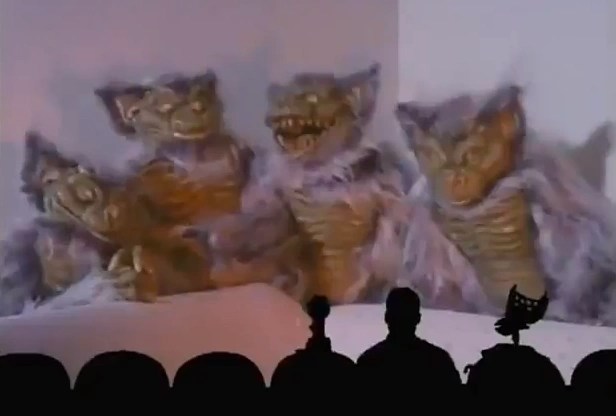
Boys in the 60s believed in Santa a lot longer because they thought his helpers looked like this.

Of course, eventually Christmas movies DID start to show up in color. I think it’s safe to say the first truly great color Christmas film was White Christmas from 1954, featuring Bing Crosby and Danny Kaye as a pair of entertainers who fall in love with a pair of sisters. Less iconic but still enjoyable was Disney’s Babes in Toyland from 1961, starring Annette Funicello and Tommy Sands as a pair of fairy tale characters who get embroiled in the schemes of a vile villain who wants to marry Annette (which was 100 percent relatable in 1961). The kids flee to Toyland, where Santa’s toys are all made. The movie is a technicolor bonanza, with more bursts of hue per minute than an explosion in a kaleidoscope factory. It also happened to be a favorite of my mother, who watched it with us countless times when we were kids, so that’s no small part of why I think of this movie so affectionately. And like The Shop Around the Corner, this movie sports an Oz alumni: Ray Bolger turns in his kindhearted Scarecrow persona for the sleazy, scummy Barnaby. 

In 1978, there was the Star Wars Holiday Special.

Peeking over the bathroom stall: holiday cheer!

In 1983, John Landis brought nascent stars Eddie Murphy and Dan Aykroyd to the screen in Trading Places, a comedy about a businessman and a street con artist who get swept up in a bet by a pair of cold-hearted millionaires. They pluck Aykroyd out of his affluent life and give it to Murphy, but the two of them come together and decide to turn the tables on the people who’ve been using them. This is one of those “is it a Christmas movie” films that often enter the debate. It takes place at the Christmas season, although unlike most Christmas movies, the story actually reaches its climax AFTER Christmas. But it’s funny and poignant, and you can definitely see why Eddie Murphy was going to go on to be one of the biggest stars of the decade. This isn’t one to watch with the kids, but it IS one to watch if you’ve never seen it before. 

Let’s see Billy Bob Thornton do this.

And although some people dismiss it, I have a very warm spot in my heart for Santa Claus: The Movie from 1985. David Huddleston is, in my mind, the definitive on-screen Santa Claus: warm, jolly, cheerful, and kind, with exactly the stature and voice that I imagine when I close my eyes and think about St. Nick. The movie was produced by the Salkinds, who also produced the Christopher Reeve Superman movies, and in fact the plot is almost a direct lift from the first one. The first half of the movie is concerned with Santa’s origin story, then there’s a time skip to the present day where the villain is introduced (played by John Lithgow chewing so much scenery they must have had to stage an intervention) and the real plot plays out, with a battle between Santa and the corrupt toy executive B.Z. for the hearts of the worlds’ children. Interestingly, like The Fifth Element, this is a movie in which the hero and the villain never actually meet each other.

When this movie came out I was the same age as my son is now, and that makes me think it’s time he and I watch it together. 

These are only feature films, incidentally. I haven’t even dipped into the vast back catalogue of theatrical shorts (like the Donald Duck-starring Clock Watcher and Toy Tinkers, the Looney Tunes classic Gift Wrapped, or the Popeye cartoon Mister and Mistletoe), or the mountain of TV specials from the likes of Rankin and Bass, the Peanuts crew, or our friends at Hanna-Barbera. 

It is both fair and legitimate, my friends, to want new Christmas movies. I want them too. I look for them every year, and I agree that unless you’re looking at the Hallmark Channel there aren’t nearly enough being produced. (And if you are looking at the Hallmark Channel, be honest, your primary concern isn’t finding something NEW.) 

However, if you’re searching for Christmas spirit, it would behoove you not only to look at the films since the turn of the millennium. Go back in time and rediscover the classics, the hidden gems, and the movies that have fueled Christmas for generations now.

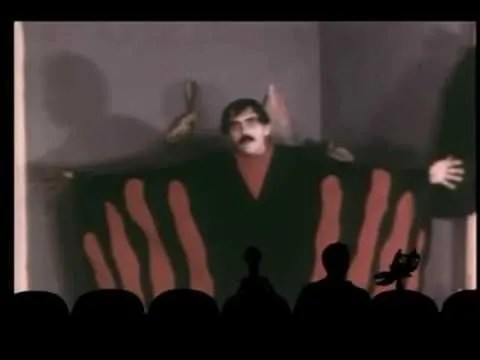
Blake M. Petit is a writer, teacher, and dad from Ama, Louisiana. His most recent writing project is the superhero adventure series Other People’s Heroes: Little Stars, volume one of which is now available on Amazon. You can subscribe to his newsletter by clicking right here. He’s also started putting his LitReel videos on TikTok. He considered mentioning Santa Claus Conquers the Martians, but that’s a film that should only be attempted by trained professionals such as Joel Hodgeson, Michael J. Nelson, and the rest of the MST3K and RiffTrax crews. 

Year of Superman Week 50: Everything Everywhere All At Once

It’s the last somewhat “random” week of the year, my friends. With only three of these blogs left before the Year of Superman ends, I’ve got plans for weeks 51 and 52 – that means I’ve got seven days to scratch as many other items off my list as possible. And you know, I’ve narrowed down that list substantially over the last 49 weeks, but there are still a lot of things I haven’t gotten around to and, frankly, I know that I WON’T get around to before the year is out.

But you know, that’s okay. Just because the year is ending doesn’t mean I’ll stop talking about Superman.

More about that later, but for now, let’s jump into this week’s journey, shall we? 

And as always, you can check out earlier blogs in the Year of Superman Archive!

Wed., Dec. 10

Graphic Novel: Superman: The World

Notes: This is, I believe, the third installment in DC’s “The World” series of graphic novels, following Batman and the Joker. The concept here is that different creative teams from all over the world are invited to contribute short stories about the title character of the anthology. It’s a neat idea that, in the first two volumes, showed us some interesting perspectives on the titular characters. Let’s take a look at what creators from all over do with the man of steel.

The book starts with Dan Jurgens and Lee Weeks (who also did the Doom Rising graphic novel I read yesterday) contributing the American story, “Let Slip the Dogs of War.” Lois and Clark are on a flight into Metropolis (a tedious and frustrating enterprise for Clark) when their plane is diverted due to what appears to be a kaiju attacking the city. Superman, of course, gets out to do his thing, and discovers that the creature may not be the threat people take it for. It’s a very Jurgens-esque story, with a great big honkin’ alien and Superman being Superman in the most Superman way possible. I’ve made it abundantly clear that I don’t think there’s a creator in comics who gets Superman better than Dan Jurgens, and this is one more example of that.

Spain’s Jorge Jimenez contributes “Superman in Granada.” After stopping a meteorite from hitting Earth, Superman’s powers are neutralized and he finds himself stuck in Spain for about six hours before the effects wear off and he can get home. The story is partially a travelog about how beautiful and welcoming the city of Granada is (and Jimenez and colorist Alejandro Sanchez 100 percent sell you on that concept), while the rest of it is about Superman getting by in a place where people don’t quite believe who he is, because let’s be honest, if you saw a guy in a Superman costume walking around and trying to explain that he can’t fly at the moment, you probably wouldn’t believe him either. This one is really very sweet.

“Superman’s Inferno” comes from Italian writer Marco Nucci and artist Fabio Celoni. Lois and Clark are in Italy on the 700th anniversary of the death of Dante, author of the Divine Comedy, a day in which it was prophesied that a portal to Hell would open and flood the world with demons unless a lost incantation is recited. Lois dismisses it as legend, but Clark is uneasy, and when the clock strikes midnight – sure enough – the city is hit by an earthquake. The story traces Superman’s journey through the nine circles of hell – nice, if a little on-the nose. And the revelation of the “incantation” is perhaps just a shade too cute, but still clever. The artwork is top-notch, though, a journey through Hell that’s perhaps a little on the cartoonish side, but tells the story very well. 

From Serbia, writer/artist Stevan Subic gives us “My Choice, Protecting the Light.” With his super-hearing, Superman picks up someone in Serbia threatening violence against another person who describes themself as “Superman’s friend,” trying to prevent the other from obtaining Kryptonite. This story is a little weak. Although Subic goes out of his way to say that the people of Serbia are Superman’s friends and to have Superman call them honorable, we don’t really SEE any of them, except a brief glimpse of the guards protecting the Kryptonite. It’s very much a case of telling instead of showing. The story would have been served better had the people taken a more active role in the fight scene, interacting with Superman and his mystery adversary a little bit more, rather than keep it so contained. 

Cameroon’s writer Dr. Ejob Gauis and artist E.N. Ejob are the creators of “Chariot of the Gods.” A week after Superman stops a villain in Cameroon, damaging an ancient statue in the process, he is being forced into a battle against one of their champions. By breaking the statue, Superman cut the people off from their gods, and only a judgement by combat can complete the restoration ritual. The story is a bit of a treatise about respecting the boundaries and traditions of other cultures. It’s a little disjointed – like, why couldn’t anybody TELL Superman what the big deal was about the statue BEFORE they started punching each other? – but overall it works. 

Rana Daggubati and Sid Koitan give us India’s entry, “To Be a Hero.” A young Superman, just a year into his career, is in India as Clark Kent when he gets invited into an expedition to find a lost civilization. When they come across it, though, they’ve been beaten by outsiders looting the temple of sacred artifacts. I really liked this one – a short, simple story of Superman doing the right thing with great artwork and a color scheme that feels like this was originally produced for the Red and Blue series, which of course is magnificent all around. 

Mauro Mantella and Augustin Alessio are the creators of Argentina’s “The Last Seed of Krypton.” While Clark is in Argentina chasing a story, an energy-creature from what turns out to be a yellow Kryptonite meteor bursts free and attacks Superman, disrupting his powers as yellow Kryptonite does. The creature turns out to be a Kryptonian equivalent to Swamp Thing, hoping to merge with Earth’s Green. There are good ideas in this story, and I quite like the contradictory narration of Superman trying to find a way to defeat a foe whilst that foe sees him as a “Kryptonian brother” trying to bring him a gift. But it’s never quite clear why they’re fighting in the first place, other than the creature frightening people. There doesn’t seem to be any THREAT in allowing it to merge with the Green, or if there is, it isn’t made explicit. There’s also a point where Superman – his powers dwindling – has to find a way to amplify moonlight to recharge himself. Cool idea, except that nobody seemed to let the colorist know that this scene was supposed to take place at night – it seems to be broad daylight outside. There’s something here, but the execution falls kind of flat. 

Turkish writer/artist Ethem Onur Bilgic’s story is “The Hero and the Bull.” Lois and Clark – who are seriously piling up Daily Planet travel expenses in this book – are in Turkey for a history symposium. A group of mercenaries is going after some sacred stones in this one, which can be used to summon a being from antiquity. This one is pretty cut-and-dried – bad guys want to use an old artifact to do a bad thing, Superman stops the bad thing. No twists or surprises, but it’s well done and the art is great.

“Superman in Paris” is by Sylvain Runberg and Marcial Toledano Vargas. Clark has taken Lois on a trip to France to visit an exhibit by her favorite artists, but King Shark swims up the Seine looking for a meal on the logic that French food is the best food in the world, the French people eat French food every day, therefore French people should be the most delicious prey on the planet. I mean…I can’t really fault that logic. It’s a funny story with a fairly standard Superhero fight in the middle of it. Again, though, the artwork by Vargas is top-notch.

Brazil’s Jefferson Costa writes and draws “The Red Mantle.” Clark is in Rio seeking an ancient artifact – the titular “red mantle” – that has been stolen from a museum exhibit. He winds up getting into a philosophical debate with the thief. It’s okay, but I’m starting to wish that DC had put a cap on the number of stories that deal with “an ancient artifact” in this book. I get it, the point is to showcase the culture of the creator’s country of origin, but how many times in a row can that fall on some sort of piece of antiquity being either misused or misunderstood?

“Marzanna” is Poland’s contribution, written by Bartosz Sztybor with art by Marek Oleksicki. In Poland, on the last day of winter, an effigy of the winter goddess Marzanna is drowned in effigy to signal the beginning of spring. But Clark Kent is there because for decades now, every year, a woman has gone missing on that day only to be found later, drowned in the river. You’d think somebody would have pieced together the link between the two before then, don’t you? Anyway, Superman finds some people trying to kill a live woman, believing that the effigy is not enough to prevent eternal winter, and he ends up fighting Marzanna herself. Now this is a good example of what I’m talking about – the story is deeply rooted in Polish culture, but it’s totally different from “watch out for that ancient artifact.” More of these, please.

Bernando Fernandez of Mexico is the creator of “To the Left of the Hummingbird.” In a story with delightfully cartoonish artwork, Clark is in Mexico City to write about the local street food scene (I really want his job), when the city is rocked by a series of Earthquakes. The quakes turn out to be the result of Huitzilopochtli, god of War, sending his harbinger beasts (which look an awful lot like elephants) to prepare the people for doom. You know, as good as “Marzanna” was, this story is making me realize that “Superman fights local god” is just as prevalent in this volume as “Superman deals with ancient artifact.” In some of the stories, like “The Hero and the Pull,” there’s even overlap. Come on, guys, how about a little variety? All that said, this story is really well done, and the ending has a nice, clever little twist that sets it apart. 

“Man of Kruppstahl” is next, from German cartoonist Flix. (“Stahl” is German for “steel.” I checked.) Perry White gets a letter from Heinrich Rupp claiming that he’s invented steel stronger than Superman, and has even sent three plane tickets so they can send a team to check it out. For the first time in this book, someone other than Perry is footing the bill. That’s nice. Anyway, he sends Lois, Clark, and Jimmy Olsen to Germany to investigate the “K-Ruppsteel.” Rupp unveils a giant cage and has a “randomly selected lady” (Lois) tossed into it to demonstrate how tough it is, claiming that Superman MUST be afraid of his invention, or else he would be there. This flawless logic aside, Superman of course shows up to show his “metal.” Get it? Ah? Anyway, it’s a cute little story with wonderful artwork, provided you don’t think too hard about the logic behind it.

Stepan Kopriva and Michael Suchanek of the Czech Republic are behind “If Nihilism is the Answer, What is the Question?” which sounds like the title of an original series Star Trek episode. And in fact, the story takes place in the far future aboard a Czech space station, when an older Superman is summoned to protect the station from a meteor swarm. He becomes embroiled in a conflict between residents of the station who are happy to have him there and others who see him as a symbol of imperialism there to subjugate their autonomy. I admit, I don’t know much about Czech politics, but I get the distinct impression that this story is intended to be a satire of some common issues in that country. If anyone out there knows more about the topic than I do, let me know if the satire lands. That said, I like this story and I especially liked Suchanek’s design for the older Superman. It’s a great look. 

The last story is the fifth chapter of the Japanese Manga series “Superman Vs. Meshi” by Satoshi Miyagawa and Kai Kitago. I covered the first chapter of this series earlier in the year. If you missed that blog, the story – and in fact, the entire series – is about the fact that Clark Kent loves Japanese chain restaurants and ducks over to Japan for lunch whenever possible. I’ve read this entire series on the DC Infinity app and I do enjoy it, but it’s still one of the most bizarre Superman projects I’ve ever seen. In this issue specifically, he gets there a little too late to go to his favorite restaurant, and instead discovers the wonders of Japanese convenience store food. 

As with any anthology, the quality varies from story to story. Some of them are great, and none of them are true duds, although as I said, I would have liked a little more variety in the basic premise for some of them. Boy, the Japanese entry averts that problem, though. 

TV Episode: Superman and Lois Season 3, Episode 10-11.

Thur., Dec. 11

Comics: World of Metropolis #1-4, DC Go! Holiday Special #3 (Supergirl and Superwoman of Earth-11), Justice League of America #52

Notes: Earlier this year, I covered John Byrne’s four-issue World of Smallville miniseries for Mother’s Day, as it was (sadly) one of the few stories I could find that gave a real focus to Martha Kent. But this was actually just the middle series in a trilogy that Byrne wrote in order to flesh out the new continuity he’d crafted for Superman with the oft-mentioned Man of Steel reboot. The first miniseries was World of Krypton (which took its title from one of DC’s early miniseries in the pre-Crisis days), and the trilogy wrapped up with World of Metropolis, written by Byrne with art by Win Mortimer. I’m going to dip my toes into this one today, four issues that each focus on a different member of Superman’s Metropolitan cast, beginning with Perry White in “A Reporter’s Story.”

After praising Jimmy Olsen for bringing in a front-page story about Superman beating one of those hulking bad guys that show up all the time, Perry comes across another story about LexCorp expanding into Ho Chi Minh city. Lex Luthor’s continued success bristles Perry, triggering a flashback to the time when Perry White, a young reporter at the time, came home after a year and a half away covering stories in an overseas warzone. Perry has a happy reunion with his girlfriend, Alice Spencer, not knowing that during his absence she’d been romanced by Lex, who deliberately kept her in the dark about Perry’s whereabouts or even if he was still alive. Perry is distraught when he learns his old friend Lex is planning to sell the Daily Planet. Luthor offers Perry a job anchoring the news on his TV station, but Perry demands that he’s a newspaper man. As he’s leaving, Lex has one of his many female assistants bring Alice an earring she left there before, revealing their dalliance. Perry and Alice reconcile and he finds an investor to buy the Planet and keep it open, but Lex still considers the victory his when Alice announces that she’s pregnant. 

The story of Jerry White, Alice’s son whose fatherhood is somewhat ambiguous for a while, would become a running subplot in the late Byrne and post-Byrne comics for a while. The discovery that Lex was Jerry’s true father drove a wedge between Perry and Alice, and Jerry’s subsequent death only made it worse. Their marital woes became a running subplot for years in real time, and eventually led to them bonding over adopting a young boy, Keith. It’s interesting how something that was such a big element of the comics for so long started here in this spinoff.

Issue #2 is the Lois Lane spotlight, “How I Spent My Summer Vacation.” In flashback 15-year-old Lois Lane dragged her little sister with her to the Daily Planet office and tried to get a job out of Perry White, now the managing editor of the paper. He tells her to come back in about ten years, but on the way out Lois hears some men discussing something happening at LexCorp, and how anyone who scores that story will get major points with Perry White. Lois sneaks out that night and breaks into Luthor’s tower to try to find some sort of evidence. Although she’s captured with relative ease, Luthor is impressed by the fire he sees in the girl. She manages to sneak out a single slip of paper with information that impresses Perry as well, and she lands her first job. 

Let’s hear it again, folks: “THIS is the way Lois should be written.” She’s smart and she’s gutsy, but at 15 she isn’t yet wise. In fact, it’s that teenage illusion of immortality that fuels this story, showing how she stumbles into a situation that could very well have gotten her killed in other hands. Byrne’s Lois kept her gumption when she grew up, but added the experience that would have kept her from ever making such childish mistakes. It’s a good look on her. 

Lex comes across much worse, though, practically salivating over video footage of Lois having her clothes shredded and searched by one of his employees. It would be bad enough if he did that with adult Lois, but doing it to the 15-year-old adds an additional level of creepyness that I suppose has far greater weight today than it did when this was written in 1988. And while I often make the point that villains in fiction should be expected to do villainous things, this was perhaps a bridge too far. I don’t know that this particular plot point was ever referenced outside of this issue, and I doubt that it ever would have passed editorial if the comic came out today.  

Clark Kent steps up in issue #3, “Mr. Kent Goes to Metropolis.” When he first arrives in Metropolis, young Clark Kent notices a shootout between the police and some criminals with heavy ordinance, holed up in an apartment building. Not yet having adopted his Superman identity, he tries to stop the shootout discreetly before he has to make it for an interview to enroll in Metropolis University. One night he spots a woman being chased by a car, but she escapes without his help. He does happen to overhear her name and where she works, though – it’s Lois Lane of the Daily Planet, and seeing her inspires Clark to pursue journalism. 

This issue isn’t as solid or direct a story as the first two, with a large portion given over to a subplot about Clark getting a job at a diner through college, a waitress there getting a crush on him, and the fact that in the modern day they’ve remained friends, with her kids (with her husband Ed) even calling him “Uncle Clark.” Sweet story, very humanizing, but kind of forgettable. We’ve definitely seen this kind of thing with Clark Kent before.

Jimmy Olen gets the last story with “Friends in Need.” After Jimmy gets into one of those scrapes he’s always getting himself into, he summons Superman with his signal watch for a little help. After he’s safe, Jimmy remembers four years ago, when he came up with the idea for the watch in the first place. Only 14 at the time, Jimmy has a job as a copy boy at the Planet, sneaking out of his house to prove himself to folks like Lois and Clark, who is celebrating his one-year anniversary at the paper. The sneaking out gets him in trouble with his mom, but as she’s chewing him out Jimmy is visited by a troubled classmate, Chrissy, who has taken a bottle of pills and is fading fast. Jimmy’s mother tries to call emergency services, but she can’t get through, and Jimmy breaks the phone in frustration. As his mother rushes out to try to hail a car for help, Jimmy uses his radio kit to send out an ultrasonic signal that Superman hears, summoning him to get Chrissy to the hospital just in time. Jimmy, of course, adapted the technology into his signal watch, and today Chrissy has been taken out of her abusive home, giving her a happy ending of her own.

There’s some nice stuff in here, particularly in showing how clever Jimmy Olsen can be. For instance, a conversation with Lois has them questioning why Superman’s face is always blurry in photos, and just how it is that Clark gets so many Superman stories. Jimmy floats an…interesting idea that Lois quickly shoots down (in a fun reversal of the old Silver Age paradigm of Lois trying to prove that Clark is Superman). And of course, his quick thinking to save Chrissy’s life helps show off some technological skills that help flesh out the character as well. Too many writers forget that and just write Jimmy as some boneheaded kid, and “Superman’s pal” deserves better.

TV Episodes: Superman and Lois Season 3, Episode 12-13.

Fri., Dec. 12

Comics: Action Comics #309, DC Go! Holiday Special #4 (Bizarro and Earth-23 Superman)

Notes: I’m gonna be honest, I’m swamped today. I had work, of course, and working in a school in those three weeks between Thanksgiving and Christmas is like working backstage on the Muppet Show, only less organized. Later, I’ve got to take my son to basketball practice, and we’re following that up with our annual trip to Lafreniere Park and their lovely family Christmas Light display. So I need something quick to read. I choose Action Comics #309 from the remains of my list, the famous story where Superman tells his identity to – well, I’ll do my recap. 

The story begins with Clark receiving a letter for Superman from the President of the United States, who is asking him to recover the nose cone from a recent spaceflight to be presented as a gift to an astronaut on a TV show. This begins a series of chores where he’s asked to find different items to give to the honorees of the TV show, but when he arrives at the studio he discovers that everyone – even the President – was bamboozling him to keep him busy, as HE, Superman, is the first honoree on Our American Heroes. The show goes off as sort of a take on This is Your Life, as Superman is visited by friends such as Richard Parker (retired Smallville police chief whom he worked with as Superboy). Next come the three LLs in his life – Lois Lane, Lana Lang, and Lori Lemaris, then Supergirl and the Super-Pets. Before Superman can summon a robot from his fortress to appear on the show as “Clark Kent,” he overhears Lois and Lana planning to use a device that detects electronics to prove that he and Clark are the same person. As the show goes on, Superman meets more and more of his friends: the Kandorians, Pete Ross, Jimmy Olsen, the Legion of Super-Heroes, and Batman and Robin. But every possible replacement “Clark” is scratched off the list since they’re already there: his Kandorian double, the shapeshifting Chameleon Boy, Batman…even Pete (who Superman doesn’t know knows his dual identity) assumes that Superman will just summon a robot.

But sure enough, at the last minute, Clark Kent walks across the stage, baffling Lois and Lana when their device fails to register him as a robot. As the show ends, Superman takes “Clark” backstage, where he removes the makeup to reveal the one man that Superman recently did a favor for that he knows he can trust with his identity: President John F. Kennedy.

It was a more innocent time, friends. 

The story is fun, but as often happened in the Silver Age the writers took some wild swings to justify cancelling out anybody who could have helped Clark in his predicament. The Legion has to go home to deal with an emergency, so Chameleon Boy couldn’t stick around. (They have a TIME MACHINE. Why do they have to go NOW?) Batman takes off his mask to show that he’s wearing Bizarro makeup because he thought it would be funny to show Lois Lane what a Bizarro-Batman would look like. After all, we all know just what a wacky prankster the Batman can be. Unfortunately, it would take far too long to take off the makeup and replace it with a Clark Kent disguise, so he’s no good either. It’s just a symptom of the storytelling – when you start with the end, that being “Superman needs the president to pretend to be Clark Kent,” you might just have to jump through some ridiculous hoops to make it work.

We also get a Supergirl story in this issue, “The Untold Story of Argo City.” After a visit to the Midvale Orphanage were she lived before she was adopted by the Danvers, Supergirl has dreams of her parents Zor-El and Allura, pleading with her and telling her they’re alive. Frightened by the dream, Supergirl ventures into the Phantom Zone, believing them to be there. The hordes of Kryptonian villains who inhabit the Zone taunt her, telling her that her parents ARE there, but they refuse to help. Leaving the Zone, she uses an invention of Superman’s that allows her to see the past to view Argo City’s destruction. As it turns out, before Argo died of the Kryptonite radiation from the ground beneath them, Zor-El found a different frequency of the Phantom Zone which he called the Survival Zone, but only he and Allura made it there in time. Now that they have found a way to contact their daughter, Supergirl vows to help her parents get free some day.

And she did, eventually, but that’s all pre-Crisis stuff. It didn’t happen that way anymore. Still fun to read, though. 

Sat., Dec. 13

TV Episodes: Superman and Lois Season 4, Episodes 1-5.

Notes: My goal, I don’t mind telling you, is to include the final episode of this series in the last week of 2025. It’s going to be a week of endings, and I’ve heard a lot of great stuff about the finale of the series as a whole, so I’ve got high hopes.

I haven’t written too much about the last several episodes, even as I was watching them, but starting the final season feels like a good place to do a sort of recap. The Big Bad of season 3 of Superman and Lois actually turned out to be cancer, as the bulk of the season was taken up with Lois battling the disease. This ran parallel with a subplot about mobster Bruno Mannheim, who happened to own the hospital where Lois was being treated. She also befriended a fellow patient that turned out to be Bruno’s wife, and Natalie started dating a really nice, charming guy who turned out to be his son. It’s the sort of string of coincidences that we only accept in TV Land.

The Lois storyline, I admit, was effective. There was a good amount of sincere emotion built into it, with everything building up to a crescendo a few episodes before the finale. Then in the last two episodes the season went into a totally different direction: Mannheim’s downfall revealed information that exonerated Lex Luthor, who has been in jail for 17 years following an expose that Lois wrote about him. In those last two episodes he was released, threatening Lois. The last episode ended with a cliffhanger – Sam was kidnapped and Superman wound up fighting an awfully Doomsday-esque monster that was created through the systematic torture of the awfully Bizarro-esque Superman from another world from season two.

The third season kicks off with Luthor continuing to spread his threats, Sam in Luthor’s captivity, and Superman missing – the last glimpse we got of him is his tattered cape floating on the surface of the moon. If they’re going for another version of the Death of Superman story, they deserve credit for taking it in a very different direction than any of the previous iterations. But as they go through it, things get DARK. Sam is beaten and tortured by Lex, and he’s tossed into a grave to be buried alive with Lex giving the order to keep the sand wet to make it more painful. The boys are desperately looking for any sign of their father or grandfather, and Lois confronts Lex again, where he expresses his plan to move to Smallville permanently. Fortunately, Jordan’s super-hearing picks up on Sam choking and he and Lois manage to save him just in time. Still no sign of Clark, though. Not until the final moments of the episode, where Doomsday (is he officially Doomsday? Imma call him Doomsday) beats him into submission, then brings him back to Smallville and drops him in the middle of the street in front of Lois and the twins, then bounds away to give Luthor Superman’s heart as ordered to do. Lois, Jonathan, and Jordan fall to their knees in tears as the people of Smallville watch.

The opening of this final season is nicely tense, but there’s something seriously missing: the rest of the cast. After building a strong group of characters with John Henry, Natalie, and Lana Lang’s family in the first three seasons, the producers relegated everybody except for Lois, Clark, and the twins to “recurring” status, none of them having more than a handful of the ten episodes to their credit. It feels like a cheap money-saving measure, honestly, and while the episodes I’ve watched thus far aren’t bad, there’s a definite sense that things are missing. I’m hoping that their few remaining appearances will be enough to give their respective stories a sense of closure. 

The second episode begins with Lana getting everyone in town to back off as Jordan brings his father to the Fortress, pleading with the AI of Lara to save him. Despite the fact that he’s literally missing his heart, she promises to do all she can and puts him into stasis. When he returns home, he tells Jonathan that the only way to save their father is to find the heart that Doomsday ripped from his chest. The whole episode is a cat-and-mouse game between Luthor and the Kents, and…

It’s definitely not going in any direction I could have predicted. I’m looking forward to how this shakes out. 

Sun., Dec. 14

Comic Book: Superman: Under a Yellow Sun #1

Notes: Although it doesn’t come up very often these days, in the early years of post-Crisis continuity, John Byrne and other, later writers occasionally mentioned that Lois and Clark both had side hustles writing fiction in addition to their careers as journalists. I even recall one issue, although I don’t remember which one, in which Clark bemoans seeing one of his novels in a bookstore placed on a remainder table next to the horror novel Fear Book, which was written by – nice meta joke here – John Byrne. This 1994 one-shot by John Francis Moore takes the metafictional aspect a bit further by presenting Under a Yellow Sun, a novel by Clark Kent. The one-shot cuts between scenes from the novel illustrated by Eduardo Barreto and a subplot featuring Clark Kent’s adventures in “real” life that inspire the novel, with art by Kerry Gammill.

Clark is struggling to produce his novel, dodging his agent and throwing himself into a news story, something he’s more comfortable with. Gangs in Metropolis are getting their hands on high-tech ordinance that seems like it could only have come from LexCorp, and Clark gets entangled with a LexCorp executive named Joanna DaCosta, who may have the key to unlocking the mystery. Joanna, Luthor, and Clark’s usual supporting cast all bleed into the novel he’s working on, a potboiler about a former special forces agent named David Guthrie who’s caught up in an arms trafficking scheme in what seems to be an island paradise. 

It’s fun to see Clark struggling with a problem that Superman cannot possibly help him with – writer’s block. And it’s fun to see the story bounce back and forth between Clark’s imagination and the stuff that feeds it. There are good bits with Lois as well – where she’s concerned about Clark’s relationship with Joanna (although published in 1994, this story is set before Lois and Clark were engaged or she knew his secret identity), and where she helps him at the end when his frustration over his failure to catch Luthor in the act leads him to write a bitter nihilistic ending that Lois rightly declares is unfitting for him. 

It’s a romanticized version of a writer’s life, to be certain, but come on…it’s still Superman’s writer’s life. There are bound to be some liberties taken. But it’s a great opportunity to get eyes on a corner of Superman’s life that we rarely get to see. 

Mon., Dec. 15

Comic: Superman Vol. 2 #9, DC Go! Holiday Special #6 (Team Member, Superdemon of the League of Shadows), Justice League of America #53 (Team Member)

Notes: ‘Tis the Monday before Christmas break, and for a teacher, that means it’s crunch time. I’ve got essays to assign, papers to grade…and as much as I hate to skimp, I think the next few days I’ll be looking at relatively quick things. Fortunately, after Friday hits I’ll be off work for the remainder of the Year of Superman, so hopefully I’ll be free to tackle a lot of the meatier stuff that’s still on my plate. For today, though, why don’t we take a look at the first meeting – post-Crisis, that is – between Superman and the Clown Prince of Crime? “To Laugh and Die in Metropolis” comes from John Byrne’s Superman #9.

Superman casually wanders into a jewelry store in Metropolis, but he’s uncharacteristically silent and unresponsive, despite a smile on his face. That smile grows deadly, though, peeling into a rictus as his face is bleached white and his hair turns green. Gas spews out of his ears, killing everyone in the store, and he loots a massive diamond. Opening the case triggers a silent alarm, though, and the REAL Superman hears it, zipping in to stop what turns out to be a robot – with a nuclear bomb in its chest cavity. He flies the robot into orbit before it explodes. The blast knocks Superman to the Mojave Desert, while back in Metropolis the Special Crimes Unit starts to clean up the victims. When Superman returns, he picks up a signal from Jimmy Olsen’s famous watch, only to find it attached to a balloon with a note from the Joker claiming he’s kidnapped Jimmy, Lois Lane, and Perry White, and sealed them in lead-lined coffins across the city with less than a half hour of air. 

The Joker, meanwhile, is gloating in his secret hideout – a mobile tanker car – in which he’s got all three captives tied up. His plan is to have Superman waste time looking for them while he makes his escape, gleeful at the vacation from matching wits with Batman and only having to deal with a “muscle-bound clod” like Superman. The smile (literally) is wiped off his face seconds later when Superman lifts up the truck and brings him straight to prison. 

The story is quick and fun, with Byrne taking the opportunity both to show that Superman is NOT – as the Joker assumed – just dumb muscle, and also to demonstrate something about his powers. The Joker thought that Superman not being able to see the lead coffins would make them impossible to find, when in fact, it made it easier. He simply swept the city with his X-Ray vision and quickly found and opened each coffin he COULDN’T see through. I feel as though Byrne wrote this story as much to clarify that aspect of Superman’s powers as he did for the sake of the story itself.

Although the main story is self-contained, Byrne had a lot of subplots going during his tenure, and this issue followed up on one of the main ones. In an earlier issue, someone had stolen Martha Kent’s scrapbook of Superman activity, and in this one it arrives at Clark Kent’s desk at the Planet. It’s part of the Amanda McCoy storyline – the Luthor employee who deduced Clark’s identity – that we’ve seen in bits and pieces across the year. There’s also a one-page vignette with Lana Lang that set up the later Millennium crossover.

The gem of the issue, though, is the short back-up story, “Metropolis 900 Miles.” Lex Luthor stops in at a random diner 900 miles from Metropolis (hence the title), where he meets an attractive young waitress named Jenny and invites her to spend a month with him in Metropolis. When she tells him she’s married, he doesn’t blink an eye and offers her a cool million dollars to be his for 30 days. After coldly telling her how meaningless her life is, he tells her he’ll wait for ten minutes in his car for her decision. Jenny has a few pages of pondering the offer, arguing with her coworkers and calling her husband, before looking out the window and seeing that Luthor is gone. In the final panels we see Luthor gloating with his driver, saying that Jenny will spend the rest of her life wondering what her answer would have been.

This is a particularly sadistic game to play, even for the likes of Lex Luthor, but that’s kind of what makes it work so well. Byrne was still in the mode of demonstrating the ruthless billionaire incarnation of Lex, the classic Mad Scientist being so close to people’s hearts for so long. I think this story went a long way to demonstrating just how cold, cruel, and manipulative the character actually was. It’s the kind of thing that makes you despise him even more…which is, ironically, also the very thing that makes him an interesting, compelling character, and which makes this story some of the best character building work Byrne ever did with the character. And all in a scant seven pages. 

One of these days I’ve got to get around to doing a full readthrough of the Byrne era of Superman.

Don’t worry. I’ll let you know when I do. 

Tues., Dec. 16

Comic: Adventures of Superman: House of El #4

Notes: Circumstances suck. We all have to deal with them at times, and they’re really never a good thing. Circumstances severely limited my time to do much of anything today, friends, and I admit, I dropped in a book that I knew I could read quickly without thinking too much about it. Adventures of Superman: House of El #4.

Still in the distant future, Superman is seeking his lost adoptive children, Otho and Osul, with the help of his descendant, Ronan Kent. The path leads them to a world called Lanternholm, where they’re going to have to confront Ronan’s estranged twin sister, Rowan, who is apparently part of a distant evolution of the many-colored Lantern Corps that we’re familiar with in our time. I have to say, this is probably the most interesting issue of the series for me so far. I’ve mentioned before how the fact that we know Superman will return to his own time kind of deflates the consequences for his book. There are a few more inasmuch as the fates of Otho and Osul, unlike Superman himself, are NOT written in stone…but at the same time, those two characters have been so out of focus in the comic since Kennedy’s original run ended that I’m not sure anybody would have even noticed if they were just never mentioned again.

Rowan and Lanternholm, on the other hand, are a different story There’s some interesting stuff happening here, with Rowan using what appear to be Star Sapphire powers in a different way than we’re used to, and implications that the Lanterns of this era are vastly different from those of our time. I’d like more exploration of this, to see what Lanternholm is and how it grew to that point, but I don’t know if we’ll get much more of that before this miniseries ends.

This week, I’m sorry to say, is ending on a bit of a low note. It was a rough day. But with only two weeks left until the end of the year, I’m hoping I’ll be able to latch on to some stuff that will bring some much-needed holiday joy into our household. 

Blake M. Petit is a writer, teacher, and dad from Ama, Louisiana. His most recent writing project is the superhero adventure series Other People’s Heroes: Little Stars, volume one of which is now available on Amazon. You can subscribe to his newsletter by clicking right here. You can join in the Kryptonian Konversation every day in the Year of Superman Facebook Group!

154-Deck the Halls With Nerdy Baubles (Falalalala lala lala)

The other day when we decorated our Christmas tree, I opened up a few ornaments I bought weeks ago in preparation for this moment. One of them – it should be no surprise – was a Superman ornament from the new movie, poised to go on the tree in the midst of a half-dozen other Superman ornaments of various types and origin, including one of his s-shield, a LEGO Superman, and Krypto the Superdog, amongst others. The second newbie was from this year’s other great superhero movie, Fantastic Four: First Steps: a figure of my favorite Marvel character Benjamin J. Grimm, the ever-lovin’ blue-eyed Thing. And as I hung it on the tree, I was struck with a bit of a giggle as I realized that here I was, Baptised and confirmed Catholic, placing on my Christmas tree one of the most famously Jewish superheroes that ever existed.

“IT’S CAROLIN’ TIME!”

And I can’t help but think that Stan Lee would find that pretty amusing as well.

Stan Lee and Jack Kirby, Ben’s co-creators, were both Jewish, and although the classic comics never really made it explicit, there were a lot of things about Ben’s dialogue and backstory that coded him as a New York Jew. The comics didn’t deal with religion that much at the time, although by the 80s writers began to feel freer about incorporating religion as part of a character’s background. Kitty Pryde of the X-Men and Marc Spector, Moon Knight, were both marked as Jewish early in their careers, and existing heroes like Nightcrawler (also of the X-Men) and Daredevil had their own Catholic faith emphasized as major aspects of their characterization. The degree to which any character’s particular religious affiliation is relevant tends to wax and wane depending on the writer, but addressing these issues helped make the Marvel Universe as a whole feel more real in a way, as it was no longer ignoring such a major part of culture. All that said, it’s weird that it took 40 years, until the early 2000s, before Marvel published a story that specifically had the Thing make reference to his Jewish heritage.

Since then it’s come up far more often, including an intriguing story by Dan Slott where Ben got a Bar Mitzvah as an adult using the logic that becoming the Thing was sort of a second birth and the 13 years that had elapsed since then (in-universe, that is) allowed for that. I’m no Hebrew scholar so I’ve got no idea if that would fly in real life, but it was a great story all the same. At any rate, I think Stan would be fine with me putting Ben on the same tree as I put the little ornament that commemorated the 50th anniversary of our local Catholic church, the snowman bauble my son made for us in Kindergarten, the Peanuts gang, this weird Nicholas Cage ornament my wife thinks is absolutely hilarious, and the golden Enterprise Hallmark produced for Star Trek’s own 50th anniversary. Whether you yourself are religious or not, I feel like we nerds have embraced the holidays as another way to let our geek flags fly.

Guess which one of these is my wife’s favorite.

Hallmark is not the only company to have embraced this part of our culture, of course, but I feel like they’re probably the most recognizable. Every year, I have friends who eagerly await that moment – usually sometime in July – when Hallmark releases their catalogue of new ornaments that will be available for the holiday season. And there’s never any telling what you’re going to get, there are some things that are pretty reliable. That year’s big movies usually get a few ornaments, and there’s almost always stuff to be added to their collection of Star Wars and Star Trek decorations whether there was a new movie that year or not. And as they continue to milk those properties for every character, vehicle, and scenario they can possibly immortalize, they’ve gotten increasingly elaborate. This year’s offerings include a $100 ornament, full of lights and sound, of the scene in the first Star Wars movie where Chewbacca and R2-D2 are playing holographic chess, complete with an actual hologram function. And while that ornament may fall out of MY price range, I’ve got absolutely no doubt that they sold out.

It’s called “Let the Wookie Win.” “Wookie” is slang for “your desperate need to display your youth on a Douglas Fir.”

But Hallmark doesn’t stop at the usual. A cursory glance at their website reveals that this year’s offerings – in addition to the usual IP from Disney, Marvel, Star Wars, and DC Comics – also include the likes of Sonic the Hedgehog, Harry Potter, an XBox controller, Heinz Ketchup, Shrek, the NFL, Friends, and your favorite seasonal horror movie characters like M3gan, Chucky, and Michael Meyers – specifically from Halloween II. If you simply took every licensed ornament produced by Hallmark in the past two decades and put them on one enormous tree, you could show it to an alien as a perfect capsule summary of western culture in the 21st century. 

It’s not just Christmas trees, of course, but pretty much all aspects of holiday decorating allow for you to show off the kind of stuff that you’re into. We’ve always had Christmas inflatables in our yard, for instance. Over the years, those inflatables have included multiple Star Wars characters, sitting out there right next to the likes of Snoopy, Frosty the Snowman, Bluey, and a shark wearing a Santa hat. (My wife desperately tried to find oversized yellow Christmas light decorations to put behind the shark in an attempt to recreate the scene from Jaws in our yard, but she was unsuccessful before the shark’s motor failed and the inflatable decoration had to be retired. They don’t make ‘em like they used to.)

If you don’t have stuff like this on your lawn are you even really celebrating the birth of our Savior?

In my classroom, I’ve got a collection of geeky knickknacks (mostly – but not all – Superman-related) that I keep near my desk. Around the holidays, though, I break out specialized ones – monsters at Halloween, family groups for Thanksgiving. And now, at Christmas, my collectible display includes multiple DC and Marvel characters in Christmas outfits, Charlie Brown in his snow suit next to Snoopy sleeping on his decorated doghouse, and for a hint of traditionality, Santa Claus and Rudolph. Santa, although, is in New Orleans Saints gear, because we very much use the holidays as an excuse to mash together EVERYTHING we love. 

Harley is winking because she and Deadpool have shenanigans to get up to during my planning period.

And lest we forget, we don’t just decorate our environment, friends. We decorate ourselves. I’ve long prided myself on my collection of nerdy t-shirts, but at Christmas there’s a special subsection that gets broken out with Christmas-themed takes on the Flintstones, the Muppets, the Looney Tunes, Disney characters, and of course, my favorite superheroes. The “Ugly Sweater” trend gives us yet another opportunity to put ourselves on display. You can find designs dedicated to virtually any movie, TV show, or video game you can think of. Last year I broke down and ordered the Svengoolie Christmas sweater, wearing it any time it was cold enough outside to justify it. (I live in Louisiana, of course, so that only happened like twice. But still.) And of course, Santa hats are just one more excuse to customize the holidays. I’ve got a Superman Santa hat I’ve worn for many years, and just this week my wife got one in Harley Quinn colors. My friend Owen Marshall, who I know is reading this right now – hi, buddy! – has a collection of different Santa hats that could occupy an entire section of a Christmas museum. 

Only seven years old in this picture and he’s already looking away from his dad in embarrassment.

A few years ago, my brother introduced me to RSVLTS, a company that makes very cool, comfortable shirts in deliciously nerdy patterns, and those shirts have come to dominate my casual wardrobe. I often hold back on buying their seasonal shirts, as they’re kind of expensive for a shirt I can only wear a month of out of the year, but I eventually acquired a shirt of Mickey and Minnie ice-skating, a great pattern of the characters from Rankin and Bass’s Rudolph the Red-Nosed Reindeer, and last month my sweet wife got me my favorite Disney character, Scrooge McDuck, on a RSVLTS shirt celebrating his definitive performance as Ebenezer Scrooge from the motion picture Mickey’s Christmas Carol.

Imagine this shirt, but with my head sticking out of it.

RSVLTS does not pay me for my frequent endorsements, but damn it, they should.

The point is, we all celebrate the holidays in our own ways, and that’s as it should be. And one of the things I like about them the most is the opportunity for people to use them to show off who they are. Put out your geekiest ornaments and your nerdiest lawn decorations. Wear your wildest shirts and hats. And let your geek flag fly. Christmas should be a celebration of love, and while that should PRIMARILY be the people we love (you know who you are), I think there’s room in it for the things we love as well.

Blake M. Petit is a writer, teacher, and dad from Ama, Louisiana. His most recent writing project is the superhero adventure series Other People’s Heroes: Little Stars, volume one of which is now available on Amazon. You can subscribe to his newsletter by clicking right here. He’s also started putting his LitReel videos on TikTok. If Santa is listening, he’s still got his eye on that G.I. Joe aircraft carrier. Everybody reading this knows what he’s talking about.

Year of Superman Week 49: Man of Steel, Kryptonite of Turquoise

In case you didn’t make it to the end of last week’s blog (I don’t blame you), I want to talk about what’s going on for the last month of the Year of Superman. I have plans for the last two weeks, including a week of holiday-themed stories and then wrapping it all up with a sort of “best of” week featuring classic stories I haven’t covered, as well as stories that kind of function as “endings” for the Man of Steel. In the last two weeks before then, it’s gonna be a free-for-all. I’m going to try to cross off as many things from my to-read and to-watch list as I possibly can, but there won’t necessarily be any rhyme or reason, pattern or theme. I’m going to get in whatever I can. As I write this, on Dec. 3, I know what I’m reading today, but I’ve got no idea what you’re going to get over the next six. Here’s hoping we can have some fun with it. 

And as always, you can check out earlier blogs in the Year of Superman Archive!

Wed., Dec. 3

Graphic Novel: Superman: Ending Battle (Collects Superman Vol. 2 #186-187, Adventures of Superman #608-609, Superman: The Man of Steel #130-131, and Action Comics #795-796)

Notes: About two years after the legendary Action Comics #775, “What’s So Funny about Truth, Justice, and the American Way?”,  the four Superman titles came in with a sequel story that lasted for two months across eight individual issues. In “Ending Battle,” written in turn by Geoff Johns, Joe Casey, Mark Schultz, and Joe Kelly, Clark Kent is in Washington, DC visiting his old friend Vice President Pete Ross (this was during the President Luthor era), when the White House is attacked by the Master Jailer and Neutron. They’ve been hired to kidnap Pete and his wife, Lana Lang – but not because he’s the Vice President. Superman stops them, but they manage to escape, and Pete gets a very cryptic call from President Luthor, asking him to tell Clark “You’re faster than a speeding bullet.”

Later that day (in part two), the Atomic Skull arrives in Kansas where he quickly takes down Superboy and is about to go after Jonathan and Martha before Superman arrives to save them. As the day continues, more villains attack people close to Clark Kent: Riot goes after his old high school coach, Quakemaster his dentist, Hellgramite one of his college professors, and so on. Superman races from scene to scene, capturing one B-list villain after another, piecing together that someone is targeting not Superman, but Clark. He also realizes that the villains that are being sent are deliberately sub-par – whoever is behind this isn’t actually trying to harm anyone, but rather to send the message that nobody close to Clark Kent is safe. The stakes are raised when King Shark goes after Jimmy Olsen. After Superman stops him, Shark claims that a voice in his head told him a name and location, and he didn’t have a choice but to attack. While Superman is cleaning up the Shark attack, someone attacks the Daily Planet.

In Part Three Superman arrives at the Planet to see it besieged by Green Lantern’s old enemy Evil Star. No seriously, that’s his name. But despite having a moniker that sounds like a third grader came up with it, Evil Star is a lot more dangerous than the bad guys so far. He’s powerful, and in control of dozens of inhuman monsters that make him very dangerous – but he has no more idea of why he’s attacking than King Shark did. The attacks are coming faster now – Rock and Terra-Man attacking Steelworks, the Metropolis Special Crimes Unit fighting Dr. Killgrave, and Superman has Lois gather everyone close to them at Steelworks, where Superman tells them that “Clark Kent” is in danger and that they’ve been targeted due to their association with him. Although many of them want to get out there and stand their ground, Lois convinces them that it’s better for them to stay there, safe, instead of dividing Superman’s attention by trying to rescue them all…and Bibbo (ah, but I love Bibbo) volunteers to make SURE everybody stays put. As he prepares to fight, a mental wave knocks Steel out of the battle and tells Superman to go to Lex Luthor.

In Part Four Superman finds Luthor hiding in a secret lair of his own, where he confesses that he knows Clark Kent is Superman…but he also says that he’s not the one responsible for the attacks. He doesn’t know who sent him Clark’s identity, and refuses to be a pawn in somebody else’s game (which is pretty damned Lex Luthor of him, you gotta admit). In the midst of their discussion, they’re attacked by the Elite. Superman quickly realizes that even THEY are being mentally controlled, and finally tracks down the source to the living interdimensional spacecraft called Bunny, whose consciousness has been destroyed and whose body is controlled by the Cyborg Superman. As he leaves the Cyborg in ruins, Superman declares war on the man he knows now to be responsible: Manchester Black.

In Part Five, Superman finds that the Master Jailer has converted Metropolis into the “largest prison on Earth,” and Manchester Black is waiting for him. But he still has a gauntlet of villains to get through: Prankster, a random Bizarro, a newbie called Puzzler, Neutron and Terra-Man again. (And in a beautiful one-page vignette, Mr. Mxyzptlk shows up. He’s planning to pursue his usual mischief, but when he sees just how royally pissed off Superman is, he voluntarily says his name backwards and disappears, realizing that this is “not a good time.”) As part six begins, Superman knocks the Kryptonite out of Metallo, declaring he doesn’t have time for this, and makes his way through a literal army of low-tier villains before stumbling upon the A-team: Bizarro #1, Mogul, and Silver Banshee working with the Master Jailer. The power goes out in the city and Lois decides she can’t stand sitting around in Steelworks anymore, sneaking out to investigate, only to find herself in the clutches of the man himself, Manchester Black.

Part seven takes Superman to the “boiling point” (to quote the cover) as he discovers that his four remaining foes are more dangerous than he realized. Black has tampered with Bizarro’s twisted mind, “clearing” it and making him far more capable than ever before, and after a full day of Superman running Black’s villain gauntlet, Bizarro and Mongul beat the tar out of him. Banshee, meanwhile, is also more dangerous now that Black has revealed Superman’s “true, genetic” name of Kal-El, giving her magic greater efficacy against him. Superman takes the fight to the tropics, where the sun refuels him, but even there, the Master Jailer has set snares for him, even spreading Kryptonite into the sand. He manages to defeat them and tracks Black back to Metropolis, where the villain has been mentally torturing Lois (in a series of profoundly disturbing scenes). When Superman arrives, he finds Black standing over her dead body.

In the grand finale, Black smugly reveals that the government let him out of prison to do dirty jobs for them, and he used that freedom to investigate, finding Clark’s identity by observing his affection for Lois Lane. He taunts Superman, saying that he’s finally shown him how the world “really works” – sending him on a day-long battle to “save the world,” and the only loss of life was the person who means the most to him. The battle is quick and fierce, and Superman annihilates Black’s body with a burst of heat vision – until that part is revealed to be another illusion. Superman refuses to dishonor Lois’s memory by killing his enemy. “Vengeance is not justice,” he says. In stunned astonishment, Black finally realizes – finally ACCEPTS – that Superman’s the real deal, that even after everything that’s been done to him, the armor will not break, and he won’t kill him, ever. The realization makes Black drop his illusions: Lois is alive, of course, Black’s suicide plan being to make Superman kill him and then discover Lois was alive…but he failed. Superman cannot be broken. He slinks away and wipes the minds of everyone he told Superman’s identity to, including Luthor (who, to his absolute fury, remembers that he USED to know who Superman really is, but CANNOT REMEMBER THE NAME). Then, seeing that he has indeed become the villain Superman called him, Black kills himself with a telekinetic bullet. 

I don’t know if I’ve read this storyline through since it was originally published back in 2002, but holy hand grenades, it was a humdinger. This was one of the darkest Superman stories of the period, putting our hero through a physical and emotional wringer like he’s never been through before. The only thing I can think of to compare it to is the first half of the Knightfall storyline, when Bane breaks all of the villains out of Arkham Asylum and has Batman run himself ragged trying to defeat them all before he steps in and snaps his spine. But Black’s real goal wasn’t physical, it was emotional. It was about tearing down who Superman is at his core, making him betray his truest convictions, turning him into the monster that Black is convinced everybody is deep inside. It doesn’t happen, though. The story takes a very long, roundabout, and upsetting path to get there, but in the end the result is the same: Superman is Superman. And he cannot be compromised, no matter what. This story precedes Injustice, but in a way it almost feels like a rebuttal to that. Even in his darkest moment, even when he believes he’s lost everything, Superman doesn’t bend.

It’s the kind of climax that makes you smile and say, “Ya gotta respect that,” and in a way, that’s what Manchester Black does at the end. He sees that he was wrong, and he makes up for it as much as he can – restoring the status quo in regards to Clark’s secret identity, and then taking himself off the playing field. This being a comic book, of course, he eventually got better, but when he appears now he’s more of an anti-hero than the anti-villain he was in these storylines. “Ending Battle” changed him, and that’s quite a testament to the story.

The harshest part of the entire run comes in chapter seven, when Black tortures Lois. We see it – mentally he breaks her down, showing her her worst memories and her worst fears (such as Clark cheating on her with Wonder Woman) in a tremendously uncomfortable sequence that can only be described as mind rape. And frankly, it’s all unnecessary – as his plan depended on Lois being alive at the end of it, what the hell was the point of torturing her? 

Fortunately, things work out at the end, and this was even a turning point for the Superman titles at the time. Following the events of the “Our Worlds at War” storyline (which coincided with the real-world tragedy of Sept. 11), Superman had changed his costume slightly, putting a black background in his S-shield, a black shield on his cape, and generally showing up in darker tones that were reflected in the stories of that period. After Black’s defeat, after he and Lois take time to heal, he goes back to the classic yellow, signaling that the period of mourning has ended and Superman is, indeed, Superman once again. 

The only thing about this story that’s kind of confusing is just how isolated it feels. Granted, it takes place in a 24-hour period, but it spans the entire planet, and the only other heroes to actually appear are Superboy and Steel, neither of which turn out to be much of a factor. They reference the Justice League a few times, but it seems like the moment Superman realized someone was targeting Clark’s loved ones, he would have activated the entire JLA – have the Flash evacuating people, Green Lantern shielding them, Batman and Wonder Woman fighting at his side. This could almost be set in a world where Superman is the only superhero there is, and while I can understand that making the other characters a part of the story may have complicated it, leaving them out entirely feels like a tremendous oversight. 

Comic: Justice League of America #49

Thur., Dec. 4

TV Episodes: Smallville Season One, Episode One, “Pilot;” Superman and Lois Season Three, Episode 7, “Forever and Always.”

Notes: It’s been a minute since I watched this one, but it’s time to sneak it in. Because the thing is, even though this show never calls our hero “Superman,” even though Clark never puts on the iconic costume until the last shot of the last episode, for an entire generation this is the gold standard of Superman on TV. As much as Christopher Reeve was fundamental to me, I know that people who came of age in the early 2000s latched on to this show. In fact, both David Corenswet and Nicholas Hoult identified this as their earliest exposure to Superman. And it lasted ten seasons for a reason: it’s a good show.

The pilot begins with an origin – a rocket in space falls to Earth in the little town of Smallville, Kansas, in 1989. In this version, though, it doesn’t fall by itself – along with the rocket comes a shower of meteors that causes untold havoc to the town, destroying buildings, striking cars and setting them ablaze, and horrifically killing the parents of little Lana Lang right in front of her eyes. As this is going on, industrialist Lionel Luthor (John Glover) is forced to land the helicopter he’s travelling in with his son, Lex, who runs into a cornfield in a blind panic during the shower. He stumbles on a young man lashed to a scarecrow with an “S” painted on his chest – a football initiation ritual – when a meteor streaks overhead and lays waste to the entire cornfield. When Lionel finds his son, the fallout of the meteors has caused his bright red hair to fall out. Oh yeah, and Jonathan and Martha Kent (John Schneider and Annette O’Toole) are tossed upside-down in their truck, only to find a little boy stumbling towards them through the wreckage. Martha, who has been praying for a child of their own, convinces her husband to adopt the boy. Because it wouldn’t be a Superman story otherwise, would it?

Twelve years later, young Clark Kent (Tom Welling) is now a student at Smallville High and he nervously asks his parents permission to try out for the football team. But Jonathan is hesitant, worried that there might be an “accident.” Clark doesn’t take it well, and when he realizes he missed the school bus carrying his friends Chloe Sullivan (Allison Mack) and Pete Ross (Sam Jones III), he dashes ahead, racing through the cornfields at super-speed to meet them at school. Clark catches a glimpse of Lana Lang (Kristen Kreuk), whom he approaches sheepishly before stumbling and falling flat on his face, a common occurrence. While he watches Lana and her boyfriend Whitney, Clark feels a surge of pain beyond his teen angst, and his eyes fall on the necklace Lana wears all the time, the one with a green meteor rock in it. That afternoon, as Clark walks home moping about everything, Lex Luthor (Michael Rosenbaum) loses control of his car when looking at his phone – let that be a lesson kids – and hits a roll of barbed wire that fell off a truck. Lex hits Clark head-on and his car plunges over the side of a bridge. Clark, unhurt, manages to pull the unconscious Lex from the wreck and perform CPR, saving his life. Lex is baffled at how Clark wasn’t hurt, especially when he sees the remains of his car, but is grateful to Clark for saving him. That same night, a local body shop is attacked by the young man that Lex saw in the cornfield 12 years ago. He seems to have electrical powers now, and he hasn’t aged a day. 

Lex sends Clark a new truck as a “thank you,” but when Jonathan refuses to allow him to accept it, they get into an argument over how Clark feels like he’ll never be normal. Jonathan decides that it’s time to tell his son the truth of his origins and shows him the rocket that brought him to Earth  on the day of the meteor shower. He rushes away in anger, eventually finding himself in a graveyard, where Lana Lang is visiting her parents. For the first time in his life, Clark is able to have a conversation with Lana without making a fool of himself. (It MAY have something to do with the fact that she gave Whitney her green meteor rock necklace for luck in the homecoming football game.) Although Clark is terribly non-specific, the two bond over their mutual trauma and he walks her home, getting a kiss on the cheek for his efforts and promising to save him a dance, even though she’s dating Whitney. Clark visits Lex to return the truck, and in the conversation it comes out that Jonathan doesn’t trust the Luthors because of Lionel’s shady business dealings. Despite the animosity of their fathers, Lex offers Clark his friendship, believing that their generation is the future. 

Chloe, meanwhile, sees an odd bystander at the site of an attack on a former football player and tracks him down to a hospital where he’d been comatose since the day of the meteor shower, having recently escaped, identifying him as Jeremy Creek. Chloe shows Clark her “Wall of Weird,” an enormous catalogue of all the strange, inexplicable, and bizarre things that have happened in the town of Smallville since the day of the fateful meteor shower – dozens of news clipping and photos, including a Time magazine cover featuring a weeping three-year-old Lana Lang, and Clark suddenly feels guilty for the death of her parents. As he leaves school, Whitney grabs him, declaring that Clark has been targeted for the scarecrow initiation this year. Clark staggers in pain, seeing the green necklace around Whitney’s neck, and Whitney puts the necklace on Clark, saying, “This is as close as you’re ever gonna get to her.”  While string up in the cornfield, Clark is approached by Jeremy Creek. He begs Jeremy to cut him loose, but Jeremy declares he’s safer where he is and leaves. Lex catches a glimpse of Jeremy in the field while driving to his father’s plant, then hears Clark calling for help in the field and cuts him down. The necklace falls from Clark’s neck and he feels his strength return, running from the field, and Lex finds the necklace in the dirt. Clark finds Jeremy about to use his powers to attack the Homecoming dance, and the two fight. Jeremy smashes a truck, getting sprayed with water that seems to short-circuit his electrical powers. When he awakens, he has no memory of the last 12 years. Clark goes home, watching from a distance as Whitney brings Lana home from the dance.

I was a faithful viewer of this series the entire time it was on the air, but I haven’t revisited it very much since the original run ended, and watching the pilot again after all this time is making me consider a full rewatch. (NEXT year.) I’d forgotten a lot of the little beats – how they tied in Lex and Lana’s respective status quo to the same meteor shower that brought Kal-El to Earth, for example, or the rather naked and shameless way Lana’s Aunt Nell thirsted after the very married Jonathan Kent. 

The show did a great job of framing what is essentially a Superboy series (minus the costume) in the early 2000s. The characters all felt really true to the classic versions, as well, with the dynamics and relationships fitting the traditional mold while still feeling modern. One of the best things about the show, especially in the early seasons, was the dynamic between Clark and Lex. Although the notion of Lex being a friend of Clark’s who went bad was old, going back at least to the Silver Age, there had been precious few stories that actually EXPLORED that friendship prior to this part. Starting the show on the day they BECAME friends gave the show a nice element of tragedy to it. Lex insists to Clark that their friendship is sincere, and he honestly means it, but every single person watching the show knows that something is going to happen sooner or later to make it go terribly. 

The elements that were added to the show are hit and miss. Using the meteors (Kryptonite, in case you didn’t pick up on it) as a sort of catch-all to create metahumans for the show made for a good source of villains, but it caused a “freak of the week” formula that started to get stale quickly. And although it is difficult to separate the character from the actress, Allison Mack’s Chloe Sullivan was a great new character, giving Clark a sort of confidant that he didn’t traditionally have. She was a fantastic character that added a new element unique to this version of the character. At one point they even added her to the comic books, in a Jimmy Olsen serial that ran in the pages of Action Comics during a period when DC was doing a lot of those backup serials. Unfortunately, she never showed up again after the Flashpoint/New 52 reboot, and considering the controversy surrounding Allison Mack, it seems unlikely that she’ll come back again any time soon. 

It’s funny, really, how I am remembering now how much I liked this show back in the day. I don’t have time in December, that’s for sure, but I think when January rolls around I’m going to try to find time to pencil episode two into my viewing schedule. 

Fri., Dec. 5

Comic: DC K.O.: Superman Vs. Captain Atom #1.

Notes: The “tournament” part of DC K.O. is hitting this month. With issue #2 of the main series narrowing the field down to 16 combatants, this month we’re getting a series of eight issues (four one-shots and four issues of existing ongoing series) that will feature one-on-one fights, and it all kicks off with Superman Vs. Captain Atom. Although he’s never really been an A-lister, Captain Atom is one of those characters like Firestorm, whose true potential is almost limitless if he really cut loose, and that makes him a suitable opponent for Superman. I won’t go through the play-by-play of the battle, but I will say that I was particularly satisfied with this issue. The fight was brutal and intense, but suitably, it was just as much a battle of ideology as it was a physical one. Captain Atom is ready to do whatever it takes to win, whereas Superman is desperately trying to hold on to his ideals even as the battle rages around him. Along the way, the story starts to pick up on the feel of a video game, with a strict set of rules, power ups, and alternate forms being laid out for the heroes as they go head-to-head. It’s rare that you see an all-fight issue that actually feels worthwhile, like it has weight to it, but if this is any indication of what the rest of the month is going to be, we’re in for some epic slugfests. I’m particularly looking forward to the last issue – the one-shot that will pit the Joker against his former victim, Jason Todd, the Red Hood.

Sat., Dec. 6

Movie: Man of Steel (2013)

Notes: I have to confess, I have deliberately dragged my feet when it comes to watching this movie in the Year of Superman project. But that should not be construed as a commentary on the film itself. No, my reluctance has nothing to do with the movie and everything to do with the toxicity of the fanbase that seems to have grown around it. With the possible exception of Star Wars, I have never seen a group of purported fans more whiny, obnoxious, delusional, or self-absorbed than adherents to Zack Snyder’s version of the DC Universe in the time since it was announced that James Gunn was going to reboot it. And in truth, I wasn’t totally in favor of the reboot when it was announced. I did – and still do – like Henry Cavill’s Superman, and I thought that a page-one restart was unnecessary. But that in no way excuses the abhorrent behavior from a small – but astonishingly vocal – segment of the fan base. So let me just say that if you’re one of the people who has spent the last few years online harassing James Gunn or the new cast, or fans of the new movies, or have attempted to review bomb or spread false narratives about the success of the film – if you’re one of these people, then please understand without a doubt that you suck, that you have made the rest of us who DID like the Snyder movies embarrassed to say so out of fear of being associated with you, and that Superman wouldn’t like you either.

Although he, of course, would give you a chance to redeem yourself, because that’s who Superman is.

Okay, that’s the last I’m going to say about that subject. Let’s talk about the movie. There were then – and still are – a lot of things about this incarnation of Superman that I really liked. Although I don’t feel like origin stories are necessary anymore, the opening sequence on Krypton is really dazzling, with a fascinating version of this world that’s unique and – although inspired by versions like John Byrne’s Krypton – isn’t exactly like anything else. 

Snyder’s version of Superman leans into him as an alien: he is not of Earth, and although he strives to protect it he doesn’t feel as though he belongs. Every aspect of this version of Clark Kent emphasizes this – the early scenes where he’s struggling to contain his vision and hearing powers, the later scenes where he’s roaming the world before he settles in Metropolis, and of course, the main conflict in the second half of the movie that’s all about Zod calling him out, forcing him to be seen as an alien the very first time the human race glimpses him at all.

This is not, I should stress, my preferred version of Superman. I like it when the character is inherently human, with the fact of his birth on Krypton being incidental to the man he actually is. But like all legendary heroes going back to antiquity, there are different interpretations of the character, and for this particular “Superman is an alien” interpretation, the movie is very well-done. 

Similarly, Henry Cavill’s Superman is the perfect fit for THIS interpretation. There’s a sadness and a longing to him, as he looks out on a world that he seems desperate to be a part of, but cannot connect with fully. Michael Shannon’s Zod has the anger and disdain that you want from the character, and he’s fantastic at what he does. Amy Adams as Lois Lane doesn’t quite have the ferocity that I usually like in my Loises, but she trades it for an intellectualism and demeanor where nothing quite phases her, and like many of the other things I’ve mentioned, it works for this version of the character.

There’s the score by Hans Zimmer to talk about as well. I absolutely love the music in this film – strong, bold, classical. Nothing will ever top the classic John Williams theme, of course, that music is etched into my soul. But Zimmer’s work is great, in particular the anthem that plays when we see Clark learning how to fly for the first time. That’s a fantastic sequence, and I never get tired of it.

Among detractors of this film, there are two major points of contention, one of which I think is justified, while the other is missing the point. First, the criticism I agree with: the portrayal of Jonathan Kent. I’m not wild about the fact that Jonathan tries to prevent Clark from using his powers to help people in this movie, although I think it’s more acceptable when you filter it through the lens of a father trying to protect his child. It’s not that he doesn’t care about the school bus full of kids that Clark risks his secret to save, it’s that in his mind HIS child is more important than any other, and he cannot abide the thought of what might happen to him if his secret were to become public. Speaking purely as a dad, I totally understand that perspective. But Jonathan Kent – and I’m going to be frank here – has to be the greatest father in the universe in order to raise a kid with Clark’s power who becomes a Superman instead of a Zod. This problem is especially clear when Jonathan allows himself to be taken by a tornado rather than letting Clark save him. It’s supposed to come across as heroic, in that he considers Clark’s secret more important than his own life, but when you think of the number of ways Clark could have saved his father and still protected his secret, then it just seems…foolish.

The other major criticism is one I disagree with wholeheartedly, and that’s the scene where Superman kills Zod. “Superman doesn’t kill!” they shout, and they’re right. But that’s not the same as saying he NEVER has. Snyder, again, seems to be taking his cue from John Byrne here, specifically the “Supergirl Saga,” in which Superman killed Zod and the two other Phantom Zone criminals to prevent them from finding a way to his Earth and destroying it. Doing so devastated Superman, causing a mental break and eventually steering him to dedicate himself to the protection of life, and never its destruction. The fact that Superman refuses to kill is MORE believable due to the fact that he did it ONCE.

And this film actually does the Byrne story one better. Rather than executing three helpless prisoners out of the fear of what they MIGHT do, in this film Superman kills Zod as he is ACTIVELY threatening the lives of innocent people. Even in a court of law, his actions at that moment would stand up as justifiable. But the lesson he takes away from it is the same – the agony on his face after Zod’s death shows just how deep a wound he’s created in himself. 

The other two movies in which Cavill portrays Superman, similarly, have their ups and downs. I’m not going to get too deeply into either of them, except to say that I think Batman V Superman: Dawn of Justice gets more derision than it deserves and that Zack Snyder’s Justice League is vastly superior to the theatrical cut of the film. But all that said, although I didn’t feel like the reboot was necessary when it happened, I have since come around on that one wholeheartedly. This movie was good at what it did, but what the James Gunn/David Corenswet movie does is simply much more like the Superman that means so damn much to ME. 

TV Episode: Superman and Lois Season 3, Episode 8, “Guess Who’s Coming to Dinner”

Sun., Dec. 7

Comic: Superman: The Kryptonite Spectrum #4

Notes: The penultimate issue of W. Maxwell Prince and Martin Morazzo’s Black Label miniseries is just as triumphant as the first three. In this one, Superman and Batman have figured out that the strange new varieties of Kryptonite they’ve been studying are actually the work of Mr. Mxyzptylk. In and of itself, this isn’t that surprising. What IS a bit of a shock, though, is the revelation that Mxy sent them as a distress signal – the Fifth Dimension is in serious danger, and only Superman can save them! But while he and Batman are doing their thing, Lex Luthor has plans for the new Kryptonite in his possession.

This issue is just a JOY to read. While it’s just as weirdly surrealistic as fans of Prince and Morazzo would come to expect, the tone is one that celebrates imagination and storytelling, focusing on how important these elements are to a character like Superman. It’s not at all what I expected from the two of them, and I couldn’t be happier with what we’ve been given. I should say, though, that it furthers the problem of DC not really knowing what “Black Label” should be, because it doesn’t seem to fit with anything else in that line at all.

There’s only one issue left, scheduled to drop next week, and I can’t wait for the finale. 

Mon., Dec. 8

Comic: Batman/Superman: World’s Finest #45, Supergirl Vol. 8 # 7, Superman’s Pal Jimmy Olsen #144, Justice League of America #50

Notes: Mark Waid’s string of hits continues with World’s Finest #45, in which our two titular heroes actually take a mostly supporting role. This month, the Joker has gotten wind of Hawkman’s “Absorbascon,” a device that’s familiar to the readers, but which he sells to Lex Luthor on the promise that it can bring the user “infinite knowledge.” The two of them plot to get their hands on it, and the issue ends with their game being upped in a tantalizing and potentially deadly way.

What I really like here is that Waid is pushing forward the story while, at the same time, finding room to do a lot of great little character beats. Lots of people have written the Luthor/Joker partnership before, a team-up that makes little sense in reality, but that keeps happening mostly on the strength of having the arch-foes of the DC Universe’s top two hanging around together. The idea that someone of Luthor’s cold, rational nature would team-up with the Joker is ridiculous, so it’s always fun when a writer finds a way to make it make sense. The Joker of COURSE would love to hang out with Lex – poking holes in his logic is probably the next best thing to tormenting Batman – so having him bring a MacGuffin to Lex that the latter couldn’t possibly resist is a good excuse to force them together against Luthor’s wishes.

Although Superman and Batman take a back seat for most of this issue, we DO get some good moments with them, particularly the opening scene, which features Clark hanging out with Bruce at the Batcave, watching a football game between the Metropolis Meteors and the Gotham Goliaths. It’s incredibly rare to see the two of them doing something so utterly normal, just sitting around like any two ordinary guys, munching popcorn and rooting for their respective teams. It seems almost absurd for Superman and Batman to engage in such an afternoon…but for once, despite their clothes, they aren’t being Superman and Batman. They’re just Clark and Bruce. I can count the number of stories that pull that off effectively on one hand, and I’m not drawn by AI, so that’s a pretty low number. 

I also want to call out the artwork by Adrian Gutierrez. I’ve made no secret of my love of Dan Mora’s work across the DC Universe, but Gutierrez has really stepped up and made this book his own. He handles the quiet character moments – like showing Superman wearing a football jersey over his uniform – just as real and perfectly in-character as the Big Damn Hero moments that come later in the issue. In other words, I’m a fan. 

In Supergirl #7, it’s Thanksgiving in Midvale, and you know what that means! It means I should have read this comic book two weeks ago. But it ALSO means it’s Lesla’s first holiday on Earth. As Kara’s parents host a Thanksgiving dinner for all of Kara’s friends and family – including Superman and Lois – Lesla gets worried because Kara hasn’t shown up. Turns out she’s under the sea, trying to save herself from being turned into a mermaid by turquoise Kryptonite. You know, like you do.

My love for this book under Sophie Campbell’s stewardship continues unabated. On the one hand, we’ve got Supergirl herself tied up in a plotline that could have fallen straight out of the Silver Age, and Campbell is handling those adroitly. On the other hand, Lesla’s story carries most of the character weight in this issue, and it’s every bit as entertaining and meaningful as the superhero stuff. Lesla is trying to understand Thanksgiving, Lena hates it, Luna doesn’t celebrate it but just wants to be with her friends…the Double-L Squad that Kara has built up around her in this title is already one of the best supporting casts in comics. There’s so much happening with them, with the clashing personalities that somehow still make perfect sense as a group of friends, and it makes the book feel very real, very genuine, and very heartfelt. It’s honestly almost TOO perfect – I’ve been reading comic books for way too long and now I’m almost positive that something horrible is coming that’s going to break up this whole happy surrogate family. In my defense, though, the last page seems to be pointing to that as well, so it’s not just my hardwired paranoia.

I do have one question, though – having Superman show up for Thanksgiving dinner at the Danvers? That’s fine, everybody there knows Supergirl’s secret identity. Having him show up with LOIS, though…is that necessarily the best choice? Lex Luthor’s daughter is right across the table from them, is she not going to piece things together? I mean, I know she’s not the biggest fan of her dad, but still. Seems risky to me. 

TV Episode: Superman and Lois Season 3, Episode 9, “The Dress.”

Tues., Dec. 9

Graphic Novel: Superman: Lois and Clark-Doom Rising

Notes: Dan Jurgens, of course, is one of the architects of Superman and who he is for the past 30-plus years, and when the Pre-Crisis Superman and Lois were brought back during the end of the New 52 era, he was called on to write the Lois and Clark miniseries that brought them and their young son Jonathan into regular DC continuity again. A few years later, he contributed this story as one of a series of back-up features that were running in Action Comics, specifically appearing in issues #1051-1057 of that series, along with the story from the Death of Superman 30th Anniversary Special that I read earlier this year. I love Jurgens’ take on Superman, and I love any story with Jonathan back when he was still a kid and interesting, so reading the collected edition of this serial felt like a nice way to wrap up this week.

Following the fight with Doombreaker from the special, Lois and Clark take Jon back to the California farm where they lived while in hiding (the New 52 version of Superman being the main one at the time). Jon’s powers are still new and burgeoning, and Clark is hoping to spend some time guiding the boy. 

Back in Metropolis, though, the creature called Doombreaker (originally a construction worker named Lloyd Crayton who kept a piece of Doomsday’s bone and was later transformed by it) has escaped. The bone that caused his transformation has gone missing too, and what even Lois and Clark don’t know is that Jon has kept it, hiding it so that no one else could use it to turn themselves into a Doomsday monster. While he’s secreting it in his treehouse, a spacecraft lands and a young woman steps out, Glyanna of the planet P’Luhnn, asking Jon to take her to the man she assumes to be Earth’s king – Superman. The two are attacked by a robot enforcer. Jon calls for help and Clark, with his super-hearing, races away. Just then, though, Doombreaker arrives at the Kents’ doorstep, seeking the piece of Doomsday Jon took with him.

Superman finds Glyanna’s spacecraft, but no sign of her or Jon. Glyanna and Jon, meanwhile, are being held captive on the Enforcer’s spacecraft, where he plans to return Glyanna home to stand trial for treason. Jon fights the Enforcer, but causes the ship to crash, barely pulling Glyanna from the wreckage in time. He again calls his father for help, but Superman is embroiled in battle with Doombreaker, who’s found the piece of bone. When the Enforcer again comes after Jon, Glyanna reveals she’s been controlling it all along, and puts Jon in stasis to use him as a bargaining chip to force Superman to help her. Lois uses a weapon from Glyanna’s ship to stop Doombreaker, then shows Clark the alien’s message – her planet is in the midst of a revolution, and all Superman needs to do to get his son back is put it down for her. 

Superman arrives on Glyanna’s planet and is given an ultimatum – stop the uprising or she’ll kill Jon, who is hidden inside one of 120 lead cells all over the planet. As he tries to buy time by holding the mob back, Jon pounds on the walls of his cell (in a manner nicely reminiscent of Doomsday’s first appearance), counting on his father to hear the vibrations, even if he can’t see him. When Glyanna realizes what Jon is doing, she cuts off the oxygen to his cell, but Clark has already located him and breaks him out. Superman finds Glyanna’s parents, the rightful rulers who were overthrown by their daughter, who explain that she was led to turn against them by an outside force. The story ends with Glyanna in space, her mysterious advisor telling her that she’s got a weapon of her own for the future: Doombreaker is in their clutches. 

This is exactly the kind of story I loved when Jon was younger – Superman and his son, interacting AS father and son. The boy is still trying to learn about his powers and learn how to be a hero – all of this is territory that very few comic books have covered before, and virtually none of them with as high a profile a character as Superman. Nor has there been a mainstream hero so perfectly suited to this kind of story – it was Superman as a father, something that in the 75-plus years of his existence (at the time) had never really been done before. It was a change of pace that fit the characters and worked beautifully. 

Yeah. I’m still salty about Bendis aging Jon up and putting an end to that era prematurely. The Superman books are good right now, but Jon has been a weak link in the franchise ever since that point, and stories like Doom Rising just serve to demonstrate the inherent potential in this formula that was left largely unrealized. 

It also makes me remember that – to the best of my knowledge – the cliffhanger at the end of this issue has never been resolved. Glyanna and Doombreaker are theoretically still out there somewhere, waiting for a time to return. Somebody call Jurgens up and get him on that.

Comics: Batman: Wayne Family Adventures #51 (Guest Appearance), DC Go! Holiday Special 2025 #2 (Cameo)

Only three weeks left, friends, it hardly seems real. See you for Week 50 in seven days.

Blake M. Petit is a writer, teacher, and dad from Ama, Louisiana. His most recent writing project is the superhero adventure series Other People’s Heroes: Little Stars, volume one of which is now available on Amazon. You can subscribe to his newsletter by clicking right here. You can join in the Kryptonian Konversation every day in the Year of Superman Facebook Group!

Geek Punditry #153: You Don’t Want Us Exposing Ourselves

My “Time of Death” in this year’s Mariahpocalypse came relatively early. It was Dec. 4, at 8:56 p.m., and I was taken out when her song was used in the background of a reel I scrolled across on Facebook, which – as far as I can tell – only popped up on my page at all because the person who made it was showing off a Christmas Supergirl costume and had tagged James Gunn. I am, however, still active in Whamageddon as of this writing.

Who would you rather have stalking your dreams — her or Freddy Krueger?

If none of that makes sense to you, let me explain. Whamageddon is a little game that has become popular at Christmastime over the last few years. The goal is to try to make it from December 1st until midnight on Christmas Eve without hearing the song “Last Christmas” by Wham! It’s not easy. They play the song on the radio all the time. It can pop up on the speakers in a store when you’re out shopping. The song exists in aerosol form, floating through the air, and at any moment may attack you like a swarm of angry hornets. Only the original recording counts, mind you – covers are fair game – but as soon as you recognize the song, you’ve lost. An optional rule is reporting your “Time of Death” on social media when it happens. Mariahpocalypse is, of course, the same game, but substitutes the song “All I Want For Christmas is You” by Mariah Carey, a song which is so ubiquitous at this time of year that odds are you have already heard it seven times while reading this paragraph.

Why those songs specifically? A friend of mine asked this the other day, even sharing the YouTube link to the “Last Christmas” music video. (Don’t worry – I didn’t click on it. Just seeing the link doesn’t eliminate you from the game, only hearing the song does.) His argument was that it doesn’t make sense because it’s “a great song.” And you know, it’s really not bad. It wouldn’t be on my top ten list of Christmas songs, but it’s certainly not at the bottom. That space is solely reserved for John Lennon, whose “Happy Xmas (War is Over)” is so gratingly depressing and self-absorbed that it has ironically been banned by the Geneva Conventions. As for Mariah – YOU might not like that song, but it’s clear that SOMEBODY does, because even now, 31 years after the song’s initial release, Forbes magazine estimates that she makes between $2.5 million and $3 million every year in royalties from that alone. If that doesn’t sound like a lot, keep in mind that the music industry is very different than it used to be. Sales of physical media are meager now, and to make $3 million on streaming a song would have to be played – and this is not a joke, I looked it up – approximately 687,000,000 times. That means every person in the United States would have to stream it at least TWICE, including your Great Aunt Mildred, who thinks that “streaming” is something she needs to talk to her urologist about. 

So the problem is obviously not that people don’t like it. I would argue that the reason Wham and Mariah have been targeted by this game is actually the opposite: they are TOO popular. So popular that, unless you’re really a fan of the songs or the musicians themselves, they start to get on your nerves. The songs, simply, have been overexposed.

“Guys, what are we doing here? I thought he was writing about Christmas this week.”

The truth is, any media runs the risk of an overdose if you see it too much. Last year, for example, my son discovered the Tales of the Teenage Mutant Ninja Turtles animated series on Paramount+, and he fell in love with it. The show is a spinoff of the feature film Teenage Mutant Ninja Turtles: Mutant Mayhem from 2023, picking up where the movie left off and keeping the same tone, animated style, and most of the voice cast. I’d enjoyed the movie and I was quite happy to discover that I enjoyed the show as well.

The first time.

But as anyone with children can tell you, if a kid really likes something they don’t want to watch it just once. Oh no. They cycle back to the beginning and start over again. And this is what Eddie started to do. Once he reached the end of the final episode, he’d roll right into episode 1 and start watching the show over, to the point of excluding everything else. For over a month, Tales of the Teenage Mutant Ninja Turtles was the only thing he wanted to watch AT ALL, and even though I liked the show, I got tired of it VERY fast. It was made worse by the fact that there is only one season of the show so far, only 12 episodes, so he could cycle through the entire thing VERY quickly. I would pick him up from school and when he’d get home he would immediately go back to whatever episode he was watching when he was bundled out the door that morning. When it got to the point that my wife and I were saying the jokes out loud to one another ahead of time, we knew something had to be done. We tried to convince him to try other Ninja Turtle cartoons – there are, and this is a rough estimate, 17 trillion of them — and even if it was still all mutants all the time, it would be nice to at least not have to watch the same 12 episodes over and over. These efforts were met with failure however. After an episode or two of whatever show we put in front of him, he would invariably demand that we cycle back to Tales. Adding the movie into the rotation only gave us slight relief. 

This is the point in the story where certain members of the audience are thinking, “Well YOU are the adults. Why didn’t you just TELL him to watch something else?” These are a very specific subset of audience members that I like to refer to as “people who do not have children.” The rest of the audience knows EXACTLY why we didn’t just tell him to watch something else. Regardless, this went on for some time until football season started up and he was distracted by sports, finally breaking the cycle.

For some reason, we experienced this same phenomenon again THIS year, except this time instead of the Turtles, it was reruns of the game show Supermarket Sweep. I’m already trying to find a strategy to distract him after the Super Bowl this year so we don’t get stuck again.

The point is, even the best cartoon, movie, or song will become tedious if you are exposed to it too often. The human brain craves variety. We want to be entertained, yes, but entertainment is often predicated on surprise, on the unpredictability of what we’re watching. Sure, there’s such a thing as a “comfort show.” Shows like Friends, The Office, or Bob’s Burgers have devoted, almost militant fan bases that can just keep watching those shows over and over again, watching almost nothing else. In fact, there have been studies that indicate watching a comfort show is a way of relieving anxiety, because you know what’s coming and because revisiting them fires the same chemicals in the brain as you get from spending time with family and friends. That’s right – you love going back to the Belcher family because your brain thinks it’s your OWN family. 

“Ya heah that, Bobby? They think we’re FAMILY!”

However, you may notice that the shows that make this list – that echelon where a devoted section of the fan base can cycle through them again and again – are almost exclusively shows that were produced for many years. Friends had 236 episodes, The Office 201, and Bob’s Burgers – which is still on the air and still in production – aired episode #305 last weekend. Even if you picked one of these shows and watched nothing else, it would take the average person with a job and normal activities weeks or even months to get through the entire thing before you would cycle back to episode one. Fans of one-season wonders like Firefly may love their show, but I don’t know any Browncoats who just watch the 14 episodes and one movie over and over again without any other entertainment in their life. 

There’s also, if we’re being totally honest here, a bit of a hipsterish anti-popularity vibe when it comes to things that become true cultural icons. If you were alive at any point in the last dozen or so years, you may have heard of a little Disney movie called Frozen. It doesn’t matter if you personally have had children or were a child at any point in this time period, it was absolutely inescapable. A month before the movie came out we all had the soundtrack beamed directly into our brains telepathically. The movie won awards, it produced a mountain of merchandise, and John Travolta somehow egregiously mangling Idina Menzel’s name at the Oscars is perhaps the most entertaining thing that has happened at the award ceremony in the last three decades, or at least until they accidentally tried to give “Best Picture” to La La Land that one time. 

If your kids ask what 2013 looked like, just show them this.

But with the indisputable popularity of Frozen came a backlash. If you say that you like that movie in modern company, you WILL be met with a certain derision. People will tell you that THEY never thought it was THAT good. Mention how you appreciated the fact that it didn’t have a traditional “Disney Princess”-style love story and someone will appear behind you as though you’d said “Candyman” three times in order to inform you that Wreck-It Ralph and Big Hero Six didn’t have love stories either. Start humming a few bars of “Let it Go” and a coven of Disney Witches will try to trap you in a circle and summon the ghost of Lin-Manuel Miranda, which REALLY irritates him because he’s still alive. 

But the thing is, guys, Frozen is a good movie. Like, it objectively is. The animation is gorgeous, the songs are catchy and memorable, the vocal performances by Menzel and Kristen Bell are phenomenal, and the story is not only atypical of what we expected from a Disney Princess movie but at the same time was profoundly moving and had a wonderful message about love and acceptance. But you absolutely are not allowed to say that in certain circles without somebody grinding up a DVD of Tangled into powder and trying to force you to snort a line.

The point is, it’s okay to get tired of something. If you watch or listen to anything too often, odds are you’re going to want to put it aside and watch something else, and that’s perfectly fine. That’s normal. It’s even okay if you get so sick of something that you never want to watch it again. But that’s not an actual metric of QUALITY. Sure, there are some things whose popularity is inexplicable, but you’re not a better person than somebody else because you don’t like them. And while games like Whamageddon are fun, that shouldn’t be taken as a statement that the songs are bad, just that they’ve maybe gotten a little more air time than we would like.

And you know the good thing about losing Mariahpocalypse on Dec. 4? That means I’ve got three whole weeks until Christmas in which I’m safe to listen to the song as much as I want. 

Blake M. Petit is a writer, teacher, and dad from Ama, Louisiana. His most recent writing project is the superhero adventure series Other People’s Heroes: Little Stars, volume one of which is now available on Amazon. You can subscribe to his newsletter by clicking right here. He’s also started putting his LitReel videos on TikTok. He hasn’t watched the movie, but he suspects that a lot of the comments he’s made about overexposure could also be applied to the film K-Pop Demon Hunters

Year of Superman Week 48: Superman Through the Ages (Part Two)

Continuing on from last week, I’m still making my way through all of the different Superman adaptations I haven’t touched upon so far. Of course, Thanksgiving is this week as well, and as always, life is bound to throw a few curve balls into my plans, because life enjoys doing that to me. But I’ve got a bare minimum of seven movies and TV shows I’m going to try to hit this week. Can I do it in seven days? Your guess is as good as mine. 

And as always, you can check out earlier blogs in the Year of Superman Archive!

Wed., Nov. 28

TV Episode: Superboy Season 1, Episode 1, “The Jewel of the Techacal.”

Notes: The same year as the Ruby-Spears Superman animated series I wrote about last week, the Salkinds (producers of the Christopher Reeve Superman movies) gave us a new live-action TV series starring John Haymes Newton as a college-age Superboy. Newton was replaced after one season with Gerard Christopher, whom I remember liking in the role a lot more, but I haven’t watched any of these episodes in years. I should, in all fairness, watch at least Christopher’s first episode as well for the sake of comparison, but I’ve only got the first season of the show on DVD and it does not appear to be on HBO Max because – and I cannot stress this enough – Warner Bros. does not know what the hell it’s doing. I’ve still got the whole month of December, though, so if I manage to locate any of the Christopher episodes, I’ll try to squeeze one in for the sake of completion. For now, though, we’re going to look at the first episode of the series, “The Jewel of the Techacal.”

Newton was joined by Stacy Haiduk as Lana Lang, and in a nice nod to comic book continuity, the episode begins with her archaeologist father, who is apparently nervous to see his daughter again after some time as he comes to town with a set of Mayan artifacts. Lana and Clark are both students at Shuster College (cute), along with T.J. White (son of Perry, of course), and a young Lex Luthor who gives neither “mad scientist” nor “insidious businessman” vibes, but rather came out of central casting in the search for a villain in an 80s movie about a ski resort whose wacky staff has to show up some snobbish guests. Anyway, as the episode opens, Professor Lang’s plane is having some trouble, its landing gear refusing to go down, so Superboy zips into the sky to make a quick repair. Lana is overjoyed that her father doesn’t – y’know – die, but is despondent only minutes later when he quickly blows her off to tend to his artifacts. The tension gets worse when Professor Lang suddenly and inexplicably collapses, a malady his assistant attributes to a curse that came with the artifacts they found. While he’s out, Lex and his goon plot to steal the artifacts, but Superboy arrives to stop it, only to find himself susceptible to the curse as well. He collapses while Lex makes off with an ancient chest containing…well, the curse, I guess. Superboy recovers and catches Lex, turning him over to the cops with most of the artifacts – all except for the cursed chest, which he brings back to…well, presumably to Techacal. We only SEE him flying into the clouds, because shooting in South America would have been entirely too expensive. Returning the chest breaks the curse, though, and Professor Lang recovers, giving him and Lana another chance.

The next time I want to crack jokes about the teen soap opera aspects of Superman and Lois, I’m going to stop myself and remember this show, because holy CRAP was this stuff overwrought. Is it understandable that Lana is upset to have her father lying in a hospital bed dying, apparently, of nothing? Absolutely. Should she be behaving like a character in a telenovela? Absolutely not. On the other hand, that’s better than the utter lack of emotion that we get from Scott Wells as Lex Luthor. (Lex only appeared in four episodes of season one and he, too, was recast for the second season.) As for Newton himself…he’s okay, but he’s a little stiff. The show doesn’t do much to justify why this is Superboy instead of Superman either, save for the fact that he’s in college and not yet in Metropolis. All things considered, it’s kind of a miracle that the show lasted as long as it did.

The really shocking thing, though, is that through 1988 there hasn’t been a single Superman-related TV series that has a proper status quo-establishing pilot. I guess that sort of requirement is more recent than I had realized.

Comics: DC K.O. #2, Superman Vol. 6 #32, Justice League Unlimited Vol. 2 #13

Notes: I popped by the comic shop today as well, grabbing this week’s books, and I’m going to take a little time this afternoon to catch up on DC’s current crossover event, DC K.O., the second issue of which is sitting in my hot little hands right now. In order to claim the Omega Energy before Darkseid – and with it, the power to reshape the entire universe – 32 heroes and villains have made it through the first stage of the gauntlet. In issue two, 16 items have been scattered across the battlefield. The rules are simple: if you’re holding one of the items when time runs out you advance to the next round. If you aren’t, you die. Lex Luthor (showing far more cunning than his counterpart in the Superboy TV show) makes right for a collection of Lantern power rings, while Superman tries not only to outrace Luthor, but stop the other villains at the same time.

Screenshot

This issue is where I feel like we’re really going to see exactly what DC K.O. is. The conceit is that the eventual winner of this tournament will be able to reset the universe as they see fit, so the consequences here are kind of minimal – heroes and villains alike can be broken, maimed, even die, and you know that when that reset button is hit it’s all going to go away. Normally I would consider the existence of that sort of reset to be a negative, but K.O. has two major things going for it. First, the writers are using the lack of consequences as an opportunity to really cut loose, pushing the battles to extremes that they normally would never approach. Even Superman has an opportunity to be more brutal without violating his ethos, and this issue shows us just how scary that would be. The other thing is that although there IS a reset button included, that button will be used at the whim of whoever eventually wins the tournament, and I have a suspicion that it’s not going to be a simple square one reset. Whoever wins is probably going to have the opportunity to change some things when they rebuild the universe (for example, should a member of the Bat-family come out on top, it seems like this would be a prime opportunity to bring back a certain faithful butler whose presence has been sorely missed for quite some time), and I’m very curious to see what shape that will take.

Superman #32 fills in a blank and continues the side-story at the same time. Half the issue is used to explain where Lex and the rest of the villains came from in DC K.O. #1 when they suddenly joined the tournament. The other half picks up the story of Lois and Superboy-Prime versus Darkseid’s Legion at the Fortress of Solitude. The Lex stuff is nice to explain something that I’m sure a lot of of were curious about, but I’m more satisfied with the Lois/ Prime storyline. Prime’s characterization has shifted since the days of Infinite Crisis, sliding from a bitter ex-fanboy to a kid who leans on the fourth wall in a way that almost feels Deadpool-like. Considering his origins, it makes sense, and it never goes so far as to have him addressing the reader; instead, it’s more like he’s got awareness of the medium he’s in and he’s using it. I didn’t have it on my bingo card for the Year of Superman, but the redemption of Superboy-Prime is shaping up to be a great story.

And in Justice League Unlimited #13, we get part two of “The Terrific Ten.” Mr. Terrific leads his team of time-tossed Justice Leaguers (including the Electric Blue Superman and a young Power Girl) into Hell itself to confront the demon Neron, who has chosen a devil of a time to juice up some of Earth’s villains again. Meanwhile, the very Omega Energy that the heroes in the main book are trying to claim is simultaneously rendering Earth uninhabitable, and the remaining Justice Leaguers are trying to help the Titans coordinate the evacuation of the entire planet. At the same time, they’re trying to round up the amped-up villains that Neron has set loose. I have to say this for K.O. – I’ve read most of the tie-ins so far, and none of them feel the same as the others. What’s happening in Superman and Justice League are totally different than Titans and Flash. And while some of them feel more immediately relevant to the main storyline, none of them feel wasted or irrelevant to the titles that they’re reaching into. You can’t say that about every crossover, and the DC creators deserve a lot of credit for making it work so well thus far.  

Thur., Nov. 27

Comic: New Adventures of Superboy #38, JSA #54 (Guest Appearance)

Notes: Happy Thanksgiving! Well, it’s Thanksgiving as I write this. By the time you read this, it’ll be December 3, and I’m sure you’ll all be watching the lighting of the Rockefeller Center Christmas Tree, and if you aren’t, what even are you doing with your holidays? But at the time I write this I just took the dessert I made out of the oven, my wife is in the kitchen making her cornbread casserole, and Eddie and I are on the couch watching the Macy’s parade. Since they don’t have a Superman balloon for some insane reason, I need to work in something else to maintain my streak. Fortunately, the DC Universe app has me covered with New Adventures of Superboy #38, one of the terribly rare Thanksgiving comics out there. 

The story begins with Superboy paying a visit to the Soames Reformatory, where he pitches in with Thanksgiving dinner by cooking the turkeys with his X-Ray vision. There’s one resident of the reform school who isn’t impressed, though: young Lex Luthor. Lex pitches a fit and Superboy leaves, upset that for all his genius, he fears that Lex will never mend his ways. (Prescient kid, that Superboy.) But there’s no time to bemoan Lex’s fate – he’s gotta bounce to the future for the monthly meeting with the Legion of Super-Heroes. At the same time (somehow), 13 years in the future, an adult Superman is making a visit BACK in time. Superboy collides with his grown-up self in the timestream, and the two of them are hurled back to their respective time periods, but with their minds switched. Superman – in Superboy’s body – winds up back in the 60s, while Superboy in Superman’s body goes to 1982.

Superman wakes up in Superboy’s body, believing that something has made him younger, and decides to go hide out in the empty Kent house in Smallville until he can figure out what’s going on, shocked to find his parents there, alive. Stunned, he puts on teen Clark’s clothes and sits down for a Thanksgiving dinner with his family and teenage friends. The next day, Lex manages to sneak out of the reformatory. Superman/boy, meanwhile, suddenly finds himself in a Groundhog’s Day Loop of reliving Thanksgiving, the result of some sort of device Luthor planted on him the day before. He tries to break the loop by, instead of travelling to the future to see the Legion switching it up and going to the past. Somehow, this works, because Albert Einstein said if he went far enough back he would loop around to where he started from. Superman catches Lex, but his rage at what his former friend will one day become nearly pushes him to destroy him in anger. 

The story continues in Superman #380, where we see the other half of the story…presumably. That issue isn’t on the DC Infinity app. I cannot stress this enough, they have GOT to get their act together with this app. The story’s also kind of light on Thanksgiving cheer, so I’m going to call that an appetizer, with the main course being an unabashedly holiday story from JSA #54.

It’s Thanksgiving at the Justice Society brownstone in Manhattan, and they’ve invited the Justice League to join them. We get a series of vignettes to begin the story – Batman and Mr. Terrific talking shop, Wonder Woman and Wildcat having the required awkward political disagreement, Impulse and Jakeem Thunder bonding over a mutual hatred of school, and so forth. We get an amusing bit where Stargirl is upset about being placed at the kids’ table while Captain Marvel (whose secret identity she knows, but not everybody else does) gets to sit with the adults. Everything is going great…until Kulak the Sorcerer and the Warlock of Ys appear. Kulak is out for revenge against the JSA, the Warlock hates the JLA, but NEITHER of them really counted on just how many heroes’ dinner they just ruined. Their resistance…doesn’t last long. In the end, the two teams order a tower of pizzas and celebrate the holiday the way Batman always predicted they would.

Is it heavy on Superman content? No. But he gets a few nice moments, such as catching Wildcat flying out the window after Wonder Woman “disagrees” with him and another where he and Alan Scott crack their knuckles before wiping the floor with the bad guys. But it’s a funny, heartfelt story by Geoff Johns and Don Kramer, which is only slightly overshadowed by the absolute masterpiece that the Christmas story in the next issue would be. There’s no Super-family characters in that one so I probably won’t be reading it, but if you’re looking for Christmas comics to read over the next month, make sure you add it to your list. 

Fri., Nov. 28

Movie Serial: Superman (1948), Episodes 1-15

Notes: I’ve been holding off on this one until I had a day with a big chunk of time where I could watch it, as the 15 episodes of the original Superman movie serial make up a whopping four hours and change combined, but there was no way I could consider this project complete without including the work of Kirk Alyn, the first actor to portray Superman in live action.

(Before anybody comes in the comments trying to correct me, I know that Alyn wasn’t the first actor to wear a Superman costume. Ray Middleton dressed as Superman during the 1939 World’s Fair. But to the best of my knowledge, there was no footage of Middleton and, if there is, it doesn’t seem to exist anywhere. We’ve got a few still photos. Alyn’s is the earliest actual performance we can WATCH.)

Anyway, I’m not going to try to do a total recap of the movie serial the way I do for a lot of the things I watch. It’s too long, frankly, and like a lot of movie serials there’s a lot of repetition that would make it kind of tedious to read about. But here’s what’s important: the serial tells the story of the destruction of Krypton and baby Kal-El coming to Earth, being raised by the Kents, and then making up his mind to become a hero in the city of Metropolis all in the first 20-minute episode. After that, we see Superman at odds with assorted criminals and natural disasters before finally coming into conflict with the main villain of the serial: the Spider Lady, who is using her “Reducing Ray” to hold the world hostage.

The storyline is very much in keeping with a lot of the adventure serials of the era: goofy sci-fi weapons of dubious practicality, a femme fatale villain with a sort of bland identity, and tons and tons of goons that came straight out of the Goon Casting Academy. It’s the fact that the hero of this one is Superman rather than “Commando Cody” or something that makes it interesting. And the Superman we get here is very well done. Kirk Alyn is a great Superman for the era: he’s strong, but also somewhat joyful. He’s having FUN with his powers, and that’s something that you can’t always say. He also is quite clearly taking his cues from Bud Collyer’s portrayal of the character on the radio and in the Fleischer shorts, duplicating the way Collyer would start off his catch phrase as Clark Kent (“This looks like a job…”) and then drop his voice an octave (“…for SUPERMAN!”) to signal that he’s going into action. Even the credits for the serial indicate that it is “adapted from the Superman Radio Program,” so there’s no pretending it’s a coincidence. 

Noel Neill, as I mentioned last week, is our Lois Lane, a role she would reprise when Phyllis Coates left The Adventures of Superman a few years later…and I LOVE Neill’s Lois. She’s slick, clever, and occasionally even devious. She’s miffed at Clark for scooping her on the story that got him his job at the Daily Planet (a story beat that John Byrne would duplicate for his Man of Steel series four decades later) and isn’t above pulling some sneaky tricks to get him out of the way so she can beat him to the story. She’s feisty and ferocious, and I’m there for it.

Special effects being what they were in 1948, the serial makes frequent use of animation. The destruction of Krypton, the rocketship to Earth, any time Superman flies, and various super-feats that would be too difficult to portray in live action are all done through animation. It’s not – I must concede – particularly CONVINCING animation. It looks like the scenes in Who Framed Roger Rabbit? where the toons and live-action characters coexist. But for the time, it was innovative, and the animation is good, fluid, and impressive.

Kirk Alyn’s name is overlooked far too often when we’re talking about the actors who have portrayed the Man of Steel. This serial and his performance are both great fun, and worthy of inclusion…it wouldn’t have been a Year of Superman without him. 

Sat., Nov. 29

TV Episode: Lois and Clark: The New Adventures of Superman Season 1, Episodes 1-2, “Pilot,” Superman and Lois Season 3, Episode 6, “Of Sound Mind.”

Notes: In 1993 it was time for TV to take another swing at the Man of Steel. But as it WAS the 90s, this time out the focus was more 90s as well. For a superhero show, the emphasis was on the relationship and burgeoning romance between Lois Lane (Teri Hatcher) and Clark Kent (Dean Cain). In fact, they even gave Lois top billing in the title, as if to emphasize the fact that this wasn’t like the OLD adventures of Superman at all. The series doesn’t even begin with Clark, it begins with Lois returning to the Daily Planet office stripping off a disguise she used to go undercover to land a big story. As they’re celebrating her scoop, a young man steps off the bus outside, carrying a suitcase with the initials “C.K.” The young Clark Kent meets with Perry White (the great Lane Smith, perhaps my favorite Perry White of all time), who rejects him due to his lack of experience. He retreats to the rundown apartment he’s renting and, as a lightbulb above his head begins flickering, he casually floats to the ceiling and fixes it. Because, y’know, super powers. Lois, meanwhile, retreats to the apartment she shares with her sister Lucy, who berates her for the way she constantly drives away all the men in her life for being too weak, then sobs while watching a sappy movie. Because yeah, it’s a superhero TV show, but it’s also a romantic comedy. 

The next day, Clark tracks down an aging actress in an abandoned theater, poaching a human interest story he heard Lois reject in Perry’s office, and brings it to the Planet, where his initiative impresses Perry enough to give him the job. Just seconds later, the TV in the office shows a disaster at a space launch. Lois is determined to follow leads that point to a conspiracy in the space program, and over her objections, Perry assigns her to partner with the newcomer Clark. She’s not thrilled about it, and she’s less thrilled when her scheduled date for a gala thrown by Lex Luthor drops out, forcing her to ask Clark to accompany her if she wants any chance at landing the first one-on-one interview Luthor has ever given. 

Before the Gala he flies home to Smallville (under his own power, naturally) to have dinner with his parents (Eddie Jones and Jonathan and K Callan as Martha), where he bemoans the fact that he has to hide his powers instead of openly helping people. Jonathan, always the wise one, tells him he’ll find a way. At the Gala, Clark has his socks knocked off when he sees Lois dressed to the nines, but she’s preoccupied dancing with businessman Lex Luthor (John Shea). Luthor turns out to be charming, showing off his tower and saying how he loves the fact that everyone in Metropolis has to look up to see him. He uses the ball as an opportunity to announce his newest initiative: the creation of a space station bearing his name. He’s outraged, though, when the Congress of Nations rejects his proposal to continue their own plans. 

Over the next few days Lois – despite herself – finds that she’s warming up to Clark, who has a charm she can’t deny, and is full of surprises, like the ability to read Chinese (which he demonstrates after bringing her Chinese food – unbeknownst to her – from China). He also comforts her when they find a source who has been feeding her information about the space sabotage dead, an apparent suicide, although Lois and Clark aren’t buying it. After a few close calls of nearly being caught helping people, Clark asks his mom to help him make an “outfit” to use. 

Lois continues to pursue the story, finally getting herself and Jimmy captured. Clark manages to find her trapped in an empty warehouse, but has to allow himself to get caught in order to protect his secret. As Lois berates him for bumbling in without a plan, he casually frees himself from the shackles, but allows Lois to continue with her raving as it transmogrifies into a bit of a self-therapy session, then he frees them both. He gets Lois – and the unconscious Jimmy – out of the warehouse just before it’s blown up. The evidence she has saves the space launch, and Clark goes back to Smallville to help finish his disguise. After a montage, he settles on something…iconic: blue tights, with red boots, trunks, and a cape. Something is missing, thought and Martha digs into a chest to pull out the blanket Clark was wrapped in as a baby, complete with a familiar crest.

Jonathan, meanwhile, is watching the space launch on TV, not knowing that Lois has 1) stowed away on the rocket and 2) discovered a bomb. She tries to disarm the bomb, but instead causes a mechanical error that ends the countdown. Sensing something is wrong, Clark takes to the air and arrives just in time to reach the bomb and EAT the explosive, saving the rocket, its crew, and Lois. The crew – planning to be long-term colonists on the space station – fear the mission will end as their window is about to close, but Superman gets beneath the rocket and flies it into orbit himself, docking it with the station and saving the mission. In the final scene, the newly-dubbed Superman arrives at Lex Luthor’s tower to confront him over the bomb: he knows that Luthor was behind the sabotage to promote his own station. And although he can’t prove any of it, he’s going to have his eyes on Luthor from now on. As he takes off, he tells Luthor “If you ever need to find me, all you have to do is look up.” 

If you remember the personal timeline of my experience with Superman, you may remember that I first became a big fan of the character in the early 90s, and this show was one of the elements that paralleled that. By the time it came out in 1993, I was already big into the comics, but the show helped fuel that fandom for a few years, helping to bolster Superman’s status as an icon (recently reignited thanks to his “death”) and carrying it forward. And it was, sincerely, the perfect show for the era. It’s VERY 90s, and the different take on Superman works for the time period. Teri Hatcher’s Lois is confident (good) bordering on arrogant (bad), but it soon becomes clear that it’s a mask for her rather deep loneliness (awwwww). Clark, meanwhile, isn’t the pushover that we had in the Christopher Reeve era. His background from “Smallville” leads to people (Lois, for instance) underestimating him, but he proves to be shrewd and clever, in addition to just being competent at reporting. This show also has to get credit for one of my favorite Superman lines, one that people (myself included) often misattribute to Superman For All Seasons: when a kid tells Superman she likes his costume, he replies, “Thanks, my mother made it for me.”

The supporting cast is aces as well. I mentioned already how much I love Lane Smith as Perry White, with a sort of drawl that makes his character sound like he’s handing out homespun wisdom. Jones and Callan as the Kents make for a perfect sounding board for Clark, demonstrating yet again how wise it was of John Byrne to let them live to Clark’s adulthood rather than forcing him to spend his life UTTERLY alone. And John Shea’s Lex Luthor probably wouldn’t have worked if they were going for the “mad scientist” interpretation of the character, but as the ruthless businessman, he’s perfectly suited for the role. Tracy Skoggins’ predatory Cat Grant is very much a reflection of the earliest versions of the character, and although he would be replaced in favor of a younger actor later in the series, I rather liked Michael Landes’ Jimmy Olsen. 

One thing I’ve noticed is just how well the various live-action incarnations of Superman act as a sort of capsule of the time. While the broad strokes remain the same, the details in each incarnation of the character give you a good idea of where culture was at that point. 90s television was the era of the relationship drama, and this show reflects the Superman version of that perfectly.  

Sun., Nov. 30

Novel: The Last Days of Krypton by Kevin J. Anderson

Notes: I’ve been reading this novel off and on for about two weeks, and I finished it up today. If there’s one thing I wish I had squeezed more of into this Year of Superman, it’s prose fiction…but the truth is there isn’t all THAT much to choose from, and some of the best — specifically as the novels of Elliot S! Maggin — were books I read just last year, not long before I decided to do this project, and I didn’t quite have the impetus for a re-read just yet. But this book by frequent Star Wars writer Kevin J. Anderson went a long way towards scratching that itch.

As the title implies, this book tells us the story of the final days (final years, actually, but that’s not as catchy a title) of the planet Krypton before its ultimate destruction. Jor-El is the protagonist of the book, a scientist whose work has been suppressed by Krypton’s staunchly unbending ruling council, even as he finds sign after sign that the planet is in imminent danger. One of the few people who takes him seriously is Councilor Dru-Zod, who has an eye on conquest and forges a bond with Jor-El in the hopes of using him towards his own ends. Over the course of the book, Jor-El falls in love with an artist, Lara Lor-Van, and colludes with his scientist brother Zor-El (mayor of Argo City) to help save the planet from itself.

Spoiler warning: It doesn’t quite work out.

That’s the tricky thing with prequels: so much of what’s going to happen is a foregone conclusion. Anybody with even a passing knowledge of Superman’s history knows that Jor-El’s efforts to save the planet will fail and that he and Lara will perish after sending their infant son Kal-El into space. People who have a slightly deeper – but still not encyclopedic – knowledge of the lore will also know that before the end of the story Zod will be in the Phantom Zone, allowing him to survive the planet’s destruction. And the real ones, of course, will know that Zor-El will save Argo City from Krypton’s destruction only to suffer its own doom some years later. So since all of these things are locked into canon before you even crack open the book, where’s the tension? Where’s the drama?

Miraculously, it’s there.

Anderson does a fine job of weaving a story that’s still compelling despite the fact that we know more or less how it’s all going to go. The relationship between Zod and Jor-El has shades of Shakespearean tragedy, of a friendship gone wrong, although the degree to which Zod ever actually considered Jor-El a friend is debatable. He also does a fine job of fleshing out Lara and Zor-El, characters who have never been quite as well-developed in the comics as Jor-El or Zod, imbuing them with distinct personalities that fit cleanly into the story and both serve as support for Jor-El in different ways.

Most impressive to me, though, is how Anderson plunders decades of Superman continuity for the details that populate this story. Stories from the comics like the ancient Kryptonian despot Jax-Ur, the abduction of Kandor by Brainiac, or the question of just why Argo City was beneath a dome in the first place all factor into the storyline. But Anderson avoids the trap that so many prequels fall into of feeling like the writers are just connecting the dots, trying to piece together the information we already have, and instead incorporates these different elements organically and sometimes in such a subtle way that you don’t quite realize the significance of certain things until they come to the forefront. 

The story paints Krypton’s destruction as imminent, and finds fault with multiple characters – even, to a degree, Jor-El himself. It builds to the tragedy, this notion that the death of Krypton’s civilization may have been avoidable, but was propelled by hubris. The book is a little vague on just how inevitable the end of the planet was – there are several elements that make it seem like Krypton was doomed no matter what anybody did – but there are definitely actions by certain people that accelerate its death, and if not for the pigheadedness of those in charge, the people of Krypton may have found a way to save themselves, even if the planet as a whole was doomed. 

Anderson isn’t beholden to any particular continuity. As I said, many of the elements are drawn from different eras of the comic books, but it’s not married to any of them. (It would fit fairly well with the Silver Age, for example, but doesn’t fit at all with the Man of Steel era.) Other things, like Jor-El’s physical description of white hair and shimmering white robes, seem to come more from the movies. Ultimately, though, it serves as a sort of platonic example of the final days of a grand civilization and a backdrop of the tragedy that ultimately would give birth to Earth’s greatest hero. 

Mon. Dec. 1.

Comics: Batman: Wayne Family Adventures #47 (Jonathan and Martha Kent Guest appearance), Action Comics #1092

Notes: I have a child. Children have things like choir rehearsal and basketball practice. Dad has no time to do stuff. This is the circle of life. Anyway, without the time to watch anything today, I’m squeezing in some comics.

I don’t often write about the quick read “DC Go” comics, but every so often I get one that’s so delightful I need to draw attention to it. Batman: Wayne Family Adventures is a bit of a reimagining of the Batman characters as a sort of family dramedy. The focus is on Bruce and his multitude of adopted children, and although they are superheroes, the comic strip is really about them functioning as a family, with most actual adventures happening off-panel. Episode #47 is a spotlight on Alfred, having what appears to be a fairly regular dinner with his friends, Jonathan and Martha Kent. The story is sweet and simple, a portrait of the adopted parents of Earth’s two greatest heroes spending time together and relating to one another in a way that nobody else in the world possibly could. We’ve seen elements of this in the main continuity from time to time, but this short story really is a treat. 

On to Action Comics #1092, which is sort of a breather issue. The Captain Comet storyline wrapped up last issue, so this month we see young Clark Kent bemoaning the fact that Lana Lang is interested in Superboy instead of “him,” Pete Ross wonder why he best friend is so distant lately, and Sam Lane roll into town to try to do something about this super powered teenager that’s been running around lately. There’s a lot of good character stuff here for Superboy – Mark Waid is dipping his toes into the struggles of Clark trying not to draw attention to himself, and seems to be leaning in towards the old Silver Age status quo of Pete Ross figuring out that Clark is Superboy but keeping that information private. The scene with Sam Lane is especially good, demonstrating the relationship that Superboy has forged with the people of Smallville in a relatively short time. On the other hand, Waid has a teenage Clark make reference to the Star Wars prequels, a comment that makes me feel egregiously old and for which I may never forgive him. 

Tues., Dec. 2

Comic: Adventure Comics #423

Notes: I had intended, this week, to try to wrap up at least the most important “Superman Through the Ages” that I hadn’t gotten to yet – things like the pilot episode of Smallville and Supergirl, or to finally talk about Henry Cavill’s Superman movies. But it’s that time of year, guys. Holidays, family events, work, and a kid who is into both choir and basketball are eating up my time. I’ve got the last few weeks of this project planned a little – holiday tales for the week before Christmas and some all-star stuff, including “endings” for that week before the new year. In the two weeks between now and then, I’m not going to make myself beholden to any theme and I’m going to read whatever I want on the day, but I’m also going to do my best to scratch off as many of the remaining movies and TV shows from my list as possible.

Today, though, that isn’t going to happen, because of the aforementioned work and basketball and whatnot. So instead, let’s look at Adventure Comics #423, a story from the time that Supergirl was the headliner of the series, but which has her in conflict with Superman, who – as you see from the cover – she’s calling a traitor. In “Treachery,” written by E. Nelson Bridwell and Steve Skeates with art by Mike Sekowsky and Bob Oskner, Linda Danvers is shopping one day when she tries on a pair of sunglasses that she cannot remove from her face. The glasses are the creation of aliens who have been observing her from space and who plan to control her via messages embedded in the glasses. The aliens force Linda to go to Metropolis to visit her cousin Clark (you may have heard of him), and secretly switch his glasses for a pair sent by the aliens. They force Superman and Supergirl to visit their spacecraft, hidden beneath the waters of the bay, and collect glasses to use on the rest of Earth’s superheroes. As they enter, the heroes immediately begin mopping the floor up with the aliens before their leader Gur realizes his crony ordered them to enter the craft, but gave no commands preventing them from fighting back. He orders them to cease all action and executes the flunky responsible. Superman is ordered to trick the rest of the Justice League into putting on the glasses, but without specific orders of her own, Supergirl again rebels against the aliens and, again, is stopped by Gur. Gur’s brother, however, however, opposed to Gur’s plans for conquest, gives Supergirl an order to use her heat vision, which melts the glasses off her face and sets her free. She makes short work of the aliens and rushes to the Justice League satellite, where Superman is trying to con his teammates into wearing the glasses. (There’s a particularly funny panel where he’s grabbing the Atom like a doll and trying to force the glasses onto his face.) Supergirl tells Green Lantern to blast the glasses off Superman’s face and set him free. Meanwhile, the alien ship is sinking and Gur and his brother fight, with the two of them eventually going down with the ship as the rest of their crew escapes. Superman and Supergirl build a craft to send the rest of the aliens home, hoping that Gur was one-of-a-kind. 

I’ve never read this story before, and I was surprised by just how much I liked it. The hero-versus-hero trope is kind of tired, as is the “mind controlled hero,” but it actually works here because there’s a reasonable explanation. “Here, try on these sunglasses.” It’s a simple enough way to kick things off, and it’s completely believable that even a Supergirl would be off guard and fall into that trap. From that point, it’s easy enough to accept her swapping Clark’s glasses and pulling him in as well. The only weak point was Superman utterly failing to convince the rest of the JLA to put the glasses on – he’s just not that good at deception. Speaking of which, it’s a good thing that nobody else seemed to see Superman flying around wearing the alien spectacles, because the ol’ Clark Kent disguise would have gone out the window REALLY quickly if they had. 

We’re going into the last month of the year, friends, and my goal at this point is just to knock off as many things remaining on my list as possible. So expect the next two weeks to be kind of eclectic – movies, TV shows, comics, and whatever else I haven’t gotten around to yet. Thanks for sticking around this long – I hope you’ll find the last month of this little project to be as much fun as the first 11.

Blake M. Petit is a writer, teacher, and dad from Ama, Louisiana. His most recent writing project is the superhero adventure series Other People’s Heroes: Little Stars, volume one of which is now available on Amazon. You can subscribe to his newsletter by clicking right here. You can join in the Kryptonian Konversation every day in the Year of Superman Facebook Group!

Geek Punditry #152: Blake’s Five Favorite Unorthodox Christmas Specials

With Thanksgiving behind us (save for a refrigerator stuffed with leftovers) I for one am ready to dive headfirst into the Christmas season. I’m ready for decorations, lights, radio stations that play holiday classics 24/7 and, of course, Christmas movies and TV shows. But today, I want to focus on wonderful little subset of entertainment we know as the Christmas special. It’s not a regular episode of a TV show, it’s not long enough to count as a movie, but somehow it’s just not Christmas without them. We all know the Rankin and Bass all-stars, of course, and we’re well-versed in the antics of the Peanuts gang and the wiles of the Grinch. Those of us who are particularly sophisticated even indulge annually in Garfield’s Christmas shenanigans. But in the decades that Christmas specials have existed, there are many that have come and gone without leaving the mark that these other, better-known specials have… and some of them are outright BIZARRE. This week, to help you kick off the season, I’m going to give a spotlight to five lesser-known, sometimes baffling Christmas specials that you may have forgotten – heck, that you may never have heard of at all.

Twelve Hundred Ghosts

We’ve all seen A Christmas Carol, of course. In fact, we have no doubt seen it dozens of times, maybe even HUNDREDS of times, and we can do that without ever watching the same version twice. The story is a perennial that we’re all familiar with: On the night before Christmas Ebenezer Scrooge, professional miser, is visited by three spirits who show him visions of the past, present, and future in an attempt to get him to change his ways. Charles Dickens’ book was originally published in 1843 and became not only a classic, but in many ways helped reinvigorate the popularity of Christmas itself in a world where it had been waning. It is well-known and well-loved and this, combined with the fact that it’s in the public domain, means that it has been adapted perhaps more than any other story in history. Just think about how many different movies there have been based on the story, how many TV shows have borrowed its plot for Christmas episodes, how many times it’s been produced on stage, spoofed in commercials, adapted into comic books, and basically translated into every storytelling medium imaginable.

Heath Waterman imagined perhaps a bit TOO much, and in 2017 his imagination gave birth to Twelve Hundred Ghosts: A Christmas Carol in Supercut. Waterman spent a year and a half assembling clips from virtually every iteration of the story he could find – TV shows, movies, parodies, and plenty of others. Using only these clips, he assembled a retelling of the story that is surprisingly cohesive. Despite the fact that we can roll from a clip with Patrick Stewart to Mr. Magoo to Basil Rathbone in the blink of an eye, it’s amazing how well the narrative holds together. Even someone who has only a passing familiarity with the story could easily follow along with the tale as assembled by Waterman, and by the time its 53 minute running time is over, you’ve got a more complete telling of the story than many of the different versions tell you on their own.

Being a supercut made of copyrighted works, Waterman can’t market or sell his creation, and you won’t find it on Netflix or on DVD. But the whole thing is available on YouTube, and it’s worth the time to watch if you’re even remotely curious about how it works. 

The Great Santa Claus Switch

Before The Muppet Show, Jim Henson’s Muppets appeared in a variety of different forms – in commercials, as performers in sketch comedy programs, and of course, on that new kids’ show Sesame Street. In 1970, Henson and his team produced The Great Santa Claus Switch as a special episode of The Ed Sullivan Show. In this hour-long special, an evil villain named Cosmo Sam (played by the great Art Carney) has decided he wants to take over Christmas for himself. To carry out his nefarious scheme, he’s going to kidnap Santa’s elves one at a time and replace them with his own minions, furry creatures called Frackles. 

As you can tell from the description, Henson was never one to shy away from reusing certain resources. “Frackle,” for example, sounds an awful lot like the name of another pretty popular Henson production. He recycled actors as well – Art Carney wasn’t just Cosmo Sam, but also Santa Claus himself. (Carney, of course, would go on to star in another of the greatest Christmas movies of all time – The Star Wars Holiday Special.) And then there are the Frackle PUPPETS. Several of them were reused and repurposed into background characters a few years later when The Muppet Show premiered. You’d see them dancing in the background during sketches or hanging around in crowd shots…well, all except for one. One particular Frackle, a blue and purple weirdo with a hooked nose named “Snarl,” was given a new set of clothes and a new personality for The Muppet Show, not to mention a new name. You may have heard of him – these days he goes by Gonzo the Great.

This is a rare Muppet production that, as best I can tell, has never had an official media release. However, like 1200 Ghosts, the curious among you can watch it all right now on YouTube. It’s a decent enough special, and it’s really interesting as a piece of Muppet history that you may not have known about. 

Beebo Saves Christmas

The “Arrowverse” era of DC Comics television was a fun one. Beginning with Arrow, the line went on to encompass shows like The Flash, Black Lightning, Batwoman, Supergirl, and most pertinently, Legends of Tomorrow. That last one featured a team of superheroes on a time-travelling ship, with a cast that rotated with surprising frequency over the years. After a couple of seasons the show got stranger and stranger and eventually, they just embraced it. At one point, for reasons that are far too complicated to explain, the heroes wound up summoning a giant version of a blue, furry doll called Beebo to help fight demons. I swear, it makes sense in context. The show was utterly bonkers and once it accepted that fact, it transcended to the level of genius.

In 2021, they took it one step further and made an actual Christmas special, Beebo Saves Christmas. This was ostensibly an animated special that existed in the world of the show, a tie-in to the Beebo toys, kind of like how Pixar told us that Lightyear was the movie that Andy’s favorite Toy Story character was based on, except that the Beebo special was actually entertaining. In the special, an elf named Sprinkles (Chris Kattan) becomes obsessed with efficiency and convinces himself that he can handle the demands of the Christmas season better than Santa Claus (Ernie Hudson). So it’s up to our fluffy pal Beebo (Ben Diskin) to gather his friends and…well, you read the title. 

The astonishing thing about this special is how genuine and earnest it feels. It has all the hallmarks of a TV special that’s meant to shill toys but, at the same time, has a sort of warmth and heart to it. The people who made this weren’t just phoning it in to sell merch, because there WAS no merch. They were making a show to PRETEND they were selling merch, and they clearly had fun with it.

“So Blake,” you may be asking, “Where can we watch this holiday masterpiece?” Well, that’s the bad news. The main Legends of Tomorrow series is currently streaming on Netflix. (Why not on HBO Max? Because – and I cannot stress this enough – Warner Bros doesn’t know what the hell it’s doing.) But the Beebo special, which was not technically an episode of the series and was never presented as such, does not appear to be streaming anywhere. And I think we can all agree that this is a true disgrace. 

Teenage Mutant Ninja Turtles: We Wish You a Turtle Christmas

Remember in the 90s, at the height of Turtlemania, when the Teenage Mutant Ninja Turtles somehow transcended the pages of comic books, fought free of the television screen, broke out of the movies, and became a real-life rock band? How they actually toured and you could see them live? And somehow, in 1994, they got a live-action half-hour musical Christmas special? How could you possibly FORGET, right? 

There’s not even an attempt at a plot for this one. It’s a series of short music videos, some of them original songs, some of them turtle-ized twists on Christmas classics, and all of them absolutely terrible. These are some of the worst Christmas songs you’ll ever hear in your life. The music is lousy, the voices are awful, and the attempts at humor fall flat and cause ear-splitting, heart-rending agony in anybody unfortunate enough to have to hear them. It is perhaps the single worst Christmas special ever made.

Here’s a link to see it on YouTube. Watch it twice

Christmas Comes to Pac-Land

Speaking of trendy pop-culture characters that got overexposed, isn’t it wild that Pac-Man had a hit cartoon show? The game is just a circle running through a maze eating dots and occasionally ghosts. Somehow, Hanna-Barbera turned that into a Saturday morning TV series that built out the world and the mythology of “Pac-Land” and Pac-Man’s family crafting an entire world where everything is round and bulbous and susceptible to the kind of puns that I am absolutely DYING to make except that I try to keep these columns as PG as possible. And in 1982, that popularity spilled over into a half-hour special.

In Christmas Comes to Pac-Land, on Christmas Eve Pac-Man and his family munch the ghosts, as they do, and the ghosts’s eyes float away, as they do. But on this Christmas Eve, the eyes happen to spook Santa’s reindeer, causing a crash in Pac-Land. But the Pacs, as it turns out, have never heard of Christmas before, and Santa has to explain it to them, then enlist their help to find the toys that got spilled across the countryside before Christmas is ruined.

I’m never sure what to make of this special. Are we to understand that Pac-Land is a place in our own world, a place that Santa Claus glides over in his sleigh every year, but has never visited before? That we’ve never spotted? And if that is the case, what does the existence of ghosts imply? The theological implications of this special cannot be understated, and conflicting Biblical scholars have been debating the results of its teachings for over four decades now. Frankly, it was highly irresponsible of Hanna-Barbera to release this at all, and they now bear the responsibility for causing the greatest religious schism since the Protestant reformation. Merry Christmas!

Blake M. Petit is a writer, teacher, and dad from Ama, Louisiana. His most recent writing project is the superhero adventure series Other People’s Heroes: Little Stars, volume one of which is now available on Amazon. You can subscribe to his newsletter by clicking right here. He’s also started putting his LitReel videos on TikTok. He may have gotten a little carried away on the Disney Universe thing, but he has no regrets. 

Year of Superman Week 47: Superman Through the Ages (Part One)

As Week 47 dawns, I find myself in a quandary. You see, with only six weeks left in the year, I am looking down at the list of stuff I wanted to cover and I know there’s simply no way I’m going to get around to everything. I expected that, to be honest. But there are certain things that I feel I SHOULD cover, particularly different media productions of Superman that I’ve barely touched upon, if at all. From today, Nov. 19, I looked at this week – after Saturday I’ll be on Thanksgiving break. That will give me a little bit more time to do some of these things, but will it be enough? Can I squeeze in ALL of the movies and TV shows I haven’t done? Or would I have to wait until next week, which will begin the day before Thanksgiving…but I’ll be back at work that Monday. And in the meantime, there are several days where I know that my time will be limited – Thanksgiving itself, at least one “shopping” day, and two days during the break which are devoted to taking the family to the Louisiana Renaissance Festival and taking my son to see Zootopia 2. How can I POSSIBLY choose a week to fit all of these things in? I’m sitting here pulling out my hair…

And then the answer hits me.

“You dummy,” the answer says, “this is YOUR challenge. You can make the rules whatever you want. Who says it has to be just ONE week?”

Doy.

So over the next TWO weeks, I’m going to endeavor to cross off as many of the remaining Superman adaptations as I possibly can, while allowing myself the days where I know I’ll have to find something short to read that will not fit the theme. I am choosing to be kind to myself. Superman would approve. 

I’ve created for myself a list of every Superman movie – theatrical or animated – I have not already reviewed this year. I’ve also added the pilot episodes of any show I haven’t discussed substantially. (I feel like I’ve written, at various points, enough about Superman: The Animated Series, Superman and Lois, and My Adventures With Superman that I’m okay skipping those.) I’ve also added in the old theatrical serials, a few significant documentaries, and a few adaptations that are too weird to resist. All in all, there are about 30 different things I hope to watch, and I make no promises of getting to them all, but I’ll do my best. 

And I’m going to start with something entirely different.

And as always, you can check out earlier blogs in the Year of Superman Archive!

Wed., Nov. 19

Radio Program: The Adventures of Superman serial “Clan of the Fiery Cross,” episodes 3-12. 

Notes: I’m gonna share a little behind-the-scenes magic with you guys. That internal monologue I just shared with you? That didn’t happen today. I went through it a few days ago. Please continue to trust me.

That said, once I decided to do this format, I knew that one of the things I HAD to include was the Adventures of Superman radio show, which starred Bud Collyer – the Superman of the Fleischer animated shorts – as Clark Kent and Superman. Beginning in 1940, the radio program was the way that a lot of people were first introduced to the Man of Steel, and between that and the Fleischer shorts, helped make him a household name. In particular, there was one storyline from 1946 that I’d intended to listen to from the day I decided on the Year of Superman project, and this seems like the perfect time to do it. The story, which lasted for about 15 installments of daily 15-minute episodes, is titled “Clan of the Fiery Cross,” and it is EXACTLY what it sounds like.

Clark Kent is hanging out with cub reporter Jimmy Olsen (Jackie Kelk) who tells him about the hot new pitcher on the Unity House baseball team, a kid named Tommy Lee. Their previous pitcher, Chuck Riggs, is pretty sore that Tommy took his spot when he moved to Metropolis. He keeps harassing Tommy, even intentionally hogging the plate in practice, resulting in him getting beaned by a pitch. Jimmy, the manager, throws Chuck off the team for his behavior. Chuck goes home to his Uncle Matt and tells him the story, and Matt brings Chuck to repeat his tale to a “secret meeting,” embellishing and lying to make it seem like Tommy hit him malevolently. Chuck’s group, the Clan of the Fiery Cross, uses this as an excuse to launch an attack against Tommy and his family, especially his father, a doctor who was recently awarded the job of the city’s top Bacteriologist. As the Clan’s activities get more frightening and brutal, even kidnapping Jimmy and Perry White over an anti-Clan editorial, Jimmy’s pal Superman naturally has to step in to preserve the fight for truth, justice, and the American way.

I apologize if the following description offends anybody, but I have to say it: putting this story on the radio in 1946 was ballsy as hell. Without ever using the real name, the story was a direct attack on the Ku Klux Klan, painting Matt and his cronies as bitter, angry cowards and not flinching away from the nasty portrayal of their bigotry. The story was inspired by a man named Stetson Kennedy, who infiltrated the real KKK and suggested the story to the show’s producers, even giving them details about real Klan rituals, some of which were used in the show. The writers also took great pains to paint the average Clansman as weak and cowardly. One of the most amusing parts comes in the final few episodes, when Matt Riggs flees to the leader of the Clan, only to learn that his “Superior” doesn’t even believe in the racist bile that they’ve been spewing. He sees the Clan as nothing more than a means to milk money out of hateful, pathetic men. I’m not sure if that makes him better or worse than the true believers, but either way, it’s food for thought. 

The show reportedly had a real-world impact as well, trivializing groups like the Klan and cutting into their recruitment and membership, taking away the power. For the first time, Superman wasn’t just a fictional hero, but was doing real, measurable good in the real world.

To make it even better, the story itself not only cuts some real world bad guys off at the knees, but it’s a corker of a story, too. One of the things I like about it is how they slowly build the threat. In the first episode (each of which is only a little more than ten minutes, with the commercials cut out) all we really see is that Chuck hates Tommy for taking his spot on the baseball team. The implications are pretty subtle for the first and second episode, with it not quite being overt just WHY Uncle Matt hates Tommy’s family so much. The only clear comment I remember hearing, in fact, is Tommy shouting the word “yellow” in the midst of an argument, and with multiple people shouting it would be easy to miss or to misconstrue as meaning “coward.” The Clan is introduced in episode two, and it was obvious from the outset just what group the producers were parodying, but it’s not until episode three that Tommy and his family are explicitly stated to be Chinese. Now to be fair, I’m not a historian. It’s entirely possible that in 1946, just having the last name “Lee” would have been a dead giveaway. But they don’t SAY it. Tommy has no accent and never says anything that would betray his heritage, helping drive home the point that he’s just like the rest of the boys on the baseball team, so by the time we know his family is Chinese we’re already on his side. If a listener was the type of person who would have been put off by that, the structure cuts them off at the pass.

On a pure character note, I appreciate how much of this story is taken up with Clark Kent, rather than Superman. Clark is the one who encourages Tommy, then Tommy’s father, to stand up to the Clan. Clark is the one who frequently puts out speeches about how cowardly and vile the Clan is and what it means to be a true American. In fact, he doesn’t even put on his Superman costume at all until episode six, when he has to save an injured Tommy from drowning in the river. Jimmy, on the other hand, is brave and stalwart, but comes off as a little dim. There are several instances where Clark has to use his powers in a way that causes Jimmy to question how he knew something (like the bomb he spots with his X-Ray vision) or where he went (saving Tommy from a deliberately hurled baseball bat), but when he asks about it, Clark simply changes the subject and Jimmy never thinks to bring it up again. This is why you’ve been a cub reporter for 90 years, James. 

The one-off characters are served well, too. Tommy and his father are well-drawn characters, with realistic actions and motivations. And even Chuck Riggs gets a redemption arc, struggling with whether to help Clark Kent track down his uncle once he realizes just how vicious the Clan actually is. I love a good redemption arc, probably because it speaks to a belief that somewhere inside, most people are good at heart. 

It can be a little heavy-handed at times – at least once an episode somebody (usually, but not always Clark) launches into a speech about how bad the Clan is and how people can be as American as anybody else regardless of “the color of their skin or the church they attend” (not an exact quote, but that’s the gist of it). I usually find it off-putting when a movie or TV show hammers their point in like this, even when it’s a point I happen to agree with, but it’s easier to swallow here when you remind yourself that this was a different time (a time when the Clan’s ideas were far more popular than they are today), that it was a show for children who maybe NEEDED to hear it over and over again, and that the show was originally presented as a daily serial and perhaps needed to restack not only the theme, but also the plot frequently. 

I’ve always enjoyed old radio shows, but most of the time I listen to the comedies. This was a fun, exciting trip to the past with Superman, and although I haven’t quite finished the story as of this writing, I’m really happy to have made it into the rotation. A few years ago Gene Luen Yang adapted it into a three-issue miniseries, which was also excellent, and I’m going to try to squeeze it in before the end of the year. But the year is already pretty packed, so no promises. 

Comics: Aquaman: Yo-Ho-Hold On to Your Hook #20 (Guest appearance, Power Girl), Justice League of America #44

Thur., Nov. 20

Radio Program: The Adventures of Superman serial “Clan of the Fiery Cross,” episodes 13-16. 

Comics: Spawn #10 (Oblique Cameo), Justice League of America #46 (Team Member)

Movie: Superman and the Mole Men (1951)

Notes: My goal, over the next two weeks, is to scratch off as many movies and pilot episodes of the various Superman adaptations as I can. Today I got to do two in one. Superman and the Mole Men was a short theatrical film (only 58 minutes!) starring George Reeves and Phyllis Coates in a sort of trial run for the Adventures of Superman TV series, which would premiere in 1952. Reeves and Coates, of course, carried over to play Superman and Lois Lane, but Coates would later leave the series and be replaced by Noel Neill, who had previously played Lois during the Kirk Alyn movie serials, at least one of which I’m going to try to watch in this block on a day where I’ve actually got the time. (Those suckers are four hours long, all together.) This short movie was later edited down into two TV episodes at the end of the first season of the TV show. 

Which is easy to do, honestly, because at the time there wasn’t really the insistence we have today on pilot episodes setting up a series. If you watch the first episode of most TV shows from the last few decades, be they comedies, dramas, or genre shows, that first episode almost always includes a story that sets up the status quo for the series: a new person joins the workforce, a family moves to a new town, a superhero gets an origin, and so forth. In the 50s, though, pretty much every series was given a status quo right out of the box that never deviated, allowing people to watch any episode in any order without any risk of confusing them. So George Reeves’ Superman never got an origin beyond the opening narration that tells us about the ol’ “Strange visitor from another planet” and “Who, disguised as Clark Kent” routine. 

In Superman and the Mole Men, Clark Kent and Lois Lane are sent out to write a story on the world’s deepest oil well. The night they arrive, though, a pair of bizarre, furry creatures climb out of the oil shaft, frightening the night watchmen enough to trigger a fatal heart attack. As Lois and Clark try to investigate his mysterious death, Lois spots the “mole men” and we get the classic Cassandra bit of her telling people all about it, but them not believing her, at least not initially. When the mole men are spotted in town, an angry mob forms and attacks, shooting one of them. Superman rescues the wounded creature, taking it to the hospital, where the mob follows them, but Superman protects the recovering mole man. Three more of the creatures come out of the drill shaft, this time with a laser gun. They fire on the mob, but Superman blocks the laser to protect the humans. He returns the injured mole creature to his people and they take him back down into the Earth, destroying the well on their way down.

As a movie, this isn’t exactly the sort of thing that burns up the screen. The story is pretty small and we barely even glimpse the world of Superman – we never see the Daily Planet office or even any of the city of Metropolis, after all. But that’s judging it by modern standards. At the time, this would have fit in perfectly with the sort of B-roll movies that studios turned out to fit the back half of a double feature. And looking at it as a pair of TV episodes, it’s clearly got a bigger budget and wider scope than the standard episode of The Adventures of Superman usually did. It also does a great job of establishing Superman’s values right away: he protects EVERYBODY. He saves the mole man from an angry mob, then he saves the angry mob from the mole men. He gives the rioters a good talking-to, admonishing their behavior like a disappointed high school principal even as he’s taking their guns away from them, but even then he’s not going to let them get hurt either. There’s my Superman for ya. 

The most important thing about this is George Reeves himself. From the outset, his Superman and Clark Kent are fully formed characters – brave, noble, and dauntless in their pursuit of what is right. If there’s any flaw to his performance, is that he doesn’t do enough to distinguish Clark from Superman. Clark is TOO bold, TOO heroic, and the notion that Lois Lane wouldn’t see through his disguise in ten seconds is more laughable here than in any other iteration of the franchise. Reeves’ Superman is great, and I love his performance dearly, but he’s exactly the same whether he’s wearing glasses or tights. 

As for Phyllis Coates as Lois Lane…I would never say her performance is BAD, but she lacks the sort of fire and verve that I like my Loises to have. I grew up watching reruns of this show on Nick at Nite, and even as a kid I could see a distinct level up when Coates left the show and Noel Neill took over. But I’ll get my chance to talk about her when we get to the movie serials.

This movie isn’t a masterpiece, but it’s a fascinating piece of Superman lore, and if you’re a real fan of the character who has never seen this (or at least seen the edited two-parter of the TV show) it’s worth looking up. 

Fri, Nov. 21

Comic Books: New Adventures of Superboy #37, Batman: Wayne Family Adventures #41 (Guest Appearance), World’s Finest Comics #307

Notes: I mentioned in my preface this week that there will be days over the next few weeks where I just flat-out know I won’t have the time to watch anything longform, or possibly anything at all, and today is such a day. So I’m going to sneak in The New Adventures of Superboy #37 from 1983, mostly because issue #38 is an all-too-rare Thanksgiving story, and I want that to be available to read next week.

This is actually part two of a story I read a little while back but didn’t blog about, in which Clark’s teacher William Wright gets mental powers. In the previous issue, he managed to defeat Superboy while using his powers to make some of his students rob a bank. Superboy approaches him, but Mr. Wright again stops him, throwing a car at him and somehow taking away his ability to fly. Wright tells Superboy that he’s discovered that he can do literally anything, provided he BELIEVES in it strongly enough, and that linking his brain to the teenagers enhances his powers. Despite his repeated defeats, Superboy confronts him again and Wright uses his powers to believe that the moon will stop orbiting the Earth. Superboy’s super-senses immediately confirm that it worked, but he pretends that it didn’t in order to put a chink in Wright’s belief system. He bluffs his way into making Wright’s powers diminish, then he helps Pete Ross – one of Wright’s mind-slaves – break out of his control, further weakening Wright’s powers. Eventually, he defeats Wright, using the reasoning that if Wright’s powers only work because he believes they can, they WON’T work if his victims DON’T believe they will.

It is, of course, infallible logic.

There are a few things, I think, we can take away from this story. First, it is incredibly stupid for anyone – hero or villain – to explain exactly how his powers work to his opponent. That’s just a recipe for defeat. And second, the Small County, Kansas Department of Education really needs to tighten up its screening process for potential hires.  

Sat., Nov. 22

Comic: Superman Unlimited #7

Notes: I just got home from a long – and fun – day in Hammond for the annual Louisiana Renaissance Festival. We don’t go every year, but it’s been a few years since the last time we went and Eddie has gotten much more attentive. We wanted to see how our older little guy would enjoy it, and also, my wife wanted to consume a comically large turkey leg. All of our goals, I am pleased to announce, were satisfied during the course of the day.

But the Year of Superman waits for no Festival, and even though I’m bone tired and my dogs are barkin’, I cannot go to bed without getting a little Kryptonian Kontent. Fortunately, yesterday one of the various errands I ran involved picking up the last couple of weeks of Superman comics from the local shop, so as Eddie watches LSU football, I’m snuggling into the couch with issue #7 of Dan Slott, Jeremy Adams, and Lucas Meyer’s Superman Unlimited.

In Smallville, Jon Kent is helping John Henry Irons test out some special gauntlets that are supposed to neutralize Kryptonite radiation. While he’s there, a message from Lois leads him to the brand-new Smallville office of the Daily Planet, which she’s asking him to head up, challenging him to start his new career by bringing in a story as Jon Kent, without the powers of Superman. The hunt for a story leads him underground, where he encounters an enormous drilling robot with some surprisingly familiar pilots.

First of all, I have to give Slott and Adams (pinch hitting on the dialogue for this issue) credit for trying to find some sort of structure in Jon’s life. The character has been utterly aimless for entirely too long, and although I’m never going to be happy about the way he was aged up in the Bendis run, if he’s going to be an adult at least they’re making an effort at actually treating him like one. It also provides us with a few amusing scenes, like a Steelworks employee who completely fails to see through Jon’s glasses despite the fact that he was crushing on him while in costume a few scenes earlier and John Henry being flabbergasted that the disguise actually works.

Second, in one of those little moments of serendipity that you just can’t plan for, this issue brings in none other than – drumroll please – the Mole Men! Yes, the co-stars of the first-ever Superman theatrical feature film starring George Reeves, the one we talked about just a few days ago, are brought into the DC Universe proper in the pages of this issue. The comic was released on Wednesday and I didn’t watch and blog about Superman and the Mole Men until Thursday, but I swear, this was a total coincidence. It’s just one of those little moments of serendipity that make my career as a world-famous, jet-setting Superman blogger all the more rewarding, y’know? 

Sun., Nov. 23

TV Episode: The New Adventures of Superman Season 1, Episode 1, “The Force Phantom”; The Adventures of Superboy Season 1, Episodes 1-2, “The Spy From Outer Space” Parts 1 and 2.

Notes: In 1966, over a decade after the George Reeves TV show left the airwaves, Filmation reunited Fleisher and radio stars Bud Collyer and Joan Alexander for a new series of Superman adventures, cleverly titled The New Adventures of Superman. This was one of several DC comics adapted into animated form at the time and shown in blocks with each other. There were a total of 68 seven-minute shorts in this series, and I’m about to watch the first one “The Force Phantom.” 

In “The Force Phantom,” a beam of energy from outer space arrives on Earth and coalesces into a being of pure force that begins destroying space bases across Earth, on a Westward march towards the United States. Fearing that Cape Kennedy is next, Superman zips down to Florida to stand sentinel. At the same time, a flying saucer from Mars orbits the Earth, and its inhabitants send the Force Phantom down to Earth to attack Cape Kennedy. Superman rescues an American rocket  from the creature, but its rampage continues, hitting Superman hard enough to drive him into the ground. Superman’s relentless attack damages the machine generating the creature from the flying saucer, and Superman races into orbit to stop the Martians. He fights the Phantom again, in space, this time overloading and destroying the generator. He drives them back to Mars and returns to Earth, giving the story of Superman’s latest adventure to Perry White. 

The episode has the legendarily limited animation that we’ve come to associate with Filmation studios. Although not as bad as, for example, the early Marvel Comics cartoons (which were little more than slideshows), the characters move slowly and their action is stilted, with mouths that only barely match the words that are being spoken. That said, there are some cool visuals here. It may have been cheap to produce, but I actually really like the design of the Force Phantom itself – basically a bunch of lightning bolts in humanoid shape with empty space within its body. And the Martians themselves look like old-fashioned stereotypical “evil invaders from outer space,” right down to the insidious mustaches. Collyer is doing his best in this cartoon, still sounding like Superman, but one has to wonder if he ever pondered the fact that he went from starring in the most beautiful, lushly animated cartoons of the era to something that looked like it could have been done via a flipbook. 

One of the other DC properties that joined Superman in the 1966 Filmation block just happened to be his younger alter-ego, given his first TV appearance with The Adventures of Superboy, starring Bob Hastings as Superboy and Judy Jetson herself, Janet Waldo, as Lana Lang. Superboy’s cartoon kicked off with a two-parter, “The Spy From Outer Space.” The cartoon begins with Krypto waiting for his master when a green man from outer space appears and begins melting a nearby mountain into lava! Krypto rushes off to summon Superboy, who happens to be in class at Smallville High at the moment, but he ducks out and joins his dog, keeping in the canonicity of the Superboy comic I read a few days ago which showed that the education system in Small County left a lot to be desired. Superboy and Krypto dig a trench to stop the lava from reaching civilization, while elsewhere the alien summons bolts of lightning and tornados to smash up nearby farms. Superboy stops the freak weather and Krypto leads him to the alien, which includes the objectively hilarious moment when Superboy looks down from the sky to see a green-skinned alien wearing a jetpack and asks his dog, “Is that the one?”

Superboy catches the alien and brings him to the police, where he confesses to being a spy and then giggles as he teleports away. The boy and his dog track the alien to his homeworld only to find that the planet’s red sun drains Superboy’s powers. He’s captured and the aliens and tell him of their plan to invade Earth, but Krypto finds a way to block the red sunlight and restore Superboy’s powers (why doesn’t the red sun drain Krypto’s powers, you may ask – and you will not get an answer) and he takes off to chase the invasion fleet. The aliens use giant magnifying glasses to start forest fires, like kids burning ants, but Superboy smashes the lenses and blows out the fire. The aliens try creating more and more disasters, but the Boy of Steel thwarts each one. Finally, he and Krypto attack the rockets directly, hurling some of them away from Earth and sending the others to retreat in fear. 

Although the Superboy episodes obviously suffer from the same cheap animation style, being another Filmation cartoon of the 60s, I actually like these more. I think having a two-part story allows it to breathe a little more and allows the writers to do more with it. And I love having Krypto along for the ride. Superman has never really had a traditional sidekick like Robin or Bucky. Even Supergirl has traditionally been the star of her own feature rather than a partner to Superman. Using Krypto in this way is very entertaining. 

I still don’t get why Krypto was immune to the red sun, though. Somebody make that one make sense. And don’t say that the aliens’ planet must be orbiting Sirius, the Dog Star, because I already thought of that joke. 

Comic: Batman/Static Beyond #1 (Guest Appearance)

Mon., Nov. 24

Musical: It’s a Bird, It’s a Plane, It’s Superman! (1975)

Notes: So the plan these couple of weeks was to cover as many different Superman adaptations as possible, and that includes one of the weirdest versions – the 1966 Broadway musical, It’s a Bird, It’s a Plane, It’s Superman! The musical that was so awful that it closed in only four months! And yet, in 1975, they took this stinker of a musical and turned it into a TV movie, so I guess that’s what I’m watching. The TV version starred David Wilson as Superman, Lesley Anne Warren as Lois Lane, and David Wayne as “Dr. Abner Sedgewick,” our supervillain who should have just been Lex Luthor, because come on.

Following a recap of his origin (it was REQUIRED) the people of Metropolis launch into our opening number, “We Need Him,” a weak and forgettable number about just how much they love Superman. Get ready, by the way, “weak and forgettable” is the prevailing description for the music in this one. The underworld of Metropolis, on the other hand, is having a rough time, and so a mob boss puts out a hit on Superman. Dr. Sedgwick arrives at the Daily Planet office, where he tells Lois Lane that the city is “doomed.” So see, the death ray installed at Metropolis University last year to put down student uprisings has been stolen. Lois is remarkably nonchalant about that, but agrees to contact Superman. What he doesn’t know is that it’s a trap by Sedgewick, who has lost the Nobel Prize ten times and logically concluded that the best way to get revenge on the world is to kill Superman. You see, if he DOESN’T kill Superman first, Superman will stop him when he tries to destroy Sweden. 

I am not making up this motivation, friends.

I need you to understand something here: my lack of enthusiasm for this special is not because I don’t like musicals. I LOVE them. Before I had a kid, back when I actually had time, I performed in several of them. I was Max Biaylistock in the Thibodaux Playhouse’s 2015 run of The Producers, for cryin’ out loud. So it is as a lover of musical theater that I tell you that this is one of the worst musicals ever written. The songs are bland and forgettable – although I have to say that the original cast album from ‘66 is FAR better than the weird version they have here, where they’ve added synthesizers and what may be an attempt at an occasional disco beat. What’s more, most of the actors are so unenthusiastic that you have to wonder if they’re being blackmailed into performing. The one exception is Lesley Anne Warren, who is as radiant as ever and does the best she could with the plate of garbage she was given. Warren even screen tested for Lois Lane in the first Christopher Reeve film a few years later, and while Margot Kidder was the perfect Lois for that movie, I have to say that Warren could have nailed the part as well. 

The staging for this TV movie does the actors no favors, either. Still in the era of “Pow! Bam!” birthed by the 1966 Batman TV series, the sets are all dressed to look like comic book sketches (or at least what somebody thought comic book sketches looked like), complete with Ben-Day dots, inexplicably, in black and white. For Dr. Sedgewick’s motive rant/patter song, he paces around the room staring directly into the camera, which is just about the most boring way a musical number can possibly be staged. This particular theatrical crime is repeated later during Superman’s awful, self-indulgent song where he whines that the people of Metropolis don’t love him anymore (which, of course, is part of Sedgwick’s plan, because somehow that’s necessary to kill him). 

The story and characterization are the kind of thing that somebody who has never read a Superman story thinks a Superman story is about. Wilson’s Clark Kent is weak, whiney, and mealy-mouthed, while his Superman starts out pompous and arrogant, then BECOMES whiney and mealy-mouthed. At one point he even moans, “I don’t DESERVE love!” to which I had to nod and concur. Even worse is how they treat Lois Lane, who does nothing in this musical except for moon over Superman – she literally forgets that Clark Kent EXISTS at one point. I can forgive a little winking at the camera and a helping of cheese, but the character assassination of Lois Joanne Lane is unforgivable. 

Yeah, I looked up her middle name just so I could drive that point home. 

Then there’s a subplot with Planet columnist Max Mencken (Kenneth Mars) who helps out Sedgewick because he hates Superman for “stealing” Lois Lane from him, even though he’s dating another columnist played by Loretta Swit. And let’s face it, this is the only universe in which a Kenneth Mars could pull a Loretta Swit, so what’s he complaining about? To be fair, though, Mencken does provide us with one of the few funny jokes in this clunker, although it’s really only funny in retrospect: Sedgwick’s computer deduces that Superman’s secret identity is that of a Daily Planet employee who is obsessed with Lois Lane, so he must be Max Mencken. Max says the computer is wrong, at which point it beeps and Sedgewick announces, “The computer says it’s NEVER wrong!” So if nothing else, they accurately predicted the existence of people who use Chat GPT. 

The baffling thing to me is not that this musical closed in four months. If anything, that was three and a half months too long. The amazing thing is that it closed despite positive reviews. I’ve often found that when there’s a large discrepancy between the “Critics’ Score” and the “Audience Score” on Rotten Tomatoes, I’m more likely to agree with the audience, and I guess this movie is proof that some things just never change. Is it the worst incarnation of Superman ever? Well no, Chuck Austen DID write Action Comics for a whole-ass year. But it’s gotta be on the bottom ten list. 

Comic: Titans Vol. 4 #29 (Jon Kent cameo)

TV Episode: Superman and Lois Season 3, Episode 5, “Head On.”

Tues., Nov. 25

TV Episode: Superman (1988), Season 1, Episode 1, “Destroy the Defendroids/The Adoption.”

Notes: In 1988, Ruby-Spears animation took a swing at another Superman cartoon, this time bringing in elements from a lot of different sources. The theme music is a riff on the John Williams theme from the movies, for instance, but a lot of the characterization came from the post-Crisis John Byrne reboot, probably because the head story editor for the series was comic book legend Marv Wolfman, who was also writing the Adventures of Superman comic at the time. Gil Kane, another comic mastermind, provided the character designs. The cast included Beau Weaver as Superman and Ginny McSwain as Lois Lane, with some animation all-stars filling out the cast: Michael Bell (Duke from G.I. Joe) as Lex Luthor, and voice acting royalty Alan Oppenheimer and Tress MacNeillie as Jonathan and Martha Kent. 

“Destroy the Defendroids” starts with Superman taking Lois on a flight through the sky in a scene very reminiscent of the “Can You Read My Mind?” bit from the movie. Their date is disrupted, though, when he’s called upon to stop a high-tech robot running amok in the city. The robot is riddled with LexCorp components, but when Superman arrives to arrest Lex he’s stymied by Lex’s new piece of jewelry – a ring with a Kryptonite stone. Lex makes it clear, of course, that although his company MADE those parts that doesn’t mean that HE was the one who built the robot. After all, anyone could have bought them and assembled them into a menace. The next day, though, he debuts his newest innovation to Metropolis – a swarm of robots called the Defendroids, which he offers to fight crime. Superman pretends to leave town to keep an eye on Luthor, but snaps back to save Lois, Jimmy, and Clark (whom he “wraps up in his cape” for the escape) when they’re nearly killed thanks to the Defendroids antics. When Lois and Jimmy approach LexCorp tower in a helicopter, the robots shoot them out of the sky and take them captive. Superman trails after them, despite the robots’ Kryptonite weapons. He saves them, naturally, but their danger was only a distraction as Lex uses the Defendroids to rob a train. (Lex’s assistant points out how irrational it is for someone of his wealth to stoop to a train robbery, but nobody ever accused Lex Luthor of being rational.) Superman thwarts the robbery, but Lex has naturally covered his tracks, blaming the robots’ actions on “a short circuit.” Which in the Ruby-Spears universe apparently is enough to absolve you from both criminal AND civil charges.

My favorite thing about this cartoon was that each half-hour episode consisted of the main story followed by a short, a story from Martha Kent’s Family Album. The short in this first episode was “The Adoption.” Jonathan and Martha bring a child to Smallville Orphanage, having “found” him on their farm, and express their interest in adopting him, but the head of the orphanage, Mr. Warner, dismisses them as being too old to adopt. As different parents come in to visit the new baby, they keep walking into things like a trashed playroom, the boy flying around the room on a rocking horse, or him riding a lion that he liberated from the zoo. At night, the baby flies away from the orphanage and finds his way back to the Kent farm, where Jonathan and Martha find him sleeping soundly between them in the morning. Jonathan vows to convince Warner to allow them to adopt the child, and they name him – try to act surprised – Clark.

Both parts of this show were really good. The animation is very much of the 80s, which is to say, better than the Filmation cartoons we watched yesterday, but not as good as it was going to get just a few years later. But the stories landed, at least they did for the 11-year-old kid who was watching them at the time. The characterizations were consistent with the comics, and although the stories weren’t quite as sophisticated, they were pretty good for a Saturday morning cartoon. And the “Superman’s Family Album” segments were just charming and delightful. Up until this point, there had been precious little depiction of Jonathan and Martha Kent in the media – really just their sporadic appearances in The Adventures of Superboy and the scenes in the first half of the 1978 movie. This would be the first time a lot of people really got to see them as parents, and I appreciate that to this day.

The cartoon sadly lasted only 13 episodes, its run going from only September to December of 1988. It’s a shame, it really did deserve more. On the other hand, if it had a long run, we may not have gotten Superman: The Animated Series in 1996…so I guess all things considered, it was an even trade. 

“Superman through the ages” continues next week, friends. Until then, Happy Thanksgiving! 

Blake M. Petit is a writer, teacher, and dad from Ama, Louisiana. His most recent writing project is the superhero adventure series Other People’s Heroes: Little Stars, volume one of which is now available on Amazon. You can subscribe to his newsletter by clicking right here. You can join in the Kryptonian Konversation every day in the Year of Superman Facebook Group!