Geek Punditry #87: Make Me Laugh, Make Me Laugh, Make Me Laugh

It has been said that the whole world loves a clown, or at least, it used to be said until that odd summer a few years back where it seemed like terrifying clown encounters were turning up on the news every other day. (Kids, ask your parents.) But I think the fundamental truth behind this old chestnut is still valid: everybody likes to laugh. Whether you’re looking for a pleasant escape from the troubles of the world or you just need that endorphin rush of a good chuckle, you would be hard-pressed to find a single human on the planet who does not enjoy finding something funny. It’s the reason that classic sitcoms are in such heavy rotation – the television landscape was built on the backs of reruns of I Love Lucy, Gilligan’s Island, and The Beverly Hillbillies. It’s the reason that superfans of shows like The Office, Friends, and Bob’s Burgers can watch those shows in constant rotation without ever getting tired of them. It’s the reason why America profoundly rejected the show Whitney. Because ultimately, we all want to see things that are FUNNY.
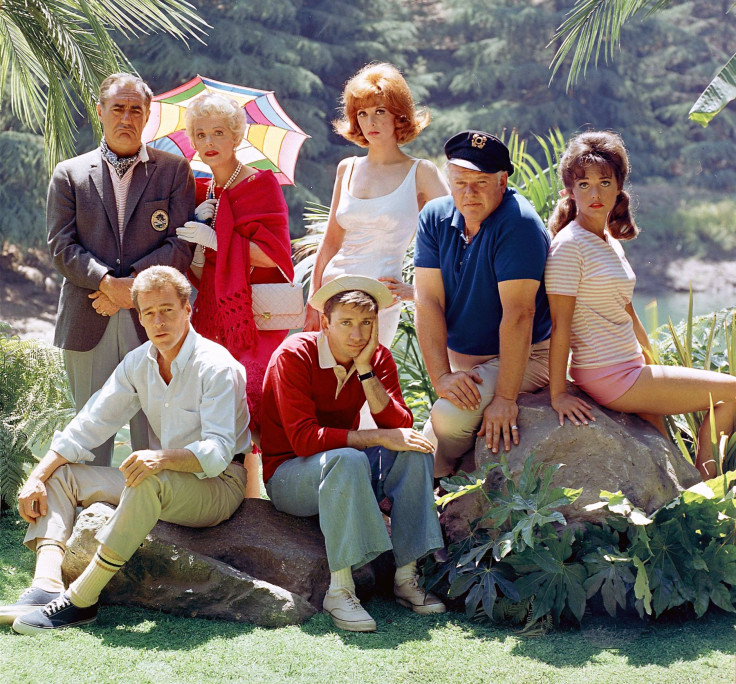
All of the advances of western civilization can be traced back to these seven people.

And yes, I very much enjoy those classic shows I mentioned before, but as I’ve written in the past, I’m always on the search for something new. Anybody who reads this column on a regular basis knows of my deep, profound love for Abbott Elementary and Star Trek: Lower Decks, but that doesn’t mean there isn’t room in my heart for a brand-new set of wacky characters to give me a tickle. The new television season is starting soon (kids, ask your parents) and there are a few shows that I’ve picked up on my radar that I’m interested in. Now I haven’t watched any of these shows yet. I don’t know any more about them than what I can read in a network-provided press release or watch in glimpses of the trailers that are out there in the wild, but today I want to talk about three upcoming shows that have caught my interest enough at least to watch the first few episodes once they start airing in a month or two.

The first two shows are coming from the NBC network, and I discovered them because the house of the Peacock showed approximately 872,000 commercials for each of them during the course of their Olympic coverage. But while Katie Ledecky was waiting at the finish line for the rest of the competitors in her swim meet to catch up, there was almost enough time to air an entire episode of the upcoming show St. Denis Medical. The show is done in the popular “mockumentary” style of shows like The Office and Abbott Elementary, only this time instead of a dysfunctional paper company or a dysfunctional public school, it’s set in a dysfunctional hospital, the optimal setting for wackiness. The show stars Allison Tolman as Alex, the recently-promoted supervising nurse in the hospital’s emergency department, at the head of an ensemble that includes David Alan Grier, Josh Lawson, Mekki Leeper, Kahyun Kim, and Kaliko Kauahi. 
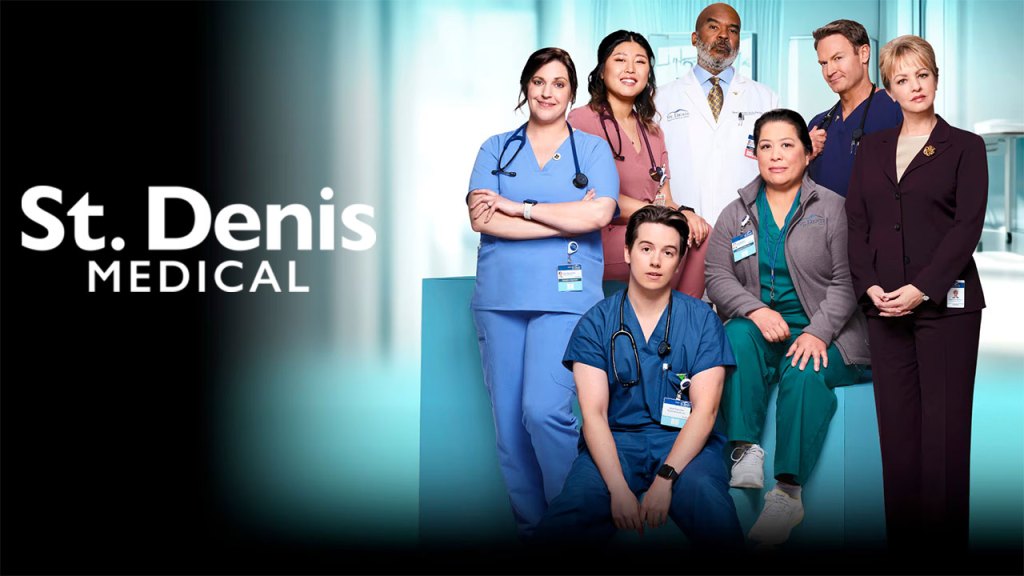
It’s just like The Office! You got yer Jim, you got yer Pam…I think David Alan Grier is Todd Packer…

There are two reasons that this show got my attention. First of all, it was created by Justin Spitzer, a former Office writer who went on to create the show Superstore, which I very much enjoyed. (Kaliko Kauahi, who played Sandra on that show, is another reason I’m interested.) The other thing that gets my attention is Wendi McLendon-Covey, who’ll be playing the executive director of the hospital. You may know her from Reno 911 or The Goldbergs, where she played the over-the-top matriarch of the family. Superstore and The Goldbergs are two of the more recent comedies that I’ve really gotten into, so I’m already invested in some of the pieces in this particular jigsaw puzzle. And while the commercials definitely seem to imply that McLendon-Covey’s character is going to be the “Michael Scott” of this particular series, the energy she’s giving is more button-down and straightlaced than the chaotic mama vibe she used on Goldbergs for the past ten years, so I’m hoping to see her stretch out and do some new things. The show is scheduled to premiere on November 12, so I’ll…well, I’ll probably watch it on Peacock the next day, because who actually watches live television anymore?

The next NBC show that’s grabbed my attention is Happy’s Place, starring Reba McEntire. McEntire is, of course, a legend of country music, but I’m not going to hold that against her. Undoubtedly, history will remember her more for her role in the Tremors movies and, even more importantly, the 2001 sitcom Reba. In that show, she played a mom who was newly single after discovering that her dentist husband had an affair with his hygienist, and the weird new family that was forged as a result. She proved herself to be a good comic actress in that show, playing the sort of no-nonsense, smart-mouthed mom that we all love so darn much. In the new show, Reba’s father is recently deceased, leaving her with two legacies: ownership of his bar, and a half-sister she never knew about (played by Belissa Escobedo). Reba seems to have a track record for comedies based on infidelity.

Regardless, I really do like her as an actress, and I’m glad to see that Happy’s Place will be reuniting her with Melissa Peterman, who in the previous sitcom played the hygienist who broke up her marriage and somehow turned into a weird surrogate sister. The two of them had fantastic comic chemistry in that show, and they’ve worked together several times since then. You get the sense that the two actresses are genuinely friends in real life, and that often translates to good performances, especially in comedy.
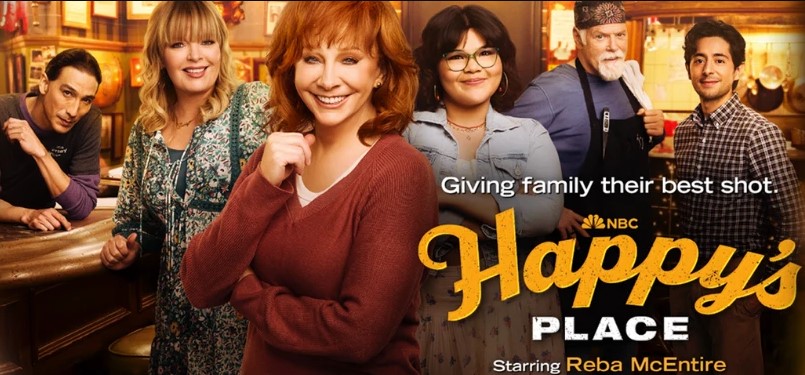
Meanwhile, the Star Trek: Voyager nerds are just hoping that Naomi Wildman makes a guest appearance.

Some people will scoff at the fact that, like Reba, Happy Place’s is a traditional multi-camera sitcom. It’s become popular in the last decade or so to turn your nose up at shows that have a studio audience and a laugh track. My rebuttal to this is: Cheers, Fraiser, The Honeymooners, Happy Days, Laverne and Shirley, Night Court, Good Times, Sanford and Son, Home Improvement, Everybody Loves Raymond, Mama’s Family, Newhart. Many, if not the majority, of great television comedies were in this format. A format is a format, and whether a show is good or bad has nothing to do with the format and everything to do with the writing and performances. It’s never going to be an obstacle to me giving a show a chance, and I’ll be tuning in on or around its premiere date of Oct. 18.

The last show I’m looking forward to is coming from the FX network and streaming on Hulu, English Teacher. I’m a little wary of this one, but I’ve heard enough to at least want to give it a shot. The show is about a high school teacher, played by Brian Jordan Alvarez, who – and here I am quoting – “finds himself at the intersection of professional, political, and personal aspects of working at a high school.” This is perhaps the most bland description of a television show in the entirety of the universe, and in and of itself would not be of particular interest to anybody. What’s more, I’m always a bit apprehensive about shows set in a school, since historically speaking, most shows set in schools have had little to no idea what a school is actually like.
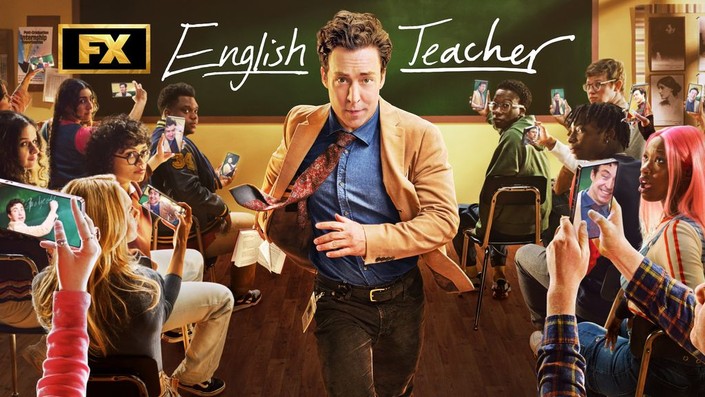
I have to be honest, this is exactly what happens in my classroom every morning.

Then I watched the trailer, and I have to admit, the writers seem to have at least an idea of what they’re talking about. In the trailer, Alvarez’s character approaches the principal (played by Enrico Colantoni) about an essay that a student turned in that was clearly written by ChatGPT. Colantoni’s character replies that he doesn’t see the problem, as AI is “the future,” which makes it quite clear that he is the villain of the piece.

Okay, maybe “villain” is too strong a word, but he’s obviously playing the usual sitcom trope of the inept authority figure. It’s not flattering, but anyone who has taught for any period of time has had a period where they’ve had to deal with an administrator who has no business being an administrator. (I am lucky in that I do not currently have that problem, thank goodness, but I’ve definitely felt it in the past.) The trailer was starting to win me over, and it got a little better as we watched him deal with a student who claims that it’s cultural appropriation for her friend to try to learn to speak Mandarin because “you’re not Japanese.” The joke, of course, is that the student is espousing a self-righteous opinion that is itself based on totally inaccurate information, and boy-HOWDY, have I dealt with THAT in my time as a teacher.

Now I’ve only seen about 90 seconds of the show, so it’s entirely possible that the rest of it will be a train wreck, but the point of a trailer is to get you interested enough to give the show a chance, and this one has succeeded. I don’t know if I’ll ever watch a second episode after the show premieres on Sept. 2, but I know enough to watch at least the FIRST one and hope for the best.

Ultimately, I don’t know if any of these shows will be any good. And if they ARE, I don’t know if I’m the only one who thinks they are. They may stink. Or worse, they may be tossed on that far-too-large pile of shows that had potential but never made it past a first season. But maybe, just MAYBE, at least ONE of them will be a new show to make me chuckle and keep those endorphins flowing.

And that’s all I’m really looking for anyway.

Blake M. Petit is a writer, teacher, and dad from Ama, Louisiana. His most recent writing project is the superhero adventure series Other People’s Heroes: Little Stars, volume one of which is now available on Amazon. You can subscribe to his newsletter by clicking right here. If one of these shows DOES turn out to be great but winds up getting canceled anyway, he apologizes. The universe seems to like letting him get attached to something and then yanking it away. It’s like that Coke with Coffee they had for a year or two and then discontinued, leaving his mornings bleak and full of despair. Not that he’s bitter or anything.

Geek Punditry #86: This is How We Do It Presents…Absolute Power

Hello, everybody, and welcome to This is How We Do It, the latest Geek Punditry feature-within-a-feature. In This is How We Do It, which I intend to be a recurring segment here, I’m just going to showcase a piece of storytelling that I think is being done exceptionally well and talk about why I think it’s so great. It is the antidote to Internet negativity. And the subject of the inaugural This is How We Do It is going to be the currently-ongoing DC Comics crossover event, Absolute Power. Fair warning, it’s not going to be possible to talk about why this is so great without spoiling some things, so this will be a spoilerful discussion. If you’re not up to date on reading this fantastic series, you may want to hold off on reading this at least until you get to issue #2 of the main title, because that’s the most recent issue as I write this.

Get ready, because this one ROCKS.

Comic crossovers are by no means a new thing, and I’ve talked before at length about them but I feel like I need to give a brief overview of what I mean here. In these “event” storylines, there is usually a main narrative that brings together the various characters of a publisher’s shared universe (in this case, DC Comics), while assorted spin-offs and special issues of the series that star the individual characters tell other angles of the story. The earliest such event I can find that followed this format is DC’s Crisis on Infinite Earths from 1985-86. (It’s true that Marvel Super Heroes Secret Wars came out first, guys, but there were no spin-offs of that book, which to me makes it more of an embryonic version of the crossover as it exists today.) DC has done dozens of them, as has Marvel. In fact, pretty much every publisher that has a shared universe (or even Multiverse) has dipped their toes in the format at one time or another – Image Comics, Valiant Comics, IDW, Dynamite, even Archie Comics has had crossover events. 

So what makes Absolute Power so good? In a word: construction. Some events seem to come out of nowhere and have little ongoing impact – last year’s DC summer event Knight Terrors, for instance, has made relatively few ripples after it was over. Others will sometimes take existing heroes and force them to behave wildly out of character for the purposes of the narrative (lookin’ at YOU, Marvel’s Civil War). And sometimes, they’re just so overblown and complicated that it’s impossible to keep track of what’s actually going on. Absolute Power suffers from exactly zero percent of these problems.

Mark Millar knows what he did.

A good crossover really needs to start with a good antagonist, and this story has one of the best: Amanda Waller, who has decided that superheroes are the biggest threat to the planet. Waller is an established character, best known for her role as being in charge of the various incarnations of the Suicide Squad (a group of supervillains that she forces to do jobs for the government in exchange for reduced sentences – with the caveat that if they step out of line she’ll set off an explosive device she had implanted in their NECK). Waller has always tread the line of what makes an anti-hero, usually using underhanded methods to accomplish goals that are more or less positive…ish. However, that placed her perfectly for her role of the villain in this story, being a natural extrapolation of who she has always been as a character. In fact, Waller is the BEST kind of villain – the sort that, in her own mind, is 100 percent justified in her actions. Waller COMPLETELY believes that what she’s doing is the right, moral, ethical thing to do, and that makes her both more interesting and more dangerous than any bad guy who’s just in it for the Evulz. 

What do you MEAN, she doesn’t look like a good guy?

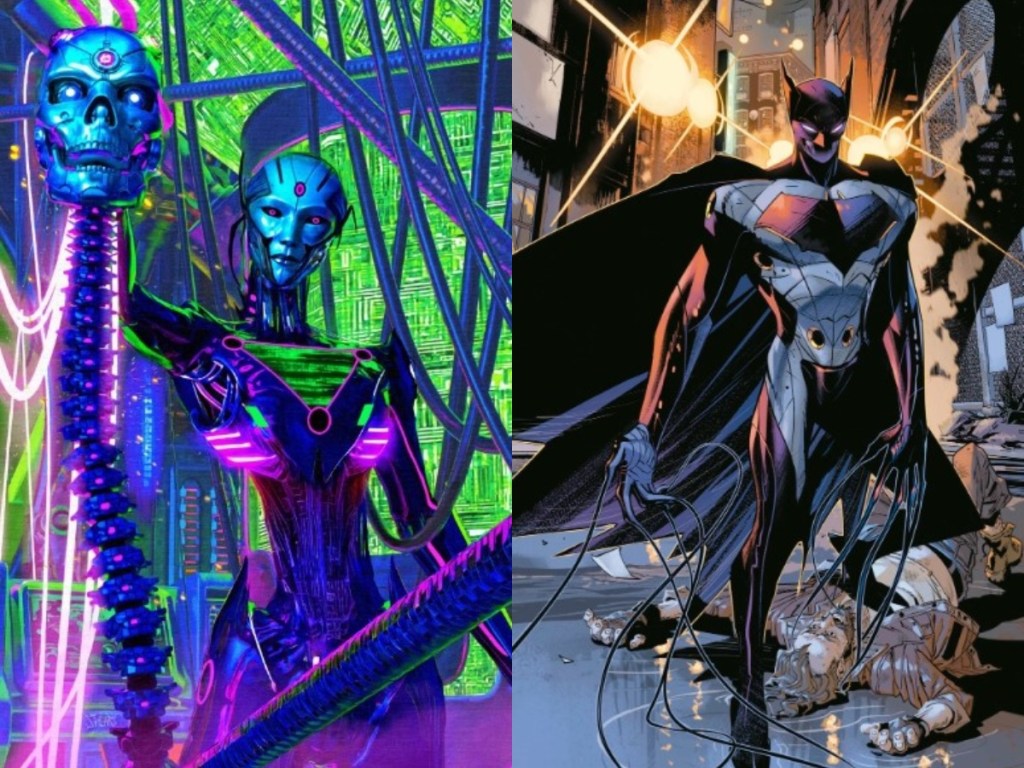
The next thing that makes a crossover work, in my opinion, is setup. Before the original Crisis on Infinite Earths happened, there were months of stories from DC where a mysterious, shadowy figure was shown to be monitoring the heroes of Earth. (As it turned out, he wasn’t the bad guy, but you could certainly be forgiven for thinking he was.) Absolute Power has a more obvious setup, but a very effective one. Waller has taken the villains from two recent storylines – Queen Braniac from the House of Brainiac Superman story, and Failsafe, a robotic duplicate of Batman with all of his tactical genius and none of his morals and ethics. She has combined their respective tech with the work of the old Justice League villain Professor Ivo to create a set of androids who can steal superpowers, and sent them out to attack, depower, and capture both superheroes and villains alike. In the first issue of Absolute Power, dozens of heroes have their powers stolen and most of them are taken prisoner by Waller. By the time the second issue rolls around, those heroes who remain at large have begun assembling at Superman’s Fortress of Solitude to plan a counter-offensive.

Imagine how nasty a character Amanda has to be that THESE two are her MINIONS.

Another important element is that the characters be true to themselves, and here I’ve got to give it up to writer Mark Waid. Waid was a mainstay of DC Comics in the 90s and early 00s, with a legendary run on The Flash and turning out the best of DC’s Elseworlds line with Kingdom Come. After a long exile, he’s returned to DC and is crushing it with books like Batman/Superman: World’s Finest. In short, there are few people in comics who know the characters as well as Mark Waid, and he’s proving it again here. Aside from using Waller to her logical extreme, he’s showing perfectly who the various DC heroes are, such as a depowered but still dauntless Superman. When Batman and Mr. Terrific get into a squabble over who should be the leader of this little resistance group, it’s Nightwing who steps up, gives a rousing speech that would make Jean-Luc Picard stand and applaud, and takes command. The best part, though, is Batman’s reaction: watching Dick Grayson, the original Robin, take his place as the natural rallying point for a group of shattered, broken, and frightened heroes, Batman simply gives us a sly smile and says, “That’s my boy.”

For Batman, this is an almost shamefully embarrassing display of pride.

And I haven’t even talked about the artwork by Dan Mora, who is probably my favorite artist working at DC right now. It’s phenomenal, with real emotion and characterization displayed on the characters’ faces and mannerisms. A good artist can always make or break a book, and Mora – as he’s done with Waid on Batman/Superman – is doing an incredible job.

The next aspect that makes a crossover work is what happens in the spin-off books. In the original Crisis, the main story was supplemented by chapters in the various ongoing comics showing what was happening to those heroes during the Crisis itself, and that was the template for crossovers for a long time. Somewhere along the line, though, it became less likely for an individual series to be interrupted by a crossover and we’d get several – sometimes DOZENS – of spin-off one-shots and miniseries doing the job instead. I don’t think it’s a coincidence that this shift in how crossovers were told corresponded with the point where the comic book WRITERS became the stars of the show, their prominence somewhat overtaking the artists. If the guy writing, for example, Uncanny X-Men at the time didn’t want his X-Men storyline interrupted because of World War Hulk, then the main title would remain unmolested and a World War Hulk: X-Men miniseries would take its place. The far extreme of this policy was what DC did last year with Knight Terrors, where EVERY ongoing DC comic was replaced for two months with a two-part miniseries showing that character’s interaction with the event, and many of them were never touched upon again.

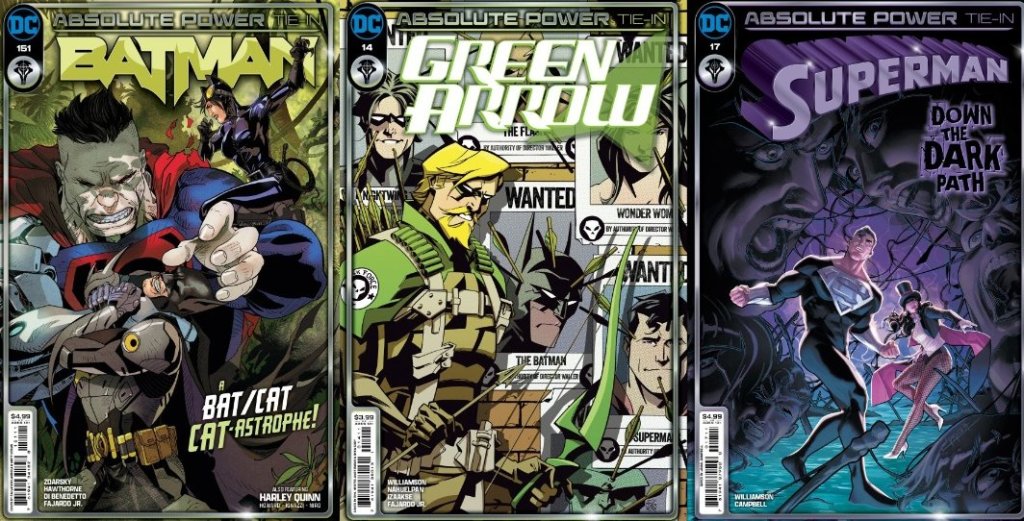
For the most part, I’m in favor of a writer getting to tell the story the way they want, but speaking as a READER, I prefer when the crossovers touch the regular title. To me, that gives them greater weight, makes them feel more “important” than putting them into a spin-off miniseries. Absolute Power has returned to form on this. The ongoing titles are picking up the story threads started in the main series and running with them. After Nightwing gives the heroes various assignments in Absolute Power #2, we see them start to carry out their missions in the pages of Superman, Batman, Wonder Woman and other titles. In other books, like Green Lantern, we get side stories of some of the heroes who have been captured or are still on the run. And then there’s Green Arrow, which deals with the most shocking development of the story to date: longtime Justice League member Green Arrow has inexplicably turned tables and joined Amanda Waller, fighting his friends! Obviously, anything this incredible has to be covered in the main Absolute Power title, so what’s going on in his book right now? We see how his supporting cast – his son Connor, various former sidekicks and so on – are reacting to the fact that their patriarch seems to have broken bad. 

Crossover chapters that are actually RELEVANT? Is that ALLOWED?

There are, I should concede, two spin-off miniseries for Absolute Power, but both are a bit more justified. Absolute Power: Origins is a deep dive into Amanda Waller’s backstory, showing how she went from a grieving mother who lost family members to violence (and how many heroes have had that same motivation?) to the magnificent bastard she is today. Absolute Power: Task Force VII, on the other hand, tells stories focusing on Waller’s seven power-stealing androids and their interactions with the heroes. Neither may be absolutely NECESSARY to the story, but I feel as though they both add something that otherwise we wouldn’t have, which is what a good spin-off should do. 

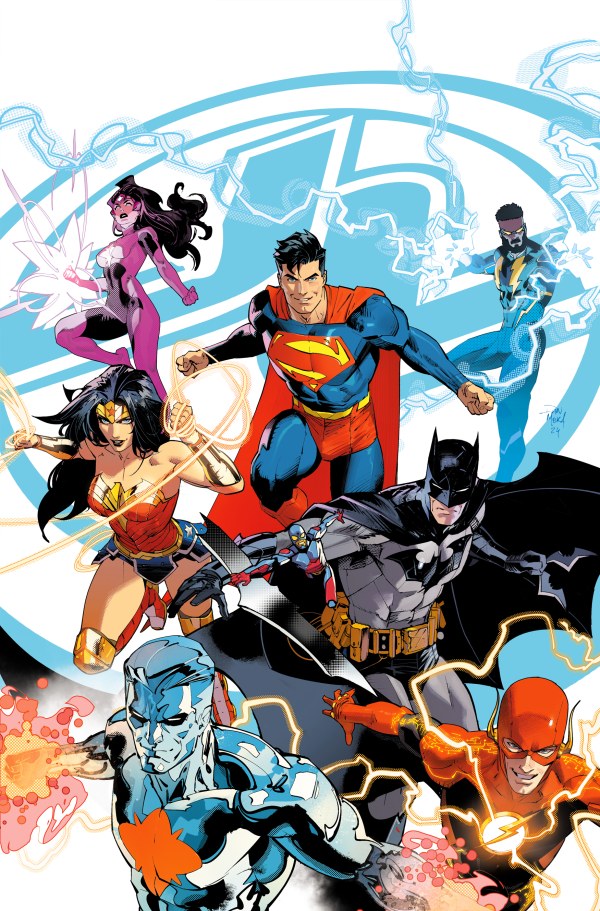
The last thing that I think makes for a solid crossover is the impact of the story after it ends. I hate to keep picking on Knight Terrors, because I don’t really think it was a bad story, but the overall impact on the DC Universe since then has been negligible. The only significant thread I can think of was increasing Waller’s paranoia, but she already had that in spades and, what’s more, the Beast World event that FOLLOWED Knight Terrors did that same job, but better. Obviously, it’s impossible to tell right now just how Absolute Power will shape the DCU going forward, but there are hints in the solicitations for upcoming comics. After the series ends we’re going to be treated to a new initiative called “DC All-In,” which will start with a one-shot before branching out. This isn’t going to be a continuity reboot as DC has done in the past, but it will launch several new titles and some of the existing books will get new creative teams and new directions. The one that I’m most excited for will be the newly-announced Justice League Unlimited, done by the Absolute Power team of Waid and Mora. Although they’re playing details close to the vest until the end of Absolute Power, preliminary artwork and buzz indicate that this comic will be taking its cue from the cartoon series of the same name, in which the League expanded to include virtually every hero in the DC Universe, with different ones called up as needed. This is honestly the way I’ve thought they should have run the League for the past twenty years, since the cartoon was launched, and the fact that it’s finally happening makes me giddy. The fact that it’s Waid and Mora taking the reigns makes me ECSTATIC. 

Holy crap, guys, Santa got my letter.

So even now, only halfway through the event, I feel as though Absolute Power has all the earmarks of one of the DC Universe’s classic storylines. All the pieces are in place and the right creative team is there. I haven’t enjoyed a book of this nature this much in years, and the fact that I’m equally excited for the stuff promised to come next makes it even better. So for the next creative team – from any publisher – who’s looking to do a multi-character, multi-title crossover epic event series, I can offer no better advice than to look to Mark Waid, Dan Mora, and Absolute Power.

Because THIS is how we do it.

Blake M. Petit is a writer, teacher, and dad from Ama, Louisiana. His most recent writing project is the superhero adventure series Other People’s Heroes: Little Stars, volume one of which is now available on Amazon. You can subscribe to his newsletter by clicking right here. Now if only the next event series were to bring back Captain Carrot to his deserved place of prominence in the DC Universe. 

Geek Punditry #85: Playing Favorites With School (Part Two)

It’s time for round two of Playing Favorites With School! For any newcomers out there who, perhaps, didn’t see last week’s life-changing exploration into pop culture effluvia, “Playing Favorites” is my recurring feature in which I ask my friends on social media to suggest categories related to a specific topic, then I expound upon what I think are some of the best examples of those categories. In part one of the “School” series, I talked about some of my favorite School Sitcoms, High School Superheroes, High School Horror movies, and shows where the actors were maaaaaybe a little too old to be playing teenagers. This week we’re returning to the pile of suggestions for a few more rounds!

Hero Schools

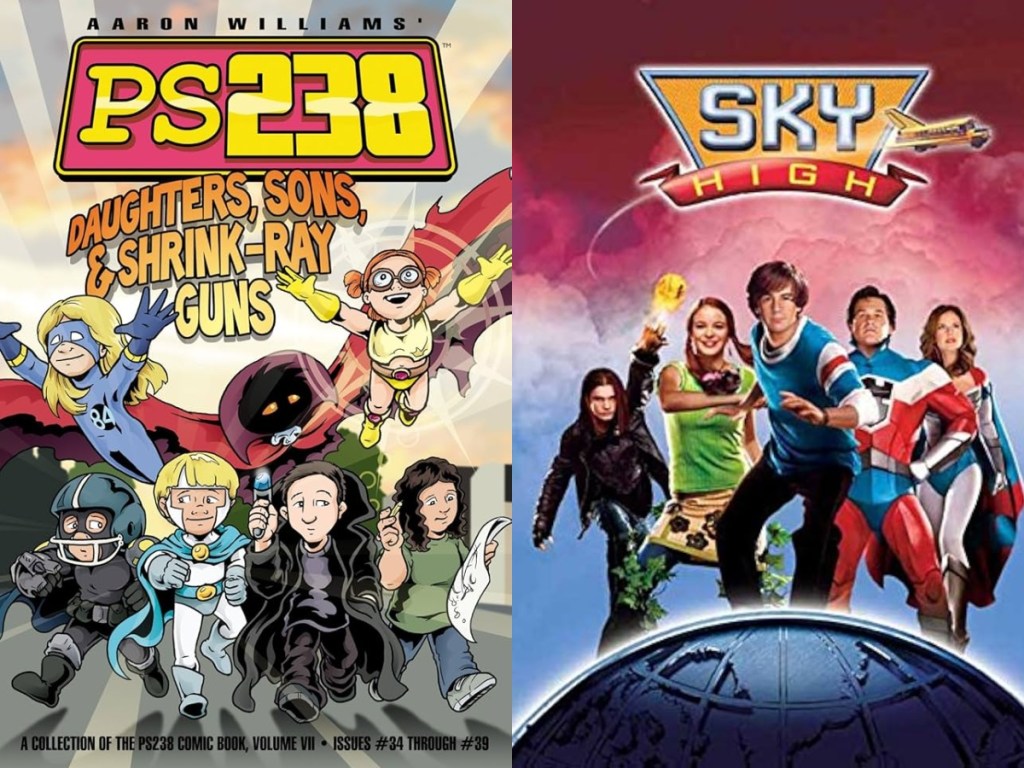
Sandy Brophy asked about my favorite “hero schools.” I’m interpreting this as a school that is intended to teach students to be heroes, so I’ll skip the obvious answer of Hogwarts, as that’s more of a general education facility in the setting and not specifically intended to turn out champions. There’s a little overlap with one of last week’s suggestions – in “High school superheroes,” I talked about the amazing Aaron Williams comic book/webcomic PS238, which is about an elementary school for superheroes. Not long after that, though, it became known among comic book readers as “the idea so nice Disney stole it twice,” as the House of Mouse released the films Sky High (2005) and Zoom (2006), both of which feature a very similar idea. Of the two, I find that Sky High is a better film. The characters are more memorable and the world is fleshed out in a much better way. The story focuses on Will Stronghold (Michael Angarano), the son of two of the world’s greatest superheroes, who is sent off to the local superhero academy despite the fact that he did not inherit any of their powers. This, by the way, is where the comparison to PS238 REALLY comes into play, since this is almost exactly the backstory of one the main characters in that comic’s ensemble. The story goes in a different direction, though, and it’s a fun, colorful movie that really uses Kurt Russell (as Will’s super-awesome superhero dad) to very good effect.

It’s the same picture.

Marvel Comics also has a pretty good series that only came out in recent years, Strange Academy, about a school specifically for magic-users in the Marvel Universe. Set in New Orleans (which always gives it extra points from me IF it’s done well), the series focuses on a group of magic-powered kids who have been gathered by the likes of Dr. Strange, the Scarlet Witch, Magik of the X-Men (herself a graduate of one of the all-time great superhero school comics, The New Mutants) and other powerful mystical faculty members to teach them to use their abilities in ways that won’t rip open a portal to the Dark Dimension or something. The comic, by Skottie Young and Humberto Ramos, is a wild look into the magic side of Marvel, and can go from a lighthearted school comedy to a blood-chilling cosmic horror story in the course of a single issue. The main series ended a while back, but the Academy has stuck around in assorted miniseries and one-shots since then.

Class picture day is a challenge.

The last one I’ll point to is one of my favorite science fiction novels of all time, Ender’s Game by Orson Scott Card. Following an alien invasion that was narrowly defeated, planet Earth has come together in a precarious alliance to prepare for another invasion that they are certain is imminent. As part of their preparations, they are finding the most brilliant children on the planet and taking them to an orbital Battle School where they are trained to fight the wars that will determine the fate of the human race. The novel focuses on Ender Wiggin, a five-year-old prodigy, who is brought to Battle School without knowing that many of the people observing him believe that he is humanity’s last hope. The book is an absolute masterpiece of characterization and world-building, and I’ll never forgive the film adaptation for falling so flat. 

I had a whole different joke planed for this caption until I saw the STUPID sticker on the cover.

Pep Rally Scenes

Duane Hower tossed out the clever suggestion of “movies with a pep rally scene.” I’m going to be honest, I actually had to turn to Google for this one, because although I feel like I’ve seen a hundred movies with a pep rally, for some reason those specific scenes didn’t click into my brain until I went back and started looking. A pep rally, of course, is that singularly high school phenomenon where the school gathers and cheers – usually, but not always – for the school’s athletes in order to get them psyched up for the Big Game. It’s a standard of American high schools, although I admit, I’ve wondered how well such things translate in other countries. DO any other countries have pep rallies? If you went to high school outside of the US, please, let me know if you ever went to a pep rally. 

Anyway, the best motion picture to ever encapsulate this singularly academic experience is the classic Alfred Hitchcock historo-religious drama…

Project ALF.

Bah-dump, TISSSSSSS

The first one that rings a bell to me is the Emma Stone comedy Easy A. I’ve always liked this movie, as it’s a very clever comedic modernization of Hawthorne’s The Scarlet Letter, featuring a high school girl who is scandalized when she lies about sleeping with a college guy, and before long the (false) story is turning up more places than Snoop Dogg at the Olympics. Olive (Stone’s character) leans into the lie at first, but as things spiral out of control she needs to find a way out. As part of that plan, she interrupts a pep rally with a musical performance of the song “Knock on Wood.” It makes sense in context. But the scene is goofy and wild, and utterly in character for Olive while using the tropes of a high school movie to advance the overall theme of the film. In other words, I like this silly scene because, in actuality, I think it’s pretty smart. 

It’s always fun to see fans of this movie get disappointed when they find out it’s actually based on literature.

Aaaand…I’m actually having trouble thinking of any other movies with a pep rally that I actually like. I could have sworn that there was one in Teen Wolf, but maybe I’m just thinking of the basketball games. Sorry, Duane, looks like yours is gonna be a one-and-done.

Movies based on high school reading lists

Rachel Ricks wants to know what are some of the best movies based on books that may be read in a high school English class. If Rachel and I hadn’t gone to college together, I would suspect that this question was posed by a student hoping to get suggestions for a movie to watch in order to get out of their homework and I would have to say, “Nice try.”

But the fact of the matter is, even the BEST movies adapted from books never match up 100 percent with the text. Writing and filmmaking are two very different disciplines, with different demands and different requirements, and what works in one medium does not always work in another. I like to think of movies as interpretations of a book – presenting the story in a way that, hopefully, maintains the spirit of the original while still standing on its own.

All of that is to say that I think To Kill a Mockingbird is perhaps the greatest movie ever made based on a book that I would assign to a student. The book is a masterpiece – a fable about a good man fighting a good fight against overwhelming odds. In this case, that good man is Atticus Finch, and that good fight is defending an innocent black man from charges of raping a white woman in a time and place where such an accusation not only puts the life of the accused on the line, but pushes the entire town onto the edge of a cliff that it may plunge off depending on how things go. It’s kind of sad how relevant that still is. The book is fantastic and the movie is just as good. Gregory Peck’s depiction of Atticus was once voted the best film hero of all time by the American Film Institute, and even though that was before any of the Deadpool movies were made, I think it’s a ranking that holds up.

Left: A masterpiece. Right: Also a masterpiece.

It’s a lot to get through (both the movie and the book), but I think Gone With the Wind deserves a place on this list as well. Margaret Mitchell’s novel of the Civil War is so iconic that it informs pretty much EVERYBODY’s mental image of Georgia in the 1800s, even if they’ve never read the book or seen the movie. The film itself is also a triumph of the art form, adapting a gargantuan novel into a mammoth film while still being engaging and compelling throughout. Plus, it’s indirectly responsible for one of the funniest sketches in the history of The Carol Burnett Show. 

And as an English teacher, I do have an unabashed love of the works of William Shakespeare. I’ve taught several of his plays Romeo and Juliet, Julius Caesar, Othello, but I think the best movie I’ve ever seen based on one of his works is the Kenneth Branagh version of Hamlet. The film clocks in at a hefty four hours long as Branagh – unlike most people who adapt Shakespeare – films the ENTIRE text of the play, making no edits or omissions. You’re left with a film that feels a little bloated in places but, at the same time, is an excellent tool for showcasing the bard’s words and has some dandy performances.

It’s not 100 percent accurate, of course. In the original Shakespeare Hamlet only frosted the tips of his hair.

Honorable mention goes to two classic movies that are based on classic works of literature: Frankenstein and The Wizard of Oz. The reason these two only get an honorable mention is because, as anyone who has both read the books and seen the movies can tell you, the movies are fantastic, thrilling, celebrations of the cinematic artform…but dang, they do a piss-poor job of actually adapting the story of the book. I love them both, but not as adaptations.

This brings us to the end of yet another installment of Playing Favorites, folks. Once again, I hope you’ve enjoyed this somewhat random peek into what rattles around inside my brain. What other column are you going to find that talks about both Strange Academy and To Kill a Mockingbird on the same page? If you want to participate in upcoming Playing Favorites columns, be sure to follow me on Facebook, Threads, or “Twittex” for the next time I toss out a topic and wait for your responses. Or even subscribe to my weekly newsletter, where I chat about what I’m working on and throw out my legendary “What’s Cool This Week?” recommendations. And in the meantime, have a great school year – or, alternately, appreciate the fact that you don’t have to go back.

Blake M. Petit is a writer, teacher, and dad from Ama, Louisiana. His most recent writing project is the superhero adventure series Other People’s Heroes: Little Stars, volume one of which is now available on Amazon. You can subscribe to his newsletter by clicking right here. Was there a pep rally in Buffy the Vampire Slayer? Damn it, this is hard. 

Geek Punditry #84: Playing Favorites With School (Part One)

It’s August, gang, and across this great fruited plain of ours, Americans are gearing up for that most turbulent of seasons: back to school. Many of us are already back in session, and the rest are getting ready to eke out those last bits of summertime fun before the doors fly open. Stores are stocked with pencils, students are picking out their first day outfits, parents are trying to get them to answer questions for their “Back to School” social media posts, and teachers are doing their best to keep the economy of Columbia solvent by buying all of the coffee. And what better way to commemorate this change of seasons than with another installment of everyone’s favorite Geek Punditry feature-within-a-feature, PLAYING FAVORITES? 

If you’re new, here’s how it works: a couple of weeks before a playing favorites column, I go out on social media and give my peeps a topic, such as SCHOOL, and ask them to suggest different categories for me to talk about. Then I select my favorite categories from your suggestions and tell you all what I think are some of the best of the best in each one of them. It’s a good time for everybody. So let’s see what kind of back to school shenanigans were on your minds this week, shall we?

Dawson Casting

Steven J. Rogers asked for some of my favorite examples of actors who are a little “long in the tooth” for their role as a high school student. The experts in this phenomenon (by which I mean the editors of TV Tropes) call it Dawson Casting, the practice of using actors in their 20s or even 30s to play high school students, named for the TV executive who invented the system, Herringbone Q. Casting.

No, seriously, it’s named for the show Dawson’s Creek, which is one of the most well-known examples of the trope, but it’s by no means the FIRST and certainly not the WORST. The trope goes back hundreds of years. Even Shakespeare is likely to have indulged in it – Hamlet, for instance, is supposed to be a college student, but there are lines in the fifth act that indicate that he used to get piggyback rides from his father’s court jester, who has explicitly been dead and buried for 23 years. Unless ol’ Yorick was playing games with Hamlet as a zygote, the math don’t math. 

There are two ways to look at this question: am I trying to figure out who did it BEST – as in, which older actors were most convincing as teens? Or am I trying to figure out who did it in the most ENTERTAINING fashion, as in making me burst out laughing when a guy who could be doing commercials for Metamucil saunters into homeroom? I’ll answer both.

Most of these kiddos are older than they look. Especially the one in the glasses.

As far as who was the most convincing, I think the crown has to go to the TV version of Buffy the Vampire Slayer. When that show launched in 1997, Sarah Michelle Gellar was 20 playing a 15-year-old – and to be fair, that’s a much smaller gap than many Dawsons have had to contend with over the years. But she was the YOUNGEST member of the main cast. Alyson Hannigan was 23 and Nicolas Brendan 26, and all of them were pretty convincing as teenagers. The only one who you couldn’t really buy was Charisma Carpenter (27 at the time). And while you aren’t really shocked to hear that these actors were in their 20s, it’s not nearly as blatant as some of the more hilarious examples of this trope. 

In general, the shows that get away with this the best are the ones that don’t try to get away with as much. The high school students in Cobra Kai were mostly in their early 20s when the show began, and not noticeably too old. On Smallville, I don’t think that Tom Welling was really successful at convincing anybody that he was 14 years old in season one (the actor was 24 at the time), but the rest of the cast was mostly in their early 20s and far more convincing. I suppose the trick with pulling a Dawson is to not press your luck.

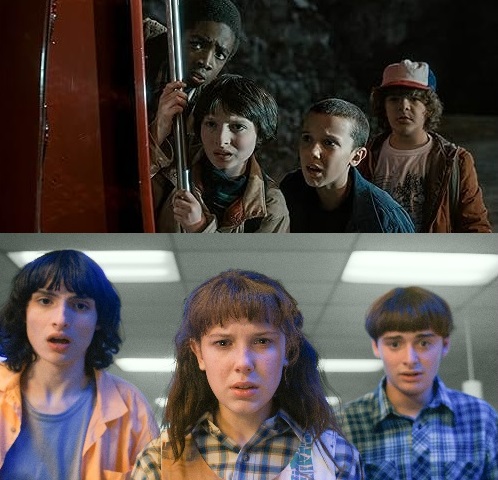
You know who DID press their luck? Stranger Things. It wasn’t a problem in the first couple of seasons – with the five main kids played by actual…y’know…KIDS. And even the teenagers were pretty convincing: Joe Keery (Steve) was 24 playing 17, Natalia Dyer (Nancy) was 21 playing 16, Charlie Heaton (Jonathan) was 22 playing 16, and all of them were believable as high school students. But the long gaps between seasons were starting to strain credulity even in season four, and Keery is going to be 32 playing 19 or 20 in the show’s upcoming final season. He may be able to pull it off, but the likes of Gaten Matarazzo (Dustin) and Finn Wolfhard (Mike) playing 15 at the age of 22 are going to be a harder sell, especially since we’re all so familiar with what they looked like AS KIDS. 

No really, it’s just two and a half years later.

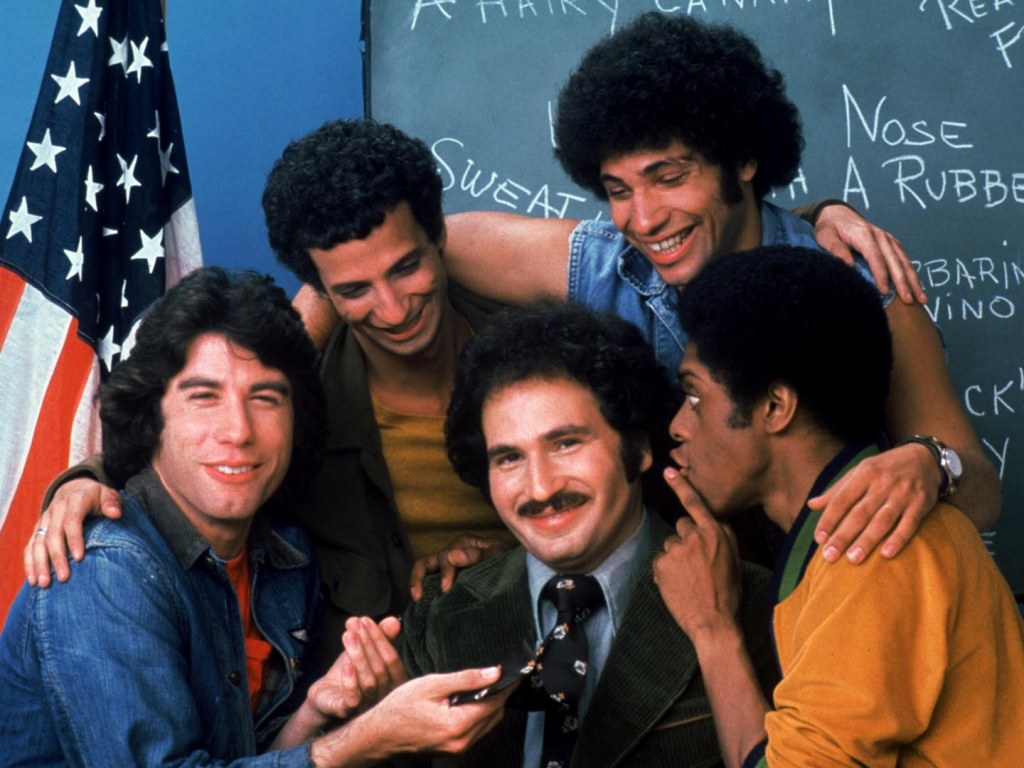
But I don’t think any show has ever been as hilariously Dawsoned as the 70s sitcom Welcome Back, Kotter. When the show began in 1975, you had high school students played by John Travolta (then 21), Lawrence Hilton-Jacobs (23), Robert Hegyes (24) and Ron Palillo (26) and frankly, I would have guessed older for each of them. While they were around the same ages as many of the other “teenage” actors we’ve already discussed, they were nowhere near as successful at hiding their age. Alyson Hannigan could pass as a high school student, whereas Ron Palillo looked more like somebody’s podiatrist. Gabe Kaplan was once quoted as saying that the reason the show’s ratings collapsed after three seasons is that the cast was getting too old to convincingly play teenagers, which made me ask the obvious question: at what point DID he think they were convincing? 

“Signed, Epstein’s chiropractor.”

School Sitcoms

Rachel Ricks asked for some of my favorite school sitcoms. This is an interesting subject for me. Like so many of us, I grew up watching shows like Saved By The Bell, and I loved it. And while I never really thought that show was a documentary on the lives of high school students (I must have tried that “Time Out” thing a hundred times before I got hit by that marching snare drummer and decided to call it quits), I at least thought that it would get the SPIRIT of being high school right.

Damn, was that off. It’s almost hard to watch that show now, especially as a teacher myself, not only because of how inaccurate that show is in regards to how a school actually works, but because it casts virtually every adult as a total blithering idiot. Seriously, go back and watch that show sometime – it’s a miracle Mr. Belding can even tie his shoes. 

New drinking game: take a shot every time someone does something that should have gotten a teacher fired.

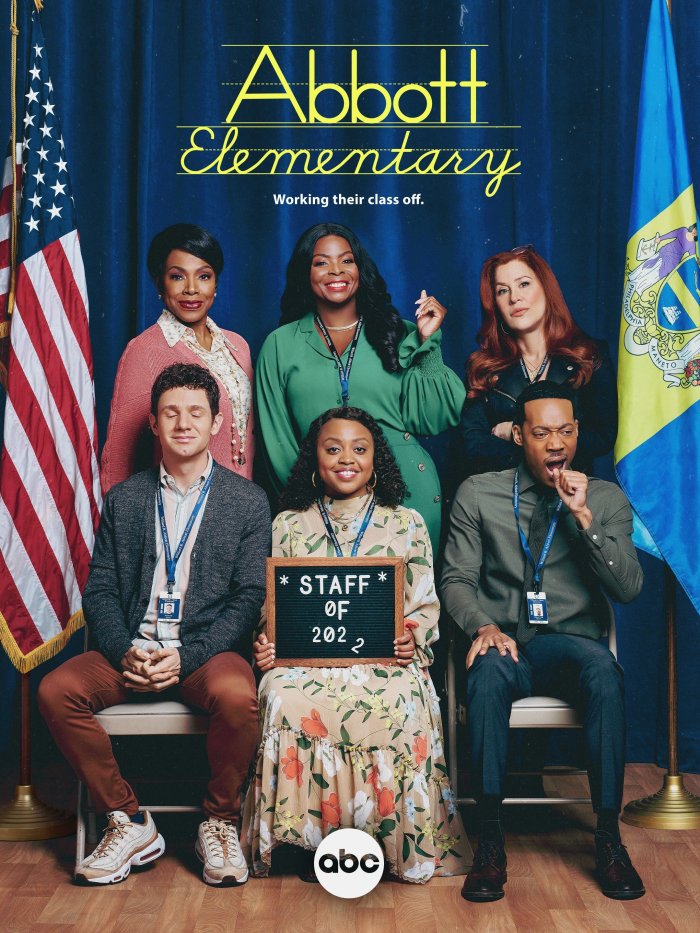
So when it comes to “school sitcoms,’ showing actual respect for teachers is a high priority for me, and that’s why I can’t stop talking about Abbott Elementary. It’s the rare school show that makes the teachers the stars rather than the students AND treats their characters with respect AND does a pretty accurate job of showing what school life is like. Granted, the teachers on that show have a bit more free time away from their students than a real elementary school teacher ever would, but I’m willing to allow that for the sake of comedy. What’s more, the characters all have real depth and charm, and most of them are very good at what they do. Plus the show deals with real issues such as government funding, parental involvement, and other issues that teachers fight against every single day, but does it in a way that’s entertaining. I can’t say enough good things about this show.

This is honestly my favorite comedy on TV right now.

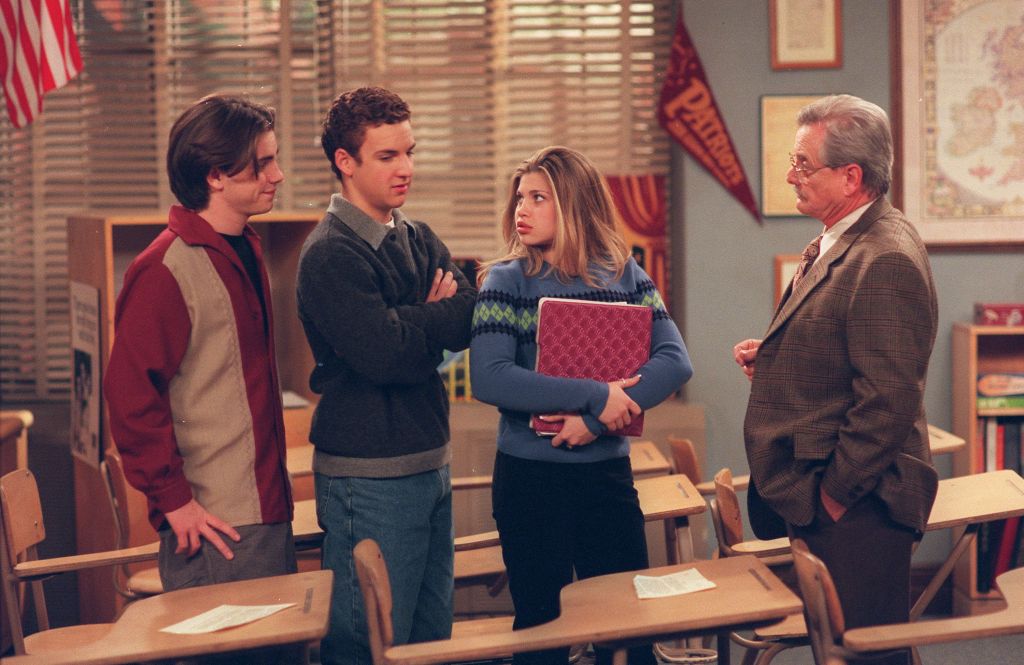
I mentioned how the adults in Saved By the Bell are all buffoons. This is true, but it’s hardly exclusive to Bayside High. If you look back on the annals of TV shows in a school setting, I would guess 90 percent of the teachers (and parents, for that matter) are portrayed as morons. And for that reason, I have to have a special place in my heart for Boy Meets World. The show traces Ben Savage’s character (Cory Matthews) from elementary school through college, and although there were goofy grownups on occasion, that was by no means the norm. In fact, the show gives us William Daniels as Mr. Feeny, probably the Gold Standard against which all TV teachers should be measured. He’s compassionate, wise, understanding, but firm when necessary. He’s almost as much a parent to Cory as he is a teacher. Is it really realistic that he taught the same group of kids from fifth grade until they’re going for their undergraduate degrees? Absolutely not. But it’s an acceptable break from reality in the name of keeping such a fantastic character front and center in the show.

What Bandit Heeler is to fathering, Mr. Feeny is to teachering.

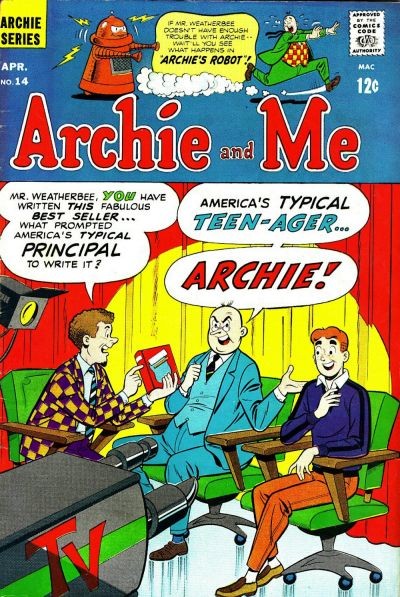
And although it’s not a television show, I love Archie Comics. I mean CLASSIC Archie Comics, their teenage sitcom romcom years, not the way they were adapted on Riverdale. I’m talking about the eight decades of comic strips about Archie Andrews struggling to choose between Betty and Veronica and going to Riverdale High. As a kid, I loved reading the stories (Jughead was kind of an icon for me) and as an adult I’ve come to appreciate the fact that the faculty of Riverdale High School – Miss Grundy, Professor Flutesnoot, Coach Clayton, Mr. Weatherbee – are usually portrayed as good, caring teachers who are doing their best for their students, even if they’re doing so while trying to avoid whatever catastrophe Archie is pulling along in his wake. 

To date, not a single one of my students has prompted me to write a bestseller. Get your act together, kids.

High School Superheroes

Lew Beitz wants to know who some of my favorite high school superheroes are. It’s an interesting question – in the early days of comic books, there weren’t a lot of teenage superheroes. The kids were relegated to the sidekick role for most of the Golden Age, and it wasn’t until the 60s – specifically with the introduction of Spider-Man – that having a teenager as the main star of a superhero series started to come into vogue. Spidey eventually went off to college and became an adult, but he remains the template for superheroes that are still in their high school years. Everyone from Firestorm to Invincible to Ms. Marvel (the current Kamala Khan version) has drawn inspiration from those early Stan Lee/Steve Ditko comics, and none of them are shy about it.

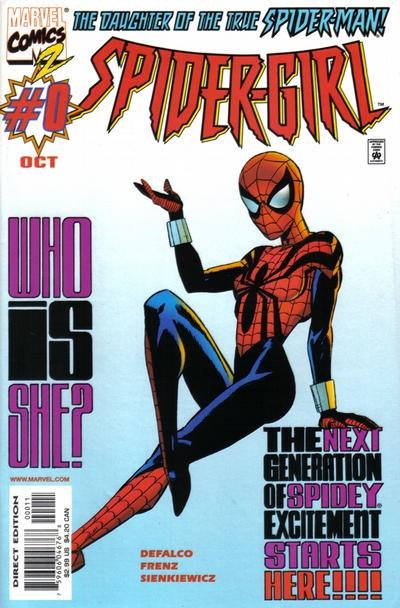
I’m going to try to limit my response to characters for whom school – or at least their classmates – are a major factor in their stories. Teen Titans, for example, isn’t going to work because the vast majority of those comics don’t include school as a setting at all, instead being the stories of kid superheroes who hang out independently of their own lives. So keeping school in mind, it’s hard to think of anybody who has done it better than Peter Parker’s DAUGHTER (in one corner of the multiverse, anyway), May Parker, the amazing Spider-Girl. Created by Tom DeFalco and Ron Frenz in 1997, this storyline comes from a world where Peter Parker aged more or less in “real time” from the 1960s and, at this point, had a teenage daughter who inherited his powers. Originally intended as a one-off character in an issue of What If?, “Mayday” Parker proved wildly popular and spun off into her own long-running series. And just like her dad, the supporting cast was largely full of her high school contemporaries – friends, rivals, potential love interests and so forth. Few comic books since those early days of Amazing Spider-Man had made such good use of the cast of teenagers, and I think it’s one of the reasons that this series remains a fan favorite, even though these days May herself only pops up once in a while during a “Spider-Verse” thing.

What I love about this cover is that it’s bold enough to ask “Who is she?” and dumb enough to answer the same question at the top.

And although Lew specified HIGH school, I have to give a special shout out to a series about ELEMENTARY school superheroes, Aaron Williams’ PS238. This comic book featured a cast of preteen titans, many of them the children of adult superheroes, who attended a special school deep beneath a “normal” elementary school where they were all ostensibly students. The book is really funny, and does a great job of picking apart many of the tropes and cliches of superhero comics. One student, for example, has the amusingly dull superhero code name “84,” because she is the 84th person registered with the standard FISS (flight, invulnerability, speed, and strength) powerset. Although the book IS very funny, it’s also a solid superhero comic book, creating a rich world with a fascinating history and a lot of secrets to uncover. The comic lasted only 51 issues, which wasn’t nearly long enough, although Williams has continued the adventures of the characters as a webcomic. 

One of the best comic books you’ve never read.

High School Horror

Finally my wife Erin – who absolutely understands her brand – wants me to talk about my favorite high school horror movies. And naturally, there is one that leaps right to the forefront of the mind, a chilling, terrifying tale that will ring out through the annals of academia from now until the end of time.

Project ALF.

Highly educational.

Actually, this might not be as easy as it sounds. Sure, there’s no shortage of horror movies about TEENAGERS, but how many of them actually have SCHOOL as a dominant setting? Friday the 13th, of course, is set at a summer camp. Some of the other stalwarts of the slasher genre like Halloween, A Nightmare on Elm Street, and Scream, may incorporate a school into the story (especially in the earlier installments), but the school is largely incidental. If the characters weren’t teenagers, you could have them all going to work and not much else would need to be changed.

So for horror that’s actually ABOUT a school, I’m going to give a shout out to a movie that I really think is underrated – Robert Rodriguez’s sci-fi/horror movie The Faculty. In what is essentially an updated version of Invasion of the Body Snatchers, Frodo Baggins and a group of high school students start to see signs that the faculty of their high school have become overcome by parasitic alien invaders, conquerors from beyond the stars who are coming to take over the Earth. Of course, it’s only this band of high school misfits that have a hope of stopping them. The Faculty came out in 1998, riding a wave of post-Scream teenage horror movies, and it somewhat got lost in the mix. But it’s a good movie, one that defies the surge of slasher knockoffs that it was swimming amongst, and has its own identity that’s pretty darn entertaining.

And this time it didn’t take Elijah Wood twelve hours of movie time to save the world.

Carrie, of course, is another classic of this particular subgenre. The movie is based on Stephen King’s first published novel, so the story of Carrie White really is what made his name in two different mediums. Sissy Spacek is Carrie – a teenage girl who has lived a sheltered life with a brutal, unforgiving fundamentalist mother. A rather late onset of physical maturation brings with it a telekinetic power of great destructive potential, and when her crueler classmates push Carrie too far, the blood flows. It’s a great movie, although I’ve always felt like Carrie was less a villain than a victim – an innocent who is beaten and berated until she actually breaks, and when someone with her kind of powers break, the consequences will be devastating. 

Finally, as someone who enjoys a good horror/comedy hybrid, I want to give a shout out to the 2020 film Freaky, directed by Christopher Landon and written by Landon and Michael Kennedy. This film is a slasher movie crossed with the body swap comedy of Freaky Friday. Millie Kessler, a bullied high school senior (Kathryn Newton), is attacked by a serial killer called the Blissfield Butcher (Vince Vaughan), who has gotten his hands on a cursed knife. The attack winds up swapping their minds, placing the Butcher’s consciousness in Millie’s body and vice versa (which is another example of a body swap comedy). A lot of the fun of this movie comes from watching Vaughn’s performance as a teenage girl, trying to get Millie’s friends on his side while Newton goes on a killing spree. It’s a really good movie, and helped Newton blow up to a point where she’s showing up in Marvel movies, while still doing indie horror like Lisa Frankenstein.

I’ve watched this trilogy seven times and it still doesn’t make a damned bit of sense.

That’s it for this week, guys. There will be more Playing Favorites next week, and if you’ve got some more suggestions, they’re welcome. In the meantime, a reminder for those parents who have yet to get their kids back-to-school supplies:

There is no excuse for Rose Art crayons. Ever. Just don’t. 

Blake M. Petit is a writer, teacher, and dad from Ama, Louisiana. His most recent writing project is the superhero adventure series Other People’s Heroes: Little Stars, volume one of which is now available on Amazon. You can subscribe to his newsletter by clicking right here. Have you ever tried to color an entire page with one of those stupid Rose Art sticks? You may as well be using a candle.

Three Wishes: The Toys That Made Us

A few days ago, a long national nightmare ended when Nacelle announced two new seasons of their hit documentary series, The Toys That Made Us. I became a huge fan of this series right away, and it’s been a long five years since we got any new episodes, so I’m absolutely ecstatic. To commemorate the news, I thought I would re-present to you a piece I wrote between seasons two and three for a sadly-defunct pop culture forum, a “Three Wishes” column where I suggested potential topics for future episodes. I’m happy to say that one of my three suggestions was included in season three, and the other two are going to be in the new episodes that were just announced, albeit in slightly different forms than what I suggested. It’s incredible that my ability to predict the future is incredibly accurate, provided that I only use it in ways that have absolutely no potential for monetary advancement on my part. Anyway, here’s what I wrote way back in 2018.

The best reason to subscribe to Netflix these days isn’t Orange is the New Black or Arrested Development. Heck, it’s not even Bright. The shining jewel in the streaming service’s crown is The Toys That Made Us, a documentary series that looks into the history and impact of some of the most popular toy lines of all time. With a lighthearted tone, the series dives into things that the viewer grew up with, chock full of interviews with the people who conceived the toys, creators who made the TV and comic book tie-ins, and supercollectors. Plus, you get all the classic toy commercials you grew up with.

The eight episodes, to date, have explored the worlds of Star Wars, Barbie, He-Man, G.I. Joe, Star Trek, TransFormers, LEGO, and Hello Kitty. That’s a ton of toyetic goodness. But if you’re like any other human being, you probably read that list and immediately asked, “Hey, what about…” and then filled in whatever your own favorite toy line is. That’s natural, there are hundreds of toy lines that have achieved enough success to have their fans, and while not all of them may have an incredible story to go with them, there are bound to be enough to fuel several more seasons of this show. Considering how popular and relatively cheap the show is to produce, Netflix would be bonkers not to ask for more. In Three Wishes, we take a look at something in pop culture and express three hopes for the future, whether those wishes are almost inevitable or pie-in-the-sky dreams. Today, we’re going to talk about three toy lines the producers should consider for their next round of episodes.

1. Teenage Mutant Ninja Turtles: The first choice here is pretty much a no-brainer. When you look at the independent comic book bubble of the 80s, it would be virtually impossible to argue that there was a bigger success than Kevin Eastman and Peter Laird’s Teenage Mutant Ninja Turtles. From their humble beginnings as a parody of Frank Miller’s Daredevil, the Turtles exploded into a global phenomenon. Their comics, through countless relaunches and spin-offs, have been featured at no less than five publishers They’ve starred in five television series and six theatrical films, and most significantly, they have dominated toy shelves for years. 

Playmates Toys has held the Turtles license since 1988, producing thousands of action figures and playsets. In addition to the countless iterations of the Turtles themselves, there have been figures of their allies and foes, movie- and TV-specific versions, the turtles in costumes such as (not officially) the Universal Monsters and (officially) the cast of Star Trek, and pretty much any other piece of merchandising you can name. With a documentary, the challenge is to find what’s compelling in real life and push it to the forefront. Although I don’t know anything about the Playmates company or how they have worked with Eastman and Laird or the Turtles’ current owner, Nickelodeon, the sheer volume and popularity of this franchise seems like it would be a ripe property to focus on for 45 minutes. 

2. Toy Biz/Marvel Toys: On the other hand, here’s a property where there is undoubtedly enough drama to make for a compelling TV episode. It may be hard to believe today, but there was a time in the 90s where the future of Marvel Comics was in serious doubt. Bad business decisions and bad acquisitions sent the biggest comic book publisher in the industry spiraling into bankruptcy, and things looked bleak at the house that Spider-Man built.

One of the things that helped pull Marvel Comics through was an unexpected merger of sorts with Toy Biz, a Canadian-based company that had the license to make Marvel toys at the time. The story of the twisting, winding relationship between the companies has been written about extensively, but that doesn’t mean there’s not more gold to mine. I’d love to hear the story told by the players in the game, as we learn the truth about how, without this little toy company, Marvel Entertainment may not have lasted long enough to make your kids cry all the way home from Infinity War.

3: McDonald’s Happy Meal Toys: In my house, we have a term for people who didn’t love McDonald’s Happy Meal toys: filthy liars. Because no matter what kind of Keto-adherent, La Croix-chugging diet you may be on today, when you were a kid there was nothing better than a cheeseburger, fries, and a new toy. Since 1979, McDonald’s has released thousands of toys, from licensed Disney characters to Chicken McNuggets in Halloween costumes to the legendary McDonald’s Changeables (toys that transformed from McDonald’s food into robots. That I never completed this series is my one regret in life.)

Not only can’t the Happy Meal toy be beaten in sheer variety, but it’s also ubiquitous as anything you can imagine, touching virtually every child in North America for the last four decades. What’s more, some of them are insanely collectible. Give me a tour of some guy’s crazy attic Happy Meal museum and, I promise, I’m watching to the end. Let’s see if anybody feels that strongly about the Burger King Kids’ Club. (Answer: no.)

Blake M. Petit, whose college roommate once said he could never date a woman who didn’t “get” Grimlock, has been pontificating about pop culture online for over a decade. You can follow him at BlakeMPetit.com and, if you’re feeling generous, check out his books on Amazon.

Geek Punditry #83: The Simple Way to Save the Day

The truth is, I kind of blame myself. The very first Geek Punditry column I ever wrote was to extoll the virtues of Star Trek: Prodigy on Paramount+. Then, like a thief in the night, the Paramount bigwigs decided to cancel the show, despite the fact that the second season was nearly finished, and even removed the previous season from the service. A few months later, at the conclusion of Star Trek: Picard, I made a powerfully compelling case (if I do say so myself) for using it as the launchpad for showrunner Terry Matalas’s proposed Star Trek: Legacy project. And yet here we sit, over a year later, with no movement on that front. You would think I would have learned my lesson, but no – upon the conclusion of season four of Star Trek: Lower Decks, I wrote about what makes it the best Star Trek series of the century so far. I may as well have signed its death warrant myself.

“WHY? Why would he TELL THEM he likes us?”

It’s enough to make a guy consider pretending to like crap just to get it off TV.

But no, I refuse to compromise my principles like that. I’m going to keep talking about those things I love, damn the consequences. The word from Paramount+ is that the Lower Decks will end after the upcoming fifth season, but consarn it, this show deserves more. Sure, some people point out that it’s ending after five seasons, same as Discovery, and while there certainly HAVE been “save Discovery” campaigns, they haven’t caught fire or gained traction like the Cerritos fans. I think what you have to remember here is that, as a half-hour animated series, a ten-episode season of Lower Decks only gives us five hours of content, a total of 50 half-hours. A season of Discovery would have as many as 13 episodes, with a runtime usually between 45-60 minutes, totaling 65 episodes at the end of the run. That’s far more than twice the Disco, comparatively. Or to put it in even clearer context, back in the 90s a season of Next Generation or Deep Space Nine could go on for 26 episodes. With commercials, that’s 26 hours of Trek. Lower Decks will end with five five-hour seasons – altogether the entire run of the show will be less than a single season of any of those series we grew up with. It’s simply not time for this show to end.

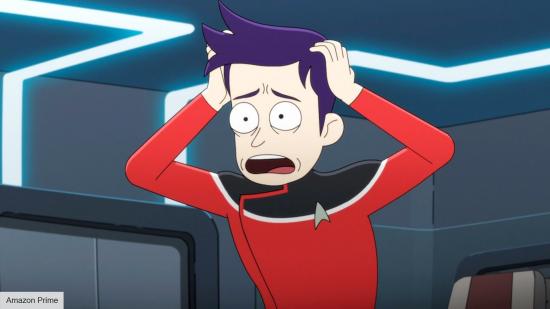
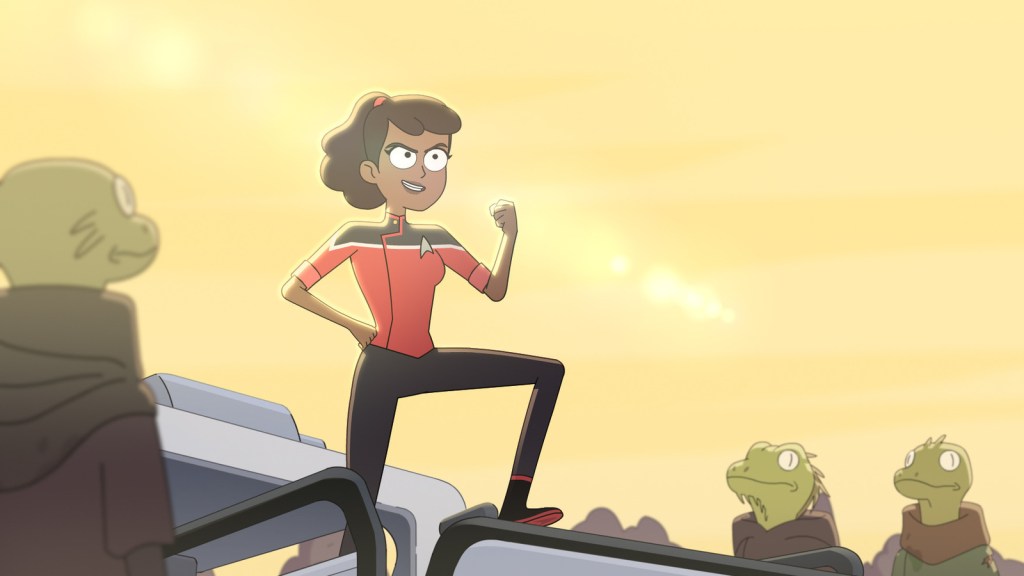
The good news is, it ain’t over yet. Netflix swept in and saved Prodigy, giving both the first season and the new season a home, and that second season has garnered immense critical and audience acclaim. Matalas still talks about Legacy in a way that doesn’t say “never gonna happen,” but rather, “not at this time.” And then last week, at San Diego Comic-Con (which, as you may recall, I was unable to attend), Lower Decks showrunner Mike McMahan talked about the future of Lower Decks in a way that seems somewhat hopeful. Specifically, McMahan was quoted by several sources as saying “You’re getting a closure that feels like the end of a chapter, but you’re not getting a closure on the Cerritos or these characters.” In other words, he does not see the final episode of this season as the final word on our pals Beckett Mariner, Brad Boimler, Sam Rutherford, and D’Vanna Tendi. And that’s great, because these are amazing characters with the potential to have more and more adventures for many years to come. 

But perhaps even more encouraging than McMahan’s statement was one made by Alex Kurtzman, the sometimes-controversial figure who is in charge of the entire Star Trek franchise these days. After McMahan suggested that fans “watch the hell out of this season when it airs,” Kurtzman further added, “Watch it twice because, actually, it does register. Finish it, and then watch it again… Guys, your petitions are incredible. They’re incredible. Look what you did for Prodigy. Do it again.”

“That’s right, people! It ain’t over ’till the fat Horta sings!”

If this doesn’t ring in your ears as a call to action, I don’t know what will. Talking to the fans, to the actors, to the creators, to the producers, it doesn’t seem like ANYBODY wants Lower Decks to end, with the exception of the boardroom guys at Paramount. THOSE are the people who have to be convinced. One theory I’ve heard – and one that I think has merit – is that they feel like Lower Decks has too limited a potential audience. To be fair, the show is VERY continuity-heavy and a lot of the stories rely on the audiences’ familiarity with the various incarnations of Star Trek. Paramount would rather focus on projects with an easier entry point for new fans. I get that. I think it’s stupid, but I GET it.

The sad truth is that the “business” part of “show business” is often what makes the creative decisions, and the only way to convince the boardroom guys that a show is worth saving is to give them numbers that indicate such a thing. So yeah, that means watching the show, RE-watching the show, and doing it as soon as possible when it drops, because something else they look at very carefully is how QUICKLY an audience engages with the provided content. 

And this is why it drives me absolutely CRAZY when I see fans talk about how angry they are at Paramount+ (I get that), how they don’t trust Paramount+ to give the show the love it deserves (I get it) and how, rather than paying for Paramount+, they’re just going to download the show illegally (you blithering idiots). 

“That’ll show ‘em!” they say. “I’m not gonna give those evil corporations one thin dime, but I’m STILL going to reap the benefits of what they make!” Swell! And in so doing, you’re putting the nail in the coffin of those things you love.

“For your information, MANY Orions haven’t pirated any movies or TV shows for over FIVE YEARS!”

I’m not going to sit here and debate the morality of pirating TV and movies with you guys. I know I’m not going to change your mind. But I AM going to point out that if you really want a series like Lower Decks to continue, pirating it is one of the WORST things you can do. 

Like I said, the studio looks at the viewership numbers. And to be certain, some of you will point out that large numbers of illegal downloads demonstrate that there’s a demand for a series. Sure, that’s true. But it’s even MORE true that the studio doesn’t give one flying fig for your download numbers because they do not make any money off of those numbers. In fact, every number that rings up for an illegal download is a number that they consider a loss.

“It’s not a loss,” you say, “because I wouldn’t have paid for it anyway.” 

My favorite argument.

I want to put yourself in my position for a moment, guys. You know that I’m a writer. I write books and then I try to convince people to buy them. I am not particularly GOOD at that part, but I try anyway. I’ve even got a little Facebook page where occasionally people talk about them. And there is, I believe, exactly ONE person who is blocked from that page, someone who had read one of my books and liked it, and that’s swell. And then she made a comment about how she downloads all her books to “beat” the big companies like Amazon. And I gotta tell ya, it feels GREAT to know that she swindled Jeff Bezos out of his cut of MY book when I’ve got to buy my kid school supplies with a royalty check that looks like a soccer score. But it’s okay because you wouldn’t have read it anyway? You know, I think I would have preferred that you didn’t instead of you popping onto my page and telling me how proud you are of getting away with something.

Independent authors are eating ramen noodles, but at least Lex Luthor had to settle for only six yachts this year.

But that’s getting back into the morality of it again, and I’m sure nobody wants to hear that, because it may force you to question your judgment. Let’s get practical. The guys in the boardroom look at the pirate numbers and ask – surprisingly logically – “why should we keep spending money to make something that these people are going to watch for free?” The point of a business – ANY business – is to make money, and to continue spending money making a product that loses money is foolishness. 

The way to save Lower Decks – to save ANY television show that’s on the cusp – is to convince the studio that keeping it alive makes financial sense. That means buying the DVDs, getting the t-shirts, snagging the merch, pre-ordering the comic books, supporting the sponsors, and (and this is the part that’s going to make some people angry) WATCHING IT ON A LEGAL PLATFORM. Whether that’s a paid subscription like Paramount+ or a free ad-supported platform like the Roku Channel, these are the ways that the creators of the shows make their money. If you want them to keep making the shows, you need to keep making money for them.

Plus, you’ll still have the physical media if the studio decides to remove it from the app as part of their plan to commit tax fraud.

By the way, I’m talking about TV shows because Lower Decks is the current show that’s sending out the S.O.S. signal, but this is all true of movies and any other form of media as well. Everyone wants to complain that Hollywood has “no new ideas,” that all they make are sequels and spin-offs and remakes. Guys, look at the top movies for the past decade. How many of them are sequels or spin-offs or remakes? Hell, look at the box office receipts for THIS year! As of this writing, the top TWELVE movies for 2024 are all sequels or spin-offs or remakes. You don’t get an original idea (John Krazynski’s imaginary friend fantasy IF) until spot number THIRTEEN. Now ask yourself how many lower-tier movies – movies that AREN’T sequels or spin-offs or remakes – have been downloaded. 

I took a screenshot in case it’s changed by the time you read this. Inside Out 2 totally deserves that spot, by the way.

If you love Lower Decks – and if you’ve bothered to read this far I believe that you do – you need to heed McMahan and Kurtzman’s call to watch it, watch it a lot. But if you don’t watch it the right way, it doesn’t matter at all. If you don’t, then our pals on the Cerritos will join the likes of Trelane, Beverly Crusher’s husband that Picard got killed, and those salamander babies Tom Paris and Janeway had  – a vibrant afterlife on Memory Beta, but in canon, merely a remembrance of something golden.

RED ALERT: UPCOMING PLAYING FAVORITES!

Well, friends, back to school is creeping up on us. Whether your kids go back next week like mine or if you still have a free chunk of August, the time is approaching…so I’m going to celebrate with another PLAYING FAVORITES! In “Playing Favorites,” I throw out a topic and ask YOU to give me categories to cover in an upcoming “Geek Punditry” column. For instance, when the topic was “Christmas,” I was asked for my favorite songs written for a Christmas movie. With the “Superhero” topic I was asked my favorite sidekicks. In the “Summer” topic I talked about my favorite beach movies, and so forth.

This time the topic is SCHOOL. I’m looking for categories that apply to the usual Geek Punditry quadrants: movies, TV, books and comics. As always, I’ll pick my favorite suggestions and give my picks. Let the nominations begin!

Blake M. Petit is a writer, teacher, and dad from Ama, Louisiana. His most recent writing project is the superhero adventure series Other People’s Heroes: Little Stars, volume one of which is now available on Amazon. You can subscribe to his newsletter by clicking right here. He really wants you to think about a creative parent having to explain to their kids why they have to get Rose Art crayons instead of Crayola the next time you download something. Jerk.