Geek Punditry #16: The Case For Star Trek: Legacy

You know, I had a column planned this week. Took some notes. Had it mapped out in my brain. And then I went and watched the finale of Star Trek: Picard, the magnificent, joyous finale that was honestly everything I wanted it to be, and suddenly what I was going to write about has gone completely out of my head. Instead, this week, I’m going to look ahead to the future of Star Trek – specifically about Picard showrunner Terry Matalas’s proposed Star Trek: Legacy series, and why it needs to happen. So here’s your warning, friends: after this point there WILL be spoilers for Picard, all the way to the final credits. If you haven’t watched it yet, continue reading at your own risk.
RED ALERT! SHIELDS UP! SPOILERS INCOMING!

After two seasons of Picard that were disjointed and felt forced, the third and final season gave fans what we wanted all along: a suitable ending for the cast of Star Trek: The Next Generation. The last time we saw these characters together in canon was in the film Star Trek: Nemesis, which left us on a bittersweet note that was never resolved. Data was destroyed, Will Riker and Deanna Troi went off to the Titan, and the heroes we’d come to love were scattered to the cosmic winds. In this final season of Picard, Terry Matalas brought back Data and reunited the seven core cast members of The Next Generation (well…EIGHT core members, actually, since he even resurrected the Enterprise-D) so that their story could end the way they deserved. Now, rather than leaving behind our friends in a state of mourning, we say farewell to them as they are together, happy, and in the wake of their greatest triumph. This is something that cannot be said for the characters in any other Star Trek series, and if this is in fact the last time we see these heroes (and I suspect it is at least the last time we see them all together), it is a fitting goodbye.

But Matalas did not JUST reunite the TNG crew. He also built a new crew, combining a few of the characters from the first two seasons of Picard with others created for this season, and we leave them on the bridge of the Titan, newly rechristened as the USS Enterprise-G. It is at this point that Matalas is staring Paramount executives in the eye and challenging them to greenlight a series about this new crew, a series he has been calling Star Trek: Legacy to anybody who’ll listen, even though it hasn’t actually been approved by Paramount.

Yet.

Let’s talk about the reasons that a Terry Matalas-led Star Trek: Legacy is not only possible, but exactly what long term Trek fans are hungry for.

CONTINUING THE SAGA

“Look at us! Here we are! Right where we belong…”

After Nemesis, every Trek series or movie for nearly two decades went backwards in time. Star Trek: Enterprise was about the ship that led to the creation of the Federation, the J.J. Abrams movies showed us the crew of the original series in an alternate timeline, and Discovery started its first season about a decade or so before the original series. Without debating the relative quality of any of these projects, none of them moved forward in the time period that fans had come to love through three series and four movies. That didn’t happen until Picard. And with that series finished, we are once again left without a continuation of that period in live action. Strange New Worlds and the upcoming Starfleet Academy series are in different points in the timeline, and while the animated Prodigy series seems to be in that time period (it’s honestly a little nebulous exactly where it falls), I think most fans probably join me in wanting a flagship series set in the 25th century. 

This is the most well-developed era in the Trek timeline, with elements from TNG, Deep Space Nine and Voyager all in play, and so far the only show that’s playing with all these toys is the animated comedy Lower Decks. And while it’s true that eras that have not been explored as much have room for development, that doesn’t quench the thirst for exploration of the storylines, cultures, alien races, and characters we already know. A show set in this time period would allow us to check in with those elements and see where they go in the future – something that would be inevitable with Voyager alumni Seven of Nine as captain of the Enterprise-G and two members of the bridge crew whose parents are members of the TNG crew. (Not to mention the fact that Riker and Troi have a daughter who is currently enrolled in Starfleet Academy, and could easily join the show later if we really wanted to ramp up the fan service). 

It would also allow the show to address the one glaring absence from Picard: the characters from Star Trek: Deep Space Nine. For the first eight episodes of the season the major threat were the Changelings, the main antagonists from DS9, but except for Worf nobody from DS9 ever made an appearance. I suspect we probably would have seen them if not for the passing of Rene Auberjonois, who played the Changeling Odo on that series – but alas, it was not to be. Regardless of why we didn’t see them, DS9 remains my favorite Trek series, and a Legacy show could (and should) check in on the station, what’s been going on with Bajor since the Dominion War…maybe even finally provide some resolution to the final fate of Captain Benjamin Sisko.

THE ENTERPRISE IS THE HEART OF STAR TREK

There are a lot of letters left in the alphabet.

When the original Star Trek series debuted in 1966, there wasn’t necessarily a conceit that there was anything special about the ship among the other ships in the fleet except that it was the one we were following. Throughout the show and the original movies, though, we got the impression that the Enterprise crew stood out, and by the time TNG launched in 1987, it was declared that the Enterprise was the name given to the flagship of Starfleet. This was codified with the Star Trek: Enterprise series, which retroactively applied that name to the first ship capable of Warp 5, and the adventures of that particular crew led to the birth of the United Federation of Planets. The point is, while the Star Trek universe is vast and diverse with room for many, many stories, the Enterprise is the core of that universe.

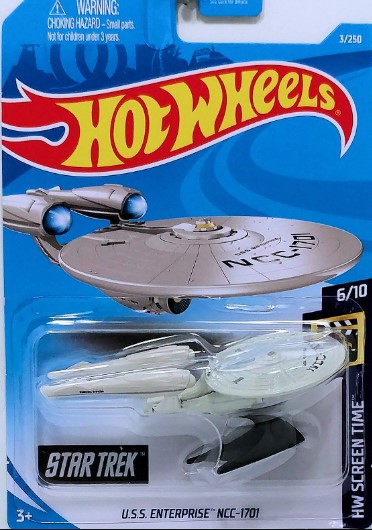
True, we have Strange New Worlds, which is set on the Enterprise NCC-1701 in the pre-Kirk years, but that’s kind of the problem. Don’t get me wrong, I love SNW, but the inherent difficulty with any prequel series is that certain elements are closed off as storytelling avenues. At no point in SNW are you ever going to fear that the ship will be destroyed or that any of the characters who show up in the original series, such as Spock or Dr. M’Benga, are in mortal danger. There can be great adventures told with Pike’s Enterprise, but it will inevitably be trapped in the “past” of Star Trek. The 25th century, for many fans, is the “present,” and we haven’t had canonical, ongoing stories of an Enterprise in that time period since TNG went off the air in 1994. The look of the ship can change, the crew can change, the letter at the end of the registry number can change, but the fact of the matter is that without an Enterprise, Star Trek simply isn’t complete. As Jack Crusher observed when the Enterprise-G was unveiled, “Names mean almost everything.”

A CHANCE FOR NEW DANGERS
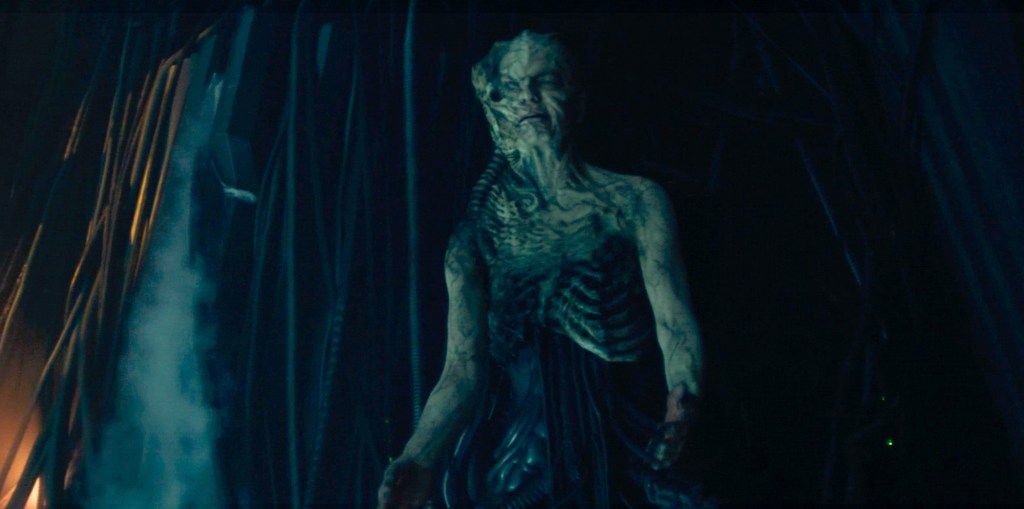
“Um, you got something on your…on your face…oh, dear God…”

In addition to bringing back the TNG crew one last time, Picard also gave a definitive, final conclusion to the story of that era’s greatest threat: the Borg. When this malevolent race was introduced in TNG it was a terrifying idea: an artificial intelligence that propagated by taking the technology of conquered worlds and transforming the biological inhabitants of the destroyed civilizations into mindless drones, kind of like when Disney buys a new IP. But like many popular villains, the Borg got a little overused over the years (even as recently as season two of Picard). What the finale gave us was one last face-off between the Borg Queen and Jean-Luc Picard, one that was eminently satisfying, but also done in a way that should take the Borg off the table for good.

(I say “should” here because I’m realistic. With any long-running franchise, eventually new hands will take over, and when that happens they often will bring back the elements they loved from the past. Someday somebody WILL sit down in a Paramount boardroom and say, “Okay, here’s how we’re gonna bring the Borg back.” It’s inevitable. But I don’t think it will happen soon and I don’t think that person will be Terry Matalas.)

With the Borg gone, it’s time to bring in new threats, new enemies, new villains. This is a chance to have a fresh start in a familiar setting, which from a creative standpoint can be a hell of a lot of fun.

A NEW GENERATION

“Okay, now that I’m captain, when is it my turn to kill Tuvix?”

Like I said, the way Matalas stacked the crew of the Enterprise-G was a straight-up challenge to Paramount, loading the bridge with characters that matter to us. We already knew Seven of Nine from Voyager of course, but the crew also includes Picard’s former aide Rafi, who after two years finally spent this season blossoming into a compelling character through her partnership and friendship with Worf. We have Jack Crusher, son of Beverly Crusher and Jean-Luc Picard, who seems to have embraced his parents’ philosophy after struggling with it for some time. We have Sidney “Crash” LaForge at the helm, piloting the ship and determined to get out of the shadow of her legendary father. Over the course of this season we grew to care about these characters. Beyond the previous relationship between Seven and Rafi, we also saw Seven and Jack build a rapport which paid off when she named him a special counselor to the Captain. There was also a clear chemistry between Jack and Sidney, and the idea of Geordi LaForge showing up periodically to bristle at his daughter flirting with Jean-Luc Picard’s son is absolutely delicious. 

Matalas crafted these characters in such a way that the potential is obvious, and showcased them to make us want more. And just in case that wasn’t enough, he closed the series with a mid-credit stinger in which Jack Crusher meets his dad’s best frenemy, Q, who tells Jack that his own trials are just beginning. Translating this scene into Klingon and back again reveals that what he REALLY means is, “Come on, Paramount+, I double dog dare you to greenlight this spinoff.”

And then there’s the elephant in the room.

LET’S TALK ABOUT SHAW

The most beloved dipshit ever to come out of Chicago.

Liam Shaw, played by Todd Stashwick, was introduced in the first episode of this season as captain of the Titan, and he initially came across as an antagonist. He didn’t like Seven of Nine, even though she was his first officer. He had no respect for Picard and Riker when they came on to his ship and tried to divert his mission. He even insulted Picard’s wine, setting up what would turn out to be one of the season’s best running gags. But by the end of the first episode you knew who Liam Shaw was: an asshole that you couldn’t stand and couldn’t wait to see get what was coming to him.

Then something magic happened.

We realized that nothing Shaw was doing was out of line. These two relics, neither of whom had any official standing with Starfleet at the moment, showed up on his ship and tried to send him off on a very spurious mission with no orders and a half-assed explanation, almost destroying the ship and killing everybody in the process. We, the audience, trust Picard and Riker because we’ve known them since jelly bracelets were in fashion, but Shaw has no such luxury. As for his relationship with Seven, as it turns out he was a survivor of Wolf 359, the most infamous Borg attack of all time (before this one), which happened to be led by Picard himself during the time he was assimilated. The man probably had to deal with PTSD every time he looked at Seven. 

Shaw’s abrasive qualities became part of his charm, especially as he continued to show himself to be highly qualified and competent, not only as Captain, but also as an engineer later on in the season. His voluminous ego doesn’t go away, but it also doesn’t stop him from doing the right thing, as we see when he gets injured a few episodes later and immediately transfers command of the Titan to Riker, a man he clearly doesn’t like, because he knows it’s the best chance for survival. Over nine episodes Shaw goes from an unlikable asshole to a tremendously likable asshole.

And then he dies.

Not a pointless, meaningless death, not a Tasha Yar death. Liam Shaw dies to buy Picard and the others time to escape the Borg as they’re taking over the Titan, and with his last breath passes his ship over to Seven of Nine (using her chosen name for the first time). Then, just to rub a little salt in the wound, we later found out that he had already recommended Seven’s promotion to captain even before the events of the season had begun.

But he’s dead, right? So why does it even matter?

Come on, guys. Since when has being dead ever stopped a great character? The entire season was filmed before it premiered, so there was no way of knowing just how much the fans would grow to embrace Liam Shaw when the decision was made to kill him off, but Matalas says he has an idea for how to bring him back if and when the opportunity presents itself. As for the question of what to do with him afterwards…honestly, I’m not sure. They won’t (and shouldn’t) take Seven out of the Captain’s chair to make room for him, and I certainly don’t want to see another series with a painfully dubious chain of command such as has plagued Discovery since the end of season one, but I want more stories with Liam Shaw. And I know I’m not alone.

Hell, maybe he’d be happy to step out of the command chair and become chief engineer.

Let’s take one last look at the most beautiful bird in the galaxy.

There’s an adage in the entertainment business that giving the audience what they want isn’t necessarily the best way to tell a story. But sometimes you go so far in the opposite direction that you wind up with a stupid, chaotic, and utterly insulting mess that seems more like they actively hate the audience that made them successful in the first place, and here I am specifically thinking of what Marvel Comics insists on doing with The Amazing Spider-Man. Season three of Picard has proven there’s nothing wrong with giving people what they want, you just need to find a good story in which to do it. Terry Matalas did that this season, and he knocked it out of the park. He’s earned the right to do it again.

Star Trek: Legacy, Paramount.

Make it so.

Blake M. Petit is a writer, teacher, and dad from Ama, Louisiana. His current writing project is the superhero adventure series Other People’s Heroes: Little Stars, a new episode of which is available every Wednesday on Amazon’s Kindle Vella platform. He also wants to push his idea for a Star Trek: Fleet Museum animated anthology series, where in each episode a holographic tour guide based on Geordi LaForge tells a story about one of the legendary ships in his museum to a pack of tourists. He’s not kidding about this. Call him, Paramount, you all should talk. 

Geek Punditry #15: How Lucy Gave Us the Arc

A few weeks ago I wrote about how, for a lot of people, familiar TV shows, books, and movies, act as a kind of pop culture comfort food, something that calms, soothes, and entertains you almost as much as a visit with an old friend. We rewatch these shows because the familiarity does us good and makes us happy, and that’s what makes Pluto TV the best app around, in my opinion. Pluto TV gives you (free) access to hundreds of channels that provide you with this sort of entertainment. There are channels dedicated to old sitcoms, channels dedicated to old gameshows, an entire channel that shows reruns of The Carol Burnett Show, another that gives you a steady stream of Mystery Science Theater 3000, one that’s all RiffTrax, and two separate channels dedicated to repeats of the various Star Trek series. My son specifically asks to watch “Nick Jr. on Pluto TV” as opposed to asking for a particular show, and as that has weaned him away from YouTube I’m not complaining in the slightest. There are also channels for news, sports, music, movies, cartoons, and (for my wife) true crime shows and documentaries. It’s honestly an app that has something for everyone. 

I swear they’re not paying me to say this. I just really like it.

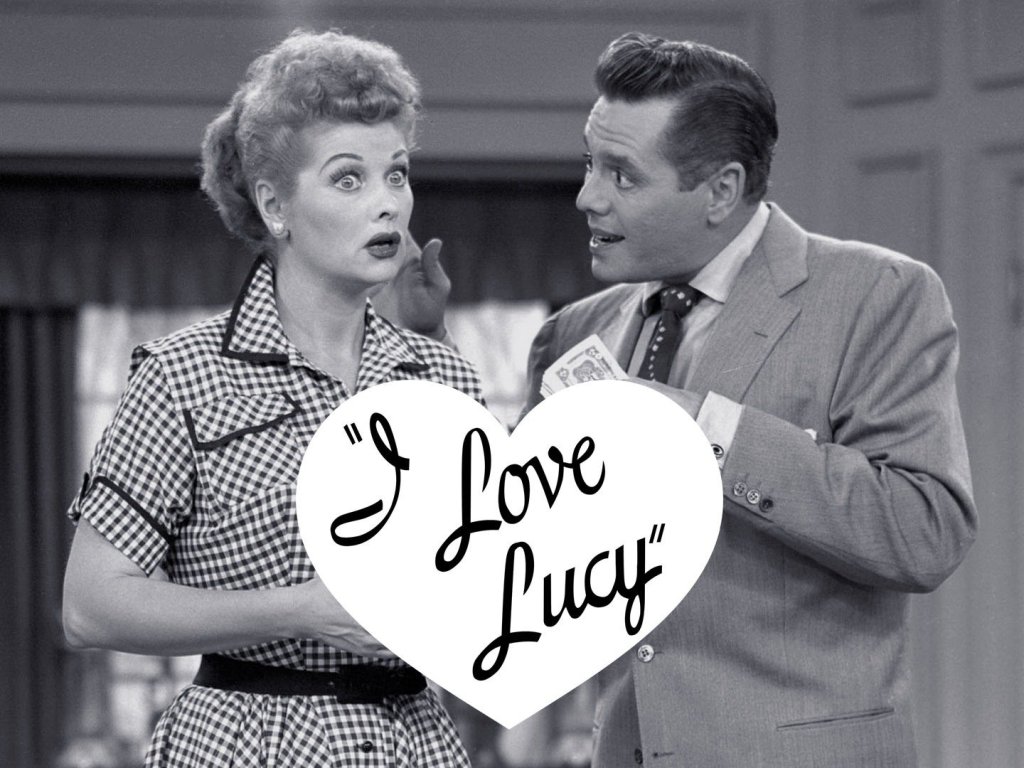
But most pertinently to this week’s Geek Punditry, there’s a channel that only shows episodes of I Love Lucy, the timeless sitcom about the love between Lucy and Ricky Ricardo and the barely-disguised loathing of their best friends, Fred and Ethel Mertz. To my surprise, once we added the Lucy channel to our regular Pluto TV rotation, I learned that my wife had not watched this show growing up, so for her, it’s all new. It’s given me a good excuse to voraciously rewatch the show and, since Pluto shows the entire series in order, it’s also allowed me to notice something that hadn’t occurred to me before.  I don’t need to remind anyone what a groundbreaking, legendary series this was, about how it literally invented the rerun, how it pioneered the three-camera setup used by many sitcoms ever since, or about how Lucille Ball was simply one of the funniest human beings ever to walk the Earth. But what I didn’t realize until recently is that Lucy and Desi also apparently invented – or at least codified – one of the primary elements of television that exists today: the story arc.

“Luuuuuucy…are you breaking new ground in televised entertainment AGAIN?”

These days, of course, arcs are commonplace, and no longer the purview of only soap operas. Babylon 5 is largely responsible for bringing the technique to science fiction, blazing a trail that shows like Star Trek: Deep Space Nine began to follow a few years later. Then Lost premiered in 2004, probably the first mega-hit to run with an ongoing storyline, and since then almost any drama that isn’t a police procedural (and many that are) has followed suit. 

Comedies were a different breed, though. A “sitcom” is literally a “situation comedy,” and changing up the situation was a big no-no. In the past TV comedies existed in a state of permanent status quo, where anything that changed in the story had to be changed back by the end of the episode. If it was a show about a nuclear family, that family stayed nuclear. If it was a show about a workplace, the people employed at that workplace stayed constant. Nobody ever moved away without moving right home again, nobody in the main cast ever got married or divorced, and if somebody lost their job, they had to regain it in 30 minutes or less. There’s a single episode of The Honeymooners where Ralph is laid off but they forgot to put him back behind the wheel of the bus before the episode ended. They simply ignored it the next week and moved on as if nothing had happened, but it was so shocking that it became a punchline in an episode of Family Guy decades later.

“When I catch the guy who forgot to gimme my job back, BANG! ZOOM!”

Now I could be wrong. I’m not a TV historian, and I know that things like radio dramas and soap operas had arc-based stories for some time, but when it comes to primetime shows, especially comedies, I feel like this is another area where Lucy broke new ground. Over the six seasons of the show, I count no less than six storylines that can legitimately be described as “arcs” (which, for ease of discussion, I will hereby define as a story thread or change to the status quo that carries through multiple episodes before resolution). The first was a matter of necessity: when Lucille Ball was pregnant during the second season of the show, they decided to incorporate it into the story rather than disguise it like so many shows have done before and since. (It was not, however, the first TV show to depict a pregnancy, as is often erroneously reported. A mostly-forgotten show called Mary Kay and Johnny actually beat them to the punch by a full four years, and they did it for the same reason that Lucy did.) Lucy’s pregnancy was announced in season 2, episode 10 and the baby was born in episode 16, with the five episodes in-between pretty much all dealing with the pregnancy as that episode’s major plot point.

Before and, for a time, after the birth of Little Ricky, I Love Lucy was mostly content with the one-off stories that were sitcom staples. In season 4, however, things changed with an absolutely massive arc in which the cast uprooted and went to Hollywood. It started in season 4, episode 6, when Ricky had a screen test with a movie producer. The next couple of episodes dealt with him waiting to hear back about the test, getting an offer to do a movie, planning a trip to Hollywood with the Mertzes for some reason, and several episodes of buying a car, fixing up the car, and driving from New York to California before finally arriving in Hollywood in episode 17. The cast stayed in California for the remainder of the 30-episode season, not returning home to New York until episode 6 of season 5. The arc was in many ways an excuse to bring in a bunch of celebrity guest stars like John Wayne and Harpo Marx, but it was still an unprecedented change to a series of this nature.

“Do you really think they’ll watch five episodes of us driving?”
“Of course they will, Nintendo hasn’t been invented yet.”

They didn’t stay home very long, though. In episode 10 of season 5, Ricky’s band is given an opportunity to tour Europe, and after a few episodes of getting a passport and (again) planning a trip with the Mertzes, they set off on a cruise ship in episode 13 and then continued traveling the continent for the remainder of the season’s 26 episodes. 

Season 6, the final season of the show in its original form, brought with it two more arcs. The first one, once again, was based on travel, with episodes 6-9 centered around a vacation to Miami and to Cuba to meet Ricky’s relatives (with the Mertzes). The final arc is a little harder to define, but it’s there. In episode 15, Lucy decides she’s tired of city life and wants to move to the country. Cue several episodes about buying a house, moving, and settling down in their new home, along with the Mertzes, proving that Bert and Ernie’s was not television’s first codependent relationship. Episode 20 is about the Ricardos and Mertzes trying (hilariously) to start up an egg farm, and that’s where I declare the “arc” over, as the remainder of the season’s (and series’) 27 episodes didn’t really deal with the move anymore, but the fact that they were new in town did still turn up as a plot point more than once.

No other show at the time had ever done so many extended storylines, especially nothing as long as the Hollywood arc, and it was a long time before such things were handled the same way. While changes in the status quo began to be allowed, they still often took the form of a single episode where a change was made and a new status quo took over: the move of the Laverne and Shirley characters to California, Richie joining the Army and leaving Happy Days, and of course, the infamous introduction of Cousin Oliver on The Brady Bunch are good examples of this. Changes were happening, but they were done so quickly that it was almost like a whole new show took over after an episode rather than the sort of slow burn that Lucy and Desi pulled off.

No matter how mad you are about what happened on your favorite show, remember, it could be worse.

Comedies now embrace arcs as well. The Office, for example, started off with the unrequited love between Jim and Pam, which was the sort of thing that sitcoms had always done, but then they did something shocking in season three and (gasp) REQUITED it. So they needed new arcs. They had the “Michael Scott Paper Company” storyline, the Sabre arc, the Dwight/Angela/Andy love triangle, and assorted other storylines of varying length and quality. Most other successful sitcoms these days bring in arcs after a while, if not built in to the DNA of the series from the very beginning. But as I sit there with Pluto TV showing me Lucy spending two episodes ruining and then trying to fix John Wayne’s footprints in wet cement in the middle of their year-long brush with Hollywood, I am in awe of the people who blazed the trail for everyone else.

Blake M. Petit is a writer, teacher, and dad from Ama, Louisiana. His current writing project is the superhero adventure series Other People’s Heroes: Little Stars, a new episode of which is available every Wednesday on Amazon’s Kindle Vella platform. He didn’t even touch on the Pluto channels for Doctor Who, Top Gear, or The Price is Right, because how much awesome can you realistically handle in one column? 

Geek Punditry #14: Filling In the Gaps

I’ve been reading comic books pretty much since I learned to read. The hook caught me when I was still in elementary school and my dad brought home a box of Archie Comics from a co-worker, and it was set even more firmly when my uncle gave me some old issues of Green Lantern and Legion of Super-Heroes he had. And much like watching your favorite TV show over and over, rereading old comic books is a form of comfort entertainment for folks like me. Oh sure, I still read new stuff, but revisiting the classics is like a shot of dopamine straight to the ol’ cerebral cortex (or wherever dopamine goes). The digital revolution in media has made that easier. You can find old stories you lost years ago, voraciously read precious comics without the fear of damaging those pristine back issues in your collection, or FINALLY read that missing issue of Power Pack you could never find as a kid that explained why the hell all of the kids had suddenly traded super powers and how the Snarkwars ended. This was serious business, friends.

Imagine waiting 35 years for apps to be invented so you could finally read this.

Of course, not everything is available digitally, not yet anyway. With nearly a century of comic books to digitize before they can be made available (and rights issues tying up a lot of them in various ways), the dream of a single device from which you can read every comic book ever made is probably going to remain a dream. But with Marvel Comics boasting over 30,000 comics on its app and DC hosting a library of over 24,000, it could practically take a lifetime to go through the stuff that’s already out there. Psyched for the new Guardians of the Galaxy movie? You can read every issue of their series right now. Pumped for the Blue Beetle film? The history of Jaime Reyes awaits you! Want to go back to the beginning? Check out every appearance of Superm–

Oh, wait.

Actually, not every issue of the assorted Superman comics from the past 85 years is among the 24K titles DC Universe Infinite has waiting for you. As every American learns in first grade, Superman first appeared in Action Comics #1 in 1938 and appeared in nearly every one of the title’s 904 issues before DC’s line-wide relaunch in 2011. But of those 904 issues, only 463 of them are on DCUI as of this writing. There are similar gaps in the other long-running Superman titles such as Superman and Adventures of Superman. Clark’s buddy Bruce Wayne has a similar problem: of the 811 pre-reboot issues of his flagship Detective Comics, DCUI has 696 as of now, again, with similar gaps in his other titles. Not as bad as the voids in Superman’s history, but still frustrating.

You’re telling me THIS isn’t worth digitizing?

My favorite characters and stories, as you may have noticed, tend to lean more towards DC than Marvel, but I also believe in credit where credit is due, and when it comes to making their library available, Marvel is considerably ahead of DC. You can read almost the entire run of the main series of their flagship properties like Fantastic Four, Avengers, and X-Men, and any gaps that exist are far smaller than those of their rivals. They’re also filling in the gaps much faster, with an almost weekly addition of big chunks of missing books (the last couple of weeks have given us dozens of issues of Dazzler, for instance), whereas DC rarely puts more than five or six older issues up a week, and usually from five or six different series, making it take much longer to complete a run if it gets completed at all.

I know it’s not as simple as pushing a button, of course. For comics that were produced before computer technology became a standard part of the production process (which means practically every comic produced before the 90s and a lot of them after that), digitizing them is a process. You need to find quality prints, scan each page by hand, and remaster them to make for a solid digital reading experience. For many comics, that means completely recoloring them based on the original guides. This takes time and money, so I don’t mind the wait. What bothers me, and a lot of other fans, is the kind of haphazard nature of what gets added. For example, this week’s slate of older books being added to the app includes Creature Commandos #1 from 2000, the first issue of the 1991 update to Who’s Who in the DC Universe, the first issue of the Eclipso: The Darkness Within crossover from 1992, Superman: Day of Doom #1 (a four-issue miniseries from 2002 produced for the 10th anniversary of Superman’s “Death”), and Stormwatch #46 from 1997. They’ve been (slowly) adding Stormwatch for some time now, so that makes sense, and Creature Commandos was part of James Gunn’s big DC announcement from a few weeks ago, so I get that too. The rest of them…baffling. Not that I’m complaining about anything being added, I have no objection to any of these titles. I just can’t figure why they’re going to those books when they haven’t yet added, for example, issues #216-274 of The Flash.

Less important than Creature Commandos #1.

Some things will probably never get digitized, I know that. For example, I’ve got no idea who currently owns the rights to the Adventures of Bob Hope, Adventures of Dean Martin and Jerry Lewis, or Jackie Gleason and the Honeymooners series launched in the 50s, and I doubt anybody except me actually cares. There are issues of the old Showcase anthology series that featured licensed characters DC has no rights to, such as G.I. Joe and James Bond, and which will almost certainly never be seen on the app. Then there’s Sovereign Seven, a series by legendary X-Men writer Chris Claremont, set in the DC Universe and often guest-starring DC characters, but for which the copyright was held by Claremont and artist Dwayne Turner. It would probably take some sort of monetary agreement between all the parties involved to add that series, and with so many other books still waiting for their shot, it seems unlikely that DC will make the effort to do so any time soon.

Look me in the eye and tell me you don’t want to know what happens next.

Then there are long runs of Green Lantern and Justice League Europe from the 90s that now present serious problems because the writer, Gerard Jones, plead guilty to possession of child pornography in 2018. Here’s a case where it’s perfectly understandable that DC doesn’t want to do anything that looks like they’re promoting his work or having to pay him royalties, and I don’t blame them for that. But it sucks for the other writers and artists who worked on those comics and who, through no fault of their own, find their back catalogs throttled. It also leaves us a case where some pretty big storylines are missing or incomplete, both for DC and Marvel. (Most notably for Marvel, Jones wrote what is to date the only ongoing Wonder Man series. With that character slated to get a Disney+ MCU series, normally you would expect his comics to be fast tracked for inclusion on the app, but as of now the only issues available are a few that are chapters in the Avengers crossover series, Operation: Galactic Storm.) 

The reason I’m thinking about this right now is because DC recently held their first “Backlist Breakout” poll for users of the DCUI app. Users were presented with a slate of eight titles not currently available and were asked to vote on which ones we wanted to move to the front of the queue, with the top three promised to be added to the app beginning in June. My vote was for one of the eventual winners, DC Challenge, a miniseries from the 80s where an all-star group of writers and artists participated in a sort of “exquisite corpse” experiment: the first team produced an issue of a DC crossover and then handed it off to the next team to continue the story with no instructions or input, figuring it out as they went along. This kind of storytelling has been done in books and other forms of entertainment, and the result was a delightfully insane comic that went totally off the rails, leaving the creators of the last issue the unenviable task of trying to make sense of a plot that had ballooned to include time travel, Nazis, the planet Earth itself being moved to another galaxy, and Groucho Marx. I cannot wait to read it again.

The most important vote you’ll cast this year.

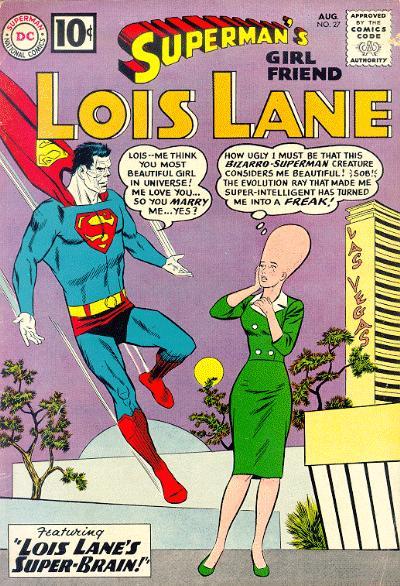
The other two winners in this round are books I’ve never read: the five issues of the 1967 Blue Beetle series (featuring Ted Kord, not Jaime, and published by Charleton Comics, but which DC owns the rights to) and the first 12 issues of the seminal fantasy series Warlord. The support for Warlord on the DC boards made its victory seem almost a foregone conclusion, and I look forward to it, since I’ve never read those issues. But it does open up another problem. Only the first 12 issues of Warlord have been promised. That’s 12 out of a series that ran for 133 issues plus six annuals. If fans want to see issues #13-24, Warlord is going to have come out triumphant again in the NEXT round of “Backlist Breakout” this summer. And then keep winning, every twelve issues, again and again, to finally make the whole series available. If it fails to win in even one round fans will be left dangling, their series put on a shelf with other unfinished titles like Adventure Comics, Doom Patrol, and Superman’s Girl Friend Lois Lane.

“Is this a joke to you?”

Again, I don’t mind waiting for everything to be digitized. And I even like the idea of “Backlist Breakout” making a game out of deciding what the next goodie added to DCUI will be. But there are some gaps that are so conspicuous that I just can’t figure out why DC isn’t doing anything to fix them right now.

Blake M. Petit is a writer, teacher, and dad from Ama, Louisiana. His current writing project is the superhero adventure series Other People’s Heroes: Little Stars, a new episode of which is available every Wednesday on Amazon’s Kindle Vella platform. He is admittedly thrilled that DC finally finished adding Captain Carrot and His Amazing Zoo Crew to the app a while back, but he’s quite put out that they haven’t gotten around to the three-issue Oz/Wonderland War miniseries that wrapped up the original Zoo Crew’s story yet. 

Geek Punditry #13: What IS Geek Punditry, Anyway?

In the first week of January, I challenged myself to carve out a little time, once a week, to write something in this new “Geek Punditry” space I created. I’ve been using the term for years, calling myself a “Geek Pundit” in various online bios because I thought it was a clever phrase that, to the best of my knowledge, nobody else was using. (But to be honest, I never really looked, either. I could be wrong.) But as we finish up the first quarter of 2023 (motto: No, it’s not getting any better), it occurred to me that I never quite explained what I mean by Geek Punditry. What is this space about? What qualifies something for this kind of discussion? And most importantly, why should you care?

Would you listen to this man?

I’ll answer the last question first: you shouldn’t. Not unless you want to, that is, and that’s what makes my task challenging. A pundit, by definition, is an expert on a given topic that is called upon to present opinions on the subject. So clearly, as a title, it’s ridiculous, and that’s why I like it. It’s a title that sounds slightly pretentious, but hopefully is silly enough to communicate the fact that I’m trying to mock pretention rather than indulge in it. I don’t consider myself an expert on anything, but I think a lot about everything, and putting those thoughts down helps me to declutter my horrifically unorganized mind. As for the second part, “called upon to present opinions”…what is there to say? I’m well aware of the fact that nobody is asking me what I think of anything. I’m the living embodiment of those memes that start with “Nobody: [Blank space]. Nobody at all: [Blank Space],” and then a picture of SpongeBob blurting out something about Squidward. And since nobody has any compelling reason to give a damn what I have to say, the burden falls upon me to make what I have to say interesting. If you’ve read this far, I flatter myself by assuming that I at least haven’t bored you silly yet.

So back to the first part of the question: what does “Geek Punditry” mean? In simple terms, it’s talking and opining about geeky things. It’s not a new concept, of course, but there’s another term that’s been used pretty much since the invention of art: critical analysis. It’s about the discussion and dissection of art of all kinds, and it’s an ancient art all its own. I have no doubt that the first time some caveman picked up a stick and drew a picture of a saber-toothed tiger in the dirt, some other guy scoffed at it and kicked it aside so as to indicate that his blind 32-year-old great grandmother could draw a better tiger than him. The first guy then began to wildly gesticulate, which the second guy took as him being angry over the analysis. The second guy then laughed and communicated, through grunts and hoots, “What, can’t you take a joke?” Then he laughed a little more and then the first guy took a swing at him, at which point, both of them were eaten by the tiger that the first guy was trying to warn the second guy about in the first place. Which brings me to one of the central rules of MY version of Geek Punditry: Being critical is one thing, but being mean about it is just stupid.

“Did you see what Ug calls a buffalo? I’m gonna discover fire so I can tell him to go die in one.”

That’s not to say one can’t have a negative opinion, of course. It’s almost impossible to have any kind of intelligent analysis without criticism of some kind. But there’s no reason to be a dick about it. If you have ever – to give a totally hypothetical example that could never, ever happen in real life – bullied an actress on social media to the point where she deletes her account, I don’t care how bad the movie may be, you’re the bad guy. If you’ve ever threatened violence against someone because they wrote something you didn’t like, you’re the bad guy. If you’ve ever harassed, threatened, or wished violence against somebody because they’re married to/the parent of/the child or/the dog groomer of a celebrity that you have some sort of personal grudge against – and I cannot believe I have to say this – you are the bad guy. If your posts include the words “cancer” or “kill yourself,” I don’t even want to know you.

But those are just the most obvious examples of people being awful human beings and attempting to shield themselves by calling it “criticism.” There are other forms that are less obvious and far more insidious, and most of these fall under the general category of “clickbait.” How many times have you seen some online “think piece” that explains in great detail why a movie or TV show that you enjoyed as a child is actually awful, terrible, and something you should be ashamed of yourself for ever indulging in? I saw three of them today before I even got dressed to go to work. What the hell is the point of that?

“Today on Buzzfeed: 12 Muppets who totally would have given Mengele asylum in Brazil.”

Well, the point is obvious, actually, it’s about getting clicks. Websites like that run off of advertising, and every time you click on a link their ads generate some fraction of a cent, so it’s in their best interest to write things that will make you click. And the sad truth , my friends, is many people are far more likely to click on something if they find it infuriating. Otherwise, there would be absolutely no point to publishing these things. This is not to say that everything we loved when we were younger was perfect. A lot of us look on the movies and TV shows of our youth through rose-colored glasses, and more than once I have gone back to something I used to watch over and over as a child only to realize, as an adult, that it ain’t that great. But most of it is also harmless, something that has been largely left in the past and gives people fond memories, so why dredge it up just to upset people about something that previously brought them joy? The advantage I have here, I suppose, is that I have absolutely no expectation of making money off this blog, so I have no incentive to piss people off solely in the name of getting them here. I’d rather talk about the things that I love with other people that love them too.

The sad state of modern criticism both depresses and fascinates me, because people have been making a living as critics for a very long time. In high school, we used to go to the library and use these massive encyclopedia-sized sets of books of literary criticism for use in research papers and annotated bibliographies. These volumes contained thousands of articles published in journals over a couple of hundred years of writers writing about writing that other writers had written. It was full of analysis of every significant writer from Chaucer to Faulker. There was stuff both about and by the likes of Edgar Allan Poe and Mark Twain. There were entire spinoff volumes devoted specifically to writers of science fiction. And one can only imagine how many such articles were left uncollected because either the critic or the object of their criticism had faded into obscurity. Doesn’t that sound amazing? If ever there was evidence that I was born in the wrong century, it’s the existence of these books. 

Then there are film critics, which is probably the form of criticism that most of us are more familiar with. Guys like Siskel and Ebert made their names not by trashing everything they didn’t like (although they were not above doing that from time to time) but by explaining their opinions in a concise, intelligent way. I loved their TV show back in the day, I looked forward to watching it almost as much as I looked forward to watching the movies themselves. It’s because of them, as much as anything else, that I try my damndest to explain what I like or dislike about something, and why I try not to offer an opinion on something I haven’t seen or read personally. As a policy, the majority of social media would find this position baffling. 

I included this bit mostly so I could draw your attention to the hilarious Newsradio joke about these guys.

And when it comes to critical analysis, let us not forget the man with the mutton chops, Isaac Asimov. The good professor wrote or contributed to over 500 books in his lifetime, or roughly two and a half Stephen Kings. Most people today know him as a science fiction writer who also wrote about science or a scientist who also wrote science fiction. But he also wrote mystery novels. He wrote a guide to the Bible. He wrote jokebooks in which he broke down and analyzed the jokes, breaking the cardinal rule of not explaining why something is funny, and yet doing so in an entertaining fashion. He wrote one of the most intriguing guides to Shakespeare I’ve ever read! My wife found Asimov’s Guide to Shakespeare on eBay for me years ago because she’s awesome (there’s some advice, young people – if you plan to get married, marry someone awesome) and it’s actually making me a better teacher. Asimov not only explains his personal feelings about the plays, but also provides some interesting and, in some cases, essential context that makes it a lot easier to understand the more perplexing moments in the bard’s work. For example, I could never adequately explain to my students why it was so easy for Claudius to take his brother’s throne even though Hamlet quite clearly was old enough to become king. It never quite made sense to me, either. Asimov explains: at the time in which the play was set, succession did not automatically go from father to son, but rather a new king was selected from the members of the royal family. Claudius (with a little help from Polonius) managed to convince the nobles that he was the best choice before Hamlet could get his Danish butt back in the country, no doubt furious that televised campaign ads wouldn’t be invented until the 20th century. Now I know, and it’s because of the greatest Geek Pundit of all time. If Western Civilization has ever produced a bigger Geek than Isaac Asimov, I don’t know who it is. And I say that with the utmost respect.

This is what I was going for in that first picture, actually.

As with so many things, though, the digital revolution has largely eroded the ability to actually make a living with criticism of any kind. The number of full-time film and book critics has dwindled dramatically as newspapers and magazines go out of business, and while any of them can easily make a home for themselves on the web, the internet isn’t paying out for that sort of thing in a substantial way. The advent of AI-generated content is only making it worse. If you’re the type of person who sees a website as a revenue generator first and a place for intelligent discourse second (and placing it second is being extremely generous for most of these sites), it doesn’t make sense to pay an intelligent critic for well-constructed criticism. Just whip up an algorithm that can turn out a 10-point listicle that attacks someone’s childhood and BAM! You’re rolling in microtransactions. You’re the Scrooge McDuck of awfulness.

What happens at the “Inside the Magic” website office every time you click on an article about 37 ways to get a venereal disease in the Disney parks.

Here’s why I do this, folks. I like things. And I like liking things. And I like discussing the things I like. That’s why I wrote for Comixtreme for years, that’s why I hosted a podcast until parenthood took away both my time and my ability to have a single room in the house quiet enough to record. And that’s why I’m here now. I’ve come to realize that discussing these things, analyzing these things…it makes me happy. It gives me a place to channel all those thoughts that otherwise barge into my skull at 2 a.m. It gives me somewhere to share all of my ideas about these things that I love without randomly having to turn to my wife in the middle of the grocery store and explain the entire history of Firestorm because something on a box of Rice Krispies made me think of the first time he fought Killer Frost. This column isn’t just me babbling narcissistically. This is my therapy.

Except for my wife and son, I don’t know if there’s anything I enjoy more than talking about things that I enjoy. It’s why I go to comic shops and conventions, why Free Comic Book Day is the best day of the year, why seeing a movie with friends is better than watching it on my phone. It’s why I’m here.

And if you enjoy that sort of thing too, you’re my kind of people. Pull up a chair, I’m happy to have you. It’s just a shame that, in the world we’ve got today, the table feels so empty sometimes. 

Blake M. Petit is a writer, teacher, and dad from Ama, Louisiana. His current writing project is the superhero adventure series Other People’s Heroes: Little Stars, a new episode of which is available every Wednesday on Amazon’s Kindle Vella platform. He apologizes in advance if any of the ads that WordPress places on this site fall under the categories of awfulness he mentioned in the column, and he strongly encourages you not to click on anything. Except for his aforementioned Amazon links.

Geek Punditry #12: Nothing New Under the Sun

One of the most common criticisms of modern movies is that there aren’t any new ideas. People point to the nearly endless stream of sequels, prequels, remakes, and franchises as evidence that Hollywood has run out of creative juice, as if there’s somehow nothing original in seventeen movies about a robot that can turn into a jet ski. There are two problems with this, though. First, it’s not really true. There are thousands of scripts circulating in the movie industry at any given time – each year a “Blacklist” is released of the best unproduced scripts currently making the rounds, and some of them eventually find a studio or a director to take them on. The problem isn’t that original stories aren’t out there, it’s that the people holding the strings of the purses are afraid to spend money on them. You can take a chance on that period drama about a coal miner who discovers a secret that will topple a kingdom, or you can make the ninth installment of an action franchise that you know is going to make at least $200 million even if it’s terrible. I’m not saying I agree with this decision, mind you, but I certainly understand it.

Nothing original my shiny hiney.

The other problem with this complaint is the assumption that this is a recent phenomenon, that it’s only in the last few years that this mythical well of creativity has run dry. What happened to those great epic films of the past based on totally original ideas? Things like Jaws or The Wizard of Oz or The Ten Commandments? You know, things that were made from whole cloth. It’s nonsense, of course. People have been borrowing stories since the first story was told. And you know what? That’s okay.

I took a quick glance at IMDB’s top 100 narrative films and counted at least 40 movies that I know are based on books, plays, real life, or are sequels – and those are just the ones I’m aware of. I’m sure that there are more, but I don’t have time to read the trivia on all of them. This also doesn’t count those films that aren’t “official” adaptations, but borrow liberally from earlier stories (such as Star Wars taking elements from Buck Rogers and Hidden Fortress). A large chunk of our most acclaimed cinema is taken from other sources. And there’s nothing wrong with that. William Shakespeare himself “borrowed” from everybody. The histories, obviously, aren’t original ideas, but beyond that we have Romeo and Juliet based on an Italian poem, Othello was lifted from a collection of short stories, and Hamlet was a straight-up ripoff of The Lion King

Rosencrantz and Guildenstern are fed.

No, seriously, it’s based on an old Danish myth about a young man who has to seek revenge after his father is murdered by his uncle. There were, in fact, several versions of this story going back hundreds of years before Shakespeare cherry-picked his favorite parts of each of them, added a ghost, wrote the song “Hakuna Matata,” and BAM! made it the most famous play in the English language. 

Something else to consider is that as vast as the well of human creativity is, we’ve been exploring it for a really long time, and there aren’t a whole lot of corners left to excavate. Back in 1895, Georges Polti published his list of “The Thirty-Six Dramatic Situations,” in which he outlined what he believed was every possible plot that any writer can use. Granted, these 36 plots are incredibly simplistic (abduction, revolt, enmity of kin, Godzilla Vs. Mechagodzilla, etc.), but I first read about these plots in a writing book nearly 20 years ago and since then I’ve never come across a story that didn’t fit at least one of them, not even Space Jam. The point, then, is not to come up with an entirely original idea, because that seems to be virtually impossible. The point is to find the story you want to tell, and then tell your version in an entertaining and satisfying way. 

Too many writers get hung up on being original and freeze. A long time ago I had a friend read a story I wrote only to panic when she asked me when was the last time I read The Chronicles of Narnia. It had been years, but upon reflection I realized I used a device remarkably similar to an element from the Narnia novel The Magician’s Nephew. I hadn’t done it intentionally – I hadn’t read the book since elementary school and I had very little memory of it – but the device was so similar I have to concede that I was drawing on it subconsciously. Another time a friend of mine asked me if I’d heard of Rick Riordan’s Percy Jackson series, and because I trusted his recommendation, I picked up the first book. I loved it and I also got sick to my stomach, because the conceit of the Greek Gods in modern times was something I had been working on in a novel of my own that pretty much died on the vine. I obviously wasn’t stealing that idea, because at the time I had never read Percy before, but the knowledge that there was such a popular book out there that used some of the same ideas slaughtered my enthusiasm for the project. In retrospect, that was a mistake. The take I was planning really wasn’t at all similar to Camp Half-Blood, the only real similarity was that it was contemporary mythological characters, but I was so shaken that I lost the thread of that story and was never able to find it again. 

“Hello, literature police? I’d like to report a murder…of my hopes and dreams.”

Rather than abandoning a story with old roots, a writer should cultivate those roots and find a new way to grow. Stan Lee famously combined Frankenstein and Dr. Jekyll and Mr. Hyde to create the Incredible Hulk, after all. Kevin Williamson and Wes Craven bought stock in decades of slasher movies to give birth to the Scream franchise. George Lucas drew on Uncle Scrooge comics by Carl Barks when he conceived of Raiders of the Lost Ark. (I know that sounds like the kind of thing I would make a joke about, but it’s not. That one’s a straight-up fact.)

Let’s go back to Shakespeare. Everyone knows Disney borrowed from Hamlet when they made The Lion King, but that’s only the tip of the iceberg. Romeo and Juliet inspired West Side Story, MacBeth became Kurasowa’s Throne of Blood, The Taming of the Shrew became Ten Things I Hate About You. As of this writing, William Shakespeare is credited as a writer for 1746 projects on IMDB. That’s nearly 2000 movies and TV shows, stories told in mediums that were not invented until he had been dead for almost three centuries. (He’s also credited once under “music department” and a baffling SIX times as “additional crew.” I could click on those links for clarification, but I kind of prefer my headcanon, in which he was involved in craft services on the set of The Human Centipede.) 

What’s more, those 1746 credits are only the films that specifically list him as a writer, not those that borrow from him without applying the credit, nor does it account for the thousands of stories that use his work outside of the realms of film and television. I did college and community theater for many years and one the best shows I was ever in was The Complete Works of William Shakespeare [Abridged], a gut-busting comedy featuring three actors trying to perform parts of all 36 of Shakespeare’s plays in one evening. Then just yesterday I got Ryan North’s book To Be Nor Not to Be, in which he retells Hamlet as a Choose-Your-Own-Adventure story. I’ve read it through once so far, choosing the “original” path of the play before I branch out and test the wackier versions, but even the “original” is really funny. (North also seems to have a much greater fondness for Rosencrantz and Guildenstern than most people, treating them in a way that’s very much at odds with Tom Stoppard, who himself used Shakespeare for the basis of his play Rosencrantz and Guildenstern Are Dead, which in turn inspired the epic drama Bubble Guppies.)

“To suffer the slings of outrageous fortune, turn to page 32. To suffer the arrows, turn to page 19.”

A lot of writers wear their influences on their sleeves. Stephen King – who you should realize by now is a perennial favorite of mine – used Robert Browning’s poem “Childe Roland to the Dark Tower Came” as the launching pad for his own The Dark Tower, the series he calls his “magnum opus.” The series has feelers and roots in dozens of his own novels and short stories, but also in the works of other creators. Along the way he sprinkled in a visit to Oz, a riddle game that feels like Twisted Tolkien Theatre, robots stolen from Marvel Comics, and nuggets of Harry Potter to fill in the gaps. King, in turn, has inspired many other writers, among them his own sons Joe Hill and Owen King and the entire writing staff of the TV show Lost.

Mythology is another popular source to “borrow” stories from, which is why I tried to do it myself before Rick Riordan inadvertently kicked my teeth in. The Odyssey, for example, has been retold multiple times: the Coen brothers transplanted it into turn-of-the 20th Century Mississippi for their film O Brother, Where Art Thou?, DC Comics used it as the basis of the Adam Strange/Starfire/Animal Man section of their year-long experimental series 52, and a few years ago some schmuck from Louisiana replaced Odysseus with Santa Claus and tried telling his own version of the story

“My name? Nobody-El.”

DC is actually returning to the Homeric well beginning this week with a series called Superman: Lost. In the first issue of this 10-issue series by writer Christopher Priest and artist Carlo Pagulayan, Clark Kent and Lois Lane are hanging out at home one evening when he’s summoned away by the Justice League to deal with an emergency. He comes back only minutes later, but now he seems to be in a state of shock. After a few panels of Lois trying to figure out what’s happened, Clark drops the bomb that – from his perspective – he’s actually been gone for 20 years. The first issue is excellent, and I’m very much looking forward to the rest of the story to see why he’s been gone so long, what timey-wimey ball of phlebotinum is going to be applied to bring him back to the present, and how much is borrowed directly from The Odyssey. Priest is a writer whose work I’ve enjoyed for a long time, so I’ve got plenty of faith going in.

The point is, originality is not the be-all and end-all of storytelling. True, it’s always great to be genuinely surprised, but that doesn’t mean that there’s not room for good movies, TV shows, or books that have a familiar flavor. If you don’t like something, fine, that’s your prerogative, but if the only thing wrong with it is that you feel like you’ve seen it before, try to decide if it has other merits before you dismiss it entirely. You may find something worth experiencing after all. 

And if not, just go watch something original and brand-new. Like The Last of Us. Or Wednesday. Or that new show Night Court. Or…

Blake M. Petit is a writer, teacher, and dad from Ama, Louisiana. His current writing project is the superhero adventure series Other People’s Heroes: Little Stars, a new episode of which is available every Wednesday on Amazon’s Kindle Vella platform. Please do not mistake this “originality isn’t everything” position as an endorsement of plagiarism or, even worse, using AI to write a story. Both of these are crimes for which you should receive, at minimum, a toilet that won’t stop running all night long even after you take off the top of the tank and stick your hand in the water to try to adjust it. That’s what you’ve got coming to you. Jerk.  

Geek Punditry #11: Write What You Know

“Write what you know.”

It’s the first piece of advice anyone gives someone who is trying to write, and like so many pieces of common homespun wisdom, it’s kinda useless when you really start to think about it. The intent behind this, of course, is to urge writers to focus their energy on topics or stories with which they have a personal connection, which makes sense because that’s always the writing you’re going to be the most passionate about. But far too many people take the phrase literally, which is the reason as soon as someone says, “so the book is about a writer from Maine,” you don’t need to hear anything else to know that they’re talking about Stephen King.

The main character of 97 novels published since breakfast.

The thing that makes King popular, though, is not that so many of his protagonists share his profession and home turf, but that so many of his protagonists ring true as characters, as real people, and smart-ass critics like the guy who wrote the preceding paragraph miss that all the time. King himself may never have been a prison guard like Paul Edgecomb (The Green Mile), a prison inmate like Andy Dufresne (Rita Hayworth and the Shawshank Redemption), or a retired Army special forces operative like Dale Barbara (Under the Dome), but the feelings and emotions that drive those characters are all things that anyone can relate to. Edgecomb is a guy who is forced to confront the fact that the job he’s about to do may not be right, Dufresne is an innocent man trapped in a system that doesn’t believe in him, Barbara is someone who just wants to leave his violent life in the past but is not allowed to do so. The core of his characters is realistic, and that’s what makes his work resonate with people.

If everyone took “write what you know” literally, there would be no science fiction in the world, no fantasy, and all the horror would be of the gruesome true crime subset. Other fiction, “literary” fiction (a term I’ve always found distasteful, as the intent seems to be to divide fiction into “the real stuff” and “everything else”) would still exist, but much of it would be unfathomably boring, because while it’s true that everyone is the hero of their own story, a large number of those stories left unadorned would be of little interest to anyone else. As much as all writers like to believe they’re Hemingway, basing their fiction on their two-fisted, hard-drinkin’ lifestyle, writing is often a very solitary craft, where you sit in a room with your instrument of choice (a computer, a typewriter, a hammer and chisel) and metaphorically slash your wrists and let it flow on to the page. If the only things that came out in my writing were from my actual life, there would be an awful lot of chapters of a character watching Star Trek and wondering if that new marshmallow Peep flavored Pepsi is any good, which is something my wife Erin assures me nobody wants to read about.

“He popped the tab and lifted the can to his mouth, nostrils tantalized by the lotus-like aroma of gelatinous sucrose.”

When someone is “writing what they know,” what they should be doing is mining their own experience to figure out what they have to say, then determining the most interesting way to say it. I’ll use myself as an example because I know how it works for me and because it gives me an excuse to plug my ongoing serial novel Other People’s Heroes: Little Stars, a new chapter of which appears every Wednesday on Amazon’s Kindle Vella platform. (See, that’s literally writing what I know. Dull, isn’t it?) Little Stars is about a young woman whose mother is the world’s most beloved superhero, and about how her life gets turned upside-down when Mom’s secret identity is revealed to the world. Believe it or not, none of these are things that have ever happened to me. However, the core of the story is about a relationship between a mother and her child.

This is where the “true” comes from.

In 2017, two things happened to my family in a matter of ten days. First, my mother unexpectedly passed away, then my wife found out she was pregnant. This caused what I called at the time a tornado of emotion. Either one of these events is a cause for complete upheaval in a person’s life. Dealing with them both at once was a maelstrom that nobody could have prepared for, and my creative output was throttled as a result. It took some time before I could figure out how to write again, and even longer (summer of 2021) before anything I began writing gained any traction and grew into something lasting, specifically Little Stars. That said, once I started to get ideas again, I began to unintentionally follow a pattern. I’ve got two other partially-formed ideas that I intend to get around to when Little Stars is over: one is about a father whose children are taken by a mysterious force, and the other is about a pair of sisters who run away from their parents when they discover a secret about their late, beloved grandmother. (There’s a lot more going on in these stories, of course, I’m not just ripping off Taken, but these are the relevant parts.) I also wrote my annual Christmas stories, including a novella with a major subplot about a divorced dad reconnecting with his son and another Christmas short about a vampire hanging out with Santa Claus in an effort to get back to his daughter. I didn’t mean to do it, and I did it several times before I realized the pattern, but my work these days is very heavily focused on stories about parents and their children. And it would be pretty damn disingenuous if I didn’t admit that this is probably because I’m still trying to work through the emotion of losing a parent and becoming a parent almost at the same time.

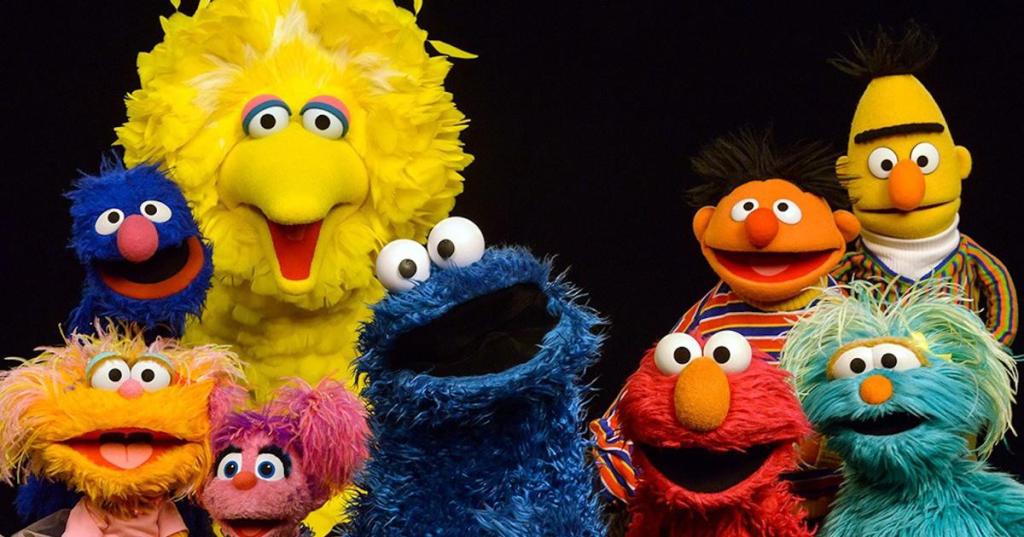
But that’s okay, because that’s what “writing what you know” – if done correctly – is really good for. For the audience, art is entertainment or education. If you’re really good, like Jim Henson and Joan Ganz Cooney, it can be both. But for the artist, art is therapy. It’s how we choose to understand ourselves and try to make sense of a world that seems dead-set against making any sense on its own. The joke about Stephen King is that his stories are all about writers from Maine, but people forget about how many stories connect to other parts of his life: outcast children (It), issues from fatherhood (The Shining), or substance abuse problems (line up any of his books from the 80s and throw a dart). This is what great writers do. F. Scott Fitzgerald was writing about the world around him when he created The Great Gatsby. Mark Twain based the hometown of Tom Sawyer and Huck Finn on his own childhood. Stan Lee really got bitten by that radioactive spider that one time.

100 percent historically accurate.

We’re so used to “write what you know” as a metaphor that when someone does it literally but does it really well, it’s a gut punch. For example, the movie The Big Sick was written by married couple Emily V. Gordon and Kumail Nanjiani, and it’s about a real-life incident in which Emily — very early in their relationship — fell into a coma due to a mysterious illness, creating an unexpected bond between Kumail and her family. It’s funny, deeply emotional, and a great showcase for Nanjiani as an actor. More importantly, though, it hit every nerve in my brain in a way I never could have anticipated.

I know you’re expecting a joke here, but I deeply loved this movie and you should watch it twice.

As with any movie “based on a true story” there are elements added for drama or comedy or to make a more coherent story (real life is rarely that coherent), but you could tell while watching it how true and real the heart of that film is. It also happened to come out in the aforementioned 2017, a few months after my personal turmoil began, and I found myself sitting in a movie theater next to my pregnant wife weeping like a starving infant. Not because the movie was tragic (when the coma victim is one of the co-writers of the movie, you can’t go in expecting a Nicholas Sparks ending), but because at that moment it was delivering the message I needed: that the world is hard and chaotic and awful sometimes, but it’s still possible for things to turn out okay in the end. A movie that’s 100 percent fictional could have delivered the same message, of course, but knowing that much of it was true made it hit much, much harder.

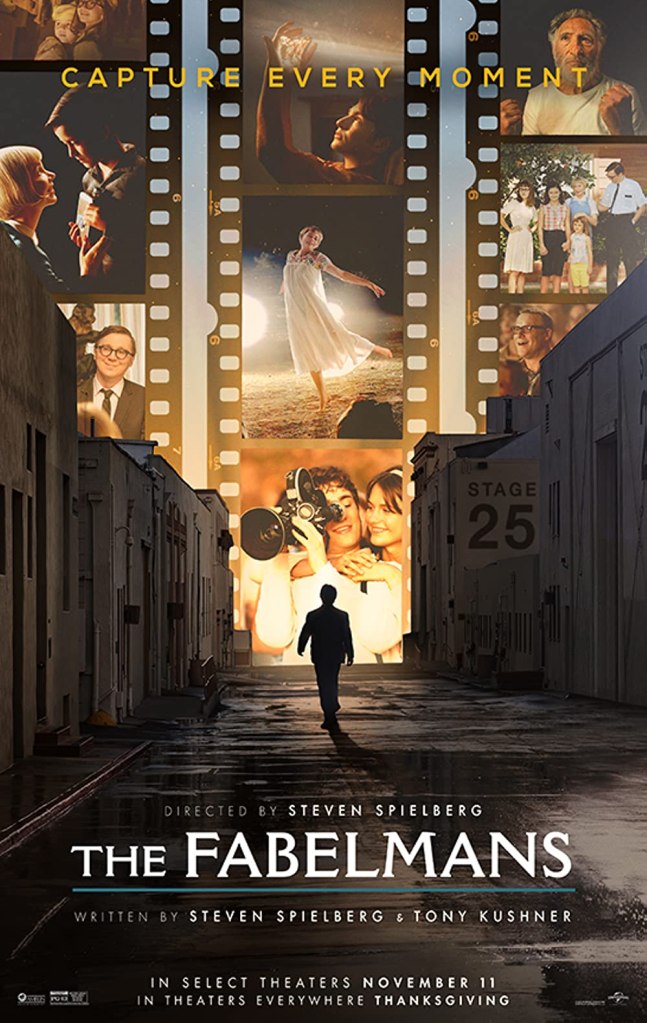
The other film I want to talk about here, a more recent one, is The Fabelmans. Steven Spielberg is a polarizing figure – movie fans often consider him one of the greatest filmmakers who ever lived, whereas movie snobs dismiss his work because it’s popular, as though that somehow disqualifies it from being good. The Fabelmans is clearly his most personal story, a movie about a young man who uncovers a family secret that rips him apart, and how he uses movies and filmmaking to cope.

A love story about a boy and his camera.

This one feels more “fictionalized” than The Big Sick, of course. Spielberg directs the film, but Nanjiani actually played himself, Spielberg didn’t use real names, and the decades of distance from the real events no doubt necessitated him conjuring up much of it out of whole cloth, but again, it’s a film with a real emotion in its soul. Reportedly, the relationship between Sam Fabelman’s parents is a reflection of Spielberg’s own, and if that’s true I have to applaud the man for his willingness to bleed on screen. The story that’s told is somewhat raw and heartbreaking, not the sort of family secret that many people could ever bring themselves to talk about, and yet he put it on a thousand movie screens and got a Best Picture nomination. Is it my favorite Spielberg movie? No. But I think it’s his most authentic, his most emotionally honest, and I truly love it for that. Plus the final scene of the film – based on a story that Spielberg has talked about in interviews in the past – is a lovely little way to cap off the story of a boy who had a rough time of it, winking just a little at the camera to assure the audience that he turned out okay in the end.

So for the writers out here, my message is not to write what you know. Write what’s real inside, what you’re really feeling, put it on the page. Dress it up however you want, of course, whether that means an alien or an undead slasher or a superhero or just a kid in Arizona, but figure out what’s real in that story. That’s what you share with us. That’s how you get to be great.

It’s easier to recognize greatness than achieve it, naturally, but I really am trying.

Blake M. Petit is a writer, teacher, and dad from Ama, Louisiana. His current writing project is the superhero adventure series Other People’s Heroes: Little Stars, a new episode of which is available every Wednesday on Amazon’s Kindle Vella platform. How many times can he post that link before it’s considered gauche? Ah, who cares?

Geek Punditry #10: Shouldn’t Have Slept on This

There are a lot of comic books published every month. Like, at least four of them. And for someone who has been reading comics since childhood, there are times where the sheer volume of books being published can get overwhelming, even if you don’t read X-Men titles. The two biggest publishers, Marvel and DC, each have an intricate universe that carries on a complex interwoven meta-narrative that has run continuously, in one form or another, for decades, somehow subsisting even before variant covers were invented. And if you’re the sort of person who has things like a job or a family, or who enjoys eating food, there simply isn’t enough time to read everything that’s being published.

Fortunately, both Marvel and DC have in recent years launched online subscription services, where you can read a substantial portion of their respective libraries, with more books added each week. I’m a comic book collector, I can’t imagine a future where I didn’t want to get printed comics, but I consider myself a reader even more than a collector. And there’s a definite comfort to knowing that I don’t have to get all 1,124 books published a month (that’s 10,419 covers) in case there’s something I might want to read later. For books that I’m not enthusiastic about, things that I would be reading just to fill in a gap, it’s great to know that I can always go to the app a few months after release and it’ll be waiting there.

The best part about this system, though, is that when you go back and look at the stuff you missed, sometimes you find a gem that you may not have otherwise read at all. Since I’ve started reading these comics digitally, I’ve stumbled on several titles that I passed on in print, but really came to enjoy after the fact. So this week, for your edification, I’m going to share four comic series from the last few years that I didn’t read when they came out, but I’m sorry I slept on now.

Duo (DC/Milestone Comics)

Milestone Media, which has published through DC on and off for 30 years now, came back in 2021 in a big way, and while a lot of attention was given to the return of characters like Static, Icon, and Hardware, less attention was given to some of the new properties released in that universe. Duo, from writer Greg Pak and artists Khoi Pham and Scott Williams, focuses on David Kim and Kelly Sandborne, an engaged couple whose research in nanotechnology is on the verge of a breakthrough. With the right funding, David and Kelly believe they could revolutionize medicine: healing injuries, combating disease, even reversing the aging process itself. When they approach an investor to take their work to the next level, instead they find themselves under attack. Kelly is thought to be killed, but David soon discovers that she’s been saved by the nanobots the only way they could: transplanting her consciousness into his own mind. Now, sharing one body and immense power, David and Kelly have to stop her killers and find a way to separate.

Duo is a really great book. It takes elements from one of the old-school Milestone comics, Xombi, but also incorporates concepts and themes that feel more like the Starhawk/Aleta body-sharing dynamic from the old Guardians of the Galaxy or Valiant’s original Second Life of Doctor Mirage, about a married couple in which the husband was a literal ghost. The character beats between the two of them are great, with some surprisingly funny moments even turning up at Kelly’s memorial service, and the book deftly deals with the troubles of having the person you love literally living inside your mind. We don’t get a real grasp of what the villains are up to until the third issue, but the character building and questions raised by the story are more than compelling enough to pull us in even before that point. Modern Milestone is doing a lot of interesting stuff, but I’m surprised to discover that this book is my favorite of the pack.

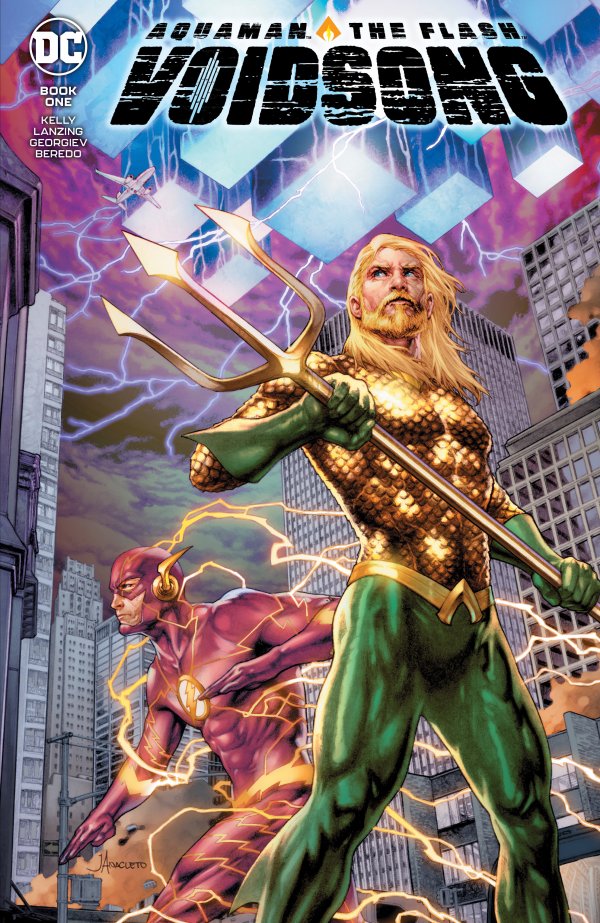
Aquaman and the Flash: Voidsong (DC Comics)

Ah, the miniseries. When the concept first really came to prominence in the 1980s, a comic book miniseries felt like an event, like something special. Now it almost feels inconsequential, with “ongoing” titles being relaunched every twelve minutes and proper miniseries feeling somewhat inconsequential. The idea of a miniseries starring the Flash and Aquaman facing an alien invasion felt like the sort of book that would never be referenced again, never have a serious impact on that “meta-narrative” I mentioned before, and therefore would be easy to skip. And I was wrong to feel that way.

The above description of the series, written by Jackson Lanzing and Collin Kelly and with art by Vasco Georgiev, is technically correct, but despite what Futurama would have us believe, that’s not always the best kind of correct. As the story goes, an invasion fleet immobilizes the entire planet with a sort of harmonic weapon (the titular “Voidsong”) that affects everyone except for the Flash and Aquaman – who were both insulated from the sound for Comic Book Reasons – leaving those two heroes as the only ones who can save the world. The great thing about this is that Aquaman and the Flash are not a traditional team-up pair. Sure, they’ve both been members of the Justice League since the very beginning, but when time comes for the heroes to pair off you’re more likely to see the Flash pal around with Green Lantern, while Aquaman hangs out with Wonder Woman or the Martian Manhunter. You almost never see these two, specifically, in a story together, and the story neatly moves from an early personality clash to a more respectful relationship in a very entertaining fashion. If you skipped this book because it wouldn’t “count,” I hear ya, but I’m telling you that we all missed out.

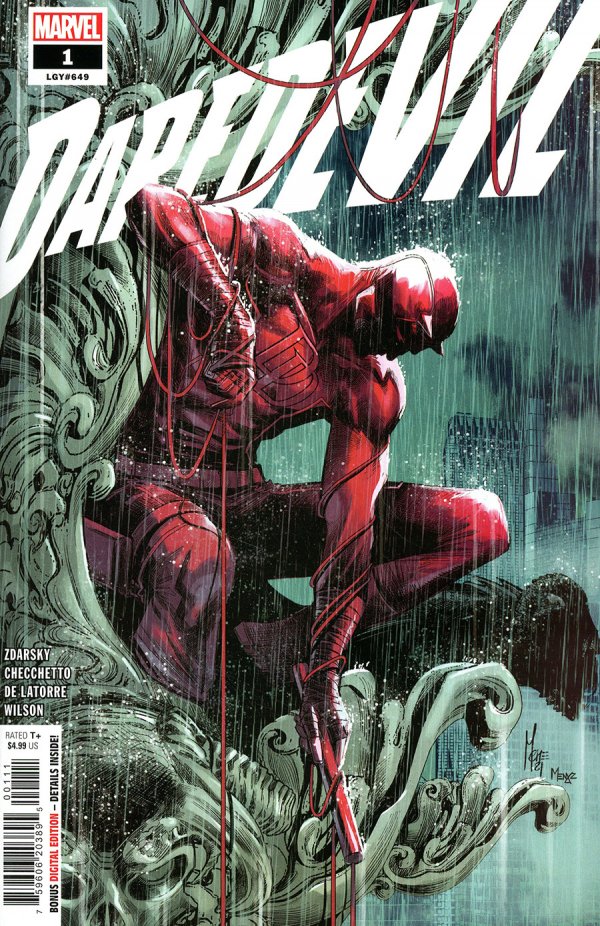
Daredevil by Chip Zdarsky (Marvel Comics)

Among Stan Lee’s Silver Age creations for Marvel Comics, Daredevil is probably the one I’ve read the least. It’s not that I dislike the character, but an awful lot of writers over the years have taken the approach that Daredevil is the hero that absolutely can never be allowed a single moment of joy. A lot of the modern runs on his book have had him suffer one tragedy after another without ever even a hope of peace or happiness. Years ago, when I was sent Marvel comics to review for the late, lamented Comixtreme website, I reached a point where I started to dread any new issue of Daredevil not because the book wasn’t good, but because I knew it would be so bleak I would need a shower afterwards.

Fortunately, Marvel seems to have decided that Spider-Man is now the character that will never be allowed anything resembling happiness, cheer, or entertainment, so Daredevil has lightened up a little bit. Chip Zdarsky, who is one of the more interesting writers working in mainstream comics today (under duress, it sometimes seems), took over the series in 2018. His version, admittedly, isn’t all rainbows and puppy dogs: early in the series, Daredevil accidentally kills a young man in the commission of a crime and eventually turns himself in to the police, getting sent to jail still wearing his mask. It’s a ridiculous concept, the masked hero in maximum security with a bunch of criminals, but once you accept the sheer lunacy behind it the story is fascinating. Zdarsky’s interpretation of Daredevil feels very in-character but, despite the dark inciting incident, manages to avoid the utter hopelessness so many writers have brought to the title.

Zdarsky’s run on the book went for 36 issues before it was restarted with a new #1 because it was a Wednesday. The current volume is on issue 11 and I don’t know how much longer it’s going to go, but I’m certainly along for the ride.

The Nice House on the Lake (DC/Black Label)

DC’s Black Label imprint is…well, I’ll be honest, it’s a mess. It was originally announced as a place for more “mature” versions of traditional DC heroes (“mature” here is being used in its traditional Latin definition, “more likely to drop an F-bomb”). The stories were also said to be out of continuity, except for the ones that aren’t. And sometimes they’re oversized and sometimes they’re not, sometimes they have characters formerly published by Vertigo and sometimes they have characters related to Batman. That’s about 90 percent of the time, actually. But sometimes they have absolutely nothing to do with established DC characters whatsoever. If you asked me to define what exactly the Black Label comics are supposed to be, the only consistent answer I could give you would be “something I would not give my eight-year-old nephew.”

Fortunately, it doesn’t matter what Black Label is, James Tynion IV and Alvaro Martinez Bueno’s The Nice House on the Lake is the gem in the crown. In this sci-fi/horror series (which I should stress has absolutely nothing to do with the DC Universe), ten people are invited for a week-long vacation by their mutual friend Walter at a…well, at a nice house on a lake. The cast is a very eclectic mix of people from Walter’s life – friends from high school, friends from college, friends from later. Some of the characters have a history with each other, others are nearly strangers, with Walter being the only link between them all. Before they can even settle into their vacation getaway, though–

Ah hell, I don’t want to tell you anything else, because this is a book built on mystery and surprise. There’s so much going on here, and almost all of it is built on character, which is fantastic. It’s a wild comic that takes a horrific turn at the end of the first issue, at which point it becomes virtually impossible to predict where things are going from one minute to the next. The book ends with a sequel hook, and I desperately hope that DC (or Black Label or whatever) is already well into working on the next volume, because while this series does come to a relatively definitive conclusion, there’s plenty more to explore and I can’t wait to do it. I won’t be sleeping on the sequel.

Blake M. Petit is a writer, teacher, and dad from Ama, Louisiana. His current writing project is the superhero adventure series Other People’s Heroes: Little Stars, a new episode of which is available every Wednesday on Amazon’s Kindle Vella platform. There are, of course, other books he slept on besides these. For example, if you didn’t read Justice League Vs. the Legion of Super-Heroes, you can consider yourself one of the lucky ones.

Geek Punditry #9: Pop Culture Comfort Food

Reportedly, there are studies that indicate people like rewatching old TV shows and movies because there is comfort to be found in familiarity. I don’t have those particular studies in front of me because I don’t feel like looking them up at the moment (this is a highly scientific approach), but I completely believe it. When the world is starting to be too much, I often find myself going back to movies, books, or comics that I have enjoyed before. There’s something about returning to old stories that makes it feel like you’re reconnecting with a friend. There’s an ease and a comfort that can be desperately needed when there’s a weight on your shoulders, when the anxiety begins sending the pins and needles across your skin, when every text or phone call makes you worry that the worst has happened. I go back to these things a lot, is what I’m saying.

And since I know I’m not alone in this, I thought that this week I would share with you some of my storytelling comfort food. I’m going to tell you one example from each of my preferred forms of media (movies, TV, books, and comics) that I can and have returned to more times than I can count, stories I know as well as the walk from my car to the front door, characters who are as close to me as family. When I’m feeling down or beat up or that nothing is going to be okay, these are the places I turn to so that I can be reminded…sometimes it can be.

Movies: Back to the Future 

A series that never fails to take you back in time.

In the interest of clarity, I guess I should say the Back to the Future trilogy, because heaven knows I can never stop with one. The first movie came out when I was 8 years old, and I distinctly remember sitting down in front of the fireplace after my parents rented it and put the VHS tape in. I remember how quickly and deeply I fell in love with the film and how we went to the movies together to see Part II, and how we went out during a storm while out of town on a family vacation on the opening weekend of Part III to see just how the saga concluded. I even remember my father commenting on the weather and saying that anybody who went out in it to see the movie must have been a die hard fan. Which, of course, I was.

I know I don’t have to explain to anyone why these films are so great, and I’m certainly not going to waste any time on a recap, but I’m going to tell you what it is about them that makes me feel better. Part of it, like with all of the things I’m going to share with you, are the characters. There’s something about the unorthodox friendship between Doc Brown and Marty McFly that resonated with me even as a child. I had already spent years dreaming of being picked up by a tornado and thrown to Oz or finding a closet door with a passage to Narnia, but even at eight it was starting to seem like either of those would be a stretch. Finding an eccentric mentor who would bring me along on grand adventures seemed much more plausible. Even now, at a stage in life where I find myself relating more to Doc than Marty, that relationship seems pure and genuine. (Ironically, I think that’s part of the reason Rick and Morty became so popular so fast – it’s a parody of the Doc/Marty relationship, but that parody wouldn’t have worked as well if there was something foul or sordid about the original.)

Then there’s the basic fantasy of time travel, of being able to hop into a machine that can whisk you away to another place. The idea of seeing the past and the future is tantalizing, and I would be lying if I said I wouldn’t be tempted to use Gray’s Sports Almanac the same way Marty intended to. 

The other thing, which people may perhaps not think of immediately but I consider of utmost importance, is the music. The best movies often have memorable scores, but Alan Silvestri’s composition is one of the all-time greats. The sweeping tones automatically bring to mind the film, hit those triggers in your memory and pull you into the world of Hill Valley, and charge your heart with anticipation. The music moves from exciting to thrilling to, ultimately, triumphant. When you hear Alan Silvestri’s score to Back to the Future, you find yourself capable of believing that even when things are tough, like they were for Marty McFly, there is a solution that will make everything turn out okay in the end.

And c’mon. The car is really cool.

Television: Cheers 

Where people know troubles are all the same.

Bet you expected me to say Star Trek, didn’t you? Yeah, I know, Trek is my jam, but sometimes you wanna go where everybody knows your name.

Cheers, the sitcom about a little bar in Boston, has two distinct stages, and I love them both…but not equally, if I’m being honest. In the early years, the show was mostly a workplace romcom about Sam and Diane, with the rest of the characters there to add flavor. It was a fine show, it was a funny show, but I was a fairly young child at the time and, although my parents watched it, I didn’t really start paying attention to the series until I got older. This may be part of the reason that – although I would never skip the Diane years when doing a rewatch – it’s the Rebecca years that leave the most indelible mark on my memory.

But my relative age isn’t the only reason the second life of Cheers is my preferred era. Like I said, during the Shelley Long years, the show centered around Sam and Diane’s relationship. This was good. This made for some excellent television. But after Long left to become a major movie star (I recently watched her performance in 2012’s Zombie Hamlet, and I highly recommend it), they replaced her with the recently-deceased Kirstie Alley, and although there were the occasional flirtations with making her couple off with Sam like they did with Diane, the writers wisely realized that the same chemistry wasn’t there, and shifted the focus from a romcom to more of an ensemble comedy. The other characters grew in prominence, Rebecca Howe found a different niche to fill than the one vacated by Diane Chambers, and the show blossomed yet again. 

While the likes of Woody, Cliff, Carla, and Norm all had their moments in the pre-Rebecca days, post-Diane they had far more episodes in the spotlight. Frasier Crane was a Diane castoff who stuck around, but it was in the Rebecca era that he bloomed to one of the stars of the show, eventually spinning off into his own series (also a comfort watch for me), with a revival of the latter currently in the works. I’m not saying that the early years of Cheers weren’t GOOD, please don’t misunderstand me. It was a remarkable comedy, the character of Coach was sorely missed for the rest of the series, and the episode guest-starring John Cleese is perhaps one of the funniest half-hours of television ever put to film. It’s just that the pure love I feel for the series, the way I have affection for these characters as if they were personal friends of mine, the fact that I remember that Frasier’s first wife “Nanny G”’s phone number was 555-6792…that’s all a product of the Kirstie Alley years, and I’m fine with that.

Boy, I deserve some sort of trophy for THAT deep cut. 

Book: The Princess Bride by William Goldman. 

Skipping this would be inconceivable.

I may be cheating a little bit here, since much of what is wonderful about this novel is also applicable to the movie, which I also love and watch as comfort on many an occasion. But this is probably the novel I have read more times than any other (a feat which I insist is more impressive than the movie you’ve watched most often). It is the book I pick up when I’m sad. It’s the story I turn to when I’m depressed. It’s the tale I want to hear again when I feel like there is nothing good and beautiful in the world. I need this story at those times, because if it were true that there is nothing good and beautiful in the world, then how could a novel such as this even exist?

I know you’ve seen the movie, so I won’t bother to retell you the story. Instead, I’ll tell you about the elements unique to the book so that you can understand why it resonates with me so deeply. 

First of all the framing sequence. In the film, the tale of Westley and Buttercup is being read by a grandfather to his sick grandson. In the book, Goldman creates a metatextual story (this was before metatextual stories) about his own family, in which his father read the story to him as a child. It was not until adulthood that he tried reading it himself to his own son (a fictional son, by the way, as the real William Goldman had only daughters) and realized his dad skipped all the boring bits and just read him “the good parts.” The book is presented as adult Goldman abridging a classic novel by getting rid of all the flowery muck and bits of Elizabethan satire that modern audiences wouldn’t give a crap about. It’s a really funny conceit, and it’s executed so perfectly that a lot of people reading the book for the first time don’t realize the framing sequence is fiction as well. (It’s me. I’m a lot of people. I didn’t get it the first time.)

Second, the writing is simply marvelous. A lot of the great bits of dialogue made it into the film, which isn’t a surprise since Goldman wrote the screenplay himself, but there simply wasn’t room for everything, and many of those pieces left on the floor are absolutely priceless. For instance, the movie largely ignores Buttercup’s parents and their unending bickering, for which they keep score. It skips over the history of Fezzik entirely and leaves out all but the most essential parts of Inigo’s backstory, which makes an already amazing character so much richer. There’s more time spent with Humperdink, more time devoted to Vizzini, and much more to Westley and Buttercup’s burgeoning romance. Because yeah, it is a kissing book.

I don’t begrudge Goldman any of the cuts, of course. The very premise of the novel is that sometimes parts of a story don’t translate from medium to medium. But if you’ve only seen the movie you haven’t experienced the whole story.

The last thing about this book is perhaps the most important: the message. In the framing sequence, Goldman discusses a conversation with an old neighborhood woman who served as something of a mentor to him. This segment concludes with the child Goldman learning that life isn’t fair. Rather than being angry or hurt at the realization, though, he is utterly jubilant to hear the news, because once you accept that life ISN’T fair, isn’t SUPPOSED to be fair, then a lot of the crap the world throws around suddenly makes a LOT more sense. This is, I think, a very important message, and the great thing about it is how it is presented in a way that is joyful and positive rather than dour and depressing.

The point I’m getting at is that if you haven’t read this book, you should, and I’m envious that you’re going to get to experience it for the first time, which I will never have the chance to do again. But hey, that’s all right, because life isn’t fair.

Comics: The Triangle Era Superman.

This was MY Golden Age

Okay, this paragraph is just for the uber-nerds like myself who already know all about the “Triangle Era” of Superman. The rest of you can skip to the next paragraph. Ahem. I’m about to give a super-condensed history of the era. I know I’m leaving out a bunch of stuff. Like William Goldman, I choose to focus on the good parts rather than telling everybody the intricacies of comic book numbering and whatnot. Please don’t send me corrective emails.

In 1986, DC Comics hired writer/artist John Byrne to revitalize the Superman character. He took over both Superman and Action Comics, the two titles that starred the hero, and they added a third book to the line as well, Adventures of Superman, which was usually done by other creators such as Marv Wolfman. After a while, Byrne left the character in the hands of other writers and artists, and while he had done good work in his time, it was after his departure that a certain kind of alchemy began to happen. With Superman starring in three comic books a month, the writers and artists would have to collaborate to make sure they weren’t contradicting or causing problems for each other. This collaboration began to grow more intricate, and in time, the three different titles began to function almost as one. Stories that began in Adventures of Superman one week would continue in Action Comics the week after. Before long a fourth title was added, Superman: The Man of Steel, so that there were four monthly Superman books that worked almost as a single weekly title. Then someone noticed that 4×12=48, but there were 52 weeks in a year, so a fifth title (Superman: The Man of Tomorrow) was added to fill in the extra gaps. At some point, DC started to put a triangle on the cover of each issue demonstrating which week of the year it was to help readers keep track of what order the books went in, thus the “Triangle Era” was born.

The weekly nature of the serial was a great concept. Knowing that there would be a new chapter of an ongoing storyline each and every week forged hardcore loyalty and created a devoted fanbase that still exists today. What’s more, although the main story was ongoing, each individual series had its own subplots that made it stand out. Adventures, for example, was more often going to deal with the mad scientists of Project: Cadmus, while Man of Steel devoted time to a story about an orphanage and a young child who would eventually be adopted by Perry White. The books were part of a larger whole, but still had their own flavor and identity.

The Triangle Era lasted over ten years, but those early days happened just as I started reading the books and featured many of the writers, artists, and storylines that are still most dear to me: Lois learning Clark’s double identity, their engagement and marriage, the somewhat vindicated-by-history era of Superman Blue/Superman Red, the classic “Panic in the Sky” storyline, and of course, the legendary Death and Return of Superman were all products of the Triangle Era. Like all comfort media, part of my love for these books is no doubt because these were the comics I read in my formative years. But there’s also the fact that, for a very long time, these comic books were just really good. The world of Superman, which had not-undeservedly been called stale and out of date a decade earlier, was suddenly energetic, exciting, and full of new characters, concepts, heroes, and villains. Many people have made Superman comics over the years, but Dan Jurgens, Brett Breeding, Roger Stern, Bob McCleod, Jerry Ordway, Tom Grummett, Louise Simonson, and Jon Bogdanove remain the gold standard in my mind.

As the song goes, these are a few of my favorite things. These are stories, characters, and worlds that I never grow tired of. These are the things that mean something to me, things I flat-out refuse to let go of, things that come together and help make me who I am.

So what are yours?

Blake M. Petit is a writer, teacher, and dad from Ama, Louisiana. His current writing project is the superhero adventure series Other People’s Heroes: Little Stars, a new episode of which is available every Wednesday on Amazon’s Kindle Vella platform. He bets you thought he was kidding about Zombie Hamlet, didn’t you?

Pictured: the career worth leaving Cheers for.

Geek Punditry #8: The Magic Candle

The digital revolution has made it easier than ever for people to make movies and TV shows. You can do virtually every job that’s absolutely necessary to make a film with nothing more than a smartphone and the right apps, and people have begun to do so. This does nothing to increase the talent of the people involved, of course. Even that doesn’t seem to be a hard obstacle, though, if the YouTuber my son watches called “Granny” is any indication. (She’s a nutcase who puts on a wig and a muumuu and rides an adult tricycle to fast food joints and orders food in a horrifically cloying voice. Although I do not advocate this behavior, I guarantee you she’s gotten a lot of saliva in her food.) What’s more, there are thousands of avenues to share the content – dozens of streaming services, almost as many social media platforms. For an entire generation, consuming media in bite-sized tidbits on your phone is not only the norm, it’s the preferred method of being entertained.

God, do I hate that.

Pictured: Evil.

I know I’m going to sound like a crotchety old man, but there’s a good reason for that: I am a crotchety old man. I don’t like watching stuff on my phone, not when I’ve got a perfectly good television. And I don’t like 30-second bursts of “content.” I’m a storyteller, and when I watch something I want to watch a story. And while telling a satisfying story in 30 seconds is certainly not impossible, it is tremendously difficult, and there are very few people on TikTok who have proven themselves up to the task. No, while my students may swarm around a clip of someone sending a pizza to the wrong house and giggle as though there’s something clever about that, I’d rather watch ten episodes of a science fiction epic telling a serialized story that gives time to develop character, theme, and an entertaining arc. 

Even a television is not the optimal way of viewing a story, though, although that’s how I do most of my viewing. It’s fine, don’t get me wrong, especially in this day and age when your home system can have an amazing picture and stereophonic 4-D quantum sound, if you’re the kind of person who has the sort of money to burn on such a system. But that doesn’t do it for me – nothing does it for me – like sitting in a movie theater. 

Optimally with these guys.

I know all the arguments against going to the movies, of course. Yes, it’s expensive (and just getting moreso, with AMC’s recently-announced scheme to charge more for better seats). Yes, the concessions are overpriced. There are frequently rude people in the theater as well: people who talk during the movie, people who come in late or trip over you while spilling their popcorn, people who (and this should be a criminal offense) turn on their phones, the glare blinding you at a critical moment of the narrative. And damn it, you can’t pause it to go to the bathroom. There are dozens of very solid arguments in favor of watching movies at home instead of in a movie theater.

My point is: I don’t care.

All of those complaints are true, valid, and they annoy me as much as anyone else, but the long and short of it is that when I’m excited to see a motion picture, there is no better environment in which to do it than in a darkened room with minimal distractions surrounded by other like-minded people who are there for the same thing. The first movie houses were just vacant vaudeville theaters with a screen put into place, but from the very beginning they found the perfect way to experience a film. When you watch a movie at home, it’s far too easy to get pulled out of the world of the story. The sun is coming in through the window, you’re getting Facebook notifications and text messages, your child keeps handing you his magna doodle and telling you to draw a picture of the Burger King logo. Those things don’t happen in a movie theater – or at least they shouldn’t, if you turned your phone to “do not disturb” like a civilized human being. 

What’s more, no matter how great the home theater experience becomes, the “home” part will never be able to match the thrill of being in a theater with hundreds of other people who are there for the same thing as you. Think about the first time you saw Avengers: Endgame. When Thor’s hammer lay on the battlefield and was picked up by a mysterious figure, the room grew silent. Moments later, when it smashed Thanos in the face and returned to Captain America’s hand, the theater exploded. I have never experienced a simultaneous eruption of joy in a movie theater to rival that moment, and I don’t know that I ever will again. 

A moment this awesome cannot be replicated at home.

Think about Attack of the Clones. It is, if I’m being honest, my least favorite Star Wars movie, but I will always treasure the memory of the midnight screening I attended and how the fans roared when Yoda took out his lightsaber for the first time. Even bad movies are made more fun with an audience. Nobody is going to argue that the Green Lantern movie was great cinema, but there was a load of fun to be had in my New Orleans-area screening because the movie was filmed in our area, and we all laughed together as we saw familiar streets and landmarks that they tried to pass off as being in California.

I’ve seen a lot of great movies in my life, and I’ve seen a lot of them at home. But every great movie experience I can remember happened in a theater. It’s like being in a more benign version of Plato’s cave, a magic candle shining excitement on the screen. You can’t do that at your house.

Movies serve as landmarks in my memory, too. I remember, as a child, going to the movies with my parents, my brother and sister, and each time considering it a treat. I know that I saw Ernest Goes to Camp, Santa Claus: The Movie, Batteries Not Included and Masters of the Universe that way. I remember seeing Forrest Gump with my dad in a sadly-defunct dollar theater the week before I graduated high school. I wish I knew what the first movie I ever saw in a theater was, but unfortunately my memory isn’t that good.

I got older and my friend Jason and I started going to the movies almost every weekend, sometimes two or three movies a week. Jason ran a video store back when those still existed, so it was market research for him, but we both just loved the experience of going, of watching, of holding out our thumbs to indicate approval or disapproval for the trailers that flickered across the screen. It was with Jason, watching the wrestling movie Ready to Rumble, that I started to think about superheroes being run like the WWE, a germ of an idea that eventually led to my first novel, Other People’s Heroes. Thanks, awful movie! 

If you love my writing, thank this movie. If you hate my writing, blame this movie. I do.

I know the first movie Jason and I saw at the local Palace Theater the weekend it opened (The Lost World: Jurassic Park.) I know the first movie I saw with my girlfriend Erin (Madagascar), the movie we saw the night before I asked her to marry me (Skyfall), the last movie we saw before our son was born (The Dark Tower) and the first movie we left Eddie with a babysitter to watch (It Chapter One – my history with Erin is inexorably tangled with the works of Stephen King, a story which will probably be its own column at some point). 

All of this is to say that on Tuesday I added another memory to the cinematic roadmap of my life: the first movie we took our child to see in a theater.

I need to explain a few things to help you understand just how significant this is to my family. I don’t know that I ever really believed I would get to be a father. It just wasn’t something that I thought was in the cards for me, and I’ve never been happier to be wrong. Being Eddie’s dad is the greatest thing in my entire life. But it hasn’t been free of challenges. Some time after Eddie turned one year old and he still wasn’t talking, we started to get concerned, and we eventually managed to confirm that he’s on the autism spectrum. Any child comes with challenges, but his were different from many others. He started reading early and he’s terribly smart (this is not just a proud parent talking, we’ve been told this by numerous doctors and teachers), but he also tends to fixate on things like logos and clocks. His obsession with time in particular is perplexing to me. And of course, there was the talking, which for the longest time he simply was not interested in doing.

He talks now, he virtually never stops talking now, but there are a lot of milestones in his life that have come later than usual. It’s terribly difficult to get him to sit still, he has trouble with disruption to his routines, and sometimes he has trouble with extreme stimuli. When he was two years old, for instance, we took him to my niece’s Christmas pageant at school. As soon as the audience applauded at the end of the first number, he began to scream in terror. I had to take him out in the lobby and sit with him there until the show was over. (Jason was actually there too, keeping us company, as his wife was one of the teachers at that school.)

So we were nervous. I was worried that he wouldn’t be able to deal with crowds and the stimulation of a movie screen, which would have made me terribly sad. Like I said last week, I don’t want to force my fandoms on the boy, but from the moment I knew we were going to be parents I wanted to share the things I loved with him.The idea that it might not be possible was heartbreaking.

But he’s older now, and he’s dealing with things better than he used to. He’s no longer scared of fireworks, for example, and this school year we brought him to another Christmas pageant and a band concert with no problems. So this week, with Eddie and I both out of school for Mardi Gras and assuming it wouldn’t be too crowded, we decided to finally try our hand at taking him to a movie theater. 

The only kid-appropriate movie playing was Puss in Boots: The Last Wish, so we got our tickets, which with my Stubs membership and the “discount Tuesday” promotion meant  the three of us got to go to the matinee for less than $20. This, Erin said, made it easier to accept the fact that if Eddie wanted to leave, we’d have to just eat the ticket cost. What bothered me, though, was less the ticket price and more the fact that I have never walked out of a movie in my life. No matter how atrocious the film may be, I soldier on so that I can sound informed when I call it a piece of crap. It’s a matter of honor.

But for my son, I would take that risk.

Eddie’s first theater experience.

Anyway, we got to the theater, we bought the boy some Sour Patch Kids and an apple juice, got a bucket of popcorn for the family, took our seats, and crossed our fingers.

I haven’t seen all of the movies in the “Shrek Cinematic Universe,” but The Last Wish is far and away the best of those I have seen. I never would have expected it from this movie, but the film turned out to be a serious meditation on aging and mortality with a positive and uplifting message about the importance of family and living life to the fullest. It was deep and meaningful, but without sacrificing moments of genuine comedy. The animation was gorgeous as well. Rather than giving us the plastic CGI that early Dreamworks movies sported, Erin pointed out that director Joe Crawford was borrowing visual cues from Spider-Man: Into the Spider-Verse, with the same sort of staccato motion and faux-painted look to the imagery. It was lovely to look at and fun to watch.

More importantly than any of this, though, is that Eddie watched the whole thing.

He doesn’t always “watch” things at home. We’ll put on his cartoons and he’ll laugh and dance with the music, and his ability to pick up on a tune is wicked sharp, but he is easily distracted (even without text messages coming in) and wanders around the room, bouncing from one toy or activity to another, often oblivious to the entertainment on the screen. Here, with the lack of distractions, he kept his eyes on the film most of the time. He laughed at some of the funnier bits. He smiled a lot (I know this because I was watching him as much as the screen). And yes, he got a little antsy, looking at my watch frequently, although that is as much because of his obsession with clocks and time as it is anything else. He did ask “How much is left on the timer?” three times, but he never complained.

It’s warming my heart. Because again, I don’t want to force him to do things he doesn’t want to do, but if he enjoys going to the movies, I’m going to take him as often as I can. Sure, not as much as I went to the movies back in the day, I mean…I’m not going to take him to see Scream VI no matter HOW big a fan he is of Courtney Cox. But when there’s a movie for him, I want to bring him. He seemed into the trailer for The Super Mario Bros. Movie, coming in April. Pixar’s entry this summer, Elemental, looks cute. Heck, by the time Spider-Man: Across the Spider-Verse hits this fall, he may even be ready for that.

These were the things that went through my head as we watched the movie, of course. The real litmus test would be how he felt after the movie was over.

After we walked out of the theater, I asked him if he had fun. He said he did. I asked if he liked the movie with the cats. He said he did. He often agrees with random things, though, so I wasn’t sure if he was happy about it until later when asked to recap his day.

“What did you do today, Eddie?” we asked him.

His face beamed like it was washed with the light of that magic candle and he proudly proclaimed “I went to AMC Palace! I went to the movies!”

“That’s so great! What did you see at the movies?”

Cats!”

Okay, so he’s still got some learning to do.

Blake M. Petit is a writer, teacher, and dad from Ama, Louisiana. His current writing project is the superhero adventure series Other People’s Heroes: Little Stars, a new episode of which is available every Wednesday on Amazon’s Kindle Vella platform. He promises that this column won’t be about his kid EVERY week, but…hell, it’s gonna be about his kid whenever it feels appropriate. It’s his blog, after all.

Geek Punditry #7: Sharing the Love

Italian really is the language of love…and billionaire ducks.

Earlier this week, some of my students asked me what I got my wife for Valentine’s Day. They seemed to approve of my answer (tickets to a concert she wanted to go to) and then asked what Erin gave me. At that point, I paused for a moment, trying to decide how to answer the question. The answer was wonderful – my wife went on eBay and found the recently-released 3500th issue of Topolino, the Italian Disney comic book series, which came bundled with a figure of my favorite Disney character, Scrooge McDuck. The thing is, how do I explain this to a group of high school seniors without coming across as a gigantic nerd?

Then I got over myself, because…hell, just look around. On one bulletin board in my classroom is a collage of superhero and sci-fi images clipped from magazines and catalogs. There is a shelf of Superman-family Funko Pops, a set of Eaglemoss Enterprise models, several magnets from the LEGO Minifig of the Month Club, and a Star Trek: Lower Decks calendar on the wall. There is literally no denying my heritage as a geek. It is, in fact, something I have long since decided to embrace.

I challenge you to come up with an adequate definition of “Geek” that does not apply to the person in this picture.

That’s part of what being a geek is, really. Sure, the dictionary may say something about biting the heads off chickens, but in the modern context I propose the following definition for the term. “Geek (noun): One who loves a particular fandom to the extent that it becomes an element of their personality.” You should note that this definition passes no judgment, nor does it specify the type of fandom. It can be a movie, a TV series, a comic book, or a video game. It can be music or sports or science or history. You can be a geek about pretty much anything you love, so long as you love it wholeheartedly. Nor does it imply exclusivity: one is fully capable of being a geek about multiple things. In truth, I think almost everyone is a geek about something. It’s just that those of us in genre fiction have chosen to fully embrace the term.

Geekery is contagious as well, spread through casual contact. It happens when you tell your friend how much you liked a movie, when you walk around in public wearing a T-shirt for your favorite band, when you get in someone’s car and they’re listening to a podcast, or when enough of your students are carrying around the same book that you finally break down and read it to find out what all the fuss is about. And like any germ or virus, the longer you are exposed to any particular strain of Geekery, the more likely you are to begin exhibiting symptoms yourself.

Which brings me to my five-year-old son, Eddie.

Any kid of mine would, by virtue of the fact that I’m there, have grown up in a house full of comics and books and movies, watching cartoons and seeing superhero T-shirts almost any time I’m not dressed for work. And when kids are very young, before they start exhibiting their own preferences and fandoms, we as parents have a tendency to dress them in our own. From the beginning, my kid had onesies and pajamas featuring superheroes and spaceships, his plates bore the likenesses of characters from the cartoons that we liked, and he had pacifiers featuring the logos of both the New Orleans Saints and the Pittsburgh Steelers. And our friends and family just fed the monster – two of the gifts we received at Erin’s baby shower included a Batmobile walker from some of my aunts and uncles and a lovely toy chest handmade by our friends Jason and Andrea, decoupaged with panels from Superman comic books. 

What I’m getting at is that Eddie never had a chance.

Eddie’s favorite part of every episode.

In my defense, though, it’s not just my geekery that he’s been exposed to. I may be the reason he jumps up and giggles at the sweeping vistas of outer space in the beginning of every Star Trek episode, but my wife is the reason that when he started learning to identify shapes he could pick out the circle, the square, the triangle, and the Millennium Falcon. Erin is a geek too, you see, and fortunately the Venn diagrams of our respective geekeries have a lot of overlap. We both love genre movies and TV shows, we both enjoy musicals, we both like sitcoms. That concert I got her Valentine’s tickets for? It’s the music of John Williams. We blend.

Even in those places where the overlap isn’t perfect, there’s enough that we enjoy what the other is bringing to the table. She’s a little more into horror movies than I am, I’m a little more into comic books than she is, but that doesn’t mean that we don’t each appreciate the other’s fandoms as well. We just, like any two individuals on the planet, lean a little more in certain directions than the other, and that is reflected in our parenting. When Eddie was a baby the joke was that you could tell who dressed him on any given day based on whether his clothing featured the Grateful Dead or Spider-Man.

“Svengoofie!”
“No, it’s…you know what? Close enough.”

Over time, he started to express his own love for our things in various ways. For example, when I turn on the FreeVee app, he begins to sing the theme to Night Court. He’ll walk into the comic book shop with me and immediately identify the logos for Marvel Comics, DC Comics, Superman, Batman, etc. At only five years old he sings along to the opening themes for Mystery Science Theater 3000 and RiffTrax, a feat that Albert Einstein himself never accomplished in his entire lifetime! And if you ask him what we watch on Saturday night, he will proudly exclaim “Svengoolie on MeTV!” (Actually, he pronounces it “Svengoofie,” a misarticulation I believe Rich Koz himself would greatly approve of.) 

I couldn’t let the fact that this should not exist prevent me from getting one.

It’s not that we want to force our geekdoms on our child, it’s just an inescapable byproduct of having us as parents. Even once he got old enough to express his own preferences, ours tended to creep in. For instance, when he was two or three years old we learned that Eddie loved cars, and since then he has amassed a Hot Wheels collection that would make Jay Leno jealous. And although he is not picky about what cars he gets, with us as parents it is inevitable that assorted Batmobiles would work their way into the fleet, to say nothing of things like Scooby-Doo’s Mystery Machine, vans with Justice League murals on the side, and the occasional USS Enterprise (which is Hot Wheels brand even though it has no wheels. It doesn’t make sense to me either. I bought one for Eddie and one for myself.) If you go through his books (which he loves) you will see an extensive library dedicated to Daniel Tiger’s Neighborhood, Bluey, and trucks, but also a Little Golden Book starring the Universal Monsters and an alphabet book based on Jaws

The job of a parent is to teach their child how to be a kind and functional adult, even for those of us whose own functionality is questionable at best. Part of that, I sincerely believe, is being able to choose those things that you love, and that you love them without fear. And sure, sometimes that may result in your kid latching on to something you don’t like. This is especially true when your child is very small and they discover something like Blippi. (For those of you fortunate enough to not know what I’m talking about, “Blippi” is a guy in orange suspenders who prances around indoor playgrounds in a manner that any reasonable judge would consider grounds for a restraining order, then puts videos of it it on YouTube. Blippi is the opposite of entertainment. He is like a bad Saturday Night Live parody of a children’s show host. His videos run on an unending loop in the darkest level of Hell. My son loves him and he is now a millionaire.) 

But that’s okay. Because it’s his thing, so I suck it up and tolerate it and even read the stupid Blippi alphabet book when Eddie asks me to, because I know that once I’ve washed my hands of it he’ll come back later with something like his Ghostbusters Little Golden Book, and that makes it better.

The way I see it, if my son grows up able to demonstrate his love for a fandom in a healthy way (read: not on Reddit), I’ll have done my job.

And as long as he knows that Saturday night is for “Svengoofie,” so much the better.

Blake M. Petit is a writer, teacher, and dad from Ama, Louisiana. His current writing project is the superhero adventure series Other People’s Heroes: Little Stars, a new episode of which is available every Wednesday on Amazon’s Kindle Vella platform. In addition to the Uncle Scrooge figure, his wife also gave him the idea that led to this week’s column. If it weren’t for her you may have just read 1500 words lamenting the Ultraverse or something. Thanks, Erin!