Once again, it’s time to look into the reviews of some of the Superman-related comics that have dropped in the last few weeks, including some pretty massive events. Let’s get right to it.
DC KO #4 Title: Trial By Absolute Writers: Scott Snyder & Joshua Williamson Art: Javi Fernandez & Xermancio Main Cover: Javi Fernandez
The Final Four have made their way through all comers, but before they can turn their attention to one another, four new combatants have entered the fray. Tainted by the energy of Darkseid, the combatants will be forced to fight the Absolute Universe versions of Superman, Batman, and Wonder Woman – as well as Booster Gold who has been possessed by Darkseid himself.
This event has promised us one throwdown after another, and there’s no way to argue that it hasn’t lived up to that promise. This issue is perhaps the most high-octane, brutal battle yet. The fight between the four remaining heroes and villains with their Absolute counterparts is scripted and drawn with incredible energy and brutality, but at the same time, Scott Snyder has not skimped at all when it comes to character and story. In fact, there are multiple twists in this issue that catch you off-guard and send the story spinning into new, unexpected directions. At the same time, the twists all fit the characters – a great twist is one that is a surprise without violating what you already know about the world you’re reading, and Snyder pulls that off.
For people who are into Superman (know anybody like that?) seeing “our” Superman face off against the Absolute Kal-El is one of the high points of the issue. Neither character is disrespected or nerfed in respect to the other, but there’s also no room for any doubt as to which of the two is the original. I am slightly disappointed at just how the Absolute characters were used, however. Similar to the surprise guest stars from the Boss Battle one-shot, the Absolute heroes are in and out rather quickly. It’s not even clear as to when, exactly, this story takes place in the Absolute timeline – Superman seems to know Batman here, whereas in their respective comics, they haven’t met yet. Although there’s definite promise here for future brushes between the two worlds, it feels like this encounter will mostly be a footnote for the Absolute characters, even as it sets up the conclusion for the Final Four.
I know I’m being deliberately vague here, by the way – I suppose it’s clear that Superman is one of the Final Four (as it should be) but I’m trying to avoid spelling out who else is in that group in case anyone is trying to remain spoiler-free. Considering just how this one ends, though, I don’t know if I’ll be able to keep that up for the finale. So if you’re reading along with these reviews, I would highly recommend being up-to-date with DC KO when I drop my thoughts on issue five. Whenever that might be.
Superman Unlimited #10 Title: Die Laughing Part Two Writer: Dan Slott Art: Mike Norton Main Cover: Dave Johnson
Intergang has set its sights on Metropolis’s new mayor, Perry White, and they’ve contracted the Prankster to take care of the problem. But Oswald Loomis’s nephew is trying to step into his uncle’s role and take over the family business, and the NEW Prankster isn’t quite as funny as his predecessor.
This is a solid issue. There’s something up with this new Prankster – in these two issues he’s appeared we never find out his real name, and there’s no explanation for his bizarre powers, something Uncle Oswald has never had. I feel like this is just part of a coming, larger story, even as these two issues work perfectly well as a couplet. I also like how a big part of the middle of this story isn’t about the power of Superman, but rather the investigative skills of Clark Kent. Not to say that Superman is entirely absent, but we see more Clark than we often do these days, and I appreciate that.
We also get a quick interlude with Jon, who’s been setting up the new Daily Planet office in Smallville, only to get an ominous warning from an unexpected source. Even more so than the Prankster stuff, this is explicitly setup, especially since DC has revealed their “Reign of the Superboys” initiative that’s going through all of the Super-titles after DC KO ends. If you didn’t know, Jonathan is going to take the reigns of this title for an indeterminate amount of time, and it looks like the groundwork is being laid here.
I’m still really digging Mike Norton’s Superman. I love the way his character works, with the kind of strong lines and clean character work that made so many of the Triangle Era artists stand out, and I hope we see more and more Superman from him in the future.
Superman #35 Title: Life Secrets (A DC KO Tie-In) Writer: Joshua Williamson Art: Eddy Barrows, Eber Ferreira, Julio Ferreira Main Cover: Dan Mora
The final instalment of this title’s DC KO storyline runs with the conclusion of issue #4 and leads straight into #5. In fact, I wouldn’t be surprised if at least one of the storylines that’s been going through this book turns out to be crucial to the conclusion of the crossover. But that’s not the one that works best.
We’re following two intertwined threads here. First, the Doomsday/Time Trapper is reeling from the events of issue #4 and trying to gird himself for what must come next. After all, at least part of him is the creature that was created eons ago for the express purpose of destroying Darkseid, and it may be time for that charge to finally come due. Meanwhile, Lois and Superboy-Prime continue their faceoff with Darkseid’s Legion, and it is this latter part that is particularly revelatory.
From the moment he was introduced in this title, we’ve been building a redemption arc for Prime, and it gets center stage in this issue, where he is faced with choices that he’s made before and is given an opportunity to make better choices this time. I’m not in the business of giving out spoilers, but it should be pointed out that when “Reign of the Superboys” takes over the Superman titles next month, DC has revealed that Prime is going to be the start of this title for the time being.
There’s also a great face-off between Lois and Darkseid’s Saturn Girl. Just like prime, this series has hinted that the dark Legion may not be completely beyond hope, and that hope spot is further explored this month. I’m really anxious for the final issue of the crossover to drop…which I guess will be today as you read this. Holy cats, why are you reading this blog instead of DC KO #5? Have you lost your senses?
Action Comics #1095 Title: Pressure Writer: Mark Waid Art: Patricio Delpeche Main Cover: Ryan Sook
The adventures of Superboy in Action Comics continue, although Clark actually takes a back seat this issue. Last month, on a camping trip, Pete Ross happened to spy Clark Kent going into action as Superboy. This issue is Pete’s story, as he struggles with this knowledge and wrestles with whether to confront Clark with what he has learned – and ask why his best friend would ever keep such a secret.
I adored this issue. Mark Waid, human comic book encyclopedia that he is, is doing a phenomenal job of mining the classic tales of Superboy to bring the drama to this series. In the Silver Age this was the status quo – Pete knew that Clark was Superboy (even learned it the same way as he did in Waid’s story, if I’m not mistaken) and chose to keep that knowledge to himself. But as was so often the case with those Silver Age tales, there wasn’t an awful lot of thought given to the implications of this sort of thing. How would Pete feel about learning his best friend was keeping such a gargantuan secret? Doesn’t Clark know that he can trust him? Does anybody else know? And why would Pete choose to keep what he’s learned to himself instead of talking to Clark about it?
The answer to that last question is because it was the Silver Age, and if anybody in a Silver Age DC story had the ability to have a rational adult conversation about anything 95 percent of the stories would have ended on the second page. But Waid actually finds a way to justify Pete’s actions, draping his decision in a metaphor for a real-world issue and presenting it in such a way that makes perfect sense and somehow makes all of the characters – Pete, Clark, even Lana Lang – come across as behaving in a mature, emotionally intelligent way. How often could you say that back in the 50s?
Supergirl #10 Title: My Bloody Valentine Writer: Sophie Campbell Art: Joe Quinones Main Cover: Sophie Campbell
It’s Valentine’s Day, and Kara has a date with the mysterious, long-haired, tattooed boy of her dreams. Her friends Lena and Luna, however, are following along, sensing something is amiss.
After last issue’s slight misstep, this one is more of what I’ve come to enjoy about this series. The “date” is mostly a setup for this issue’s fight scene, but Campbell isn’t having a fight just for the sake of a fight. In the midst of battle we get some good character moments and the ongoing storyline of Kara and her friends (particularly Lena Luthor, in this case) continues nicely. Lena made a mistake in the last issue for which she’s trying to mend fences, and while this issue doesn’t patch everything up in a neat little bow, it also doesn’t cause some insurmountable gap between the friends like books that lean on melodrama are wont to do. Kara and Lena both some some real emotional maturity here, which is particularly funny when juxtaposed against the “date” scene, which works mostly as a parody of gooey Silver Age romance comics tropes.
I have to point out, though, that the recent run of holiday issues is starting to strain credulity a little bit. Literally half the issues of this series have been holiday stories at this point (Halloween, Thanksgiving, Christmas, New Year’s, and now Valentine’s Day) and while comic book time is naturally elastic, it does have its limits. As this issue begins, Lena and Luna are going to visit Kara on Valentine’s Day to try to make up for their screwup at the New Year’s Eve party – so it’s been six weeks since they spoke to one another? Nobody has made any effort to patch things up before now? I’m willing to forgive, because this really is a great book, but I’m crossing my fingers that next issue’s story (part of the “Reign of the Superboys” initiative) won’t be a visit to show us how they celebrate St. Patrick’s Day in Kandor.
Batman/Superman: World’s Finest #48 Title: Day For Night Part One Writer: Mark Waid Art: Marcus To Main Cover: Dan Mora
Once again, Mark Waid has been let loose in his favorite playground, the DC Universe. In this issue we leave behind our pals Superman and Batman and instead visit their arch Earth-3 counterparts, Ultraman and Owlman, as they begin plans to expand their Crime Syndicate to unprecedented levels, with world conquest as their goal.
Waid is building out Earth-3 quite a bit here, introducing versions of DC heroes that I’m pretty sure have never showed up in a Crime Syndicate story before (although I could potentially be wrong about that – I’m certainly not the walking encyclopedia of comic book knowledge that Waid is). There’s a particularly amusing sequence that really puts the relationship between Owlman and Talon (his Robin analogue) into focus. All of it works up to a nice last-page surprise that seems poised to set up the rest of this arc. As per usual, I’m very excited to see where this is going to go next.
Adventures of Superman: Book of El #6 Title: The Warworld Engines Writer: Phillip Kennedy Johnson Art: Scott Godlewski Main Cover: Scott Godlewski
This issue we at last return to Otho-Ra and Osul-Ra, Superman’s adopted children, who disappeared back in the first issue after Superman was abducted to the future. We also come across another clan wearing Superman-like sigils, while our hero is battered and beaten down.
I’m trying, guys, I REALLY am trying to get interested in this book, but it’s just not working. Having left behind the Green Lantern stuff (although future covers seem to indicate we’re not done with it yet), we’ve gotten back to Superman vs. Warworld, which was an era of Action Comics that, if I’m being honest, bored me stiff. Despite his power, “cosmic” Superman stories rarely work for me. The character is all about heart and how he deals with people, and throwing him into deep space against all-powerful entities and sci-fi clans that think he’s just a legend…it’s too far from the things that make me keep reading Superman comic books. It just isn’t connecting with me, no matter how much I wish it was.
New History of the DC Universe: The Dakota Incident #1 Writers: Joseph P. Illidge, Stephanie Williams, Morgan Hampton, & Nikolas Draper-Ivey Art: Valentine De Landro, Carlo Pagulayan, Stephen Segovia, Jason Paz, Fico Ossio, & Edwin Galmon Main Cover: Diego Olortegui
Strictly speaking, I don’t feel obligated to review this book the way I do many of the other Superman appearances. He shows up in this book, but his appearance is brief and it’s not his story. That said, I liked this book quite a lot and I wanted to talk about it and it’s my own blog – dammit – so I’m gonna write about this if I want to.
Spinning out of last year’s fantastic New History of the DC Universe miniseries is this one-shot focusing on the heroes of the Milestone universe. As the previous NHOTDCU explained, the Milestone heroes (versions that are fairly close to their original incarnations from the 90s) have always existed in the current incarnation of the DC Universe, but they all vanished from the public eye after something referred to as the “Dakota Incident.” This issue delves into their history, showing the reader just how they fit into the DCU, and the events of the incident that led to their departure.
I’m impressed at how relatively easily they worked the characters into the DC Universe while still keeping their original stories mostly intact. There is one element that’s added to link the origins of many of the Milestone heroes to the DC Universe proper, but that addition doesn’t really change anything about who they are or how their adventures unfolded back then. The issue also places a heavy emphasis on Static, holding him up as perhaps the most significant of these characters. That makes sense – he’s certainly the most well-known and popular Milestone character among the general public (by virtue of his old cartoon show if nothing else), but it also fits with the character of Virgil Hawkins very well.
For fans of these characters, especially the original versions, this issue serves very well to integrate them into the DC Universe, explain their absence, and – most importantly – set the stage for their return. It’s already been teased in various places, not the least of which is the last page of this issue, and I am very much looking forward to seeing the heroes of Dakota rise again.
Blake M. Petit is a writer, teacher, and dad from Ama, Louisiana. His most recent writing project is the superhero adventure series Other People’s Heroes: Little Stars, volume one of which is now available on Amazon. Don’t forget, you can check out earlier blogs in the Year of Superman/Superman Stuff Archive! Got a request for a future “Superman Stuff”? Drop it in the comments!
Our descent into darkness continues. Last week, we spent some time in the earliest days of some of Superman’s most dastardly foes, and also the Prankster. This week we’re shifting the focus to Superman himself, looking at Superman’s darkest hours. These are going to be some of the hardest, toughest, most heartbreaking moments the Man of Steel ever went through. Not surprisingly, there aren’t really a lot of early stories here. In the Golden and Silver Ages, the formula of the stories didn’t really allow for the kind of darkness I’m examining. The formula insisted that the heroes always won and the villains got their comeuppance. And to be fair, even in the stories we’re about to talk about, the world didn’t end. Well, except for the one time that it did.
These are all in-continuity stories, by the way. I’m not doing Elseworlds or alternate realities, because that’s a little too easy. There are MUCH darker stories in some of those worlds, because writers sometimes see that Elseworlds label as a license to blow everything up. But I don’t feel bad about excluding them either, because for the most part, I find those ultra-bleak Elseworlds fairly forgettable. And the ones that AREN’T forgettable…well, I’ve either already covered them or I have plans for them somewhere else before the year is out.
Comics: “The Supergirl Saga,” Superman Vol. 2 #21, Adventures of Superman #444, Superman Vol. 2 #22
Notes: We all know that, after the death of Supergirl in Crisis on Infinite Earths and John Byrne’s Man of Steel reboot, the edict from DC Comics was that there were to be no other Kryptonians – Superman was the only one. They even had to do a whole story with the Legion of Super-Heroes involving a pocket universe to explain how Superboy had been a member of the team when, in the main comics, we were told that Superboy never existed. As he was preparing his departure from the Superman titles in 1988, John Byrne gave us a story that played with these ideas and reverberated with the title – and the character – for a very long time.
In Superman #21, Superman finds himself being trailed in the air by a mysterious pursuer. After some midair showmanship, he manages to catch the person who’s been chasing him, shocked to find a woman wearing a variation of his costume. The girl changes her face and turns into Lana Lang, who tells her her powers are different from his, and that they were given to her by Lex Luthor. When he tells her that Luthor is a criminal, Super-Lana gets confused and attacks him with a telekinetic blast. The battle takes them to Lana’s farm in Smallville, where Superman finds the REAL Lana and his parents tied up in the basement. Superman pieces together that this is the Lana from the pocket dimension he once visited with the Legion, and shows her his Metropolis and its version of Lex Luthor to help clear her mind. Slowly she remembers where she came from, and tells Superman that it’s been ten years since he visited her world, even though for him it’s only been a few months. She brings him back to her universe where he meets their greatest hero, the redheaded super-scientist Lex Luthor, who needs Superman’s help to prevent the end of the world.
Shocking stuff in here for the time, although it’s hard to divorce the story from what we now know about the Matrix Supergirl and what happens in this universe. She – and the reader – truly believe she’s that world’s Lana Lang, which makes the story all the sadder in the telling. This issue is also interesting to me personally, in how it ties in to other comics I’ve read recently. Considering the brutal way Lana was treated in Superman #2, her appearance is a real shock before the truth is revealed. And in a subplot, Jimmy Olsen is keen to go to Ireland to continue investigating the mystery of the Silver Banshee, whom we read about just last week. I like these little unplanned moments of synchronicity in my reading, it helps me feel like the whole life of Superman is more of a rich tapestry rather than a hodgepodge of random pieces being thrown together.
The story continues in Adventures of Superman #444, which is neat because this is technically BEFORE the “Triangle Era” in which all three (and later four, and even five) Superman titles were tied together into a neat little serial, although that concept would come soon and really began here. This issue he’s joined by penciler and co-plotter Jerry Ordway for a story that begins with Lex, Pete Ross, and Super-Lana showing him the graves of the Kents of the parallel reality. That’s only the beginning of how bad things are, though, as we soon learn that in this universe Smallville is encased in a force-field, protecting it from the devastation that has destroyed the rest of Earth.
We get a more detailed retelling of how the Time Trapper created the Pocket Universe here, all as part of his trap for the Legion, and clipping out every planet that had intelligent life except for the two he needed: Earth and Krypton. This means that there were no extraterrestrial heroes – no Green Lanterns, no Hawkman, and so forth – nor did the Trapper allow for the origins that created the rest of Earth’s protectors. In this world, the late Superboy was the ONLY superhero. Lex came to Smallville believing he’d found a cure for Kryptonite poisoning, only to learn that Superboy was gone. Pete and Lana took Lex to Superboy’s lab, where he discovered a device that allowed him to communicate with a trio of Kryptonians trapped in what one of them calls the “Survival Zone.” Believing he’s found heroes to replace Superboy, Luthor frees them only to learn that General Zod, Quex-Ul, and Zaora were no heroes at all. Zod declared himself King of the World and, for the next ten years, the Kryptonians brought death and devastation to anyone who opposed them.
Luthor built a resistance base in Smallville and found a way to give Lana powers, but despite that, it wasn’t enough. Hope seemed lost until he found a way to our dimension and our Superman, sending Lana to him for help. At the same time, though, the Kryptonians tired of individual battles and bored straight to the core of the Earth, blasting the atmosphere off the planet. The only life left is the Kryptonians themselves and those under Luthor’s Smallville dome. At the end of the issue, Superman stands with the battered resistance, ready to do anything to stop the terror of Zod.
This is, in essence, an issue-long infodump. It works, it tells us everything we need to know, and it gives us a bit more of this world (including a trio of would-be freedom fighters named Bruce Wayne, Hal Jordan, and Oliver Queen). The plot doesn’t really advance much, though, which makes this feel like kind of an anomaly in this quick three-part story. This is definitely the kind of story that, were it being told today, would take up at least a six-issue miniseries and a dozen spin-off one-shots showing what the other denizens of Earth-Pocket were up to during the Great Zod War. These little time capsules fascinate me.
John Byrne’s Superman run ends with issue #22 and one of the most shocking covers you could hope to see: Superman wearing an executioner’s mask and opening up a box of Kryptonite. The story starts after a time skip, where Superman is standing in the ruins of Smallville on a planet with almost life. A flashback shows us the final, pitched battle between the resistance and the Kryptonians, who made quick work of most of them and destroy Smallville station. They roast Supergirl into a blob of protomatter, and Lex sends Superman on a desperate quest to the ruins of Superboy’s lab in Smallville. Quex-Ul attacks and Superman is reminded that the Trapper made these other Kryptonians more powerful than he is. But he finds his goal in the rubble – a canister of Gold Kryptonite that takes away Quex-Ul’s powers, then he does the same to Zod and Zaora. He finds Luthor dying in the rubble, where he explains that Supergirl isn’t really Lana Lang, but a protoplasmic Matrix that he programmed in the hopes of luring her to this universe. He dies expressing his regret that he didn’t use the Kryptonite sooner.
Then we get one of the most controversial scenes in Superman history. He returns to the powerless villains, but Zod is still defiant, boasting that he will find a way to restore their powers and make their way to Superman’s world and repeat their holocaust. And so, to prevent such a thing, Superman opens a canister of Green Kryptonite and kills them. He finds the burned Matrix being in the rubble and brings her to his universe, to his Smallville, hoping that once again his parents can save the last survivor of a dead world.
This book was shocking as hell when it was published, and it’s a hot button topic even now. Superman killed three people, and not in self-defense. I am firmly, steadfastly in the camp of believing that Superman does not kill. However, I also believe that this story is exactly WHY he should not kill. He doesn’t do it out of anger or malice, but because he sees no other option. And doing so tortures him. Byrne draws so much pain in a panel with a single tear, and at the end of the issue you’re left with the feeling that Superman would never be the same. In fact, he wasn’t for some time. The trauma of what he experienced would lead him to develop a split personality and eventually exile himself from Earth for a time, in one of the first truly protracted storylines of the proto-Triangle Era.
What’s more, and I KNOW I’m gonna piss off some people when I say this, I think this issue justifies the Man of Steel movie. In that film (in case you hadn’t heard) Superman kills Zod in combat. A lot of people were upset about that, and rightly so. But just because a story choice upsets you doesn’t make it the wrong choice. Superman is not a killer, but I think that by doing it ONCE, you SOLIDIFY the fact that it’s wrong for him. It is a pain that nearly destroyed him in the comics, and a pain he can never bring himself to repeat. The films tried to play it the same way. While there are other things about the Snyder movies that I’m willing to debate, I never had an objection to that particular story choice. And the REASON I never objected to that moment of darkness is because I already knew about the darkness from “The Supergirl Saga.”
Thur., Oct. 9
Comic: Adventures of Superman #474, Jon Kent: This Internship is My Kryptonite #14, Batman: Gotham By Gaslight-A League For Justice #3 (Team Member)
Notes: Our tour through the most painful parts of Superman’s past continues with Adventures of Superman #474, a Dan Jurgens story called “Face to Face With Yesterday.” It’s a story that shows us one of the worst moments of Clark Kent’s young life and, paradoxically, it’s also one of my favorite Superman stories of them all.
The story begins on a snow-blanketed New Year’s Eve as Superman returns to Smallville, not to visit his parents, but so that Clark Kent can be at Lowell County Hospital for a bleak, tragic evening. Clark is there to visit a patient named Scott Brubaker, but the head nurse at the desk isn’t happy to see him at all. In fact, as she tells a younger colleague, Clark Kent is one of the people who was involved with the tragedy that caused Scott’s condition in the first place. He enters the hospital room where Scott’s parents are keeping a lonely vigil. They’re upset at first, believing that Clark is there for a story, but Clark assures them that he’s only there to say goodbye.
In flashback, we see ten years in the past, when Clark and Scott – both members of the Smallville High football team – begin to forge a friendship that was bridging the divide between the kids who live in town and farm kids like Clark and Pete Ross. Scott join Clark, Pete, and Lana Lang for a New Year’s Eve party where alcohol is flowing freely. Although reluctant to do so, Clark and his friends join in the drinking. At the end of the night, Scott volunteers to drive the farm kids home, despite having more booze in him than anyone else. The inevitable happens – Scott veers in front of an 18-wheeler and his car smashes into a tree. Clark, naturally unhurt, pulls Lana and Pete from the wreckage, but Scott is too far gone, and has been in a coma ever since.
Back in the present, Scott’s parents have convinced the courts to allow them to pull the plug on their son, having spent a decade in a vegetative state. Clark tells Scott’s parents that he blames himself, that he should have taken the wheel instead, and the Brubakers try to assuage his guilt. After all, Scott’s dad says, Clark had been drinking that night too.
This is what we call dramatic irony, folks. You see, even though Clark’s powers hadn’t kicked in yet, the reader knows fully well that even at 18 he was immune to the effects of alcohol and he was stone-cold sober. And Clark knows it too. As he talks to Scott’s parents, he realizes just how profound that night was on the rest of his life, setting him on a course to always – ALWAYS – do the right thing. He says goodbye and leaves. On the way out of the hospital, he overhears a couple planning to get into their car, a wine bottle in their hands, clearly drunk. But before they can drive away, they realize that somehow, in the midst of a blizzard, their tires have melted into the pavement.
On TV, a story like this would be what they call a “very special episode.” It’s when a character – usually, but not exclusively teenager – is faced with a moral dilemma and the viewer is supposed to infer the correct behavior. And these stories are often pretty schmaltzy. But this comic never felt that way to me. It wasn’t preachy, it wasn’t like some sort of stale Public Service Announcement, despite its very clear statement about drunk driving. Instead, it felt like it was giving us a missing piece of Superman’s life.
Allow me to explain. Unlike most superheroes – Batman, Spider-Man, the Punisher – Superman has no tragic inciting incident in his past. Oh sure, there’s the whole “my planet exploded” thing, but that happened in his infancy. It’s not an event that he remembers, not the thing that compels him to do good. Even in continuities where the Kents are dead before he becomes Superman, those deaths are almost always natural and don’t have a direct relationship to the moral core of the Man of Steel. (Their parenting sure does, but not their deaths.) And to be fair, Superman doesn’t exactly need a tragic backstory either. It is enough – certainly SHOULD be enough – to have a hero who does the right thing simply because it’s the right thing to do.
That said, while I don’t think this story is necessary, and it hasn’t become an ingrained part of the character’s backstory like the deaths of the Waynes or Ben Parker, it does help very much to humanize Clark Kent. He’s Superman, yeah, but before that he was a kid. Before that he made a stupid decision that thousands of other kids have made, and like far too many of them, a price was paid for that decision.
I dunno, maybe part of the reason I still think this story is so profound is because I’m a high school teacher. I spend my entire day around other people the same age that Clark Kent was in this story, and I have known more than one in my years who was the victim of a stupid choice like the ones Clark and Scott made. So it’s important to me. It matters to me. And in an odd way, it also does something for the character that we saw in the “Supergirl Saga.” It shows us the consequences of a choice, and how it indelibly etches into the soul of a man determined to never let it happen again.
Fri., Oct. 10
Comic: Superman Vol. 2 #84, 85
Notes: During Villain Debut Week I wrote about the Toyman, and how he was always a relatively minor villain – annoying, but not particularly violent or dangerous. That changed in Superman #84 from 1993, in what was one of the darkest Superman stories I’d ever read. The Toyman has established a lair beneath the streets of Metropolis and he’s begun kidnapping children whose parents he believes are “bad.” His mind has completely snapped, and he believes that by imprisoning these children in his subterranean dungeon he is somehow protecting them from a harsh, cruel world. At the same time Clark – still fresh from his recent resurrection in the “Reign of the Supermen,” – is enjoying life by taking Lois off to Paris for an evening. As the two of them are in Europe, Cat Grant takes her son Adam to a Halloween party where he’s lured away by a promise of a room full of video games. The Toyman brings Adam to his lair, “rescuing” him from his “sick, embarrassing lush of a mother.” But Adam proves to be more willful and defiant than his other captives, and when tries to free the other children, the Toyman decides that he can’t risk Adam telling people about his lair. When Lois and Clark return the next morning, they are horrified at the news that Adam’s body has been identified.
The next three weekly issues of the Superman titles were a short storyline called “Spilled Blood,” in which Superman battled a new version of Bloodsport, among others. Although the Adam story remained an undercurrent, it wasn’t resolved until Superman #85 the following month. Cat approaches Superman in the street, outraged that he hasn’t caught the Toyman yet (the whole “Spilled Blood” thing kept him busy), and he begs her to find help for herself while he seeks the killer. More bodies have been found, and Superman manages to trace the Toyman to the harbor. The once-whimsical villain has gone completely off the deep end, wallowing in an oversized crib and having conversations with his invisible “Mommy,” Norman Bates-style. Superman bursts into the lair in anger, but when he sees how pathetic the Toyman has become, he takes pity on him, capturing him even as the Toyman destroys his own lair.
The story of his capture is told in flashback, though, cutting back to the present, where we see Cat sneaking a gun into the police station where Toyman is being held. Throughout the story, Cat’s running narration shows us the pain, grief, and rage she’s caged up, ready to unleash on her son’s murderer. As the Toyman rebukes Cat, calling her a bad mother and saying she raised a bad boy, she pulls her gun on him. He is defiant at first, until “Mommy” tells him that she really means it, and he’s reduced to pathetic groveling. When Cat pulls the trigger, though, a flag with the word “bang” on it pops out. Superman shows up, telling her she could be in a lot of trouble if he were to tell the police what she did, but Cat walks off, trying to find a way to live her life alone.
Even in 1993, when this story came out, I recognized it as being one of the darkest, bleakest Superman stories I’d ever read. I’m not sure who had the idea of turning the Toyman into a child-murderer or what the hopes of editorial were…was it an attempt to make a “darker,” “grittier” villain out of somebody who had long been a joke? Was it done in the hopes of giving Superman a more grounded, realistic foe than the likes of Doomsday or Brainiac? Or was it just Dan Jurgens feeling a compulsion to show a story where Superman’s power wasn’t enough? Regardless of the impetus behind it, the story that disturbed me when I was young absolutely slices through my guts when I read it now as a parent, with my own son about the same age as Adam Grant. I don’t want to, but I can’t help but think about how I would feel in Cat’s position, what I would do…and the truth is I don’t know. I don’t WANT to know. It’s a nightmare the likes of which I can’t even imagine.
Compared to THIS Toyman…give me Doomsday. Give me the Cyborg. Give me Darkseid. But don’t ever give me what happened to Cat Grant.
Notes: By 2005, the DC Universe was gearing up for a change. A lot of storylines that had been running in assorted titles turned out to be setting pieces in place for the upcoming Infinite Crisis event: the Rock of Eternity was destroyed, sending magic into disarray; Batman’s paranoia led him to create a satellite monitoring system called Brother Eye; and Maxwell Lord had been revealed as the leader of Checkmate, a spy agency that he’d turned into an anti-metahuman organization. His machinations when Ted Kord, the Blue Beetle, discovered that Max had stolen Brother Eye, so Max killed him. In the Superman titles, things had been growing appreciably darker for some time, and the four-part “Sacrifice” storyline was the point that led him into the crossover event.
The graphic novel picks up before the events of the crossover proper, with Superman #218. Superman’s old foe Blackrock is murdered by a new villain who wants to steal the rock that gives him his power. Blackrock 2.0 turns out to be more dangerous, laying waste to a large section of Metropolis before Superman is able to take him out with a heavy application of heat vision. The public sentiment, however, has been turning against superheroes for some time, and the sheer display of power necessary for Superman to take Blackrock down leaves people terrified of him, fleeing from what they perceive as his ferocity.
It gets worse in Part 1 of “Sacrifice” proper, from Superman #219. Following the destruction of the Fortress of Solitude (which happened back in “For Tomorrow”) Superman built a new Fortress in South America. “Sacrifice” begins with him waking up in the new Fortress with blood on his hands. In flashback, he remembers Brainiac in the Daily Planet office with Lois. Clark barges in, but the alien is gone. He tracks down Brainiac, but finds that he’s captured Perry, Lana, Jimmy, and Lois. Superman is forced to watch as Brainiac murders those closest to him and, in a rage, he decides to break his most sacred vow and kill his foe. The flashback ends as he looks at the blood on his hands and realizes it’s human – it can’t be Brainiac’s.
And that’s when the Justice League arrives, demanding answers.
In Action #829, J’onn J’onzz visits Lois – who is very much not dead – to ask for her help, given Superman’s recent “erratic” behavior. At the Fortress, meanwhile, the Flash, Green Lantern, and Black Canary are seeking answers. Superman again remembers the encounter at the Planet office, but this time it isn’t Brainiac with Lois – it’s Darkseid. Again, his enemy has Lois captive, and he forces Superman into personal combat…combat that ends with Lois’s death. Back in the Fortress, Black Canary tells Superman to examine the blood on his hands to see who it REALLY belongs to. In horror, they go to the Justice League Watchtower to see his true victim – Batman, who has been beaten within an inch of his life.
In Adventures #642, as Batman fights for his life, the League shows Superman surveillance footage of how he nearly killed Batman, stopped only at the last second by Wonder Woman. Superman’s memories have changed again – he remembers the fight, but this time it was Ruin he battled. J’onn theorizes that someone has planted some sort of psychotic episode into Superman’s mind. Bringing Wonder Woman with him, the two of them delve into Superman’s psyche and find evidence that Superman is being manipulated by Maxwell Lord. Max has damaged Superman’s mind, using the very mental barriers Superman placed in his own mind after he killed the Phantom Zone criminals. As they plan how to contain him, Max’s conditioning kicks in again: Superman suddenly turns paranoid and attacks the League, fighting through them while believing he’s searching for Max. Diana goes after him, finding Max in his hideaway and learning that his control over Superman appears to be complete.
“Sacrifice” ends in Wonder Woman #219, one of the most controversial comics of the era. Max uses his mind control powers to make Superman believe he’s watching Doomsday kill Lois, revealing he’s spent years subtly manipulating Superman, implanting tendrils of paranoia and terror. He has Superman attack Diana, believing her to be Doomsday. The battle is fierce and global, but she manages to distract him and get back to Max, tying him in her lasso and forcing him to release Superman. Max taunts her, saying that she can’t keep him in her lasso forever, and eventually he’ll set Superman loose again. Diana tells Max – under the power of the Lasso of Truth – to tell her how to free Superman from his control. Max’s answer is simple: “Kill me.”
And she does.
Although that was the end of the issues branded “Sacrifice,” the story wasn’t over. It continues a second later in Wonder Woman #220. Superman is horrified when he realizes what Diana has done, but before he can say anything a pair of disasters in different parts of the world call the two of them apart. As if that weren’t bad enough, when she goes to see Batman and he discovers what she’s done, he tells her to “Get out.” The fallout continued in Adventures of Superman #643 – we see the two issues of Wonder Woman from Clark’s perspective: his imagined fight with Doomsday, watching him kill Lois and countless others, then waking up from a nightmare just in time to watch Diana, his best friend, snap Max’s neck without a hint of remorse. Like Diana, he’s called away, and like Diana, he checks on Bruce. And while he doesn’t tell Superman to go away, his reception is almost as cold. Superman returns to Lois, broken, unsure what to do.
The graphic novel wraps up with Superman #220, in which Superman and Superboy team up to take on the Eradicator, but that issue really has very little to do with the rest of the story and I suspect it was only included because they weren’t sure where else to put it in the assorted paperbacks collecting the stories running up to Infinite Crisis. That’s what this is really about, after all. The conceit behind Infinite Crisis would eventually turn out to be that Alex Luthor of Earth-3, Superman of Earth-2, and Superboy of Earth-Prime had been watching the prime DC Universe ever since the end of the original Crisis on Infinite Earths, and seeing how dark the world had become, Luthor decided to rewrite it. As such the stories before that were intended to amplify that darkness. Batman’s creation of a global spy satellite was enough to put him on everyone’s naughty list, but “Sacrifice” served to shove a wedge between all three members of DC’s Trinity, with Diana’s actions being condemned by both Bruce and Clark, Clark refusing to trust Bruce because of the aforementioned Brother Eye, and Bruce deciding that neither of the other two had gone far enough. Taken in and of themselves, these stories are all hard and bleak. As part of the larger tapestry, though, it really works well. I liked Infinite Crisis at the time and I still enjoy it. And I agreed with the main thesis – the DC universe HAD gotten too dark, and I was happy that the story ended with rays of hope, a promise that the universe would grow better again. The sad thing is that the DC creators themselves seemed to forget that. After a promising start, the stories again took a turn for the darker, and brightness didn’t really start to return until DC Rebirth in 2016. Even then it’s had its ups and downs since then. I’m glad to say that, at the moment, it feels like we’re in an upswing.
Sun., Oct. 12
Comics: Superman: The Man of Steel #16, Superman Vol. 2 #72
Notes: I’ve got a quickie today, the two-part “Crisis at Hand” from 1992 (which may well be the shortest “Crisis” DC ever published). This story hearkens back to some of Superman’s earliest Golden Age stories when Clark’s superhearing picks up the sounds of a man beating a woman. He’s shocked to realize that the assault is happening in his own apartment building – his neighbors Gary and Andrea Johnson. He bursts into the apartment and stops Gary from whipping his wife with a belt, but when the police arrive, Andrea defends her husband and asks the police to throw Superman out. The next morning Clark relates to Lois a story from early in his career, a nice recreation of the infamous “wife-beater” scene from Action Comics #1, when he stopped a similar crime. Louise Simonson and Jon Bogdanove extend the scene, though, showing Clark talking to his father later and questioning if he did the right thing. With the police unable to intervene unless Andrea is willing to press charges, part one of the story ends with Clark clutching his hands over his ears, helpless as he listens to Gary battering his wife yet again.
Part two came in Superman #72 by Dan Jurgens and Brad Vancata. Clark turns to Jonathan for counsel once again, then Lois, telling her the story of how the “wife-beater” episode ENDED all those years ago. Not long after Superman stopped the man from hitting his wife, Clark Kent got sent to cover his first murder case for the Planet only to find that the victim was the woman he’d just saved. When an enraged Superman tracked down the husband, he blamed Superman for not killing him when he stopped him the first time. The absurdity of the situation has resonated with Clark ever since, and he knows that this isn’t a situation Superman can solve. When he and Lois get back to his apartment, though, they hear crashes in the Johnson apartment. Although Clark tries to stay out of it, Lois refuses to do so. They burst in and Andrea tells Gary to leave. Lois stays with Andrea, giving her the number of a woman’s shelter and urging her to seek help (which she does), while Superman winds up finding Gary on a bridge and talks him out of committing suicide, taking him to get the help HE needs as well.
Like “Face to Face With Yesterday,” this story has the earmarks of the “very special episode,” although here it has the added element of it being a story about Superman having to face the fact that there are some problems he can’t solve. In the end, though, it’s a very human story, and as harsh as it is (especially the scene at the murder victim’s funeral, when the killer’s mother begs Superman to spare her son) it ends with an element of hope. As the best Superman stories always should.
Notes: The Geoff Johns/Gary Frank era of Action Comics wasn’t a particularly bleak one, although it did bring us to a heartbreaking conclusion at the end of the five-part Brainiac story, which begins with a flashback to Krypton. Before the destruction of the planet, we see General Zod and his army battling against an invading Skull-shaped spacecraft that seals the city of Kandor in a bottle and miniaturizes it. From there, we shift to the present day Daily Planet, where a few familiar faces are returning to the fold: boorish sports editor Steve Lombard and Cat Grant, who seems to have got down a rabbit hole of reinventing herself for the worse since the death of her son (even reaching the point of throwing herself at the now-married Clark Kent as she used to in the days before he and Lois got together). The conversation is interrupted by the incursion of a Brainiac drone into Metropolis. Superman fights it off with relative ease, but a message is sent to the Skullship in space, where we learn that Brainiac is seeking Kryptonians.
In part two, Johns does a little bit of continuity welding. Y’see, over the years Brainiac had taken on a LOT of forms – alien invader, human possessed by an outside force, robot, etc. Supergirl (who remembers pre-destruction Krypton) tells us that all of these versions are different “probes” created by the REAL Brainiac, and that no one has ever encountered his true form before. On Krypton Brainiac basically became a planetwide boogeyman after Kandor’s abduction, terrifying everyone. After a conversation with the world’s greatest dad, Clark takes a ship into space, planning to bring the fight to Brainiac for once. He finds him attacking yet another world, but is unable to stop him from destroying the sun of an inhabited planet, killing everyone there, and taking Superman captive.
Superman wakes up in Part Three, in the midst of the Skullship surrounded by other aliens in suspended animation, as well as shrunken cities…including Kandor. That’s when Brainiac attacks, of course. And he’s set his sights on Earth. Supergirl shows up at the Planet office, looking for Clark, and is with Lois when the shadow of Brainiac’s ship appears in the sky over Metropolis. In Part Four, Supergirl tries to fight the drones on Earth as Superman battles Brainiac in his ship. Superman manages to make contact with Kandor, including Supergirl’s parents, Zor-El and Allura, but Brainiac has the upper hand. He manages to reduce Metropolis to one of his bottle cities and fires a probe into the sky. On Earth, Jonathan and Martha Kent watch as the probe arcs towards the sun, ready to destroy it just like Brainiac did to the sun of Krypton.
In the final chapter, Superman faces Brainiac as Supergirl races through space to stop the probe. The battle falls to Earth, where Superman manages to disable Brainiac. But as he sets out to restore Kandor to full size, Brainiac sends a probe to strike at Superman’s heart: Smallville. The probe attacks the Kent farm, and Jonathan just barely manages to pull Martha away before the barn is destroyed. Their joy is short-lived, though, as the exertion triggers a heart attack. Superman hears his mother screaming from the other side of the world and races to Smallville just as Jonathan Kent dies.
Generally speaking, I prefer the continuities in which Jonathan and Martha Kent are alive for our adult Superman. There are too few positive portrayals of parents in superhero fiction (or fiction in general, for that matter), and having arguably the two greatest parents in history alive and available gave an added dimension to Superman. It’s probably my favorite single element that John Byrne brought to the table in 1986, and I was elated when Doomsday Clock finally made it clear that, in the DC Rebirth continuity, both Kent parents were alive again (they were both dead in the New 52 era).
All that said, none of those personal feelings of mine take away from the gut punch that Johns delivers at the end of this storyline. The death of a parent is one of the most horrible and most inevitable parts of life (I speak from experience here, friends), and it’s something we’d never really watched Clark Kent deal with before. In Action Comics #1, the Kents were already dead before Clark went to Metropolis, his mourning done away with in a single panel. Although they were considerably fleshed out in the years following via the Superboy comics, there’d never really been a story where we saw Clark Kent grapple with the loss. I also appreciate how Johns accomplished it. Having Jonathan’s death be natural – a heart attack, in most of the continuities where his death is explicitly portrayed – is a good reminder for the character that for all his power, there are some things that even a Superman cannot fight. On the other hand, having that heart attack brought on by an act of heroism is beautifully fitting for the man who raised Superman, and makes his loss all the more tragic.
Up until those last few pages, this story wouldn’t have made the cut for “Superman’s Darkest Hours” week. Most of it is good, but standard for the time. In fact, there are even several bits of light – a lot of humor surrounding Cat Grant and Steve Lombard, Johns and Gary Frank really hammering home their love and inspiration from the Christopher Reeve films, and a particularly inspiring bit with Supergirl where her cousin tells her that it’s okay to be afraid, and that reminder giving her the courage to overcome that same fear and save her adopted world. But no matter how great the victory, how incredible the triumph, the loss at the end makes for a moment that deserves a place in the worst moments of anybody’s life.
Tues., Oct. 14
Comics: Superman/Batman #26
Notes: The last stop on our tour of Superman’s darkest hours comics not from the dark moment itself, but more from its aftermath. Every comic book fan knows that a crisis-level event will, of course, include casualties. And we also know that these casualties, more often than not, turn out to be temporary. Still, if written well, even a comic book death can have an emotional impact. Such was the case with the death of Conner Kent, Superboy, in Infinite Crisis. But that’s not the moment I want to look at today – I want to delve into the aftermath, from Superman/Batman #26. This, frankly, is a comic book with a backstory even more heartbreaking than what’s on the page. Jeph Loeb, who had been the writer of this title since its inception, lost his son Sam to cancer. This book was made in his honor, packaging a plot that Sam himself had written with pages scripted and drawn by 26 of the biggest names in comics – Geoff Johns, Jim Lee, Tim Sale, Brad Meltzer, Mike Kunkel, and several others. It’s an all-star lineup that came together for the sake of a young man who left the world entirely too soon.
The story is packaged as Robin (Tim Drake) telling a story of one grand adventure he had with his best friend, who has recently died. Superboy and Robin are tasked with finding the missing Toyman – not Winslow Schott, but the 13-year-old whiz kid named Hiro Okumura who had straddled the line between villain and hero and, at this time, was making gadgets and vehicles for Batman. Superman and Batman know that Hiro is on the edge, and they hope the influence of Robin and Superboy will help keep him on the side of the angels. They arrive at his lair, which seems to have been broken into, and are immediately confronted by the original Toyman, claiming he’s taken care of the pretender. Robin quickly figures out, though, that the Winslow they’re talking to is a robot. The pair battle their way through a series of environments with robot duplicates of their friends and foes, the whole thing feeling like a real-life video game, until they finally find Hiro himself at the heart of it, manipulating the whole thing. When confronted about why he would do such a thing, Robin proves his detective prowess by intuiting that Hiro, simply, is lonely, and he wanted to have fun with some friends. The two of them invite Hiro to hang out with them sometime.
It’s a simple story, really. In any other context, it would be a one-off throwaway – fun, but not particularly memorable. But the circumstances behind its creation and framing story of Robin, in tears, remembering his friend make the entire thing heart-wrenching.
Jeph Loeb takes things one step further, though, with a back-up in which he reteams with his Superman For All Seasons partner Tim Sale to tell “Sam’s Story.” This one, narrated by Jonathan Kent, takes us back to Clark Kent’s school days in Smallville, hanging out with his friends Lana and Pete. But the focus is on neither of them, but on a heretofore unmentioned classmate of Clark’s called – of course – Sam. Sam was the the kid who could make Clark Kent laugh, made him happy in a way that was enough to sometimes even make him forget just how different he was from everybody else. But when Sam starts showing up to school sick – on crutches, losing his hair – and joking it off, Clark’s X-Ray vision immediately spots the culprit: a horrific dark spot in Sam’s bones. When Clark asks Sam what he can do, Sam’s reply is “Be my pal.”
On the day that Sam dies, Clark runs. He runs halfway through the night, finally coming home at 3 am and sitting on the porch with his father, asking “Why?” The story ends with a note written by Sam (Loeb) that feels like the kind of creed a Superman should live by.
When I read this story now, I imagine myself in Jonathan’s role, holding my own son and trying to help him work through his own grief. It hasn’t happened yet, thankfully, but it’s one of those inevitabilities of life. We all know it happens eventually. The one thing I can’t image, though, is being in the place of Jeph Loeb, writing this story as a eulogy for his own son. I can’t imagine it, but I admire him, for taking what must have been his worst nightmare and turning it into something sad and sweet and lovely.
Whoo. Despite the theme I went with this week, I didn’t really expect to finish off the blog with tears in my eyes, but that just goes to show you how powerful this issue actually was. Next week, paradoxically, will be a little less sad, although probably even darker. For the last few years there’s been a real push in the media to tell stories of a “bad” Superman, whether that’s in an Elseworlds-type story featuring Clark Kent or in other universes with a character that the writer is using as a Superman stand-in. Next week we’re gonna look at some of THOSE, examining their characters and what makes them so dark, and compare them to the real Man of Steel. See you in seven days for “Superman Gone Wrong!”
This will be a slightly odd week in the blog, at least for me. I’m loading up this morning (June 18th, as I write this) to take a trip with my wife and son to Pittsburgh to visit some family and friends, and it just so happens that our travel days (today through Tuesday the 24th) exactly match up with my Year of Superman weeks. In other words, for the next week I’m gonna be on the move.
So to make certain that I’m going to be able to keep up, I’ve gone to the DC Universe Infinite app and downloaded several Superman-related graphic novels. As I’ve said before, I’ve got a massive list of comics I’m interested in reading before this year is out, but for this trip I’ve downloaded full trade paperbacks, most of which comprise a single story or theme. I’ve also deliberately selected books that don’t necessarily fit into one of the theme weeks I’ve got planned. So while this week may seem a little random to you, it’s going to be less random for me.
Notes: The plan for this trip, especially on travel days like this one, is to read the graphic novels I’ve downloaded on the DC app, which theoretically I should be able to do even once airborne, even if I stubbornly refuse to pay eight bucks for a wi-fi connection on the one-hour flight from New Orleans to Nashville. My flawless plan lasts until approximately four minutes after takeoff, when I discover that the book I chose to begin with — Superman: Kryptonite by the sadly late creative team of Darwyn Cooke and Tim Sale — failed to download properly and I can’t finish reading it. I know from experience that the only way to deal with this particular problem is to delete the book and attempt to re-download it once I have wi-fi, presumably in the Nashville airport. However, the moment I delete the book, the entire app crashes. I try multiple times to restart it, clearing the cache, even restarting my tablet, but all efforts are met with failure. I know — also from experience — that it will be impossible to solve this problem in the air, so I surrender and return to the prose book I am currently reading, Teenagers From the Future, a collection of essays about the Legion of Super-Heroes edited by Timothy Callahan.
The DC app has existed, in some form or another, since 2018, and these kinds of technical problems have been constant. Through two phones and three tablets, I’ve never had a device for which this specific app wasn’t plagued by a morass of glitches and faulty downloads. I continue to subscribe because I love DC Comics and I love having access to the library, but I am BEGGING whoever is in charge of the tech side of this app, GET YOUR SHIT TOGETHER.
In Nashville, we get to the gate with our connecting flight in just enough time for me to re-download Kryptonite, then check a few more of the downloaded books to make sure they’re downloaded properly. At some point, once I’m on hotel wi-fi, I’ll check them all, but as we lift off from the Music City I’m able to finish Cooke and Sale’s underrated gem. Both men are better remembered for other Superman or Superman-adjacent comics (New Frontier and Superman For All Seasons, respectively), and thus this book can be unfairly lost in the shuffle sometimes. Kryptonite is Cooke’s story of a young Superman, just months out from his public debut, who does not yet know his own origin. After having to break a date with Lois due to a volcanic eruption, she calls things off with him and begins dating Tony Gallo, a casino owner who turns out to have ties to organized crime. Gallo has something else as well: a ring with a green stone chipped from a much larger stone he has in his possession, composed of an unearthly mineral neither Superman nor anyone else has ever encountered. And it even has a surprise in the center, like an enormous, radioactive Kinder Egg.
I adore the Cooke/Sale perspective. This Superman isn’t just young, but also inexperienced in a way that few other stories have played with. He knows, for instance, that his powers make him resilient, but he hasn’t yet explored the limits of that invulnerability, so when he gets lost in a sea of molten lava he’s legitimately afraid he could die. Even more shocking, when he escapes relatively unharmed, Superman doesn’t rejoice in his power, but rather experiences an existential crisis, wondering what being indestructible means in terms of his humanity. When he finally encounters the Kryptonite and learns that there is something in the world capable of killing him, it actually triggers feelings of joy, as if he has regained a tether to the human race he was in danger of losing.
Although For All Seasons was written by Jeph Loeb, the continuity of Sale’s artwork and the themes therein really make this book a fine companion for that one. Sale’s work — both here and in many of his other works, such as he and Loeb’s storied Batman collaborations — is not truly timeless. Rather, it evokes times that don’t exist at all, with old art deco styles juxtaposed with modern technology. (The panel where Jimmy Olsen complains about the hassle of getting a new cell phone while dressed like a member of the cast of Newsies comes especially to mind.)
Compared to the other masterpieces its creators are associated with, this book doesn’t get the love it deserves. But I’m so, so glad I read it again today.
After the damn app let me download it, anyway.
The good news is that I am capable of reading much faster in the distraction-free environment of an airplane, so despite the download dilemma, I had time to knock out a second graphic novel before we landed in Pittsburgh. This time I chose the New 52 era story Superman Unchained by Scott Snyder and Jim Lee. A terrorist group called Ascension is planning a major strike that could destabilize the entire world, and if that weren’t bad enough, our old pal Lex Luthor has plans to piggyback on their attack with a strike of his own. Fortunately, Superman isn’t alone – Batman and Wonder Woman are there to lend a hand, as well as his new best frenemy, Wraith, an alien who has been in the employ of the United States government since the 1930s. Wraith is even more powerful than Superman, but he admires the Man of Steel – which makes it all the more tragic that he’s going to have to kill him.
If you’ve been reading this blog all along – as well you should – you may remember that I didn’t particularly care for Jim Lee’s previous work with Superman on the Brian Azzarello-written Superman: For Tomorrow. This nine-issue story proves quite conclusively that the problem was the writer, not the artist. Unchained is a great action movie in comic book form, with Superman leaping from one threat to another with nary a moment to catch his breath. This isn’t a story about deep characterization or quiet, personal moments with Clark Kent and his friends, it’s about Superman in an insane race to save the world from one threat to another.
The best characterization, in fact, comes in the person of Sam Lane. Sam is in charge of the Wraith project (of course) and there’s one moment where he takes Superman to task that I liked a lot. In most continuities where Sam is put in the antagonist role, his hatred of Superman is either a result of pure xenophobia or just the fact that he resents having someone that powerful around that he can’t control. This version is different. His work with Wraith (he says) proves that he doesn’t have a problem with aliens. His beef with Superman is that he considers him a coward for not using his powers to stop the real threats to the world. Superman usually stays out of politics and military conflicts, and Sam believes he should be using his powers to deal with THAT kind of threat, the way that he uses Wraith. Of course, there are countless stories that demonstrate why Superman doesn’t (and shouldn’t) use his powers that way, but Sam Lane doesn’t have the luxury of having read, for example, Mark Waid’s Irredeemable. In real life, if somebody says that Superman should use his powers this way, it just proves that they don’t understand Superman. But Sam legitimately DOESN’T understand Superman, which makes this a very clever way to motivate the character that’s a little out of the norm.
Wraith is an interesting character as well – a nice foil to Superman who has very similar powers, but has chosen to use them in a different way. This is the only story Wraith has appeared in, and I guess it’s probably for the best, but I feel like there’s more story potential out there for him. And Lee’s artwork was perfectly matched to this kind of high-octane, never-catch-your-breath story.
There isn’t anything particularly revelatory or world-changing for Superman in this graphic novel. It’s just, simply, a good Superman story. Perhaps the best of the New 52 Era, if I’m being honest.
Thur., June 19
Comic: Man and Superman 100-Page Super Spectacular #1
Notes: For a few years, DC had a nice run of 100-Page Super Spectaculars, usually specials that collected comics or storylines that were connected to a recent media tie in or a new event story, as an inexpensive way for readers to catch up. In 2019, they published this one, though, the anomalous Man and Superman 100-Page Super Spectacular, which collected four issues that had never been previously published. Legendary writer Marv Wolfman and artist Claudio Castellini had been commissioned, about a decade prior, to do a four-issue run on the Superman Confidential anthology series (the same series that gave us Superman: Kryptonite), but even though their story was finished, Confidential was cancelled before it was published, and Man and Superman sadly languished in limbo. Why they decided to publish it in this format instead of as a miniseries or an original graphic novel I don’t know, but I’m glad it finally made it out there. In his introduction, Wolfman says he thinks this is the best thing he’s ever written, and this is coming from the man behind Crisis on Infinite Earths and The New Teen Titans, so that’s a hell of a statement.
Having re-read the whole thing, do I think he’s right?
Well…calling it THE best may be a stretch. But it’s pretty damned good.
Wolfman’s story is his take on Superman coming to Metropolis for the first time. It is, of course, a story that has been told time and again. We looked at no less than seven different versions of that back in Origin Week, and honestly, I could have read this special back then and it would have fit. But this is Marv Wolfman’s take on it, and it’s good. Man and Superman is a character study, not an action movie. It’s about Clark Kent and who he was before he became Superman, about HOW he becomes Superman, and to a degree, it’s also about who Lois Lane is to him. As the story begins, Clark is moving to Metropolis for the first time, thirsty for a job as a reporter in a city that’s overcrowded with people trying to become reporters, desperate to find a way to make himself stand out. He and his parents have already made his uniform (insistent terminology in this book, too: it is a uniform, not a costume) but he isn’t quite ready to put it on yet. And thus Metropolis starts hearing reports of a mysterious “flying man.” Some people think he’s there to help, others are terrified of him, and Clark Kent is struggling to figure out how to be who he wants to be.
Lex Luthor is in the book too, because of course he is, but this is 100 percent Clark’s story. After two chapters of him trying to find his footing in a city that seems to be falling apart under the weight of a corrupt government and threats from a terrorist organization, Clark finally crosses paths with Lois Lane, and this is where the book really shines. Wolfman’s Lois is exactly who Lois is supposed to be – strong, brave, and dedicated to her craft as a journalist. When she meets Clark Kent, she doesn’t see him as either a mousey bookworm or a rival to be hated, as their early relationship is often depicted. Instead, Wolfman’s Lois relishes some healthy competition and is excited about the prospect of somebody else (FINALLY) showing up with the journalistic chops to present a real challenge to her. In Wolfman’s world, Clark Kent falls in love with Lois Lane not because she’s beautiful (although Castellini’s artwork makes it quite clear that she is), but because he finds in her the fire and inspiration he’s been lacking. She doesn’t know it, but it is the passion and courage of Lois Lane that gives Clark Kent the courage to put on his uniform and step out of the shadows.
Like so many of the stories I’ve read this year, Man and Superman is not part of current Superman continuity, and in fact, I don’t think it ever was. But increasingly, I find that doesn’t matter. Superman – all of the great heroes from the likes of DC and Marvel – are part of our modern mythology. And just like the stories of Odysseus, Hercules, and Thor take many different forms over the centuries, so do the stories of Superman, Batman, and Captain America in the nearly 90 years we’ve been lucky enough to enjoy them. That doesn’t make any of them more important than another, that doesn’t mean that they don’t matter. It just means that different people tell these stories in different ways, and all that really counts is whether or not it’s a good one.
This is most definitely a good one.
Fri., June 20
Graphic Novel: Superman/Batman: Public Enemies (Collects Superman/Batman #1-7)
Notes: Last week I watched the animated feature based on this graphic novel, so it felt like a good inclusion in my week of reading-on-the-go. I’m not going to get into a detailed recap, but here’s the quick one: a massive meteor made of Kryptonite is on a collision course for Earth, and President Lex Luthor is gaslighting the planet into thinking that Superman is responsible for it. Superman and Batman go on the run, chased by a squad of government-manipulated heroes led by Captain Atom, on a desperate chase to both clear Superman’s name and stop the meteor before it destroys all life on Earth.
The interesting thing, to me, is that while the movie did a pretty good job of adapting the overall plot including several bits where the dialogue was lifted straight from Jeph Loeb’s script, there was much more that was left OUT of the movie than I had remembered. For instance in the second chapter, while Superman is in the Batcave recovering from being shot by a Kryptonite bullet, he encounters and has a battle with a future version of himself. This older Superman has white at the temples and black in his costume – sort of an in-between step between his modern incarnation and the Superman people had come to embrace from Kingdom Come. (I have to remind myself that, at this period in DC history, Kingdom Come was still thought of as a possible future of the main DCU rather than a different world in the multiverse.) The movie also skips the sequence where the allies of the world’s finest attack the White House, believing Superman and Batman to be held hostage. I’m kind of disappointed they left that one out. There’s a good squad here: Nightwing, Robin, Batgirl, Huntress, Superboy, Supergirl (the mostly-forgotten Cir-El version), Steel, and Krypto all taking the fight to Luthor makes for a good sequence, and really helps cement who these two characters are to the rest of the DC Universe.
Mostly, though, the thing I appreciate about this graphic novel is how well Loeb writes this team. I’ve mentioned it before, both when I covered Batman: Hushand The Supergirl From Kryptonin this blog, but Loeb is very good with both of these characters. When it comes to writing them TOGETHER, though, he may well be the best. I hadn’t necessarily intended to read his entire Superman/Batman run for this blog project, but I’m kind of starting to feel inclined to do so. Between this one and the Supergirl story, I’m nearly halfway there anyway.
Sat. June 21
Graphic Novel: Superman/Batman: Saga of the Super-Sons (Collects World’s Finest Comics ##215-216, 221-222, 224, 228, 230, 231, 233, 238, 242, 263 and a story from Elseworlds 80-Page Giant #1)
Notes: Last week, during my discussion of Superman/Wonder Woman, I mentioned how often team-up comic book starring characters who have their own ongoing series can often feel somewhat irrelevant. World’s Finest Comics, during the later years when Superman and Batman’s individual comics became more episodic, definitely fell victim to that particular problem. Bob Haney found an interesting solution to that in 1972, when he started a serial in World’s Finest starring not Superman and Batman, but their sons, Clark Kent Jr. and Bruce Wayne Jr. This series ran through 12 (mostly non-consecutive) issues of World’s Finest, and right from the jump it’s a little hard to define this series. I suppose it’s an “imaginary tale,” as they were called at the time. There wasn’t really an effort to make the stories seem like a possible future, as the styles and slang felt very much of the late 60s and early 70s. Years later, it would even be established that this was yet another world in the DC Multiverse, although whether it’s a world that exists in the current multiverse or not, I’m honestly not sure.
The conceit is that both Superman and Batman marry and have sons who are virtually identical to them. When the Juniors reach adulthood, they decide to take up their fathers’ mantles as Superman Jr. and Batman Jr., despite Clark Jr. having only half of his father’s powers, as his mother is human. These adventures are, again, pretty of the time. There are a few issues where they roam the country like Green Lantern and Green Arrow, stumbling into different situations that need their help. In others they set out to solve a problem or a mystery, such as the issue where they wind up in alternate camps of a pair of sociologists trying to use a primitive tribe attempting to prove whether human nature is basically good (Clark’s perspective) or evil (Bruce’s). There’s even a particularly cruel issue in which Bruce Sr. is murdered, leading to a feud between Bruce Jr. and Dick Grayson over who deserves to take over as Batman, before ultimately revealing that Bruce Sr.’s death was a ruse to catch a criminal because of course it was, and he didn’t let anybody except for Superman Sr. know about it because of course he didn’t.
The weird thing to me about these stories is just HOW wild they get, HOW inconsistent they are, despite all being from writer Bob Haney. Depending on which issue you’re reading, Clark and Bruce Senior are either loving, devoted fathers or cookie cutter stereotypes in the “Parents just don’t understand” vein. Similarly, the boys bounce back and forth between showing respect and disdain for their fathers. Even their origins vary wildly: in the first issue, Bruce Jr. resents his father for hiding the fact that he was Batman from him while he was growing up, but only a few issues later he tells Clark he believes humans are inherently evil because of all the times in his childhood that he saw his dad come home after nearly getting killed by the bad guys Batman was trying to clean up.
It’s also pretty amusing to me how Haney (perhaps due to editorial edict) constantly steps around the question of who Clark and Bruce’s respective mothers are. Both Clark and Bruce Sr. are happily married to the mothers of their sons in this series, but they are never addressed by name, and whenever they appear on-panel it’s either with their back turned, their faces obscured in shadow, or (my favorite) wearing comically oversized hats to try to hide their features. Which is kind of funny, as Dick Dillin (the usual artist) draws virtually the same face for Clark Sr., Clark Jr., Bruce Sr., and Bruce Jr. The only discernible differences are the glasses the Clarks wear, Clark Jr.’s slightly longer hair, and Bruce Jr.’s sideburns. What I’m getting at here is that showing the faces of the moms likely would be of no help as to determining who they were. As it is, we DO see Clark’s mom with very dark, Lois Lane-shaded locks, whereas Bruce’s mom has brown hair that could be any number of women that Bruce Sr. had dalliances with over the years, but I personally choose to believe it was Selina Kyle.
The last two stories in this book are both bizarre and, in the case of the first one, almost insulting. Dennis O’Neil took over the writing chores for one last Super-Sons story nearly four years after Haney finished his run, claiming that the stories of the Super-Sons were just a simulation run on the computer in the Fortress of Solitude. Not sure why that was necessary, but okay… Then the simulated sons somehow are released from the computer and fight briefly alongside their super-dads before being made to disintegrate themselves for reasons. Haney did come back 20 years later for one final story in the Elseworlds 80-Page Giant, ignoring O’Neil’s story and substituting his own, in which Clark Sr. fakes HIS own death. This time, though, it’s not to catch a criminal, it’s for the much more reasonable and parental reason of teaching his son a dang lesson.
The book is a curiosity. It’s fun and nostalgic, which I certainly appreciate, but it’s not necessarily great comics. The best part of its legacy, really, is the fact that it kind of paved the way for the eventual Jon Kent/Damian Wayne series by Peter Tomasi, which was excellent, and which I intend to read again before this year is out.
Comic: Krypto: The Last Dog of Krypton #1
Notes: Whenever I travel, I like to hit local comic shops, and this week’s trip to Pittsburgh is no different. Although I already preordered Krypto #1 by Ryan North and Mike Norton at my local comic shop back home, BSI Comics, when we visited New Dimension Comics here in Pittsburgh I couldn’t resist picking up the variant cover by Dan Mora. I am not typically a variant guy, but I love Mora’s artwork and, as we get closer and closer to July 11th, my enthusiasm for the movie is reaching a fever pitch. So I picked up the comic and read it in the hotel room.
Damn it, Ryan North, you’re going to make me cry with every issue, aren’t you?
We all know the story of Krypto, of course: pet of Jor-El and Lara, sent to Earth in a prototype of the rocket that would eventually take Kal-El and make him Superman. North is telling that story from a different point of view – that of Krypto himself. This is not the super-smart Krypto of the Silver Age, with human-level intellect and thoughts. This is just Krypto, dog, who has no idea what kind of calamity his people are dealing with. North’s script takes us through the dying days of Krypton, as Jor-El and Lara make preparations to create the spacecraft they hope will allow them to escape Krypton’s destruction, ultimately leading to using Krypto as a test subject. Norton’s wonderful artwork, though, stays pretty much at dog-level, with the humans often talking above him. They even play a neat trick with the word bubbles – most of the dialogue is lowercase and faded, with only certain words showing up in typical comic book all caps and bold: words like Krypto’s name and other words the pup is likely to recognize. All this talk about the destabilization of the planet’s core, after all, is probably so much gibberish to even a very good boy like Krypto.
As much as Mora is my favorite artist in comics these days, Ryan North has been fighting his way to the top of my list of writers. His run on Fantastic Four has been incredible, his work on Star Trek: Lower Decks has been as funny and poignant as the show itself. I am not surprised at just how good, how MOVING this issue was. It’s a thing of beauty, and I can’t wait for the rest of the story.
Sun., June 22
Graphic Novels: Superman ‘78; Superman ‘78: The Metal Curtain (Each collecting six issues of the respective miniseries)
Notes: A few years ago, DC Comics finally did something that fans have wanted for a long time and officially established certain movie and TV properties of theirs as part of the DC Multiverse. In particular, the Christopher Reeve Superman and Michael Keaton Batman movies (the first two of each, anyway) were canonized as happening on the same world, designated Earth-789, And to inaugurate them properly, each of them got a miniseries, then a later follow-up. Today, I reread the two Superman books that continued the adventures of the Richard Donner Superman world.
The first Superman ‘78, written by Robert Venditti with art by Wilfredo Torres, shows us this very familiar world’s first face-off against Brainiac. The computer intelligence from Colu comes to Earth, surprised to find a Kryptonian there. Overwhelmed by this new threat, Superman turns to an unlikely ally – the recently-paroled from prison criminal mastermind Lex Luthor. But Superman winds up in Brainiac’s clutches, startled to learn that before Krypton was destroyed he miniaturized its capital city, Kandor, and all the people who lived there – including Superman’s parents, Jor-El and Lara.
The sequel was called Superman ‘78: The Metal Curtain, once again written by Venditti, with Gavin Guidry handling the artwork this time. A rain of Kryptonite meteors falls in the Soviet Union, spurring on the creation of a new armored “super man” of their own. Calling himself Metallo, the Soviet villain takes on Superman publicly in an effort to demonstrate Russian superiority.
Both of these books are fantastic. Venditti has a natural feel for the world of the Donner movies, capturing the characters and their voices perfectly. Luthor has a line, for instance, where he casually insults Superman by saying “all of your muscles are BELOW the neck” – a quick way to call his hated foe stupid (which, of course, is not true) that absolutely rings with the voice of the late Gene Hackman. Luthor, Perry White, Lois Lane, and especially Clark Kent feel absolutely true to the actors who performed the roles and the lines that were written for them.
The stories, too, feel very indicative of the time period, especially the second one. Venditti plays on Cold War fears in a way that feels very natural for the era, but ends it in a way that maintains optimism and positivity that is so inherent in Superman. In truth, considering how it plays on some of the same themes, it’s a far better way of dealing with the politics of the 80s than Superman IV: The Quest For Peace.
I also greatly appreciate the way these two miniseries expanded the world of the movies by bringing in other characters who hadn’t appeared. Brainiac and Metallo, of course, the two main villains fall into this category, but we also get the Superman ‘78 versions of Steve Lombard and Sam Lane, plus hints that indicate that this universe may not be without a Hawkman or a Green Lantern. The two Batman ‘89 miniseries (once they were finally over, after a series of egregious delays) did the same thing, adding new versions of the Scarecrow and Harley Quinn, plus versions of Robin, Two-Face, and Batgirl that fit better with this world than the versions from the Joel Schumaker films, which I think we can all be grateful to see excised from canon. Now that the second Batman ‘89 is FINALLY finished, I’m really hoping that DC will follow this up with an Earth-789 Justice League, bringing in the John Wesley Shipp version of the Flash and the Lynda Carter Wonder Woman (neither of which have been confirmed as taking place on Earth-789 yet, but there’s nothing saying that they DON’T take place on this Earth either).
Wilfredo Torres’ artwork is good, but the first Superman ‘78 was originally created as a digital comic before being collected in print, and for some reason DC at the time insisted on a digital format that basically makes each digital “page” a half-page of a print comic. It’s not too bothersome when you read it on a tablet, but reading it in print gives you a gutter cutting right through the center of every page, which eventually becomes very noticeable and distracting. Guidry had no such limitation for the second volume and the artwork is much stronger for it. Both artists do a good job of capturing the likenesses of the actors who played the characters, and largely escape the problem that some artists fall into by trying to make them SO photorealistic that the images feel static and lifeless. That’s never a problem here.
I’ll probably rewatch the other continuation of the Donner Universe, Superman Returns, some time in the next couple of weeks before the new movie drops. As much as I like that movie, though, these two books have totally supplanted it in my mind as the definitive continuation of the Reeve/Donner Superman, with all the wonder and glory that I’ve loved since I was a kid. I sincerely hope that we haven’t seen the last of this world.
Comic Book: New Gods Vol. 5 #6 (Guest Appearance)
Mon. June 23
Graphic Novel: Superman: Red and Blue (Collects issues #1-6)
Notes: Today we’re tackling Superman: Red and Blue. This series has its genesis way back in 1996, when DC did a Batman: Black and White anthology series, in which a wealth of different writers and artists did short Batman stories without color. The idea has been resurrected several times, as backup stories in other comics and in subsequent miniseries, but oddly enough it took until 2021 before it occurred to them to try it with a different character. In Superman: Red and Blue, assorted teams told bite-sized Superman stories in which red and blue are usually the only colors used (although a few stories broke that rule, usually with skin tones). That was followed up by Wonder Woman: Black and Gold, then Marvel got in the game with their assorted Black, White, and Blood series, which to me kind of miss the point, as the DC books all focus creators telling personal stories indicating what the character means to them, whereas the Marvel books are kind of just an excuse to ramp up the violence.
But I digress.
Red and Blue is an anthology, and like all anthologies, the quality of the stories therein can vary greatly. Some of them are good, some of them are adequate, some of them are darn near masterpieces. And it can turn on a dime from one page to another, and different readers will invariably find themselves attached to different stories. I’m not going to go through a recap of the dozens of stories in this book, but some of my personal favorites include:
“Human Colors,” written by Dan Watters with art by Dani. A 5th dimensional imp of the Mxyzptlk variety not only steals color from Earth, but erases the concept from the collective minds of the human race. The story is an interesting meditation on color and what color means, with plenty of that symbolism crap we English teachers like so much.
“Into the Ghost Zone” by Chuck Brown and Denys Cowan, a story of Val-Zod, the Superman of DC’s Earth-2 series. He’s a good character that doesn’t turn up too often these days, and I really should try to find some of his greatest hits to cover in this blog before the year runs out.
“My Best Friend Superman” by Stephanie Phillips and Marley Zarconne. A little girl comes to school for show-and-tell with a memento of an encounter she had with Superman…but kids are kids, and not everyone believes her.
“Deadline” by Jesse J. Holland and Lauren Braga, has Bruce Wayne and Diana Prince at lunch making a wager over whether Clark is going to join them on time or if, as always seems to be the case, something is going to come up.
“A Man Most Saved” by Brandon Thomas and Berat Pekmezci shows a man whose life has been saved by Superman a dozen times – and who finally has a chance to return the favor.
“Namrepus” by Mark Waid and Audrey Mok is a charming story about Superman turning the tables on Mxyzptlk.
“Prospect of Tomorrow” by Francis Manapul is a beautiful tale of Superman and Bizarro on the surface of Mars.
“Generations” by Daniel Warren Johnson, a quiet story about the love of a parent and how that love can save the world.
“Hissy Fit” by Sophie Campbell, who is now the writer/artist of the new Supergirl ongoing series. This wordless tale is a funny little yarn about Streaky.
And this is me trying to be abbreviated. I may have a problem.
The stories in this book cover pretty much every era of Superman. We have modern stories, stories of the Golden Age, stories of alternate continuities. (John Ridley kicks the series off with a sequel to a story from World’s Finest Comics from 1970.) And while the stories cover a lot of territory and a lot of perspectives, there are certain themes that turn up over and over again. Many writers choose to focus on Clark Kent’s early years – stories about his life in Smallville, or how Jonathan and Martha taught him valuable lessons. Other stories are about the relationships other characters have with him – Jimmy Olsen, Bizarro, various stories told from the perspective of people he’s saved. These stories, the best stories in this book, all seem to center around Superman as an ideal – a symbol of hope. But it’s not just a matter of seeing some far-off symbol in the sky and trusting that he’ll be there to stop Brainiac’s invasion or something. He’s there and present and a part of these people’s lives. He visits a little girl who’s being picked on because she believes in him. He has lunch with the guy whose life he’s saved over and over. Jimmy reveals that his favorite picture he’s ever taken of Superman isn’t one of the iconic shots of him in battle, but an accidental picture he took of the two of them together when he realized he’d forgotten to take the lens cap off his camera.
There are very few big action scenes in this book. The stories, for the most part, are small and personal. And that’s what makes them special. If you want a story of the adventures of Superman, those stories are plentiful and easy to find. But the stories that really explain what makes Superman such a powerful symbol aren’t always the ones that get the attention. This book puts those kinds of stories in the spotlight for once, and I love it for that.
Tues., June 24
Graphic Novels: Superman: Lost (Collects issues #1-10), Superman: Lois and Clark (Collects issues #1-8), Superman: The Final Days of Superman (Collects Superman Vol. 3 #51-52, Action Comics Vol. 2 #51-52, Batman/Superman #31-32, Superman/Wonder Woman #28-29), Superman Reborn (Collects Action Comics #973-976, Superman Vol. 4 #18-19)
Notes: My week of Superman-On-the-Go concludes today as the family hops a plane in Pittsburgh to wing our way back home to Louisiana. I’m writing this at the Atlanta airport during our layover, after having read two graphic novels on the flight from PA, with the intention of reading more on our final leg, assuming nothing goes wrong.
First was Superman: Lost, written by Christopher Priest with art by Carlo Pagulayan, (with a few pages assisted by others). In this story, Clark is called away from Lois for a routine mission with the Justice League, but when he returns home only a few hours later, he reveals that for him, twenty years have passed. Lois is shocked, of course, and her shock quickly turns to anger as she realizes how two decades in outer space have affected her husband.
The ten issues of this series bounce back and forth between Superman’s experiences during his twenty-year exile and how he deals with his return. After being pulled into a time anomaly, Superman finds himself in an unfamiliar galaxy on a world with a sun turning red and rapidly draining his powers. This part of the story is taken up with his efforts to get home, as well as his experiences on a world he calls “Newark,” and the people there he is forced to abandon. Back home, Superman struggles to cope with the trauma of his experiences in space, especially the notion that there is a world out there on the brink of destruction that he promised to help – and failed.
Priest loosely based this story on The Odyssey, with Superman in the role of the storm-tossed Odysseus and Lois playing one righteously angry Penelope. We also get a sort of Circe in the form of an alien woman whose name translates most closely to “Hope.” Hope has a Green Lantern ring, but no connection to the Corps or way to contact the Guardians, and it becomes clear early on that she would much rather keep Clark with her than help him find his way home.
For the most part, I really enjoy this story. Priest finds a way to prey on Superman’s greatest fear: that of being unable to help people. Every second he’s in space there are people on Earth he’s unable to save. Once he finds his way home, he is broken with the knowledge that he abandoned the people of Newark. The two desires cannot be reconciled, and while I’m no expert on the idea, the Earthbound side of this story (of which Lois is unabashedly the protagonist) comes across as an exploration of Post Traumatic Stress Disorder. Lois’s husband returned to her only hours after he left, but he isn’t her husband anymore, and the pain he’s going through takes its toll on her as well.
The book is great, but I have to be frank: I’m not really a fan of the ending. I feel like it’s kind of a cop-out, and I can’t explain why without spoiling it, so consider this your warning. If you don’t want to know how the story ends, skip the next two paragraphs.
Superman makes it home by finding a time warp in which he encounters an older version of himself. This older Superman, he is told, is one of several possible versions of himself who suffered from his Odyssey (sorry, but I couldn’t think of another word), but he eventually finds his way to the familiar planet Rann and returns to Earth with the help of Adam Strange. But after months of being unable to reacclimate to Earth, he returns to the time anomaly and realizes that the older version of himself he encountered before wasn’t a possible future, it was HIM in the future. He returns himself to Lois by altering the timestream and helping an earlier version of himself find his way home in just days rather than decades, then takes his place as the guardian of the anomaly.
In the end, Lois gets “her” Clark back, which is all well and good, but what this ultimately means is that the Superman we have at the end of the story didn’t experience any of the ordeals that we’ve read about. It’s not quite as bad as changing the timeline so that it never happened, but it’s CLOSE, and as an ending trope, I NEVER like that. It makes it feel as though everything we’ve just experienced is somehow inconsequential. I’m not saying I have a better way to restore the status quo, mind you – Priest is a great writer and I wouldn’t presume to tell him how to do his job. But it does leave me with a slightly sour taste in my mouth.
On the other hand, I had no problem enjoying the second book I read from beginning to end: Superman: Lois and Clark. The New 52 era, as I’ve mentioned before, erased Lois and Clark’s marriage from continuity. But in 2015, the Convergence event revealed that every version of the DCU still existed in the multiverse, including the pre-Flashpoint version I grew up reading and loving, and THAT Lois and Clark were still married and, moreover, had a child. At the end of Convergence, they wound up on the New 52 Earth, and decided to adopt new identities (Lois and Clark White) and raise their son Jonathan in privacy.
Of course, neither Lois nor Clark is content just sitting on the sidelines. Since the world already has a Superman, Clark goes out and averts disasters, saves lives, and captures villains in secret, even going so far as to build a new Fortress, complete with prison. Lois, meanwhile, using the not-at-all suspicious pseudonym “Author X,” resumes her career as an investigative journalist, and is on the verge of publishing a new book exposing Intergang to the world as the story begins in earnest.
Dan Jurgens, who writes this one, bounces back and forth between scenes from the lives of the “White” family and their current-day exploits, which include Clark fearing that this new universe’s version of Hank Henshaw is about to go down the path of the version he remembers, the one who became the horrific Cyborg Superman. Intergang, meanwhile, is trying to track down Author X, putting both Lois and Jon in danger – a danger that may only be survivable if a certain little boy finds the steel inside himself.
Although he was born during Convergence, this is the book that really established Jon Kent as a character, beginning my love for him that didn’t end until Bendis Bendised the character in a way that only Bendis can Bendis. But my goodness, it was glorious to see Lois and Clark as young parents, to watch Jonathan discover his father’s secret, and ESPECIALLY the scenes where Jon discovers his own powers. It’s no surprise that I enjoyed Dan Jurgens’ work so much – he’s been one of my favorite Superman creators for over 30 years now, and this was basically the Lois and Clark whose stories he guided for so long brought back to us. It’s a fun, exciting book that feels so authentic to the characters in a way that other books of the era did not. I loved it so much that when we sat down to wait for our flight in Atlanta, I hopped on the wifi and downloaded two more books that sort of complete a trilogy with this one, the stories that restored “my” Lois and Clark permanently: The Final Days of Superman and Superman Reborn, which I’ll read in the air between Atlanta and New Orleans.
Now I’m back home in Louisiana, finishing this write-up and feeling really satisfied with the whole thing. The Final Days of Superman is one of the reasons why. DC Comics decided to end the New 52 era in favor of Rebirth, which was more of a soft reboot than the previous one. There weren’t any massive, sweeping continuity changes (yet), but rather an attempt to reset parts of the DCU that had gotten away from them back to what had worked before. In the case of the Superman books, that meant clearing the slate. The New 52 version of Superman, at this point, had gone through a period of losing his powers, regaining his powers, and then having his identity go public. In this story, which ran through the last two issues of each of the New 52-era Superman titles (Superman, Action Comics, Superman/Wonder Woman and Batman/Superman), Clark finds out he’s dying due to a combination of various traumas he recently encountered. With no hope for a cure, he decides to make peace with his friends and try to prepare a new champion for Earth. He asks Batman to help him track down the missing Supergirl and reluctantly tells Wonder Woman – who he’s dating at this point, remember – that he’s dying. At the same time, a strange man with unfathomable energy powers begins to cut a swath through Metropolis, claiming to be Superman.
Without getting too much into the plot, this was a surprisingly good story, and it frankly had the deck stacked against it. Unlike the classic Death of Superman storyline, by the time this one started, DC Rebirth had already been announced. We all knew that the old-school Clark – the one from the Lois and Clark miniseries – was going to be the main Superman again. But that in no way stopped writer Peter J. Tomasi from giving the character a proper send-off. Superman is resigned to his fate, but doesn’t use that as an excuse to quit, fighting every step of the way. The fact that the story crossed over into the books he shared with Batman and Wonder Woman works in its favor as well, making them a major part of his “final days.” The climactic battle includes not only the two of them, but also Supergirl, Steel, Lois Lane, Lana Lang, and the pre-Flashpoint Superman, all of them at his side. And his death is quite surprising as well – not falling inert as Superman did after fighting Doomsday, but exploding into energy and turning into dust.
What was that all about?
We didn’t have to wait too long to find out.
Superman Reborn came almost a year into the Rebirth era, but concluded the mystery of New 52 Superman’s death. What had happened in the interim, to summarize: New 52 Lois Lane and Lana Lang both mysteriously gained Superwoman powers, but Lois burned out and died, with the pre-Flashpoint Lois stepping into her role at the Daily Planet. At the same time, everyone forgot Superman’s identity, and a new, totally-human Clark Kent appeared at the Planet offices. Reborn (by Tomasi and Jurgens, writers of the two previous books) ties it all up in a neat little bow as we discover that much of this was due to the machinations of our old friend Mr. Mxyzptlk. Mxy was, in fact, the human Clark, and had taken the role (even going so far as to erase his own memories) in order to “help out” after Superman died. He even wiped the knowledge of his dual identity from the world in a way that fit neatly.
The best thing, though, was the revelation that, despite what he’d been led to believe, this Earth was the one that Pre-Flashpoint Lois and Clark were from, and that a mysterious force had split them each into two. The New 52 Lois and Clark, both of whom are “dead,” are fused with the Pre-Flashpoint versions, reassembling their history and their place in the universe. Jurgens and Tomasi found a satisfying way to completely reinsert the old Lois and Clark without utterly dismissing what the creators of the New 52 era had done with the character. It was all “true,” it was all “real,” and it was really OUR Lois and Clark all along. It’s not often that you find a way to have your cake and eat it too, but they nailed it.
It was a long week, friends – not just for Superman, but also for me. But I’m home and happy now, and with our family trip for this summer behind me, there’s only one thing left on my radar. That’s right: the 40th anniversary of Back to the Future!
Nah, you know what I’m talking about. July 11th is right around the corner, and I’ve got so much more to watch and read and talk to you about before then.
I woke up early on June 11th, friends. It’s summer vacation, there is no reason for me to get up early, but I was wide awake at 6 am and refreshing the AMC Theaters app, looking every few minutes to see if it had begun yet. Today, you see, was the day that Superman tickets officially went on sale.
At noon, it turns out. I found that out later.
But I was too excited to get back to sleep, and when the app finally opened up and allowed advance ticket sales to begin, I got the first three seats in an early screening for one month from today, July 11th. I showed the tickets to Eddie, and I told him how excited I am not just to see the movie, but specifically to watch it with him.
That’s more important to me than anything else, really. Taking my son to see a new Superman movie. It’s something I never thought would happen, especially after Justice League sloughed through theaters when Eddie was only three months old. Now? I couldn’t possibly be more excited.
But that’s still a whole month away. Time for a fairly random week in the Year of Superman.
Iron Munro’s dad was bulletproof. Mine is hard of hearing. He wins.
Notes: The first comic I’m going to discuss this week is a surprise, even to me. I’ve mentioned before that – although I’m only writing about Superman comics here – there are lots of other comics that I’m reading, and as I made my way through a bundle of Roy Thomas’s Young All-Stars from the 80s, issue #10 stopped me in my tracks. Young All-Stars was Thomas’s attempt to rebuild the Golden Age of DC history post-Crisis, in a world in which the likes of Wonder Woman, Batman, and – yes – Superman had not yet existed. And Thomas was uniquely suited to that task, having a love for the Golden Age that I maintain is unsurpassed among any comic book creator that wasn’t actually working during that era.
One of the members of that team was Arnold “Iron” Munro – a young man of incredible strength, speed, and resilience who kind of filled the “Superman” role in the team. Munro’s first appearance was in issue one of this title, and after a few adventures, he managed to get his hands on the diary of his late father. In this issue he sits down and reads it – the diary of one Hugo Danner.
I’ve read ABOUT this before in my vast studies of the DC Universe, but this was the first time I actually read this issue, the issue in which it was revealed that Iron Munro was the son of the main character of Philip Wylie’s novel Gladiator, which if you remember from the very first week of this Year of Superman project is believed by some to be at least partially where Jerry Siegel and Joe Shuster drew their inspiration for Superman. The issue is a straight-up adaptation of that novel, run through the frame story of Iron Munro reading the main narrative in his father’s diary. Thomas hits all the major beats, although he condenses the story greatly, and for the most part only makes minor changes.
There is one BIG change, though, and a necessary one. In the novel, Hugo Danner’s own father (whose experiments gave him his powers) informs Hugo that his process is not an inheritable trait, and that should Hugo ever have children they would not possess his power. In the comic, Dr. Danner says that he doesn’t KNOW if the process will be inherited, and Hugo replies that he always assumed he was infertile, else he’d have dropped litters of little Gladiators all over the world. (It was 1988 and Young All-Stars was a direct market title: I wonder if that comment would have snuck through if it had been made to adhere to the Comics Code.) The story of Iron Munro’s own birth is absent from this issue, and in fact, the way the diary ends it seem quite possible that Hugo didn’t know that he had successfully fathered a child before his own death, but with this completely unexpected Superman connection, I’m more excited than ever to continue reading this great series from the 80s.
TV Episodes: Superman: The Animated Series Season 1, Episode 1-3, “The Last Son of Krypton” Parts 1-3
Up, up, and Animate!
Notes: With just a month to go before the big movie, I’m going to be ramping up how much Superman I share with my son, Eddie. My wife suggested that today we watch the pilot of Superman: The Animated Series together, a three-parter that was also released on DVD as the movie Superman: The Last Son of Krypton. I’ve seen this several times over the years, and I seem to find something else to appreciate about it every time. For example, this time around, we see Jor-El pleading with the Kryptonian Council that they have to put the entire population of the planet into the Phantom Zone before the planet is destroyed (a good idea that I’m surprised more versions of this story haven’t addressed). But the Council doesn’t listen, this time not out of pure hubris, but because the planet’s massive Brainiac computer is assuring them that Jor-El is mistaken and the planet is safe.
Keep that in mind, people: in the DC Animated Universe, the entire population of Krypton died because people trusted an evil A.I. It’s the lesson we ALL need to learn from this.
Although it isn’t as noticeable if you watch the movie version, the entire first episode of this series takes place on Krypton, with Jor-El first trying to convince the council, then turning against the ruling Brainiac computer before having to steal his own rocket prototype to send Kal-El to Earth. It’s kind of brave, really, to have an entire episode without any of the regular performers or characters, save for baby Kal-El himself, especially on a story that – even by 1996 – was pretty darn well known. But this was in an era where TV shows HAD to have a “proper” pilot episode to set everything up, and the creators brought the same love and attention to detail to the show that they did Batman: The Animated Series, so it’s hard to complain.
Episode 2 begins with Kal-El’s rocket landing in Kansas and being found by the Kents. Martha, as usual, loves him right away, and after some minor persuasion, Jonathan agrees to take the starchild in. We get a timeskip to teenage Clark, who is excelling at school, but struggles to fit in, finally confessing to his best friend, Lana Lang, that he has incredible powers and abilities beyond those of mortal men. After he rescues a child from an explosion, Jonathan and Martha show him the rocket that brought him to Earth, where a message from Jor-El tells him about his origins. After a quick flight around Smallville, another time skip brings us to Metropolis, where people are reporting a “guardian angel” with red wings whisking around the city saving people from near-disasters. At the Daily Planet, Lois Lane is asked to take new hire Clark Kent to a LexCorp press conference unveiling a new military exosuit – a conference interrupted by a terrorist attack. As villains swarm LexCorp to steal the suit, Clark slips away and changes to his OWN special suit – Superman makes his debut, appropriately enough, saving Lois Lane.
Back in Lois Lane week, I wrote about how good Dana Delany is as Lois Lane, and I want to reiterate it today. She’s brash, a little self-important, and utterly dumbfounded at how Clark manages to make it to LexCorp before her after she ditches him. It’s no wonder he falls in love with her. Tim Daly, meanwhile, makes his debut in this episode as well, and I’ve always liked his Superman. There’s a sort of quiet strength in his voice. He’s powerful, but confident, and he gives you the impression that being Earth’s greatest hero is effortless most of the time. These two, along with the deliciously oily Clancy Brown as Lex Luthor, were a real power trio in this show.
Part three picks up right where part two ended, with Clark trying to save an airplane in the fallout of the terrorist attack. The Planet dubs him “Superman” and, after some advice from Jonathan and Martha (“I don’t want anybody thinking you’re like that nut in Gotham City,” she says), he swoops in to Lois to give her an interview. Later, as Clark, he tells Lois his theory that Luthor was behind the theft of his own exosuit in order to reap a windfall from the government building a better version, as well as selling the original suit to an enemy power. Lois being Lois, she tries to investigate on her own, only to get caught by the terrorists. Fortunately, in what will become quite the habit, Superman shows up in the nick of time. After cleaning up the bad guys and throwing Luthor a warning, Metropolis cheers for its new Man of Steel.
Meanwhile, in deep space, an alien craft picks up a probe with a familiar pattern – Brainiac lives.
Ah, what a great way to end the first episode of this new Superman. Even Eddie watched some of it, which is pretty good for a him. I’m going to be sharing more and more with him as we work our way up to July 11th.
Thur., June 12
Movies: Superman/Batman: Public Enemies, Superman/Batman: Apocalypse
Notes: I didn’t necessarily plan for there to be an animated theme this week, but when it happens on its own, who am I to argue? Today I rewatched the two animated films that adapted the first two story arcs from Jeph Loeb’s Superman/Batman series, Public Enemies and Apocalypse.
Public enemies, but private besties.
In Public Enemies, after Lex Luthor has risen to the presidency, he drums up false charges against Superman and Batman, sending a task force of heroes (and Major Force) led by Captain Atom to take them down. The world’s finest team has to go on the run, prove their innocence, and defeat President Lex. Apocalypse, the sequel, is a pretty solid adaptation of the “Supergirl From Krypton” story arc I wrote about back in Supergirl Week.
It’s so great to see Tim Daly, Kevin Conroy, and Clancy Brown reprising their roles from the DC Animated Universe, and this movie is full of great little moments, such a conversation between Superman and Batman after the former has been shot by a Kryptonite bullet and Bruce is trying to bring him to the Batcave for medical attention. Out of nowhere, Clark starts talking about Magpie, the first villain the two of them ever faced together. It’s a great little bit that serves no purpose other than to indicate that these two are, in fact, friends…which is how it should always be.
When Kara started shopping at Hot Topic, Clark knew something was wrong.
The sequel, Apocalypse, is a little jarring at first. The animation style changes dramatically between the two movies, as each is trying to imitate the original artist – Ed McGuinnes for Public Enemies and Michael Turner for Apocalypse), but the continuity of having Daly and Conroy back helps. The story follows the comic book pretty closely, adding Summer Glau as Supergirl and Susan Eisenberg as Wonder Woman to round out our cast of heroes.
As a whole, the film is a pretty straightforward adaptation of the comic book, from Kara’s discovery, to her training on Themiscyra, her abduction to Apokalips, her recovery in Smallville, and the final confrontation with Darkseid. It doesn’t tread any new ground, it just tells the story. Which is actually kind of refreshing, after you think of the way some of the more recent Batman animated movies have felt the need to change the ending (Hush, A Long Halloween, and Gotham By Gaslight all suffered from this remarkably stupid choice). While it’s true that SOME measure of change is almost always necessary to successfully adapt a story from print to film, there are too many films that seem to make the changes for no reason, and I love the fact that this one avoided that trap.
Comics: Nightwing Vol. 4 #126 (Cameo)
Fri., June 13
Magazine: DC Comics Presents Superman
I never thought about it before, but I betcha in the DC Universe, it’s GREEN cars that have the highest insurance rates.
Notes: Last week my family stopped at Barnes & Noble for my wife’s birthday. After we had checked out, as we were walking towards the door, Erin suddenly perked up and rushed to the magazine rack. There she plucked the special edition I’d been hearing people online talking about: DC Comics Presents Superman. I knew it was out there, and I had to pick it up.
The magazine is on newsstands across America, there to serve as a sort of gateway for people who don’t read comics all the time but are interested in the movie. It reprints the first issues of three of the miniseries that James Gunn drew inspiration from for the new movie, specifically All-Star Superman by Grant Morrison and Frank Quitely, Superman For All Seasons by Jeph Loeb and Tim Sale, and Lex Luthor: Man of Steel by Brian Azzarello and Lee Bermejo. It’s also peppered with bits and pieces of Superman trivia, and some commentary by Gunn on each of the three stories and how they helped influence the movie.
Now let’s be clear here: if you’re a Superman superfan such as myself, there’s pretty much nothing new for this magazine to offer. I’ve read all three of the comics contained herein before. I knew almost all of the trivia tidbits. I’ve already got a DC Universe Infinite subscription, so the offer for a 30-day free trial on the back cover (so you can read the REST of the three miniseries that this magazine only samples) is useless to me. Even the cover – Dan Mora’s recreation of Action Comics #1 featuring the David Corenswet costume – isn’t new, as the same artwork was used on an Action #1 facsimile edition that came out last month. But there was absolutely no way I could let this book sit on the rack without swooping right back to the same Barnes and Noble clerk who had just checked me out and picking it up.
I’m not going to get in-depth on the stories here, since I intend to read and discuss each of those three miniseries in the near future. I was, however, a little surprised to see the inclusion of the Lex Luthor issue. I’ve heard the other two mentioned often as being part of the inspiration for the movie, but I hadn’t heard about the Azzarello/Bermejo series before. Gunn’s commentary mentions that Nicholas Hoult’s Lex is going to be smarter and more menacing than the Luthors we’ve seen on the screen before, and with all due respect to the late Gene Hackman, I think it’s about time. It also helps to underline a point that Gunn has made on social media: that the core of the movie is going to be the three characters of Clark, Lois, and Lex Luthor.
Simply as a Superman superfan, I’m glad to add this magazine to the collection. Functionally, the most important thing is that this alerts me that I need to move Lex Luthor: Man of Steel up in my planned reading order for the rest of this year. And for those of you who maybe AREN’T walking Superman encyclopedias such as myself, it’s a cool primer before the movie.
Sat. June 14
TV Episodes: Superman and Lois Season 2, Eps. 12-15.
“OW. OW. OW. OW. OW. OW. OW. OW. OW.”
Notes: After getting some writing done on an unrelated project, I decided to burn the rest of season two of Superman and Lois this afternoon. Here’s the quick synopsis of all four of them: We pick up right as Clark tells Lana his big secret, a shock that drives a schism between the Kents and Lana’s family. Lana gets over her anger, but her fear of putting her own family in danger and the stress of keeping the secret wears on her. Clark and Tal manage to destroy the pendant that Ally Alston plans to use to merge people with their Bizarro-world counterparts, but a battle with Clark leaves him powerless. Before he can recover – a process he is warned may take years, Ally makes her next move, bringing a square Bizarro sun into orbit around Earth, flooding the world with red sunlight. Newly-minted Smallville mayor Lana tells the people about what’s going on, as John Henry and Natasha prepare his armor to continue the fight in Superman’s absence, but John is soon missing in action. Jordan has to reveal his powers to protect Lana and Sarah, and Sarah immediately figures out that her mother has been hiding the secret as well, proving that she’s the smart one in the family. And then, as if all that wasn’t bad enough, Earth and Bizarro World begin to flicker and merge, with Ally serving as a nexus between the two.
The season finale begins with Chrissy Beppo of the Smallville Gazette announcing to the world that the planet is merging with its counterpart, everyone is screwed, and Superman isn’t around to save them. I guess the New York Times was reporting on the Met Gala that day. Tal hooks up again with the family to stand with them as Lois and Sam get bounced to Bizarro Earth and Bizarro Lois comes to ours. Tal tries to fight Ally in space, but his powers are drained as easily as Clark’s were, and he has to be saved by Jordan. Clark decides that the only thing to do is for Tal to throw him into the sun to jumpstart his powers and give him a fighting chance. Natasha puts together her own armor and heads to space, where she finds her father, but the odds of either of them making it home seem slim. Tal throws Clark into the sun. The plan works, and supercharged Superman races to Earth to face down Ally Alston. Knocking her from the sky, he flies around the two worlds to build up enough energy to – I am not making this up – PUNCH THEM APART.
Of course it works. It might be absurd, but it’s still Superman.
After the chaos ends, Jordan and Sarah have a heart-to-heart and mend fences. Then, in the most baffling moment of a TV series in which people have a conversation on the surface of the sun and a super-punch breaks apart two planets that are fusing together, Lois tells her boss Chrissy that Clark is Superman, because she’s tired of keeping secrets from her friend. Tal somehow winds up on Bizarro World and, even stranger, sends Jonathan and Jordan trucks. I…I don’t get it either. Clark takes the family out to the ocean to recreate a new Fortress of Solitude, this time for all of them and not just himself. And in a sequel hook for next season, John Henry gets evidence that Bruno Mannheim, head of Intergang, is the man who murdered his counterpart in this universe.
Plenty of interesting things to talk about in this block of episodes. Let’s start with Tal – the bad guy of season one, as seems to be the trend in these CW shows, slowly creeps towards a redemption arc this season. He’s not a good guy, per se, but he doesn’t want to merge with his Bizarro self any more than anyone else, so he pitches in. That seems to be how these things always go, and while I usually enjoy a good redemption, sometimes it seems like the producers want to keep a good actor around after the logical course of his story is over, and this is the best way they can think of to do it. It’s also kind of weird that, considering the global consequences of this story, the only stuff we see outside of Smallville are some establishing shots of cities around the world. Yeah, it’s where the characters live and it’s kind of the home base of the series, but you’d think that maybe it would be important to impart this kind of information on to, say, the president, as opposed to the mayor of Smallville.
Clark’s plan, meanwhile, is absurd on the face of it. Even if being chucked into the sun IS good enough to recharge his powers, there’s nothing that indicates that Ally wouldn’t be able to just steal them again when he goes back to face her. I mean, she DOESN’T, although there’s no explanation as to WHY. It’s a dumb idea and it seems idiotic to even try, but when he tells the boys that they have to hold onto hope…well damn if Tyler Hoechlin doesn’t sell that. He really is great in this role.
The Chrissy stuff is the hardest for me to deal with, though. Telling Lana Superman’s secret makes sense. The truth filtering down to Sarah works from a storytelling standpoint. But telling Chrissy just seems intended to include a comedy beat that’s pretty nonsensical and doesn’t feel earned in any way.
There are good character moments throughout the episodes, especially the last one. Jordan and Jonathan get into a fight because Jordan is terrified their father will die, while Jonathan refuses to accept the possibility – a nice beat that’s indicative of both of them. There’s an even better moment a second later as Sam Lane, the guy who’s an antagonist half the time, gives them a speech about how lucky the world is to have their father – to have Superman. We even get to see a tearful reunion between Kyle, Lana, and the girls, that leaves me touched. And the John/Natasha stuff is just fantastic. There’s also a nice Easter Egg at the end, where the celebration of Superman’s triumph is dubbed “Miracle Monday,” which happens to be the title of a Superman novel by Elliot S! Maggin.
The best thing about the second half of this season, though, is the greater emphasis on family. John and Natasha, by the end of the season, really do feel like members of the Kent family. Tal and Lucy both wind up closer to their respective siblings than they were when the season began. Even cluing Lana and Lucy in on the Big Secret all feels like an effort to create a true Superman family in this series. It may be CALLED Superman and Lois, but it’s becoming much more of an ensemble than I think anyone would have expected.
The first half of this season wasn’t really my bag, but the second half – despite some moments in the finale – really brings it around. I’m feeling better about how it’s going and I’m looking forward to season three.
Sun., June 15
Happy Father’s Day!
It’s Father’s Day here in the US, and boy, did my wife understand the assignment. This morning she and my son presented me with a Superbundle that started the day off right: the miniature figures from the new Superman movie, a DVD set of all the LEGO DC movies, a great Superman and Krypto shirt, and the best pajamas I’ve ever owned. I hope all the dads out there had a great one.
Comic: Action Comics #600
They made a statue of that like me once, but it just said “Commemorating 37 years of inventing brand-new neuroses.”
Notes: I’m reading this book for a specific purpose a little outside of the ordinary. I was invited to sit in on the excellent Back to the Bins podcast, where host Paul Sparato invites various geek pundits like myself to and discuss older comics. I’ve done the show a few times now, and I always have fun. When Paul asked me what I wanted to talk about, I just said “Something Superman-related,” because I kind of have a theme going right now. I settled on one of the books on my still-massive list of comics I hope to tackle before the end of the year, Action Comics #600, the conclusion of John Byrne’s run on this series. We’re set to record tomorrow morning, so I’m reading my pick today.
The main story here picks up right where the previous issue left off – Superman has encountered Wonder Woman, and the two of them are engaging in a liplock that has her looking as surprised as the reader. The two first met a few months prior, during DC’s Legends crossover, and Superman has been harboring an attraction to Diana ever since. (Can you blame him?) But their “first date” is interrupted when Diana receives a distress call from Hermes on Mount Olympus. Superman goes with her to investigate, only to find that the home of the gods has been conquered by Darkseid. Although he tries to trick them into fighting each other, Superman and Wonder Woman are too clever to fall for it, and not only bring the fight to Darkseid, but show that his attempt at conquest, as Olympus is currently deserted.
None of that is why I like this story so much, good as it is. What I really like is the end, where Superman and Wonder Woman mutually realize that they’re better off as friends than lovers. To Superman, the visit to Olympus makes him realize that their worlds are simply too different to mesh, whereas Diana feels their personal philosophies are too different.
All of this is true, but that’s not the reason I prefer Clark and Diana as friends. It’s not even because Lois and Clark are made for each other. But as I mentioned several weeks ago, Diana is, in many ways, the only person that Clark can truly relate to on this level – someone who understands the burden of his power and his struggle to do good with it. Very few people are ON his level, and most of the others are either villains or people who look up to Clark as a father figure. Diana gives him a confidant that he sorely needs, and I feel like this story kind of sets that up.
There are also a few back-up stories, also written by Byrne, starring Wonder Woman, Lex Luthor, Jimmy Olsen, and – bizarrely – Man-Bat. Although none of these are quite as memorable as the main story, there’s some important stuff here, particularly Lex’s discovery that the Kryptonite ring he’s been wearing is making him sick, and a moment that we may be able to pinpoint as the scene where Lois’s affections start to swivel from Superman to Clark Kent, before she knew they were the same person. The Jimmy and Man-Bat stories, on the other hand, lead into a nice Mike Mignola story that I should read soon just because I remember it and I remember it being really good.
Movie: LEGO Batman: DC Super-Heroes Unite
They’re finally animated what’s been going on in my imagination since I was nine.
Notes: After I finished reading the Action Comics issue, Eddie and I spent the afternoon watching the first of the films in the boxed set they gave me, LEGO Batman: DC Super-Heroes Unite, which happens to co-star Superman. In this one, the Joker teams up with Lex Luthor to carry out his latest nefarious scheme. Batman is determined to stop the villains on his own, despite the fact that Superman keeps popping up and trying to help him. This movie set up a whole LEGO DC Universe that ran for about a decade, with several other shorts and films that all stem from this first story, where Superman has to teach Batman that it’s okay to have friends.
It also has the great fun of LEGO movies. There are a lot of silly moments, some great comedy, buoyed by the fact that they got Clancy Brown back to voice Lex again. Christopher Corey Smith does his best Mark Hammil impression as the Joker, and Troy Baker and Travis Willingham do a solid job as Batman and Superman, respectively. The movie also has plenty of Easter Eggs for the fans and liberal use of Danny Elfman’s score for Batman and John Williams’s Superman theme. I’ve always liked this movie, and I look forward to sharing the rest of them with my son.
Mon. June 16
Comics: Superman/Wonder Woman #1, Green Lantern Vol. 8 #22 (Guest Starring Superboy), Superman Family #216
Most people just go out for coffee on a first date.
Notes: I’m recording with Paul this morning, so before I do, I go to the DC Universe Infinite app and pull up the book he selected for the podcast, Superman/Wonder Woman #1. (Paul, for the record, made his choice first, and was the reason I went with Action #600) This was a New 52-era comic, which I haven’t discussed that much this year yet, but it’s an interesting take on the characters. In the New 52, Superman and Lois weren’t together, she didn’t know his identity, and so forth. It was also a younger Superman – Tony Daniel’s artwork makes Clark look like he’s in his early 20s, and that feels appropriate here. In this issue, which picks up on a recent Justice League issue where the two of them start dating, Clark and Diana each grapple a little bit with their burgeoning relationship before getting into a fight to try to stop a device that’s causing chaotic weather.
I’ve made my feelings about the Superman/Wonder Woman relationship pretty clear here in the past, so I won’t belabor the point. I will say, however, that this series does a decent job with the concept. If you’re going to have Superman and Wonder Woman together, it makes sense to have conversations about what that means and how they mesh together, considering how different their respective worlds actually are. Unfortunately, these conversations always seem to have a trajectory that points towards the fact that this particular pairing just isn’t that good an idea. Writer Charles Soule does his best, but I’ve never read a Superman/Wonder Woman romance that didn’t feel like an organic relationship rather than an editorial mandate, with the exception of Kingdom Come.
I am impressed, however, at how well Soule meshes the book with the Superman and Wonder Woman titles of the time. This comic picks up on threads from both of the stars’ respective series and incorporates them in ways that make the book feel relevant. Far too often, when you’ve got a team-up book where one or both of the stars have their own ongoing titles, the team-up feels kind of irrelevant. Mark Waid manages to avoid that with his current World’s Finest series by having it set in the past, but I’ve read enough of the bronze age World’s Finest to know that was a serious flaw in that title. This book avoids that nicely, and in fact, by the time this particular series ended it was essentially as relevant to the ongoing story arcs as Superman and Action Comics.
I don’t love this book, but if I’m being honest, it’s mostly because I don’t love the concept itself. If you can divorce yourself from that, it’s really not bad.
After I finish reading, Erin takes Eddie to the living room while I set up my laptop in our bedroom, and Paul and I have a lovely chat about these two issues. I do miss podcasting. I did it for a decade pretty consistently, and it was one of my favorite ways to get my voice out there. It only ended because we had a new baby in the house, and it was impossible to get time to record. Well, the new baby is almost eight now, but it still takes a lot of string-pulling to arrange our schedule in such a way that Erin can sequester him and give me enough quiet time to have these kinds of chats. It’s not something I think I’ll be able to do again regularly any time soon, but I’m really grateful whenever Paul or any of my other podcast pals are able to bring me along for the ride. I’ll be sure to drop the link to the episode once it’s posted.
Tues. June 17
Comic: All New Collector’s Edition #C-54 (aka Superman Vs. Wonder Woman)
“I want YOU! To knock it off and stop fighting!”
Notes: To close out this week, I decided to take a peek into another classic Superman/Wonder Woman story, this one from All New Collector’s Edition. This treasury-sized special from 1977, by Gerry Conway and Jose Luis Garcia-Lopez, presents a lost tale of the Superman and Wonder Woman of Earth-2, and is set firmly in the grip of the second World War. Shortly after the battle of Midway, both Superman and Wonder Woman independently have adventures which alert them to the existence of the Manhattan Project. While Clark Kent tries to report on it, Wonder Woman’s discovery that “Man’s World” is pursuing atomic weaponry horrifies her to the point that she goes to the University of Chicago in the hopes of destroying it. When word reaches the Daily Planet that Wonder Woman has seemingly gone berserk, Superman rushes to Chicago to confront her. The two friends battle fiercely, destroying city blocks before they mutually decide to take their disagreement to a neutral playing field: the moon. While on the lunar surface, their battle is interrupted when they see the lights of the eastern seaboard of the United States begin blinking in Morse Code: an SOS. Putting aside their disagreement, the heroes report to Washington where they discover that the component pieces of the atomic bomb model have been stolen. Wonder Woman chases down one of them taken by the super-powered Japanese warrior called Sumo, while Superman faces the German Baron Blitzkrieg on the streets of New Orleans. They bring the villains – and the stolen pieces of the device – together on a Pacific Island, where Blitzkrieg activates the atomic weapon. He and Sumo begin to fight over who was going to take the technology back to their respective country, while Superman and Wonder Woman retreat to a safe distance just before the island they are on is annihilated by the world’s first atomic explosion. Returning to Washington, Franklin Roosevelt assures Wonder Woman that the atomic weapon was intended only as a display of power, and that the United States would NEVER use such a thing in war.
Subtle, Mr. Conway.
This is a great book, I must say. First of all, it’s always fun to see these heroes in the World War II setting. Roy Thomas was the master of this in the 80s, but this book preceded All-Star Squadron and really did a great job painting the two respective heroes in that world. The artwork is by Jose Luis Garcia-Lopez and is amazing, but I repeat myself. But mostly, it’s the twist on the formula that I appreciate the most.
There are thousands of comic books about heroes – friends – who wind up fighting each other over stupid, contrived misunderstandings, battles that should and would never have happened if anybody were to just take two seconds to have a dialogue with one another before resorting to throwing punches. But the fight in this book actually makes sense in-character. Diana Prince may have worked for the United States Army, but she wasn’t really an American, and the idea of “Man’s World” having their hands on such a horrifically powerful weapon is something that cannot sit well with her. Her attack on the University of Chicago may be a little over the top, but it’s not out of character. Superman, meanwhile, is acting to defend the interests of the United States, showing a trust in his adopted country that he was raised with but Wonder Woman wasn’t. As such, the conflict feels real and natural, even to the point where Superman has to fight Wonder Woman once she’s started her attack. In modern comics, there would have been much greater consequences of this – imagine Tom King’s Wonder Woman run after she had launched an attack on an American University – but in this special it ends neatly. It’s a great, classic one-off story.
Next week I’m going to be traveling, friends, going on a trip to visit family, but that doesn’t mean the Year of Superman is taking a break. To the contrary, I’ve already got a plan to keep going while on the road. See you next time!
It’s going to be another pretty random week in the blog, folks. Having put the finishing touches on Krypto Week, I don’t have a particular theme to adhere to for the next seven days – I’ll read or watch whatever strikes my fancy on the day.
Wed., March 12
Comics:Superman #285, Flash #158 (Cameo)
This guy went on to a promising career as a referee in the National Football League.
Notes: If you’re anything like me, you love going to comic book stores and conventions or scouring eBay for old comics. I dive into dollar bins, I get lots of old, random comics, because I love finding strange, unusual books, things that aren’t on the radar of the collectors. And, of course, I also snare any Superman-related content I can get my hands on. I get it faster than I read them, to be frank, so I have a substantial “To Read” pile at home. Today I’m going to randomly pull out a book from that pile to kick off the week.
The winner is Superman #285 from 1975. I haven’t ever read this one before, but it’s got the legendary team of Elliot S! Maggin and Curt Swan, so it’s at least got that much going for it. In the story, Superman is deeply engrossed in the mystery of the missing Roy Raymond, TV Detective. Raymond is an old DC character who, even by ‘75, had faded into obscurity, and sending Superman out to search for him is a decent story. There’s also a fun subplot regarding WBGS gossip maven Lola Barnett, a semi-regular of the supporting cast at the time (and let’s give the creators a hand for resisting the urge to make her one more of Superman’s legendary “Double-Ls”). When Lola is challenge to keep a big, juicy secret for an entire week, she selects one given to her by Clark Kent, a secret the reader can’t read the ending of: “I am not who I seem to be. I’m really…”
Obviously, nobody thought that Clark was going to out himself to a gossip columnist to win a bet, but the last-page reveal of what the secret actually WAS turned out to be fun.
I don’t know if the intent behind this issue was to bring Roy Raymond back as an ongoing concern for the DC Universe, but if it was, it didn’t quite work. Ol’ Roy remains pretty obscure to this day. But kudos to Maggin and Swan for giving it a try.
Well, not WITH Wonder Woman. That’s kinda the point of the story.
Notes: Joe Kelly is one of those writers who did a solid job on his tenure with Superman, and although I think few people would put him on their Mount Rushmore of Superman writers, he’s responsible for a couple of my favorite Superman stories of all time. The second one, Action Comics #775, will show up at some point this year when I pair it up with watching the movie that adapted it, Superman Vs. the Elite. But for today, I’m going to look at what I consider to be his second-best one-off story, a Superman/Wonder Woman story from Action #761. In a recent issue, a photographer caught a photograph of Superman in which he was clearly wearing a wedding band – Clark slipped up and forgot to take it off when switching identities – and the question of “Who is Mrs. Superman?” is dominating the celebrity news cycle. Lois and Clark are having a lazy morning, semi-joking about the situation, when Diana shows up and throws everything into turmoil.
Superman and Wonder Woman are whisked off to Asgard in this story, while Lois is stuck back on Earth, slightly smarting over the fact that her husband has been taken to another dimension with an Amazon princess. Clark and Diana are trapped in Asgard, helping the Aesir fight off an invasion of demons, for 1,000 years…their time. On Earth, only a day passes.
So much is written about the friendship of Superman and Batman, and with reason. But the Superman/Wonder Woman relationship is more complicated and, in a lot of ways, more interesting. Over the years there have been several stories that flirted with a romance between them. They even made their couplehood canonical during the New 52 era, and shared an ongoing series for a couple of years. But that pairing has never really sat right with me. Part of it, I guess, is that Lois and Clark are the permanent pairing in my brain. Nothing has ever been able to chip away at that, they were literally made for one another, and I reject any efforts to keep them apart.
But there’s also the fact that pairing off Superman and Wonder Woman seems, to a degree, too obvious. There have been plenty of superhero universes that do their own versions of these characters and make them a couple, and none of them have ever been particularly satisfying to me. Superman already has the perfect romantic partner, but what he doesn’t have is somebody with whom he can share the burden of being someone of immense power in a world that could crumble under his grip if he allowed it to do so. He doesn’t have someone else who understands what it means to control yourself and resist the urge to make things the way you believe they should be simply because you have the ability to do so. Even with the other members of the Superman family, like Kara, Conner, Jonathan, and so forth, he has to take on a role that is – if not fully parental – at least that of the fraternal authority. He’s either Dad or big brother to every other Kryptonian in his orbit.
Lois is his wife, and can be his confidante in many things. Batman is his partner in the neverending battle, and their friendship should be secure. But Wonder Woman is a peer that he needs. So the scene in this issue where, after a millennium of battle, Wonder Woman begins to crack and almost acts on her attraction to Superman, is one of my favorites ever written. Is the attraction mutual? Almost certainly. She’s Wonder Woman, for Zeus’s sake. But it cannot be acted on, for two very good reasons. First: even after 1,000 years apart, Clark’s devotion to Lois remains absolute. But second, and far more interesting, because he loves Diana so completely as – in his own words – “my best friend.”
There isn’t enough media out there that recognizes that friendship – genuine friendship – is possible between people, whether it’s members of opposite sex or any other compatible sexual orientation. It’s why slash fiction kind of gets on my nerves – it feels like a rejection of the notion that two people can be close without wanting to get down and dirty. These two characters seem awfully close – there MUST be something else going on, right? Or, “Oh, your wife’s friends with a dude? Obviously he’s trying to steal her from you.” Are there people like that? Sure. Even Lois feels a tinge of jealousy when Diana is around. But she needn’t, and that’s the point.
Friendship is real, and it’s important, and true friendship as an adult is something far too many people in this world live without. True love does not have to be romantic in nature to be true, and when I see a story that recognizes that fact, it always makes me want to celebrate it.
I tend to imagine Diana is giving Lois that speech you just read.
So yeah. I dig this issue very much. Reading it, in fact, put me in mind of another excellent Wonder Woman/Lois story, Wonder Woman Vol. 2 #170, which I wish I had read back in Lois Lane week. “A Day in the Life” was ALSO co-written by Joe Kelly, partnered here with magnificent Wonder Woman storyteller Phil Jimenez. In this one, Lois has requested an unexpected assignment from Perry White: a profile piece on Wonder Woman. After meeting up at the home of Steve Trevor and Etta Candy (married to one another in this continuity), Lois tags along with Diana over the course of a typical day. She goes to France where she gives a speech to a packed crowd of university students, zooms up to the Justice League Watchtower to check on an experiment, and zips down to Central City where Diana makes an appearance on the DC Universe equivalent of The View. She makes a stop with President Luthor in Washington, whisks away to disadvantaged areas all over the world, and visits with Donna Troy before making an appearance at the United Nations.
The gem of this issue is the final scene, which is just Lois and Diana in a bar, shooting pool, and kind of having it out. Although Diana has been nothing but gracious to her, something about her still rubs Lois the wrong way. This is a fantastic scene about each of the two women, as well as their respective relationship to Superman. The reporter in Lois is always looking at perfection and trying to find the flaws in it, which is one of the things that makes the flawless Diana so damned frustrating. But there’s also the fact, she admits, that her husband’s best friend is an Amazonian goddess, and not even Lois Lane is so secure that she isn’t at least a little rattled by that. Diana lays her cards on the table as well, talking about how much she respects Lois and how amazing a woman SHE must be for Superman to have chosen her (even, she points out, after their 1,000-year adventure in Asgard, which apparently Clark neglected to tell Lois about).
Relationships are a weird thing, and as a writer, you recognize that each person that becomes part of a relationship does not add to the complexity, it multiplies it. The Lois/Clark relationship is a thing, the Clark/Diana relationship is a thing, the Lois/Diana relationship is a thing. But this issue is about the gestalt of them all, the Lois/Clark/Diana relationship. It’s the best – and perhaps the only – comic I’ve ever read that is really about the THREE of them, and it’s really good.
And hell, Superman isn’t even IN it.
Fri., April 11
Comics: Justice League of America #20, Superman’s Girl Friend, Lois Lane #12, World’s Finest Comics #305
Based on the rules of Silver Age comics, I half-expected that the story would be Superman just flying in place to screw with Lana’s head.
Notes: In the Silver Age, if Lois wasn’t busy trying to get Superman to marry her, she was spending the remainder of her time flirting with his teammates in the Justice League. In Lois Lane #12, it was Aquaman’s turn. When a freak accident crushes Lois’s legs and lungs, Aquaman brings her to a surgeon who determines the only way to save her life is to turn her into a mermaid.
Yeah, you can read that sentence as many times as you want, it’s still crazy.
Lois attempts to adjust to her new undersea life while preventing Superman from finding out what has happened to her, although presumably if she’d known about his previous fling with Lori Lemaris she would know that “mermaid” apparently wasn’t a deal-breaker for Superman. While beneath the ocean, she starts to have feelings for Aquaman, but then rejects him, knowing that it’s truly Superman she loves in her heart. After a second freak accident again leaves her on the brink of death, Superman rushes to the hospital library, memorizes every medical book in existence, swiftly passes a series of examinations to prove his medical knowledge, and performs surgery to give Lois her legs and lungs back.
The questions, both ethical and existential, are enormous.
So Superman – Silver Age Superman, at least – has the medical knowledge to transform a mermaid into a human being. And a HUMAN doctor possesses the knowledge to turn a human into a mermaid in the first place. I am banging my head against the wall trying to wrap my brain around what I just read and I cannot make it work. It may be the single most insane story I’ve read yet in this entire “Year of Superman.”
Five stars.
In this issue’s second story, Lana Lang swipes a formula Lois is supposed to give to Superman that supposedly can give anyone super-strength and invulnerability. Lana is using it to try to steal Superman from Lois, and when Lois finds out, she hatches a devious scheme that winds up making both her and Lana look like absolutely horrible human beings, and I can only thank Rao that this isn’t canon anymore.
Finally, we have “Lois Lane Loves Clark Kent,” except that of course she doesn’t. She catches Clark surviving a fall and determines that she’s been right in all her years of suspecting he’s really Superman. This time, though, she decides to trap him by “falling in love” with Clark and not telling him she’s learned her secret until after the Honeymoon. Superman decides to teach her a lesson. Dickishness ensues.
Sat., April 12
Animated Shorts: Electric Earthquake (1942), Volcano (1942)
Notes: It’s been a minute. How about another Fleischer short or two today?
When I was a kid, all we had were wood-burning earthquakes.
In Electric Earthquake, a mad scientist has set up a device beneath Manhattan harbor that threatens to destroy the entire city with an earthquake. In and of itself, this shouldn’t be a huge surprise – from the cartoons I’ve watched so far it seems like at least 75 percent of the city’s population were mad scientists. But this particular scientist is a Native American, angry that the island was taken from his people and demanding it back. The cartoon leaves you with mixed feelings, honestly. On the one hand, it’s somewhat problematic to paint the Native American as the villain in this story. On the other hand, he’s oddly progressive in that he doesn’t wallow in any kind of stereotypes, and he’s obviously intelligent and crafty. If it weren’t for the whole “destroying the whole island and murdering everybody” thing, it would be one of the more positive portrayals of the time.
And as a Superman fan, I find it interesting that – at this point – it seems that the filmmakers at least still viewed Superman’s “Metropolis” as another name for New York, as the scientist quite clearly calls the island “Manhattan.” I wonder just when, exactly, they decided to definitively establish Metropolis as its own separate city.
“Dammit, for the last time, I am NOT doing an R. Kelly joke.”
Volcano, thankfully, breaks us free of the necessity of yet another mad scientist, and sets the man of steel loose against the danger of an erupting volcano. With word of an impending eruption making global headlines, Perry White sends Lois and Clark off to cover the event. Lois sneaks Clark’s press pass, though, leaving him frozen out of the danger zone so she can get the story herself – a decision that she may come to regret when the volcano begins to erupt before the scientists can blast the side of the mountain and divert the lava flow to an uninhabited area. Naturally, this looks like a job for Superman.
I’ve talked a lot about just how beautifully animated the Fleischer shorts are, and from that perspective, this may be one of the absolute best. The flowing lava, flickering flames, the waves crashing in the ocean…it’s all absolutely gorgeous to look at, and the movements of the characters all feel very realistic and authentic. When you think about how awfully stilted some animation was at the time, it’s astonishing that they pulled this off. Hell, there are cartoons being turned out today that don’t look this good. Plus, the lack of a human antagonist (especially yet another “mad scientist”) makes this cartoon a nice refresher from the others of the line.
Comics: Green Lantern Vol. 8 #20 (Guest Starring Superboy)
Sun., April 13
TV Episode: Superman and Lois Season 2, Episode 6, “Tried and True.”
“Golly, Blake, how nice of you to remember we exist.”
Notes: You see, this is why I never finished watching Superman and Lois when it was on the air. I start watching it, and I get into a pretty good rhythm for a few days, then I get distracted by something shiny and the next thing I know I haven’t watched an episode in two months. I’m not blaming anybody else, it’s my fault. I’ll try to do better.
Oh wow, this episode starts with creepy-ass Bizarro with his creepy-ass eyes fighting a bunch of DOD agents. It’s odd that this version of Bizarro is as surprising as it is. I mean, the concept of an imperfect Superman, with all of his power but an inverted sense of his morality, SHOULD be pretty frightening. But instead, the character is almost always played for laughs, with joke stories or full of silly misunderstandings. There have been attempts to make him a bit more serious over the years, but this “reverse Superman” from a parallel dimension is the most chilling incarnation of the character I’ve ever seen.
We’ve also got the usual dose of Superman and Lois drama – Jordan and Jonathan dealing with the powers the latter got from his dose of X-Kryptonite, Sam having to play referee between Lois and Lucy, Lana’s marriage falling apart, and the mother of one of the DOD agents killed by “Inverted Superman” demanding justice. It’s probably because it’s been a little while since I watched an episode, but it feels like there’s just an enormous number of plots and subplots going on in here, and I’m kind of hoping that things are whittled down a bit. I’m seeing the reason a lot of people have called Tyler Hoechlin the best on-screen Superman ever (I don’t know that I’d necessarily agree, but he’s definitely very good). The show itself, though, at least at this point in season two, feels like standard CW fare.
Mon., April 14
Comics: Superman: Earth One Vol. 1
It doesn’t matter the universe, this pose is a requirement.
Notes: Back in 2010, DC began this “Earth One” experiment, a series of original graphic novels re-imagining the characters from the ground up. It was similar to Marvel’s Ultimate Universe, with the big exception being the fact that the stories were being told in graphic novel format rather than monthly comics. It was interesting, and some of the books were very good, but the line petered off somewhat. I don’t think DC ever really established “Earth One” as a cohesive universe the way Marvel did with the Ultimate line. There was little – if any – cross-pollination between the graphic novels, and in fact, some of them didn’t feel like they belonged to the same universe as the others at all. It’s been quite some time since there were any new Earth One books, even though DC does keep them still in print, but as far as launching a whole new UNIVERSE, the current Absolute line seems to be doing the job much more successfully.
All that said, let’s look at the first of the Earth One graphic novels anyway. Written by J. Michael Straczynski with art by Shane Davis, this is a pretty solid way to recontextualize Superman in the early 21st century. We begin with young Clark Kent, fresh from Smallville Junior College, moving to Metropolis to find himself. The trouble is, he isn’t quite certain who he wants to be. He tries several different jobs, all of which he excels at, none of which he finds fulfilling…everything except for his attempt to get a job at the Daily Planet, where Perry White basically tells him he’s not good enough yet, but there’s a high turnover rate, so they may give him a call. The whole question may be moot, though, when an alien invasion force attacks Earth, searching for the last child of Kryton, whom they have been chasing across the stars for twenty years. They are the race responsible for Krypton’s destruction…and they are here to finish the job.
I don’t remember noticing it at the time, but I’m a little shocked at how similar the story here is to the movie Man of Steel, which of course came out three years later. It’s not exactly the same, of course – in the movie the antagonists are Kryptonians hoping to rebuild their planet, not a new race hoping to complete their extermination – but the aspect of the alien invasion drawing out Kal-El, but instead being a facade to hide their true intentions for Earth – is spot-on. It’s different tonally, and it ends things pointing in a very different direction than the film, but I am sorely tempted to go back into the credits for Man of Steel to see if Straczynksi and Davis were among the comic book creators given special “acknowledgements” in the film. (“Acknowledgements” is Hollywood talk for “we used ideas from these guys but we’re probably not going to pay them. Kind of like ChatGPT.)
One of the things I like about this book is the way Straczynski addresses the fact that Superman doesn’t wear a mask. People with no imagination constantly harp on how the glasses are a bad disguise, but they’re missing the point. There’s a nice conversation where Martha tells Clark that he can’t wear a mask, that someone with that much power would be terrifying to people if they thought he had something to hide, and thus he has to allow them to trust him. We’ve seen echoes of this in countless Superman stories over the years. Dozens of antagonists, from Lex Luthor to Sam Lane, have all feared or hated Superman because they can’t conceive of a man with his kind of power using it for good. It’s the reason he wears bright colors, it’s the reason he operates in the light instead of the darkness. Supposedly David Corenswet himself, our new Superman (July 11th can’t come soon enough) lobbied hard to include the trunks for the costume because the trunks look like a circus performer, and he wants his Superman to be someone that nobody is afraid of. That’s PERFECT. That’s EXACTLY who Superman should be, and this graphic novel explains that pretty succinctly in a single page.
I know I’ve read the second volume in this series, but I can’t quite recall if I ever got around to the third one. If the story of the death of Krypton and the mysterious force behind it was resolved before the Earth One line kind of faded away. But hey, this is the Year of Superman, and I’ve still got 36 whole weeks left to go – that’s plenty of time to dig into the last two books in this line. I’m sure this isn’t the last we’ll see of this particular version of Superman.
Tues., April 15
Comics: Superman: For Tomorrow (From Superman Vol. 2 #204-215), Superman’s Pal, Jimmy Olsen #137
Do you think Jim Lee knew he was designing DC fans’ favorite bookends when he drew these covers?
Notes: Coming pretty quickly on the heels of Batman:Hush, superstar artist Jim Lee (who would go on to be one of the heads of DC Comics) partnered up with writer Brian Azzarello for another year-long run on DC’s other flagship superhero. Lee and Loeb had turned out to be a magic team on Batman, but I wasn’t a huge fan of Azzarello’s take on Superman at the time. In truth, I don’t think I’ve re-read this story since it was first published in 2004, though, and it’s possible that the perspective of time – as well as reading it all at once instead of doling it out a month at a time – will make me more charitable towards it. Let’s find out together, shall we?
For Tomorrow begins with Superman visiting a Catholic priest, Daniel Leone, in a discussion that is clearly about absolution without ever actually using the word. We’re coming in after a year-long time-skip, and in that time something has happened called “The Vanishing.” Eventually, we determine that a year ago one million people across the globe simply disappeared, among them Lois Lane, and Superman is carrying great guilt over this event. However, it doesn’t seem like his guilt is the normal “wanting to save everybody” thing Superman carries with him, but rather something more specific.
I’m reminded immediately of why I struggled with this story the first time around. The entire first chapter is hints and veiled innuendo, not actually getting to what the story is about until the last couple of pages. That’s certainly something that works better in the collected format, but which can be infuriating if you’re waiting a month between installments. What’s more, Azzarello – who at the time was known for more noir comic books like 100 Bullets – brings that sensibility to Superman. We get glimpses of what’s going on, people talking AROUND the issue instead of actually discussing it, and while that works well for the style of story he’s accustomed to, it doesn’t really feel like a good fit for Superman, not to me at least.
As the story continues, Superman starts to regularly visit Father Leone, unburdening himself with the story of how he became embroiled in a conflict in the Middle East (obviously even more topical in 2004 than it is today) and his battles with a cybernetic monster called Equus, and of course, how these things tied into the Vanishing.
As the year goes on, Superman finds himself in conflict with the Justice League over the events that lead to the Vanishing, particularly Batman, in an exchange that I find particularly distasteful. This is in a period where tensions between DC’s Trinity were building up heavily, which eventually lead to Infinite Crisis, and while it fits in that context, that doesn’t make the scene where Superman says to Batman “You’re my friend, but I don’t like you” any more pleasant to read. Both heroes feel out of character here, Superman in particular. He even insists that Batman call him “Kal-El” instead of “Clark,” something that doesn’t feel natural or appropriate at all.
“Look, Cla–Kal…just tell us what name to put on your locker in the Watchtower.”
It goes on in the next chapter, when Wonder Woman attacks him at the Fortress of Solitude because he’s trying to do something about the Vanishing, which she calls “suicide.” Even Superman lampshades the fact that her using a deadly weapon against him (in this case, a magical sword) to prevent him from doing something that could kill him doesn’t make any damned sense. But like in the first chapter, Azzarello keeps dancing around exactly what IS going on, dodging the question of what Superman’s plan is and why Bruce and Diana oppose it. If you want to create conflict between heroes, fine, but that conflict works better when everybody has clear motivation – otherwise it’s just a frustrating fight that doesn’t seem to have any purpose other than to showcase Jim Lee’s (admittedly masterful) artwork.
But perhaps there’s no other moment so off the wall as the scene where Superman has a conversation with Clark Kent (for reasons) about retrieving Lois from whatever the Vanishing is. Clark tells Superman that Lois was “uncomfortable” seeing him because “I’m not the man she loves.”
The hell?
Granted, this isn’t really Clark, it’s a robot, but there’s a subtext here that’s painful and uncomfortable. There was an awful lot of shoe leather spent in the first 50 issues of this very title built around the fact that Clark Kent is EXACTLY the man that Lois Lane loves, and both characters are better for it than they ever were before. Furthermore, the notion that Superman and Clark are two different “people” is a similarly outdated Silver Age idea. Superman and Clark work best when they’re the same man wearing different clothes. Change my mind.
Azzarello delves heavily into musing about the nature of good and evil and what Superman’s place is in a world where these concepts are more concrete than abstract. In and of itself, there’s nothing wrong with that. There are some great Superman stories that have been written about that very topic. However, the style is far more ponderous than most Superman stories, with lines like “To be in the presence of evil is to be both utterly offended and absolutely afraid.” A line like this would feel right in place in a Vertigo comic book, but in Superman it gives the impression of someone working very hard to be serious. That’s not to say that a serious Superman story isn’t possible – in fact, I’ve got a week planned for later this year where I intend a deep-dive into Superman’s darkest hours – but at the same time, this isn’t math class. Azzarello is showing his work too much, and that distracts the reader from the story.
Once we finally get to the revelation of what the Vanishing was and why Superman is carrying around the responsibility for it…I’ll concede this much: it is a very Superman solution to a Superman problem. And it explains why the League was so antagonistic towards him. It doesn’t explain why Bruce and Diana were trying to prevent him from reversing it, though. And the truth is so massive that it should have left a stain on the character for years, but the story was rarely referenced after this, perhaps because of the way the world was reshaped relatively soon when Infinite Crisis kind of hit the reset button.
I wanted to like this story. I hoped that the years would have changed my perspective, but in the end I still just can’t feel it. But I’m glad I made the effort – there’s some fine artwork here, and I know that my perspective on some stories changes over time. It’s worth trying again, even if in the end, I land in the same place that I started.
Here at Geek Punditry Global Headquarters and Communications Hub and Lawn Care Emporium, we have five separate but equally important departments: the Department of Movie Stuff, the the Department of TV Stuff, the Department of Book Stuff, the Department of Comic Stuff, and the Jimmy John’s down on the third floor. And we try our best to balance those departments out, spending a little bit of time on each and not overwhelming our legion of adoring readers with any one topic above any other. But even though last week’s topic was about comic books, and I feel we’ve gotten a little comic book heavy lately, we’re going back to DC Comics again this week. There are two important reasons for this:
The topic we’re going to discuss is of great significance and, if studied properly, has the potential to turn into a great boon not only for DC Comics, but for the entire comic book landscape.
I couldn’t think of anything else to write about.
Last year, our friends at DC kicked off a publishing initiative called “Compact Comics.” This new line of paperback editions, all bearing a distinctive trade dress, collects some of DC’s most popular and important storylines in volumes smaller than the usual trade paperback design. At 8.5 by 5.5 inches, these full-color editions are almost exactly the size of a current fiction paperback that you might buy at any bookstore. They sell for $9.99, and have become a hit in both comic shops and in other retail outlets. And frankly, it couldn’t have come at a better time.
“You see, we call them COMPACT because they’re SMALL.” –Guy who paid $250,000 for his marketing degree.
Comics are in a bit of a crisis, although to be honest, there’s nothing new about that. I’ve been reading comic books for 40 years and I can’t remember a time when people didn’t fear that the industry was in the midst of some crisis or another. But we’re in a time where the distribution model is in absolute turmoil, with so many publishers abandoning Diamond Distribution (which had a monopoly on the comic book distribution market for decades) that the company had to declare bankruptcy earlier this year. As Diamond scrambled for a new owner to right the ship, all of the comic book publishers were flailing about, trying to make sure that they could still get their product into the hands of readers.
What does this have to do with Compact Comics? Nothing – at least not directly. DC abandoned Diamond some time ago, and they’re one of the few publishers big enough to weather this particular storm without any real chaos. But the issue here is how to get readers to pick up the comics, and what DC has done is found a format that is inherently appealing to those readers, something that will draw people in and get them not only to read one volume, but to go back to the shop and pick up another one. And that’s exactly what everybody in comic books should be trying to do.
I didn’t have a banana for scale so, as per FDA guidelines, I used Dean Koontz instead.
First of all, the size is important, and don’t let anybody tell you differently. Traditional graphic novels in the larger trade paperback format have been fine for a long time, but they’re not as portable as the Compact Comics. They’re good as archival editions, whereas Compact Comics are the sort of thing that will appeal to a casual reader – someone who is browsing the stacks at an airport bookstore or shuffling through the available volumes at Barnes & Noble looking for their next great read. It’s not a coincidence that the Compact Comics size is very similar to that of Japanese Manga, which is enormously popular. (The day I realized that Manga now had a section three times as large as the traditional graphic novel shelves at Barnes & Noble, I died a little inside.) Some may see this as an attempt by DC to court the Manga reader, and I think there’s at least a little truth to that. But I think it’s even more true that they simply recognized that the portability is one of the things that contributes to the success of Manga, so they decided to run with it.
This isn’t new, of course. Manga has been growing in popularity for decades, so why has it taken American comics so long to catch up to this smaller format? Honestly, I think it’s the printing technology. Most Manga is in black-and-white, and therefore easier and cheaper to print. Most American comics, on the other hand, are in color, making them not only more expensive, but more difficult to reduce in size to the smaller format without muddying the colors or losing detail in the artwork. But printing technology has improved, and anyone glancing through a Compact Comic will be able to tell you that the artwork looks just as good now as it did in the original printing – in the cases of some of the older stories that have been remastered, even better.
“He’s big! He’s blue! He’s right in front of you!”
The next thing, and this cannot be understated, is the price. TEN BUCKS for a complete graphic novel? These days, that’s the deal of the century. A full-size graphic novel of comparable length will usually go in the $25 to $30 range. In fact, most individual comic books these days sell for $3.99 or $4.99. That means that for the same price as two issues of Action Comics, I can get all twelve issues of Watchmen and have a complete story. It’s an incredible bargain, especially for somebody dipping their toes into comic books for the first time. Imagine a potential reader who, for example, is excited about James Gunn’s upcoming Superman movie and is interested in reading some of the comic books that inspired it. They may look at the trade paperback or hardcover editions of some of those books retailing for anywhere from $25 to $50 (depending on how fancy the edition is) and rightly blanch. Even four bucks for a 22-page comic book story is an awful lot. But over 250 pages of Grant Morrison and Frank Quitely’s All-Star Superman for $9.99? That, my friends, is the sweet spot. With everything in the universe getting more and more expensive, seeing such a low price point is absolutely going to get a reader’s attention.
And I think it’s also important to note which stories DC selected to include in the first wave of Compact Comics. Aside from the aforementioned All-Star Superman and Watchmen, both bona fide classics, DC also included two of the more successful Batman stories from the past couple of decades, The Court of Owls and Hush. They populated the line with stories featuring their most popular (and – let’s be honest – cinematic) characters, including Wonder Woman: Earth One, Harley Quinn and the Gotham City Sirens, Catwoman: Trail of the Catwoman, and Brian Azzarello and Lee Bermejo’s chilling Joker graphic novel. Then they tossed in a recent hit, the Green Lantern science fiction murder mystery Far Sector. And as the coup de grace (which is Latin for “a cooper full of grass”) they gave us the first volume of Scott Snyder’s horror series American Vampire. Why is that so significant? Well, Snyder had a co-writer for the backup stories in the first six issues of this excellent series, a little fella by the name of Stephen King.
And in case you didn’t know, King’s name on the cover of a book is the closest thing in the publishing world to a license to print money. For once, DC knew what they were doing.
Admittedly, his name is usually a bit larger.
The line was so popular that a second wave of Compact Comics will be hitting shops this over the course of this year, this time including Kingdom Come, Static Season One, DCeased, Batwoman: Elegy, Superman: Birthright, The Authority: Book One, Superman/Batman: Book One, DC: The New Frontier, Wonder Woman: Blood and Guts, Harley Quinn: Wild at Heart, Batman: The Long Halloween, Y: The Last Man Book One, V For Vendetta, and We3. As with the first wave, we have a good mix of perennial classics, more recent favorites, properties that are linked to upcoming DC Studios releases, and a few really strong comics from outside the DC Universe itself that have proven popular to folks who don’t read superheroes.
And of course, as the initiative has proven successful, it’s being imitated. A few months after it was clear that Compact Comics was a hit, Marvel Comics announced its own new “Premier Collection,” a similar-sized set of graphic novels (9 by 6 inches, just a half-inch larger per side) with a $14.99 price point (a bit higher than the Compact Comics, but still more palpable than a traditional graphic novel to a new reader). This line kicked off in February with a new edition of Daredevil: Born Again, which – what a co-inky-dink! – just happens to have the same title as the recent hit show on Disney+. Isn’t it nice how stuff like that just works out sometimes?
“Kevin? C.B. What’s the slate for 2025 again?”
But DC (and anyone who copies them) has to play it smart. So far they have, but it’s imperative that they make sure that the books they’re putting out fulfill the needs of the reader. For standalone books like We3 or The New Frontier, the task is done. Put out the book and keep it in print. Maybe throw out a new cover or a new afterword for an anniversary edition, but there’s not much else to think about. But go back and look at that list of titles again. Did you notice how many of them include the words “Book One?” And even several of them that don’t have “Book One” in the name have follow-ups (Batman: The Long Halloween was followed by Batman: Dark Victory, and Jeph Loeb is currently finishing his trilogy with The Last Halloween) or were originally released as part of an ongoing series that readers would like to continue reading (Wonder Woman: Blood and Guts was part of Brian Azzarello’s 2011 run on the character).
If the intent on DC’s part is that the readers will be drawn into the Compact Comics and then drift over to the standard-sized graphic novels for the rest of the series, that would be a huge mistake. Readers may like convenience, but we also like consistency. And if you don’t believe me, ask any book reader how they feel about a series of fantasy novels that doesn’t put the publisher’s logo, author’s name, or volume number in the same PLACE on the spine of every volume. Have a bucket handy when you do so, though, because just the thought of that may cause some bibliophiles to throw up.
No, if a reader STARTS reading Y: The Last Man in Compact Comics format, they’re going to want to CONTINUE reading Y: The Last Man in Compact Comics format. Yes, DC, that means selling all TEN volumes in this new size when it’s time to do a new printing. I concede, it wouldn’t have made sense to put out all ten volumes at once when the format was still new and untested. But once the format has demonstrated it has legs, you’ve got to stick with it. Will each individual volume make less money than the larger editions? Yes, it will. But I honestly think that what you gain in the number of sales will more than make up for any shortfall in the single unit profits.
“No, seriously, this thing is enormous. Where’s the real Volume 2?”
So what comes next for Compact Comics? Assuming the new wave (which will begin in May with Kingdom Come) is as successful as the first, I think we could see these books on the market for a very long time. In fact, outside of hardcore comic book collectors, I could see the compact size becoming the format of choice for the casual reader. I don’t have any trouble at all foreseeing a future where this becomes the standard way that people read collected editions and original graphic novels. And I don’t think that’s a bad thing at all. In truth, I think ANYTHING that makes comics easier to get in the hands of people who don’t have them there already is a good thing.
And so, so nice to look at.
I’ve got a few of the Compact Comics myself, and I couldn’t be happier with the format. They look good, they read great, and they look oh-so pretty on a shelf. If I had the money and space, I’d put up an entire bookcase with each of the ten that have been printed so far, leaving room for the next wave, Marvel’s Premier Editions, and anybody else who wants to play along. I sincerely believe that this is a great thing for comic books, and I hope that every publisher out there is paying attention to how well this line is doing. Because if you’re thinking about the future of comics, this just may be where we find it.
Blake M. Petit is a writer, teacher, and dad from Ama, Louisiana. His most recent writing project is the superhero adventure series Other People’s Heroes: Little Stars, volume one of which is now available on Amazon. You can subscribe to his newsletter by clicking right here. He’s also started putting his LitReel videos on TikTok. Yeah, he’s the kind of nerd who can write 2,000 words about a printing format, but YOU’RE the kind of nerd who READ 2,000 words about a printing format, so let’s not pretend we’re so different, all right?
Hello, everybody, and welcome to This is How We Do It, the latest Geek Punditry feature-within-a-feature. In This is How We Do It, which I intend to be a recurring segment here, I’m just going to showcase a piece of storytelling that I think is being done exceptionally well and talk about why I think it’s so great. It is the antidote to Internet negativity. And the subject of the inaugural This is How We Do It is going to be the currently-ongoing DC Comics crossover event, Absolute Power. Fair warning, it’s not going to be possible to talk about why this is so great without spoiling some things, so this will be a spoilerful discussion. If you’re not up to date on reading this fantastic series, you may want to hold off on reading this at least until you get to issue #2 of the main title, because that’s the most recent issue as I write this.
Get ready, because this one ROCKS.
Comic crossovers are by no means a new thing, and I’ve talked before at length about them but I feel like I need to give a brief overview of what I mean here. In these “event” storylines, there is usually a main narrative that brings together the various characters of a publisher’s shared universe (in this case, DC Comics), while assorted spin-offs and special issues of the series that star the individual characters tell other angles of the story. The earliest such event I can find that followed this format is DC’s Crisis on Infinite Earths from 1985-86. (It’s true that Marvel Super Heroes Secret Wars came out first, guys, but there were no spin-offs of that book, which to me makes it more of an embryonic version of the crossover as it exists today.) DC has done dozens of them, as has Marvel. In fact, pretty much every publisher that has a shared universe (or even Multiverse) has dipped their toes in the format at one time or another – Image Comics, Valiant Comics, IDW, Dynamite, even Archie Comics has had crossover events.
So what makes Absolute Power so good? In a word: construction. Some events seem to come out of nowhere and have little ongoing impact – last year’s DC summer event Knight Terrors, for instance, has made relatively few ripples after it was over. Others will sometimes take existing heroes and force them to behave wildly out of character for the purposes of the narrative (lookin’ at YOU, Marvel’s Civil War). And sometimes, they’re just so overblown and complicated that it’s impossible to keep track of what’s actually going on. Absolute Power suffers from exactly zero percent of these problems.
Mark Millar knows what he did.
A good crossover really needs to start with a good antagonist, and this story has one of the best: Amanda Waller, who has decided that superheroes are the biggest threat to the planet. Waller is an established character, best known for her role as being in charge of the various incarnations of the Suicide Squad (a group of supervillains that she forces to do jobs for the government in exchange for reduced sentences – with the caveat that if they step out of line she’ll set off an explosive device she had implanted in their NECK). Waller has always tread the line of what makes an anti-hero, usually using underhanded methods to accomplish goals that are more or less positive…ish. However, that placed her perfectly for her role of the villain in this story, being a natural extrapolation of who she has always been as a character. In fact, Waller is the BEST kind of villain – the sort that, in her own mind, is 100 percent justified in her actions. Waller COMPLETELY believes that what she’s doing is the right, moral, ethical thing to do, and that makes her both more interesting and more dangerous than any bad guy who’s just in it for the Evulz.
What do you MEAN, she doesn’t look like a good guy?
The next thing that makes a crossover work, in my opinion, is setup. Before the original Crisis on Infinite Earths happened, there were months of stories from DC where a mysterious, shadowy figure was shown to be monitoring the heroes of Earth. (As it turned out, he wasn’t the bad guy, but you could certainly be forgiven for thinking he was.) Absolute Power has a more obvious setup, but a very effective one. Waller has taken the villains from two recent storylines – Queen Braniac from the House of Brainiac Superman story, and Failsafe, a robotic duplicate of Batman with all of his tactical genius and none of his morals and ethics. She has combined their respective tech with the work of the old Justice League villain Professor Ivo to create a set of androids who can steal superpowers, and sent them out to attack, depower, and capture both superheroes and villains alike. In the first issue of Absolute Power, dozens of heroes have their powers stolen and most of them are taken prisoner by Waller. By the time the second issue rolls around, those heroes who remain at large have begun assembling at Superman’s Fortress of Solitude to plan a counter-offensive.
Imagine how nasty a character Amanda has to be that THESE two are her MINIONS.
Another important element is that the characters be true to themselves, and here I’ve got to give it up to writer Mark Waid. Waid was a mainstay of DC Comics in the 90s and early 00s, with a legendary run on The Flash and turning out the best of DC’s Elseworlds line with Kingdom Come. After a long exile, he’s returned to DC and is crushing it with books like Batman/Superman: World’s Finest. In short, there are few people in comics who know the characters as well as Mark Waid, and he’s proving it again here. Aside from using Waller to her logical extreme, he’s showing perfectly who the various DC heroes are, such as a depowered but still dauntless Superman. When Batman and Mr. Terrific get into a squabble over who should be the leader of this little resistance group, it’s Nightwing who steps up, gives a rousing speech that would make Jean-Luc Picard stand and applaud, and takes command. The best part, though, is Batman’s reaction: watching Dick Grayson, the original Robin, take his place as the natural rallying point for a group of shattered, broken, and frightened heroes, Batman simply gives us a sly smile and says, “That’s my boy.”
For Batman, this is an almost shamefully embarrassing display of pride.
And I haven’t even talked about the artwork by Dan Mora, who is probably my favorite artist working at DC right now. It’s phenomenal, with real emotion and characterization displayed on the characters’ faces and mannerisms. A good artist can always make or break a book, and Mora – as he’s done with Waid on Batman/Superman – is doing an incredible job.
The next aspect that makes a crossover work is what happens in the spin-off books. In the original Crisis, the main story was supplemented by chapters in the various ongoing comics showing what was happening to those heroes during the Crisis itself, and that was the template for crossovers for a long time. Somewhere along the line, though, it became less likely for an individual series to be interrupted by a crossover and we’d get several – sometimes DOZENS – of spin-off one-shots and miniseries doing the job instead. I don’t think it’s a coincidence that this shift in how crossovers were told corresponded with the point where the comic book WRITERS became the stars of the show, their prominence somewhat overtaking the artists. If the guy writing, for example, Uncanny X-Men at the time didn’t want his X-Men storyline interrupted because of World War Hulk, then the main title would remain unmolested and a World War Hulk: X-Men miniseries would take its place. The far extreme of this policy was what DC did last year with Knight Terrors, where EVERY ongoing DC comic was replaced for two months with a two-part miniseries showing that character’s interaction with the event, and many of them were never touched upon again.
For the most part, I’m in favor of a writer getting to tell the story the way they want, but speaking as a READER, I prefer when the crossovers touch the regular title. To me, that gives them greater weight, makes them feel more “important” than putting them into a spin-off miniseries. Absolute Power has returned to form on this. The ongoing titles are picking up the story threads started in the main series and running with them. After Nightwing gives the heroes various assignments in Absolute Power #2, we see them start to carry out their missions in the pages of Superman, Batman, Wonder Woman and other titles. In other books, like Green Lantern, we get side stories of some of the heroes who have been captured or are still on the run. And then there’s Green Arrow, which deals with the most shocking development of the story to date: longtime Justice League member Green Arrow has inexplicably turned tables and joined Amanda Waller, fighting his friends! Obviously, anything this incredible has to be covered in the main Absolute Power title, so what’s going on in his book right now? We see how his supporting cast – his son Connor, various former sidekicks and so on – are reacting to the fact that their patriarch seems to have broken bad.
Crossover chapters that are actually RELEVANT? Is that ALLOWED?
There are, I should concede, two spin-off miniseries for Absolute Power, but both are a bit more justified. Absolute Power: Origins is a deep dive into Amanda Waller’s backstory, showing how she went from a grieving mother who lost family members to violence (and how many heroes have had that same motivation?) to the magnificent bastard she is today. Absolute Power: Task Force VII, on the other hand, tells stories focusing on Waller’s seven power-stealing androids and their interactions with the heroes. Neither may be absolutely NECESSARY to the story, but I feel as though they both add something that otherwise we wouldn’t have, which is what a good spin-off should do.
The last thing that I think makes for a solid crossover is the impact of the story after it ends. I hate to keep picking on Knight Terrors, because I don’t really think it was a bad story, but the overall impact on the DC Universe since then has been negligible. The only significant thread I can think of was increasing Waller’s paranoia, but she already had that in spades and, what’s more, the Beast World event that FOLLOWED Knight Terrors did that same job, but better. Obviously, it’s impossible to tell right now just how Absolute Power will shape the DCU going forward, but there are hints in the solicitations for upcoming comics. After the series ends we’re going to be treated to a new initiative called “DC All-In,” which will start with a one-shot before branching out. This isn’t going to be a continuity reboot as DC has done in the past, but it will launch several new titles and some of the existing books will get new creative teams and new directions. The one that I’m most excited for will be the newly-announced Justice League Unlimited, done by the Absolute Power team of Waid and Mora. Although they’re playing details close to the vest until the end of Absolute Power, preliminary artwork and buzz indicate that this comic will be taking its cue from the cartoon series of the same name, in which the League expanded to include virtually every hero in the DC Universe, with different ones called up as needed. This is honestly the way I’ve thought they should have run the League for the past twenty years, since the cartoon was launched, and the fact that it’s finally happening makes me giddy. The fact that it’s Waid and Mora taking the reigns makes me ECSTATIC.
Holy crap, guys, Santa got my letter.
So even now, only halfway through the event, I feel as though Absolute Power has all the earmarks of one of the DC Universe’s classic storylines. All the pieces are in place and the right creative team is there. I haven’t enjoyed a book of this nature this much in years, and the fact that I’m equally excited for the stuff promised to come next makes it even better. So for the next creative team – from any publisher – who’s looking to do a multi-character, multi-title crossover epic event series, I can offer no better advice than to look to Mark Waid, Dan Mora, and Absolute Power.
Because THIS is how we do it.
Blake M. Petit is a writer, teacher, and dad from Ama, Louisiana. His most recent writing project is the superhero adventure series Other People’s Heroes: Little Stars, volume one of which is now available on Amazon. You can subscribe to his newsletter by clicking right here. Now if only the next event series were to bring back Captain Carrot to his deserved place of prominence in the DC Universe.
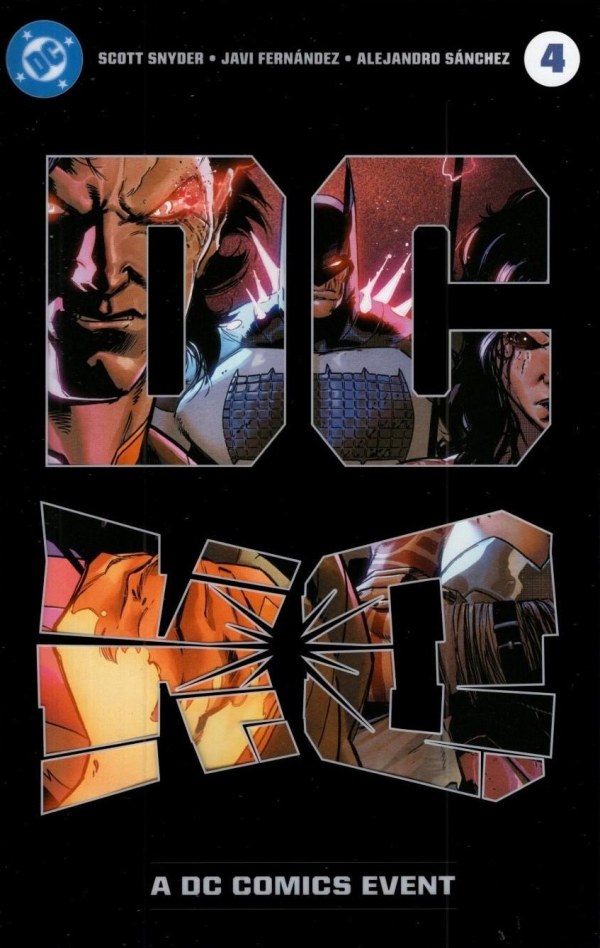
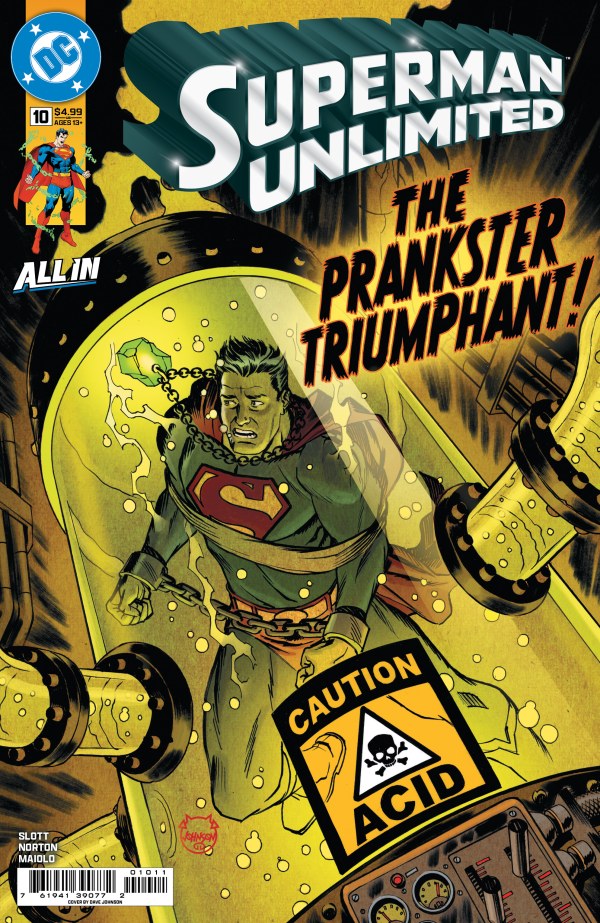
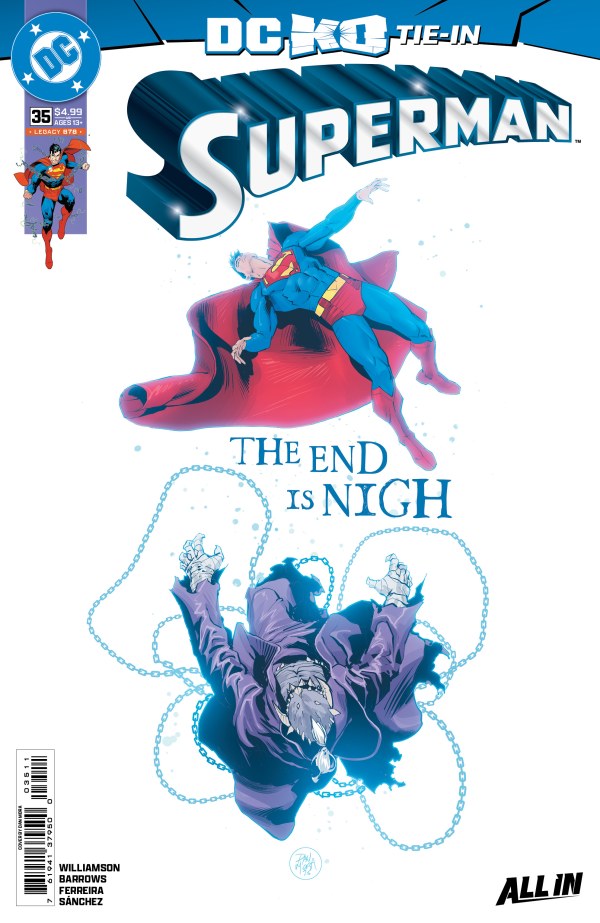
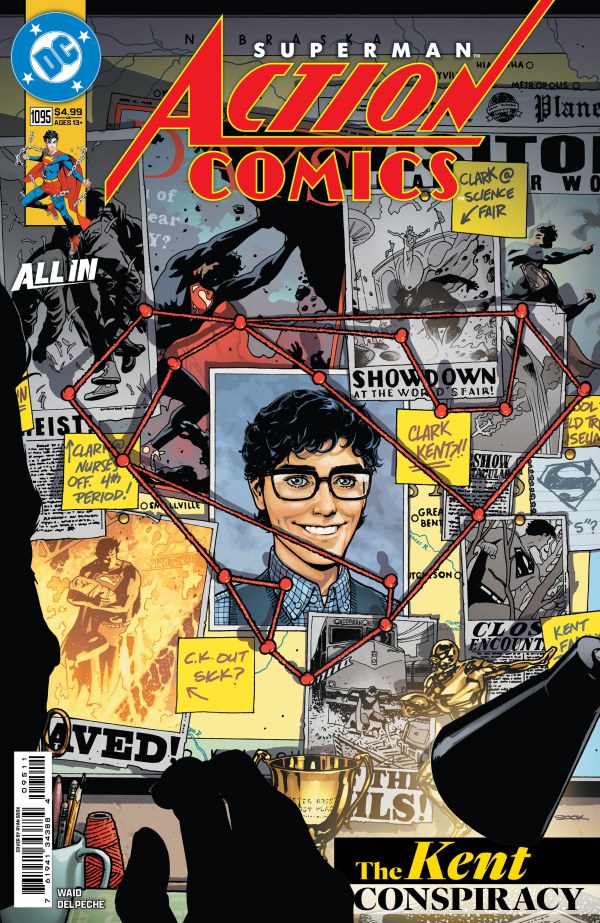
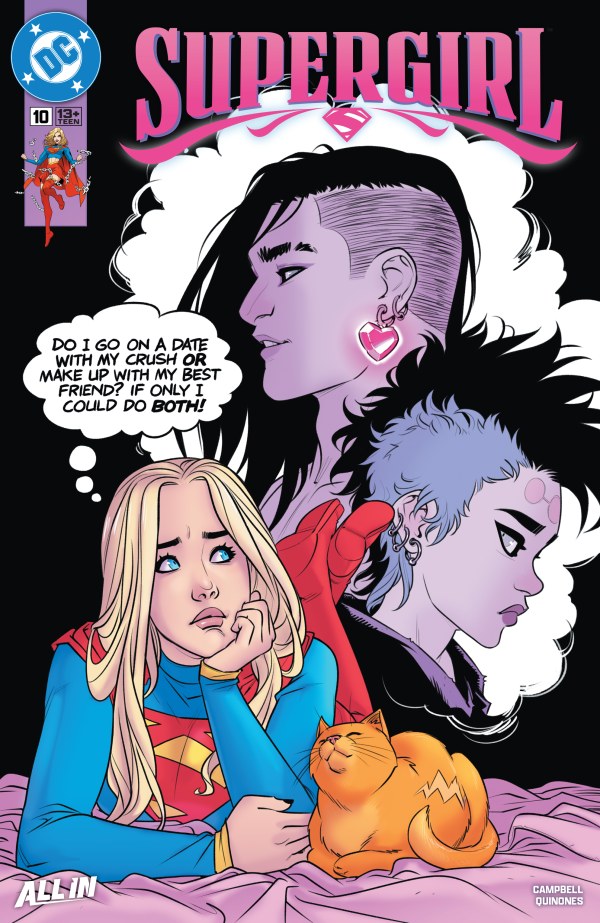
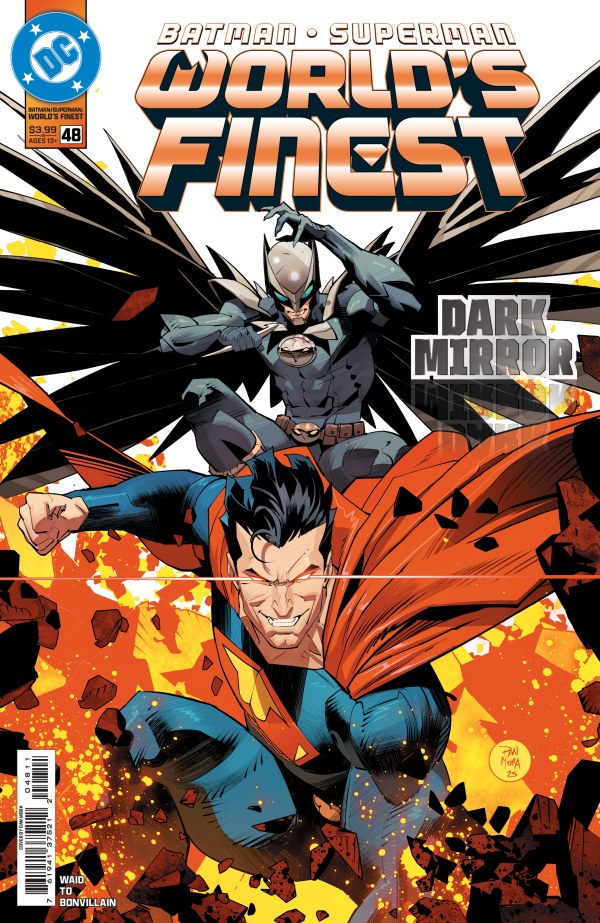
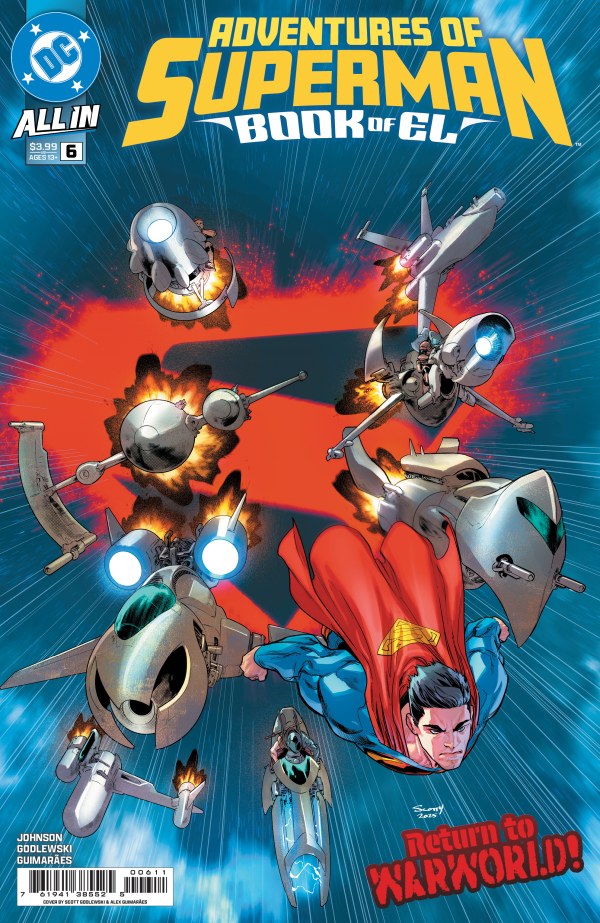
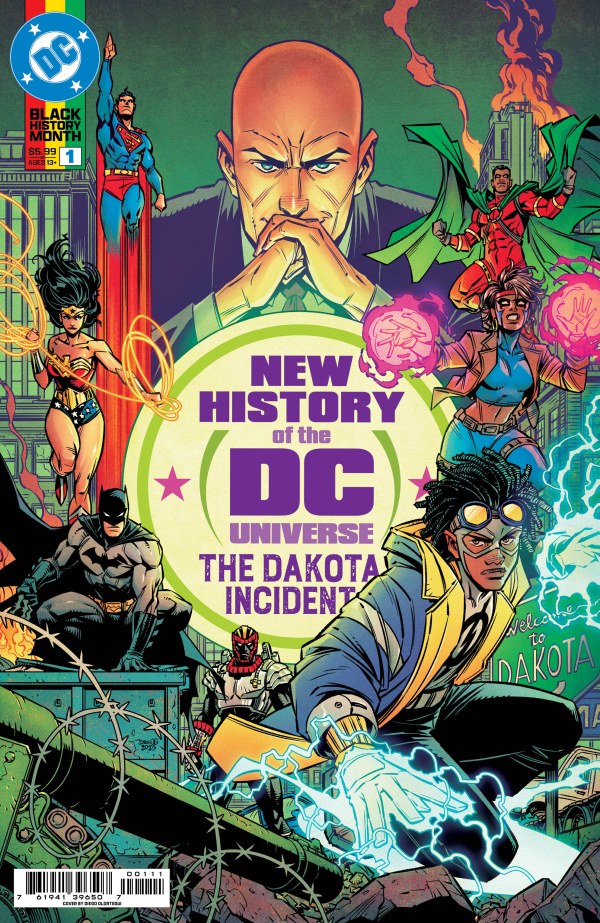

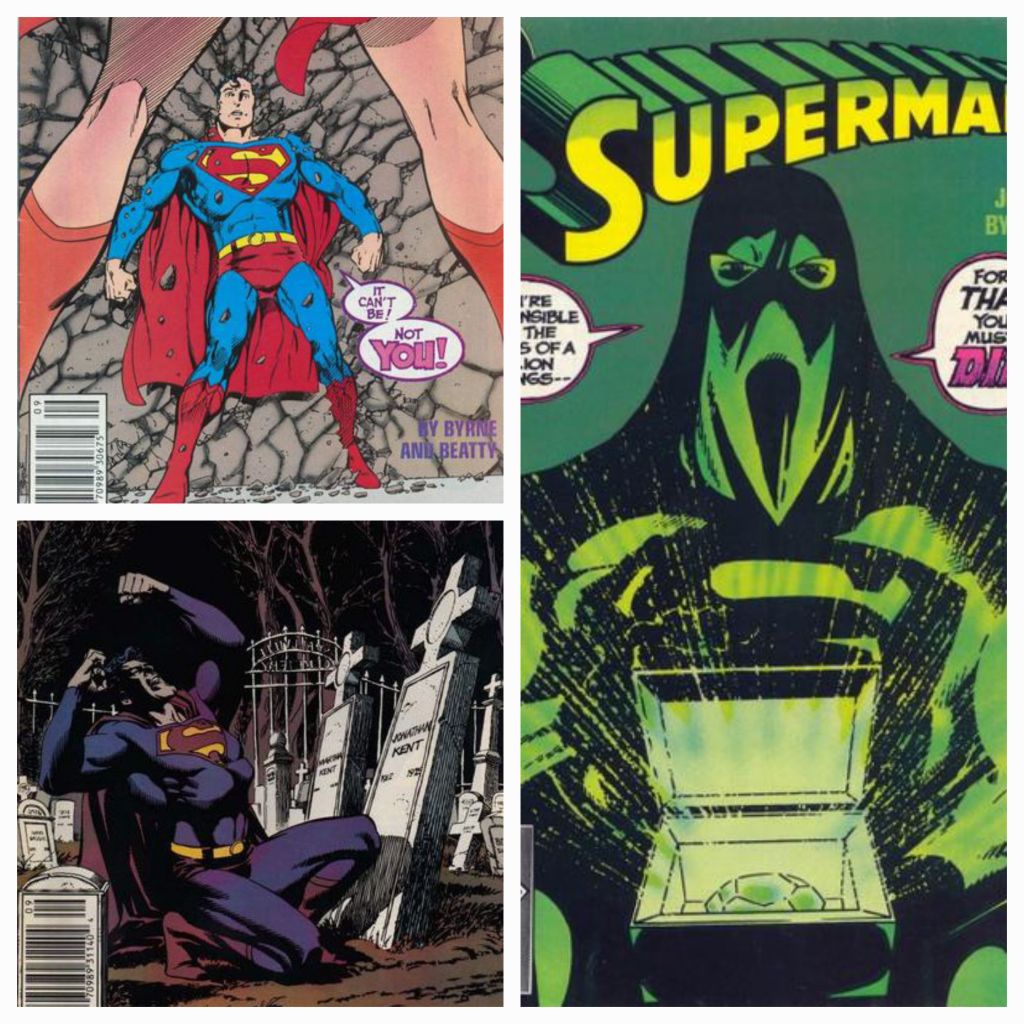

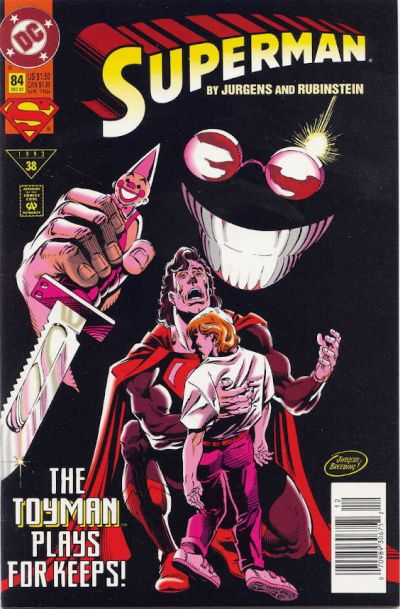

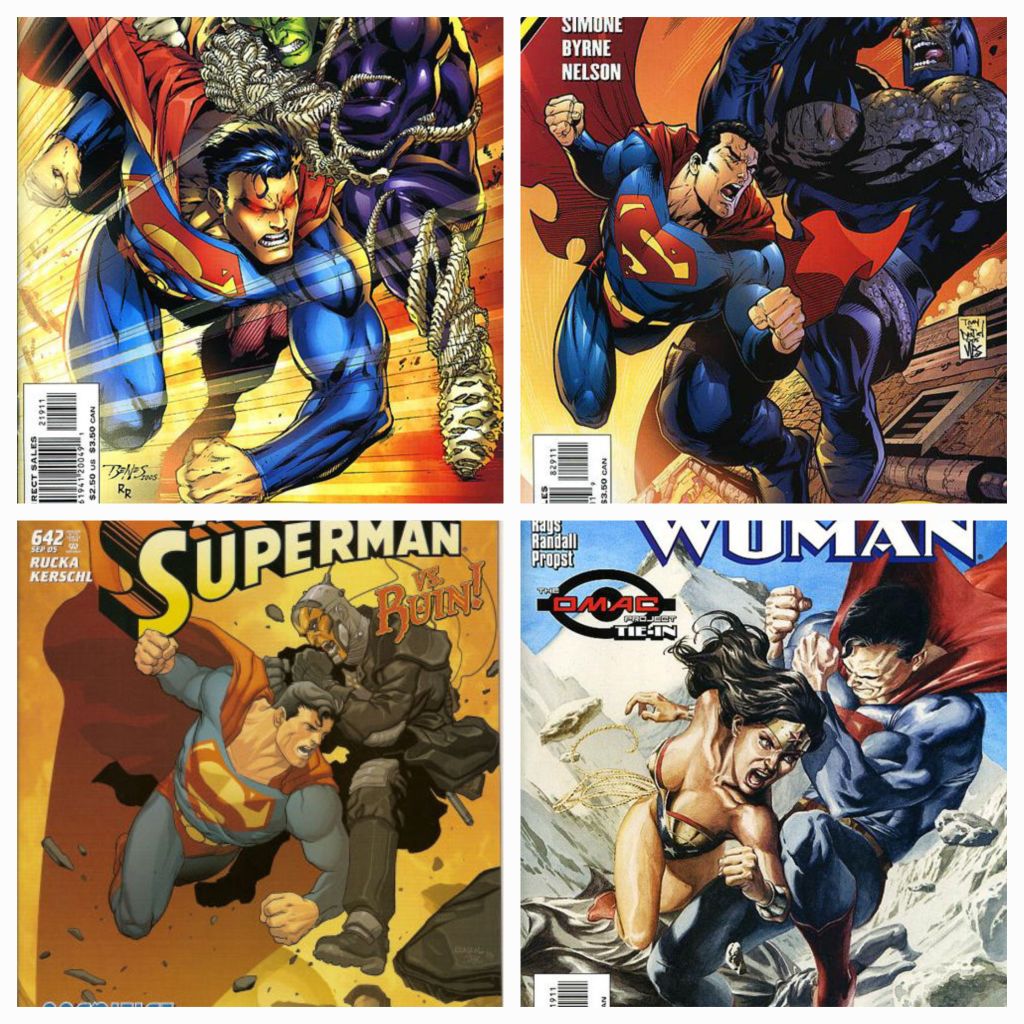
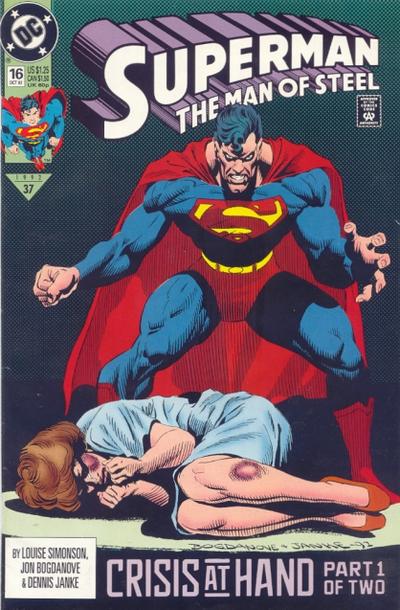


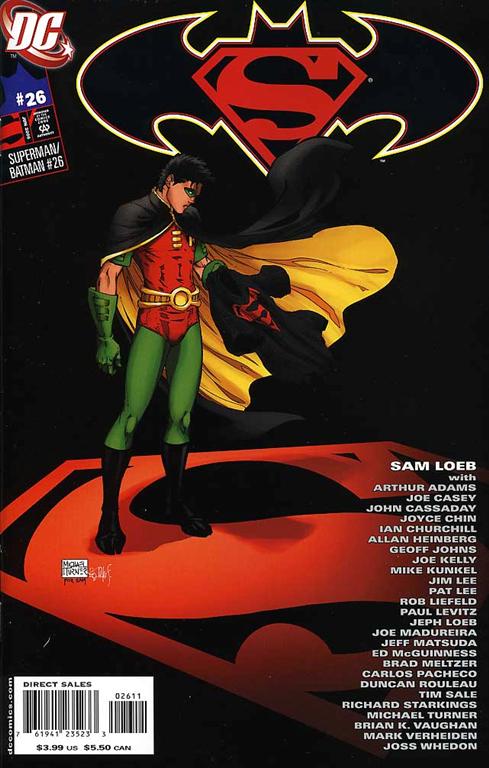
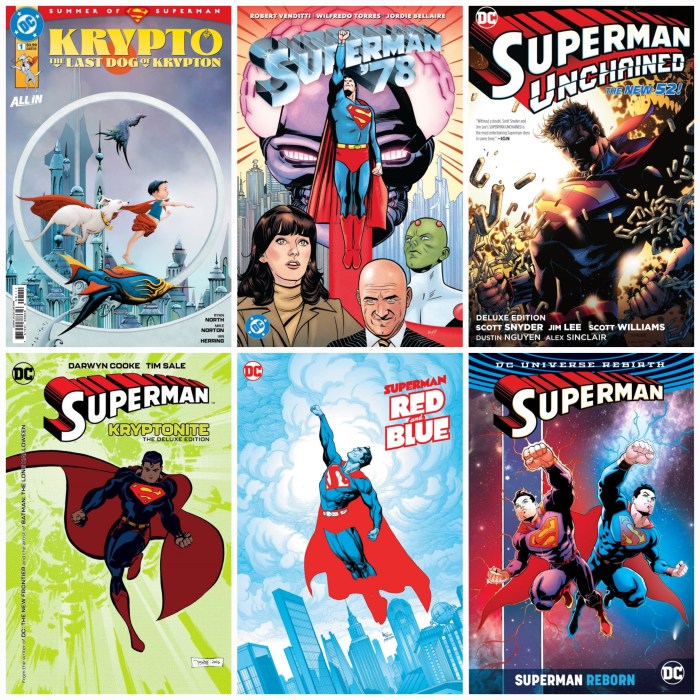
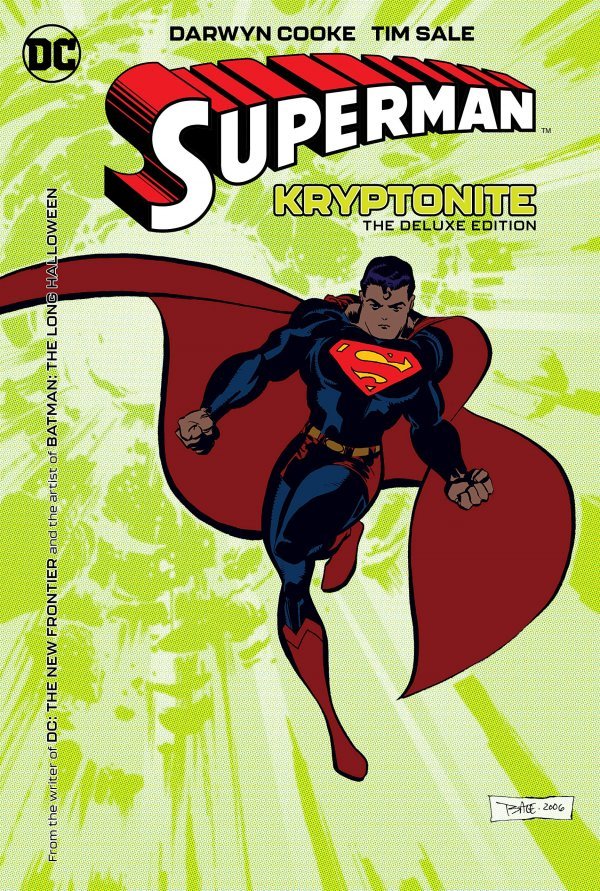


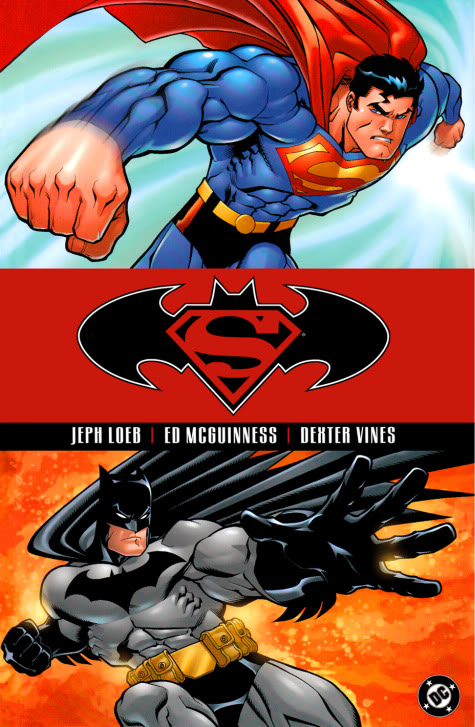

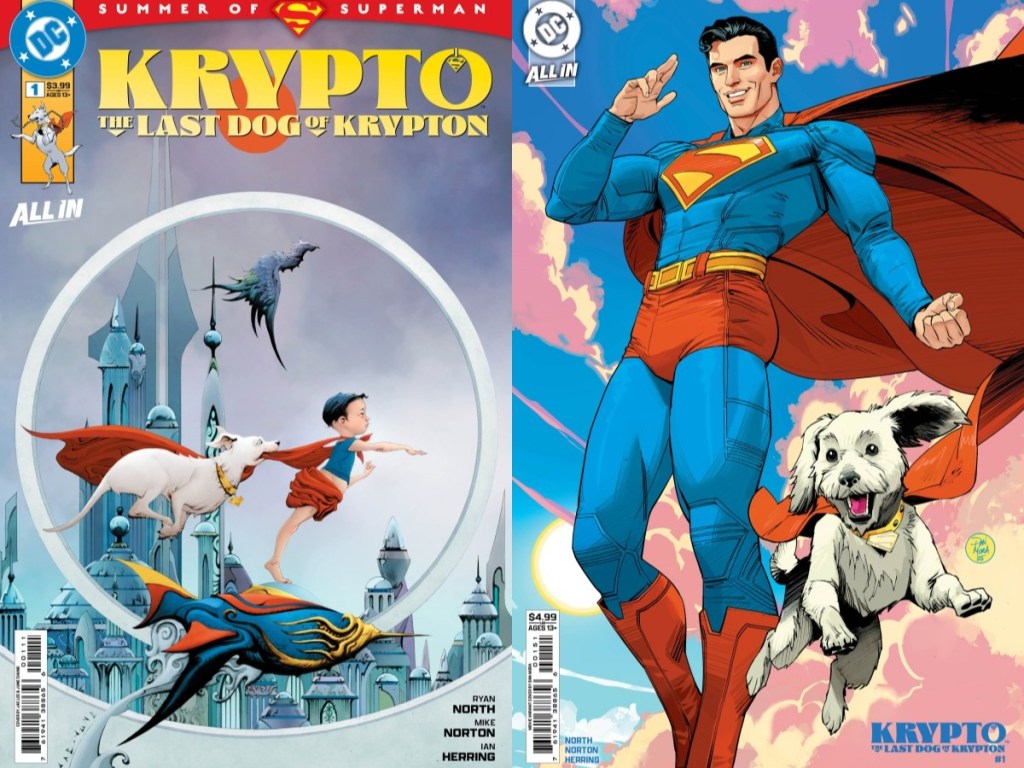
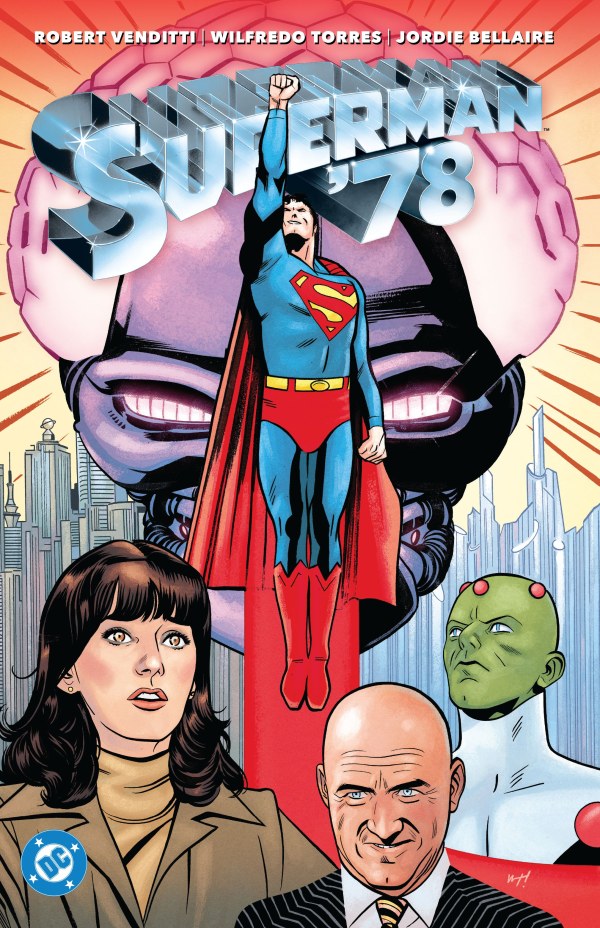


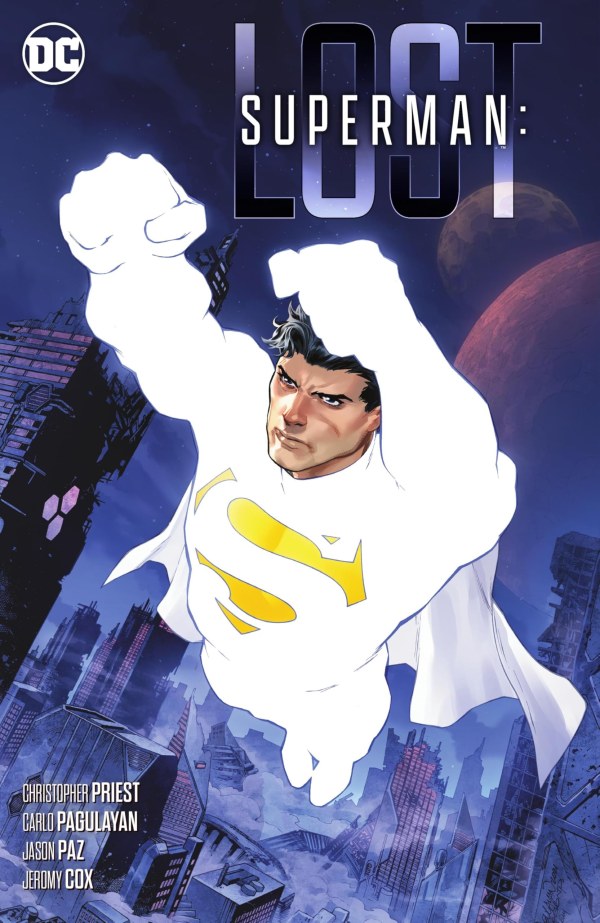


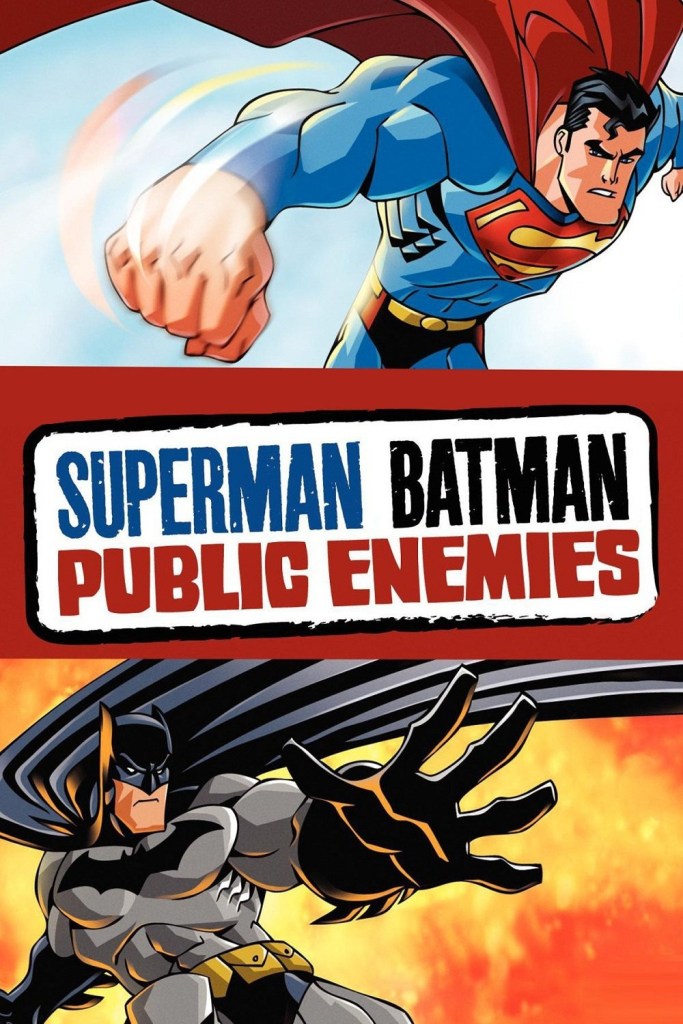
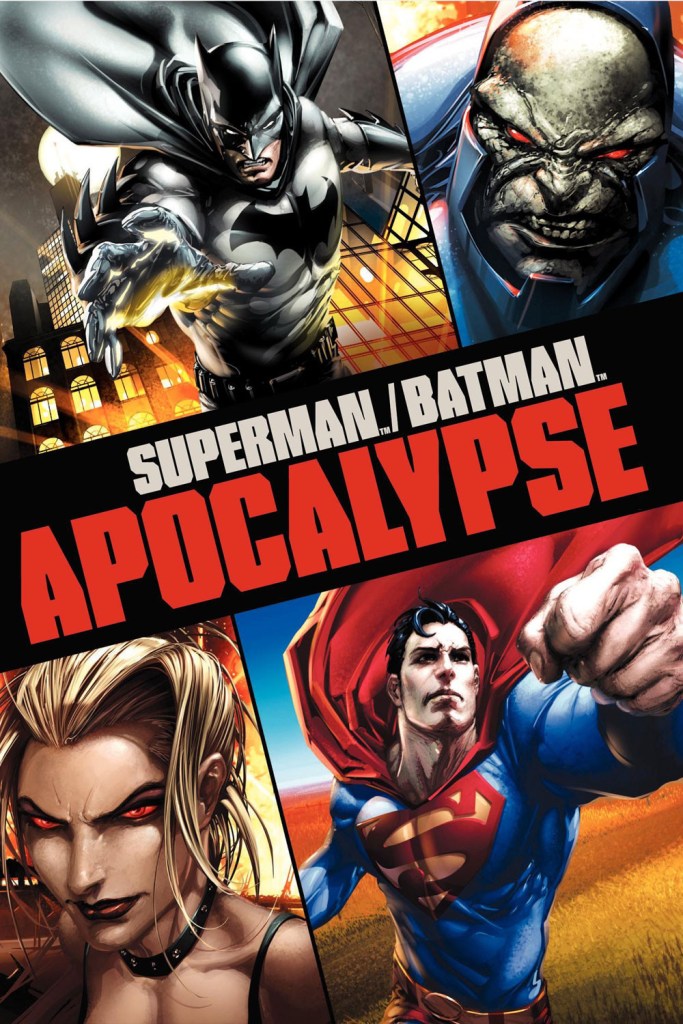



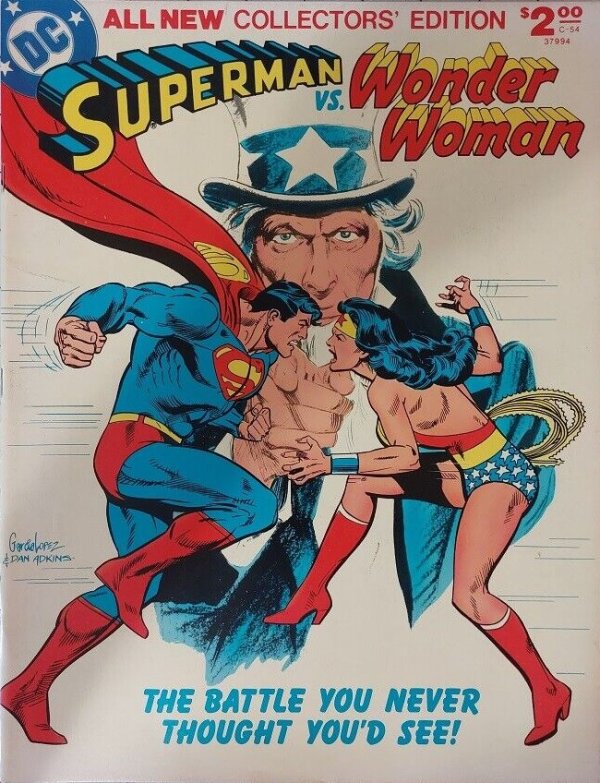

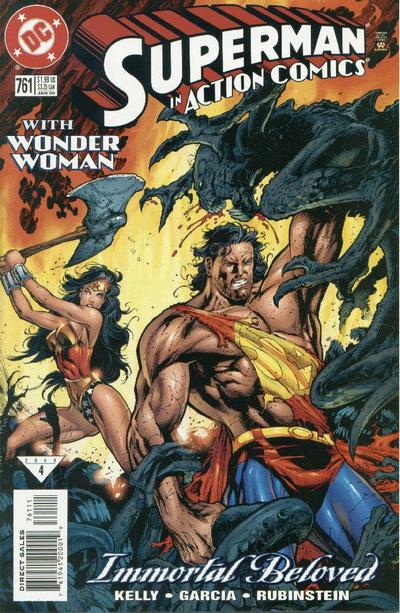

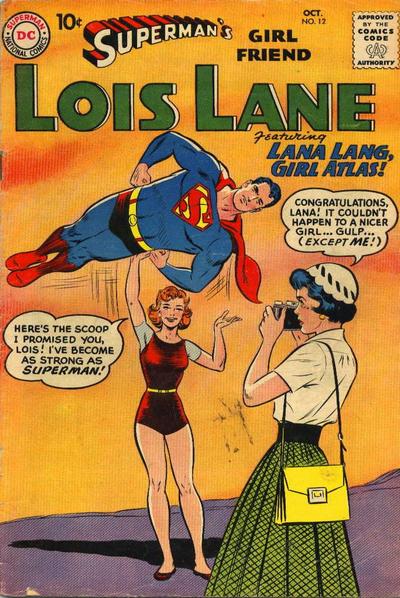


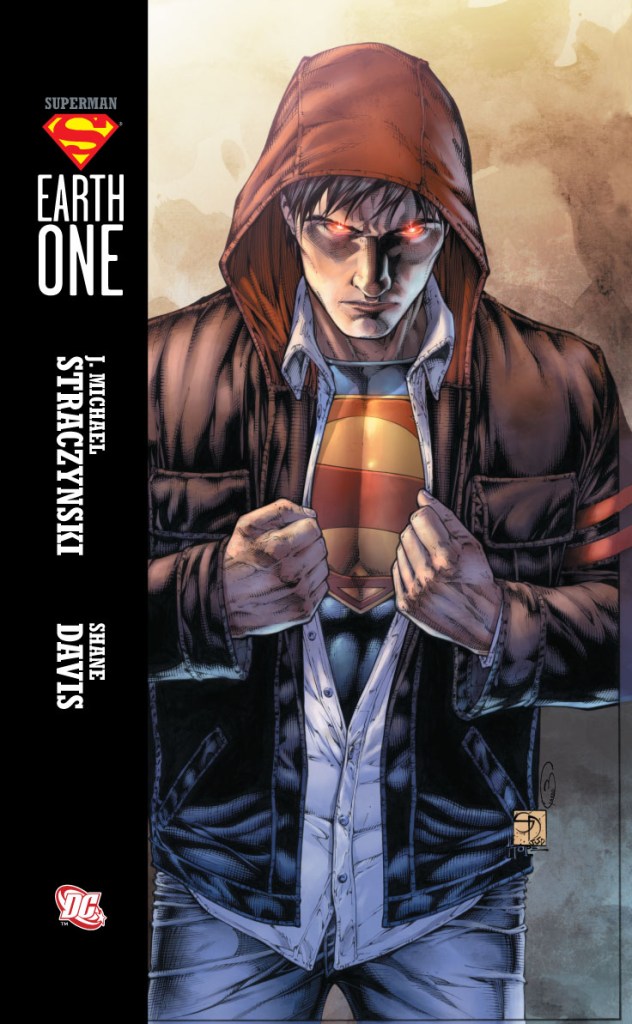
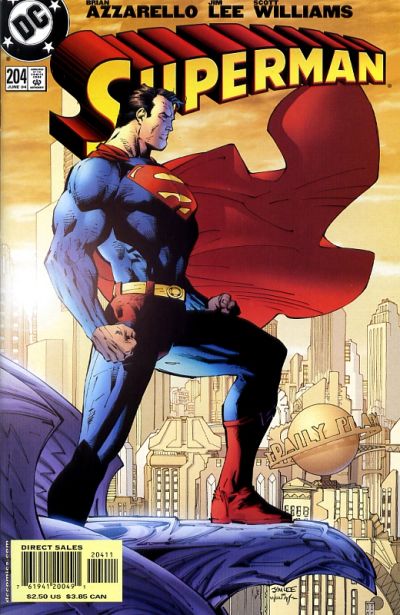


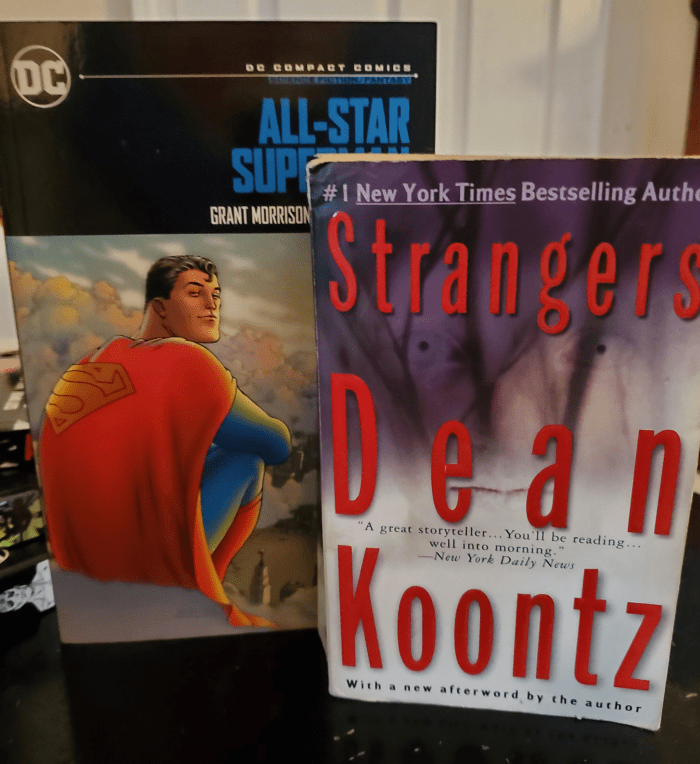


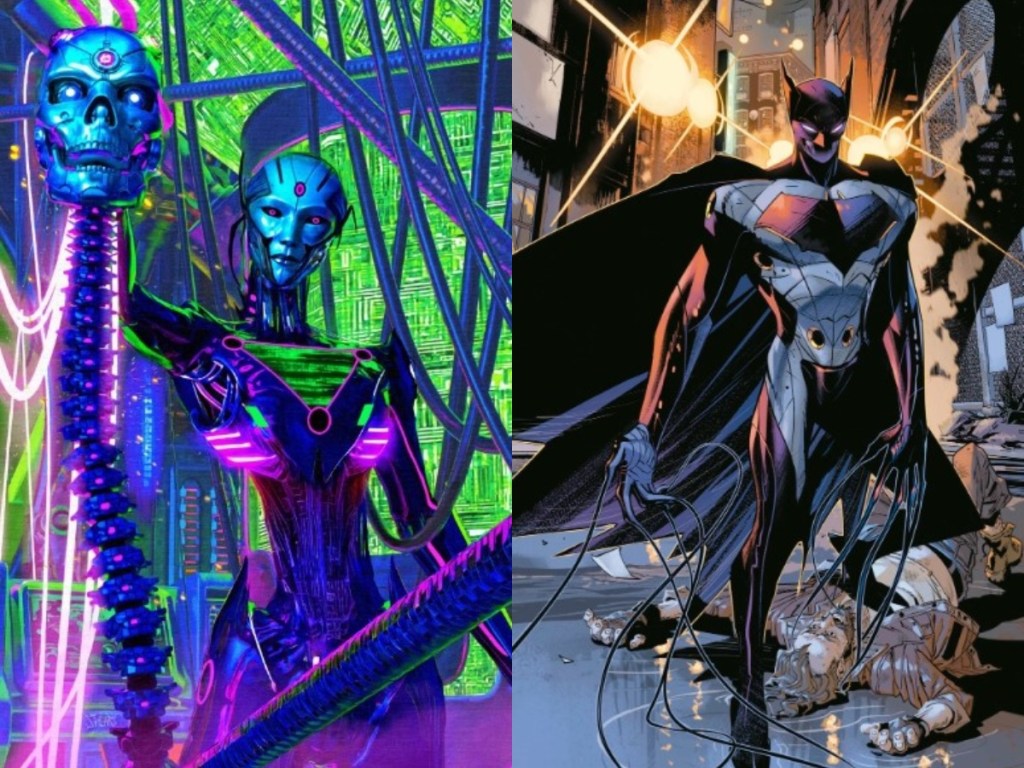

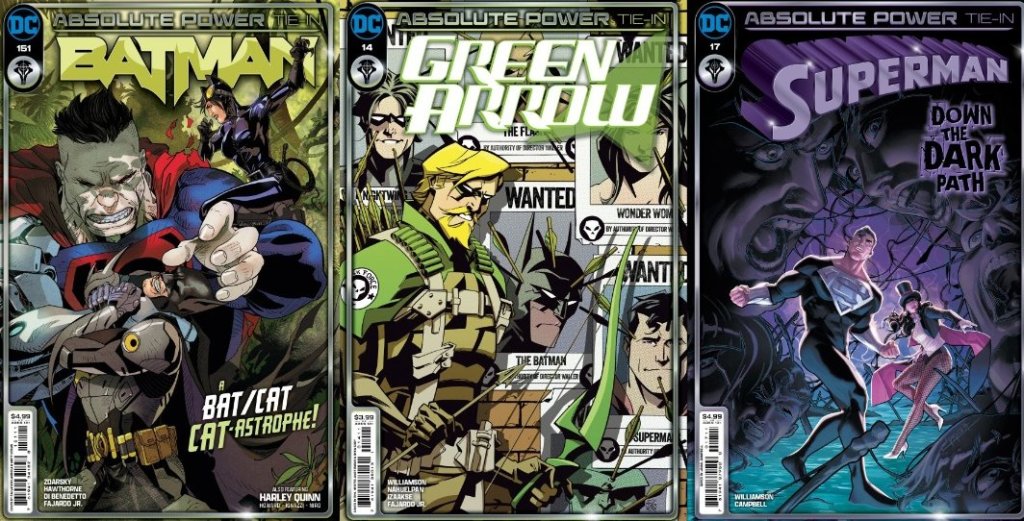
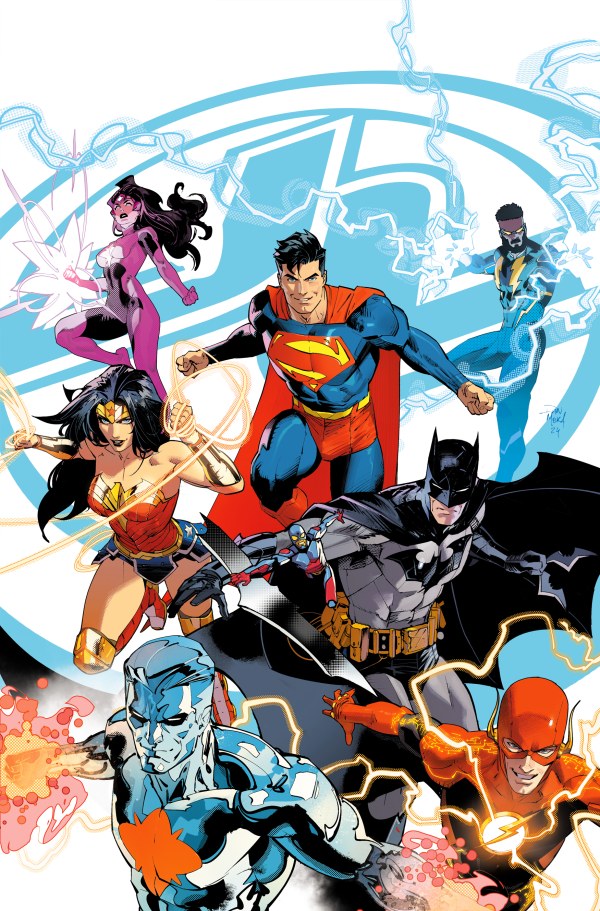
 Blake M. Petit